Tag: Weekend initiative

  • The New York Times agrees Philly is the place to be (locals still skeptical) | Weekly Report Card

    The New York Times agrees Philly is the place to be (locals still skeptical) | Weekly Report Card

    The New York Times also names Philly the top place to visit in 2026: A- (yet again)

    Well, here we go again. Philadelphia has once more been crowned the world’s best place to visit in 2026 — this time by the New York Times, which means we are now in the extremely Philly position of being right twice and still deeply suspicious about it.

    Yes, the reasons are familiar. The Semiquincentennial. The World Cup. The All-Star Game. Fireworks, parades, exhibitions, concerts, TED talks, themed balls, and a calendar so packed it feels like someone dared the city to see what would break first. It’s a lot. Enough, apparently, to push Philly to the top of the Times’ “52 Places to Go” list.

    But at this point, the events are almost beside the point. Big moments don’t explain why people want to be here, they just give them an excuse.

    Philly keeps landing on these lists because it’s a place that feels alive even when nothing “special” is happening. It’s opinionated without being curated. Historic without being precious. Welcoming in a way that involves some yelling, a little side-eye, and eventually someone telling you where to eat. You don’t visit Philly to be impressed. You visit to be absorbed.

    So why not an A+? Because every time the outside world decides Philly is the place to be, the city pays for it in very real ways. Hotel prices climb. SEPTA gets stress-tested. Streets designed for horse traffic brace for global crowds. And locals are once again asked to host a massive party while still making it to work, daycare pickup, and whatever delayed train they’re already standing on.

    There’s also the small matter of validation fatigue. Philly didn’t suddenly get good because the New York Times said so — just like it didn’t when the Wall Street Journal said it. The city’s been doing this for a long time, whether or not anyone was paying attention.

    Why?
    byu/UnionAdAgency inphilly

    ‘Avoid Philadelphia’ road sign goes viral: A

    Nothing says Philadelphia quite like being named the top travel destination in the world for 2026 and, at the exact same time, going viral for a road sign that simply reads: “Avoid Philadelphia.” No explanation. No branding. Just a warning.

    The photo resurfaced on r/philly and immediately became a public forum for collective truth-telling. When one user asked, “Why?” the answers poured in: “The usual reasons.” “Mental health reasons. Financial reasons.” “SEPTA.” Another went full blunt-force: “Bad things happen in Philly.”

    Of course, the Eagles entered the chat. “Eagles lost yesterday,” one commenter offered. Another countered, “Or Eagles won yesterday… Could be Eagles just did a thing. Go Birds.” Honestly, both feel correct.

    Then came the traffic trauma. “Spend a day on the Blue Route,” someone wrote — a sentence that should probably be included in driver’s ed. One person proposed Google Maps should add a new setting: “avoid highways, avoid toll roads, avoid Philadelphia.”

    But buried in the comments was the buzzkill reality check: This sign is almost certainly old. Several users pointed out it likely dates back to the I-95 bridge collapse in 2023, when avoiding Philadelphia was not a vibe, but a Department of Transportation directive. “Why are you posting a 5+ year old pic?” one top commenter asked, ruining the mystery but improving the accuracy.

    But the timing is what makes this perfect. As the Wall Street Journal and the New York Times roll out the red carpet for 2026, locals are standing off to the side holding a faded road sign like, just so you know. It’s not anti-tourism. It’s informed consent.

    An A for honesty, context, and a comment section that somehow functions as a city guide, traffic alert, sports recap, and warning label… even when the photo is old.
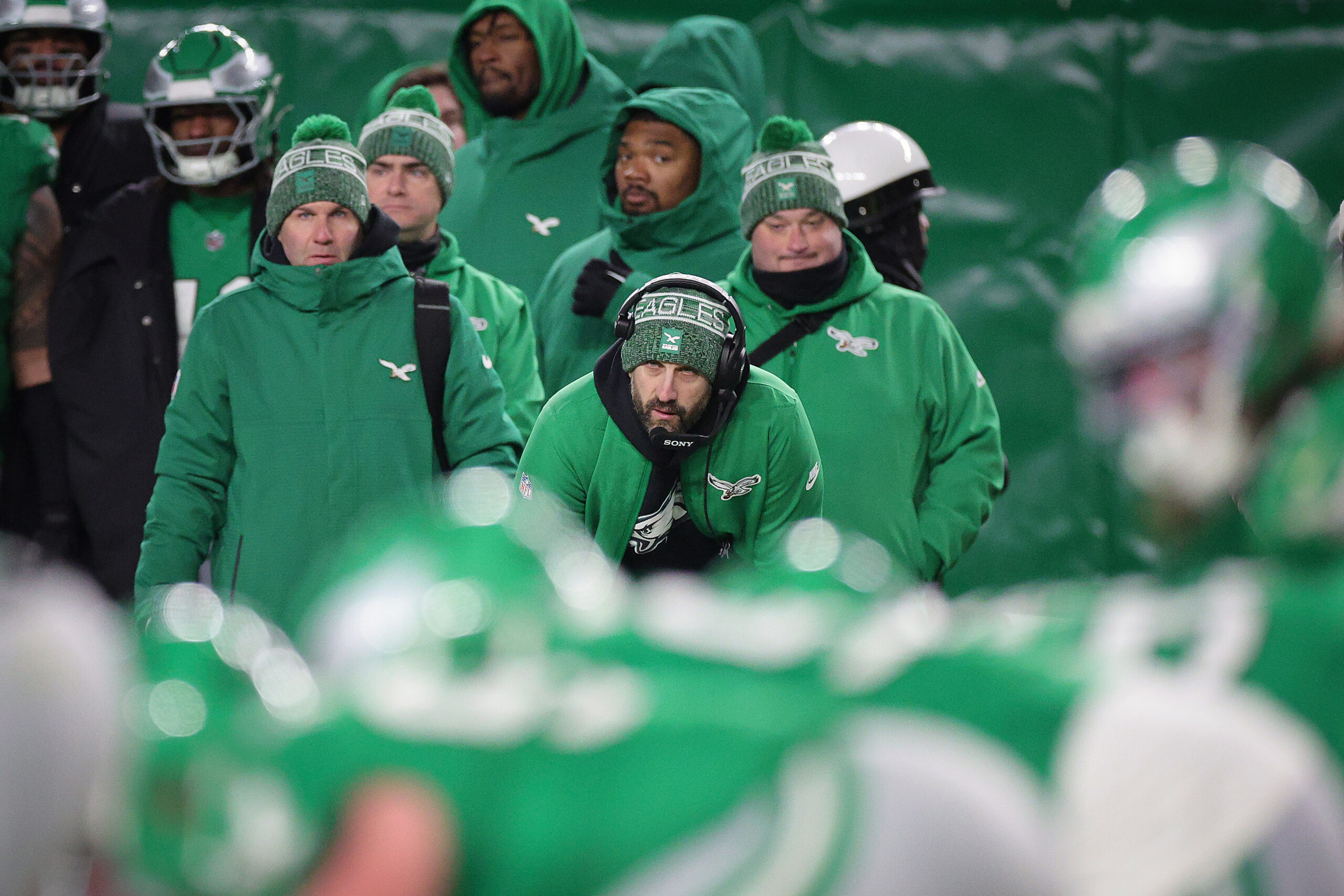
    Philadelphia Eagles head coach Nick Sirianni (center bottom) watches his team play the Washington Commanders at Lincoln Financial Field in Philadelphia on Sunday, Jan. 4, 2026.

    Eagles start the playoffs as the No. 3 seed: B-

    The Eagles enter the playoffs as a No. 3 seed, a position that history treats like a warning label. The math is rude: Few No. 3 seeds make the Super Bowl, and most of them don’t even sniff it. The Eagles themselves have tried this route before and usually wound up packing up by the divisional round. Not great.

    And yes, this is at least partially self-inflicted. Resting the starters in Week 18 cost them a real shot at the No. 2 seed and an objectively easier path. That decision is already being litigated in every bar, group chat, and radio segment. And it will keep getting relitigated until either A) the Eagles lose or B) they win enough that no one wants to admit they were wrong.

    Here’s the thing, though: This specific matchup is not terrifying.

    The 49ers limping into the Linc with injuries, tired legs, and a defense that is no longer the Final Boss version Philly remembers? That’s manageable. The Eagles’ defense has been the most reliable unit all season, and if this game turns into trench warfare, that favors the Birds. Saquon Barkley doesn’t need to be vintage playoff Saquon yet. He just needs to exist long enough to keep the offense functional.

    Still, the unease is earned. This is a team with Super Bowl expectations walking a historically unfriendly path, powered by a defense everyone trusts and an offense no one fully believes in. That’s not nothing. That’s the whole tension.

    So yes, the road is harder than it needed to be. Yes, the margin for error is thin. And yes, if this goes sideways, the No. 3 seed will be Exhibit A in the postmortem.
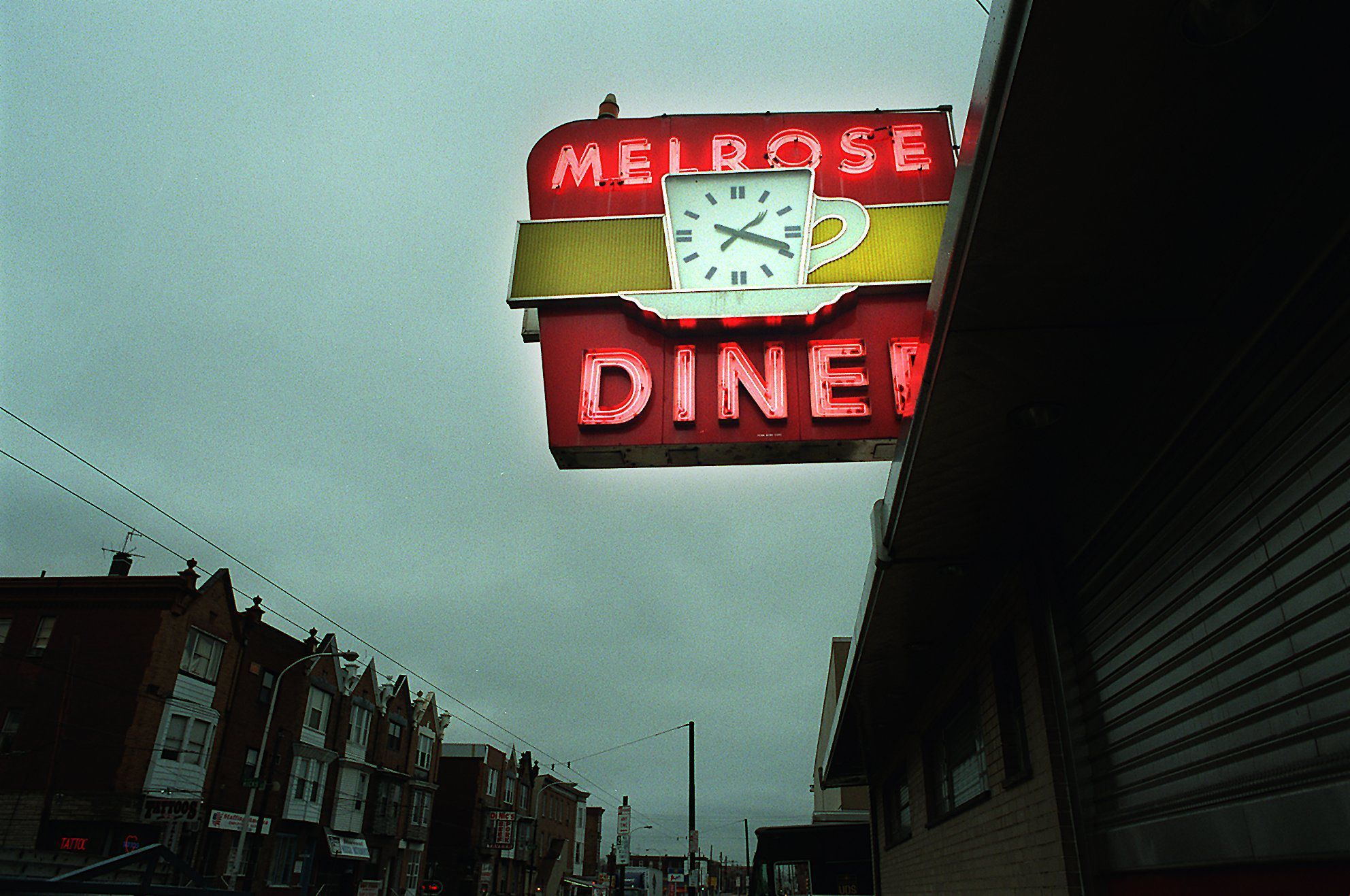
    In this photo from 2000, the Melrose Diner sign shines bright on a gray day.

    The Melrose Diner sign hits Facebook Marketplace: A+

    Nothing says Philadelphia like scrolling Facebook Marketplace and suddenly finding the neon soul of a demolished diner listed as “very heavy and totally cool.”

    Yes, the iconic Melrose Diner sign — red, yellow, stainless steel nostalgia and all — is apparently for sale. Not at auction. Not through a preservation society. Not behind glass in a museum. Just vibes, photos, and the immortal Marketplace closer: “Serious inquiries only.”

    There’s something perfectly on-brand about this. The Melrose didn’t go out quietly. It didn’t get a tasteful plaque or a respectful archival goodbye. It got torn down for apartments, went into “storage,” and has now reemerged like a ghost asking for a sizable offer and a pickup truck.

    The listing itself is doing a lot of work: four pieces, sold as a set, “used — good,” with the helpful reminder that Olga’s Diner once sold signage for $12,000. Philly translation: Don’t lowball me, I know what I’ve got.

    Selling the sign feels a little like selling a family photo album. The Melrose wasn’t just a diner — it was late nights, early mornings, post-bar waffles, post-court appearance coffees, and at least one story involving a mobster, depending on who you ask.
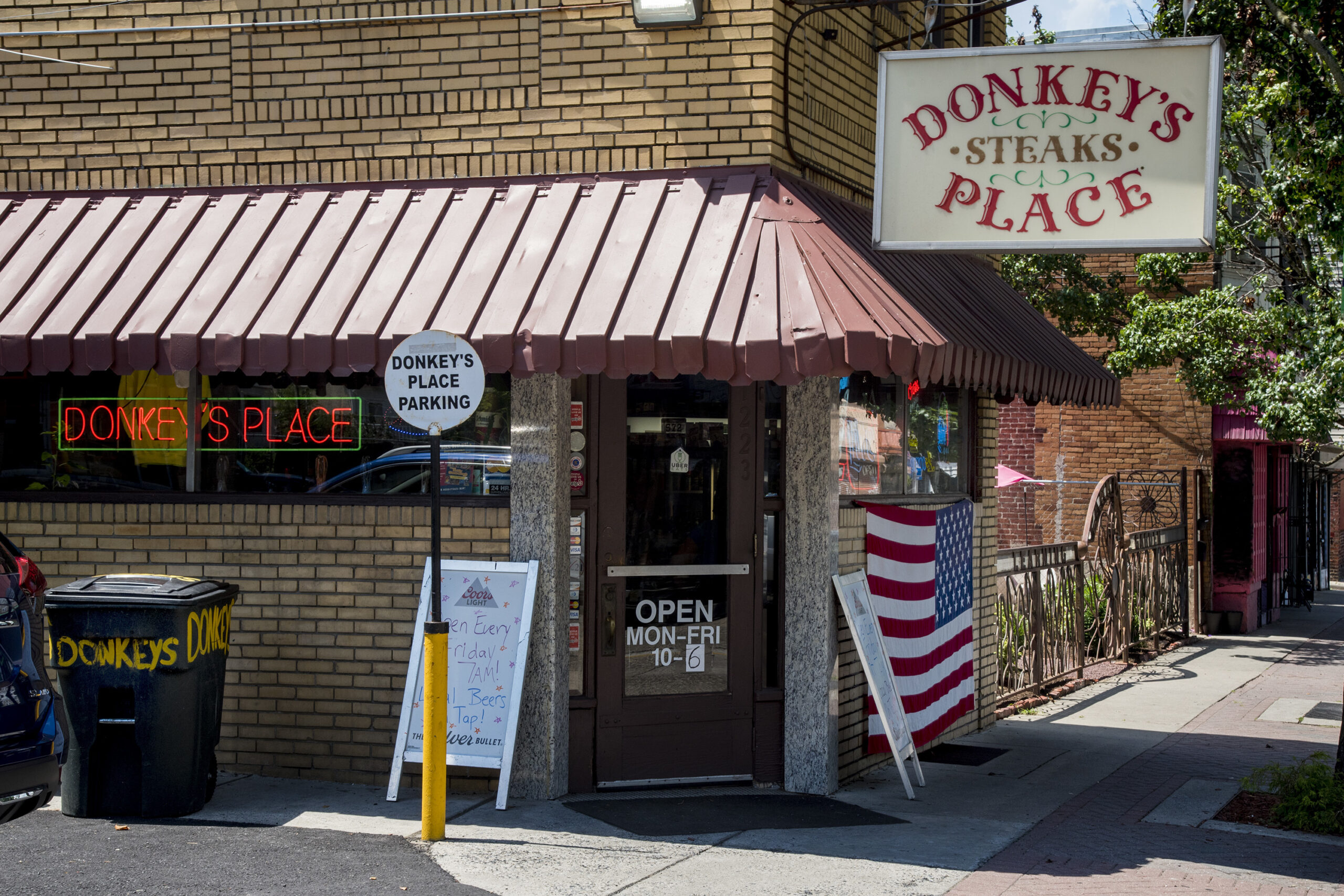
    Donkey’s Place in Camden on July 18, 2018, one of 10 eateries Anthony Bourdain visited in a 2015 episode of his “Parts Unknown” show in New Jersey.

    Donkey’s Place walrus bone theft: D (return it, coward)

    There are lines you don’t cross in this city, and stealing a beloved bar’s decades-old walrus penis bone is absolutely one of them.

    Donkey’s Place didn’t ask questions about the bone for years — it just existed, looming behind the bar like a strange guardian angel of cheesesteaks and beers. It wasn’t sentimental, it wasn’t precious. It was just there. Which somehow makes taking it worse.

    The alleged thief wrapped it in a scarf and walked out like this was Ocean’s Eleven: South Jersey Edition, and now the bar is left explaining to the internet why they’re asking nicely for a walrus baculum to be returned, no police report, no drama, just vibes and decency.

    The deduction from an A is only because this never should’ve happened. Otherwise, this is peak Philly-area energy: a historic bar, an inexplicable artifact, security footage, TikTok pleas, and a collective regional agreement that yes, this matters.

    Mail it back. No questions asked. Everyone will pretend this never happened.
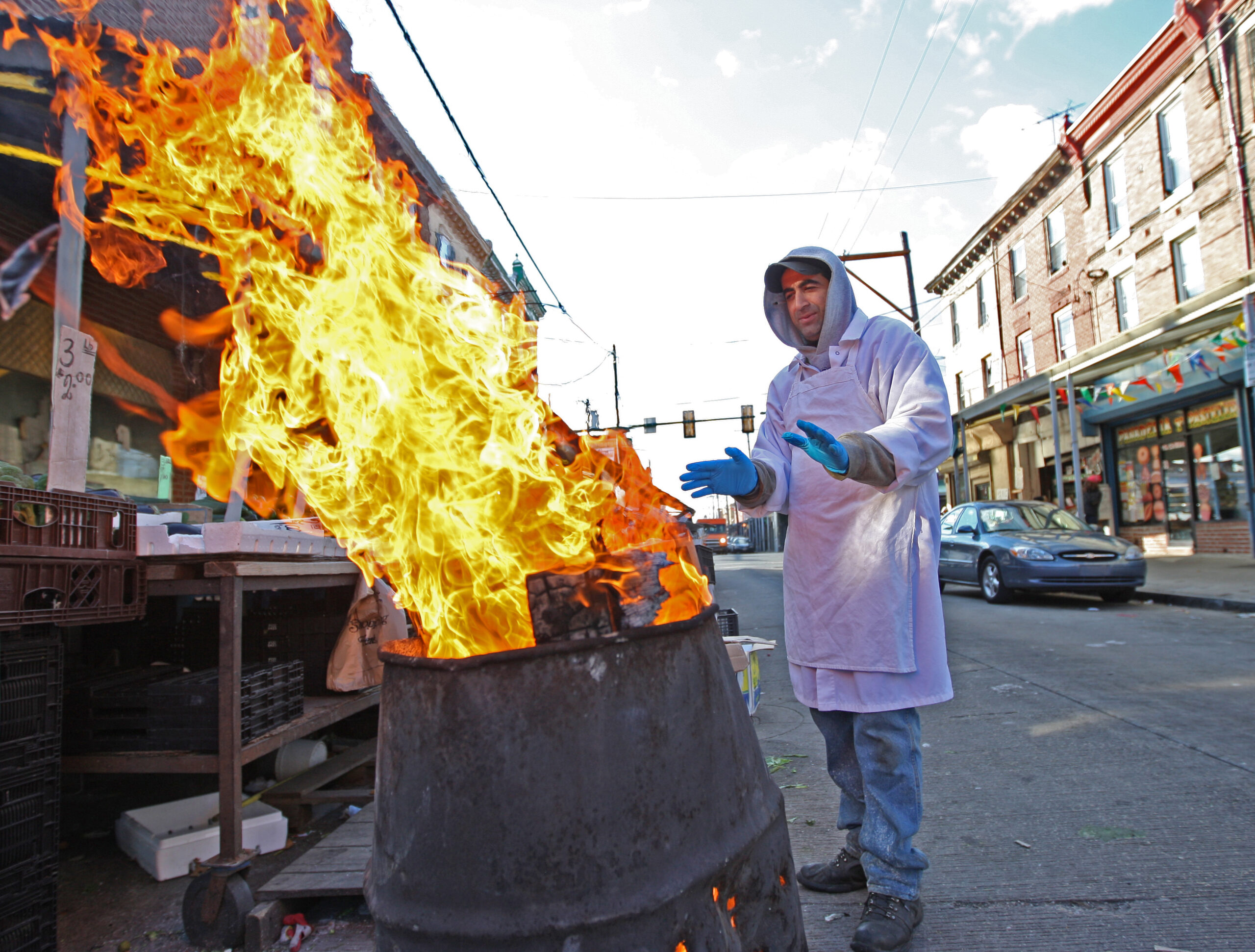
    In this Dec. 4, 2007 Inquirer file photo, Joe Carioti, of Carl’s Poultry, warms his hands on the first really cold day down at the market.

    Trash can fires are back on Ninth Street: A

    You don’t need a calendar to tell you winter has arrived in Philadelphia. You just need to walk down Ninth Street and see a trash can on fire.

    The barrels come back when mornings turn brutal and vendors are out before dawn, unloading boxes, setting up stalls, and bracing against the cold. This isn’t nostalgia or aesthetic — it’s practical. A few minutes of heat for hands that don’t get to stay in pockets, a pause before the work continues.

    They’re regulated, debated, occasionally questioned, and absolutely unmoved by any of that. Every winter, they come back anyway. Not as a statement, but as a fact of life.

    When spring shows up, they’ll disappear again. Until then, the fire’s on.

  • How to have a Perfect Philly Day, according to novelist Adam Cesare

    How to have a Perfect Philly Day, according to novelist Adam Cesare

    Adam Cesare knew by the third date that if he and his future wife were going to end up together, he was going to have to start calling sub sandwiches hoagies. “She’s a Philly lifer,” the New York-born, USA Today best-selling author said. Sure enough, after graduating from college in Boston, the couple relocated to Philadelphia, where Cesare threw himself into the city’s film and literary scenes. “I took to Philly like a fish to water,” Cesare said. That was 15 years ago.

    Fast forward to today, and the former high school English teacher is an acclaimed local author with more than a dozen horror novels under his belt, including the popular Clown in a Cornfield series, the first of which was adapted for the big screen and released in theaters this past summer. Now, Cesare is gearing up to release Clown in a Cornfield 4: Lights! Camera! Frendo!

    When he’s not busy editing his manuscript, Cesare still loves to explore Philly’s extensive film and lit scenes, roaming through used bookstores or catching a flick at PhilaMOCA.

    Here’s how Adam Cesare would spend a perfect day in Philadelphia.

    9 a.m.

    First, I would make sure it’s not a Sunday because I want to go to Beiler’s Doughnuts in Reading Terminal, and it’s closed on Sundays.

    11 a.m.

    After Beiler’s, I’d pop over to Old City to go to The Book Trader. I could name-drop all the current new bookstores, but there’s something about used bookstores that I really like. I’d swing by the comics shop, Brave New Worlds, because it’s right next door, then I’d head to Mostly Books on Bainbridge. I love that place. It’s great because they have a pretty decent VHS, DVD, and Blu-ray selection too, so I’ll get a few movies.

    I might also pop into the Philly AIDS Thrift. It’s fun to walk around. They have a good book section. It’s mostly general fiction. I like their physical media section too. You can get the DVD or VHS of every television series that’s been kicked off Netflix.

    1 p.m.

    For lunch, I’m definitely going to Monster Vegan. It is what it sounds like. It is a really good vegan restaurant themed on monsters. They play clips from Count Yorga and stuff on the walls. They do events, too. I once saw Lloyd Kaufman present Class of Nuke ‘Em High.

    3 p.m.

    After lunch, I might drive over to Manayunk to check out Thrillerdelphia. It’s a new bookstore that exclusively sells horror and thrillers. They just opened two months ago, and I did one of their first events. They’re really nice people, and they have a great selection.

    5 p.m.

    It’s time to beam back down to South Street for dinner and a movie. On a perfect day, I’m going to Royal Izakaya, a Japanese restaurant I like to go to on my birthday. Since money is no object on my perfect day, I’ll order the omakase. Let the chef decide.

    7 p.m.

    There are so many good places to see a movie in Philly. There’s the Philadelphia Film Society. There’s also PhilaMOCA. It’s probably my favorite place to go. They work closely with Exhumed Films, which is a group of film fans who screen 35mm and 16mm films from their private collection in local theaters. They do a lot of work with The Colonial in Phoenixville as well.

    The last time I went to PhilaMOCA, I saw Hedwig and the Angry Inch, and John Cameron Mitchell was there doing a live commentary, which was sick. They do really cool stuff like that all the time.

    9 p.m.

    That was a full day. I’m good for bed now.

  • When I switched from film to digital

    When I switched from film to digital

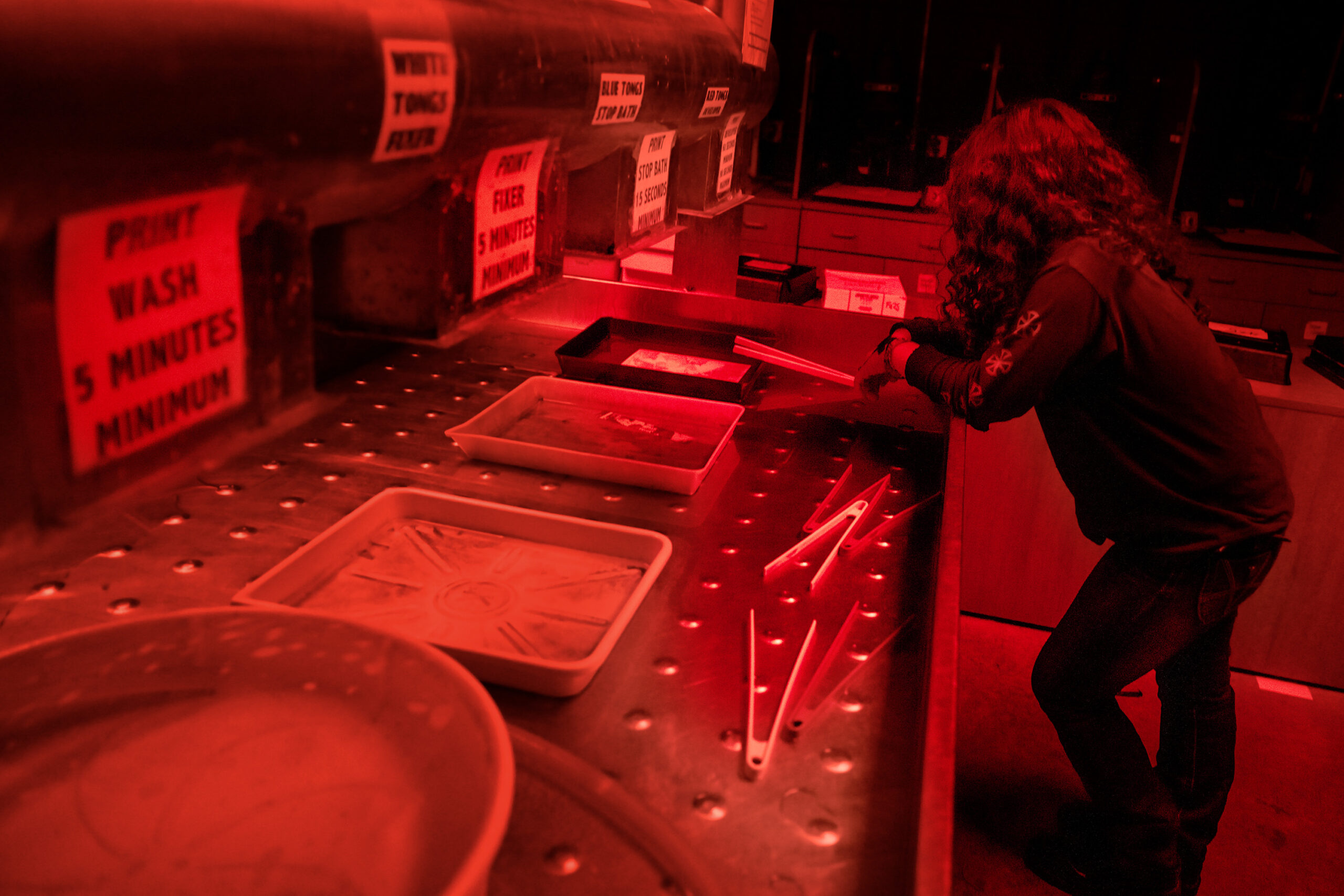
    I stepped into a real live, working — smells and all — black and white darkroom this week, for the first time in decades.

    I watched Charlotte Astor, a junior at Cherry Hill High School East, develop her B&W photographs in the school’s darkroom.

    For a few years after The Inquirer went digital I kept the small enlarger and other personal equipment that I’d used in my crude basement darkroom from when I was starting out. I had little use for it after I got my first staff job with bigger and better facilities. It all stayed boxed up, through multiple moves, long after I’d stopped exposing any film — even for family photos.

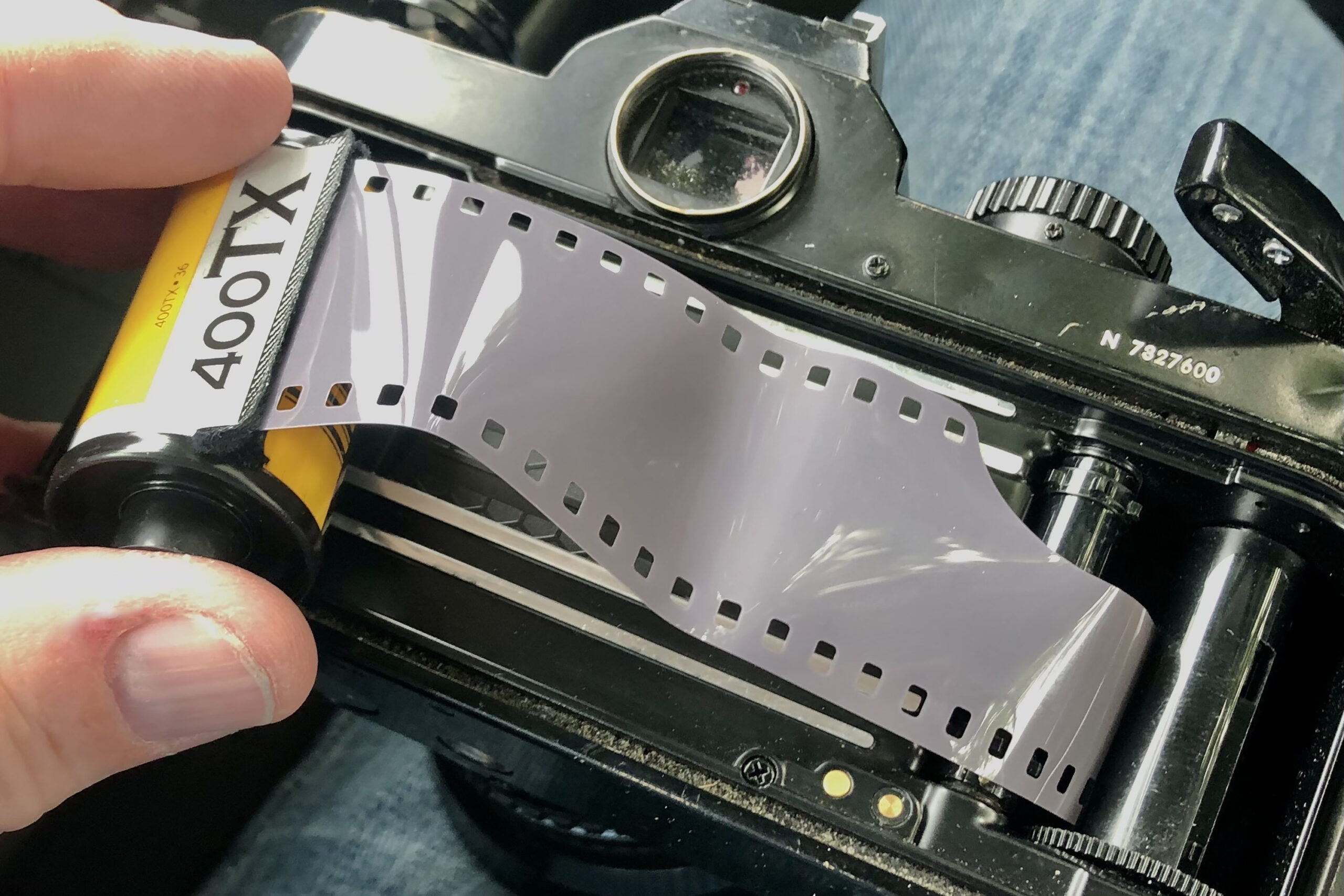
    I finally gave it all away when young people first started using analog formats like typewriters, vinyl records, “dumb phones,” and film cameras as a move away from digital overload. (A few years ago our photo staff did a group project where we each took a turn with the same 35 mm mechanical camera using just one roll of black-and-white film.)

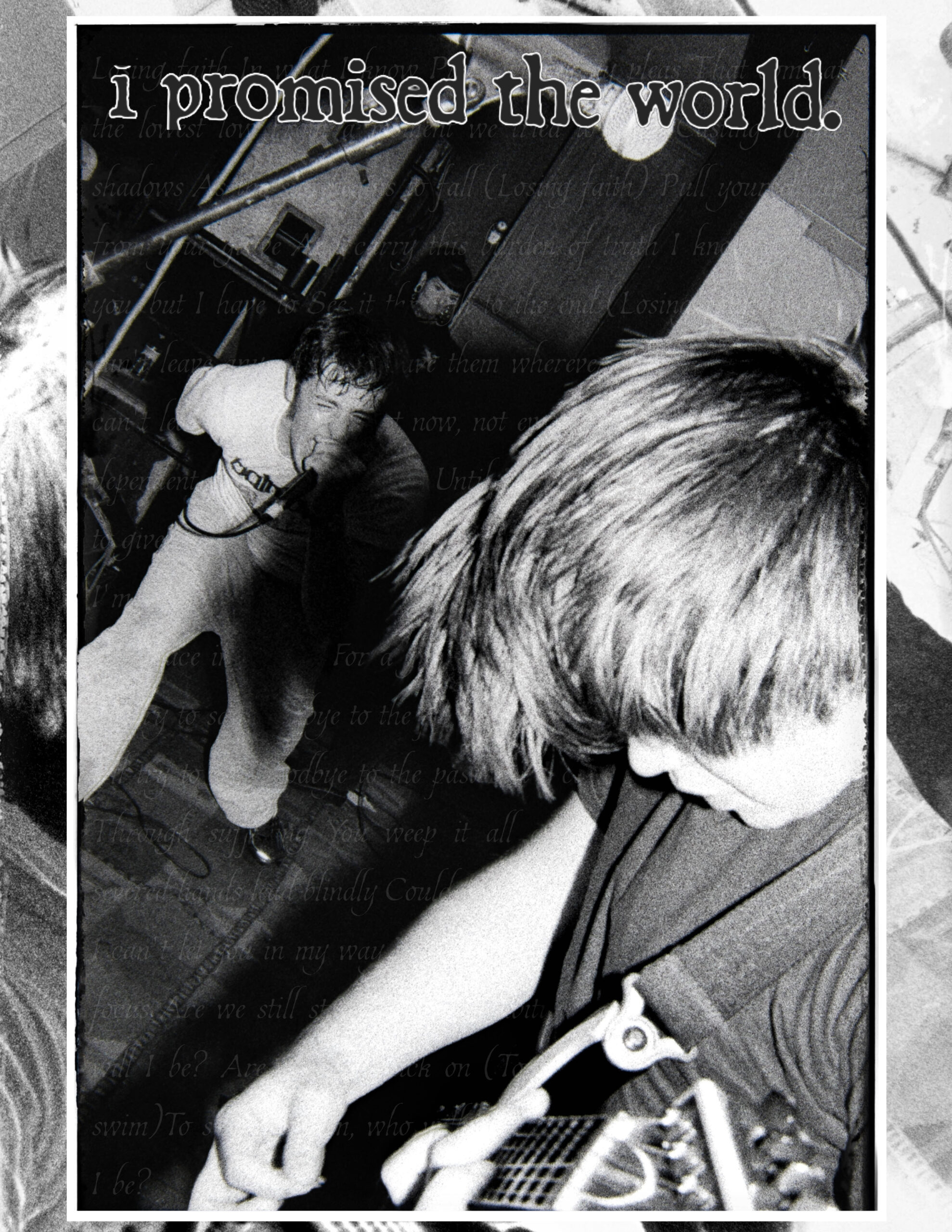
    Like many digital natives who grew up with smartphones and the internet and are now “detoxing,” Astor has totally embraced B&W 35 mm, photographing at hardcore shows around the area for a zine she self-publishes, “Through Our Eyes.”

    “So often,” she says of the music scene, “you’ll see these people taking a million photos a second, and to me it’s just waste. When I shoot film, I only have 36 shots before I gotta risk reloading in the middle of the pit, so every shot I have to make count. It keeps me in that moment, with this kind of clarity. When you get the shot, even though you can’t see it, you just know that you got that moment perfect. That moment means everything to me. I wouldn’t trade it for the world, and digital will never come close.”

    Photo by Charlotte Astor, from a show by “I Promised the World” at the First Unitarian Church in Philadelphia Nov. 22, 2025. Taken with a Nikon FE and Tmax 3200 film.

    But that’s not why I was taking her picture. Our story, published next week, is about Astor’s four year search for a demo tape — yes, an analog cassette — from her mother’s teenage band.

    I enjoyed talking with her about photography, and I couldn’t stop thinking about what digital photography has brought us.

    Film demanded patience and technical precision. Digital offered instant feedback and greater flexibility in lighting conditions.

    Photojournalists delivered images faster, adapted to the demands of online media and met tighter and more frequent deadlines.

    The transition hasn’t changed the way I see, and interpret. I still emphasize composition, context, or complexity. However, I have adapted and adjusted. I see the value in making the kinds of thumbnails that online platforms prioritize to generate algorithmic attention.

    Between photographing for stories on assignment I still wander whatever neighborhood I am in looking for “standalones.”

    But I am also always on the lookout for “stock” photos that can be used as thumbnails with future stories. Think images of police tape or flashing lights, city street scenes, and skylines, educational, civic, and medical institutions.

    Made while riding in a parking garage elevator, this photo had been been published with over a dozen stories in the past year.

    After an assignment at the Philadelphia Art Museum, I loitered outside.

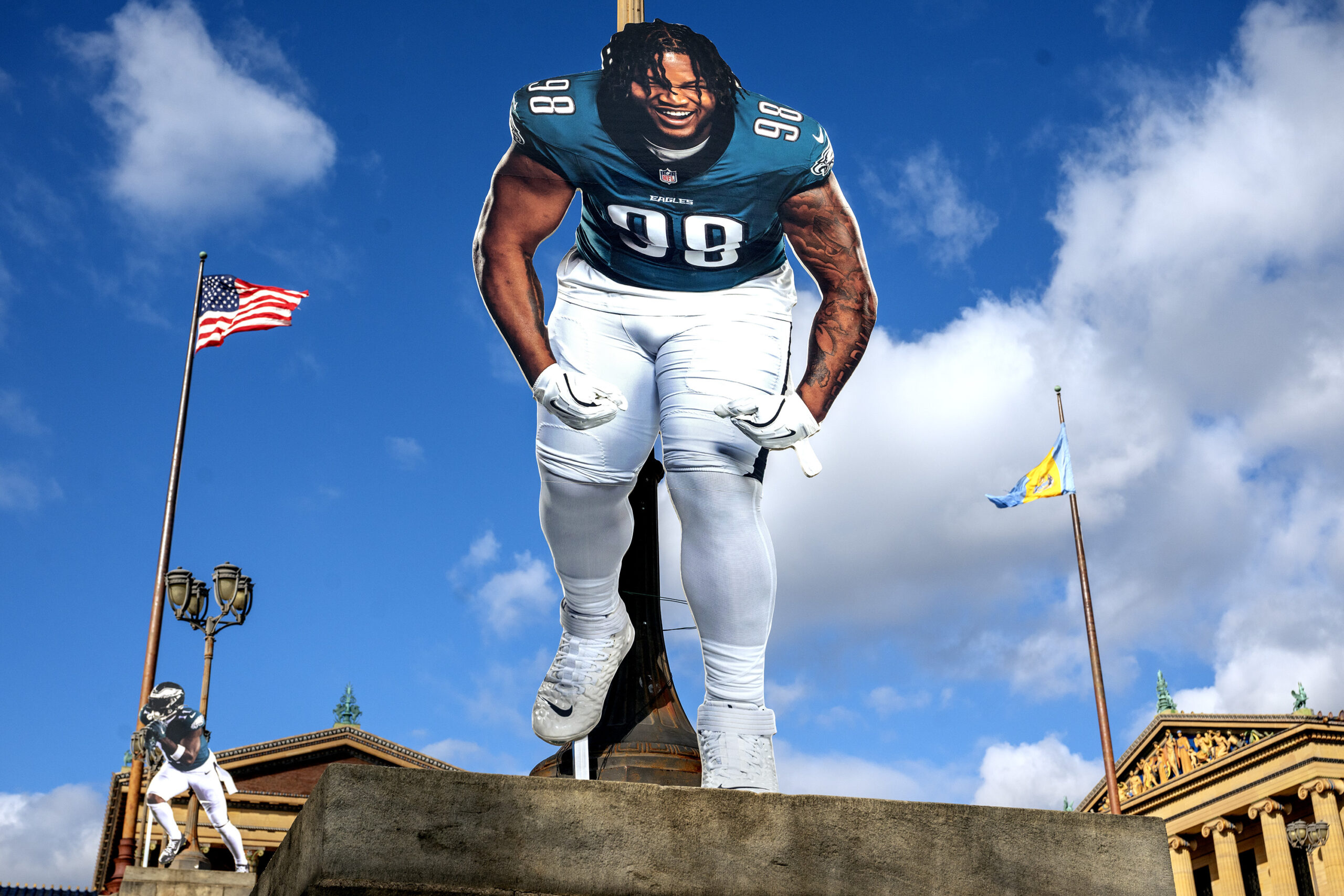
    Ahead of Sunday’s wildcard playoff game against the San Francisco 49ers, the museum put up giant cutouts of four Eagles players on its iconic front steps. The cutouts first appeared in 2014 (before the Birds’ wild-card loss to the New Orleans Saints) and again a few times over the years, including before both Super Bowl wins in 2018 and last year.

    Eagles defensive tackle Jalen Carter (and wide receiver A.J. Brown, lower left).

    The newspaper already has lots of photos from the steps, including many of that movie prop, but I knew the city’s Art Commission is voting next week to see if it stays, or not.

    So what’s one — or two — more? (There are currently two versions at the museum!)

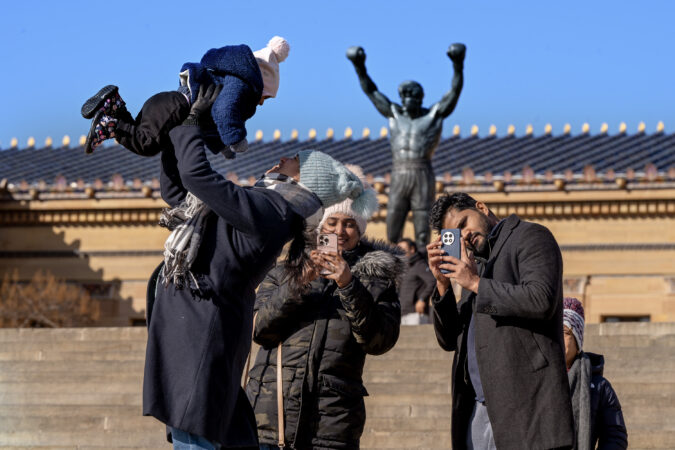
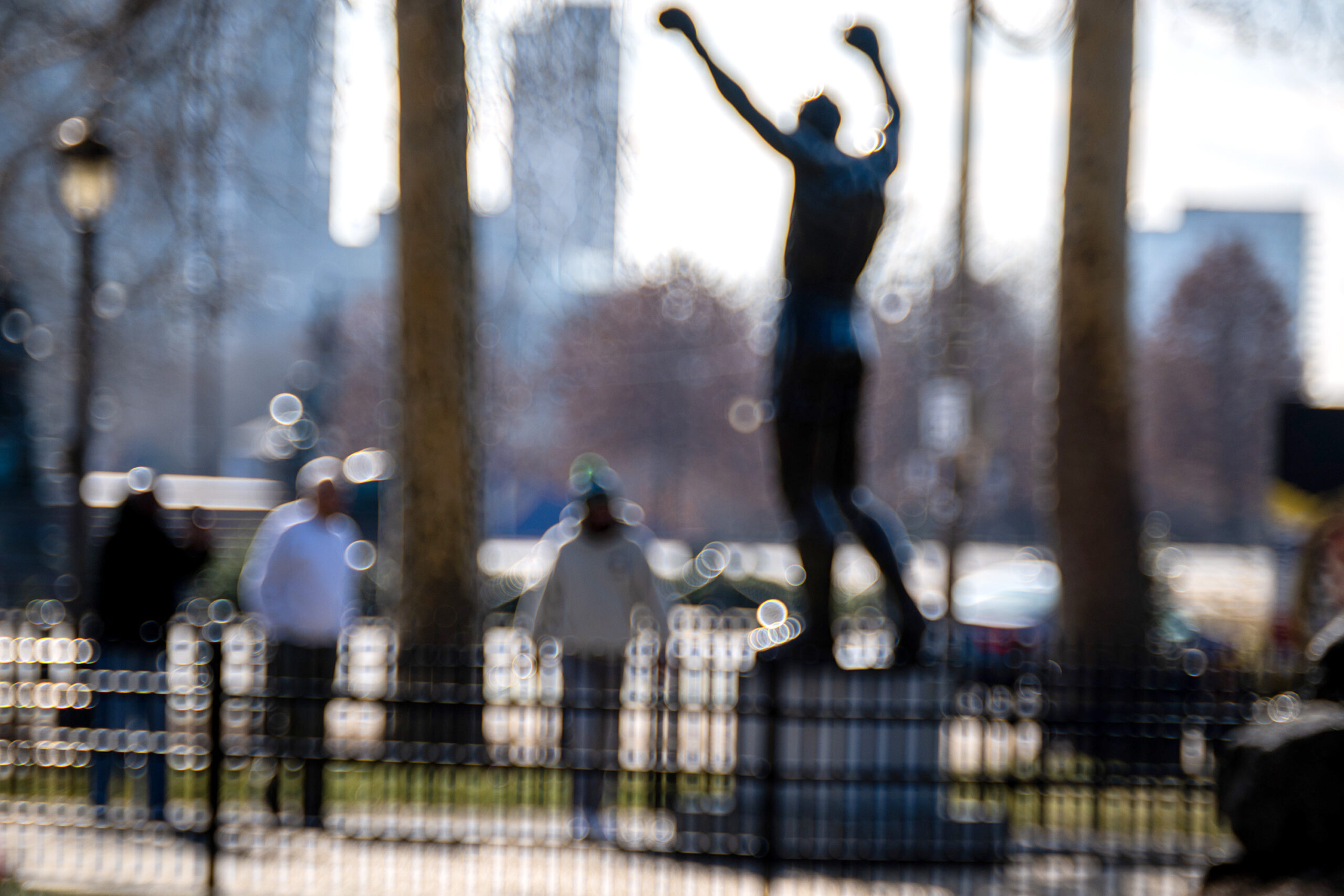
    That famous movie prop seen out-of-focus – and captured – between changing f-stops for different depths-of-field. Did you know (spoiler alert, there is math involved) that an f-stop is the numerical value of the ratio of the focal length of the lens to the diameter of its aperture.

    If it stays, the “original” version of the statue from 1982’s Rocky III that now sits at street level would be moved inside the museum for an exhibit this summer, then go back outside and installed at the top of the steps “permanently.” And the “second casting” statue there now “temporarily” would be returned to Sylvester Stallone.

    (If it sounds like I have more than a passing interest in this, I do. Reporter Mike Vitez and I spent an entire year on the steps to produce the locally best-selling book Rocky Stories: Tales of Love, Hope, and Happiness at America’s Most Famous Steps.)

    It was that really nice, warm sprint-like day we had on Wednesday, following those bitterly cold first days of 2026, so I didn’t mind being outside making “stock” photos.

    And THAT’S when I spotted a real moment — the kind photographers live for — of the family taking selfies on the steps, and how I ended up making the photo at the very top of this column.

    Since 1998 a black-and-white photo has appeared every Monday in staff photographer Tom Gralish’s “Scene Through the Lens” photo column in the print editions of The Inquirer’s local news section. Here are the most recent, in color:

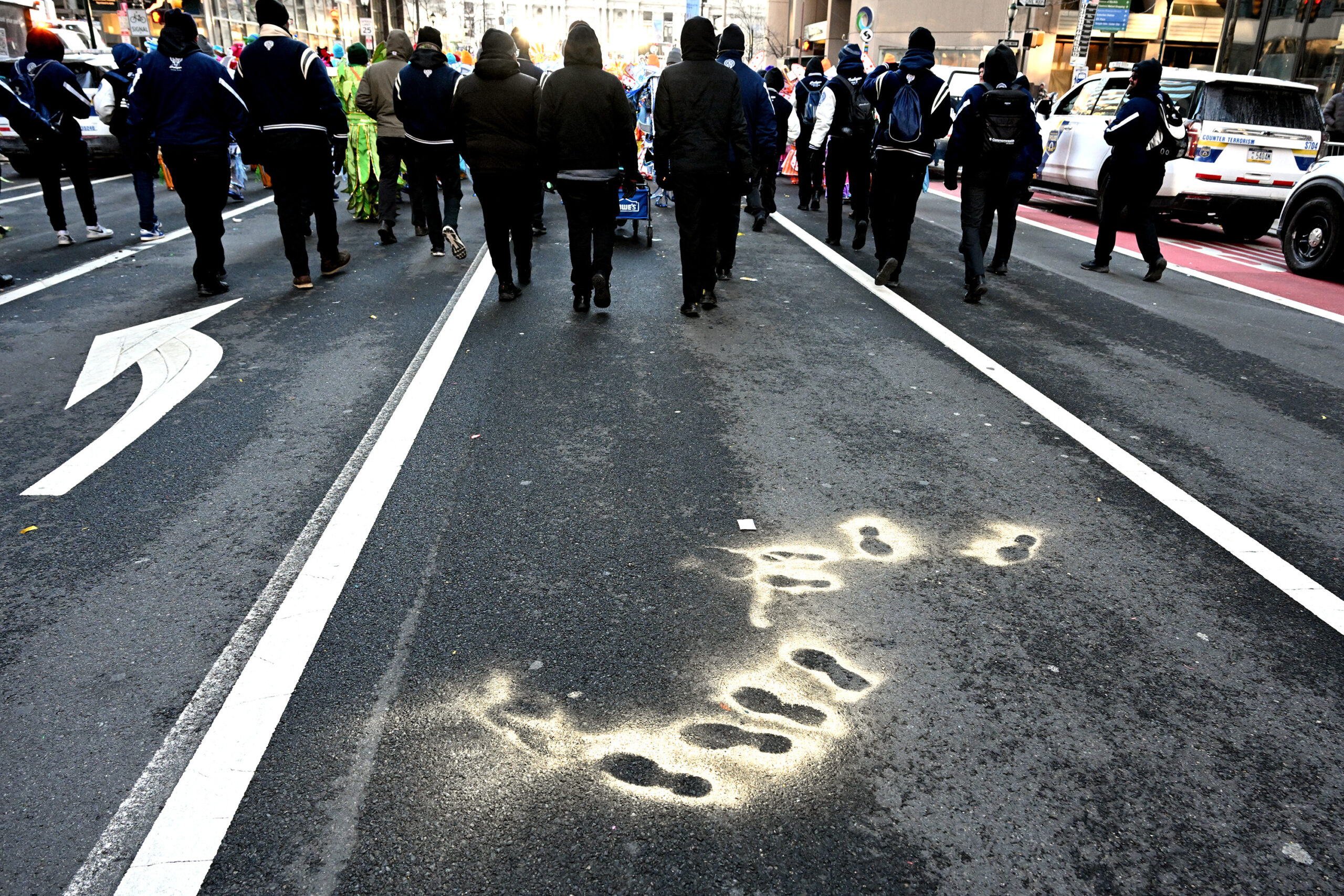
    January 5, 2026: Parade marshals trail behind the musicians of the Greater Kensington String Band heading to their #9 position start in the Mummers Parade. Spray paint by comic wenches earlier in the day left “Oh, Dem Golden Slippers” shadows on the pavement of Market Street. This year marked the 125th anniversary of Philly’s iconic New Year’s Day celebration.
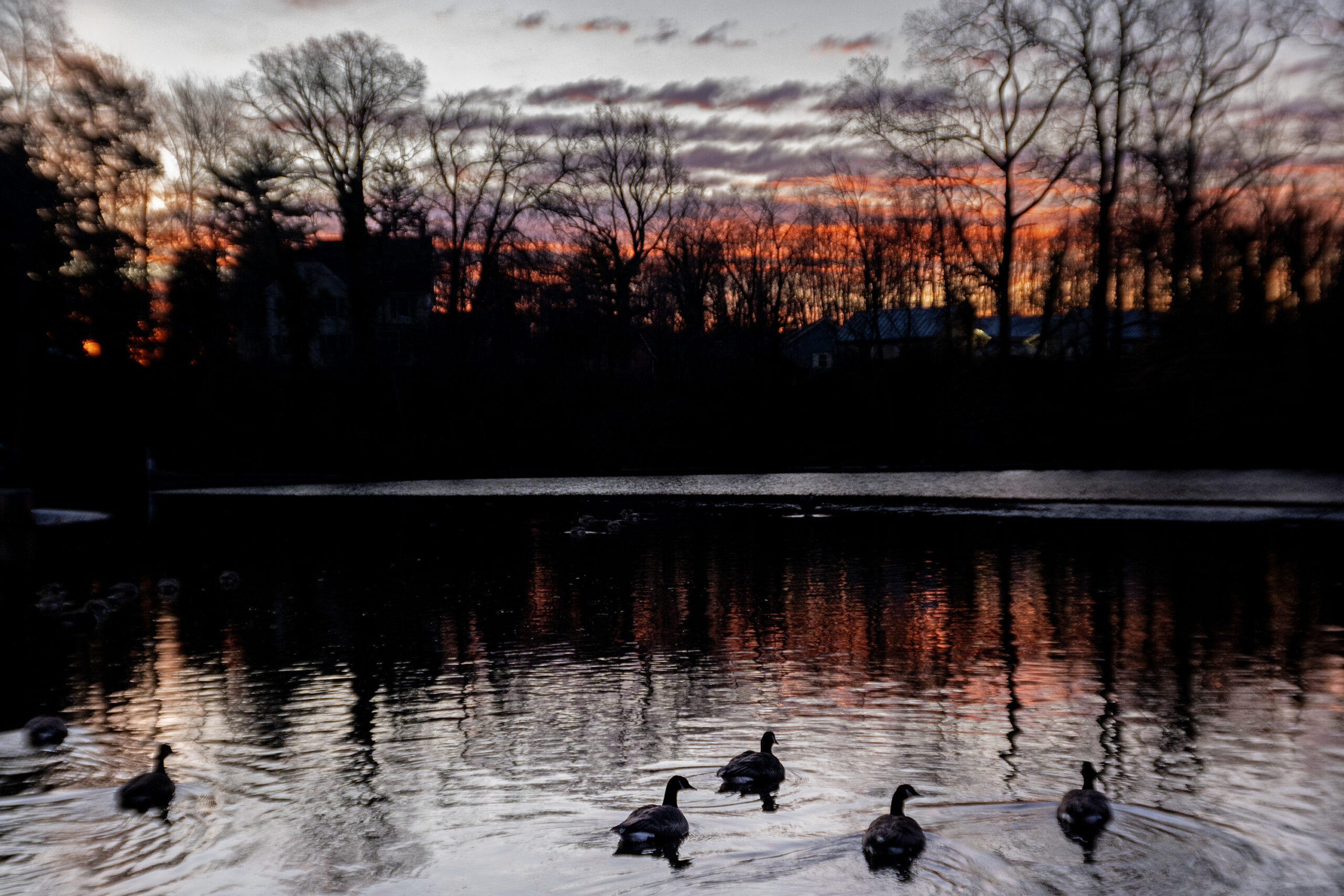
    Dec. 29, 2025: Canada geese at sunrise in Evans Pond in Haddonfield, during the week of the Winter Solstice for the Northern Hemisphere.
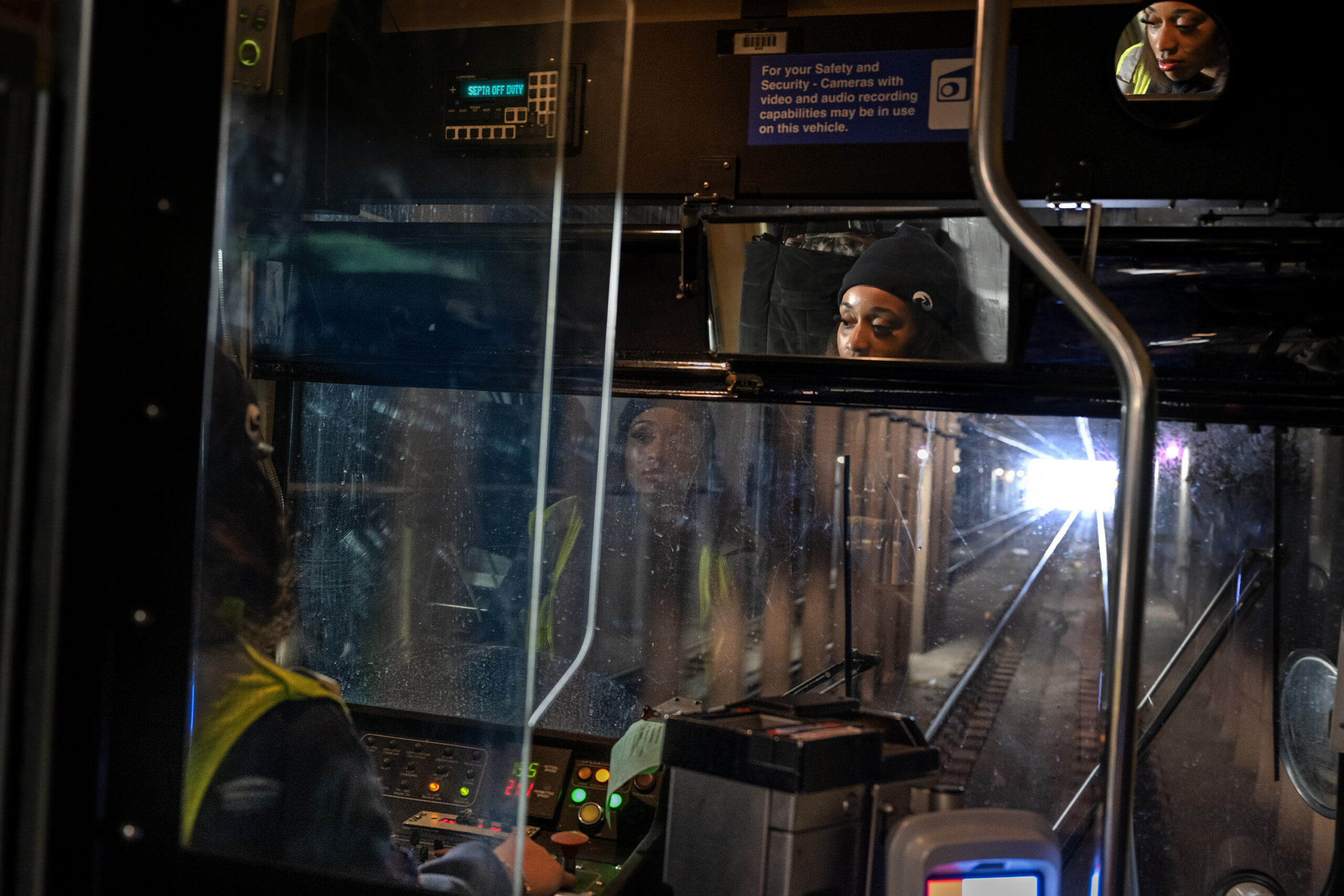
    December 22, 2025: SEPTA trolley operator Victoria Daniels approaches the end of the Center City Tunnel, heading toward the 40th Street trolley portal after a tour to update the news media on overhead wire repairs in the closed tunnel due to unexpected issues from new slider parts.
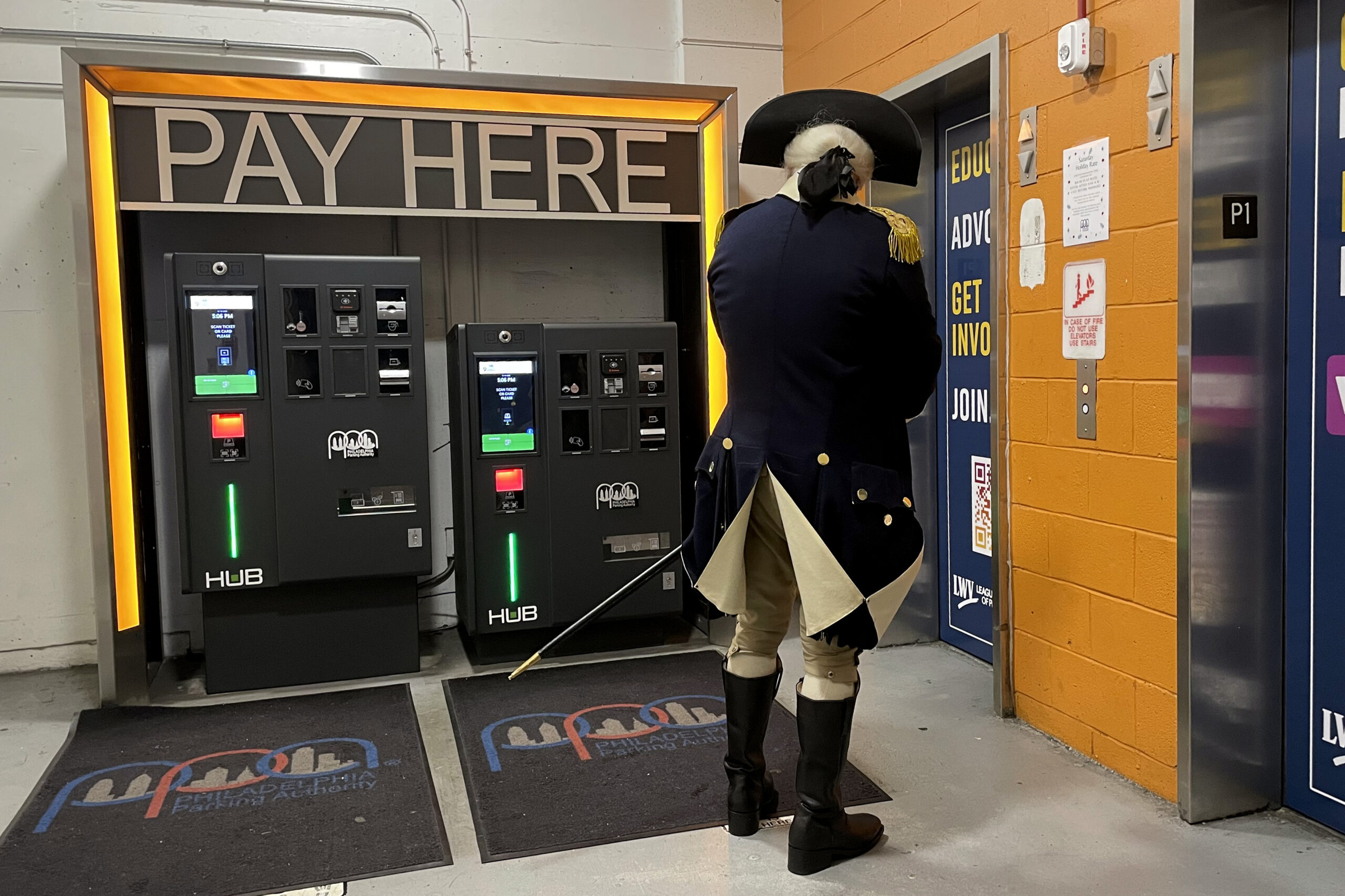
    December 15, 2025: A historical interpreter waits at the parking garage elevators headed not to a December crossing of the Delaware River, but an event at the National Constitution Center. General George Washington was on his way to an unveiling of the U.S. Mint’s new 2026 coins for the Semiquincentennial,
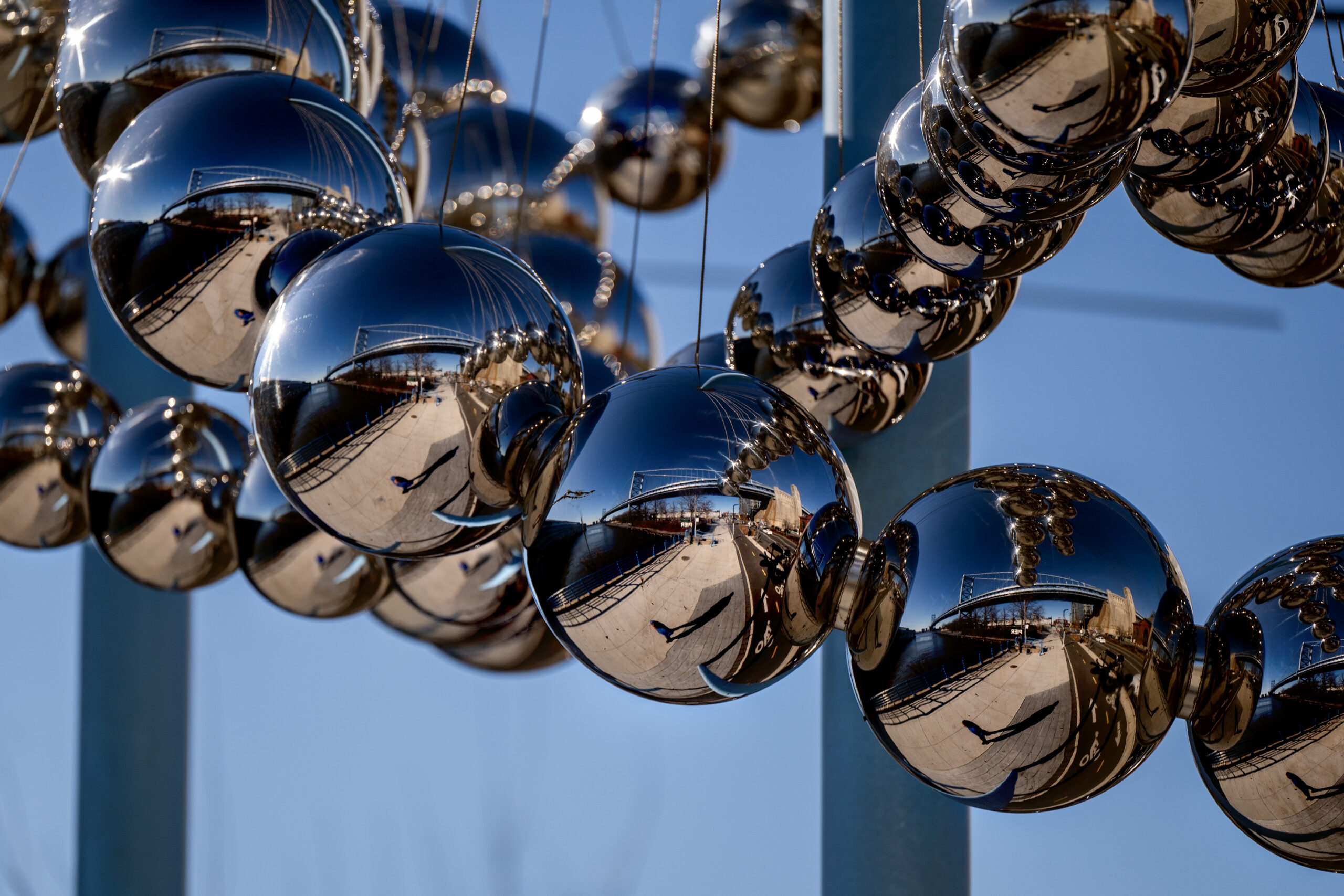
    December 8, 2025: The Benjamin Franklin Bridge and pedestrians on the Delaware River Trail are reflected in mirrored spheres of the “Weaver’s Knot: Sheet Bend” public artwork on Columbus Boulevard. The site-specific stainless steel piece located between the Cherry Street and Race Street Piers was commissioned by the City’s Public Art Office and the Delaware River Waterfront Corporation and created and installed in 2022 by the design and fabrication group Ball-Nogues Studio. The name recalls a history that dominated the region for hundreds of years. “Weaver’s knot” derives from use in textile mills and the “Sheet bend” or “sheet knot” was used on sailing vessels for bending ropes to sails.
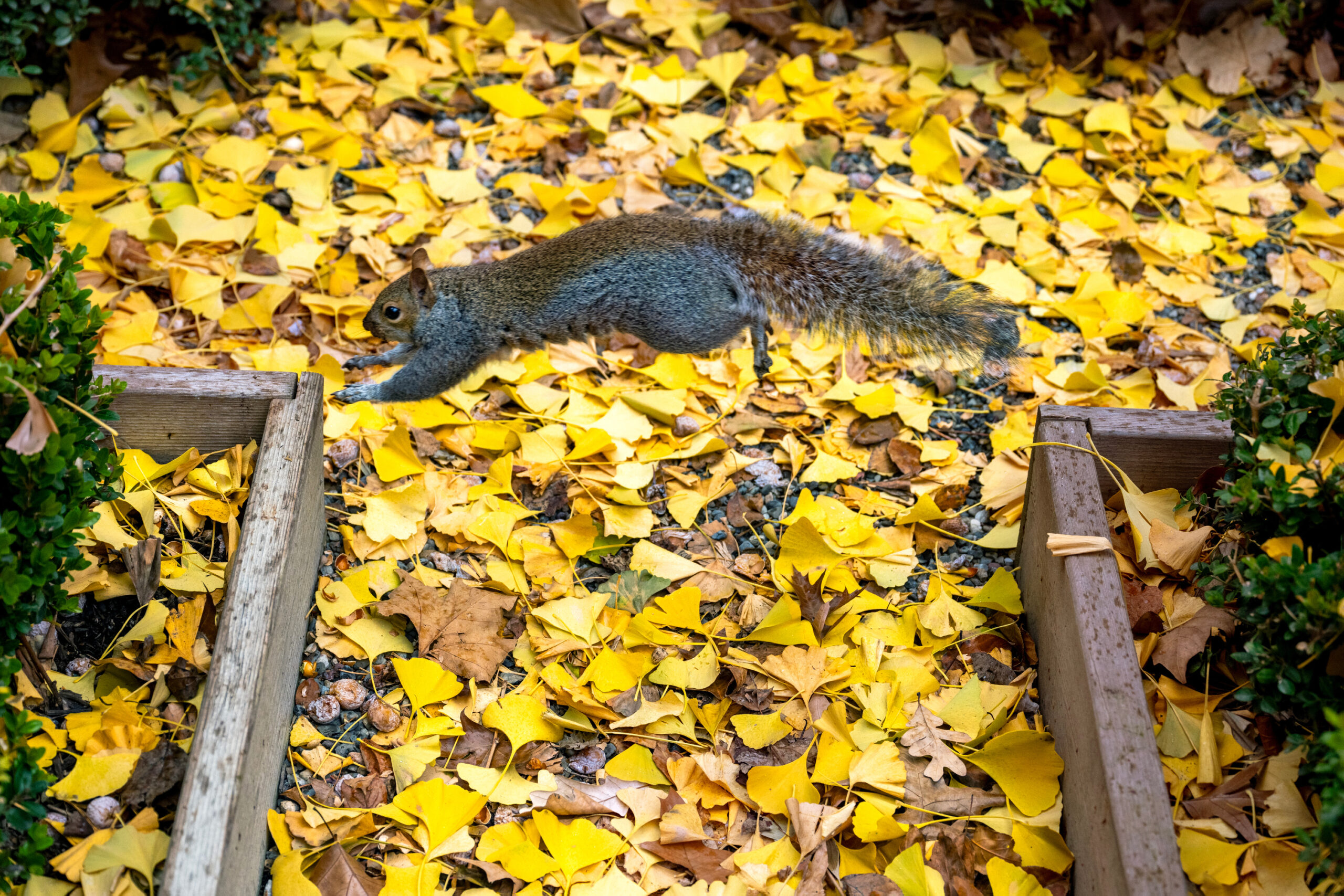
    November 29, 2025: t’s ginkgo time in our region again when the distinctive fan-shaped leaves turn yellow and then, on one day, lose all their leaves at the same time laying a carpet on city streets and sidewalks. A squirrel leaps over leaves in the 18th Century Garden in Independence National Historical Park Nov. 25, 2025. The ginkgo (Ginkgo biloba) is considered a living fossil as it’s the only surviving species of a group of trees that existed before dinosaurs. Genetically, it has remained unchanged over the past 200 million years. William Hamilton, owner the Woodlands in SW Phila (no relation to Alexander Hamilton) brought the first ginkgo trees to North America in 1785.
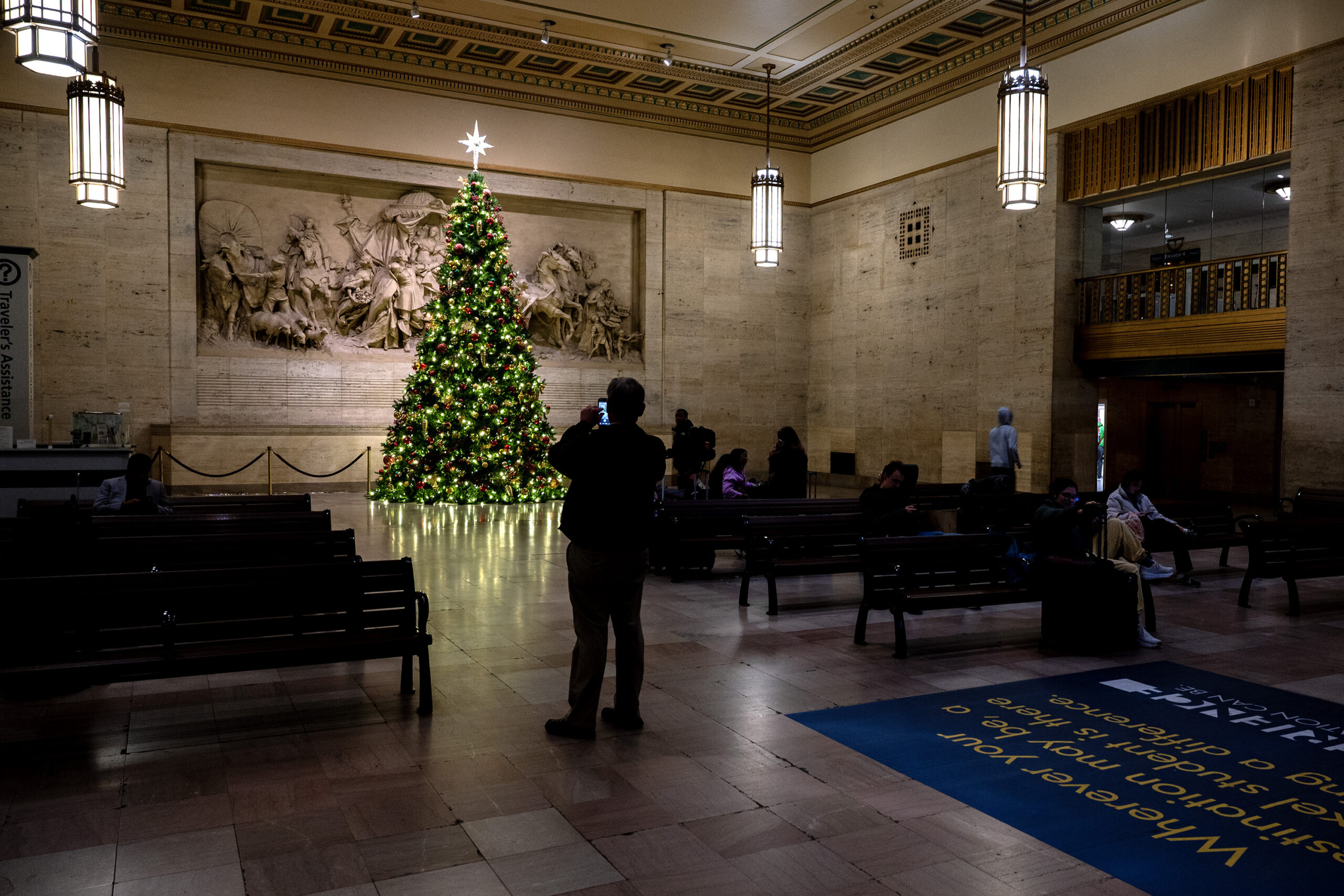
    November 24, 2025: The old waiting room at 30th Street Station that most people only pass through on their way to the restrooms has been spiffed up with benches – and a Christmas tree. It was placed there this year in front of the 30-foot frieze, “The Spirit of Transportation” while the lobby of Amtrak’s $550 million station restoration is underway. The 1895 relief sculpture by Karl Bitter was originally hung in the Broad Street Station by City Hall, but was moved in 1933. It depicts travel from ancient to modern and even futuristic times.
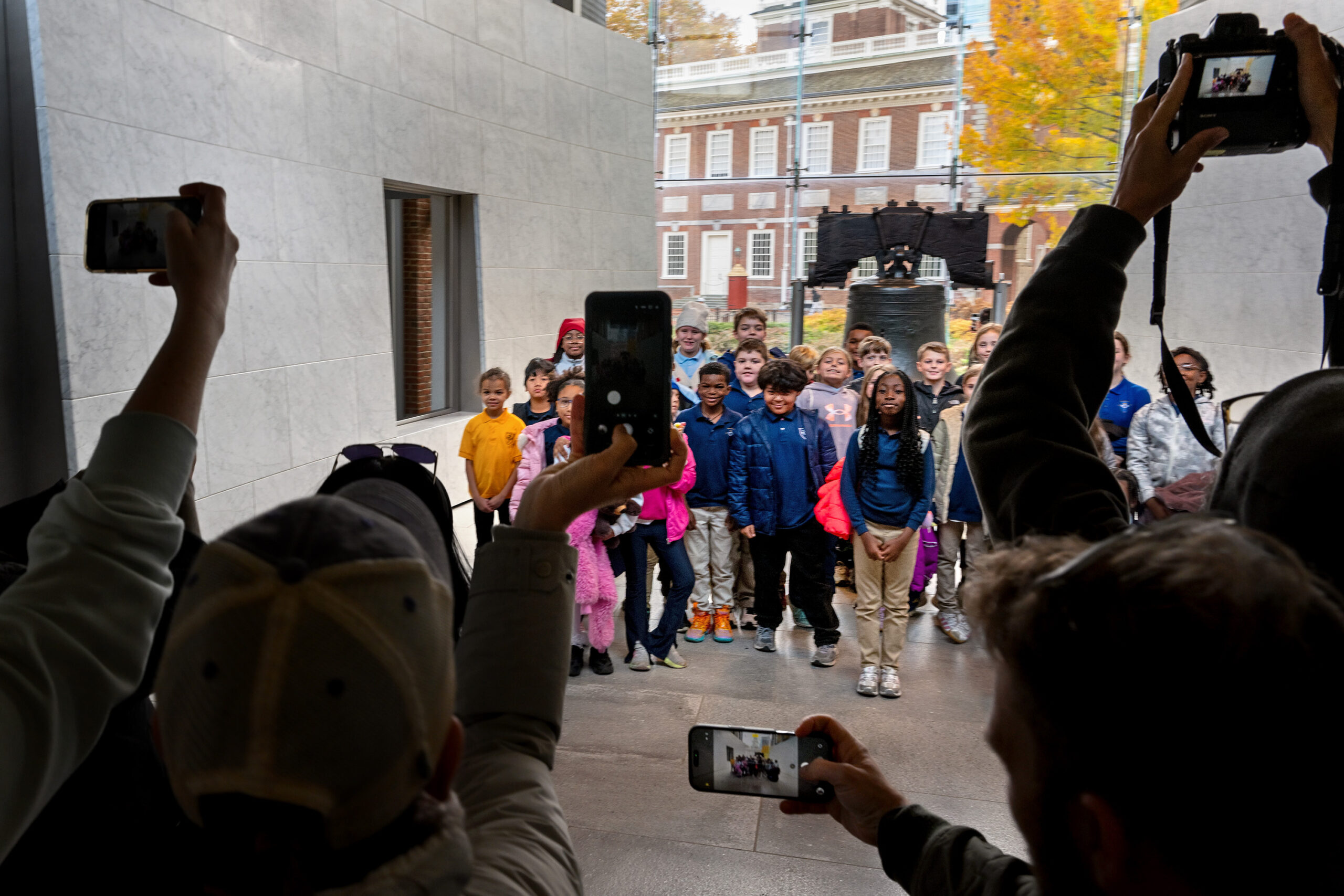
    November 17, 2025: Students on a field trip from the Christian Academy in Brookhaven, Delaware County, pose for a group photo in front of the Liberty Bell in Independence National Historical Park on Thursday. The trip was planned weeks earlier, before they knew it would be on the day park buildings were reopening after the government shutdown ended. “We got so lucky,” a teacher said. Then corrected herself. “It’s because we prayed for it.”
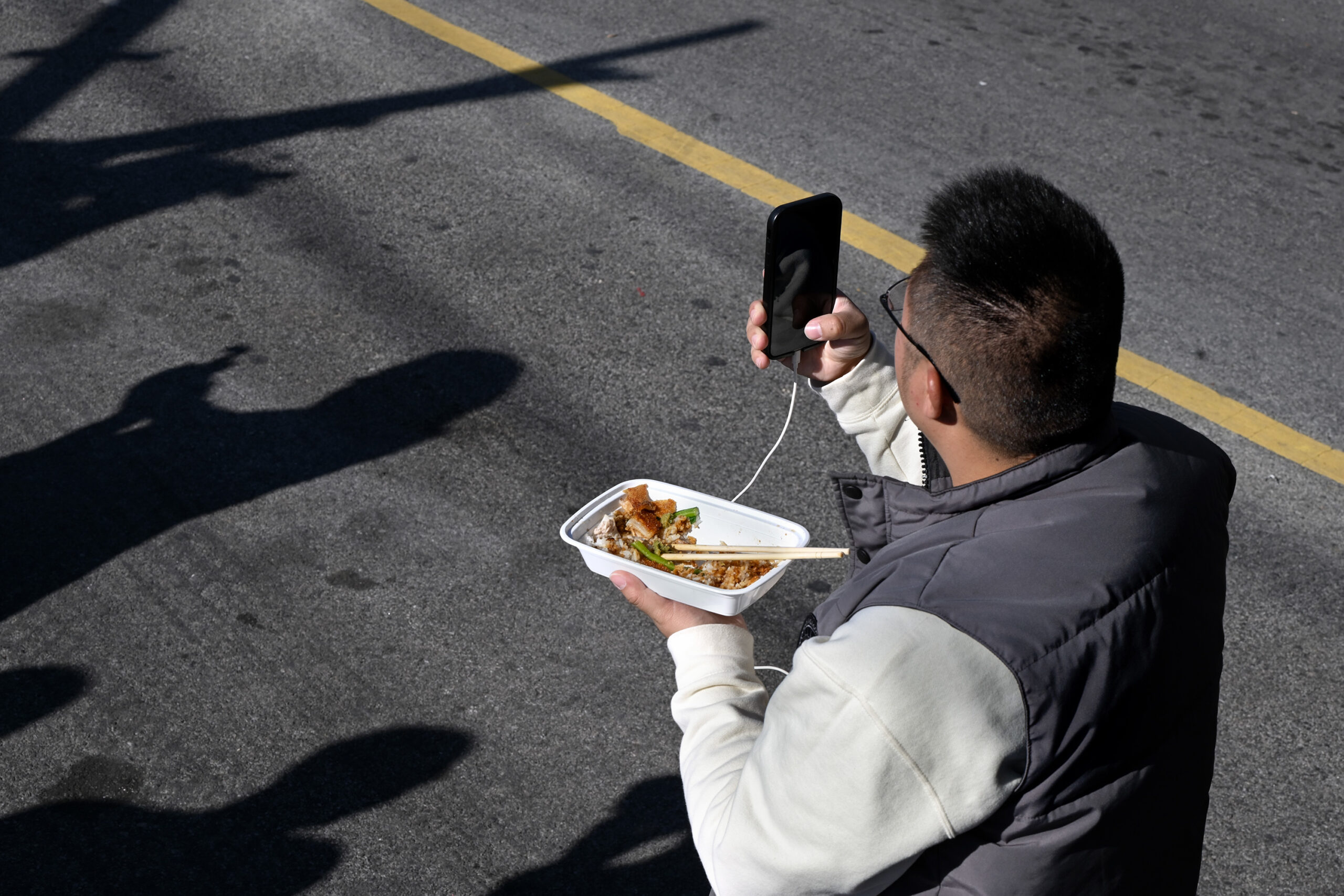
    November 8, 2025: Multitasking during the Festival de Día de Muertos – Day of the Dead – in South Philadelphia.
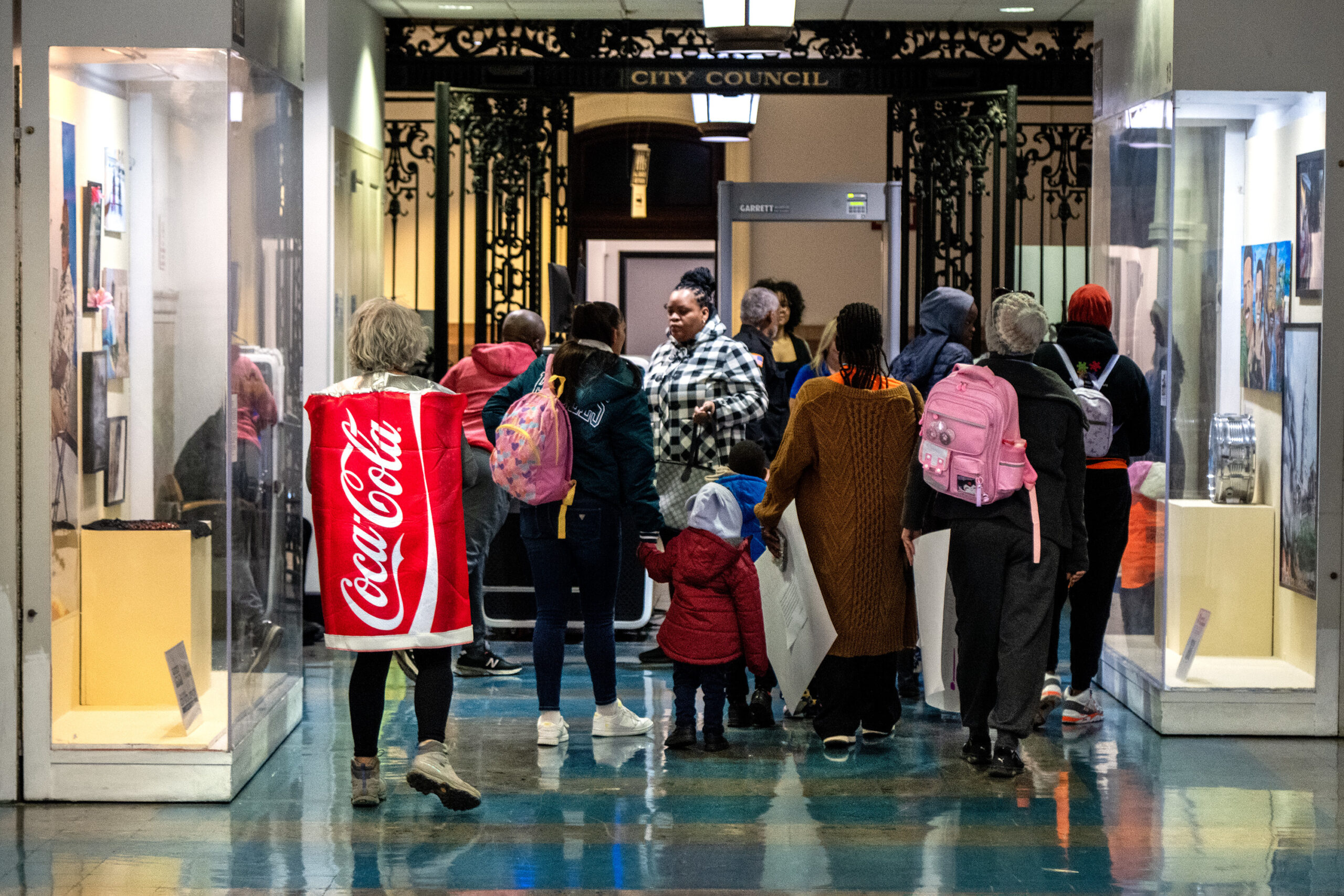
    November 1, 2025: Marcy Boroff is at City Hall dressed as a Coke can, along with preschoolers and their caregivers, in support of former Mayor Jim Kenney’s 2017 tax on sweetened beverages. City Council is considering repealing the tax, which funds the city’s pre-K programs.
    October 25, 2025: Austin Gabauer, paint and production assistant at the Johnson Atelier, in Hamilton Twp, N.J. as the finished “O” letter awaits the return to Philadelphia. The “Y” part of the OY/YO sculpture is inside the painting booth. The well-known sculpture outside the Weitzman National Museum of American Jewish History was removed in May while construction continues on Market Street and has been undergoing refurbishment at the Atelier at the Grounds for Sculpture outside of Trenton.
    October 20, 2025:The yellow shipping container next to City Hall attracted a line of over 300 people that stretched around a corner of Dilworth Park. Bystanders wondered as they watched devotees reaching the front take their selfies inside a retro Philly diner-esque booth tableau. Followers on social media had been invited to “Climb on to immerse yourself in the worlds of Pleasing Fragrance, Big Lip, and exclusive treasures,” including a spin of the “Freebie Wheel,” for products of the unisex lifestyle brand Pleasing, created by former One Direction singer Harry Styles.
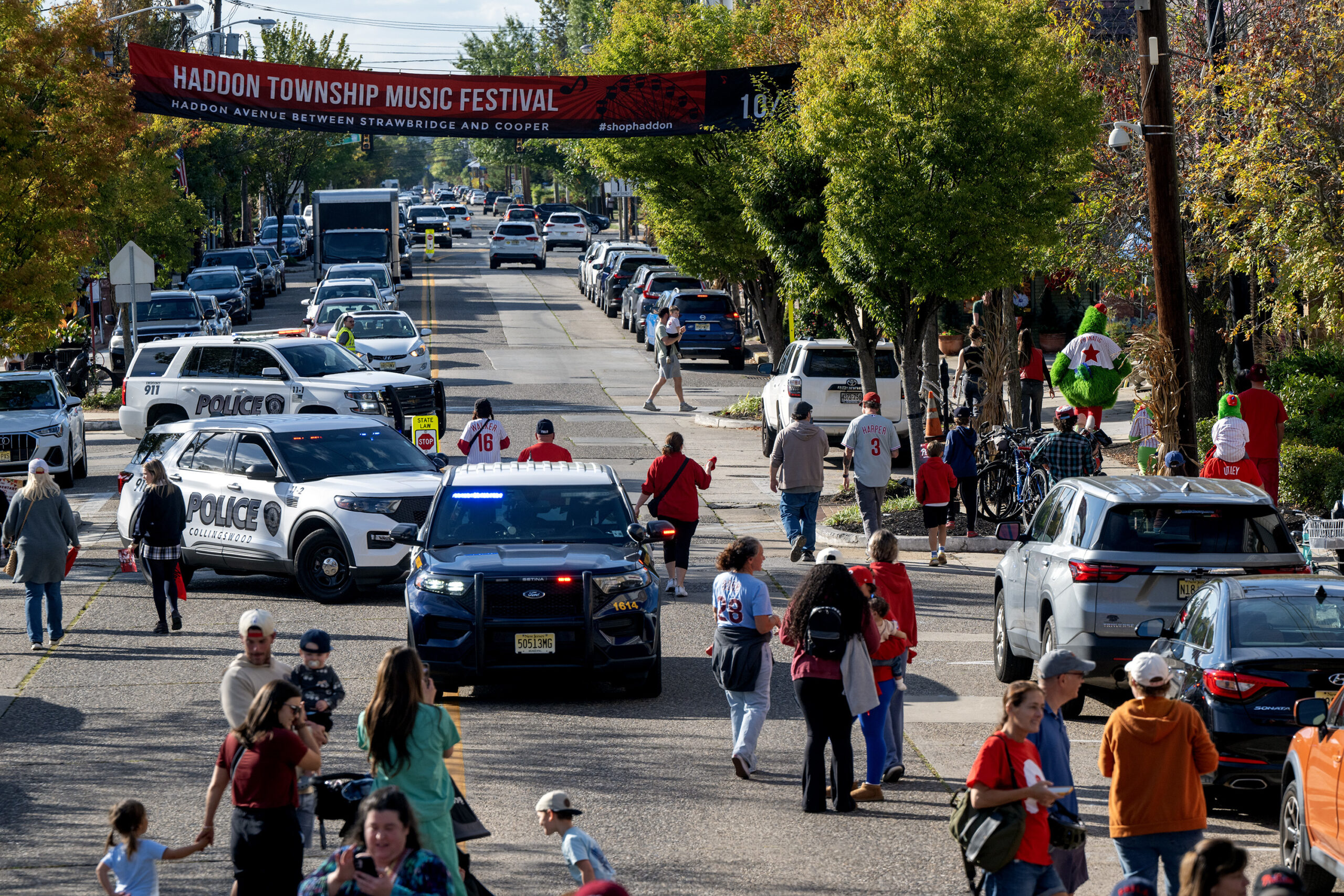
    October 11, 2025: Can you find the Phillie Phanatic, as he leaves a “Rally for Red October Bus Tour” stop in downtown Westmont, N.J. just before the start of the NLDS? There’s always next year and he’ll be back. The 2026 Spring Training schedule has yet to be announced by Major League Baseball, but Phillies pitchers and catchers generally first report to Clearwater, Florida in mid-February.
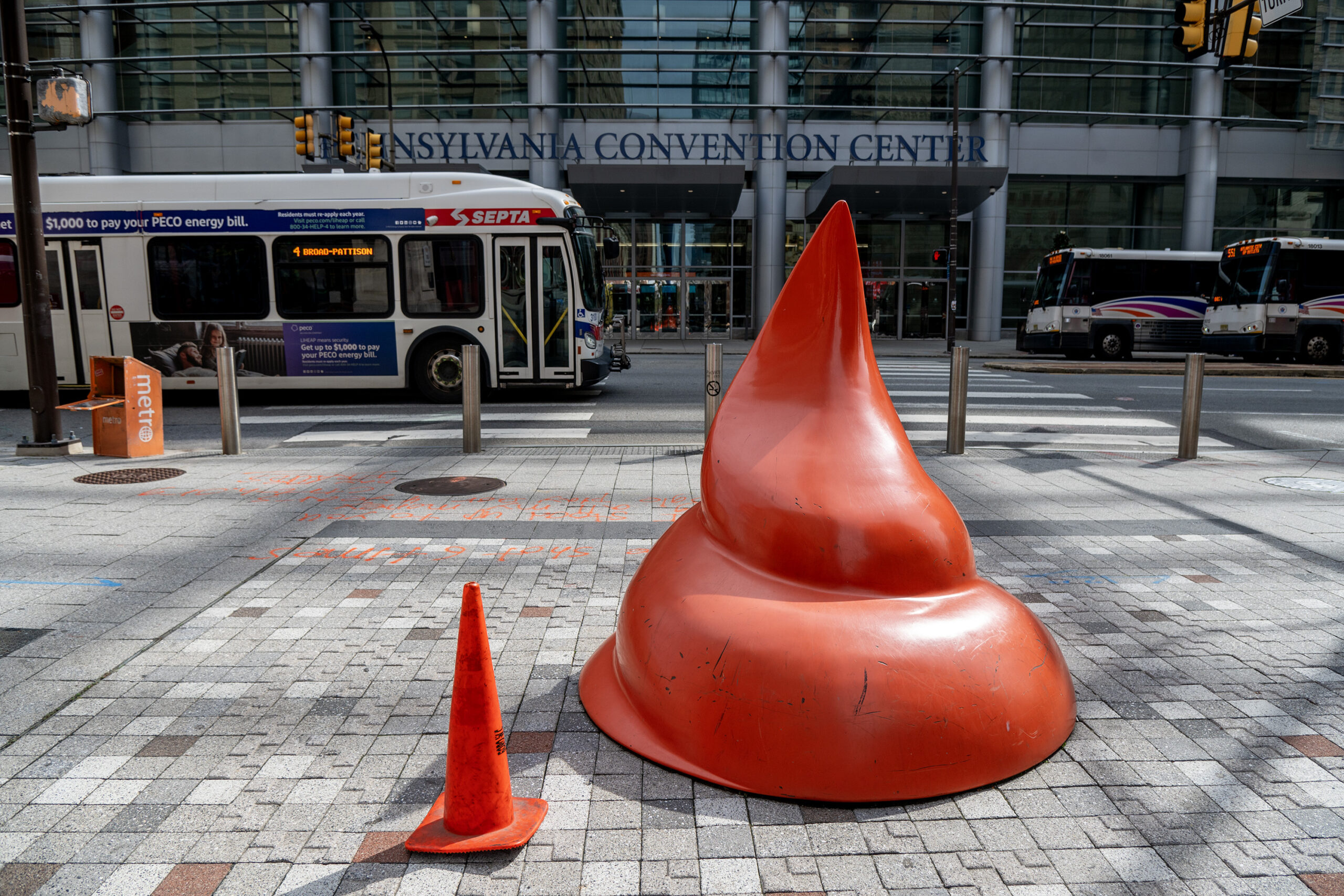
    October 6. 2025: Fluorescent orange safety cone, 28 in, Poly Ethylene. Right: Paint Torch (detail) Claes Oldenburg, 2011, Steel, Fiberglass Reinforced Plastic, Gelcoat and Polyurethane. (Gob of paint, 6 ft. Main sculpture, 51 ft.). Lenfest Plaza at the Pennsylvania Academy of the Fine Arts on North Broad Street, across from the Convention Center.

    » SEE MORE: Archived columns and Twenty years of a photo column.

  • Three best friends from childhood decided to commit — by buying a communal house together

    Three best friends from childhood decided to commit — by buying a communal house together

    The Rachels met each other when they were 5 and 6 years old, and they met Lizzy Seitel — who would come to be known as one of the Rachels despite her name — in middle school.

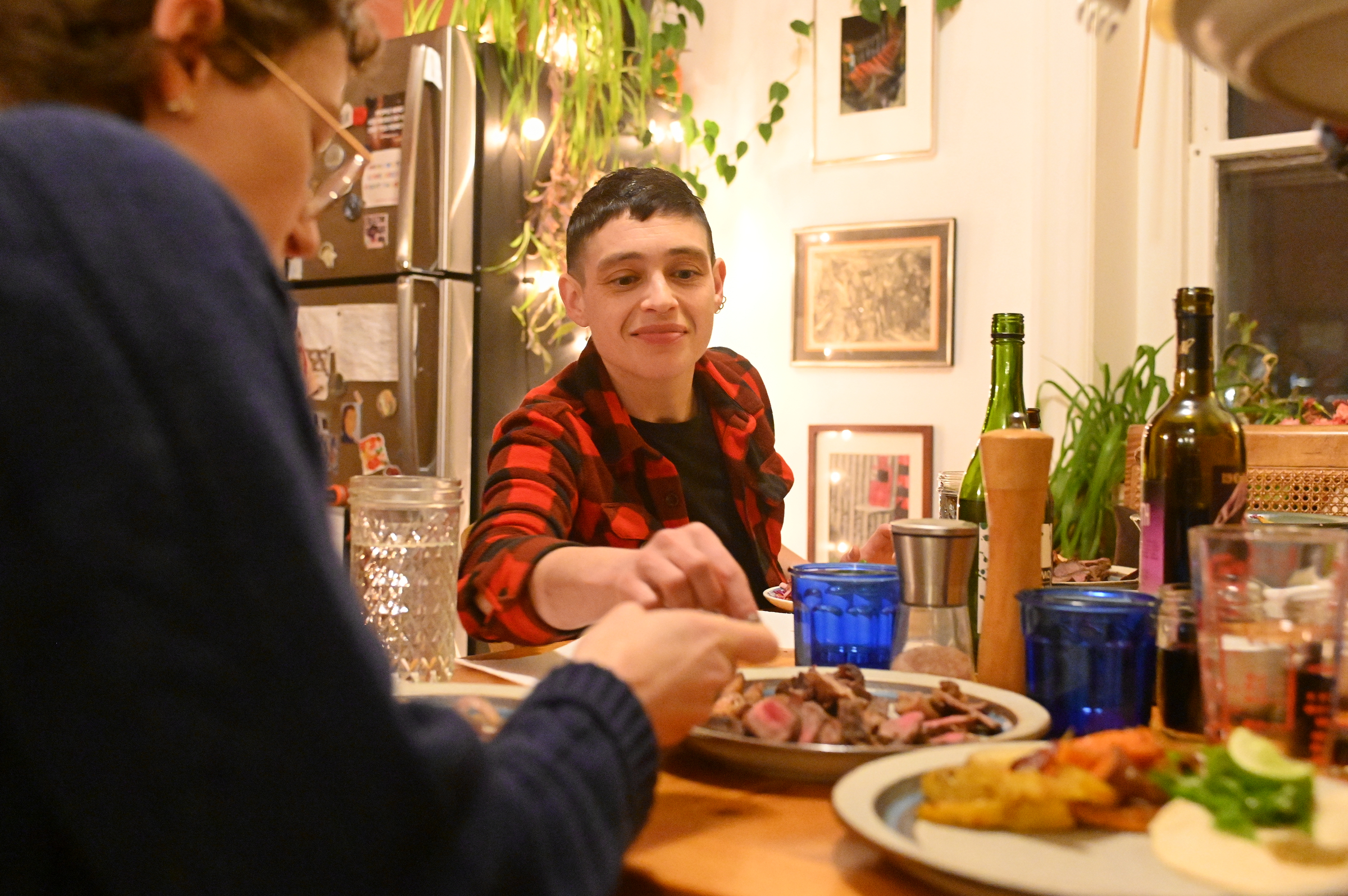
    They all lived in the D.C. area, and one weekend they took part in a retreat with Cheder, a progressive Jewish community in the area. In Seitel’s recollection, they listened to Ani DiFranco, went skinny-dipping, and talked about their fears.

    “It was just a really crazy, beautiful, life-affirming teenage moment,” Seitel, now 38, said.

    It also marked the beginning of a very long friendship.

    Soon after, Rachel (Luban), Rachel (Neuschatz), and Seitel began celebrating winter solstice together with a witchy ritual drawn from a pagan book. In the quarter-century since, they’ve never missed the solstice.

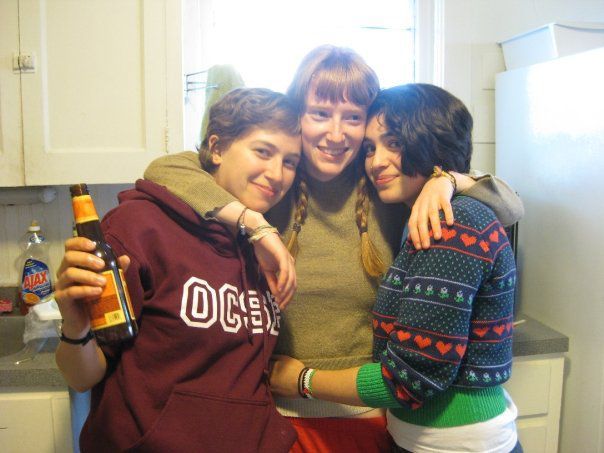
    Rachel Luban (from left), Lizzy Seitel, and Rachel Neuschatz, pictured in college in 2009.

    The Rachels went to the same college; Lizzy went elsewhere. Then, after living apart for some years in their 20s, they decided to settle down, together. By that point, Seitel had married Serge Levin (he grew up in a communal house in Rostov-on-Don, Russia, and was game for an alternative arrangement) and was pregnant with their first child.

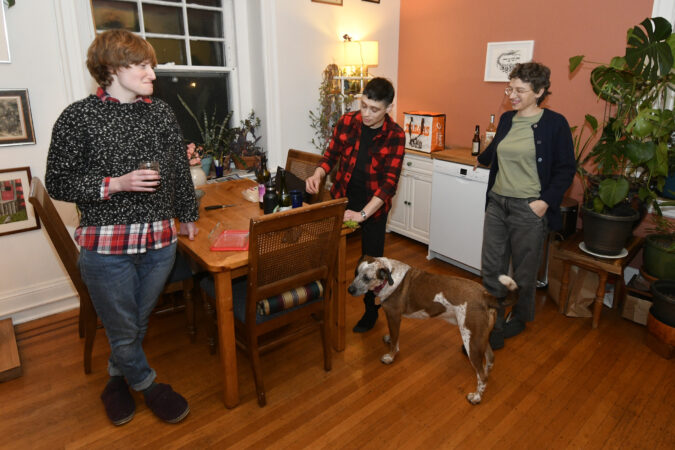
    In 2022 the four bought a giant old stone house in Mount Airy, where they now live communally. They have a shared bank account for the mortgage, house maintenance, and utilities, along with a shared backyard, basement, porch, and Google calendar.

    The Rachels, who both have romantic partners living elsewhere, coparent a dog. Seitel and Levin’s two young children call the Rachels Aunt Lu and Aunt Nu.

    The following, as told to Zoe Greenberg in separate interviews, has been edited for length and clarity and combined.

    On meeting each other as kids

    Rachel Neuschatz: I consider myself a red diaper baby [a term to describe the kids of radical/Communist parents]. We lived in a single family home, but we were always involved with the Jewish community Cheder. Rachel Luban and I were in it starting from age 5.

    Lizzy Seitel: I grew up in a pretty typical nuclear family, in most ways. But my parents always had an extra room, and they were always having people come stay with us. There was this feeling of people coming in and out, and I really loved that — just the idea of family being expansive.

    It was always my fantasy to live in a boarding house.

    Rachel Luban and Rachel Neuschatz at house dinner.

    Rachel Luban: I feel like we raised each other, and those relationships have always felt as central to me as romantic relationships. Romantic partnership was part of my vision, but as a kid I would never dream about getting married.

    On the ‘palace of dreams’

    Lizzy Seitel: The Rachels and I always talked about creating a palace of dreams.

    Rachel Neuschatz: We’d always talked very vaguely about living together. Of course, people loved to tell us it wouldn’t work, which is a very funny, ubiquitous response.

    Rachel Luban: We had been talking for many years about wanting a more communal living situation, some kind of cohousing. We didn’t know exactly what that would look like.

    Lizzy was very rooted in Philly. She’d been here for maybe 10 years, she was married, she was pregnant.

    So both Rachel and I decided to move to Philly in 2019. We moved within a month of each other, and we were all living in separate apartments in South Philly.

    On choosing to buy a house together

    Lizzy Seitel: Having a kid, and then it being the pandemic, it was like, “Oh yeah, the nuclear family is bulls—. This is not how anyone should raise kids.”

    Rachel Luban: Even though we were all living in South Philly, less than a half hour walk from each other, it felt like seeing each other had to be this big planned thing and you had to clear your night for it.

    We wanted lower barriers to spending time together, and more incidental interactions.

    On searching for the right place

    Rachel Luban: There was really no road map, and that was very challenging. We didn’t have many people to talk to. There are all of these logistics to figure out: Should we become an LLC? We decided not to do that, because then we would need a commercial mortgage.

    We wanted a single structure that had separate units. So everyone has their own door, everyone has their own kitchen, but there are some common spaces, and we’re all really close together.

    We made our own basic boundaries about what percentage of the property each person would own and therefore, what percentage of the finances they would be responsible for.

    Our runner-up was this former nunnery that was three huge conjoined West Philly rowhomes. It had one giant kitchen, 13 bathrooms, and a lot of institutional carpeting. It was kind of cool, but also just an insane space.

    The place we eventually found felt like it fell from heaven, because nothing else came close.

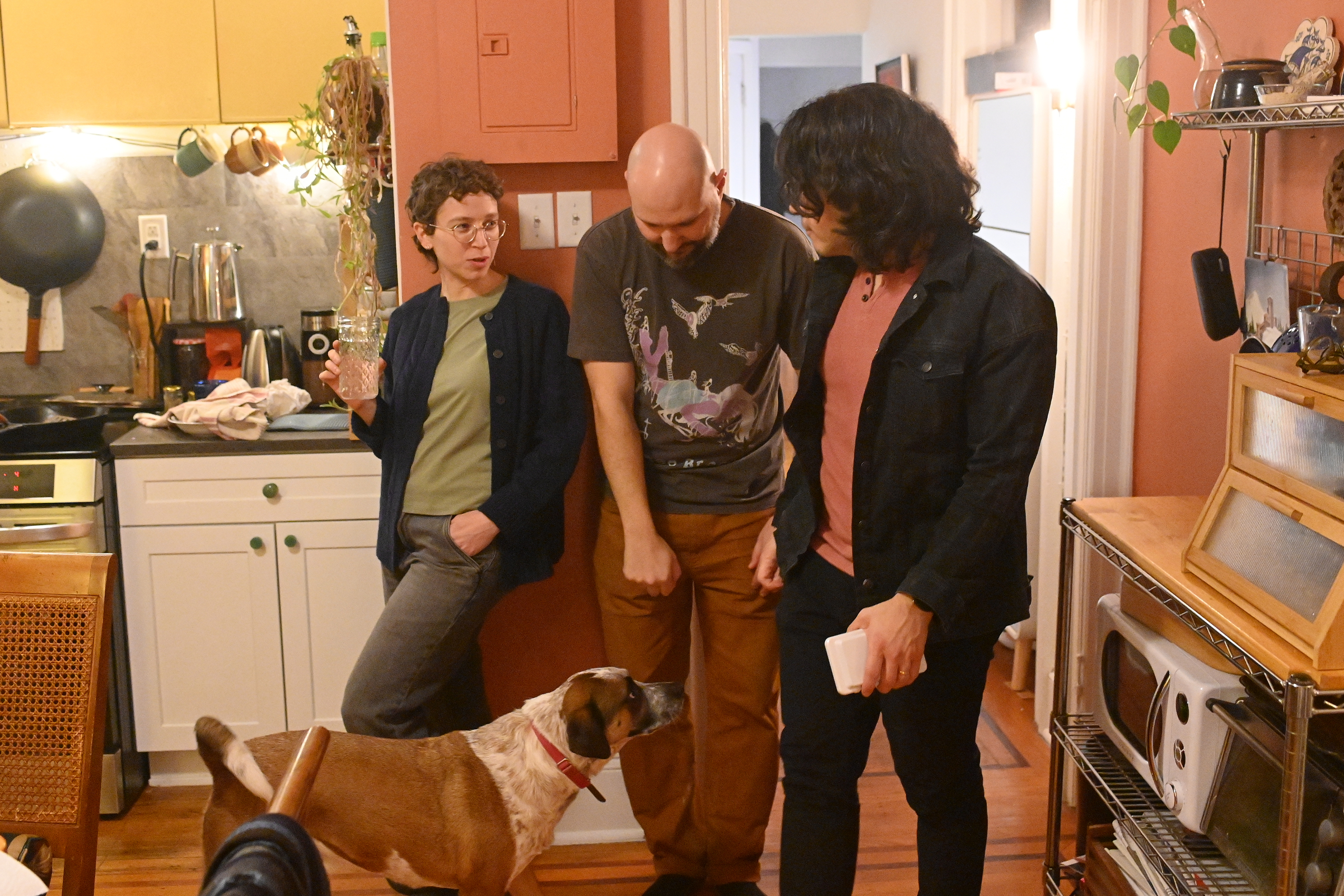
    Rachel Luban, house friend Fadi Awadalla, and Serge Levin share a moment in the kitchen.

    On committing

    Lizzy Seitel: I knew that these are the people that are the most committed to me, besides Serge. I know we can fight and that we’re always gonna want to come back together. There’s no question of, is this friendship gonna last? We’re gonna make it last.

    Rachel Luban: A lot of people, including lawyers, told us not to do this. They were like, “You intertwine your lives, and then somebody has a falling out, or somebody wants to move, and then you’re in a mess.”

    In a certain way, I think it required the kind of psychological commitment that people make when they get married, where they’re throwing their chips in together. Knowing that if something happens, it could be really messy.

    We decided we trust each other enough to think that if something changes, everyone will act with good faith.

    On their friendships now

    Rachel Luban: You get to know people in a different way, and your fates are more tied together. We had to replace our entire heating system, which is actually three different heating systems. There’s a range of different feelings about spending money and what kind of upkeep the house needs. Even whether we should mow the lawn was a discussion that we had to have.

    Lizzy Seitel: We might not live in this house or in this arrangement for every year until we die, but we’re thinking that far ahead — about aging and wanting to be together in this life. That feels like a commitment to each other’s future.

    Rachel Neuschatz: Probably I will not formally parent. Maybe it’ll still happen, but that’s not on my bucket list. Lizzy’s kids are like my niblings — nieces and nephews.

    On telling other people:

    Rachel Luban: Most people are like, “I’m jealous. I want to do that.” Then a minority of people are like, “That’s my personal hell.”

    Lizzy Seitel: I feel like there’s this thing of people not knowing that they’re allowed to commit to their friends, or have their friends commit to them.

    Rachel Neuschatz: I cap myself from gushing too much, because I don’t want to be a jerk. But yeah, it’s a goddamn paradise that we’ve made ourselves.


    This is part of an occasional series about life partners across the Philadelphia area. If you want to share your story about who you’re navigating life with romantically or otherwise, write to lifepartners@inquirer.com. We won’t publish anything without speaking to you first.

  • Do I risk my stress-free run club for a relationship that might not work out?

    Do I risk my stress-free run club for a relationship that might not work out?

    Is it worth it to risk part of your community for love? I invited two Inquirer staffers — one runner, and a running hater who likes drama —to help answer the question.

    Have a question of your own? Or an opinion? Email me.

    Evan Weiss, Deputy Features Editor

    This week’s question is…

    I’m in a run club, which I love because it’s chill. But, there’s another runner I want to date. Do I risk my stress-free run club for a relationship that might not work out?

    Bedatri D. Choudhury, Arts & Entertainment Editor (hobby runner)

    I am a hobby runner but was in a run club once, let’s go!

    Beatrice Forman, Food and Dining Reporter (running hater)

    Did you ever hit on anyone in your run club, Bedatri? Or get hit on?

    Bedatri D. Choudhury

    I joined a run club because I was new to the country and read somewhere that it’s a great place to socialize. That or Equinox. I couldn’t afford Equinox.

    It’s a group of fit people sweating together. I don’t think it graduated to hitting on, but there was definitely some scoping out.

    Beatrice Forman

    I actually went to one of those run clubs for singles last year for a story that never saw the light of day and got hit on twice! And even then, it felt a little out of place to me given that it’s hard to banter while jogging.

    Bedatri D. Choudhury

    Take it outside the club. Get their number, text, etc.

    Should someone do it? I’d lean toward yes, go ahead and date.

    Beatrice Forman

    That makes sense, though I guess I wonder what happens after.

    If you make a move and it doesn’t work out, or you date and it also doesn’t work out, do you keep showing up? Who gets custody of the run club?

    Bedatri D. Choudhury

    A run club is low stakes. I know a couple that are not breaking up formally because they share a couples-only rate for a Life Time gym membership.

    Beatrice Forman

    I would tolerate so much for a discounted Life Time membership.

    I did have a friend who hooked up with too many people in her run club that she was asked to leave, actually. And another who broke up with a fellow runner and then left because she had to watch them flirt with other runners.

    So your mileage literally does vary.

    Bedatri D. Choudhury

    I just think it’s about not dragging others into your drama. If it’s not working out makes you incapable of seeing this person again, just opt out of the run club. Better still, start one of your own.

    But hey, if it works out then it’s a whole world of possibilities.

    Beatrice Forman

    I’m definitely in the shoot-your-shot camp, but she needs to be mindful of how she makes her move.

    I know a lot of people are turned off by the idea of mixing running and romance (source: I read an article about this), so I would hate for her to put herself out there — which is good — and then get shunned because she didn’t respect the vibes of the club.

    Bedatri D. Choudhury

    I am totally in the shoot-your-shot tent too, but if this club is very important to her, she should also be mindful if the date doesn’t go well.

    Beatrice Forman

    Yes! I personally would never risk having to give up a space or hobby that matters to me over a partnership gone south. There’s more to life than literally running toward a relationship, so it’s really up to her if she likes the person enough to see it through.

    Bedatri D. Choudhury

    Yeah my parents met at work and kept working together for 40-something years. Go get an acai bowl and talk about your favorite color. Like a wise man once said, “You have brains in your head. You have feet in your [running] shoes. You can steer yourself any direction you choose.”

    Beatrice Forman

    Is that wise man Dr. Seuss?

    Bedatri D. Choudhury

    Yes.

    Beatrice Forman

    I vote that she discreetly asks for their number while they do quad stretches or whatever it is that you’re supposed to do to warm up.

    Bedatri D. Choudhury

    Then if the club throws you out, you can run together.

  • Philly’s ramen power couple, now living in Tokyo, are thriving in noodle paradise

    Philly’s ramen power couple, now living in Tokyo, are thriving in noodle paradise

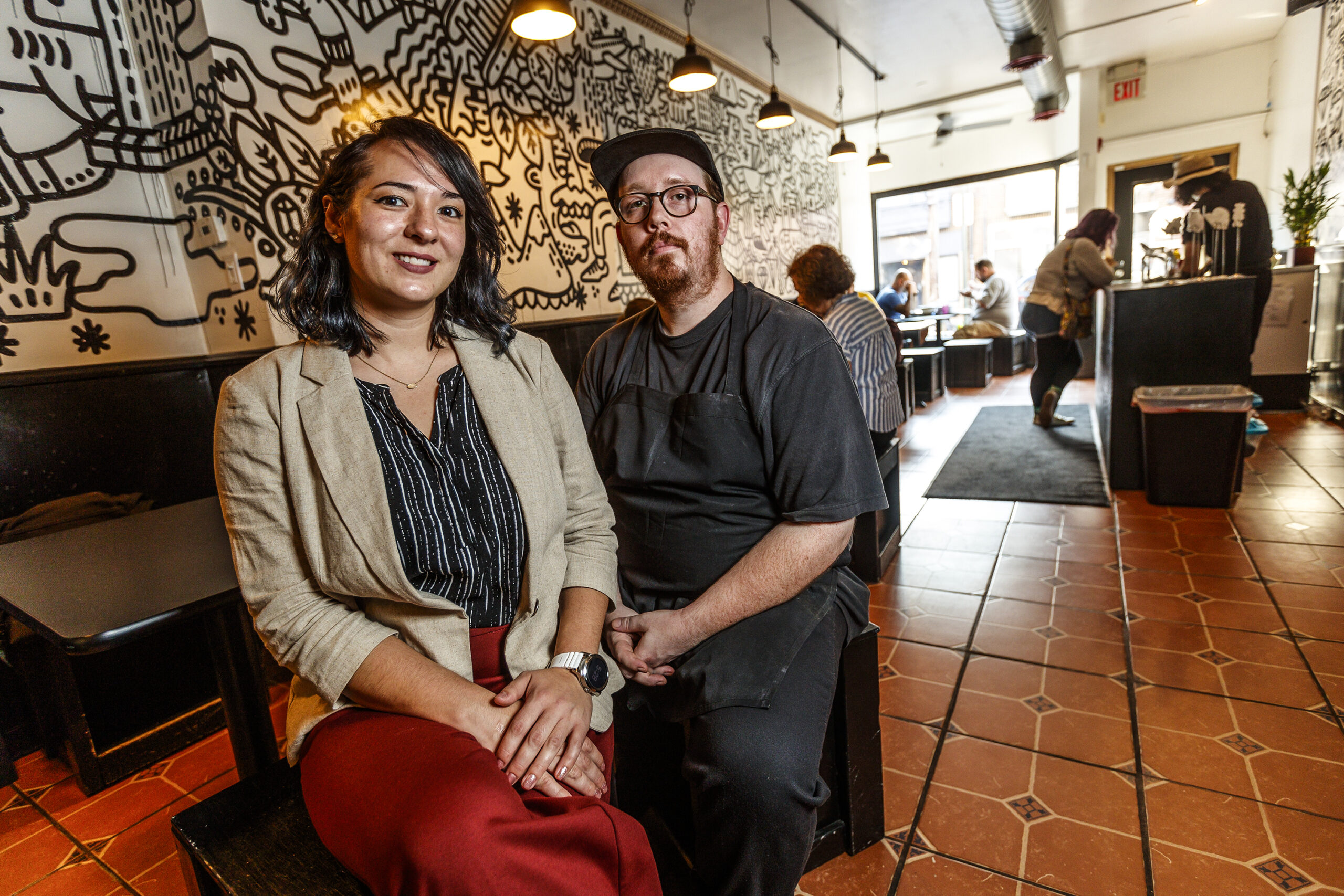
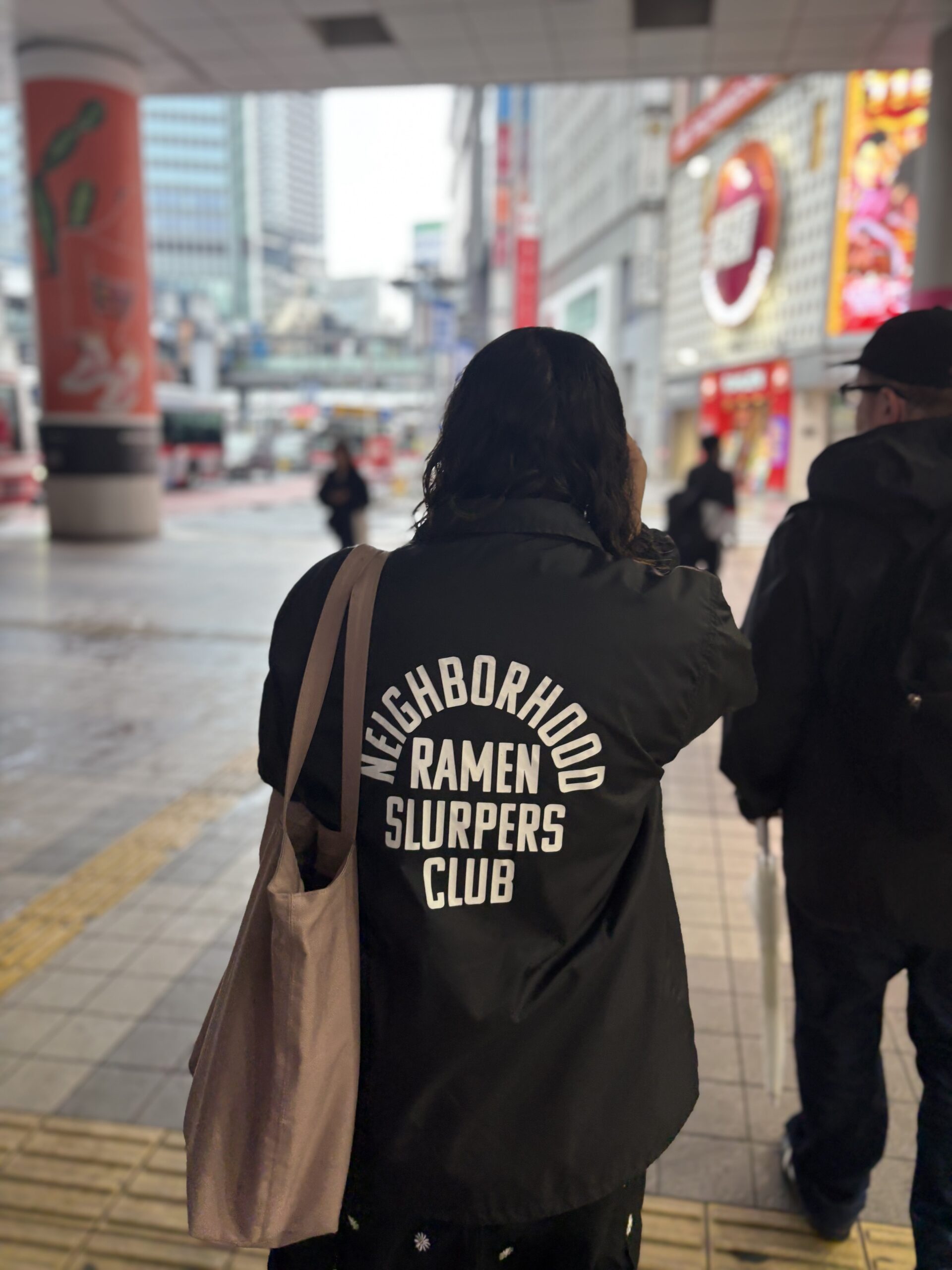
    TOKYO — Lindsay Mariko Steigerwald and Jesse Pryor set the gold standard for ramen in Philadelphia during their five-year run at Neighborhood Ramen. But when the couple announced the closure of their beloved Queen Village restaurant at the end of 2024, they also teased an audacious bit of news: They were moving to Japan with plans to reopen their shop in the ramen capital of the world.

    “This is the next chapter for Neighborhood Ramen!” said Steigerwald, 35, as we stood in a blustery November rain beside Shibuya Scramble Crossing, the famously chaotic, neon-lit intersection in Tokyo where we rendezvoused for a day of noodle slurping across the city.

    The couple had arrived from Philadelphia just 10 days earlier — following a year of planning (and a pop-up venture called ESO Ramen Workshop in Society Hill). They’d already begun their classes at Japanese language school and launched the arduous visa process that must be settled before they can begin working on their own restaurant. It will likely still be many months before Neighborhood Ramen fires up its stockpots and noodle machine in Tokyo.

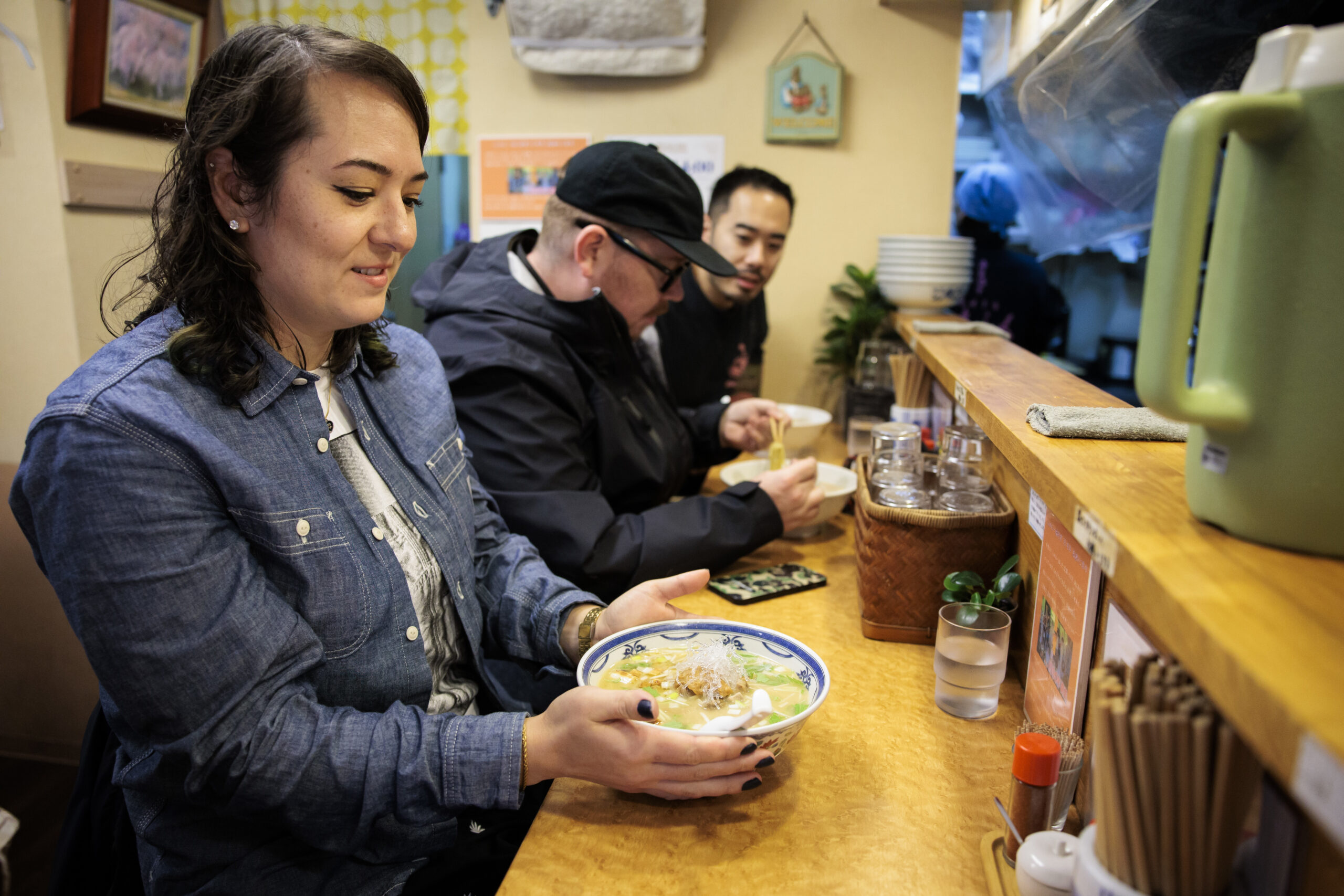
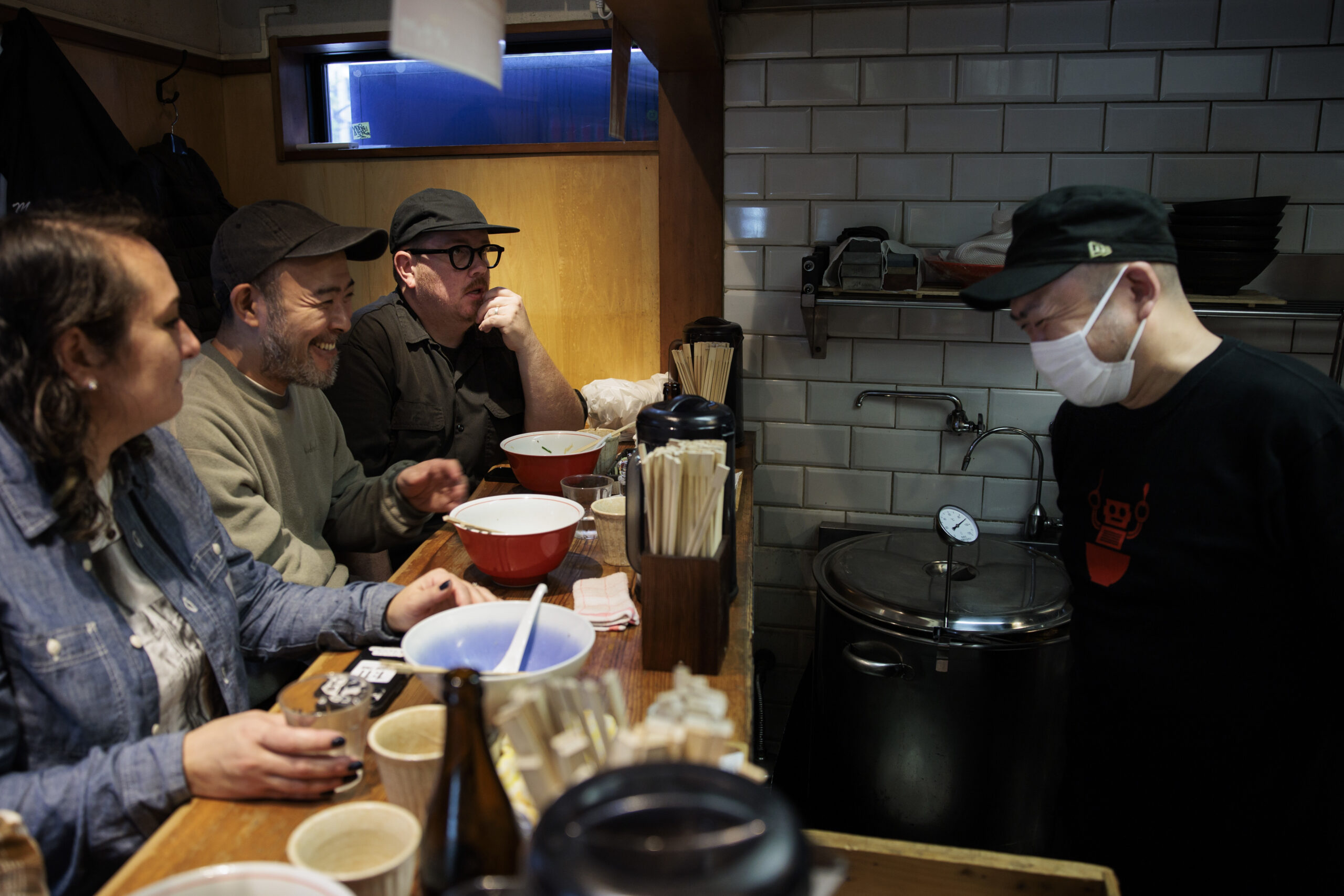
    Lindsay Mariko Steigerwald (from left), Jesse Pryor, and Jesse Ito sit at the counter at Ramen Ichifuku in November in Tokyo.

    Their move was precipitated by a long-simmering goal to practice their craft alongside the best, but also a desire for “a better quality of life” they’ve come to love over the course of multiple visits to Tokyo, says Steigerwald.

    Equally motivating is the couple’s passion for consuming ramen regularly; it’s every bit as intense as their drive to make it.

    “I want to eat ramen every day,” says Pryor, 38. “I want to go to different shops all the time, be inspired and just soak it up. It’s hard to do that in Philadelphia.”

    He’d already eaten 14 bowls of ramen in the first nine days since landing in Tokyo in November — on top of the 300 ramen shops the couple had visited during their 10 previous visits to Japan. By the end of December, Pryor was up to 80 bowls of ramen at 70 different places. (Steigerwald has been keeping pace with ramen, too, but she documents her own obsession — dumplings — on her GyozaKween Instagram account.)

    That’s still just a fraction of the 10,000 ramen shops in Tokyo serving myriad variations: rich tonkotsus cloudy with the emulsified essence of slow-simmered pork bones; crystalline shio salt broths and shoyus tinted amber with soy; creamy miso ramens; and gyokai ramens punchy with seafood umami. Pryor’s quest for soupy inspiration here, he says, is “infinite.”

    “Jesse is a true ramen hunter,” says Steigerwald. “At night he’s game planning what bowls he’s going to eat the next day.”

    “The ramen comes first,” he says, “and then the rest of the day just fills in around it, you know?”

    Ramen-hopping rules

    We were about to learn firsthand, as the couple, who’ve begun a fledgling ramen tour business, had mapped out an afternoon of visits to some of their favorites. There were rules. Our group must be small (ideally two to three guests max) because the best ramen counters are often tiny. Also, come hungry.

    “It’s expected each person that steps foot in the shop orders their own ramen and finishes the bowl. … Doggie bags are not a thing,” says Pryor.

    The last edict was especially daunting considering the belly-filling richness of ramen. Consume three bowls and you’re in for a long nap. In addition, eating ramen like a pro is a full-contact sport — a messy, broth-splashing endeavor for which there is not only a recommended dress code (“Jesse’s entire wardrobe is black,” Steigerwald says), but also an almost athletic eating technique: the power slurp.

    Ramen with shark cartilage at Ramen Ichifuku.
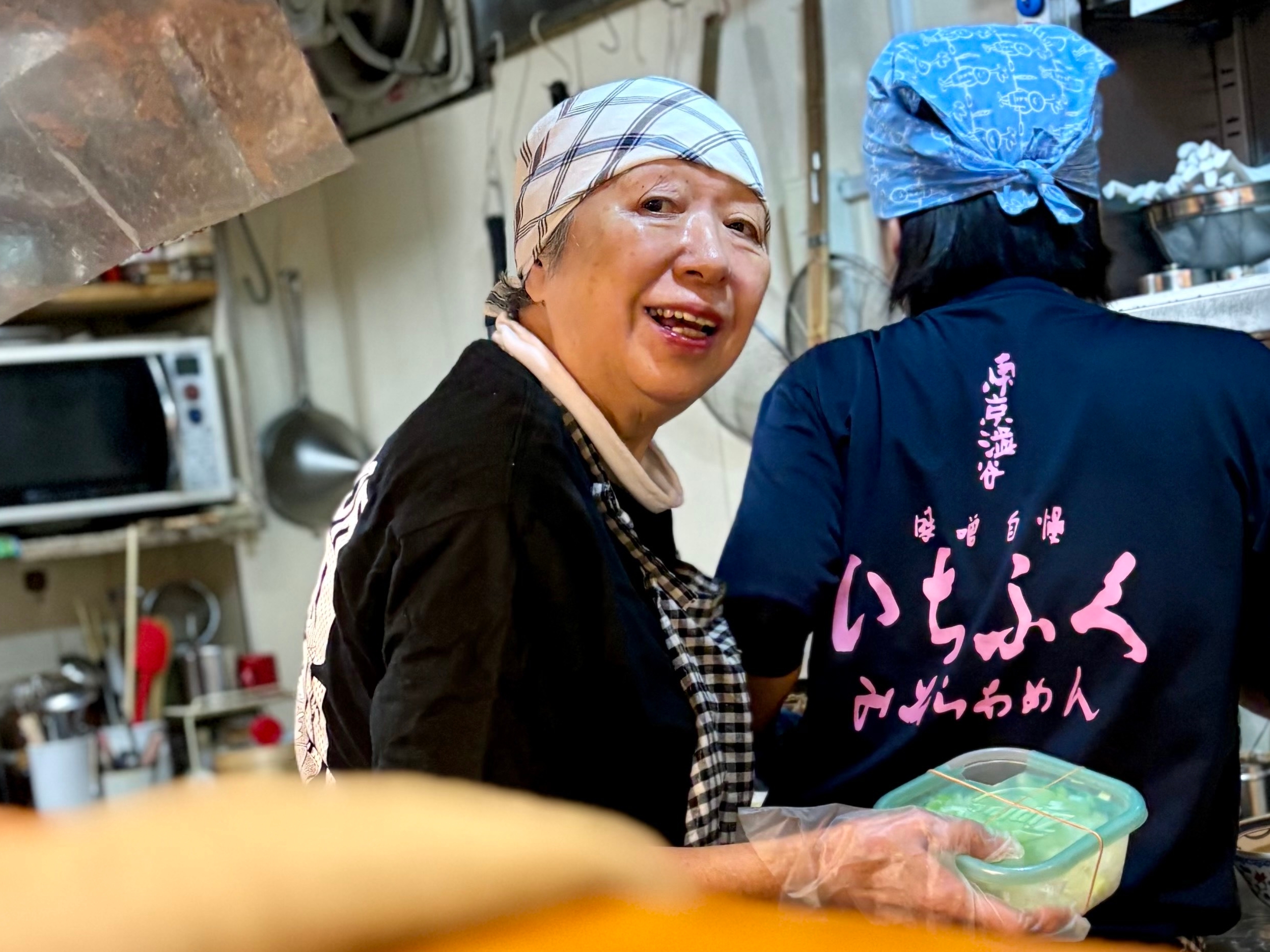
    Chef and owner Kumiko Ishida of Ramen Ichifuku in the Honmachi neighborhood of Shibuya, Tokyo, looks back across the counter while making miso ramen.

    As the bowls landed before us at Ramen Ichifuku, our first stop in the Honmachi neighborhood of Shibuya, I marveled at the nutty aroma of the tan broth of an irorimen-style ramen, enriched with three kinds of miso, tender pork, tangy sake lees, and translucent threads of shark cartilage bundled over top.

    I was just as mesmerized by Pryor and Steigerwald, though, as they locked onto their bowls with trancelike focus, then pounced, their faces hovering just inches above the steamy rims. As they began to slurp, columns of noodles steadily streamed upward into their open jaws. The jazz soundtrack of Hiromi’s Sonicwonder playing “Yes! Ramen!!” was punctuated by a gurgling roar reminiscent of shop vacs inhaling shallow pools.

    “We call it ‘hitting the zu’s,’” says Steigerwald, noting the reference to zuru zuru, the onomatopoeia for slurping ramen in Japanese comics.

    “It’s like turbo tasting, because you get the flavor of it up into all your sensory crevices,” says Pryor, who typically eats a bowl in five minutes or less, to consume each element at its peak.

    I leaned over and gave it my best slurp — only to scorch my too-tightly pursed lips with hot broth while the noodles refused to rise. I resorted to my usual leisurely pace, savoring what was nonetheless the best bowl of ramen I’d ever eaten.

    It was a comforting collage of firm but slippery noodles glazed in a nuanced broth with a parade of so many other textures — velvety pork, snappy bamboos shoots, tiny crunchy croutons. If only I could learn to properly slurp, it might be even better.

    Steigerwald give me a sympathetic look: “We’ve had a lot of practice.”

    Philly restaurant romance leads to Japan

    Philly’s ramen power couple met at CoZara in 2016, where Steigerwald tended bar, and Pryor, a former news photographer from Delaware turned line cook at Zahav, had become a regular for the restaurant’s $5 Japanese riff on a citywide (Orion beer and a shot of sake).

    “I saw them falling in love at that bar,” says Mawn chef Phila Lorn, who was CoZara’s chef de cuisine at the time.

    Steigerwald, who grew up in New Jersey near Fort Dix and McGuire Air Force Base with two half-Japanese parents who are both kung fu masters, found Pryor’s budding obsession with ramen endearing: “Cool, the guy I’m dating is into the food of my culture.”

    Lindsay Mariko Steigerwald (left) and Jesse Pryor co-owned Neighborhood Ramen on Third Street in Queen Village. They are pictured in their dining room shortly after opening in 2019.

    She studied business management at college in Texas with an eye toward opening a Japanese restaurant, so it wasn’t long before they launched one of the city’s early pop-up sensations in 2016, dishing out bowls of intense tonkotsu and spicy tantan from his apartment between shifts at Cheu Noodle Bar, Morimoto, and Zahav.

    When they finally opened their Queen Village shop in 2019, they instantly raised the city’s ramen bar. They acquired a used ramen machine in 2022 to begin making their own noodles (a rarity, considering the process is more involved than Italian pasta), raising the local standard once again.

    But over the course of their research visits to Japan — where they were entranced by the abundance of quality ingredients as well as a public sense of order that keeps the streets tidy, safe, and tranquil — their pipe dream steadily bloomed into a determination to actually move.

    “We did our thing for 10 years in Philly, but between the political climate and inflation there, the more we visited [Japan], we realized that this was where we want to be,” says Steigerwald. “We just want to make a modest living, be happy, and be proud of what we do.”

    Steigerwald is eager to bring her family’s Japanese roots full circle, closing the loop that brought her two grandmothers to the United States after World War II: “My aunt in Texas finds it interesting that [my grandmothers] moved to America for a better life in the 1950s and that we are moving back to Japan to find a better life 70 years later.”

    Steigerwald is pursuing a Nikkei visa for Japanese descendants. She hopes that the couple, who eloped in August — “moving to a new continent, we figured it was time,” she says — can open their shop in Koenji, a neighborhood known for its counterculture. It reminds them of South Street.

    Tokyo transplants

    In the meanwhile, they’ve been having rewarding ramen encounters everywhere. That included a spontaneous detour to Honmachi’s bustling and futuristic Denny’s, where ordering is automated and the food is delivered by a fleet of beeping musical robots.

    “Honestly, I’d be hyped to eat that tantan anywhere,” says Pryor, gazing approvingly at a bowl of noodles whose broth is rich with sesame paste, ground pork, and orange puddles of chili oil. (Japanese Denny’s are owned by the same company as the country’s celebrated versions of the 7-Eleven, explaining the impressive confluence of quality and value.)

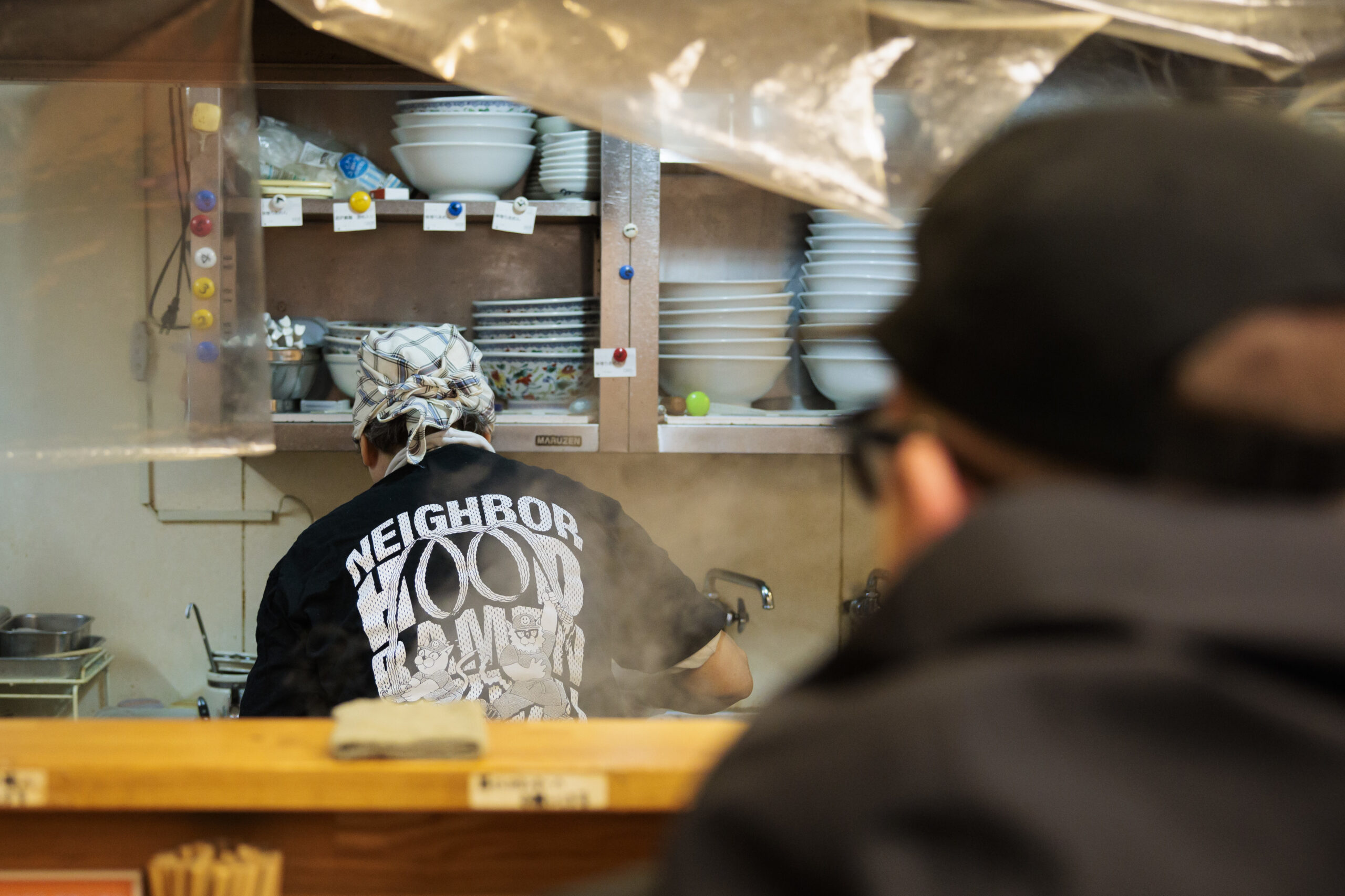
    The duo’s exploration of the upper echelons of Tokyo’s artisan ramen world, however, has gone a long way toward building a community of friends and peers. When we arrived at Ichifuku, chef Kumiko Ishida was wearing a Neighborhood Ramen T-shirt. The 15-seat restaurant in a homey, living room-like space is one of the very few ramen shops in Tokyo owned and operated by a woman, and Steigerwald and Pryor had named one of their regular specials in Philadelphia “Mama Miso” in the chef’s honor.

    The source of their inspiration did not disappoint, even if Ichifuku would not divulge how (or from what) she makes her signature croutons, which remain a subject of ramen-world speculation because they never turn soggy in broth.

    Chef Kumiko Ishida wears a Neighborhood Ramen T-shirt while cooking at her restaurant, Ramen Ichifuku. It is one of the very few ramen shops in Tokyo owned and operated by a woman.

    Such minuscule details are the fodder for constant discussion among ramen hunters like Pryor and chef friends like Hiroshi “Nukaji” Nukui of Menya Nukaji in the Shibuya section of Tokyo, where Neighborhood staged a well-received pop-up in 2023. Nukui, who joined us for part of our journey, said he was thrilled the couple had decided to make the move to Tokyo.

    “Their passion is so strong. Many Japanese have not been to the amount of ramen shops they’ve been to,” Nukui said. And their status as foreigners might also be an advantage, he suggested. “Japanese ramen chefs typically work under a famous chef and end up following in that tradition. But [Pryor and Steigerwald] are not boxed into a style or lineage.”

    In fact, Pryor plans to focus on a ramen style similar to Nukui’s, a double-brothed ramen (also called “W soup”) that blends rich pork tonkotsu with an intense seafood broth called gyokai. While Nukui is known for his tsukemen style — in which noodles are served on the side for dipping into a broth as thick as gravy — Pryor intends to serve his noodles soup-style.

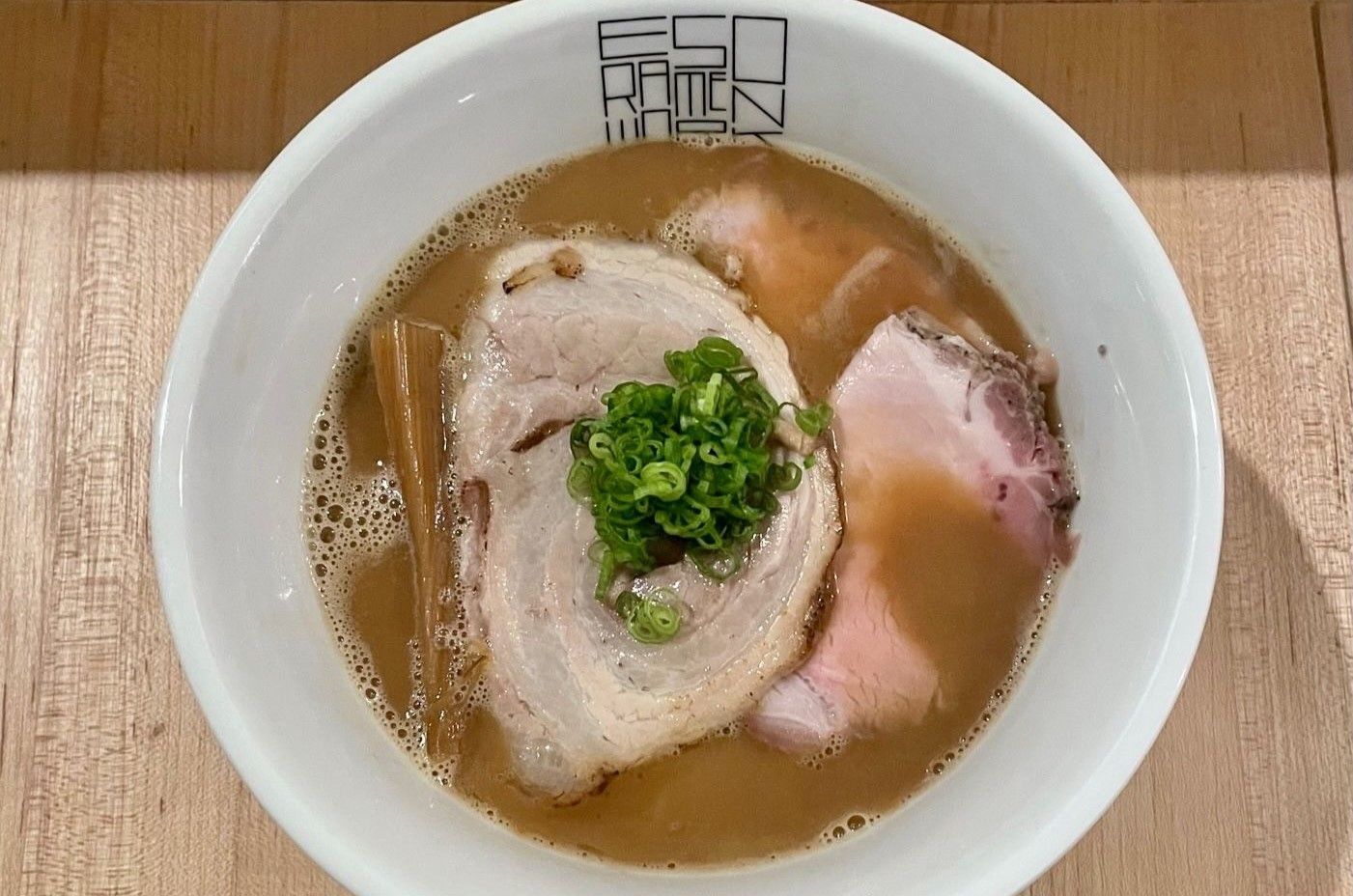
    “This style is so impactful,” Pryor says, “you eat it and you’re like ‘Whoa!’” (I tried Pryor’s gyokai tonkotsu at both Neighborhood Ramen and Eso, and it is one of the most powerful, smoky, ocean-flavored broths I’ve ever tasted.)

    Gyokai tonkotsu ramen at ESO Ramen Workshop, 526 S. Fourth St.

    “Their ramen is no joke,” agrees Kosuke Chujo, the griddle master of Nihonbashi Philly, Tokyo’s shrine to Philly culture. “They are very, very good. The broth, of course. But also the fact they make their own noodles. Your average Japanese ramen maker does not do what they do.”

    Indeed, high-quality noodles are so widely available in Japan that few ramen shops bother; there are so many other details to refine in composing a great bowl. At our final stop of the day, Ramenya Toy Box in Minowa, we were given a master class in the art of ramen’s two most elemental styles: shio (clear broth seasoned with salt) and shoyu (clear broth seasoned with soy).

    As we stood in line outside the small white building, Pryor warned us of a solemn dining experience to come. It sounded like the polar opposite of the relaxed atmosphere at Ichifuku. “Yamagami-san is strict. His vibe is very serious, and the cooks stand at attention,” he said, referring to owner Takanori Yamagami, who studied under famed “Ramenbilly” chef Junichi Shimazaki, the pompadour-coiffed social media sensation whose shop is known for its no-talking rule.

    Lindsay Mariko Steigerwald (from left), Hiroshi Nukui, and Jesse Pryor laugh with chef and owner Takanori Yamagami during a meal at Ramenya Toy Box in November. “I think it’s a great thing,” Yamagami says of Steigerwald and Pryor’s move to Tokyo. “If their ramen is good, people will go.”
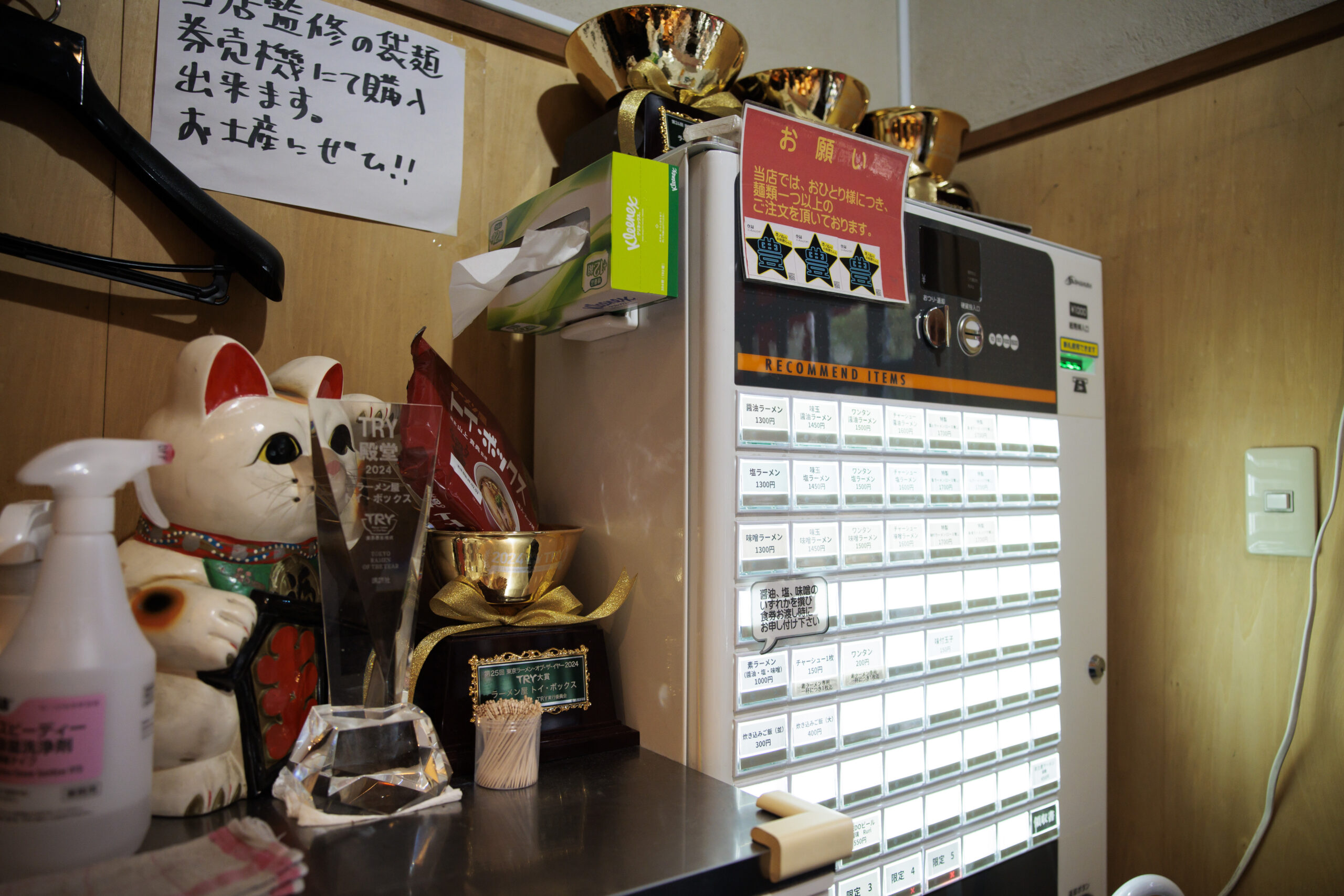
    A ticket vending machine is used to pay for ramen at Ramenya Toy Box. Gilded trophy versions of the shop’s bowls attest to its reputation as one of Tokyo’s best ramen destinations.

    Yamagami has made his own name in this tiny space, where the counter wraps like an elbow around the open kitchen. Pristine renditions of three classic styles won him induction into the ramen hall of fame in 2024.

    The small team worked silently alongside him, prepping the “tare” seasoning base while the chef drained baskets of noodles in both hands, shaking off cooking liquid with almost-musical syncopation. A flick of his chopsticks coaxed the noodles, placed in bowls, into a perfect comb-over wave, to be swiftly layered with two kinds of chashu (pork belly and loin), a perfect egg, a curl of bamboo shoot, and a final spoonful of rendered chicken fat that glinted like gold.

    The intense broth of just chicken and water is the true source of Toy Box’s magic, drawn from a slow-cooking cauldron in back that appears to be more chopped-up bones than liquid. Three kinds of heritage chickens contribute different properties of richness, collagen, aroma, and flavor. In the bowl, the most straightforward shio ramen is seasoned only with salt, thinly shaved scallions, and a dusting of tart sudachi citrus zest; it’s one of the most vivid yet delicate distillations of chicken I’ve tasted.

    Yamagami’s shoyu ramen — seasoned with six kinds of soy sauce, including several fermented in wood vats — begins with that same vivid chicken flavor, then blooms with earthy umami.

    Shoyu ramen at Ramenya Toy Box.

    I lean in, inhale, and — at last — execute a proper slurp, the firm, slippery noodles swiftly rising up past my lips with a velocity and snap that fans the flavor volume even higher. I can understand why Pryor, who usually visits new shops daily, has returned to Toy Box a dozen times.

    The respect is clearly reciprocal. Yamagami is eager to see the Neighborhood Ramen couple plant their flag in Tokyo. And, as if to punctuate that thought, he reached over the counter and gifted Pryor one of the white bowls lined with sky blue that he uses for his signature shio ramen. It’s like watching a great athlete hand his jersey to a rising star.

    “It’s inspiring for us, too,” Yamagami says of their arrival. “I think it’s a great thing. If their ramen is good, people will go.”

    The gesture isn’t lost on Pryor or Steigerwald, who clearly cannot wait to begin sharing their own ramen talents with Tokyo. They sold their coveted ramen machine before leaving Philadelphia (to the forthcoming Tako Taco) and have plans to buy a new one here soon, so Pryor can get his hands back in the dough.

    The couple intend to level up to the standards of their new noodle landscape. “We want it to be fun, welcoming, and chill — not intimidating,” says Steigerwald, who imagines a space with fewer than a dozen seats.

    But so many hurdles remain, from visa bureaucracy to finding the perfect location. So they have stayed focused on what’s next: their first holidays in Tokyo, a trip to the ramen museum in Yokohama, and a big test at their Japanese language school.

    They already have a post-exam celebration plan in place. Not surprisingly, said Steigerwald, it will involve “one monstrous bowl of ramen.”

    Lindsay Mariko Steigerwald and Jesse Pryor, formerly the owners of Neighborhood Ramen in Philadelphia, lead the way on a ramen crawl across Tokyo, where they moved toward the end of 2025.
  • The best things we ate this week

    The best things we ate this week

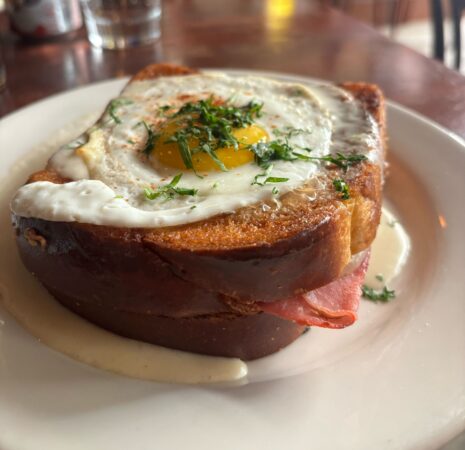
    Croque madame at Caribou Cafe

    When the server at this long-running French brasserie in Washington Square West delivered my croque madame for lunch Thursday, I was taken aback by its size and beauty. If ever a sandwich deserved a place in the Louvre, this was it. The thick-sliced brioche bread was toasted golden and crispy, the Parisian jambon (ham) and cheese within were grilled to perfection, and a decadent béchamel sauce was drizzled over the bread and spooned in a perfect circle around the entire sandwich. A well-executed sunny-side up egg atop was sprinkled with paprika and julienned ribbons of fresh herbs.

    Of course, once I dove into it, this croque madame went from beautiful to big ol’ mess very quickly — but it tasted delightful. Should I have eaten a salad for my first lunch out of the year? Perhaps. Do I have any regrets? None whatsoever. Not only was the food good, Caribou’s French-inspired decor always has a way of transporting me to Europe while still in Center City. Philadelphia. Caribou Cafe, 1126 Walnut St., 267-951-2190, cariboucafe.com

    — Stephanie Farr

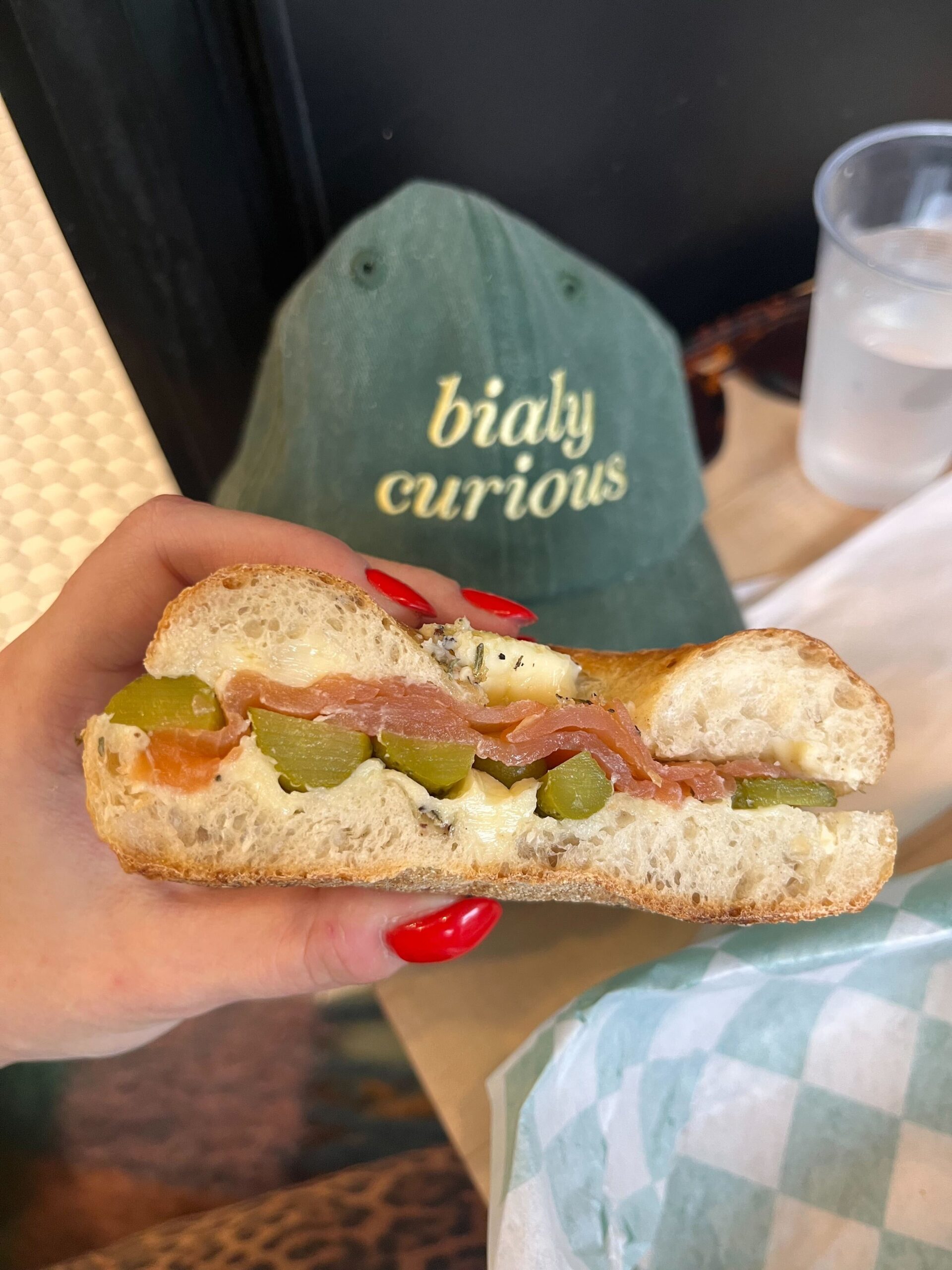
    The salmon buerre bialy at Cleo Bagels.

    Salmon beurre at Cleo Bagels

    On a rainy day in West Philly, I found myself wanting to switch it up from a classic Nova lox sandwich — but not veer too far from it at the same time. The salmon beurre, a recurring special at Cleo Bagels, was the perfect fit. Served on a garlic za’atar bialy (one of my favorite bialys in the city), this lighter sandwich pairs a schmear of fancy cultured butter with lox and cornichon pickles. It’s a pleasant, balanced, and just-filling-enough bite I’m sure to repeat. Cleo Bagels, 5013 Baltimore Ave., 215-282-7292, cleobagels.com

    Emily Bloch

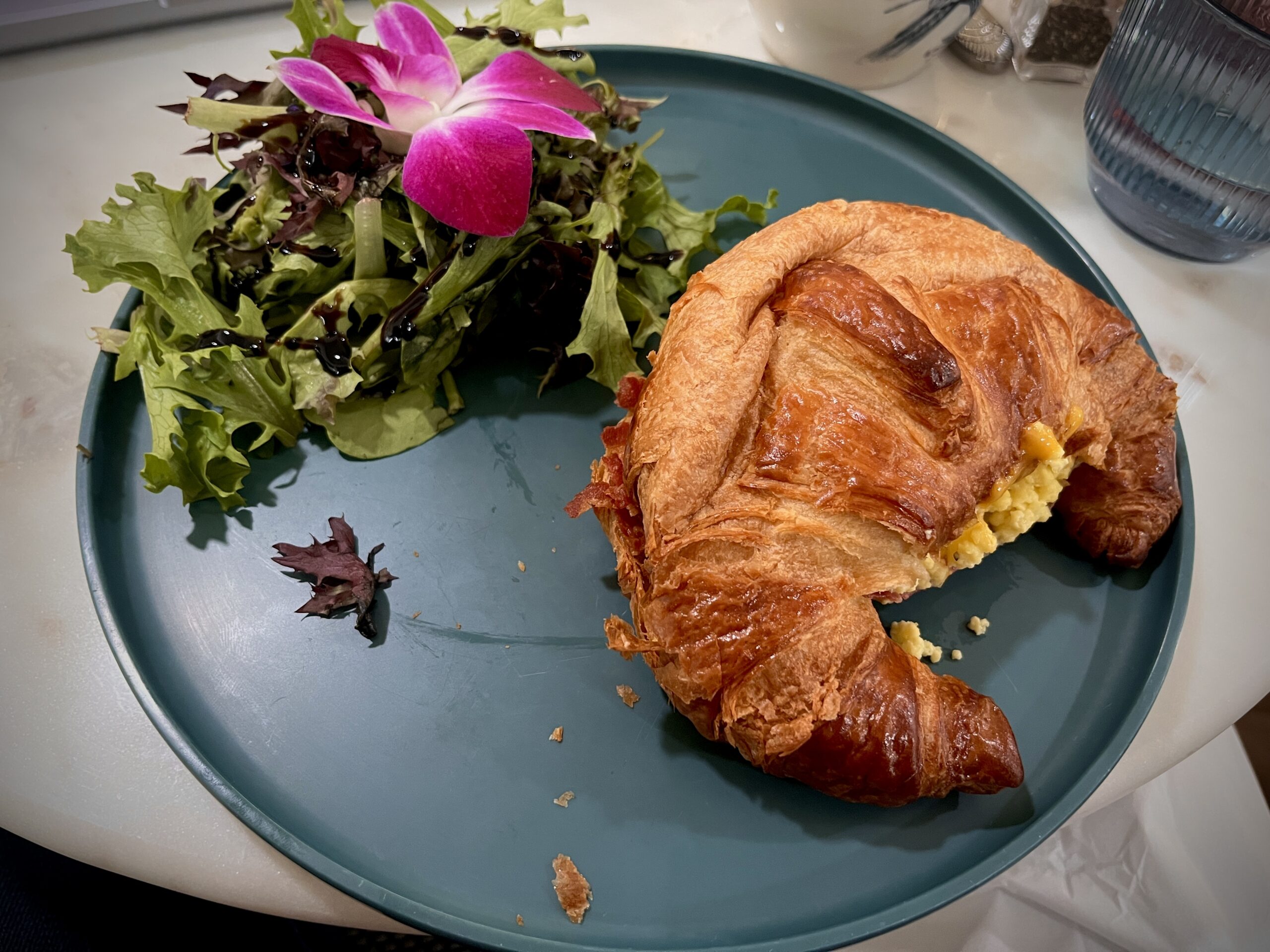
    Matines Cafe’s default breakfast sandwich features scrambled eggs, bacon, and cheese tucked into a croissant.

    Breakfast sandwich at Matines Cafe

    The day after New Year’s was cold and gray, and the prospect of going back to the grindstone was a grim one, and the only sensible salve for that was a breakfast sandwich. (Judging by this week’s other Best Things entries, I wasn’t alone in that sentiment.) So I swung by Chestnut Hill’s Matines Cafe — now in a larger, new-ish space just off the main drag on Highland Avenue — and ordered their signature breakfast sandwich, which comes with scrambled eggs, bacon, and cheddar. And I chose to have it on a croissant instead of a baguette for all of the aforementioned reasons, not to mention Matines’ owners are French and know their way around viennoiserie.

    Split just enough to tuck in a sizable scoop of fluffy scrambled eggs, crispy strips of bacon, and a scant layer of cheddar, the croissant sandwich scratched my itch for something savory and slightly decadent — and managed to do that without flaking or falling apart. Paired with a big mug of black coffee and its accompanying tuft of balsamic-dressed side salad, it got the first workday of the year off to a very satisfying start. I’ll be more than happy to return to try one of Matines’ other breakfast-sandwich varieties, including avocado with turkey and Swiss, salmon with brie, and black truffle-parmesan-prosciutto. Matines Cafe, 23 W. Highland Ave., 215-621-6667, matinescafe.com

    — Jenn Ladd

  • Antiques, river hikes, and cozy inns in Lambertville and Stockton | Field Trip

    Antiques, river hikes, and cozy inns in Lambertville and Stockton | Field Trip

    Walt Whitman, Ben Franklin, Betsy Ross — these are the massive engineering marvels that come to mind when most Philadelphians think of the bridges between Pennsylvania and New Jersey. But less than an hour north of the city, the Delaware narrows enough to let charming, Norman Rockwell-type trusses span the forested riverbanks.

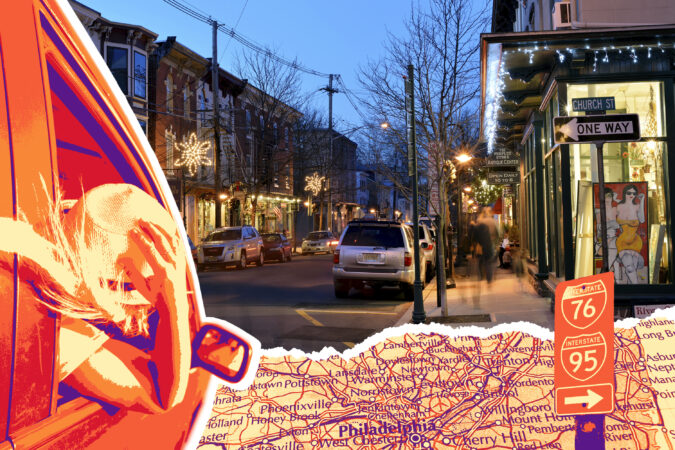
    Everyone knows New Hope. But on the opposite side of the river, Lambertville and neighboring Stockton make a compelling case for a Jersey-side getaway, thanks to stylish revived historic inns, a vibrant arts scene, and some excellent shopping. Start the car.

    Hunt: Golden Nugget Antique Flea Market

    Coming off I-95 and up River Road, you’ll hit Golden Nugget Antique Flea Market, just outside Lambertville. Over five decades, this sprawling indoor-outdoor operation has grown into one of the largest antique markets in the region. Treasure hunt for Tiffany-glass lamps, rare baseball cards, glittering geodes, and more. Don’t miss Art & Restoration gallery on the first floor, where the chatty owner is happy to talk through the process of paper deacidification and the highlights of his ever-changing collection (which recently included a Picasso).

    📍 1850 River Rd., Lambertville, N.J. 08530

    Hike: Goat Hill Overlook

    River towns offer plenty of scenic walks along the water, but a little elevation makes all the difference. Goat Hill Overlook, halfway between the Golden Nugget and downtown Lambertville, is a low-effort, high-reward climb: a gently uphill, paved path that clocks just under a mile from the trailhead parking lot. At the summit, the blue, bridge-laced Delaware slides toward the horizon before dissolving into the woods.

    📍 Coon Path, Lambertville, N.J. 08530

    Shop: Downtown Lambertville

    Indie boutiques, antique dealers, and cafés line the streets of downtown Lambertville, which stretches along Bridge Street (at the foot of the New Hope-Lambertville Bridge) and spiders out in a series of charming alleys and lanes. Wander into Zinc for home and garden inspo, Lambert + Hope for Flamingo Estate candles and Laguiole knives, and Panoply for special-edition books and vintage vinyl.

    📍 Bridge Street, Lambertville, N.J. 08530

    Snack: RSC Atelier

    Perhaps the only gourmet grocery you’ll find attached to a gas station, RSC Atelier in Stockton grew out of the old Rosemont Supper Club nearby. Build a picnic basket with Iberico ham, upscale tinned fish, and farmstead cheese sourced by sister business Immortal Milk Cheese Co.

    📍 10 Risler St., Stockton, N.J. 08559

    Stay: The Stockton Inn

    A crossroads for travelers since 1710, the nine-key Stockton Inn reopened in 2024 after a seven-year renovation that modernized the staying experience while still preserving the building’s historic bones. Earthy colors and natural fabrics give the rooms and suites a tranquil, contemporary vibe that feels both at home in the country but also more stylish than the typical area B&Bs.

    📍 1 S. Main St., Stockton, N.J. 08559

    See: Music Mountain Theatre

    New Hope’s Bucks County Playhouse gets most of the attention, but just a mile from Lambertville’s downtown, Music Mountain Theatre is quietly expanding the arts scene on the Jersey side of the river. Founded in 2017, the company stages polished productions year-round for families and adults alike. This winter’s lineup includes Grease (through Feb. 1), followed by Dangerous Liaisons and Shrek the Musical.

    📍 1483 N.J.-179, Lambertville, N.J. 08530

    Dine: Sergeantsville Inn

    True to headline, nearly everywhere in this guide has a Lambertville or Stockton address. Dinner is the only exception. For that, head three and a half miles inland to the Sergeantsville Inn. Chef Sean Gray, formerly of New York’s Momofuku Ko, runs the tavern and restaurant housed in a building that dates to 1734. Stone walls, wood beams, and Shaker-style chairs set the stage for a candlelit meal of radicchio salad with cheddar and pears, beer-battered onion rings with horseradish aioli, or a whole roasted duck. Look alive — the Revolution is here.

    📍 601 Rosemont Ringoes Rd., Sergeantsville, N.J. 08557

  • After a breakup, he left Graduate Hospital for a giant backyard in Port Richmond | How I Bought This House

    After a breakup, he left Graduate Hospital for a giant backyard in Port Richmond | How I Bought This House

    The buyers: David Snelbaker, 59, finishing technician

    The house: a 1,440-square-foot townhouse in Port Richmond with three bedrooms and two baths built in 1925.

    The price: listed for $275,000; purchased for $269,500

    The agent: Allison Fegel, Elfant Wissahickon Realtors

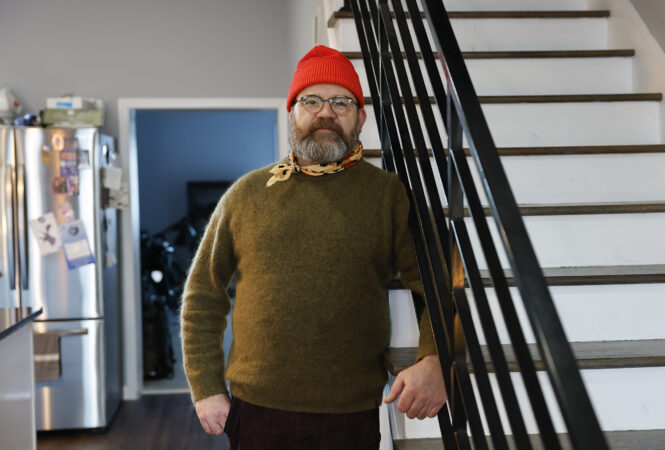
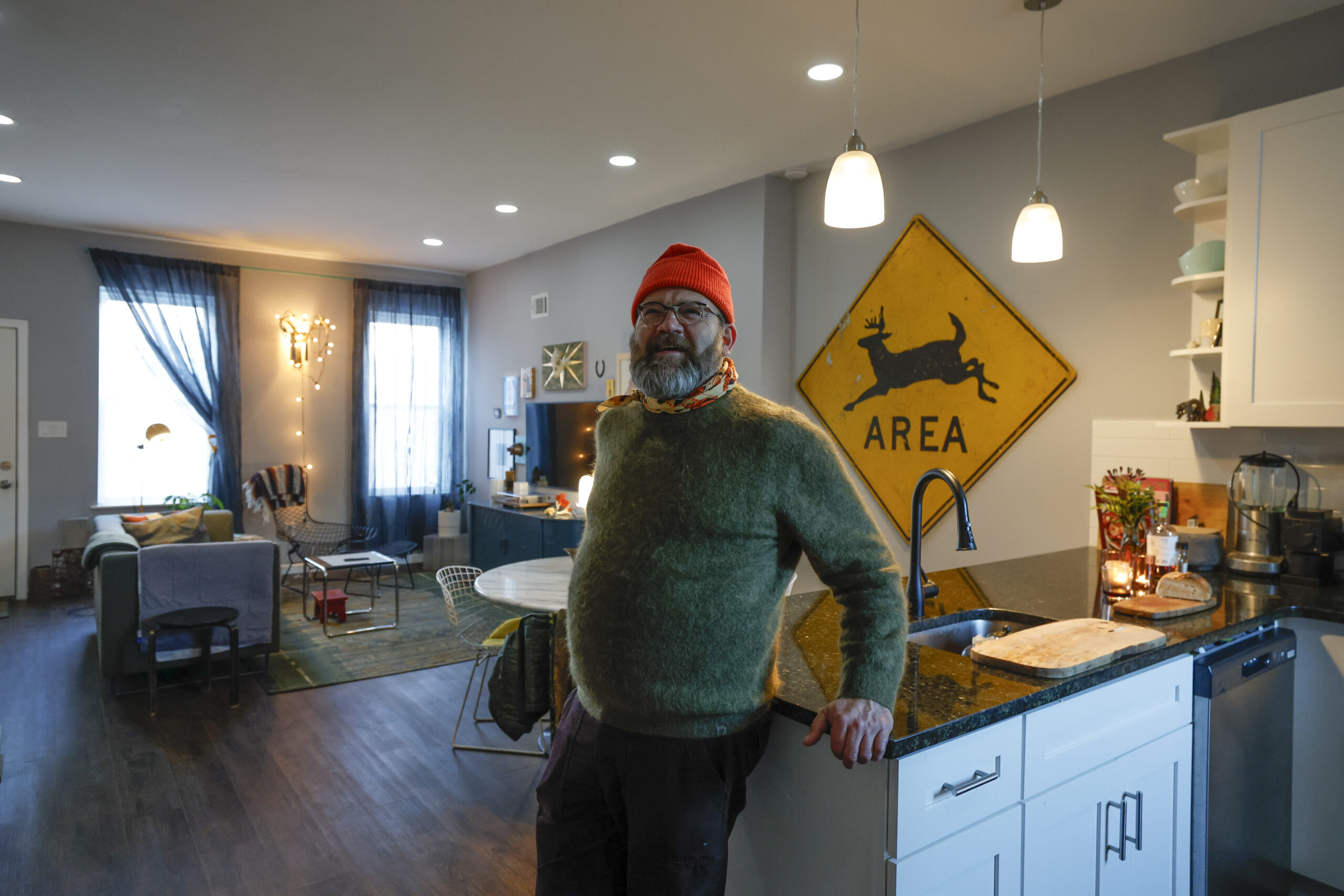
    Snelbaker in the kitchen of his Port Richmond home.

    The ask: Snelbaker didn’t want to give up his house in Graduate Hospital. He’d spent years rehabbing and repairing it. But in 2023, on the heels of a breakup, he determined he couldn’t afford to keep it on his own. He needed to downsize, but he wanted to stay in his neighborhood. Other than that, his list was short but firm: a backyard for gardening and a rowhouse that wasn’t too narrow.

    His budget was $300,000 — a number driven less by lender approval than by self-preservation. “I didn’t want to be house poor,” he said. “I have friends who are. They don’t go on vacations. They’re just kind of financially stuck.”

    The search: Snelbaker needed to sell his old house before he could make an offer on a new one, which made it difficult to compete in South Philly’s hot market. “A lot of the places I wanted to jump on would just go so fast,” he said.

    He expanded his search and discovered better stock in Fishtown and Port Richmond. “For the same price for something in South Philly, it was a fixer-upper,” he said. “And here, it was in good shape.” Snelbaker had already lived through years of construction in his old house and wasn’t eager to do it again. “I just didn’t want to get into another fixer-upper situation,” he said.

    He checked out a few places in Fishtown but settled on Port Richmond because it was closer to his work. The prices were better, too. “It was a win-win,” Snelbaker said. The only other place he considered was a recently renovated rowhouse close to the river. “It was laid out well,” he said. “That was my second choice.”

    Snelbaker liked that the house was recently renovated and move-in ready.

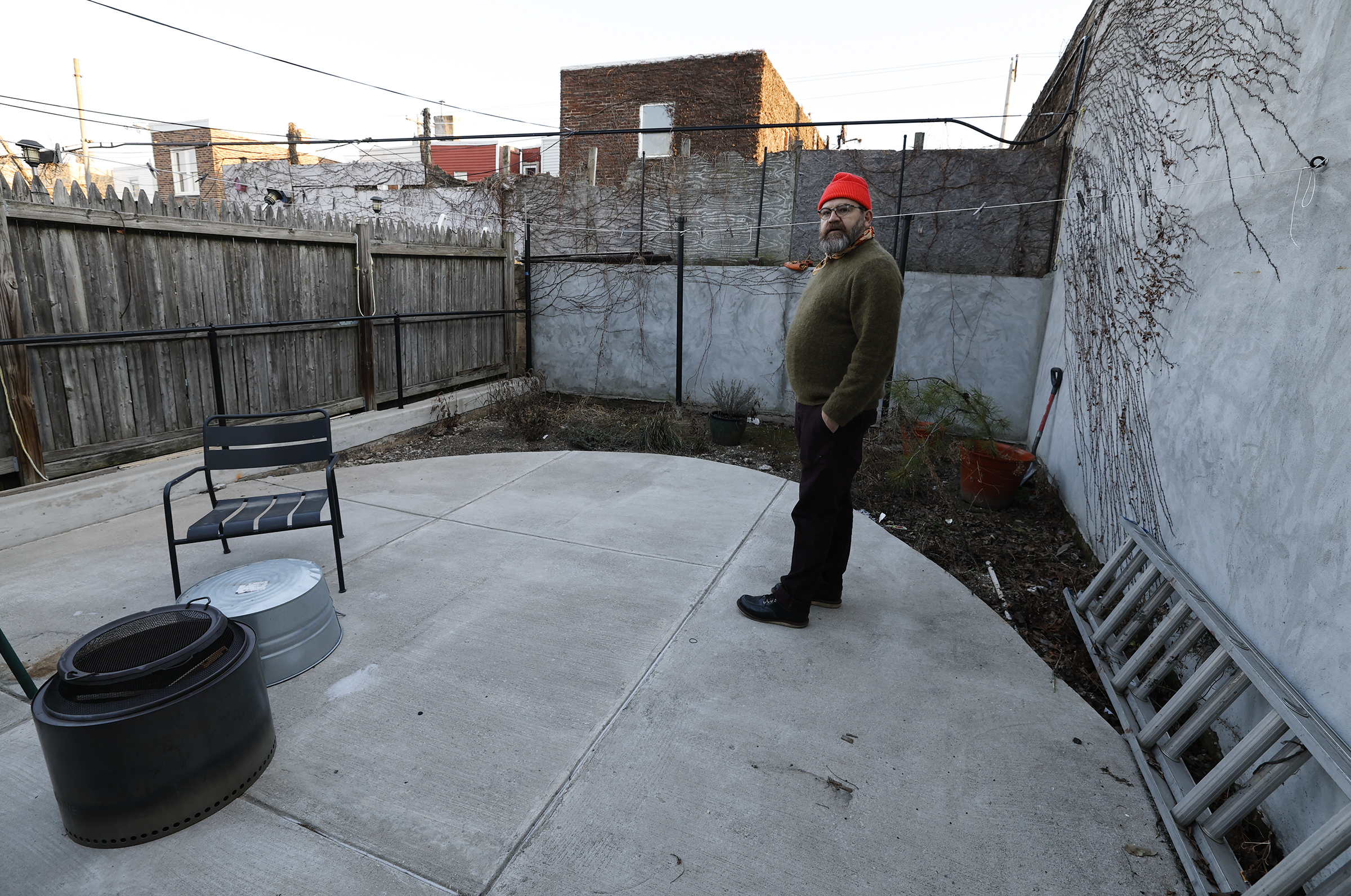
    The appeal: Snelbaker knew he’d found the one when he stepped out back. “The backyard was unbelievably, unbelievably big,” he said. “It’s like 27 feet long and 18 feet wide.” Plenty of space for the major landscaping projects he wanted to do, like planting several trees and building raised beds. Even better, one side of the yard abutted a warehouse, not another rowhouse, which gave him “a level of privacy,” he said.

    Inside, the house was open, newly renovated, and neutral. “It didn’t have a lot of personality,” Snelbaker said, “but it wasn’t a lot of work either.”

    The deal: Snelbaker saw the house at the end of the summer, but because he needed the proceeds from his Graduate Hospital home for a down payment, he couldn’t make an offer right away. Thankfully, the Port Richmond house lingered on the market until he sold his place in October. “I was surprised it didn’t move,” Snelbaker said.

    Once his old house sold, Snelbaker moved quickly. He offered $269,500 — $5,500 under the asking price — and the seller accepted without pushback. The inspection brought little drama. The sellers, who were contractors, handled minor repairs. “They did some patching on the roof and some stuff on the brick in the front,” Snelbaker said. “There was something with the dishwasher … they repaired that. That was pretty much it.”

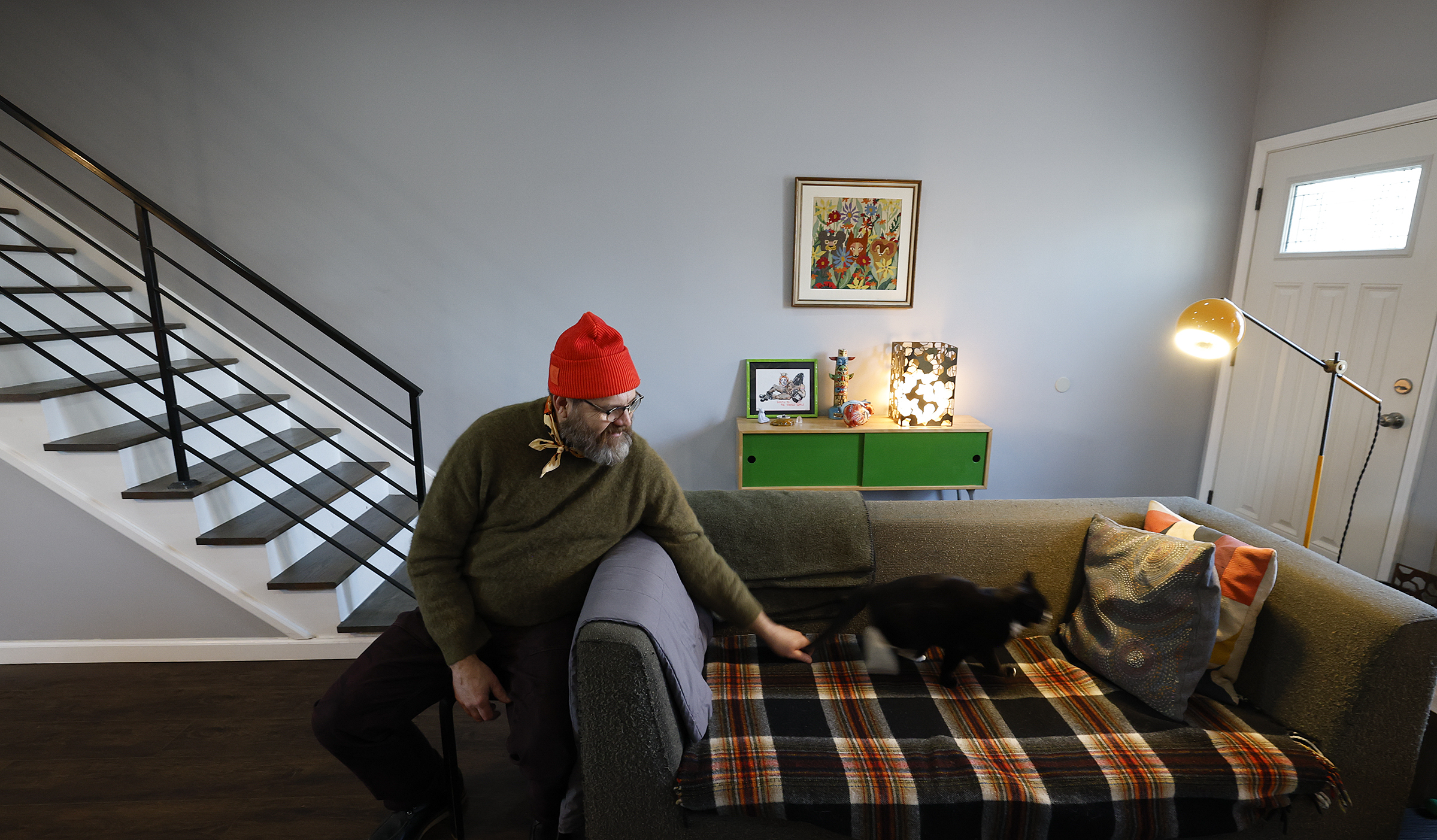
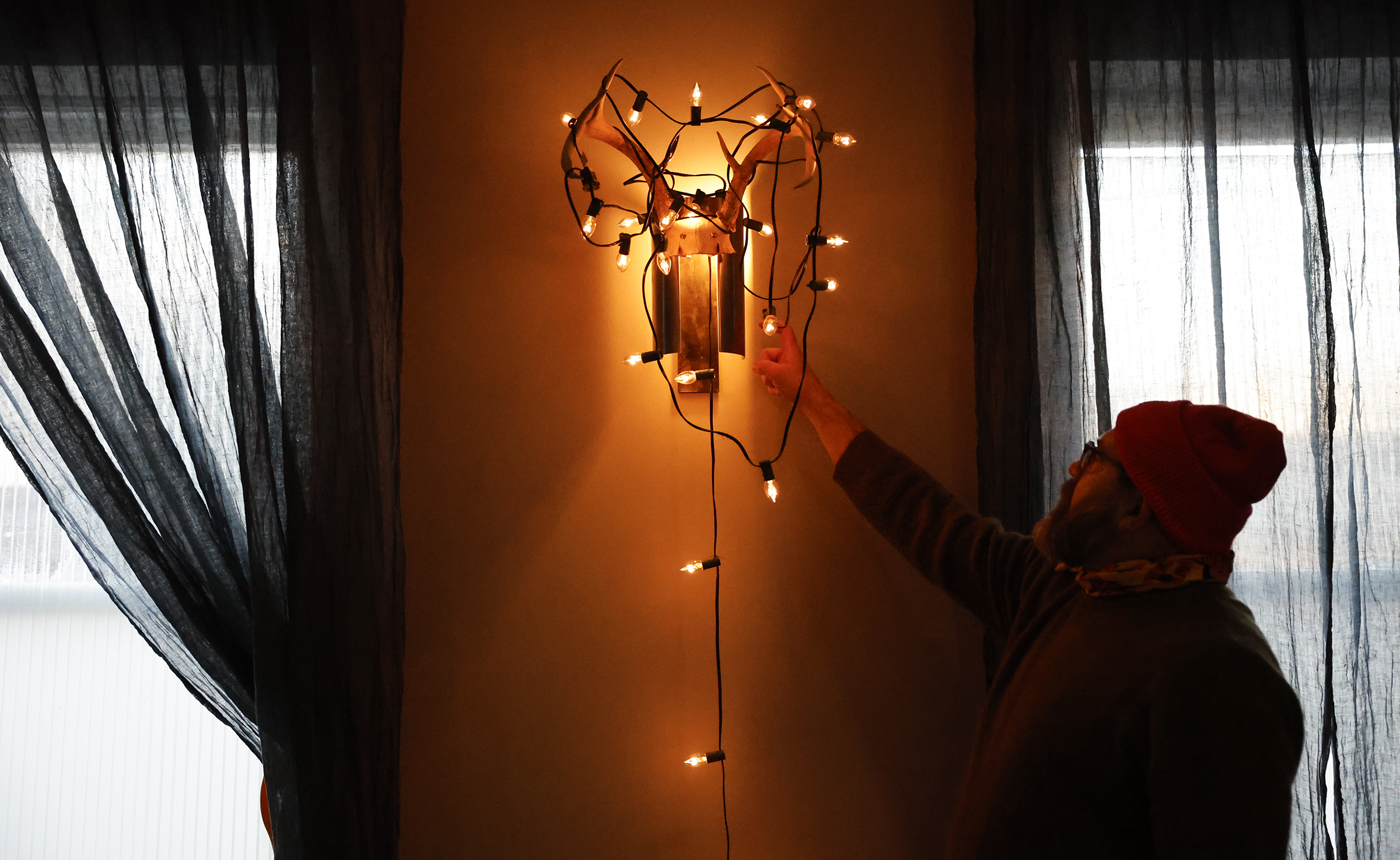
    Since moving in, Snelbaker has added personal touches like this antler lamp to give his house more personality.

    The money: Snelbaker walked away with $240,000 from the sale of his previous home. He put a chunk of it into a certificate of deposit and used the remaining $180,000 for the down payment. “I put more than 20% down because I wanted to keep my monthly payment low,” he said.

    Even so, timing worked against him. Interest rates climbed to 7% as he was shopping, and insurance costs jumped a few months after he moved in. His monthly payment was originally $1,300. Now it’s $1,900. He plans to refinance once interest rates drop a few percentage points, and he’s actively looking for a better rate on his home insurance.

    Snelbaker removed some of the concrete in the backyard to plant trees.

    The move: Snelbaker sold his old house in mid-October and officially closed on his new one on Halloween, but he wasn’t ready to move in right away. His agent did some “fancy footwork” and worked out a deal for Snelbaker to rent his old house from its new owners for a few weeks. “She negotiated a really good timeline that gave me space to pack and wrap up everything at the old house,” Snelbaker said.

    Even better, he celebrated Halloween with his old neighbors. “We handed out candy, and they made me dinner. It was very sweet,” Snelbaker said. He moved into his new home the week before Thanksgiving.

    Any reservations? Without an attached neighbor on one side, the house runs colder than Snelbaker expected. He contacted an energy auditor who advised him not to do anything until he insulated the roof. It’s pricey, but worth it, Snelbaker said. “It’ll definitely increase the comfort and lower my heating bills.”

    Life after close: Since moving in, Snelbaker has focused on the backyard. He removed slabs of concrete to make room for trees and raised beds. “That was important for me,” he said. “I really wanted to get a garden going again like I had in my old spot.”

    Did you recently buy a home? We want to hear about it. Email acovington@inquirer.com.

  • 2026 is a huge year for Philly. Here are your ideas for how we should tackle it.

    2026 is a huge year for Philly. Here are your ideas for how we should tackle it.

    Last year, I asked for your suggestions for what Philadelphia should create, destroy, or fix in advance of everything — and everyone — coming to our in our city in 2026.

    More than 600 ideas were submitted to The Inquirer for ways to improve the city as we prepare for the nation’s 250th anniversary, the FIFA World Cup, the MLB All-Star Game, and the NCAA Division I college basketball tournament next year.

    In other words, Philadelphians had thoughts. Of course, there were recurring themes that arose (more on those later), and there were folks who submitted suggestions well beyond the scope of the assignment. While I appreciate people’s visions, I don’t think we’re going to solve school funding, stop gun violence, end courtesy towing, or turn Regional Rail into a German-style S-Bahn by next year.

    But there were a lot of great ideas, and so, I now present this edited list, because if I included every suggestion, we’d be here until 2027.

    Simple things that are easy, free, or cheap to do

    • Cullen Kisner: “Drive around the city, literally section it off like trash trucks do, and remove any unnecessary traffic cones/street work signs/construction barricades/etc. It just [clogs] up the city and makes it look like a perpetual construction zone (which it is, but the tourists don’t need to know that).”
    • Brendan Yuhas suggests charging $17.76 for SEPTA passes and Indego bicycle rental passes during the week of Independence Day. He’d also like to see restaurants offer meals for $17.76.
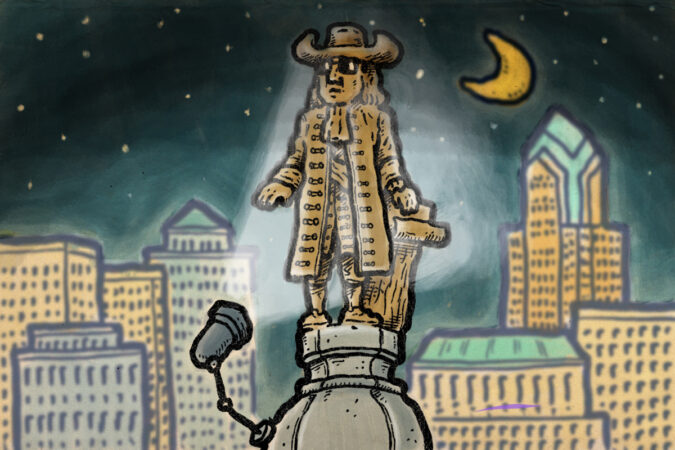
    • Brian Smart suggests illuminating the William Penn statue atop City Hall at night.
    • Beth LaPiene: “We need longer pedestrian crossing times on Center City streets. How does anyone cross Broad Street in 15 seconds, especially if it’s crowded?” (Another reader raised this issue with Vine Street as well.)

    Things that take some amount of time and/or money to address

    • Jason Berkhimer and Rogelio Ayllon separately requested that Philadelphia adopt a new city flag, an idea previously explored by The Inquirer. Berkhimer wrote that a new flag is “incredibly important to sew unity in this partisan time” (his pun, not mine), while Ayllon said it could be marketed on merchandise, making it “a win for vendors … and a win for the city in tax dollars.”
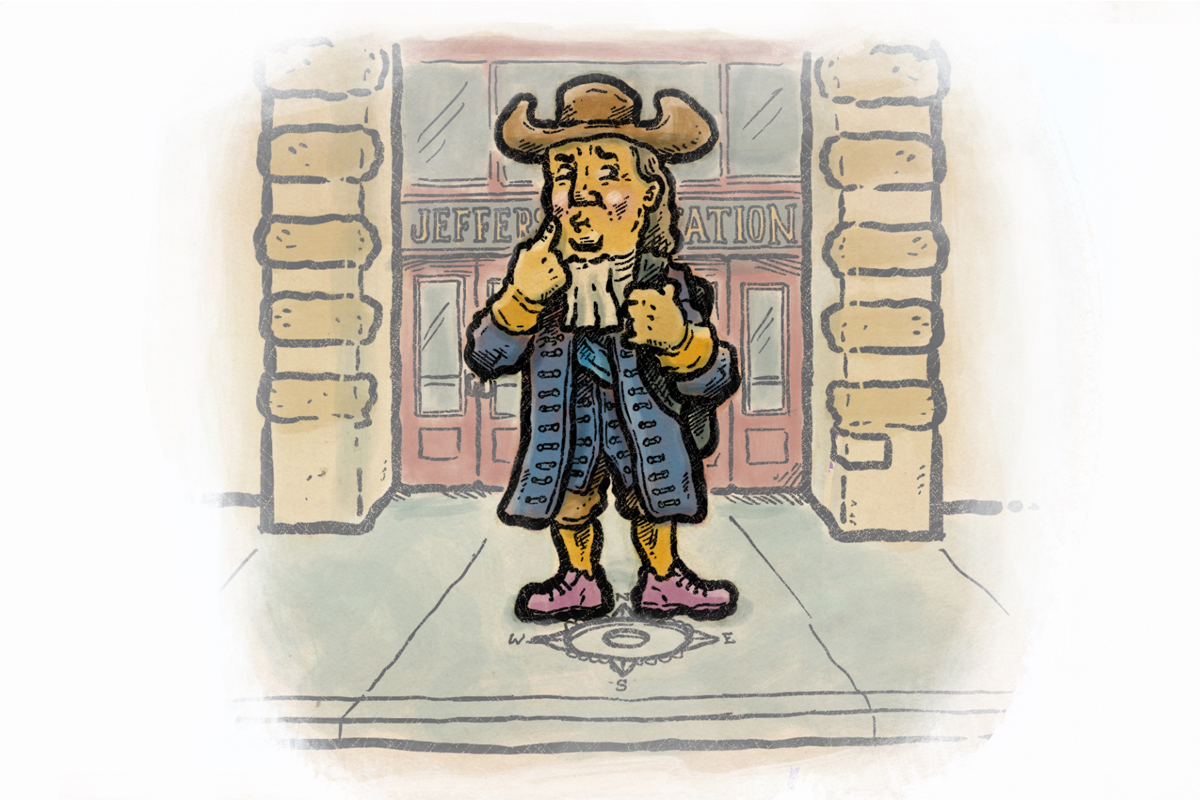
    • Anonymous: “Install compass roses outside of all El, trolley, subway, PATCO, and Regional Rail access points so people can quickly get an idea of which direction they need to go when reaching the surface street.”
    • The Association of Philadelphia Tour Guides and numerous readers who submitted their ideas independently would like to see the following reopened for 2026: City Tavern, the Declaration House, the LOVE Park Saucer, and the Second Bank portrait gallery.
    • Of course, Philly is all about the Benjamin Franklin too. Tom Rosenberg suggested rehabbing the exterior of Franklin’s post office on Market Street. “It’s dilapidated and looks awful,” he wrote. Rich Armandi bemoaned the fact that a plaque at the Second and Market Street subway stop in Old City that marked the site of Franklin’s first print shop has been missing since 2024. He wants it replaced, and he’d like a mural there that envisions what Franklin’s print shop might have looked like.
    • The Association of Philadelphia Tour Guides (who submitted a lot of great ideas in a well-curated slideshow) would like to see the Franklin Court Printing Office, a replica of an 18th century printing office, open seven days a week, instead of just weekends.

    Big things that take time, money, and cooperation

    • Several people asked for the city and the National Park Service to work together to make Independence Mall “more than a desolate lawn.” One suggested that an “easy change would be to move some existing statues or art installations from more obscure/lower visibility places (like Fairmount Park and Kelly Drive).” Other readers proposed adding trees, benches, and water features.
    • Jack Bellis would like to see the concourse below Broad Street (from Market to Locust) turned into a rainy-day attraction with Philly vendors and a centerpiece mini-golf course “created either in part or wholly by school students, in which each of the holes highlights a Philadelphia tourist attraction.”
    • Pete Silberman: “My idea is to repurpose the Southwark Piers, also known as Piers 38 and 40, to be playing fields and sports facilities.”
    • Mark Methlie’s idea is to “follow Boston’s lead” and create our own version of the Freedom Trail, a trail embedded in roads and sidewalks that leads to notable spots (which I also proposed after visiting Boston in 2024). Methlie, however, suggests multiple trails leading out of the Convention Center, including ones for history, art, science, cultural institutions, and food.
    • Bob Dix: “I would love to see the water taxis languishing under 95 to be taken out of mothballs and used for tours or transport … and they could be used for transit to the FIFA events in FDR.”
    • Association of Philadelphia Tour Guides: “Create an introduction park to Elfreth’s Alley at Second Street in the empty lot. Design it to include native shrubs, shade, colonial lamps, benches, and information displays.” (Note: In late November, it was announced that this one is planned to happen!)

    Fun activities and events

    • Tori Beard: “I’m a big fan of a Colonial Day Fest idea. Think Ren Fest, but for colonial-style activities and dress. Bonnets, butter churning, powdered wigs. Could even be held in the Independence Hall area.” (Note: The Museum of the American Revolution hosts an annual living history interpretation weekend called Revolutionary Philadelphia, but it would be great to see it expanded for 2026.)
    • The Association of Philadelphia Tour Guides suggests creating a tour and a music festival highlighting The Sound of Philadelphia artists like Teddy Pendergrass, Harold Melvin & the Blue Notes, and Tammi Terrell. I’d like to take it a step further and suggest a music festival in which current Philly musicians pay homage to Philadelphia musicians who came before them, regardless of genre. I’d love to see The Roots play the O’Jays, Jill Scott perform Bessie Smith, and Dr. Dog pay homage to Jim Croce.
    • Anonymous: “Pepper pot stew cook-off.”
    • Eli Fish: “Turn Headhouse Square into European-style plaza. No cars, tables in the street and under the headhouse cover, live music and outdoor dining. We know this can work because they started to do it during COVID and it was amazing.” (Note: This idea was also raised on Instagram by users who begged the city to “Make Headhouse interesting again.”)
    • Hugh Connelly suggests creating an iconic, solar-powered mural that looks like Philadelphia in 1776 during the daytime, but at night when a system of solar-powered lights illuminate it, the “new night image is one of futuristic Philly, a beacon for liberty for the next 250 years.”
    • Kevin Fennell: “There should be a steal the Declaration of Independence escape room.” Why yes there should be, along with a “National Treasure treasure hunt,” as suggested by one Instagram user.

    Off-the-wall ideas

    • Zach Marcum‘s idea is an official SEPTA cheesesteak joint: “We bring in a real Philly chef who will (for free) design us the perfect cheesesteak for maximum profit and quality balance. We line up sourcing with local suppliers in Philly — and the surrounding areas — I’m talking grain for the bread-type vertical integration — and then set up SEPTA cheesesteak carts throughout not just Philly but the state of Pennsylvania, and hire good local kids paying good wages to cook and distribute these cheesesteaks. As for all the people who are already in the cart business, we bring them in as middle managers or buy them out, or they can sell halal or whatever (sorry … I’m not a genius). With the profits we fund massive infrastructure improvements, spreading wealth and glory to all.”
    • Tom Dougherty proposes something like an “Epcot Village,” to show off the diversity of Philly’s food-and-beverage scene. A potential location could be FDR Park, where Dougherty suggests it could run in conjunction with the Southeast Asian Food Market.
    • Thomas Lake‘s idea is a Schuylkill ferry that would commute people from King of Prussia to the Philadelphia Art Museum and back, with stops in Norristown, Conshohocken, and Manayunk. “Might have to remove some dams?” he wrote. Yeah, a few, plus I’m told the river is far too shallow in spots and some bridges are too low for a ferry to navigate. Even though this one is implausible, it’s fun to dream about.
    • Catherine Robb Stahl: “You know how Tinker Bell flies down from the Disney castle at night on a zip line? Well, how about having Betsy Ross do the same thing from City Hall??? Fun, huh?!?! What a sight to see!”
    • Other off-the-wall ideas submitted without further context included: a community zip line and pool, a Gritty cave, a Gritty statue, secede from Pennsylvania, “Find a better word than Semiquincentennial,” hold a “Band things happen in Philadelphia LGBT concert band performance,” “No city tax for those who live within 1 mile of a pothole,” and “Make it abundantly clear in marketing to other U.S. cities that Philly rules.”

    Recurring themes

    Properly funding SEPTA is integral to Philly and any plans for 2026, as I said in my original column. While there’s since been a measure enacted to ensure it will operate for the next two years, SEPTA’s fate remains murky after that. At least a quarter, maybe more, of the responses I received mentioned SEPTA in some way.

    But people told me they want to see SEPTA more than just funded. They want it cleaned — deep cleaned — from the stairwells to the seats, like the entire system was exposed to nuclear waste (New Jersey commuters would also like their PATCO stations decontaminated too).

    “Tourists Take Transit. Let’s not show the world our dirty underwear,” Tally Brennan said via email.

    Scores of Philly-area residents wrote in asking for more public bathrooms, trash cans, water fountains, trees, shade, benches, pocket parks, trash cans, signage to city sites, protected bike lanes, trash cans, street cleaning, trash cans, programs to assist the unhoused, trash cans, murals, and underground parking lots. And for the love of all that is good and holy can we get at least one permanent pedestrian-only street in this city?

    Readers would also like to see the following repaired: the escalators at Jefferson Station, potholes, the lines on the road “so they’re visible and you don’t have to just guess,” “Fix the roads, all of them!” “ITS LIKE A BOMBED WAR ZONE,” and sinkholes.

    Many people said the entire Market East corridor needs a whole lot of love. Folks lament that it used to be a destination and now it’s filled with shuttered storefronts.

    While we learned in November that Comcast and the Sixers plan to demolish some buildings they own on the 1000 block of Market Street in time for next year’s events, it’s still unclear what they plan to put there.

    In the remaining vacant storefronts, readers suggested putting pop-up shops, art galleries, experiences, or doing a pop-up Philly History Museum.

    Finally, a very sweet reader asked me: “Please can we have the building on Broad Street that has the graffiti ‘Boner 4Ever’ painted over??? It’s truly an embarrassment.”

    Sorry, hun, but that’s a hard no. It’s 4Ever.