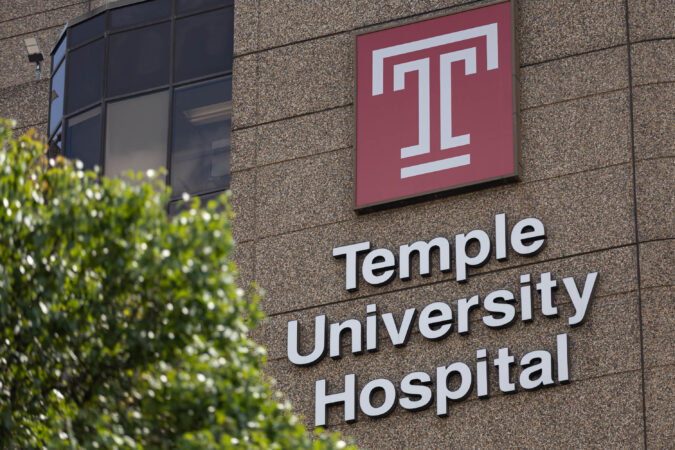
Temple University Health System‘s medical malpractice expenses have surged in the two years that ended June 30 as part of a campaign to reduce financial risk by settling old cases.
The hope is that “aggressively” settling cases will pay off over the next few years by reducing medical malpractice expenses, Michael DiFranco, the health system’s chief accounting officer, told investors during a conference call last week on the health system’s fiscal 2025 financial results.
Temple’s annual medical malpractice expenses increased nearly fourfold, to $117.8 million in fiscal 2025 from $31.6 million two years ago. Over the same period, it cut its reserves for future expenses by $88 million, or 22%. Temple’s reserves peaked at $402.9 million in 2023.
Rising medical malpractice costs are reverberating throughout healthcare. Tower Health recently boosted its reserves after its auditor decided they should be higher to deal with anticipated claims. Lifecycle Wellness, a birth center in Bryn Mawr, blamed its decision to stop delivering babies in February in part on rising medical malpractice costs.
The average number of medical malpractice lawsuits filed in Philadelphia every month has risen from 34 and 35 in the two years before the pandemic to 51 last year and 52 so far this year, according to the Philadelphia Court of Common Pleas.In additional to lawsuits against hospitals, the tally includes litigation against physicians, nursing homes, and other healthcare providers.
Contributing to the increase was a rule change at the beginning of 2023 that allowed more cases to be filed in Philadelphia rather than the county where an injury occurred. Malpractice lawyers say they like to file in Philadelphia because the system for trying cases is efficient. Health systems often note that Philadelphia juries sometimes award large verdicts.
A ‘wake-up call’ at Temple
Temple Health started rethinking its medical malpractice strategy after John Ryan started as general counsel in January 2022. A month before he started, The Inquirer published an article about three suicides at Temple Episcopal Hospital in 2020. At least two of the families sued Temple.
“That was a wake-up call,” Ryan said in a recent interview on his approach to handling malpractice cases.
Then in May 2023, a Philadelphia jury hit Temple with a $25.9 million verdict in a case involving a delayed diagnosis of a leg injury leading to an amputation.
After that loss, Temple changed the kinds ofoutside lawyers it hiresto defend it in malpractice cases, Ryan said, swapping medical malpractice specialists for commercial litigators from firms like Blank Rome, Cozen O’Connor, and Duane Morris. Such lawyers cost more, but it’s paying off, he said.
“The settlements we’re getting from the plaintiff lawyers, because they can see that we’re serious, are much better,” Ryan said. The two Episcopal cases were settled this year for undisclosed amounts, according to court records. A birth-injury lawsuit against Temple University Hospital in federal court settled for $8 million this month.
In 2024, a jury awarded $45 million to a teen who was shot in the neck and suffered brain damage from aspirating food soon after his release from Temple. Temple appealed and the judge who oversaw the original trial ordered a new one. That case then settled at the end of October for an undisclosed amount.
The new approach has helped Temple reduce the number of outstanding cases at any one time to 65 or so now compared to 110 three years ago, according to Ryan.
Temple is using the money it is saving on malpractice costs to invest in better and safer care, Ryan said. “That’s not a byproduct of all we’re trying to do as the lawyers. It’s the goal,” he said.
Inquirer staff reporter Abraham Gutman contributed to this article.
Two days before an apartment complex once hailed as a shining example of Philadelphia’s urban renewal went up in flames, its owner, embattled city landlord Phil Pulley, transferred the vacant property to a New York investment firm.
Federal investigators are treating the fire as arson.
The property’s new owner, Aureus Special Asset Management, which records show is linked to investors in South Korea and Saudi Arabia, is now demolishing the West Philadelphia structure, known as Admiral Court.
Earlier this year, Pulley faced a $29.4 million foreclosure over unpaid debts linked to a fizzled redevelopment of Admiral Court and an adjacent complex, Dorsett Court. Instead of seeing investors foreclose on the property, he agreed to transfer both apartment complexes to his lenders.
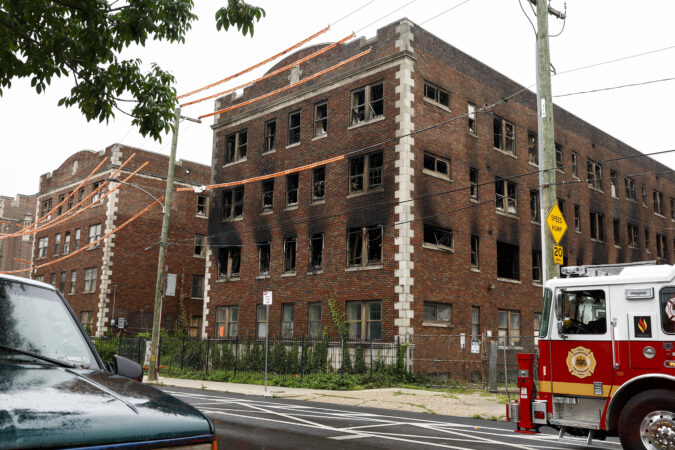
Pulley signed the deed for that transaction on June 5. Less than 48 hours later, a fire broke out at the vacant building at 48th and Locust Streets, drawing more than 150 firefighters and support personnel to the scene. About 750 neighbors temporarily lost power. No injuries were reported.
The deed transfer for Admiral Court did not become a public record until late September, when it was sent to the Philadelphia Records Department and finalized.
West Philadelphia Councilmember Jamie Gauthier, who in June called Pulley a “slumlord” and blamed him for allowing the buildings to rot, on Friday blasted the deal.
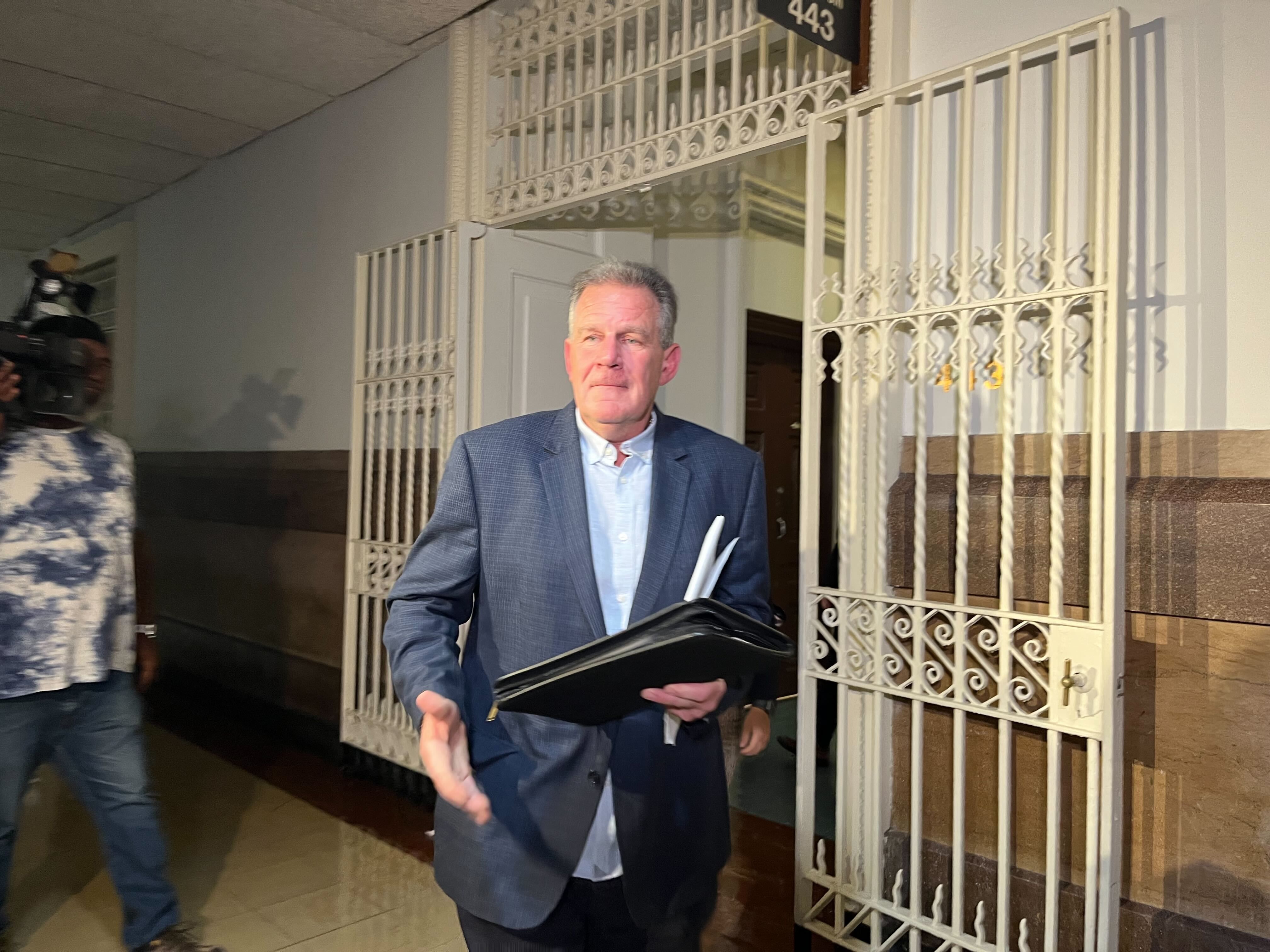
Phil Pulley outside a courtroom in September 2022 following the partial collapse of one of his buildings, Lindley Towers, in the city’s Logan section.
“The Admiral and Dorsett Court buildings could have provided affordable housing in one of West Philly’s most desirable neighborhoods. Instead, landlord Phil Pulley ignored repeated safety violations, leading to a devastating four-alarm fire,” Gauthier said in a statement. “The new owner appears to be a shell corporation with little transparency, and I’m deeply concerned that demolishing Admiral Court will create new blight and safety hazards.”
Crews started tearing down the building last week.
Pulley’s checkered history includes millions in unpaid taxes, hundreds of building code violations, and voter fraud. Two of his other apartment complexes have partially collapsed in recent years.
Pulley did not respond to requests for comment about the fire or deed transfer.
The circumstances of the blaze are now being investigated by the Bureau of Alcohol, Tobacco, Firearms and Explosives, along with Philadelphia police and fire investigators. Ben Benson, a spokesperson for the ATF’s Philadelphia field office, said the agency had “determined that this was an intentionally set incendiary fire, and no accident.” He declined to comment further.
The aftermath of a large fire at the Admiral Court apartment building at 48th and Locust Streets on Sunday, June 8, 2025 in Philadelphia.
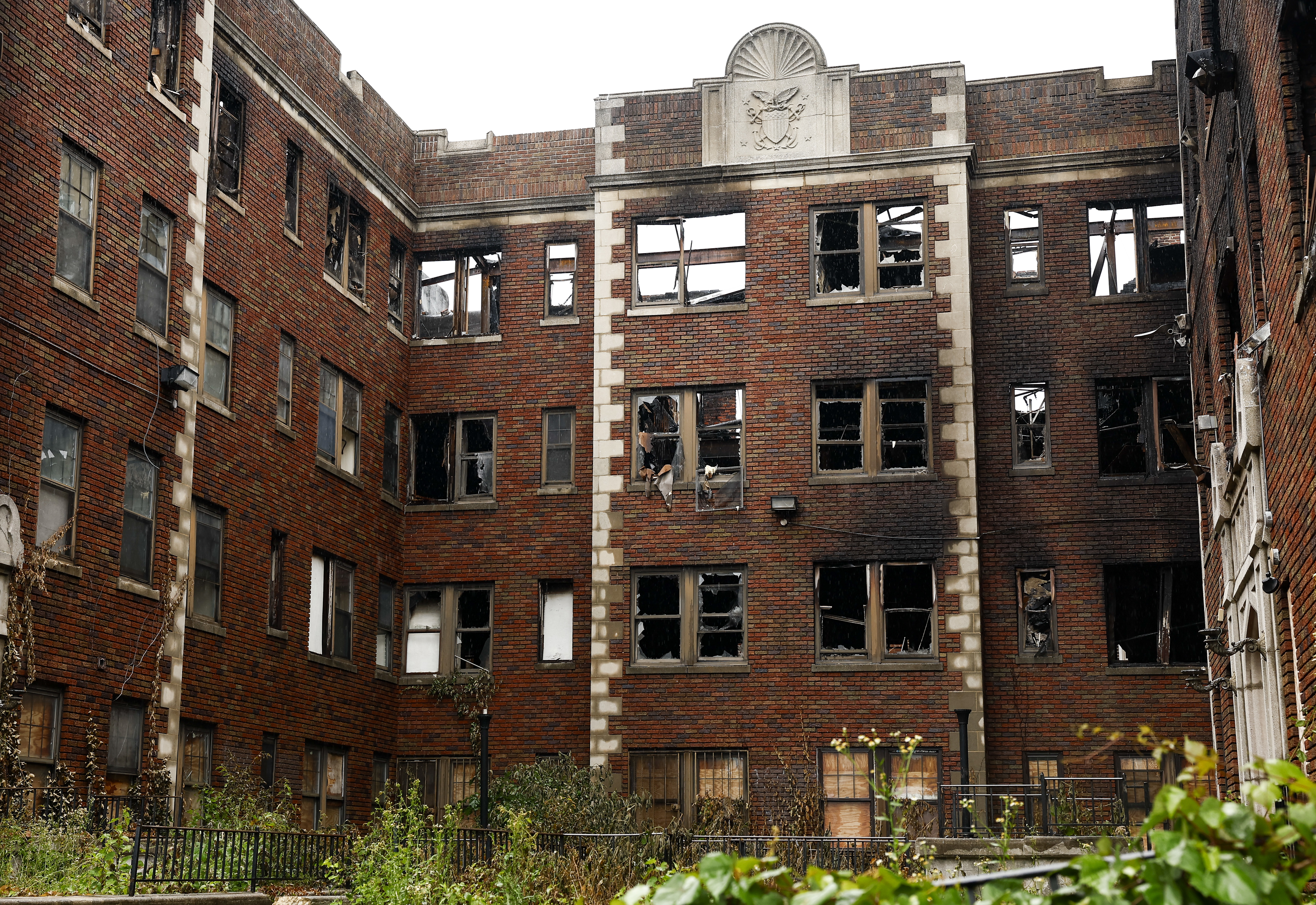
This month, the new owner of the charred four-story apartment building, Aureus Special Asset Management, obtained a permit to demolish it, according to Philadelphia records.
Aureus does not have a digital footprint. It shares a Madison Avenue mailing address with the New York City offices of Pacific General, an investment firm specializing in “transactions covering the United States, South Korea, and the Kingdom of Saudi Arabia.”
Pacific General’s corporate officers also signed documents for Descartes Specialty Finance, a Cayman Islands company that took over the mortgage for the troubled renovation of the West Philadelphia complexes. The company took Pulley to court in 2024 over the $25 million default, adding on millions in fees.
Reached at an office number for Pacific General, an individual who declined to be identified refused to comment. An attorney for Descartes did not respond to requests for comment.
Ed Nordskog, a former arson investigator with the Los Angeles County Sheriff’s Department, said uncovering possible fraud connected to an arson is often a painstaking process. It can involve obscure insurance policies, construction loans, or hard-to-trace schemes.
“If it’s a fraud case, that can take months, if not years, to sort through the paperwork,” Nordskog said. “They are really difficult cases for local investigators.”
A history of troubled buildings
In 1989, then-U.S. Sen. John Heinz toured Admiral Court after the crumbling apartment building had been rehabbed with federal affordable-housing tax credits. He hailed the project as a symbol of Philadelphia’s revitalization.
Roughly 15 years later, Pulley acquired the building and neighboring Dorsett Court, along with a string of other affordable apartment complexes across the city.
The buildings quickly fell back into decay.
Both West Philadelphia properties have been vacant since 2018, when Pulley evicted dozens of families — many of them low-income — to make way for a planned renovation and sale.
While some work was done on Dorsett Court, on Locust Street next to Henry C. Lea Elementary School, progress stopped without explanation.
Admiral Court alone was cited 33 times by building inspectors since 2018, including several fire code violations in 2022.
“To watch them just sitting there vacant was heartbreaking for everyone involved,” said Phil Gentry, who has one child attending Lea and another who graduated. “It seems crazy, in the middle of this thriving neighborhood that desperately needs more housing, these nice-looking buildings are falling apart, catching on fire, or sitting vacant.”
Tenants have long complained about conditions in Pulley’s buildings. Two have partially collapsed in recent years.
Meanwhile, the city has continued to pursue Pulley in court over other properties.
In 2022, the facade of another Pulley complex — Lindley Towers, in Logan — collapsed, exposing a large section of the upper floors. The building was rendered uninhabitable, displacing about 100residents. The city took Pulley to court, seeking millions to cover emergency repairs and other costs. That case is pending.
In October 2024, the Darrah School Apartments — which was also run by Pulley’s main property management company, SBG Management — partially collapsed, raining debris onto a Francisville side street. No injuries were reported. The building had been cited by city inspectors more than a dozen times.
This year, the city filed a fresh lien against Pulley’s company, citing $51,000 in unpaid gas bills. The city also launched a petition seeking a court-ordered sequestrator at yet another complex in West Philadelphia owned by Pulley’s company, the Winchester Apartments. That order would empower a third party to collect rent on SBG’s behalf in order to satisfy outstanding tax and utility bills.
Pulley is also facing an ongoing consumer-protection lawsuit filed in 2023 by the Pennsylvania Attorney General’s Office. It accuses Pulley and a network of affiliated companies of mistreating tenants and a range of other “deplorable conduct.”
Philadelphia stands to lose tens of millions of dollars in federal funds intended to fight homelessness under a plan issued by the Trump administrationthat advocates say could significantly disrupt permanent housing programs and return formerly homeless people to the streets.
TheU.S. Department of Housing and Urban Development releasedthe plan earlier this month,saying it would “restore accountability” and promote “self-sufficiency” in people by addressing the “root causes of homelessness, including illicit drugs and mental illness.”
Nationwide, advocates say, the HUD plan could displace 170,000 people by cutting two-thirds of the aid designated for permanent housing.
The number of individuals in Philadelphia at risk of losing stable housing hasn’t been tallied because the city’s Office of Homeless Services (OHS) is still reviewing the plan’s impact, said Cheryl Hill, the agency’s executive director.
Overall, there are 2,330 units of permanent housing, many of them financed by $47 million the city received from HUD last year, according to city officials.
A preliminary analysis by HopePHL, a local anti-homelessness nonprofit, estimates around 1,200 housing units with households of various sizes would lose federal aid and no longer be accessible to current residents, all of whom are eligible for the aid because they live with a physical or mental disability.
HUD plans to funnel most of the funding for permanent housing into short-term housing programs with requirements for work and addiction treatment. The agency also said that it’s increasing overall homelessness funding throughout the United States, from $3.6 billion in 2024 to $3.9 billion.
“This new plan is disastrous for homelessness in Philadelphia,” said Eric Tars, the senior policy director of the National Homelessness Law Center, who lives and works in Philadelphia. “The biggest immediate harm would be that those who were once homeless but are now successfully living in apartments will be forced out of their homes.”
Other critics say the policy is based on a failed model that strips away civil liberties and doesn’t address what scholars and people who run anti-homelessness agencies say is the main reason Americans are homeless: the dearth of affordable housing.
“We have broad concerns about what we’re seeing,” said Candice Player, vice president of Advocacy, Public Policy and Street Outreach for Project HOME, the leading anti-homelessness nonprofit in Philadelphia. “We are all in a very difficult position here.”
Amal Bass, executive director of the Homeless Advocacy Project, which provides legal services to those experiencing homelessness, agreed, saying the city is “bracing for homelessness to increase in Philadelphia as a result of these policy choices.”
The need to house thousands of people suddenly made homeless would force cities, counties, and states to spend money they may not have, according to a statement from the National Alliance to End Homelessness.
Asked for comment, a HUD spokesperson sent a statement saying the agency seeks to reform “failed policies,” and refutes claims that the changes will result in increased homelessness.
HUD hopes that current permanent housing shift to transitional housing will include “robust wraparound support services for mental health and addiction to promote self-sufficiency.”
The agency added that it wants to encourage the “12,000 religious organizations in Pennsylvania to apply for funding to help those experiencing homelessness.”
New restrictions on ‘gender ideology extremism’
The federal government funds local governments to address homelessness throughso-called Continuums of Care (CoC), local planning bodies that coordinate housing and other services. In Philadelphia, the CoC is staffed by the city’s Office of Homeless Services, and governed by an 18-member board, including homeless and housing service providers, and physical and behavioral health entities.
In its plan, HUD will require the local planning bodies to compete for funding, and will attach ideological preconditions that could affect how much money a community like Philadelphia receives.
For example, the new HUD plan “cracks down on DEI,” essentially penalizinga local boardfor following diversity, equity, and inclusion guidelines. HUD would also limit funding to organizationsthat support “gender ideology extremism“ — programs that “use a definition of sex other than as binary in humans.” And HUD will consider whetherthe localjurisdiction“prohibits public camping or loitering,” an anti-encampment mandate that advocates such as the Legal Defense Fund say criminalizes homelessness.
Funding for programs that keep people in permanent housing could be cut off as early as January, according to HUD documents.
Philly an early adopter of Housing First
The new HUD policy dovetails with the views of President Donald Trump, who signed an executive order in July that sought to make it easier to confine unhoused people in mental institutions against their will.
Trump has also said he wants municipalities to make urban camping illegal, helping to clear homeless encampments from streets and parks. He’s expressed a preference for moving people who are homeless from municipalities to “tent cities.”
Planners in Utah are working toward creating such a facility known as an “accountability center” that would confine people who are experiencing homelessness and force them to be treated for drug addiction or behavioral health issues.
HUD’s new direction is a repudiation of Housing First, which gives people permanent housing and offers services without making them stay in shelter and mandating treatment for drug abuse or behavioral health issues. Philadelphia was an early adopter and was the first U.S. city to use it specifically for people with opioid disorders, according to Project HOME, which was cofounded by Sister Mary Scullion, an early proponent of Housing First.
Time and again it’s been proven that “offering, rather than requiring, services to help those who are homeless, has greater effect,” said Michele Mangan, director of Compliance and Evaluation at Bethesda Project, which provides shelter, housing, and case management services to individuals experiencing homelessness in Philadelphia.
The administration’s move toward transitional housing and required treatment hasn’t worked before, according to Dennis Culhane, a social policy professor at the University of Pennsylvania who’s an expert in homelessness and assisted housing.
The people most in need of help couldn’t comply with clean and sober requirements and were evicted, he said.
“It’s a misguided approach that blames the victim and fails to address the lack of affordable housing,” Culhane said. On the other hand, Housing First has had an 85% success rate in helping to lead people out of homelessness, Culhane said.
He added that he “distrusts the administration’s motivation. It just wants people out of sight and moved into fantastical facilities with tents and alleged care because they’re seen as a nuisance.”
Ultimately, said Gwen Bailey, HopePHL’s vice president of programs, it’s not clear whether the Trump administration “thinks it’s doing the right thing. I don’t know their data.
“But in Philadelphia right now, today, I see all kinds of people facing frightening situations.”
Staff writer Sean Collins Walsh contributed to this article.
Mellisa Wilson had been working hard — so, so hard — to change the trajectory of violence that marked her life and the lives of her five children when she saw something that broke her heart.
Her youngest daughter was putting her baby doll to bed, “and she was hitting it,” Wilson said, choking back tears. “That’s when I knew it was really bad. That’s when I knew that wasn’t what I wanted them to take from me,” as a parent.
And so, Wilson did what she had done many times before.
She turned to the Children’s Crisis Treatment Center (CCTC) for help.
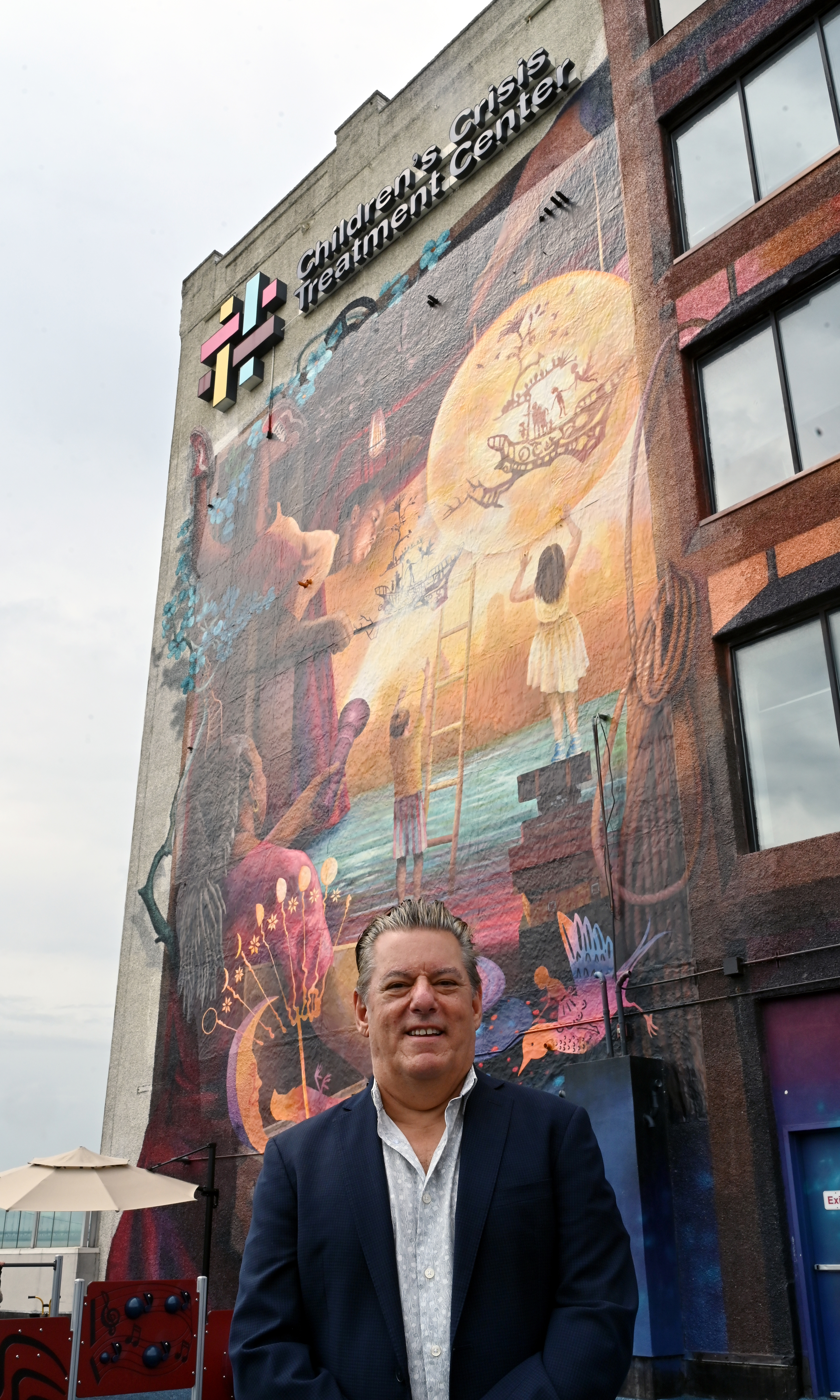
In schools, homes, and community centers in Philadelphia, Montgomery County, and Camden, CCTC provides trauma-informed care annually to over 3,500 children, up to age 18, suffering from behavioral issues, depression, and trauma, helping their families in the process.
“I knew I had to do something different,” Wilson said.
Wilson, a CCTC volunteer and a member of the center’s parent advisory council, had been bringing her children to CCTC, a nonprofit children’s mental health agency, for 20 years.
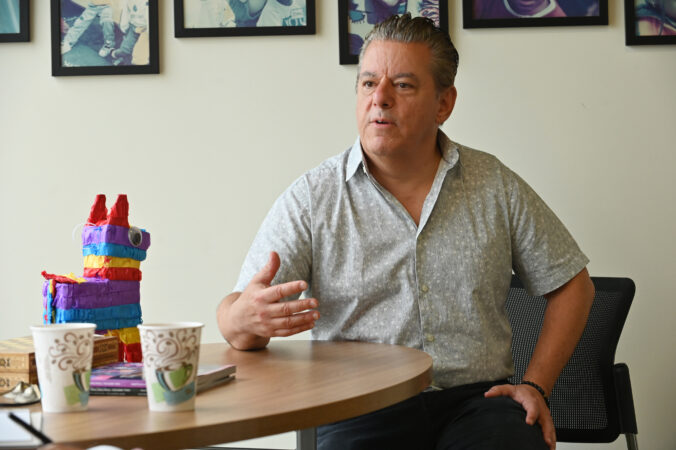
With all the counseling she and her children have received, she could easily give the same talking points as CCTC’s chief executive officer, Antonio Valdés.
And she did.
It may take years, she said, but when a child experiences trauma, at some point, sooner or later, there will likely be a behavioral issue.
Wilson said she grew up in a home where she was regularly beaten with a broom handle or an extension cord. “Those were my grandmother’s favorites.” The trauma repeated itself across the generations when she became a mother.
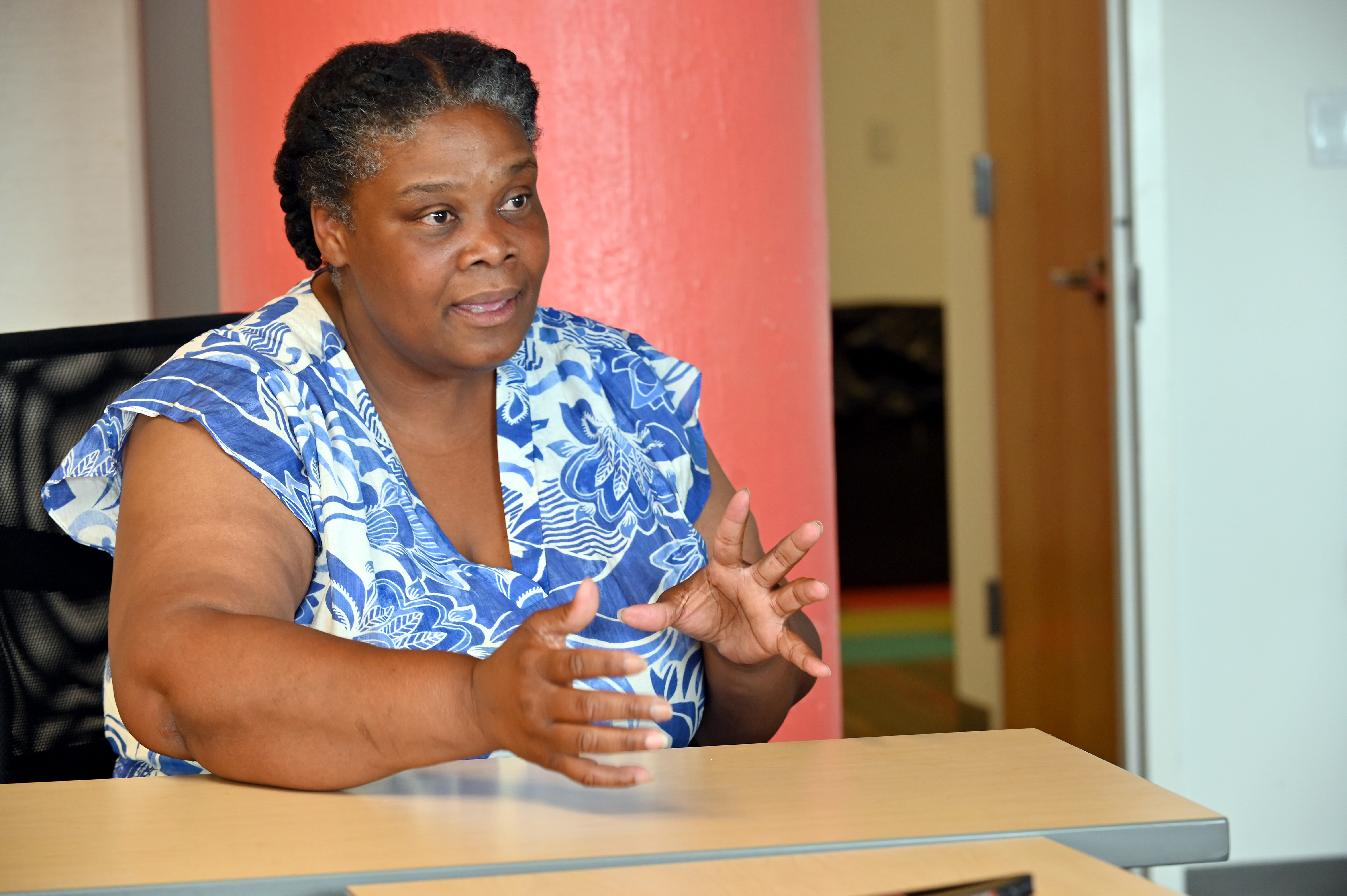
Mellisa Wilson, who now volunteers at the Children’s Crisis Treatment Center, said the group helped her realize she needed to end a generational legacy of corporal punishment as a parent.
Always angry, she yelled at her children and spanked them, but only with her hands — at least she could give them that safety.
But all of it had to end — for her own good, and for theirs. So she turned to CCTC for help.
It’s a typical pattern, said Valdés.
CCTC treats children who have experienced every kind of trauma and adversity — death of a parent, witnessing a parent be killed or beaten, attacks from dogs, sexual abuse, neighborhood violence.
“We treat kids no matter what trauma they have,” he said. “For the vast majority, we’re talking about domestic violence, toward them or a family member, or maybe shootings they have witnessed.”
But what’s just as significant, he said, is how CCTC treats everyone in its care. “It’s the lens we use,” he said, describing trauma-informed care. “We don’t ask what’s wrong with a child. We asked what happened.”
For example, Valdés said, a young boy, maybe 5, sees his mother regularly beaten by her drunken boyfriend. “The kid may even try to intervene, but he’s only 5. What can he do?”
Eventually, the mother gets rid of the drunken boyfriend. All seems normal until months or even years later, when she gets calls from school. Her child is fighting, destroying school property.
“He’s still reacting to what he witnessed, and the behavior he developed at that time,” when he understood, as only a little child can, that his mother, the person who was supposed to be protecting him, couldn’t keep him, or herself, safe, Valdés said.
Says Antonio Valdés, chief executive officer of the Children’s Crisis Treatment Center: “We don’t ask what’s wrong with a child. We asked what happened.”
“Any moment he might feel even a little threatened evokes that response,” he said.
“There’s a mistaken belief that young children, when they experience trauma, they’ll get over it,” Valdés said. “When trauma and adversity happen, there are normal consequences. It’s not normal for the kid to be OK.”
Some parents bring their children to CCTC for counseling, or they get referrals from schools. More help, including a summer camp, is available at satellite community centers.
At its headquarters on Delaware Avenue in Fishtown, CCTC runs a day treatment program for preschool-age children who have been kicked out of their preschools. There are day programs for children who have been discharged from psychiatric hospitals to help them reacclimate before returning to their schools.
CCTC also provides behavioral health help at over 40 middle and elementary schools, where CCTC staffers work with teachers and students.
Valdés remembered one little boy, about 10 or 11, who had been an average student — no trouble in school. His mother worked two jobs to make ends meet, and his grandfather took care of him, fed him dinner, helped with homework, and even put him to bed when his mom worked late.
One Monday, the boy didn’t come to school — and it was so unusual that counselors reached out. On Tuesday, he did show up and, within hours, was fighting with kids and teachers. “They had already written up detention slips,” and it was so bad that harsher punishments were on the table.
But then a counselor who had been trained by CCTC recalled what she had learned and asked the boy what happened. His grandfather had passed away on Saturday, and his mother had to go to work so she could pay the rent, leaving him to fend for himself.
“In five minutes, they tore up the detention slips and had a different kind of conversation. It could have turned into something really bad for that boy. It’s those little moments that are critical,” Valdés said.
In Philadelphia, he said, children in Kensington are suffering from the opioid crisis. When children leave the house, they see people shooting up and have to step carefully to avoid human feces or used needles. It’s not safe to play on the sidewalks or in the parks.
“All of these things add up to a stressful environment,” he said. “There’s an impact of trauma and adversity on the way people start treating each other. It’s a behavior that’s adaptive to the trauma, the crisis, the ugliness,” but may not show up until later.
“It’s highly contagious. Certain kinds of maladaptive behaviors may find themselves in families, in communities, in workplaces, or the way you might treat your girlfriend or wife,” Valdés said. “These behaviors were critical in surviving the moment,” but aren’t useful or appropriate in other situations.
Healing comes from reframing — acknowledging realities but assuring the children that what happened was not normal and not their fault, then giving them techniques to cope positively when disturbing feelings arise, he said.
“We’re treating kids and families, and we’re helping them heal,” he said. “Then they start to support their siblings or neighbors who have been through trauma. We see this as the counter to adversity and trauma.”
Parenting skills Wilson learned at CCTC helped her help her children and regain control of her family, even as she was struggling to manage five youngsters under 5, including a set of twins.
One child was inappropriately touched. Another child pushed Wilson against a wall and accused her of driving their father away. Another child, always her father’s favorite, said her father hated her. Another child hit a kitten.
Tears filled Wilson’s eyes. “That was the trauma I put on them by hitting them and yelling at them.”
Chaos and fatigue were constant, as was anger, yelling, and spanking. At CCTC, her kids got help, and so did she, learning new parenting techniques that led to a peaceful home with five children, now in their 20s and heading into professions to help others.
Valdés said people should support CCTC because that healing is contagious, mending families and neighborhoods.
Wilson agrees. “What I’ve learned, I’ve put into practice,” she said.
Her story is so compelling, she said, that people at her overnight warehouse packing job turn to her for help. And she’s always ready to give it.
“My favorite place is on the bus,” she said, where she’ll say hello and ask her fellow passengers about their day. “People will start talking to me. People are very honest when they think they are never going to see you again.”
When Wilson wears her CCTC T-shirt as she often does, she wants to serve as a walking billboard for a nonprofit that has made a real difference in herself and her family. She vows to support the organization and its mission for the rest of her life.
“We shouldn’t keep good things to ourselves.”
This article is part of a series about Philly Gives — a community fund to support nonprofits through end-of-year giving. To learn more about Philly Gives, including how to donate, visit phillygives.org.
For more information about Philly Gives, including how to donate, visit phillygives.org.
About Children’s Crisis Treatment Center
Mission: To support children and families by helping them heal from abuse, violence, and trauma by bringing mental health services to them where they are — at home, in schools, and in their communities.
Children served: 3,500
Point of pride: Started as a demonstration project in the basement of the Franklin Institute and is now in over 40 schools, up from 14 last year.
Annual spending: Over $31 million in fiscal year 2024.
You can help: Volunteers are needed to help with special events, the Holiday Toy Drive, or group day-of-service activities.
Scott Tharp stood on the small stage built on the ice at Xfinity Mobile Arena.
The president and CEO of Ed Snider Youth Hockey & Education told a story about driving home from Hershey when the Flyers alumni played the Washington Capitals alumni. Driving home on the dark expanse of the Pennsylvania Turnpike, Bernie Parent was driving 45 miles per hour — in the left lane.
“Needless to say, there was a whole line of cars flashing their lights and honking behind us,” Tharp said. “Finally, when he pulled over into the right lane, the cars came by and they were flashing, honking, people leaning out the windows, yelling.
“Bernie rolled down his window, took both hands off the wheel, and put his Stanley Cup rings out the window. Then turned to those of us in the car and said, ‘How about that? They’re cheering for me.’”
You know that he had a big grin at that moment, too.
A man larger than life, the Hall of Fame goalie, who backstopped the Orange and Black to consecutive Stanley Cup championships in 1974 and 1975, was honored on Friday with a celebration of life. Parent died on Sept. 21 at the age of 80.
“Bernie often was described fondly in hockey circles as one of the league’s greatest stand-up goalies,” NHL deputy commissioner Bill Daly said. “Ever more importantly, however, Bernie was always a stand-up man.”
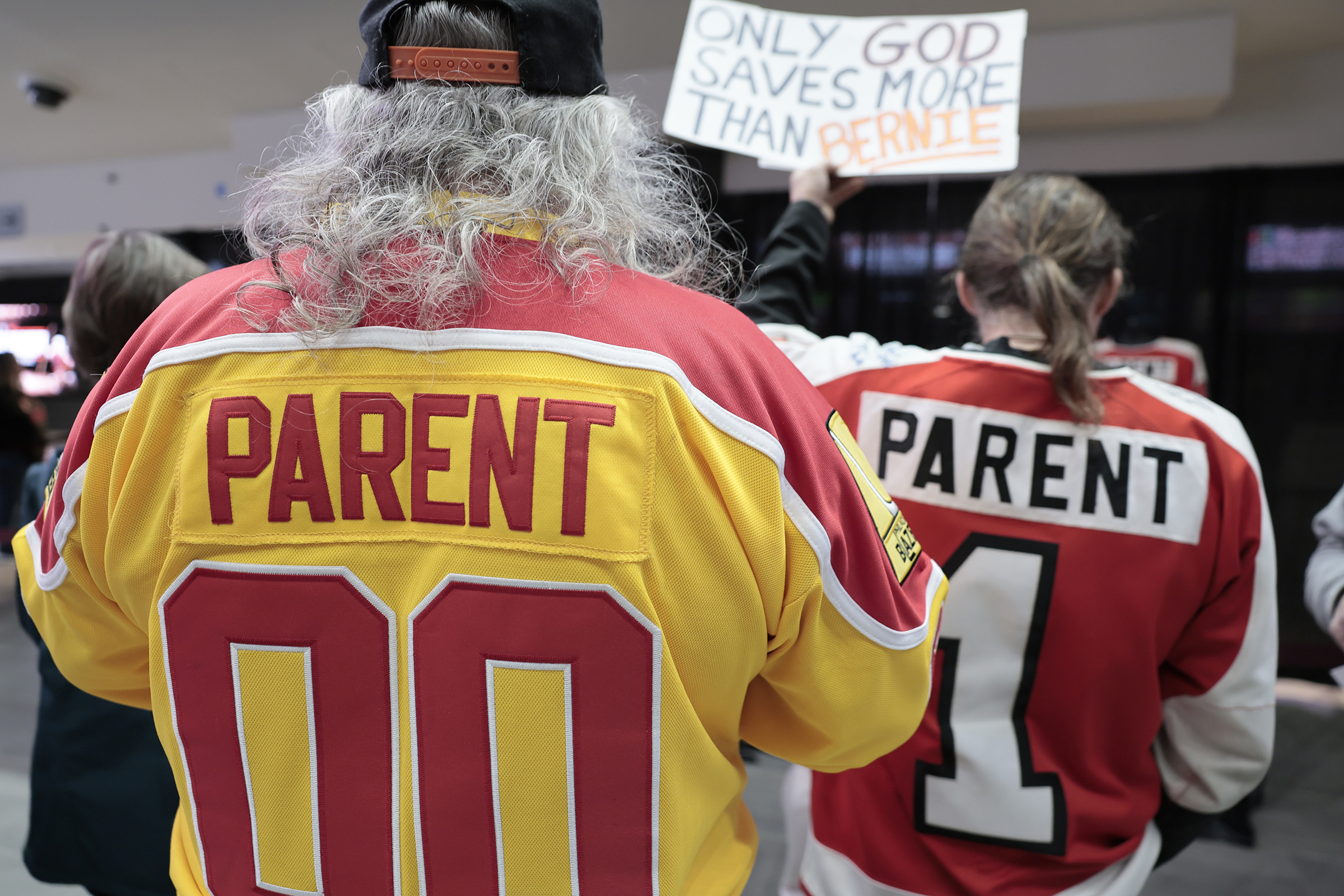
Family, friends, members of Flyers leadership, and approximately 2,000 fans, some wearing his No. 1 jerseys, came to pay their respects to a man who built a legacy in Philly. Born in Quebec, Parent came to the City of Brotherly Love in 1967 as one of the original Flyers. He was traded in 1971, but was reacquired two years later, and never left.
John Bound of Wrightstown, Pa. (right) wore his Parent jersey and made a “Only God saves more than Bernie” sign for the Bernie Parent Celebration of Life at Xfinity Mobile Arena on Friday.
Parent not only helped build the foundation of the organization with the two Stanley Cups — and the rings he loved showing everyone, everywhere, and every day — but won the Conn Smythe each year as the playoff MVP. A two-time Vezina Trophy winner as the NHL’s top goalie, his name is often dropped when discussing the game’s greats.
“Bernie’s number hangs in our rafters, and his legacy is already etched into the very DNA of our franchise,” Flyers chairman Dan Hilferty said. “We often don’t realize how much someone gives of themselves until they’re gone. Winston Churchill once said, ‘We make a living by what we get, but we make a life by what we give.’ And standing here together, it’s clearer than ever just how much Bernie gave.”
Parent was a fixture in the community since hanging up his skates due to injury in February 1979. An ambassador for Ed Snider Youth Hockey & Education, his widow, Gini, will carry on his legacy as an ambassador, too.
“Bernie’s life will continue to shine through the lives he inspired, the lessons he taught, and the community he helped build,” she said. “He always said that life was about giving back, lifting others, and leading with love. And thanks to each and every one of you, the light will never dim.”
After Flyers president Keith Jones, general manager Danny Brière, coach Rick Tocchet, and Parent’s daughter, Kim, reminisced and paid tribute on the jumbotron, City Council President Kenyatta Johnson spoke. Johnson said he was pledging $5,000 to Ed Snider Youth Hockey & Education, which Tharp said the support organization will match the donation two-to-one.
Johnson then read a proclamation honoring the goalie.
“Whereas, this legislative body extends its deep appreciation for the indelible mark Bernie Parent left on hockey and the Philadelphia community,” part of it read. “Now, therefore, be it resolved, that the council of the city of Philadelphia, hereby honors and recognizes the life and legacy of Philadelphia Flyers goaltender and Hockey Hall of Famer Bernie Parent, for his outstanding contributions to the sport of hockey and the Philadelphia community.”
As Parent’s teammate Bill Clement said, “Bernie loved all of you.” And it was true. Parent loved the Flyers community. And he loved his teammates, too.
“I can honestly say it was an honor and a privilege to play with Barnyard Benny,” said Joe Watson, who had known Parent since 1963. “We had so many laughs and jokes. … I know he’s looking down on us, smiling, and he looks around, he says, My gosh, I can’t believe all those people are for me, but we’re all for you, Bernie, because if it wasn’t for you, we wouldn’t have won.”
Joe Watson, former teammate and friend of Parent speaks during the Bernie Parent Celebration of Life on Friday.
“I know Bernie’s up there, laughing and smiling and everything else. He’d love to be down here, but I look forward to seeing you again, my friend,” Watson concluded as his voice cracked.
Bobby Clarke, the captain of the Flyers’ Stanley Cup teams, was the last to speak.
“A hockey player’s life is only a short period of time in his life. And Bernie, besides being the goaltender, he had a great life and he was a great man,” he said.
“When you win two Stanley Cups, it takes the best that everybody on that team can give; just so happened that Bernie’s best was better than the rest of our best, and we got two Stanley Cups because of Bernie.
“We’ve lost five players from Stanley Cup teams: Barry Ashbee, Eddie Van Impe, Billy Flett, Ross Lonsberry, and Ricky MacLeish.
“God bless Bernie, because he’s going to join them and the rest of us, until we go join them, we will walk together forever.”
Thanksgiving is always the busiest travel time of the year and as always, the AAA has come up with their annual projection: this year a record 81.8 million Americans will be going somewhere, at least 50 miles from home.
6 million people will get there by plane, train, bus, or cruise, but nearly 73 million will travel by car, representing almost 90% of all holiday travelers.
I will not be among them. I get a lot of photo enjoyment out of road trips, but holiday travel is not the seeing-the-USA-in-your-Chevrolet or getting-your-kicks-on-Route-66 kind.
While my newspaper print column has been around since 1998, this online version actually started during the summer of 2007 with three or four posts every week (back then it was called blogging) as I traveled the region’s roadways with my camera, bent upon discovery.
After 9/11, like most Americans, I looked at my country in a new way. Inspired by the 200th anniversary of the Lewis and Clark expedition, I set out to retrace their 3,700 mile journey, known as the Corps of Discovery, on my own epic cross-country road trip across America.
Since then I have made lots of more local road trips. I sought out retro kitschy giant roadside Muffler Men‚ wandered New Jersey’s Pine Barrens, and Pennsylvania’s political T-zone during the 2020 election.
And one of my favorites: visiting all 10 of the New Jersey joints and restaurants featured in a 2015 episode of CNN’s Parts Unknown, by the late Anthony Bourdain, a chef, author, TV personality — and a Jersey Boy from Bergen County.
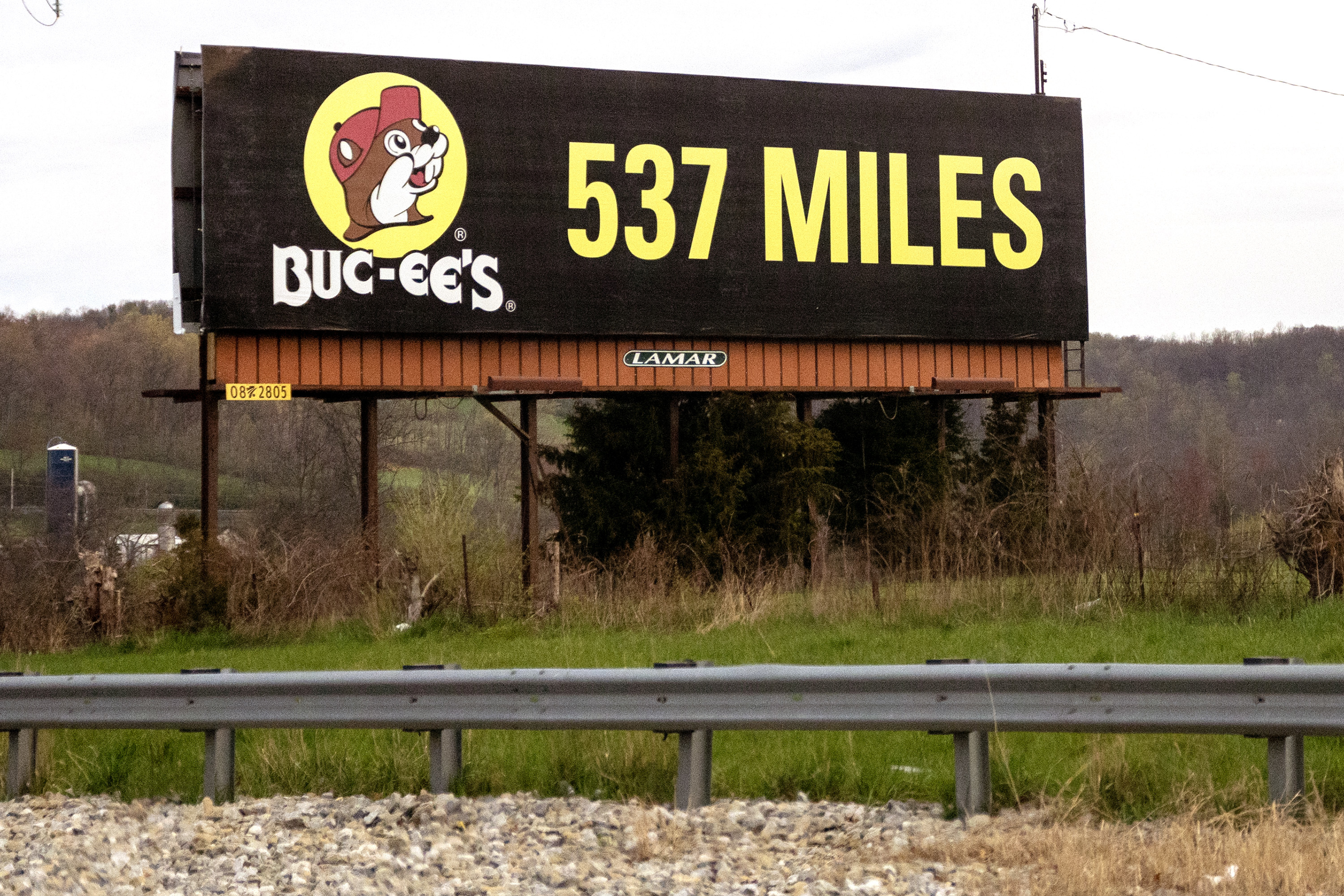
Speaking of food and other roadside attractions, this is on my maybe to-do road trip list this winter:
I photographed that Buc-ee’s sign near mile marker 291 on the westbound Pennsylvania Turnpike earlier this year, near the Bowmansville Service Plaza, back when the closest outpost of the Texas-based travel center described as a “theme park on the highway” was the one off I-95 in Florence, South Carolina.
My daughter has been sending me social media food videos (mostly by international visitors) and even bought me a mug, but I have never been to any of the chain’s 51 locations across 11 states or experienced their extensive gas stations, “world-famous” restrooms or Beaver Nuggets.
A new one opened in Virginia this past summer, off I-81, two hours southwest of Washington, D.C. — only 275 miles from Philadelphia’s City Hall.
So, readers, let me ask you. Is it worth a trip? Let me know here.
Or do I just stick with getting my highway food-fix at Wawa, Sheetz, Royal Farms, Turkey Hill, QuickChek, or Circle K?
Since 1998 a black-and-white photo has appeared every Monday in staff photographer Tom Gralish’s “Scene Through the Lens” photo column in the print editions of The Inquirer’s local news section. Here are the most recent, in color:
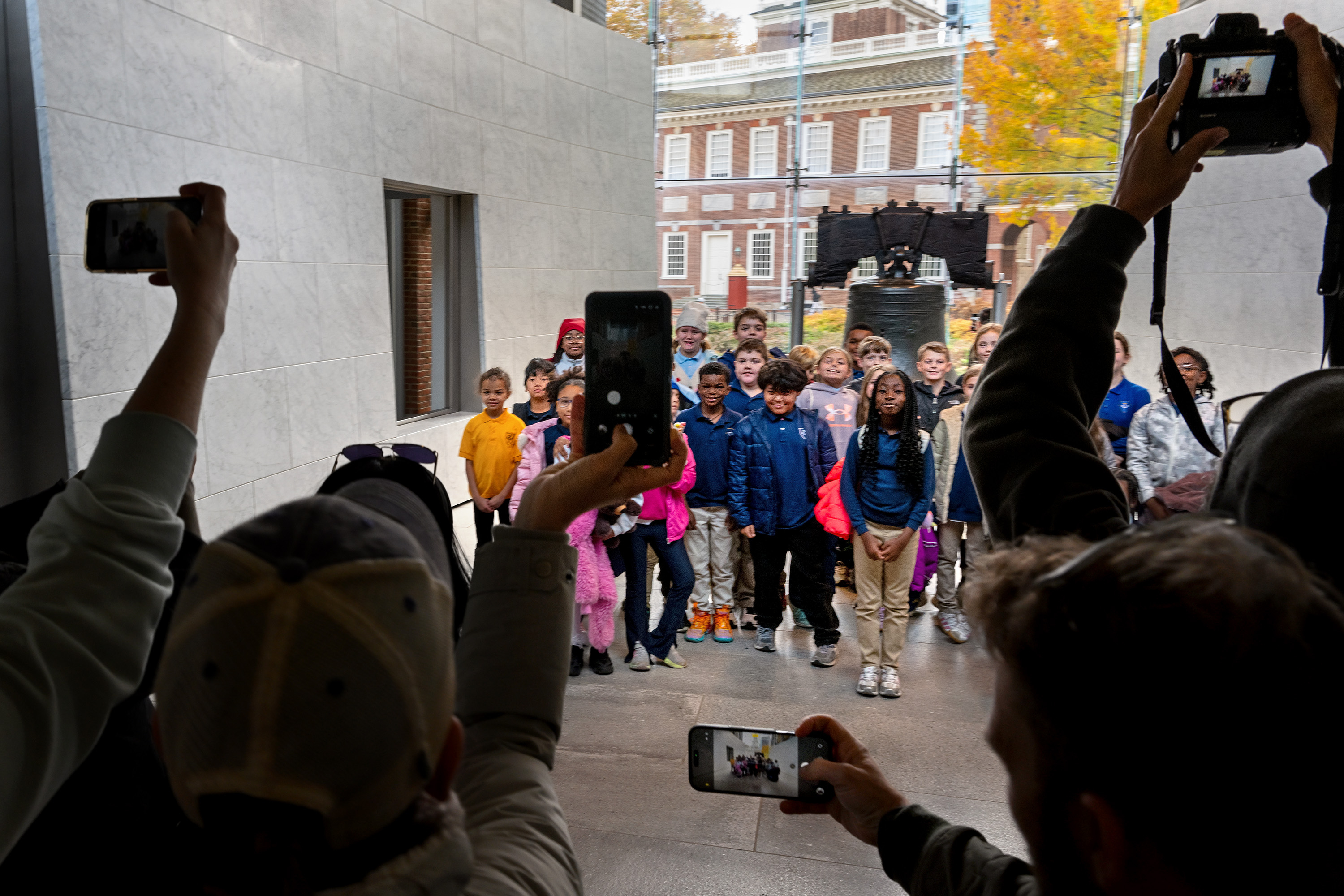
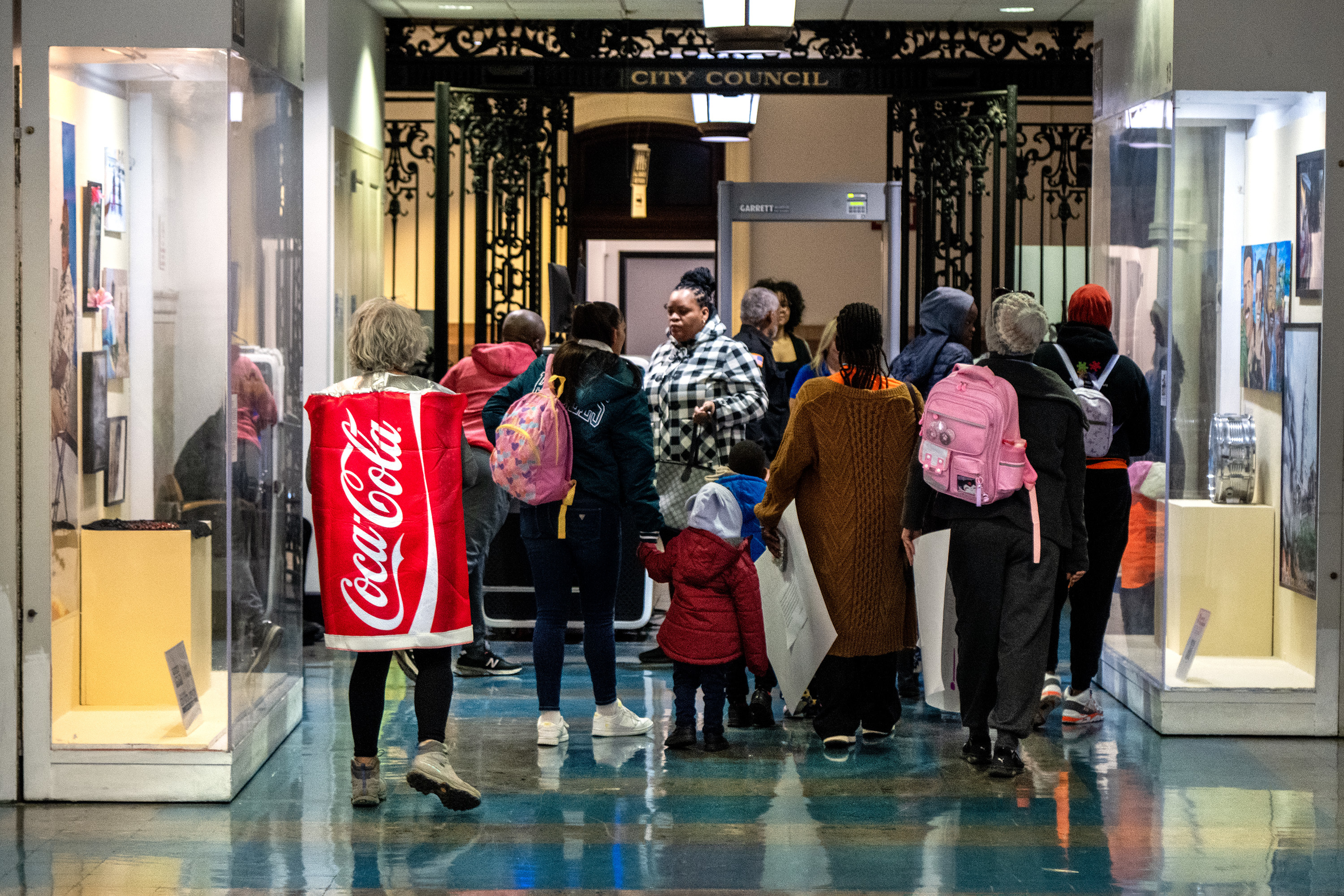
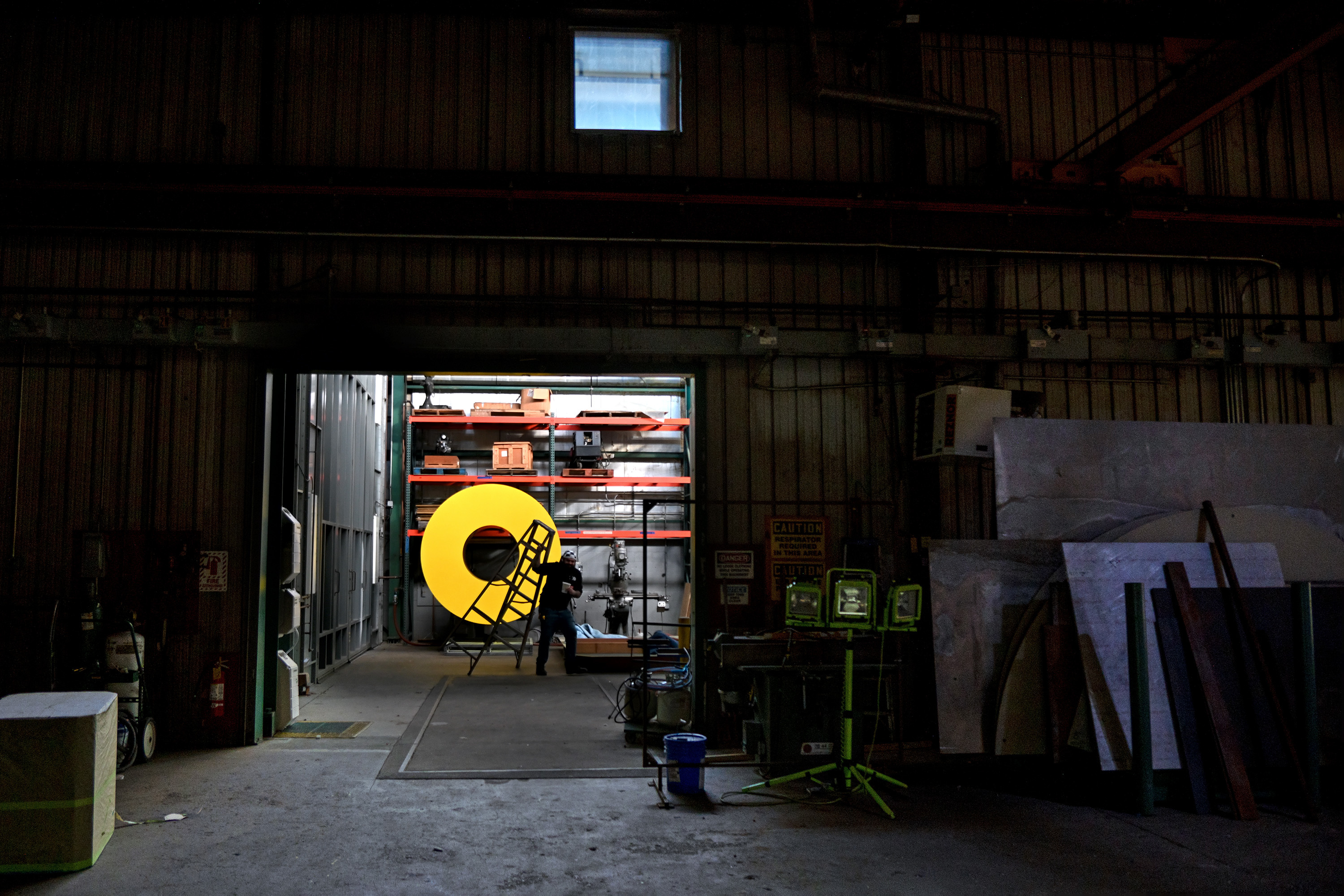
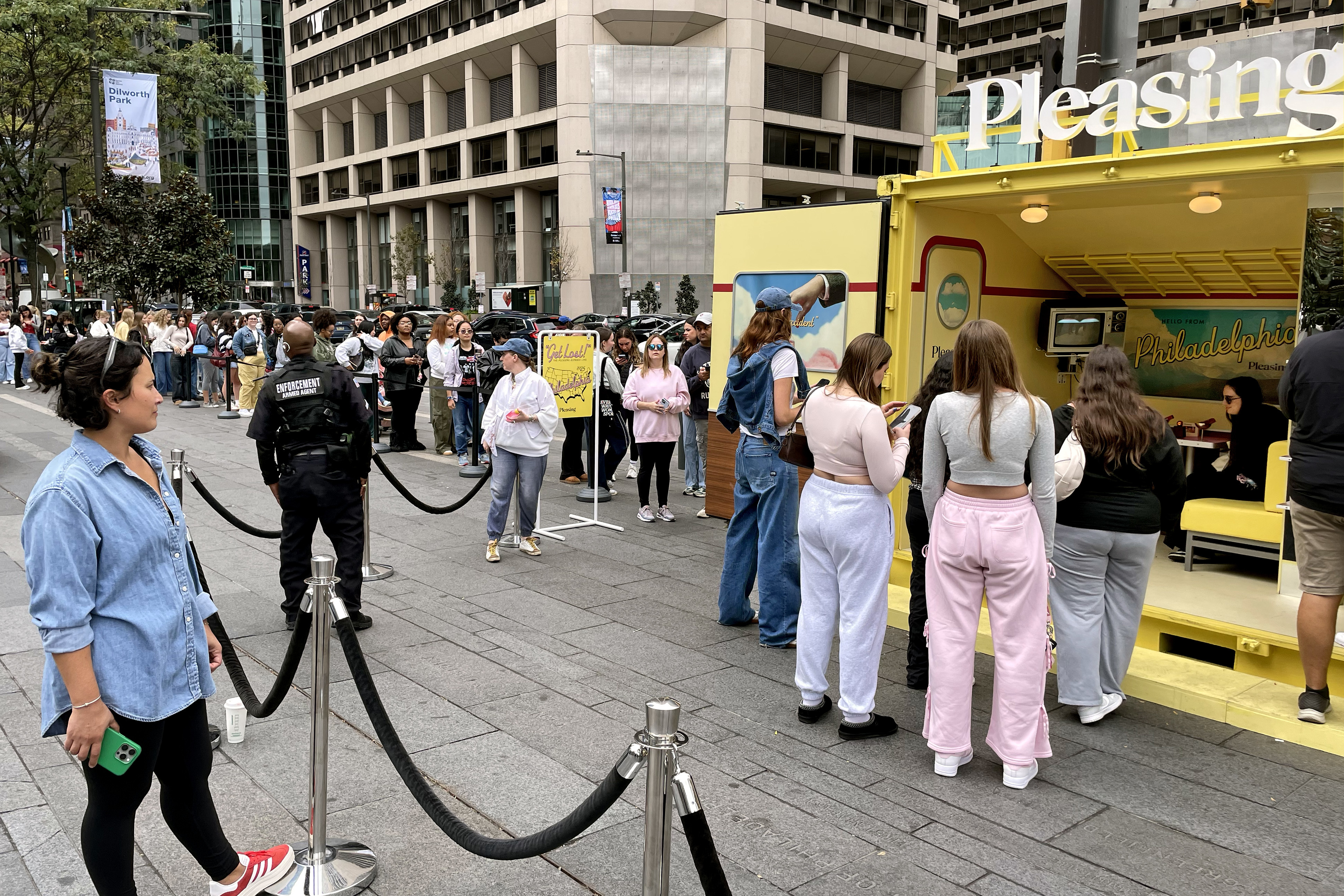
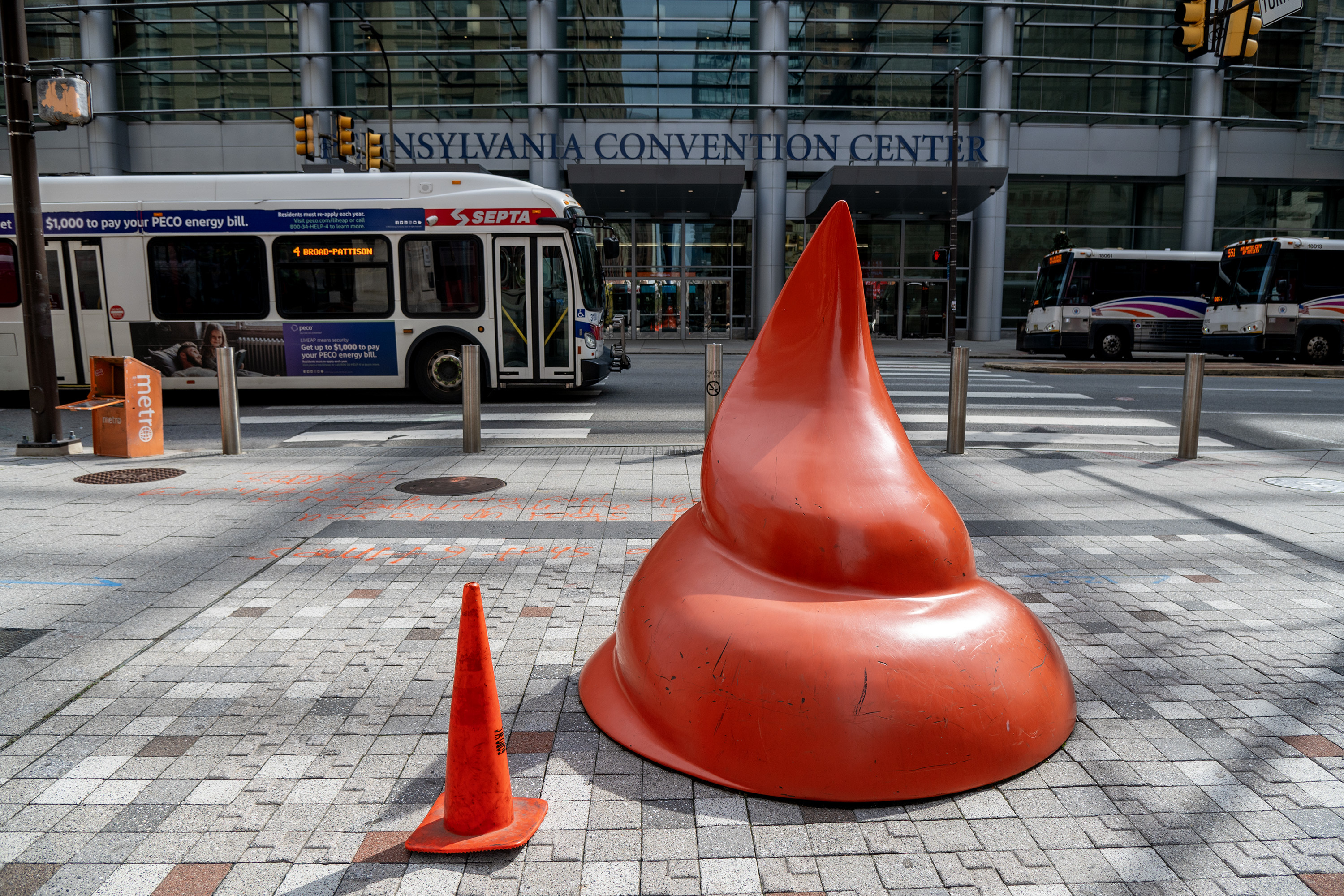
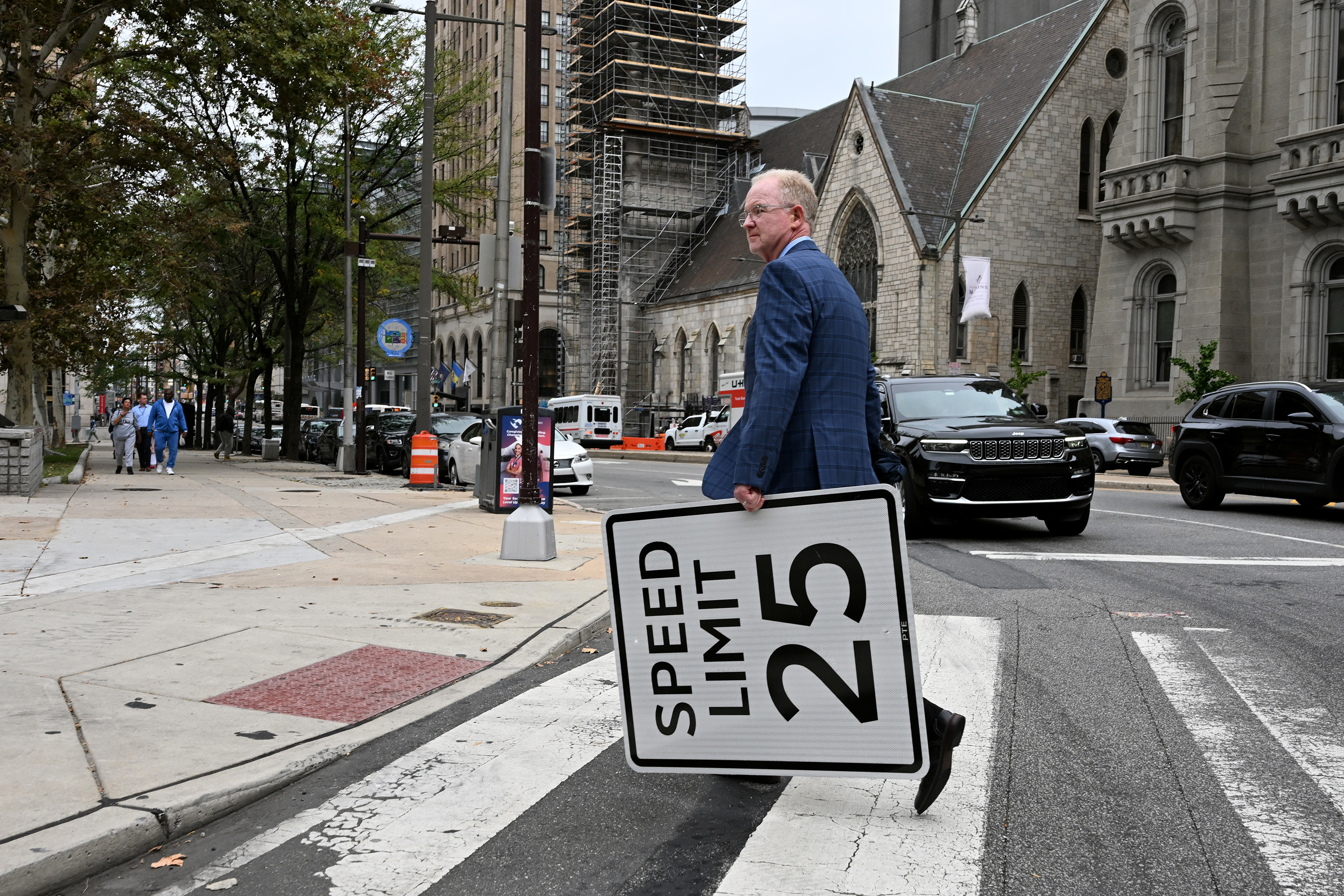
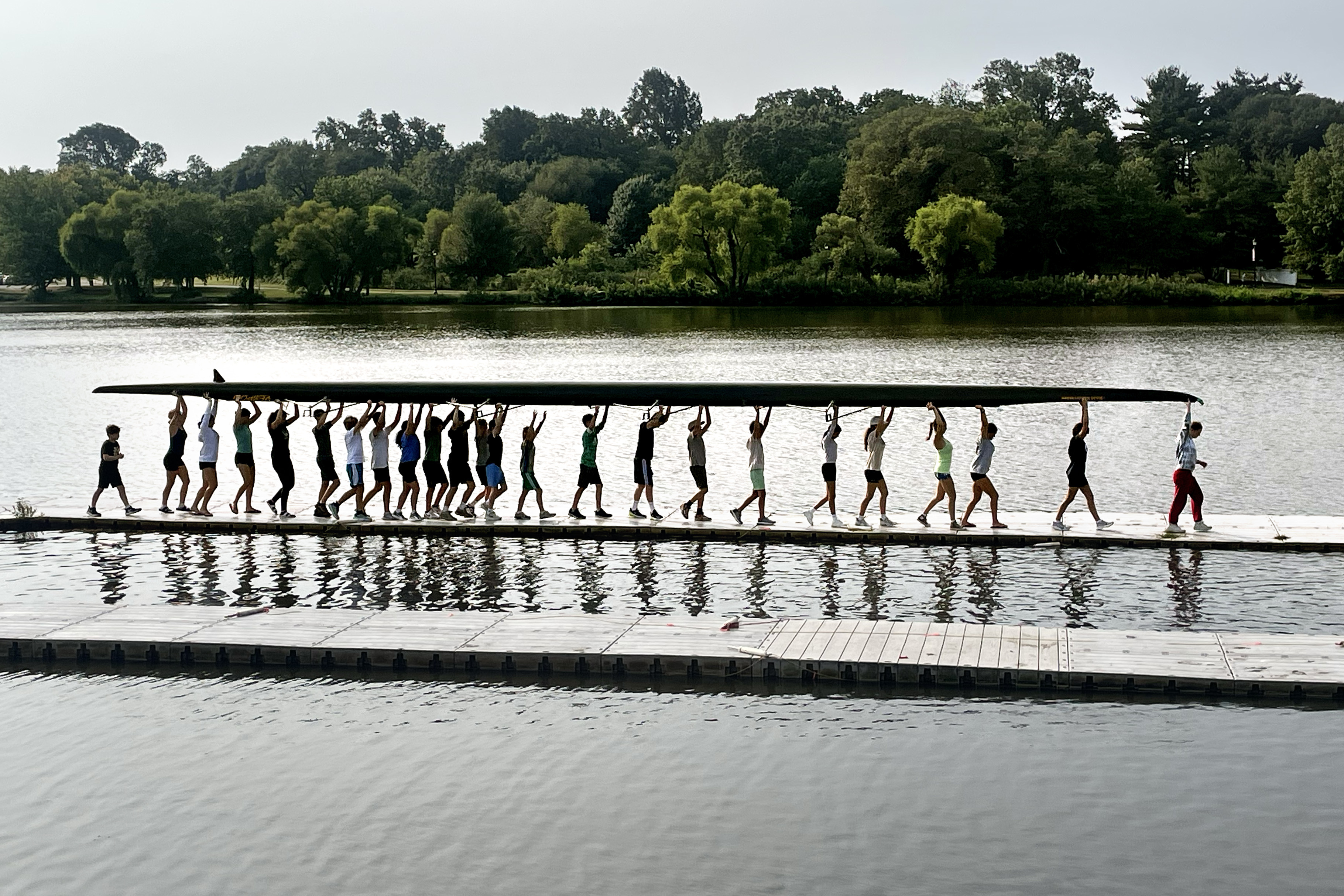
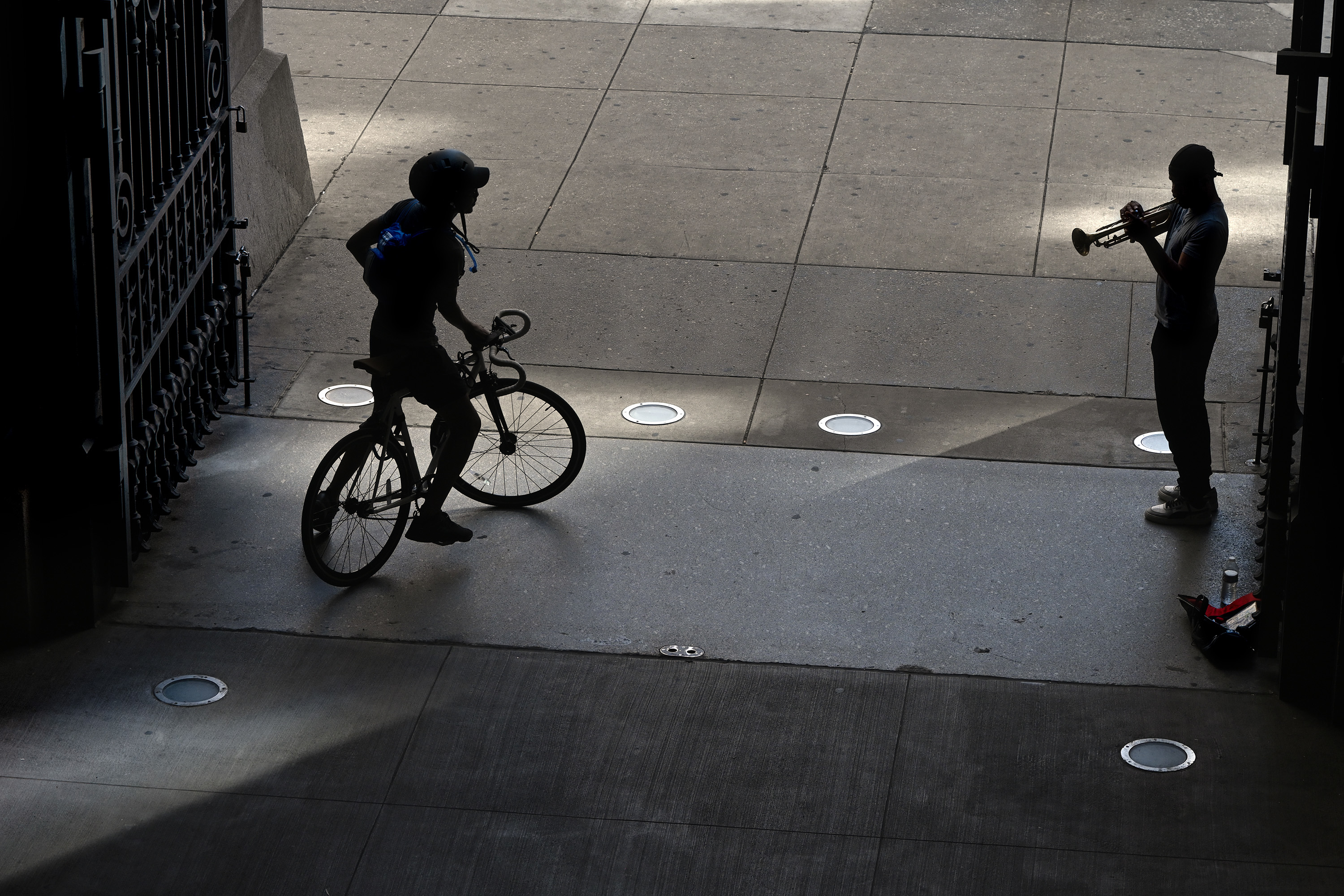
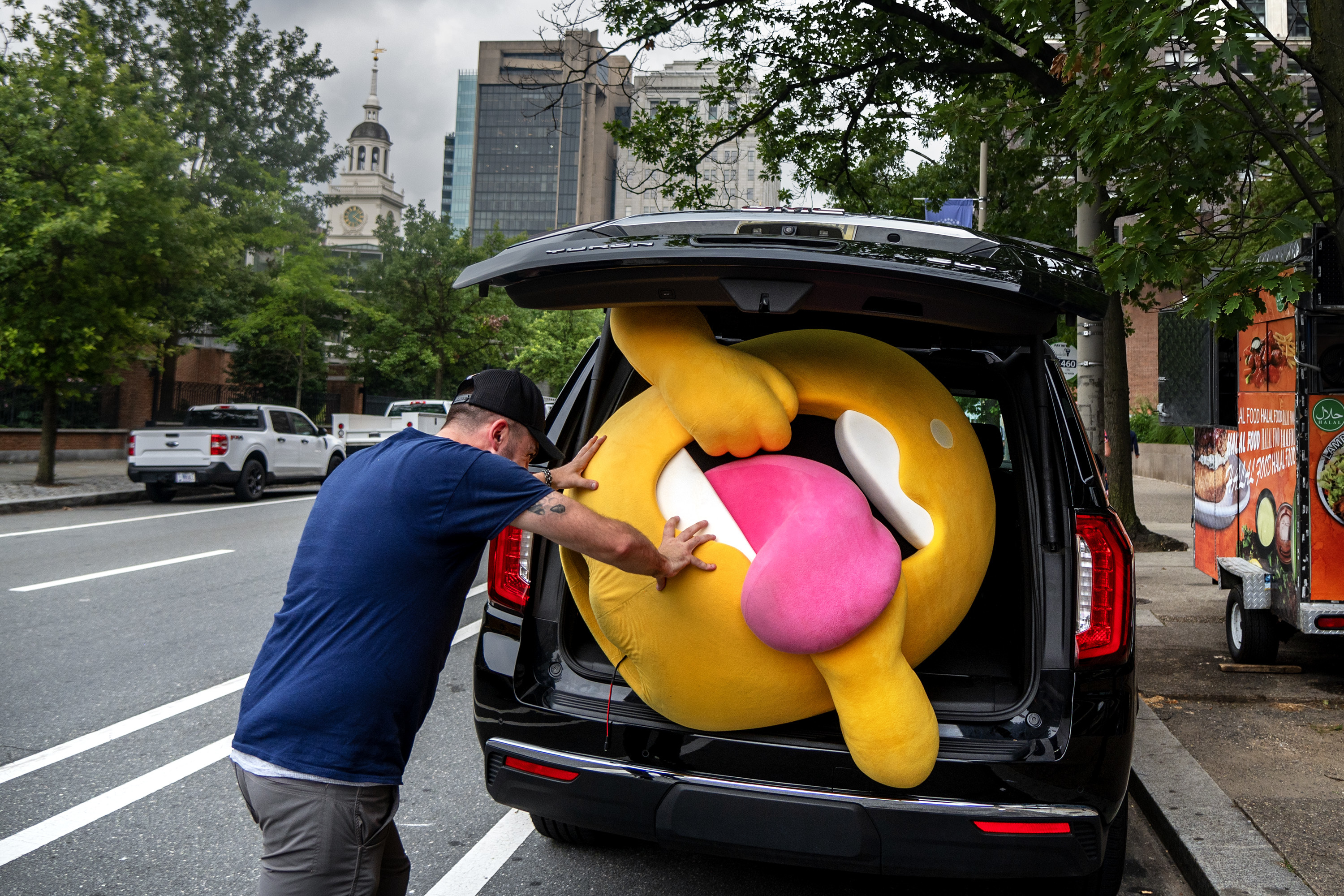
November 17, 2025: Students on a field trip from the Christian Academy in Brookhaven, Delaware County, pose for a group photo in front of the Liberty Bell in Independence National Historical Park on Thursday. The trip was planned weeks earlier, before they knew it would be on the day park buildings were reopening after the government shutdown ended. “We got so lucky,” a teacher said. Then corrected herself. “It’s because we prayed for it.” November 8, 2025: Multitasking during the Festival de Día de Muertos – Day of the Dead – in South Philadelphia.November 1, 2025: Marcy Boroff is at City Hall dressed as a Coke can, along with preschoolers and their caregivers, in support of former Mayor Jim Kenney’s 2017 tax on sweetened beverages. City Council is considering repealing the tax, which funds the city’s pre-K programs. October 25, 2025: Austin Gabauer, paint and production assistant at the Johnson Atelier, in Hamilton Twp, N.J. as the finished “O” letter awaits the return to Philadelphia. The “Y” part of the OY/YO sculpture is inside the painting booth. The well-known sculpture outside the Weitzman National Museum of American Jewish History was removed in May while construction continues on Market Street and has been undergoing refurbishment at the Atelier at the Grounds for Sculpture outside of Trenton.October 20, 2025:The yellow shipping container next to City Hall attracted a line of over 300 people that stretched around a corner of Dilworth Park. Bystanders wondered as they watched devotees reaching the front take their selfies inside a retro Philly diner-esque booth tableau. Followers on social media had been invited to “Climb on to immerse yourself in the worlds of Pleasing Fragrance, Big Lip, and exclusive treasures,” including a spin of the “Freebie Wheel,” for products of the unisex lifestyle brand Pleasing, created by former One Direction singer Harry Styles.October 11, 2025: Can you find the Phillie Phanatic, as he leaves a “Rally for Red October Bus Tour” stop in downtown Westmont, N.J. just before the start of the NLDS? There’s always next year and he’ll be back. The 2026 Spring Training schedule has yet to be announced by Major League Baseball, but Phillies pitchers and catchers generally first report to Clearwater, Florida in mid-February.October 6. 2025: Fluorescent orange safety cone, 28 in, Poly Ethylene. Right: Paint Torch (detail) Claes Oldenburg, 2011, Steel, Fiberglass Reinforced Plastic, Gelcoat and Polyurethane. (Gob of paint, 6 ft. Main sculpture, 51 ft.). Lenfest Plaza at the Pennsylvania Academy of the Fine Arts on North Broad Street, across from the Convention Center.September 29, 2025: A concerned resident who follows Bucks County politics, Kevin Puls records the scene before a campaign rally for State Treasurer Stacy Garrity, the GOP candidate for governor. His T-shirt is “personal clickbait” with a url to direct people to the website for The Travis Manion Foundation created to empower veterans and families of fallen heroes. The image on the shirts is of Greg Stocker, one of the hosts of Kayal and Company, “A fun and entertaining conservative spin on Politics, News, and Sports,” mornings on Talk Radio 1210 WPHT.September 22, 2025: A shadow is cast by “The Cock’s Comb,” created by Alexander “Sandy” Calder in 1960, is the first work seen by visitors arriving at Calder Gardens, the new sanctuary on the Ben Franklin Parkway. The indoor and outdoor spaces feature the mobiles, stabiles, and paintings of Calder, who was born in Philadelphia in 1898, the third generation of the family’s artistic legacy in the city.September 15, 2025: Department of Streets Director of Operations Thomas Buck leaves City Hall following a news conference marking the activation of Automated Speed Enforcement (ASE) cameras on the Broad Street corridor – one the city’s busiest and most dangerous roads. The speed limit on the street, also named PA Route 611, is 25 mph.September 8, 2025: Middle schoolers carry a boat to the water during their first outing in a learn-to-row program with the Cooper Junior Rowing Club, at the Camden County Boathouse on the Cooper River in Pennsauken. September 1, 2025: Trumpet player Rome Leone busks at City Hall’s Easr Portal. The Philadelphia native plays many instruments, including violin and piano, which he started playing when he was 3 years old. He tells those who stop to talk that his grandfather played with Billie Holiday, Duke Ellington, Nina Simone, and Dizzy Gillespie. August 25, 2025: Bicycling along on East Market Street.August 18, 2025: Just passing through Center City; another extraterrestrial among us. August 11, 2025: Chris Brown stows away Tongue, the mascot for a new hard iced tea brand, after wearing the lemon costume on a marketing stroll through the Historic District. Trenton-based Crooked Tea is a zero-sugar alcoholic tea brand founded by the creator of Bai, the antioxidant-infused coconut-flavored water, and launched in April with former Eagles defensive end Brandon Graham as a partner.August 4,2025: Shanna Chandler and her daughters figure out their plans for a morning spent in Independence National Historical Park on the map in the Independence Visitor Center. The women (from left) Lora, 20; Shanna; Lenna, 17; and Indigo, 29, were stopping on their way home to Richmond, Virginia after vacationing in Maine. The last time they were all in Philadelphia Shanna was pregnant with Lenna.
The buyers: Jessica Lubniewski, 41, museum educator; David Jacobs, 40, electrical engineer
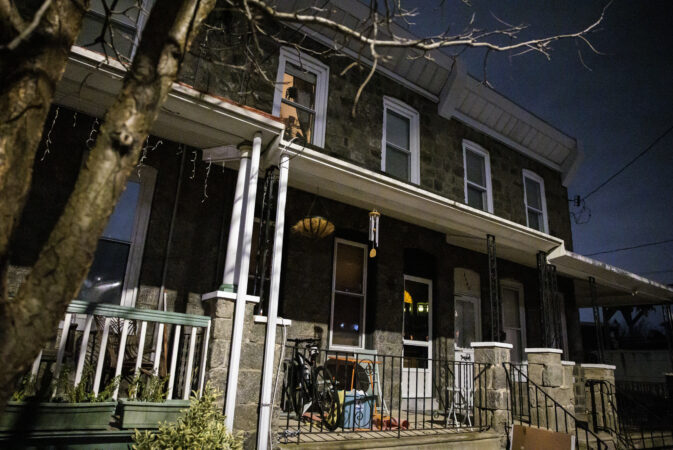
The house: A 1,300-square-foot rowhouse in East Falls with 3 bedrooms and 1½ baths, built in 1930.
The price: listed for $325,000; purchased for $327,500
The agent: Benjamin Camp, Elfant Wissahickon
The ask: Jessica Lubniewski and David Jacobs didn’t want to buy just any house; they wanted to buy their friend’s house. But when the friend didn’t accept their offer, they had to pivot.
The couple started looking for houses that cost less than $375,000 in East Falls. They wanted at least three bedrooms, a bathroom on the first floor, and a dining room that was big enough to entertain. “That was a really big thing for me,” said Lubniewski. They also wanted character and original details — not a recently flipped property.
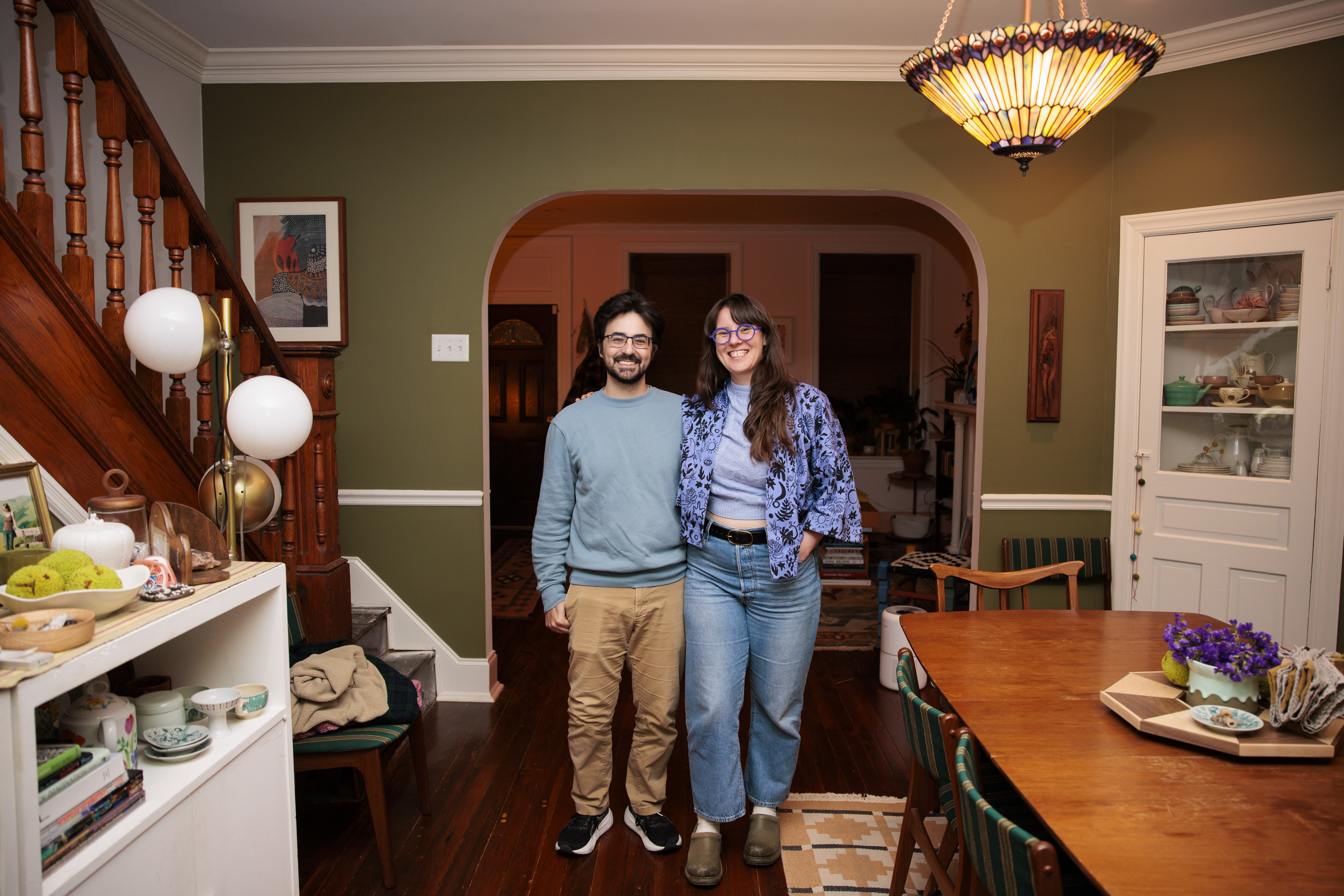
Lubniewski and Jacobs in their dining room that is big enough to entertain.
The search: The couple went to a few open houses and spent their evenings browsing Zillow listings, where Lubniewski spied a preview listing for a house that wouldn’t be on the market for a few weeks. “I just kept looking at it and being like, ‘Man, that house looks so cool,’” said Lubniewski. “It was right around the corner from where we were renting our apartment and had all the things we were looking for.” Lubniewski and Jacobs told their agent they wanted to see the house and he worked to get them “the first viewing on the first day that it was on the market,” said Jacobs.
The appeal: The couple loved the look of the first floor,which includes two fireplaces. “Neither of them are working,” said Lubniewski, but the mantles are “so beautiful.” The one in the living room has its original facade.
The arched doorways in between the living room and the dining room and the dining room and the kitchen give “a nice look,” said Lubniewski. Jacobs appreciates the house’s central air system.
Arched doorways separate the living room from the dining room and the dining room from the kitchen
The deal: A few hours after visiting the home, the couple put in an offer. Their agent suggested they bid a few thousand dollars over the asking price, so they offered $2,500 more for a total of $327,500. Lubniewski thinks they may have been the only people to see the house.
The seller accepted their offer and after the inspection, agreed to cover $5,000 of the closing costs. He also threw in the patio furniture and the grill. In exchange, the couple did a 30-day closing.
“It all happened pretty smoothly and pretty quickly,” said Lubniewski.
One of the couple’s favorite aspects of the house were the two original fireplace mantels in the living room and the dining room.
The money: The couple had $90,000 to spend on their home. That included $40,000 of personal savings.
“We don’t have any kids. We don’t have a lot of expenses,” said Lubniewski regarding how they were able to save. And after Jacobs got his current job as an electrical engineer, they were “able to save a lot quite easily,” she added, a first for both of them.
They also got $40,000 from Jacobs’ parents, and additional money they inherited from relatives who died earlier in the year.
They tried to pursue a first-time homebuyer’s mortgage but were about $500 over the income limit, Lubniewski said, so they got a 30-year-mortgage with a 6.45% interest rate instead. They put 20% down, about $65,000.
The move: Lubniewski and Jacobs made a few changes to the house before they moved in, including ripping out the carpeting upstairs. “It was horrible work, so gross,” said Lubniewski. They hired someone to redo the floors and buff the original hardwood downstairs. They officially moved in at the end of July, said Lubniewski, “on what felt like the hottest day of the summer.”
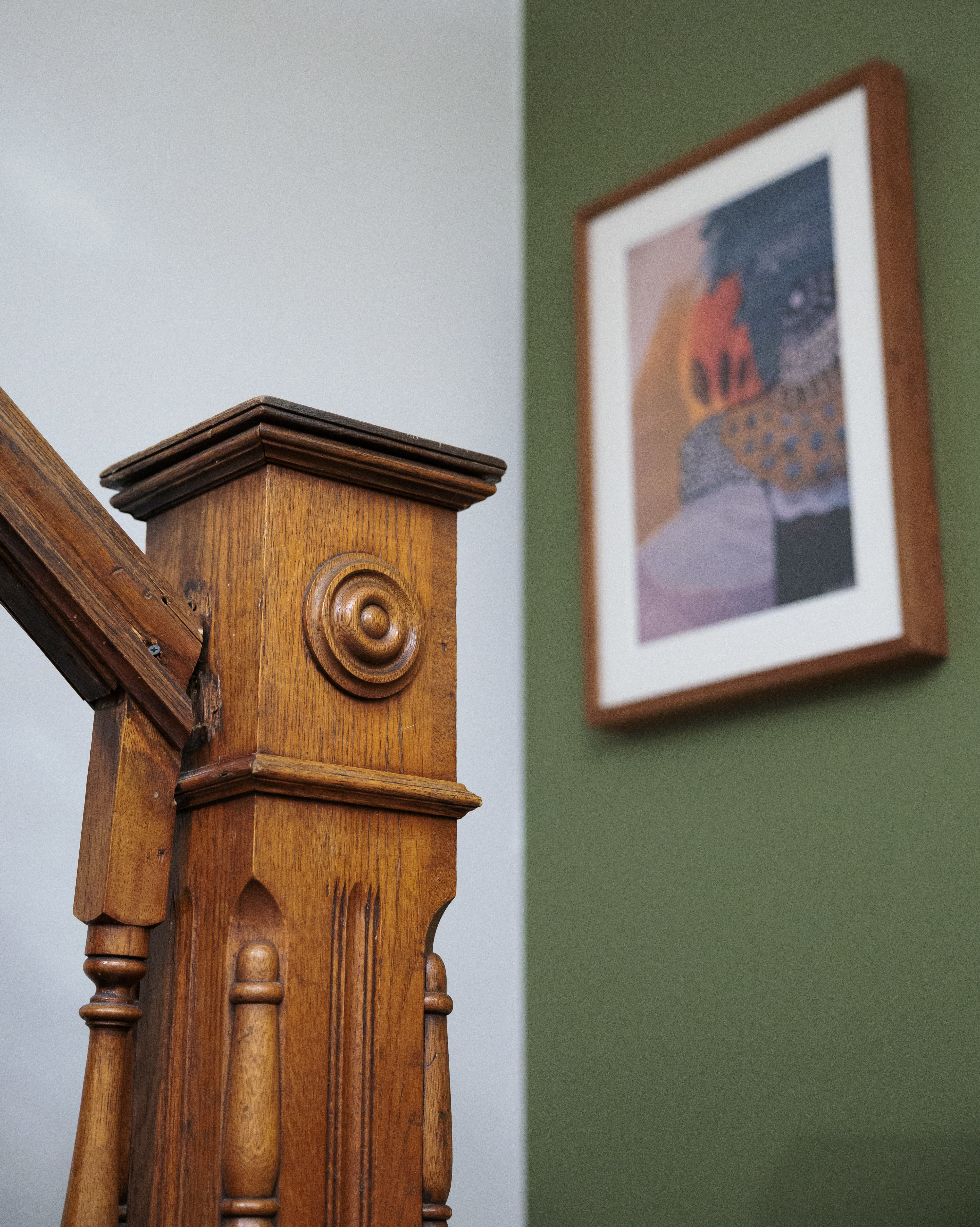
Original details, like the woodworking on the staircase banister, was important to Jacobs and Lubniewski.
Any reservations? Jacobs wishes they had time to replace the old electrical wiring they discovered after they moved in. “In the basement the electrical all looked really good, and the inspector didn’t flag anything.” But when they tried to replace a light fixture in the dining room, they encountered old, fabric-wrapped wire, an outdated type of electrical wiring that exists in many old homes. They think there may be more, but they don’t want to bust through the walls right now to find out.
Life after close: Since moving in, Jacobs and Lubniewski have been busy getting to know their neighbors. In fact, a woman who grew up in the house stopped by on Halloween and asked to peek inside. “She was really excited,” said Lubniewski. She even had her son take a photo in front of the fireplace mantel, the same spot her mother took a photo of her on Halloween in the ‘70s. “It’s always so interesting to know what has changed,” Lubniewski said. Or in the case of the fireplace mantel, what hasn’t.
Standing alongside his parents and his six siblings, Caleb Quick posed for a photo with Brandon Graham and Milton Williams, wearing a gray shirt that stated, “I kicked cancer’s butt.” After the photo, Caleb untangled the yellow wristbands in his right hand and handed them to both players. The bracelets read: For Childhood Cancer Warriors.
“People see football players as heroes,” Caleb said. “So, when the kids look at them they’ll see their heroes wearing the bands to support them.”
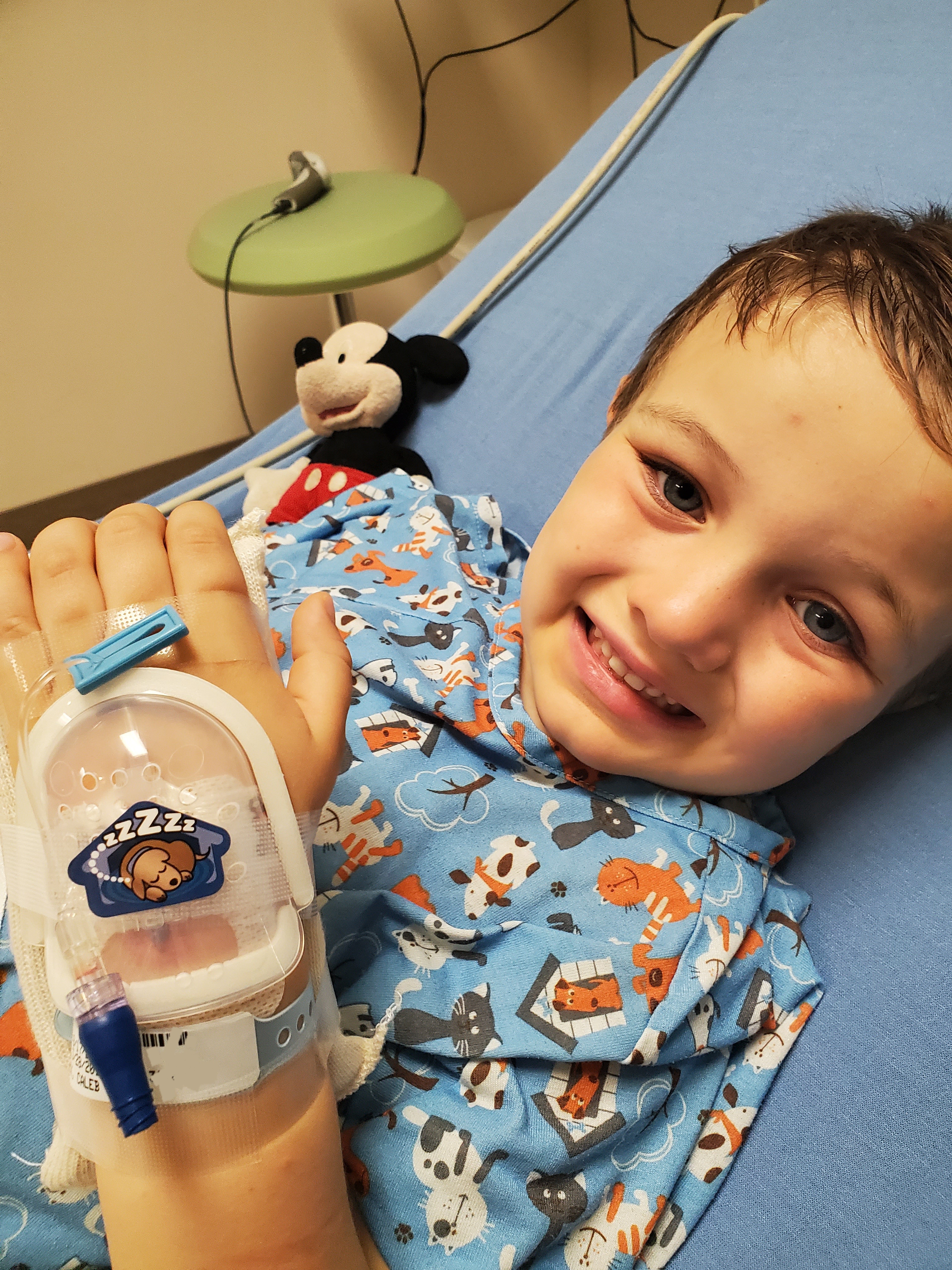
When speaking with Caleb, you learn he loves the typical 10-year-old hobbies. He loves to play board games, he loves riding roller coasters, and he loves football. But if you ask him more about himself, you’ll also learn it’s his mission to raise awareness for pediatric cancer after he was diagnosed with leukemia at just 5 years old.
Caleb Quick and his family have made it their mission to battle pediatric cancer after he was diagnosed with leukemia at 5 years old.
The Quick family isn’t your typical family. In fact, they’re quite hard to miss. Naomi and her husband, John, are raising seven kids all under the age of 17. Their youngest is Hannah, who is 6 years old, then it’s Caleb, 10; Noah, 12; Grace, 13; James, 14; John Daniel, 15; and their oldest daughter, Chara, 16.
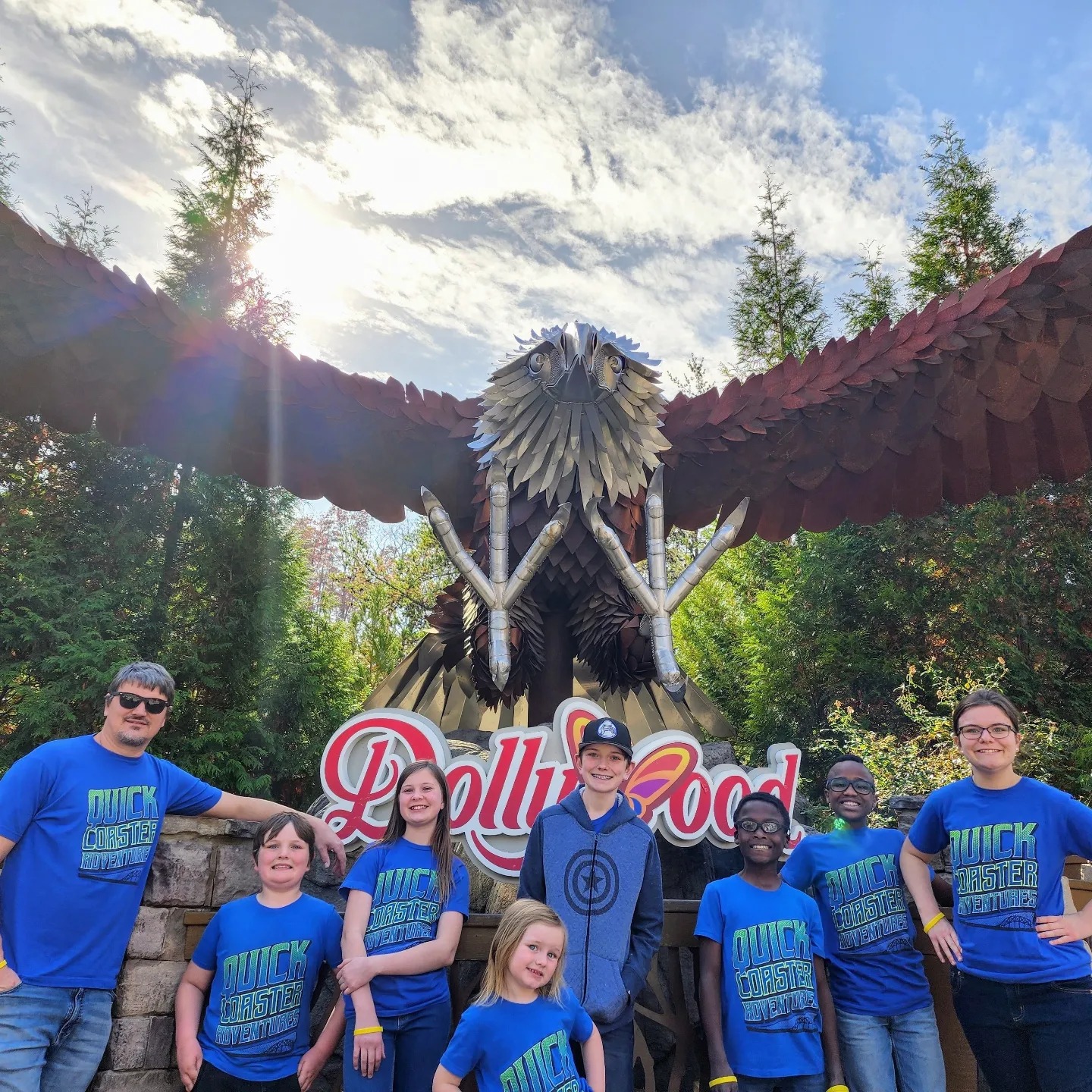
The Delaware natives have already combined their mission to raise awareness for pediatric cancer with their love for roller coasters, riding more than 100 of them from Minnesota to Tennessee.
“Our family just kind of draws attention,” Naomi said. “So people kind of look anyway so we use that to our advantage. We would wear foundation T-shirts to the different parks to raise awareness for the different foundations that help childhood cancer. It was raising awareness in this really fun way that didn’t leave people sad. Instead it was more hopeful.”
Some of these foundations included: B+ Foundation, the Landon Vargas Foundation, Live Like Lucas, Project Outrun, and Kisses for Kyle. Caleb’s Give Kids the World passport, which grants families free access to parks around the country, made this mission possible.
“Childhood cancer is like a roller coaster that no one wants to get on,” Naomi said. “It is full of ups and downs and it makes you feel sick sometimes. And life is a roller coaster in general. But kids should get to ride coasters. Not have to fight cancer.”
Now, the Quicks are ready to raise awareness through the family’s next love: football.
Caleb Quick (second from left) and his family also share a love for roller coasters, and have used that passion to further their mission of supporting pediatric cancer awareness.
‘Bad luck’ for the Quicks
Just months before Caleb was diagnosed with leukemia, his father, John, had just battled ocular melanoma, the most common eye cancer in adults. “Both him and Caleb had genetic testing done and there’s no link between the two,” Naomi said. “So, it’s just like a really bad situation. I don’t know what else to call it, bad luck.”
John was diagnosed in 2019 and was declared cancer free in January 2020 after he was treated by sewing in radiation seeds into his eyeball, the procedure ended up taking the vision from his right eye. Seven months later, Caleb was diagnosed with leukemia.
Naomi remembers bringing Caleb to the emergency room in August 2020, after Caleb was complaining about being tired and having knee pain. She wasn’t expecting her next conversation with the doctor to be something so life changing.
Caleb Quick was in remission within 28 days, but continued treatment for another two years.
“To have a doctor sit across from you and tell you that you’re really spunky, climbs-all-over-everything, never-settles-down kid has cancer was …” Naomi said before falling silent.
Caleb’s initial hospitalization at the Nemours Children’s Hospital in Wilmington was 22 days. Within the first three days, Naomi said, Caleb couldn’t walk and he was covered from head to toe in bruises.
“It was a really quick progression, and then he developed blood clots unfortunately in his central line, which meant he had to be on blood thinners for a good portion of his treatment as well,” Naomi said. “It was definitely a little bit more complicated than even just the regular treatment.”
By that November, after months of physical therapy and using a walker to move around the house, Caleb rebuilt his muscles and learned to walk again. However, he still has slight residual weakness in one leg from chemotherapy.
Caleb was in remission within 28 days. But due to a high rate of relapse without the maintenance period of chemotherapy, his treatment lasted another 25 months. His official Ring the Bell date was Oct. 22, 2022. Right after his last dose, he went home to ring the bell in front of his family.
When asked what he wanted to do with his meds and supplies, Caleb responded: “I wanted to burn them.”
Of course, they didn’t burn the medicine. But they did throw a big party and burned a few papers to signify he was done with his treatment. And throughout the Quick family’s battle with cancer — not once, but twice — they gained an even stronger sense of community.
“Our family has seen those really hard times bring us closer together and make us stronger,” Naomi said. “For all of us, we learned to get through hard times doing it as a family and doing it together. Nobody here had to fight alone, which was good. But that can’t be said for all the other families and so I think it’s really made us more aware and more passionate about fighting on behalf of other families that are going through their own cancer battle.”
Brandon Graham, whose mother overcame leukemia, gave inspiration to Caleb Quick during his battle with cancer.
‘Football was the saving grace’
On Sept. 19, 2022, Caleb had finished one of the biggest chemo days he had left in his treatment. Later that night, he and his family attended the Eagles’ home opener against the Minnesota Vikings.
The Eagles invited the Quicks to the sideline before the game after learning that they were divided between Vikings and Eagles fans. “It’s split 5-4 in favor of the Eagles, I’m proud to say,” Naomi said. “The Vikings fandom comes from their father’s Minnesota roots.”
Caleb Quick (left) and his family pose with Brandon Graham at the Eagles’ 2022 home opener against the Vikings. The family is split between Eagles and Vikings fans due to their father’s Minnesota roots.
Caleb is a fan of both teams. So it was a dream come true for the family to witness both teams in action. Before the game, Graham walked over, welcoming the family with a sweaty hug and words of encouragement.
“He looked at me and he said, ‘My mom had leukemia as a kid and she was told she would never have kids, and look where I am,’” Caleb remembered.
A few weeks earlier, Caleb took part in the Phillies’ Childhood Cancer Awareness Night, and got to meet then-first lady Jill Biden.
Caleb Quick (left) got to meet Jill Biden, then the first lady, and many Phillies players during Childhood Cancer Awareness Night in 2022.
Two weeks later, toward the end of his treatment, Caleb took a dive in health. The cumulative effect of over two years of chemo had taken its toll on his body. He developed three different viral infections and four different bacterial infections.
“It was a little scary, and I just remember thinking to myself, replaying those words that Brandon had spoken. He did say that, ‘With God, all things are possible. He’s a fighter, he’s going to make it,’” Naomi recalled. “And I just held onto that because I needed that encouragement. And to have it come from somebody who is a hero to the community, it was a really special interaction.”
Football has always played a special role for the Quick family, through both Caleb’s and John’s cancer battles. For John, it was an escape. For Caleb, it was an inspiration.
“John was diagnosed right in the middle of the football season,” Naomi said. “So, football games were this way that we could have normal family time. It was just kind of an escape from reality during both of their cancer fights. Meanwhile, football was an inspiration for Caleb to walk again.
“Football was the saving grace, and like I said, when he lost his ability to walk, he would say, ‘Mom, I can’t play in the NFL anymore.’ He wants to play in the NFL and he can’t do that if he can’t walk.”
Eagles wide receiver DeVonta Smith was wearing his yellow bracelet in support of childhood cancer awareness when he caught this touchdown against the Tennessee Titans in December 2022.
‘For childhood cancer warriors’
During the 2022 season, Eagles wide receiver DeVonta Smith wore a yellow wristband given to him by 10-year-old Nicholas Purificato, who was battling Ewing’s sarcoma, a rare bone cancer. Starting that October, Smith wore the bracelet every day at practice and during games to support his fight.
One day, Caleb spotted the yellow bracelet and looked up at his mom and said, “Mom, No. 6, Smith, he cares about kids like me. Look at those bands,” Naomi recalled.
At that moment, she ordered similar yellow bands for her son, with the words “For childhood cancer warriors”and a gold ribbon engraved on them.
At last year’s Big Climb, a fundraiser for the Leukemia Lymphoma Society, Caleb met Milton Williams and Tarron Jackson, a pair of former Eagles defensive ends. Williams, who signed with the New England Patriots this offseason, shared his story about his mother’s battle with breast cancer and proudly accepted Caleb’s bracelet. A few months later, Williams was still wearing the bracelet.
“We offered him one and then he took a whole bag to the locker room and passed them out,” Naomi said. “We ended up seeing the team pictures later in August and he was wearing them in his team pictures. Caleb was showing it to all of his friends and family. It was a cool moment.”
But it’s not just Caleb and Naomi’s mission to raise awareness for pediatric cancer. After watching Caleb battle leukemia at such a young age, his siblings have made it their mission as well.
“Since we know how hard it is for kids to go through cancer, we know that other families who have to go through the same thing, it’s hard for them too,” said Caleb’s sister Grace. “So, when you raise awareness, those families know that you care.”
Caleb’s older brother J.D. added: “If they’re wearing bands and they’re asked by a reporter why they’re wearing them, then people start to wonder more about cancer because a lot of people don’t know a whole lot about cancer until somebody they know has had it.”
The Quick family’s ultimate goal is to get bracelets to all 32 teams in the NFL.
“September is childhood cancer awareness month and it really doesn’t get as much publicity as some other awareness months do, which is odd,” Naomi said. “It seems to be that you have to be in this world to know a lot about it. So, our hope was that if we could get to all 32 teams, then kids across the country, no matter who they’re rooting for, will know that there are people rooting for them. Every child deserves that. Every kid deserves to know that they’re not fighting alone.”
As of October, Caleb was moved to annual visits after his three-year off treatment lab results came back perfect.
It’s almost Thanksgiving and maybe you’re not the cooking type. Or maybe you just have too much on your … plate. I invited two Inquirer journalists to answer the age-old holiday conundrum. We do get to the bottom of it.
Evan Weiss, deputy features editor: OK, the question is …
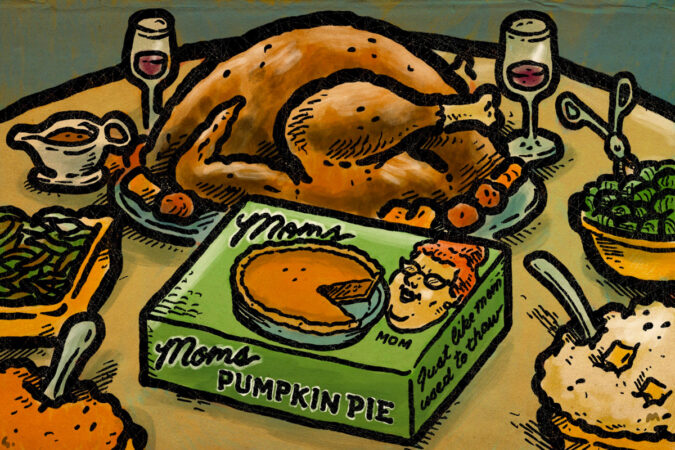
Is it rude to bring a store-bought Thanksgiving dish when everyone else is cooking from scratch?
Margaret Eby, food editor: I feel very strongly about this! The answer is no, of course not! Unless you said you were bringing a homemade casserole and show up with a bag of half-eaten Doritos or something, it’s not rude.
Sam Ruland, features planning and coverage editor: I think it comes down to how much you like these people.
Margaret Eby: Oooh OK so homemade is only for people you like? Or vice versa?
Sam Ruland: If they’re the relatives you adore, put in the effort. Make something, even if it’s simple.
If they’re the relatives who fight over politics and ask why you’re still single? Pay $12.99 for a pie, pop it on a plate, and walk in confidently.
Margaret Eby: Hahahah that’s a spicy take. To me, I appreciate someone bringing something. I love cooking! But I don’t always have the energy.
I also have a weird problem, which is that people don’t like cooking for food editors and writers. I think they assume I’ll judge them in the same way we review restaurants, and that’s not true at all. I find it to be a huge compliment whenever anyone cooks me anything, down to a grilled cheese.
But maybe that’s part of why I feel like it’s fine to let yourself and other people off the hook. Plus, restaurants and bakers and other professionals are great at cooking! It’s fine to let them cook for you!
Sam Ruland: I totally get that — cooking for food people does feel like a high-stakes audition.
Margaret Eby: That’s just because you can’t see us behind the screen eating string cheese for lunch.
Sam Ruland: And this is where my chaotic Thanksgiving philosophy kicks in: I’m a huge fan of buying something and quietly placing it in your own dish like you spent hours on it. If it saves your sanity, do it.
Margaret Eby: I support that entirely.
It is not anyone’s business who made those potatoes.
Evan Weiss: OK, what’s the best thing to buy and pass off as your own?
Margaret Eby: A whole pizza.
No, just kidding. But bringing a whole pizza to a party — it’s kind of a baller move.
Bring a Johnny’s Pizza from Bryn Mawr?
Sam Ruland: Honestly, I’m more offended not by someone buying it from the store, but by not even trying to hide it. At least commit to the bit! Put it in a real dish!
Margaret Eby: I think if you’re attempting to pass it off as your own, you do have to be a little realistic. Like that beautifully crafted hand-latticed pie is a great thing to bring. But if you don’t bake pie, your cover is going to be blown pretty quickly.
The homemade thing people are always impressed by no matter how “rustic” it looks is bread, I’ve found. I’ll bring over a really complicated dish and bread as an appetizer, and people are always more impressed by the bread
Sam Ruland: Right, the pie lie has limits. This is why I fully endorse buying something like lobster mac and cheese, putting it in your casserole dish, and sighing deeply like it took you hours. Play to your strengths: commitment and presentation.
Margaret Eby: Feigning struggle is an important part of Thanksgiving!
Sam Ruland: The sigh, the smudge of flour on your shirt that you did not earn — it’s all part of the illusion.
Evan Weiss: Also, so many great restaurants around here do great Thanksgiving takeout. You might get some cred if you say where you got it. (Also, bonus because then you don’t have to lie.)
Sam Ruland: That’s true, restaurant flexing is its own kind of prestige. But I maintain: the quiet dignity of transferring it to your own dish and pretending you suffered for it? Iconic.
Margaret Eby: I think if you put the thought into picking up a fabulous pie from The Bread Room or a whole bundle of goodies from Zig Zag, for example, people will be just as impressed by that effort as if you made it your own.
Or I would be, anyway.
The Bread Room by High Street Hospitality’s line up of Thanksgiving treats, clockwise from right to left: miso caramel apple pie, dirty chai chocolate pie, and basque pumpkin cheesecake.
Sam Ruland: True! Like my family loves the cannolis from Isgros, so that’s something that would be a crowd pleaser no matter what and wouldn’t get grumbles.
Margaret Eby: Picking up cheese from DiBruno’s is also a great move. And you don’t have to pretend that you have a secret cheese cave in your basement.
However, I believe that the holidays are all about long-running bits with your friends and family. And passing off a dish as your own instead of purchased is a classic bit.
So maybe DO pretend you made the cheese, why not.
Evan Weiss: “Yes, I made this wine in Sonoma in 2013!”
Margaret Eby: “It was a great year, thanks!”
Evan Weiss: So the answer is: No, it’s not rude to bring prepared food. But either commit to the bit or get it from somewhere good.
Margaret Eby: Yep, we solved it.
And don’t be like my friend in college who would bring a ziplock bag of whiskey to parties.
No one appreciates that.
Have a question you’d like us to answer? Email us!
Wilmington, Baltimore, Washington — watch their exits blur past on I-95 as you head farther south and see color return to the trees. The leaves that have already fallen in Fairmount Park and Rittenhouse Square seem to reappear here, lighting up the old oaks and elms that line Richmond’s stately streets. Autumn clings a little longer in this university town, where nature — from wild riverside woods to formal gardens — feels ever-present.
Just over four hours from Philly, Richmond, Va., offers everything you’d want in a weekend escape: smart restaurants, fascinating history, and a new hotel from one of the country’s most creative hospitality groups.
One of the best bakeries in the country, Sub Rosa calls Richmond’s Church Hill neighborhood home. After a devastating 2024 fire and a long rebuild, it reopens this November — and it’s absolutely where any RVA weekend should begin. Made with house-milled Virginia and Pennsylvania flours, its pastries include croissants stuffed with garlicky mushrooms or sour cherry-pistachio, crunchy biscotti, and polenta thumbprints filled with housemade jam. Order one of everything — you’ll wish you had anyway.
📍 620 N. 25th St., Richmond, Va. 23223
Learn: Poe Museum
A 15-minute walk from Sub Rosa (just enough time to finish that coffee and croissant) brings you to the Poe Museum. Edgar Allen grew up and worked as a journalist in Richmond before achieving literary acclaim, a life chronicled inside this petite museum founded in 1922. It’s filled with letters, first editions, and personal relics — including the silver candelabras by which Poe wrote The Bells. The museum complex includes the Old Stone House (the oldest standing residence in the city), Poe Shrine, and the lush Enchanted Garden. Keep an eye out for the resident black cats, whose shenanigans are detailed on the @poemuseumcats Instagram account.
📍 1914 E. Main St., Richmond, Va. 23223
Stay: Shenandoah Mansions
Ash Hotels’ forte is retrofitting historic buildings into eccentric, artsy-craftsy inns, and the new Shenandoah Mansions is no exception. Expect four-posted beds draped in tentlike canopies, block-printed quilts, hand-painted lamps, and checkerboard-tiled showers. Located in the Fan District — a neighborhood full of architectural candy — the inn feels residential yet central to everything.
One of Richmond’s greatest assets is its proximity to nature. The James River Park System covers more than 600 acres, all within walking distance of Broad Street, the city’s main thoroughfare. Pick up the head of the North Bank Trail at South Cherry Street and Oregon Hill Parkway for an hourlong walk along boardwalks and dirt paths, past historic cemeteries, and through tunnels of color-changing leaves.
📍 4001 Riverside Dr., Richmond, Va. 23225
Visit: Maymont
Exit the trail near Hampton Street and Kansas Avenue, and you’ll find yourself at Maymont, a 19th-century estate built by financier James Dooley and his wife, Sallie. Though the Gilded Age mansion is closed to tours while undergoing renovation, the grounds alone are reason to visit. Wander through the Italian Garden, along the butterfly trail, and through the Japanese Garden (the oldest on the East Coast), where boulder-backed waterfalls, koi ponds, and storybook bridges create incredible photos.
Fires, fortunes, presidents — and even a few alligators — have passed through the grand Jefferson Hotel since it opened in 1895. Every visitor should see the lobby’s marble floors and sweeping staircase, even if you’re not checking in. Stop by TJ’s Restaurant & Lounge for a predinner cocktail under the chandeliers; the Rotunda old-fashioned tastes like grapefruit, walnut, and old money.
A Richmond legend since 1983, Stella’s remains the last word in Greek cooking here. The food (artichoke moussaka, ouzo-kissed crab cakes, feta-and-Manouri cheese fries covered in shaved lamb) is just enough off-center from traditional to be interesting, while still honoring the soulfulness of the country’s cuisine. The regulars pack the dining room, creating a comfortable, gregarious vibe. Go ahead and think it: If we lived in Richmond, we’d be here all the time.