Tag: Weekend Reads

  • Pennsylvania’s Working Families Party pledges to support a primary challenger against Sen. John Fetterman

    Pennsylvania’s Working Families Party pledges to support a primary challenger against Sen. John Fetterman

    Pennsylvania’s Working Families Party is recruiting candidates to run against Pennsylvania’s Democratic senator, John Fetterman.

    Fetterman has not announced whether he will run for reelection in 2028, but the progressive party put out a public declaration Tuesday pledging to endorse — and, if necessary, recruit and train — a challenger.

    The announcement, first reported by The Inquirer, is a remarkable step for the left-leaning organization to take more than two years before an election and speaks to the degree of frustration with Fetterman among progressives.

    “At a time when Donald Trump and Republicans in Congress are doing everything they can to make life harder for working people, we need real leaders in the Senate who are willing to fight for the working class,” Shoshanna Israel, Mid-Atlantic political director for the Working Families Party, said in a statement.

    “Senator Fetterman has sold us out, and that’s why the Pennsylvania Working Families Party is committed to recruiting and supporting a primary challenge to him in 2028.”

    Fetterman did not immediately return a request for comment about the Working Families Party’s announcement.

    The Working Families Party is a progressive, grassroots political party that is independent from the Democratic Party, but it often endorses and supports Democratic candidates.

    Israel noted in her statement that Fetterman voted last week in support of the Republican plan to end the government shutdown — along with seven other Senate Democratic caucus members who crossed the aisle.

    Democratic lawmakers in the House, including several from Pennsylvania’s delegation, railed against the decision as caving to the GOP and President Donald Trump without any substantive wins on healthcare, rendering a 35-day shutdown pointless.

    Though he supports extending federal healthcare subsidies, Fetterman has long said he is against government shutdowns as a negotiating tactic and will always vote to get federal coffers flowing and federal employees paid.

    “I’m sorry to our military, SNAP recipients, gov workers, and Capitol Police who haven’t been paid in weeks,” Fetterman said in a post on X after the vote. “It should’ve never come to this. This was a failure.”

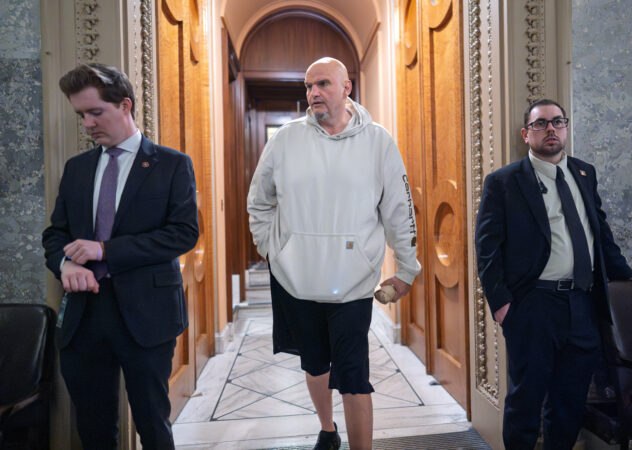
    Already one of the most well-known and scrutinized senators in Washington, Fetterman was back in the spotlight this week as he returns to work following a hospitalization after a fall near his home in Braddock. His staff said he suffered a “ventricular fibrillation flare-up” and hit his face, sustaining “minor injuries.”

    Ventricular fibrillation is the most severe form of arrhythmia — an abnormal heart rhythm — and the most common cause of sudden cardiac death.

    It’s the latest in a string of serious health incidents that have marked the Democratic senator’s time in the public eye. The fall comes three years after he recovered from a near-fatal stroke just days before he won the 2022 Senate primary, which was caused by a blood clot that had blocked a major artery in his brain.

    He spent Thursday and Friday in the hospital and was released Saturday, saying he was feeling good and grateful for his care with plans to be back in the Senate this week.

    Working Families on the offensive

    Israel said in addition to the online portal, the party will hold a number of recruitment events across Pennsylvania in the coming months to train candidates and campaign staff on the basics of running for office and managing a campaign with hopes of finding quality candidates for a variety of races ahead of 2028.

    The party is also pledging a robust ground game and fundraising for a potential challenger it supports.

    It wouldn’t be the first time the Working Families Party has opposed Fetterman. In the 2022 Democratic Senate primary, WFP endorsed State Rep. Malcolm Kenyatta (D., Philadelphia) over Fetterman, who was lieutenant governor at the time.

    The Working Families Party has grown its influence in the region since then. In 2023, WFP became the minority party on Philadelphia’s City Council, defeating Republicans in seats the party had held for over 70 years by electing Councilmembers Kendra Brooks and Nicolas O’Rourke.

    Fetterman has been promoting his book, Unfettered, recounting his stroke during the 2022 Senate run, subsequent struggles with depression, and adjustment to life in the U.S. Senate.

    The book makes no mention of a reelection bid but laments the ugly politics he experienced in both the Democratic primary and his general election race against Mehmet Oz.

    Fetterman said in the book that Oz’s attacks during his rehabilitation from his stroke became so mentally crushing he felt he should have quit the race.

    And he grapples with criticism he faced during the primary surrounding a 2013 incident in which he wielded a shotgun and apprehended a Black jogger he suspected of a shooting. Fetterman calls the backlash an early trigger of his depression.

    Fetterman has said he will remain a Democrat even as Republicans have lauded his independent streak and willingness to work with the GOP.

    Earlier this year, Fetterman was the first Senate Democrat to support the Laken Riley Act, a Republican immigration bill that requires U.S. Immigration and Customs Enforcement to detain and take into custody individuals who have been charged with theft-related offenses, even without a conviction. Critics of the law say it severely cracks down on due process for immigrants.

    Fetterman was the sole Senate Democrat to vote to confirm Attorney General Pam Bondi, who was one of Trump’s attorneys when he tried to overturn the results of the 2020 election.

    And he has been the Senate’s most outspoken defender of Israel during its war in Gaza, sponsoring a resolution with Sen. Dave McCormick (R., Pa.) against antisemitism and appearing for the first time since his fall at an event hosted by the Jewish Federations of North America in Washington on Monday.

    He also received recognition from Israeli Prime Minister Benjamin Netanyahu, who called him the country’s “best friend” and gifted him a silver pager inspired by Israel’s attack on Hezbollah in Lebanon that exploded pagers.

    “He has repeatedly shown disregard for the rights of Palestinians,” the Working Families Party release said. “Refusing to support a two-state solution and breaking with the rest of the Democratic caucus on Israel’s illegal annexation of the West Bank.”

    Staff writer Aliya Schneider contributed to this article.

  • Suit alleges negligence caused the Jan. 31 jet crash in Northeast Philly

    Suit alleges negligence caused the Jan. 31 jet crash in Northeast Philly

    The families of two Mexican nationals killed in a Northeast Philly jet crash have filed a wrongful-death suit against a medical airline, alleging its negligence was responsible for the Jan. 31. disaster that killed eight people, seriously injured at least 20 more, and devastated a neighborhood.

    The complaint, filed Monday in Philadelphia’s Court of Common Pleas, was brought by the estates of Raul Meza Arredondo and Lizeth Murillo Osuna against Med Jets, a Mexican air carrier that operates specialized airplanes for medical transport.

    Osuna was homebound for Tijuana following her young daughter’s successful medical treatment at Shriner’s Hospital when the Learjet 55 abruptly dove about a minute after takeoff from Northeast Philadelphia Airport and slammed into Cottman Avenue.

    Osuna and her daughter, 11-year-old Valentina Guzman Murillo, were killed instantly, along with the pilot, co-pilot, a paramedic, and Arredondo, a pediatrician.

    The suit broadly accuses Med Jets of “carelessness, negligence, and recklessness” for failing “to ensure the aircraft was in a safe and operable condition.”

    It notes details from a still-ongoing federal investigation — which revealed that the “black box” and other components on the jet were inoperable — and an earlier fatal crash involving a Med Jet plane in Mexico. It leaves open the possibility that the Tijuana-bound plane could have crashed due to pilot error.

    “Today’s filing is an important step on behalf of the victims of this tragedy to hold those responsible for this deadly crash fully accountable,” said Jeffrey P. Goodman, an attorney with Saltz Mongeluzzi & Bendesky, who represents the estates of two families. “Unfortunately, given the lack of functioning onboard recording systems, much remains to be determined as to the cause of this crash.”

    The complaint, which seeks unspecified compensatory damages, also names as defendants still-unidentified people “responsible for inspection, maintenance, repairs” of aircraft operated by Med Jets, and corporations involved in the manufacture of Learjet components.

    A spokesperson for Med Jets did not immediately respond to a request for comment.

    The crash occurred after 6 p.m. on a Friday. After plummeting 1,650 feet at more than 235 miles per hour, the jet left a crater that the suit says resembled one created by heavy military artillery. The black box was buried eight feet in the ground.

    A 37-year-old Mount Airy motorist was killed when the jet’s fuel set his car ablaze. A passenger in the same vehicle was critically injured and succumbed to her injuries in April. The driver’s 9-year-old son also suffered serious burns, requiring extensive medical treatment.

    The scope of damage to nearly six blocks of rowhouses and businesses near the Roosevelt Mall has already led a Mexican insurer for Med Jets, which also does business as Jet Rescue Air Ambulance, to preemptively file an action in federal court, pleading that claims related to the incident would far exceed a $10 million limit on the carrier’s policy.

    The city of Philadelphia alone reported more than $2.5 million in damages related to the local emergency response effort, and the case has already drawn dozens of other claimants. The insurer has requested that a federal judge oversee distribution of the limited funds.

    The cause of the crash remains undetermined.

    The defective black box, referenced in the lawsuit, left National Transportation Safety Board investigators with few clues as to what occurred on board in the moments leading up to the crash.

    Their efforts were further frustrated by the sheer force of the impact and an ensuing blaze, which incinerated much of the plane wreckage.

  • Stolen phones sparked a fight and ongoing tension at Frankford High

    Stolen phones sparked a fight and ongoing tension at Frankford High

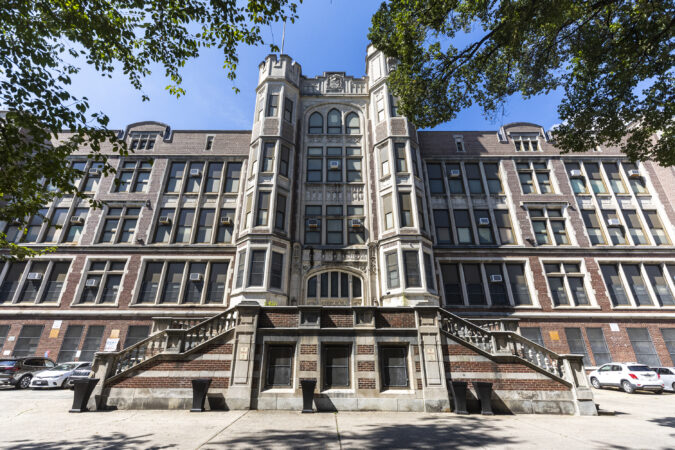
    Tensions are flaring at Frankford High over the school’s cell phone policy and its ability to keep students’ property safe.

    After two fights — including one where a student was so badly injured that city EMTs responded and transported the student to a hospital — a few dozen students took to the school’s hallways Friday, vocally demanding their phones back.

    “We just want to have a say in where our property goes, where our phones go,” said one student, who asked not to be named for fear of being targeted.

    Frankford, like many schools in Philadelphia and across the country, has recently moved to get cellphones out of students’ hands during the school day.

    At first, Frankford used Yondr pouches to secure students’ phones, but those were easily broken, and the costs of the pouches rose.

    Last year, the school installed lockers outside the building, requiring students to deposit phones before the school day started. Students could purchase locks from the school for $5.00, or bring their own locks.

    But “there’s been issues,” said one Frankford staffer, who asked not to be identified for fear of reprisal. “The area where the lockers are floods; it’s not monitored.”

    (School officials said they have alerted district officials about the drainage issue.)

    Some students didn’t love the idea of the lockers, but it wasn’t until last week that significant tensions began simmering after several phones were stolen. School officials said in an email to Frankford staff that five phones were stolen, two from a locker with no lock on it.

    “That caused some serious issues in the building,” the staffer said. “A lot of the students said, ‘You’re forcing us to put our phones there, but you’re not protecting them.’”

    Believing they knew who stole the phones, some students targeted the alleged thief, spurring a fight inside the school. That student was assaulted — beaten so badly that EMTs transported the student to a hospital, according to multiple people with firsthand knowledge.

    “It was so scary,” said the student who spoke on condition they would not be identified.

    Michael Calderone, the school’s principal, addressed the issue with parents in a letter sent home Friday.

    “Two wrongs do not make a right,” Calderone wrote. “This type of retaliation and violent behavior are not tolerated here at Frankford.”

    Another fight happened the next day outside of school — with some students and some nonstudents — but Frankford officials say it was unconnected to the stolen cellphones. (The student and staffer, however, say the general anger at the school over the phone policy has ratcheted up student issues generally.)

    A peaceful student protest planned for Friday turned into a town hall with Calderone. But some at the meeting weren’t satisfied and ultimately a few did protest, walking around the school and chanting about wanting their phones back.

    “It was students screaming in the hallways,” the student said. “They were saying they felt unsafe; they were saying they were unhappy about the phone lockers.”

    Calderone, in the letter sent to families Friday, vowed action.

    “No member of our school community should ever have to worry about their items being taken, especially when the belongings are locked up,” Calderone wrote.

    The principal told parents that the school would provide stronger locks, at no cost to students, and will increase patrols and video surveillance by school security officers. He said he has requested locking gates for either side of the phone lockers.

    ‘Students don’t feel safe’

    The Frankford student said they and others were frustrated by a lack of protection for their phones and poor communication.

    The Friday town hall, the student said, yielded little information. Some students were unruly, the student said, but many were respectful and just wanted answers from the administration. (Calderone described the meeting as productive, and not unruly.)

    Calderone, according to the student, “said he wasn’t able to put the phone lockers inside the building because he didn’t have enough security and kids could just get to their phones if they were inside. That happens anyway with the phones outside.”

    Frankford is a good school where students have opportunities, the student said. But it feels restless over the phone issue.

    “Students don’t feel safe going outside to get their phones,” the student said. “There’s such a big buildup that if you bump into the wrong kid, he’s going to hit you. The fights are just people getting their anger out. We feel like they’re not listening to us.”

    Phones are a distraction, the student said; they feel like learning has improved since phone access was removed during the school day.

    “But the school district says it isn’t responsible for lost, damaged, or stolen goods, and if your mom worked for a year to get you a brand new iPhone 17 and it gets stolen, they’re not buying you a new one,” the student said.

    “Philadelphia is a dangerous place — we need our phones going to school, going home.”

  • The parents of a 16-year-old shot and killed last month want Philadelphia to know not just how he died, but who he was

    The parents of a 16-year-old shot and killed last month want Philadelphia to know not just how he died, but who he was

    Angelica Javier was sitting at home on a Saturday evening last month when her son’s uncle called in a panic.

    Xzavier, her 16-year-old, had been shot, he said — one of the teen’s friends had called and told him, but he knew nothing else.

    Javier, 32, frantically checked a news website and saw a brief story mentioning that a man was shot and killed in Northeast Philadelphia.

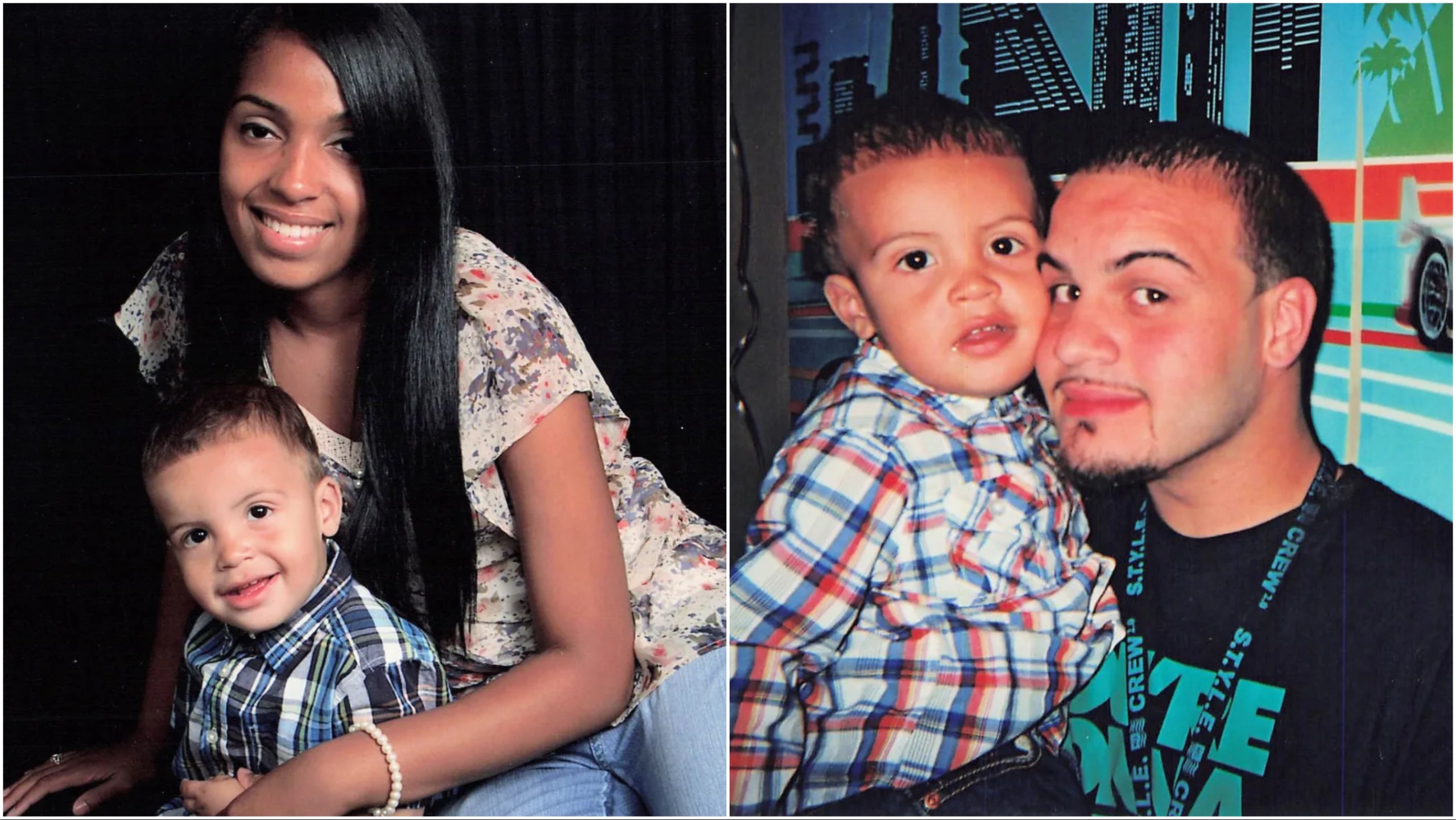
    That could not be her son, she told herself. Xzavier was only a boy, she said — tall but lanky, with the splotchy beginnings of a mustache just appearing on his upper lip.

    She called around to hospitals without success. Xzavier’s father, Cesar Gregory, drove to Jefferson Torresdale Hospital, desperate for information.

    Then, just before 10 p.m., she said, a homicide detective called to say their eldest child, their only son, had been shot and killed that afternoon near Teesdale and Frontenac Streets.

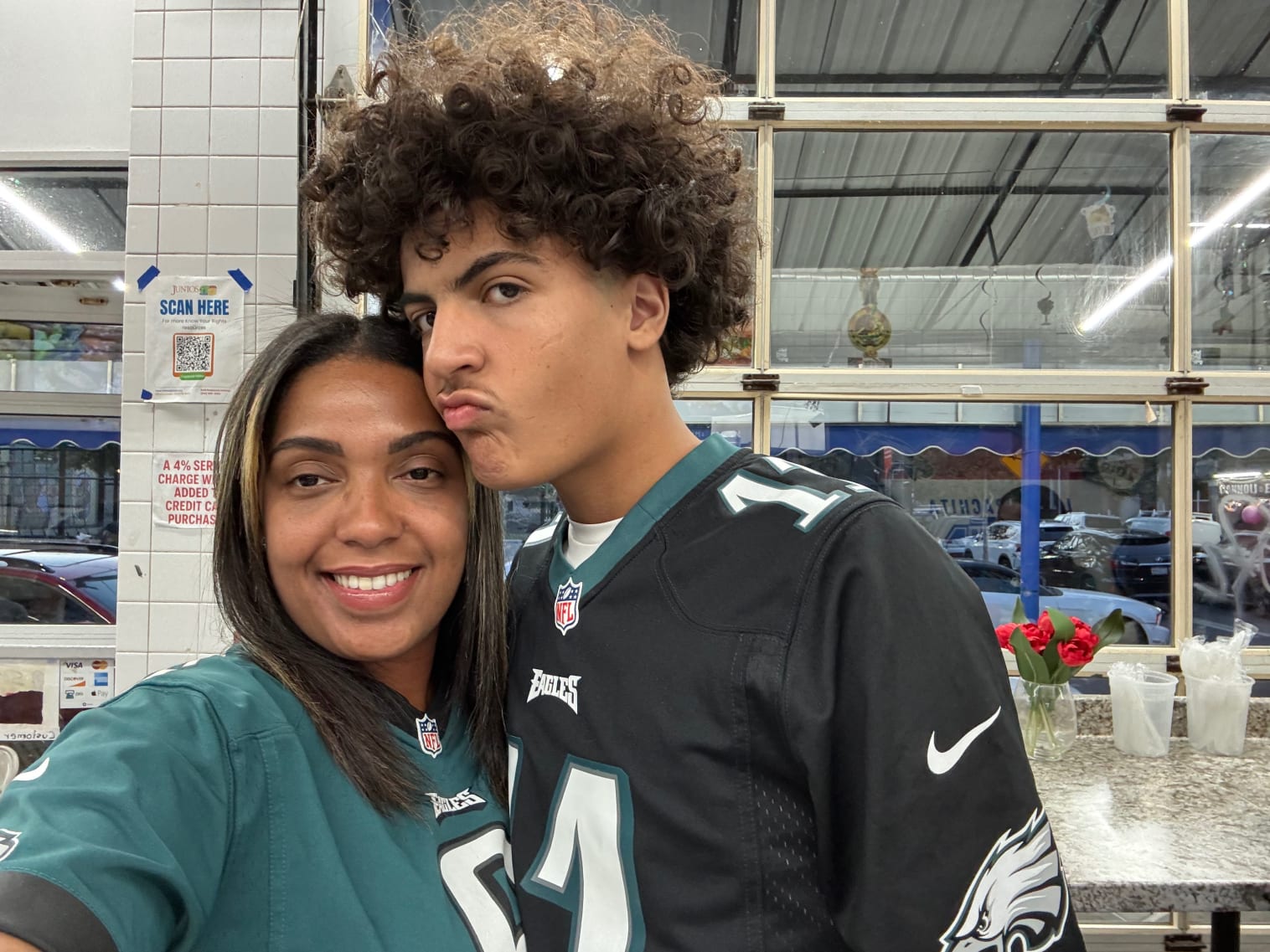
    Angelica Javier (left) and her 16-year-old son, Xzavier Gregory, getting tacos after watching the Eagles beat the Los Angeles Rams earlier this year.

    The shooting, police said, stemmed from a dispute among teens at the Jardel Recreation Center, just blocks away, earlier in the week. Xzavier’s parents said the detective told them that one of their son’s friends may have slapped a young woman that day.

    On Oct. 11, they said, police told them that Xzavier and his friends stopped by the young woman’s house shortly before 4 p.m. to talk with her, apologize, and resolve the conflict. They shook hands, the parents said, and started to walk away.

    Then, police said, the girl’s 17-year-old boyfriend, Sahhir Mouzon, suddenly came out of the house with a gun and started shooting down the block at them. Someone shot back, police said, but it was not Xzavier. In total, 45 bullets were fired.

    An 18-year-old woman walking by the teens was wounded in the leg.

    Xzavier was struck in the chest and died within minutes.

    Mouzon has been charged with murder and related crimes.

    Javier and Gregory have been left to navigate life without their “Zay” and to reckon with a loss that comes even as gun violence in the city reaches new lows — but which still persists among young people and brings pain to each family it touches.

    They don’t understand how a 17-year-old had a gun, they said, or why a seemingly minor — and potentially resolved — conflict had to escalate.

    But mostly, they said, they want Philadelphia to know and remember their child: a goofy junior at Northeast High. An avid Eagles fan. A lover of Marvel movies and spicy foods.

    Xzavier Gregory was born in Philadelphia. His parents loved his chubby cheeks.

    Xzavier Gregory was born Sept. 20, 2009, to Angelica Javier and Cesar Gregory.

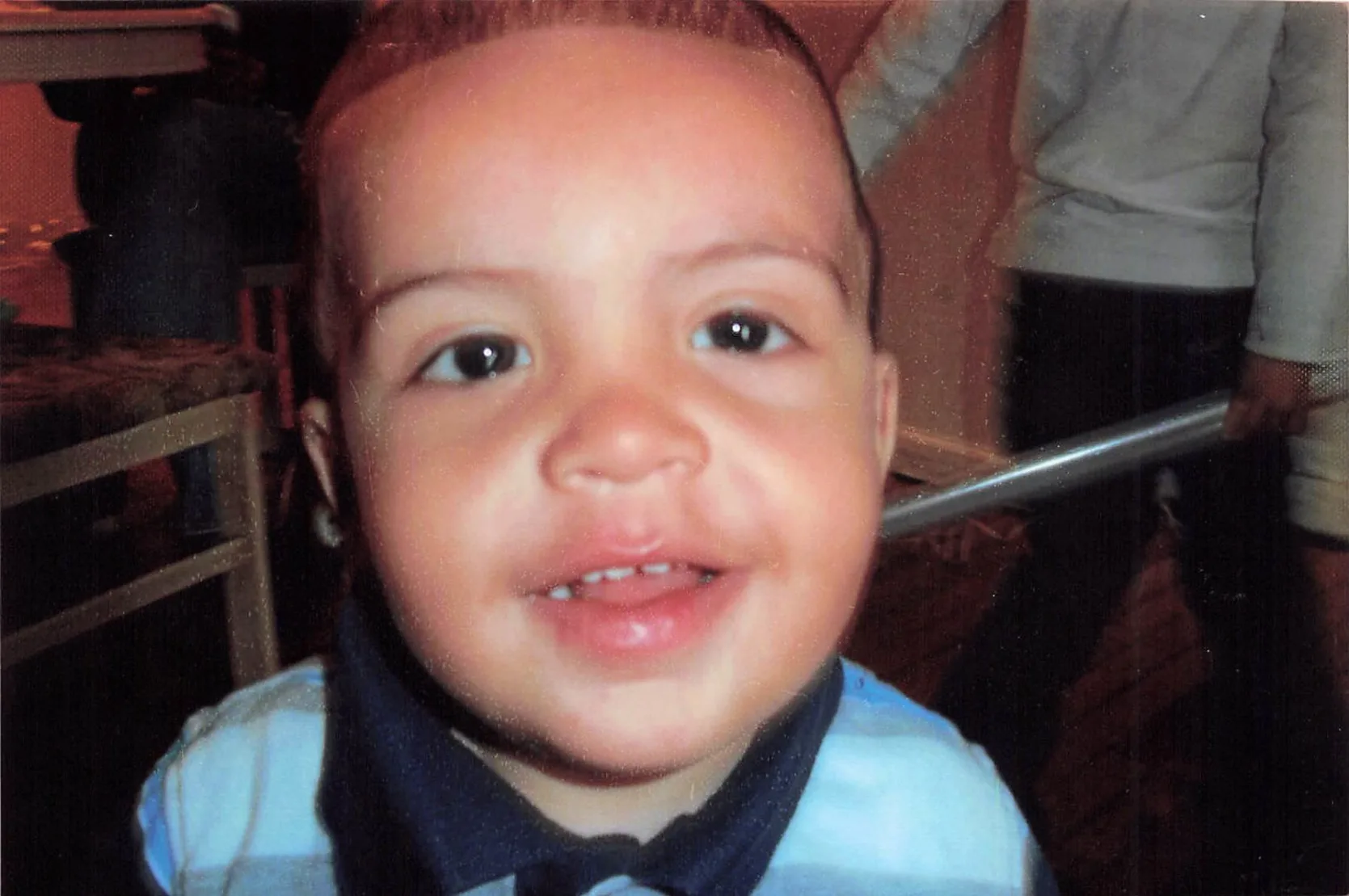
    Xzavier Giovanni Gregory was born Sept. 20, 2009, at Temple University Hospital in North Philadelphia. His parents, just teens at the time, were immediately taken by his chubby cheeks, which he kept until his teenaged years.

    He lived in Kensington until he was about 10 years old, his mother said, when they moved to the Northeast. He attended Louis H. Farrell School, then spent his freshman year at Father Judge High before moving to Northeast High.

    He loved traveling, and often visited family in Florida and the Dominican Republic, attended football camps in Georgia and Maryland, and tagged along on weekends to New York with his mother as part of her job managing federal after-school programs.

    He played football for the Rhawnhurst Raiders, typically as an offensive or defensive lineman, and had a natural skill for boxing, his parents said.

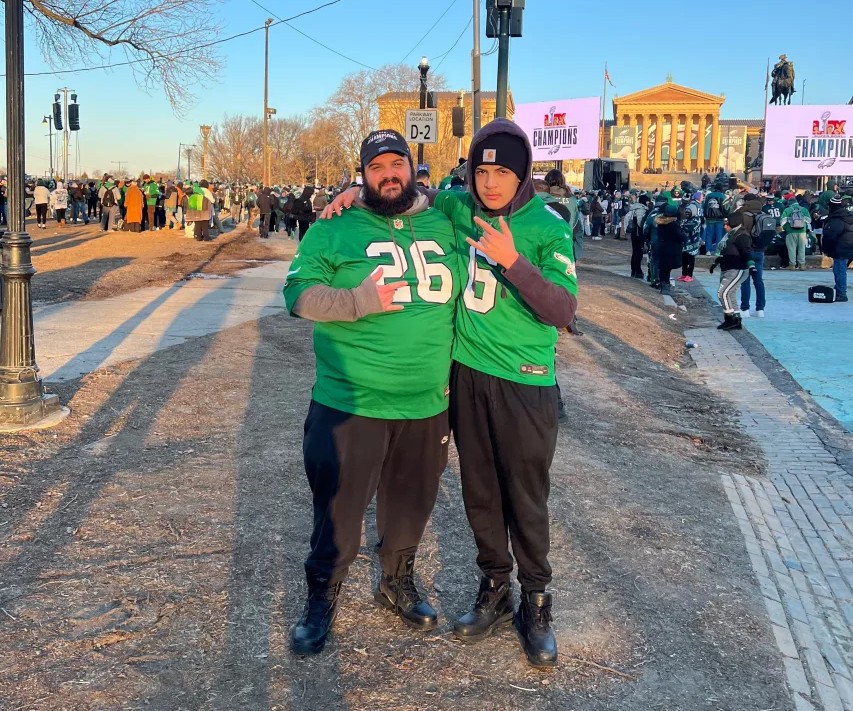
    Philadelphia sports were in his blood — particularly the Eagles. DeVonta Smith and A.J. Brown, his father said, were his favorite players. (Before his death, he agreed that Brown should be included in more plays this year, Gregory said.)

    Some of Gregory’s favorite memories with his son revolve around the Eagles. Sitting front row at the Linc on his 13th birthday. Erupting in cheers as the team won its first Super Bowl in 2018. Embracing in tears when they won a second this year.

    Cesar Gregory (left) and son Xzavier at the Eagles Super Bowl parade near the Art Museum in February. It is a day with his son that the father said he will never forget.

    Xzavier was the oldest of three children. His sisters are still too young too fully understand what happened, the parents said.

    “He went to heaven,” Javier told 7-year-old Kennedy.

    “He went with God,” Gregory told 9-year-old Mia.

    Even as shootings across Philadelphia have fallen to the lowest level in 60 years, children are still being shot more often than before the pandemic.

    The number of kids shot peaked in 2021 and 2022, when violence citywide reached record highs and guns became the leading cause of death among American children. So far this year, 105 kids under 18 have been shot — a sharp drop from three years ago, but still higher than pre-pandemic levels, according to city data.

    Xzavier is one of at least 11 children killed by gunfire this year.

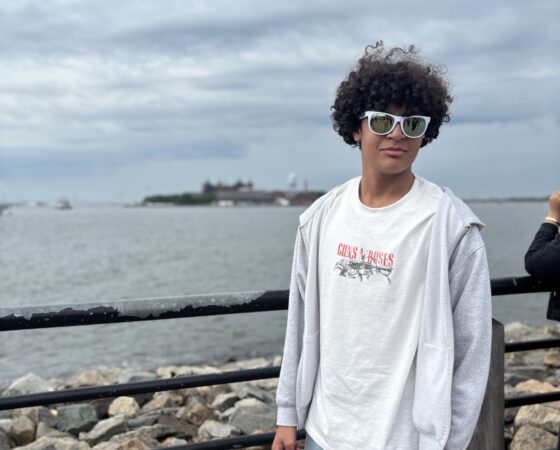
    Xzavier Gregory (center) was a goofy teen who attended Northeast High School, his parents said.

    Javier and Gregory said some relatives are considering leaving Philadelphia, shaken by Xzavier’s killing and a feeling that teens don’t fear consequences.

    But the parents said they will stay. They want to be near Magnolia Cemetery, where Xzavier is buried, and to feel closer to the memories that briefly unite them with him.

    On harder days, they said, they go into his bedroom, which is just as he left it, a relic of a teenage boy.

    His PlayStation controller sits in the middle of his bed, and a photo of him and his mother hangs on the wall above it. His Nike sneakers are scattered. His black backpack rests on the floor, and a Spider-Man mask sits on the corner of his bedframe.

    On Thursday, his parents stood in the room they used to complain was too messy, that smelled like dirty laundry.

    “Now, I come in just to smell it,” Javier said.

    She took a deep breath.

    Staff writer Dylan Purcell contributed to this article.

    @paigeloveslife92

    My review of the Showgirl pajamas. Returning these immediately. 🤣 #taylorswift #taylorswiftmerch

    ♬ original sound – paigeloveslife92
  • Amy Gutmann, once Penn president, is teaching again. Here’s what it’s like to be her student.

    Amy Gutmann, once Penn president, is teaching again. Here’s what it’s like to be her student.

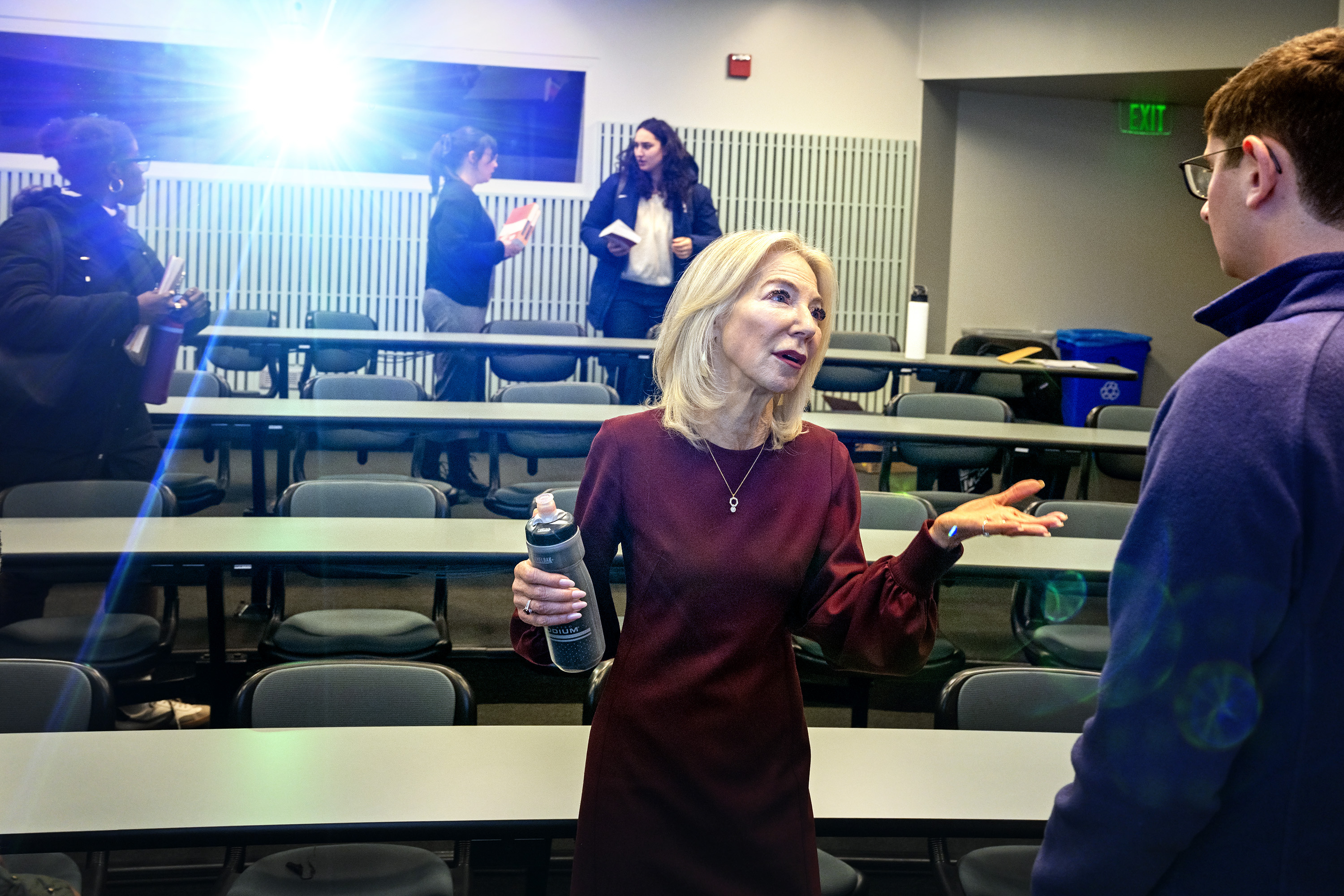
    The undergraduate class at the University of Pennsylvania vigorously discussed the use of affirmative action in college admissions, half the room charged with arguing one side and half the other.

    Their task, informed by the 2023 U.S. Supreme Court decision that ended the use of race-conscious college admissions, was to brief and advise a popular governor of a swing state who had not yet taken a position on the issue.

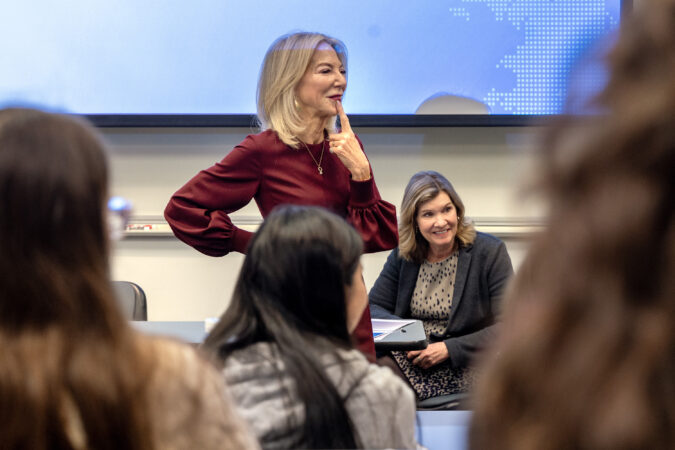
    “Guess who is the governor?” said their professor, Amy Gutmann. “I am the governor.”

    And for 90 minutes, the entirety of the class period, Gutmann guided a lively discussion in which students talked as much as she did.

    While never a governor, Gutmann has quite the leadership portfolio. She was president of Penn for a record 18 years, leaving in 2022 to become U.S. ambassador to Germany under former President Joe Biden, a post she held until 2024. She is also a Harvard-educated political scientist who cowrote the book The Spirit of Compromise and in 2018 was called one of the world’s 50 greatest leaders by Fortune magazine.

    Now, for the first time in about 25 years — since she was a politics professor at Princeton — Gutmann is back in the classroom teaching a full course this semester in the Annenberg School for Communication. Sarah Banet-Weiser, dean of Annenberg, who initially came up with the idea for the course, is her co-teacher.

    For students, the professorial star power was hard to pass up. There was a waiting list for the class.

    “It’s kind of a power duo,” said Evan Humphrey, 21, a senior communications major from Seattle. “Got to take that class.”

    Senior Evan Humphrey said she was drawn to enroll in the class because of the two professors and their distinguished careers.

    Focusing on teaching — the heart of a university — has been especially meaningful to Gutmann, and to Banet-Weiser, too, at a time when higher education has had its federal funding threatened and its approaches attacked.

    “It literally gives me life every week,” Banet-Weiser said.

    Gutmann, 75, who said she aspired to be a teacher since she was 5, said it has made her feel productive “in a way that goes to the heart of what a university is about.”

    “We should never lose sight of that heart of the university and how valuable it is,” she said.

    The goal of the class, called “The Art and Ethics of Communication in Times of Crisis,” is “to learn how and why to communicate with greater insight and understanding across differences,” while creating space “for free and open dialogue about controversial issues.”

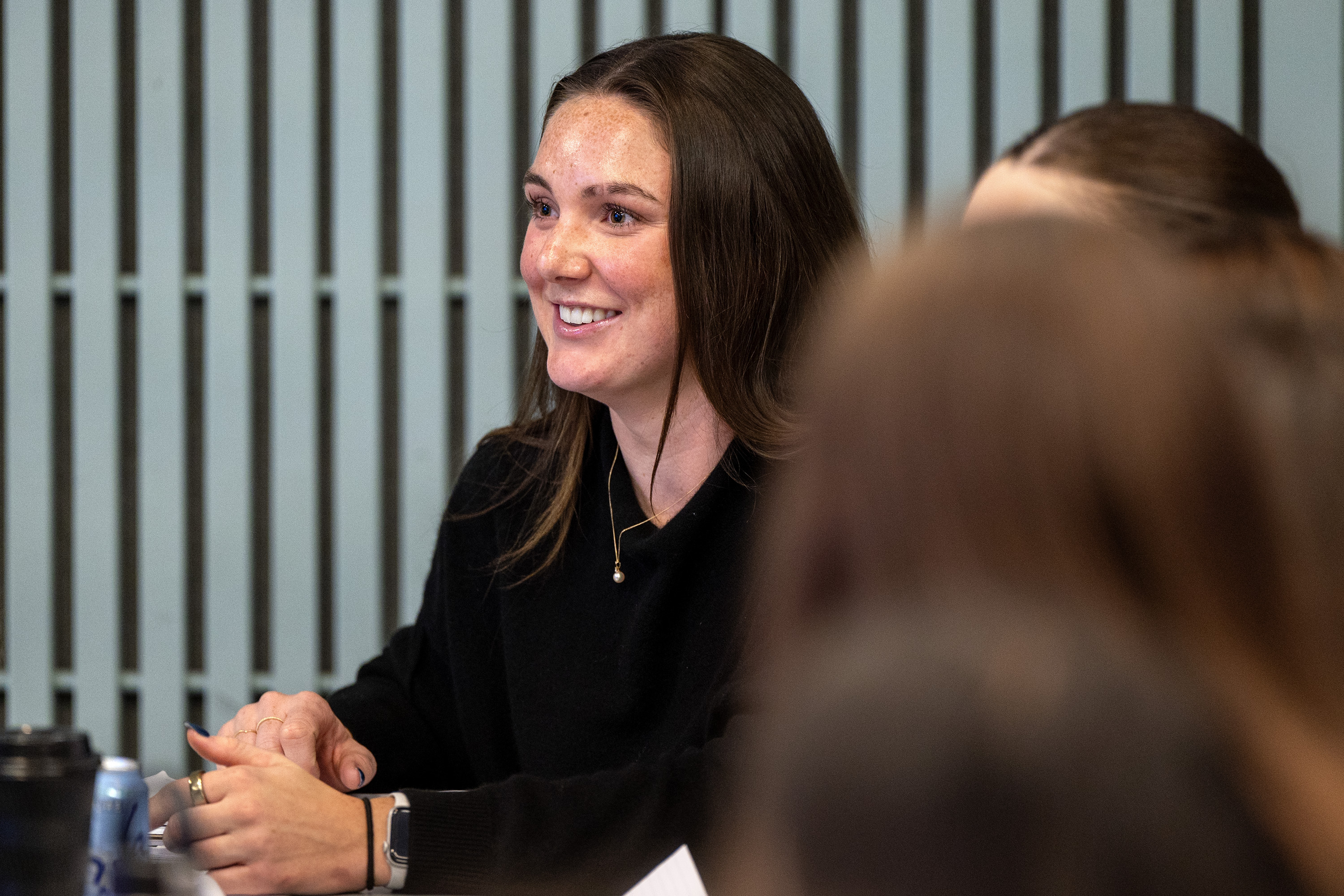
    Seniors Luiza Louback (left) and Sarah Usandivaras (right) participate in the class discussion.

    It could be a primer for the politically divided nation.

    “My pitch is that you can’t really know what you believe if you don’t know what people who disagree with you believe and what their reasons are,” Gutmann said in an interview. “I always say I don’t care what your position is. I care that you can give reasons for it and understand the strongest arguments on the other side.

    “That’s the method to search for truth, and it’s the way we serve a democracy.”

    Bringing experience to the classroom

    During class, Gutmann frequently drew on her experiences as a first-generation college student, a young professor at Princeton, a college president, and an ambassador.

    When she got her first teaching job, a male colleague congratulated her, but later she learned he told someone she got the job because she was a woman.

    “Did I take that as a compliment? Mm-mm,” Gutmann told the class.

    Humphrey said she especially likes hearing about Gutmann’s vast experiences.

    “She’s like, ‘Well, when I was the president here, this is something I dealt with,’” Humphrey said. “It’s really interesting knowing the experience she has and her background and the perspective she brings.”

    Amy Gutmann (center), president emerita of the University of Pennsylvania and former U.S. ambassador to Germany, is presented with the Weitzman National Museum of American Jewish History’s Only in America® Award during a gala at the museum this month. The award recognizes “Jewish Americans who have made enormous contributions to our world … often despite facing antisemitism and prejudice.” Among those posing with her are Ramanan Raghavendran (far right), chair of Penn’s board of trustees, veteran journalist Andrea Mitchell (next to Raghavendran), Penn President J. Larry Jameson, (to the immediate left of Gutmann), and David Cohen, former Penn board chair, (next to Jameson.)

    Gutmann’s life outside class continues to be full, too. After class Wednesday, Gutmann, whose father fled Nazi Germany, flew to Berlin to receive the Prize for Understanding and Tolerance from the Jewish Museum Berlin.

    Having returned to Philadelphia to live after leaving Germany, Gutmann said it wasn’t hard to find her stride again in the classroom. She had given one-off lectures as Penn’s president.

    “I have a lot of muscle memory on teaching,” she said.

    Her style has changed from her early days at Princeton, where she worked from 1976 to 2004. She said reading a student’s notebook left behind and open after one of her ethics and public policy lectures was a major turning point.

    “‘That’s not what I said,’” Gutmann thought. “And I realized it’s not what you teach them, it’s what they learn. At that point, I realized I needed feedback.

    “So I changed from doing the 45-minute [lecture] thing to doing five or 10 minutes, max, and then asking them questions. Then I got them to argue with one another, and once I found that, I found what I really discovered worked for learning.”

    Amy Gutmann talks with sophomore Brian Barth (right) at the end of class she co-teaches at Penn’s Annenberg School for Communication.

    Gutmann said she spends Fridays and weekends preparing for the class, which meets twice a week.

    “It’s a ton of work,” she said. “I’m really delighted to be doing it.”

    The class comes against the backdrop of fraught times for colleges. Penn earlier this year scrubbed its website of diversity initiatives after President Donald Trump’s administration threatened funding to schools employing diversity, equity, and inclusion efforts. In the summer, the school struck an agreement with the administration over the past participation of former transgender swimmer Lia Thomas, and Penn was one of nine schools originally asked to sign a compact that would have given the school preferential consideration for federal funding in exchange for complying with certain mandates affecting admissions, hiring, and other university operations. Penn declined.

    ‘One-of-a-kind’ discussions

    Gutmann and Banet-Weiser do not allow laptops, phones, or any electronic devices in class so that students completely focus on the conversation. To prepare for the affirmative action discussion, students were assigned related readings and review of the court cases.

    The two professors interacted with each other and prompted discussion among students with deep questions: Is treating people equal the same as treating them equally? Is it right to use affirmative action for only one racial group? What about other forms of affirmative action or preference, including for athletes, low-income students, and legacies whose parents attended the university?

    The approach resonated with students.

    “I wanted to take a class where I would really be encouraged to step out of my comfort zone and be able to learn not only how to understand my own beliefs and values but understand the beliefs and values of others,” said Sarah Usandivaras, 21, a senior communications and political science major who was born in New York and grew up in Paraguay.

    She found it in Gutmann and Banet-Weiser’s classroom.

    “It’s a one-of-a-kind,” she said.

    Ariana Zetlin, a doctoral student in Penn’s Graduate School of Education, is auditing the class to observe its approach.

    “The discussion and the debates are so much deeper and stronger than what I’m seeing in classrooms that don’t necessarily have these structures,” said Zetlin, 30, who is from New York.

    During class, those on both sides found common ground.

    Senior Angele Diamacoune said she was learning from the day’s lesson.

    “So I’m hearing agreement that diversity is a good thing but disagreement on how you get it,” Gutmann said.

    She asked students how many believed that having low-income and racially diverse students in class contributed to their learning. Every hand went up.

    “That to me is really striking,” Gutmann said. “There aren’t that many things that we can get unanimity on.”

    She asked students how they would advise colleges to teach the issue.

    “It would be good to teach with activities like this,” said Angele Diamacoune, 21, a senior communications major from Allentown.

    “Are you learning?” Gutmann asked her.

    “I am,” Diamacoune answered.

    “I am, too,” Gutmann said.

  • He showed up for what he thought was a routine appointment in Philly. ICE was waiting for him.

    He showed up for what he thought was a routine appointment in Philly. ICE was waiting for him.

    On Oct. 16, Rian Andrianzah walked into a Philadelphia office of U.S. Citizenship and Immigration Services for what he thought was a routine biometrics appointment. He expected to be fingerprinted and photographed and sent on his way.

    Instead, while his wife waited in an outer room, he was arrested by ICE ― and now faces deportation in a case that has angered the city’s Indonesian community.

    Andrianzah, 46, is among a growing number of immigrants whose families say they showed up for in-person appointments or check-ins, only to be suddenly handcuffed and spirited into detention.

    Green-card applicants, asylum-seekers, and others who have ongoing legal or visa cases have been unexpectedly taken, part of a Trump administration strategy, lawyers and advocates say, to boost the number of immigration arrests and to deport anyone who can possibly be deported.

    “ICE was waiting for him,” said Philadelphia immigration attorney Christopher Casazza, who represents Andrianzah and his family. “In 15 years, I have never once seen somebody arrested at their biometrics appointment ― except in the past few months.”

    Andrianzah legally entered the United States on a visitor’s visa in February 2000, but did not return to Indonesia. He was placed in removal proceedings in 2003, and a judge issued a final order of deportation in November 2006. His appeal was denied two years later.

    The removal order was never enforced, as had been common for what the government then saw as low-priority immigration violators. Some people with final orders have lived in the U.S. for decades.

    In the ensuing years, Andrianzah worked factory and warehouse jobs ― and married Siti Rahayu, 44, also of Indonesia. They made a home in South Philadelphia, parents to two U.S.-citizen children, a son, age 8, and a daughter, 15.

    Andrianzah and his wife went to USCIS that day as part of her application for a T visa, available to people who have been victims of human trafficking. In an interview with The Inquirer, Rahayu said she was sent to the U.S. in 2001 by relatives who saw her as a means to pay off a debt, delivering her to an underground organization that puts people in low-paying jobs, then keeps them working indefinitely.

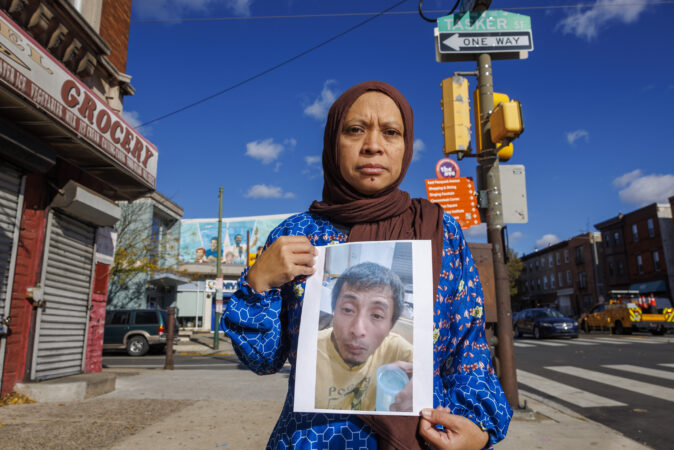
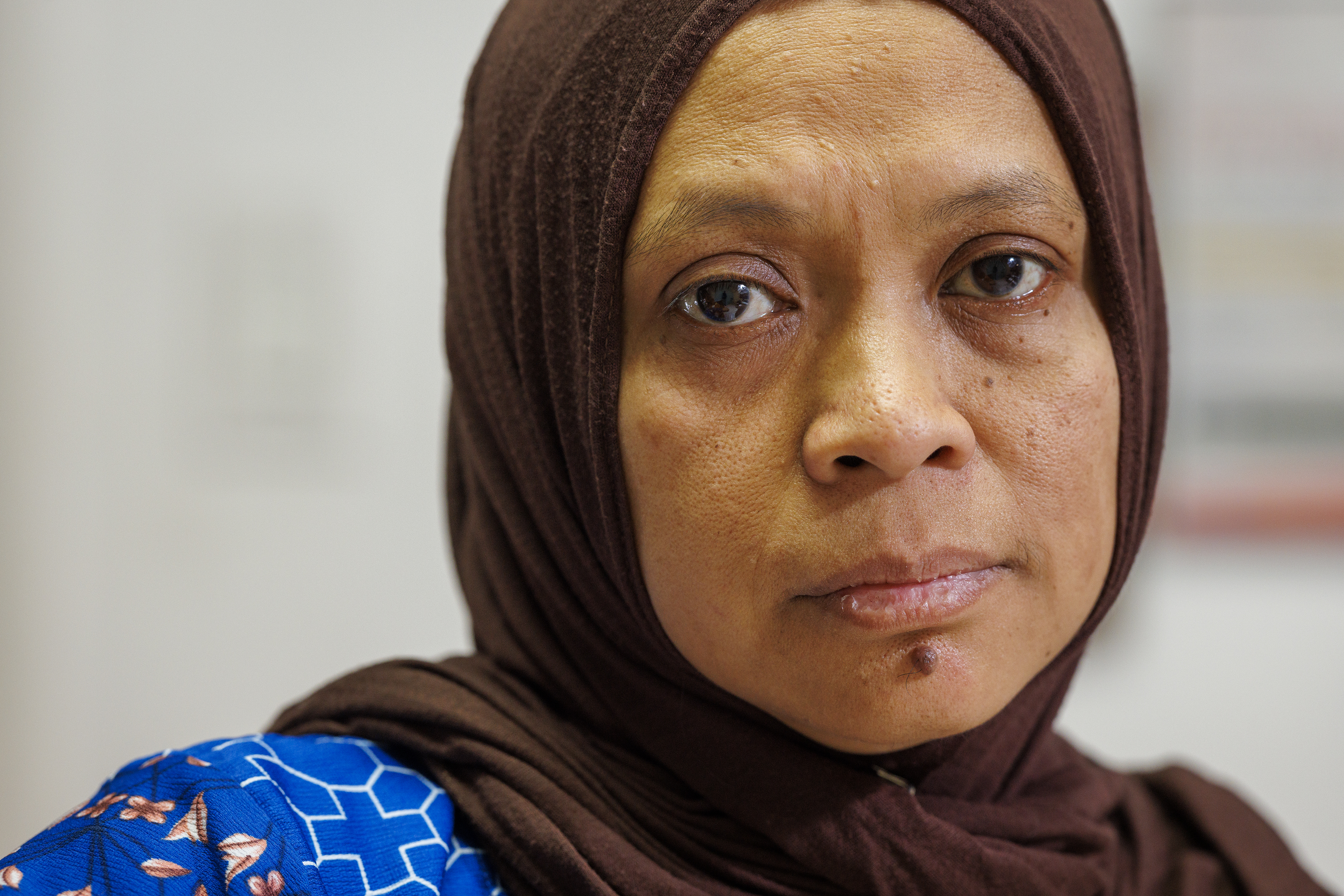
    Siti Rahayu of Philadelphia, here on Thursday, November 6, 2025. Her husband Rian Andrianzah walked into United States Citizenship and Immigration Services office for a routine visit but he was sent to Moshannon detention center to await deportation.

    Casazza, of the Philadelphia firm Palladino, Isbell & Casazza LLC, said Rahayu has a strong case for a T visa, which offers permission to live in the U.S. and a path to permanent residency and citizenship.

    As her husband, Andrianzah would receive those same benefits under her visa.

    That’s why, Casazza said, it makes no sense for ICE to confine and deport him. Once his wife’s visa was approved, Andrianzah would be able to legally live in the United States, the attorney said.

    Asked about Andrianzah’s arrest and the couple’s situation, a U.S. Immigration and Customs Enforcement spokesperson in Philadelphia said in a statement: “Due to privacy issues, we are not authorized to discuss this case.”

    Andrianzah is being held at the Moshannon Valley Processing Center, an ICE detention facility in Clearfield County, Pa.

    As President Donald Trump presses his deportation agenda, what were routine meetings with federal authorities have now become risky for immigrants. Advocates say many of those arrested were following the rules and doing what the government asked:

    • On May 27, the wife of a Marine Corps veteran was detained in Louisiana after meeting with USCIS about her green-card application, CBS News reported. Paola Clouatre, 25, said she came to the U.S. as a child with her mother, but was abandoned as a teenager and unaware that the government had ordered them deported. She spent about eight weeks in custody before being fitted with an ankle monitor and released.
    • On June 3, federal agents in New York City arrested at least 16 immigrants who showed up for check-ins, after a private contractor working with ICE summoned them to urgent appointments, The City, a news organization, reported.
    • On Oct. 22, a 21-year-old California college student was arrested by ICE at an appointment at a USCIS office in San Francisco, Newsweek reported. Government officials said Esteban Danilo Quiroga-Chaparro, a Colombian national and green-card applicant, had missed mandatory meetings, though his husband said that was untrue.
    • On Oct. 23, a Venezuelan couple pursuing asylum were arrested during a check-in at the ICE office in downtown Milwaukee, Urban Milwaukee reported. Diego Ugarte-Arenas and Dailin Pacheco-Acosta sought protection after fleeing their homeland in 2021. An ICE spokesperson told the news agency that “all aliens who remain in the U.S. without a lawful immigration status may be subject to arrest and removal.”

    “There’s a lot of risks right now,” said Ana Ferreira, who serves on the executive board of the Philadelphia chapter of the American Immigration Lawyers Association.

    Some clients went into immigration appointments knowing there was a possibility they could be detained, she said. Others were shocked to be taken.

    “None of this would have happened years ago,” Ferreira said. “It’s a completely different landscape.”

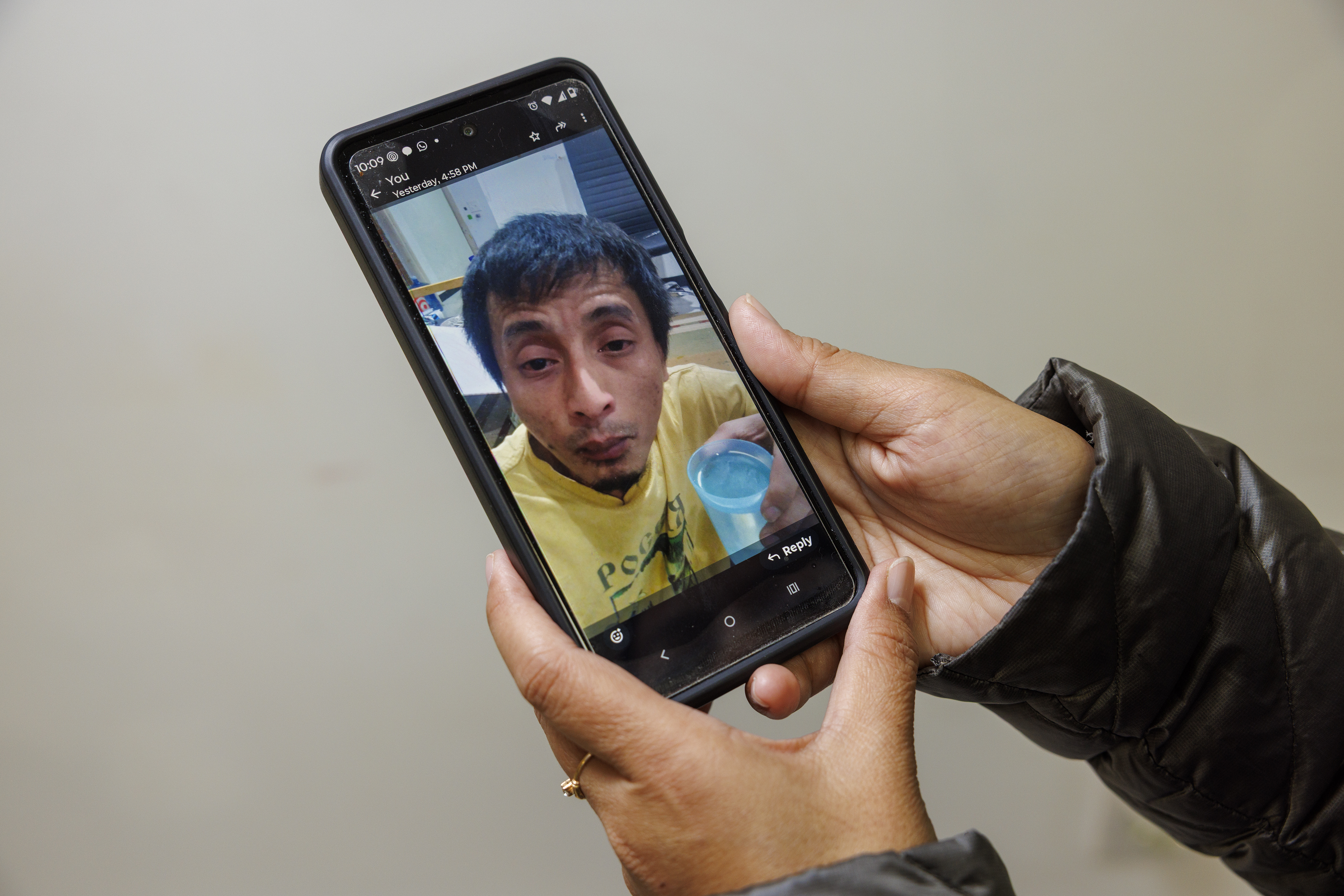
    Siti Rahayu of Philadelphia holds a photograph of her husband, Rian Andrianzah. He walked into a United States Citizenship and Immigration Services office for what he thought would be a routine visit but was sent to the Moshannon detention center to await deportation. Photograph taken on Thursday, November 6, 2025.

    Rahayu said that on Oct. 16, she completed her own biometrics appointment, then grew concerned when her husband did not appear. She asked the staff what was happening.

    “They [said they] don’t know anything, and they say this is new for them,” Rahayu said.

    Finally someone told her: He’s gone. Rahayu fears for her husband’s health in custody because he suffers from diabetes, which impairs his vision.

    The local Indonesian American community reacted immediately, supported by Asian Americans United, the advocacy group. An estimated 2,000 Indonesians live in Philadelphia, the 10th-largest community in the nation.

    “It has sparked so much outrage,” said Kintan Silvany, the civic-engagement coordinator at Gapura, which works to empower local Indonesian Americans. “People are asking how they can help, how they can donate. A lot of people don’t think this can happen to us.”

    Andrianzah said through his wife that he wished to thank everyone who has tried to help him and his family, that he is grateful for their care and concern. Supporters have raised about $13,000.

    Each year thousands of people physically report to ICE or related immigration agencies for mandatory check-ins.

    Some immigrants are required to appear every couple of weeks, some once a month, others once a year. The appointments help immigration officials keep track of people who in the past have been low priorities for deportation, allowed to live freely as they pursue legal efforts to stay in the United States.

    Biometrics appointments are usually brief sessions, perhaps half an hour, at which the government captures fingerprints, a passport-style photo, and a signature. The immigrant may also be asked to provide information like height and weight.

    Despite the fresh risk of being arrested on the spot, immigrants have little option except to show up. Many types of immigration applications require in-person appearances. And failure to appear for a required ICE appointment can by itself result in an order for removal.

    “They’re trying to grab everybody, wherever they can,” and that included Andrianzah, Casazza said. “ICE is going to do their best to deport him.”

  • DA Larry Krasner is unusually silent after charging a record number of Philly cops in grant theft scandal

    DA Larry Krasner is unusually silent after charging a record number of Philly cops in grant theft scandal

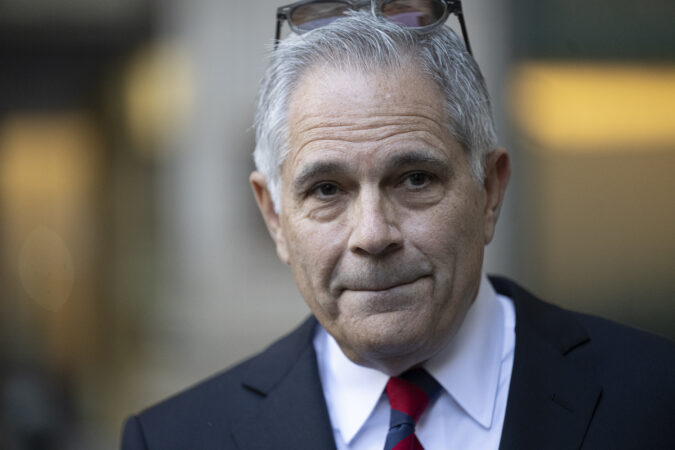
    Late in the afternoon on Nov. 7, a Friday, the Philadelphia Police Department announced that nine current and former police officers had been charged with conspiring to defraud the city by using a grant-funded youth boxing program to pad their salaries.

    It was the largest number of Philly officers charged together with misconduct in nearly 40 years — a seemingly splashy case for District Attorney Larry Krasner, a progressive prosecutor who has made charging cops a cornerstone of his two terms in office.

    Yet Krasner has been unusually quiet about it.

    The district attorney was traveling in Switzerland for a conference when the charges became public. His office declined to comment, held no news conference, and issued no public statements — in stark contrast to his trumpeting of police misconduct cases in the past.

    Krasner has charged dozens of police officers since taking office in 2018. But he did not publicly acknowledge his largest booking to date until The Inquirer approached him at an unrelated news conference, nearly a week after these most-recent charges were filed.

    And even then, he was reluctant to talk about it.

    “We had probable cause that they committed the crimes,” Krasner said Thursday. “Having said that, I wanna be very clear: There are a lot of great cops in the city. … I don’t think that this group of nine should in any way taint the rest of them.”

    Prosecutors accuse Nashid Akil, former captain of the 22nd District in North Philadelphia, and eight of his officers of stealing $44,576 in taxpayer-funded anti-violence grant money between January and September 2022, according to charging documents.

    Those funds came from a $392,000 city grant awarded to Epiphany Fellowship Church to support Guns Down, Gloves Up, a boxing and youth mentorship program that Akil founded at his nearby district building. No one from the church was charged, and Krasner said Thursday the church should not be “tainted” by the allegations against police.

    Former Captain Nashid Akil, shown here while at the boxing program Guns Down Gloves Up, at the 22nd District, in Philadelphia, Friday, October 7, 2022.

    City employees are prohibited from receiving grant dollars. Yet after vowing in the grant application that police time would be volunteered, Akil, using the church as a pass-through, allegedly paid himself and eight district officers for their work as boxing instructors, an arrangement that came to light through an Inquirer investigation in 2023.

    Police now say some officers were paid during their scheduled shift hours.

    A law enforcement source familiar with the case said the district attorney’s office concluded its probe into the grant scheme months ago. Krasner did not approve the charges until Oct. 31, according to a police department spokesperson. That was days before the Nov. 4 election, when Krasner was handily reelected to a third term. The defendants began surrendering to authorities three days later.

    Police Commissioner Kevin Bethel issued a statement after the arrests saying he was “deeply troubled” by the officers’ alleged actions and “particularly disappointed by the involvement of a former commanding officer.”

    But neither Krasner nor his spokesperson responded at the time to repeated requests for comment.

    On Thursday, Krasner attributed the timing of the charges to logistical issues with bringing in the nine codefendants.

    Akil was forced to resign in February 2023 after The Inquirer’s reporting on the boxing program, and three other officers who allegedly took the money had since resigned. Bethel has moved to fire the five active officers.

    Only one of the nine officers listed an attorney in court records, and that lawyer could not be reached for comment.

    Officials at Epiphany Fellowship Church did not respond to a request for comment.

    An unusual silence

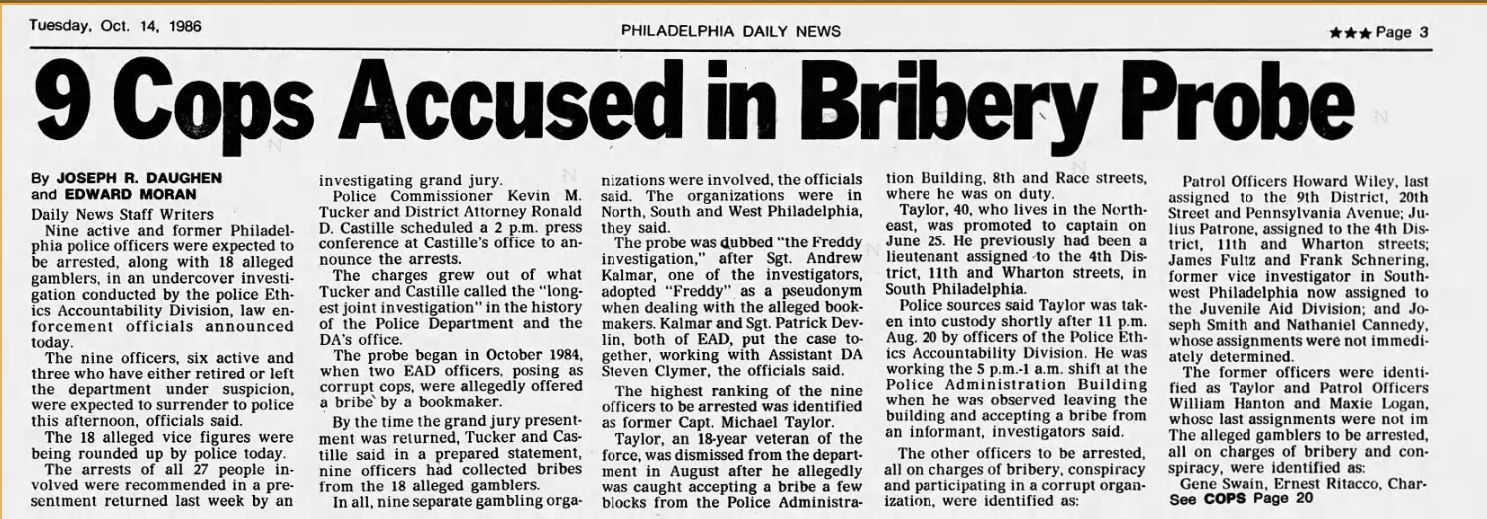
    The last time nine officers were charged together in Philadelphia was in 1986, for taking bribes to conceal an underground gambling ring.

    An Oct. 14, 1986 article in the Philadelphia Daily News shows the last time nine current and former Philadelphia police officers were charged following a single investigation.

    Since the charges were filed in the boxing program scandal, Krasner’s office has put out nine news releases — but nothing on the nine officers charged.

    It’s a departure from how the typically loquacious district attorney has handled previous allegations of police misconduct.

    In 2021, for example, when The Inquirer was reporting on widespread abuse of the department’s injured-on-duty program, Krasner said he believed some officers were “gaming the system, and in my opinion, committing crimes by engaging in fraudulent practices to stay home.” The disability system was reformed and hundreds of officers returned to work, but no criminal charges were filed.

    The next year, Krasner issued a lengthy news release after the arrest of Officer Daniel Levitt on perjury and related charges, stemming from an allegedly illegal search that led to the recovery of a handgun. The charges against Levitt were initially dismissed but have since been refiled.

    In 2023, Krasner was again out front in announcing the arrest of former Officer Patrick Henon for sexually assaulting young girls. Henon pleaded guilty.

    In May, Krasner called a news conference after a jury convicted two former detectives convicted of making false statements about DNA evidence.

    A month later, when Donald Suchinsky, a former homicide detective, was sentenced to prison for sexually assaulting relatives of murder victims, Krasner appeared outside the Criminal Justice Center to condemn Suchinsky’s conduct and urge any other victims to come forward.

    And in July, Krasner again held a news conference to criticize what he called a lenient sentence of former Officer Mark Dial, who was paroled following his voluntary manslaughter conviction in the shooting of Eddie Irizarry.

    “I am deeply disappointed with a verdict that I think makes people lose faith in the criminal justice system,” Krasner said.

    A sensitive issue

    In contrast, when approached by reporters Thursday, Krasner requested an advance list of questions about the alleged grant misappropriation, then huddled privately with two of his top prosecutors for several minutes before offering little comment.

    Asked about his reticence toward this case compared with past cases, Krasner alluded to outside concerns.

    “We have to do certain things in court in a certain kind of way, and we have to operate with our partners, and that’s what we’re going to do,” he said.

    He declined further questions.

    Krasner’s uncharacteristic silence has not gone unnoticed by nearly a dozen communications consultants, lawyers, and law enforcement officials, who spoke with The Inquirer on the condition that they not be named.

    They speculated that Krasner might be downplaying the arrests due to political sensitivities or because — unlike in cases of wrongful arrests and shootings — there is not a clear victim in this case, outside of city taxpayers. Some acknowledged that there could also be legal reasons why Krasner would decline to draw additional attention to the arrests.

    Carl Day, a pastor who runs Culture Changing Christians, noted that Krasner is allied with Black clergy members who have supported his political campaigns. Day suggested that the district attorney might be trying to avoid further scrutiny into the church that was in charge of the grant.

    “My hope and belief is that it’s a level of respect,” Day said. “In this work, you become scrutinized a ton and placed under microscopes, especially when you are a Black-led organization and getting government money.”

    The boxing program scandal is one of several incidents that have raised concern about the city’s oversight of millions of anti-violence grants, scores of which have been awarded to small nonprofits in the Black community.

    Day said nonprofit leaders need to be held accountable for misspent funds, but he argued that Black-led nonprofits, many of which do not have the financial resources of large organizations that typically get city grants, face heightened scrutiny.

    If that is the case, Day said, he is puzzled why Krasner wouldn’t come out and say so.

    “It’s to be continued,” he said.

  • A charity offered free MRIs to screen for brain cancer. Doctors worry they’re not worth the risks.

    A charity offered free MRIs to screen for brain cancer. Doctors worry they’re not worth the risks.

    Sherri Horsey Darden has no family history of brain cancer, nor has she been having persistent headaches, seizures, or any other symptoms that could suggest a tumor.

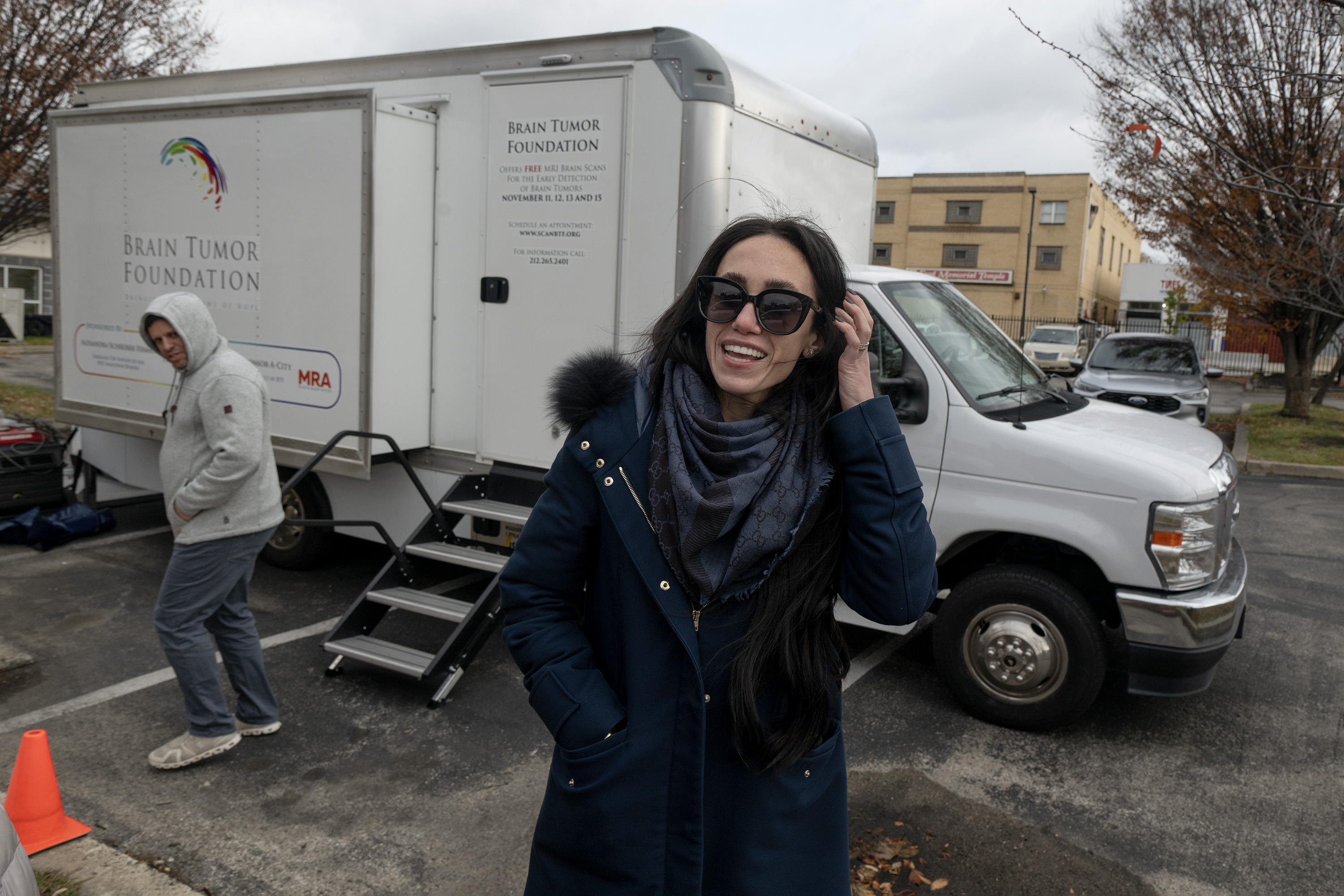
    But when she heard the Brain Tumor Foundation, a New York-based charity, was offering free magnetic resonance imaging (MRI) brain scans in Philadelphia, she made sure to get an appointment.

    “A lot of times people have things and don’t know,” she said.

    She received her scan at Triumph Baptist Church of Philadelphia in North Philadelphia, where the foundation was offering scans last week to the general public. She’ll receive her results within a couple weeks.

    The foundation has hosted these screening events for more than a decade, with the goal of promoting early detection of brain tumors.

    Using MRI scans for preventive health screening has grown increasingly popular in recent years, with celebrities like Kim Kardashian touting expensive whole-body scans on social media.

    But many doctors worry that the risks outweigh the benefits. They say that screening MRIs of the brain could lead to unnecessary surgeries and anxiety, and that catching a brain tumor early wouldn’t always change a person’s outcomes. These scans are not typically covered by insurance if not ordered by a doctor, and can cost anywhere from $1,000 to $10,000.

    “There, to date, is no data available at all that would suggest that this is a useful approach,” said Stephen Bagley, a neuro-oncologist at Penn Medicine’s Abramson Cancer Center.

    In the best scenarios, preventive medical screening can help catch diseases early when they are most treatable, and give people peace of mind. But they can also lead to overdiagnosis, false positives, unnecessary stress, and costly follow-up procedures.

    This is why expert panels carefully evaluate which screening tools should be recommended to the general public. Decisions by the U.S. Preventive Services Task Force, considered the gold standard for evidence-based preventive care, weigh the potential harms involved against the likelihood of improving outcomes.

    Even the most common screenings for cancer, like mammograms for breast cancer and PSA tests for prostate cancer, have faced controversy and shifting guidelines regarding who should get them and how frequently they should be administered.

    There is no medical evidence showing that mass MRI screening is helpful. Still, all spots for the foundation’s multiday screening event at Triumph Baptist Church were claimed. Zeesy Schnur, executive director of the foundation, said they aim to scan 100 to 150 people in each city.

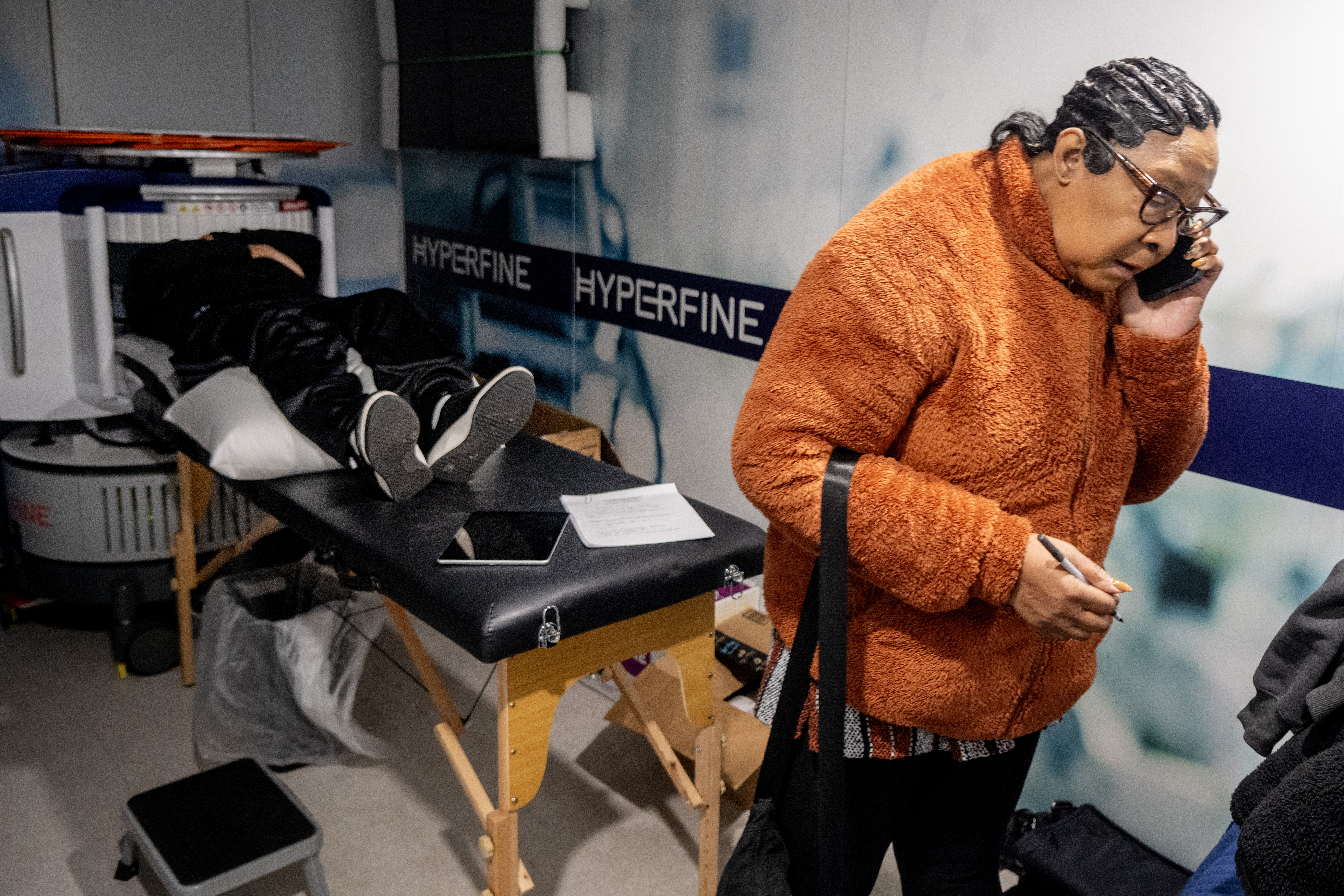
    Juanita Young, her husband, and her friend all booked consecutive appointments last week. Though she hasn’t had any symptoms that would make her think she had brain cancer, she signed up “just wanting to know,” she said.

    Juanita Young, her husband, and her friend all booked consecutive appointments to get screened.

    Philadelphia visit

    The idea for the early detection campaign came from Patrick Kelly, a now retired neurosurgeon who started the foundation in 1998.

    He was frustrated to see the majority of his brain cancer patients die from the disease, and felt that treatment would be more effective if the tumors were found earlier, explained Schnur, who has been at the foundation since 2000.

    Kelly envisioned a future where, similar to going through the scanners at an airport security checkpoint, people could get a full scan of their body, “and then this piece of paper would pop out and say, ‘Hey, you have a problem here,’” Schnur recalled.

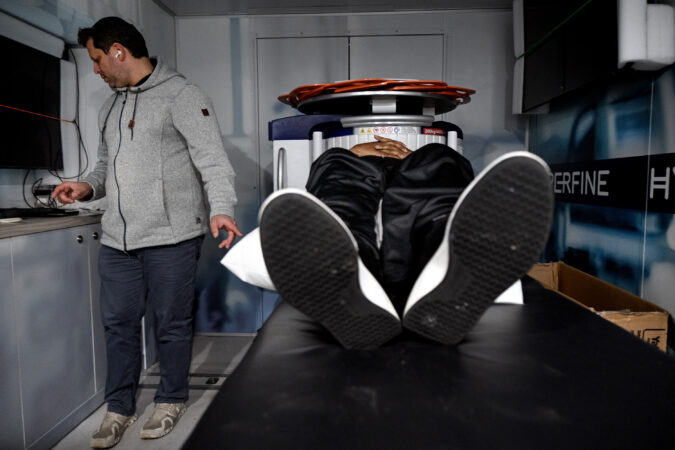
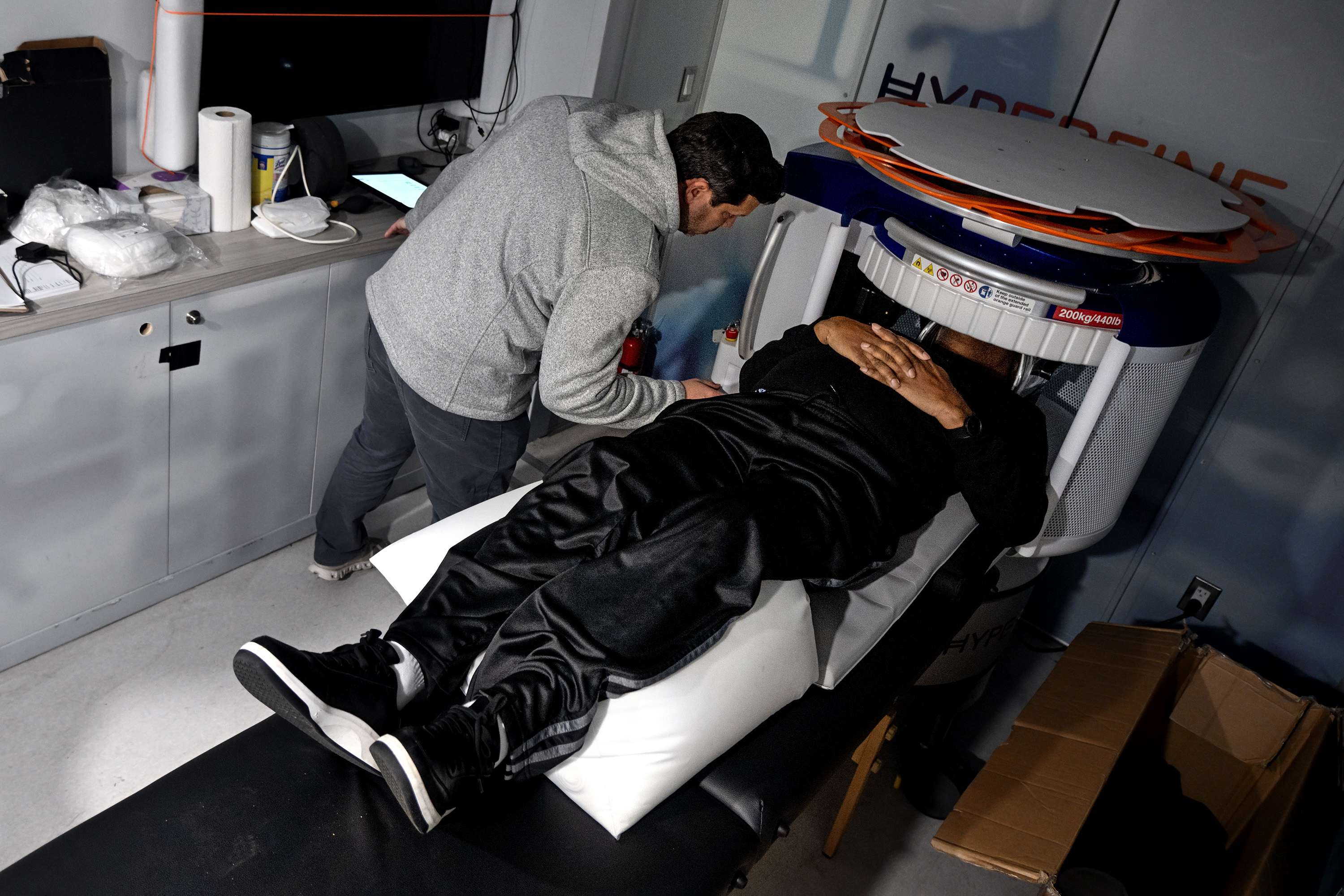
    The foundation offers brain MRIs for free at their events, covering the cost of administering the scan and having a radiologist read it. They use a portable MRI machine that only scans the brain and takes approximately 15 minutes.

    The foundation has chauffeured its machine all over the country through its “Sponsor-A-City” program, which allows people to donate the funds needed to bring the unit to a city of their choice. They usually pick cities that are demographically diverse.

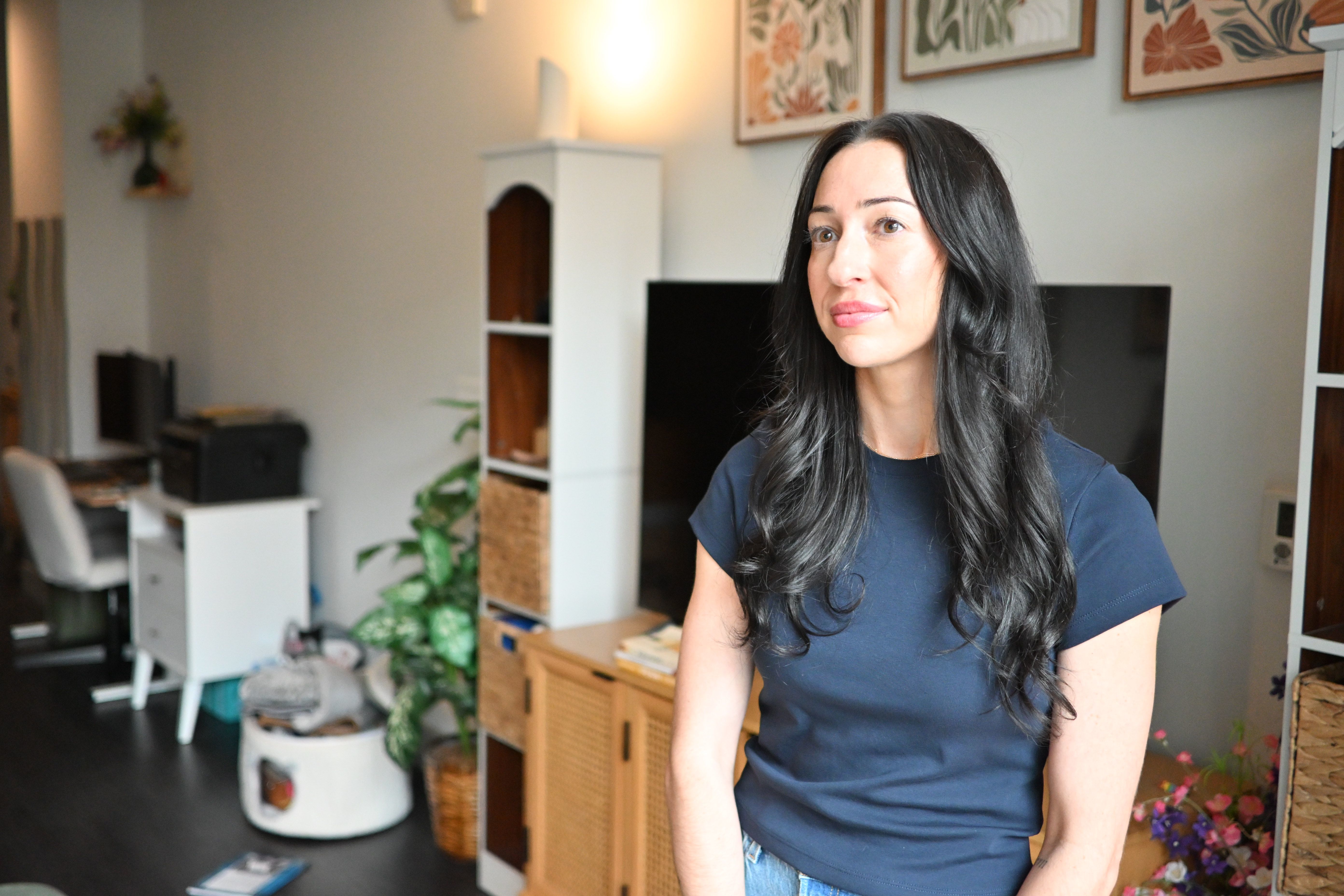
    The event in Philadelphia was sponsored by Alexandra Schreiber Ferman, who lives in the area, through the more than $50,000 she raised from running the New York City Marathon.

    Schreiber Ferman’s paternal grandfather died from glioblastoma and was a patient of Kelly’s. Her family has been involved with the foundation since its inception.

    Schreiber Ferman got her first scan five or six years ago, after she had been having headaches. She pressured her parents to get her in for an MRI when the foundation’s unit was in Brooklyn.

    “Thankfully, everything was OK. I just was stressed out,” she said.

    Having a family history of the cancer makes her and her family more alert when it comes to headaches and other symptoms. Schreiber Ferman received her second scan Tuesday morning at the screening event.

    Alexandra Schreiber Ferman sponsored the Brain Tumor Foundation’s event in Philadelphia.

    She said her family and people at the foundation feel that these scans should be “something that’s routine,” like mammograms and skin checks.

    “My goal would be that getting a brain scan becomes just a routine part of aging,” she said.

    Her father, who serves as chairman of the foundation, wants other people to have the chance to get screened and has helped sponsor past city visits.

    However, he himself has only gotten one screening since the program first started, and no longer wants any more.

    “My dad is adamant that he does not want to get a scan. I think for him, ‘ignorance is bliss,’” she said.

    What doctors say

    Screening tests have to meet certain criteria in order to become standard practice, explained Richard Wender, chair of family medicine and community health at Penn and former chief cancer control officer for the American Cancer Society.

    A national leader in cancer screening, he would not recommend that people undergo MRIs to screen for brain cancer.

    The first criteria for a screening tool to be recommended for the general population is that the disease is common, he said. The disease must also come with a high risk of harm or death and must have stages, so that it can be found before it causes symptoms.

    Lastly, available treatments for the disease have to be able to reduce the risk of serious outcomes.

    Brain cancer is unlikely to ever meet that criteria, Wender said, mainly because it isn’t common enough. There also isn’t sufficient evidence that finding a brain cancer earlier reduces the risk of a person dying from it.

    For example, the most common malignant brain tumor, glioblastoma, is so aggressive and invasive from the start, it is always considered a grade four tumor, noted Bagley, who serves as section chief of neuro-oncology at Penn.

    These cancers grow so quickly that the time between the tumor developing and someone showing up to the emergency room with symptoms is typically on the order of months, he said.

    “You cannot cure it, no matter when you find it,” Bagley said.

    A subset of brain tumors called grade two gliomas are slow-growing enough that catching them earlier could give a patient a better outcome. However, “it’s so rare, you’d have to do so many of these MRIs to find those tumors,” he said.

    Another issue with screening the general population is that there will inevitably be false positives.

    Some abnormalities in the brain might look like possible tumors on MRIs but turn out to be harmless.

    Yet, the person would have to undergo a medical procedure, such as a brain biopsy, to prove that it isn’t cancer.

    “You end up putting the patient through invasive brain procedures, lots of anxiety, and existential distress for what ends up to be nothing,” Bagley said.

    The same goes for benign brain tumors like meningioma, the most common type of brain tumor in adults. Roughly 39,000 cases are reported each year in the United States. A “very tiny percentage” of these ever become malignant, and it’s unknown if catching them early would help the patient in the long run, Bagley said.

    It might just mean the patient has to get MRIs every year for the rest of their life, or get surgery to remove a tumor that probably never would have been become a problem.

    Some of these patients have ended up seeking follow-up care from Ricardo Komotar, a neurosurgeon who directs the University of Miami Brain Tumor Initiative in Florida, after finding out they had benign tumors from screening MRIs. He tells these “super nervous” patients that it’s nothing to worry about, but now that they’ve found it, he has to follow it.

    As of right now, there is no good screening mechanism when it comes to the brain, Komotar said. He recommends only imaging a person’s brain if there’s a reason, such as a seizure, weakness, or migraines, or an injury, such as in a car accident.

    “Brain MRIs as screening have not been proven to help and, in my experience, they only hurt,” Komotar said.

    More research needed

    Ethan Schnur checks on James Brown as he has his early detection brain tumor screening at the Brain Tumor Foundation event in Philadelphia.

    When the foundation first started offering scans, they were finding potential abnormalities in one out of every 100 people they screened. Those included anything from a brain tumor, to silent stroke, to an aneurysm.

    One example was a man from Staten Island who had no symptoms, but through the scan, found out he had a nonmalignant brain tumor. He got surgery to remove it.

    “He called us afterward to thank us,” Schnur said.

    Their stance is that these MRIs should be part of standard of care, so that anyone who wants one has the option.

    The foundation has partnered with Weill Cornell Medicine and NewYork-Presbyterian in New York City for a formal research study using data from their screening events.

    John Park, the lead researcher and chief of neurosurgery at NewYork-Presbyterian Queens Hospital, said the study will help assess whether screening MRIs for a general population could be useful. They aim to screen up to thousands of patients.

    “We don’t know if it will be effective or not,” Park said.

    If the study were to suggest the scans are effective, there would still need to be a large randomized trial to validate those conclusions, Wender said.

    Park’s team will also look at demographic information in an effort to identify risk factors for brain tumors and other abnormalities.

    Research into risk factors could help justify whether certain populations should get routine screening MRIs, Bagley said. He noted that patients with Li-Fraumeni syndrome, a rare genetic disease that predisposes people to developing cancer, are already recommended to get whole-body MRI scans yearly because they’re known to be at such high risk.

    Other than those patients, “we don’t really have any way to say this large group of patients is at high risk for this type of brain tumor,” Bagley said.

    A handful of patients have ended up seeking care at Penn from Bagley after paying for a whole-body MRI from a private company. These are people who were “completely fine” before happening to find a brain tumor on their scans, he said.

    One of them was diagnosed with glioblastoma.

    He isn’t sure yet whether being diagnosed earlier will actually extend the patient’s survival time. It might just mean the patient gets a few months’ head start on treating the tumor.

    “It’s totally unclear if he did himself any justice by finding this terrible brain cancer any earlier. It’s incurable either way,” Bagley said.

  • Meet Gary, the cat who ended a friendship and cost $25,000 in legal fees

    Meet Gary, the cat who ended a friendship and cost $25,000 in legal fees

    First they were roommates, and then they were friends. But after Jessica Yang and Nicole DeNardo couldn’t agree on who should keep Gary — the exotic shorthair that Yang bought and DeNardo had been taking care of — it took a Common Pleas Court judge to decide.

    The two former roommates say they disagreed over whether Yang had given Gary to DeNardo or whether it was a temporary arrangement. In December 2024, Yang sued DeNardo to make her return the cat.

    “She said I was unfit to be a pet parent,” Yang said. “She said I was childish and selfish for even wanting Gary back. She kept asking me to consider the feelings and preferences of Gary.”

    Two lawyers contacted for this story say that situations like this one are on the rise, though the money spent on such a case — Yang spent $20,000, DeNardo, $5,000 — is a bit remarkable.

    “People love their animals, and people are willing to spend a lot of money in legal fees to reclaim their animals,” said Rebecca Glenn-Dinwoodie, a Doylestown-based family and animal lawyer not involved in the case.

    But for the two women, the fight over the small, cuddly cat with blue eyes became a catastrophe that dragged on for a year.

    “She just didn’t want me to have him,” DeNardo said. “It was personal. It was about beating me.”

    Nicole DeNardo at her home in Center City.

    How it started

    Yang, 33, purchased Gary for $1,000 when she was living in Pittsburgh in 2018. She named him after the SpongeBob SquarePants TV show character Gary the Snail.

    In the spring of 2022, Yang moved from New Mexico to Philadelphia. She said that with a new contract as a nurse anesthetist, she expected to travel for work every two weeks, making a roommate situation ideal.

    She and DeNardo, 31, met on a Facebook group for people seeking roommates and soon moved into an apartment together in Graduate Hospital. DeNardo, who works in finance, often worked from home, spending a lot of time with Gary.

    Yang and DeNardo each said they became friends and travel buddies. They took snowboarding trips to Vermont and Colorado and hiked at Lake Havasu, Ariz.

    They even got matching alien tattoos together. Yang said hers was a nod to her time living near Roswell, the UFO tourist town in New Mexico. DeNardo said the alien paired well with her tattoo of Saturn, a planet linked to her zodiac sign of Capricorn.

    Yang said as the apartment’s lease was coming to an end around March 2024, she was going through a difficult time. She and her long-term boyfriend had just broken up. She had just changed jobs. And, she had just bought a house in Passyunk Square that needed extensive renovations.

    That was when, as she remembers it, DeNardo offered to take the cat. “I was like, how convenient for Gary,” Yang said. “And I thought it would be good for her, too.”

    That summer, Yang commissioned a portrait of Gary, surrounded by snowboards, trekking poles, and other symbols of the two women’s friendship. There were two prints, both framed, one for each of them.

    A detail shot of a piece of art Jessica Yang commissioned featuring her cat, Gary, and mementos from her friendship with Nicole DeNardo. She gave a second copy of the art to DeNardo.

    Going to court

    Things began to go south when Yang said she learned that DeNardo had changed Gary’s last name at the vet — from Yang to DeNardo — and added her name to the cat’s microchip. DeNardo, Yang said, considered the cat hers.

    It’s one of several details DeNardo remembers differently. DeNardo said the vet’s office changed the cat’s last name, not her. As for the microchip, which would help people identify Gary’s owner if he were to get lost, she said she added her name for practical reasons — she was the one who was around.

    DeNardo said she was often the one who took care of Gary. She fed him, she said, and took him to the vet. She even “cleaned his eyeballs” every day — something shorthair cats often need.

    “He was always in my life, always on the windowsill next to me,” DeNardo said.

    She provided a timeline showing she’d spent more time with Gary than Yang. She offered lists of friends who would attest Gary was her cat — a fact many people in her lifefound mildly amusing, since her father and her brother are also both named Gary.

    Jessica Yang holds her cat, Gary, at her home Sunday, Nov. 9, 2025.

    DeNardo said she believes that somehow, the issue became personal after a 2023 incident where she told Yang they needed to take the cat to the vet.

    “I think she viewed that more as a personal attack,” DeNardo said. “For me, this was always only about Gary’s well-being.”

    After a yearlong process that involved a hearing and a bench trial, the court ruled in Yang’s favor. Yang proved she had purchased the cat, and DeNardo had to give him up.

    DeNardo blames the Pennsylvania legal system, which views animals as property. “You can spend years scooping litter, cleaning his eyeballs, and the court tells you none of that matters, because pets are property,” she said.

    The law

    A few other states, such as New York, do define pets the way DeNardo had hoped the court would view Gary, said Daniel Howard, an associate family law attorney at Petrelli Previtera in Center City.

    “Some states have pet custody statutes that look similar to what we see in child custody, looking at the welfare of the animal,” Howard said.

    Howard pointed out that in September the Pennsylvania House of Representatives passed a bill that would change how pets are recognized in divorce proceedings. (The bill would have to pass the state Senate and get the governor’s approval for enactment).

    However, even if this bill were to pass, it would not apply to cases where the two people aren’t married, Howard said.

    Gary, an exotic shorthair, relaxes on the couch Sunday, Nov. 9, 2025.

    Still, he said, attitudes are changing around the ways animals should be viewed by the courts. Laws that worked well for farm animals don’t fit as neatly for cats or dogs.

    “For a lot of people, their pets really are their children,” Howard said. “And I think there needs to be some kind of an update to look at that.”

    Glenn-Dinwoodie said the situation also speaks to the need for people — even if they’re just roommates, or friends — to put things in writing when they enter a living arrangement.

    “Just have clear conversations, clear expectations, but also [take] that extra step so that, if ownership is ever disputed … you have enough proof. Because the court needs proof,” she said.

    For Yang, the whole episode felt like a misuse of time and resources. It left her wanting to raise money for animals, “because $25,000 could save a lot of cats.”

    DeNardo said the dispute showed her that doing what you think is right doesn’t always lead to the outcome you want. At her apartment, she gestured toward the window, where she said Gary spent countless hours watching the birds that would perch outside.

    “He’s just a really playful, sweet, cat,” DeNardo said. ”He was my buddy… I just hope he’s OK and has all the things he needs, and is living a good life. If he’s happy, I’m happy.”

    Clarification: This article has been updated to reflect DeNardo’s assertion that she took care of Gary even when Yang was home.

  • For almost 40 years, Esperanza has served ‘the least of these’ and those who ‘just need a break’ | Philly Gives

    For almost 40 years, Esperanza has served ‘the least of these’ and those who ‘just need a break’ | Philly Gives

    Talk to most nonprofit chief executives, and they’ll be able, on cue, to recite a heartwarming story about someone their organizations helped.

    And the Rev. Luis Cortés Jr., Esperanza’s founder and chief executive, can do it, too.

    But he’d rather talk about a sin he committed as a little boy — a sin that impacted his thinking for a lifetime and allowed him to understand how to build a $111.6 million organization with 800 employees that educates, develops, uplifts, and houses 35,000 people a year in the heart of North Philadelphia’s predominantly Hispanic Hunting Park neighborhood.

    When Cortés was 12, he stole a Snickers candy bar from the bodega his father owned in New York City’s Spanish Harlem.

    Oh, his father figured it out, and quickly, too, because he began to ask little Luis some important questions:

    Did the 12-year-old know how many Snickers bars the bodega would have to sell to break even — not only on the box of Snickers, but on the taxes and utilities for the entire store? More importantly, how many Snickers bars would be required to turn a profit — a profit that could be reinvested?

    “You need to understand finance, whether it’s a box of Snickers or a multimillion-dollar bond to build a school. Where is the money coming from, and what’s the repayment structure?” Cortés said.

    Outside, as he spoke, a crane moved materials in what will soon become a new culinary school.

    “Understanding finance is important, and understanding culture is important, and you have to understand the relationship between the two.”

    So, yes, Cortés can and did tell the story about the mother who came to Esperanza to learn English skills, who got help to get a job and a house, who sent her daughter to Esperanza’s charter school and to Esperanza’s college, and now that same daughter is getting a house thanks to Esperanza’s mortgage counseling help.

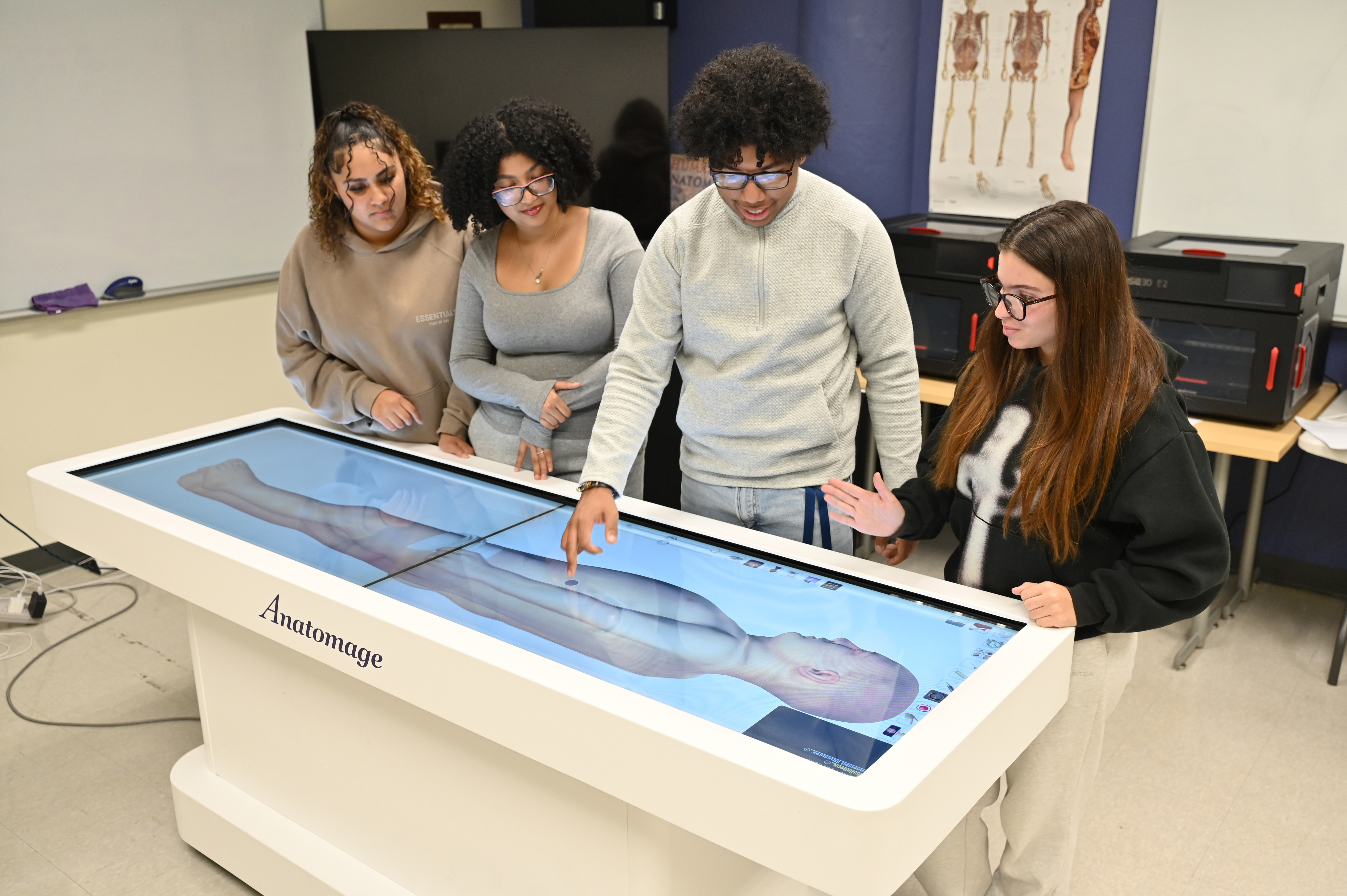
    Students Jayliani Casioano, Oryulie Andujar, Derek Medina, and Natalia Kukulski use an interactve anatomy table. The students are members of is the Health Occupations Students of America (HOSA).

    All good. But this is what Cortés really wants people to know:

    “If people trust us with their funds,” he said, “we’re putting the money into institutions, and institutions build culture.”

    That’s why Esperanza has a K-12 charter school, a cyber school, a two-year college that’s a branch campus of Eastern University, a 320-seat theater, an art gallery, computer labs, an immigration law practice, a neighborhood revitalization office, a CareerLink office for workforce development and job placement, a music program, a youth leadership institute, housing and benefit assistance, and a state-of-the-art broadcasting facility.

    Cortés even likes to brag about the basketball court. “Three inches of concrete, maple wood flooring, fiberglass backboards — NBA standards.”

    “Think about Paoli. It has a hospital, a public school, a theater. Paoli has all of that, and it’s understood that that’s the quality of life. We have to have access to those same things at a different price point,” he said. “Notice I didn’t say different quality. I said different price point.

    “We want to create an opportunity community, where people can have a good life — with arts, housing, healthcare, financial literacy, education, all those pieces — regardless of your family income,” he said.

    “What’s important here and what’s different is that in all our places, all our facilities are first class,” Cortés said.

    “I grew up in a low-income community where people were always telling you to step up, but step up to what?” he asked. “Where is the vision? What is possible to even have? How can anyone know unless they can see it?”

    So, when people from the community visit Esperanza, “you can see that you can have the best facilities with state-of-the-art equipment. As a provider of services, we have to step up,” he said, in turn always giving people the tools and resources they need to step up.

    For example, on Citizenship Day, Sept. 20, Anu Thomas, an attorney and executive director of Esperanza’s Immigration Legal Services, trained a dozen volunteer lawyers and law students on the fine points and recent pitfalls in the process of applying for citizenship.

    Soon, the room was crowded with people coming for help.

    Watching from the sidelines was Charlie Ellison, executive director of the city’s Office of Immigrant Affairs, who noted that an estimated 60,000 legal residents of Philadelphia are eligible to apply for citizenship.

    “Clinics like these are critically important to helping people who might be facing barriers,” including the cost of getting legal help. “This bridges a lot of gaps. It’s a vital mission, now more than ever,” he said.

    For Neury “Tito” Caba, a men’s fashion designer, tailor, and director of green space at Historic Fair Hill, citizenship help from Esperanza was a family affair. Through Esperanza, he, his grandmother, and his mother all became citizens.

    “Now I can vote, and that’s the most positive thing I can do,” he said. “And also, things being the way they are, it gives me some sort of protection.”

    Fashion designer Neury “Tito” Caba talks about his citizenship experience at Esperanza.

    Earlier this fall at Esperanza’s CareerLink branch, counselor Sylvia Carabillo helped Luis Rubio on the computer. He was trying to extend his unemployment benefits and looking for a job as a security guard. Agueda Mojica was being tutored in Esperanza’s most popular workforce class: Introduction to Computers.

    “I want to become more independent to be able to do anything on a computer,” she said in Spanish, speaking through a translator. “I was always working and never had time to learn.”

    Much of Esperanza’s staff is bilingual in Spanish, but to help people from the neighborhood, Esperanza also hired counselors who speak Ukrainian and Kreyòl for Haitians who live nearby.

    In Esperanza College classrooms a few weeks ago, Esperanza Academy high schoolers enrolled as college students had just finished a chemistry exam. When they graduate from high school, they’ll already have associate degrees on their résumés.

    For them, Esperanza represents a future.

    There’s Oryulie Andujar, 18, who wants to study sonography because an ultrasound technician found a cyst in her mother’s uterus. “We could have lost her. That was very impactful for me.”

    Jayliani Casiano, 17, wants to go into anesthesiology. The oldest of seven, she witnessed her mother giving birth to several younger siblings. “She was in a lot of pain. It was interesting. I want to do everything after seeing her through that process.”

    Derek Medina, 18, said the opportunity to go to college “made me rethink my whole life.” He had been getting into trouble in school, but now wants to combine a love of mathematics and a desire to help people by going into the field of biomedical engineering.

    Recently, on Nov. 14, Esperanza College hosted its Ninth Annual Minorities in Health Sciences Symposium, designed to acquaint high schoolers with medical careers.

    Construction will soon begin to convert a former warehouse space into a center to teach welding and HVAC in an apprenticeship program.

    Next month, it’ll be time for “Christmas En El Barrio” with music, food, and community in Teatro Esperanza — admission is free. In January, the Philadelphia Ballet will perform there. Tickets are $15 and free for senior citizens and students.

    “My worst seat — in Row 13 — would be $250 at the Academy of Music,” Cortés said. He wants to offer the arts at a price and a time available to a mother of three, who may not be able to afford even the cheapest seats in downtown venues, plus bus fare, “and heaven forbid the child wants a soda,” Cortés said.

    All this adds up to culture, which brings him back to the Snickers bar, and not just breaking even, but investing.

    Other groups, Cortés said, had to build their own institutions when mainstream organizations put up barriers. Howard University helped Black people, Brandeis served Jewish people, and Notre Dame provided education to the Irish.

    Building an institution is his investment goal with Esperanza, and he takes as his mentors famous Philadelphia pastors such as the Rev. Leon Sullivan, who founded Progress Plaza in North Philadelphia, and the Rev. Russell Conwell, the Baptist minister who founded Temple University.

    “Philadelphia has a tradition that its clergy don’t just do clergy things,” he said, admitting that he doesn’t have the patience for a more traditional pastor’s role. “As clergy here, it’s understood that we snoop around everything.”

    Cities sometimes brag that their poverty rates have declined, he said, when in reality, rates have declined because people with low incomes were forced to move away.

    Philadelphia, he said, has a chance to be different — to lower the poverty level both by raising people’s incomes and improving their standards of living. “There should be Esperanzas in every neighborhood,” he said.

    “How can we focus on helping the people who just need a break?” Cortés said, referencing Jesus’ admonishment to “help the least of these.”

    “This city has the opportunity to make this a win-win,” he said, “to show the rest of the country and Washington, D.C. — especially Washington, D.C. — that people who are different, and people who are `the other’ can be supported, so that they are not only part of the fabric of the city, but economic drivers of the city.”

    This article is part of a series about Philly Gives — a community fund to support nonprofits through end-of-year giving. To learn more about Philly Gives, including how to donate, visit phillygives.org.

    For more information about Philly Gives, including how to donate, visit phillygives.org.

    About Esperanza

    People Served: 35,000

    Annual Spending: $111.6 million across all divisions

    Point of Pride: Esperanza empowers clients to transform their lives and their community through a diverse array of programs, including K-14 education, job training and placement, neighborhood revitalization and greening, housing and financial counseling, immigration legal services, arts programming, and more.

    You Can Help: Esperanza welcomes volunteers for community cleanups, plantings, and other neighborhood events. Some programs also need volunteers with specific skills (lawyers, translators, etc.).

    Support: phillygives.org

    What Your Esperanza Donation Can Do

    • $25 covers the cost of one private music lesson for a young student through our Artístas y Músicos Latinoamericanos program.
    • $50 provides printing and distribution of 30 “Know Your Rights” brochures to immigrant families.
    • $100 pays for five hours of training for a new mentor fellow at the Esperanza Arts Center, preparing a young person for a career in arts production through hands-on learning.
    • $275 funds the planting of one street tree in a neighborhood that desperately needs additional tree cover to address extreme heat.
    • $350 covers tuition and books for one English as a second language student at the Esperanza English Institute.
    • $550 supports the cost of the initial work authorization for an asylum-seeker.