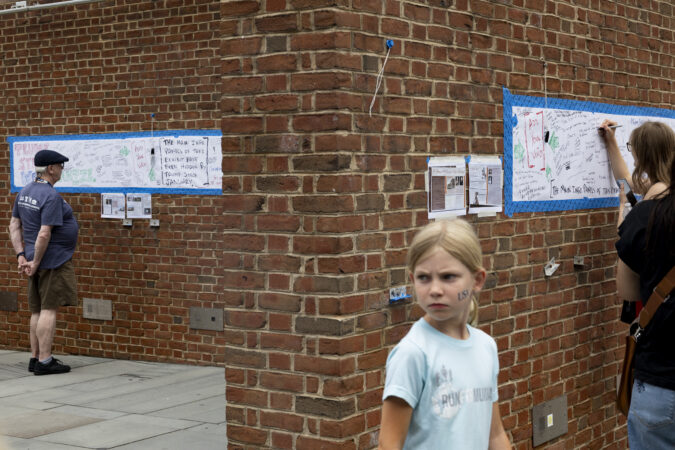
A Philadelphia-based federal appeals court gave President Donald Trump’s administration the final go-ahead to install its own exhibit at the President’s House.
The new panels, which historians have criticized for whitewashing George Washington’s role in enslaving nine people, have been manufactured and stand ready to install, the Justice Department told the court.
“The President’s House is an important national historical site, and the Government submits that the President’s House exhibits should be fully installed without further delay,” the government’s filing said.
Only two of 11 new panels mention the people enslaved at the President’s House, which was the exhibit’s original purpose. The exhibits are not factually wrong, historians said, but cast Washington in a more sympathetic light.
“Slaves living in the President’s House experienced a greater modicum of autonomy than elsewhere in the South such as to explore the city and sometimes even attend the theater, with Washington buying the tickets,” one panel reads.
The city quickly appealed and asked the Third Circuit court to recall the Friday-morning order, saying it didn’t have time to respond to the Justice Department’s Thursday request.
And while the federal government asked to install the exhibits “immediately,” the request did not identify a reason for the rush.
“That is not an emergency,” the city’s filing said, “it is a preference for speed.”
The court shouldn’t have issued its final approval for changes without waiting the 90 days Philadelphia had to appeal last month’s order, the filing said.
The city also repeated the argument, which has not found purchase with the appellate judges so far, that allowing the Trump administration to install its own exhibit would cause the city and public irreparable harm.
The city’s motion does not automatically pause the court’s order.
But in addition, the city filed a motion for a stay, while the Third Circuit considers the appeal, with District Judge Cynthia M. Rufe, who issued the now-vacated injunction ordering the Trump administration to restore the exhibits it had removed.
The city and the Department of the Interior did not immediately respond to requests for comment.
The President’s House has been subject to litigation in federal courts since the Trump administration dismantled the slavery exhibit in January.
It has been in legal limbo in recent weeks because of litigation in a Boston federal court, where conservation groups sued to stop the Interior Department’s implementation of Trump’s 2025 executive order requiring no national parks displays that “inappropriately disparage Americans past or living.”
At least 50 exhibits were removed from more than 30 sites nationwide, according to court records. Among them are also mentions of slavery at Independence Hall and the Second National Bank of the United States that the Trump administration quietly removed.
A federal judge in Boston last month ordered the National Park Service to restore all removed exhibits to parks across the nation. But the Court of Appeals for the First Circuit disagreed and stayed that order Thursday.
Hours later, Justice Department attorneys asked the Philadelphia-based federal court to clear the final procedural step — and the court obliged before noon Friday.
The biggest question remaining is whether the Trump administration will attempt to install the panel during this historic July 4 weekend marking the United States’ 250th anniversary.
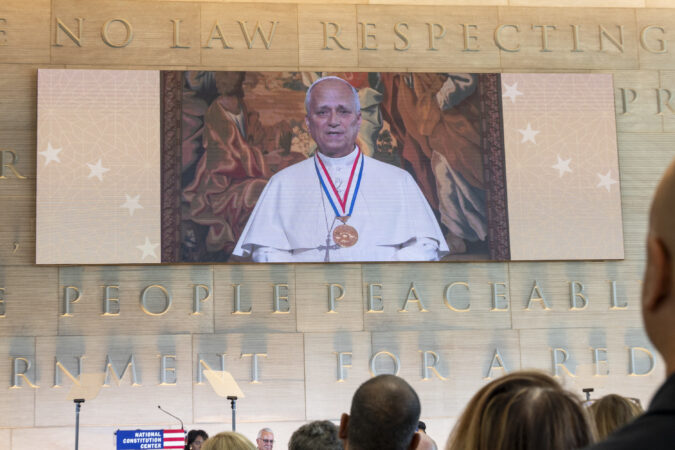
Addressing a Philadelphia crowd live from the Vatican, Pope Leo XIV called for a “recommitment” to American ideals.
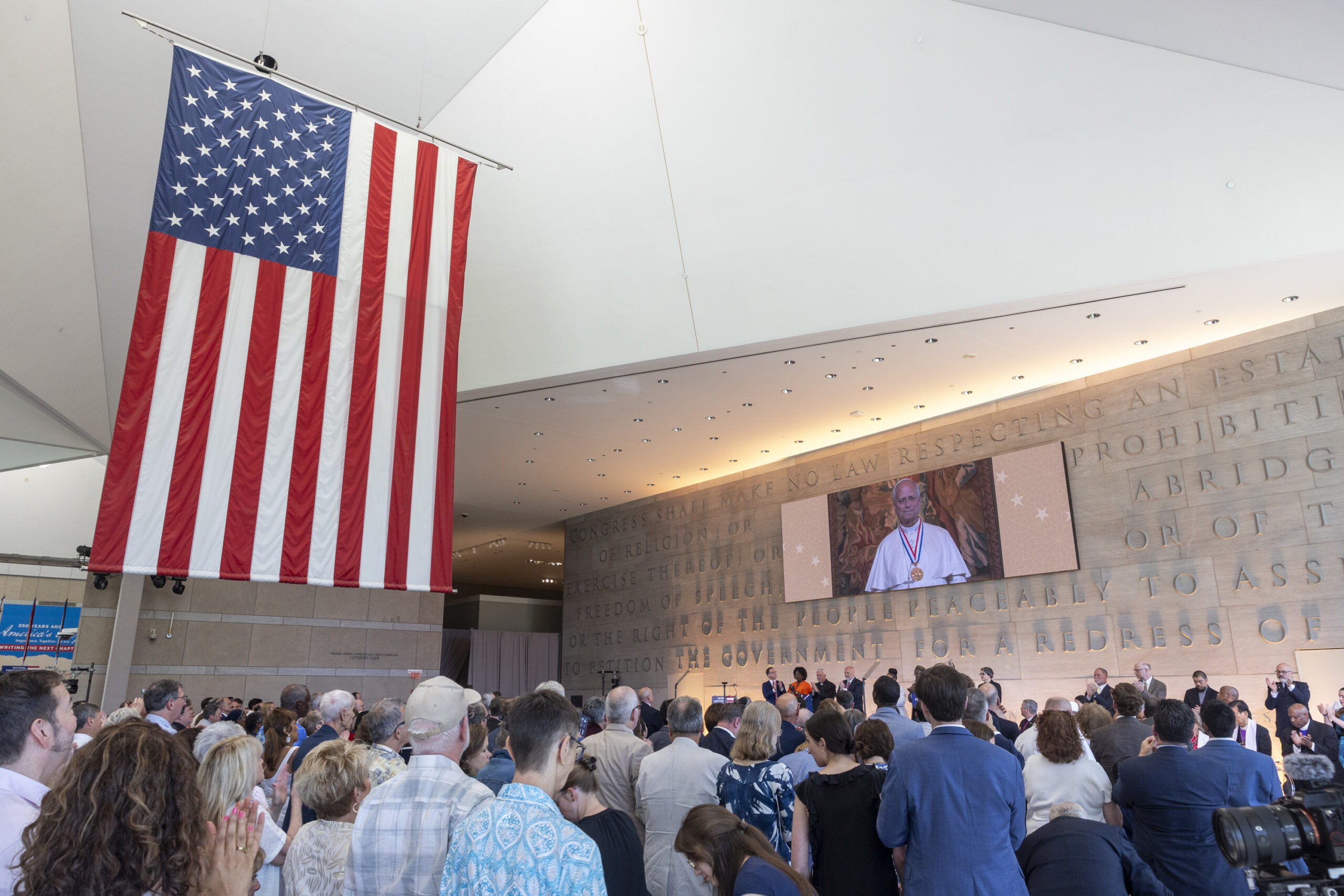
The first U.S.-born pope delivered remarks virtually at an interfaith ceremony inside Philadelphia’s National Constitution Center on the eve of the United States’ 250th birthday to accept the center’s prestigious Liberty Medal.
Facing a screen showing the live, cheering Philadelphia audience, the pontiff wore his Liberty Medal along with a cross around his neck.
Leo, who grew up in Chicago and attended Villanova University, quickly pointed out his American roots, calling himself “a son of this great country.”
“I join you in asking God’s blessings upon America’s future that the lofty ideals enshrined at the beginning of the Declaration of Independence may continue to guide the flourishing of the nation in unity, justice, and peace,” he said.
Leo, who was elected pope last year, spent years servingthe church in Peru and has been outspoken about calling for international peace. That’s landed him at odds with President Donald Trump’s administration on the issue of migrants, the war in Iran, and more.
The pope leaned into some of those themes in his speech, even though he did not refer to the president directly.
He nodded to his advocacy for humane treatment of immigrants and noted that the founders of the United States “made America a byword for freedom, as the country opened its doors to successive waves of immigrants, enabling them and their children to play their part in shaping the future of the nation.”
He said the “love of freedom” in the United States has inspired the country “to look beyond itself and at great sacrifice to champion the cause of freedom beyond its own borders.” But he acknowledged that mission hasn’t been straightforward, noting that building a society that embodies such ideals “was not always easy and, in many respects, is still a work in progress.”
The pontiff’s speech comes the day before he plans to visit Lampedusa, an Italian island known as a stop for migrants making the dangerous journey across the Mediterranean Sea from North Africa to Europe. His predecessor Pope Francis made his first official visit outside of Rome in 2013 to the same island and condemned the “globalization of indifference” toward migrants.
Pope Leo XIV speaks at the Liberty Medal Ceremony at the National Constitution Center in Philadelphia on Friday.
Julie Silverbrook, the chief content and learning officer for the National Constitution Center, emphasized in a Friday interview that Leo is a “global leader who has been uniquely shaped by American ideals.”
“He has brought together people of different faith traditions, and through his ministry really reflected his belief in the inherent dignity of all human beings,” she said.
Leo declined an invitation from Trump to the United States to celebrate the country’s 250th birthday on July Fourth, the New York Times reported. The first American-born pope opting to visit migrants instead sends a stark message as the president pursues his mission of mass deportations.
But the pontiff’s participation in the Philadelphia program highlights his connections to the region, which isn’t lost on the National Constitution Center.
The Philadelphia-based private nonprofit organization chose Leo for the award due to “his lifelong work promoting religious liberty and freedom of conscience and expression around the world — ideals enshrined by America’s founders in the First Amendment to the U.S. Constitution.” That, and also because he is the first pope born in the United States, and has connections to Philadelphia, Silverbrook said.
“He was shaped by those freedoms … in much the same way that the Declaration of Independence was shaped by the city of Philadelphia, and of course a reflection of American values that have been carried globally,” she said.
When a delegation from Philadelphia’s National Constitution Center met with Leo at the Vatican in April to present him with the medal in person, they also bore a few local goodies: a bundle of Villanova swag, a replica of George Washington’s Acts of Congress, and a Wawa tote bag filled with Tastykakes.
“I think he very much so feels a connection to Philadelphia, both having been educated here, and I think in this semiquincentennial moment, I think the eyes of the world are on Philadelphia, and we’re thinking about the ideals that have emanated from this place for 250 years,” Silverbrook said.
Leo, a 1977 Villanova alum, recently passed on a surprise message to graduates of his alma mater. Vince Stango, the interim president and CEO of the National Constitution Center, also went to the Augustinian university on the Main Line, which co-sponsored the NBC10 broadcast of the event along with the archdiocese and Malvern Prep.
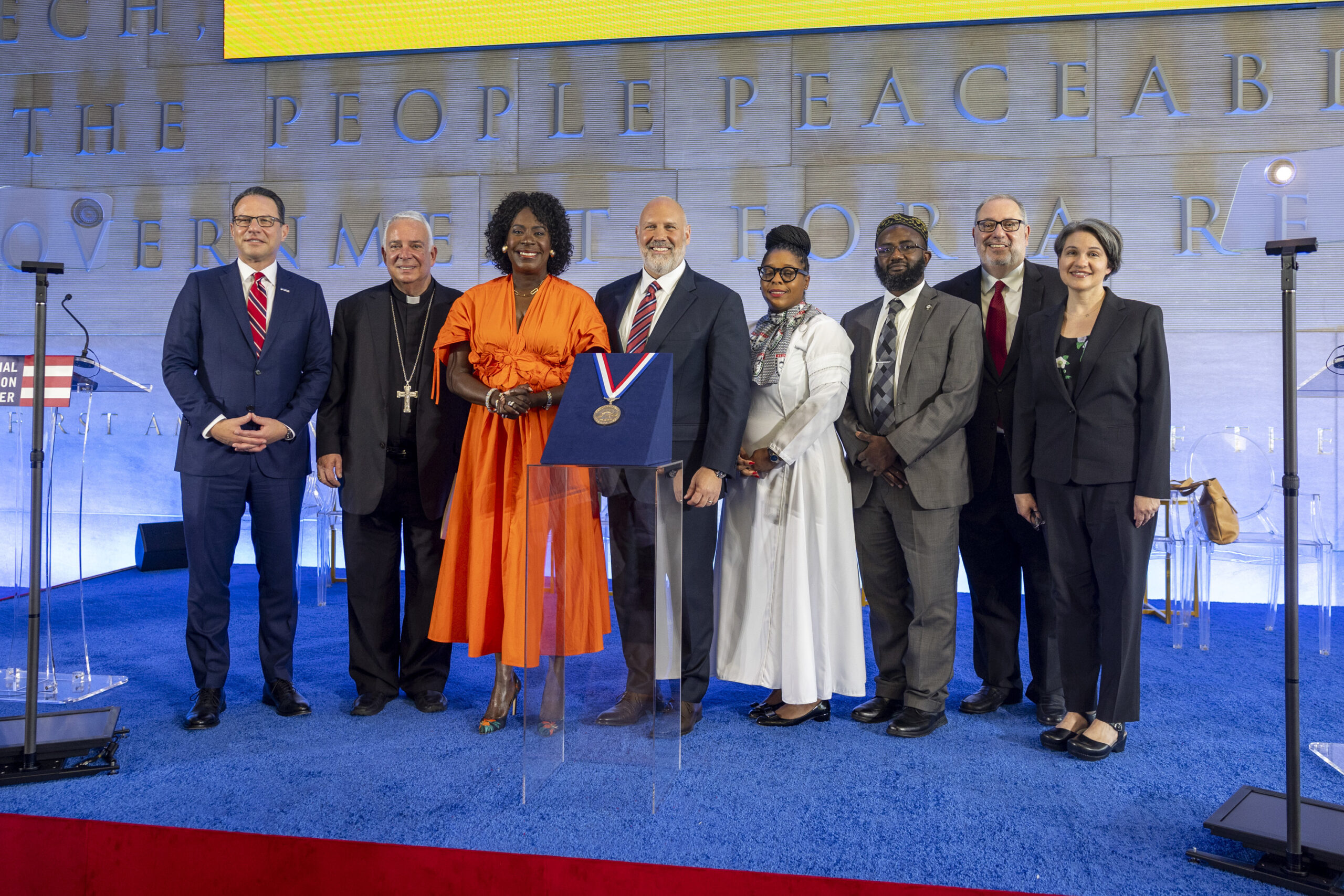
(From left to right) Gov. Josh Shapiro, Rev. Nelson J. Pérez, Mayor Cherelle L. Parker, Interim President & CEO of National Constitutional Center Vince Stango, Rev. Carolyn C. Cavaness, Imam Quaiser D. Abdullah, Rev. Luis A. Cortés Jr., and Rabbi Jill L. Maderer, pose for a photo at the Liberty Medal Ceremony at the National Constitution Center in Philadelphia, Pa., on Friday.
Clashing with Trump
The pope has contended that it’s up to each country to determine how they want to accept migrants while also denouncing the Trump administration’s “extremely disrespectful” treatment of them.
He has also spoken out against Trump’s threats against Iran, and declined to participate in the president’s “Board of Peace” for Gaza’s reconstruction.
In an April social media rant, Trump complained that he doesn’t “want a Pope who criticizes the President of the United States.” The president called the Catholic leader weak and accused him of “catering to the Radical Left.”
Leo told reporters that month that he has “no fear, neither of the Trump administration, nor of speaking out loudly about the message in the Gospel, and that’s what I believe I am called to do, what the church is called to do.”
In his Friday remarks, the pope made a call for unity but warned that a country should come together with “ideals that do not fade with the passing of time.”
He called on the United States to recognize its values of “peace and prosperity, a country characterized by generosity and nobility of heart,” and said the values of “shared human dignity, equality, and the rights laid out in the Declaration of Independence” can help unite and guide the nation.
The Liberty Medal
The Liberty Medal was created in 1988 and has been hosted by the National Constitution Center since 2006.
The award has gone to storytellers, philanthropists, civil rights leaders, and politicians on both sides of the aisle, such as Ukrainian President Volodymyr Zelenskyy, former Supreme Court Justice Ruth Bader Ginsberg, the Bushes, Malala Yousafzai, and Thurgood Marshall.
The center describes its recipients as individuals who “strive to secure the blessings of liberty to people around the globe.”
The process of selecting Leo began about a year ago, Silverbrook said.
The speech was initially going to be projected on Independence Mall, but the event was moved indoors due to the extreme heat and livestreamed by the center online.
Rich Russo, 63, a Fishtown resident who attended the event in person, called the experience “once in a lifetime.”
“How many times do you get the pope talking to you?” said Russo, who works for a bank.
Gov. Josh Shapiro, who is Jewish, and Mayor Cherelle L. Parker, a Baptist — bothDemocrats who have been outspoken about their own faiths — joined Philadelphia Archbishop Nelson J. Pérez and other religious leaders who made remarks on stage prior to the pope’s speech. Pennsylvania Attorney General Dave Sunday, a Republican, rang a replica Liberty Bell outside.
“Philly is proud that the pope is a graduate of Villanova University who spent time living and working in our region,” Pérez said on stage. “Pope Leo knows us, and we feel like we know him, too.”
“His influence, however, extends beyond Philadelphia,” the archbishop added.
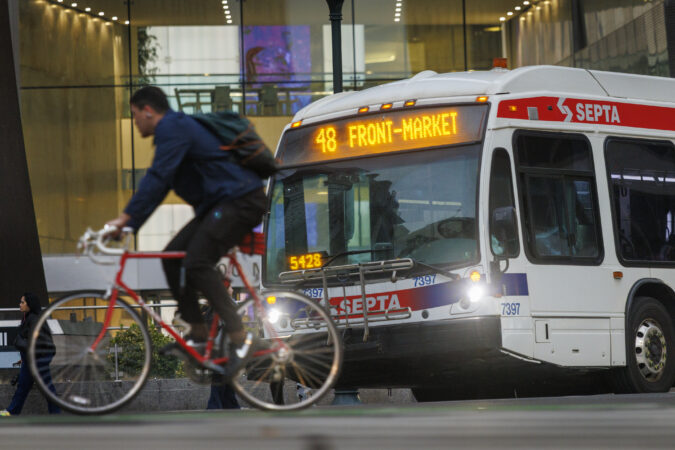
While waiting for his SEPTA bus, Jake McGovern, 28, noticed at least three routes go by his corner in Point Breeze.
He wondered if route numbers had any particular meaning: Maybe 7 indicated a north-south route, and 9 meant east-west.
“There has to be some logic to it,” he thought.
No amount of looking at the bus maps proved helpful in deciphering the pattern, so McGovern asked Curious Philly, The Inquirer’s forum for questions about the city: “Is there any rhyme or reason for the SEPTA bus numbering system?”
Places like New York City have bus lines with a combination of letters and numbers that show the borough they serve: Bx (Bronx), B (Brooklyn), M (Manhattan), and even S for Staten Island.
Philly, on the other hand, has always vibed to its own logic, even when that might mean not having one.
SEPTA operates more than 120 bus routes, including the lines to the suburbs. But bus numbers in Philly do not indicate where routes go or which streets they operate on, according to SEPTA spokesperson John Golden.
SEPTA bus numbers above 90 are lines driving to the suburbs.
The routes below 90 were formerly Philadelphia Transportation Co. streetcar routes, Golden said.
The bus numbers in Philly are a relic of a time when Philadelphians moved through streetcars pulled by horses.
Back then, the lines were named in the order they were introduced, Billy Penn reported in 2020. When bus routes replaced them, the route numbers were retained.
For areas with new bus routes,letters were assigned as the route identifier. Eventually, new bus routes were numbered in the high 80s, Golden said.
The letter system ended in February 2025, when SEPTA renamed bus routes named after letters into numbers, turning:
The G into 63
The H into 71
The J into 41
The L into 51
The R into 82
The XH into 81
Upon hearing the explanation McGovern said, “Oh, jeez” between laughs.
“It’s kind of a letdown, but it’s funny that it worked out like that,” McGovern said. “I imagine the randomness is probably useful to other people in the city as well, because it makes it very unique.”
The U.S. government’s crusade to prevent the spread of communism on the Korean Peninsula coincided with the 175th anniversary of the Declaration of Independence.
And in Philadelphia, where the founding document was birthed in 1776, city planners laid the groundwork for a four-day jubilee.
Festivities kicked off July 1, 1951, and centered around an unorthodox ceremony to blend dirt, or “hallowed earth,” from Independence Square with soil scooped from Revolutionary War battlefields in each of the original 13 colonies.
Judge Edwin O. Lewis, chairman of the city’s celebration, said the exercise would rededicate the states “to the principles of freedom.”
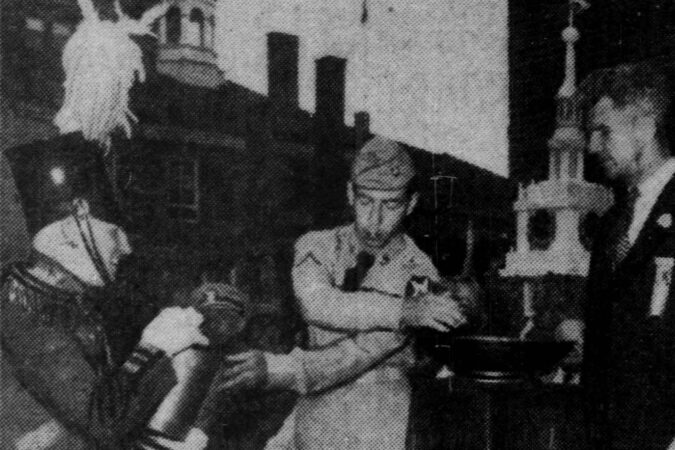
The ceremony was held in the shadow of Independence Hall and featured 19-year-old Army Pfc. Francis R. Findley Jr., of Havertown, who had recently returned from the front lines of the Korean War.
Each of the original 13 states sent representatives, who were dressed in replica uniforms from past conflicts and were escorted by a color guard, and took turns carrying an urn of battle-tested earth to the dais.
Findley took a fistful of dirt from each urn and added it to a monumentalmixture in a ceremonial pedestal bowl.
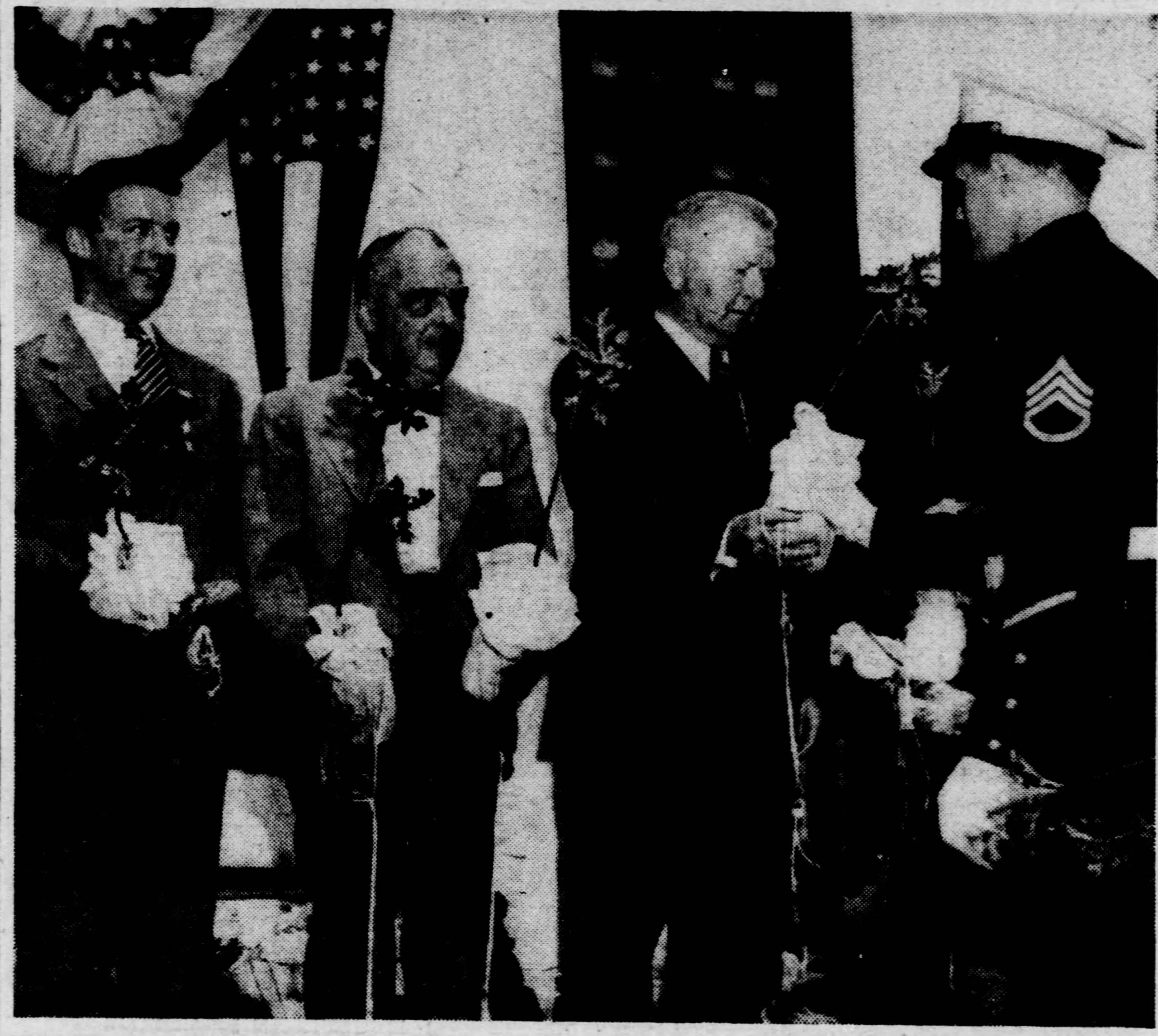
Three days later, on the Fourth of July, the then-48 states received a growth opportunity: oak seedlings rooted in the mixed soil.
Theodore Roosevelt III, (left), Philadelphia Mayor Bernard Samuel, and U.S. Sen. James H. Duff give out oak seedlings for the capitals of the then-48 states at Independence Hall on July 4, 1951.
The seedlings were to be planted as memorials in each state’s capital city.
After the dirt was mixed together, almost as part of a recipe for building democracy into a country’s bedrock, U.S. Sen. James H. Duff, a Republican from Pennsylvania, called upon an “American formula” to help challenge threats of tyranny and oppression.
Historically speaking, subtlety hasn’t traditionally been a strong suit for leaders of the U.S. government.
“We offer the world peace,” Duff said on the Fourth of July, “if we may have peace without appeasement and with freedom.”
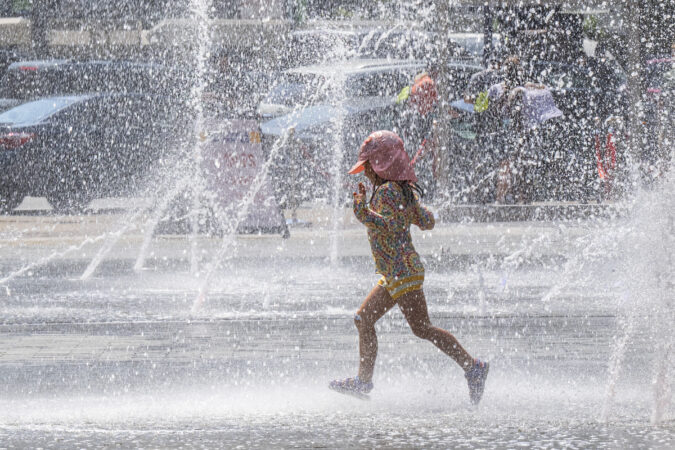
Philadelphia almost certainly will have set more temperature records over the next two days — but maybe not during the steam-bath afternoons.
Nature’s natural cooling system, nightfall, is having a hard time getting it done with the atmosphere so swollen with water vapor. It didn’t get lower than 82 Friday morning and an encore is expected the morning of the Fourth.
Both would be record-high minimum temperatures for the dates in Philadelphia. That record bar is considerably lower than for the high-temperature records — 104 degreesfor Friday, and 103 forSaturday — set during the sizzling 1966 Independence week. A late-day thunderstorm could knock back Saturday’s temperatures, and storms Saturday night are “likely.”
Thursday’s high, 103, tied the record set in 1901, when the nation was a mere 125 years old.
Those potential century-plus readings are attention-getting, but health officials have long held that for heat-related mortality, consistently warm nights are more dangerous than the days, particularly for older people who live alone in brick rowhouses in the city. As a former Philadelphia health official has observed, without nighttime cooling, they can become “brick ovens.”
“The intensity and length of the extreme heat will exacerbate impacts to both people and infrastructure,” the weather service warned.
The sequence of hot nights “are particularly harmful because the body doesn’t have a chance to recover,” said Kraftin Schreyer, associate professor of emergency medicine at Temple University’s Lewis Katz School of Medicine. Extreme heat can exacerbate circulatory and lung conditions, and certain mental disorders, she added.
But she and other health experts say the detrimental effects may be modified by the heat the region already has experienced this year.
The Philly forecast for the 250 climax
Friday’s high is expected to challenge the reigning champ, the 104 set during a blistering heat wave in 1966, when the nation was a mere 190 years old.
On Saturday, when Philly celebrates the nation’s 250th birthday, the high may fall just short of 100, said Matt Benz, senior meteorologist with AccuWeather, as the high pressure “heat dome” covering much of the nation loses some of its protective power over Philly.
That also could be a window for “ring of fire” thunderstorms that could be nasty. The federal Storm Prediction Center sees a 15% chance that any storms on Saturday could become “severe,” with wind gusts up to 60 mph. The National Weather sees a 60% chance of storms Saturday night.
By Sunday, highs will be backing off to the 90s, however the sequence of warm nights probably will persist, at least in areas of Philadelphia most affected by the urban heat island effect.
The urban heat island and heat-health dangers
The world has been getting warmer, but cities long ago got the jump on climate change, and their impacts on temperature were observed in the 19th century and documented in a famous experiment in the 1950s by legendary climatologist Helmut Landsberg.
Landsberg, who observed temperatures had fallen in some European cities after World War II bombings destroyed buildings, set up instrument arrays in an area of Maryland that was undergoing rapid development. As surfaces were paved and structures erected, he recorded significant localized temperature increases.
In Philly, dense neighborhoods can be several degrees warmer than other areas even within the city. Urban areas reduce cooling at night because they are efficient at storing the sun’s energy and slower to release heat after sunset.
The heat-death tolls in Paris in 2003, Chicago in 1995, and Philadelphia in 1993 underscored the urban heat hazards.
It’s warmer, but heat deaths have dropped dramatically in Philly
“We’ve been really lucky,” said Samuel Eldrich, medical director of the Temple Health-Chestnut Hill Hospital Emergency Department
The decline has a lot do with Philadelphia and that summer of 1993, Eldrich added.
That year, Philadelphia was under fire because it was the only major Eastern city reporting significant numbers of heat deaths. The medical examiner’s office was using forensic evidence, such as closed windows, in determining heat deaths.
The reasoning: With so many people dying, doctors wouldn’t be able to get to the bodies in time to verify core body temperatures of 105 degrees, the standard for hyperthermia. The Centers for Disease Control later decreed Philadelphia’s method was correct, and it was adopted elsewhere.
The dramatically high death toll was the impetus for the city’s emergency response plan, lauded by CDC and the National Oceanic and Atmospheric Administration that lauded as a national prototype.
It includes opening cooling centers and nudging residents to look in on older neighbors, and having the Philadelphia Corporation for the Aging operate a “heat line,” 215-765-9040. It will be operating daily from 8:30 a.m. to 8:30 p.m., and the agency “can also assist callers reporting concerns about vulnerable neighbors, family members, or community members,” said spokesperson Bill Conallen.
Citing Census figures, the Corporation for Aging says about 95,000 people 65 and older live alone in the city.
‘This is temporary’
Subject to change, the heat wave is due to end Monday, with highs in the lower 80s (remember when that seemed hot?).
In the meantime the experts are offering coping tips, the three most-important being hydrate, hydrate, hydrate.
How much water should you drink? More than you think, said Schreyer. Men should drink about a gallon a day, women three quarts, but four to eight cups additional wouldn’t hurt. Sip, don’t guzzle, she said.
At a time when everyone wants to be outside, it’s critical to take breaks in air-conditioned stores, malls, or wherever, even for a few minutes, Eldrich said. “It gives your body a chance to recover,” he said.
Sunny G. Hallowell, associate professor of nursing at Villanova University, recommends cool showers and tepid baths. Also, especially with storms threatened, be prepared for power outages. She suggested storing damp towels in the refrigerator or freezer as a quick cool-down resource should the A/C go off.
She also recommends keeping a cool attitude. “This is temporary,” she said, and if the temperature hits a record, that’s “something to brag about.”
And if you’ve had it with the heat, think back to your misery during the Arctic freezes, and think that with the heat, “You got your wish.”
Lastweekend, K.C. Peterson was sitting at a bar with his friends in western Nebraska, talking about Fourth of July celebrations, when he shared an unexpected tale.
It all started with a marketing gimmick, one so unique only Phillies executive Bill Giles could’ve conceived it. The year was 1976, and Philadelphia was buzzing with excitement around the Bicentennial.
Giles, who described himself as a “pseudo historian” according to newspaper accounts, had been reading up on Paul Revere. Everyone was familiar with the blacksmith’s midnight ride, but the executive was far more interested in a lesser-known journey.
In 1774, Revere traveled by horseback from Boston to Philadelphia to deliver the Suffolk Resolves — a document that would serve as a harbinger of the revolution to come — to the First Continental Congress.
Citizens in Suffolk County, Mass., would refuse to pay British taxes. They’d organize militias to defend themselves. They’d boycott British goods.
Giles began to brainstorm. What if the Phillies could recreate such a ride for opening day? With a Paul Revere re-enactor, dressed in colonial garb? Carrying a game ball in a lantern, instead of a blueprint for civil resistance?
K.C. Peterson and his brother were hired by Phillies executive Bill Giles for an ambitious two-week stunt.
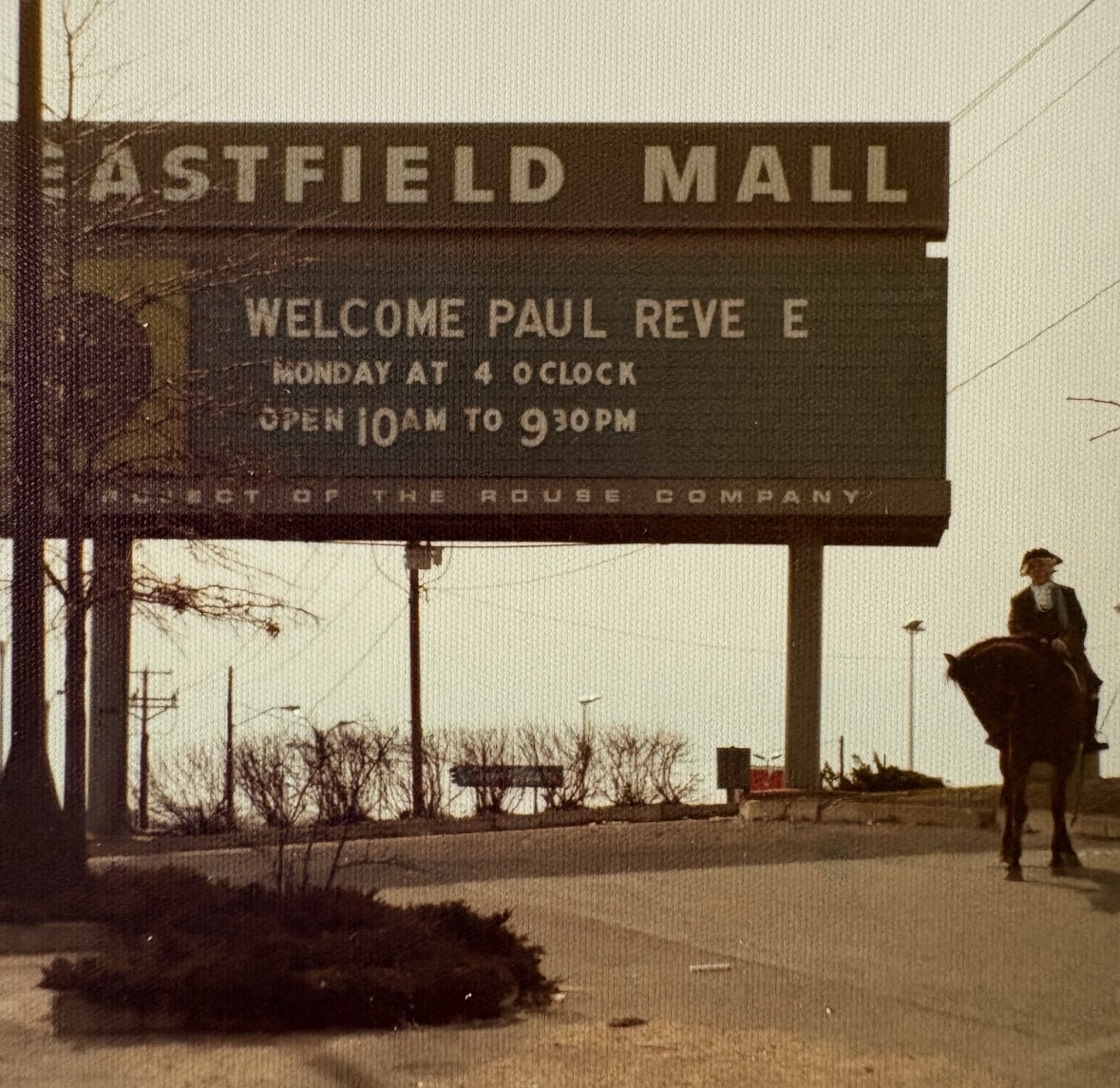
The plan was set into motion. In March of 1976, Giles hired K.C. and his brother, Russ, to trek 318 miles over two weeks from Old North Church to Veterans Stadium on horseback.
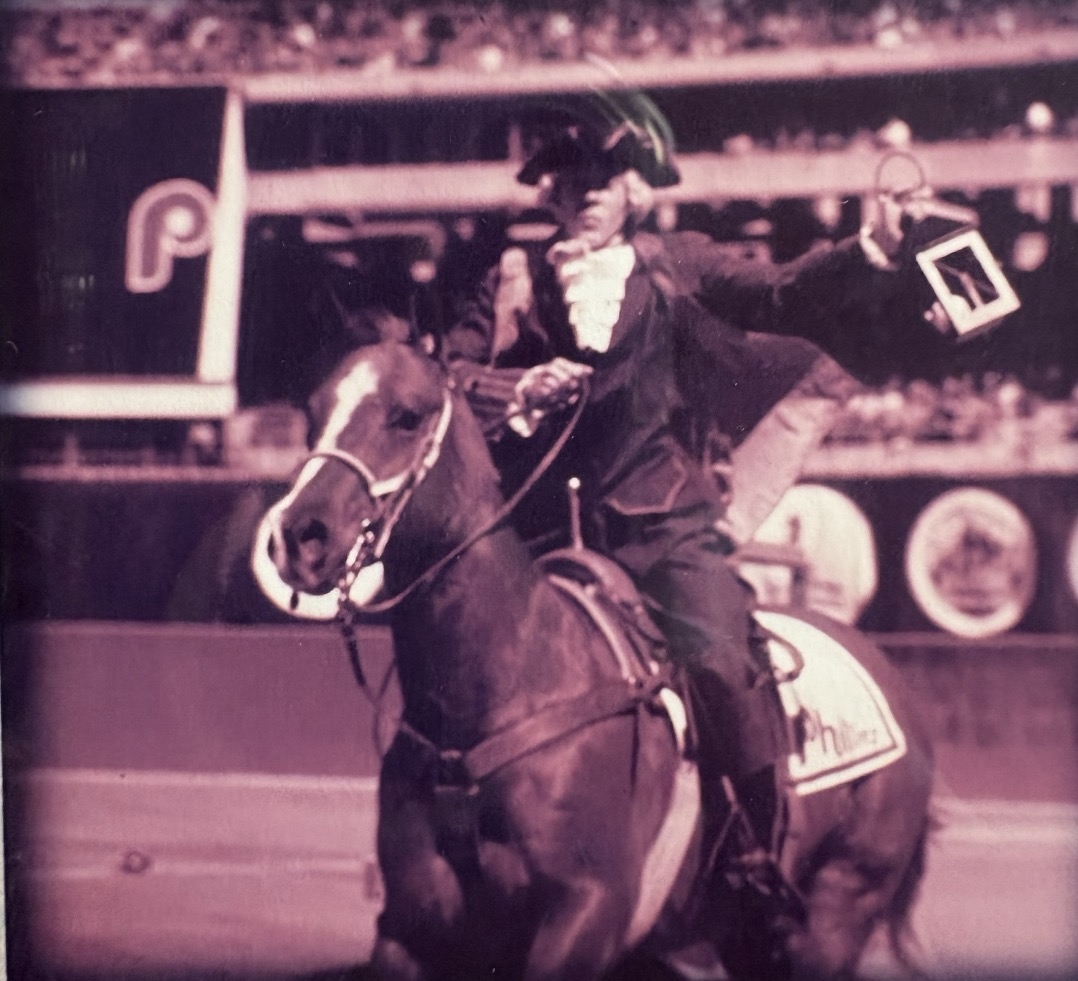
They arrived on April 10, a few hours before first pitch. Russ handed the ball to a man with a jet pack — “Rocket Man” — who soared 150 feet into the air, landing on the mound to deliver it to former Phillies pitcher and newly elected Hall of Famer Robin Roberts.
Peterson’s friends were skeptical. He and his brother had lived a wild life, as rodeo trick riders in Nebraska, but even by their standards, this seemed outlandish.
But the tale was all true — from the wigs to the tricornered hats to the tall black boots.
“They said, ‘Oh, bulls—,’” K.C. recalled. “I said, ‘I’m not bulls— you, we did!’
“One rode in the morning, one rode in the afternoon. And it rained almost every day. For two weeks.”
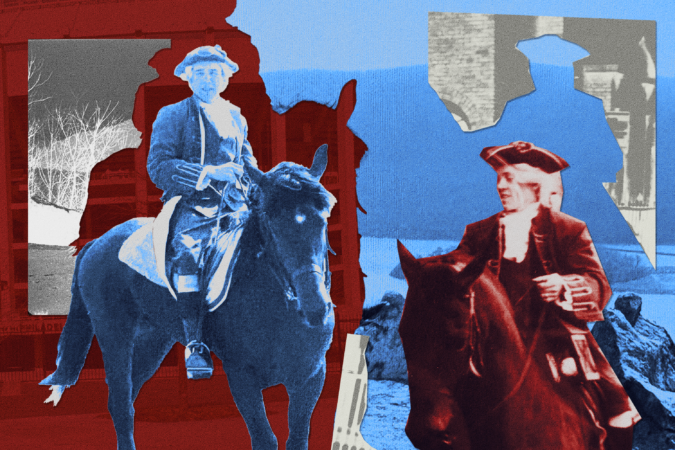
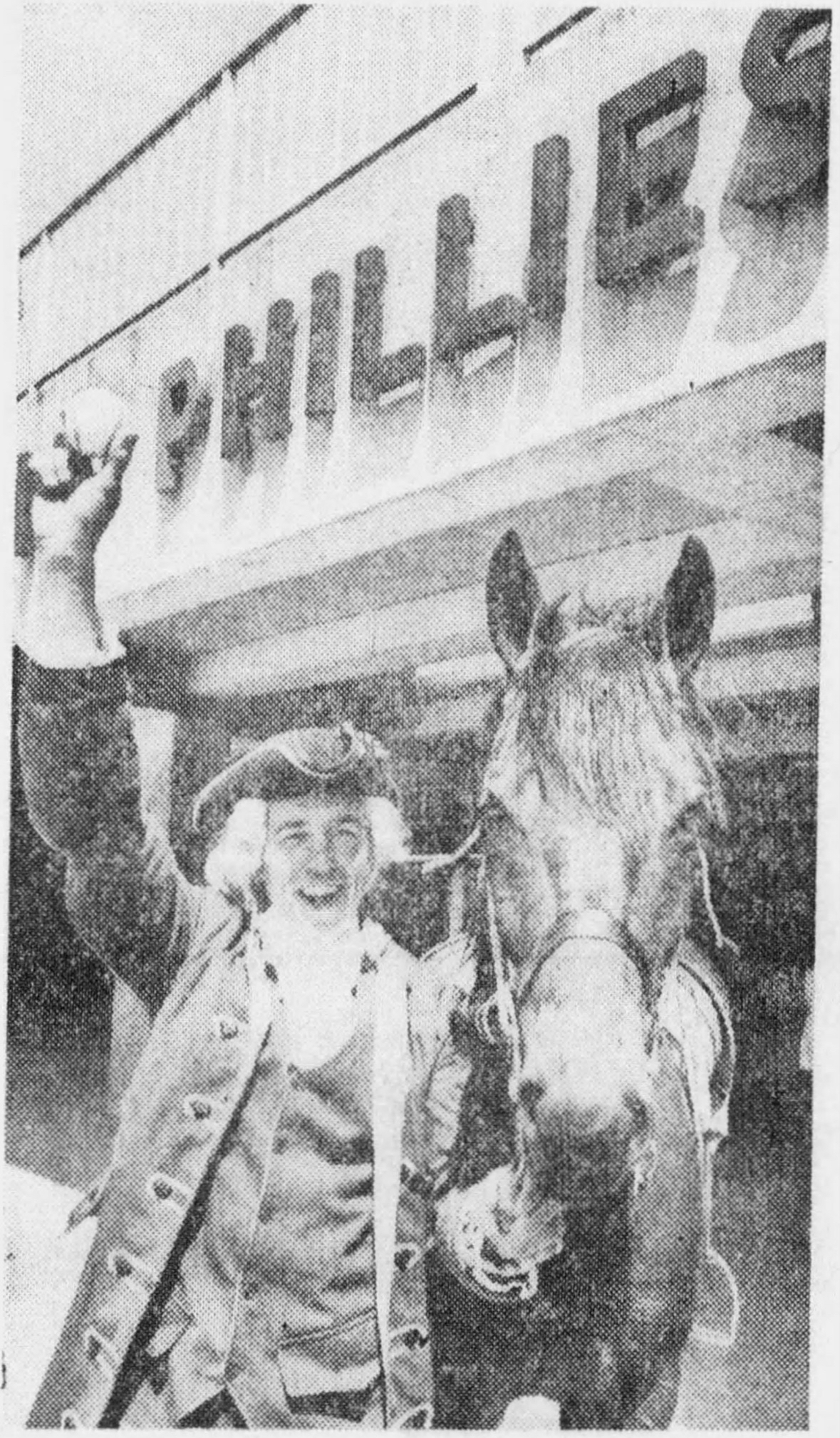
Russ Peterson (pictured) and his brother K.C. were mistaken for George Washington in some of the stops on their 318-mile ride.
$5,000 for 318 miles
K.C. and Russ Peterson knew close to nothing about Revere when they accepted Giles’ job. They had never been to a baseball game either, and didn’t consider themselves fans of any team.
But they were expert horsemen, and that was enough. The eight Peterson siblings grew up on a ranch in Ogallala, nicknamed the “Cowboy Capital” of Nebraska. Their brother, Denny, taught them trick riding at an early age; before long, they could do shoulder stands and vaults on the back of a galloping steed.
It was a unique skillset that led to some interesting experiences. During the summer, K.C. and Russ would perform halftime shows at Ogallala’s local rodeo. In 1973, the family traveled to Japan on tour with celebrity cowboy Casey Tibbs.
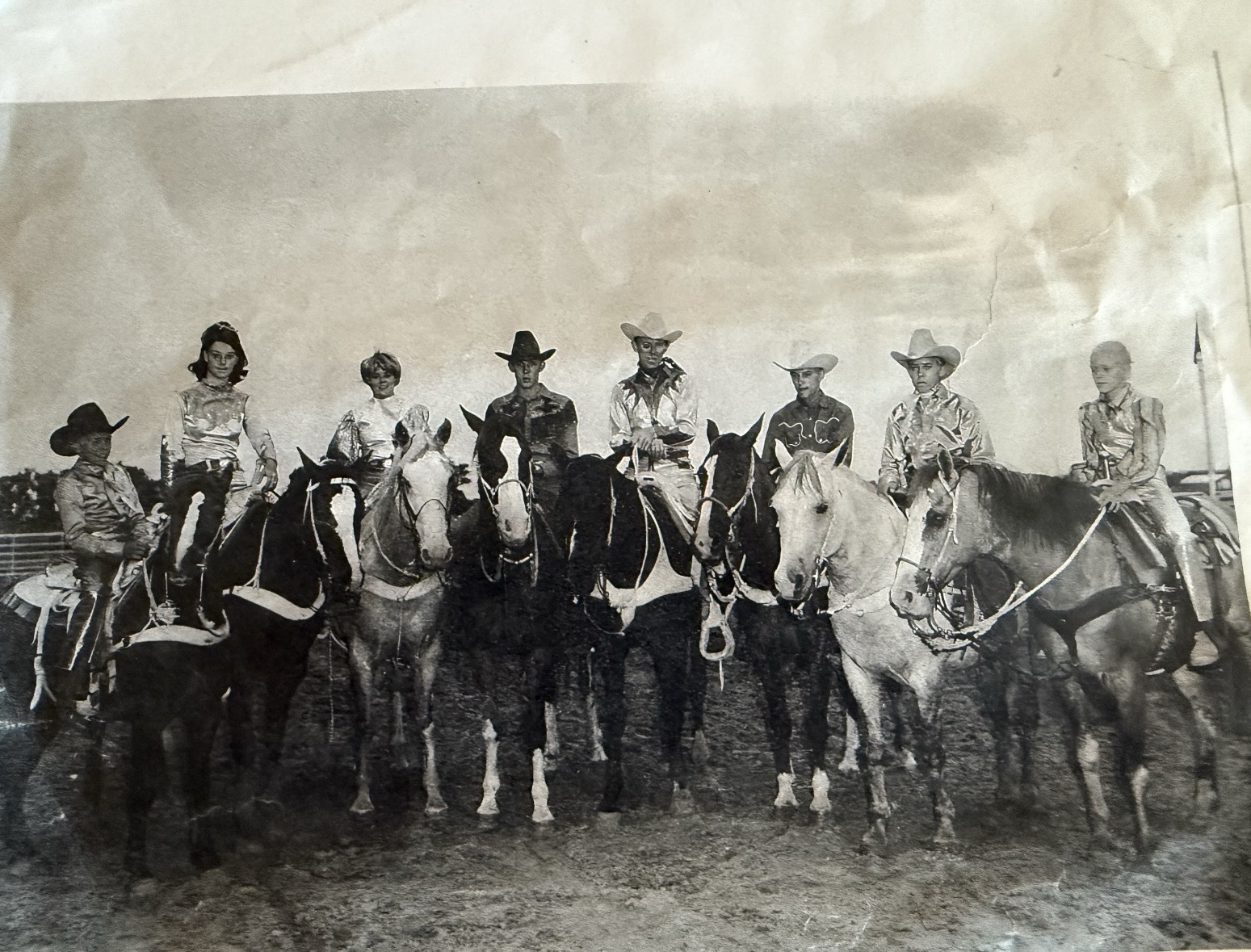
K.C. (far left) and Russ Peterson (second from right at a 1971 Buffalo Bill Wild West show) had honed their horseman skills in the years leading up to their Phillies stunt.
What Giles proposed in 1976 was an entirely different commitment. For the past few years, the brothers had been working four shows a day, seven days a week, over the summer at Great Adventure Theme Park in Jackson Township, N.J.
Now, their boss was saying that the Phillies wanted them to embark on a 318-mile trek.
“I was like, ‘What the hell are you talking about?’” K.C. recalled. “And they said, ‘Well, it’s gonna take two of you, because it’s a long ways, and you’ve got to do it at a trot in an English saddle.’
“And hell, I’ve never rode an English saddle in my life. We’re just trick riders. Grew up on a ranch. Rode Western saddle, and trick riding saddle, but never an English saddle. It’s an itty bitty saddle. There ain’t much to sit on.”
“I was 17 years old, and Russ was 21, and we got paid $2,500 apiece,” he said. “For a broke kid, it’s a hell of a lot of money.”
The brothers accepted the team’s offer on the spot. Russ’ girlfriend at the time, ReNee Dancer, was not happy. She and Peterson had planned to get married before they left Nebraska for New Jersey in May.
That idea was no longer feasible. The Phillies needed K.C. and Russ to be in Boston by late March to start their trip. They’d have to postpone the wedding until after it was done.
“He was so excited that they asked him to do that,” ReNee said. “And all I was worried about was getting married.”
K.C. and Russ departed from the Old North Church on March 27 at 9 a.m. The Phillies gave them a route with different stops along the East Coast. Unlike Revere’s, this journey was not entirely on dirt, grass and cobblestone.
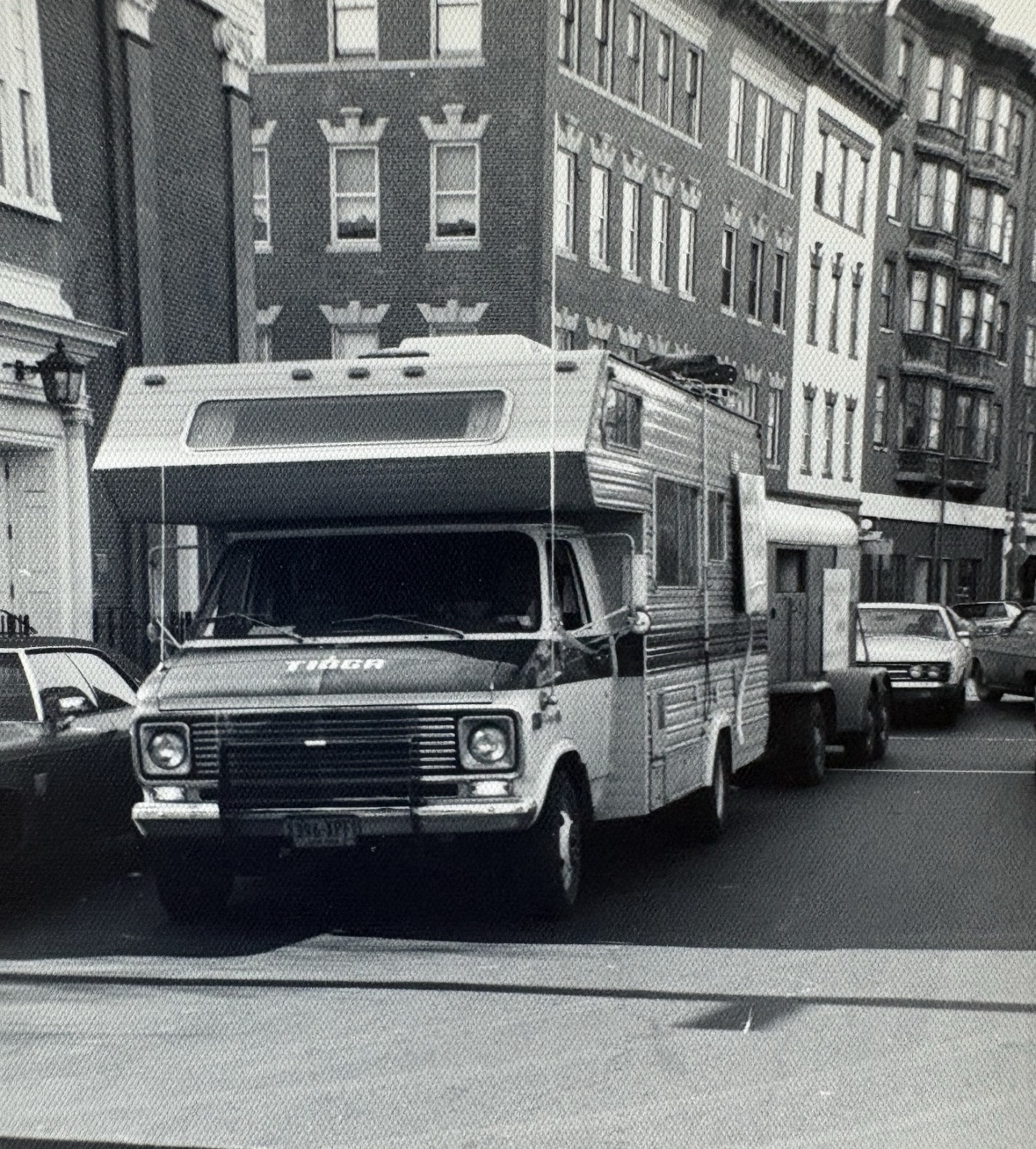
The Peterson brothers were trailed by a motor home that had its own issues in surviving the two-week trek.
The younger Peterson said there were times when one brother would be riding on the side of a small highway, with a motor home behind him — flashers on — and a horse trailer hitched to the back.
Local drivers were not enthused; honking loudly, while telling the colonial horsemen to “get the hell out of the road.”
The weather, which K.C. described as a “downpour,” only made things worse. Their wigs were soaked and their tricornered hats were slipping. A dry, wool coat would’ve been helpful amid the 40 to 50 degree temperatures, but drenched, it was essentially useless.
On their hardest days, K.C. and Russ contemplated tossing their lanterns and costumes aside. The routine was quickly getting old. But in the spirit of Revere, they continued on.
“Here we were, 200 years later, doing [his ride] on a paved road,” K.C. said.
The brothers would often depart by 7 a.m. to reach the day’s destination by early afternoon. There, they would take part in a ceremony welcoming them to town, usually held by a local chamber of commerce.
“Kids would start coming out of school, yelling, ‘George Washington!’” K.C. recalled. “With our little hat on, with our little wig on, with the curls in it. But it wasn’t no raincoats, I’ll tell you that. We had to stay in costume.”
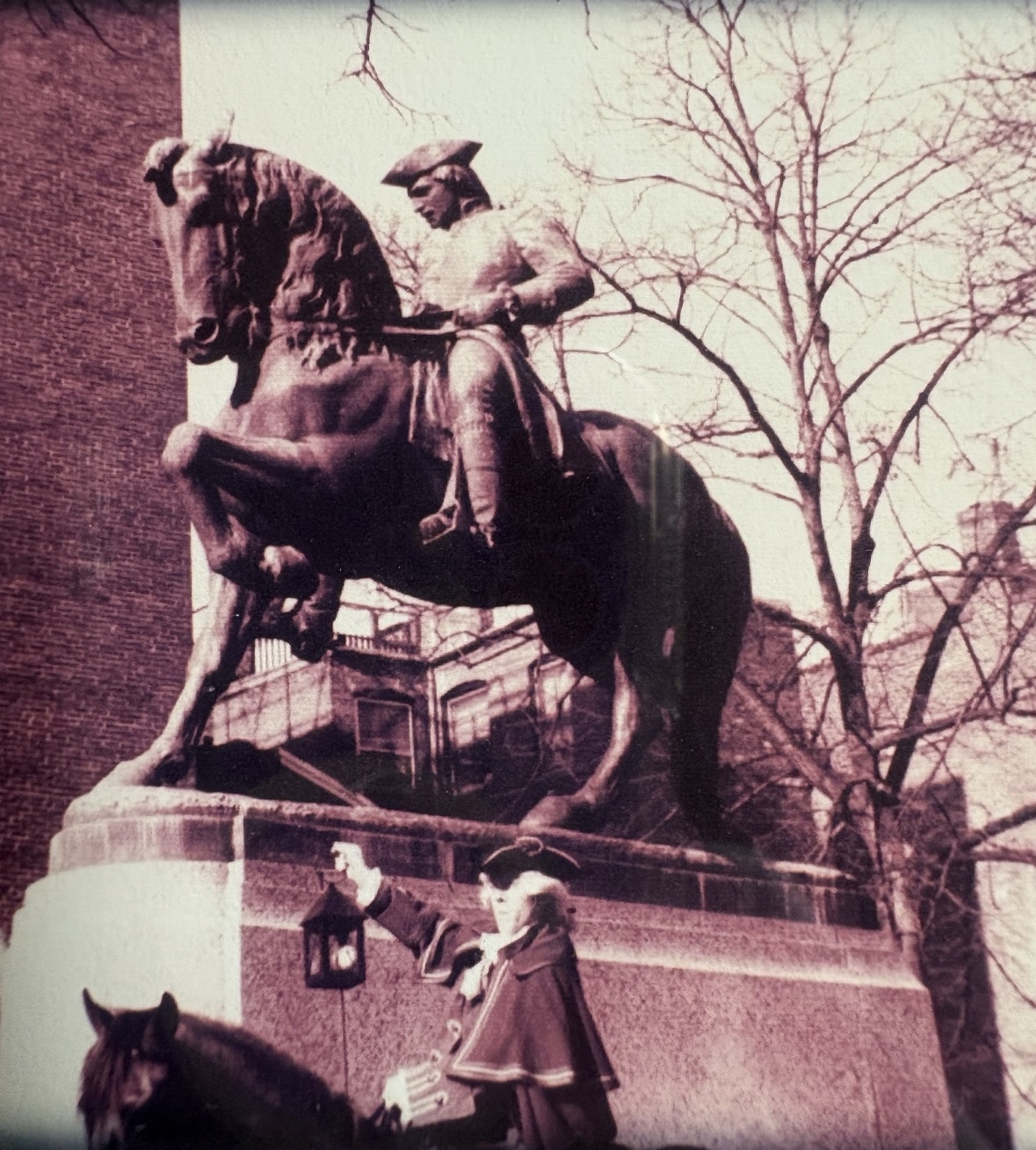
The Peterson brothers had daily, non-Phillies-related stops on their Paul Revere-style tour.
They’d have a quick meal, put the horses in a barn, spend the night in a motel, and do it all over again the next morning. Together, the brothers averaged about 20-30 miles a day, visiting 14 cities along their route.
By April 9, everyone had had enough. The “up-down” motion of riding 318 miles on a trot was uncomfortable; K.C. compared it to “calisthenics.”
Horseshoes were falling offhooves, clothes were dirty, the motor home was damaged (because its driver, another Great Adventure employee, accidentally crashed it) and the brothers were physically exhausted.
But they were only one stop away from Philadelphia. Their concrete promised land was near.
A baseball delivered, a promise kept
Unsurprisingly, Giles planned a 45-minute pregame affair around America’s founding.
The Mummers put on a Revolutionary War-themed show. Plymouth Whitemarsh High School’s marching band performed a song, and the Philadelphia Boys Choir sang the national anthem.
Russ Peterson (pictured) and brother K.C. finally reached their destination at The Vet after an arduous 318-mile journey.
Then came Revere. Just before first pitch, Russ brought his horse up to the right field corner. A stadium worker opened the gate, as the re-enactor trotted onto the AstroTurf, doing a lap — with some trick riding — around the entire field.
He handed the ball to “Rocket Man,” who took off for the mound, where Roberts was waiting. The Phillies offered the brothers tickets to that day’s game against the Pirates, but after the ceremony was done, they packed their horses, changed out of their costumes, and left.
Russ arrived to his trailer in Jackson Township not long after, with bags of memorabilia in hand. He was a quiet man by nature, but on this night, he couldn’t stop talking.
“You could hear the excitement in his voice, about that rocket man flying through there,” ReNee said. “That was probably the thing that he enjoyed the most. He thought it was pretty amazing.”
Peterson continued to live an eventful life. He and ReNee moved back to Nebraska later that year and started a construction business in 1993. They raised cattle of their own, and shoed horses, and did some projects for Habitat for Humanity.
But the trick rider always took pride in his two-week, 318-mile trip. So much so, that when Russ died in a work-related accident in 2015, it got a mention in his obituary.
His family noted how honored he was to be a part of the Bicentennial, in the very city where the Declaration of Independence was signed. Yet nothing compared to the events of the following day.
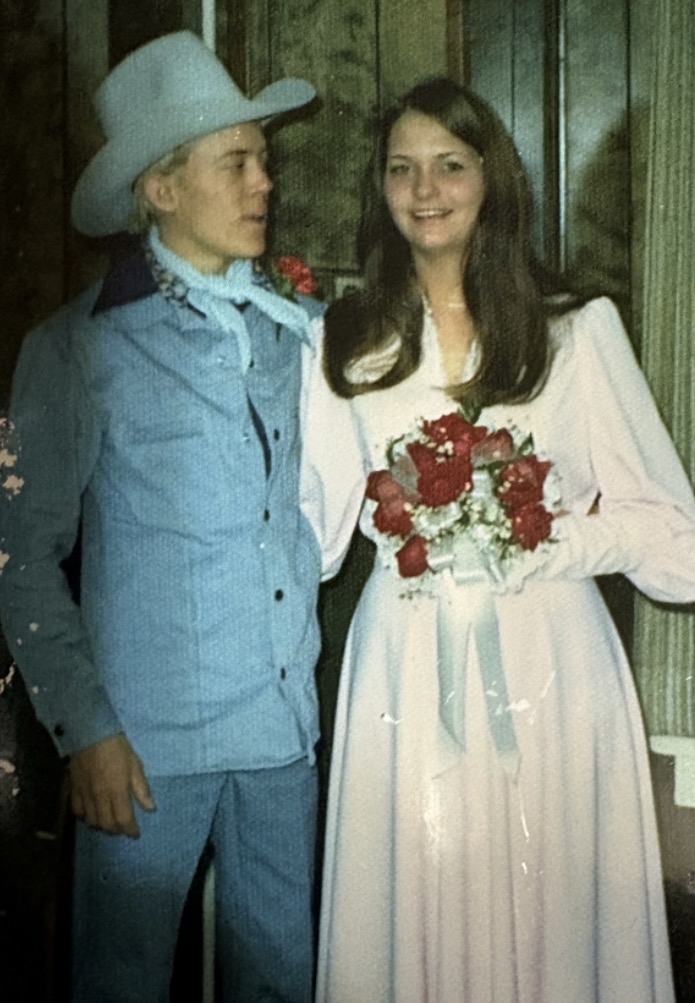
“Perhaps the most important of his activities while in the area,” the notice read, “involved marrying the love of his life, ReNee A. Dancer, in Howell Township, New Jersey, on April 11th.”
Russ Peterson and his wife, ReNee, on their wedding day in 1976.
In 1852 Frederick Douglass famously asked, “What to the Slave is the Fourth of July?” Now on the cusp of the nation’s 250th birthday, some Philadelphians still question if the holiday is meant for them.
Many Black and Indigenous people say they have complicated feelings about celebrating Independence Day, when the holiday did not represent independence or freedom for their ancestors. And their fight for their rights continues in 2026.
When the nation declared its independence,“people like me, we not only did not have rights, but we were literally relegated [to] property,” said Timothy Welbeck, professor and director of the Center for Anti-Racism at Temple University. “So much of this nation’s history has been marked by the struggle for Black people to have a modicum of liberty and equity.”
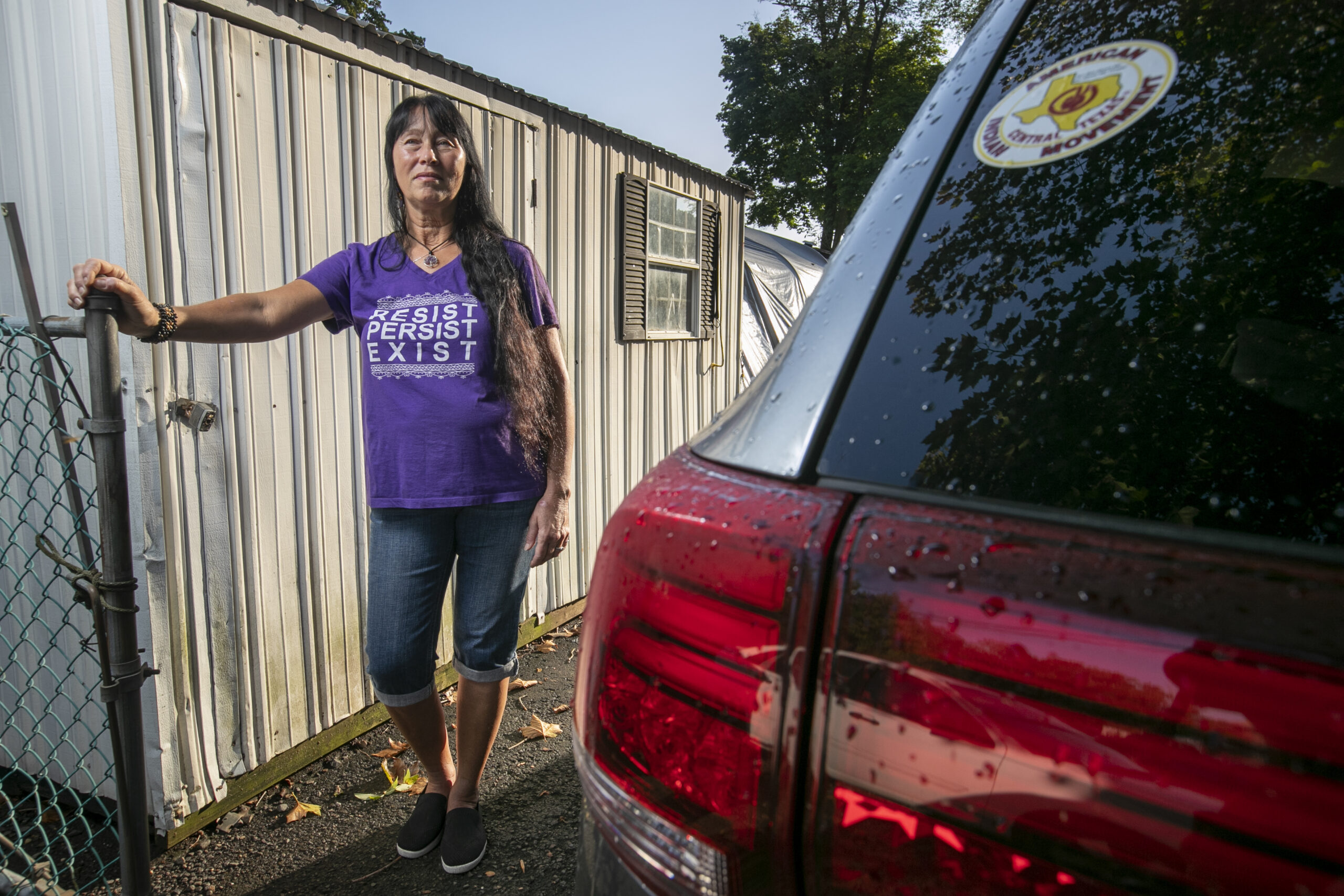
“I belong here. But I certainly don’t take part in their celebration,” said Donna Fann-Boyle, a Bucks County resident of Choctaw and Cherokee descent who led the fight to change the name of Neshaminy High School’s mascot.
Donna Fann-Boyle of Langhorne, PA., is a leader in CNA, the Coalition of Natives and Allies, and has been fighting for years to make the Neshaminy school district drop it’s nickname. Photograph taken at her home on Friday morning September 4, 2020.
She said anytime she hears mention of the semiquincentennial celebration on the TV or radio, she reminds herself that this land and its Indigenous people were here long before 250 years ago.
“I think it’s very hypocritical … only certain people have those freedoms,” she said of the holiday.
It took nearly another hundred years after the Declaration of Independence was signed for slavery to end, and another hundred after that for African Americans to have a say in their nation with the passage of the Civil Rights and Voting Rights acts. And when the new nation announced itself July 4, 1776, Native Americans had already been living on the land for hundreds of years, but were still forcibly displaced from their homes and laterconfined to reservations.
For some, the holiday is not a day to ignore, but a tool. The Rev. Carolyn Cavaness, the pastor of Mother Bethel AME Church in Society Hill, said the Fourth of July is an opportunity to talk about the nation’s contradictions and to argue that Black people should have always been included in its vision of independence.
“We have responsibility to lift up these truths,” she said.
“There is a piece of the brain that says, ‘Well you should sit out.’ But then I also know that when I think about my ancestors, and when I think about the institution that I am called to serve… we have to be out front to show and to celebrate that people of African descent have always been a part of this country,” she said.
In front of a wall of portraits of former bishops, Rev. Carolyn Cavaness greets members of the congregation during a fellowship reception Sunday, Nov. 10, 2024 the day after historic Mother Bethel A.M.E Church appointed her the first woman pastor in its 230-year history.
Freedom not realized
When he was growing up in South Dakota, the Fourth of July was mostly just like any other day for Eugene Black Crow. It wasn’t something he or his community ever celebrated, because it wasn’t their holiday. Black Crow, who is of Oglala Lakota descent, learned more about the country’s Independence Day when he was sent off to a boarding school for Native American children.
“We got beaten into speaking English,” Black Crow, 70, said, havingonly spoken Lakota before then. At the boarding school, he saw Fourth of July fireworks for the first time. He and his classmates learned to recite the Pledge of Allegiance, though they didn’t really understand what the words meant until years later.
Black Crow now lives in the Franklinville section, and over the years, he said he’s noticed more Native Americans celebrating the holiday, even in his South Dakota hometown. He used to take his children to watch fireworks when they were young, but there’s been a dissonant feeling to the experience.
“It was always in the back of my mind — why are we Natives celebrating this?” he said.
Even in the 18th and 19th centuries, people of color made the Fourth of July into a day of protest, and celebrated alternative independence days from other nations instead, said Morgan Lloyd, programming coordinator for the African American Museum in Philadelphia. She believes today, the holiday is a useful moment to consider and reflect on the whole history of the United States, where Black and Indigenous people have helped shape the country despite their exclusion from its loftiest ideals of freedom.
“It is for me, a conversation starter around what does independence and what does full recognition look like,” she said.
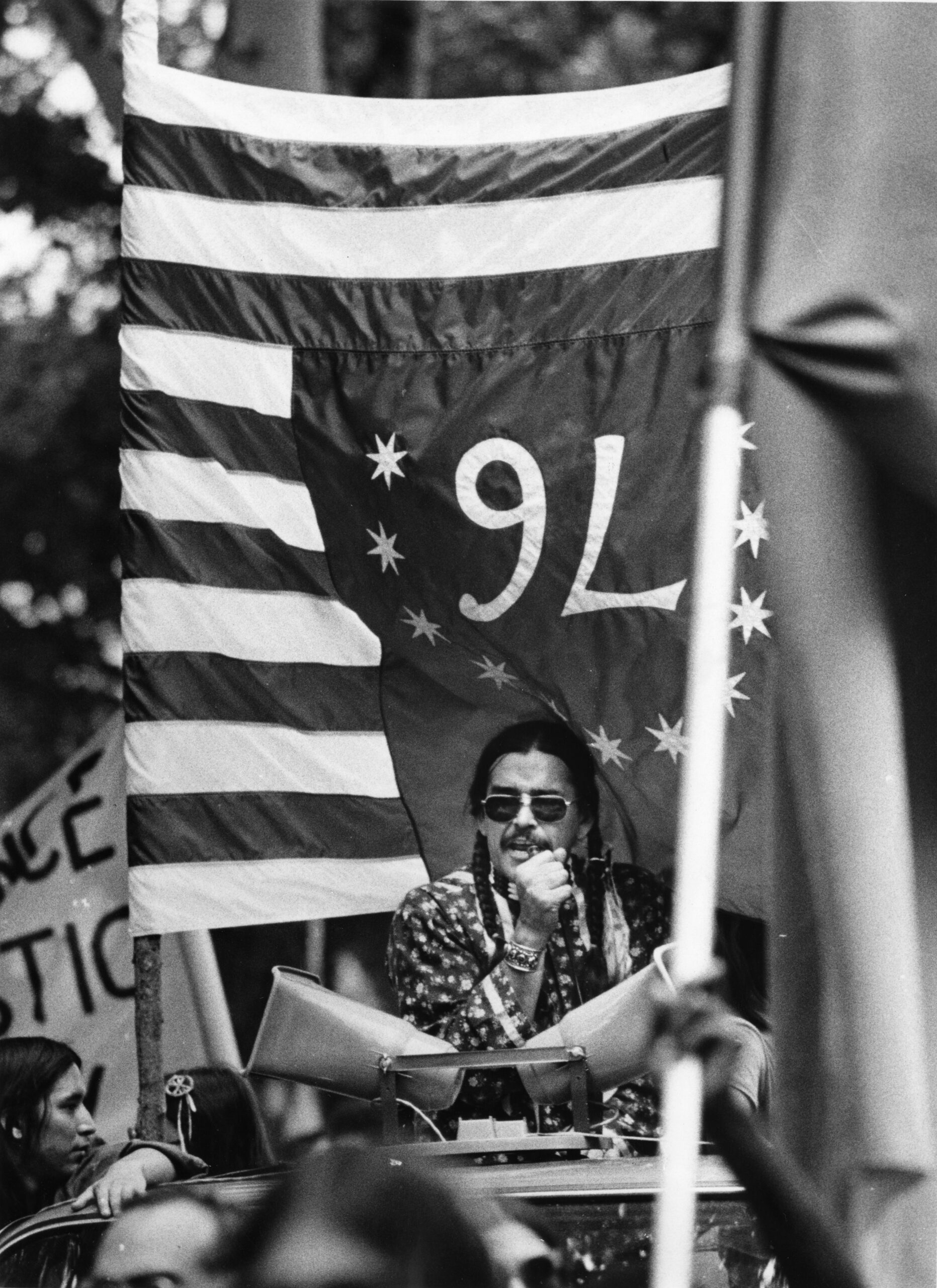
A group of native Americans lead a ‘July the Fourth Coalition’ protest parade at 33rd. & Diamond streets in Philadelphia, on July 4, 1976.
Cavaness thinks about the holiday in a similarly inclusive way, andsaid she plans to speak with her congregation about the nation’s 250th anniversary, representing how freedom is unfinished business.
“There is still freedom not realized. And every generation goes through this notion of what does freedom look like, who is left out, who needs to be brought in,” she said.
From his North Philly home, Black Crow teaches students how to speak Lakota over Zoom. His Lakhota Woglakapo Project is intended to ensure the mostly spoken language doesn’t get lost to time. He plans to visit his old reservation this fall, so he can record other Lakota speakers for posterity.
He attended a pro-immigration rally in Philadelphia this week, just a few days after the U.S. Supreme Court ruled President DonaldTrump‘s administration could revoke protected status for Haitian and Syrian immigrants. Black Crow spoke to the crowd filled with immigrants, expressing his solidarity.
Months before Philadelphia was set to celebrate the United States’ 200th birthday in 1976, Mayor Frank Rizzo was worried.
The city, he said, stood to face massive unrest and potential violence during the Bicentennial parade on July 4. There were, he believed, cadres of radical leftists plotting to disrupt what should be a day of jubilance two centuries after the country’s founding in the place where it was born.
They would come in droves from around the nation, Rizzo said. And to combat them, Philadelphia authorities didn’t just need to be vigilant — they needed thousands of federal troops to patrol the streets and quell the impending chaos.
Those troops, despite Rizzo pursuing their deployment, never arrived. Nor did the bedlam he feared would come. And neither did the throngs of tourists the city expected for the Bicentennial, at least in part because of Rizzo’s warnings.
The city, did, however, get plenty of leftist protesters — tens of thousands who held large, peaceful demonstrations in North Philadelphia on Independence Day of 1976. No blood flowed in the streets, and Rizzo, the man who claimed it would, that year became the first mayor in Philadelphia’s history to face a recall effort.
Here is how The Inquirer and Daily News covered it:
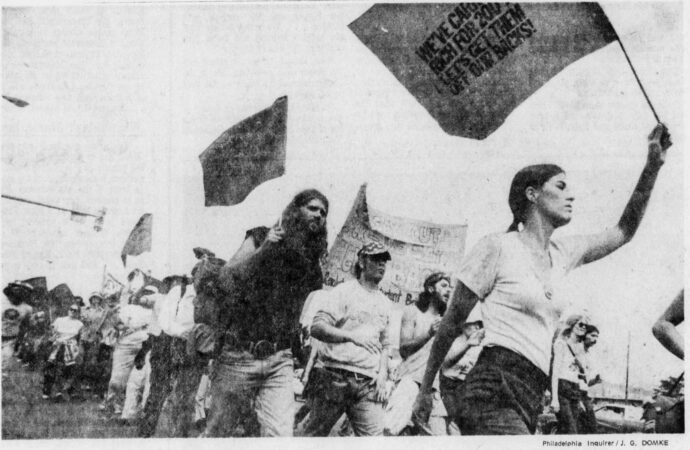
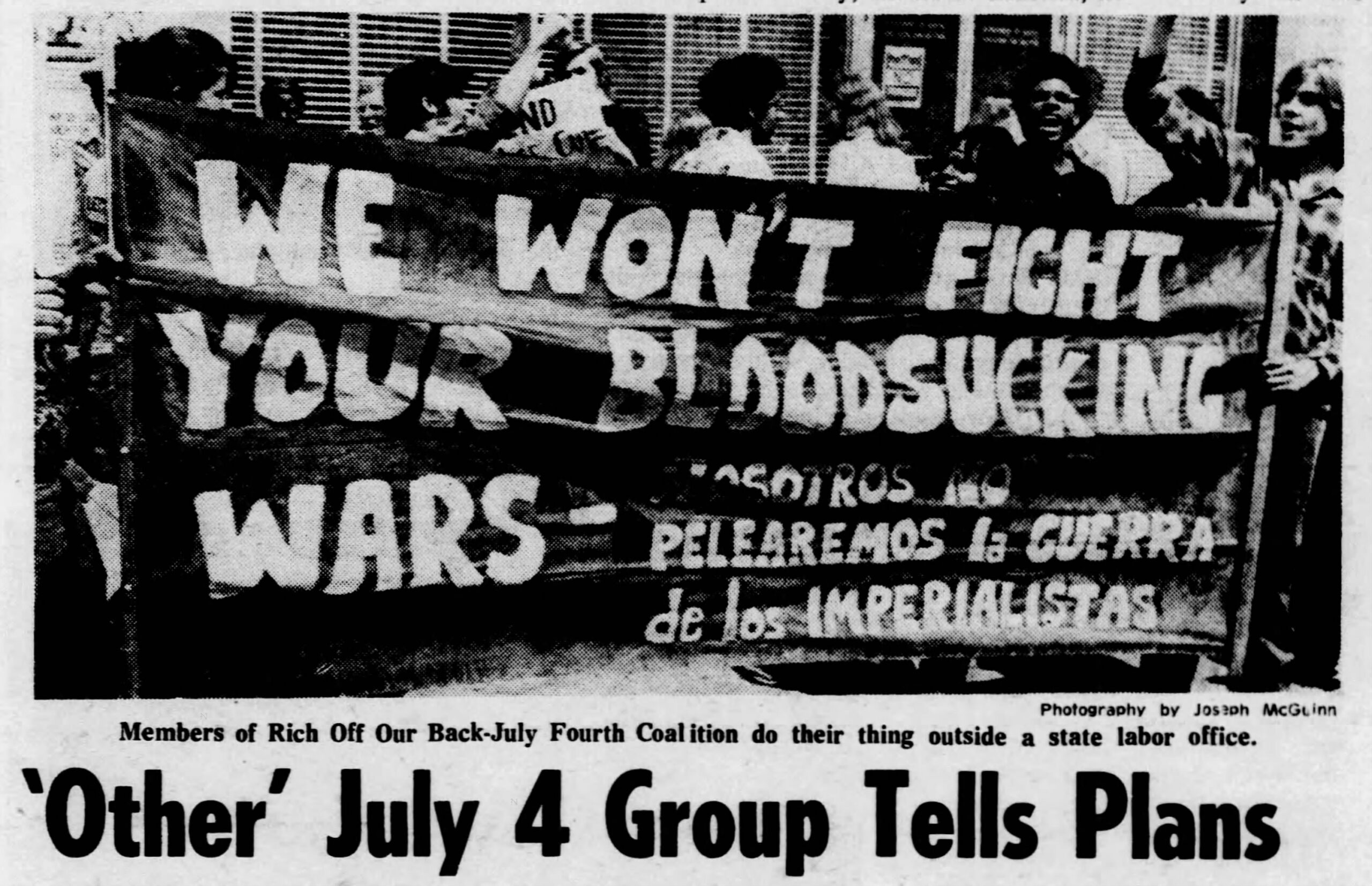
Members of Rich Off Our Backs demonstate outside a state employment office in Germantown in June 1976, as shown in an issue of the Daily News from the time.
Two groups plan protests
Rizzo’s perceived threat of chaos came from two similarly named, yet totally distinct, groups that planned demonstrations for Independence Day. Those were the July 4 Coalition and the Rich Off Our Backs-July 4th Coalition, two organizations that consisted largely of anti-war, socialist civil rights activists who hoped to offer some counter-programming for the holiday.
The July 4 Coalition was larger, with some 100 subgroups making up its ranks, which it claimed would bring 60,000 marchers to Philadelphia for the Bicentennial. Rich Off Our Backs, meanwhile, expected only 5,000 people to show up for its Independence Day demonstration, but was the larger concern for the Rizzo administration because it was considered the more radical group.
Ahead of the holiday, the city had reached an agreement with the July 4 Coalition, which planned to protest dozens of social ills ranging from racism and sexism to unemployment and military spending. Its demonstration would take place in North Philadelphia, miles away from the main festivities in Center City.
Rich Off Our Backs, meanwhile, wanted to hold its demonstration in Center City and was believed to be “dominated by a tiny, one-year-old Marxist splinter called the Revolutionary Communist Party,” The Inquirer reported at the time. The group, reports said, planned to focus on unemployment.
Those plans would have brought the group into direct conflict with the city’s Bicentennial activities, including Philadelphia’s official parade. But after a weekslong court battle, Rich Off Our Backs was denied a permit to parade in Center City, and agreed to an alternate route that would take the march through North Philly.
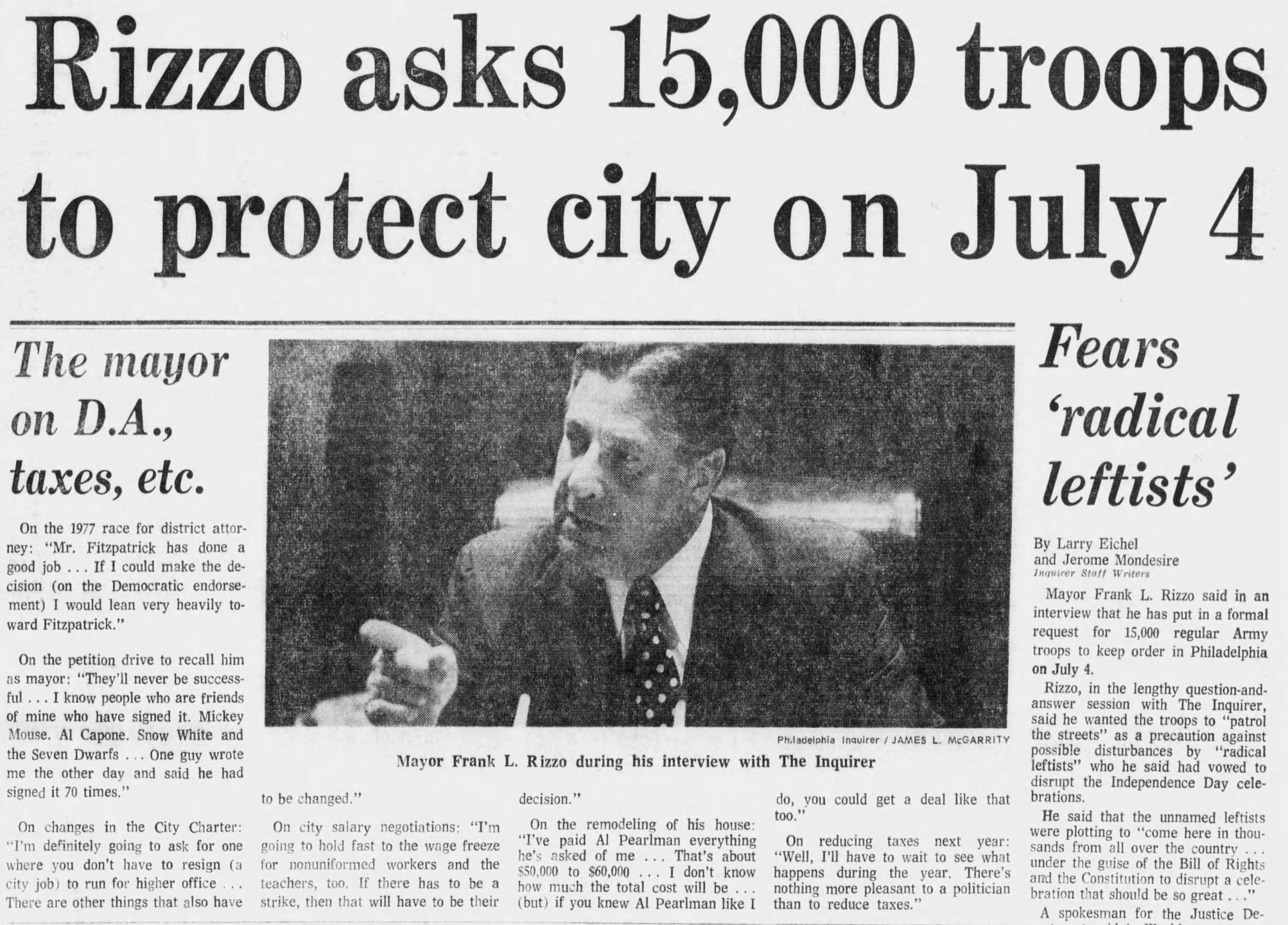
The front page of the May 30, 1976, Inquirer details Mayor Frank Rizzo’s request for 15,000 federal troops to protect Philadelphia on Independence Day that year.
Rizzo’s call for federal troops
In late May 1976, Rizzo told The Inquirer he would call for 15,000 Army troops to keep order in Philadelphia due to concerns over the planned protests and potential violence.
Federal troops, Rizzo said, would supplement the city’s police force, which would be “spread too thin” due to the number of planned festivities on July 4. Bolstering the police, he added would not included armored vehicles or heavily armed forces, but would consist merely of “bodies” carrying sidearms to quell dissent.
Deployment of federal troops, The Inquirer reported, would require approval from then-Gov. Milton J. Shapp, who supported the effort. And the FBI’s Philadelphia office said it was unaware of any federal investigation into the matter at the time of Rizzo’s announcement.
Both the July 4 Coalition and Rich Off Our Backs called Rizzo’s move “fascist,” and insisted demonstrations would be peaceful. One activist, the Rev. David Gracie, known for anti-Vietnam War protests in the 1960s, said Rizzo’s request harkened back to the city’s treatment of anti-war demonstrators.
And in late June, the Justice Department denied Rizzo’s call for troops, saying it failed to find substantive evidence of the radical activity the mayor feared would occur. There was, the FBI said, no “hard core” indication of impending terroristic activity, and no additional enforcement efforts were necessary.
A group of Native Americans lead a “July the Fourth Coalition” protest parade at 33rd and Diamond Streets in Philadelphia, on July 4, 1976.
The day of
On Independence Day 1976, both groups marched through North Philadelphia without incident, The Inquirer reported at the time. There was not a single arrest or reported disturbance, with the only snafu being late starts to both marches.
Rich Off Our Backs, despite the fervor over its planned activities, managed to attract about 4,000 participants, all of whom marched east along Girard Avenue from Broad Street before convening in Norris Square Park in Kensington. The July 4 Coalition held an 18-block demonstration along Lehigh Avenue ahead of a rally at 33rd and Oxford Streets in Fairmount Park.
The coalition claimed to have drawn some 58,000 protesters, but Philadelphia Police, estimated the crowd at about 25,000 people, and observers pegged it at half that size.
“We did it,” Rich Off Our Backs spokesperson Nick Unger said in 1976. “Thousands of working people walking through the city for miles where you couldn’t see the front of the march or the rear of the march.”
Neither demonstration, meanwhile, resulted in any of the bloodshed, destruction, or disruption the Rizzo administration advertised. In fact, The Inquirer reported, both protests “drew little response from onlookers” along their routes, and the police who were deployed — clad in riot gear — were ultimately not needed.
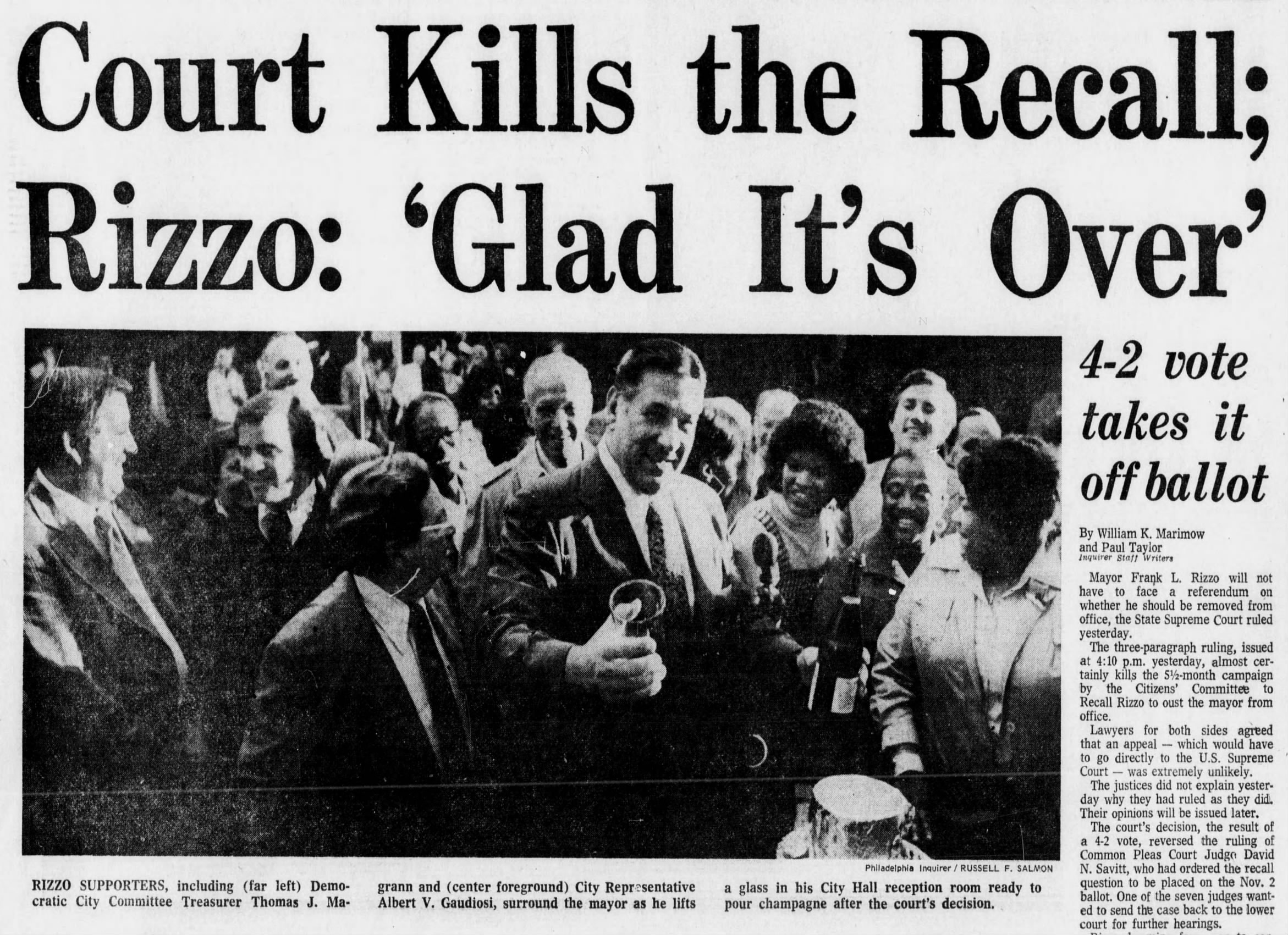
An Oct. 1, 1976 edition of The Inquirer details Mayor Frank Rizzo’s reaction to the defeat of the recall effort that year.
Rizzo’s recall
Rizzo’s treatment of the July 4 protests did not directly lead to efforts to recall him, but it certainly emboldened his critics. The mayor seemed to realize the error at the time, with Rizzo rarely showing his face publicly around Independence Day — a strategy largely believed to have been instituted by his top advisers.
In fact, efforts to recall Rizzo stretched back to April 1976, weeks before his pursuit of federal troops ever surfaced. The recall move was largely due to Philadelphia’s flagging economy, as well as tax increases and a city budget deficit.
An organization known as the Citizens Committee to Recall Rizzo organized a petition, garnering some 145,000 signatures by mid-April 1976. That figured swelled to more than 200,000 signatures following the Bicentennial, but only about 89,000 were found to be valid.
In September, a Common Pleas Court judge found that Rizzo would need to face a recall — a decision later struck down by the Pennsylvania Supreme Court. Rizzo, as a result, was never officially recalled, and the summer of 1976 would be remembered as a “Buycentennial that wouldn’t sell” amid a “call for federal troopers that neither came nor were needed,” The Inquirer reported.
And by late 1976, Rizzo expressed relief that the situation seemed to be resolved.
“I never had any doubts that it would rule in my favor. The law is on my side,” he told The Inquirer. “I’m glad it’s all over.”
After decades of dashed grand plans, months of unmeetable expectations, and weeks of fearmongering over political violence that never materialized, Philadelphia had little chance to live up to the hype that the Bicentennial carried with it in 1976.
And in the end, we didn’t. Not by a long shot.
Up to 20 million people were projected to travel to the city for the United States’ 200th birthday throughout the year — but in reality, only about 7 million came. We were supposed to build a massive suspended platform at 30th Street Station to house an international exposition, and never got either.
And instead of receiving due recognition as the birthplace of American democracy, we were given Legionnaires’ disease.
Understandably, the result in ’76 was a level of municipal malaise that rivals any since. We threw a party all summer, we thought, and no one came. No one liked us, but we did care — a lot.
Now, with five decades of hindsight, and another national anniversary this summer, perhaps the Bicentennial wasn’t as bad as Philadelphians say it was. It didn’t go off exactly as expected, sure, but maybe it wasn’t the abject failure we historically have believed it to be.
After all, in some ways, it did give us some of the Philadelphia we know today. Here is how the Inquirer and Daily News covered it.
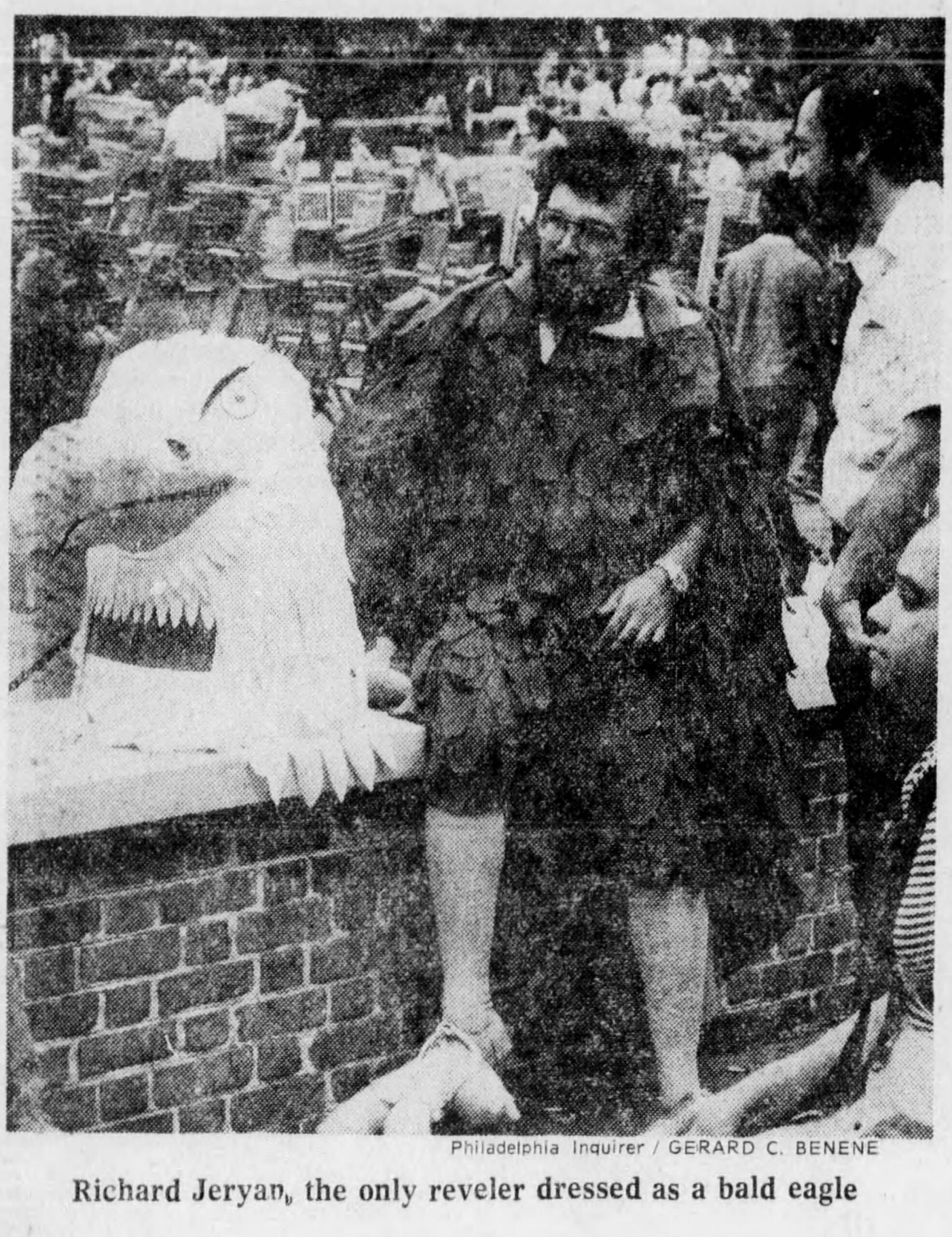
An Independence reveler celebrates the holiday in 1976 dressed as a bald eagle, as shown in an Inquirer photo from the time.
False starts and unrealized projects
Philly had big dreams for the Bicentennial as early as the 1950s, when planning tied the occasion to an international exposition that would bring travelers from all over the world. Some proposals ran into the neighborhood of $2 billion and had the exotic and impractical vision to match the price.
Among them was an $8 million plan for a flower-focused theme park in Fairmount Park known as “Philaflora” that was quickly abandoned.
Later, city planners proposed gimmicks like a large elevated platform over 30th Street Station that was to stretch more than four miles to West Philadelphia, the construction of concrete islands in the Delaware River, and converting swampland to solid ground in Eastwick to host the exposition.
None of these grand plans came to fruition. And by 1972, the entire idea for an international exposition was dead, having been “scotched” by President Richard Nixon, The Inquirer reported at the time. The city’s Bicentennial corporation, Philadelphia ’76 Inc., however held fast to plans for a large celebration, but was left with relatively little time to plan one — and no idea of what it would look like.
The result was a series of what The Inquirer in 1976 called “bread and circuses” efforts — essentially parades around town, plus a number of events and attractions on the Benjamin Franklin Parkway throughout the summer. These efforts, The Inquirer reported, were designed to give the illusion of tourist activity and interest, but without all the guff of actual planning and logistics.
And while we did have a Bicentennial celebration, it sadly did not “live up to 20 years of empty visions,” The Inquirer reported. And only months after July 4, 1976, we were left with “this feeling of promises unkept, hopes unfulfilled,” reports from the time said.
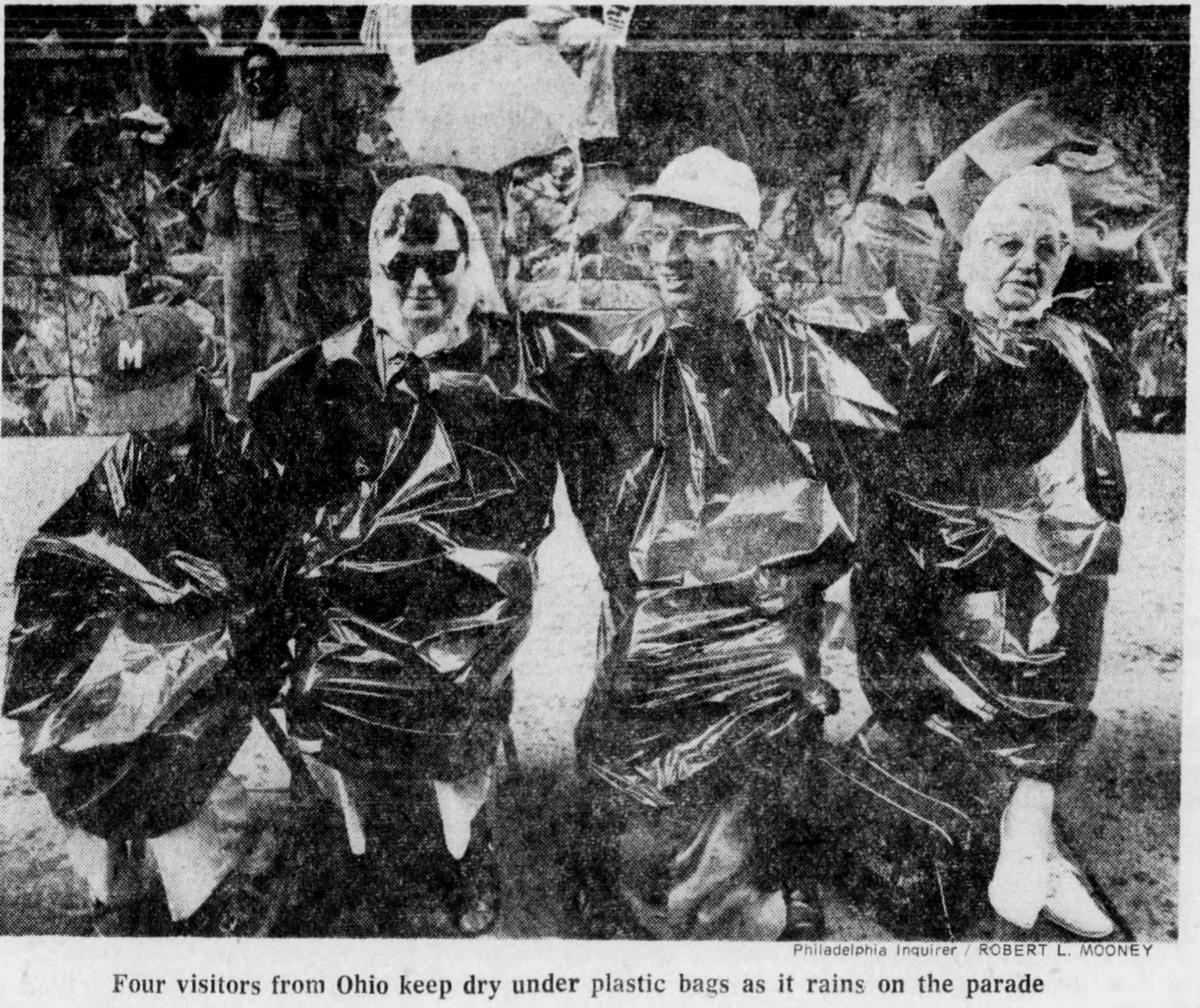
July 4, 1976 celebrants stave off the day’s rain under plastic bags during the day’s parade, as shown in an Inquirer photo from the time.
An under-attended party
Early estimates for tourism in Philadelphia in 1976 predicted 14 million to 20 million visitors for the year — figures that came from Sindlinger & Co., a Swarthmore-based research firm the city hired. The company conducted nationwide polling to determine the number of Americans who planned to visit Philadelphia in 1976.
They were way off. By October ’76, roughly 7 million visitors had come, reports from the time indicate. Some 2 million toured the city on July 4 alone, with the rest coming amid a myriad of conventions throughout the rest of the year. According to reports from the time, tourism numbers didn’t pick up until post-Independence Day — a welcome development for hotel operators, who expected a sell-out season that never arrived.
But that doesn’t mean Philadelphia fared poorly.
At least compared to 1975. As of December 1976, Philadelphia showed a 300% increase in visitors over the year before, The Inquirer reported — a proportion that placed us “better than any other American city in attracting Bicentennial visitors.”
The next closest city was Boston, which saw a mere 68% increase in tourism. No one else even came close.
In fact, no one really did well nationwide. According to a Christian Science Monitor article from the time, every city that expected an influx of Bicentennial tourists — Philly, Boston, D.C., and the like — said tourism numbers were way below predictions. Experts attributed that to the country’s economic state.
But tourism travel in the United States was high for the year, even though the Bicentennial boom never really arrived. The issue, experts said at the time, was that too much was expected. As Discover America Travel Organizations president William D. Toohey said at the time, the travel industry would have otherwise been “well-pleased.”
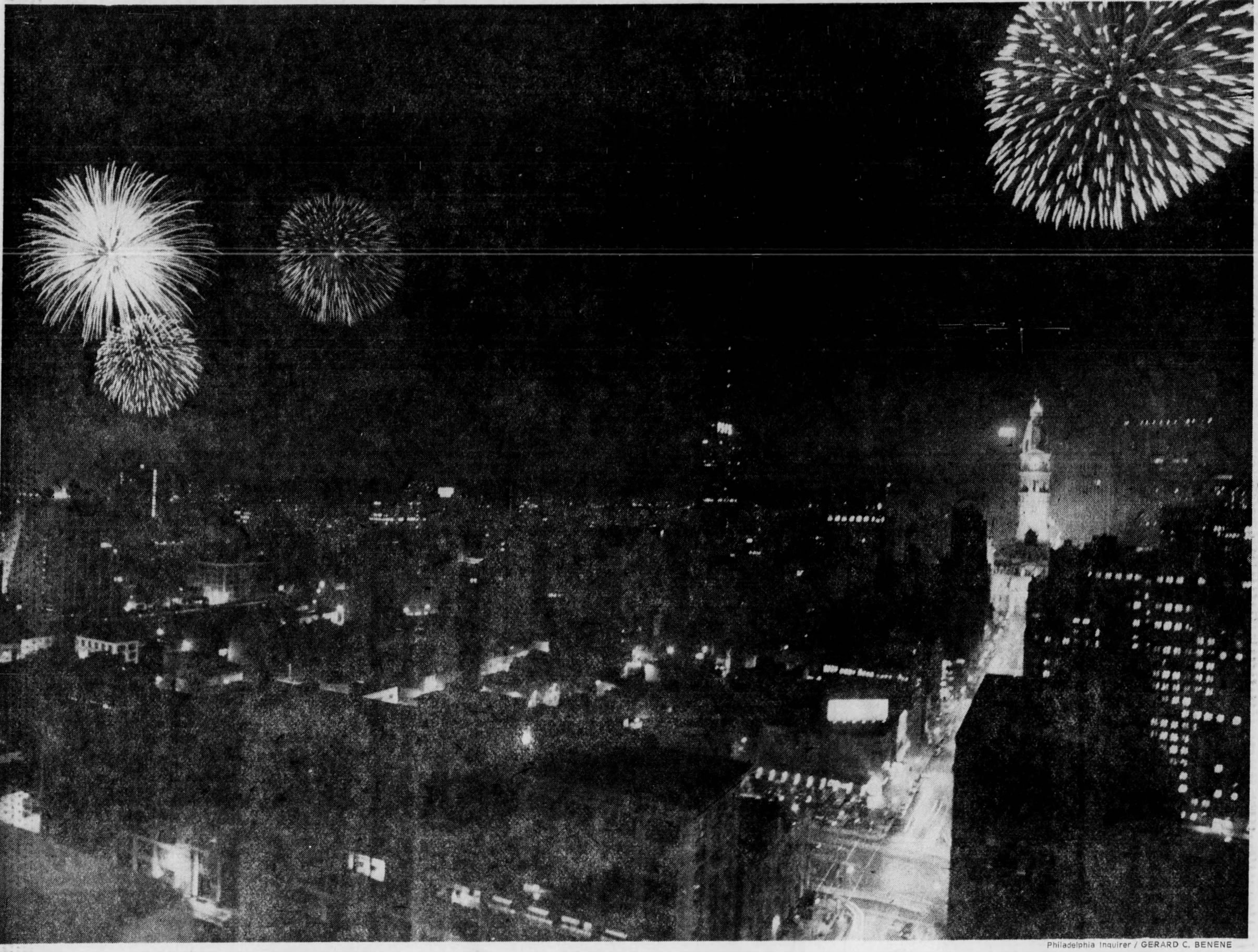
Fireworks over Philadelphia on July 4, 1976, as shown in an Inquirer article from the time.
Why Philly fell short
Philadelphia, however, was not blameless in its failure in 1976.
Chief among the factors was Mayor Frank Rizzo’s insistence that political violence would erupt on July 4, thanks to a contingent of protesters who planned to demonstrate in North Philadelphia — miles away from the day’s primary celebrations in Center City.
Rizzo was so worried that he called for thousands of federal troops to be earmarked to protect the city — a request that was ultimately not granted, primarily because investigators were unable to determine that a credible threat ever existed. And yet, when the holiday rolled around, the damage was already done.
By late June 1976, some 30,000 participants scheduled for the July 4 parade had canceled their trips to Philly, with most citing fear of political violence as the reason for backing out, reports from the time indicate. Rizzo had been essentially telling tourists not to come, and they largely listened.
Rizzo, however, wasn’t our only worry. In July, a slowdown by municipal workers caused trash to pile up in the streets for weeks. Workers refused to take overtime hours pending contract negotiations for a modest wage increase, and the dispute was not settled until early August.
And then, there was the Legionnaires’ Disease outbreak — a famous, but sometimes overlooked, factor impacting tourism for the year. The late-July outbreak severely impacted tourism due to concerns over potential illness, but didn’t entirely crush the influx of visitors.
“It was very clear that the Legionnaire’s Disease had a very sharp impact on tourism,” Philadelphia ’76 Inc. head William Rafsky said at the time.
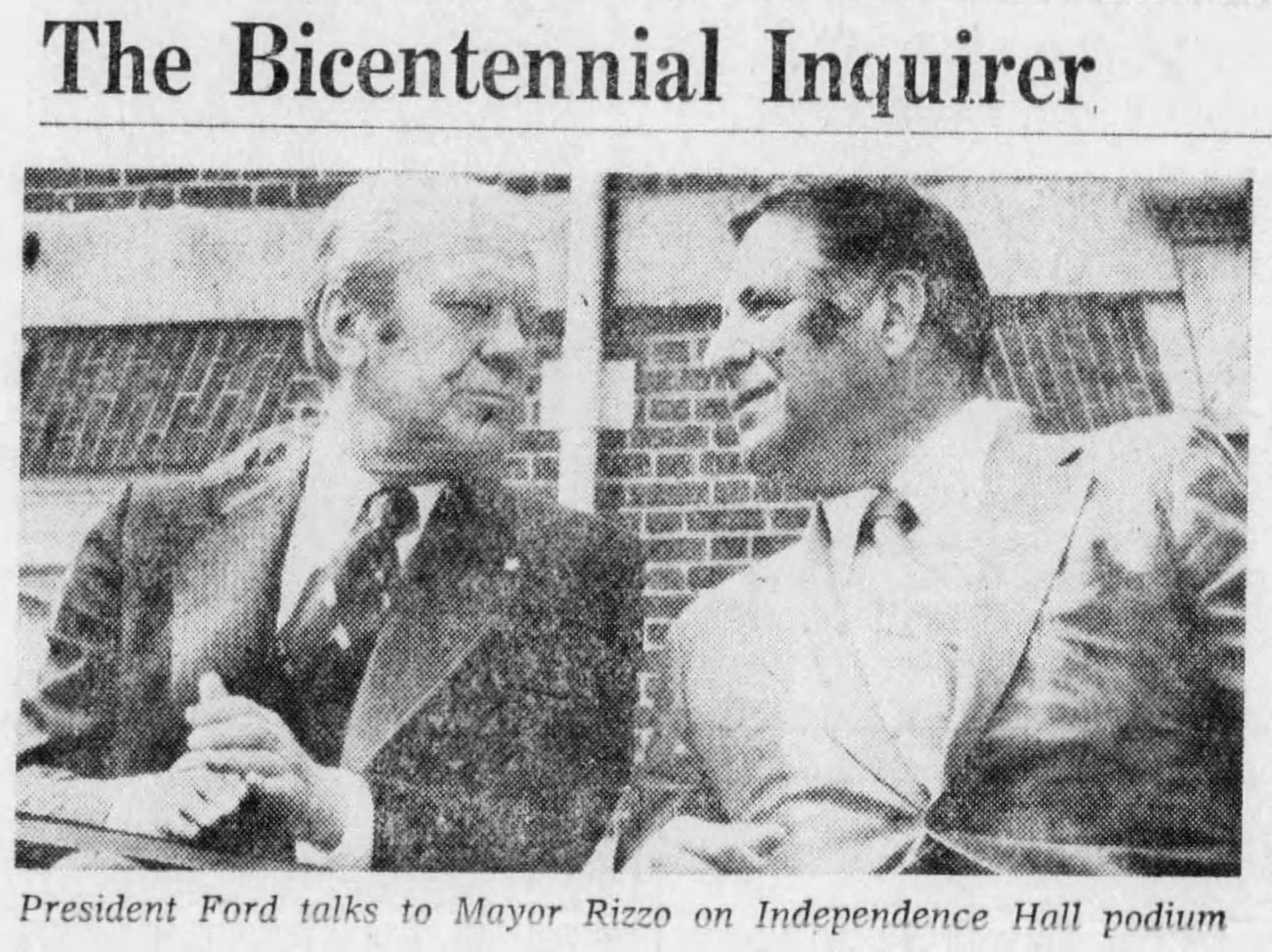
President Gerald Ford talks with Mayor Frank Rizzo at Independence Hall on July 4, 1976.
Benefits abound
Though the Bicentennial may have been something of a tourism bust, we didn’t walk away with nothing. In some ways, the city was enduringly altered — Philadelphia received an estimated $165 million in improvements for the country’s 200th birthday, a good bit of which was federal money that was not likely to be spent otherwise, reports from the time indicate.
The National Park Service, for example, spent an estimated $30 million on what we know today as Independence National Historical Park, The Inquirer reported. Those federal dollars bought a new Liberty Bell pavilion, extensive repairs and improvements to historical buildings, the construction of City Tavern and the Graff House, and the creation of Franklin Court.
Other improvements were also palpable. A number of subway stations were painted and rebuilt, institutions like the Philadelphia Museum of Art were improved, and places like the Mummers Museum and the Afro-American Museum (now the African-American Museum of Philadelphia) were established. Roughly 10,000 trees were planted in Fairmount Park.
These lasting municipal improvements had an impact, even if the Bicentennial itself did not live up to contemporary expectations. By the time 1976 hit, virtually nothing could quell the public’s want for advancement in light of the country’s 200th birthday. And so, it was deemed a failure.
But now, half a century later, perhaps we are overcoming that disappointment, or are at least willing to see what comes next — after all, the United States is 250 years old in 2026. And though tourism expectations for this year have been quieter, the city still stands, with hoards of visitors now reminiscent of our Bicentennial year.
“The Bicentennial Year will be a great year for the United States,” Rizzo said in 1976. “And particularly for Philadelphia, where our nation was born.”
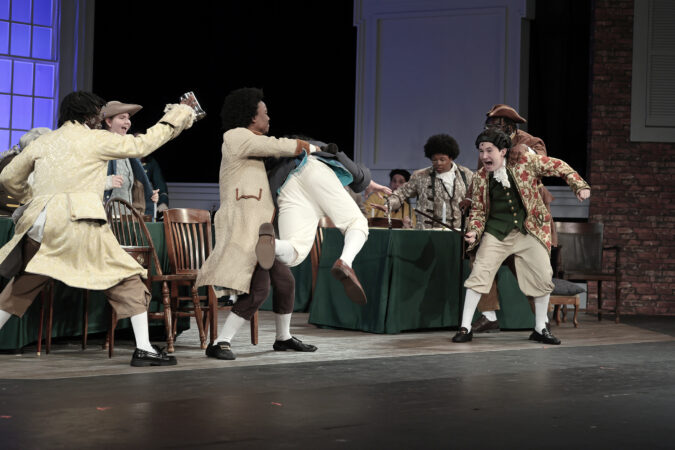
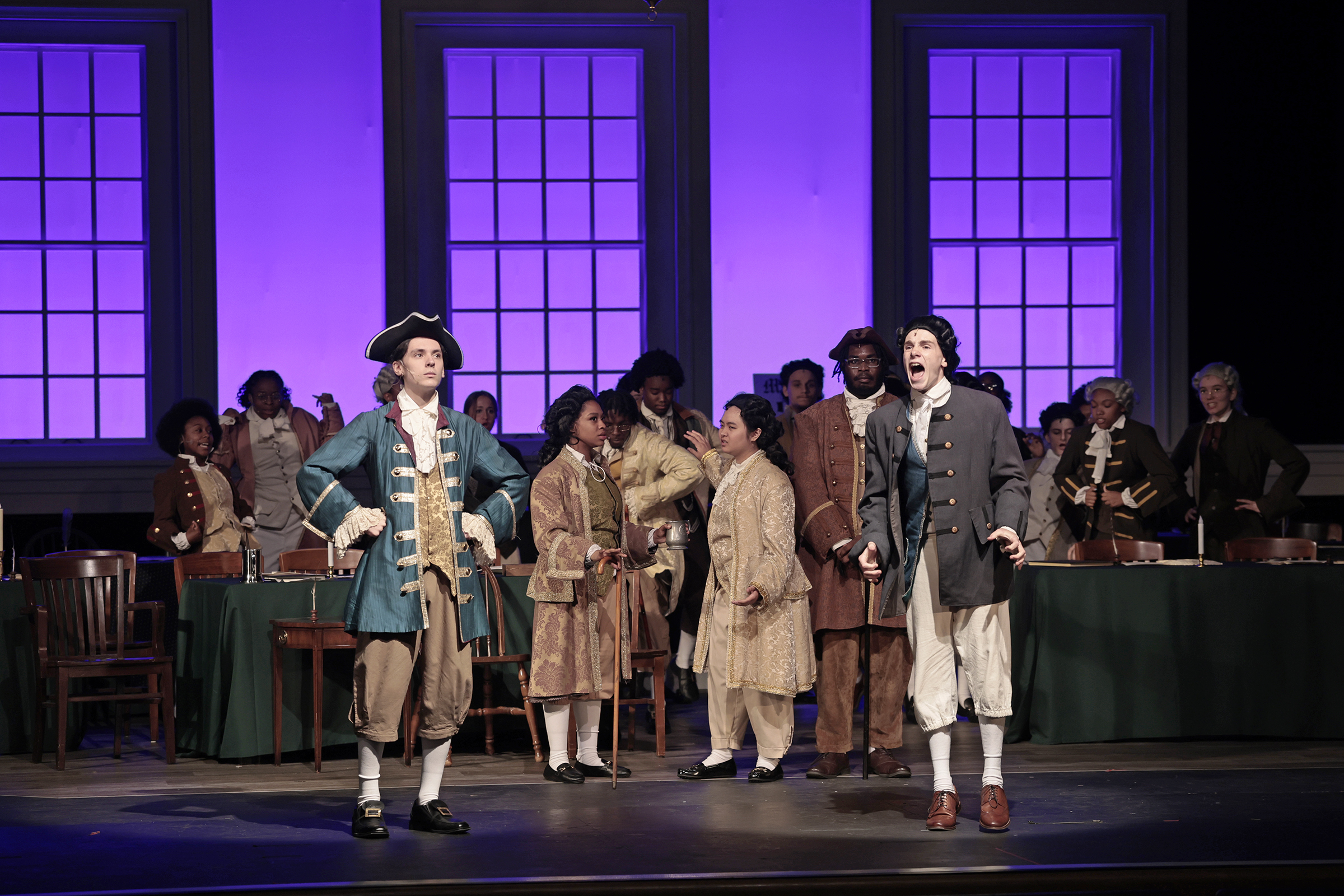
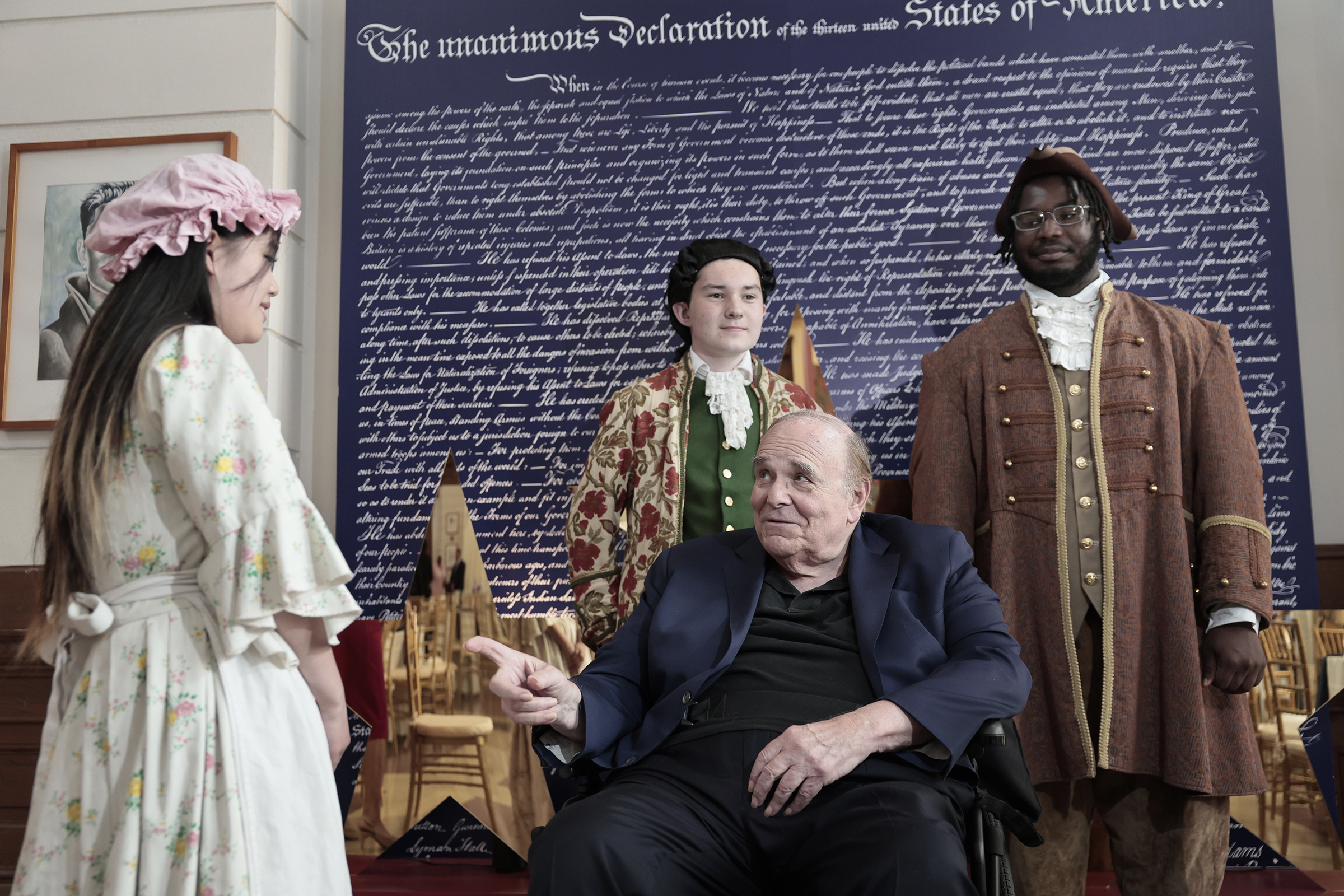
Seventy-five Philadelphia students thought the stakes were high when they debuted 1776: The Musical in front of a crowd that included former President Joe Biden, former Pennsylvania Gov. Ed Rendell, and Mayor Cherelle L. Parker at Philadelphia’s High School for Creative and Performing Arts last week.
Then came the hate — racist, bigoted comments on social media posts about the production, which was dreamed up by Rendell, who wanted students to learn about the “sacrifices and compromises” that went into building the nation as it celebrates its 250th birthday.
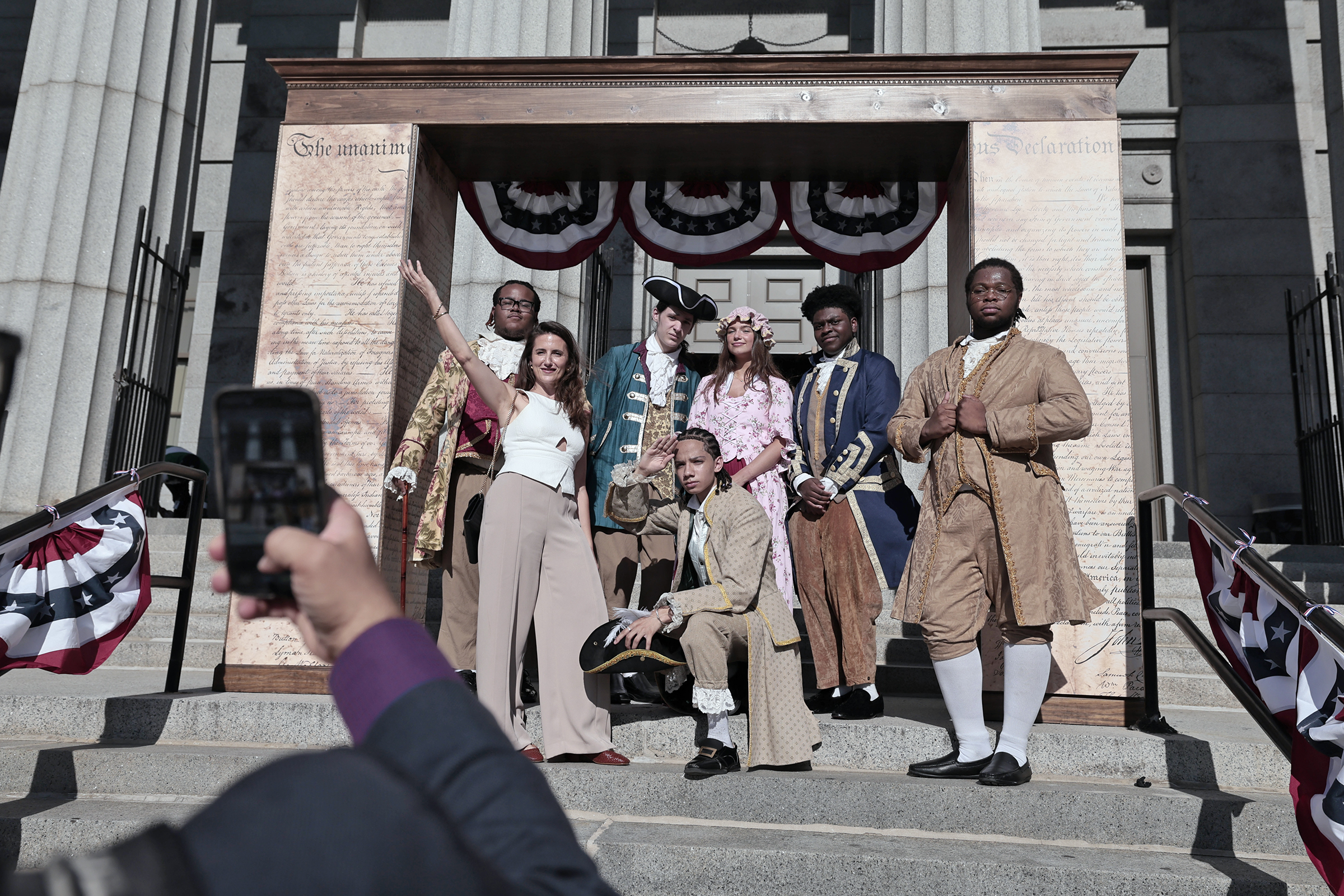
Racially incendiary and antisemitic comments were made under social media photos of the diverse cast, which includes students of color and women playing the Founding Fathers as they debate forging a new nation and ultimately adopt the Declaration of Independence.
Thomas Jefferson (played by Maxwell Henderson, left) and John Adams (played by Jackson Preisser, right) argue during a scene from the opening night of 1776: The Musical at the Philadelphia High School for Creative and Performing Arts on Wednesday, June 24, 2026.
The comments, which have since been deleted, rattled some of the young actors’ families enough that over the weekend, one of the leads withdrew from the production over fears for his safety.
The hatred was a low point — “completely dehumanizing,” said Wyatt Wynne, 17, who plays John Hancock.
But it has galvanized the remaining students: actors, technicians, and musicians from public, private, and charter schools around the city.
Growing up in North Philadelphia, Dhonte Hawkins-Durante, 16, said he was extra conscious of the importance of positive Black male role models. He was thrilled that a fellow Black actor was one of the play’s John Adams. (1776 is double cast, with two actors sharing most roles.)
Losing a Black lead — especially because he was driven out by hate — was crushing, said Hawkins-Durante.
“But instead of losing hope, I turned it into this motivation,” said Hawkins-Durante, a student at Mastery Charter-Lenfest. “If they’re not hating, we’re not doing anything right. It gave me more weight to carry, but the best weight.”
Luciana Jean-Louis, 14, who plays Roger Sherman, a delegate from Connecticut, said the social media hate “broke my heart” and felt personal, she said.
But it turned into a “way to empower myself, and a moment where I felt very proud of where we all come from.”
Cast members posed with guests before opening night of 1776: The Musical at the Philadelphia High School for Creative and Performing Arts on Wednesday, June 24, 2026.
Officials with Celebrating 1776!, the organization producing the play at CAPA and at other sites throughout the city through Aug. 15, condemned the posts in a statement.
“Our production makes a deliberate and proud choice to present a diverse cast telling one of America’s most defining chapters,” the statement said. “The founding of this nation is rooted in human struggle, idealism, and ambition, and it deserves to be told by the full breadth of human talent. Our cast does exactly that, with exceptional skill and commitment.”
‘You constantly have to prove yourself’
Suhaila Madison‘s first reaction to the hateful comments was fury, she said.
“It really fried me,” said Madison, 15, who’s homeschooled. Madison is relatively new to the stage, and has fallen in love with the process, and with working with a group of students from different parts of the city, different backgrounds, different races. The blowback first felt like it was diminishing the story and the young people working hard to tell it.
Then she gathered with her castmates and felt a new sense of purpose.
Brooklyn Weaver, 17, a CAPA student, felt like she had a lot on her shoulders playing Thomas Jefferson. As a person of color, “you constantly have to prove yourself to these different people who might not support you being at this higher level,” she said.
Seeing racist comments on social media isn’t especially shocking, Weaver said, but it hit differently when it targeted her castmates.
“It gave me a different passion for the show,” said Weaver.
“Some people weren’t taking it as seriously before, but they are definitely taking it very seriously now,” Weaver said.
And the show — which chronicles a fractious, imperfect but ultimately history-making Continental Congress wrestling with questions of liberty and freedom — also takes on a different meaning, Weaver said.
“This is what America’s supposed to be: everyone in this land coming together to retell these stories of our forefathers,” she said.
Shepherding a cast and crew of 75 youth, Phillip Brown, executive producer of Celebrating 1776!, was prepared for a lot of contingencies.
But the social media vitriol, and having to replace a principal actor in less than a day, wasn’t on the list of things he was prepared for, Brown said.
(Student Walddys Fernandez, who had played a more minor part, stepped up to take the John Adams role on very short notice, blowing the producing staff and cast away with his preparation and verve.)
Former Mayor Ed Rendell meets cast members (from left) Abigail Adams (played by Chloe Chau), John Dickinson (played by Gregory Rist) and Ben Franklin (played by Jayden Duvene) during opening night of 1776: The Musical at the Philadelphia High School for Creative and Performing Arts on Wednesday, June 24, 2026.
But helping the students process and heal what happened has been humbling and powerful, said Brown.
“It created a wonderful kind of opportunity to really teach the students the power of art, theater, and how to use their voice,” said Brown. “When you’re doing something this powerful and provocative, people are going to have strong opinions. It was almost like this was the ire and the fuel that everyone needed to really dig in — they’re taking the anger that they feel about this situation, and they’re using it to strengthen their voice, not to soften it.”