Tag: Weekend Reads

  • Sharon Hill police killed his cousin. Now he is Delaware County’s new reform-minded sheriff

    Sharon Hill police killed his cousin. Now he is Delaware County’s new reform-minded sheriff

    Siddiq Kamara remembers standing side by side with his aunt outside of the Delaware County courthouse and calling for changes in how police are trained after a stray bullet fired by Sharon Hill police officers killed his cousin Fanta Bility.

    Three years later, his office is inside that same building.

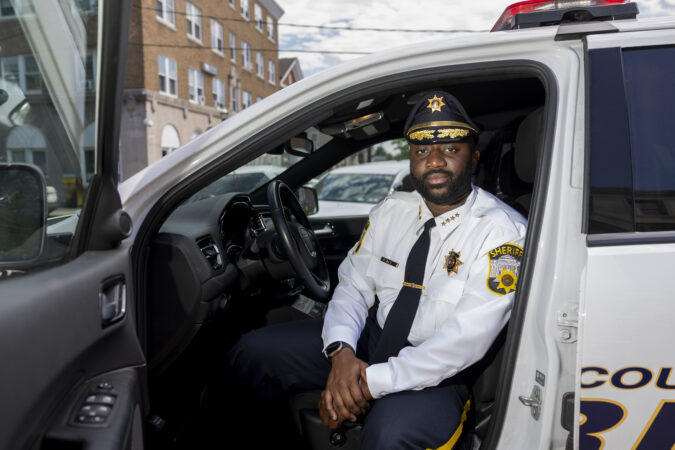
    Kamara, 30, became the youngest sheriff in Delaware County history when he cruised to victory in November with 63% of the vote. The son of Liberian immigrants, Kamara turned his family’s tragedy into a platform for improving the way community policing is carried out in his home county.

    “The people in Delaware County, I’m here to work with them, and my office is going to do that every single day,” he said.

    “This is the greatest country in the world. Being 30, being Muslim, being a first-generation immigrant and being the sheriff of one of the biggest counties in Pennsylvania, it’s unheard of. And I don’t take that lightly.”

    In his first six months in office, Kamara equipped all of his deputies with body cameras and beefed up recruiting efforts, including open fitness tests throughout the county, to help fill the 35 vacancies he inherited. He’s mandated de-escalation and regular firearms training for his deputies, in memory of his cousin.

    Siddiq Kamara (left) stood by his aunt, Tenneh Kromah, in January 2025 as they renamed a park in Sharon Hill after his cousin Fanta Bility.

    Delaware County Council President Monica Taylor said Kamara is bringing a fresh perspective to a row office that often gets overlooked.

    “He doesn’t just talk. He does the work,” Taylor said. “That’s what makes him a great public servant. He’s bringing everyone to the table to make these improvements.”

    That’s notable for a county sheriff, given the role traditionally, doesn’t require officials to stray too far beyond the county courthouse. But Kamara wants to change that, making sure he and his deputies are a frequent presence in the towns they serve.

    That desire comes from Kamara’s own experience. After serving six years in the Army National Guard, Kamara became a police officer in Yeadon. He later took a job in the state Attorney General’s Office, working in various roles including narcotics and the personal protection detail for then-Attorney General Josh Shapiro.

    Kamara’s cultural background and linguistic skills — he speaks African dialects including Mandingo and Fula, as well as French — were called upon by federal investigators as they built their case against Laye Sekou Camara, a Liberian war criminal.

    He said he became a police officer because so many people in his community in Upper Darby, drawing on their experiences in their home countries, were distrustful of police.

    “We interact with the public every single day, and sometimes these individuals, we’re not getting them at their happiest time. It’s their most vulnerable time, and you have to use empathy,” he said. “So we’ve been sending some of our supervisors to trainings so they can understand the tools when they’re out there in the community and they can teach their fellow colleagues how to de-escalate situations.”

    But when Fanta Bility was gunned down in August 2021, Kamara’s professional ambitions changed. The 8-year-old was struck by a stray bullet after three Sharon Hill officers opened fire toward a crowd leaving a high school football game. They were aiming at a car they mistakenly believed was the source of a nearby shooting.

    Those officers were later fired and pleaded guilty to reckless endangerment. But Kamara knew something had to change.

    “If you understand what happened that day to my cousin, cops, unfortunately, we can’t make mistakes. It costs people’s lives,“ he said. ”And, that day, it cost my cousin’s life, so I wanted to make sure that in my capacity, as the sheriff, our officers are properly trained.”
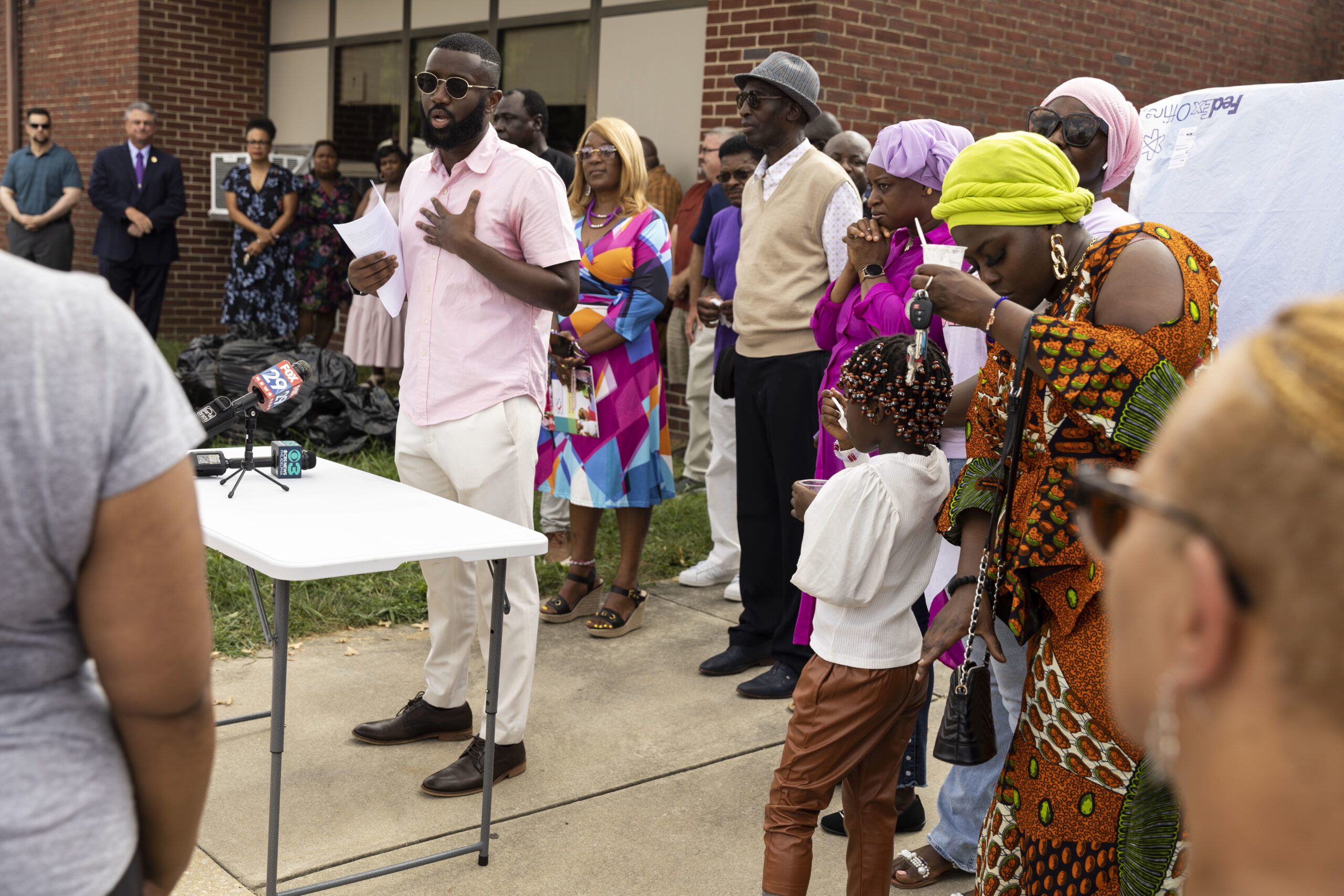
    Siddiq Kamara speaks during a backpack giveaway at Sharon Hill Elementary School in August 2023 held in memory of Fanta Bility.

    State Sen. Anthony Hardy Williams, a Democrat who sponsored a bill nicknamed “Fanta’s Law” that would require all Delaware County police departments to be accredited and receive annual use-of-force training, has been a mentor and friend to Kamara for years.

    “Back then, he was annoying,” Williams joked. “But he learned from my team, and it grew from him just being unapologetically persistent and curious, to him understanding he has a real value.”

    From Kamara’s early days of volunteering at political events, it was clear to Williams that he was dedicated to public service. “Fanta’s Law,” Williams said, is their latest collaboration.

    “He’s here to improve things, not just here to say ‘I have a title and have a position,’” Williams said. “It’s clear he wants to find out how to use this position to improve the office and also improve the lives of people who don’t even know about the office.”

    Kamara, for his part, said he’s thankful for the opportunity to enact change in the county that raised him.

    “When you’re in an office, and I teach my deputies this all the time, is that we do the protection part, but we’ll forget sometimes about serving,” he said. “And serving goes a long way.”
  • Pa. residents stand to lose an average of $520 a month in Social Security benefits in six years unless Congress acts

    Pa. residents stand to lose an average of $520 a month in Social Security benefits in six years unless Congress acts

    For 30 years, Nettie King, 92, has relied on Social Security to survive.

    She and her former employers at the Oak Lane Diner near her home paid into Social Security through payroll taxes for years.

    While the storied institution closed in 2015, the Social Security benefit checks that King’s work generated have kept coming. “It’s been comfortable,” explained King, who said she was the diner’s first server of color in 1963.

    But now there’s a problem.

    King is among 68 million Americans facing possible reductions of 22% to their benefits by 2032 unless Congress acts, according to a new report by Social Security Administration (SSA) trustees released last month.

    Pennsylvania residents could lose an average of $520 each from their monthly Social Security checks, according to the Committee for a Responsible Federal Budget, a nonpartisan think tank. That would affect an estimated 255,000 Philadelphians receiving Social Security benefits, according to Olivia Mitchell, director of the Boettner Center on Pensions and Retirement Research at the Wharton School of the University of Pennsylvania.

    “Losing that much would be a disaster,” King said. “I pray the money doesn’t stop.”

    It won’t if Congress overcomes its partisan divide and creates a workable solution to make Social Security solvent, say advocates for the elderly — including AARP, whose senior vice president Bill Sweeney warned in a recent press call that “the longer they wait, the harder it gets.”

    Speaking for the Trump administration, Treasury Secretary Scott Bessent said in a statement, “We are working to preserve Social Security … and recognize that more work remains to secure benefits for future beneficiaries.”

    Someday soon

    Analysts have long predicted the Old Age and Survivors Insurance trust fund from which most retired Social Security claimants draw benefits could dissipate, said Temple University labor economist Samuel Solomon. But that was always regarded as a “someday” event.

    “Someday” may now be just six years away. “That’s a big deal,” Solomon said.

    The SSA wouldn’t stop paying benefits altogether, Mitchell said. Although the report predicts the fund’s reserves could be tapped out by 2032, “continuing payroll tax revenue [from people currently working] would cover about 78% of scheduled retirement benefits,” she added.

    At nearly $1.6 trillion annually, Social Security represents more than 20% of the U.S. budget and is the nation’s largest single expense, Solomon said.

    Various factors have combined recently to accelerate the fund’s potential depletion, according to the report submitted by SSA trustees, who include Bessent, as well as Health Secretary Robert F. Kennedy Jr.

    First, the fertility rate this year is going down faster than predicted: 1.75 children per woman vs. 1.9.

    Also, immigration is lower than estimated. That trend will continue as the government maintains restrictive immigration policies, experts say. It represents a potentially immense loss of revenue, according to Wharton research, which shows that “unauthorized immigrants” paid $24 billion in Social Security payroll taxes in 2024, despite being ineligible to collect any benefits.

    Both the slowed fertility and diminished immigration rates have lowered the anticipated number of workers and the payroll taxes they’d have contributed to Social Security, said Kathleen Romig, Social Security expert with the Center on Budget Priorities and Policies, a left-leaning research group.

    The final factor, the trustees report said, is that the One Big Beautiful Bill Act that decreased income tax rates has reduced revenue that would’ve flowed into the program.

    The SSA didn’t respond for requests to comment.

    The Social Security system had been strained long before the trustees report. The giant baby boomer generation has been retiring since around 2011, siphoning millions from the program, Solomon said.

    In 1950, when the first boomers were 4 years old, every 100 workers paid the Social Security benefits of 13 elderly people, Solomon said. Today, it’s 25 elderly people per 100 workers — “more responsibility on a single working person to support more retirees,” Solomon said.

    That worries Doris Kitt, 81, of Jenkintown, a Social Security benefits recipient who still works at a South Jersey pediatric dental practice.

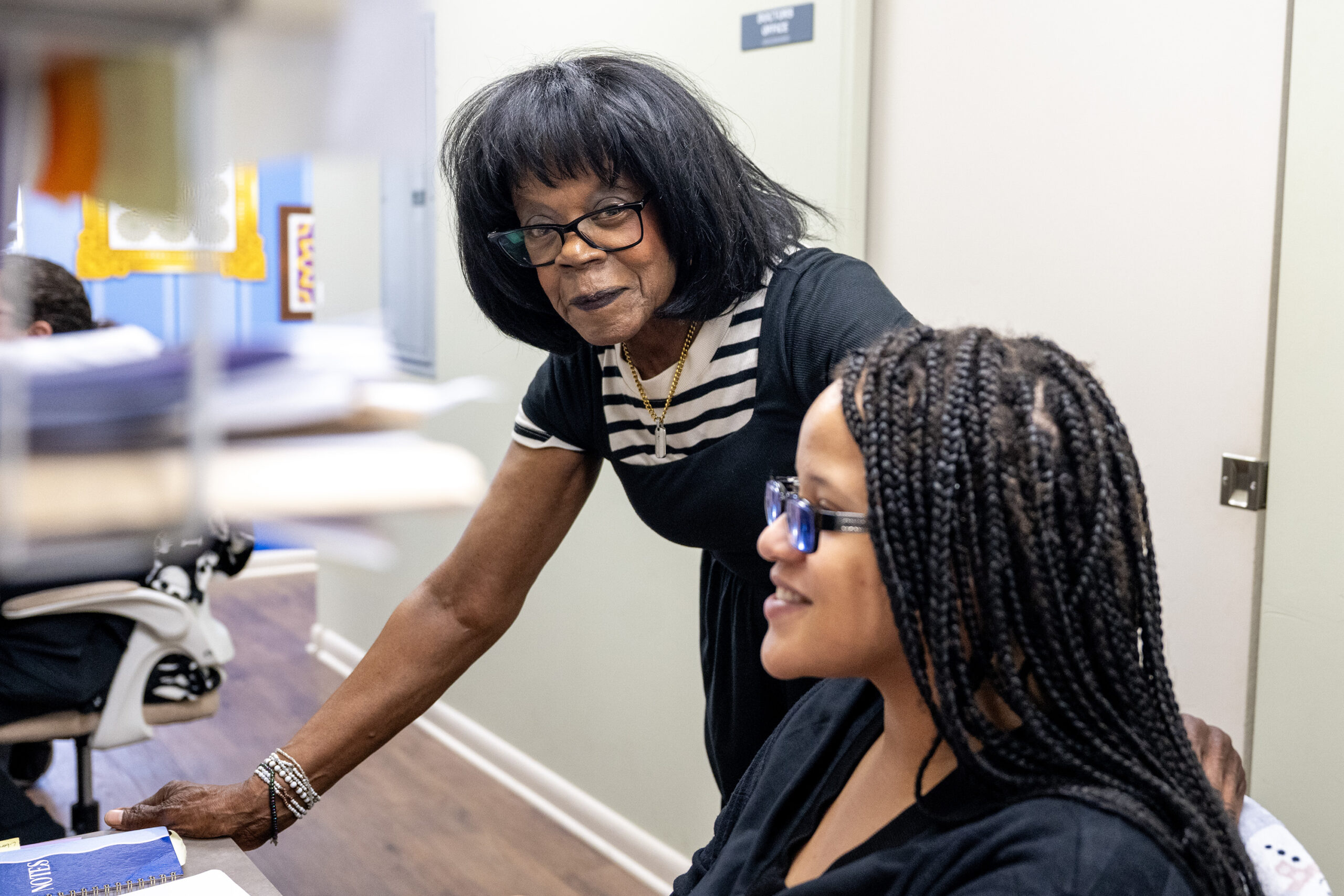
    Doris Kitt talks with coworker Asia Bagby. Kitt, who is 81, still works and also collects Social Security benefits.

    “Less Social Security when rent and food continue to cost more is a challenge,” Kitt said.

    ‘Give me what I’m due’

    Through the years, Republicans and Democrats have forwarded competing remedies for repairing Social Security.

    GOP suggestions include raising the retirement age to 70, and privatizing the system.

    Democrats call for raising payroll taxes and ending the payroll tax cap. (Currently, wages above $184,500 are not subject to Social Security taxes. Democrats would eliminate the cap so higher-income earners pay into the system on 100% of their earnings.)

    In a statement, U.S. Rep. Brendan Boyle, a Northeast Philadelphia Democrat running for reelection in November against Republican challenger Jessica Arriaga, said the trustees report makes it clear that “we must act to protect Social Security benefits for all generations.“

    He referenced a bill he introduced in May 2025 that would require Americans earning more than $400,000 to contribute a greater percentage of their wages to Social Security. It’s now before the House Ways and Means Committee.

    U.S. Rep. Lloyd Smucker, a Republican representing Lancaster County, also issued a statement, saying Social Security could be fixed by a “bipartisan fiscal commission” to “build consensus” and eliminate depletions of benefits. Smucker is being opposed by Democrat Nancy Mannion in his bid for reelection.

    “We must preserve the trust fund millions of Americans rely on and keep our promise to those who have been paying into the system their entire lives,” he said.

    That covenant must be honored, said Shirley Stringfield, 70, a retired city worker from Germantown.

    “I spent 55 years of my life paying into Social Security,” she said, “so I want them to give me my due. I expect to receive my benefits until I expire. I need every cent.”

  • How much did Philly-area nonprofit health system CEOs make in 2024?

    How much did Philly-area nonprofit health system CEOs make in 2024?

    Jefferson’s Joseph G. Cacchione ranked as the highest-paid CEO at the Philadelphia region’s nonprofit health systems in 2024, with total compensation of $7 million, according to The Inquirer’s annual review of public tax forms.

    Madeline Bell at Children’s Hospital of Philadelphia collected $5.5 million in 2024, giving her the number two spot.

    Both also were top earners in The Inquirer’s 2023 compensation analysis. Jefferson is the largest system based here, both by revenue and number of hospitals, with 33 stretching from South Jersey to near Scranton. CHOP is among the nation’s top-ranked children’s hospitals.

    Janice Nevin at ChristianaCare joined the ranks of the top five. She received $3.5 million, about the same pay as the region’s fourth highest earner, Al Maghezehe at Capital Health, which has a network of outpatient clinics in Bucks County and two hospitals in Mercer County. Maghezehe’s compensation stands out because Capital had by far the lowest revenue among the systems with the 10 highest-paid CEOs.

    A couple of CEOs who left their positions before 2024 continued collecting long-term compensation, as is common in the industry.

    Most notably, Jefferson’s former CEO Stephen K. Klasko collected just over $1 million in 2024. He retired at the end of 2021, but remained an adviser through June 2022. The 2024 payment brought his total through 2024 to $48.7 million for 8½ years as CEO.

    Lori Herndon left AtlantiCare in June 2023. Her compensation the following year was $1.3 million.

    Other CEOs left during 2024, making it possible they will be listed in the next round of 990s. Those executives include Donald Mueller at St. Christopher’s Hospital for Children, Michael Laign at Redeemer Health, and Ronald W. Johnson at Shore Medical.

    Here’s a look at the numbers from The Inquirer’s review of the latest 990 tax returns of 20 nonprofit health systems, covering 11 health systems with operations concentrated in Southeastern Pennsylvania, seven in South Jersey, and two in northern Delaware:

    (function(){function e(){window.addEventListener(`message`,function(e){if(e.data[`datawrapper-height`]!==void 0){var t=document.querySelectorAll(`iframe`);for(var n in e.data[`datawrapper-height`])for(var r=0,i;i=t[r];r++)if(i.contentWindow===e.source){var a=e.data[`datawrapper-height`][n]+`px`;i.style.height=a}}})}e()})();

  • Philly’s delayed late-night fireworks were prompted by safety and weather concerns, city says

    Philly’s delayed late-night fireworks were prompted by safety and weather concerns, city says

    Philadelphia’s late-night fireworks display was prompted by concerns over safety and a poor long-range weather outlook, city officials said Sunday morning, as work crews were busy cleaning up Philadelphia’s Benjamin Franklin Parkway from the July Fourth celebration.

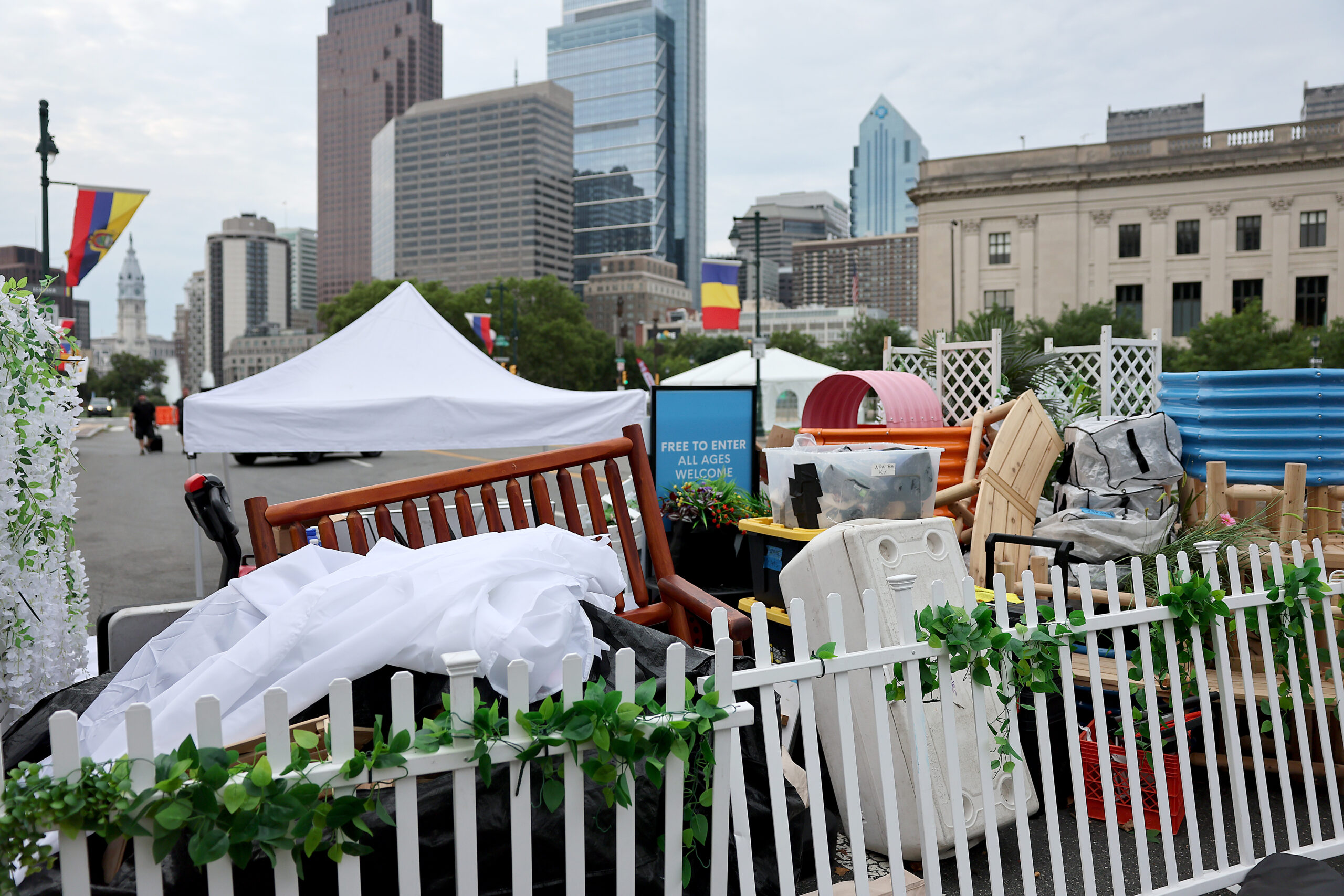
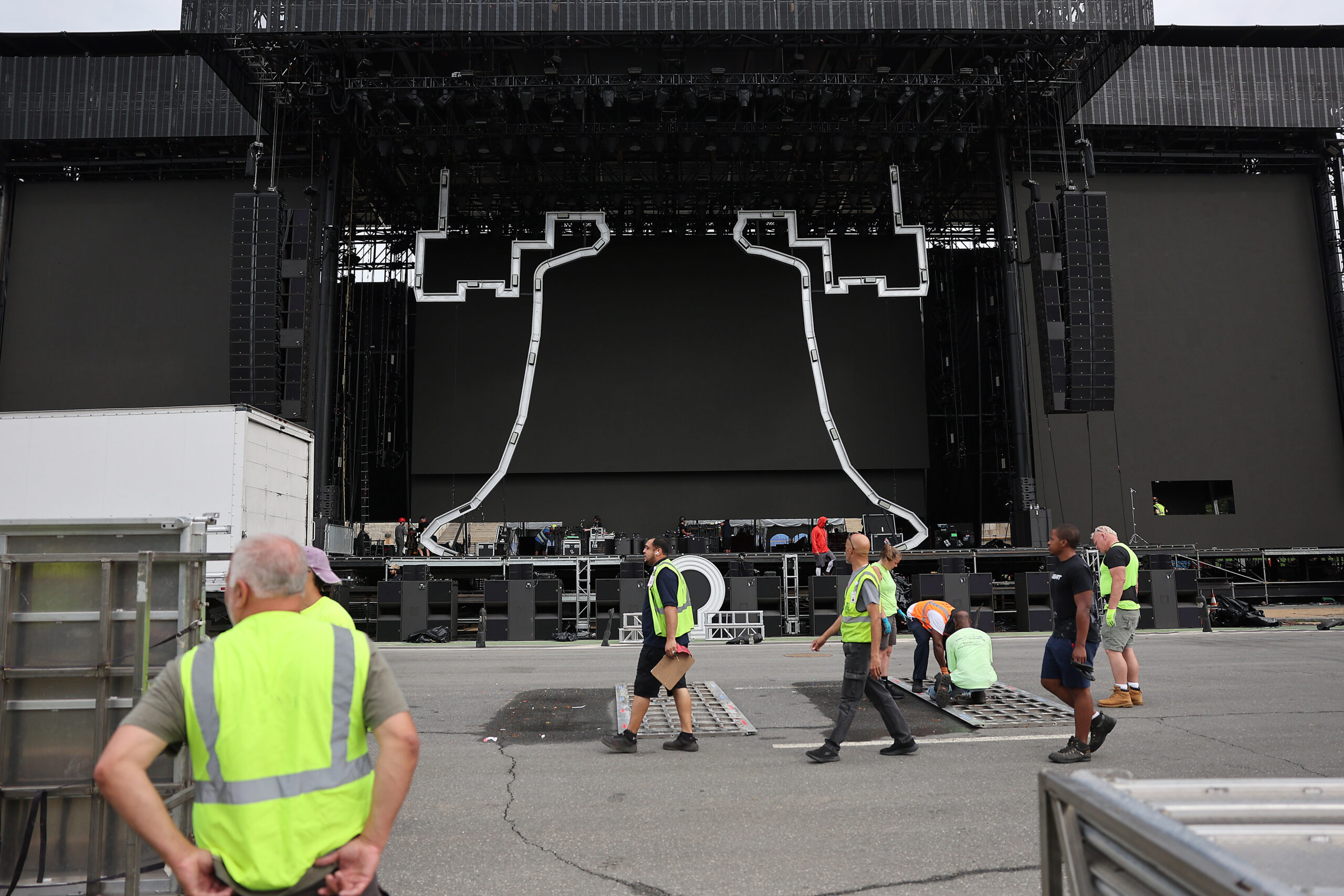
    A massive Liberty Bell display still hung over the stage near the Philadelphia Art Museum, where hours earlier Meek Mill, Will Smith, and backing band the Roots were the last to perform at the One Philly: Unity Concert for America. Gone were the fireworks and revelers, but the white tents, chain-link fencing, and long rows of porta-potties were reminders of a concert that lasted until nearly 2:45 a.m.

    It wasn’t supposed to go that long. But a summer storm around 9 p.m. rolled in with intense wind gusts, rain, and lightning, leading the city to evacuate the Parkway.

    The city didn’t have an official number, but estimated that “thousands” of concertgoers returned, just after midnight, to get the party started again. So did the performers, with the exception of Christina Aguilera.

    Items from last night’s festivities on the Ben Franklin Parkway wait to be picked up in Philadelphia on Sunday, July 5, 2026.

    Mayor Cherelle L. Parker said she trusted the experts and welcomed people back to the concert venue once it was safe.

    “I want to thank the Roots and all of their incredible guests for their relentless energy and for delivering an incredibly inspiring performance worthy of America’s 250th birthday,” Parker said in a Sunday news release.

    The decision to proceed with the fireworks was made by city experts, led by Managing Director Adam K. Thiel, and the mayor was informed, said Parker spokesperson Joe Grace.

    The weather forecast factored into the decision, Grace said. The city will be under a flood watch starting at 2 p.m., and rain and storms are likely over the next 10 days, so postponing the fireworks to another day did not make sense, he said.

    “Once fireworks are loaded, they cannot be safely unloaded,” Grace said. “From a safety and operational standpoint, completing the fireworks display was the right decision.”

    Some detractors of the late fireworks display turned to online forums to complain about the noise.

    “Ok so I wasn’t dreaming. I was actually awakened by an officially sanctioned fireworks display at 2:30 a.m.,” one Reddit user wrote.

    Comment
    by
    u/southphillydadbar from discussion

    in
    philadelphia

    Mykola Kosyk of Fairmount said it was disappointing that the city waited until nearly 3 a.m. — far too late for children — for a show that lasted only about 10 minutes.

    “It was the worst fireworks display ever,” Kosyk said. He called it a “basic display” that wasn’t on par with the historical significance of the Semiquincentennial.

    Kosyk says he collects fireworks memorabilia dating back to the 1800s, and he and his wife travel the state visiting fireworks displays. He said the company putting on the show, Pyrotecnico, is “well-renowned,” and he blamed the city for not planning a better show.

    As the smoke from the fireworks show settled around 3 a.m., the city’s Department of Sanitation sent out approximately 100 laborers and 50 trucks to clean up the Ben Franklin Parkway and the surrounding area, the city said in the news release.

    By morning, much of the mess was gone. Security magnetometers sat in a pile, ready to be picked up and taken away, while dozens of staff from Imperial Events Services worked to keep runners and curious onlookers out of what was supposed to be a secure area.

    “The joggers are mad at us,” said one staffer, as his team found a gap in the fence that allowed people into the closed-off area.

    Workers dismantle the stage from last night’s concert along the Ben Franklin Parkway in Philadelphia on Sunday, July 5, 2026.

    One visitor was disappointed that the stage breakdown temporarily blocked the front of the Art Museum.

    “We want to see the Rocky steps, but we can’t,” said Angelika Gamez, who flew in from Bogota, Colombia, for the France-Paraguay soccer match Saturday.

    Still, Gamez said her visit to Philly was amazing, weather aside.

    “It was very hot. In Colombia, we don’t have seasons like this.”

  • Phoenixville’s Bluebird Distilling combines alcohol and artisanal dough making in new $2.2M expansion

    Phoenixville’s Bluebird Distilling combines alcohol and artisanal dough making in new $2.2M expansion

    When Jared Adkins gets interested in something, he goes all in. That’s how he ended up learning about distilling, opening Bluebird Distilling in Phoenixville roughly a decade ago. Then, he became infatuated with pizza dough.

    It’s led to an expansion of the business: Bluebird Distilling & Dough House, which will open its doors officially on Tuesday.

    The $2.2 million renovation adds a whole new component to the cocktail bar, which will now offer a “neo-Neapolitan” — a modern, Americanized take on the classic — pizzeria and restaurant. Changes also have expanded the bar itself, added to the dining room, and enhanced the retail and bottle shop.

    Adding food was something Adkins, Bluebird’s owner and master distiller, didn’t initially anticipate when they opened the distillery in 2015. But in 2022, he started to get the itch. He considered a full-scale restaurant, and began the early planning for one. But then there was just something about pizza dough that caught his attention.

    He signed himself up for pizza school, and spent three days in Washington, D.C., learning from chefs about the art of pizza making.

    “There was like a light bulb that went off,” he said. “We’re already doing so much fermenting that just seemed the natural next step to get into dough making.”

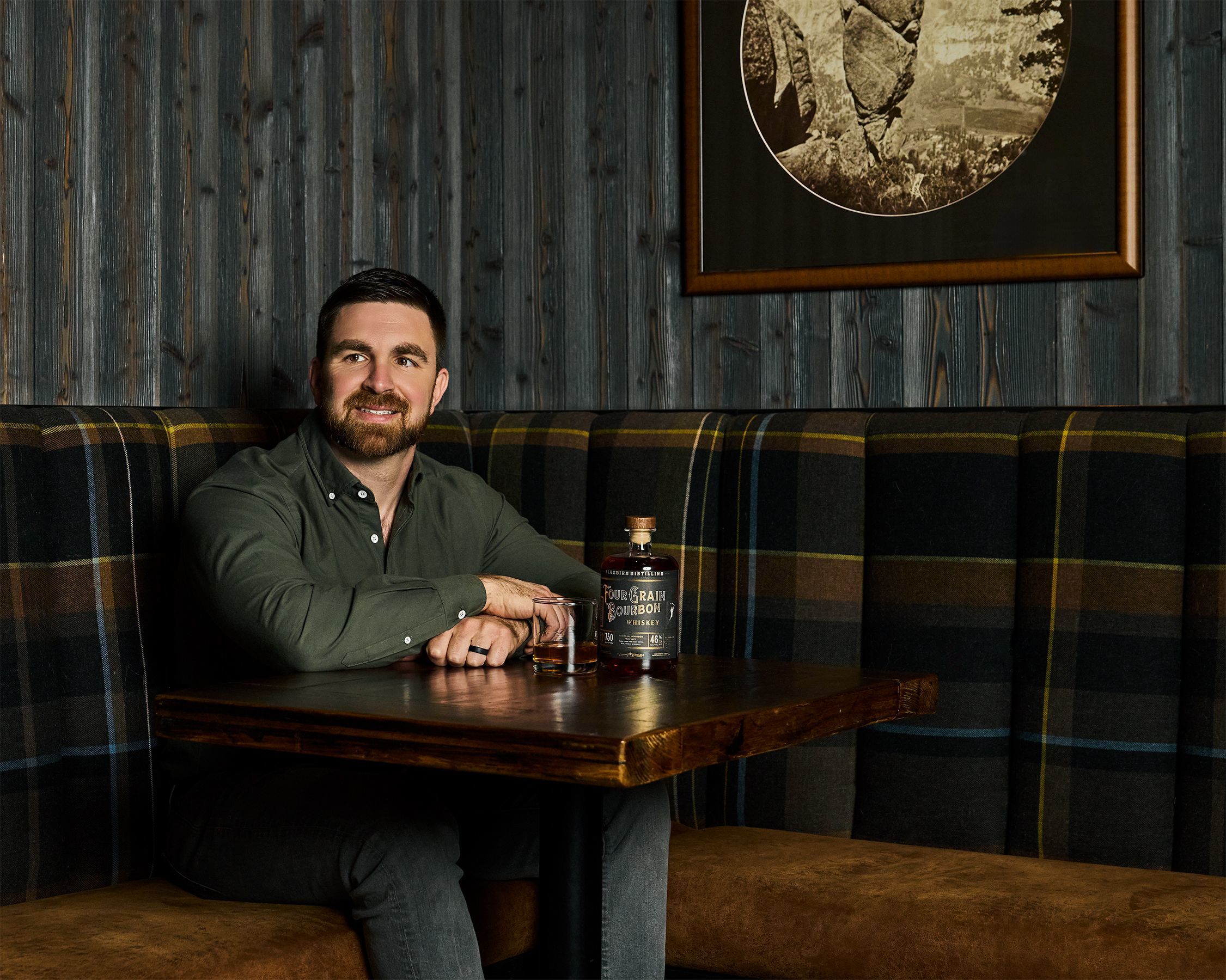
    Bluebird Distilling founder and master distiller Jared Adkins. The expansion has been a year in the making, a longer consideration for Adkins.

    As he threw himself into dough-making a few years ago, he connected with pizzaiolo Gregorio Fierro to learn the basics. That helped get his vision off the ground, as he began designing what the kitchen would look like.

    Devon Migeot is joining as executive chef to bring the menu to fruition every night. Migeot spent roughly a decade working as sous chef at Philadelphia’s Zahav and Laser Wolf, plus Tresini in Ambler, and as chef du cuisine at Rosalie in Wayne.

    Together, they’ll offer pizza made with 100% Petra stone-ground Italian flour, milled from 100% Italian wheat, with no preservatives or additives. The business will have house-baked breads, plus shareable small plates. Offerings will include ricotta gnudi with sweet corn, brown butter, and scallions; meatballs with beef, pork, gravy, and Parmesan; beets and burrata; chicory salad; a snacking plate of meats and cheeses; and more.

    The decision to expand into food comes at a particularly salient time, Adkins said. The industry as a whole has been seeing a decrease in people drinking.

    “It’s kind of perfect timing that it’s going to fill a niche where maybe people aren’t coming in solely just for drinks anymore as much, but now [we’re] giving another artisan aspect of having pizza, or something that we’re really putting a lot of time in, to craft the best,” he said.

    A look at the expanded cocktail bar, part of the distillery’s larger renovation.

    The distillery will still, of course, honor its roots with its spirits and cocktails. It’ll feature old favorites, such as Bluebird (a vodka, blueberry, lime, and mint mix) and the Phoenixville Old Fashioned.

    But new additions will join too. Customers can try the Huntsman, which will feature French cigar bourbon, morel-infused vermouth, tobacco bitters, and stave smoke; or the Rum Ham, a pancetta fat-washed Bluebird dark rum along with burnt pineapple syrup, and tiki bitters; or Off the Vine, a “garden-inspired” martini composed of Juniperus Gin, basil, lemon, agave nectar, Aleppo pepper, and “clarified” tomato.

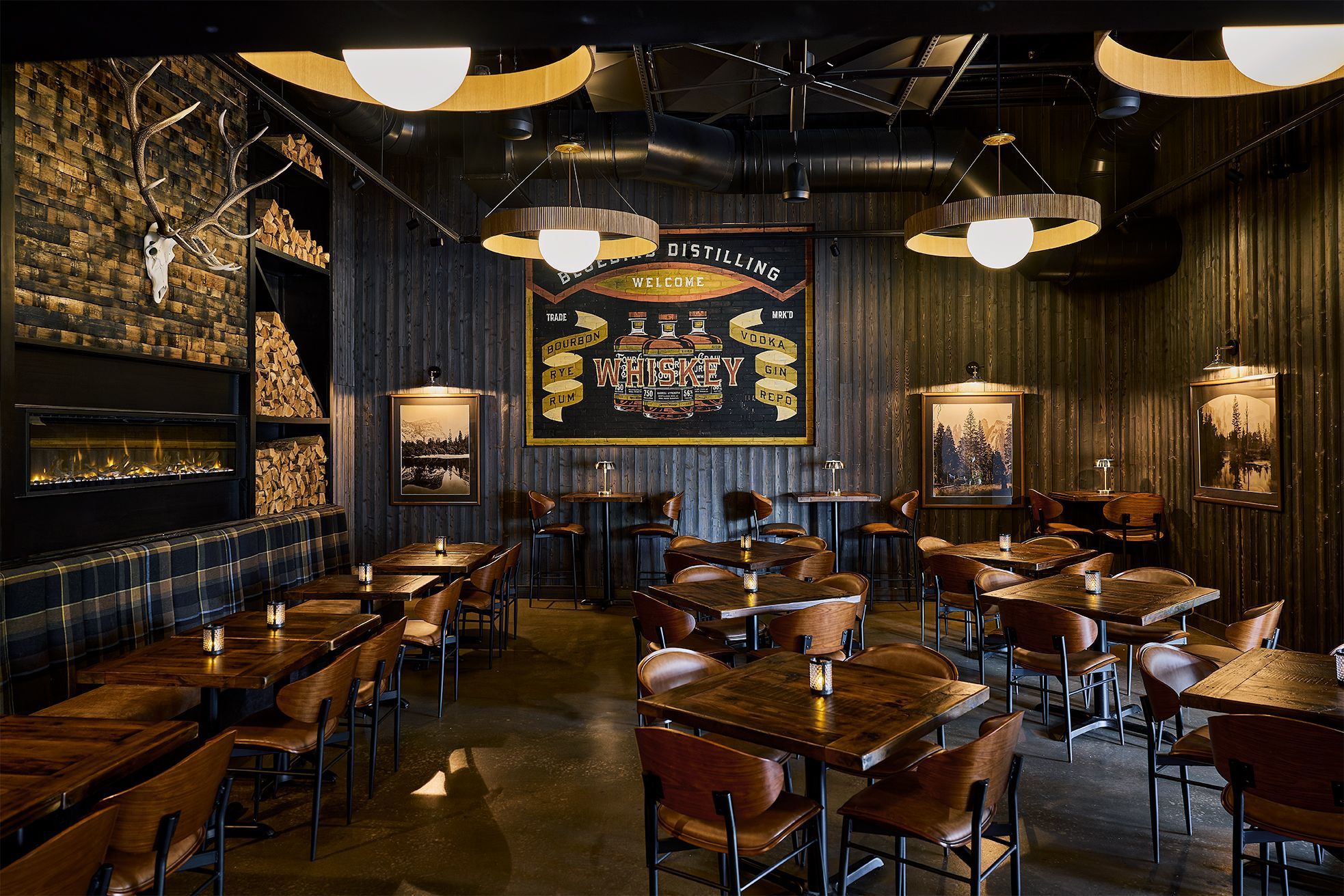
    The renovation also came with some aesthetic changes. In 2015, they led with a steampunk vibe, Adkins said. They refreshed the interior, using a Japanese-style charred wood that resembles the inside of a barrel.

    A transformed Bluebird Distilling will open July 7 after a $2.2 million renovation has expanded founder Jared Adkins’ vision. The space adds a new neo-Neapolitan pizzeria and restaurant, plus a reimagined cocktail bar, dining room, and retail and bottle shop.

    The outside patio is now enclosed, featuring a “huge” rectangular bar, which can seat up to 30 people. Adkins described the bar area as light and airy, where it feels communal and social. It feels more “upper casual” than “too-serious speakeasy.” Surrounded by windows, it feels like you’re sitting on the street, in the middle of the action, he said.

    When customers are ready for dinner, they can head back to the lounge, which curates a masculine, Western style.

    And the kitchen, where customers get to enjoy watching the whole process unfold, embraces that steampunk essence with barrels hanging from the ceiling.

    “I feel like as you walk through the area, you’re getting two or three different experiences all at once,” he said.

    The bar was open through renovations, but operating with 50% of the facility for the last seven or so months, and maintaining about 80% of their normal crowds. It took some ingenuity, he said.

    As they look at the new chapter, it feels like starting all over again, he said.

    “I think it fills a gap on one side for us there, of now we have something else that we can present to our customers for an overall experience,” he said. “That’s what we’re going for the most. We’re giving our cocktail experience, our spirits experience, and now a dough side of it.”

    This suburban content is produced with support from the Leslie Miller and Richard Worley Foundation and The Lenfest Institute for Journalism. Editorial content is created independently of the project donors. Gifts to support The Inquirer’s high-impact journalism can be made at inquirer.com/donate. A list of Lenfest Institute donors can be found at lenfestinstitute.org/supporters.

  • He cut his rent by $2,000 a month. Then he bought a $165,000 house in Southwest Philly. | How I Bought This House

    He cut his rent by $2,000 a month. Then he bought a $165,000 house in Southwest Philly. | How I Bought This House

    The buyer: Dylan Foglesong, 28, program manager

    The house: A 1,150-square-foot townhouse in Southwest Philly with two bedrooms and two bathrooms built in 1925.

    The price: Listed for $180,000; purchased for $165,000.

    The agent: Kristie Bergey, Coldwell Banker

    The ask: Dylan Foglesong felt like he was overpaying for his apartment. He was spending $2,600 a month, plus utilities, for a two-bedroom place in Manayunk, and the money was going toward a place he would never own.

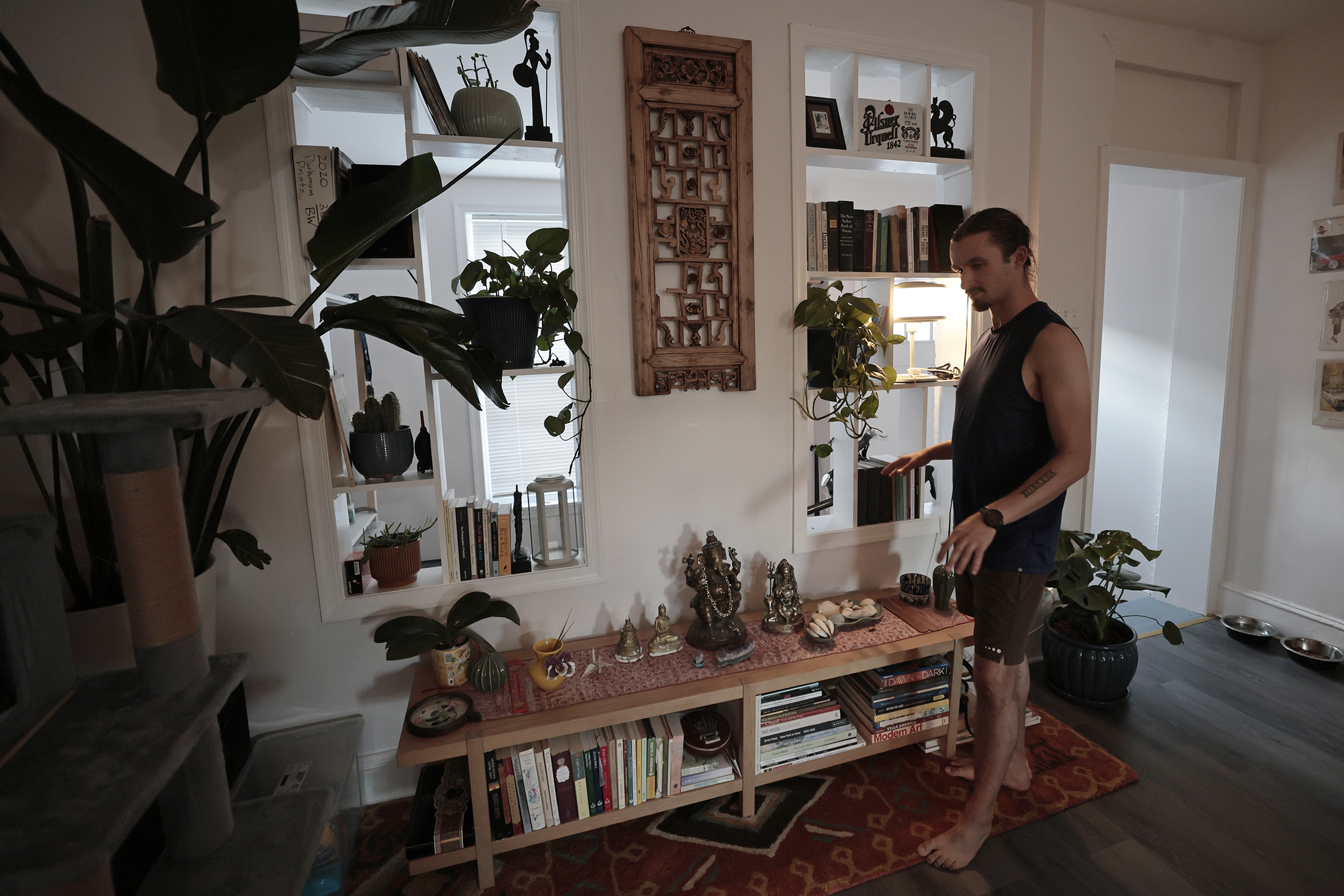
    Dylan Foglesong tends to an area he calls the shrine in his home.

    After six months, he paid the fee to break his lease and moved into a house with friends. His rent dropped to $600 a month, and because he was subletting month-to-month, he could leave whenever he wanted. He was saving more than $2,000 a month, and he realized he could put that money toward buying a house.

    Foglesong had a simple wish list. As an avid cyclist, he wanted to be near multiple bike paths. He also wanted outdoor space, two usable bedrooms, and a low price. He did not care about central air or polished finishes. “I just wanted a cheap place that worked,” he said.

    The search: Foglesong started searching in January, focusing on a small section of Southwest Philadelphia near Bartram’s Garden and the trail network along the Schuylkill. He wanted to remain close to Center City so he could bike to work.

    Foglesong uses the rope wall to work out in the studio of his home.

    He saw five houses. The first one was in his ideal location, but the floors were scratched and coming up, the kitchen looked decades out of date, and the upstairs had the cramped three-bedroom layout he wanted to avoid. It would have taken too much work to reach a point where he was not “barfing every morning at how much of an eyesore it was,” he said.

    The only other serious contender had a large backyard, a clean basement, and an updated kitchen. But a quarter of the ceiling in one upstairs room appeared to be collapsing because of a leak. The house was listed for about $212,000. Foglesong offered $190,000, figuring he could use the difference to repair the roof, but the seller rejected the offer.

    The appeal: The fifth and final house had a great layout. Both rooms upstairs were large. It also recently had “a really thoughtful renovation,” Foglesong said. The updates included a new HVAC system and appliances, while the house also had a finished basement with high ceilings, outdoor space, and an enclosed front porch where he could store his bikes.

    Foglesong also liked the location on a quiet side street with little through traffic. “It’s on the kind of street that you wouldn’t drive down unless you lived there or you knew someone who lived there,” Foglesong said. Most of the houses on the block were occupied, which made the neighborhood feel established.

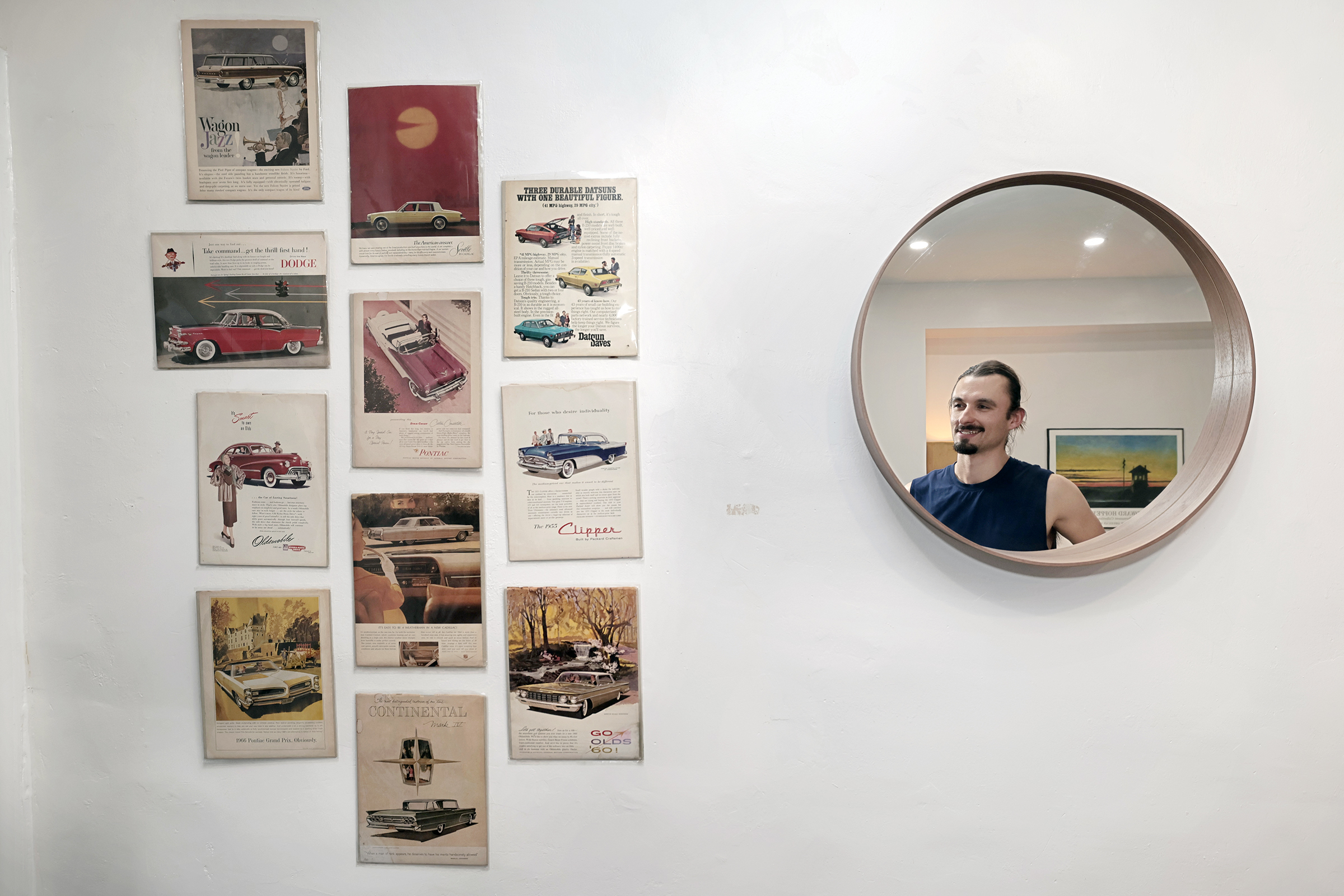
    Dylan Foglesong is reflected in a mirror that hangs, next to classic car ads, in the foyer of his home.

    The deal: The house had initially been listed for a little more than $181,000 before the seller lowered the price to $180,000. It had been on the market for roughly five months by the time Foglesong saw it.

    He offered $170,000 and asked the seller to contribute 3% toward closing costs. They declined the closing assistance but countered at $165,000. The lower price ended up saving Foglesong the same amount of money, so he accepted.

    The inspection was clean, save for one issue with the electrical. When Foglesong called Peco to arrange service, he learned that the house was not legally connected, even though the power was on. An electrical inspection found that the breaker box needed work, and the seller hired an electrician to set it up properly. But Foglesong still could not transfer the service into his name until the seller paid thousands of dollars in outstanding utility balances. The whole thing “seemed a little sus,” Foglesong said, but it worked out.

    The money: Foglesong put 3% down, or $4,950. Including his closing costs, he paid about $11,600 out of pocket to buy the $165,000 house. His mortgage rate is 6.25%. Today, his monthly payment, including property taxes, is $1,300.

    He already had some savings when he moved in with roommates, but the drop in rent allowed him to build the rest quickly. He estimates that he was saving nearly $3,000 a month. Within 3½ months, he had accumulated enough to cover the down payment and closing costs. “You take that little compromise for a couple of months,” Foglesong said about moving in with friends, “and all of a sudden you have $11,000 in your bank account.”

    The move: Foglesong closed in April and moved his belongings from the shared house into a 10-foot U-Haul. Everything fit in one load, and he completed the move over two days without hiring movers or asking friends to help.

    He managed it alone because he did not own much heavy furniture. His couch comes apart into sections, and he sleeps on a futon that he could fold and carry over his shoulders. For everything else, he improvised. “You put a blanket on the stairs, slide the furniture down,” Foglesong said. “You figure it out.”

    Life after close: At first, buying the house felt less momentous than Foglesong expected. He had imagined “a really grand, movie-montage sequence,” he said, but moving in felt much like any of the other moves he had made during his 10 years in Philadelphia.

    But as the weeks passed, the difference between his new home and the others became clearer. He was no longer paying rent for a place that belonged to someone else. He owned the house, and the monthly payment was within his budget. “It’s very grounding to wake up in a place that you can afford,” Fogelson said.

    The experience also reinforced his belief that young buyers may need to reconsider what they expect from their first home. “You have to be realistic about what you can access right now,” Foglesong said. “Your first house doesn’t have to be your dream home.”

    Editor’s note: This article has been updated to correct real estate agent Kristie Bergey’s name.

    Did you recently buy a home in the Philadelphia area or South Jersey? Share the story of how you did it. Email Inquirer real estate reporters at properties@inquirer.com.

  • Impromptu pageantry replaced Philly’s official parade as extreme heat mars the nation’s 250th

    Impromptu pageantry replaced Philly’s official parade as extreme heat mars the nation’s 250th

    The eve of the United States’ 250th birthday in Philadelphia was less celebration and more chagrin, as oppressive heat left swaths of tourists and revelers in an aimless search of pomp and circumstance.

    On Friday, Wawa’s Salute to Independence Semiquincentennial Parade was canceled because of 100-plus-degree temperatures and a perilous heat index. It was one of numerous events called off or shortened this holiday weekend, as the scorching weather has thwarted events across the region, and potential storms could impact more.

    The cancellation left scores of sweat-soaked performers, musicians, and historical reenactors in wool garb stranded near Independence Hall and around Center City. There might not have been the sort of “shews, games, sports, guns, bells, bonfires and illuminations” that John Adams prophesied in a July 3, 1776, letter to his wife, but there was still an air of importance — and some impromptu pageantry.

    “We won’t be around for the 300th, so we really wanted to come for the 250th,” said war re-enactor Kathy Touzjian, 61. Touzjian and Laurie Pelletier were among a 75-person Massachusetts Army of 1775 troupe, who traveled six hours by bus to be in Friday’s parade.

    “At least we still have cheesesteaks,” Touzjian said.

    To the pair, the 250th anniversary of the signing of the Declaration of Independence and the fledgling country’s split from Great Britain felt different — and not just because of the heat. Now more than ever, Pelletier said, it was important to return to the country’s bedrock: liberty and independence for all.

    “Today is still special,” said Pelletier, 60. “It’s a chance to recognize what our ancestors gave us, because the world is falling apart and this brings people together.”

    The cancellation didn’t immediately send the performers home; instead, the duo stayed to play the fife, a wooden instrument similar to a piccolo, throughout Old City. As they readied their three-layer historic attire, Touzjian hoped future generations would heed her advice:

    “No matter how hot it is, do not cancel the 300th independence parade.”

    At Independence National Historical Park, people clamored for respite in the tree-lined periphery, in the sliver of shade by the Liberty Bell, or the air-conditioned Independence Hall. Around noon, the line to see the historic site of the Second Continental Congress snaked through the courtyard. While entries were paused as the building surged to capacity, history buffs dressed in colonial costume gave mini lectures, and a few marooned groups didn’t let the weather dampen their dancing. Indianapolis-based squad Ballet Folklorico Mosaicos performed their routine inspired by an annual carnival in Veracruz, Mexico, while Asian American Dragon & Lion Dance artisans carried a long puppet dragon to the beat of a drum.

    “I feel immense pride to be able to show the love for our country,” said Henry Lee, founder and director of Asian American Dragon & Lion Dance.

    Teens from Sahuarita High School’s band came a long way from their Arizona homes only to not be able to march through Center City. But, director Ben Garland said it taught his 87 students a valuable lesson about being an American: community. Garland praised organizers for making the parade participants feel included in the 250th.

    “Most of my students have never even been on a plane before and coming here was their opportunity to see the Wast coast and engage with history they wouldn’t see otherwise,” he said. “For us the trip was worth it for what they have been able to learn and the camaraderie they have built here.”

    Across the city, Allison Utain and her husband found a form of patriotism at the Philadelphia Museum of Art no less festive than what they were hoping for in the parade.

    “You see a culmination of so many cultures that make the tapestry of what American is,” Utain said, “far from perfect, but it’s great.”

    Despite a rocky start, city leaders and tourism officials have postured Philadelphia’s Semiquincentennial celebrations as the country’s defining 250th party. And there’s immense pressure for the city to meet its moment, as commemorative events — from George Washington’s Mount Vernon estate to the Boston Harbor — and the American royal wedding between Pennsylvania’s own Taylor Swift and Eagles-adjacent Travis Kelce compete for the nation’s attention.

    Alex Bergstedt and his wife traveled from Idaho to Philadelphia because they “knew Fourth of July would be big.” Nicholas Roth and two friends came from upstate New York to walk where the Founding Fathers were.

    Just this week, Mayor Cherelle L. Parker reiterated the gravity of the grandeur: “We won’t get a second chance to do this over again, Philadelphia. We only turn 250 years old once in a lifetime.” The mayor defended the city’s July Fourth concert planned for Saturday, amid concerns about the dangerously high temperatures and revelations that the event will cost taxpayers more.

    As of late Friday afternoon, the concert was still on. Misting stations and water-refilling stations will be available along the Benjamin Franklin Parkway during the seven-hour billing, featuring acts such as Jill Scott, Christina Aguilera, The Roots, Will Smith, and Freeway, the city said. Officials pleaded with attendees to prepare accordingly.

    On the Parkway Friday, it was hot enough to see the shimmering heat on the asphalt. Most people rushed from museums to other scraps of shade, while some poured water down the backs of their necks, and dozens of children and their families streamed through the Swann Memorial Fountain at Logan Circle.

    Yet, this isn’t Philadelphia’s first brush with a foiled fete. In 1976, the city’s grand plans for its Bicentennial were dashed — not by weather, but rather unmeetable expectations. The blunder of ‘76 was an unrivaled level of municipal malaise, according to contemporaneous reports.

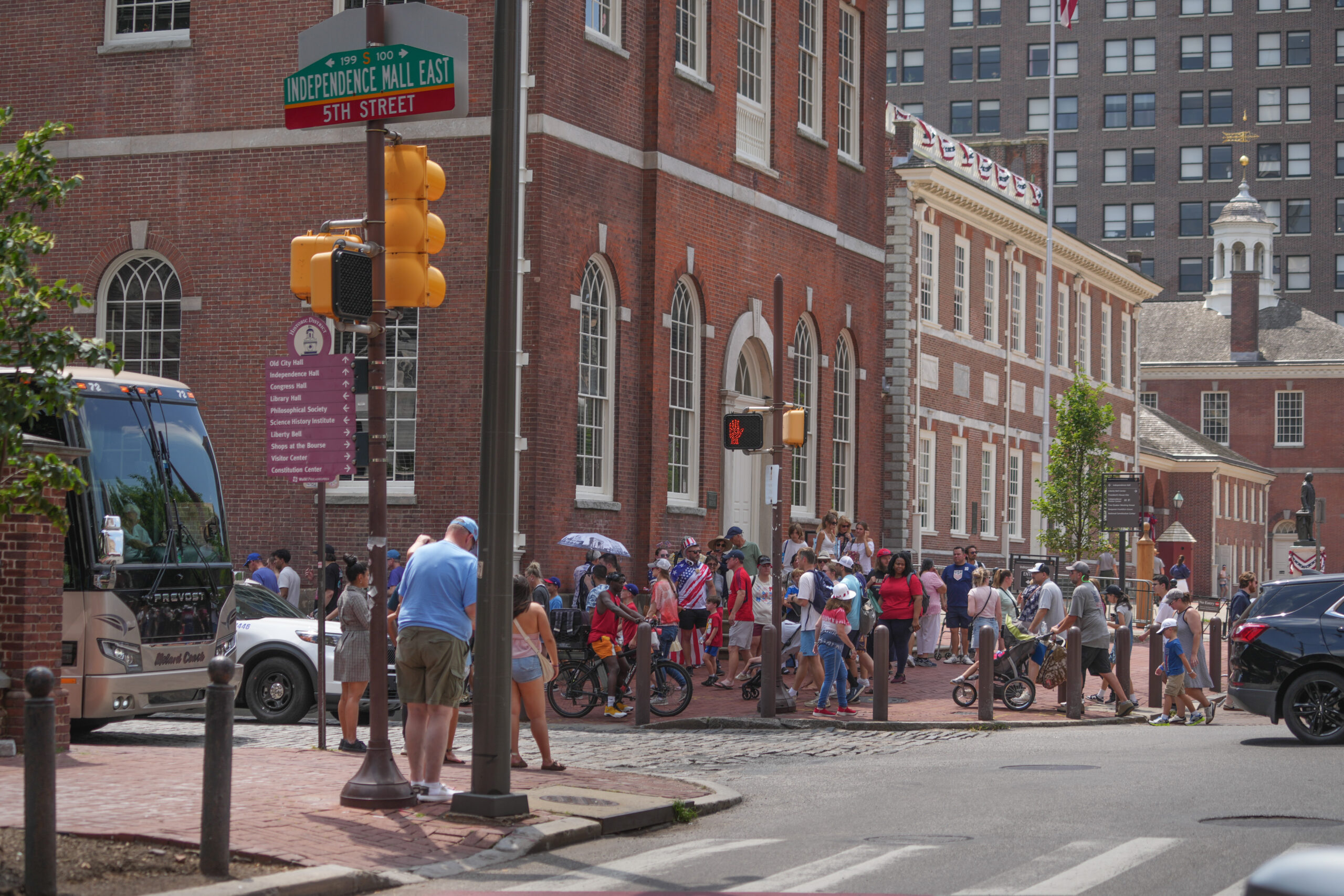
    Visitors to Independence Hall, in Philadelphia, July 3, 2026.

    This year, Ron Crofoot traveled to Philadelphia to be with his granddaughter as her marching band was supposed to perform at the parade. He reflected on what it was like to have celebrated the Bicentennial.

    “How quickly 50 years go by,” he said. “I won’t see the next — it gets more meaningful as you get older — you come to appreciate the uniqueness of the United States.”

    At Sixth and Market Streets, consternation was brewing: On an observed federal holiday, a Philadelphia-based federal appeals court gave President Donald Trump’s administration the final go-ahead to install its own exhibits at the contentious President’s House site, a memorial to the nine people enslaved by Washington there. The city quickly appealed, but the motion does not pause the administration’s ability to proceed.

    The rupture at the President’s House is just one part of the Trump administration’s ongoing campaign to purge history it says “inappropriately disparage[s] Americans past or living.”

    It wasn’t immediately known if federal authorities would attempt to install the panels during this historic weekend.

    In a video address, a block north at the National Constitution Center, Pope Leo XIV called for a “recommitment” to the nation’s ideals as he accepted the center’s prestigious Liberty Medal. The first U.S.-born pope has been outspoken about calls for international peace, which have landed him at odds with Trump’s immigration policies and the war with Iran.

    “I’ve never seen such patriotism in one place,” said Thad Waites, 81, who traveled from Hattiesburg, Miss., for the Semiquincentennial — and hear from Pope Leo XIV.

    Andrew McLaughlin, 68, of West Chester, recently returned from a trip to Chicago.

    “I think it brings back pride in the country,” McLaughlin said of the 250th anniversary.

    By Friday evening, Philly’s proclivity for wackiness was on full display when a crowd formed on Independence Mall, shouting “one more Ben, one more Ben” as men and women dressed like Benjamin Franklin walked through the plain-clothed masses.

    It wasn’t a catwalk, per se, but rather the Franklin stroll. The mob had gathered to find the Founding Father’s best doppelganger.

    “You have to make the event you want to see in the world, said organizer Elena Jackendoff, 32, who is a student at Johns Hopkins University. “I wanted to see 250 bald caps.”

    Opposite Market Street, thousands gathered to hear Pops on Independence. By the delayed-8 p.m. start time, the temp had fallen to a pleasant 89 degrees and the orchestra played on with featured Broadway star Idina Menzel.

    Last year’s Pops concert was cut short by rain. This year, the sky held dark clouds and some flashes of lightning, but the precipitation stayed at bay as Menzel made her appearance to a roaring audience.

    “There is something especially fitting about gathering here, surrounded by the places where the nation was born,” said Steven Sims, superintendent of Independence National Historical Park, told spectators stretched out on the lawn.

    Music, he said, “has always brought people together.”

    Staff writers Peter Dobrin and Nick Vadala contributed to this article.

  • To celebrate the nation’s 250th birthday, of course Philadelphia brought out the Ben Franklins for a look-alike contest

    To celebrate the nation’s 250th birthday, of course Philadelphia brought out the Ben Franklins for a look-alike contest

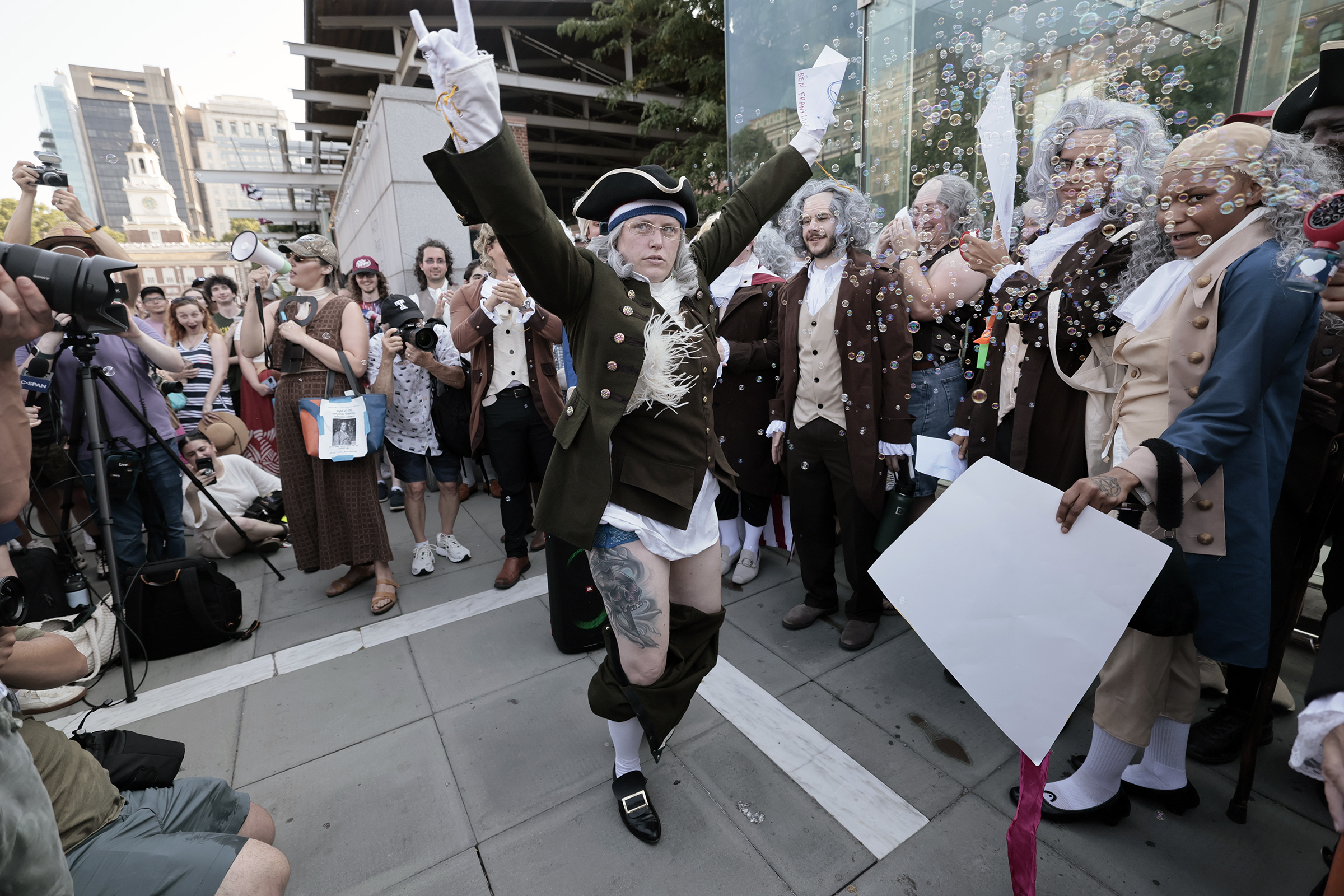
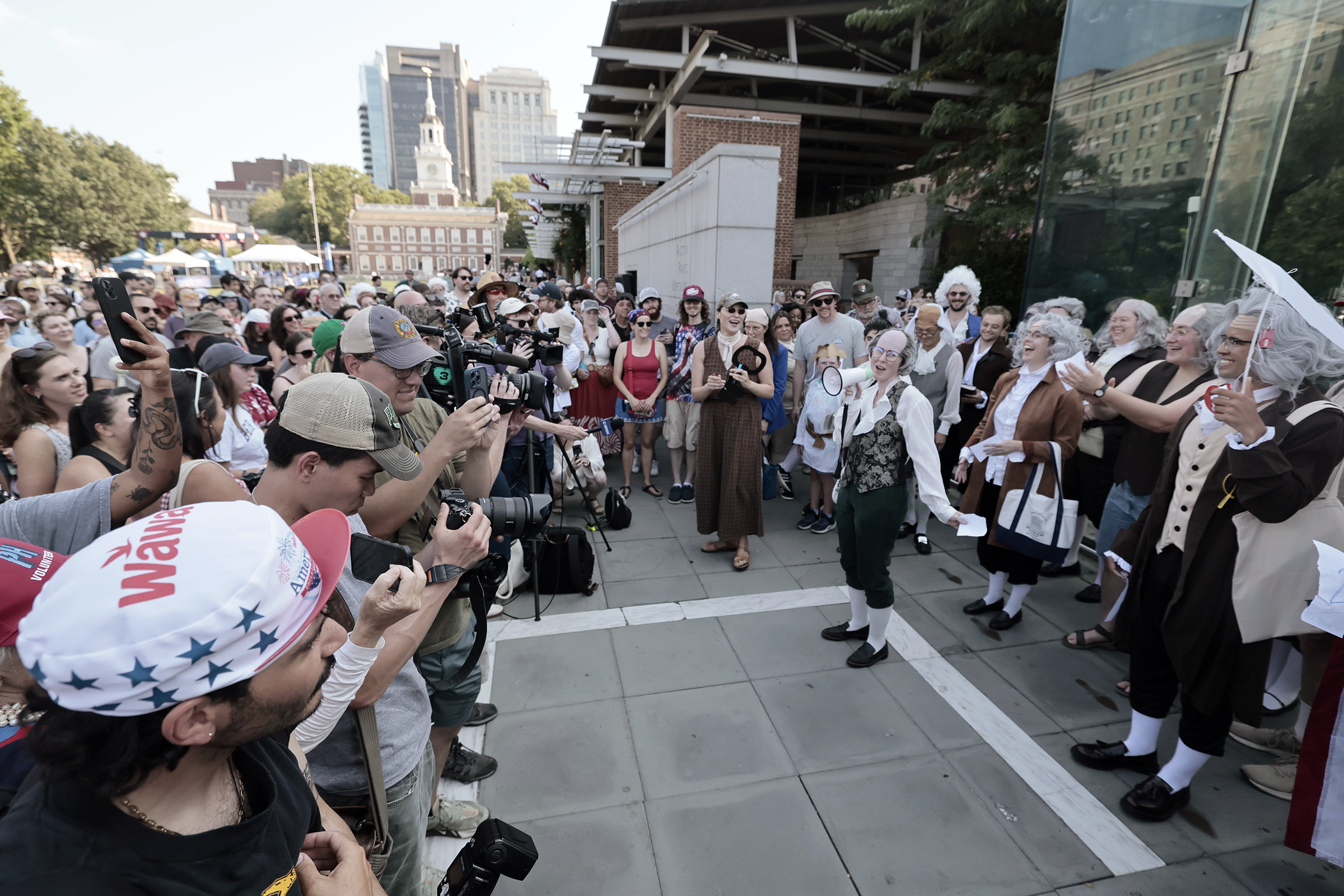
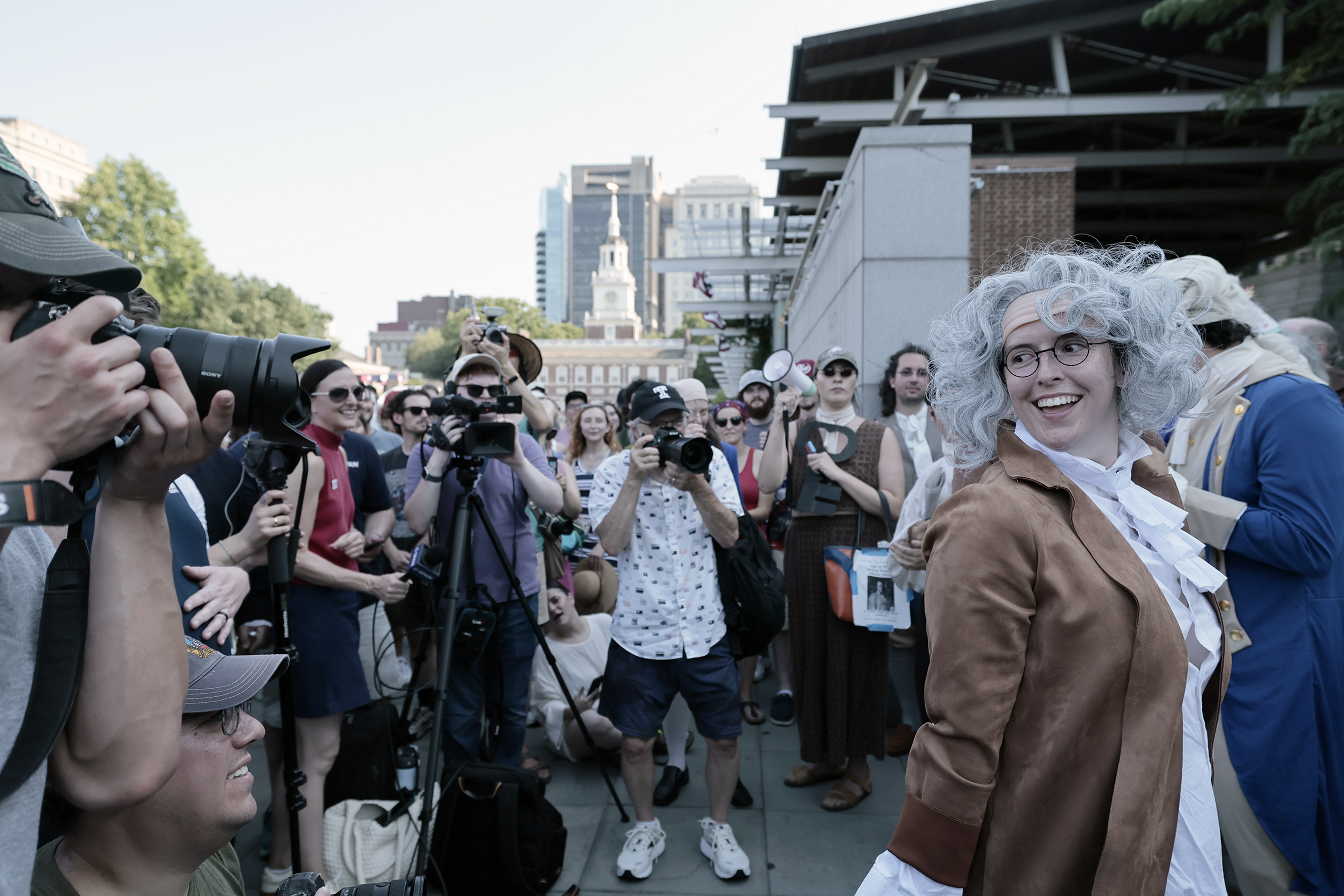
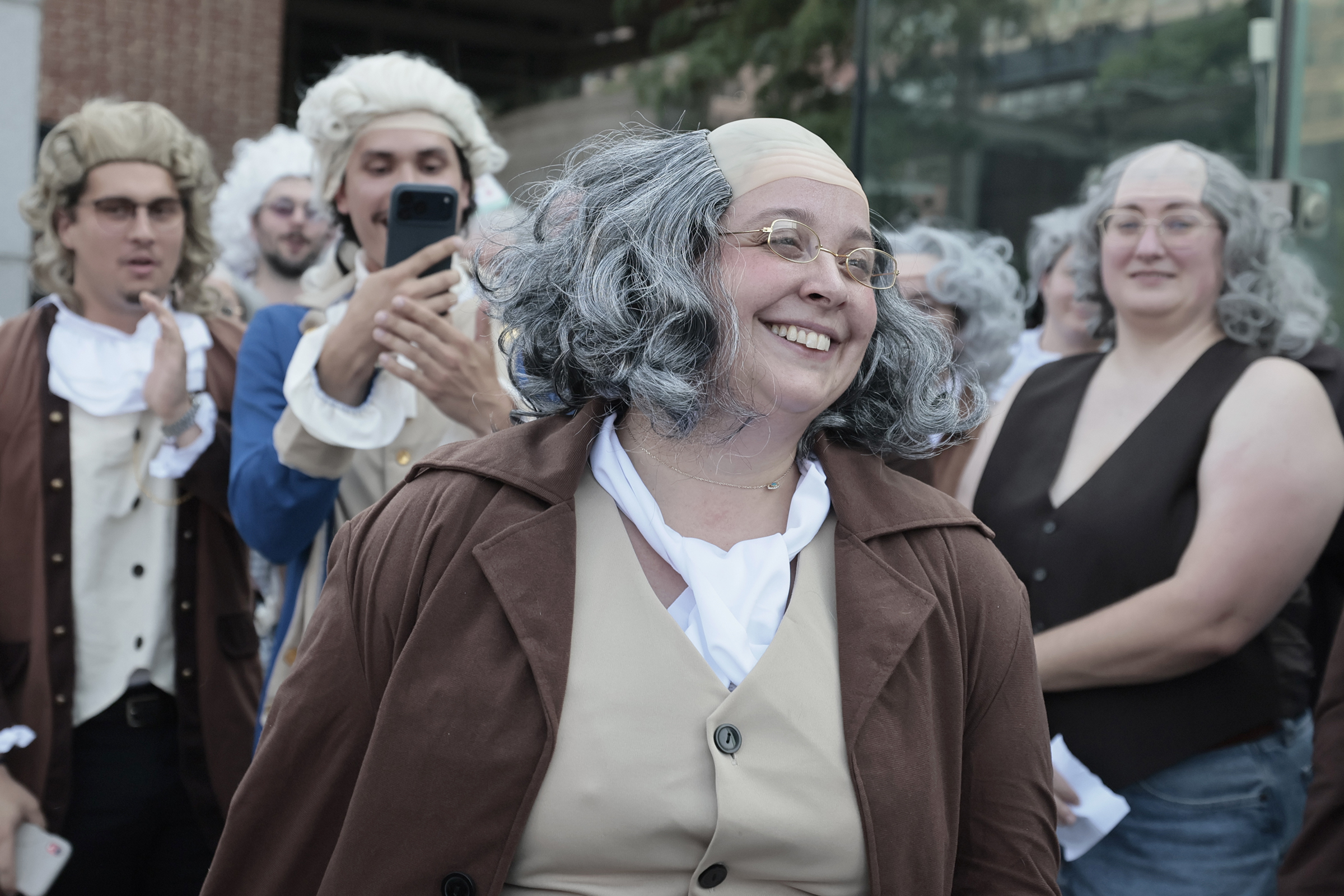
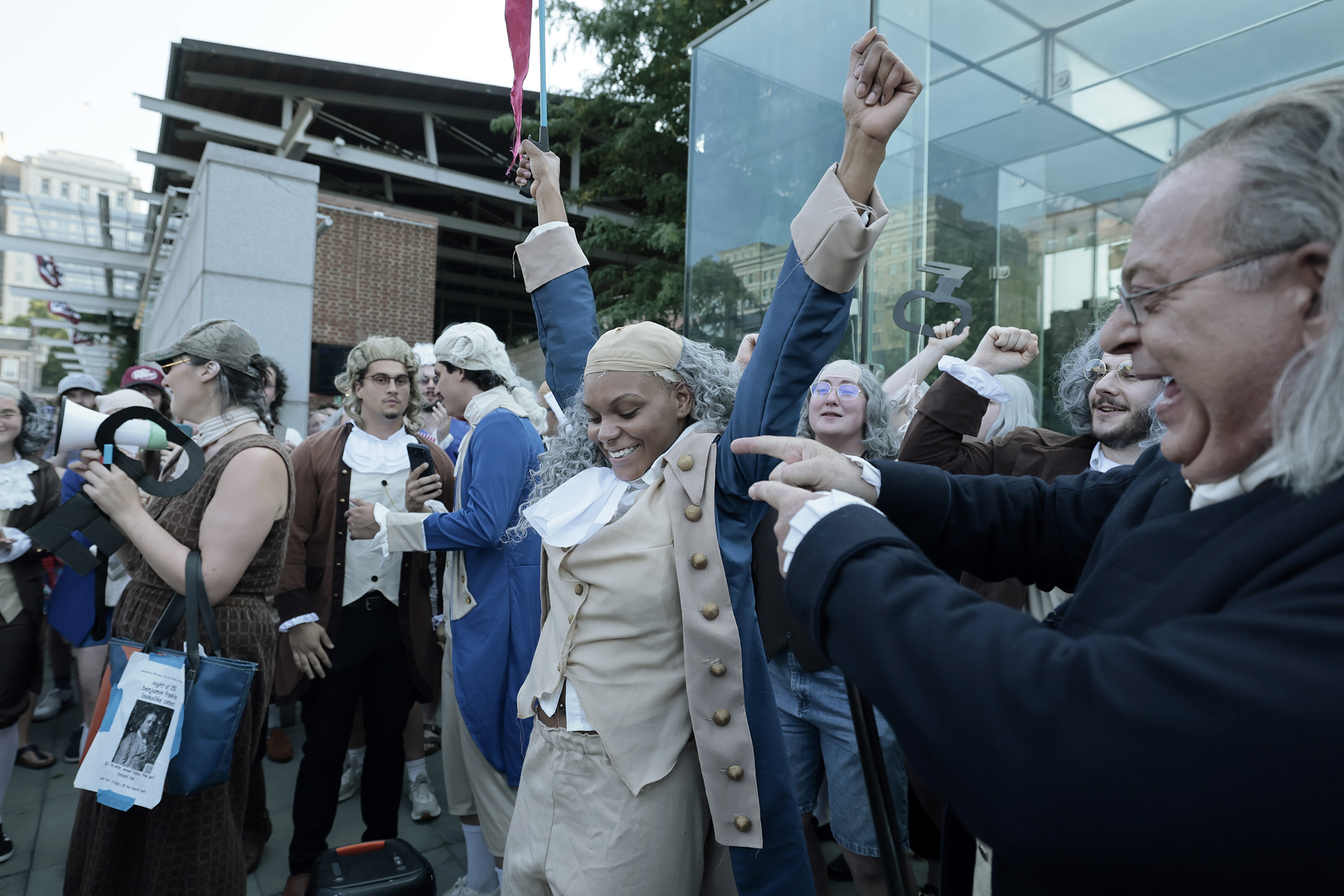
    At the Benjamin Franklin look-alike contest at Independence Hall, which was supposed to end early, the crowd enthusiastically shouted, “One more Ben, one more Ben.” Latecomers — men and women dressed like the famed Founding Father — walked through the crowd to the front.

    It wasn’t a catwalk, per se, but the Franklin stroll.

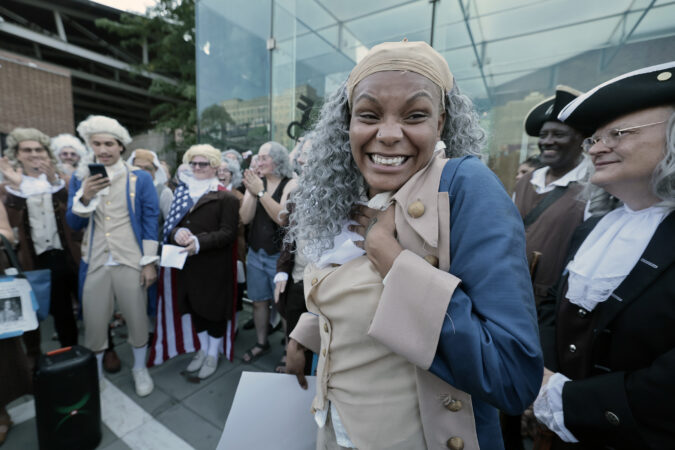
    Kiya Burgess, 25, was crowned the victor of the Franklin free-for-all.

    Elena Jackendoff, 32, a student at Johns Hopkins University studying public health, organized the event.

    “You have to make the event you want to see in the world,” she said.

    She organized the lookalike on a lark, making the flyers after her last final exam and pasting them across the city. She expected to see a few of her friends, not hundreds of people.

    Many of the Franklins — like Kara Peterschmidt, 25; Kyra Feinauer, 25; and Lauren Zwetzig, 24 — didn’t even have to go out to buy a costume. The friend group had hosted a Constitution-themed housewarming a while back and came dressed in the same white wigs and tops.

    Asked about the truest Ben Franklin expression, Peterschmidt said, “It’s definitely a mog.”

    One of the contestants shows off their legs.
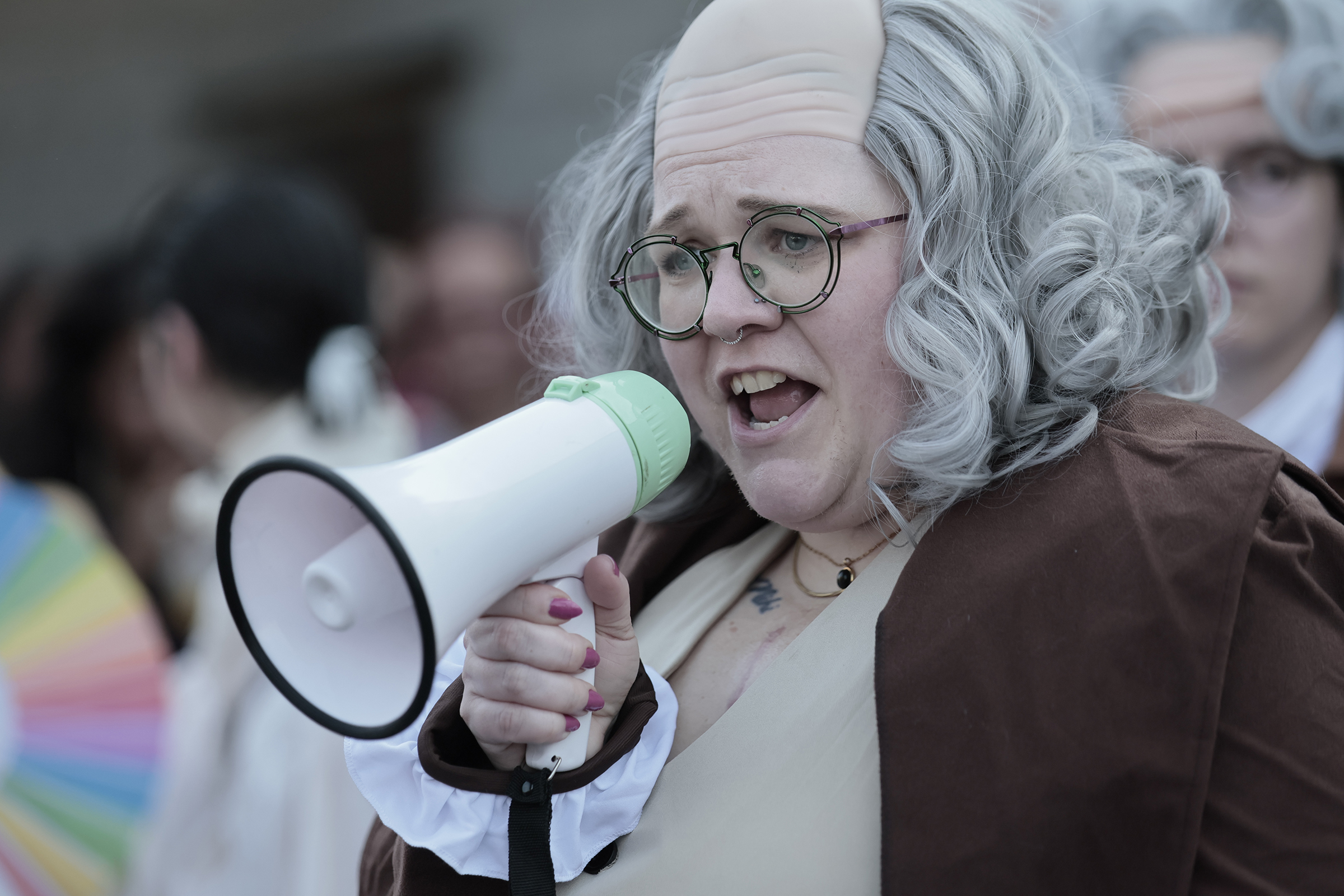
    Each contestant had to say why they were the best Ben Franklin.
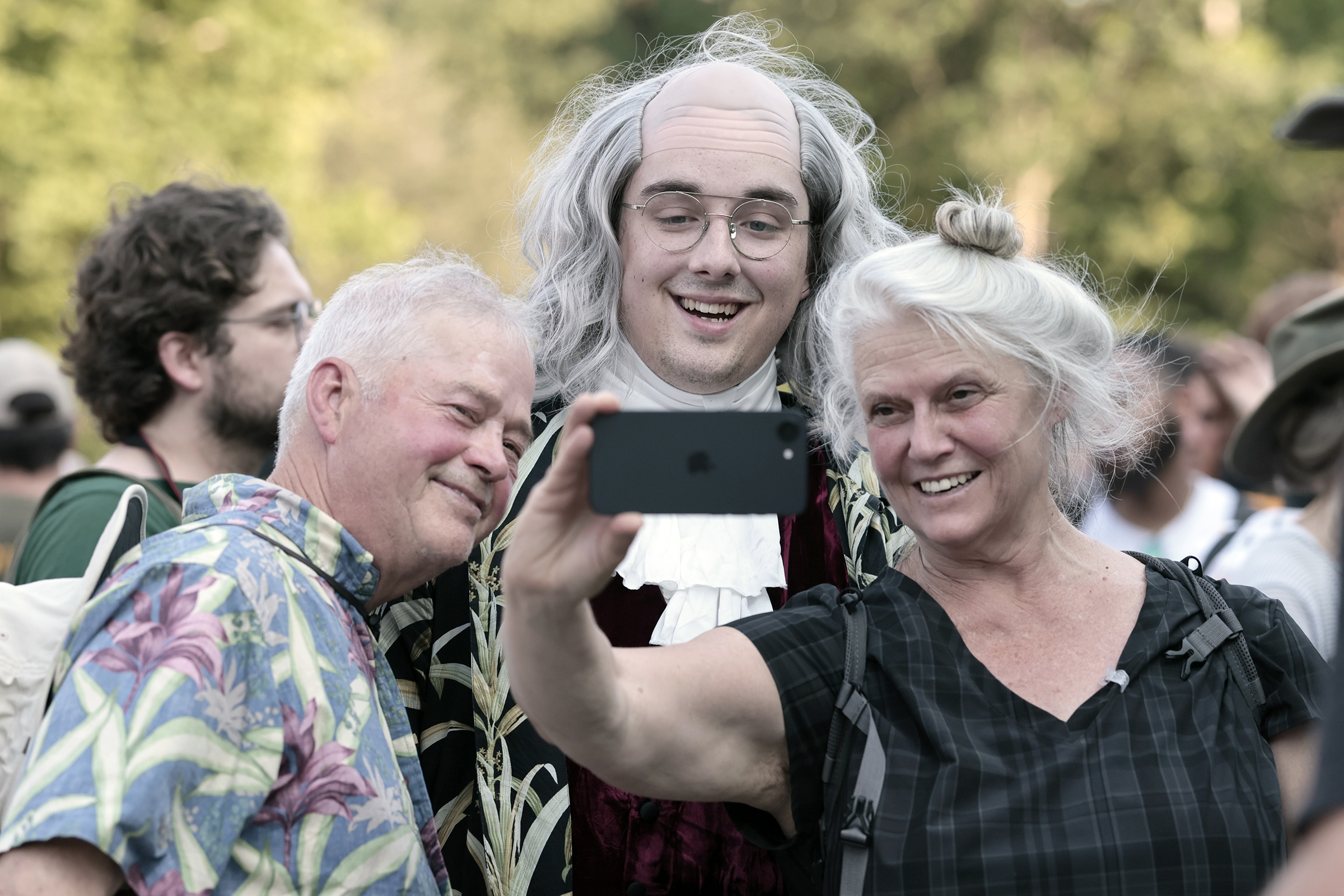
    Gene Backus (left) and Maria D’Agostino (right) of Anchorage, Alaska take a selfie with Ben Franklin (Gabriel Meyer) of Levittown.
    Contestants pose for the cameras.
    Contestants are all smiles in the Ben Franklin lookalike contest.
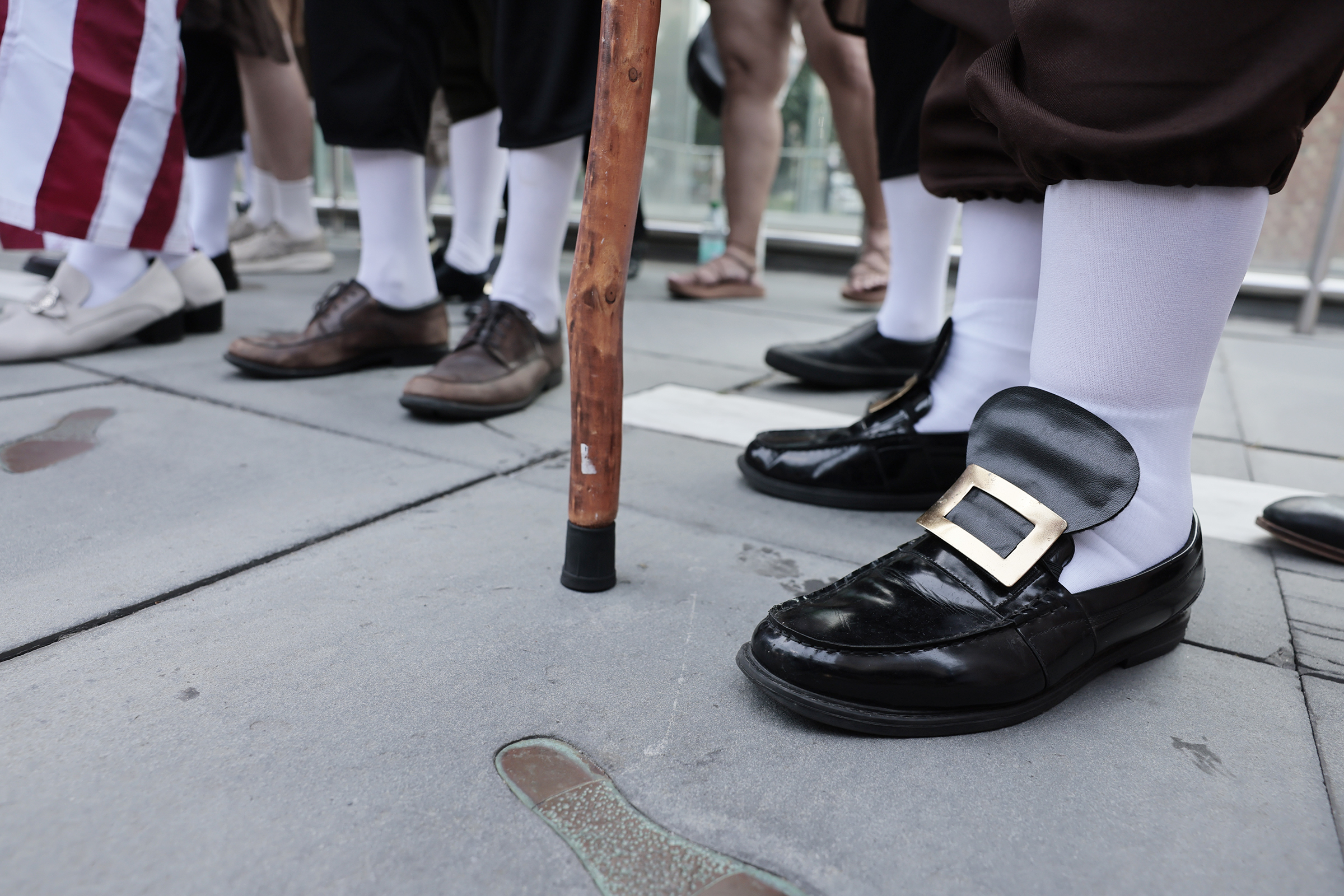
    Footwear worn by some of the contestants.
    Contestants explain why they were the best Ben Franklin.
    The crowd cheers for the contestants.
    Mitchell Kramer holds up the arm of contest winner Kiya Burgess of Philadelphia.
  • Democrat Bob Harvie sends cease-and-desist letter to Rep. Brian Fitzpatrick, claiming defamation in campaign ads

    Democrat Bob Harvie sends cease-and-desist letter to Rep. Brian Fitzpatrick, claiming defamation in campaign ads

    The Democratic nominee for a crucial swing seat in Pennsylvania is accusing the Republican incumbent of making categorically false and defamatory statements, the latest move as escalating attack ads circulate in the Bucks County district.

    Attorneys representing Bob Harvie sent a cease-and-desist letter to U.S. Rep. Brian Fitzpatrick, a five-term Republican incumbent facing a competitive reelection, and his campaign for a “series of defamatory allegations” that, they say, misleadingly portray Harvie’s role in an FBI investigation.

    A lawyer representing Fitzpatrick and his campaign confirmed receipt of the letter but did not respond to additional requests for comment.

    The advertisements purport that Harvie, a Bucks County commissioner, is currently under criminal investigation for stealing taxpayer money, assertions his campaign said falsely stem from a federal case that appeared to have quieted after the grand jury met in Philadelphia in 2022. The probe was about problems related to contracts, unions, and a Pennsylvania school district.

    Harvie is not and never was under investigation, his lawyers said, nor was he the subject of the federal case, but mailers and television spots continue to blur the lines.

    The election fights are ramping up as both men compete to win Pennsylvania’s 1st Congressional district in November, and with it, decide fate over which party controls the U.S. House. It’s one of four seats in the commonwealth being targeted by both political parties during the high-stakes midterm elections. Fitzpatrick has represented the area since 2017.

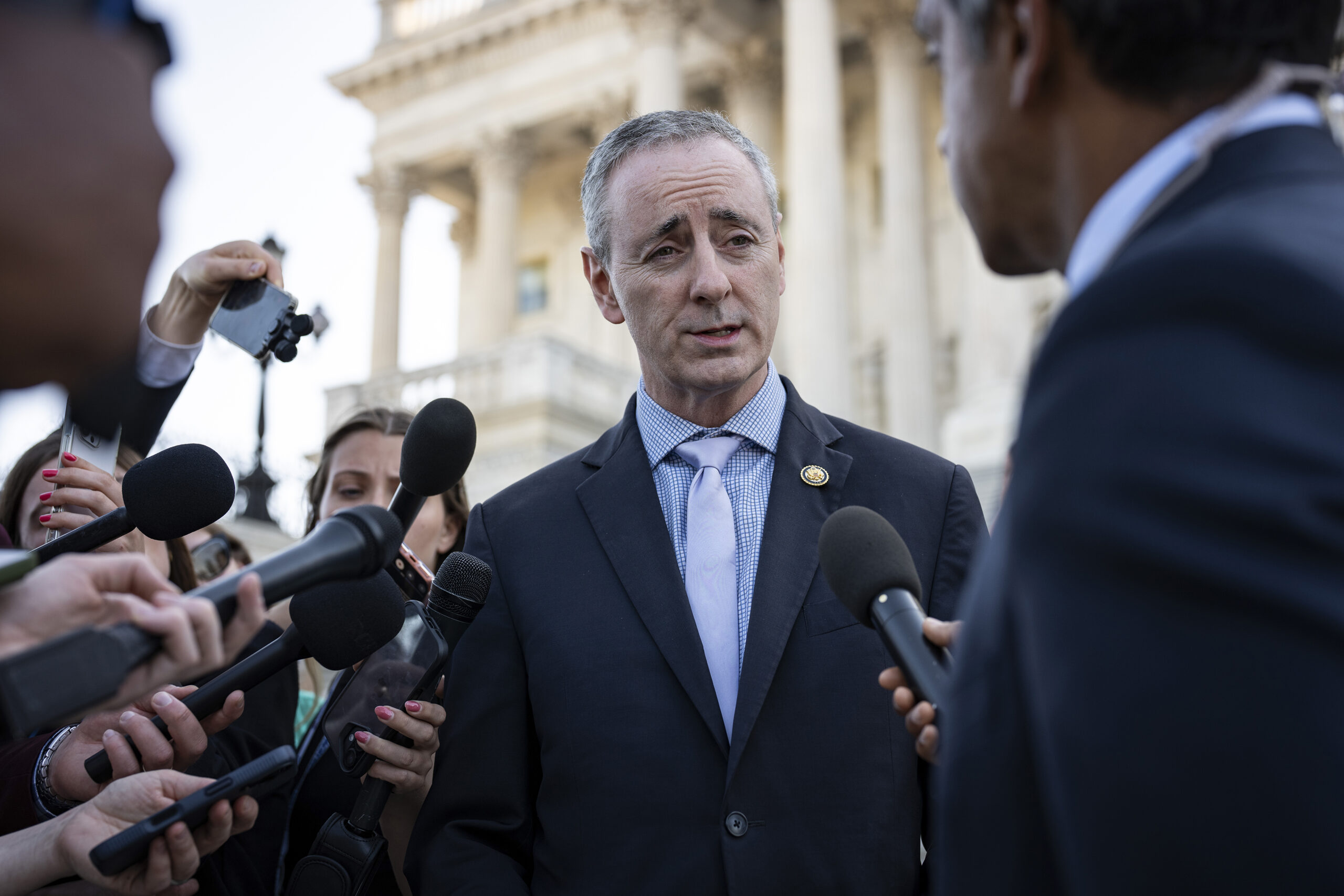
    Rep. Brian Fitzpatrick (R., Pa.) speaks to reporters on June 3 after the House passed an Iran war powers resolution.

    Harvie’s attorneys sent Fitzpatrick and his campaign the letter Thursday shortly after 5 p.m. and gave the campaign 24 hours to respond.

    “Brian Fitzpatrick’s lies are intended to deceive the voters and that’s a disgrace to this district,” Harvie said in a statement.

    Further action will depend on whether and how Fitzpatrick and his campaign proceeds, Harvie’s campaign said.

    Defending America PAC, a political action committee that supports Fitzpatrick, has also used similar language in social media posts, news releases, and video content that said Harvie is the subject of an FBI investigation. Harvie’s campaign sent Defending America PAC a cease-and-desist letter Thursday, too, around 9 a.m.

    In a statement, Chris Pack, president of the PAC, said further legal action from Harvie would be an effort “to chill protected political speech.”

    What happened with the FBI investigation?

    The FBI in 2020 interviewed several people with connections to Falls Township and the Pennsbury School District, LevittownNow reported in September 2022.

    Harvie and several other officials were among those who testified before a grand jury in the probe, which has not been active since 2022, the campaign said. But Harvie and his lawyers in the letter maintain he “is not now and has never been the subject of any criminal investigation” or stealing money from taxpayers to throw himself a party.

    Political advertisements, paid for by the Fitzpatrick campaign, suggest otherwise.

    In a television spot that has aired on three cable systems that run across the district since June 30, a man is seen asking, “Commissioner Harvie, why did you steal taxpayer money to throw yourself a party” while the words “BOB HARVIE UNDER FBI INVESTIGATION” are displayed on screen. His campaign committee, Brian Fitzpatrick for All of Us, paid for the ads.

    The letter also accuses Fitzpatrick, a former FBI agent himself, of “actual malice,” which would require proof in court that he made the advertisements with knowledge that the allegations were false or with reckless disregard to whether they were false or not.

    When similar charges were made in 2023 in a race for county commissioner, Harvie denied the claims as false.

    “There comes a line where you cannot straight up lie about folks,” said Dan McCormick, Harvie’s campaign manager.

    What other action could be taken?

    Harvie’s campaign could file a lawsuit claiming Fitzpatrick has defamed him, but that would involve likely months of subpoenas, depositions, and evidence gathering before the case potentially goes to a judge or jury — a process that could extend past November’s election.

    The Federal Election Commission, an independent agency in the U.S. government, oversees federal elections and campaign finance, but defamation is under the jurisdiction of courts, not the commission.

    The television stations that have aired the advertisements have also been alerted to the defamation claims, Harvie’s campaign said. The Federal Communications Commission, another independent U.S. agency, monitors communications by radio, television, wire, satellite, and cable. However, it also does not investigate or resolve defamation claims.

    It’s not uncommon for campaigns to trade cease-and-desist letters as elections heat up, and some are outright ignored.

    How much money has been spent on the campaign?

    A competitive U.S. House seat has drawn state and national attention, resources, and lots of dollars.

    Fitzpatrick entered April with $7 million already stored in the bank, allowing him to spend early on ads against Harvie — even before the Democrat won his May primary. Some of Fitzpatrick’s money went to attacking Harvie in his race against Lucia Simonelli, a grassroots candidate and climate policy expert.

    In total, Fitzpatrick has already spent $2.81 million from Jan. 1, 2025, to April 29, 2026, according to campaign finance reports — with roughly four months left to go before the campaign. During the entire 2024 campaign cycle, he spent $3.47 million.

    In addition to the FBI investigation ads, other TV hits and mailers have framed Harvie as a “career politician” who “voted to give himself a raise” and voted to count faulty mail ballots during a U.S. Senate recount, in violation of a state Supreme Court ruling.

    Prior to beginning his tenure as commissioner in 2020, Harvie was on the Falls Township Board of Supervisors for 17 years, and spent 12 of those as chair. As chair of the Bucks County Board of Commissioners in 2022, Harvie approved an annual 1% increase in salaries for commissioners and several other local offices.

    Fitzpatrick and the National Republican Congressional Committee have placed a joint ad buy starting Tuesday. This type of purchase was made more possible after the Supreme Court case, announced this week, that allows coordinated campaigns and direct campaigns to work more in tandem.

    Harvie, though, has his own stash of cash. He’s raised $1.45 million, according to campaign finance reports, and has released ads that connect Fitzpatrick to President Donald Trump’s agenda — even as the lawmaker has voted against Trump on numerous issues and earned his ire. The next financial disclosure will be released July 15, and Harvie’s campaign said it has now raised about $2 million.

    National Democrats have also thrown resources behind him, and the Democratic Congressional Campaign Committee has listed Harvie on its “Red to Blue” list as a key seat to flip.

    “This is a defining moment in this campaign: After nearly a decade in D.C., Fitzpatrick has been caught with egg on his face by resorting to the very kind of gutter politics that he pretends to stand against,” said DCCC spokesperson Eli Cousin.

    Harvie was one of four swing-districts Democratic candidates Gov. Josh Shapiro supported ahead of the May primary, as he looks to elevate the party in fall and help win control of Congress.

    Staff writer Fallon Roth contributed to this article.

  • On the United States’ 250th birthday, the nation is reminded who’s still in charge

    On the United States’ 250th birthday, the nation is reminded who’s still in charge

    For years, I and many others have looked forward to this week in Philadelphia, to be here in the city where our Declaration of Independence was written as our nation marks its 250th anniversary.

    But Mother Nature had other plans: She reminded us that we are not as independent as we’d like to think.

    Amid a 100-degree-plus heatwave, which was forecasted to continue through Saturday, numerous Seminquincentennial events were canceled. Yet locals and visitors persisted — with that consummate underdog Philadelphia spirit — and found small ways to come together to celebrate our ongoing American experiment.

    I first got the feeling things weren’t going to go as planned as I walked the streets while out reporting on the Red, White & Blue To-Do Thursday and noticed something missing — people.

    The crowds along the Red, White & Blue To-Do parade route were light and the audiences at WXPN’s music series — which featured 28 musicians playing at 11 historic venues — were even lighter. I was one of a dozen or so people in attendance at the Arch Street Meeting House for a free performance by the legendary poet and recording artist Ursula Rucker.

    Students from Dance4Life School of the Arts in Delaware perform during the Red, White, & Blue To-Do Pomp & Parade on Thursday.

    Not since the pandemic have I seen the sidewalks of Philadelphia as empty as they were Thursday, especially as the hours passed and the Salute to Service concert with Queen Latifah was canceled on Independence Mall.

    To the smart alecks on my social media feeds who responded to my observation with comments like “It’s 100 degrees! Of course they are empty you raging soup fork” — I know it was hot, spork, I was out there.

    I don’t blame anyone for not going outside in 103 temps, but that doesn’t mean I can’t feel bad for Philly, for those who did brave the heat, and for the visitors who came here to enjoy the festivities.

    And I know it must have been heartbreaking for officials to make the call to cancel Friday’s Salute to Independence Parade, which was to be the country’s largest Semiquincentennial parade featuring more than 240 elements and marching bands from across the country.

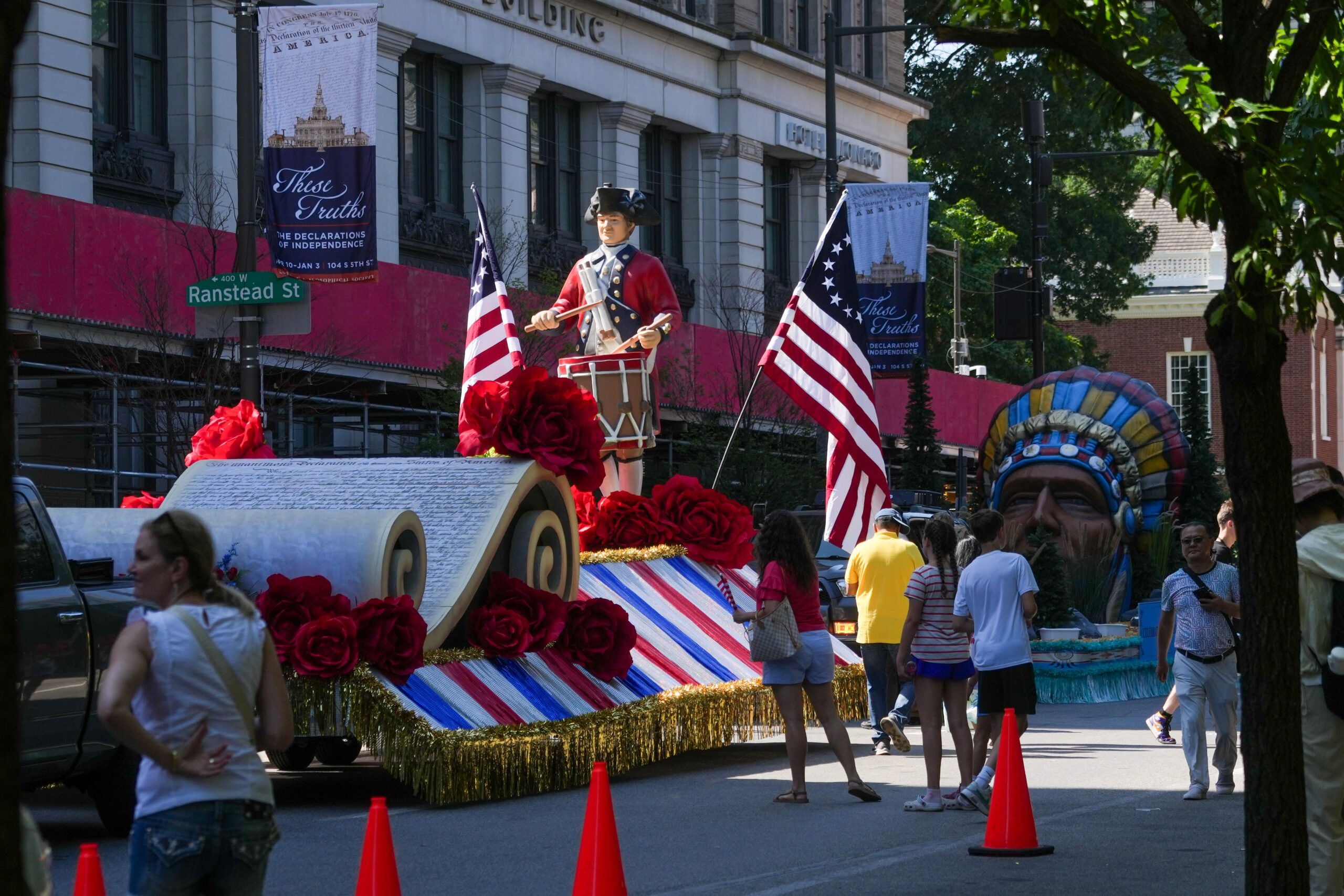
    Floats that were to be in the Salute to Independence Parade are pulled through Old City.

    People planned for years for the 250th. It was supposed to be the biggest week here since Pope Francis’ visit in 2015. We weren’t going to flub this Independence Day celebration up like the Bicentennial; Philly was going to bring it this time.

    But this time, it wasn’t our fault. The one factor nobody can control, Mother Nature, decided to control us.

    ‘Rough and gritty experiences’

    In May of 1776 it was so hot in Philadelphia that John Adams wrote to his wife, Abigail: “The Affairs of America, are in so critical a State, such great Events are struggling for Birth, that I must not quit this station at this Time. Yet I dread the melting Heats of a Philadelphia Summer, and know not how my frail Constitution will endure it.

    Not only did Adams’ frail constitution endure the heat, which dropped to 76 degrees by July 4, 1776, the other Founding Fathers and the people of this fledgling nation braved far worse to declare this country’s independence and create a new and monumental Constitution. Neither the people nor the product were perfect — and they still aren’t today — but they aspired to be something bigger and better.

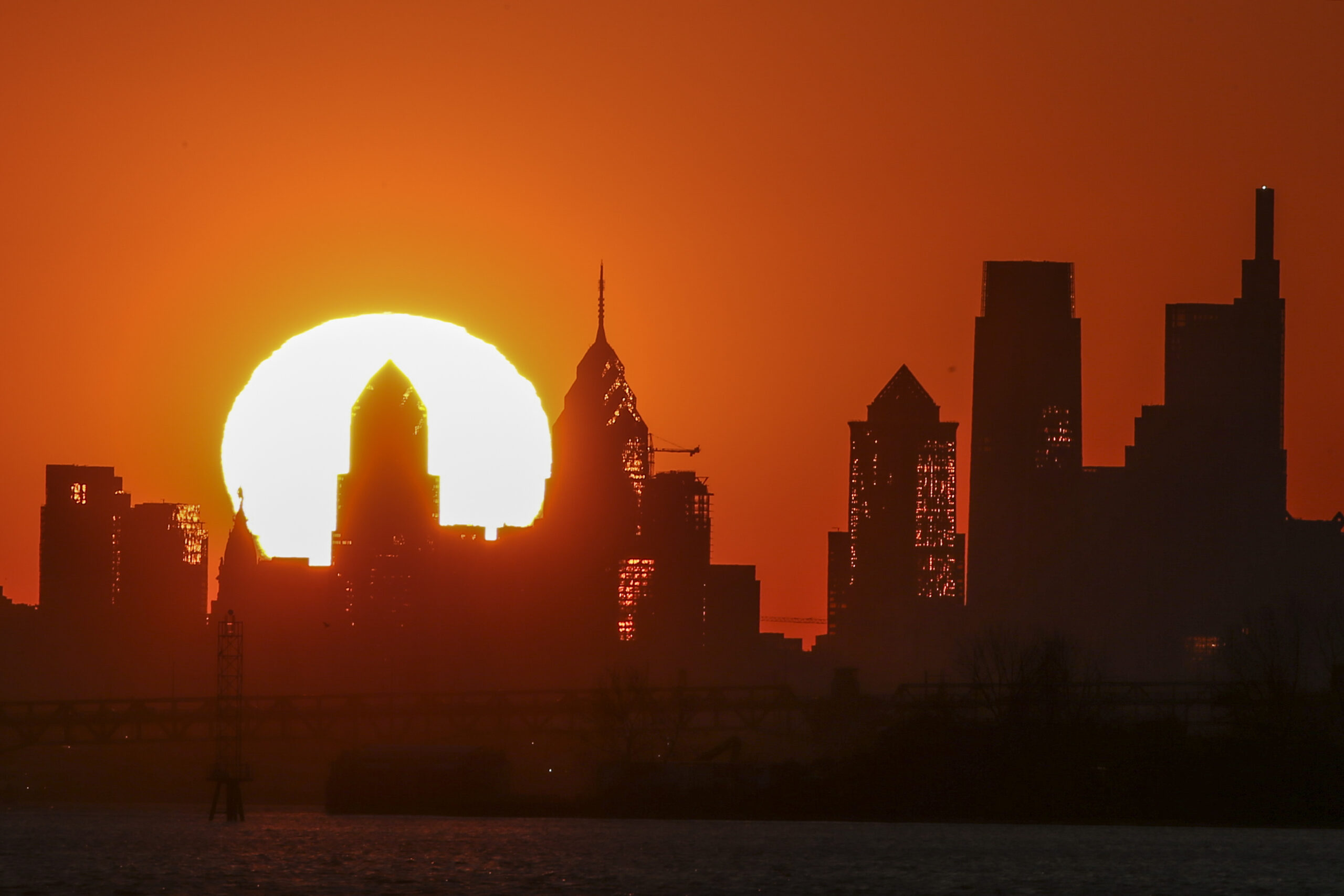
    The sun sets behind the Philadelphia skyline.

    In Philadelphia, we still believe in things bigger than ourselves. Sure, a large majority of the time it’s the Eagles, but not always.

    We believe in each other. I see it everyday in small interactions between strangers. We believe in truth, even when it’s painful. I saw it as volunteers put up handwritten signs Thursday to replace the ones removed at the President’s House. And we believe we are capable of big things. I saw it in the planning of our 250th events.

    It wasn’t just officials who were invested in the Semiquincentennial, more than 10,000 Philadelphians volunteered to undergo training and be “Phambassadors” for the 250th events and the World Cup. These may be divisive times, but it was clear we, the people, still wanted to come together.

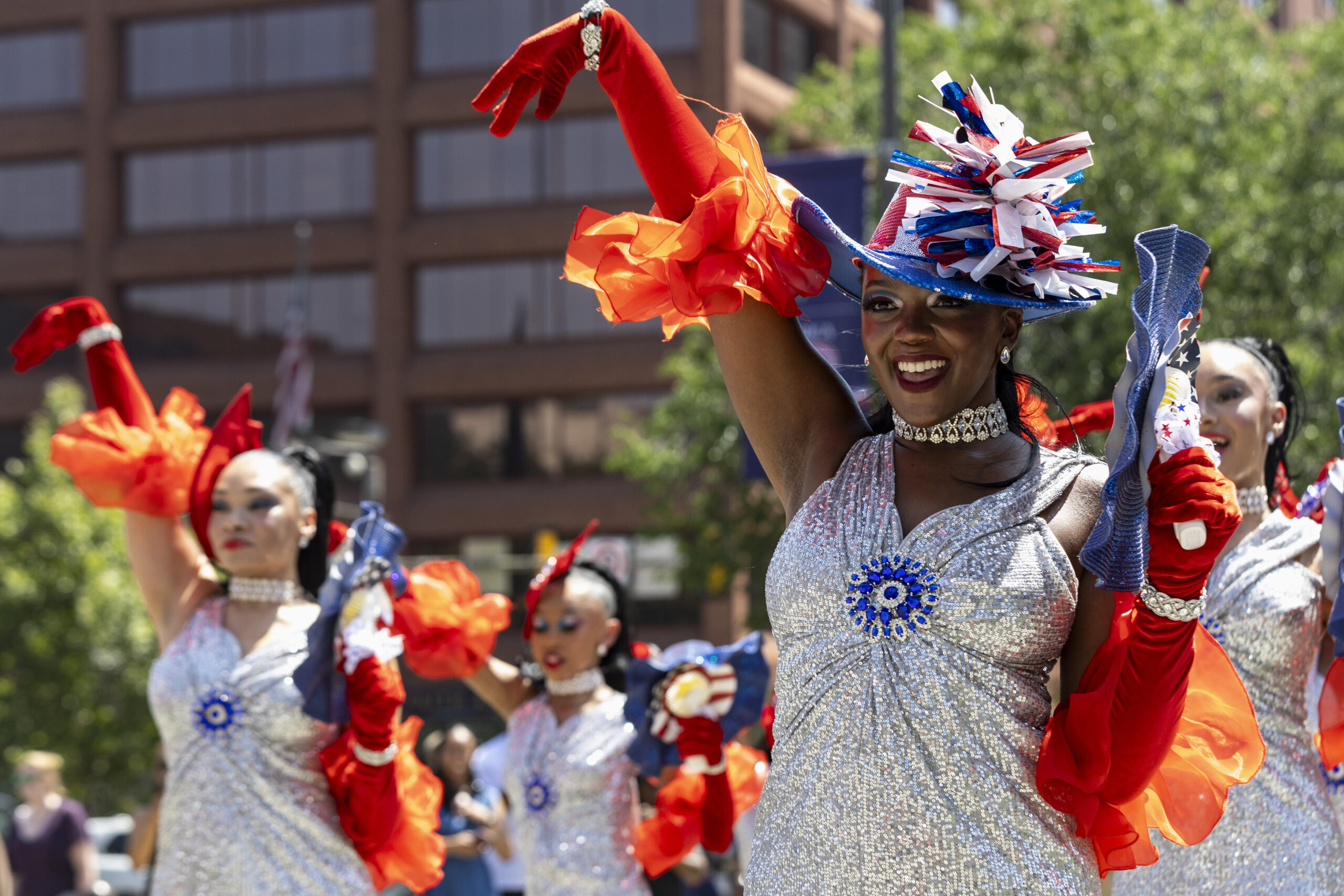
    Even after Friday’s parade was canceled, people persisted and came together in informal gatherings, because that’s what we do. Marching bands, color guards, and dance troupes from across the country held informal pop-up performances at air-conditioned locations across the Historic District and colonial reenactors staged an unscheduled parade near the Liberty Bell.

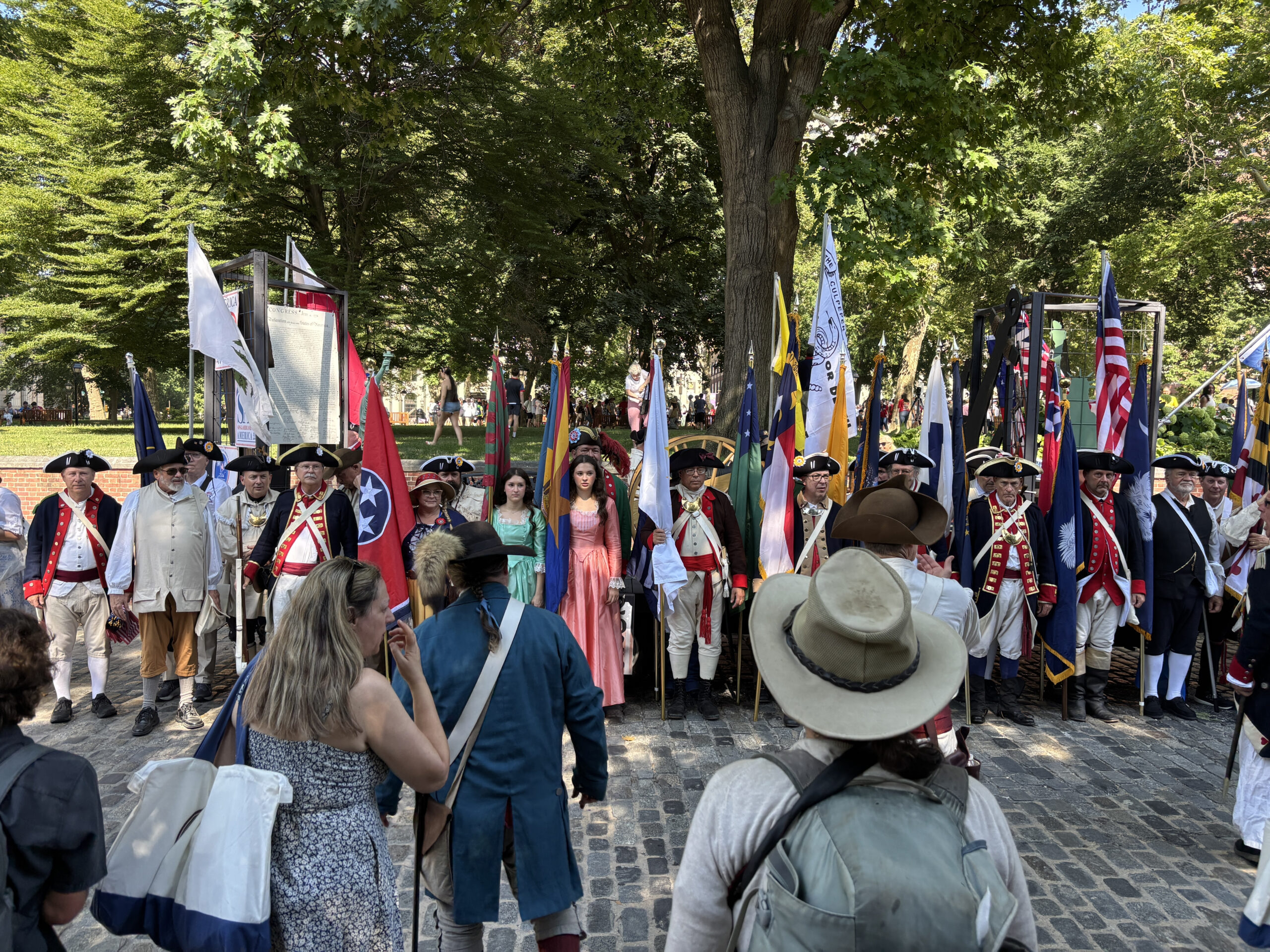
    With the Salute to Independence Semiquincentennial Parade cancelled reenactors muster near Independence Hall.

    Just because Mother Nature decided to show her hand and remind us who’s boss — which she is totally within her right to do (thanks so much for not hitting us with an astroid!) — doesn’t mean it was all for nothing. We still had those small moments with each other, and while they’re not as flashy as the big ones, in the whole of existence, they’re still pretty unlikely and special too.

    I had one of those moments during Rucker’s show at the Arch Street Meeting House. It felt like a gift to be part of such a small audience as I listened to her beautifully explore what it means to be a human and a Philadelphian.

    Philly legend and poet Ursula Rucker performs with Miles Orion for a crowd of about a dozen people at the Arch Street Meetinghouse Thursday as part of WXPN’s Red, White & Blue To-Do Music Series.

    [image or embed]

    — Stephanie Farr (@farfarraway.bsky.social) July 2, 2026 at 5:18 PM

    “At the core I love us,” she said. “We show mutual aid. We don’t judge. We have rough and gritty experiences.”

    This heat wave — temperatures were forecast to reach 104 Friday and just short of 100 Saturday, with a 60% chance of storms at night — is one of those rough and gritty experiences Philly will get through. The cancellation of events, while disappointing, is about mutual aid and concern, not just for those who would attend the celebrations, but for those who have to work them too.

    Instead of cursing Mother Nature for ruining our big birthday party, maybe Philly and the country can take heed and make a new declaration that we’ll become a leader in reducing factors that lead to global warming.

    I know, a girl can dream, but respect and deference to the one thing that truly governs us all seems like a pretty self-evident truth.