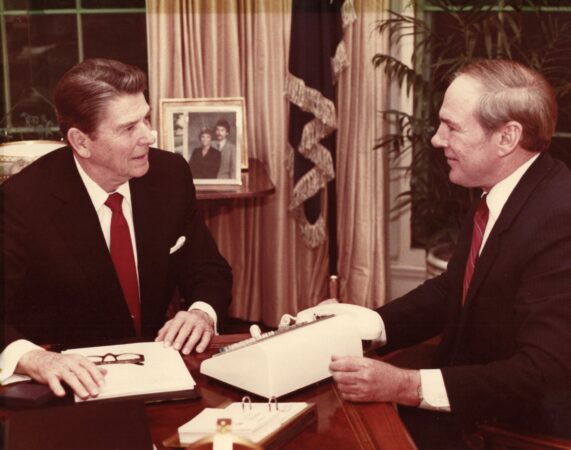
Former U.S. Rep. Richard “Dick” Schulze, a Republican who represented the Philadelphia suburbs from 1975 until 1993, died last week at the age of 96.
Mr. Schulze, who served in the Pennsylvania General Assembly before running for Congress, died of heart failure in his home in the Washington, D.C., area on Dec. 23, according to a news release from his wife, Nancy Shulze, and former chief of staff Rob Hartwell.
During his first term in the U.S. House, Mr. Schulze led the charge to make Valley Forge, seven miles from his home at the time, a national historical park. President Gerald Ford signed the legislation Mr. Shulze authored into law on July 4, 1976, the nation’s bicentennial.
By the time he retired from the House in 1993, Mr. Schulze was a member of the powerfulHouse Ways and Means Committee. He spent his whole congressional career in the political minority, retiring shortly before Republicans retook the chamber in 1994 for the first time since the mid-50s.
“He knew what he believed and he stood for what he believed but he was not, he was not partisan,” Nancy Schulze said in an interview withTheInquirer Tuesday.
Mr. Schulze’s former employees described him as tough but fair, demanding a lot of his staff but offering them the space to achieve it.
“You really had to be at the top of your game,” said Tim Haake, a former attorney in Mr. Schulze’s congressional office who had reconnected with him in recent years. “Overall he was a very nice man, very polite, very cordial.”
Mr. Schulze,Hartwell said, “probably taught me more in my life than anybody.”
Hartwell remembered his former boss as a man willing to work across the aisle in a way that is less common in today’s politics. Mr. Schulze founded the Congressional Sportsman Caucus and served on the National Fish and Wildlife Board among other posts focused on wildlife.
Serving in the minority throughout his career, Hartwell said,Mr.Schulze was willing to make deals and work for the benefit of his district, which included portions of Montgomery, Delaware, and Chester Counties.
“He was a man of his word and he was a man who wanted to accomplish things for his district and his constituents,” Hartwell said. “Unlike today he would reach across the aisle to get those things done.”
Mr. Schulze unsuccessfully proposed a constitutional amendment imposing term limits of 18 years for members of the House of Representatives. Although the proposal did not advance, Mr. Schulze himself chose not to seek reelection in 1992 after serving 18 years in office. He went on to work as a lobbyist for a conservative firm.
“He did not cling to his role as a congressman and he did not go to occupy a seat,” Nancy Schulze said.
Nancy Schulze and Dick Schulze were married following the 1990 death of his first wife, Nancy Lockwood Schulze, after a battle with cancer, and the death of her first husband, Montana Secretary of State Jim Waltermire.
In addition to his wife, Mr. Schulze is survived by four children, seven grandchildren, and five great-grandchildren.
Nancy Schulze remembered her husband as a gentleman, an Eagle Scout who lived by the scouting oath and was dedicated to loving and serving his country, state, district and family.
“He was a man of dignity,” she said.
Services to honor Mr. Schulze are scheduled for Saturday Jan. 10 at 2 p.m. at the Great Valley Presbyterian Church in Malvern.
Tianna Williams didn’t finish high school after becoming a mom at 16. As a teen dropout, she began flipping cars to make money, and by her late 20s, her car sales acumen led her to open a dealership in Lehigh Valley that grossed over $1 million in annual sales.
An opportunity to get a line of credit with one of the nation’s largest banks turned Williams’ dream into a nightmare, she said, which led the 30-year-old to file a lawsuit.
M&T Bank opened a fraud investigation into Williamsin spring 2023, says the suit filed in Common Pleas Court in Philadelphia in March. The bank inappropriately informed her financial partners that her business could be illegitimate, the complaint says. The bank froze her account, her partners cut ties, and her checks bounced. Williams’ growing businesses crashed.
The investigation found no fraud, M&T lawyers said in a September hearing. But Williams says the damage was done.
The complaint says the Black entrepreneur was a victim of the bank’s “racist and overzealous fraud investigator” who tormented the business owner for weeks. The investigator told Williams “you people” have ways of making fraudulent behavior seem legitimate, the suit says.
Despite eventually finding no fraud, the investigator shared an email with a colleague,signed with a smiley-face emoji, saying “doing my best to not let her win on my watch.”
“She killed my self-esteem,” Williams said of the investigator. “I lost all financial security.”
The phenomenon of Black people being treated with suspicion by financial institutions has been dubbed “banking while Black” and has a history going back at least to the 1930s, when red lines on maps labeled majority-Black neighborhoods as unworthy of mortgages. More subtle variations of the practice have continued into the 21st century, resulting in settlement agreements for millions of dollars.
Williams’ rags-to-riches story began in 2012, when she became pregnant at the age of 16. Her mother had recently been diagnosed with cervical cancer, and the family barely scraped by. After dropping out of high school before completing 10th grade, Williams learned how to flip cars from auctions with the help of a mentor she met through Facebook.
Her first car: a 2002 Lincoln that as a 17-year-old she sold the next day for a $700 profit.
The young hustler with a knack for sales got her auction license a couple of years later. She kept selling cars on Craigslist and through other social media connections. In 2018, she began working at an auto dealership. She learned the trade and became especially good at working with people who had low credit scores.
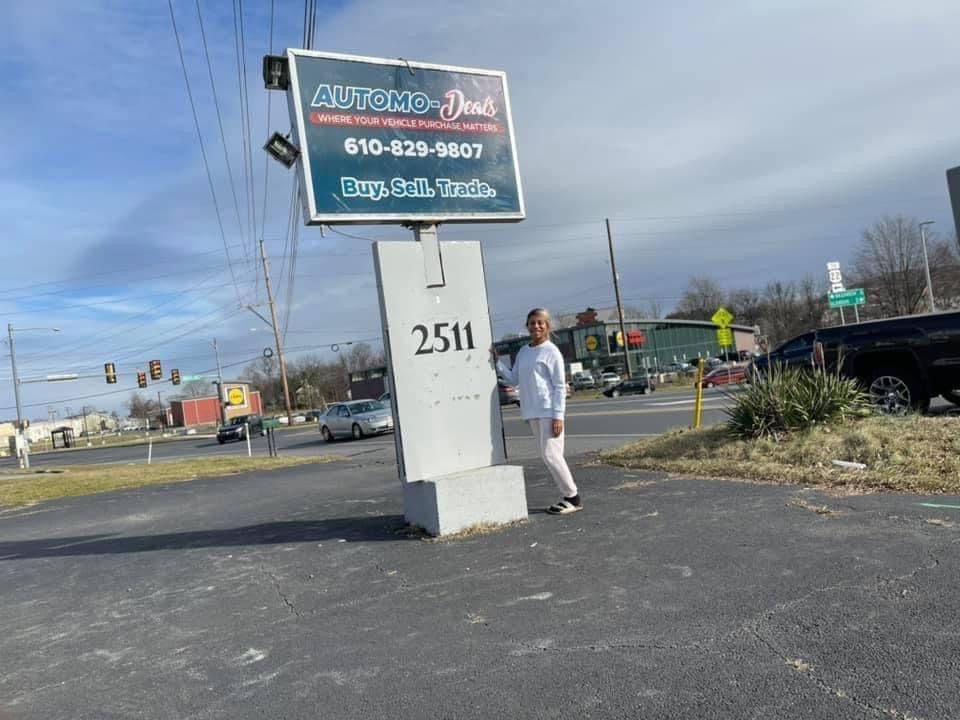
Williams’ cut from each sale at the dealership was a fraction of the overall profit, so she decided to go it alone. She bought a lot in Easton in 2020 and set to work. The cars she sold became newer and more expensive.
Tianna Williams next to the sign of her car dealership in Easton.
To sell cars for more than a couple of thousand dollars, Williams needed to offer financing options. She got her banking license and contracted with lenders. Her business was booming and she was planning to open a second location.
That’s when Shazard Mohammed from M&T reached out, the complaint says. He offered Williams a line of credit that would allow her to take her business to the next level, and she transferred her accounts to the bank.
Within days, Williams’ lenders contacted her to say they could no longer offer her financing because she was being investigated by M&T for fraud. Nearly overnight, she was without a business while owing about $200,000 in business and tax debts.
“M&T BANK basically told me that they suspected you of fraud,” one business partner told Williams in a text message, according to the complaint. “If that’s not true, then somebody really has it out for you.”
Records fight
The bank is now fighting in court to keep documents related to the investigation secret, despite an attorney representing M&T saying in a September hearing that “there was no finding of fraud,” according to a transcript.
M&T said in that hearing that Williams was investigated because of “red flags,” such as misspellings on checks that were immediately withdrawn as cash, and that the investigation lasted only seven days.
Common Pleas Court Judge Paula Patrick sanctioned the bank’s lawyers in October for their failure to produce documents and ordered them to pay nearly $8,000 in attorneys’ fees. The judge also found that most records should not be sealed. M&T is appealing the ruling.
Dean Malik, the attorney representing Williams, frames the case as a fight of David vs. Goliath. By issuing sanctions, he said, the judge reminded large entities that in court the playing field is leveled.
“The judge is sending a message that it doesn’t matter if you are a billion-dollar bank and have two law firms representing you with five lawyers, you are still bound by the orders of the court,“ Malik said.
Williams now cleans houses with her mother to support her family financially. She said her self-esteem has been shattered, and she hasn’t set foot inside a bank out of fear since her business closed in 2023.
“There is nothing else I know how to do,” Williams said. “All I know is cars.”
Philadelphia is on track to record the lowest number of fatal overdoses in nearly a decade in 2025, according to preliminary state data.
State officials reported 747 overdose deaths in the city as of Dec. 23. The city last recorded fewer than1,000 deaths in 2016, when 907 people died of overdoses.
window.addEventListener(“message”,function(a){if(void 0!==a.data[“datawrapper-height”]){var e=document.querySelectorAll(“iframe”);for(var t in a.data[“datawrapper-height”])for(var r,i=0;r=e[i];i++)if(r.contentWindow===a.source){var d=a.data[“datawrapper-height”][t]+”px”;r.style.height=d}}});
Likewise, overdose deaths are dropping in Pennsylvania, with a 29% decline in deaths reported statewide between 2023 and 2024, according to preliminary data from the state.
Preliminary data for 2025 indicate that deaths are also on track to decline again across the state, with 2,178 overdoses reported as of Dec. 23, according to state data. In all of 2024, the state recorded 3,340 overdose deaths.
window.addEventListener(“message”,function(a){if(void 0!==a.data[“datawrapper-height”]){var e=document.querySelectorAll(“iframe”);for(var t in a.data[“datawrapper-height”])for(var r,i=0;r=e[i];i++)if(r.contentWindow===a.source){var d=a.data[“datawrapper-height”][t]+”px”;r.style.height=d}}});
City officials in Philadelphia said there are slight differences in how the state and the city report overdose data and could not comment extensively on the state figures. But the city’s own data also show dramatic drops in deaths in the last several years.
As recently as 2022, deaths in the city had soared to their highest-ever rate. But they decreased slightly in 2023.
Citing preliminary data from 2024, Philly Stat 360, a city-run database that tracks quality-of-life metrics, reported 1,064 overdose deaths — a 19% decrease in fatal overdoses from the year before. The city has not yet released its own statistics for 2025.
“My first reaction to hearing these numbers is absolute joy,” said Keli McLoyd, the director of the Philadelphia Overdose Response Unit (ORU). “With that said, the number should be zero. Every overdose is preventable. Every single one of those lives lost is a person.”
State officials said their work to expand overdose prevention efforts and ease entry to treatment has contributed to the dramatic drops in deaths. Still, they said, there is more work to be done.
“Even with the overall decreases, we are still losing too many people — mothers, fathers, sons, daughters, grandparents, grandchildren — to overdose,” said Stephany Dugan, a spokesperson for the Pennsylvania Department of Drug and Alcohol Programs.
She added that all Pennsylvanians “deserve equal and equitable access” to addiction treatment.
Decreases in overdoses in Philadelphia
Discerning the cause of the dramatic drops in overdose deaths can be difficult, city officials say.
“We have to acknowledge that it’s a huge, huge change, and so we really are hopefully doing something right. But I think it’s going to be very hard, if not impossible, to say that one thing resulted in this massive reduction in fatal overdose deaths,” McLoyd said.
Still, efforts at the state and local levels to increase access to naloxone, the overdose-reversing drug, likely made a difference, she said.
A number of local advocates in the addiction medicine field have speculated that there is still much to learn about how the COVID-19 pandemic affected overdose rates, said Daniel Teixeira da Silva, the director of the Division of Substance Use Prevention and Harm Reduction at the Philadelphia Department of Public Health.
“When we look at the [overdose] increases after 2016, leading up to COVID, we can tie that to the introduction of fentanyl to the [drug] supply,” he said Monday, referring to the synthetic opioid behind most of the city’s fatal overdoses.
“When you look at the increases from 2020 to 2022 — this is where I just don’t think we know enough yet. It’s hard to say COVID didn’t impact [deaths]. We look at what was going on at the time, contributors to more risky substance use such as people losing employment, the isolation,” Teixeira da Silva said.
Likewise, he said, policy changes that came about during the pandemic, such as easing some restrictions around opioid addiction medications, could be contributing to a drop in deaths now.
“Maybe we’re seeing benefits of the policies enacted during COVID,” he said.
A changing drug landscape
On Philly Stat 360, city officials said fentanyl still drives nearly all of the opioid overdose deaths in the city.
But about 70% of deaths involved a stimulant like cocaine or methamphetamine in 2024. And about half of the city’s fatal overdoses that year involved both stimulants and opioids.
Taking stock of the drop in overdose deaths, city officials noted the success of a 2024 program at the ORU to deliver naloxone, the opioid overdose-reversing drug sold under the brand name Narcan, to households in neighborhoods seeing a high number of overdoses.
They included neighborhoods in North Philadelphia, where overdose deaths had risen over the last several years. Across the city, Black and Hispanic communities had seen high rises in overdoses — but neighbors often reported receiving fewer resources to address them.
Workers assigned to the naloxone initiative knocked on 100,000 doors offering the medication and access to addiction treatment. In some neighborhoods, up to 88% of neighbors who answered their doors accepted some kind of resource from staffers, according to a city report on the program. McLoyd also helmed an effort to ensure all city fire stations had naloxone on hand.
“We’re sharing those messages that this is a tool for everyone, not just people who use drugs or people who love those who use drugs,” since some people may hide their addiction from others, she said.
This year, the city launched another campaign to educate residents about the risk of heart disease from stimulant use. Eighty percent of overdose deaths among Black Philadelphians in 2023 involved a stimulant, and about half of the Black Philadelphians who died of an overdose between 2019 and 2022 had a history of cardiovascular disease.
“We see opioid-stimulant [overdose deaths] decreasing, but stimulant-only [overdoses] being really persistent,” Teixeira da Silva said. “Stimulant overdoses are not reversed by Narcan,” so it is important to help vulnerable residents understand the specific harms caused by stimulants.
As overdoses decrease in the general population, McLoyd said, it is crucial to maintain outreach efforts toward groups that have seen rising overdoses in recent years, like pregnant people and teens in the juvenile justice system.
“Within certain populations, overdoses are still disproportionately high. We want to develop programs that speak specifically to those populations,” she said.
City officials have also hailed the Riverview Wellness Center, a 234-bed recovery home that offers supportive services to people who have completed a 30-day stay in inpatient treatment.
But Mayor Cherelle L. Parker’s administration has faced criticism from advocates for people in addiction over her decision last yearto slash funding for syringe exchanges. Critics have also decried City Council legislation that regulates mobile medical services for people with addiction, requiring permits to offer care and limiting operating hours and locations in some neighborhoods.
Teixeira da Silva said that the city is using the legislation to more effectively coordinate care for people with addiction. He said his division has been involved in the new permitting process for mobile services to “get them approved as fast as possible to ensure there isn’t a gap in access.”
Statewide initiatives
Across Pennsylvania, the state’s Overdose Prevention Program handed out more than 415,000 doses of naloxone in the first six months of 2025, said Dugan, the Pennsylvania Department of Drug and Alcohol Programs spokesperson.
Those doses helped reverse more than 6,100 overdoses, Dugan said earlier this month.
The state also distributed 437,000 test strips to help drug users detect fentanyl and xylazine. The animal tranquilizer contaminated much of Philadelphia’s illicit opioid supply starting at the beginning of the decade and can cause severe skin wounds that sometimes lead to amputation.
Authorities credited efforts to increase access to treatment in rural counties and to decrease wait times for addiction treatment, implementing a “warm handoff” program that allows patients to transfer directly from hospitals to addiction treatment.
More than 22,000 Pennsylvanians were offered addiction treatment from hospitals in the first 10 months of 2025. Nearly 60% of people who received referrals accepted them, state officials said.
Advocates say that the state’s focus on programs to prevent overdoses has paid off.
“I’m really impressed and grateful for the state and their investment in harm-reduction programs,” said Sarah Laurel, who heads the Philadelphia-based addiction outreach organization Savage Sisters.
But as the drug supply changes, she said, it is vital for health officials to collect more data on other harms of drug use besides overdoses.
For example, medetomidine, another powerful animal tranquilizer not approved for human use, has supplanted xylazine in Philadelphia’s illicit opioid supply.
It causes intense withdrawal that has flooded emergency rooms with patients suffering from dangerous spikes in blood pressure and other heart complications. Some doctors have raised concerns that patients undergoing medetomidine withdrawal risk brain damage from high blood pressure.
Medetomidine was detected in about 15% of all fatal overdoses in Philadelphia between May 2024 and May 2025, according to preliminary city data obtained by The Inquirer this fall.
“It’s great they’re distributing naloxone at the rate they are. However, we have not really seen a ton of data on the complications that this polychemical substance wave is causing for people,” Laurel said.
“It’s a big area where we can look into the people we’re serving and the way their lives are being impacted by drugs.”
Teixeira da Silva said that city officials successfully pushed federal officials this fall to institute new medical billing codes for xylazine use and related amputations, a crucial step to allow hospitals to better track harms from the drug. They are hoping to do the same for medetomidine and its withdrawal symptoms.
“I definitely agree that we need a broader perspective in terms of the harms caused by drug use beyond death,” he said. “Of course, death is the worst harm. That has to be a metric that we continue to monitor and work toward zero.”
Marsha Levick took her seat at a conference table at the Juvenile Law Center on a recent Wednesday for what would be one of her last meetings. She walked colleagues through the basic principles of the United Nations Convention on the Rights of the Child, the 1989 treaty that laid out, in clear terms, what the world said it owed young people.
At the heart of the treaty is a simple idea: A child’s best interests come first — even when that child enters the justice system. It has been ratified by all but one of the U.N.’s member nations: the U.S. And in many of those 196other countries,Levick said, children younger than 14 cannot be prosecuted at all.
“Wait,” a staffer interjected. “Kids younger than 14 aren’t in the justice system?”
“I know,” Levick said. “It’s very different.”
Marsha Levick, chief legal officer and cofounder of the Juvenile Law Center, speaks with staff on Dec. 17.
For 50 years, Levick, 74, has been one of the most persistent and influential voices in the American juvenile justice system, a driving force in turning what was once a niche legal specialty into a national civil rights movement. Colleagues credit her with helping to rewrite how courts view children — persuading judges, including those on the U.S. Supreme Court, to treat youth not as miniature adults but as citizens with distinct constitutional protections and needs.
Levick will step down Wednesday from her position as chief legal officer of the Juvenile Law Center, the Philadelphia-based organization she helped build from a walk-in legal clinic in 1975 into a national leader in children’s rights.
Her departure coincides with the center’s 50th anniversary. At a celebration gala in May, the nonprofit honored Levick with a leadership award that recognized her body of work.
Levick’s career ranged from representing individual teenagers to steering landmark litigation that forced states to overhaul abusive practices. She helped lead the Juvenile Law Center’s response to the “kids for cash” scandal in Luzerne County. She coauthored briefs in a series of U.S. Supreme Court victories that throttled the harshest punishments for kids, including life in prison.
But Levick is also stepping down at what she calls a “dark moment” forcivil liberties in America — a time when rights once thought settled are being rolled back.
Levick was in law school in 1973 when the U.S. Supreme Court handed down Roe v. Wade, the landmark decision that recognized a constitutional right to abortion. In the years that followed, a constellation of rights — from marriage equality to access to contraception — also expanded.
Roe was overturned, however, in 2022. Since then, other decisions have also chipped away at affirmative action in colleges and LGBTQ+ protections.
“It’s hard to convey the shock that it imposes,” Levick said in a recent interview. “Now, 50 years later, you’re pushing the rock back up the hill.”
She made clear she was unsparing with herself, quick to point out what she perceived as shortcomings. “There were high moments for sure,” she said. “But I am not foolishly happy about that. I’m shocked that that’s all we could do. That’s as far as we got.”
Yet even as fresh battles loom, colleagues say the groundwork Levick has laid will guide the Juvenile Law Center’s mission and the broader fight for children’s rights for years to come.
Jessica Feierman, the center’s senior managing director, will step into Levick’s role. “It is a huge privilege and also an immense responsibility,” she said. “In this moment of attacks on civil rights and children’s rights, it’s even more vital that we build on the victories of the last 50 years.”
From Philadelphia to the U.S. Supreme Court
Raised in Philadelphia’s Fairmount neighborhood, Levick discovered early the charge of using her voice, first as a girl who demanded a recount in an elementary school election and won the presidency, and later as a teenager who inhaled The Feminine Mystique and the feminist writers who followed. She earned an undergraduate degree from the University of Pennsylvania and a law degree from what is now Temple University Beasley School of Law.
She cofounded the Juvenile Law Center in 1975 with three law school classmates: Bob Schwartz, a classical music aficionado and part-time semi-pro baseball umpire; Phil Margolis, a vegetarian and free spirit; and Judy Chomsky, a mother of two and passionate Vietnam War resister.
Seven years earlier, the U.S. Supreme Court had ruled that juveniles were entitled to due process. That decision cracked open an untapped field, Levick said, to buildwith her classmates a new kind of civil rights practice focused on children.
For the first year, they worked out of the Chestnut Street office of Chomsky’s husband, a cardiologist, carving out space in his waiting room and sidestepping an exam room on the days he saw patients.
In its earliest years, the center took on individual cases for children. One of Levick’s first clients was in Montgomery County, a teen girl who had participated in a protest at a nuclear plant and who was arrested and charged with trespassing, she said.
But the center struggled financially. The founding partners laid themselves off at one point, Levick said, so they could keep paying the few employees they had hired: a divorced mother who worked as a receptionist; their first lawyer, Anita DeFrantz, who was an Olympic rower; and a social worker.
In 1982, Levick quit the center to become the legal director of the national NOW Legal Defense and Education Fund, now Legal Momentum. By the time she left there six years later, she had become its executive director.
At the NOW Legal Defense and Education Fund, Levick said, she learned how to build national cases — coordinating multistate litigation and filing amicus briefs in federal courts. By the time she returned to the Juvenile Law Center in 1995, after a stint at a small Paoli firm, she had come to believe that individual wins, while necessary, would not be enough to create lasting change.
The center’s mission became more focused on appellate litigation and national advocacy, setting the stage for children’s rights to reach state supreme courts and, eventually, the U.S. Supreme Court.
Hundreds of juveniles resentenced, released
In 2005, in Roper v. Simmons, Levick cowrote in a brief that social science research on youth development should inform constitutional law. Children, she also wrote, have a greater capacity to change.
“We just pushed ourselves into the center of it,” Levick said. “We were like, ‘We’re here. We’re writing the amicus brief.’”
The high court overturned decades of precedent when it ruled in Roper that the Eighth Amendment forbids the death penalty for juveniles. Five years later, in Graham v. Florida, it barred life-without-parole sentences for juveniles in non-homicide cases, after reading another brief Levick coauthored.
In 2012, Levick helped persuade the court to end mandatory life-without-parole sentences for youths convicted of homicide in Miller v. Alabama. And in 2016, she served as cocounsel in Montgomery v. Louisiana, the case that made the Miller decision retroactive across the country.
Since then, hundreds of juveniles — including nearly 500 in Pennsylvania — have been resentenced or released from prison. One of them: Donnell Drinks, freed in 2018 after 27 years.
The first time Drinks met Levick, he hugged her. “I couldn’t believe how small she was, because of her presence, her legal prowess, has all been so enormous,” recalled Drinks, who works as a leadership and engagement coordinator at the Campaign for the Fair Sentencing of Youth.Levick is 5-foot-3.
Those cases brought Levick into courtrooms across the state, often alongside public defenders. One of them, Bradley S. Bridge, a retired Philadelphia public defender who worked with her on dozens of resentencings, called Levick a “zealous advocate” who “always saw the big picture.”
Her ability, he said, “to think toward the future, I think, was most glorious.”
Levick agreed that looking ahead had always been part of her work. “We always tried to look around the corner,” she said.
One of those moments came in 2008, when she and her colleagues began fielding troubling calls from Luzerne County — the first hints of what would become the “kids-for-cash” scandal.
Seeing more in the ‘kids-for-cash’ scandal
In 2007, Laurene Transue called the Juvenile Law Center. Her daughter, 14-year-old Hillary Transue, had been ordered to serve three months in a detention facility after she created a Myspace page mocking her school principal, she said at the time.
“We saw in that one phone call something that was clearly much bigger,” Levick said.
In fact, it was one of the most egregious judicial corruption cases in modern American history: Two Luzerne County judges had accepted kickbacks in exchange for sentencing thousands of juveniles — many for minor misbehavior — to extended stays in private detention centers.
“It was kind of like, if I may, what the f— in my mind,” Levick recalled.
Levick and the center petitioned the Pennsylvania Supreme Court, which ultimately threw out and expunged thousands of adjudications. They later helped families pursue civil damages, with the help of other firms. The judges, Mark Ciavarella and Michael Conahan, were convicted of federal crimes and sentenced to long prison terms; President Joe Biden commuted Conahan’s sentence in 2024.
Hillary Transue now serves on the Juvenile Law Center’s board.
Transue told The Inquirer that as a teenager she believed that “highly educated” adults in “positions of authority” were “mean, nasty people who were out to hurt you.” But Levick, she said, “brushed up against my perception of adults” and proved her wrong.
“I think she’s a goddamn superhero,” Transue said recently.
Marsha Levick (center) stands with staffers at the Juvenile Law Center earlier this month.
Among the successes, Levick still sees failures
Despite the victories, Levick is quick to cite the cases she lost. “I’ve had successes. I’ve also failed many times,” she said.
She still thinks about clients like Jamie Silvonek, sentenced to 35 years to life in prison after killing her mother, whose early release Levick has fought for but has not yet won, or a recent bid to expand parole access for people convicted as juveniles that fell flat in Florida.
Those losses have hardened her view of how deeply punishment is embedded in American law. “I feel like punishment is in our bones,” she said. “The way that we think about crime is that it is always followed by punishment.”
That instinct, she said, has left behind people who could have thrived outside prison — including juvenile lifers who will never be released. One of them is Silvonek, whom Levick described as brilliant and warm. “I want her to be able to share that warmth and joy with her family and with her community, who are all behind her,” Levick said.
“We lost what they had to give,” she added.
Levick isn’t done yet
Levick, who is married with two adult daughters, is not leaving the field. She will become the Phyllis Beck chair at Temple’s Beasley School of Law, a post once held by her cofounder Bob Schwartz, and will teach constitutional law to first-year students.
She feels newly urgent about the course. “I am outraged at the degree to which the law has been perverted by the current moment, and I think I still can say and do something about that,” she said. “I think that the things that motivate me include outrage.”
She expects much of the future progress in youth justice to come from state supreme courts rather than the U.S. Supreme Court — a shift she sees as pragmatic, not pessimistic. Washington State Supreme Court Justice Mary Yu, who has heard Levick argue successfully before her, called her a fearless litigator. “She’s an extraordinary appellate lawyer,” Yu, who is also retiring Wednesday, said in an interview.“It’s almost instinctual to her.”
And even now, Levick said, she has hope.
“We’re not going to abolish the juvenile justice system in America, but we could transform it radically,” Levick said. “I believe that. But it takes more than just lawyers to care. It takes more than the community to care. It takes people in positions of power to care. And that’s the hard part.”
Correction: An earlier version of this article misstated the name of a legal advocacy group at which Levick worked. She worked at NOW Legal Defense and Education Fund. The story also misstated the year Laurene Transue called the Juvenile Law Center; she called the law center in 2007.
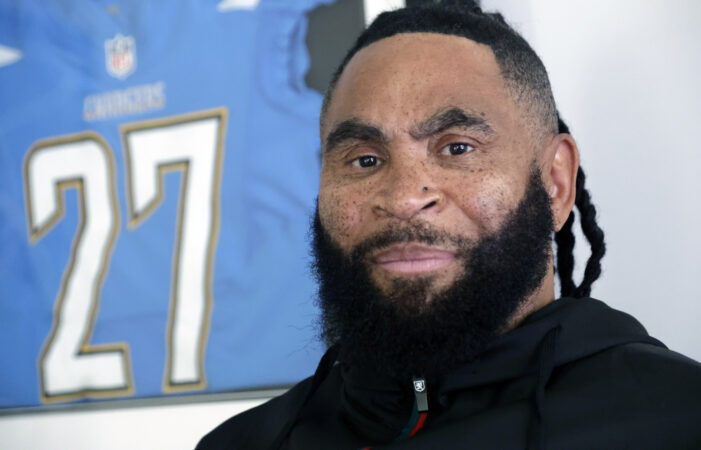
In May, Donald Frank packed a bag and left his home in Wake Forest, N.C. His destination sat about 390 miles to the south, in Georgia, where he was scheduled to undergo a series of grueling medical evaluations.
Doctors spent two days testing his memory, attention span, language comprehension, and visual-spatial perception skills, to gauge the extent of a neurocognitive illness that had gradually eroded the contours of his everyday life.
A separate consultation with a neurologist resulted in a new diagnosis: Frank, a 60-year-old former San Diego Chargers defensive back, had Parkinson’s disease.
Frank believes that his health woes can be traced to the countless brain-rattling collisions that he absorbed during his six-year professional football career. But over the last seven years, the NFL’s controversial concussion settlement program has on four occasions denied Frank’s quest to be paid for the brain trauma that he sustained.
Nevertheless, he decided to make the case once more. Frank included the results of the May neuropsychological tests, and the Parkinson’s diagnosis, in a claim that he submitted to the settlement program.
Then he waited. And worried.
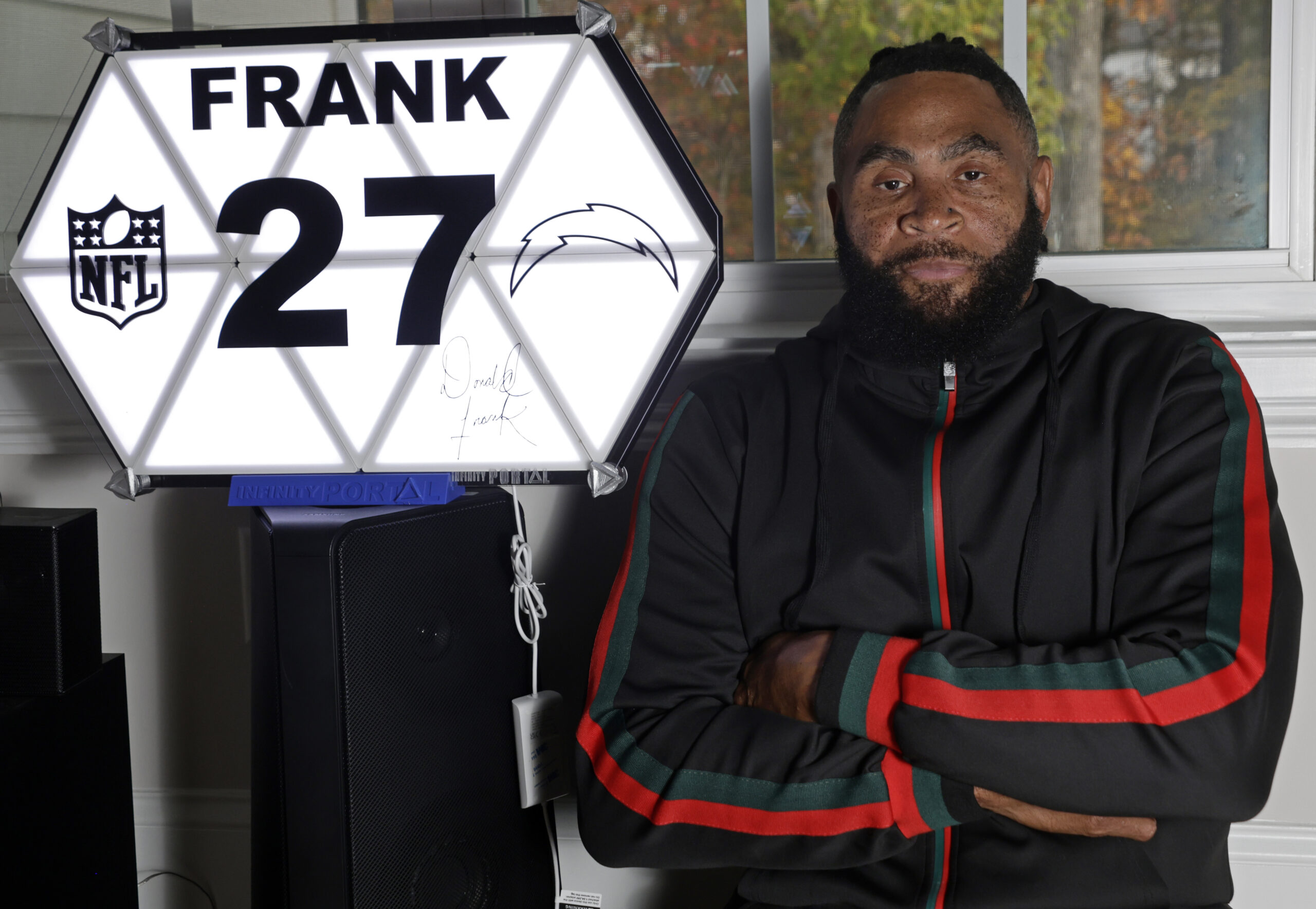
Donald Frank and his girlfriend, Deirdre Brown, learned in early November that the NFL’s concussion settlement program had agreed to pay Frank $1.4 million as he battles Parkinson’s disease.
The settlement program has doled out more than $1.6 billion, yet not every former football player who applies for a payment is compensated. Some, including members of the 1980 Philadelphia Eagles, have faced long delays and demoralizing denials.
The Inquirer found that Frank’s case is an extreme outlier. More than 4,400 ex-NFL players have submitted claims with the program, but only two others have received as many as four rejections.
On Nov. 4, Frank’s girlfriend, Deirdre Brown, opened an email from the settlement program’s claims department.
“Notice of monetary award claim determination,” read the first line.
Her eyes traced familiar details about Frank’s case and his medical history, then arrived at something new: an award for $1.4 million.
“It was a breath of fresh air,” Frank said, “considering all the years I’ve gone through this.”
From a small college to the pros
Frank followed an unlikely path to the NFL.
As a strong safety at a Division II college, North Carolina’s Winston-Salem State University, he attracted little attention from scouts. He had a bodybuilder’s physique, though, and could run the 40-yard dash in 4.4 seconds.
Those attributes persuaded the Chargers to take a flier on Frank in 1990 and sign him as an undrafted free agent. That same year, the team selected linebacker Junior Seau with their No. 1 pick in the NFL draft.
Frank made the team and quickly impressed coaches with his knack for game-changing interceptions, prompting the Los Angeles Times to liken his rise — from relative obscurity to an NFL roster — to a fairy tale.
Frank, like so many players from prior generations, didn’t realize that the violent collisions he experienced each year — during practices and in training camp, throughout the regular season and playoffs — could cause long-term neurological harm.
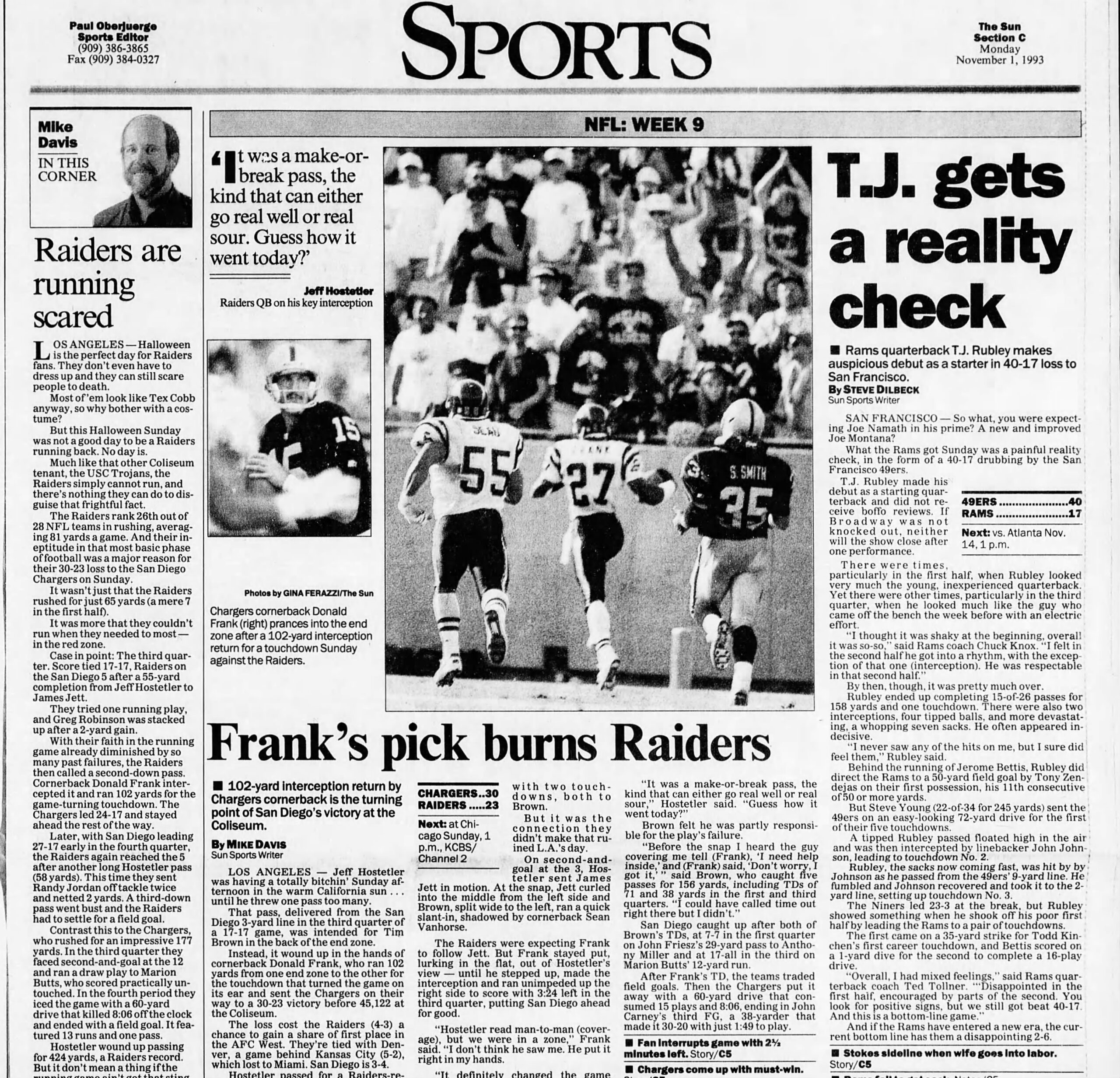
Donald Frank’s 102-yard interception return for a touchdown helped the Chargers defeat the Los Angeles Raiders on Oct. 31, 1993.
“When you got knocked out, or got your bell rung, they would put smelling salts to your nose to wake you up,” Frank previously told The Inquirer. “I don’t even remember there being an attempt to evaluate you. It was always, ‘OK, just let him sit on the bench for a minute to clear his head.’”
By 1993, Frank earned a role as a starting cornerback. That season, during a Halloween game against the Los Angeles Raiders, Frank intercepted a pass from Raiders quarterback Jeff Hostetler and returned it 102 yards for a touchdown.
For an undrafted athlete, it was a moment of remarkable personal triumph.
Just two years later, Frank reached the end of his NFL career. He was hindered by a back injury and had grown wary of hitting his head.
But there was another nagging problem that Frank initially kept to himself: On even simple defensive plays, he could no longer remember what he was supposed to do.
Confusion, then clarity
Frank’s memory problems began to deepen in 2008, according to medical records previously viewed by The Inquirer, and he grappled with depression and unpredictable mood swings.
He stopped driving and had to rely on Brown to help care for him on a daily basis.
In 2012, Seau, Frank’s old Chargers teammate, died by suicide at age 43. Researchers discovered that he had the degenerative brain disease chronic traumatic encephalopathy (CTE), which has been found in the brains of hundreds of former football players, including former Eagles Andre Waters, Max Runager, Frank LeMaster, Guy Morriss, and Maxie Baughan.
Dozens of ex-players had sued the NFL a year earlier in California and Pennsylvania, accusing the league of downplaying the risks of repeated brain injuries. The number of plaintiffs climbed into the thousands — Frank among them — and the cases were consolidated in Philadelphia federal court.
Three years later, the NFL settled the case.
The league admitted no wrongdoing but agreed to fund, for 65 years, a program that would pay retired players who developed neurocognitive impairment, Alzheimer’s disease, Parkinson’s disease, or amyotrophic lateral sclerosis (ALS, also known as Lou Gehrig’s disease).
Donald Frank signed with the Chargers as an undrafted free agent in 1990. “My attitude, coming from where I came from, was basically, ‘You got to do everything you can to stay here,’” said Frank, 60. “And I was a physical player.”
In 2016, the chair of Duke University’s Department of Neurology evaluated Frank and determined that he had a “major neurocognitive disorder,” according to the medical records.
That same year, the NFL awarded Frank a benefit through the league’s 88 Plan, which provides financial reimbursements for medical care for players who have dementia, Alzheimer’s disease, or Parkinson’s. (The league spends more than $20 million a year on such reimbursements.)
Despite the seemingly widespread agreement that Frank suffered from a serious illness, he found little success navigating the concussion settlement program.
Retired players are required to be evaluated by doctors who belong to a network managed by a third-party company, BrownGreer LLC, and to have a diagnosis that meets the settlement program’s three tiers of cognitive impairment: level 1.0 for moderate decline; level 1.5 for early dementia; level 2.0 for severe cognitive decline.
Frank submitted three claims for a diagnosis of Alzheimer’s, but an appeals panel rejected each, noting that his test results were not consistent with the disease.
The denials sank Frank into depressive spirals and made him question whether he should abandon his crusade to be paid by the settlement program.
“It felt like a big confusion,” Frank said. “[The doctors] couldn’t get a grip on what was going on with me.”
Clarity finally arrived earlier this year, when his attorney asked Frank if he had ever experienced any tremors or shakes.
“I said, ‘Yes, I do,’” Frank recalled. “I told Dee a year ago, maybe two years, that I experienced some tremors in my right hand. I just never paid it no mind.”
After a neurologist and a movement disorder specialist each confirmed that Frank had Parkinson’s, he began taking medication meant to alleviate symptoms.
“It felt like an immediate release of pressure off my brain,” he said. “I felt like the tremors weren’t bothering me as much.”
Frank has noticed something else, too: a sense of optimism and gratitude that has pierced the frustration and uncertainty that had clouded his life for so long.
The concussion settlement program is scheduled to deliver its payment to him in January, and his daughter and 6-year-old grandson have moved in with him, filling his house with the welcome sound of busy lives and laughter.
“I’m looking forward to more hours with my grandson. I’m looking forward to the future,” Frank said. “I’m thankful.”
No one throws a “Happy 250th Birthday, America” jammy jam like a Philadelphia museum.
Embedded into the fabric of our nation’s birthplace, Philly cultural institutions are gearing up for high-level deep dives into history, fun, folly, and reflection. Just in time for the Semiquincentennial.
Our museums’ dynamic programming for America’s big birthday kicks off on Jan. 1.
The Philadelphia Art Museum, the National Constitution Center, the Museum of the American Revolution, and smaller outfits like Eastern State Penitentiary and Historic Germantown will, as expected, reimagine the history of our republic in an homage to the forefathers’ ingenuity.
Many are also honoring the perspective of marginalized Americans, upon whose backs this country was built.
Mixed into the Semiquincentennial festivities are other milestone birthdays. Carpenters’ Hall will celebrate the Commonwealth of Pennsylvania’s 250th with an exhibit, historical marker, statewide town halls, and virtual lecture series.
The new year also marks Germantown’s the Colored Girls Museum‘s 10th anniversary; it will open its fall 2026 season with a rare show from renowned sculptor vanessa german.
Renderings of The Franklin Institute’s world premiere of “Universal Theme Parks: The Exhibition” February 14, 2026 – September 7, 2026.
Philly is America’s birthplace. Our 250th birthday energy can’t be outdone.
From the looks of it, it won’t be.
Philadelphia Art Museum
The Philadelphia Art Museum has three major shows in 2026.
Noah Davis
The art museum’s Morgan, Korman, and Field galleries will feature the work of the late African American artist Noah Davis (1983-2015). Davis’ paintings, sculpture, and works on paper capture the history and intricacies of American Black life from antebellum America through his untimely death. Jan. 24-April 26.
“Untitled Girls” This painting by Noah Davis will be on display in the Philadelphia Art Museum’s 2026 exhibition named after the late artist
A Nation of Artists
Paintings, furniture, and decorative arts from Phillies managing partner John Middleton and his wife, Leigh, will center the “A Nation of Artists” exhibit, telling the 300-yearslong story of American creativity. The exhibit is a joint project between the Philadelphia Art Museum and the Pennsylvania Academy of Fine Arts and is billed as “the most expansive presentation of American art ever mounted in Philadelphia.” Opens April 12.
Rising Up
2026 marks the 50th anniversary of the release of the first Rocky film. To coincide, the Art Museum in April will open “Rising Up: Rocky and the Making of Moments” in the museum’s Dorrance galleries. The exhibit will explore how the Rocky statue outside the museum brings people together. April 25-Aug. 2.
Phillies owner John Middleton is photographed next to a painting to his left, part of his personal collection and soon to be exhibited at the Philadelphia Museum of Art.
Visitors at the Museum of the American Revolution in front of a portrait of Absalom Jones, abolitionist and founder of The First African Episcopal Church of St. Thomas. Jones’ writings are on display.
Penn Museum
Spear points dating to 3,000 B.C., centuries-old bowls, and 19th century beaded collars are a few of the items that illustrate the lives Lenape Indians led fishing on the banks of the Schuylkill and hunting in Fairmount Park. These are on display at Penn Museum’s new Native North American gallery. Visiting curator Jeremy Johnson chose these artifacts because, he said, they best “tell the story of his people — who the Founding Fathers tried to erase.” Through 2027.
A gallery of Native American art is displayed at the Penn Museum on Friday, Nov. 21, 2025, in Philadelphia. As celebrations of Native American culture and precolonial Philadelphia plants grow, museums across the city prepare for America’s 250th birthday.
Weitzman National Museum of American Jewish History
On Nov. 16, 1776, the Andrew Doria brigantine arrived in the Caribbean on the British colony St. Eustatius, waving the first national flag of the United States. The Jewish merchants and English settlers, treated poorly by their antisemitic Anglican monarchs, greeted the newly minted Americans with a 13-cannon salute. In that moment, St. Eustatius became the first country to recognize America’s sovereignty.
Cannon from the shores of St. Eustatius much like those fired in the 18th century that will will be on display during “First Salute.” 250tharts-12-28-2025
Weitzman National Museum of American Jewish History’s“The First Salute” exhibit will recount this largely untold story — including how the Jewish merchants smuggled the Americans’ gunpowder in tea and rice bags, giving Pirates of the Caribbean meets Hamilton vibes. Artifacts on display will include 18th-century currency, a series of paintings from prominent Jewish Philadelphian Barnard Gratz’s art collection, and an actual cannon shot from the island’s shores. From April 23, 2026, through April 2027.
National Constitution Center
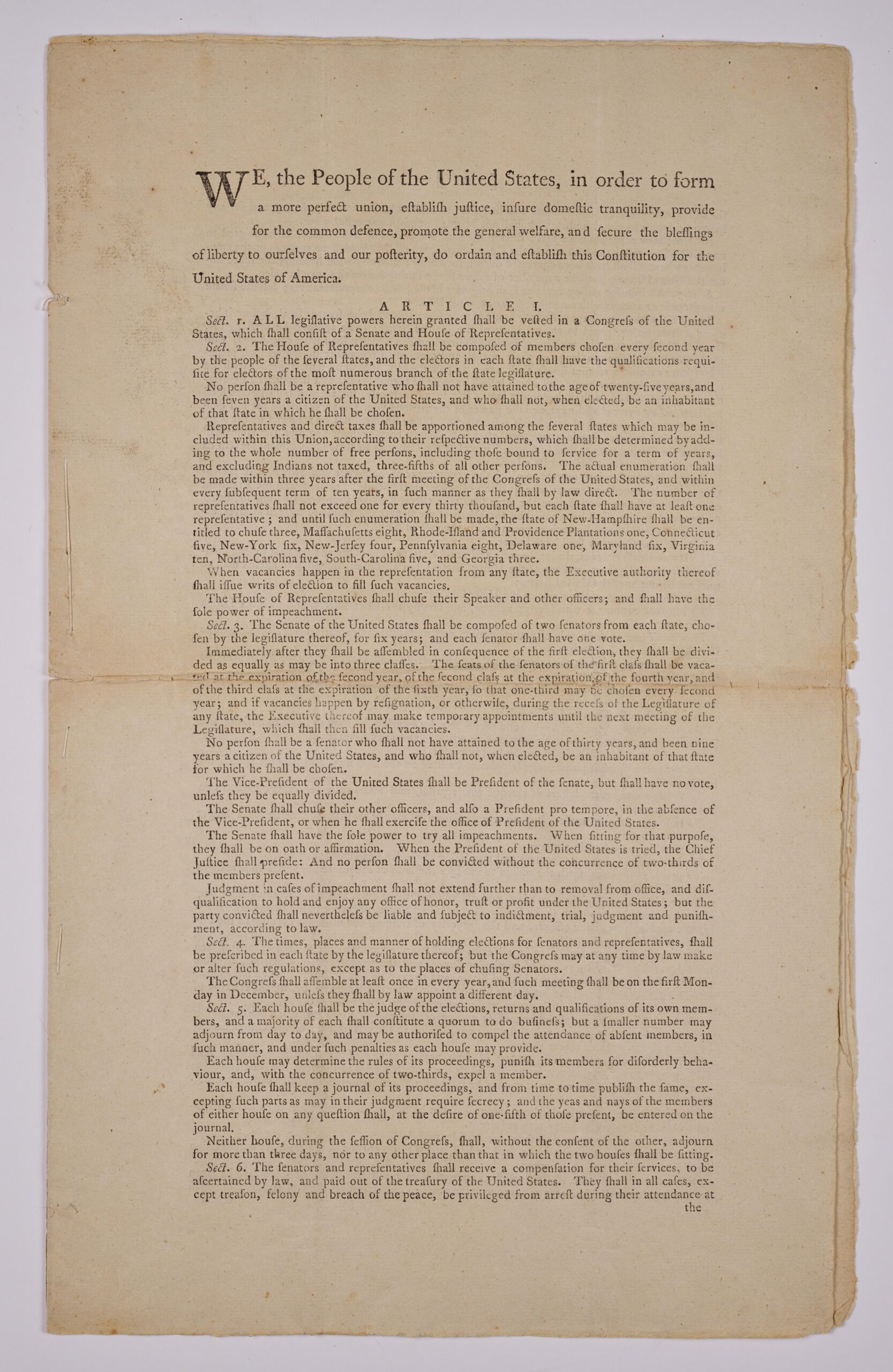
Centered around a rare, centuries-old copy of the U.S. Constitution — a gift from billionaire hedge fund manager Kenneth C. Griffin — the National Constitution Center will present “America’s Founding.“ The gallery will be dedicated to the exploration of our early, colonial principles that led our fight for independence. How do they stand up now? Opens Feb. 13.
This original copy of the U.S. Constitution, one of only 14, was donated to the National Constitution Center by billionaire hedge fund manager Kenneth C. Griffin. It will be featured in the Constitution Center’s upcoming “America’s Founding” exhibit.
A second gallery will explore how the Constitution defines roles and balances power between the legislative, judicial, and executive branches of government. Opens in May.
Ruth E. Carter pauses briefly during the “Ruth E. Carter: Afrofuturism in Costume Design” opening gala at the African American Museum in Philadelphia on Saturday, Nov. 1, 2025.
In October 2026, AAMP will premiere the extension of its “Audacious Freedom” exhibit. Currently on the ground floor, the exhibit is a study of Black Philadelphians from 1776 to 1876. The expanded show will bring “Audacious Freedom” up to present day and will include 20th-century artists and educators, from Charles Blockson to Jill Scott.
Woodmere Art Museum
Inspired by Philadelphia illustrator and friend of WoodmereJerry Pinkney, the Chestnut Hill museum’s Semiquincentennial show, “Arc of Promise,” acknowledges America’s painful histories of slavery, injustice, and displacement of its Indigenous people while affirming its capacity to rebuild, renew, and evolve. Featuring art by Philadelphians dating to 1790, “Arc of Promise’s” paintings, sculptures, maps, and flags explore what freedom and justice for all truly means. Opens June 20.
The Academy of Natural Sciences of Drexel University
In collaboration with California State University ethnobotanist Enrique Salmón, the Academy of Natural Sciences at Drexel University will debut “Botany of Nations: Indigenous Ecological Knowledge and the Lewis & Clark Corps of Discovery.” These centuries-old plants, collected by explorers Meriwether Lewis and William Clark, were a gift to Philadelphia’s American Philosophical Society from Thomas Jefferson. Organizers hope the selection of now-pressed plants — prairie turnip, camas root, and Western red cedar — will be a vegetative portal to the Indigenous perspective in American frontier life. From March 28, 2026, through Feb. 14, 2027.
Samples from Botany of Nations. Academy of Natural Sciences of Drexel University, March 28, 2026 – February 14, 2027
The Clay Studio: Center for Innovation in Ceramic Art.
Twenty-five artists from 20 Philadelphia cultural institutions will present projects that show how the definition of independence evolved from 1776 through 1876, 1926, 1976, and 2026 under the umbrella of the Clay Studio. The exhibit, “Radical Americana,” will start with a compelling show by Kensington potter Roberto Lugo on April 9. Artists will mount additional shows at participating institutions throughout the year, including at the Museum for Art in Wood and Cliveden Historic House. A full list is available at theclaystudio.org. Opens April 9.
Roberto Lugo is shown working on one of his Greek vases that is now part of a new exhibition, “Roberto Lugo / Orange and Black” at Art@Bainbridge, a gallery project of the Princeton University Art Museum
Mural Arts Philadelphia
Mural Arts is working on several projects that will spruce up the city in 2026. That includes a new focus on the city’s entryways, the restoration of several murals, and a collaboration between Free Library of Philadelphia in a community printmaking project. At least three new murals will debut and include a tribute to artists Questlove (of the legendary Roots crew) and Boyz II Men. A refurbished mural in honor of Philadelphia’s first director of LBGTQ affairs, the late Gloria Casarez, will be unveiled. Mural Arts also is partnering with the Philadelphia Historic District on sculptures for next year’s 52 Weeks of Firsts programming and with the Bells Across PA program to create Liberty Bell replicas in neighborhoods throughout the city.
A rendering of a tribute to Gloria Casarez City of Philadelphia Mural Arts Program, Michelle Angela Ortiz, 12th Street Gym, 204 South 12th Street.
Philadelphia sports fans of a certain age remember the city’s golden era, when all four professional teams advanced to their league’s championship series or title game in the same calendar year.
“The city was crazy that summer,” said Larry Bowa, the former Phillies shortstop who was a member of the 1980 World Series champion team. “Every team went to the finals, and we were the only one that won.”
Yes, the Sixers, Flyers, and Eagles all came up short of the brass ring in 1980 (and January 1981 for the Birds’ Super Bowl loss), but Philadelphia morphed into a sports nirvana during those 12 months.
Bowa said he thinks the 2026 Philadelphia sports scene will be even more electric, when the City of Brotherly Love hosts a bevy of major sporting events throughout the year. It starts with the March Madness men’s basketball opening rounds at Xfinity Mobile Arena, and stretches through the end of August, when the Philadelphia Cycling Classic is staged.
In between those two marquee events, the 108th PGA Championship will be played at Aronimink Golf Club, followed by six FIFA World Cup matches held at Lincoln Financial Field, the last of which is scheduled for July 4, the 250th anniversary of the adoption of the Declaration of Independence by the Continental Congress.
If that’s not enough, Citizens Bank Park in mid-July will be the host site for the Major League Baseball All-Star Game, the fifth time the Midsummer Classic has been played in Philadelphia, but the first at the Phillies’ current home stadium.
Imagine if the four Philly pro teams have a 1980 redux — that would be the cherry on top of Billy Penn’s hat.
“I think it’s going to be awesome,” Bowa said of the upcoming sports extravaganza. “People come from all over, and, whether it’s fair or not, Philly gets a bad rap sometimes. People that don’t live here, they don’t understand the passion that the fans have. It’s a great city. The fans are great. [You] can enjoy some of the history downtown. It’s going to be fun to sit back and watch.”
Houston forward Ja’Vier Francis blocks a shot by Florida center Micah Handlogten during the NCAA championship game on April 7, 2025, in San Antonio, Texas.
March Madness: NCAA men’s basketball tournament
None of the area men’s basketball teams that constitute the Big 5 (now 6 including Drexel University) is currently in the Top 25 rankings as of this writing, but that could change by the turn of the calendar.
Even if no Philly-area team punches its Big Dance ticket, St. Joseph’s will factor in the 2026 NCAA tourney when the school hosts the first- and second-round games at Xfinity Mobile Arena. The Florida Gators are the defending champions, and when March Madness begins, Philadelphia steps into the college basketball limelight for the opening curtain.
Friday, March 20, and Sunday, March 22; Xfinity Mobile Arena; tickets at xfinitymobilearena.com.
Scottie Scheffler lines up a putt on the fifth green on the first day of the 2025 Ryder Cup at Bethpage Black on Sept. 26.
PGA Championship
The 108th edition of one of professional golf’s four majors will be staged on the pristine Aronimink Golf Club links. The last time the PGA Championship was staged here was more than 60 years ago, when Hall of Fame legend Gary Player beat Bob Goalby by a stroke.
More recently, Keegan Bradley won the 2018 BMW Championship at Aronimink. Defending champ Scottie Scheffler will be among the star-studded group of golfers descending upon suburban Philly to play for the Wanamaker Trophy. If you miss out on tickets to the PGA Championship, you have another chance to see high-level golf in the region when the U.S. Men’s Amateur Championship comes to Merion Golf Club in mid-August.
May 11-17; Aronimink Golf Club, Newtown Square; tickets at pgachampionship.com.
The FIFA World Cup Trophy is displayed during the FIFA World Cup 2026 playoff draw in Zurich, Switzerland, on Nov. 20.
FIFA World Cup
Soccer’s premiere event was last staged in the U.S. over three decades ago, when the USMNT advanced to the Round of 16, before losing to perennial powerhouse Brazil. Now the men’s national team has another chance to try to do what no U.S. squad has done before — win soccer’s most prestigious award.
Six of the 2026 FIFA World Cup matches will be played at the Linc, including the final of those matches scheduled to take place on Independence Day.
June 14-July 4; Lincoln Financial Field; tickets at fifa.com.
Tampa Bay Rays’ Junior Caminero reacts during the MLB baseball All-Star Home Run Derby on July 14 in Atlanta.
MLB All-Star Game
Bowa was an All-Star in 1976, when the Midsummer Classic was played at Veterans Stadium. But in that doughnut-shaped ballpark, “you had to hit ’em to get out of there.” Bowa said he thinks the bandbox Citizens Bank Park will be a great venue for baseball’s All-Star gathering, particularly the Home Run Derby.
“This one, they might be taking the upper deck down with these guys as big and strong as they are, and the way the ball jumps in Philly.”
It will be even more entertaining if defending All-Star Game MVP Kyle Schwarber is suited up in a Phillies jersey next year. But if Schwarber departs in free agency, there is still a group of Phillies — Bryce Harper, Trea Turner, Cristopher Sanchez — who could star for the National League.
July 12-14; Citizens Bank Park; tickets at mlb.com.
Racers in the 2007 Commerce Bank Liberty Classic climbing the Manayunk Wall.
Philadelphia Cycling Classic
One of cycling’s jewel events, the Philadelphia Classic has had numerous name iterations over the years, going back to its start in 1985 when it was called CoreStates U.S. Pro Cycling Championship. That year, Eric Heiden — yes, the former U.S. Olympic gold medal-winning speed skater — was champion.
Tour de France legend Greg LeMond has also been a past participant. The route snakes west of Center City and includes the famed Manayunk Wall, a cycling test of will on Levering Street.
Aug. 30; Planned 14.4-mile circuit goes from Logan Square up Kelly Drive to Manayunk and back; tickets at philadelphiacyclingclassic.com.
First, Danielle Delange saw the news alert: Bristol Health & Rehab, the nursing home where her mother lived, was on fire.
Within minutes, Delange got a phone call from an unfamiliar number. On the line, she heard her 64-year-old mother’s trembling voice.
“My mom said there was a gas explosion,” Delange said. “And I said, ‘How do you know it was a gas explosion?’ And she said, ‘Because we’d been smelling gas.’ … And I said, ‘Today?’ And she said, ‘No, for a couple days.’”
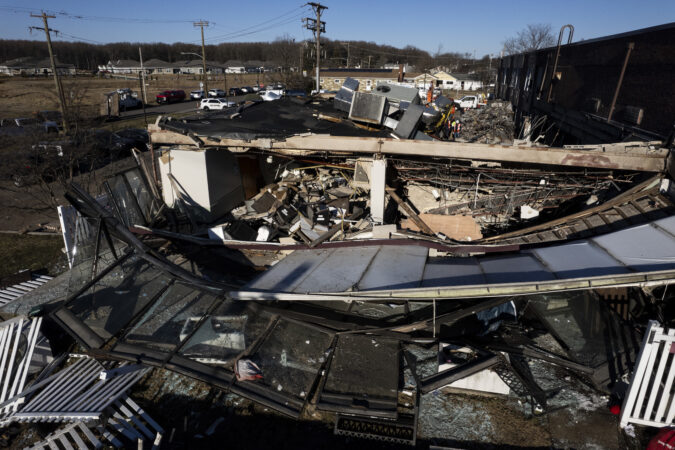
Her mother, Anna Grauber, who uses a wheelchair, was evacuated from the burning building soon after Tuesday’s devastating blast, which killed a nurse and a resident and injured 20 people. The cause of the explosion remains under investigation.
First responders work the scene of an explosion and fire at Bristol Health & Rehab Center, Tuesday, Dec. 23, 2025, in Bristol, Pa.
According to Delange, in the immediate aftermath of the explosion, her mother was outside, and she was starting to get uncomfortably cold.
Delange said her mother, who lives with COPD and emphysema, didn’t have the oxygen that she needs and was struggling to breathe. Even her emergency inhaler was back in her room.
Delange’s mother is one of the 119 residents who had to be relocated from the healthcare facility in Bristol Township, Bucks County, to other care homes across the region. With the facility now the scene of a federal investigation, Grauber and other residents are left without their possessions and, according to several families, they lack even basic necessities like clothes and phone chargers.
‘She doesn’t have pants’
The company that runs the nursing home, Saber Healthcare Group, says it’s doing all it can while it waits for the National Transportation Safety Board to determine whether people can safely return to the nursing home building at 905 Tower Rd.
But family members of residents, such as Delange, are questioning whether that’s enough.
Delange said her mother was promptly moved to another Saber Healthcare Group property, Statesman Health & Rehabilitation Center, a short drive away in Levittown. However, her mother had to go several days without one of her medications, Delange said, and was struggling to adjust.
Muthoni Nduthu’s son Clinton tears up while the family speaks with the media on Wednesday, Dec. 24, 2025, in Bristol Township, Pa. Muthoni Nduthu was killed in the explosion at Bristol Health and Rehab Center on Tuesday.
Delange said that when she visited her mother on Friday at her new home in Levittown, her mother was wearing men’s basketball shorts and a T-shirt. She said that Saber has not provided clothes for the relocated residents, and so staff have resorted to pulling clothes from a donation box.
“She doesn’t have pants,” Delange said. “And that got me thinking, like, what did my mom have on when she left there?”
‘No indication’ of issues
Zachary Shamberg, Saber’s chief of government affairs, said the company is doing everything it can to help the displaced residents — but right now, nobody is allowed in the Bristol facility.
Possibly as early as Monday, Saber may be cleared to reenter the building, Shamberg said. “We’ll survey the damage, we’ll see what can be salvaged, and we’ll get in touch with families to ensure any items were returned.”
Saber’s insurance company would likely handle replacement or compensation for items destroyed in the blaze, he said.
As far as he knows, Shamberg said, the company is not providing money or purchasing new clothes or essential items for residents. He encouraged residents’ families to contact leadership at the Bristol facility if they need anything.
Shamberg said many residents have been moved to other Saber-affiliated nursing homes in the area, and these residents would promptly get prescriptions refilled. In addition, the company has started working with Medicare and Medicaid to replace residents’ dentures and eyeglasses. However, because some Saber locations are full, people have been placed in other facilities.
In the immediate aftermath of the disaster, Shamberg said, the goal was to get people “to the best care setting as quickly as possible.” He added the company tried to keep residents as close as possible to their families.
“The focus, initially on Tuesday, was to make sure staff and residents were safe,” Shamberg said. “Now, we survey the damage. We assess the facility. And we decide what happens next in terms of rebuilding and moving forward.”
Gov. Josh Shapiro delivers remarks on the explosion at Bristol Health & Rehab Center, at Lower Bucks Hospital on Tuesday, Dec. 23, 2025, in Bristol, Pa.
Saber staff at Bristol are being paid for the next 30 days regardless of whether they work, Shamberg said, and the company is offering them positions at other locations. Some staff, such as care coordinators and facility leadership, have remained in close contact with residents’ families, he said.
Saber, a privately run for-profit company, acquired the Bristol nursing home from Ohio-based CommuniCare Health Services barely three weeks before the explosion. Under CommuniCare, the nursing home had received numerous citations for unsafe building conditions and substandard care.
Saber was aware of these issues, Shamberg said. However, he said, as the company took over, there was no indication of problems with its gas lines.
“When you acquire a nursing home, you inherit that nursing home’s survey history,” Shamberg said. “Even looking at the most recent survey, the October 30th survey, there’s nothing that indicated a potential gas leak or explosion.”
Bristol had not been the first choice for 49-year-old Lisa Harnick and her family when it came time to find a nursing home for her mother, Debra Harnick. However, since Lisa Harnick didn’t have a car, the family opted for a choice close to her home in Bristol Township.
Now, Lisa Harnick’s 77-year-old mother is about an hour away at York Nursing & Rehabilitation Center in Philadelphia, she said. (The facility is not part of Saber Healthcare Group.) And their weekly lunch date is on hold.
“We started going over every Tuesday to have lunch with her, and visit with her, and now I can’t do that,” Lisa Harnick said.
Debra Harnick is “completely bed-bound,” her daughter said, and has no possessions except for her iPad, which she uses to communicate with family. She does not have a cognitive impairment, is alert, and is not happy about her new situation, Lisa Harnick said.
She added that Saber has remained in touch.
“I’ve been in contact with the social worker, and the activities director,” she said. “And I’ve been in contact with the insurance company, too. They just wanted to verify that she was there.”
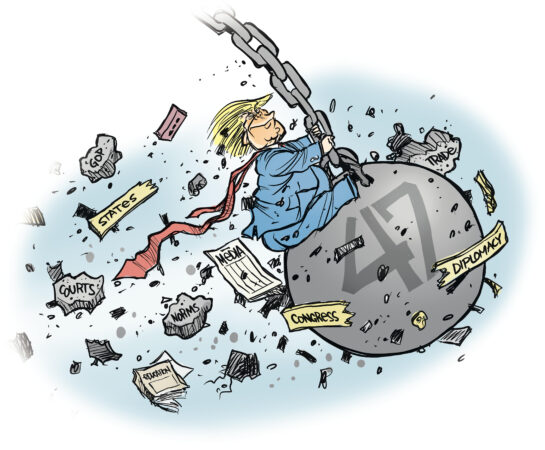
Donald Trump’s first year back in the White House has brought only one surprise: the speed with which he has upended the American Experiment. This board spent 2024 warning of the dangers a second Trump administration could bring. It was hardly soothsaying.
Sadly, Trump’s 2025 performance has reminded many voters that his undeniable luck, charisma, and bravado may be entertaining, but the reality of governance demands more. The office of the presidency demands more.
For his second term, no longer constrained by the guardrails the conservative establishment placed on his first presidential stint, and surrounded by sycophants and incompetents, Trump has wasted no time trying to live out his authoritarian fantasies while being unable to keep the trains running on time.
Indeed, he is very much the man whose administration helped give the world a COVID-19 vaccine in record time before bowing to anti-vax conspiracy theories that ultimately cost American lives.
Instead of allowing inflation to continue to abate and the U.S. economy to live up to its label as “the envy of the world,” he haphazardly and likely illegallyinstituted tariffs on global trading partners that amount to a tax on American consumers. Rather than sitting back and taking credit for curtailing immigration at the southern border, which concerned a large number of voters, he’s lost public support as masked federal agents abuse, harass, and intimidate immigrants and citizens alike.
Trump’s signature legislation, the One Big Beautiful Bill Act, is set to make the rich richer and the poor poorer, all while a shrinking middle continues to lose faith in America’s institutions — some of which have willingly acquiesced to whatever Trump demands.
But while Trump has failed to make life better for everyday people, he has been successful in enriching himself, his family, and his cronies. He has captured the U.S. Department of Justice and the FBI, pushing them to pursue his perceived political enemies; used the U.S. Department of Homeland Security to implement cruel immigration policies and as a de facto secret police; and devastated America’s standing in the world by destroying the U.S. Agency for International Development, which helped generate enormous goodwill while improving the lives of millions of people around the globe.
The following appraisal of Trump’s presidency so far is not a “we told you so,” because we are all in this together. It is a reminder that those of us who value democracy and the rule of law must continue to stand fast and push back in defense of the ideals that fueled our nation’s founding and the rights and obligations codified in the Constitution.
As 2025 ends and a new year begins, we must not allow the avalanche of outrages to numb us to the fact that Trump remains unfit for office.
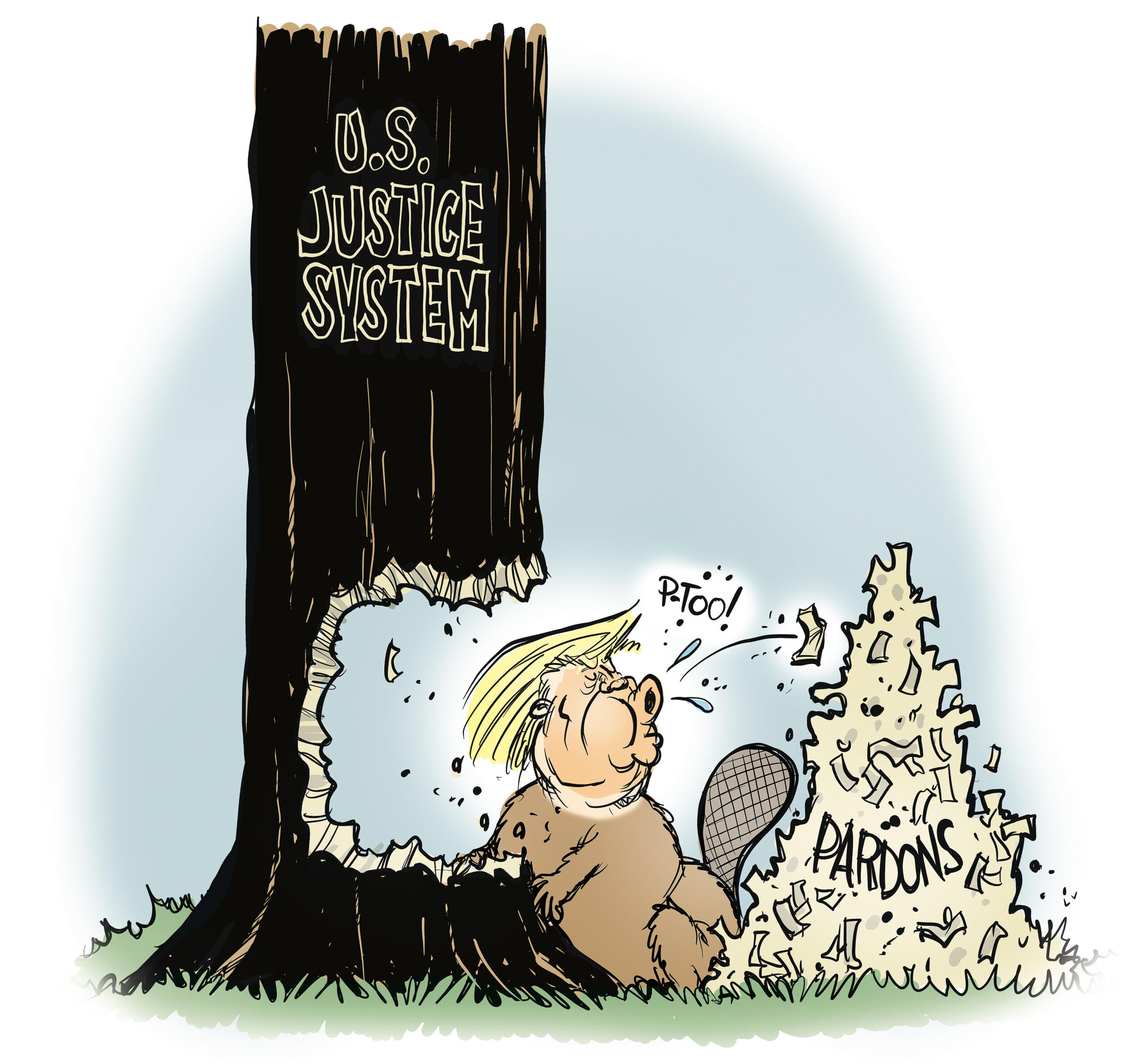
Donald Trump and his administration have attacked judges and maligned the courts, while the president has used his pardon power to eliminate accountability for his political allies and business interests.
Pardoned lawlessness
As far as ominous indicators of dire times ahead, “Abandon hope, all ye who enter here” is difficult to beat. But Trump’s blanket pardon of the roughly1,600 people involved in the attack on the Capitol comes in a close second.
Signed shortly after he took power, among a raft of other troubling executive orders, the clemency shown to the insurrectionists — including those who brutally assaulted law enforcement officers — showed the administration had no interest in accountability for its political allies nor any true concern for the rule of law.
Among Trump’s biggest abuses of presidential power are pardoning Rudy Giuliani and dozens of others accused of trying to overturn the 2020 election, campaign donor and convicted fraudster Trevor Milton, cryptocurrency kingpin Changpeng Zhao, and former Honduran President Juan Orlando Hernández, who had been sentenced to 45 years in prison for drug trafficking.
But why wait for a pardon when the president can simply pressure Justice Department lawyers to drop the corruption case against New York Mayor Eric Adams, or dismiss allegations that Trump border czar Tom Homan took $50,000 from FBI agents posing as business executives.
It is part of the administration’s stifling hypocrisy that while it righteously claims to seek justice by going after people like former FBI Director James Comey or New York Attorney General Letitia James, or labels all undocumented immigrants as criminals, it brazenly ignores due process — a bedrock principle of the American legal system.
If there are bright spots in a U.S. justice system in which the attorney general operates more like the president’s lawyer than a servant to the American people, it’s that grand juries remain independent, refusing to indict on trumped-up charges. And the courts — run by judges appointed by presidents of both parties, including some by Trump himself — are still a bulwark against the administration’s abuses.
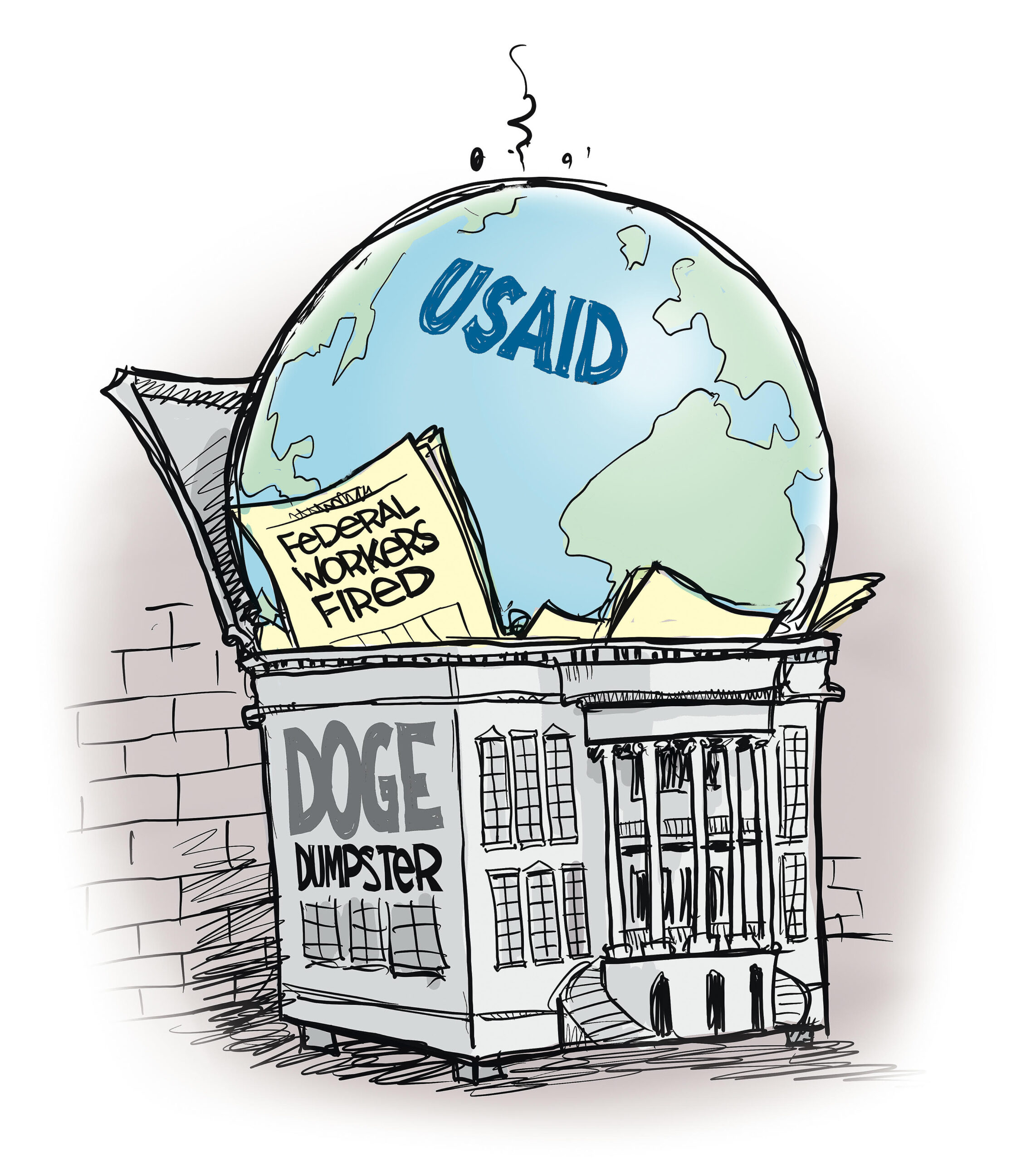
Donald Trump allowed billionaire Elon Musk to fire hundreds of thousands of government workers as head of the so-called Department of Government Efficiency. It is estimated that DOGE’s dismantling of the U.S. Agency for International Development has already led to the deaths of nearly 700,000 people.
Costly savings
The Department of Government Efficiency was Elon Musk’s chance to eliminate the U.S. Agency for International Development, an agency he called a “criminal organization” that needed to die. That the tech billionaire’s passion to eliminate USAID dovetailed with a bullet point in the conservative blueprint for Trump’s second term was likely welcomed by the administration.
Musk, who spent $250 million to help get Trump elected, was the public face of DOGE and promised to eliminate $2 trillion in government spending by identifying and eliminating waste, fraud, and abuse. What he did was bring in a squadron of techies more versed in crunching code than in carefully evaluating government services.
The chaos that followed meant not only the dismantling of USAID — which, as of Dec. 22, was estimated to have led to almost 700,000 deaths, more than half of them children, through the elimination of health and nutrition programs — but the firing or early retirement of nearly 300,000 federal employees.
DOGE also terminated more than $2.6 billion in contracts at the National Institutes of Health tied to medical research and clinical trials, leading to setbacks that may impact Americans’ health for generations.
So what was the result of DOGE’s actions? How much of that promised $2 trillion will show up on the positive side of the government’s ledger? According to an analysis by the libertarian Cato Institute, DOGE had no noticeable effect on the trajectory of government spending.
It did reduce the federal labor force, with savings that may amount to about $40 billion annually. That’s a lot less than it sounds when you consider it’s equal to 0.57% out of around $7 trillion in U.S. spending.
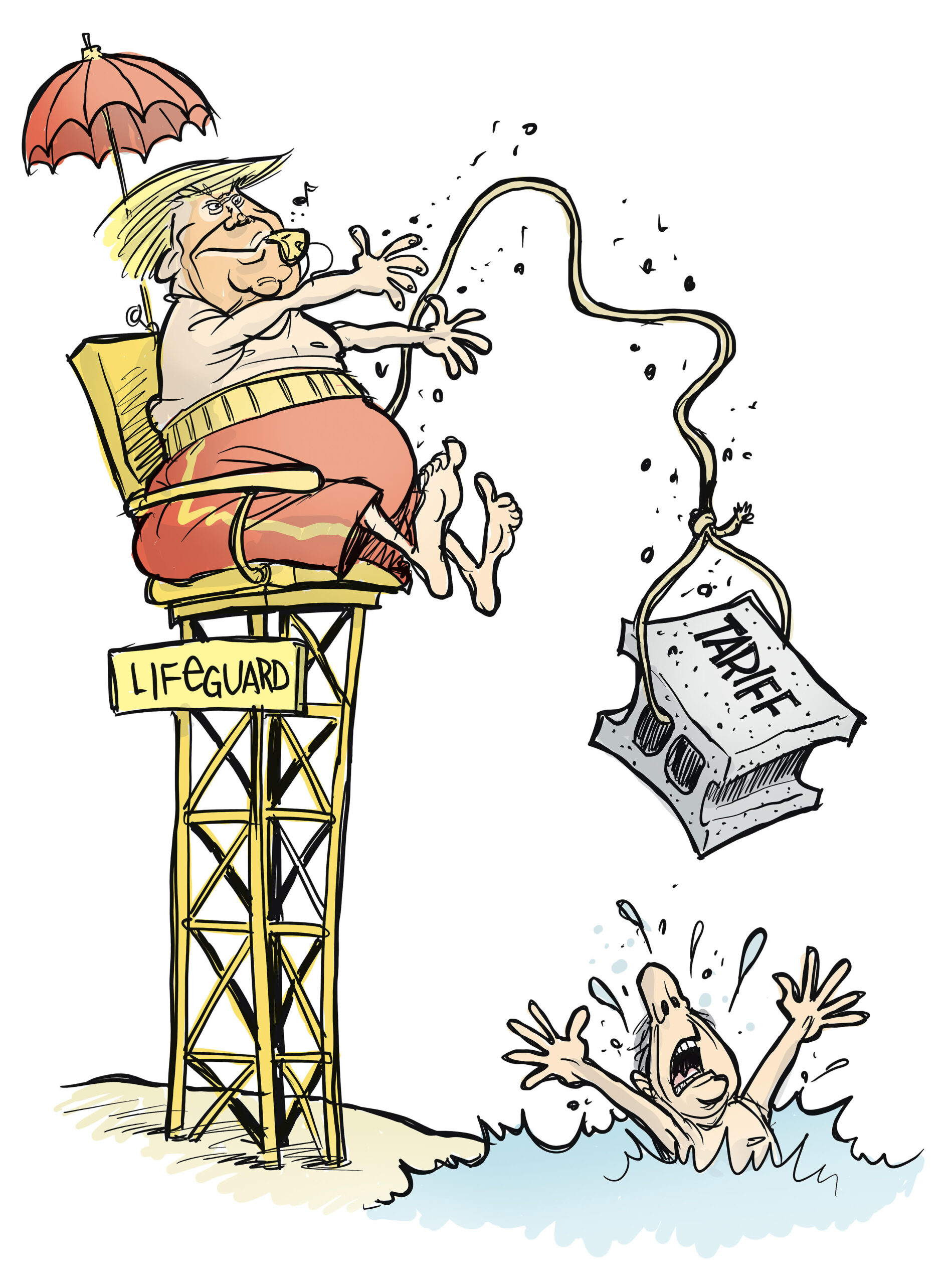
In his campaign for the president, Donald Trump promised he would lower consumer prices. A dubious pledge under most circumstances was made worse by policies, including the chaotic application of tariffs, that threaten the economy as a whole.
Self-inflicted decline
Looking at the data, it was easier to see why Vice President Kamala Harris did not distance herself from President Biden’s economic policies in her 2024 run for the White House. After all, after suffering through the pandemic like the rest of the world, the U.S. economy was bouncing back faster and stronger than that of other developed nations.
Unfortunately for Harris, to many voters, “Bidenomics” did not mean higher wages, lower unemployment, record stock market gains, and that post-pandemic inflation was starting to ease. It certainly didn’t mean billions in investment in infrastructure projects or in domestic production of critical semiconductors through the CHIPS and Science Act.
It meant the high cost of a dozen eggs.
Trump took advantage of the bad economic vibes and pledged to lower prices on Day One if elected. This was a dubious promise under most circumstances. Considering the president’s signature economic policies — indiscriminate tariffs and mass deportations — were destined to actively hurt consumer prices, it was political malpractice.
It is no wonder, then, that people have begun to sour on Trump’s economy, with the latest polling finding 57% of Americans disapprove. People are worried about losing their jobs, as unemployment has increased, and household debt levels are at record highs.
The impact of the president’s tariffs, which are taxes paid by the importer, not the exporter, is gradually being felt on the price of goods. Meanwhile, the administration’s crackdown on immigration, both legal and illegal, is hurting industries that depend on immigrant labor, including construction, agriculture, and health services.
According to the administration, fewer immigrants in jobs means more jobs for native workers, but so far, that result has not materialized. Instead, the projected economic impact of mass deportation on the labor force and consumer market (i.e., fewer people in the country purchasing goods and services) could reduce the U.S. gross domestic product — a common measure of economic growth — by 4.2% to 6.8%, according to the American Immigration Council. On the low end, that would be similar to the impact of the Great Recession on GDP.
Trump also promised to reduce energy prices by half within 18 months of taking office. The growing demand from data centers and the administration’s continued efforts to delay or kill renewable energy projects make it unlikely he will be able to deliver.
Trump infamously said his tariffs meant kids would get “two dolls instead of 30” come Christmas, but even that may have been optimistic, as data find more Americans are relying on installment or buy-now-pay-later plans to cover their holiday shopping.
The president, who had called Americans’ affordability concerns a “fake narrative” and a “con job,” backtracked in a prime-time speech on Dec. 18 in the most Trumpian way possible: He lied.
Trump falsely blamed immigrants for driving up the cost of housing, claimed gasoline is $2.50 a gallon “in much of the country,” and took credit for the mathematically impossible “400, 500, and even 600%” reduction in the cost of some prescription drugs, and for securing $18 trillion in investments in the U.S.
“Inflation has stopped, wages are up, prices are down, our nation is strong,” Trump said.
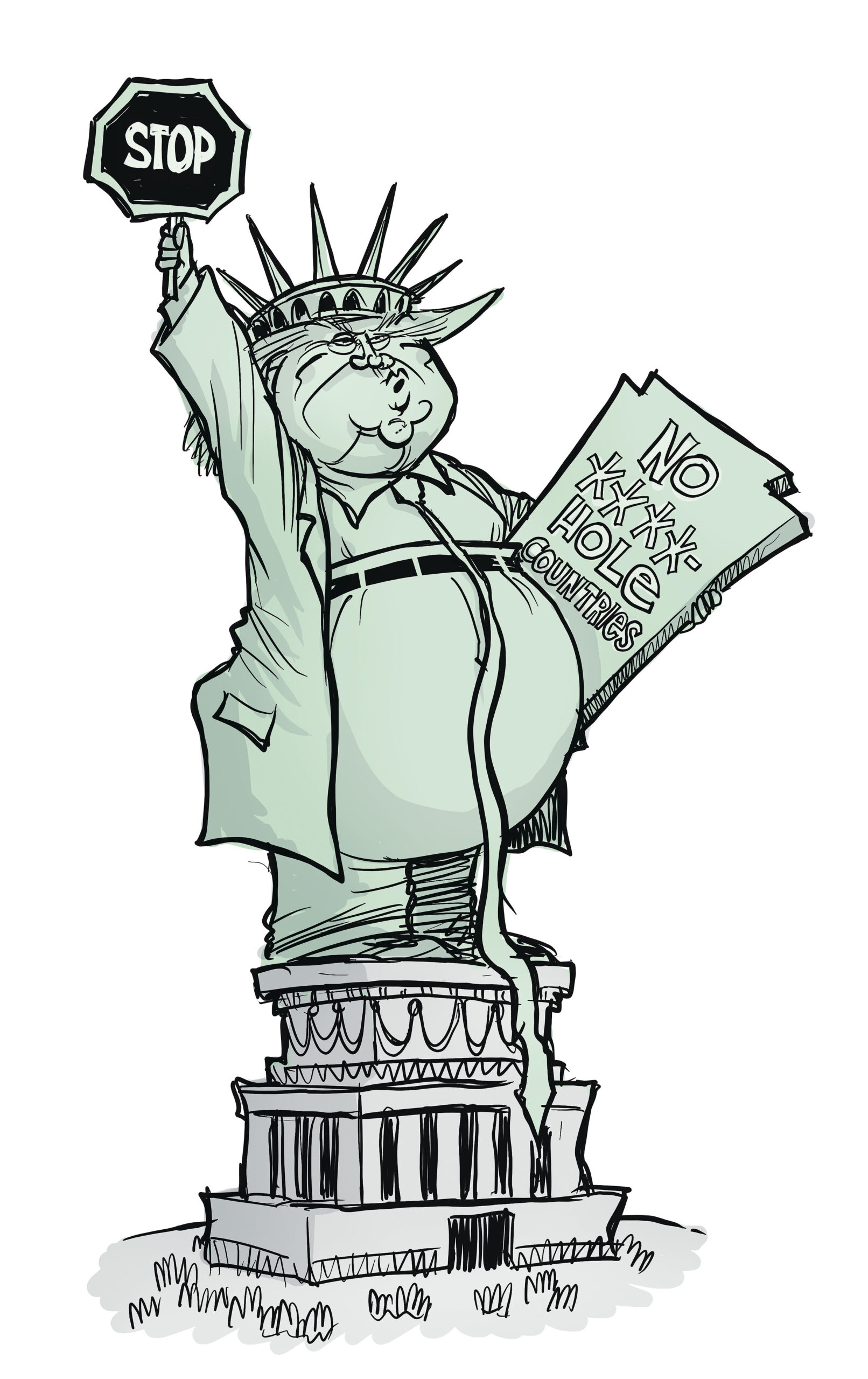
Donald Trump’s immigration enforcement agencies are seeding terror in communities while his administration’s immigration policies are unashamedly bigoted.
Anti-American sentiment
The Trump administration does not like immigrants. Period.
It does not like those who crossed the border illegally in search of a better life, nor those who are fleeing persecution and are seeking asylum in the land of opportunity. It does not like those who come here to study in America’s universities, nor those who want to fill jobs in fields in which there are not enough native-born workers.
The administration is looking for any excuse — any one example it can point to — to paint all immigrants as rapists, as murderers, as garbage. Any excuse to shut the golden door that has welcomed people from across the world to the benefit of a nation that is as dynamic as it is diverse.
What Trump and the ethnonationalists who surround him fail to understand is that the United States is an ideal — one so strong it has held disparate groups of people together for almost 250 years. The secret to America’s success is that everyone has the right to life, liberty, and the pursuit of happiness.
Perhaps that’s why the administration’s immigration enforcement feels so wrong to so many. Why it’s losing support even among those who voted for Trump.
That is why people are standing up against Trump’s tactics. They are organizing and pushing back, peacefully, against people being snatched up off the streets, against neighbors being intimidated, families split apart, cities roiled by chaos of the government’s own making.
Because while the administration may not like immigrants, America does.
Donald Trump called the very real threat of climate change a “con job.” His administration’s policies not only ignore efforts to mitigate the problem, they actively seek to make it worse.
Climate of denial
The American people’s concern about affordability is at least not the biggest “con job,” according to Trump. That distinction belongs to climate change, humanity’s era-defining challenge that the president has long called “a hoax.”
Speaking to the United Nations in September, Trump said predictions about the impact of a warming planet “were made by stupid people that have cost their countries fortunes and given those same countries no chance for success.”
Never mind that the effects of climate change are already evident in rising sea levels, increasing temperatures, and more frequent extreme weather events such as wildfires and flooding.
Not content with simply ignoring decades of science that prove greenhouse gas emissions caused by human activity are negatively affecting the planet, the Trump administration has swiftly moved to defund climate research, reverse U.S. climate change mitigation efforts, and impede the development of clean energy sources.
On Monday, the government suspended all large offshore wind farms under construction, citing “national security risks.” It was the latest example of Trump using regulatory red tape to hinder these kinds of projects to the detriment of both the environment and clean energy jobs.
Trump and his allies in Congress have also eliminated subsidies for solar panels, wind turbines, and electric vehicles — all while promoting fossil fuel use, including oil, gas, and coal.
While Trump’s climate and energy policies are a danger to the entire world, his administration’s policies also put Americans at risk in their own backyards. The Environmental Protection Agency has rolled back multiple efforts to promote clean air and water, including limits on toxic pollutants from coal-fueled power plants, greenhouse gas emission limits from coal- and gas-fueled power plants, and delayed timelines for water utilities to remove some “forever chemicals” from drinking water.
As Trump tries to leave a legacy by demolishing part of the White House to build a $300 million ballroom or emblazoning his name atop the Kennedy Center, it may be his shortsighted gutting of climate and environmental rules that truly leaves a mark for the ages.
Since retaking the White House, Donald Trump has added billions of dollars to his personal wealth, much of it through crypto and other digital currency schemes.
Shameless enrichment
The man who once couldn’t make money off a casino is $3.4 billion richer since he took office on Jan. 20. He did this, as reported in a comprehensive piece by the New Yorker’s David D. Kirkpatrick, by ignoring conflicts of interest and gauchely trading on the prestige and power of the U.S. presidency for personal gain.
The corruption is so flagrant and transparent that many voters perhaps think this is normal. But while there is likely nothing illegal in what is known about the president’s business ventures, no clear evidence of any quid pro quo, there is nothing ordinary or ethical about what Trump and his associates are doing.
For example, potential access to Trump at his Mar-a-Lago club now comes with a $1 million initiation fee — up from $100,000 in 2016. In May, the president hosted a gala at a Virginia golf club for the biggest buyers of his meme coin, an intrinsically worthless digital token for which the 220 attendees at the event shelled out $148 million. The venture, along with a separate $MELANIA meme coin, reportedly netted the Trumps $385 million.
Cryptocurrency is where Trump and his family are profiting the most.
The digital currency, which can be traded without relying on banks to verify transactions — or regulate or report them — has so far earned the Trump family billions. It is here where some of the most egregious conflicts of interest are made manifest, as individuals and foreign governments with interests before the United States, including government regulation of crypto itself, have made large investments that end up in Trump’s coffers.
Shortly after Trump won the election, a Chinese billionaire accused of fraud invested $30 million in World Liberty Financial, a Trump family cryptocurrency interest. In May, an Abu Dhabi, United Arab Emirates-backed investment firm put $2 billion into the company.
While Trump’s two sons strike lucrative business deals around the world, Trump’s foreign policy seems to be dictated by his drive for fortune. A plan for the “Gaza Riviera” was tied to the end of the war between Israel and Hamas, while either mineral deals from Kyiv or business ventures in Russia have become part of the calculus around the war in Ukraine.
In his short time back in the White House, Trump has shown that the presidency of the United States is open for business.
The U.S. Department of Justice, which seems to otherwise have no trouble doing Donald Trump’s bidding under Attorney General Pam Bondi, continues to drag its feet in releasing the Jeffrey Epstein files mandated by Congress.
Protecting the powerful
Among the promises Trump made in his bid for the White House in 2024, releasing the investigation files regarding convicted sex offender Jeffrey Epstein should have been the easiest to fulfill. Yet, more than a year later, it took an act of Congress to force the Department of Justice to release the files — or at least some of them, at least partially.
The documents made available recently were criticized by lawmakers and victims as incomplete and full of heavy redactions, with some of the published material quickly taken down over unspecified administration concerns.
Epstein, who took his own life in 2019 inside a federal jail cell, was accused of exploiting or abusing hundreds of women and girls over decades, procuring them for his famous friends, who included financial titans and political leaders.
Despite the president’s denials, he and Epstein once shared a friendship, reportedly bonding over the pursuit of women. There are videos and photos of them together, and Trump repeatedly flew on Epstein’s plane (known as “the Lolita Express”), though the president claimed he “never had the privilege” to visit Epstein’s notorious island.
The island, Little St. James, was once described by government officials as “the perfect hideaway and haven for trafficking young women and underage girls for sexual servitude, child abuse and sexual assault.”
The Trump administration’s efforts to delay and obfuscate regarding the files remain an affront to justice and decency. Survivors of the horrors perpetrated by Epstein and the rich and powerful he catered to deserve a public accounting of what happened to them, and there must be accountability for those who participated.
If the president has nothing to hide, if the “privilege” was indeed never his, then whose was it? Whom is Trump protecting?
As California-based canned beverage manufacturer DrinkPAK eyed an East Coast expansion, Pennsylvania was always at the top of their list of potential sites.
But in the end Philadelphia’s Bellwether District — the sprawling site of the former South Philadelphia oil refinery — won out not only over other states like New Jersey, but other possible Pennsylvania destinations likeScranton and the Lehigh Valley as well.
“We looked at other geographies, but ultimately we’d like to be where the people are, where the jobs are,” said Jon Ballas, president of DrinkPAK. “We’re not scared of building in large city centers. It just provides an energy that doesn’t exist out in the more general manufacturing landscapes.”
The 1.4 million-square-foot factory will be the first tenant for the 1,300-acre Bellwether District, which developer HRP Group (formerly known as Hilco Redevelopment Partners) hopes to turn into a new industrial and life sciences hub in the city.
Contractors broke ground on the manufacturing facility earlier this month, and the building’s shell should be complete by this time next year. Then construction on the internal mechanics will begin, with plans to complete it by April 1, 2027.
Once it’s operational, DrinkPAK’s manufacturing facility will operate 24 hours a day, seven days a week, cranking out 3 billion cans a year.
The factory will employ 174 people, largely on site because DrinkPAK doesn’t employ a lot of truck drivers. The workers will be operating the production line and managing machinery.
“We’re committed to hiring the best in the industry, [offering] competitive wages, some of the best benefit programs out there,” said Ballas. “These are very attractive jobs, high-paying jobs.”
DrinkPAK doesn’t work with the major soda or beer companies. Instead it manufactures cans for a variety of smaller, specialty beverage brands including alcoholic seltzer, energy drinks, and lower-calorie soda products.
“We’re not making your typical Coke and Pepsi,” said Ballas. “We’re making a lot of this innovative, better-for-you-type products.”
DrinkPAK was founded in 2020 and already has factories of similar capacity to its future Philadelphia facility in Southern California and in Texas.
There is some regional variation (more canned wine in California, and more health drinks on the coasts), but its production line’s output is largely determined by broad trends in the industry.
“Beverage is very cyclical,” said Ballas, and the facility needs to be designed with flexibility to make what’s most in demand. Right now, he noted protein drinks are “the hottest trend.”
“It takes a specific type of liquid handling equipment to handle all the protein hydration, to get that into solution in order to carbonate it into a can,” he said.
DrinkPAK’s facility is in the portion of the Bellwether District slated for industrial use, with the idea that warehouses and factories would be the tenants.
The HRP Group already built a 326,000-square-foot warehouse and second 727,000-square-foot warehouse, which were both built on spec — meaning without a prospective tenant in mind.
But the 3 billion-can production facility is the first official tenant.
“We’re looking forward to delivering this building for DrinkPAK and playing a small role in their company’s incredible growth trajectory,” said Andrew Chused, chief investment officer for HRP Group.
“DrinkPAK’s decision to build its flagship East Coast facility here is the first big step in turning this site into the dynamic commercial ecosystem we always envisioned,” said Chused.