Friends, family, and celebrities take stock of the year on social media with carousels of photos noting the year’s highlights.
Malala Yousafzai, the Nobel Peace Prize laureate and Pakistani education advocate, is no different.
In a brief post shared with her 3.7 million Instagram followers, Yousafzai shared seven photos and looked back fondly on her travels to Egypt, Greece, Tanzania, and Ireland.
She celebrated sampling pastries across Europe during her Finding My Way book tour and “seeing a long-held dream of building a school become reality in the north of Pakistan.”
But tucked in the seven-photo carousel of the 28-year-old — slide five to be precise — is a photo of her wearing a Kelly Green Philadelphia Eagles T-shirt as she’s getting ready to eat some Popeyes.
There’s no confirmation regarding when or where the photo was taken. But we do know Yousafzai was in Philadelphia promoting her new memoir in October, with Eagles superfan Kylie Kelce moderating the conversation.
Yousafzai, who didn’t think she’d been to any American football games when she spoke to The Inquirer ahead of her visit, said she was open to seeing the Birds in real life.
Could Kelce’s fandom have spread to Yousafzai, who prefers cricket?
The Inquirer tried to get some answers from the spokesperson handling the book tour stop. Did Kelce get the Eagles-curious Yousafzai to give the Birds a chance? Was the T-shirt a gift from the event? Alas, it’s a Sunday smack-dab in the middle of the holiday season, so we did not immediately hear back, though we’ll certainly report back if we do.
Still, a potential fandom is not out of left field. Yousafzai is no stranger to Eagles country.
Two years after the Taliban boarded her school bus and shot her in the head for advocating for girls’ rights to an education, the National Constitution Center awarded Yousafzai its 2014 Liberty Medal. She spent the day in Philly, attending the Forbes Under 30 Summit and meeting local students. During her visit, she was welcomed with open arms.
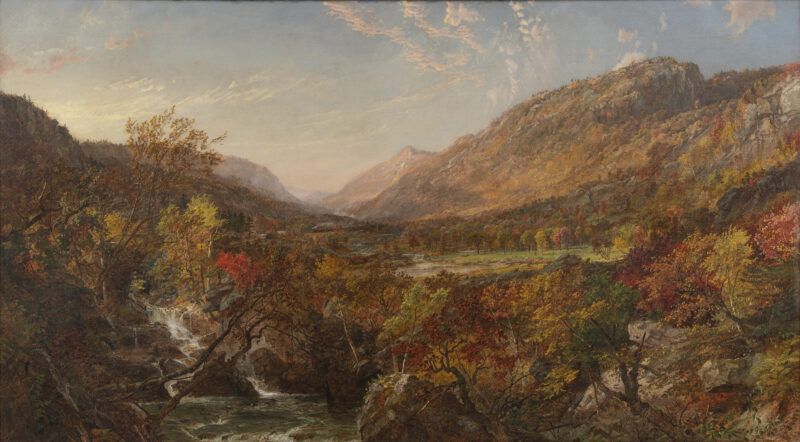
Back in September 1873, the New York Herald announced that the Hudson River School painter Jasper Francis Cropsey had a new painting. Autumn in the Ramapo Valley, Erie Railway, which would be open to public viewing for “only a day or two longer” at the Wall Street office of Charles Day, the article said.
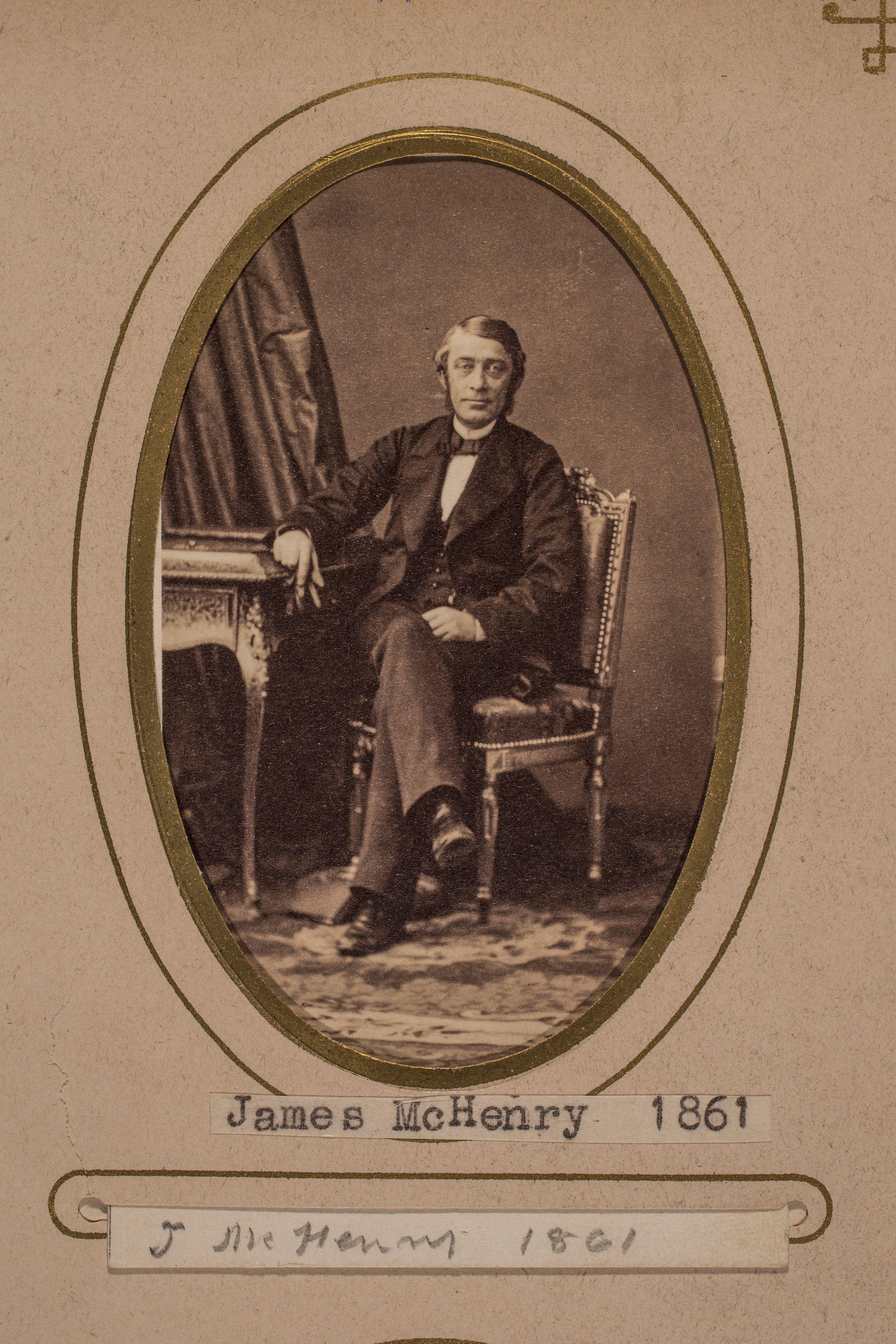
The painting was commissioned by investor James McHenry, who, with Day, was director of Erie Railway. McHenry, who had been a director of the Atlantic and Great Western Railway before that, had his eye set on the Erie Railway, which was founded in 1832.
In 1872, in what is best described as a corporate coup, McHenry ousted the railroad magnate Jay Gould and took full control over Erie Railway. In celebration, he commissioned the Cropsey painting, which, after those few days on Wall Street, made its way to McHenry’s home in London and remained in private collections, away from the public eye since.
Until now.
In 2024, philanthropists J. Jeffrey and Ann Marie Fox, who live in Bucks County, bought the painting and brought it back to the United States. It is on view at the Brandywine Museum of Art, some 150 miles away from the original setting of the painting, where flatlands west of the Hudson River meet steep hills near the town of Sloatsburg, N.Y.
Here, it can be seen by an American audience for the first time in 152 years.
The Foxes and American art
J. Jeffrey Fox has built a successful career in finance and education and his wife, Ann Marie, has worked with several nonprofits, often focusing on children with special needs. Together, in 2024, they made a $20 million gift to endow the J. Jeffrey and Ann Marie Fox Graduate School at Pennsylvania State University.
The couple, said Jeffrey Fox, have always been interested in American history.
“We used to collect art as souvenirs. We would go to estate sales and garage sales and sometimes buy a piece of art,” he said. “It wasn’t a collection that was of any significance. So once we got a little bit more money, we wanted to buy one painting that’ll be the centerpiece for the rest of our collection.”
They bought Frederick Childe Hassam’s The Cove, Isles of Shoals (1901) at an auction in 2015.
The discerning eye in the couple has always been Ann Marie’s. She spent 15 years volunteering at the Walters Art Museum in Baltimore, and when the couple lived in Annapolis, Md., she took classes under Matt Herban, a retired professor of art from Ohio State University.
After that first Hassam, the couple wanted a Cropsey. But not just any Cropsey.
“We went to the National Gallery and they had a fabulous Cropsey [Autumn — On the Hudson River (1860)]. It just took our breath away. And we were like, ‘Wow, how could we ever get something that good.’ That’s why it took us this long,” said Ann Marie.
“We were very picky. Every artist has great days, and every artist has OK days. We wanted Cropsey on a great day,” her husband said.
Finding Cropsey on a great day
Last year, the Foxes’ art adviser came to know from a friend in Europe that Autumn in the Ramapo Valley was coming up for auction in London in September. Believing that the painting was best sold to an American buyer, this friend approached the adviser before the painting went under the hammer.
The Foxes had 48 hours to make a decision to buy, never having seen the painting, aided only by a high-quality photograph and a condition report.
Cropsey’s catalog raisonné, put together by the Newington Cropsey Foundation in Hastings-on-Hudson, N.Y., says the painting left the country in September 1873. Documents said the painting has been in an undisclosed buyer’s family since the 1950s.
James McHenry’s carte-de-visite,
1861.
McHenry died in 1891 and “we don’t really know what happened from 1891 to the mid-’50s, but we do know that it never left England,” Jeffrey said. “And we don’t think it was ever shown in England. There are no records that we were able to find.”
Ann Marie said yes, and the couple wrote up a letter of intent.
“We were a bit concerned,” said Jeffrey. Another Cropsey — Richmond Hill in summer of 1862, also owned by McHenry — that came up in an auction in 2013 was deemed a “national treasure” by the U.K. and was not allowed to leave the country.
The clearance for Autumn in Ramapo to leave England took a little over three months.
“The English let that out of England because it was an American artist, and an American scene,” Jeffrey said.
The couple bought the painting in January 2025. Once the artwork arrived in the United States, a restorer found it to be in exceptional condition, exactly as advertised. In March, the conservator finished assessing the painting, and the Foxes traveled to New York to see it in real life.
“It just displayed so much grandeur. I thought it was wonderful,” Anne Marie said. “The autumn colors … just stunning. And the size of it is amazing. The first thing I said when I saw it was, ‘It can’t come to my house. It’s going to tear down my wall.”
Including the frame, the artwork measures 4.75 feet by 7.16 feet.
“Our house isn’t that big, we probably couldn’t get through the door,” Jeffrey said.
The couple couldn’t ship it to their foundation office, either. “We needed a museum that would be willing to show it and buy into the story, because it’s a phenomenal story,” Jeffrey said.
The “Cropsey, Wyeth, and the American Landscape Tradition” exhibition runs through May 31 at the Brandywine Museum of Art.
The painting and the painter
It’s easy to miss the “Erie Railway” part in Autumn in the Ramapo Valley, Erie Railway. Cropsey paints an idyllic fall scene with the Ramapo Valley bathed in yellow, red, and, orange foliage. Bits of green peep out, the sky is clear and a light blue, a waterfall flows gently on the left, the Ramapo River sits still.
The smoke-billowing train chugs through the valley in the distance, but in the center of the painting. Black rails of the railway bridge run parallel to the river and disappear into the leaves.
The setting of the painting falls between what is New York’s Orange and Rockland County, on the western side of the Hudson River, and north of Suffern.
“This painting … really helps in telling a fuller story of the history of American art, and particularly, this brief moment, in the third quarter of the 19th century, when huge sums were being spent on huge paintings,” said William L. Coleman, curator at the Wyeth Foundation and director of the Andrew & Betsy Wyeth Study Center.
“This is part of a larger story with artists like Frederic Church, Albert Bierstadt, and Thomas Moran.”
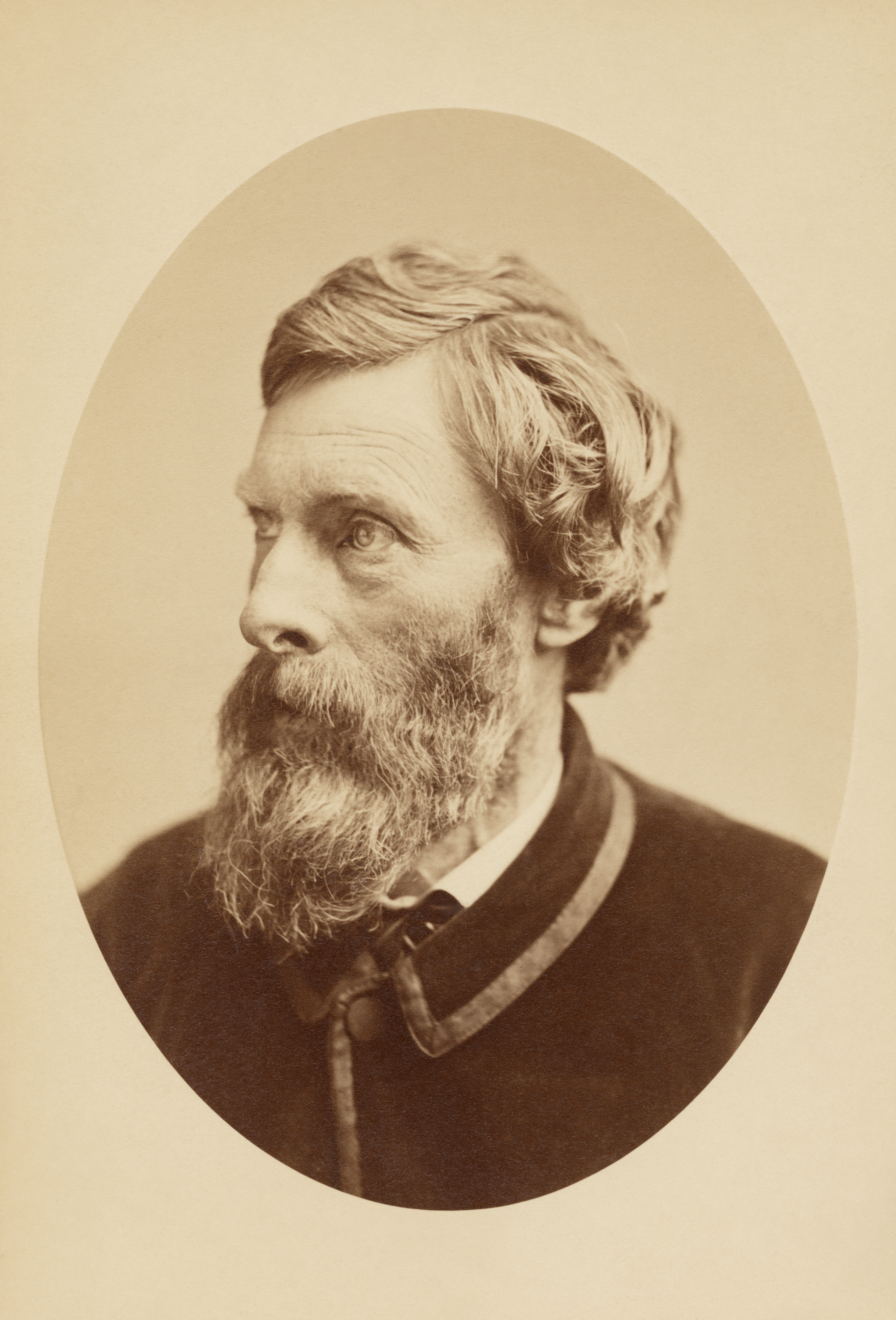
Jasper Francis Cropsey by Napoleon Sarony, circa 1870.
Cropsey, an architect who had designed several railway stations himself, was part of a line of artists who “engaged with the new fortunes being made from the transportation industry, making images of new railroads traveling through the landscapes,” Coleman said.
The artists enjoyed generous patronage and lived well. Cropsey lived in a mansion he built, called Aladdin, less than 10 miles away from the site of the painting. Here he built himself a studio that doubled as a gallery and art marketplace.
The Philadelphia story
Cropsey’s patron James McHenry was born in Ireland in 1817 and was raised in Philadelphia. He moved back to England, living primarily in London, where he made a fortune raising money and investing it in developing railways in America.
His sister remained in Philadelphia until her death.
Jeffrey Fox calls McHenry “notorious,” adding that he often worked against other equally infamous “robber barons” like Cornelius Vanderbilt and Gould.
“He paid $25,000 on a Bierstadt painting in 1865, so he was quite an art collector himself,” Jeffrey said. McHenry, who already owned Richmond Hill in Summerof 1862, perhaps had gotten acquainted with Cropsey when the artist visited England in 1856.
Cropsey had already made a name for himself painting Starrucca Viaduct, Pennsylvania (1865) —where, too, a distant train almost merges into the green slopes of the mountain behind it — when McHenry wanted an artist to commemorate his pushing Gould out of the Erie Railroad directorship in 1873.
“He had already gotten a national reputation for painting part of this exact railroad, and so James McHenry went to the railroad guy,” said Coleman, “and commissioned Autumn in Ramapo.”
Artists like Bierstadt and Sanford Robinson Gifford were also working on similar railroad commissions at the time.
“Most of their stock and trade are images that make use of the aesthetic value of the sublime, the power of the natural world against the small scale of human existence. So they give us that feeling of awe, of wonder,” Coleman said.
Landscape paintings, he said, “tell stories about belonging, about ownership, about your place in a wider society. … And they often risk being underestimated. These are pleasant, old pictures that we see on calendars and postage stamps, but they have a lot to tell us about how we became the nation we are today.”
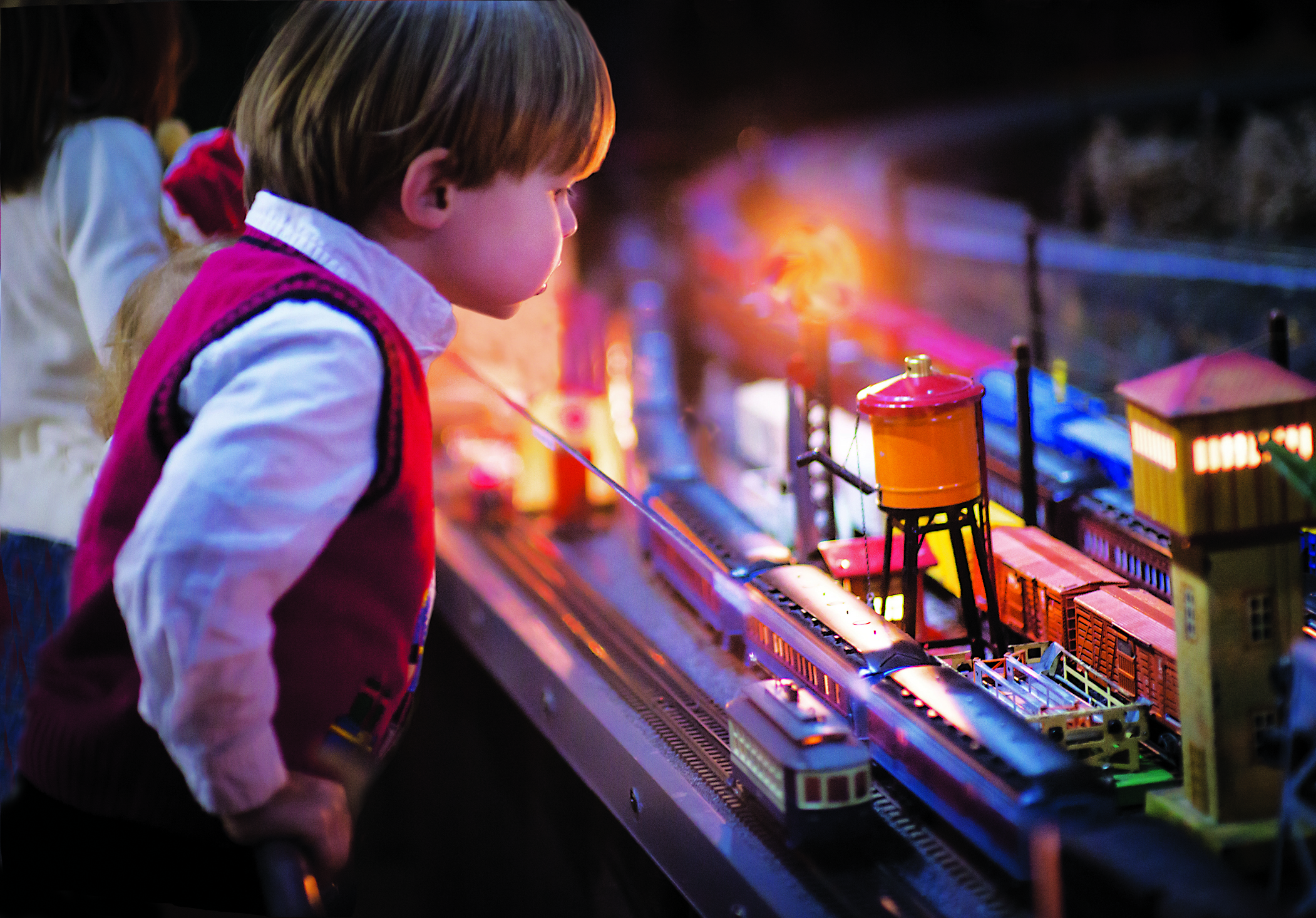
The model train at Brandywine Museum’s holiday showcase in 2018.
An irrelevant cost
At Brandywine, Cropsey’s train speaks to the museum’s beloved holiday train display, posing questions of tradition and modernity as the nation enters its 250th year.
It will stay at the museum through May and then travel to the Dixon Museum in Memphis, Tenn. Then it heads to the Seed Art Museum in Louisville, Ky.;, Rockwell Museum in Corning, N.Y,; University of Georgia Museum of Art in Athens, Ga.; and the Newington Cropsey Foundation.
The Foxes wanted this piece of American history to be witnessed by Americans.
What they paid for it, Jeffrey Fox said, is irrelevant.
“If you put a value to it, that’s what you’re going to talk about, as opposed to the painting,” he said. “We’re a foundation and at the end of the day, we’re not going to sell it. So it doesn’t matter what we paid.”
“Cropsey, Wyeth, and the American Landscape Tradition,” continues through May 31 at the Brandywine Museum of Art, U.S. Route 1 at Hoffmans Mill Road in Chadds Ford, Chester County. Information: brandywine.org or 610-388-2700.
This article has been updated with the correct year of James McHenry gaining control of the Erie Railway. It was 1872.
It’s one of the paradoxes of Philadelphia’s 21st-century residential building boom. The more rowhouses and apartments that get built here, the more they look alike.
The streets of Fishtown and Graduate Hospital and Spruce Hill are now awash in interchangeable blocky structures, all dressed in the same dreary gray clothing, their aluminum panels shrink-wrapped around the exterior like a sheet of graph paper.
Instead of providing the kind of fine details that enlivened earlier generations of buildings, their architects try to distract us with patches of color and cheap trim.
The look is derisively known as fast-casual architecture, McUrbanism, or developer modern. No one likes these buildings, not even, I suspect, the architects who stamp the drawings. But because they are cheap and easy to build, the no-frills grids have emerged as a developer standard across America.
As bad as they might look in newer cities, their flat, lifeless facades are especially jarring in Philadelphia, where even humble rowhouses are animated by varied textures of brick and recessed windows.
While there’s little chance that developers will start building them like they used to, a few Philadelphia architects have thrown a curve into the works. The arch, which traces its origins to Roman times, is making a comeback.
Once you start looking around the city, you can’t help but see contemporary arches and rounded corners everywhere: on metal-clad rowhouses and brick-faced apartment buildings, in restaurant dining rooms and hotel lobbies.
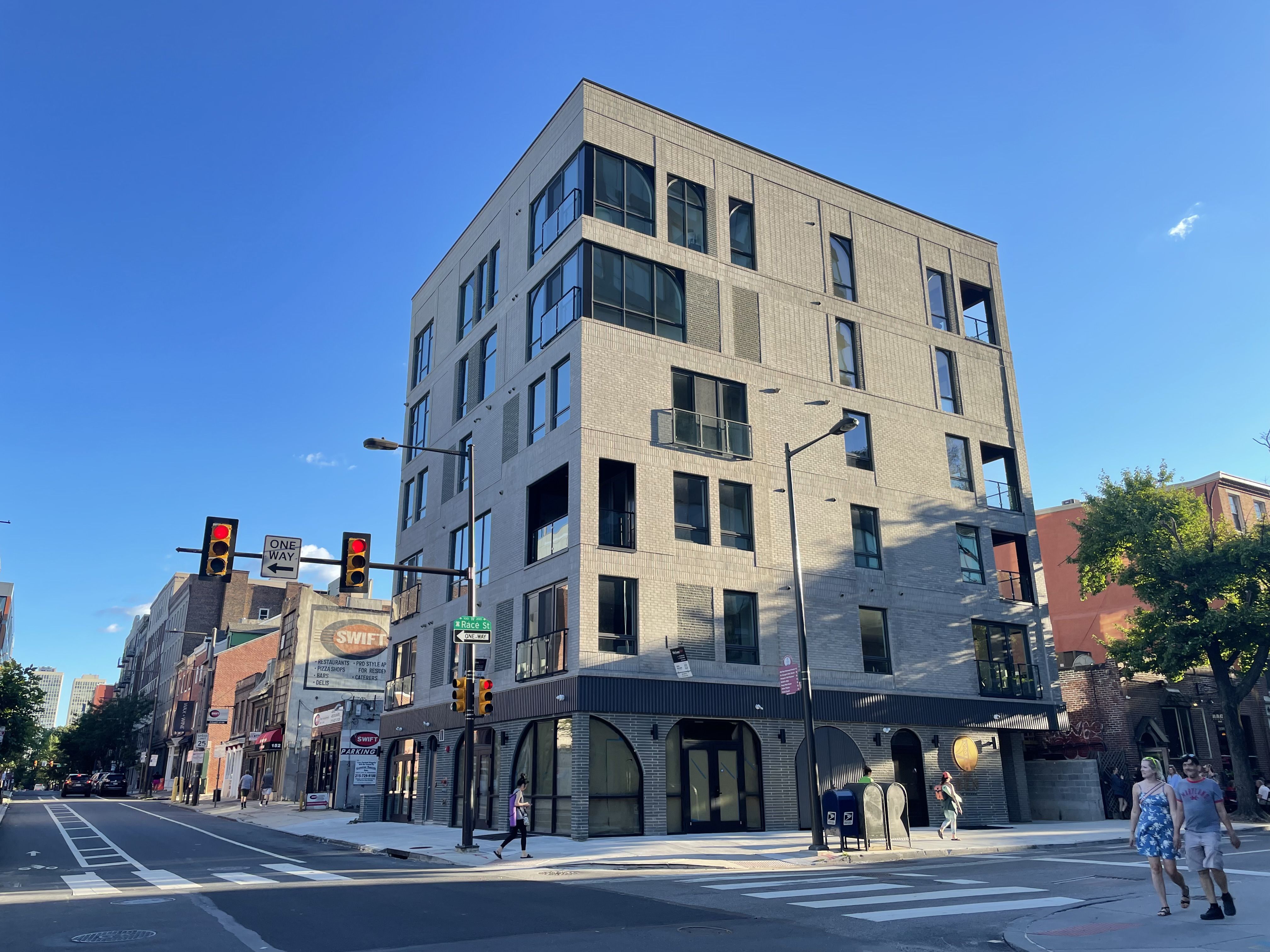
This small apartment building at Second and Race Streets in Old City breaks up the usual grid with arched windows on the ground floor and irregularly spaced windows. Morrissey Design created the facade.
The rise of the arch
To be clear, today’s arches bear only a faint familial resemblance to their brawny predecessors, which come in all sizes and architectural styles, and typically have a large keystone at the apex. Those old masonry arches were workhorses that helped buildings stand up.
But as construction methods advanced in the early 20th century, arches ceased to have a structural purpose. The changes coincided with the rise of modernism, which largely eschewed the form in favor of straight lines, at least until the 1960s, when architects such as Louis Kahn and Robert Venturi — both Philadelphians — began sneaking them back into architecture.
Arches started reappearing on Philadelphia buildings about a decade ago, after Bright Common’s Jeremy Avellino marked the entrance to his Kensington Yards project with an exaggerated arc that seems to be descended from the famous Chestnut Hill house that Venturi designed for his mother. Even though the gesture was also a nod to the arched windows on the 19th-century townhouse next door, Avellino intentionally emphasized his building’s contemporary look by cladding it in metal. He considers his arches as nothing more than a “geometric memory.”
The new-wave arches come from a different place. Although they certainly help architects break free from the oppressive grid, arches help their contemporary designs blend in better with their neighbors.
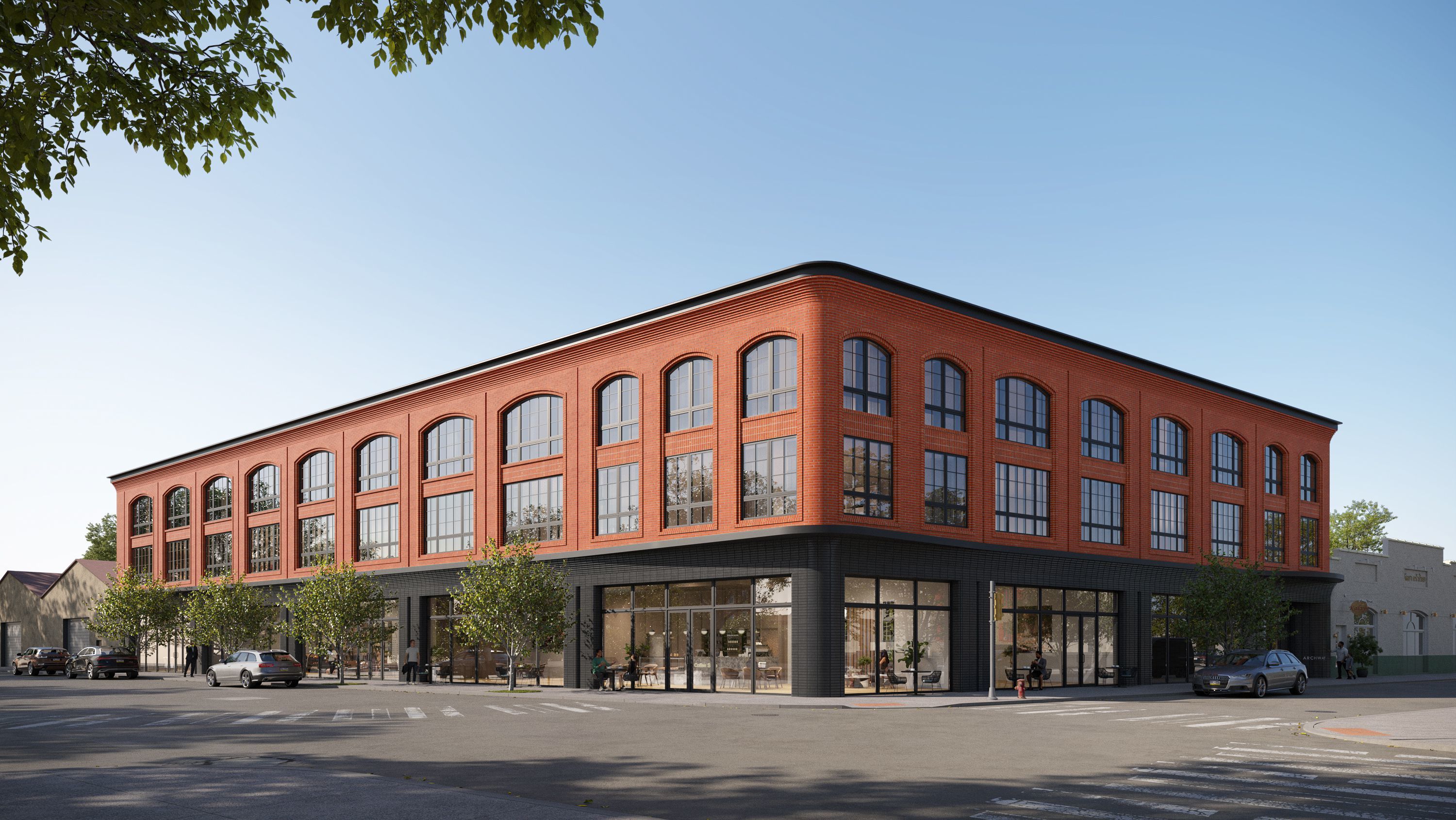
The design for this three-story apartment building at 1716 Frankford Ave. uses shallow, industrial-style arches to enliven the facade. The project, which was designed by Gnome Architects for developer Roland Kassis, was expected to break ground in December.
Eschewing look-alikes
It’s no accident that arches began to proliferate just as brick was enjoying a revival as a building material in Philadelphia. Roland Kassis, a Fishtown developer who is responsible for several buildings with arches on Frankford Avenue and Front Street, says he first began using brick for building facades as a reaction against the poor quality of fast casual architecture.
Even though brick took more time and expertise to install, and ultimately cost slightly more than other materials, he felt it was worth it because it set his projects apart from the competition and signaled quality to potential renters. Later, he added arches.
Most of Kassis’ buildings that feature arches have been designed by Gnome Architects. They include a new mid-rise apartment building and a small hotel that are now under construction on Frankford Avenue.
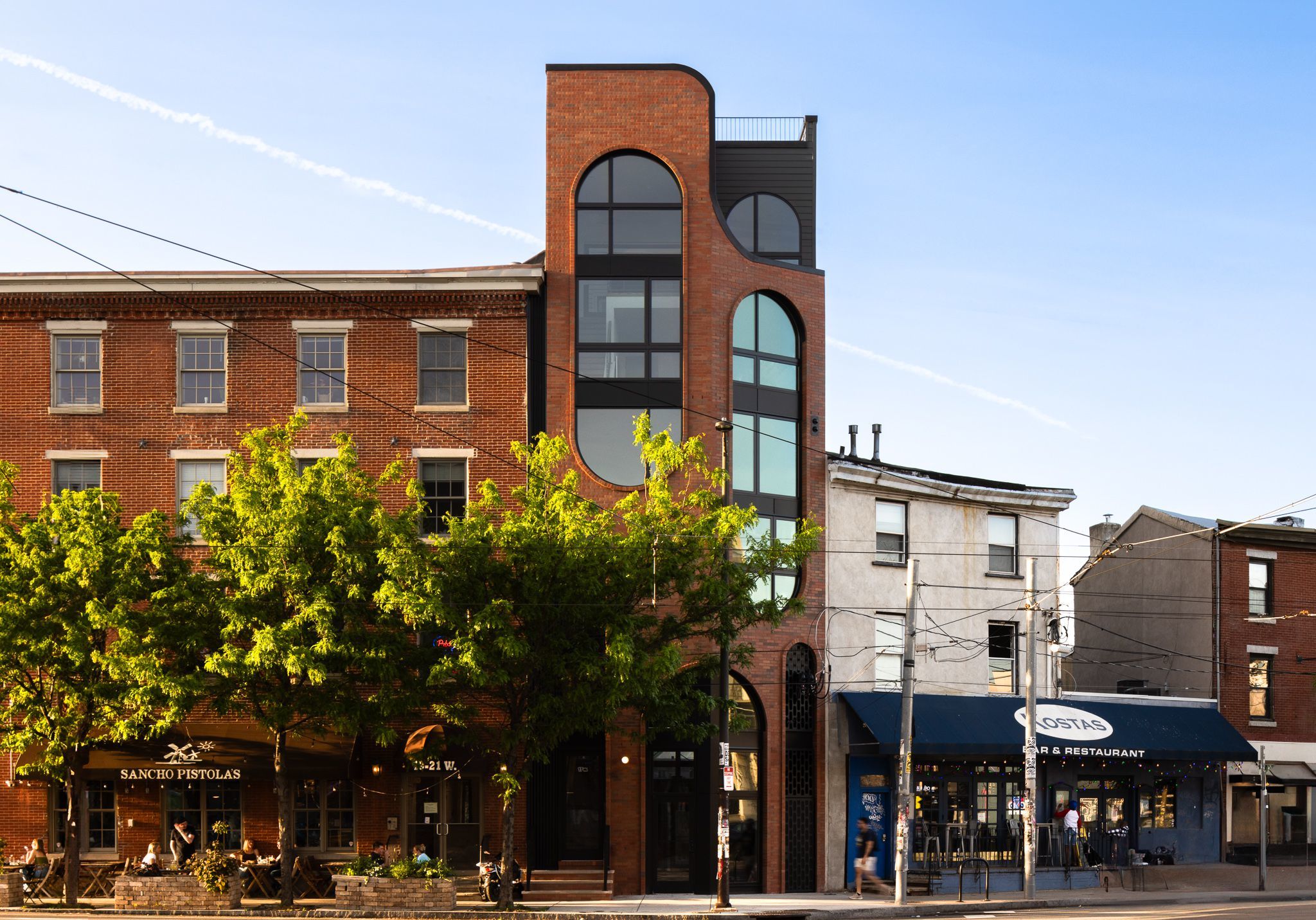
While Gnome’s use of the arches is a way of paying homage to Fishtown’s industrial past, the firm’s most interesting design is less referential. Located at 17 Girard Ave., the skinny, mixed-used building features brick-framed oval windows that float up the facade like elongated soap bubbles. It functions as a sort of urban lighthouse at the entrance to Fishtown.
Gnome’s new three-unit apartment building at 17 Girard Ave. in Fishtown is an exuberant counterpoint to the straight lines of Philadelphia’s traditional brick facades.
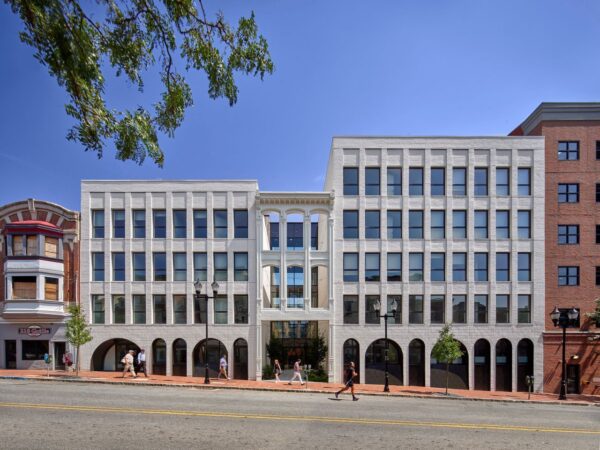
Several other Philadelphia architects have embraced arches in their work for developers, including Digsau, KJO Architecture, and Morrissey Design. What unites their aesthetic is a strong interest in craft. They’re not just pasting factory-made brick panels onto facades; they’re hiring skilled workers from Philadelphia’sbricklayers unionto lay the blocks on site, one at a time.
That kind of craftwork isn’t something architects usually learn in school. To ensure that he gets the arches right, Gnome’s Gabriel Deck signed up for the International Masonry Institute’s training camp, where he tried his hand at using a trowel and spreading mortar. Digsau’s Mark Sanderson, who used a variety of arch types for Wilmington’s Cooper apartments, jokes that “we have the institute on speed dial.”
The institute’s regional director, Casey Weisdock, says she’s noticed an uptick in both the use of brick and modern interpretations of the arch. She attributes brick’s newfound popularity to the Biophilic design movement, which believes natural construction materials are better for people’s health and can improve their moods.
“A brick has a human quality,” she says. “A block fits right into your hand.”
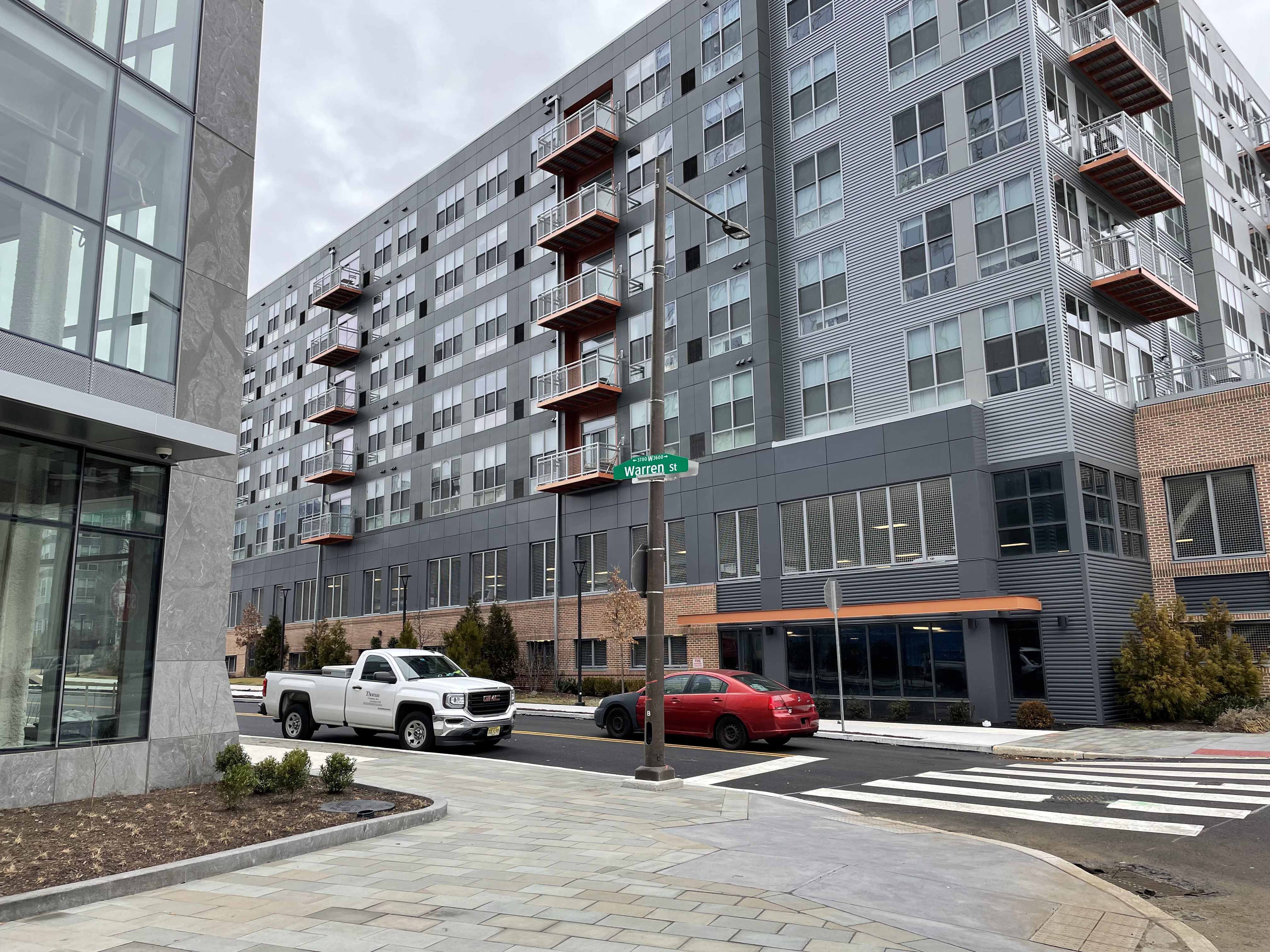
This massive apartment building on Lancaster Avenue, ANOVA uCity Square, typifies the plodding, graph paper-inspired architecture that is sweeping America. It was designed by Lessard Design on the site of the former University City High School, which is now home to life science complex called uCity.
Digsau has a long history of incorporating wood and brick into its projects, yet the firm started adding arches into the mix only a few years ago. Like other architects, Sanderson, one of Digsau’s founders, says he was frustrated that design is increasingly dictated by financial models that result in the mass production of look-alike apartment buildings. Arches were a way of breaking out of that rut.
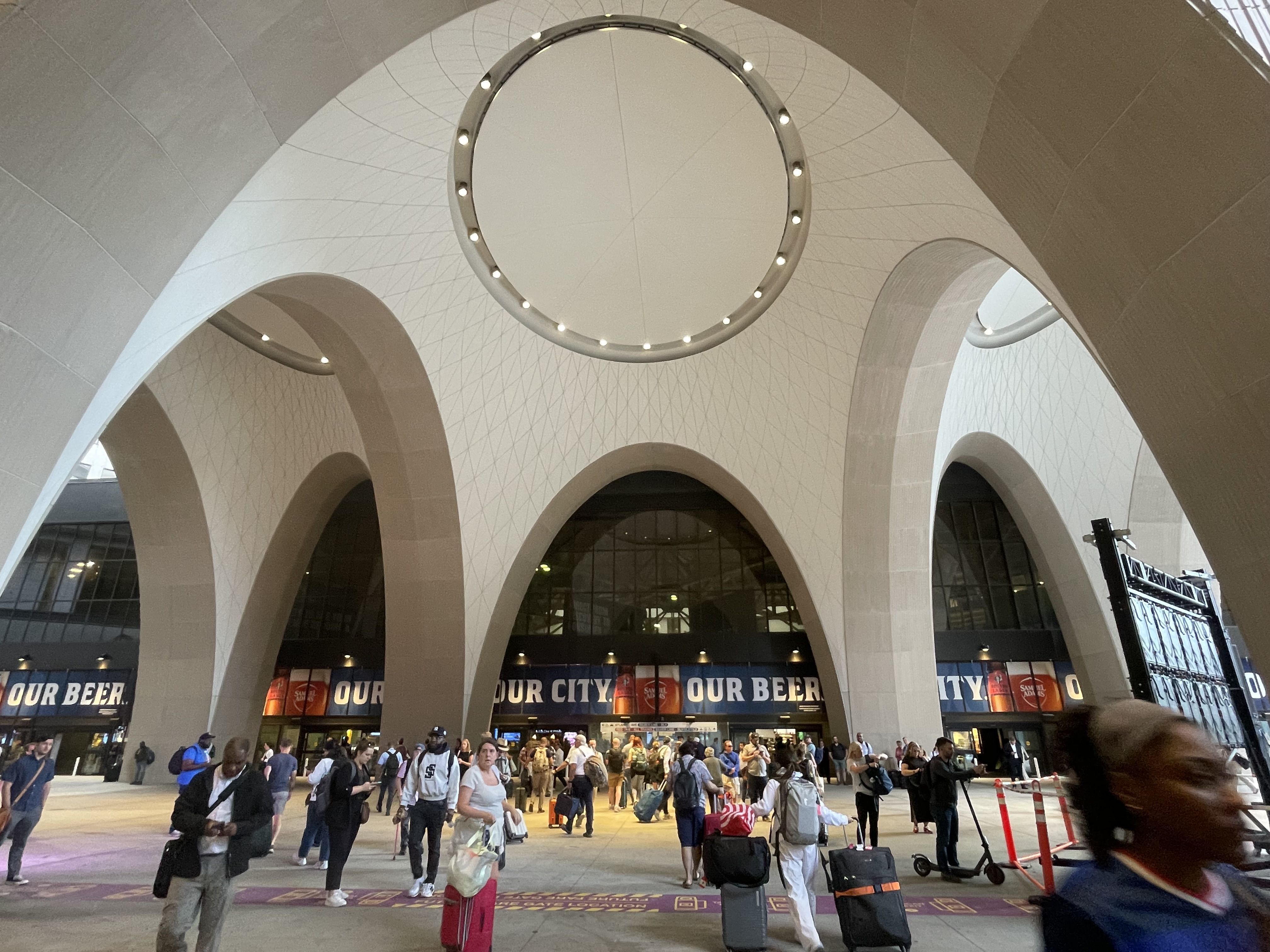
The rebellion against straight lines and slick facades has spread to other big cities, and now even big corporate architects who specialize in skyscrapers are playing with bricks and arches. Pelli Clarke Pelli, which is responsible for designing many of the crystalline towers along the Schuylkill, just dropped a ring of soaring arches into Boston’s newly renovated South Station. (Of course, staying true to type, the firm’s tower, located on top of the station, is still a blue glass ice sculpture.)
Pelli Clarke Pelli inserted these almost parabolic arches into Boston’s newly refurbished South Station.
The urge for curves extends into interior design. Furniture showrooms overflow with tub chairs and sofas with curved backs. Virtually every surface at Enswell, an upscale Center City cocktail lounge designed by Stokes Architecture & Design, bends and flows in some way. The firm is responsible for several rounded counters in Philadelphia’s cafes and was part of the team that created Borromini’s interior arches.
“You hear the words ‘comfy and cozy’ used a lot these days,” and the arch is one way to achieve that, says architect Brian Phillips, the founding principal at ISA. Interestingly, it’s hard to find arches in any of the firm’s work, which relies on textured materials, strategic cutaways, and complex geometry to animate its work. ISA did, however, introduce an arch and some curves for the Frankie’s Summer Club pop-up at the former University of the Arts building.
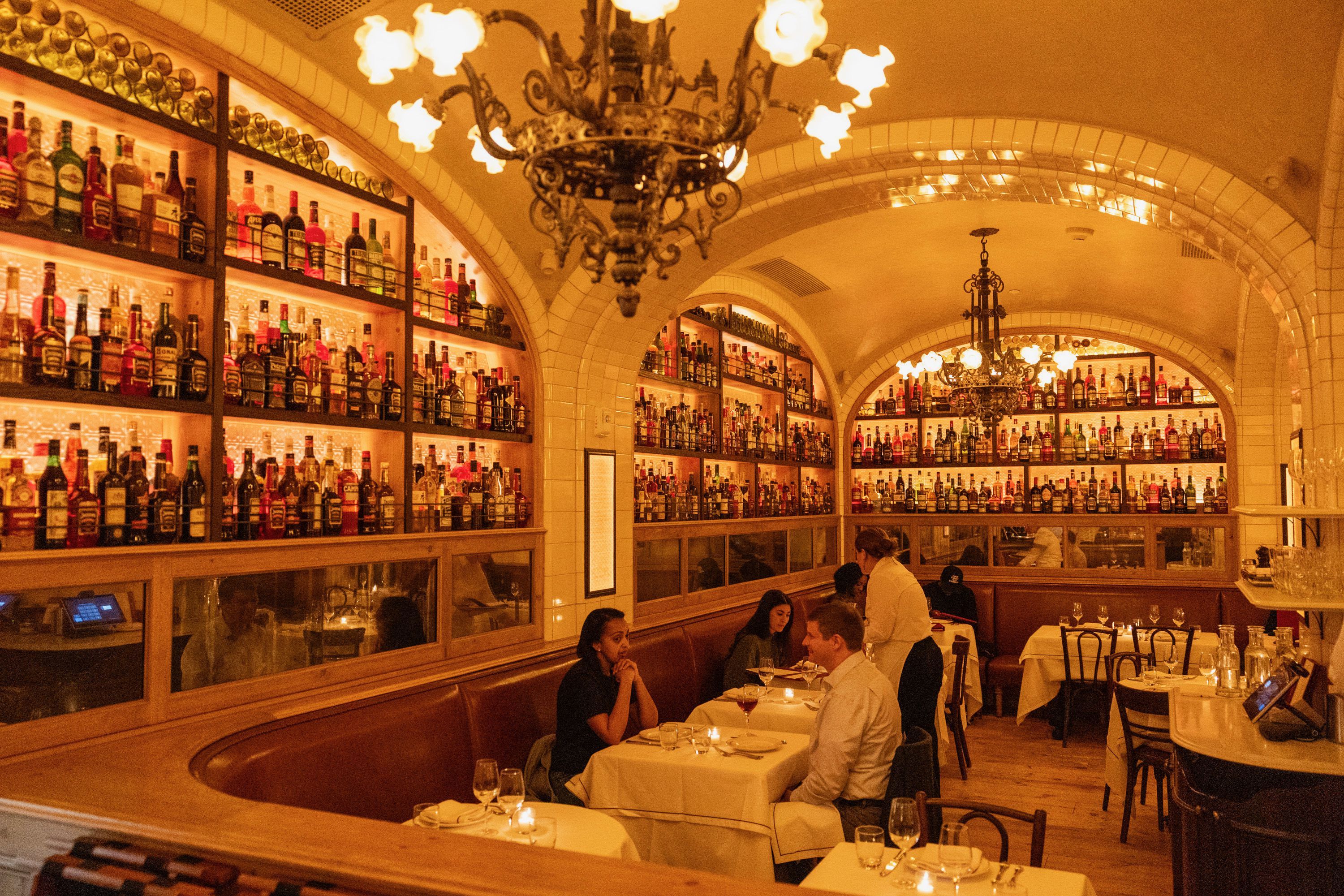
The fashion for arches and curves has also spread to interior design. Stephen Starr’s new Borromini restaurant on Rittenhouse Square — collaboratively designed by Keith McNally, Ian McPheely, and Stokes Architecture & Design — includes a curved banquette and dramatic, tiled arches in the main dining room.
While the arches have allowed architects to fight back against the deadening sameness of Developer Modern, the new style risks becoming its own cliche.
So far, those Philadelphia architects who include arches in their work haven’t embraced the literal historicism of Robert Stern, but neither have they come up with anything as groundbreaking as the exaggerated and ironic forms introduced by Venturi and his partner, Denise Scott Brown. In some cases, the use of arches seems arbitrary — merely decorative, to use the modernist critique. And arches aren’t always well integrated into the composition.
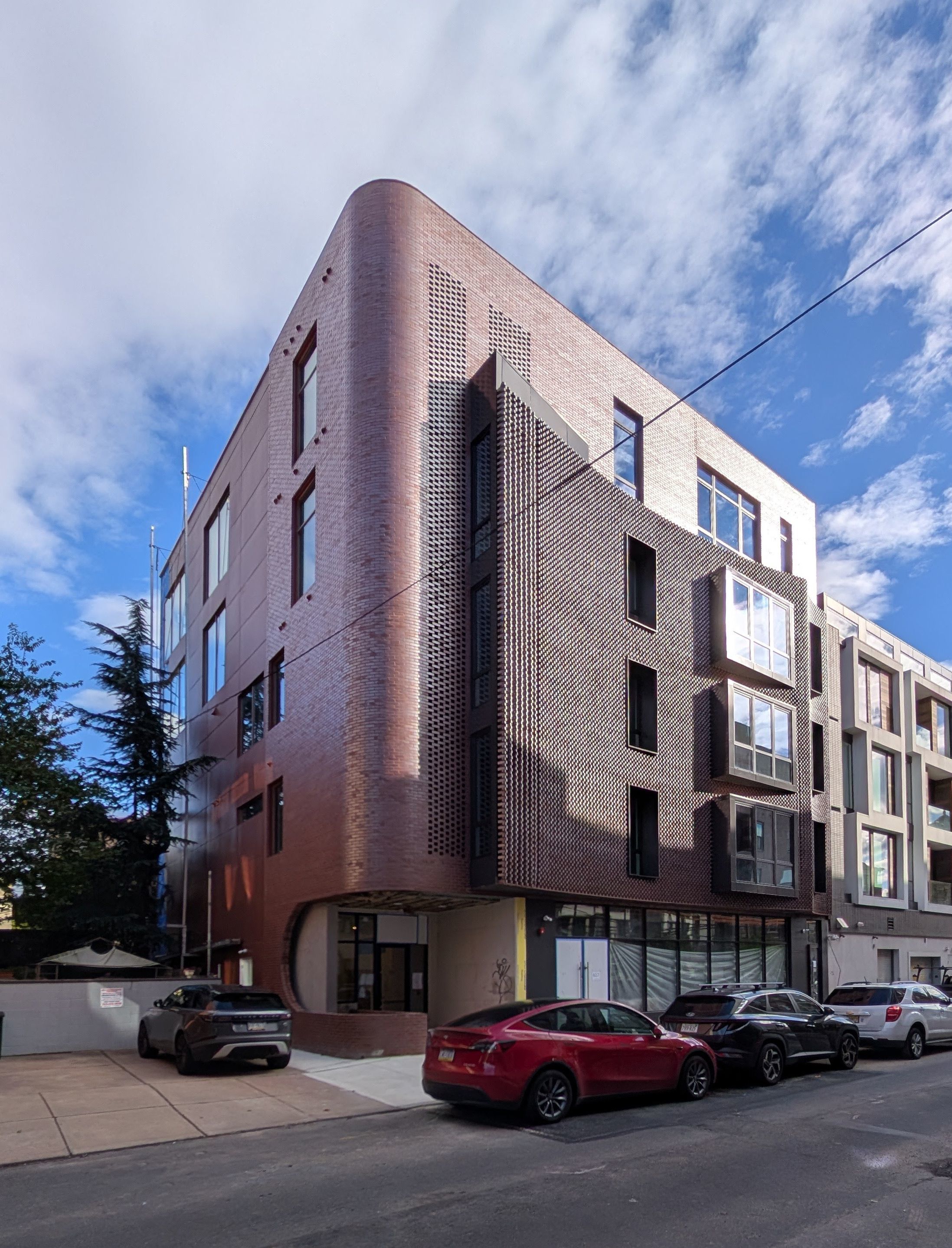
The most satisfying of Philadelphia’s new-wave brick buildings has plenty of curves, but no arches. Bloc24, a small condo building on 24th Street between South and Bainbridge, is a bravura essay in different styles of brickwork.
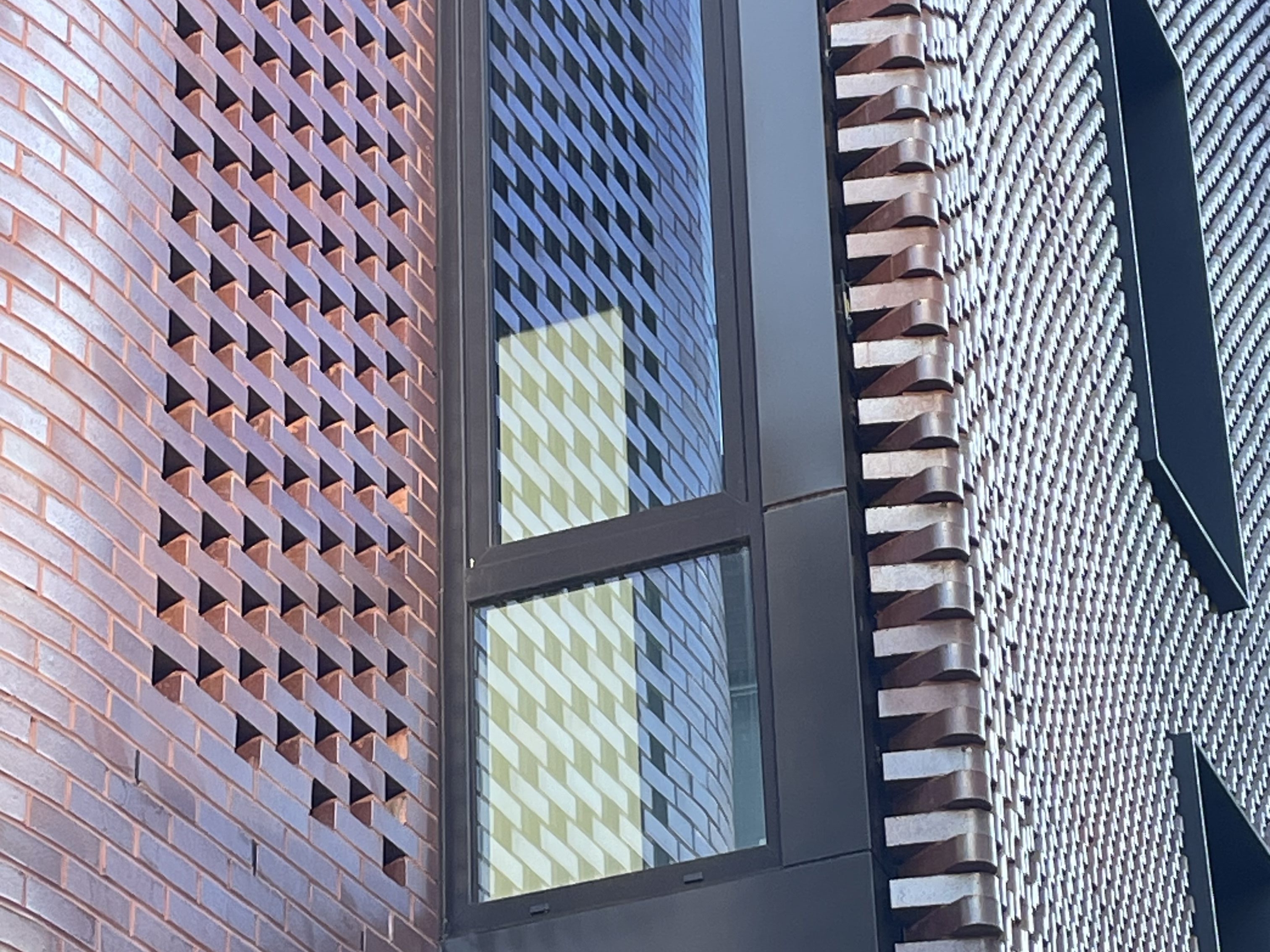
A curving screen made from bull-nose bricks, laid on the diagonal, sweeps across the facade. Because it protrudes several feet from the surface, it functions as a giant bay window. While it’s a stretch, you could consider the stylish, curved cut-out at the entrance a sideways arch.
While Bloc24, by Moto Designshop, has no arches, it is a bravura essay in brick styles and features plenty of curves. The new condo building is located on 24th Street, between South and Bainbridge.The brickwork on Moto Designshop’s Bloc 24, at 24th and South, is anything but flat.
Bloc24 was designed by Moto Designshop, the firm responsible for the intricate brick chapel at St. Joseph’s University. Moto has made intricate brickwork its signature, and, unlike those designs that use brick as a veneer, every detail of Bloc24 is integrated into the overall concept.
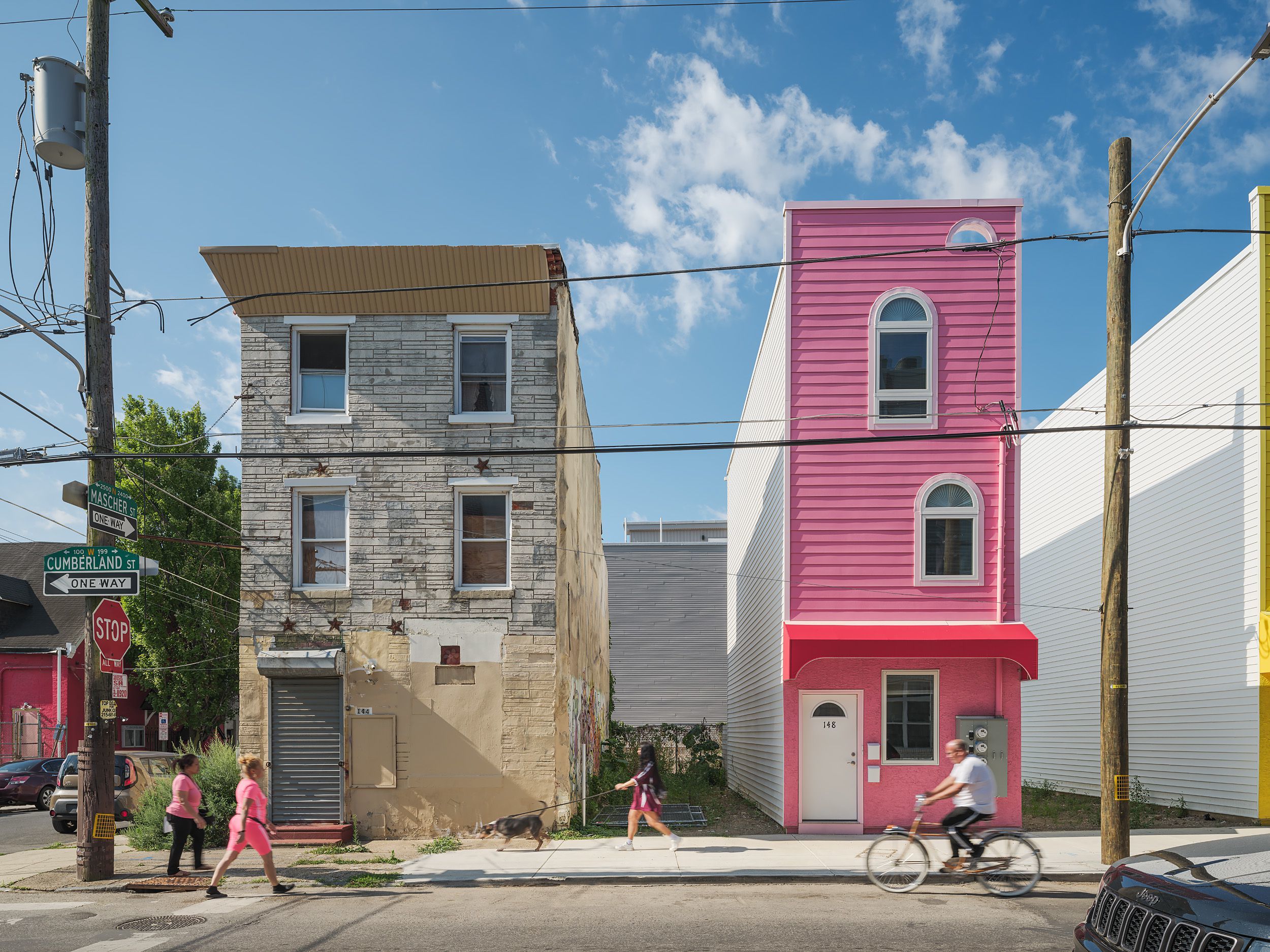
Perhaps the most out-of-the-box use of the arch can be found at Avellino’s Mi Casa houses, a group of rowhouses in tropical colors that he designed as affordable housing for Xiente (formerly the Norris Square Community Alliance). Because the sites are scattered around the neighborhood, often on very narrow lots, he was unable to replicate the standard, double window pattern found on most Philadelphia rowhouses. Instead, he used single arched windows, placed asymmetrically to energize the facades.
There isn’t a single brick in sight, evidence that the arch has come full circle.
Arched windows define this tropical pink house, part of group of affordable houses built on infill sites in the Norris Square neighborhood. Bright Common’s Jeremy Avellino used the arches to energize the narrow facades.
Think you know your news? There’s only one way to find out. Welcome back to our weekly News Quiz — a quick way to see if your reading habits are sinking in and to put your local news knowledge to the test.
Question 1 of 10
In Steven Spielberg’s upcoming film, Disclosure Day, which filmed in parts of New Jersey earlier this year, Emily Blunt’s character has this occupation:
CorrectIncorrect. XX% of other readers got this question right.
The trailer shows Blunt as a meteorologist who shudders as she experiences some sort of encounter live on air. It includes all the other good stuff: crop circles, deer who are absolutely shook by whatever extraterrestrial activity they’re dealing with, car chases, you know the deal.
Question 2 of 10
A performance artist from Baltimore stood nearly naked, in socks and boxers, outside the Liberty Bell last week with a sign that said:
CorrectIncorrect. XX% of other readers got this question right.
The man, who goes by Ham, said he’s been doing the underwear in cold cities routine for about two years and recently added the sign, “engagement ring savings fund,” as a way to combat people repeatedly asking him his motives.
Subscribe to The Philadelphia Inquirer
Our reporting is directly supported by reader subscriptions. If you want more journalism like this story, please subscribe today.
During her first interview on Stephen Colbert’s The Late Show, Taylor Swift referenced a photo from 2001, at age 11, performing at this local spot:
CorrectIncorrect. XX% of other readers got this question right.
“You know when you are like 11 and you have that one outfit that you just know … goes so hard … when you just put this on and it’s like I’m sorry. I’m unstoppable today,” the Berks County native said about her American flag Limited Too shirt and red duster. She rocked that outfit while performing the National Anthem at a Sixers game.
Question 4 of 10
A new South Philly crime drama, Not for Nothing, recently debuted on the big screen and Amazon Prime. The brothers who conceptualized and wrote the show owned a music venue on Ninth Street called:
CorrectIncorrect. XX% of other readers got this question right.
Back in 2006, when they first opened a live music venue on Ninth Street, Connie’s Ric Rac, Frankie and Joe Tartaglia — and their best friend and business partner, Peter Pelullo — would sit for hours after closing, spitballing script ideas. The brothers wanted to tell a South Philly story that captured the neighborhood they knew and that could make their dreams real.
Question 5 of 10
Late actor and filmmaker Rob Reiner got his start in this Pennsylvania theater as an apprentice at age 17:
CorrectIncorrect. XX% of other readers got this question right.
Reiner apprenticed at the Bucks County Playhouse in 1964, the same year Liza Minelli appeared at the Playhouse and Arthur Godfrey was in Our Town.
story continues after advertisement
Question 6 of 10
An Eagles fan went viral after his self-defeating joke on Facebook prompted a police wellness check. Where does the fan live?
CorrectIncorrect. XX% of other readers got this question right.
Jake Beckman is an Eagles fan living in St. Louis. When the Eagles won the Super Bowl last season, he and his wife made the 14-hour drive to attend the parade.
Question 7 of 10
Which book was the most checked-out print title of the year across all of Philly’s library branches?
CorrectIncorrect. XX% of other readers got this question right.
The most checked-out print book of the year across all Philly’s library branches — in any genre — was Liz Moore’s 2024 The God of the Woods, a propulsive thriller about a girl who goes missing from a summer camp in 1975, eerily mirroring the disappearance of her brother from the same place 14 years earlier. Moore is based in South Philly.
Question 8 of 10
South Philly author Liz Moore’s “The God of the Woods” has been ordered for a TV series adaptation by which streamer?
CorrectIncorrect. XX% of other readers got this question right.
Netflix announced it has ordered a series adaptation of “The God of the Woods,” a multigenerational mystery drama set in the Adirondacks. Moore will serve as a co-showrunner, writer, and executive producer, Netflix said. It marks the author’s second book that has been adapted for TV.
Question 9 of 10
Comedian Jake Shane said he had the best meal of his life at this Philly spot:
CorrectIncorrect. XX% of other readers got this question right.
“The best meal I’ve ever had in my life at Her Place in Philly,” Shane told his TikTok fans. Her Place earned one Michelin star this year.
Question 10 of 10
Why did this former Eagles fan sue the team?
CorrectIncorrect. XX% of other readers got this question right.
Jalen Hurts gave diehard Eagles fan Paul Hamilton a touchdown ball in MetLife Stadium in December 2022. Then team, NFL, and security officials accosted the Eagles fan, according to a lawsuit.
Your Results
You have skipped .
You scored XX out of 10.
The average reader scored XX out of 10
Seems like you’ve been skimming more than reading there, buddy. There’s always next week.
You’ve read some articles (or made some educated guesses) but we wouldn’t come to you first for our local news recaps. Better luck next week!
Do you work here? You’re a local news stan with the latest updates on Philly happenings. Your friends definitely ask you for summaries on what’s going on and it shows.
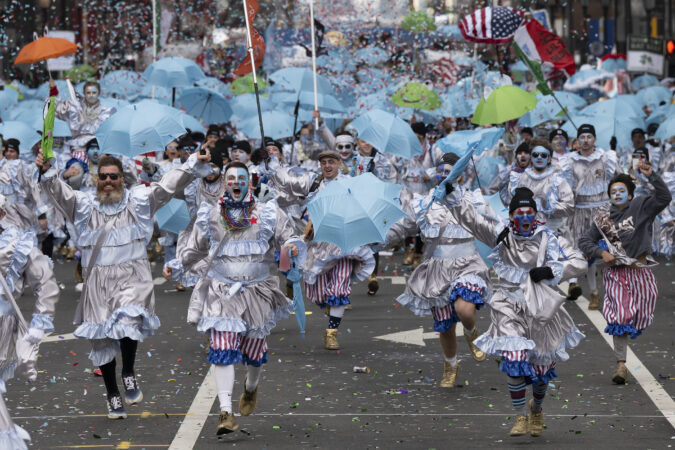
This year marks the 125th anniversary of the Philadelphia Mummers Parade, that colorful, boisterous procession that has come to define New Year’s Day in the city.
The festivities kick off at 9 a.m. on Thursday, Jan. 1, as more than 10,000 performers take to the streets for a daylong celebration USA Today readers recently hailed as the nation’s best holiday parade.
From parking to road closures to how to go about watching, here’s everything you need to know ahead of time.
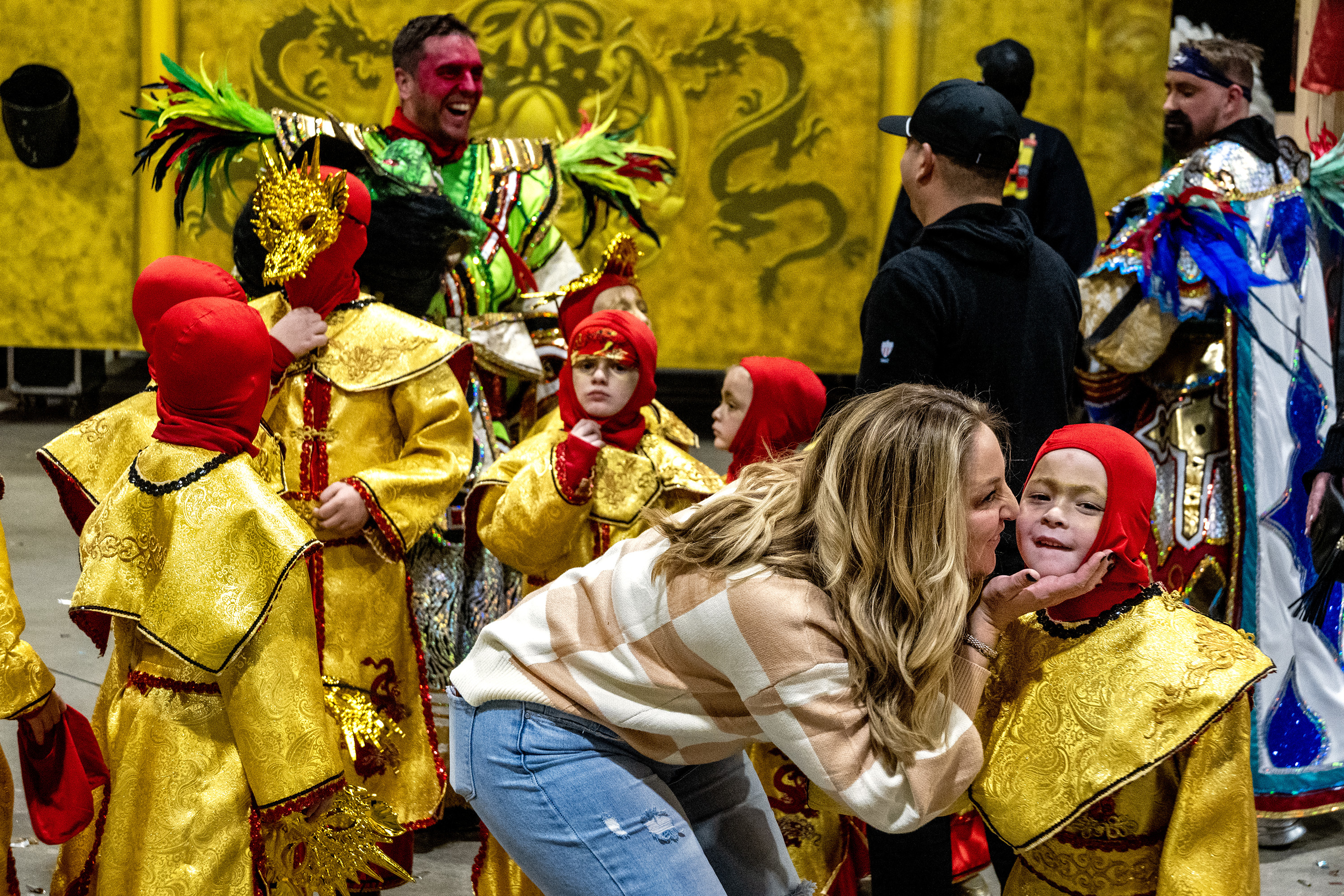
Kasey McCullough kisses her son Finn, 5, after his appearance with Bill McIntyre’s Shooting Stars during their performance in the Fancy Brigade Finale at the Convention Center Wednesday, Jan. 1, 2025, part of the Philadelphia Mummers New Year’s Day parade. Their theme is “Legends of the Secret Scrolls.” Finn’s dad, Jim McCullough also performed, his 40th year with the Mummers. They are from Washington Twp.Washington Township, N.J.
Mummers Parade route
The mile-and-a-half route begins at City Hall, before heading south down Broad Street to Washington Avenue in South Philadelphia.
How to watch the 2026 Mummers Parade
Watch the Mummers Parade in person
The parade is free to attend. Those hoping for a more intimate experience, however, have a few options:
Reserved bleacher seats located near the judging stand just west of City Hall are available for $25 at visitphilly.com.
Additionally, tickets to the Fancy Brigade Finale — held at 11:30 a.m. and 5 p.m. inside the Convention Center — range from $28 to $43. Tickets are available at visitphilly.com or during business hours at the Independence Visitor Center.
Watch the Mummers Parade from home
The parade will be broadcast from 9 a.m. to 5 p.m. on:
Cable/Satellite: On Channel 2 (MeTV2) or Channel 69 (WFMZ). Available on Comcast, Fios, DirecTV, Dish Network, Service Electric, Astound, and Blue Ridge Cable.
Mobile: On the WFMZ+ Streaming app, available through your Apple or Android devices.
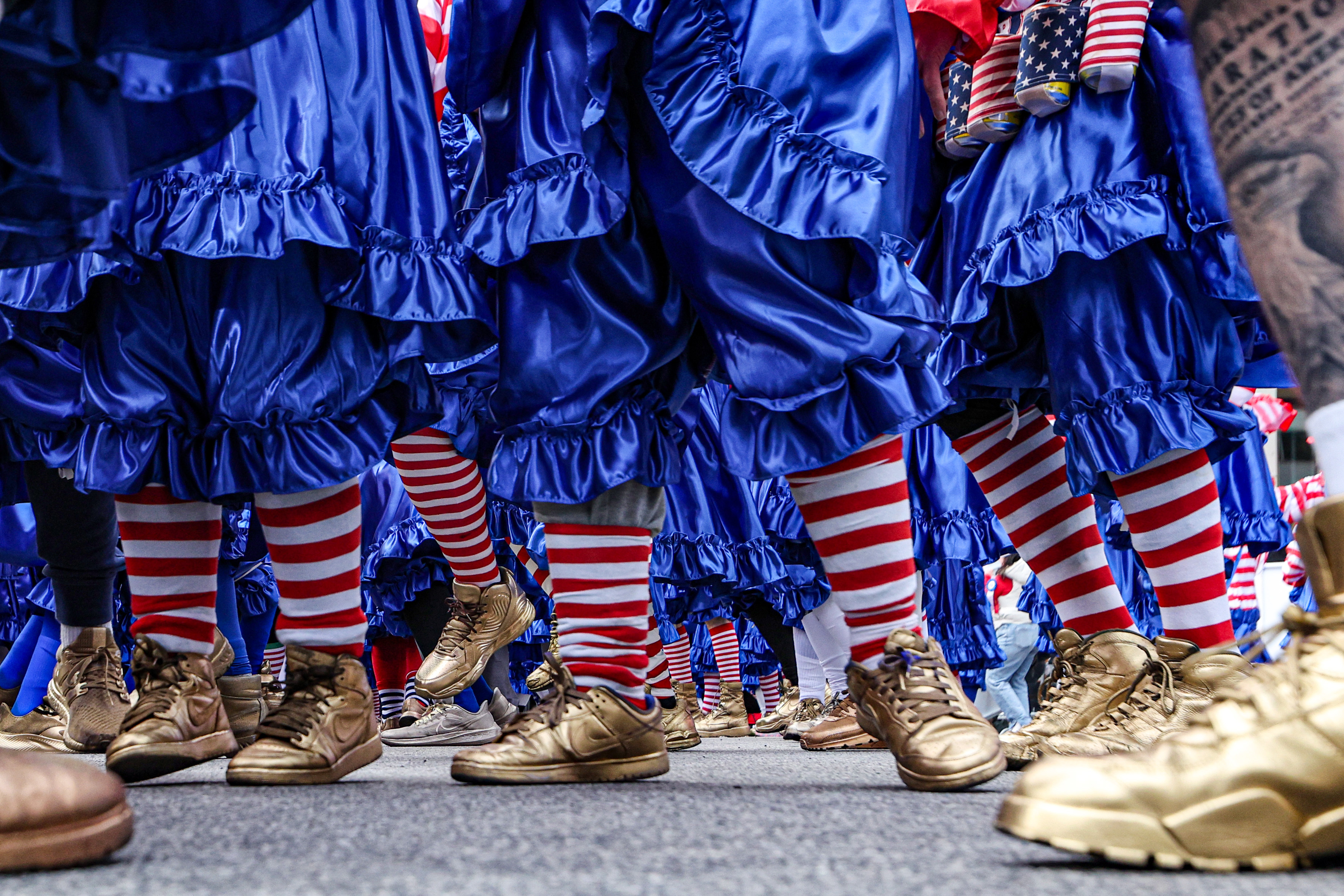
Members of the Saints wench brigade step to the judges’ stand during the 124th Mummers Parade on Wednesday, Jan. 1, 2025.
What is the Mummers Parade?
In short, it’s the longest continuously running folk parade in the country. Some 10,000 elaborately dressed performers take part in the celebration each year, part of dozens of groups spread across several divisions.
Fancies: Painted faces and elaboratecostumes.
Comics: Satirical comedy skits aimed at public figures, institutions, and current events.
Wench Brigades: Known for traditional Mummers costumes, including dresses, bloomers, and bonnets.
Fancy Brigades: Theatrical performances. (The Fancy Brigade Finale takes place on New Year’s Day with a pair of ticketed performances at the Convention Center at 11:30 a.m. and 5 p.m.)
String Bands: Marching musicians playing an assortment of string and reed instruments.
Mummers Parade performers
Fancy Division
Golden Sunrise
Wench Brigade Division
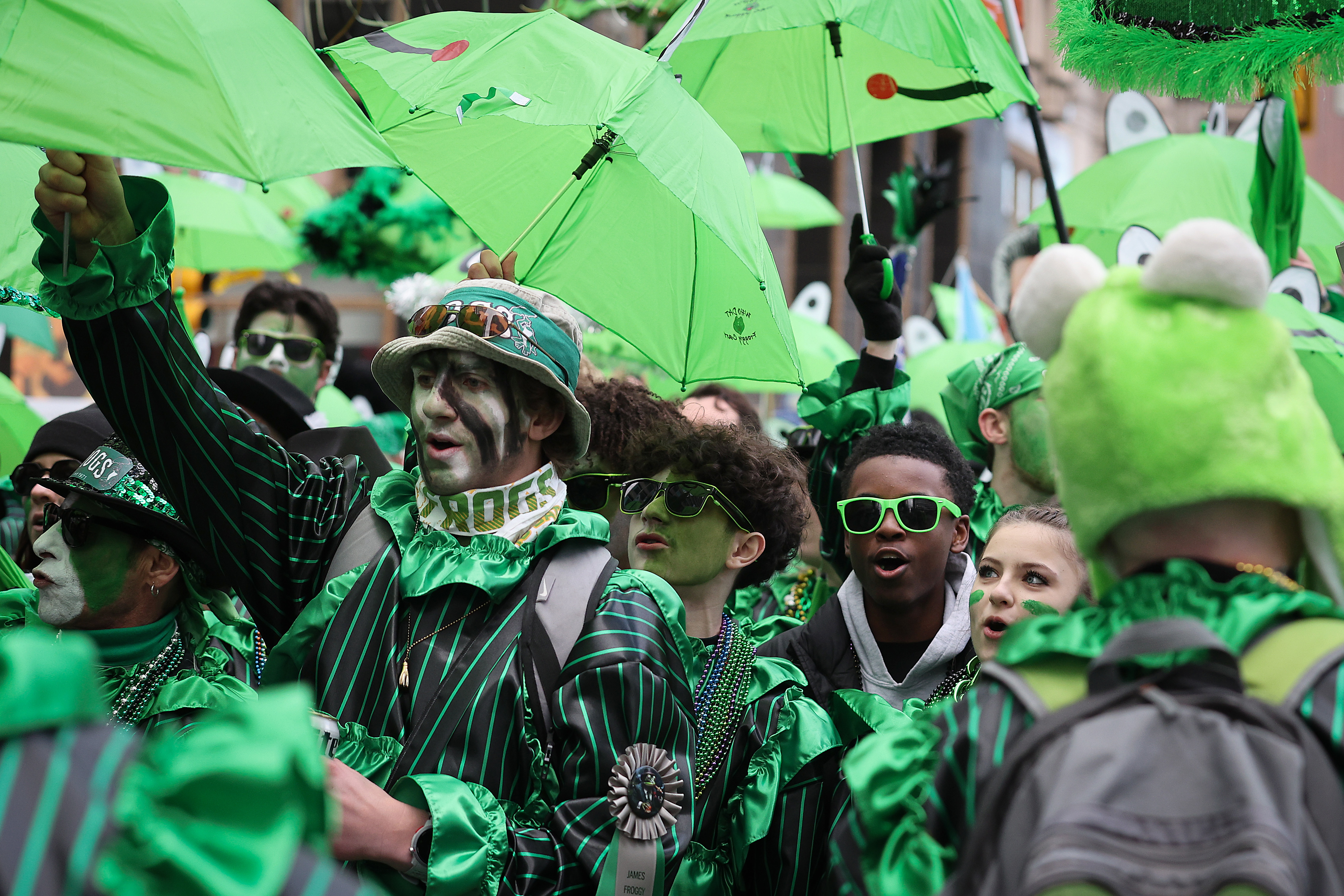
Froggy Carr
Pirates
Americans
Cara Liom
MGK
O’Malley
Oregon
Saints
Riverfront
Bryson
Comic Division
Mother Club: Landi Comics NYA
Philadelphia Pranking Authority
Mayfair Mummers
Barrels Brigade
The Jacks
Mother Club: Rich Porco’s Murray Comic Club
Holy Rollers NYB
Vaudevillains NYB
Trama NYB
Wild Rovers NYB
Mollywoppers NYB
Merry Makers NYB
Misfits NYB
Fitzwater NYB
Funny Bonez NYB
Top Hat NYB
Fiasco NYB
Golden Slipper NYB
B. Love Strutters
Madhatters NYB
Tankie’s Angels NYB
The Leftovers NYB
Finnegan NYB
Mother Club: Goodtimers NYA
SouthSide Shooters NYA
Jokers Wild NYB
Hog Island NYA
Pinelands Mummers NYB
Happy Tappers NYB
Two Street Stompers NYB
Gormley NYB
Jesters NYB
Lobster Club NYB
South Philly Strutters NYB
Jolly Jolly Comics NYB
String Band Division
Duffy String Band
Durning String Band
Quaker City String Band
Fralinger String Band
Uptown String Band
Avalon String Band
South Philadelphia String Band
Aqua String Band
Greater Kensington String Band
Woodland String Band
Polish American String Band
Ferko String Band
Hegeman String Band
Jersey String Band
Members of Froggy Carr chant as they strut to Market Street during the 124th Philadelphia Mummers Parade on Wednesday, Jan. 1, 2025.
Mummers Parade-day hacks
Navigating the heavily attended event can require a bit of planning, with entire Reddit threads devoted to parade-day tips — including the best places to park and how to access elusive public restrooms throughout the day.
A few things to keep in mind: The parade is accessible through SEPTA Regional Rail, bus, subway, and trolley lines. And though parking is free because of the holiday, it’s expected to be scarce.
While the heart of the action takes place near City Hall and Dilworth Park, performance areas will also be located along the parade route — at Broad Street at Sansom, Pine, and Carpenter Streets.
Starting at 11 a.m., meanwhile, parade attendees can gather at the staging area for the string bands to watch the performers prepare. (The staging areas are located at Market Street between 17th and 21st Streets and JFK Boulevard between 17th and 20th Streets.)
Also good to remember? Dress warm, bring a lawn chair (they’re permitted), and pace yourself — it has the potential to be a very long day.
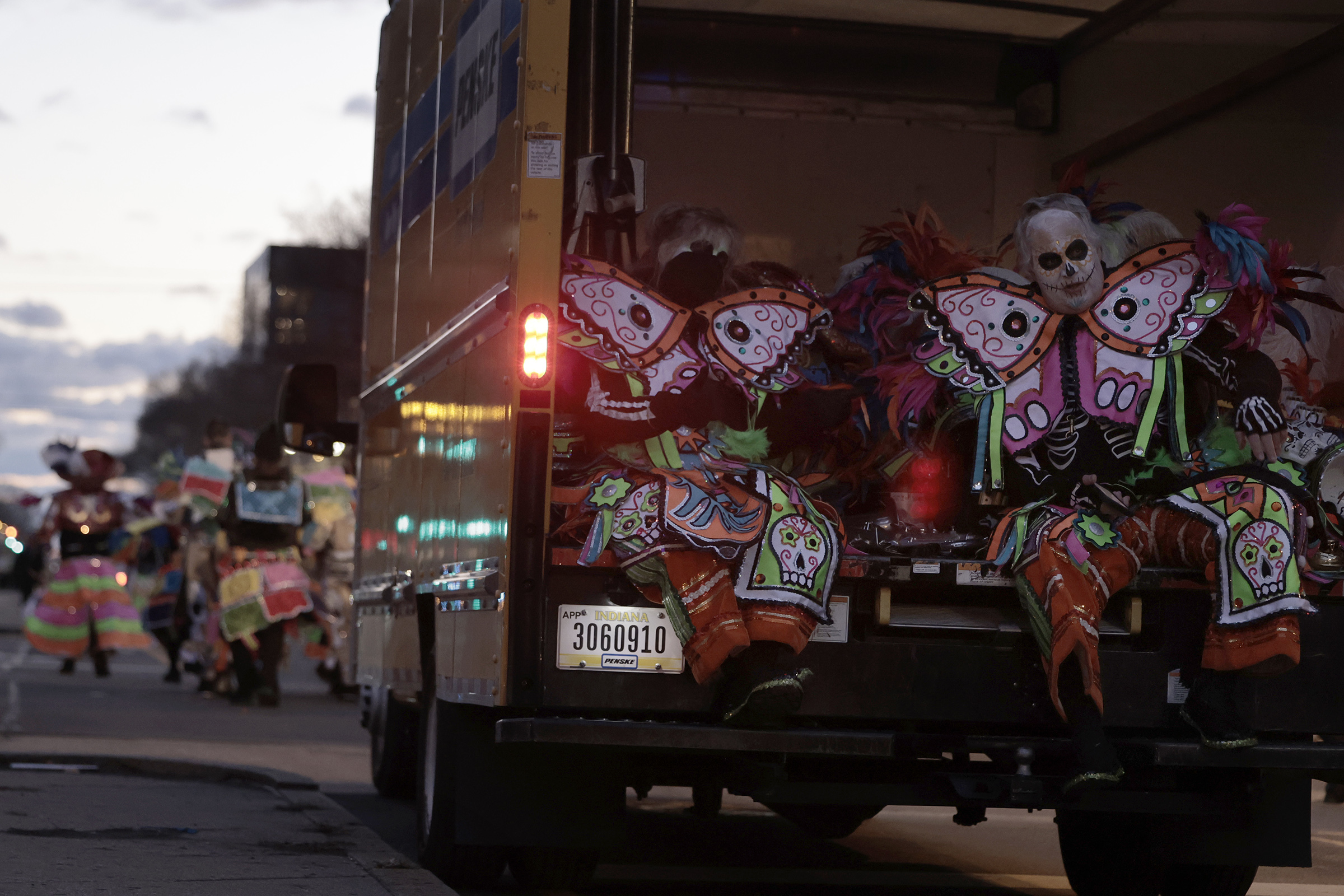
Ferko String Band tenor sax players Renee Duffy of Deptford (left) and Tom Garrity of Berlin take a break from the parade as they ride in the bands truck on South Broad Street during the Mummers Parade in Philadelphia on New Year’s Day, Wednesday, Jan. 1, 2025.
Mummers Parade road closures and parking restrictions
Friday, Dec. 26, 2025
No parking from 6 p.m. on Dec. 26 through 6 p.m. on Jan. 2, on the east curb lane of 15th Street from JFK Boulevard to South Penn Square.
Saturday, Dec. 27, 2025
No parking from 6 p.m. on Dec. 27 through 7 a.m. on Jan. 2, on the west side of 15th Street from Arch Street to Ranstead Street. Street and sidewalk vendors will also not be permitted to park in this area.
Monday, Dec. 29, 2025
15th Street will be closed to southbound traffic at JFK Boulevard. Closure begins at 8 a.m. on Dec. 29 and runs through 7 a.m. Jan. 2.
Market Street eastbound will be closed to traffic at 16th Street from 8 a.m. on Dec. 29 through 7 a.m. on Jan. 2.
Tuesday, Dec. 30, 2025
No parking on the following streets from 4 a.m. on Dec. 30 through 6 p.m. on Jan. 1:
Market Street from 15th Street to 21st Street (both sides)
JFK Boulevard from Juniper Street to 20th Street (both sides)
15th Street will be closed to southbound traffic at JFK Boulevard. Closure begins at 7 a.m. on Dec. 30 and runs through 7 a.m. Jan. 2.
Wednesday, Dec. 31, 2025
Market Street will be closed to vehicle traffic from 15th Street to 21st Street from 10 a.m. to 3 p.m. on Dec. 31. Market Street will reopen at 3 p.m. and traffic will be permitted to travel eastbound on Market Street to 15th Street and continue southbound on 15th Street.
Thursday, Jan. 1, 2026
The following streets will be closed to vehicle traffic beginning at 3 a.m. on Jan. 1 through the parade’s conclusion:
15th Street from Arch Street to Chestnut Street
Market Street from 15th Street to 21st Street
These streets will be closed to vehicle traffic beginning at 6 a.m. on Jan. 1 through the conclusion of the parade:
Benjamin Franklin Parkway from 16th Street to 20th Street
North Broad Street from Cherry Street to JFK Boulevard
16th Street from Chestnut Street to Race Street
17th Street from Benjamin Franklin Parkway to Ludlow Street
18th Street from Ludlow Street to Race Street
19th Street from Benjamin Franklin Parkway to Chestnut Street
1500 block of Ranstead Street
1300 block of Carpenter Street
1000 block of South 13th Street
Chestnut Street from 15th Street to 18th Street (north side)
Cherry Street from 15th Street to 17th Street
Arch Street from 15th Street to 17th Street
Washington Avenue from 12th Street to 18th Street
Broad Street will be closed to vehicle traffic from South Penn Square to Washington Avenue on Thursday, Jan. 1, beginning at 7 a.m. through the conclusion of the parade.
Vehicle traffic will not be permitted to cross Broad Street during the parade.
Additional Parking Restrictions
No parking from 2 a.m. to 6 p.m. on Thursday, Jan. 1 (on both sides of street unless otherwise noted):
Broad Street from Cherry Street to Ellsworth Street
Juniper Street from JFK Boulevard to East Penn Square
South/East Penn Square from 15th Street to Juniper Street
Benjamin Franklin Parkway from 16th Street to 20th Street
Logan Circle (north side)
16th Street from Chestnut Street to Race Street
17th Street from Benjamin Franklin Parkway to Ludlow Street
18th Street from Ludlow Street to Race Street
19th Street from Benjamin Franklin Parkway to Chestnut Street
1500 block of Ranstead Street
1300 block of Carpenter Street
1000 block of South 13th Street
Chestnut Street from 15th Street to 18th Street (north side)
Cherry Street from 15th Street to 17th Street
Arch Street from 15th Street to 17th Street
Washington Avenue from 12th Street to 18th Street
SEPTA detours
SEPTA hasn’t updated their schedule for the parade yet, but bus detours, alerts, and information can be found on SEPTA’s website.
Inspired by traditions brought to Philly by Swedish, Finnish, Irish, German, English, and African immigrants, the annual event has grown to feature thousands of costumed performers competing in a colorful, unique, and family-friendly daylong affair.
Despite past funding issues and occasional controversy, the Mummers Parade today stands as one of the city’s quintessential events, celebrated by locals and embraced by Philly royalty; former Eagle Jason Kelce memorably donned a traditional Mummers outfit for the team’s Super Bowl parade in 2018, and actor Kevin Bacon, along with brother Michael, has helped fundraise for the event.
President Donald Trump announced he would advise federal agencies to reschedule marijuana from a Schedule I controlled substance to Schedule III, easing federal restrictions on the plant.
Trump announced the executive order Thursday in the Oval Office, alongside Health and Human Services Secretary Robert F. Kennedy Jr. and a line of medical workers in white coats and scrubs. The president does not have the direct authority to reschedule marijuana but can request his federal agencies to do so.
Jeff Hodgson smokes a pre-roll at his home in Cape May, NJ on Thursday, May 2, 2024. Hodgson mostly uses medical marijuana to help him sleep.
Marijuana has been a Schedule I controlled substance since the 1970 Controlled Substances Act, meaning the federal government considers marijuana to have no accepted medical use, with a high risk of abuse. Schedule I drugs, such as heroin, cocaine, and LSD, are illegal and strictly regulated, making medical research on these drugs, including cannabis, nearly impossible.
A reclassification would be the most significant reform on marijuana in more than half a century, opening the doors for medical research. But it would not be full legalization, said Adam Smith, executive director of the Marijuana Policy Project. It could also pave the way to federal intervention in the state-run medical and recreational marijuana industries, something stakeholders fear.
“There is a possibility that in moving cannabis to Schedule III, instead of opening up access, what it will do is incentivize federal agencies to clamp down control on the availability of cannabis,” Smith said. “Treating it as other Schedule III substances, which virtually all require prescriptions, is not how this works in medical cannabis and could really create chaos and a lot of economic pain in the industry.”
Frank Burkhauser of Woodbury displays the legal marijuana purchase that he just made at Cannabist in Deptford, N.J. on April 21, 2022. Burkhauser said he has been working for the legalization of marijuana since the early 90’s.
Smith said stakeholders are unsure what this might mean for the wider industry but remain optimistic, as rescheduling of marijuana has been a priority for decades.
This executive order has plenty of positives, said Joshua Horn, a Philadelphia cannabis lawyer at Fox Rothschild. Loosening restrictions could clear the way for the IRS to allow cannabis businesses to deduct business expenses (which they currently cannot do). Additionally, more traditional banking options might become available to entrepreneurs.
“It could also rectify the criminal injustice that has been ongoing since the passage of the Controlled Substances Act, where people of color have been disproportionately impacted by the ‘war on drugs,’” Horn said. “In the end, rescheduling should reinvigorate these businesses out of their current tax and financial struggles.”
This federal rescheduling of marijuana would come on the heels of Congress’ banning all intoxicating hemp products, which are derived from cannabis plants. While this may seem like a policy flip-flop, Smith said, these are two different issues at hand.
Hemp products photographed at the Philadelphia Inquirer, November 21, 2025.
“The hemp ban is the result of the fact that the market was chaotic and, in many cases, unsafe. Without regulation, that market was rife with pesticides, heavy metals, and products that should not be on shelves,” Smith said.
But he contends there is a movement to push back against wider marijuana legalization. “There’s always pushback when there’s big change,” Smith said. “But also because of the instability created when we have state-regulated markets operating in a federally illegal area.”
Industry folks are hoping this move better aligns the federal government and state markets, opens the doors to research, and provides better clarity to states that are hesitant to legalize marijuana, Smith said.
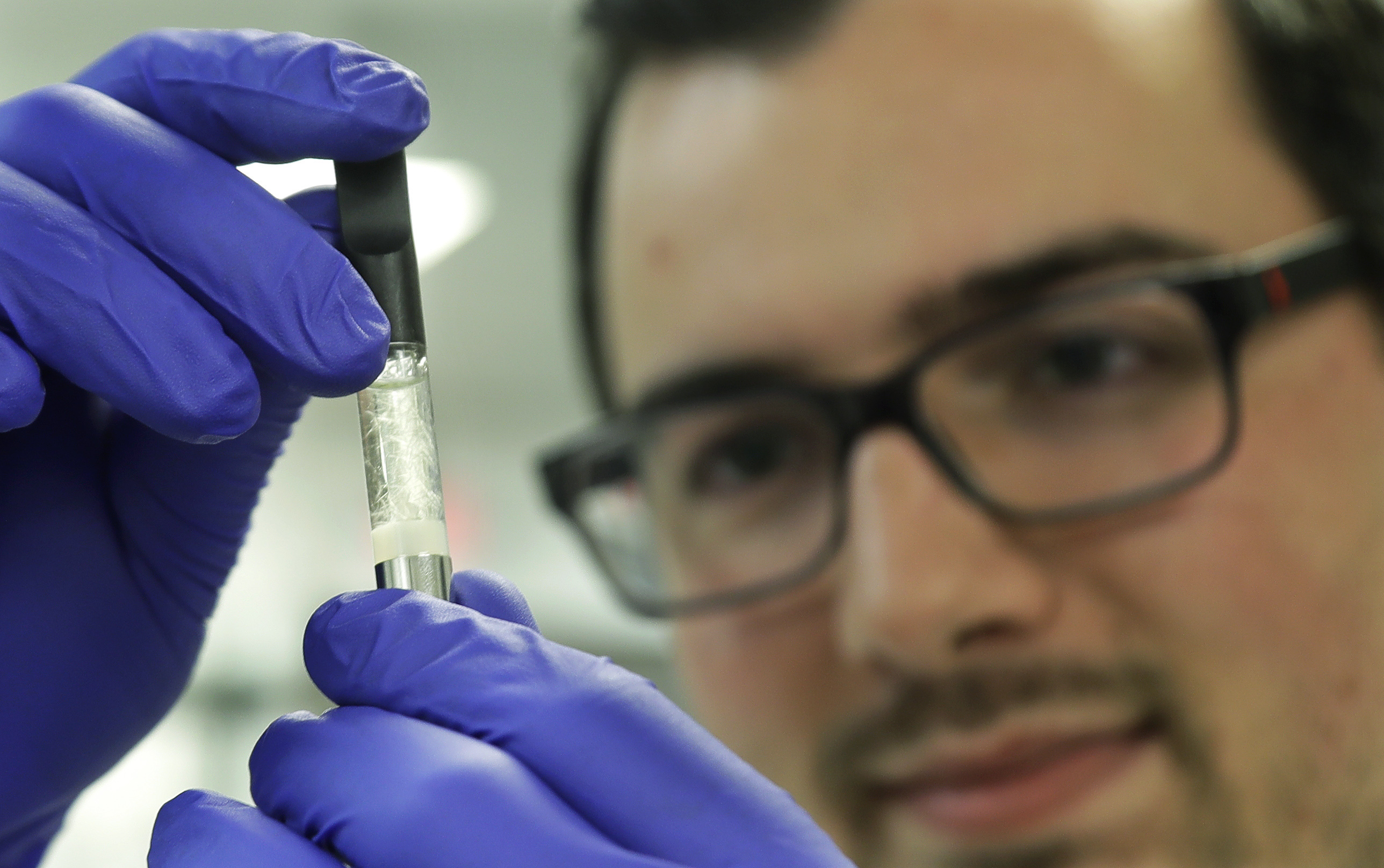
In this July 19, 2019, file photo, Pierce Prozy examines a Yolo! brand vape oil cartridge marketed as a CBD product at Flora Research Laboratories in Grants Pass, Ore.
Reducing restrictions on commercially available cannabis is “a key missing ingredient toward making clinical breakthroughs,” said Stephen Lankenau, director of Drexel University’s Medical Cannabis Research Center.
“A key issue is that any reclassification efforts need to reduce restrictions for university-based researchers to have access to cannabis-derived THC — commercially available products in particular — for clinical studies, whether laboratory or human subjects,” Lankenau said.
Researchers now are only able to examine hemp-derived nonpsychoactive cannabinoids like CBD or CBC. However, Lankenau said, it is unclear whether Trump’s proposal would give them the green light.
The Shore this time of year is truly a lovely, if sometimes desolate, place. But the desolation is the point: Emptied of its chaotic summer bustle, the simple natural beauties take center stage.
But yet. There are still plenty of humans here, and they are doing things, some good, some dubious, and so we will take note. Here is our first-ever winter solstice Shore Town Report Card.
As to the grading system, let’s just say, it was tough to give any town less than a B- when that winter light turns the sunset sky over the ocean a thousand shades of pink, and snow turns a magical place even more magical. Even Atlantic City, in spite of its burgeoning mayoral and other problems, is worth an off-season visit.
Atlantic City
The paradoxical Shore town has had a doozy of a year, with its newly reelected Mayor Marty Small Sr. on trial for allegedly physically abusing his daughter, charges he denied during the trial, and for which a jury on Thursday acquitted him. Meanwhile, three casinos were green-lit in New York City, New Jersey is contemplating how to tighten its control over Atlantic City, Peanut World caught fire, and ICE was making car stops in city neighborhoods.
The city’s holiday parade featured the red-clad Mayor Marty Small on a special Mayor’s Office float, with his wife, schools Superintendent La’Quetta Small, festively clad in a fluffy red coat, beside him. She is also charged with child abuse.
When will Atlantic City, arguably the last affordable Shore destination along the entire Northeast coast, finally break out of its slump? I explain in this story.A+ for holiday traditions like the elaborately decorated and festive iconic spots, from the Irish Pub to the Knife & Fork Inn; for its new skate and dog parks; and its casino giveaways. But, behind the salt air tinsel, A.C. isjuggling some C+ drama.
Ventnor
You’re never more aware that your town tilts toward summer than when it rebuilds its boardwalk during the winter. A big chunk of the boardwalk (from Surrey to Cambridge) has been closed since November for a complete reconstruction and will remain closed until at least May. A similar chunk up to the A.C. border will be rebuilt after next summer. Hence the odd sight of lots of people on Atlantic Avenue detoured from the beloved wooden pathway. In better news, some of Ventnor’s favorite places have stayed open into the dead of winter. On a recent weekend, I trudged in the snow over to my friends at Remedee Coffee for a specialty hot cocoa (delish) and was surprised to find the place … full of people. Everyone in town had had the same idea, apparently, and with no boardwalk, it’s not even out of the way. B
Margate’s business administrator launched a personal investigation of the city’s CFO and was making public accusations against one of its commissioners. A former mayor wants him fired. What even is going on over there? C+
Ocean City
The identity crisis continues. The town did a complete turnaround earlier this month with respect to the former Wonderland Pier site, voting to ask the planning board whether the site is in need of rehabilitation as requested by developer Eustace Mita, who wants to build a luxury hotel. Meanwhile, its mayor declared bankruptcy and got sued by his stepmother. The iconic McDonald’s in town abruptly closed. Still, Playland’s Castaway Cove is offering its half-price ticket sale now through New Year’s Day. B-
Sea Isle City
The city canceled its holiday parade, which made people a wee bit annoyed. But dollars are being spent, most recently on a new community center and with the adoption of a five-year, $50-million capital budget targeting flood control, road work, beach projects, emergency vehicles, and sewer upgrades. . B+
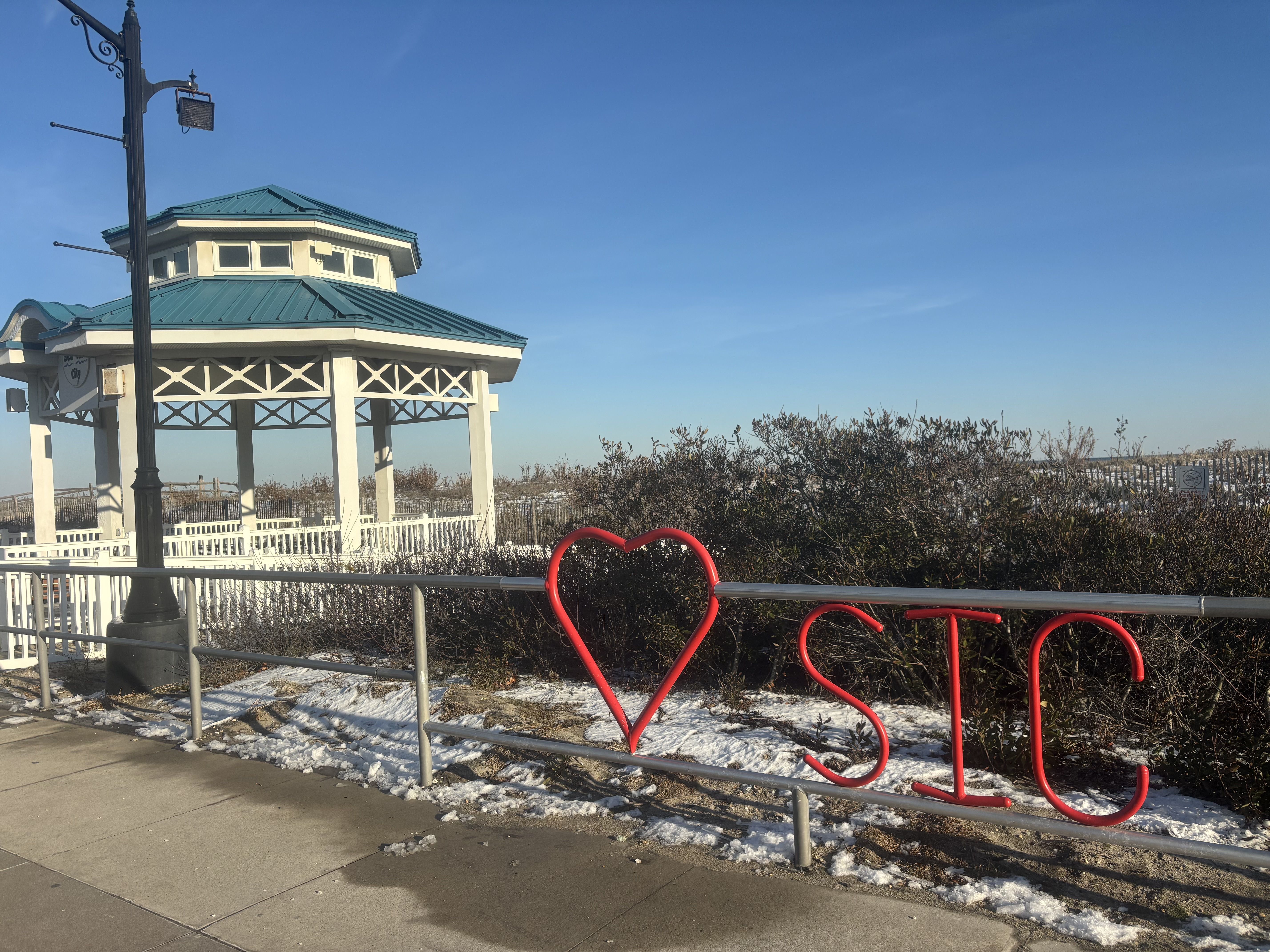
A winter Sea Isle City with just a dusting of snow. Dec. 16, 2025.
Avalon
The sleepy offseason town, which came in for some summer criticism for its off-the-charts exclusivity,gets an A+ from me for its sensible and family-friendly 5:30 p.m. New Year’s Eve fireworks plan.
Stone Harbor
The city adopted a 3% occupancy tax on hotels, motels, and short-term rentals. Mayor Tim Carney said in an e-mailed statement: “This local tourism tax will generate revenue for the Borough while helping us avoid any increase to homeowner property taxes in 2026.”
However, on behalf of short-term visitors from Philly, though, and amid criticism over the quality of the Garden Club’s urn-based Christmas decorations, I’ll have to score the town a B-.
The Wildwoods
Wildwood and Wildwood Crest cut loose North Wildwood on their beach replenishment sharing agreement. Meanwhile, North Wildwood signed a 10-year agreement to police West Wildwood. Wildwood proper recently approved 24 new homes for its gateway area.
It’s one island divided into the have-sands and the have-not sands. This winter could exacerbate both ends of the spectrum. B-
Long Beach Island
The city was battling mail delivery issues, but otherwise, the peace and quiet and lack of crowds seemed to be settling well over locals, who boasted of martini towers at the Hotel LBI and $10 lunch specials at Joy & Salt Cafe (also available, $45 short ribs). Whoever it is that lives there this time of year must know something. A-
Christmas Day is Thursday this year, and with it comes a wave of closures across the Philadelphia region. If you’re planning last-minute errands or outings, knowing what’s open, and what’s not, will save you time and frustration.
Trash and recycling collection will be impacted, with pickups running one day behind schedule all week.
From city services and grocery stores to pharmacies and big-box retailers, here’s your guide to navigating holiday hours in Philadelphia.
City government offices
❌ City of Philadelphia government offices will be closed Dec. 25.
Free Library of Philadelphia
❌ The Free Library will be closed Dec. 25.
Food sites
✅ / ❌ Holidays may impact hours of operation. Visit phila.gov/food to view specific site schedules and call ahead before visiting.
Trash collection
❌ No trash and recycling collections on Christmas Day. Collections will be picked up one day behind the regular schedule all week. To find your trash and recycling collection day, go to phila.gov.
❌ UPS, FedEx, and DHL will be closed Christmas Day. There will be no delivery or pickup services either, except for critical services.
Banks
❌ Most, if not all, banks including TD Bank, Bank of America, Wells Fargo, Chase Bank, and PNC Bank will be closed on Christmas Day.
Pharmacies
CVS
✅ CVS locations will operate on modified business hours for Christmas Day with most open from 8 a.m. to 9 p.m. Call ahead to your local store before visiting or view hours at cvs.com/store-locator/landing.
Walgreens
✅ Walgreens locations will be open but hours have not been announced — check your local store at walgreens.com/storelocator.
Each of the city’s libraries, from Bustleton to Kingsessing, is a neighborhood hub stocked with books, movies, magazines, video games, and other media that anyone with a library card can access. This year, the Free Library circulated 7.6 million items and hosted 1.7 million people across its 54 branches.
So what were your neighbors reading this year?
We asked the library for the most borrowed fiction, nonfiction, and video games across the city. (The numbers don’t include e-books or audiobooks because they’re handled by a third party.) Can you sort the lists below from most to least popular?
Fiction
Rank
Which was the most popular?
Library Checkouts
Your Ranking
Drag to reorder this list
1
2
3
4
5
6
Liz Moore
The God of the Woods
Percival Everett
James
Alison Espach
The Wedding People
Suzanne Collins
Sunrise on the Reaping
Emily Henry
Great Big Beautiful Life
Dave Pilkey
Dog Man: Big Jim Begins
Liz Moore
The God of the Woods
Percival Everett
James
Alison Espach
The Wedding People
Suzanne Collins
Sunrise on the Reaping
Emily Henry
Great Big Beautiful Life
Dave Pilkey
Dog Man: Big Jim Begins
The most checked-out print book of the year across all Philly’s library branches — in any genre — was Liz Moore’s 2024 The God of the Woods, a propulsive thriller about a girl who goes missing from a summer camp in 1975, eerily mirroring the disappearance of her brother from the same place 14years earlier.
“An extraordinary storyteller, Philly would adore her transportive books even if she weren't an English professor at Temple,” said Kim Bravo, the Free Library’s adult materials selector.
Bravo said she was surprised that a few popular books, including Onyx Storm by Rebecca Yarros and Atmosphere by Taylor Jenkins Reid, weren’t also at the top of this year’s list.
story continues after advertisement
Nonfiction
Rank
Which was the most popular?
Library Checkouts
Your Ranking
Drag to reorder this list
1
2
3
4
5
6
Tariq Trotter & Jasmine Martin
The Upcycled Self
Mel Robbins
The Let Them Theory
Jonathan Haidt
The Anxious Generation
James Clear
Atomic Habits
Ezra Klein & Derek Thompson
Abundance
John Green
Everything is Tuberculosis
Tariq Trotter & Jasmine Martin
The Upcycled Self
Mel Robbins
The Let Them Theory
Jonathan Haidt
The Anxious Generation
James Clear
Atomic Habits
Ezra Klein & Derek Thompson
Abundance
John Green
Everything is Tuberculosis
The most popular nonfiction book borrowed in Philly libraries this year was The Upcycled Self: A Memoir on the Art of Becoming Who We Are by The Roots’ Tariq “Black Thought” Trotter and Jasmine Martin.
The 2023 book traces Trotter’s life growing up in South Philly: “Our history leaks a particular radiation into the blood of those born within its city limits. Loyalty, fight, pride, honor,” he writes. The book was the library’s 2025 One Book, One Philadelphia selection.
The library’s adult nonfiction selector, Ai Leng Ng, said one surprising book that didn’t make the list was Inner Excellence, by Jim Murphy, the self-help book that went viral after wide receiver A.J. Brown was seen reading it on the sidelines of an Eagles playoff game in January.
story continues after advertisement
Video Games
Rank
Which was the most popular?
Library Checkouts
Your Ranking
Drag to reorder this list
1
2
3
4
Nintendo
Super Mario Bros. Wonder
XBox Game Studios
Minecraft Legends
Sega
Sonic x Shadow Generations
Nintendo
Super Smash Bros. Ultimate
Nintendo
Super Mario Bros. Wonder
XBox Game Studios
Minecraft Legends
Sega
Sonic x Shadow Generations
Nintendo
Super Smash Bros. Ultimate
The most popular video game checked out this year was Nintendo’s 2023 Super Mario Bros. Wonder, a 2D adventure in the new, whimsical Flower Kingdom.
All the most checked-out video games were ones that could be played by gamers of all ages, said Kris Langlais, the library’s AV Selector. The top titles “also have a nostalgic factor for our adult patrons.”
Langlais said that books set in the worlds of widely played video games, including the Five Nights at Freddy’s, Minecraft, and Pokémon series, are also popular with patrons.
Thanks for playing! If you think you can hack it, head to our bonus round below and order the Dog Man graphic novel series from most to least popular.
Staff Contributors
Design and development: Charmaine Runes
Reporting and data: Zoe Greenberg
Editing: Sam Morris, Evan Weiss
Copy Editing: Brian Leighton
Bonus Round: Dog Man
The Dog Man graphic novel series is extraordinarily popular all over the country, including Philly. Here are five Dog Man books, each of which were checked out over 100 times across the local library system. Which was the hardest to get your hands on?
Rank
Which was the most popular?
Library Checkouts
Your Ranking
Drag to reorder this list
1
2
3
4
5
Dave Pilkey
Dog Man: Fetch 22
Dave Pilkey
Dog Man: Grime and Punishment
Dave Pilkey
Dog Man: A Tale of Two Kitties
Dave Pilkey
Dog Man: Scarlet Shredder
Mo Willems
Dog Man: Mothering Heights
Dave Pilkey
Dog Man: Fetch 22
Dave Pilkey
Dog Man: Grime and Punishment
Dave Pilkey
Dog Man: A Tale of Two Kitties
Dave Pilkey
Dog Man: Scarlet Shredder
Mo Willems
Dog Man: Mothering Heights
The 14-part Dog Man series by Dav Pilkey features a part-man, part-dog hero.
“We’re in the golden age of graphic novels for children. Most of the most heavily circulated children’s items this year were graphic novels, including graphic adaptations of popular fiction series like The Baby-Sitters Club, Sweet Valley Twins, and Wings of Fire,” said Megan Jackson, the library’s middle grade selector.
As for Dog Man in particular, “Dav Pilkey has been tapping into what kids want to read since Captain Underpants was first published in 1997— fast-paced, emotionally honest, hilarious stories that balance words and illustrations for multi-layered reading.”
In both West Philly and Northeast Philly, a Dog Man book was the top checked-out item across all genres.
Subscribe to The Philadelphia Inquirer
Our reporting is directly supported by reader subscriptions. If you want more journalism like this story, please subscribe today
Price: It starts at $54,095 for this higher-end model tested.
Conventional wisdom: Car and Driver likes the ID.4’s “good price, good range, good space.” They complained that the “infotainment system is still wonky, base model lacking in range, it’s not the GTI of EVs.”
Marketer’s pitch: “The future of driving is here. And it’s electric.”
Reality: The driving experience can be awkward, but there may be another big reason to avoid ID.4.
Catching up: So we’ve already tested a bargain-priced Chevrolet Equinox, and a Hyundai Ioniq 5 that’s a fairly nice price match for the ID.4.
What’s new: After upgrades in performance for 2024, the ID.4 only gets an adapter for Tesla Superchargers for the 2026 model year.
Up to speed: Like most EVs, the ID.4 makes quick work of getting on the move. I could pull in front of cars I would never consider when driving most gasoline-engine vehicles, and passing could be a real treat.
The 335 horses available in the all-wheel-drive version tested get the EV SUV to 60 in a quick 4.8 seconds, according to Car and Driver.
Rear-drive models offer 282 horses and a 0-60 time of 7.3 seconds.
Back down again: The ID.4 has a one-pedal feature, which allows for driving without using the brake much at all. Unfortunately, it required so much foot pressure to get moving that it made me nervous in parking lots, worried I would overcompensate and smash into something. Without that feature on, pulling out is easier, but when it’s time to slow down, the brakes are exposed as the indifferent bastards that they are.
Shifty: The twisty stalk gear selector in last week’s Hyundai Ioniq 5 impresses, but a similar setup in the ID.4 irked me. The type on the ID.4 is subtle and easy to misunderstand; Hyundai makes it obvious what to do with theirs.
On the road: Drive mode control is tucked away in the touchscreen, but it’s easy to get to and to follow. Sport mode did tighten up the steering and boost the acceleration but the suspension became so firm I felt like I was driving a brick, and the ID.4 hit potholes with a thud.
Because the ID.4 is larger, the drive experience had a Jeep feel without any of the retro touches or quirky handling that add a sense of fun. Even the ID.Buzz minivan is a better drive.
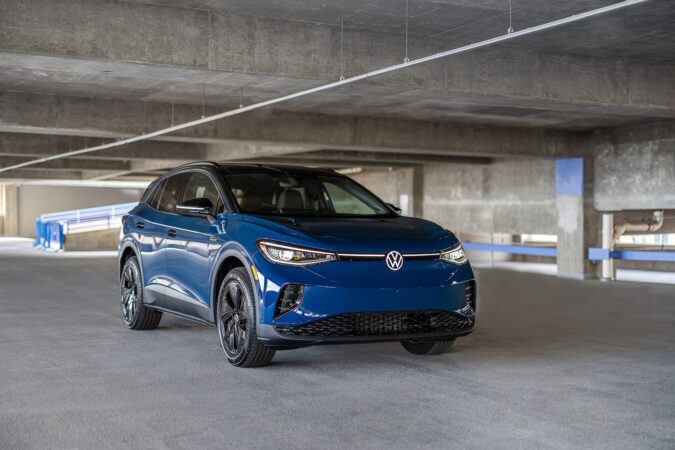
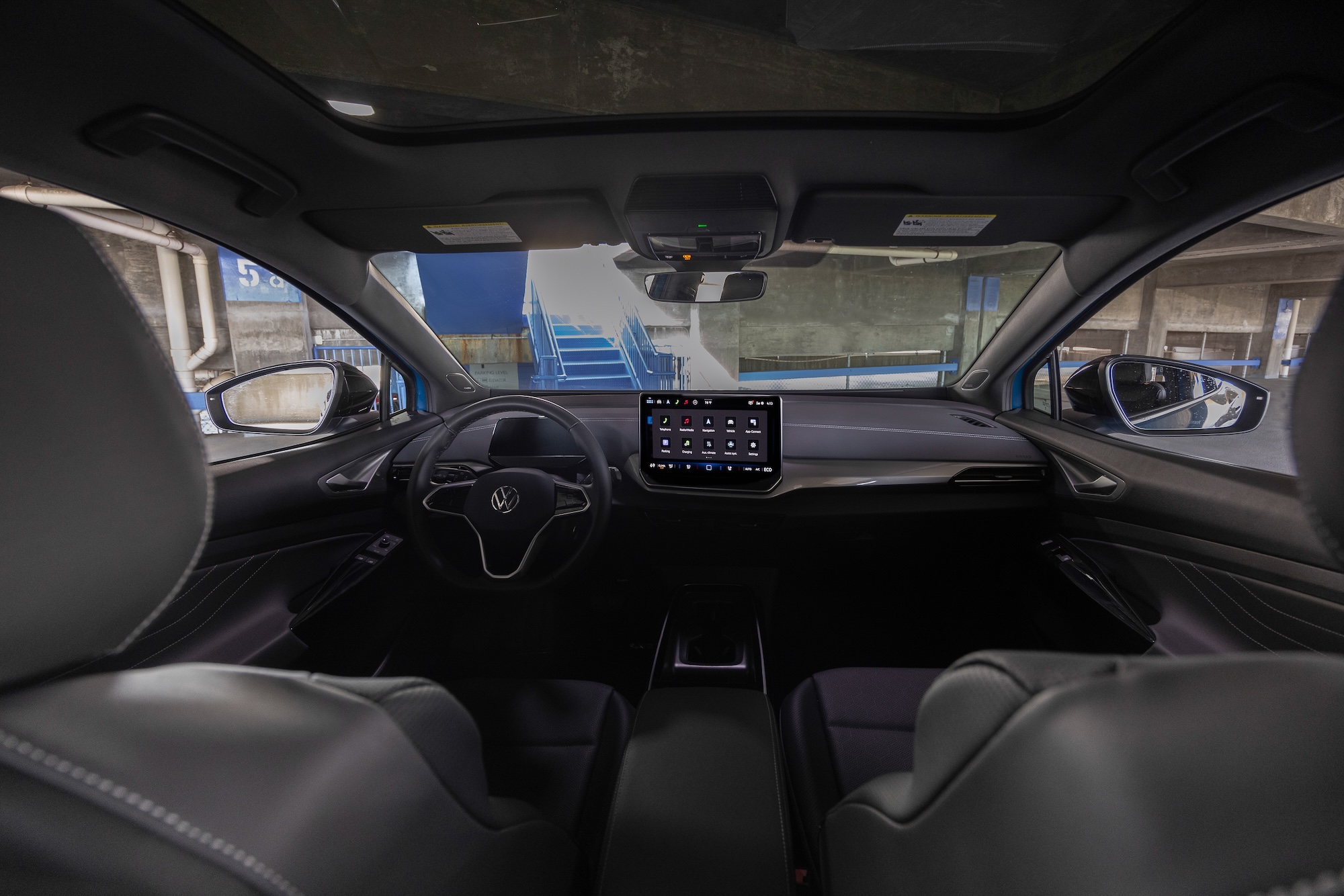
The 2026 Volkswagen ID.4 interior is definitely a hip place to be in all black, but function and comfort are lacking.
Driver’s Seat: The speedometer and gauges also disappoint. The diminutive through-the-steering-wheel display can be difficult to inform at a glance. The long-ago Chevrolet Spark and Sonic sported a similar motorcycle-esque unit, but those were easy to read.
Seat comfort is also lacking; the Driver’s Seat is almost rock hard without wings or bolsters to hold you in place.
Later that day I became even more annoyed when the seat lumbar support seemed to be knuckling my kidneys. Try as I might I couldn’t release the pressure. Soon I realized that the massage feature somehow activated itself and proceeded to give me the saddest massage I have gotten in a long time.
Friends and stuff: The rear seat offers plenty of legroom and foot room. Headroom is not bad but I expected more from this tall vehicle.
The rear seat seems angled a little far back for me and matches the front for comfort, or lack thereof.
Cargo space is 30.2 cubic feet behind the rear seat and 64.2 with the seat folded, the giant among the three EVs tested, and similar to a Volkswagen Tiguan.
In and out: It’s only a tiny step up into the ID.4.
Play some tunes: The giant 12.9-inch touchscreen offers quick access to most of the usual functions, and the home screen features big, clear icons for all the choices.
The touchscreen’s stand-up iPad-like configuration provides a nice way to hold your hand in place while selecting functions, and that makes operation easier.
I neglected to note the sound from the Harman Kardon stereo system. It’s scored an A- in other VW SUVs and an A+ in the EV ID.Buzz minivan. I’d lean toward the lower score; Mr. Driver’s Seat would have been typing furiously about the sound if it were an A+.
Keeping warm and cool: The ID.4 continues with the tiny touchslider thingies to adjust the temperature, and also activate the HVAC screen controls. These were the most cumbersome part of the screen, not quite user-friendly for adjustment on the fly.
The required buttons for front and rear defroster are on the left with the light control. It works in the sense that we’re supposed to use the lights when the wipers are on, but not in the sense of being away from the touchscreen where the rest of the HVAC controls are.
The big touchscreen means the center vents have been pushed disappointingly far down on the dashboard. It made cooling down difficult after one humid post-YMCA adventure, and the ambient temperature may have only been about 70 degrees.
Fuel economy: The range advertised in the vehicle was about 260 miles, but it seemed to exceed that more than a few times.
Where it’s built: Chattanooga, Tenn.
How it’s built: The ID.4 gets a 2 out of 5 reliability rating from Consumer Reports.
I don’t usually delve into recalls too deeply — the Sturgis family Kia Soul has been recalled nearly half a dozen times, but has never shown any of the potential problems so it’s just another inconvenience.
But Do Not Drive orders have been issued for the ID.4 for the second time, this time for wheels that could fall off — the first was for potential fire hazards in 2023. And I’ve collected anecdotal information on ID.4 troubles.
In the end: Hyundai has proven themselves over and over again in the EV world, and the Chevrolet might be worth a look. But I’d leave the ID.4 alone.