For a little while, Philadelphia’s Fishtown Analytics looked as if it might put the city where the modern computer was born back on the tech map as a software headquarters.
Cofounders Tristan Handy, Connor McArthur, and Drew Banin started their company in 2016. They created the Data Build Tool, which helps a range of employers — Philly firms like Gopuff, business software makers like GitLab, HubSpot, and New Relic, publisher Condé Nast, manufacturer Thermo Fisher Scientific, airline JetBlue — manage their proliferating databases out in the cloud of rent-a-servers.
As the tool caught on, they talked of taking the company public, drawing investors and hundreds of software recruits to one of the city’s popular neighborhoods, proof that Philadelphia is a place tech leaders flourish.
But that’s not quite how things worked out. In 2021 the start-up raised $150 million from Roblox backer Altimeter Capital and Silicon Valley giants Sequoia Capital and Andreessen Horowitz. Thefounders dropped the Fishtown name in favor of dbt Labs, for their software tool’s initials.
Then in October, they agreed to a merger with a larger data-integration software company and sometime-partner, Fivetran, with headquarters in California. The 20-person Spring Garden Street office will remain.
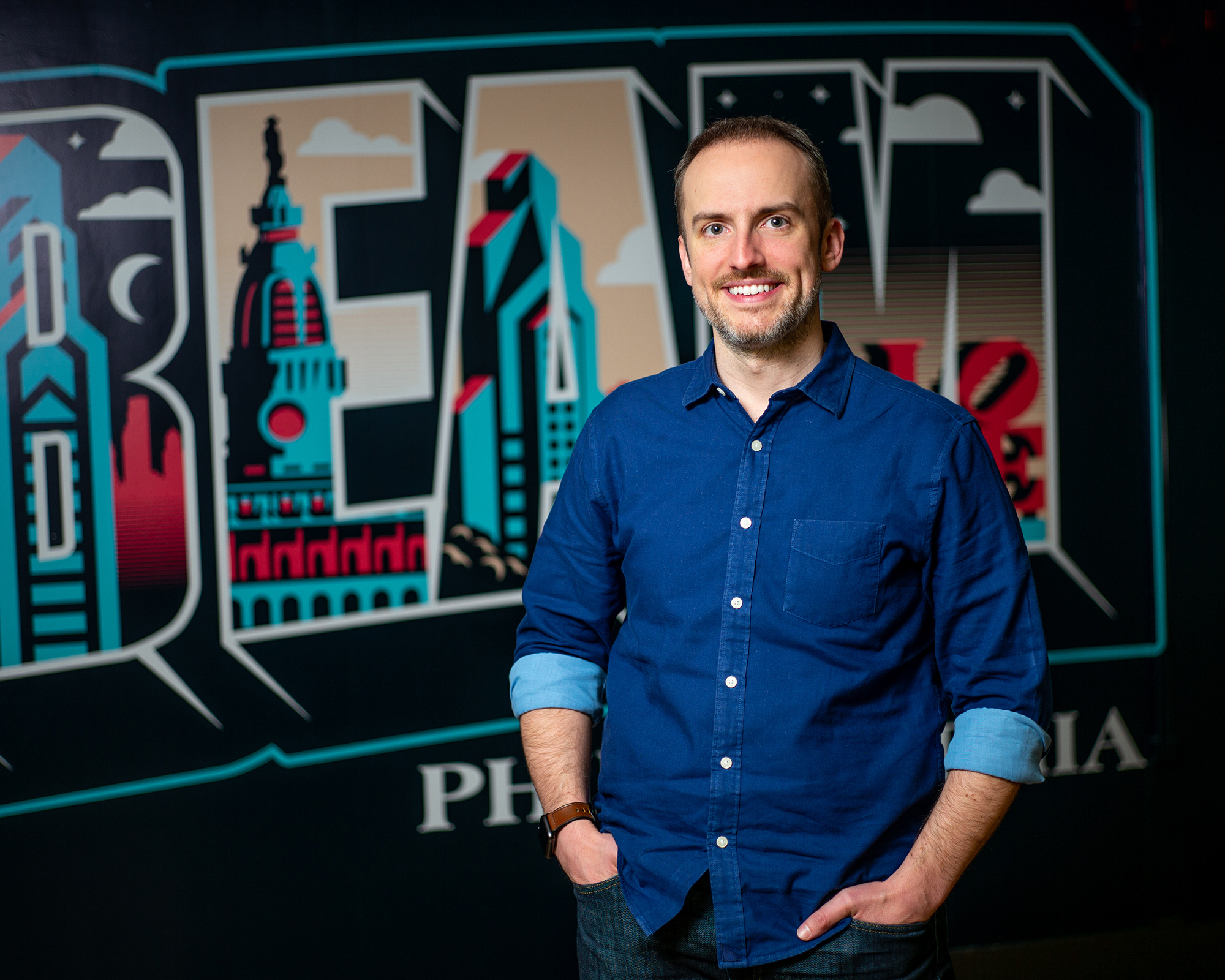
Handy agreed to talk with The Inquirer about what was, what might have been, and what’s next. He came to the interview wearing an Eagles No. 27 jersey. The conversation has been edited for length and clarity.
I talked to Bob about lessons learned. Bob is focused on his relationship with the Reveal founder. He says everything else is solvable, as long as the relationship between the founders is strong.
Bob Moore has founded a string of Philadelphia software companies. Crossbeam, “LinkedIn for businesses,” raised $76 million in October 2021, from firms led by Silicon Valley venture capital giant Andreessen Horowitz.
Are customers glad you’re consolidating or worried at losing a choice?
We have a lot of customers we share with Fivetran. In general we are finding excitement, with a little initial trepidation.
George [Fraser, Fivetran’s CEO] and I have spent a lot of time thinking about what our customers need to hear and to de-stress them. Generally the reactions are positive. It’s not uncommon we will hear from a customer: ‘I was thinking about what I was going to do with this set of data pipelines, and now we should talk about that.’ Which is part of the point of all this.
We are still pre-closing. We need to seek [U.S.] Department of Justice input. We are waiting to see if we meet that test — if DOJ will care about us at all. The answer should be no.
Does Philadelphia make enough software to be a ‘tech center?’
All three of us cofounders came out of Bob Moore’s RJMetrics, and then our first employee, Erin Vaughan [head of customer services], came out of RJ. Bob sent me a note after that: ‘Maybe you should hire some other people.’
A big part of the reason I started Fishtown Analytics was that in 2016, RJ was coming close to the end of its main chapter. I didn’t see other start-up opportunities locally that I was excited about. My wife had just gotten a job at CHOP. We weren’t moving. I had to figure something out.
So you built it. Was Philly a good place to start and then grow?
I just turned 45. A bunch of people I know have moved back to the area from San Francisco. A lot of times that is because you want to be close to family when you have kids or it’s a higher quality of life around here.
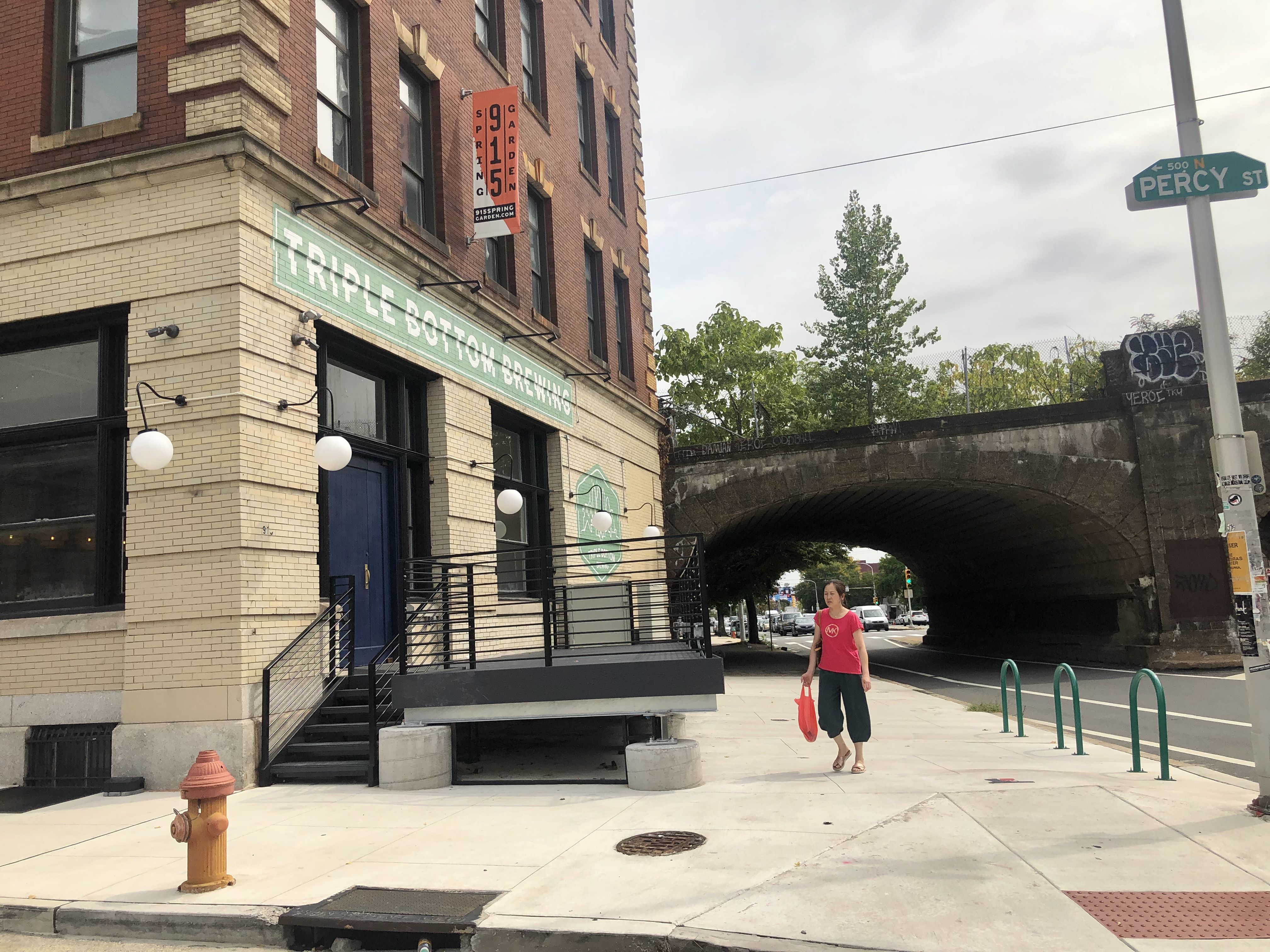
We are at 915 Spring Garden St. The elevator is always broken. We are still about 20 people there — the same as when we raised money [in 2021].
But my network is now nationwide. We are a distributed business with 730 people. And Fivetran has a big headquarters in Oakland, Calif.
dbt Labs employs more than 700, but most work remotely. Its headquarters, with 20 people including some of its founders and earliest employees, is upstairs at 915 Spring Garden St., a former Reading Railroad building whose first floor is home to Triple Bottom Brewing.
Will the merger mean expansion and hiring, or consolidation and firing?
Growth is good, and in general, we are not imaging cost-cutting targets. There is figuring out who occupies the leadership ranks. That is the main area where there might be some departures.
It’s a consolidation move from a products perspective. Historically in our space, the products Fivetran sells and the products we sell have been sold together. Our customers have budget lines for that combination.
Both companies are on track. Both companies were going to IPO at some point. This brings that date in closer. Combined, we have the growth and scale to go public. We just need to get through the integration and prove to everybody we have effectively combined these companies, and need a few quarters of numbers.
Why did you drop ‘Fishtown’ from the name?
Every sales call started out with ‘What’s Fishtown?’ Locally people have a lot of pride in Fishtown. But nobody else knew what it meant.
Both companies are keeping their brands. We’ll figure out what to call the combination.
Do you hire a lot of Philly engineers?
We did originally. Our first class of data people we trained, there were two Penn people and a Princeton person. For a long time that was the plan: continue hiring incredibly talented people from these schools. But then we went in a different direction.
Why, when Fivetran expanded in Oakland, did you not do the same in Philly?
It’s real hard to do any kind of office-space culture for tech workers in Philly because SEPTA is so bad.
As the people in the company start to age into having kids and move out to the suburbs, it is getting very challenging to come into the office. Even from the Main Line, the train is once an hour. That’s very hard.
Bob Moore calls you a pillar of the Philly start-up ‘connectivity’ who helps other founders and causes. Are you planning to stay around?
Eduard “Teddy” Einstein, a beloved professor and mathematician, was biking home from a haircut when a driver killed him earlier this month.
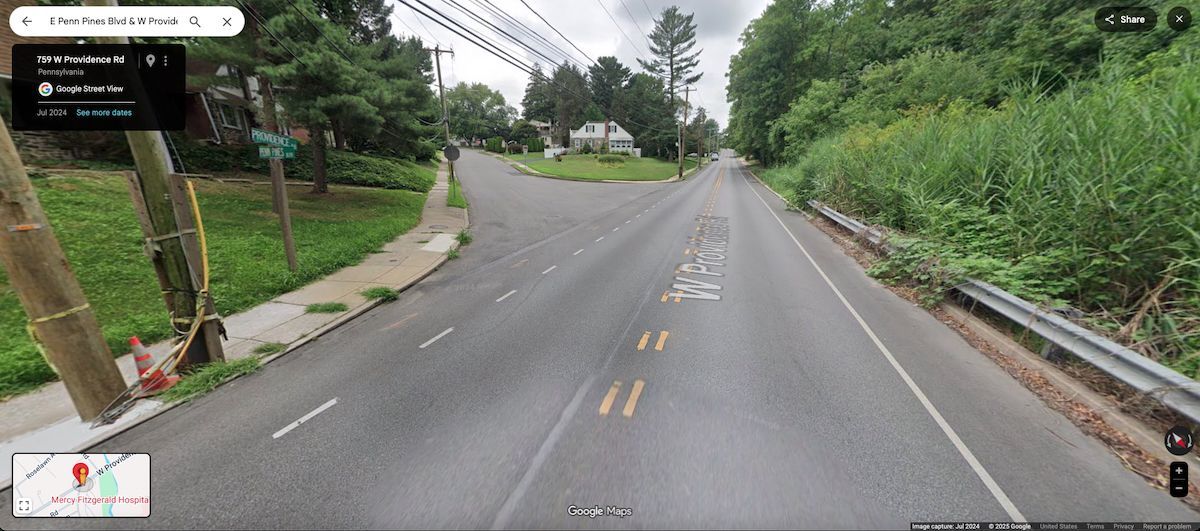
Einstein, 38, was struck and killed by the 18-year-old driver on Dec. 3 while riding his bicycle on Providence Road in Upper Darby. No charges have been filed in Einstein’s death, according to Upper Darby police, but an investigation is continuing, and police said the driver cooperated with police at the scene of the crash.
The West Philadelphia husband and father of two young children, Charlie and Lorcan, was known for his sharp wit, encouraging students, and scouring cities for the most interesting, and spiciest, foods. Einstein was, above all else, dedicated to his family.
“He didn’t need much more than me and the boys. It was like he was my home, and I was his,” Einstein’s wife, Ruth Fahey, 45, said. ”That’s kind of how we agreed that we would move around the country together as a family, and it was wonderfully freeing.”
Teddy Einstein (left) reading a book to his son while the family cat plays with his arm. Einstein was a devoted husband and father who covered the lion’s share of storytelling and bedtime, but especially cooking, as he was an avid chef who liked trying new recipes, his wife Ruth Fahey said. Einstein was killed on Dec. 3, 2025, while riding his bike in a bike lane when he was hit by a driver on Providence Road in Upper Darby, Pa.
Born in Santa Monica, Calif., Einstein graduated from Harvard-Westlake School before receiving a bachelor’s degree in mathematics from Pomona College, a master’s in mathematics from University of California, Santa Barbara, and his Ph.D. from Cornell University. He would go on to hold postdoctoral fellowships at the University of Chicago and the University of Pittsburgh, where he taught, and most recently completed a three-year teaching term at Swarthmore College.
“He loved mathematics and wrote a first-rate thesis,” said Einstein’s Ph.D. adviser, Jason Manning. “Many mathematicians, even those who write a good thesis, don’t do much after graduate school. But Teddy’s work really accelerated during his postdoc at the University of Illinois at Chicago, and he was doing even more exciting work when he passed.”
His colleagues describe a mathematician working at, to put it simply, the intersection of algebra and geometry. Building on the work of mathematicians before him, including modern geometric breakthroughs in years past, Einstein studied abstract 3D shapes that cannot be visually represented in the real world. Work like that of Einstein and others contributes to a tool chest of solutions that scientists can use to study physics, neuroscience, and more.
“It is a terrible loss, especially to his family,” Manning said. “But also to his part of the mathematics community.”
Teddy Einstein (right) holds his second-born, Lorcan, soon after he was born.
As his term at Swarthmore ended earlier this year, Einstein had been working on research that was seven years in the making, Fahey said. This would help springboard him into the next chapter of his career.
Fahey said the day he was killed, Einstein was biking back from a fresh haircut to impress his potential new employers at Florida Gulf Coast University.
Mr. Einstein’s work ethic matched his appetite for camaraderie. He fed grad students out of his tiny Cornell kitchen and hosted a weekly trivia night. That is where he met Fahey. “He just loved to entertain with food,” she said.
Every week, he cooked for Fahey and the boys, from his prized favorites of Korean short ribs and fried chicken to testing out falafel recipes. A keg of home-brewed beer was always in the house so that Einstein could share his creations with friends. Fahey said his most recent yeast yield is still waiting to be processed.
Maddie Adams-Miller, who took Einstein’s math classes in her freshman year at Swarthmore, said her funny and wise math teacher never wanted to see a student fail.
“I loved talking to my friends from high school and telling them I had ‘Professor Einstein’ for math. Teddy always wore funny T-shirts to class and made a lot of jokes,” said Adams-Miller, now a senior. “When I was taking his course, I was struggling with my confidence and was not performing my best academically. Teddy reached out to me to offer support and genuinely wanted me to succeed in his class.”
Teddy Einstein (left) holds his eldest son, Charlie, while he walks down a flight of steps wearing the usual safety gear that he wore while riding his bike. The precautions Einstein took to bike safely weren’t enough to stop a driver from crashing into him on Providence Road in Upper Darby earlier this month, leaving his wife, Ruth Fahey, and their two sons without a father.
An avid cyclist who biked everywhere and advocated for safer streets, Einstein was killed doing one of the activities he loved most. Philly Bike Action, an advocacy organization that Einstein and his wife frequented and his friend Jacob Russell organizes for, shared that he was hit by the driver while riding in an unprotected bike lane and wearing a helmet and high-visibility clothing.
“But there will never be a helmet strong enough or a clothing bright enough to make up for dangerous infrastructure. All Philadelphians deserve the freedom to travel without fear of tragedy,” the group said in a statement.
Russell believes safety improvements will not come solely from attempting to change laws or behavior, but rather by changing the road infrastructure, so that even “when mistakes happen, there aren’t tragedies,” he said.
A screenshot, dated July 2024, from Google Maps showing the intersection where Teddy Einstein was killed on Dec. 3, 2025, in Upper Darby, Pa.
Providence Road, where Einstein was hit and where he biked weekly, is considered a dangerous road by local planning commissions, appearing on the Regional High Injury Network map as a thoroughfare where multiple people have died or been seriously injured in vehicle, pedestrian, or bicycle crashes. Delaware County is currently in the process of onboarding most of its townships onto a “Vision Zero” plan to end all traffic fatalities by 2050 — similar to Philadelphia’s own Vision Zero.
The Delaware County Planning Commission said the county does not own the roads, which are overseen by the Pennsylvania Department of Transportation or specific municipalities; however, officials are “actively working to obtain additional funding for further safety improvements, and are continuing to work with our partners in our 49 municipalities on either our Vision Zero plan or to help them develop their own,” said Delco spokesperson Michael Connolly.
Fahey said she won’t rest until Providence Road’s lack of safety is addressed and will continue campaigning for safety improvements in Philadelphia.
A GoFundMe has been set up for Fahey to help fund efforts to protect Einstein’s legacy as a teacher and advocate, as well as to invest in campaigns to make streets safer, with an emphasis on the road where Einstein was killed. It has already raised more than $60,000.
In addition to his wife and children, Einstein is survived by his parents, K. Alice Chang and Thomas Einstein, and siblings, Michael Einstein and Lily Einstein. The family encouraged people to donate to Fahey’s GoFundMe to honor Einstein’s legacy.
The region is brimming with holiday attractions this season, from Center City’s extravagant affairs to the most humble of mall Santas.
But what about ones that skirt tradition and lean more into the humorous than the Yuletide?
Christmas House at the Deptford Mall combines nostalgia with irreverence for one of the region’s most tongue-in-cheek holiday experiences.
Stepping into the former Victoria’s Secret-turned-holiday-walking tour, guests are greeted by familiar faces like Buddy the Elf and Santa Claus, but they’ll also see a recreation of a Blockbuster video store; a drunk, passed-out Santa; and a reindeer stable where it looks like Donner and Blitzen pooped all over the place.
The tour starts at $25 per person, when buying in groups of four. There are at least nine rooms — not including the seven wacky “hotel rooms” in the back — within the Christmas House to explore at your own leisure or alongside a tour guide.
Ticket prices may prove too burdensome for many families, owner Peter Coyle said, which is why they offer a “No Families Left Out” program, where families can contact the Christmas House and discuss a name-your-price model.
The light tunnel at the Christmas House at Deptford Mall on Tuesday, Dec. 16, 2025, in Deptford.
Coyle said the humor is meant to make adults laugh just as much as kids — hence why so much space is dedicated to nostalgia of the 1980s and ‘90s. Apart from a Blockbuster, which children certainly haven’t visited before, there are Easter eggs only adults will recognize, such as A Christmas Story’s sultry leg lamp — “Fragilé! It must be Italian” — and Red Ryder BB gun or a Griswold family photo from National Lampoon’s Christmas Vacation.
“We take the same approach as the creators of the Shrek movies,” Coyle said. “[Those movies] had a lot of fun things that kids loved, but then there were all these innuendoes and references that only adults could appreciate.”
Walking into the “Blockbuster Room” for the first time, adults let out a light chuckle that usually turns into some play-pretend as they reminisce on their former Friday night ritual, while teens who never got the chance to visit one can pretend they’re a ’90s kid for a change, Coyle said. It’s a pared-down Blockbuster with only four shelves of movies, but the store decorations and logos are close enough to feel like a cute homage.
The “Blockbuster Room” at the Christmas House at Deptford Mall on Tuesday, Dec. 16, 2025, in Deptford.
Rita Giordano, 42, of South Jersey, was visiting the Christmas House with her mother, Denise Maloney, 70, and Giordano’s two sons, Richie, 9, and Charlie, 4. Together, they searched for Buddy the Elf hidden in each room.
“We got all of them!” Richie and Charlie said.
For mom and grandma, they were just happy to be enjoying the holiday spirit inside the Deptford Mall as opposed to the bone-chilling weather at outdoor attractions.
A Shrek room at the Christmas House at Deptford Mall on Tuesday, Dec. 16, 2025 in Deptford.
The Christmas House’s wackiest elements are sequestered in the back, where Coyle converted the former fitting rooms of the retail space into the hotel rooms of the “Holiday’s Inn.” The surprise of finding out what’s behind each door will have some bursting out laughing and others rolling their eyes.
There are tamer rooms like the “Hootel Room” — filled with artificial trees and owls — to a New Year’s Eve strobe-light room. A few backrooms go the extra mile, with one featuring Shrek taking a nap in a small bed, bundled up in Christmas and Shrek blankets.
In “The Santa’s Little Surprise,” the limits of guests’ potty humor will be tested. As soon as one walks up to the room, a large handprint and streak of brown substance are plastered on the door. The more one looks, the more fake reindeer poop on the walls and flooring can be found, with used toilet paper strung from the ceiling.
The “Santa’s Little Surprise Room” at the Christmas House at Deptford Mall on Tuesday, Dec. 16, 2025, in Deptford.
Santa’s got his work cut out for him.
For parents trying to keep the Santa make-believe alive for a few more years, they may find the drunk Santa in “The Sleighed and Sloshed” room a little too over the top. Here, a Santa mannequin is laid out on the floor with crushed red Solo cups around him in what looks like Kris Kringle after a bender.
The “Sleighed and Sloshed Room” at the Christmas House at Deptford Mall on Tuesday, Dec. 16, 2025, in Deptford.
There is good, clean fun in the “Harry Potter Christmas Room,” where a photo-op is staged with a broomstick, wizarding hats, and Hogwarts House-themed scarves. Venture into the “Elf Command Center,” where a Santa live tracker displays where Kris Kringle is currently dropping off gifts, and the little ones can write letters to Santa before dropping them in the giant mailbox marked for the North Pole.
The North Pole Movie Theater is usually playing Will Ferrell’s Elf on repeat throughout the day, and the final room features cotton snowballs, ready for harmless snowball fights, accompanied by an artificial snow machine.
The “Harry Potter Christmas Room” at the Christmas House at Deptford Mall on Tuesday, Dec. 16, 2025, in Deptford.
“The best part for me was that it was indoors,” Maloney said. “The kids loved seeing Jack Skellington and the Grinch, plus they got me with the snowballs in the last room.”
Located inside the Deptford Mall at 1750 Deptford Center Rd., Deptford, N.J. 08096, the Christmas House is on the first floor, closest to the Boscov’s entrance and parking. Open weekdays from 4 p.m. to 9 p.m., Saturdays from 11 a.m. to 9 p.m., and Sundays from 11 a.m. to 8 p.m. It runs through Jan. 2. christmashousedeptford.com/
Cole Hamels was among the best pitchers in baseball for 15 seasons. He was the MVP of the World Series in 2008. The history of the Phillies can’t be written without him.
And for the first time, he’s on the Hall of Fame ballot.
Hamels was the first guest when The Inquirer launched the Phillies Extra podcast in February. He made a return appearance to chat about a variety of topics, including Kyle Schwarber’s return to the Phillies, what’s next in the team’s offseason, and, oh yeah, the honor of being considered for Cooperstown.
Watch the full interview below and subscribe to the Phillies Extra podcaston Spotify or Apple Podcasts.
Q: What did you think of Schwarber coming back for five more years on the largest contract ever for a DH?
A: I never doubted what Schwarber means to the team and what he means to the organization and the city. I didn’t think he was going to go somewhere else. But it’s the game you have to play. It’s understanding free agency. It’s understanding you not wanting to have to think about it during the year. You have agents. But to be able to see, it was the first of what the Phillies are really trying to do this offseason, and to finally get their guy — I don’t think they were going to let him get away.
And it’s just a testament to John [Middleton] and Dave [Dombrowski] and Preston [Mattingly]. They know who he is as a player. They’ve had him for a couple of years. I think a lot of organizations who have had him know how special he is, and they didn’t want him to go. And for the Phillies to lock him up, they do know it’s ‘go’ time, and this is a person that they need in the clubhouse, and they need him in the lineup. He produces runs, and he’s so patient, and especially to see his lines on lefty-on-lefty. That was something I always favored. I didn’t mind lefties coming up. I knew I was going to succeed more. But Schwarber comes up, he’s not the type of guy that you want to see in the box in a big moment when you’re facing him because he’s a tough, tough hitter. So it’s good. I think there’s going to be a lot of moves that are going to start to kind of roll, but I think he was first. I’m glad it’s done. He’s a big part of this organization, and it’s good to see for five more years.
Cole Hamels believes veteran catcher J.T. Realmuto is “in the driver’s seat” with his market in free agency.
Q: Now the focus shifts now to J.T. Realmuto, and I can’t help thinking back to the 2013-14 offseason when Carlos Ruiz was a free agent. He was 34 going on 35, just like J.T. is now, and, also like J.T., all the pitchers love throwing to him. I know you swore by him. Do you see any similarities with where the Phillies are now with J.T.?
A: So, the hardest part about a catcher is, most of the time, you just look at what you can try to perceive as some sort of statistical value, and that’s how they hit, how they receive. But there’s something else that’s really difficult to measure, and that’s just his presence and confidence behind the plate in making a pitcher feel good, to want to execute, and to listen to a game plan, and then adjusting on the fly. And that’s something that [Realmuto] has really shown over the last couple of years.
He’s been a tremendous receiver, but he throws guys out. And you can never count them out with his bat. And you got to see that in the playoffs. He comes through in big moments. He’s an incredible athlete, and I think that’s what is the difference. When you look at age, it’s how athletic he is. He sets a bar that’s a lot different. And then you have to look at what is available, and on the given market, there’s not really much available that are comps to him. So he’s kind of in the driver’s seat.
But at the same time, when you have a catcher that is really good and instills confidence in a pitching staff — both the starters and the relievers — you don’t want to let those guys get away. And you can see that in all the greatest catchers in the history of the game is you don’t let the good ones get away.
Cole Hamels had a 3.09 ERA in 13 postseason starts with the Phillies.
Q: I don’t think we spend enough time celebrating what it means to be on the Hall of Fame ballot. When you think about how few people actually get to the big leagues in the first place, and then you’ve got to play at least 10 years to be eligible for consideration, and then there’s a screening committee that whittles it down even more. It’s like the top 5% all-time of players that actually get on that ballot. What does it mean to you to be on that ballot for the first time?
A: I think a lot of us, we all kind of say the same thing, to really be recognized, it’s incredibly rewarding for a job that is so humbling. This job is a career that you fail a lot, and you fail more than everybody else. In order to play that sort of period of time, you had big successes, but you probably failed twice as many times as you had successes. And that’s why we were able to create a career out of it [because] we always knew how to get back up, and we always knew how to never doubt ourselves, and to keep trying. That is probably the one thing that happens, is when they do put you on the ballot, they send you a letter, and you get to read, and you see statistics of percentages, and that is the wildest thing. You’re going, ‘Oh my gosh, 13% of drafted players make the big leagues?’ And then you’ll go see a smaller percentage, and we just start to see that. Wow.
We were so fortunate to be able to play the game of baseball as a career and a job that we loved as a kid, and it never changed. And now getting recognized, it’s a very special moment, and I’m incredibly thankful. I put in a ton of time and effort. My family devoted a ton of time and effort to try to get to have the career that I had, and then for it to actually be somewhat recognized, to be as one of the best ever. … It’s a small percentage, and I look at names that are in the Hall of Fame. I was lucky enough to go there [to Cooperstown, N.Y.] and pitch in the Hall of Fame Game, and we took a tour. And just the nostalgia of baseball and what it means to America’s pastime, I have a part in that history in certain moments. And I’m just lucky to do what I did. I loved every minute of it, and now this is kind of the reward.
Check out the full episode for Hamels’ thoughts on how Hall of Fame voting for pitchers has changed, the Cooperstown cases for former teammates Jimmy Rollins and Chase Utley, and more.
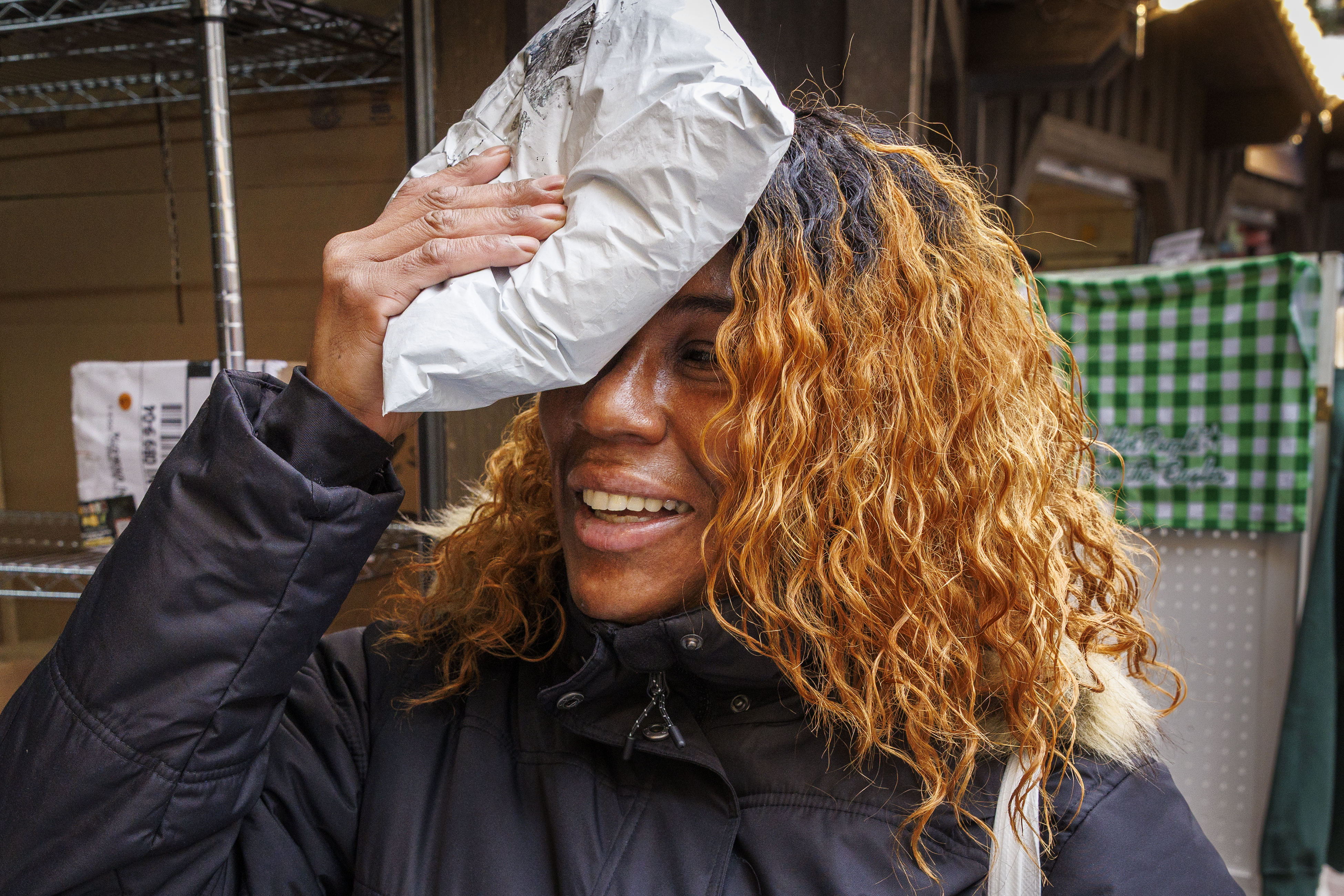
Emma Zielinski wasn’t sure how her business selling unclaimed mystery mail would fare at the Christmas Village in Philadelphia this year, or if she’d even be accepted into the holiday market at all.
“I didn’t think they’d take us because we’re not handmade, but when I picked up my vendor badge, they were like, ‘We’ve been waiting for you to apply!’” she said.
As it turns out, thousands of people from across the region have also been waiting for the chance to buy orphaned packages that never found their way home and nobody went to look for — the contents of which remain shrouded to both Zielinski and the buyers until after they are purchased.
“The Christmas Village has really turned my business upside down,” she told me. “I don’t think anyone realized this was going to happen.”
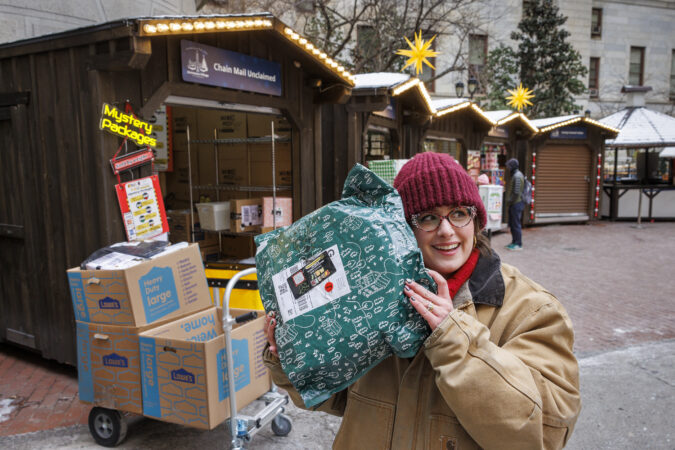
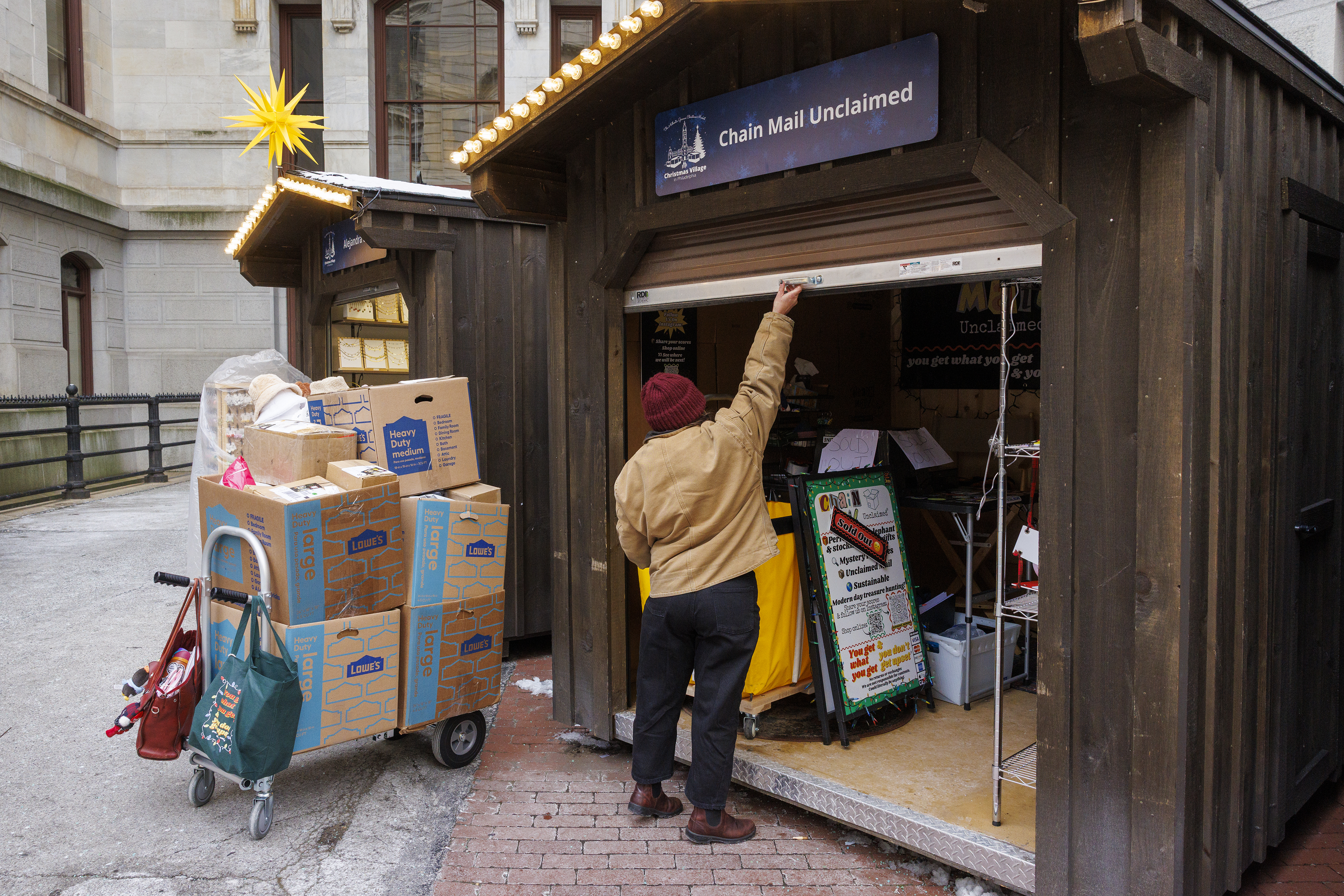
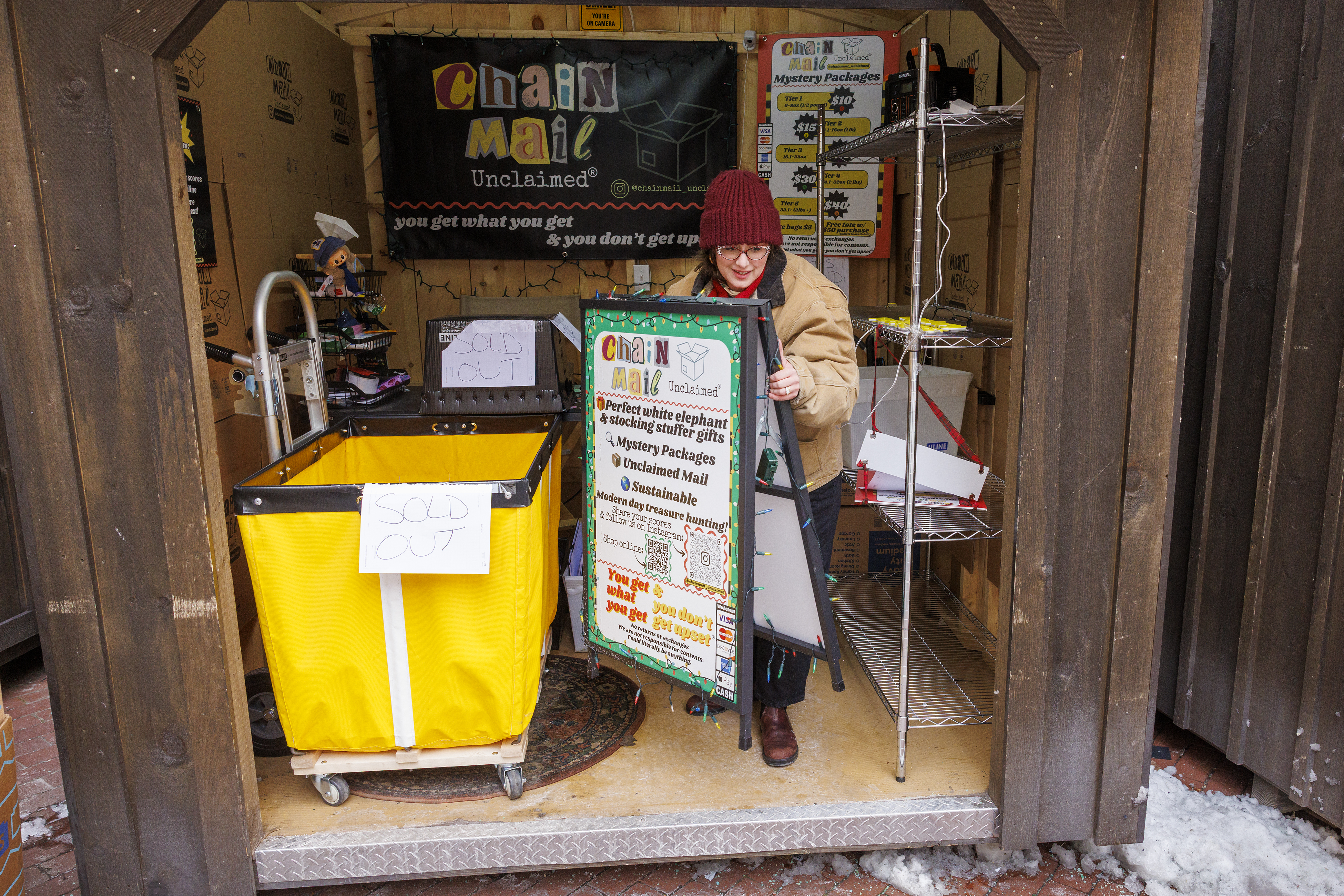
Emma Zielinski, owner of Chain Mail Unclaimed, opens for business at the Christmas Village at City Hall.
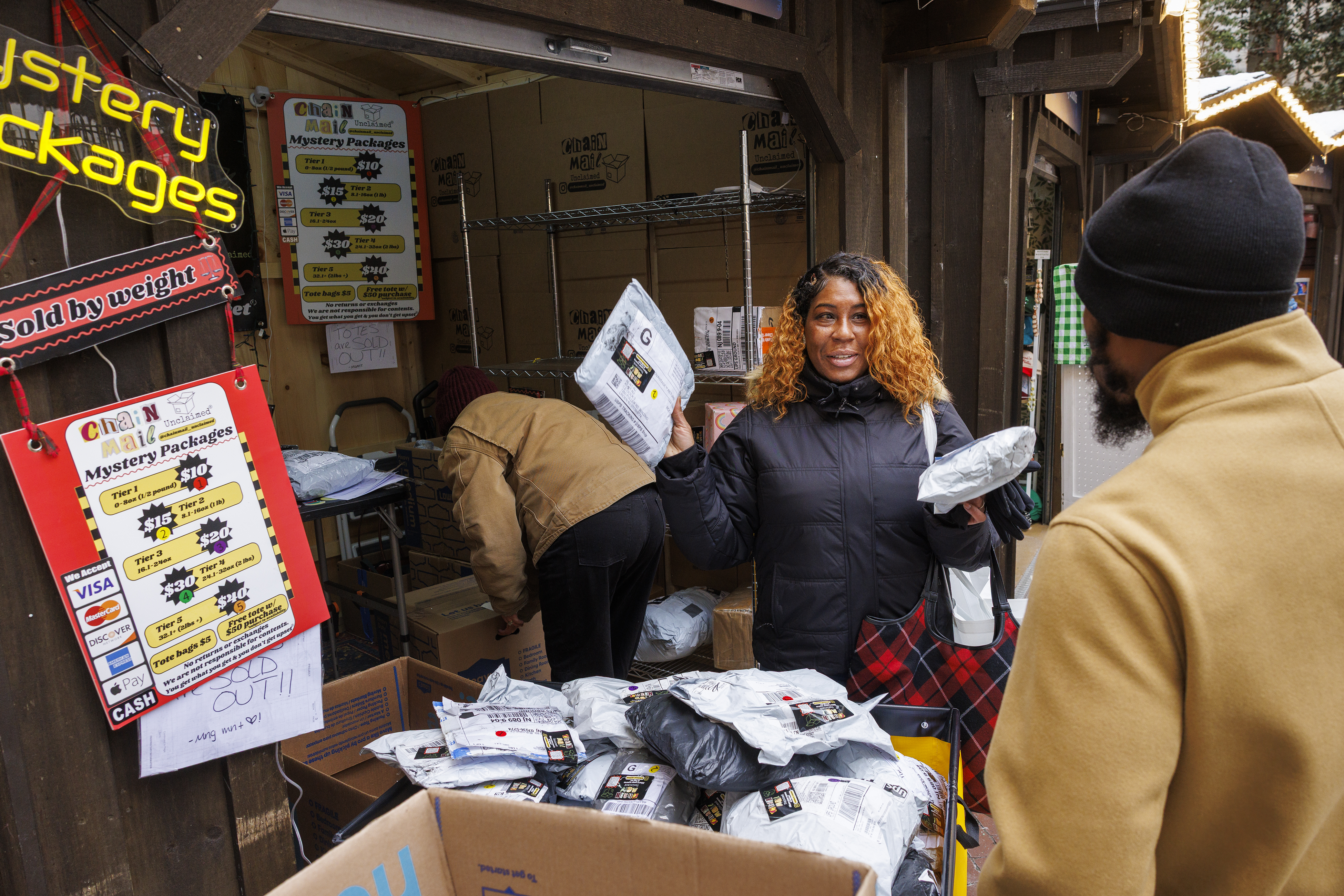
From boxes to heavily-taped-up opaque bags, Zielinski is selling about 300 to 500 items a day, each between $10 and $40 a pop, based on weight. On the opening weekend for her Chain Mail Unclaimed hut, which is located in the interior courtyard of City Hall, she sold two weeks of inventory in just two days — and business hasn’t slowed down since.
Philadelphians, she’s found, are always up for a good surprise.
“They are down to party and see what’s going on,” Zielinski said. ”It’s a really good vibe in Philly when we do events, people are a lot of fun and up for trying something new and playing along.”
The element of surprise
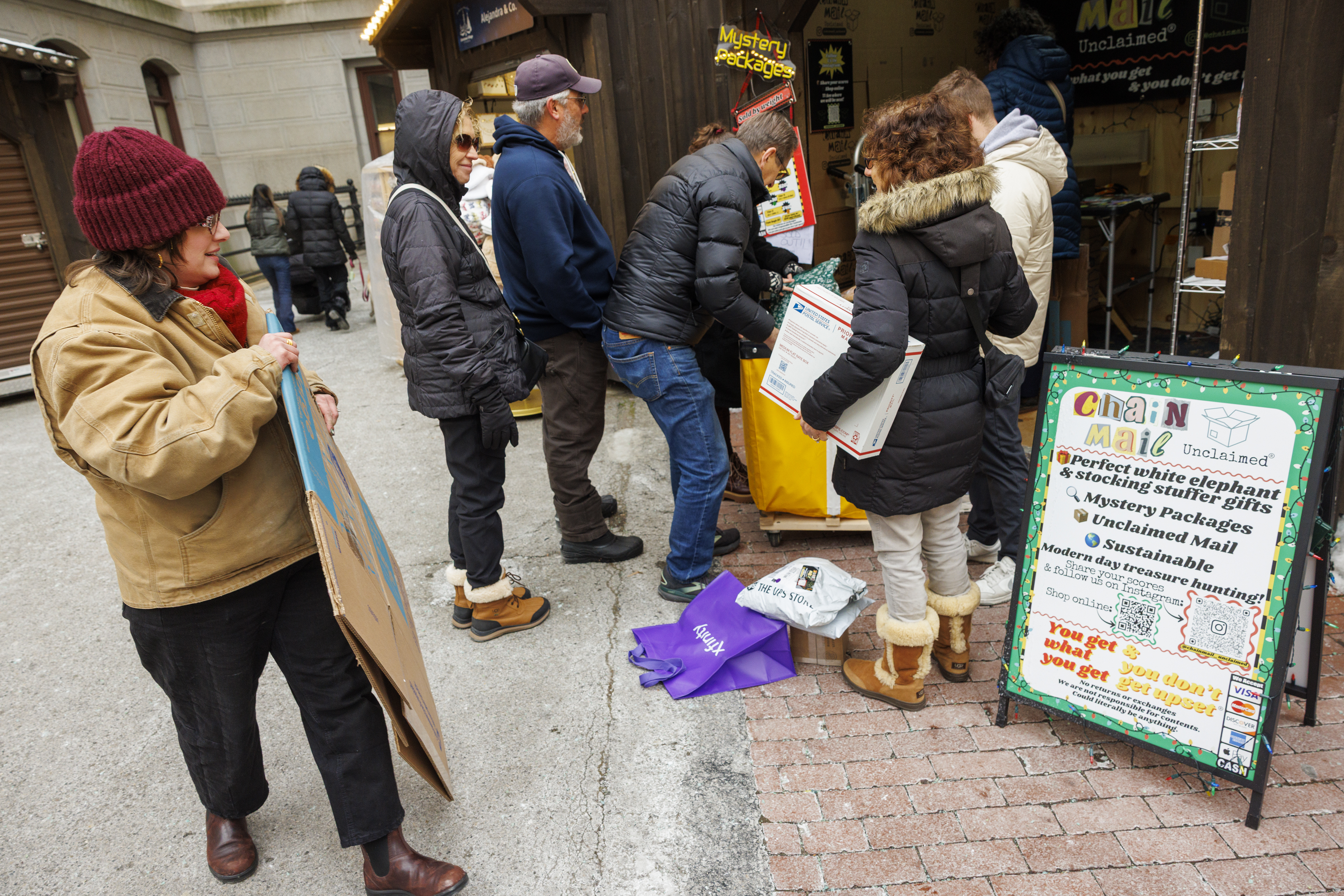
When I arrived around 1 p.m. on Thursday, I was shocked to find Chain Mail Unclaimed had one of the only lines at the Christmas Village, aside from the ever-popular raclette cheese stand.
“To be compared to the raclette stand is quite an honor,” Zielinski said.
As I was waiting in line, a young man who’d just purchased a package opened it on the spot and pulled out what appeared to be a spandex elf suit — in a women’s medium.
“At least it’s seasonally appropriate,” I said.
When my turn came, I dug in a large bin and rustled through a couple shelves with the crowd, massaging the bags and shaking the boxes to see if I could prognosticate what was inside of them. Unlike Christmas at home, these tactics are totally fair game at Chain Mail Unclaimed.
Mayumi Burgess takes a guess at what’s inside a package for sale at Chain Mail Unclaimed.
I was pretty sure one of the packages had wicker baskets in it, and another, a pair of shoes, but beyond that it was hard to decipher the contents. All of the $10 items were gone, so I settled on two $15 packages and one for $20. All three are soft goods in opaque bags secured with clear tape, two of which came from the U.S. Postal Service and one from the UPS Store.
Beyond that, I know nothing about them. Even the sender and intended recipient’s names have been artfully covered up with Chain Mail Unclaimed stickers by Zielinski and her crew.
I intend to give one package to my husband (he signed up to deal with the consequences of marrying a total rando) and one each to my Secret Santa recipients at our respective family gatherings.
I can’t wait to see what’s inside. I’m getting older and by the time Christmas rolls around, sometimes I forget what I’ve bought people anyway, but with this it’s guaranteed to be a surprise for the recipients and for me.
I mean, these gifts could literally be anything! They could contain lost Inca gold, the French crown jewels stolen from the Louvre, or a heretofore unknown Dunlap broadside printing of the Declaration of Independence.
Emma Zielinski, owner of Chain Mail Unclaimed, unloads merchandise at her booth at the Christmas Village at City Hall.
Of course, they could be total rubbish or completely embarrassing. I hope my beloved, self-proclaimed “spinster aunt” isn’t going to open a gift of lacy red lingerie before our entire family this Christmas, but sometimes, these are the chances we take in life, and actually, that would be pretty entertaining.
Because part of the fun of giving a gift like this is getting to tell the story behind it, which is why I pshawed a fellow customer in line who requested that I open my packages on the spot.
“Ma’am, these are gifts,” I said, before walking away with my treasures.
‘The tip of the iceberg’
Zielinski, of Lawrenceville, N.J., said she was inspired to create her business after seeing a video of someone on social media visiting a similar pop-up shop at a farmers market in Paris.
She was already attending vendor events in the region for her permanent jewelry business, Off the Chain Studios, and thought this could be a good companion to it.
“It’s exciting, it builds a crowd, and it’s also an entirely different crowd,” Zielinski said. “The person who gets a bracelet welded on won’t necessarily buy an unclaimed package.”
Chain Mail Unclaimed — a name that’s a nod to both her original business and the archaic tradition of chain mail letters — opened in April 2024. Zielinski started with pop-up shops at area weekend events like the Trenton Punk Rock Flea Market and the Northern Liberties Night Market before leveling up to the multiweek Christmas Village in Philadelphia this year.
At left is Emma Zielinski, owner of Chain Mail Unclaimed, a business in the City Hall courtyard of the Christmas Village, looks on as customers sort through packages.
She works with a broker who deals with warehouses across the country where mail sits unclaimed, overstocked, or returned and then gets auctioned off.
“The amount of unclaimed packages is insane. This is the tip of the iceberg, if they don’t get bought, they get incinerated,” she said. “I think we’ve all returned something, but you don’t think what the next step is.”
Zielinksi said she was already aware of human overconsumption as a whole, having been a fashion school student, but she told me this business gives her a whole new perspective.
“People question the legality — yes, it’s legal. Where do you think it goes? It doesn’t just go somewhere and live a happy life, it gets thrown out,” she said.
And suddenly, I was transported to the Island of Misfit Toys from Rudolph the Red-Nosed Reindeer, and my heart ached. Charlie-in-the-box deserves a happy life too, darn it, especially around the holidays!
‘Who ordered these?’
Zielinski usually orders six months of stock, or 24 pallets, at a time, but the Christmas Village has upended her business and she’s ordered three times that in the last two weeks alone. Her broker is now on stand-by for the remainder of the season and her staffing has tripled to match the demand.
“People are excited this is here. It also fills a great white elephant gift niche,” she said. “It takes the responsibility off of you if you don’t know what to get someone and it’s a fun talking point.”
Mayumi Burgess and her husband, Alfonso Burgess, of Philadelphia, look for mystery packages sold by weight at the Chain Mail Unclaimed business at the Christmas Village at City Hall.
Packages are typically sold through her website as well, but right now that’s on pause as she tries to keep the Christmas Village stocked. Sometimes she’ll get big items she can’t sell in a palette, like furniture, and she works with Habitat for Humanity and local nonprofits to give those things away.
Zielinski swears she doesn’t open any package before she sells it, nor does she keep any for herself (“I am a total maximalist so once I get started, I could not stop”), but she does love hearing about what her customers received.
So far, the most impressive find was an 18-karat gold diamond bracelet that retails for $4,000.
And the strangest?
“It was a set of animal pregnancy tests, which really took me back,” she said. “Who ordered these? What are the circumstances? I need to know the backstory. That part drives me crazy.”
Emma Zielinski, owner of Chain Mail Unclaimed, opens for business at the Christmas Village at City Hall.
Zielinski said what’s considered a good find is also very subjective. The other day, a woman opened a package and discovered a deadbolt inside. She told Zielinski her door’s been blowing open and it was just what she needed.
“Once, a girl got the perfume she wears,” Zielinski said. “It’s bizarre, but sometimes these items find their way back to where they’re supposed to be.”
Taking a direct route, Santa has to travel 3,400 miles from the North Pole to Philadelphia. In comparison, your Christmas tree will have barely moved. That’s because there’s a high likelihood that your tree is one of the approximately 720,000 grown in the state of Pennsylvania.
Christmas tree lore runs deep around these parts. Don’t take our word for it, Taylor Swift grew up on an 11-acre Christmas tree farm in Reading – she even wrote a song about it.
That’s because Pennsylvania and New Jersey played a significant role in shaping the Christmas tree industry. Pennsylvania is still home to 1,301 Christmas tree farms, the second most in the nation, according to the U.S. Department of Agriculture.
Christmas trees harvested by county annually in Pennsylvania and New Jersey
0
0 – 5k
5k – 20k
20k – 50k
50k – 110k
Indiana, Pa. was once known as the "Christmas Tree Capital of the World."
Columbia, Pa. was where the technique of shearing Christmas trees was invented.
Mercer, N.J. was where the first commercial Christmas trees were grown.
Philly
Pittsburgh
Data: U.S. Department of Agriculture
America’s very first Christmas tree farm was established just outside of Trenton, according to Henry H. Albers and Ann Kirk Davis, authors of the Wonderful World of Christmas Trees. In 1901, a farmer named William McGalliard planted 25,000 Norway spruce trees on his farm in Mercer County, and would later sell his trees seven years later for $1 each.
Before McGalliard’s innovation, most yule trees were wild evergreen conifers (think green cones) cut from forests or abandoned farm land.
A 2000 Inquirer article on Philly and Pennsylvania’s role in establishing the Christmas tree tradition. The Christmas tree in the early illustration is indicative of how wild Christmas trees were far less dense and conical before tree shaping was invented.newspaper.com
Although the origins of decorating Christmas trees indoors are uncertain — often attributed by historians to early German immigrants — archival Inquirer articles have claimed that Philadelphians were among the first Americans to promote the tradition.
Although the growing industry began in Jersey, Pennsylvania farmers were instrumental in improving Christmas tree cultivation through the invention of techniques that are still practiced to this day.
story continues after advertisement
Fred Musser of Indiana County, Pa., started growing seedlings that he sold to other Christmas tree farmers in order to improve the quality of the trees, becoming the nation’s first ever Christmas tree nursery in the late 1920s. Andrew Abraczinskas, who first planted trees in Columbia County in 1915, invented the widely adopted process of shearing the sides of trees such that the resulting trees would keep a dense, conical “Christmas tree” shape.
McGalliard, Musser, and Abraczinskas’s work effectively ended the practice of harvesting wild trees and heavily influenced how trees are grown today:
Many growers buy young plants from tree nurseries where they were raised from seeds that have been genetically curated for the best chance of survival, either in seedbeds or as individual plugs.
Planting happens as soon as the ground thaws in the spring, typically in March. Trees establish themselves better if planted by mid-April, when temperatures rise and new growth begins to emerge.
After about the third growing year, growers wait until August for the new growth to harden before trimming the tree. Every year, the tree must be trimmed again, the base around the trunk pruned, and sprayed with pesticides.
Growers trim the sides to form the classic conical Christmas tree shape. This directs the tree’s energy upward and encourages denser needle foliage.
Trees reach their ideal marketable height of six or seven feet after about seven years, depending on the species. In the holiday harvest season, retail customers can select and cut their own tree, which is then netted by a mechanical baler for easy transport home to be adorned and adored.
While most of the growing process is the same, there are in fact a few different species of trees used for Christmas trees: notably: Firs, Pines, and Spruces. Each region will be better at growing specific subspecies within those three.
“Christmas tree species that you'll find growing in any production region reflect the climate and what grows well there. For instance, in the Pacific Northwest, they grow a lot of Noble Fir and Douglas fir,” said Rick Bates, Associate Professor or Horticulture at Penn State, who also advises growers on Christmas tree management.
“Here in Pennsylvania, we grow a lot of Fraser fir and Douglas fir and a handful of other species.”
Fir trees make up 60–70% of Christmas trees from Pennsylvania. They have flat, soft, long-lasting needles and some, like Douglas firs, have a citrus scent. Fraser firs are currently the most popular yule tree in the country, with European varieties like Turkish, Nordmann, and Korean firs introduced in the past 20 years.
Pine trees with slender, bundled needles and a sharp, earthy scent. They have a long history in Pennsylvania Christmas tree cultivation. Scotch pines, promoted by early innovator Musser, along with Eastern white and red pines, were once the state’s most popular Christmas tree.
Spruce trees, including the bluish-green Colorado spruce, have square, stiff needles that hold ornaments well but can be prickly and shed quickly. Norway spruces were the first commercially grown Christmas trees near Trenton.
Managing a Christmas tree farm can be fun, says Gerrit Strathmeyer II, a tree farmer in York County and president of the Pennsylvania Christmas Tree Growers Association, but the work is also a years-long endeavor that is logistically and physically demanding.
“Think of farming Christmas trees like farming corn or soybeans. They’re on what’s called a one year rotation — we’re on a 10 year rotation.”
The work is tough and labor-intensive. Planting begins in the still-chilly early spring, while growers wait until the hottest late summer months to start manually shearing, as Strathmeyer recounts: “I remember my high school days growing up, my summer jobs were just working in the field for eight, nine, ten hours a day.”
Subscribe to The Philadelphia Inquirer
Our reporting is directly supported by reader subscriptions. If you want more journalism like this story, please subscribe today
Come the winter months, while everyone else enjoys the festive season, this is the busiest time for growers, who take inventory and harvest trees.
Russell Wagner, a former board member of the Pennsylvania Christmas Tree Growers Association, whose farm is located 45 miles north of Harrisburg, has been monitoring the snow forecast in preparation for a busy work week.
“If we get a lot of snow, it can really hamper things, though light snow just makes it more Christmassy.”
story continues after advertisement
Strathmeyer said that his dad and uncles were at their Christmas tree peak in the late ‘90s and early 2000s. “They had 2,500 acres of Chrstmas trees and were selling around 120,000 cut Christmas trees.
Today, Strathmeyer sells around 22,000 trees a year, and the industry is no longer at its pinnacle. In the most recent USDA Census of Agriculture (2022), Pennsylvania had only 60% as many Christmas tree farms as it did 20 years ago.
Wagner attributes this to the fact that “the initial cost to get into the business is prohibitive. Unless you’re already a Christmas tree grower and another generation is going to continue it, it’s very difficult to get started.”
The industry was also disrupted by the advent of the artificial tree in the last 30 to 40 years, which are becoming increasingly more realistic — some even simulate the smell of a yule tree.
A 1972 Inquirer article about the artificial Christmas trees and Indiana County, once known as the "Christmas Tree capital of the world" at the time.newspaper.com
Strathmeyer, who is 38, said that “the popularity of the real Christmas tree has kind of plateaued off. It's a generalization, but our generation I think, people don't want to deal with the mess of a tree, and so that deters them from getting a real tree.”
However, Strathmeyer is optimistic. He is currently transitioning one of his wholesale farms to a choose-and-cut farm – where customers visit the farm, select a tree to cut, and take it home. He credits the recent popularity of these on-site experiences to social media. “People want that experience,” said Strathmeyer, “they want to take pictures out on the farm.
“Maybe they'll put up with the mess of a real tree because their kids want to go out to the farm and ride the wagon and run through the field.”
Support That Keeps Our Journalism Evergreen
Rooted in the field and committed to the facts, our newsroom brings you in-depth reporting. Support quality journalism by making a donation today.
Bates said Pennsylvania has a thriving choose-and-cut scene and that “a lot of those retail choose-and-cut farms also have other activities, like they may have a corn maze or some kind of agritainment.”
Combined with Pennsylvania’s proximity to major cities along the eastern seaboard, this growing popularity of experience-forward farms suggests the industry will remain viable for the foreseeable future.
It might be too late for you to grow up on a Christmas tree farm like Taylor Swift, but it’s not too late to ride a wagon and run through local Christmas tree fields. Whether you’re going to cut your own, or pick one up from a parking lot, we’ve got you covered with guides on where to go and how to get one delivered.
Methodology
Christmas tree data comes from the U.S. Department of Agriculture (USDA) Census of Agriculture data, which was most recently conducted in 2022, and accessed via the USDA’s National Agricultural Statistical Service. The data accessed cover farms that produce Christmas trees, including the number of farms, trees harvested, and acres planted.
Staff Contributors
Design, Development, and Data: Jasen Lo, Sam Morris
The scariest day of the offseason is always the one when Dave Dombrowski looks at his Phillies roster, smiles, and says, “Yep, that’ll do.”
On Tuesday, Christmas came earlier than usual for next year’s trade-deadline sellers.
“We feel very good,” said Dombrowski. “I guess we’d look for arms in the bullpen. But we’ve also got five solid guys out there that are of veteran status. Sometimes, you have to give some young guys an opportunity. We have some guys that we like. So that’s really where it stands. And maybe depth at different positions. We’re dealing with that. But I think as far as our everyday positional players — other than catcher — we’re pretty well set.”
[JUMP CUT TO MAY 2026, THE CITIZENS BANK PARK SCOREBOARD]
VISITOR — 000 000 03X | 3 5 0
HOME — 100 000 0XX | 1 2 0
[THE CAMERA ZOOMS OUT SLOWLY, REVEALING A PLAYER IN A GRAY JERSEY CIRCLING THE BASES AS A PHILLIES RELIEVER STANDS ON THE MOUND WITH HIS SHOULDERS SLUMPED, STARING BLANKLY INTO THE MIDDLE DISTANCE]
NARRATOR: (gravely) As it turned out, they weren’t pretty well set.
It goes like this every year, doesn’t it? Opening day arrives and a month or two later the Phillies realize they could really use one more right-handed bat and another reliever or two. Maybe this will be the year that breaks the cycle.
Or, hey, maybe we’ve been looking at the offseason wrong this whole time. Maybe the whole point of the thing is to remind us what it feels like to believe. That Adolis García will be the player he was at 30 years old instead of the player he was at 31 and 32. That Justin Crawford will go from being a player who didn’t deserve a big league roster spot over Max Kepler to one who will be an impactful piece of the Phillies lineup and play a good center field to boot. That the bullpen will transform into a dominant unit instead of one that has allowed 25 runs and 21 of 26 inherited runners to score in the Phillies’ last eight postseason games.
It’s a magical time of year, isn’t it? Maybe we are the grinches.
There’s some truth to it. As Dombrowski has said before, there is no such thing as a perfect roster. The team you bring into opening day is much more the sum of all previous offseasons than it is the product of the most recent one. The Phillies have spent a lot of money in the five years since they hired Dombrowski as president of baseball operations. Most of those expenditures are still on the books and occupying roster spots in the lineup, rotation, and bullpen. It’s easy to watch the Dodgers drop $69 million on Edwin Díaz and wonder why the Phillies can’t do the same. But there are 20-plus teams saying the same about the Phillies as they watch Kyle Schwarber re-up for five years and $150 million.
Dave Dombrowski says the Phillies’ roster is “pretty well set.”
Using the Dodgers as a benchmark can skew reality. The Phillies have improved their regular-season win total in each of Dombrowski’s first five seasons at the helm. Not only did they win 96 games last season, but they scored 31 more runs and allowed 37 fewer than they did in 2022, when they went to the World Series. Those results don’t necessarily align with the narrative that says the Phillies are a team in the midst of a steady decline.
As long as we assume that the Phillies eventually come to terms with J.T. Realmuto and fill their gaping void at catcher, they will enter 2026 with a sensible roster that is well within the range of outcomes we should have expected heading into the offseason. García is a decent bet to be an improvement over Nick Castellanos, pairing good defense, decent speed, and better power with his free-swinging approach. In left field, the Phillies will presumably begin the season with Brandon Marsh and perhaps Otto Kemp and keep an open mind from there. A little bit of flux can be a good thing, perhaps preserving an opening to get a look at a prospect like the lefty-hitting Gabriel Rincones at some point down the road.
The biggest potential weakness in the Phillies’ approach is the extent to which they will be counting on Crawford, whom Dombrowski indicated would report to spring training as the leading candidate to man center field. Nobody is expecting Crawford, who will be 22 in January, to hit .334 with a .411 on-base percentage, as he did last season in 506 plate appearances at triple-A Lehigh Valley. He won’t even need to come close to those marks to warrant an everyday role. But he will need to warrant that role, or else the Phillies’ outfield situation will look a lot closer to what it did during the first half of last season vs. the competent unit it became as Kepler emerged and Harrison Bader joined up.
The big risk the Phillies are taking is in moving on from Bader. The center fielder was such an obvious fit after his trade-deadline acquisition from the Twins that you can’t help but think that they will enter next July looking for another similar player. The obvious question: Why not just do it now?
The first answer is money. Bader is reportedly looking for a three-year deal at $10 million to $15 million annually. That’s a steep price to pay a 31-year-old player with an injury history who is coming off his first season of 500-plus plate appearances.
The second answer is Crawford.
“If you’re going to give Crawford an opportunity, you’ve got to give it to him,” Dombrowski said. “And that’s where we are. We’re going to give him an opportunity to go out there and have a chance to play a lot.”
Where they are is the place they usually are, and one that is the fate of most teams when pitchers and catchers report.
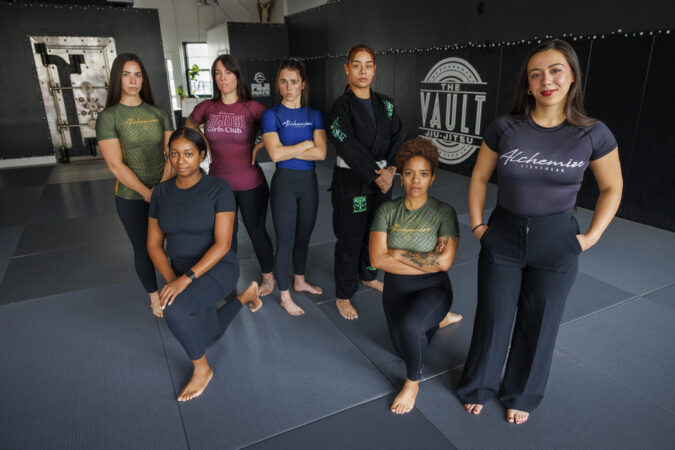
Maya Nazareth was 17, living in Malaysia, when she started training in Brazilian jiujitsu and discovered the discomfort and limitations of women’s fightwear.
She kept adjusting her sports bra, fixing her rash guard and pants while trying to focus on the martial art that demands immense discipline and control. Nazareth, who struggled with body image issues, said the feeling of discomfort and frustration affected how she moved in the gym and in the world.
Back in the U.S, as a “naive” college student with $2,000 to her name, she dreamed of building Alchemize Fightwear, an apparel brand to empower women fighters across the world.
She founded the brand in 2020. Five years later, she won $300,000 on ABC’s Shark Tank, backed by Reddit founder Alexis Ohanian, Lori Greiner, and Kendra Scott in exchange for a 15% stake.
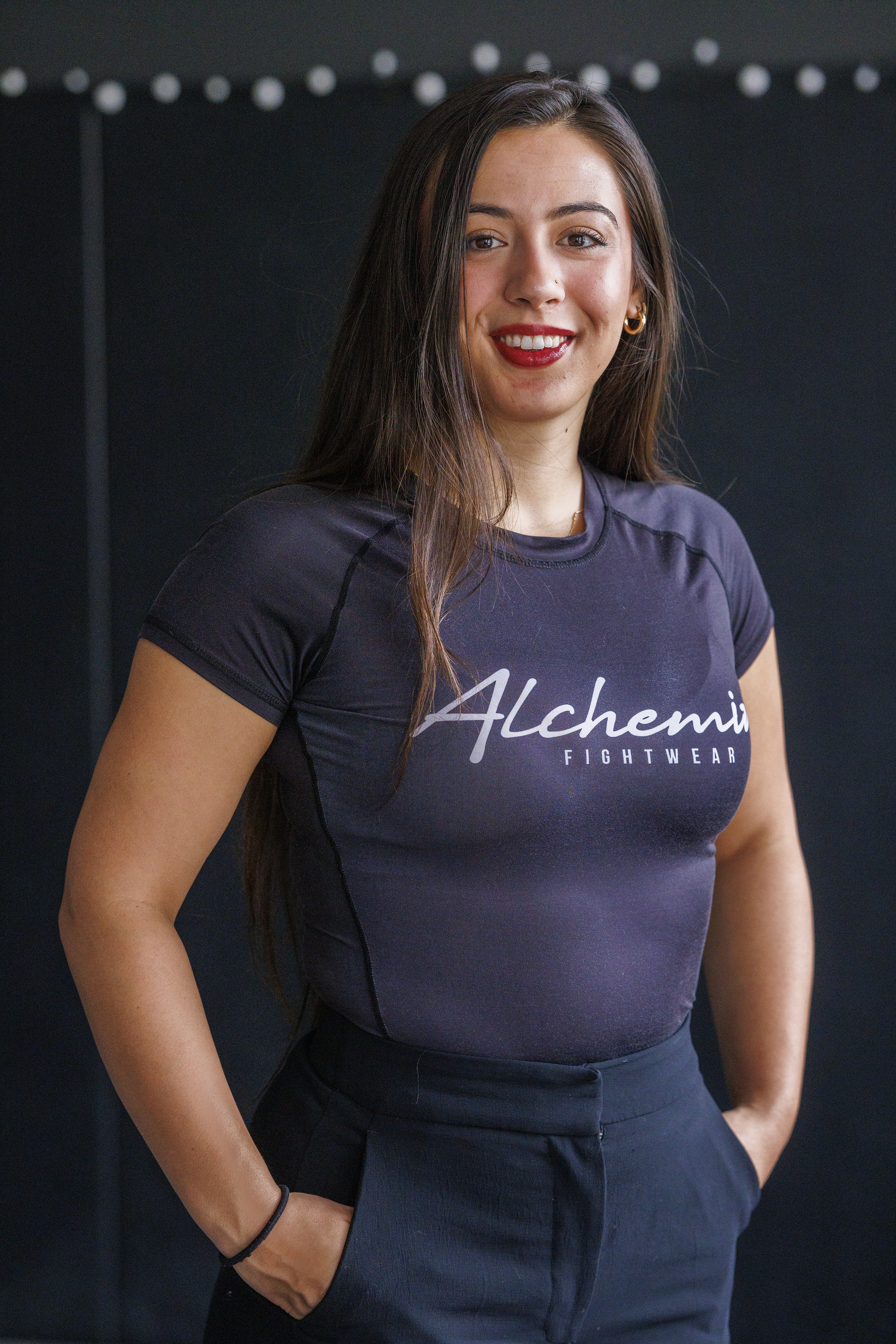
Maya Nazareth at the Vault Jiu Jitsu, Morton, PA., is the founder and CEO of Alchemize Fightwear, Friday, December 5, 2025.
“I was having my chest exposed, my stomach exposed, and my pants fell during training,” she said. “That’s a huge barrier for women to train in these sports, especially in front of 50-plus men in a training room. I just thought I could create something better.”
Nazareth, who grew up in Malaysia and all over New Jersey, realized that she shared her reality with many women in male-dominated gyms and martial arts academies, who are often led to quit before they experience the confidence and power martial arts brought to Nazareth.
“Jiujitsu transformed me into someone who felt strong, powerful, and confident, but the gear I was training in didn’t make me feel that way,” she said.
While studying international business at the University of Delaware, Nazareth placed her first purchase order of rash guards from a manufacturer, trying them out herself and putting them to test.
Her college apartment was Alchemize’s first headquarters, and her car was amobile sales office.
She started by surveying 1,500 fighters, from amateur athletes to professional competitors, asking them what elements would make their apparel more comfortable and functional for their specific disciplines.
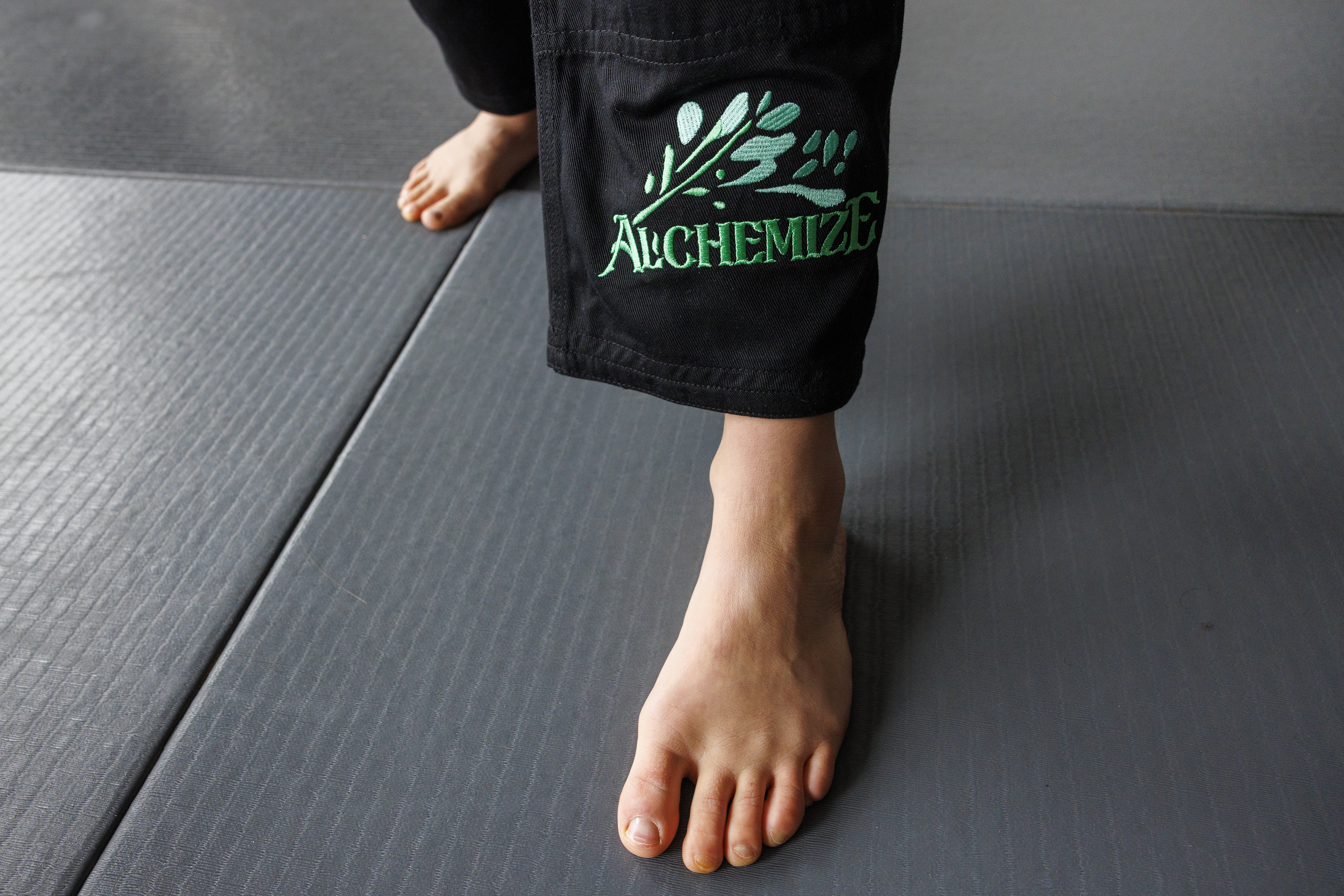
At left is Ashley Razzano with Genisis Medina-Arce in embroidered Gi’s by Alchemize Fightwear. They are shown at the Vault Jiu Jitsu, Morton, PA, Friday, December 5, 2025.
Nazareth reshaped necklines in the tops, removed center seams from the bottoms, inserted silicone waistbands, and built in sports bras for added support and comfort.
What she offered was both stylish and functional for women fighters in jiujitsu, wrestling, and later boxing, Muay Thai, and other disciplines. They were all “customer-centric designs,” she said, that made for a more fluid and functional fit for martial arts practitioners. She even tapped MMA fighter Michelle Waterson to design a collection of her own.
“It’s nothing revolutionary,” Nazareth, 27, said, “but it’s really just thinking about the customer first and what they need from their fight wear.”
When she formed the brand in 2020, she built a company for every woman, in and outside the gym.
“Moms are fighters. People going through medical diagnosis are fighters. People trying to push through in their careers are fighters. And I think fighting is just a natural human movement that we all innately know how to do, want to do, and need training around,” Nazareth said.
“I really love that we have created an avenue for more women to step into that. I think it’s really powerful to say, ‘Hey, it’s safe to show up and express yourself in this way.’”
Ashley Razzano with embroidered gi from Alchemize Fightwear, Friday, Dec. 5, 2025.
Under the Alchemize brand, Nazareth hosts free self-defense classes for survivors of domestic and sexual assault. She also organizes grappling camps in gyms and martial arts academies throughout the region to increase accessibility for women athletes.
“I’m personally passionate about what fight sports can offer survivors of assault and of domestic violence,” Nazareth said. “Just being able to make fight sports accessible to the everyday woman who may think, ‘I’m not a fighter,’ or who doesn’t see themselves rolling on the mat with a bunch of sweaty men. I think that’s something I’m really proud of and something I would like to continue doing.”
Maya Nazareth at the Vault Jiu Jitsu, Morton, PA. She is the founder and CEO of Alchemize Fightwear, Friday, December 5, 2025.
Her work and advocacy haven’t gone unnoticed. In December 2024, the Fairmount resident was named to the Forbes 30 Under 30 list for groundbreaking work in women’s sportswear and retail.
Less than a year later, she was pitching on Shark Tank.
She received an email from the Shark Tank production team in March 2025 and immediately questioned its legitimacy.
“I try not to overcommit to an opportunity before it happens,” Nazareth said.
Despite her initial suspicion, she filled out the application and took the phone screening. Two months later, she flew out to California to compete on the show.
”You never know if you’re going to actually air on the show or what’s going to happen,“ she said. ”But I started my business for the love of the sport and because I wanted to do something cool for women’s jiujitsu. So, every single opportunity that comes up, I try to do my best. It was really exciting.”
As she practiced her script, Nazareth took a moment to reflect on her journey. “I kept saying to myself, this is not the time to play small,” she said. “This is the time to be courageous.”
When she walked out to present, Nazareth said she “blacked out.” But her proposal sparked immediate interest from Ohanian.
She started out seeking a $250,000 investment in exchange for a 5% stake in Alchemize, and ended with $300,000 and a shared deal with Ohanian, Greiner, and Scott.
“It was really emotional and really, really cool,” she said.
In the months since the episode’s airing Oct. 22, Nazareth said the company has seen increased sales and a growing list of new customers. Having weathered the chaos of Black Friday, she looks forward to the slower Christmas season before things pick back up at the top of the year.
Genesis Medina-Arce wears an embroidered gi from Alchemize Fightwear, Friday, December 5, 2025.
She’s excited about the new developments at Alchemize. In 2026, Nazareth and her business partner, Suzette “Suliy” Melendez, will launch the flagship Alchemize Fightwear Athlete Program.
The online program will support athletes as they scale their current and future businesses in and outside of combat sports. Melendez said the move aligns with Nazareth’s mission to empower women in sports and business.
“We want to give other women opportunities outside of jiujitsu and give them a platform to scale,” Melendez said. “Being able to have shoulders to lean on, on the mats or off the mats, helps create community with our events.”
Nazareth also plans to expand Alchemize’s sports camps, making it the “South by Southwest” of women’s combat.
Through all these ventures, the goal remains the same, she says: creating pathways for women to enter martial arts and encouraging them to “own their inner ferocity.”
Driving up Wovern Place in Ocean City feels like entering a Hallmark movie set.
It’s where nine homes — 800 square feet or smaller — stand shoulder to shoulder on a winding road known as Dollhouse Row, all decked out in holiday cheer. Ginny Chappell’s house, decorated in blue and white, combines holiday tradition with a classy beach vibe.
“Christmas has always been my favorite time of year,” said Chappell.
Since randomly discovering Dollhouse Row as a twentysomething visiting the Shore, Chappell dreamed of owning a home on this historic street, where the houses were built in 1927.
Ginny Chappell looks out the front door from the living room of her Ocean City house.
“I was obsessed with the street and followed it ever since,” recalled Chappell, a retired nurse with two part-time jobs in Ocean City. She’s a salesperson at Artisan Body Products and a part-time assistant innkeeper at the historic Coastal Chateau.
In 2015, when she was living in Franklinville and looking to buy a vacation home, there weren’t any houses for sale on Dollhouse Row.
“My Realtor told me to dream on, that they stay in families and almost never sell,” said Chappell, who instead bought an even tinier home — 400 square feet — in the south end of Ocean City.
Five years later, looking for more space, she set out to buy a larger house, but just days before closing, the deal fell through. Chappell was devastated.
A white and blue Christmas tree, festive ornaments and a toasty fireplace bring holiday cheer to the home.Chappell sits on the steps just off the galley kitchen.
But her luck changed two months later when she got the call she had long dreamed of: an 800-square-foot Dollhouse Row house was about to go on the market.
“I’m someone who very much believes in manifestation,” Chappell said.
She now shares the house, named Grayce by previous owners, with her two long haired mini-Dachshunds, Liliana, 17, and Romeo, 6 months. She has a comfortable primary bedroom and a spare bedroom for visitors, which often include her daughter Kayla, 22.
The first floor is open space with a cozy family room, kitchen, and dining area. Upstairs, a full bathroom sits between the two bedrooms, with a stacked washer and dryer hidden behind a curtain. The primary bedroom includes a small electric fireplace that doubles as a heater.
Chappell’s holiday decor, with blue details throughout, doesn’t compete with the beachy theme of her primary bedroom.In a comfortable chair in the primary bedroom, Chappell is surrounded by blue, teal, and silver Christmas and winter accessories.
Despite the small space, Chappell’s home is not cluttered. She has thoughtfully arranged each piece of furniture, artwork, and knickknack, with storage invisibly tucked away. She also rents a storage unit for offseason clothing and other items.
Each year, she envisions her holiday theme, then sets out to perfect it.
For her coffee and hot chocolate station, complete with marshmallows and candy cane sprinkles, she wanted Christmas-themed mugs in blue and white and searched until she found them.
“I spent four days finding these mugs,” she recalled, hitting three Home Goods stores, Hobby Lobby, and Dollar General on her search.
Ginny Chappell makes a warm beverage at her coffee and hot chocolate bar, complete with festive mugs.
It isn’t about what something costs but how it makes her feel, she said. Her pre-lit frosted white tree, adorned with blue and silver ornaments and a Gingerbread Man tree topper, came from Walmart. She also supports local crafters and businesses whenever possible.
For home design details she keeps year-round, she loves to scour the beach for beautiful broken seashells, where the iridescent pinks and beiges can be seen through the cracks in the shells. Shells line each window frame throughout the house.
“If they weren’t broken you would never be able to see just how beautiful they are inside,” she said. “The message is broken is beautiful.”
She also has dozens of small one-of-a-kind driftwood shelves hanging on her walls, and at this time of year each holds a small snowflake, tree, or other decoration. Her mantle is filled with artistic Christmas trees in shades of blue, white, silver, and gray. Vintage Christmas decor, including tin post cards, can be found throughout the cottage.
Given its small size, Chappell’s home can’t host large parties, but it can be shared with friends, neighbors, and even strangers. Her home has been featured in Ocean City’s Holiday House Tour for the last three years, drawing as many as 500 visitors each year.
Ginny Chappell sits on the porch of her 800-square-foot home that is decorated for Christmas.
A house close to 100 years old does come with challenges.
“I’m always fixing things,” Chappell said. “But, people are drawn to its charm and history.”
A small group of friends share the holidays with charcuterie boards, wine, and lots of laughs. Her front porch is the perfect perch for watching visitors stroll down the street, enamored with the tiny houses.
“I believe this street is very special because of its history,” Chappell said. “The people on this street call ourselves the cottage keepers. We want people to restore rather than tear down.”
Is your house a Haven? Nominate your home by email (and send some digital photographs) at properties@inquirer.com.
The quarterback who led the Birds to a win that December 2022 game and aSuper Bowl at the end of the season then handed the ball to a bearded fan in a Philadelphia Eagles jersey.
It should have been a memory for the ages. With that touchdown, Hurts became the first quarterback in NFL history to score 10 or more rushing touchdowns in two consecutive seasons. And Paul Hamilton, a lifelong Eagles fan, had the record-breaking game ball in his hands.
But the events that followed led Hamilton, 34, to shed his Eagles fandom and file a lawsuit accusing the Eagles, Giants, stadium security, New Jersey State Police, and others of assault, false imprisonment, and other charges.
After the touchdown celebration ended, various security, team, and NFL officials approached Hamilton and asked for the ball back, according to the lawsuit initially filed in 2023 in New Jersey state court. The officials told Hamilton that the Hall of Fame needed the ball, and he would break the law if he didn’t return it.
🗣New to the Pro Football Hall of Fame
The jersey & pants that @JalenHurts wore in Week 14, when he ran for his 10th rushing TD of the season during @Eagles 48-22 win over NYG.
Hurts became the first QB in NFL history to rush for 10+ TDs in consecutive seasons.
— Pro Football Hall of Fame (@ProFootballHOF) April 5, 2023
A representative from the Eagles, accompanied by two New Jersey State Police troopers, offered Hamilton an “alternative gift opportunity” in exchange for the ball, the suit says. Hamilton declined and decided to leave the stadium with his friend.
On the way out of MetLife, the suit says, security officers grabbed him from behind. They pinned Hamilton to a gate and radioed state police their location. Hamilton told a police officer that he was assaulted by security officers, according to the complaint.
The security officers told Hamilton he was free to leave, but he was swarmed by about 10 New Jersey officers a few moments later, the suit says. Police escorted Hamilton to a gated area, where he says he was detained and feared for his life. The fan was threatened with arrest if he didn’t return the ball.
An officer was told over the phone to let Hamilton go, a command that the fan overheard, the suit says, and he was released.
Hamilton left MetLife with the ball and emotional scars that required psychotherapy.
“He is so hurt by what happened and disappointed, he’s not an Eagles fan anymore,” saidAdam Thompson, Hamilton’s attorney.
The attorney for New Meadowlands Stadium Company and the Giants, and the attorney for the New Jersey State Police, did not respond to requests for comment. The Eagles, who have been dismissed from the case, declined to comment.
The litigation is in discovery, which is set to continue through April, according to the court docket. Thompson said depositions of witnesses and officials from the teams, stadium, and NFL should begin soon.
Philadelphia Eagles tight end Dallas Goedert tosses a touchdown ball into the stands during the third quarter at Lincoln Financial Field on Sunday, Dec. 14, 2025 in Philadelphia. The Philadelphia Eagles defeated the Las Vegas Raiders 31-0.
Game balls are precious commodities in the NFL, which has penalized players for handing them out to fans or throwing them into the stands. But there is no policy that requires fans to return balls, an NFL official told The Athletic.
Touchdown balls can also be meaningful to players, leading to retrieval efforts.
Last year, a hyped-up A.J. Brown threw a touchdown ball into the stands only to realize seconds later that it was Tanner McKee’s first NFL touchdown throw.
“Dude, no!!!!,” a miked-up McKee said on the sideline when he learned the ball was gone.
But the wide receiver did good, offered a fan his jersey in return for the ball (“I got you,” the fan responded), and gave McKee his prized possession.
Thompson said Hamilton went through a roller coaster of emotions that day in MetLife.
“Fans have rights, fans have a voice, and fans should be respected by the game,” Thompson said.



















 on Philly and Pennsylvania’s role in establishing the Christmas tree tradition. The Christmas tree in the early illustration is indicative of how wild Christmas trees were far less dense and conical before tree shaping was invented.](https://interactives.inquirer.com/secondbank/arc/23HWJ4UDIZGPPALTU5ZPZVNUD4/325.webp)


 about the artificial Christmas trees and Indiana County, once known as the "Christmas Tree capital of the world" at the time.](https://interactives.inquirer.com/secondbank/arc/3L6UHPXXHNHYFITN64ON5QSIMI/325.webp)