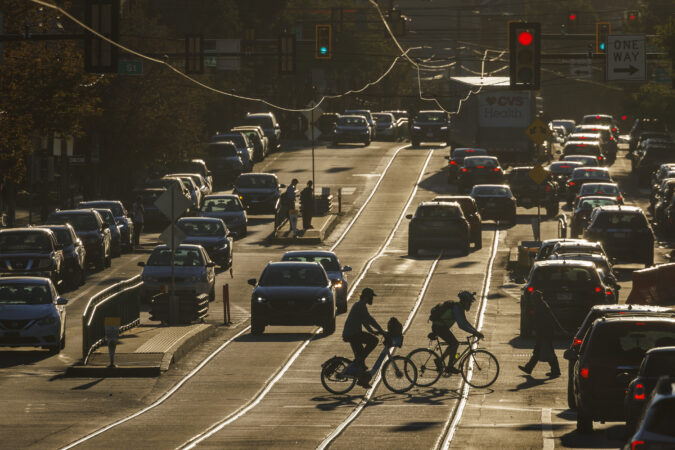
The average commute in Philadelphia takes longer than in most large U.S. cities — and it’s gotten slightly worse recently.
In 2024, commuters spent on average 33.2 minutes getting to work in the city, according to a new report from Yardi Kube, a digital management platform for coworking spaces. That’s more than the national average and a 2.1-minute increase from the previous year.
The increase in Philadelphia also reflects a larger national trend, according to the report. The average American’s commute time inched up in 2024 by nearly half a minute, to 27.2 minutes. Still, that’s less time than the average worker spent in transit to their job in 2019.
Meanwhile, Philadelphia faced some of the worst traffic congestion in the country last year, and public transit has confronted several challenges this year that caused disruption for commuters.
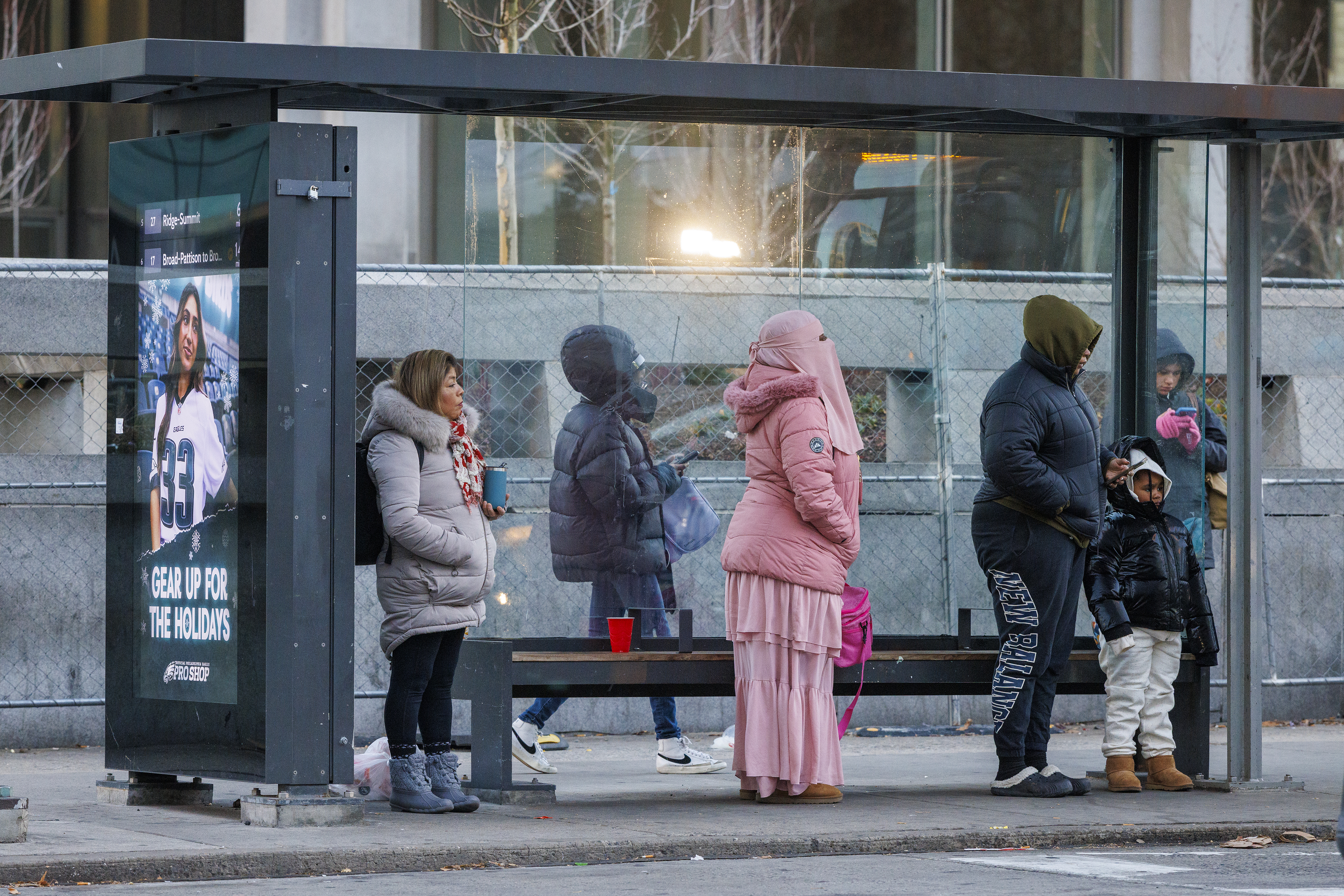
Commuters at a bus stop at 15th Street and JFK Boulevard on a cold December morning in Philadelphia.
The increase in Philadelphia and beyond comes as employers have increasingly called workers back to in-person work, reversing trends toward hybrid or remote arrangements during the pandemic. The report notes that as the number of Americans working from home has decreased, the average time spent commuting has inched up.
“Across the United States, how people get to work — and how often they do — continues to evolve,” the report reads.
“The rise of remote and hybrid work dramatically reshaped commuting habits, leading to sharp declines in travel times during the pandemic years,” it said. ”Yet as more employees return to the office, commute durations are climbing again, in some cases more quickly than before.”
The report is based on data from the U.S. Census Bureau’s American Community Survey. It took into consideration the 50 largest cities based on the size of their population and evaluated the time spent commuting for a one-way trip, regardless of mode of transportation.
window.addEventListener(“message”,function(a){if(void 0!==a.data[“datawrapper-height”]){var e=document.querySelectorAll(“iframe”);for(var t in a.data[“datawrapper-height”])for(var r,i=0;r=e[i];i++)if(r.contentWindow===a.source){var d=a.data[“datawrapper-height”][t]+”px”;r.style.height=d}}});
While Philadelphia’s average commute lengthened from 2023 to 2024, it’s still shorter than the average of 34.3 minutes in 2019.
But the region’s public transit system has seen a series of significant challenges this year, rankling commutes for many.
And SEPTA‘s Regional Rail system has encountered significant disruption and delays this fall, as the transit authority was ordered to inspect all of its 50-year-old Silverliner IV train cars following five train fires this year.
This week, SEPTA averted a worker strike, after coming to an agreement with Transport Workers Union Local 234 over improvements to the employee contract. The union represents some 5,000 SEPTA employees including operators of buses, subways, and trolleys.
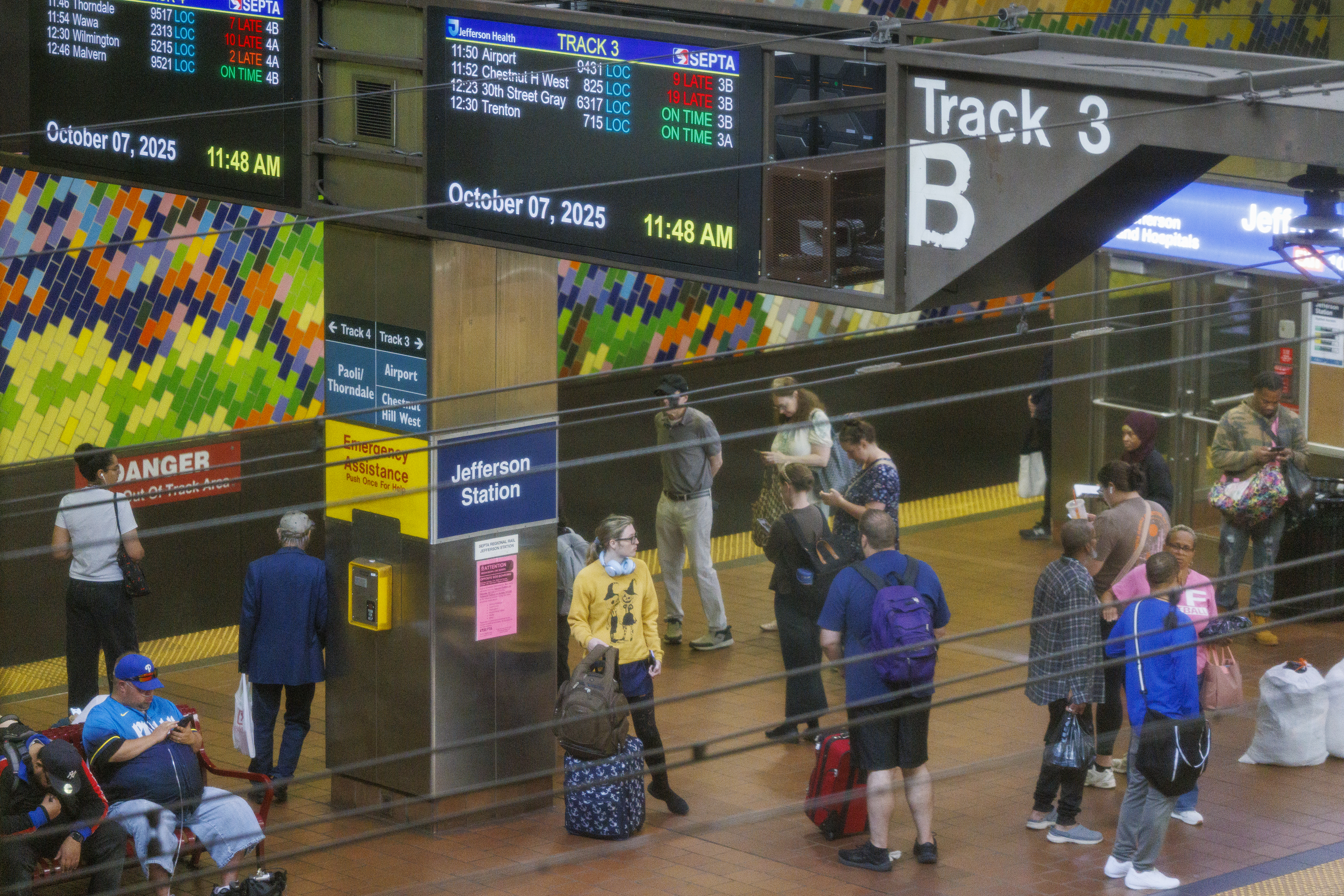
Commuters waiting for SEPTA Regional Rail at Jefferson Station on Oct. 7.
Other cities with long commutes last year include New York, Chicago, San Francisco, Los Angeles, and Boston. New Yorkers spent an average of 40.6 minutes getting to work in 2024, nabbing the worst commute time in the country. Chicago ranked second, with an average of 33.5 minutes in transit last year.
All of those cities saw an uptick in their commuting time in the past year.
Among the 50 most populous cities in the country, the places with the shortest commutes are Tulsa, Okla.; Omaha, Neb.; Memphis; Tucson, Ariz.; and Kansas City, Mo. Those cities had average commute times between 19.7 and 21.8 minutes last year.
As boxes of holiday gifts pile up on your stoop, beware: Porch pirates continue to strike in Philadelphia.
Reports of package theft from January through November of this year are up 6% compared to last year, according to The Inquirer’s analysis of Philadelphia Police Department data.
And if the past two years are any indication, porch pirates will be particularly active this month.
In neighborhoods across the city, residents have shared their frustration over repeated thefts. Katie Byrne said she’s had more a dozen packages swiped from out front of her Fishtown home. Often, she said, “before I even get the notification it got delivered.” This year, she said she and a neighbor have teamed up to grab each other’s packages when the other isn’t home.
Porch pirates strike in the suburbs, too. Exasperated consumers have vented about package thefts to their neighborhood Facebook groups in Brookhaven, Cheltenham, Conshohocken, Croydon, Lower Merion, Levittown, Media, West Chester, Quakertown, and even down the Shore.
Last holiday season in Newtown Square, Katy Retzbach said $150 in Christmas gifts were stolen from under her family’s mailbox in broad daylight.
Nationwide, at least 58 million packages were stolen last year, amounting to $16 billion in financial losses, according to a recent report from the U.S. Postal Service Office of the Inspector General. Most stolen packages are between $50 and $200 in value.
What Philly’s package theft data shows
window.addEventListener(“message”,function(a){if(void 0!==a.data[“datawrapper-height”]){var e=document.querySelectorAll(“iframe”);for(var t in a.data[“datawrapper-height”])for(var r,i=0;r=e[i];i++)if(r.contentWindow===a.source){var d=a.data[“datawrapper-height”][t]+”px”;r.style.height=d}}});
It’s difficult to determine how many package thefts will occur in Philadelphia before the year’s end, as reports of the crime spike each December. And some of these incidents go unreported to the police.
In 2023 and 2024, package-theft reports in December accounted for nearly 14% of the annual total on average, according to the analysis of police data.
If 2025 were to follow that pattern, Philadelphia would log around 450 reported package thefts this month — slightly more than last year but less than 2023 — and would end the year with a total of 3,300 reports, more than the city recorded each of the past two years.
The total number of reported package thefts declined by 1.2% between 2023 and 2024, according to the analysis. However, the number of thefts reported in December increased over the same period.
How to protect against porch piracy
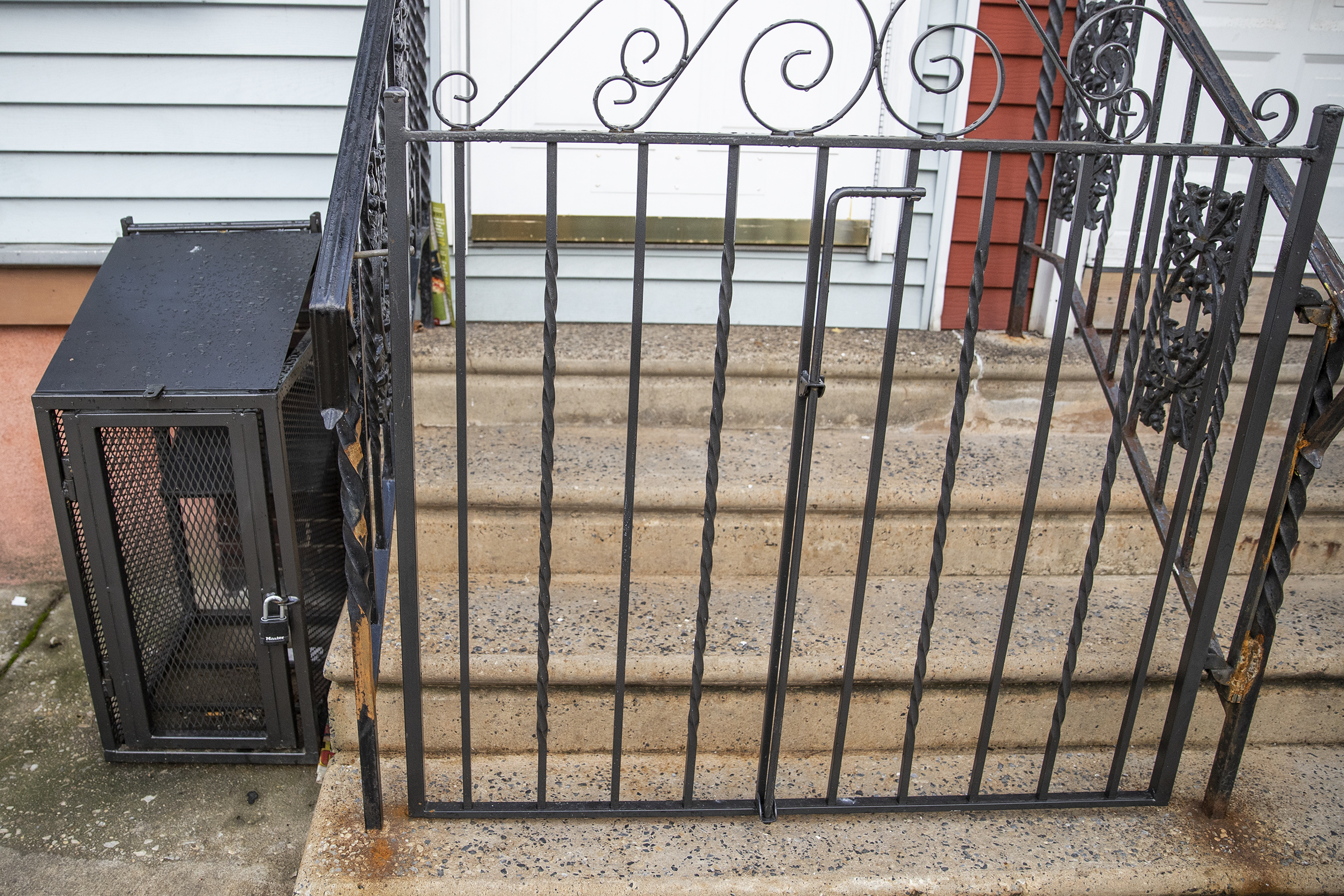
Some people find or erect secure places to have their packages delivered. A metal cage for packages is shown here in this 2019 file photo.
There’s no surefire way to prevent porch piracy.
But police departments and carriers like USPS, FedEx, and UPS provide the following tips to reduce your chances of falling victim — or to get your money back if your package is stolen:
Leave drop-off instructions: Log into your online account with the package carrier and ask that they leave deliveries in a less visible location, such as behind a planter, in a shed, or at a side door. Or ask that they require a signature for drop-off. This requires that delivery people read the instructions, which some Philadelphians have found is not always the case.
Redirect the delivery: You can also go online and redirect deliveries to locations such as your office, the home of a friend who doesn’t experience package theft, or a secure physical mailbox, such as a FedEx, UPS, or Amazon Locker pickup location. If you aren’t going to be home for a day, you can also request a hold on packages until you return, or have a neighbor or friend pick them up.
Use security cameras: Cameras can alert you that someone is outside and allow you to grab a package immediately if you’re at home. If a delivery is stolen, the footage can help police find the porch pirate. (If they’re charged and convicted in New Jersey, they could even go to prison.)
Report theft: After confirming that the package was in fact delivered, file a police report. Then, contact the seller, shipping company, and, if all else fails, your credit card company to see if they cover package theft.
A veteran lawyer in the Philadelphia District Attorney’s Office has been disbarred in the region’s federal courts after a panel of judges concluded he “lied repeatedly” while seeking to overturn the death sentence of a man who killed an East Mount Airy couple in their home and left their infant daughter inside to die.
Paul George, an assistant district attorney who handles appellate cases, was a key player in his office’s attempts to have Robert Wharton’s death penalty reversed so he could serve a life sentence instead.
U.S. District Judge Mitchell Goldberg denied that request, but not before finding that District Attorney Larry Krasner’s office had provided incomplete and misleading information in its efforts to free Wharton from death row.
After Goldberg made his decision, George and a colleague who handled the case faced federal disciplinary proceedings to examine whether their conduct — which was also criticized by an appeals court — was intentionally deceptive.
As part of that process, three federal judges concluded earlier this year that George’s actions were “misleading and dishonest,” saying he had lied to Goldberg about key facts, “flouted the interests of the public and the victims’ families,” and acted as the “quarterback” of efforts by the district attorney’s office to undo or undermine all death penalty cases.
“George’s conduct was the result of a ‘selfish or dishonest motive’ — placing the DAO’s policy priorities above its professional and prosecutorial responsibilities,” wrote U.S. District Judges Paul S. Diamond, Gerald J. Pappert, and John M. Gallagher. They recommended that George be barred from practicing in the region’s federal courts, and Chief Judge Wendy Beetlestone affirmed that in an October order.
George has denied the accusations and last month filed an appeal. His attorneys acknowledged in court documents that he had made mistakes in his handling of Wharton’s case, but said the opinion recommending his disbarment was based on a broader set of “extraordinary allegations” that lacked evidence and targeted the office he worked for.
George has displayed “exceptional legal skills and the highest level of professional ethics and honesty” during his 48-year legal career, his attorneys wrote. He is scheduled to retire at the end of this year.
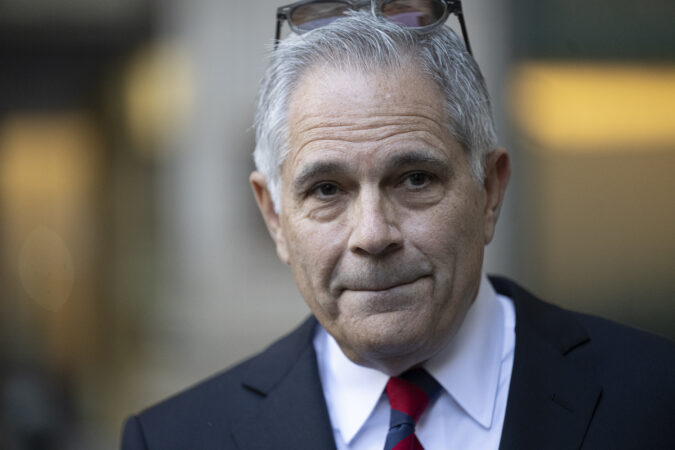
Krasner said in an interview that he was largely unable to comment because most of the disciplinary matter had unfolded under seal. But he said that George’s career “has been conducted vigorously and ethically,” and that he believed the appeals court would find that the opinion criticizing George was filled with “factually and legally incorrect” statements.
“We will continue to try to be fair each and every day, and, as change makers often do, we will face the consequences of making change from people who could’ve made it, but didn’t, in their day,” Krasner said.
The disciplinary saga is the latest chapter in the unusually protracted fallout from Wharton’s death penalty appeal, and it might not be the last.
George’s colleague Nancy Winkelman — another supervisor in the district attorney’s law division — has also been the subject of a disciplinary inquiry in federal court for her role in the Wharton matter. Records in her case remain under seal.
The documents connected to George’s case were also supposed to remain secret, but they became public this week when aspects of his appeal were publicly filed in court. On Thursday, his attorney, David Rudovsky, filed court documents to have the entire record of the underlying disciplinary proceeding made public.
George became involved in the Wharton matter in 2019, while Wharton was appealing his death sentence in federal court.
Wharton had been convicted along with a codefendant in the January 1984 strangulation and drowning deaths of Bradley and Ferne Hart. A jury concluded that Wharton killed the couple over a disputed debt, then turned off the heat in their home and left the couple’s 7-month-old baby, Lisa, to freeze to death. She survived.
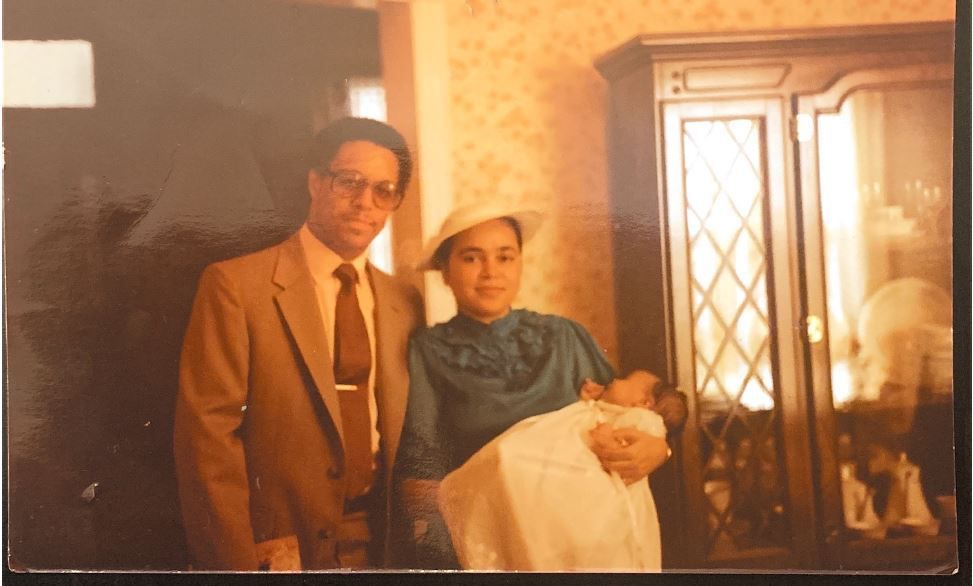
Bradley and Ferne Hart in a 1983 photo with their baby daughter, Lisa, on her christening day. The husband and wife were murdered in their East Mount Airy home in January 1984 by Robert Wharton and Eric Mason. The baby was unharmed, but left to die in the house. She survived.
In the decades before Krasner took office, the district attorney’s office had consistently opposed Wharton’s attempts to overturn his conviction and sentence.
But Krasner said on the campaign trail that he would “never pursue a death sentence in any case.” And after he was sworn in, his office changed its stance on the Wharton case, saying it had “carefully reviewed the facts and the law” and agreed that Wharton should be spared from death row.
Goldberg did not immediately agree, and wrote in court documents at the time that the district attorney’s office had not sufficiently explained its reasoning for its “complete reversal of course.”
He then asked the Pennsylvania Attorney General’s Office to provide materials he said the district attorney’s office was not sharing. And after investigating, the attorney general’s office said it found evidence including documents detailing Wharton’s past attempts to escape from a courtroom — information that Goldberg said would have been crucial to his decision, but that George and Winkelman later said they were not aware of.
The attorney general’s office also said Krasner’s office had misled Goldberg about its communications with the victims’ relatives. Although the district attorney’s office gave the impression that the Hart family supported its change in stance on the death penalty, the truth was that prosecutors had spoken only to one relative, and never contacted the couple’s only surviving child, Lisa Hart-Newman, who vehemently opposed the idea of lessening Wharton’s sentence.
George later acknowledged that was a mistake, and Goldberg ordered Krasner to write apology letters to the Harts’ relatives.
In the disciplinary opinion filed earlier this year, the three-judge panel criticized George’s conduct throughout the case, saying that he “repeatedly lied” to Goldberg and that his efforts nearly undercut the integrity of a duly imposed jury verdict.
And, in an unusually pointed fashion, they ascribed a motive to his actions — accusing George of flouting legal guardrails to advance the policy interests of Krasner’s office.
“Upon the current District Attorney’s first election … the DAO established a policy, with Paul George at quarterback, to undermine duly imposed death sentences challenged in post-conviction proceedings,” the judges wrote. “George filed the concession in Wharton pursuant to that policy, not as the result of any review, careful or otherwise, of the facts and the law.”
George said in court documents that was not true, and his attorneys denied there has ever been an office policy opposing all capital sentences.
Krasner also said it was “flatly untrue” that his office has ever had a policy against the death penalty, and he denied that the committee he formed to review capital cases — which George once served on — was designed to undo such sentences.
“We follow essentially the same process as our predecessors, who routinely supported the death penalty and who were usually wrong,” Krasner said. “We actually try to be fair all the time. And that committee has concluded on many occasions that the death penalty should be reversed; it has also concluded with the law division in individual cases that the death penalty had to be affirmed. Those are the facts.”
George’s disbarment in federal court has not affected his ability to practice in state court, though George, 75, has already begun to wind down his office duties ahead of his retirement, his attorneys wrote in court documents.
They said that the penalty imposed against him was unwarranted and should be reversed.
“To label Mr. George as a liar, and by disbarment, place him among the worst of the worst lawyers in our community, is highly disproportionate and offends basic tenets of justice,” his lawyers wrote.
The federal judges who recommended his discipline disagreed.
“In the final years of his career,” they wrote, George “used [his] experience to circumvent and subvert, in misleading and dishonest ways, verdicts rendered by judges and juries who heard the evidence and applied the law.”
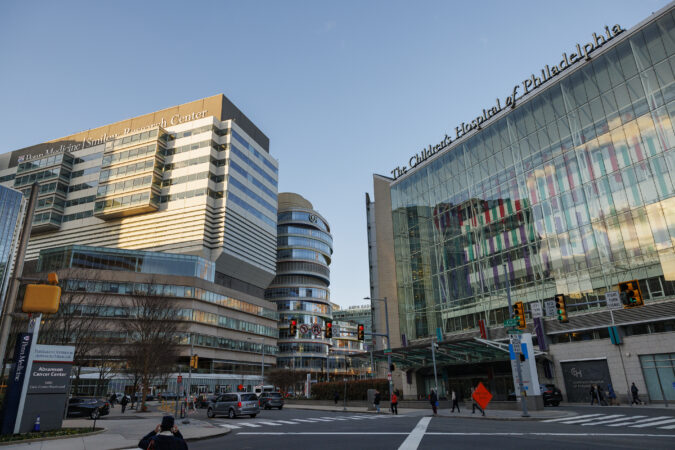
Children’s Hospital of Philadelphia was the most profitable nonprofit health system in Southeastern Pennsylvania during the three months that ended Sept. 30, according to an Inquirer review of financial filings.
CHOP reported $70 million in operating income in the first quarter of fiscal 2026, up from $67 million the same period a year ago. The nonprofit’s revenue climbed nearly 9% to $1.3 billion.
The biggest loss in percentage terms was at Redeemer Health, the region’s smallest health system and the only remaining operator with a single hospital. Redeemer had an $11.7 million operating loss on $103.4 million in quarterly revenue. That was an improvement over an $18.9 million loss last year.
Jefferson Health had the most patient revenue following its acquisition last year of Lehigh Valley Health Network. The 32-hospital system had $2.9 billion in patient revenue, $100 million more than the $2.8 billion at the University of Pennsylvania Health System, which has seven hospitals.
window.addEventListener(“message”,function(a){if(void 0!==a.data[“datawrapper-height”]){var e=document.querySelectorAll(“iframe”);for(var t in a.data[“datawrapper-height”])for(var r,i=0;r=e[i];i++)if(r.contentWindow===a.source){var d=a.data[“datawrapper-height”][t]+”px”;r.style.height=d}}});
Here’s a recap of selected systems’ results for September quarter:
Jefferson Health
Jefferson Health reported a $104 million operating loss, as its insurance business continued to drag down results. The loss included $19.4 million in restructuring charges for employee severance related to earlier job cuts and moves designed to make the system more efficient.
University of Pennsylvania Health System
University of Pennsylvania Health System had an operating gain of $109.3 million, up from $49.3 million in the same period a year ago. This year’s results include Doylestown Health, which Penn acquired April 1. Total revenue was $3.3 billion, up from $2.8 billion a year ago.
Temple University Health System
Temple University Health System’s loss in the quarter was $15 million, an improvement over a $17 million loss last year. Total revenue was $800 million, up 13% from $712.5 million a year ago. Outpatient revenue increased by nearly $62 million, much of it from the health system’s specialty and retail pharmacy business.
Conventional wisdom:Motor Trend likes that the Ioniq 5 XRT offers “proper fun in mild dirt,” that it’s “great as an everyday do-it-all crossover,” with “built-in NACS convenience.” But they lament the “off-road gear brings on-road compromises, using Tesla Superchargers not yet optimal,” and the “price close to high-end Ioniq 5 Limited trim.”
Marketer’s pitch: “Our fast-charging electric SUV that goes the distance.”
Reality: The off-road accoutrements are so limited, you might as well get one with more range.
Catching up: Last week, we tested a Chevrolet Equinox EV, which seemed like a real bargain until we started digging deeper.
This week we blow another $20,000 and see what we have to show for it.
What’s new: The Ioniq 5 received a refreshed appearance for 2025. It adds the NACS charging port, allowing easy access to Tesla superchargers, and boosts the size of the batteries across all models.
The new XRT model is marketed as a more rugged version, slightly lifted and with all manner of cladding and black.
Up to speed: The Ioniq 5 gets to 60 mph as fast as any EV. It reaches the magic number in just 4.5 seconds, according to Motor Trend. Unlike last week’s stripped-down Equinox, the Ioniq 5 offers power aplenty throughout the range of driving, as well as through the range of models.
Shiftless: I’ve been singing the praises of the Hyundai twisty-stalk gear selector, and that will continue.
On the road: The Ioniq 5 handled nicely on highways and wasn’t too bouncy for its squared-off shape. Country roads were quite fun, especially in Sport mode.
The Ioniq 5 did have more than its share of rattles, though, from either the hatchback door or the rear cargo area; the squarish shape of the vehicle is probably a factor here.
In the rain: EV makers put low-resistance tires on to help with range. I can’t specifically recall having any other EV in the rain, but the Ioniq 5 with its 235/60/R18 all-terrain tires designed for off-ish roading seemed like it would slide on wet roads. Test drive in the rain, if you can.
Steady speed: The Smart Cruise Control with curve control feature in the Ioniq 5 felt dumber than advertised. I’ve noticed many test vehicles from all brands slowing on curves while the cruise is set, and it’s a welcome feature, but more than a few times I found myself shouting at the dashboard as the Ioniq 5 suddenly started to slow dramatically from my set speed. The cruise was still engaged, too, so it required me taking complete control and starting from scratch.
This can all be controlled through the various settings, but I never found one that I thought worked as well as other manufacturers’ offerings.
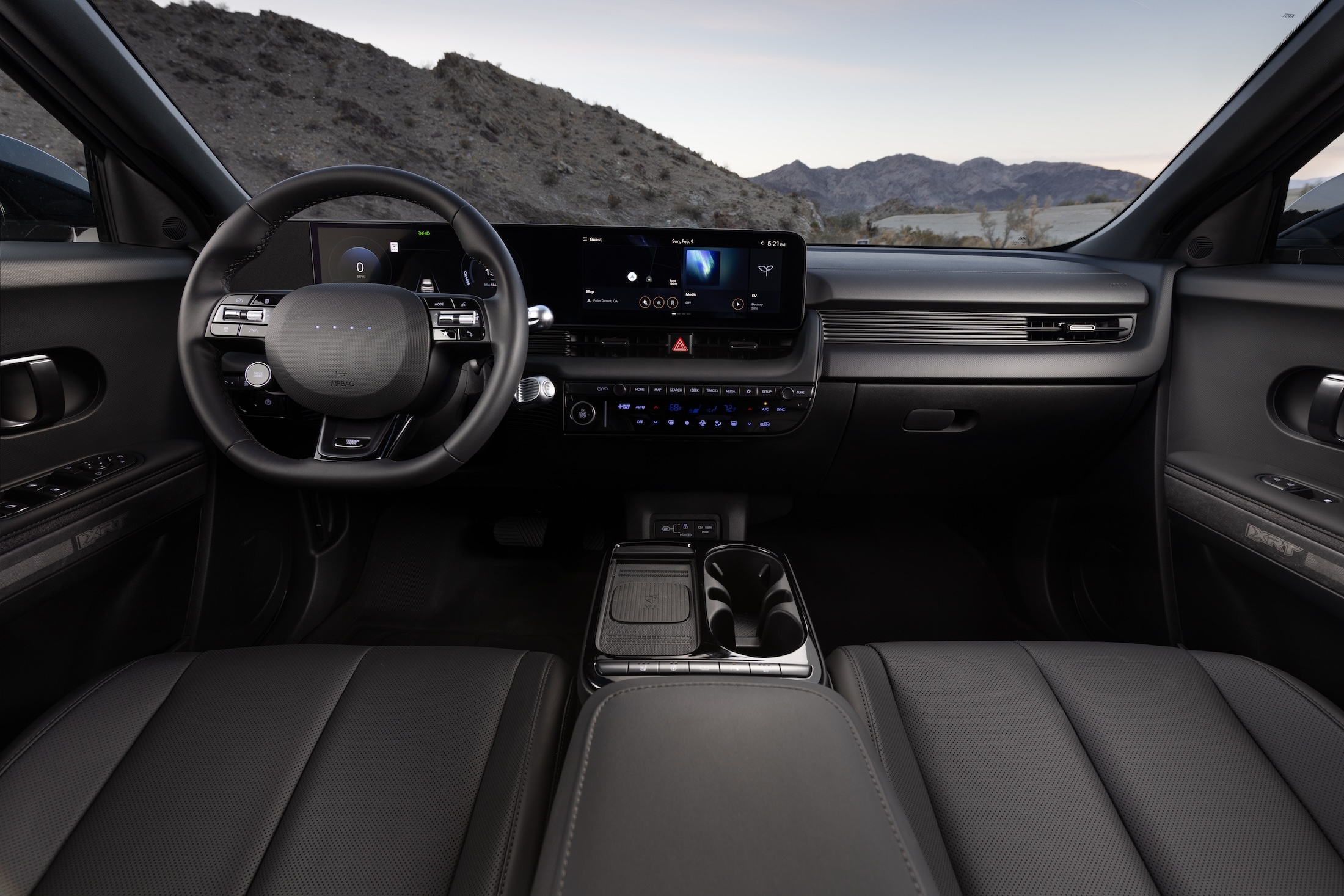
The interior of the 2026 Hyundai Ioniq XRT offers plenty of comfort and easy operation.
Driver’s Seat: The leather-covered seat was geared for comfort but still supportive. It held me in place while not getting fresh. The lumbar bolster was just fine and the seat bottom stretched to my knees, something often lacking at this vehicle size.
The seat heater operation and some other functions are in a row of silver buttons (yay!) on the console that will help you in yoga class, requiring a sharp contortion just to reach them (boo!).
Friends and stuff: Sturgis Kid 4.0 blessed the rear seat as comfortable and roomy on a trip to the Sweetest Place on Earth. The flat floor means middle seat occupants won’t feel too bad.
Cargo space is 26.3 cubic feet behind the rear seats and 58.5 when it’s folded.
Play some tunes: Sound from the system is pretty good, about an A-, maybe a B+.
The 12.3-inch touchscreen makes playing tunes and getting to other functions easy enough, and buttons and dials underneath offer a real assist. The home screen has large icons that make navigation swift.
Keeping warm and cool: I was at first pleased at the HVAC’s use of real buttons underneath the infotainment display. But things were not exactly as they appeared; those were just faux buttons of the highly sensitive touch pad variety. Every time my hand got close, I seemed to adjust three things I didn’t intend to. So the driver’s attention is still stolen away from the driving portion of our adventure and is instead trying to fix things that have been changed by accident.
Range: The Ioniq 5’s advertised range of 258 miles was about spot on, as determined by our trip to the AACA (Antique Automobile Club of America) museum in Hershey. We used up about 200 miles of range in 180 miles or so of travel — about half of them keeping up with turnpike traffic; those high speeds suck down the juice. (I could slow down, and yet, I don’t.)
A less expensive SE model would get you beyond 310 miles on a charge. Recharging from 10% to 80% takes as little as 20 minutes.
Where it’s built: Ellabell, Ga. This was the site of an ICE raid in September. It remains to be seen how long the Ioniq 5 will actually come from there, also considering recent trends in EV sales. Stay tuned.
The U.S. and Canada supply 29% of the parts; South Korea another 29%; and Hungary, 33%.
How it’s built:Consumer Reports predicts the reliability to be a 2 out of 5.
In the end: The Ioniq 5 has always been tied with the Kia EV6 on my list of EV champs; the Kia looks a little less stupid, so I’d probably go that direction. But the Equinox is a strong challenger and is worth a look.
A lower price and more range makes any of them more attractive.
When Philly artist Amir Bey Richardson first uploaded his rap songs online in 2010, he was told his music was “too corny” to garner an audience.
“I definitely had friends who encouraged me, but I had other friends who used to call it ‘bus driver rap,’” Richardson said. “Or they said, ‘Too many people rap. Get out of here.’”
Today, Richardson is a go-to musician-for-hire for major network shows, including for the Emmy-winning, Philly-set comedy series Abbott Elementary.
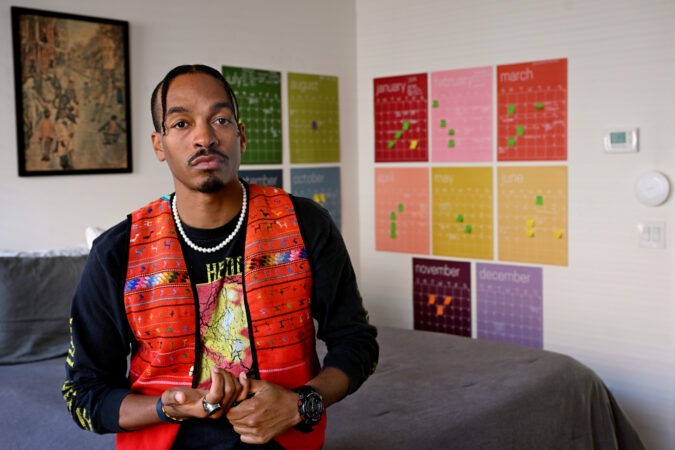
Philly artist Amir Bey Richardson in his home studio on Monday, Dec. 1, 2025.
Richardson, who goes by Bul Bey, knows his music doesn’t have the same musical edge that has long defined Philadelphia’s hip-hop sound. But he makes up for it with his more soulful and personal hip-hop records that speak to his West Philly roots and connect with a wider range of rap fans.
“Philadelphia is one of those cities where rapping is held to a higher standard, so I had to listen to my heart,” he said. “I was an artist whether I wanted to be one or not.”
While his sound didn’t match that of his contemporaries, he believes it sets him apart from other Philly artists.
On the Oct. 22 episode of Abbott Elementary, Richardson’s 2024 track “Elbow Deep” can be heard in the background as characters Gregory and Janine (played by Tyler James Williams and show creator Quinta Brunson), set the vibe for a friendly hangout.
“I lost my mind when I heard it,” Richardson said. “There are some explicit moments in the song, but when I saw the scene, it all made total sense.”
This was the second time Richardson’s music was placed in the hit series.
Back in February 2022, Richardson sent an “awkward” introductory message on LinkedIn to Abbott Elementary music supervisor Kier Lehman. Among the tens of tracks Richardson pulled from his catalog to include in that message, the 2014 single “Where I’m From” struck a chord with Lehman.
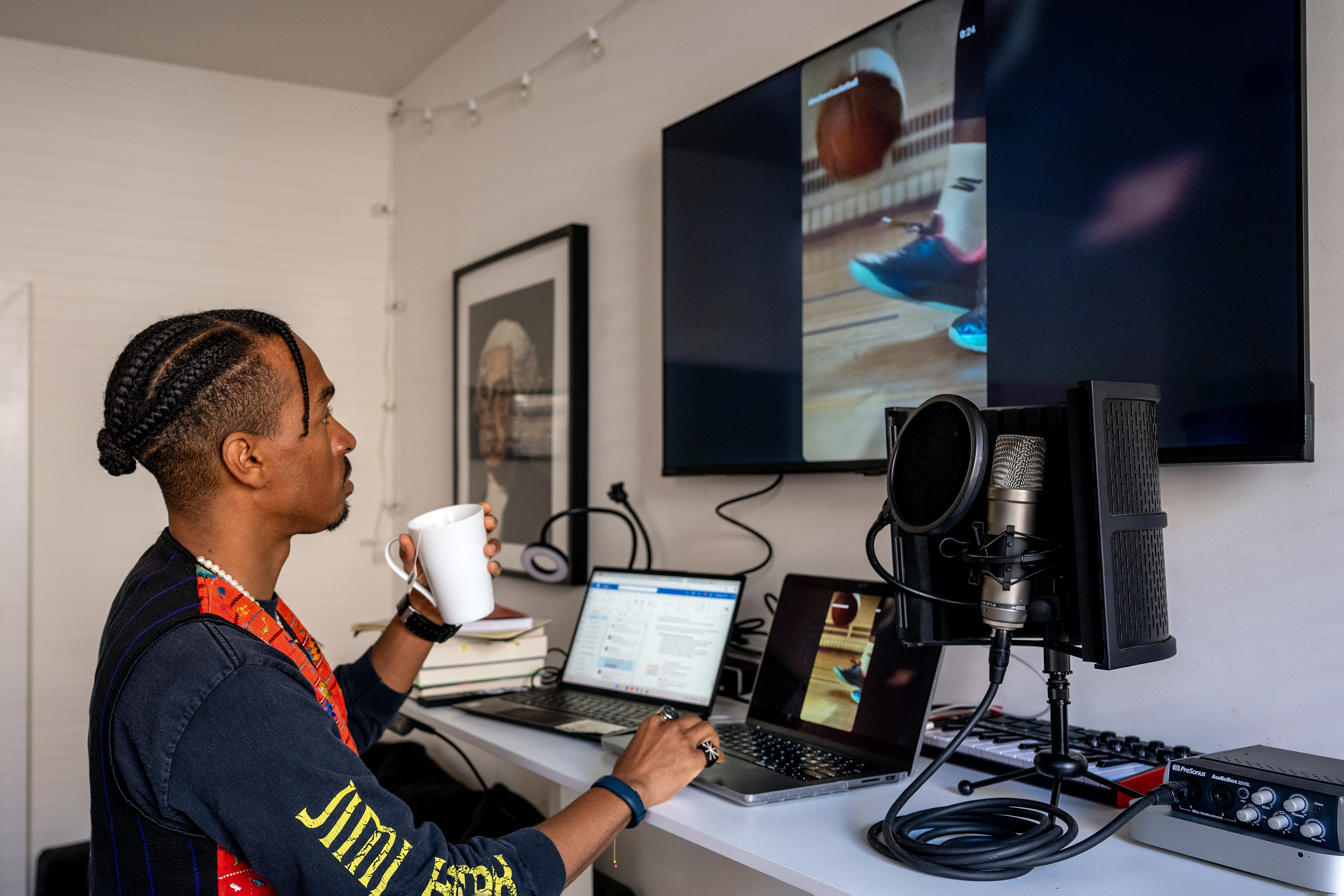
Philly artist Amir Bey Richardson at his home studio Monday, Dec. 1, 2025.
In early 2023, the Grammy-nominated music supervisor reached out to Richardson to request the use of “Where I’m From” for season two, episode 19, of the show.
Richardson said he’s still processing the achievement. “Sometimes I go back to the episode just to make sure it wasn’t changed,” he said.
That song placement, Richardson said, arrived at a “time of desperation.”
After a decade of making music, Richardson was at a creative crossroads. He was confident in his musical talents, but it felt like there were limited avenues to showcase them. “I felt very lost and desperate,” he said.
He stumbled onto Abbott Elementary like everyone else. Only he paused the TV to find Lehman’s name in the credits and reached out to him months later on the networking platform.
While he’s now “embarrassed” by his direct message to Lehman, the eventual song placement was the first time Richardson was ever paid for his music.
“That was definitely me crossing a threshold,” he said. “And in my mind, I was like, ‘I have to do that again.’”
It would be two years until that would happen. Earlier this year, Lehman reached out to Richardson to use “Elbow Deep.” Richardson approved immediately.
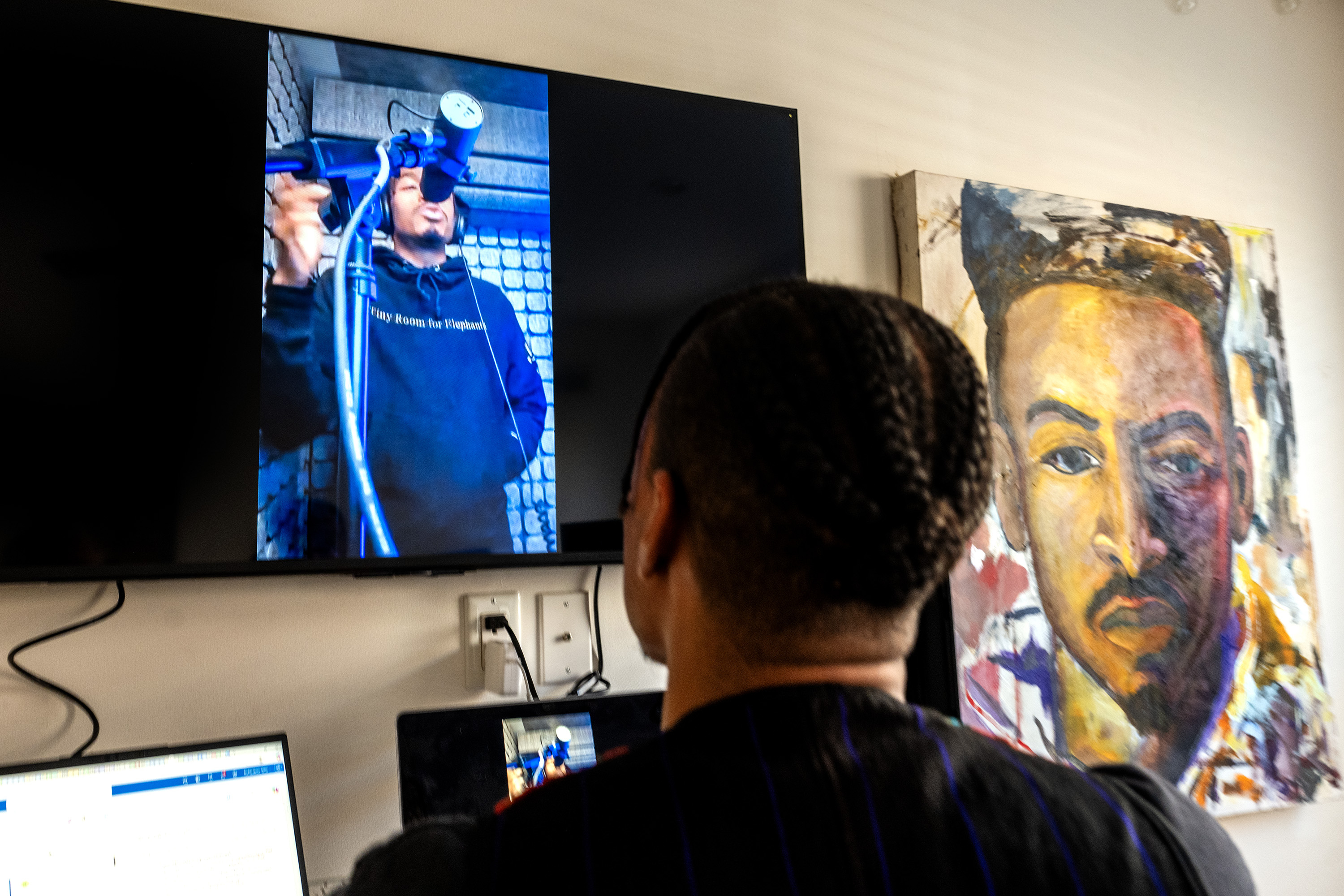
Philly artist Amir Bey Richardson at his home studio Monday, Dec. 1, 2025. He is seen doing the voice-over for a Joel Embiid Skechers commercial.
In the meantime, that first placement opened several creative doors.
Between his role as an event coordinator for the Free Library of Philadelphia Foundation, Richardson dropped a pair of collaborative EPs with producers Sam Live and Patrick Feliciano. He also contributed music to WHYY programs, such as Albie’s Elevator and The Infinite Art Hunt, and served as host of the Franklin Institute’s So Curious podcast.
He was even tapped to narrate a Skechers ad featuring Sixers star Joel Embiid, showcasing his abilities as a voice-over talent.
It’s all been a surprising path, Richardson said. One that has inspired him to pursue avenues that meld his love of music and Philadelphia.
“It let me know I had a narrower view of what I could do as an artist,” Richardson said. “I wouldn’t say I’m doing unconventional things, but it’s more of a wider range.”
Philly artist Amir Bey Richardson in his home studio Monday, Dec. 1, 2025. He did the voice-over in a new Joel Embiid Skechers commercial, seen on screen.
His goal is to be a more notable name for big-budget shows and eventually land a placement on a blockbuster film. He currently has his sights on Sony’s animated Spider-Man multiverse saga, which Lehman served as the music supervisor for in 2018.
For someone who started out making songs from his college radio station at Pittsburgh’s La Roche University, and now sees his name on TV screens, Richardson has learned to avoid limiting his art and musical reach. And to the friends who previously doubted his abilities, he’s proving his music can take him places he’s never been, including prime-time television.
Airbnb expects to host 17,000 guests at its short-term rentals across the Philadelphia region when the FIFA World Cup comes to town next summer.
That’s according to a new report done by Deloitte at Airbnb’s behest and released last week. Airbnb guests are expected to spend about $52 million on average during their stays in the Philly region, and about $14 million of that total will be spent on the rentals.
Over the course of the six matches in June and July, Airbnb hosts are expected to rake in about $1,900 on average, totaling about $8 million in earnings for all area hosts, according to the report.
Officials from Philadelphia Soccer 2026 have estimated that the World Cup will bring 500,000 visitors to the region. Airbnb’s report estimates that 149,000 of them will require overnight accommodations.
Each Airbnb guest is expected to spend about $109 a night on average on the rentals, as well as another $301 a night on food, entertainment, and other expenses, according to the company’s report.
Airbnb guests will have a total impact of about $167 million, including direct and indirect spending, the report projected, and that activity is expected to spur additional spending in the city over the following five years.
After the games were announced, some people went online to secure their short-term rentals. All host cities saw a 33% spike in new bookings last weekend, according to AirDNA, a site that analyzes data on short-term rentals. In Philadelphia, occupancy across all game days has reached 20%, a year and a half ahead of the event.
Philly is getting ready to dress itself up — with Liberty Bells. Lots of Liberty Bells.
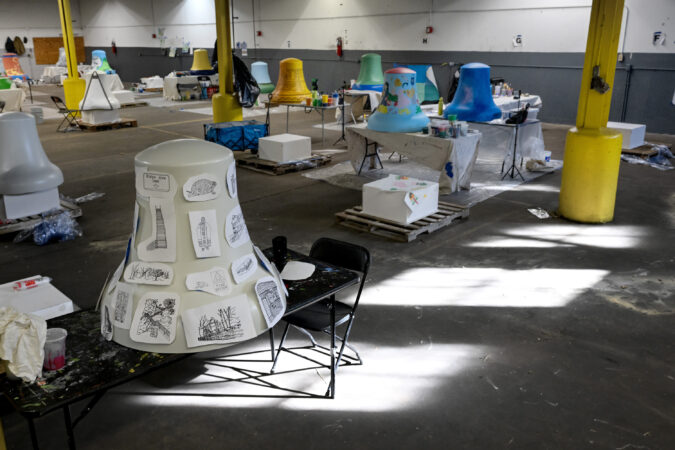
Organizers of Philadelphia’s yearlong celebrations for America’s 250th anniversary in 2026 gathered in a frigid Philadelphia School District warehouse in Logan on Tuesday, offering a special preview of the 20 large replica Liberty Bells that will decorate Philly neighborhoods for the national milestone.
Designed by 16 local artists selected through Mural Arts Philadelphia — and planned for commercial corridors and public parks everywhere from Chinatown and South Philly to West Philly and Wynnefield — the painted bells depict the histories, heroes, cultures, and traditions of Philly neighborhoods.
As part of the state nonprofit America250PA’s “Bells Across PA” program, more than 100 painted bells will be installed across Pennsylvania throughout the national milestone, also known as the Semiquincentennial. Local planners and Mural Arts Philadelphia helped coordinate the Philly bells.
“As Philadelphia’s own Liberty Bell served as inspiration for this statewide program, it makes sense that Philly would take it to the next level and bring these bells to as many neighborhoods as possible,” Mayor Cherelle L. Parker said in a statement. “We are a proud, diverse city of neighborhoods with many stories to tell.”
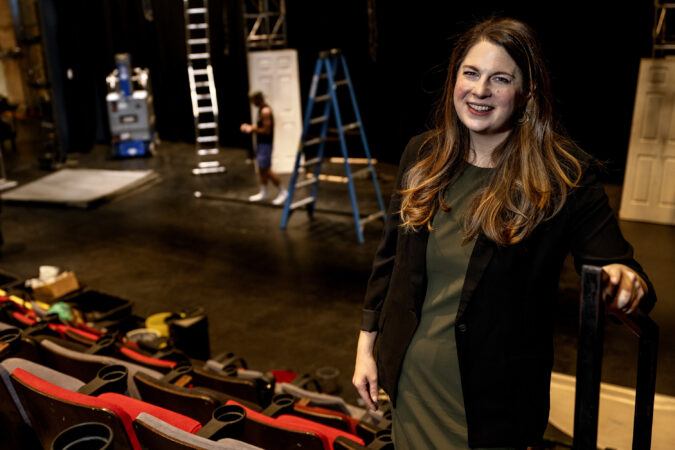
Kathryn Ott Lovell, president and CEO of Philadelphia250, the city’s planning partner for the Semiquincentennial, said the bells are a key part of the local planners’ efforts to bring the party to every Philly neighborhood.
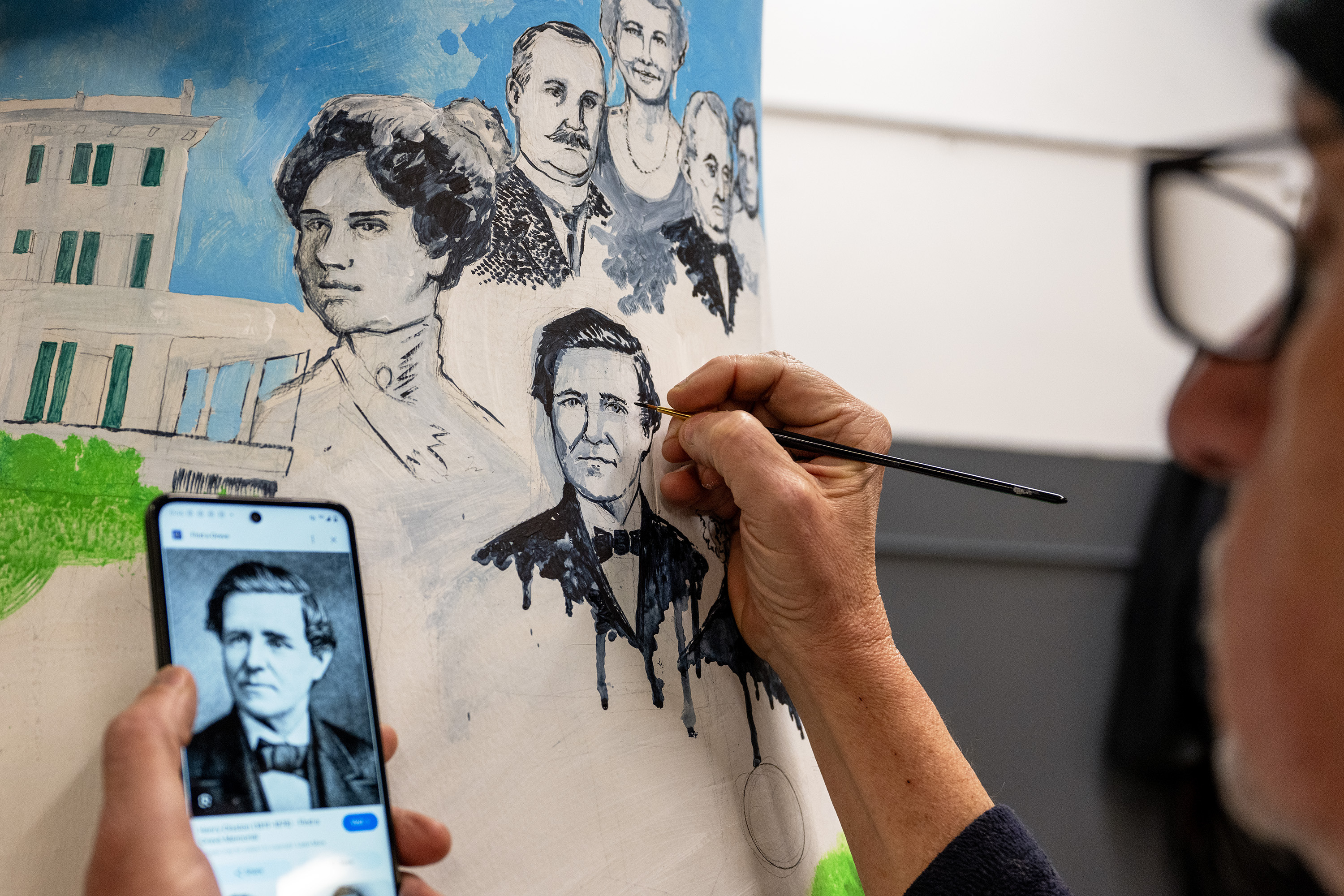
Local artist Bob Dix paints a portrait of industrialist Henry Disston on his bell.
“The personalities of the neighborhoods are coming out in the bells,” she said, adding that the completed bells will be dedicated in January, then installed in early spring, in time for Philly’s big-ticket events next summer, including six FIFA World Cup matches, the MLB All-Star Game, and a pumped-up Fourth of July concert.
Planners released a full list of neighborhoods where the bells will be placed, but said exact locations will be announced in January. Each of the nearly 3-foot bells — which will be perched on heavy black pedestals — was designed in collaboration with community members, Ott Lovell said.
Inside the massive, makeshift studio behind the Widener Memorial School on Tuesday, artists worked in the chill on their bells. Each bell told a different story of neighborhood pride.
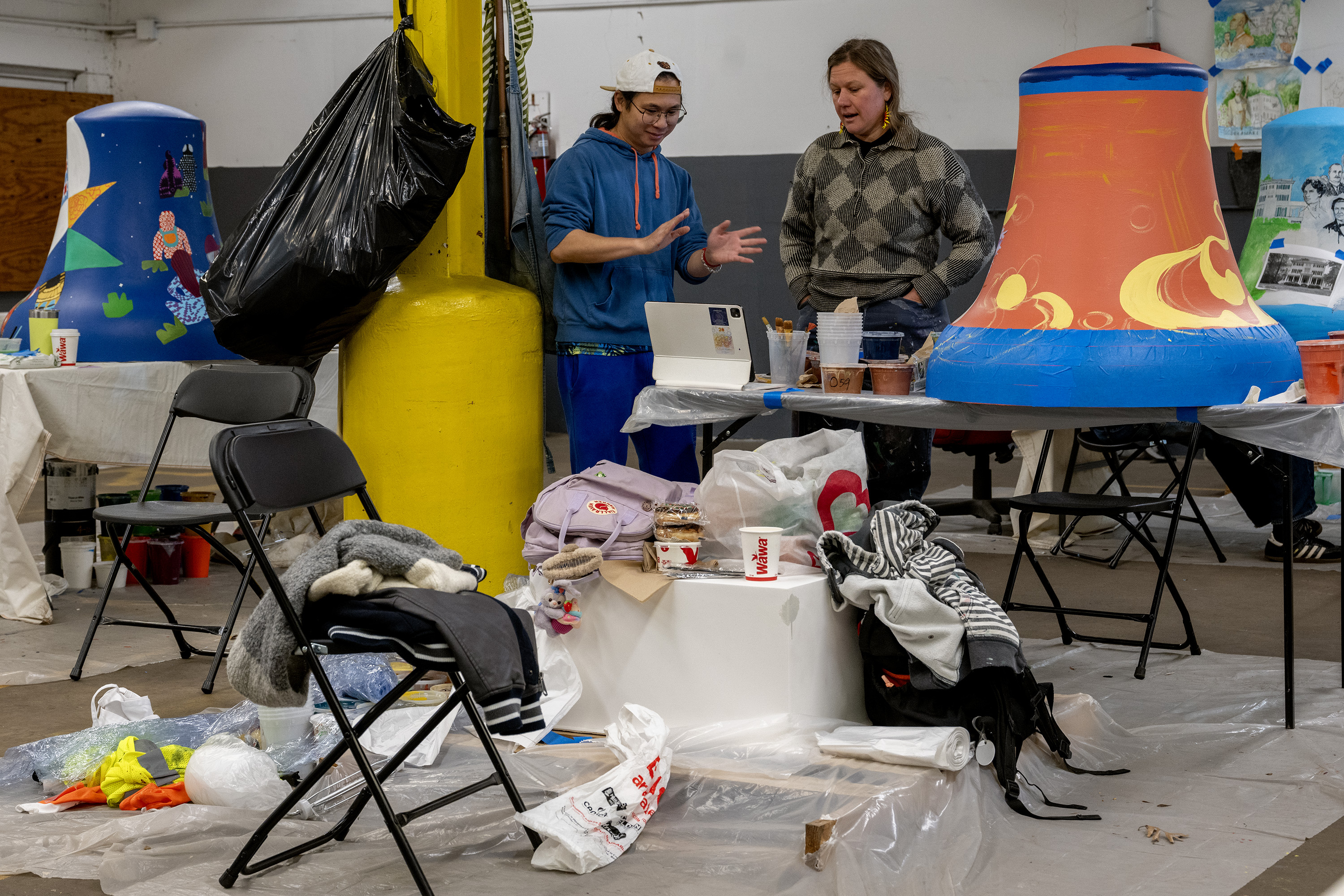
Chenlin Cai (left) talks with fellow artist Emily Busch (right) about his bell, showing her concepts on his tablet.
Cindy Lozito, 33, a muralist and illustrator who lives in Bella Vista, didn’t have to look for inspiration for her bell on the Italian Market. She lives just a block away from Ninth Street and is a market regular.
After talking with merchants, she strove to capture the market’s iconic sites, history, and diversity. Titled Always Open, her bell includes painted scenes of the market’s bustling produce stands and flickering fire barrels, the smiling faces of old-school merchants and newer immigrant vendors, and the joy of the street’s annual Procession of Saints and Day of the Dead festivities. Also, of course, the greased pole.
“It’s a place where I can walk outside my house and get everything that I need, and also a place where people know your name and care about you,” she said, painting her bell.
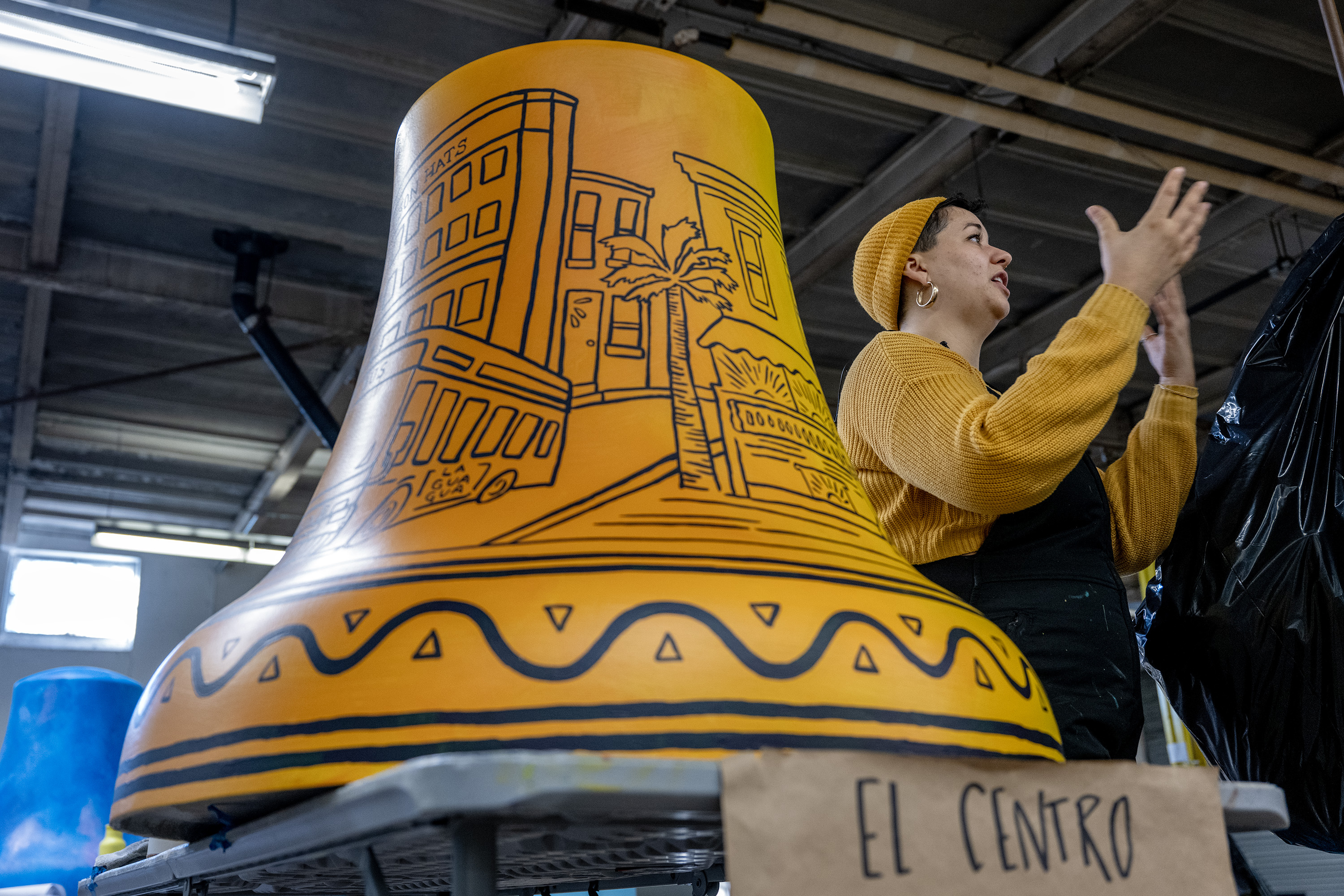
For her bell on El Centro de Oro, artist and educator Symone Salib, 32, met twice with 30 community members from North Fifth Street and Lehigh Avenue, asking them for ideas.
“From there, I had a very long list,” she said. “People really liked telling me what they wanted to see and what they did not.”
Local artist Symone Salib talks with a visitor as she works on her bell.
Titled The Golden Block, the striking yellow-and-black bell depicts the neighborhood’s historic Stetson Hats factory, the long-standing Latin music shop Centro Musical, and popular iron palm tree sculptures.
To add that extra bit of authenticity to his bell depicting Glen Foerd, artist Bob Dix, 62, mixed his paints with water bottled from the Delaware River, near where the historic mansion and estate sits perched in Torresdale, overlooking the mouth of Poquessing Creek.
“I like to incorporate the spirit of the area,” he said, dabbing his brush in the river water. “I think it’s important to bring in the natural materials.”
Local artist Bob Dix displays waters he collected from the Delaware River and Poquessing Creek to use in his painting of one of 20 replica Liberty Bells representing different neighborhoods Tuesday, Dec. 9, 2025.
Planners say they expect the bells to draw interest and curiosity similar to the painted donkeys that dotted Philadelphia neighborhoods during the 2016 Democratic National Convention.
Ott Lovell said organizers will install the bells around March to protect them from the worst of the winter weather.
“I don’t want any weather on them,” she said with a smile. “I want them looking perfect for 2026.”
Philadelphia’s FringeArts will return to offering seasonal programming, in addition to its monthlong Fringe Festival, beginning with a Winter-Spring 2026 season, the organization announced this week.
The legendary festival, known for experimental and boundary-pushing theater, previously offered year-round programming before the COVID-19 lockdown in 2020. In recent years, it has seen record-breaking audience growth, prompting producing director Nell Bang-Jensen to expand beyond the month of September.
“I’m really proud to say [Fringe Festival 2025] was actually, numbers-wise, our most successful festival ever, which just feels like a light shining, in terms of arts organizations having a win right now,” said Bang-Jensen, who took the helm last year after serving as Theatre Horizon’s artistic director. “It’s an experience that can’t be replicated on a screen, and an experience that celebrates Philly, and I think people are really here for that.”
The Philly Fringe is one of the largest festivals of its kind in the country. Based on the number of participating venues across the city, Bang-Jensen said, Philly Fringe ranks first ahead of other notable festivals in Rochester, N.Y., and Minneapolis.
The 2025 Fringe Festival was the largest-ever produced in its 29-year history with 353 shows. More than 35,000 tickets were sold during the month of September, which was a record high, and saw a 17% increase in unique ticket buyers from last year, which “means it’s not just the same people buying more tickets,” said Bang-Jensen.
She added that they have seen success in reaching younger audiences this year as well, with more than half of the audience composed of Millennials and Gen Z for the first time.
For the Winter-Spring 2026 season, FringeArts will present four productions from local and international artists at its Old City venue, along with a monthly series of Scratch Nights that invite artists to present works in progress.
Philadelphia artist Jenn Kidwell will stage her new work “we come to collect: a flirtation with capitalism” at FringeArts in January 2026.
Jenn Kidwell, the Obie Award-winning cowriter behind The Underground Railroad Game, will stage the Philadelphia premiere of her new work, we come to collect: a flirtation with capitalism (Jan. 22-24), with ASL artist Brandon Kazen-Maddox. It’s an irreverent exploration of “the pigsty of American consumerism.”
Frequent Fringe artist Lee Minora will bring back her solo show, Baby Everything (Feb. 26-28), for another run. The interactive performance follows a protagonist who doomscrolls through her anxieties about the state of the world. Minora “challenges us to see ourselves as others do, no matter how endearing or insufferable,” wrote Julie Zeglen in The Inquirer’s roundup of the best shows of Fringe Fest 2025.
Japanese artist Hiroaki Umeda is globally renowned for combining choreography and dynamic digital staging. He’s presenting two shows on a U.S. tour as a double billing: Moving State 1 and the solo performance, assimilating (March 14-15).
Lastly, FringeArts will stage Girl Dolls: An American Musical (May 8-17) from Philadelphia artists Jackie Soro and Pax Ressler, who’ve teamed up with the Bearded Ladies Cabaret for a production billed as “part tea party, part identity crisis.” They ask, “What does your favorite doll reveal about your childhood trauma?”
In addition to year-round programming, FringeArts will launch an artist-in-residency program for fostering original works. The Albert M. Greenfield Residency at FringeArts — funded by the local foundation of the same name — will invite three individuals or artist groups to develop new theatrical productions. The inaugural 2026 recipients will be selected by a panel of Philadelphia creatives.
Bang-Jensen said she’s grateful that Philly audiences have shown up for the “city of makers” every year and she hopes to continue expanding FringeArts’ reach.
“As many arts organizations are actually feeling pressure in 2025 just based on the economic environment and the political environment to do work that’s a little more mainstream, we have this wide-open field to do more for people who like things off the beaten path,” said Bang-Jensen.
Tickets for FringeArts’ Winter-Spring 2026 season go on sale to FringeArts members on Dec. 10 and the public on Dec. 12 at fringearts.com.
Before moving into his North Philadelphia home 13 years ago, Abel Tootle Jr. had rented small apartments, all under 800 square feet. He decided to make the leap to homeownership to pursue his passion for interior design and create a space that reflects his personal style.
“The timing was perfect,” said Tootle. And so, he moved into his circa-1910, three-bedroom, 1,200-square-foot house. Becoming a homeowner meant full freedom in designing his space — and no more lugging clothes to the laundromat, a feature of which he is most appreciative, he said.
His home’s look has been evolving since.
“I truly believe a home is never done. I was given every opportunity to paint, carpet, and design as I wish; however, I did not make any structural changes at all,” Tootle said. “My focus remains on creating a very English-country-house feel with special attention to my culture and interests.”
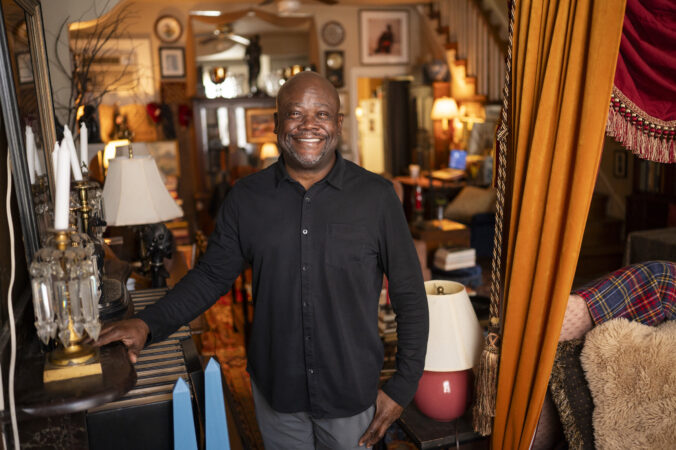
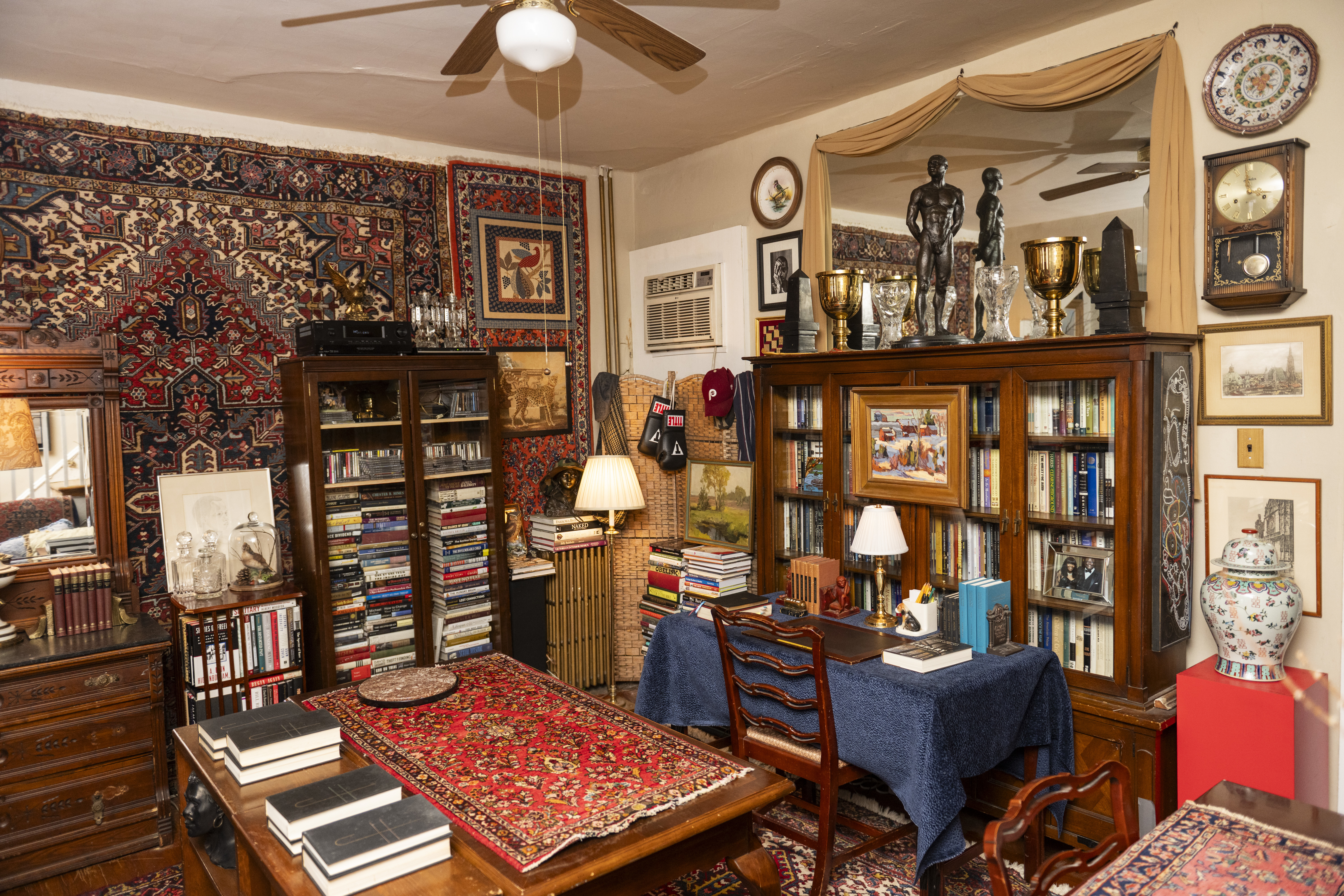
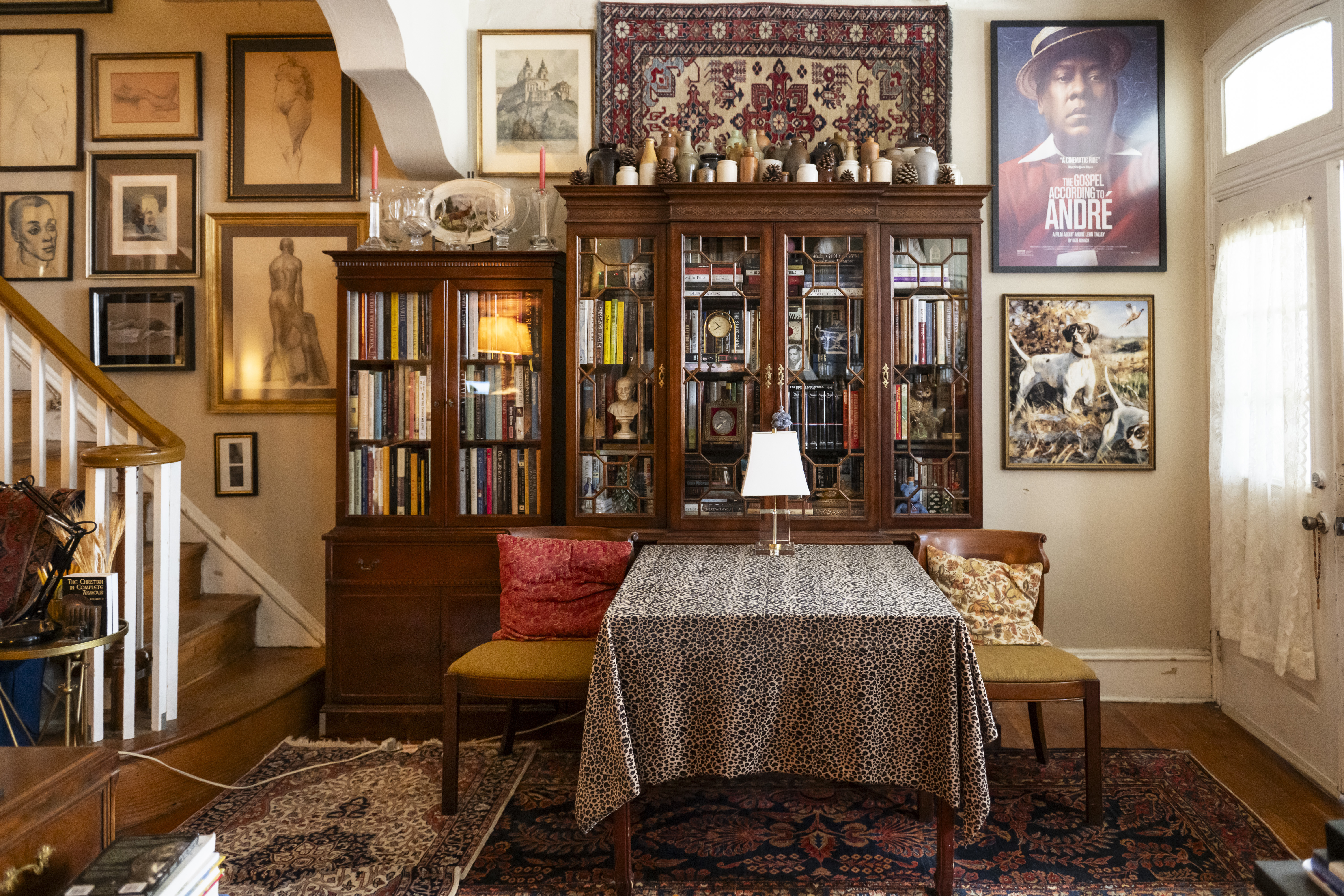
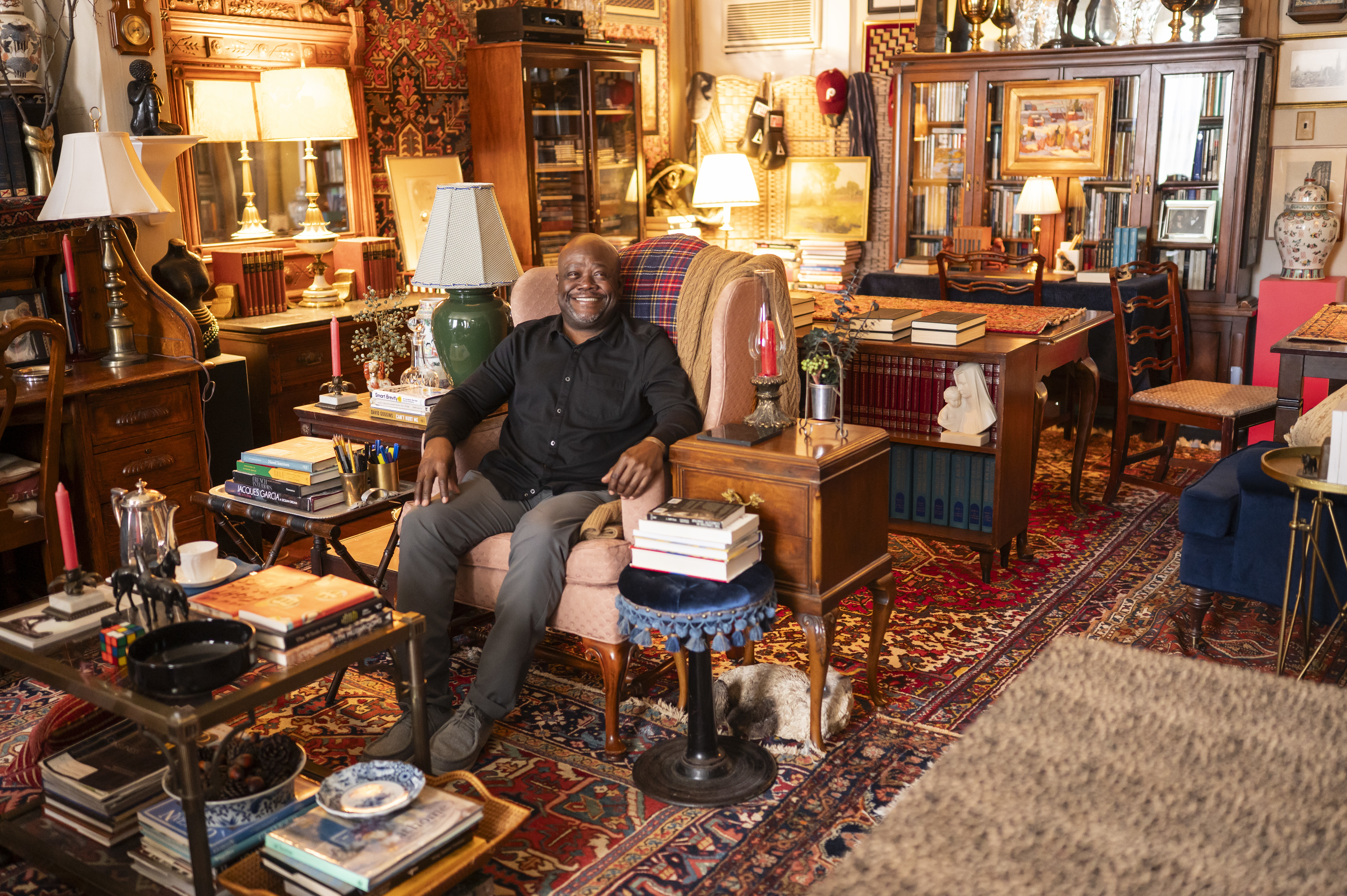
He favorite design elements include books — there are dozens and dozens displayed throughout the home, not just on shelves but arranged intentionally on and under tables, and stacked in towers rising from the red-pine-hardwood floors — as well as antiques, colorful area rugs in various sizes, art, lighting, and mirrors.
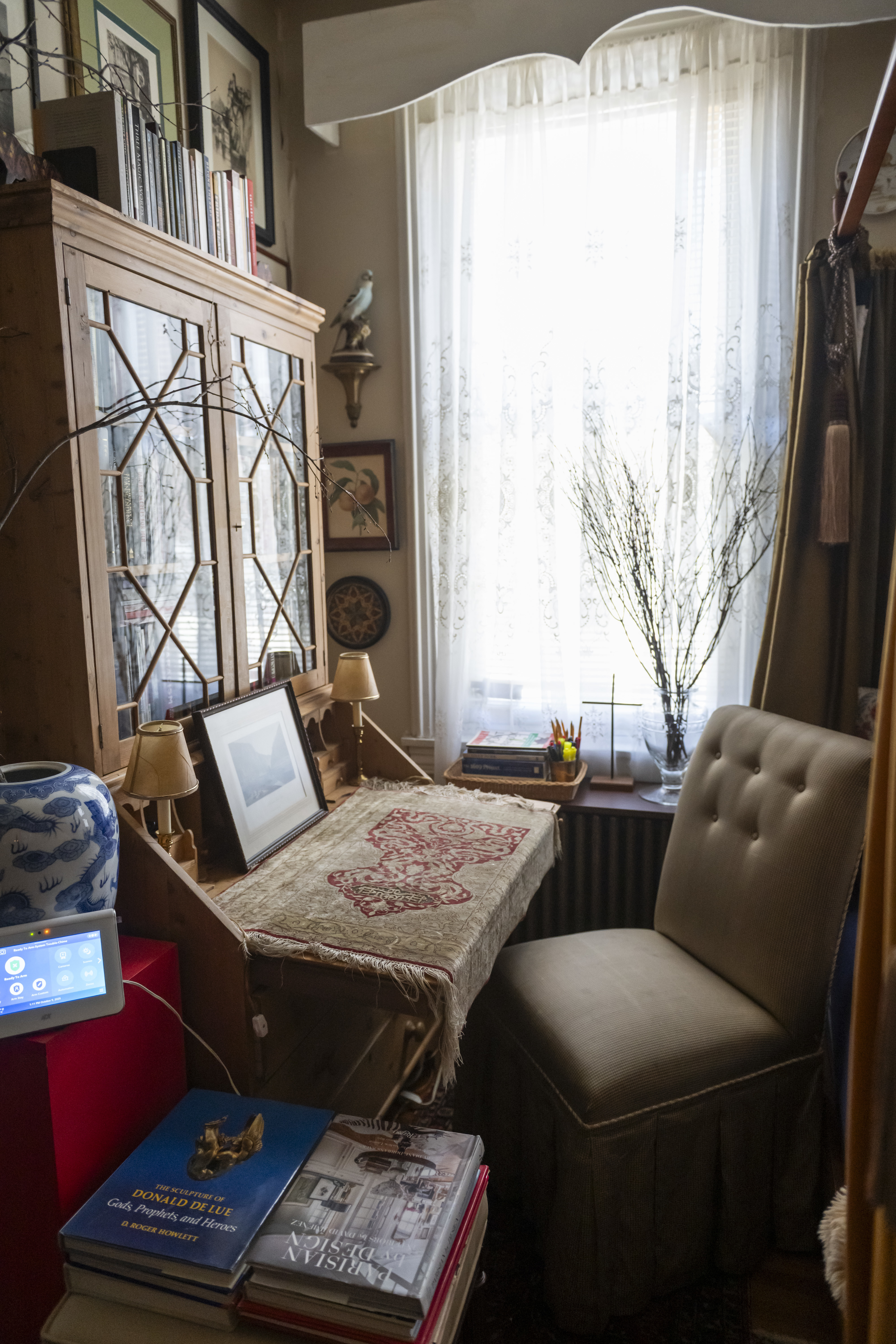
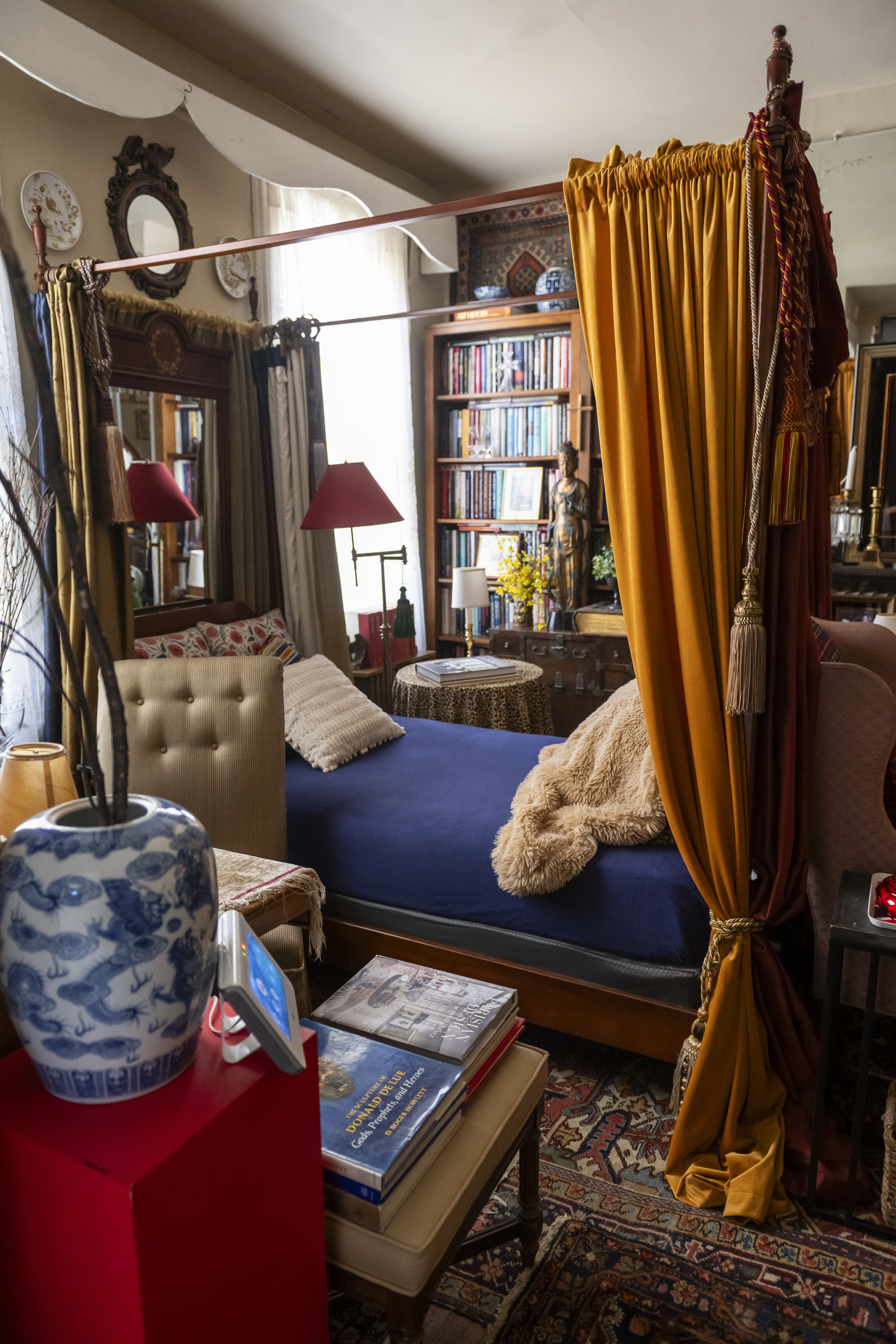
Colorful patterned rugs adorn not just the floors, but tabletops and walls as well. Tootle says his interior designs are “layered.”Books fill a glass-doored cabinet and art covers the wall at the foot of the stairs.A desk is topped with a book-filled cabinet, adjacent to the canopy bed.The canopy bed in Tootle’s double parlor room in his North Philadelphia home.
Tootle was initially attracted to his home’s location because he worked at Girard Medical Center. The commute was 15 minutes by bicycle or a 30-minute walk.
“I was raised not too far from my current address as a teenager; hence, I am very familiar with the neighborhood,” he noted. He also appreciates the sense of community, being minutes from Center City, and the architecture of the neighborhood.
“The classic brick and stone rowhomes, the spacious interiors of the three-story houses, and the rich history of music, art, and civil rights,” Tootle said. “Shopping, arts, and eateries are other reasons I love where I live, and I especially love the many libraries and museums,” added Tootle.
Tootle’s career is in social work and he has experience in psychotherapy, individual and group therapy, trauma counseling, grief counseling, and drug and alcohol counseling. In his spare time, he enjoys reading, antiquing, and going to the gym.
Books are a central focus in his home — he estimates he owns about 3,000.
Tootle sits in his double parlor surrounded by books and antiques.
“My library is the culmination of 40-plus years of book collecting, trading, and selling. I have purchased books from bookstores, auctions, flea markets, libraries, thrift stores — anywhere books were sold,” he said.
The bulk of the collection focuses on psychology, spirituality, history, art, and interior design, but it also includes poetry, fiction, and science. His favorite writers include James Baldwin, Toni Morrison, Peter Gomes, Ellen Langer, Carl Jung, and W.E.B. Du Bois, he said.
“Essentially, I’d like to think my home references the three places I’ve always wanted to live in as a child: a library, a church, and an art gallery or museum — without the pretension,” said Tootle.
Stacks of books overflow from the shelves and tables and onto the floor.Tootle’s S-rolltop desk is one of his most prized antiques.
He’s especially fond of 19th-century antiques.
“I am a sucker for antique lighting and furnishings of this period and have frequently found gems at auctions, estate sales, flea markets, thrift stores, and on the curbs of sidewalks,” he said.
One special acquisition is an antique 60-inch-wide Tiger Oak S-rolltop desk, which he bought from a dealer in Bucks County. It was produced in the late Victorian Era, he said, in the 1890s.
Tootle frequently tries different design layouts by rearranging furniture, changing lighting, and experimenting with colors, patterns, and textures.
“My design ethos is very intentional and, hence, curatorial. I am a maximalist at heart,” continued Tootle. “My interiors are very layered.”
Also, he’s planning on featuring more theatrical elements.
“This includes incorporating more velvets, tassels, deep saturated colors, and sculpture — in the tradition of the late Renzo Mongiardino. Not as a copy, but inspiration,” he said.
In the backyard, he wants to make a mixed-use space.
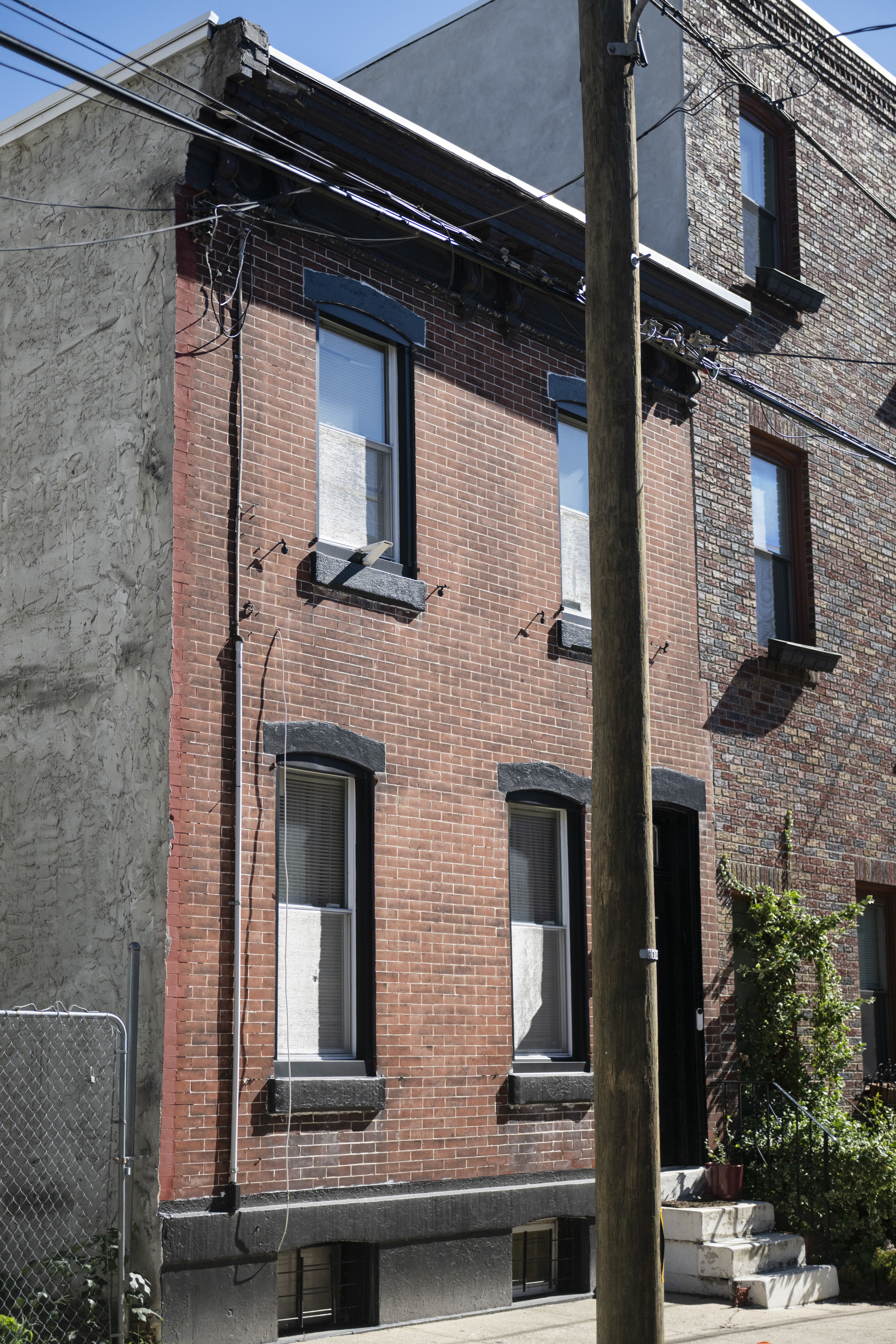
The exterior of Tootle’s home.
“I would like to have the soil paved over and start a container garden with trees, shrubs, herbs, and vegetables with a small round table accommodating two to four people,” said Tootle. “I rarely use it as it currently stands.”
Is your house a Haven? Nominate your home by email (and send some digital photographs) at properties@inquirer.com.