Donald Trump let us know exactly who he is when he rode down that escalator in June 2015, declared his presidential candidacy, and said this about Mexicans: “They’re bringing drugs. They’re bringing crime. They’re rapists.”
We’ve heard him refer to Haiti, African nations, and El Salvador as “shithole countries.” Last year, he accused Haitians in Springfield, Ohio, of eating their neighbors’ dogs and cats. Trump allows mask-wearing U.S. Immigration and Customs Enforcement agents to terrorize undocumented immigrants, most recently in New Orleans, as reported by my colleague Will Bunch.
No one should be surprised he called Somalis “garbage” who “contribute nothing” and should leave America during a cabinet meeting last week.
“These are people that do nothing but complain,” Trump said. “When they come from hell, and they complain and do nothing but bitch, we don’t want them in our country. Let them go back to where they came from and fix it.”
Trump talks a really good game about putting America First, but he really means people of color last. An example of that was when he suspended refugee admissions, but then turned around and made an exception for white South Africans.
Even knowing Trump’s agenda, it’s still upsetting to hear a sitting U.S. presidentdenigrate the roughly 250,000 Somalis in this country.
He’s talking about law-abiding folks like Salma Hussein. She made headlines in 2022 when she became the first female Somali principal in her school district in suburban Minneapolis,and possibly in the entire state of Minnesota.
Hussein was born in Somalia, but has lived in America since the age of 7, and is a naturalized citizen. She’s a wife. She’s a mother of two. She’s a good person. “It’s really hurtful, and he’s giving permission to people to be hateful, and that’s really disheartening,” Hussein said.
I stumbled across some of her social media posts about what’s been happening and decided to reach out. When I got her on the phone last week, Hussein, 37, and I talked about a lot of things, including how a stranger had emailed her saying: “Watch out. You’re not wanted. We’re taking out the trash from our country.”
Salma Hussein, a Somali American who’s lived in the U.S. since she was 7, said the president is “giving permission to people to be hateful.”
I shouldn’t even have to write this:Most Somalis are honest, law-abiding people. Many settled in Minnesota during the early 1990s after fleeing their war-torn country. Of the state’s foreign-born Somalis, most are naturalized U.S. citizens. They have every right to live in the Land of 10,000 Lakes. They vote. They pay taxes. Trump is their president, too. Some, oddly enough, even voted for him.
I wish they’d thought longer and harder before voting for Trump, who posted on Truth Social that Minnesota is “a hub of fraudulent money laundering” and announced he was terminating Somalis’ Temporary Protected Status.
Dozens of Somalis in Minnesota are facing charges in connection with a nefarious scheme to defraud the U.S. government of hundreds of millions in funding that had been set aside to feed hungry children atthe height of the pandemic. Still, it’s unfair for a sitting U.S. president to stereotype an entire community for the actions of a subset. “As a Somali American, I’m just as upset about the people in my community who use fraud to make money,” Hussein told me.
Somalis, who have built a large and influential enclave inMinnesota, are terrified that masked agents from ICE will take them into custody. Some have started carrying their passports. Others refuse to even leave their homes.
“This kind of dangerous rhetoric and this level of dehumanizing can lead to dangerous actions by people who listen to the president,” said Rep. Ilhan Omar (D., Minn.) on CBS’s Face the Nation on Sunday.
It’s textbook Trump — and, of course, MAGA loves it.
Rep. Ilhan Omar (D., Minn.) speaks during a news conference, May 24, 2023, on Capitol Hill in Washington.
Which ethnic minority Trump will single out next for harassment is anybody’s guess. The only thing we can be certain of is that they will be from a Black or brown community.
A new arts festival will launch in Philadelphia in 2026 as one of the major events marking the nation’s 250th anniversary. What Now: 2026 is planned to be a five-week-long festival from the nonprofit ArtPhilly. The festival aims to showcase the city’s artistry and talent for both tourists and neighbors alike.
Dozens of Philadelphia artists across disciplines will present more than 30 original works, staged from late May to July 2026 in venues around Philadelphia, coinciding with the Fourth of July and FIFA World Cup matches as part of the city’s Semiquincentennial events.
What Now: 2026 will feature new works by Philly artists such as filmmaker Walé Oyéjidé, poet Yolanda Wisher, opera singer/drag queen Cookie Diorio, photographer and pop-up book creator Colette Fu, and sculptor Pedro Ospina. Institutional collaborators in the region will include BalletX, BlackStar, Philadanco!, the Crossing, and Theatre in the X.
One highlight is The Basil Biggs Project, a new play from actor and playwright Anna Deavere Smith, an alum of Arcadia University. Her great-great-grandfather was a farmer and veterinarian in Gettysburg who, during the Civil War, took a job disinterring and reburying Union soldiers on the battlefield. Smith wrote the work using archival research on her family’s history.
The festival is the brainchild of renowned local philanthropist Katherine Sachs, a longtime trustee and benefactor of the Philadelphia Art Museum, and arts administrator Bill Adair, who previously led programs at the Pew Center for Arts & Heritage and the Rosenbach Museum & Library.
Sachs began planning What Now: 2026 in the winter of 2021 to ensure that the arts remained central to the city’s celebration. She gathered a committee of regional arts leaders including Barnes Foundation head Thom Collins, Mann Center for the Performing Arts president Cathy Cahill, and Mural Arts director Jane Golden to brainstorm meaningful ways to spotlight Philadelphia’s artists.
“I just thought we could do a better job than we did in 1976 [for the Bicentennial],” said Sachs, who serves as chair of ArtPhilly. “We want people to see what Philly has to offer every day of the year, so they come back.”
“We’re rah-rah sports. We’re rah-rah about our history and our Independence Hall, and Liberty Bell,” said Adair, ArtPhilly’s creative and executive director. “Those are amazing parts of our identity and who we are, but we know that the arts and culture sector is one of the strongest in the country and the world, and we deserve to be known for that.”
Part of the duo’s work involved creating the nonprofit organization ArtPhilly, that would provide infrastructure and allow for planning the inaugural festival in 2026 and also future years. Sachs and Adair plan for it to be a recurring festival every two or three years.
The pair fundraised about $7.5 million for ArtPhilly and the festival with support from the William Penn Foundation and the Pew Center for Arts & Heritage along with private foundations and corporate sponsors. ArtPhilly also received $750,000 from the Philadelphia Funder Collaborative for the Semiquincentennial.
Working with choreographer Tania Isaac, ArtPhilly’s curatorial and deputy director, they selected 17 Philadelphia curators who proposed 45 projects. The team narrowed down the list to 32 works that received between $20,000 to $400,000 in project funding.
“Other cities have done [festivals like] this, and the return on the investment is about six times, meaning the economic impact is really pretty great, between the hotels and restaurants, and what the artists have to build and all the people that you have involved,” said Sachs.
Los Angeles’ Pacific Standard Time festival was a helpful model. Sachs said the result led to increased attendance at institutions in the city, a major goal for Philadelphia organizations that have struggled with foot traffic since the COVID-19 lockdown.
“Artists are going to interpret this anniversary in a way that no one else can … For us, this festival isn’t a celebration of the anniversary, as much as it is a kind of marking and interrogation of the anniversary. Hence the question, ‘What now?’,” said Adair. “We feel like we’re adding something very important to the public discourse around the anniversary by having artists as the interpreters, but also the provocateurs.”
What Now: 2026 projects include:
Chinatown Pop-Up Book, a look at the neighborhood’s history through a large, hand-cranked pop-up book
In Case of Fire, Speak!, a dance collaboration between Martha Graham Dance Company and Philadanco!
Pepperpot, a combination of live music, poetry, and food surrounding the history of pepper pot soup from jazz musician V. Shayne Frederick and chef Valerie Erwin
This article was updated after receiving a revised total for the amount that the Philadelphia Funder Collaborative for the Semiquincentennial granted ArtPhilly.
This article was updated to reflect Jane Golden’s current title.
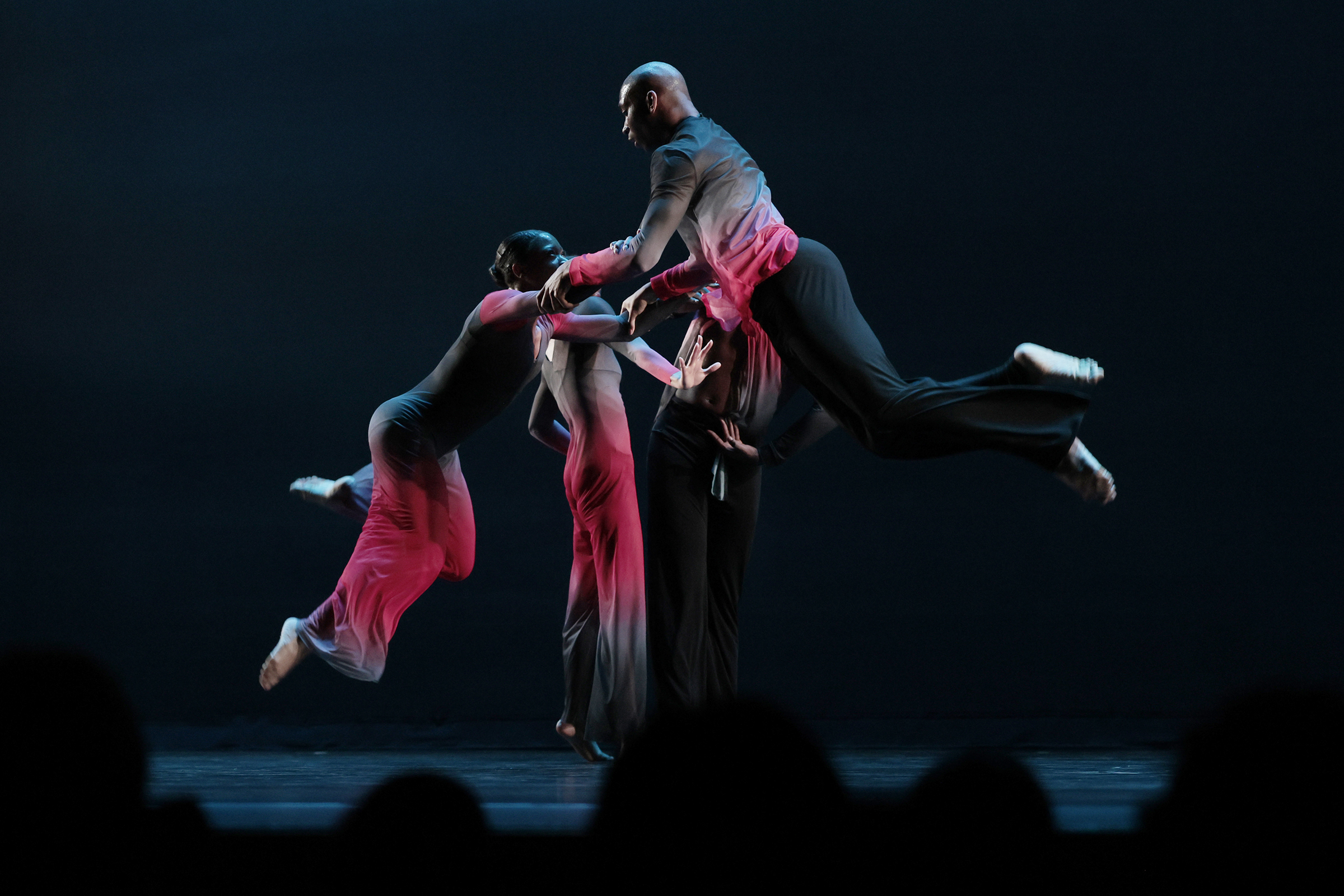
Philadanco is currently celebrating its 25th anniversary in residence at the Kimmel Center’s Perelman Theater with a mixed bill that showcases the company’s extraordinarily skilled dancers in works by a quartet of award-winning choreographers.
“Then and Now!,” as the program is called, includes revised productions of pieces by Donald Byrd and Tommie-Waheed Evans, plus a company premiere from Ronald K. Brown and a brand-new work by up-and-comer Juel D. Lane.
Friday’s opening-night audience was large and enthusiastic, giving an extended ovation to Lane’s Heirborne, a pun on its theme of literal and metaphorical flight.
In the printed program, Lane cites among his inspirations Bessie Coleman, the first Black woman to hold a pilot’s license, and Mae Jemison, the first African American female astronaut.
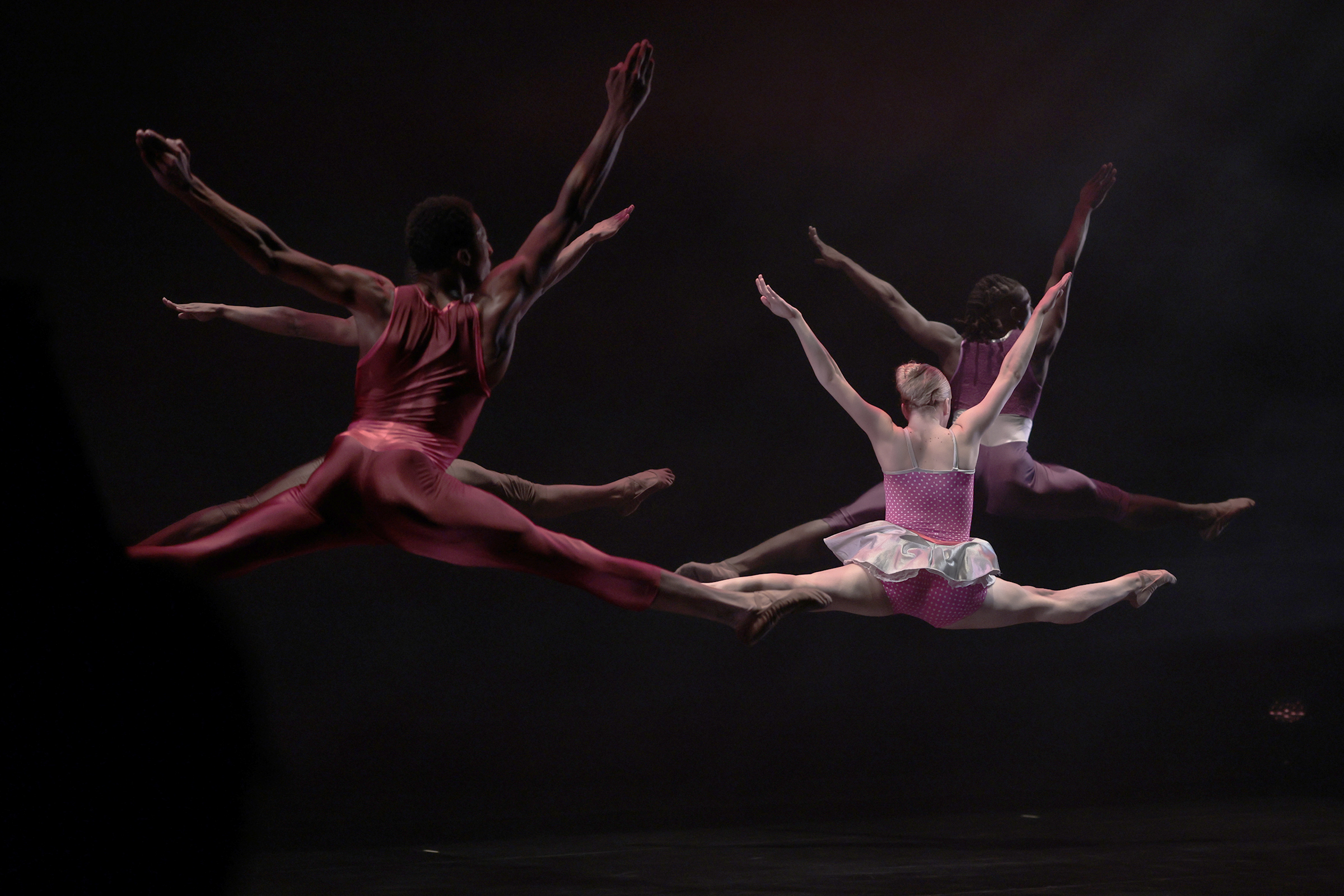
While those specific sources weren’t clear to this viewer, the dancers’ outstretched arms, perfectly controlled suspensions, and quicksilver entrances and exits clearly evoked the sensation of flying.
Philadanco dancers during their Then & Now performance at the Kimmel Center’s Perelman Theater in Philadelphia on Saturday, Dec. 6, 2025.
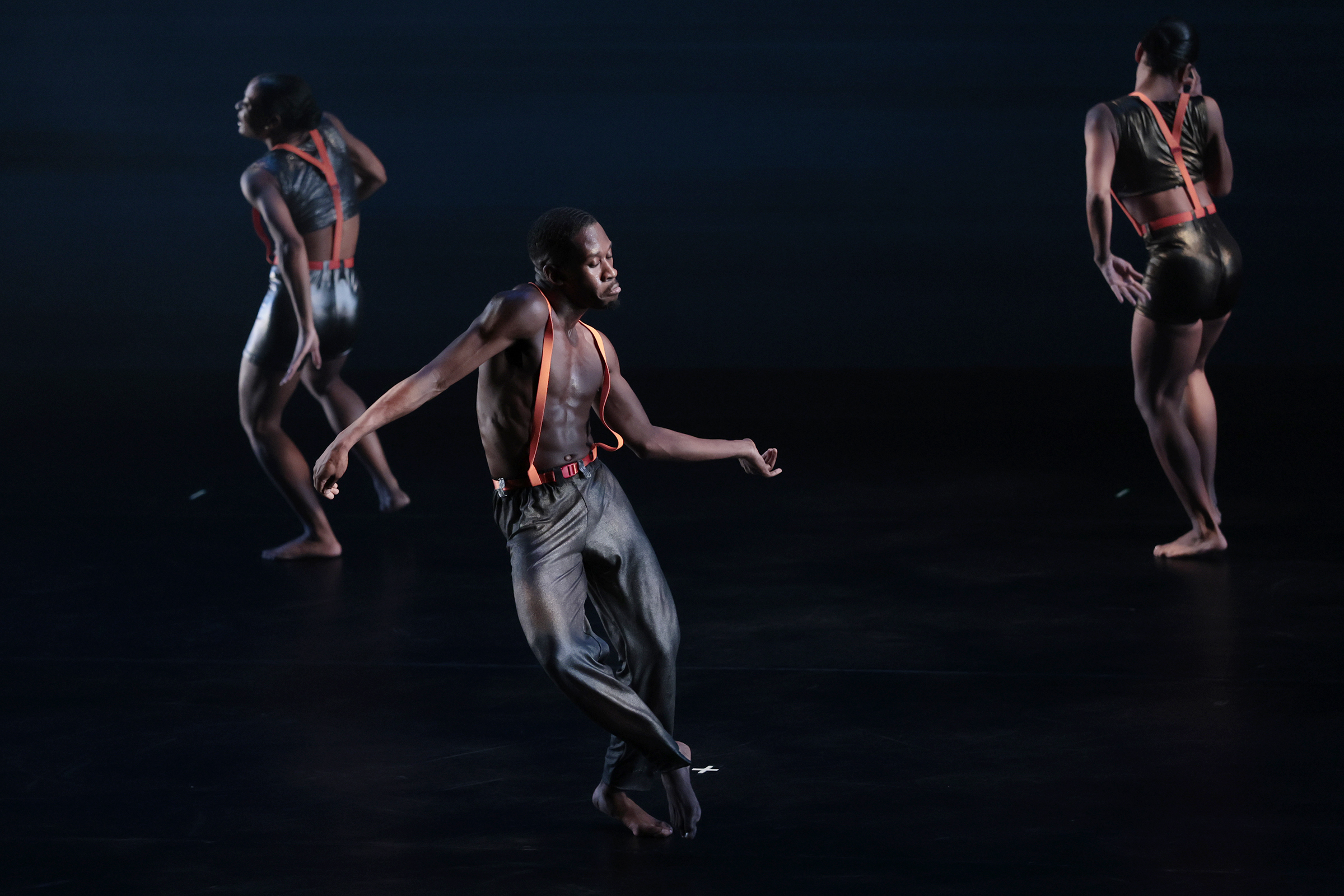
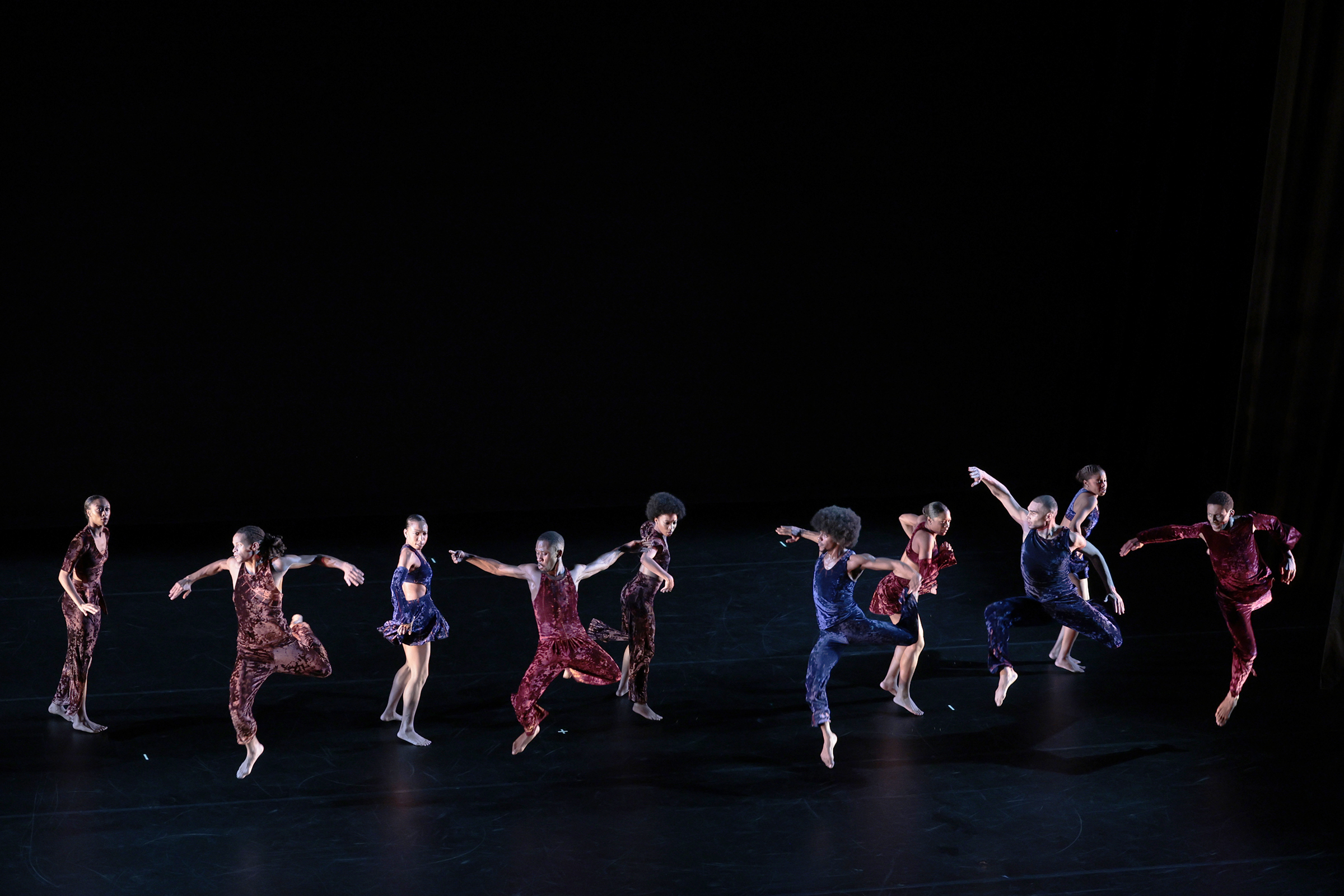
It is difficult to single out individuals in this — or, in fact, in any of the works on the program, which frequently had 10 dancers onstage at a time, performing in expert unison. But long-limbed Aliyah Clay began Heirborne with an exquisite solo, moving inside a dramatic shaft of light (designed by Nick Kolin). The piece ended on an even stronger — and unexpected — note when all eight dancers suddenly leaped forward, disappearing into the darkness.
The music, for this and the other items on the bill, was recorded, favoring mixtures of rap, gospel, and jazz. For Heirborne, Atlanta native Lane chose pieces by several Georgia-based artists: RAHBI, Bryce Raburn, and Leo Ra Soul. Costume designer Anna-Alisa Belous dressed the women in shiny black shorts, a somewhat curious choice, and everyone wore neon-orange suspenders (a nod to airport safety equipment?).
From Exotica Back to Us, Brown’s contribution to the program, was originally choreographed for Philadanco in 1999 and revised this year.
Philadanco dancers during their Then & Now performance at the Kimmel Center’s Perelman Theater in Philadelphia on Saturday, Dec. 6, 2025.
Not having seen the earlier version, I can’t comment on how the work has changed. However, its current iteration is stunning: from the richly colored and textured costumes by Wunmi Oliya (a British Nigerian singer, dancer, and fashion designer who also provides part of the score for this piece) to Brown’s seamless combination of traditional West African dance and percussion with his own, distinctive movement vocabulary.
There is an obvious spiritual and emotional dimension to these short vignettes — as the dancers raise their arms, hide their faces in their hands, or kneel as though in prayer. This powerful effect is enhanced, at several points, by the outstanding work of dancer William E. Burden.
Tommie-Waheed Evans created Withinverse… in 2018. In Friday’s “refreshed” version, dancer Kaylah Arielle embodies the deep emotions mentioned in the program. Sometimes she and her fellow dancers appear as supplicants, responding to sad, slow gospel music. Yet at other points they seem frantic, their bodies reflecting the heavy, insistent beat of electronic club music.
Philadanco dancers during their Then & Now performance at the Kimmel Center’s Perelman Theater in Philadelphia on Saturday, Dec. 6, 2025.
Evans has included a series of complicated and innovative lifts, which the dancers execute seemingly without effort. They are equally expert when performing challenging passages in unison.
The evening begins with Everybody by Donald Byrd. Billed as a parody, it seems more like an uneasy hybrid than, say, the comedic works of Mark Morris or Les Ballets Trocadero de Monte Carlo.
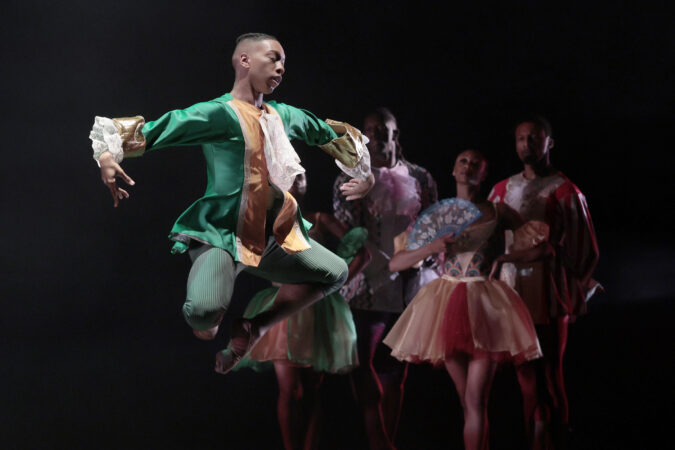
This work contrasts a harpsichord piece by J.S. Bach with hip-hop music by Ruffhouse, and Natasha Guruleva’s costumes reveal foppish men (notably the statuesque Yasir Jones) dressed in ruffled tunics, while the women wear tutus. Yet everyone is barefoot, alternating between impeccable ballet technique and decidedly non-classical body language.
Philadanco dancers during their Then & Now performance at the Kimmel Center’s Perelman Theater in Philadelphia on Saturday, Dec. 6, 2025.
The comparison is amusing, and — as a classically trained flutist who, in his youth, spent six years studying with the celebrated ballerina Mia Slavenska — Byrd knows his way around both Baroque music and classical dance. He enjoys himself by inserting sly touches of physical humor, here and there, and excels at creating intricate and unusual partnering sequences for two or more individuals.
In a brief pre-performance introduction, Tommie-Waheed Evans (who is also the company’s co-artistic director, along with Kim Bears Bailey) noted that Philadanco had just returned from a successful, multicity tour of Germany. This troupe, which the indomitable Joan Myers Brown established 55 years ago, has many reasons to be proud. But, next time, I hope that ’Danco will include the work of at least one female choreographer.
Philadanco, “Then and Now!” through Dec. 7, Perelman Theater, 300 S. Broad St. Tickets $43-$63. 215-387-8200, ensembleartsphilly.org
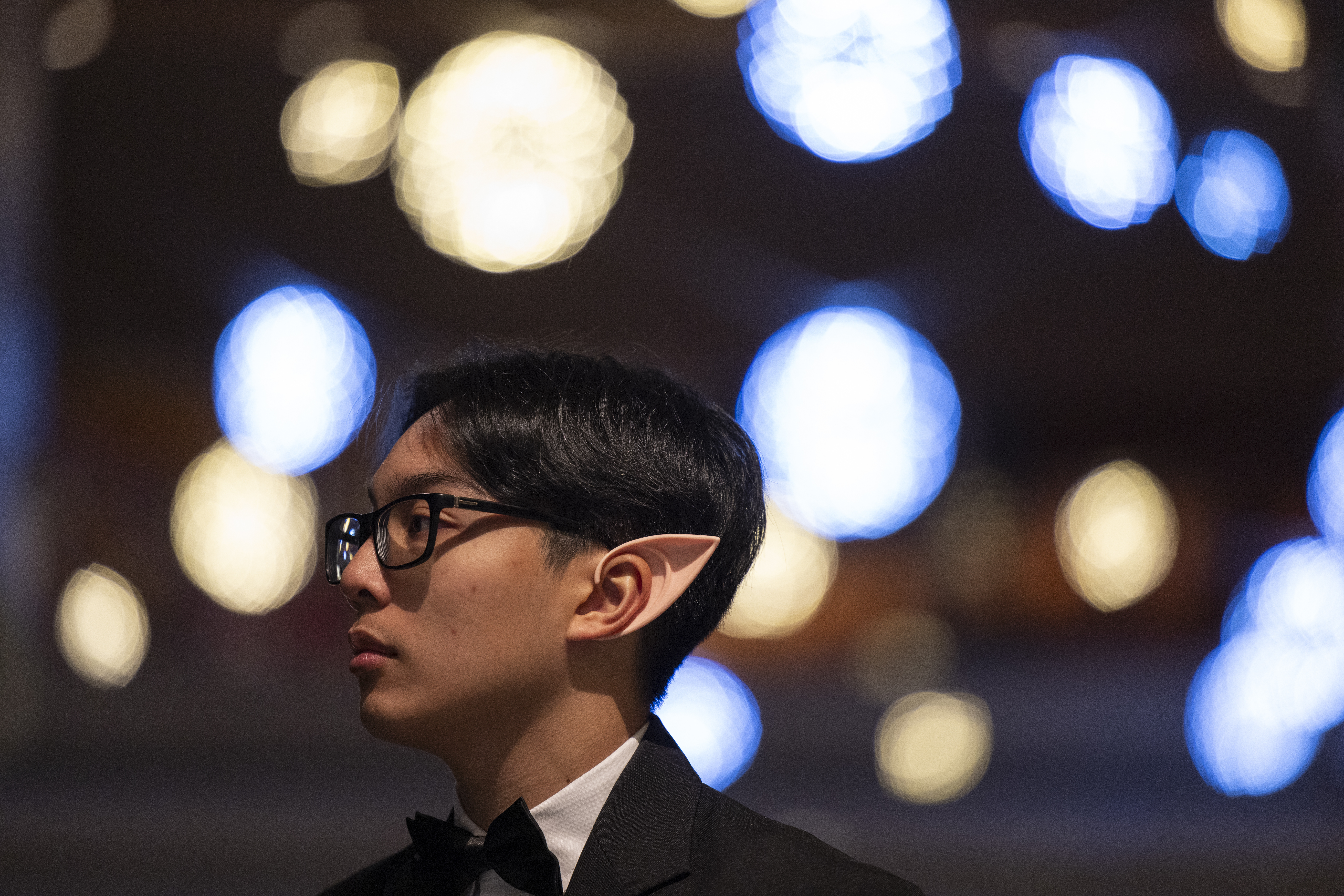
It was the kind of night at the orchestra when any good hobbit could show up in a Bilbo Baggins waistcoat and feel right at home. Previously-human ushers had suddenly sprung elven ears. And the action on stage involved a twisty, unlikely tale of a magical gold ring whose purpose seemed to be to exploit the flaws and weaknesses of those who encounter it.
The Philadelphia Orchestra’s presentation of The Lord of the Rings: The Fellowship of the Ring Friday night in Marian Anderson Hall was one of those cross-cultural experiences that ricocheted with surprising power. Two subcultures, each with its own specialized language — classical music, and the fandom around J. R. R Tolkien’s world of wizards, dwarfs and the dark forces — intensified the other.
The Philadelphia Orchestra, Singing City and Philadelphia Boys Choir on stage in Marian Anderson Hall for ‘Lord of the Rings: The Fellowship of the Ring.’
For anyone keeping score in the ongoing battle for younger audiences in classical music, Friday was a night when it seemed everyone in the hall was 31 years old and deeply engaged. Never at an orchestra performance have I heard the audience break in so many times with applause and hoots of approval.
Of this happy synergy, the orchestra sold out all three performances, with tickets topping out at more than $250 a pop.
Lead usher Ryan Viz, in elven ears, in the Kimmel Center lobby Friday night.
Not all of the orchestra’s live-to-screen presentations have justified themselves musically, but here, Howard Shore’s score was a canvas both vast (about three hours of music) and colorful.
If there’s a single label for Shore’s musical language, it’s Celtic Craggy — with notable excursions into the bellicose, sentimental, and moods more subtle. The great value of hearing a great orchestra live in dialogue with the screen is in the emotional epiphanies, moments where the music tells you something the dialogue and action alone can’t.
The sound engineering on this night favored the music over the dialogue, and smartly so.
Ian McKellen as Gandalf looms over members of Singing City Friday night in Marian Anderson Hall during a Philadelphia Orchestra live-to-screen presentation of ‘Lord of the Rings: The Fellowship of the Ring.’
The other beautiful dynamic at play: You didn’t have to walk into the hall with any prior knowledge of classical music or Middle-earth nomenclature to feel the experience. This level of communication is simply embedded deep in being human.
The definition of human becomes hazy in the 2001 installment of Peter Jackson’s film trilogy. But time and time again, the musical score honed in on the universal goodness and country-folk sincerity embodied in instruments. Two different soprano tin whistles (one in C, the other in D), whose very pitch and story-telling inflection were skillfully stretched by orchestra flutist Erica Peel. Hornist Jennifer Montone perfectly conveyed what it feels like to be a lonely leader in the Council of Elrond scene.
The percussion section was a city in itself, conjuring folk sounds on the bodhrán drum, and the anvils of war (struck by musicians on, essentially, flat sheets of steel).
Brian Johnson sits rapt with attention at the Philadelphia Orchestra’s live-to-screen presentation of ‘Lord of the Rings: The Fellowship of the Ring’ Friday night.
Anvils? The quest for a magical ring? Dwarfs, warriors and flawed characters? Tolkien drew on some of the same sources as Wagner did in his Ring Cycle, and while Shore’s score might have a Wagnerian touch here or there, the larger influence was Carl Orff, whose Carmina Burana became the musical DNA of video games and car commercials.
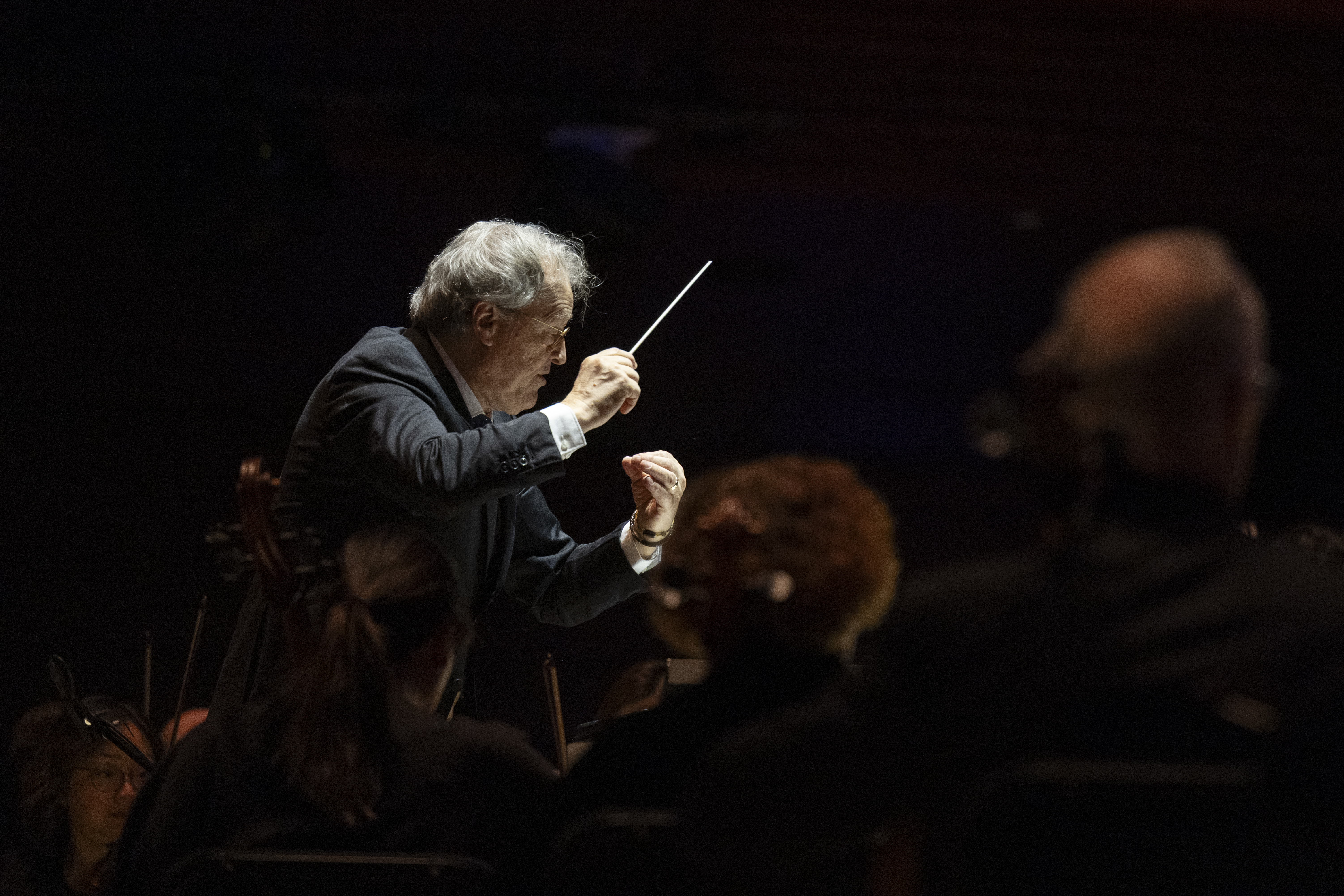
Conductor Ludwig Wicki leading the Philadelphia Orchestra and other musical forces in Marian Anderson Hall.
Colossal forces brought both precision and brutality, particularly in the repeating combination of driving percussion, screaming brass and blocs of choral sound amassed for battle. With Ludwig Wicki conducting, the Singing City Choir and Philadelphia Boys Choir — both quite strong — provided chaos and balm. Vocalist Kaitlyn Lusk and chorus were the gentle healing we needed to hear after Gandalf’s death.
The good thing was, when you tired of watching yet another wave of fiendish Orcs getting clobbered, you could always turn your eyes to the stage, decode the instrumentation and imagine for yourself an entirely different narrative. This is the enduring promise of orchestral sound on any night at the orchestra.
“It’s really more their process than it is ours at this time in the sense that they set the time frame,” Dave Dombrowski said. “They know we have interest, and then it’s up to them to kind of say, ‘OK, we’re ready to move forward,’ or not, whenever that ends up happening.”
That was three weeks ago. Schwarber and Realmuto have had five weeks to browse the market. By now, they have a decent idea of what’s there for them beyond the Delaware Valley. The Phillies probably do, too.
And with the baseball world set to gather again Sunday night in Orlando for the three-day winter meetings, it might finally be time for all parties to circle back to one another. In the shadow of the Magic Kingdom, of all places, the fantasyland of rumors about which teams are curious about which players will give way to a better sense of reality about whether Schwarber and Realmuto will return or move on.
The Phillies haven’t hidden their strong desire to keep both. Even though Schwarber will be 33 and Realmuto 35, and they’re central to a team that made the playoffs four years in a row but stubbed its toe in October, Dombrowski described them as “very important” and said they “mean a lot to the organization.”
With the exception of Japanese ace Yoshinobu Yamamoto, owner John Middleton hasn’t lost out on a free agent that he’s wanted since the “stupid money” winter of 2018-19. And free agents have wanted to play in Philly over the last half-decade because of the culture set by Schwarber, Realmuto, et al.
No wonder most of the industry expects Schwarber and Realmuto to find their way back to the corner of Pattison and Darien.
Phillies owner John Middleton hasn’t been outbid for many free agents over the last half-decade.
But even if it feels like almost a fait accompli, the mission for their agents is to get offers that will at least drive up the price. Maybe they’ve done that. Maybe not.
Schwarber’s market is especially fascinating because it lacks most of the high-payroll teams. The Dodgers’ designated hitter is Shohei Ohtani, only the best player on the planet. The Yankees (Giancarlo Stanton) and Astros (Yordan Alvarez) are set at DH, too. George Springer had a career renaissance as a DH for the Blue Jays, who are in on seemingly every marquee free agent except Schwarber. The Cubs appear to be focused on pitching.
The Red Sox want to add a middle-of-the-order bat, chief baseball officer Craig Breslow said last month, and Alex Cora loved managing Schwarber in 2021. But given their lineup’s lefty lean and Fenway Park’s dimensions, righty-hitting Pete Alonso or Alex Bregman might be better fits. And Boston doesn’t spend money like it once did, either.
The Reds’ interest in bringing Schwarber home to southwest Ohio is real, multiple sources confirmed this week. It makes sense for a young team that is rich in starting pitching but lacking power and veteran leadership. Asked in July about the prospect of being courted by his childhood team, Schwarber said this: “I think it’d be awesome.”
But the Reds intend to keep their payroll in the $120 million range, president of baseball operations Nick Krall told reporters last month, leaving them with about $20 million to spend for 2026. Schwarber figures to cost at least $30 million per year.
And even if they had the cash, spending big for free agents isn’t in the Reds’ organizational DNA. They’ve done only two nine-figure contracts in their history, and Joey Votto and Homer Bailey were extensions. Their largest free-agent contracts: Mike Moustakas and Nick Castellanos, both four years, $64 million.
That leaves, well, who? Various reports have linked Schwarber to the Giants and Pirates (seriously).
The Mets are “in the mix” for Schwarber, at least according to an ESPN.com report. It’s plausible as a backup plan if New York doesn’t re-sign Alonso, although president of baseball operations David Stearns emphasized run prevention as the team’s chief offseason focus. Schwarber doesn’t help there.
But the best way for Schwarber’s agents to hike the price on the Phillies might be to claim interest from the rival Mets, owned by Steve Cohen, the wealthiest man in baseball. And the Mets could attempt to gain leverage over Alonso by suggesting they’d pivot to Schwarber.
In any case, the Phillies remain the favorite in the Schwarber derby.
“You have the owner who wants him, you have Dave Dombrowski who wants him, you have the coaching staff, you have [manager] Rob Thomson, you have a fan base — everybody involved here wants [him] to be back, including Kyle — so what does it come down to?” hitting coach Kevin Long, who is close with Schwarber, said on The Inquirer’s Phillies Extra podcast. “What’s his market value, and are we willing to give him his market value? And I think the answer is yes to that.
“I think it would be devastating to this organization and this fan base and everybody involved if he wasn’t a Phillie.”
The last five weeks have been about establishing market value for Schwarber and Realmuto. Next week might finally mark the Phillies’ chance to meet it.
A few other thoughts leading into the winter meetings:
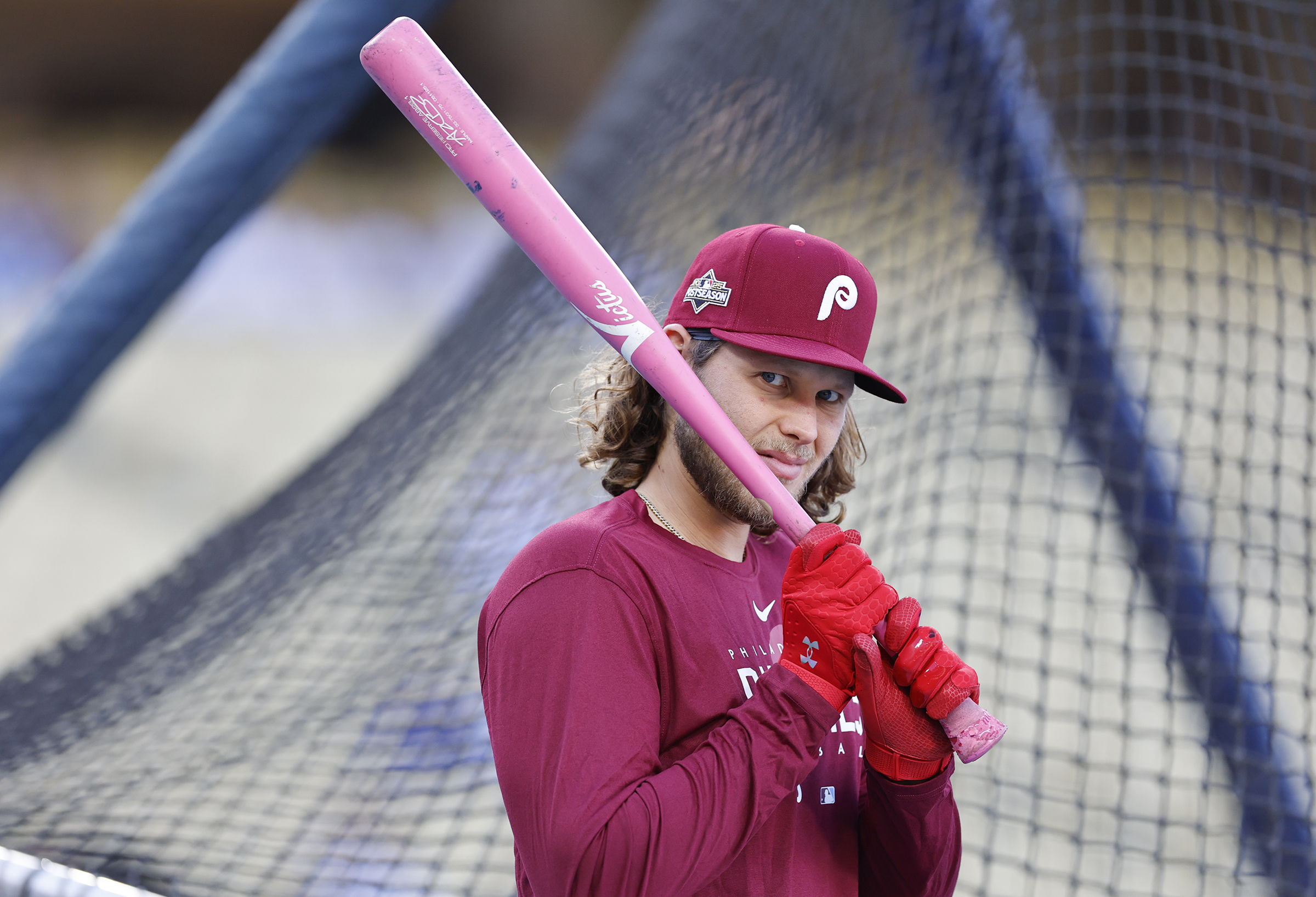
Phillies third baseman Alec Bohm is once again a candidate to be traded in the offseason.
Trading places
Two of the most intriguing offseason moves so far were one-for-one trades of major leaguers.
The Orioles swapped four years of control over gifted but often-injured pitcher Grayson Rodriguez to the Angels for walk-year outfielder Taylor Ward. Then, the Mets dealt popular outfielder Brandon Nimmo to the Rangers for second baseman Marcus Semien in a change-the-mix move.
Across the sport, the trade market is hyperactive, multiple team officials said this week, perhaps because some clubs are wary of signing free agents to multiyear contracts amid labor uncertainty beyond 2026.
Once again, Alec Bohm‘s name will come up in the Phillies’ conversations. But they couldn’t agree on his value in trade talks last winter, and it figures to be even lower now that the third baseman is one season from free agency.
Lefty reliever Matt Strahm could be another potential chip, especially after Dombrowski volunteered in an end-of-year news conference that the veteran declined to do pitcher fielding drills before the postseason.
Rivals believe the Phillies prefer trading from their major league roster rather than the farm system after moving teenage shortstop Starlyn Caba (for Jesús Luzardo) and catcher Eduardo Tait and right-hander Mick Abel (for Jhoan Duran) within the last calendar year. Andrew Painter, Aidan Miller, and Justin Crawford are thought to be largely off limits, with Painter and Crawford ticketed for the opening-day roster and Miller close behind.
As long as the Phillies cling to that trio, it’s difficult to see them matching up with the Diamondbacks for second baseman Ketel Marte, the Red Sox for outfielder Jarren Duran, or especially the Twins for center fielder Byron Buxton, if Buxton decides to waive his no-trade clause.
But maybe there’s a trade to be made for someone like Astros center fielder Jake Meyers, a solid defender who batted .292 with a 103 OPS-plus this season and is reportedly available.
Jesús Luzardo had a big season for the Phillies after being acquired in a trade last December.
Making a pitch
A year ago, the Phillies weren’t focused on starting pitching at the winter meetings. But they traded for Luzardo a few weeks later, and it wound up as their best offseason move.
Just something to keep in mind.
Because although the rotation remains the strength of the roster even amid the expected departure of free agent Ranger Suárez, there are questions. Aaron Nola is coming off an injury-interrupted season in which he posted a 6.01 ERA. Painter’s prospect shine isn’t quite as luminescent after he struggled in triple A.
Oh, and although Zack Wheeler is close to throwing a ball again, a source said this week, the recovery from thoracic outlet decompression surgery isn’t always a linear process.
And Dombrowski, who values starting pitching as much as any executive in the sport, recently noted the drop-off after Cristopher Sánchez, Luzardo, Wheeler, Nola, Taijuan Walker, and Painter.
“We don’t have a lot of starting pitching depth, so that’s something that we have to be cognizant of,” he said. “It’s not our highest priority, but I can’t say that we wouldn’t [add another starter]. That doesn’t necessarily mean top of the market, but where does that fit in? Because you never have enough starting pitching.”
After making a bid for Yamamoto two years ago, it wouldn’t be surprising if the Phillies show interest in Japanese right-hander Tatsuya Imai. Or maybe they will be opportunistic in the trade market again.
One other bit of winter-meetings business: The Phillies are still looking for a bench coach. Don Mattingly remains a leading candidate, if he’s interested in returning to the dugout after leaving the Blue Jays’ staff after the World Series.
Growing up in a family of six in Poughkeepsie, N.Y., former Villanova women’s basketball star Maddy Siegrist said the closest thing she witnessed to a sports bet was when the Super Bowl rolled around. And even then, it was friendly wagers.
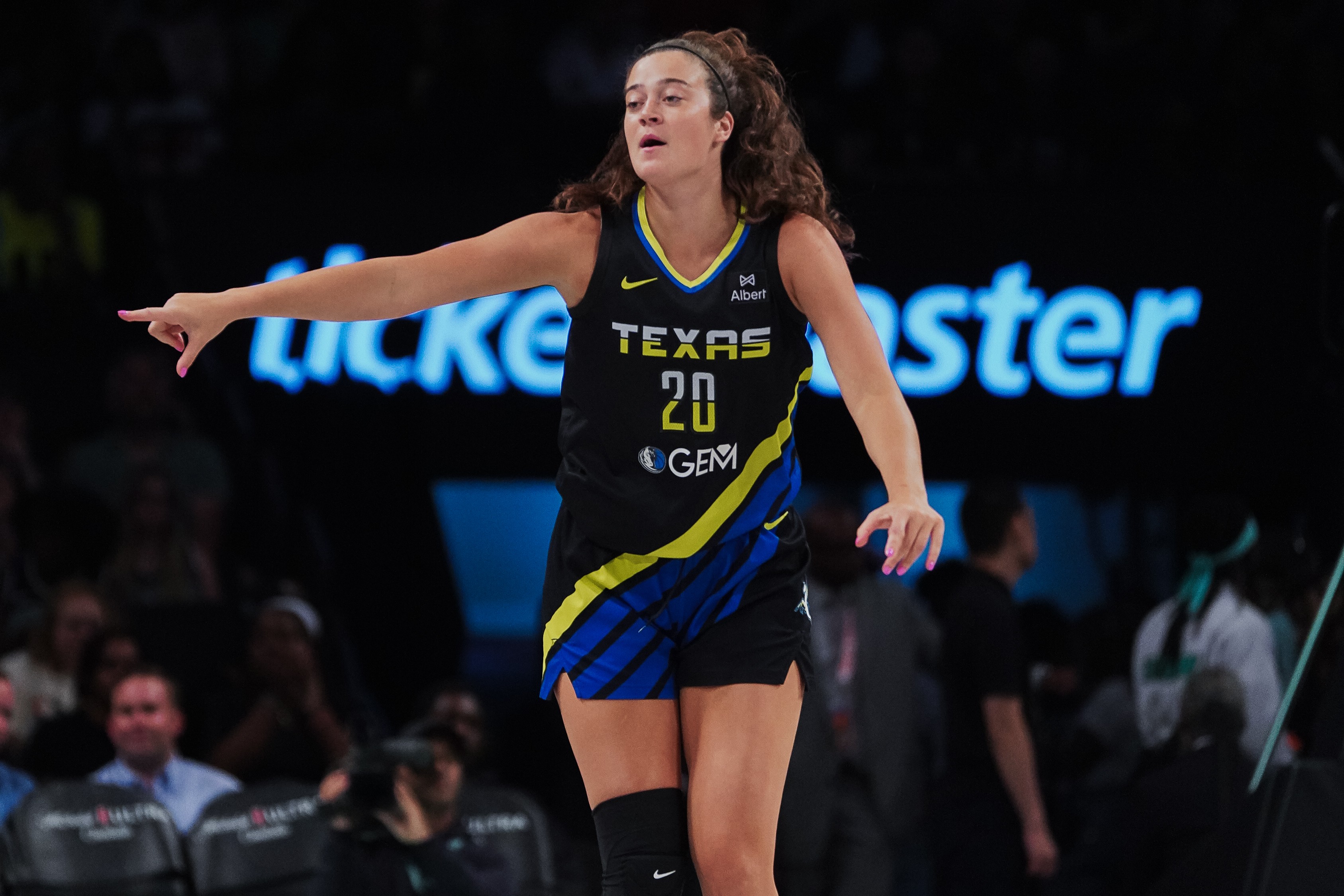
“It just wasn’t a thing in our house,” said Siegrist, who now plays for the WNBA’s Dallas Wings. “I didn’t grow up with people who bet. Plus, there were no apps or anything. I knew people that did boxes on the Super Bowl. That was the extent of my knowledge.”
Maddy Siegrist didn’t grow up around sports betting, but it’s now inextricably tied to her profession.
Since Siegrist went pro in 2023, however, legalized sports betting has infiltrated virtually every corner of sports. Siegrist said the WNBA benefits from the sports gambling population laying bets on games. That translates to more eyes watching women’s professional basketball, which generates a bigger fan base, which spurs continued growth of the sport and its brand.
But Siegrist, 25, is quick to point out a darker side to the sports-gambling intersection, “one of the rougher parts that people don’t think about,” she said.
Public vitriol directed at athletes is nothing new. But add the sports gambling component and a bettor’s ability to wager on virtually any aspect of a game or performance at the click of an app, and the result can be toxic. Often, negative fan reaction is the result of a losing bet, and social media has exacerbated the issue.
“Any pro athlete will kind of give you the same [story]: These are people betting from their house that you’re going to go under [a projected stat total] or your team’s going to win,” Siegrist said. “With the world of social media, just how much hate people get is truly amazing. I’m not a super controversial player. I don’t have the spotlight like some of my other teammates. But if you have a bad game or a good game, you can get anywhere from 50 to 100 [direct messages] or comments on your social media that are crazy.”
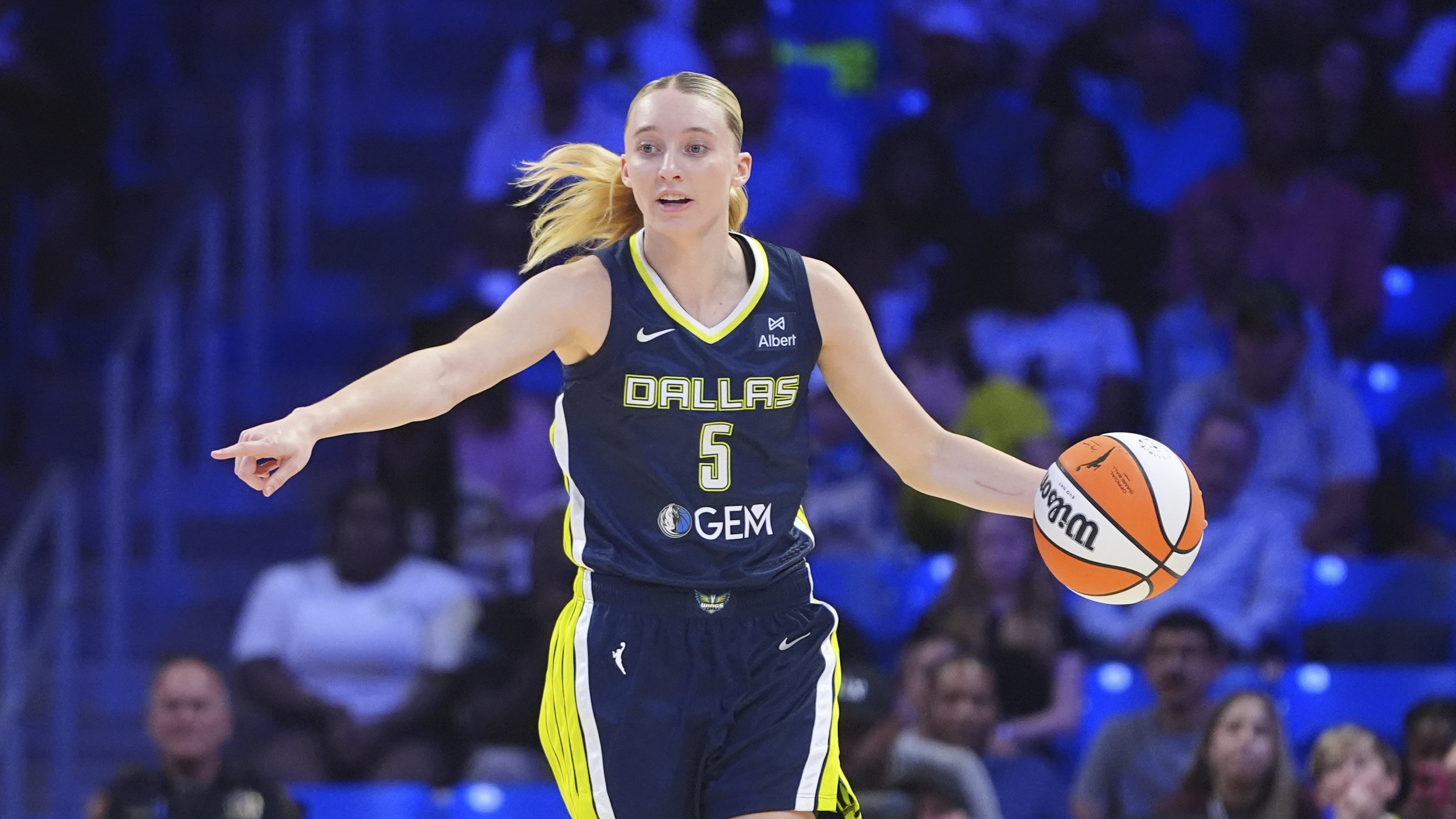
Dallas Wings guard Paige Bueckers, a teammate of Maddy Siegrist, is one of the WNBA’s brightest young stars.
Betting burden
No longer are the WNBA and college women’s basketball considered unattractive markets for sports gamblers. Players like Indiana Fever star Caitlin Clark and Paige Bueckers, Siegrist’s teammate on the Wings, are among the stars generating buzz, and, by extension, causing a spike in gambling activity on the sport.
Female athletes, professional and amateur, shoulder many challenges beyond maintaining elite performance on the court or field. That includes playing in the age of the ever-growing legalized sports betting industry — especially the proliferation of multimillion-dollar business partnerships between pro sports leagues like the WNBA and gaming companies like BetMGM.
And sports remain corrupted by the underworld of illegal gambling, where pro athletes can turn to a side hustle to try to score millions illicitly. The recent unsealing of the federal indictments that involve illegal gambling schemes, the NBA, and purported organized crime members is one such example, and Siegrist said she had followed those recent announcements.
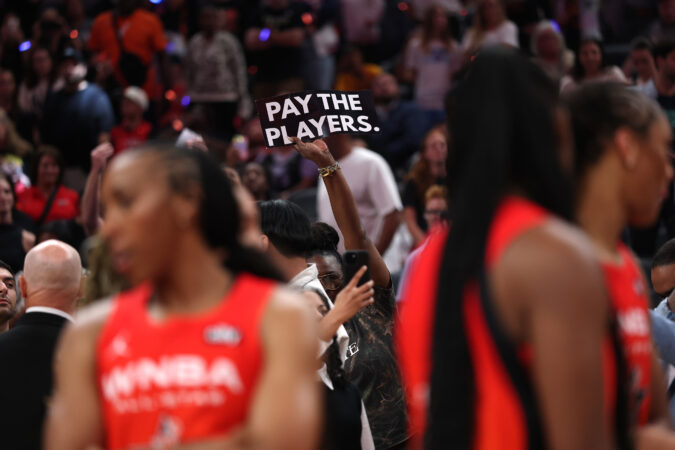
While the WNBA and the players’ union continue collective bargaining negotiations, there are developments regarding salary structure in the league’s latest proposal. The changes could temper a longstanding gripe by professional women’s basketball players: that their compensation is not commensurate with the gargantuan salaries made by male pro hoops players — as they shoulder the shared burden of scrutiny from bettors and fans alike.
According to a source with knowledge of the situation, the league’s latest proposal includes language that defines a maximum salary structure with a guaranteed $1 million base for 2026 and projected revenue sharing pushing total earnings for max-salary players to more than $1.2 million. This follows an agreement to extend the current labor agreement to Jan. 9
The average player’s salary is projected to exceed $500,000 in 2026, while the minimum salary is projected to be more than $225,000 — up from approximately $102,000 and $66,000, respectively, in 2025.
Once the WNBA season starts, Siegrist said she drastically reduces her social media use to keep her mind clear of clutter and keep the focus on basketball.
“You have to take it for what it is. Obviously, social media helps you build your brand, stay connected,” she said. “From that perspective, it’s great. It’s really allowed athletes to monetize off of themselves, and it gives fans a unique perspective into seeing these people’s lives, which I think is great.
“Twitter [now known as X] is the worst. I definitely try to not go on at all during the season. … Sometimes I like to scroll on TikTok, take my mind off stuff. But I don’t ‘like’ anything that has to do with the WNBA on TikTok. I think for me, it’s definitely a balance.”
The WNBA has taken steps to combat hate and negative fan behavior directed at the league’s players and personnel. Earlier this year, the league launched the “No Space for Hate” initiative, a “multidimensional platform designed to combat hate and promote respect across all WNBA spaces — from online discourse to in-arena behavior.”
One of the campaign’s goals is the use of artificial intelligence to safeguard the players’ and teams’ social media pages and to automatically detect, report, and delete hate speech and harassment.
“As interest in sports betting grows around the WNBA, we are taking clear, concrete steps to protect players and safeguard the integrity of the game. Player safety remains our highest priority,” the WNBA said in a statement. “We’ve enhanced security, expanded monitoring of online threats, and increased fan education. We are also working closely with our gaming partners to monitor betting activity and ensure our systems protect the game. These safeguards are constantly being reviewed and strengthened to ensure we keep the players safe and our game secure.”
Around the time the WNBA launched “No Space for Hate,” sportsbook behemoth BetMGM announced its partnership with the reigning champion Las Vegas Aces. BetMGM also is an authorized gaming partner with the league.
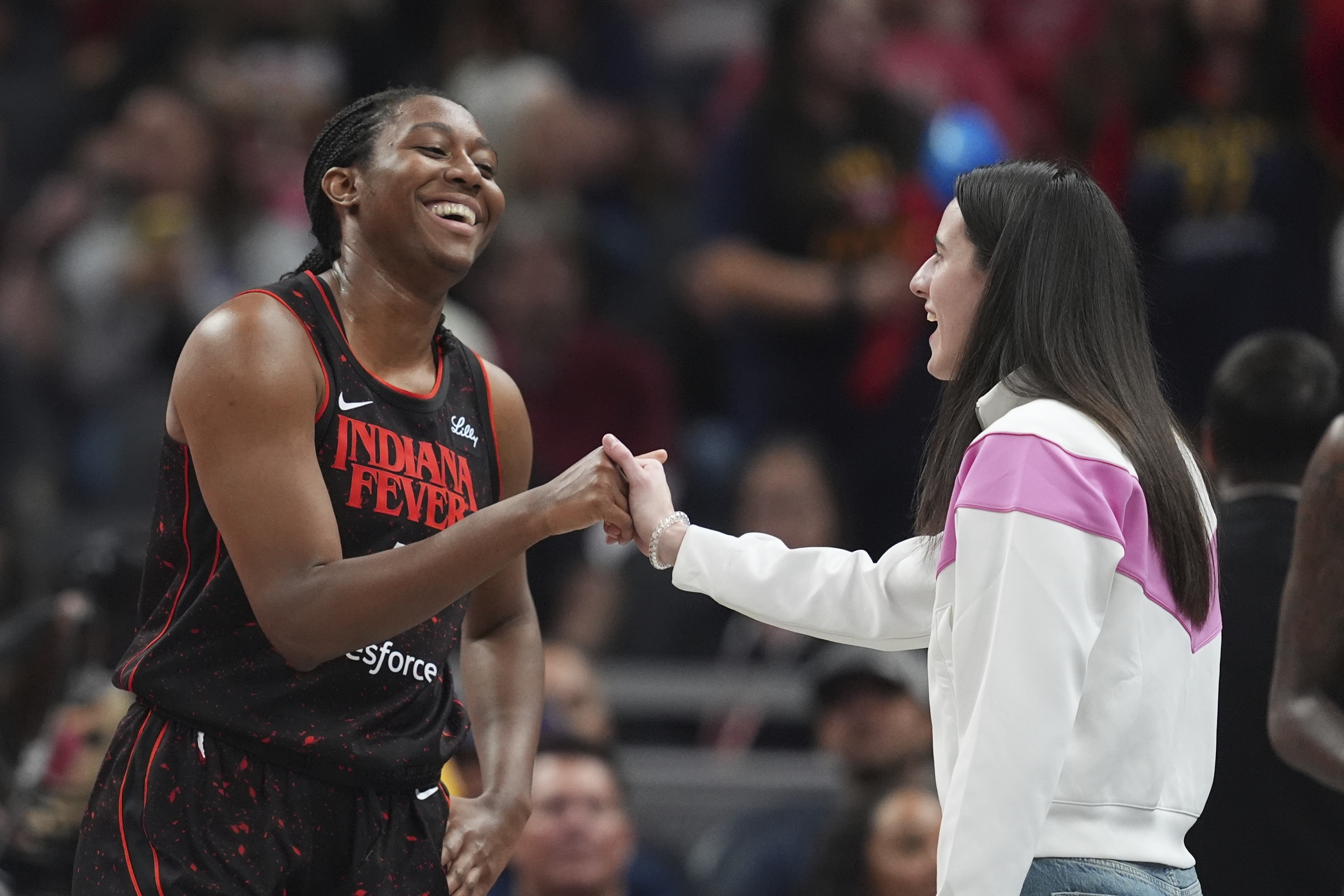
Even while injured, Caitlin Clark (right), here with another former top overall pick in Aliyah Boston, generates a ton of buzz around the WNBA.
“The NBA and WNBA are very different in terms of scale and seasonality — the NBA is a much bigger league, but both have shown strong year-over-year growth,” said BetMGM trading manager Christian Cipollini. “The WNBA benefits from its summer schedule when there’s less competition for attention, and star power like Caitlin Clark has driven a major uptick in engagement. Even after Clark’s injury this [2025] season, handle remained well above pre-Clark levels, which speaks to the league’s momentum.”
Cipollini said BetMGM — and the gaming industry as a whole — is committed to sports integrity.
“That includes athlete harassment, and we’re working with the leagues on this issue from several angles,” he said.
During his 42 years (1978-2020) as head coach of the Villanova women’s basketball team, Harry Perretta said gambling on women’s college basketball was never an issue for him and his players, simply because the interest wasn’t there. Of course, the bulk of Perretta’s Villanova coaching career unfolded before the 2018 Supreme Court ruling that legalized sports betting state to state.
“I guess you always might have bookies on campus. But I used to tell [players], ‘You really don’t want to get involved,’” said Perretta, 70. “People who get themselves in trouble are people who make bets without putting money down. Next thing you know, they’re behind the eight ball.”
There was that 1998 ’Nova-UConn women’s game, though. Nykesha Sales was on the cusp of becoming Connecticut’s career scoring leader before she sustained a devastating Achilles injury. But before UConn’s game against Villanova, Perretta and longtime UConn women’s coach Geno Auriemma agreed to let Sales score an uncontested basket after tipoff to reach the milestone. Villanova then was allowed to score its uncontested basket, before the “real” game began. Then-Big East commissioner Mike Tranghese also had agreed to the gesture.
“We let Sales score a basket, and I checked to see if there was an over/under on that game,” Perretta said. “I checked out of curiosity. When we let her score the two [points], and then Connecticut let us score two, I didn’t want anybody saying something crazy. There was no betting on that game, but I checked. That did go through my mind when that whole sequence occurred.”
In the final two years of Perretta’s Villanova tenure — during which he coached Siegrist, Perretta said he started to see a lot more betting lines on women’s college basketball games, particularly around the start of the NCAA Tournament. The dual salvos of legalized sports betting and amateur athletes securing name, image, and likeness deals had reshaped the sports landscape.
Siegrist — who married Perretta’s son Stephen, a Drexel assistant women’s basketball coach, in late October — said that going back to her ’Nova playing days, players were consistently educated on the dangers of associating with any illegal gambling operation or people within that culture.
“I have it ingrained from college and the NCAA, ‘No gambling ever, or else you’re not going to be able to play.’ I’ve tried to keep that mentality,” Siegrist said.
The bigger challenge, she said, is now balancing her career in the online sports wagering fishbowl.
“People are crazy. They’ll post something from five years ago and comment a hundred times, ‘You suck.’ It’s a pain to go through and delete it all,” Siegrist said. “The Wings pay a company to manage social media, the outside comments, and take them down right away if they’re threatening or hate[-related]. We’re going to see more and more of that, which I think is great.
“These leagues and organizations are just trying to protect their players. At the end of the day, everyone is just trying to play the game they love to the best of their abilities. When you try and focus on that, these are all ways to keep the main thing the main thing.”
TheNutcracker is about family. It centers around a girl named Marie, her parents and little brother, and the magical things that happen after they throw a Christmas party.
At Philadelphia Ballet, it’s more than just that.
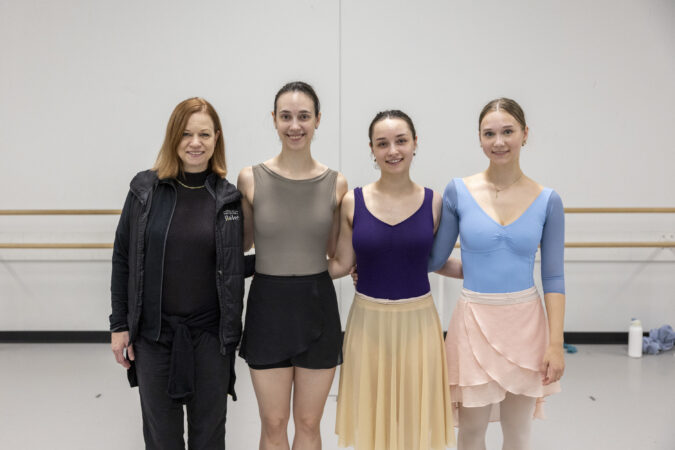
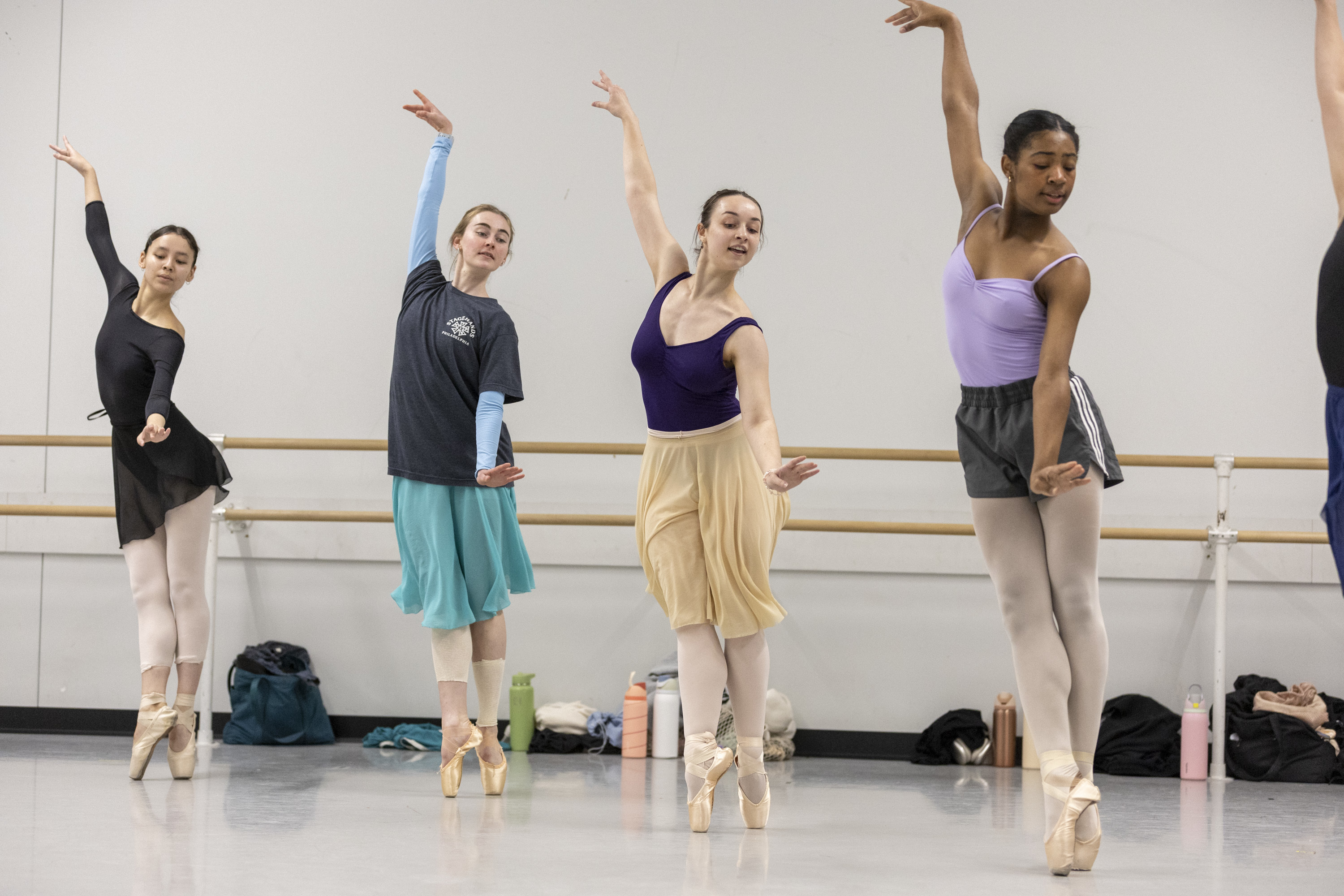
Four members of a dancing family make Nutcracker magic onstage together. Sisters Isabella, 21, Ava, 19, and Olivia DiEmedio, 16, are all members of the company. Isabella is in the corps de ballet, Ava an apprentice, and Olivia in Philadelphia Ballet II.
When the company opens its annual production of George Balanchine’s The Nutcracker this weekend at the Academy of Music, the sisters will perform as snowflakes, flowers, parents, maids, and a variety of sweet treats.
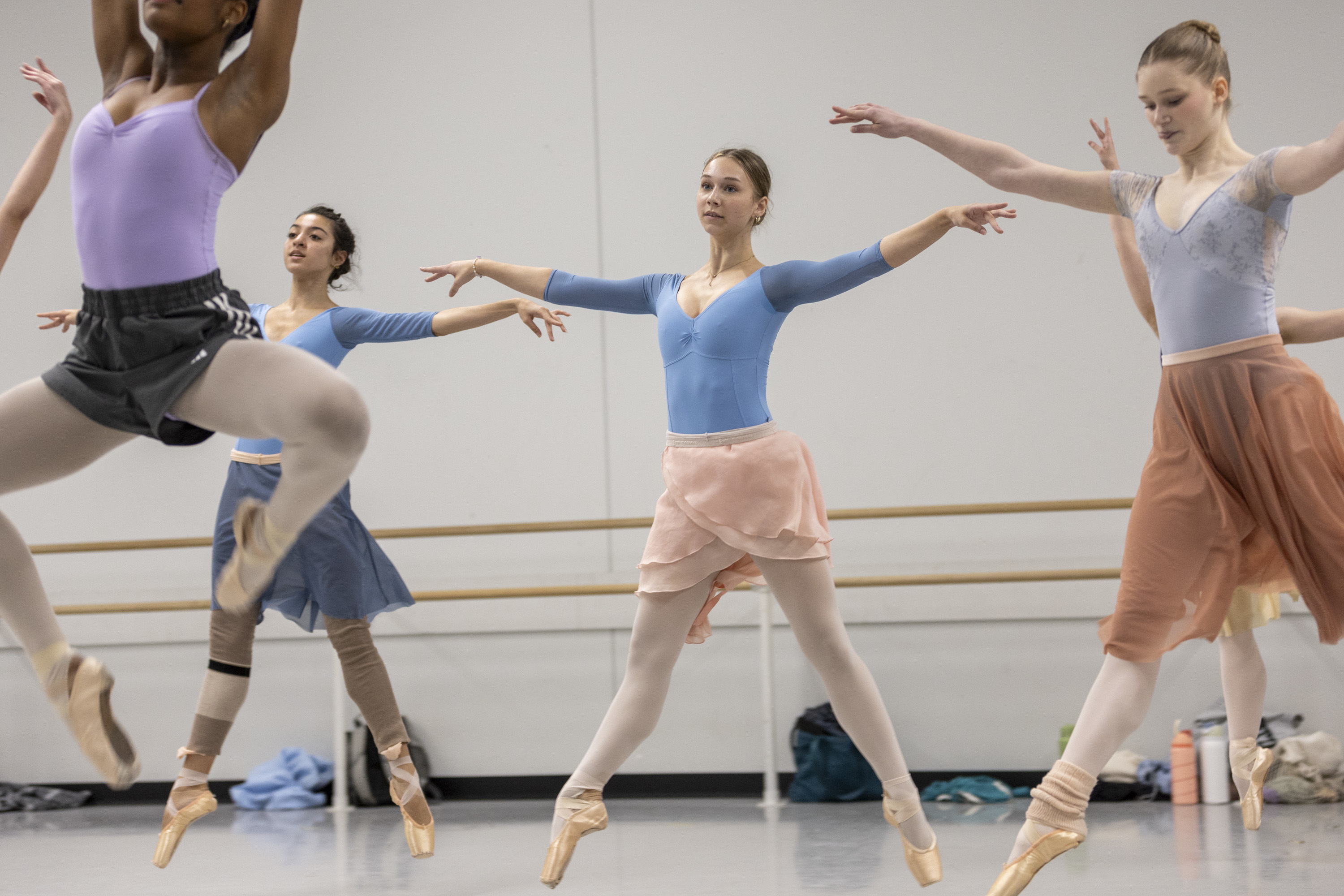
Olivia DiEmedio, 16, (center) rehearses “The Nutcracker” with Philadelphia Ballet.
The sisters are still on the rise in the company, and are yet to explore most of the principal roles. But they’ve filled most of the children’s, many of the corps, and some soloist roles. In fact, there has been a DiEmedio in one scene or another of TheNutcracker for at least a dozen years.
Even their mother is sometimes onstage alongside them.
Charity Eagens, who grew up in East Norriton, Montgomery County, was in the company, then known as Pennsylvania Ballet, for 10 years, starting in 1996. Now she is a teacher in the School of Philadelphia Ballet and the children’s ballet stager. She is also the grandmother in some performances of TheNutcracker.
Eagens has taught all three of her daughters throughout their training, and she continues to do so once a week, when she teaches company class.
In ballet class, she is their teacher. As soon as they step outside the studio, she is Mom.
“It would be really awkward for all my friends to see me calling you Miss Charity,” Ava said to her mother on Zoom, gathering around a table at Philadelphia Ballet.
“I would never say ‘Miss Charity,’” Olivia added. “I would just say what I needed to say and, like, just raise my hand.”
The DiEmedio sisters grew up on Philadelphia Ballet.
Isabella DiEmedio, 21, rehearses “The Nutcracker” with Philadelphia Ballet.
“I took Isabella to see her first ballet [when] she was 2 years old, which is a little bit too young,” Eagens said. “But a lot of my friends were still in the company, and I took her. I thought, ‘Let me just see how long she sits.’”
It was Sleeping Beauty, which is well over two and a half hours.
“So it’s probably not the best one,” said Eagens. “However, she sat on the edge of her seat for the whole thing.”
In 2007, when she was 3, Isabella started ballet classes in a local school where Eagens taught.
When she was 4, Isabella went to her mother and said, “I want to dance on the same stage as you, Mom,” Eagens said.
In 2012, when Isabella was 7, the company reopened its school (after becoming the Rock School for Dance 20 years earlier, when it looked like the troupe might fold), and Eagens signed her up.
Her sisters followed in the same pattern: local classes at 3, moving over to the School of Philadelphia Ballet for more serious training when they were 7. They tried gymnastics, too, but ballet is what stuck for all of them.
Ava DiEmedio, 19, (second from right) rehearses “The Nutcracker” with Philadelphia Ballet.
TheNutcracker was a staple in their lives. Ava and Olivia both danced the role of Marie. Isabella was too tall when it might’ve been her turn, putting the top child’s role out of her reach.
These days, Isabella lives independently, sharing an apartment with another dancer in the company. Ava is considering moving out as well, but her father is encouraging her to stay put and save money. Meanwhile, she and Olivia split their time living with Eagens in Worcester, Montgomery County, and with their father in Philadelphia, which is convenient for getting to the studio and theater.
At 16, Olivia is a junior in high school, doing her academic work online through the Brandywine Virtual Academy, which is affiliated with the Methacton School District she used to attend in person.
“I never had to withdraw them from school,” Eagens said.
At different stages of their burgeoning careers, the sisters continue to support one another.
“In combined company class with the men and women, I’ll stand behind Isabella,” Ava said. “And then in the ladies class, I stand behind Olivia. Sometimes I’ll tell [Olivia] little things I noticed about her technique.”
“Isabella, Olivia, Ava, and their mother Charity each bring their own artistry and dedication to Philadelphia Ballet,” said artistic director Angel Corella, “and watching them share the stage is incredibly moving.”
The sisters are all eager to improve and get opportunities.
“I want to be the best that I can and see how far I can take it,” Isabella said.
Ava agreed. “I want to be able to branch out of corps roles.”
As the youngest, Olivia knows she may have to wait her turn, although in ballet even the youngest professionals can get big roles.
“Technically, I’m still in training,” as a second company member, she said. “So I have to always keep in mind and have a good mindset about it and keep working hard every day.”
But, she added, “I really want to become someone who is, like, the star.”
Philadelphia Ballet in “George Balanchine’s The Nutcracker.” Dec. 5-31, Academy of Music. $28-$282, 215-893-1999 or ensembleartsphilly.org
The jingle bells are ringing, the Hanukkah party guest list is filling up, and you still don’t have a present for the coolest, artsiest person on your shopping list.
Looking for a kooky snow globe? Bespoke Eagles memorabilia? An art print unlike any other? Don’t worry! If you’re living on (or traveling to) the Main Line, here’s where you should be shopping for crafty presents.
Sweet Mabel Gallery
Narberth’s Sweet Mabel Gallery is an iconic local business, run by husband-and-wife duo David Stehman and Tracy Tumolo. Sweet Mabel got its start in 2005 when Tumolo took over her grandfather’s former barbershop in Narberth. She and Stehman, who were graphic designers, decided to turn the barbershop into a local gallery and store stocked with colorful American and Canadian folk art.
To celebrate the shop’s 20th anniversary, Sweet Mabel is displaying and selling works from local artists, all under $100. An anniversary ceremony will be held on Dec. 5 from 6-9 p.m. at the storefront on Haverford Avenue. Plus, if you find the perfect gift, Sweet Mabel will wrap it for free.
ArtStar, a Philadelphia gallery and boutique, is bringing a collection of bespoke craft vendors to Ardmore for two weekends this month. The Ardmore Holiday Market, organized in partnership with the Ardmore Initiative, will take place Dec. 6 and 13 from 11 a.m. to 3 p.m. at Schauffele Plaza.
Looking for a funky snow globe? A one-of-a-kind charm necklace? Day of the Dead inspired earrings? Ardmore’s Past Present Future is a portal into the world of eclectic antiques and crafts, from embroidered cat-themed pillows to hand-painted ceramic dishes. Sherry Tillman started Past Present Future in Philadelphia in 1976, drawing on her “long-held ties to the local arts and crafts community” to procure unique goods.
Past Present Future is open Mondays through Saturdays from 11 a.m. to 6 p.m. and Sundays from noon to 4 p.m. (or later — “If we are still standing, we are still open,” the shop’s Facebook page reads).
Something Different by Eric
Eric Wells‘ store, Something Different by Eric, isn’t just a gift shop, it’s a hub for people with disabilities on the Main Line.
Wells and his mom, Bernadette Wheeler, started the Bryn Mawr store in 2015. The nonprofit shop is staffed entirely by volunteers, including Haverford College students and special education advocates. Wheeler has said Something Different by Eric is part of a larger effort to “educate the community” and help people “see disabled individuals in action.”
In addition to selling unique housewares, Philly- and Main Line-themed trinkets, sports memorabilia, baby gifts, and greeting cards, Something Different by Eric is stocked with books about mental and physical disabilities.
The shop is open from noon to 8 p.m. on Fridays and Saturdays and from 1 to 5 p.m. on Sundays.
This suburban content is produced with support from the Leslie Miller and Richard Worley Foundation and The Lenfest Institute for Journalism. Editorial content is created independently of the project donors. Gifts to support The Inquirer’s high-impact journalism can be made at inquirer.com/donate. A list of Lenfest Institute donors can be found at lenfestinstitute.org/supporters.
In a colorless move that, Pantone says, speaks to our collective longing for calmness, a clean slate, serenity, and focus, the New Jersey-based global color authority named Cloud Dancer — a billowy, balanced white — as its 2026 color of the year.
The blank hue’s uncluttered vibe, Pantone says, plucks us out of the day-to-day crazy of our newsfeeds, AI-generated madness, and hustle culture.
White, says Pantone Color Institute’s vice president Laurie Pressman, offers relief and respite. White noise silences the cacophony of worry rattling around in our overstimulated brains. The color gives us permission to think, refocus, and chart a new future.
The pause between the doing, white is the be-ing.
“White speaks to the value of measured consideration and quiet reflection,” Pressman said. “It represents a future free of toxicity and excess … contentment and peace, unity, and cohesiveness. It’s ethereal. White embraces the clouds.”
Sweet dollops of whipped cream are white, meringue is white. Fluffy mashed potatoes are white, too.
A fresh pair of Air Force 1s, patent leather go-go boots, a clean tee, a crisp button-up. A voluminous bridal gown. We ski in winter white.
Mikado crop top with organza ball-gown skirt, limited edition ($1,150) at David’s Bridal, with pearl-drop earrings ($1,300) at Rosnov Jewelers. (Michael Bryant/Staff Photographer)
White is fly.
“In fashion and interior design, white is in our comfort zone,” said Leatrice Eiseman, executive director of the Pantone Color Institute. “It’s natural and organic. It’s about sustainability.”
White is ethereal. She’s dreamy. She represents new beginnings. I’m overwhelmed, too. I would love to drop my precepts and jump into a world of my own making. Architectural white shirts and black pants are my grown woman fashion go-to.
I get it.
But y’all, white is the color of the year in 2026.
As a Black woman living in Trump’s America, I can’t help but wonder if Pantone’s choice of Cloud Dancer was much more of a nefarious harbinger than they perhaps realized.
No, I don’t think Pantone is low key promoting whiteness or advocating for a white savior.
Cloud Dancer, the 2026 Color of the Year, is billowy like this curtain blowing in the wind.
Fashion and style always gives us clues to the future. So, I asked Pantone if they were tapping into something that perhaps they weren’t even aware of?
“Absolutely not,” Pressman said, her tone pleading with me to stop with the correlation. “Pantone is not political.”
Pantone is not political, true. But its trend forecasters keep their manicured fingers on the pulse. And in this moment I’m unable to ignore Ku Klux Klan robes are white, too.
COY is always right
Pantone’s Color of the Year is rooted in fashion. Its early picks – oceanic Cerulean in 2000; orange Tiger Lilly in 2004; and golden Mimosa in 2009 – influenced clothing, accessories, and makeup. As we moved deeper into the millennium, COY was the trendy choice for Kitchen Aids, accent walls, and Post-it notes.
In the last decade, however, color of the year has come to define our collective moods more than just our fashion aspirations.
It’s the aura hovering over the world, indicative not just of the life we have, but the one we want. The colors have become a peek into the energy of the feelings driving tomorrow’s zeitgeist.
That became crystal clear in 2016, the first year Pantone chose two colors — a pink Rose Quartz and a baby blue Serenity. The dual hues were a nod to the emerging blurring of gender lines.
In 2021, Pantone chose two colors again: Ultimate Gray and Illuminating Yellow.
A key reason why Pantone chose white is because, Pressman said, people are craving blank slates.
“People have gotten to a point where they see what’s happening isn’t working for them anymore,” Pressman said. “They want something different, new, authentic.”
Debris is seen at a largely demolished part of the East Wing of the White House, Thursday, Oct. 23, 2025, in Washington, before construction of a new ballroom. (AP Photo/Jacquelyn Martin)
Cloud Dancer, Eiseman said, is a throwback to classic fashion, citing Coco Chanel and Audrey Hepburn. Sure, fashion of the “Golden Era” was glamorous. These women were undeniably well-dressed, but it was also a time when white gloves and girdles were the norm, and equally glamorous Black women like 1940 Academy Award winner Hattie McDanielwas forced to sit in a segregated section during the Oscar ceremony because her white colleagues didn’t want to sit next to her.
When the conversation turned to the yin (black) and yang (white) of fashion, I wondered aloud if, maybe this could have been a year when Pantone chose two colors: black and white. Perhaps this could signify harmony.
Crickets.
Pantone’s Color of the Year image of the Cloud Dancer.
Later, I realized Pantone didn’t pick the cooperative vibe up, because it just wasn’t there.
I’m not ready to wave the white flag yet. In the midst of all this, white remains a shade of hope, purity, and freedom. It’s the color of the Suffragist movement. Pantone’s is simply yet another canary in the coal mine which means I have a lot of work to do.
Several parents asked for my opinion when the Food and Drug Administration recently announced a warning label on acetaminophen for its alleged link to autism, and when the agency supported the use of leucovorin as an autism treatment despite a lack of scientific evidence. And I am sure I will get questions about the Centers for Disease Control and Prevention’s new claim on its website that the link between vaccines and autism cannot be “ruled out.”
As a developmental and behavioral pediatrician who cares for many children on the autism spectrum, I love to talk with families about what they’re hearing.
Families with children on the spectrum can feel whiplashed by online “influencers” hawking different theories, products, and alternative treatments. These families want to do everything they can to support their children, and so they seek out information everywhere they can find it.
Families look for alternatives because many of our current treatments are not effective for all children, and even those that work well can require intensive effort from teachers, therapists, and caregivers. As a clinician, I try to share the available evidence with families so they can make informed decisions.
Hype for particular treatments and theories about autism’s rise are not new. But when the highest officials in government shout about autism from the rooftops and the internet is awash in “information” untethered from scientific proof, it is more important than ever for clinicians and public health officials to approach parents with compassion, honesty, and evidence.
At Children’s Hospital of Philadelphia (CHOP), Pediatric Health Chat is tracking medical myths and rumors, including those about autism. Based on that data and conversations with parents, here are the top five things I wish my families knew:
1. Autism is not an epidemic
While it is true the number of children with autism spectrum disorder continues to rise across all sociodemographic groups, there is no evidence a single environmental toxin or other factor is the cause. In fact, the strongest studies show that most of the rise in autism over the past 20 years is due to increased recognition of the condition that has meant earlier, incorrect diagnoses can be set aside; and the fact that more characteristics and behaviors are known to be signs of autism. So, while autism diagnoses are rising, there is no evidence of an epidemic — autism is growing, but it’s not a sudden outbreak like COVID .
2. Vaccines do not cause autism
The myth that vaccines cause autism originated in a British study back in the 1990s on just 12 children that was so fraudulent, the journal that published it wound up retracting it. Some people continue to insist that because autism has continued to increase — and new vaccines have been developed — there must be some kind of a link. But just because two things occur at the same time does not mean that one causes the other. (A classic example is that both ice cream purchases and drownings increase in the summer, but no one is claiming that ice cream causes drowning!)
As CHOP’s Vaccine Education Center lays out, there have been numerous, well done studies that have not found a link between vaccines and autism. Vaccines save lives, and the evidence in favor of vaccine safety with respect to autism is overwhelming. I encourage all of my patients’ families to vaccinate their children. I am proud to say that I vaccinate my own children following recommended schedules — to protect them from preventable infections.
3. Acetaminophen does not cause autism
While a few small studies have found an association between prenatal acetaminophen use and autism, the largest and strongest studies have found no association. Studies that do not include factors like why the pregnant person is taking acetaminophen or whether siblings are on the autism spectrum may inaccurately conclude that acetaminophen is a cause when it is not. The truth is that high fevers during pregnancy are known to be dangerous, and acetaminophen, the active ingredient in Tylenol, is the safest medication we have for treating fever. I would have no hesitation recommending acetaminophen during pregnancy as needed.
4. Leucovorin is not a proven treatment for autism
Last spring, a news story appeared about a child who became more verbal after taking leucovorin (also known as folinic acid, a medication that is used for cancer patients undergoing chemotherapy). Since that time, requests from families in the autism community to begin leucovorin have skyrocketed. Yet the evidence for leucovorin’s effectiveness is incredibly limited. For example, children in placebo groups — those that didn’t get any leucovorin — showed similar gains as those that got it. Some families dropped out of the trials because their children became more aggressive while receiving leucovorin. We need larger, well designed, randomized control trials before I would feel comfortable recommending leucovorin to my patients.
5. So-called facilitated communication does not help children with autism
Several decades ago, facilitated communication (in which a facilitator touches a patient to “help them spell” on a keyboard or letter board) was thoroughly debunked by studies proving the facilitator was guiding responses, not helping the person to truly communicate their own thoughts.
Yet facilitated communication (FC) has made a comeback in the form of other “therapies” like supported typing and through the “Telepathy Tapes” podcast. However, these are just FC by another name and are also unsupported by evidence.
On the other hand, augmentative or alternative communication, through which individuals themselves use alternative strategies or “talker” devices to express themselves (instead of having a facilitator physically help them), is strongly supported by evidence. While I understand why families want to give their children every opportunity to express themselves, I strongly urge them to go with the methods that are proven to help them achieve their goals.
Most troubling to me is that woven through all these myths and misinformation is the implicit belief that individuals with autism lack value, or that they cannot lead happy, successful lives. While some individuals on the autism spectrum struggle to live independently and may have some challenging behaviors, all these people are worthy of dignity and respect. Continuing to find ways to best support people with autism and their families, to allow them to reach their highest potential, needs to be the focus.
Editor’s note: Pediatric Health Chat is an online initiative at Children’s Hospital of Philadelphia taking aim at the latest myths and misconceptions about children’s health.Kate E. Wallis, MD, MPH, is a developmental behavioral pediatrician with the Division of Developmental and Behavioral Pediatrics at Children’s Hospital of Philadelphia.