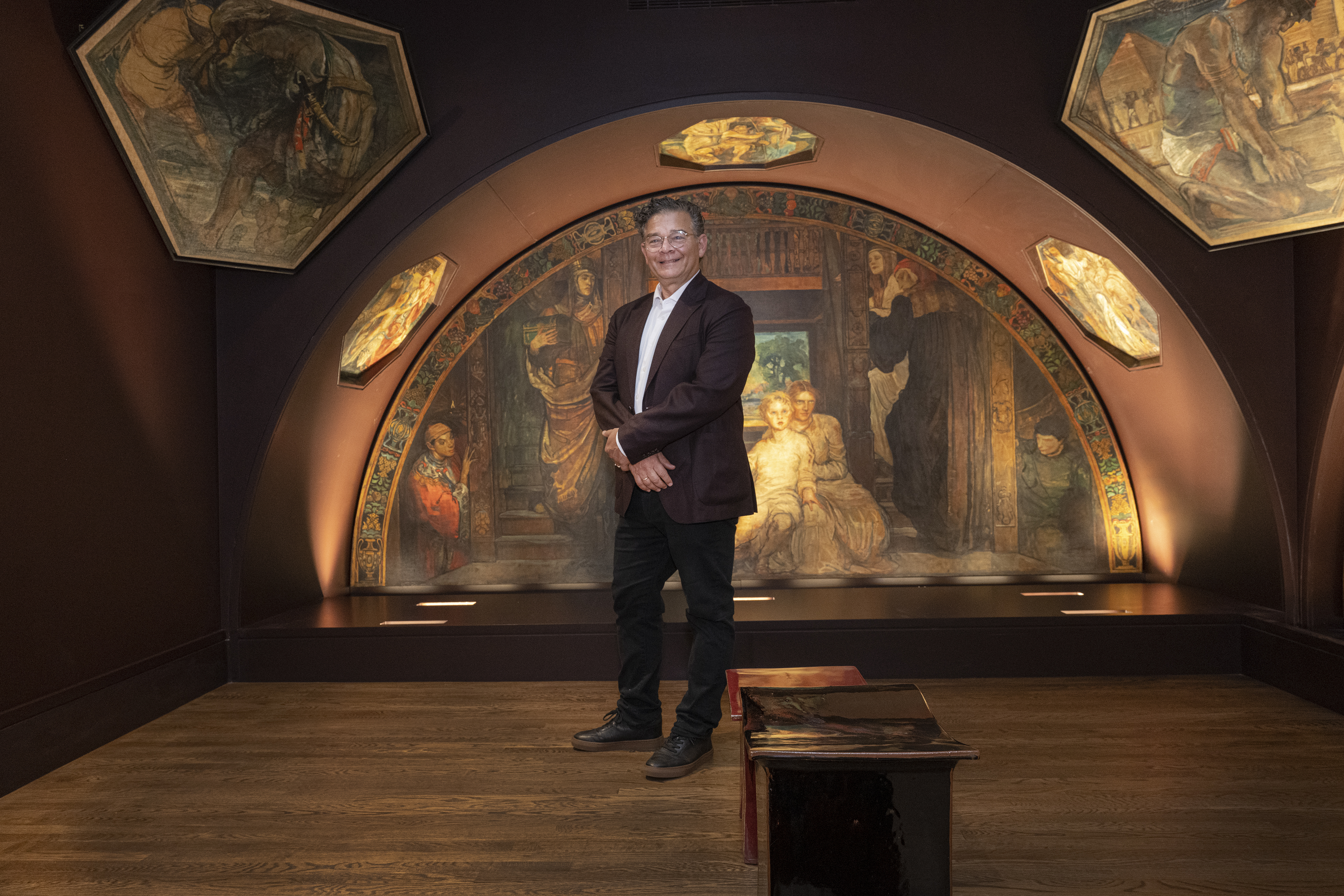
Woodmere Art Museum director and CEO William R. Valerio never thought he’d be standing in a former second-floor bedroom turned into a cozy, copper-hued art gallery, admiring Violet Oakley’s famous series of paintings: Building the House of Wisdom.
Yet, there he was.
Two weeks before the new Frances M. Maguire Hall for Art and Education opens on Nov. 1, Valerio was brimming with excitement.
The Victorian mansion and former convent is the new home to the 112-year-old Chestnut Hill museum’s permanent collection, the most definitive group of paintings, sculptures, and prints by Philadelphia artists in the region — if not the world.
William R. Valerio surrounded by Violet Oakley’s seminal work “Building the House of Wisdom” in the Frances M. Maguire’s second floor Violet Oakley Gallery. Valerio recreated this gallery as a replica of Charlton Yarnall’s early 20th century Rittenhouse Square home where the 12-piece series was commissioned for the mansion’s music room.
“I’ve been at the museum for 15 years and I’ve always wanted to build a space to show House of Wisdom the way Oakley intended it to be shown,” Valerio said. “But I never could have imagined this.”
This is a four-story, 17,000-square-foot,gleaming house museum.
The Violet Oakley Gallery is particularly noteworthy. The 375-square-foot space is a recreation of early 20th-century banker Charlton Yarnall’s music room, where Oakley’s vibrant murals were nestled in the Rittenhouse Square mansion’s vaulted ceilings.
At Maguire Hall, Oakley’s allegorical interpretations of wisdom in the arts and sciences are fixed in lunettes positioned at eye level, allowing museumgoers to sit in a meditative gaze under a glowing replica of Italian designer Nicola d’Ascenzo’s stained glass dome.
Oakley’s House of Wisdom has been on and off view at Woodmere since 1962, when the museum’s then director — and Oakley’s life partner — Edith Emerson brought the 12-piece series to the museum. Yarnall’s mansion was being converted to an office building, and Emerson feared her late partner’s seminal work would be carelessly discarded.
“The House of Wisdom is among the roughly 11,000 pieces of art we’ve acquired over the decades that now have a place to shine like never before,“ Valerio said.
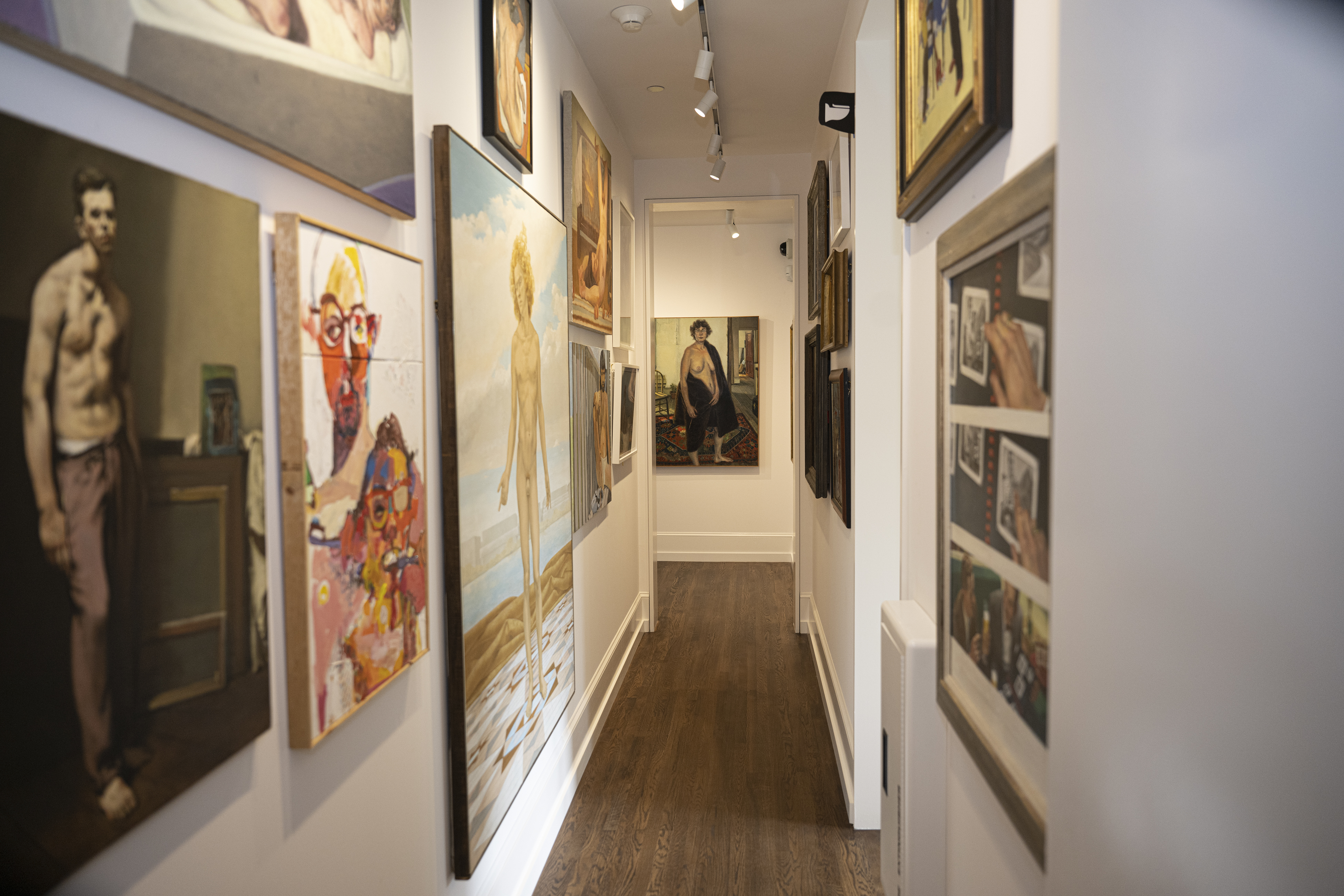
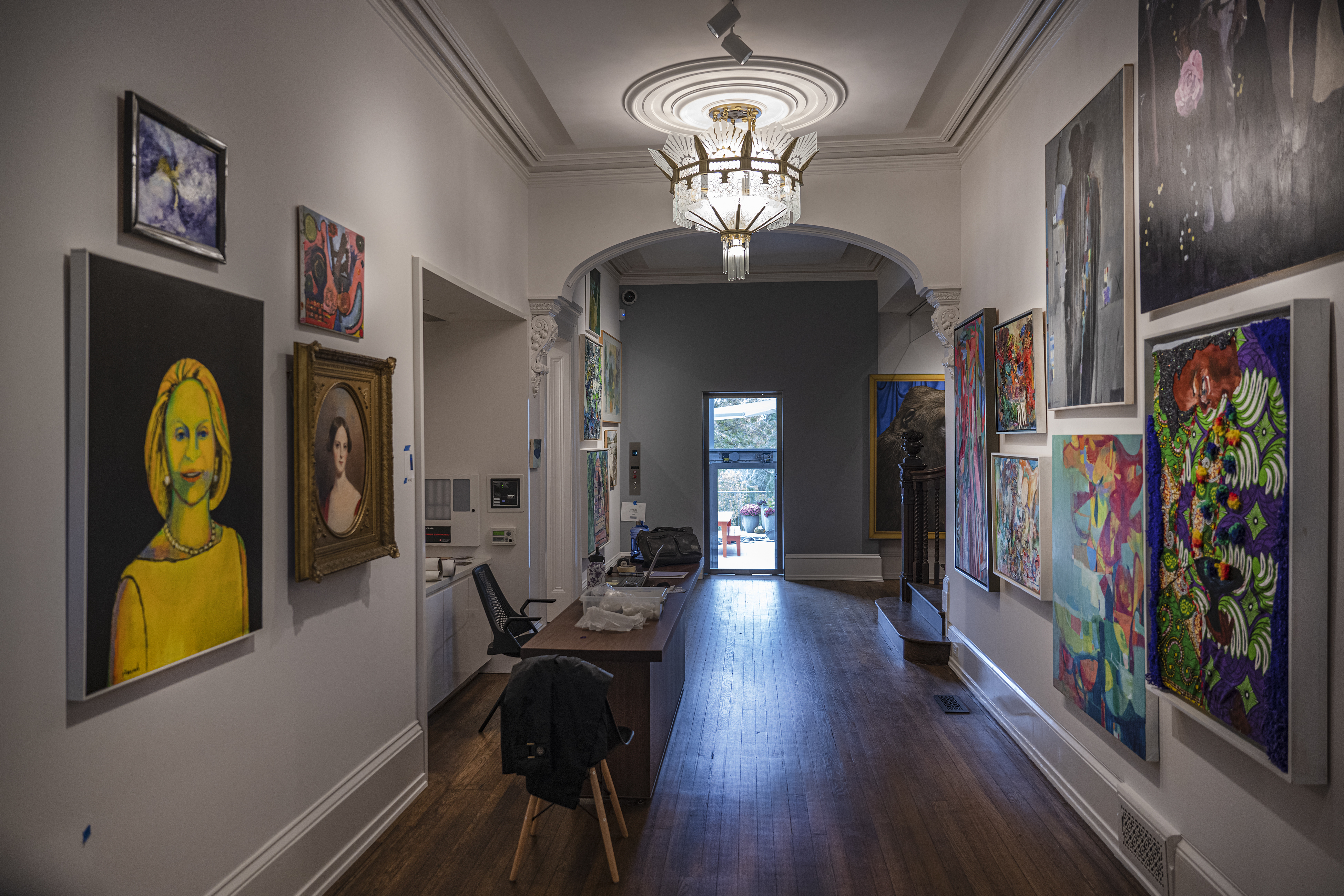
View of hallway between six second-floor galleries at Woodmere’s soon-to-be-opened Frances M. Maguire Hall.
‘Philadelphia’s great masterpieces’
Charles Knox Smith opened the Woodmere Museum — what is now the museum’s Charles Knox Smith Hall — in 1913. It holds Woodmere’s vast 18th- and 19th-century collections, including Smith’s beloved Philadelphia landscapes, and is open Wednesday to Sunday.
A few houses down and across the street, Maguire Hall’s 14 galleries hold paintings, sculptures, illustrations, photographs, and mixed media murals centering 20th-century Philadelphia artists.
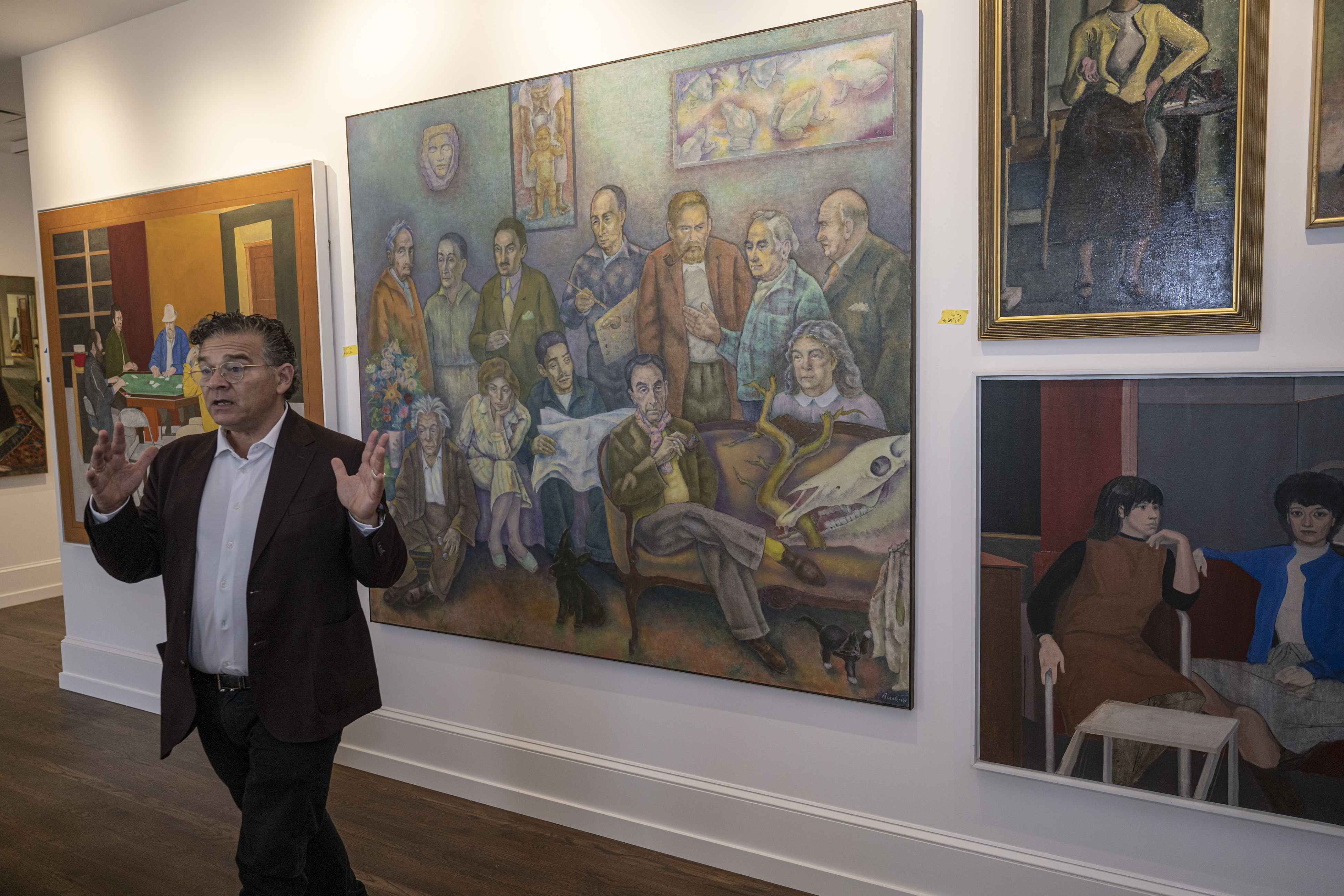
William R. Valerio, director and CEO of Woodmere Museum, chatting in front of George Biddle’s 1966 oil on canvas “Evocation of the Past.”
“The idea is to show off Philadelphia’s great masterpieces,” Valerio said.
He and his four-person curatorial team spent months mounting golden frames on the monochromatic walls, so closely together they nearly touched. It gives Maguire Hall the intimate vibe of a 19th-century home.
Every major 20th-century art movement is represented, but the curation is a nod to 21st-century diversity.
African American realist Ellen Powell Tiberino’s striking nude Repose shares gallery space with Martha Mayer Erlebacher’s stunning life-size portrait The Path. Both are only a few feet away from a work by George Biddle — of the illustrious Philadelphia family that traces its roots to the 17th century — the thoughtful Evocation of the Past.
Black Pennsylvania Academy of the Fine Arts scholar Charles Jay’s meticulous floral still life paintings from the early 1980s line Maguire Hall’s grand staircase. It leads to the second-floor galleries, where lauded 1920s impressionist Walter Elmer Schofield’s bucolic renderings of snowy Wissahickon trails coolly hang.
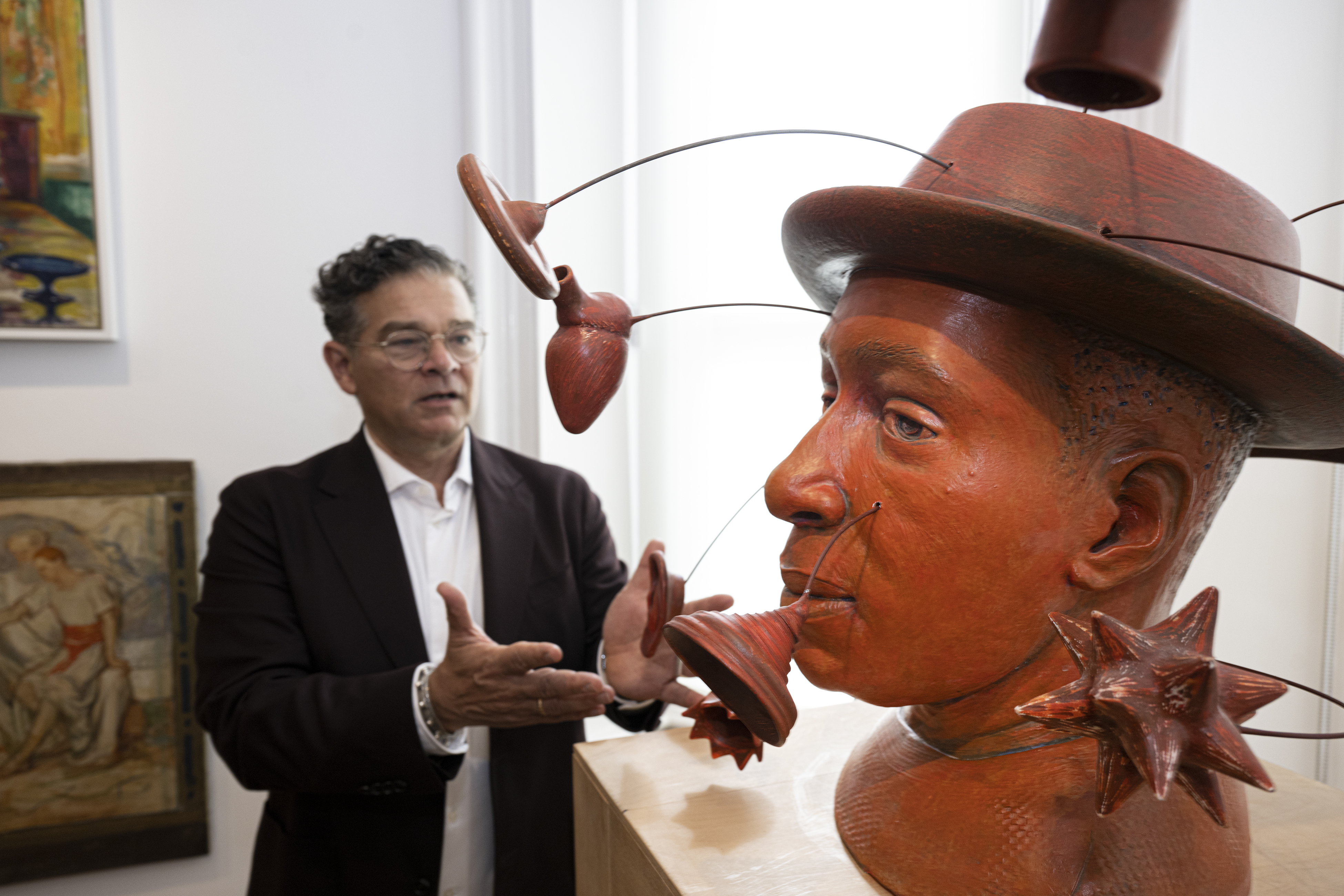
William R. Valerio, director and CEO of Woodmere Art Museum in conversation with Syd Carpenter’s arresting “Frank as the Sun King,” paying homage to Carpenter’s brother who served in the Army during the 90s during Desert Storm and returned to Philadelphia as a quadriplegic.
An entire gallery is dedicated to female artists, featuring portraits by Oakley and Emerson. They are in conversation with an arresting sculpture by Syd Carpenter, Frank as the Sun King, an homage to Carpenter’s brother, who served in Desert Storm and came home to Philadelphia as a quadriplegic. Carpenter curated the Colored Girls Museum’s Livingroom Garden in 2024.
“These diverse backgrounds and social experiences reshape and expand the canon of 20th-century art through a Philadelphia lens,” Valerio said.
A major gift
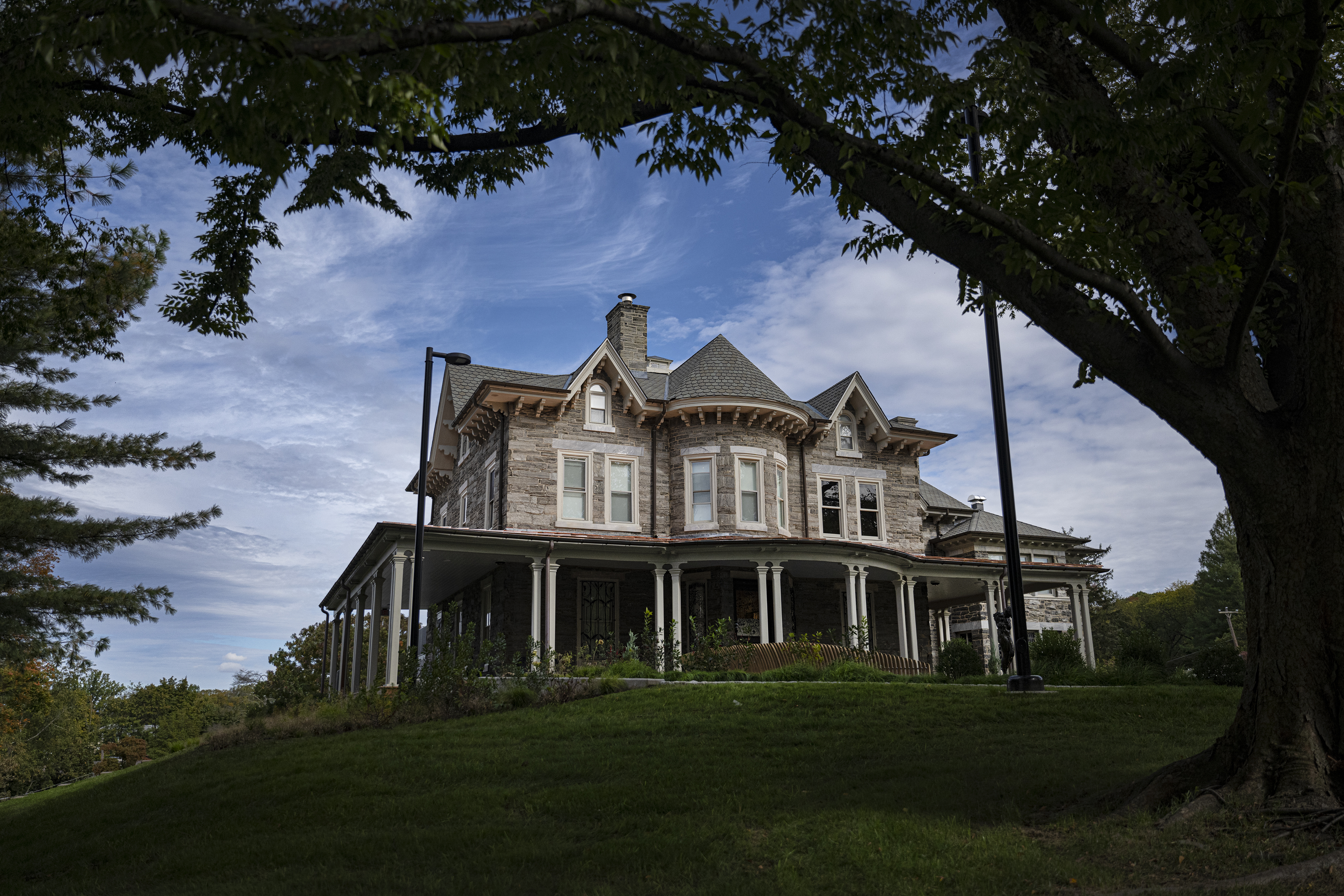
Maguire Hall was built in 1854 as a country estate for the family of William Henry Trotter, an importer of steel, copper, and tin. In the 1890s, the house was renovated by sugar merchant Alfred C. Harrison.
The Sisters of St. Joseph bought the stately home from developers in the 1920s to serve as the Norwood-Fontbonne Academy dorm. The nuns lived there until 2021, when Woodmere purchased it for $2.5 million.
“It gave us the opportunity to take items out of storage and show the beauty of Woodmere to the world,” Valerio said.
Overview of the former Sisters of St. Joseph Convent that’s been transformed to Woodmere’s Frances M. Maguire Hall for Art and Education in Chestnut Hill.
James J. Maguire Sr. built a string of small insurance companies into a national conglomerate in the mid- to late 20th century. In 2008, he completed a $5 billion merger with a Japanese firm and, with his wife, Frances, became one of the region’s largest philanthropic donors.
An artist and patron of the arts, Frances Maguire died in 2020. Three years later, the Frances M. Maguire Art Museum was opened at the former home of the Barnes by St. Joseph’s University, which had received a $50 million donation from the Maguire Foundation in 2017.
Frances Maguire also spent a lot of time at Woodmere, taking classes and serving on the board of trustees. In her honor, the Maguire Foundation gave the museum $10 million. Valerio raised an additional $18 million from donors, state, and federal funding. The $28 million was used to renovate the mansion and start an endowment.
Entrance way of the Frances M. Maguire hall. To the left is a portrait of Maguire by Kassem Amoudi. The chandelier Chestnut Street’s Boyd Theater open from 1928 to 2002.
A portrait of Frances Maguire by Kassem Amoudi hangs in the foyer.
“In creating the Frances M. Maguire Hall and supporting Woodmere, we are assuring that her legacy is shared with current and future generations,” said Megan Maguire Nicoletti, one of the Maguires’ nine children and CEO of the Maguire Foundation.
All the details
Krieger Architects worked with New York-based Baird Architects to turn the ramshackle convent into a modern museum, complete with wheelchair-accessible ramps and a shiny glass elevator overlooking the art trail connecting Maguire Hall to Charles Knox Smith Hall.
Mammoth sculptures by 1959 Penn graduate Robinson Fredenthal are visible from the elevator as well as chokeberry, bayberry, and pawpaw trees, planted in Woodmere’s perennial Outdoor Wonder garden in honor of the Lenape Indians. Maguire Hall boasts a brand-new porch dotted with bright Adirondack chairs that once belonged to the University of the Arts.
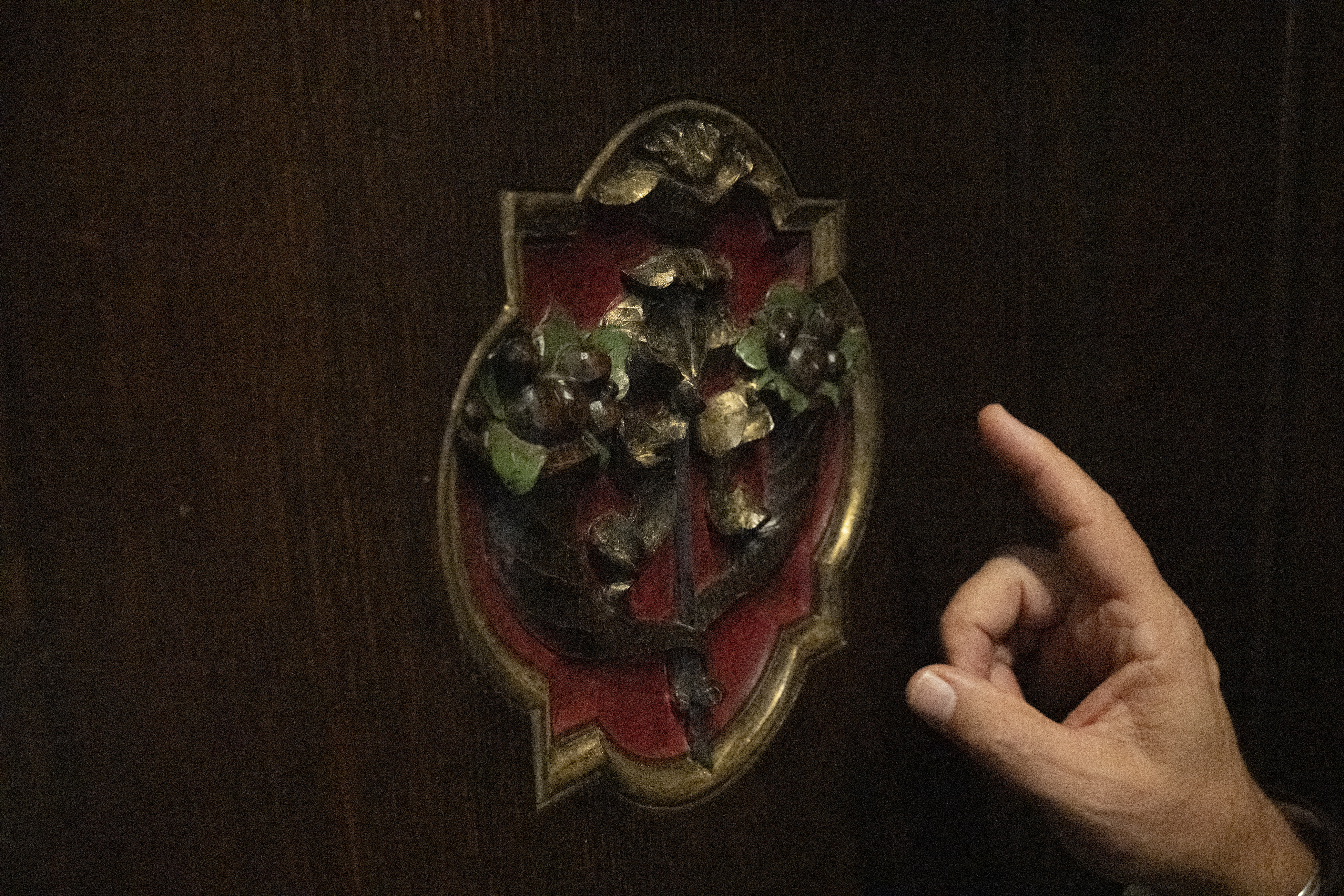
Detail of Belgium carver Edward Maene’s work in The Frances M. Maguire Hall breakfast nook. During the renovation, the carvings original red, green, and golden hues were discovered.
In the mansion’s dining room, breakfast room, and central staircase are exquisite woodcarvings from 20th-century master and Belgium immigrant Edward Maene.
“He went all out and carved fantastical medallions with images of fish that turned into birds and humans that turned into lions,” Valerio said of Maene’s work.
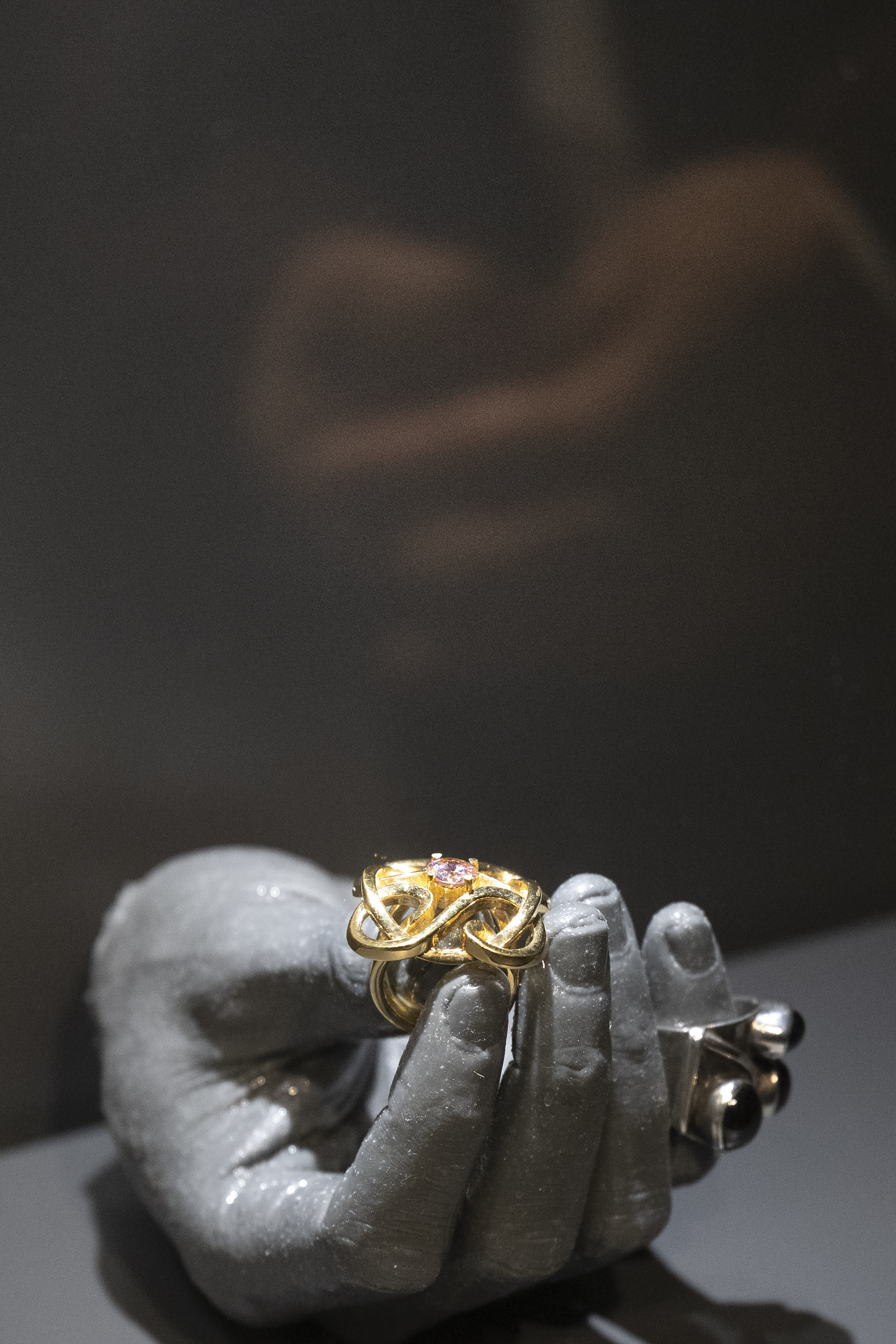
There is the MacDonald Family Children’s Art Studio, where little ones can try their hands at finger painting, watercolors, and perhaps a bit of jewelry making. Right across from it is a jewelry vault, where an ankle-length Henri David coat sparkles with jewels from local Victorian-era jewelry houses: Bailey, Banks & Biddle and Caldwell.
Tyler School of Art and Architecture graduate Theophilus Annor fashioned hand mannequins for the baubles. (Annor also carved Adinkra symbols into John Rais’ decorative wrought iron)
Jewels shown on a hand mannequin fashioned by Ghanian artist Theophilus Annor in the Frances M. Maguire jewelry vault. (L) Theophilus Annor, Holding On, 2024, Gold & faceted gemstone. (R) Richard Reinhardt, Ring, date unknown.
Housing history
The second-floor illustrative arts rooms feature wartime drawings from 1940s issues of the Saturday Evening Post and framed TV Guide images of Kojak’s Telly Savalas and Columbo’s Peter Falk. (TV Guide was owned by former Inquirer and Daily News publisher Walter Annenberg.)
“This part of our history is often forgotten,” Valerio said. “But it was important to artists who lived here and made a living in what was then a big media city.”
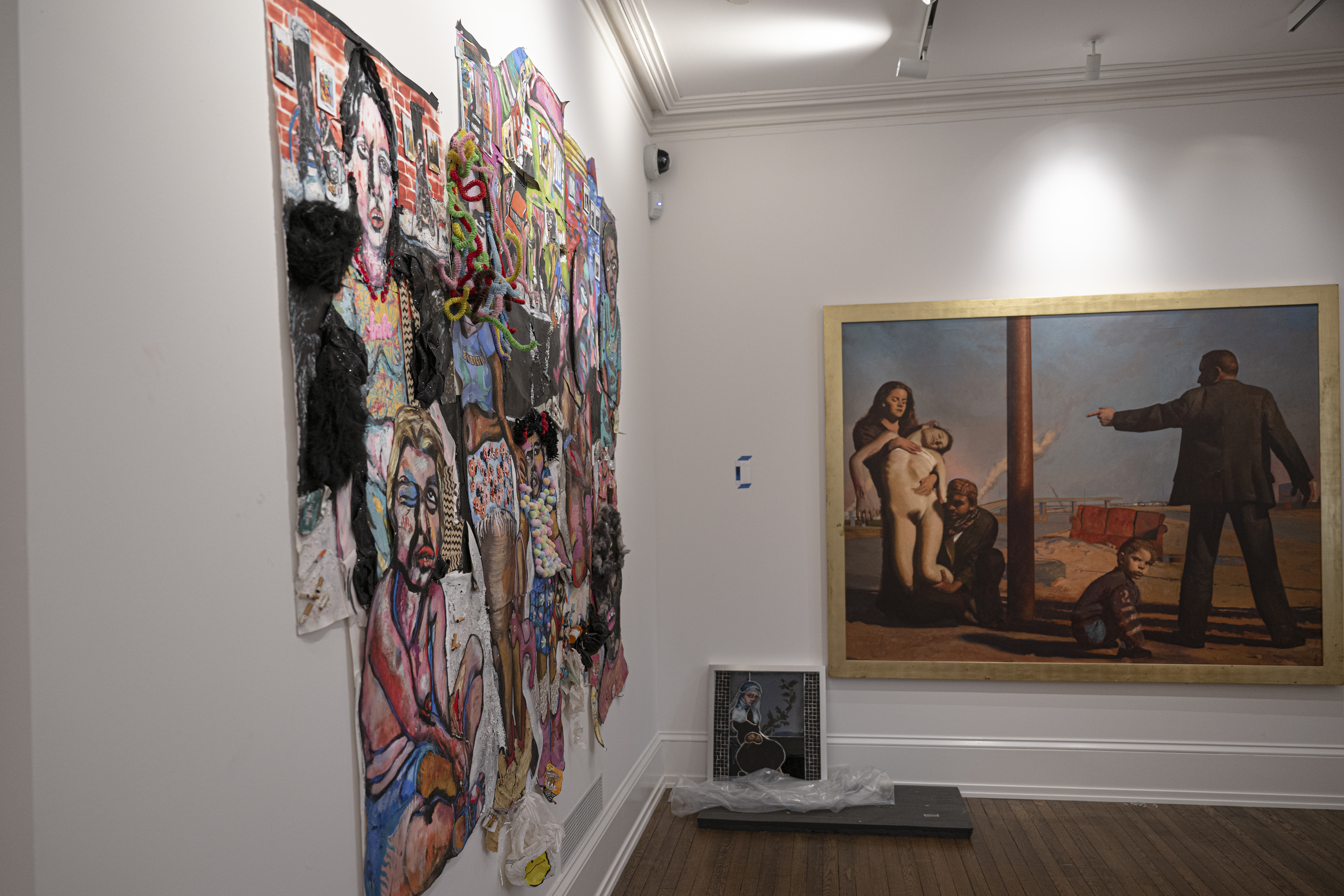
The first floor gallery of the Frances M. Maguire Hall featuring (left) Ashley Flynn’s stark mural of drug culture in Kensington and “Madre del Nene” a1990, oil on linen from Bo Bartlett
But the bottom floor is the star. Housed here are Maguire’s most evocative pieces, like an abstract collage by Danny Simmons — brother of hip-hop luminaries Russell and Joseph “Run” Simmons — titled Hocus Pocus, which interrogates magic in the Black community. Ashley Flynn’s gripping mural depicting drug abuse in Kensington and gay artist and collage maker Stuart Netsky’sHave Your Cake and Eat it Too, which puts a naughty twist on Victorian-era prudishness, radiate under the Boyd Theatre’s chandelier.
With this work, Valerio hopes Maguire Hall plays a role in shaping a more inclusive future in Philadelphia — and around the world — through the arts.
“We do what no other museum does in exploring the art and culture of this city in depth,” Valerio said. “And we welcome everyoneto take part in the conversation.”
Woodmere’s Frances M. Maguire Hall for Art and Education, 9001 Germantown Ave., opens to the public on Nov. 1 and 2. Charles Knox Smith Hall is located at 9201 Germantown Ave. Both are open Wednesday to Sunday, 10 a.m. to 5 p.m. Tickets are $10. Free on Sundays. woodmere.museum.org
The article was updated to reflect the new name of the children’s art studio at Woodmere Museum, and the last name of Maguire Foundation’s CEO.
One thing nobody will dispute is that Thursday was a victory for the scolds. All at once, they logged on, and logged in, and limbered up their Twitter fingers and sent them dancing across the keyboard like Herbie Hancock on the ivories.
A good old-fashioned gambling scandal was erupting, and they weren’t going to let it pass without imparting some grave moral lessons.
Look here, they said. The most important indictment announced by the U.S. Attorney’s Eastern District of New York office on Thursday wasn’t the one that laid out the charges against NBA guard Terry Rozier for his alleged role in a prop-bet-fixing scheme, or the one that detailed NBA head coach Chauncey Billups’ alleged involvement in rigging illegal poker games.
No, the important indictment was the metaphorical one handed down against the NBA itself. For embracing legalized sports gambling. For partnering with online sportsbooks like DraftKings. For prioritizing profit over the integrity of the game.
This wasn’t just criminals allegedly doing as criminals allegedly do. It was the inevitable end result of the NBA’s embrace of an industry that should not exist.
Again, according to the scolds.
But the scolds are wrong. In fact, their interpretation of Thursday’s events, and of last year’s Jontay Porter guilty plea in a separate investigation, is the exact opposite of the real lesson to draw. A world where people can gamble openly with reputable companies that operate within the jurisdiction of federal law enforcement and in cooperation with sports leagues is a world where any bad actors are likely to be caught. That is not the world as it used to be.
We all remember the old world, right? Pete Rose, Paul Hornung and Alex Karras, the Black Sox, Boston College and CCNY. These were some of the biggest individual or institutional names of their eras, all of them involving serious wagers on the outcomes of games over an extended period of time, most of them in concert with the criminal underworld.
Pete Rose, who was banned from baseball for 35 years for betting on the sport, was reinstated last May.
The responsibility of protecting the integrity of games fell primarily on sports executives. Karras and Hornung, two of the NFL’s biggest stars in the 1960s, were suspended for a season as a result of commissioner Pete Rozelle’s investigation into players’ ties with bettors.
Nobody knows the old world as well as the NBA. Two decades ago, the league found itself mired in the biggest scandal of them all when it learned that referee Tim Donaghy had spent four years wagering on games that he officiated. Donaghy, a Delco native who attended Cardinal O’Hara, later claimed that 80% of his bets ended up cashing.
His gambling was eventually uncovered by an FBI investigation that resulted in prison time, but only after he’d inflicted four years’ worth of reputational damage on the league.
Compare the Donaghy scandal to what the feds laid out in their indictments on Thursday. Rozier is alleged to have provided nonpublic information to gamblers who bet on at least seven games between March 2023 and March 2024.
The indictment involving Rozier also includes mention of a “Co-Conspirator 8″ who provided gamblers with information about Portland Trailblazers personnel decisions, although Billups was not explicitly named. (Billups’ charges stem from a separate case involving the rigging of illegal poker games.)
The Rozier case stems from an earlier investigation into Porter, a then-Toronto Raptors player who later admitted in court that he manipulated his performance in two games. (Porter was banned from the NBA in the spring of 2024 and is currently awaiting sentencing in his case).
I don’t mean to minimize the seriousness of the cases involving Rozier, Billups, and Porter. Rozier and Billups deserve to join Porter with lifetime bans, and Billups should be removed from the Hall of Fame.
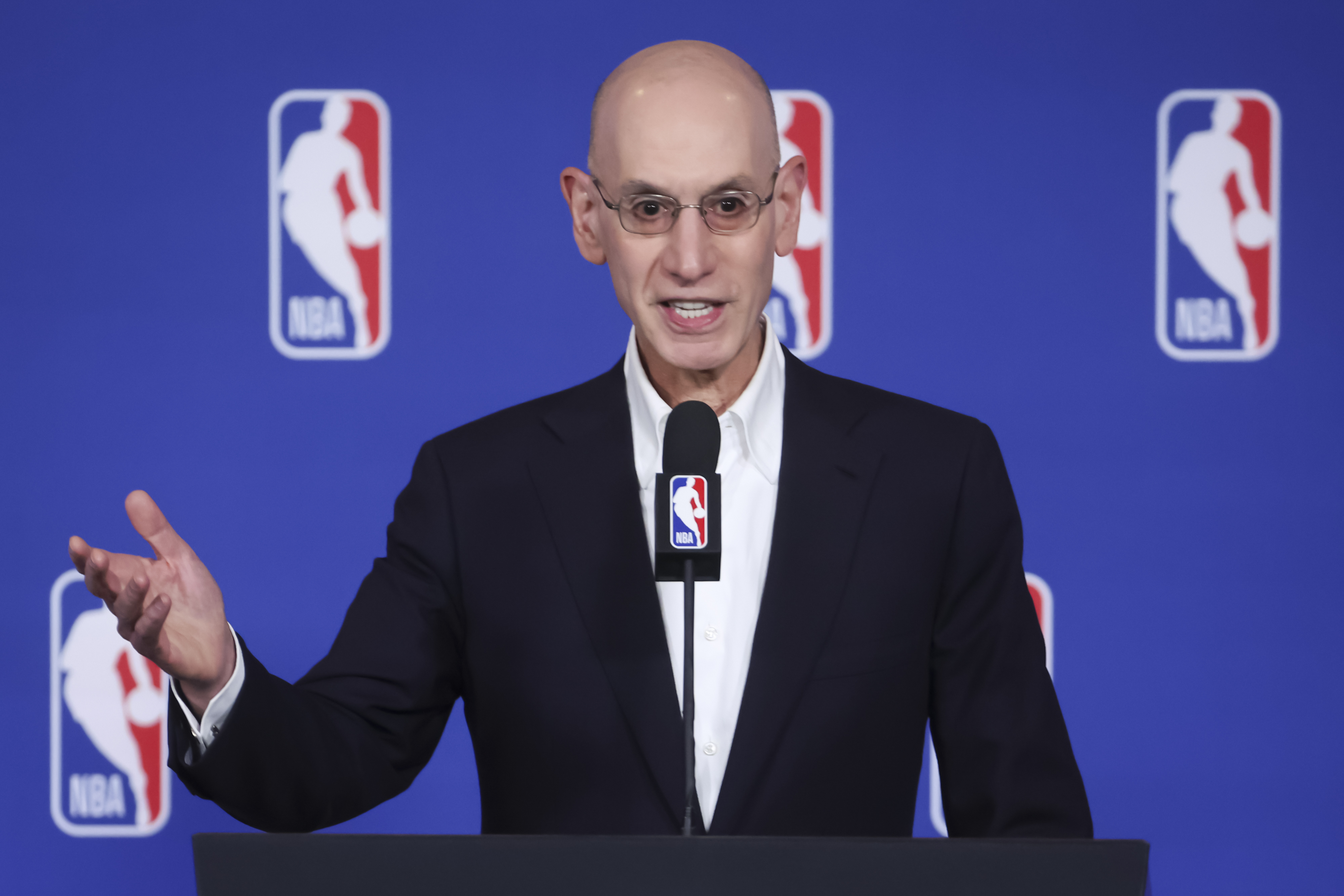
NBA commissioner Adam Silver and the league need to do some serious self-scouting to figure out if there is anything they can do beyond wielding heavy-handed punishment as a deterrent.
The scolds are correct in at least one regard. The NBA and its fellow sports leagues should seriously reconsider the extent to which they have encouraged the integration of betting with their telecasts and live events. The rise in popularity of betting on individual player props and so-called same-game parlay promotions has created a huge new front of incentives and avenues for malfeasance, packaged and promoted in a way that can feel more like fantasy sports than gambling.
It is more than fair to suggest that commissioners should create more distance between themselves and the sportsbooks, particularly when it comes to marketing.
The NBA’s increasingly close relationship with sportsbooks has brought in significant revenue but also led to additional problems.
Let’s not lose sight of the real issue. The leagues had no choice but to accept the reality of legal sports gambling. In the years before its adoption in the United States, overseas sportsbooks were exploding in popularity. Daily Fantasy cash games were already legal. Sports gambling was going to achieve critical mass at some point in the United States.
The decision that the leagues had to make was whether they wanted to help create a world where it could be regulated and policed most effectively.
We saw that world play out in Porter’s case. The gambling syndicate that attempted to profit from his prop bets was flagged due to the irregular nature of the wagers. The ability to detect abnormal betting patterns is the single biggest weapon in the fight against sports-fixing, and it should be the single biggest deterrent to anybody who attempts to engage in it.
The legalization of sports gambling is shifting all of the money that used to be wagered in the underworld onto audited books overseen by billion-dollar companies with sophisticated detection methods in place. It would be silly for a league like the NBA not to encourage that sort of framework in favor of one where forensic accounting is nearly impossible.
The cases of Rozier, Billups, and Porter are an indication that the world still isn’t perfect. But it is silly to suggest that stuff like this was less prevalent in the old world. We were just less likely to find out about it.
Donald Trump had the nation’s somber attention last month as he delivered the Arizona football stadium eulogy for assassinated right-wing provocateur Charlie Kirk, and — as the 47th president is wont to do — took an unexpected detour to promise a scientific breakthrough for a condition his regime has called a national tragedy.
“I think you’re going to find it to be amazing,” Trump said of a pending White House announcement. “I think we found an answer to autism.” With typical bravado, he suggested that a total end to a neurodevelopment order was at hand, that “we’re not going to let it happen anymore.”
What was actually announced in the coming days — a debunked claim that autism is linked to pregnant women taking the pain reliever Tylenol, as well as a suggestion of a connection to circumcision — was attacked by many experts as a gross misreading of the existing scientific data, and nothing like the breakthrough that Trump had promised in Glendale.
But whatwas even more telling was the reaction from families or adults who’ve been living for years with a diagnosis of neurodivergence, who aren’t realistically asking for a “cure” — especially not one cloaked in alleged quackery — but simply a more compassionate approach from a government they feel is stigmatizing a community that wants support.
They don’t see life on the autism spectrum — a mix of communication and emotional struggles with passionate interests and insight, varying greatly from person to person — as a disease, but as a difference, to be better understood and nurtured.
In this photo provided by Ana Fiero, Kelly Sue Milano holds her 6-year-old son, who is on the autism spectrum, at an outdoor party in Irvine, Calif., on Monday.
“My daughter’s an amazing person that contributes to society and contributes to our family, and she’s not a crisis,” Jenny Shank of St. Louis told the local NPR affiliate. She said that what the autism community really needs from the government “is awareness, acceptance and opportunities in our communities, and funding for schools for help to meet their maximum potential.”
Studies have shown higher rates of autism — more than 3% of 8-year-olds, according to recent research by the Centers for Disease Control and Prevention — than was once believed. But experts theorize this may be more from greater awareness than the conspiracy theories around Tylenol or vaccines that are an obsession with Trump’s contrarian U.S. Department of Health and Human Services secretary, Robert F. Kennedy Jr.
RFK Jr. has said that “autism destroys families,” while Trump has called it “a horrible, horrible crisis,” but statements like those have deeply dismayed many of the households for which the Trump regime seems to want a gold star for trying to help. Ashley Kline, whose 5-year-old son has been diagnosed with autism, told the Washington Post, “I don’t want it to get to a point where inclusion is just thrown out the window, and people start insisting that the best thing for autistic children and adults is to be hidden behind walls once again.”
The Trump regime’s misguided obsession with faulty research in seeking a magic bullet “cure” for autism has been portrayed as one more example of science under siege in America, and it is that. But it’s also a window into something deeper, and arguably even more disturbing.
Whether it’s an autism community it pretends to be helping or the transgender community it openly seeks to destroy, our authoritarian government is waging war to flatten any differences, to make America great again with a forced monochrome lens.
Protesters for and against gender-affirming care for transgender minors demonstrate outside the U.S. Supreme Court Building in December.
You see it almost every day with Trump and his MAGA administration. Often it’s big and obvious, like the president’s Day One executive order that targeted America’s nearly three million transgender people by declaring the government would only recognize two unchangeable sexes, male and female, and end any policies that aided the transgender community.
But Trump’s war on the different also permeates the smaller stuff, like his “Secretary of War” Pete Hegseth’s much-ballyhooed and much-ridiculed “warrior ethos” lecture to 800 appalled-looking generals and admirals. Hegseth included in his vision a mandate that would ban soldiers with facial hair, declaring “no beardos,” and adding, “The age of rampant and ridiculous shaving profiles is done.”
Hegseth also declared an end to “fat” generals and overweight troops (apparently the Texas National Guard didn’t get the memo), and, OK, maybe that’s required for certain types of combat soldiers. But the broader message from the Pentagon is clear: that the new regime wants a sea of troops who look alike. Beardless, slimmed down, and, evidently— given the ouster of so many women and Black top commanders — as white and male as possible in 2025 America.
I think we vastly underrate how central this contempt for anyone who looks or acts differently from an idealized pre-1960 vision of America is to the entire fascist enterprise that we have too kindly branded “Trumpism.”
The idea of a new type of personal freedom — a quest for individualfulfillment, aided by post-World War II prosperity, shattering the artificial constraints of conformity — was birthed in a New Left philosophy spelled out in texts like 1962’s “Port Huron Statement.”
Ah, 1967 and the Summer of Love. No, brothers and sisters, this is not Haight Ashbury. It was Griffith Park on Easter 1967, the first of several Love-Ins where young folks gathered near the merry-go-round to promote the counter-culture movement in their own expressive ways. pic.twitter.com/YUI84bP0xK
This outlook, rooted in the upheavals of the 1960s and ‘70s, is celebrated by many as the birth of everything from the LGBTQ+ rights movement, to efforts to replace stigma with empathy and treatment for conditions such as mental illness, to “letting your freak flag fly” by growing long hair or a beard. And this is also the thing that a reactionary far-right — deeply insecure and desperate for a cocoon of white privileged patriarchy — has ceaselessly sought to destroy for 60 years.
While Trump himself has relished one aspect of 1960s freedom — the sexual revolution, as he once called the threat of STDs “my personal Vietnam” — in his political reinvention, he has recoiled at many others, wanting even a return to the Willowbrook-style warehousing of the mentally ill. As president, he is the perfect point man for the right’s revanchist project — clearly believing in the worst kinds of debunked eugenics theory.
A classic example occurred the other day in the Oval Office with a rant that belonged to 1925’s The Great Gatsby and its racist millionaire Tom Buchanan, and not 100 years later. Trump bemoaned his bad relationship with Boston’s Asian American mayor, Michelle Wu, despite her “reasonable IQ,” in contrast with his war with Chicago’s “low IQ” leader, Brandon Johnson. The Windy City mayor happens to be Black, just like almost every other figure — like Reps. Maxine Waters or Jasmine Crockett — branded “low IQ” in the most thinly disguised racism possible.
Trump’s 21st-century eugenics — from ending diversity programs in colleges or the workplace to the obsession with finding the pill or shot or whatever that has made some kids “not normal” — is the unifying force of his dictatorship. It’s why what was sold to 2024’s voters as an effort to remove undocumented criminals from America turned out to be members of a masked secret police force chasing hardworking family men across the Home Depot parking lot because they have brown skin or speak Spanish.
You know. Different.
True, Trump’s rage toward immigrants or programs aimed to recruit more Black and brown kids into colleges was no secret, but what’s been more surprising has been the broader sense of hostility toward any government program that offers aid and empathy to those born with real challenges. Few predicted that Trump would seek to decimate the special education office in the U.S. Department of Education, or work more broadly to undermine the rights of the disabled.
You may have noticed that some of these slashed federal programs would help children diagnosed with autism. But putting these children on a path toward happier and more fulfilling lives isn’t the goal of the Trump-RFK Jr. focus on autism, but rather making sure the next generation conforms to their constricted definition of normal.
We need to understand Trump’s war on the different because we need to defeat it. Boomers of my generation were born into the world of stigmatization and conformity that Trump wants to bring back, erasing the liberation movements that have been the victory of our lifetime. Sure, I want the next president to care about affordable healthcare and lowering egg prices, but America also needs leaders who will celebrate and defend our fundamental human right simply to be different.
Sure, Philly’s the birthplace of the nation. But we’re also the site of the first hot-air balloon ride (1793), the first selfie (1839), and the first pencil with an attached eraser (1858). So why not celebrate these Philly firsts and many more?
That’s the idea behind the Philadelphia Historic District 250th Committee’s “52 Weeks of Firsts” in 2026. Every week, all year, there will be a party somewhere in the city honoring a different “Philly-born” first, replete with a “first-ival,” storytelling, giveaways, scavenger hunts, and an oversized #1 sculpture made of foam to mark the exact spot, or closest thing to it, of the milestone.
On Thursday, during a festive gathering at the Constitution Center featuring circus performers, Mummers, Once Upon A Nation storytellers, and ice cream sodas from Franklin Fountain, officials announced the complete schedule for “52 Weeks of Firsts.”
“Philadelphia has always been a city of firsts — from the founding of our nation to innovations that shaped everyday life,” said Amy Needle, president and CEO of Historic Philadelphia Inc. “It’s an opportunity for residents and visitors alike to go and explore and find these firsts and learn about all the amazing history and innovation that has happened in Philadelphia in the last 250 years.”
Fitting with planners’ promise to bring the 250th celebration to the neighborhoods, the 52 Weeks festivities will take place across at least 16 different sections of the city, Needle said. In compiling the list, a partnership of representatives from 22 Philly museums and cultural institutions adhered to a strict definition of first from Merriam Webster: “preceding all others in time, order, or importance.”
Some Philly firsts are known to every schoolchild. Like the first American flag (thanks, Betsy: 1777). And first naming of the United States (1776.) Others may stump even the most ardent Philly booster. Like the country’s first public showing of a motion picture (1870), first U.S. weather bureau office (also 1870), and first electronic computer (1945).
The 52 Weeks of First aims to capture all that has made Philly first in the nation throughout the years, Needle said.
“There are so many things that Philadelphia has to be excited about,” she said.
Here is the full list, with the schedule for the whole year.
52 Weeks of Firsts: Week by week
First Hot Air Balloon Flight in America: 1793
The Athenaeum, Jan. 3, 2026
First Folk Parade: 1901
Mummers Museum, Jan. 10, 2026
First Volunteer Fire Company: 1736
Fireman’s Hall Museum, Jan. 17, 2026
First Professional Basketball League: 1898
Location TBD, Jan. 24, 2026
First Public Girl Scout Cookie Sale: 1932
Location TBD, Jan. 31, 2026
First African Methodist Episcopal Congregation: 1794
Mother Bethel A.M.E. Church, Feb. 7, 2026
First Abolitionist Society in America: 1775
The African American Museum in Philadelphia, Feb. 14, 2026
First Authentic Chinese Gate Built in America: 1984
Ghostly films will meet ghosts of department stores past in a pop-up film series leading up to Halloween. Film historian and former Inquirer film critic Carrie Rickey has curated five silent films from the 1920s to be shown at the Pipe Up! series in the Wanamaker Building — each one accompanied by live organ.
Among the films being screened are Robert Wiene’s The Cabinet of Dr. Caligari (1920) and F.W. Murnau’s Nosferatu (1922) and Faust (1926).
“What was scary a century ago when the great German filmmakers invented these templates of the modern horror movie aren’t exactly spine-tingling today,” said Rickey. “But they are creepy, in the manner of folk and fairy tales — and artists like Hieronymus Bosch. They get under the skin. And they’re inventive.”
Also being shown are two lesser-known Swedish films: Victor Sjöström’s The Phantom Carriage (1921) — “a huge influence on Ingmar Bergman,” says Rickey — and Häxan (1922), Benjamin Christensen’s film purporting to be documentary.
“It hypothesizes what medievalists called possessed nuns and black sabbaths, and what Freud would call female hysteria. It is the earliest example of goth horror that I’ve ever seen,” Rickey said.
The screenings are scheduled to take place in the Wanamaker Building’s Greek Hall, which means the musical accompaniment will be played on an instrument that gets considerably less attention than the one in the Grand Court.
That smaller instrument is a theater organ, a restored 1929 Wurlitzer originally from the Fox Theatre in Appleton, Wis.
“It’s pristine, it hasn’t been fooled with like a lot of Wurlitzers,” said Friends of the Wanamaker Organ president Ray Biswanger. “It’s got a lot of color in it and represents well the experience of hearing a silent movie.”
Organists have different approaches to scoring silent film, said Peter Richard Conte, the Wanamaker Grand Court organist who is playing two of the five nights. His method is to watch the film 10 to 15 times, prepare a cue sheet, and play leitmotifs (recurrent themes) for various characters and places.
“And you just watch the film like a hawk and improvise,” he said.
Conte tends to avoid tucking in popular tunes or familiar musical references. “It distracts from the film. It can be cute and occasionally I will do it, but almost like a joke. What you want to do is disappear. If the audience forgets that you’re there,” Conte says, “that’s the biggest compliment I can get.”
The lineup: Monday, “Faust,” organist Ian Fraser; Tuesday, “The Phantom Carriage,” organist Don Kinnier; Wednesday, “Nosferatu,” organist Peter Richard Conte; Thursday, “The Cabinet of Dr. Caligari,” organist Peter Richard Conte; Friday, “Häxan,” organist Don Kinnear.
Screenings begin at 7 p.m. at the Wanamaker Building, 1300 Market St. Admission is free with advance registration. operaphila.org.
Conte will also perform on the Grand Court Organ for a live-to-screen presentation of the 1925 film “The Phantom of the Opera,” Nov. 10 at 7 p.m. The event is free and requires no advance registration.
We buried my father on a bitterly cold day in Washington, D.C., in 2010. As I followed his casket out of the church, I spotted journalist Michael Days in the crowd of mourners. I didn’t get to speak with him, but I was deeply touched, not to mention honored, that my editor at the Daily News was there.
He didn’t have to do that. But Days, who died suddenly on Saturday at the age of 72, was a deeply empathetic man who genuinely cared about people. As former Daily News columnist Howard Gensler wrote on Facebook recently: “He celebrated the wins and keenly felt the losses in his newsroom. He knew when to step in and when to step back and he could go Philly on you when he had to — and then later ask you how your parents were doing.”
I met the pioneering journalist when he was business editor for the Daily News, and I was applying for a job. During my interview, I got so excited at the prospect of earning twice my salary in D.C. at the time that I didn’t bother to negotiate. But Days kindly arranged for me to have two weeks’ vacation during my first year of employment instead of my having to work an entire year, as stipulated by the terms of the union contract.
That was my first experience with the kind of leader Days was. He was more than just a boss. He was an editor, mentor, and friend who looked out for his staffers, which engendered our intense loyalty. We used to joke that when Days said, “Jump,” our response was, “How high?”
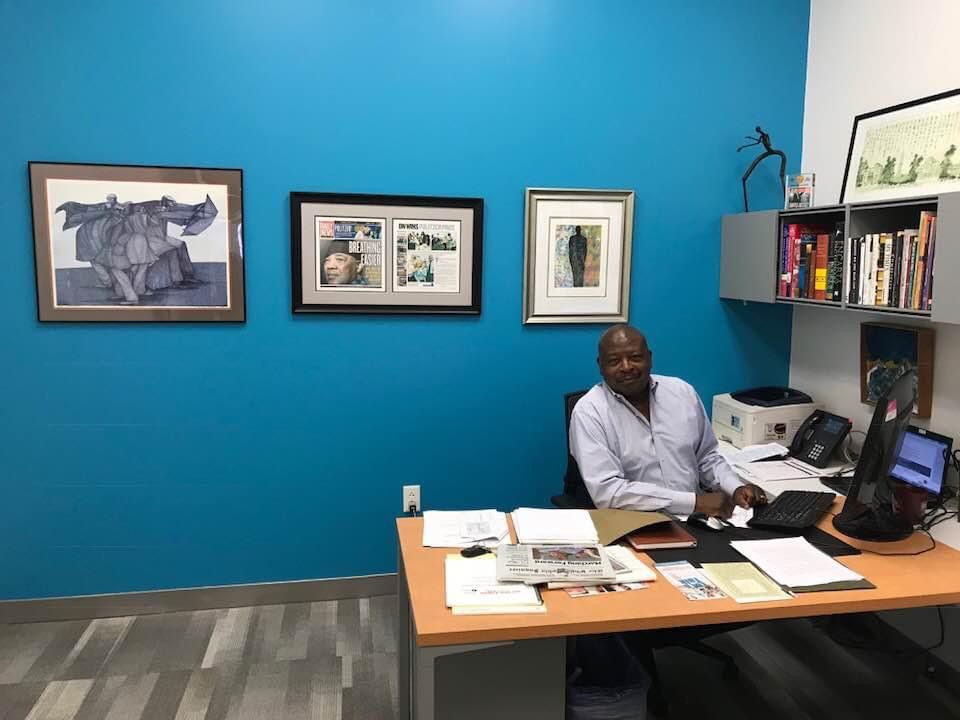
This is how I’ll always remember Michael Days: sitting in his office with a smile on his face, always ready to talk or just listen.
As amazing as he was as a newsroom leader, Days was an even better person outside of work. A fellow Catholic, he was a man of great faith who not only attended Mass regularly but whose life exemplified his deeply held Christian beliefs. He and his wife, Angela Dodson — then an editor at the New York Times — adopted not one child, but four brothers all at the same time.
Once, I had the good fortune of being invited to a holiday party at his home in Trenton — a location picked because it was between his wife’s job in NYC and his own in Philly. Shortly after I arrived, I recall glancing outdoors and spotting four shiny, new bicycles in the backyard. I was in awe. His beautiful home was decorated with a huge tree. I watched as Days’ wife handed each boy a matching Christmas plate. Lunch was a warm, cozy affair with lots of Southern favorites.
Days’ career took off, as he went on to hold a number of leadership positions in the newsroom. The first time he was in line to make history — as the first African American managing editor of the Daily News — I felt for certain he would get the job. Days had grown up in North Philly and graduated from Roman Catholic High School. Not only did he know the city, he understood the paper’s operations inside and out, and was adept at dealing with its motley crew of reporters and photographers.
I was outraged when he was passed over for an outsider. But when I stuck my head in his office to check on him, I was startled when he met my gaze with a smile. Days was unflappable like that. Calm. Steady. No matter what happened, he always kept his cool. That’s not easy in a newsroom full of strong personalities, but Days did it.
Looking back, he had the right idea. Management eventually woke up and named him managing editor, and later executive editor, of the Daily News. Under his leadership, the Daily News excelled journalistically, winning a Pulitzer Prize in 2010 for a series exposing corruption in the Philadelphia Police Department.
The following year, Days was named managing editor of The Inquirer and left the Daily News for a brief time. When then-publisher Bob Hall announced his return, and Days strode back into the newsroom, we all stood and cheered. Some even cried. Time passed, the papers consolidated, and Days went on to hold other management roles at The Inquirer. Even as he became less involved in the day-to-day newsroom operations, we still streamed in and out of his office, seeking advice about stories we were working on or grabbing a piece of chocolate from his candy dish.
After he retired in 2020, we continued to seek him out. He would take our calls as if he were still on the clock.
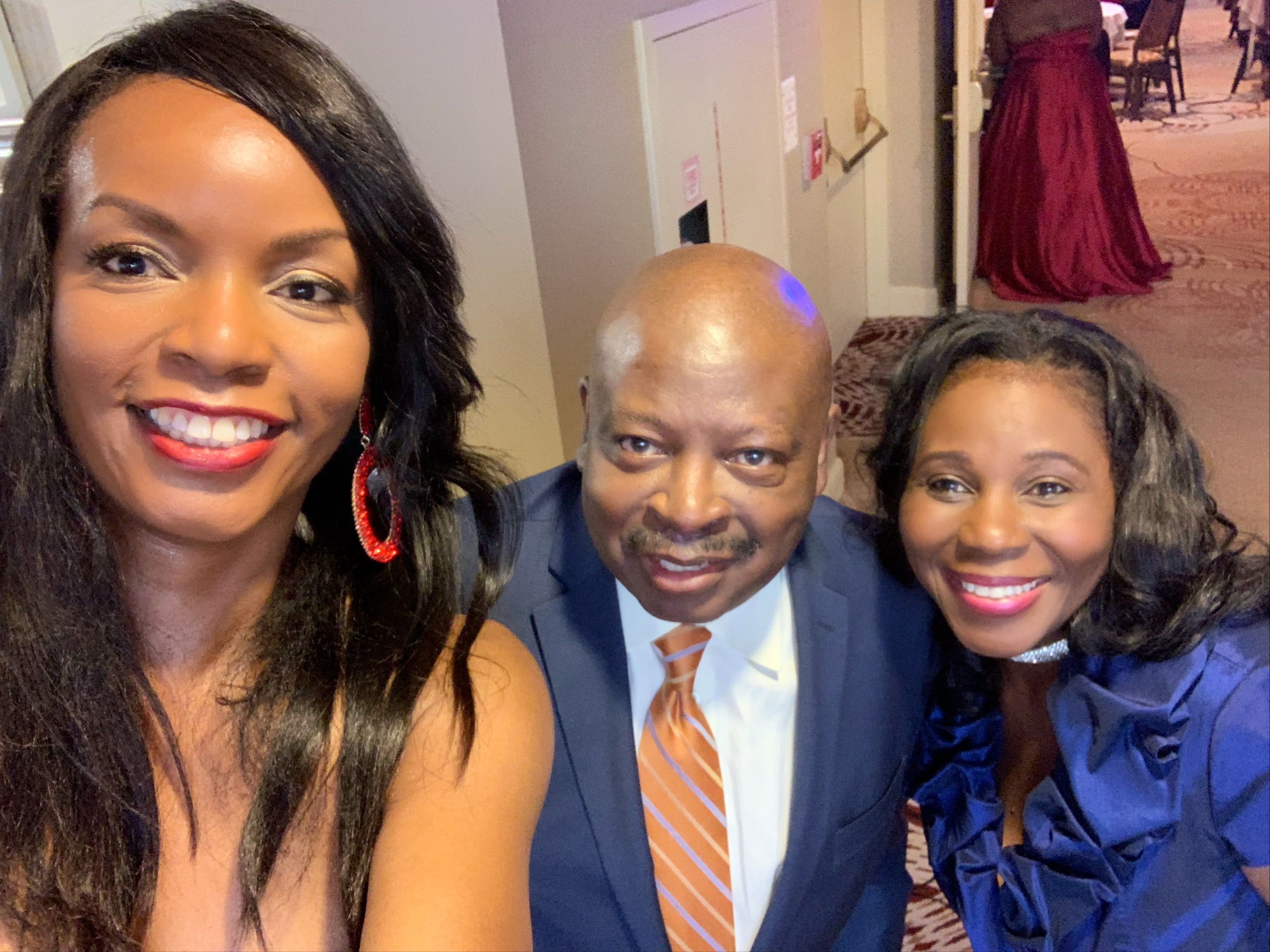
The author (left) at a WDAS Women of Excellence Luncheon where she was being honored. The late Inquirer Vice President Michael Days is to her immediate right, and former Deputy News Editor Yvette Ousley is next to him.
Two years ago, a group of Black journalists decided to form a new local affiliate branch of the National Association of Black Journalists after the Philadelphia Association of Black Journalists broke off from the nationwide group. Days, then 70, graciously agreed to serve as NABJ-Philadelphia’s inaugural president, and helped the new group find its footing.
In September, the group hosted a reception at the Free Library of Philadelphia honoring NBC contributor Trymaine Lee, author of the new book, A Thousand Ways to Die: The True Cost of Violence on Black Life in America. When it was his turn to speak, Days praised Lee, who had been a Daily News intern, and told him, “You are a talent, and nobody is surprised that you have done so well.”
Afterward, former Daily News reporter Mister Mann Frisby posted on social media: “The way he spoke about Trymaine at his book signing, I have also heard him speak of me the same way. Always encouraging. That makes me know that he was CONSISTENT for decades in regards to how he supported and mentored journalists.”
When I woke up early Sunday and discovered numerous “call me” texts, I knew something really bad had happened. Days’ death sent a seismic jolt through journalism circles nationwide.
“He was kind and gentle,” recalled Inquirer columnist Elizabeth Wellington. “I lost my own father earlier this year. And this feels as if I’ve lost a second.”
I feel the same way. Before Days, I’d never met any man I considered anywhere close to being in the same league as my dad,who was a giant among men.
Inquirer reporter Melanie Burney, who will finish out Days’ term as president of NABJ-Philadelphia, told me she has found herself in the days after his death asking, “What would Michael do?”
That’s a question I’ve asked myself a few times recently, as well. Days had been just a quick phone call away. Going forward, we will have to rely on the many lessons he has already taught us.
Three large stand-alone parking garages have been proposed in Philadelphia this year, unusual projectsin a city where parking operators have long complained that high taxation makes it difficult to run a business.
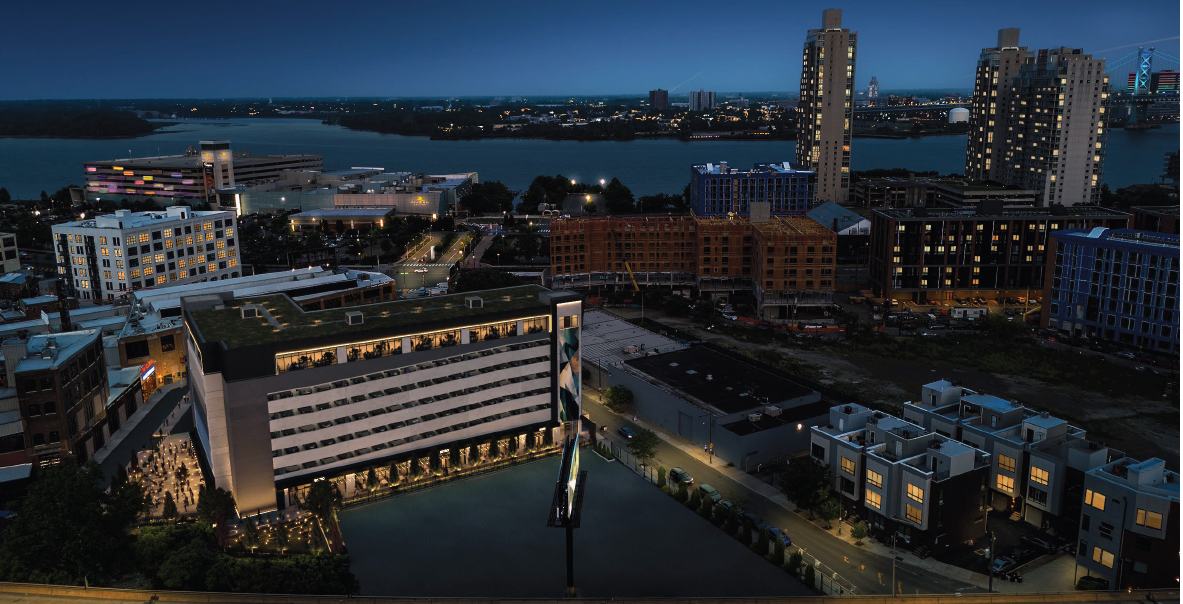
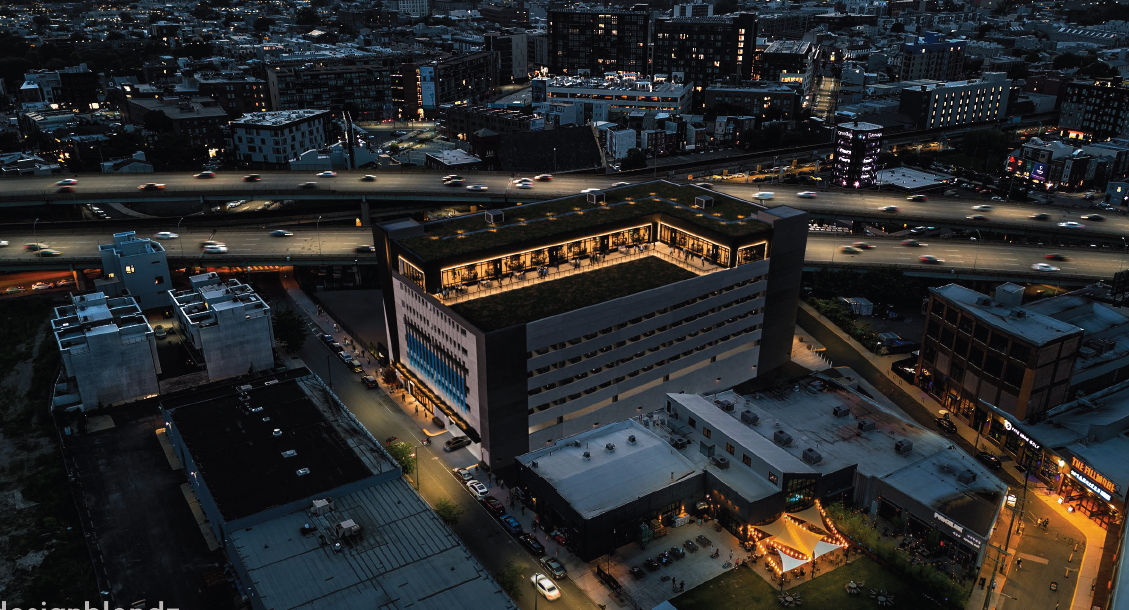
The latest is a 372-unit garage near Fishtown and Northern Liberties at 53-67 E. Laurel St. near the Fillmore concert hall and the Rivers Casino.
“There’s been about 2,500 units that have come online within a 5- to 10-minute walk” of the planned garage, said Aris Kufasimes, director of operations with developer Bridge One Management. “When you’re building those on 7-1 [apartments to parking spaces] ratios, that leaves a massive hole. Where is everybody going to put their vehicles?”
Despite central Philadelphia’s walkability and high levels of transit access, two other developers have made similar calculations this year.
In the spring, Children’s Hospital of Philadelphia (CHOP) revealed plans for a 1,005-space parking garage in Grays Ferry along with a shuttle service to spirit employees to the main campus a mile away.
In August, University Place Associates unveiled plans for a 495-unit garage. About a fourth of it will be reserved for the use of the city’s new forensic lab, but the rest will be open to the public.
All three projects have baffled environmentalists and urbanists, who thought Philadelphia was moving away from car-centric patterns of late 20th-century development.
It’s also surprised parking operators in the city, who say national construction cost trends and high local taxation make it difficult to turn a profit.
Legacy parking companies in Philadelphia like E-Z Park and Parkway Corp. have been selling garages and surface lots for redevelopment as anything other than parking. They say the city has lost 10,000 publicly available spaces in the last 15 years, bringing the total to about 40,000 in Center City.
“I don’t think I’ll ever build another stand-alone parking facility,” said Robert Zuritsky, president of Parkway Corp. and board chair of the National Parking Association. “It doesn’t make any sense.”
Zuritsky and other parking companies have long noted that operators in Philadelphia, who often have unionized workforces, get hit with parking, wage, property, and the Use and Occupancy Tax.
When combined with the soaring cost of building new spaces across the nation, it’s difficult to turn a profit in Philadelphia.
A rendering of the Fishtown garage, looking towards the Delaware River.
Zuritsky says it costs $60,000-$70,000 a space to build an aboveground lot in today’s environment and $100,000 to $150,000 below ground.
“It’s like building a house for a car,” he said.
Depending on hyperlocal peculiarities, Zuritsky says that taxation in Center City can eat up to 60% of the money they bring in and that to profit from new construction, an operator would have to charge $3,000 per space a month.
“I wish people luck, the ones that are moving in,” said Harvey Spear, president of E-Z Park. “Between taxes, insurance, and labor, it comes to, like, 70-some percent of what we take in. We have more equipment now that does away with a lot of labor; we’re trying to compensate with that.”
Urbanist and environmental advocates, meanwhile, have condemned the new garage projects, arguing that they will add to carbon emissions, air pollution, and traffic congestion.
“A massive parking garage less than half a mile from the El [in Fishtown] is the wrong direction for any city that claims to take climate action seriously,” said Ashlei Tracy, deputy executive director with the Pennsylvania Bipartisan Climate Initiative. “SEPTA is already working to get more people out of cars and onto transit, but projects like this one and the one from CHOP only make that harder.”
Here are the parking projects in the pipeline.
Fishtown: 372 spaces
The garage, with architecture by Philadelphia-based Designblendz, doesn’t just contain parking. It includes close to 14,000 square feet of commercial space on the first floor, which the developer hopes to rent to a restaurant — or two — on the edges of one of Philadelphia’s hottest culinary scenes.
Another over 16,000-square-foot restaurant space is planned for the top floor, with views of the skyline and river. Both the top and bottom floors also could be used as event spaces.
Kufasimes says that this aspect of the project could partly offset the kinds of costs that parking veterans warn of.
“Our due diligence team went through those numbers and vetted them pretty thoroughly: The returns are what they needed to be,” Kufasimes said. “It’s got a multifunction of income streams, so we think that that really will help play a larger role.”
Kufasimes also said a parking garage made sense in an area that’s seen more development than almost any other corner of Philadelphia. When investors purchased the land at 53-67 E. Laurel St. and approached his company for ideas, they met with other stakeholders in the neighborhood and determined parking would be appreciated.
“It wasn’t necessarily all about the profit,” Kufasimes said. “A lot of people this day and age, that is their number-one goal. If this is a slightly lower return in the long run but can be better accepted by the community as a whole, we think that actually raises the value of the asset.”
An overhead-perspective rendering of the Fishtown garage.
At an October meeting of the Fishtown Neighbors Association, that argumentappeared to pay off. Unlike most community meetings where a large new development is proposed, there were no adamant opponents of the project. The project also includes a 20,000-square-foot outdoor space, a green roof, and a to-be-decided public art component. All of that helped, too.
“It’s nice seeing a parking garage, of all things, be as pedestrian-friendly and thoughtful as this,” one speaker said during the Zoom meeting.
Dubbed University Place 5.0, it largely exists because of a major expansion of the municipal bureaucracy west of the Schuylkill.
For years the city has sought a new location for its criminal forensics laboratory. The debate became heated in City Hall, with numerous Council members making the case for locations within their districts.
Councilmember Jamie Gauthier pushed for its location in University City Place 3.0, a newly built, state-of-the-art life sciences building that was coming online just as its intended industry was slowing down in the face of higher interest rates.
To get the crime lab, Mayor Cherelle L. Parker’s administration said the police department would need ample parking. That’s where the new garage comes in.
In June, Gauthier passed a zoning overlay that cleared away the regulatory hurdles to the project. Six weeks later, the developers revealed University City Place 5.0, which has 29 parking spaces on the ground floor reserved for official use by forensics vehicles and 100 spaces reserved for city employees.
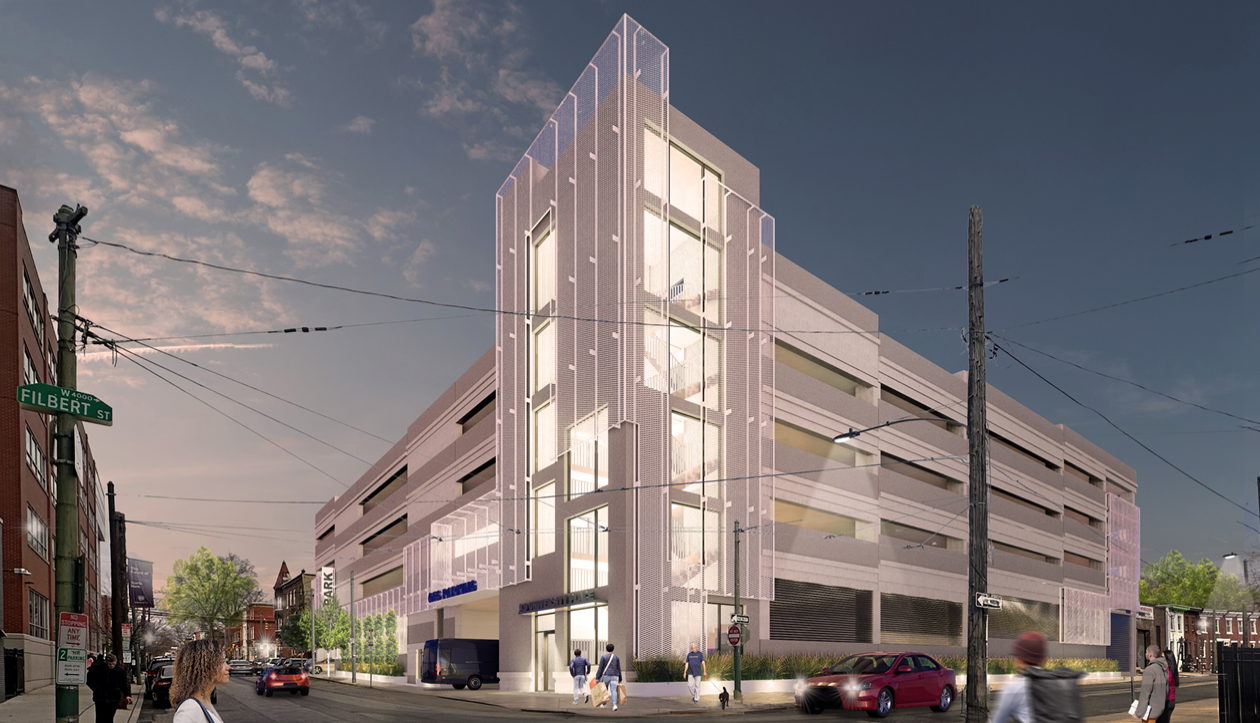
A rendering of the proposed University City parking garage as seen from 42nd and Filbert Streets.
Designed by Philadelphia-based ISA Architects, the garage is also meant to serve University Place Associate’s other large developments in the area. Akin to the Fishtown garage, they have also sought to make the development pedestrian friendly, with a dog park, green space, and public art.
The local community group, West Powelton Saunders Park RCO, also embraced the proposal.
“The community met regarding this project back in August, and … they were all in support of this project,” Pamela Andrews, president of the West Powelton Saunders Park RCO, said at the city’s September Civic Design Review meeting. “We have a tremendous problem with parking, and the community members felt this was a much needed and welcome addition.”
Grays Ferry: 1,005 parking spaces
CHOP’s thousand-car parking garage by far has been the most controversial of the proposals. But it also makes the most economic sense for the owner. Unlike the other garages — or those owned by Parkway and E-Z Park — it will be owned by a nonprofit and exempted from many of the taxes that make it so expensive to own parking in Philadelphia.
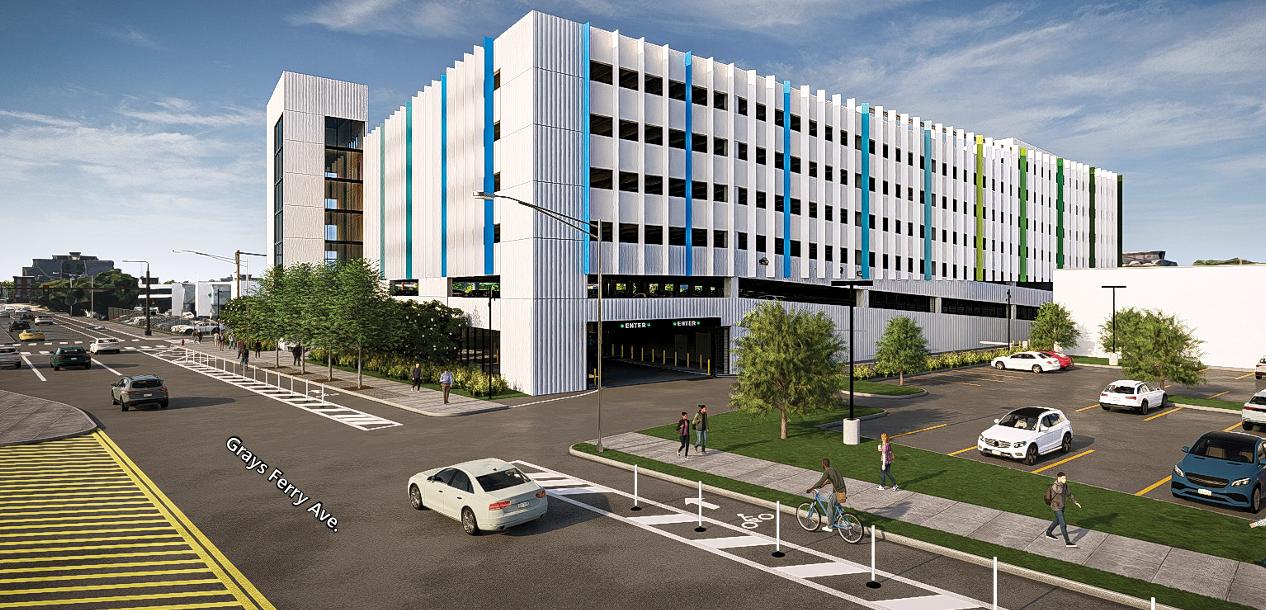
A rendering of the new parking garage CHOP plans for Grays Ferry.
The hospital purchased the property at 3000 Grays Ferry Ave., next to the Donald Finnegan Playground, for almost $25 million last year.
The seven-story development, which, plans show, would have far fewer amenities than its University City and Fishtown counterparts, is meant to serve CHOP’s new research facilities in Fitler Square and the new patient tower set to open in 2028.
“We recently secured permits and have begun construction on the new parking garage at 3000 Grays Ferry Ave.,” a CHOP spokesperson said. “The full construction is expected to go through the fall of 2026. CHOP continues to engage with the community by providing support, timely updates and addressing feedback during construction.”
At the time of its unveiling, CHOP argued that the massive garage was needed as SEPTA threatened to become unreliable due to a political funding crisis in Harrisburg. But detractors appeared almost immediately to denounce the hospital for worsening air quality in a lower-income neighborhood that is already a hot spot for asthma.
There are no regulatory hurdles to the development, but changes in the political or economic landscape could make it difficult to embark on a large capital project. Notably, the University of Pennsylvania proposed an 858-space garage in 2023 for the nearby Pennovation Center and has never broken ground.
While the Phillies are poised for some roster changes in 2026, at the moment it doesn’t seem like those will occur in the infield.
The Phillies’ outfield has been a revolving door for the last few seasons, but the infield continues to run it back. And according to Dave Dombrowski, that seems to be the plan again. At least, for now.
“The infield is pretty well solidified,” the Phillies’ president of baseball operations said at his end-of-season news conference on Oct. 16.
And indeed, Trea Turner and Bryce Harper are under contract into the 2030s, while Bryson Stott, Edmundo Sosa, and Alec Bohm are arbitration eligible. Barring a trade, there isn’t much room for movement or change.
Here’s an overview of the Phillies’ infield outlook next season and beyond.
Trea Turner had his best overall season as a Phillie in 2025, winning the NL batting title with a .304 average and stealing 36 bases.
Turner’s improvement
This time last year, there were questions raised about Turner’s long-term future at shortstop after another below-average defensive season. But those questions have been all but put to rest after Turner made significant strides in 2025. His 17 outs above average were the highest of his career and tied for third among shortstops.
On the offensive side, Turner bought into the Phillies’ plan for him as their new leadoff hitter. Manager Rob Thomson wanted him to focus on using his athleticism and getting on base, rather than hitting homers. Turner did just that, stealing 36 bases and posting a .355 on-base percentage, his best since arriving in Philadelphia. With a .304 batting average, Turner also became the first Phillie to win the batting title since Richie Ashburn in 1958 and was named a Silver Slugger finalist.
He may have sacrificed some power to do it, hitting just 15 home runs compared to 21 last season. But overall, Turner did exactly what the Phillies wanted out of him in the regular season, both offensively and defensively.
“He’s tough on himself,” Dombrowski said. “He’s like one of these guys, if he doesn’t hit 40 home runs and 40 doubles and 40 stolen bases, and lead the league in hitting, he’s probably going to think that he needs to do more.
“That’s how he is, which is great. That’s a great quality and attribute, but he doesn’t have to hit with any more power for us. He really did a fine job.”
The Phillies plan to keep Bryce Harper, a Gold Glove finalist for a second straight season, at first base.
Harper to the outfield?
Don’t expect Harper to change positions, either, despite the first baseman expressing some willingness last offseason and ahead of the trade deadline to return to the outfield.
Harper, who earned his second straight Gold Glove nomination at first base this season, has said he would be open to making a position switch if needed for an offensive upgrade. But it doesn’t sound as if the Phillies will consider moving him back to the outfield to add, say, Pete Alonso, who plans to opt out of his contract with the Mets after a 38-homer season.
“I think Bryce is a first baseman at this time,” Dombrowski said. “I mean, that’s where we look at him as, and he has asked to go out into the outfield. He would be willing to do so, but I think it would be more for the short term if we had done something at the trading deadline, but it’s been a while since he’s been out [there].
“I’m sure he’d be fine, but he’s a really good first baseman, and I think for us, that’s the position we look at him playing for us.”
Harper finished the season with an OPS of .844. Though that still ranked 11th in the National League, it was his lowest since 2016 (.814).
Dombrowski seemed to lay down a challenge to Harper at his year-end news conference.
“He’s still an All-Star-caliber player. He didn’t have an elite season like he has had in the past. And I guess we only find out if he becomes elite or he continues to be good,” Dombrowski said. “… He’s the one that will dictate that more than anything else, and that’s what it comes down to.”
Bryson Stott hit .310 with an .880 OPS from Aug. 1 through the end of the regular season, but still struggled against lefties.
Second and third base
Stott continued to be elite defensively at second base, but had a roller-coaster offensive season. He struggled over the first half, but a midyear adjustment to his hand placement led to improved at-bats overall. Stott went from hitting .194 with a .637 OPS in July to a .307 batting average and .864 OPS in August.
However, Stott’s .575 OPS against lefties kept him in a platoon with Sosa. When called upon, the Phillies’ utility man provided a spark of energy and clutch hits, plus an .895 OPS against left-handers.
“I view Stott as an everyday player, but Sosa’s numbers are so good against left-handed pitching that you’ve got to fit him someplace, whether it’s at third base when Bohm was hurt or mixed in for Stott against the lefties,” Thomson said. “So I view Stott as an everyday hitter. I think if he played every single day against left-handed pitching, he’d get better and put up pretty good numbers.”
On the other hand, Bohm spent last offseason amid a tornado of trade rumors. He will reach free agency in 2027, and his name will likely be floating around this winter, too, as one of the few ways the Phillies can change up their infield. The third baseman was afflicted by injuries — a rib fracture in July and shoulder inflammation in August — and slashed .287/.331/.409.
While Bohm and Harper were on the injured list at different points this season, Otto Kemp was a key fill-in. He hit .234 with 28 RBIs in his first 62 major-league games, most of which he played through knee and shoulder injuries that he will address with offseason surgery.
Kemp, 26, saw the bulk of his playing time at third but also appeared at first and second and in left field.
The Phillies believe Aidan Miller can stick at shortstop, but that’s blocked by Trea Turner for now.
Down on the farm
The Phillies’ top infield prospect, Aidan Miller, is rising quickly. The 21-year-old posted an .825 OPS this year and stole 59 bases between double-A Reading and triple-A Lehigh Valley. But the question remains as to where he will play in the majors.
Miller, who finished the season in triple A after a September promotion, has played shortstop throughout his minor-league career. Similar to the situation with top outfield prospect Justin Crawford, the Phillies believe that when Miller reaches the major leagues, he will need to be an everyday player.
A Miller breakthrough next season would require some changes to the current infield configuration. And Turner, who is under contract through 2033, doesn’t appear to be on the move from shortstop anytime soon. Dombrowski said the Phillies are still having conversations about Miller’s long-term position.
“When I talked to people in our organization, they feel he can play shortstop. Of course, we have an All-Star shortstop at this point,” he said. “… [Miller has] played some second, he’s played some third, but he’s primarily been a shortstop, so we’d have to make sure that we properly prepare him to do that, and that’s still a discussion that we’ll have to have.”
Miller initially planned to participate in the Arizona Fall League, but the Phillies decided to prioritize rest instead.
Further down the pike, second baseman Aroon Escobar is the Phillies’ No. 5 prospect, according to MLB Pipeline. Escobar, 20, ascended three levels in 2025 to finish the season at double A. He hit 15 homers and had 62 RBIs in 120 games.
Also in double A to end the year is Phillies No. 13 prospect Carson DeMartini. In his first full professional season after being drafted in 2024 out of Virginia Tech, the third baseman posted a .707 OPS and stole 45 bases.
Kazuma Okamoto has slashed .277/.361/.521 with 248 homers over 11 seasons in Nippon Professional Baseball in Japan.
Free agency
The Phillies don’t have a pressing free-agent need to fill in the infield, though that could change if a trade is made. (The battery will be covered later in this series.)
Currently, one of the top available names on the market is righty third baseman Alex Bregman, who is set to opt out of his contract with the Red Sox after an All-Star season in which he slashed .273/.360/.462 with 18 homers.
Third baseman Eugenio Suárez was one of the most coveted offensive trade deadline acquisitions this year and was linked to the Phillies before ending up with the Mariners. Suárez saw a dip in production in the second half, but he still had some big postseason moments for Seattle, such as a game-winning grand slam in Game 5 of the American League Championship Series.
Gleyber Torres, 28, had an overall bounce-back year with the Tigers after the Yankees let him walk in 2024. The right-handed-hitting second baseman was named an All-Star for the first time since 2019. Torres saw diminished production later in the season, with a .812 first-half OPS compared to .659 in the second half, but revealed that he had been playing through a sports hernia late in the year.
There are also international options. In recent years, the Phillies have attempted to expand their outreach in Japan in the hopes of attracting top stars there, but have yet to break through.
The Yomiuri Giants of Nippon Professional Baseball have announced that they will be posting corner infielder Kazuma Okamoto. The right-handed 29-year-old has hit .277/.361/.521 with 248 homers over 11 seasons in NPB.
According to an MLB.com report, Munetaka Murakami is also expected to be posted this winter. Murakami, 25, is a left-handed-hitting corner infielder with a career .951 OPS across eight seasons in NPB. He was named Most Valuable Player of the Central League in 2021 and 2022.
For years, the Preservation Alliance for Greater Philadelphia has heard the same arguments: Preservation is a barrier to development. It reduces density. It restricts the housing supply.
“And we knew in our gut that that wasn’t true, but we didn’t have the data to support it,” said Paul Steinke, executive director of the Preservation Alliance, which works to protect historic properties from demolition. “Now, we do.”
In Philadelphia, $4 billion has been invested in historic rehabilitation projects, which have created thousands of jobs each year.
Steinke said the Preservation Alliance commissioned this study now because of current debates about Philadelphia’s growth and affordability, the need to increase the housing supply, and development policy as Mayor Cherelle L. Parker rolls out her Housing Opportunities Made Easy, or H.O.M.E., initiative to build or preserve 30,000 homes.
“We wanted to develop some data to demonstrate preservation’s role in those conversations,” said Steinke, who is on the H.O.M.E. advisory committee. “And the reality is the data show that historic preservation is a powerful engine … for investment, jobs, affordability, and inclusive growth.”
The study was completed by PlaceEconomics, a Washington-based firm that analyzes the economic impacts of historic preservation in cities across the country. The purpose of the analysis in Philadelphia was to understand the economics of the preservation of older properties in general and not only those properties that are historically designated, Steinke said.
Preservation debates
Historic designation is a divisive topic, and preservationists have found themselves clashing not only with developers who want to demolish properties but also with homeowners and pro-housing groups.
Historic designation shields properties from demolition and means owners have some restrictions on what they can do to the outside of their properties. Decisions about doors and windows, for example, are subject to the scrutiny of preservation officials. And owners who fight the designation of their properties argue that regulations can be a burden.
In response to the Preservation Alliance’s study, 5th Square, a Philadelphia-based urbanist political action committee, said it supports efforts to rehabilitate older buildings and that “Philadelphia’s dense, historic neighborhoods are a beloved feature of the city.”
“However, we remain concerned about the proliferation of historical preservation districts across the city,” Brennan Maragh, cochair of the group’s housing committee, said in an emailed statement. “These districts … impose real costs on families, small businesses, and owners attempting to maintain or improve their properties.”
Almost 5% of Philadelphia is historically designated
Almost 5% of the city’s land area is a historic district or is property individually designated as historic outside of historic districts, the study found.
The share of properties historically designated by the city has increased from 2.2% to 4.4% since 2016, when the city started ramping up its historic designations. Philadelphia has caught up with other large cities.
In 2023, about 56,000 residents lived in a local historic district.
Tax credits have created jobs and revenue
Between 2010 and 2024, 295 projects that used state and/or federal historic preservation tax credits were completed in Philadelphia, according to the study. This ranks Philadelphia first in the nation.
Projects that use historic tax credits have created an average of 1,777 direct jobs and 729 indirect jobs each year in Philadelphia over the last 15 years. Each year, they have created an average of about $95 million in direct income and about $47 million in indirect income.
If historic rehabilitation were a single industry, it would be the city’s 25th-largest employer.
Historic tax credit activity also has generated about $8 million in local tax revenue.
Two-thirds of Philadelphia’s residential buildings and half of the city’s housing units were built before 1950, according to the study. This older housing tends to be smaller in size and lower in cost.
So preserving older homes helps preserve housing affordability. The study did not consider the historic designation status of these homes.
“While it is true that Philadelphia’s older housing stock remains affordable compared to new construction,” said Maragh at 5th Square, “historic preservation districts can also have the unintended consequences of excluding low-income residents from large parts of the city, raising lifetime housing costs on owners and creating unnecessary regulations that slow down the process of adaptive reuse.”
The study found that the city’s historic districts have higher shares of high-income households and lower shares of low-income households compared to the rest of the city.
Outsize population growth in historic districts
Donovan Rypkema, principal and CEO at PlaceEconomics, said a “myth” of historic preservation is if “you create those historic districts, you just set neighborhoods in amber and nothing can ever change.”
The firm’s study found that population growth in historic districts outpaced growth in the rest of the city.
In historic districts created before 2010 — so before the recent push for more districts and ones that are more geographically and racially inclusive — the population grew by about 27% between 2010 and 2020. Over the same time, the rest of the city’s population grew by less than 5%.
More than 79% of the homes in historic districts are in buildings with two or more units, compared to 32% in the rest of Philadelphia. Historic districts also offer a wider range of housing types.
The densest areas of the city are in historic districts, according to the study. There are 10,000 more people per square mile in historic districts than in the rest of the city’s residential areas.
These statistics speak to the “inherent attractiveness” of historic districts and also that “they can accommodate that growth,” Rypkema said.
HBO's Task once again brought the Philadelphia region back into the spotlight over its seven-episode run, showcasing a slew of local spots from Ridley Township to Coatesville and beyond.
And with the series wrapped, we can say: Creator Brad Ingelsby did right by Delco, where the series is largely set.
Sure, the accents were pretty great — but as we look back at the show, it's clear that the Philadelphia region was integral to Task. Here, we've rounded up all the local spots — sans private homes — we could identify in Task. Check out the map below to see what locations wound up the show, and why the series takes us there:
Loading…
Aston Township
Mirenda Center at Neumann University
First seen in episode one
Courtesy of Neumann University
Tom (Mark Ruffalo) mans a table at a job fair here while temporarily working as a recruiter for the FBI. Next to his station, the distinctive pillars of the center’s atrium are visible.
Collingdale
Rita’s Italian Ice & Frozen Custard
First seen in episode one
Alejandro A. Alvarez / Staff Photographer
Emily (Silvia Dionicio), Tom’s daughter, works her part-time job here. In the scene where it is shown, Tom orders a black cherry water ice, a flavor choice of which we approve.
Philadelphia
Former Philadelphia Police Department Headquarters
First seen in episode one
Jessica Griffin / Staff Photographer
We get a brief glimpse of the exterior of the former Philadelphia police headquarters, colloquially known as the Roundhouse. Whether the interior is the same building is unclear, but in the show, this appears to be where the FBI’s Philly field office is located.
Bangor
Bangor Quarry
First seen in episode one
Robbie (Tom Pelphrey), Cliff (Raúl Castillo), and Peaches (Owen Teague) head here for a post-robbery swim. On a real-life note, you should not do the same — not only is it dangerous, but it’s also trespassing, according to the Bangor Borough Police Department.
Coatesville
Lincoln Highway and 2nd Avenue
First seen in episode two
TOM GRALISH / Staff Photographer
The Dark Hearts motorcycle gang rides through this intersection in formation, the giveaway being Presence Bank in the background in one shot.
Coatesville
Polish American Citizens Club
First seen in episode two
Courtesy of HBO
Done up as the so-called Lefty’s Taproom in the show, this location serves as the Dark Hearts’ clubhouse and watering hole. In real life, it’s just off Lincoln Highway, lending a bit of realism to the gang’s ride through downtown Coatesville.
Aston Township
Martin’s Taphouse
First seen in episode two
Martin's stands in as the exterior of the Tip Top Lounge in the series, which we see in this episode stacked with motorcycles parked outside the front door.
Sharon Hill
Dixon’s Lounge
First seen in episode two
Courtesy of HBO
While the exterior of the Tip Top Lounge is in Aston, the interior bears a striking resemblance to Delco’s own Dixon’s Lounge. Here, Robbie and Cliff are stood up by an, ahem, “business partner” before walking out on an order of crabfries.
Boothwyn
Willowbrook Shopping Center
First seen in episode two
Isaiah Vazquez / For The Inquirer
Maeve (Emilia Jones) takes Sam (Ben Lewis Doherty) to a fictional “Val-U Corner” store here with the intent of dropping him off for police to find before the plan goes awry. The store is located near the real Blue Cherry Ice Cream and Bakery, which is visible in the background.
Phoenixville
Phoenixville Area High School
First seen in episode two
During his search for his daughter, Emily (Silvia Dionicio), Tom (Mark Ruffalo) finds her in the dugout of a baseball field that, in real life, is at Phoenixville Area High School. Its distinctive backstop is visible from a bird's-eye view in the series.
Philadelphia
Ralph’s Italian Restaurant
First seen in episode three
MICHAEL KLEIN / Staff
Dark Hearts leaders Jayson (Sam Keeley) and Perry (Jamie McShane) walk through the kitchen here to meet with local drug kingpin Freddy Frias (Elvis Nolasco), but in the show, it doesn’t appear to be serving the Italian food we’re used to in real life.
Aston Township
Mount Hope Cemetery
First seen in episode three
Isaiah Vazquez / For The Inquirer
It’s a very quick shot, but it’s there just under four minutes into the episode. In the background, you can see the Commodore Barry Bridge, and graves on a hill in the cemetery in the foreground.
Union Township
Sixpenny Creek Quarry
First seen in episode three
Courtesy of HBO
Robbie (Tom Pelphrey) and Cliff (Raúl Castillo) finally get their meeting with Eryn (Margarita Levieva), their Dark Hearts insider, but it doesn’t go according to plan.
Upper Darby
Llanerch Diner
First seen in episode three
Tom Gralish / Staff Photographer
Taskforce members Aleah (Thuso Mbedu) and Lizzie (Alison Oliver) head to Upper Darby's famed Llanerch Diner for a tip on the drug house robberies they're investigating, and get a break in the case.
Lansdowne
Rosedon Plaza
First seen in episode three
Jose F. Moreno / Staff Photographer
In the background of one shot during the chase for Ray (Peter Patrikios), you can see the old Doc's Deli (Deli Green). That puts Ray in the corner of the Rosedon Plaza parking lot as Lizzie (Alison Oliver) makes the arrest.
Coatesville
Coatesville Police Department
First seen in episode three
Steven M. Falk / For The Inquirer
Whether the interior is the same station isn’t clear, but an exterior shot sets this spot up as the place where the Task team interrogates Ray (Peter Patrikios) and Shelley (Mickey Sumner). Out front, a police cruiser reads “Delaware County Sheriff,” which is a little far from home.
Holmes
The Ridley House
First seen in episode three
Isaiah Vazquez / For The Inquirer
Following the chase and interrogation, Lizzie (Alison Oliver) and Grasso (Fabien Frankel) head to this local bar to unwind. Grasso indicates it is a Barnaby’s, which, in real life, was true at one point – until the location became the Ridley House in 2019.
King of Prussia
Pennsylvania Turnpike on-ramp
First seen in episode four
TOM GRALISH / Staff Photographer
It’s a quick shot as Tom (Mark Ruffalo) drives around at the beginning of the episode, but you can just make out the LasikPlus building on Mall Boulevard in the background. That puts this Pennsylvania Turnpike entrance in King of Prussia.
Malvern
I-76 Exit 320
First seen in episode four
Tom (Mark Ruffalo) appears to take this exit as he is driving to meet his fellow taskforce members.
Marcus Hook
Marcus Hook Community Center
First seen in episode four
Erin Blewett / For The Inquirer
As County Chief Dorsey (Raphael Sbarge) exits the building, you can see a door tagged with “Delaware County Sheriff’s Office.” But the green awning above him is a dead giveaway — that’s the Marcus Hook Community Center.
Aston Township
Rockdale Industrial Center
First seen in episode four
It's disguised as a trucking depot in the series, but this is where Robbie (Tom Pelphrey) and Cliff (Raúl Castillo) travel with Sam (Ben Lewis Doherty) to arrange transportation for their escape into Canada before being confronted by a Good Samaritan.
Chester
Upland Diner
First seen in episode four
Erin Blewett / For The Inquirer
Upland Diner’s parking lot serves as Robbie’s (Tom Pelphrey) holding area during this episode’s drug deal. Unfortunately, we only get an exterior shot of the building, but the restaurant’s vintage-style sign is proudly on display. Great pancakes, for the record.
Newtown Square
Ridley Creek State Park entrance
First seen in episode four
JOSE F. MORENO / Staff Photographer
Cliff (Raúl Castillo) can be seen turning onto North Sandy Flash Drive from Gradyville Road as he heads to the drug deal meeting spot. If you look closely, you can just barely make out a sign for Ridley Creek State Park.
Wilmington, Del.
Beaver Creek
First seen in episode four
It's tough to spot, but the dam that Cliff (Raúl Castillo) parks his car next to during this episode's failed drug deal — or, more accurately, the Dark Hearts' setup — appears to be in Beaver Creek on the Delaware-Pennsylvania border.
Coatesville
City Clock Apartments
First seen in episode four
Steven M. Falk / For The Inquirer
Another brief shot, but the clock face on the tower of the City Clock Apartments is prominently featured. The building formerly was the National Bank of Coatesville, and has been on the National Register of Historic Places since 1977.
Downingtown
Coatesville-Downingtown Bypass
First seen in episode five
FBI Boss Kathleen McGinty (Martha Plimpton) and the rest of the task force swerve across traffic here while looking for Tom (Mark Ruffalo). In the background, you can just make out the sign for Pacer Pool Services & Supplies.
Downingtown
Marsh Creek State Park
First seen in episode five
After surviving his encounter with Robbie (Tom Pelphrey), Tom (Mark Ruffalo) emerges from the woods to see a beautiful summer scene of families enjoying the lake at Marsh Creek State Park.
Boothwyn
I-95 Pennsylvania Welcome Center
First seen in episode five
Erin Blewett / For The Inquirer
FBI boss Kathleen McGinty (Martha Plimpton) stuffs her face with fast food at the center's picnic tables as the task crew looks for their leader. As McGinty explains, she is “an emotional eater.”
Everett
Woy Bridge
First seen in episode five
In what is likely the farthest-flung filming location – at least in relation to the rest of the local spots – we get some shots of Everett’s Woy Bridge in Bedford County as the taskforce closes in on Robbie (Tom Pelphrey).
Milmont Park
Our Lady of Peace Parish
First seen in episode six
RON TARVER / Staff Photographer
Though disguised well as a juvenile detention facility in the show, this little Delco parish provides at least the exterior shots for where Tom (Mark Ruffalo) meets Sam (Ben Lewis Doherty) for the first time.
Coatesville
High Bridge
First seen in episode seven
This instantly recognizable Coatesville landmark serves as the location for where County Chief Dorsey (Raphael Sbarge) appears to seal Grasso's (Fabien Frankel) fate with the Dark Hearts.
Media
Delaware County Courthouse and Government Center
First seen in episode seven
Courtesy of Delaware County Government Center and Courthouse
Here, Tom (Mark Ruffalo) gives a touching family statement at a court hearing for his son, Ethan (Andrew Russel), in what is the emotional climax of the series. As The Inquirer reported last year, the production took over Courtroom 15 for filming.
story continues after advertisement
Explore the map of all locations at your own pace. Tap onHover overa pin to learn more.
That's it for Task. But rest assured, if HBO decides to focus on Philly again, we'll be back. Until then, see youse later.
Staff Contributors
Design and Development: Sam Morris
Reporting: Nick Vadala
Editing: Emily Babay
First seen in episode
(()=>{var fr=Object.create;var _e=Object.defineProperty;var dr=Object.getOwnPropertyDescriptor;var pr=Object.getOwnPropertyNames;var vr=Object.getPrototypeOf,gr=Object.prototype.hasOwnProperty;var et=(e,t)=>()=>(t||e((t={exports:{}}).exports,t),t.exports);var mr=(e,t,r,n)=>{if(t&&typeof t==”object”||typeof t==”function”)for(let i of pr(t))!gr.call(e,i)&&i!==r&&_e(e,i,{get:()=>t[i],enumerable:!(n=dr(t,i))||n.enumerable});return e};var yr=(e,t,r)=>(r=e!=null?fr(vr(e)):{},mr(t||!e||!e.__esModule?_e(r,”default”,{value:e,enumerable:!0}):r,e));var ft=et(I=>{var Sr={0:”Jan.”,1:”Feb.”,2:”March”,3:”April”,4:”May”,5:”June”,6:”July”,7:”Aug.”,8:”Sept.”,9:”Oct.”,10:”Nov.”,11:”Dec.”};function at(e){return e===void 0&&(e=new Date),Sr[e.getMonth()]}var xr={0:”Jan”,1:”Feb”,2:”Mar”,3:”Apr”,4:”May”,5:”Jun”,6:”Jul”,7:”Aug”,8:”Sep”,9:”Oct”,10:”Nov”,11:”Dec”};function lt(e){return e===void 0&&(e=new Date),xr[e.getMonth()]}function ne(e){return e==null}function ht(e){return typeof e==”number”&&isFinite(e)}function Se(e){return ht(e)&&Math.floor(e)===e}var Tr=[“one”,”two”,”three”,”four”,”five”,”six”,”seven”,”eight”,”nine”],Cr=[“million”,”billion”,”trillion”,”quadrillion”,”quintillion”,”sextillion”,”septillion”,”octillion”,”nonillion”,”decillion”],ut=[“th”,”st”,”nd”,”rd”,”th”,”th”,”th”,”th”,”th”,”th”],Lr=[11,12,13];function ct(e){if(ne(e))return””;var t=+e;return Se(t)?Lr.indexOf(t%100)>-1?ut[0]:ut[t%10]:””}var Pr=[“first”,”second”,”third”,”fourth”,”fifth”,”sixth”,”seventh”,”eighth”,”ninth”],Ar=new RegExp(/s+([^s]*)s*$/);I.apdate=function(e){return e===void 0&&(e=new Date),at(e)+” “+e.getDate()+”, “+e.getFullYear()},I.apdatetab=function(e){return e===void 0&&(e=new Date),lt(e)+” “+e.getDate()+”, “+e.getFullYear()},I.apmonth=at,I.apmonthtab=lt,I.apnumber=function(e){if(ne(e))return””;var t=+e;return Se(t)?t=10?e.toString():Tr[t-1]:e.toString()},I.aptime=function(e){e===void 0&&(e=new Date);var t,r,n=e.getHours(),i=e.getMinutes(),o=i===0;if(o){if(n===0)return”midnight”;if(n===12)return”noon”}return n0?n:12):(t=”p.m.”,r=n===12?n:n-12),o?r+” “+t:r+”:”+(i<10?"0"+i:i)+" "+t},I.capfirst=function(e){if(ne(e))return"";var t=String(e);return""+t.charAt(0).toUpperCase()+t.slice(1)},I.intcomma=function(e){if(ne(e))return"";var t,r=+e;return ht(r)?((t=r.toString().split("."))[0]=t[0].replace(/B(?=(d{3})+(?!d))/g,","),t.join(".")):e.toString()},I.intword=function(e){if(ne(e))return"";var t=+e;if(!Se(t))return e.toString();var r=Math.abs(t);if(r<1e6)return e.toString();var n=Math.ceil(Math.log(r+1)/Math.LN10)-1,i=n-n%3,o=t/Math.pow(10,i);return(o=Math.round(10*o)/10)+" "+Cr[Math.floor(i/3)-2]},I.ordinal=function(e,t){if(t===void 0&&(t=!1),ne(e))return"";var r=+e;return Se(r)?t&&r{(function(e,t){typeof We==”object”&&typeof je<"u"?je.exports=t():typeof define=="function"&&define.amd?define(t):(e=typeof globalThis=h?m:””+Array(h+1-p.length).join(u)+m},K={s:O,z:function(m){var h=-m.utcOffset(),u=Math.abs(h),p=Math.floor(u/60),c=u%60;return(h<=0?"+":"-")+O(p,2,"0")+":"+O(c,2,"0")},m:function m(h,u){if(h.date()<u.date())return-m(u,h);var p=12*(u.year()-h.year())+(u.month()-h.month()),c=h.clone().add(p,f),y=u-c<0,w=h.clone().add(p+(y?-1:1),f);return+(-(p+(u-c)/(y?c-w:w-c))||0)},a:function(m){return m1)return m(w[0])}else{var b=h.name;$[b]=h,c=b}return!p&&c&&(C=c),c||!p&&C},E=function(m,h){if(ie(m))return m.clone();var u=typeof h==”object”?h:{};return u.date=m,u.args=arguments,new te(u)},M=K;M.l=oe,M.i=ie,M.w=function(m,h){return E(m,{locale:h.$L,utc:h.$u,x:h.$x,$offset:h.$offset})};var te=function(){function m(u){this.$L=oe(u.locale,null,!0),this.parse(u),this.$x=this.$x||u.x||{},this[R]=!0}var h=m.prototype;return h.parse=function(u){this.$d=function(p){var c=p.date,y=p.utc;if(c===null)return new Date(NaN);if(M.u(c))return new Date;if(c instanceof Date)return new Date(c);if(typeof c==”string”&&!/Z$/i.test(c)){var w=c.match(F);if(w){var b=w[2]-1||0,A=(w[7]||”0″).substring(0,3);return y?new Date(Date.UTC(w[1],b,w[3]||1,w[4]||0,w[5]||0,w[6]||0,A)):new Date(w[1],b,w[3]||1,w[4]||0,w[5]||0,w[6]||0,A)}}return new Date(c)}(u),this.init()},h.init=function(){var u=this.$d;this.$y=u.getFullYear(),this.$M=u.getMonth(),this.$D=u.getDate(),this.$W=u.getDay(),this.$H=u.getHours(),this.$m=u.getMinutes(),this.$s=u.getSeconds(),this.$ms=u.getMilliseconds()},h.$utils=function(){return M},h.isValid=function(){return this.$d.toString()!==x},h.isSame=function(u,p){var c=E(u);return this.startOf(p)<=c&&c<=this.endOf(p)},h.isAfter=function(u,p){return E(u)<this.startOf(p)},h.isBefore=function(u,p){return this.endOf(p)<E(u)},h.$g=function(u,p,c){return M.u(u)?this[p]:this.set(c,u)},h.unix=function(){return Math.floor(this.valueOf()/1e3)},h.valueOf=function(){return this.$d.getTime()},h.startOf=function(u,p){var c=this,y=!!M.u(p)||p,w=M.p(u),b=function(j,H){var J=M.w(c.$u?Date.UTC(c.$y,H,j):new Date(c.$y,H,j),c);return y?J:J.endOf(a)},A=function(j,H){return M.w(c.toDate()[j].apply(c.toDate("s"),(y?[0,0,0,0]:[23,59,59,999]).slice(H)),c)},k=this.$W,D=this.$M,z=this.$D,X="set"+(this.$u?"UTC":"");switch(w){case l:return y?b(1,0):b(31,11);case f:return y?b(1,D):b(0,D+1);case d:var q=this.$locale().weekStart||0,Q=(k<q?k+7:k)-q;return b(y?z-Q:z+(6-Q),D);case a:case v:return A(X+"Hours",0);case s:return A(X+"Minutes",1);case o:return A(X+"Seconds",2);case i:return A(X+"Milliseconds",3);default:return this.clone()}},h.endOf=function(u){return this.startOf(u,!1)},h.$set=function(u,p){var c,y=M.p(u),w="set"+(this.$u?"UTC":""),b=(c={},c[a]=w+"Date",c[v]=w+"Date",c[f]=w+"Month",c[l]=w+"FullYear",c[s]=w+"Hours",c[o]=w+"Minutes",c[i]=w+"Seconds",c[n]=w+"Milliseconds",c)[y],A=y===a?this.$D+(p-this.$W):p;if(y===f||y===l){var k=this.clone().set(v,1);k.$d[b](A),k.init(),this.$d=k.set(v,Math.min(this.$D,k.daysInMonth())).$d}else b&&this.$d[b](A);return this.init(),this},h.set=function(u,p){return this.clone().$set(u,p)},h.get=function(u){return this[M.p(u)]()},h.add=function(u,p){var c,y=this;u=Number(u);var w=M.p(p),b=function(D){var z=E(y);return M.w(z.date(z.date()+Math.round(D*u)),y)};if(w===f)return this.set(f,this.$M+u);if(w===l)return this.set(l,this.$y+u);if(w===a)return b(1);if(w===d)return b(7);var A=(c={},c[o]=t,c[s]=r,c[i]=e,c)[w]||1,k=this.$d.getTime()+u*A;return M.w(k,this)},h.subtract=function(u,p){return this.add(-1*u,p)},h.format=function(u){var p=this,c=this.$locale();if(!this.isValid())return c.invalidDate||x;var y=u||"YYYY-MM-DDTHH:mm:ssZ",w=M.z(this),b=this.$H,A=this.$m,k=this.$M,D=c.weekdays,z=c.months,X=c.meridiem,q=function(H,J,se,ae){return H&&(H[J]||H(p,y))||se[J].slice(0,ae)},Q=function(H){return M.s(b%12||12,H,"0")},j=X||function(H,J,se){var ae=H{window.addEventListener(“resize”,()=>{rt(),$e()}),window.addEventListener(“scroll”,()=>{$e()})},rt=()=>{wr.setAttribute(“viewBox”,`0 0 ${window.innerWidth} ${window.innerHeight}`)},$e=()=>{let e=document.querySelector(“.js-steps”).dataset.current;re!==e&&(re=e,ot()),!re||re==”all”?it():nt()},nt=()=>{if(re){let e=document.querySelector(`.js-steps-step[data-step=”${re}”] .js-steps-pin`),t=document.querySelector(“.js-map-location.is-current .js-map-pin”);if(t){let r=e.getBoundingClientRect(),n=t.getBoundingClientRect(),o=document.querySelector(“.js-steps”).getBoundingClientRect(),s=o.top>0?o.top:0,a=r.width/2;ce.setAttribute(“y1”,r.top+a-s),ce.setAttribute(“x1”,r.left+a),ce.setAttribute(“y2”,n.top+a-s),ce.setAttribute(“x2”,n.left+a)}}},it=()=>{ce.classList.add(“is-hidden”)},Mr=()=>{ce.classList.remove(“is-hidden”)},ot=()=>{it(),clearTimeout(tt),tt=setTimeout(()=>{re!==void 0&&re!==”all”&&(nt(),Mr())},1200)},st={init:()=>{br(),rt(),$e()},onChange:()=>{ot()}};var Rn=ft();var ze=e=>{if(e)return e.trim().toLowerCase().normalize(“NFD”).replace(/[u0300-u036f]/g,””).replace(/[^A-Z0-9 ]/gi,””).trim().replace(/ /g,”-“)};var dt=()=>/Android|webOS|iPhone|iPad|iPod|BlackBerry|IEMobile|Opera Mini/i.test(navigator.userAgent);var pe=(e,t=null,r=null)=>{r||(r=document.querySelector(“head”));let n=document.createElement(“script”);n.type=”text/javascript”,n.src=e,t&&(n.onload=t),r.appendChild(n)},pt=()=>(window.PMNdataLayer?.[0]!==void 0&&window.PMNdataLayer[0])?.analytics?.user?.state===”Subscribed”,vt=()=>{let t=(window.PMNdataLayer?.[0]!==void 0&&window.PMNdataLayer[0])?.analytics?.user?.state;return window.location.host.includes(“zzz-systest”)||window.location.host.includes(“pmn.arcpublishing.com”)||window.location.host.includes(“stage.fusion.inquirer.com”)||typeof t>”u”},gt=()=>{let t=(window.PMNdataLayer?.[0]!==void 0&&window.PMNdataLayer[0])?.analytics?.user?.hasAdsFreeReading;return!!(t&&t==1)},Be=()=>window.location.host.includes(“localhost”),xe=(e,t=””)=>{let r=document.querySelector(`template#${e}`);if(!r||!(r instanceof HTMLTemplateElement))return console.log(`Couldn’t find .`),null;let n=r.content.cloneNode(!0).childNodes;if(n.length==0)return console.log(`Template ${r} has no children, returning null.`),null;n.length>1&&console.log(`Template ${r} has multiple children, only returning the first.`);let i=n[0];return i.setAttribute(“data-id”,t),i},Te=(e,t)=>{let r=[…e.querySelectorAll(“[data-populate]”)];e.dataset.populate&&r.unshift(e);let n=r.filter(i=>{let o=i.closest(“[data-populate-context]”);return!o||o==e});for(let i of n){let s=i.dataset.populate.trim().split(/s*,s*/).map(a=>a.split(/s*:s*/));for(let[a,d]of s){let g=a.split(“.”).reduce((x,F)=>x?.[F],t),l=g==null||g==null,v=d?.split(/s+/)||[“innerHTML”];for(let x of v)x.startsWith(“.”)&&i.classList.toggle(x.substring(1),l?!1:g),!l&&(x==”innerHTML”?i.innerHTML=g:x.startsWith(“@”)?i.setAttribute(x.substring(1),g):x.startsWith(“–“)&&i.style.setProperty(x,g))}}};var Er=()=>{gt()&&document.querySelectorAll(“.js-adbox”).forEach(t=>{t.classList.add(“is-hidden”)})},mt={init:()=>{Er()}};var le,yt,kr=()=>{le=document.getElementById(“js-inno-toast”)},Dr=e=>{if(!le)return;le.innerHTML=e,le.classList.add(“inno-toast–active”);let t=()=>{le.addEventListener(“transitionend”,$r,{once:!0}),le.classList.remove(“inno-toast–active”)};clearTimeout(yt),yt=setTimeout(t,5e3)},$r=()=>{le.innerHTML=””},ue={init:()=>{kr()},showToast:Dr};var Ce,wt=!1,zr=async()=>new Promise(e=>{setTimeout(()=>{console.log(“simulating createShareLink for localhost”),e(“https://inquirer.com/interactives”),Br()},100)}),Br=()=>{let e=document.querySelector(“.js-gift-toast-receiver”);!e||!(e instanceof HTMLElement)||setTimeout(()=>{let t=e?.querySelector(“span”);t&&(t.innerHTML=”Gift link copied to clipboard“)},20)},Fr=()=>{let e=window.services?.createShareLink;e&&(Ce=e),Be()&&(Ce=zr),Ce&&Or()},Hr=async e=>{let t=”text/plain”,r=async()=>{try{return await Ce(window.location.pathname)}catch{e.dataset.state=”error”,ue.showToast(“Hmm, we couldn’t generate a gift link…”)}},n=new ClipboardItem({[t]:r()});await navigator.clipboard.write([n]).catch(i=>{console.log(i),ue.showToast(“Couldn’t copy to clipboard, try again?”),e.dataset.state=”error”}),ue.showToast(“Gift link copied to clipboard!”),e.dataset.state=”complete”},Or=()=>{document.querySelectorAll(“.js-gift”).forEach(t=>{(pt()||Be()||vt())&&t.classList.add(“is-available”)}),document.querySelectorAll(“.js-gift-button”).forEach(t=>{t instanceof HTMLButtonElement&&t.addEventListener(“click”,()=>{t.classList.contains(“disabled”)||(t.dataset.state=”loading”,wt=!0,Hr(t),setTimeout(()=>{t.dataset.state=”ready”},2e3))})});let e=document.querySelector(“.js-gift-toast-receiver”);!e||!(e instanceof HTMLElement)||Rr(e)},Rr=e=>{new MutationObserver(r=>{for(let n of r){let i=[…n.addedNodes].at(0);if(!(i instanceof HTMLElement))return;wt&&ue.showToast(i.outerHTML)}}).observe(e,{subtree:!0,childList:!0})},bt={init:()=>{Fr()}};var Ur=()=>{window.addEventListener(“message”,e=>{if(e.data[“datawrapper-height”]){let t=e.data[“datawrapper-height”];for(let r in t)document.querySelector(`#datawrapper-chart-${r}`).setAttribute(“height”,t[r])}})},Ir=()=>{document.querySelectorAll(“.js-datawrapper-graphic”).forEach(e=>{pe(`https://datawrapper.dwcdn.net/${e.dataset.id}/embed.js`,null,e)})},qr=()=>{window.addEventListener(“message”,e=>{let t=e.data;document.querySelectorAll(`iframe[src*=”${t.id}”]`).forEach(n=>{n.style.height=`${t.height}px`})},!1)},Gr=()=>{document.querySelectorAll(“.js-pym-graphic”).forEach(e=>{if(typeof window{new window.pym.Parent(e.id,e.dataset.iframe)};typeof window.pym>”u”?pe(“https://pym.nprapps.org/pym.v1.min.js”,t):t()}})},Mt={init:()=>{Ur(),Ir(),Gr(),qr()}};var ve,Nr=()=>{document.querySelectorAll(“.js-hover”).forEach(e=>{e.addEventListener(“click”,()=>{St(e)}),e.addEventListener(“mouseenter”,()=>{St(e)}),e.addEventListener(“mouseout”,()=>{xt(e)})}),window.addEventListener(“scroll”,()=>{ve!==null&&Zr()})},Zr=()=>{(ve>window.scrollY+100||ve{xt(e)})},St=e=>{e.classList.add(“is-visible”),ve=window.scrollY},xt=e=>{e.classList.remove(“is-visible”),ve=null},Tt={init:()=>{Nr()}};var N=Uint8Array,he=Uint16Array,Wr=Int32Array,Ct=new N([0,0,0,0,0,0,0,0,1,1,1,1,2,2,2,2,3,3,3,3,4,4,4,4,5,5,5,5,0,0,0,0]),Lt=new N([0,0,0,0,1,1,2,2,3,3,4,4,5,5,6,6,7,7,8,8,9,9,10,10,11,11,12,12,13,13,0,0]),jr=new N([16,17,18,0,8,7,9,6,10,5,11,4,12,3,13,2,14,1,15]),Pt=function(e,t){for(var r=new he(31),n=0;n<31;++n)r[n]=t+=1<<e[n-1];for(var i=new Wr(r[30]),n=1;n<30;++n)for(var o=r[n];o<r[n+1];++o)i[o]=o-r[n]<<5|n;return{b:r,r:i}},At=Pt(Ct,2),Et=At.b,Jr=At.r;Et[28]=258,Jr[258]=28;var kt=Pt(Lt,0),Yr=kt.b,Vn=kt.r,Oe=new he(32768);for(S=0;S>1|(S&21845)<>2|(_&13107)<>4|(_&3855)<>8|(_&255)<>1;var _,S,ge=function(e,t,r){for(var n=e.length,i=0,o=new he(t);i<n;++i)e[i]&&++o[e[i]-1];var s=new he(t);for(i=1;i<t;++i)s[i]=s[i-1]+o[i-1]<<1;var a;if(r){a=new he(1<<t);var d=15-t;for(i=0;i<n;++i)if(e[i])for(var f=i<<4|e[i],g=t-e[i],l=s[e[i]-1]++<<g,v=l|(1<<g)-1;l>d]=f}else for(a=new he(n),i=0;i>15-e[i]);return a},me=new N(288);for(S=0;S<144;++S)me[S]=8;var S;for(S=144;S<256;++S)me[S]=9;var S;for(S=256;S<280;++S)me[S]=7;var S;for(S=280;S<288;++S)me[S]=8;var S,Dt=new N(32);for(S=0;S<32;++S)Dt[S]=5;var S;var Vr=ge(me,9,1);var Kr=ge(Dt,5,1),Fe=function(e){for(var t=e[0],r=1;rt&&(t=e[r]);return t},Y=function(e,t,r){var n=t/8|0;return(e[n]|e[n+1]<>(t&7)&r},He=function(e,t){var r=t/8|0;return(e[r]|e[r+1]<<8|e[r+2]<>(t&7)},Xr=function(e){return(e+7)/8|0},Qr=function(e,t,r){return(t==null||te.length)&&(r=e.length),new N(e.subarray(t,r))};var _r=[“unexpected EOF”,”invalid block type”,”invalid length/literal”,”invalid distance”,”stream finished”,”no stream handler”,,”no callback”,”invalid UTF-8 data”,”extra field too long”,”date not in range 1980-2099″,”filename too long”,”stream finishing”,”invalid zip data”],G=function(e,t,r){var n=new Error(t||_r[e]);if(n.code=e,Error.captureStackTrace&&Error.captureStackTrace(n,G),!r)throw n;return n},Re=function(e,t,r,n){var i=e.length,o=n?n.length:0;if(!i||t.f&&!t.l)return r||new N(0);var s=!r,a=s||t.i!=2,d=t.i;s&&(r=new N(i*3));var f=function(ae){var Xe=r.length;if(ae>Xe){var Qe=new N(Math.max(Xe*2,ae));Qe.set(r),r=Qe}},g=t.f||0,l=t.p||0,v=t.b||0,x=t.l,F=t.d,P=t.m,V=t.n,O=i*8;do{if(!x){g=Y(e,l,1);var K=Y(e,l+1,3);if(l+=3,K)if(K==1)x=Vr,F=Kr,P=9,V=5;else if(K==2){var ie=Y(e,l,31)+257,oe=Y(e,l+10,15)+4,E=ie+Y(e,l+5,31)+1;l+=14;for(var M=new N(E),te=new N(19),U=0;U<oe;++U)te[jr[U]]=Y(e,l+U*3,7);l+=oe*3;for(var m=Fe(te),h=(1<<m)-1,u=ge(te,m,1),U=0;U>4;if(C<16)M[U++]=C;else{var c=0,y=0;for(C==16?(y=3+Y(e,l,3),l+=2,c=M[U-1]):C==17?(y=3+Y(e,l,7),l+=3):C==18&&(y=11+Y(e,l,127),l+=7);y–;)M[U++]=c}}var w=M.subarray(0,ie),b=M.subarray(ie);P=Fe(w),V=Fe(b),x=ge(w,P,1),F=ge(b,V,1)}else G(1);else{var C=Xr(l)+4,$=e[C-4]|e[C-3]<i){d&&G(0);break}a&&f(v+$),r.set(e.subarray(C,R),v),t.b=v+=$,t.p=l=R*8,t.f=g;continue}if(l>O){d&&G(0);break}}a&&f(v+131072);for(var A=(1<<P)-1,k=(1<>4;if(l+=c&15,l>O){d&&G(0);break}if(c||G(2),z264){var U=z-257,q=Ct[U];X=Y(e,l,(1<>4;Q||G(3),l+=Q&15;var b=Yr[j];if(j>3){var q=Lt[j];b+=He(e,l)&(1<O){d&&G(0);break}a&&f(v+131072);var H=v+X;if(v<b){var J=o-b,se=Math.min(b,H);for(J+v<0&&G(3);v<se;++v)r[v]=n[J+v]}for(;v<H;++v)r[v]=r[v-b]}}t.l=x,t.p=D,t.b=v,t.f=g,x&&(g=1,t.m=P,t.d=F,t.n=V)}while(!g);return v!=r.length&&s?Qr(r,0,v):r.subarray(0,v)};var en=new N(0);var tn=function(e){(e[0]!=31||e[1]!=139||e[2]!=8)&&G(6,"invalid gzip data");var t=e[3],r=10;t&4&&(r+=(e[10]|e[11]<>3&1)+(t>>4&1);n>0;n-=!e[r++]);return r+(t&2)},rn=function(e){var t=e.length;return(e[t-4]|e[t-3]<<8|e[t-2]<<16|e[t-1]<>>0};var nn=function(e,t){return((e[0]&15)!=8||e[0]>>4>7||(e[0]<>5&1)==+!t&&G(6,”invalid zlib data: “+(e[1]&32?”need”:”unexpected”)+” dictionary”),(e[1]>>3&4)+2};function on(e,t){return Re(e,{i:2},t&&t.out,t&&t.dictionary)}function sn(e,t){var r=tn(e);return r+8>e.length&&G(6,”invalid gzip data”),Re(e.subarray(r,-8),{i:2},t&&t.out||new N(rn(e)),t&&t.dictionary)}function an(e,t){return Re(e.subarray(nn(e,t&&t.dictionary),-4),{i:2},t&&t.out,t&&t.dictionary)}function $t(e,t){return e[0]==31&&e[1]==139&&e[2]==8?sn(e,t):(e[0]&15)!=8||e[0]>>4>7||(e[0]<<8|e[1])%31?on(e,t):an(e,t)}var ln=typeof TextDecodercn(e,”name”,{value:t,configurable:!0}),B=(e,t,r)=>new Promise((n,i)=>{var o=d=>{try{a(r.next(d))}catch(f){i(f)}},s=d=>{try{a(r.throw(d))}catch(f){i(f)}},a=d=>d.done?n(d.value):Promise.resolve(d.value).then(o,s);a((r=r.apply(e,t)).next())}),Qn=T((e,t)=>{let r=!1,n=””,i=L.GridLayer.extend({createTile:T((o,s)=>{let a=document.createElement(“img”),d=new AbortController,f=d.signal;return a.cancel=()=>{d.abort()},r||(e.getHeader().then(g=>{g.tileType===1?console.error(“Error: archive contains MVT vector tiles, but leafletRasterLayer is for displaying raster tiles. See https://github.com/protomaps/PMTiles/tree/main/js for details.”):g.tileType===2?n=”image/png”:g.tileType===3?n=”image/jpeg”:g.tileType===4?n=”image/webp”:g.tileType===5&&(n=”image/avif”)}),r=!0),e.getZxy(o.z,o.x,o.y,f).then(g=>{if(g){let l=new Blob([g.data],{type:n}),v=window.URL.createObjectURL(l);a.src=v,a.cancel=void 0,s(void 0,a)}}).catch(g=>{if(g.name!==”AbortError”)throw g}),a},”createTile”),_removeTile:T(function(o){let s=this._tiles[o];s&&(s.el.cancel&&s.el.cancel(),s.el.width=0,s.el.height=0,s.el.deleted=!0,L.DomUtil.remove(s.el),delete this._tiles[o],this.fire(“tileunload”,{tile:s.el,coords:this._keyToTileCoords(o)}))},”_removeTile”)});return new i(t)},”leafletRasterLayer”),hn=T(e=>(t,r)=>{if(r instanceof AbortController)return e(t,r);let n=new AbortController;return e(t,n).then(i=>r(void 0,i.data,i.cacheControl||””,i.expires||””),i=>r(i)).catch(i=>r(i)),{cancel:T(()=>n.abort(),”cancel”)}},”v3compat”),zt=class{constructor(t){this.tilev4=T((r,n)=>B(this,null,function*(){if(r.type===”json”){let x=r.url.substr(10),F=this.tiles.get(x);if(F||(F=new Le(x),this.tiles.set(x,F)),this.metadata)return{data:yield F.getTileJson(r.url)};let P=yield F.getHeader();return(P.minLon>=P.maxLon||P.minLat>=P.maxLat)&&console.error(`Bounds of PMTiles archive ${P.minLon},${P.minLat},${P.maxLon},${P.maxLat} are not valid.`),{data:{tiles:[`${r.url}/{z}/{x}/{y}`],minzoom:P.minZoom,maxzoom:P.maxZoom,bounds:[P.minLon,P.minLat,P.maxLon,P.maxLat]}}}let i=new RegExp(/pmtiles://(.+)/(d+)/(d+)/(d+)/),o=r.url.match(i);if(!o)throw new Error(“Invalid PMTiles protocol URL”);let s=o[1],a=this.tiles.get(s);a||(a=new Le(s),this.tiles.set(s,a));let d=o[2],f=o[3],g=o[4],l=yield a.getHeader(),v=yield a?.getZxy(+d,+f,+g,n.signal);if(v)return{data:new Uint8Array(v.data),cacheControl:v.cacheControl,expires:v.expires};if(l.tileType===1){if(this.errorOnMissingTile)throw new Error(“Tile not found.”);return{data:new Uint8Array}}return{data:null}}),”tilev4″),this.tile=hn(this.tilev4),this.tiles=new Map,this.metadata=t?.metadata||!1,this.errorOnMissingTile=t?.errorOnMissingTile||!1}add(t){this.tiles.set(t.source.getKey(),t)}get(t){return this.tiles.get(t)}};T(zt,”Protocol”);var Bt=zt;function Ft(e,t){return(t>>>0)*4294967296+(e>>>0)}T(Ft,”toNum”);function Ht(e,t){let r=t.buf,n=r[t.pos++],i=(n&112)>>4;if(n<128||(n=r[t.pos++],i|=(n&127)<<3,n<128)||(n=r[t.pos++],i|=(n&127)<<10,n<128)||(n=r[t.pos++],i|=(n&127)<<17,n<128)||(n=r[t.pos++],i|=(n&127)<<24,n<128)||(n=r[t.pos++],i|=(n&1)<<31,n<128))return Ft(e,i);throw new Error("Expected varint not more than 10 bytes")}T(Ht,"readVarintRemainder");function fe(e){let t=e.buf,r=t[e.pos++],n=r&127;return r<128||(r=t[e.pos++],n|=(r&127)<<7,r<128)||(r=t[e.pos++],n|=(r&127)<<14,r<128)||(r=t[e.pos++],n|=(r&127)<<21,r<128)?n:(r=t[e.pos],n|=(r&15)<<28,Ht(n,e))}T(fe,"readVarint");function Ie(e,t,r,n){if(n===0){r===1&&(t[0]=e-1-t[0],t[1]=e-1-t[1]);let i=t[0];t[0]=t[1],t[1]=i}}T(Ie,"rotate");function Ot(e,t){let r=ye(2,e),n=t,i=t,o=t,s=[0,0],a=1;for(;a26)throw new Error(“Tile zoom level exceeds max safe number limit (26)”);if(t>ye(2,e)-1||r>ye(2,e)-1)throw new Error(“tile x/y outside zoom level bounds”);let n=fn[e],i=ye(2,e),o=0,s=0,a=0,d=[t,r],f=i/2;for(;f>0;)o=(d[0]&f)>0?1:0,s=(d[1]&f)>0?1:0,a+=f*f*(3*o^s),Ie(f,d,o,s),f=f/2;return n+a}T(Rt,”zxyToTileId”);function dn(e){let t=0,r=0;for(let n=0;n<27;n++){let i=(1<<n)*(1<e)return Ot(n,e-t);t+=i}throw new Error(“Tile zoom level exceeds max safe number limit (26)”)}T(dn,”tileIdToZxy”);var pn=(e=>(e[e.Unknown=0]=”Unknown”,e[e.None=1]=”None”,e[e.Gzip=2]=”Gzip”,e[e.Brotli=3]=”Brotli”,e[e.Zstd=4]=”Zstd”,e))(pn||{});function Pe(e,t){return B(this,null,function*(){if(t===1||t===0)return e;if(t===2){if(typeof globalThis.DecompressionStream>”u”)return $t(new Uint8Array(e));let r=new Response(e).body;if(!r)throw new Error(“Failed to read response stream”);let n=r.pipeThrough(new globalThis.DecompressionStream(“gzip”));return new Response(n).arrayBuffer()}throw new Error(“Compression method not supported”)})}T(Pe,”defaultDecompress”);var vn=(e=>(e[e.Unknown=0]=”Unknown”,e[e.Mvt=1]=”Mvt”,e[e.Png=2]=”Png”,e[e.Jpeg=3]=”Jpeg”,e[e.Webp=4]=”Webp”,e[e.Avif=5]=”Avif”,e))(vn||{});function Ut(e){return e===1?”.mvt”:e===2?”.png”:e===3?”.jpg”:e===4?”.webp”:e===5?”.avif”:””}T(Ut,”tileTypeExt”);var gn=127;function It(e,t){let r=0,n=e.length-1;for(;r>1,o=t-e[i].tileId;if(o>0)r=i+1;else if(o=0&&(e[n].runLength===0||t-e[n].tileId-1,o=/Chrome|Chromium|Edg|OPR|Brave/.test(n);this.chromeWindowsNoCache=!1,i&&o&&(this.chromeWindowsNoCache=!0)}getKey(){return this.url}setHeaders(t){this.customHeaders=t}getBytes(t,r,n,i){return B(this,null,function*(){let o,s;n?s=n:(o=new AbortController,s=o.signal);let a=new Headers(this.customHeaders);a.set(“range”,`bytes=${t}-${t+r-1}`);let d;this.mustReload?d=”reload”:this.chromeWindowsNoCache&&(d=”no-store”);let f=yield fetch(this.url,{signal:s,cache:d,headers:a});if(t===0&&f.status===416){let v=f.headers.get(“Content-Range”);if(!v||!v.startsWith(“bytes */”))throw new Error(“Missing content-length on 416 response”);let x=+v.substr(8);f=yield fetch(this.url,{signal:s,cache:”reload”,headers:{range:`bytes=0-${x-1}`}})}let g=f.headers.get(“Etag”);if(g!=null&&g.startsWith(“W/”)&&(g=null),f.status===416||i&&g&&g!==i)throw this.mustReload=!0,new Ue(`Server returned non-matching ETag ${i} after one retry. Check browser extensions and servers for issues that may affect correct ETag headers.`);if(f.status>=300)throw new Error(`Bad response code: ${f.status}`);let l=f.headers.get(“Content-Length”);if(f.status===200&&(!l||+l>r))throw o&&o.abort(),new Error(“Server returned no content-length header or content-length exceeding request. Check that your storage backend supports HTTP Byte Serving.”);return{data:yield f.arrayBuffer(),etag:g||void 0,cacheControl:f.headers.get(“Cache-Control”)||void 0,expires:f.headers.get(“Expires”)||void 0}})}};T(qt,”FetchSource”);var yn=qt;function W(e,t){let r=e.getUint32(t+4,!0),n=e.getUint32(t+0,!0);return r*ye(2,32)+n}T(W,”getUint64″);function Gt(e,t){let r=new DataView(e),n=r.getUint8(7);if(n>3)throw new Error(`Archive is spec version ${n} but this library supports up to spec version 3`);return{specVersion:n,rootDirectoryOffset:W(r,8),rootDirectoryLength:W(r,16),jsonMetadataOffset:W(r,24),jsonMetadataLength:W(r,32),leafDirectoryOffset:W(r,40),leafDirectoryLength:W(r,48),tileDataOffset:W(r,56),tileDataLength:W(r,64),numAddressedTiles:W(r,72),numTileEntries:W(r,80),numTileContents:W(r,88),clustered:r.getUint8(96)===1,internalCompression:r.getUint8(97),tileCompression:r.getUint8(98),tileType:r.getUint8(99),minZoom:r.getUint8(100),maxZoom:r.getUint8(101),minLon:r.getInt32(102,!0)/1e7,minLat:r.getInt32(106,!0)/1e7,maxLon:r.getInt32(110,!0)/1e7,maxLat:r.getInt32(114,!0)/1e7,centerZoom:r.getUint8(118),centerLon:r.getInt32(119,!0)/1e7,centerLat:r.getInt32(123,!0)/1e7,etag:t}}T(Gt,”bytesToHeader”);function qe(e){let t={buf:new Uint8Array(e),pos:0},r=fe(t),n=[],i=0;for(let o=0;o<r;o++){let s=fe(t);n.push({tileId:i+s,offset:0,length:0,runLength:1}),i+=s}for(let o=0;o<r;o++)n[o].runLength=fe(t);for(let o=0;o<r;o++)n[o].length=fe(t);for(let o=0;o0?n[o].offset=n[o-1].offset+n[o-1].length:n[o].offset=s-1}return n}T(qe,”deserializeIndex”);var Nt=class extends Error{};T(Nt,”EtagMismatch”);var Ue=Nt;function Ge(e,t){return B(this,null,function*(){let r=yield e.getBytes(0,16384);if(new DataView(r.data).getUint16(0,!0)!==19792)throw new Error(“Wrong magic number for PMTiles archive”);let n=r.data.slice(0,gn),i=Gt(n,r.etag),o=r.data.slice(i.rootDirectoryOffset,i.rootDirectoryOffset+i.rootDirectoryLength),s=`${e.getKey()}|${i.etag||””}|${i.rootDirectoryOffset}|${i.rootDirectoryLength}`,a=qe(yield t(o,i.internalCompression));return[i,[s,a.length,a]]})}T(Ge,”getHeaderAndRoot”);function Ne(e,t,r,n,i){return B(this,null,function*(){let o=yield e.getBytes(r,n,void 0,i.etag),s=yield t(o.data,i.internalCompression),a=qe(s);if(a.length===0)throw new Error(“Empty directory is invalid”);return a})}T(Ne,”getDirectory”);var wn=class{constructor(t=100,r=!0,n=Pe){this.cache=new Map,this.maxCacheEntries=t,this.counter=1,this.decompress=n}getHeader(t){return B(this,null,function*(){let r=t.getKey(),n=this.cache.get(r);if(n)return n.lastUsed=this.counter++,n.data;let i=yield Ge(t,this.decompress);return i[1]&&this.cache.set(i[1][0],{lastUsed:this.counter++,data:i[1][2]}),this.cache.set(r,{lastUsed:this.counter++,data:i[0]}),this.prune(),i[0]})}getDirectory(t,r,n,i){return B(this,null,function*(){let o=`${t.getKey()}|${i.etag||””}|${r}|${n}`,s=this.cache.get(o);if(s)return s.lastUsed=this.counter++,s.data;let a=yield Ne(t,this.decompress,r,n,i);return this.cache.set(o,{lastUsed:this.counter++,data:a}),this.prune(),a})}prune(){if(this.cache.size>this.maxCacheEntries){let t=1/0,r;this.cache.forEach((n,i)=>{n.lastUsed{Ge(t,this.decompress).then(a=>{a[1]&&this.cache.set(a[1][0],{lastUsed:this.counter++,data:Promise.resolve(a[1][2])}),o(a[0]),this.prune()}).catch(a=>{s(a)})});return this.cache.set(r,{lastUsed:this.counter++,data:i}),i})}getDirectory(t,r,n,i){return B(this,null,function*(){let o=`${t.getKey()}|${i.etag||””}|${r}|${n}`,s=this.cache.get(o);if(s)return s.lastUsed=this.counter++,yield s.data;let a=new Promise((d,f)=>{Ne(t,this.decompress,r,n,i).then(g=>{d(g),this.prune()}).catch(g=>{f(g)})});return this.cache.set(o,{lastUsed:this.counter++,data:a}),a})}prune(){if(this.cache.size>=this.maxCacheEntries){let t=1/0,r;this.cache.forEach((n,i)=>{n.lastUsed{this.getHeader(t).then(s=>{i(),this.invalidations.delete(r)}).catch(s=>{o(s)})});this.invalidations.set(r,n)})}};T(Zt,”SharedPromiseCache”);var bn=Zt,Wt=class{constructor(t,r,n){typeof t==”string”?this.source=new yn(t):this.source=t,n?this.decompress=n:this.decompress=Pe,r?this.cache=r:this.cache=new bn}getHeader(){return B(this,null,function*(){return yield this.cache.getHeader(this.source)})}getZxyAttempt(t,r,n,i){return B(this,null,function*(){let o=Rt(t,r,n),s=yield this.cache.getHeader(this.source);if(ts.maxZoom)return;let a=s.rootDirectoryOffset,d=s.rootDirectoryLength;for(let f=0;f0){let v=yield this.source.getBytes(s.tileDataOffset+l.offset,l.length,i,s.etag);return{data:yield this.decompress(v.data,s.tileCompression),cacheControl:v.cacheControl,expires:v.expires}}a=s.leafDirectoryOffset+l.offset,d=l.length}else return}throw new Error(“Maximum directory depth exceeded”)})}getZxy(t,r,n,i){return B(this,null,function*(){try{return yield this.getZxyAttempt(t,r,n,i)}catch(o){if(o instanceof Ue)return this.cache.invalidate(this.source),yield this.getZxyAttempt(t,r,n,i);throw o}})}getMetadataAttempt(){return B(this,null,function*(){let t=yield this.cache.getHeader(this.source),r=yield this.source.getBytes(t.jsonMetadataOffset,t.jsonMetadataLength,void 0,t.etag),n=yield this.decompress(r.data,t.internalCompression),i=new TextDecoder(“utf-8″);return JSON.parse(i.decode(n))})}getMetadata(){return B(this,null,function*(){try{return yield this.getMetadataAttempt()}catch(t){if(t instanceof Ue)return this.cache.invalidate(this.source),yield this.getMetadataAttempt();throw t}})}getTileJson(t){return B(this,null,function*(){let r=yield this.getHeader(),n=yield this.getMetadata(),i=Ut(r.tileType);return{tilejson:”3.0.0″,scheme:”xyz”,tiles:[`${t}/{z}/{x}/{y}${i}`],vector_layers:n.vector_layers,attribution:n.attribution,description:n.description,name:n.name,version:n.version,bounds:[r.minLon,r.minLat,r.maxLon,r.maxLat],center:[r.centerLon,r.centerLat,r.centerZoom],minzoom:r.minZoom,maxzoom:r.maxZoom}})}};T(Wt,”PMTiles”);var Le=Wt;var we=[{name:”Mirenda Center at Neumann University”,town:”Aston Township”,coordinates:”39.87518295957942, -75.44287264018742″,photo:”CUFT75EQJFCNXF6TBJWB47IZBE”,description:”Tom (Mark Ruffalo) mans a table at a job fair here while temporarily working as a recruiter for the FBI. Next to his station, the distinctive pillars of the centeru2019s atrium are visible.”,episode:”1″},{name:”Rita’s Italian Ice & Frozen Custard”,town:”Collingdale”,coordinates:”39.91438144966683, -75.27198755476991″,photo:”PVN6FY7AZVH57NJJ5QZMPSORVQ”,description:”Emily (Silvia Dionicio), Tomu2019s daughter, works her part-time job here. In the scene where it is shown, Tom orders a black cherry water ice, a flavor choice of which we approve.”,episode:”1″},{name:”Former Philadelphia Police Department Headquarters”,town:”Philadelphia”,coordinates:”39.95454212611587, -75.15196309318775″,photo:”L7RTCVGETVB6BGP3OI6FGI75II”,description:”We get a brief glimpse of the exterior of the former Philadelphia police headquarters, colloquially known as the Roundhouse. Whether the interior is the same building is unclear, but in the show, this appears to be where the FBIu2019s Philly field office is located.”,episode:”1″},{name:”Bangor Quarry”,town:”Bangor”,coordinates:”40.870304770450126, -75.20395382209078″,photo:””,description:”Robbie (Tom Pelphrey), Cliff (RaxFAl Castillo), and Peaches (Owen Teague) head here for a post-robbery swim. On a real-life note, you should not do the same u2014 not only is it dangerous, but itu2019s also trespassing, according to the Bangor Borough Police Department.”,episode:”1″},{name:”Lincoln Highway and 2nd Avenue”,town:”Coatesville”,coordinates:”39.98367030794463, -75.82206085300957″,photo:”DKXFYZ5EGBEHJJKLSUGLQQDAR4″,description:”The Dark Hearts motorcycle gang rides through this intersection in formation, the giveaway being Presence Bank in the background in one shot.”,episode:”2″},{name:”Polish American Citizens Club”,town:”Coatesville”,coordinates:”39.98079295642107, -75.83090353169075″,photo:”WICMTOVTBFE3HANVTH2PSHED5M”,description:”Done up as the so-called Leftyu2019s Taproom in the show, this location serves as the Dark Heartsu2019 clubhouse and watering hole. In real life, itu2019s just off Lincoln Highway, lending a bit of realism to the gangu2019s ride through downtown Coatesville.”,episode:”2″},{name:”Martin’s Taphouse”,town:”Aston Township”,coordinates:”39.89042265129427, -75.43449503510138″,photo:””,description:”Martin’s stands in as the exterior of the Tip Top Lounge in the series, which we see in this episode stacked with motorcycles parked outside the front door.”,episode:”2″},{name:”Dixon’s Lounge”,town:”Sharon Hill”,coordinates:”39.897139107273794, -75.27191565278125″,photo:”BHMNCU4FFJGOBPUKYCZBB2XEOA”,description:”While the exterior of the Tip Top Lounge is in Aston, the interior bears a striking resemblance to Delcou2019s own Dixonu2019s Lounge. Here, Robbie and Cliff are stood up by an, ahem, u201Cbusiness partneru201D before walking out on an order of crabfries.”,episode:”2″},{name:”Willowbrook Shopping Center”,town:”Boothwyn”,coordinates:”39.83646391291799, -75.44319408140227″,photo:”ZU5QXUIDONETHIPPADUJYMAKCY”,description:”Maeve (Emilia Jones) takes Sam (Ben Lewis Doherty) to a fictional u201CVal-U Corneru201D store here with the intent of dropping him off for police to find before the plan goes awry. The store is located near the real Blue Cherry Ice Cream and Bakery, which is visible in the background.”,episode:”2″},{name:”Phoenixville Area High School”,town:”Phoenixville”,coordinates:”40.11868357112564, -75.51793551723154″,photo:””,description:”During his search for his daughter, Emily (Silvia Dionicio), Tom (Mark Ruffalo) finds her in the dugout of a baseball field that, in real life, is at Phoenixville Area High School. Its distinctive backstop is visible from a bird’s-eye view in the series.”,episode:”2″},{name:”Ralph’s Italian Restaurant”,town:”Philadelphia”,coordinates:”39.94006065749021, -75.15774535245488″,photo:”GMDZYMAHRNFGPBTYLRABBDJYHM”,description:”Dark Hearts leaders Jayson (Sam Keeley) and Perry (Jamie McShane) walk through the kitchen here to meet with local drug kingpin Freddy Frias (Elvis Nolasco), but in the show, it doesnu2019t appear to be serving the Italian food weu2019re used to in real life.”,episode:”3″},{name:”Mount Hope Cemetery”,town:”Aston Township”,coordinates:”39.871593701306836, -75.4390865914003″,photo:”4PCNSW4SPBAW7L2WFSJ2STJ3IM”,description:”Itu2019s a very quick shot, but itu2019s there just under four minutes into the episode. In the background, you can see the Commodore Barry Bridge, and graves on a hill in the cemetery in the foreground.”,episode:”3″},{name:”Sixpenny Creek Quarry”,town:”Union Township”,coordinates:”40.23700358370588, -75.78650582204335″,photo:”PLM34YOMIRCPPDVCGTFXM5FGME”,description:”Robbie (Tom Pelphrey) and Cliff (RaxFAl Castillo) finally get their meeting with Eryn (Margarita Levieva), their Dark Hearts insider, but it doesnu2019t go according to plan.”,episode:”3″},{name:”Llanerch Diner”,town:”Upper Darby”,coordinates:”39.96894828437008, -75.29301814827437″,photo:”6QXQDIMGKVDR5J64W4PVS3WP3E”,description:”Taskforce members Aleah (Thuso Mbedu) and Lizzie (Alison Oliver) head to Upper Darby’s famed Llanerch Diner for a tip on the drug house robberies they’re investigating, and get a break in the case.”,episode:”3″},{name:”Rosedon Plaza”,town:”Lansdowne”,coordinates:”39.94225704587108, -75.26528827286353″,photo:”SCB2N67GLFACZO33OOA7CLXQMM”,description:”In the background of one shot during the chase for Ray (Peter Patrikios), you can see the old Doc’s Deli (Deli Green). That puts Ray in the corner of the Rosedon Plaza parking lot as Lizzie (Alison Oliver) makes the arrest.”,episode:”3″},{name:”Coatesville Police Department”,town:”Coatesville”,coordinates:”39.982144078230384, -75.82033869646108″,photo:”XTADWTS6UNEDHOJGNIMWPBBOLE”,description:”Whether the interior is the same station isnu2019t clear, but an exterior shot sets this spot up as the place where the Task team interrogates Ray (Peter Patrikios) and Shelley (Mickey Sumner). Out front, a police cruiser reads u201CDelaware County Sheriff,u201D which is a little far from home.”,episode:”3″},{name:”The Ridley House”,town:”Holmes”,coordinates:”39.89753600427107, -75.31137880453917″,photo:”F2JJYIIZWFA3FFTHDPSXFI5M5A”,description:”Following the chase and interrogation, Lizzie (Alison Oliver) and Grasso (Fabien Frankel) head to this local bar to unwind. Grasso indicates it is a Barnabyu2019s, which, in real life, was true at one point u2013 until the location became the Ridley House in 2019.”,episode:”3″},{name:”Pennsylvania Turnpike on-ramp”,town:”King of Prussia”,coordinates:”40.08960425823238, -75.39689126886788″,photo:”BURLUGM6TRDX3CE46XSFYGJK7M”,description:”Itu2019s a quick shot as Tom (Mark Ruffalo) drives around at the beginning of the episode, but you can just make out the LasikPlus building on Mall Boulevard in the background. That puts this Pennsylvania Turnpike entrance in King of Prussia.”,episode:”4″},{name:”I-76 Exit 320″,town:”Malvern”,coordinates:”40.073716457225665, -75.52365668680957″,photo:””,description:”Tom (Mark Ruffalo) appears to take this exit as he is driving to meet his fellow taskforce members.”,episode:”4″},{name:”Marcus Hook Community Center”,town:”Marcus Hook”,coordinates:”39.81198192114949, -75.41200706776057″,photo:”B76EM6PKTFEB7KFWEUWGOWYDL4″,description:”As County Chief Dorsey (Raphael Sbarge) exits the building, you can see a door tagged with u201CDelaware County Sheriffu2019s Office.u201D But the green awning above him is a dead giveaway u2014 thatu2019s the Marcus Hook Community Center.”,episode:”4″},{name:”Rockdale Industrial Center”,town:”Aston Township “,coordinates:”39.885281970146785, -75.44479191780039″,photo:””,description:”It’s disguised as a trucking depot in the series, but this is where Robbie (Tom Pelphrey) and Cliff (RaxFAl Castillo) travel with Sam (Ben Lewis Doherty) to arrange transportation for their escape into Canada before being confronted by a Good Samaritan. “,episode:”4″},{name:”Upland Diner”,town:”Chester”,coordinates:”39.85816357241053, -75.37189095611281″,photo:”PVJMMBSI2ZBGJNQO46VYY5P6GQ”,description:”Upland Dineru2019s parking lot serves as Robbieu2019s (Tom Pelphrey) holding area during this episodeu2019s drug deal. Unfortunately, we only get an exterior shot of the building, but the restaurantu2019s vintage-style sign is proudly on display. Great pancakes, for the record.”,episode:”4″},{name:”Ridley Creek State Park entrance”,town:”Newtown Square”,coordinates:”39.95853496065017, -75.43948479664033″,photo:”KOSWCMRRHRAB7MLGNLQIF535UM”,description:”Cliff (RaxFAl Castillo) can be seen turning onto North Sandy Flash Drive from Gradyville Road as he heads to the drug deal meeting spot. If you look closely, you can just barely make out a sign for Ridley Creek State Park.”,episode:”4″},{name:”Beaver Creek”,town:”Wilmington, Del.”,coordinates:”39.839261612846315, -75.57139152554225″,photo:””,description:”It’s tough to spot, but the dam that Cliff (RaxFAl Castillo) parks his car next to during this episode’s failed drug deal u2014 or, more accurately, the Dark Hearts’ setup u2014 appears to be in Beaver Creek on the Delaware-Pennsylvania border.”,episode:”4″},{name:”City Clock Apartments”,town:”Coatesville”,coordinates:”39.98382540387415, -75.8211284189516″,photo:”3BYXFXCYUFFRZBUSN5UAPYVYOA”,description:”Another brief shot, but the clock face on the tower of the City Clock Apartments is prominently featured. The building formerly was the National Bank of Coatesville, and has been on the National Register of Historic Places since 1977.”,episode:”4″},{name:”Coatesville-Downingtown Bypass”,town:”Downingtown”,coordinates:”40.01895444780408, -75.70181027552258″,photo:””,description:”FBI Boss Kathleen McGinty (Martha Plimpton) and the rest of the task force swerve across traffic here while looking for Tom (Mark Ruffalo). In the background, you can just make out the sign for Pacer Pool Services & Supplies.”,episode:”5″},{name:”Marsh Creek State Park”,town:”Downingtown”,coordinates:”40.06782560219195, -75.72000193749815″,photo:”NT5JGVMLZFDJTGHC6M7BZFI7Y4″,description:”After surviving his encounter with Robbie (Tom Pelphrey), Tom (Mark Ruffalo) emerges from the woods to see a beautiful summer scene of families enjoying the lake at Marsh Creek State Park.”,episode:”5″},{name:”I-95 Pennsylvania Welcome Center”,town:”Boothwyn”,coordinates:”39.82418322018552, -75.43745107822149″,photo:”5HPTTXFG3ZA2HGAW54OXM4D5ZY”,description:”FBI boss Kathleen McGinty (Martha Plimpton) stuffs her face with fast food at the center’s picnic tables as the task crew looks for their leader. As McGinty explains, she is u201Can emotional eater.u201D”,episode:”5″},{name:”Woy Bridge”,town:”Everett”,coordinates:”40.0150517796881, -78.304498566625″,photo:””,description:”In what is likely the farthest-flung filming location u2013 at least in relation to the rest of the local spots u2013 we get some shots of Everettu2019s Woy Bridge in Bedford County as the taskforce closes in on Robbie (Tom Pelphrey).”,episode:”5″},{name:”Our Lady of Peace Parish”,town:”Milmont Park”,coordinates:”39.88193514095659, -75.33589782814482″,photo:”HGPPGXLRFZFUFE5WBNNXP3DXFM”,description:”Though disguised well as a juvenile detention facility in the show, this little Delco parish provides at least the exterior shots for where Tom (Mark Ruffalo) meets Sam (Ben Lewis Doherty) for the first time.”,episode:”6″},{name:”High Bridge”,town:”Coatesville”,coordinates:”39.98390784773821, -75.82749681114403″,photo:””,description:”This instantly recognizable Coatesville landmark serves as the location for where County Chief Dorsey (Raphael Sbarge) appears to seal Grasso’s (Fabien Frankel) fate with the Dark Hearts.”,episode:”7″},{name:”Delaware County Courthouse and Government Center”,town:”Media”,coordinates:”39.92029464476607, -75.39155431097433″,photo:”NWW6JA6A4FBAJHW7ZIXSIPZ2YA”,description:”Here, Tom (Mark Ruffalo) gives a touching family statement at a court hearing for his son, Ethan (Andrew Russel), in what is the emotional climax of the series. As The Inquirer reported last year, the production took over Courtroom 15 for filming.”,episode:”7″}];var Z=63710088e-1,ai={centimeters:Z*100,centimetres:Z*100,degrees:360/(2*Math.PI),feet:Z*3.28084,inches:Z*39.37,kilometers:Z/1e3,kilometres:Z/1e3,meters:Z,metres:Z,miles:Z/1609.344,millimeters:Z*1e3,millimetres:Z*1e3,nauticalmiles:Z/1852,radians:1,yards:Z*1.0936};function xn(e,t,r={}){let n={type:”Feature”};return(r.id===0||r.id)&&(n.id=r.id),r.bbox&&(n.bbox=r.bbox),n.properties=t||{},n.geometry=e,n}function jt(e,t,r={}){return xn({type:”MultiPoint”,coordinates:e},t,r)}function Ze(e,t,r){if(e!==null)for(var n,i,o,s,a,d,f,g=0,l=0,v,x=e.type,F=x===”FeatureCollection”,P=x===”Feature”,V=F?e.features.length:1,O=0;O<V;O++){f=F?e.features[O].geometry:P?e.geometry:e,v=f?f.type==="GeometryCollection":!1,a=v?f.geometries.length:1;for(var K=0;K<a;K++){var C=0,$=0;if(s=v?f.geometries[K]:f,s!==null){d=s.coordinates;var R=s.type;switch(g=r&&(R==="Polygon"||R==="MultiPolygon")?1:0,R){case null:break;case"Point":if(t(d,l,O,C,$)===!1)return!1;l++,C++;break;case"LineString":case"MultiPoint":for(n=0;n<d.length;n++){if(t(d[n],l,O,C,$)===!1)return!1;l++,R==="MultiPoint"&&C++}R==="LineString"&&C++;break;case"Polygon":case"MultiLineString":for(n=0;n<d.length;n++){for(i=0;i<d[n].length-g;i++){if(t(d[n][i],l,O,C,$)===!1)return!1;l++}R==="MultiLineString"&&C++,R==="Polygon"&&$++}R==="Polygon"&&C++;break;case"MultiPolygon":for(n=0;n<d.length;n++){for($=0,i=0;i<d[n].length;i++){for(o=0;o<d[n][i].length-g;o++){if(t(d[n][i][o],l,O,C,$)===!1)return!1;l++}$++}C++}break;case"GeometryCollection":for(n=0;n{r[0]>n[0]&&(r[0]=n[0]),r[1]>n[1]&&(r[1]=n[1]),r[2]<n[0]&&(r[2]=n[0]),r[3]{pe(“https://interactives.inquirer.com/storage/dependencies/maplibre/5.3.0/maplibre-gl.js”,()=>{let e=new Bt;be=window.maplibregl,be.addProtocol(“pmtiles”,e.tile);let t=”https://interactives.inquirer.com/melish/1.2″,r=`${t}/us-latest.pmtiles`,n=new Le(r);e.add(n),n.getHeader().then(async()=>{let o=await(await fetch(`${t}/styles/neutral.json`)).json();ee=new be.Map({container:”map”,zoom:13,center:[-75.165222,39.952583],cooperativeGestures:!0,attributionControl:!1,padding,style:{…o,sources:{openmaptiles:{type:”vector”,url:`pmtiles://${r}`}}}}),ee.scrollZoom.disable(),ee.touchPitch.disable(),ee.addControl(new be.NavigationControl({showCompass:!1,showZoom:!0,visualizePitch:!1}),”bottom-right”),ee.on(“load”,()=>{Cn(),Ee!==”all”?Ae=we.filter(s=>parseInt(s.episode)parseFloat(d)).reverse(),s.id=ze(s.name),s.photo&&(s.imageSrc=`https://interactives.inquirer.com/secondbank/arc/${s.photo}/650.webp`);let a=xe(“js-map-stub”);Te(a,s),a.addEventListener(“click”,()=>{Yt(a)}),a.addEventListener(“mouseover”,()=>{Yt(a)}),a.addEventListener(“mouseout”,()=>{Xt()}),new be.Marker({element:a}).setLngLat(s.coordinates).addTo(ee)}document.querySelector(“.js-map”).classList.add(“is-loaded”),Kt=!0,Me!=””&&(er(Me),_t(Me))})})})},Yt=e=>{Xt(),e.classList.add(“is-highlight”)},Xt=()=>{document.querySelectorAll(“.js-map-location”).forEach(e=>{e.classList.remove(“is-highlight”)})},Cn=()=>{Ee=document.querySelector(“.js-steps”).dataset.episodeForPage},Qt=()=>{let e=window.innerWidth>960;padding={top:50,bottom:e?50:window.innerHeight/2,left:e?window.innerWidth/2+50:50,right:50}},Ln=()=>{window.addEventListener(“resize”,()=>{Qt()})},_t=e=>{if(Me=null,e==null){let t=we.filter(r=>r.episode==Ee);ee.fitBounds(Vt(t),{animate:!0})}else if(e.step==”all”)ee.fitBounds(Vt(Ae),{animate:!0});else{let t=we.filter(r=>ze(r.name)==e.step);t.length>0&&ee.flyTo({center:t[0].coordinates,padding,zoom:13,animate:!0,duration:1e3})}},er=e=>{document.querySelectorAll(“.js-map-location”).forEach(t=>{t.classList.remove(“is-current”)}),e&&e.step!==”all”&&document.querySelector(`.js-map-location[data-id=”${e.step}”]`).classList.add(“is-current”)},Vt=e=>{let t=jt(e.map(n=>n.coordinates));return Jt(t)},ke={init:()=>{Tn(),Qt(),Ln()},update:e=>{Kt?(_t(e),er(e)):Me=e}};var Je=yr(tr());var Pn=async()=>{let t=await(await fetch(“https://interactives.inquirer.com/pepper/2025-task-locations/data.json”)).json();t=t.nav,console.log(t);let r=(0,Je.default)();t=t.filter(i=>r.isAfter((0,Je.default)(`${i.date} 22:00`))),t=t.filter(i=>i.link);let n=document.querySelector(“.js-nav-links”);for(let i of t){i.text=`Episode ${i.episode}`;let o=xe(“js-nav-link-stub”);Te(o,i),n.appendChild(o)}},rr={init:()=>{Pn()}};var De,An=(e,t)=>{De=De||window.PMNdataLayer,De?De.push({event:”misc_event”,eventAction:e,eventLabel:t}):window.location.hostname.includes(“localhost”)?console.log(“Analytics event:”,e,t,”(not actually being sent due to localhost)”):console.log(“Failed to push analytics event”,e,t)},nr={event:(e,t)=>{An(e,t)}};var ir=1,Ye=class{constructor(t){this.el=t,this.contentPosition=”default”,this.possibleSteps=new Array,this.currentStep=null,this.offset=window.innerHeight*.5,this.instanceOfSteps=ir,this.hasMap=!!t.dataset.map,ir++,this.setOffset(),this.setPossibleSteps(),this.updateContent(),this.bindings()}setPossibleSteps(){this.el.querySelectorAll(“.js-steps-step”).forEach(t=>{t.dataset.step&&this.possibleSteps.push(t.dataset.step)})}bindings(){window.addEventListener(“scroll”,()=>{this.updateContent()}),window.addEventListener(“resize”,()=>{this.updateContent(),this.setOffset()})}setOffset(){window.innerWidth>960?this.offset=window.innerHeight*.5:this.offset=window.innerHeight*.8}updateContent(){this.updateCurrentStep()}updateCurrentStep(){let t,r;if(this.el.querySelectorAll(“.js-steps-step”).forEach((i,o)=>{i.getBoundingClientRect().top{let a=”is-“+o,d=”is-“+s;this.possibleSteps.indexOf(o){document.querySelectorAll(“.js-steps”).forEach(e=>{new Ye(e)})}};var En=()=>{},sr={init:()=>{En()}};var de,Ve,Ke=!0,kn=()=>{de=document.querySelectorAll(“.js-video-autoplay”)},Dn=()=>{window.addEventListener(“resize”,()=>{ar()}),window.addEventListener(“scroll”,()=>{ar()}),de.forEach(e=>{e.addEventListener(“volumechange”,t=>{e.muted!==Ke&&!dt()&&(Ke=e.muted,$n())})})},ar=()=>{let e;de.forEach((t,r)=>{let n=t.getBoundingClientRect(),i=n.height/2;n.y-i&&(e=t)}),e!==Ve&&(Ve=e,de.forEach(t=>{t.pause()}),e?e.play():Ve=null)},$n=()=>{de.forEach(e=>{e.muted=Ke})},lr={init:()=>{kn(),de&&Dn()}};var ur={init:()=>{st.init?.(),mt.init?.(),bt.init?.(),Mt.init?.(),Tt.init?.(),ke.init?.(),rr.init?.(),or.init?.(),sr.init?.(),lr.init?.(),ue.init?.()}};var zn=()=>{},cr={init:()=>{zn()}};var Bn=document.querySelector(“.js-inno”),hr=()=>{ur.init(),cr.init()};Bn?hr():new MutationObserver((t,r)=>{if(document.querySelector(“.js-inno”)){r.disconnect(),hr();return}}).observe(document,{attributes:!0,childList:!0,subtree:!0});})();