When Cherelle L. Parker was a City Council member, she championed a strict residency rule that required city employees to live in Philadelphia for at least a year before being hired.
Amid protest movements for criminal justice reform in 2020, Parker said stricter residency requirements would diversify a police force that has long been whiter than the makeup of the city, and ensure that officers contribute to the tax base.
“It makes good common sense and good economic sense for the police policing Philadelphia to be Philadelphians,” she said then.
But today, under now-Mayor Parker, more police live outside Philadelphia than ever before.
About one-third of the police department’s 6,363 full-time staffers live elsewhere. That share — more than 2,000 employees — has roughly doubled since 2017, the last time The Inquirer conducted a similar analysis.
(function() {
var l2 = function() {
new pym.Parent(‘ppd_zips’,
‘https://media.inquirer.com/storage/inquirer/projects/innovation/arcgis_iframe/ppd_zips.html’);
};
if (typeof(pym) === ‘undefined’) {
var h = document.getElementsByTagName(‘head’)[0],
s = document.createElement(‘script’);
s.type = ‘text/javascript’;
s.src = ‘https://pym.nprapps.org/pym.v1.min.js’;
s.onload = l2;
h.appendChild(s);
} else {
l2();
}
})();
Today, the percentage of nonresidents is even higher among the top brass: Nearly half of all captains, lieutenants, and inspectors live outside the city, according to a review of the most recent available city payroll data.
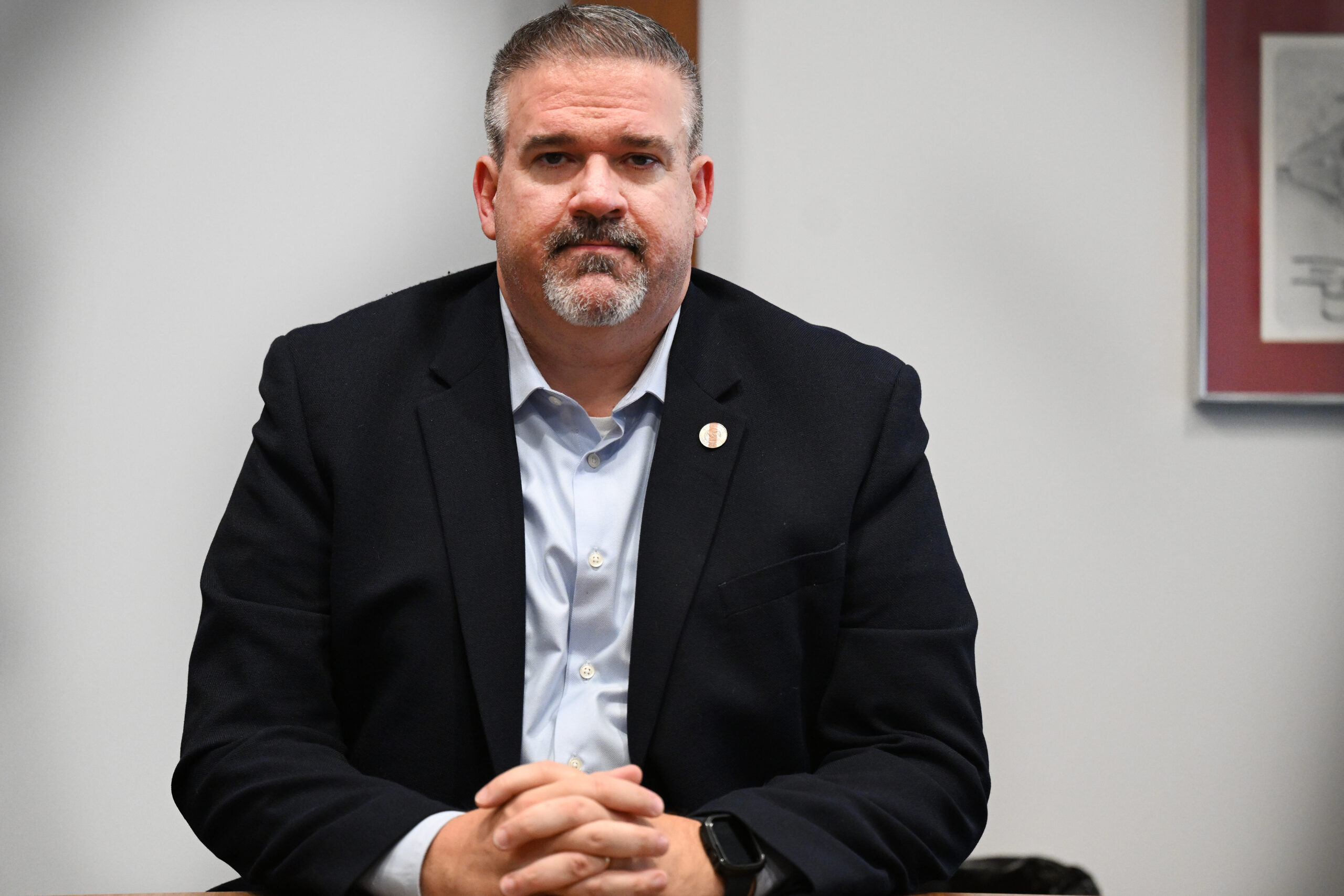
Even Commissioner Kevin Bethel keeps a home in Montgomery County, despite officially residing in a smaller Northwest Philadelphia house that he owns with his daughter.
Most municipal employees are still required to live within city limits. Across the city’s 28,000-strong workforce, nearly 3,200 full-time employees listed home addresses elsewhere as of last fall. Most of them — more than 2,500 — are members of the police or fire departments, whose unions secured relaxed residency rules for their workers in contract negotiations. About a quarter of the fire department now lives outside the city.
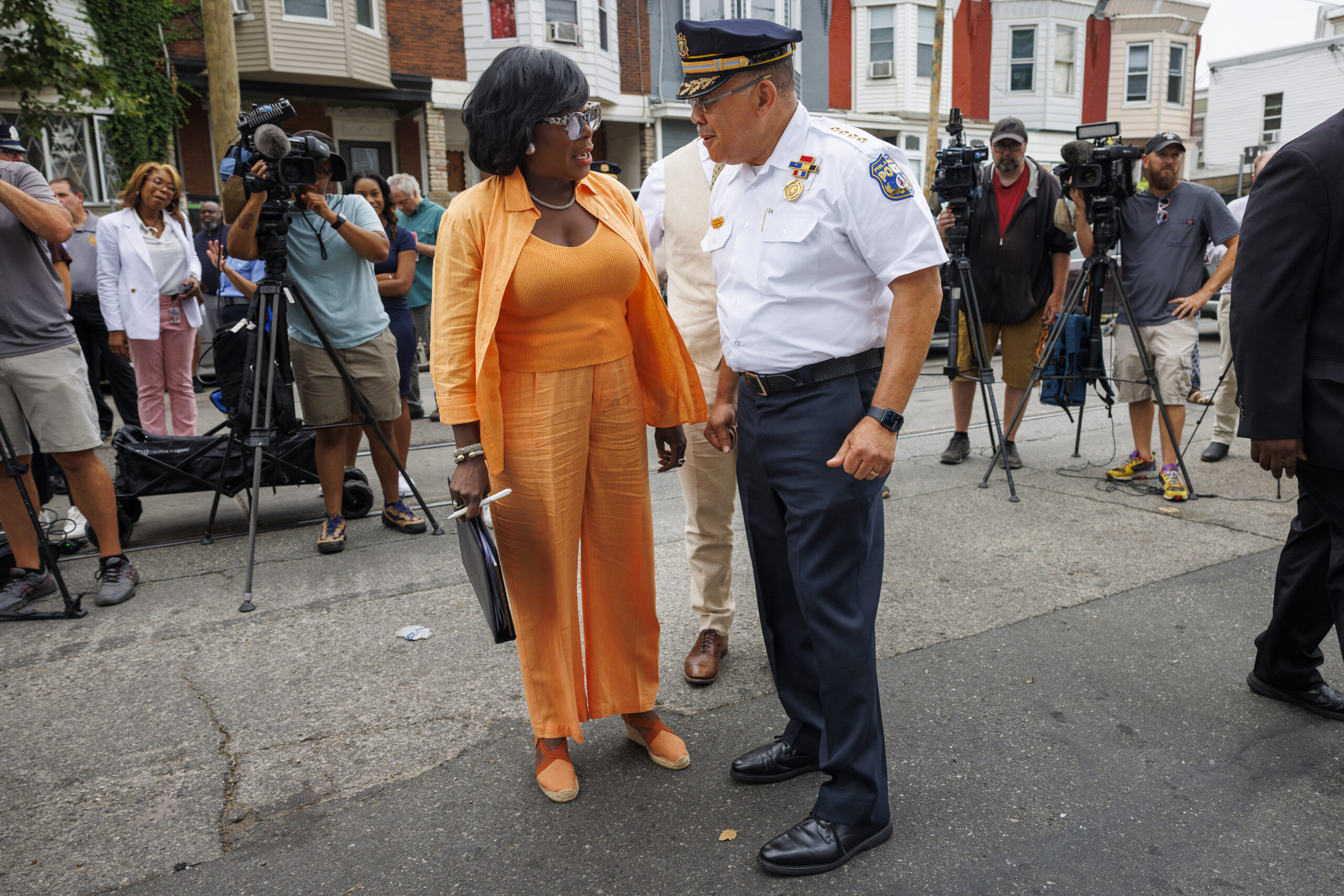
Philadelphia Mayor Cherelle L. Parker and Police Commissioner Kevin Bethel speak before the start of a news conference.
Proponents of residency rules in City Hall have long argued they improve rapport between law enforcement and the communities they serve, because officers who have a stake in the city may engage in more respectful policing.
But experts who study public safety say there is little evidence that residency requirements improve policing or trust. Some say the rules can backfire, resulting in lesser quality recruits because the department must hire from a smaller applicant pool.
A survey of 800 municipalities last year found that residency requirements only modestly improved diversity and had no measurable effect on police performance or crime rates.
“It’s a simple solution thrown at a complex problem,” said Fritz Umbach, an associate professor at John Jay College of Criminal Justice. “It doesn’t have the impact people think it will.”
Parker, a Philadelphia native who lives in the East Mount Airy neighborhood, says she would still prefer all municipal employees live in the city.
“When I grew up in Philadelphia, it was a badge of honor to have police officers and firefighters and paramedics who were from our neighborhood,” she said in a statement. “They were part of the fabric of our community. I don’t apologize for wanting that to be the standard for our city.”
‘Where they lay their heads at night’
What qualifies as “residency” can be a little pliable.
Along with his wife, Bethel purchased a 3,600-square-foot home in Montgomery County in 2017 for over a half-million dollars. Although he initially satisfied the residency rule by leasing a downtown apartment after being named commissioner by Parker in late 2023, he would not have met the pre-residency requirement the mayor championed for other city employees while she was on Council.
Today, voter registration and payroll data shows that Bethel resides in a modest, 1,800-square-foot rowhouse in Northwest Philadelphia, which he purchased with his daughter last year. While police sources said it was common for Bethel to sleep in the city given his long work hours, his wife is still listed as a voter in Montgomery County.
Police Commissioner Kevin Bethel speaks during the 22nd District community meeting at the Honickman Learning Center on Dec. 2, 2025.
Sgt. Eric Gripp, a spokesperson for the department, said in a statement that Bethel is a full-time resident of Philadelphia, and that while he owns a property outside the city, his “main residence” is the home in Northwest Philly.
Although sources say it was not unheard of for rank-and-file officers to use leased apartments to satisfy the requirement on paper, Gripp said “only a small number” of residency violations had required formal disciplinary action following an investigation by the department’s Internal Affairs Division.
That likely owes to officers’ increasing ability to reside elsewhere legally. The Fraternal Order of Police Lodge 5, which represents thousands of active and retired Philadelphia Police officers, won a contract provision in 2009 allowing officers to live outside the city after serving on the force for at least five years.
The union didn’t respond to a request for comment.
Few of the cops who left the city went very far.
While Northeast Philly and Roxborough remain the choice neighborhoods for city police, the top destinations for recent transplants were three zip codes covering Southampton, and Bensalem and Warminster Townships, according to city payroll data.
A few officers went much farther than the collar counties.
Robert McDonnell Jr., a police officer in West Philadelphia’s 19th district with 33 years on the force, has an official address at a home in rural Osceola Mills, Pa., about 45 minutes north of Altoona in Centre County.
A person who answered a phone number associated with McDonnell — who earned $124,000 last year between his salary, overtime, and bonus pay — declined to speak to a reporter.
Asked about the seven-hour round-trip commute McDonnell’s nominal residence could entail, Gripp said the department doesn’t regulate the manner in which employees travel to and from work.
“Our members serve this city with dedication every day,” he said, “regardless of where they lay their heads at night.”
A long and winding history
Versions of residency rules can be found as far back as the 19th century, when police recruits were required to live in the districts they sought to work in.
But when Mayor Joseph S. Clark pushed to reform the city charter in the 1950s, he sought to abolish the rules as an impediment to hiring, saying “there should be no tariff on brains or ability.”
Instead, City Council successfully fought to expand the restrictions. And, for more than five decades, the city required most of its potential employees to have lived in Philadelphia for a year — or obtain special waivers that, in practice, were reserved for the most highly specialized city jobs, like medical staff.
Many other big cities enacted similar measures either to curb middle-class flight following World War II or to prioritize the hiring of local residents. But the restrictions were frequently blamed for causing chronic staff shortages of certain hard-to-fill city jobs.
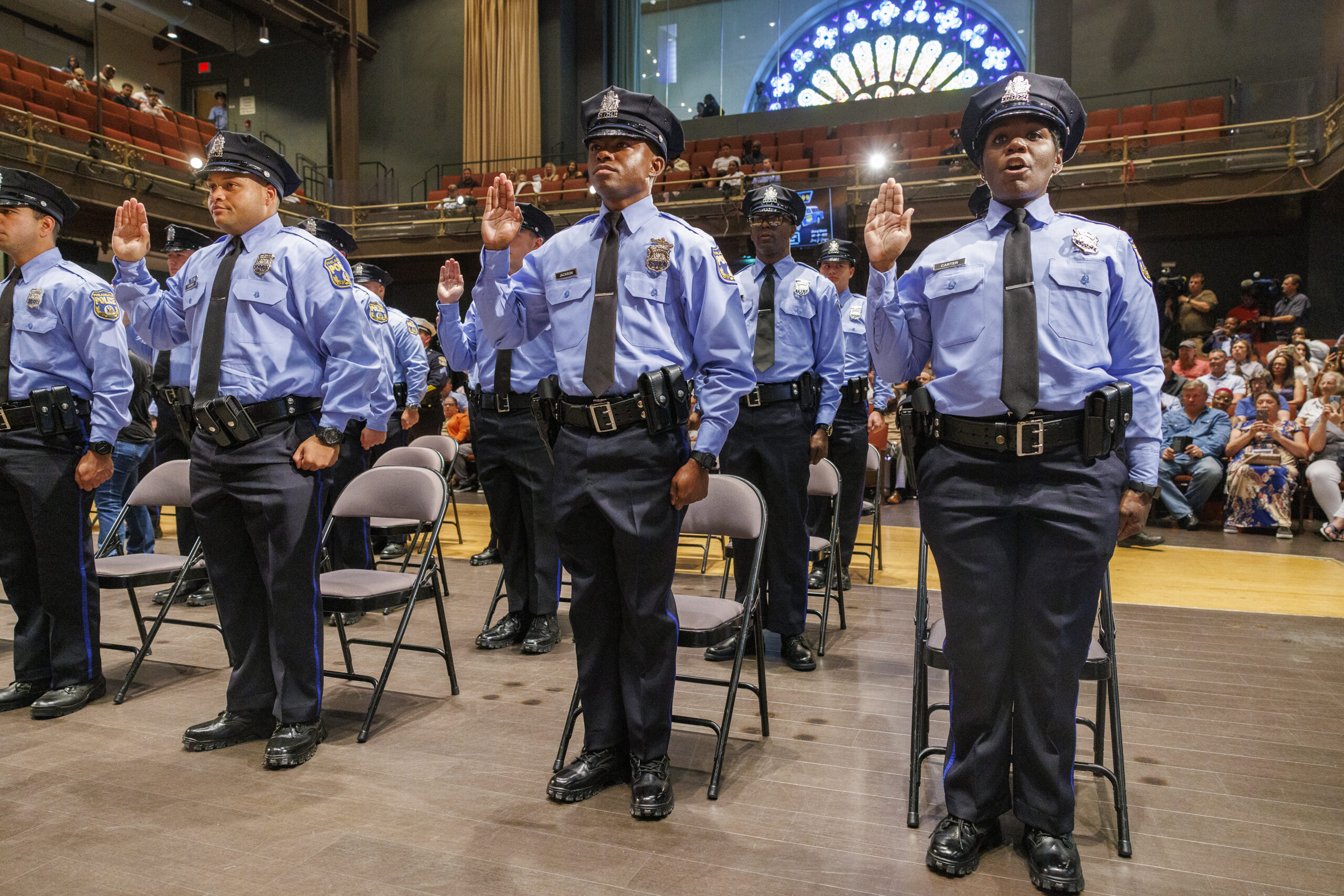
Officers Azieme Lindsey (from left), Charles T. Jackson, and Dalisa M. Carter taking their oaths in 2023.
Citing a police recruit shortage in 2008, former Mayor Michael A. Nutter successfully stripped out the prehiring residency requirement for cadets. Recruits were required only to move into the city once they joined the force.
A year later, the police union attempted to have the residency requirement struck from its contract entirely.
Nutter’s administration objected. But an arbitration panel approved a compromise policy to allow officers to live elsewhere in Pennsylvania after five years on the job. By 2016, firefighters and sheriff’s deputies secured similar concessions.
But experts say there’s little research showing that to be true.
“I am unsure if requiring officers to reside in the city is a requirement supported by evidence,” said Anjelica Hendricks, an assistant law professor at the University of Pennsylvania who worked for the city’s Police Advisory Commission. “Especially if that rule requires a city to sacrifice something else during contract negotiations.”
FOP leaders have long opposed the rule and said it was partly to blame for the department’s unprecedented recruitment crisis and a yearslong short-staffing problem that peaked in the aftermath of the COVID-19 pandemic.
In 2022, facing nearly 1,500 unfilled police jobs, former Mayor Jim Kenney loosened the prehire residency rule for the police department again, allowing the force to take on cadets who lived outside the city, so long as they moved into Philadelphia within a year-and-a-half of being hired.
Since then, recruiting has rebounded somewhat, which police officials attribute to a variety of tactics, including both the eased residency rules and hiring bonuses. The force is still short 20% of its budgeted staffing and operating with 1,200 fewer officers than it did 10 years ago.
Umbach, the John Jay professor, said the impact on recruiting is obvious: Requiring officers to live in a city where the cost of living may be higher than elsewhere amounts to a pay cut, which shrinks candidate pools.
“Whenever you lower the standards or lower the appeal of the job, you’re going to end up with people who cause you problems down the road,” he said. “A pay cut is just that.”
With less than a minute remaining in Sunday’s game against the 49ers, with the Eagles down 23-19 and their back-to-back Super Bowl aspirations on the line, fans crowded together in McGillin’s Olde Ale House erupted into E-A-G-L-E-S chants as a way to keep hope alive.
Unfortunately, Jalen Hurts was sacked and threw three straight incompletions to end their playoff run early. The Birds’ journey had ended, and with it, the hopes of the region.
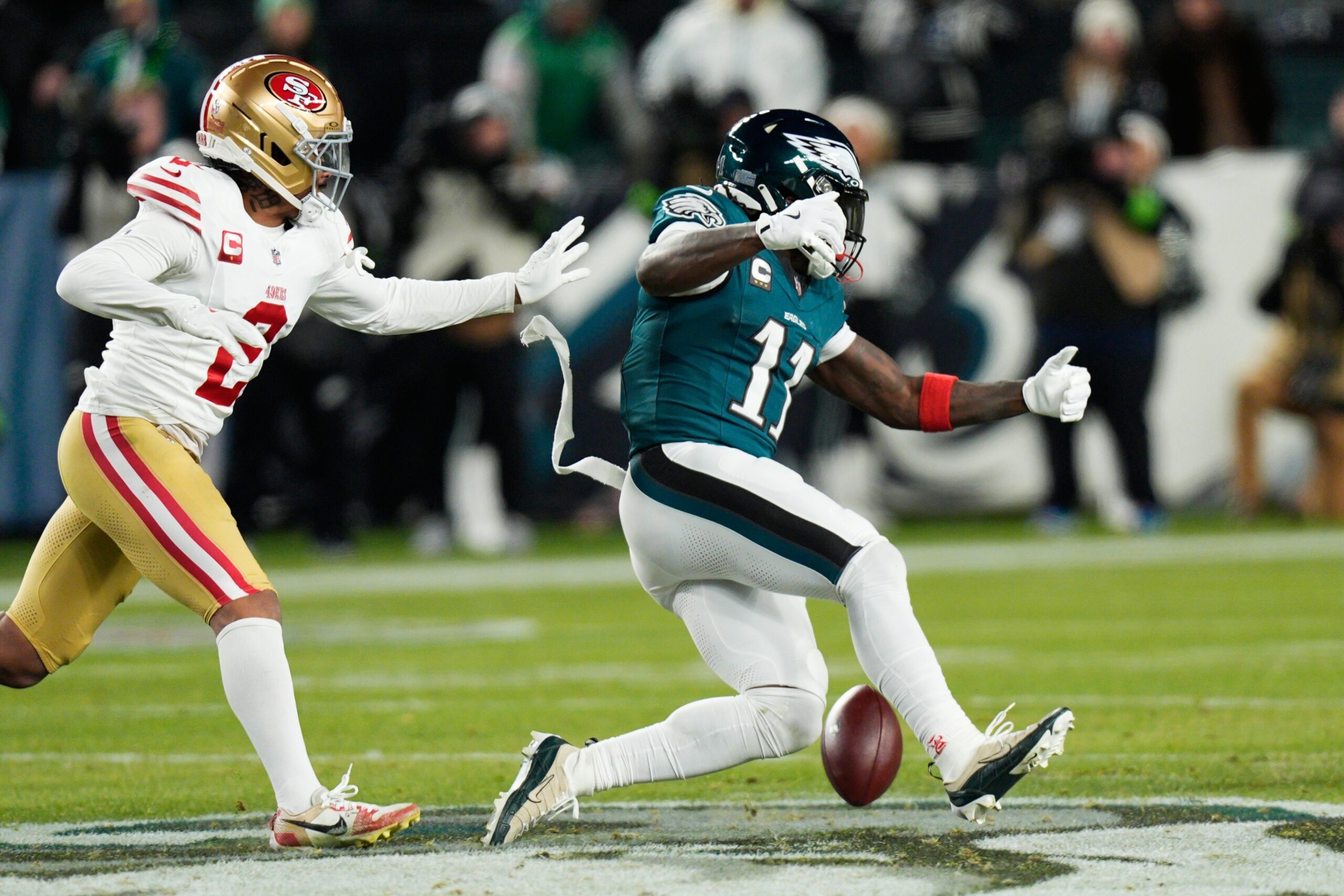
Eagles wide receiver A.J. Brown is unable to make the catch as 49ers cornerback Deommodore Lenoir defends during the second half Sunday.
Brandon LaSalata, 24, made the drive from Richmond, Va., to watch Sunday’s wild-card matchup surrounded by Eagles fans.
“I don’t know what happened,” LaSalata said. “We need to get rid of Kevin Patullo. I think that hopefully next year we’ll be a better playoff contender. We should have gotten through this round. I don’t know what happened. I’m very upset.”
On the other side of the pub, 27-year-old Lancaster native Dominic Polidoro sat with his head hanging low in defeat.
“I feel pretty deflated,” Polidoro said. “This team was probably the most talented team in the league. It’s really disappointing to see them fall short. We had higher hopes.”
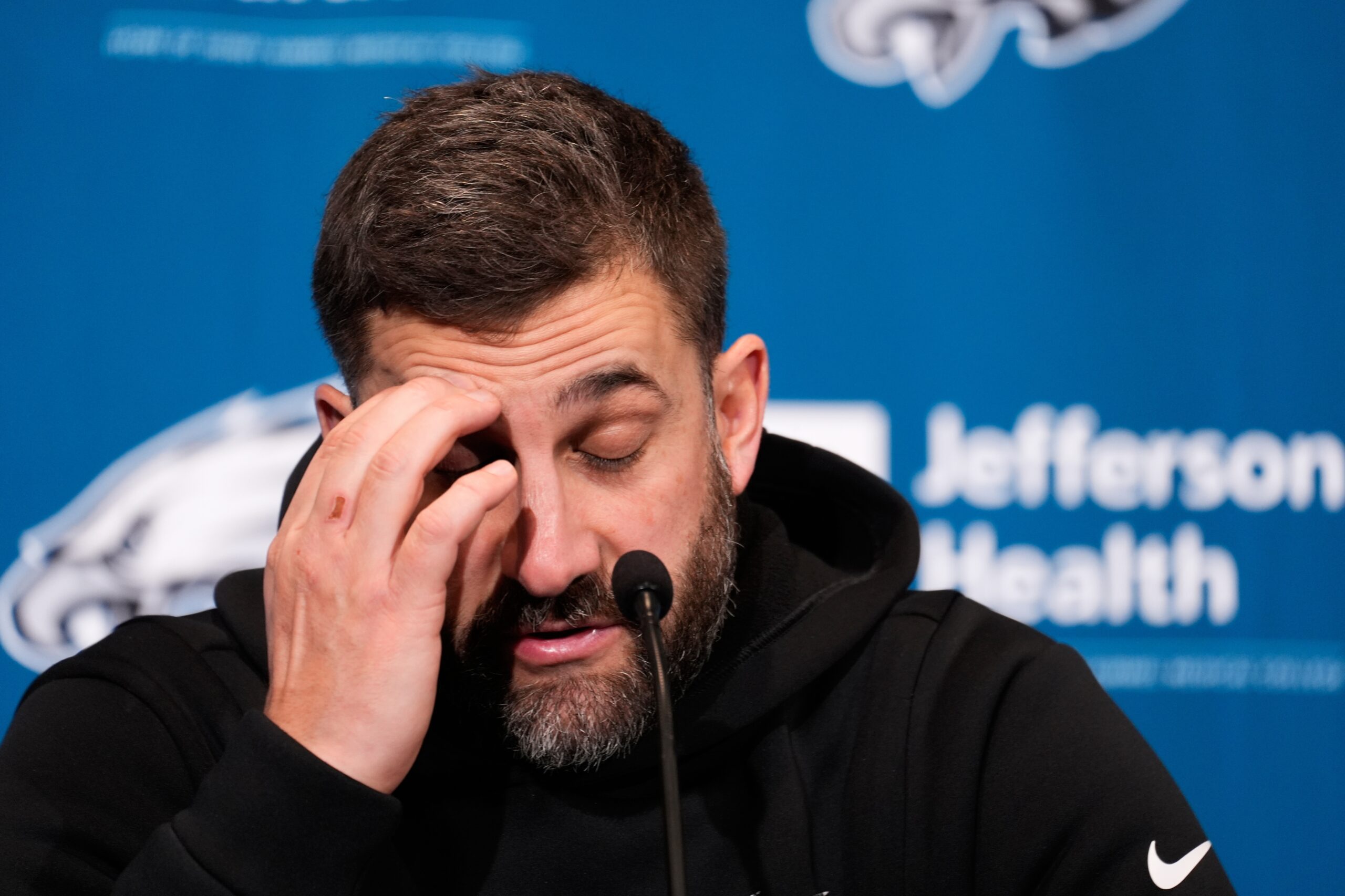
Eagles coach Nick Sirianni speaks during a news conference after the loss.
Somber morning commute for Eagles fans
On Monday morning, the air in Center City was dry, stiff, and unforgiving. And so were the Eagles fans cussing out their favorite team after the season-ending loss.
“I don’t mind losing, but give me an effort. A.J. Brown has to get traded. [Nick] Sirianni has to get fired. Offensive coordinator, fired,” said 73-year-old North Philadelphian Rodney Yatt. “And then we’ll go from there.”
Sunday’s game was marred by incomplete passes, a sideline argument between Sirianni and star wide receiver Brown, and, according to fans, tough calls from referees.
Clay Marsh, 35, of Manayunk, doesn’t think a loss falls to one player.
“I don’t think it was A.J.’s fault,” Marsh said. He saw the offense as disjointed and questioned offensive coordinator Patullo’s strategy, which Marsh said was an overreliance on “running it up the middle” with Saquon Barkley.
“Even if we won, it felt like we were going to go into Chicago and probably get spanked anyway,” Marsh said. “Maybe we saved ourselves some real embarrassment.”
Patullo has been at the center of fans’ ire, not only after last night’s loss but throughout the season. That agita hit a new low when someone egged Patullo’s family home in November after a 24-15 loss to the Chicago Bears.
The latest Patullo roasting comes in the form of a Bucks County golf simulator that allows players to drive balls directly into a digital fairway featuring Patullo’s face. The Golf Place co-owners Justin Hepler and Killian Lennon shared a video of themselves relieving theirfrustrations and honing their swings.
West Philadelphian James Booker, 49, said the small mistakes in the game added up to the loss. He pointed to Brown’s dropped passes and a missed extra point by kicker Jake Elliottthat could have brought the Birds into tie-game territory later on.
Despite the hard loss, Booker doesn’t think Sirianni should be canned.
“You can’t just say you want to up and fire him, even though fans like to do that a lot — Sirianni got us to this point,” Booker said. “I only hope for a better season next year.”
Philadelphia’s trolley tunnel has been closed for two months, but SEPTA now is saying that it has completed most necessary repairs and could reopen the connection between Center City and West Philadelphia soon.
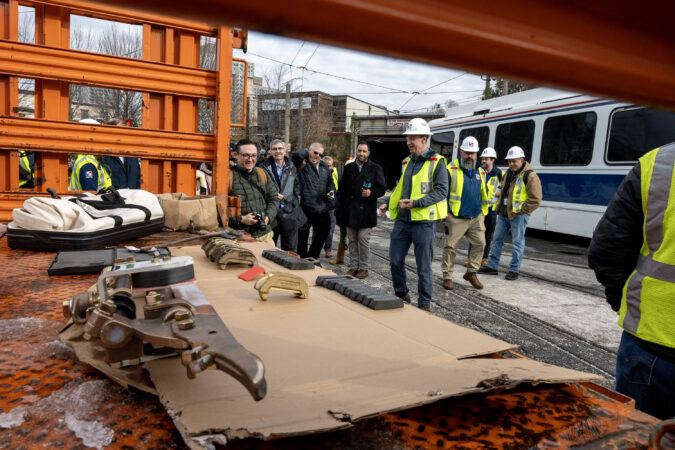
Crews currently are running trolleys through the tunnel to test fixes for damaged overhead wires and other equipment and to decide when it is safe for normal service to resume.
“We’re pretty close,” SEPTA spokesperson Andrew Busch said Tuesday.
About 60,000 riders traveled daily through the tunnel between 13th Street and its West Philadelphia portal at 40th Street before SEPTA closed it in early November.
At issue is a U-shaped brass part called a slider that carries carbon, which acts as a lubricant on the copper wires above the tracks that carry the electricity that powers the trolleys.
There were two major incidents when trolleys were stranded in the tunnels. On Oct. 14, 150 passengers were evacuated from one vehicle and 300 were evacuated from a stalled trolley on Oct. 21.
The Federal Transit Administration on Oct. 31 ordered SEPTA to inspect the overhead catenary system along all its trolley routes.
SEPTA has had to replace about 5,000 feet of damaged wire and make other repairs. It also switched back to 3-inch sliders.
On Nov. 7, SEPTA shut down the tunnel to deal with the issue, which had cropped up again, then reopened it on the morning of Nov. 13, thinking it was solved. But it discovered further damage to the catenary system and the tunnel was closed at the end of the day.
Other potential reopening dates were announced but postponed.
This story has been updated to correct the amount of wire replaced in the tunnel.
The house: A 784-square-foot rowhouse in Newbold with two bedrooms and one bath, built in 1920.
The price: Listedand purchased for $249,000
The agent: Allison Fegel, Elfant Wissahickon
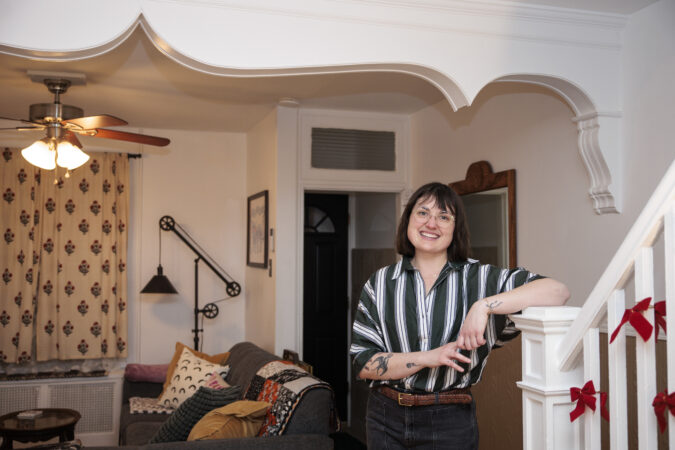
Miles in her two-bedroom home.
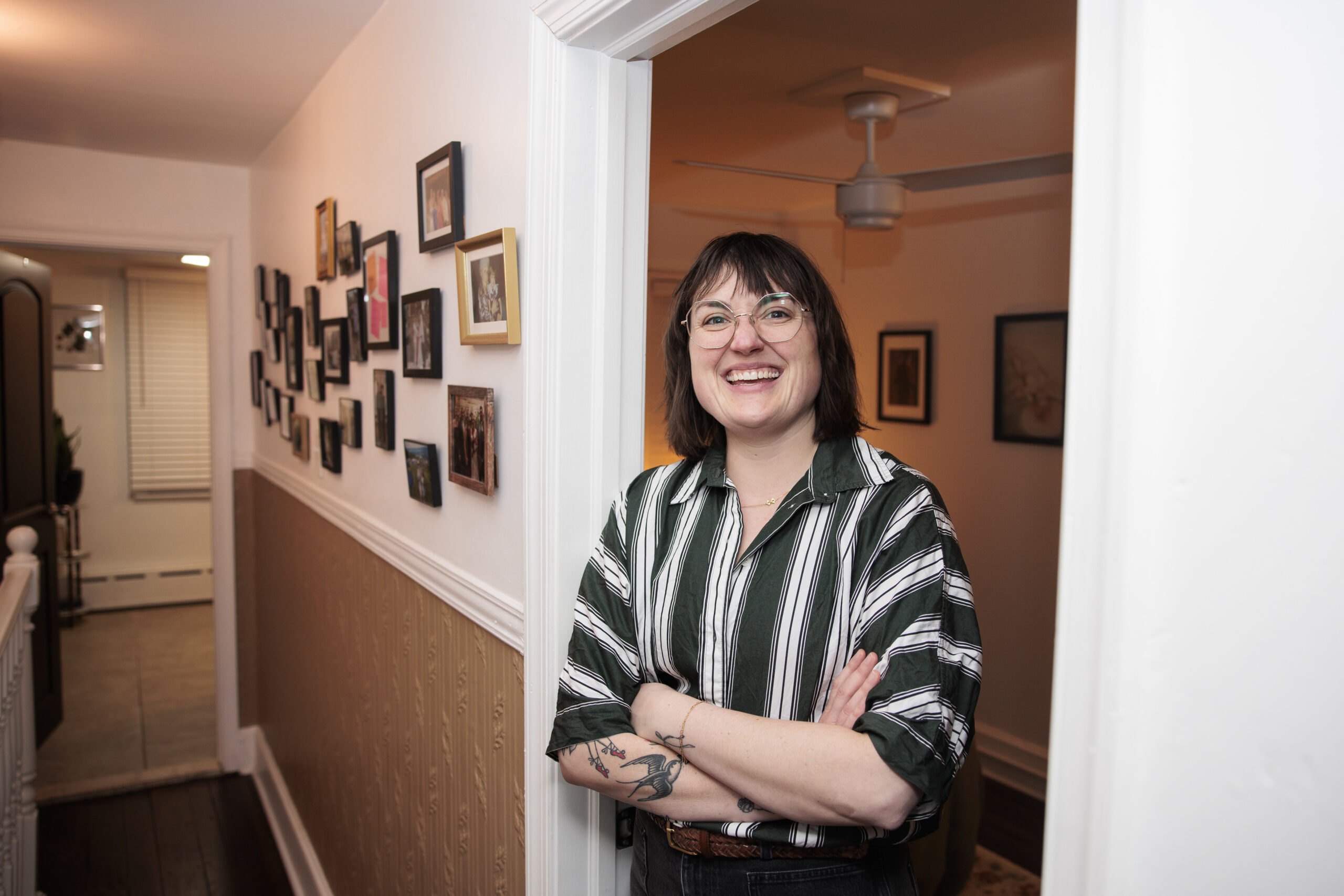
The ask: The only good thing about Emily Miles’ old apartment was the price. Miles was making a “nonprofit lawyer salary” and trying to save money. But “it was terrible,” Miles said. Disgusting even. And by November 2024, she’d had enough.
Owning a home felt aspirational, if vague. “It was always something I wanted to do,” she said. “But I didn’t know when I’d be able to do it.”
It didn’t seem like the right time. Miles had student loans. She was bartending in the evenings to make ends meet. Nevertheless, she decided to check out the market and searched for an agent with grant experience. She kept her house wish list short: three bedrooms, outdoor space, and central heat and air.
The search: Miles had no sense ofbudget until her lender preapproved her for about $310,000. From there, her agent began sending her listings across the city, including large homes far from the neighborhoods Miles associated with Philadelphia.
“They were still in Philadelphia County, but not really Philly as you think of it,” Miles said. West Philadelphia, where she was living, was not affordable. Other neighborhoods lacked reliable transportation.
Between late November and January, Miles saw 30 to 40 homes. “They were a lot of flips, and I didn’t want that,” she said.
Eventually, Miles found a place and made an offer. But during the inspection, theydiscovered damage to the front door that indicated someone had kicked it in, and Miles decided to walk away. She was out $1,500. “My pride was hurt a little bit,” she said.
Miles took a brief break, then started attending open houses on her own. That’s how she found the one, a little less than a month after she backed out of the first house.
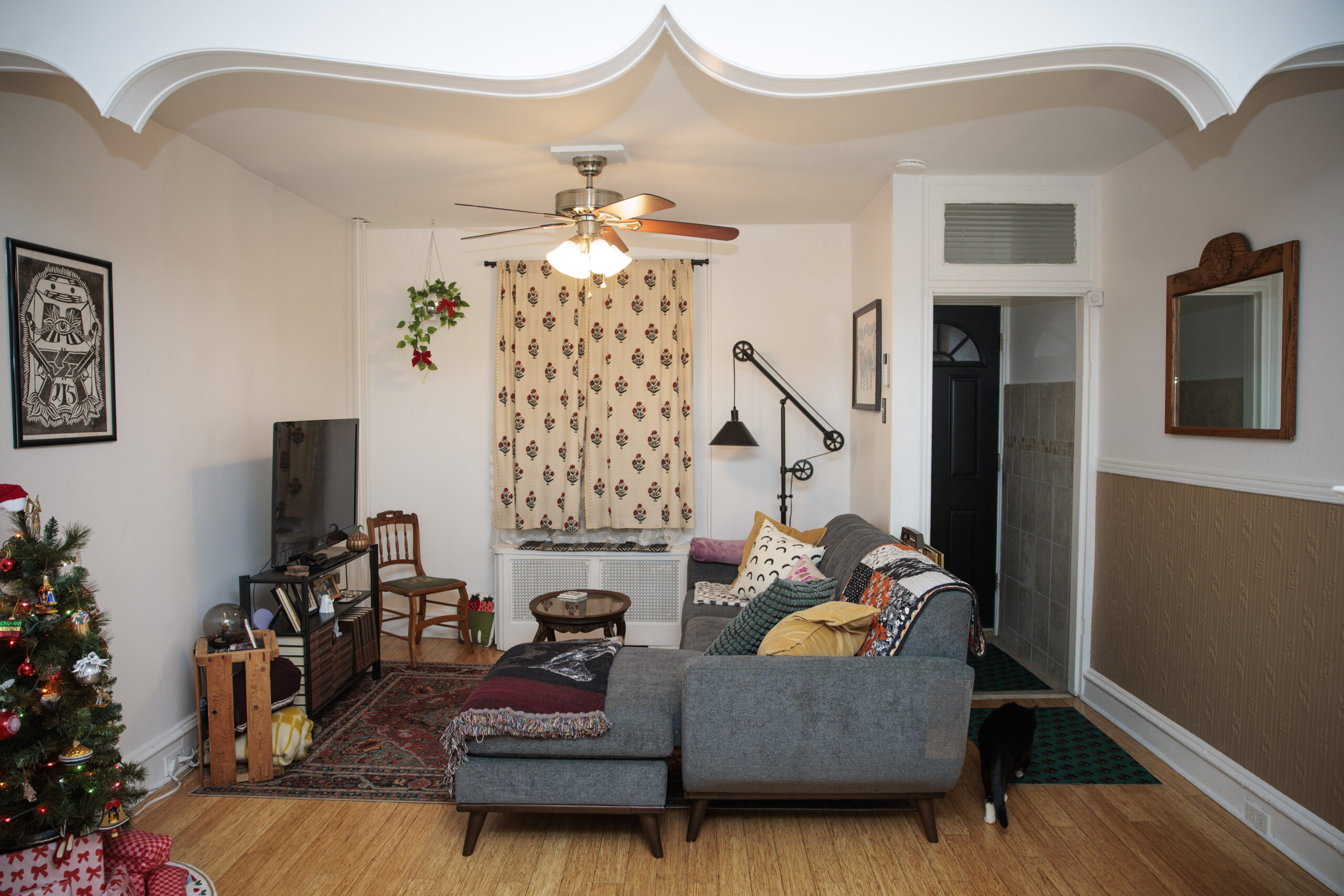
Miles liked the house’s original features and character, such as the arched framing of the living room.
The appeal: The house Miles ultimately bought — a two-bedroom, one-bath, 780-square-foot rowhouse in South Philadelphia — checked none of her original boxes. “The big LOL about the whole thing is that I ended up with something I didn’t want at all,” she said. It had radiator heat. No air-conditioning. Less space than she planned. The house had been a rental for more than a decade. Carpet covered original features. Paint concealed years of wear. “It was a real landlord special,” Miles said. But when she stepped inside, something clicked. “I walked in, and I could see it,” she said. “It’s full of character.”
The deal: Miles stumbled into the house she would buy while walking to a bar with her boyfriend on a Friday night. The listing price was $249,900. She offered the asking price the following morning.
The seller took days to respond but eventually accepted her offer after no one else made a bid.
When the inspection revealed issues, Miles asked for $5,000 to $7,000 in credits. The seller countered with zero. “He redlined all my stuff,” she said. “So I re-redlined all of his stuff.” The back-and-forth ended with $2,000 in seller’s credit. “Which is better than zero,” Miles said. “I’m pretty proud of that.”
Miles filled her home with vintage furniture she found at local thrift shops. Her cat, August, has his own bed.
The money: Miles had about $20,000 saved from her time before law school, when she worked as a human resources manager in New York City. She had an additional $10,000 from the Philly First Home program, $2,000 from the seller’s credit, and $1,000 from her Realtor’s Building Equity program.
Her lender approved her to put down only 3%, so she made a $7,500 good-faith deposit and brought $1,500 to closing. Miles’ credit score and salary qualified her for a 5.75% interest rate at a time when average rates hovered closer to 7%.
Her monthly mortgage payment is about $1,800 and includes $120 for private mortgage insurance, which she must pay until she reaches 20%. She recently applied for a Philadelphia homestead exemption, which reduces the taxable portion of your house by $100,000 if you use it as your primary residence, and expects her monthly payment to drop closer to $1,700 as a result.
The move: Miles closed on March 19 and moved on April 29. She broke her lease without penalty. “I had been complaining about it being a bad apartment for months,” she said, “so I think they were just happy to be rid of me.”
Miles had to get rid of a lot of her stuff because her new house was so much smaller than her apartment. “I downsized quite significantly,” she said. She also discarded stuff that wouldn’t fit through the house’s small, 30-inch doorway, like her couch. “Luckily, I had some foresight and got rid of it before I moved it over,” she said.
Miles installed new lighting and faucets to make her home feel less like a rental.
Any reservations? Miles wishes she knew that refinished floors can take weeks to fully cure. She had to sleep on the living room floor while she waited for the fumes to fully dissipate upstairs. “It was just my cats and me on the ground for about a month,” she said. Still, she doesn’t have any regrets. “Live and learn,” she said.
The bathroom in Emily Miles’ Newbold home.
Life after close: Miles used the money her parents had saved for her wedding to make a few cosmetic updates. She fixed the back patio, refurbished the upstairs floors, and replaced light fixtures and faucets so that the house felt less like a rental. She put in a new boiler, too. And filled the house with vintage furniture she thrifted locally. “Stuff that fits the vibe of the house,” she said.
Scott Sauer would like nothing better than to make SEPTA an afterthought.
He doesn’t mean that the Philadelphia region’s mass transit agency should be neglected, but rather that it will come to do its job so seamlessly that its nearly 800,000 daily customers can rely on the service without worrying about breakdowns, delays and disruptions.
Given the cascading crises that hit SEPTA in 2025, many people wondered if the place was hexed.
“I hope not, because I don’t know how to get the curse off me,” Sauer said in a recent interview. “But listen, truth be told, there were days when I scratched my head and thought, ‘Oh, my goodness, what is going on?’”
“We just couldn’t seem to get more than a day or two of relief before something else was causing a headache,” said Sauer.
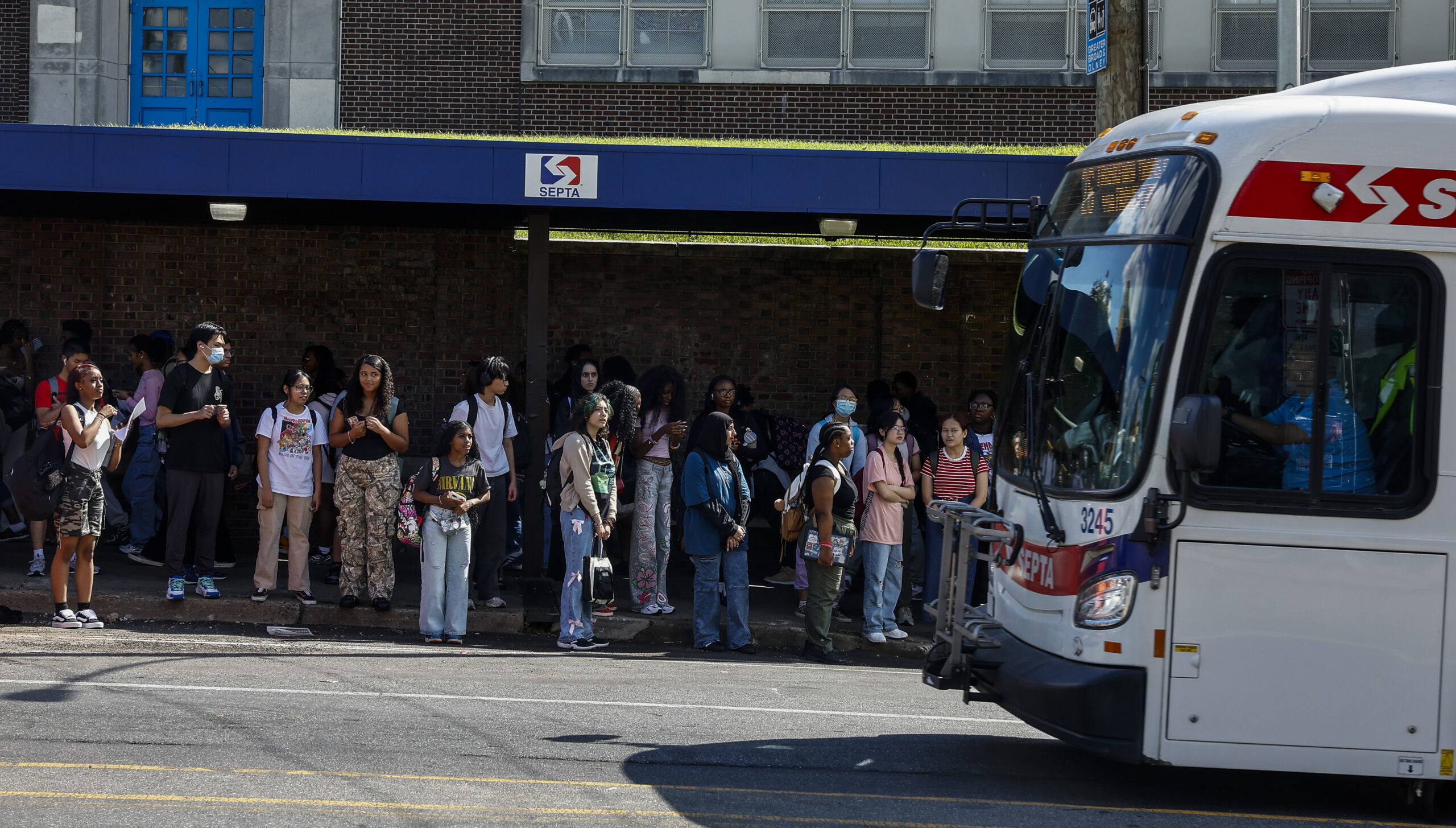
A bus passes the stop near Girls High at Broad and Olney Streets on Monday, Aug. 25, 2025. Thirty two SEPTA bus routes were cut and 16 were shortened, forced by massive budget deficits.
Back to basics in 2026
In the end, help from above and a new labor contract bought SEPTA at least two years to recover from its annus horribilis and stabilize operations.
When the Pennsylvania legislature couldn’t get a transit funding deal done, Gov. Josh Shapiro shifted $394 million in state-allocated funds for infrastructure projects to use for operations — the third temporary solution in as many years. The administration also later sent $220 million in emergency money in November for the Regional Rail fleet and the trolley tunnel.
And, early in December, SEPTA reached agreement on a new, two-year contract with its largest bargaining unit, Transport Workers Union Local 234.
Scott Sauer, general manager of SEPTA, admits that 2025 was an extremely challenging year.
Sauer compared SEPTA’s position to football refs. When they are doing their jobs right, fans don’t have to think about them when watching the game. And when things are going well on the transit system, it becomes part of the background.
“Let’s make sure we do the basics, and we do them really well, because at the end of the day, people want SEPTA to move them from one place to the other, right?” he said.
The test of the focus on fundamentals comes soon, with millions of visitors expected in the region for the 250th anniversary of the Declaration of Independence, World Cup soccer, and other big events.
Sauer, 54, began his career as a trolley operator more than 30 years ago. He had no political experience, though, and would quickly be thrown headfirst into those murky waters to swim with sharks.
Storm clouds were already rolling in. Weeks before Sauer took the reins, Shapiro had flexed $153 million in state highway funds for SEPTA operations after a broader deal failed amid Senate GOP opposition.
It’s a legal move, but often controversial, and Shapiro’s opponents were furious.
Richards and her leadership team had been warning of a looming fiscal “doomsday scenario” for months. Officials were drafting a budget with service cuts and fare increases.
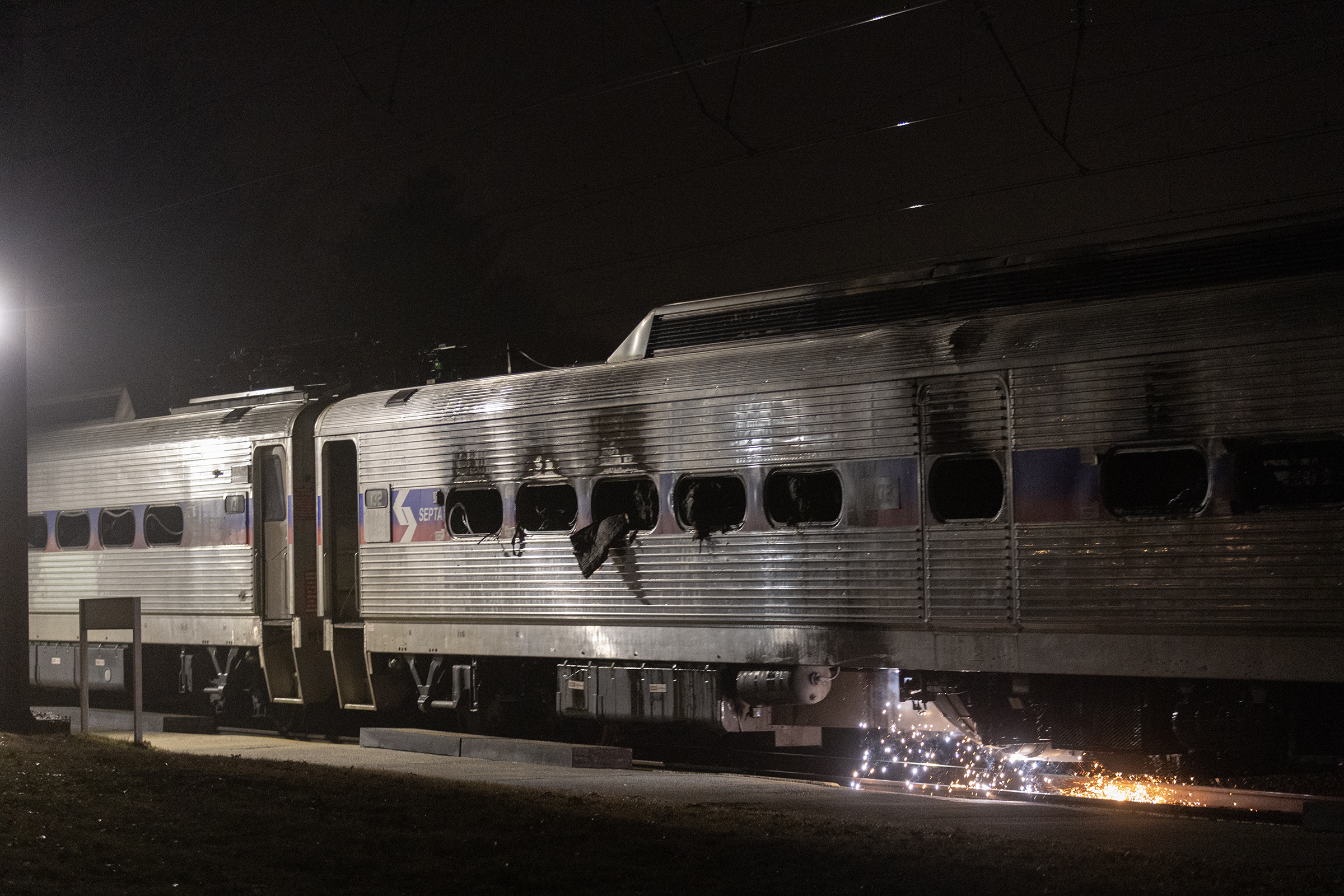
On Feb. 6, a Wilmington-bound Regional Rail train caught fire as it was leaving Crum Lynne Station in Delaware County. It was worrisome, but at the time, nobody knew it would get worse.
More than 300 passengers were safely evacuated after a SEPTA Regional Rail train caught fire near Crum Lynne Station in February.
Familiar battle lines were drawn. Senate Republicans, in the majority in the chamber, opposed Shapiro’s proposal to generate $1.5 billion for transit operations over five years by increasing its share of state sales tax income.
They preferred a new source of income for the state’s transit aid and said SEPTA was mismanaged, citing high-profile crimes, rampant fare evasion, and lax enforcement.
On a mid-August night, the Senate GOP came up with a proposal that would take money from the Public Transportation Trust Fund, a source for transit capital projects, and split it evenly between transit operations subsidies and rural state highway repairs.
Senate Majority Leader Joe Pittman, a Republican from Indiana County, was a key player in budget negotiations, which ultimately did not yield additional funding for mass transit.
“It was kind of quiet … and then we got alerted that a proposal was coming within minutes. And so everybody was scrambling to try to read through it,” Sauer said.
In a quick news conference with Shapiro, Sauer opposed the idea of taking capital dollars for transit operations, as did the governor. Then he spoke with Senate Republicans and told reporters it could be worth considering, but he had questions. And by the end of the night, he walked that back and opposed the measure.
“I guess if there was a lesson to be learned for me in August, it was I should have taken some [more] time reading through that proposal,” he said.
There was not much time to reflect on what happened, though, because the hits kept on comingas the federal government ordered SEPTA to inspect all 223 Regional Rail cars.
SEPTA’s Regional Rail fleet is the oldest operating commuter fleet in the country, and the fires highlighted the difficulty of keeping them maintained while needing to stretch limited capital funds to address multiple problems.
The Market-Frankford El cars, though younger than the Silverliner IVs, have been beat up and unreliable. SEPTA is moving forward with replacing them, as well as the Kawasaki trolleys that are more than 40 years old.
SEPTA had ordered new Regional Rail coaches from a Chinese-government-related manufacturer, but canceled the contract after the first few models, built during the pandemic, showed flaws. Now the agency is advertising for bids on a new fleet of Regional Rail workhorses — but it has to make them sturdier to last for at least seven more years before new cars would be on the way.
Officials plan to use $220 million received from the state on that effort.
Some of the money, about $48 million, is slated to help fix the trolley-tunnel issue. SEPTA is contending with glitches in the connection between the overhead catenary wires and the pole that conducts electricity to the vehicle.
What SEPTA got done
SEPTA has made some progress on some of its persistent issues, officials say, though the accomplishments understandably have been largely overlooked amid the urgent, existential crises of 2025.
For instance, serious crimes on the SEPTA system dropped 10% through Sept. 30 compared to the same period in 2024, according to Transit Police metrics.
And there had already been a sharp improvement. Serious crimes in 2024 dropped 33% compared to 2023 — from 1,063 to 711, year over year.
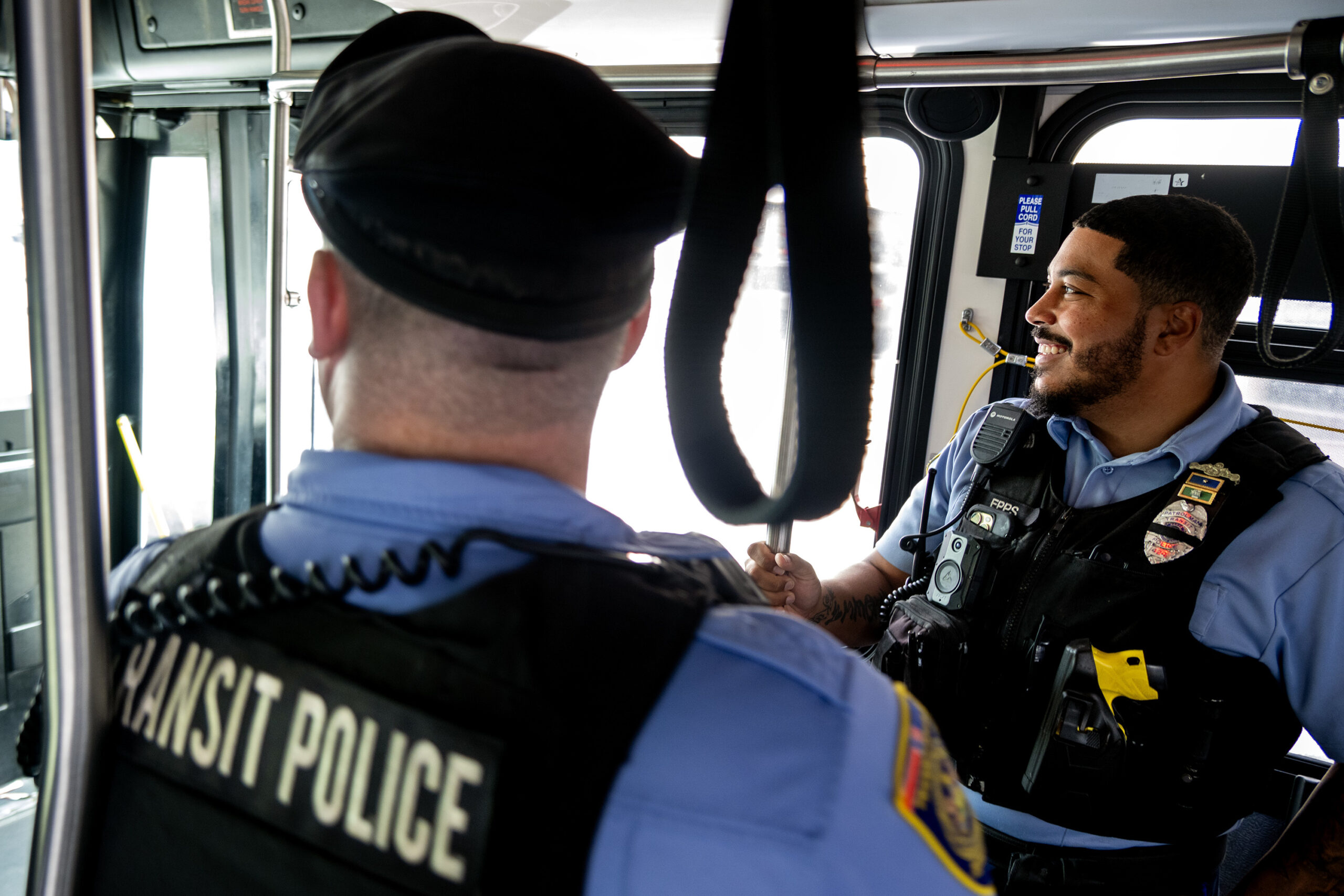
SEPTA transit police police patrol officers Brendan Dougherty (left) and Nicholas Epps (right) with the Fare Evasion Unit ride the 21 bus.
“If you think back to where we were in 2021 and 2022, the perception was bad things were happening on SEPTA, and you should steer clear of them,” Sauer said.
The Transit Police have been hiring new officers, including a recently graduated academy class of nine, and has about 250 officers.
SEPTA also installed 42 full-length gates designed to thwart fare evasion on seven platforms in five stations during 2025, spokesperson Andrew Busch said.Another 48 gates are coming in the first quarter of the year.
Police are also issuing citations with an enhanced penalty of up to $300 for fare evasion.
Prepare for déjà vu
Andyet, in 2027, it will be time to start the old SEPTA-funding dance once again, as transit agency advocates and supportive lawmakers work at getting a stable state funding stream for transit operations.
State Democrats have said the transit issue could help them take control of the Senate from Republicans — a longtime goal but one that is difficult to achieve. One wild card is whether President Donald Trump’s slumping popularity will cause GOP congressional candidates to get swamped in the 2026 midterms, and whether that will translate into voters’ local senators.
It likely would have to be a huge wave, and it’s a closely divided state.
By 2027, Shapiro is expected to be running for president (if he is reelected next year), and it’s anyone’s guess how that could affect budget politics.
“Not everybody wants to see us. I didn’t make a lot of friends,” Sauer joked after the TWU settlement.
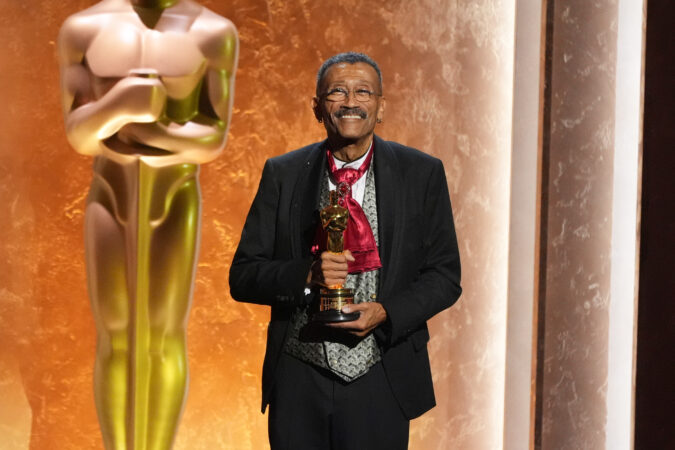
When famed production designer Wynn Thomas prepared an acceptance speech for his long-awaited Oscar at the age of 72, he wanted to highlight his own Philadelphia story.
“My journey to storytelling began as a poor Black kid in one of the worst slums in Philadelphia. There were street gangs and poverty everywhere. And to escape that world, I immersed myself in books,” Thomas told the Hollywood audience at the Governor’s Awards ceremony in November. “I would sit on my front stoop and I would travel around the world. Now, the local gangs looked down on me and called me ‘sissy.’ But that sissy grew up to work with some great filmmakers and great storytellers.”
It was a significant moment for an artist who has spent nearly 50 years behind the camera to finally step into the spotlight himself. The honorary Oscar — which also went to Tom Cruise and Debbie Allen — recognizes “legendary individuals whose extraordinary careers and commitment to our filmmaking community continue to leave a lasting impact.”
During his extensive film career, Thomas has designed epic, comedic, and dramatic worlds for filmmakers like Spike Lee (Do The Right Thing, Malcolm X), Ron Howard (A Beautiful Mind, Cinderella Man), Robert DeNiro (A Bronx Tale), Tim Burton (Mars Attacks), and Peter Segal (Get Smart).
And while at it, he broke several barriers along the way: Thomas is considered the first Black production designer in Hollywood history.
No matter how far his work took him, though, he was always proud to discuss his Philadelphia roots.
The theater kid from West Philly
Long before he worked on major feature films, Thomas grew up as one of six kids in West Philadelphia, living primarily near 35th and Spring Garden Streets. Avid reading kept him out of trouble. His mother, Ethel Thomas, wrote a permission letter to the local library so he could access the adult section, and he immersed himself in the worlds of Harper Lee, James Baldwin, William Shakespeare, and Lillian Hellman.
The young Thomas always looked forward to Saturdays, when he could spend nearly all day at a movie theater on Haverford Avenue. Occasionally, he took classes at Fleisher Art Memorial, too.
The 1961 movie Summer and Smoke, written by Tennessee Williams, he said, inspired him to pursue theater.
“I absolutely said, ‘My God, what is this?’ I think it was just the nature of the story that really affected me,” Thomas, who now lives in New York, said in a recent interview. “I couldn’t believe what I had just seen, what I had just experienced. So I went to my library and got as many Tennessee Williams plays as I could.”
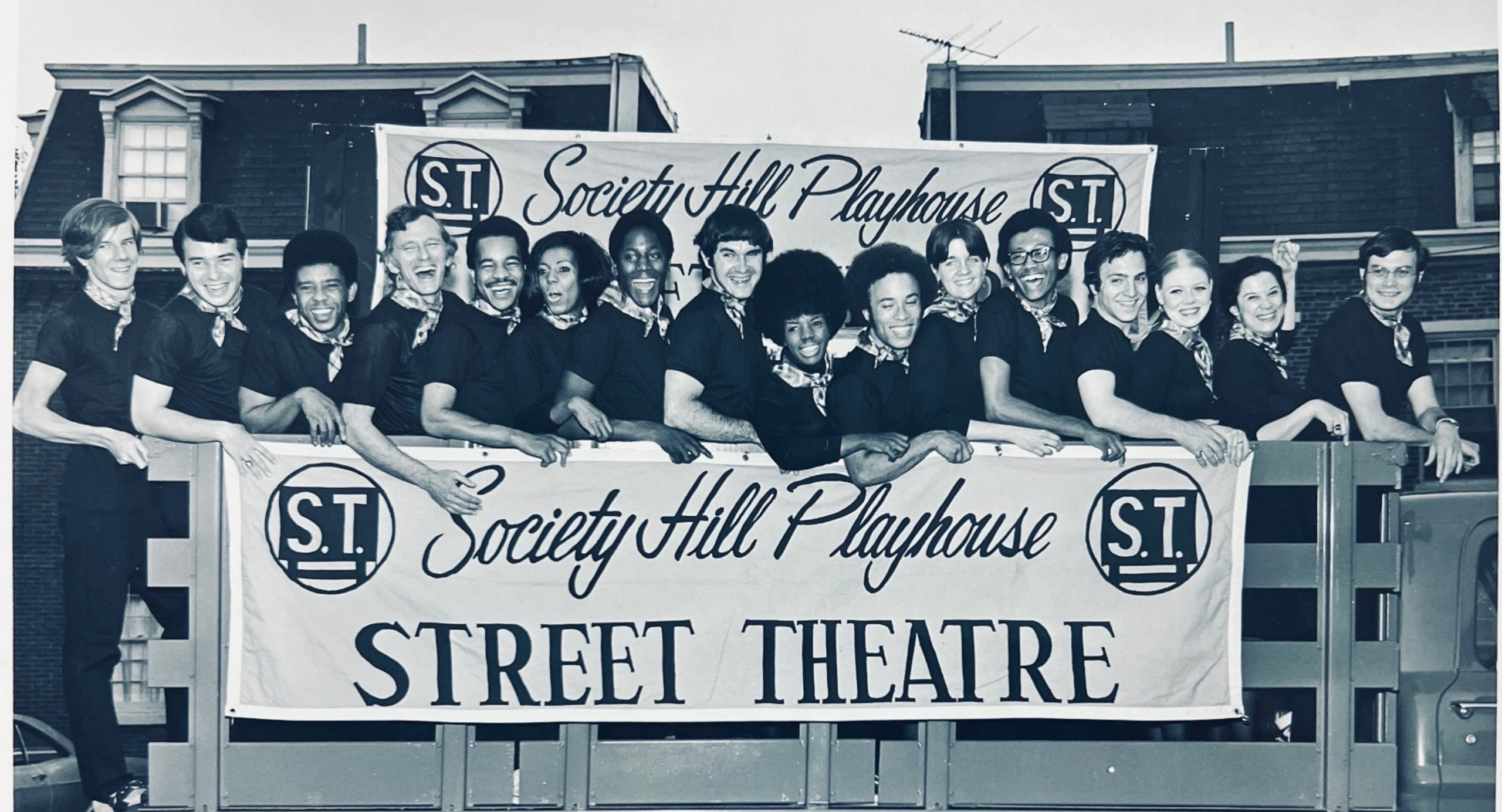
Wynn Thomas (fifth from right) at the Society Hill Playhouse as a teen in the late 1960s.
A couple of years later, Thomas heard that Society Hill Playhouse was holding open auditions. He was too young to audition himself, so he persuaded his older sister Monica to try out.
“I remember saying to her, ‘You need to do a scene from Who’s Afraid of Virginia Woolf,’” he recalled, chuckling. “Now, can you imagine being a 14-year-old kid who knows Who’s Afraid of Virginia Woolf? That’s a geek!”
She earned a spot in the company for a season and Thomas frequently tagged along, volunteering as an usher and eventually forming a close relationship with the owners, legendary Philadelphia theater couple Jay and Deen Kogan.
Throughout high school, the Overbrook High art student spent most of his after-school time across town at the playhouse. He acted, painted scenery, and served as a stage manager.
One of the final productions he stage-managed was The Great White Hope, loosely based on boxing champion Jack Johnson, who was played by Richard Roundtree — the soon-to-be Hollywood star who went on to lead the 1971 classic Shaft. While he was performing at Society Hill Playhouse, Roundtree was auditioning for the life-changing role.
“Shaft was a very important and very pivotal film for that time period,” said Thomas. “It was about a strong Black male who lived in the world under his own terms. That was not a character that was portrayed often in films.”
It was a glimpse into the worlds Thomas would help create in the future — with Black characters who had agency at the center.
Some four decades later, he worked with Roundtree once more for the 2019 remake of Shaft and they had an “incredible reunion.”
From Philly to Boston to New York
Thomas received his bachelor of fine arts in theater design from Boston University. After graduating in 1975, he returned to Philadelphia and worked as a window dresser at the Strawbridge & Clothier department store on Market Street for a few months before landing his next theater job.
For about four years, Thomas was a painter for the Philadelphia Drama Guild, operating out of the Walnut Street Theatre. He also returned to Society Hill Playhouse as a production designer.
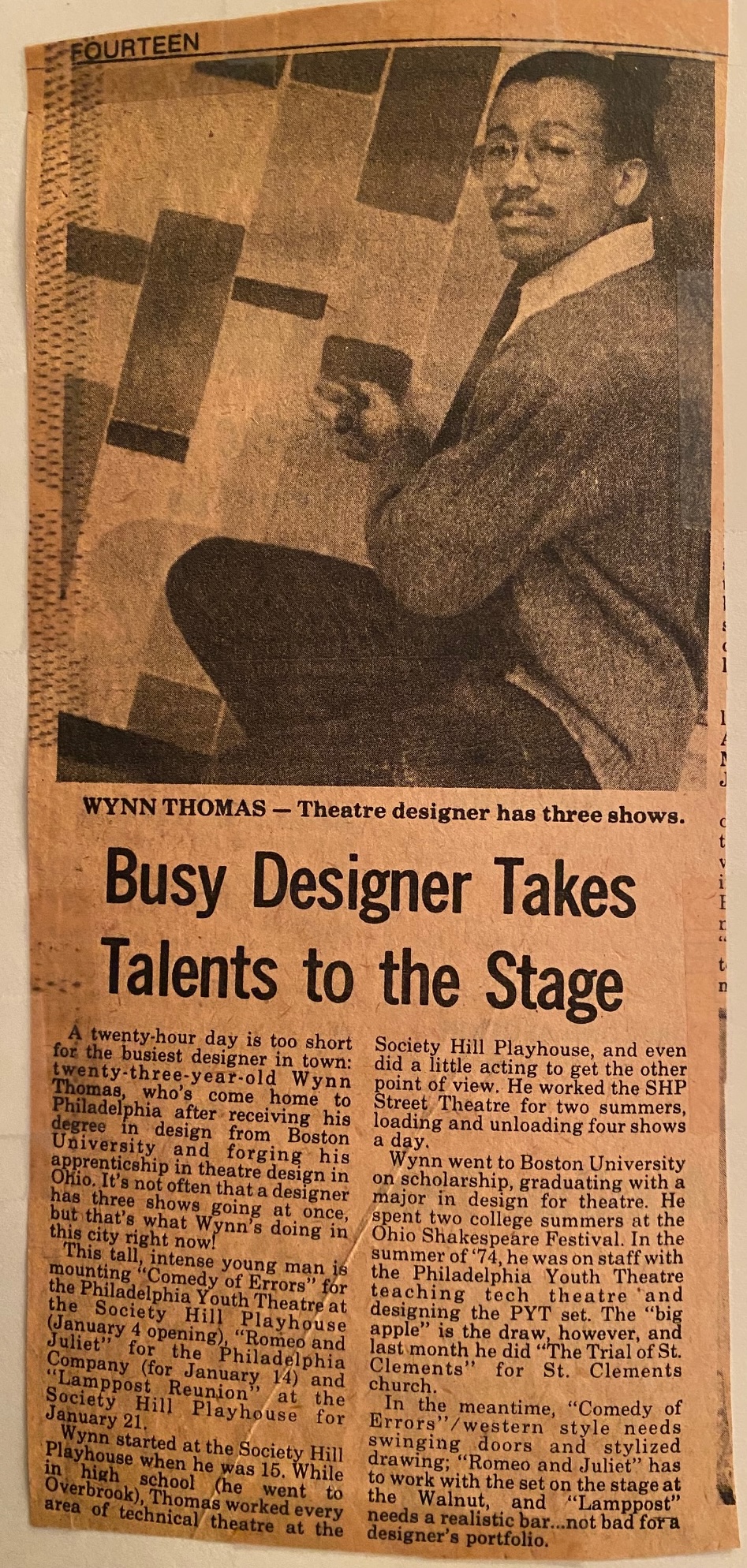
An article about Wynn Thomas when he was 23 years old and working as a theater designer in Philadelphia in the mid 1970s.
“It was a huge learning phase for my career, because I was painting all these different kinds of shows,” Thomas said.
By his mid-20s, Thomas had moved to New York and soon became the resident set designer for the legendary Negro Ensemble Company, where he worked with not-yet-famous actors from Denzel Washington to Phylicia Rashad.
“There was an actor who had auditioned for the company but did not get in. He was looking for a job and it turns out that he had carpentry skills, so I ended up hiring this actor who built my sets for my very first season at NEC,” Thomas recalled.
“That actor was Samuel L. Jackson.”
Breaking into film
Thomas loved theater but sought higher-paying work in film. After multiple job rejections, he joined the United Scenic Artists Local 829.
In an event the union organized with renowned production designer Richard Sylbert, who was working on Francis Ford Coppola’s The Cotton Club, Thomas was the sole Black person in attendance.
The next day, he called Sylbert and introduced himself: “I’m the Black guy that was in the room last night. Do you remember seeing me?”
He convinced Sylbert to hire him to build model sets, and Sylbert became a crucial reference that helped Thomas secure art director jobs, like on 1984’s Beat Street (directed by fellow Philly native Stan Lathan). That’s where he met Spike Lee, who interviewed “for the coffee-fetching position of assistant to the director,” Thomas recalled. When Lee stopped by the art department to greet a friend, the aspiring filmmaker was surprised to see Thomas.
“He said he didn’t know there were any Black people doing this [work],” Thomas said.
Filmmaker Spike Lee, center right, appears with his brother David Lee, center left, with castmembers, including Halle Berry, left, and Wesley Snipes, right, on the set of the 1991 film, “Jungle Fever.” Wynn Thomas served as production designer.
A storied career of firsts
That Beat Street encounter led to one of the most fruitful collaborative relationships of Thomas’ career: He went on to make 11 films with Lee, from She’s Gotta Have It to School Daze to Jungle Fever. Lee regularly worked with the same collaborators (“the family”) including Thomas, costume designer Ruth Carter, and cinematographer Ernest Dickerson.
“We wanted to present images of Black and brown folks that had not been seen before on the screen. We did not want to present any negative images. If you look at those films, there’s no drugs, there’s no alcohol, there’s no domestic abuse — none of that trauma that people used to associate with our communities,” said Thomas. “That was the artistic link, the journey for all of us …[and] that has been a criteria for me.”
Meanwhile, he continued to find mainstream success on commercial films, fueled by a relentless work ethic and a commitment to hiring a diverse crew of artists on his team. Later in his career, he was elected to the Academy’s Board of Governors where he pushed for expanding educational programs nationwide.
Thomas’ films showcase a breadth of world-building talent across genres like comedy (To Wong Foo, Thanks for Everything! Julie Newmar, Get Smart), romance (The Sun Is Also a Star), and dramas about other Black barrier-breakers, like King Richard (starring fellow Overbrook alum Will Smith), Hidden Figures, and the miniseries Lawmen: Bass Reeves.
It’s rare that he returns to his hometown for a job, but in 2014, he was thrilled to work on the pilot of the Philadelphia-set show How to Get Away with Murder.
Thomas believes the city holds countless rich, untold stories that he hopes will one day receive a bigger spotlight.
For now, he’s enjoying seeing the Oscar statue grace his living room.
“It really means a great deal to me, after 40-plus years of working in the business, to have my work recognized by this organization,” said Thomas. “I’ve worked on a lot of films that should have been recognized by the Academy, [for which] I should have been nominated, and it never happened. So I think this was a way for the Academy to correct that oversight.”
In 2025, Philadelphians said goodbye to a beloved group of broadcasters, radio personalities, sports heroes, and public servants who left their mark on a city they all loved.
Some were Philly natives, including former Eagles general manager Jim Murray. Others, including beloved WMMR host Pierre Robert, were transplants who made Philly their adopted home. But all left their mark on the city and across the region.
Pierre Robert
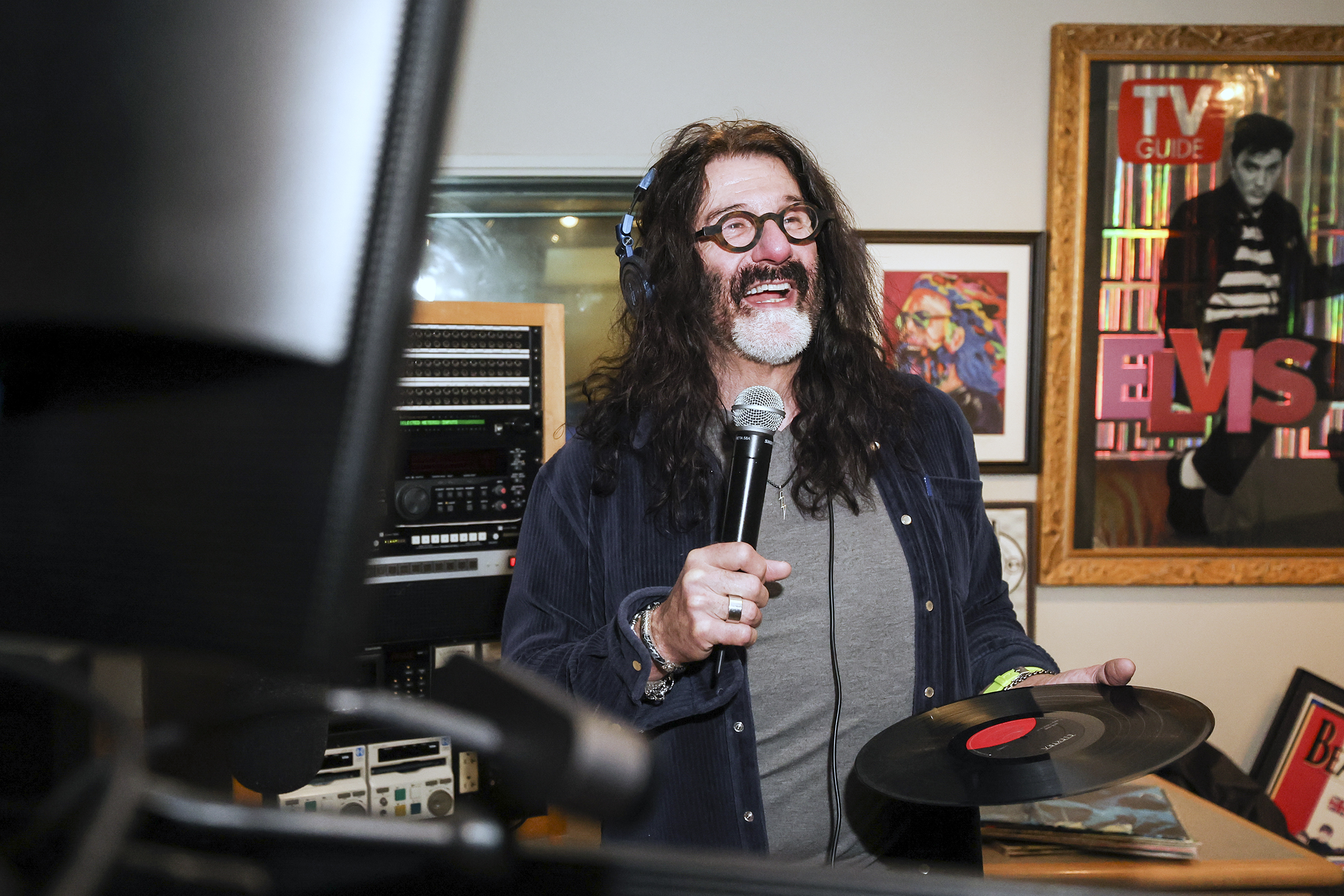
Former WMMR host Pierre Robert, seen in his studio in 2024.
A native of Northern California, Mr. Robert joined WMMR as an on-air host in 1981. He arrived in the city after his previous station, San Francisco’s KSAN, switched to an “urban cowboy” format, prompting him to make the cross-country drive to Philadelphia in a Volkswagen van.
At WMMR, Mr. Robert initially hosted on the weekends, but quickly moved to the midday slot — a position he held for more than four decades up until his death.
— Nick Vadala, Dan DeLuca
Bernie Parent
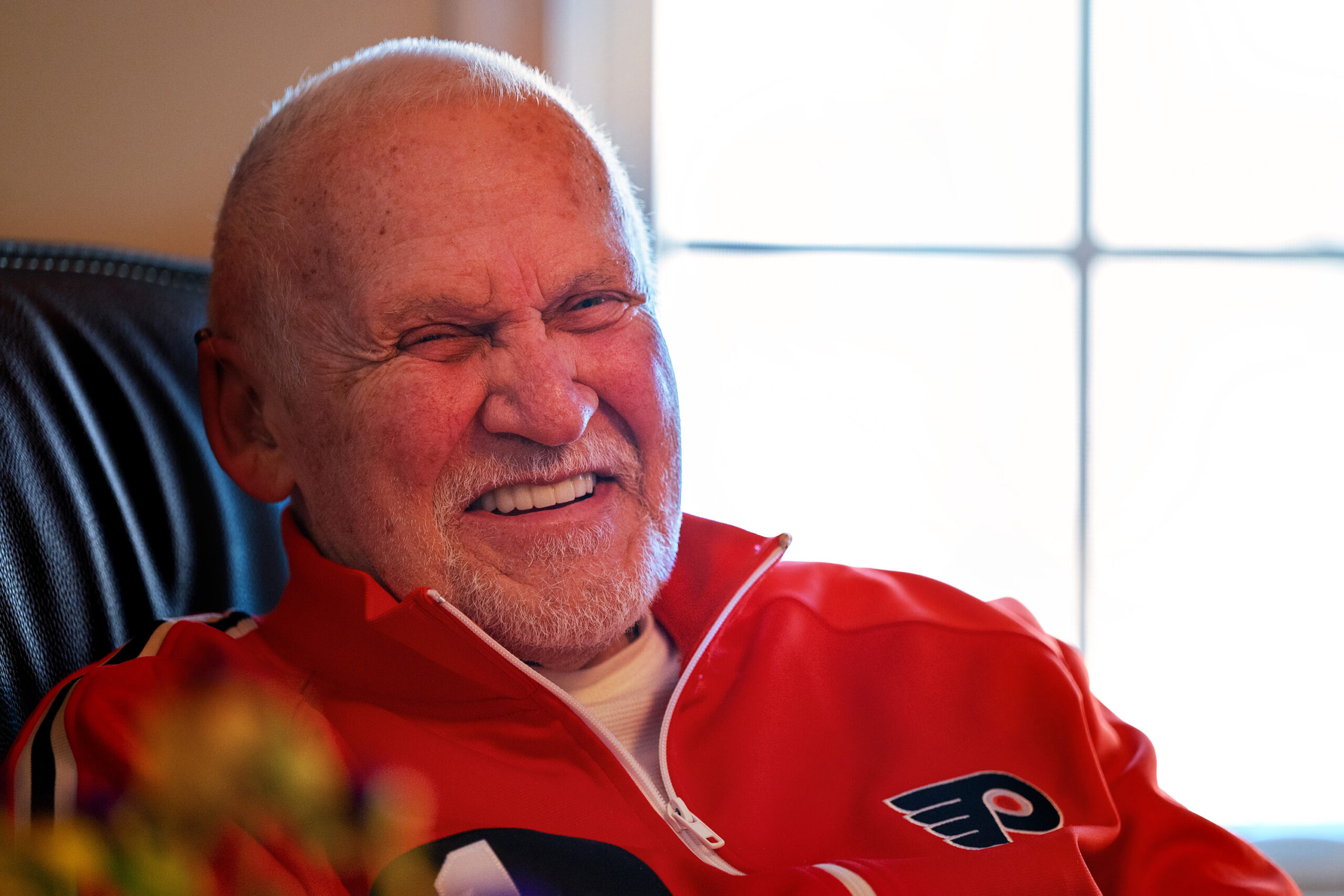
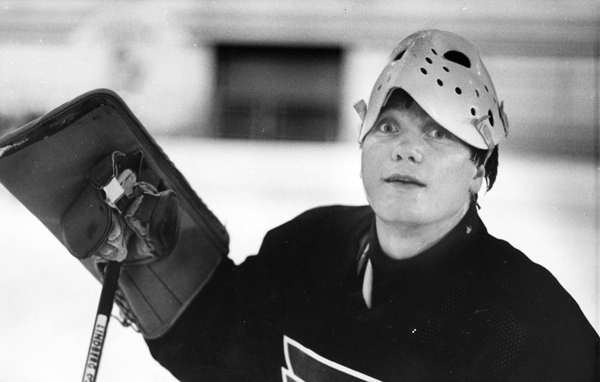
Former Flyers goaltender Bernie Parent, seen at his home in 2024.
Bernie Parent, the stone-wall Flyers goalie for the consecutive Stanley Cup championship teams for the Broad Street Bullies in the 1970s, died in September. He was 80.
A Hall of Famer, Mr. Parent clinched both championships with shutouts in the final game as he blanked the Boston Bruins, 1-0, in 1974 and the Buffalo Sabres, 2-0, in 1975. Mr. Parent played 10 of his 13 NHL seasons with the Flyers and also spent a season in the World Hockey League with the Philadelphia Blazers. He retired in 1979 at 34 years old after suffering an eye injury during a game against the New York Rangers.
He grew up in Montreal and spoke French as his first language before becoming a cultlike figure at the Spectrum as cars throughout the region had “Only the Lord Saves More Than Bernie Parent” bumper stickers.
— Matt Breen
David Lynch
David Lynch, seen here at the Governors Awards in Los Angeles in 2019.
David Lynch, the visionary director behind such movies as Blue Velvet and The Elephant Man and the twisted TV show Twin Peaks, died in January of complications from emphysema. He was 78.
Mr. Lynch was born in Missoula, Mont., but ended up in Philadelphia to enroll at the Pennsylvania Academy of the Fine Arts in 1965 at age 19. It was here he developed an interest in filmmaking as a way to see his paintings move.
He created his first short films in Philadelphia, which he described both as “a filthy city” and “his greatest influence” as an artist. Ultimately, he moved to Los Angeles to make his first feature film, Eraserhead, though he called the film “my Philadelphia Story.”
— Rob Tornoe
Ryne Sandberg
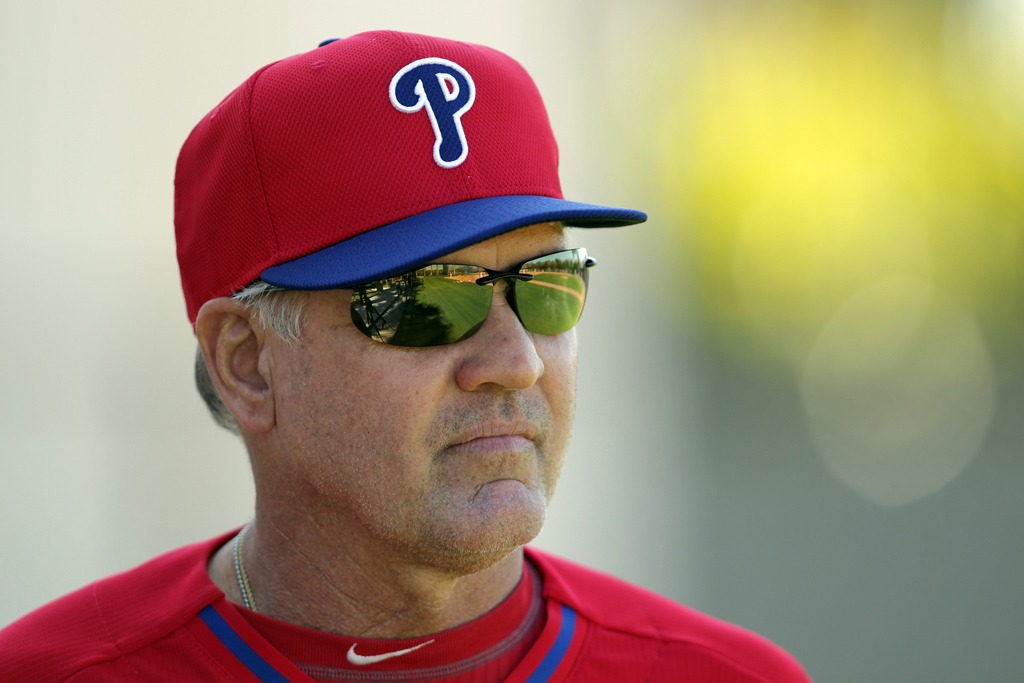
Former Phillies manager Ryne Sandberg, seen here at spring training in 2018.
Ryne Sandberg, the Hall of Fame second baseman who started his career with the Phillies but was traded shortly after to the Chicago Cubs in one of the city’s most regrettable trades, died in July of complications from cancer. He was 65.
Mr. Sandberg played 15 seasons in Chicago and became an icon for the Cubs, simply known as “Ryno,” after being traded there in January 1982.
He was a 10-time All-Star, won nine Gold Glove awards, and was the National League’s MVP in 1984. Mr. Sandberg was inducted into the Baseball Hall of Fame in 2005 and returned to the Phillies in 2011 as a minor-league manager and, later, the big-league manager.
— Matt Breen
Bob Uecker
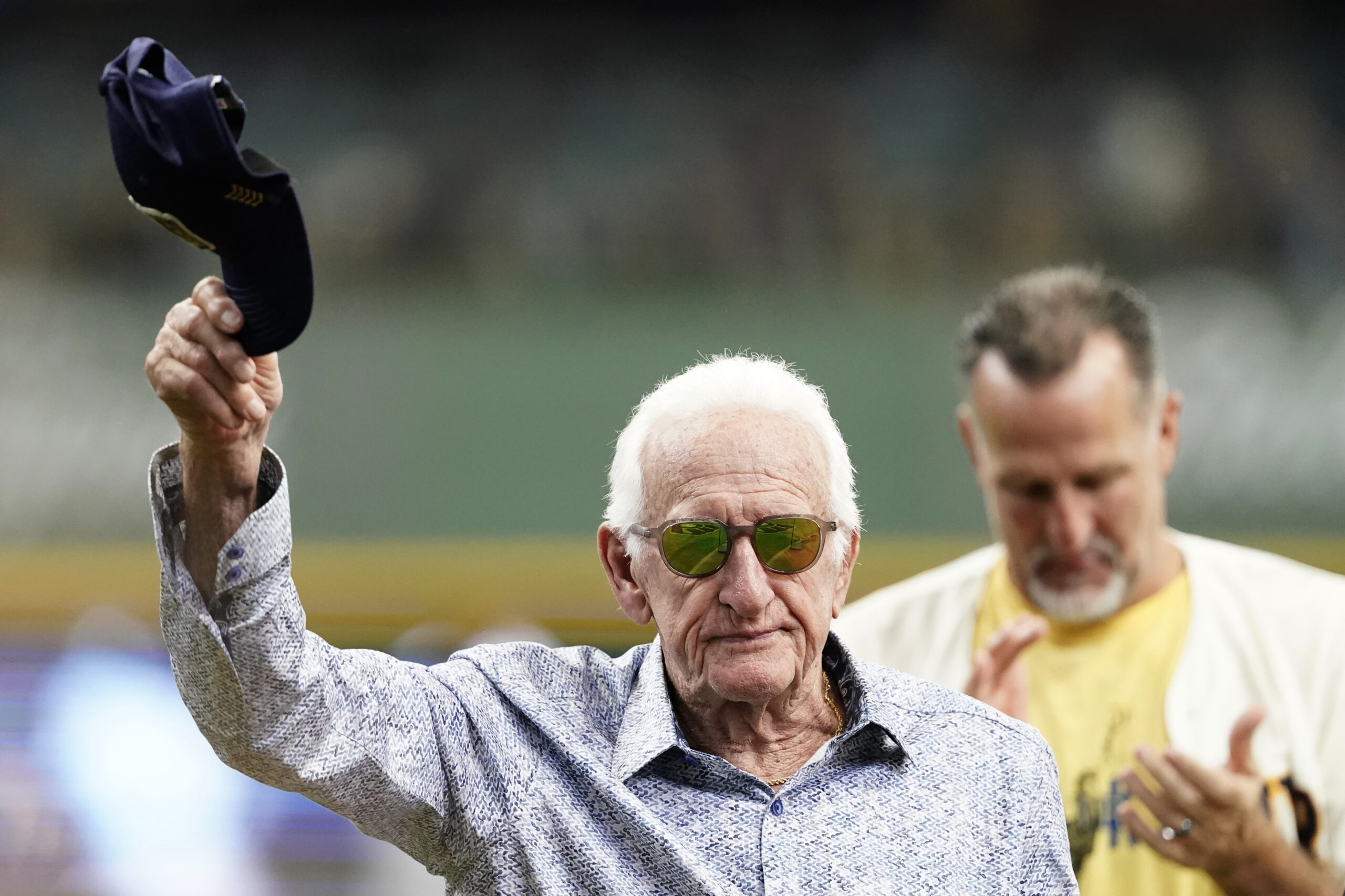
Bob Uecker, seen here before a Brewers game in 2024.
Bob Uecker, a former Phillies catcher who later became a Hall of Fame broadcaster for the Milwaukee Brewers and was dubbed “Mr. Baseball” by Johnny Carson for his acting roles in several movies and TV shows, died in January. He was 90.
Mr. Uecker spent just six seasons in the major league, two with the Phillies, but the talent that would make him a Hall of Fame broadcaster — wit, self-deprecation, and the timing of a stand-up comic — were evident.
His first broadcasting gig was in Atlanta, and he started calling Milwaukee Brewers games in 1971. Before that, he called Phillies games: Mr. Uecker used to sit in the bullpen at Connie Mack Stadium and deliver play-by-play commentary into a beer cup.
— Matt Breen and Rob Tornoe
Harry Donahue
Harry Donahue, seen here at Temple University in 2020.
Harry Donahue, 77, a longtime KYW Newsradio anchor and the play-by-play voice of Temple University men’s basketball and football for decades, died in October after a fight with cancer.
His was a voice that generations of people in Philadelphia and beyond grew up with in the mornings as they listened for announcements about snow days and, later, for a wide array of sports.
— Robert Moran
Alan Rubenstein
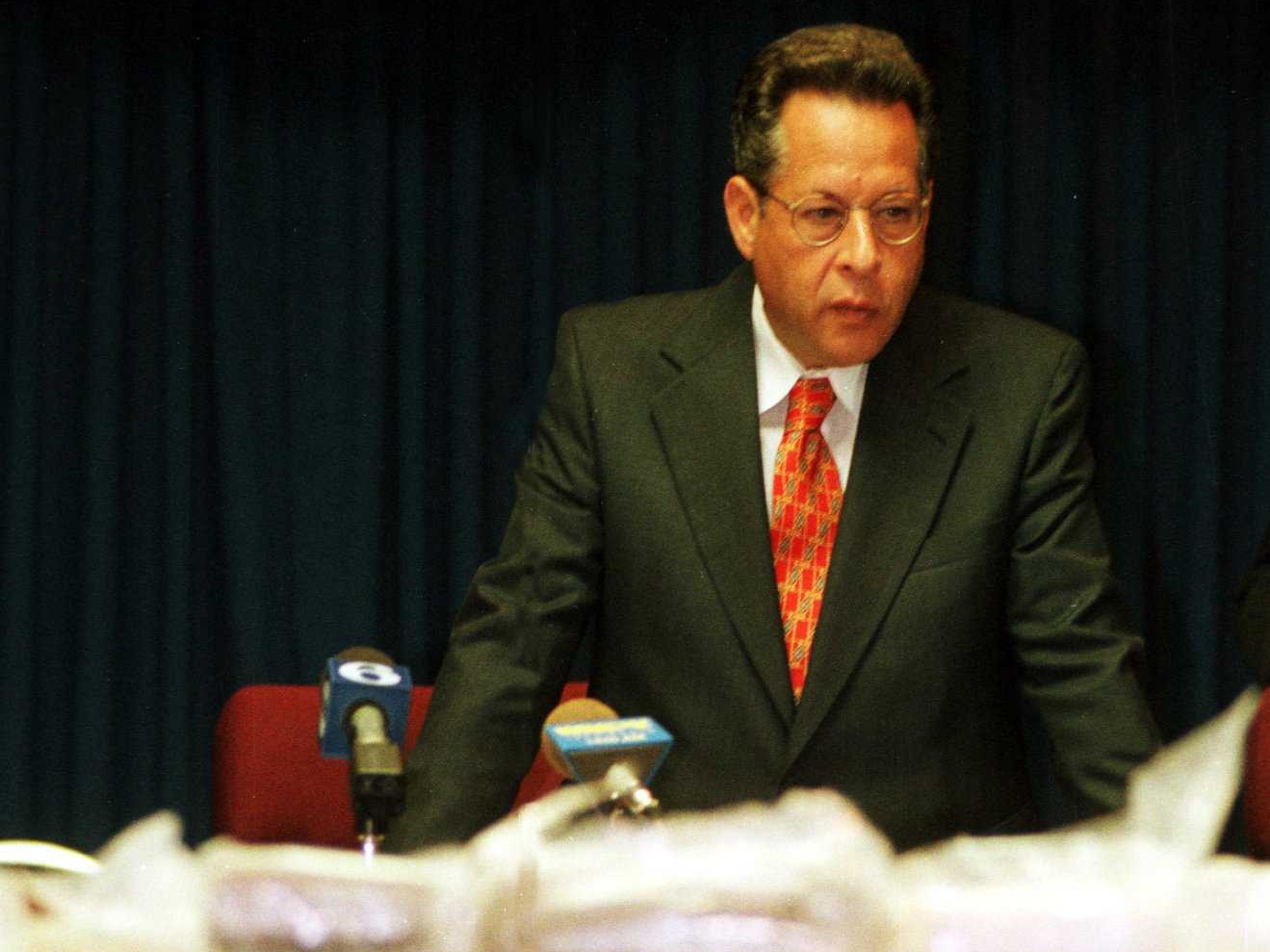
Judge Rubenstein, then Bucks County district attorney, talks to the media about a drug case in 1998.
Alan M. Rubenstein, a retired senior judge on Bucks County Common Pleas Court and the longest-serving district attorney in Bucks County history, died in August of complications from several ailments at his home in Holland, Bucks County. He was 79.
For 50 years, from his hiring as an assistant district attorney in 1972 to his retirement as senior judge a few years ago, Judge Rubenstein represented Bucks County residents at countless crime scenes and news conferences, in courtrooms, and on committees. He served 14 years, from 1986 to 1999, as district attorney in Bucks County, longer than any DA before him, and then 23 years as a judge and senior judge on Bucks County Court.
“His impact on Bucks County will be felt for generations,” outgoing Bucks County District Attorney Jennifer Schorn said in a tribute. U.S. Rep. Brian Fitzpatrick (R., Pa.) said on Facebook: “Alan Rubenstein has never been just a name. It has stood as a symbol of justice, strength, and integrity.”
— Gary Miles
Orien Reid Nix
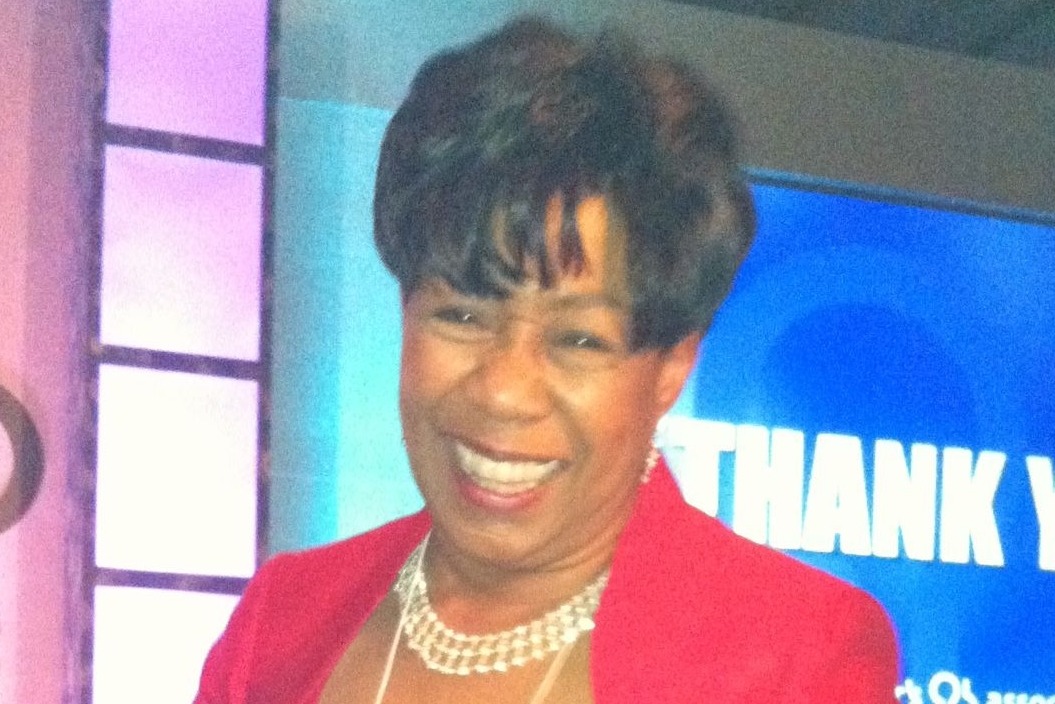
Orien Reid Nix, seen here being inducted into the Broadcast Pioneers of Philadelphia Hall of Fame in 2018
Orien Reid Nix, 79, of King of Prussia, retired Hall of Fame reporter for KYW-TV and WCAU-TV in Philadelphia, owner of Consumer Connection media consulting company, the first Black and female chair of the international board of the Alzheimer’s Association, former social worker, mentor, and volunteer, died in June of complications from Alzheimer’s disease.
Charismatic, telegenic, empathetic, and driven by a lifelong desire to serve, Mrs. Reid Nix worked as a consumer service and investigative TV reporter for Channels 3 and 10 in Philadelphia for 26 years, from 1973 to her retirement in 1998. She anchored consumer service segments, including the popular Market Basket Report, that affected viewers’ lives and aired investigations on healthcare issues, price gouging, fraud, and food safety concerns.
— Gary Miles
Dave Frankel
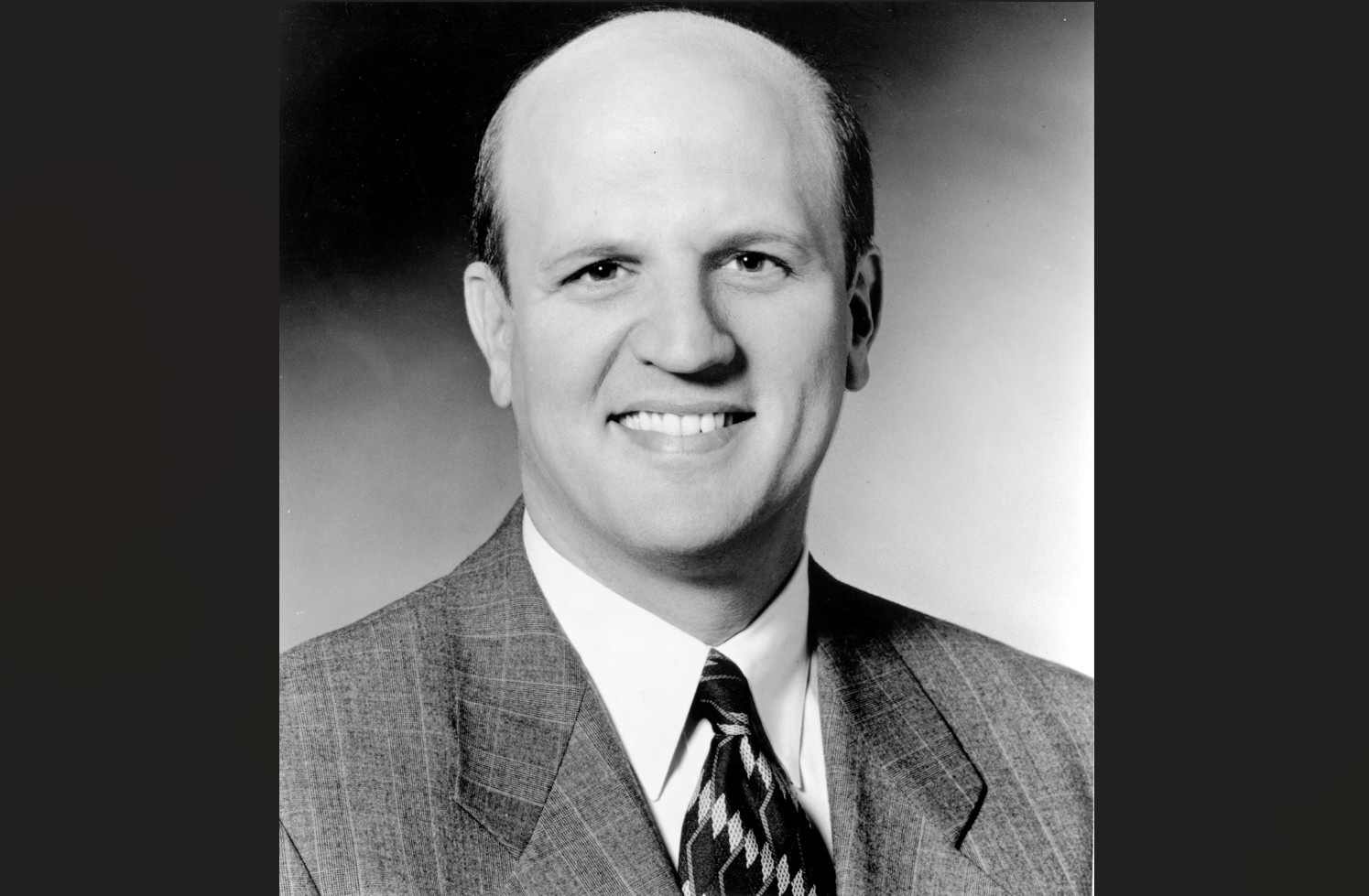
Dave Frankel in an undated publicity photo.
Dave Frankel, 67, a popular TV weatherman on WPVI (now 6abc) who later became a lawyer, died in February after a long battle with a neurodegenerative disease.
Mr. Frankel grew up in Monmouth County, N.J., graduated in 1979 from Dartmouth College, and was planning to attend Dickinson School of Law to become a lawyer like his father. But an internship at a local TV station in Vermont turned into a news anchor job and a broadcast career that lasted until the early 2000s.
— Robert Moran
Lee Elia
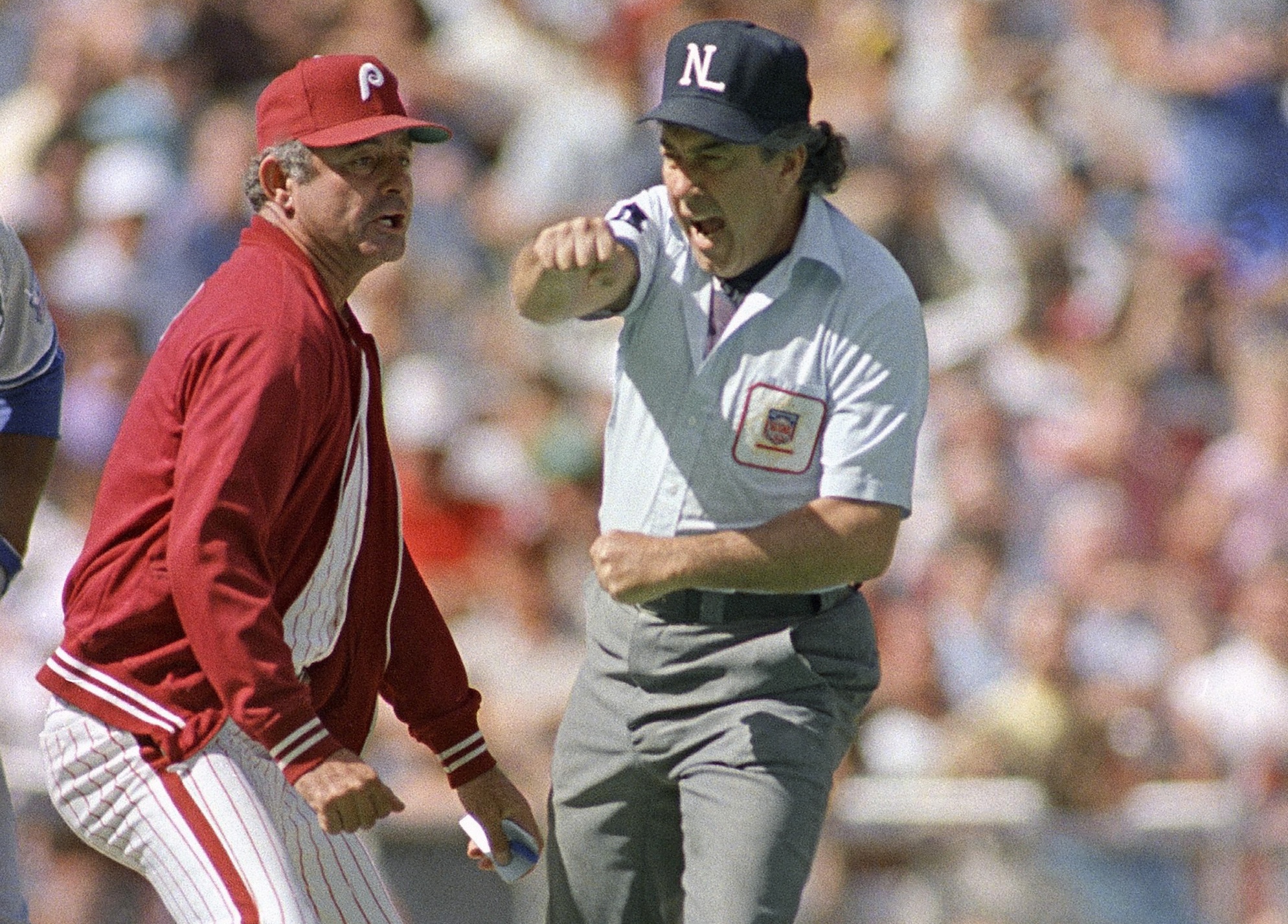
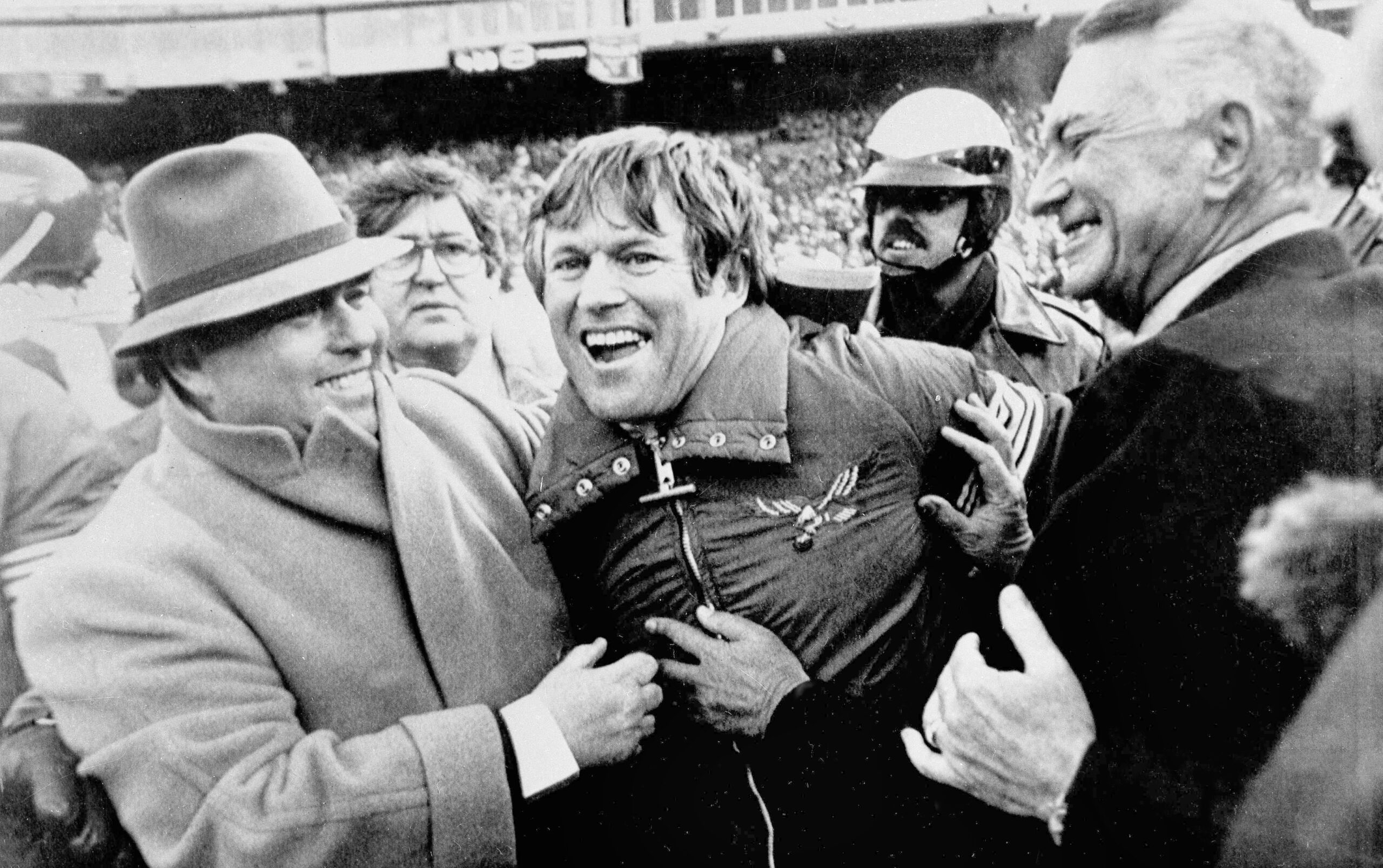
Former Phillies manager Lee Elia, seen here being ejected from a game in 1987.
Lee Elia, the Philadelphia native who managed the Phillies after coaching third base for the 1980 World Series champions and once famously ranted against the fans who sat in the bleachers of Wrigley Field, died in July. He was 87.
Mr. Elia’s baseball career spanned more than 50 seasons. He managed his hometown Phillies in 1987 and 1988 after managing the Chicago Cubs in 1982 and 1983.
After his playing career was cut shot by a knee injury, Mr. Elia joined Dallas Green’s Phillies staff before the 1980 season and was coaching third base when Manny Trillo delivered a crucial triple in the clinching game of the National League Championship Series. Mr. Elia was so excited that he bit Trillo’s arm after he slid.
— Matt Breen
Gary Graffman
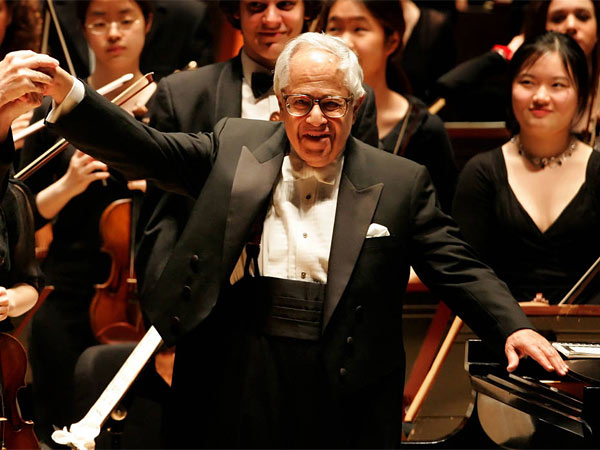
Gary Graffman, seen here playing at the Curtis Institute of Music Orchestra Concert at Verizon Hall in 2006.
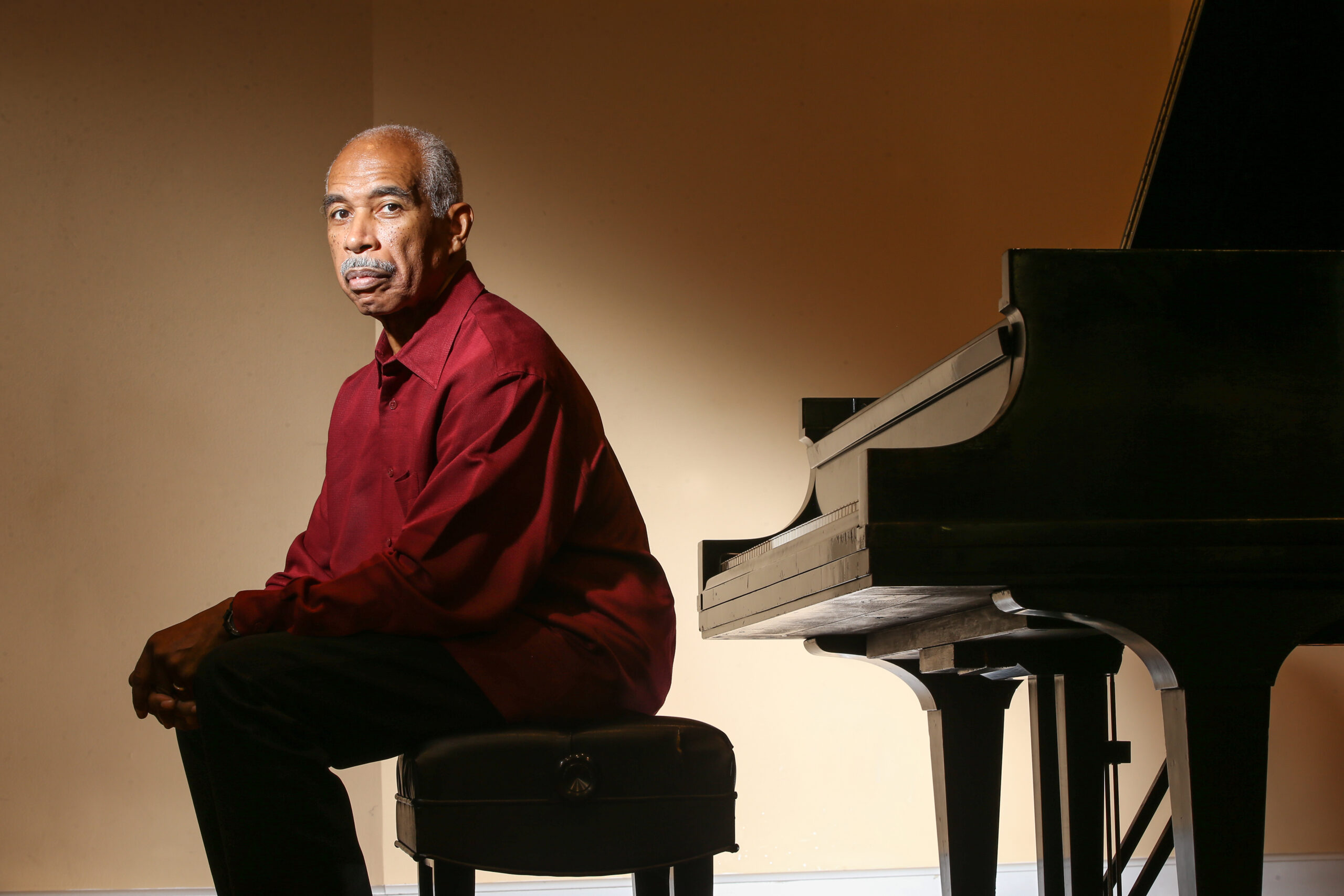
Gary Graffman, a celebrated concert pianist and the former president of the Curtis Institute of Music, died in December in New York. He was 97.
The New York City-born pianist arrived at Curtis at age 7. He graduated at age 17 and played roughly 100 concerts a year between the ages of 20 and 50 before retiring from touring due to a compromised right hand. Diagnosed with focal dystonia (a neurological disorder), he went on to premiere works for the left hand by Jennifer Higdon and William Bolcom.
Mr. Graffman returned to Curtis as a teacher in 1980, became director in 1986, and was named the president of the conservatory in 1995, with a teaching studio encompassing nearly 50 students, including Yuja Wang and Lang Lang among others. He performed on numerous occasions with the Philadelphia Orchestra from 1947 to 2003.
— David Patrick Stearns
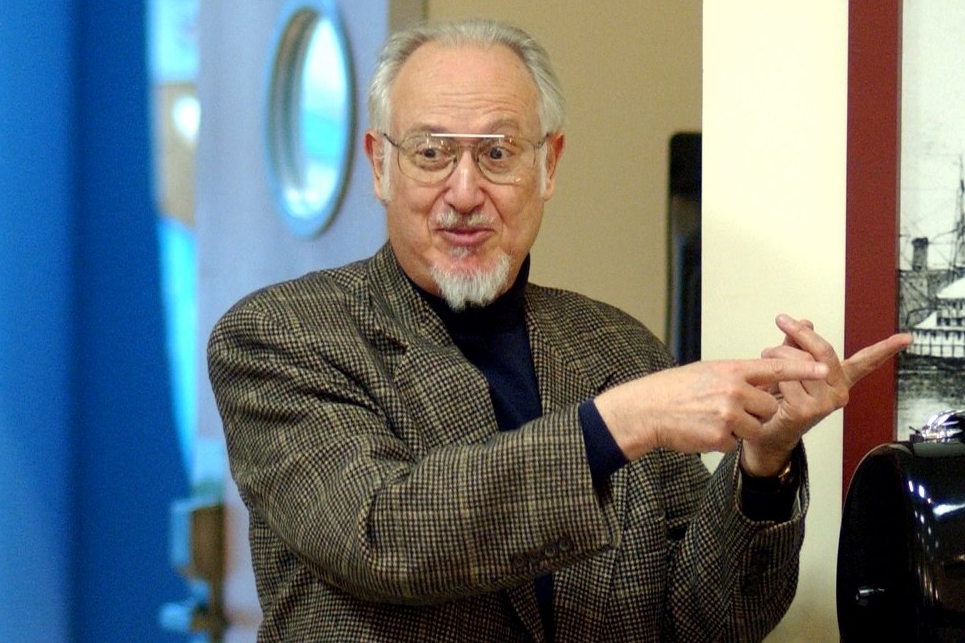
Len Stevens
Len Stevens was the co-founder of WPHL-TV Channel 17.
Len Stevens, the cofounder of WPHL-TV (Channel 17) and a member of the Broadcast Pioneers of Philadelphia Hall of Fame, died in September of kidney failure. He was 94.
Born in Philadelphia, Mr. Stevens was a natural entrepreneur. He won an audition to be a TV announcer with Dick Clark on WFIL-TV in the 1950s, persuaded The Tonight Show and NBC to air Alpo dog food ads in the 1960s, co-owned and managed the popular Library singles club on City Avenue in the 1970s and ’80s, and later turned the nascent sale of “vertical real estate” on towers and rooftops into big business.
He and partner Aaron Katz established the Philadelphia Broadcasting Co. in 1964 and launched WPHL-TV on Sept. 17, 1965. At first, their ultrahigh frequency station, known now as PHL17, challenged the dominant very high frequency networks on a shoestring budget. But, thanks largely to Mr. Stevens’ advertising contacts and programming ideas, Channel 17 went on to air Phillies, 76ers, and Big Five college basketball games, the popular Wee Willie Webber Colorful Cartoon Club, Ultraman, and other memorable shows in the late 1960s and early ’70s.
— Gary Miles
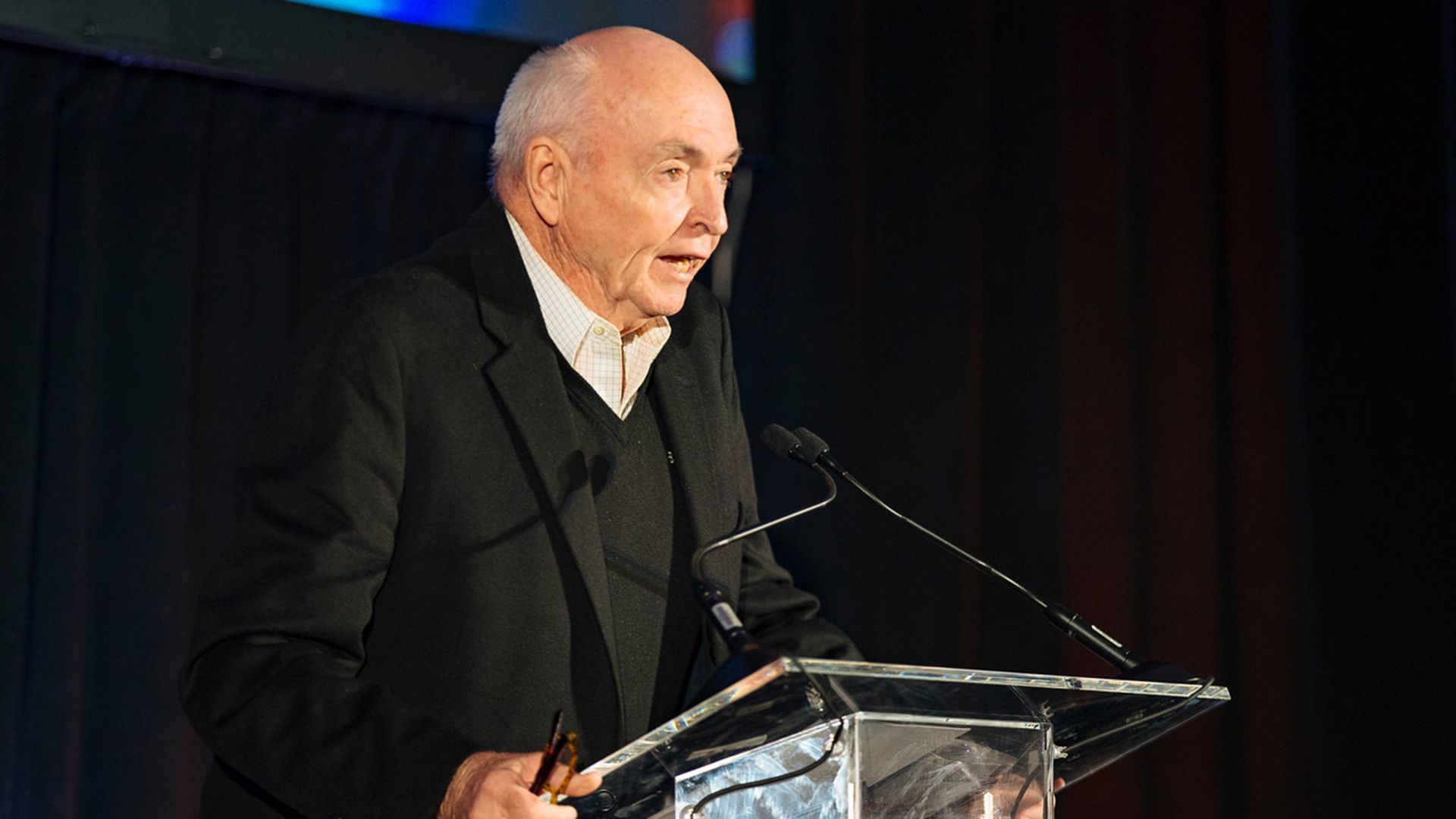
Jim Murray
Former Eagles general manager Jim Murray (left), seen here with Dick Vermeil and owner Leonard Tose following the 1980 NFC championship game in January 1981.
Jim Murray, the former Eagles general manager who hired Dick Vermeil and helped the franchise return to prominence while also opening the first Ronald McDonald House, died in August at home in Bryn Mawr surrounded by his family. He was 87.
Mr. Murray grew up in a rowhouse on Brooklyn Street in West Philadelphia and watched the Eagles at Franklin Field. The Eagles hired him in 1969 as a publicist, and Leonard Tose, then the Eagles’ owner, named him the general manager in 1974. Mr. Murray was just 36 years old and the decision was ridiculed.
But Mr. Murray — who was known for his wit and generosity — made a series of moves to bring the Eagles back to relevance, including hiring Vermeil and acquiring players like Bill Bergey and Ron Jaworski. The Eagles made the playoffs in 1978 and reached their first Super Bowl in January 1981. The Eagles, with Murray as the GM, were finally back.
— Matt Breen
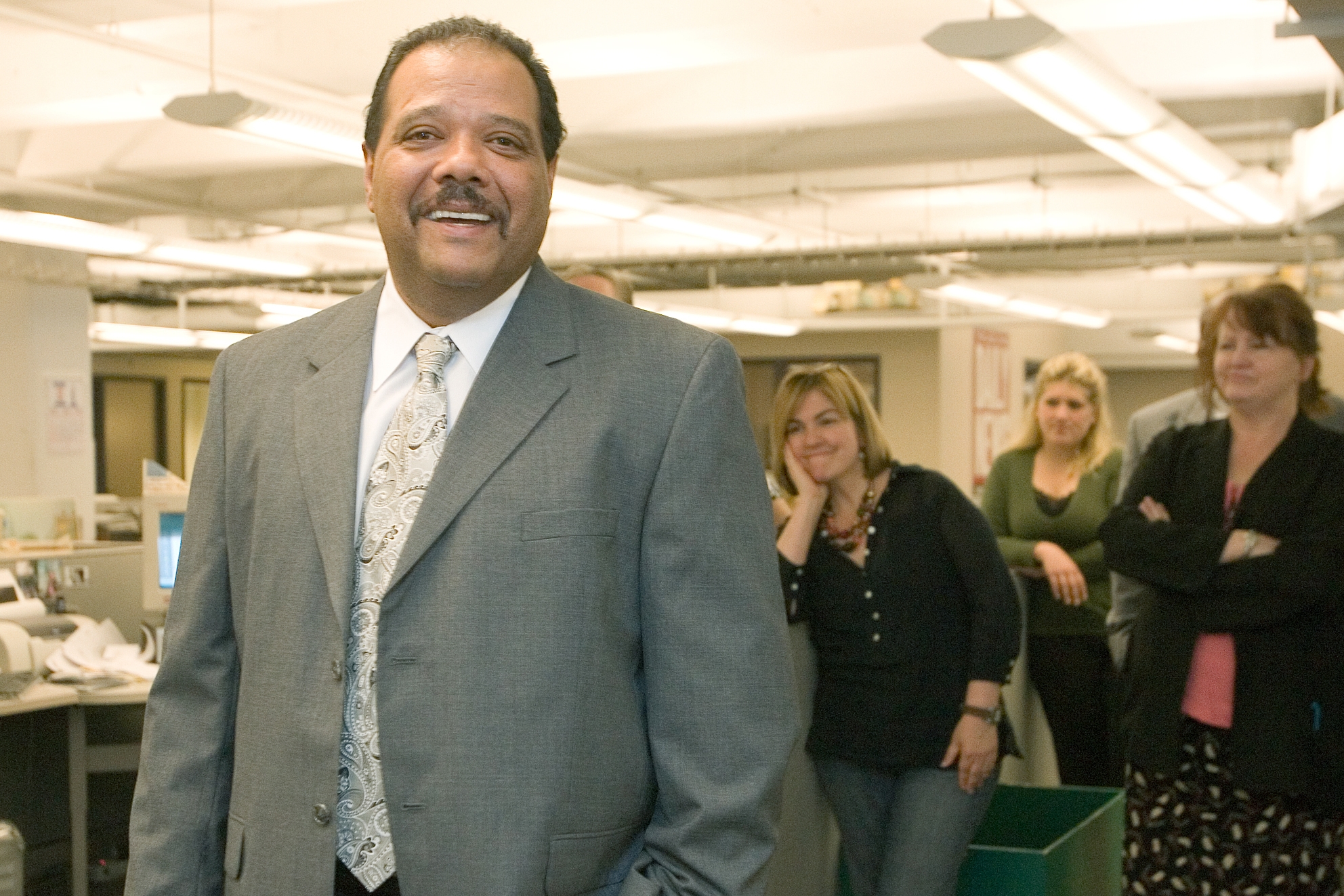
Michael Days
Philadelphia Daily News Editor Michael Days celebrates with the newsroom after word of the Pulitzer win.
Michael Days, a pillar of Philadelphia journalism who championed young Black journalists and led the Daily News during its 2010 Pulitzer Prize win for investigative reporting, died in October after falling ill. He was 72.
A graduate of Roman Catholic High School in Philadelphia, Mr. Days worked at the Wall Street Journal and other newspapers before joining the Daily News as a reporter in 1986, where he ultimately became editor in 2005, the first Black person to lead the paper in its 90-year history. In 2011, Mr. Days was named managing editor of The Inquirer, where he held several management roles until he retired in October 2020.
As editor of the Daily News, Mr. Days played an essential role in the decisions that would lead to its 2010 Pulitzer Prize, including whether to move forward with a story about a Philadelphia Police Department narcotics officer that a company lawyer said stood a good chance of getting them sued.
“He said, ‘I trust my reporters, I believe in my reporters, and we’re running with it,’” recounted Inquirer senior health reporter Wendy Ruderman, who reported the piece with colleague Barbara Laker. That story revealed a deep dysfunction within the police department, Ruderman said, and led to the newspaper’s 2010 Pulitzer Prize win.
— Brett Sholtis
Tom McCarthy
Tom McCarthy, seen here in 2002.
Tom McCarthy, an award-winning theater, film, and TV actor, longtime president of the local chapter of the Screen Actors Guild, former theater company board member, mentor, and veteran, died in May of complications from Parkinson’s disease at his home in Sea Isle City. He was 88.
The Overbrook native quit his job as a bartender in 1965, sharpened his acting skills for a decade at Hedgerow Theatre Company in Rose Valley and other local venues, and, at 42, went on to earn memorable roles in major movies and TV shows.
In the 1980s, he played a police officer with John Travolta in the movie Blow Out and a gardener with Andrew McCarthy in Mannequin. In 1998, he was a witness with Denzel Washington in Fallen. In 2011, he was a small-town mayor with Lea Thompson in Mayor Cupcake. Over the course of his career, Mr. McCarthy acted with Zsa Zsa Gabor, Harrison Ford, Kristin Scott Thomas, Cloris Leachman, Robert Redford, Donald Sutherland, John Goodman, and other big stars.
— Gary Miles
Carol Saline
Carol Saline, seen here at her Philadelphia home in 2021.
Carol Saline, a longtime senior writer at Philadelphia Magazine, the best-selling author of Sisters, Mothers & Daughters, and Best Friends, and a prolific broadcaster, died in August of acute myeloid leukemia. She was 86.
On TV, she hosted a cooking show and a talk show, was a panelist on a local public affairs program, and guested on the Oprah Winfrey Show, Inside Edition, Good Morning America, and other national shows. On radio, she hosted the Carol Saline Show on WDVT-AM.
In June, she wrote to The Inquirer, saying: “I am contacting you because I am entering hospice care and will likely die in the next few weeks. … I wanted you to know me, not only my accomplishments but who I am as a person.
“I want to go out,” she ended her email, “with a glass of Champagne in one hand, a balloon in the other, singing (off key) ‘Whoopee! It’s been a great ride!’”
— Gary Miles
Richard Wernick
Richard Wernick, seen here before a concert at the 2002 Festival of Philadelphia Composers.
Richard Wernick, a Pulitzer Prize-winning composer, acclaimed conductor, and retired Irving Fine Professor of Music at the University of Pennsylvania, died in April 25 of age-associated decline at his Haverford home. He was 91.
Professor Wernick was prolific and celebrated as a composer. He wrote hundreds of scores over six decades and appeared on more than a dozen records, and his Visions of Terror and Wonder for a mezzo-soprano and orchestra won the 1977 Pulitzer Prize for music. In 1991, his String Quartet No. 4 made him the first two-time winner of the Kennedy Center’s Friedheim Award for new American music.
“Wernick’s orchestral music has power and brilliance, an emphasis on register, space, and scale,” Lesley Valdes, former Inquirer classical music critic, said in 1990.
— Gary Miles
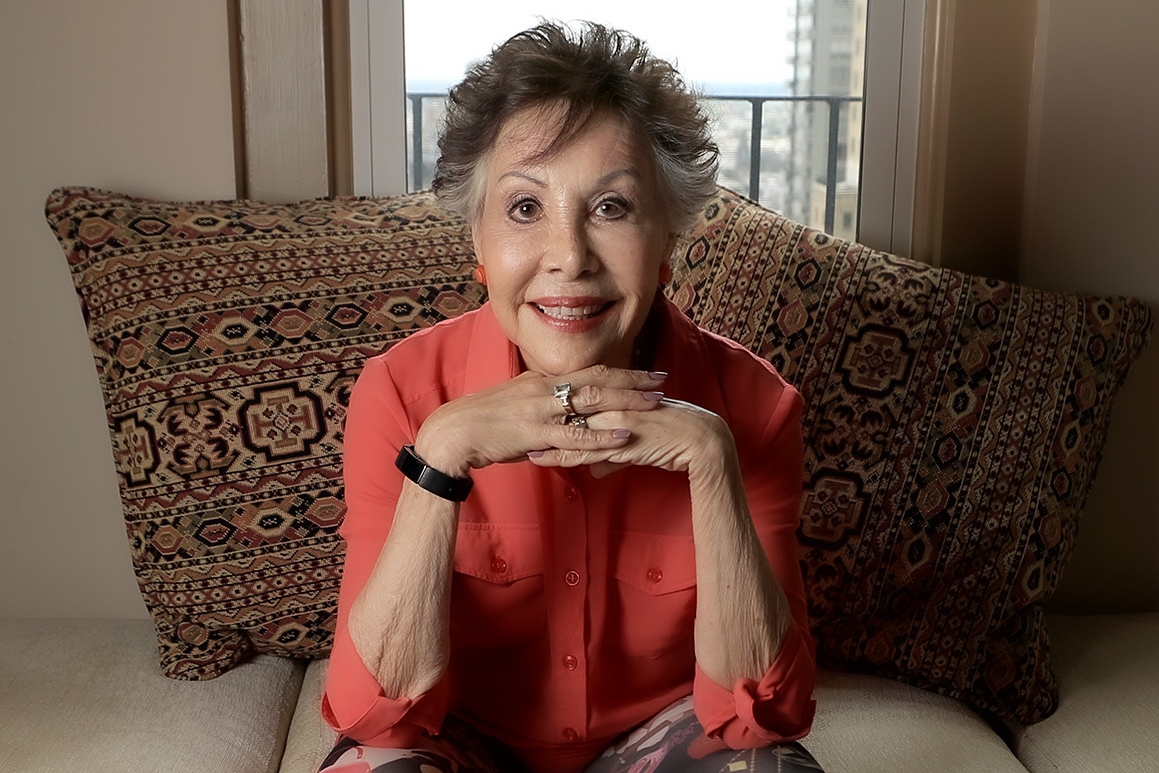
Dorie Lenz
Dorie Lenz, seen here on Channel 17 in 2015.
Dorie Lenz, a pioneering TV broadcaster and the longtime director of public affairs for WPHL-TV (Channel 17), died in January of age-associated ailments at her home in New York. She was 101.
A Philadelphia native, Ms. Lenz broke into TV as a 10-year-old in a local children’s show and spent 30 years, from 1970 to 2000, as director of public affairs and a program host at Channel 17, now PHL17. She specialized in detailed public service campaigns on hot-button social issues and earned two Emmys in 1988 for her program Caring for the Frail Elderly.
Ms. Lenz interviewed newsmakers of all kinds on the public affairs programs Delaware Valley Forum, New Jersey Forum, and Community Close Up. Viewers and TV insiders hailed her as a champion and watchdog for the community. She also talked to Phillies players before games in the 1970s on her 10-minute Dorie Lenz Show.
— Gary Miles
Jay Sigel
Jay Sigel, seen here after winning the Georgia-Pacific Grand Champions title in 2006.
Jay Sigel, one of the winningest amateur golfers of all time and an eight-time PGA senior tour champion, died in April of complications from pancreatic cancer. He was 81.
For more than 40 years, from 1961, when he won the International Jaycee Junior Golf Tournament as an 18-year-old, to 2003, when he captured the Bayer Advantage Celebrity Pro-Am title at 60, the Berwyn native was one of the winningest amateur and senior golfers in the world. Mr. Sigel won consecutive U.S. Amateur titles in 1982 and ’83 and three U.S. Mid-Amateur championships between 1983 and ’87, and remains the only golfer to win the amateur and mid-amateur titles in the same year.
He won the Pennsylvania Amateur Championship 11 times, five straight from 1972 to ’76, and the Pennsylvania Open Championship for pros and amateurs four times. He also won the 1979 British Amateur Championship and, between 1975 and 1999, played for the U.S. team in a record nine Walker Cup tournaments against Britain and Ireland.
— Gary Miles
Mark Frisby
Mark Frisby, seen here in the former newsroom of the Daily News in 2007.
Mark Frisby, the former publisher of the Daily News and associate publisher of The Inquirer, died in September of takayasu arteritis, an inflammatory disease, at his home in Gloucester County. He was 64.
Mr. Frisby joined The Inquirer and Daily News in November 2006 as executive vice president of production, labor, and purchasing. He was recruited from the Courier-Post by then-publisher Brian Tierney, and he went on to serve as publisher of the Daily News from 2007 to 2016 and associate publisher for operations of The Inquirer and Daily News from 2014 to his retirement in 2016.
Mr. Frisby was one of the highest-ranking Black executives in the company’s history, and he told the Daily News in 2006 that “local ownership over here was the big attraction for me.” Michael Days, then the Daily News editor, said in 2007: “This cat is really the real deal.”
— Gary Miles
Leon Bates
Leon Bates, seen here at the Settlement Music School in Germantown in 2018.
Leon Bates, a concert pianist whose musical authority and far-reaching versatility took him to the world’s greatest concert halls, died in November after a seven-year decline from Parkinson’s disease. He was 76.
The career of Mr. Bates, a leading figure in the generation of Black pianists who followed the early-1960s breakthrough of Andre Watts, encompassed Ravel, Gershwin, and Bartok over 10 concerts with the Philadelphia Orchestra between 1970 and 2002. He played three recitals with Philadelphia Chamber Music Society and taught master classes at Temple University, where he also gave recitals at the Temple Performing Arts Center.
In his WRTI-FM radio show, titled Notes on Philadelphia, during the 1990s, Mr. Bates was what Charles Abramovic, chair of keyboard studies at Temple University, described as “beautifully articulate and a wonderful interviewer. The warmth of personality came out. He was such a natural with that.”
— David Patrick Stearns
Lacy McCrary
Lacy McCrary in an undated photo.
Lacy McCrary, a former Inquirer reporter who won a Pulitzer Prize at the Akron Beacon Journal, died in March of Alzheimer’s disease at his home in Colorado Springs, Colo. He was 91.
Mr. McCrary, a Morrisville, Bucks County native, won the 1971 Pulitzer Prize in local general or spot news reporting as part of the Beacon Journal’s coverage of the May 4, 1970, student protest killings at Kent State University.
He joined The Inquirer in 1973 and covered the courts, politics, and news of all sorts until his retirement in 2000. He notably wrote about unhealthy conditions and fire hazards in Pennsylvania and New Jersey boardinghouses in the late 1970s and early ’80s, and those reports earned public acclaim and resulted in new regulations to correct deadly oversights.
— Gary Miles
Roberta Fallon
Roberta Fallon, seen here in an undated photo.
Roberta Fallon, 76, cofounder, editor, and longtime executive director of the online Artblog and adjunct professor at St. Joseph’s University, died in December at Thomas Jefferson University Hospital of injuries she suffered after being hit by a car. She was 76.
Described by family and friends as empathetic, energetic, and creative, Ms. Fallon and fellow artist Libby Rosof cofounded Artblog in 2003. For nearly 22 years, until the blog became inactive in June, Ms. Fallon posted commentary, stories, interviews, reviews, videos, podcasts, and other content that chronicled the eclectic art world in Philadelphia.
— Gary Miles
Benita Valente
BENI26P Gerald S. Williams 10/18/00 2011 Pine st. Philadelphia-based soprano Benita Valente has sung all over the world. At age 65, she is making her Oct. 29 performance with the Mendelssohn Club at the Academy of Music her last. 1 of 3: Benita goes over some music at the piano in her upstairs music room.
Benita Valente, a revered lyric soprano whose voice thrilled listeners with its purity and seeming effortlessness, died in October at home in Philadelphia. She was 91.
In a remarkable four-decade career, Ms. Valente appeared on the opera stage, in chamber music, and with orchestras. In the intimate genre of lieder — especially songs by Schubert and Brahms — she was considered one of America’s great recitalists.
Locally filmed crime shows were everywhere, theaters opened but didn’t (thankfully) close, and Colman Domingo was (rightfully) ubiquitous. All that and more, in our roundup of movies in Philadelphia in 2025.
The year was lighter on Hollywood movie productions shooting in town, but among them was a basketball movie with Mark Wahlberg, at various times given the titles Cheesesteak and Weekend Warriors.I Play Rocky, a movie about the making of the original 1976 Rocky, also filmed in the city.
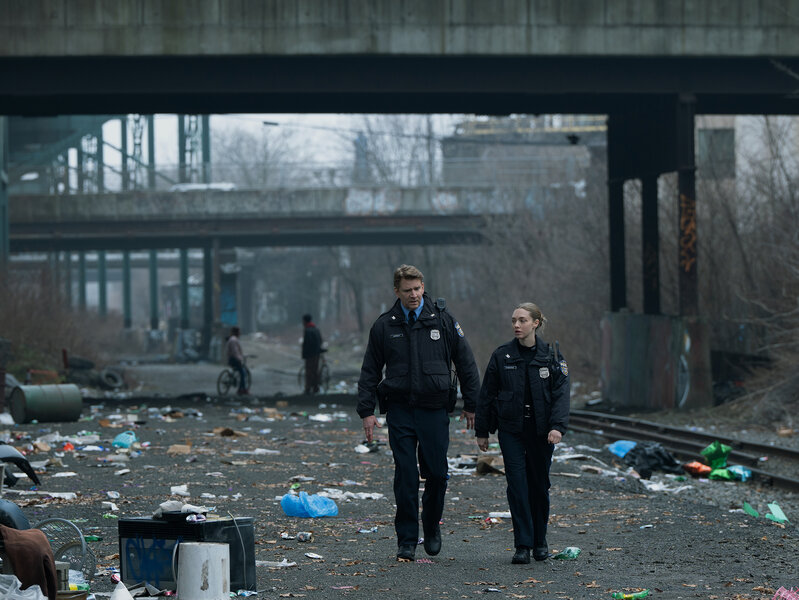
In Peacock’s “Long Bright River,” Allentown native Amanda Seyfried plays Michaela “Mickey” Fitzpatrick, a Kensington patrol police officer who discovers a string of murders in the neighborhood’s drug market.
Gearing up for Rocky 50
It wouldn’t be a year in Philly film without Rocky making its way in.
I Play Rocky is expected to arrive in theaters in 2026, in what will likely serve as one of many commemorations of the 50th anniversary of Rocky.
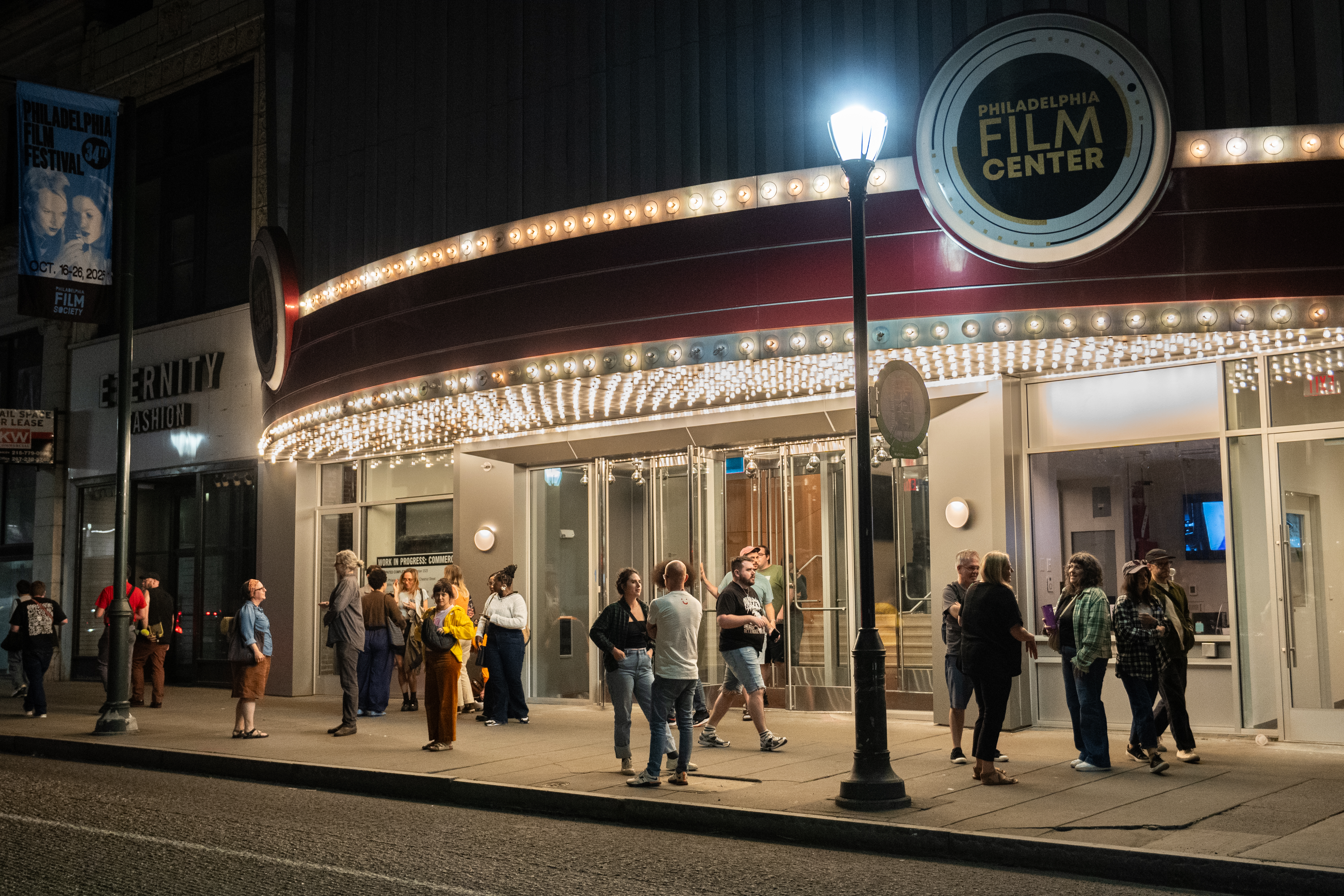
Also, Rocky was among the many movies and area film institutions included in Films Shaped by a City, a new mural by Marian Bailey, that debuted in October on Sansom Street, on the back of the Film Society Center. Mural Arts Philadelphia, BlackStar Projects, and the Philadelphia Film Society had worked on the project for more than two years.
Outside the filming of “Eraserhead” by David Lynch at the Film Society Center, in Philadelphia, Oct. 5, 2025.
The Film Society’s big year
The new mural on the back of its building was part of an eventful year for the Philadelphia Film Society, which completed a big new entrance and lobby renovation of the Film Society Center.
The Philadelphia Film Festival, in October, welcomed 33,000 attendees, which PFS calls its highest turnout ever, while the three theaters welcomed 200,000 customers throughout the year, also a record.
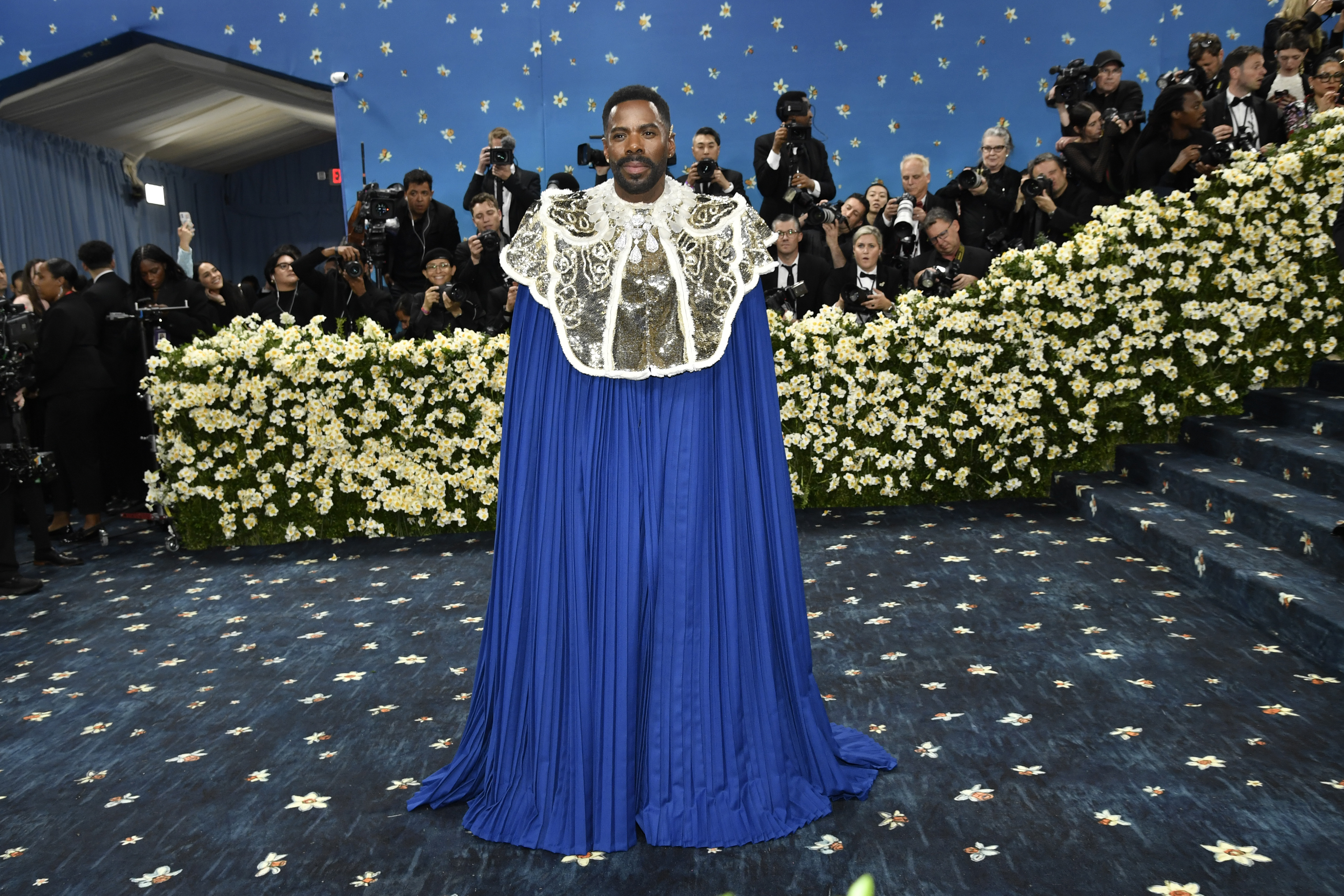
Colman Domingo attends the Metropolitan Museum of Art’s Costume Institute benefit gala celebrating the opening of the “Superfine: Tailoring Black Style” exhibition on Monday, May 5, 2025, in New York.
The very busy Colman Domingo
It was another eventful year for the Temple alum and West Philly native, who was nominated for the best actor Oscar for the second straight year, for last year’s Sing Sing. In 2025, he was in four movies — Dead Man’s Wire, The Running Man, and voice roles in The Electric State and Wicked: For Good. He also appeared in the TV series The Four Seasons — created by and costarring Upper Darby’s Tina Fey — and Your Friendly Neighborhood Spider-Man. He even guest-judged on RuPaul’s Drag Race and cochaired the Met Gala.
In 2026, Domingo is set to appear in both the Michael Jackson biopic Michael and Steven Spielberg’s new sci-fi film, Disclosure Day. He’s also at work on his feature directorial debut, Scandalous!, and said at PFF that he hopes to finish the film in time to bring it to next year’s festival.
This image released by Warner Bros. Pictures shows David Corenswet in a scene from “Superman.” (Warner Bros. Pictures via AP)
Local actors and filmmakers shine
The Philadelphia-born Penn alum David Corenswet debuted as Superman this summer, a film that also featured a small appearance by Jenkintown’s Bradley Cooper. Cooper directed and played a supporting role in In This Thing On?
Mount Airy native and Temple alum Da’Vine Joy Randolph followed up her Oscar win by appearing in three movies, Shadow Force, Bride Hard, and Eternity — the latter of which also starred Downingtown’s Miles Teller — and continuing on Only Murders in the Building.
Willow Grove’s Dan Trachtenberg directed not one but two films in the Predator franchise, the animated Predator: Killer of Killers and the live-action Predator: Badlands. Penn alum Gavin O’Connor directed The Accountant 2. In addition to creating Task, Berwyn’s Brad Ingelsby wrote the movies Echo Valley and The Lost Bus, both for Apple TV.
West Philadelphia’s Quinta Brunson continued to star in Abbott Elementary, which had her filming in Citizens Bank Park the night of Kyle Schwarber’s historic four home runs. She also played a voice role in Zootopia 2.
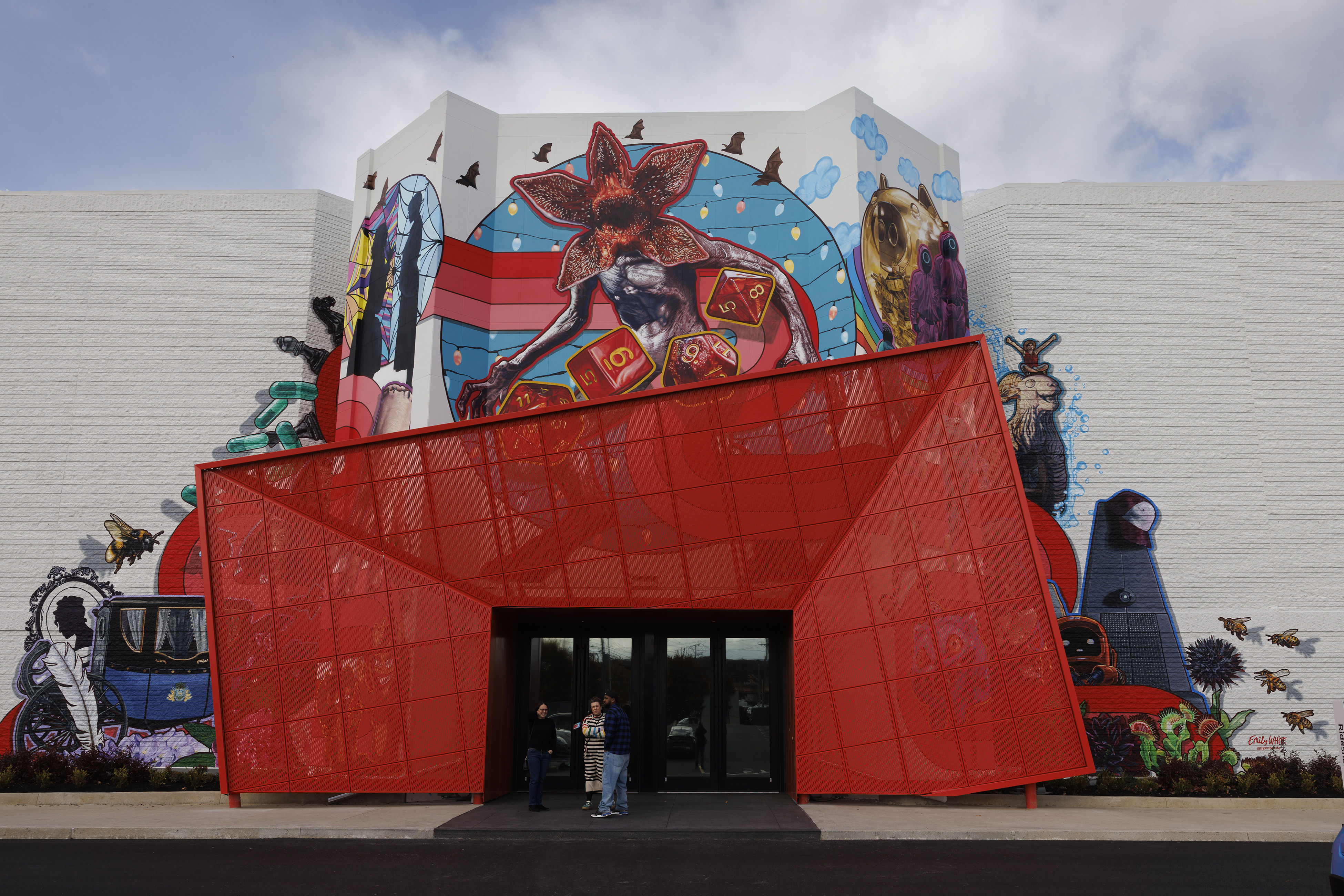
Exterior entrance to Netflix House, King of Prussia Mall, Tuesday, November 11, 2025.
No theater loss
Philadelphia, in a rarity, did not lose any movie screens in 2025.
Then, in August, it was announced that the Riverview movie theater on Columbus Boulevard, which has sat empty since 2020, would reopen in 2026 under the auspices of Apple Cinemas, with the city’s only IMAX screen. However, recently it didn’t appear that any construction work had begun there yet, and the Riverview’s impending return had also been announced in 2024.
In February, an effort was announced to revive the Anthony Wayne Theater in Wayne. Ishana Night Shyamalan, the film director and daughter of M. Night, is a member of the board seeking to bring the theater back.
In November, the first-ever Netflix House “fan destination” opened in King of Prussia, and it includes a theater that will feature such special events as Netflix’s NFL games on Christmas Day and the Stranger Things series finale on New Year’s Day.
And about two hours north of the city, in the town of Wind Gap, the Gap Theatre reopened in March after it was closed for five years. The theater shows more than 50 films a month, mostly sourced from the collection of Exhumed Films.
A still from Mike Macera’s “Alice-Heart,” part of the 2025 Philadelphia Film Festival’s “Filmadelphia” section.
Indie-delphia
It was also an eventful year for local independent film.
Delco: The Movie, which was in the works for several years, had its premiere in January. Two other films, both of which premiered at the 2022 Philadelphia Film Festival, finally saw their release this year: The Golden Voice, directed by Brandon Eric Kamin, and Not For Nothing, from Tim Dowlin and Frank Tartaglia, who died in 2022.
Mike Macera’s Alice-Heart, featuring a cast and crew full of Drexel and Temple alumni, premiered at PFF and won the Filmadelphia Best Local Feature Film Award.
To mark the 40th anniversary of the 1985 death of Flyers goalie Pelle Lindbergh, the documentary “The Swede of Philadelphia” opened in area theaters in November.
Documenting sports stars
There were, once again, several prominent sports documentaries about Philadelphia athletes of the past and present. CNN aired Kobe: The Making of a Legend, about Lower Merion’s Kobe Bryant, to coincide with the fifth anniversary of his death. To mark the 40th anniversary of the 1985 death of Flyers goalie Pelle Lindbergh, the documentaryThe Swede of Philadelphia opened in area theaters in November.
Amazon’s Prime Video premiered Saquon, which followed the Eagles’ Saquon Barkley for several years, in October. This year’s Eagles team is featured on HBO’s Hard Knocks for the first time as part of the currently-airing Hard Knocks: In Season with the NFC East.
David Lynch appears at the Governors Awards in Los Angeles on Oct. 27, 2019.
Remembering David Lynch
The January death of David Lynch, who lived in Philadelphia as a young art student and was inspired by the city in his work, was commemorated locally with everything from a new mural in the “Eraserhood” to showings of his movies at most area theaters that feature repertory fare.
When the Film Society Center reopened after the renovation, the first showing was a 35mm screening of Lynch’s Callowhill-inspired Eraserhead.
Eduard “Teddy” Einstein, a beloved professor and mathematician, was biking home from a haircut when a driver killed him earlier this month.
Einstein, 38, was struck and killed by the 18-year-old driver on Dec. 3 while riding his bicycle on Providence Road in Upper Darby. No charges have been filed in Einstein’s death, according to Upper Darby police, but an investigation is continuing, and police said the driver cooperated with police at the scene of the crash.
The West Philadelphia husband and father of two young children, Charlie and Lorcan, was known for his sharp wit, encouraging students, and scouring cities for the most interesting, and spiciest, foods. Einstein was, above all else, dedicated to his family.
“He didn’t need much more than me and the boys. It was like he was my home, and I was his,” Einstein’s wife, Ruth Fahey, 45, said. ”That’s kind of how we agreed that we would move around the country together as a family, and it was wonderfully freeing.”
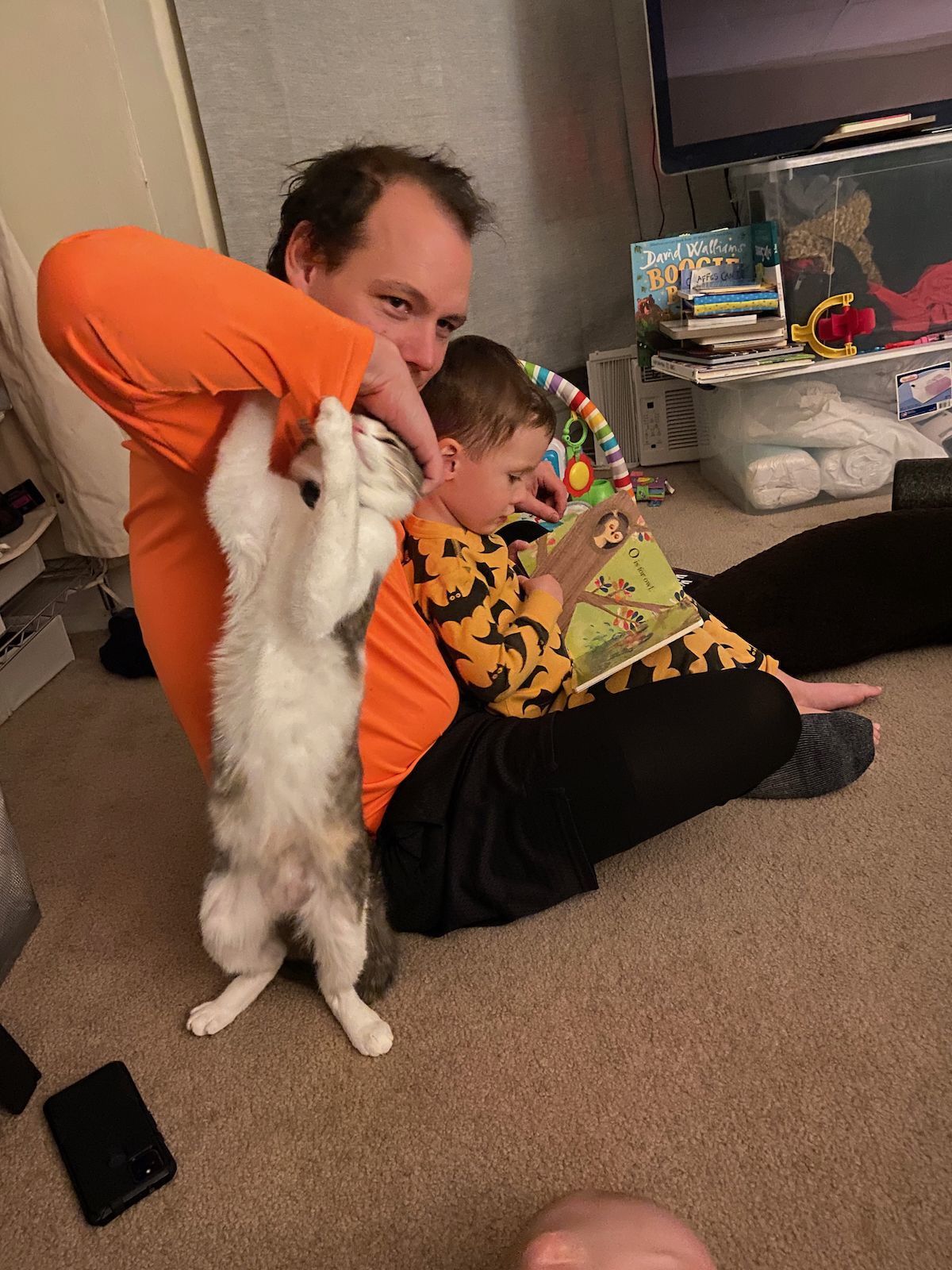
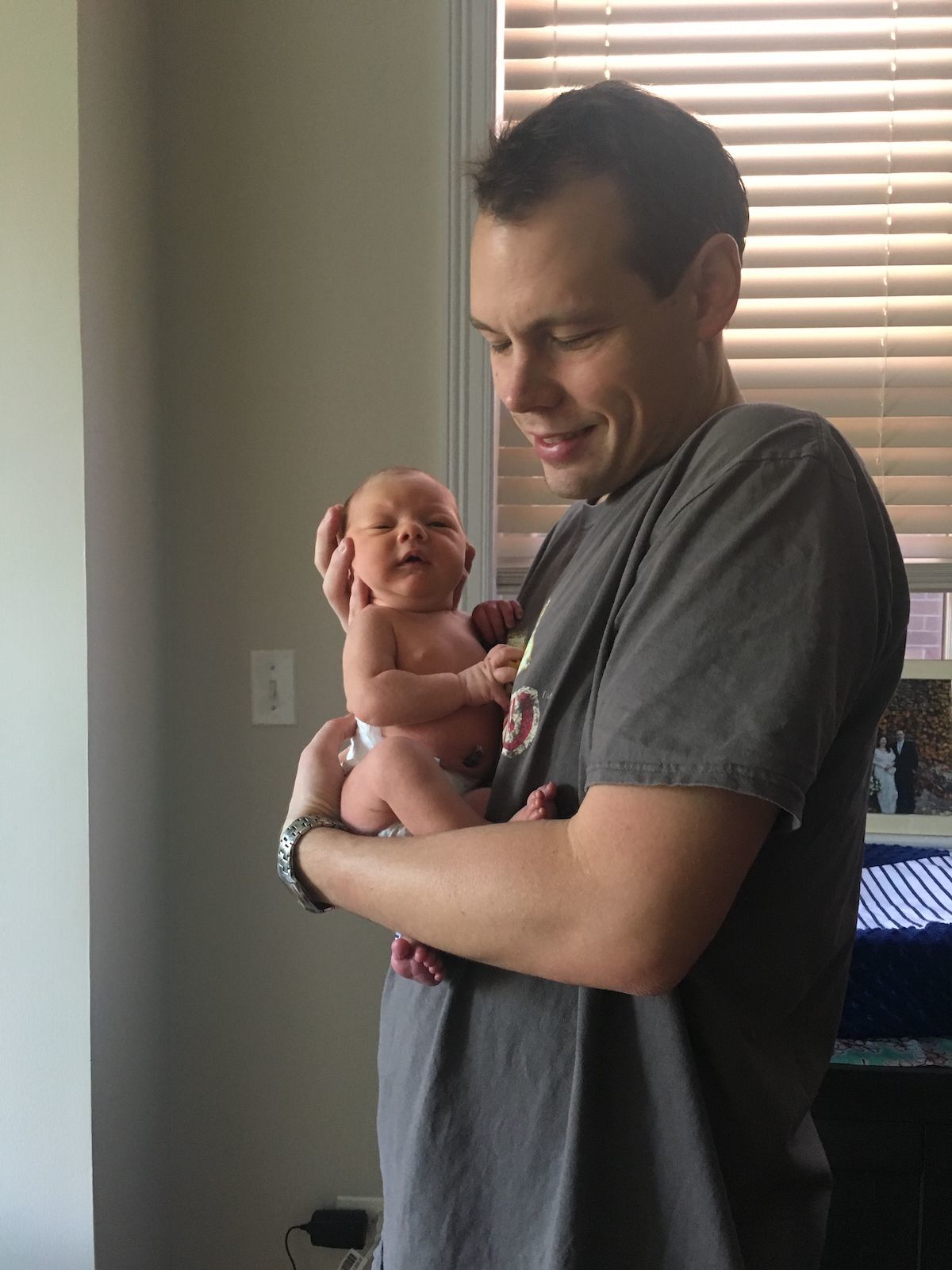
Teddy Einstein (left) reading a book to his son while the family cat plays with his arm. Einstein was a devoted husband and father who covered the lion’s share of storytelling and bedtime, but especially cooking, as he was an avid chef who liked trying new recipes, his wife Ruth Fahey said. Einstein was killed on Dec. 3, 2025, while riding his bike in a bike lane when he was hit by a driver on Providence Road in Upper Darby, Pa.
Born in Santa Monica, Calif., Einstein graduated from Harvard-Westlake School before receiving a bachelor’s degree in mathematics from Pomona College, a master’s in mathematics from University of California, Santa Barbara, and his Ph.D. from Cornell University. He would go on to hold postdoctoral fellowships at the University of Chicago and the University of Pittsburgh, where he taught, and most recently completed a three-year teaching term at Swarthmore College.
“He loved mathematics and wrote a first-rate thesis,” said Einstein’s Ph.D. adviser, Jason Manning. “Many mathematicians, even those who write a good thesis, don’t do much after graduate school. But Teddy’s work really accelerated during his postdoc at the University of Illinois at Chicago, and he was doing even more exciting work when he passed.”
His colleagues describe a mathematician working at, to put it simply, the intersection of algebra and geometry. Building on the work of mathematicians before him, including modern geometric breakthroughs in years past, Einstein studied abstract 3D shapes that cannot be visually represented in the real world. Work like that of Einstein and others contributes to a tool chest of solutions that scientists can use to study physics, neuroscience, and more.
“It is a terrible loss, especially to his family,” Manning said. “But also to his part of the mathematics community.”
Teddy Einstein (right) holds his second-born, Lorcan, soon after he was born.
As his term at Swarthmore ended earlier this year, Einstein had been working on research that was seven years in the making, Fahey said. This would help springboard him into the next chapter of his career.
Fahey said the day he was killed, Einstein was biking back from a fresh haircut to impress his potential new employers at Florida Gulf Coast University.
Mr. Einstein’s work ethic matched his appetite for camaraderie. He fed grad students out of his tiny Cornell kitchen and hosted a weekly trivia night. That is where he met Fahey. “He just loved to entertain with food,” she said.
Every week, he cooked for Fahey and the boys, from his prized favorites of Korean short ribs and fried chicken to testing out falafel recipes. A keg of home-brewed beer was always in the house so that Einstein could share his creations with friends. Fahey said his most recent yeast yield is still waiting to be processed.
Maddie Adams-Miller, who took Einstein’s math classes in her freshman year at Swarthmore, said her funny and wise math teacher never wanted to see a student fail.
“I loved talking to my friends from high school and telling them I had ‘Professor Einstein’ for math. Teddy always wore funny T-shirts to class and made a lot of jokes,” said Adams-Miller, now a senior. “When I was taking his course, I was struggling with my confidence and was not performing my best academically. Teddy reached out to me to offer support and genuinely wanted me to succeed in his class.”
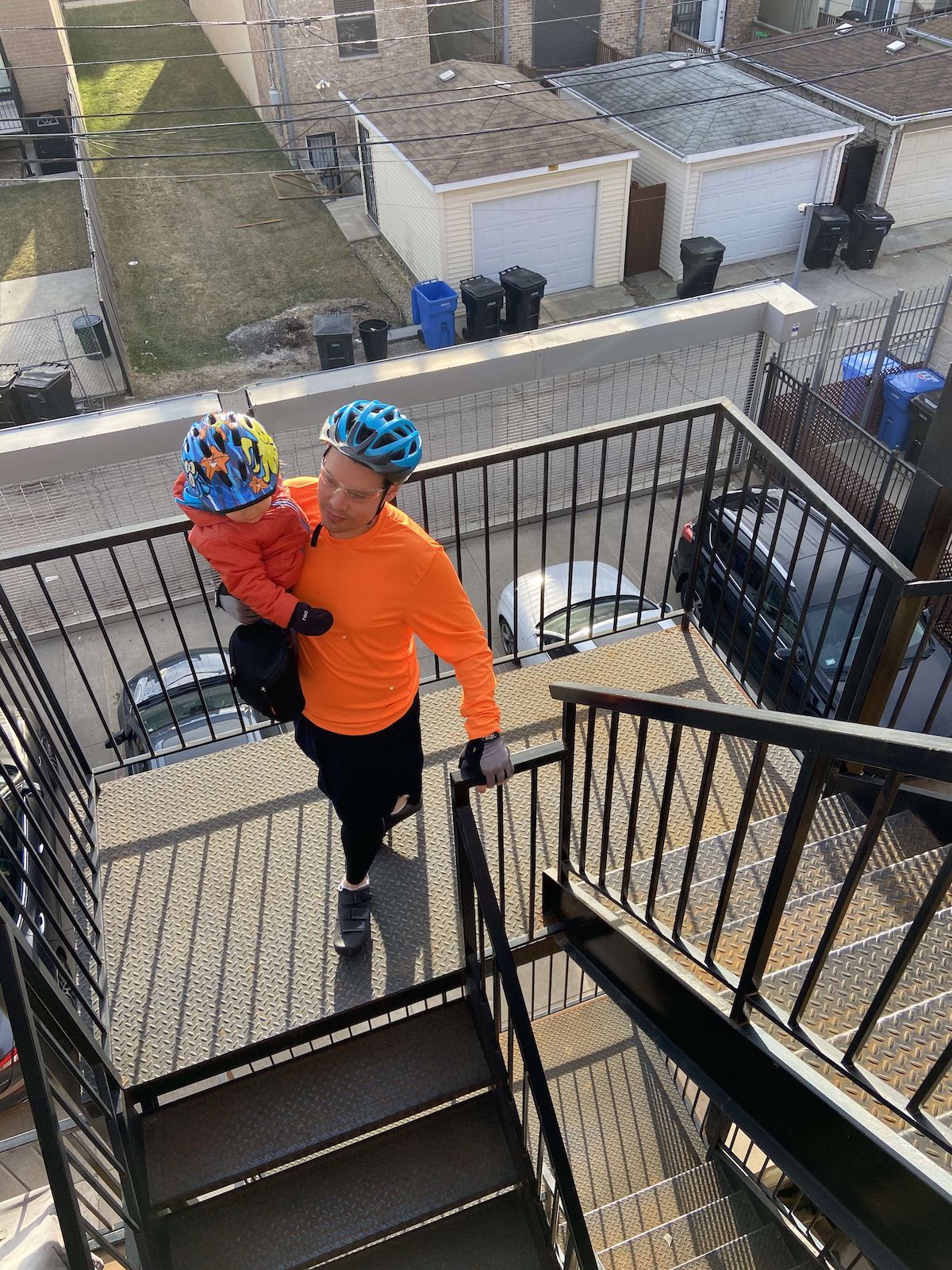
Teddy Einstein (left) holds his eldest son, Charlie, while he walks down a flight of steps wearing the usual safety gear that he wore while riding his bike. The precautions Einstein took to bike safely weren’t enough to stop a driver from crashing into him on Providence Road in Upper Darby earlier this month, leaving his wife, Ruth Fahey, and their two sons without a father.
An avid cyclist who biked everywhere and advocated for safer streets, Einstein was killed doing one of the activities he loved most. Philly Bike Action, an advocacy organization that Einstein and his wife frequented and his friend Jacob Russell organizes for, shared that he was hit by the driver while riding in an unprotected bike lane and wearing a helmet and high-visibility clothing.
“But there will never be a helmet strong enough or a clothing bright enough to make up for dangerous infrastructure. All Philadelphians deserve the freedom to travel without fear of tragedy,” the group said in a statement.
Russell believes safety improvements will not come solely from attempting to change laws or behavior, but rather by changing the road infrastructure, so that even “when mistakes happen, there aren’t tragedies,” he said.
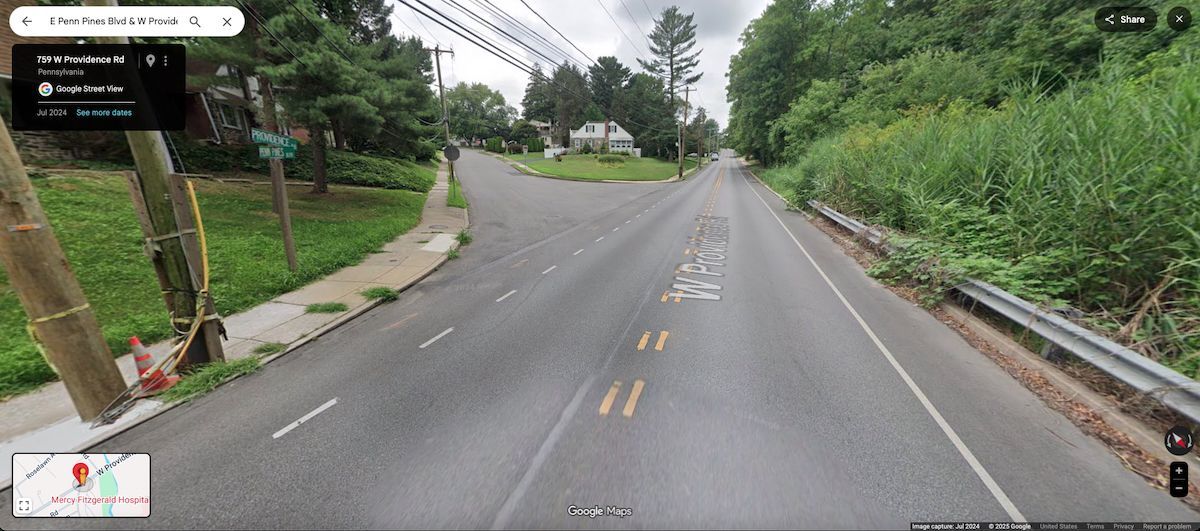
A screenshot, dated July 2024, from Google Maps showing the intersection where Teddy Einstein was killed on Dec. 3, 2025, in Upper Darby, Pa.
Providence Road, where Einstein was hit and where he biked weekly, is considered a dangerous road by local planning commissions, appearing on the Regional High Injury Network map as a thoroughfare where multiple people have died or been seriously injured in vehicle, pedestrian, or bicycle crashes. Delaware County is currently in the process of onboarding most of its townships onto a “Vision Zero” plan to end all traffic fatalities by 2050 — similar to Philadelphia’s own Vision Zero.
The Delaware County Planning Commission said the county does not own the roads, which are overseen by the Pennsylvania Department of Transportation or specific municipalities; however, officials are “actively working to obtain additional funding for further safety improvements, and are continuing to work with our partners in our 49 municipalities on either our Vision Zero plan or to help them develop their own,” said Delco spokesperson Michael Connolly.
Fahey said she won’t rest until Providence Road’s lack of safety is addressed and will continue campaigning for safety improvements in Philadelphia.
A GoFundMe has been set up for Fahey to help fund efforts to protect Einstein’s legacy as a teacher and advocate, as well as to invest in campaigns to make streets safer, with an emphasis on the road where Einstein was killed. It has already raised more than $60,000.
In addition to his wife and children, Einstein is survived by his parents, K. Alice Chang and Thomas Einstein, and siblings, Michael Einstein and Lily Einstein. The family encouraged people to donate to Fahey’s GoFundMe to honor Einstein’s legacy.
Roberta Fallon, 76, of Bala Cynwyd, cofounder, editor, and longtime executive director of theartblog.org, prolific freelance writer for The Inquirer, Daily News, and other publications, adjunct professor at St. Joseph’s University, artist, sculptor, mentor, and volunteer, died Friday, Dec. 5, at Thomas Jefferson University Hospital of injuries she suffered after being hit by a car on Nov. 24.
Ms. Fallon’s husband, Steven Kimbrough, said the crash remains under investigation by the police.
Described by family and friends as empathetic, energetic, and creative, Ms. Fallon and fellow artist Libby Rosof cofounded the online Artblog in 2003. For nearly 22 years, until the blog became inactive in June, Ms. Fallon posted commentary, stories, interviews, reviews, videos, podcasts, and other content that chronicled the eclectic art world in Philadelphia.
The site drew more than 4,500 subscribers and championed galleries and artists of all kinds, especially women, LGBTQ and student artists, and other underrepresented innovators. “I think we have touched base with every major arts organization in Philadelphia at one point or another, and many of the smaller ones,” Ms. Fallon told The Inquirer in May. “We became part of the arts economy.”
She earned grants from the Knight Foundation and other groups to fund her work. She organized artist workshops and guided tours of local studios she called art safaris.
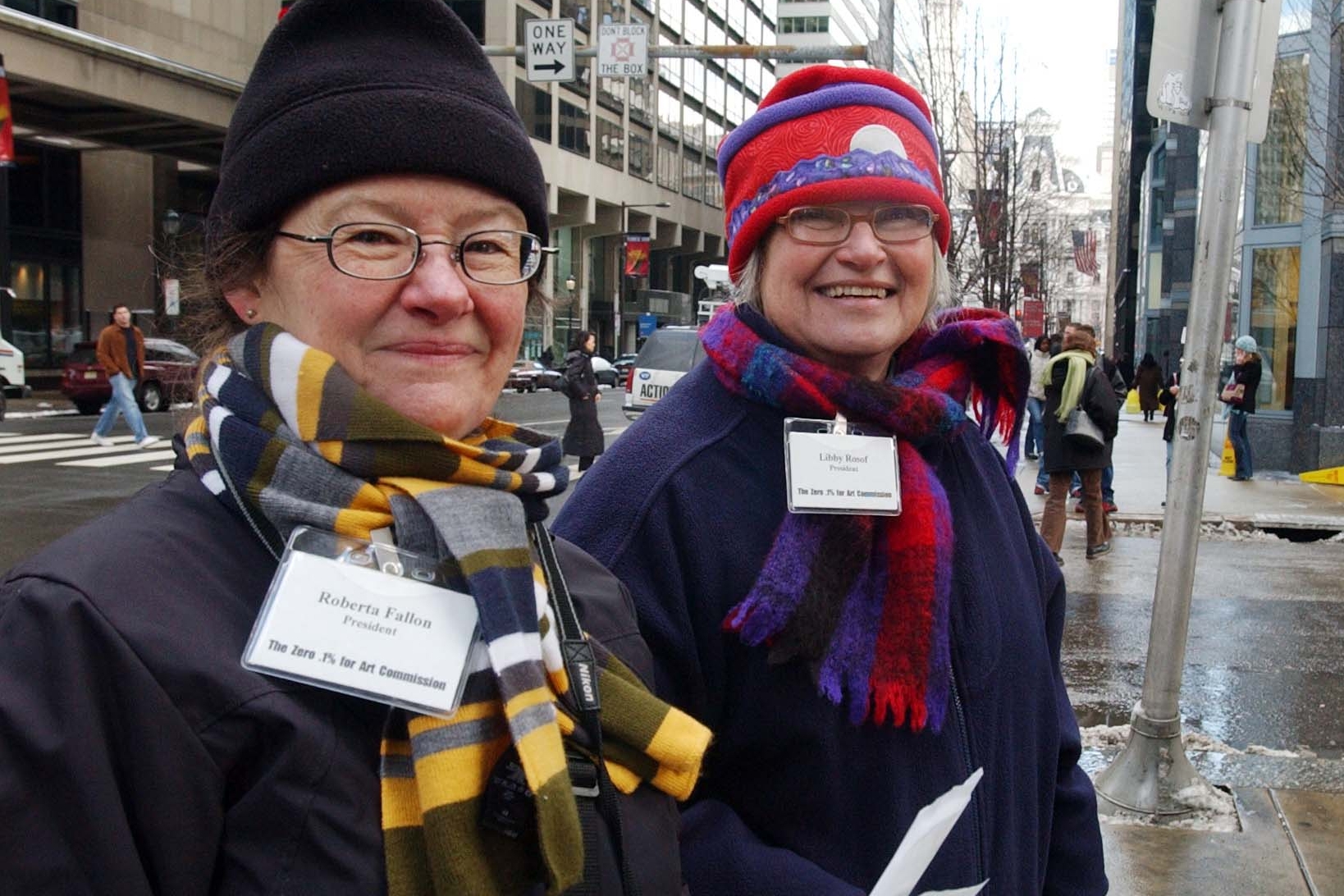
For years, she and Rosof raised art awareness in Center City by handing out miniatures of their artwork to startled passersby. She said in a 2005 Inquirer story: “We think art needs to be for everyone, not just in galleries.”
She mentored other artists and became an expert on the business of art. “She was so generous and curious about people,” Rosof said. “She was innovative and changed the way art reached people.”
Artist Rebecca Rutstein said Ms. Fallon’s “dedicated art journalism filled a vacuum in Philadelphia and beyond. Many of us became known entities because of her artist features, and we are forever grateful.” In a 2008 Inquirer story about the city’s art scene, artist Nike Desis said: “Roberta and Libby are the patron saints of the young.”
Ms. Fallon never tired of enjoying art.
Colleague and friend Gilda Kramer said: “The Artblog for her was truly a labor of love.”
In November, Ms. Fallon and other art writers created a website called The Philly Occasional. In her Nov. 12 article, she details some of her favorite shows and galleries in Philadelphia and New York, and starts the final paragraph by saying: “P.S. I can’t let you go without telling you about what I just saw at the Barnes Foundation.”
She worked at a small newspaper in Wisconsin before moving to West Philadelphia from Massachusetts in 1984 and wrote many art reviews and freelance articles for The Inquirer, Daily News, Philadelphia Weekly, Philadelphia Citizen, and other publications. In 2012, she wrote more than a dozen art columns for the Daily News called “Art Attack.”
She met Rosof in the 1980s, and together they curated exhibits around the region and displayed their own sculptures, paintings, and installations. Art critic Edith Newhall reviewed their 2008 show “ID” at Projects Gallery for The Inquirer and called it “one of the liveliest, most entertaining shows I’ve seen at this venue.”
Ms. Fallon stands in front of a mural at 13th and Spruce Streets. She is depicted as the figure profiled in the lower left in the white blouse.
Most often, Ms. Fallon painted objects and sculpted in concrete, wood, metal, textiles, and other material. She was a founding member of the Philadelphia Sculptors and Bala Avenue of the Arts.
She studied at the Pennsylvania Academy of the Fine Arts and Temple University’s Tyler School of Art and Architecture, and later taught professional practice art classes at St. Joseph’s. Moore College of Art and Design, which will archive Artblog, awarded her an honorary doctorate.
“Roberta was an exceptional creative artist” and “a force,” artist Marjorie Grigonis said on LinkedIn. Artist Matthew Rose said: “Robbie was a North Star for many people.”
Her husband said: “Her approach to life was giving. She succeeded by adding value to wherever she was.”
Ms. Fallon (second from right) enjoyed time with her family.
Roberta Ellen Fallon was born Feb. 8, 1949, in Milwaukee. She went to the University of Wisconsin-Madison to study sociology after high school and dropped out to explore Europe and take art classes in Paris. She returned to college, changed her major to English, and earned a bachelor’s degree in 1974.
She met Steven Kimbrough in Wisconsin, and they married in 1980, and had daughters Oona and Stella, and a son, Max. They lived in West Philadelphia for six years before settling in Bala Cynwyd in 1993.
Ms. Fallon was a neighborhood political volunteer. She enjoyed movies and reading, and she and her husband traveled often to museums and art shows in New York and elsewhere.
They had a chance to relocate to Michigan a few years ago, her husband said. But she preferred Philadelphia for its art and culture. “She was like a local celebrity in the art scene,” her daughter Stella said.
Ms. Fallon and her husband, Steven Kimbrough, visited New York in 1982.
Her husband said: “Everybody likes her. Everybody wants to be around her. She made a difference for a lot of people.”
Her daughter Stella said: “The world would be a better place if we all tried to be like my mom.”
In addition to her husband and children, Ms. Fallon is survived by four grandchildren, a sister, a brother, and other relatives.