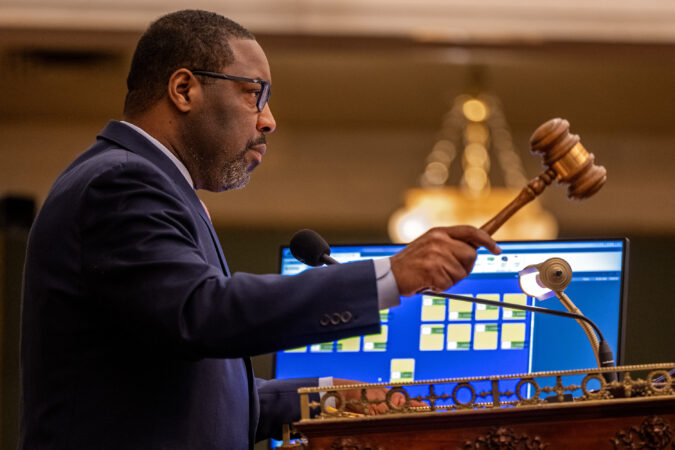
Philadelphians without retirement savings plans through their employers could soon have access to a plan through the city after lawmakers approved legislation Thursday to enable the novel program to move forward.
City Council members unanimously passed legislation that creates PhillySaves, which is modeled on state-facilitated “auto-IRA” programs that allow people to invest through payroll deductions at no cost to their employers.
Voters would have to approve the creation of an investment management board through a ballot question, which is slated to appear in the May primary election.
The measure was part of a flurry of legislation Council considered during a marathon meeting Thursday, its last session of the year before legislators reconvene in mid-January. Lawmakers passed dozens of pieces of legislation touching on issues including housing, public health, small-business growth, and public safety.
In addition to approving the retirement savings program, Council approved legislation to:
Ban mobile outreach groups that provide medical care and support services to people in addiction from a swath of Kensington, the epicenter of the city’s drug crisis.
Prohibit so-called reservation scalpers, or websites that allow users to reserve tables at coveted restaurants and resell them without the permission of the businesses.
Here’s a breakdown of what else happened on Thursday:
H.O.M.E. inches forward over Parker’s objections
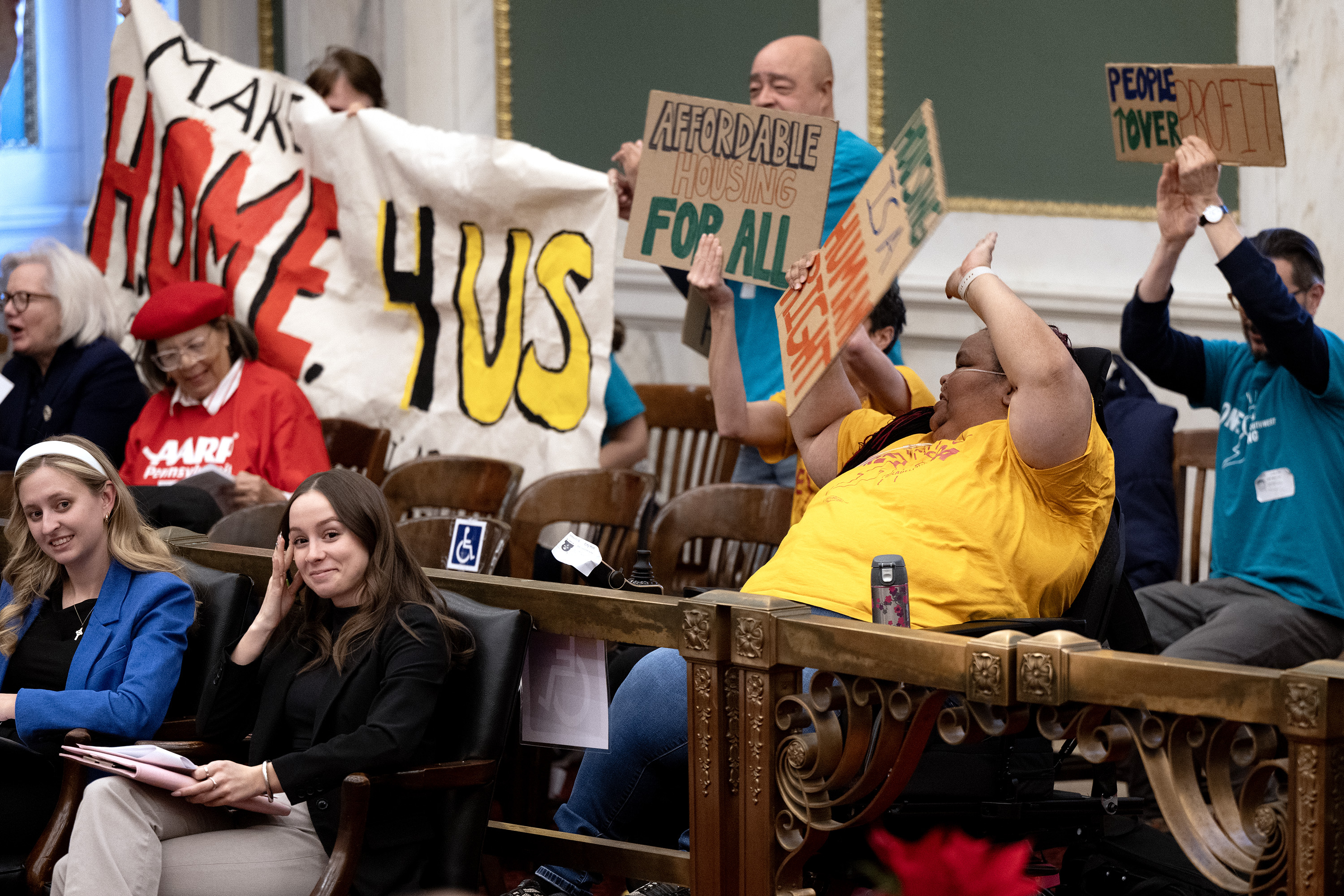
City Council on Thursday approved a key piece of legislation related to Mayor Cherelle L. Parker’s Housing Opportunities Made Easy, or H.O.M.E., initiative, the latest step in the drawn-out fight over how the city should spend the proceeds from the $800 million in city bonds the administration plans to sell to support the program.
Mayor Cherelle L. Parker speaks to the crowd at The Church of Christian Compassion in the Cobbs Creek neighborhood of West Philadelphia on Sunday, Dec. 7, 2025. Parker visited 10 churches in Philadelphia on Sunday to share details about her HOME housing plan
Over Parker’s objections, Council successfully pushed to lower income eligibility thresholds, prioritizing poorer residents. For instance, lawmakers ensured that 90% of the bond proceeds that will be spent on the Basic Systems Repair Program will go to households making 60% of area median income, which is about $71,640 for a family of four.
“This budget opens city housing programs to ensure that more than 200,000 low-income and working-family households have a chance to get into a program that provides housing stability and economic mobility and increases,” said Councilmember Rue Landau, who helped lead the push to lower the income thresholds. “This is a transformational investment, a win-win.”
Supporters react as City Council approves a key piece of legislation related to Mayor Cherelle L. Parker’s H.O.M.E. initiative Thursday, Dec. 11, 25 on the last day of the 2025 session.
A separate but related piece of legislation — an ordinance authorizing the city to sell the bonds — also needs to pass before the administration can take on debt for the initiative. That proposal, which won committee approval Wednesday, is expected to come to the Council floor in January.
In a statement Thursday, Tiffany W. Thurman, Parker’s chief of staff, thanked Council for its vote.
“We look forward to continuing conversations with Council President Kenyatta Johnson and members of City Council in the weeks ahead, and to fulfilling Mayor Parker’s strong vision to save Philadelphia’s rowhomes,” she said.
Council waters down a bill on training for security officers
Council approved a bill requiring private security guards in Philadelphia to go through 12 hours of training when they are hired and an additional eight hours of training every subsequent year.
But the final version of the bill, authored by Councilmember Isaiah Thomas, has been significantly watered down by amendments following a legislative showdown between the Service Employees International Union Local 32BJ, which championed the original version, and real estate and private security industry leaders, which said it was overly onerous and costly.
Thomas’ original bill required security guards to receive 40 hours of training upon hiring, and it prohibited employers from conducting the training for their own workers. Instead, the instruction had to be provided by a nonprofit — potentially including a labor union. SEIU 32BJ, one of the most influential unions in the city, represents building services workers, including security guards.
The amended version, however, allows employers to conduct the training after getting approval for their program from the Philadelphia Office of Worker Protections — a major relief for business leaders.
The new version, which now heads to Parker’s desk, also exempts security guards for bars and restaurants from the training requirements, and pushes back the bill’s effective date from Jan. 1 to March 1.
An inquiry into DEI contracting changes is coming next year
City Council next year will examine Parker’s decision to end its long-standing policy of prioritizing women- and minority-owned businesses in city contracting and replace it with a system favoring “small and local” firms.
Johnson authored a resolution allowing the Committee of the Whole, which includes all 17 members, to look at the history of minority contracting policies in the city and “the rationale, design, and anticipated effects” of Parker’s new policy. The resolution was approved in a unanimous vote, and a hearing will likely be scheduled in the first half of 2026.
Race- and gender-conscious government policies have been targeted by conservative legal groups following a 2023 U.S. Supreme Court decision ending affirmative action in college admissions. The Inquirer revealed in November that Parker quietly ended the city’s 40-year-old contracting policy earlier this year due to the likelihood it would be challenged in court.
The mayor has said her new “small and local” policy will accomplish many of the goals of the old system because many small Philadelphia businesses are owned by Black and brown residents and have faced roadblocks to growth.
Attorneys hired by the city, however, had recommended a race- and gender-neutral policy of favoring “socially and economically disadvantaged” businesses, according to administration documents obtained by The Inquirer.
Lawmakers will get the chance to weigh in on that decision next year.
A controversial zoning change passes for University City
Council on Thursday also approved Councilmember Jamie Gauthier’s controversial University City zoning overlay, which seeks to regulate how higher education institutions dispose of property.
The legislation has been diluted from its original form, and it now regulates the sale of property over 5,000 square feet in University City — which would largely affect only universities themselves.
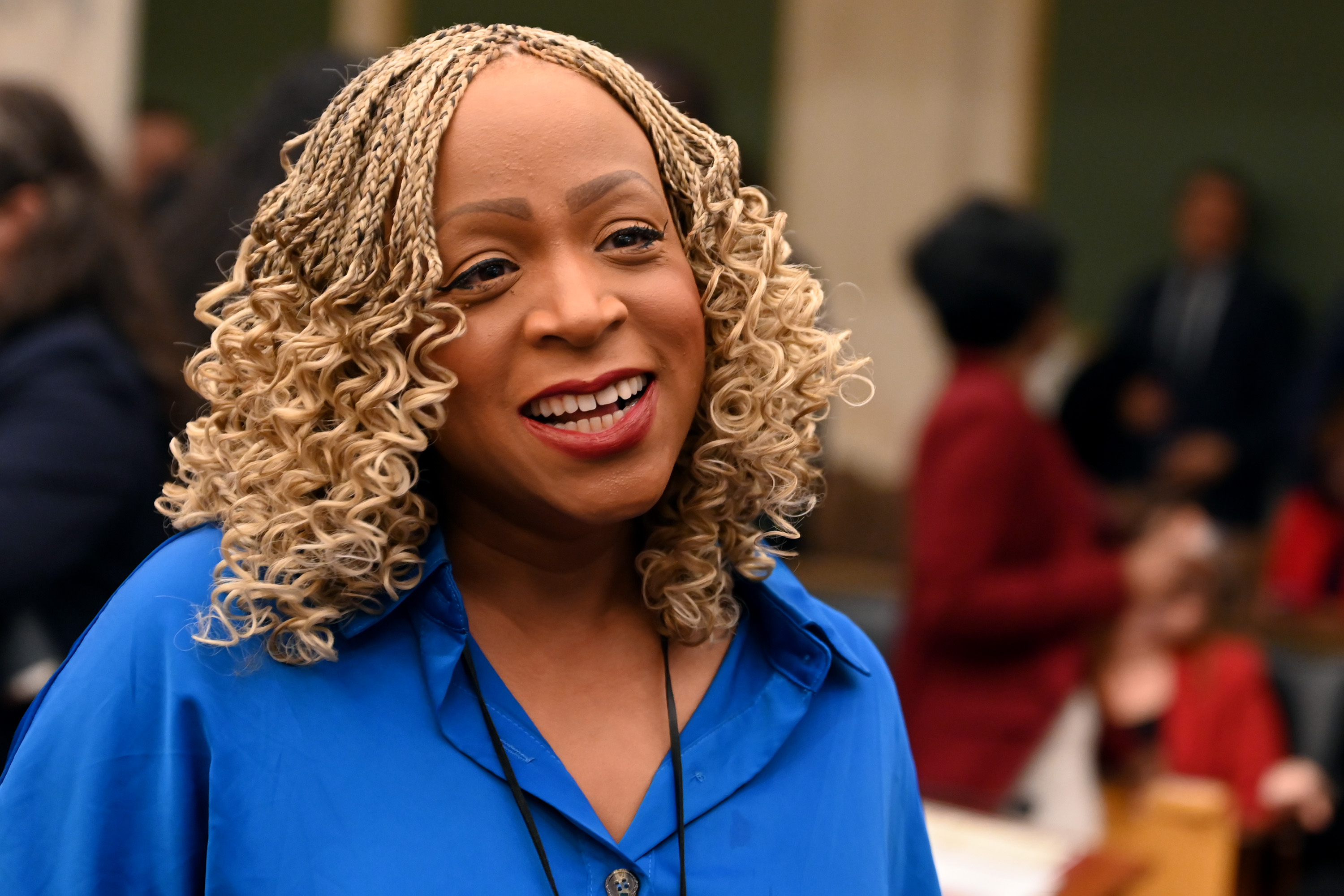
Councilmember Jamie Gauthier in chambers as City Council meets Thursday, Dec. 11, 2025, on the last day of the 2025 session.
Gauthier has further amended the legislation to exclude healthcare institutions. Among other things, the bill would require that property owners have building permits in hand before they are allowed to move forward on demolitions.
A sale of land would also trigger review by the Philadelphia City Planning Commission.
The legislation is part of Gauthier’s outraged response toSt. Joseph’s University’s sale of much of its West Philadelphia campus to the Belmont Neighborhood Educational Alliance, a nonprofit that operates charter schools. The organization is led by Michael Karp, who is also one of the larger student-housing landlords in the area.
Thomas, a Democrat who represents the city at-large, was the only member to vote against the bill. His vote was a break with the tradition of councilmanic prerogative, in which members generally approve legislation offered by Council members who represent geographic areas when the measure affects only their districts.
Quote of the week
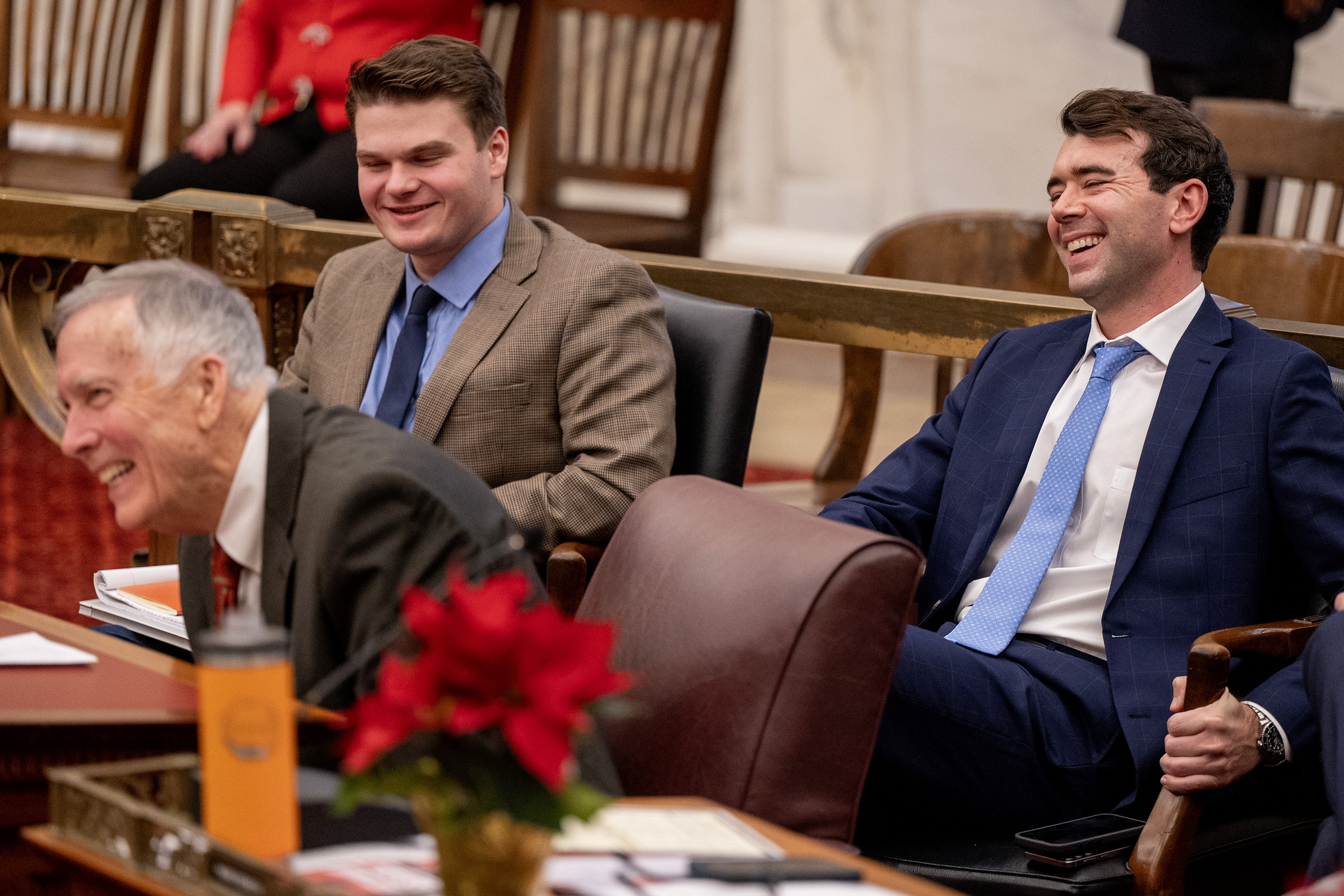
Councilmember Brian J. O’Neill (left) uses his end-of-session speech in City Council Thursday, Dec. 11, 2025 to say goodbye to longtime legislative director Robert Yerkov (right), who is leaving for a job outside government.
That was Councilmember Brian J. O’Neill, Council’s longest-serving member, who is typically its shortest-winded. But on Thursday, he took his time in a speech saying goodbye to longtime legislative director Robert Yerkov, whose last day as a Council staffer is next month.
O’Neill said he was struggling to wrap up his remarks and joked that Council should limit the amount of time that its members can speak. Public commenters are generally limited to three minutes of remarks.
To quote Shakespeare: “Brevity is the soul of wit.”
Philadelphia lawmakers on Thursday approved two changes to city law that are aimed at boosting business for restaurants and the hospitality sector ahead of an expected influx of tourists visiting the city next year.
Legislators also voted to ban so-called reservation scalpers, which are third-party businesses that allow people to secure tables and then resell them without authorization from the restaurant.
Both measures passed Council unanimously and were championed by advocates for the restaurant industry, who lobbied lawmakers to ease burdens on the tourism and hospitality industry ahead of several large-scale events in the city next year, including celebrations for America’s Semiquincentennial, when Philadelphia is expected to host a flurry of visitors.
They both now head to the desk of Mayor Cherelle L. Parker, who has never issued a veto.
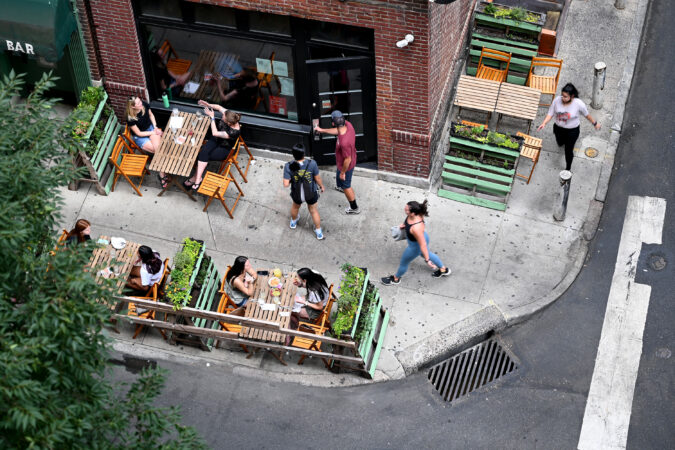
The outdoor dining legislation, authored by Councilmember Rue Landau, a Democrat who represents the city at-large, expands the number of so-called by-right zones, where businesses can have sidewalk cafes without having to obtain a special zoning ordinance.
Currently, by-right areas are only in Center City and a few commercial corridors in other neighborhoods. Restaurants outside those areas must undertake a sometimes lengthy process to get permission to place tables and chairs outside.
The expanded zones, which were chosen by individual Council members who represent the city’s 10 geographic districts, include corridors in Manayunk and on parts of Washington Avenue, Passyunk Avenue, and Point Breeze Avenue in South Philadelphia.
The legislation also includes all of the West Philadelphia-based Third District, which is represented by Jamie Gauthier, the only Council member who chose to include her entire district in the expansion.
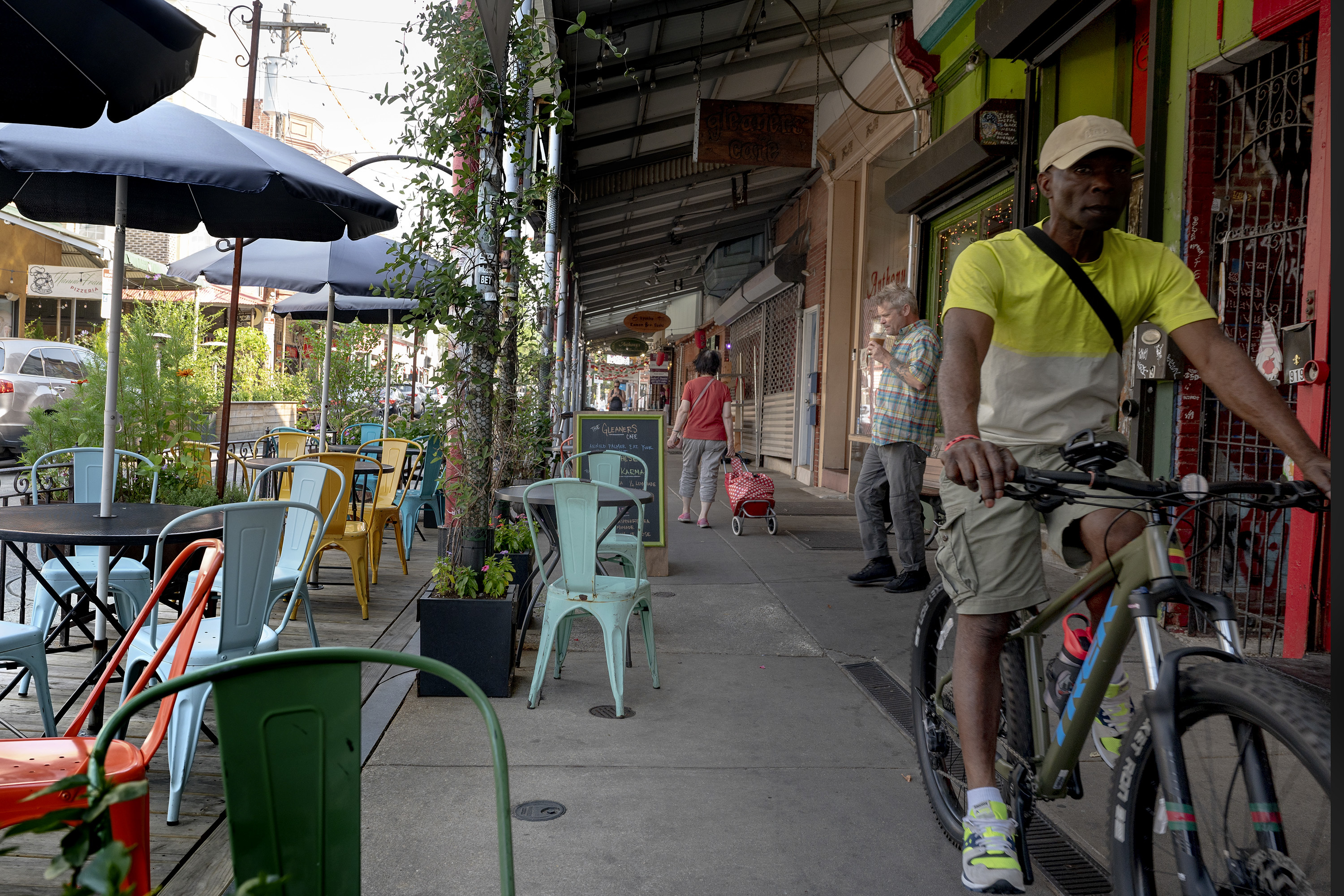
The cafe area on the sidewalk outside of Gleaner’s Cafe in the 9th Street Market on Thursday, July 27, 2023.
Nicholas Ducos, who owns Mural City Cellars in Fishtown, said he has been working for more than a year to get permission to place four picnic tables outside his winery. He said he has had to jump through hoops including working with multiple agencies, spending $1,500 to hire an architect, and even having to provide paperwork to the city on a CD-ROM.
“There are a lot of difficult things about running a business in Philadelphia,” Ducos said. “This should not be one.”
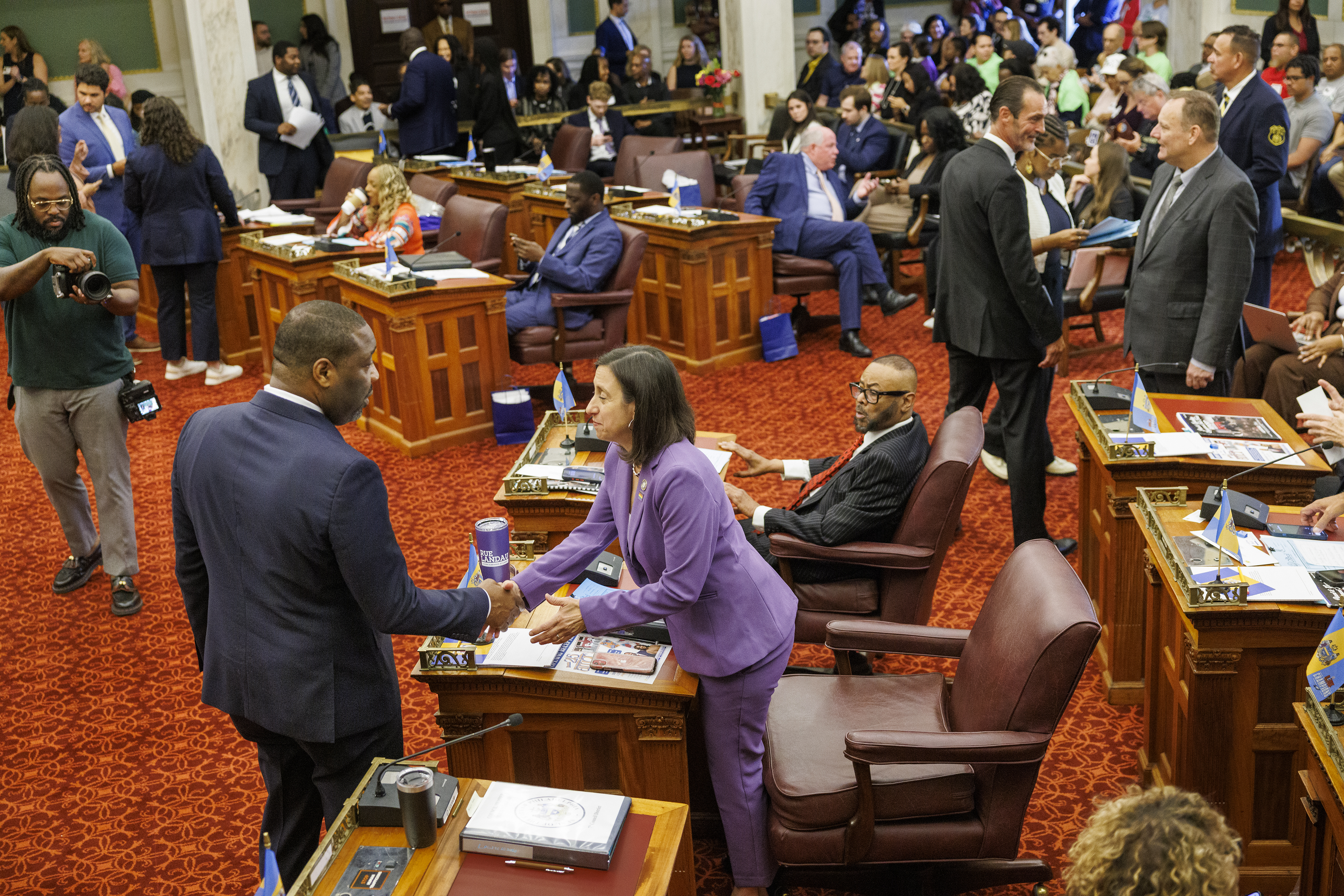
At left is Philadelphia Council President Kenyatta Johnson greeting Rue Landau and other returning members of council on their first day of fall session, City Hall, Thursday, September 11, 2025.
Council members also approved the reservation scalping legislation authored by Councilmember Isaiah Thomas, a Democrat who represents the city at-large. He has said the bill is modeled after a similar law in New York and is not aimed at popular apps and websites like OpenTable, Resy, and Tock that partner directly with restaurants.
Instead, it is a crackdown on websites that don’t work with restaurants, such as AppointmentTrader.com, which provides a platform for people to sell reservations and tickets to events.
Jonas Frey, the founder of AppointmentTrader.com, previously said the legislation needlessly targets his platform. He said his company put safeguards in place to prevent scalping, including shutting down accounts if more than half of their reservations go unsold.
But Thomas has cast the website and similar platforms as “predatory” because restaurants can end up saddled with empty tables if the reservations do not resell.
Zak Pyzik, senior director of public affairs at the Pennsylvania Restaurant and Lodging Association, said the legislation is an important safeguard for restaurants.
“This bill provides clear, sensible protections that will keep restaurants in the driver’s seat,” he said, “and in control of their business and their technology services.”
After a nearly six-year legal battle between artists, preservationists, and neighbors, the Old City building and its celebrated mosaic were demolished.
The former Painted Bride Art Center building, once home to world-renowned artist Isaiah Zagar’s 7,000-square-foot mirror-and-tile mosaic, has started to come down.
The demolition equipment and growing dust at 230 Vine St. closes the book on a yearslong saga over the distinctive Old City building’s future.
Founded in 1969 as a gallery on South Street, the Painted Bride helped transform Old City into an artists’ corner of Philadelphia when it moved to the neighborhood in the ‘80s.
story continues after advertisement
Decades later, Zagar’s mosaic, titled Skin of the Bride and wrapped around the exterior of the building, became a point of contention when the organization tried to sell the building in 2017. The debate led to a nearly six-year legal battle involving artists, real estate developers, city government officials, and neighbors.
As demolition of the celebrated building begins, take a look back at the complicated legal battles that led to its razing.
Using grants and donations for a down payment, the Painted Bride moved to 230 Vine St. from its initial digs in South Philadelphia. The former elevator factory in Old City spanned 15,000 square feet and sold for $300,000.
Alley Friends Architects, a local firm, drew up plans for the space, which included a 225-seat performance venue and galleries.
Artist Ruth McCann arrives with her paintings at the new Painted Bride at 230 Vine St. on December 2, 1982..James L. McGarrity / Staff Photographer
"There's never been an Academy of Music for people who weren't famous, and now Philadelphia has one. We've deserved this for many years. New York has a dozen such spaces,” said Keith Mason, the Bride’s program director at the time.
1991
Isaiah Zagar begins installing his mosaics
Zagar worked on the Bride’s distinctive mural for nine years.
“Isaiah woke up at 5 a.m. each morning and drove down to 230 Vine St.,” recalled his wife, Julia Zagar. “He dreamed of it as being his masterpiece and worked 10-12 hours a day until he collapsed with exhaustion.”
Artist Isaiah Zagar working on his giant mosaic at the Painted Bride Art Center on Vine Street in the 1990s.Courtesy of Philadelphia Magic Gardens
story continues after advertisement
November 2017
Vine Street property goes on the market
After 35 years on Vine Street, the Painted Bride announced the building would be sold. Executive director Laurel Raczka said the organization was not in financial distress but chose to ditch the building so the Bride could explore new ways to present the arts.
The following month, Raczka also noted the changing vibes of Old City: "We don't feel like we belong here anymore,” she told The Inquirer.
The entrance to the Painted Bride Art Center, covered in Zagar’s mosaics.Tom Gralish / Staff Photographer
Many in the arts community were perplexed. Performance artist Tim Miller, a founder of artistic spaces in New York City and Santa Monica, Calif., said, "Once [the Painted Bride] is gone, it will never be replaced. To discard it, to me, it feels reckless, unless it's the only way to survive."
March 2018
Painted Bride building is nominated for historic preservation
"The Painted Bride is one of his masterpieces," Smith said. "The building itself is a treasure."
Zagar, photographed for The Inquirer in the fall of 2017.Margo Reed / For The Inquirer
April 2018
Arts leaders beg the Bride to suspend sale plans
More than 30 of the city's most prominent artists, performers, and arts officials cosigned a three-page public letter calling for "a reexamination" of the Bride's situation and community-wide discussion about the organization's future.
Signers included: Joan Myers Brown, founder and executive artistic director of Philadanco; hip-hop dance sensation Rennie Harris; architect Cecil Baker; and Wilma Theater cofounder and director Blanka Zizka. The city’s chief cultural officer offered to facilitate a community conversation between the Bride’s leadership and local artists and art patrons.
The Bride’s leaders rebuffed the offer and said that they would continue to pursue "a sustainable business model."
June 2018
Historical designation passes the first hurdle
A committee of the Philadelphia Historical Commission unanimously agreed the Painted Bride building should be protected.
September 2018
Historical designation is denied
After a three-hour, public debate, Philadelphia’s Historical Commission voted 5-4 to reject designation, a move that opened the door for developers to acquire and demolish the building.
A few days earlier, Lantern Theater Company made a bid of over $2 million for the building, which would have preserved it as an arts space. The offer was rejected.
Lawyers for the Bride said that the law did not require approvals from the court but that the Painted Bride sought them nonetheless.
Architect and developer Shimi Zakin of Atrium Design Group poses with a sign on an interior mosaic in the Painted Bride Art Center building before closing on the sale.Courtesy of Shimi Zakin
The Bride’s petition stated that “given the history” of the building, the Bride “wishes to obtain approval of the sale from both the Pennsylvania Office of the Attorney General and the Philadelphia Orphans’ Court.”
August 2019
City allows townhouses
Philadelphia’s Department of Licenses and Inspections issued a zoning permit to allow Atrium Design Group to build 16 townhouses at the site.
September 2019
Court blocks the sale, citing ‘priceless’ mosaic facade
Philadelphia Orphans’ Court blocked the sale, citing the likely destruction of the Bride’s “priceless” mosaic facade. Judge Matthew D. Carrafiello said the sale would "all but ensure the destruction of what many individuals consider to be a true treasure.”
“It is the sale of its property, including the mosaic, that will result in the liquidity necessary for Painted Bride to continue to fulfill its charitable purpose,” wrote Judge J. Andrew Crompton.
January 2021
Neighborhood group opposes proposal that would save the mosaics
The Zoning Board of Adjustments approved Zakin’s proposal, paving the way for him to move forward with the apartment building.
Shortly after, neighborhood groups appealed the decision.
March 2022
Building officially sold for $3.85 million
Despite the looming appeals hearing, many involved with the Bride and supporters of preserving Zagar’s artwork believed the mural had been saved when the building was sold to Zakin.
A Philadelphia Common Pleas Court judge agreed with some neighbors that the mosaic in Old City could be preserved without allowing the developer to build taller and more densely than local zoning rules allow.
This rendering shows a potential design of the building proposed to replace the Painted Bride Art Center in Old City.Courtesy of Atrium Design Group
Emily Smith, executive director of Philadelphia’s Magic Gardens, which preserves and provides access to Zagar mosaics, said the planned destruction of the Painted Bride mosaic was a case of “NIMBY-ism at its most tragic.”
Over several weeks, the Magic Gardens Preservation Team used chisels, hammers, and small power tools to remove as much as they could from the facade. The mosaic was well-adhered to the brick, and this was a difficult process physically and emotionally. The crew was able to remove approximately 30% of the tiles for reuse in new mosaics.
Magic Gardens’ representatives attempt to save pieces of the iconic Zagar mosaic on all the exterior walls of the former Painted Bride before the building is demolished.Tom Gralish / Staff Photographer
September 2025
Demolition permit granted
Zakin received a demolition permit from the city and told The Inquirer that he plans to start demolition in late October. He said he anticipates that his building will be completed in about 2½ years.
Late November/Early December 2025
Demolition begins
Workers began to take down the interior of the building.
A digger works to demolish the inside of the former Painted Bride building on Dec. 8, 2025.Alejandro A. Alvarez / Staff Photographer
Philly is getting ready to dress itself up — with Liberty Bells. Lots of Liberty Bells.
Organizers of Philadelphia’s yearlong celebrations for America’s 250th anniversary in 2026 gathered in a frigid Philadelphia School District warehouse in Logan on Tuesday, offering a special preview of the 20 large replica Liberty Bells that will decorate Philly neighborhoods for the national milestone.
Designed by 16 local artists selected through Mural Arts Philadelphia — and planned for commercial corridors and public parks everywhere from Chinatown and South Philly to West Philly and Wynnefield — the painted bells depict the histories, heroes, cultures, and traditions of Philly neighborhoods.
As part of the state nonprofit America250PA’s “Bells Across PA” program, more than 100 painted bells will be installed across Pennsylvania throughout the national milestone, also known as the Semiquincentennial. Local planners and Mural Arts Philadelphia helped coordinate the Philly bells.
“As Philadelphia’s own Liberty Bell served as inspiration for this statewide program, it makes sense that Philly would take it to the next level and bring these bells to as many neighborhoods as possible,” Mayor Cherelle L. Parker said in a statement. “We are a proud, diverse city of neighborhoods with many stories to tell.”
Kathryn Ott Lovell, president and CEO of Philadelphia250, the city’s planning partner for the Semiquincentennial, said the bells are a key part of the local planners’ efforts to bring the party to every Philly neighborhood.
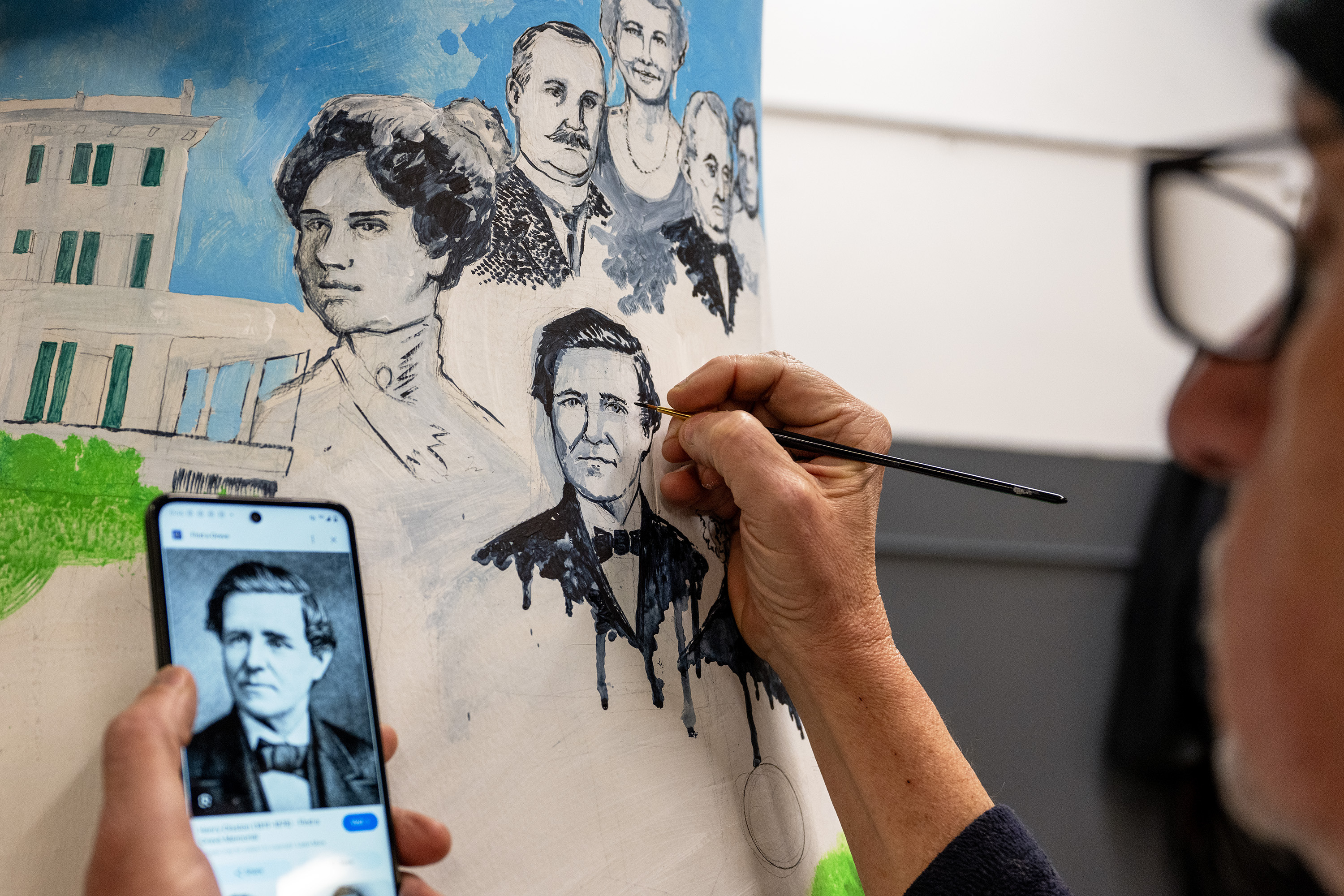
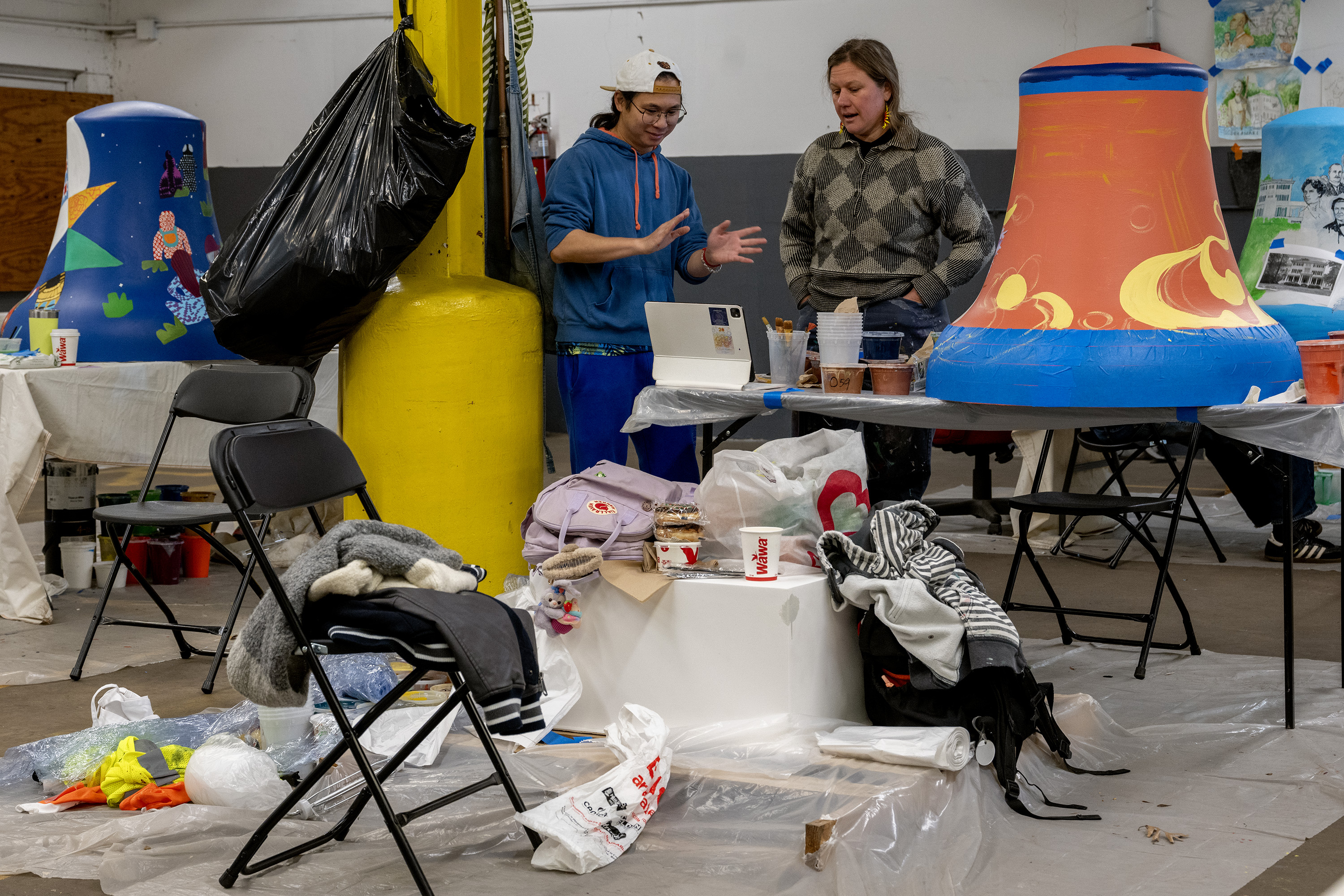
Local artist Bob Dix paints a portrait of industrialist Henry Disston on his bell.
“The personalities of the neighborhoods are coming out in the bells,” she said, adding that the completed bells will be dedicated in January, then installed in early spring, in time for Philly’s big-ticket events next summer, including six FIFA World Cup matches, the MLB All-Star Game, and a pumped-up Fourth of July concert.
Planners released a full list of neighborhoods where the bells will be placed, but said exact locations will be announced in January. Each of the nearly 3-foot bells — which will be perched on heavy black pedestals — was designed in collaboration with community members, Ott Lovell said.
Inside the massive, makeshift studio behind the Widener Memorial School on Tuesday, artists worked in the chill on their bells. Each bell told a different story of neighborhood pride.
Chenlin Cai (left) talks with fellow artist Emily Busch (right) about his bell, showing her concepts on his tablet.
Cindy Lozito, 33, a muralist and illustrator who lives in Bella Vista, didn’t have to look for inspiration for her bell on the Italian Market. She lives just a block away from Ninth Street and is a market regular.
After talking with merchants, she strove to capture the market’s iconic sites, history, and diversity. Titled Always Open, her bell includes painted scenes of the market’s bustling produce stands and flickering fire barrels, the smiling faces of old-school merchants and newer immigrant vendors, and the joy of the street’s annual Procession of Saints and Day of the Dead festivities. Also, of course, the greased pole.
“It’s a place where I can walk outside my house and get everything that I need, and also a place where people know your name and care about you,” she said, painting her bell.
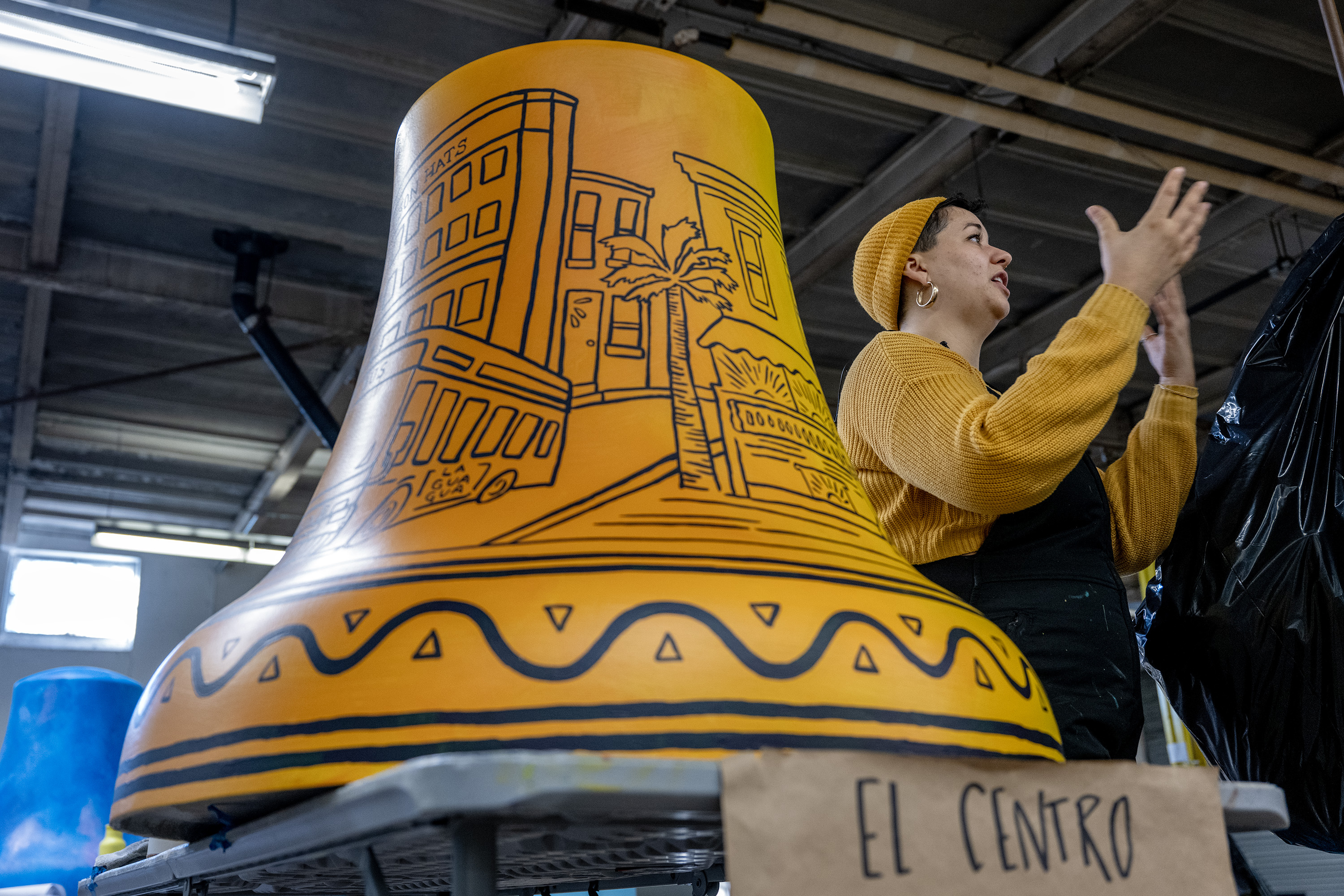
For her bell on El Centro de Oro, artist and educator Symone Salib, 32, met twice with 30 community members from North Fifth Street and Lehigh Avenue, asking them for ideas.
“From there, I had a very long list,” she said. “People really liked telling me what they wanted to see and what they did not.”
Local artist Symone Salib talks with a visitor as she works on her bell.
Titled The Golden Block, the striking yellow-and-black bell depicts the neighborhood’s historic Stetson Hats factory, the long-standing Latin music shop Centro Musical, and popular iron palm tree sculptures.
To add that extra bit of authenticity to his bell depicting Glen Foerd, artist Bob Dix, 62, mixed his paints with water bottled from the Delaware River, near where the historic mansion and estate sits perched in Torresdale, overlooking the mouth of Poquessing Creek.
“I like to incorporate the spirit of the area,” he said, dabbing his brush in the river water. “I think it’s important to bring in the natural materials.”
Local artist Bob Dix displays waters he collected from the Delaware River and Poquessing Creek to use in his painting of one of 20 replica Liberty Bells representing different neighborhoods Tuesday, Dec. 9, 2025.
Planners say they expect the bells to draw interest and curiosity similar to the painted donkeys that dotted Philadelphia neighborhoods during the 2016 Democratic National Convention.
Ott Lovell said organizers will install the bells around March to protect them from the worst of the winter weather.
“I don’t want any weather on them,” she said with a smile. “I want them looking perfect for 2026.”
Mental health professionals at Rogers Behavioral Health in West Philadelphia have formed a union, citing increased workloads and business changes that diminished patient care.
The nonprofit mental healthcare provider last year transitioned from individual patient sessions to a group care model, said Tiffany Murphy, a licensed professional counselor and therapist at the facility. Some workers there were also moved from salaried to hourly positions then forced to reduce hours, their union has said.
Some patients and workers have left amid the changes, says Murphy, estimating that 22 of her colleagues have quit in the past year.
“A lot of us sort of put our jobs on the line by [unionizing], because we believe in the organization, but more so, we believe in our patients. We wanted to provide the best patient care that we possibly could for them,” said Murphy.
The 19 West Philadelphia Rogers employees, including therapists and behavioral specialists, filed their petition last month to unionize with the National Union of Healthcare Workers. Rogers voluntarily recognized the union, according to NUHW, marking the union’s first unit in Pennsylvania.
NUHW represents some 19,000 healthcare workers, primarily in California.
Sal Rosselli, NUHW president emeritus, said the union is pleased that Rogers accepted the petition. “All too often, employers do the opposite and put together very anti-union campaigns, spending all kinds of patient care dollars to prevent their workers from organizing,” he said.
A spokesperson for Rogers declined to comment on employees’ organizing efforts and remarks on workplace changes.
Rogers provides addiction treatment and mental healthcare with facilities in 10 states. In Philadelphia, the nonprofit offers outpatient treatment and partial hospitalization, treating patients with depression, anxiety, and obsessive-compulsive disorder.
In recent years, Rogers workers in California also unionized with NUHW. Their recently forged union contract includes caseload limits and a cap on how many newly admitted patients can be assigned to each therapist or nurse.
Thousands of healthcare workers in the Philadelphia area have moved to unionize in recent years.
The organizing push means that about 81% of the city’s resident physicians are unionized.
What do workers want?
When Murphy first started working at the Rogers facility in Philadelphia 4½ years ago, she said there was “a really good work-life balance.”
At the time, clinicians had four patients per day, provided individualized care, and led group sessions. As the organization moved toward group counseling, she said, caseloads have grown, with up to 12 patients in each group.
The organization hired behavioral specialists to support therapists, said Murphy, but “it was difficult to provide the patients with the care that they really needed and deserved with the new structure.”
Some patients and staff left because of the new model, said Murphy.
This year, some salaried workers were switched to hourly, and Rogers started sending workers home due to low patient demand, leaving the rest with larger workloads, according to the union. That meant some used paid time off to avoid going without pay, said Murphy.
When Philadelphia Rogers employees heard their colleagues in California were unionizing, “That became a bit enticing to us,” said Murphy, noting the workplace had become challenging and sometimes “unbearable.”
Now, she says, the union members want more manageable caseloads — or pay increases to account for the larger caseloads — and a return to the old pay model for those who were switched to hourly work.
“We are unionizing to have a voice at work that will allow us to promote a healthier work-life balance as well as high-quality sustainable patient care,” therapist Sara Deichman said in a union news release.
“The industry is forcing fewer providers to care for more and more patients because the focus is on the bottom line,” said Rosselli.
Staffing concerns plague the healthcare industry generally, said Rebecca Givan, an associate professor at Rutgers University’s School of Management and Labor Relations.
“If the facility wants to hold down costs, it tries to keep staffing levels as low as possible,” said Givan. “In the case of mental health providers, it can be about shortening appointment times or increasing caseloads so that each provider has a very large number of cases or clients.”
She says there’s not “a huge amount of union representation” in stand-alone behavioral health facilities, but some public hospitals are unionized.
Private practice mental health workers can’t unionize because they’re self employed, Givan noted, but “one could argue that they might benefit from collectively negotiating, for example, with the insurance companies that determine their reimbursement rates.”
NUHW is leading efforts to organize independent providers. The goal, Rosselli says, is to “establish an employer for them so that they can have leverage against insurance companies to increase pay and increase access to patient care issues.”
The union has already done this in the home care industry in California, Rosselli noted.
Staff reporter Aubrey Whelan contributed to this article.
Kevin Bean was a frail 125 pounds last February when he entered a brand-new recovery house, a facility where he landed after spending four years in the throes of addiction — at times on the streets of Kensington, the epicenter of the city’s drug crisis.
The Frankford native was one of the first residents to enter the Riverview Wellness Village, the 20-acre recovery facility that Mayor Cherelle L. Parker’s administration opened in Northeast Philadelphia nearly a year ago as part of City Hall’s efforts to address opioid addiction and the Kensington drug market.
Bean, now 46 and boasting a healthier frame, just celebrated one year of sobriety and is preparing to move out of Riverview early next year.
He described his transition simply: “whole new life.”
Much of the mayor’s agenda in Kensington has been visible to the neighborhood’s residents, such as increased law enforcement and a reduction in the homeless population. But the operations and treatment outcomesat Riverview, located down a winding road next to the city’s jail complex, happen largely outside of public view. Last spring, some city lawmakers complained that even they knew little about the facility operations.
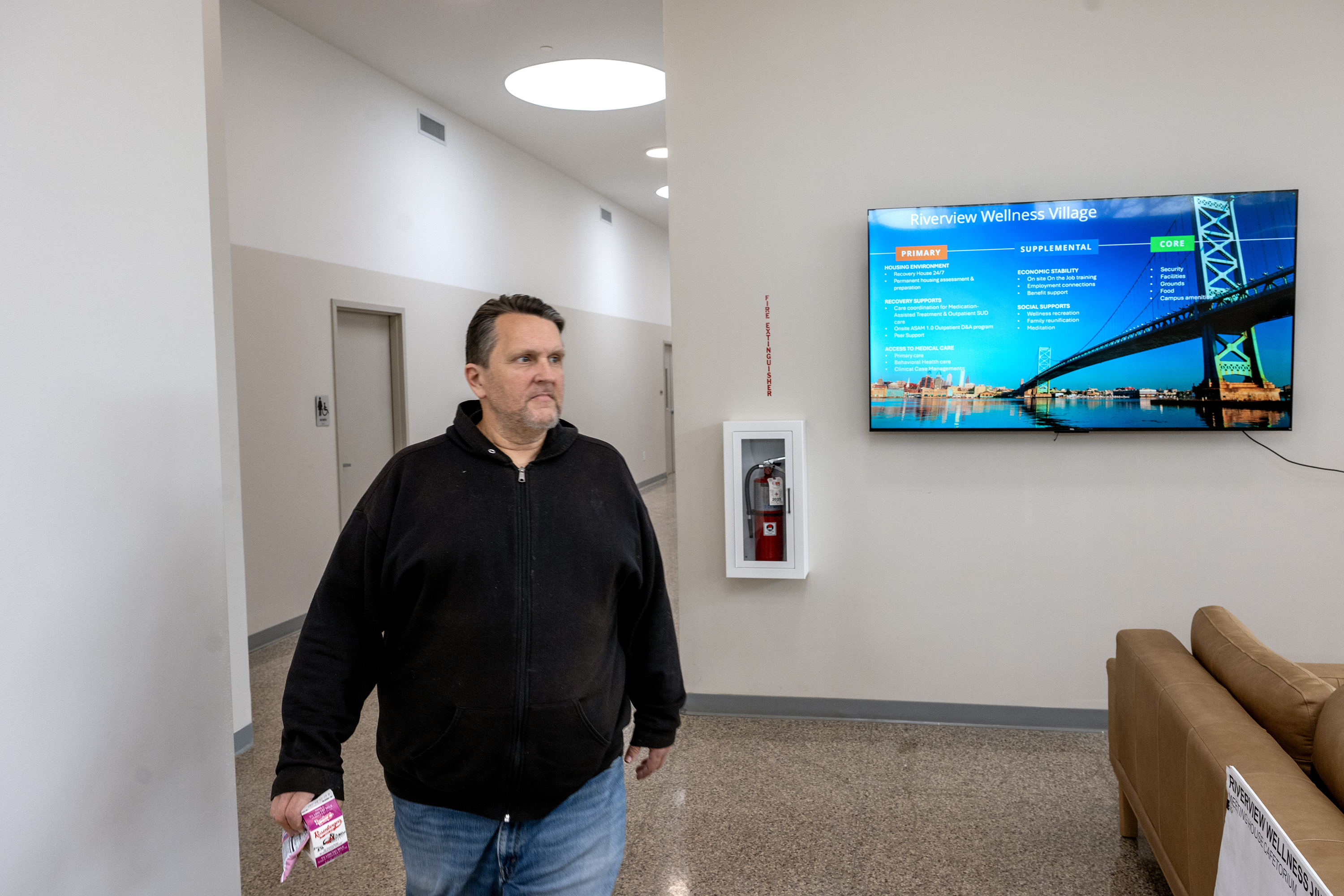
An inside look at the Riverview complex and interviews with more than a dozen residents and employees showed that, over the last year, the city and its third-party healthcare providers have transformed the facility. What was recently a construction zone is now a one-stop health shop with about 75 staff and more than 200 residents, many of whom previously lived on Kensington streets.
Those who live and work at Riverview said the facility is plugging a hole in the city’s substance use treatment landscape. For years, there have not been enough beds in programs that help people transition from hospital-style rehab into long-term stability. The recovery house industry has been plagued with privately run homes that are in poor condition or offer little support.
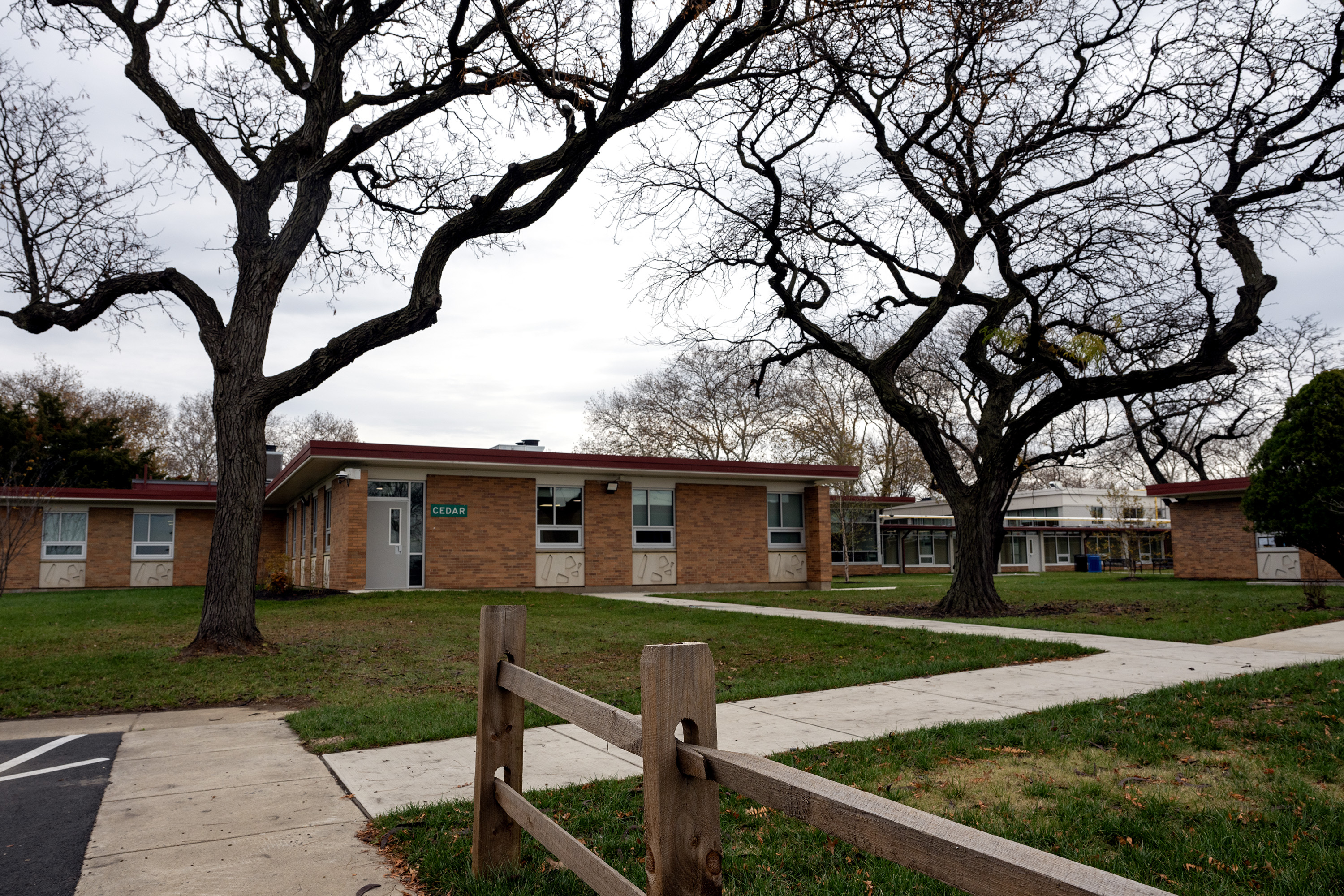
The grounds and residence buildings at Riverview Wellness Village, a city-owned drug recovery home in Northeast Philadelphia.
At its current capacity, Riverview has singularly increased the total number of recovery house beds in the city by nearly 50%. And residents — who are there voluntarily and may come and go as they please — have much of what they need on the campus: medical care, mental health treatment, job training, and group counseling.
They also, as of last month, have access to medication-assisted treatment, which means residents in recovery no longer need to travel to specialized clinics to get a dose of methadone or other drugs that can prevent relapse.
Arthur Fields, the regional executive director at Gaudenzia, which provides recovery services to more than 100 Riverview residents, said the upstart facility has become a desirable option for some of the city’s most vulnerable. Riverview officials said they aren’t aware of anywhere like it in the country.
“The Riverview Wellness Village is proof of what’s possible,” Fields said, “when we work together as a community and move with urgency to help people rebuild their lives.”
While the facility launched in January with much fanfare, it also faced skepticism, including from advocates who were troubled by its proximity to the jails and feared it would feel like incarceration, not treatment. And neighbors expressed concern that the new Holmesburg facility would bring problems long faced by Kensington residents, like open drug use and petty theft, to their front doors.
But despite some tenets of the mayor’s broader Kensington plan still facing intense scrutiny, the vocal opposition to Riverview has largely quieted. Parker said in an interview that seeing the progress at Riverview and the health of its residents made enduring months of criticism “well worth it.”
“I don’t know a Philadelphian who, in some way, shape, or form, hasn’t been touched by mental and behavioral health challenges or substance use disorder,” said Parker, who has spoken about how addiction shaped parts of her own upbringing. “To know that we created a path forward, to me, I’m extremely proud of this team.”
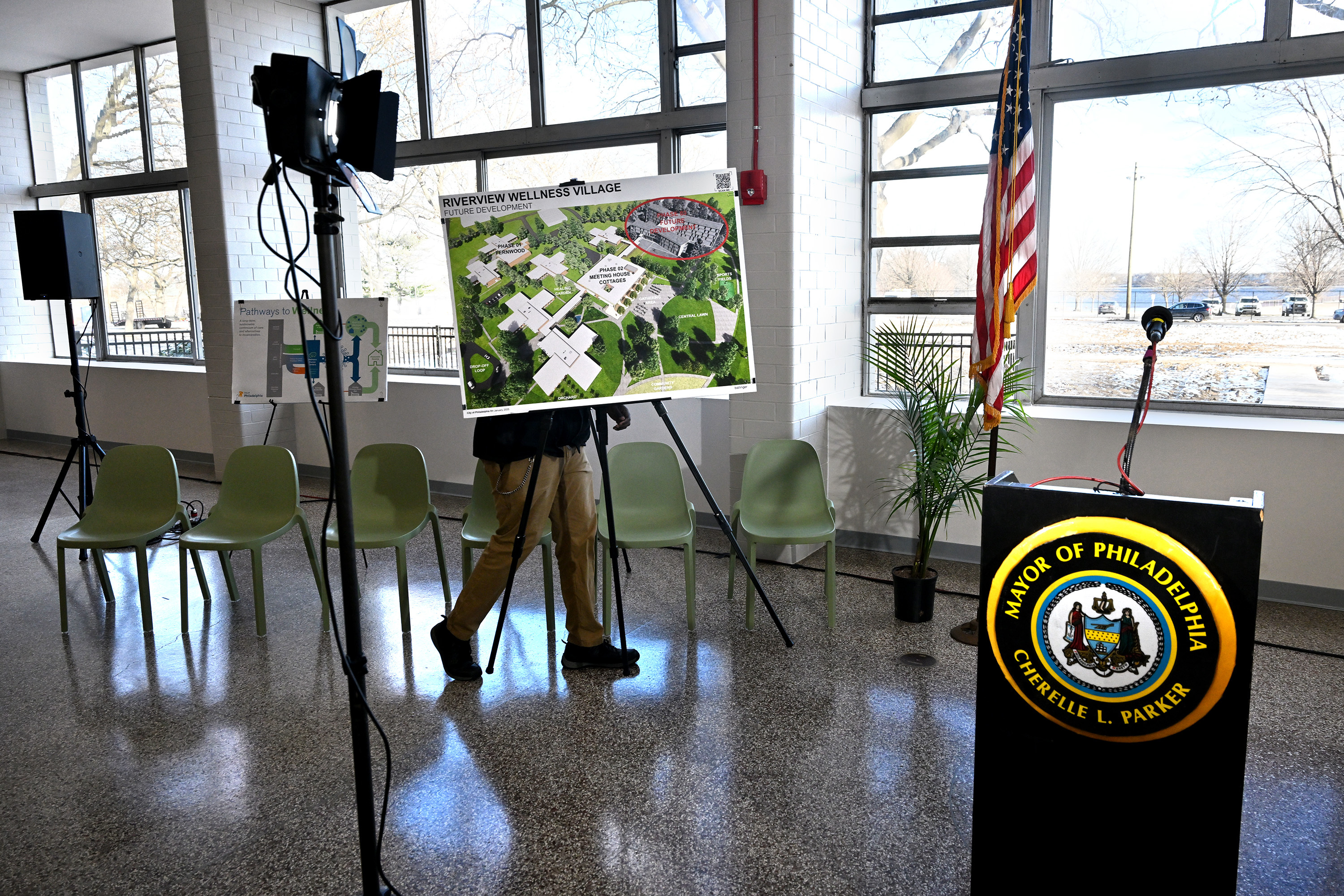
Mayor Cherelle L. Parker places a new block on the scale model of the Riverview Wellness Village on Wednesday, Jan. 8 during the unveiling of Philadelphia’s new city-operated drug treatment facility. At left is Managing Director Adam Thiel. City Councilmember Michael Driscoll is at right.Isabel McDevitt, executive director of the Office of Community Wellness and Recovery, points to a model with upcoming expansion at Riverview Wellness Village, a city-owned drug recovery home in Northeast Philadelphia on Nov. 25.Staffers move photos into place at the Riverview Wellness Village on Jan. 8 before the unveiling of Philadelphia’s new city-operated drug treatment facility.
Meanwhile, neighbors who live nearby say they have been pleasantly surprised. Pete Smith, a civic leader who sits on a council of community members who meet regularly with Riverview officials, said plainly: “There have been no issues.”
“If it’s as successful as it looks like it’s going to be,” he said, “this facility could be a model for other cities throughout the country.”
Smith, like many of his neighbors, wants the city’s project at Riverview to work because he knows the consequences if it doesn’t.
His son, Francis Smith, died in September due to health complications from long-term drug use. He was 38, and he had three children.
Getting a spot at Riverview
The sprawling campus along the Delaware River feels more like a college dormitory setting than a hospital or homeless shelter. Its main building has a dining room, a commercial kitchen, a gym, and meditation rooms. There are green spaces, walking paths,and plans for massive murals on the interior walls.
Katherine Young, director of Merakey at Riverview Wellness Village, talks with a resident at the city-owned drug recovery home in Northeast Philadelphia on Nov. 25.
Residents live and spend much of their time in smaller buildings on the campus, where nearly 90% of the 234 licensed beds are occupied. The city plans to add 50 more in January.
Their stays are funded through a variety of streams. The city allocated $400 million for five years of construction and operations, a portion of which is settlement dollars from lawsuits against pharmaceutical companies that manufactured the painkillers blamed for the opioid crisis.
(function() {
var l2 = function() {
new pym.Parent(‘RIVERVIEW_MAP2.html’,
‘https://media.inquirer.com/storage/inquirer/projects/innovation/arcgis_iframe/RIVERVIEW_MAP2.html’);
};
if (typeof(pym) === ‘undefined’) {
var h = document.getElementsByTagName(‘head’)[0],
s = document.createElement(‘script’);
s.type = ‘text/javascript’;
s.src = ‘https://pym.nprapps.org/pym.v1.min.js’;
s.onload = l2;
h.appendChild(s);
} else {
l2();
}
})();
To get in to Riverview, a person must complete at least 30 days of inpatient treatment at another, more intensive care facility.
(function() { var l = function() { new pym.Parent( ‘riverview-flowchart__graphic’, ‘https://media.inquirer.com/storage/inquirer/ai2html/riverview-flowchart/index.html’); }; if(typeof(pym) === ‘undefined’) { var h = document.getElementsByTagName(‘head’)[0], s = document.createElement(‘script’); s.type = ‘text/javascript’; s.src = ‘https://pym.nprapps.org/pym.v1.min.js’; s.onload = l; h.appendChild(s); } else { l(); } })();
Still, residents at Riverview have come from more than 25 different providers, according to Isabel McDevitt, the city’s executive director of community wellness and recovery. The bulk were treated at the Kirkbride Center in West Philadelphia, the Behavioral Wellness Center at Girard in North Philadelphia, or Eagleville Hospital in Montgomery County.
They have ranged in age from 28 to 75. And they have complex medical needs: McDevitt said about half of Riverview’s residents have a mental health diagnosis in addition to substance use disorder.
She said offering treatment for multiple health conditions in one place allows residents to focus less on logistics and more on staying healthy.
“Many of the folks that are at Riverview have long histories of substance use disorder, long histories of homelessness,” she said. “So it’s really the first time a lot of people can actually breathe.”
When new residents arrive, they go through an intake process at Riverview that includes acute medical care and an assessment for chronic conditions. Within their first week, every resident receives a total-body physical and a panel of blood work.
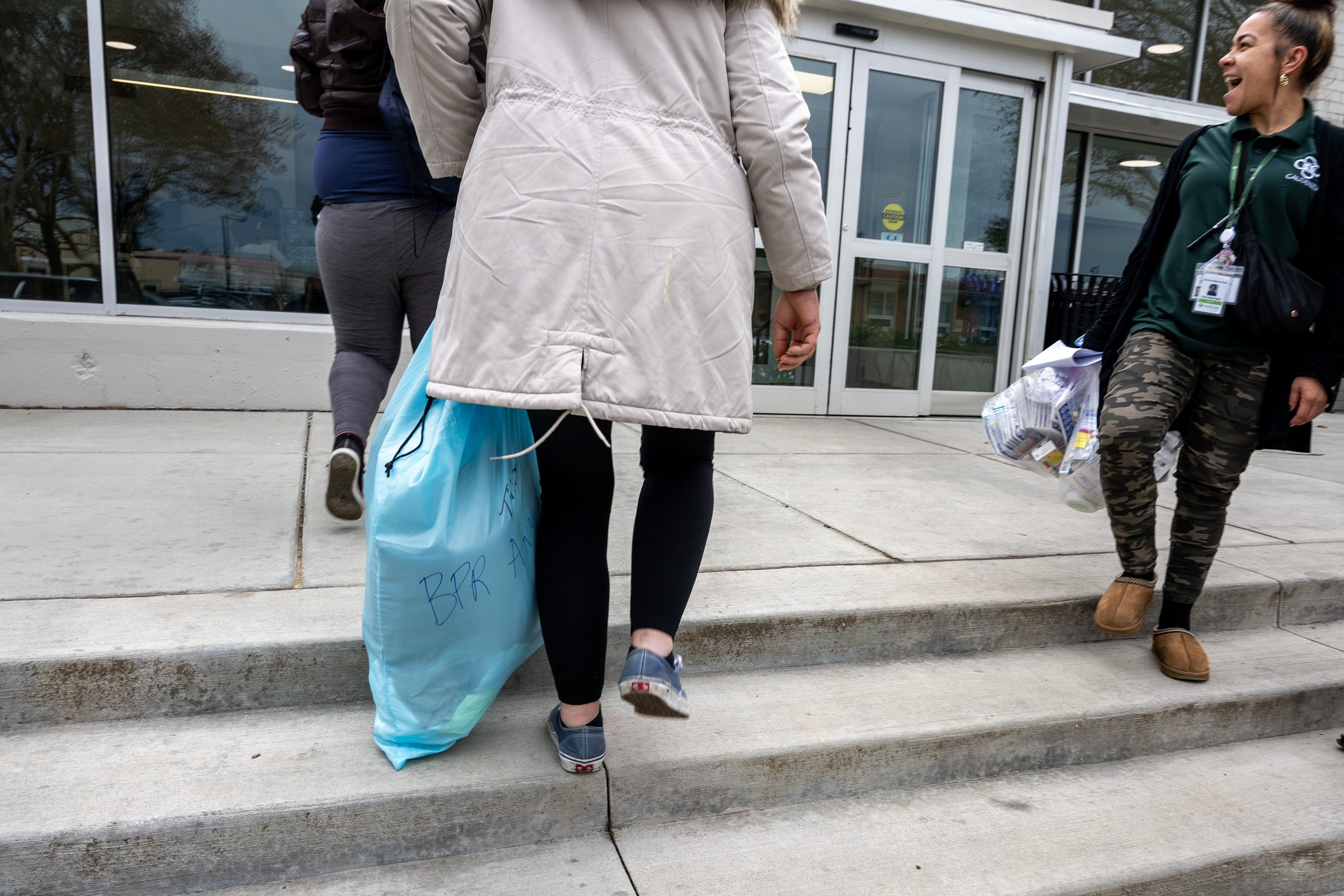
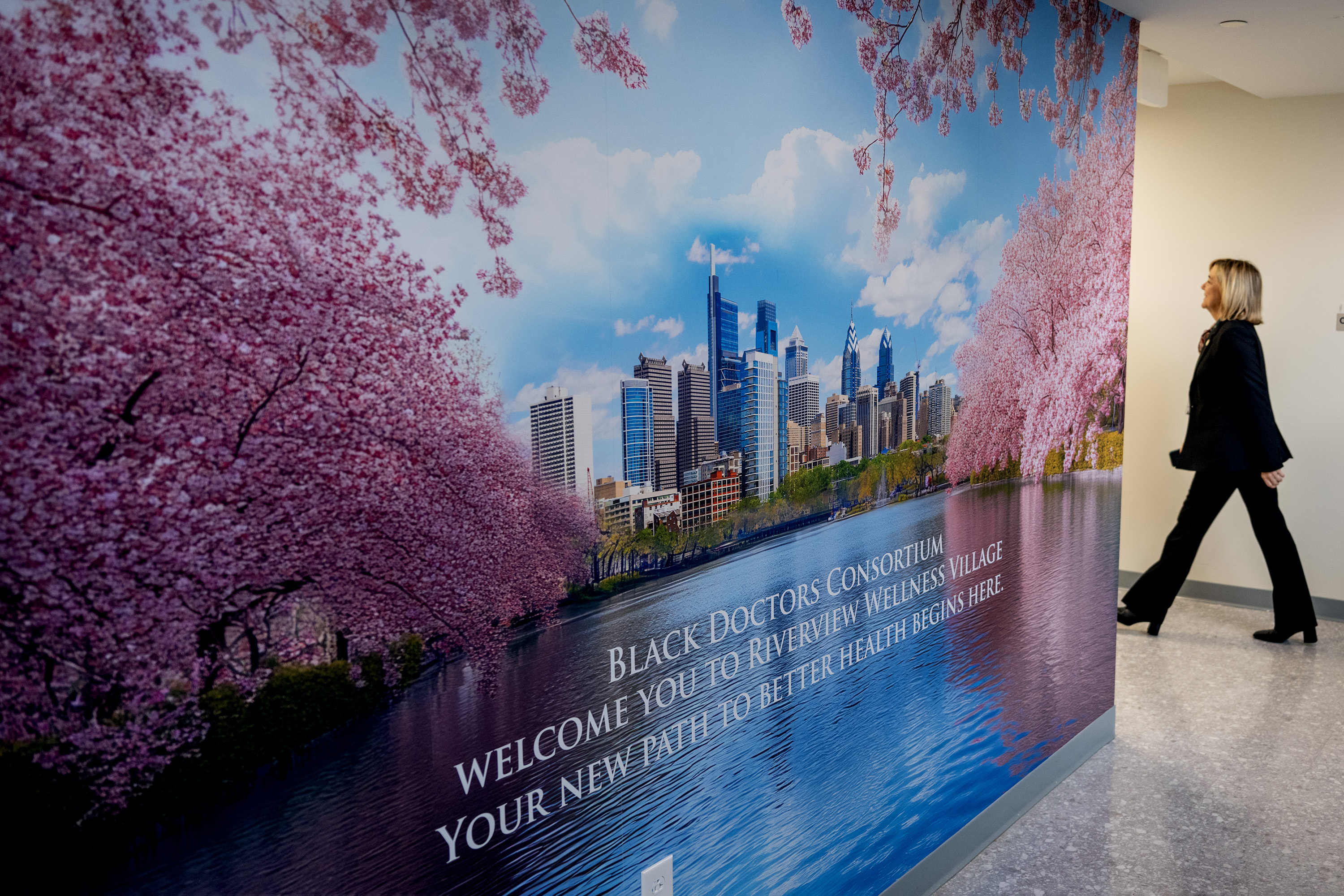
“They literally arrive with all of their belongings in a plastic bag and their medications and some discharge paperwork,” said Ala Stanford, who leads the Black Doctors Consortium, which provides medical services at Riverview. “We are the ones who greet them and help get them acclimated.”
Stanford — who this fall announced a run for Congress — said doctors and nurses at Riverview have diagnosed and treated conditions ranging from drug-related wounds to diabetes to pancreatic cancer. And patients with mental health needs are treated by providers from Warren E. Smith Health Centers, a 30-year-old organization based in North Philadelphia.
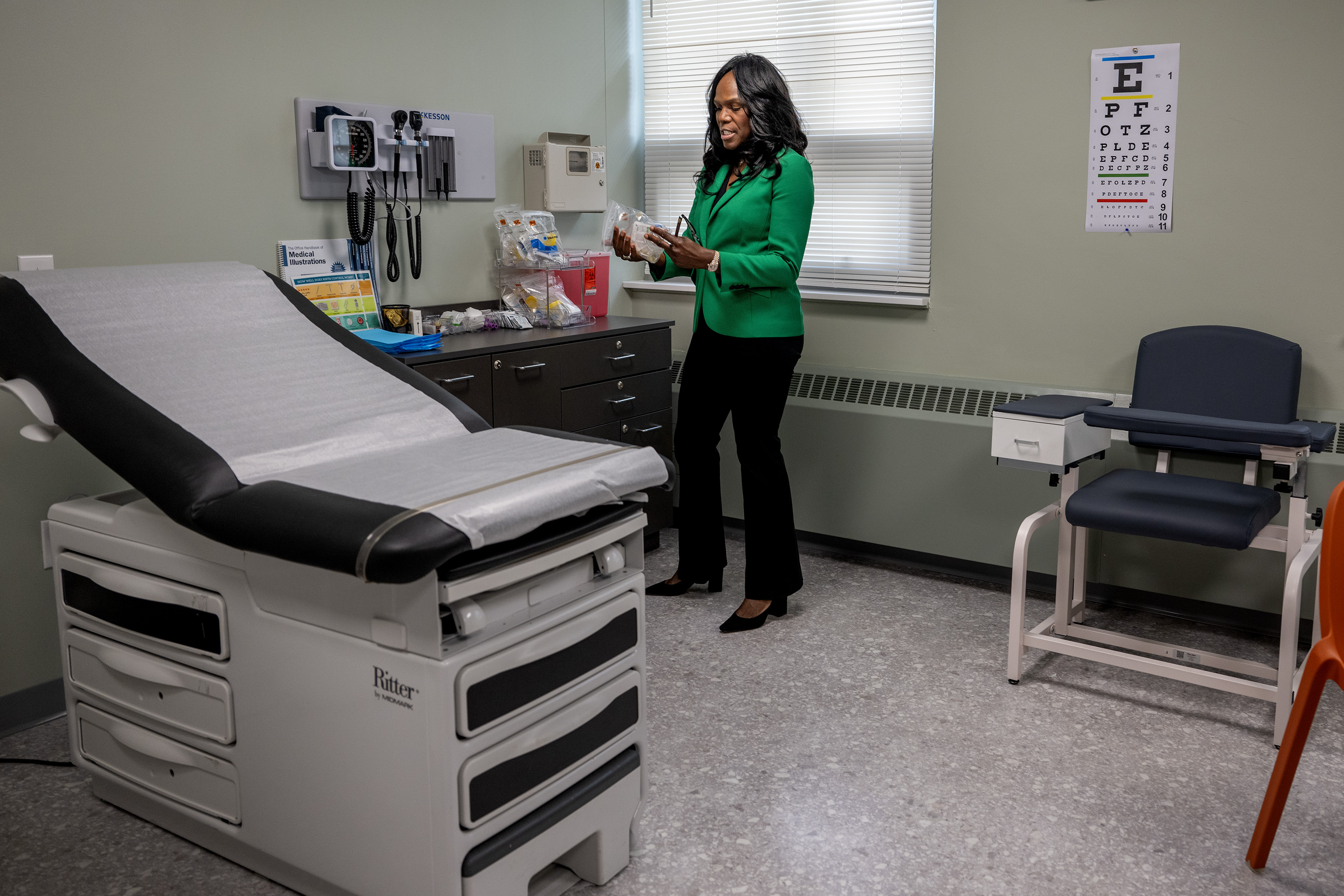
Physician Ala Stanford in an examination room at the primary medical care center run by her Black Doctors Consortium at Riverview Wellness Village, a city-owned drug recovery home in Northeast Philadelphia, on Nov. 25.Francesca Colon (right), a recovery support professional with Gaudenzia, brings people in recovery to the main entrance of the Meetinghouse at Riverview Wellness Village on Nov. 25.
Residents’ schedules are generally free-flowing and can vary depending on their wants and needs. About 20% have jobs outside the campus. Culinary arts training will be available in the next month or so. And residents can meet with visitors or leave to see family at any time.
They also spend much of their time in treatment, including individual, family, and group therapy. On a recent day, there were group sessions available on trauma recovery, managing emotions, and “communicating with confidence.”
Vernon Kostic, a 52-year-old Port Richmond native who said he has previously been homeless, has been in and out of drug treatment facilities for years.
He said he’s been content as a Riverview resident since July, and called it “one of the smartest things that the city has ever done.”
“We have the doctor’s office right over here,” he said. “They’ve got counseling right here. Everything we need. It’s like a one-stop recovery place.”
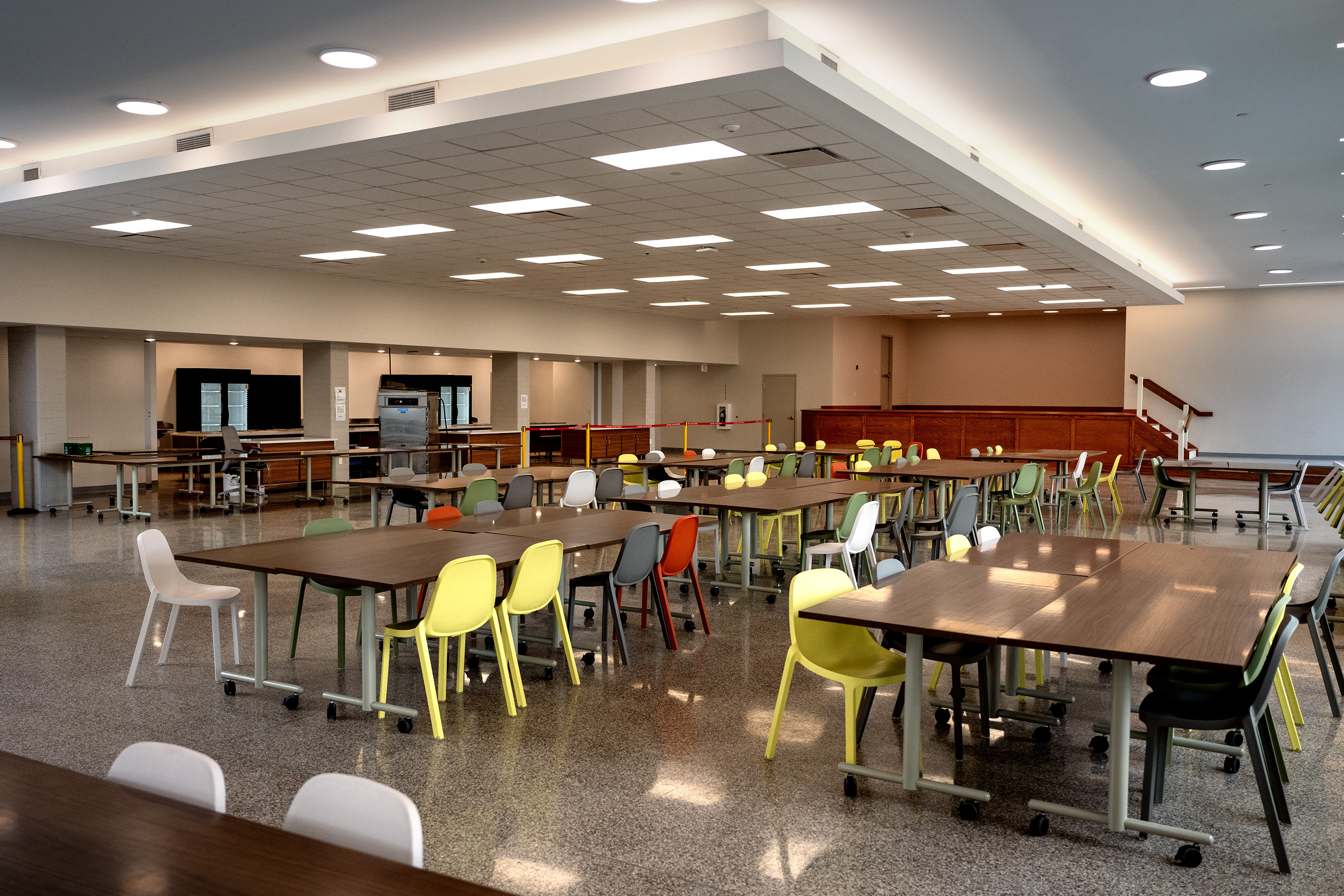
Resident Vernon Kostic heads to a group meeting at Riverview Wellness Village on Nov. 25.The dining room and meeting room in the Meetinghouse at Riverview Wellness Village. At rear left is a brand-new, industrial, restaurant-quality kitchen that was not operational yet on Nov. 25.
Finding ways to stay at Riverview
Finding success in recovery is notoriously hard. Studies show that people who stay in structured sober housing for at least six months after completing rehab see better long-term outcomes, and Riverview residents may stay there for up to one year.
But reaching that mark can take multiple tries, and some may never attain sobriety. McDevitt said that on a monthly basis, about 35 people move into Riverview, and 20 leave.
Some who move out are reunited with family and want to live at home. Others simply were not ready for recovery, McDevitt said, “and that’s part of working with this population.”
Fields said a resident who relapses can go back to a more intensive care setting for detoxification or withdrawal management, then return to Riverview at a later time if they are interested.
“No one is punished for struggling,” he said. “Recovery is a journey. It takes time.”
Providers are adding new programming they say will help residents extend their stays. Offering medication-assisted treatment is one of the most crucial parts, said Josh Vigderman, the senior executive director of substance use services at Merakey, one of the addiction treatment providers at Riverview.
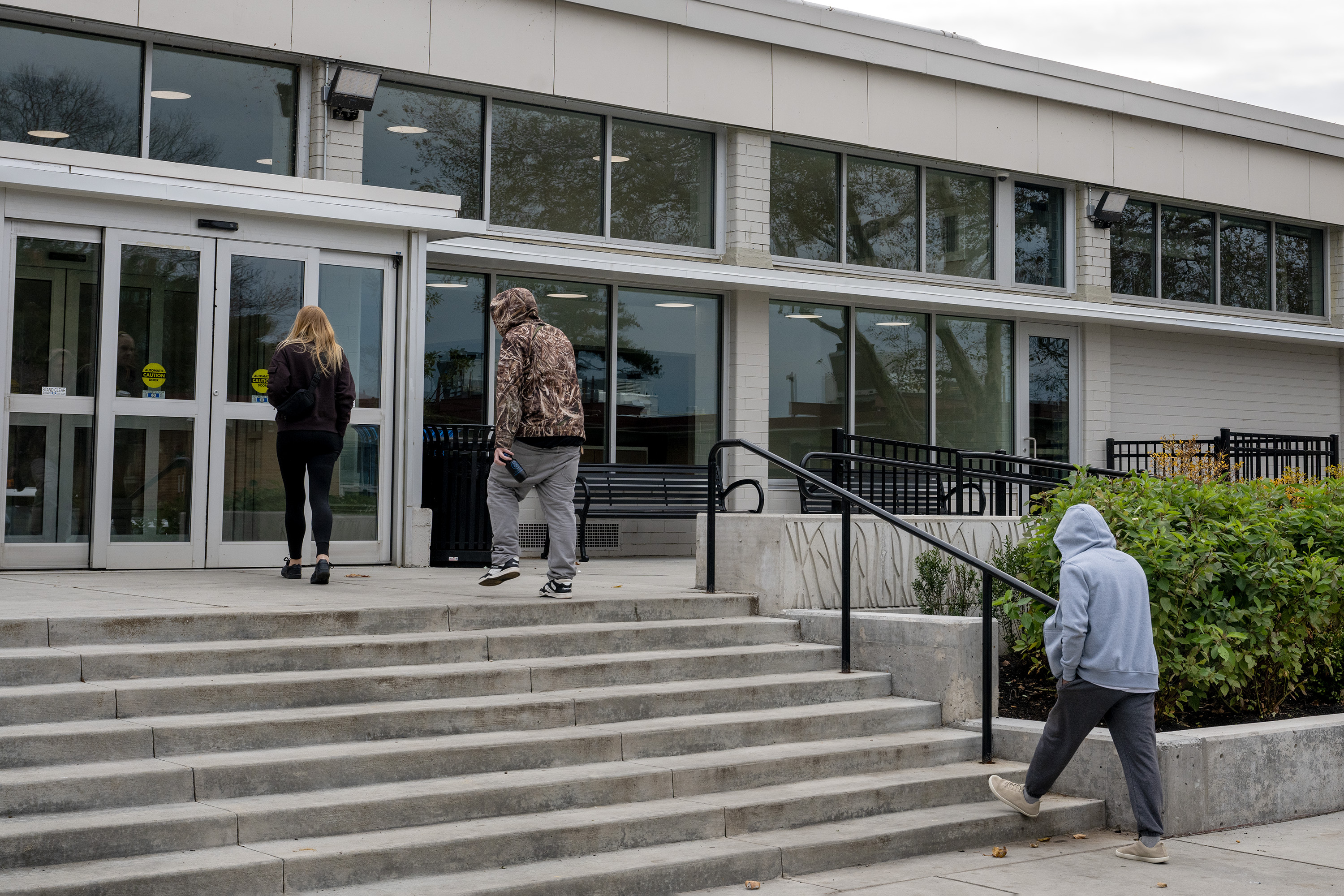
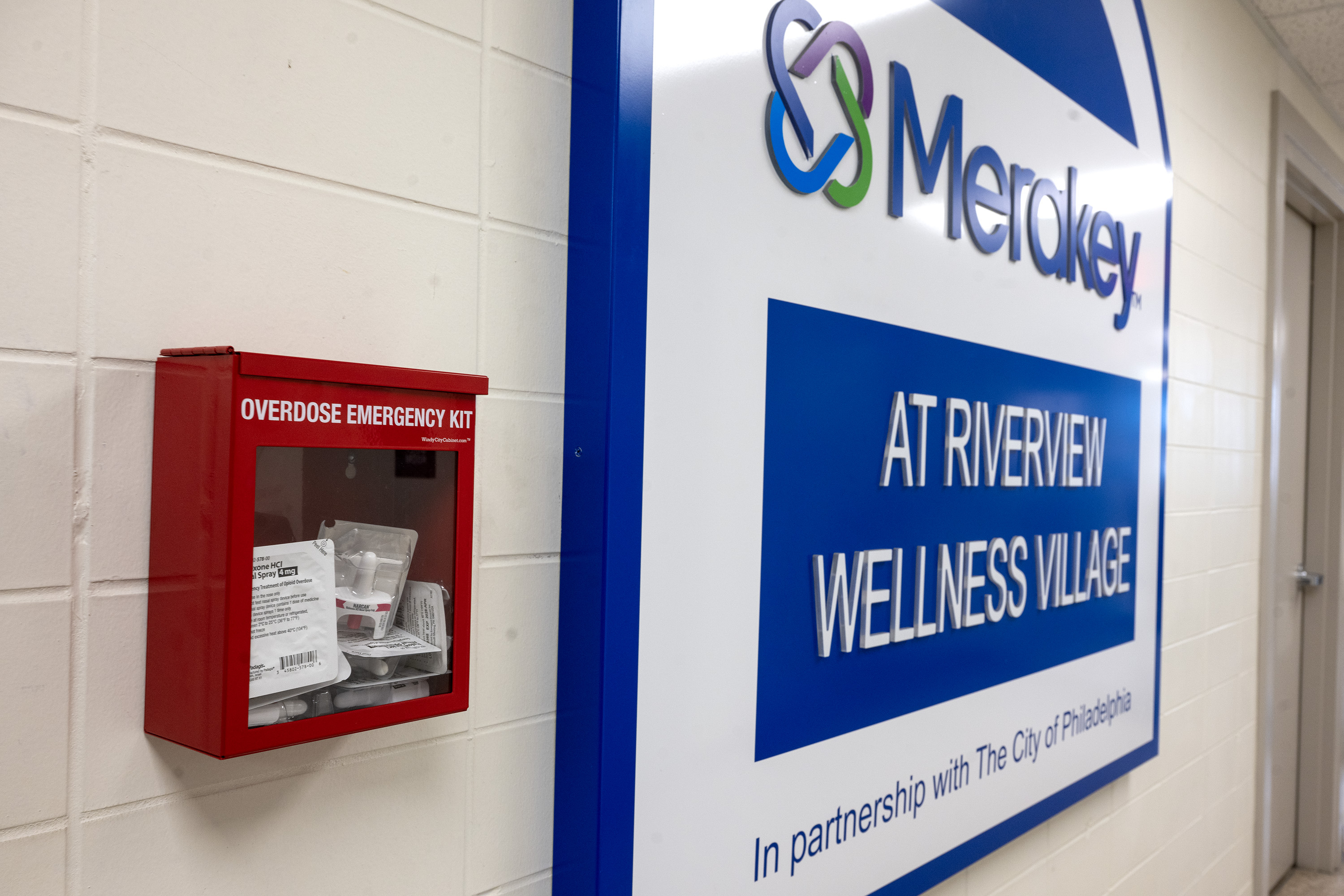
Entry to the primary medical care center run by the Black Doctors Consortium at Riverview Wellness Village.The main entry Meetinghouse at Riverview Wellness Village.Naloxone (Narcan) in an “overdose emergency kit” at Riverview Wellness Village.
In the initial months after Riverview opened its doors, residents had to travel off campus to obtain medication that can prevent relapse, most commonly methadone and buprenorphine, the federally regulated drugs considered among the most effective addiction treatments.
Typically, patients can receive only one dose of the drug at a time and must be supervised by clinicians to ensure they don’t go into withdrawal.
Vigderman said staff suspected some residents relapsed after spending hours outside Riverview, at times on public transportation, to get their medication.
This fall, Merakey — which was already licensed to dispense opioid treatment medications at other locations — began distributing the medications at Riverview, eliminating one potential relapse trigger for residents who no longer had to leave the facility’s grounds every day.
Interest in the program has been strong, Vigderman said, with nearly 80 residents enrolling in medication-assisted treatment in just a few weeks. Merakey is hiring more staff to handle the demand.
What’s next at Riverview
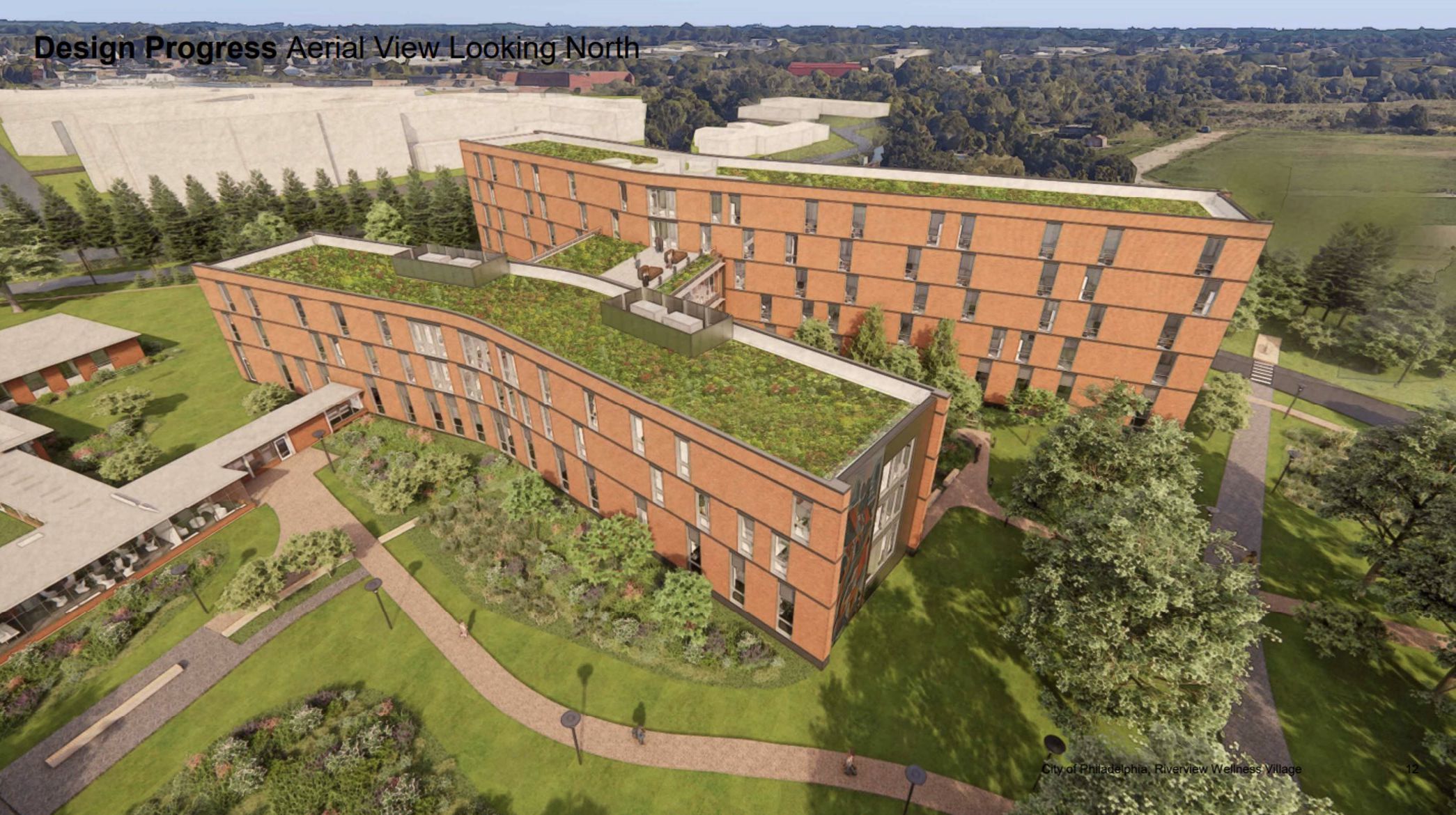
The city is eying a significant physical expansion of the Riverview campus, including a new, $80 million building that could double the number of licensed beds to more than 500. That would mean that about half of the city’s recovery house slots would be located at Riverview.
Parker said the construction is “so important in how we’re going to help families.” She said the process will include “meticulous design and structure.”
“The people who come for help,” she said, “we want them to know that we value them, that we see them, and that we think enough of them to provide that level of quality of support for them.”
In the meantime, staff are working to help the center’s current residents — who were among the first cohort to move in — plot their next steps, like employment and housing.
A rendering of the new, $80 million five-story building to be constructed on the campus of Riverview Wellness Village. It will include residences and medical suites.
That level of support, Vigderman said, doesn’t happen in many smaller recovery houses.
“In another place, they might not create an email address or a resumé,” he said. “At Riverview, whether they do it or not is one thing. But hearing about it is a guarantee.”
Bean is closing in on one year at Riverview. He doesn’t know exactly what’s next, but he does have a job prospect: He’s in the hiring process to work at another recovery house.
“I’m sure I’ll be able to help some people,” he said. “I hope.”
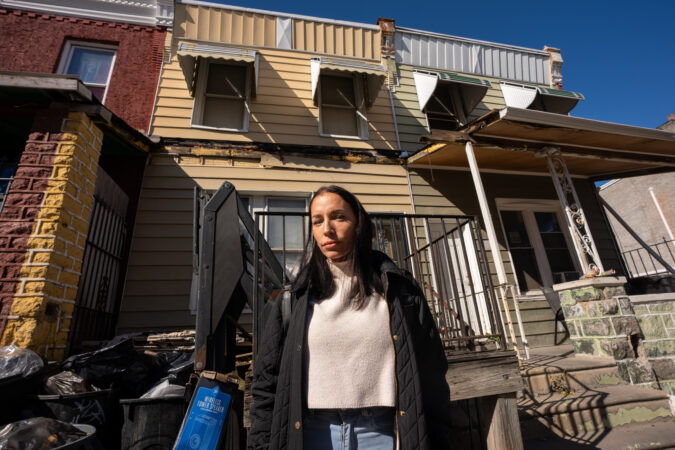
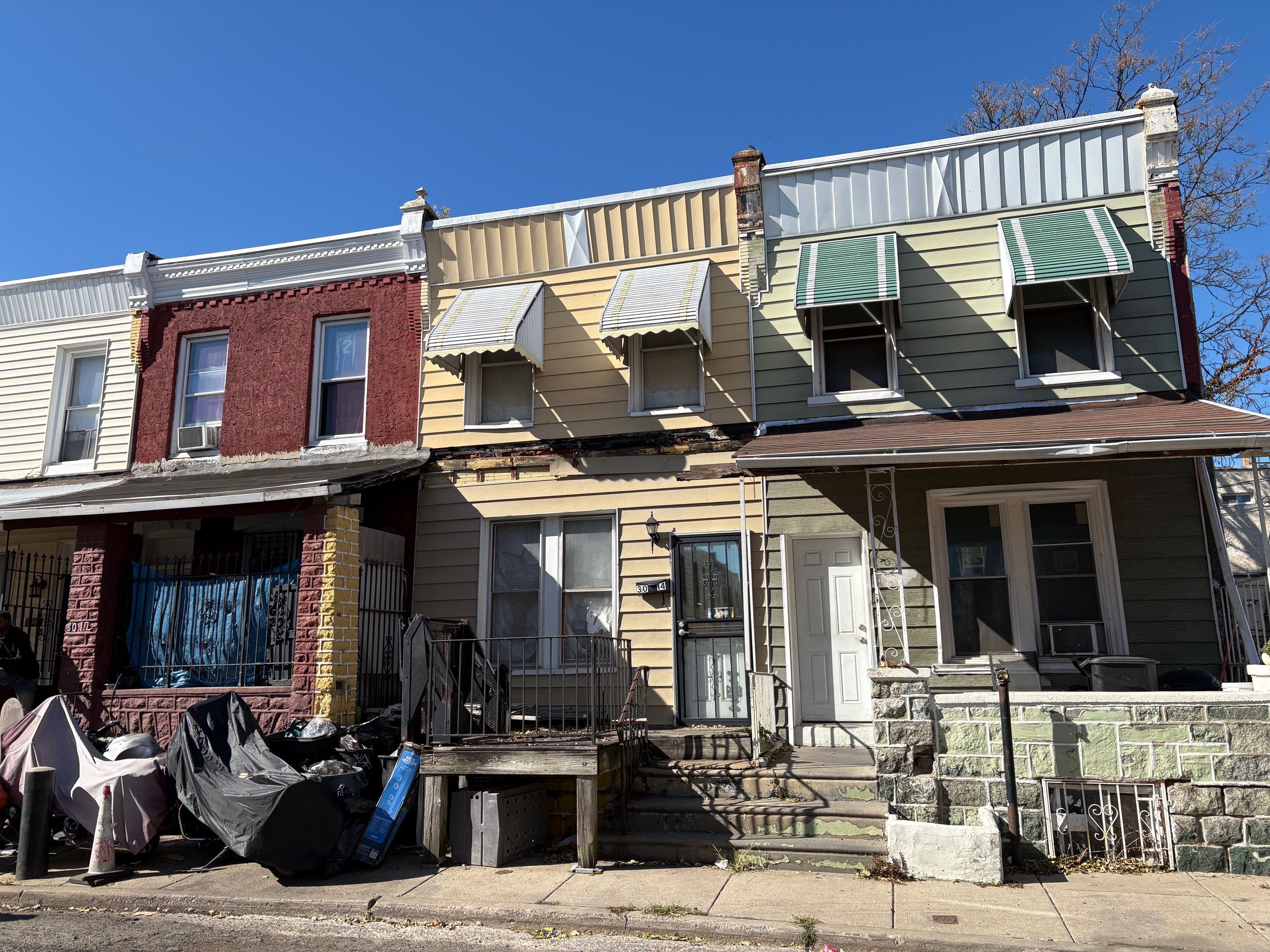
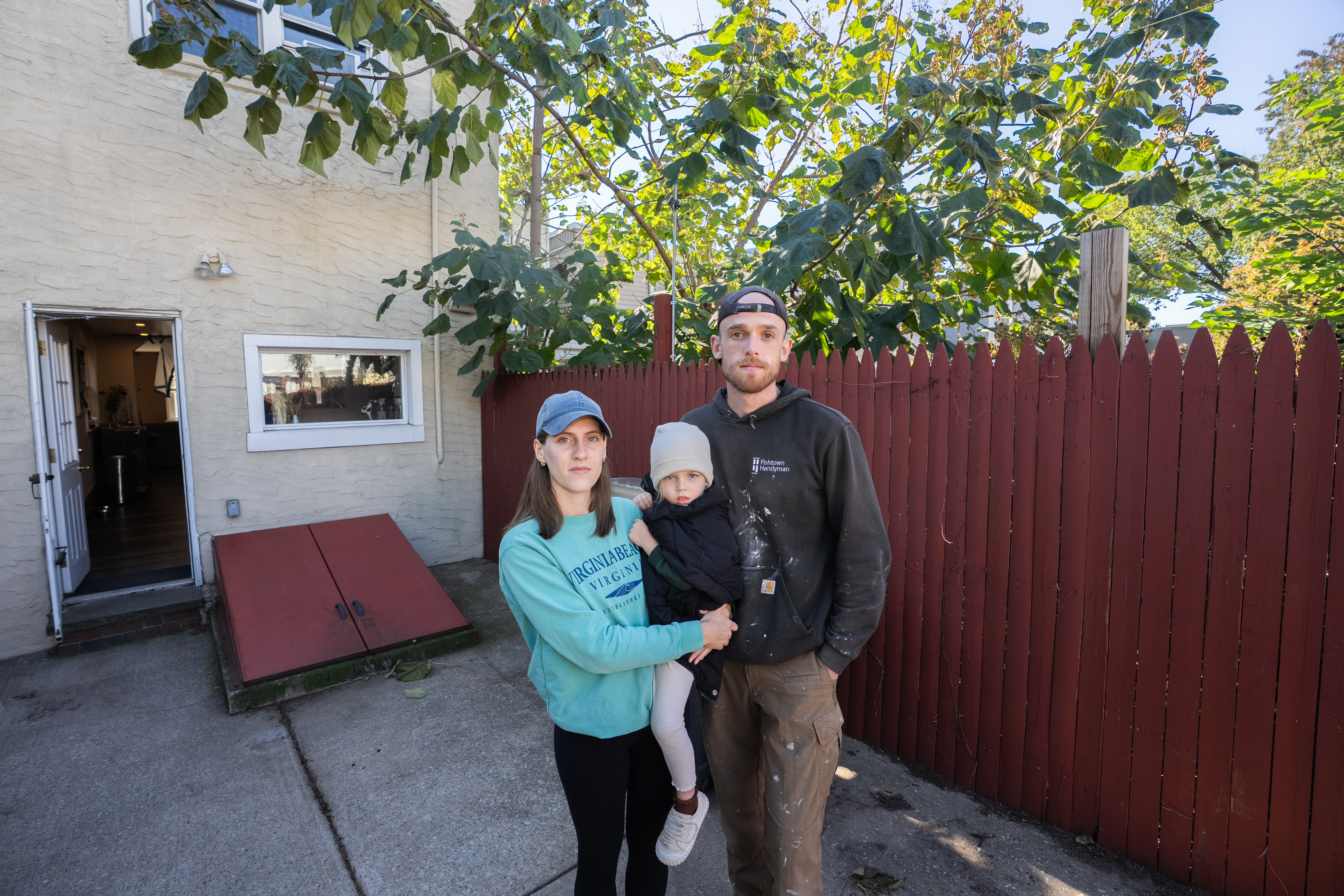
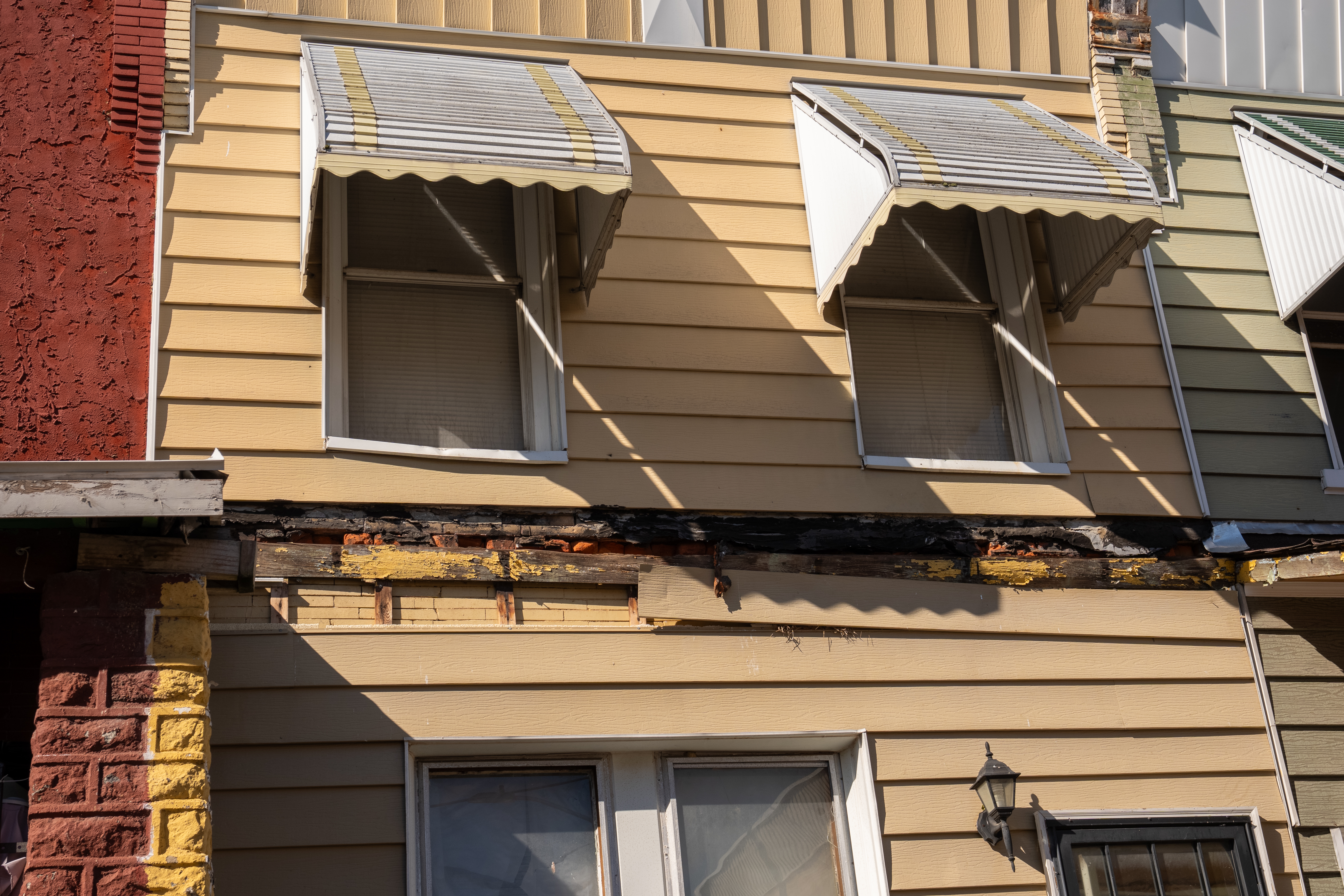
Emily Phillips and her family never slam doors or walk too heavily inside their North Philadelphia rowhouse. They’re afraid of what too much movement could do to the vacant house next door.
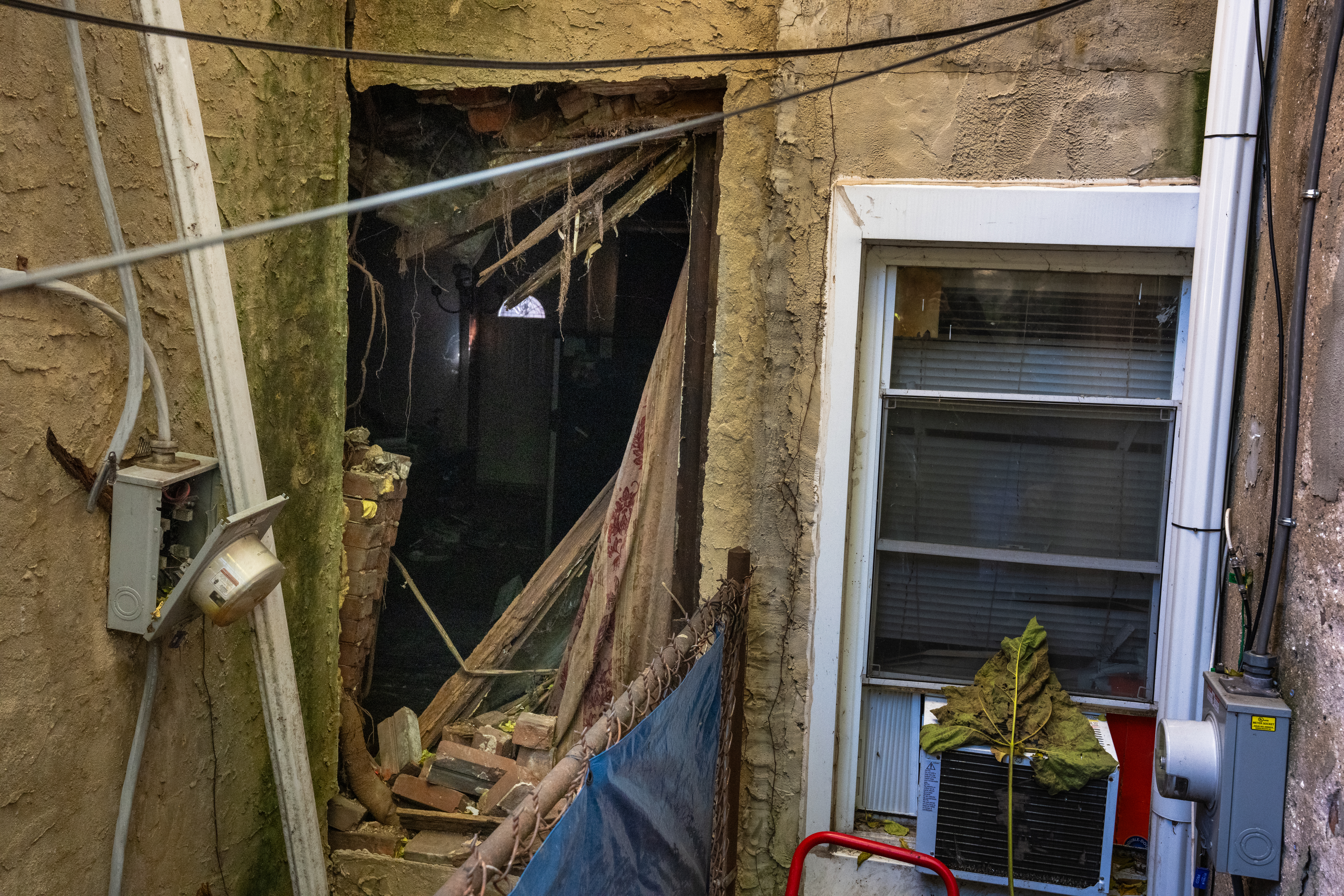
In early August, a back window and part of a wall came crashing down during harsh winds and rain. An inspector for the city’s Department of Licenses and Inspections declared the vacant rowhouse “imminently dangerous,” which means it is at risk of collapsing.
“I never know when something’s going to actually happen,” Phillips said in late October. “We know it’s just a matter of time. … I’m so scared right now.”
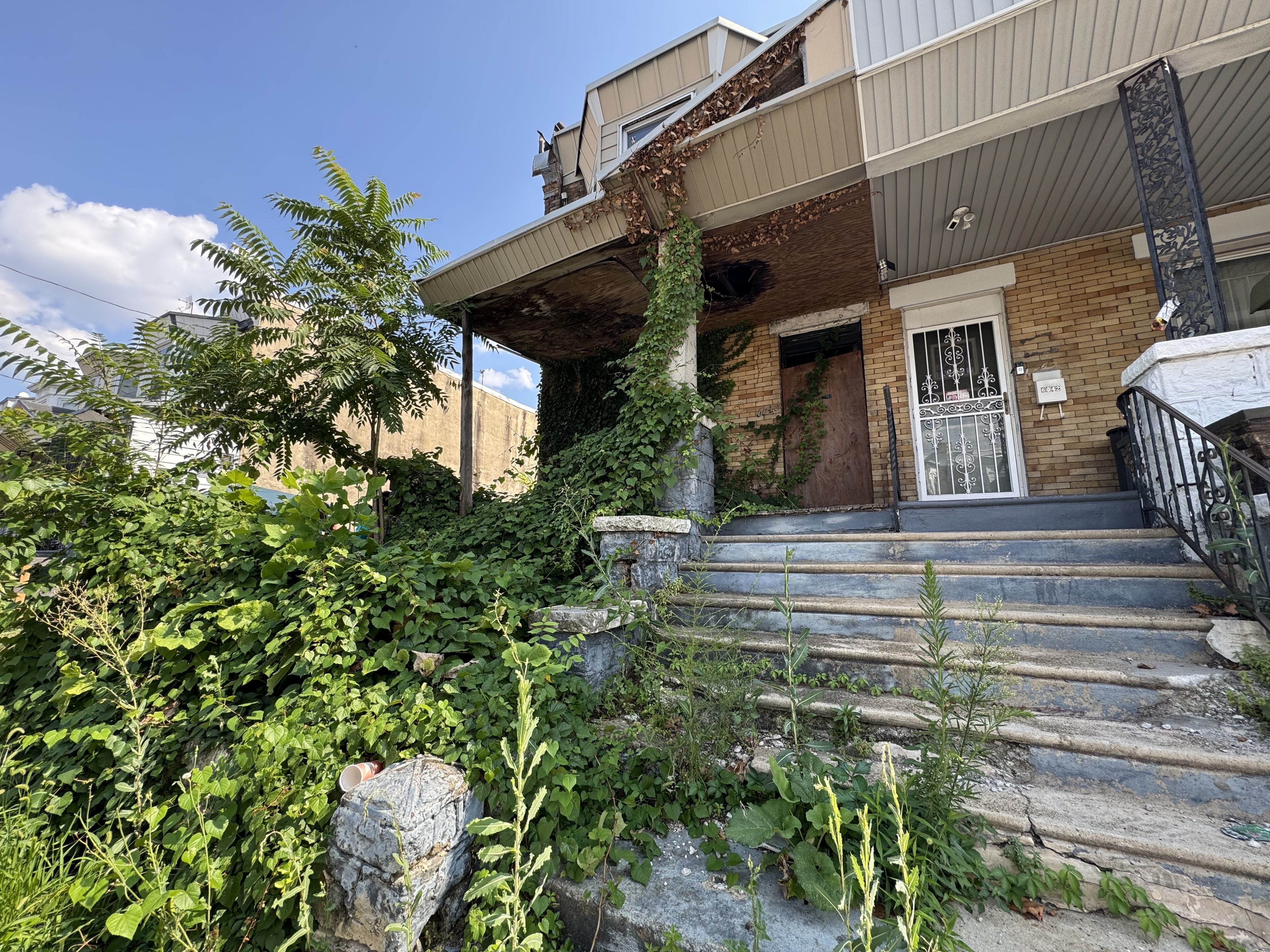
Across Philadelphia, families are living in a limbo of anxiety next to buildings that the city has determined are unsafe or imminently dangerous. The buildings at greatest risk of collapse are usually vacant.
Renters Emily Phillips (left) and Dayani Lemmon examine the basement wall that their home shares with the abandoned and dangerous rowhouse next door.
Philadelphians rely on the city to keep an eye on vacant properties that are or could become dangerous. And in 2016, the city rolled out a method for determining which properties were likely to be vacant. L&I’s commissioner at the time said the inventory tool was making the department more proactive in protecting the public from deteriorating vacant buildings.
But L&I officials now say the department no longer uses the tool. They said the department mainly relies on residents’ complaints and its list of vacant property licenses — which L&I admits is a massive undercount — to monitor empty buildings.
(function() {
var l2 = function() {
new pym.Parent(‘imm_dang_map’,
‘https://media.inquirer.com/storage/inquirer/projects/innovation/arcgis_iframe/imm_dang_map.html’);
};
if (typeof(pym) === ‘undefined’) {
var h = document.getElementsByTagName(‘head’)[0],
s = document.createElement(‘script’);
s.type = ‘text/javascript’;
s.src = ‘https://pym.nprapps.org/pym.v1.min.js’;
s.onload = l2;
h.appendChild(s);
} else {
l2();
}
})();
L&I points out that property owners are responsible for securing vacant properties and repairing dangerous buildings, and the department steps in as resources and laws allow.
Around the time Inquirer reporters spoke with Phillips, the city’s spreadsheet of likely vacant properties listed about 8,000 vacant buildings — a potentially serious threat to their neighbors. An Inquirer analysis of the city’s list of imminently dangerous buildings showed that 79% of those also appeared on the list of likely vacant buildings.
Just under half of those vacant and imminently dangerous buildings were rowhouses, which are especially risky to neighbors because of shared walls. This risk is not borne equally by all of Philadelphia’s residents.
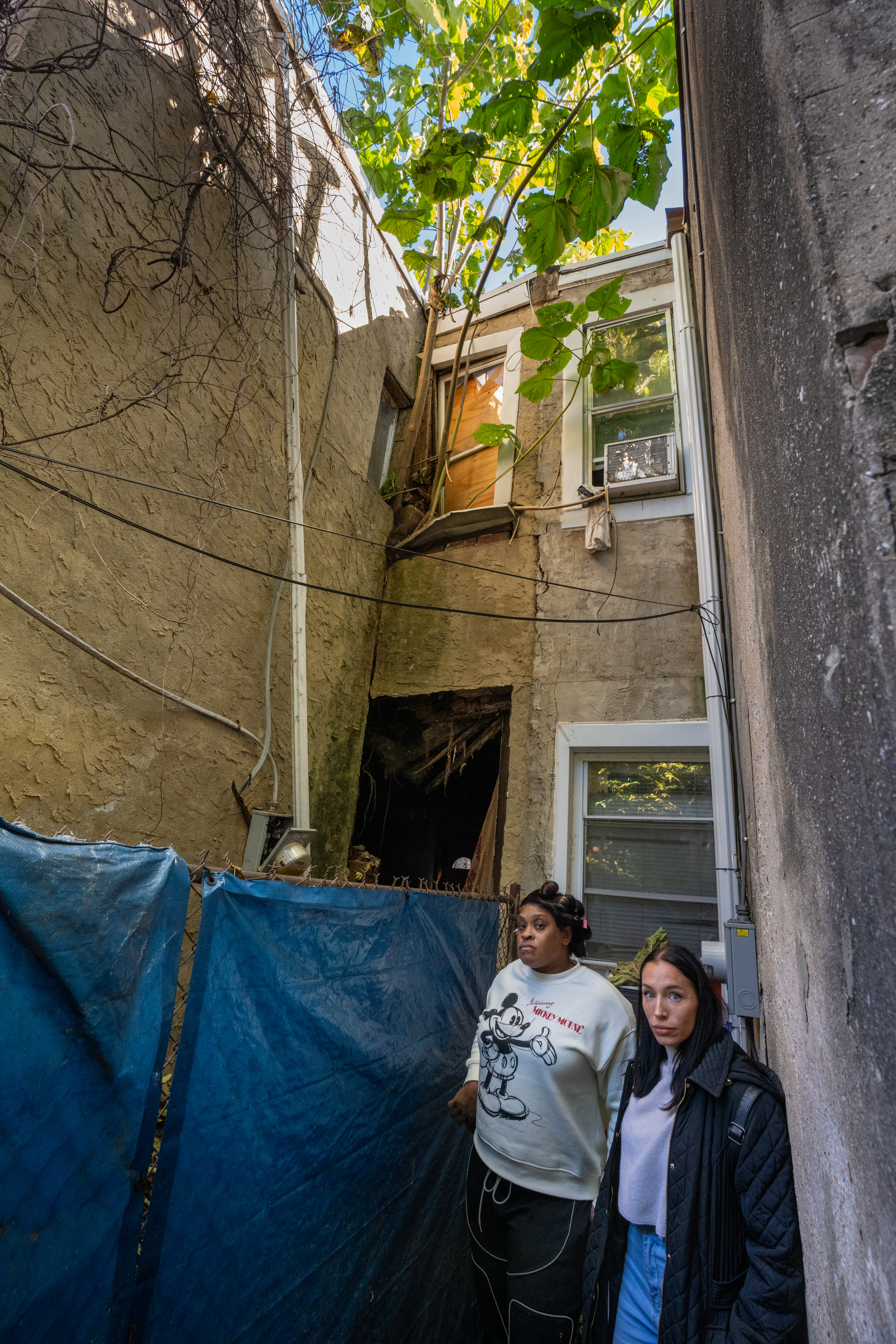
Emily Phillips and her landlord, Samantha Wismann, stand next to a neighboring abandoned rowhouse, where part of a wall collapsed and a tree grows inside.
Nearly eight in 10 of all such rowhouses are in the poorest 25% of the city’s zip codes. The zip code with the most such rowhouses — 19132, where Phillips lives — has a median income of $31,000, according to the latest Census Bureau data. Philadelphia’s median household income is $61,000.
Seven in 10 vacant rowhouses that the city identified as imminently dangerous are in the 34% of the city’s zip codes that are predominantly Black. Roughly nine in 10 residents in 19132 are Black.
Dianna Coleman, a community activist who lives in Southwest Philadelphia, called vacant properties “one of Philadelphia’s most pressing and overlooked crises.”
This summer, a hole opened in the back of an abandoned rowhouse that is connected to a North Philadelphia house owned by Samantha Wismann.
When Coleman and a group of residents in Southwest and West Philadelphia came together last summer to organize around quality of life issues, residents’ top concern was fixing vacant properties. They partnered with the grassroots social justice nonprofit OnePA and launched their first campaign — asking the city to deal with abandoned buildings and vacant lots.
“While we recognize that the city has taken steps — demolishing some buildings, addressing some lots — the pace is way too slow, the resources too scarce, and the strategy too weak,” Coleman, cochair of OnePA West/Southwest Rising, said at a news conference this summer. “Unsafe buildings are left standing for years, growing more hazardous, pulling down property values, and pushing people out of their homes.”
The vacant rowhouse next to Emily Phillips’ North Philadelphia home had its collapsing porch roof removed, but the rest of the home remains in disrepair.
The city’s questionable vacancy data
About a decade ago, the city started using an algorithm that takes feeds from a variety of datasets (such as whether a property has had its water cut off) to determine whether a property is likely to be vacant.
City officials celebrated the tool when it launched.
“Protecting the public from deteriorating vacant, abandoned properties as they grow more and more likely to collapse is critical to L&I’s mission,” former L&I Commissioner David Perri said in a 2016 news release announcing the index. “The Vacant Property Model and dataset are making us more proactive and strategic in carrying out that mission.”
But the reliability of the city’s list of likely vacant buildings and lots was recently called into question by individuals who have worked closely with the tool and collaborated with city officials in the past.
For more than three years, Clean & Green Philly, a nonprofit that — until its closure earlier this year — used data to help Philadelphians deal with vacant properties in their neighborhoods, relied on the city’s tool in combination with other data to identify vacant properties in greatest need of addressing.
But last year, founder Nissim Lebovits and the organization’s former executive director, Amanda Soskin, noticed something was wrong.
For years, the city’s list of suspected vacant properties had hovered somewhere around 40,000 records — buildings and land combined. But then, according to Lebovits and Soskin, that number plunged to around 24,000 in June 2024.
“And at first I was like, ‘OK. Something’s probably broken,’ and we looked into it,” Lebovits said. “And we realized that the city’s actual underlying datasets were no longer reporting the same number of vacant properties.”
window.addEventListener(“message”,function(a){if(void 0!==a.data[“datawrapper-height”]){var e=document.querySelectorAll(“iframe”);for(var t in a.data[“datawrapper-height”])for(var r,i=0;r=e[i];i++)if(r.contentWindow===a.source){var d=a.data[“datawrapper-height”][t]+”px”;r.style.height=d}}});
The spreadsheet was showing only about 14,000 records as of this June, according to Lebovits and Soskin.
Then at some point between June and early November, the index grew to about 37,000 total properties.
Inquirer reporters began investigating the connection between vacancy and structural deficiencies in buildings after the April collapse of an abandoned rowhouse in Sharswood. At that time, L&I offered the vacancy index while asserting it could not provide detailed information about the data and referring reporters to CityGeo, the department that developed and maintains the index.
At no point during an hour-long interview with the department’s chief data officer in early June did city officials mention any concerns about the reliability of the data.
Reporters learned about issues with the data when Lebovits and Soskin wrote an article for The Inquirer’s opinion section later that month detailing their concerns. They wrote that city sources told them the process of collecting and publishing vacancy estimates “was quietly discontinued after [Mayor Cherelle L.] Parker took office.”
In an email, a CityGeo spokesperson said the city has not stopped updating the index, asserted that its accuracy depends on continued updates from various departments, and noted that CityGeo pauses updates “every few years” for “a month or so” to ensure the tool continues to work, most recently this past summer.
The spokesperson did not respond to questions about why the index’s size had varied so greatly recently. Lebovits and Soskin told The Inquirer that nobody from the city reached out to them after their article was published.
“My big takeaway here is that the lack of transparency around this dataset is a major liability,” Lebovits wrote in an email. “Having so little accountability regarding data production and quality seriously hampers any community groups trying to use these data and undermines the credibility of the City’s vacancy work.”
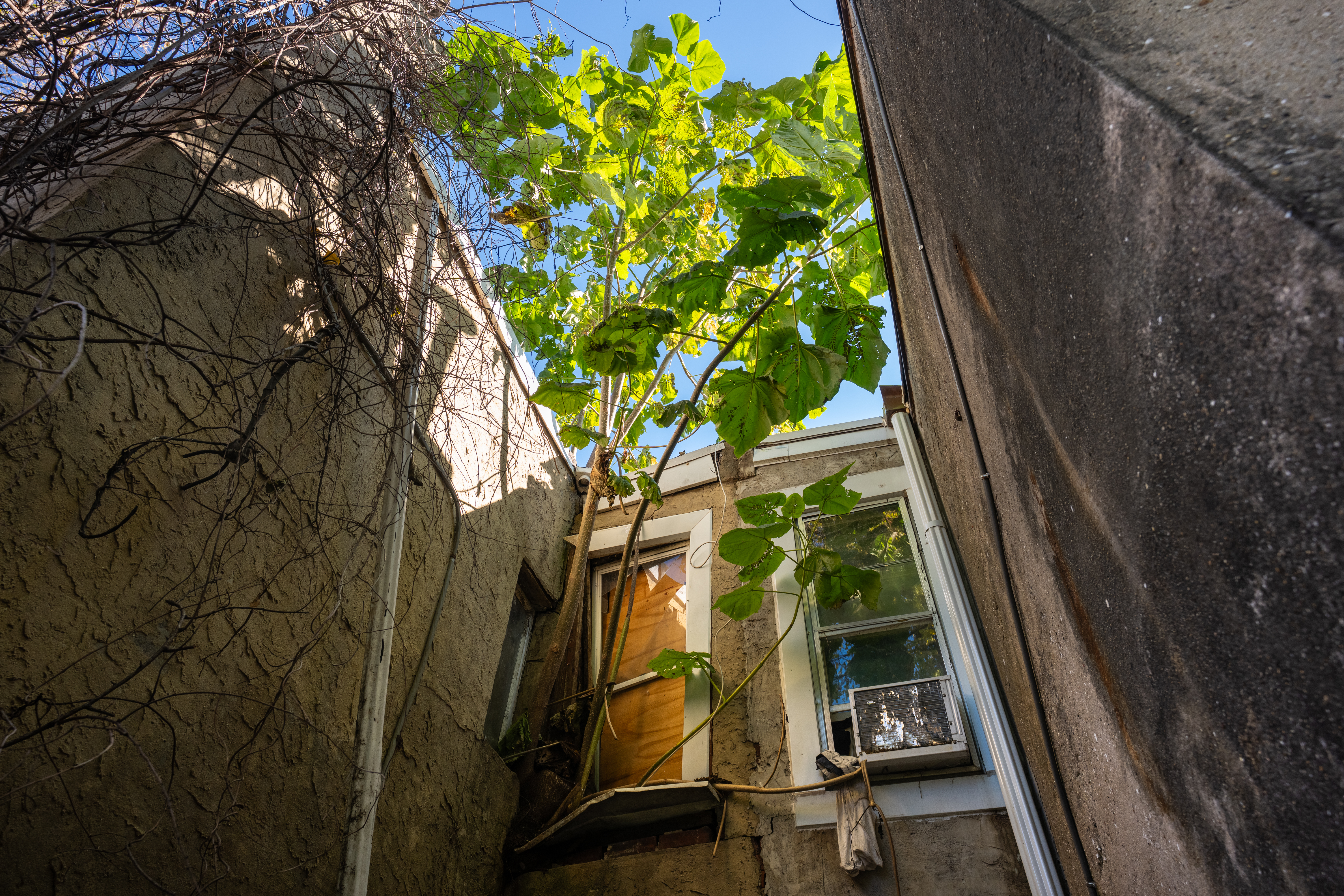
The tree inside an abandoned North Philadelphia rowhouse towers above the roofs of the house and its neighbor, owned by Samantha Wismann.
‘Very, very scary’
When Phillips’ landlord, Samantha Wismann, bought the house on North Woodstock Street in 2020, she didn’t know that its neighbor was vacant.
Wismann noticed the house looked a little shabby, but it wasn’t until Phillips moved in the following year that the women saw no one lived there. They didn’t know how long it had been vacant, but they watched it quickly deteriorate.
Most pressing back then was the collapsing porch roof, which was dragging down the roofs of the porches on either side of it.
Someone eventually tore it down. But the rest of the home remains in disrepair.
“It’s very, very scary,” Wismann said in October, “because eventually, if it’s not handled, it’s gonna come down.”
Cracks snake between the homes.
From the women’s backyard, through the door-sized hole in the back of the neighboring house, they can see past splintered beams and an abandoned refrigerator, beyond the staircase that leads to the second floor, and straight through to the front door.
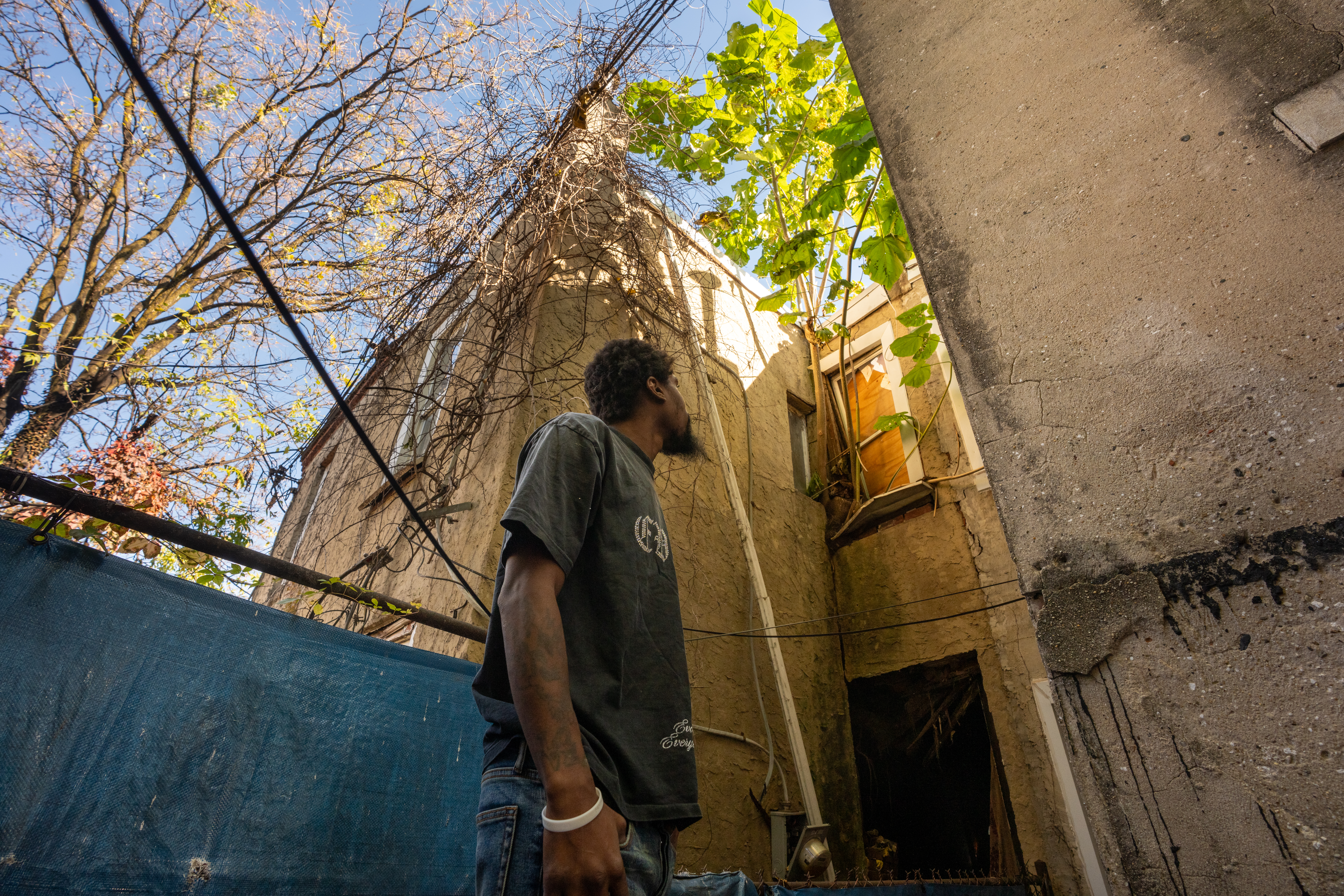
Then there’s the tree that’s growing inside the vacant house. It has pushed outward through bricks and plaster and busted a second-story window. The tree’s branches tower over the homes, and some have reached the window of the bedroom where Phillips’ grandchildren stay.
L&I’s Contractual Services Unit is responsible for inspecting unsafe and imminently dangerous properties and administers the city’s demolition program. The unit has 10 members and openings for two more inspectors, said Basil Merenda, commissioner for L&I’s Inspections, Safety & Compliance division.
“We’re out there doing our job,” he said. “We’re out there making sure that these unsafe and [imminently dangerous] properties are properly addressed through procedures and that public safety is always being maintained.”
Renter Dayani Lemmon looks at the abandoned property located next door to his home in North Philadelphia.
But a 2024 report by the City Controller’s Office said the unit used to have 15 inspectors, which the office said was not enough to keep up with inspections of unsafe and imminently dangerous properties.
Merenda said L&I is “making do with what we have” and mobilizes inspectors in other units when needed.
After L&I declares a property to be unsafe or imminently dangerous, it must issue notices to the property owner, who is responsible for repairs. The department can take unresponsive owners to court and pursue demolition in emergency situations, such as when a property is likely to collapse, is next to an occupied building, and has recent structural failures, Merenda said. The city demolishes imminently dangerous buildings in order of the risk officials determine they pose.
A tree can be seen growing inside the vacant North Philadelphia rowhouse through a hole in the back wall, which partially collapsed this summer.
The city charges owners for tear-down costs and places liens on properties if they do not pay.
L&I was unable to say how many such tear-downs the department has conducted this year and referred questions about the cost of demolitions — and the proportion of those costs recouped from owners — to the city’s Department of Revenue. The revenue department did not provide any figures to The Inquirer.
“In many, many cases, property owners surface at the last minute and request a continuance, request a temporary restraining order from us going in and demolishing the property,” Merenda said. “And you know, that’s the purview of the courts. It’s beyond us.”
In the meantime, people living next to dangerous properties are left in the dark.
Kate and Dan Thien and their daughter stand in the backyard of their Port Richmond home, the foundation of which is cracking because of weed trees next door.
Frustrated with L&I
After the back of the abandoned rowhouse on North Woodstock Street opened up this summer, Phillips led an L&I inspector through her home so he could see.
“He went in the backyard, he looked over and was like, ‘My god!’” Phillips said. “I said, ‘Yeah, I can see right through their house.’ And he looked up and was like, ‘It’s a tree!’ I said, ‘Yeah, the tree is pushing the house out.’”
The inspector put an orange “imminently dangerous” notice on a front window, and Phillips and her landlord thought they wouldn’t have to worry much longer. But days after the notice went up, it was ripped down.
Weeds from the neighboring vacant property surround Kate and Dan Thien’s home in Port Richmond.
The property has attracted rats and mice. Water leaked into Phillips’ basement until her landlord reinforced the shared wall with concrete.
For months, her landlord got no response from the city to her calls and emails asking for help.
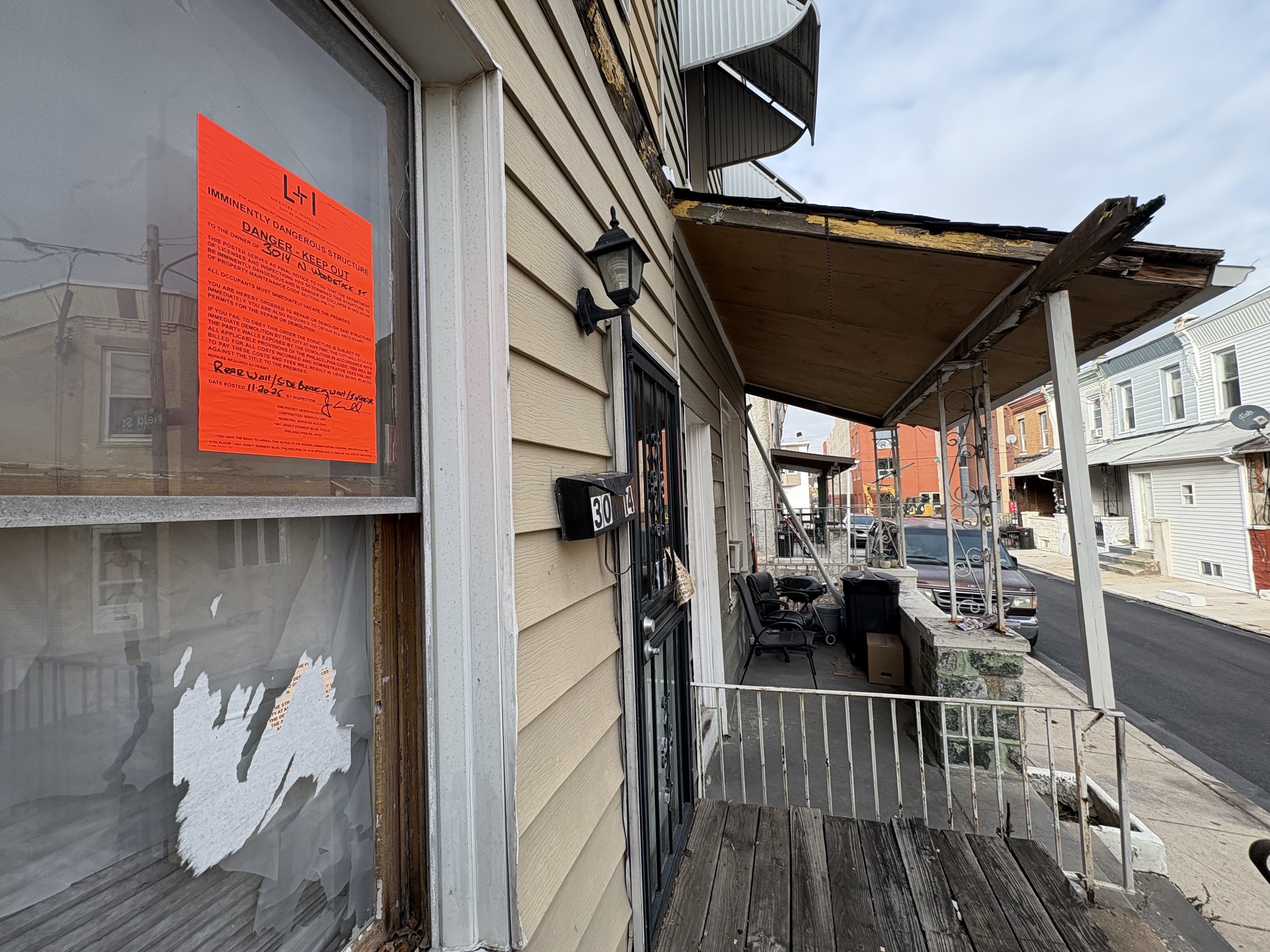
On Nov. 20 — 3 ½ months after the partial collapse — an L&I inspector visited the vacant rowhouse to post a “final notice” that the owner must repair or demolish the home or else the city will have it demolished.
Kate and Dan Thien are trying to live with the vacant property next to their rowhouse in Port Richmond as they wait for the city to respond to their 311 complaints.
When they bought their house in February 2024, they saw that the neighboring backyard was a mess, but they didn’t know the house was vacant.
Renters who had lived in what is now the Thiens’ home had used and maintained the neighboring backyard. But it quickly became overgrown. Neighbors later told the Thiens that the home had been vacant for more than a decade.
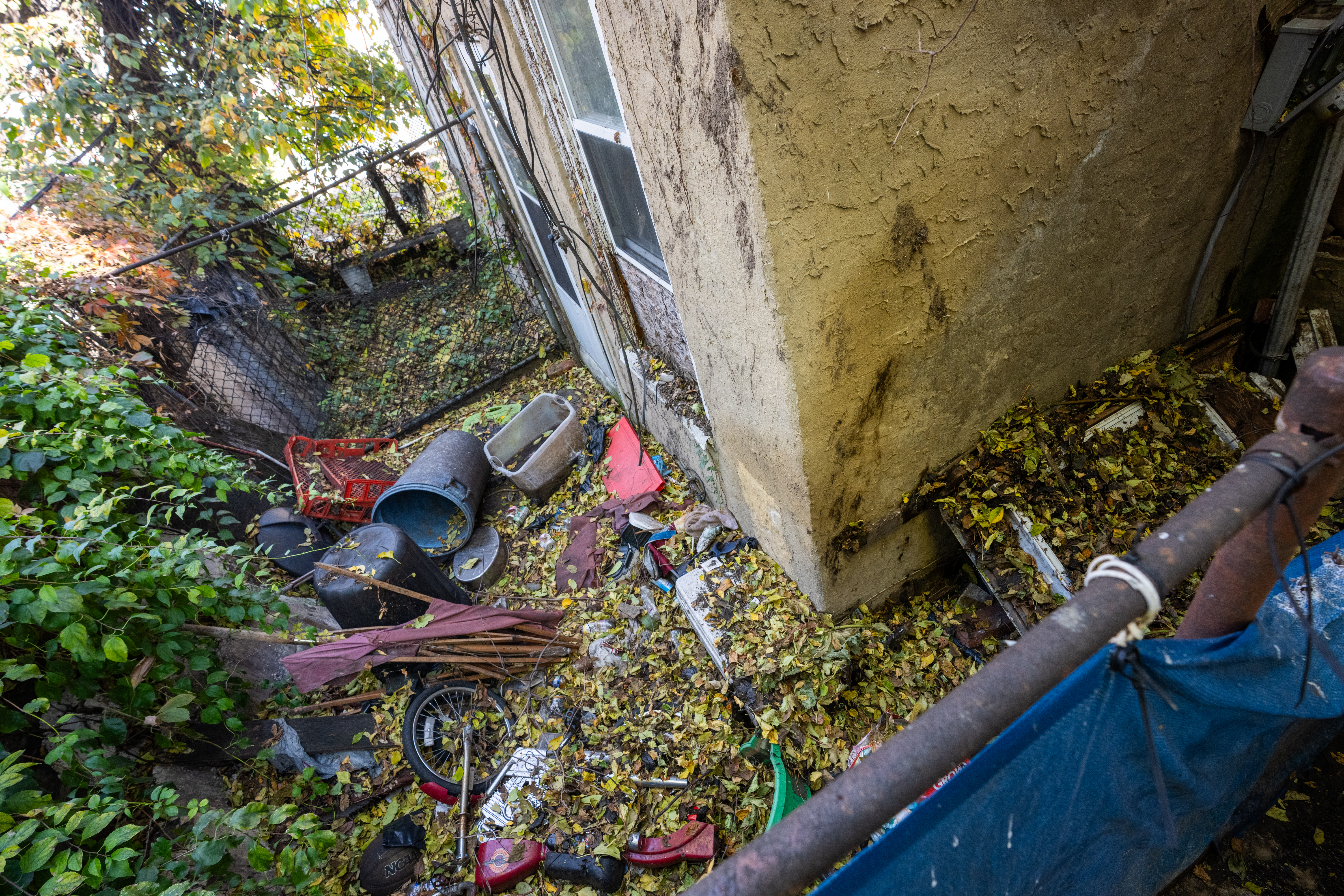
The backyard of the abandoned North Philadelphia rowhouse is full of debris.
“Pretty much the entire neighborhood knows about this house,” Kate Thien said.
She and neighbors on the other side have filed complaints with the city. The property has racked up 19 violations since 2012. Public records show that the city cited the property for “high weeds” last fall and most recently inspected it last December. The property passed inspection.
A year later, a weed tree’s branches stretch above and behind the Thiens’ two-story home. Tree roots are growing into their home’s foundation and cracking the concrete. Trees are “very rapidly growing” as Thien waits for the city to do something, she said. She worries about her home’s property value as the situation worsens.
This abandoned property on Spruce Street in West Philadelphia, pictured on July 30, was one of the houses on a list of problem vacant properties compiled by OnePA West/Southwest Rising.
“It’s not going away,” she said.
Annette Randolph and her husband, Dennis, live in a Point Breeze rowhouse next to a home that’s been vacant for more than a decade and that the city classifies as unsafe, a step below imminently dangerous. Four generations of her family have lived in her home. She hopes she’s not the last.
A tree growing inside the vacant house burst through its back roof, next to a tarp-covered hole. Randolph has had to repair her own roof because of damage from next door. Water gets into her basement.
The home’s legal owners are dead. A scheduled sheriff’s sale in 2011 for overdue property taxes gave Randolph hope for a resolution. But right before the sale, someone paid part of the tax bill to stop it.
On Nov. 20, an inspector with Philadelphia’s Department of Licenses and Inspections posted a final notice on the vacant North Philadelphia rowhouse that says owners must repair or demolish the home.
Now, “for sale” signs hang in the front windows, and a contractor showed up last week. Randolph hopes any work on the house won’t damage the one she’s called home for 66 years.
She has lost track of the number of times she’s called 311 about the situation. She’s felt helpless. When she needed new homeowner’s insurance, companies told her they wouldn’t insure her or would charge more because of the attached vacant and unsafe house.
“L&I and the city I blame for allowing this type of stuff to happen,” Randolph said.
Merenda said L&I hears neighbors’ complaints, “and we’re going to try to take action as efficiently and properly as possible.”
“I want to make, during my watch, L&I more accessible, responsive, and accountable to the neighbors, stakeholders, contractors, developers, average citizens, the City Council,” he said.
A collapsing roof was removed but the rest of the vacant rowhouse was left to deteriorate.
Neighbors band together
In September 2024, OnePA West/Southwest Rising launched its campaign to get the city to deal with abandoned properties.
The group created a list of 20 of the worst ones as submitted by neighbors. Among the vacant buildings, some had collapsing porches, one’s basement had flooded and damaged a neighbor’s house, and one’s walls were crumbling. Some had squatters, including a property where human waste was dumped in the backyard.
City Councilmember Jamie Gauthier’s office got the group a meeting with staff at L&I this January.
As a result, this summer, the group celebrated successes: five lots cleaned by the Pennsylvania Horticultural Society, three properties cleaned and sealed by the city, five properties whose owners the city took to court, and three properties that were repaired and returned to use.
The group believes it was able to get L&I to act because it had the weight of a Council member behind it.
“I do think L&I is overwhelmed. I don’t think they have enough staff to really stay on top of this,” said Eric Braxton, project director for OnePA West/Southwest Rising. “But clearly there are people in leadership that care about our communities and are trying to do the right thing.”
Now the group plans to push for systemic change. It wants the city to make small repairs to stabilize vacant buildings and charge the owners.
“There’s a gap in the system when it comes to dealing with unsafe abandoned buildings,” Braxton said. “The result of that is that those buildings just get worse and worse until they are imminently dangerous and have to be demolished.”
Quinta Brunson wants you to dig into your pocket to make free field trips possible for Philadelphia students.
The actor, writer, and comedian — along with Philadelphia School District officials and the leader of the district’s nonprofit arm — announced the “Quinta Brunson Field Trip Fund” on Tuesday.
District teachers and administrators will be able to apply for money for field trips by completing a short application subject to evaluation by an independent, internal group of educators. Field trip grants will be made twice a year.
“They opened my world, sparked my creativity, and helped me imagine a future beyond what I saw every day,” Brunson said. “Going somewhere new shows you that the world is bigger and more exciting than you believe, and it can shape what you come to see as achievable. I’m proud to support Philadelphia students with experiences that remind them their dreams are valid and their futures are bright.”
“Abbott Elementary” star Quinta Brunson watches the Phillies play the Atlanta Braves during a taping of the show in Philadelphia in August.
Every Abbott Elementary season has featured a field trip episode, including visits toSmith Playground, the Franklin Institute, and the Philadelphia Zoo. Brunson’s fund “will remove the financial barriers that too often limit our children’s access to these enrichment opportunities,” officials for the Fund for the School District of Philadelphia said.
The GivingTuesday launch kicked off with an unspecified donation from Brunson herself.
Kathryn Epps, president and CEO of the Fund for the School District of Philadelphia, said getting students out of their classrooms is crucial.
“We are honored to partner with Quinta to expand these experiences for children in Philadelphia’s public schools, helping them to envision and realize any future they desire,” Epps said.
Tony B. Watlington Sr., Philadelphia School District superintendent, said he was grateful to Brunson.
“We want our students to venture out and bridge what they’re learning in the classroom to engaging, real-world learning experiences,” Watlington said. “This commitment to equitably expanding opportunities for students to have experiences outside of their classroom will help accelerate student achievement and we are becoming the fastest improving, large urban school district in the nation.”
Philadelphia didn’t take home any Nobel Prizes this year, but work illuminating how babies respond togarlic-flavored breast milk at Monell Chemical Senses Center did get recognized by its satirical counterpart, the Ig Nobel Prize.
Julie Mennella, a longtime scientist at the center in West Philadelphia, and Gary Beauchamp, Monell’s former director, won the prize earlier this fall for their 1991 study published in the academic journalPediatrics that disproved popular folklore around breastfeeding.
Their study examined whether eating garlic would flavor a mother’s breast milk and, if so, how a nursing baby would react to it.
At the time, breastfeedingwomen were often told to eat bland foods, for fear their babies would reject strong flavors. However, the study’s results showed the opposite: Babies savored the garlic-flavored breast milk.
“That simple, elegant study really showed how one of the first ways we learn about foods is through what our mothers eat,” Mennella said.
These early life experiences shape food preferences and influence cultural food practices around the world, she emphasized. Babies whose mothers come from cultures in which garlic is a defining flavor would have experienced garlic long before their first meal.
Mennella spoke with The Inquirer about the implications of her Ig Nobel Prize-winning work and her decades of research on flavor sciences and early nutritional programming.
The following conversation has been lightly edited for length and clarity.
What did you discover in your Ig Nobel Prize-winning study?
We found in this study that not only did the milk get flavored with garlic, but contrary to a lot of the folklore, the babies actually liked it. They nursed longer when the milk was garlic-flavored than when it was bland and devoid of garlic.
We went on to show that when women eat garlic, the flavor of amniotic fluid also gets altered.
Through these first exposures, babies are learning about what mom is eating, what mom has access to, and what mom likes before their own first taste of solid food.
What is the takeaway for breastfeeding mothers?
Eat the healthy foods that you enjoy because your baby’s going to learn about the food. Food is much more than a source of calories. In many cases, it defines who we are as a people.
What other flavors have you studied?
A wide variety of flavors, from vanilla to even alcohol if a woman drinks it, get transmitted and flavors the milk. If women smoke, the tobacco flavor does, too. So it’s not only what you eat, but what you breathe.
Why is it important for babies to learn about food this way?
There’s a great story about the European rabbit (an animal that nurses), where they tagged the mother’s diet with juniper berry. What they were able to show is that in a group where the mothers ate juniper berry during either pregnancy or lactation, once those young rabbit pups left the nest, they were more likely to forage on juniper berry.
So, she’s telling them, ‘These are the foods that are out there. I’m eating them. They’re safe.’ It’s really a very elegant, sustainable behavior, how moms transmit this information about the foods in the environment. She’s teaching her young and giving them an advantage early on.
How long do these flavors last in the milk?
Depending on the size of the chemical, some will get in fast. Garlic gets in a couple hours after the mom eats it, and then if she stops eating, it’s out of the milk like four or five hours later. The sensory experience of that baby is changing throughout the course of the day, day to day, depending on what she eats.
What research have you been up to since?
I’ve gone into so many different directions of looking at not only early flavor learning, but also nutritional programming. I also looked at the taste of medicine in children, looking at individual differences because taste is the primary reason for noncompliance. Children have a harder time because they can’t encapsulate the bad taste in a pill or tablet, so liquid medicines are particularly difficult.
One study where we looked at variation in the taste of pediatric Motrin (among adult participants) was really interesting. Some people experience a tingle when they taste it. Others don’t. It makes you think that how one child tastes Motrin isn’t like how another does. If you don’t experience the tingle, or this burning sensation, all you taste is a sweet liquid, and those are the children that may be at risk of over-ingestion.
What is your favorite project that you have worked on since the garlic study?
I serendipitously found that another flavor that gets transmitted is alcohol, and that became a whole new area of research.
We found that when women just have the equivalent of one or two glasses of wine or beer, not only did the alcohol get transmitted, but it flavored the milk. That became a lead article in theNew England Journal of Medicine.
At that time, there was talk about a folklore that women should drink when they’re breastfeeding, so they would make more milk. And contrary to that folklore, they actually made less milk.
How did it feel to win an Ig Nobel?
It was so nice to celebrate science. That’s really what that award does: It uses humor to teach about science.
Domingo, a native of West Philadelphia, will also receive an honorary degree during the ceremony that will be held at the school’s Liacouras Center on May 6, 2026. Domingo went to Overbrook High School before coming to Temple University in the late 1980s to study journalism.
It was at Temple that Domingo developed a love for theater after a teacher told him he had a special gift. In 1991, with only 50 credits to go, he dropped out and moved to California to pursue a career in acting.
Domingo said returning to Temple for the university’s commencement ceremony will be a full circle moment for him.
“I am beyond grateful and humbled to receive an honorary doctorate from Temple University,” he said in a statement. “As a journalism student who struggled with the balance of working two jobs … this degree is very meaningful to me.”