Author: Will Bunch

  • Epstein’s emails are the end of America as they ruined it

    Epstein’s emails are the end of America as they ruined it

    The ex-skipper of Harvard, and the professor(s). A billionaire (from Silicon Valley), but not many wives — and featuring guest appearances by the MAGA publisher of Breitbart News, a former Israeli prime minister, a past president … and a future one.

    This metaphorical Epstein Island — people sending, or featured in, the emails of the late disgraced financier and sex fiend Jeffrey Epstein, released last week by a House committee — is kind of like TV’s Gilligan’s Island … if everyone had a truckload more money than Thurston Howell III, and was also a lot dumber.

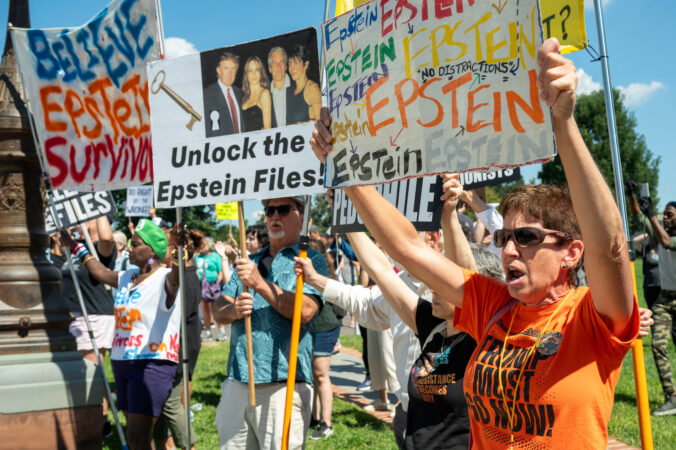
    Last week’s stunning document dump by the House Oversight Committee of Epstein’s emails, mostly from the 2010s, among 20,000 pages from his estate, can and should be viewed through several prisms. The main media focus has understandably been on his leering close friend in the 1990s and 2000s, now-President Donald Trump, who is mentioned many times over. There’s arguably no “smoking gun” directly linking Trump to any specific act of sexual misconduct in Epstein’s lurid world, but more than enough innuendo that POTUS 45 and 47 “knew about the girls,” and possibly much more, to fuel a Watergate-level frenzy.

    I don’t know if the emails, so far, are enough to take down Trump, but the president should be even more worried — and he probably is — about the much deeper rot that’s already been laid bare about the entire decrepit class of men (because they’re almost all men) who rule the world with atrocious grammar amid a nonstop booty call.

    I’m not a financial expert, but if I had disposable cash, I’d avoid the hyperinflated artificial intelligence bubble and invest in a company that manufactures pitchforks.

    The QAnon folks were almost there! These emails prove there really is a global cabal of the world’s most powerful and wealthy elites, linked to the most repulsive child sex trafficking operation we know about. No, it doesn’t involve pizzeria basements or blood-drinking rituals — at least as far as we know so far. But these missives do reveal the evil banality of the world’s most rich and famous, whose vast pursuit of money or teenaged blondes or whatever knew no bounds, or, at long last, any sense of decency.

    The Nation’s Jeet Heer nailed it when he wrote after the email dump that the Epstein scandal “has always been a scandal about the ruling class as a whole, not one individual or political party,” adding that “Epstein trafficked not just in the bodies of the children he abused but also in social connections that could bring elites together.”

    And ignorance is no defense. By the 2000s, the murky but wildly rich financier’s predilection for underage girls was hardly a secret. In 2008, in a sweetheart deal, he pleaded guilty in Florida to a charge of procuring a 17-year-old girl for prostitution, but prosecutors had evidence linking him to about three dozen other girls, including some as young as 13. And yet, most of the emails from powerful people released by the committee came after those revelations, up through his 2019 second indictment and his death in a federal jail in Manhattan under mysterious circumstances.

    Some of the most telling exchanges are not the more than 1,000 emails from Epstein, his convicted partner-in-crime Ghislaine Maxwell, or their pals that mention Trump (who, wisely for him, never learned to use email), but involve Epstein’s misogyny-soaked friendship with Larry Summers, the former U.S. Treasury secretary and Harvard president.

    Summers had lost that plum Ivy League post in 2006, in good measure because of a speech in which he’d questioned the intellect of top female scientists. During the 2010s, when the Obama administration or cable TV wasn’t still treating him as an economic seer, the married Summers turned to this convicted sex trafficker for advice on how to hit on a younger, attractive protégée, or just to commiserate.

    “I’m trying to figure why [the] American elite think if u murder your baby by beating and abandonment it must be irrelevant to your admission to Harvard,” Summers wrote Epstein in 2017, referring to this episode at the school. “But hit on a few women 10 years ago and can’t work at a network or think tank. DO NOT REPEAT THIS INSIGHT.”
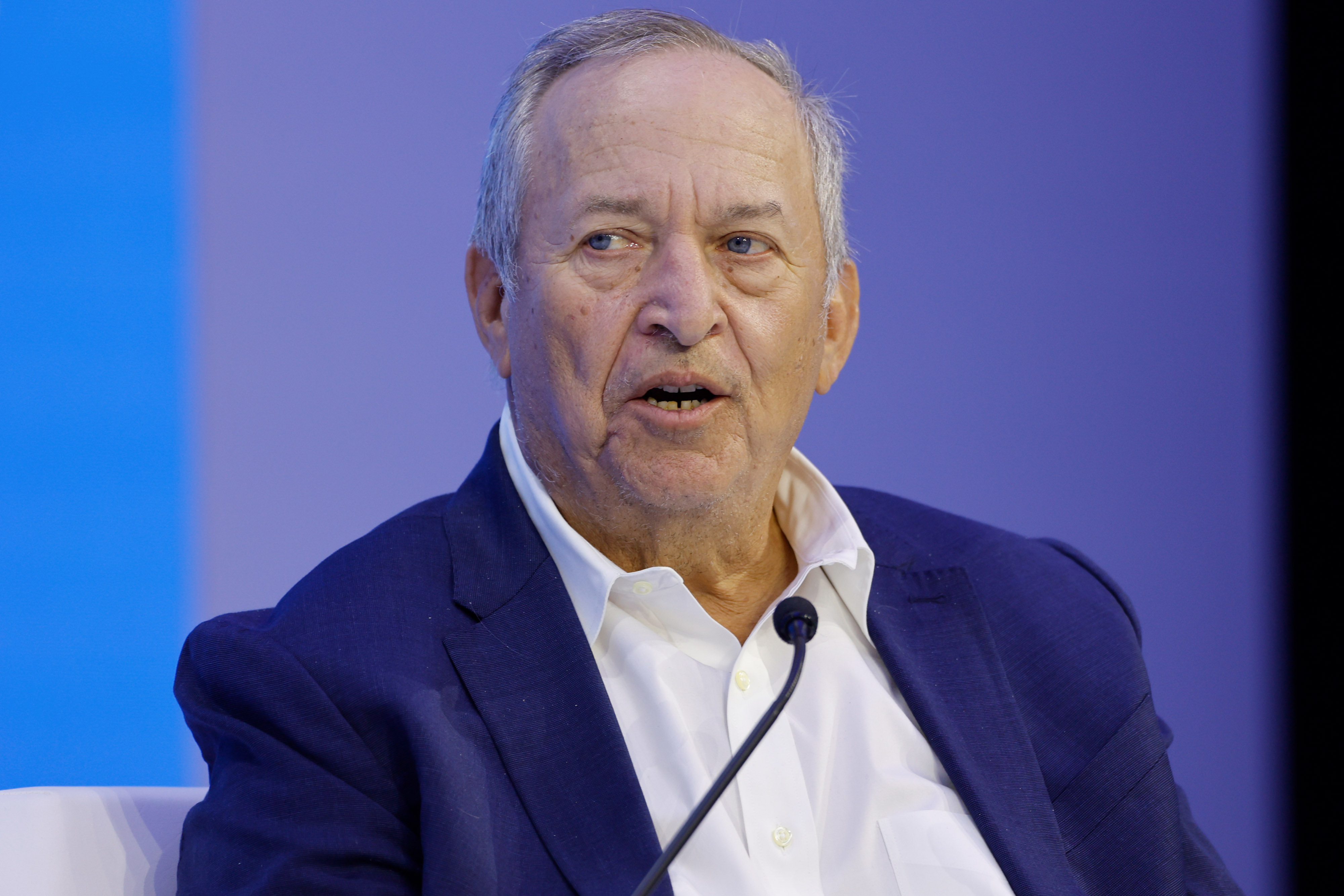
    Larry Summers, president emeritus and professor at Harvard University, during a panel session at the World Economic Forum in Davos, Switzerland, in January 2023.

    You may remember that 2017, the first year of Trump’s first presidency, is when the #MeToo movement against male sexual harassment and misconduct exploded. That email from Summers is one of the very few that even alludes to the social upheavals of the tumultuous 2010s that also included Occupy Wall Street, the tea party, Black Lives Matter, and other movements targeting privilege and inequity. Most of this prattle is instead just rich dudes talking about how to get themselves richer … or just how to get off.

    Still, as Heer captures in his analysis for the Nation, the thought-to-be-secret communications of the elites increasingly involved enhanced security for the 1 Percent and ways to silence protests as that decade devolved, including scheming with the former Israeli prime minister, Ehud Barak, about launching a cybersecurity start-up. The world’s shrewdest investors knew the pitchfork bubble was coming before you did.

    In the six years since Epstein was found dead, however, it has been the political backlash his email correspondents, like the Silicon Valley billionaire Peter Thiel, have heavily funded that has advanced while warding off the revolution. This was the ultimate goal of this sordid chat group: to desperately cling to their dying hierarchies around patriarchy and white supremacy, and to portray the #MeToo movement as going too far, when it’s obvious it didn’t go nearly far enough. It was during those fraught years that they stumbled into the perfect avatar in the unlikely Trump presidency.

    Now, it’s a headline that Trump “knew about the girls,” but, of course, he knew about the girls. They all knew about the girls, and every Thiel and Summers and the con artist formerly known as Prince Andrew knew they’d bought more security with a U.S. president who shared their “wonderful secret.”

    It starts to make sense that Team Trump even deployed the White House Situation Room to fight a congressional vote for a wider release of the Epstein files, as if these secrets were a nuclear bomb headed for Chicago. To be sure, this all-out war against disclosure — along with Trump’s bizarre order for the U.S. Department of Justice to investigate only Democrats mentioned in the letters — might be to hide that Trump did more with Epstein’s bevy of young girls than just “know about” them.

    But on some level, Trump’s White House must also realize that the Epstein file is the Jenga piece that brings the whole thing crashing down — the end of America, or, more to the point, the version of America getting financially drained, sexually abused, and basically ruined by all the people getting emails from jeevacation@gmail.com.

    The timing couldn’t be better, or worse, for this midnight of the elites. The overblown stock market fueled by an AI hallucination is set to burst any moment, and new hiring is already grinding to a halt — just as the price of everything from steak to coffee goes through the roof, and health insurance is doubling or tripling for millions of Americans. When this perfect storm strikes, an electoral bloodbath in the 2026 midterms is the best outcome Trump can hope for, on a list of dire possibilities.

    It’s no coincidence Trump is accelerating the pace of dictatorship, not because he’s at the peak of power, but because he knows he’s running out of time. Thus, the wag-the-dog war drums off Venezuela are pounding louder, and the muck of naked corruption — from Swiss gold bars to real estate deals with the murderous Saudi prince — is getting filthier. All of it haunted by the ghost of Jeffrey Epstein.

    There’s one other thing about the Epstein files I feel compelled to mention. I’m also in them — well, sort of. On Feb. 12, 2019, for reasons we’ll never know, Epstein emailed his ethically conflicted journalist pal Michael Wolff a column I’d just written, with the words “please note.”

    The piece was tied to the recent arrest of another close friend, the New England Patriots owner Robert Kraft, for soliciting sex in strip mall massage parlors near Palm Beach, and the moral decay of Kraft and his Florida neighbors, Trump and Epstein. It came at a moment when Epstein and Wolff were talking about ways to use his inside knowledge about Trump as leverage when the walls of federal prosecution were closing in. Nine months later, Epstein was dead — weird coincidence.

    In that column, I wrote, “Kraft’s embarrassing charges come at one of those rarest of moments — when everyday people are suddenly realizing who doesn’t have power in America, who does, and that something can be done about this.” If Epstein did, in fact, read the piece, he knew what was coming. Now Trump knows it, too — and America will never be the same. FEEL FREE TO REPEAT THIS INSIGHT.

  • From autism to beards, the Trump regime wages war on ‘the different’

    From autism to beards, the Trump regime wages war on ‘the different’

    Donald Trump had the nation’s somber attention last month as he delivered the Arizona football stadium eulogy for assassinated right-wing provocateur Charlie Kirk, and — as the 47th president is wont to do — took an unexpected detour to promise a scientific breakthrough for a condition his regime has called a national tragedy.

    “I think you’re going to find it to be amazing,” Trump said of a pending White House announcement. “I think we found an answer to autism.” With typical bravado, he suggested that a total end to a neurodevelopment order was at hand, that “we’re not going to let it happen anymore.”

    What was actually announced in the coming days — a debunked claim that autism is linked to pregnant women taking the pain reliever Tylenol, as well as a suggestion of a connection to circumcisionwas attacked by many experts as a gross misreading of the existing scientific data, and nothing like the breakthrough that Trump had promised in Glendale.

    But what was even more telling was the reaction from families or adults who’ve been living for years with a diagnosis of neurodivergence, who aren’t realistically asking for a “cure” — especially not one cloaked in alleged quackery — but simply a more compassionate approach from a government they feel is stigmatizing a community that wants support.

    They don’t see life on the autism spectrum — a mix of communication and emotional struggles with passionate interests and insight, varying greatly from person to person — as a disease, but as a difference, to be better understood and nurtured.

    In this photo provided by Ana Fiero, Kelly Sue Milano holds her 6-year-old son, who is on the autism spectrum, at an outdoor party in Irvine, Calif., on Monday.

    “My daughter’s an amazing person that contributes to society and contributes to our family, and she’s not a crisis,” Jenny Shank of St. Louis told the local NPR affiliate. She said that what the autism community really needs from the government “is awareness, acceptance and opportunities in our communities, and funding for schools for help to meet their maximum potential.”

    Studies have shown higher rates of autism — more than 3% of 8-year-olds, according to recent research by the Centers for Disease Control and Prevention — than was once believed. But experts theorize this may be more from greater awareness than the conspiracy theories around Tylenol or vaccines that are an obsession with Trump’s contrarian U.S. Department of Health and Human Services secretary, Robert F. Kennedy Jr.

    RFK Jr. has said that “autism destroys families,” while Trump has called it “a horrible, horrible crisis,” but statements like those have deeply dismayed many of the households for which the Trump regime seems to want a gold star for trying to help. Ashley Kline, whose 5-year-old son has been diagnosed with autism, told the Washington Post, “I don’t want it to get to a point where inclusion is just thrown out the window, and people start insisting that the best thing for autistic children and adults is to be hidden behind walls once again.”

    The Trump regime’s misguided obsession with faulty research in seeking a magic bullet “cure” for autism has been portrayed as one more example of science under siege in America, and it is that. But it’s also a window into something deeper, and arguably even more disturbing.

    Whether it’s an autism community it pretends to be helping or the transgender community it openly seeks to destroy, our authoritarian government is waging war to flatten any differences, to make America great again with a forced monochrome lens.

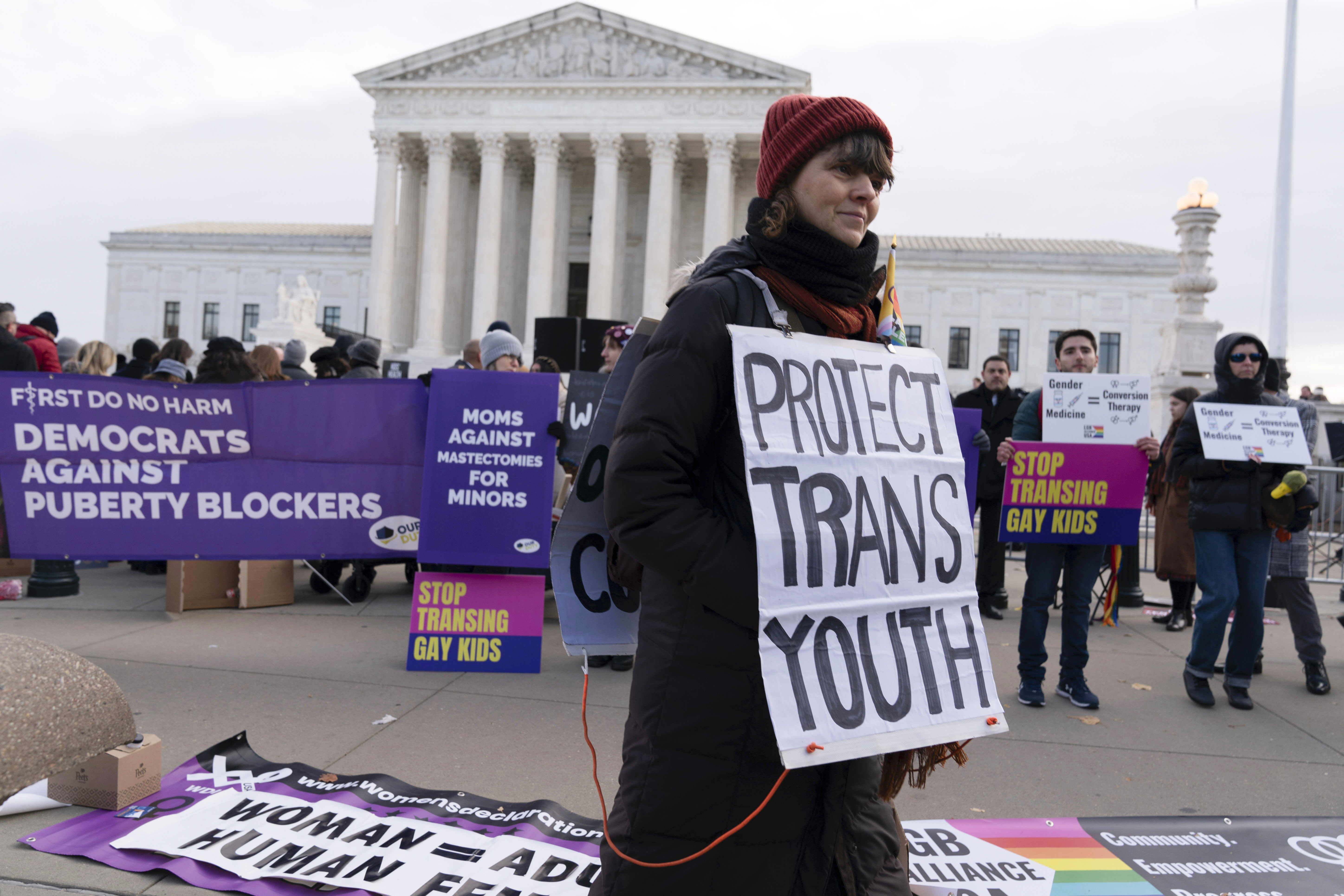
    Protesters for and against gender-affirming care for transgender minors demonstrate outside the U.S. Supreme Court Building in December.

    You see it almost every day with Trump and his MAGA administration. Often it’s big and obvious, like the president’s Day One executive order that targeted America’s nearly three million transgender people by declaring the government would only recognize two unchangeable sexes, male and female, and end any policies that aided the transgender community.

    But Trump’s war on the different also permeates the smaller stuff, like his “Secretary of War” Pete Hegseth’s much-ballyhooed and much-ridiculed “warrior ethos” lecture to 800 appalled-looking generals and admirals. Hegseth included in his vision a mandate that would ban soldiers with facial hair, declaring “no beardos,” and adding, “The age of rampant and ridiculous shaving profiles is done.”

    Hegseth also declared an end to “fat” generals and overweight troops (apparently the Texas National Guard didn’t get the memo), and, OK, maybe that’s required for certain types of combat soldiers. But the broader message from the Pentagon is clear: that the new regime wants a sea of troops who look alike. Beardless, slimmed down, and, evidently — given the ouster of so many women and Black top commanders — as white and male as possible in 2025 America.

    I think we vastly underrate how central this contempt for anyone who looks or acts differently from an idealized pre-1960 vision of America is to the entire fascist enterprise that we have too kindly branded “Trumpism.”

    The idea of a new type of personal freedom — a quest for individual fulfillment, aided by post-World War II prosperity, shattering the artificial constraints of conformity — was birthed in a New Left philosophy spelled out in texts like 1962’s “Port Huron Statement.”

    This outlook, rooted in the upheavals of the 1960s and ‘70s, is celebrated by many as the birth of everything from the LGBTQ+ rights movement, to efforts to replace stigma with empathy and treatment for conditions such as mental illness, to “letting your freak flag fly” by growing long hair or a beard. And this is also the thing that a reactionary far-right — deeply insecure and desperate for a cocoon of white privileged patriarchy — has ceaselessly sought to destroy for 60 years.

    While Trump himself has relished one aspect of 1960s freedom — the sexual revolution, as he once called the threat of STDs “my personal Vietnam” — in his political reinvention, he has recoiled at many others, wanting even a return to the Willowbrook-style warehousing of the mentally ill. As president, he is the perfect point man for the right’s revanchist project — clearly believing in the worst kinds of debunked eugenics theory.

    A classic example occurred the other day in the Oval Office with a rant that belonged to 1925’s The Great Gatsby and its racist millionaire Tom Buchanan, and not 100 years later. Trump bemoaned his bad relationship with Boston’s Asian American mayor, Michelle Wu, despite her “reasonable IQ,” in contrast with his war with Chicago’s “low IQ” leader, Brandon Johnson. The Windy City mayor happens to be Black, just like almost every other figure — like Reps. Maxine Waters or Jasmine Crockett — branded “low IQ” in the most thinly disguised racism possible.

    Trump’s 21st-century eugenics — from ending diversity programs in colleges or the workplace to the obsession with finding the pill or shot or whatever that has made some kids “not normal” — is the unifying force of his dictatorship. It’s why what was sold to 2024’s voters as an effort to remove undocumented criminals from America turned out to be members of a masked secret police force chasing hardworking family men across the Home Depot parking lot because they have brown skin or speak Spanish.

    You know. Different.

    True, Trump’s rage toward immigrants or programs aimed to recruit more Black and brown kids into colleges was no secret, but what’s been more surprising has been the broader sense of hostility toward any government program that offers aid and empathy to those born with real challenges. Few predicted that Trump would seek to decimate the special education office in the U.S. Department of Education, or work more broadly to undermine the rights of the disabled.

    You may have noticed that some of these slashed federal programs would help children diagnosed with autism. But putting these children on a path toward happier and more fulfilling lives isn’t the goal of the Trump-RFK Jr. focus on autism, but rather making sure the next generation conforms to their constricted definition of normal.

    We need to understand Trump’s war on the different because we need to defeat it. Boomers of my generation were born into the world of stigmatization and conformity that Trump wants to bring back, erasing the liberation movements that have been the victory of our lifetime. Sure, I want the next president to care about affordable healthcare and lowering egg prices, but America also needs leaders who will celebrate and defend our fundamental human right simply to be different.

  • Did a $10M bribe break the soul of America? | Will Bunch Newsletter

    The sense of loss that has permeated 2025 struck again this weekend when we learned of the sudden death of a Philly journalism legend, Michael Days, who guided the Philadelphia Daily News during most of its last dozen freewheeling and Pulitzer-winning years before we merged with The Inquirer in 2017. He was just 72, far too young. The top-line of Mike’s obituary was how, as the first African American to lead a newsroom in America’s founding city, he paid it forward by mentoring the next generation of rising Black journalists. But people like me who worked for him remember him more simply as the wisest and most empathetic human being we ever had as a boss. He leaves right when the nation’s newsrooms need decent souls like Mike Days more than they ever did.

    If someone forwarded you this email, sign up for free here.

    What a $10M bribe rumor says about Trump, Middle East peace, and America’s fall

    President Donald Trump talks with Egypt’s President Abdel-Fattah el-Sissi during a summit to support ending the more than two-year Israel-Hamas war in Gaza after a breakthrough ceasefire deal, Oct. 13 in Sharm El Sheikh, Egypt.

    The thing about being a 79-year-old president is that sometimes you just blurt stuff out, with no filter as to whether your words might be embarrassing, undiplomatic — or potentially incriminating.

    Consider the case of Donald John Trump, the 47th U.S. president and the oldest one on the day of his election. Last week, in what may prove to be a fleeting moment of triumph as Trump celebrated a Gaza peace deal that included the release of 20 Israeli hostages, POTUS arrived at an Egyptian resort town for a Middle East summit. He kicked off the day with a one-on-one sit-down with Egypt’s strongman ruler, Abdel-Fattah el-Sissi.

    “There was a reason we chose Egypt [for the summit] because you were very helpful,” Trump said as a gaggle of reporters and photojournalists entered their meeting room.

    Really? Helpful in what way?

    “I want to thank you,” the American president told Sissi, who seized power in a 2013 coup. “He’s been my friend right from the beginning during the campaign against Crooked Hillary Clinton. Have you heard of her?”

    Here Trump was pushing, ever so absurdly, for the Nobel Peace Prize, and then he had to spoil it all by saying somethin’ stupid like, you bribed me. Well, he almost spoiled it, if more journalists — aside from MSNBC’s brilliant Rachel Maddow, who seized on the remark hours later — had grasped the potential import of this presidential prattle.

    It’s certainly legal, if gross, for Trump to be close pals with Sissi, even if Human Rights Watch reports that the Egyptian dictator is “continuing wholesale repression, systematically detaining and punishing peaceful critics and activists and effectively criminalizing peaceful dissent.” What would not be legal is the Middle Eastern nation interfering in the 2016 election, in which Trump narrowly defeated Clinton in the handful of swing states that tipped the Electoral College.

    What made Trump’s comments last week so jaw-dropping is that U.S. federal investigators worked for several years trying to prove exactly that scenario. In August 2024, days after Trump was nominated by the GOP for his second reelection bid, the Washington Post reported that the Justice Department investigated a tip that Sissi’s Egypt provided Trump with $10 million the candidate desperately needed in the 2016 homestretch to defeat Clinton. That happened right before Trump, as 45th president, reopened the spigot of foreign aid that had been halted because of Sissi’s human rights abuses.

    It’s known that Trump did put $10 million into the campaign, which he listed as a loan. The Post in 2024 offered a tantalizing, if circumstantial, piece of evidence — that the Cairo bank had received a note from an agency believed to be Egyptian intelligence to “kindly withdraw” nearly $10 million in two, 100-pound bags full of U.S. $100 bills, five days before Trump took the oath of office.

    But the investigative trail ran cold. In 2019, then-special counsel Robert Mueller turned the matter over to Trump’s appointees in the Justice Department, who of course didn’t pursue the president’s bank records. Neither — inexplicably — did Joe Biden’s attorney general, Merrick Garland, as the statute of limitations expired in January 2022. That’s where things stood last week before Trump started blathering in Sharm El Sheikh.

    One reason I’m writing about this is the sheer frustration that Trump — yes, allegedly, possibly — might have gotten away with bribery to the point where he’s almost bragging about it in public. But I also think the mysterious case of the Egyptian bags of cash speaks to the present, dire American moment in a couple of ways.

    For one thing, it casts a light on what’s really behind what Trump hopes will be viewed as the signature achievement of his second presidency. That would be the fragile peace deal that aims to end the last two years of bloodshed in Gaza that started with the Hamas terror attack of Oct. 7, 2023 and has resulted in at least 67,000 dead Palestinians and the utter destruction of their seaside homeland.

    How did Trump get a deal that had eluded his predecessor Biden, in a region that has vexed every American president from both parties? It certainly helped that most of the power brokers with the clout and the cash to help end the fighting in Gaza are repressive strongmen — or, as Trump might call them, role models. And they all seem to speak the same language of corrupt back-scratching.

    If those bags with $10 million in greenbacks did make their way to Trump in 2017, it looks like small change in today’s cross-Atlantic wheeling-and-dealing. After all, a key go-between in the negotiations — Qatar, which has good relations with Hamas and has hosted its exiled leaders — gifted America a $400 million jet that Trump plans to use not just as Air Force One but in his post presidency, while his regime has promised to protect the Qatari dictators if they are ever attacked.

    Another key supporter of the plan is the United Arab Emirates, which also backs the UAE firm that recently purchased a whopping $2 billion in cryptocurrency from a firm owned by Trump’s family as well as the family of Steve Witkoff, the regime’s lead Middle East negotiator. At the same time, Trump’s U.S. government allowed UAE to import highly sensitive microchips used in artificial intelligence.

    Witkoff’s negotiation endgame brought in Trump’s son-in-law, Jared Kushner, who forged close ties during his father-in-law’s first term with Saudi Arabia’s murderous de facto ruler Prince Mohammed bin Salman, who pulled the levers for a $2 billion investment in a hedge fund created by Kushner despite no prior expertise.

    Those Saudi ties could prove critical to future stability in the region, and in a joint interview with CBS’ 60 Minutes Sunday night, Kushner and Witkoff made no apologies for mixing billion-dollar deals with the pursuit of world peace. “What people call conflicts of interest,” Kushner said, “Steve and I call experience and trusted relationships.”

    OK, but those “trusted relationships” are built on a flimsy mountain of cash that could collapse at any minute. Look, I’m thrilled like everyone else that 20 Israeli hostages are finally reunited with their loved ones, and to the extent Trump and his regime deserve any credit, I credit them. But the art of the deal that the president is bragging about is all about the Benjamins — more worthy of applause on the floor of the New York Stock Exchange than a Nobel Peace Prize.

    Real peace is based on hard work and trust, not Bitcoin — so is it any wonder that the ceasefire is already collapsing with two dead Israeli soldiers and fresh, lethal airstrikes in Gaza? The only thing with any currency among a rogues’ gallery of world dictators is currency, and that transactional stench has fouled everything from Cairo to K Street.

    Is it any surprise that a regime whose origin story allegedly includes bags of Egyptian cash would do absolutely nothing when it was told that its future border czar, Tom Homan, was captured on an audiotape accepting $50,000 in a fast-food bag from undercover FBI agents who said they wanted government contracts?

    In hindsight, the failure to pursue that report of the $10 million Egyptian bribe opened up a floodgate of putrid corruption, wider than the Nile. It signaled a sick society where everything is for sale — even world peace — but nothing is guaranteed.

    Yo, do this!

    • The 1970s and ‘80s are having a cultural moment right now, and this boomer is here for it! On Apple TV (they’ve dropped the “+,” probably after paying some consultant $1 million for that pearl of wisdom) comes the long-awaited five part docuseries about the life and times of filmmaker Martin Scorsese, the savior who rose from NYC’s mean streets to give us Goodfellas, Raging Bull, Taxi Driver, and so much more. Watching Mr. Scorsese is going to make the eventual death of the baseball season so much easier to take.
    • The earthy, urban musical equivalent of Scorsese would have to be Bruce Springsteen, who has been marking the 50th anniversary of his breakthrough Born to Run LP with all kinds of cool stuff, capped with Friday’s long-awaited release of the first-ever biopic about “The Boss,” Deliver Me from Nowhere. Staring The Bear’s Jeremy Allen White as Springsteen, the film’s unlikely narrative — focusing on the making of 1982’s highly personal and acoustic Nebraska as the rock star seeks release from a bout of depression — sounds like exactly the uplift that America needs right now.

    Ask me anything

    Question: As someone living in Ireland and looking across the ocean. Trump won’t be in power forever, but how is anyone going to deal with the MAGA crowd that helped elect him? That level of stupidity, hatred and racism cannot be fixed. How is [t]he USA ever going to heal? — Stephen (@bannside@bsky.social) via Bluesky

    Answer: That’s a great question, Stephen, and like most great questions there’s no easy answer. Although I’m optimistic that the 2026 midterms and the 2028 presidential election will happen and that the anti-Trump coalition that we witnessed at “No Kings” will prevail, I agree with you that it’s only a partial and temporary fix. I’d fear an Iraq-level resistance could rise up in the regions we call “Trump country.” My long-term solution would be along the lines of what I proposed in my 2022 book After the Ivory Tower Falls: Fix higher education — broadly defined as from the Ivy League to good trade schools — to made it a public good that reduces inequality instead of driving it. And promote a universal gap year of national service for 18-year-olds, to get young people out of their isolated silos. There are ways to prevent the next generation from becoming as stupid or hateful or racist as the Americans who came before them, but it will take time and patience that we seem to lack right now.

    What you’re saying about…

    Remember the Philadelphia Phillies? When I last saw you here two weeks ago, their annual postseason collapse and the fate of manager Rob Thomson was a hot topic. As expected, there was minimal response from you political junkies, and opinions were split — even before the team defied the conventional wisdom and announced he’ll be returning in 2026. Thomson’s supporters were more likely to blame the Phillies’ inconsistent sluggers, with John Braun asking “who could you hire who could guarantee clutch hits?” Personally, I’m with Kim Root: “I follow the Philly Union, who just won the Supporters Shield — that is all.”

    📮 This week’s question: Back to the issue at hand: I’m curious if newsletter readers attended the “No Kings” protest last Saturday, and what you see as the future of the anti-Trump movement. Are more aggressive measures like a nationwide general strike needed, or is the continued visibility of nonviolent resisters enough? Please email me your answer and put the exact phrase “No Kings future” in the subject line.

    Backstory on who the “No Kings” protesters really were

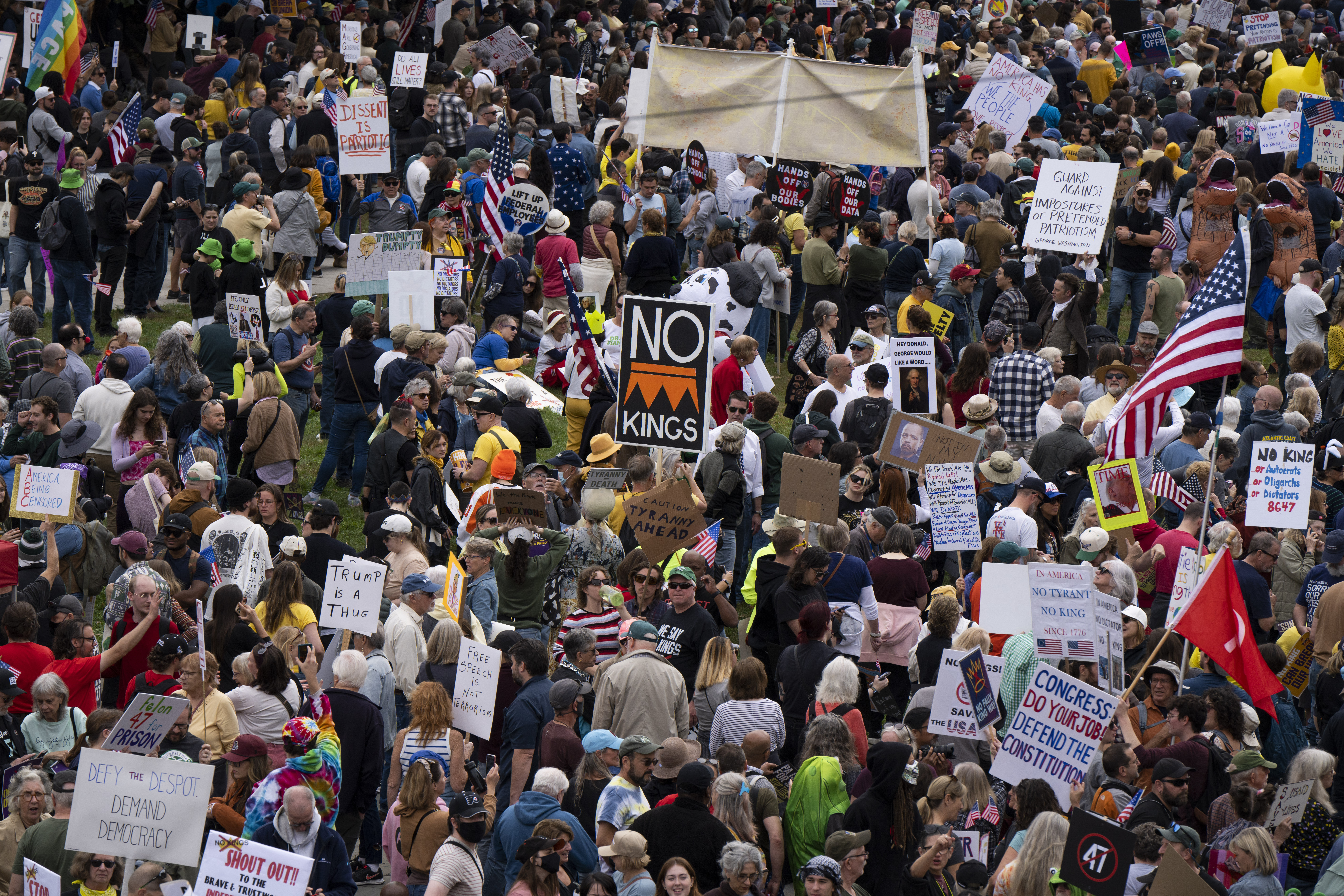
    Demonstrators gather for a ’No Kings’ rally in Philadelphia on Saturday.

    They clogged city plazas and small-town main streets from San Diego to Bangor on Saturday, yet the more than 7 million Americans who took part in the massive “No Kings” protest — the second-largest one day demonstration in U.S. history, behind only the first Earth Day in 1970 — seemed to mystify much of the befuddled mainstream media. Just who were these people protesting the Donald Trump presidency, and why are they here?

    Instead of a journalist, it took a sociologist to get some answers. Dana Fisher — the Philadelphia-area native who teaches at American University and is the leading expert on contemporary protest movements — was out in the field Saturday at the large “No Kings” march in Washington, D.C., collecting data with a team of researchers. She’s shared her early top-line results with me, aiming to both give a demographic and ideological snapshot and also compare Saturday’s crowd with her findings at other recent rallies.

    If you were among the 7 million on Saturday, some of this data won’t surprise you. The protesters were, on the whole, older than the average American, with a median age of 44 (compared to 38 for the nation as a whole.) Once again, the “No Kings” participants were overwhelmingly white (87%) with women (57%) in the majority. But it’s also worth noting that men (39%) were more likely to take part than earlier protests tracked by Fisher, and the 8% who identified as Latino is double the rate of Hispanic participation in the 2017 Women’s March.

    That last finding may reflect the passions of the “No Kings” protesters, who listed immigration as a key motivation at a rate of 74%, second only to their general opposition to Trump (80%, kind of a no brainer). That certainly jibed with the demonstrators at the rally I attended in suburban Havertown, who again and again mentioned the sight of masked federal agents grabbing migrants off the street as what compelled them to come out.

    Fisher’s most telling findings may have been these: The people out in the streets are mad about what they see happening to America, with 80% listing “anger” as an emotion they are feeling, trailed closely by “anxiety” at 76%. Yet few of those who spoke with her team believed that will translate into violence. The number of demonstrators who agreed with the statement that “because things have gotten so off track, Americans may have to resort to violence in order to save our country” was only 23% — lower than other protests her team has surveyed. It seems like the larger the public show of resistance to Trump’s authoritarianism, the more optimism that the path back to democracy can be nonviolent.

    What I wrote on this date in 2021

    I hate to say I told you so but… On this date four years ago, Joe Biden was still clinging to dreams of a presidential honeymoon after ousting Donald Trump in the 2020 election, but there were dark clouds on the horizon. On Oct. 21, 2021 I warned that sluggish action on key issues was starting to hurt his standing with under-30 voters. I wrote that “while the clock hasn’t fully run out on federal action around issues like student debt or a bolder approach on climate — the disillusionment of increasingly jaded young voters could change the course of American history for the next generation, or even beyond.” How’d that turn out? Read the rest: “From college to climate, Democrats are sealing their doom by selling out young voters.”

    Recommended Inquirer reading

    • I returned from a much-needed staycation this weekend by leaving the sofa and spending a glorious fall morning at the boisterous “No Kings” protest closest to home in Delaware County, which lined a busy street in Havertown. I wrote about how the protests are winning back America by getting under the skin of Donald Trump and the GOP, who can no longer pretend to ignore the widespread unpopularity of their authoritarian project.
    • Every election matters, even the ones that are dismissed as “off-year” contests. In today’s heated and divisive climate, even what used to be a fairly routine affair — the retention of sitting judges on the state and local level — has taken on greater importance. Here in Pennsylvania, the state’s richest billionaire, Jeff Yass, is spending a sliver of his vast wealth to convince voters to end the tenure of three Democrats on the state Supreme Court. The Inquirer’s Editorial Board is here to explain why that’s a very bad idea. On the other hand, some judges up for retention in the city of Philadelphia — where jurists haven’t always lived up to the promise of America’s cradle of democracy — deserve closer scrutiny. The newsroom’s Samantha Melamed revealed a leaked, secret survey detailing what Philadelphia attorneys think of some of the judges on the November ballot, and it is not pretty. The bottom line is that you need to vote this year, and subscribing to The Inquirer is the best way to stay informed. Sign up today!

    By submitting your written, visual, and/or audio contributions, you agree to The Inquirer‘s Terms of Use, including the grant of rights in Section 10.

  • Then they fight you: How the ‘No Kings’ protests are winning America

    Then they fight you: How the ‘No Kings’ protests are winning America

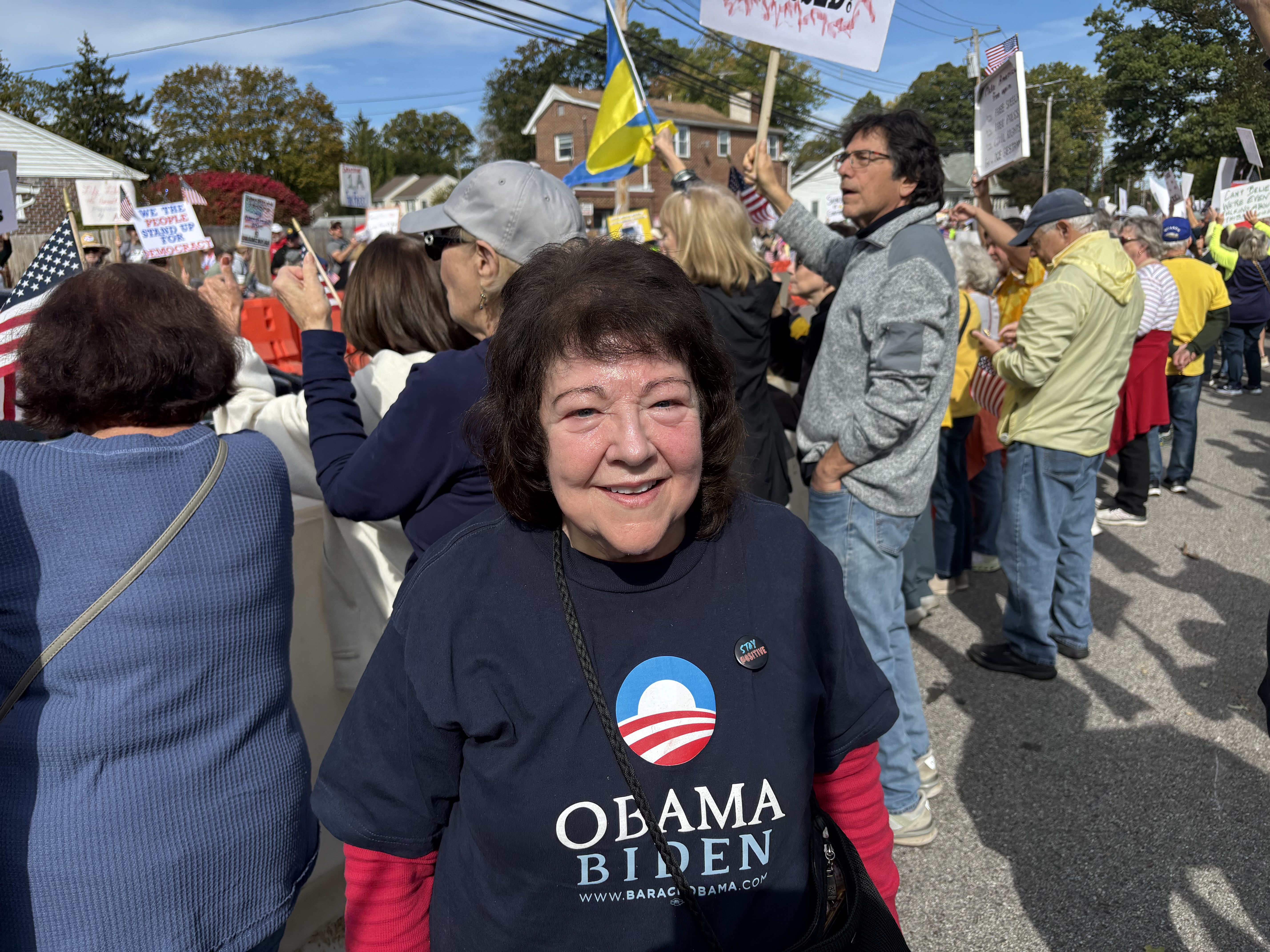
    Outlined against a blue, gray October sky on a perfect fall morning, Carol Otis, in her Obama-Biden T-shirt, joined more than 1,000 people Saturday who lined both sides of the busy Eagle Road thoroughfare in Havertown to yell, wave signs, and provoke an endless cacophony of car horns against an authoritarian Donald Trump regime.

    “I could probably name 7,000 reasons why,” the 77-year-old recent retiree from Drexel Hill told me, “because every day there are 18 things that happen that are just what Trump says — and then there’s the GOP talking about this ‘hate rally.’

    So Otis didn’t make a sign and chose instead — like many in this protest in the heart of suburban Delaware County — to wave an American flag, “because people who carry the flag do not hate America, and as you can see, there are a lot of flags.”

    She laughed, then added sarcastically, parrying one of the more absurd GOP talking points: “We’re all paid protesters! George” — Soros, the liberal billionaire — “where are you? I don’t see you. I’m waiting for my handout.”

    Carol Otis, 77, a retiree from Drexel Hill, at the “No Kings” protest Saturday in Havertown.

    There is a famous quote about mass protest movements — with murky origins (misattributed frequently to Gandhi) — that says, “First they ignore you, then they laugh at you, then they fight you, then you win.” Saturday’s massive “No Kings” protest that filled Main Streets and public squares from New York and Washington, D.C., to smaller burgs like Havertown showed that the effort to halt and reverse dictatorship in mid-2020s America has already prompted a half-laughing, half-fighting response from an increasingly unpopular White House and its allies.

    Ignored at first, the “No Kings” protest movement is rapidly accelerating toward the then-you-win phase. Indeed, the over-the-top alarmism from Republicans like House Speaker Mike Johnson, who called it a “hate America rally,” or Texas Gov. Greg Abbott — who called up his state’s National Guard in Austin to pump up a ridiculous narrative about rock-throwing radicals instead of the peaceful, joyous events in 2,700 different locales — proved that “No Kings” struck a raw nerve.

    The day was not only nonviolent but also historic. The estimated nearly seven million who showed up across America marked the second-largest one-day protest in U.S. history, surpassed only by a very different type of event: the first Earth Day in 1970. That was roughly 40% larger than the first “No Kings” event in June, and in talking to protesters Saturday, it seemed the turnout was only boosted by the right-wing rhetoric that anti-Trump protesters must be some kind of domestic terrorists.

    “Knowing that they’re feeling threatened makes me know this is what needs to happen,” Gary Fishbein — 65, from Bala Cynwyd, with his American flag T-shirt and Eagles cap — told me. His words were nearly drowned out by the steady honking of supportive cars passing the undulating sea of signs that were as funny as “Does This Ass Make My Country Look Small” or as simple as “Dogs Against Fascism” (held by the canine’s companion) or just “Freedom to Speak.”

    The official White House reaction, as related to one reporter, was “Who cares?” But guess what? They clearly cared — a lot. You could see that in the week leading up to the demonstration, with the increasingly insane rhetoric and warnings about “antifa” — a tiny, unorganized sliver of young rock-throwing radicals who were nowhere in sight Saturday — that aimed to neutralize the reality that millions of everyday Americans are sick of seeing a masked secret police snatch people off the streets.

    In a maneuver North Korean dictator Kim Jong Un must have surely applauded, Trump’s Pentagon fired some artillery shells over a closed I-5 in the heart of Southern California’s anti-Trump rally as the protests were taking place — ostensibly to mark the 250th anniversary of the armed forces, but also as a reminder of the regime’s military might as Trump weighs invoking the Insurrection Act.

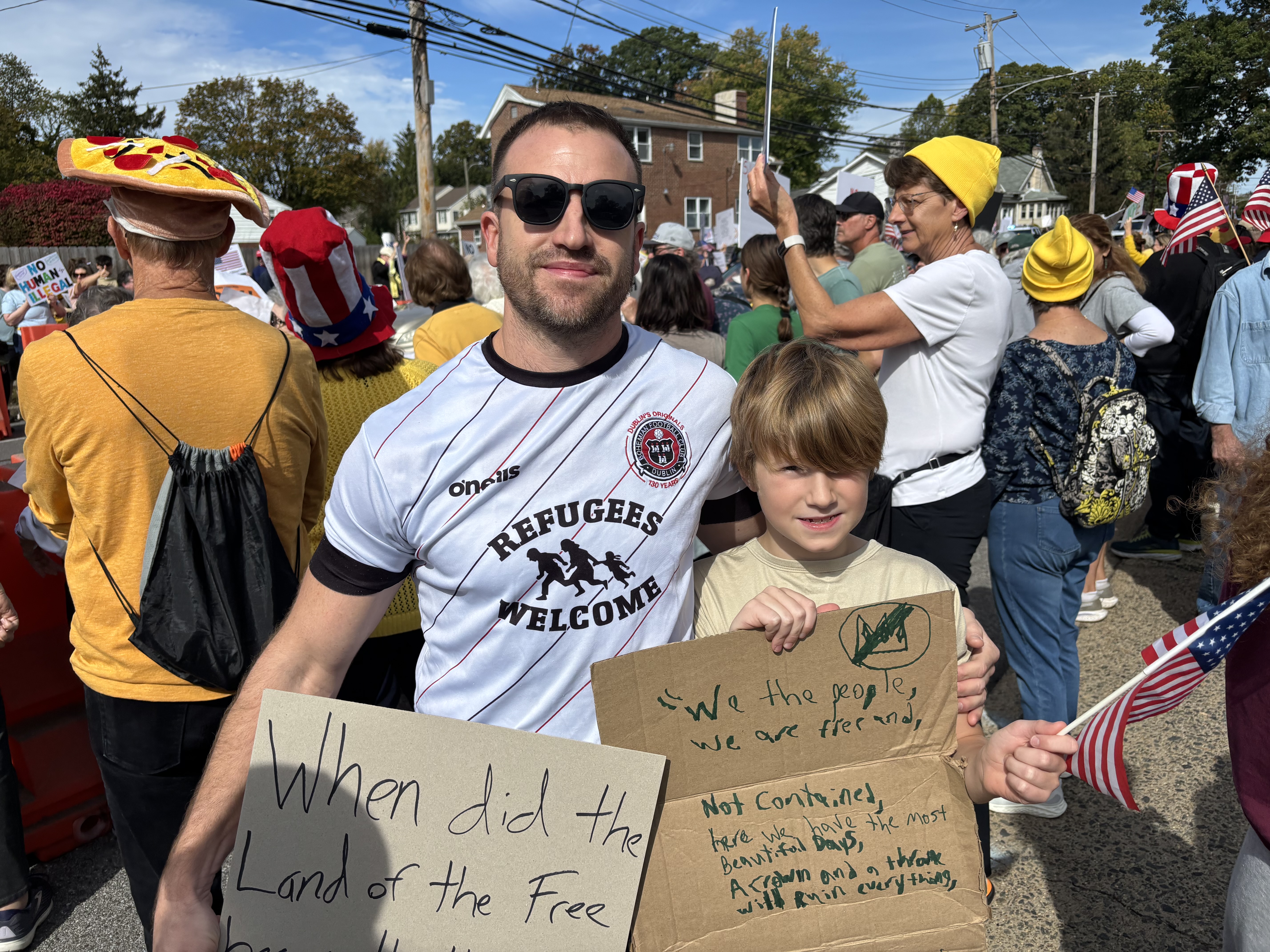
    Ben Liptock, a 38-year-old Philadelphia public school teacher who lives in Havertown, attended the “No Kings” protest there Saturday with his 9-year-old son, Bobby.

    Just a short time after the “Who cares?” comment, Trump himself posted a shocking — to the extent that anything can be truly shocking anymore — AI-created video to Truth Social that showed him piloting a jet fighter wearing a king’s crown (!!) and “bombing” a large U.S. urban protest march with brown, liquid, um, excrement.

    I guess that was supposed to be the fascist version of four-dimensional chess, that our 47th and possibly last president could mock, ridicule, and dismiss “No Kings” by confirming everything the largest protest in 56 years was all about: that our government is hijacked by a monarch who defecates on his own subjects. The reality is that Trump’s late-night video reeked more of panic and fear than its crude subject matter.

    The biggest American protest doesn’t happen in a vacuum. The reason seven million people are in the streets is that Trump long ago squandered any chance for a honeymoon after his narrow reelection in 2024. His approval rating is just 40% in the latest Gallup poll (even lower in some other surveys). And like the protester Otis said, there are about 7,000 reasons — including higher prices in the supermarket, a looming doubling of health insurance premiums for millions of Americans, and a 20-day-and-counting shutdown of the federal government with no end in sight.

    But it was Trump’s mass deportation crusade, and the brutal tactics by those masked and unbadged goons for U.S. Immigration and Customs Enforcement (ICE) and other federal agencies — grabbing migrants (and, in at least 170 documented cases, U.S. citizens) off the street and lobbing tear gas at anyone who protests — that was cited again and again by the marchers when I asked them why they are in the streets.

    Ben Liptock — 38, who lives in Havertown and teaches in a North Philadelphia public school, and came with his 9-year-old son, Bobby — explained that we need to “continue to show people that you’re not alone in today’s America — it’s scary to protest.” But he said he felt they had to be there for his many immigrant students — some who’ve gone home to find their dads deported — who can’t safely demonstrate themselves.

    Emilio Ovalle, a 19-year-old West Chester University student, attended the “No Kings” protest Saturday in Havertown.

    “If I looked a little different, I wouldn’t be able to show my face and protest power,” Liptock said. “There are people in the shadows right now, and they’re terrified.”

    It arguably cut both ways that the suburban crowd in Havertown was overwhelmingly white, with most older than the median U.S. age of 38. Others echoed Liptock that this breed of protester can use its privilege to speak for those who can’t, and any true mass movement needs the white metro middle class to succeed. But the lack of Black and brown faces, or members of Gen Z (who’ve powered uprisings in parts of Asia and Africa), remains a significant problem for “No Kings.”

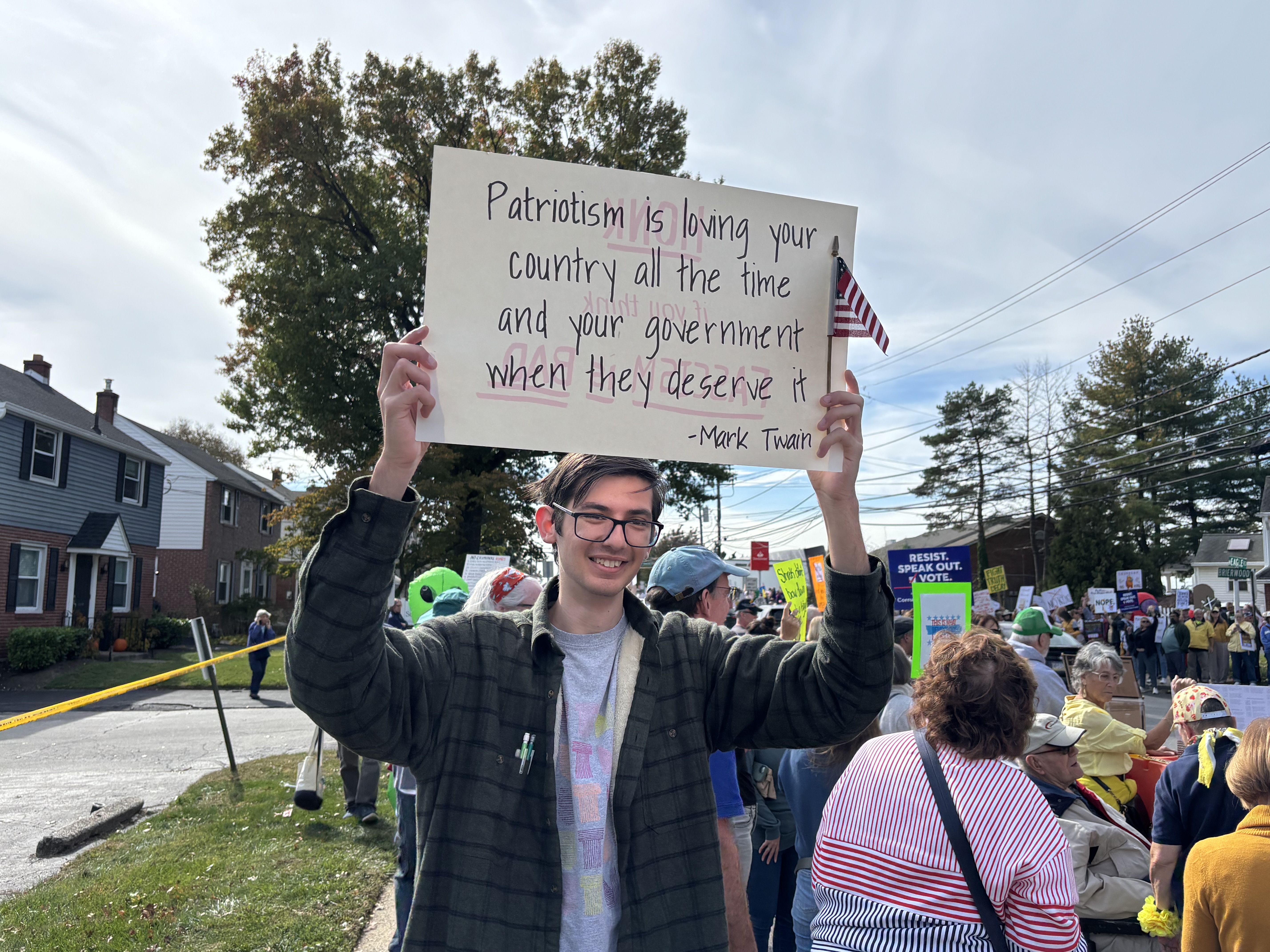
    Someone like Emilio Ovalle ― a lanky 19-year-old student from West Chester University waving a sign with a Mark Twain quotation — stood out in the crowd on Saturday. The son of an immigrant from Guatemala, Ovalle also cited the deportations as his No. 1 issue, and while he said many of his friends oppose Trump, he also understands their reluctance to protest.

    “Part of it has to be the Democrats — they’re not good at getting the young vote,” he said. “The right is very good at appealing to a lot of the insecurities, especially in younger men.”

    This would seem to be the next mission for “No Kings” going forward: to build a bigger network with groups such as Gen Z teens and 20-somethings or African Americans. Those groups also have major issues with the Trump presidency, but feel them in different ways and express them in different venues than the ones like Facebook or MSNBC that are popular with the first wave of protesters.

    That said, it’s impossible to ignore what the “No Kings” movement has accomplished in a matter of months. By raising their voices, protesters have encouraged Democrats in Washington to at least slightly stiffen their backbones, as shown by the current budget battle. They are winning new converts from the disaffected middle by exposing the depths of Trump’s unpopularity.

    And they are reassuring their friends and neighbors to keep the faith in a dark moment — that there are far more Americans who want democracy than dictatorship. “It makes you feel good that you are not alone, that a lot of people feel the same way,” Michael Tempone, a 73-year-old from Upper Darby, waving American flags with his wife, Stephanie, told me.

    There were thousands of American flags across the nation Saturday, and no reported violence, and close to no arrests — zero in New York City (where the New York Police Department is not known for its restraint) or San Diego or fearmongered Austin. That is driving the Trump regime bat-guano crazy, because it has not crushed the resistance, and it knows its days are numbered. As I walked back to my car, I heard one protester chuckle to his partner, “This is the best ‘hate America’ rally that I’ve ever been to.”