Author: Will Bunch

  • Minneapolis ICE murder is Trump’s Waterloo in America’s war for the truth

    Minneapolis ICE murder is Trump’s Waterloo in America’s war for the truth

    “You might murder a freedom fighter … but you can’t murder the freedom fight.”

    Fred Hampton shortly before his own assassination by the U.S. government in 1969

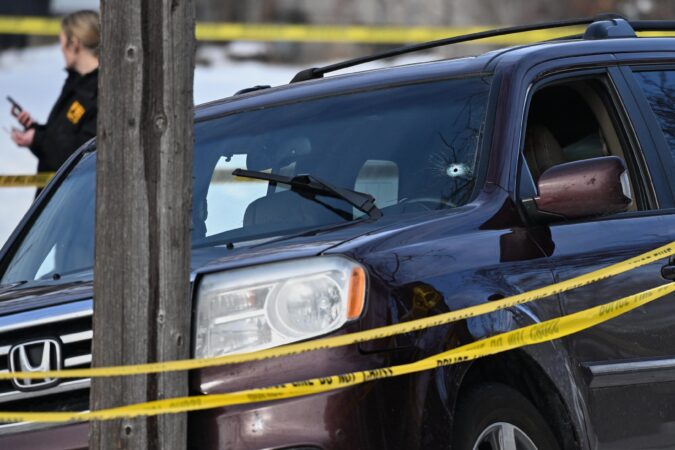
    The Honda Pilot family SUV with the glove compartment crammed with a 6-year-old’s adorable stuffed toys and its deployed airbag and headrest drenched in fresh red blood hadn’t even been towed from the Minneapolis murder scene on Wednesday before the full force of the U.S. government attacked Renee Nicole Good a second time.

    After the three deadly bullets came a fusillade of outrageous and morally reprehensible lies.

    Tricia McLaughlin, the already notoriously fact-averse spokesperson for the U.S. Department of Homeland Security, didn’t even know the identity of the 37-year-old Colorado native — let alone any details of her intricate life or her beautiful, award-winning poetry — when the DHS flack smeared Good as “one of the violent rioters” who’d “weaponized” her SUV against the U.S. Immigration and Customs Enforcement (ICE) agent who shot and killed her, and called it “an act of domestic terrorism.”

    Just moments later, DHS Secretary Kristi Noem — the absurdity of her words only ratcheted up by her ridiculously oversized cowboy hat at a Texas border press hit — joined the verbal pile on and amplified the “domestic terrorism” angle, even though the investigation of what had actually happened on snowy Portland Avenue had barely begun. This was all just a warm-up for America’s prevaricator-in-chief.

    President Donald Trump took to his so-called Truth Social to offer his own, further-embellished version — insisting to the nation that the still-at-that-moment unidentified woman had “violently, willfully, and viciously ran over” ICE officers, blaming “the Radical Left,” and even claiming that the ICE gunman was recovering in the hospital.
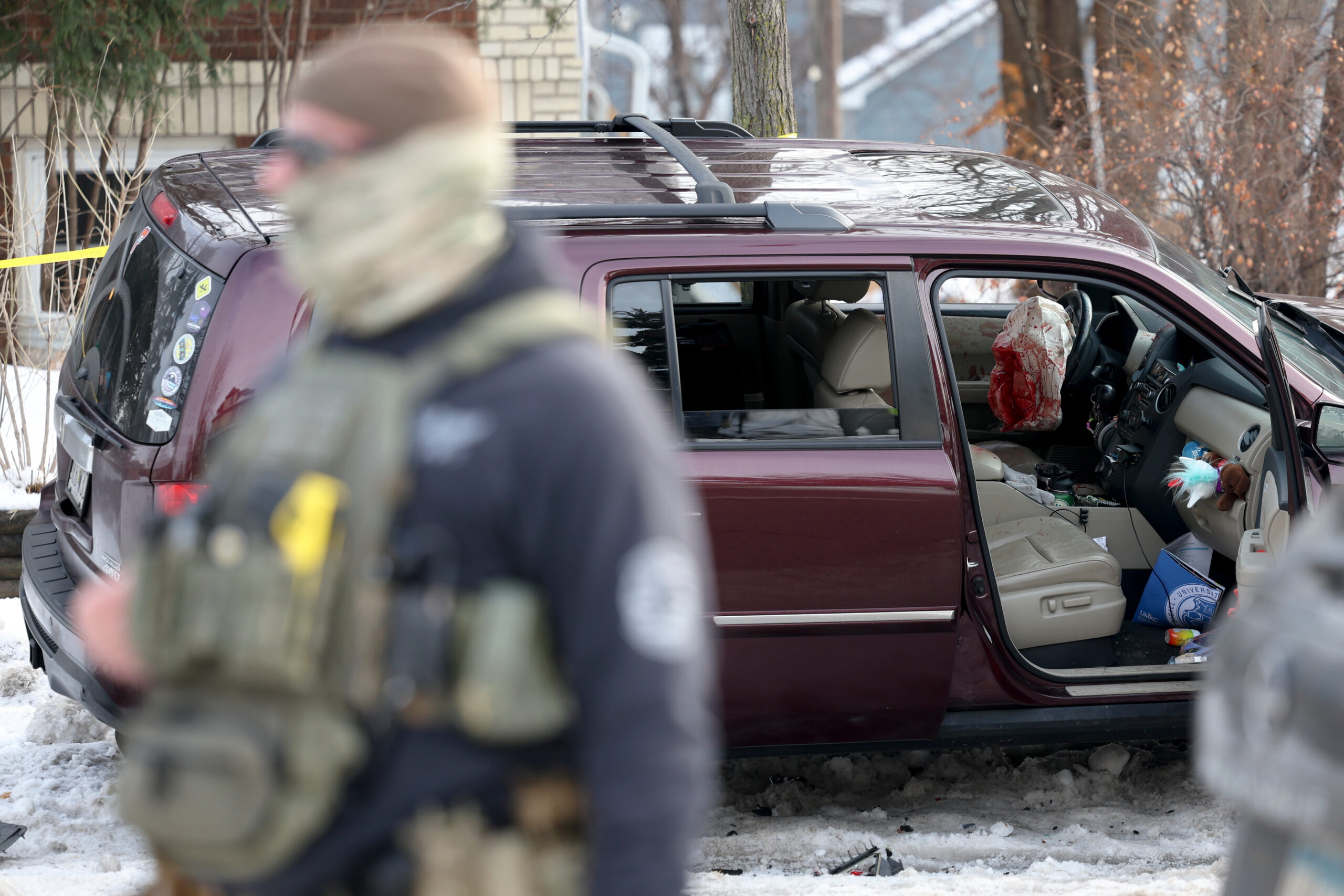
    A deployed airbag and blood stains are seen in a crashed vehicle on at the scene of a shooting in Minneapolis on Wednesday.

    In reality, the violent, reckless actions by masked agents of an American secret police were nothing new, and neither was the government’s massive assault on the truth of what happened in Minneapolis, ripped from the pages of a fascist playbook.

    But this time, millions of Americans could see what really happened to Good, thanks to multiple videos taken on that south Minneapolis street by everyday citizens with a righteous distrust of their own government. It’s the deep skepticism that began with three gunshots and a blurry home movie in Dallas’ Dealey Plaza on Nov. 22, 1963. Now, the digital clarity of three gunshots at 9:30 a.m. on Jan. 7, 2026, may have marked a kind of Waterloo, a righteous turning point in our existential war over the truth.

    Americans could believe their elected president, or the completely different reality they could see with their own eyes.

    The citizen videos showed Good — it’s unclear whether she was a volunteer observer of the amped-up ICE raids in Minneapolis, or just filming the agents on a whim — parked at an angle across Portland Avenue when an ICE SUV approached. Two agents hopped out and approached Good’s Honda while a third — the soon-to-be shooter — moved in from the opposite side. One agent screamed, “Get out of the f— car,” but Good, with her window now open and her partner in the passenger seat, slowly backed up and then started a sharp right turn, seeking to leave the scene.

    But the third federal officer, seen adjacent to the left front fender, had already drawn his gun and fired a shot through the windshield as Good turned her Honda away from him. The videos then show the agent — now a few feet from the vehicle and clearly not in danger — firing two more times into the open window, as the vehicle and the mortally wounded Good traveled halfway down the block and into a parked car.

    The shooter — the agent the president claimed had been run over and hospitalized — was filmed walking around the murder scene, apparently unharmed. Meanwhile, the government’s crusade to dehumanize Good was already well underway, as agents were shown blocking a physician who pleaded to aid the dying woman before they finally dragged her away by her limbs.

    The senseless killing of Good was exactly the tragedy that state and city officials had feared when DHS declared at the start of the new year that it was flooding Minnesota — whose large community of Somali American refugees had been viciously slurred by Trump as “garbage” — with some 2,000 armed, masked immigration agents.

    The national spotlight ensured wall-to-wall cable news coverage when agents killed a white U.S. citizen and a mother of three on the second day of the surge in and around Minneapolis, but all of this has happened before. In the last four months, according to the New York Times, federal agents have fired their weapons in nine separate incidents — each time into a vehicle. And often the initial story from DHS collapses under the weight of truth.

    In October, U.S. Customs and Border Protection agents involved in Chicago’s “Operation Midway Blitz” claimed they were boxed in by as many as 10 cars — again, not supported by video — and fired at least five shots at Mirimar Martinez, who was not seriously injured, but was then indicted, along with her passenger, on assault and attempted murder charges. Martinez was not charged with a gun crime — despite an initial DHS claim that she’d brandished a semiautomatic weapon — and soon the entire case crumbled, and now all charges have been dismissed.

    Federal agents are only allowed to fire into a moving car when they believe the driver is trying to kill or maim them or other bystanders. As videos of Good’s killing circulated Wednesday afternoon, an unnamed DHS official told NBC News that the agents’ actions — from approaching the vehicle from the front to firing the fatal shots — went against their training. But how can the public expect sound decision-making from a surge of inexperienced new hires that ICE recruits on social media, or in slick ads during NFL games, with plans to target gun shows and military enthusiasts?
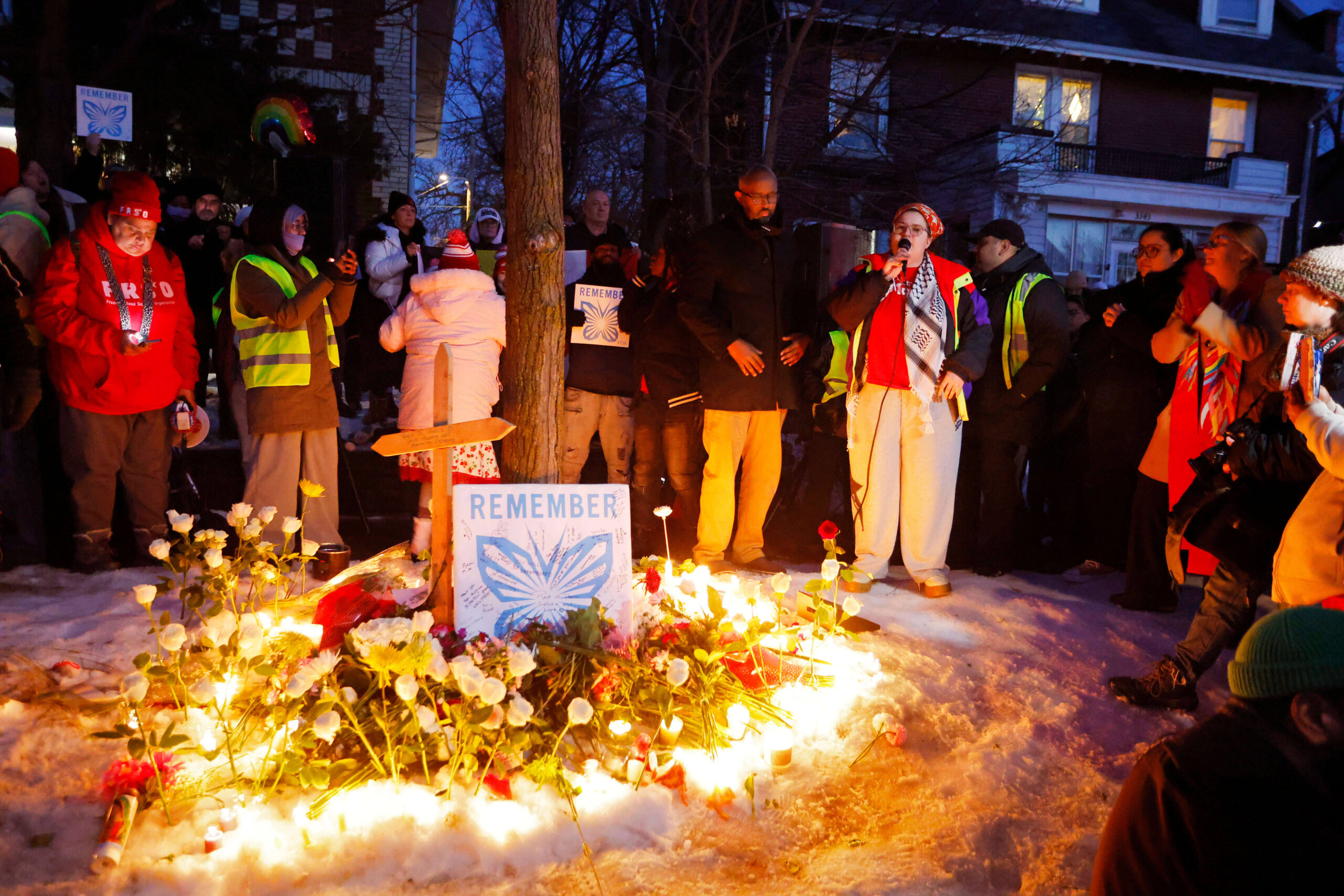
    People gather for a vigil on Wednesday evening after a U.S. Immigration and Customs Enforcement officer shot and killed a woman hours earlier in Minneapolis.

    What’s more, why would the Trump regime tell the truth about killing Good when its entire Minnesota operation — along with everything else about its immoral mass deportation drive — is built atop a foundation of despicable lies, from the White House racist slander of Somali refugees seeking a better life in Minnesota to the gross exaggerations (spiked by a dishonest viral video) about a childcare fraud scandal?

    GOOD MORNING MINNEAPOLIS,” DHS tweeted from its official account Monday as it began an unwarranted, unwelcome operation that is making no one safer, especially not the children of Minnesota. A local coalition of childcare operators called Kids Count on Us reported Wednesday that ICE agents have been swarming their facilities as operators report that little kids are frightened, adding, “We are terrified.” After Good’s death, protesting students at nearby Roosevelt High School were pepper-sprayed by federal agents. And now a 6-year-old child, whose military veteran father had already died in 2023, is an orphan.

    Exactly who are the violent rioters committing acts of domestic terrorism here?

    Minneapolis is a great American city that has been bombarded with needless tragedies throughout the 2020s, beginning on May 25, 2020, when George Floyd was murdered under the knee of police officer Derek Chauvin, just 0.7 miles from where Good was killed. That homicide also began with official lies that were absurdly false, until a brave citizen’s video showed America what really happened.

    Wednesday’s ICE murder carried the grim echoes of past government killing across the upper Midwest — an icy wind that blows from the massacre at Wounded Knee through the 1969 assassination of Black Panther Fred Hampton and over Floyd’s senseless demise. Yet, there is also reason to feel that, this time, a change is in the air.

    For one thing, true leaders like Minneapolis Mayor Jacob Frey — who stunned a national TV audience when he bluntly told ICE, “Get the f— out of Minneapolis” — and Minnesota Gov. Tim Walz made it clear they are fed up with the performative violence and the blatant lies. “Maybe we’re at their McCarthy moment,” Walz told a news conference. “Do you have no decency? Do you have no decency? We have someone dead in their car for no reason whatsoever. Enough. Enough is enough.”

    But there was something even more critical on this frigid prairie morning: brave everyday citizens willing to put their lives on the line for neighbors they don’t even know, and to risk everything in pursuit of the truth. America knows what really happened to Good because courageous people ran toward the scene with their phones aloft to bear witness, not knowing if ICE would kill again.

    It’s the revolutionary spirit we’ve been seeing all across America for months — regular folks from the community blowing whistles, filming ICE raids, and telling the world that our citizens will defend their communities even when all the big institutions and their overpaid leaders will not. Authoritarian governments only thrive in their own manufactured reality, gaslighting the masses that their hardworking, brown-skinned neighbor is a rapist, or that an uninjured federal agent is instead in the emergency room.

    Mark down Jan. 7, 2026, as the day America started turning off the gas, and the masks came off. No wonder it came out Thursday morning that the FBI is not cooperating with Minnesota state authorities on the investigation, in a pathetic, too-late effort at covering this mess up.

    I was one of many on Wednesday who couldn’t stop thinking about another unprovoked government killing: the Kent State Massacre and the murder of four college students on May 4, 1970. That moment caused Neil Young to write these words that still feel so relevant: “What if you knew her and found her dead on the ground?/ How can you run when you know?”

    Good Americans who still believe in truth and justice ran into the danger on Portland Avenue, and we are a better place for that. Some day, and probably soon, there will be a statue on that spot in honor of Renee Nicole Good, an American hero whose bigger freedom fight could not be murdered by tyrants.

  • The en(bleep)ification of the Epstein Files | Will Bunch Newsletter

    In the beginning, God created the 12 days of Christmas and the bacchanalia of New Year’s Eve to get us through the dark and frigid endless nights of winter. That wasn’t nearly enough for us shivering and depressed humans, so God sent us the NFL playoffs. The hope is that the Eagles last long enough to get us to the balmy breezes of baseball’s spring training.

    If someone forwarded you this email, sign up for free here.

    Delay, deny, distract, divert attention: Inside the Epstein Files coverup

    Pages from a totally redacted New York grand jury file into Jeffrey Epstein and Ghislaine Maxwell, released by the U.S. Justice Department, are photographed last month in Washington.

    I want you all to stonewall it, let them plead the Fifth Amendment, cover up or anything else if it’ll save it — save the plan.

    Richard Nixon, White House tapes, March 22, 1973

    The newish word that best captures the 2020s is one that I’m not allowed to use in a family newspaper like The Inquirer. In 2022, the social critic Cory Doctorow coined this scatological term that I’m calling “en(bleep)ification” (it won’t take much imagination) to describe the way that products, but especially consumer-facing websites, gradually degrade themselves in pursuit of the bigger goal, higher profits.

    For example, writer Kyle Chayka wrote a popular New Yorker essay in 2024 about what he called the, um, en(bleep)ification of the music site Spotify as it devolved, in his opinion, from a place for the songs and albums you want to hear to pushing playlists that they want you to hear.

    In the political world, no product rollout had been more anticipated than the December release, forced by law upon the Donald Trump regime’s Department of Justice, of the Jeffrey Epstein Files — the investigative trail of documents about the late financier and indicted sex trafficker who also palled around with Trump in the 1990s and early 2000s.

    No one with any familiarity of Trump’s modus operandi should have been shocked by what happened when the congressionally mandated deadline for release of all of this massive cache of paperwork finally arrived on Dec. 19 — or by what has happened in the two-and-a-half weeks since then.

    Needless to say, the Epstein Files have not offered the seamless user experience that its readers — especially those hoping for bombshells that would expose the tawdry secrets of Trump’s friendship with a man who allegedly abused more than 1,000 young and sometimes underaged women — had anticipated. In the hands of the president’s minions at Justice, the Epstein Files have been en(bleep)ified.

    How so? Here’s the diabolical part. The MAGA Gang that normally can’t shoot straight managed to hit the coverup bullseye this time, not with one dramatic act to rile people up — like Nixon during Watergate with his notorious Saturday Night Massacre — but with a blend of tactics and dodges designed to frustrate and exhaust truth-seekers.

    Delay. The law, which Trump signed to avoid an embarrassing defeat on Capitol Hill, required the release of every single document — with appropriate blacked-out redactions to protect things like the names of Epstein’s victims — by that December deadline. But suddenly the Justice Department — which once had as many as 200 staffers combing the papers last spring before its original botched plan to squelch the files — lacked energy and manpower, claiming it was working as fast as it could in an initial release of just about 40,000 pages, which would seem to be a tiny fraction of more than 5 million pages believed to exist.

    The DOJ’s small-batch cooking came in two small servings right before Christmas, when most Americans consume the least news, and information about any new releases in the new year has suddenly dried up, with maybe 99% of the files still outstanding.

    Deny. The papers that have been released have included major redactions — including the completely blacked-out pages of Manhattan grand jury testimony pictured above — that violate the spirit if not the letter of the law, which demanded that any hidden passages only protect victims and not Epstein’s powerful associates and clients.

    Stunningly, DOJ actually took back and attempted to bury some 16 files from the first release, including a photo of a photo that included Trump, before a public outcry led to that file’s republishing. Meanwhile, the department also claimed that 1 million additional Epstein files were discovered in New York after the legal deadline — an incredible claim that was immediately punctured by experts.

    Deflect. The initial batch was also larded with photos of Epstein with celebrities like Michael Jackson, Diana Ross, and Walter Cronkite as well as several of a Trump predecessor and longtime enemy, Bill Clinton. The pictures were dumped without any explanation and seemed to prove only that there’s a good reason the government normally doesn’t release raw investigatory files, especially about those not charged with any crime.

    The second batch also included a lurid and bizarre apparent letter from Epstein to a fellow famed accused sex offender, the gymnastic coach Larry Nassar, penned right around the time of his August 2019 jail-cell death. It seemed unbelievable, and just hours later the FBI said: Oh yeah, we looked at this and it’s a fake. The not-subtle subtext was essentially: “We don’t know what to believe in these files, and neither should you.”

    Nearly 53 years ago, Nixon’s plan to cover up Watergate with a mix of denials, delays, purchased silence and outright lies didn’t work. But Team Trump’s efforts to “save it — save the plan” by stonewalling the Epstein files is going just swell so far.

    If this moment feels familiar, it is very much like 2018 and the long-awaited Robert Mueller report on Russian influence in the 2016 presidential campaign and potential links to Moscow’s preferred candidate, Trump. There was a Mueller Report — much like there has been a “release” of the Epstein Files — that contained damning evidence, especially about potential obstruction of justice. But the information was dribbled out, downplayed, denied, and ultimately went nowhere.

    The Epstein Files have been destined to fail from Day One. It was always what Trump himself might call a “rigged deal” — with the papers in the possession of those with the most to lose, with many ways to make sure the worst stuff stays buried until at least 2029, if it hasn’t already been shredded. But the biggest truth has already been revealed.

    The outright defiance of the law demanding full release of the Epstein Files has exposed the utter brokenness of our democracy.

    The reason that Nixon’s coverup plan failed is because America had institutions stronger than his lies, including a Congress that cared more about its strength and independence than party ID, newspapers that were not just widely read but believed, and Supreme Court justices with an allegiance to the law and not the man who appointed them.

    Trump and his DOJ are daring a comatose Congress, a cowed news media, and a judiciary already in their back pocket to do something, but so far there is no indication that the en(bleep)ification of the Epstein Files can be undone. For now, they are more like the X Files, because the truth about Trump and his Palm Beach pal is out there…but beyond our weakened grasp.

    Yo, do this!

    • These days I find “vacation” is often just another word for catching up on household chores, but during my long December break I did watch a slew of movies, including some of the ones I’d recommended previously like One Battle After Another (very good, but flawed) and Eddington (meh). I ventured to an actual theater on New Year’s Eve and saw probably my favorite movie of 2025: Song Sung Blue, the bittersweet, based-on-a-true-story saga of a Neil Diamond cover band at the end of the 20th century. As the title implies, the movie is more than just a rousing feel-good pop musical, despite cathartic moments of exactly that. Kate Hudson deserves an Oscar for her Wisconsin Nice accent.
    • If you miss the glory days of not-formulaic-or-cartoonish movies — in the spirit of Song Sung Blue or One Battle After Another, only better — you should check out a new documentary on Netflix called Breakdown: 1975, by filmmaker Morgan Neville. The film spotlights an all-too-brief golden age of the mid-1970s with clips from the era’s classics like Taxi Driver, Dog Day Afternoon, and Network, and interviews with the likes of Martin Scorsese and Albert Brooks. They could have done much more with this, but I’d still recommend it.

    Ask me anything

    Question: Do you think that there is enough of a media firestorm over Grok’s nude filter to kill it? — BCooper (@bcooper82.bsky.social) via Bluesky

    Answer: The recent, shocking news about the artificial-intelligence tool called Grok that was created for Elon Musk-owned X (formerly Twitter) is a classic example of an important story that so far has befuddled and fallen through the cracks of the mainstream media. In recent days, X users have been asking Grok to create partially clothed and sexualized AI photos of real, everyday people, including images of underage adolescents. And Grok has complied, in what would seem to be a violation of laws regarding child pornography, among other legal and ethical problems. Musk needs to shut down Grok immediately — arguably for good — but that is not enough for the harm that’s already been caused. In a nation that routinely prosecutes citizens for having this kind of material on their computers, Musk, his co-creators of Grok, and X as a corporation need to be hauled before a judge.

    What you’re saying about…

    The half-dozen or so of you who responded to December’s open-ended call for 2026 predictions had one big thing in common: Boundless pessimism. Readers of this newsletter expect the new year to bring economic collapse and a disastrous midterm election in November, either from Donald Trump stealing it to Democrats somehow blowing it in the ways that only Democrats can. Stephen R. Rourke predicted: “I believe that the American economy, and perhaps the world economy, will slide into a second Great Depression, the almost inevitable consequence of an over leveraged economy, and a lack of willingness across the board to make tough choices about how to address the American addiction to borrowed money…” Oof. Nonetheless, Kim Root stole my heart with this: “I think the Philadelphia Union will rise even with the personnel changes because they are a developer of young talent. DOOP.”

    📮 This week’s question: A no-brainer: Donald Trump’s lethal assault on Venezuela and his seizure of that country’s strongman leader, in defiance of U.S. and international law, marks a turning point in American foreign policy. Are you OK with Trump’s actions because a bad guy has been removed from power, or are you alarmed by a military assault with the stated goal of pumping more oil? Please email me your answer and put the exact phrase “Venezuela attack” in the subject line.

    Backstory on the growing crisis of ICE custody deaths

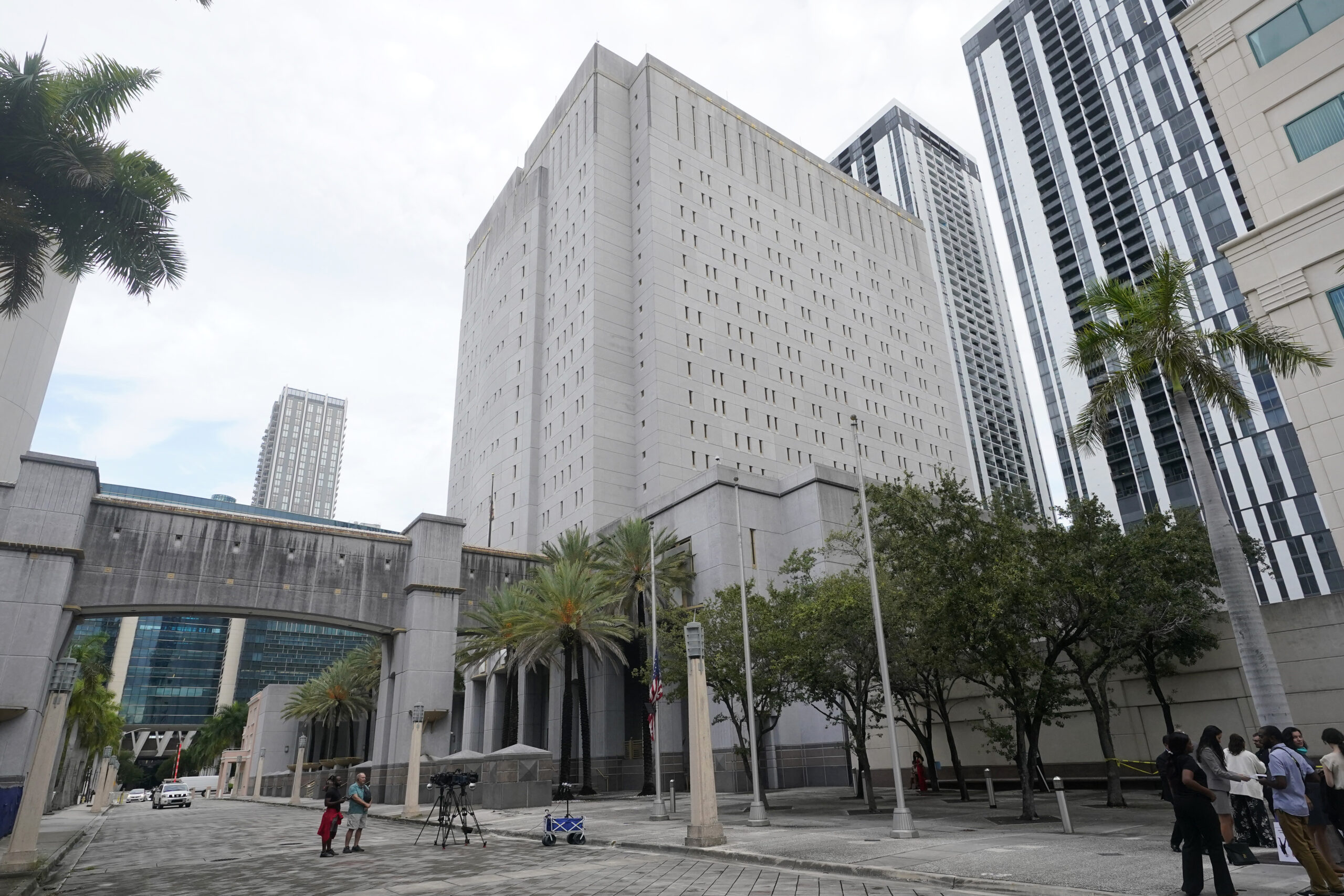
    The Federal Detention Center in Miami.

    Marie Ange Blaise, a citizen of Haiti, was 44 years old when she was arrested last February by Customs and Border Patrol officers as she attempted to board a commercial flight in Charlotte — one of the thousands swept up during 2025 amid the mass deportation drive of the Donald Trump regime.

    Just 10 weeks later, Blaise died inside a federal immigration detention center in Broward County, Fla. A South Florida public radio station reported that the Haitian woman had spoken to her son, who later told the medical examiner that “she complained of having chest pains and abdominal cramps, and when she asked the detention staff to see a physician, they refused her.” Another detainee reported Blaise’s care was “severely delayed,” even as Immigration and Customs Enforcement (ICE) insisted she’d been offered blood-pressure medication but refused.

    Blaise’s death was not an isolated incident. There was a sharp spike in ICE custody deaths during 2025, with the final tally of 31 fatalities nearly triple the 11 deaths posted during 2024, the last year of the Biden administration. Given the surge in immigration arrests after Trump took office last January, some increase was inevitable. Two of the 31 were killed by the gunman who fired on an ICE facility in Dallas. But immigration advocates say the crisis has been greatly exacerbated by inadequate medical care, bad food, and unsanitary conditions at detention centers.

    “This is a result of the deteriorating conditions inside of ICE detention,” Setareh Ghandehari, advocacy director at Detention Watch Network, told the Guardian, which recently published a comprehensive rundown of all 31 custody deaths. Many died from heart attacks or respiratory failure, with a few apparent suicides — although, in a number of cases, family members are disputing the official account. Only a few of those who died were senior citizens.

    There’s a bigger picture here. History has shown that authoritarian regimes can be hazardous to your health, and there is no American Exceptionalism. The MAGA movement’s low regard for the sanctity of human life is breaking through on multiple fronts, from the more than 100 deaths of South Americans on boats blown up by U.S. drones to the global crisis caused by the decimation of foreign aid through USAID (blamed for as many as 600,000 deaths by health experts) to the rising concern about fewer vaccinations and shrinking health insurance. A new generation is witnessing a grim reality: Dictatorship can be deadly.

    What I wrote on this date in 2021

    Jan. 6, much like Dec. 7 or Sept. 11, is a date which will live in infamy for most Americans. I had some health concerns five years ago that kept me from traveling to Washington to report on the insurrection — which I’ll always regret — but I did dash off an instant column before the smoke from Donald Trump’s failed coup had dissipated. I wrote, “When the future 45th president of the United States egged on the most violent thugs at his Nuremberg-style campaign rallies, when he yelled “get him the hell out of here” as white supporters roughed up a Black man in Birmingham, when he promised to pay the legal fees of brownshirts who beat up anti-Trump demonstrators, and when he said “I’d like to punch him in the face” to one rally insurrectionist, why are people still shocked when a riled-up mob takes Trump up on his own toxic words?” Read the rest: “Trump told us he would wreck America. Why didn’t we believe him the first time?”

    Recommended Inquirer reading

    • I returned from a long Christmas break this weekend with something brand new to write about: the Trump regime’s illegal attack on Venezuela, which killed as many as 80 people, including civilians, and resulted in the capture of that nation’s strongman leader, Nicolás Maduro, and his wife. I wrote that Trump’s war without the required constitutional approval or public support, in violation of international law against unprovoked military aggression, fulfills his ambitions to rule as a dictator. And a new world order based not on the rule of law but brute force makes all of us less safe.
    • Last June, the partially unclothed body of a young woman was discovered by police under a pallet in an overgrown lot in Philadelphia’s Frankford neighborhood. For weeks, the identity of this murder victim was unknown, which didn’t deter one determined homicide detective, the missing woman’s anguished family who’d been initially told not to file a missing-person report — or The Inquirer’s Ellie Rushing, who has written a moving account of the life and death of the woman eventually learned to be Anastasiya Sangret. This kind of essential local reporting takes time and resources, which means it needs your support. You do exactly that, and unlock all the journalism of one of America’s best newsrooms, when you start 2026 with a subscription to The Inquirer.

    By submitting your written, visual, and/or audio contributions, you agree to The Inquirer‘s Terms of Use, including the grant of rights in Section 10.

  • America launches its 250th birthday year by becoming a rogue state

    America launches its 250th birthday year by becoming a rogue state

    Technically, the United States won’t turn 250 until July 4. But Donald Trump dictated this weekend that before the dawn’s early light of only the third day of America’s Semiquincentennial was soon enough for the bombs to begin bursting in air.

    At 1 a.m. Saturday, guided by a luminous full moon, a U.S. air armada of more than 150 planes roared over the Venezuelan capital of Caracas and far-flung military bases across the South American nation, waking up a metropolis of three million people with massive explosions.

    An 80-year-old woman, Rosa González, was killed when a U.S. bomb slammed into her three-story apartment complex in a coastal neighborhood near the Caracas airport, according to the New York Times. The dead-of-night strike wounded several of her neighbors, tore a massive hole in the side of the apartment building, and even riddled with shrapnel a family’s portrait of Simón Bolívar, the leader who liberated Venezuela from colonialism — for a time, anyway — in 1820.

    González was one of about 80 people, both security forces and civilians, killed Saturday in the first U.S. land strike in what by Trump’s own admission is “a war” — America’s latest and maybe its strangest yet. With more than 100 civilian sailors blown up in a running series of U.S. drone attacks on boats off South America, which the Trump regime claims, without offering proof, are smuggling drugs, American imperialism is growing more deadly by the day.

    It’s hard here not to echo a notorious quote from Philadelphia sports history: For who? For what?

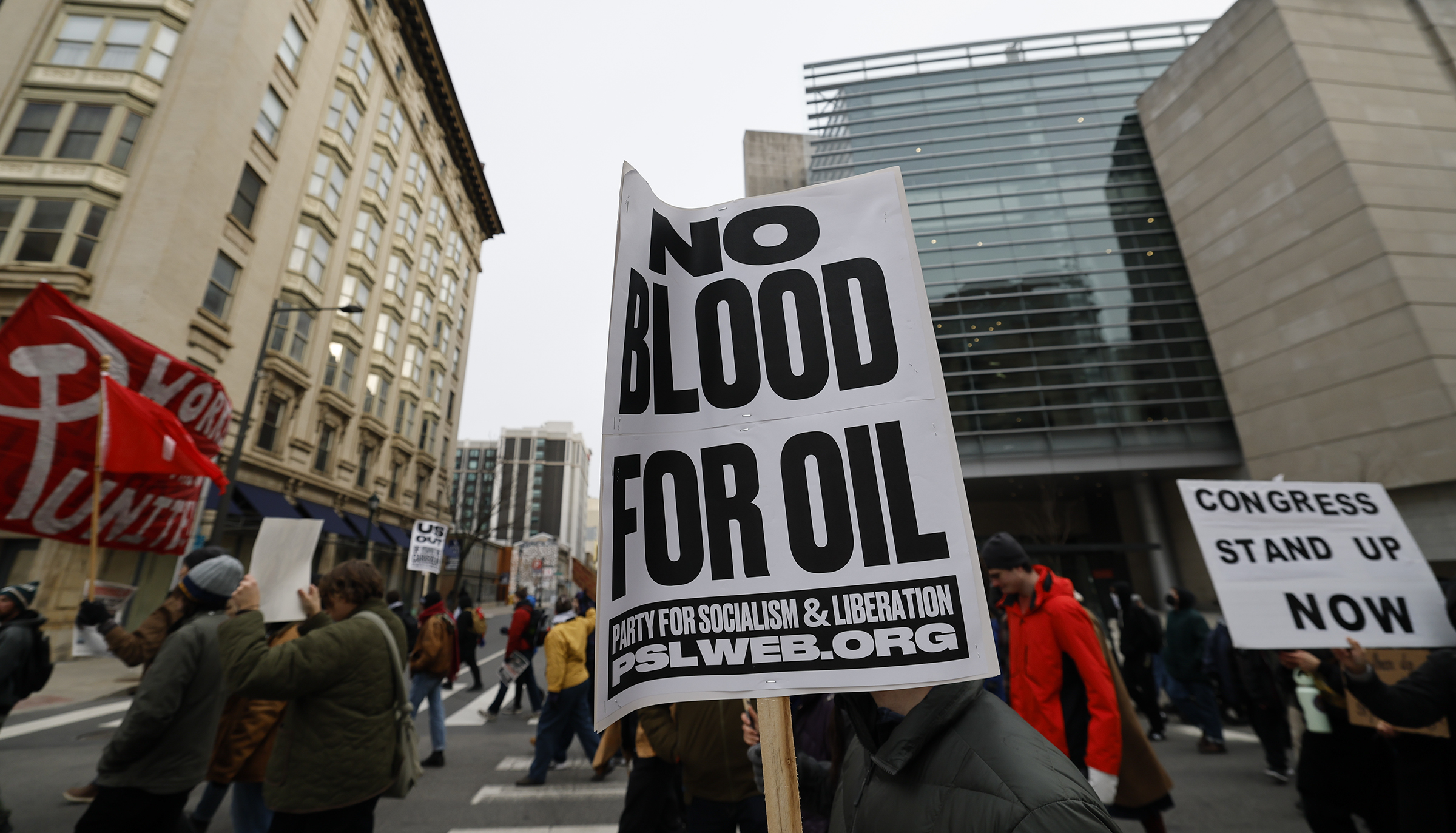
    Demonstrators march along North Broad Street reacting to U.S. strikes on Venezuela on Saturday.

    Trump’s splendid little war in Venezuela comes drenched in so many lies, buried under layers of justifications that change almost hourly, and so far outside the boundaries of both U.S. and international law that it makes George W. Bush’s dishonest and disastrous misadventure in Iraq feel like Gettysburg by comparison.

    That Venezuela’s former ruthless strongman leader, Nicolás Maduro, and his wife are currently sitting in Brooklyn’s federal lockup, captured by Delta Force soldiers amid the bombing and facing a U.S. indictment that asserts they were also drug lords, is pretty much the only certainty in a military crusade with a future rife with unknown unknowns.

    In a stunning news conference at Trump’s Mar-a-Lago mansion in Florida — where just 59 hours earlier, guests dined from a caviar bar as the president auctioned off a painting for $2.75 million — Trump told the world that the United States now “runs” Venezuela, despite no American personnel being posted inside the country, twice the size of California. And he made it clear that the blood of González and the others was spilled for oil, as POTUS 47 talked at length about U.S. hegemony over 17% of the world’s known oil reserves, but made no mention of restoring democracy in Venezuela.

    None of this stopped a parade of retired generals from flooding cable TV news networks — even the alleged liberal one, MS Now — to talk about the tactical success in seizing Maduro and pummeling Venezuela’s defenses with no U.S. deaths, even as the bigger strategy remains a black hole. That level of commentary, backdropped by images of cheering Maduro-hating refugees in Miami and elsewhere, belied the fact that invading Venezuela was wildly unpopular with the American people.

    Just last month, a Quinnipiac University poll found that 63% of U.S. voters opposed “U.S. military action inside Venezuela,” while just 25% supported such a move. Polling questions explicitly about removing Maduro have seen similar results. This matters a lot, but then other U.S. wars that history remembers as pretty terrible polled well at first. The much bigger problem with invading Venezuela is that it’s illegal. Incredibly illegal.

    To be sure, the imperial U.S. presidency has been simmering since 1945, but Trump has utterly abandoned one of the most cherished principles of America’s founders — that the power to declare war rests with Congress. Not only did the Trump regime not seek approval on Capitol Hill — where its beyond-flimsy casus belli could have been debated in front of the American people — but the president didn’t even deem it necessary to inform key congressional leaders.

    The attack was also a blatant international law violation of the charter of the United Nations — the organization that the U.S. spearheaded in 1945 to prevent future wars and unwind colonialism — which aimed to end unprovoked aggression. Geoffrey Robertson, who once led a U.N. war-crimes tribunal in Sierra Leone, told the Guardian that the Trump regime “has committed the crime of aggression, which the court at Nuremberg described as the supreme crime — it’s the worst crime of all.”

    To repeat: For who? For what? Is Trump eager for a bombastic military op to distract voters’ attention from the ongoing cover-up of the Jeffrey Epstein files, the explosive testimony of prosecutor Jack Smith about the president’s complicity in an attempted coup on Jan. 6, 2021, and skyrocketing prices for healthcare and at the grocery store? Is this the big payback to Big Oil CEOs who responded to Trump’s demand for $1 billion in campaign cash? Is he satisfying the vain psychoses of Silicon Valley billionaires who want a warm tropical paradise for high-tech “networked cities” outside any laws? Is this all just a narcissistic power trip?

    Yes.

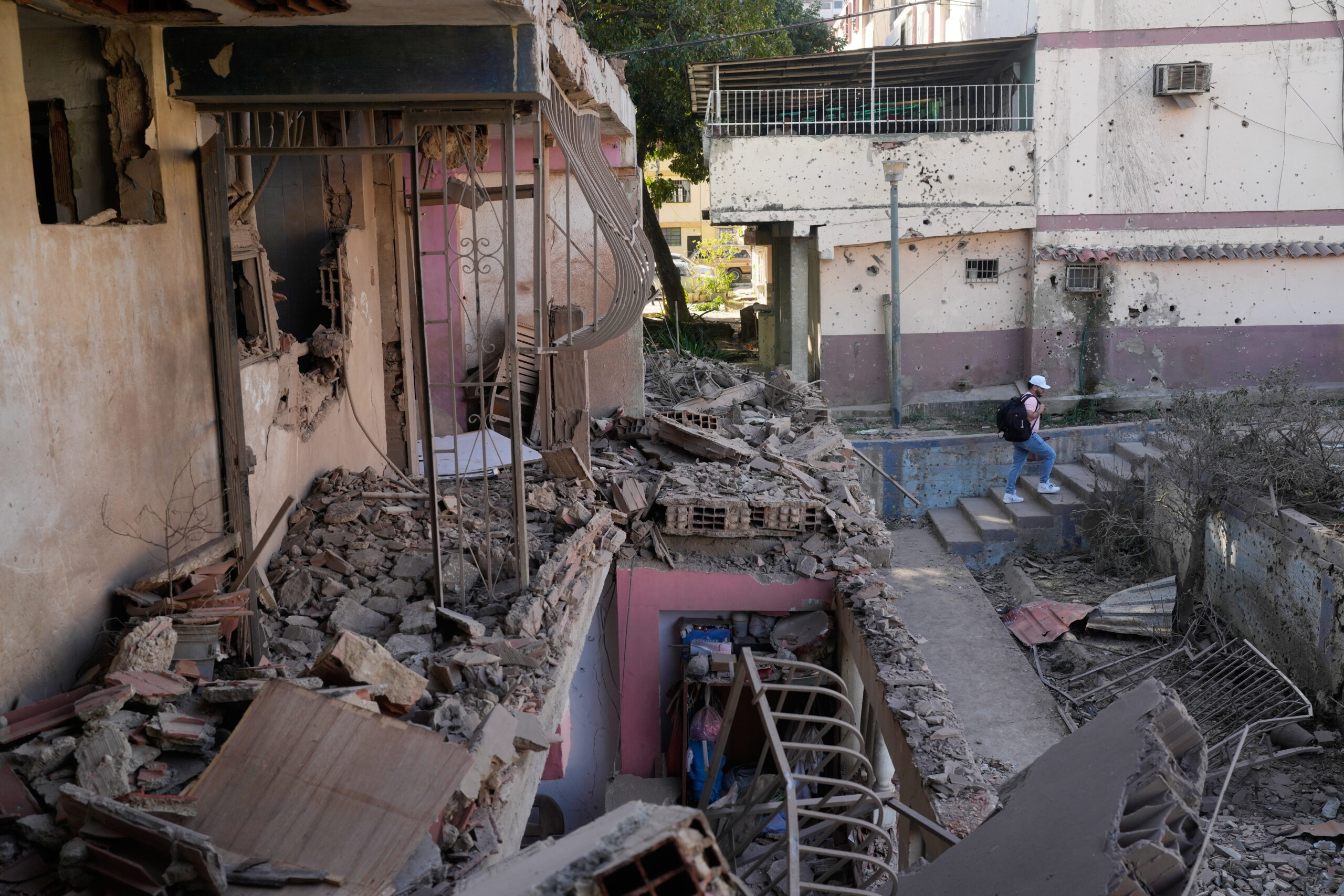
    A neighbor walks through an apartment building that residents say was damaged during U.S. military operations to capture Venezuelan President Nicolás Maduro, in Catia La Mar, Venezuela, Sunday, Jan. 4, 2026.

    Yes, this lethal disaster is a perfect storm of all of those things. But we can’t allow the blather of talking-head ex-generals or the cowardly passivity of the supposed opposition Democrats to blind us to the harsh reality of what just happened here. I didn’t think it could get worse than the utterly unwarranted 2003 Iraq War that inspired me to become an opinion journalist, but this is arguably worse, more akin to Vladimir Putin’s Russia invading Ukraine. On the 250th anniversary of America’s founding as a grand experiment in democracy, we are now a rogue state, a global pariah.

    We Are The Bad Guys,” the brilliant independent journalist Hamilton Nolan headlined his essay on Saturday, writing with painful accuracy that “the United States government under Donald Trump is the most dangerous force on earth, and a serious potential threat to every other nation, and the leading cause of geopolitical instability.”

    I noted above that this Venezuelan operation is largely shrouded in uncertainty and ambiguity, yet we need to acknowledge two bitter truths that can no longer be denied in the rocket’s red glare over Caracas.

    First, Donald Trump is a dictator now. To be sure, this has seemed an aspiration from the moment he stepped onto the Trump Tower escalator over a decade ago, with very mixed results, but now it’s a reality. The strike on Venezuela was a dictate, nothing more. There was zero effort to rally the American people behind him, zero effort to seek congressional input, and zero concern over the illegality of this operation, let alone its rank immorality. And if there is no meaningful opposition to his murders in Latin America, he will only consolidate his tyrannical power.

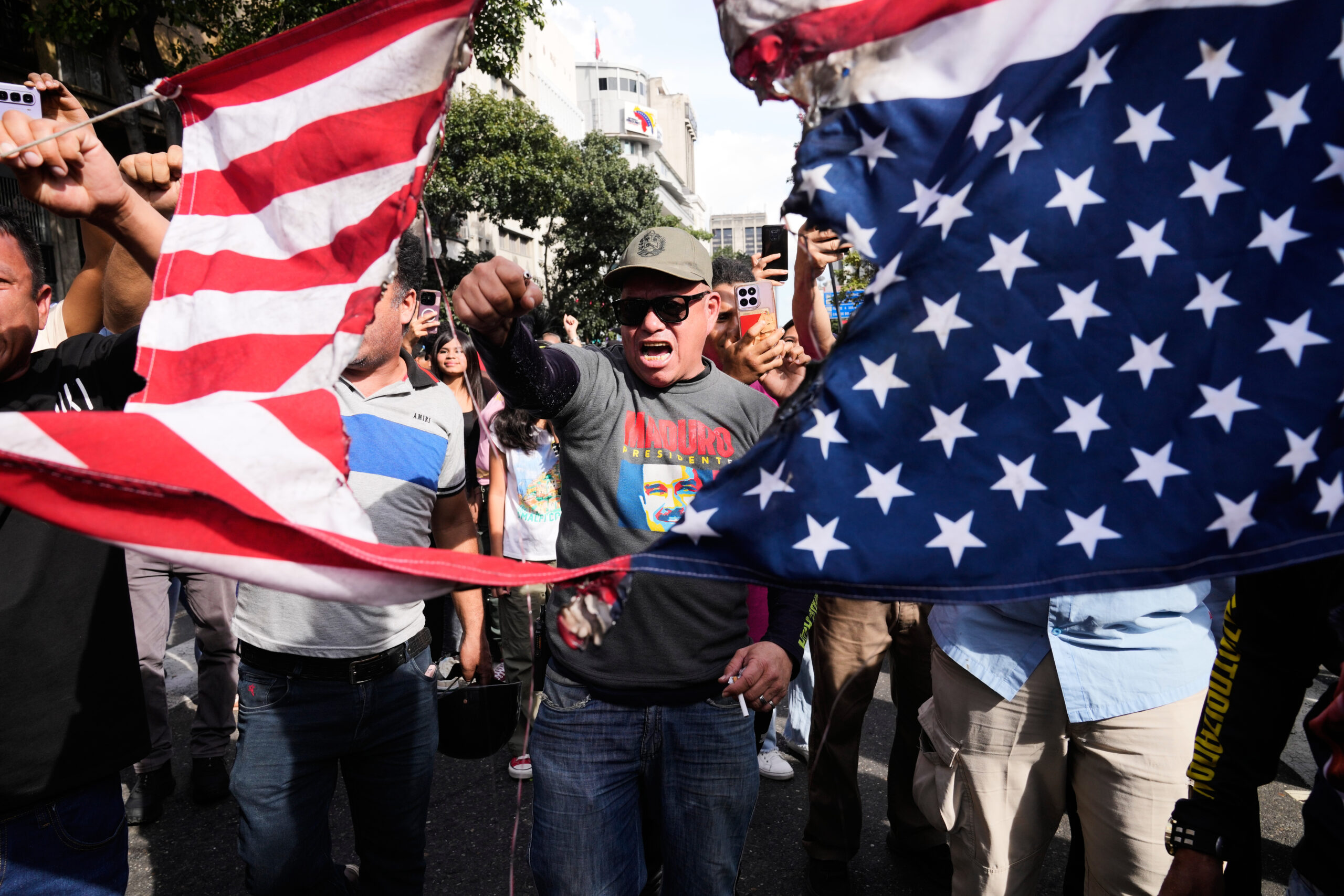
    Government supporters rip an American flag in half during a protest in Caracas, Venezuela, on Saturday, after U.S. President Donald Trump announced that U.S. forces had captured President Nicolás Maduro and first lady Cilia Flores.

    Second, the world is a much more dangerous place right now than we want to admit. As a boomer born in the aftermath of World War II, I’ve always worried that I’d live to see World War III — and I still do. But now I’m equally worried that there won’t be a global conflagration, but just a silent abandonment of the dream of a planet governed by the rule of law, with peace as its No. 1 priority.

    The real significance of what just happened in Latin America is that the world — and the disappearing liberty of its denizens — is getting carved up by amoral strongmen into “spheres of influence,” just as in Trump’s beloved Gilded Age of the 19th century. After Saturday, what is to stop China from seizing control of Taiwan, or Russia from looking beyond Ukraine to wider territorial ambition in Europe, or the Trump regime from seizing Greenland and the Panama Canal?

    Absolutely nothing. Except us.

    A dictatorial United States isn’t preordained, nor is a world where smaller nations are swallowed up by a real axis of evil. After all, 2025 ended on a surprisingly hopeful note of resistance, led by everyday folks from Minneapolis to New Orleans with their whistles and their gumption to get in the face of masked, armed goon squads.

    Let’s turn those flares of hope into a raging fire of opposition. If you’re mad today, show it in the streets, then call your member of Congress and let them know that a sternly worded letter won’t cut it. Trump’s illegal war demands nothing less than his impeachment, if not now, then after November, after the righteous flood.

    Let’s send a 250th birthday card to the diminished but still-beating heart of the true America and sign it with two words: No kings.

  • In 2026, America needs an anti-AI party | Will Bunch Newsletter

    Sometimes a terrible year can end with a moment of uplift. This actually happened in the last days of 1968, when Apollo 8 took the first humans in orbit around the moon and sent wonder back to a planet struggling with assassinations and riots. Alas, 2025 seems not such a year. A world already reeling from two mass shootings half a world apart learned Sunday night that Hollywood icon Rob Reiner and his wife Michele had been murdered in their home, allegedly by their own son. Boomers like me saw our own journey in that of Reiner — playing a young campus liberal, then taking down the pomposity of classic rock before both an unprecedented streak of classic movies and unparalleled social and political activism. He had more to give, and leaves a void that can’t truly be filled.

    If someone forwarded you this email, sign up for free here.

    Americans fear AI and loathe its billionaires. Why do both parties suck up to them?

    Time’s 2025 person of the year are the architects of AI, depicted in this painting by Jason Seiler. The painting, with nods to the iconic 1932 “Lunch atop a Skyscraper” photograph, depicts tech leaders Mark Zuckerberg, Lisa Su, Elon Musk, Jensen Huang, Sam Altman, Demis Hassabis, Dario Amodei, and Fei-Fei Li.

    “This is the West, sir. When the facts become legend, print the legend.”journalist in the 1962 film, The Man Who Shot Liberty Valance

    The top editors at Time (yes, it still exists) looked west to Silicon Valley and decided to print the legend last week when picking their Person of the Year for the tumultuous 12 months of 2025. It seemed all too fitting that its cover hailing “The Architects of AI” was the kind of artistic rip-off that’s a hallmark of artificial intelligence: 1932’s iconic newspaper shot, “Lunch Atop a Skyscraper,” “reimagined” with the billionaires — including Elon Musk and OpenAI’s Sam Altman — and lesser-known engineers behind the rapid growth of their technology in everyday life.

    Time’s writers strived to outdo the hype of AI itself, writing that these architects of artificial intelligence “reoriented government policy, altered geopolitical rivalries, and brought robots into homes. AI emerged as arguably the most consequential tool in great-power competition since the advent of nuclear weapons.”

    OK, but it’s a tool that’s clearly going to need a lot more work, or architecting, or whatever it is those folks out on the beam do. That was apparent on the same day as Time’s celebration when it was reported that Washington Post editors got a little too close to the edge when they decided they were ready to roll out an ambitious scheme for personalized, AI-driven podcasts based on factors like your personal interests or your schedule.

    The news site Semafor reported that the many gaffes ranged from minor mistakes in pronunciation to major goofs like inventing quotes — the kind of thing that would get a human journalist fired on the spot. “Never would I have imagined that the Washington Post would deliberately warp its own journalism and then push these errors out to our audience at scale,” a dismayed, unnamed editor reported.

    The same-day contrast between the Tomorrowland swooning over the promise of AI and its glitchy, real-world reality felt like a metaphor for an invention that, as Time wasn’t wrong in reporting, is so rapidly reshaping our world. Warts and all.

    Like it or not.

    And for most people (myself included), it’s mostly “or not.” The vast majority understands that it’s too late to put this 21st-century genie back in the bottle, and like any new technology there are going to be positives from AI, from performing mundane organizing tasks that free up time for actual work, to researching cures for diseases.

    But each new wave of technology — atomic power, the internet, and definitely AI — increasingly threatens more risk than reward. And it’s not just the sci-fi notion of sentient robots taking over the planet, although that is a concern. It’s everyday stuff. Schoolkids not learning to think for themselves. Corporations replacing salaried humans with machines. Sky-high electric bills and a worsening climate crisis because AI runs on data centers with an insatiable need for energy and water

    The most recent major Pew Research Center survey of Americans found that 50% of us are more concerned than excited about the growing presence of AI, while only 10% are more excited than concerned. Drill down and you’ll see that a majority believes AI will worsen humans’ ability to think creatively, and, by a whopping 50-to-5% percent margin, also believes it will worsen our ability to form relationships rather than improve it. These, by the way, are two things that weren’t going well before AI.

    So naturally our political leaders are racing to see who can place the tightest curbs on artificial intelligence and thus carry out the will of the peop…ha, you did know this time that I was kidding, didn’t you?

    It’s no secret that Donald Trump and his regime were in the tank from Day One for those folks out on Time’s steel beam, and not just Musk, who — and this feels like it was seven years ago — donated a whopping $144 million to the Republican’s 2024 campaign. Just last week, the president signed an executive order aiming to press the full weight of the federal government, including Justice Department lawsuits and regulatory actions, against any state that dares to regulate AI. He said that’s necessary to ensure U.S. “global AI dominance.”

    This is a problem when his constituents clearly want AI to be regulated. But it’s just as big a problem — perhaps bigger — that the opposition party isn’t offering much opposition. Democrats seem just as awed by the billionaire grand poobahs of AI as Trump. Or the editors of Time.

    Also last week, New York Democratic Gov. Kathy Hochul — leader of the second-largest blue state, and seeking reelection in 2026 — used her gubernatorial pen to gut the more-stringent AI regulations that were sent to her desk by state lawmakers. Watchdogs said Hochul replaced the hardest-hitting rules with language drafted by lobbyists for Big Tech.

    As the American Prospect noted, Hochul’s pro-Silicon Valley maneuvers came after her campaign coffers were boosted by fundraisers held by venture capitalist Ron Conway, who has been seeking a veto, and the industry group Tech:NYC, which wants the bill watered down.

    It was a similar story in the biggest blue state, California, where Gov. Gavin Newsom in 2024 vetoed the first effort by state lawmakers to impose tough regulations on AI, and where a second measure did pass but only after substantial input from lobbyists for OpenAI and other tech firms. Silicon Valley billionaires raised $5 million to help Newsom — a 2028 White House front-runner — beat back a 2021 recall.

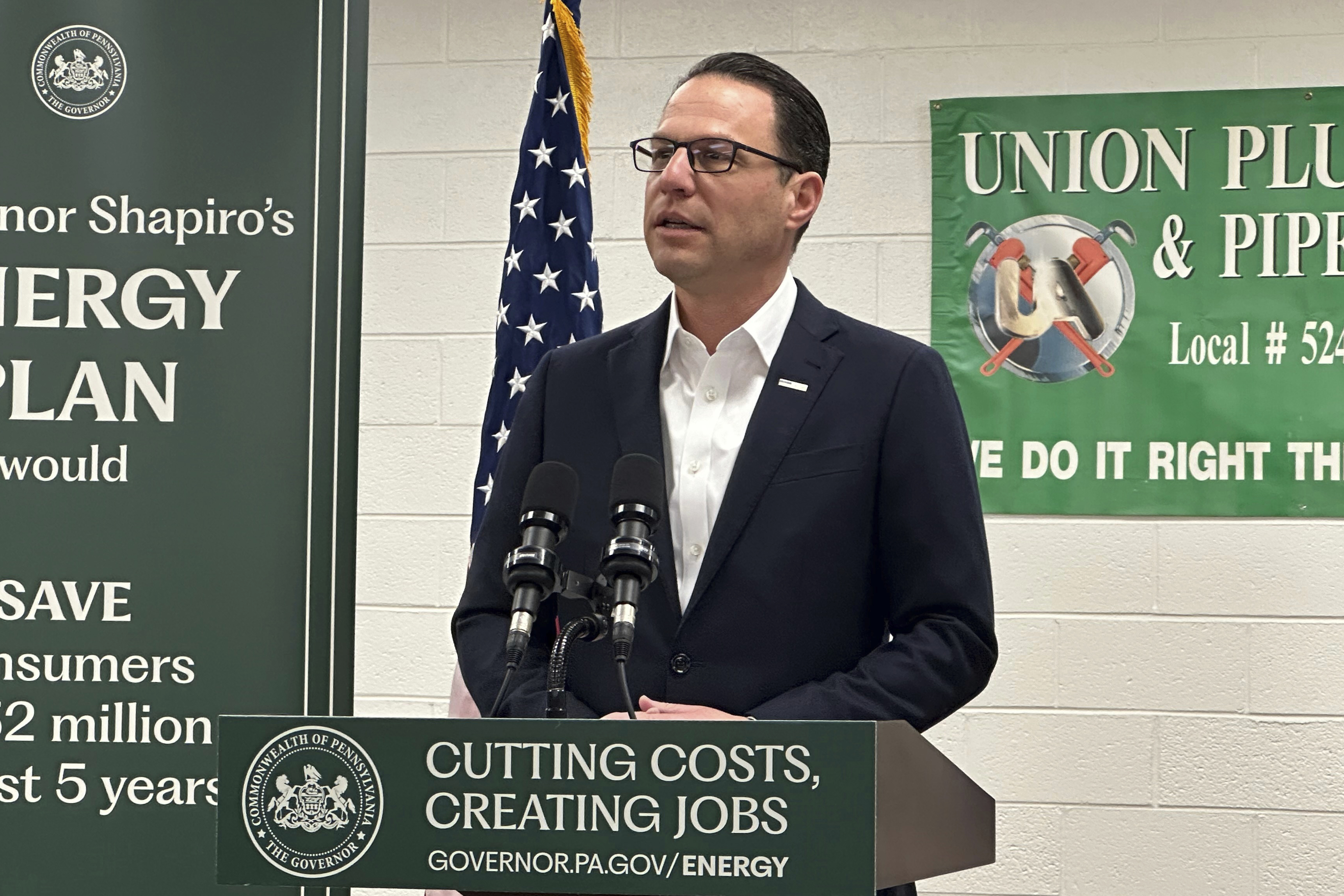
    Like other top Democrats, Pennsylvania Gov. Josh Shapiro favors some light regulation for AI but is generally a booster, insisting the new technology is a “job enhancer, not a job replacer.” He’s all-in on the Keystone State building massive data centers, despite their tendency to drive up electric bills and their unpopularity in the communities where they are proposed.

    Money talks, democracy walks — an appalling fact of life in 2025 America. In a functioning democracy, we would have at least one political party that would fly the banner of the 53% of us who are wary of unchecked AI, and even take that idea to the next level.

    A Harris Poll found that, for the first time, a majority of Americans also see billionaires — many of them fueled by the AI bubble — as a threat to democracy, with 71% supporting a wealth tax. Yet few of the Democrats hoping to retake Congress in 2027 are advocating such a levy. This is a dangerous disconnect.

    Time magazine got one thing right. Just as its editors understood in 1938 that Adolf Hitler was its Man of the Year because he’d influenced the world more than anyone else, albeit for evil, history will likely look back at 2025 and agree that AI posed an even bigger threat to humanity than Trump’s brand of fascism. The fight to save the American Experiment must be fought on both fronts.

    Yo, do this!

    • I haven’t tackled much new culture this month because I’ve been doing something I so rarely do anymore: Watching a scripted series from start to finish. That would be Apple TV’s Pluribus, the new sci-fi-but-more-than-sci-fi drama from television genius Vince Gilligan. True, one has to look past some logistical flaws in its dystopia-of-global-happiness premise, but the core narrative about the fight for individualism is truly a story of our time. The last two episodes come out on Dec. 19 and Dec. 26, so there’s time to catch up!
    • The shock and sorrow of Rob Reiner’s murder at age 78 has, not surprisingly, sparked a surge of interest in his remarkable, and remarkably diverse, canon of classic movies. His much-awaited sequel Spinal Tap II: The End Continues began streaming on HBO Max just two days before his death. Check it out, or just re-watch the 1984 original, which is one of the funniest flicks ever made, and which is also streaming on HBO Max and can be rented on other popular sites. Crank it up to 11.

    Ask me anything

    Question: What news value, not advertising value, is accomplished by publicizing every one of Trump’s insane rantings daily? — @bizbodeity.bsky.social via Bluesky

    Answer: This is a great question, and the most recent and blatant example which I assume inspired it — Trump’s stunningly heartless online attack against a critic, Hollywood icon Rob Reiner, just hours after his violent murder — proves why this is a painful dilemma for journalists. I’d argue that Trump’s hateful and pathologically narcissistic post was a deliberate troll for media attention, to make every national moment about him. In a perfect world, it would indeed be ignored. But it was highly newsworthy that his Truth Social post was so offensive that it drew unusual criticism from Republicans, Evangelicals, and other normal supporters. We may remember this is as a political turning point. Trump’s outbursts demand sensitivity, but that Americans elected such a grotesque man as our president can’t easily be ignored.

    What you’re saying about…

    It’s been two weeks since I asked about Donald Trump’s health, but the questions have not gone away. There was not a robust response from readers — probably because I’d posed basically the same question once before. Several of you pointed to expert commentary that suggests the president is experiencing significant cognitive decline, perhaps suffering from frontotemporal dementia. Roberta Jacobs Meadway spoke for many when she lambasted “the refusal if not the utter failure of the once-major news outlets to ask the questions and push for answers.”

    📮 This week’s question: We are going to try an open-ended one to wrap up 2025: What is your big prediction for 2026 — could be anything from elections to impeachment to the Eagles repeating as Super Bowl champs — and why. Please email me your answer and put the exact phrase “2026 prediction” in the subject line.

    Backstory on how I covered an unforgettable year

    Rick Gomez, who travelled 65 hours by bus from Phoenix, Ariz., holds an AI photo composite poster of Donald Trump, in Washington, the day before Trump took the Oath of Office to become the 47th president of the United States.

    Barring the outbreak of World War III — something you always need to say these days — this is my final newsletter, or column, of 2025, as I use up my old-man plethora of vacation days. To look back on America’s annus horribilis, I thought I’d revive a feature from my Attytood blogging days: a recap of the year with the five most memorable columns, not numbered in order of significance. Here goes:

    1. A year that many of us dreaded when the votes were counted in November 2024 began for me with a sad reminder that the personal still trumps the political, when my 88-year-old father fell ill in the dead of winter and passed away on March 11. I wrote about his life, but also what his passion for science and knowledge said about a world that, at the end of his life, was slipping away: Bryan H. Bunch (1936-2025) and the vanishing American century of knowledge.
    2. Still, Donald J. Trump could not be ignored. On Jan. 19, I put on my most comfortable shoes (it didn’t really help) and traipsed around a snowy, chilly Washington, D.C. as the about-to-be 47th president made his “forgotten American” supporters wait on a soggy, endless line for a nothingburger rally while the architects of AI and other rich donors partied in heated luxury, setting the tone for a year of gross inequality: American oligarchy begins as Trump makes billions while MAGA gets left out in the rain.
    3. One of the year’s biggest stories was Trump’s demonizing of people of color, from calling Somali immigrants “garbage” to his all out war on DEI programs that encouraged racial diversity, when the truth was always far different. In February, I wrote about the American dream of a young man from Brooklyn of Puerto Rican descent and his ambition to become an airline pilot, who perished in the D.C. jet-helicopter crash. His remarkable life demolished the MAGA lie about “DEI pilots.” Read: “Short, remarkable life of D.C. pilot Jonathan Campos so much more than Trump’s hateful words.”
    4. If you grew up during the 1960s and ‘70s, as I did, then you understand the story of our lifetimes as a battle for the individual rights of every American — for people to live their best lives regardless of race or gender, or whether they might be transgender, or on the autism spectrum. I wrote in October about the Trump regime’s consuming drive to reverse this, to make it a crime to be different: From autism to beards, the Trump regime wages war on ‘the different
    5. A grim year did end on one hopeful note. Trump’s push for an authoritarian America is faltering, thanks in good measure to the gumption of everyday people. This month, I traveled to New Orleans to chronicle the growing and increasingly brave public resistance to federal immigration raids, as citizens blow whistles, form crowds and protest efforts to deport hard-working migrants: In New Orleans and across U.S., anger over ICE raids sparks a 2nd American Revolution

    What I wrote on this date in 2021

    On this date four years ago, some of us were still treating Donald Trump’s attempted Capitol Hill coup of Jan. 6, 2021 like a crime that could be solved so that the bad guys could be put away. On Dec. 16, 2021, I published my own theory of the case: that Team MAGA’s true goal was provoking a war between its supporters and left-wing counterdemonstrators, as a pretext for sending in troops and stopping Congress from finishing its certification of Joe Biden’s victory. That didn’t happen because the leftists stayed home. More than 1,000 pardons later, check out my grand argument: “A theory: How Trump’s Jan. 6 coup plan worked, how close it came, why it failed.”

    Recommended Inquirer reading

    • Only one column this week, as this senior citizen was still recovering from that grueling trip to New Orleans. On Sunday, I reacted with the shock and sadness of seeing a mass shooting at my alma mater, Brown University. I wrote that in a nation with 500 million guns, it’s a virtual lock that some day our families — nuclear or extended, like the close-knit Brown community — will be struck by senseless violence. And I took sharp issue with Trump’s comment that “all you can do is pray.” There is much that can and should be done about gun safety.
    • Sometimes the big stories are the ones that play out over decades, not days. When I first started coming regularly to Philadelphia at the end of the 1980s, the dominant vibe was urban decline. The comeback of cities in the 21st century has altered our world, for good — but a lot of us old-timers have wondered: Just who, exactly, is moving into all these new apartments from Center City to Kensington and beyond? Last week, The Inquirer’s ace development reporter Jake Blumgart took a deep dive into exactly that — highlighting survey results that large numbers are under 45, don’t own a car, and moved here from elsewhere, and telling some of their stories. Local journalism is the backbone of a local community, and you are part of something bigger when you subscribe to The Inquirer. Plus, it’s a great Christmas gift, and you’ll get to read all my columns in 2026. See you then!

    By submitting your written, visual, and/or audio contributions, you agree to The Inquirer‘s Terms of Use, including the grant of rights in Section 10.

  • Mass shooting at Brown U.: When gun heartbreak comes home

    Mass shooting at Brown U.: When gun heartbreak comes home

    There are roughly 343 million of us in America — a nation where diversity runs from Alaska’s frigid glaciers to the sweaty honky-tonks of Key West, and where the political divides run even deeper. And yet there is one thing that unites all of us.

    One day, one way or another, in a land with more firearms than people, gun violence is going to come home.

    At about 5:45 p.m. Saturday, after spending an afternoon offline untangling strings of lights and, finally, admiring the glow of a lit Christmas tree, I looked back at my phone and a brief moment of holiday joy in what has been a very rough 2025 vanished into the void. There had been a mass shooting at Brown University, my alma mater.

    What unfolded over the next few hours on national TV was both stunning and a numbingly familiar ritual: the news conference where the mayor announces that two students have been killed and nine others seriously wounded; the phone interviews with terrified undergrads locked down in darkened dorm rooms, furniture pushed hard against the door; the grainy video of a male gunman clad in black.

    The only real difference from Uvalde or Leland, Miss., was a personal one: Picturing mentally the moments of horror inside the building where college friends like my junior and senior-year roommate and my girlfriend learned to build everything from artificial limbs to nuclear power plants, just blocks from the newsroom where I’d toiled until 2 a.m. putting out the Brown Daily Herald, and the hockey rink where I’d go early with my history book to save seats right behind the penalty box.

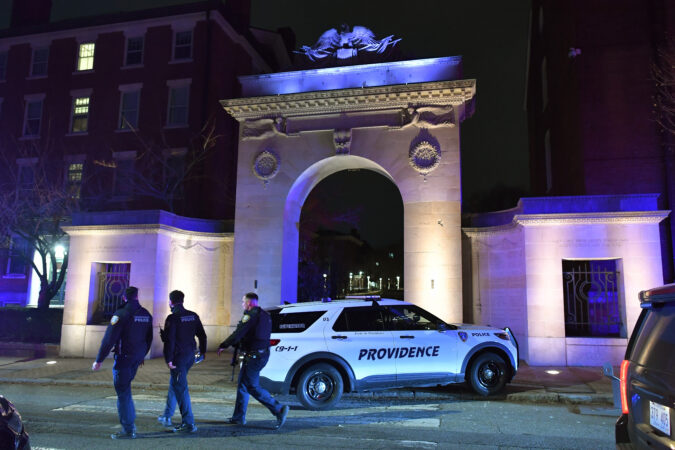
    Police gather on Waterman Street in Providence, R.I., on Saturday, during the investigation of a shooting.

    As I write this on a snowy and overcast Sunday morning, we still don’t know the names of the two students who were murdered during a finals-week study group inside the Barus and Holley engineering building, let alone the twisted motives of whoever killed them. Yet, to anyone who’s been part of the Brown community, as I’ve been since I studied in Providence from 1977-81, it feels as if relatives have been senselessly taken from us.

    That’s because the Brown community is a family — a large, messy one where people fight and bicker all the time (as I myself did back in August, when I ripped the current administration for a compromise with the Trump regime), a trait which tends to make students and alums love it even more. There’s a reason that some folks call Brown “the happy Ivy” — a communal bond that one lunatic with one of as many as 500 million guns in America tried to shatter in a few horrifying minutes.

    But that’s what every mass shooting is, in one way or another: an attack on community, the very essence of being human, committed by one atomized individual who’s lost that connection and who has easy access to a weapon that lets him shatter it for everyone else.

    I understand what some of you are thinking. Brown may be a happy place but it is also an elite one, which rejects nearly 95% of the hopeful young people who apply there. Is a shooting on an Ivy League campus bound to get more media attention than one at an HBCU homecoming, let alone a working-class community? Sure, but a mass shooting at Brown is also a grim reminder of a cross that we all bear — every class, race, and religion — in a nation that’s jumped onto the wrong track.

    Brown University is a messy, happy family, but so was the Church of Jesus Christ of Latter-day Saints near Flint, Mich., where a gunman killed four people in September before setting the place on fire, and so was the birthday party in Stockton, Calif., where three children were gunned down in August, or October’s alumni celebration at a bar on Saint Helena Island, S.C., where four people were senselessly murdered.

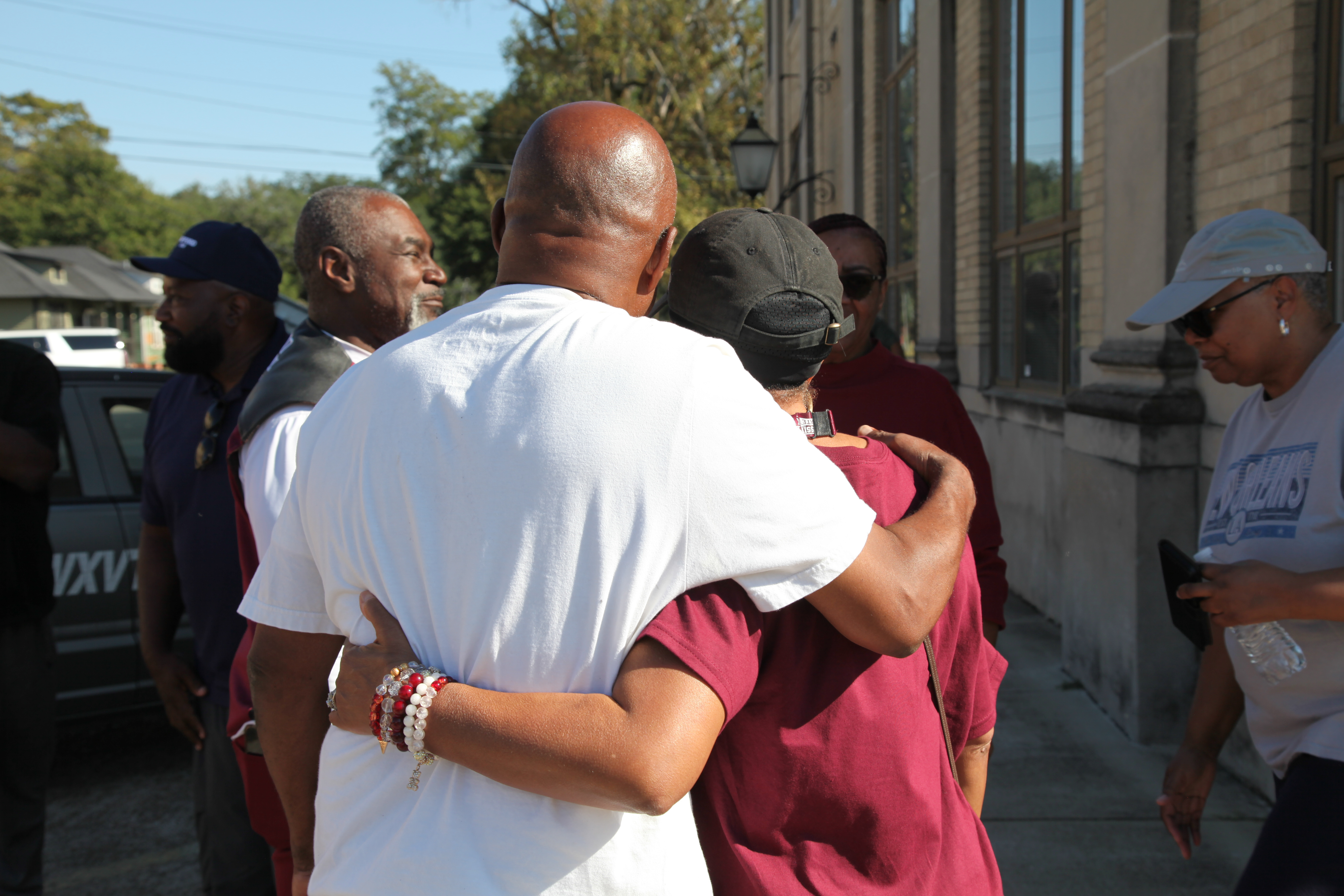
    Friends and family of victims of a shooting at a high school homecoming celebration embrace in downtown Leland, Miss., on Oct. 11.

    No family is safe in the United States as long as we continue to lead the world in manufacturing two things: weapons of mass murder, and the unvarnished rage and alienation that pulls the trigger. Or as long as our so-called leaders pretend there is nothing that can be done, aside from muttering empty prayers as blood dries on a sidewalk.

    A mass shooting at an Ivy League university is something that even gets the attention of our president as he shuttles between weekend golf outings. Donald Trump, after honing his uncanny knack for making things worse by posting and un-posting incorrect information on Truth Social, told reporters on a tarmac that “all we can do right now is pray for the victims, and for those that were very badly hurt.”

    No, Mr. President, that is not all you can do.

    You could, for starters, ask Congress to ban the kinds of assault weapons that aren’t used to hunt deer yet are all too effective at mowing down college students or grade-schoolers — something that actually happened, imperfectly but with positive results, in this country from 1994 until 2004.

    But a POTUS who’s very busy micromanaging his obscenity of a new White House ballroom has no time or interest in curbing the uniquely American curse of gun violence. To the contrary, Trump has — nearly 11 months into his second term — taken a series of actions to ensure it’s easier for fugitives or people with severe mental illness to purchase firearms, and for gun buyers to avoid child-safety devices.

    That does seem par for the course for our golfing president. Why would a man who wantonly murders people on Caribbean boats and is OK with foreign-aid cuts that have already killed hundreds of thousands of sick or starving children in Africa or Asia get worked up about some inconvenient carnage at a college engineering lab?

    Trump’s mini-me, Vice President JD Vance, also weighed in as he always does (as caught by menswear guru and internet sage Derek Guy) after an American mass shooting — with thoughts and prayers and assurance that he is “monitoring” a situation that, by implication, he is helpless to do anything to prevent.

    Still, the vice president’s thoughts and prayers for the Brown shooting seemed especially galling since this — unless I’m mistaken — is the very same JD Vance who in 2021, boosting his pro-Trump bona fides, told a right-wing gathering that “universities are the enemy.”

    Look, let’s be clear: We have no idea yet who the Brown University shooter is, although a “person of interest” has now been taken into custody. The shooter could be a student angry over a grade or perceived disrespect, or someone with deranged thoughts that don’t neatly fit into our tribal politics. Or, it could be someone who buys into the Trump/Vance hate speech that elite universities are “woke” enemies of the people. Either way, in a better world, a true leader might wake up rethinking his despicable past words toward a community that is deeply suffering.

    Looking back on my own experience, I think the reason that Brown is “the happy Ivy” is because — more than its rival schools — the university has since the 1960s walked the walk on the best and truest mission of higher education. That is teaching young people to think for themselves, with a curriculum that encourages engineers to study poetry and poets to study oceanography. It’s what makes Brown great, and what authoritarians like Trump and Vance can’t stand.

    There’s never been a Brown alumni president, but if there was — and maybe this is a little boosterism — I’d like to think they’d been taught that it’s wrong to lie to America that there is nothing you can do to curb violence. And that they’d understand that a true leader is the one who builds up our communities, not tear them down.

    I mourn today for my Brown family, but until we find the moral courage to do something about gun violence in America, no family can feel safe.

  • The Trump regime murders that aren’t on video | Will Bunch Newsletter

    There’s this idea in the sports world that when your team wins a championship like the Super Bowl, fans can’t really complain about whatever happens in the next season or two. The author of that maxim has obviously never been to Philadelphia, which is experiencing a 1776-level revolt over the Eagles’ three-game losing streak and the increasingly erratic play of the Super Bowl MVP, quarterback Jalen Hurts. So much for brotherly love, pal.

    If someone forwarded you this email, sign up for free here.

    Trump’s body count is a lot higher than two men on a wrecked ship

    A malnourished child receives treatment at Banadir Hospital in Mogadishu, Somalia, in May.

    You might have thought it would have happened when hundreds of men — in apparent conflict with a judge’s order, and often based on nothing more than a misreading of their tattoos — were shackled and flown to a notorious El Salvador torture prison.

    Or maybe it would have been making billions of dollars on crypto investments or real-estate deals with foreign dictators while running the government. Or pretending that climate change doesn’t exist. Or pardoning hundreds of bad guys, including those who launched an insurrection against the United States on Jan. 6, 2021. Even the president’s friendship with the world’s most notorious sex trafficker wasn’t exactly it.

    No, the thing that finally caused the mainstream media to go all Watergate all the time on Donald Trump and his Pentagon chief was a lot more simple, if harder to stomach: the early September murder by drone strike of two men — their identities still unknown to the world, or most of it — clinging to a piece of ship-wreckage in the Caribbean Sea near Venezuela.

    Flip on the favorite show of the Beltway set — MS Now’s Morning Joe — and there practically is no other story than the second attack on the seemingly helpless victims of an initial drone strike that killed their nine comrades. The media is demanding to learn what did self-proclaimed “Secretary of War” Pete Hegseth know about the strike, and when did he know it. Commentators are calling the killing a war crime at best, a murder at worst. An unnamed lawmaker who saw a video of the second strike told reporters that the film is nauseating.

    Pressure on the Trump regime to release this 45 or so minutes of footage of the boat attack is intensifying, and it’s not hard to understand why. It’s a bit like 2020’s video of the excruciating cop murder of George Floyd in Minneapolis, which made a problem that activists had been talking about for decades — police brutality — so real for everyday folk that millions took to the streets.

    Likewise, people have been calling Trump names — including the “f-word,” fascist — ever since the Manhattan real-estate mogul descended the escalator at Trump Tower to run for president in 2015. But somehow the mental image of men reportedly begging to be saved seconds before an admiral gives the order to obliterate them has captured the angry imagination in a way that past Trump outrages did not. No wonder Trump has flip-flopped on releasing the video.

    Look, I’m glad the media and Congress, including some Republicans, are finally taking seriously the idea that major felonies are being committed in Trump World. Still, the two men killed in what’s called the double-tap strike came after nine other people had already been blown up, in an attack against civilians of a nation America is not at war with, who were accused of committing a crime — drug trafficking — that is not a capital offense.

    There is no legal, let alone moral, justification for this attack — and it was the first of a series of drone strikes that have killed at least 86 people. There’s a strong case that every one of these is a war crime. It’s just that the killing of the two men clinging to debris appears even more egregious.

    This highlights an even weightier issue. From Day One of Trump’s second term, there has been a callous indifference to human life — a hallmark that the current U.S. government unfortunately shares with many other authoritarian regimes throughout history. But the media, and the watchdogs, have struggled to convey this reality with so many of the deaths taking place off camera.

    So far, the worst crime has been the rash move back in the first weeks of the new administration by Trump’s billionaire then-ally Elon Musk and his so-called Department of Government Efficiency, or DOGE, to dismantle the U.S. Agency for International Development (USAID) — a once-thriving $34-billion-a-year agency that funded food, medicine, classrooms and other aid in developing nations.

    The Musk team labelled USAID as inefficient and out of whack with Trump’s new priorities like curbing immigration. This despite the fact that experts saw the American agency as the best projector of “soft power” around the globe as it saved literally millions of lives, especially for children under age 5.

    “We are now witnessing what the historian Richard Rhodes termed ‘public man-made death,’ which, he observed, has been perhaps the most overlooked cause of mortality in the last century,” Atul Gawande, a surgeon who worked with USAID in the Joe Biden years, wrote last month in the New Yorker. Gawande estimated that the wanton destruction of USAID programs that offered vaccines and fought AIDS and infectious disease outbreaks caused 600,000 needless deaths in the first 10 months of the Trump regime, with millions more to come.

    This week, the philanthropic Gates Foundation reported that for the first time in the 21st century, mostly preventable deaths of children under age 5 are rising instead of falling, and the main culprit is cuts in development aid, led by the United States. “We could be the generation who had access to the most advanced science and innovation in human history,” the billionaire philanthropist Bill Gates said, “but couldn’t get the funding together to ensure it saved lives.”

    The MAGA comebacks to cries that Trump is a fascist dictator often claim that innocent people aren’t getting slaughtered as happened under Adolf Hitler or Mao Zedong or other historic despots. The truth is that the regime’s cruelty-is-the-point demagoguery is inevitably becoming a death cult, epitomized by Musk’s chainsaw DOGE shtick. The murder happens in small batches, on boats off South America, and it also happens in big lots in places like famine-plagued South Sudan, as children die from aid cuts to badly needed health centers.

    And increasingly, Trump’s death cult is taking root here at home, from the 25 humans, and counting, who’ve died in ICE’s overcrowded detention centers this year, to individuals like Roberto Carlos Montoya Valdez, who was struck by cars while running away from immigration agents who raided a Home Depot parking lot in Southern California. This is before we know the full and likely lethal impact of alarming health policy changes from Robert F. Kennedy Jr.’s Health and Human Services Department, and the toxic anti-vaccine culture he promotes.

    We should be just as outraged by the deaths that take place out of sight, in dusty and remote places on the other side of the world, as by two premeditated murders captured in a MAGA snuff film. Understanding the nature of Trump’s cult of death is critical for folks to find the courage to rise up and stop this before it gets much, much worse.

    Yo, do this!

    • The one thing that truly sets MS Now’s Rachel Maddow apart from her peers as an opinionated late-night cable-news host is her love for history, and her ability to put today’s crisis in the context of what came before. In her second life as a top podcaster, Maddow’s sweet spot has become America before, during, and immediately after World War II, and what memory-holed stories from that era tell us about today. Her new audio series, Burn Order, is about immigration, paranoia and demagoguery — not now, but in the unconscionable internment of Japanese-Americans in the 1940s. Two episodes in, it’s her best podcast yet.
    • I’ve never really kept my promise to include great restaurants and bars in this space, but here goes. During last week’s fairly frantic journalistic sojourn to New Orleans, I took one night off and grabbed a beer in what might be the greatest American dive bar, Jake and Snake’s Christmas Club Bar. This shotgun shack of a watering hole in the middle of an otherwise residential street has to be seen to be believed, both on the ramshackle outside and in the dark interior pumping 1950s rockabilly and lit only by — what else? — Christmas lights. There is no better way to kick off your holiday season.

    Ask me anything

    Question: All things considered, the U.S. has weathered this first year of the second Trump regime OK. But three more years of this? Any guesses as to what happens between now and then? — Shawn “Smith” Peirce (@silversmith1.bsky.social) via Bluesky

    Answer: Weathered? Just barely. But I do exit 2025 slightly more optimistic than I began the year, thanks to the size of the No Kings protests and the growing resolve of citizen resistance to immigration raids. What happens in the next three years? I think 2026 will be pivotal. Trump will surely look at his sagging polls and double down on dictatorship, which could include misguided foreign wars, more aggressive use of troops at home, and efforts to somehow nullify next November’s midterms. I also think these will fail, which means a Democratic Congress in 2027 and 2028 that will certainly impeach Trump and restrain his worst impulses. If not, I may be writing this newsletter from my prison cell.

    What you’re saying about…

    The question I posed here two weeks ago about the John F. Kennedy assassination was a good, evergreen topic ahead of a long break. Maybe it was my boomer-heavy readership, but all but one respondent didn’t believe that Lee Harvey Oswald acted alone. “I also saw Jack Ruby shoot Oswald on live television, another searing memory,” wrote Laura Hardy, who was 8 in 1963. “Nothing ever added up in my mind. Still doesn’t. Was it the Russians? The CIA? The mob?” The one naysayer was Armen Pandola, who argues that “JFK was a fairly conservative Democrat at the time…Where is the motive?”

    📮 This week’s question: This has been asked before, but it’s still the most important thing going. Trump is appearing in public with a bruised, bandaged hand, prone to weird digressions or outbursts. So what is the deal with his health? Please email me your answer and put the exact phrase “Trump’s health” in the subject line.

    Backstory on an all-too fitting venue for Trump’s Pa. speech

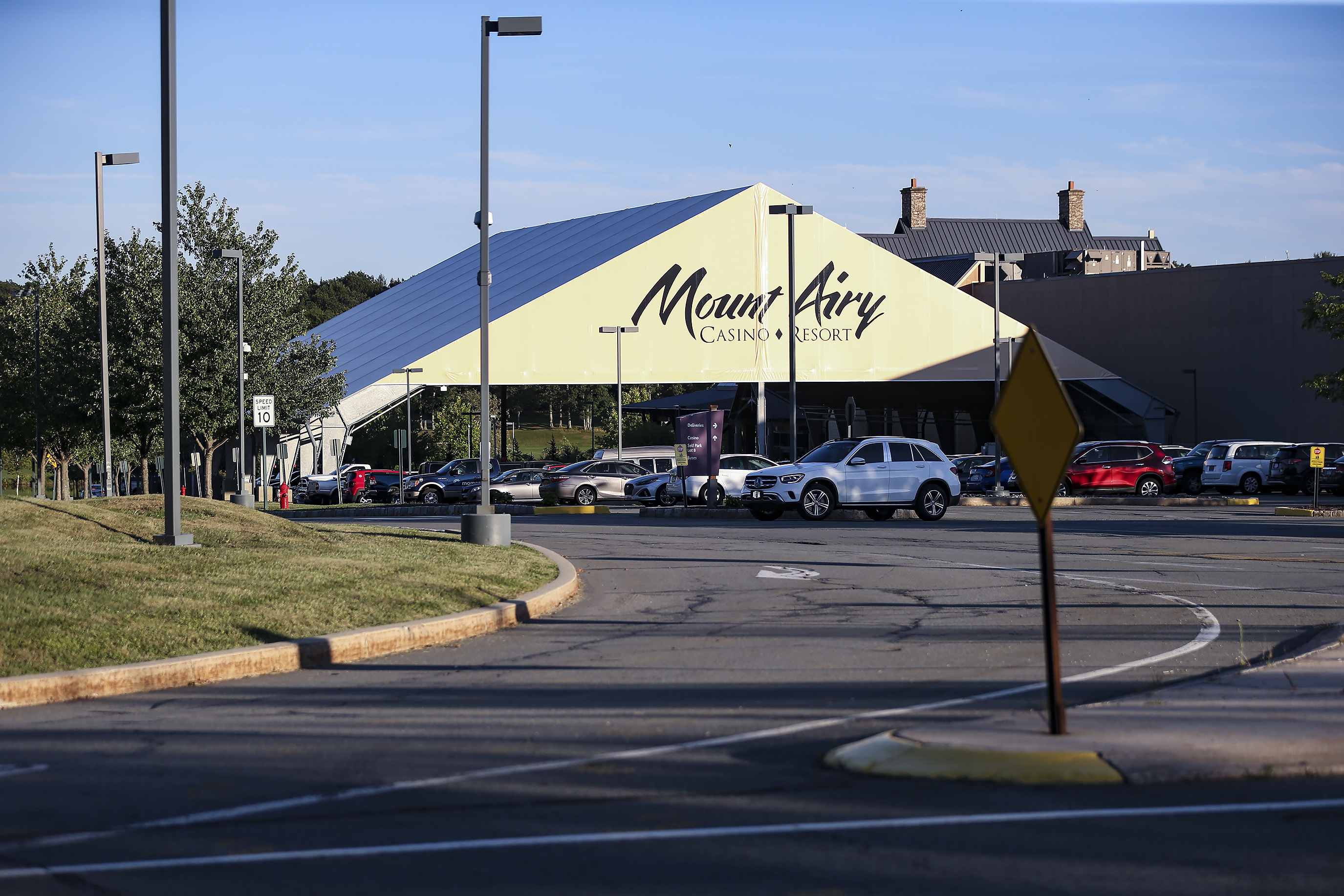
    The Mount Airy Casino Resort in Mount Pocono, Pa.

    Donald Trump may be constitutionally ineligible to run again for president — no seriously, he can’t — but that factoid apparently isn’t stopping the 47th POTUS from campaigning in the critical swing states. Why else did Trump choose Pennsylvania — a state he visited a gazillion times as a candidate — as the location for a major speech on the economy, to convince citizens that what they are seeing in supermarket aisles is not what’s happening? I can’t even imagine what Trump will say Tuesday night, but I was stunned to learn the regime’s choice of venue: The Mount Airy Casino Resort, the former honeymoon haven in Mount Pocono.

    It’s not just that Trump is touting economic security in a casino, which seems way too fitting in an America where so many folks have decided that the only way they’ll ever get rich is through gambling, whether that’s a get-rich-quick investment in crypto or meme stocks, or by an addiction to the betting sites like DraftKings that are devouring the sports world. Or that the backdrop might remind people that Trump was the rare entrepreneur who drove his own Atlantic City casinos — supposedly a license to print money — into bankruptcy.

    The real problem is that the Mount Airy Lodge is the epitome of the real Trump economy: Public corruption. Like Trump’s real-estate empire, the original Mount Airy Lodge fell on hard times in the 1990s, and its longtime owner died from a self-inflicted gunshot wound in 1999. The supposed savior was the state’s headlong rush into casino gambling and northeastern Pennsylvania’s landfill magnate Louis DeNaples, long dogged by allegations of ties to Scranton’s organized crime family. In 2008, DeNaples was indicted on four counts of perjury tied to his casino permit application; ultimately the politically connected businessman turned over the casino to a trust chaired by his daughter and saw the charges dropped. But the Mount Airy Resort Casino remains dogged by controversy, including a recently proposed $2.3 million settlement with its table-games dealers who accused the owners of years of wage theft.

    But Trump considers DeNaples “a close friend,” and the Mount Airy casino nabbed a $50 million federal bailout loan during the COVID-19 pandemic in the final year of Trump’s first term. Five years later, is there a positive story about the Trump economy that can be told from this stage of dropped felony charges, alleged wage theft, and government largesse for the well-connected? Don’t bet your nest egg on it.

    What I wrote on this date in 2015

    Ten years ago, I was fascinated by the decades-long political rise of Vermont senator and then-White House hopeful Bernie Sanders. This left-wing curmudgeon and relic of the 1960s didn’t capture the White House but changed America, for good. On Dec. 9, 2015, I touted my Amazon Kindle Single e-book about Sanders (The Bern Identityit’s still available!) and offered highlights. I wrote: “Politics mattered then, before Chicago and Kent State and Watergate and all the cynicism, and the unvarnished, authentic voice of Bernie Sanders is bringing that feeling back for many.” Read the rest: “5 things I learned writing an e-book about Bernie Sanders.”

    Recommended Inquirer reading

    • Did I mention that I went to New Orleans? I wrote two columns from the scene of Homeland Security’s immigration raid that the Trump regime has branded “Catahoula Crunch” in a gross homage to the Louisiana state dog. The first piece looked at Day One of the operation — the Big Lie behind the raids that claim to target criminals but instead go after day laborers, usually without criminal records — and the fear that pervaded the Latino community. The second column was a much more hopeful look inside the growing citizen resistance, as I profiled the everyday folks who are taking risks to blow whistles, chase cars, and generally impede Trump’s mass deportation agenda.
    • Last week — if you could somehow make it through the sickening bromance between Donald Trump and FIFA, the world governing body of soccer — we finally learned the key groupings and early-stage matches of the 2026 men’s World Cup finals across the United States as well as our now frenemies Canada and Mexico. You won’t be surprised to know that The Inquirer’s soccer writer extraordinaire Jonathan Tannenwald was all over the key developments. We learned who the U.S. team will play: Paraguay, a to-be-determined European qualifier, and Australia, in a June 19 Seattle match I still want to attend if I can start a GoFundMe (kidding…maybe) for the astronomical ticket prices. The Philadelphia matches include perennial contenders France and Brazil as well as a Curaçao-Ivory Coast showdown that I’m excited for because I might be able to afford it. The World Cup is going to be one of the biggest stories of 2026, and you know the Inquirer will cover this like an Italian center back. This alone will be worth the price of a subscription, so what are you waiting for?

    By submitting your written, visual, and/or audio contributions, you agree to The Inquirer‘s Terms of Use, including the grant of rights in Section 10.

  • Life during wartime in New Orleans as feds terrorize Latinos who saved a city

    Life during wartime in New Orleans as feds terrorize Latinos who saved a city

    KENNER, La. — When the day New Orleans had feared for weeks finally came on Wednesday, it began with a lie as wide as the meandering Mississippi River.

    A port city somehow dubbed the Big Easy despite its centuries of big trouble woke up to a frigid blast of Arctic air and a claim from the U.S. Department of Homeland Security that local immigration raids it’s named the “Catahoula Crunch” would narrowly target “criminal illegal aliens roaming free thanks to sanctuary policies …”

    Within a couple of hours — in raids that were, in fact, wildly untargeted — SUV caravans bearing masked, green-uniformed U.S. Customs and Border Protection (CBP) agents stormed into parking lots and at suburban Home Depots and Lowe’s, blitzkrieged Latino restaurants and a car wash on a busy strip near the airport, and cruised neighborhoods looking for roofers to arrest.

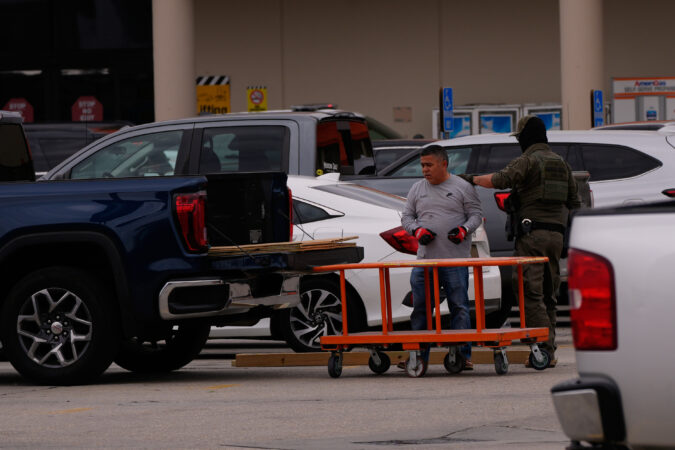
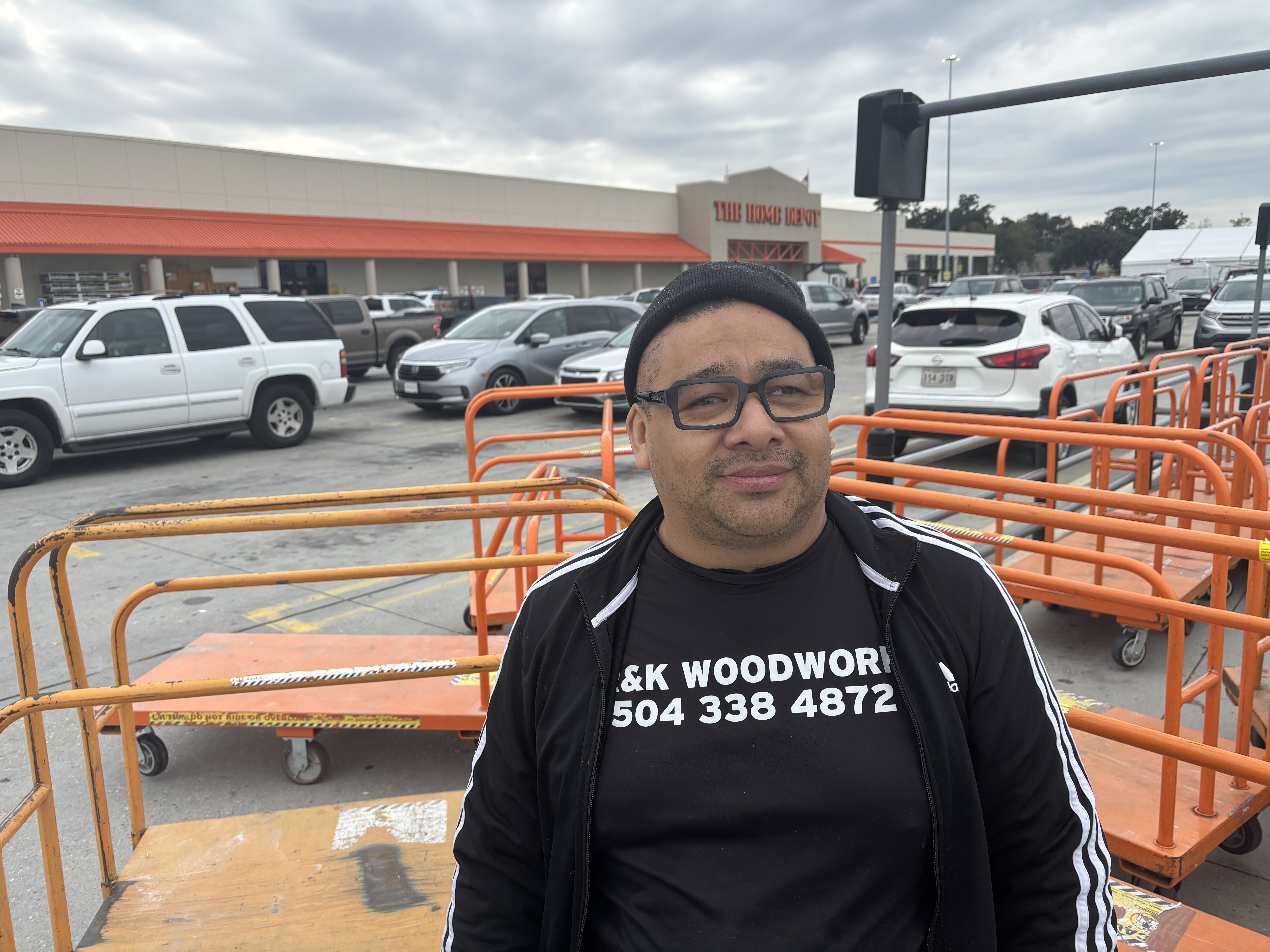
    On a hunch, I drove to a Home Depot here in Kenner at lunchtime and found them: a platoon of maybe 15 masked Border Patrol officers in olive-drab uniforms and dark baseball caps wrapping up a sweep of the parking lot, strutting past the piled-up orange shopping carts and ignoring a film crew shouting, “Why are you here?”

    Ricardo Ramírez, a 50-year-old construction worker and a U.S. citizen, had just pulled into the Home Depot lot to return some items when, as he told me a few minutes later, one of the officers came up to him and barked, “Which country? Are you a citizen?” Ramírez carries his passport because “it’s so crazy what’s going on that I have to, just because I look Spanish” — and was surprised when the officers moved past without asking to see it.

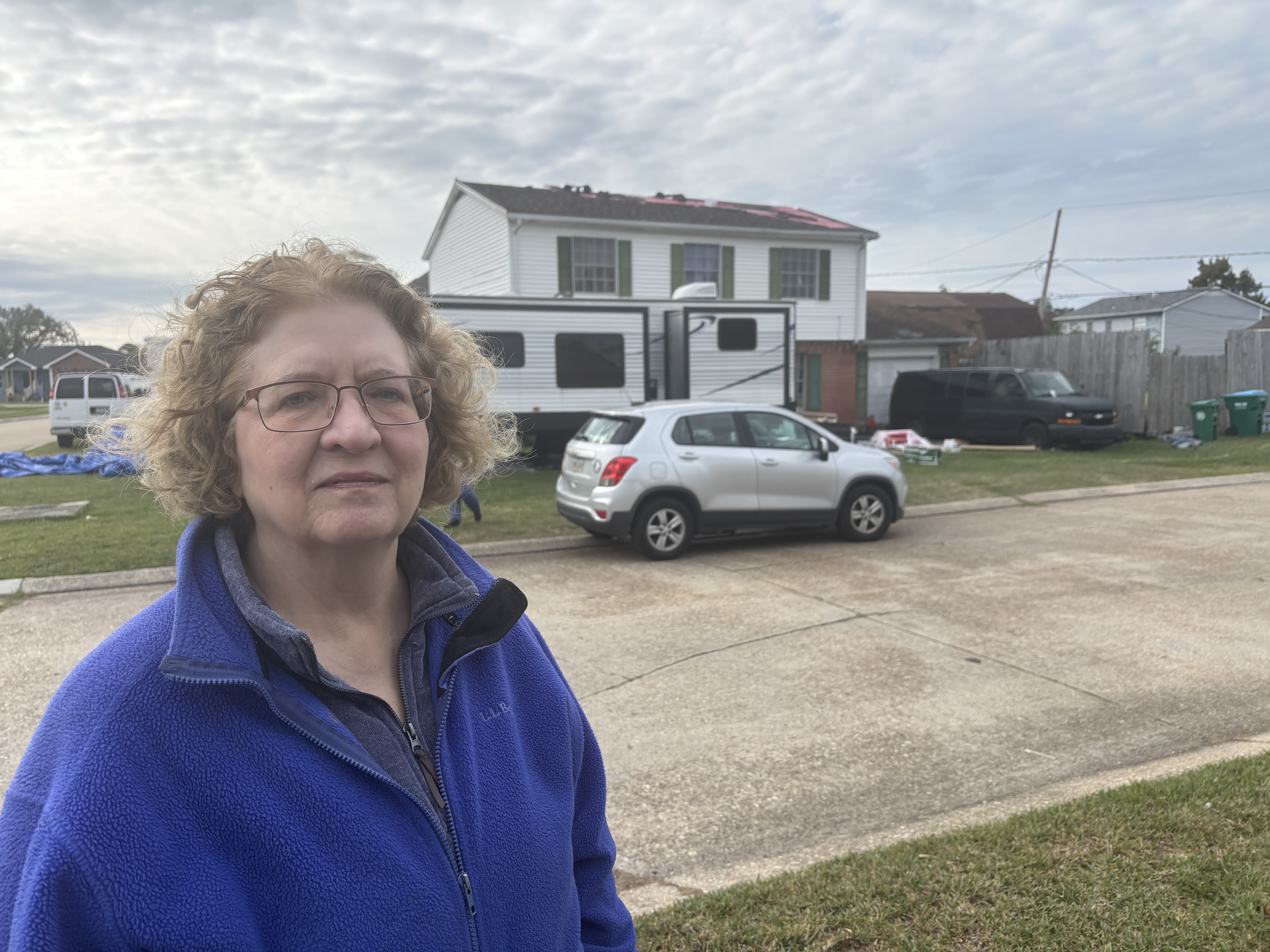
    But at that moment, just two miles away in a suburban subdivision in North Kenner, citizen volunteers raced to find another 12-agent Border Patrol team raiding a two-story home with white siding and green shutters. As an agent trained a sniper rifle on them, two Latino workers who’d been replacing a metal roof damaged in a recent hurricane stood atop the home, hands in the air.

    Zoe Higgins, a 33-year-old social worker who volunteered with the group Unión Migrante to track the immigration raids and watched the tense drama, told me, “I could only imagine how they were feeling, and I was filled with anger.” But as more and more citizens and some journalists crowded the narrow, one-way Louisiana State Drive, they saw the agents leave — the rooftop workers spared, but two other crew members handcuffed and whisked away, destination unknown.

    This is life during wartime in America in 2025, as an iconic U.S. city that celebrates itself as a boiling gumbo pot of Spanish-style architecture, Louisiana French, and spicy Creole culture suddenly finds itself under a terrorizing siege from the same federal government that promised billions so “New Orleans will rise again” after the devastation of Hurricane Katrina 20 years ago.

    Heard about Los Angeles? Heard about Chicago? Heard about Charlotte, N.C.? The 10-month-old Donald Trump regime has stumbled into a playbook for the xenophobic mass deportation drive it promised voters in 2024 — an “American Counter-Revolutionary Guard” of around 250 masked Border Patrol officers, led by the arrogance and telegenic evil of their commander, Greg Bovino, rampaging the Lowe’s parking lots and back alleys of one U.S. city before caravanning in their black SUVs to terrorize the next.

    Ricardo Ramírez, a 50-year-old construction worker, talks about being questioned by Border Patrol agents at a Home Depot parking lot in Kenner, La., on Wednesday.

    I flew from Philadelphia into Greater New Orleans Tuesday afternoon, just in time for the launch of the so-called Catahoula Crunch, because I wanted to see what it looked and felt like when the U.S. government sends a commando squad to wage war on one of its own cities. That meant spurning the beignets and darkened French Quarter jazz clubs of my 10 prior visits here and instead embedding on Williams Boulevard in Kenner, where former Pizza Huts are now taquerias with twinkling white lights and mariachi-style music is pumped into the markets.

    This is the New Orleans tourists only see speeding past in their airport Ubers, where in low-slung brick homes under the constant roar of jet engines, the Latino community has nearly tripled since 2000 — swelled by Mexican and Central American workers who labored around-the-clock on the massive post-Katrina reconstruction. That narrative of communal pride has been swamped by a palpable fear that this week pervades Kenner, where nearly a third of residents are Latino, yet the police chief is pro-immigration raids.

    By the end of the day, observers tallied around 12 to 14 apparent arrests. There was no evidence that any of these people were on the list of 10 most-wanted actual criminals Homeland Security pictured along with Wednesday’s launch — catnip for the Fox News audience clinging to the delusional Big Lie that Team Bovino is only targeting bad guys.

    Instead, his secret police just swarmed wherever they could find the most brown-skinned people — the Home Depot lot, a white van filled with contractors, Mexican restaurants — and acted like the gun-toting officer in the recent movie Civil War who famously asked, “What kind of American are you?”

    In Bovino’s past operations, only a fraction of those arrested and facing deportation had criminal records — just 44 out of 370 in last month’s Charlotte op — and there was no evidence that Louisiana’s “Catahoula Crunch” would be any different.

    The Rev. Jane Mauldin, a Unitarian minister and immigration watchdog, outside a home worksite that was raided by Border Patrol agents on Wednesday.

    Yet, the real terror in Kenner is what you don’t see — a vibrant community that overnight has vanished underground.

    Shoppers who enter the Latino-oriented Ideal Market on the Williams strip are greeted with a sign: “STOP: NO ICE ACCESS IN THIS BUSINESS.” Yet, at midmorning Wednesday, there was just one shopper in the entire supermarket, outnumbered by workers stocking bins of green and yellow plantains and glistening produce that looked utterly untouched.

    “A lot of people are staying home, not going out,” Ramírez, the worker questioned by Border Patrol, told me. “We work in construction, and we are shorthanded. We know people don’t want to go to work. They are afraid.”

    Several local volunteers shared the same thought: that these “papers, please” random raids and the families hiding behind closed blinds and locked doors remind them of the stories they’ve read about Jews who lived in constant fear of Nazi raids in the 1930s and ‘40s.

    “I keep thinking about Anne Frank, who was kept alive with her family by a good friend named Miep,” said the Rev. Jane Mauldin, a Unitarian minister who was one of the volunteers who raced to the North Kenner raid on the roofers, referring to the Jewish teen who eventually died in a German concentration camp in 1945, and her Dutch protector. “I keep in my head saying, ‘What would Miep do?’”

    School attendance is down, and church pews are empty. Volunteers are collecting food for families that have suddenly gone into a COVID-level lockdown, and almost everyone who is out and about has a friend or coworker who abruptly went into hiding when they heard Border Patrol had targeted New Orleans.

    Father Luis Duarte, a 33-year-old immigrant from Colombia, talks about plunging attendance at St. Jerome Catholic Church, in Kenner, La., where he is pastor, as federal immigration raids begin on Wednesday.

    “There is a good friend of mine who hasn’t left her house in a week,” Mauldin said. “Her children are not going to school because of the fear … And she has all the right papers, but she’s not a citizen, so there is a possibility that she could be kidnapped and taken away and never see her children again.”

    The Rev. Luis Duarte, the 33-year-old Colombian-born priest at St. Jerome Roman Catholic Church in Kenner, told me that attendance at weekend Masses offered in Spanish has plunged, and a family that for weeks had been planning a joyous quinceañera for their daughter’s 15th birthday called it off. “They are fearful,” he told me, adding, “Not fearful because they are criminal, but because they are Hispanics.”

    Duarte was one of many who spoke of the unbelievable irony that the very people who came to the United States with hammers and 16-hours-a-day energy to rescue New Orleans in its darkest hour, after flooding from 2005’s Hurricane Katrina swamped thousands of homes and killed 1,833 people, are now seeing their new world turned upside down by the same U.S. government that vowed to rebuild the Crescent City.

    Duarte said his parishioners have told him of yard signs that welcomed the 2005 influx in Spanish — the same language government agents are now using to profile those they seek to handcuff and whisk away. “So when I see what’s going on now …” the priest said, then paused. “Yeah, why?”

    Yeah, why? This feels like a domestic Vietnam in reverse: We saved the town in order to destroy it. You can glean clues from the way Bovino and his cosplay tin soldiers preened for the prearranged cameras on Canal Street Wednesday afternoon, or the twisted name for his operation. The Catahoula leopard dog is the official state canine, revered by Louisiana’s early settlers for their ability to herd cattle and hunt down wild boars. The “crunch” is the sound of jaws ripping flesh. It’s a terrible echo for a place that once sicced bloodhounds on its enslaved people.

    The cruelty was the point in 1825. The cruelty is the point in 2025. The day laborers outside Lowe’s, just wanting to hammer shingles onto your roof, are the modern-day Christians thrown to Bovino’s cowardly lions in a Roman circus for Fox News couch potatoes. Same as the Somali Americans in Minneapolis, whom Trump was slandering on Wednesday as “garbage.” The worst Americans can revel in the latest model of white supremacy while their Dear Leader is robbing them blind and stashing the profits in crypto or the Trump Plaza Kazakhstan or whatever.

    But every day, more and more people are catching onto the scam and asking what Miep would do. “This hits very deep and very personal for many of us — in my neighborhood, almost every roof had to be replaced,” Mauldin said. “The men who were willing to go on the roof in 100-degree heat in September 2005 were not white, not Black — mostly, they were the Latino men who rebuilt this city.”

    Hours later, I stood at the busy corner of Elysian Fields and St. Claude with a dozen protesters amid a nonstop cacophony of cars responding to one of their signs: “Honk If Your Ancestors Were Immigrants.”

  • The Catch-22 around Trump’s illegal orders | Will Bunch Newsletter

    There’s an old saying — well, there ought to be one — that the surest way to jinx something is to write, “I don’t want to jinx it…” My Border Patrol tornado-chasing trip to Charlotte was doomed the moment I posted about it here — frantically canceled when I learned 17 hours before takeoff that the BP had abruptly ditched North Carolina. There is a Plan B but no way will I jinx it a second time.

    If someone forwarded you this email, sign up for free here.

    It’s better to stop Trump’s illegal orders than hope troops will disobey them

    Lt. William L. Calley Jr., center, and his military counsel, Maj. Kenneth A. Raby, left, arrive at the Pentagon for testimony before an Army board of investigation hearing into the My Lai Massacre in December 1969. Calley led the U.S. soldiers who killed hundreds of Vietnamese civilians in the most notorious war crime in modern American military history.

    A U.S. Army helicopter pilot named Hugh Thompson Jr. may be the greatest American hero you’ve probably never heard of. On March 16, 1968, Thompson — a warrant officer serving in Vietnam — and his crew were dispatched to support a “search and destroy” mission supposedly targeting the Viet Cong in a tiny hamlet called My Lai.

    Instead, the Georgia-born soldier came up upon arguably the most notorious war crime in U.S. history — with thatch hutches ablaze and countless villagers, including women and children, laying dead or dying in an irrigation ditch.

    Thompson landed and found the commander on the ground, Lt. William Calley. “What is this?” he asked. “Who are these people?”

    “Just following orders,” Calley replied. After some more back and forth, the flustered Thompson replied: “But, these are human beings, unarmed civilians, sir.”

    What Thompson and his helicopter crew did next was truly remarkable. Holding Calley and their other U.S. comrades at bay, they shielded a group of Vietnamese women, children and old men as they fled. Eventually, he loaded 11 villagers into the helicopter, and then Thompson and his men thought they detected movement in the ditch. Two fellow solders found a boy, just 5 or 6, hiding under the corpses, “covered in blood and obviously in a state of shock.” After safely evacuating the boy to a military hospital, Thompson reached a lieutenant colonel who ordered Calley to stop the killings.

    Near the end of his life, Thompson — who died in 2006 — and two comrades were recognized for their courage and the many lives they saved at My Lai, awarded the Army’s highest award for bravery not in conflict with an enemy (the Soldier’s Medal), as well as the the Peace Abbey Courage of Conscience Award. He even returned to My Lai for an emotional reunion in 1998.

    But it wasn’t like that in real time. During the war, a prominent congressman demanded that Thompson be court-martialed. “I’d received death threats over the phone,” he told CBS’ 60 Minutes in 2004. “Dead animals on your porch, mutilated animals on your porch some mornings when you get up.”

    A generation after Thompson’s death, the kind of bold action he took that day in 1968 — disobeying what he correctly understood as an illegal order — is yet again on America’s front burner. This time, the debate is fueled by a video from six veterans who now serve as Democrats in Congress ― reminding today’s soldiers about their sworn duty to disobey unlawful commands.

    That every expert in military law agrees with this principle hasn’t stopped President Donald Trump or his defense secretary, Pete Hegseth, from going ballistic — calling the Democrats “traitors” or even reposting calls for their death by hanging.

    On Monday, Hegseth kicked things up a notch by endorsing a plan for one of the six — Arizona Sen. Mark Kelly, a former astronaut and decorated Navy fighter pilot — to return to active duty, so that he can be court-martialed for taking part in the video. A statement from the Pentagon, which Trump and Hegseth call “the Department of War,” insisted that “orders are presumed to be lawful. A servicemember’s personal philosophy does not justify or excuse the disobedience of an otherwise lawful order.”

    Even as the growing controversy dominates the headlines, there is one aspect to the illegal-orders debate that practically no one is talking about. Actions like Thompson’s refusal at My Lai don’t only stand out for the soldier’s gumption. It is also the stuff of peace prizes and 60 Minutes profiles because it is so incredibly rare.

    Do your own research. It’s very difficult to find examples in America’s 249-year history of troops disobeying orders because they are believed to be illegal. To be sure, there are famous incidents of soldiers who disobeyed an order and heroically saved lives — but almost all of them were because the command was reckless or just plain stupid, which isn’t the same as illegal or unconstitutional.

    It’s not like there haven’t been opportunities. There have been American war crimes from Wounded Knee to Abu Ghraib, what Barack Obama famously called “dumb wars” like the 2003 assault on Iraq, and moments of intense moral agony, like dropping atomic bombs on Hiroshima and Nagasaki. These did produce a few whistleblowers or conscientious objectors, of course, but cases of actually refusing an order are few.

    It’s not hard to understand why. Most military orders — even ones later reviled by history — come with some veneer of legality, whether it’s an opinion from a military lawyer or a congressional authorization vote, as happened with Vietnam, Iraq, and other conflicts.

    The video recorded by Kelly and the others (including Pennsylvania Reps. Chrissy Houlahan and Chris Deluzio) focuses only on the widely accepted principle that military men and women must follow the law and the Constitution above all else, and doesn’t mention Trump or any specific disputed orders. In interviews, though, Democrats like Kelly and Houlahan have criticized Trump’s ongoing attacks on boats off South America that the regime claims are smuggling drugs.

    While almost every expert on military laws describes these attacks — which have killed at least 83 people— as extrajudicial killings lacking legal justification, the Office of Legal Counsel in Trump’s Justice Department has nonetheless written a secret classified memo to justify them. Any officer or lower-level troop ordered to blow up these boats and kill all the people on board hasn’t seen the memo. And they won’t get a medal for saying “no” — at least not in 2025. They will be court-martialed and vilified by MAGA.

    New York Times opinion writer David French, a Harvard Law grad who served as an Army lawyer in Iraq, notes the congressional video didn’t advise troops on what exactly is an illegal order, and adds: “Individual service members don’t have sufficient knowledge or information to make those kinds of judgments. When time is of the essence and lives are on the line, your first impulse must be to do as you’re told.”

    Not always, as Thompson showed at My Lai, but military matters are rarely that black and white. The Trump regime’s sending of National Guard units and even active-duty military into cities such as Los Angeles may be an unnecessary and inflammatory violation of democratic norms, but experienced judges continue to debate its legality. Expecting the rank-and-file troops to decide is asking a lot.

    It is very much in the spirit of Joseph Heller’s World War II novel and its legendary Catch-22: A soldier must disobey an illegal order, yet orders, in the heat of the moment, are almost never illegal.

    That doesn’t mean Trump and Hegseth threatening Kelly and the other Democrats with jail and possibly the noose isn’t utterly outrageous. After all, they did nothing more than remind soldiers of their obligation to the law in the same language their drill sergeants use in boot camp.

    I do also think — understanding the limitations of a MAGA-fed Congress — that good people of both parties on Capitol Hill should be doing a lot more to invoke the War Powers Act, hold hearings, debate impeachment, and do whatever else they can to prevent Trump’s reckless acts in the Caribbean and elsewhere. In other words, stop illegal orders before they’re given.

    That said, as the Trump regime deteriorates, there may come a day when right and wrong feels as obvious as it did that 1968 day in the rice paddies of Vietnam. If, heaven forbid, this government ever ordered troops to put down a protest by firing on citizens, we will need a platoon full of Hugh Thompsons and no William Calleys, “just following orders.”

    Yo, do this!

    • The writer Anand Giridharadas is the best of today’s public intellectuals, with a laser focus on the 1 Percent and the devastating role of income inequality in works such as Winners Take All, which rips apart the facade of modern philanthropy. So who better to pour through the late financier-and-sex-fiend Jeffrey Epstein’s emails and find the true meaning? His recent, masterful New York Times essay — “How the Elite Behave When No One Is Watching: Inside the Epstein Emails” — parses the small-talk and atrocious grammar of America’s rich and powerful to decipher how they rule. It is a must read.
    • Saturday was the 62nd anniversary of the day that changed America, for bad: the assassination of President John F. Kennedy as his motorcade rolled through downtown Dallas. It was also the day I was savaged by several dozen people on Bluesky for expressing an opinion shared by 65% of Americans: that we haven’t been told the whole truth about what really happened on Nov. 22, 1963. Kudos to ABC News for a new special that aired Monday looking at both sides of the endless controversy — Truth and Lies: Who Killed JFK? — that included skeptics like veteran journalist Jefferson Morley of the excellent site JFK Facts. The one hour-special is now streaming on Hulu.

    Ask me anything

    Question: Why is the Trump administration uncritically regurgitating the Russian “peace plan”? — @kaboosemoose.bsky.social via Bluesky

    Answer: That’s a great question as our president has consistently told us that the “Russia! Russia! Russia!” scandal around Vladimir Putin’s U.S. election interference and his seeming sway over the 45th and 47th president is all a massive hoax. How to explain, then, that the supposedly-Trump-drafted 28-point peace plan to end the fighting in Ukraine was translated from its original Russian, with its details hashed out in Florida by corrupt and contented Trump son-in-law Jared Kushner and Kirill Dmitriev, a U.S.-sanctioned Russian envoy? It’s probably true that liberals were naive during Trump’s first term to believe the strange ties between MAGA and the Kremlin would bring down his presidency, but it’s also true that where there’s smoke, there’s fire. We all want peace in Ukraine, but Trump and his U.S. government simply are not honest brokers.

    What you’re saying about…

    Last week’s question about the Jeffrey Epstein files, and whether they’ll ever see the light of day despite enactment of the law calling for their release, was kind of open-ended, and thus it drew an array of responses. But most agreed with my view that it’s highly unlikely we’ll see the files, or see very much. “They won’t release them because they are now investigating the Democrats in the files, thus they won’t be able to release them due to the investigation,” Rosann McGinley wrote. “Also they’d be heavily redacted, ‘nothing to see here.’” Added Judy Voois: “I would not be surprised if he declared war on Venezuela just to steer the media and public interest away from continued scrutiny of the Epstein saga.”

    📮 This week’s question: The heated reaction I received online about the JFK assassination now has me wondering what newsletter readers think. Do you believe Lee Harvey Oswald was the lone killer of John F. Kennedy, or do you think there was a conspiracy? Please email me your answer and put the exact phrase “JFK assassination” in the subject line.

    Backstory on Pennsylvania’s budget deal with the devil

    Pennsylvania Gov. Josh Shapiro speaks at a news conference at the United Association Local 524 union building in Scranton, Pa. in March 2024.

    Saturday was the 62nd anniversary of the JFK assassination, but on Nov. 22, 2025 it was the entire planet that was under fire. One researcher declared that globally it was the hottest Nov. 22 ever recorded. It didn’t feel that way at my windswept dog park in Delco, but it did from the American Southeast — experiencing a record heat wave — to Tehran, where an epic drought has seen water fountains run dry. And yet the world’s leaders were on a full-fledged retreat from climate action, from the White House, where U.S. CEOs toasted the oil dictatorship of Saudi Arabia at a posh dinner, to Brazil, where a global summit on climate change failed to take on the hegemony of fossil fuels, to Harrisburg.

    In a state that’s kowtowed to Big Oil and Gas interests since the days of John D. Rockefeller, Pennsylvania Republicans used the shame of the nation’s longest state-budget impasse to finally ram home their most cherished agenda item: gutting efforts in the Keystone State to work with our neighbors to control the greenhouse-gas pollution behind climate change. The GOP-run state Senate backed Democratic Gov. Josh Shapiro into a corner. Pennsylvania had to withdraw from Regional Greenhouse Gas Initiative (RGGI), a regional pollution-control system, or the money wouldn’t resume flowing to schools and other vital services.

    To be clear, the drivers of this giant step backward were state lawmakers who’ve been swimming in Big Oil’s tainted campaign cash for a couple of decades now. But the capitulation, even at political gunpoint, was not Shapiro’s finest hour — especially as the Democrat with apparent ambition for higher office continues to push for polluting and energy-devouring data centers that he claims will boost the economy. As the American Prospect noted in a new piece, Pennsylvania’s environmental retreat came at the same time Virginia was electing a Democratic governor in Abigail Spanberger who’d promised to restore her state to the RGGI. If Shapiro does run for president in 2028, he may struggle to explain this deal to climate-minded voters.

    The real problem, though, is that the best way to tackle climate change is by going on offense, with aggressive programs to promote alternative energy such as wind (there seems to be a lot of that around here) and solar that aren’t not only cleaner but a better deal for beleaguered consumers. While Pennsylvania — second only to Texas in natural-gas production — went all in on fracking, a 2024 survey found the commonwealth was 49th on expanding wind power and energy efficiency. With RGGI in the rearview mirror, the Shapiro administration needs to work a lot harder on green energy. That would be good for our governor’s White House dreams, but it would be a lot better for the planet.

    What I wrote on this date in 2020

    In the late fall of 2020, when I wasn’t trying to warn people that Donald Trump was planning a coup, I turned my attention to the incoming president, Joe Biden — and it’s both fascinating and sad to read how naive we were in the giddy aftermath of Trump’s defeat. In writing about Biden’s early Cabinet picks, the subhead read: “America is seeing the start of something it’s not used to: A White House that’s experienced, qualified … and boring. Could Biden’s ploy work?” NO! The answer turned out to be “no.” But still read the rest: “Biden’s Cabinet is ‘delightfully boring.’ Can reality-TV-addled America deal with it?”

    Recommended Inquirer reading

    • Only one column last week as I spent time both preparing for and then canceling the Charlotte trip that never happened. In that piece, I vented my rage at the lavish White House shindig for a monster: Saudi Crown Prince Mohammed bin Salman, who was behind the brutal bone-saw murder of Washington Post journalist Jamal Khashoggi. The man that Joe Biden all too briefly promised to make “a global pariah” was feted by the CEOs of Apple, Nvidia, GM and just about any big business entity you can think of, in a stunning embrace of corruption that should end the myth of “woke corporations.”
    • There are two things, more than anything else, that keep local news in America alive: Hometown sports teams, and restaurants. Here in Philly, it was a lousy week for the former but a remarkable moment for the latter, as restaurants in the City of Brotherly Love competed for the very first time for recognition from the world’s ultimate dining survey, the Michelin Guide. In a glitzy ceremony at the Kimmel Center, Michelin bestowed its coveted star on three Philadelphia restaurants and honored more than 30 others — and Inquirer readers were obsessed. Four of the newsroom’s top seven most-read articles online last week were about the Michelin madness — including the bittersweetness of one eatery cited just before its closing, the cheesesteak shop that was honored but not invited, and other various snubs and surprises. The Inquirer has amped up its food coverage this year, and if you live and eat in this region I don’t know how you’d survive without it. If you don’t subscribe, please sign up today.

    By submitting your written, visual, and/or audio contributions, you agree to The Inquirer‘s Terms of Use, including the grant of rights in Section 10.

  • The night America’s doomed ruling class gorged on lamb, blood, and oil

    The night America’s doomed ruling class gorged on lamb, blood, and oil

    Apparently, time really does heal all wounds — even those caused by the bone saw of a murderous prince and his personal goon squad after they hacked an intrepid Washington Post opinion journalist into pieces for speaking the truth about a corrupt and contented regime.

    It’s hard to believe now, but there was actually a very brief time — in 2018, to be exact — when corporate America and even some political leaders pretended to have enough morals to resist this stone-cold killer with bags of money: Saudi Arabia’s de facto ruler, Crown Prince Mohammed bin Salman, or MBS.

    It wasn’t just Oval Office-bound candidate Joe Biden who’d promised (falsely) to make MBS “a global pariah” after the CIA stated the obvious: that the crown prince was behind the barbaric murder of journalist Jamal Khashoggi. Six years ago, some of the nation’s top business leaders — like the CEOs of J.P. Morgan Chase, Ford, and Uber, and Donald Trump’s billionaire pal, Stephen Schwarzman — abruptly ditched a high-profile Saudi investment forum, and a few businesses totally cut ties with the oil dictatorship.

    In 2025, any pretense of “corporate social responsibility,” let alone shame, in America’s C-suites is as outdated as dial-up internet. Schwarzman — who canceled his 2019 flight to Riyadh but not his Blackstone Group’s lucrative ties to the Saudi wealth fund — toasted MBS at a White House dinner Tuesday night, as did Ford CEO William Clay Ford Jr.

    But then it would probably take less time to list which high-profile captains of American industry didn’t show up to fete MBS on his first official visit to Washington since that brief unpleasantness of — in the infamous words of Monty Python — bickering and arguing over who killed whom.

    The world’s sometimes richest human and Trump’s best frenemy Elon Musk, CEO of $5 trillion corporation Nvidia, Jensen Huang, GM head honcho Mary Barra, computer mogul Michael Dell, Big Oil titan Mike Wirth of Chevron, and many others all donned tuxedos or glitzy gowns to hoist a glass for the butcher of Istanbul and his host, the Unabomber of Caribbean fishing boats.

    They gorged themselves on pistachio-crusted rack of lamb (a defenseless sacrificial sheep presumably also carved up with a bone saw), flecked with green nuts in some kind of communal transubstantiation with the blood-stained petrodollars they were really there to devour.

    The ravenous CEOs included Tim Cook of Apple, apparently suffering from a bout of amnesia after his 2019 post-Khashoggi promise to look into Apple’s hosting of a Saudi app that allows men to track the movements of their wives and daughters (it’s still there), and apparently also unburdened, as the nation’s most prominent LGBTQ business leader, by the Saudis’ occasional executions of gay men.

    The candlelight of the gilded East Room also revealed budding media mogul David Ellison, whose toasting of Khashoggi’s killer told us a lot more than any Beltway punditry about the moral fiber of the journalism that the Paramount Global boss plans for his new plaything, CBS News.

    It felt more than fitting that the biggest buzz in a room larded with the billionaire men (and they were mostly men) — all so aggrieved by the short-lived #MeToo push — was for soccer superstar Cristiano Ronaldo, who during the 2017 peak of that movement fought off charges he sexually assaulted a woman in a Las Vegas hotel room. Ronaldo — who abandoned the hallowed pitches of European football to make billions on an obscure Saudi squad — was in many ways the essence of a room doing ethical backflips for the almighty petrodollar.

    For one appalling night, the East Room became a capitalism megachurch where the donation plate was filled with the paper-thin pledge card of MBS’s vague promise to invest $1 trillion (we’ll see about that) on United States soil. But the Scriptures didn’t mention the record number of executions carried out by the Saudi regime, including the June death of journalist Turki al-Jasser, who tweeted criticism of his nation’s rulers and was reported to have been beheaded by a sword, MBS’s preferred method of (literally!) capital punishment.

    The MBS banquet was such a depraved and decadent ritual that it wouldn’t have been surprising if the Fortune 500 executives had broken out in satanic chants as if they were characters in a wretched Dan Brown sequel to The Da Vinci Code.

    This was an orgiastic celebration of death — not just the literal state murders of Khashoggi, al-Jasser, and other journalists and dissidents hacked to death so the Saudis can keep their fossil fuels flowing, but also the death of press freedom, the death of the make-believe era of “woke corporations,” the death of democracy, and — worst of all — the death of a planet.

    It didn’t seem an accident of timing that the American president and our elite ruling class was sharing their couverture mousse pear dessert with the world’s other top oil producer at the very moment the efforts of the global community — albeit without serious support from the United States, Saudi Arabia, or Trump’s other blood brother, Russia — to fight climate change were imploding at the failed COP30 summit in Brazil.

    Even the amoral MBS and his Saudi regime — which is actually investing heavily in solar and other forms of clean energy — is taking the already-here crisis of global warming more seriously than Trump’s America, where his MAGA government is racing to cancel large-scale wind and solar projects and drill for oil off our endangered shores. This is what corporate America blessed when it broke bread at Trump’s White House.

    In a New York Times essay, foreign policy expert Noah Shachtman wrote that “instead of trying to separate from the Persian Gulf petrostates, Mr. Trump is reshaping America to look more like them: top-down, iron-fisted, resource-rich and more than willing to flash those resources as weapons.” The leaders of Apple, Nvidia, GM, and Citibank have embraced this. This is what modern fascism looks like.

    And yet, in bowing down to the petrostate mentality and all the grotesque corruption that comes with that, corporate America is also celebrating yet another kind of death: their own. The Saudi mindset, now fully embraced by the Trump regime and its billionaire obeyers, is a race to cash in — because oil, like life itself, is finite.

    Tuesday’s pagan feast was ultimately a celebration of denial — denial that their guest of honor was a murderer, denial that the never-ending pasta bowl of petrodollars won’t last, denial that they’ve given up on saving the world from drought and floods and probably mass death. And denial that their 21st-century gilded age is about to crash down on them faster than the rubble of the East Wing outside their window.

    Deep down in the queasy, lamb-fed pit of their stomachs, America’s CEOs know it. So does Trump. The most corrupt president in U.S. history and his family have fully embraced the grafty zeitgeist of the Saudi gold rush, from his son-in-law’s $2 billion investment windfall to a planned Trump Organization real estate development.

    The art of the crooked deal was partly behind the president’s Oval Office crude dismissal of a reporter’s Khashoggi question. “Things happen,” he said, implying it was a shame what happened to the Post columnist who must have fallen off the back of a truck — an answer that reeked of organized crime boss bravado that was actually masking real fear.

    Because Lordy, there are transcripts. Virginia U.S. Rep. Eugene Vindman, who was a White House aide at the time of Khashoggi’s 2018 murder, joined with the journalist’s widow to urge the release of the text from what the now-congressman called a “shocking and disturbing” phone call between the first-term Trump and MBS in the immediate aftermath.

    Indeed, it seemed all too appropriate that the Oval Office questions for Trump and MBS blurred between those about the Khashoggi butchery and about the Jeffrey Epstein sex trafficking scandal, because in so many ways, they are the exact same story. It is the story of America’s rich and powerful and their narcissistic avatar at 1600 Pennsylvania Ave. pursuing their innermost desires — whether that’s oil-tainted riches or 14-year-old girls — before the wrecking ball comes for them.

    This wasn’t a state dinner, but it was a state funeral for a billionaire class whose gusher is rapidly running dry.

  • College journalism exposes the rot of ‘grown-ups’ | Will Bunch Newsletter

    I’m always reluctant to talk about upcoming columns, because in this twisted era everything changes at the drop of a MAGA hat, and I hate to jinx things. But as of now, I’m booked for a trip to Charlotte (or Raleigh?…I’ve already jinxed it, maybe) this coming weekend, where I hope to report from the front lines of the Border Patrol’s latest big-city invasion that has terrorized the immigrant community in North Carolina. So I’m going to spend a couple days reading up on what to do in a tear-gas attack, and I’ll see you again this weekend.

    If someone forwarded you this email, sign up for free here.

    Fearless college kids are saving journalism. Grown-ups? Not so much

    Editions of the Indiana Daily Student in the student media area in Franklin Hall on Indiana University’s campus on Oct. 14.

    In American journalism’s year of the bended knee, nobody would have been surprised if the student editors of the Harvard Crimson followed the sorry example of major outlets like CBS News or the Washington Post in groveling before the rich and powerful — in this case, their ex-university president and still plugged-in professor Larry Summers.

    Earlier this month, Summers took to social media (the Elon Musk-owned X, of course) with a rant against the student-run paper at the Ivy League school he once helmed, linked to an article by conservative commentator (and former Crimson editor) Ira Stoll accusing the Crimson of biased coverage in favor of Palestine. Summers said ominously, “I do hope alumni trustees will investigate and take any necessary steps lest a problematic situation deteriorate any further.”

    But instead of backing down, Harvard’s student journalists stepped up. When the emails of the late financier and sex fiend Jeffrey Epstein, released last week by a House committee, proved to be riddled with his communications with Summers — long after Epstein had pleaded guilty to teen sex trafficking in Florida — the Crimson produced the most in-depth takedown of any media outlet, anywhere.

    “As Summers Sought Clandestine Relationship With Woman He Called a Mentee, Epstein Was His ‘Wing Man’” was the blistering headline on the article by undergraduates Dhruv T. Patel and Cam N. Srivastava. It described, in excruciating detail, the married Summers’ missives to Epstein about his efforts to woo a much younger Chinese economist on campus whom he was mentoring (and whom the former U.S. treasury secretary and his felonious friend code-named, with a racism they thought would remain forever private, as “peril.”)

    Take that to the alumni trustees, Mr. Summers!

    With a devastating kicker that shows Summers still emailing Epstein up until 1:27 p.m. of the day before his pal was busted on new federal sex charges in 2019, the Crimson article went viral over the weekend. By Monday morning, Massachusetts U.S. Sen. Elizabeth Warren was calling for Summers’ ouster from his faculty post. By Monday night, a “deeply ashamed” Summers announced that he’s pulling back from his public commitments, although he plans to continue teaching.

    The students’ reporting was another win for truth, justice, and the American way — but not an isolated incident. In recent years, as mainstream journalism looks increasingly weak and flabby in the face of U.S. authoritarianism, and with college campuses on the front lines of a culture war, scribes in their teens and early 20s — burning with youthful idealism and the freedom of not much to lose — have raced into the void.

    Some 3,000 miles from Harvard Square, the student journalists at the Stanford Daily stood their ground after one of its reporters was charged with three felonies, at the behest of a top university administrator, for attempting to cover a pro-Palestinian protest on the California campus. Under increasing public pressure, the charges were dropped in March — another triumph for the paper whose 2022 investigative reporting into research irregularities took down the university president.

    In the heartland, the editors of the Indiana Daily Student at that state’s flagship public university last month stood up to school administrators banning their print editions, blasting the move in a front-page editorial that said “telling us what we can and cannot print is unlawful censorship.” The students, who worked with their peers at nearby Purdue University to publish a special issue that circumvented the ban, rallied support from prominent alums and got the school to reverse course.

    “I think that many of these college journalists are laser-focused on their beats, are developing great sources among administrators, faculty and students, and are unfazed by the possibility that their stories might piss off a valued source or two,” Columbia Journalism School professor Bill Grueskin, who covered the Stanford fracas for Columbia Journalism Review, told me Monday. “In other words, they’re doing the things that the best reporters do. They’re just not able to buy a beer (legally, at least) when their story shakes up the world.”

    I know what some of you are thinking here. Investigating corruption or misconduct among university leaders, or fighting for a free press…aren’t these college students just doing what any journalist worth their salt would do? Well, yes and no.

    Consider those Epstein emails that continue to dominate the news. It turns out that two prominent journalists corresponded frequently with the convicted sex creep: the “palace intrigue” access journalist Michael Wolff, and a soon-to-be-fired New York Times business reporter, Landon Thomas Jr. The missives suggest they had zero interest in reporting on Epstein’s proclivity for underage girls but very much wanted the access to the rich and famous that jeevacation@gmail.com offered.

    And it gets worse. Thomas actually solicited a $30,000 donation from Epstein to a favored charity — a severe ethical breach that cost him his job in America’s most prestigious newsroom. Wolff, meanwhile, was offering Epstein advice on how to leverage — in essence, blackmail — the sitting U.S. president, Donald Trump. At the same time, he was pushing a business venture that would link him not only with Epstein but another man later convicted of sex crimes, filmmaker Harvey Weinstein. It seems like both conflicted journalists wanted to play in the big leagues with the much richer people they were supposed to watchdog.

    This is something that too many elite journalists share with the increasingly conflicted corporations that employ them: a desire to comfort the comfortable in return for access, or prestige, or money — and to avoid getting sued, which might jeopardize those first three things.

    How else to explain major TV networks like CBS or ABC, owned by corporations with myriad issues before the federal government, settling frivolous lawsuits by Trump for millions of dollars, or the similarly conflicted Jeff Bezos telling his Washington Post to spike its endorsement of Kamala Harris, or the mealy-mouthed “both sides” reporting on rising authoritarianism that plagues so many elite newsrooms of the traditional media?

    The late, great Kris Kristofferson told us that freedom’s just another word for nothing left to lose, and maybe that simple explanation has a lot to do with the bravery of college journalists — that they are freer to question authority than folks with a mortgage and worries about paying for their own kids to attend a top school.

    Still, it’s important to understand that most of the rot in modern mainstream journalism — too much consolidation in the hands of too few conglomerates with too much at risk to be seen as anti-regime — is institutional. We should strive to make something great out of the fact that the next generation of American journalists has arrived with smarts, savvy, and a moral compass yet to be worn down by late-stage capitalism.

    Our challenge, as a society, is to tear down the decrepit structures of the corrupted old media and build a new one that rewards independent journalists who actually afflict the comfortable, and offers them incentives to keep doing that instead of cutting venture-capitalism deals with the folks they allegedly cover. Most of today’s college journalism majors would never trade emails with the likes of Jeffrey Epstein — except to take him down.

    Yo, do this!

    • The stroke of timing behind Ken Burns’ latest documentary epic, The American Revolution, which is currently running this week on PBS stations like WHYY here in Philadelphia and also streaming, was supposed to be the 250th anniversary of the conflict that created the United States. But the project has taken on much greater relevance in a fraught present, when folks are heatedly arguing just what the Founders’ American Experiment is really all about. Critics have praised Burns and his skilled team for blending the ideals and leadership of the George Washingtons and Thomas Paines with the realities faced by everyday folk, including indigenous and enslaved people.
    • Personally, I’ve been embroiled in my nostalgia for a more recent revolution — the cultural and musical explosions that occurred in 1966. I’ve been listening to the audiobook about that tumultuous year1966: The Year the Decade Exploded — by the British author Jon Savage, whose later book on the year 1971 was the basis for an outstanding but largely ignored documentary series on Apple TV, But 1971’s classic rock wouldn’t have happened without the cultural pioneers and a youthful clamor for liberation that came five years earlier. The book is an engrossing reminder that change is possible.

    Ask me anything

    Question: Now that People Magazine has revealed the disgusting “piggy” story, why isn’t this atop every news outlets coverage? We spent 3 full weeks on Biden’s age, a week on his pardon of his son with such moral outrage from every outlet. This doesn’t even get covered? — BigTVFan (@bigtvfan.bsky.social) via Bluesky

    Answer: The episode that BigTVFan is referring to occurred with a gaggle of journalists about Air Force One, but just started getting viral attention Monday night. It is, indeed, shocking to watch. When a Bloomberg woman journalist pressed Donald Trump on the Epstein files, the president erupted. “Quiet! Quiet, Piggy!” Yes, this should be a front-page story in the traditional media, and not only because of the stunning sexism (when the subject is Epstein, no less!) and the regal arrogance, but also this: the man who’s followed around by the nuclear suitcase seems to be losing his grip on reality. Monday afternoon, Trump spoke to a gathering of franchisees of the fast-food addiction that may be just one reason why nobody believes he only weighs 16 ounces more than Jalen Hurts, McDonald’s, and was at times beyond incoherent. Yet Trump’s rapidly deteriorating mental state remains mostly off-limits for the elite media. It’s a massive error of omission that the world will look back on and regret.

    What you’re saying about…

    It’s funny how one week can feel like a decade in 2025. Last week’s question about the eight senators (seven Democrats and an independent) who cut a deal to end the long government shutdown drew a huge response from folks fired up about an issue that now almost feels like ancient history after the Epstein email release. Readers were passionate but divided. Certainly many felt the eight senators had caved in the worst possible way. An outraged Freddi Carlip wrote that “most people wanted to do what was best for Americans who are hurting and that is to stand up to bullies.” But a number of you thought the opposition had few real options but to deal from a weak hand. “This was always going to end with the government opening under the black flag of the Big Ugly Bill,” wrote Kent Dietz. “Oft repeated but true: elections have consequences.”

    📮 This week’s question: It’s all Epstein all the time, so let’s talk about it. Do you think Trump has sincerely flip-flopped and the relevant files will soon be released? Or is the White House still playing a long game aiming to keep Epstein’s secrets buried with him? Please email me your answer and put the exact phrase “Epstein files” in the subject line.

    History lesson on ‘Charlotte’s Web’…and fascism

    U.S. Border Patrol Commander at large Gregory Bovino, right, looks on as a detainee sits by a car Monday, in Charlotte, N.C.

    Nobody reads any more, at least not to the end. That’s been driven home this autumn by several efforts from tech bros and other leaders of our dystopia falling flat on their face with their attempts at literary allusions. A viral post on Bluesky recently mocked the Icarus Flying Academy, whose founders may be blissfully unaware that their Greek mythological namesake flew too close to the sun and crashed. On Monday, gazillionaire Jeff Bezos also invoked ancient Greece by announcing his AI startup Project Prometheus, invoking an inventor who was ultimately bound to a rock by Zeus for his overreaching. Then there’s the bad people behind the U.S. Border Patrol and its inhumane mass deportation drive, who took their horror show to North Carolina this past weekend with their “Operation Charlotte’s Web.”

    The “brains” behind the BP’s masked goon squad, Gregory Bovino, named the operation — which netted 81 detainees in its first Saturday during a chaotic surge through suburban lawns and Home Depot parking lots — after the 1952 classic children’s novel by E.B. White about a farm, a pig, and the compassionate spider, Charlotte, who saves the pig’s life. Why? Because Bovino’s secret police force are ensnaring scores of immigrants in their web. In Charlotte, N.C. Get it? Bovino even took to social media’s X with a wildly out-of-context quote from the novel: “Wherever the wind takes us. High, low. East, west. North, south. We take to the breeze, we go as we please.”

    In a viral essay, the writer Chris Geidner of the excellent site LawDork demolished Bovino’s literary aspirations for his police-state operation. His piece went well beyond the obvious point that a children’s novel that centers on a spider’s quest to protect someone different from her — a pig — from his human predators is the 180-degree polar opposite from the web of inhumanity that Team Bovino is spinning in Charlotte, terrorizing the Latino community there. Geidner notes that much of E.B. White’s wider work was in opposition to the very fascism that’s behind the mass deportation drive of Bovino and his ultimate boss, Donald Trump.

    Geidner quotes White from a 1940 essay, as Adolf Hitler’s stormtroopers were advancing across Europe: “I am in love with freedom and that it is an affair of long standing and that it is a fine state to be in, and that I am deeply suspicious of people who are beginning to adjust to fascism and dictators merely because they are succeeding in war. From such adaptable natures a smell rises. I pinch my nose.”

    White, and his fictional Charlotte, would have done more than pinch their nose from the stench of this operation in a proud city that shares its name with a heroic spider. For sure, Bovino’s crimes against literature pale in comparison to his ongoing crimes against humanity. But he may discover that the rapidly spinning American thread of community and common decency that is resisting mass deportation is the true sequel to Charlotte’s Web.

    What I wrote on this date in 2018

    It was Mississippi’s most famous writer, William Faulkner, who wrote, “The past is never dead. It’s not even past.” Seven years ago on this date, I wrote about how a justice-denied 1955 murder of a Black man trying to deliver absentee ballots to the county courthouse in Brookhaven, Miss., haunted the modern Senate campaign of that town’s GOP U.S. Sen. Cindy Hyde-Smith. I wrote: “Four years after [Lamar Smith] was killed, a baby girl was born in Brookhaven named Cindy Hyde. Over the next 59 years, she immersed herself in the politics of a community that bitterly refuses to concede the just cause that Lamar Smith died for.” Read the rest from Nov. 18, 2018: “Why the blood of a 1955 Mississippi murder drenches today’s U.S. Senate race.”

    Recommended Inquirer reading

    • Only one column this week, and as you might expect it drilled deeply into the true meaning of the Jeffrey Epstein emails that have dominated the headlines. I went beyond the suggestive comments about Donald Trump to look at the deeper moral decay of the rich and famous who continued to seek out Epstein and his connections years after his Florida guilty plea to child prostitution charges. The missives from billionaires and political insiders also reveal their growing — and justified — worries that the public may be reaching for pitchforks.
    • The John Fetterman saga never ends, nor does Pennsylvania readers’ bottomless fascination with his decade-plus odyssey from outspokenly progressive mayor of struggling Braddock, Pa., to the U.S. Senate, where he is increasingly at odds with his fellow Democrats about practically everything. The Inquirer’s coverage of revelations in Fetterman’s new autobiography, including his long-running feud with Gov. Josh Shapiro, was one of the most widely read stories last week. So was what happened next, as renewed heart problems caused Fetterman to fall flat on his face and again be hospitalized. There’s three more years until the end of Fetterman’s term and an all-but-certain primary challenge from his political left. No one is going to cover this better than The Inquirer, so why not subscribe today?

    By submitting your written, visual, and/or audio contributions, you agree to The Inquirer‘s Terms of Use, including the grant of rights in Section 10.