Author: Will Bunch

  • A not-‘toned down’ Trump regime prepares for ethnic cleansing in Ohio

    A not-‘toned down’ Trump regime prepares for ethnic cleansing in Ohio

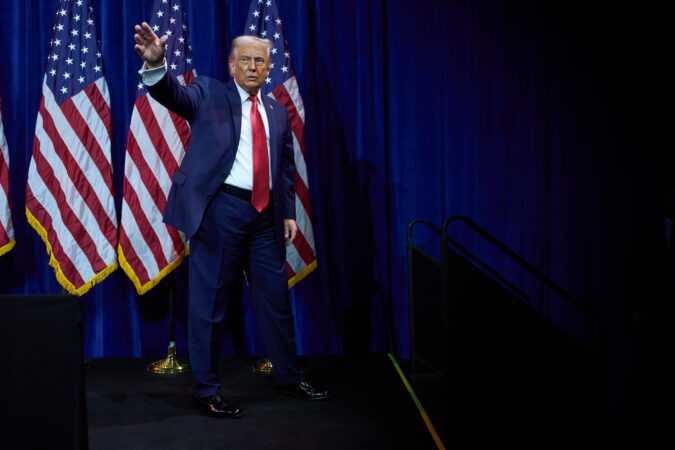
    The headline was catnip to a Washington press corps that has spent much of the last decade desperately trying to normalize the mad, mad, mad, mad world of Donald Trump. With his poll numbers reeling after two Minneapolis killings by federal agents, the 47th president was “toning down” his mass deportation drive — perhaps pulling back.

    There were symbolic gestures, for sure. The Nazi-style trench-coated unmasked face of Trump’s secret police force in Minnesota, Border Patrol commander Greg Bovino, was dismissed and slinked home to California in a convoy of shame. His replacement, the alleged Cava bagman Tom Homan, talked of a drawdown of federal forces in the Gopher State, even as no one except Bovino and his inner circle of goons left town. There was an abrupt end to immigration raids in Maine, where the White House finally realized the wildly unpopular arrests might be dooming the GOP’s most vulnerable incumbent, Sen. Susan Collins.

    But you see, there’s just one thing. Just as Ike and Tina Turner used to say that they never, ever did nothing nice and easy, the Trump regime never, ever does nothing nice and “toned down.” What America saw last week was what Richard Nixon’s Watergate coconspirators called a “modified limited hangout” — minor concessions to reality aimed at keeping the larger, diabolical enterprise afloat.

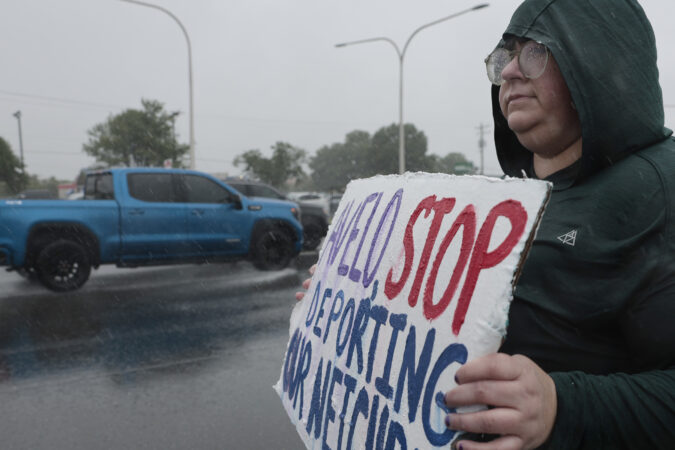
    Toned down? Tell that to a few thousand marchers in a union-led “ICE Out” demonstration on Saturday in Portland, Ore. They were merely exercising their First Amendment protest rights — chanting “ICE out!” as they calmly marched past the federal building — when agents abruptly fired volleys of tear gas, pepper balls, and flashbang grenades into the crowd, which included young children brought by their parents to what had been a peaceful rally.

    “Just experienced the most intense tear gassing of my life …,” journalist Alex Baumhardt of the Oregon Capital Chronicle posted. “There was no fast exit as they indiscriminately threw loads of gas and flash bangs. Children were in the crowd screaming.”

    It sure didn’t look like any kind of “toning down” on a snow-draped road outside rural St. Peter, Minn., where a woman who was legally filming federal agents was blocked off by a car as three masked men brandishing high-powered firearms emerged, screaming, “Get out of the car!” before violently removing her, slamming her to the icy ground, and arresting her.

    That the police chief of St. Peter — a friend of the woman’s husband, it turned out — made a phone call to U.S. Immigration and Customs Enforcement (ICE) that got her promptly returned to town and released was the essence of last week’s modified limited hangout. The main message to would-be citizen ICE observers was unmistakable: There is no major pullback in Minnesota.

    War, children. It’s just a shot away.

    The idea that the irrepressible forward momentum of a historically inhumane mass deportation campaign — powered by more than $170 billion allocated last year to hire more masked goons and convert abandoned warehouses into modern concentration camps — could be so easily reversed was laughable. Even the alleged toner-down-in-chief, Trump, told reporters when he was asked about a Minnesota pullback: “No, no, not at all.

    This week, things could get much, much worse.

    On Tuesday, some 350,000 Haitian refugees are slated — under a Trump regime order — to lose the Temporary Protected Status (TPS) that was granted to them by the Biden administration and has allowed them to stay legally in the United States after fleeing an epidemic of gang violence and murder in their Caribbean homeland.

    Advocates for the large Haitian diaspora are fighting Trump’s revocation in court, so there is a chance the move can be forestalled. However, top officials, including Ohio Gov. Mike DeWine, have said the U.S. Department of Homeland Security has plans in place to immediately swarm the industrial epicenter of Haitian migration — Springfield, Ohio — with a massive force of federal agents to begin deportation raids.

    You probably remember Springfield from its prominence in the 2024 presidential campaign. Over the last decade, a surge of Haitian migrants into a once nearly comatose factory town — some 12,000 to 15,000 people, or now a quarter of the small city’s population — revitalized Springfield, yet triggered a moral panic among some white neighbors who shared utterly unfounded rumors of animal abuse.
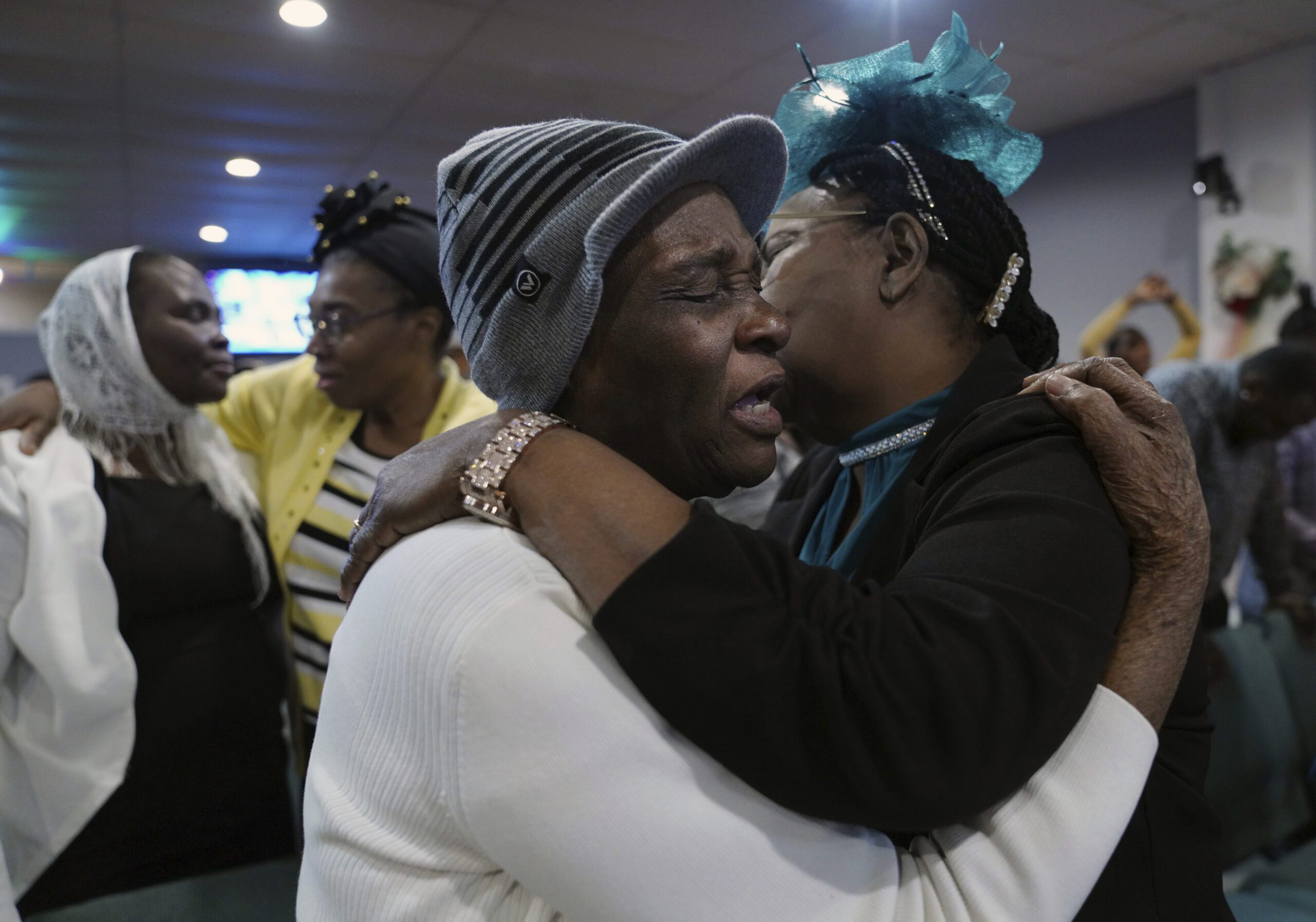
    Marie Guillou (front left) hugs and worships with a fellow congregant at the First Haitian Evangelical Church in Springfield, Ohio, on Jan. 26.

    In that fall’s nationally televised debate, opponent Kamala Harris and some in the Philadelphia audience giggled when Trump blurted out, “In Springfield, they’re eating the dogs.” This week, the president and his totally not toned-down minions, like top aide Stephen Miller and DHS Secretary Kristi Noem, want to have the last laugh.

    “The fear has been there” ever since Trump’s debate lies about Springfield, Viles Dorsainvil, executive director of Springfield’s Haitian Community Help and Support Center, told a local TV station. Now, with TPS likely to expire, he predicts the local community “not being able to leave their house, not being able to go to work.” Many are terrified they won’t survive gang violence if deported back to Haiti.

    The giant question hanging over the looming Springfield raids — and, yes, it is largely a rhetorical one at this point — is simply: Why? In every city that’s been flooded with masked secret police, from Los Angeles to Minnesota, over-the-top DHS rhetoric about removing “the worst of the worst” murderers and rapists from America has been undercut by arrests of law-abiding day laborers or restaurant workers. That’s not to mention all of the detainments and the killing of two people.

    In Springfield, Haitian refugees responded to a 2014 plea from business leaders to save a shrinking Rust Belt city, and the majority came here legally during the Joe Biden years — doing everything the right way, and getting a fleeting vision of the American dream. If anything, the crime rate in this hardworking and often deeply religious community is lower than in other areas that are predominantly made up of native-born Americans.

    It’s hard to imagine any reason — economic, legal, or moral — for the mass removal of Haitians to their unsafe and unstable native country other than the color of their skin. And it’s hard to call this proposed operation anything else besides an ethnic cleansing on U.S. soil.

    This is no surprise. It’s been the distinguishing feature of Trump’s mass deportation scheme since the early months of the regime, nowhere more so than most recently in Minnesota.

    A woman and a child hold hands as they walk down a street in the predominantly Somali neighborhood of Cedar-Riverside in Minneapolis in May 2022.

    The DHS “Operation Metro Surge” has heavily targeted two ethnic groups. Are Somali Americans — refugees from a war-ravaged nation that, in a much different time, was the subject of what was supposed to be a humanitarian U.S. intervention in the 1990s — the focus of the raids because of a fraud scheme local authorities seemed to have a handle on? Or is it because Trump called the Somali people “garbage”?

    And even if you buy the seemingly ridiculous argument that the immigration raids are connected to a mid-level fraud scam, what is the explanation for Bovino’s goon squads cruising the Asian American neighborhoods of Minneapolis asking, “Where the Hmong at?” The Hmong people of Laos aided the misguided U.S. war in Southeast Asia and fled communist reprisals to come to America with encouragement from both the federal government and faith leaders. Why target them now, decades later, after Hmong Americans have planted deep roots here?

    For that matter, what on earth is the logic behind zeroing in on so many Venezuelans, who came to America to escape the rule of a man the Trump regime has now arrested as a criminal dictator of a nation the U.S. Department of State has deemed violent and unsafe? Why deport the thousands of Latinos who worked tirelessly to rebuild New Orleans after it was decimated by Hurricane Katrina?

    Not only is Trump’s mass deportation not nabbing many violent criminals, but his unholy war is undoing the very foundation of the story America tells itself to live: that our willingness to accept the huddled masses fleeing political violence or persecution made us an exceptional nation. It was always an uneven narrative, but the regime’s masked men are now erasing it in service of unapologetic white supremacy.

    In Florida, which has also been a migration magnet for Haitians, Jewish residents of the Sinai Residences senior complex in Boca Raton — including many who survived the Nazi Holocaust — are so alarmed that some have volunteered to hide Haitian staff members in their units. The center’s CEO said the crisis “reminds me of Anne Frank.”

    This does not have to happen. Springfield isn’t nearly the size of Minneapolis, and all of us — not just Ohioans — need to begin thinking about what we can do to help avert a humanitarian disaster in the U.S. heartland. More importantly, Congress — which has slowly shown signs of life in response to the January killings of Alex Pretti and Renee Good — needs to fight by any means necessary to make sure ethnic cleansing is prevented in Springfield, and ended everywhere else.

    Then they came for the Haitians. What happens next is up to us.

  • CBS, Washington Post blind themselves when America needs eyes on the ground

    CBS, Washington Post blind themselves when America needs eyes on the ground

    She said all the right things.

    The embattled new boss of CBS News, the until-now opinion journalist Bari Weiss, on Tuesday led a town hall-style meeting for editors and reporters at the storied TV network and appeared to understand both the crisis of American media and the values needed to fix it.

    “Our strategy until now has been: Cling to the audience that remains on broadcast television,” Weiss told her newsroom. “I’m here to tell you that if we stick to that strategy, we’re toast.” She called for more investigative reporting and pledged to merge the values of a high-tech start-up with “journalistic principles that will never change — seeking the truth, serving the public, and ferociously guarding our independence …”

    Meanwhile, the overpowering stench of burning toast filled the room.

    That’s because Weiss and her billionaire pro-Trump overlords, the Ellison family, seem to be doing all the wrong things, undercutting those pretty words. Her first concrete move announced in tandem with the town hall was the hiring of 18 thumb-sucking opinion journalists — a ragtag, right-leaning group that includes a medical huckster and an ex-Trump official — even as the newsroom braced for buyouts and feared layoffs that would slash honest shoe-leather reporting.

    The move toward more commentators telling you what to think about an America spiraling into chaos and fewer boots-on-the-ground journalists digging up what’s needed to fix that crisis — objective truth — could not happen at a worse time, and unfortunately, this is not unique to CBS News.

    The Washington Post — which has lost hundreds of thousands of digital subscribers since a self-coup by its billionaire owner, Amazon founder Jeff Bezos, shifted its opinion section to the political right — is also bracing for deep staff cuts that would cripple its international reporting, as well as its sports staff.

    The extent of the widely rumored staff reductions isn’t yet known, but a preview came last week when the paper briefly told the newsroom it was axing its long-standing plan to send 12 journalists to next month’s Winter Olympics in Italy, before slightly backtracking and saying four reporters would still go.

    Still, that move, and the louder rumors about pending layoffs, has led to deep concern over the future of its metro Washington and international desks. “We urge you to consider how the proposed layoffs will certainly lead us first to irrelevance — not the shared success that remains attainable,” stated a letter from 60 journalists on the foreign desk sent this week to Bezos.

    “It’s all very confusing, and no one knows anything,” an anonymous Post staffer told the Guardian. “The anxiety is so sad.”

    America has been losing news reporters for years. Nationally, newsroom staff have plummeted a whopping 26% since 2008, and the pace of job cuts has only accelerated in recent years as vast news deserts with no sources of local journalism expand across rural America. It’s been a perfect storm prompted heavily by internet-driven changes in reader or viewer habits, as well as declining public trust in traditional media.

    But the looming cuts at the Post and CBS are especially painful both in a symbolic sense and also as self-inflicted own goals that will only heighten public mistrust instead of attacking the problem.

    In 1972, with then-President Richard Nixon driving toward a landslide reelection, the Post, under its legendary editor Ben Bradlee, and CBS, with its popular, avuncular anchor Walter Cronkite, were the only two major outlets that took seriously the links between the Watergate break-in and the Nixon White House. Both newsrooms threw major resources into keeping alive the story that eventually caused Nixon to resign, including a 22-minute special report that Cronkite anchored on the CBS Evening News.

    In this undated photo released by Paramount, one of the Free Press’s cofounders, Bari Weiss, poses for a portrait. Weiss is the editor-in-chief of CBS News.

    That kind of accountability journalism created a bond with the audience that should have left CBS and the Post better positioned to weather the economic storms that have battered journalism in the 21st century. The current crises were self-inflicted, albeit for slightly different reasons.

    In Washington, the Post zigzagged from acknowledging what its readers wanted during Donald Trump’s first term — both in its “Democracy Dies in Darkness” slogan to some solid journalism that backed that up — to billionaire Bezos’ embrace of authoritarianism ahead of Trump’s second coming. The Bezos-ordered spiking of a Kamala Harris endorsement and a rightward editorial shift accelerated a steep decline in subscriptions, including about 300,000 lost readers after the nonendorsement.

    One could argue that staff cuts in such an environment are inevitable, but one might also question the priorities of the Post’s owner, the world’s second-richest person. Amazon — where Bezos remains executive chairman — has just spent $75 million on a White House-fluffing Melania documentary expected to bring back just $1 million at the box office.

    The priorities at Weiss-run CBS News seem similarly warped. The money the newsroom is spending on those 18 or so opinion journalists — a motley crew that includes Mark Hyman, who health experts have accused of “quackery,” calling him a “germ theory denialist,” and retired Gen. H.R. McMaster, a key policy adviser in Trump’s first term — could have been spent on new investigative reporters.

    Indeed, a major CBS rival — MS Now, which is also in a state of flux after spinning off from its longtime relationship with NBC News — did exactly that when it hired Pulitzer Prize-winning journalist and author Carol Leonnig away from the Post, of all places. Since late last year, Leonning has been scooping CBS and everybody else on corruption in Trump’s Justice Department, and the curious case of immigration czar Tom Homan and his $50,000 Cava bag.

    But then Weiss’ overlords in the Ellison family, whose recent role in the TikTok takeover and current fight to acquire Warner Bros. Discovery both depend on the blessing of the Trump White House, probably don’t want the stories Leonnig is uncovering.

    This is not a diatribe against all opinion journalism. I am an opinion journalist, and I started moving in that direction in the 2000s when I thought someone needed to be screaming from the rooftops about the lying and the war crimes of the George W. Bush regime. I think commentary and debate are especially needed in the local communities where such jobs have vanished the most, but I also think powerful opinion journalism exists mainly to augment on-the-ground reporting, not replace it.

    The greatest irony of the pullbacks at CBS and the Post is that the national crisis over immigration raids in Minnesota and the conduct of U.S. Immigration and Customs Enforcement and U.S. Customs and Border Protection officers who’ve killed two citizens has shown that what American democracy needs most is seekers of the truth — much more than people telling you what to think.

    The over-the-top lies from the highest levels of the U.S. government about how and why Renee Good and Alex Pretti were gunned down on the streets of Minneapolis have fallen apart because multiple videos have allowed citizens to see the truth of what actually happened.

    Most of those videos were shot by citizen observers, but with 3,000 federal agents fanning out across Minnesota and hundreds more conducting immigration raids from Maine to Los Angeles, a web of local and independent journalists has also proved critical in documenting the raids and their many human rights abuses.

    Dozens of journalists have been tear-gassed multiple times or struck with rubber bullets or pepper balls, and yet continue to cover protests and ICE activities, often in the most miserable conditions, and keep going out there to create a public record.

    This week, a federal judge called out ICE for violating nearly 100 court orders just since the start of this year. The reason we know about many of these is because of an army of journalists — some independents, some with small community weeklies, and some with metro newspapers like the Chicago Tribune or the Minnesota Star Tribune — who refused to accept the regime’s lies and refused to be scared off by the projectiles fired at them.

    They are showing people the truth. And the truth is rapidly turning public opinion against Trump’s immigration raids and the rush to authoritarianism. Public opinion is changing policy, including the regime’s abrupt retreat from Maine on Thursday, and possible legislative action on Capitol Hill (we’ll believe it when we see it).

    CBS News and the Washington Post could have been at the vanguard of this movement, which would have been a fitting tribute to the legacies of Cronkite and Edward R. Murrow, Bradlee and Bob Woodward and Carl Bernstein, and their many intrepid colleagues. Instead, the supposed keepers of those flames have made a horrible, doomed bet on autocracy.

    What I’ve watched in recent weeks coming out of Minneapolis and elsewhere on the front lines of the war for America’s soul has given me more hope for the future of journalism than any time since the ball dropped to launch this cursed millennium. That CBS and the Post chose this exact moment to willingly blind themselves is beyond pathetic.

  • What gutless corporations don’t get about ICE | Will Bunch Newsletter

    Is this actually an honest-to-goodness turning point in the war for the soul of America? Monday night, the deny-everything-admit-nothing Trump regime surprised observers by revealing that violence-provoking Border Patrol commander Greg Bovino has been sent home from Minneapolis and may even be retiring. That’s a giant win for the power of everyday people resisting, but turning around the battleship of tyranny will still take much more work.

    If someone forwarded you this email, sign up for free here.

    Corporate America may pay a steep price for its cowardly ICE neutrality

    Protesters gather Friday at Target’s corporate headquarters in Minneapolis.

    One of the many remarkable and lasting ideas the Rev. Dr. Martin Luther King Jr. placed into the national conversation was the concept of something he called “negative peace.”

    Although the phrase began appearing in the writings of the civil rights leader in the late 1950s, King made the idea famous in his 1963 “Letter From Birmingham Jail,” where he was locked up for fighting segregation in Alabama’s largest city. He was annoyed by a letter from eight local white clergymen, titled a “Call for Unity,” that begged King to end a civil disobedience crusade for racial integration and seek progress through negotiations and the courts.

    When an aide smuggled the newspaper into King’s cell, he began furiously scribbling his response in the margins of the ad before writing more on any scrap of paper he could find. His key passage argues that the white moderate was a greater threat to Black freedom than the KKK, because he was someone “more devoted to ‘order’ than to justice; who prefers a negative peace which is the absence of tension to a positive peace which is the presence of justice,” and who wants African Americans to wait for a “more convenient season.”

    Flash-forward 63 years, and the grand pooh-bahs of U.S. capitalism have learned nothing from this. On Sunday, 60 major corporations based in Minnesota — feeling caught in the crossfire of the federal immigration raids tearing apart Greater Minneapolis and the growing resistance movement — issued a cowardly and pathetic call for a negative peace to reduce the tensions.

    The open letter that was released through the Minnesota Chamber of Commerce was signed by the CEOs or equivalents of almost every major Gopher State brand that you could think of — including Target, 3M, General Mills, Hormel, UnitedHealth (yes, that UnitedHealth), and all five major sports franchises. Some of these firms are beginning to see real economic fallout from the U.S. Immigration and Customs Enforcement raids and protest activities, which have kept some frightened Black and brown workers at home and triggered a large general strike last Friday.

    The letter reads little differently from the Birmingham ministers’ “Call for Unity.”

    “With yesterday’s tragic news” — a vague, bloodless reference to the 10 shots fired by federal officers into a 37-year-old intensive care nurse named Alex Pretti — “we are calling for an immediate deescalation of tensions and for state, local and federal officials to work together to find real solutions,” the letter states. It notes that Minnesota business leaders have been in touch with Gov. Tim Walz, the Donald Trump White House, and others in pleading for what it hopes would be a solution to the state’s crisis.

    Pretti is never mentioned in the letter. Neither is Renee Nicole Good, the 37-year-old mother of three who was gunned down behind the wheel of her family SUV by an ICE agent as she attempted to drive away from a confrontation. In fact, ICE is never mentioned, nor are the federal agency’s most outrageous tactics, such as the seizure of a 5-year-old boy as “bait” to detain him and his father, or dragging a barely dressed Hmong refugee who is a U.S. citizen out of his home in frigid weather.

    The entire letter is remarkable not for what it says — since it says very little beyond praying this whole mess somehow goes away so they can go back to making money without thinking about such dreadful things — than for what it doesn’t say.

    There is no condemnation of the murders of two U.S. citizens who did nothing beyond legally monitoring the federal officers and their activities while on public streets. There is no condemnation of the ICE tactics in seizing hardworking migrants with no criminal records who are the backbone of the Minnesota community. There is nothing about what MLK would have called “positive peace” — a desire for real justice.

    That’s probably because positive peace requires bold choices and displays of real courage — qualities that modern corporate America seems to have misplaced in a giant warehouse somewhere.

    Exhibit A would have to be Target, the large national retailer that, with its hundreds of stores and its name slapped on the NBA’s Timberwolves’ arena, is now to many Americans the corporate face of Minnesota. Under pressure from demonstrators, including more than 100 clergy who protested outside Target’s Minneapolis headquarters on Friday, the retailer still said nothing — before the tepid group letter — about the ongoing ICE raids, or why agents have been allowed to stage operations in its parking lots and even inside stores.

    There’s a bleak history here. In 2020, Minnesota became the epicenter of the fight for racial justice when the Minneapolis police murder of George Floyd was captured on video. That time, the state’s CEOs not only expressed moral outrage but pledged to spend heavily on diversity initiatives. Five years later, the local news site Racket reported many of these firms had backtracked, and that barely a third of the pledged $550 million had been spent.

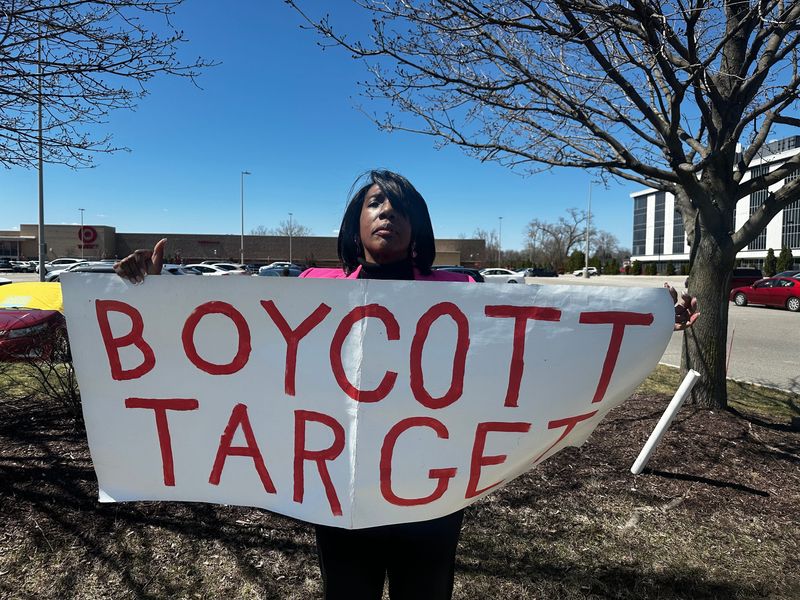
    This time, the business leaders just want the “tension” to disappear. That’s not so easy. Just ask Target. Its early 2025 move to end its diversity initiatives as Trump took office sparked calls from Black leaders for a boycott that has cut into store traffic and lowered Target’s stock price. It seems that moral surrender actually does have a price.

    Also on Sunday, the team chaplain for the Timberwolves — ironically, one of the teams that signed onto the corporate letter — issued a personal statement with loud echoes of the “Letter from Birmingham Jail,” calling out any churches that had prayed that morning for peace and unity but not for justice.

    “Peace is what the powerful ask for when they don’t want to be interrupted,” Matt Moberg wrote in a short piece that went viral on social media, adding, “Unity that refuses to name violence is just loyalty to the ones holding the weapons.”

    This wouldn’t be the first time corporate America misread the room. Sunday’s statement suggested a continued deer-in-the-headlights reaction from the shock of Trump’s return to office — even as the CEOs ignore not just the power of the Target boycotts but the recent success of economic justice campaigns against firms from Disney to Avelo Airlines, not to mention the solidarity that drove the Minneapolis general strike.

    Already, there is growing talk of a national general strike or expanded boycotts by millions of citizens who are also consumers, and who are both furious over the Good and Pretti murders and now flabbergasted by the corporate cone of silence. America’s business leaders don’t understand that cowardice has a steep cost attached.

    Yo, do this!

    • There’s no better writer about the long fight for social justice in America than historian Heather Ann Thompson. Her searing 2016 book about the 1971 Attica prison uprising — Blood in the Waterwon a well-deserved Pulitzer Prize, and locals were thrilled when it was reported that the next book from Thompson, who taught for a while at Temple, would be on the 1985 MOVE bombing. Instead, she has taken a detour. Her Fear and Fury: The Reagan Eighties, the Bernie Goetz Shootings, and the Rebirth of White Rage is out today. I just downloaded the audiobook, and cannot wait to listen.
    • It’s Academy Award season, and so — hopelessly snowed in on Sunday — I took a family break from football (!) to rent a movie … from 2009. Given my obsession with 1960s rock and roll radio, it’s weird that I’d never seen Pirate Radio, a fictional homage to the U.K.’s government-defying offshore radio stations of the British Invasion era that stars the late Philip Seymour Hoffman. The plot can be muddled at times, but it’s maybe the best movie soundtrack ever!

    Ask me anything

    Question: Why do Dem Leaders want to save ICE, when nobody really else does? What’s the motivation? — @keynesaddiction.bsky.social via Bluesky

    Answer: I wonder this, too. Both ICE and the current crew at U.S. Customs and Border Protection have been simmering for far too long in a toxic, unredeemable culture that cannot be reformed. What’s more, the shocking abuses on display in Minnesota and two killings have now convinced a plurality of U.S. voters that ICE should be abolished. Still, I can understand the Democrats’ bind, since at the moment the party has no other political leverage beyond the ability to block most Senate legislation with the filibuster. It might be best to push hard for as much as can be done in 2026, while running in the midterms on a platform of abolishing ICE when they gain power on Capitol Hill.

    What you’re saying about …

    LOL — remember that whole Greenland thing? It feels like that was five years ago, but some of you had some good responses on dealing with Trump’s bluster about an American takeover, even if things have temporarily cooled down. Tom Desmond said the Europeans “need to quit pretending that they can ‘manage’ him through flattery and soft words. Instead, they need to apply threats — i.e., whatever tariffs he imposes on Europe over Greenland they will return against the U.S. three-fold.” Jo Parker said Congress needs to reassert its powers over tariffs and declaring war, but “With the spineless [Dave] McCormick and [John] Fetterman representing us, I’m not sanguine that such actions will take place, however.”

    📮 This week’s question: Things are coming to a head in Congress over funding for ICE and the U.S. Department of Homeland Security. Should Democrats make a deal for ICE reforms, such as unmasking and requiring arrest warrants, or must they push for bigger concessions, or even abolishing ICE? Please email me your answer and put the exact phrase “ICE funding” in the subject line.

    Backstory on the day (a) Fetterman spoke out

    U.S. Sen. John Fetterman and his wife, Gisele Barreto Fetterman, await the arrival of President Joe Biden at Philadelphia International Airport in July 2024.

    I must confess that keeping up with the downward spiral of Pennsylvania’s Democratic Sen. John Fetterman since he took office in 2023 can get tiresome. At first, Fetterman’s rightward tack seemed largely a function of his zealous support for Israel, which caused him to wave off allegations of war crimes by Benjamin Netanyahu’s right-wing government. Soon, others pointed to his health woes — hospitalizations for a stroke and depression, among other things — as he endorsed more and more Trump-flavored ideas.

    Amid mounting outrage over Trump’s aggressive immigration raids, Fetterman made some comments that had his growing legion of critics wonder if the senator’s real heart issue was whether he had one. “ICE performs an important job for our country,” the Democrat posted on X last July, adding that any calls to abolish the agency were “inappropriate and outrageous.” Even after the Jan. 7 ICE killing of Renee Nicole Good in Minneapolis, Fetterman’s middle-of-the-road stance was this: “Secure the border. Deport all the criminals. Stop targeting the hardworking migrants in our nation.” In the immediate aftermath of Saturday’s killing of Alex Pretti by federal agents, even Pennsylvania’s GOP Sen. Dave McCormick had called for a congressional investigation before Fetterman said anything.

    On Sunday night, though, Fetterman issued a heartfelt and moving statement. Well, a Fetterman did.

    “For more than a decade, I lived undocumented in the US,” the senator’s wife, Gisele Barreto Fetterman, a native of Brazil, posted on X. “Every day carried the same uncertainty and fear lived in my body — a tight chest, shallow breaths, racing heart. What I thought was my private, chronic dread has now become a shared national wound. This now-daily violence is not ‘law and order.’ It is terror inflicted on people who contribute, love, and build their lives here. It’s devastatingly cruel and unAmerican.” Her post ended with an emoji of a broken heart.

    Sen. Fetterman finally issued a statement nearly a day later. He called for “an immediate end” to the ICE operations in Minnesota, adding, “It has become an ungovernable and dangerous urban theatre for civilians and law enforcement that is incompatible with the American spirit.” But Fetterman still disappointed critics of Trump’s immigration policy, insisting that while he wants ICE reforms, he still supports the embattled agency, and won’t join other Democrats in shutting down the federal government if those reforms aren’t happening.

    Pennsylvanians thought they were getting a progressive voice and a moral leader when they elected Fetterman in 2022. It feels now like we elected the wrong Fetterman.

    What I wrote on this date in 2010

    It was only 16 years ago, but at the dawn of the 2010s, there was still a robust conversation about how to save the traditional journalism outlets — especially newspapers — that had flourished in the 20th century. On Jan. 27, 2010, I criticized an idea coming from Apple that a new kind of $1,000 iPad, nicknamed “the Jesus tablet,” would fix everything. I wrote: “To survive, we need to change our whole worldview — finding ways to encourage more dialogue with readers and more community involvement so that local readers feel they have a stake in this thing. And we also need to do a better job at the thing we claim to be already good at — real journalism that makes a difference.”

    Read the rest:Apple’s iPad will NOT save journalism.”

    Recommended Inquirer reading

    • On the national beat, there’s no bigger story than the fallout from the inhumanity of the Trump regime’s mass deportation policies. In my Sunday column, I looked at the other way people are dying in ICE’s reign of terror: inside the growing network of squalid and overcrowded jails and detention camps. The death rate in these facilities so far in 2026 is already 10 times higher than it was in the last year of the Biden administration. Over the weekend, I quickly shifted gears and turned a planned column about faith leaders in Minneapolis and an America yearning for morality into a lament over the shocking ICE murder of a 37-year-old observer, Alex Pretti. The contrast between good and evil in America has never been more stark.
    • The many tentacles of the mass deportation story stretch well beyond Minneapolis and other hot spots like Maine, including stepped-up ICE enforcement activity here in Philadelphia since Trump returned to office. The Inquirer’s veteran immigration reporter, Jeff Gammage, has drilled deeply into the human stories on the front lines here. Written with colleague Michelle Myers, this week’s installment was both poignant and infuriating. A local family of four is returning to Bolivia after the dad — the prime caregiver for his 5-year-old son, being treated at Children’s Hospital of Philadelphia for brain cancer — has stopped fighting his deportation after five months in ICE detention. As his family prepares to leave, the child’s future in a South American country with substandard medical care is highly uncertain. Old-school beat reporting like this is what local community journalism is all about. You support this vital work when you subscribe to The Inquirer.

    By submitting your written, visual, and/or audio contributions, you agree to The Inquirer’s Terms of Use, including the grant of rights in Section 10.

  • Alex Pretti’s ICE murder is beyond politics. This is about good vs. evil.

    Alex Pretti’s ICE murder is beyond politics. This is about good vs. evil.

    In the waning days of the worst January any of us can remember, I desperately wanted to tell a good story about America, and then on Friday, I watched one unfold in frozen Minnesota with an abiding love and white-hot intensity that seemed to melt the subzero air.

    The sight of as many as 50,000 people packing the downtown streets on a minus-9-degree day to demand federal immigration raiders leave Minneapolis was a high watermark for a pro-democracy movement that refuses to obey the autocracy of Donald Trump.

    I was especially moved by the images of a polyglot of clergy from all across the nation — priests, rabbis, imams — leading the protests as they blocked traffic at the Minneapolis airport before marching on the headquarters of the giant retailer Target, pleading for an end to any cooperation with U.S. Immigration and Customs Enforcement. The group included as many as a half dozen rabbis, Unitarian ministers, and other faith leaders from the Philadelphia area.

    Saturday morning, I reached out to one of them: Rabbi Nancy Fuchs Kreimer, a professor emeritus at Reconstructionist Rabbinical College in Wyncote. We talked about how, in a moment when pollsters and pundits fret about the steep decline in religiosity in American life, members of the clergy are providing a moral leadership so many crave.

    Kreimer told me about the instant bond in Minneapolis between the many rabbis there — the ICE raids “had a magnetic quality to them because of the echoes of the Gestapo,” she said — and other faith leaders like Black clergy, who were reminded of 19th-century slave patrols, and white Protestant ministers ashamed over a rising tide of white Christian nationalism in the Republican Party.

    Rabbi Sharon Kleinbaum and protesters gather at Target headquarters in Minneapolis on Friday.

    “People see coming out of the government — from out of the president, specifically — such cruelty, such contempt, such dehumanizing language, and just crudeness and awful meanness,” the rabbi said. “But yes, actually, people are looking for a different kind of culture of kindness. And yes, they can find it perhaps in a spiritual setting.”

    While we were on the phone, one of the lowest and most immoral acts in America’s 250-year history was taking place on the same snow-covered Minneapolis streets that had just been overflowing Friday with a vast sea of righteousness.

    At 9:05 a.m. Central Time, a 37-year-old community volunteer and nurse named Alex Pretti stepped between a half dozen masked federal agents and a female volunteer they were attacking with pepper spray, documenting the moment on his phone. In a split second, the goon squad had thrown Pretti to the ground, punching and kicking him in a brutal scene that looked like a documentary about the rise of Nazi Germany, or maybe an outtake from Martin Scorsese’s Goodfellas.

    Then, shockingly, a shot rang out. Then a volley of as many as 10 more. Pretti had been summarily executed in public by agents of the U.S. government, in a scene that was captured on multiple phone cameras from every angle and will haunt the American soul for generations to come.

    In the first 24 days of 2026, there have been three homicides in the city of Minneapolis. Two of them have been committed by agents from ICE or the U.S. Border Patrol. And the similarities between Saturday’s murder and the Jan. 7 fatal shooting of Renee Nicole Good go beyond the sad fact that both victims were 37-year-old millennials who’d moved to Minneapolis in hopes the progressive enclave could offer them a better life, only to see their dreams cut short by a repressive regime.

    Both Good and Pretti came under a vicious second attack before their families had even been notified — falsely slandered as “terrorists” by their own government that lacks even the tiniest shred of human decency. As with Good’s murder, the Trump regime asked Americans to believe a ridiculously fabricated version of what went down on Nicollet Avenue instead of their own eyes and ears.

    This time, the U.S. Department of Homeland Security raced out the lies that Pretti — who was legally carrying a licensed, holstered handgun — had brandished his weapon at the Border Patrol officers, when videos show the nurse only holding his phone, and also when the gun was safely pulled away by an agent before the shooting began. DHS spun a fantasy that Pretti was there to kill officers when he was just protecting his neighbors.

    “The sickening lies told about our son by the administration are reprehensible and disgusting,” the victim’s heartbroken parents, Michael and Susan Pretti, said in a statement late Saturday, adding: “Please get the truth out about our son. He was a good man.”

    When Good was slain less than three weeks ago, I wrote that her death might mark a turning point in the war for objective truth that requires combating the Orwellian Big Lies at the core of the Trump regime’s tyrannical rule. Both in Friday’s massive protests and Saturday’s aftermath to Pretti’s murder, you see how America is already changing — for good.

    A protester holds a sign reading “Love thy neighbor -Jesus” during a rally against federal immigration enforcement on Friday in Minneapolis.

    Even online message boards about the most nonpolitical topics — like cats — were cluttered Saturday with posts expressing outrage or denouncing ICE and the Trump regime. A pundit for the ultimate dude-bro, anti-“woke” site, Barstool Sports, wrote that “Pretti was murdered by ICE with zero justification for deadly force,” while NBA All-Star Tyrese Haliburton tweeted in agreement: “Alex Pretti was murdered.”

    Most importantly, Senate Minority Leader Chuck Schumer (D., N.Y.), with the ability to stop most legislation with a filibuster by 41 of the chamber’s 47 Democrats, announced Saturday that he will work to block a new appropriations bill for DHS that’s due by the end of the month as long as ICE occupies Minneapolis and keeps abusing people. The time is right. A fight over funding ICE could be the decisive battle of the Trump years, and it’s clear many Americans are ready for this fight.

    The tired conventional wisdom of politics that has cowed the likes of Schumer for so long also died in that hail of gunfire on Saturday. This thing is way beyond politics now. The brute force and absurd lies of a would-be American dictatorship have finally made people realize this is no longer left vs. right, but good vs. evil.

    “My father warned us, ‘When evil men plot, good men must plan. When evil men burn and bomb, good men must build and bind,’” Bernice King, the daughter of the Rev. Dr. Martin Luther King Jr., wrote of Pretti’s murder. “What we are witnessing now (masked raids, people taken without due process, vigilante, Gestapo, and slave patrol-like tactics, normalized under the color of law) is a moral crisis.”

    That moral fight has come full circle. In 1965, the televised images of Alabama state troopers clubbing peaceful voting rights marchers in Selma led hundreds of clergy from across America to fly south to join King in a march on the state capital of Montgomery. One of those ministers, the Rev. James Reeb of Boston, was murdered by racist thugs. That historic effort inspired today’s faith leaders who descended on Minneapolis.

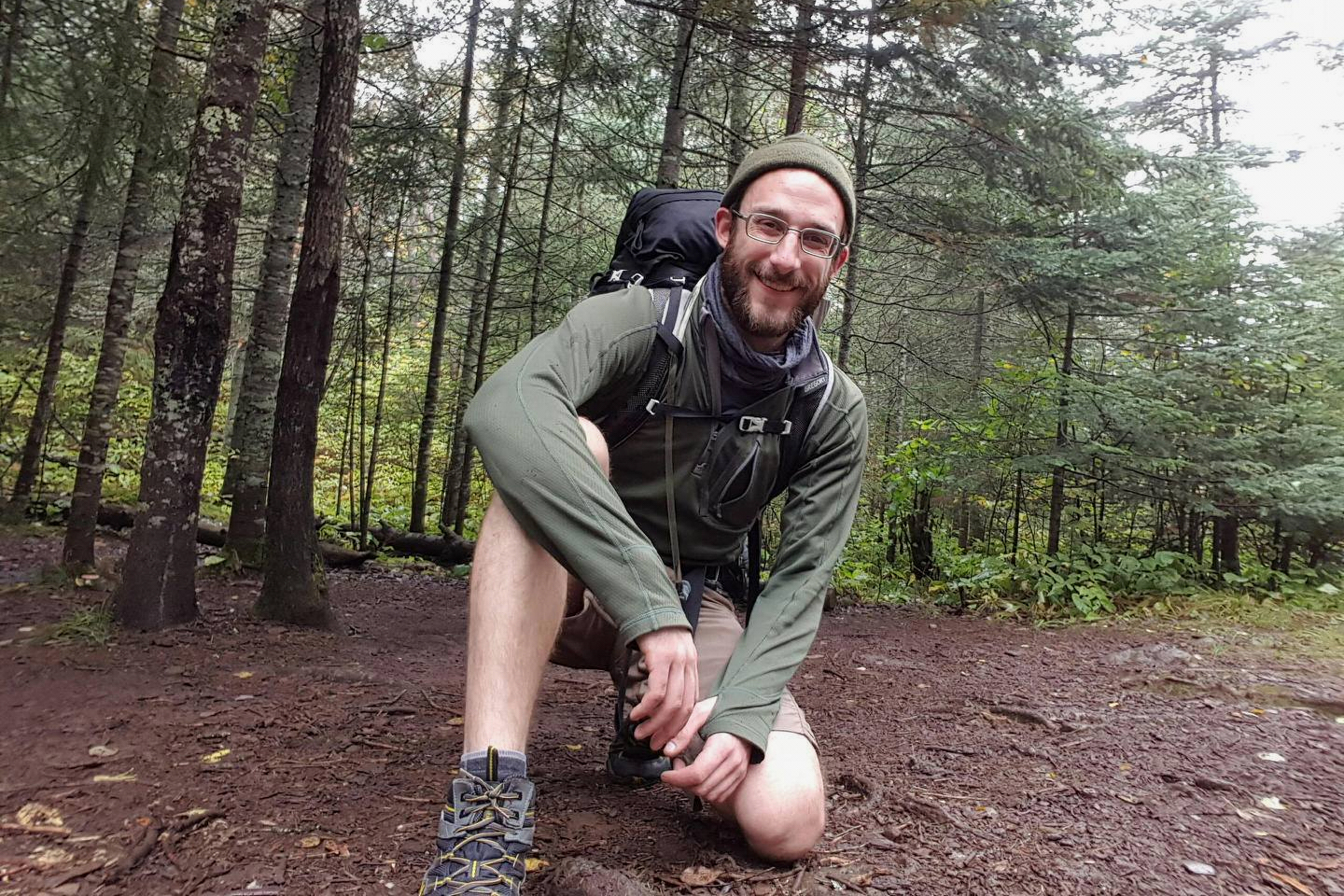
    This undated photo provided by Michael Pretti shows Alex Pretti, the man who was shot by federal officers in Minneapolis on Saturday.

    “People are searching for values,” Kreimer said after returning from her sessions with Minnesota activists, who trained her on how to organize people when ICE inevitably descends on Philadelphia. She added that they are “saying, ‘I am repelled by this. What is it about this? It’s not OK. What is it in the way that I live my life that I need to do about this?’”

    There’s no disputing that church attendance is nowhere near what it was in 1965, or that organized religion has the same kind of public trust issues as other institutions. But the unthinkable scenes of thuggery on once placid American streets, and the blatant lies from our leaders, clearly have people asking questions about the arc of a moral universe that has been suppressed for far too long.

    It’s been too easy to become jaded about the word evil and its meaning when that term has been abused by cynical politicians to justify their pointless wars.

    But it’s become impossible to watch the courage of whistleblowing everyday citizens putting their lives on the line to fight for the neighbors they don’t even know, or to see the utter depravity of top government officials slandering innocent murder victims while their bodies are still warm, and not conclude: Yes, there is good and evil in this world.

    The church pews might be empty, but millions of Americans are still desperate to affirm that they love thy neighbor. In the shock and sorrow over the Minneapolis murders, this is something we can all cling to.

    I don’t know what lies ahead on this bumpy road, or how many more Alex Prettis or Renee Goods will have to die before the positive moral force that finally awoke in Minneapolis can fully reclaim America. It’s tough to think about right now. But what’s clear is this: The time for choosing is today. Which side are you on?

  • People are dying in Trump’s squalid concentration camps

    People are dying in Trump’s squalid concentration camps

    In the sweltering August heat of the West Texas desert, U.S. Immigration and Customs Enforcement — through a $1.2 billion private contract that was awarded under some strange circumstances — in 2025 opened up a large tent city detention camp near El Paso to take some of the thousands swept up in Donald Trump’s mass deportation raids.

    It took just a matter of days for horror stories to begin leaking out of the sprawling camp on the grounds of Fort Bliss.

    A Cuban refugee identified as Isaac, a pseudonym, told investigators from a coalition of human rights groups that guards had violently assaulted him as part of a campaign to convince him and other detainees to be dumped in Mexico rather than to contest their deportation.

    Isaac told the groups’ lawyers in a sworn declaration that “the guards hit my head” and “slammed it against the wall approximately ten times” before grabbing and crushing his testicles, then handcuffing him and putting him on a bus with 20 other detainees that was driven to the border. They were told, according to Isaac, “If we don’t want to go to Mexico, then we would either be sent to a jail cell in El Salvador or Africa.”

    Isaac’s complaints echoed other nightmarish tales that attorneys for the American Civil Liberties Union (ACLU) and a web of immigrant rights groups gleaned in 45 interviews with detainees that were cited in a December letter pleading with ICE to shut down what has become the largest internment camp in the United States.

    This undated photo provided by Jeanette Pagan-Lopez shows Geraldo Lunas Campos with his three children. Lunas Campos died Jan. 3 at an ICE detention facility in El Paso, Texas.

    The implication was that if the Trump regime did not act, things at Camp East Montana would get worse.

    They did.

    Over a 33-day stretch that straddled the arrival of the new year, three ICE detainees at the Texas camp died under murky circumstances. One of the cases — the Jan. 3 death of 55-year-old Geraldo Lunas Campos, also a Cuban immigrant — was on Wednesday ruled a homicide by the county medical examiner, citing efforts by camp guards to restrain him. The medical examiner wrote in his report that Campos died from “asphyxia due to neck and torso compression.”

    The U.S. Department of Homeland Security, which oversees ICE, has continued to maintain that Campos’ death was “a suicide,” and that any encounter he had with guards was an effort to prevent him from taking his own life. Two fellow detainees who reported seeing guards choking Campos have now received deportation notices. The mother of two of Campos’ children told the New York Times, “He was being abused and beaten and choked to death.”

    The alleged killing of Campos is arguably the worst example of what many critics predicted when Trump won the presidency in 2024, behind supporters waving placards, “Mass Deportation Now.” The squalid, hastily erected tent city in the Texas desert is the flagship of what experts describe as a growing network of concentration camps. And now, one year into Trump’s second term, people are dying in them.

    “It’s everything that we warned it would be, even before it opened,” Haddy Gassama, a senior policy counsel at the ACLU who’s been working on the issues around Camp East Montana, told me this week. “I think their goal is still to put 5,000 people in this space with inadequate healthcare, inadequate food, and inadequate recreation.”

    The high-profile, increasingly violent immigration raids that have been taking place in Minneapolis, Chicago, and other U.S. cities have swelled the number of detainees in ICE custody to more than 73,000, an all-time record. DHS is currently planning a large-scale 2026 expansion of its gulag archipelago that would even include repurposing remote rural warehouses for holding human beings.

    In such a large population of detainees, some deaths would be inevitable, but the current ongoing spike in fatalities has shocked and alarmed experts. The sixth ICE detainee death of 2026 took place on Sunday, which is a rate of one every three days. That extrapolates to more than 120 deaths over a year, which would be more than 10 times the rate in the last year of the Biden administration, when only 11 detainees perished.

    That Jan. 18 fatality also occurred at Camp East Montana, when Victor Manuel Diaz, 36, of Nicaragua, died of what government officials called a “presumed suicide.” Unlike Campos, the autopsy on Diaz will not be done by the county medical examiner, but by government doctors at an Army medical center. Diaz was one of many migrants swept up in the current ICE operation in Minnesota.

    The third recent death tied to the Texas concentration camp — Francisco Gaspar-Andres, 48, of Guatemala, who was taken to an El Paso hospital — was determined by an autopsy to have been caused by complications of alcohol-related liver disease.

    That the majority of ICE custody deaths are linked to medical causes doesn’t necessarily exonerate either the agency or its private contractors. A 2024 report by Physicians for Human Rights that looked at 52 deaths in ICE custody from 2017 to 2021, or during Trump’s first term, found that 95% were preventable, or possibly preventable, if appropriate medical care had been provided.

    One such medical death occurred here in Philadelphia earlier this month when Parady La, a 46-year-old Cambodian refugee who lived in Upper Darby, died after he was taken from the city’s federal detention center to Thomas Jefferson University Hospital. ICE said La was suffering from severe drug withdrawal symptoms, but family members are questioning whether the feds paid enough attention to his illness, or even administered the right treatment.

    Human rights watchers insist that the spike in ICE detention deaths cannot be viewed as a coincidence, but as an outgrowth of problems that include not only medical neglect but also squalid conditions, substandard food, rancid water, and patterns of physical and sexual abuse by guards. They say the problems are not new, but have substantially worsened as the Trump regime hastily expands its networks of detention centers and camps.

    In December, another Camp East Montana detainee — Thomas, also a pseudonym — told human rights lawyers that “he was beaten by officers so severely he sustained injuries across his body, lost consciousness, and had to be taken to a hospital in an ambulance.” Like his fellow detainee Isaac, he alleged guards grabbed his testicles and crushed them.

    Gassama, the ACLU attorney, said the horrific track record of ICE detention raises all kinds of red flags about its current plans, aided by its $175 billion windfall in Trump’s “Big Beautiful Bill” that was signed last year, to house as many as 80,000 detainees in a new network of revamped warehouses. “You can only imagine what a remodeled warehouse would be like to detain people, human beings, long term,” she said.

    It’s true that — as right-wing pundits are always quick to point out — the U.S. mass deportation regime offers nothing that comes close to the death camps Nazi Germany established at the end of the Holocaust. But experts like author Andrea Pitzer say the similarities to concentration camps that Adolf Hitler set up for his political enemies after taking power in 1933 are too many to ignore.

    History has shown again and again that rounding up masses of people based on their identity strips them of their basic humanity. And that becomes the sick justification for violent abuse, neglect, endemic disease, and, ultimately, death.

    The most famous victim of the Nazi Holocaust, the teenage diarist Anne Frank, wasn’t killed in a gas chamber, but died from typhus at the Bergen-Belsen concentration camp, which was the result of unsanitary conditions and medical neglect.

    Now, people are dying in record numbers in “the camps” on sunbaked U.S. soil. This is shameful beyond words.

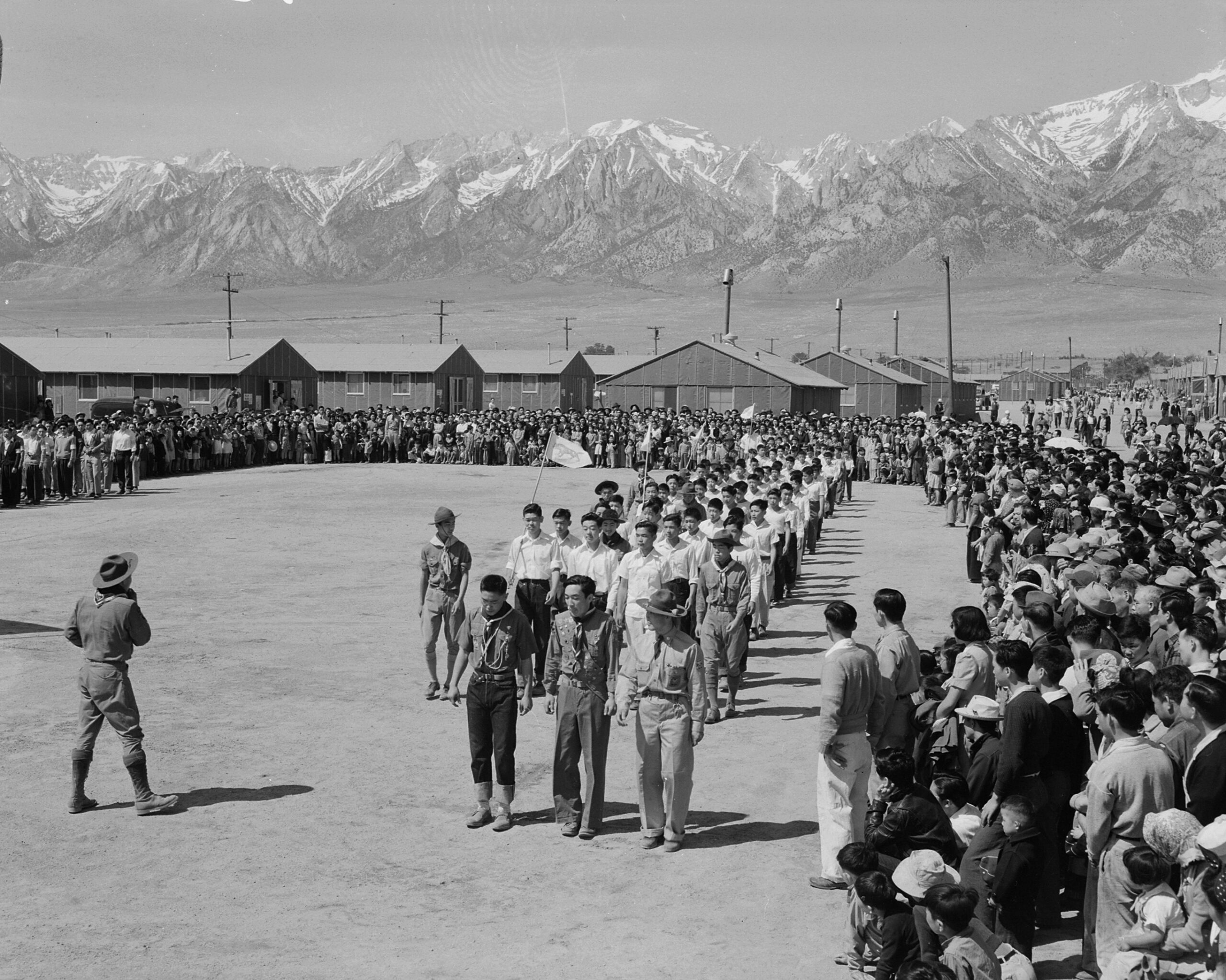
    In this photo provided by the National Archives, Japanese Americans, including American Legion members and Boy Scouts, participate in Memorial Day services at the Manzanar Relocation Center, an internment camp in Manzanar, Calif., in May 1942.

    These human rights abuses now occurring at Camp East Montana are also a tragic echo of the longer arc of history of its Fort Bliss location. In 1942, thousands of detainees — mostly Japanese Americans, with some people of German or Italian descent — were shipped from the West Coast to be held in a barbed-wire camp under constant watch by armed guards. Over the course of World War II, some 1,862 Japanese Americans died in the broader network of internment camps, many from harsh conditions.

    More than four decades later, America formally apologized for this gross injustice. This time, we need to stop it before it comes to that.

  • Yo, Dems: You can’t ‘reform’ fascism | Will Bunch Newsletter

    On Monday, America — some of it, anyway — paused to celebrate the Rev. Dr. Martin Luther King Jr., who would have turned 97 this month. In one sense, there’s never been a rougher time for the legacy of the slain civil rights icon, with the U.S. Supreme Court perhaps poised to gut the 1965 Voting Rights Act and a president who barely acknowledged the holiday. But thousands of everyday Americans now resisting U.S. Immigration and Customs Enforcement are channeling the spirit of the man who said one has “a moral responsibility to disobey unjust laws.” Happy belated birthday, Dr. King.

    If someone forwarded you this email, sign up for free here.

    Dems, stop trying to make ICE better. Make them go away.

    Aliya Rahman is detained Jan. 13 by federal agents near the Minneapolis street corner where Renee Good was fatally shot by an ICE officer.

    Imagine this … and if you watch the daily stream of videos coming from the ICE raids that have roiled Minnesota since the start of the new year, it’s not that hard to imagine.

    You’re minding your own business, or maybe picking up your kid at their school, when suddenly you find yourself in the middle of a platoon of masked, armed, camouflaged government agents. One thing leads to another, and in a flash, an agent has wrestled you to the ground, and is brandishing a weapon — maybe a Taser … if you’re lucky.

    But what if I told you that lawmakers on Capitol Hill have a solution? They are proposing a brave new world, where now — flat on your back and gasping for air, and perhaps able to bravely manage to free your phone from your pocket — you could scan a federally mandated QR code on the agent’s uniform and find out the identity of the man who is currently pummeling you to within an inch of your life.

    You’re probably thinking the same thing I did when I read about New York Rep. Ritchie Torres’ new bill he called the Quick Recognition (get it?) Act, which is his big idea for how Democrats can respond to public anger over the murder of Minneapolis mom Renee Nicole Good by an ICE agent, and the raids that have led to violent encounters and made a major U.S. metropolis look and feel like a war zone.

    A four-word sentence that begins with, “What the actual …?”

    “There is nothing the Trump administration fears more than transparency and accountability,” a spokesperson for Torres, who faces a primary challenge, in part, because of his outspoken views on Gaza, said recently.

    Really? Is that true? Because everything I’ve seen is that Donald Trump is mainly terrified about a GOP bloodbath in the November midterms, which would surely lead to his impeachment, his eventual disgrace, and even a shot at the real accountability that takes place only behind prison bars. But that’s not going to happen unless Democrats can convince those midterm voters they are serious about dismantling the rotten system that murdered Good — so there are no bad guys left to scan.

    It’s tempting to write off Torres’ idea as one stray piece of almost comically misguided legislation. But the truth is that his core idea — that what’s evolved during the Trump era into an American secret police force that folks like Joe Rogan and Bruce Springsteen are openly calling “the Gestapo” can be tweaked into something great — is endorsed by Democratic leaders in Congress and many rank-and-file members.

    “Clearly, significant reform needs to take place as it relates to the manner in which ICE is conducting itself,” House Minority Leader Hakeem Jeffries (D., N.Y.) told MS Now, bloodlessly. “ICE is using taxpayer dollars to brutalize American citizens and to unnecessarily and viciously target law-abiding immigrant families and communities.”

    So you’re going to halt the flow of those taxpayer dollars, right?

    Right?

    Actually, many key Democrats — facing a Jan. 30 deadline for new appropriation bills — say they are willing to keep the dollars flowing to the embattled and increasingly unpopular agency, but with hopes of leveraging the Minneapolis controversy in return for major reforms. Sen. Chris Murphy (D., Conn.), who has been a leading critic of the Trump regime, has suggested banning masks, mandating badges, requiring warrants to make an arrest, and returning Border Patrol agents to the border.

    Most critics of ICE, Border Patrol, and any other immigration raiders under the U.S. Department of Homeland Security would agree that all of those things should have happened yesterday. But the lack of appetite for utterly dismantling the DHS regime — despite its culture of violence and disrespect for law-abiding refugees — reminds too many voters of the cowardice that branded the Dems as losers in the first place.

    Progressive attorney Aaron Regunberg mocked the stance of some mainstream Democrats as: “We are the resistance. We are also negotiating furiously to figure out how to fully fund the Gestapo.” He’s right. Under Trump, with recruitment ads inspired by white nationalist memes, ICE has become a tool of a new American fascism.

    You don’t “significantly reform” fascism. You need to crush it. As Andrea Pitzer, who literally wrote the book on the history of concentration camps, noted Monday night, “The correct response to Dachau was not better training for the guards.”

    It’s telling that — as often is the case — everyday people are way out in front of the supposedly opposition Democrats. The latest polls show that a strong majority of Americans oppose Trump’s immigration policies — with just 38% approving of them in a new AP-NORC poll, down sharply — and that, for the first time, a plurality would like to see ICE (which has only existed since 2003) eliminated. No wonder the number of Americans who now identify as liberal — 28% — is the highest since Gallup began asking in the early 1990s.

    And yes, more Democratic officials are starting to get it than ever before. More than 100 members of the House Progressive Caucus said last week that they won’t vote for any budget bill with additional funding for the immigration raid agencies without an end to their militarized policing. Arizona Democratic Sen. Ruben Gallego, who seemed to tack right on immigration issues in winning a close election in 2024, surprised political observers when he declared this weekend in a CNN interview that “I think ICE needs to be totally torn down.”

    Note that he didn’t say “abolish” — a word that causes Democrats to break out in hives. That’s OK. Call it a teardown, or a demolition, but every day, more Americans can see that the United States would function better without ICE — as it did the first 227 years of its history — and with the work that’s actually needed, like arresting the sliver of immigrants who really are violent criminals, given to all new people.

    The problem is that Democratic fecklessness isn’t limited to just the future of ICE. Our European allies are disappointed that the opposition party isn’t out manning the barricades and calling for much more forceful action to curb Trump’s bat-guano crazy demand for Greenland, apparently because he feels slighted by not getting the Nobel Peace Prize. And sure, Americans want lower coffee prices, but they care more about not having Captain Queeg with the nuclear football.

    Dismantling the ICE regime needs to be the floor, not the ceiling, and any Democrat in Congress who doesn’t get with the program can — and should — be replaced in the primaries to avoid another debacle with alienated or apathetic voters in November. Call your member and find out where they stand. You won’t even need a QR code.

    Yo, do this!

    • I didn’t feel a compelling need to memorialize one year of Trump’s second presidency, since that’s kind of what we do here every week. But M. Gessen, the Russian émigré whose understanding of how authoritarians rule has been a blessing for American readers, did write the piece that captures the fierce urgency of now. Their new New York Times column (gift link) calls on us to use our freedoms before they totally disappear. “The only way to keep the space from imploding is to fill it, to prop up the walls: to claim all the room there still is for speaking, writing, publishing, protesting, voting,” they wrote. “It’s what the people of Minnesota appear to be doing, and it’s something each of us needs to do — right now, while we still can.”
    • In a month of short, frigidly cold days, with a deteriorating political situation, the Eagles’ one-and-done, and up-and-too-often-down 76ers and Flyers, my main source of pleasure is getting under several blankets and watching football games in which I don’t much care who wins. The NFL playoffs, minus the Birds’ fiasco and one or two clunkers, have been the most compelling drama on TV in years. Don’t miss Sunday’s Final Four: Patriots-Broncos (CBS) followed by Rams-Seahawks (Fox), kicking off at 3 p.m.

    Ask me anything

    Question: One question that is top of my mind is “does this week feel like a tipping point?” Can’t shake the feeling that it is. — Marguerite Fahey (@margueritefahey@bsky.social) via Bluesky

    Answer: Marguerite, I got several variations of your question, so this is definitely on the minds of folks. But while Trump’s bizarre actions surrounding Greenland have raised questions about the president’s fitness to hold office on a level we’ve never seen before, including Watergate, it is less clear what affirmative actions can take place. It’s impossible to imagine the lackeys in Trump’s cabinet, like Kristi Noem, ever green-lighting the 25th Amendment, let alone the 20 GOP Senate votes that would be required to remove the president in an impeachment. An increasingly likely possibility is high-ranking generals refusing a Trump order to send troops to Greenland or Minnesota. Yes, it has come to this.

    What you’re saying about …

    Sometimes, readers of this newsletter still surprise me. While most of you are righteously appalled at the immigration raid abuses in Minnesota and elsewhere, many still want to see major reforms at ICE and its sister agencies rather than abolishing them altogether. “ICE doesn’t need to be abolished,” Ed Truncale wrote. “ICE is like a child that has lost their way and needs to be disciplined, redirected.” Cathie Cush agreed. “I’d feel a lot more comfortable with ‘Demilitarize ICE’ and ‘Demilitarize the police,’” she wrote. “And make them accountable. And reduce their ranks.”

    📮 This week’s question: Donald Trump’s increasingly aggressive demands for Greenland have not only threatened the post-World War II global order but raised legitimate mental health questions about the commander of the world’s largest military. But how can Europe, Democrats, and any remaining sane Republicans respond to this? Please email me your answer and put the exact phrase “Greenland response” in the subject line.

    History lesson on America’s betrayal of the Hmong

    ChongLy “Scott” Thao, a U.S. citizen, sits in his St. Paul, Minn., home Monday, the day after federal agents broke open his door and detained him without a warrant.

    A long time ago, on the other side of the world, began what would become a fraught relationship between the Hmong tribal people of northern Laos and the United States, as represented by the CIA. At the dawn of the 1960s, American spies recruited the Hmong to fight communism in their homeland and neighboring Vietnam, which proved a disastrous bet. Thousands died in the next 13 years of combat in Southeast Asia, and more would perish when the communists took over Laos in 1975, while others dodged bullets, swimming the Mekong River toward overcrowded refugee camps in Thailand.

    Fifty years ago, the United States was led by people who at least understood our deep debt to the Hmong, forged in blood. Thousands who’d escaped the slaughter were eventually resettled in the United States, and Minnesota — aided by Lutherans and other religious charities and good public housing, and despite its frigid weather — became an unlikely magnet. Today, a population of 94,000 people, with a slightly higher average salary than the state as a whole, and including the mayor of St. Paul, the state capital, makes Minnesota home to the largest U.S. Hmong population.

    It’s an immigration success story that makes the events of recent days beyond baffling. In one Minneapolis neighborhood this weekend, a witness reported that roving ICE agents who have flooded the metropolis pulled over a car and asked the driver, “Where the Hmongs at?” St. Paul Mayor Kaohly Her said: “We’ve received reports of ICE officers going door to door asking where the Asian people live … I myself have received advice to carry my passport with me because they may target me based on what I look like.”

    On Sunday, federal agents broke down the front door of a St. Paul home and took away ChongLy “Scott” Thao, also known as Saly, a Hmong American who was born in a Laotian refugee camp but is a U.S. citizen after living most of his life here. A photo of the man being led out of the house — wearing only boxer shorts and Crocs on a bitterly cold day, a plaid blanket hastily thrown over his exposed torso — went viral on social media. Family members said ICE agents drove Thao around for an hour while they questioned him, but brought him back home when they realized he was a naturalized citizen with no criminal record. Still, the episode was traumatizing, and it epitomized the big question hanging over all of this.

    What is this even for? ICE’s harsh and disruptive focus on the Hmong people of Minnesota — people who were brought here because of their support for America in wartime, with the encouragement of the federal government as well as their new prairie neighbors — makes absolutely no sense. A people who suffered in their homeland for their ties to the United States are now facing new torment in their adoptive land — judged not for the content of their character, but for the color of their skin. This is a new, shameful moment in American history.

    What I wrote on this date in 2021

    Looking back at the dawn of what’s proved to be a painful decade for America can be difficult. Tuesday is the fifth anniversary of Joe Biden’s inauguration as the 46th president, and like most Americans, I had thoughts and prayers that the deep stain of Donald Trump’s lawbreaking first term could be erased. On Jan. 20, 2021, I predicted we’d understand “this nation will not have peace without justice. That empathy is empty without accountability. And that American carnage cannot be healed until we can handle the truth.” Yeah, how did that work out? Read the rest: “After four years of ‘American carnage,’ President Joe Biden gets it: Truth must come before healing.”

    Recommended Inquirer reading

    • With so much happening, I did an NFL coin-toss move and elected to defer my Martin Luther King Jr. holiday day off until some warmer, happier time. In my Sunday column, I looked at how economic pressure campaigns against U.S. corporations aiding Trump’s immigration policies, like Avelo Airlines — which halted ICE deportation flights after months of protests and boycotts — are starting to make a difference. With boycotts getting results at firms like Disney and Spotify, can Americans do more to vote with their wallets? Over the weekend, I dug into CBS News and its new Trump-friendly regime headed by Bari Weiss, and how its slanted journalism — including a highly inflammatory and factually dubious story about the Minneapolis ICE shooting — is a bad sign for the future of democracy.
    • We now know Trump told Pennsylvania Gov. Josh Shapiro not to run for president, which normally would be tantamount to an endorsement. But that disclosure — which comes from the governor’s new autobiography, Where We Keep the Light, that is also functioning as a curtain-raiser on Shapiro’s 2028 presidential ambitions — might have been a rare case of good advice from The Donald. The Inquirer’s crack political team is already all over the book and its fallout, including Shapiro’s controversial claim that aides to Kamala Harris — vetting him as a potential 2024 running mate — asked the Jewish governor if he was “a double agent” for Israel. The book is already generating backlash and some TV punditry that Shapiro’s once-rising star has dimmed, but the broader implication remains clear. One way or the other, the road to the 48th presidency runs through Pennsylvania, and the best way to keep up is to follow our in-depth coverage in The Inquirer. Subscribe today and get on the bandwagon.

    By submitting your written, visual, and/or audio contributions, you agree to The Inquirer’s Terms of Use, including the grant of rights in Section 10.

  • The day that CBS News became literally ‘fake news’ for America

    The day that CBS News became literally ‘fake news’ for America

    It wasn’t the most clever joke ever told on U.S. prime-time television — not even close — when comedian Nikki Glaser took a swing at CBS News while hosting Hollywood’s Golden Globe Awards, which were seen live by an estimated 8.7 million viewers and clipped on social media by millions more. But the blow still landed hard, especially since the awards aired on CBS.

    “The award for most editing goes to CBS News,” Glaser quipped, in a seeming reference to the recent flap over a critical report on the Donald Trump regime’s use of a Salvadoran torture prison that was spiked by 60 Minutes. “Yes. CBS News: America’s newest place to ‘see B.S.’ news.”

    Just three days later, Glaser’s joke about CBS News and its new, right-leaning management became a painful reality for a nation still reeling from the shock of a U.S. Immigration and Customs Enforcement agent fatally gunning down a 37-year-old mom behind the wheel of her family SUV on a Minneapolis street.

    Last Wednesday, the network rushed out a report — sourced only to two unnamed “U.S. officials” — that the ICE agent who fired the shot, Jonathan Ross, “suffered internal bleeding to the torso” in his Jan. 7 deadly encounter with the driver who was pulling away from the scene, Renee Nicole Good.

    What that report from what was once the most trusted TV newsroom in America seemed to imply — even though it did not explicitly state — was that Good’s Honda Pilot must have struck Ross in the encounter that touched off days of protests in Minneapolis and around the nation. If that did happen, it would radically alter the debate about the shooting and the violent nature of ICE’s deportation raids — creating an argument that the use of deadly force was justified.

    I want to be careful here, because the CBS story was so vague that it’s as hard to disprove as it is to prove. Medical experts immediately noted the report could have been misleading — at best — since “internal bleeding” could mean a bruise, which might have been caused in the chaotic situation by something besides Good’s vehicle. But two reports just hours after the CBS bulletin suggested something far worse — a whiff of the utter baloney that Glaser had just joked about.

    First, the New York Times released an in-depth frame-by-frame analysis of the multiple videos of the shooting captured both by citizen observers and by Ross himself as he fired his gun. The Times concluded from the analysis that “the currently available visual evidence still shows no indication agent Jonathan Ross got run over,” and published a photo showing significant daylight between the SUV and the agent as he fired.

    Second, a Minneapolis Police Department report on the shooting was released, stating that Ross — who was shown on video walking around in the aftermath without any overt sign of an injury — was not taken to a hospital, as Trump had told the nation in a Truth Social post on the day of the killing. The police said Ross was driven to a government building.

    Or, a different way of looking at the CBS “internal bleeding” report is in the context of Sherlock Holmes’ famous crime-solving line about the dog that did not bark. An entire pack of hounds stayed silent on this one. The facts most editors would demand before airing such an explosive claim about the biggest story in America — a medical report, or a quote from Ross’ doctor, or even a family member or an ICE colleague — weren’t published. Just the unsupported words of two officials from an authoritarian U.S. regime with a growing record for lying.

    Indeed, it didn’t take long for the dismay from actual professional journalists — the ones who still work at CBS after its late 2025 takeover by a media conglomerate owned by pro-Trump billionaires — to pour out in leaks.

    Most of the journalists’ consternation centered on the actions of Bari Weiss, the conservative public intellectual who has been installed as the editor-in-chief of CBS News, despite possessing almost no previous breaking news experience.

    “There was big internal dissension about the ‘internal bleeding’ report here last night,” a CBS News staffer who was granted anonymity told the Guardian. “It was viewed as a thinly veiled, anonymous leak by [the Trump administration] to someone who’d carry it online.”

    A second insider told the news organization that it “felt to many here like we were carrying water for [the administration’s] justifying of the shooting to keep our access to our sources.” The Guardian’s sources said Weiss had personally pushed to get the piece published quickly online.

    So far, all the factual, on-the-ground journalism from Minneapolis suggests that CBS News, which has stood atop the pyramid of mainstream American media for decades, has just committed one of the worst acts of bad journalism in U.S. history.

    The worst? That’s a high bar, considering other historic missteps like Judith Miller’s later debunked New York Times reporting on alleged Iraqi chemical weapons that bolstered the dishonest case for war, and which was also rooted in boosting government fictions.

    But with approval for ICE, Trump’s immigration policies, and the president himself reeling after Good’s killing, and a flood of viral videos showing violent actions by government agents in Minnesota, any aid for a White House campaign to rewrite history is appalling. It could be used by the Trump regime to bolster a case for invoking the Insurrection Act and sending troops to Minnesota, which would cause the simmering crisis of American democracy to boil over.

    A CBS News spokesperson told the Independent that the network “went through its rigorous editorial process and decided it was reportable based on the reporting, the reporters, and the sourcing.” It should be noted that ABC News ran a nearly identical story shortly after the CBS report. The parent companies of both CBS and ABC reached multimillion-dollar settlements of questionable lawsuits by Trump at the start of his presidency rather than fight them in court.

    In this undated photo released by Paramount, one of the Free Press’s cofounders, Bari Weiss, poses for a portrait. Weiss is the editor-in-chief of CBS News.

    The CBS report did not happen in a vacuum. There was a reason, after all, that Hollywood’s elites guffawed when Glaser told her “see B.S.” joke. And it went even deeper than the recent brouhaha over Weiss’ last-minute postponement of the 60 Minutes report on the mistreatment of U.S. deportees in the Salvadoran prison, supposedly because she believed it needed more reporting and more input from the Trump regime.

    Critics noted the slow-motion impeding of that story that was so damaging to the White House was the polar opposite of the rushed Minneapolis “internal bleeding” story that was desired by the regime. It’s also come out that a second in-the-works 60 Minutes piece that could make Trump’s government look bad — about its preference for white South African refugees — has also been delayed by intense edits.

    This is exactly what many feared last year when the Trump regime green-lighted the sale of CBS’s then-parent Paramount to Skydance Media, owned by David Ellison, son of Trump-supporting Silicon Valley billionaire Larry Ellison, and when the new owner brought in Weiss, a former New York Times opinion journalist whose right-leaning site Free Press — also bought by Ellison — is popular with the superwealthy.

    It became almost a cliché to point out how the new team has threatened the storied legacy of CBS News and the iconic moments its star journalists had questioned authority, including Edward R. Murrow’s 1954 takedown of red-baiting Sen. Joseph McCarthy, or Walter Cronkite’s 1968 call for a Vietnam withdrawal that infuriated Lyndon B. Johnson’s White House.

    But already the new reality of CBS News as a kind of state media for the Trump era has been worse than anyone could have feared, now creating “fake news” in the term’s original clear-eyed meaning and not its bastardization by Trump’s MAGA movement.

    Weiss’ handpicked anchor, Tony Dokoupil, set the tone when he declared the new CBS News wanted to listen to everyday Americans and not put so much stock in experts — presumably like the doctors who could have told them the “internal bleeding” story didn’t make sense. In the immediate aftermath of Good’s killing, Dokoupil delivered a mush-mouthed “both sides” monologue that surely set Cronkite and Murrow spinning in their graves.

    That was almost as embarrassing as Dokoupil’s 13-minute interview with Trump in which the president said the quiet part about the new slant at CBS News out loud, telling the anchor that if Kamala Harris had won in 2024 instead of Trump, “You wouldn’t have this job, certainly whatever the hell they’re paying you.”

    That was not edited out of the interview when it aired on CBS Evening News — perhaps because, it later came out, White House press secretary Karoline Leavitt told Dokoupil and his crew that the president demanded all 13 minutes must be broadcast without changes or “we’ll sue your asses off.”

    CBS clearly complied. Of course it did. In a matter of weeks, the storied CBS eye logo has become a knowing wink to an autocratic U.S. government. The changes at CBS, and their implications for American democracy, have somewhat been lost in the recent tsunami of unthinkable headlines like the unrest in Minnesota, the bombing and regime change in Venezuela, and Trump’s once-unthinkable threats against Greenland.

    But we can’t ignore this. The four million or so Americans who watch Dokoupil and the CBS Evening News every weeknight might be a huge drop from Cronkite’s era when three TV networks dominated the landscape, but many of those folks — older, less politically obsessed, often swing voters — are vital to the future of democracy.

    The success of Trump’s strongman project — just like the prior century of dictatorships that have paved the way for this — depends on creating alternative realities for the true believers and a cloud of uncertainty for the rest of us. The goal is to convince the masses of people that truth is fungible — except for what is dictated by the leader.

    The only “internal bleeding” we can confirm with any certainty is the battered and visibly bruised reputation of a newsroom that was once a bulwark of press freedom, as well as America’s run-over democracy. OK, that’s kind of an obvious observation, but maybe Glaser can use it if CBS lets her host the Golden Globes again next year.

  • From Spotify to Avelo, economic pressure is melting ICE — but we can do more

    From Spotify to Avelo, economic pressure is melting ICE — but we can do more

    When the Rev. Jack Perkins Davidson and other parishioners in his socially active Spring Glen Church in Connecticut learned last year that budget carrier Avelo Airlines — with a major hub at nearby Tweed New Haven Airport — was also operating U.S. government deportation flights, the pastor kept thinking about one thing.

    What would the Rev. Dr. Martin Luther King Jr. do?

    Davidson said King’s 1955 Montgomery bus boycott against segregation — the iconic protest that launched the civil rights movement of the mid-20th century — was an inspiration as he and a coalition of activists pressured Avelo to stop aiding U.S. Immigration and Customs Enforcement and its mass deportation campaign.

    “I often think about how the Montgomery bus boycott was a very local action, but it became national news,“ Davidson told me by phone recently. ”Sometimes when I feel so overwhelmed by the state of the world, I take hope in that example — that acting in the local level is a way to create national impact.”

    Davidson and his congregation’s allies, like Connecticut Students for a Dream and the New Haven Immigrant Coalition, spent nine months pressuring Avelo to drop ICE — staging noisy protests, but also doing what the minister called “the unglamorous work” of gathering petition signatures and attending airport board meetings. Last summer, New Haven’s mayor signed their petition as the city banned official travel on Avelo.

    The Connecticut crusaders were joined by activists at other Avelo hubs, including Wilmington. It’s impossible to know exactly how much boycotting air travelers hurts the bottom line of the private, Texas-based corporation, but earlier this month, Avelo made a U-turn. A spokesperson said the airline would halt working with ICE, which “ultimately did not deliver enough consistent and predictable revenue to overcome its operational complexity and costs.”

    Avelo’s exit from the ugly business of flying often handcuffed and shackled migrants out of the United States was a huge win for the growing movement against the Trump regime’s mass deportation raids — but it was not an isolated incident.

    In recent days, the leading music streamer Spotify announced it was no longer running recruitment ads for new ICE agents. The spots urged would-be applicants to “fulfill your mission to protect America,” but sparked outrage among listeners opposed to the agency’s masked goons and its violent raids that have roiled cities from New Orleans to Minneapolis.

    As with Avelo, Spotify’s ties to ICE — the U.S. Department of Homeland Security paid the Swedish-based streamer $74,000, according to Rolling Stone — sparked a nationwide campaign for a boycott that was led by Indivisible, a leading organizer of the massive “No Kings” protests.

    Thousands canceled their paid subscriptions, and some artists pulled their music from Spotify to protest both the ICE ads and the company’s ties to a defense contractor.

    These economic wins come amid a deadly and chaotic start to 2026 that has battered America’s already damaged national psyche. The stunning Jan. 7 Minneapolis murder of Renee Nicole Good, a 37-year-old poet and mother of three, by an ICE agent has only upped the anxiety and the stakes.

    Tuesday night, the shooting of a Venezuelan refugee by federal agents in north Minneapolis triggered a chaotic night of protest that has Donald Trump now threatening to invoke the Insurrection Act and send in troops, escalating a constitutional crisis.

    Although the immigration raids are exactly what Trump promised the nation before his narrow 2024 election victory, Good’s murder and daily viral videos of federal agents smashing windows or flash-banging peaceful citizens have turned a majority of Americans against ICE and everything it stands for.

    A new Quinnipiac Poll released this week showed that 57% of Americans now disapprove of the way ICE and other federal agencies are enforcing immigration laws, with 53% saying Good’s killing was not justified. A separate Economist/YouGov survey found respondents favoring the abolition of ICE by a 46%-43% majority — a first for that political hot-button question.

    So, as you can imagine, in a healthy functioning democracy like the United States, the opposition party Democrats are forming a united front in working to abolish ICE, including the withholding of money in the latest budget battle on Capitol Hill, right?

    Right?

    Um, not exactly. To be sure, Good’s murder and the appalling scenes in Minnesota have triggered a more radical response from some Democrats, including more than 50 members, so far, who’ve signed on for the impeachment of DHS Secretary Kristi Noem. But many in Congress are insisting ICE can somehow be reformed — including an utterly bizarre proposal to put scannable QR codes on immigration agents so the public can identify them. It’s an echo of the tepid reform ideas that failed to stop police brutality after George Floyd’s 2020 murder.

    “Clearly, significant reform needs to take place as it relates to the manner in which ICE is conducting itself,” House Minority Leader Hakeem Jeffries of New York told MS Now on Tuesday night — minutes before agents in Minneapolis reportedly shot a flash-bang grenade into a moving car and injured six children, including a baby.

    You don’t significantly reform the brand of fascism that we can all see on the icy streets of the Twin Cities. You fight it like the existential crisis for American democracy that it is. Millions of everyday Americans are both feeling that urgency and dismayed that the institutions they thought would oppose autocracy — Congress, the media, the U.S. Supreme Court — aren’t standing with them.

    No wonder people are fighting with the only real ammunition they have under late-stage capitalism: their dollars.

    Nearly one year into the second coming of Trump, many of the major victories by citizens resisting his regime have come through the fingertips of everyday folks clicking on a “cancel” button.

    The best-known example came last summer when Disney-owned ABC briefly suspended late-night host Jimmy Kimmel in a flap over some (fairly tame) comments he made after the assassination of right-wing activist Charlie Kirk. The network raced to put Kimmel back on the air after the cancellation rates for two lucrative Disney-owned streaming services, Disney+ and Hulu, doubled. And Disney recently extended the contract of Trump’s least-favorite comic by another year.

    Other economic pressure campaigns have badly damaged U.S. brands without getting results … yet. The best example is the giant retailer Target, whose decision to end its diversity initiatives after Trump’s inauguration sparked calls for a boycott by prominent Black activists and some labor unions. Since then, foot traffic at Target stores has dropped (while increasing at more “woke” rival Costco), and the stock price of the Minnesota-based company has plunged by 33%.

    This hasn’t yet inspired Target’s management to fully restore its diversity initiatives, and it more recently has angered some activists by insisting it has no power to stop ICE agents from using its parking lots and even entering its stores to make arrests. None of this should deter the public from keeping the pressure on Target.

    Allison Folmar of West Bloomfield joined the protesters who advocated for a boycott against Target in April.

    The weeks of Minnesota mayhem have focused attention on a new corporate bête noire: Hilton Worldwide Holdings. Two of the hotel chain’s properties in Greater Minneapolis have been the scene of noisy, all-night protests after reports that out-of-town ICE agents are staying there. And Hilton further infuriated activists and sparked calls for a boycott by delisting a third Minneapolis hotel after an employee said ICE was not welcome.

    I will not stay at any Hilton hotel as long as the company thinks it’s OK to host masked thugs who are snatching laborers off the street and shooting or tear-gassing anyone who objects to that, and I hope you would consider doing the same.

    As New Haven’s Davidson rightly said, using economic pressure to end injustice takes time and hard work that isn’t always glamorous or made for the cable-TV cameras. Some 71 years ago in Montgomery, Ala., the King-led bus boycott took 381 days and a lot of sacrifice from unsung heroes like Claudette Colvin, who died this week at age 86, and working-class Black people who walked or carpooled to their jobs until claiming victory.

    The bottom line has not changed since MLK’s time. The color that matters most to corporate America is the color of money. The pursuit of profit is why cowardly law firms or TV networks like CBS are aiding American dictatorship instead of fighting it. But it’s also what makes them reverse course when they realize that hate is actually bad for business in a consumer society.

    Boycotts aren’t the only solution, but in a world where feckless institutions have given up, they have become an essential tool. Spend your dollars with any company that still believes in a decent, diverse America, and put the collaborators out of business. Consider it an early birthday present for Dr. King.

  • The other ‘insane’ thing about Trump and Venezuela | Will Bunch Newsletter

    The Eagles are who we thought they were. A team that consistently disappointed its fans despite winning the NFC East in defense of its Super Bowl crown put in a disappointing one-and-done playoff performance under a clueless offensive coordinator, with a banged-up O-line and some stars (cough, cough…A.J. Brown) perhaps past their peak. But this is what Philly fandom is all about: one battle after another.

    If someone forwarded you this email, sign up for free here.

    Dirty, toxic oil from Venezuela is the last thing that America needs

    John Beard drives near a liquid natural gas facility in Port Arthur, Texas. In addition to LNG facilities, Port Arthur is surrounded by oil refineries and petrochemical plants. Beard says Black and brown communities like Port Arthur are having to bear much of the risk posed by the facilities.

    You could say that crude oil is in John Beard Jr.’s blood. His dad worked for more than 44 years at a giant Gulf Oil refinery in the heady 20th-century days of the South Texas energy boom, and Beard then followed his father’s footsteps by working 38 years at a rival Exxon facility in Beaumont, before heading home to sleep in the shadow of Port Arthur’s own dense row of dozens of refineries.

    But today, Beard — a longtime civic activist and political leader in Port Arthur’s large Black community — is fighting to keep oil out of his neighbors’ blood, literally.

    “It was nothing to wake up the next morning and find a yellow stain against the side of your house with something had been released in the air,” Beard told me last week on the phone as he talked about growing up surrounded by tall refinery stacks. “You may have smelled it, or you may have slept through it and all and come to find out that it stained your house or whatever.”

    Although the Gulf Coast city of 55,000 was dubbed Texas’ “cancer belt” decades ago, it wasn’t until 2010 — when Beard heard about a report that Port Arthur residents are 40% more likely to develop cancer than similar towns just 25 miles upwind — that Beard became a tireless environmental activist.

    “You know how you say when the refinery has a sneeze, we get pneumonia?” he asked. “But no, we don’t get pneumonia. We get cancer.” The most-feared disease has touched pretty much every family that Beard knows in the economically struggling town.

    This was all before last week’s lightning bolt of news: that the U.S. military had bombed Venezuela and seized its indicted strongman leader Nicolás Maduro. It was quickly followed by Donald Trump announcing a scheme to bring some 30-to-50-million barrels of oil to the United States — meaning the backyards of Beard and his neighbors.

    Indeed, experts have tagged Valero’s big refinery in Port Arthur that towers over Beard’s home — heavily invested in specialized equipment to process the sour, heavy crude that comes from Venezuela — as most likely to benefit from Trump’s proposed gambit.

    Environmentalists say any new refinery jobs and U.S. corporate profits will be swamped by increased pollution of both the toxic chemicals that have already sickened Port Arthur, and greenhouse gases that threaten us all through climate change.

    When America woke up 10 days ago to news that Trump had ordered the dead-of-night assault on Venezuela and seized Maduro, there was one word that echoed among Democratic lawmakers asked for a comment. “Is anyone going to just stop for a second and be honest?” U.S. Rep. Seth Moulton of Massachusetts told CNN. “This is insane. What the hell are we doing?”

    But the first wave of critics like Moulton focused mainly on the rank illegality of Trump’s maneuver — failing to get congressional approval or even consult its leaders, over an act of unlawful aggression that killed as many as 100 people on the ground, and which seemed to lack any planning for how to deal with the aftermath of taking Maduro.

    Those problems have been amplified in the days since Moulton and others branded the operation as “insane.” It is indeed insane when Trump declares to the world that the United States is “in charge” of Venezuela and a few days later his State Department says the country is unsafe for Americans because of violent roving gangs. For that matter, it’s also meshugana to upend the global order that has reigned since the end of World War II, when the U.S. led efforts to ban wars of aggression.

    But we’re not talking nearly enough about what’s maybe most whacked-out about Trump’s splendid little war in Latin America — that by making his operation all about taking the oil, he seeks to endanger the entire planet by accelerating climate change. One expert told the Associated Press that increasing production of Venezuela’s thick, dirty crude by a target of 1 million barrels a day would also add roughly 360 million metric tons of carbon dioxide a year from the production process — a significant spike in the gases that are warming our planet.

    That Trump made it clear that his goal in making war against Venezuela was all about grabbing its oil on the one-year anniversary of the deadly Los Angeles wildfires — perhaps the most dramatic of the floods, amped-up hurricanes, and other weather catastrophes exacerbated by a hotter planet — was especially disgusting.

    Michael E. Mann, director of the Center for Science, Sustainability and the Media at the University of Pennsylvania, told me that while Trump’s initial target for Venezuelan oil seems modest, experts believe the South American nation could harbor a whopping 300 billion barrels under ground. He has written that Trump aims to make America a “petrostate,” allied with other bad actors such as Russia and Saudi Arabia in working to undermine any global consensus around fighting climate change.

    Less than a week after the Venezuela strike, the New York Times reported that Trump’s U.S. Environmental Protection Agency is dropping its longtime requirement to weigh the cost on human lives — early deaths, or chronic diseases like asthma — in regulating key air pollutants, including those from oil refineries. As a matter of policy, the U.S. government now values the dollars that Valero or Exxon can make from burning dirty oil over the very existence of Beard and his Texas community. That’s not surprising from the crew that’s dismantled an entire generation of EPA programs that once targeted the environmental racism that dumps pollutants on disadvantaged Black and brown communities like Port Arthur.

    Indeed, the 100 fatalities caused by the Trump regime’s militarism against Venezuela — although a human-rights outrage — will likely pale over time against the canopy of death and destruction that historians will blame on the president’s obsession with doubling down on fossil fuels while other nations focus on green energy such as wind or solar.

    A preview of the world’s coming attractions is arguably taking place right now on the blood-soaked streets of Tehran, where experts believe months of severe drought that sometimes left poorer neighborhoods in the Iranian capital with little or no running water has been a key trigger for the collapse of social order.

    While foreign policy experts aren’t wrong to worry about U.S. expansionism triggering World War III, Trump’s backward-looking energy policies could cause a similar or worse toll through civil war and mass migration. While top energy officials — including the Exxon Mobil CEO who called Venezuela “uninvestable” — say Trump’s Venezuela dreams are economically unrealistic, the time lost for America to reduce its greenhouse gas pollution is a clear and present danger for civilization.

    History is almost sure to judge that “insane” was far too generous a word to describe it.

    Yo, do this!

    • I’ve written about this before but I can’t say enough about the essentialness of Andrew Hickey’s long-running podcast, A History of Rock Music in 500 Songs, which currently is up to around 1969 on its long, strange trip. His latest episode — about Jimmy Cliff, “Many Rivers to Cross,” and the invention of reggae — proved unexpectedly prescient when Cliff died at age 81 just before its release. Now, the passing of the Grateful Dead’s Bob Weir has me dredging up his recent episode about the Dead, “Dark Star,” and the rise of an almost spiritual cultural phenomenon.
    • In the world of media, the mid-2020s will be remembered as the moment that intrepid independent journalists stepped up and did the work that traditional newsrooms are suddenly too cowed or too compromised to perform. Since ICE and the Border Patrol amped up their immigration raids last summer, I’ve become a big fan of Amanda Moore (@noturtlesoup17.bsky.social on Bluesky), who has birddogged Greg Bovino and his goon squad from the Big Easy to the frigid streets of Minneapolis. Check out her coverage of the far right for Mother Jones.

    Ask me anything

    Question: Please explain how the “anti-elite” [MAGA] base can continue to support all the elite personnel in charge of America’s economy in this regime? Just ONE recent example: [Pennsylvania Sen. Dave] McCormick’s wife’s Facebook promotion in charge of….“sovereign relations concerning AI…“. — @tim215.bsky.social via Bluesky

    Answer: Tim, I think the ascension of Dina Powell McCormick — the former Trump 45 aide who is also married to Pennsylvania’s Republican junior senator — to the job of president of Facebook’s parent company Meta has profoundly troubling implications. This is neither to say that Mark Zuckerberg’s new hire lacks qualifications, nor that Senate spouses should be barred from the private sector. But the move surely reflects Silicon Valley’s determination to curry favor with the personalist Trump regime by any means necessary. What bothers me even more, as a Pa. voter, is that I see the issues surrounding Meta — especially the currently unchecked rise of artificial intelligence, or AI — as requiring clear-eyed leadership. How can anyone now expect Sen. McCormick to be an honest broker?

    What you’re saying about…

    Last week’s question about the attack on Venezuela drew a robust response, as I expected, and — also as I expected — almost unanimous opposition to Trump’s policy for the troubled country. Most of you saw the military operation as illegal and unconstitutional, and share my befuddlement (see above) on the president’s assertion that taking Venezuela’s oil was the prime reason, except for Jon Elliott, who wrote: “I absolutely endorse Trump’s Pirates of the Caribbean excursion with one proviso — he performs Maduro redux in North Korea.” More typical was Tom Lees: “I was born in June 1945, two months before the dropping of the atomic bombs. The world order that has prevented WWIII seems to be in the process of being dismantled by people who should be imprisoned (Donald Trump) or institutionalized (Stephen Miller).”

    📮 This week’s question: Given the uproar over the killing of Renee Good, is “Abolish ICE” now the mainstream position, and do you support it? If so, how should the U.S. enforce its immigration laws? Please email me your answer and put the exact phrase “Abolish ICE” in the subject line.

    Backstory on the end of Newsom’s WH dreams

    California Gov. Gavin Newsom speaks during his State of the State address Thursday in Sacramento, Calif.

    One of the most anticipated stories of 2026 isn’t supposed to happen until the waning weeks of the year, when the votes from the midterm election have been counted and top Democrats beginning lining up for their shot at following Donald Trump as the 48th president. But the most consequential early moment in that Dem primary race may have already happened. On Monday, California Gov. Gavin Newsom faced a career-defining choice between the growing populism of his party’s anxious voters, or the Silicon Valley moguls who’ve been there for him in the past.

    Newsom chose the billionaires.

    At issue is a citizen initiative to place a wealth tax on California’s richest of the rich — those with a net worth of more than $1 billion — to pay a one-time levy equal to 5% of their assets, with most of the revenue targeted toward keeping troubled hospitals open and other healthcare costs. Backed by a powerful labor union, the Service Employees International Union-United Healthcare Workers West, the ballot measure reflects growing global rage over economic inequality and the current zeitgeist among Democrats likely to vote in the 2028 primaries. Not surprisingly, the push has angered Silicon Valley’s increasingly right-wing tech titans and investors like Peter Thiel or Google co-founder Larry Page who’ve threatened to move to red states like Florida or Texas.

    Newsom, who is term-limited and leaves the governor’s mansion at year’s end, has long walked a tightrope between boosting his White House ambitions by relentlessly needling Donald Trump on social media while — with considerably less fanfare — catering to the high-tech poobahs who’ve funded his campaigns and who, Newsom insists, would damage the Golden State economy by leaving. On Monday, the governor told the New York Times that he firmly opposes the proposed wealth tax and will use his bully pulpit to fight the measure if it reaches the ballot.

    “Hey idiots: You’re rich,” the independent journalist Hamilton Nolan wrote in a riposte to Thiel and Co. posted hours before Newsom’s decision. “Enjoy your lives. Pay your taxes and count your blessings. Is this the perfect life that you dreamed of for yourself — performatively kissing the ass of a dictator, giving up your home to flee the taxman, earning the enmity of your fellow man, all in service of money you will never spend?”

    Nolan’s piece may have targeted the 0.1%, but it also seemed to carry a message that Newsom and any other Democratic presidential hopefuls need to hear. Running as a performative kind of center-left Trump with viral social media posts will get you attention but not the White House. The core of rank-and-file Democrats — especially the 7 million who took to the streets last summer for the No Kings protest — wants radical changes they’re not seeing in Newsom’s California. These include limits on artificial intelligence, a major overhaul of the Supreme Court, and — especially — an end to the gross unfairness of economic inequality. Hopefully Newsom’s pals in Silicon Valley can find him new work, because 1600 Pennsylvania Ave. already looks above his future pay grade.

    What I wrote on this date in 2019

    One of the many similarities between today and the United States seven years ago is that Democrats and other progressives were already deeply divided over how best to respond to Donald Trump and threats against democracy. On this date in 2019, I put forth my own idea that I’m not sure I’d endorse in hindsight: that Bernie Sanders was the most inspiring figure in U.S. politics, yet should stand down from the 2020 election. I wrote about “a sense that white dudes from the baby-boomer-and-older generation have been running things for far too long, and that America needs some new blood.” Instead, we got the two oldest presidents in American history. Read the rest: “Bernie Sanders is the leader America needs now. Just NOT by running for president in 2020.”

    Recommended Inquirer reading

    • Late last year, I predicted that Trump’s plummeting popularity would cause him to double down on autocracy. For once, I was right. In my Sunday column, I wrote about the shocking ICE Minneapolis murder of 37-year-old poet and mom Renee Nicole Good and the broader war for the truth that was defined by the Trump regime’s instant smears against the victim. Over the weekend, I looked at how 2026’s shocking start from Caracas to the Twin Cities was punctuated by Trump’s jarring comments to the New York Times — that nothing can stop him but “my own mind” and “my own morality.” I stressed that he can and will be stopped — by our morality.
    • The nation remains on edge nearly one week after the ICE agent gunned down Good in the streets of Minneapolis, and already the resistance movement to ICE has seen some twists and turns. None has been more dramatic in Philadelphia than the unexpected return of the Black Panther Party for Self Defense, an iconic social movement that thrived in the late 1960s and early ‘70s before a government crackdown. When several armed members of the Black Power group demonstrated against ICE near City Hall on Thursday, The Inquirer’s Brett Sholtis jumped on the story and followed up with an in-depth profile of the small group, whose Philly leader, Paul Birdsong, said Good’s killing “wouldn’t have happened if we were there.” Sholtis is part of the paper’s jacked-up weekend news coverage that is supported by your subscription dollars. Local journalism is a bulwark against tyranny. Become a part of it by subscribing to The Inquirer today.

    By submitting your written, visual, and/or audio contributions, you agree to The Inquirer‘s Terms of Use, including the grant of rights in Section 10.

  • Trump now a tyrant restrained only by ‘my own morality.’ We stop him with our own.

    Trump now a tyrant restrained only by ‘my own morality.’ We stop him with our own.

    Vladimir Lenin, who famously (may have) said there are decades when nothing happens and weeks when decades happen, probably would have been flabbergasted by the century that took place in the first week of January 2026.

    America’s battered psyche had barely processed Donald Trump’s dictate to illegally bomb Venezuela — killing as many as 100 people — and capture its ruler when a political earthquake struck Minneapolis, where an ICE agent’s stone-cold killing of a 37-year-old mom in her SUV, captured on multiple videos, shook the national conscience.

    These two seismic stories sandwiched a grotesque effort by the Oval Office to whitewash the fifth anniversary of Trump’s attempted Capitol Hill coup on Jan. 6, 2021. Yet I would argue that American historians will look back and see the most consequential moment — amid seven more days that shook the world —occurred on the quiet hiss of a New York Times journalist’s tape recorder.

    The nation’s 47th president insisted to anyone listening that he believes there are no limits to his power, other than those that he himself sets in a brain clogged by decades of Big Macs.

    A dictatorship, if he can keep it.

    In the White House last Wednesday, Trump was asked by four New York Times reporters during a wide-ranging interview whether he believed there are any limits on his own powers. “Yeah, there is one thing. My own morality. My own mind. It’s the only thing that can stop me.”

    His morality? The man who, as found by juries of his peers, sexually abused a woman in a department-store changing room and committed massive business fraud as a real-state developer, while palling around with the most notorious sex-trafficker on Planet Earth? That morality?

    His mind? The one that is increasingly revealing its age after nearly eight decades of intermittent use, from the president’s increasingly incoherent news conferences to getting up and gazing out the window during important White House meetings, when he’s not boasting about his ability to distinguish a giraffe from a hippo? That mind?

    God help the United States of America.

    As America’s self-proclaimed paper of record, the Times gets a lot of well-deserved criticism for its news judgment, but it was absolutely right to splay Trump’s kingly pronouncement across the top of the front page — even in a week that seemed like the end of the world as we know it. This actually was the most important story — a unitary dictatorship theory that binds Caracas with the Twin Cities.

    There’s an understandable yet somewhat misguided tendency to label Trump’s most impulsive and outrageous actions as “a distraction” from deeper long-term problems. And, to be sure, the president’s MAGA inner circle probably doesn’t mind when TV’s talking heads are talking about Venezuelan crude oil and not the flagrant lawbreaking of blocking the mandated release of the Jeffrey Epstein Files, with 99% still outstanding.

    Demonstrators gather along Market Street to honor the memory of Renee Good and to protest against ICE in Center City, on Saturday.

    But these so-called “distractions” are, in reality, the very essence of Trump’s “red Caesar” vision for his personalist, authoritarian governance of America and his perceived sphere of domination in the Western Hemisphere. It is a regime that believes in the raw power of brute force and its ability to murder people with “absolute immunity,” whether it’s an 80-year-old grandmother who lived too close to Nicolás Maduro or a 37-year-old mom whose SUV is in the way of its masked secret police.

    The independent journalist and author Jonathan M. Katz summed it up best: “Everything is a distraction and everything is the crisis.”

    That crisis aims to eliminate the perceived constraints on the regime’s lethal conduct — traditions of America morality that are very different from what dwells in Trump’s clouded brain — by outrageously lying about the present and altering the factual narratives of the past.

    Any high-school student struggling to understand George Orwell’s 1984 (just kidding…they don’t read books in high school anymore) could have simply turned on the news last Tuesday, when the Trump regime threw the truth about the deadly insurrection on Jan. 6, 2021 down the memory hole with a fictionalized rewrite of what happened — thus seeking to control the future by controlling the past.

    Although published some 78 years ago, Orwell’s novel is proving an even better roadmap to the deeper truths of the Trump regime than the Heritage Foundation’s Project 2025. It predicted the meaninglessness of past political alliances (“We were at war with Greenland. We had always been at war with Greenland.”), the Two Minutes Hate that is Trump’s Truth Social Feed, and the deepfake altering of reality that turns a part-time poet with three kids into “a domestic terrorist.”

    What Orwell was describing was essentially totalitarianism — government with no real objectives or moral force beyond the whims of its Dear Leader and the violent social control that’s required to keep that from unraveling. Less than one year after his inauguration, Trump is claiming this worldview as his own. If he had bothered to crack open his high-school French book, he might have told the Times, “L’État, c’est moi.”

    In a screen grab from footage circulating on social media, anti-regime protesters dance around a bonfire as they take to the streets, in Tehran, Iran, Friday.

    Yet the most chilling part of this regal declaration from the Oval Office was when Trump said his own values and intellect are the only thing that can stop him — presumably from killing again in Caracas or South Minneapolis or the middle of Fifth Avenue. In fact, the institutions that have restrained less-ambitious presidential overreach in the past seem to have vanished in the face of an actual dictator.

    For sure, there are some members of Congress willing to meet the moment, but they are drowned out by the fear-laden paralysis of Democratic leaders and the zombie-like obedience of Republicans on Capitol Hill. There are some judges insisting that the rule of law is still in play, but their decisions are sucked into a rogue Supreme Court. There are remarkable independent journalists fighting tear gas and pepper balls in the street, but too many people get their news from in-the-tank billionaire-owned outlets that are functioning as a kind of state media.

    Speaking of which, there was one other passage in the New York Times this week that was also striking. It read: “On state television, an anchor warned that protesters could be risking their lives by taking to the streets. ‘Tonight is the night for parents to stop their children from going out,’” he said. “‘If something happens, if someone is injured, if a bullet is fired and something happens to them, do not complain.’”

    You can’t be blamed for thinking that the “state television” being quoted was CBS News under its now pro-Trump billionaire owner and his muse, Bari Weiss, but of course the Times was describing that other country where people are risking getting shot to protest: Iran.

    There are no coincidences in this already incredible year of 2026. The slow moral rot of the backwards-looking, theocratic regimes behind the Iranian revolution of 1979 and the Reagan revolution of 1980 has finally decayed to the point where thousands of people are out in the streets of Tehran, Minneapolis, Tabriz, and Philadelphia.

    “People are saying we have nothing left to lose.”

    Again, this is a quote from an Iranian anti-regime journalist named Elyar Kamrani, but it’s a vibe that is also deeply felt by the thousands who marched this weekend all across America. One imagines that the gunfire of Tehran was echoing in the mind of the Episcopal bishop of New Hampshire when he told a candlelight vigil Saturday that he’s instructed his clergy to get their affairs in order and make sure their wills are completed. “It is time to put our bodies between the powers of this world and the most vulnerable,” Rob Hirschfeld said.

    You’ve almost got to hand it to Trump for being honest about his warped agenda, and for understanding what the war for the soul of America is really all about.

    Morality.

    If the American Experiment dies, it will be because we didn’t stop the immorality of a white supremacy that calls Somali refugees “garbage” and a patriarchy that mutters “f—ing bitch” as it murders a woman in ice-cold blood. If it lives, it will be because we embraced the higher morality of empathy and compassion for our neighbors — and for people we don’t even know.

    The world must choose between the morality of one man’s damaged soul and those ancient hierarchies, or that of the millions who are risking bodily harm and even death out in the streets, here and on the other side of the world. There is no longer any middle ground.