Author: Will Bunch

  • Indiana won a title and lost its soul | Will Bunch Newsletter

    Does Donald Trump have to ruin everything? The answer is obviously yes, but this one was heartbreaking. Sunday’s overtime thriller over Canada, which gave U.S. men’s hockey its first gold medal since this senior citizen was a college junior, was a howl of joy in what’s been a dire year for America. But then (taxpayer-)Ka$h Patel showed up to party, and soon Trump was on the phone, egging on the boys with misogynistic trash talk about their gold medal compatriots, the women’s hockey team. Now the men are invited to Trump’s State of the Union address, the women “had other plans,” and I almost wish our Canadian friends had won the game.

    If someone forwarded you this email, sign up for free here.

    How Indiana University won a football crown and lost the plot

    Indiana University’s victory flag flies over Memorial Stadium in January in Bloomington, Ind.

    Even in a state where the sports miracles, from Rudy and The Knute Rockne Story to Hoosiers, are so big they tend to make it to Hollywood, there’s never been a feel-good script quite like Indiana University — with the most losses in college football history until this season, when it went 16-0 and won the national championship.

    “The energy is just absolutely insane,” Katie Shin, a recent Indiana alumna, told the Athletic as thousands of fans went wild on the Bloomington campus that night, saluting Heisman Trophy quarterback Fernando Mendoza and their unsmiling genius head coach Curt Cignetti. “The whole state is just rallying around IU.”

    But there’s a huge irony for anyone who’s a big fan of America’s colleges for more than just what happens on the gridiron. In the same season Indiana was slowly climbing to the top of the football polls, the flagship public university was also ranked dead last in the nation.

    For something arguably more important: free speech.

    The Foundation for Individual Rights and Expression (FIRE), the national campus speech group based here in Philadelphia, last fall ranked IU 255th on its 2026 ranking of universities over freedom of expression — the lowest-rated public institution in America, and only higher than the controversy-wracked private sister schools, Columbia University and Barnard College.

    Interestingly, the FIRE low-ranking came after a slew of campus controversies in which the silenced speakers or protesters were all over the map ideologically — a canceled Jewish speaker and a shout down of right-wing speakers, but also draconian moves against pro-Palestinian protesters, including harsh penalties for a 2024 encampment. Last month, a federal court ruled that IU’s punishments of the Gaza campers and its anti-protest policies were unconstitutional.

    FIRE’s lambasting of IU’s free speech transgressions was reported upon last Sept. 9 in the student paper, the Indiana Daily Student. The following month, school administrators ousted the faculty adviser to the IDS and told the student journalists they could no longer print the paper, and that news could only be published online. The university’s insistence that this was purely an economic move was a surprise to the ex-adviser, who sued and said he was fired “after he refused to censor the students’ work.”

    IU’s leaders did reverse course, but only after a wave of national bad publicity (they couldn’t censor the New York Times, it seems) and a blistering editorial from the IDS, which made clear that “telling us what we can and cannot print is unlawful censorship.”

    It ought to go without saying that curbing the free exchange of ideas is antithetical to the most sacred values of American higher education. But the free speech mess at IU is but one controversy at an iconic heartland university that has become a poster child for the moral crisis of U.S. universities, even as it celebrates football glory.

    Clearly, the leadership at IU — and this includes its board of trustees, with three new conservative, pro-MAGA members that GOP Gov. Mike Braun named in June under a law that also allowed him to boot three trustees elected by IU’s alumni — is eager to keep its pigskin prowess as the main thing America knows about the university.

    The school just signed its field general, Cignetti, to a contract extension that will pay him $13.2 million a year through 2033, making him one of the three highest-paid coaches in the nation. But his new deal flabbergasted a growing number of critics, who note the big raise came as IU — just days after the new conservative trustees were named — either eliminated or made deep cuts in nearly 250 academic programs such as French, art history, geography, and East Asian studies.

    In addition to the bracing liberal arts cuts, the Braun-allied university president, Pamela Whitten, also heavily pushed learning online, undermined faculty governance, and — in line with the wishes of the Trump regime — swiftly eliminated diversity programs.

    Meanwhile, Cignetti isn’t the only high-profile figure at IU to see a big raise. Also this weekend, the trustees gave Whitten a $100,000 pay hike, to an even $1 million a year — citing her willingness to work with industry.

    At least 250 IU alums, joined by current faculty and students, have signed on so far to an open letter and donation freeze demanding that, instead, Whitten step down. They also want the university to restore both its diversity programs and robust free speech protections, as well as the reinstatement of the three alumni trustee positions. But they are swimming against a red tide of conservatism that’s polluted the public college universe in Indiana.

    Cross-state public rival Purdue University is reeling from a recent report in its hometown newspaper that the school, under pressure from conservative lawmakers, has informally banned the admission of international students from China and a slew of other countries. Students and faculty have complained of an unwritten “soft ban” on many overseas applicants, although Purdue has denied that such a policy exists.

    Meanwhile, the regional campus of IU Indianapolis caused a stir and triggered a protest when it abruptly canceled the 57-year tradition of an annual Rev. Dr. Martin Luther King Jr. dinner — a move that was undertaken not long after the school removed campus signs that read “Black Lives Matter” and “Discrimination has no place here.”

    Indiana is hardly alone. The 2025-26 academic year has been marked by similar outrages against unfettered speech and racial inclusion, especially in the most pro-Trump red states. To cite just one of many examples, the University of Texas System just adopted a new policy aimed at limiting discussion of “controversial topics” in the classroom. Isn’t that the whole point of the college experience?

    The erosion of freedom at the American university has happened gradually and then suddenly, and it needs to be getting a lot more attention. That’s hard when the president is sending aircraft carriers to threaten Iran, imposing steep taxes for no reason, and generally acting and talking like the mad king he is.

    Yet, nothing is more important for MAGA’s authoritarian project than what is happening at Indiana University and other college campuses right now. As I wrote in my 2022 book, After the Ivory Tower Falls, higher ed is the fulcrum of America’s political divide, now more than ever.

    Every tactic — murdering the humanities and the social sciences, making campuses more white, ensuring our future elites aren’t exposed to “controversial topics” while entertaining them with the beer and circuses (a phrase, ironically, coined by an IU English professor) of big-time football — is another step toward MAGA’s strategic goal of an American electorate that cannot think critically.

    The fight for the soul of Indiana University is the fight for the soul of the United States, and it’s not what’s happening inside Memorial Stadium against Ohio State or Michigan.

    “We know that IU alums are smart enough to celebrate the success of the Football Hoosiers and condemn what Pamela Whitten is doing to degrade the prestige of our degrees,” the university dissidents write in their open letter. “Please help us take a stand against the debasement of our university and restore the glory of old IU.”

    Yo, do this!

    • You might have noticed that the late Jeffrey Epstein and his randy U.K. royal pal, the artist formerly known as Prince Andrew, have been in the news a lot lately. But did you know there’s an excellent 2024 Netflix movie called Scoop about the drama behind the disastrous 2019 BBC interview that started the long downfall of Andrew Mountbatten-Windsor, now arrested and under a British police investigation? I watched Scoop over the weekend, and it’s both an entertaining and highly relevant journalism thriller.
    • Since this space is devoted to my weird entertainment choices, and not what normal people are doing, I have to share that I’ve been escaping today’s banality of evil with a deep dive into the musical world of … mass murderer Charles Manson. My all-time favorite podcast, Andrew Hickey’s A History of Rock Music in 500 Songs, did a remarkable four-parter a couple of years ago about Manson and his shockingly close ties to the Beach Boys (and others like, sigh, Neil Young) that resulted in the murder mastermind’s uncredited cowriting of their 1968 song, “Never Learn Not to Love.” There’s also a compelling detour into the life of Black music pioneer Huddie “Lead Belly” Ledbetter, and a book recommendation that sounds equally incredible: Bring Judgment Day: Reclaiming Lead Belly’s Truth from Jim Crow’s Lies by Sheila Curran Bernard.

    Ask me anything

    Question: Update us on what is and what should be happening in Quakertown [please]. — @marco2751.bsky.social via Bluesky

    Answer: Thanks for this, Marco, because if readers aren’t up to speed on what’s been happening in Quakertown, an exurb nearly an hour’s drive north of Philadelphia, then they need to learn. Quick version: A peaceful Friday walkout by Quakertown High School students protesting U.S. Immigration and Customs Enforcement raids turned shockingly violent, highlighted by a grown man placing a teen girl in what appeared on video to be a dangerous choke hold. It turned out this man was the Quakertown police chief and interim borough manager, Scott McElree. Adding insult to injury, five students were arrested and spent the entire weekend in jail before they could see a judge. What should be done? Quakertown can’t fire McElree quickly enough. The right to peacefully assemble and protest the government is the heart of the First Amendment, and what makes America a democracy. A police chief who can’t honor the U.S. Constitution should not have a job.

    What you’re saying about …

    Last week’s take-a-step-back-from-the-madness question about who is the greatest living American (inspired by the passing of the Rev. Jesse Jackson) didn’t get a large response, but brought some compelling arguments. Two men were named twice: Pope Leo XIV, the Villanova alum who has shone as an advocate for immigrants and for peace on the world’s stage since last summer, and Sen. Bernie Sanders, who has never wavered in fighting for progressive values. Other suggestions included Bob Dylan, Edward Snowden, Barack Obama, and — in a show of respect for science under siege — the health experts Anthony Fauci and Peter Hotez, who, wrote Pat Eisenberg, “is trying to improve the health of Americans despite all the things the Trump administration is doing to ruin our health.”

    📮 This week’s question: I’m hopefully going to be writing soon about the scourge of prediction markets like Kalshi, and more broadly, the problem of sports betting. Should these forms of gambling be banned, or at least more strictly regulated? Please email me your answer and put the exact phrase “Betting bans” in the subject line.

    Backstory on what pundits don’t get about ‘28
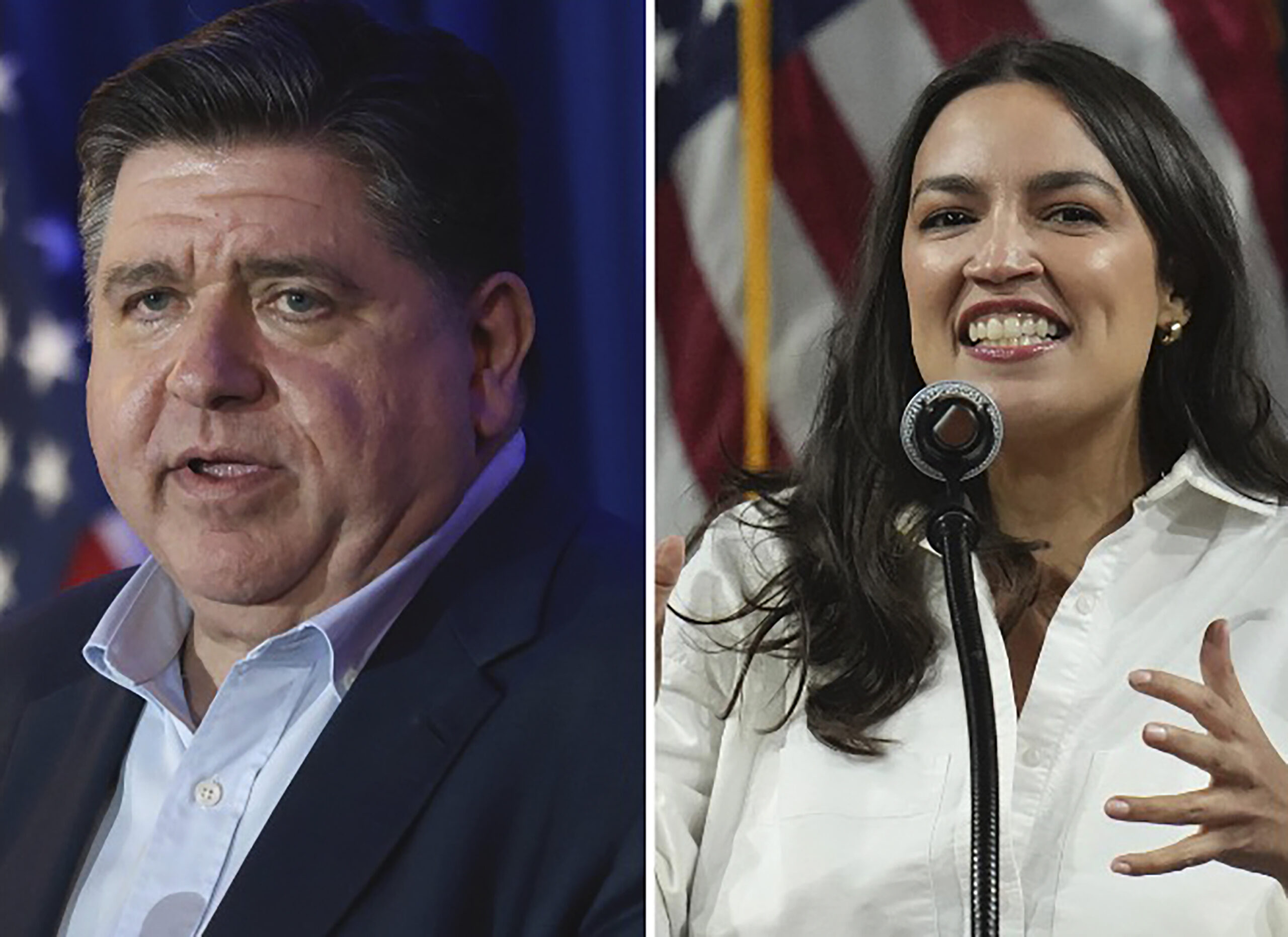
    This photo combo shows Illinois Gov. JB Pritzker, left, speaking during the McIntyre-Shaheen 100 Club Dinner, April 27, 2025, in Manchester, N.H., and U.S. Rep. Alexandria Ocasio-Cortez (D., N.Y.) speaking during a “Fighting Oligarchy” tour event at Arizona State University, March 20, 2025, in Tempe, Ariz.

    Get 13 Democratic and left-leaning independent voters together in the same chat — as the New York Times did with a recent focus group, the latest in its running series — and you’d surely hear some harsh words about Donald Trump and the GOP. But ask them what they think about the Democratic Party, and you might want to cover your ears.

    “Spineless.” “More complacent than I thought they would be.” “Paralyzed.” “Afraid.” “Incompetent.” “I guess suffocated, or given up …” “Sold out.” I’m not leaving out the positive responses, because there weren’t any. You also won’t be surprised that these 13 Democratic or aligned voters — very diverse across racial, class, and age lines — want more radical leaders who will take the party, and hopefully the nation, in a bold new direction. There was positive buzz for the likes of new New York Mayor Zohran Mamdani and Texas Rep. Jasmine Crockett — anyone with fresh ideas and a willingness to mix it up with Trump. Said a 36-year-old independent woman from Washington state: “I still don’t agree with everything she’s doing, but Alexandria Ocasio-Cortez is a well-known name and seems to be fighting against Trump.”

    I thought a lot about the Times’ focus group last week as I heard or read two veteran pundits try, at this relatively early date, to handicap the 2028 presidential race. Mark Halperin (who’s somehow still around despite this) went on POTUS radio with Michael Smerconish to defend his picks: He included ex-Chicago mayor Rahm Emanuel, a center-right figure who is passionately hated by any real Democrat I’ve ever spoken with, and also overrated Kamala Harris (floating on the fumes of her name ID), as well as his No. 1 pick, California Gov. Gavin Newsom, with Pennsylvania Gov. Josh Shapiro at No. 2. He said he included AOC and upgraded Illinois Gov. JB Pritzker only because his “sources” told him to — because his sources understand the Democrats while the clueless Halperin does not.

    Ditto Nate Silver, who has magically reappeared in the Times, which first made him a star in 2012. Although Silver did place AOC in second, behind Newsom, he also — much like Halperin — uprated tired conventional wisdom candidates like Shapiro (No. 6) and Michigan Gov. Gretchen Whitmer (No. 4, despite being invisible recently), and grossly downrated progressive favorites like Pritzker (14) and Connecticut Sen. Chris Murphy (18), as well as more interesting and unorthodox names like Arizona Sen. Mark Kelly (12) and Kentucky Gov. Andy Beshear (15). He sees Newsom as the darling of “Resistance Libs,” the Trump-hating MS Now watchers who controversially get tagged as heavily “wine moms.” Said Silver of Newsom: “They want a fighter. And Newsom plays expertly into that.”

    True, but I expect Newsom’s standing among Democratic primary voters will crumble once voters learn more about his ties to Silicon Valley billionaires, or his verbal sellouts of the transgender community, or his “meh” popularity among the Californians who know him best. Readers of this newsletter were unanimous earlier this month in not wanting Shapiro to run. I’m not going to do a numerical ranking, but I would place Pritzker, who’s made all the right moves against Trump without Newsom’s train car of baggage, and AOC, who’s making all the right enemies, including the worst Beltway journalists, as my top two. I’ve covered presidential races since 1984, and I’ve learned the only thing that matters two years out is to listen to the people. The pundits know nothing right now.

    What I wrote on this date in 2019

    It’s impossible to top this anniversary: The day I appeared in the Epstein files. In February 2019, with the walls closing in, Epstein’s close adviser and quasi-journalist friend, Michael Wolff, wanted to make sure he saw my Feb. 24, 2019, column about elite male impunity that mentioned him and two billionaires in his orbit: Donald Trump and New England Patriots owner Robert Kraft. What did Epstein read, assuming he clicked on it? I wrote that “this isn’t really ‘a sex scandal.’ The real scandal here is the gross imbalance of power involving women who were held in a form of human bondage to serve as objects of gratification for powerful men intoxicated by their belief they can get away with anything.”

    Read the rest:Robert Kraft, Jeffrey Epstein, Donald Trump and a day of reckoning for America’s billionaires.”

    Recommended Inquirer reading

    • I took a short break from the relentless anti-Trump, anti-ICE beat last week to write about the other threat to the American way of life: artificial intelligence. Rapid advances in AI technology make it clear that robots and chatbots and the like are going to upend the economy — most importantly, the job market — sooner rather than later. Can wary voters find politicians who are willing to regulate AI and its threats to employment, education, and the environment, or will pols continue to prefer Silicon Valley’s campaign donations? Over the weekend, I highlighted the recently leaked ICE blueprint for an American concentration camp in Georgia, and what that document tells us about the moral depravity of mass deportation.
    • In a city as large and as history-bound as Philadelphia, all big stories are inevitably local. That was never truer than at the Winter Olympics in northern Italy, especially for the most-watched event on these shores: the U.S. men’s hockey’s thrilling overtime victory over Canada. The on-ice celebration blended with copious tears as Team USA teammates went into the stands and skated back with Johnny Jr. and Noa Gaudreau, the young children of late South Jersey NHL hockey icon Johnny Gaudreau. Their dad and their uncle Matty were killed by an alleged drunk driver while cycling on a South Jersey road in August 2024, as Gaudreau was training to hopefully make this Olympic squad. The players centered the Gaudreau family and his No. 13 jersey during the gold-medal celebration, and The Inquirer’s Alex Coffey captured the whole emotional story — one you won’t read anywhere else. “This is a history book [moment] that there will be a movie about,“ sister Katie Gaudreau told Coffey. ”And in that movie, Noa and Johnny will be on the ice.” You get the big, moving stories like this, and allow us to keep covering them, when you subscribe to The Inquirer.

    By submitting your written, visual, and/or audio contributions, you agree to The Inquirer’s Terms of Use, including the grant of rights in Section 10.

  • The hidden ICE blueprint that should horrify every American

    The hidden ICE blueprint that should horrify every American

    So often in the iPhone Age, the whole world is watching the ugly side of humanity as captured on video, from murder in the snowy streets of Minneapolis to a plainclothes Pennsylvania police chief appearing to place a protesting teen girl in a choke hold.

    But sometimes evil is buried deep in the black-and-white paperwork of government bureaucracy.

    A once sleepy rural town named Social Circle, Ga. — just over 40 miles east of Atlanta off Interstate 20 — has become the epicenter of the stealthy plan by U.S. Immigration and Customs Enforcement (ICE) to rapidly create an American gulag archipelago of massive former warehouses adapted into detainment camps for arrested immigrants.

    The plan to convert a newly built 1.2 million-square-foot warehouse into a concentration camp where as many as 8,500 humans — double the size of the current largest federal prison — would be housed for as long as 60 days (or likely more) has riled up both residents and public officials in a place where 75% voted for Donald Trump in 2024.

    The frustrated city manager of Social Circle, which was offered no input as a cash-flush ICE recently bought the spec warehouse for a whopping $128 million, told the Guardian that he’s denying the feds’ request to turn on the public water as they race to open their detention camp there as early as April.

    “I told them I’m not going to do it,” Eric Taylor said. “Not until they come and talk to me.”

    But officials in the small town of just 5,000 also did something else that probably raised some hackles at Kristi Noem’s ultrasecretive U.S. Department of Homeland Security. They made public what few documents DHS has so far been willing to share with Social Circle, including its blueprint for what the innards of an American gulag will look like.

    Close to two-thirds of the massive, rectangular floor plan is divided into 80 squares separated by narrow corridors, each box with dozens of strike marks. The thousands of marks presumably represent bunk beds, but what they truly signify is human beings.

    Based on the most recent statistics, as many as 70% of these arrested and handcuffed immigrants will have committed no crime after entering the United States — day laborers, restaurant workers, or Uber drivers now crammed into a prison camp unlike anything seen on U.S. soil since World War II’s immoral Japanese internment.

    The new floor plan raises more questions than it answers. It’s not clear whether the small boxy rooms surrounding the rectangular detention space would be used for recreation, as no recreation space is explicitly marked. There are three cafeteria rooms and a medical space — a necessity in an instant town of 8,500 — yet still room for an indoor gun range where hundreds of guards will hone their shooting skills. Eight rooms are marked as handicap accessible, so there’s that.

    This banal blueprint for inhumanity is the embodiment of the notorious words last April from ICE’s acting director, Todd Lyons, who said the Trump regime wants to make deportation “like [Amazon] Prime, but with human beings.” Indeed, the ultimate goal of stacking desperate people in dingy, dehumanizing concrete caverns built for bath mats or pet treats is to force them to abandon their legal right to fight for U.S. asylum and agree to leave the country, bringing Trump closer to his goal of one million deportations every year.

    John Miller, an organizer with One Circle Community Coalition, shows a variance request while describing plans to oppose converting a warehouse into an ICE detention facility last month.

    “The focus on speed is extremely concerning,” Sari Arvey of Human Rights First’s ICE Flight Monitor told Georgia Public Broadcasting, referring to the goals of getting detainees in and out in 60 days. “If they’re trying to speed up this process even further, it’s only going to extremely exacerbate the due process violations, the separation of families, [and] also conditions in detention centers.”

    Online, the blueprint of detainees forced to live in such crammed conditions — a necessity to house 8,500 people in one building, even a warehouse the size of roughly 20 football fields — prompted comparisons to some of the worst of human history. Some on Bluesky linked the Social Circle blueprint to diagrams of tightly packed ships that brought enslaved Africans to America in the 18th century, while others wondered if the boxy quarters would look just like the rows of bunk beds inside Auschwitz, the Nazi death camp.

    No one is suggesting ICE is planning anything close to mass extermination, but experts do say floor plans like this are more evidence that what the Trump regime, with its ambitions for a national network of as many as 24 converted warehouses, is racing to create is clearly comparable to history’s worst concentration camps.

    In a conversation this weekend with New York Times columnist Jamelle Bouie, author Andrea Pitzer of One Long Night: A Global History of Concentration Camps called it “the purging of anyone that’s deemed the outsider or the foreigner. It has been weaponized into this much, much more dangerous state. And with the number of detention beds in terms of expansions and the warehousing, the potential for this, we’re really looking at stuff on the scale of the concentration camp systems that most people have heard of.”

    As the existence of the ICE detention scheme has become a coast-to-coast controversy, Homeland Security has insisted these sites will be modern, well-run, and humane. “These will not be warehouses — they will be very well-structured detention facilities meeting our regular detention standards,” DHS said earlier this month.

    The problem is that the recent history of ICE has shown its current “modern” detention sites are plagued by squalid conditions and rising rates of infectious disease and premature death. The idea that these same bad actors could achieve humane conditions in much larger, hastily assembled warehouses seems utterly ludicrous.

    Earlier this year, Democratic U.S. Rep. April McClain Delaney visited an ICE detention center at a Baltimore federal building and reported “horrendous” conditions, with 50 people in a room with “concrete floors, a bench around the perimeter, and a makeshift bathroom in the middle that has minimal privacy.” Detainees recounted sleeping under foil blankets and experiencing hunger and thirst.

    “Our patients are more frightened and sicker than ever,” three Philadelphia physicians who primarily treat immigrant communities wrote in a recent Times guest essay that described a variety of dire problems, including substandard treatment in ICE detention.

    One case they described involved a stroke recovery patient who was arrested and detained by ICE for several weeks at the Moshannon Valley Processing Center in Central Pennsylvania before family members won his release.

    “In detention he had missed weeks of medication, and he continues to deal with the undertreated effects of his stroke, which make walking difficult and returning to work impossible,” they wrote. “He told us he struggles to sleep through the night and often feels exhausted and depressed.” Meanwhile, large ICE detention camps in Texas have reported outbreaks of measles and tuberculosis.

    The reality of the concentration camps that are planned for Social Circle or Tremont, Pa. — in a site that used to move cheap consumer goods for the now-bankrupt Big Lots — is that they are much more likely to breed disease and human misery than to alleviate them.

    It’s not clear how far ICE can get with this scheme. Were ICE successful in its initial $38 billion plan to buy 24 facilities that could house as many as 76,500 detainees, it would need to arrest people in multiple cities on the scale that recently generated a national uproar in just one, Minneapolis. But the exposure of the detention proposal has also caused several planned purchases to collapse. This week, for example, officials in New York state claimed that a large, controversial site in the Hudson Valley town of Chester won’t be happening.

    The irony is that what might be described as NIMBY (“not in my backyard”) issues — like not having enough drinking water or sewage treatment capacity for thousands of new arrivals, or the loss of tax revenue from warehouses meant for economic development — are giving permission to weak-kneed politicians afraid of the immigration issue to still oppose these sites without addressing the bigger human rights crisis.

    To echo Malcolm X, these monstrosities should be stopped by any means necessary, even if it takes just turning off the water spigot. Still, the biggest reason to be outraged about this scheme for American concentration camps should not be infrastructure, but the rank immorality spelled out in the cold ink of the DHS floor plan.

    It’s our challenge as the neighbors and allies of our nation’s immigrant communities to make sure those black marks on a page are never turned into the suffering of actual humans.

  • Is AI’s authoritarianism a bigger threat than Trump’s?

    Is AI’s authoritarianism a bigger threat than Trump’s?

    Like every other beleaguered top editor in a big-city newsroom these days, Chris Quinn — who leads Cleveland.com and the print Plain Dealer — has to deal with assaults from all sides.

    In March 2024, Quinn briefly became a darling of the online left (not easy for a journalist to pull off these days) with a bold manifesto for how Cleveland.com would deal with one of those many threats: An authoritarian president who despises a free press.

    “We tell the truth, even when it offends some of the people who pay us for information,” Quinn wrote that fateful spring in his “Letter From the Editor” column. “The truth is that Donald Trump undermined faith in our elections in his false bid to retain the presidency. He sparked an insurrection intended to overthrow our government and keep himself in power. No president in our history has done worse.”

    Less than two years later, Quinn has gone viral again. But this time, instead of resisting a powerful force aiming to upend American life as we’ve known it, he’s embracing one: The power of artificial intelligence to transform the workplace … and just about everything else.

    Quinn has said that steep job cuts (more on those later) have left just a skeleton crew covering Cleveland’s far-flung exurban counties, and using an AI tool to write stories based on the downsized staff’s reporting will result in more articles about these potential news deserts. When an anonymous college journalism student withdrew her application to Cleveland.com because she said she couldn’t work in a newsroom using AI to perform what was once a human task, the editor went off in his column.

    “Journalism programs are decades behind,” wrote Quinn in arguing that technology is rendering such degrees as worthless. “Many graduating students have unrealistic expectations. They imagine themselves as long-form magazine storytellers, chasing a romanticized version of journalism that largely never existed.”

    Seriously, how dare those young whippersnappers dream of creating beauty in their lives, instead of welcoming their new robot overlords and embracing their future as a cog in a faceless news machine?

    But the dilemma facing Cleveland, Quinn, and the Unknown Job Applicant is the crisis that’s been thrust in the face of all Americans as the brutal winter of 2026 slowly melts into spring, and, it seems, a reality we’re truly not ready to confront — not practically, nor politically, nor morally.

    People forget, but there was a brief moment in the mid-to-late 1990s when the internet was dismissed as a fad — clunky to use (remember dial-up?) and its abilities overhyped by Silicon Valley. But the internet radically changed how we live, as did the arrival of smartphones in the 2000s — not always for good. Yet, these seem like the warm-up acts for the life-altering conniptions caused by omnipresent AI.

    Suddenly, there’s been a flood of essays trying to warn us that whatever one initially thought about programs like ChatGPT — and, yes, AI is still prone to “hallucinations” and other embarrassing errors — we need to adjust to the news that a new generation of AI tools is much more powerful, and better poised to replace many jobs.

    “I am no longer needed for the actual technical work of my job,” an AI executive named Matt Shumer wrote in the most viral of these hot takes, titled “Something Big Is Happening.”

    In describing how new AI programs rolled out by Anthropic, maker of Claude, and ChatGPT’s parent OpenAI can now perform complex coding tasks from the most simple instructions, Shumer warned the earthquake is coming to “[l]aw, finance, medicine, accounting, consulting, writing, design, analysis, customer service. Not in ten years. The people building these systems say one to five years. Some say less.”

    This jibes with dire predictions from Anthropic’s CEO Dario Amodei, who has warned repeatedly of “painful” white-collar job losses caused by AI, and said in his most recent long-form essay that the new technologies are “acting as a ‘general labor substitute for humans.’”

    Is that bad? It sounds bad.

    The sweeping changes in the labor market are already starting, including a sharp drop in entry-level hiring for coders, who seem to be the canaries in this coal mine. January was the worst month for layoffs since the Great Recession of 2009, and analysts say job losses directly attributable to replacement by AI were a significant slice of that. The idea that wiping out millions of jobs might be bad for the overall economy even caught the ADD-addled attention of Wall Street for a day or two.

    I don’t have space here to go deep on the technology, but everyone should take a moment to learn what “vibe coding” and “agentic AI” are, and read the New Yorker on the rise of Anthropic’s Claude, or listen to a really good podcast explanation of AI and the labor market from the New York Times’ Kevin Roose. But we’re already overdue in addressing what this all means for everyday human existence.

    The idea that eventually “everything you think, do, and say is in the pill you took today” — as Zager and Evans sang so presciently in their 1969 No. 1 smash, “In the Year 2525” — has been with us for decades. But there was also a sense that robots performing the worst drudgery of the workplace might be liberating, creating more leisure time and space for human creativity.

    So far, that’s not what’s happening. Avoiding the poverty and deprivation that would be caused by massive job losses would require a government willing to pay people a universal basic income (UBI), but the current government has instead been dismantling the existing welfare state. And the workers creating AI are sleeping in their cubicles.

    And creativity may become a fever dream, not just for that naive journalism student with her “romanticized” visions of telling stories. Did you read the Times profile of the romance novelist who’s relying on Claude to crank out new tomes in as little as 45 minutes? Did you watch the lifelike short movie of an AI-generated “Brad Pitt” fighting “Tom Cruise”?

    Let me get this straight. AI is taking our jobs and ending artistic struggle to liberate us … for what, exactly?

    I haven’t even discussed the other really bad things about AI, including the drain on electricity from massive data centers likely to unleash yet another form of tyranny, unbridled climate change, and the death of critical thinking as reliance on AI decimates the classroom. At a moment when we’re just coming to terms with the downside of smartphones — such as higher rates of anxiety and depression among teenagers — could we learn to avoid similar mistakes with AI before they start?

    And did I mention the whole “robots take over the world” scenario?

    Dealing with all this would take political will. Yet, leaders in both parties — Trump, for sure, but also top Democrats like Josh Shapiro and Gavin Newsom — have embraced the data center and AI ambitions of their donor class, even though the majority of their voters want strict regulation. A pro-AI super-PAC raised $125 million last year to buy the midterm elections. Who is fighting for the about-to-be-starving artists?

    People opposed to a data center proposal at the former Pennhurst state hospital grounds talk during a break in an East Vincent Township supervisors meeting in December in Spring City, Pa.

    It doesn’t have to be like this. The same better-late-than-never push to remove smartphones from classrooms can be used as a model for eradicating AI in K-12 schools as well as college, to give the next generation at least a fighting chance to learn to think for itself. The politicians don’t have to allow data centers that burn fossil fuels instead of clean energy and consume the lion’s share of water available to the communities where they’re located.

    Nor do we need to embrace the late-stage capitalist ethos that if shareholders make more money employing robots than human beings, some invisible law forces us to do this. Remember Chris Quinn back in Cleveland? The reason he feels he needs AI to write up the news is because, back in 2019, he oversaw the layoff of one-third of his unionized newsroom, at the behest of the paper’s corporate parent.

    Maybe robots are now “agentic,” but humans have always had agency. Here’s the perfect chance to use it: by encouraging the uses of AI that will be good for society — diagnosing sick patients and inventing medicines to cure them, for example — but regulating or banning the aspects of AI that will make life worse.

    That’s partly up to the politicians, but it’s also up to us. Societal trends like the outbreak of “neighborism” — strangers forming new community bonds to beat back the fascism of immigration raids — or a rise in union membership are healthy signs that Americans are finally getting tired of technology driving us apart.

    The fight against the authoritarianism of unchecked and often unwanted AI is the battle of the 21st century that will be waged long after the fight against political authoritarianism in Trump’s United States and elsewhere has been won.

  • South Jersey guy becomes the face of ICE resistance | Will Bunch Newsletter

    I was cranking out the newsletter in Tuesday’s predawn darkness when we learned that the Rev. Jesse Jackson Sr., who’d been our greatest living bridge to the civil rights heroics of the 1960s and ‘70s, had died at age 84. Covering his groundbreaking 1984 campaign as a cub reporter at the Birmingham News is still a career highlight four-decades-plus later — a memory that was reinforced recently listening to Abby Phillip’s excellent new book on Jackson. He leaves us right when his victories for African Americans in arenas such as corporate hiring and college admissions are under attack, and it challenges us to fight to preserve them. RIP to an American original.

    If someone forwarded you this email, sign up for free here.

    How ICE protest by ‘an average Joe’ from Haddon Heights went viral

    “I never want to see a child run away from our own government again,” said this self-described first-time protester, Joseph Zobel from Haddon Heights, at a rally in Lindenwold, N.J., the day after children ran from a school bus stop after ICE appeared to conduct an operation in the area.

    Last Friday, “an average Joe who grew up in Haddon Heights” named Joseph Zobel was at work when he saw a viral video from the nearby South Jersey town of Lindenwold that shocked the nation, and shocked him.

    The clip from a Ring doorbell camera showed a gaggle of fourth and fifth graders running in a panic, screaming, “ICE! ICE!” as masked federal immigration agents had approached their morning bus stop the day before.

    “I just thought, ‘How can that be happening here in the United States?’” Zobel told me Monday in his first media interview, conducted by email. When he got home from work, he saw online that the group Cooper River Indivisible was holding an “ICE Out” protest at the Lindenwold municipal building at 4 p.m.

    He looked at the clock. It was 3:58.

    “Something inside of me said, ‘Go up there and stand with these people,’” said Zobel, a 36-year-old school coach who said he’s never been to a protest before in his life. “I wanted to stand for what is right.” As he dashed out, Zobel also grabbed one thing — the American flag he flies in front of his house most of the time (except during football season, when an Eagles flag replaces it).

    As many as 300 people were at the protest, as Indivisible organizer Amber Clemments asked the flag-bearing Zobel if he’d be willing to film a video. Zobel’s raw emotion, choking back tears as he said, “I watched fourth- and fifth-grade kids run away from our own government,” soon ignited across social media over the long Presidents Day weekend.

    By Tuesday morning, the 47-second clip of Zobel had been watched an astronomical 2.9 million times on TikTok — and liked by some 709,000 viewers — even as it also went viral on Bluesky, X, Threads, and other social media platforms.

    It’s not hard to understand why. Zobel, who described himself as a patriotic regular voter but never very political, instantly became the bearded, baseball hat-wearing, anguished face of a new American majority — an Everyman shocked into action by the horror of immigration raids, wondering how best to protect his neighbors.

    The two South Jersey viral videos — the one depicting the raid itself and Zobel’s raw reaction — revealed how both the terrorizing tactics of masked immigration cops and the powerful reaction from often nonpolitical Americans, dubbed “neighborism,” are spreading far beyond the Minnesota tundra where this battle was initially met.

    Indeed, local activists say Lindenwold — last stop on the heavily traveled PATCO line, just over 15 miles southeast of Philadelphia — has been under a relentless siege from U.S. Immigration and Customs Enforcement (ICE) and other federal agents since last spring, not long after Donald Trump became president. The transit hub has become a magnet for immigrants in recent years, with a local school population that is just under 60% Latino.

    Craig Strimel, a leader of Cooper River Indivisible, a local chapter of the group that organized the large “No Kings” protests, said activists first learned of the ICE activity when a Lindenwold immigrant couple escaped agents last year by taking refuge in the local high school, where the principal blocked the feds at the doorway. Since then, Strimel said, ICE watchers have seen frequent activity in and around a cluster of five apartment complexes with large immigrant populations, but few known arrests.

    “It was becoming apparent early on that this was all about creating terror,” said Strimel of the frequent ICE sightings. Some local residents stopped leaving their apartments, he said, and a once-popular restaurant in Lindenwold just closed its doors amid rumors that the couple that owned it has returned to Mexico.

    All of this set the stage for last Thursday, when masked federal agents wearing tactical gear arrived early in the morning at Lindenwold’s Woodland Village Apartments just as 44 elementary school kids were waiting for their school bus. The sighting triggered a panic that saw some kids running away and others frantically hustling onto the bus as the driver arrived. No one was apprehended or reported hurt.

    On Monday, U.S. Department of Homeland Security officials said the agents went to the complex hoping to arrest a Honduran immigrant who’d once been convicted of aggravated assault. The man was not taken on Thursday and remains free.

    Although some outlets reported the large protest was in response to the high-profile raid — which has been covered by the CBS Evening News, MS Now’s Morning Joe, and elsewhere — that took place just a day and a half earlier, the rally actually had been in the works for several weeks.

    It had been organized by a young woman from Lindenwold named Tatiana — a 20-year-old business major at Camden County Community College who spoke with me Monday on the condition that I not use her full name — who’d been seeing the ICE activity in her hometown and felt it was time local people spoke out.

    Tatiana told me that the idea behind the Lindenwold protest was “to give the community a voice — to be able to say, ‘No, we don’t stand for this.’ That’s the most important thing for me. It’s just bringing community together and deciding we’re not OK with this at all.” But she agreed the bus stop raid had given the event a boost from residents believing “that children should not be scared of federal law enforcement.”

    Zobel was one of those neighbors. In the email interview, he described himself as “just your average Joe who grew up in Haddon Heights.” He did volunteer that he’s voted in every election since he turned 18, and that his first ballot was cast for Barack Obama, “and I felt proud walking out of the booth that day.”

    Fittingly, Zobel sounded somewhat Obama-esque when he described his dismay over America’s bitter partisan divide. “We as a nation are so angry with one another, and that makes me so sad,” he said. Not surprisingly, he’s as stunned as anyone at the millions of views for Friday’s video, and somewhat concerned about the impact, saying, “I just hope this video does not divide people.”

    But Zobel’s words and teary-eyed emotion went viral because it was such a shot of hope — that in a moment when hate is on public display in the streets of the United States, “your average Joe” who’d once stood on the sidelines is now grabbing the American flag and taking the field to fight for their neighbors. An authoritarian movement dependent on rage simply never counted on the brotherly love that sent this nonpolitical Eagles fan to his first protest.

    It might not be his last. “I am always happy,” he said, “to help support humanity.”

    Yo, do this!

    • With several inches of snow still on the ground, it might shock you to hear this, but American soccer is back! The Philadelphia Union — despite winning the 2025 Supporters Shield and boasting Major League Soccer’s best winning percentage in the 2020s — radically shook things up during the offseason. With new strikers Ezekiel Alladoh and Agustín Anello looking to amp up their attack, the Union’s quest for the CONCACAF Champions Cup begins Wednesday in Trinidad against Defence Force FC at 6 p.m. on FS2. Saturday night at 7:30 p.m., it’s back to the chillier climes of Washington for the MLS opener against DC United on Apple TV (with no need in 2026 for an additional Season Pass subscription, as in past years).
    • In the quest for what’s new in American popular culture, sometimes we take for granted the established jewels in our midst. I’ve long felt that MS Now’s 9 p.m. (now just on Monday nights) host Rachel Maddow is our best TV commentator because of the way she weaves the historical past into the headlines of America’s tortured present. But since last summer, she has upped her game. Maddow’s coverage of two stories underreported in most of the mainstream media — grassroots resistance to the Trump regime, and now the push for a nationwide network of warehouse concentration camps — has created appointment television every Monday.

    Ask me anything

    Question: What is your take on the latest CBS censoring of [Stephen] Colbert? — @bcooper82.bsky.social via Bluesky

    Answer: Another Tuesday morning breaking story on deadline: The CBS overseers of Late Night with Stephen Colbert — the top-rated talk show that’s nevertheless ending this year in what critics see as genuflecting to the Trump regime that the program frequently mocks — would not air a recorded interview with Texas state lawmaker and Democratic Senate primary candidate James Talarico. The backstory here is that the Federal Communications Commission has long exempted late-night talk shows from its equal time rule about political candidates on licensed broadcast outlets, but last month, FCC chair Brendan Carr — a pro-Trump MAGA pit bull — said this is changing. That apparently was enough for CBS’s new Trump-friendly management, which would not broadcast the interview (available on YouTube, now certain to get more views than if it hadn’t been censored). This new flap just highlights what a perilous moment this is for the First Amendment and American democracy writ large. Government limits on what viewpoints you can see or hear are a sign of dictatorship, full stop.

    What you’re saying about …

    Last week’s question about a winning Democratic strategy for the 2026 midterms drew a robust response, and almost all of the replies were thoughtful and nuanced. If there was a consensus, it was that Democrats should tailor their candidates to the divergent views of the congressional districts they hope to win. As Naomi Miller stated, “I think progressive candidates should run in progressive districts, and mainstream democrats in mainstream, purple, and red districts.” Still, a number of you think America’s bad experience with MAGA extremism means a sharp left turn is warranted in response. “I’d like for the Democrats to become more progressive and combative toward Trump than they already are,” wrote Benjamin Spohn, voicing an opinion many share these days.

    📮 This week’s question: Tuesday’s passing of the Rev. Jesse Jackson is one more reminder that many icons of America’s tumultuous 20th century are disappearing. So who do you think is the current greatest living American, and why? Please email me your answer and put the exact phrase “greatest living American” in the subject line.

    Backstory on the main reason the media is not trusted

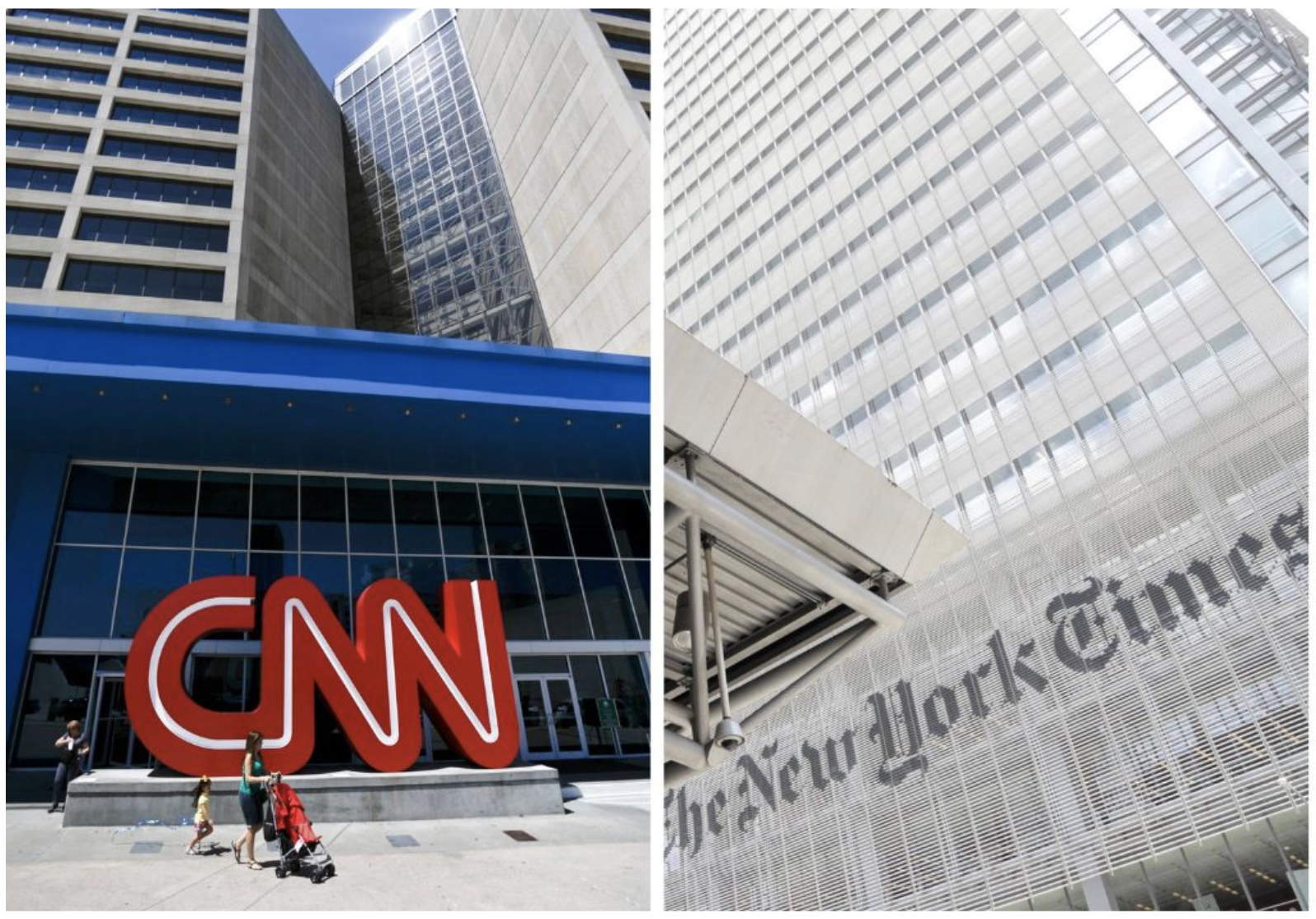
    Exterior images of CNN headquarters in Atlanta and the New York Times Building in Manhattan.
    Exterior images of CNN headquarters in Atlanta and the New York Times Building in Manhattan.

    It’s rare these days to write something that everyone can agree on, but here goes: Public trust in the media has never been lower than it is today. How low? A Gallup poll last fall found that public trust in the ability of newspapers, TV, and radio to fairly and accurately report the news had plunged to 28%, the lowest ever recorded. Why? It’s complicated. The people’s faith in every major institution has declined in the 21st century, after all. And it’s clear that in a deeply divided America, rage against the media machine looks different from the left than it does from the right.

    This weekend, in a New York Times piece largely about the broken promises of one media-mogul billionaire — Washington Post owner and Amazon founder Jeff Bezos — columnist Lydia Polgreen put forth an explanation for sinking media trust that jibes with a lot of what I’ve witnessed since graduating into full-time journalism back in 1981. I believe it’s not the only reason — but the biggest, and maybe the most misunderstood.

    Polgreen noted that the common theory for the public turning against Big Media — that journalists grew more partisan and biased after the tumult of the 1960s and ‘70s — doesn’t comport with the bigger reality. The era that peaked with the publication of the Pentagon Papers and the Watergate scandal launched a decades-long golden era of profitable news organizations spending big on investigative and accountability journalism — exactly what viewers and readers claimed they wanted.

    Yet, trust declined as that happened. Polgreen cited a study in the late 1990s that compared then-contemporary media to 1960s newspapers and found the earlier times were “naïvely trusting of government, shamelessly boosterish, unembarrassedly hokey and obliging.” Polgreen wrote that moving “away from deferential stenography and toward fearless investigation … led to declining trust in the news media. Aggressive, probing and accountability-oriented journalism held up a mirror to American society — and many Americans didn’t like what they saw.”

    I think this explanation is spot on, but before readers jump all over me, let me quickly add a couple of caveats. Starting way back in Ronald Reagan’s 1980s, there was also a response to the growing backlash — especially in elite, Beltway journalism — that resulted in too much groveling to authority, and thus stenography around government lies like the 2003 Iraq War. This has only gotten worse with the current wave of billionaire owners like the Post’s Bezos. This means many liberals now also distrust the media, but not for the same reasons as conservatives, who’ve long loathed journalism for probing America’s inequities around race or gender.

    The explanation offered by Polgreen jumped out at me because it fit with what I explored in my 2022 book, After the Ivory Tower Falls, which looked at Americans losing trust in another large institution: colleges and universities. The liberal ideas that were nurtured on campuses in the postwar college enrollment boom — including the civil rights movement — triggered the same grievance-filled, largely white working-class backlash as did journalism about social injustice. Today, the only road back for the media is to hold the powerful to account — and understand that not everyone is going to like it.

    What I wrote on this date in 2022

    People can’t say they didn’t see America’s current crisis coming. On this date four years ago, I expressed my shock and amazement that little more than one year beyond Donald Trump’s attempted coup to stay in power, the right-wing’s creation of a political fantasy world was spiraling out of control, with lies about Hillary Clinton spying on Trump’s 2016 campaign and Joe Biden giving out free crack pipes (?!!). I wrote, “[Historian Ruth] Ben-Ghiat told me that the failure of the Jan. 6 insurrection only forced the GOP to double-down on embracing alternate realities, because ‘they have to reckon with the fact that [Trump] lost, that he’s no longer the leader.’”

    Read the prescient rest:After Trump’s Big Lie, half of U.S. lives in a fantasy world. This won’t end well.”

    Recommended Inquirer reading

    • There’s been no rest on the mass deportation beat. In my Sunday column, I looked at the out-of-control lying from the Trump regime, with unbelievable fictions about everything from shootings and rampant brutality by masked immigration officers to Commerce Secretary Howard Lutnick’s whoppers about his friendship with Jeffrey Epstein. I argued that government lying is fundamentally unconstitutional and that the perpetrators need to be punished, including prison time. Over the weekend, I wrote about how, while Minneapolis was a victory for the forces resisting American authoritarianism, that won’t stop Homeland Security from putting thousands of new officers on the street and expanding its concentration camps. The fight for the soul of the nation has only just begun.
    • What was I saying higher up in this newsletter about accountability journalism? Ever since Lyndon B. Johnson’s Great Society push in the mid-1960s, community nonprofits have been a valuable source of urban renewal, yet are sometimes dragged down by waste, fraud, and abuse. It’s a problem that sadly persists, as shown last week by a major Inquirer investigation into Philadelphia’s NOMO Foundation, one of the best-funded nonprofits attacking youth violence and crime. Ace reporters Ryan W. Briggs and Samantha Melamed found that the foundation has received more than $6 million in public funds in recent years, but faced an IRS lien and eviction lawsuits while it was forced to close its housing program. This is why we have a First Amendment, so that a free press can report on the problems a corrupt or inept government refuses to deal with. Subscribing to The Inquirer gives you access to this type of essential journalism, and you’ll also feel good about supporting this vital work.

    By submitting your written, visual, and/or audio contributions, you agree to The Inquirer’s Terms of Use, including the grant of rights in Section 10.

  • No, ICE isn’t ‘retreating.’ It’s loading up to invade your town.

    No, ICE isn’t ‘retreating.’ It’s loading up to invade your town.

    It was understandable and probably justified when a surge of roughly 3,000 masked and gun-toting federal agents into Greater Minneapolis was described in martial terms, as a kind of modern-day Battle of Stalingrad fought in a snowbound U.S. prairie metropolis.

    Watching the icy slips of the clumsy U.S. Immigration and Customs Enforcement (ICE) officers, and the remarkable pushback from whistle-blowing neighbors braving subzero cold, the writer Margaret Killjoy quoted a friend: “ICE made a classic Nazi mistake: they invaded a winter people in winter.” So when border czar Tom Homan stood at a Minneapolis podium last week and declared an end to “Operation Metro Surge,” many in the media raced to cast the move as a major pullback.

    The Occupying Army Retreats,” proclaimed the American Prospect, in a tone that was echoed across numerous outlets. “The announcement of ICE’s withdrawal from Minnesota, like that of the British from Boston 250 years ago, marks a victory for people power.”

    But the smell of victory didn’t travel the nearly 1,200 miles east to the South Jersey suburb of Lindenwold, where on the very same morning Homan announced the end of the Minnesota surge, residents were shocked by an ICE raid that targeted a bus stop for an elementary school in a district that is 60% Latino.

    A Ring video from the Woodland Village Apartments, where about 44 kids were waiting for the bus, captured the alarming scene as fourth and fifth graders — some screaming “ICE! ICE!” — ran away from the masked agents in tactical gear who’d pulled up in unmarked vehicles. School officials believe no child was apprehended, although there were conflicting reports on whether any adult was arrested. But the suburban community, some 15 miles southeast of Philadelphia, was shaken to its core.

    In a video recorded during an emergency “Ice Out” demonstration in town, a bearded white man with a large American flag slung over his shoulder tried to give voice to the community’s anguish.

    “I never protested before in my entire life but …,” he said, choking back tears. “I watched fourth- and fifth-grade kids run away from our own government. I never want to see that again.”

    Unfortunately, America is all but certain to see this again. While Homan’s public proclamation of a drawdown in Minnesota seemed a small concession to crumbling political support for ICE, what happened in Lindenwold was a window into a dystopian near-future of more immigration raids — not fewer. This would allow an undeterred authoritarian Donald Trump regime to fill a $38 billion gulag archipelago of coast-to-coast warehouses with newly handcuffed human beings.

    Even Homan said as much last Thursday, if you listened closely. “And let me be clear, mass deportations will continue, and we’re not rolling back,” he said. “President Trump promised mass deportations, and that’s exactly what the American people are going to get.”

    Let’s also be clear. What happened in Minneapolis since the start of the year really was a landmark victory for democracy, and the notion that everyday Americans can defend their neighbors. At the cost of two lives, the great personal risks taken by Minnesota’s ICE resisters ended in both an unforgettable moral triumph and some real tangible gains.

    The actions taken by ICE watchers — who blew their alert whistles, recorded the government’s maneuvers on their phones, or volunteered food and rides to help immigrants stay safe indoors — prevented the arrests of scores and maybe hundreds of law-abiding neighbors. The courage of their resistance drove a huge shift in public opinion against the immigration raids, forcing rare concessions from the Trump regime. This heroism probably did cause ICE to scale back its Minnesota operations sooner than planned, and even pressured the U.S. Department of Justice to investigate two agents whose version of a shooting didn’t fit reality.

    But Trump’s mass deportation drive — with an inexorable inertia created when Congress threw a whopping $170 billion toward this effort last year — refuses to obey the normal laws of political gravity.

    U.S. Border Patrol officers walk along a street in Minneapolis last month.

    For starters, the U.S. Department of Homeland Security has lied repeatedly to the American people, which means there’s no way of truly knowing to what extent the Minnesota surge has even ended. The day after Homan’s announcement, a St. Paul-based journalist noted 100 reports of ICE activity, still more than any other state.

    But even more importantly, a flurry of reports last week about a massive ICE expansion for the rest of the year with many more agents in the field, more offices to support them, and more detention camps to hold thousands of new arrestees showed that what happened on the streets of Minneapolis was not the beginning of the end.

    It is, perhaps, the end of the beginning.

    The fact that ICE is ending its surge in Minneapolis — similar to what happened in 2025 in Los Angeles, Chicago, Charlotte, N.C., and New Orleans, albeit on a smaller scale — seems less significant than the fact that the agency has, under Trump, more than doubled the number of field agents from 10,000 to 22,000, with many just hitting the streets.

    Indeed, the drive to recruit new agents isn’t letting up. A Times of London reporter described the push as “a breakneck operation” as he watched officers from U.S. Customs and Border Protection — which also had its biggest hiring year in a decade — work the crowd with promises of a $50,000 bonus at a sold-out professional bull-riding event in Salt Lake City.

    Can we really celebrate a “retreat” from Minneapolis when WIRED reported last week that ICE is also rushing to close leases on as many as 150 new offices — an average of three in every single state — to house its growing roster of agents and the attorneys and other back-office staffers needed to process the thousands of new arrestees?

    Barricades block a drive outside a warehouse as federal officials tour the facility to consider repurposing it as an ICE detention facility on Jan. 15.

    For example, multiple outlets confirmed last week that Homeland Security just inked a lease for high-end office space in the Westlakes Office Park in Berwyn, in Philadelphia’s Main Line suburbs, reportedly to house ICE attorneys and related personnel. A planned office in Philadelphia’s Chinatown, at 801 Arch St., is also listed by WIRED.

    Indeed, the regime’s glum vision for the future of mass detention in America is laid bare by news that DHS is currently spending $38 billion from last year’s legislative windfall to buy as many as 23 massive warehouses that critics see as concentration camps on U.S. soil.

    Experts say the logistics of converting these rectangular behemoths — like the 1.3 million-square-foot warehouse in Schuylkill County, Pa., that used to distribute cheap consumer goods for Big Lots that DHS claims can house up to 7,500 detained immigrants — into even remotely humane facilities is daunting, if not impossible. Yet, DHS is plowing ahead with stunning speed, clearly expecting a pending spike in arrests.

    In rural Social Circle, Ga., ICE is claiming it will convert a one million-square-foot warehouse into a detention site for as many as 10,000 people — double the town’s population — as soon as two months from now. Project Salt Box, which is tracking the rapid gulag expansion, says DHS is using a legal maneuver to fast-track bidding to allow large private firms like the Geo Group to run these detention centers.

    Neither Trump’s plunging approval rating, nor the rapidly rising level of ICE resistance from everyday citizens like that flag-waver in Lindenwold, nor the Democratic demands for major reforms that have caused a DHS shutdown (with, ironically, no impact on ICE or Border Patrol) has put a dent in this unyielding drive toward rank inhumanity.

    A newly bloated ICE wants to create a Minneapolis in every state, even as more and more Americans are willing to take considerable risks to stop them. What we are witnessing just over one year into the Trump regime is less a retreat and more an escalating game of chicken — with the forces of democracy and fascism headed for a dangerous collision.

    If you’re part of the growing American majority who is disgusted with what ICE is doing in our streets, now is the time to get your whistle, attend a training session on what to do when the secret police arrive at your kid’s bus stop, attend a protest like the next “No Kings” event on March 28, and join the movement to protect your neighbors.

    In the spirit of John Paul Jones and the revolutionary American founders, we have not yet begun to fight.

  • The lying is out of control. People need to go to prison.

    The lying is out of control. People need to go to prison.

    Even by the pitifully low standards of the fact-free government of the United States, this one was a whopper.

    Last month, agents from U.S. Immigration and Customs Enforcement (ICE) showed up at a Minneapolis hospital emergency room with a 31-year-old Mexican immigrant named Alberto Castañeda Mondragón who’d suffered severe head injuries.

    The ICE agents told the ER nurses, according to the Associated Press, that Mondragón “purposefully ran headfirst into a brick wall.” But doctors could immediately see that the official version made zero sense, since their patient had multiple head injuries on the front, back, and side — not consistent with a fall or a collision.

    Under oath, the feds suddenly switched to passive voice, as an ICE deportation officer said only in a sworn statement that Mondragón “had a head injury that required emergency medical treatment.” A judge ruled the arrest was unlawful — Mondragón had come to the U.S. legally and overstayed his visa — and ordered the man freed. Mondragón, who survived his eight skull fractures and brain bleeds and is suing the government, weeks later told an AP reporter his story of what really happened.

    “They started beating me right away when they arrested me,” he recounted, describing how immigration agents pulled him from a friend’s car at a St. Paul, Minn., shopping center on Jan. 8, then slammed him to the ground, handcuffed him, punched him, and whacked him with a steel baton. Mondragón said he was beaten again at a federal detention center, where his pleas for mercy were met by laughter and more blows.

    “There was never a wall,” he said.

    Alberto Castañeda Mondragón, who says in a lawsuit that he sustained eight skull fractures when he was beaten by ICE agents, poses for a portrait earlier this month in St. Paul, Minn.

    Mondragón’s narrative would be outrageous if it were an isolated incident, but this is simply one of the most egregious examples of falsehoods by an American secret police regime that has been caught in high-profile lies again and again. The best-known cases are the Minneapolis killings of Renee Good — where officials up to the president falsely claimed an agent was struck by a car and rushed to a hospital — and Alex Pretti, who was accused of brandishing a gun at federal agents, a lie that was instantly demolished when videos emerged.

    And these are just three of the many instances where a U.S. Department of Homeland Security (DHS) agent or top official has offered a version of events — often backed up by sworn testimony — that soon fell apart.

    On Wednesday, another woman DHS had described as “a domestic terrorist” — Mirimar Martinez, the Chicago Montessori schoolteacher who was shot five times after a vehicle collision with ICE agents — presented powerful evidence of government lies as she pursues legal action against DHS and the agent who shot her, Charles Exum.

    Marimar Martinez (center) is greeted by her family after being released from the Metropolitan Correctional Center in October, after being shot by immigration agents and charged with assaulting federal officers in an incident in Chicago’s Brighton Park.

    Martinez, whose federal charges stemming from the encounter were later dropped, and her lawyer said that a federal diagram of the crash scene presented in court showed three other vehicles that do not exist, that the shots did not come through the front windshield as claimed by Exum, and that another claim — that Martinez had “rammed” Exum’s vehicle — was also false. Said her lawyer, Christopher Parente, “This is a time where you just cannot trust the words of our federal officials.”

    Ya think?

    Let’s not pretend to be so naive as to act as if official deceit began on the June 2015 day that Donald Trump descended on that Trump Tower escalator. It was the late 1960s — the era of Lyndon B. Johnson’s Vietnam “credibility gap” — when the investigative journalist I.F. Stone famously wrote, “All governments lie.” I became an opinion journalist because of my disgust over George W. Bush’s lies that drove the Iraq War.

    That said, the outrageous, Soviet-caliber falsehoods of the Trump regime feel much worse. These are not “plausible denial” fairy tales to push an unpopular policy or cover up some dirty deeds, like Watergate, but a vast empire of Big Lies — easily disprovable, about everything from election results to economic statistics — with a much more ambitious goal of undermining the very notion of objective reality.

    This fish stinks from the head. That Trump was elected a second time after the Washington Post (remember them?) chronicled some 30,573 false or misleading claims during his first four years was essentially America’s drive-through order of a Double Whopper.

    The nation seems to have all but given up on challenging Trump’s absurd claims that he won Minnesota three times (although he actually lost three times), or his fact-free insistence that his tariff policies have sparked $18 trillion in new investments, just to name two instances. But America’s liar-in-chief has also offered fresh inspiration to his underlings.

    One would be hard-pressed to find a more blatant case of highest-level lying than the matter of Commerce Secretary Howard Lutnick and his friendship with Jeffrey Epstein, the deceased financier and sex trafficker. When the Trump regime’s cover-up of its massive Epstein files became a big story last summer, Lutnick, a former Wall Street CEO who lived next door to Epstein in Manhattan, told a podcast that he’d briefly visited Epstein’s home in 2005, and was revulsed at the sight of a massage table. He insisted that he then decided, “I will never be in the room with that disgusting person ever again.”

    This was an epic lie.

    We now know — thanks to the congressionally mandated (but still incomplete) release of the Epstein files — that Lutnick and his family and entourage stopped for lunch at Epstein’s Caribbean island in 2012, and that this was one of many contacts — about meeting for drinks, or philanthropic contributions — the two men had almost up until Epstein’s arrest and jail cell death in 2019.

    There’s no evidence Lutnick committed any crime — beyond telling a massive and now discredited lie to the American people he purportedly serves. In Europe, heads are rolling for far less, but Lutnick has “the full confidence” of the president. That fact, bobbing above a vast MAGA sea of lies, should make us ask some hard questions as a nation.

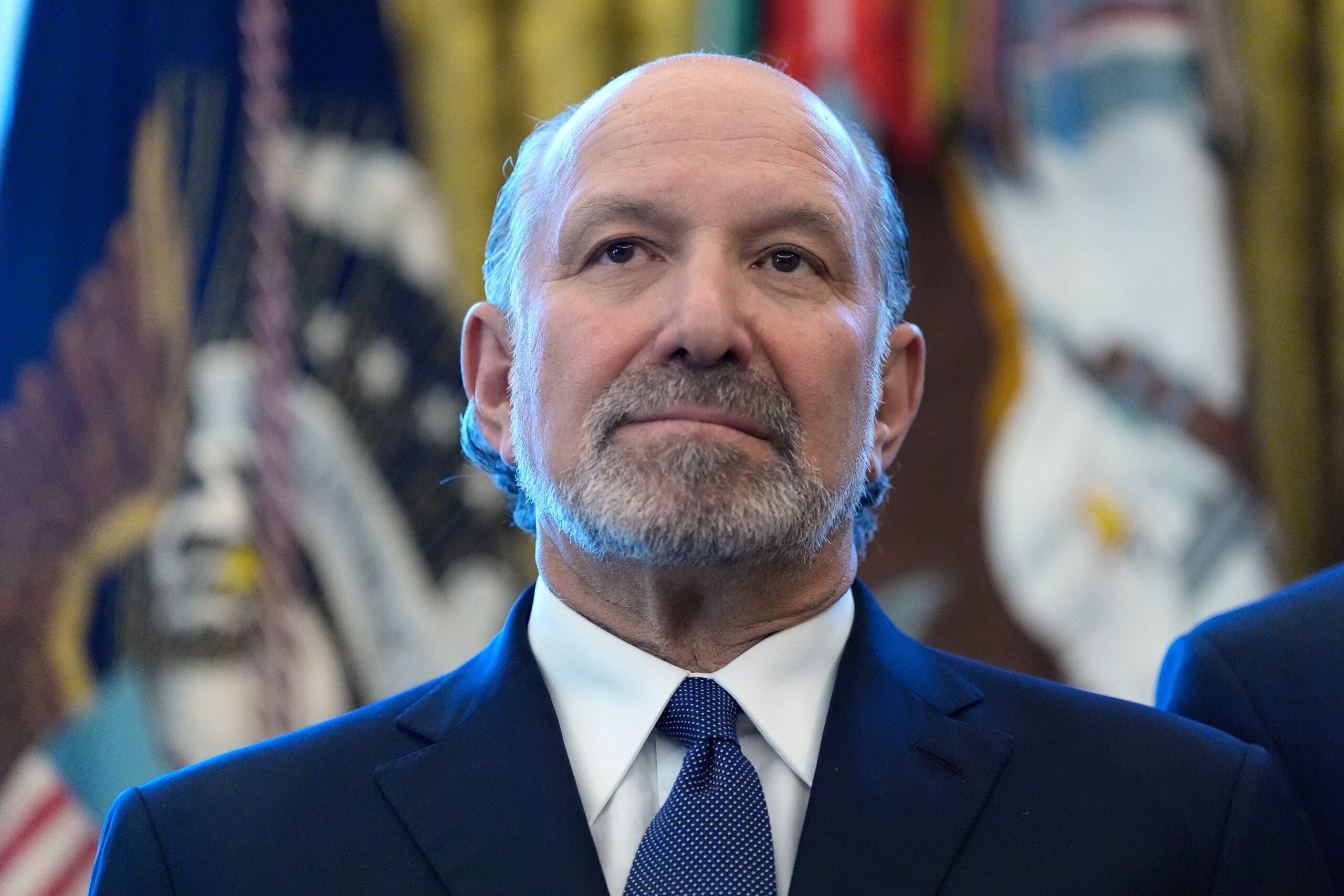
    Commerce Secretary Howard Lutnick listens during an event with President Donald Trump in the Oval Office in February.

    The current consensus — honored mainly in the breach — that lying is wrong, or bad, does not go nearly far enough. Perhaps it muddies the water that the U.S. Supreme Court has ruled it is First Amendment-protected free speech when private citizens utter things that aren’t true. But official deceit is a different category.

    “The government’s lies can be devastating,” a leading scholar — University of Colorado law professor Helen Norton — wrote in a powerful 2015 article, arguing that official government dishonesty is fundamentally unconstitutional. Norton noted that false testimony and evidence in criminal cases — what we’ve seen frequently in the immigration terror campaign — is a violation of the Constitution’s due process clause, while invented allegations that aim to silence critics are offenses against constitutionally protected free speech.

    It’s a felony to lie in federal court cases, or when testifying under oath before Congress, or in other types of governmental proceedings. And the federal statute of limitations for perjury is five years — plenty of time for a liberated U.S. Department of Justice to pursue these many cases if democratic forces can win back the White House in 2028.

    But we should also recognize that top officials who tell deliberate lies are abusing their power in ways that, as Norton rightly argues, are grossly unconstitutional. When Noem lies to the American people about Good and how she was killed by ICE, she should resign or be impeached. When Lutnick looks into a camera and offers complete fiction about his friendship with the world’s most notorious sex trafficker, he, too, should quit immediately, or face impeachment.

    Norton, in her prescient article from 11 years ago, notes that beyond the specific wrongs against individuals — such as Mondragón, Martinez, Good, and Pretti — that occur when the government lies, there is a much broader problem: the loss of public trust.

    Indeed, the steep decline of public faith not only in government but in other civic institutions began with those official lies about Vietnam and Watergate, and the flawed probes into the John F. Kennedy assassination. It was those and other countless moments of scatheless lying by those in power that created the rubble Trump marched over in 2016.

    We won’t get anything resembling democracy until we clear that widespread debris, and that means sending a bunch of these liars to prison, because they are the real criminals. America desperately needs truth and consequences.

  • Bad Bunny, MPLS, and the ‘neighborism’ saving America | Will Bunch Newsletter

    Maybe it’s because I’ve watched every blessed one of them, starting as a curious, nearly 8-year-old boy in 1967, but the Super Bowl has always felt like the ultimate barometer of where the American Experiment is at. Super Bowl LX (that’s 60, for those of you smart enough not to take four years of Latin in high school) was no exception. The actual game was something of a snoozefest, but the tsunami of commercials revealed us as a nation obsessed with artificial intelligence, sports betting, weight loss, and anything that can lift us from middle-class peonage without having to do any actual work. As Bad Bunny said, God bless America.

    If someone forwarded you this email, sign up for free here.

    Bad Bunny’s real message: From P.R. to Minnesota, we are neighbors

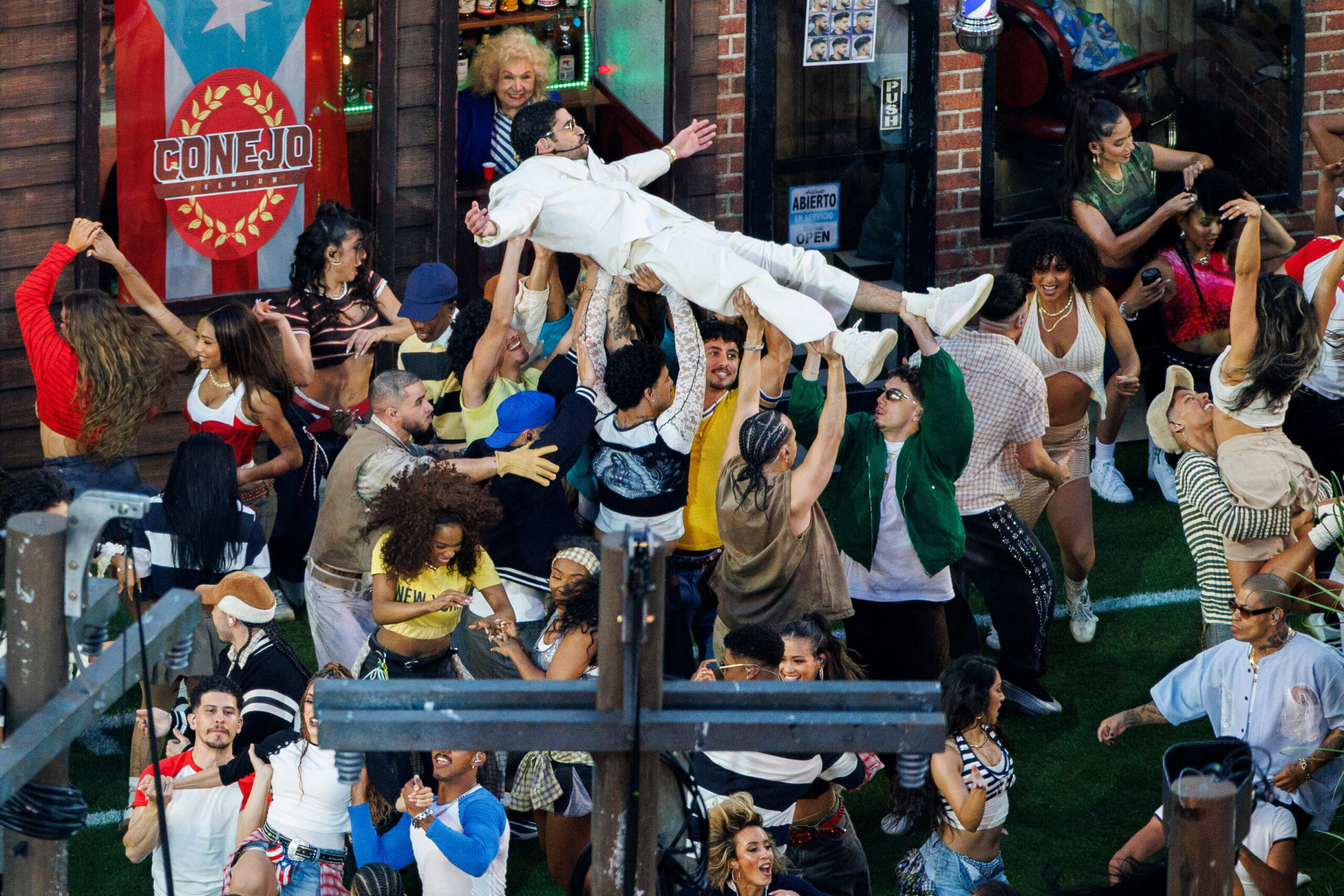
    Bad Bunny (center top) performs Sunday during the halftime show of the NFL Super Bowl XL football game between the Seattle Seahawks and the New England Patriots in Santa Clara, Calif.

    Right-wing media prattled on for months about how Bad Bunny, the Puerto Rican reggaeton superstar who is the world’s most streamed artist, would politicize and thus ruin the NFL’s halftime extravaganza at Super Bowl LX in Santa Clara, Calif.

    The babble became a scream seven days before the Big Game kicked off, when Bad Bunny won the record of the year Grammy Award and began his acceptance speech with the exhortation “ICE out!” adding, “We’re not savages, we’re not animals, we’re not aliens — we are humans, and we are Americans.”

    But on the world’s biggest stage Sunday night — seen by 135 million in the United States, a Super Bowl record — Bad Bunny sang not one word about Donald Trump, not that MAGA fans even bothered to hold up a translation app. The white-suited Benito Antonio Martínez Ocasio danced his way through the history of Puerto Rico and the Americas writ large, from the plantations of yore to the exploding power lines of the hurricane-wracked 21st century. He whirled past an actual wedding, stopped for a shaved ice, and for 13 spellbinding minutes turned a cast of 400 into what his transfixed TV audience craved at home.

    Bad Bunny built his own community — a place not torn asunder by politics, but bonded by love and music.

    Without uttering one word — in Spanish or English — about the dire situation in a nation drifting from flawed democracy into wrenching authoritarianism, the planet’s reigning king of pop delivered the most powerful message of America’s six decades of Super Bowl fever. Shrouded in sugar cane and shaded by a plantain tree, Bad Bunny sang nothing about the frigid chaos 2,000 miles east in Minnesota, and yet the show was somehow very much about Minneapolis.

    Bad Bunny finally gave voice to what thousands of everyday folks in the Twin Cities have been trying to say with their incessant whistles.

    We are all neighbors. The undocumented Venezuelan next door who toils in the back of a restaurant and sends his kids to your kids’ school is a neighbor. But Haiti is also a neighbor, as is Cuba. We are all in this together.

    The word I kept thinking about as I watched Bad Bunny’s joyous performance is a term that didn’t really exist on New Year’s Day 2026, yet has instantly provided a name to the current zeitgeist.

    Neighborism.

    The great writer Adam Serwer — already up for the wordsmithing Hall of Fame after he nailed the MAGA movement in 2018 in five words: “The cruelty is the point” — leaned hard into the concept of “neighborism” after he traveled to Minneapolis last month. His goal was to understand an almost revolutionary resistance to Trump’s mass deportation raids that had residents — many of whom had not been especially political — in the streets, blowing those warning whistles, confronting armed federal agents, and tracking their movements across the city.

    Serwer visited churches where volunteers packed thousands of boxes of food for immigrant families afraid to leave their homes during the U.S. Immigration and Customs Enforcement raids, and talked to stay-at-home moms, retirees, and blue-collar workers who give rides or money to those at risk, or who engaged in the riskier business of tracking the deportation raiders.

    “If the Minnesota resistance has an overarching ideology,” Serwer wrote, “you could call it ‘neighborism’ — a commitment to protecting the people around you, no matter who they are or where they came from.” He contrasted the reality on the ground in Minneapolis to the twisted depictions by Trump and his vice president, JD Vance, who’ve insisted refugees are a threat to community and cohesion.

    Of course, it’s not just Minneapolis, and it’s not just the many, liberal-leaning cities — from Los Angeles to Chicago to New Orleans and more — that were the incubators of the notion that concerned citizens — immigrant and nonimmigrant alike — could prevent their neighbors from getting kidnapped. Even small towns like rural Sackets Harbor, N.Y., the hometown of Trump’s border czar Tom Homan, rose up in protest to successfully block the dairy farm deportation of a mom and her three kids. It’s been like this everywhere regular folks — even the ones who narrowly elected Trump to a second term in 2024 — realize mass deportation doesn’t mean only “the worst of the worst,” but often the nice mom or dad in the house, or church pew, next to theirs.

    Only now that it’s arrived is it possible to see “neighborism” as the thing Americans were looking for all along, even if we didn’t know it. It is, in every way, the opposite vibe from the things that have always fueled fascism — atomization and alienation that’s easy for a demagogue to mold into rank suspicion of The Other.

    I’m pretty sure Bad Bunny wasn’t using the word neighborism when the NFL awarded him the coveted halftime gig last fall. But the concept was deeply embedded in his show. He mapped his native Puerto Rico as a place where oppression has long loomed — from the cruelty of the sugar plantations to the capitalist exploitation of the failed power grid — but where community is stronger.

    Then Benito broadened the whole concept. Reclaiming the word America for its original meaning as all of the Western Hemisphere, Bad Bunny name-checked “Chile, Argentina, Uruguay, Paraguay, Bolivia, Peru, Ecuador, Brazil,” and Canada, as well as the United States. These, too, are our neighbors. “God bless America,” he shouted — his only message of the night delivered in English.

    So, no, Bad Bunny never mentioned Minneapolis, but a tender moment when he seemingly handed the Grammy he’d won just a week ago to a small Latino boy had to remind viewers of the communal fight to save children like the 5-year-old, blue bunny hat-wearing (yes, ironic) Liam Conejo Ramos, who was just arrested, detained, and released by ICE. (A false rumor that the Super Bowl boy was Ramos went viral.)

    But arguably, this super performance had peaked a few moments earlier, when the singer exited the wedding scene stage with a backward trust dive, caught and held aloft by his makeshift community in the crowd below. Bad Bunny had no fear that his neighbors would not be there for him. Viva Puerto Rico. Viva Minneapolis. Viva our neighbors.

    Yo, do this!

    • Some 63 years after he was gunned down by a white racist in his own driveway, the Mississippi civil rights icon Medgar Evers has been having a moment. A fearless World War II vet whose bold stands for civil rights as local leader of the NAACP in America’s most segregated state triggered his 1963 assassination, Evers’ fight has become the subject of a best-selling book, a controversy over how his story is told at the Jackson, Miss., home where he was killed, and now a two-hour documentary streaming on PBS.com. I’m looking forward to watching the widely praised Everlasting: Life & Legacy of Medgar Evers.
    • After the Super Bowl, February is the worst month for sports — three out of every four years. In 2026, we have the Winter Olympics to bridge the frigid gap while we wait for baseball’s spring training (and its own World Baseball Classic) to warm us up. Personally, I try and sometimes fail to get too jacked up around sleds careening down an icy track, but hockey is a different story. At 2:10 p.m. on Tuesday (that’s today if you read this early enough), the puck drops on USA Network for the highly anticipated match between the world’s two top women’s teams: the United States and its heated rival Canada. Look for these two border frenemies to meet again for the gold medal.

    Ask me anything

    Question: How is it that some towns have been able to prevent ICE from buying warehouses and turning them into concentration camps, while others say they are helpless against the federal government? What does it mean that several are planned for within a couple of hours of Philly? — @idaroo.bsky.social via Bluesky

    Answer: Great question. It seems ICE and its $45 billion wad of cash are racing in near-secrecy to make this national gulag archipelago of 23 or so concentration camps a done deal. The places where they’ve been stopped, like one planned for Virginia, happened because locals were able to pressure the developer before a sale to ICE was concluded. That’s no longer an option at the two already purchased Pennsylvania sites in Schuylkill and Berks Counties. The last hope is pressure from high-ranking Republicans, which may (we’ll see) have stopped a Mississippi site. Pennsylvanians might want to focus, then, on GOP Sen. Dave McCormick. Good luck with that.

    What you’re saying about …

    It’s conventional wisdom that the best argument for a Gov. Josh Shapiro 2028 presidential campaign is his popularity in his home state of Pennsylvania, the battleground with the most electoral votes. So it’s fascinating that none of the dozen or so of you who responded to this Philadelphia-based newsletter wants Shapiro to seek the White House, although folks seem divided into two camps. Some of you just don’t like Josh or his mostly centrist politics. “I think he’s all ambition, all consumed with reaching that top pedestal, not as a public servant, but because he thinks he deserves it,” wrote Linda Mitala, who once campaigned for Shapiro, but soured on his views over Gaza protesters, New York Mayor Zohran Mamdani, and other issues. Yet, others think he’s an excellent governor who should remain in the job through 2030. “Stay governor of Pa. when good governance and ability to stand up to federal (authoritarian) overreach is dire,” wrote Kim Root, who’d prefer Kentucky Gov. Andy Beshear for the White House.

    📮 This week’s question: A shocking, likely (though still not declared) Democratic primary win for Analilia Mejia, the Bernie Sanders-aligned left-wing candidate, in suburban North Jersey’s 11th Congressional District raises new questions for the Dems about the 2026 midterms. Should the party run more progressive candidates like Mejia, who promise a more aggressive response to Trump, or will they lose by veering too far left? Please email me your answer and put the exact phrase “Dems 2026” in the subject line.

    Backstory on how the F-bomb became the word of the year

    Billie Joe Armstrong of Green Day performs Sunday before the start of Super Bowl XL in Santa Clara, Calif.

    I’m old enough to remember when the world’s most famous comedy riff was the late George Carlin’s “Seven Words You Can Never Say on Television” — its point driven home by Carlin’s 1972 arrest on obscenity charges that went all the way to the U.S. Supreme Court. A half century later, you still can’t say dirty words on broadcast TV — cable and streaming is a different story — but that fortress is under assault. In 2026, America is under seemingly constant attack from the F-bomb.

    It is freakin’ everywhere. When the top elected Democrat in Washington, House Minority Leader Hakeem Jeffries, cut a short video to respond to the president’s shocking post of a racist video that depicted Barack and Michelle Obama as apes, he said, “[F-word] Donald Trump!” If uttered in, say, 1972, Jeffries’ attack would have been a top story for days, but this barely broke through. Maybe because that word is in the lexicon of so many of his fellow Democrats, like Mayor Jacob Frey, who famously told ICE agents to “get the [F-word] out of Minneapolis,” or Minnesota Sen. Tina Smith, who begged federal agents to “leave us the (bleep) alone.” (Smith is retiring at year’s end and seems to no longer give a you-know-what.)

    The poor guys with their finger on the silence button at the TV networks, where you still can’t say Carlin’s seven words, can barely keep up. The F-bomb was dropped at this year’s Grammys, where award-winner Billie Eilish declared “(Bleep) ICE!” as she brandished her prize. The F-bomb was dropped, of course, at the Super Bowl, when the only true moment of silence during 10-plus hours of nonstop bombast came during Green Day’s pregame performance of “American Idiot,” when NBC shielded America’s tender ears from hearing Billie Joe Armstrong sing about “the subliminal mind(bleep) America.”

    We’re only about six weeks into the new year, but it’s hard not to think that Merriam-Webster or the other dictionary pooh-bahs won’t declare the F-bomb as word of the year for 2026, even if I’m still not allowed to use it in The Inquirer, family newspaper that we are. So what the … heck is going on here? One study found the F-word was 28 times more likely to appear in literature now than in the 1950s, so in one sense it’s not surprising this would eventually break through on Capitol Hill or on the world’s biggest stages.

    But the bigger problem is that America’s descent into authoritarianism and daily political outrage has devolved to such a point where, every day, permissible words no longer seem close to adequate for capturing our shock and awe at how bad things are. Only the F-bomb, it turns out, contains enough dynamite to blow out our rage over masked goons kidnapping people on America’s streets, or a racist, megalomaniac president who still has 35 months left in his term. Yet, even this (sort of) banned expletive is losing its power to express how we really feel. I have no idea what the $%&# comes next.

    What I wrote on this date in 2019

    What a long, strange trip for Amazon founder Jeff Bezos, one of the four richest people on the planet. Today, Bezos is in the headlines for his horrific stewardship of the Washington Post, which has bowed down on its editorial pages to the Trump regime, lost hundreds of thousands of subscribers, and laid off 300 journalists. It’s hard to recall that seven years ago, Bezos and Trump were at war, and there was evidence Team MAGA had enlisted its allies from Saudi Arabia to the National Enquirer to take down the billionaire. I wrote that “a nation founded in the ideals of democracy has increasingly fallen prey to a new dystopian regime that melds the new 21st century dark arts of illegal hacking and media manipulation with the oldest tricks in the book: blackmail and extortion.”

    Read how from Feb. 10, 2019: “Bezos, the National Enquirer, the Saudis, Trump, and the blackmailing of U.S. democracy.”

    Recommended Inquirer reading

    • My first and hopefully not last journalistic road trip of 2026 took me to Pennsylvania coal country, where ICE has spent $119.5 million to buy an abandoned Big Lots warehouse on the outskirts of tiny Tremont in Schuylkill County. I spoke with both locals and a historical expert on concentration camps about their fears and the deeper meaning of a gulag archipelago for detained immigrants that is suddenly looming on U.S. soil. It can happen here. Over the weekend, I looked at the stark contrast between Europe’s reaction to the Jeffrey Epstein scandal — where ties to the late multimillionaire sex trafficker are ending careers and even threatening to topple the British government — and the United States, where truth has not led to consequences so far. The Epstein fallout shows how the utter lack of elite accountability is driving the crisis of American democracy.
    • One last Super Bowl reference: Now that football is over, are you ready for some FOOTBALL? Now just four months out, it’s hard to know what to make of the 2026 World Cup returning to America and coming to Philadelphia for the very first time, and whether the increasing vibe that Donald Trump’s United States is a global pariah will mar the world’s greatest sporting event (sorry, NFL). Whatever happens, The Inquirer is ready, and this past week we published our guide to soccer’s biggest-ever moment in Philly. Anchored by our world-class soccer writer Jonathan Tannenwald and Kerith Gabriel, who worked for the Philadelphia Union between his stints at the paper, the package provides not only an overview of the World Cup in Philly, but previews the dozen teams who will (or might) take the pitch at Lincoln Financial Field, with in-depth looks at the powerhouses (France) as well as the massive underdogs (Curaçao). June is just around the corner, so don’t let the paywall become your goalkeeper. Subscribe to The Inquirer before the first ball drops.

    By submitting your written, visual, and/or audio contributions, you agree to The Inquirer’s Terms of Use, including the grant of rights in Section 10.
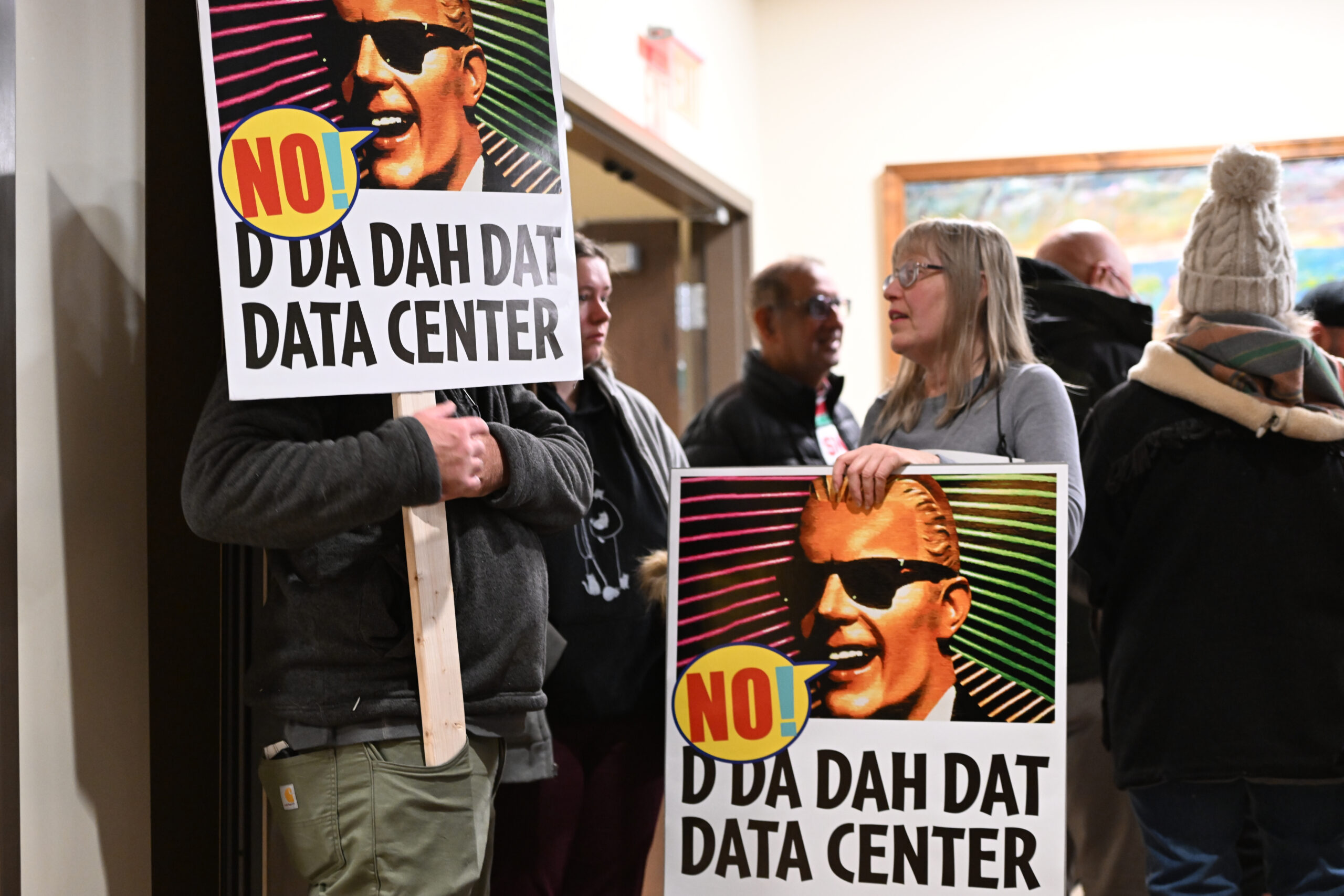
  • Europe is holding its Epstein creeps accountable. Why can’t we?

    Europe is holding its Epstein creeps accountable. Why can’t we?

    The slow drip of the U.S. government’s still grossly incomplete release of its files on late financier and sex trafficker Jeffrey Epstein has nonetheless become a who’s who of Planet Earth’s rich and famous — from billionaires like Bill Gates and Elon Musk to cultural icons like filmmaker Woody Allen and, of course, two presidents.

    The average American paying any attention to this global bonfire of the vanities probably barely noticed this name: longtime British politico Peter Mandelson, who most recently served as the U.K.’s ambassador to the United States.

    Across the pond, it was another story. The Fleet Street tabloid press went wild over revelations that Mandelson — a key insider in the ruling Labour Party, long known to have been one of Epstein’s globe-trotting pals — maintained his close ties even after the American’s 2008 child prostitution conviction, writing Epstein in 2009 to hail his release from jail as “liberation day.”

    But unlike the fallout in the United States, Mandelson’s Epstein problem didn’t end with some embarrassing headlines. Back in September, when an initial batch of Epstein’s emails went public, Prime Minister Keir Starmer — Mandelson’s longtime ally — immediately fired his friend from his ambassador’s post in Washington, D.C., and the scandal has only intensified.

    Last week, Scotland Yard investigators raided Mandelson’s two U.K. homes in a reported criminal investigation into whether the government official leaked secret and sensitive financial information to Epstein around the time of the Great Recession in 2008. (Headline in the tabloid Sun: “Police rummage through Mandy’s drawers.”)

    Meanwhile, Americans watching Britain’s rush to hold a powerful man to account for his unconscionable relationship with modern history’s most notorious sex creep are probably all asking the same thing.

    Wait, you can do that?

    Here in the land where Epstein sex trafficked scores of underage girls — including the U.S. Virgin Islands hideaway now known as “Rape Island” — the sound of any type of justice or accountability for the financier’s powerful confederates has been an ear-splitting silence.

    Since Epstein’s mysterious August 2019 death in a Manhattan federal jail cell, only his longtime companion and procurer of young women, Ghislaine Maxwell, has been criminally charged and convicted, and she has been moved by her longtime friend Donald Trump’s Justice Department to a low-security prison where she reportedly gets special perks.

    Most of the corporate CEOs, company or university board members, NFL team owners, scientists, etc., etc., etc., who maintained close Epstein ties even after his 2008 state conviction on lurid crimes with minors have faced no sanctions, or just minor ones. Last week’s news that Brad Karp — chair of the powerful law firm Paul Weiss, already under fire for a controversial deal with Trump to head off a lawsuit with pro bono legal aid — is stepping down over revelations of his Epstein contacts stood out because it was such a rare nod toward accountability among U.S. elites.

    This is why the reaction in Europe to Epstein’s close ties with some of its top leaders ought to be a wake-up call for the United States and our own rotten system of justice.

    The Epstein accountability party isn’t just breaking out in Great Britain, although our cross-Atlantic ally has led the way ever since the artist formerly known as Prince Andrew was booted from the royal family as allegations mounted that he took part in some of the illegal sexual activities on Epstein’s island.

    Images from an undated and redacted document released by the U.S. Department of Justice, show Andrew Mountbatten-Windsor, formerly known as Prince Andrew, leaning over an unidentified person.

    Despite the aggressive moves against Mandelson and the ex-royal now called Andrew Mountbatten-Windsor, some observers think Starmer’s already tottering Labour government could collapse amid questions over what it did know about Mandelson’s Epstein connection, and when it did know it. A pointed headline in the Guardian newspaper bluntly summed up an increasingly prevalent U.K. viewpoint: “Deceit, betrayal and a scandal that demands historic change.”

    But the fallout has spread well beyond the British Isles. When it came out that Joanna Rubinstein, a Swedish U.N. official, visited Epstein’s island in 2012, and that Miroslav Lajčák, national security adviser to Slovakia’s prime minister, discussed “gorgeous” girls in emails with the financier, both of them quit their jobs.

    Imagine that.

    Norway, much like the U.K., has been rocked to its core by revelations that so many of the nation’s elite leaders had Epstein ties. That even includes the nation’s crown princess, Mette-Marit, who had a running, jovial email conversation with Epstein that included such mundane matters as teeth whitening. More seriously, Norway’s economic crimes unit — yes, some countries actually have such a thing — has opened a corruption investigation into former Prime Minister Thorbjørn Jagland’s relationship with the disgraced U.S. moneyman.

    There’s more. Latvia, Lithuania, and Poland have also announced their own investigations. In particular, Poland is digging into mounting evidence over associations between Epstein and Russian intelligence — an existential matter for a nation that’s been overrun and dominated by its eastern neighbor in the past.

    In the United States, officials seem more likely to investigate chemtrails or what happened to Amelia Earhart than conduct a serious probe of whether Trump’s former friend was with the Russians, too.

    Norwegian Crown Prince Haakon, Princess Ingrid Alexandra, and Crown Princess Mette-Marit applaud during the Nobel Peace Prize award ceremony in Oslo, Norway, in December.

    Rob Ford, a professor at the U.K.’s University of Manchester, told the Associated Press that Europe has “a more functional media, we have a more functional accountability structure, that there is still a degree of shame in politics, in terms of people will say: ‘This is just not acceptable, this is just not done.’”

    And that goes beyond Epstein. Also last week, French authorities raided the Paris office of U.S. citizen and world’s richest person Elon Musk’s social media giant X (formerly Twitter) as part of a sweeping probe into the site’s allegedly unlawful data extraction, as well as the recent scandal involving its artificial intelligence platform Grok spreading child sexual abuse material. The U.K. is also investigating Grok.

    Musk’s X is, of course, headquartered in San Francisco, but no one expects the FBI to burst into his office — not after the electric vehicle magnate donated a staggering $288 million in 2024 to push Trump back into the White House. (Although California’s Democratic attorney general has begun an investigation.)

    The time-lapsed release of the Epstein files hasn’t yet produced a smoking gun concerning his close friendship with Trump, but the fact that lurid tips to federal authorities about the two-time president don’t seem to have been really investigated speaks volumes about the utter lack of elite accountability on this side of the Atlantic.

    The true meaning of the Epstein files may be less what it says about any specific sex crime — horrific as those may be — and more what they show about how the most powerful men in this country understood that they can get away with anything.

    Indeed, it now feels like the 1970s Watergate scandal that looked at the time like the height of accountability — Richard Nixon was forced to resign the presidency, while 48 of his allies were convicted of crimes — was actually the end. Nixon’s subsequent pardon by Gerald Ford — which emboldened the disgraced ex-POTUS to declare that “when the president does it, that means it is not illegal” — was like a bat signal for elites that their brief moment of responsibility for their actions was over.

    There were virtually no criminal charges for the economic crime of the 21st century: the Wall Street-driven collapse of the global economic system in 2008. And the lack of justice is bipartisan. Prosecution of white-collar criminals in the United States hit an all-time low under Joe Biden, even before Trump began his obscene spree of pardoning the wealthiest crooks.

    Gary Rush, of College Park, Md., holds a sign before a news conference on the Epstein files in front of the Capitol in November.

    It was grotesque when the U.S. Supreme Court ruled in 2024 that presidents can’t be prosecuted for crimes that are “official acts,” yet that seemed pretty obvious after George W. Bush and Dick Cheney got away with their illegal torture regime. Who do you think we are, Europe?

    If the Epstein scandal “demands historic change,” as the Brits put it, then that change has to be a newfound drive to somehow renew the spirit of ‘74 — as in 1974. The assault on the foundation of American democracy that is the Trump regime — with its billion-dollar White House corruption, brutal and murderous immigration raids, perversions of criminal justice, and much more — won’t be cured just by Republicans losing a couple of elections, assuming free and fair balloting can even take place.

    The small-d democratic government that finally ends this nightmare must do the hard work Biden and his miserably failed attorney general, Merrick Garland, did not do the last time. Immigration agents who maim and kill, government officials enriching themselves, and all other crooks — especially those now being exposed in the Epstein files — must be prosecuted, convicted, and sent to prison.

    Maybe that’s not the American way. But there’s a whole wide world out there that is doing things a lot better.

  • From Big Lots to warehousing humans: ICE plan sparks fear in Schuylkill County

    From Big Lots to warehousing humans: ICE plan sparks fear in Schuylkill County

    TREMONT, Pa. — Evil has never looked this banal.

    A massive 1.3 million-square-foot Schuylkill County warehouse that just 13 months ago bustled with 505 workers moving cheap overstock goods like shower curtains or pet cleaners for now-bankrupt retailer Big Lots sits utterly abandoned, its dozens of truck bays fenced off and surrounded by a silent shroud of snow.

    It’s hard to imagine, but in the very near future, this white behemoth could be warehousing thousands of desperate human beings behind its bland, baby blue-trimmed concrete walls. On Monday, U.S. Immigration and Customs Enforcement filed a county deed that confirmed its $119.5 million purchase of the Big Lots facility — one more island in an American gulag archipelago of detention camps for the undocumented immigrants ICE is aggressively arresting from coast to coast.

    “It hurts my heart,” the Rev. Brian Beissel, pastor at Christ’s United Lutheran Church in nearby Ashland, told me, choking up a bit, as we sat in a car outside the warehouse entrance.

    When I asked him to expand on the source of that pain, Beissel’s response epitomized what other local residents have been saying about the stunning ICE news — a blend of small-town fears about stressed infrastructure with spiritual unease over the images of violent immigration raids in Minneapolis and elsewhere. He invoked Schuylkill County’s deep resentment of the 20th-century coal barons who took the money and the minerals and then ran. “They’re promising jobs, but how long are they going to be here?”

    But then Beissel — a Schuylkill County native who sees himself as a not very political preacher, in a county that Donald Trump won in 2024 with nearly 71% of the vote — pivoted to his moral dismay over a citizenship-seeking restaurant owner and father of a 2-year-old he knows from nearby Danville who was arrested by ICE and agreed to return to Mexico. “The Bible is pretty darn clear,” he said, “that we welcome the stranger.”

    Brian Beissel, pastor at Christ’s United Lutheran Church in Ashland, Pa., stands in front of the former Big Lots warehouse in Tremont, Pa., that has been purchased by U.S. Immigration and Customs Enforcement (ICE), on Wednesday.

    The Trump regime told America this day was coming. Its acting ICE director, Todd Lyons, said in an April interview that he wanted to run the agency like a business, with a deportation process “like [Amazon] Prime, but with human beings.”

    Ironically, the soon-to-be ICE detention center in Schuylkill County, about 100 miles northwest of Philadelphia, is less than a mile from a massive new Amazon fulfillment center that opened in 2023. Soon, trucks carrying consumer bric-a-brac to Tremont will be jostling on Interstate 81 with buses carrying day laborers or restaurant servers in handcuffs to those reborn rows of truck portals.

    ICE, flush with a whopping $45 billion in cash from Trump’s so-called Big Beautiful Bill to construct its human supply chain, is currently racing to buy sites for 23 detention centers with as many as 76,500 beds from coast to coast — often keeping communities like Tremont in the dark to thwart the inevitable opposition.

    In fact, the Schuylkill County deal is the second ICE facility in east-central Pennsylvania announced just this week. A different warehouse location, which ICE envisions as a kind of feeder camp for 1,500 detainees, was also purchased for $87 million in Hamburg, Berks County — only 25 miles from Tremont.

    Even if you could somehow put the morality of what many see as concentration camps on U.S. soil to the side, the government’s scenario for tiny Tremont — a coal-country hollow of two-story brick homes and faded American flags with just 2,000 residents — boggles the mind.

    The Big Lots site could soon see a community of nearly 10,000 people — the 7,500 detainees and an estimated more than 2,000 workers to oversee them — that would instantly become the second-largest city in Schuylkill County (after Pottsville, the county seat). It’s just 300 yards from the largest daycare center in a township where the water and sewer system is already at capacity, with no local police force or nearby hospital to deal with the inevitable emergencies. The U.S. government won’t be paying the roughly $1 million a year in annual property taxes that propped up local schools and county and municipal services.

    The empty streets of downtown Tremont, Pa., on Tuesday. The 2,000 people of the coal-country borough and its surrounding township would be dwarfed by 7,500 potential detainees at a planned ICE facility on the edge of town.

    It’s these kinds of not-in-my-backyard worries that are driving a lot of the initial concern in Schuylkill County, especially from politicians who are cautious in talking about the fraught immigration issue in blood-red Trump country. “I am not going to get into a debate over the overarching immigration policies of the United States of America,” the GOP chair of the county commission, Larry Padora Jr., told a meeting on Wednesday, where he confirmed the ICE purchase of the warehouse.

    But a growing number of neighbors do want to talk about those immigration policies, and the stench of inhumanity.

    “I’m scared,” Tana Smith, a 24-year-old server at Behm’s Family Restaurant, the local wood-paneled breakfast hangout, told me about the pending ICE project. She, too, blended fears about the daycare site and possible escapees from a detention center with empathy for those same would-be detainees. “People’s families are just being, you know, ripped apart,” she said. “It’s really sad.”

    Smith said she’d already gently lobbied her dad — a Republican who said, “I guess it’s just taking care of the illegal people” — against the ICE plan. “I was like, I don’t feel like that’s true at all,” she said. “I feel like they’re going after everyone.”

    Andrea Pitzer, author of the definitive history of global concentration camps, One Long Night, said Tremont residents like Smith are right to be alarmed. She told me her research found that authoritarian regimes frequently rely on existing sites like abandoned warehouses or factories as they launch a growing network of gulags.

    “The U.S. is clearly echoing previous history with these warehouse acquisitions,” she said. “Dachau — not a death camp, to be sure, but one of the earliest Nazi concentration camps — took over a converted factory when it began its heinous existence in 1933.”

    Pitzer asked, “What things will they do on this new, huge scale behind barbed wire?” She noted that the warehouses are a massive expansion of a system that’s already at a record for detainees, with more than 73,000, and is already plagued by squalid conditions, a measles outbreak at the family detention site in Texas, and a death rate as much as 10 times as high as during the Biden administration.

    No wonder ICE has moved to buy up new sites — including the two Pennsylvania warehouses — with a practically Soviet level of state secrecy. There are no public hearings. Top lawmakers from both parties have been left in the dark. “This was quiet,” the Democratic county commissioner, Gary Hess, told the meeting. “It was silent. And then, bango! There it was.”

    “These will not be warehouses — they will be very well-structured detention facilities meeting our regular detention standards,“ the U.S. Department of Homeland Security insisted in a statement Wednesday. It added that the federal acquisitions “should not come as news,” as ICE expands its nationwide dragnet.

    Yet, arguably the region’s most powerful politician, Republican U.S. Rep. Dan Meuser, who voted for the $45 billion fund, has sounded, fittingly, like TV’s fictional German prison camp guard, Sgt. Schultz: He knows nothing, nothing! His spokesperson said Meuser, with both planned facilities in his 9th Congressional District, “has requested a call with … [ICE], and our office has reached out for additional information to better understand the details of the situation. We have not yet received a response.”

    Instead, it fell on Meuser’s likely Democratic opponent in November — Rachel Wallace, a former chief of staff for the U.S. Office of Management and Budget who has returned to her native Pottsville — to organize a town hall last week when the project was still rumored.

    Lisa Von Ahn (left) and Josephine Kwiatkowski, members of the Schuylkill County chapter of Indivisible, attend a county commissioners meeting in Pottsville on Tuesday to speak out against a proposed ICE detention center in Tremont, Pa.

    Most of the 100 or so people who packed a fire hall voiced opposition, but for a variety of reasons. The local GOP state representative, Joanne Stehr, attended and agreed with the not-in-my-backyard concerns, but then drew loud boos when she reportedly said: “I’m saying ICE has a job to do, and it’s going to get done. We are taking out the trash.”

    The growing uproar in Schuylkill County echoes brewing battles in many of the 21 other locations, even in areas that voted heavily for Trump in 2024. In Ashland, Va., a Canadian-based warehouse owner canceled its planned deal with ICE after economic pressure and opposition from county commissioners. Elected officials in Roxbury, N.J., and other proposed sites are also fighting to keep ICE out, but it’s unclear how much traction such an effort will get in red rural Pennsylvania.

    “We want economic development, and we want good businesses that are part of the community,” Wallace, the congressional candidate, told me as she decried the process and her opponent Meuser’s silence. “And this is the opposite of that.”

    And a growing number of Schuylkill County residents say their biggest alarm is less over the NIMBY concerns and more about the idea of their backyard hosting an American concentration camp.

    “We have seen firsthand the brutality that government agents are using to detain American citizens, legal immigrants, and law-abiding immigrants without legal status, and the violence in our streets caused by masked, heavily armed agents,” Josephine Kwiatkowski, an Army veteran and retiree from Pottsville, told the commissioners. She said these scenes and “the civil rights violations, the lack of humanitarian conditions [in current ICE facilities], and the discounting of the Constitution are the same issues that I was willing to sacrifice my life to oppose.”

    Pitzer, the concentration camp historian, said the time to act is now, before these proposed gulags are up and running.

    “Those who made excuses for or ignored these kinds of camps in Russia in the 1920s or Germany in the 1930s couldn’t know how much more vast and lethal those systems would become a decade later,” she said. “But we, who have those examples and other horrors from around the world in our rearview mirror, have no excuse.”

    This should be a five-alarm fire, not just for the politicians who’ve been trusted with keeping an American republic, but for citizens who are beginning to grasp a monstrous reality that was set into motion when Trump’s xenophobic demagoguery won a narrow plurality on Nov. 5, 2024. The image of our neighbors shipped in a supply chain like patio furniture and disappeared into the bowels of a Big Lots warehouse should have all of us asking a fundamental question.

    What are we doing here?

  • The toxic culture that killed Alex Pretti | Will Bunch Newsletter

    Dan McQuade had such a way with words that it’s almost impossible to find the right ones to contemplate a Philadelphia without Dan writing about all the bat-guano crazy things we do here. Dan, who wrote for a variety of sites including glory-days Deadspin and Defector, died from cancer last week. He’d just turned 43 — way too young. We started blogging at the same time in the mid-2000s, and I was blessed to know him from that long-lost scene. He leaves behind his wife, a 2-year-old son, and a remarkable body of work — like essential coverage of the Wildwood T-shirt scene, or his analysis of Sylvester Stallone’s absurd 30-mile run in Rocky II — that people will still be reading and talking about for many years to come.

    If someone forwarded you this email, sign up for free here.

    The twisted, deadly culture of U.S. immigration cops can’t be fixed with training

    Border Patrol agents detain a man in Minneapolis on Jan. 11.

    The fear was palpable even before the ink had dried on what Donald Trump called his “Big Beautiful Bill” — the 2025 legislation that funneled a whopping $170 billion toward immigration enforcement, including doubling the number of agents in the field from 10,000 to 20,000.

    Many warned the surge of inexperienced rookies — indeed, their training was slashed from 90 days to just 47 (or 48) days to race the new agents out into the streets — could lead to acts of police brutality, or worse, as an alphabet soup of Homeland Security agencies donned masks and went after immigrants in agitated urban neighborhoods.

    Those whispers became a scream as Americans watched the horrific videos of a masked federal agent walking in front of the family SUV driven by a Minneapolis mom, Renee Good, and then firing three shots that killed her. Seventeen days later, one of the officers in a scrum beating up observer Alex Pretti — apparently not seeing that Pretti had already been stripped of his legal handgun — fired the first blast of what became a volley of 10 shots that killed the 37-year-old Minneapolis intensive care nurse.

    On Sunday, the ProPublica newsroom revealed what the U.S. government had successfully kept secret for more than a week: the names of the two agents — both from South Texas — who fired the fusillade of shots that killed Pretti on a busy Minneapolis street.

    They were not rookies.

    Border Patrol officer Jesus “Jesse” Ochoa, 43 — who, according to his ex-wife, is also a gun enthusiast with 25 pistols, rifles, and shotguns — had his heart set on joining the federal force after earning his criminal justice degree from the University of Texas-Pan American and finally got his wish eight years ago, ProPublica wrote.

    The site reported that the other shooter, Raymundo Gutierrez, joined U.S. Customs and Border Protection in 2014 and works for its Office of Field Operations, where he is assigned to a kind of agency SWAT team, involved in high-risk operations.

    The men who gunned down Pretti were well-trained and experienced, as was Jonathan Ross, the ICE and former Border Patrol officer who shot and killed Good during their Jan. 7 encounter. Their involvement in the killings that shocked America suggests that moderates calling for reforms at ICE, but not for a radical reworking of immigration enforcement, are failing to understand the much deeper problems.

    Garrett M. Graff, a journalist and best-selling author who’s been tracking Border Patrol and its brother agencies since their expansion in the 2000s, told me on Monday that he was not at all surprised the three officers firing the deadly shots were highly experienced.

    “I do think it’s enormously relevant that the shooters all have CBP backgrounds,” Graff said. “It’s an agency that routinely uses deadly force outside of the norms of law enforcement in the U.S., and it’s not a surprise to me that in both cases we see agents quick to resort to deadly force.”

    Graff added that Ross’ fatal shooting of Good mirrored problems that have existed in the agency for years. He said it “jibes with a 2013 internal report that criticized CBP agents and officers for putting themselves in danger by stepping into the path of vehicles, and firing their guns out of ‘frustration’ rather than fear.”

    I reached out to Graff, who was a Pulitzer Prize finalist for his history of the Watergate scandal, because just two days before the ProPublica report, he offered some extraordinary history and background about CPB in testimony before an Illinois state commission that’s looking into misconduct during the 2025 immigration raids there.

    Graff’s statement went viral on social media because it detailed a toxic culture at CPB that’s highlighted by shocking levels of criminality among its agents, from on-the-job brutality to off-duty thuggery, as well as domestic violence.

    Finding that at least 4,913 Border Patrol agents and CBP officers were arrested over a 20-year period, Graff testified, “Indeed, for much of the 2010s and likely before and since, it appears the crime rate of CBP agents and officers was higher per capita than the crime rate of undocumented immigrants in the United States.”

    Ironic, huh? But why has this happened?

    A lot of the problem, Graff testified, lies in the rapid surge of Border Patrol from around 9,200 agents at the time of the 2001 terror attacks to roughly 21,000 by the Obama administration. Those new hires, he said, were hastily recruited with limited background checks, rushed into the field with minimal training, and lacked the arrest powers of more rigorous federal agencies like the FBI.

    On the job, this new cadre bonded over a culture that simmered in misogyny and racism, and then boiled over in backing an authoritarian like Trump. “Agents developed a strong tradition of frontier-style justice; its agency motto, ‘Honor first,’ is as much a statement of machismo as it is about integrity,” Graff testified.

    This culture has proved lethal long before the frigid streets of Minneapolis. Graff said that CBP agents have been involved in at least 72 deadly shootings or use-of-force incidents since 2010, making it “perhaps the nation’s deadliest law enforcement agency.”

    He’s not the only one to suggest that Border Patrol’s problem is its warped culture, not a lack of training or body cams. Jenn Budd, a former Border Patrol agent who became a whistleblower, has described CBP as plagued by abusive officers and a pervasive rape culture. In her memoir, she calls Border Patrol “a criminal organization disguised as a federal law enforcement agency.”

    America’s response to the 9/11 attacks — the birth of the U.S. Department of Homeland Security and the dramatic expansion of Border Patrol, as well as the creation of ICE in 2003 — launched a monster that has now blown back against America’s own citizens, in Minnesota and elsewhere.

    This fundamental notion — that ICE, CPB, and Border Patrol are rotten way past the point of tinkering around the margins — is what needs to be driving the debate on Capitol Hill. The incremental reforms some top Democrats are pushing, such as body cams or requiring arrest warrants, are fine as stopgap measures, but they would not have saved the lives of Pretti or Good.

    The only fix that makes sense is abolishing ICE and all the other post-2001 excesses and returning to just the essential functions that are actually needed: airport security, arresting the relatively small number of violent criminals who enter America, humanely securing the border, and processing people seeking refuge from their violent homelands.

    Abolishing ICE and radically reforming the rest of a broken system won’t bring back Good or Pretti, either, but it would be the most fitting and appropriate memorial to America’s slain martyrs of 2026.

    Yo, do this!

    • As things in America have seemed to consistently get worse since the dawn of the 21st century, there was a frequent question: Why are there no great protest songs? You can stop asking now. Bruce Springsteen has channeled the golden era of Nobel laureate Bob Dylan, who sang in outrage over injustices like the assassination of Medgar Evers, with his own instant and electric protest record, “The Streets of Minneapolis.” Recorded and released in the course of a weekend, the Boss honors ICE murder victims Renee Good and Alex Pretti and heaps scorn on their killers. Already the most downloaded song in America, it shouldn’t have taken this for Springsteen to get his first-ever No. 1 single.
    • Just as everyone predicted at the start of the season, it’s Drake Maye’s New England Patriots against Sam Darnold’s Seattle Seahawks for all the marbles when Super Bowl LX kicks off Sunday night from Santa Clara, Calif. (Yes, that was sarcasm.) Although this is one of the least appealing matchups, on paper, in the history of the Big Game, 2025-26 has — excepting our Eagles — proved the most exciting NFL season in modern memory, so hopefully these two Cinderella QBs will do their part. The real fireworks may come when Trump-unfriendly artists Green Day (!!) and Bad Bunny take the stage. Actual football commences at 6:30 p.m. on NBC.

    Ask me anything

    Question: Was the Minnesota general strike successful? And what are the prospects of a true national strike? — @exlibrophilly.bsky.social via Bluesky

    Answer: The answer to your first question would have to be a yes. It was telling that 60 Minnesota corporations felt compelled to issue a statement (albeit one I viewed as milquetoast) and that the Trump regime started making some partial concessions after thousands of Minnesotans skipped work to take to the streets. On the second part, I noticed there was chatter about a national general strike last Friday, and very little came of it. That’s because a successful nationwide shutdown — something that has never happened before — would require weeks, not days, of planning and committed, full-throated support from the top labor unions and other key organizations like the Democratic Party. Given that the real power in America seems to be economic, I would urge these power brokers to join with regular folks and make it happen.

    What you’re saying about …

    Newsletter readers feel strongly that — while there’s nothing wrong with proposed reforms such as unmasking, visible badges, marked vehicles, and the proper use of arrest warrants — U.S. Immigration and Customs Enforcement should be abolished, and immigration enforcement should be totally overhauled. Wrote Daniel Hoffman: “Any of the reforms, controls and procedures that the Democrats are likely to impose on ICE are useless as long as Donald Trump is president and he has stooges to carry out his campaigns of vengeance and nationalist bigotry.” Thomas Ceresini agreed: “Dems *should* demand that ICE be abolished immediately, and that CBP be reorganized from top to bottom, purging all the fascists from its ranks.”

    📮 This week’s question: Pennsylvania Gov. Josh Shapiro has been all over the news lately with the release of his new book and a controversial passage about the 2024 Kamala Harris campaign. But his stock for president in 2028 seems to be falling. Would you like to see him run for president, or vice president, or neither? Please email me your answer and put the exact phrase “Shapiro 2028” in the subject line.

    Backstory on the strange case of Tulsi Gabbard

    Director of National Intelligence Tulsi Gabbard enters the Fulton County Election HUB Wednesday as FBI agents seize Fulton County 2020 Election ballots, in Union City, Ga.

    Tulsi Gabbard was in the news a lot in the first couple of shocking months after Donald Trump’s 2024 election victory, and for good reason. The 47th president’s stunning pick of the former leftist as his director of national intelligence (DNI) barely made it out of the Senate on a 52-48 vote, with Democrats like Sen. Elizabeth Warren calling Gabbard a likely, if perhaps unwitting, Russian asset because of her history of statements that aligned with the Vladimir Putin regime.

    But then something even stranger happened: Gabbard largely disappeared from sight. Most notably, the nation’s intelligence chief was not heard from during the U.S. attack on Venezuela that captured and deposed its strongman leader Nicolás Maduro, and reportedly was excluded from its planning — likely because in her Democratic past, she had vehemently opposed American intervention there. But it was even more jarring when and how Gabbard resurfaced last week: overseeing an FBI raid at the Fulton County, Ga., election hub that the president has long insisted — in a Big Lie with zero evidence — was the epicenter of some type of fraud that prevented his reelection in 2020.

    Gabbard’s appearance in Georgia raised many questions, especially since the spy agencies she oversees as DNI are supposed to watch for foreign intelligence threats — not get involved in domestic policy. On Monday, Gabbard sent a letter to key Democratic lawmakers who’d demanded answers, explaining that she monitored the raid because Trump had asked her to be there, and insisting that election security is one of her duties because of the possibility of foreign interference.

    The Georgia raid, and Gabbard’s involvement, has sent off all kinds of alarm bells that the Trump regime is planning to gin up a voter fraud case — even though thorough recounts proved that Joe Biden narrowly won Georgia in 2020 — as an excuse for an unprecedented federal intervention in November’s midterm election. We also learned this week that while she was in Atlanta, Gabbard even facilitated a phone call between Trump and several FBI agents involved in the raid, a stunning breach of protocol. On Monday, Trump went on a podcast with his former deputy FBI director, Dan Bongino, and declared that “Republicans ought to nationalize the voting” in 15 unspecified key states. Such a move would mean the end of American democracy as we’ve known it.

    Meanwhile, Gabbard is back on the radar in a big way. Also on Monday, the Wall Street Journal reported that the DNI is the subject of an explosive whistleblower complaint that, according to the whistleblower’s attorney, the White House has listed as highly classified and is refusing to share with Congress. Leaders on Capitol Hill need to fight to get this secret information by any means necessary. In the increasingly fraught fight to save the American Experiment, we need to know who Gabbard is really working for.

    What I wrote on this date in 2022

    Remember affirmative action? Four years ago, the U.S. Supreme Court was still considering the legal challenge to the use of race as a factor in college admissions, which it did strike down later that year, in a foreshadowing of the Trump regime’s much wider war against diversity. On Feb. 3, 2022, I wrote that while the threat to affirmative action was indeed alarming, the existing rules were already failing African American college applicants. I wrote: “In a nation where the Black-white wealth ratio is 20-1, recruiting Black kids was a low priority. These self-inflicted wounds had little to do with the legal status of affirmative action.”

    Read the rest:Supreme Court affirmative action case pretends we haven’t already wrecked Black college access.”

    Recommended Inquirer reading

    • The fallout from the deadly ICE raids in Minneapolis remains the dominant story in America, as reflected in my recent columns. First, I wrote about the looming deep cuts in news reporting at the Washington Post and CBS News, and decried how these self-inflicted wounds — both at the hands of their billionaire Trump-favoring owners — would mean fewer eyes out in the field just as Minnesota was showing the power of bearing witness. Over the weekend, I warned of the regime’s plan for new immigration raids against the beleaguered Haitian refugees of Springfield, Ohio — a scheme that seems on hold for now after a judge ruled late Monday night to continue the protected legal status of these immigrants.
    • While we still haven’t seen all of the government’s Jeffrey Epstein files — despite the law calling for their full release last December — the massive tranche of documents that did go public last Friday is a gift that keeps on giving for those who track the follies of America’s rich and famous. Not surprisingly, America’s founding and still sixth-largest city has numerous ties to the late financier and convicted sex trafficker. So far, The Inquirer has reported that the U.S. Department of Justice files reveal a surprising relationship between Epstein and Philadelphia-born comic Bill Cosby, who at the time was battling his own flurry of sexual abuse allegations. Epstein even offered to buy Cosby’s home at one point. In a separate story, The Inquirer traced the relationship between the financier and 76ers owner and hedge-fund billionaire Josh Harris, who “had an ongoing business relationship that included numerous phone calls and at least one visit to Epstein’s home in Manhattan.” What’s more, Epstein inquired about buying a plane from a Harris business associate, University of Pennsylvania megadonor Marc Rowan. The Epstein scandal shows that all politics — especially the most tawdry — is local. There’s more to come, but you’ll be locked out without a subscription. Why not sign up today?

    By submitting your written, visual, and/or audio contributions, you agree to The Inquirer’s Terms of Use, including the grant of rights in Section 10.