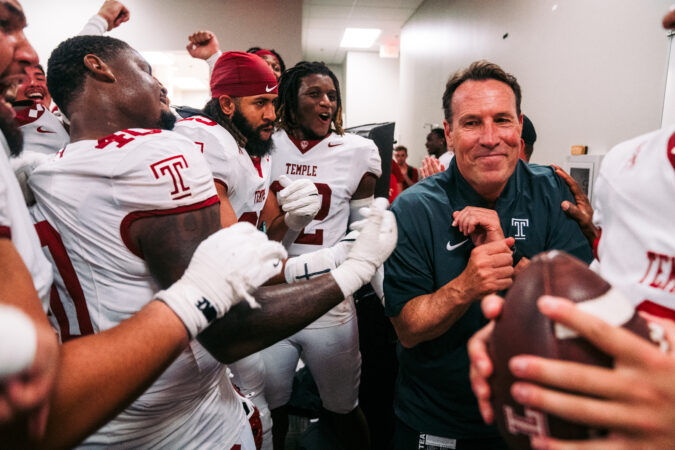
Author: Alex Coffey

  • First-year coach K.C. Keeler is committed to Temple, Philly, and his ‘grandpa’ dance moves

    First-year coach K.C. Keeler is committed to Temple, Philly, and his ‘grandpa’ dance moves

    Last summer, K.C. Keeler and his wife, Janice, began building a house in Wilmington. This would not have been notable if Keeler were coaching at an SEC dynasty or a Big 10 stalwart.

    But he works for Temple, where head football coaches have long been transient.

    The Owls have shuffled through 11, including interims, in 15 years. Some were fired because they weren’t winning; some were poached to fill higher-paying jobs.

    One coach, Manny Diaz, stayed for 17 days before running off to the University of Miami. Another, Geoff Collins, led Temple to a 15-10 record, only to leave for Georgia Tech after two years.

    Collins took over for Matt Rhule, who went 28-23 over four seasons before departing for Baylor. Rod Carey came next, and was fired after three seasons, during which he posted a 12-20 record.

    Stan Drayton, who won only nine games in parts of three seasons, didn’t even make it to the end of the 2024 campaign.

    This dynamic — being a smaller Division I program with fewer resources — has led Temple to a difficult balancing act. The school is established enough to hire good coaches but not always to keep them.
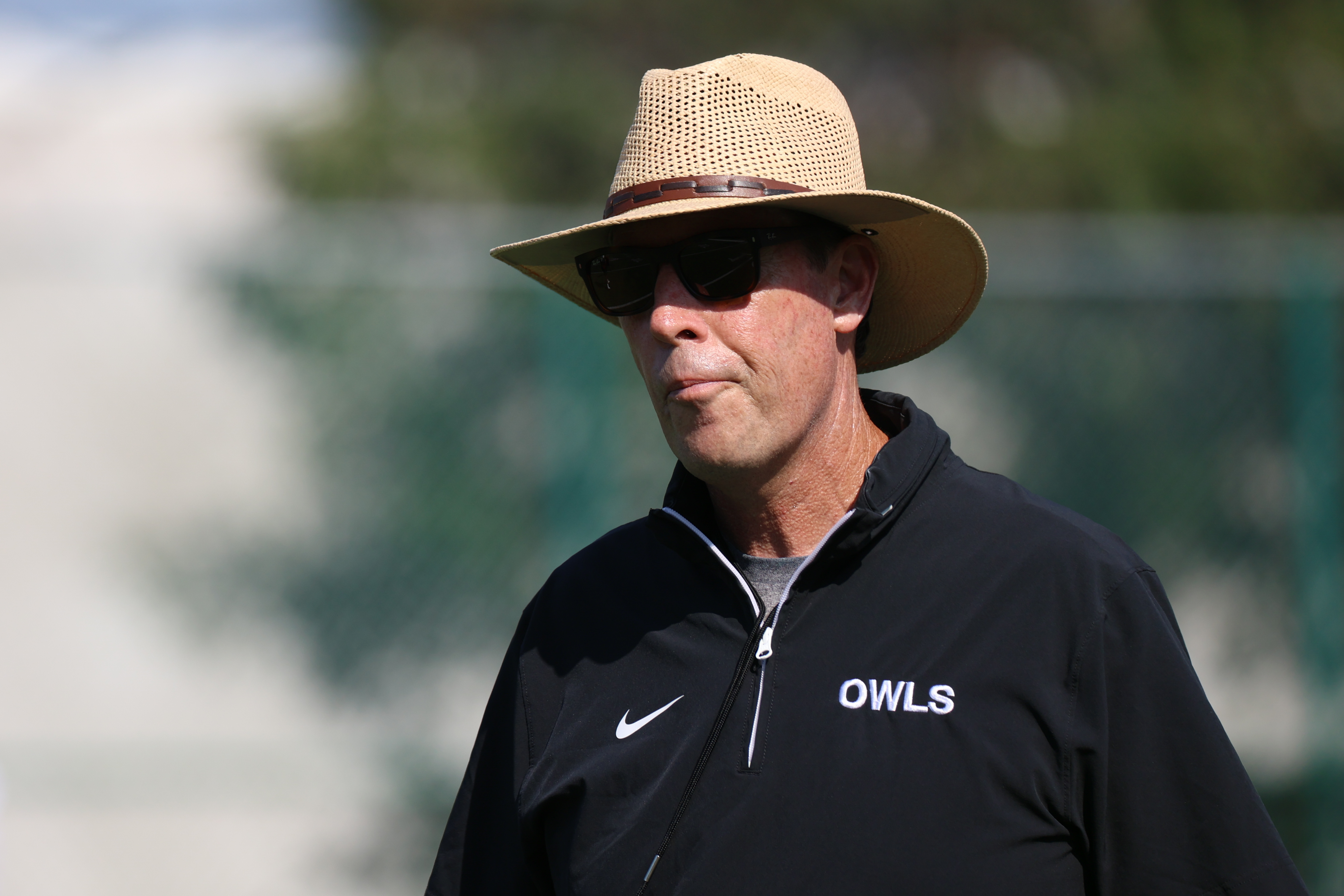
    Temple coach K.C. Keeler looks on during practice at the Edberg-Olson Hall football facility in July 30.

    Keeler, whom the Owls hired on Dec. 1, appears to be different. He has an established track record of building winning programs, and the 66-year-old won’t likely use Temple as a stepping stone.

    He’s deeply invested in the Owls and has genuine belief in his team’s ability. He also has local ties: The coach grew up in Emmaus, Lehigh County, 50 miles north of Philadelphia, and has a daughter and grandchildren who live in Delaware.

    Which is why he built a home in the area. Keeler is the first Temple head coach since Bruce Arians in the mid-1980s to do so.

    “It’s incredible what he’s done,” said senior quarterback Evan Simon, “and it’s only his first year. I wish I had a couple more with him.”

    A winning legacy

    Keeler’s first memory of Temple dates to the late 1970s, when he was a starting linebacker at the University of Delaware.

    The Blue Hens were a strong team but consistently struggled against the Division I Owls. In 1978, they won 10 games but were soundly beaten by Temple, 38-7.

    In 1979, when it won a Division II national championship, Delaware lost only one game. It was to Temple, at home, 31-14, on Sept. 22.

    Keeler graduated in 1981, and was hired as an assistant coach at Amherst College in Massachusetts that year. Rowan added him to its staff in 1986 (when it was known as Glassboro State College) and named Keeler head coach in 1993.

    Over nine seasons, he led the Profs to an 88-21-1 record, with seven Division III playoff appearances. Delaware brought him on as head coach in 2002 (succeeding Tubby Raymond after 36 seasons) and Keeler went 86-52 with the Blue Hens, reaching the Division I-AA national title game three times and winning a championship in 2003.

    He joined Sam Houston State as head coach in 2014, and posted a 97-39 record through 11 seasons, making the FCS playoffs six times and winning a second national title in 2020.

    Temple, meanwhile, notched only 11 winning seasons between 1981 and 2024. The Owls had suffered an especially tough stretch of late, failing to win more than three games in a season since 2019.
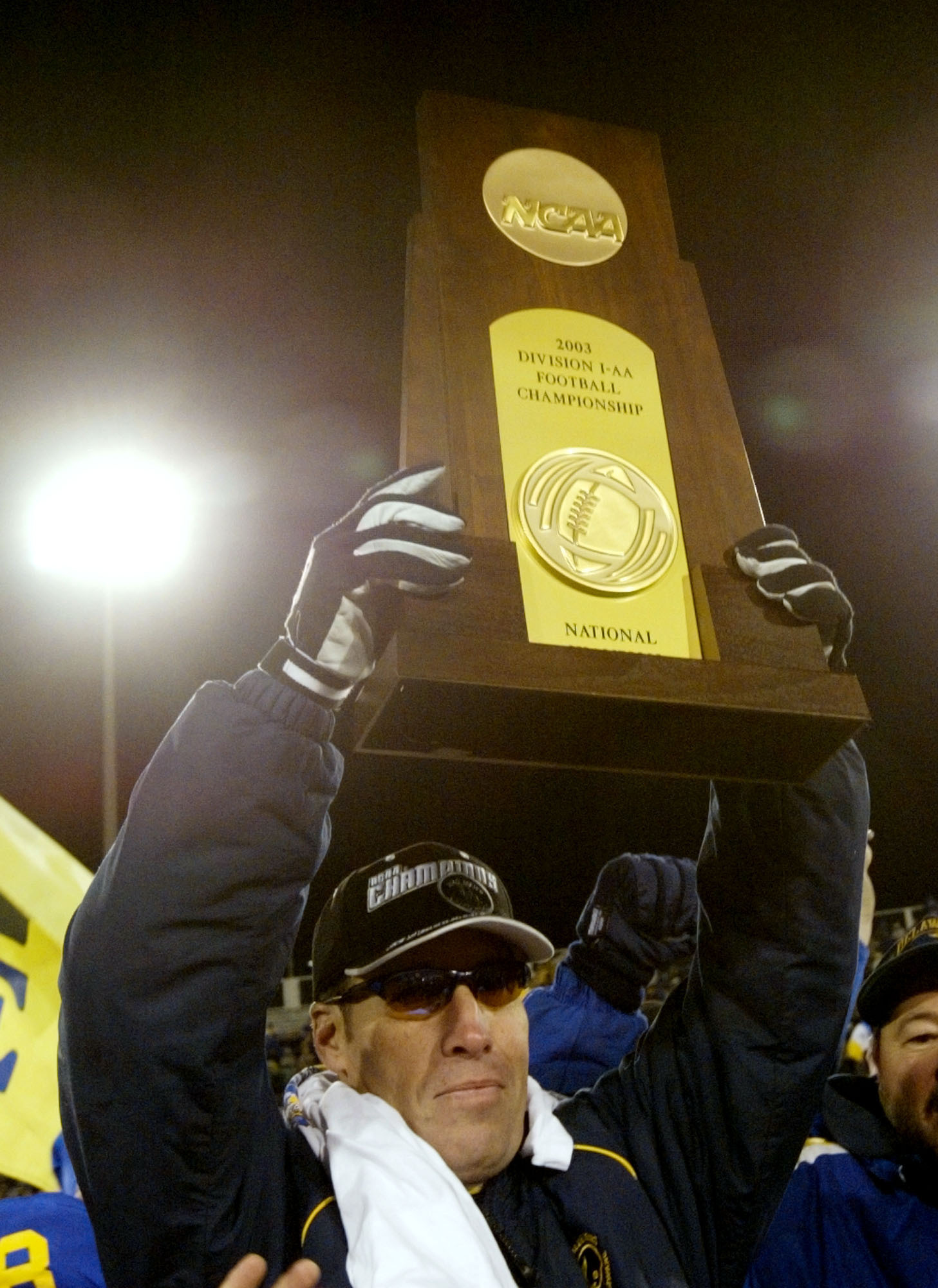
    K.C. Keeler won the NCAA Division I-AA Championship at Delaware in 2003.

    But for Keeler, the shine of those 1970s-era teams never wore off. He still saw a winner. So, when Temple approached him last year after firing Drayton, he took the opportunity.

    Things got off to a slow start. Some players were worried that they wouldn’t be welcomed back.

    Others were unsure of how they’d jell with Keeler and his staff.

    The head coach held a team meeting in December, before his introductory news conference. He tried to tell a couple of jokes, to lighten the mood.

    No one laughed. Keeler turned to his special teams coordinator, Brian Ginn.

    “Boy, these guys are serious,” he said.

    “Yeah,” Ginn responded. “They just went 3-9. I can see why they’re serious.”

    A few hours later, Keeler told the media what he told his team: that there would be no rebuild. That he was here to win a bowl or a conference championship.

    Simon, the senior quarterback, was standing in the back of the room, listening acutely.

    “It was a little scary [at first],” he said. “I mean, this place hasn’t won more than three games since, who knows? I don’t even know.”

    Over the next few days, Keeler held one-on-one meetings with all 114 players on Temple’s roster.

    He asked what they liked — and disliked — about the program, and what changes they wanted to see.

    The coach quickly showed a willingness to listen, even to seemingly mundane concerns. Many players lived off-campus and mentioned that they had to pay for a meal plan that they didn’t use.

    Keeler talked to a few higher-ups, and was able to make a change, putting $500 worth of meal money back into players’ pockets. Temple now provides grab-and-go lunches and snacks, available outside the locker room.

    The head coach continued to encourage his team to communicate, and gradually, the players began to feel more comfortable.
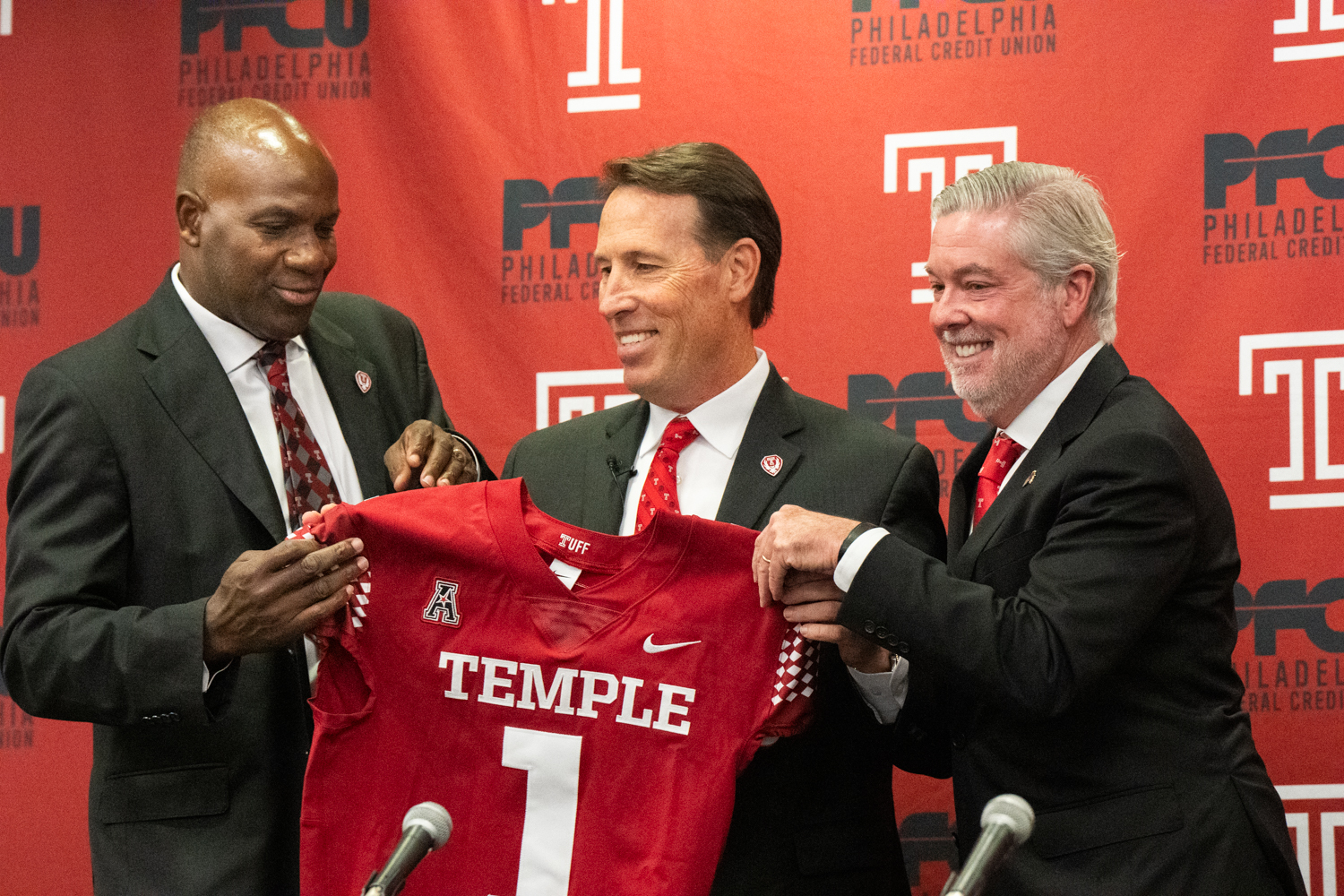
    From left, Temple athletic director Arthur Johnson, newly-hired football head coach K.C. Keeler, and university president John Fry at a news conference on Dec. 3.

    In February, Keeler got word that a former Temple defensive tackle, Demerick Morris, would be leaving Oklahoma State. He had transferred there in December 2024 but had a change of heart, and was eager to return to Philly.

    Keeler wanted to bring him back, too, but decided to ask his defensive line coach, Cedric Calhoun, to check with rest of the linemen first.

    They were not on board.

    “Coach Calhoun goes, ‘They said, [expletive] no. There’s no way they’re taking him back,’” Keeler said. “And he was in a panic. I’m like, ‘It’s OK, let me handle this.’”

    The three defensive linemen — Allan Haye, K.J. Miles, and Sekou Kromah — shuffled into Keeler’s office and sat shoulder-to-shoulder on his cherry-red couch.

    Before Keeler explained his side, he made sure the players knew it was their decision.

    Then, he asked for their perspective. They said that years ago, the four linemen had made a pact not to enter the transfer portal. To stay at Temple and “fix” the program.

    When Morris left for Oklahoma State, Haye, Miles, and Kromah felt betrayed.

    “[To them], it was ‘Demerick broke the pact,’” Keeler recounted. “‘Demerick took the money.’”

    The head coach laid out the situation in more pragmatic terms. Temple needed to bring in another defensive tackle, regardless. Why not go with the familiar option?
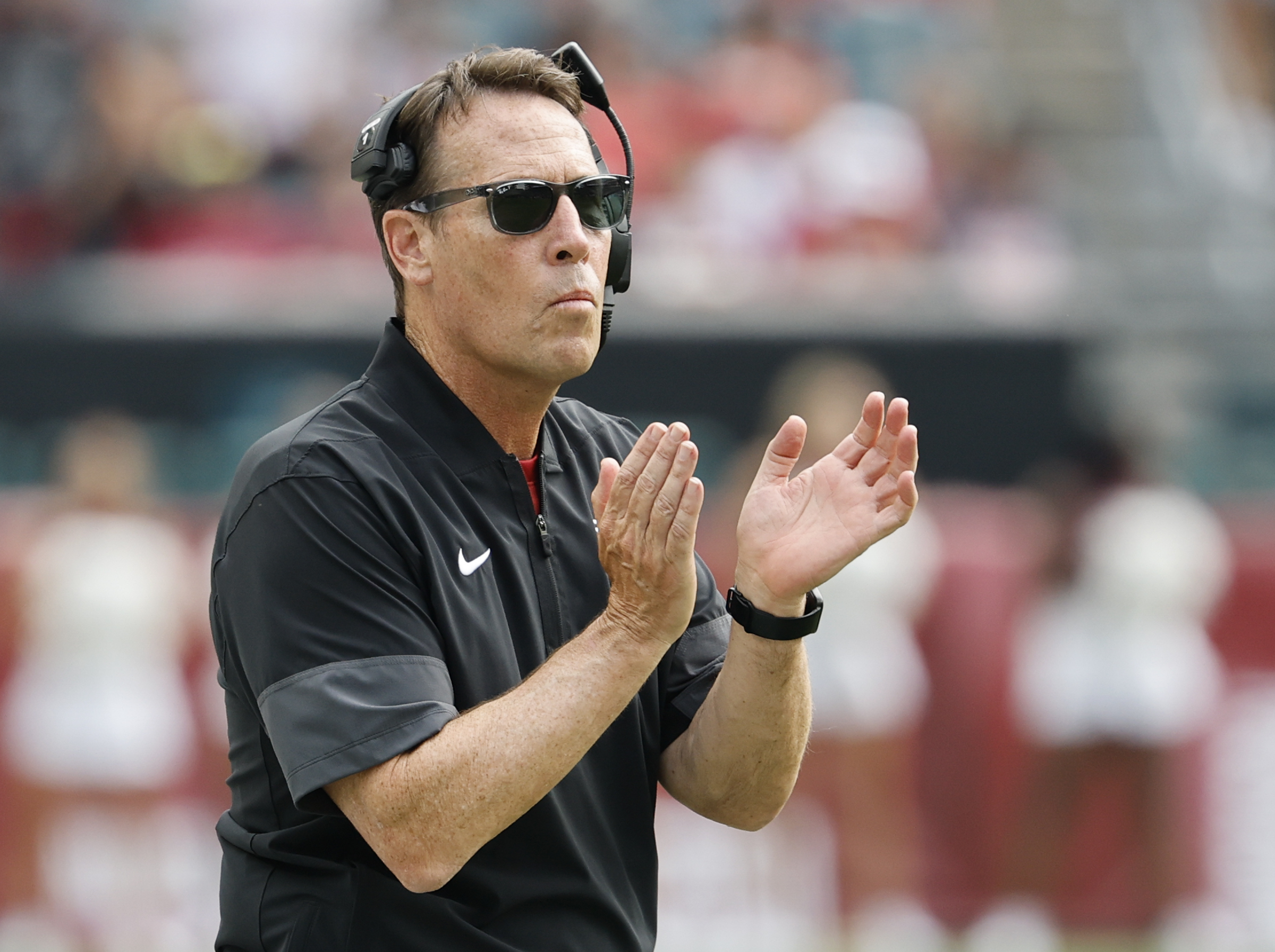
    K.C. Keeler directing Temple against Howard on Sept. 6.

    “I know Demerick is a great player,” Keeler told them. “I can’t guarantee the [other] guy we’re going to bring in is going to be a great player.

    “I know Demerick is a great person. The guy we bring in … I don’t know a lot about him. I know Demerick loves Philadelphia. He’s living here now. He’s from Chicago.”

    The linemen changed their minds.

    “Again, the key was, this is still your call,” Keeler said. “I am not going to overrule your decision.”

    Poor push-ups and ‘terrible’ dance moves

    When Simon showed up to practice last summer, he could tell things were going to be different.

    At 66, Keeler was doing push-ups in the middle of the field. He was running sprints and stretching alongside his team.

    He even took control of the stereo sometimes, playing the music of his adolescence: Bruce Springsteen, Bananarama, and, of course, KC and the Sunshine Band.

    The quarterback compared it to being around your fun “uncle.”

    “They’re the world’s worst push-ups,” Simon said. “But his energy, it lifts the program. You’re allowed to have fun at practice.”

    Keeler strikes a balance. There are times when practice is not fun. The head coach has high standards and pushes his team hard.

    But he also tries to foster human connection wherever he can, whether it’s sending a birthday text to a player, hosting team dinners, or organizing trivia nights at Temple’s Liacouras Center.

    One of Keeler’s biggest assets is his humor. He isn’t afraid to laugh at himself.

    On Oct. 4, in Temple’s fifth game of the season, the Owls trailed Texas-San Antonio, 14-3, at the half.

    Keeler reamed his players out in the locker room. He told them that it was the first time he’d been embarrassed to be their coach.

    “I said, ‘This the first time I’ve ever even thought this, in my 10 months here,’” Keeler recalled.

    The team responded almost immediately. Temple scored 21 points in the third quarter and ended up winning the game, 27-21.

    Afterward, the players started dancing in the locker room. Keeler joined in.

    The coach received some tough feedback.

    “A lot of comments like ‘I dance like an old white guy,’” he said. “Well, yeah, I am an old white guy. But, you know, winning is hard. So when you win? You celebrate.”

    The post-win dance quickly became a team tradition, and Keeler began to get creative with which guys he’d single out.

    On Oct. 18, in the final seconds of Temple’s victory over Charlotte, he looked to the sideline to find three of his players — Cam Stewart, Khalil Poteat, and Mausa Palu — dancing.

    The coach had always instructed his team not to gloat in public. So, he decided to teach them a lesson.

    When the players walked into the locker room, Keeler called them out.

    “OK,” he said. “You guys want to dance? You’re leading the dance.”

    General manager Clayton Barnes hit the music. The team gathered in a circle, as Stewart, Poteat, and Palu showed off their moves.

    Then, Keeler showed off his.

    “Terrible,” said Kromah.

    “It’s like seeing your grandpa dancing,” said running back Jay Ducker. “‘OK, grandpa! OK!’”

    “I think he’s got to start stretching before he does them,” said Simon.

    On Oct. 25, after Temple’s fifth win of the season, against Tulsa, Keeler summoned offensive lineman Giakoby Hills.

    It was Hills’ birthday.

    “Giakoby, come on down!” Keeler said. “Birthday boy is going to lead the dance.”

    This may seem like a silly custom, but for a team that couldn’t muster a laugh back in December, it’s progress.
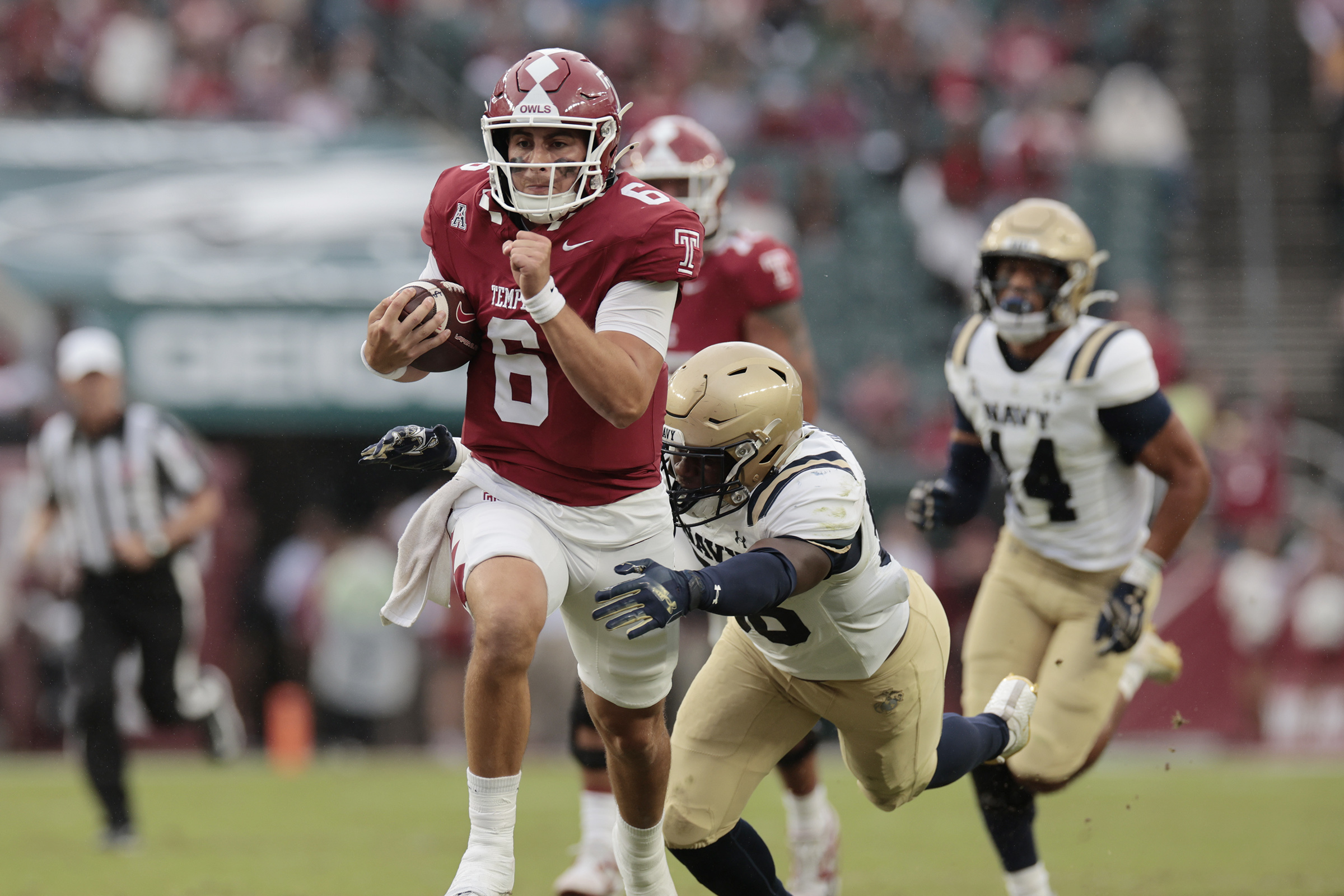
    Temple quarterback Evan Simon has 22 touchdowns with 1,847 passing yards and only one interception through 10 games this season.

    And for players like Simon, it has made a difference. The quarterback is in the midst of a career season. He has 22 touchdowns with 1,847 passing yards and only one interception through 10 games.

    He credits a lot to “Uncle” Keeler.

    “He’s so easy to talk to,” Simon said. “And that’s important as a player. Not being nervous all the time. Because I’ve experienced that, where there’s tension, [and you’re] afraid to mess up. But he’s super easygoing.”

    ‘Not afraid to fail’

    There are plenty of young players who have thrived under Keeler’s quirky coaching style.

    But none as successful as Bengals quarterback and 18-year NFL veteran Joe Flacco, who played at Delaware in 2006 and 2007.

    Keeler brought the same enthusiasm back then that he does now (with fewer dance moves, to which Flacco responded: “Thank God”).

    When Flacco transferred from Pittsburgh to Delaware, he was a backup quarterback, sorely in need of a good spring.
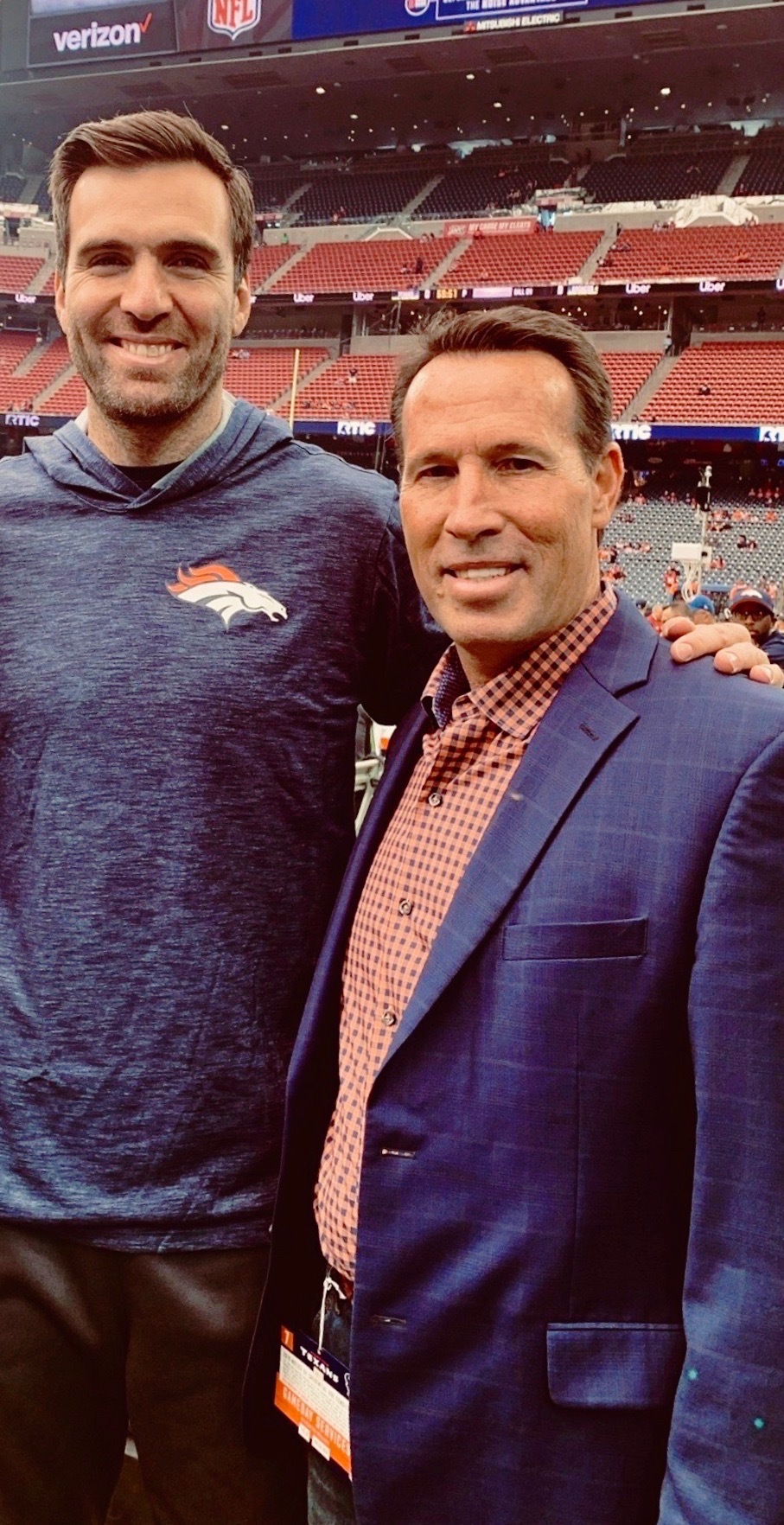
    K.C. Keeler coached Joe Flacco at Delaware.

    He contemplated playing collegiate baseball, an idea the coach quickly put an end to. Keeler told his pupil that he needed to focus on football. He reiterated, time and time again, that Flacco would be drafted by an NFL team.

    It was helpful for the young quarterback to hear.

    “I was honestly happy,” Flacco said. “I thought I wanted to pursue [baseball], but deep down, I really didn’t. And he didn’t want me to do it. So, I was like, ‘Good, I don’t really want to do it.’”

    After Flacco was selected by the Baltimore Ravens in the first round of the 2008 NFL draft, he met with his former coach.

    Keeler asked him a question.

    “I’m going to be talking to another team [someday], and they’re going to want to know,” he said, “what makes Joe Flacco great?”

    The quarterback answered without hesitation.

    “I’m not afraid to fail,” he responded.

    Keeler might have this quality, too. He was not afraid to loudly proclaim that he wanted Temple to become bowl-eligible this season, and his team is close to meeting that threshold.

    The Owls have lost their last two games, in part because of mounting injuries. Despite that setback, they sit at 5-5, the most wins since 2019.

    Temple needs to win one of its remaining two games — Saturday against Tulane or Nov. 28 at North Texas — to qualify for a bowl game.

    But regardless of what happens, Keeler won’t be afraid of the outcome. And if the Owls win, he certainly won’t be afraid to dance.

    “[He has] a belief and ability to make [a program] bigger than what everybody thinks it is,” Flacco said of his former coach. “It’s not only that he says it, and preaches it, but he also gets you to believe it. And that’s huge.”

  • Grieving Roman Catholic coach and his family find solace in their football community

    Grieving Roman Catholic coach and his family find solace in their football community

    When Rick Prete returned from Iraq in 2009, he had just one focus: his family. Throughout his yearlong deployment as an infantryman in the Army, he could speak to his wife and daughter only sparingly over Skype.

    Once he was home in Audubon, Montgomery County, he tried to spend as much time with them as possible. He took on day-to-day tasks with glee, like doctor’s appointments and school drop-offs. Prete didn’t see these as mundane. To him, they were opportunities.

    “How can I be around my kid more?” he said. “That’s all I really cared about.”

    It was this mentality that brought Prete to youth cheerleading practice in Conshohocken in the summer of 2010. For four nights a week, he would sit and watch 6-year-old Arianna’s routines as the 15-and-under football team did drills nearby.

    Prete, a former wide receiver at Norristown High School and East Stroudsburg University, barely noticed that the players were there. But the Conshohocken Bears’ coaches noticed him, and quickly asked if he’d consider joining their staff.

    Prete declined at first. The veteran was battling depression, he said, and worked late nights as an emergency room technician. Any free time he had, he wanted to spend with Arianna and his wife, Gabriela.

    But after a few weeks, Prete warmed up to the idea. He would observe the team’s practices and suggest different defenses and coverages. Conshohocken added him as an assistant coach in August 2010, and he dove right in.

    Rick Prete has been the head football coach at Roman Catholic since 2019.

    Gabriela noticed that Rick was happier and more talkative at home. She’d catch him poring over film and scribbling plays on napkins and notepads. Instead of thinking about what he’d seen in Iraq, he was thinking about how to help his players.

    “I definitely saw a shift in him,” she said. “This was something that he loved, but he was also good at it. It was like an outlet.”

    Prete’s coaching career took off from there. He was hired as a wide receivers/defensive backs coach at Plymouth Whitemarsh High School in 2012, and joined Malvern Prep’s staff as the freshman head coach in 2015. He was named the school’s varsity wide receivers coach in 2016, and Imhotep Charter hired Prete to serve as offensive coordinator in 2017.

    In 2019, he became head coach of Roman Catholic High School’s football program, where he remains.

    Prete has always said that he wouldn’t have found his calling without Arianna. Now the sport is healing him in her absence.

    In the early morning of July 11, 2024, Arianna and a friend were riding in another friend’s Honda Odyssey when their vehicle collided with a tow truck at K Street and East Hunting Park Avenue in North Philadelphia.

    According to the Philadelphia Police Department, the truck driver was speeding and blew through a red light. The minivan entered the intersection just as the traffic signal was turning from yellow to red.

    Arianna was ejected forward from the backseat. She suffered severe injuries and was taken to Temple University Hospital, where she was pronounced dead less than an hour later.

    She was 19, and the only fatality from the crash.

    Court records show that the driver of the tow truck, Omar Morales, was charged with homicide by vehicle, involuntary manslaughter, and four related offenses.

    Charlie Payano, the friend driving the Odyssey, was charged with homicide by vehicle, involuntary manslaughter, and three related offenses.

    The trial is scheduled to start soon.

    Prete’s initial instinct was to quit football altogether. He barely had enough energy to get out of bed, let alone handle a group of teenagers.

    But Gabriela urged him to return to Roman Catholic. More than a year since the crash, he’s glad he did.

    “I don’t know if I’d be able to sit here right now, and go forward throughout a day,” Prete said, “if I didn’t have those kids.”

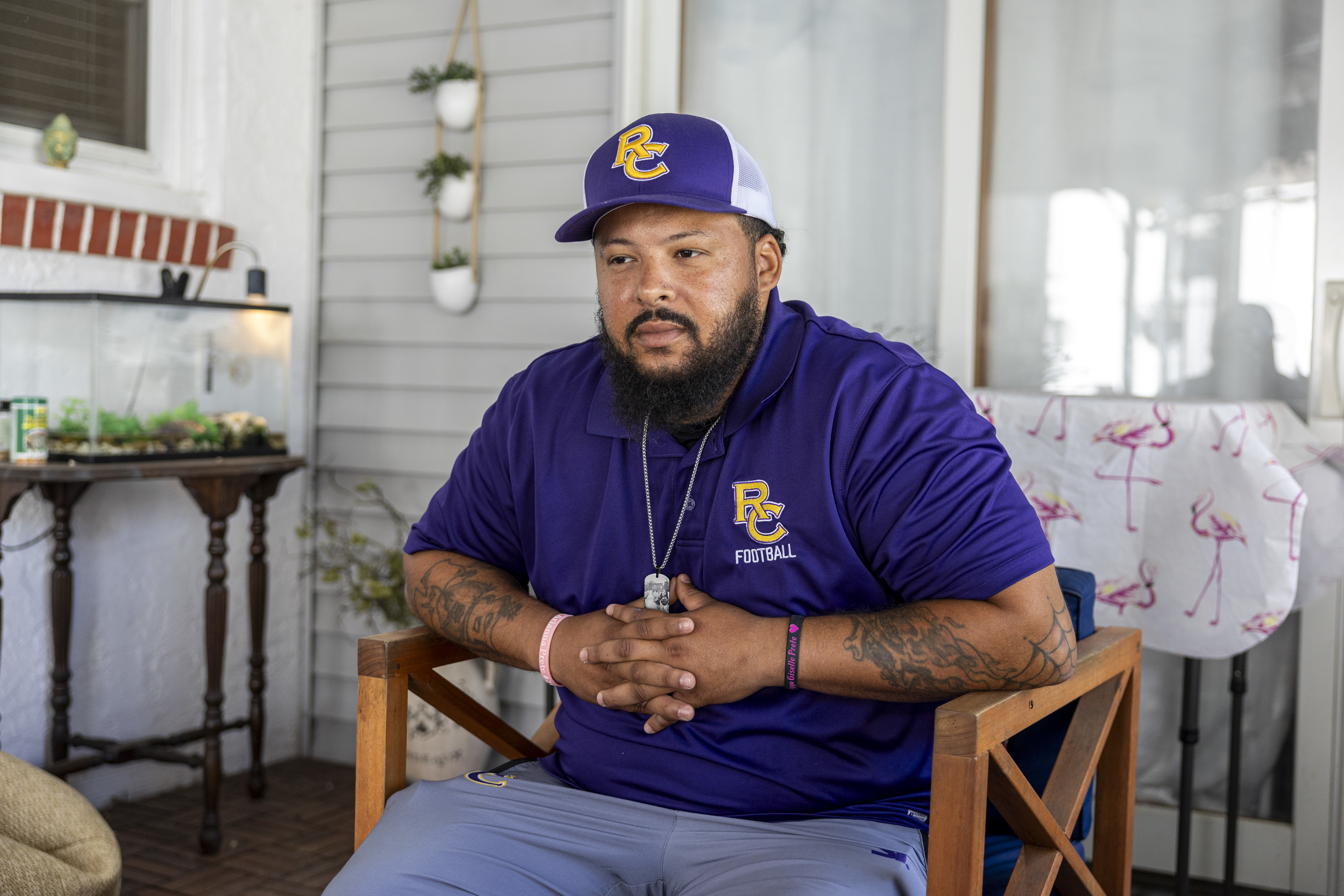
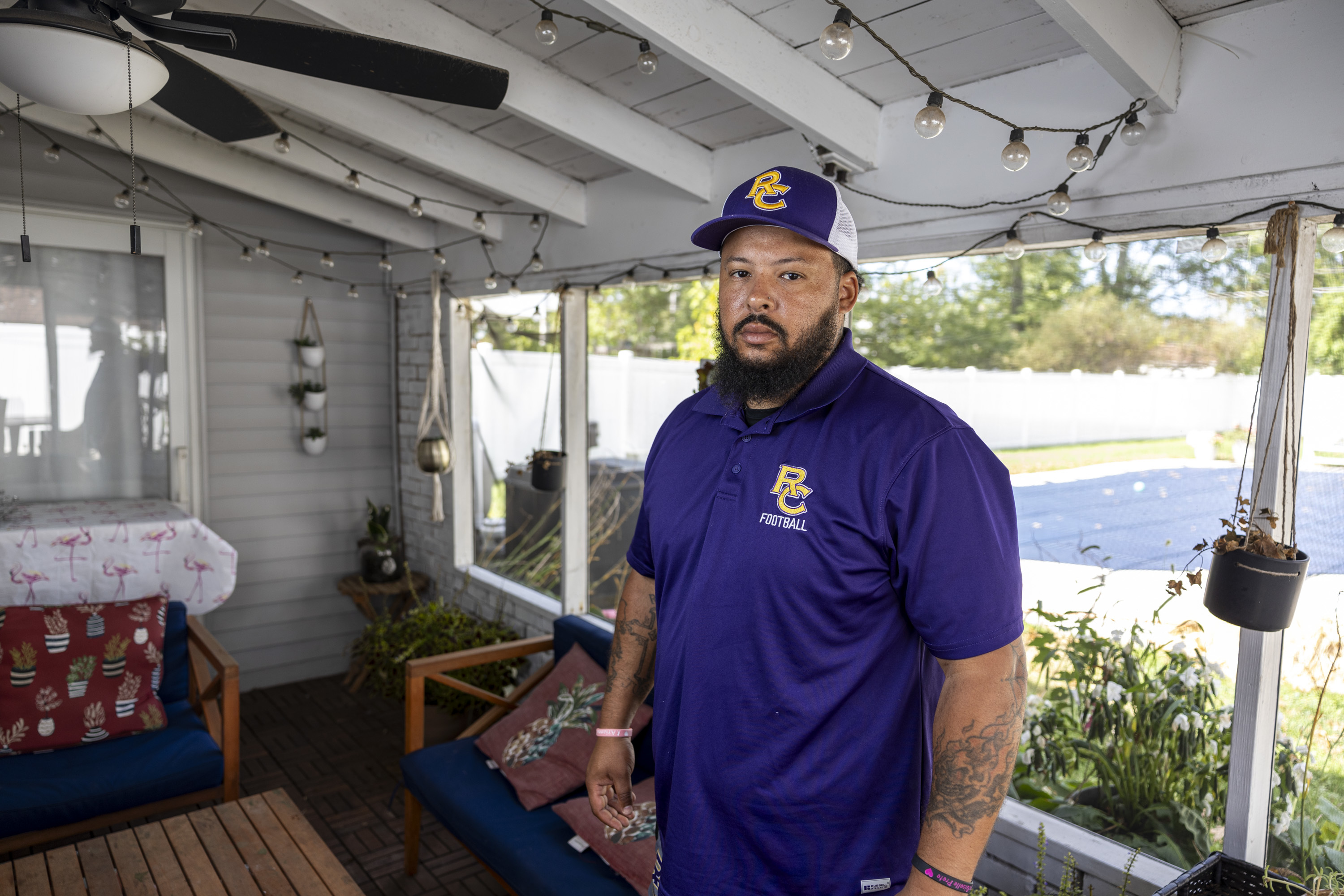
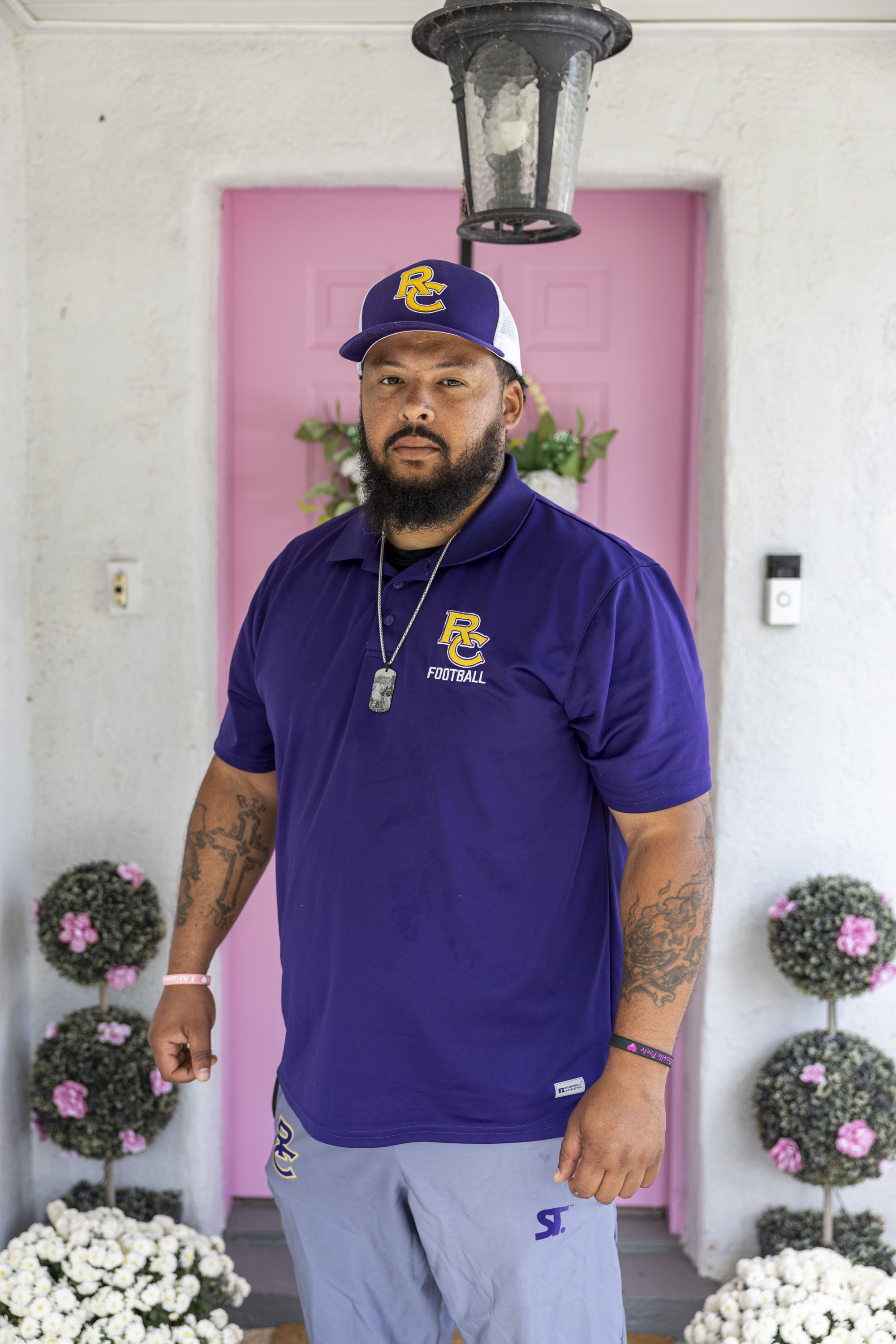
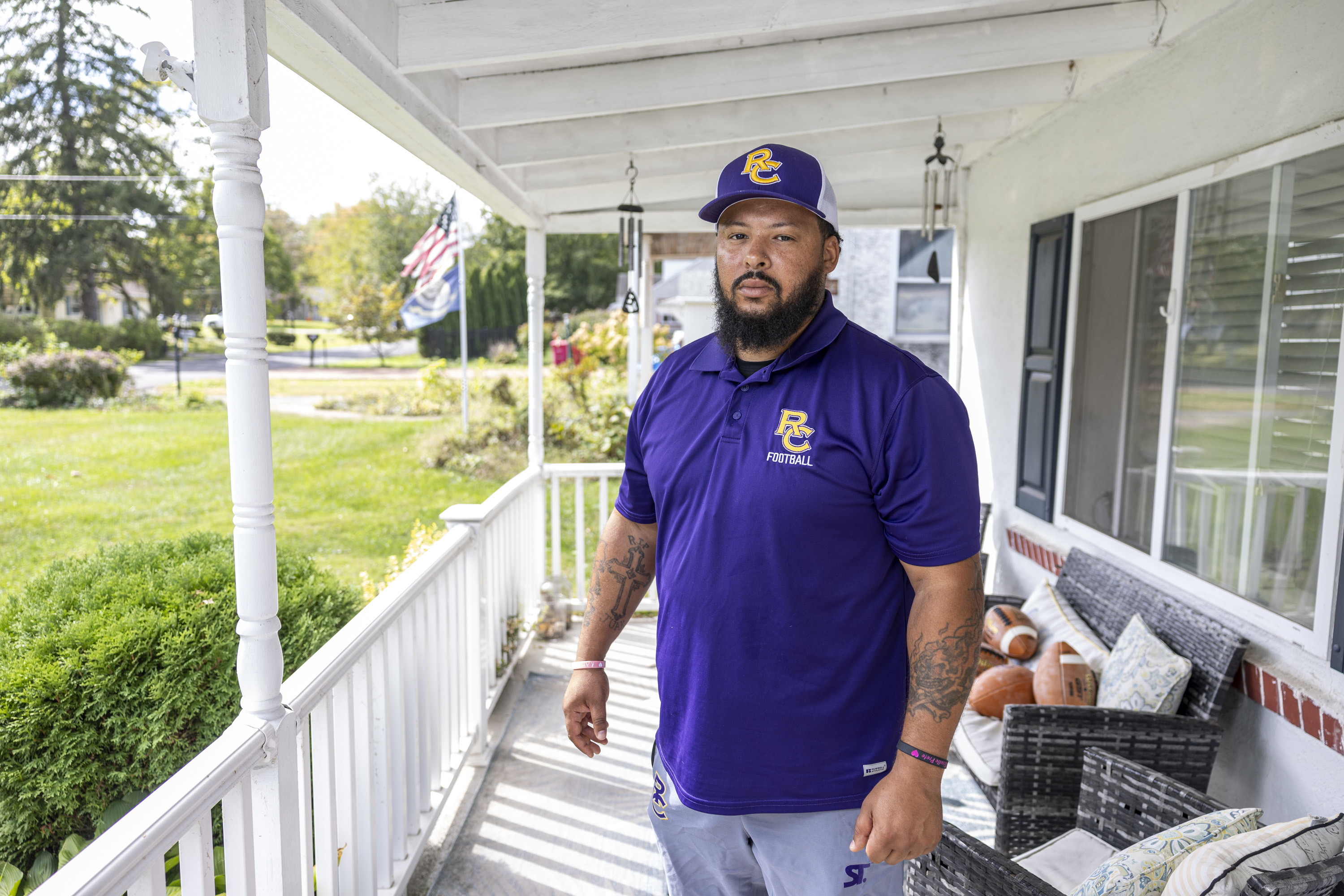
    Rick Prete at his home in Audubon, Montgomery County, on Oct. 2.

    A football and softball bond

    Arianna and Rick always connected over sports. She was a self-described “girly girl” who loved the color pink, romantic comedies, and Bruno Mars, but also a natural athlete like her father.

    She signed up for T-ball when she was 6 and switched over to travel softball not long after. Norristown Recreation didn’t have an under- 10 team at the time, so Arianna played with 10-, 11-, and 12-year-olds.

    Despite facing pitchers far older, she made contact regularly and quickly emerged as a hitter to watch. Rick, who played baseball in high school and college, began to train with her.

    Arianna would take 100 swings off the tee every day. Sometimes, her father would throw soft toss in the backyard. When she switched from third base to catcher at age 10, Rick started challenging her behind the plate.

    He’d spike softballs in the dirt, or pitch them high above, forcing his daughter to shift and block. By age 12, they were flipping tires and swinging sledgehammers in the driveway.

    “[Softball] was a huge part of our relationship,” he said. “That was my avenue to learn how to be her dad.”

    Arianna felt equally invested in Prete’s coaching career. When she was a student at Methacton High School, from 2019 to 2023, she would spend Friday nights with the football team at Roman Catholic.

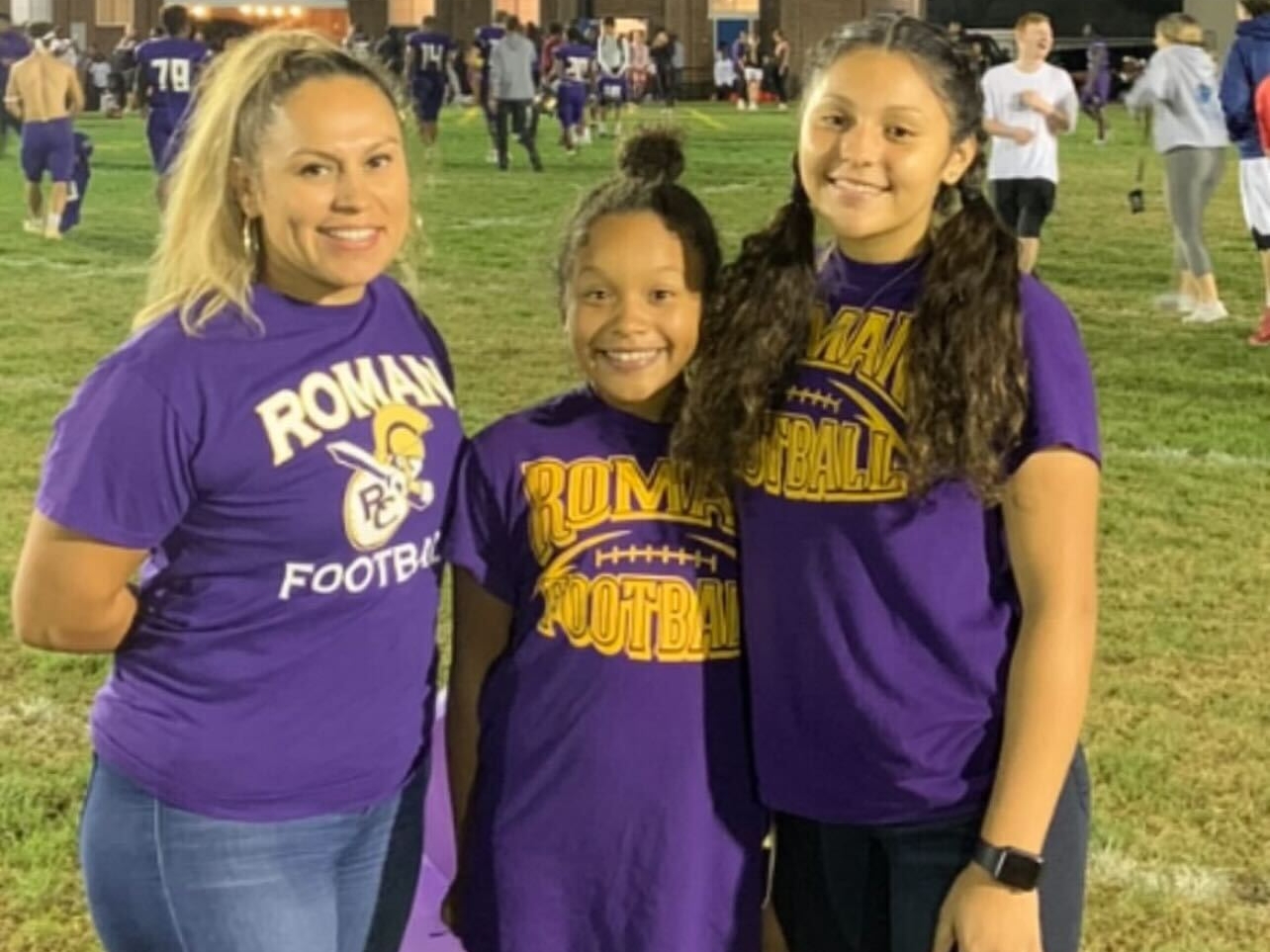
    Rick Prete’s wife, Gabriela, with daughters Nylah and Arianna at a Roman Catholic game.

    In the school’s 2019 season opener, on Aug. 24, the Cahillites found themselves down 26-0 in the first quarter to Pope John Paul II. By halftime, they’d narrowed their deficit to 11 points.

    The team kept chipping away, and with 1 minute, 30 seconds to go, quarterback Jayden Pope threw a 50-yard touchdown pass to earn Roman a 47-46 comeback win.

    Prete still has the film from that night. In the background, Arianna is on the sideline, sprinting toward wide receiver Malachi Harris, who made the game-winning catch.

    “You couldn’t tell that girl that she wasn’t an assistant coach,” Gabriela said. “She liked the energy. Running up and down the field with the other coaches. You would always find her there.”

    Prete’s teams went 10-28 over his first four seasons, but over time, he built a strong program. The Cahillites posted a 9-3 record in both 2022 and 2023.

    In 2023, in the District 12 Class 5A championship game, Roman Catholic lost to Imhotep Charter, the eventual state champion, by only 4 points.

    With more success came more commitment, so Prete would always check to make sure that Arianna and her younger sister, Nylah, were comfortable with him coaching. After a while, the question became redundant. The answer was always yes.

    “They’d both say, ‘No, you go coach,’” Prete said. “‘We want you to.’”

    Arianna graduated from Methacton in 2023. She enrolled at Montgomery County Community College in the fall of that year, and took a real estate course in the spring, but was unable to pass the state exam. She planned to return to Montco in September.

    The former softball player had always loved working with kids, so she thought about becoming a teacher. Or maybe going back to real estate school, to retake her test. But these possibilities, once filled with promise, came to an abrupt halt on July 11, 2024.

    Rick and Gabriela heard a knock at about 3:30 a.m. Two Lower Providence Township police officers were standing outside their door.

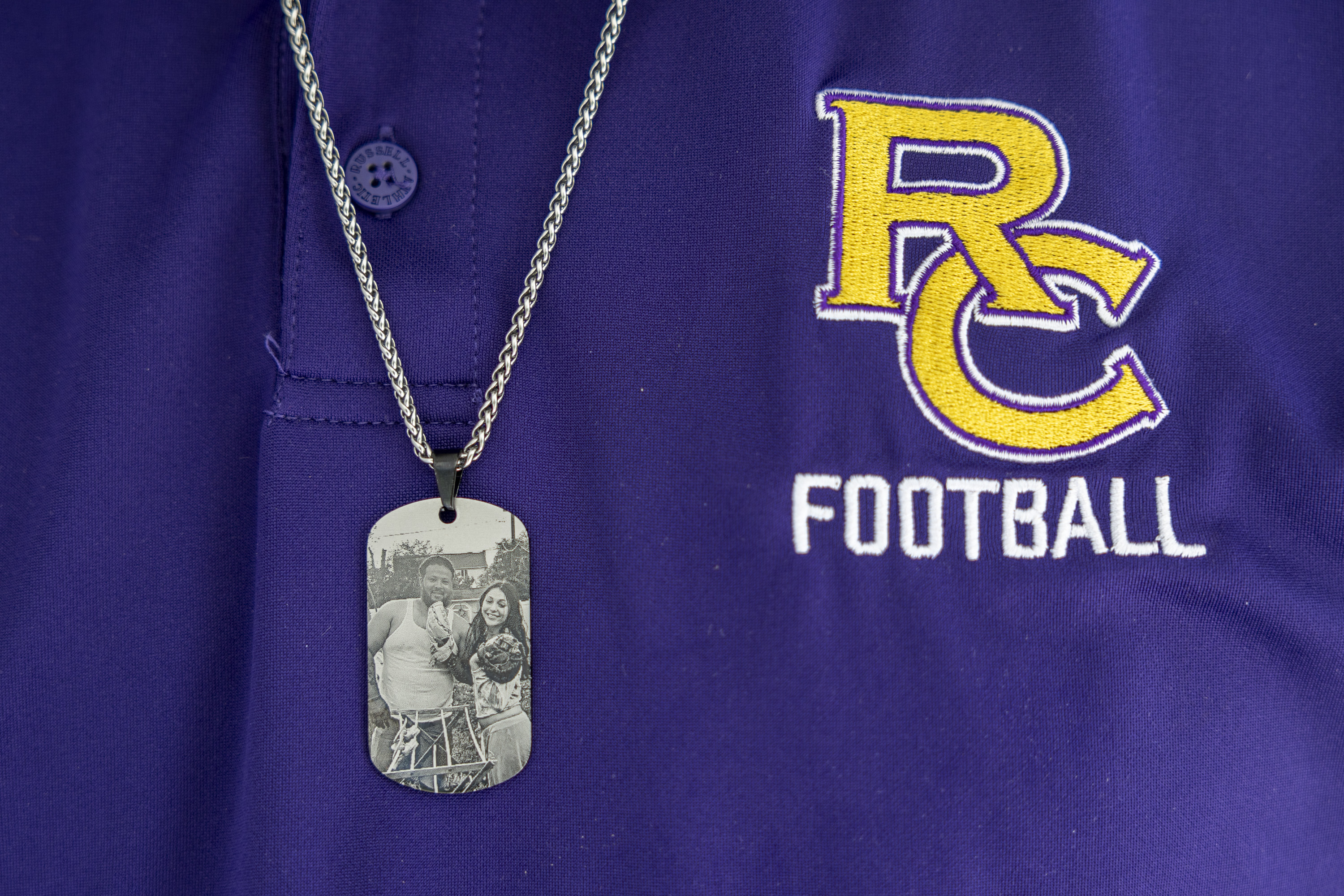
    Rick Prete wears a necklace with a photo of him and his daughter Arianna, who died in a 2024 car crash.

    They told the Pretes about the collision and instructed them to go to Temple University Hospital Jeanes Campus, in Fox Chase, to identify Arianna’s body.

    But once they arrived, their daughter wasn’t there.

    “It gives you a glimmer of hope,” Gabriela said. “Maybe they got this wrong.”

    In an email, Lower Providence Police Chief Michael Jackson said that the officers received their information from a victims’ advocate at Temple University Hospital.

    The parents finally reached Temple’s main hospital, on North Broad Street, at about 7 a.m., and realized that the victim was indeed their daughter.

    “Your body shuts down,” Rick said. “Your mind goes numb. It’s your worst nightmare being realized.”

    Rick Prete poses for a portrait at his home in Audubon, Montgomery County, on Oct. 2.

    ‘I feel your pain, Coach’

    The next few days were a blur. The Pretes called as many family members as they could. A steady stream of visitors came through the house to share condolences, with flowers and food in hand.

    Roman Catholic was scheduled to go to a three-day team camp at East Stroudsburg on the day of Arianna’s passing. But Prete was not in any shape to attend and arranged for offensive coordinator Marcus Hammond to take the team instead.

    Two days later, the Cahillites finished their visit and piled into two yellow school buses. The drivers were supposed to head back to campus, but the students had a different idea.

    The team went to the coach’s house in Audubon. More than 50 players gathered on his lawn, took a knee, and began to sing Roman Catholic’s fight song.

    Prete stood on his porch, buried his head in his hands, and cried.

    “Thank you,” he said. “Now, give me a … hug.”

    Gabriela ordered some pizzas. A few players pulled Rick aside to say a prayer. One student, 17-year-old quarterback Semaj Beals, shared that he’d lost his sister Dymond in 2014. She was 8, and died by suicide.

    “I feel your pain, Coach,” Beals said. “And if you need anything, if you need to talk to me, I’m here.”

    Prete hugged him tight.

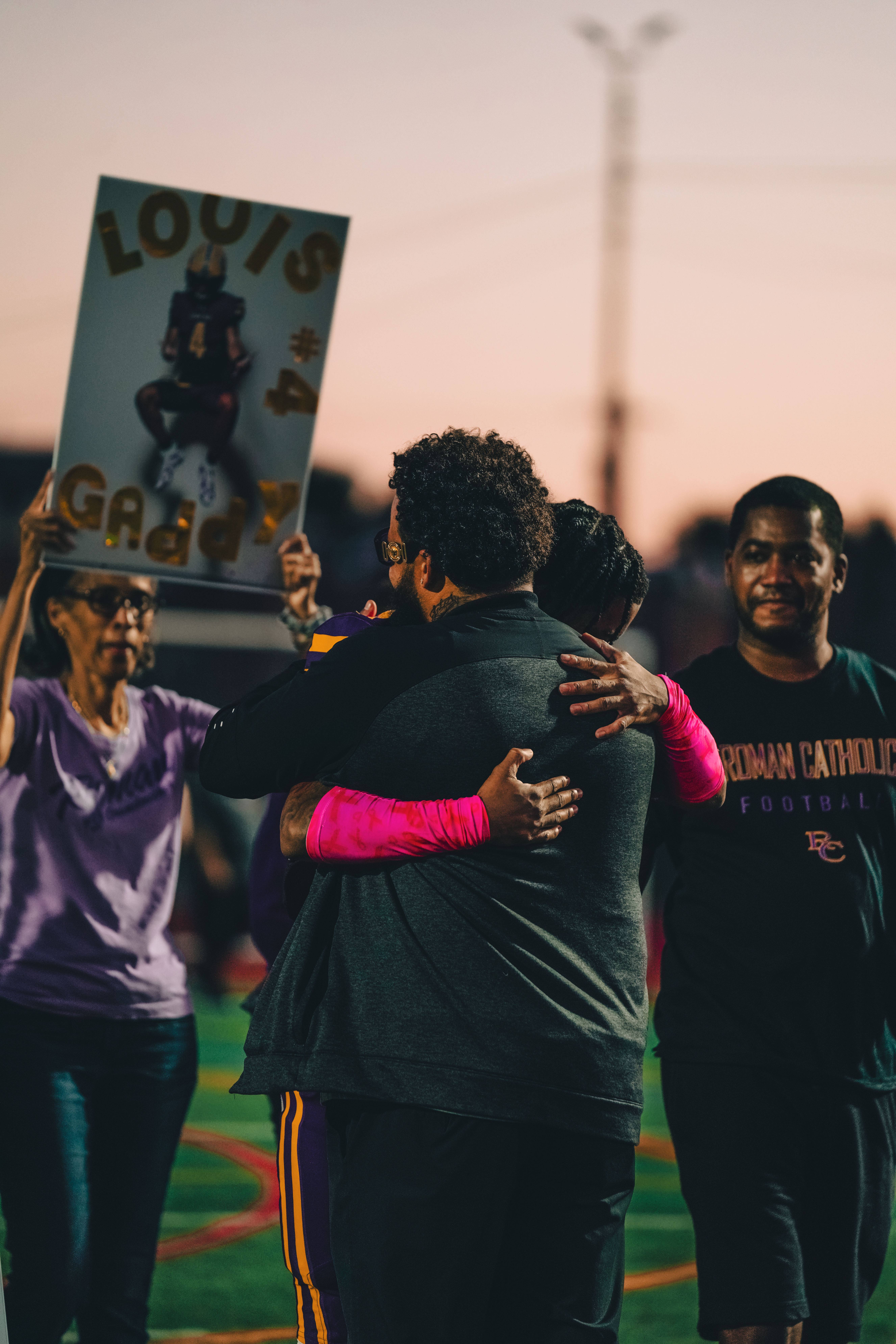
    Lou Gaddy hugs his coach, Rick Prete, at Roman Catholic’s senior day in 2024.

    “I know you do,” he replied.

    For many of the Cahillites, Prete has been like a second father. He’d lend them food and gas money. If they lived far away from the school, at Broad and Vine, he’d arrange for alternate transportation.

    The coach would regularly check on his players’ mental health and always made sure their grades weren’t slipping. There were conversations about schemes and formations, but also about how to treat a young woman, how to plan for their future, and how to handle a difficult situation at home.

    Lou Gaddy, a Roman Catholic graduate who is now a freshman safety at Stony Brook University, is the first person in his family to go to college. He received a full scholarship.

    Gaddy grew up in Burlington County in South Jersey and is unsure if he would have made it if he hadn’t played for Roman Catholic.

    “Who knows if I’d develop the way I did,” he said. “The [Philadelphia Catholic League] is a much stronger conference than where I live. It’s way more work. It requires more out of you. Long days, late nights.

    “But Coach Prete definitely knew what he was doing. He’s sent countless amounts of kids to college. Countless.”

    Because of this connection, the players felt Arianna’s death on a deeper level. Some saw Prete, overwhelmed by grief, and felt as if they were watching their own parent cry for the first time.

    Their coach was the one who fixed problems for them. Now, he was distraught. He struggled to focus. His attention to detail wasn’t the same.

    Prete was reluctant to return to Roman Catholic. He struggled to just get through a day. But Gabriela insisted he go back. The couple had already been robbed of their daughter. She didn’t want him to lose his career, too.

    He rejoined his team in August 2024. It was a challenging adjustment. There were days when players asked if Prete was OK, only to hear him say, “No.” The coach began wearing sunglasses during games and practices, day and night, because he couldn’t hold back his tears.

    Rick Prete was reluctant to return to Roman Catholic after his daughter died in a car crash last summer. Now, it’s helping him heal.

    Prete was in charge of the defense, but at times, he struggled to call plays. So, his players would call them for him.

    “They’d bail me out,” Prete said. “Lou [Gaddy] would literally line the defense up. And he would just make sure the defense had the plays that they needed. And he’d do it right.

    “All of the kids did that, because they knew that I’d be gone sometimes.”

    Gaddy would also make sure that his teammates understood the playbook and handled any adjustments that needed to be made on defense. Beals compared him to a “coach on the field.”

    “It was just to take the stress off,” Gaddy said. “Semaj made sure the offense was in check. And that’s kind of how I was with the defense. Making sure people were attacking the field the right way.”

    Players who previously sat out practices became regular participants. They were more efficient in their workouts and pushed themselves harder than before.

    The team discovered a greater purpose beyond competing for district titles or a state championship. The season was no longer about them. It was about their coach.

    “Sometimes, when things happen like that, a head coach will step away,” Beals said. “But Coach Prete was there the whole way. So, we just felt like that was special. We needed to do something for him.”

    Roman began to win — a lot. The Cahillites didn’t lose until Week 5 when the team played DeMatha, a high school powerhouse out of Hyattsville, Md.

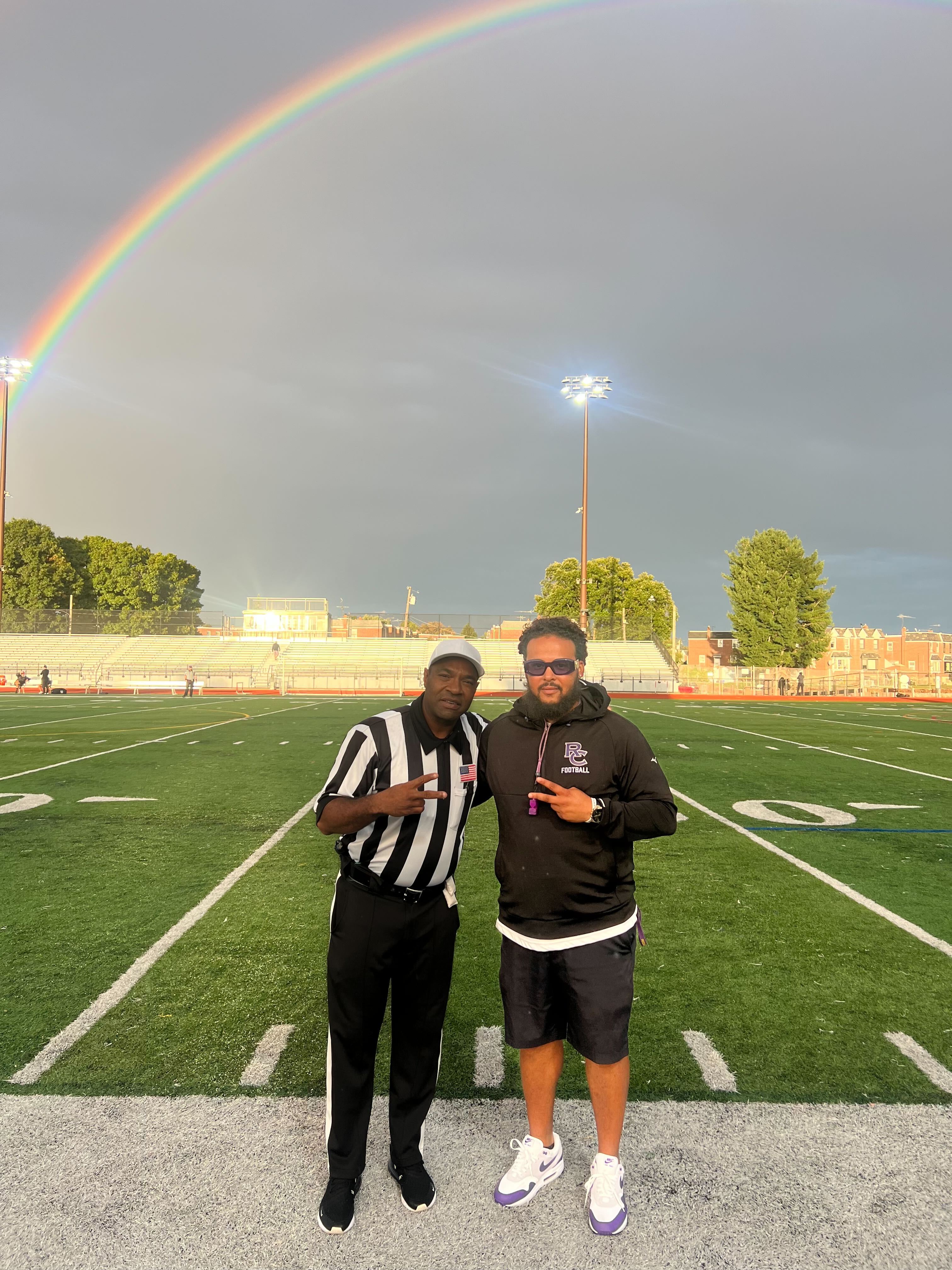
    Rick Prete (right) with a referee who approached him before a game in 2024. The referee had also lost a child, and expressed his condolences, when a rainbow appeared over both of them.

    The games were competitive, but with soulful moments of humanity throughout. Opposing coaches would give Prete prayer cards when they shook hands. In September 2024, before Roman Catholic played A.P. Randolph Campus High School in New York, a referee walked up to him.

    He told Prete that he’d also lost a child. As they talked, a rainbow appeared over the field. To Rick and Gabriela, the 2024 campaign was full of moments like these. Moments that felt as if their daughter was with them.

    It could be as subtle as a seeing a butterfly on the field. Or hearing a song on the way to a game. Or noticing that the players had written “LLA” — Long Live Arianna — on their helmets, compression sleeves, and wristbands.

    An already special season reached a new height in December, when Roman Catholic advanced to the state championship for the first time in school history. With an 11-4 record, the Cahillites had plowed through the district playoffs to face Bishop McDevitt of Harrisburg in the final.

    On a brisk night in central Pennsylvania, Roman Catholic rallied from a 21-3 deficit to tie the score at 31 and push the game into overtime. The Cahillites fell just short of a championship, losing to McDevitt on a field goal, but Prete was filled with pride.

    “I don’t want to say it was magical,” he said, “but that team became so close. And it really felt like my kid was right there. Like my kid was literally right next to me.”

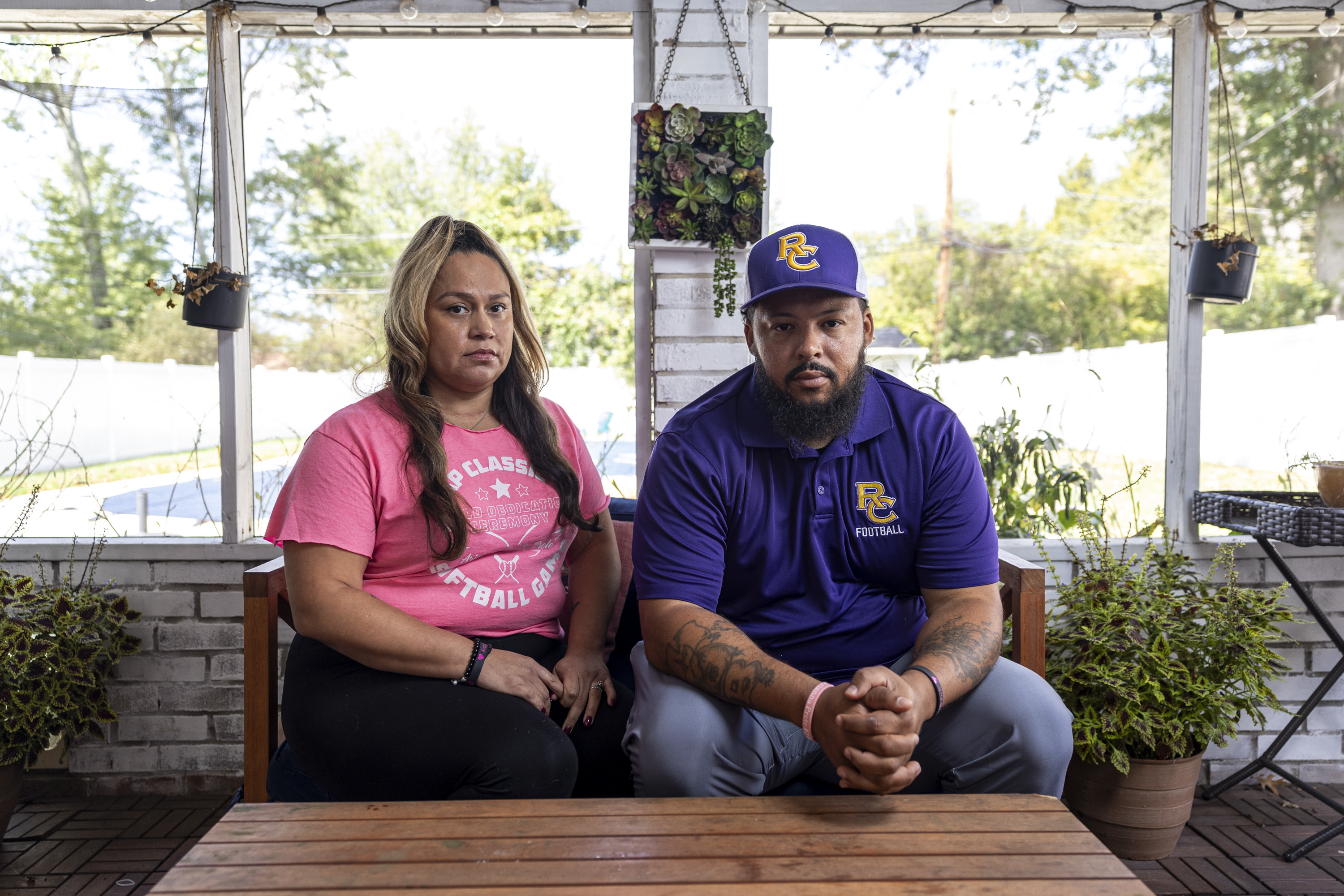
    Rick and Gabriela Prete at their home in Audubon, Montgomery County, on Oct. 2.

    Coaching with purpose

    The Prete house is quiet now. Arianna’s laugh is no longer ringing through the halls. Her parents don’t hear her feet stomping along the floor upstairs, or her shrill voice singing to Bruno Mars.

    Gabriela thinks about her daughter constantly. Sometimes, when Rick is sitting in his living room chair, late at night, he looks toward the door, expecting Arianna to open it.

    There are little signs of normalcy. Last year, Gabriela started seeing Rick’s trail of football plays again. He would leave them all over the house, on napkins and notepads, just like he did before his daughter’s passing.

    Football won’t bring her back. It won’t diminish the family’s grief. But Roman Catholic gives them a community. It gives Gabriela and Nylah a place to be on Friday nights.

    It gives Rick a task; three or four hours that aren’t spent asking questions he can’t answer. A task that fills him with purpose.

    “I didn’t know how much energy I have left to give anybody,” Prete said. “But [the players] help get me out of bed. They put things in perspective. That we still have a family, that our family still does have a future.

    “That we need to pour into what’s here, and to be present, for Arianna. We can’t live in a standstill. And seeing people accomplish their goals. … It’s always been something we’ve wanted, but now that is what it’s all about. You know?”