Author: Joseph N. DiStefano

  • This Harvard-trained, ex-Uber lawyer is the boss at one of Philly’s biggest builders

    This Harvard-trained, ex-Uber lawyer is the boss at one of Philly’s biggest builders

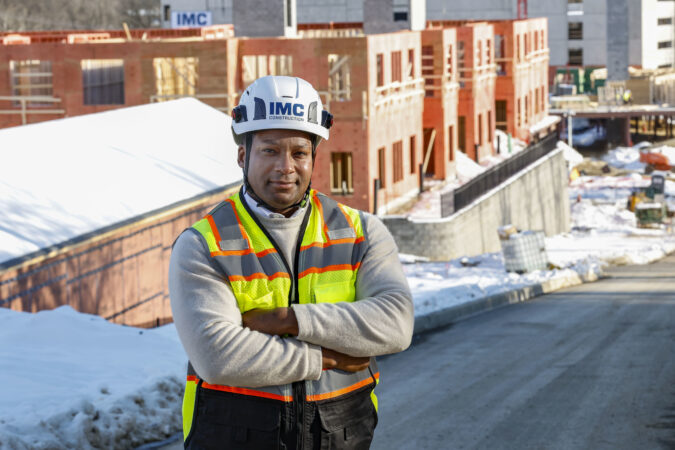
    Construction is often a family business. Mike Lloyd, as a Harvard Law graduate, former Wall Street trader, past counsel for Uber and Chevron, and a native of south Louisiana, had a first-class outsider’s resume when he arrived at Malvern-based IMC Construction, one of the mid-Atlantic’s largest general contractors.

    But Lloyd is family, too: In 2017, engaged to the boss’ daughter, he took over as IMC’s general counsel, and moved onto a new career path that added his professional and personal skills to IMC’s career construction managers.

    Since 2023 he’s been president and the firm’s controlling owner. On his watch, IMC revenue has risen more than 70%, to $600 million, and it has added offices and clients in New Jersey and Delaware, with more planned. The firm, founded in 1976, now employs 300, plus dozens of subcontracted crews at any given time.

    Senior managers of IMC Construction, 2025. CEO Mike Lloyd is third from right; his predecessor, IMC chairman and Lloyd’s father-in-law Robert Cottone, is third from left.

    Jobs that IMC built or rebuilt in recent years include Penn and Jefferson medical projects, Prologis warehouses in Marcus Hook, the Morgan Lewis tower at 2222 Market St., new plants for Merck, Solenis and other biotech companies, apartments at the Granite Run Mall, the Promenade at Upper Dublin, the King of Prussia Town Center, and more than 100 other area sites.

    Lloyd recently spoke with The Inquirer at IMC’s Chester County headquarters and on a tour of its nearby Great Valley Apartments complex, for developer Greystar. The conversation has been edited for clarity and length.

    How did you get this mid-career opening into the construction business?

    Rob Cottone [his predecessor as IMC CEO] recognized he needed support to help the organization grow across the Mid-Atlantic.

    This business is hand-to-hand combat every day. Every day is different.

    What I bring to the table is my broad skill set. I’ve worked in finance. I’ve worked in law. I’ve worked in mergers and acquisitions, with big and small companies. I’m comfortable with financial companies, whether for IMC’s own work, or to help the building owners get comfortable with the construction lenders.

    I don’t pretend to know things I don’t. We build a team of specialists who complement each other.

    What’s an example?

    Phil Ritter, a senior project manager, had the idea of creating a Special Projects division for jobs worth $5 million and under. You use a different pool of contractors, and a faster operating model, but you get the benefit of working for a large, efficient organization.

    I worked on the business plan, and in 2020 he started it, with maybe a million dollars in revenue that year. In three years, we were doing $30 million. We had a tremendous success doing small projects for Penn Medicine and Jefferson and others.

    Many companies would not have put a top project executive in charge of a new business. It costs overhead while working on a business plan. But that’s how we invest in people.

    We opened in 2022 in Edison, N.J., with four employees. We are now 37 there, of our 300 total, with $210 million in projected revenue for 2026. Our biggest job is the Crossings at Brick Church in East Orange, a transit-oriented multifamily development for Triangle Equities.

    Are those smaller projects non-union?

    The labor is driven by the clients’ demands. As a general contractor, we are a merit shop [using both union and non-union contractors]. Our jobs are often 100% union, not always.

    Sometimes we do jobs for a lump-sum price, sometimes open-book, guaranteed-maximum, the approach pioneered by Buck Williams [who founded IMC in 1976]. It takes a lot of working with the owners.
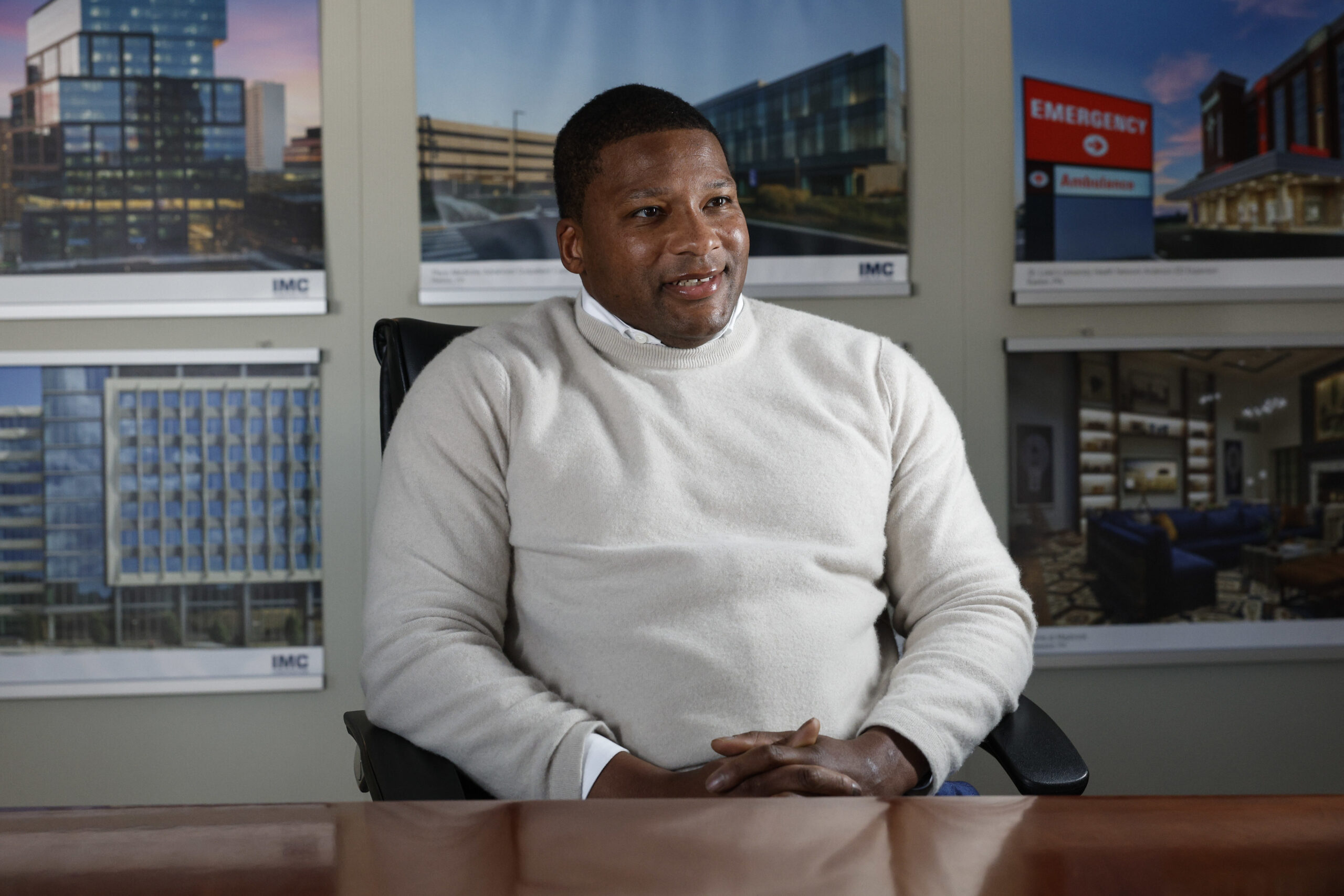
    Mike Lloyd, CEO of IMC Construction, in the company’s Malvern headquarters, in January. Behind him are renderings and photos of some of IMC’s recent projects.
    You’re building a lot of apartments lately?

    We see a tremendous amount of suburban apartment demand.

    A lot of these are places where people can avoid going to the city, when you can have a nice dinner and do some retail shopping close to work, close to home. You have that in King of Prussia, you are getting it in the Great Valley, you will see more of it at the Navy Yard, and in Ardmore.

    We recently broke ground at 100 Lancaster in Ardmore for Radnor Property Group, and the Great Valley Apartments we’re building for Greystar. You have a demographic of millennials who are finally getting married and moving out of the city as they have kids.

    We survived COVID by completing over six million square feet of warehouses. We have turned over nearly 5,000 apartment units since the year before I joined, which should make IMC one of the largest apartment builders in the Philadelphia region. We have turned over 1,700 senior-living units over the past five years, which makes IMC the largest builder of senior living units [around Philadelphia.]

    Has office construction peaked?

    I don’t know that offices have peaked. I’m actually bullish on office construction. We’re completing our rebuild of 680 Swedesford Rd. [in Wayne], for example. Employers want to get their people back together. There’s benefits for collaboration and connection.

    But they want higher-quality space. More light and amenities. They want a kind of ecosystem, like you see at the Navy Yard, where Ensemble is investing in life sciences. They have labs, offices, apartments, and amenities.

    At the King of Prussia Town Center, the retail draws people in, and they’re building offices around it. You see a similar trend in the Great Valley. Historically there was this corporate office campus, now there are restaurants, hotels, apartments all around.

    Is biotech construction stalled?

    We are part of a $100 million lab project in Delaware. We did Penn’s Center of Healthcare and Technology in Center City. We built the Radnor outpatient center — it’s a model. We built their facility in Chesterbrook. And the hospitals are still building.

    After years of industry support for underrepresented contractors, are you feeling whiplash due to President Donald Trump’s reaction to DEI?

    We are now one of the largest minority-owned contractors [in the country]. We don’t distinguish ourselves by being a minority contractor; we aspire to be the leading general contractor in the Mid-Atlantic region by leveraging technology in unique ways and creating solutions to serve our clients’ needs.

    We happen to be a minority-owned company. I personally care about expanding opportunities. We have broadened the subcontractor pool and awarded $1 billion of subcontracts to minority- and women-owned businesses.

    We have not felt much backlash or reversal. Many owners still feel committed to expanding the contractor pool. In the current administration it may need to be structured differently.

    Will your kids make this a family business?

    Our children are young. My daughter has already told me she wants to build her own house, and I can live in it if one day we were working together.

  • Shareholders approve merger of American Water and Essential Utilities, which serve Pa. and N.J.

    Shareholders approve merger of American Water and Essential Utilities, which serve Pa. and N.J.

    Shareholders of Camden-based American Water Works and Bryn Mawr-based Essential Utilities, which owns the Aqua water and sewer companies, voted overwhelmingly Tuesday to merge and create a combined company with nearly $30 billion in yearly water and sewer sales.

    More than 99% of the 161 million American Water shares that were voted were cast in favor of the deal, the company told the Securities & Exchange Commission. Essential’s online proposal to merge was approved by around 95% of voting shareholders.

    The planned combination of these rivals, which have competed for more than 100 years to manage water and sewer for the small number of U.S. communities that allow for-profit operators, still needs approval from state public utility commissions.

    The combined companies’ sales are concentrated in Pennsylvania and New Jersey. In suburban Philadelphia, Aqua serves West Chester, northern Delaware County, parts of Lower Bucks, and Main Line communities. American Water serves Abington, King of Prussia, Norristown, Phoenixville, and nearby towns.

    New Jersey American Water serves towns along the PATCO rail line in Camden County, in northern and central Burlington County, and in Shore communities such as Absecon and Ocean City. Aqua New Jersey has customers in the three suburban South Jersey counties and at the Shore.

    American Water’s 14 million U.S. customers include systems in 12 other states, and on 18 U.S. military bases. Essential has around 3 million customers, including systems in six other states, and Pittsburgh-based Peoples Gas, which serves 750,000 in western Pennsylvania and Kentucky.

    American Water is already the nation’s largest private operator of water and sewer systems, and the deal will make it a larger player in competition with Florida-based NextEra Water Group and France-based Veolia’s U.S. operations, among other private systems that have been seeking to expand.

    A separate vote on an Essential executive pay package drew some opposition, with 85%approving.

    That package included more than $17 million in severance compensation and stock grants for departing Essential CEO Christopher H. Franklin, plus medical benefits and up to three years’ professional assistance helping him land another job, plus millions more for his four top deputies.

    The merged company’s larger size, as big as many of the leading natural-gas companies that dominate utility stock-index funds, will boost its visibility to investors, John C. Griffith, the American Water chief executive who will run the combined companies, said in announcing the deal last fall.

    The companies disclosed the approvals Tuesday afternoon and said more details on the vote and their plans would come later this week.

    Deal backers say the combination should enable Griffith to cut management costs, boost profits, drive up the share price, and could ease pressure to keep raising water rates.

    Regulators in New Jersey and Pennsylvania are weighing the company’s latest rate increase requests. American Water’s New Jersey affiliate is asking the state Board of Public Utilities for an average 10% water and 8% sewer rate hike on Jan. 16 for 2.9 million customers, which it said would fund improvements to aging water and sewer systems. Customers would pay an average of $18 more a month.

    Pennsylvania’s Public Utility Commission said last month that it would consider the company’s request to boost water and sewer rates on 2.4 million customers by an average 15%, or $20 a month.

    Critics had urged Essential to seek rival buyers to drive up the share price and shareholder profits from the sale, noting that both stocks had dropped after the merger was proposed last year.

    Tim Quast, founder of Colorado-based ModernIR, a consultant the companies hired to help explain the merger, said share price declines are now typical, even for merger-target companies like Essential whose shares command a premium from buyers like American Water because index-fund investors such as Vanguard and BlackRock tend not to buy more shares of merging companies until a deal is completed.

    Even after long competition from U.S. and foreign utility owners, private water companies serve only about one in six Americans. In recent years, customers of public utilities serving parts of Chester, Delaware, and Bucks Counties have defeated privatization campaigns, though some towns in Pennsylvania and New Jersey have signed on. Pennsylvania also has asked private operators to take over small, troubled public systems.

  • Pa. plant that helps make smartphones and bullets finds new suppliers in China trade war

    Pa. plant that helps make smartphones and bullets finds new suppliers in China trade war

    Tungsten is the hardest metal, tough enough to drill steel.

    When your Apple phone rings, its tungsten “Taptic Engine” buzzes. Tungsten hardens artillery shells made for the Ukraine war at General Dynamics’ Scranton Ammunition Plant. It’s used in Boeing helicopters built at Ridley Park and medical device parts from Berwyn-based TE Connectivity.

    More than 80% of mined tungsten comes from China — or did, until limits on China tungsten imports imposed during the Biden administration began last year. China has also imposed tungsten export limits.

    Not surprisingly, tungsten concentrate is now selling at record prices of more than $30 a pound amid the U.S.-China trade war and the budget-busting U.S. military buildup.

    The struggle has fed a global tungsten rush, with investors and their allies in the U.S. and foreign governments paying to reopen old mines and secure new suppliers around the globe. The restrictions have also revived production of other strategic metals in many countries.

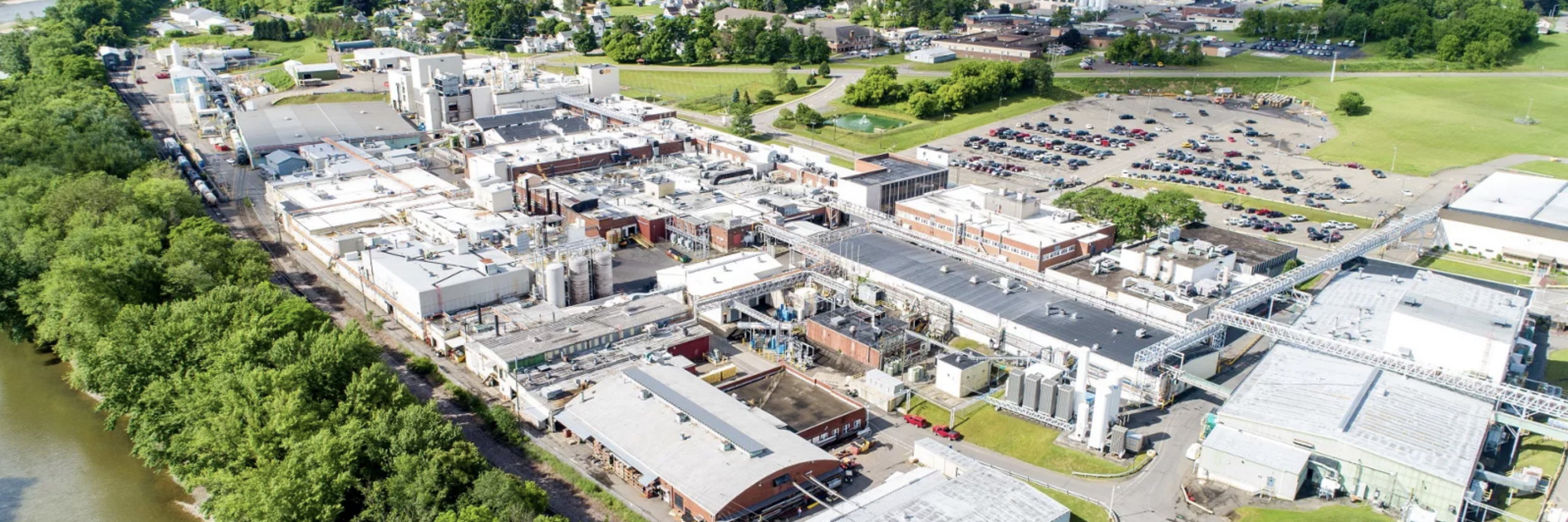
    The biggest tungsten processor in the Western world is the century-old, 400-worker Global Tungsten & Powders (GTP) complex in Towanda, Pa., three hours north of Philadelphia. It produced more than 12,000 of the 117,000 metric tons of tungsten powder made in the world last year, crushing the metal into workable powders because it takes too much energy to melt.

    Far from fighting to preserve cheap Chinese tungsten supplies, GTP championed laws supporting China import restrictions.

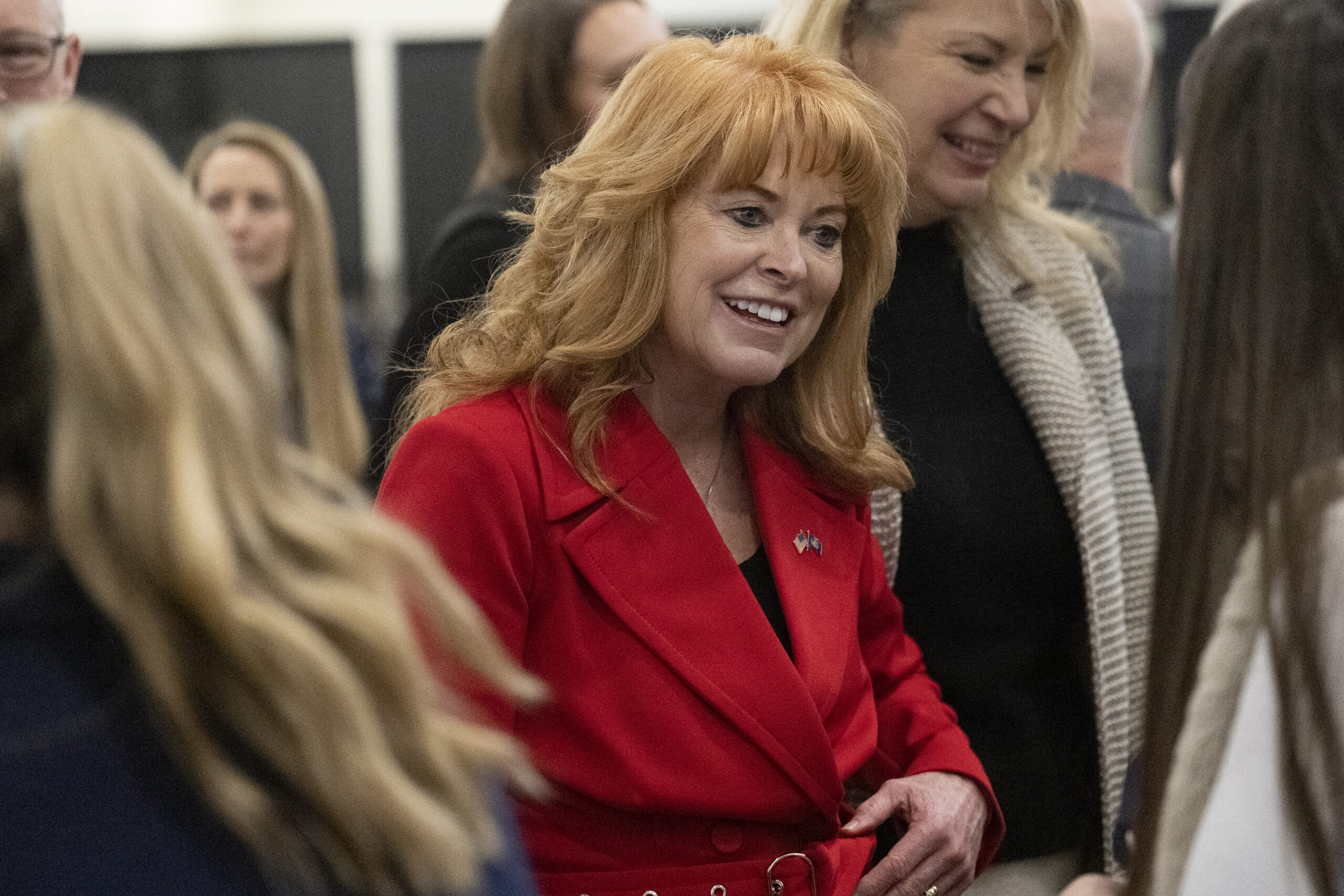
    Before Stacy Garrity became Pennsylvania’s elected treasurer in 2021, she worked at GTP for more than 30 years. As vice president for government affairs and head of a metals industry group, she lobbied Congress and the first Trump administration to limit tungsten imports from China and its allies under what she called the “don’t buy from the bad guys” law.

    Trump endorsed Garrity last month for the Republican nomination to run against Pennsylvania Gov. Josh Shapiro this fall.

    Stacy Garrity, Pennsylvania treasurer, at the Pennsylvania Farm Show in Harrisburg in January.

    GTP’s owner, Austria-based Plansee, has relied mostly on recycled Western tungsten, along with the few non-Chinese mines. But with tungsten demand and prices surging, the company has contracted mined metal from new sources, including Korea and Rwanda, after many years of effort, says Karlheinz Wex, Plansee’s executive board chairman.

    Korea’s Sandong mine, once among the world’s biggest suppliers, shut in 1994 as cheaper Chinese tungsten flooded world markets. The mine has reopened with financial support from the Korean government, technical assistance from U.S. agencies, and an exclusive supply deal to GTP. It’s owned by Almonty, a multinational mining company partly owned by Plansee. Almonty is moving its headquarters to the U.S. from Canada.

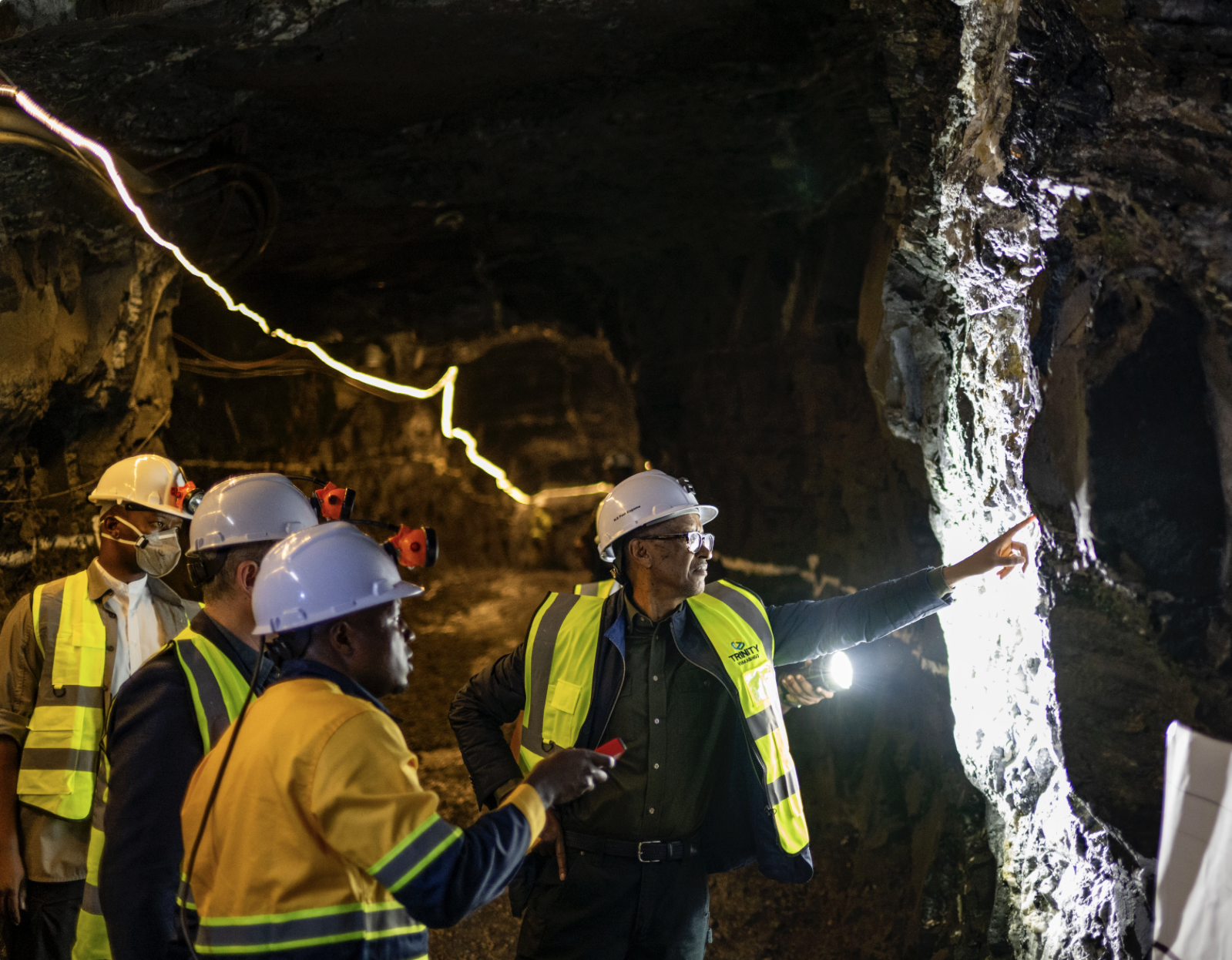
    Tungsten shipping from the mine at Nyakabingo, Rwanda, has been delayed by conflicts between militia backed by Rwanda’s pro-business President Paul Kagame and neighboring Congo, also a mining center.

    Wex agreed to take questions about the tungsten trade and GTP, purchased from lighting maker Sylvania in 2007. This conversation has been edited for clarity and length.

    How did a tungsten processing plant end up in Pennsylvania?

    That is where it started more than 100 years ago. The company focused on medical applications. Later, it went into the lighting business [pre-LED light bulbs used tungsten filament]. We have focused it 100% on tooling and special applications, such as artillery shells, and mostly in alloys with nickel and iron for tools, and with carbide and cobalt in machines for cutting, drilling, mining.

    The journey starts by creating tungsten scrap from customers and competitors. Our tungsten supply is 70% scrap recycling, from tools and drill bits.

    Austria-based Plansee owns the tungsten powdering plant in Towanda, Pa., which processes about one-tenth of the world’s supply of the heavy metal, used in tools and weapons.
    Why did your company, which relied on Chinese tungsten, also lobby to reduce imports from China?

    We always had this topic of sources independent from China, from the politics and their pricing. The mining of tungsten in the West was not that much [because of] the unfair competition flooding Chinese materials into the market. We wanted to get independent of that.

    Why are you buying tungsten from Africa now?

    Tungsten is a so-called conflict material. When we can certify it’s conflict-free, the material from that mine is really sound. The people at Trinity Metals [in Rwanda], we’ve known for years. Our specialists visit their mine.

    The U.S. government’s involvement made it easier to prove we can support national security in the West. We buy their entire production.

    Rwanda President Paul Kagame at Trinity Metals’ newly expanded, reopened Nyakabingo tungsten mine in May 2025. The mine’s entire production is sold to Plansee, an Austrian company that processes one-tenth of world tungsten output at its General Tungsten & Powders plant in Towanda, Pa.
    How does tungsten get from Rwanda to Pennsylvania?

    At the mine they separate the tungsten, crushing and separating the material by weight, or separating it by flood behind a dam. That makes a concentrate, about 60% tungsten. They put it in big bags and drums, very heavy. It’s easy to transport in standard containers [usually through the port of Mombasa [in Kenya], arriving through Newark or other East Coast ports and trucked to Towanda].

    Does the sale price of tungsten today cover all those costs?

    We have record prices in the tungsten market. Last year the price tripled. We don’t have enough [supply].

    The big problem is the Chinese have restricted exports. And the U.S. has forbidden the use of Chinese material for defense applications, as of this year. About 10% of tungsten goes into defense applications.

    Will Rwanda make a big difference in the supply chain?

    Rwanda is a small part.

    We rely on recycling. The biggest growth in supply that we see is the Sandong mine in South Korea. We have supported that financially. They will ship the concentrate to San Francisco [ports] and then by land to Towanda.

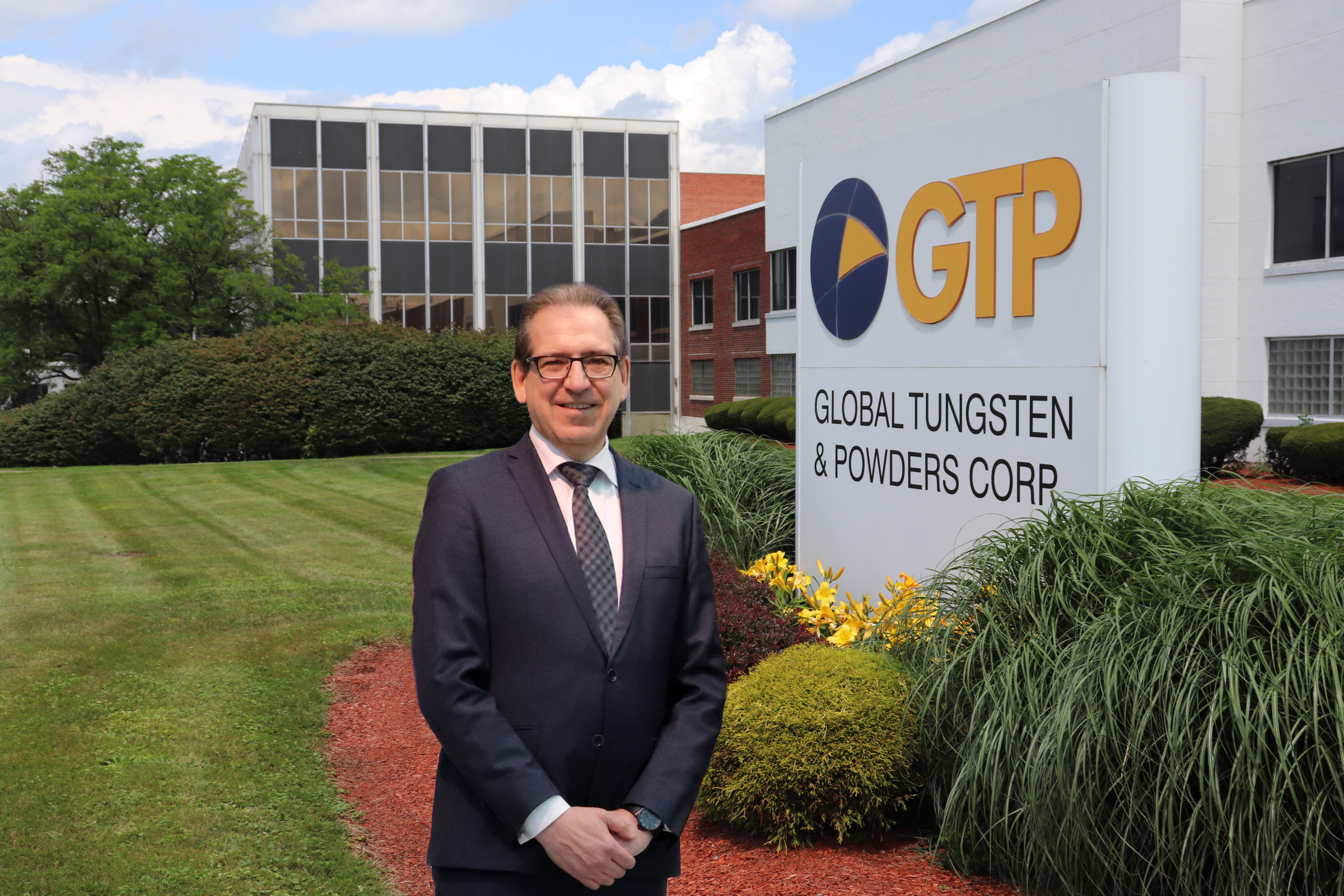
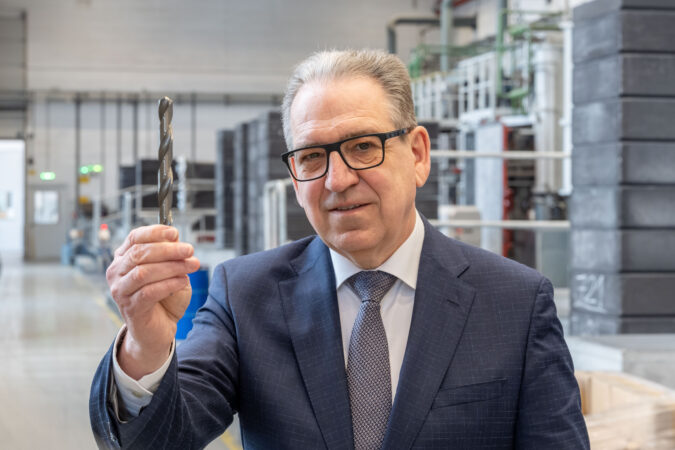
    Karlheinz Wex, chairman of the executive committee of Austria-based global miner Plansee, on a 2025 visit to the company’s Global Tungsten & Powder (GTP) mill in Towanda, Pa.

    We are working at capacity. We could produce 50-60% more and sell it on the market. We are sold out for the next six to nine months. Some of our customers are desperate.

    We are thinking of expanding in Towanda.

    Have you kept in touch with Stacy Garrity since she became a public official?

    Yes! It’s good to see her as state treasurer and potentially governor of Pennsylvania. She worked a long time for GTP after she was in the Army.

  • These outsourced Vanguard workers will be offered their jobs back

    These outsourced Vanguard workers will be offered their jobs back

    When Vanguard Group outsourced more than 1,300 retirement-plan office jobs to Infosys in 2020, both companies pitched the deal as a win for the Philadelphia region, not just another cost-cutting move.

    India-based Infosys called it a first step in attracting work from other U.S. financial employers.

    But with Infosys moving jobs back to Vanguard, the Trump administration discouraging visas for foreign workers at U.S. contractors, and Vanguard opening a large tech center in Hyderabad, India, that deal now looks as though it may have been a high point in U.S. outsourcing, not a sign of bigger things ahead.

    Vanguard spokespeople in 2020 stressed that Infosys planned to use the outsourced workers to open a “Mid-Atlantic Center of Excellence” facility in Malvern.

    Infosys officials said they hoped to hire more U.S. workers to outsource work from financial companies into the center under a veteran Vanguard manager, Martha King.

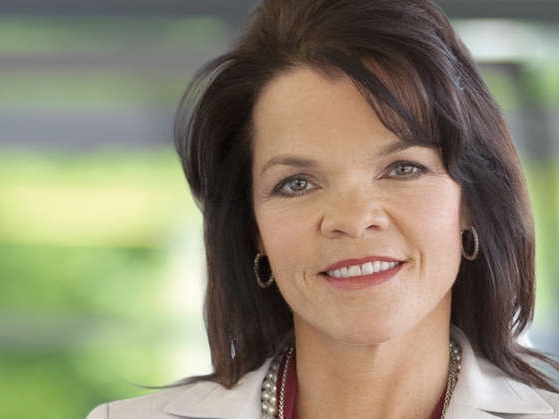
    Martha G. King headed a retirement services unit at Vanguard Group and moved with a large part of her team to Infosys when the work was outsourced in 2020.

    It was “the largest-ever deal signed in Infosys history,” Pravin Rao, chief information officer, told investors in a conference call the day after the deal.

    The stock jumped 15% on the news. Infosys president Mohit Joshi promised to improve retirees’ investment experience and set a higher service standard.

    But the expected new business didn’t materialize. Infosys’ growth slowed after 2020. The company’s stock is now worth less than when it signed the Vanguard deal, and its major U.S. office centers are elsewhere.

    The Vanguard arrangement itself has partly unraveled. Infosys “is in the process of transitioning services back to Vanguard,” according to a report an Infosys official in Atlanta sent to the Pennsylvania Department of Labor and Industry on Jan. 27.

    As a result, 248 remaining Infosys employees who work on Vanguard projects are being laid off this spring and summer. That includes 70 record-keeping account administrators, 32 project managers, and others in smaller categories.

    All but 10 will be offered jobs at Vanguard, according to the note, which referred state officials with any questions to a manager at Infosys’ Business Process Management (BPM) group in India.

    That Infosys BPM outsourcing unit, initially financed by New York-based Citibank, had grown through the 2000s and 2010s by acquiring other outsourcing firms in the United States, Europe and Australia, adding business even as the backlash against outsourcing U.S. jobs grew.

    The outsourcers tended to have lower pay. Vanguard employees who made the switch to Infosys got reduced benefits. New hires were paid lower rates than Vanguard veterans, according to former Vanguard and Infosys employees.

    President Donald Trump has said he will curtail H-1B visas for foreign workers who come in the U.S. to work for outsourcing companies and other contractors and added $100,000 yearly application fees, though these have not been applied to all H-1B employers.

    H-1B remains an important source of technology workers for U.S. government contractors and for state government contractors in Pennsylvania,New Jersey, and other states.

    Two people familiar with Vanguard operations says it will continue to have some work done by Infosys and other tech outsourcing contractors.

    Vanguard and Infosys declined to answer questions about what work Infosys will continue to perform for Vanguard.

    Vanguard offered a general statement: “We’re proud to attract top talent to deliver the best possible outcomes for our clients. We also value our relationships with outside specialists who bring unique skillsets and the flexibility to allow us to deliver for our clients.”

    A check of U.S. H-1B visa records shows Infosys relied less on foreign workers for its U.S. operations since signing the 2020 Vanguard deal — whether because it hired more Americans as promised or also because of a slowdown in new business.

    The total of Infosys H-1B visa holders in the U.S. peaked at around 21,000 in 2019, the year before the Vanguard deal, falling steadily to around 5,800 last year. The number of Infosys visa holders in Malvern dropped even more steeply over that period, the records show.

    But during the same period, Vanguard’s own use of H-1B visas for company employees increased, from an average of under 100 a year from 2020 to 2023, to more than 200 in each of the last two years.

    The visa holders include Vanguard’s $625,000-a-year-salary head of investor advice and wealth management, a post occupied by Canada native Johana Rotenberg, and its $300,000-a-year head of fraud strategy, now occupied by a banking-industry veteran, Pooja M, from India. Veteran Vanguard managers receive most of their pay as fund bonuses.

    Most of the Vanguard H-1B visa workers were paid between $100,000 and $200,000 a year. Roughly half of the Infosys visa workers were paid $100,000 a year or less.

    Inquirer staff writer Joe Yerardi contributed to this article.

  • For Gopuff, Super Monday is the national holiday

    For Gopuff, Super Monday is the national holiday

    Sunday’s Super Bowl LX, featuring some 66 ads costing corporate brands an average $8 million for half a minute, shone a light on America’s snacking trends, tracked closely by Gopuff, the Philadelphia-based national delivery service.

    The game between the Seattle Seahawks and the New England Patriots, also featuring Bad Bunny’s Spanish-language halftime spectacular, was watched by nearly 40% of Americans. Their delivery orders gave marketers a broad, almost instant view of what Americans were consuming and how their ads were working — or not, said Michael Peroutka, GoPuff’s head of ads, in his Super Bowl postmortem report Monday.

    The product with the most spectacular Super Bowl increase didn’t advertise.

    Philadelphia-based Gopuff reported sharp increases in advertised snacks, but also in basic party ingredients such as limes and red party cups, during Super Bowl LX.

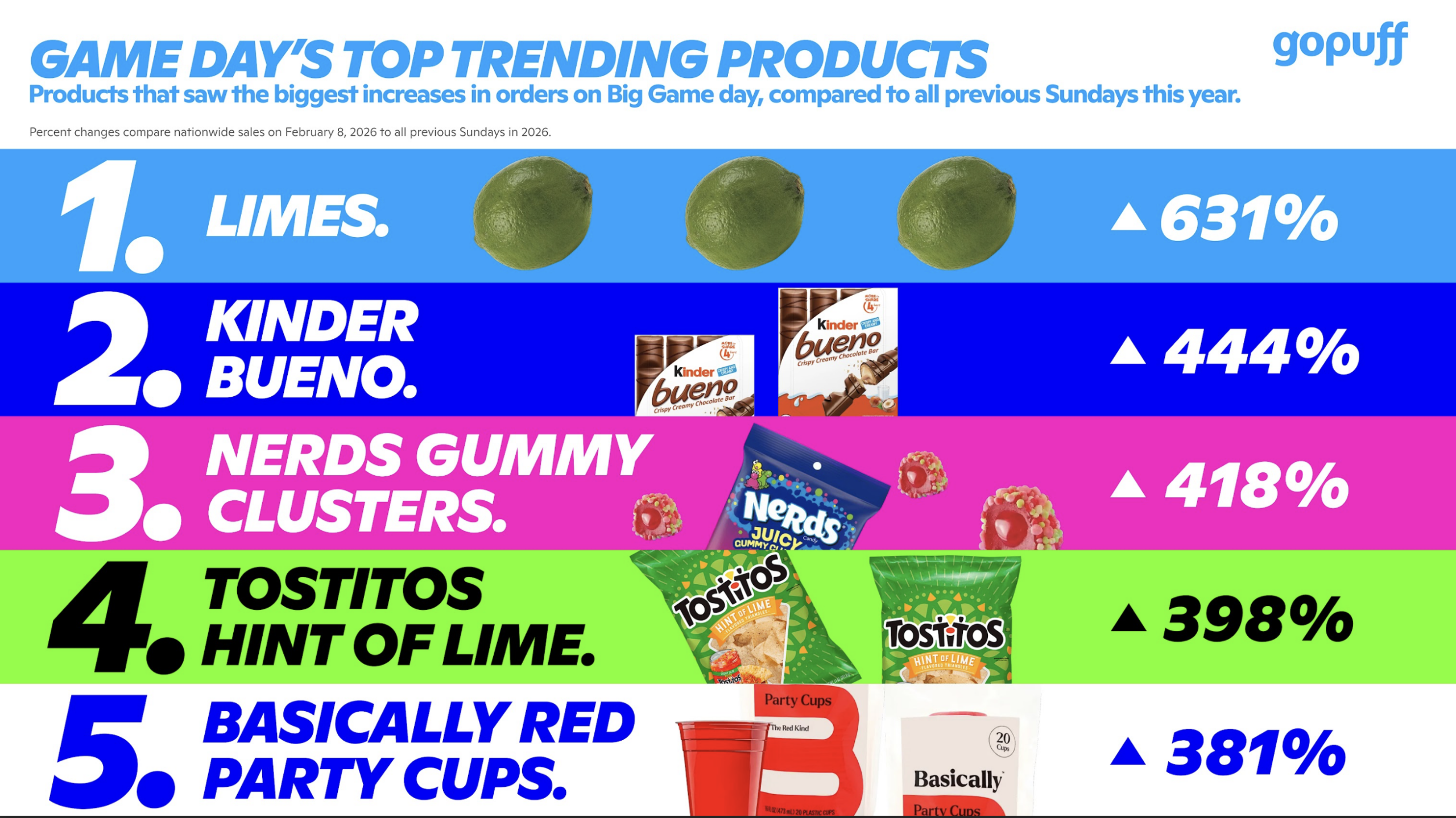
    Orders for limes during the game jumped over 600% over previous Sundays in 2026. Limes are, after all, a key ingredient in popular plates like guacamole and pico de gallo, served with Mexican beers and margaritas, and “easily forgotten at the store,” making them a natural for last-minute delivery, said Gopuff spokeswoman Brigid Gorham.

    Though lime consumption has been growing rapidly, the increase was more than four times last year’s Game Day spike, and no one could say exactly why.

    Lime sales exploded even more than Gopuff’s Basically-brand red party cups, a three-year-old in-house brand, which was up 381% on Super Bowl Sunday above recent Sunday sales.

    Overall, alcohol sales nearly doubled from recent Sundays. Soda sales were up more than one-third and salty snacks by about one-quarter. Compared to last year, when the Eagles were in the Super Bowl, the number of Philadelphia orders were up 7%.

    Other Super Bowl Sunday growth-leaders included PepsiCo’s Tostitos Hint of Lime chips, which were up 398%.

    But the top gains were two candies made by Italy-based candy maker Ferrero. Gopuff orders for Kinder Bueno, chocolates marketed heavily in Latin America and U.S. Hispanic neighborhoods, were up 444% vs. recent Sundays, and Ferrero’s Nerd Gummy Clusters, were up 418%.

    Kinder Bueno and Nerd Gummy Clusters saw sales roughly double in the hour after their Super Bowl ads ran. Liquid Death and Dunkin also saw orders rise at least 50% after ads.

    Day off?

    Gopuff also noticed well before the game that a record 13 million American workers planned to schedule Monday off; 10 million planned to call out sick, go in late, or not show up, and millions more were thinking about it, according to a Harris Poll survey funded by work software maker UKG.

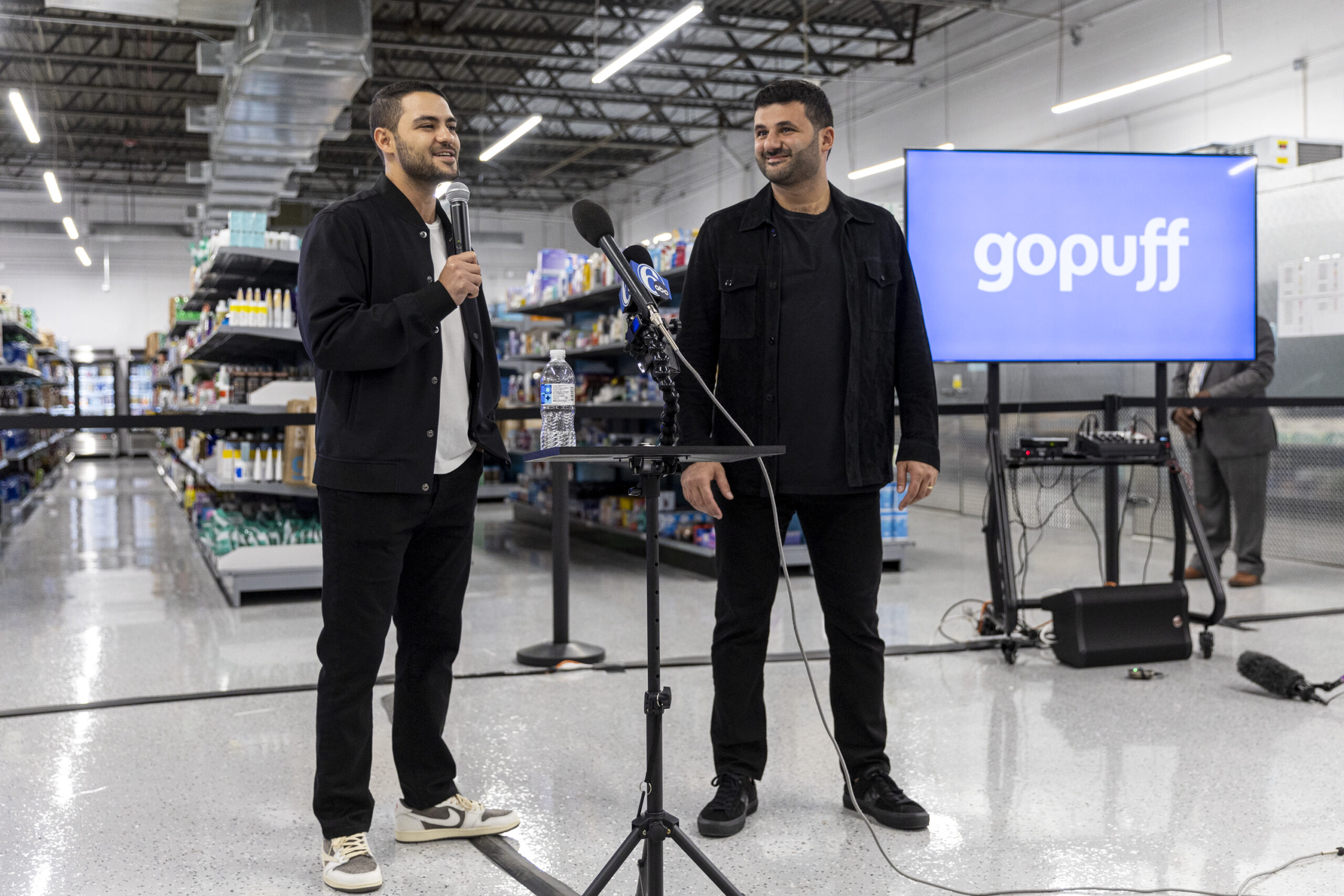
    Founders and CEO of Gopuff Yakir Gola (left) and Rafael Ilishayev speak to a room full of staff and team members of Gopuff at a recently opened center in Philadelphia in 2022.

    Cofounder Yair Gola and his colleagues saw those numbers and thought, “This ought to be a holiday.” Last fall, it set up a 501(c)4 lobbying group, the Super Monday Off Coalition, pledging at least $250,000 to get the effort rolling.

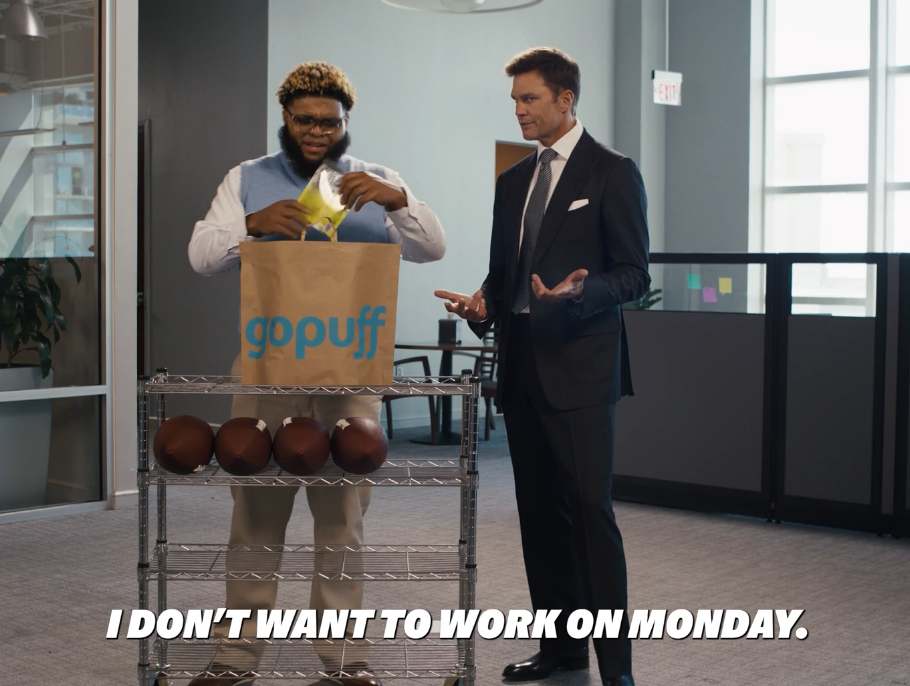
    They hired retired Patriots quarterback Tom Brady and comedian Druski to promote the cause.

    Druski (left) and former NFL quarterback Tom Brady in an ad for Philadelphia-based Gopuff promoting its campaign to designate “Super Monday” as a national holiday, since millions already take the day off.

    The company’s contribution to the lobbying would be funded by 1% of Gopuff’s profits from sales of certain boxes of beer, sugary drinks, hot dogs, and other products from Thanksgiving to game day.

    Heavy users who placed at least four $30 orders in that period would also get $20 “Gocash” discounts and receive a chance at a Birkin handbag, a Rolex watch, and other prizes.

    By Monday, Gopuff hadn’t announced its planned donation, but the campaign was declared “a winner” by Charles R. Taylor, a Villanova University marketing professor who tracks Super Bowl ads. He spotlights not just successful marketing but also ineffective efforts like Nationwide’s painful 2015 “Boy” campaign and GM’s 2021 “No Way Norway” misfire.

    Partnering with high-profile Brady and Druski gives “instant visibility and credibility” with fans and wider audiences, Taylor said. Even if the campaign costs more than Gopuff actually donates to the cause, a national holiday is “a clever hook” watchers will remember, Taylor said.

    Going public?

    Gopuff raised over $5 billion from Saudi, Japanese, and U.S. private investors during the digital-delivery investment boom that lasted into the COVID years. These big investors hoped Gopuff (officially Gobrands) founders and early investors would win them big profits by selling shares in a high-priced stock market initial public offering or selling to DoorDash, Uber, or other delivery giants.

    But app use and delivery growth slowed in the COVID recovery. Gopuff’s perceived valuation tumbled as its publicly traded rivals’ share prices fell. The company, which had expanded to hundreds of city neighborhoods and college towns, shut marginal centers and laid off staff at its Spring Garden Street headquarters to reduce losses and save investors’ capital for better times.

    Now Gopuff is showcasing efforts to win new investor attention.

    In the past year the company announced an on-screen snacks-order app targeting Disney+, ESPN, and Hulu views; a cash-with-your-order partnership with online-broker Robinhood; hot warehouse-brewed Starbucks coffees from stores in Philadelphia and some other areas; and a partnership with Amazon to speed grocery delivery in Britain, where Gopuff remained after ending its European programs.

    Gopuff has added a warehouse camera feed and local product-sales stats for fans who want to know what neighbors are buying, app-based order updates, and user product recommendations. It added over-the-counter pharmacy items and new lines of vegan organic GOAT Gummies (which Brady is also promoting).

    The company also began accepting SNAP EBT electronic food-stamp accounts and donated $5 million for SNAP when the federal shutdown threatened low-income families dependent on the program.

    New hires include economist Matt McBrady — a veteran private-equity investor, former adviser to President Bill Clinton, and sometimes Wharton instructor — as Gopuff’s new chief financial officer, noting his experience taking companies through public stock offerings.

    Last fall Gopuff raised $250 million, its first investment since a 2021 convertible-bond financing that had valued the company at a stock-market-bubble-inflated $40 billion.

    This time, the largest investors included previous Gopuff backers Eldridge Industries and Valor Equity Partners, along with Robinhood, Israeli billionaire Yakir Gabay, the cofounders, and other earlier investors. Eldridge chairman Todd L. Boehly in a statement called Gopuff “resilient.”

    Valor partner Jon Shulkin cited the company’s “focus, innovation, and substantial gains in profitability.”

    This latest capital-raise implied a valuation of $8.5 billion — a fraction of what Gopuff was worth on paper during the digital-delivery bubble, but enough for the venture capitalists to hope they may yet get their money back with at least a modest profit.

  • Philly native Mike Petrakis built PowerPay, a fintech company for people who think banks are too slow

    Philly native Mike Petrakis built PowerPay, a fintech company for people who think banks are too slow

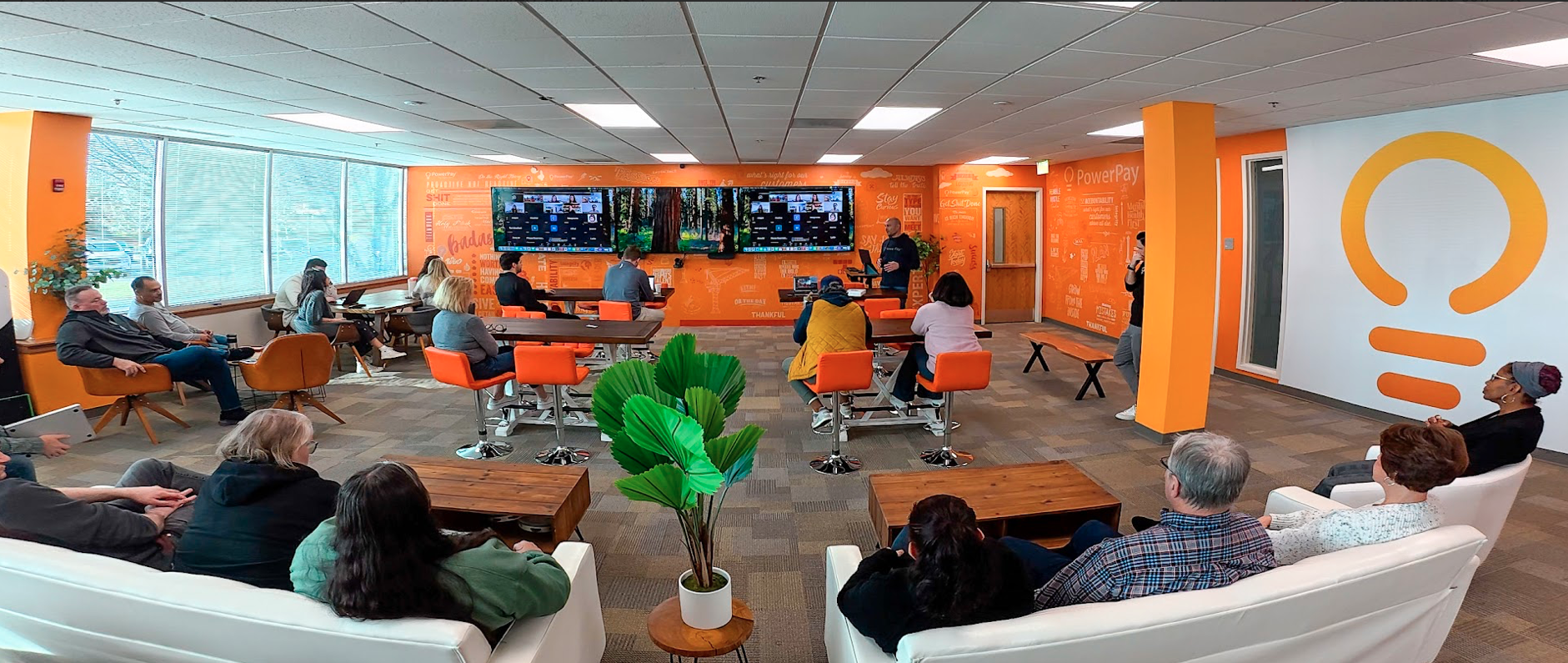
    The Philadelphia region, once a banking center, is still home to financial innovators. One of the growing digital lenders based nearby is seven-year-old PowerPay, whose 225 staff members build a software platform to finance home improvement loans, personal loans for hearing aids and other medical needs, and a growing list of services, from its new offices just off U.S. 202 near King of Prussia.

    PowerPay revenues more than doubled to $200 million last year, as the company processed $6 billion in loan applications.

    The company raised its local profile last winter when it cosponsored the Christmas light show at the former Wanamakers in Center City. That got its name out to more prospective employees and borrowers.

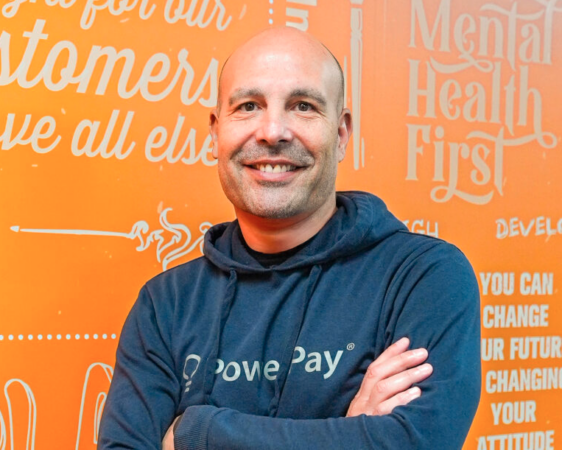
    Founder Mike Petrakis, a native of Northeast Philadelphia and Archbishop Ryan High School graduate, played varsity soccer at Drexel University and briefly went pro in England. He settled in Doylestown and a sales career, which led him to start PowerPay in 2017. Early backers included hoteliers Jay Shah and Eustace Mita.

    He agreed to talk to The Inquirer about his company’s growth and prospects. Questions and answers edited for clarity and brevity.

    What’s the difference between your company and a bank?

    A lot of people think banks are inconvenient. Their loan docs are thirty-some pages. With fintechs, someone applies in seconds, and in milliseconds you can get an offer back.

    We collect thousands of data points — email transmissions, phone checks, geotagging, information in databases that is available. Social media, not so much. We make sure we can recognize the device from which they are putting in the application. We put all this into our models.

    We are onboarding more artificial intelligence. We take a driver’s license and check — does the signature match the customer on the platform? is that image theirs? It is done in an instant.

    Lending has become an automated business. Why do you still do so much business by phone?

    You get a loan with us, you are going to be connected to us for the next 15 years, and we need to be connected to each other. We are deploying digital routing that moves them from an initial inquiry to a specialized team member without the traditional “on hold.” And we have engineers on premise and around the world.

    The goal is to work so hard to get the consumer that we can keep them in perpetuity.

    PowerPay has its headquarters just off U.S. 202 near King of Prussia.
    Since you’re not a bank, how do you fund these loans?

    Credit unions financed our loans early on. Now we have KeyBanc and Capital One and other major lenders.

    We aren’t a bank, so we don’t have the same oversight, and we can move faster. But we work with banks, so our processes are built to be fully compatible with bank regulations. We process half a billion dollars’ worth of loans a month, which is larger than most banks.

    What do you do any better than a bank?

    We just built a new product, PowerPay 360. You pay interest only for 12 months, then interest and principal for 14 years. Leaves a little extra cash in their pocket for a year. We set that up in 30 days.

    Banks are so conservative; for them to build that, with their large, core technology systems, it would take them years to get it into the market. Apple tried to get in the consumer financial business and left within two years.

    We are adding credit card and mortgage products, and healthcare loans, too. We just opened a relationship with U.S. Bank to grow that relationship to half a billion dollars.

    Credit cards have moved from plastic into a whole digital landscape for the consumer. We are making it so [in late 2026] you can tap your smartphone or mobile device at Home Depot and not just buy supplies but also hire your installer or service provider, and get an installment loan to pay for the whole project.

    What else are you preparing to sell?

    We now have an insurance business. We sell credit-default insurance for the benefit of our financial sponsors. Our underwriter is domiciled in the Cayman Islands under their financial regulations. We aggregate the risk into asset-backed securities [and sell loans in risk-based pieces to get higher returns]. We sell those to investors, and the insurance comes off.

    We’re going to grow insurance. Involuntary unemployment, disability, credit, life. We would domicile that in the U.S. We are talking to large insurance carriers we could front for and share the risk.

    How did you get into this business?

    In 2017, I was a national contractor, [helping buyers finance] home generators for Generac, Cummins, Kohler, Briggs & Stratton. You pay $99 a month for 10 years, and we’d get them a loan with Synchrony or GreenSky [two online-lending pioneers].

    Generac came to me and said, how can we make these loans, too? I said start a national call center. It took me six months to find a software platform and a credit union to finance us.

    At first we were just a couple of people, sitting in the Whole Foods beer garden in Plymouth Meeting. We’d have breakfast, then set up our laptops that we bought at Best Buy, initiating loans and writing the code on third-party platforms. Then we grew out of Whole Foods, and we got our first office at the Life Time fitness club in Ardmore.

    We took over an auto-loan platform and converted it to make home-equity loans. We were ready to really build it up, and then Generac backed out.

    So we said, what else can we finance with this? We approached the big home improvement companies, Renewal by Andersen window installations, and others.

    What was it like, launching into the pandemic?

    The home improvement companies were sitting on millions in applications they couldn’t get funded. We underwrote those loans and got them funded, at first, by credit unions.

    We onboarded 100,000 users overnight, and we nearly blew up the software platform we were using. So we built our own, and now we own all our intellectual property.

    We went at first to many credit unions, and they shared participation with other credit unions, but then they would get scared and pull out. We still weren’t big enough for Goldman or JPMorgan. Even the second-tier banks would only lend part of the money. Finally, we found one credit union, Chartway [based in Virginia], they kept the doors open.

    In 2023, we were ready to sell loans in our first securitization. We kept servicing rights. That legitimized us in the eyes of the bankers. Capital One agreed to help us with the securitization.

    There were 50 lawyers involved! We only did a $118 million deal. But we have done much larger ones since, and now I can get it done with a lawyer on each side in a couple of days. We underwrite the loans, we insure them, and then we sell them, de-risking.

    It becomes a cost-of-funds game — the lower the cost, the less onerous the rates we can offer consumers.

    We can drive billions more through this platform.

  • How Philly helicopter makers cope with uncertainty at today’s Pentagon

    How Philly helicopter makers cope with uncertainty at today’s Pentagon

    Helicopter manufacturer Leonardo has nearly doubled employment at its Northeast Philadelphia factory since the Rome-based multinational aerospace company began winning U.S. military orders for that factory in the late 2010s.

    But the company, whose owners include the Italian government and U.S. investment funds such as BlackRock and Vanguard, has learned what dominant U.S. defense contractors like Boeing have long known: Military planners, policy, and political shifts can stop, delay, or revive long-term contracts, leaving managers scrambling to keep workers and factories busy.

    Given the complexity of parts supply, skilled labor, and other aspects of helicopter production, “it is destabilizing and difficult if you don’t know if you are going to build two or 16 aircraft for a given program year after year,” said Andrew Gappy, vice president of Leonardo Helicopters USA Inc., a retired Marine whose duties included flying Presidents Bill Clinton and George W. Bush on Marine One helicopters.

    In 2018, Leonardo and Boeing celebrated a signal victory. The Air Force ordered 84 MH-139A Grey Wolf helicopters, worth an expected $2.4 billion.

    Grey Wolf is based on Leonardo’s civilian, two-engine AW139, part of a movement by military planners to speed production and streamline costs by basing more big-ticket military machines on large-production civilian products and private-sector construction managers. It’s a model that Korea-based Hanwha hopes to use in winning Navy contracts for its shipyard in Philadelphia.

    More than half the Grey Wolfs would defend nuclear weapons bases in several western U.S. states. Most of the rest would be used to ferry political leaders around Washington in case of an attack on the nation’s capital, replacing aging UH-1N Huey helicopters on duty since the 1970s.

    So far, 19 of those helicopters have been paid for and delivered. Another 12 are funded and nearing completion. But funding for future construction hit unexpected snags.

    After Air Force design changes and a challenge by Lockheed Martin’s Sikorsky unit, which had proposed rival helicopters of its own, Leonardo and Boeing said they started production on the first Grey Wolfs in 2023.

    They planned to keep building a dozen a year for seven years — about a quarter of the Leonardo plant’s annual output. They hoped to win more contracts along the way.

    Last year, the partners had expected to fund future production with $173 million in appropriations as laid out in President Donald Trump’s 2025 budget, plus $210 million in his Big Beautiful Bill, backed by the two Republican senators from North Dakota, home to Minot Air Force Base.

    But those payments didn’t materialize on schedule. The Big Beautiful Bill payments were held up, frustrating the Grey Wolf partners.

    And then in November, Congress’ new National Defense Authorization Act listed more than $100 million retrofitting previously-delivered Lockheed-built helicopters to transport VIPs but just $10 million for the Grey Wolf program — not enough to build a single helicopter.

    The Air Force had justified upgrades of unused aircraft in a budget proposal earlier last year as a cheaper way to acquire helicopters. Grey Wolf defenders objected that the Air Force studies had already verified the new helicopter would be much less expensive to operate.

    The cuts would “starve” the Grey Wolf program, Mike Cooper, Leonardo’s government relations chief, said in December. “It’s hard for businesses to plan, when competitively bid procurements can be abruptly and unilaterally changed.”

    Last fall, a bipartisan group of five Congress members, headed by Rep. Donald Norcross (D., N.J.), whose South Jersey constituents include workers at Boeing and Leonardo, sent Air Force Secretary Troy Meink a letter that they were “troubled” to hear reports that the Air Force was now planning to update old helicopters for VIP transport and evacuation missions, instead of funding the new ones.

    They noted that the Air Force already had selected the Boeing-Leonardo aircraft over two proposals from Lockheed Martin.

    They called the switch an “unprecedented change in procurement,” which “undermines the integrity of the acquisition process, calls into question the criteria” for the original selection, “and raises concern about why an otherwise performing program would be truncated without clear explanation to Congress” or the companies that agreed to the contract.

    They asked the Air Force for any studies it had made to justify the more expensive Jolly Green program, which they said would cost far more to buy and operate. They also noted the impact on workers, suppliers, and finances at Boeing in Ridley Park, Leonardo in Northeast Philly, Leonardo’s Florida testing site, and contractors who had already invested in the program the Air Force has now failed to fund.

    Congress members who represented districts that include additional Boeing or Leonardo facilities support Norcross’ effort. They are Reps. Carlos Gimenez (R., Fla.), Salud Carbajal (D., Calif.), Robert J. Pittman (R., Va.), and John J. McGuire III (R., Va.).

    Lockheed Martin officials said they hadn’t taken business from Leonardo. The military planned to convert older helicopters to VIP carriers by adding new seating at Air Force bases, not at the company’s Sikorsky military helicopter factories in Connecticut or New York.

    Sikorsky’s civilian helicopter plant in Coatesville, Pa., closed in 2022. It was taken over in 2024 by Piasecki Aviation, a Delaware County-based company that has had its own federal contracting and hiring hopes deferred by government and private-sector contracting delays, according to industry sources. Piasecki didn’t respond to inquiries.

    “The MH-139 Grey Wolf is vital to our national defense and supports American jobs,” Norcross said in a statement Jan. 15. “Congress funded the MH-139 because it offers major improvements in speed, range, and survivability.”

    He said the Air Force had not directly responded, “but I will continue pressing the administration.”

    The same week, a key Air Force commander confirmed in an Air Force publication that the first Grey Wolfs had completed their first Minuteman III convoy operation between two Western air bases, noting they are significantly faster, fly farther, and lift more than the helicopters they replace.

    Two sources familiar with the program said the first payments from Congress’ $210 million have been received since that test.

    And on Jan. 20, a new federal appropriations proposal added $60 million to the Grey Wolf program — not the whole $173 million, but more than the $10 million in the earlier law.

  • Why this big water-and-sewer merger doesn’t impress investors, so far

    Why this big water-and-sewer merger doesn’t impress investors, so far

    As shareholders of American Water of Camden and Bryn Mawr-based Essential Utilities prepare to vote Feb. 10 on a merger to create a combined $40 billion private water and sewer company, regulators in New Jersey and Pennsylvania are weighing the company’s latest rate increase requests.

    American Water’s New Jersey affiliate filed for an average 10% water and 8% sewer rate hike on Jan. 16 for 2.9 million customers in that state, which it said would fund improvements to aging water and sewer systems, if approved by the Board of Public Utilities. Customers would pay an average of $18 more a month.

    Pennsylvania’s Public Utility Commission said last month that it would consider the company’s request to boost water and sewer rates on 2.4 million customers by an average 15%, or $20 a month.

    Investors are showing no great interest in the deal between American Water and Essential. American Water shares fetched over $140 for most of last year but closed Friday at $130.74 and have been trading at close to that discount since CEO John C. Griffith announced the deal in October.

    Essential, which operates the Aqua America water utilities and Pittsburgh’s natural gas utility, has so far shown none of the premium that typically enriches shareholders of a healthy company as it is to be acquired. It closed Monday at $39.32, flat from its preannouncement price.

    The merger “would be highly favorable” for American Water in many ways but not so good for shareholders of Essential, which negotiated only with American Water and didn’t look for a better offer from other potential buyers such as France’s Veolia or Florida-based NextEra, according to Ryan Connors, a Bucks County-based utilities analyst who’s been following both companies for 20 years.

    American Water says planning for the merger is advancing as the vote approaches. Vice president Jimmy Sheridan and past Essential chief operating officer Rick Fox head an integration planning team, and they hired consultant McKinsey & Co. to help.

    Inside recent rate-hike hearings

    Though they’ve been competing for more than a century, both companies, like the handful of other private water operators active in the U.S., have faced grassroots opposition to privatizing water distribution.

    The Pennsylvania Supreme Court on Jan. 21 crushed American Water’s yearslong campaign to take over the Chester Water Authority, which serves 40, mostly affluent, suburbs in Chester and Delaware Counties and a Lancaster County township. The court ruled the counties, which oppose a sale, can block the deal, which cash-strapped Chester City’s state-appointed financial administration favored.

    Analyst Connors, who sat through recent American Water rate hearings in Harrisburg, Scranton, and in Exeter Township, Berks County, says that company has been making a more effective case recently for the Pennsylvania rate hikes it will need to keep updating and eventually acquiring more municipal systems.

    In Exeter, it was American Water staff and vendors who packed seats for a state regulatory hearing on the company’s latest rate increase. Vocal opponents who dominated the last such hearing two years ago stayed home. Connors said their leaders told him they felt “defeated” that rates still went up despite the 2024 protests, though not as much as the utility wanted.

    Another “parade of vendors,” recruited openly by American Water, dominated a recent Harrisburg city rate hearing and testified in the company’s favor, Connors told clients of Northcoast Research in a Jan. 21 report.

    In the latest round of rate-hike hearings, only in Scranton did state, county, and city officials show up to complain about repeated increases by American Water’s Pennsylvania-American Water Co. affiliate. “The recurring theme could not have been more clear, with nearly every politician stressing the rapid-fire rate increase requests in recent years,” Connors said.

    How much is Essential worth?

    Buying Essential’s Aqua-Pennsylvania water companies would add Aqua’s customers in some of Pennsylvania’s richest towns to American Water’s rate base. American Water has been “socializing” its rates to subsidize poor towns, Connors noted.

    But Connors is still urging Essential shareholders to vote against the merger, defying chief executive Christopher Franklin and the company’s board.

    American Water’s offer “undervalues” Essential shares and creates “fundamental risks,” including pressure on American Water to avoid rate increases to prevent political opposition in Pennsylvania, Connors said.

    He cites estimates of Essential’s real value from the statement sent to shareholders urging them to approve the deal. Bank of America, the buyer’s adviser, said Essential is worth as much as $63 a share, considering its assets and cash flows.

    Essential’s adviser, Moelis & Co., says its cash flows imply the company is worth as much as $52 a share, a roughly 25% premium over its current price.

  • Citizens Bank CEO talks about record business profits, data centers, and Phillies’ prospects

    Citizens Bank CEO talks about record business profits, data centers, and Phillies’ prospects

    Big U.S. banks have hit record stock-market highs this month, with hopes for cheaper money from Federal Reserve rate cuts outweighing fears of war, tariffs, and rising prices.

    Citizens Financial Group stock topped $65 for the first time Tuesday, as the owner of Citizens Bank reported higher-than-expected profits. Citizens, based in Providence, R.I., is one of a dozen U.S. banks with a thousand or more branches. With rivals Wells Fargo, PNC, and TD, it controls more than half of Philadelphia-area bank deposits.

    Like its rivals, Citizens has boosted profits by targeting more affluent Americans and their businesses, while shutting some branches. Wall Street is happy: The share price has gone so high, Citizens can afford to buy other banks, analyst David J. Long wrote in a report to clients at Raymond James & Associates on Jan. 23.

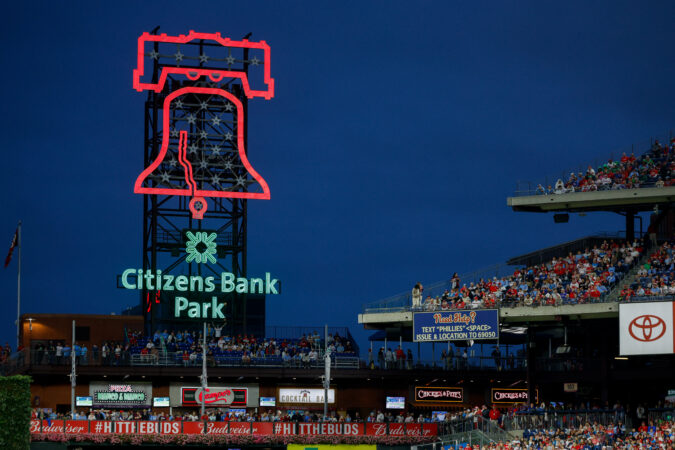
    Locally, Citizens is best known as the longtime sponsor of the Phillies ballpark, under a $95 million deal expiring in 2028.

    Bruce Van Saun, chief executive of Citizens Bank’s parent, Citizens Financial Group, since it went public in 2013, agreed to answer questions about business and consumers, whether the data-center boom is for real, and hopes for the Phillies’ 2026 season. Answers edited for clarity and brevity.

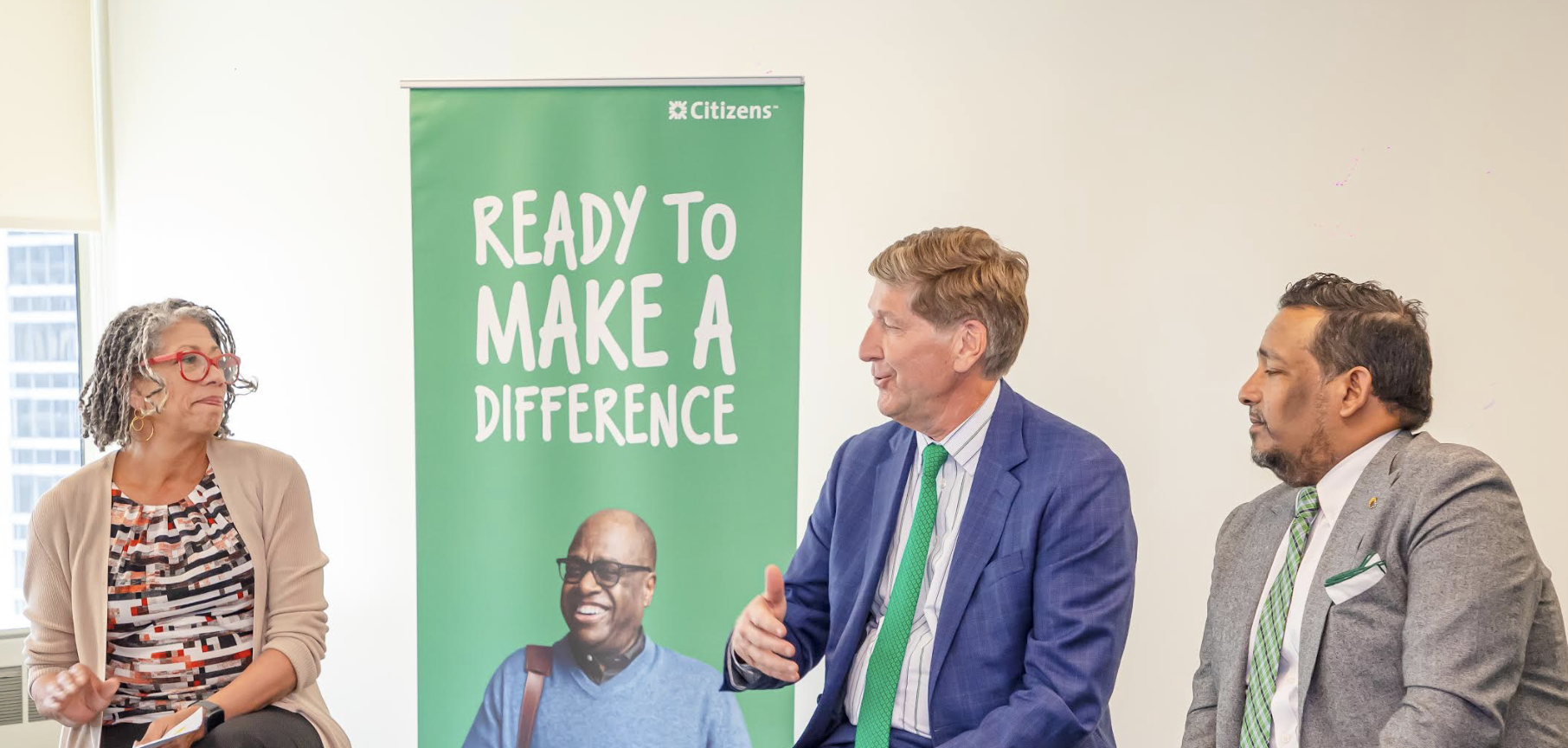
    Bruce Van Saun (center, blue jacket), chief executive of Citizens Financial Group, with Leslie Winder (left), a director of the nonprofit Urban Affairs Coalition of Philadelphia, and Arun Prabhakaran, coalition president and former chief of staff to Philadelphia District Attorney Larry Krasner, in March 2025.
    Was business hurt by trade and tariff costs, inflation, or the labor market slowdown?

    The very biggest companies have more diversification and more ability to withstand choppy waters. The smaller the business, the less diversified it is and the more impacted it is by exogenous factors.

    But most middle-market companies have had a successful year. They have come through the pandemic closings, the bout with high inflation, the higher interest rates, then the tariffs.

    Businesses had to become more adaptable and better at scenario planning, at predicting what events will do to their suppliers. Companies have sharpened how they manage real estate, digital technology, and now AI. And they locked in very attractive financing when rates were lower.

    What about the middle class, homebuyers, credit card borrowers?

    People lost a little purchasing power. People are eating out a little less. They are taking fewer trips.

    But we are not seeing a lot more loan delinquencies. Prices go up more than wages, but they are still saving for kids’ education and retirement. Maybe they are taking a home-equity line of credit.

    As economic growth stabilizes and inflation comes down, you’ll see wages increase and people get to a place where they feel better.

    Which sectors are improving?

    Tech-related, health-related show a lot of strength and resilience. Aerospace and the whole military defense sector, companies like Day & Zimmerman [which makes ammunition for the U.S. and clients such as Israel]. There are many wars going on; people need their armament. We’ve seen pretty dynamic strength last year.

    Transportation and logistics — road construction — is pretty strong.

    And data center construction. I hope Pennsylvania gets its share.

    Is Pennsylvania a good place for data centers? How do you overcome local opposition?

    There is a general NIMBY attitude: ‘I like to play on my phone and get the advantages of Microsoft Copilot and AI. Just don’t put a data center near me to use a lot of power.’ There’s controversy around that.

    But if you look at the investment and jobs that go with data centers — they need access to low-cost energy and water — then look at Pennsylvania with its natural gas and its nuclear plants like Three Mile Island. Data centers need low-cost energy and water. Pennsylvania has it.

    Will 2026 improve on last year?

    Our returns should continue to go up. Our net interest margin [the difference between what banks charge borrowers and what they pay depositors] widened last year, and we expect it will be up this year. And all our businesses are demonstrating loan growth.

    Whom do you lend to?

    We serve the middle market, from $25 million in revenues up to corporations with around $3 billion in yearly sales. PNC and Wells Fargo [are larger, but] we aren’t playing the game materially differently from what they offer. If a company wants to finance more, they go to maybe JPMorgan or Bank of America.

    We started building a private bank [focused on business owners and wealthy professionals] a couple of years back. Now we have $14 billion in deposits, $7 billion in loans, $10 billion in client investments, just in that unit. And growing faster than we projected, with more accretion to our bottom line.

    We help our clients become more successful: ‘Here’s an acquisition idea. Here’s a working-capital idea.’ That level of personalized attention has been a winning strategy for us.

    U.S. software start-ups, and biotech centers like Philadelphia, staggered a bit when the best-known tech banks failed in 2023. JPMorgan bought First Republic, but you hired a lot of their staff. How’s that going?

    What First Republic did really well for company founders was advice banking, wealth needs, family financial planning. And we invested heavily in technology to get to the service levels First Republic was famous for. We took on 150 of their people, teams of strong, highly regarded wealth managers, and added private bankers, to locate with our banking teams. That group is now 550 people.

    We went into areas where they were strong — Boston, New York, Palm Beach, and three areas of Northern California. We had to add teams in Southern California — San Diego, Orange County, and one in Los Angeles.

    But not Philly?

    Philly is high on the list of new markets we want to attack with that approach. There is a cadre of successful people here. We want to be known as the bank for successful people.

    Gov. Josh Shapiro talks about a Pennsylvania manufacturing revival. What signs do we see that’s happening?

    We are positioning ourselves for a lot of inbound investments. President Donald Trump is going to our allies in Japan and South Korea to invest and bring skilled jobs into our country to be more self-sufficient in manufacturing — in steel, in shipbuilding, for example. It all sounds good on paper. I think it will come.

    Why do car factories and other big manufacturers open down South, instead of in Pennsylvania?

    They find the states willing to take a fresh look at how much bureaucracy they have and cutting it back. You are competing with Texas, Virginia, the Carolinas, which are very successful at attracting industry. I don’t think Pennsylvania will want to miss out.

    What will it take to bring the World Series back to Philly, which increases fan and ad spending?

    We are hopeful the Phillies have a great offseason. I’m a little disappointed [Bo] Bichette went to the Mets. But, hey, they signed J.T. [Realmuto]. John [Middleton, the Phillies’ lead owner] is very committed to fielding a winning team. Go Phils!

  • Fallcatcher scammer has been sentenced to 5+ years

    Fallcatcher scammer has been sentenced to 5+ years

    A Florida fraudster who fooled 60 mostly Philadelphia-area investors into contributing $5 million to develop biometric anti-addiction systems, then fled investigators and spent five years as a multinational fugitive before surrendering, was sentenced Wednesday to 5½ years in federal prison.

    Henry Ford, also known as Cleothus “Lefty” Jackson, had pleaded guilty to securities fraud and seven counts of wire fraud for forging documents from insurance companies to inflate the prospects of Fallcatcher, a company he said he was developing to track people in recovery and reduce the risk they would fall back into addiction.

    At his plea hearing last year, Ford insisted his idea for a platform that would track people in recovery was legitimate but admitted that he had falsified claims that insurers and state agencies supported the project and would soon make it profitable. The goal had been to sell the company at a big profit for its investors.

    He was sentenced Wednesday by U.S. District Judge Joel H. Slomsky to the prison term, plus three years supervised release and $2.1 million in restitution.

    Ford started the business in Florida in 2017 but by 2018 was running out of money, according to prosecutors. He then incorporated the company in Delaware and hired managers and a board. He paid Montgomery County insurance salesman Dean Vagnozzi to recruit private investors from Vagnozzi’s network with email pitches and free meals in Montgomery County and South Jersey. But he gave Vagnozzi and the investors false information about Fallcatcher’s prospects.

    Ford fled Philadelphia in 2019 after giving SEC investigators phony documents in an attempt to disprove allegations that he was exaggerating Fallcatcher’s prospects and after learning that he and Fallcatcher were subjects of a criminal investigation.

    He went to Miami, then flew to Morocco, according to federal investigators. Ford later told officials he lived and worked in the United Arab Emirates; Thailand; Malaysia; Indonesia; Tunisia; Guinea; and Mexico.

    Ford filed a Freedom of Information Act request from Mexico in 2024 with the U.S. Marshals Service to see if they were still looking for him.

    Ford crossed the border into Arizona in April 2024, where he was arrested on a warrant for the Fallcatcher case. He was sent to Philadelphia for trial and detained in the federal jail as a flight risk. In 2011, he had been convicted of mortgage fraud in federal court in Arizona as Cleothus “Lefty” Jackson and served a prison term before starting Fallcatcher.

    Part of the money Ford raised for Fallcatcher has been collected for investors from business and personal accounts seized from him in 2019 after Scott Bennett, a company executive, became suspicious that Ford was collecting improper payments from the company and reported him to the SEC.

    According to prosecutors, Ford gave salesman Vagnozzi and investors “false and misleading information” about Fallcatcher and showed them phony documents about an insurer’s promise to fund a pilot Fallcatcher program. Ford paid Vagnozzi $500,000, which Vagnozzi refunded as part of a civil settlement with the SEC, plus 4 million shares of Fallcatcher stock, which proved worthless.

    Vagnozzi is suing that agency, alleging that federal officials improperly seized his former business, A Better Financial Plan, as part of the 2020 court-ordered government takeover of Par Funding, a Ponzi scheme whose unregistered securities Vagnozzi also sold to clients. He later sued his lawyer, former Eckert Seamans partner John Pauciulo, who Vagnozzi said gave him bad advice about Par, Fallcatcher, and other investments.

    The case against Ford was investigated by the FBI and the SEC’s New York regional office.