Author: Joseph N. DiStefano

  • Pa. loggers want a bailout for Trump tariff damage. Without it, they say layoffs could be next

    Pa. loggers want a bailout for Trump tariff damage. Without it, they say layoffs could be next

    In Pennsylvania — Penn’s Woods — centuries after settlers began cutting native forests, decades after once-thriving furniture makers like Pennsylvania House and Home Line shut or moved away — lumber remains a basic industry. Upstate sawmills send logging crews to buy and cut walnut, cherry, and other hardwoods to export to global flooring and furniture enterprises.

    But dozens of the state’s remaining mills, loggers, and industry groups, long accustomed to blights and other natural disasters, say they now face a plague made in Washington, D.C. — and would welcome a government bailout.

    Some 48 of the state’s surviving mills, lumber companies, and industry groups joined 400 other U.S. forest-based businesses last month to ask President Donald Trump for relief payments to ease the impact of his U.S. import taxes and foreign retaliatory tariffs, which they say have slowed export demand for their products, while boosting the cost of buying and operating their machinery.

    These and other “rural, almost entirely family-owned businesses” and the workers and contractors who depend on them want to be included alongside farmers, whom Trump has promised a $12 billion tariff bailout, according to a statement by the Heartwood Heartland coalition formed to make their case. The U.S. Census counts more than 10,000 logging and sawmill firms, not counting lumber truckers and other related businesses.

    Earlier tariffs and foreign competition had already hurt U.S. hardwood exporters, who were excluded from a farm tariff compensation program in the previous Trump administration, according to the coalition.

    U.S. hardwood lumber sales dropped 20%, to around $2.7 billion, in 2022-2024, according to the coalition. Log sales fell 11% to around $1.8 billion, and employment in U.S. woods shrunk 10%, to around 360,000, as more sawmills closed, over the same period.

    The U.S. remains a leading exporter of hardwoods, but its share of the China market shriveled, from $1.5 billion or a third of the market in 2017, to around $700 million or one-fifth of the market in 2024, since the “trade war” during Trump’s first term drove importers to rival nations.

    Chinese manufacturers are buying more wood from Russia, Southeast Asia, and other regions. This threatens a collapse in the U.S. forest industry echoing the earlier “collapse of the U.S. furniture sector,” the coalition said in a December letter to the president and cabinet members.

    Further sales losses will result in the U.S. “losing the skilled workforce” and relying on more imports, predicts Dana Lee Cole, the federation’s executive director. That’s the opposite of the president’s stated goal in boosting protective tariffs.

    Among the signers were several businesses in Southeastern Pennsylvania, including Stoltzfus Forest Products LLC in Lancaster County. Philip Smith, chief operating officer of business and its affiliate, Stoltzfus Hardwoods, agreed to answer questions about his enterprise and the impact of tariffs. Edited for brevity and clarity.

    How old is your company and who works there?

    The parent company built a sawmill in 1990. We moved the location when we had a large expansion in 2016. We employ about 65 people at the two companies. We have three of our own logging crews, two mechanized and one that’s hand cutters. We use a subcontractor logger and trucker as well. The owners and a majority of the workers are Amish.

    What do you harvest and where?

    We take Appalachian hardwoods from up to about 175 miles of our location — white oak, poplar, walnut, hickory, a little soft maple, and cherry. We go down to the Eastern Shore of the Chesapeake, out toward Chambersburg, up into the Lehigh Valley and Schuylkill County.

    And the Philadelphia area, we just did a golf course. It got bought [by a developer], and we ended up harvesting the trees.

    We bring the trees to the mill [and make boards and trim-sized pieces]. We sell to molding companies, flooring companies, and to companies that make furniture and cabinets.

    What would be affecting us with the tariffs, we have material that will go to China and to Germany and [other] EU countries.

    Why don’t foreign importers pay the tariffs?

    To get an order, we have to agree, if the tariff went above a level, we pay part of the cost.

    In China, they made temporary agreements for when our lumber got ready. If it was on the ocean before the tariff dates, we weren’t affected.

    So we had a scare last spring [when Trump proposed punishing increases to wood tariffs]. And we had a scare again in the fall.

    So the full tariffs haven’t actually been implemented?

    The biggest thing we notice with tariffs is the uncertainty. The economy was already crappy. Now the tariffs bring another factor into the way people interpret [costs].

    For some reason, the U.S. sells logs to Vietnam, and then Vietnam is [milling] American walnut, selling it as American walnut, and undercutting finished American walnut [from the U.S.]. Vietnam is paying their people almost nothing. Add the tariffs, we are less competitive.

    Has that uncertainty cost you orders?

    It has affected how people perceive costs. It has affected cash flow. Some items are moving slower.

    There’s another thing: Equipment in the forest industry, a lot of it comes out of Canada. Log trucks. Specialty trailers.

    With the uncertainty, truckers that focus on logging tell us they have canceled stuff on order.

    And we use Leadermac wood-moulder machines that come out of Taiwan. There’s a tariff there, too. We were told there’s a 24% increase in price.

    Have you canceled equipment orders as a result?

    We have put the brakes on making some decisions.

    Despite the squeeze you are in today, can tariffs help move wood industry to the U.S. over time?

    With the tariffs, it’s not so much we are against the idea of leveling the playing field. There’s definitely countries abusing America. We are pro trying to fix this stuff.

    But there is pain in doing it. We are paying the tariff on equipment, but I don’t see any tax break. They are just adding another tax on us. You need to give us a break that we can recoup that money.


  • These old Exton offices are becoming ‘hotel-apartments’

    These old Exton offices are becoming ‘hotel-apartments’

    While the battle rages over how much redevelopers should cram into the former Exton Mall site, investors on the ridge just to the north have turned one of Great Valley’s vacant office buildings into a suburban rarity: 24 studio and 8 single-bedroom apartments.

    They’re equipped with kitchens, bathrooms, and washer/dryers, and they’re being marketed as monthslong hotel accommodations for consultants and visitors to nearby employers.

    The owners, a group led by Main Line real estate lawyer David McFadden, broker John McGee, and investment partner Chiu Bai, hope the building, which they’re calling the Flats on 100, will be a model for reusing orphan buildings that stud the Great Valley and other suburban office, industry, and retail zones.

    David McFadden of Chester Springs (left) and John McGee of Wayne are co-partners and owners of the Flats on 100 in Exton.

    The trio picked up the 53-year-old, 30,000-square-foot building and grounds at 319 N. Pottstown Pike (State Route 100) in 2023 for $1.5 million from family-owned Kelsch Disability Services.

    “Fifty bucks a [square] foot” seemed like a bargain, even though the partners didn’t have specific plans for it, McFadden said.

    “Office buildings are being given away these days. What do we do with them when there’s no demand for office space?” he said. “At the right discount, developers can afford to turn them into something sustainable that people want.”

    As offices, the building was broker-rated Class C, the least desirable. The partners paid cash, figuring they could borrow millions for capital improvements if they could show lenders a credible plan to turn it into something more profitable.

    “We got lucky with the zoning,” McFadden said. West Whiteland’s “town center” designation allows a wide range of uses.

    The partners chose what McFadden calls “hotel-apartments.” He compared it to projects built by Level Hotels & Furnished Suites, with locations in Chicago and the West Coast, and by family-owned, locally based Korman Communities’ AVE Living, with its furnished apartments at Philadelphia’s Navy Yard and other local sites.

    McFadden says the model offers “a place that feels like home, with the amenities of larger buildings but a boutique feel.” The units are fully furnished, including appliances, dishes, and linens, as well as cleaning and other services as requested.

    Lender Trupert Ortlieb from TruMark Financial, one of the area credit unions bulking up with business loans, arranged $5.7 million in financing for capital improvements.

    The outside of the Flats on 100 apartments, a redevelopment of a commercial building.

    Contractors demolished and replaced interior walls; added sprinklers, triple-glazed windows, and insulation; and replaced heating and air-conditioning. The reclad of the interior with aluminum finished like pine was picked up by Chiu in China for $30,000 (half that for the materials, $4,000 for shipping, and $11,000 to cover tariffs).

    Because the project qualifies as a hotel, it could add a liquor license without the higher cost of a tavern license. A first-floor retail space has been leased to a dentist.

    The partners expect interest from nearby employers such as Vanguard Group, QVC, West Pharmaceutical Services, and Accenture.

    The Fairfield shopping center, with a Giant supermarket, fast-casual restaurants, and retail stores, is within walking distance. The Exton SEPTA Regional Rail station is two miles down Pottstown Pike.

    Seeking light in what had been gloomy space, the developers brought in architect Martin Kimmel from Blue Bell. He persuaded them to replace half “gun-slit” windows with 5-foot-wide glass sheets, which turned out to be more work than expected, trimming 12-inch blocks topped by 4-inch bricks.

    Other amenities include a barbecue pit, an outdoor dog walk, a pet-washing room, basement fitness center, conference room, bar, pool table, and walk-on services like massage and physical therapy.

    This space in the studio apartment can be used as a sitting area or a bedroom.
    The Ori bed lowers from the ceiling for sleeping.

    Kimmel and the partners looked at New York apartment plans to see how many one-person units they could fit into the three stories. Beds could be stowed for work-at-home hours, but “we didn’t want those old fold-out Murphy beds,” McFadden said.

    They bought canopy beds from Hasier Larrea’s Ori flexible-furniture-systems firm. The beds lower from the ceiling onto couch bases, plus facing rows of shelves can open as a walk-in closet. The bed controls, like the digital room locks, are remote-accessible and have manual overrides in case of power failure.

    The narrow building admits more light for that suburban feel.

    “Not every office building converts well to apartments,” McGee said. “This was perfect — 65 feet deep, you have a central corridor with apartments. If it were 200 feet deep, you’d have very narrow apartments with one window at the end.”

  • Avelo stops deportation flights in Arizona; protesters in Delaware applaud

    Avelo stops deportation flights in Arizona; protesters in Delaware applaud

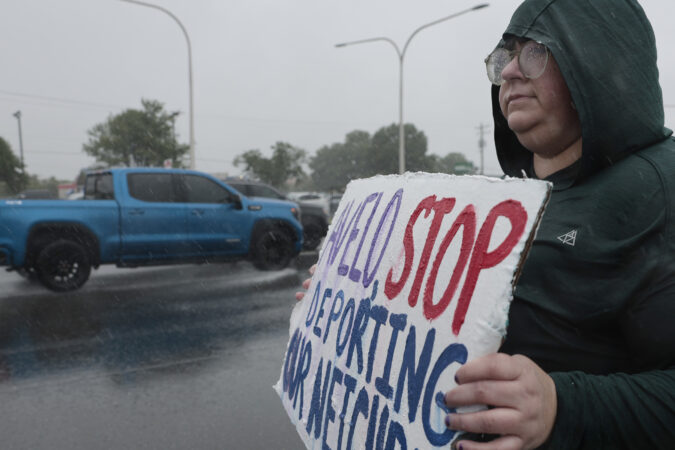
    Avelo, the only commercial airline serving Wilmington’s airport, has ended its contract flights to carry foreign nationals detained by U.S. immigration agents. The change takes place amid a larger consolidation of Avelo’s routes.

    The Delaware Stop Avelo Coalition of groups critical of President Donald Trump’s deportation policies hailed the airline’s move. They had been leading pickets at the Wilmington airport in New Castle, Del., since last spring, when Avelo joined several charter airlines transporting deportees for the Department of Homeland Security.

    For Avelo, the latest move was part of a cost-cutting reorganization “streamlining its network” to four of its regional bases: Wilmington; New Haven, Conn.; Charlotte/Concord, N.C.; and Lakeland, Fla. Among the regional bases it is closing is Mesa, Ariz., which handled deportation flights.

    “Avelo will close the base” in Arizona, where it had managed what the airline called “removal flights” for the government, “and will conclude participation in the DHS charter program” by Jan. 27, Avelo spokesperson Courtney Goff said in a statement. The airline said earlier that it had not moved deportees through Delaware.

    Avelo also said it has gotten rid of six Boeing jets. Airline industry information sites are reporting DHS has picked up at least some of those former Avelo airliners, as if moving deportation capacity in-house.

    Avelo plans a new base at the McKinney National Airport, near Dallas, later this year.

    Avelo CEO Andrew Levy last year said the DHS contract was part of the airline’s plans for growing and maintaining operations. Levy started the airline in 2020 and has rapidly increased its route network, but also has acted quickly to cut and shift unprofitable service.

    The coalition, a group including local Democratic Party activists in chapters of the Indivisible organization, Working Families Party affiliates, the Delaware Democratic Socialists of America, and Unitarian-Universalists, said in a statement that it welcomed Avelo’s decision to end deportation flights, “especially those without due process.”

    “We don’t know, to be honest, but we have indications from behind the scenes that we had some effect. Sometimes these things build and build,” said Gayle Gibson, an engineer who serves as coalition spokesperson.

    The coalition also coordinated some of the sign-waving picketing with actions at other airports Avelo serves around the country.

    Gibson noted that Wilmington City Council passed a resolution calling on Avelo to stop flying deportees rushed into custody without due process. State legislators drafted similar bills, which had not yet advanced to a vote, and “hundreds” of protesters had turned out to airport picket lines, local-government meetings, and University of Delaware rallies to pressure Avelo. Leaders also met with Gov. Matt Meyer and other top state officials.

    Safety concerns raised by Avelo employees also had an impact, Gibson said. “This shows Delaware stands behind businesses that operate according to laws and value people and due process.”

    The organizers in their statement took credit for making Avelo’s deportation flights “politically and reputationally radioactive,” leading to the company’s decision to stop.

    Avelo cited poor financial returns. The program did not pay Avelo enough “to overcome its operational complexity and costs,” according to Goff’s statement.

    State and local officials in Connecticut, New York, and other states had called on Avelo to stop the deportation-related flights.

    Meyer, who welcomed Avelo to the airport when he was New Castle County executive in the early 2020s, had said he personally boycotted Avelo after the protests began.

    Activists said they couldn’t measure the effect of any customer boycott.

    “We did not see an impact regarding customers choosing to fly,” said Goff, the airline spokesperson. Customer flights rose to 2.6 million last year, up 11% from 2024, as planes were fuller. She credited low fares and on-time reliability.

    The protests put Meyer and other Democratic officials in a quandary. They had encouraged Avelo to begin service from the airport, which formerly managed only charter, corporate, and general-aviation flights, as a way of boosting Delaware’s corporate employment sector as the state economy turns from heavy and chemical manufacturing toward biotech and other developing industries.

    Meyer did not act on protesters’ demands that the state cancel tax incentives and other Avelo financial benefits to pressure the airline to end the flights.

    The airport is operated by the Delaware River and Bay Authority, which also controls the Delaware Memorial Bridge and Cape May-Lewes ferry. The authority’s board represents the Democratic-led states of Delaware and New Jersey.

    Like the governor, the authority declined activist requests to pressure Avelo, saying the airline had the right to conduct its business the way it sees fit.

    “We’re aware of the community concerns regarding Avelo’s past operations at other airports,“ James Salmon, the authority’s spokesperson, said in a statement after Avelo announced an end of the flights. “We’ve consistently maintained a neutral position” and focused on keeping the airport accessible to customers for Avelo’s flights to Florida and other destinations. The airline’s flights from other airports were “outside the scope” of the agency’s authority.

    “This decision proves that public pressure really works,” the coalition said in its statement. It said it would keep pushing proposed laws to prevent airlines receiving state benefits from “quietly” resuming flights or other deportation contractors from winning government support.

  • PHA and Navy Yard security guards sue contractor over unpaid hours and overtime

    PHA and Navy Yard security guards sue contractor over unpaid hours and overtime

    Armed and unarmed guards who weren’t paid for some of their hours patrolling Philadelphia public housing developments and other buildings have filed class-action complaints against their former employer, Sovereign Security LLC, owner Richard D. Cottom, and manager Maurice Dupree.

    The guards are seeking back pay for unpaid work, sick and vacation days, overtime violations, damages under state law, and the return of uniform deposits.

    The guards, led by plaintiff Shirell Williams, say Sovereign violated the state Minimum Wage Act and Wage Payment Collection Law and breached employment contracts over four years, starting in late 2021. Williams worked for Sovereign at PHA and at the city-owned Philadelphia Gas Works, the Navy Yard business center, the Philadelphia Department of Human Services, and the former Delaware County Memorial Hospital.

    Through their attorney, Center City labor lawyer Josh Dubinsky, the guards seek unpaid wages, damages, interest, and attorneys’ fees stemming from “systemic wage abuse” while working at Sovereign. They seek certification as a class including more than 100 current and former Sovereign staff.

    Cottom, a former Drexel University security executive who founded Sovereign in 2004, and other Sovereign officials didn’t return calls seeking comment.

    The lawsuit also named a Sovereign manager, Maurice Dupree, as codefendant. Guards have described Dupree as their off-site supervisor, who managed assignments, hired and fired, and scheduled their work, and who they turned to for help when paychecks were late or bounced.

    Pennsylvania’s wage and hour law requires companies to set regular paydays and meet them. Sovereign’s contract with PHA required it to comply with city rules and applicable laws.

    PHA renewed Sovereign’s contract last spring even after The Inquirer reported on late and bounced Sovereign paychecks.

    The housing authority canceled Sovereign’s contract on July 9, giving owner Cottom two days to stop work and file final reports.

    The official cancellation letter stated only that PHA and its property management unit had determined “that it is in the best interest” of the agencies to terminate Sovereign.

    Correspondence collected under an Inquirer Right to Know request also shows PHA had warned Cottom that “it has come to the attention” of PHA that Sovereign “may be delinquent in paying its employees in a timely manner,” that late payment was “a breach of the contract,” and that it is “imperative” to ensure guards are paid and show up.

    That letter was dated Jan. 27, 12 days after The Inquirer first reported on the late payments.

    Sovereign had held the largest of at least three outside security guard contracts at PHA, which also has its own police department and a staff security force. PHA has paid Sovereign more than $7 million since 2021.

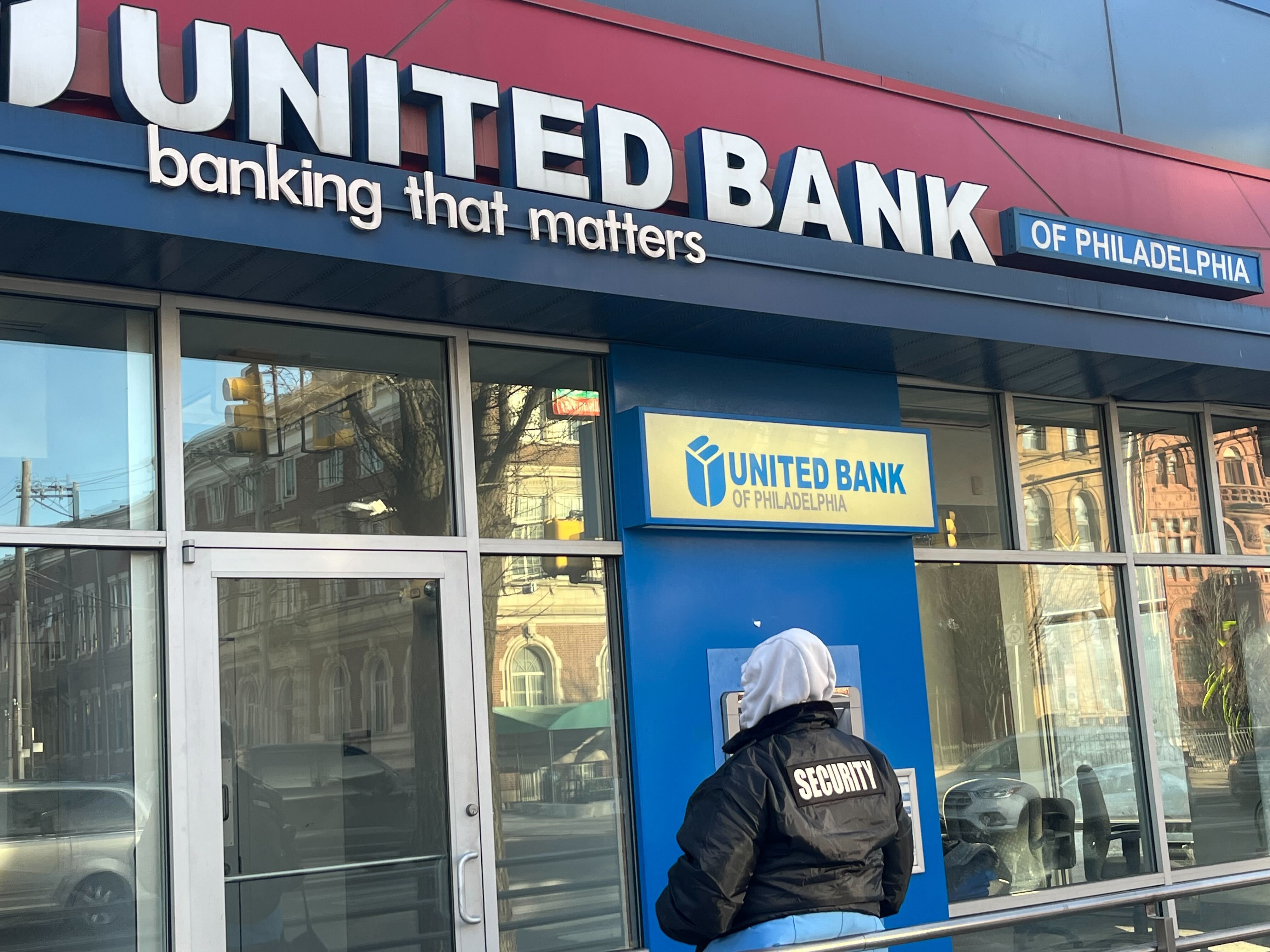
    Tahazha Woodard, a guard at a jointly operated PHA and School District site in North Philadelphia, was the first in a stream of Sovereign Security LLC employees who tried to cash delayed Sovereign paychecks on Jan. 10. United was one of the few Philadelphia institutions willing to cash Sovereign checks at that time, after incidents when the company left its accounts underfunded and paychecks bounced, according to guards.

    PGW ended its agreement with Sovereign in 2023. As of last summer, Sovereign no longer worked at the Navy Yard either.

    The guards in the suit say a trial would show whether Sovereign had a “pattern or practice” of shorting their pay, failing to pay overtime, and not refunding uniform deposits. Other issues are whether Sovereign violated state wage laws and failed to keep required time and pay records, and the damages they are owed.

    Williams, the lead plaintiff, was paid $14.40 an hour when she started in 2022.

    Besides back pay, the suit also seeks to collect $500 or 25% of wages due for each violation, plus attorneys’ fees, under provisions of state law.

  • Bucks County credit union members vote down a proposed merger

    Bucks County credit union members vote down a proposed merger

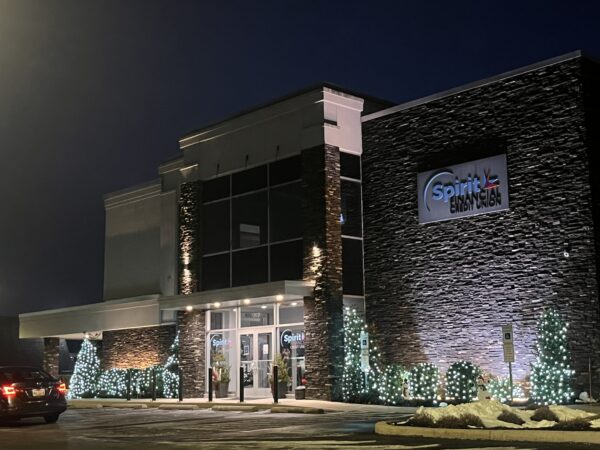
    Members of the 71-year-old Spirit Financial Credit Union in Levittown, Bucks County, voted decisively against their leaders’ plan to merge the $70 million-asset, member-owned lender with $2 billion-asset Credit Union 1 of suburban Chicago.

    “We respect the decision our members made through this vote,” David Obarowski, the 3,800-member credit union’s chief executive, said in a statement. He thanked members for voting and commenting on the plan. “There are no plans for another vote on this specific matter. Spirit Financial will continue operating independently.”

    Todd Gunderson, Credit Union 1’s CEO, in a statement offered “utmost respect” for “the democratic member voter outcome.”

    He said most members voted in advance by mail, adding that a smaller group showed up Monday, engaging with him and Obarowski. He called members “constructive, thoughtful and respectful” and rightly focused on adding younger members since Spirit Financial’s member count has barely risen since the 1990s.

    Obarowski declined to provide vote totals. Member Richard Kilian, a building-materials company owner who opposed the merger, said more than 500 of the credit union’s 3,800 members voted, with more than 400 voting no, according to a count he said was made public at the meeting.

    It was a rare setback for Credit Union 1, one of a growing number of credit unions with multistate branch networks and more assets than most community banks.

    Gunderson said last week that Credit Union 1 had won 12 of 13 merger votes since he took the top job in 2020.

    Pages listing benefits from the proposed merger, such as more loan and deposit products and lower travel ATM fees, no longer appear on either credit unions’ website.

    Kilian attributed the vote to members’ preference for local control, though he agreed its aging membership needs new energy.

    Spirit Financial was started by workers at the former U.S. Steel Fairless Works but is now open to people who live or work in Bucks or are members of Bucks-based churches and other institutions.

    Kilian said he hoped Spirit Financial would recruit younger customers and leaders, boost its presence by using more social media and other community engagement, and add staff licensed to write more loans.

  • Member-owned Spirit Financial grew with Levittown. Should it sell to a national credit union?

    Member-owned Spirit Financial grew with Levittown. Should it sell to a national credit union?

    In 1954, as Levittown was rising on former Bucks County farmland, workers at the massive nearby U.S. Steel Fairless Works formed a credit union, a community lender owned not by profit-seeking investors but by its own depositors under their elected board.

    Renamed Spirit Financial Credit Union after the steelworks shut in 2001, its one and only office on New Falls Road remains a Levittown institution, now open to all Bucks County residents, workers, and worshipers.

    But Spirit Financial might not be a locally owned fixture much longer.

    President David Obarowski has invited its 3,800 members to vote Monday on whether to merge with Credit Union 1, a $2 billion institution with national aspirations based in suburban Chicago. Credit Union 1 has absorbed small credit unions as it builds its multistate network.

    Credit Union 1 has won 12 of the 13 merger elections it has initiated since Todd Gunderson took over as chief executive in 2020, Gunderson said in an interview.

    Regulator reports show that Spirit Financial is by some measures a stronger institution, with more capital reserves relative to its loans, than its larger suitor.

    Gunderson said Credit Union 1, as a bigger institution, can afford to put more of its money to work as loans and for expansion and has grown faster than Spirit as a result.

    Spirit has about $70 million in loans and other assets and $60 million in deposits, which credit unions call shares and their interest, dividends. That’s a little more than the deposits averaged for the 12 branches of Bucks County-based William Penn Bank before that community lender’s purchase by Harrisburg-based Mid Penn Bancorp earlier this year.

    Gunderson said Credit Union 1 offers more kinds of deposit accounts, including high-yield checking, some of which pay more than Spirit Financial currently offers, and more kinds of mortgages, some with low introductory rates. For auto loans, the two credit unions charge the same 4.25%.

    Gunderson, who lived in Glen Mills and worked at Wells Fargo’s nearby auto-finance offices in the 2000s, also said Credit Union 1’s deals with other credit unions will make it easier for Spirit Financial customers to save on ATM fees when they are away from home.

    He said a bigger bank can afford better technology. “Our real competition is Google, Amazon, TikTok, they make transactions easy,” he said. The online lender SoFi “signed up more customers than all the credit unions in the U.S. last year. And its rates are good,” forcing credit unions to cut costs to compete.

    Some members are opposed to the deal. “It doesn’t make any sense to many people in the community,” said Richard Kilian, a hardware distributor.

    Kilian said he has had as much as $2 million on deposit with Spirit Financial, making him among its biggest customers. He began banking with credit unions as service slipped at the former William Penn Bank, he said.

    “My son, they couldn’t give him a mortgage answer in three weeks,” he said. “Inspire Federal Credit Union gave them an answer in six hours.”

    Spirit Financial has tried to attract new members in recent years with special interest rates, Killian said, but it’s been difficult, with an aging board and a staff that hasn’t been much in evidence at business-group meetings where lenders seek customers. Killian offered to join the board but was blocked, he said, because of a 35-year-old auto-theft conviction.

    He also raised questions about the millions guaranteed to Spirit Financial management if the deal goes through.

    That executive package was a subject of a critical article by Chip Filson, a former credit union regulator who regularly criticizes credit union merger plans in articles on his website.

    “The total financial benefit to CEO Obarowski is a minimum of $4.45 million plus additional bonus incentives” for closing the merger and for attracting other credit unions to Credit Union 1, Filson wrote.

    Obarowski didn’t respond to calls seeking comment.

    In an interview, Filson called the offer and smaller amounts for other Spirit Financial leaders a “golden parachute” that gives management powerful incentive to support what Filson calls credit union “megamergers.” He said such mergers leave communities without locally controlled financial institutions, “subverting” the reasons credit unions were founded.

    Gunderson said the pay package, which would be paid over time, guarantees Obarowski’s future compensation plan as already ratified by Spirit Financial’s board.

    Filson also said Credit Union 1’s proposal doesn’t give enough detail on its actual plans for Spirit One products or its own track record, including results from previous mergers.

    “Us old-timers feel these deals are a perversion of the entire cooperative model,” Filson said. “They tell us they’re bigger, and you won’t be able to compete without a big brother. But the advantage credit unions have always had is their local knowledge because they’re raising local funds to be reinvested in their community.”

    Kilian agreed Spirit Financial could benefit from new energy, which he said ought to come from a new generation of Levittown leaders, not outside owners.

  • European cargo ships are rerouting to Philadelphia as Baltimore struggles to replace Key Bridge

    European cargo ships are rerouting to Philadelphia as Baltimore struggles to replace Key Bridge

    Two top trans-Atlantic shippers are moving their cargoes to Philadelphia-area terminals, boosting longshore and trucking jobs, and ending Baltimore port calls as work drags on replacing the Key Bridge, whose collapse 21 months ago crippled ship traffic to that city’s harbor.

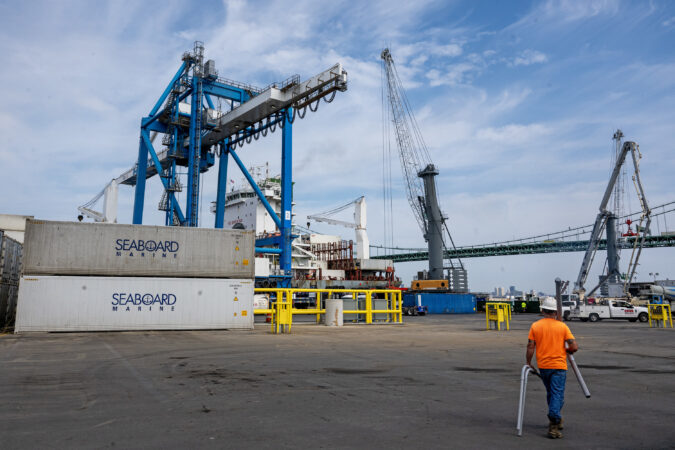
    A.P. Moller-Maersk, based in Denmark, and German-based Hapag-Lloyd AG, which each rank among the top five global container companies and operate hundreds of ships carrying millions of trailers, have switched a major route for their Gemini joint venture to the PhilaPort’s Packer Avenue Marine Terminal, effective Jan. 4, Philadelphia-based Holt Logistics told customers in a note Wednesday.

    “Rising tide lifts all boats, and that includes the waterfront labor, plus all the other ancillary support folks that run freight, handle it, and store it,” said Leo Holt, whose family operates Holt Logistics. “It’s a big win for Philadelphia, and a harbinger of good things to come.”

    Holt, based in Gloucester City, is expanding its container operations in the Port of Philadelphia on land acquired by state port agency PhilaPort in South Philly. That includes a new cold-storage warehouse. Plans are still in the works for 152 acres bought with state funds for more container and automotive storage.

    Philadelphia’s port handles wine, meat, furniture, car parts, drugs, and many other container goods. The region also exports drugs, steel, and machine and vehicle parts. Singaporean-owned Penn Terminals in Delaware County and the Port of Wilmington, Del., also handle containers.

    Philadelphia recorded the equivalent of 841,000 20-foot trailer equivalents (TEUs) through area ports last year and expects to report more for 2025, even before the new service and additional lines to Australia and New Zealand start next year. The agency’s goal is to boost that to more than 2 million a year with the planned expansion, said spokesperson Sean Mahoney.

    Philadelphia-area container shipping has nearly doubled since Jeff Theobold took over as PhilaPort executive director in 2016, while overall U.S. container volume has risen about 30%. Theobold plans to retire in June, two months after PhilaPort’s new cruise ship terminal is scheduled to open in Delaware County near Philadelphia International Airport. The agency is searching for a successor.

    Philadelphia “will replace Baltimore” on a major trans-Atlantic route used by Hapag-Lloyd and Maersk, according to a report in Freightwaves, which noted Baltimore container traffic fell from 1.3 million 20-foot-trailer equivalents in 2023 to around 700,000 last year, even before the switch. Each ship on the route carries 5,000 to 6,500 TEUs.

    The new route also moves container ships between Newark, N.J., terminals that handle New York cargoes; Norfolk, Va.; St. John in Canada; the British port of Southampton; the Netherlands’ giant Rotterdam port at the mouth of the Rhine; and the German ports of Wilhelmshaven and Hamburg.

    That adds Germany to the list of countries with direct service to Philadelphia, Mahoney said. There’s no guarantee that all the Baltimore cargoes will shift to Philadelphia.

    Philadelphia also expects more ships from Australia and New Zealand ports as two lines that service those countries via the Panama Canal have recently added Philadelphia as their Northern U.S. port, Mahoney said. Already those countries and other South Pacific ports make up close to one-quarter of the Philadelphia area’s container cargoes, making it the leading East Coast port for shipments from that region. PhilaPort expects the lines will attract cargoes now shipped to Baltimore, New York, or Norfolk.

    Newark is the largest port complex in the Northeast. Philadelphia competes with Baltimore and southern ports for container and automotive cargoes.

    Philadelphia has the fastest arrival-to-departure time of any North American port, reducing shipping costs, according to a recent report by a World Bank subsidiary. Holt attributes that to cooperation between unions including International Longshoreman’s Association, and Teamsters locals, port agencies, and owners such as PhilaPort, and his own organization.

    Next year Holt plans to add two more tall cranes to the small forest of ship unloading equipment it maintains in South Philly and Gloucester City.

  • This hot Philly software maker wanted a big Center City HQ but went remote ‘because SEPTA is so bad’

    This hot Philly software maker wanted a big Center City HQ but went remote ‘because SEPTA is so bad’

    For a little while, Philadelphia’s Fishtown Analytics looked as if it might put the city where the modern computer was born back on the tech map as a software headquarters.

    Cofounders Tristan Handy, Connor McArthur, and Drew Banin started their company in 2016. They created the Data Build Tool, which helps a range of employers — Philly firms like Gopuff, business software makers like GitLab, HubSpot, and New Relic, publisher Condé Nast, manufacturer Thermo Fisher Scientific, airline JetBlue — manage their proliferating databases out in the cloud of rent-a-servers.

    As the tool caught on, they talked of taking the company public, drawing investors and hundreds of software recruits to one of the city’s popular neighborhoods, proof that Philadelphia is a place tech leaders flourish.

    But that’s not quite how things worked out. In 2021 the start-up raised $150 million from Roblox backer Altimeter Capital and Silicon Valley giants Sequoia Capital and Andreessen Horowitz. The founders dropped the Fishtown name in favor of dbt Labs, for their software tool’s initials.

    Then in October, they agreed to a merger with a larger data-integration software company and sometime-partner, Fivetran, with headquarters in California. The 20-person Spring Garden Street office will remain.

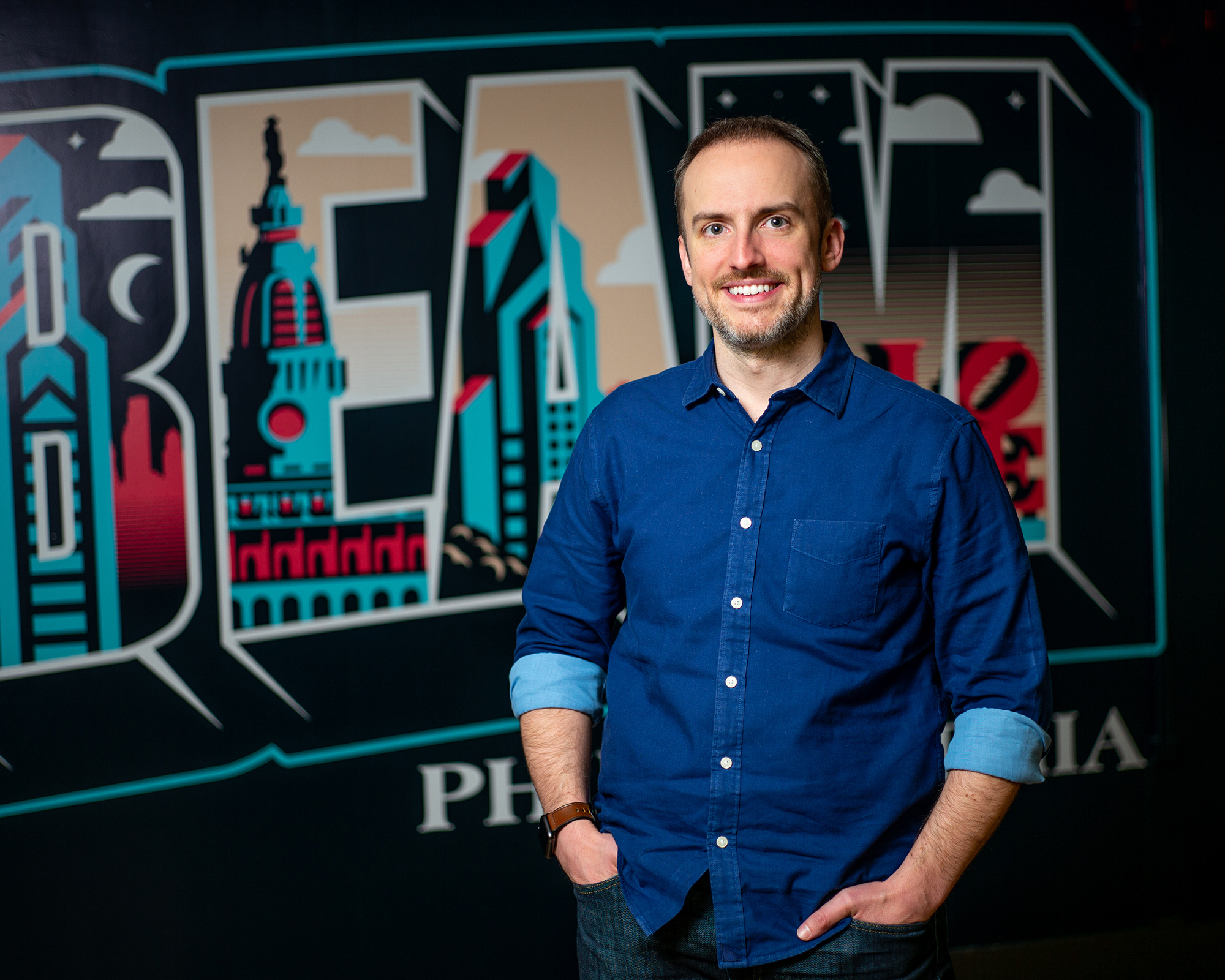
    Handy agreed to talk with The Inquirer about what was, what might have been, and what’s next. He came to the interview wearing an Eagles No. 27 jersey. The conversation has been edited for length and clarity.

    Your deal looks a little like your former boss Bob Moore’s Crossbeam merger with French competitor Reveal?

    I talked to Bob about lessons learned. Bob is focused on his relationship with the Reveal founder. He says everything else is solvable, as long as the relationship between the founders is strong.

    Bob Moore has founded a string of Philadelphia software companies. Crossbeam, “LinkedIn for businesses,” raised $76 million in October 2021, from firms led by Silicon Valley venture capital giant Andreessen Horowitz.
    Are customers glad you’re consolidating or worried at losing a choice?

    We have a lot of customers we share with Fivetran. In general we are finding excitement, with a little initial trepidation.

    George [Fraser, Fivetran’s CEO] and I have spent a lot of time thinking about what our customers need to hear and to de-stress them. Generally the reactions are positive. It’s not uncommon we will hear from a customer: ‘I was thinking about what I was going to do with this set of data pipelines, and now we should talk about that.’ Which is part of the point of all this.

    We are still pre-closing. We need to seek [U.S.] Department of Justice input. We are waiting to see if we meet that test — if DOJ will care about us at all. The answer should be no.

    Does Philadelphia make enough software to be a ‘tech center?’

    All three of us cofounders came out of Bob Moore’s RJMetrics, and then our first employee, Erin Vaughan [head of customer services], came out of RJ. Bob sent me a note after that: ‘Maybe you should hire some other people.’

    A big part of the reason I started Fishtown Analytics was that in 2016, RJ was coming close to the end of its main chapter. I didn’t see other start-up opportunities locally that I was excited about. My wife had just gotten a job at CHOP. We weren’t moving. I had to figure something out.

    So you built it. Was Philly a good place to start and then grow?

    I just turned 45. A bunch of people I know have moved back to the area from San Francisco. A lot of times that is because you want to be close to family when you have kids or it’s a higher quality of life around here.

    We are at 915 Spring Garden St. The elevator is always broken. We are still about 20 people there — the same as when we raised money [in 2021].

    But my network is now nationwide. We are a distributed business with 730 people. And Fivetran has a big headquarters in Oakland, Calif.

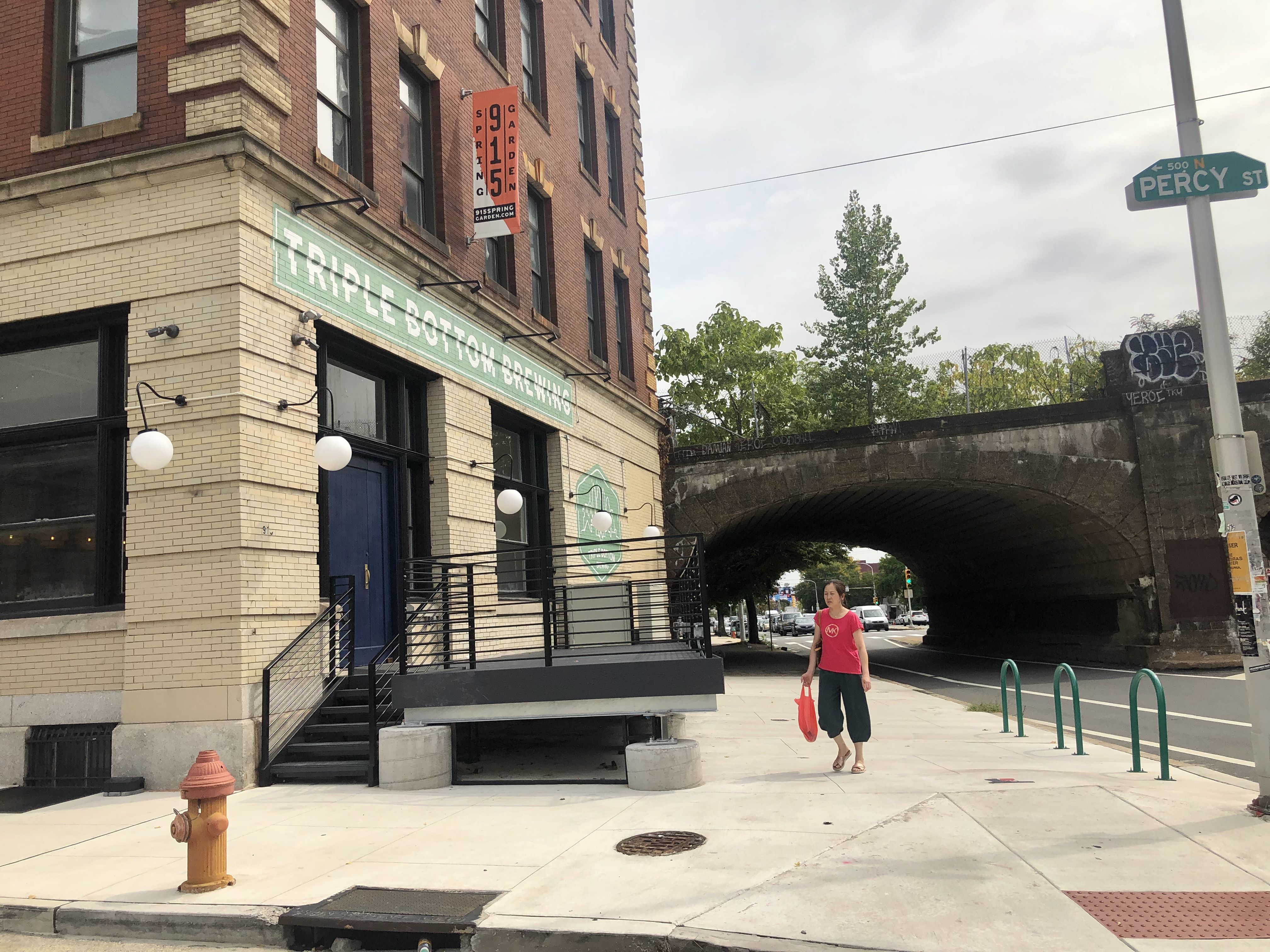
    dbt Labs employs more than 700, but most work remotely. Its headquarters, with 20 people including some of its founders and earliest employees, is upstairs at 915 Spring Garden St., a former Reading Railroad building whose first floor is home to Triple Bottom Brewing.
    Will the merger mean expansion and hiring, or consolidation and firing?

    Growth is good, and in general, we are not imaging cost-cutting targets. There is figuring out who occupies the leadership ranks. That is the main area where there might be some departures.

    It’s a consolidation move from a products perspective. Historically in our space, the products Fivetran sells and the products we sell have been sold together. Our customers have budget lines for that combination.

    Both companies are on track. Both companies were going to IPO at some point. This brings that date in closer. Combined, we have the growth and scale to go public. We just need to get through the integration and prove to everybody we have effectively combined these companies, and need a few quarters of numbers.

    Why did you drop ‘Fishtown’ from the name?

    Every sales call started out with ‘What’s Fishtown?’ Locally people have a lot of pride in Fishtown. But nobody else knew what it meant.

    Both companies are keeping their brands. We’ll figure out what to call the combination.

    Do you hire a lot of Philly engineers?

    We did originally. Our first class of data people we trained, there were two Penn people and a Princeton person. For a long time that was the plan: continue hiring incredibly talented people from these schools. But then we went in a different direction.

    Why, when Fivetran expanded in Oakland, did you not do the same in Philly?

    It’s real hard to do any kind of office-space culture for tech workers in Philly because SEPTA is so bad.

    As the people in the company start to age into having kids and move out to the suburbs, it is getting very challenging to come into the office. Even from the Main Line, the train is once an hour. That’s very hard.

    Bob Moore calls you a pillar of the Philly start-up ‘connectivity’ who helps other founders and causes. Are you planning to stay around?

    It’s conceivable I might start another thing.

  • Par Funding salesman Dean Vagnozzi sues, accusing feds of ruining his business

    Par Funding salesman Dean Vagnozzi sues, accusing feds of ruining his business

    Dean J. Vagnozzi, whose King of Prussia insurance and investment business was taken over by a court-ordered receiver in the federal investigation of the Par Funding Ponzi scheme, has sued the U.S. government, accusing federal officials of abuse of process, negligence, and unconstitutional search and seizure.

    In the lawsuit, Vagnozzi says he was a Par victim, his business wrongfully destroyed amid the investigation that led to criminal charges that have sent eight former Par Funding officials, debt collectors, and accountants to prison after they pleaded guilty to ripping off 1,600 people. Those clients included hundreds of Vagnozzi’s customers and members of his family, and the scheme ended up owing them $240 million.

    Vagnozzi attracted customers with radio ads urging investors to consider alternatives to the stock market. He paid civil settlements totaling $5.7 million to the U.S. Securities and Exchange Commission (SEC) and smaller amounts to state securities agencies to settle complaints for selling unregistered securities, including those of Par Funding, a cash-advance lender to businesses that had trouble qualifying for bank loans and others. Vagnozzi blamed the failure to register on bad advice from his longtime lawyer, whose insurers agreed to pay investors, Vagnozzi, and others $47 million to settle their claims.

    In contrast with the Par Funding operators, Vagnozzi has not been charged with crimes.

    The complaint

    Vagnozzi’s lawyer, George Bochetto, argued in the complaint filed Dec. 8 in federal court in Philadelphia that it was “egregious government overreach” for the SEC to allege illegal acts in a petition that convinced U.S. District Judge Rodolfo Ruiz to include Vagnozzi’s former business, A Better Financial Plan, alongside Par-related assets seized in a 2020 court order,

    The complaint contends that the SEC should have known the investment funds it initially accused Vagnozzi of setting up for Par founder Joseph LaForte to evade Pennsylvania investigators were actually started by Vagnozzi on his then-lawyer’s advice when Vagnozzi was unaware of the state’s investigation.

    The suit adds that Vagnozzi could have shown this, if the SEC had asked before acting, by citing correspondence and records, including the SEC’s own documents, which he submitted as case exhibits.

    The court issued a sweeping order based on the SEC petition. So “on Tuesday, July 28, 2020, a court-appointed receiver arrived unannounced at Vagnozzi’s office, ordered him, his son, his sister, his father-in-law, and the rest of his staff into the conference room, and told them to leave immediately. Vagnozzi’s business, ABetterFinancialPlan.com LLC, which he had carefully built over 17 years, was effectively shut down and placed out of business,” according to the lawsuit.

    The seizure of his company and accounts left more than a dozen employees out of a job and Vagnozzi unable to earn a living. His reputation was “irreparably harmed and his assets and businesses ruined,” the suit contends.

    When the company was seized, Vagnozzi’s businesses unrelated to Par Funding were collecting revenues at the rate of $4 million a year and growing, according to Bochetto.

    At that rate, Bochetto estimates Vagnozzi’s lifetime losses as a result of the SEC’s actions at more than $50 million.

    The SEC declined to comment on the litigation.

    Vagnozzi’s suit accuses Amie Berlin, an SEC lawyer who led the case for the agency’s Florida office, and other, unnamed federal agents of “malicious” infringement on Vagnozzi’s constitutional right against unreasonable searches or seizure. Berlin didn’t respond to a request for comment.

    Vagnozzi the victim?

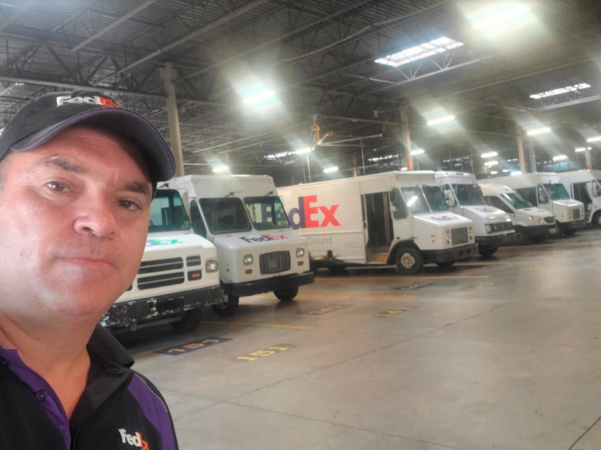
    After losing his company, Vagnozzi ran a Federal Express route for 2½ years and worked in sales for a home-improvement company. He has applied for reinstatement of his Pennsylvania insurance license, which was suspended in 2022 after his company’s seizure.

    According to the lawsuit, the SEC wrongly “assumed without legitimate basis” that Vagnozzi had been a “coconspirator” and a “criminal.” The suit also alleges that the SEC failed to give Vagnozzi “prior notice of the investigation and an opportunity to respond” before his business was shut down and his accounts frozen.

    The suit depicts Vagnozzi as a victim of Par, a firm whose associates included some that “turned out to be members of the Gambino crime family.”

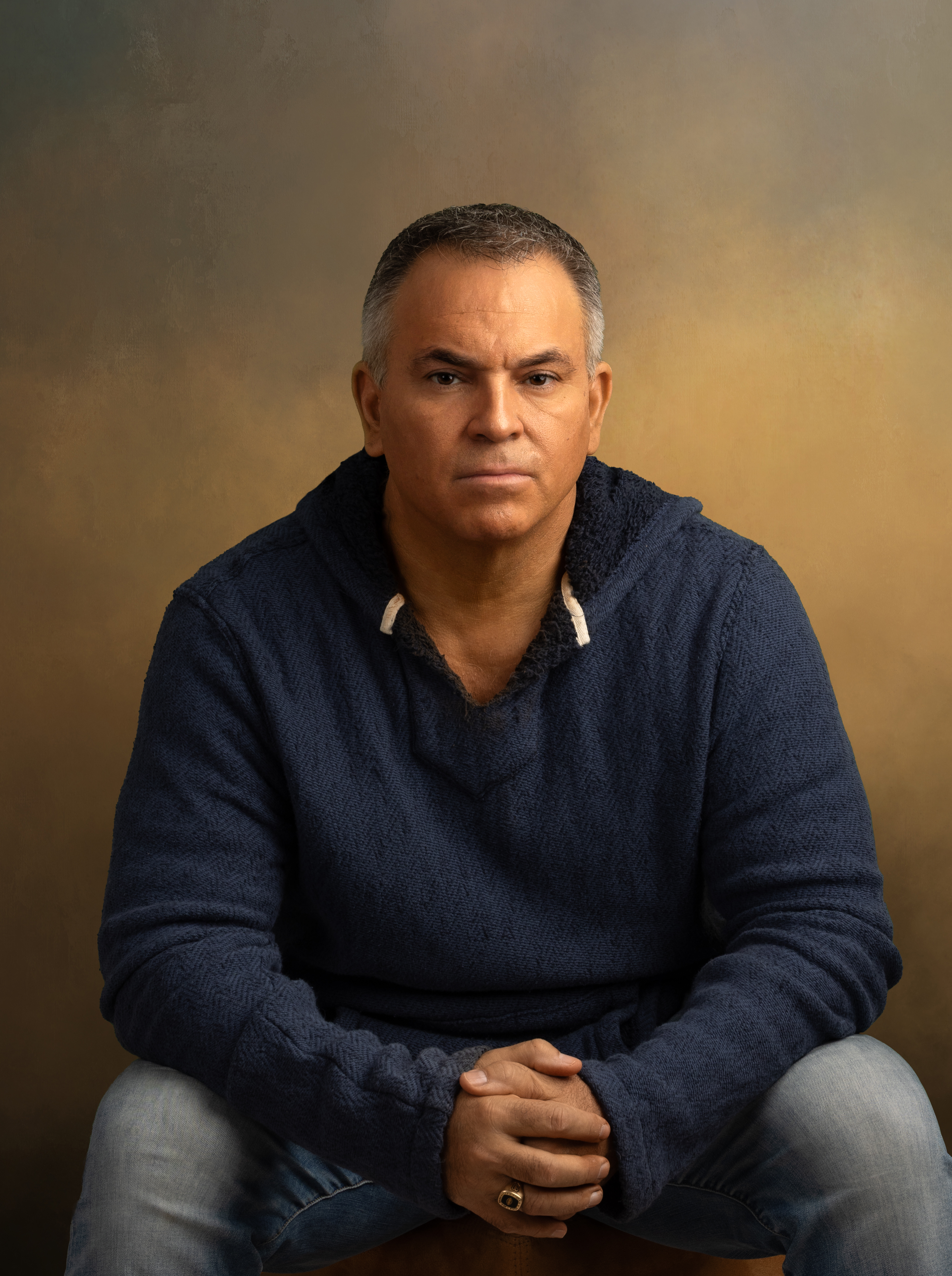
    Dean Vagnozzi had this photo taken in 2025 for use in a book he says he’s writing about his business and its closure by a court-ordered receiver amid a federal investigation of Par Funding, whose investments he sold.

    One of the eight people sentenced in the Par case, former collections head James LaForte, was identified in a separate New York indictment as a member of a Gambino mob crew. James LaForte has denied that allegation. A collector working for James Laforte was also named as a Gambino associate.

    “Vagnozzi, apart from having an Italian surname, had nothing in common with the criminals that ran Par Funding,” who “lied to, manipulated, and duped Dean into raising funds for Par Funding’s criminal enterprise, which he genuinely thought was a legitimate business,“ according to the complaint. He ”was not a fraudster nor [a Par] insider” but “an innocent victim of government overreach,” of his lawyer, and “of Par Funding’s fraud and deceit.”

    Vagnozzi earlier accused his longtime lawyer, John Pauciulo, of giving him bad advice contributing to Vagnozzi’s failure to ensure clients’ Par investments were registered with the SEC.

    Pauciulo has denied wrongdoing. He is the subject of a disciplinary board procedure based on his representation of Vagnozzi that could affect his law license.

    Some 1,600 investors, including hundreds of Vagnozzi’s former clients, have so far received about half their investment principal back from the court-appointed receiver that collected Par assets to repay them. Judge Ruiz last week agreed to release another 40%, bringing total payback to around $210 million. A third, smaller payout is expected as additional money is collected.

    “This case is truly about runaway regulators that well exceed the boundaries of due process and constitutional fairness,” Bochetto said in an interview Tuesday. He said there have not been a lot of successful complaints against the federal government for overreach but was confident the facts in the Vagnozzi case justified a court review.

  • Janney Montgomery Scott sheds investment bank under owner KKR and focuses on brokers

    Janney Montgomery Scott sheds investment bank under owner KKR and focuses on brokers

    Philadelphia-based Janney Montgomery Scott LLC has confirmed plans to exit the investment banking business and will focus exclusively on beefing up its wealth advisory business under its private-equity owner KKR, which bought Janney last year.

    The firm has made what CEO Tony Miller called “a strategic decision” to sell the last of its banking units.

    Investment bankers raise money for companies and governments by selling stock shares, bonds, and other financial instruments to investors, for a cut of the proceeds, a sometimes lucrative but hard-to-predict business. Research analysts help attract those clients by writing about their financial prospects.

    Wealth advisors, typically registered with the SEC or licensed through the industry group FINRA, are paid to guide clients’ investments, and may sell exchange-traded funds (ETFs), and other approved products. Business has soared with the U.S. stock markets in recent years. Miller, the Janney CEO, called investing in that business a better road to “long-term success.”

    Janney plans to sell its last bond and investment banking units, including staff in Philadelphia, at its TM Capital in Atlanta, and in other offices, to Ohio-based Huntington Bancshares and its financial institutions banking, research, and sales units to New York-based Brean Capital. Janney officials hope to close the deals in early 2026. The prices haven’t been disclosed.

    Janney, which recently added advisors in Texas among other states, will remain based in Philadelphia. The company employs around 900 in the region.

    Regional commercial banks and other small to midsize financial institutions were among the last industry groups Janney investment bankers and analysts covered. Just last month, Janney bankers announced that they had advised Georgia-based First Southern Bank on its unusual $51 million sale to member-owned Community First Credit Union of Jacksonville, Fla.

    Former Janney employees said Janney’s owners had the option of taking the time and money to build up the investment banking unit, such as regional brokerages Piper Sandler, Raymond James, and Baird & Co. have done in recent years, instead of cutting back and relying entirely on trading and investment volume that rises and falls with market prices.

    Until the late 1900s, Philadelphia was a financial center, and generations of investment professionals — at firms started by Stephen Girard, Jay Cooke, J.P. Morgan’s mentor A.J. Drexel, the predecessors of what’s now Morgan Stanley Wealth Management, the Butcher clan, as well as Janney and smaller firms — raised money for enterprises ranging from the Pennsylvania Railroad to Donald Trump’s ill-fated Atlantic City casinos. Janney notoriously fired critical analyst Marvin Roffman in 1990 at Trump’s insistence.

    Successful investment bankers were paid a percentage of the deals they closed, built Main Line and Shore estates, and established branches in other cities.

    But even locally based companies now bank with giant Wall Street firms. Janney’s wealth advisory office network, juiced by the relentless rise in the U.S. stock markets, has lately accounted for more than 90% of Janney’s revenue, with investment banking only a thin sliver, according to a statement the company gave The Inquirer.

    “The big investment banks are feasting on deals,” said Robert Costello, a veteran Philadelphia-area money manager. “But the small deals have been drying up, and if they are getting rid of the municipal-bond desk, there’s nothing left.”

    “It’s ‘another one bites the dust,’” said Ryan Connors, a Bucks County-based former Janney analyst who covers utility stocks for Northcoast Research.

    “Philadelphia is thriving as a city, but our business has left it,” Connors said.

    Yet investment research has survived the decline in regional investment banking, he added.

    When Connors left Boenning & Scattergood, a Philadelphia investment bank where he had been director of research before it sold and shut down in 2022, “they told us [stock] research was dying.”

    But Connors said research-based firms like his employer are doing well because hedge funds and other large investors have proven willing to pay for financial research.