Author: Joseph N. DiStefano

  • For Gopuff, Super Monday is the national holiday

    For Gopuff, Super Monday is the national holiday

    Sunday’s Super Bowl LX, featuring some 66 ads costing corporate brands an average $8 million for half a minute, shone a light on America’s snacking trends, tracked closely by Gopuff, the Philadelphia-based national delivery service.

    The game between the Seattle Seahawks and the New England Patriots, also featuring Bad Bunny’s Spanish-language halftime spectacular, was watched by nearly 40% of Americans. Their delivery orders gave marketers a broad, almost instant view of what Americans were consuming and how their ads were working — or not, said Michael Peroutka, GoPuff’s head of ads, in his Super Bowl postmortem report Monday.

    The product with the most spectacular Super Bowl increase didn’t advertise.

    Philadelphia-based Gopuff reported sharp increases in advertised snacks, but also in basic party ingredients such as limes and red party cups, during Super Bowl LX.

    Orders for limes during the game jumped over 600% over previous Sundays in 2026. Limes are, after all, a key ingredient in popular plates like guacamole and pico de gallo, served with Mexican beers and margaritas, and “easily forgotten at the store,” making them a natural for last-minute delivery, said Gopuff spokeswoman Brigid Gorham.

    Though lime consumption has been growing rapidly, the increase was more than four times last year’s Game Day spike, and no one could say exactly why.

    Lime sales exploded even more than Gopuff’s Basically-brand red party cups, a three-year-old in-house brand, which was up 381% on Super Bowl Sunday above recent Sunday sales.

    Overall, alcohol sales nearly doubled from recent Sundays. Soda sales were up more than one-third and salty snacks by about one-quarter. Compared to last year, when the Eagles were in the Super Bowl, the number of Philadelphia orders were up 7%.

    Other Super Bowl Sunday growth-leaders included PepsiCo’s Tostitos Hint of Lime chips, which were up 398%.

    But the top gains were two candies made by Italy-based candy maker Ferrero. Gopuff orders for Kinder Bueno, chocolates marketed heavily in Latin America and U.S. Hispanic neighborhoods, were up 444% vs. recent Sundays, and Ferrero’s Nerd Gummy Clusters, were up 418%.

    Kinder Bueno and Nerd Gummy Clusters saw sales roughly double in the hour after their Super Bowl ads ran. Liquid Death and Dunkin also saw orders rise at least 50% after ads.

    Day off?

    Gopuff also noticed well before the game that a record 13 million American workers planned to schedule Monday off; 10 million planned to call out sick, go in late, or not show up, and millions more were thinking about it, according to a Harris Poll survey funded by work software maker UKG.
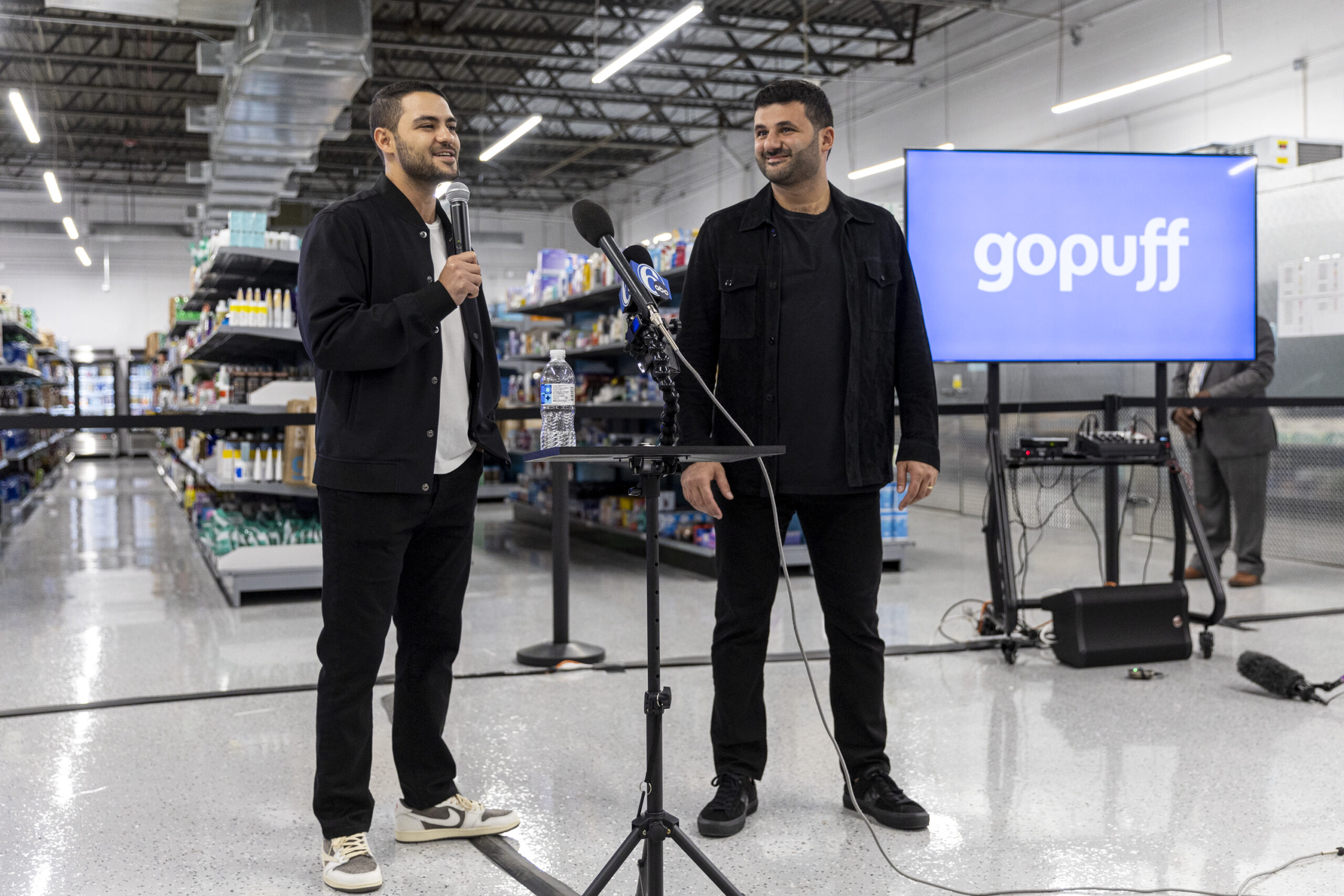
    Founders and CEO of Gopuff Yakir Gola (left) and Rafael Ilishayev speak to a room full of staff and team members of Gopuff at a recently opened center in Philadelphia in 2022.

    Cofounder Yair Gola and his colleagues saw those numbers and thought, “This ought to be a holiday.” Last fall, it set up a 501(c)4 lobbying group, the Super Monday Off Coalition, pledging at least $250,000 to get the effort rolling.

    They hired retired Patriots quarterback Tom Brady and comedian Druski to promote the cause.
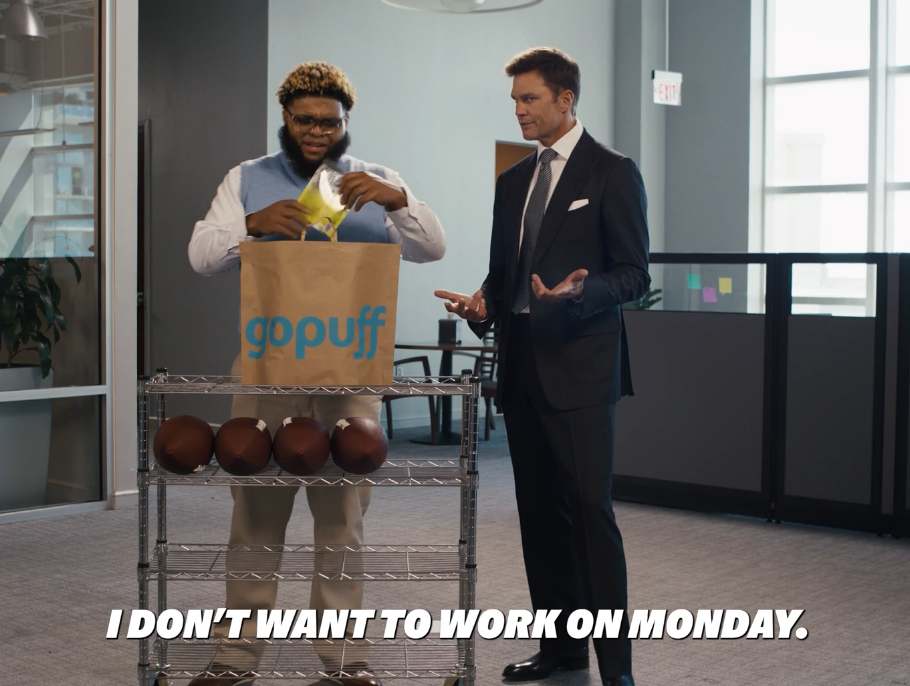
    Druski (left) and former NFL quarterback Tom Brady in an ad for Philadelphia-based Gopuff promoting its campaign to designate “Super Monday” as a national holiday, since millions already take the day off.

    The company’s contribution to the lobbying would be funded by 1% of Gopuff’s profits from sales of certain boxes of beer, sugary drinks, hot dogs, and other products from Thanksgiving to game day.

    Heavy users who placed at least four $30 orders in that period would also get $20 “Gocash” discounts and receive a chance at a Birkin handbag, a Rolex watch, and other prizes.

    By Monday, Gopuff hadn’t announced its planned donation, but the campaign was declared “a winner” by Charles R. Taylor, a Villanova University marketing professor who tracks Super Bowl ads. He spotlights not just successful marketing but also ineffective efforts like Nationwide’s painful 2015 “Boy” campaign and GM’s 2021 “No Way Norway” misfire.

    Partnering with high-profile Brady and Druski gives “instant visibility and credibility” with fans and wider audiences, Taylor said. Even if the campaign costs more than Gopuff actually donates to the cause, a national holiday is “a clever hook” watchers will remember, Taylor said.

    Going public?

    Gopuff raised over $5 billion from Saudi, Japanese, and U.S. private investors during the digital-delivery investment boom that lasted into the COVID years. These big investors hoped Gopuff (officially Gobrands) founders and early investors would win them big profits by selling shares in a high-priced stock market initial public offering or selling to DoorDash, Uber, or other delivery giants.

    But app use and delivery growth slowed in the COVID recovery. Gopuff’s perceived valuation tumbled as its publicly traded rivals’ share prices fell. The company, which had expanded to hundreds of city neighborhoods and college towns, shut marginal centers and laid off staff at its Spring Garden Street headquarters to reduce losses and save investors’ capital for better times.

    Now Gopuff is showcasing efforts to win new investor attention.

    In the past year the company announced an on-screen snacks-order app targeting Disney+, ESPN, and Hulu views; a cash-with-your-order partnership with online-broker Robinhood; hot warehouse-brewed Starbucks coffees from stores in Philadelphia and some other areas; and a partnership with Amazon to speed grocery delivery in Britain, where Gopuff remained after ending its European programs.

    Gopuff has added a warehouse camera feed and local product-sales stats for fans who want to know what neighbors are buying, app-based order updates, and user product recommendations. It added over-the-counter pharmacy items and new lines of vegan organic GOAT Gummies (which Brady is also promoting).

    The company also began accepting SNAP EBT electronic food-stamp accounts and donated $5 million for SNAP when the federal shutdown threatened low-income families dependent on the program.

    New hires include economist Matt McBrady — a veteran private-equity investor, former adviser to President Bill Clinton, and sometimes Wharton instructor — as Gopuff’s new chief financial officer, noting his experience taking companies through public stock offerings.

    Last fall Gopuff raised $250 million, its first investment since a 2021 convertible-bond financing that had valued the company at a stock-market-bubble-inflated $40 billion.

    This time, the largest investors included previous Gopuff backers Eldridge Industries and Valor Equity Partners, along with Robinhood, Israeli billionaire Yakir Gabay, the cofounders, and other earlier investors. Eldridge chairman Todd L. Boehly in a statement called Gopuff “resilient.”

    Valor partner Jon Shulkin cited the company’s “focus, innovation, and substantial gains in profitability.”

    This latest capital-raise implied a valuation of $8.5 billion — a fraction of what Gopuff was worth on paper during the digital-delivery bubble, but enough for the venture capitalists to hope they may yet get their money back with at least a modest profit.
  • Philly native Mike Petrakis built PowerPay, a fintech company for people who think banks are too slow

    Philly native Mike Petrakis built PowerPay, a fintech company for people who think banks are too slow

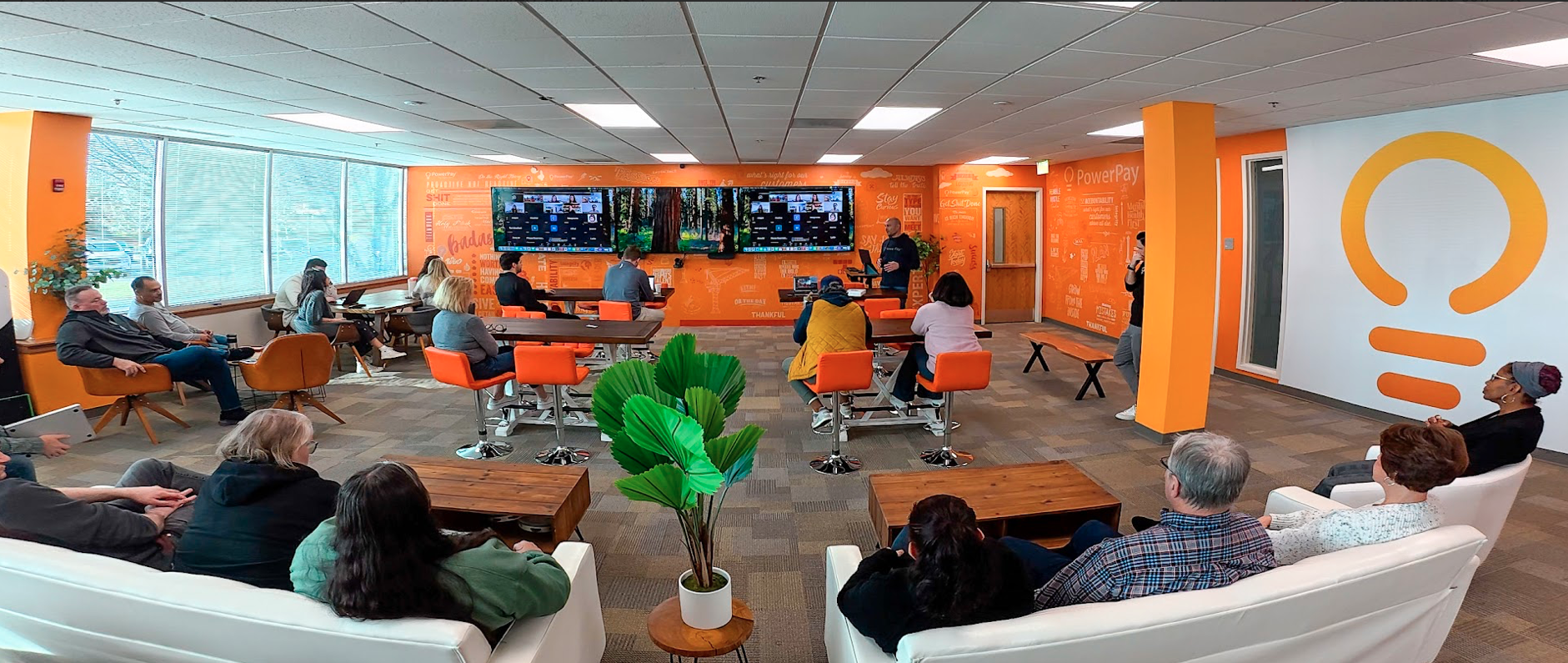
    The Philadelphia region, once a banking center, is still home to financial innovators. One of the growing digital lenders based nearby is seven-year-old PowerPay, whose 225 staff members build a software platform to finance home improvement loans, personal loans for hearing aids and other medical needs, and a growing list of services, from its new offices just off U.S. 202 near King of Prussia.

    PowerPay revenues more than doubled to $200 million last year, as the company processed $6 billion in loan applications.

    The company raised its local profile last winter when it cosponsored the Christmas light show at the former Wanamakers in Center City. That got its name out to more prospective employees and borrowers.

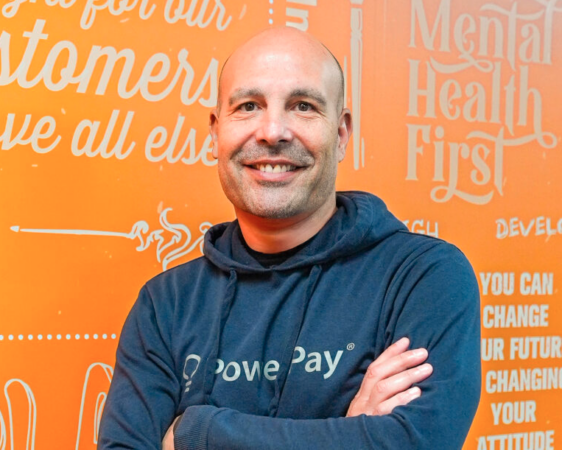
    Founder Mike Petrakis, a native of Northeast Philadelphia and Archbishop Ryan High School graduate, played varsity soccer at Drexel University and briefly went pro in England. He settled in Doylestown and a sales career, which led him to start PowerPay in 2017. Early backers included hoteliers Jay Shah and Eustace Mita.

    He agreed to talk to The Inquirer about his company’s growth and prospects. Questions and answers edited for clarity and brevity.

    What’s the difference between your company and a bank?

    A lot of people think banks are inconvenient. Their loan docs are thirty-some pages. With fintechs, someone applies in seconds, and in milliseconds you can get an offer back.

    We collect thousands of data points — email transmissions, phone checks, geotagging, information in databases that is available. Social media, not so much. We make sure we can recognize the device from which they are putting in the application. We put all this into our models.

    We are onboarding more artificial intelligence. We take a driver’s license and check — does the signature match the customer on the platform? is that image theirs? It is done in an instant.

    Lending has become an automated business. Why do you still do so much business by phone?

    You get a loan with us, you are going to be connected to us for the next 15 years, and we need to be connected to each other. We are deploying digital routing that moves them from an initial inquiry to a specialized team member without the traditional “on hold.” And we have engineers on premise and around the world.

    The goal is to work so hard to get the consumer that we can keep them in perpetuity.

    PowerPay has its headquarters just off U.S. 202 near King of Prussia.
    Since you’re not a bank, how do you fund these loans?

    Credit unions financed our loans early on. Now we have KeyBanc and Capital One and other major lenders.

    We aren’t a bank, so we don’t have the same oversight, and we can move faster. But we work with banks, so our processes are built to be fully compatible with bank regulations. We process half a billion dollars’ worth of loans a month, which is larger than most banks.

    What do you do any better than a bank?

    We just built a new product, PowerPay 360. You pay interest only for 12 months, then interest and principal for 14 years. Leaves a little extra cash in their pocket for a year. We set that up in 30 days.

    Banks are so conservative; for them to build that, with their large, core technology systems, it would take them years to get it into the market. Apple tried to get in the consumer financial business and left within two years.

    We are adding credit card and mortgage products, and healthcare loans, too. We just opened a relationship with U.S. Bank to grow that relationship to half a billion dollars.

    Credit cards have moved from plastic into a whole digital landscape for the consumer. We are making it so [in late 2026] you can tap your smartphone or mobile device at Home Depot and not just buy supplies but also hire your installer or service provider, and get an installment loan to pay for the whole project.

    What else are you preparing to sell?

    We now have an insurance business. We sell credit-default insurance for the benefit of our financial sponsors. Our underwriter is domiciled in the Cayman Islands under their financial regulations. We aggregate the risk into asset-backed securities [and sell loans in risk-based pieces to get higher returns]. We sell those to investors, and the insurance comes off.

    We’re going to grow insurance. Involuntary unemployment, disability, credit, life. We would domicile that in the U.S. We are talking to large insurance carriers we could front for and share the risk.

    How did you get into this business?

    In 2017, I was a national contractor, [helping buyers finance] home generators for Generac, Cummins, Kohler, Briggs & Stratton. You pay $99 a month for 10 years, and we’d get them a loan with Synchrony or GreenSky [two online-lending pioneers].

    Generac came to me and said, how can we make these loans, too? I said start a national call center. It took me six months to find a software platform and a credit union to finance us.

    At first we were just a couple of people, sitting in the Whole Foods beer garden in Plymouth Meeting. We’d have breakfast, then set up our laptops that we bought at Best Buy, initiating loans and writing the code on third-party platforms. Then we grew out of Whole Foods, and we got our first office at the Life Time fitness club in Ardmore.

    We took over an auto-loan platform and converted it to make home-equity loans. We were ready to really build it up, and then Generac backed out.

    So we said, what else can we finance with this? We approached the big home improvement companies, Renewal by Andersen window installations, and others.

    What was it like, launching into the pandemic?

    The home improvement companies were sitting on millions in applications they couldn’t get funded. We underwrote those loans and got them funded, at first, by credit unions.

    We onboarded 100,000 users overnight, and we nearly blew up the software platform we were using. So we built our own, and now we own all our intellectual property.

    We went at first to many credit unions, and they shared participation with other credit unions, but then they would get scared and pull out. We still weren’t big enough for Goldman or JPMorgan. Even the second-tier banks would only lend part of the money. Finally, we found one credit union, Chartway [based in Virginia], they kept the doors open.

    In 2023, we were ready to sell loans in our first securitization. We kept servicing rights. That legitimized us in the eyes of the bankers. Capital One agreed to help us with the securitization.

    There were 50 lawyers involved! We only did a $118 million deal. But we have done much larger ones since, and now I can get it done with a lawyer on each side in a couple of days. We underwrite the loans, we insure them, and then we sell them, de-risking.

    It becomes a cost-of-funds game — the lower the cost, the less onerous the rates we can offer consumers.

    We can drive billions more through this platform.

  • How Philly helicopter makers cope with uncertainty at today’s Pentagon

    How Philly helicopter makers cope with uncertainty at today’s Pentagon

    Helicopter manufacturer Leonardo has nearly doubled employment at its Northeast Philadelphia factory since the Rome-based multinational aerospace company began winning U.S. military orders for that factory in the late 2010s.

    But the company, whose owners include the Italian government and U.S. investment funds such as BlackRock and Vanguard, has learned what dominant U.S. defense contractors like Boeing have long known: Military planners, policy, and political shifts can stop, delay, or revive long-term contracts, leaving managers scrambling to keep workers and factories busy.

    Given the complexity of parts supply, skilled labor, and other aspects of helicopter production, “it is destabilizing and difficult if you don’t know if you are going to build two or 16 aircraft for a given program year after year,” said Andrew Gappy, vice president of Leonardo Helicopters USA Inc., a retired Marine whose duties included flying Presidents Bill Clinton and George W. Bush on Marine One helicopters.

    In 2018, Leonardo and Boeing celebrated a signal victory. The Air Force ordered 84 MH-139A Grey Wolf helicopters, worth an expected $2.4 billion.

    Grey Wolf is based on Leonardo’s civilian, two-engine AW139, part of a movement by military planners to speed production and streamline costs by basing more big-ticket military machines on large-production civilian products and private-sector construction managers. It’s a model that Korea-based Hanwha hopes to use in winning Navy contracts for its shipyard in Philadelphia.

    More than half the Grey Wolfs would defend nuclear weapons bases in several western U.S. states. Most of the rest would be used to ferry political leaders around Washington in case of an attack on the nation’s capital, replacing aging UH-1N Huey helicopters on duty since the 1970s.

    So far, 19 of those helicopters have been paid for and delivered. Another 12 are funded and nearing completion. But funding for future construction hit unexpected snags.

    After Air Force design changes and a challenge by Lockheed Martin’s Sikorsky unit, which had proposed rival helicopters of its own, Leonardo and Boeing said they started production on the first Grey Wolfs in 2023.

    They planned to keep building a dozen a year for seven years — about a quarter of the Leonardo plant’s annual output. They hoped to win more contracts along the way.

    Last year, the partners had expected to fund future production with $173 million in appropriations as laid out in President Donald Trump’s 2025 budget, plus $210 million in his Big Beautiful Bill, backed by the two Republican senators from North Dakota, home to Minot Air Force Base.

    But those payments didn’t materialize on schedule. The Big Beautiful Bill payments were held up, frustrating the Grey Wolf partners.

    And then in November, Congress’ new National Defense Authorization Act listed more than $100 million retrofitting previously-delivered Lockheed-built helicopters to transport VIPs but just $10 million for the Grey Wolf program — not enough to build a single helicopter.

    The Air Force had justified upgrades of unused aircraft in a budget proposal earlier last year as a cheaper way to acquire helicopters. Grey Wolf defenders objected that the Air Force studies had already verified the new helicopter would be much less expensive to operate.

    The cuts would “starve” the Grey Wolf program, Mike Cooper, Leonardo’s government relations chief, said in December. “It’s hard for businesses to plan, when competitively bid procurements can be abruptly and unilaterally changed.”

    Last fall, a bipartisan group of five Congress members, headed by Rep. Donald Norcross (D., N.J.), whose South Jersey constituents include workers at Boeing and Leonardo, sent Air Force Secretary Troy Meink a letter that they were “troubled” to hear reports that the Air Force was now planning to update old helicopters for VIP transport and evacuation missions, instead of funding the new ones.

    They noted that the Air Force already had selected the Boeing-Leonardo aircraft over two proposals from Lockheed Martin.

    They called the switch an “unprecedented change in procurement,” which “undermines the integrity of the acquisition process, calls into question the criteria” for the original selection, “and raises concern about why an otherwise performing program would be truncated without clear explanation to Congress” or the companies that agreed to the contract.

    They asked the Air Force for any studies it had made to justify the more expensive Jolly Green program, which they said would cost far more to buy and operate. They also noted the impact on workers, suppliers, and finances at Boeing in Ridley Park, Leonardo in Northeast Philly, Leonardo’s Florida testing site, and contractors who had already invested in the program the Air Force has now failed to fund.

    Congress members who represented districts that include additional Boeing or Leonardo facilities support Norcross’ effort. They are Reps. Carlos Gimenez (R., Fla.), Salud Carbajal (D., Calif.), Robert J. Pittman (R., Va.), and John J. McGuire III (R., Va.).

    Lockheed Martin officials said they hadn’t taken business from Leonardo. The military planned to convert older helicopters to VIP carriers by adding new seating at Air Force bases, not at the company’s Sikorsky military helicopter factories in Connecticut or New York.

    Sikorsky’s civilian helicopter plant in Coatesville, Pa., closed in 2022. It was taken over in 2024 by Piasecki Aviation, a Delaware County-based company that has had its own federal contracting and hiring hopes deferred by government and private-sector contracting delays, according to industry sources. Piasecki didn’t respond to inquiries.

    “The MH-139 Grey Wolf is vital to our national defense and supports American jobs,” Norcross said in a statement Jan. 15. “Congress funded the MH-139 because it offers major improvements in speed, range, and survivability.”

    He said the Air Force had not directly responded, “but I will continue pressing the administration.”

    The same week, a key Air Force commander confirmed in an Air Force publication that the first Grey Wolfs had completed their first Minuteman III convoy operation between two Western air bases, noting they are significantly faster, fly farther, and lift more than the helicopters they replace.

    Two sources familiar with the program said the first payments from Congress’ $210 million have been received since that test.

    And on Jan. 20, a new federal appropriations proposal added $60 million to the Grey Wolf program — not the whole $173 million, but more than the $10 million in the earlier law.

  • Why this big water-and-sewer merger doesn’t impress investors, so far

    Why this big water-and-sewer merger doesn’t impress investors, so far

    As shareholders of American Water of Camden and Bryn Mawr-based Essential Utilities prepare to vote Feb. 10 on a merger to create a combined $40 billion private water and sewer company, regulators in New Jersey and Pennsylvania are weighing the company’s latest rate increase requests.

    American Water’s New Jersey affiliate filed for an average 10% water and 8% sewer rate hike on Jan. 16 for 2.9 million customers in that state, which it said would fund improvements to aging water and sewer systems, if approved by the Board of Public Utilities. Customers would pay an average of $18 more a month.

    Pennsylvania’s Public Utility Commission said last month that it would consider the company’s request to boost water and sewer rates on 2.4 million customers by an average 15%, or $20 a month.

    Investors are showing no great interest in the deal between American Water and Essential. American Water shares fetched over $140 for most of last year but closed Friday at $130.74 and have been trading at close to that discount since CEO John C. Griffith announced the deal in October.

    Essential, which operates the Aqua America water utilities and Pittsburgh’s natural gas utility, has so far shown none of the premium that typically enriches shareholders of a healthy company as it is to be acquired. It closed Monday at $39.32, flat from its preannouncement price.

    The merger “would be highly favorable” for American Water in many ways but not so good for shareholders of Essential, which negotiated only with American Water and didn’t look for a better offer from other potential buyers such as France’s Veolia or Florida-based NextEra, according to Ryan Connors, a Bucks County-based utilities analyst who’s been following both companies for 20 years.

    American Water says planning for the merger is advancing as the vote approaches. Vice president Jimmy Sheridan and past Essential chief operating officer Rick Fox head an integration planning team, and they hired consultant McKinsey & Co. to help.

    Inside recent rate-hike hearings

    Though they’ve been competing for more than a century, both companies, like the handful of other private water operators active in the U.S., have faced grassroots opposition to privatizing water distribution.

    The Pennsylvania Supreme Court on Jan. 21 crushed American Water’s yearslong campaign to take over the Chester Water Authority, which serves 40, mostly affluent, suburbs in Chester and Delaware Counties and a Lancaster County township. The court ruled the counties, which oppose a sale, can block the deal, which cash-strapped Chester City’s state-appointed financial administration favored.

    Analyst Connors, who sat through recent American Water rate hearings in Harrisburg, Scranton, and in Exeter Township, Berks County, says that company has been making a more effective case recently for the Pennsylvania rate hikes it will need to keep updating and eventually acquiring more municipal systems.

    In Exeter, it was American Water staff and vendors who packed seats for a state regulatory hearing on the company’s latest rate increase. Vocal opponents who dominated the last such hearing two years ago stayed home. Connors said their leaders told him they felt “defeated” that rates still went up despite the 2024 protests, though not as much as the utility wanted.

    Another “parade of vendors,” recruited openly by American Water, dominated a recent Harrisburg city rate hearing and testified in the company’s favor, Connors told clients of Northcoast Research in a Jan. 21 report.

    In the latest round of rate-hike hearings, only in Scranton did state, county, and city officials show up to complain about repeated increases by American Water’s Pennsylvania-American Water Co. affiliate. “The recurring theme could not have been more clear, with nearly every politician stressing the rapid-fire rate increase requests in recent years,” Connors said.

    How much is Essential worth?

    Buying Essential’s Aqua-Pennsylvania water companies would add Aqua’s customers in some of Pennsylvania’s richest towns to American Water’s rate base. American Water has been “socializing” its rates to subsidize poor towns, Connors noted.

    But Connors is still urging Essential shareholders to vote against the merger, defying chief executive Christopher Franklin and the company’s board.

    American Water’s offer “undervalues” Essential shares and creates “fundamental risks,” including pressure on American Water to avoid rate increases to prevent political opposition in Pennsylvania, Connors said.

    He cites estimates of Essential’s real value from the statement sent to shareholders urging them to approve the deal. Bank of America, the buyer’s adviser, said Essential is worth as much as $63 a share, considering its assets and cash flows.

    Essential’s adviser, Moelis & Co., says its cash flows imply the company is worth as much as $52 a share, a roughly 25% premium over its current price.

  • Citizens Bank CEO talks about record business profits, data centers, and Phillies’ prospects

    Citizens Bank CEO talks about record business profits, data centers, and Phillies’ prospects

    Big U.S. banks have hit record stock-market highs this month, with hopes for cheaper money from Federal Reserve rate cuts outweighing fears of war, tariffs, and rising prices.

    Citizens Financial Group stock topped $65 for the first time Tuesday, as the owner of Citizens Bank reported higher-than-expected profits. Citizens, based in Providence, R.I., is one of a dozen U.S. banks with a thousand or more branches. With rivals Wells Fargo, PNC, and TD, it controls more than half of Philadelphia-area bank deposits.

    Like its rivals, Citizens has boosted profits by targeting more affluent Americans and their businesses, while shutting some branches. Wall Street is happy: The share price has gone so high, Citizens can afford to buy other banks, analyst David J. Long wrote in a report to clients at Raymond James & Associates on Jan. 23.

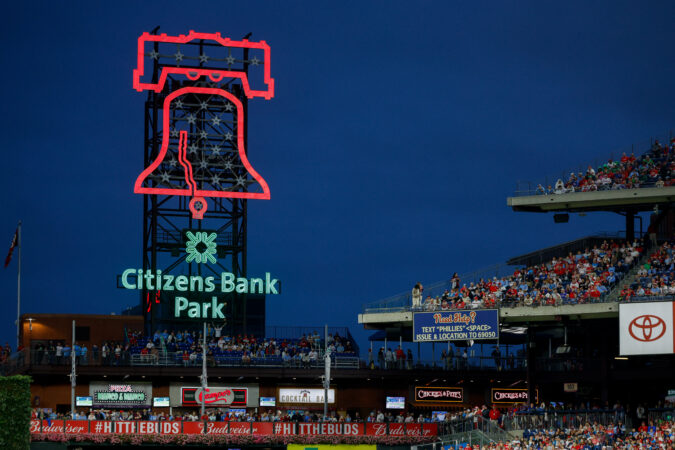
    Locally, Citizens is best known as the longtime sponsor of the Phillies ballpark, under a $95 million deal expiring in 2028.

    Bruce Van Saun, chief executive of Citizens Bank’s parent, Citizens Financial Group, since it went public in 2013, agreed to answer questions about business and consumers, whether the data-center boom is for real, and hopes for the Phillies’ 2026 season. Answers edited for clarity and brevity.

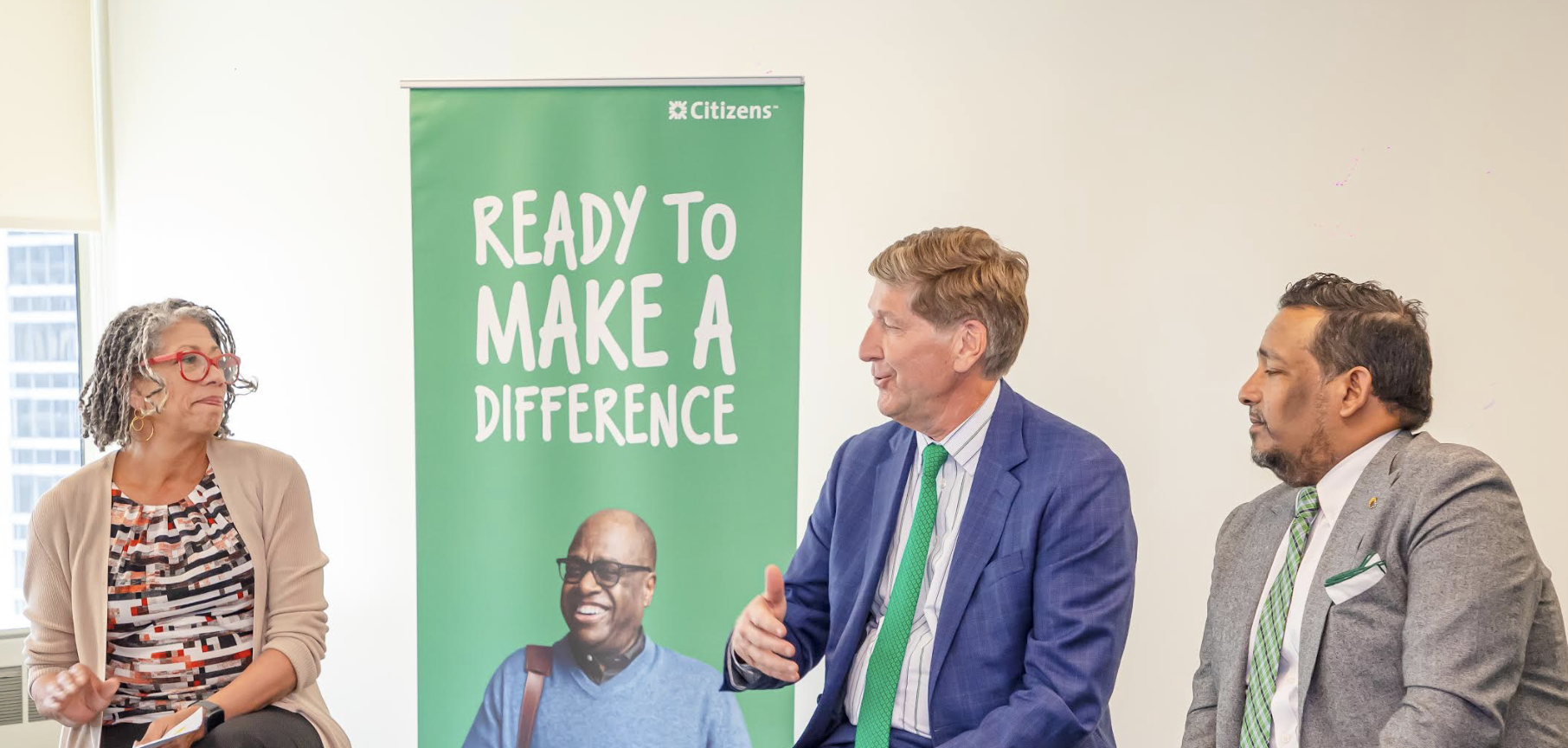
    Bruce Van Saun (center, blue jacket), chief executive of Citizens Financial Group, with Leslie Winder (left), a director of the nonprofit Urban Affairs Coalition of Philadelphia, and Arun Prabhakaran, coalition president and former chief of staff to Philadelphia District Attorney Larry Krasner, in March 2025.
    Was business hurt by trade and tariff costs, inflation, or the labor market slowdown?

    The very biggest companies have more diversification and more ability to withstand choppy waters. The smaller the business, the less diversified it is and the more impacted it is by exogenous factors.

    But most middle-market companies have had a successful year. They have come through the pandemic closings, the bout with high inflation, the higher interest rates, then the tariffs.

    Businesses had to become more adaptable and better at scenario planning, at predicting what events will do to their suppliers. Companies have sharpened how they manage real estate, digital technology, and now AI. And they locked in very attractive financing when rates were lower.

    What about the middle class, homebuyers, credit card borrowers?

    People lost a little purchasing power. People are eating out a little less. They are taking fewer trips.

    But we are not seeing a lot more loan delinquencies. Prices go up more than wages, but they are still saving for kids’ education and retirement. Maybe they are taking a home-equity line of credit.

    As economic growth stabilizes and inflation comes down, you’ll see wages increase and people get to a place where they feel better.

    Which sectors are improving?

    Tech-related, health-related show a lot of strength and resilience. Aerospace and the whole military defense sector, companies like Day & Zimmerman [which makes ammunition for the U.S. and clients such as Israel]. There are many wars going on; people need their armament. We’ve seen pretty dynamic strength last year.

    Transportation and logistics — road construction — is pretty strong.

    And data center construction. I hope Pennsylvania gets its share.

    Is Pennsylvania a good place for data centers? How do you overcome local opposition?

    There is a general NIMBY attitude: ‘I like to play on my phone and get the advantages of Microsoft Copilot and AI. Just don’t put a data center near me to use a lot of power.’ There’s controversy around that.

    But if you look at the investment and jobs that go with data centers — they need access to low-cost energy and water — then look at Pennsylvania with its natural gas and its nuclear plants like Three Mile Island. Data centers need low-cost energy and water. Pennsylvania has it.

    Will 2026 improve on last year?

    Our returns should continue to go up. Our net interest margin [the difference between what banks charge borrowers and what they pay depositors] widened last year, and we expect it will be up this year. And all our businesses are demonstrating loan growth.

    Whom do you lend to?

    We serve the middle market, from $25 million in revenues up to corporations with around $3 billion in yearly sales. PNC and Wells Fargo [are larger, but] we aren’t playing the game materially differently from what they offer. If a company wants to finance more, they go to maybe JPMorgan or Bank of America.

    We started building a private bank [focused on business owners and wealthy professionals] a couple of years back. Now we have $14 billion in deposits, $7 billion in loans, $10 billion in client investments, just in that unit. And growing faster than we projected, with more accretion to our bottom line.

    We help our clients become more successful: ‘Here’s an acquisition idea. Here’s a working-capital idea.’ That level of personalized attention has been a winning strategy for us.

    U.S. software start-ups, and biotech centers like Philadelphia, staggered a bit when the best-known tech banks failed in 2023. JPMorgan bought First Republic, but you hired a lot of their staff. How’s that going?

    What First Republic did really well for company founders was advice banking, wealth needs, family financial planning. And we invested heavily in technology to get to the service levels First Republic was famous for. We took on 150 of their people, teams of strong, highly regarded wealth managers, and added private bankers, to locate with our banking teams. That group is now 550 people.

    We went into areas where they were strong — Boston, New York, Palm Beach, and three areas of Northern California. We had to add teams in Southern California — San Diego, Orange County, and one in Los Angeles.

    But not Philly?

    Philly is high on the list of new markets we want to attack with that approach. There is a cadre of successful people here. We want to be known as the bank for successful people.

    Gov. Josh Shapiro talks about a Pennsylvania manufacturing revival. What signs do we see that’s happening?

    We are positioning ourselves for a lot of inbound investments. President Donald Trump is going to our allies in Japan and South Korea to invest and bring skilled jobs into our country to be more self-sufficient in manufacturing — in steel, in shipbuilding, for example. It all sounds good on paper. I think it will come.

    Why do car factories and other big manufacturers open down South, instead of in Pennsylvania?

    They find the states willing to take a fresh look at how much bureaucracy they have and cutting it back. You are competing with Texas, Virginia, the Carolinas, which are very successful at attracting industry. I don’t think Pennsylvania will want to miss out.

    What will it take to bring the World Series back to Philly, which increases fan and ad spending?

    We are hopeful the Phillies have a great offseason. I’m a little disappointed [Bo] Bichette went to the Mets. But, hey, they signed J.T. [Realmuto]. John [Middleton, the Phillies’ lead owner] is very committed to fielding a winning team. Go Phils!

  • Fallcatcher scammer has been sentenced to 5+ years

    Fallcatcher scammer has been sentenced to 5+ years

    A Florida fraudster who fooled 60 mostly Philadelphia-area investors into contributing $5 million to develop biometric anti-addiction systems, then fled investigators and spent five years as a multinational fugitive before surrendering, was sentenced Wednesday to 5½ years in federal prison.

    Henry Ford, also known as Cleothus “Lefty” Jackson, had pleaded guilty to securities fraud and seven counts of wire fraud for forging documents from insurance companies to inflate the prospects of Fallcatcher, a company he said he was developing to track people in recovery and reduce the risk they would fall back into addiction.

    At his plea hearing last year, Ford insisted his idea for a platform that would track people in recovery was legitimate but admitted that he had falsified claims that insurers and state agencies supported the project and would soon make it profitable. The goal had been to sell the company at a big profit for its investors.

    He was sentenced Wednesday by U.S. District Judge Joel H. Slomsky to the prison term, plus three years supervised release and $2.1 million in restitution.

    Ford started the business in Florida in 2017 but by 2018 was running out of money, according to prosecutors. He then incorporated the company in Delaware and hired managers and a board. He paid Montgomery County insurance salesman Dean Vagnozzi to recruit private investors from Vagnozzi’s network with email pitches and free meals in Montgomery County and South Jersey. But he gave Vagnozzi and the investors false information about Fallcatcher’s prospects.

    Ford fled Philadelphia in 2019 after giving SEC investigators phony documents in an attempt to disprove allegations that he was exaggerating Fallcatcher’s prospects and after learning that he and Fallcatcher were subjects of a criminal investigation.

    He went to Miami, then flew to Morocco, according to federal investigators. Ford later told officials he lived and worked in the United Arab Emirates; Thailand; Malaysia; Indonesia; Tunisia; Guinea; and Mexico.

    Ford filed a Freedom of Information Act request from Mexico in 2024 with the U.S. Marshals Service to see if they were still looking for him.

    Ford crossed the border into Arizona in April 2024, where he was arrested on a warrant for the Fallcatcher case. He was sent to Philadelphia for trial and detained in the federal jail as a flight risk. In 2011, he had been convicted of mortgage fraud in federal court in Arizona as Cleothus “Lefty” Jackson and served a prison term before starting Fallcatcher.

    Part of the money Ford raised for Fallcatcher has been collected for investors from business and personal accounts seized from him in 2019 after Scott Bennett, a company executive, became suspicious that Ford was collecting improper payments from the company and reported him to the SEC.

    According to prosecutors, Ford gave salesman Vagnozzi and investors “false and misleading information” about Fallcatcher and showed them phony documents about an insurer’s promise to fund a pilot Fallcatcher program. Ford paid Vagnozzi $500,000, which Vagnozzi refunded as part of a civil settlement with the SEC, plus 4 million shares of Fallcatcher stock, which proved worthless.

    Vagnozzi is suing that agency, alleging that federal officials improperly seized his former business, A Better Financial Plan, as part of the 2020 court-ordered government takeover of Par Funding, a Ponzi scheme whose unregistered securities Vagnozzi also sold to clients. He later sued his lawyer, former Eckert Seamans partner John Pauciulo, who Vagnozzi said gave him bad advice about Par, Fallcatcher, and other investments.

    The case against Ford was investigated by the FBI and the SEC’s New York regional office.

  • What’s a billion-dollar loan really worth? For private credit funds, it depends on who’s counting

    What’s a billion-dollar loan really worth? For private credit funds, it depends on who’s counting

    As pension funds and other investors have cut back new private equity investments after years of poor returns, Wall Street private equity managers such as Apollo Global, Blackstone, and KKR have moved more heavily into corporate lending.

    They compete with banks to make loans but aren’t bound by the rules that govern banks. The managers bundle the loans into private credit funds and offer them to investors as an alternative.

    “Everyone has shifted to private credit,” which should make investors extra careful, warns Richard Vague, chairman of Pennsylvania’s $80 billion school pension system, PSERS.

    Scholars at Yale Law School cite estimates that private credit funds are approaching $2 trillion in assets, up from $300 billion in 2010, and they’re on track to double in the next two years.

    As private credit funds have grown, analysts warn that limited information about the loans makes it hard to know what the credit funds are worth or how they would respond to a slowing economy.

    For example, Philadelphia-based FS KKR Capital Corp., one of the largest and oldest private credit funds, and two of its rivals have won unwelcome attention for posting very different prices for their investments in the same Silicon Valley private-equity takeover loan.

    Such ambiguity doesn’t exist in publicly traded securities such as stocks, where investor assumptions are reflected in the market price at any given time. The conflicting private-credit valuations suggest analysts aren’t certain about how likely the private credit funds are to get their money back or to lose money if loans default.

    “Risk is on the move. We’re talking trillions‚” Mark Pinto, head of private credit at Moody’s Investors Service, told clients in a recent report.

    Different from banks

    While banks have rules for measuring and publicly reporting loan losses and late payments — and private credit managers say they, too, apply strict internal standards — Moody’s analysts in that report called private credit loan reporting “opaque.” They cited private credit risk as a rapidly growing area of concern to financial systems.

    The rapid growth is new, but private credit has long history.

    FS KKR was set up as a publicly traded business development company and opened to investors in 2009 by Future Standard (formerly Franklin Square), a Philadelphia-based investment firm headed by Michael Forman and cofounded by college-housing baron and Sixers co-owner David J. Adelman.

    That fund is marketed by FS, but its investments are managed by staff at FS’s partner, private-equity giant KKR. It invests about $20 billion of FS’s total $86 billion in client assets, FS reported last year.

    While FS KKR paid shareholder dividends of 70 cents a share — or most of its profits in recent quarters — shares have lately traded around $15, down from the low $20s last year, a sign that investors are concerned about prospects in a slowing economy.

    In a widely reported example that points out the difficulty of measuring the value of the loans in these funds, FS KKR’s share of a loan to finance the 2021 purchase of Medallia, a Silicon Valley-based customer-service software company, was listed on KKR’s books last fall at 91 cents on the dollar, a discount of 9% to its original value, as confirmed in an SEC filing. A discount implies FS KKR has some doubt the borrower will pay its loans on time.

    But a rival Apollo Global fund listed the same loan at a 23% discount, as if Apollo saw a significantly higher risk that Medallia wasn’t going to pay.

    SEC records show a third private credit fund run by real estate giant and private-credit pioneer Blackstone listed the Medallia loan at an 18% discount.

    How can the same loan have three different values?

    Detailed public reporting on Medallia’s finances had almost stopped since yet another private-equity and private-credit investor, Chicago-based Thoma Bravo, paid $6.1 billion in 2021 for the company. Thoma Bravo took Medallia private and borrowed from FS KKR, Apollo, Blackstone and others to help fund the deal, Leyla Kunimoto, a former KPMG auditor noted in a post on her credit review platform, Accredited Investor Insight.

    That leaves investors trying to glean intelligence from limited information or trusting fund managers with their differing views and valuations.

    So what’s the loan really worth?

    KKR partner Daniel Pietrzak, who is both president and chief investment officer for FS KKR Capital Corp. and head of Global Credit at KKR, said pricing differences “can arise naturally” for loans that aren’t publicly traded.

    Factors include “variations in valuation providers, timing, policy nuances and available information,” he added in a statement. So, for example, one of the investors might know something others don’t.

    Pietrzak said KKR pays “independent third-party valuation providers as part of a robust and consistent process, which helps ensure valuations fairly represent asset value across our portfolio.”

    These specialized loan-value estimators include firms such as Lincoln International LLC in Chicago, Valuation Resource Corp. (VRC) in New York, and an affiliate of the Duff & Phelps advisory group.

    The Medallia loan totaled $1.8 billion at 6.5% interest. Many of the other loans in the funds are smaller and are used to finance midsized businesses, potentially spreading the risk if a few borrowers go broke, or compounding it in case of a widespread financial recession.

    FS KKR, like some other private-credit funds, “should incorporate higher discount rates for stressed credits,” including lower valuations for loans by companies with other outstanding loans that aren’t getting paid on schedule, said Rob Dubitsky, a former Credit Suisse managing director and Moody’s analyst who now heads The People’s Economist, a financial-analytics start-up.

    “These valuation and disclosure issues are not unique” to the FS KKR fund but are reflected in private credit funds’ recent weak share performance and low credit ratings from Moody’s and other agencies, Dubitsky wrote in a recent article.

    FS KKR was rated Baa3 by Moody’s last year and BBB- by Fitch. Those are the lowest investment-grade ratings above junk bonds. Lower ratings are for entities analysts expect are more likely to default, which would discourage many investors.

    While Moody’s analysts and other observers expect private credit funds to continue their recent rapid growth, investors watch their opportunities closely, and may shift course.

    For example, private equity has generally “underperformed” compared to public investments for most of the past five years, PSERS chief investment officer Ben Cotton told trustees at the board’s annual reorganization meeting Jan. 9. So he said he’s thinking it may be time to consider new private equity investments: “We are getting to where we may have opportunities and want to be ready.”

  • This Plain businessman started a computer service for the Amish. Does it do too much, or not enough?

    This Plain businessman started a computer service for the Amish. Does it do too much, or not enough?

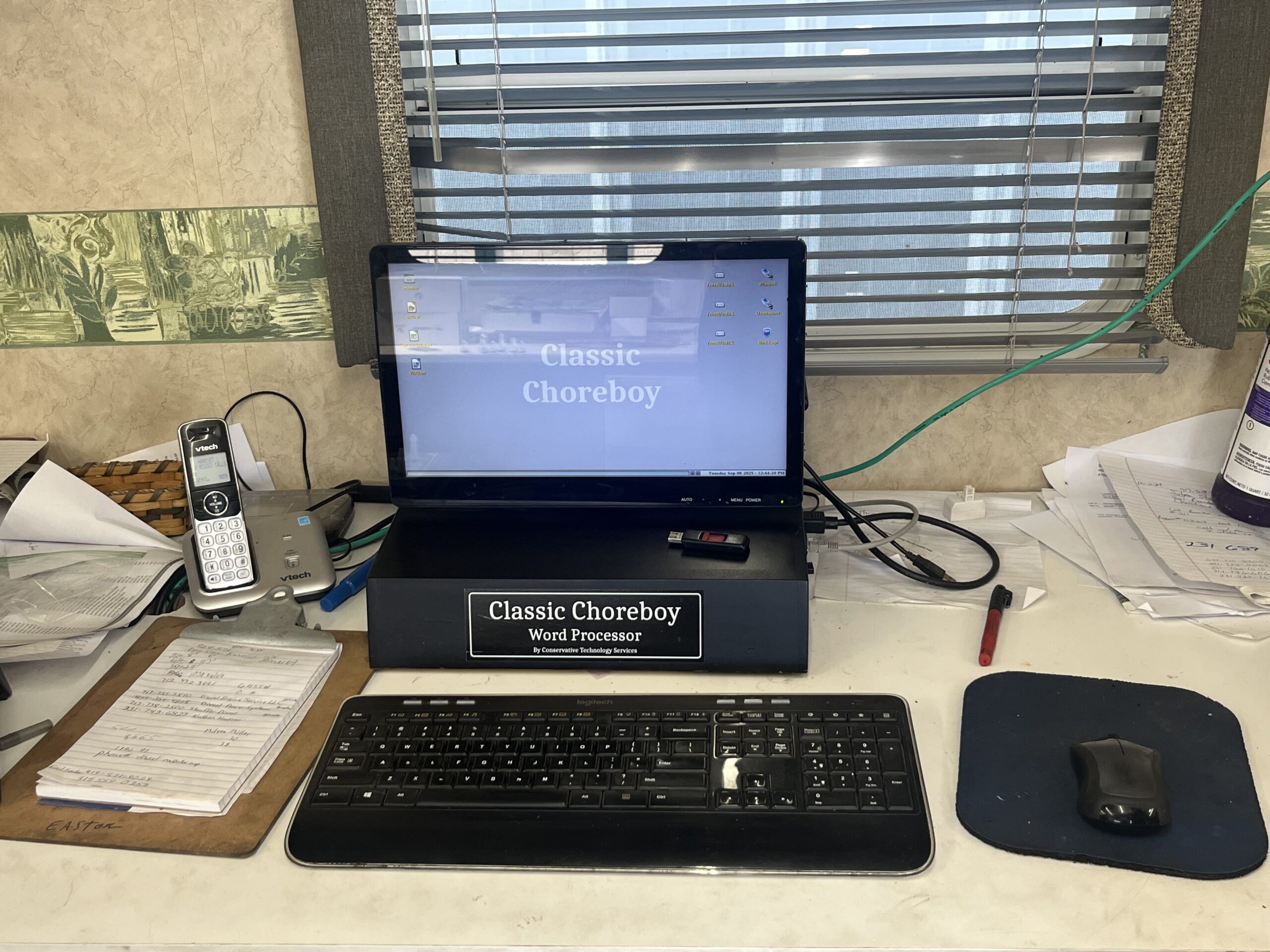
    From his machine shop among corn and bean fields on Kurtz Road near Ephrata, Lancaster County, Allen Hoover sells 1970s-style word-processing computers, upgraded to internet speeds, at the rate of more than one a day.

    For some, Hoover’s machine fits fast-changing business with timeless faith; others fear the computers have fed into a wave of covert internet use that threatens a formal split among his Amish customers.

    Since 2004 the machines, originally priced at $800 each, have been adopted by dozens of Plain religious communities to run local systems, with names like Classic, Chore Boy, and Steward, to accommodate and monitor members’ text notes and business records, without video, corporate media networks, or Apple and Google apps.

    A senior member of his Old Order Mennonite congregation and coauthor of a book on Plain responses to family abuse, Hoover agreed to talk to The Inquirer about Mennonite and Amish ideas and tools. The conversation has been edited for brevity and clarity.

    What are the tensions around computers in Plain communities?

    Our real goal is to live a separate life and not to be so influenced by popular society around us. If morality is decaying in the world, it becomes even more important for us to become a separate people. Well, that’s hard to do.

    Everything is tied together. Especially with the internet, and, smartphones. It gets harder and harder for us to be in business and to make a living without some way of being connected.

    One of Allen Hoover’s Chore Boy word-processor machines at his workshop in Ephrata, Lancaster County, September 2025.

    How are your machines different from normal computers?

    For our Plain people, we wanted it to be separate from the world. So it should have no connectivity. Not to the internet, email, or even fax. Just a stand-alone unit. And then of course no amusements of the world, no games, music, nothing like that. Just a business tool.

    Couldn’t you do that on a computer?

    Well, if it’s in my home, my children will find ways of doing things with it that I have no idea of. And also, if you look at 50 different personal computers in peoples’ homes, you will find 50 different systems. We wanted one like the old word processors, where every unit was exactly alike. No additional programs, no apps that you can put on to listen to music or whatever.

    The programs included are a word and a spreadsheet program. And a drawing program, and a computer-aided design program. We developed our own comprehensive business accounting system. With inventory control, invoicing, all that.

    We looked at the on-the-shelf programs. They are almost all internet-connected. There are a few that stand alone. But they were so clunky, made for a specific purpose, that they just didn’t fit the bill.

    How did you adapt the machines for Plain needs?

    We had a few meetings with interested businesspeople, to see what the need was. Probably made a mistake, we never asked the church for permission.

    And it took off. In the beginning, it was the only thing out there for the Plain people. Then other people started. This is about the only one that is still going — because of our stance of not making changes. We do upgrade it. It has much more power now. But we wanted to stay away from Windows or Mac.

    We ended up using Linux as the operating system. We used Open Office, we now use LibreOffice, another free program, more powerful, more useful. The computer-aided design program is called FreeCAD. There is also something similar to MapQuest, that helps you with planning and mapping trips.

    How many machines have you sold?

    I’m guessing 400 a year. So if we have been doing this for 20 years, there are a few thousand out there.

    How did the community react?

    It was mixed. In the beginning, it was a huge whoop of joy: Here is something we can use. Once a year there is an expo in Lancaster County, focused on the Plain people and Plain businesses. I got a booth and it was the star of the expo. People were lined up because it was the new thing.

    Some Plain communities reacted by banning them because it was coming too close to the computer world. And I understand that perfectly. No hard feelings about that.

    What happened more often was that communities started with it, but then became dissatisfied that we didn’t allow them to put more programs on. So they made their own and eventually drifted into the internet world.

    It has not made me a popular person. For the ones that feel we should not have gotten into computers at all, I am the bad boy. For the ones that feel we should have allowed more connections, I am the bad boy.

    We really don’t want our people working in General Motors, big factories, all day long. We fear that will influence us too much. And so, we want our own little businesses like mine, Allen Repair Service, we rebuild, repair, and resell woodworking machinery.

    And it’s getting harder [without internet]. This was a tool to allow us to stay in those businesses.

    What about smartphones?

    In Lancaster County, the Amish found loopholes, ways to have their cellphones, smartphones.

    The leadership are working through that right now, I’m pretty sure there is going to be a big split.

  • Philly small businesses face a big tax headache as an exemption ends

    Philly small businesses face a big tax headache as an exemption ends

    Small-business advisers and advocates are bracing for a wave of questions as the city’s Business Income & Receipts Tax (BIRT), Philadelphia’s municipal tax that hits both sales and profits, expands to cover tens of thousands of small businesses and self-employed workers as they pay their 2025 taxes.

    City revenue officials expect to collect more than $35 million in new BIRT payments this year from the expanded pool of taxpayers, even with slightly lower tax rates.

    Businesses are concerned not only about the cost of the tax but also trying to follow the city’s complex business tax rules and incentives, even as the city prepares to spend millions helping first-time business taxpayers.

    “This is applicable to every sole proprietorship, limited-liability company, incorporation, or partnership engaged in a business, profession, or activity for profit in the City of Philadelphia,” said Scott S. Small, trust counsel in the Philadelphia-area office of Fiduciary Trust International, a New York-based advisory firm for families and business owners.

    “Think of folks that have houses they rent. Daycare in their homes. For-hire drivers at Uber or Lyft. Estates and trusts that own property,” Small said. “A return now has to be filed, regardless of whether you made a profit.”

    Even with extensive city guidance, “it becomes a logistical nightmare” for small taxpayers, who may have to hire professionals to figure out what they owe and exemptions that can reduce the total, said Will Gonzalez, who runs CEIBA, a Latino business and economic education group.

    Business taxes and the general difficulty of doing business in Philadelphia were “the number one issues” reported in a survey of 200 city businesses by the Independence Business Alliance, a chamber of commerce for LGBTQ+ business owners, that was presented to members of Mayor Cherelle L. Parker’s tax reform commission last year, said Zach Wilcha, the alliance’s chief executive.

    “Small businesses pay on revenues, sales, profits [there is a separate net profits tax along with the BIRT income tax], and wages,“ Wilcha said. ”People love being in Philadelphia; they want to stay here. But they feel the tax structure is forcing them to leave.”

    Eliminating the BIRT’s income tax and curbing the revenue tax has been a longtime goal of business advocacy groups like the Chamber of Commerce for Greater Philadelphia. It was a goal of business members on the tax reform commission. City leaders in the end decided on gradual rate reductions instead, a move tax commission chair Richard Vague called “disheartening.”

    The BIRT tax rate on sales is dropping by half a penny per $1,000 this tax season to $1.41 per $1,000 of sales. And the income tax is decreasing to $57.10 per $1,000 of profits from $58.10. The city plans to slowly cut the revenue tax to zero and the BIRT income tax by half by 2039.

    But this year, far more taxpayers will be paying the tax, which is due by April.

    Philadelphia formerly exempted businesses that gross less than $100,000 in sales per year from paying BIRT. That exemption failed to survive a court challenge. Under the “uniformity clause” of the Pennsylvania state constitution, taxes can’t exempt whole classes of taxpayers based on income.

    “It’s the same reason we can’t have a [state or local] tax just on billionaires, or millionaires,” Small said.

    A smaller-business exemption on the city’s use and occupancy tax exemption is also gone, leaving more small-business owners liable for that 1.21% a year tax, paid in monthly installments.

    A bill proposed by Councilmember Mike Driscoll that would exempt solo entrepreneurs from paying the business income and revenue taxes has not advanced in Council.

    The city collected around $680 million in BIRT business taxes last year, about 10.5% of city revenues.

    Among Pennsylvania communities, only a minority, including Radnor Township and other Main Line communities, charge similar business taxes.

    Kathleen McColgan, Parker’s revenue commissioner, says Philadelphia expects to collect “an additional $35 million to $40 million in fiscal year 2026″ from the broadened BIRT. The city has earmarked that money for “commerce and business development.”

    City officials have said they will spend $7.5 million this year for programs to help new taxpayers figure out how to manage the city’s complicated tax programs and exemptions.

    In recent years, the city has collected BIRT from around 40,000 larger businesses, McColgan said. She estimates that 50,000 businesses that have paid other city taxes will start owing BIRT for the first time. Roughly 25,000 other registered businesses that hadn’t incurred any taxes in recent years before might also owe.

    City officials could provide no estimate of how many businesses that never registered to pay taxes may be required to pay BIRT for the first time.

    To spread the word, McColgan said the city sent around 80,000 notices to registered business taxpayers in and outside the city, plus 119,000 postcards to businesses “who may have a responsibility to file” from lists the city purchased from a private vendor.

    Besides the promised multilingual tax education and assistance for first-time filers, officials noted that the city has an array of tax discounts that can reduce the small-business burden.

    First-time filers can get an extension if they can’t get the form in by April 15, but they will still owe the tax accruing from that date with any late fees.

    And, after the first year, taxpayers are expected to pay the next year’s BIRT in advance, in quarterly installments.

    Even with the city’s initial guidance, many first-time taxpayers will need professional help to navigate all those rules and realize available discounts, Small said. “It’s a nightmare” for a layperson to attempt to follow all the instructions and file correctly.

    “People want to pay their taxes,” CEIBA’s Gonzalez said. “It’s the right thing to do. They also need to pay their taxes, if they want to buy a house or send a child to college.

    “But anyone who is going to pay the BIRT for the first time is going to need a city business license. And for that, they have to pay any outstanding tickets and bills. And that can be a lot to resolve all at once.”

    His group and others have held online and remote workshops to advise drivers, independent home-health aides, and other first-time BIRT payers.

    Gonzalez predicted “a rude awakening for Philadelphians” as the tax fits in. “Our economy is built on a lot of this gig work, and we’d hate to see people punished for making more money for their families.

    “And this puts people in Philadelphia at a disadvantage. In a year we are celebrating the 250th year of the American Revolution that started with unfair tax concerns, we need to find a better way.”

    Small, of Fiduciary Trust, said the Philadelphians he advises tend to complain without leaving the city. “Folks kind of suck it up, and say, ‘It’s not as bad as it could be.’”

    Still, many people have noticed how the city and state also offer incentives to bring in new businesses that aren’t given to regular taxpayers, he said. “The small guy gets the higher burden, while larger ones who have more ability to pay, pay less.”

  • This $8M federal college grant will train Hanwha shipyard workers

    This $8M federal college grant will train Hanwha shipyard workers

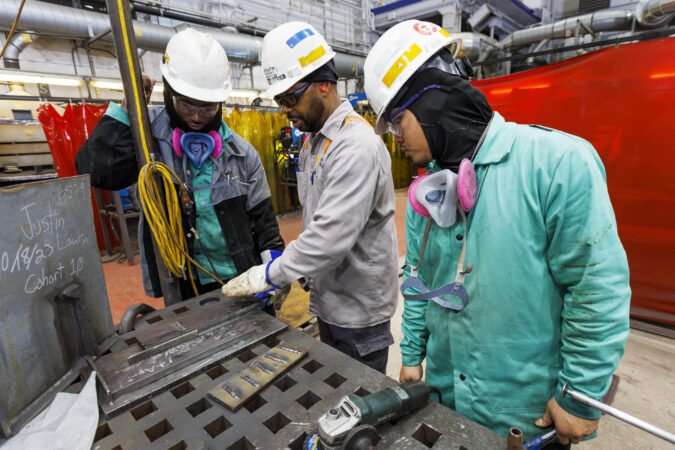
    A consortium set up in 1996 to train future shipyard workers at the former Philadelphia Navy Yard says a new U.S. Department of Labor grant will prepare workers for Korean-owned Hanwha Philly Shipyard. The group hopes to quadruple apprenticeship graduates from around 120 workers a year to around 500.

    “In line with President [Donald] Trumpʼs executive orders, these projects will help train our next generation of shipbuilders,” U.S. Labor Secretary Lori Chavez-DeRemer said in a statement.

    Led by Delaware County Community College, the effort includes other area colleges, partnered with Hanwha and the nonprofit Collegiate Consortium for Workforce & Economic Development.

    The Delco-led effort will set up “a new model of education and training for U.S. shipbuilding that will include sending U.S. instructors and workers overseas to learn advanced shipbuilding techniques” to be used at yards including Hanwha’s in South Philadelphia, the college said in a statement.

    The money will help pay for training simulation models, online courses, and other programs for “an internationally recognized curriculum for shipbuilding skilled trades” to help trade unions, schools, and shipyards prepare new apprentices and more-experienced journeymen union workers, veterans, welders, steelworkers, electricians, steamfitters, and carpenters.

    The partners “will accelerate the transfer of proven global shipbuilding practices to the U.S.,” Hanwha Philadelphia Shipyard chief executive David Kim said in a statement.

    The consortium is chaired by Marta Yera Cronin, who is also the Delco community college president.

    The shipyard, bought by South Korea’s family-owned Hanwha industrial group for $100 million in late 2024, employs around 1,700 but wants to double that. It plans to bring in new automated equipment to build ships and drones for the Navy, other government agencies, and private shippers.

    Hanwha sends workers from its giant shipyards on Geojedo island, South Korea, to help complete work on civilian ships in Philadelphia.

    The company has pledged to invest $5 billion in the yard, backed by U.S. government grants and loans. It says it wants to boost output from the current one ship every eight months to 10 to 20 a year.

    Trump has said he’d like to see Hanwha technology used by U.S. workers to build nuclear submarines and battleships in Philadelphia.

    That would require extensive new dry docks, cranes, power plants and other large capital investments, and a lot more ground and dock space than the 118-acre Hanwha-owned yard or the neighboring former Navy site where family-owned Rhoads Industries repairs and fabricates parts for General Dynamics, a major Navy submarine builder.

    A separate $5.8 million Labor Department grant is going to the Massachusetts Maritime Academy, one of several civilian officer training schools slated to receive Korean-designed training vessels that the Philadelphia yard has been building in recent years. That money will develop additional shipbuilder training with foreign partners.

    Under current contracts with the Philadelphia metalworkers’ union group that represents yard workers — itself a joint effort of the boilermakers, operating engineers, carpenters, and other unions — newly qualified workers can earn around $30 an hour. Experienced workers can qualify for as much as $100,000 a year, including overtime.

    According to the consortium, community colleges have added trades education following a drop in U.S. public school shop classes and a shortage of U.S. workers interested in industrial work, including shipbuilding, which involves high-heat tools, dangerous materials, and outdoor work in all weather.

    The grant will speed expansion of the consortium, which has received grants from Citizens Bank and support from port-related agencies in past years.

    The college says it has trained more than 600 apprentices in all fields over the past 20 years. It stepped up its focus on shipbuilding beginning in 2017.