Philadelphia’s ports ranked as the fastest in North America for the third year in a row, according to the latest annual Container Port Performance Index, sponsored by the World Bank and Standard & Poor’s as a way to encourage improvements to terminals that handle global trade and pack goods moving from the ocean to road and rail for delivery.
The survey gave Philadelphia the highest ranking of more than 50 ports in the United States, Canada, and Central America.
Boston and Jacksonville, Fla., ranked second and third. Philadelphia’s nearest neighbors — the New York area and Baltimore ports — ranked far behind. The list measures the time ships spend at port berths, the time from a ship docks until it is unloaded, crane availability, ship size, and other measures.
No North America port ranked among the 20 fastest of more than 200 surveyed worldwide. That list was dominated by ports in China and other parts of East Asia, in Arab and North African countries, plus Algeciras, Spain, and Posorja, Ecuador.
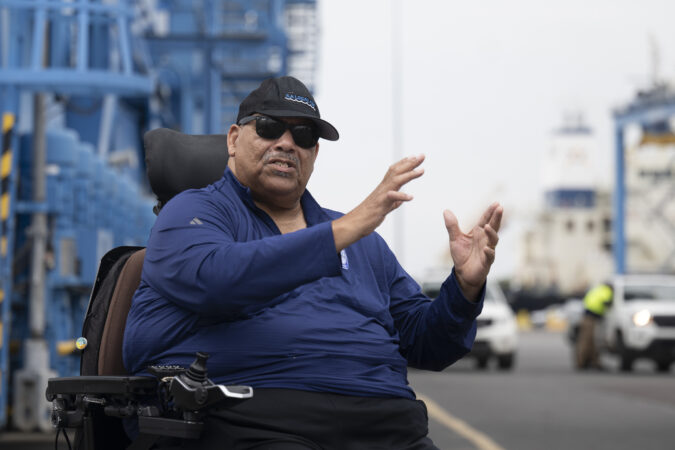
“This sometimes looks like chaos, but it’s organized chaos. It’s about teamwork,” said Boise Butler, president of Local 1291 of the International Longshoreman’s Association.
ILA is the main East Coast port labor union group, claiming more than 1,400 members on the Philadelphia docks, plus more in New Jersey and Delaware.
Butler said Philadelphia had long ago expanded its hours to attract shippers who were concerned that the terminals far up the Delaware estuary were more vulnerable to any delays.
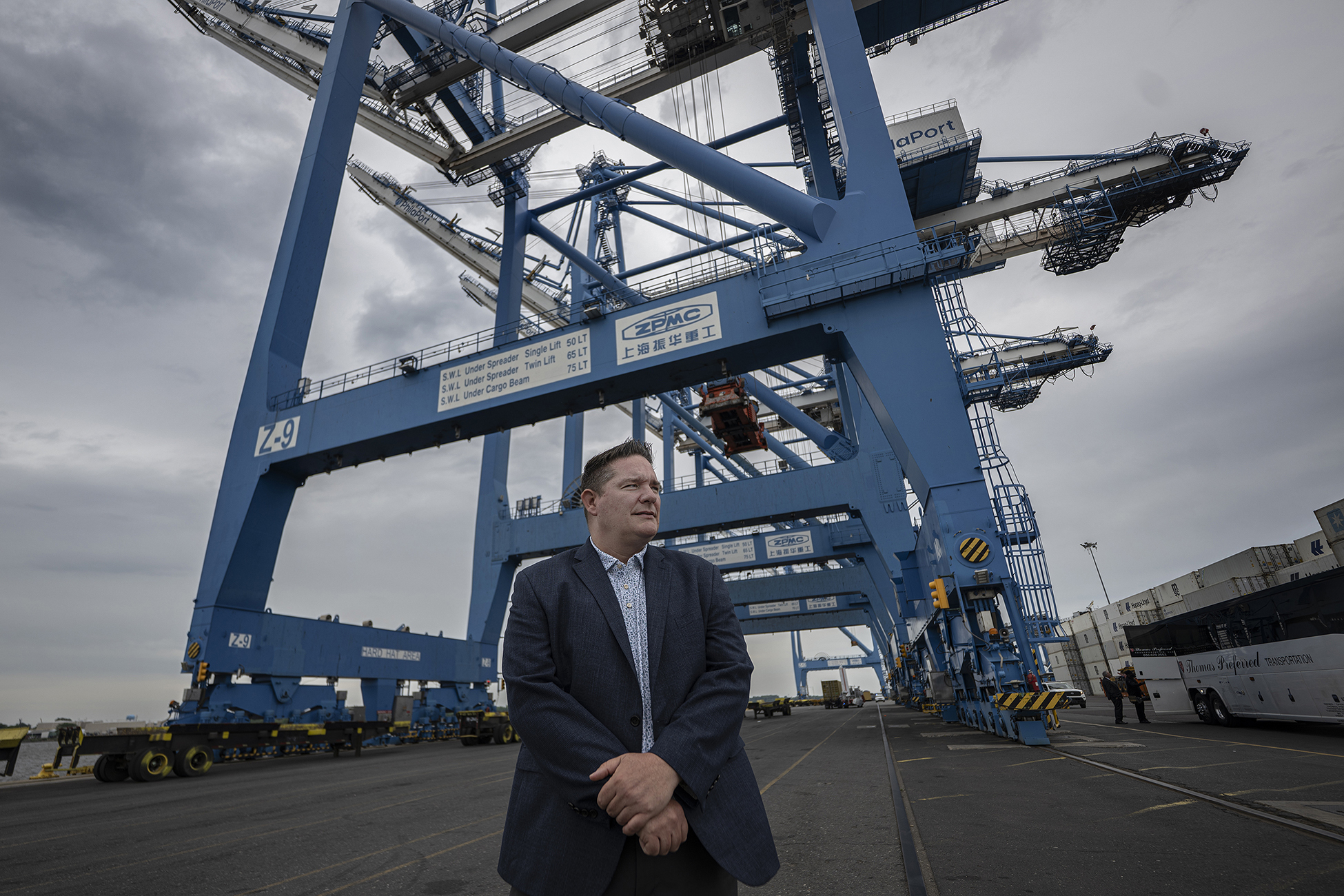
Lazer credited “our very skilled labor” for handling large loads efficiently with minimum damage reports, according to commodity and container shippers.
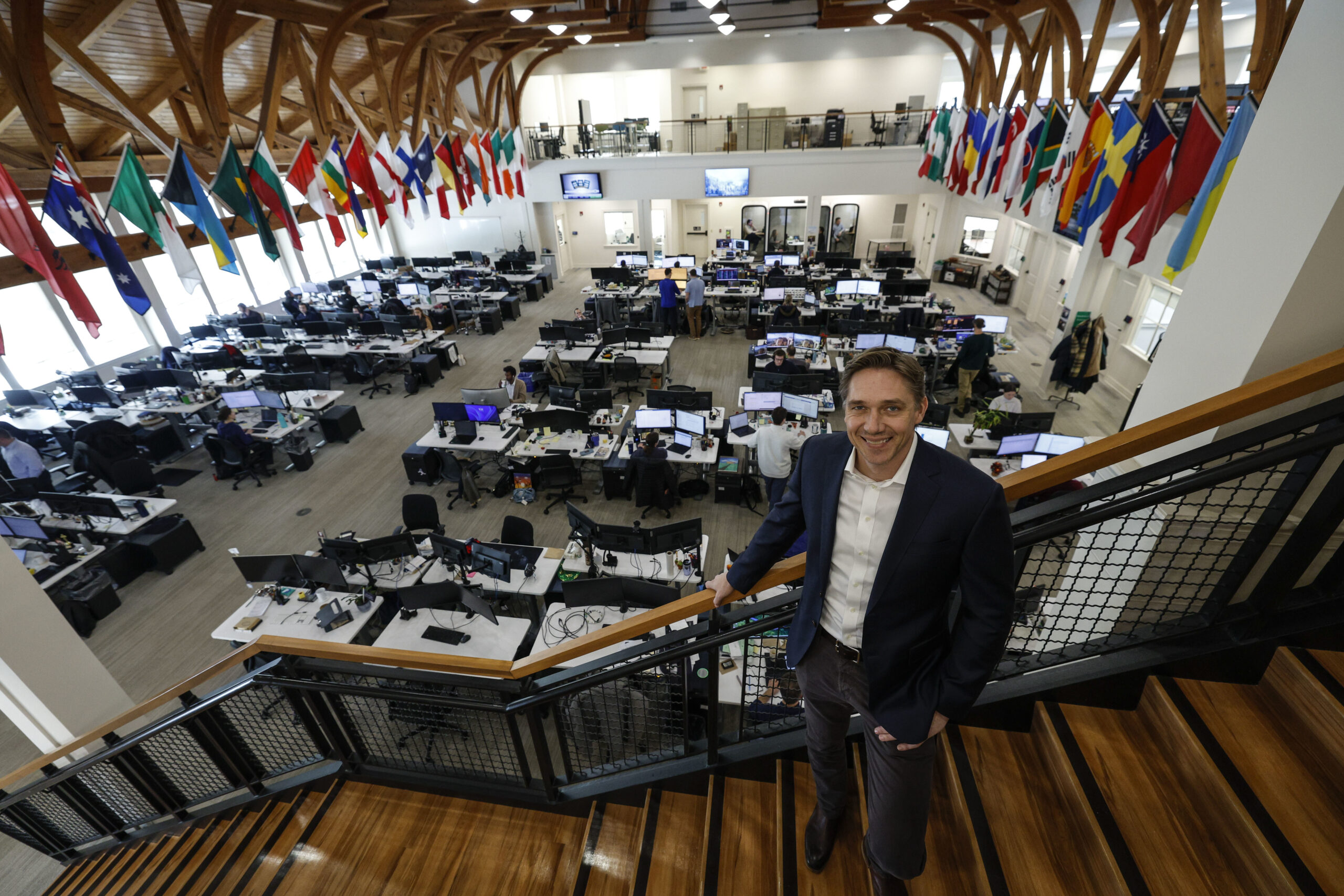
Richard Lazer, CEO of PhilaPort, near cargo cranes at the PhilaPort terminals. Lazer credits “our very skilled labor” for handling large loads efficiently with minimum damage reports.
It is premium work. The Longshoremen’s contract currently pays experienced workers $50 an hour, rising to $54 in October, with overtime pay after five hours, Butler said. “If they’re not making $200,000 after five or six years, something’s wrong.”
But the ranking is “not just about labor,” Butler said. “It starts with the Commonwealth of Pennsylvania, what they have built, and their vision for this port.”
Leo Holt, whose family-owned shipping company operates on the Packer Avenue docks and at its own Gloucester City port terminals, said the latest high score is “credit to all parties.”
“It’s a partnership between labor and management that has taken a long time to refine,” Holt said, referring to last year’s report, which also put Philly at the top of North American ports. “We work hard at it.”
Butler said the port needs to expand beyond the recent record hauls of nearly 1 million containers a year if it is to challenge ports like Savannah, Ga., which he said shipped five times as many containers.
“We need more warehouses,” Butler said.
The state built or helped finance many of the port’s improvements and has pledged to lead expansion into part of the former Philadelphia Naval Base and the Norfolk Southern freight yard in South Philadelphia. Four cranes larger than any currently on the area dock and two new 1,000-foot berths are planned, Lazer said.
Philadelphia cargoes through the Tioga Marine Terminal near the Betsy Ross Bridge include wood pulp and cocoa beans moved and, recently, ship propellers and sheet and structural steel imported by Korean industrial giant Hanwha for transfer by barge back down the Delaware to Hanwha Philly Shipyard.
Besides containers, the South Philadelphia port that once handled iron and coal now ships fertilizer and cement. Korean cars from Hyundai and Kia also land in the port.
South American fruit, which once formed a significant part of the Philadelphia and Wilmington port totals, now goes mostly to ports in New Jersey, Butler said.
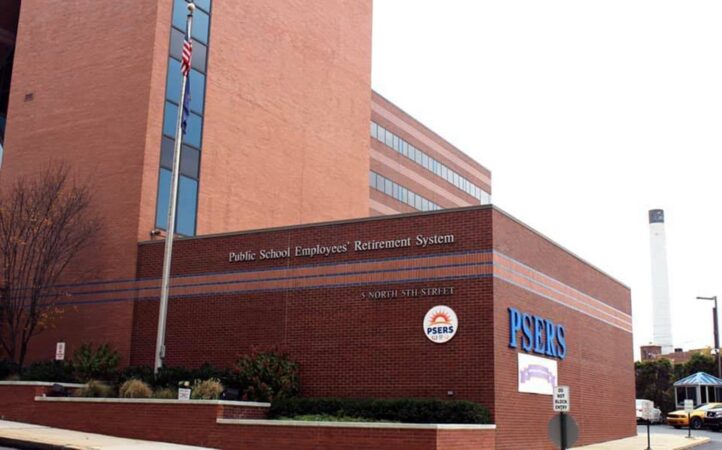
Three investment firms that advised Pennsylvania’s largest pension system have agreed to pay $30 million to settle legal claims alleging that their bad advice cost Pennsylvania teachers far more.
The investment firms are Chicago-based Aon Investments USA, West Conshohocken-based Hamilton Lane Inc., and Portfolio Advisors LLC, now part of FS Investments of Philadelphia. Lawyers for school staff had alleged that they helped the PSERS public school pension fund select hundreds of high-fee but collectively underperforming investments when they could have been making more owning U.S. stock-index funds, according to a complaint initially filed in 2021.
PSERS’ performance was so weak in 2011-20 that the state’s “shared-risk” law, which requires teachers to pay more for their future pensions when investments perform poorly, kicked in for the first time.
That law compelled 176,000 Pennsylvania school employees hired since 2011 to pay an extra $87 million in payroll-deduction surcharges from 2021 to 2024. The pensions are financed mostly by investment profits and state treasury payments, with a smaller portion from school staff’s standard payroll deductions of around 7.5%.
Teachers and other school staff paid extra charges of 0.5% to 0.75%, averaging nearly $500 each over the three years, to help cover PSERS’ poor performance. They each will recover an average of around $112.
“The lawsuit shined a light on the industry and will result in a significant recovery to these hardworking teachers. Our work on this case will result in better decision-making for this fund and other funds,” said Gerard Mantese, the teachers’ lead counsel along with John J. Conway and Gregory B. Heller.
The lawyers will be paid $10 million from the settlement for their five years of work on the case.
The former PSERS advisers had denied in a pre-settlement court filing “that their actions and/or inactions caused an increased contribution” from the teachers. They maintained they did the work, for which PSERS paid them millions, “fully and lawfully.”
FS and Hamilton Lane officials agreed to settlements last fall. Checks began arriving at teachers’ homes in February.
“We have consistently denied the assertions in this lawsuit” and “are glad to put the matter behind us” with a settlement that ends the claims, Hamilton Lane said in a statement. FS declined to comment.
Aon, whose recent settlement is awaiting court approval, didn’t respond to queries.
“Teachers across the state of Pennsylvania should be thrilled” — even if the checks, averaging enough to pay for a restaurant dinner for two, are mostly “symbolic,” said Kevin Steinke,the lead plaintiff in the teachers’ suit.
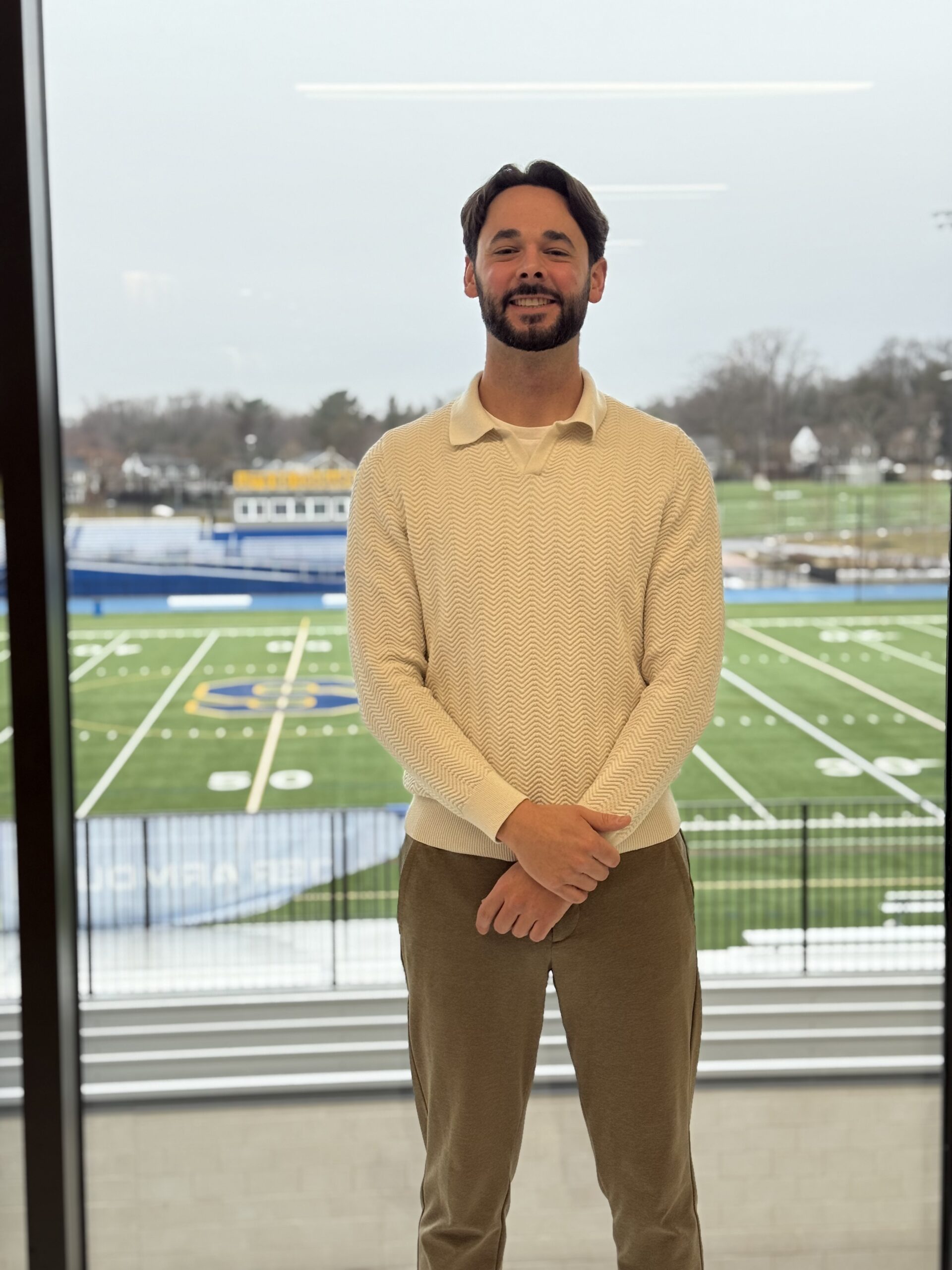
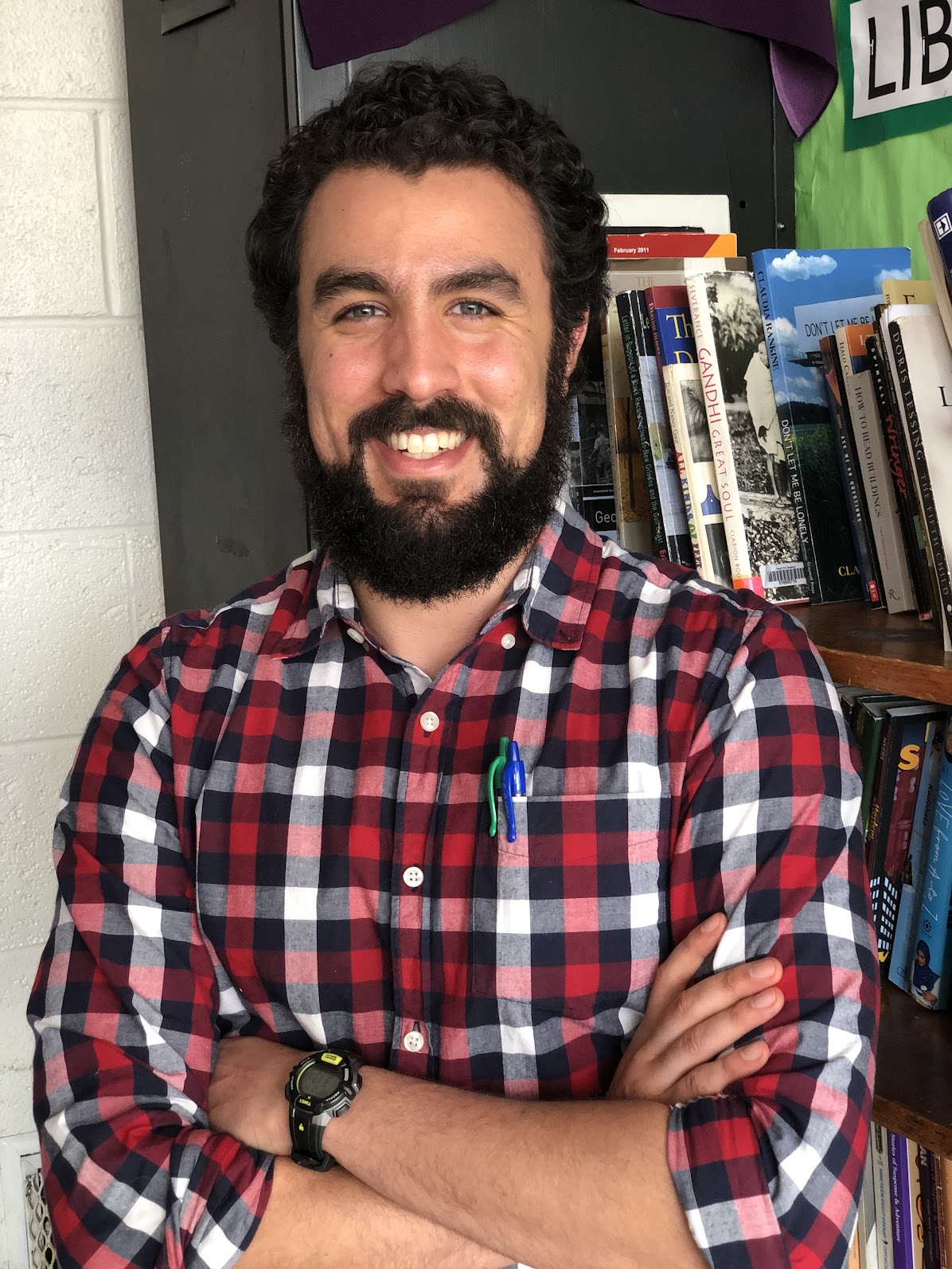
Steinke teaches anthropology, sociology, and law at Springfield High School in Delaware County, and coaches middle-school track.
“Anything that can be done to reassure younger teachers these days they are getting into a field where someone is looking out and caring for them is important,” he said. “There is still work to be done — in police pensions, in hospital pensions — but it’s a start.”
Kevin Steinke at Springfield High School in Delaware County, where he teaches anthropology, law, and sociology.
Steinke said he decided to sue after reading about PSERS’ unusual investments and weak returns in The Inquirer.
He said he hasn’t discussed the lawsuit with leaders of the Pennsylvania State Education Association, the union representing staff at most suburban and upstate schools, including Springfield.
Local union leaders held five seats on the 15-member PSERS board and regularly supported hiring high-fee private managers, even when state treasurer Stacy Garrity and her predecessor, Joe Torsella, warned that the high fees and low returns endangered the fund.
Daniel Reyes, a language teacher at Roxborough High School in Philadelphia, is among the Pennsylvania teachers who sued advisers to the PSERS pension fund for making expensive but poor-performing investments.
Steinke and a handful of other named plaintiffs who spent many hours reviewing the litigation and settlement as it progressed over five years will receive at least $10,000 each under terms of the settlement.
Mantese said his fees would cover costs including expert witnesses, such as labor economist Teresa Ghillarducci and former Harvard endowment tech fund manager Marty Dirks, who confirmed PSERS’ poor performance. Their analyses, along with comments from officials of the three firms, were redacted from the public record at the parties’ request by Philadelphia Common Pleas Court Judge Nina W. Padilla, who oversaw the cases.
A fourth adviser, Aksia LLC of New York, hasn’t settled and still faces a pending complaint.
The lawsuit also cited public reports critical of PSERS and its advisers, including conclusions of the 2019 state pension study commission (PPMAIRC) report, which found that PSERS and the smaller Pennsylvania State Employees’ Retirement Fund owned far more private “alternative” fund investments, paid some of the highest investment fees to private managers, and posted some of the lowest returns, among state pension funds over the previous decade.
PSERS hired hundreds of specialized U.S. and foreign firms recommended by staff and advisers. Bridgewater Associates, the world’s largest hedge fund manager, collected over $700 million in Pennsylvania pension management fees. By the late 2010s Bridgewater managed one-tenth of PSERS’ outside investments, far more than any other firm, before PSERS began canceling its contracts due to poor returns. Bridgewater’s former chief executive, David McCormick, now serves as one of Pennsylvania’s U.S. senators.
The settlements include:
$15 million, paid by Aon, which served as PSERS’ general investment adviser, collecting $7.2 million in PSERS fees from 2010 until it was fired for poor results in 2023. Aon was hired to recommend how PSERS should invest its assets, which now total $80 billion. But in its “willful blindness,” Aon did “little or nothing to recommend that PSERS reduce the [proportion] of its risky and expensive alternative investments,” according to the complaint. Aon had previously paid PSERS $7 million to compensate for “miscalculation” that exaggerated PSERS’ performance for 2011-20 and $1.5 million to the SEC for failure to investigate “discrepancies” between PSERS’ annual reports and the unaudited data used to calculate long-term results.
$11.25 million to be paid by Portfolio Advisors, which Steinke and his fellow teachers accused of recommending “numerous investments that were inappropriately and unduly expensive.” The payment almost equals the $11.45 million that Portfolio Advisors collected from PSERS to advise on private investment purchases in 2010-17.
$4 million to be paid by Hamilton Lane, a publicly traded advisory firm that replaced Portfolio Advisors as PSERS’ private investment adviser from 2017 to 2023 and collected $10.2 million in PSERS fees over that period. “Hamilton Lane’s failure to keep a close eye on the private market returns” resulted in “excessive” fees — and the firm “took virtually no action” to secure lower fees, even though that’s one of the things it was hired to do, according to the complaint.
Pierre Brondeau is back in charge at FMC, laboring to keep the global pesticide maker independent and save one of Philadelphia’s last big corporate headquarters as his board weighs a sale.
When Brondeau, a French-born naturalized U.S. citizen, stepped down as FMC’s chief executive in 2019, he had made the road ahead sound not easy, but straight.
His right-hand man, Mark R. Douglas, whom Brondeau called “a little smarter and a little younger,” stepped up to run FMC. He implemented “precision agriculture,” the AI-enhanced application of crop-protecting insect, weed and fungus killers in growing markets such as Brazil and India.
Shares topped $100 for the first time in 2020 and stayed high as sales rose during COVID.
But in 2023, revenues and profits slowed, and the share price fell below $50. In 2024, Douglas left with nearly $6 million in severance. Brondeau, still board chair, came back as day-to-day leader, with a cost-cutting mandate.
This past July, he announced plans to sell FMC’s India commercia business, which FMC expects will fetch less than the company invested. In October, FMC cut its dividend andannounced plans to outsource routine production. Brondeau’s second-in-command, Brazil-born Ronaldo Pereira, left the company.
On Feb. 4, FMC warned that it won’t recover fast in 2026. New products are catching on slowly as patents expire and generic competitors target FMC’s best-selling insecticide Rynaxypyr, which selectively kills crop-damaging moths and worms
Shares of larger rivals Bayer, BASF, and Syngenta also are down over the past five years. Among global pesticide makers, only Wilmington-based Corteva, which includes the former Dow and DuPont farm chemical units, has risen in that period.
Brondeau, 68, says FMC has rebounded before and has pesticides “in the pipeline” to grow again. The company employs 5,500 worldwide, including more than 300 at its University City headquarters and 330 at Stine research labs in Delaware.
He took questions from The Inquirer in his FMC tower office in University City before leaving for a Bank of America conference in Florida, then to visit in Southeast Asia, and Latin America.
The conversation has been edited for length and clarity.
You retired, and then you’ve had to come back. What went wrong?
People don’t realize how impactful COVID was. China had shut down their supply chain. So many raw materials came from China it created a period of incredible uncertainty. We were less impacted than some of our competitors; we had moved a lot of manufacturing to India.
But the farmers had so much fear they would not be able to protect crops, they placed a lot of double and triple orders. They put product in storage, which they don’t usually do.
And then we got into a period of incredible cost inflation. By the end of 2023, we were in a mega downturn — maybe the longest since I have been in the industry. We are still very slowly mending. Farm economics is not good. Pricing is a challenge.
We have new products, very good products. But in a situation like this, growers very often make decisions more on prices than technology. And the generic manufacturers now have extra capacity, even though they are also experiencing increased resistance [by pests to older pesticides].
Is it time to sell FMC?
Today my path number one is keeping the company independent.
When we present our very solid 2026 plan to the board, including divesting some assets, they approved the plan as they always do.
They also said any business plan has risks. We need a safety net. We need to explore what would happen if we put the company for sale.
But the main path is the 2026 plan. That’s where I spend most of my time.
What’s your model for FMC’s recovery?
I would look at ourselves — we’ve done this before. 2015 was a low point for the company. We had a few months where we were wondering where the company was going. We did what we had to do commercially and structurally. By 2018, we were back to a top level.
Agriculture is a very cyclical business. 2026 is a very difficult time. The agricultural economy around the world is weak. And FMC has its patent issues. We have the talent we need, the organization we need. The executive team here working with me has a steady hand.
Nobody here is panicking that the board wants us to look at the potential sale of the company. They’d better not!
The biggest challenge a CEO faces is making sure your employees — the people who carry the company despite what we have to announce — have faith. That they stay focused.
Are you cutting across the board, including your U.S. research center at Stine Labs near Newark, Del., and the labs in Europe, Asia, Brazil?
No, we are not touching research. It’s who we are. Research in our field is very expensive; it is critical for a company like us to sustain spending on R&D to renew the market.
The European Commission supported your acquisition of some of DuPont’s product lines. They were glad to have a big pesticide maker that doesn’t depend on genetically modified crops. Won’t this make it hard for a Big Four pesticide company to now purchase FMC?
My gut feel would be to say, yeah, we are in a different world than we were in 2019. But we have not had contact with the regulators in any country [about] the announcement. So I cannot really answer.
Why is this happening now?
2026 is critical for us. Our key molecule Rynaxypyr lost its patent protection in 2025. We have three new molecules which are growing. But they are not yet at the size where they compensate. We believe we are at the bottom the cycle. If we do what our plan says in 2026, we are prepared to grow in 2027, 2028.
You were a famous fan of Philadelphia and its institutions. Are you still?
I’m still a Philadelphia fan. I’ve done way less than I used to because of the situation of the company.
I intend to keep this tower here. What a great location. We’ll be back to growth. That’s my intent; that’s my objective.
It’s very simple. If we do what we have to do in 2026, then 2027 and 2028 will be up. There is no doubt. We just have to get through this year.
The fire-engine-red Empanadas United machine arrived in Philadelphia last fall. It appeared in the lobby under the SEPTA Regional Rail tracks at 30th Street Station, where yearslong renovations have shut restaurants, leaving a gap for automation to fill.
The empanada machine works like this: Tap your card. Choose one of four fillings. Whirr, beep, the ovens ignite, the rich smell rises. A minute passes. A pair of mottled, tan, crusted, half-moon-shaped empanadas, each bigger than a man’s hand, drop into a topless personal-pizza-sized box. The little plastic door opens, and your account is $8 lighter.
That’s a premium price compared to what you pay in Philly’s corner stores; but it costs extra to eat in a transit hub. The empanada machine is one of several rival meal-vending machines at the station, such as the California Pizza Kitchen machine that charges $12 for a plain, 7-inch pizza.
These turnovers were formed — from flour and fat, chicken or beef, sazon and cebolla — last night or yesterday, at Empanadas United. The Philadelphia-based empanada bakery serves restaurants across the region, from its base 15 blocks north of the train station.
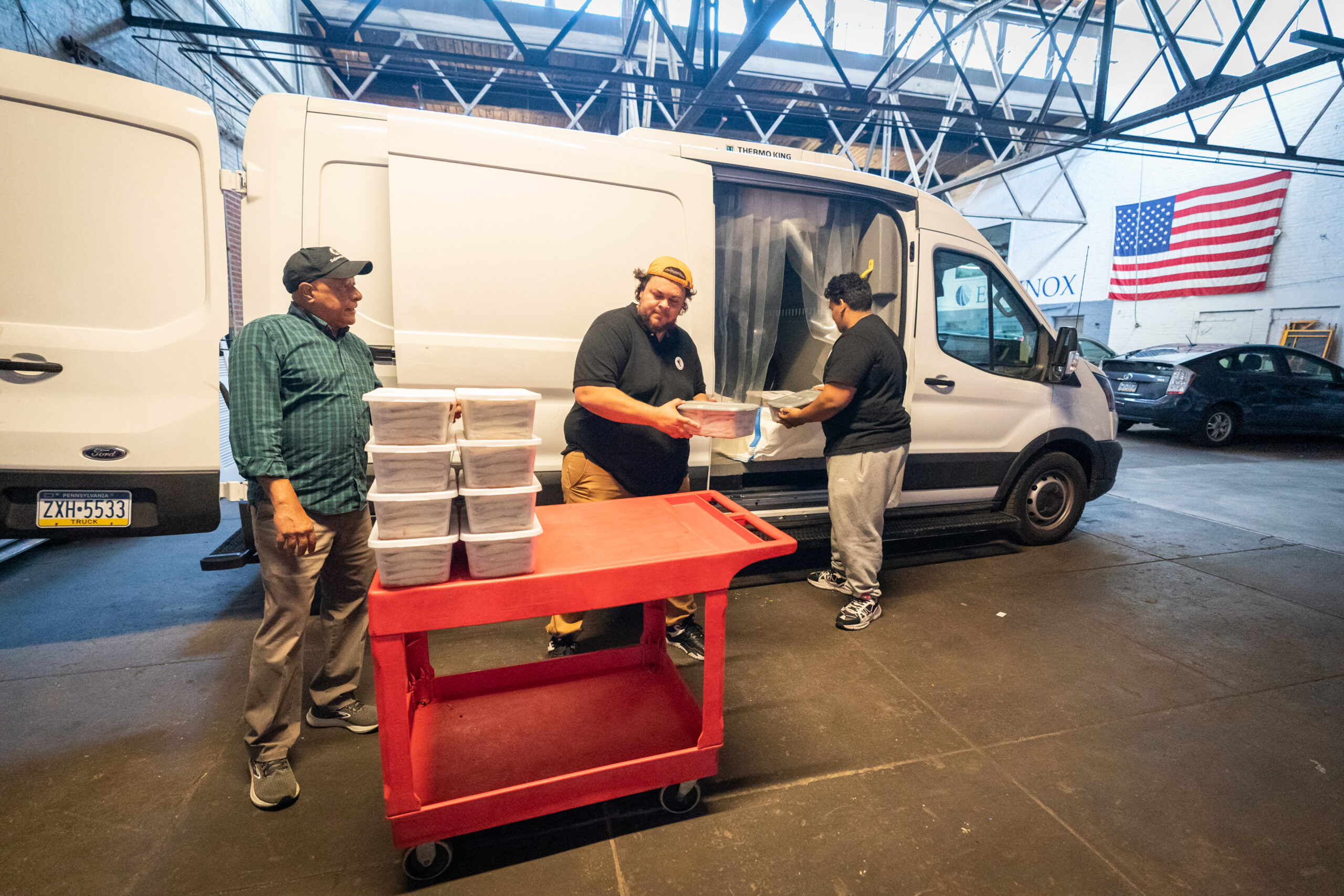
Pedro Rodriguez (left) with Pedro Rodriguez (center) and his son, Yorby Rodriguez, load empanadas for delivery at Empanadas United in Philadelphia in 2024.
The vending machine, assembled by LBX Food Robotics of Sunnyvale, Calif., used two ovens to finish the turnovers — convection for the crust, infrared for the fillings. It is also furnished with a microwave oven, for use with prepared foods, but the empanadas don’t need that. The machine sees steady use, say SEPTA staff who watch the busy lobby below the train platforms.
The machine is profitable, says Victor Tejada, the former Comcast designer who started Empanadas United in 2023. The bakery, using order software including Tejada’s Dominican Food App, was supplying empanadas to takeout customers at 160 stores, Tejada says, when he and his partners sold it last year to Virtual Dining Concepts (VDC). The acquirer says it has taken the brand national and expanded service to more than 500 locations — plus a handful of vending machines, starting with the one at 30th Street Station. Tejada stayed on to run the brand.
The Philadelphia empanada factory makes a fraction of the empanadas now sold under its name. In other cities they are made by local bakeries to Empanadas United specifications, according to Adam Robin, VDC’s chief operating officer.
Taking brands national
Florida-based VDC focuses on taking local and celebrity food brands national, contracting chain restaurants, food delivery services, and other food retailers. They aim to set standards so the products can be reproduced in local plants anywhere and mass-marketed fresh. Its other brands include Barstool Sports’ Pardon My Cheesesteak, MrBeast Burger, and MLB Ballpark Bites.
VDC last year hired Evolvending, founded by former VDC executive Valentina Ellison, to deploy the Philly empanadas in machines at transit centers, as colorful working billboards for the brand.
“Empanadas United has a really excellent concept, Victor Tejada has an entrepreneurial spirit that we love working with, and we are growing the brand all over the country,” said VDC’s Robin. He learned the restaurant business as a teenager, rising from busboy to chef, and joined VDC as chief operating officer in 2021.
“We are a virtual dining company. We targeted this brand for acquisition, we bought it last year, we manage the online storefronts,” Robin added. The company has sold more than 2 million empanadas since the deal, and plans to sell six million this year, he said.
The machines, a small part of total Empanadas United distribution, each have 60 slots, each of which holds two empanadas, filled on a two-day cycle, according to Robin. If they sell out, that’s more than 20,000 empanadas and $80,000 per machine per year.
“They cover their costs. We are thinking of expanding them,” Robin says.
Evolvending has also put Empanadas United machines at Boston Logan Airport and Hartsfield-Jackson Atlanta International Airport. But it’s not yet at Philadelphia International Airport.
The company also hasn’t set up Empanadas United machines in its hometown of Miami yet, while it considers what flavors to offer in that large and diverse market, Robin said. Among empanada fans, “Some love Venezuelan, some Cuban, some Mexican, and some like fun flavors like apple pie.”
Jay Timmons, president of the National Association of Manufacturers, says the factory revival Trump and his recent predecessors have championed has been aided by Trump’s business tax cuts and pro-fossil fuel agenda. But, he said, mass worker deportations or rapidly-changing import taxes are not helping.
Timmons appealed to leaders of Philadelphia’s port, shipbuilders, regional Chamber of Commerce, and other industry group leaders to embrace his group’s pro-factory agenda at Carpenters Hall. He made a similar appeal at Cleveland’s Rock & Roll Hall of Fame earlier in the week, and heads to the Carolinas next week.
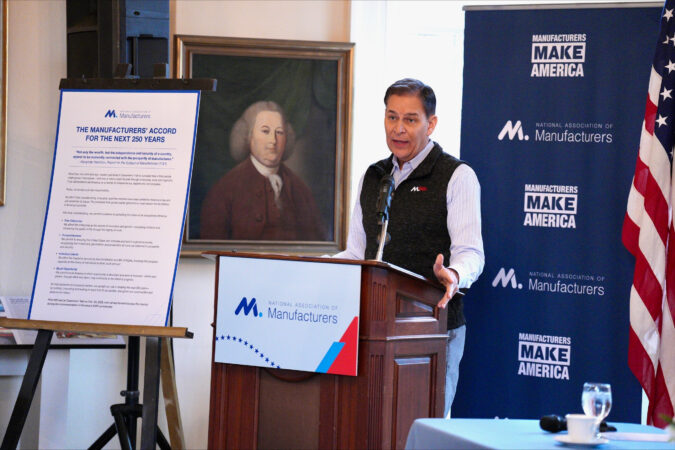
Jay Timmons, president of the National Association of Manufacturers, was at Carpenters’ Hall in Philadelphia with area business leaders on the day the U.S. Supreme Court announced its tariffs decision.
After the Supreme Court ruled against Trump, Timmons said in a statement that industry shares Trump’s goal of strengthening U.S. manufacturing, and wants to work with Congress and Trump on more “durable” ways to do that. While Trump had boosted tariffs on U.S. neighbors and longtime allies, Timmons said, NAM’s position is that “if tariffs are utilized as a tool, they should be targeted to countries engaged in specific unfair trading practices,” especially countries where government controls production, which would include China and Russia.
He agreed to take questions from The Inquirer.
The conversation has been edited for clarity and length.
U.S. Sen. Joe Grundy, the Bristol mill owner who founded the Pennsylvania Manufacturers’ Association, led the pro-tariff movement long before President Trump. Has your group always backed high tariffs?
No, ours was founded as a free-trade organization. Thomas Dolan, our first president, was a woolen manufacturer from Philadelphia. We wanted to open markets and sell our stuff in other countries.
The president is obviously a fan of tariffs; that is a tool he has chosen to use.
We’re on the launch pad, we are ready to go. We’re seeing success in terms of lowering the costs of doing business, in our tax code, in regulatory modernization, in energy development.
This year we are focused on other issues we would like to see addressed, hopefully in a bipartisan way. We want to see legal reform of the permitting process, so we are not constantly in court trying to reach a final decision on whether an industrial project can move forward.
Do you want the federal government to override state and local building limits on industry?
State and local need to have a say, but the process needs to be streamlined.
I served in Gov. George Allen’s administration in Virginia. His focus was on working together to attract jobs, communicating in a simultaneous manner. We attracted record investment and job creation [without damaging] air and water quality.
We need to [fix] the regulatory morass in Washington. Right now, several agencies have a say on a project. An agency reviews it, that takes months. Then another agency, and another.
Won’t you need more federal workers to do reviews all at once?
Whatever it takes. We aren’t saying we want a compromise on health and safety. We’re saying do it in an expeditious manner.
I don’t share this [concern], but there are folks concerned about the rising costs of electricity and putting that blame on AI data centers.
Demand will increase. You’ll have issues of local concern. But we have to supply more power, which means states have to step up and work with the utilities to improve transmission, the power grid; and the federal government should have a role.
What recent U.S. energy developments are you applauding?
Pennsylvania has led the way, with natural gas clearly helping the U.S., in terms of energy dominance and exports. Oil, also. Even nuclear is getting a kick start.
Southern Co. led the way with that, restarting a [uranium power] plant in Georgia. That is hard, it takes a long time. Also the small reactors, we don’t have a clue yet [if those will be deployed in large numbers] but it could be helpful.
What are your priorities to make manufacturing grow more rapidly?
First, to help us expedite investing in the U.S., which tax [cuts] have done.
Second is hiring and workforce development. We have 433,000 open jobs in the sector. Our goal is obviously to train more potential manufacturing workers. Apprenticeship programs — we have our own — need to expand dramatically.
And third, we want to see a reliable and consistent immigration policy that focuses on the needs of our country. We’ve endorsed the Dignity Act.
The Dignity Act, from Reps. Maria Elvira Salazar (R., Fla.) and Veronica Escobar (D., Texas), would let immigrant workers, who pay a fine and taxes, buy work permits; and mandate employers E-Verify job applicants. Is that like the Reagan reforms?
Reagan, directionally, was correct on immigration.
We are a nation of immigrants. We are a melting pot and that is what has made us successful.
Things are different today with public opinion. You have to focus on very narrow objectives that are directly related to the economic life of this country, because that’s what the president and Congress want to do.
What’s your goal for trade and tariffs?
To see certainty and predictability. The administration has been very focused on finding access to markets overseas, which is also one of NAM’s founding principles.
The U.S.-Mexico-Canada Agreement is up for renewal. [Negotiators] are dealing with transshipments from China through Canada and Mexico, which obviously was not our intent for the agreement. Getting another agreement is going to be really important for manufacturers who have used provisions to move manufacturing from China into the U.S.
When do you expect signs of increased factory investment and hiring in this second Trump term?
Rewind to 2017, we got tax cuts, regulatory modernization, and [faster] energy production. You saw three or four years later the highest employment growth in 21 years, the highest wage growth in 15 years. If you get the policies right it gives you an advantage. That’s our goal.
We have the rocket, but it needs fuel, and a clear sky. We need [to resolve] immigration, workforce development, and trade certainty.
After John Michael Bontrager came home to Pennsylvania from Wall Street to start an advice firm for big investors, he located his company in Kennett Square, “America’s Mushroom Capital” and the most populous of the old factory and farming towns along Old Baltimore Pike in southern Chester County.
Bontrager and those who joined him prospered. In 2018, he stepped down as founding head of investment-risk adviser Chatham Financial, which now employs 850 at its campus just east of the square-mile borough of 7,500.
Now, he’s devoting himself to the redevelopment of Kennett Square and nearby towns.
Using his own fortune, donations, and state and local government funds, Bontrager and his allies have developed a string of projects — restaurants, hotels, and nonprofits — under the loose umbrella of his Square Roots Collective. Their affiliates have purchased 2% of the town’s houses to redevelop as rentals. Their goal: Make the area more attractive to college-educated young people, while also boosting the quality of life for longtime residents and working people.
In December, the borough council endorsed Bontrager’s “public, cultural, and social impact initiatives,” calling them “key to shaping the inclusive community.” They voted unanimously to ceremonially rename Birch Street, an industrial road Bontrager has visibly transformed, as “Bontrager Walk.”
Bontrager agreed to take questions at his Kennett Square office. His daughter, newly designated co-CEO Stephanie Almanza, and his chief of staff, Luke Zubrod, a Chatham Financial alumnus who serves on the borough planning commission, sat in.
The conversation has been edited for length and clarity.
Why did you start local projects while you were still building your company?
[I wanted] to convince people we wanted to hire, between the ages of 25 and 33, that Kennett is a reasonable place for them to live. How do we make this attractive for people to move here and to bring people who grew up here back?
Thirty years ago when I came here, it was a great community for families. But it was harder to convince singles and couples with no kids.
I read sociology, for example Chuck Marohn’s Confessions of a Recovering Engineer; Yoni Appelbaum’s Stuck about zoning; The Logic of Failure by a German neuroscientist [Dietrich Dorner].
The elements I came up with: A community is totally interconnected, people and organizations. All decisions have ripple effects. When communities focus only on solving the near term problem, it’s probably not going to be good.
For example, we have about 30% of Chester County “preserved.” Well, it’s great to have open space. But if you take a third of your land out of commission, without providing for housing, housing prices will go up dramatically. And taxes.
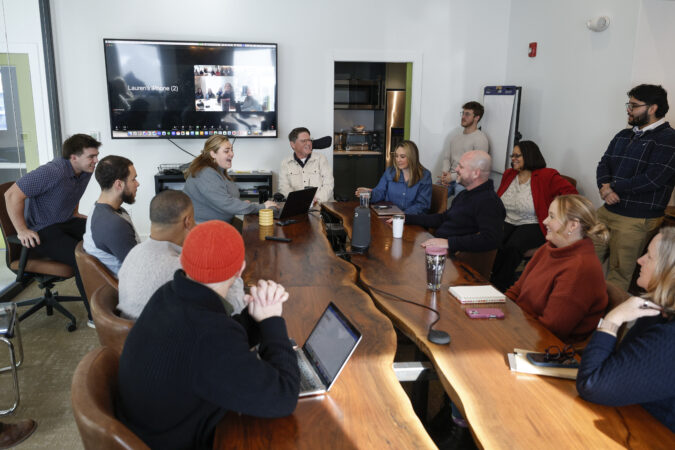
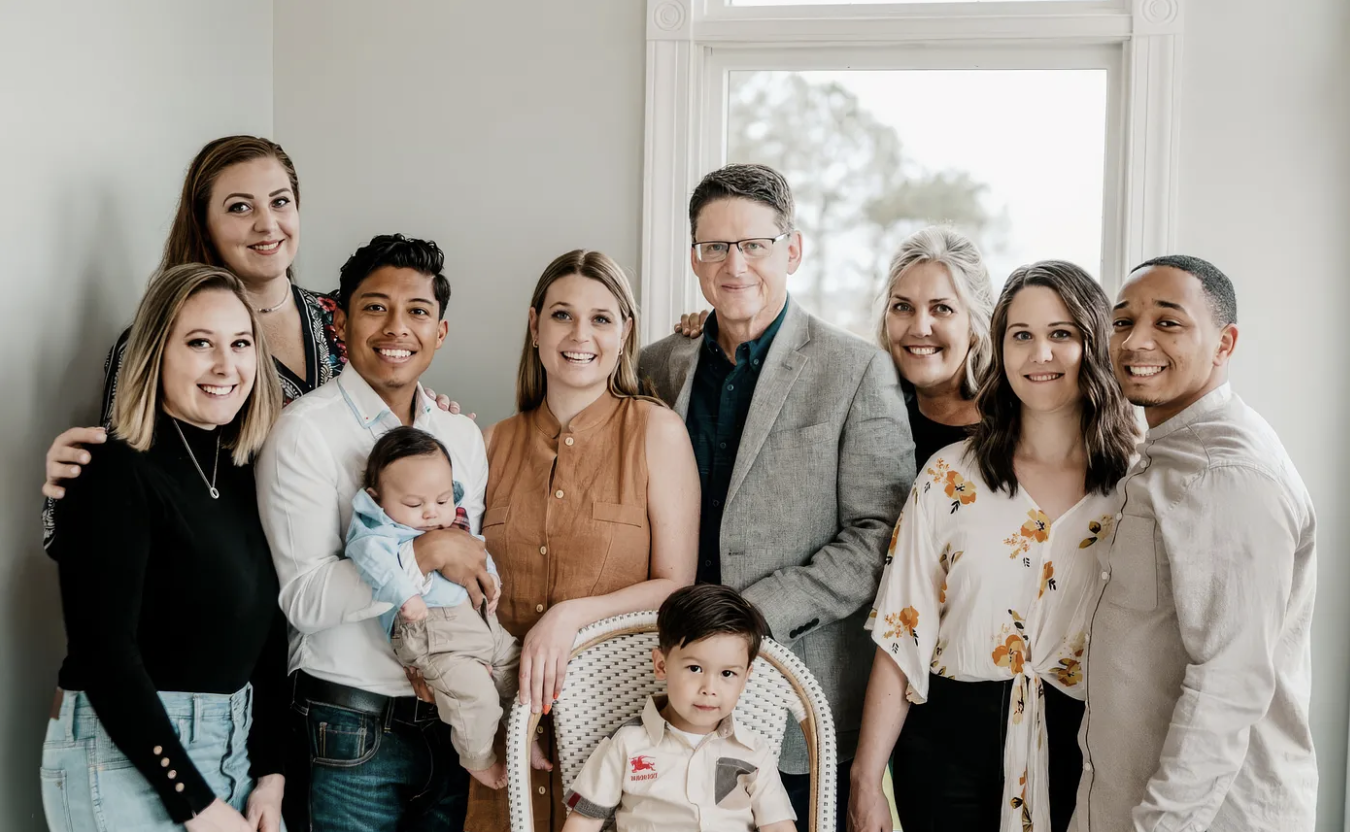
Mike Bontrager (center, in grey jacket) with family members (from left) Stephanie, Kymm, Luis, Cruz, Katherine, Mason, Mike, Dot, Lauren, and Willie.
How do you solve issues in concert?
Collaboration, trust, working together. A lot of elected officials are volunteers. It’s easier to focus on one issue at a time and react to the three or four people who show up at your meeting with pitchforks.
Of course you want a say over what happens in your neighborhood. But the consensus favors the status quo, the entrenched interest.
Not everyone loves what we’re doing. Luke, Stephanie, and myself have said, ‘Let’s understand people’s concerns. We’re neighbors.’ We listen; we have a lot of meetings.
What are the institutions you’ve set up?
The Square Roots Collective isour brand for all the activities. It includes Square Roots Community Initiative, a 501(c)4 nonprofit that’s the umbrella group. There’s our for-profit businesses; the profits go to support the nonprofits. We donated more than $1 million last year to nonprofits and projects in the area.
On Birch Street, there’s our offices, and the Creamery [converted from an old condensed-milk plant site], which we started as a beer garden in 2016, it’s now a restaurant, and Artelo, the art hotel.
We are also working on the Francis, an eight-room hotel in the middle of town. And we are opening a really cool cocktail bar, the Star and Lantern [referencing the Underground Railroad and the area’s abolitionist history] in 2027. And we are preparing Opus, a restaurant.
On the nonprofit side, there’s the Kennett Trails Alliance, a 14-mile loop. About half is open, and we have easements for most of the rest, not all. It connects some of the open spaces, the Brandywine Creek, Anson B. Nixon Park, the YMCA.
And there’s Voices Underground, an organization we initiated in partnership with Lincoln University and Longwood Gardens, elevating the stories of the Underground Railroad.
Artelo Hotel Kennett Square, which has works by local artists in each room. This is “Floating Free,” by Philadelphia artist Philip Adams.
Your groups own about 40 of the 2,000 or so houses in the borough. Is there a shortage of affordable rentals, given demand from mushroom farms and other industry?
Yes. What we have is tenant housing, market rate, including some we rent to area charitable and community groups [for their clients].
How did you decide to start Chatham in 1991?
When I was 13, I worked for an appliance repairman, John Schmucker. He was brilliant at fixing washers, dryers, dishwashers. But he was a disastrous business guy. He never collected. I saw building a business is very different from being smart and an expert.
My father was a Mennonite pastor in Christiana, Lancaster County. I went to Lancaster Mennonite School. I went to Wheaton College in Illinois. I was so naive; I had never met a real professional.
I would sign up for any kind of recruiter interview. I eventually went to see someone who worked for Chemical Bank [predecessor of JPMorgan Chase]. I got a job offer.
I joined this new unit selling these emerging derivatives — interest-rate swaps, currency and commodity hedging — to help clients manage the risks.
There were products that were inappropriate for most investors. Municipalities got in trouble buying things that didn’t need, where the banks took out a lot of money.
People needed advice. I loved helping clients, maybe it was a big company, or maybe an oil distributor in Queens who needed to hedge his fuel-pricing risk.
Why did you return to this area from New York?
My wife wanted to move back to our families. In August 1991, I bought a place in Cochranville. We had a satellite dish that brought in Telerate [a stock-tracking service], which was just a year old. That’s what made it possible to do this work anywhere. I started over the garage, me and my dog.
It turned out to be the best time to start a derivatives advisory business. There were a lot of properties available from [recently failed] savings-and-loans at cents on the dollar, and someone figured out a legal structure that allowed real estate investments trusts to go public. We did their hedging. Same with private equity.
I called a few of my old clients, Milton Cooper at Kimco Realty Trust, we helped him go public, he recommended us. We advised [mortgage-bonds pioneer Ethan Penner] on the first mortgage-backed securities. In 1994, I cold-called a young associate at a firm buying failed S&L loans. He hired us to hedge. That was Jon Gray, who worked his way up and is expected to be the next CEO of Blackstone.
We mastered hedge accounting. We had more derivative hedging experts than anyone. The Big Four accounting firms and their clients found we spoke their language.
By 2000, we had built a real business. We moved to Kennett because it was a larger town [and closer to Philadelphia and its airport].
How did you prepare your work to go on after you left, under your successor Matt Henry?
At Chatham, I wanted us to be internally owned, the people who are joining should reap rewards. I did not want any outside investors. [Employees own most of the stock, and elect top officers.]
I have been diagnosed with ALS, which is a pretty devastating diagnosis. I don’t how long I will be able to be actively involved. I still get to do purposeful work with people I love. Isn’t that what we all want? So I’m going to go until I can’t.
CEO Matt Henry of Chatham Financial center, just outside Kennett Square.
Construction is often a family business. Mike Lloyd, as a Harvard Law graduate, former Wall Street trader, past counsel for Uber and Chevron, and a native of south Louisiana, had a first-class outsider’s resume when he arrived at Malvern-based IMC Construction, one of the mid-Atlantic’s largest general contractors.
But Lloyd is family, too: In 2017, engaged to the boss’ daughter, he took over as IMC’s general counsel, and moved onto a new career path that added his professional and personal skills to IMC’s career construction managers.
Since 2023 he’s been president and the firm’s controlling owner. On his watch, IMC revenue has risen more than 70%, to $600 million, and it has added offices and clients in New Jersey and Delaware, with more planned. The firm, founded in 1976, now employs 300, plus dozens of subcontracted crews at any given time.
Senior managers of IMC Construction, 2025. CEO Mike Lloyd is third from right; his predecessor, IMC chairman and Lloyd’s father-in-law Robert Cottone, is third from left.
Jobs that IMC built or rebuilt in recent years includePenn and Jefferson medical projects, Prologis warehouses in Marcus Hook, the Morgan Lewis tower at 2222 Market St., new plants for Merck, Solenis and other biotech companies, apartments at the Granite Run Mall, the Promenade at Upper Dublin, the King of Prussia Town Center, and more than 100 other area sites.
Lloyd recently spoke with The Inquirer at IMC’s Chester County headquarters and on a tour of its nearby Great Valley Apartments complex, for developer Greystar. The conversation has been edited for clarity and length.
How did you get this mid-career opening into the construction business?
Rob Cottone [his predecessor as IMC CEO] recognizedhe needed support to help the organization grow across the Mid-Atlantic.
This business is hand-to-hand combat every day. Every day is different.
What I bring to the table is my broad skill set. I’ve worked in finance. I’ve worked in law. I’ve worked in mergers and acquisitions, with big and small companies. I’m comfortable with financial companies, whether for IMC’s own work, or to help the building owners get comfortable with the construction lenders.
I don’t pretend to know things I don’t. We build a team of specialists who complement each other.
What’s an example?
Phil Ritter, a senior project manager, had the idea of creating a Special Projects division for jobs worth $5 million and under. You use a different pool of contractors, and a faster operating model, but you get the benefit of working for a large, efficient organization.
I worked on the business plan, and in 2020 he started it, with maybe a million dollars in revenue that year. In three years, we were doing $30 million. We had a tremendous success doing small projects for Penn Medicine and Jefferson and others.
Many companies would not have put a top project executive in charge of a new business. It costs overhead while working on a business plan. But that’s how we invest in people.
We opened in 2022 in Edison, N.J., with four employees. We are now 37 there, of our 300 total, with $210 million in projected revenue for 2026. Our biggest job is the Crossings at Brick Church in East Orange, a transit-oriented multifamily development for Triangle Equities.
Are those smaller projects non-union?
The labor is driven by the clients’ demands. As a general contractor, we are a merit shop [using both union and non-union contractors]. Our jobs are often 100% union, not always.
Sometimes we do jobs for a lump-sum price, sometimes open-book, guaranteed-maximum, the approach pioneered by Buck Williams [who founded IMC in 1976]. It takes a lot of working with the owners.
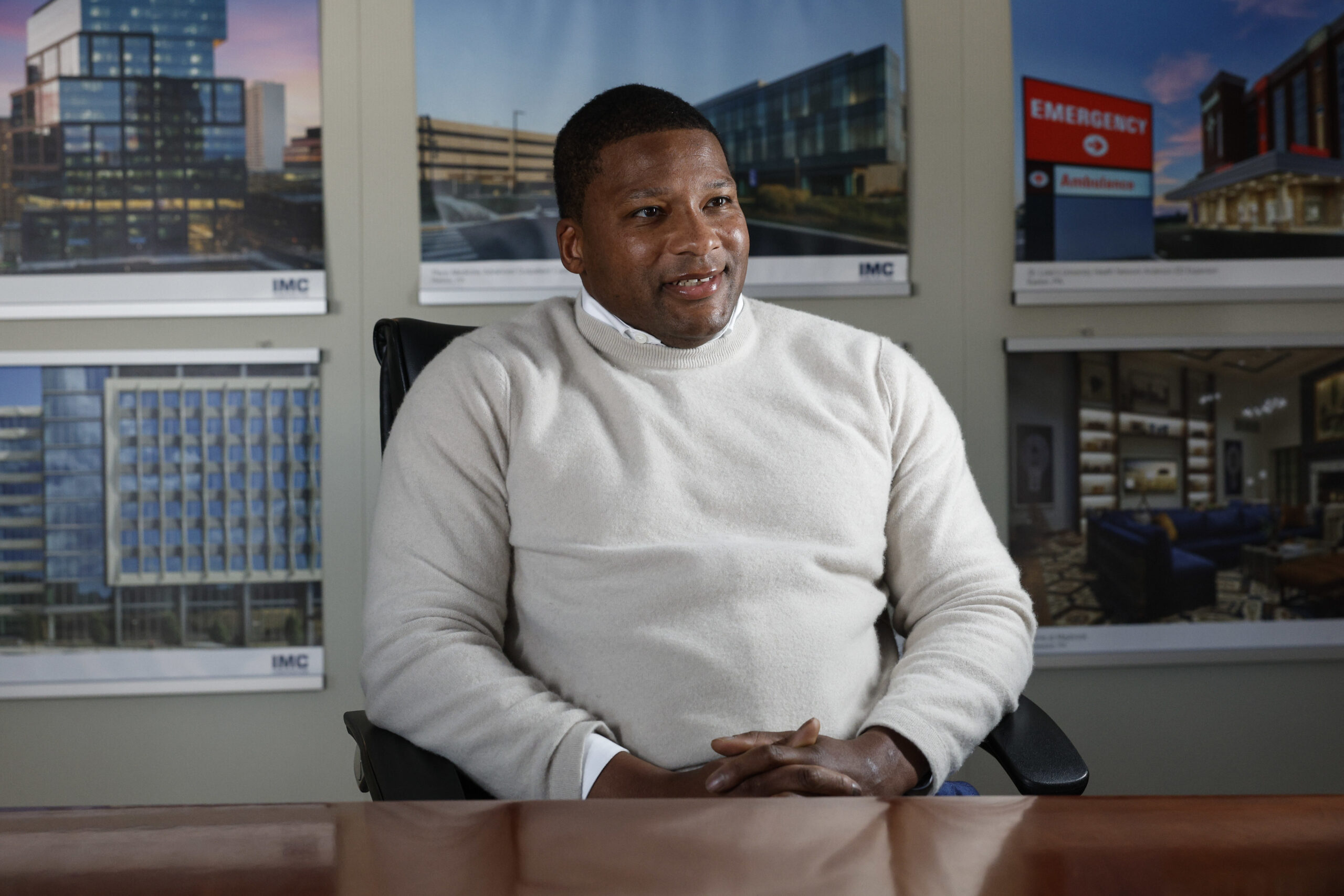
Mike Lloyd, CEO of IMC Construction, in the company’s Malvern headquarters, in January. Behind him are renderings and photos of some of IMC’s recent projects.
You’re building a lot of apartments lately?
We see a tremendous amount of suburban apartment demand.
A lot of these are places where people can avoid going to the city, when you can have a nice dinner and do some retail shopping close to work, close to home. You have that in King of Prussia, you are getting it in the Great Valley, you will see more of it at the Navy Yard, and in Ardmore.
We recently broke ground at 100 Lancaster in Ardmore for Radnor Property Group, and the Great Valley Apartments we’re building for Greystar. You have a demographic of millennials who are finally getting married and moving out of the city as they have kids.
We survived COVID by completing over six million square feet of warehouses. We have turned over nearly 5,000 apartment units since the year before I joined, which should make IMC one of the largest apartment builders in the Philadelphia region. We have turned over 1,700 senior-living units over the past five years, which makes IMC the largest builder of senior living units [around Philadelphia.]
Has office construction peaked?
I don’t know that offices have peaked. I’m actually bullish on office construction. We’re completing our rebuild of 680 Swedesford Rd. [in Wayne], for example. Employers want to get their people back together. There’s benefits for collaboration and connection.
But they want higher-quality space. More light and amenities. They want a kind of ecosystem, like you see at the Navy Yard, where Ensemble is investing in life sciences. They have labs, offices, apartments, and amenities.
At the King of Prussia Town Center, the retail draws people in, and they’re building offices around it. You see a similar trend in the Great Valley. Historically there was this corporate office campus, now there are restaurants, hotels, apartments all around.
Is biotech construction stalled?
We are part of a $100 million lab project in Delaware. We did Penn’s Center of Healthcare and Technology in Center City. We built the Radnor outpatient center —it’s a model. We built their facility in Chesterbrook. And the hospitals are still building.
After years of industry support for underrepresented contractors, are you feeling whiplash due to President Donald Trump’s reaction to DEI?
We are now one of the largest minority-owned contractors [in the country]. We don’t distinguish ourselves by being a minority contractor; we aspire to be the leading general contractor in the Mid-Atlantic region by leveraging technology in unique ways and creating solutions to serve our clients’ needs.
We happen to be a minority-owned company. I personally care about expanding opportunities. We have broadened the subcontractor pool and awarded $1 billion of subcontracts to minority- and women-owned businesses.
We have not felt much backlash or reversal. Many owners still feel committed to expanding the contractor pool. In the current administration it may need to be structured differently.
Will your kids make this a family business?
Our children are young. My daughter has already told me she wants to build her own house, and I can live in it if one day we were working together.
Shareholders of Camden-based American Water Works and Bryn Mawr-based Essential Utilities, which owns the Aqua water and sewer companies, voted overwhelmingly Tuesday to merge and create a combined company with nearly $30 billion in yearly water and sewer sales.
More than 99% of the 161 million American Water shares that were voted were cast in favor of the deal, the company told the Securities & Exchange Commission. Essential’s online proposal to merge was approved by around 95% of voting shareholders.
The planned combination of these rivals, which have competed for more than 100 years to manage water and sewer for the small number of U.S. communities that allow for-profit operators, still needs approval from state public utility commissions.
The combined companies’ sales are concentrated in Pennsylvania and New Jersey. In suburban Philadelphia, Aqua serves West Chester, northern Delaware County, parts of Lower Bucks, and Main Line communities. American Water serves Abington, King of Prussia, Norristown, Phoenixville, and nearby towns.
New Jersey American Water serves towns along the PATCO rail line in Camden County, in northern and central Burlington County, and in Shore communities such as Absecon and Ocean City. Aqua New Jersey has customers in the three suburban South Jersey counties and at the Shore.
American Water’s 14 million U.S. customers include systems in 12 other states, and on 18 U.S. military bases. Essential has around 3 million customers, including systems in six other states,and Pittsburgh-based Peoples Gas, which serves 750,000 in western Pennsylvania and Kentucky.
American Water is already the nation’s largest private operator of water and sewer systems, and the deal will make it a larger player in competition with Florida-based NextEra Water Group and France-based Veolia’s U.S. operations, among other private systems that have been seeking to expand.
A separate vote on an Essential executive pay package drew some opposition, with 85%approving.
That package included more than $17 million in severance compensation and stock grants for departing Essential CEO Christopher H. Franklin, plus medical benefits and up to three years’ professional assistance helping him land another job, plus millions more for his four top deputies.
The merged company’s larger size, as big as many of the leading natural-gas companies that dominate utility stock-index funds, will boost its visibility to investors, John C. Griffith, the American Water chief executive who will run the combined companies, said in announcing the deal last fall.
The companies disclosed the approvals Tuesday afternoon and said more details on the vote and their plans would come later this week.
Deal backers say the combination should enable Griffith to cut management costs, boost profits, drive up the share price, and could ease pressure to keep raising water rates.
Regulators in New Jersey and Pennsylvania are weighing the company’s latest rate increase requests. American Water’s New Jersey affiliate is asking the state Board of Public Utilities for an average 10% water and 8% sewer rate hike on Jan. 16 for 2.9 million customers, which it said would fund improvements to aging water and sewer systems. Customers would pay an average of $18 more a month.
Pennsylvania’s Public Utility Commission said last month that it would consider the company’s request to boost water and sewer rates on 2.4 million customers by an average 15%, or $20 a month.
Critics had urged Essential to seek rival buyers to drive up the share price and shareholder profits from the sale, noting that both stocks had dropped after the merger was proposed last year.
Tim Quast, founder of Colorado-based ModernIR, a consultant the companies hired to help explain the merger, said share price declines are now typical, even for merger-target companies like Essential whose shares command a premium from buyers like American Water because index-fund investors such as Vanguard and BlackRock tend not to buy more shares of merging companies until a deal is completed.
Even after long competition from U.S. and foreign utility owners, private water companies serve only about one in six Americans. In recent years, customers of public utilities serving parts of Chester, Delaware, and Bucks Counties have defeated privatization campaigns, though some towns in Pennsylvania and New Jersey have signed on. Pennsylvania also has asked private operators to take over small, troubled public systems.
More than 80% of mined tungsten comes from China — or did, until limits on China tungsten imports imposed during the Biden administration began last year. China has also imposed tungsten export limits.
The struggle has fed a global tungsten rush, with investors and their allies in the U.S. and foreign governments paying to reopen old mines and secure new suppliers around the globe. The restrictions have also revived production of other strategic metals in many countries.
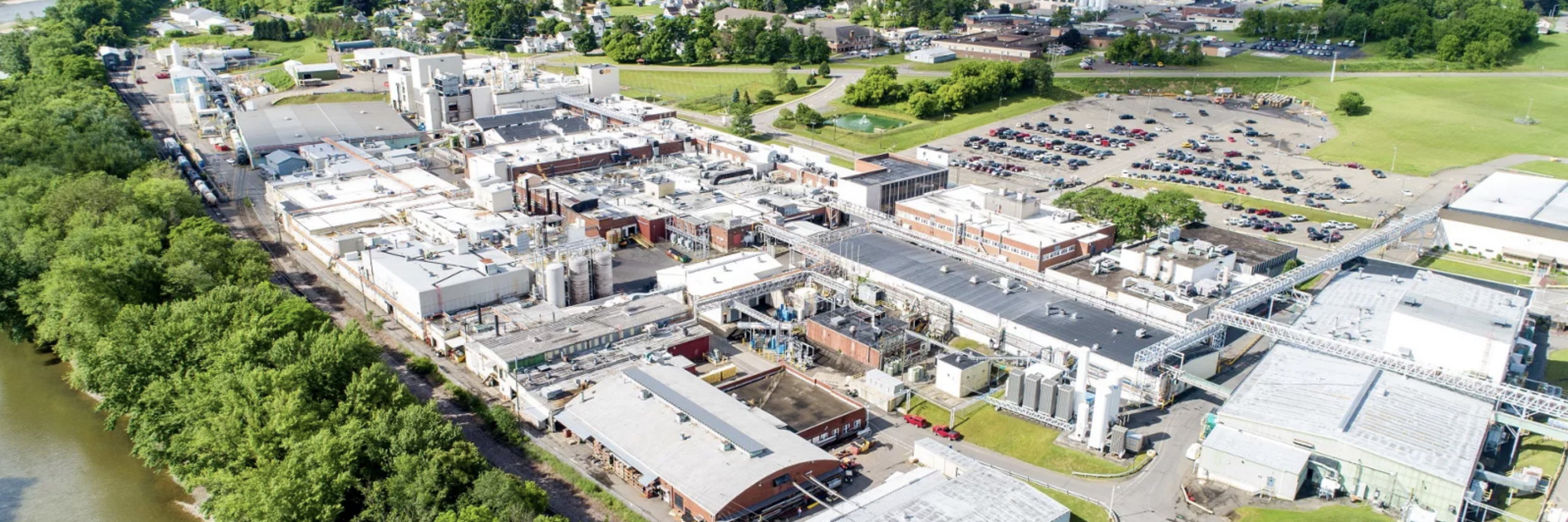
The biggest tungsten processor in the Western world is the century-old, 400-worker Global Tungsten & Powders (GTP) complex in Towanda, Pa., three hours north of Philadelphia.It produced more than 12,000 of the 117,000 metric tons of tungsten powder made in the world last year, crushing the metal into workable powders because it takes too much energy to melt.
Far from fighting to preserve cheap Chinese tungsten supplies, GTPchampioned laws supporting China import restrictions.
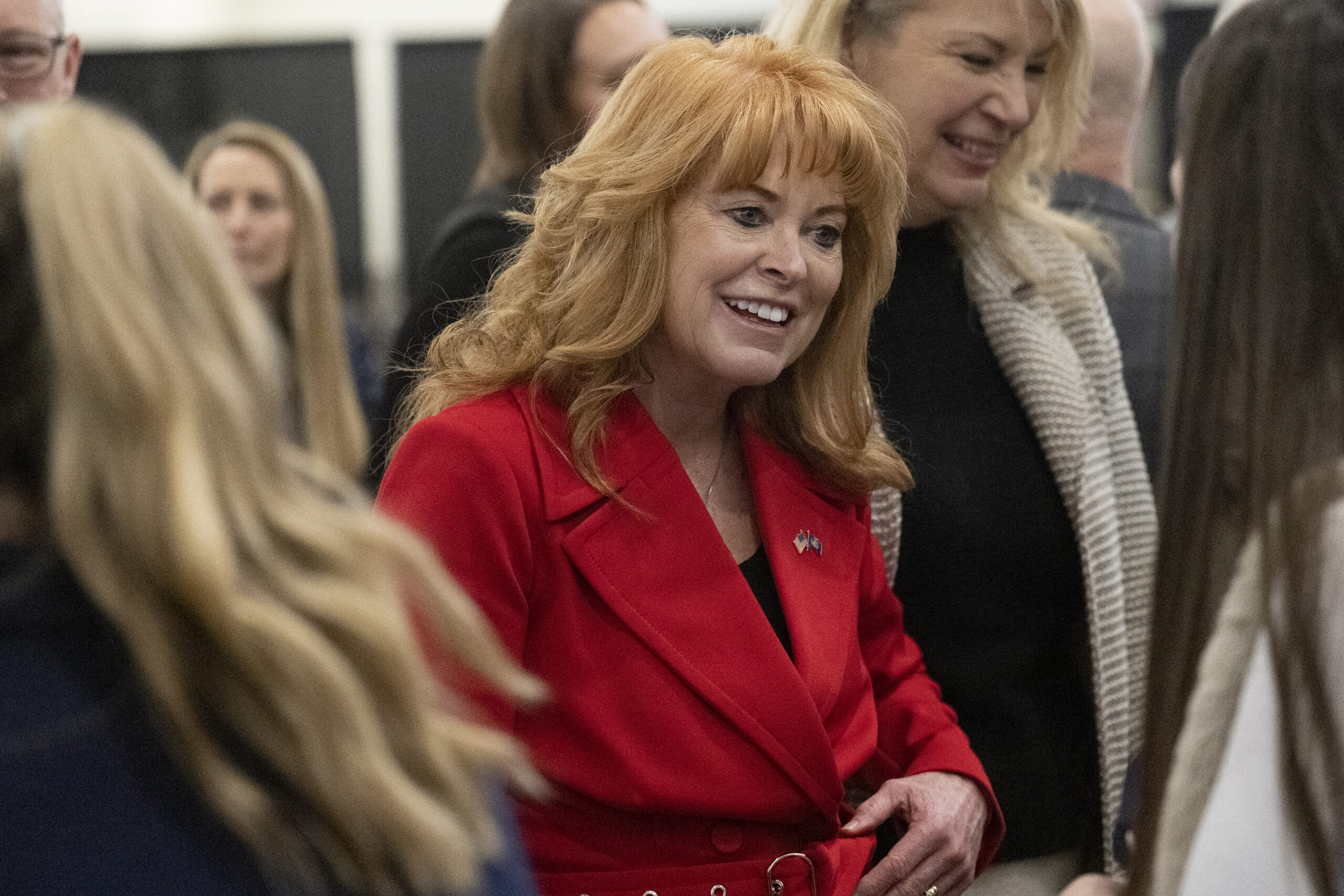
Before Stacy Garrity became Pennsylvania’s elected treasurer in 2021, she worked at GTP for more than 30 years. As vice president for government affairs and head of a metals industry group, she lobbied Congress and the first Trump administration to limit tungsten imports from China and its allies under what she called the “don’t buy from the bad guys” law.
Trump endorsed Garrity last month for the Republican nomination to run against Pennsylvania Gov. Josh Shapiro this fall.
Stacy Garrity, Pennsylvania treasurer, at the Pennsylvania Farm Show in Harrisburg in January.
GTP’s owner, Austria-based Plansee, has relied mostly on recycled Western tungsten, along with the few non-Chinese mines. But with tungsten demand and pricessurging, the company has contracted mined metal from new sources, including Korea and Rwanda, after many years of effort, says Karlheinz Wex, Plansee’s executive board chairman.
Korea’s Sandong mine, once among the world’s biggest suppliers, shut in 1994 as cheaper Chinese tungsten flooded world markets. The mine has reopened with financial support from the Korean government, technical assistance from U.S. agencies, and an exclusive supply deal to GTP. It’s owned by Almonty, a multinational mining company partly owned by Plansee. Almonty is moving its headquarters to the U.S. from Canada.
Wex agreed to take questions about the tungsten trade and GTP, purchased from lighting maker Sylvania in 2007. This conversation has been edited for clarity and length.
How did a tungsten processing plant end up in Pennsylvania?
That is where it started more than 100 years ago. The company focused on medical applications. Later, it went into the lighting business[pre-LED light bulbs used tungsten filament]. We have focused it 100% on tooling and special applications, such as artillery shells, and mostly in alloys with nickel and iron for tools, and with carbide and cobalt in machines for cutting, drilling, mining.
The journey starts by creating tungsten scrap from customers and competitors. Our tungsten supply is 70% scrap recycling, from tools and drill bits.
Austria-based Plansee owns the tungsten powdering plant in Towanda, Pa., which processes about one-tenth of the world’s supply of the heavy metal, used in tools and weapons.
Why did your company, which relied on Chinese tungsten, also lobby to reduce imports from China?
We always had this topic of sources independent from China, from the politics and their pricing. The mining of tungsten in the West was not that much [because of] the unfair competition flooding Chinese materials into the market. We wanted to get independent of that.
Why are you buying tungsten from Africa now?
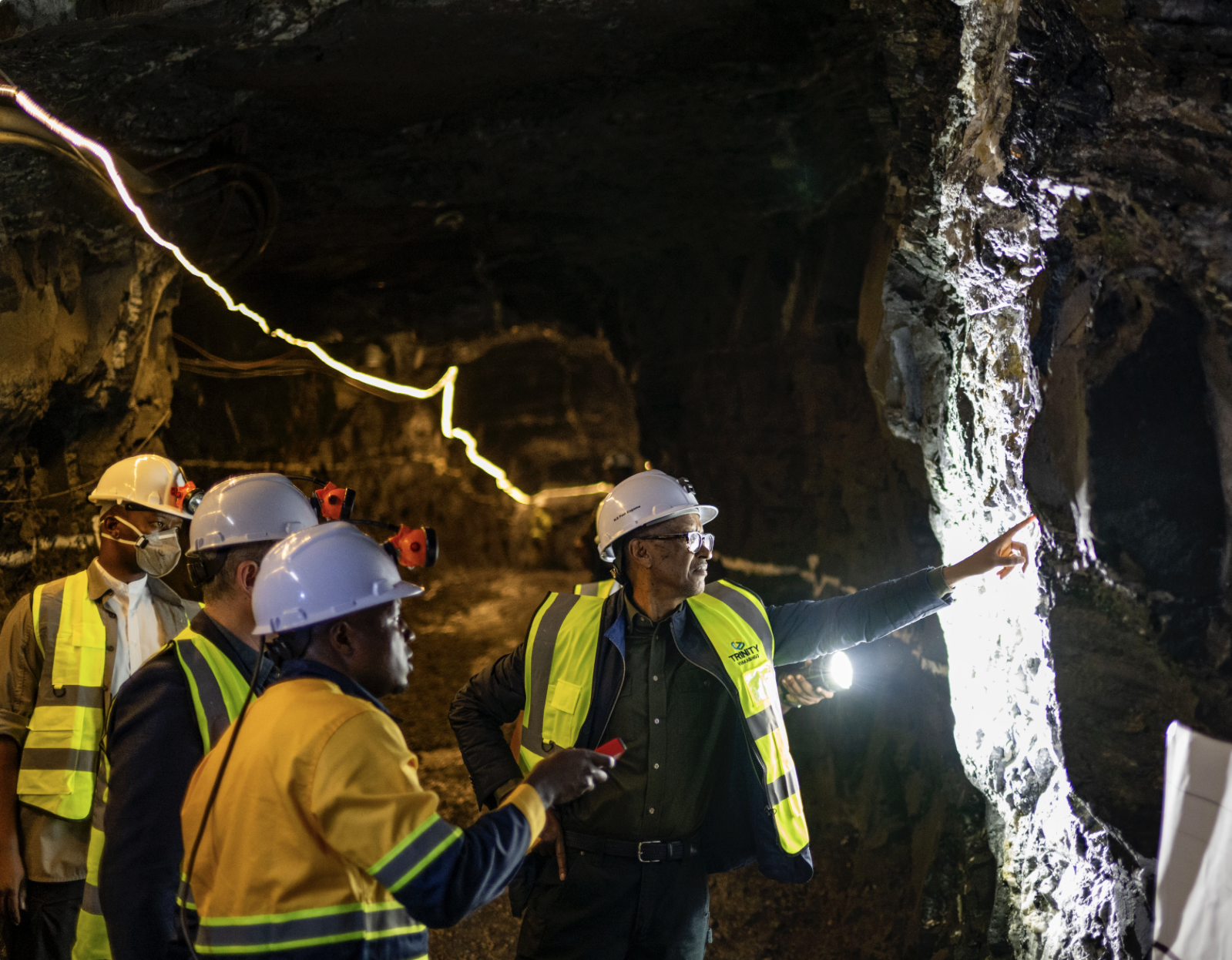
Tungsten is a so-called conflict material. When we can certify it’s conflict-free, the material from that mine is really sound. The people at Trinity Metals [in Rwanda], we’ve known for years. Our specialists visit their mine.
The U.S. government’s involvement made it easier to prove we can support national security in the West. We buy their entire production.
Rwanda President Paul Kagame at Trinity Metals’ newly expanded, reopened Nyakabingo tungsten mine in May 2025. The mine’s entire production is sold to Plansee, an Austrian company that processes one-tenth of world tungsten output at its General Tungsten & Powders plant in Towanda, Pa.
How does tungsten get from Rwanda to Pennsylvania?
At the mine they separate the tungsten, crushing and separating the material by weight, or separating it by flood behind a dam. That makes a concentrate, about 60% tungsten. They put it in big bags and drums, very heavy. It’s easy to transport in standard containers [usually through the port of Mombasa [in Kenya], arriving through Newark or other East Coast ports and trucked to Towanda].
Does the sale price of tungsten today cover all those costs?
We have record prices in the tungsten market. Last year the price tripled. We don’t have enough [supply].
The big problem is the Chinese have restricted exports. And the U.S. has forbidden the use of Chinese material for defense applications, as of this year. About 10% of tungsten goes into defense applications.
Will Rwanda make a big difference in the supply chain?
Rwanda is a small part.
We rely on recycling. The biggest growth in supply that we see is the Sandong mine in South Korea. We have supported that financially. They will ship the concentrate to San Francisco [ports] and then by land to Towanda.
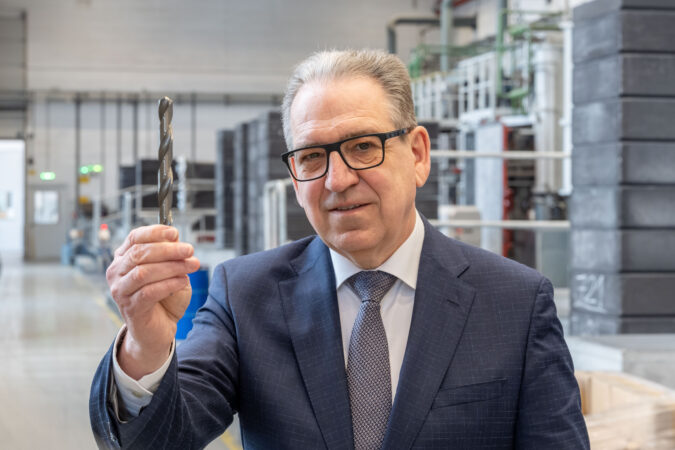
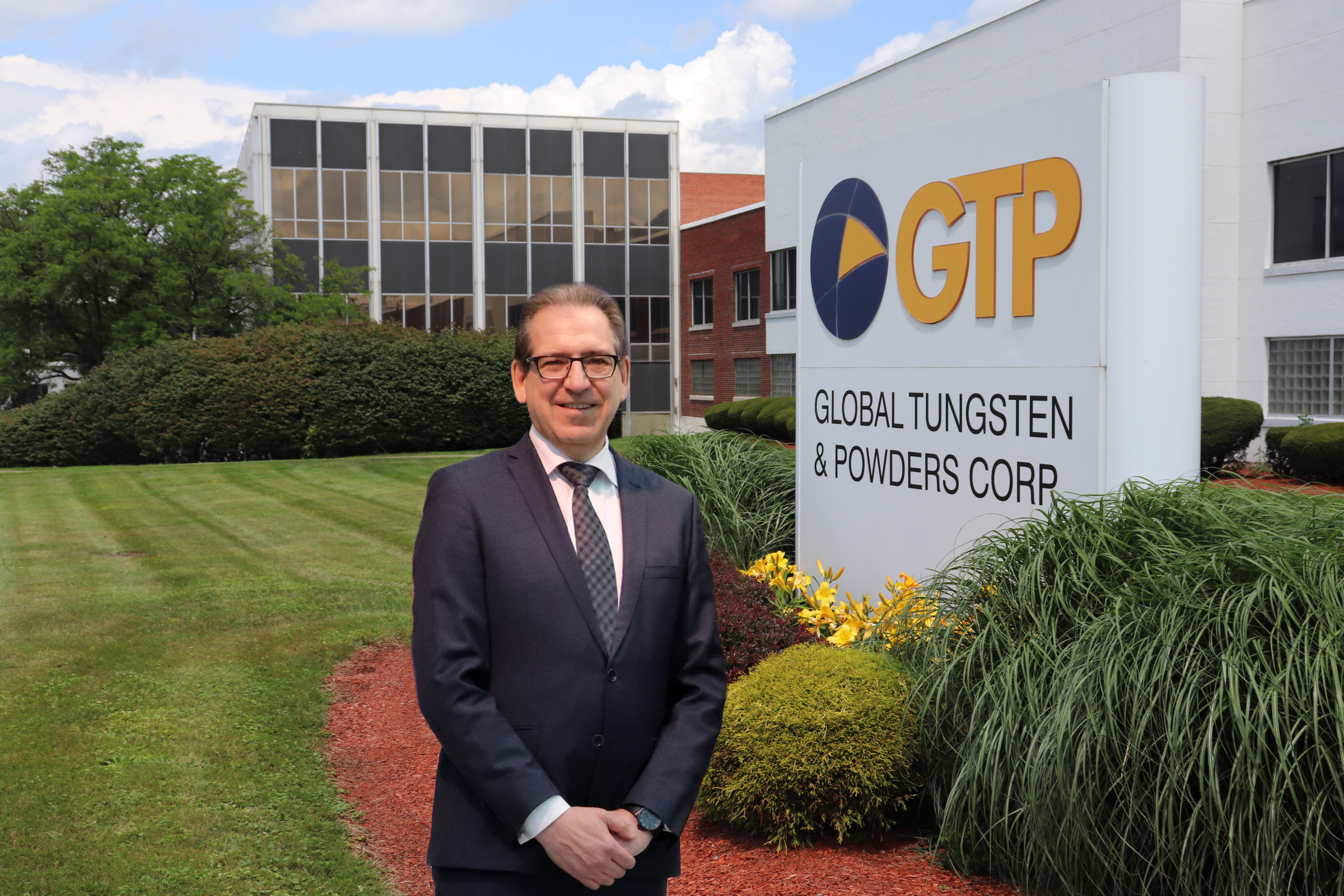
Karlheinz Wex, chairman of the executive committee of Austria-based global miner Plansee, on a 2025 visit to the company’s Global Tungsten & Powder (GTP) mill in Towanda, Pa.
We are working at capacity. We could produce 50-60% more and sell it on the market. We are sold out for the next six to nine months. Some of our customers are desperate.
We are thinking of expanding in Towanda.
Have you kept in touch with Stacy Garrity since she became a public official?
Yes! It’s good to see her as state treasurer and potentially governor of Pennsylvania. She worked a long time for GTP after she was in the Army.
Vanguard spokespeople in 2020 stressed that Infosys planned to use the outsourced workers to open a “Mid-Atlantic Center of Excellence” facility in Malvern.
Infosys officials said they hoped to hire more U.S. workers to outsource work from financial companies into the center under a veteran Vanguard manager, Martha King.
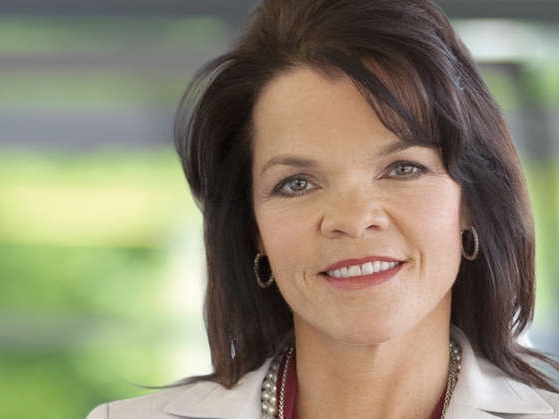
Martha G. King headed a retirement services unit at Vanguard Group and moved with a large part of her team to Infosys when the work was outsourced in 2020.
It was “the largest-ever deal signed in Infosys history,” Pravin Rao, chief information officer, told investors in a conference call the day after the deal.
The stock jumped 15% on the news. Infosys president Mohit Joshi promised to improve retirees’ investment experience and set a higher service standard.
But the expected new business didn’t materialize. Infosys’ growth slowed after 2020. The company’s stock is now worth less than when it signed the Vanguard deal, and its major U.S. office centers are elsewhere.
The Vanguard arrangement itself has partly unraveled. Infosys “is in the process of transitioning services back to Vanguard,” according to a report an Infosys official in Atlanta sent to the Pennsylvania Department of Labor and Industry on Jan. 27.
All but 10 will be offered jobs at Vanguard, according to the note, which referred state officials with any questions to a manager at Infosys’ Business Process Management (BPM) group in India.
That Infosys BPM outsourcing unit, initially financed by New York-based Citibank, had grown through the 2000s and 2010s by acquiring other outsourcing firms in the United States, Europe and Australia, adding business even as the backlash against outsourcing U.S. jobs grew.
The outsourcers tended to have lower pay. Vanguard employees who made the switch to Infosys got reduced benefits. New hires were paid lower rates than Vanguard veterans, according to former Vanguard and Infosys employees.
President Donald Trump has said he will curtail H-1B visas for foreign workers who come in the U.S. to work for outsourcing companies and other contractors and added $100,000 yearly application fees, though these have not been applied to all H-1B employers.
Two people familiar with Vanguard operations says it will continue to have some work done by Infosys and other tech outsourcing contractors.
Vanguard and Infosys declined to answer questions about what work Infosys will continue to perform for Vanguard.
Vanguard offered a general statement: “We’re proud to attract top talent to deliver the best possible outcomes for our clients. We also value our relationships with outside specialists who bring unique skillsets and the flexibility to allow us to deliver for our clients.”
A check of U.S. H-1B visa records shows Infosys relied less on foreign workers for its U.S. operations since signing the 2020 Vanguard deal — whether because it hired more Americans as promised or also because of a slowdown in new business.
The total of Infosys H-1B visa holders in the U.S. peaked at around 21,000 in 2019, the year before the Vanguard deal, falling steadily to around 5,800 last year. The number of Infosys visa holders in Malvern dropped even more steeply over that period, the records show.
But during the same period, Vanguard’s own use of H-1B visas for company employees increased, from an average of under 100 a year from 2020 to 2023, to more than 200 in each of the last two years.
The visa holders include Vanguard’s $625,000-a-year-salary head of investor advice and wealth management, a post occupied by Canada native Johana Rotenberg, and its $300,000-a-year head of fraud strategy, now occupied by a banking-industry veteran, Pooja M, from India. Veteran Vanguard managers receive most of their pay as fund bonuses.
Most of the Vanguard H-1B visa workers were paid between $100,000 and $200,000 a year. Roughly half of the Infosys visa workers were paid $100,000 a year or less.
Inquirer staff writer Joe Yerardi contributed to this article.