Author: Joseph N. DiStefano

  • What’s a billion-dollar loan really worth? For private credit funds, it depends on who’s counting

    What’s a billion-dollar loan really worth? For private credit funds, it depends on who’s counting

    As pension funds and other investors have cut back new private equity investments after years of poor returns, Wall Street private equity managers such as Apollo Global, Blackstone, and KKR have moved more heavily into corporate lending.

    They compete with banks to make loans but aren’t bound by the rules that govern banks. The managers bundle the loans into private credit funds and offer them to investors as an alternative.

    “Everyone has shifted to private credit,” which should make investors extra careful, warns Richard Vague, chairman of Pennsylvania’s $80 billion school pension system, PSERS.

    Scholars at Yale Law School cite estimates that private credit funds are approaching $2 trillion in assets, up from $300 billion in 2010, and they’re on track to double in the next two years.

    As private credit funds have grown, analysts warn that limited information about the loans makes it hard to know what the credit funds are worth or how they would respond to a slowing economy.

    For example, Philadelphia-based FS KKR Capital Corp., one of the largest and oldest private credit funds, and two of its rivals have won unwelcome attention for posting very different prices for their investments in the same Silicon Valley private-equity takeover loan.

    Such ambiguity doesn’t exist in publicly traded securities such as stocks, where investor assumptions are reflected in the market price at any given time. The conflicting private-credit valuations suggest analysts aren’t certain about how likely the private credit funds are to get their money back or to lose money if loans default.

    “Risk is on the move. We’re talking trillions‚” Mark Pinto, head of private credit at Moody’s Investors Service, told clients in a recent report.

    Different from banks

    While banks have rules for measuring and publicly reporting loan losses and late payments — and private credit managers say they, too, apply strict internal standards — Moody’s analysts in that report called private credit loan reporting “opaque.” They cited private credit risk as a rapidly growing area of concern to financial systems.

    The rapid growth is new, but private credit has long history.

    FS KKR was set up as a publicly traded business development company and opened to investors in 2009 by Future Standard (formerly Franklin Square), a Philadelphia-based investment firm headed by Michael Forman and cofounded by college-housing baron and Sixers co-owner David J. Adelman.

    That fund is marketed by FS, but its investments are managed by staff at FS’s partner, private-equity giant KKR. It invests about $20 billion of FS’s total $86 billion in client assets, FS reported last year.

    While FS KKR paid shareholder dividends of 70 cents a share — or most of its profits in recent quarters — shares have lately traded around $15, down from the low $20s last year, a sign that investors are concerned about prospects in a slowing economy.

    In a widely reported example that points out the difficulty of measuring the value of the loans in these funds, FS KKR’s share of a loan to finance the 2021 purchase of Medallia, a Silicon Valley-based customer-service software company, was listed on KKR’s books last fall at 91 cents on the dollar, a discount of 9% to its original value, as confirmed in an SEC filing. A discount implies FS KKR has some doubt the borrower will pay its loans on time.

    But a rival Apollo Global fund listed the same loan at a 23% discount, as if Apollo saw a significantly higher risk that Medallia wasn’t going to pay.

    SEC records show a third private credit fund run by real estate giant and private-credit pioneer Blackstone listed the Medallia loan at an 18% discount.

    How can the same loan have three different values?

    Detailed public reporting on Medallia’s finances had almost stopped since yet another private-equity and private-credit investor, Chicago-based Thoma Bravo, paid $6.1 billion in 2021 for the company. Thoma Bravo took Medallia private and borrowed from FS KKR, Apollo, Blackstone and others to help fund the deal, Leyla Kunimoto, a former KPMG auditor noted in a post on her credit review platform, Accredited Investor Insight.

    That leaves investors trying to glean intelligence from limited information or trusting fund managers with their differing views and valuations.

    So what’s the loan really worth?

    KKR partner Daniel Pietrzak, who is both president and chief investment officer for FS KKR Capital Corp. and head of Global Credit at KKR, said pricing differences “can arise naturally” for loans that aren’t publicly traded.

    Factors include “variations in valuation providers, timing, policy nuances and available information,” he added in a statement. So, for example, one of the investors might know something others don’t.

    Pietrzak said KKR pays “independent third-party valuation providers as part of a robust and consistent process, which helps ensure valuations fairly represent asset value across our portfolio.”

    These specialized loan-value estimators include firms such as Lincoln International LLC in Chicago, Valuation Resource Corp. (VRC) in New York, and an affiliate of the Duff & Phelps advisory group.

    The Medallia loan totaled $1.8 billion at 6.5% interest. Many of the other loans in the funds are smaller and are used to finance midsized businesses, potentially spreading the risk if a few borrowers go broke, or compounding it in case of a widespread financial recession.

    FS KKR, like some other private-credit funds, “should incorporate higher discount rates for stressed credits,” including lower valuations for loans by companies with other outstanding loans that aren’t getting paid on schedule, said Rob Dubitsky, a former Credit Suisse managing director and Moody’s analyst who now heads The People’s Economist, a financial-analytics start-up.

    “These valuation and disclosure issues are not unique” to the FS KKR fund but are reflected in private credit funds’ recent weak share performance and low credit ratings from Moody’s and other agencies, Dubitsky wrote in a recent article.

    FS KKR was rated Baa3 by Moody’s last year and BBB- by Fitch. Those are the lowest investment-grade ratings above junk bonds. Lower ratings are for entities analysts expect are more likely to default, which would discourage many investors.

    While Moody’s analysts and other observers expect private credit funds to continue their recent rapid growth, investors watch their opportunities closely, and may shift course.

    For example, private equity has generally “underperformed” compared to public investments for most of the past five years, PSERS chief investment officer Ben Cotton told trustees at the board’s annual reorganization meeting Jan. 9. So he said he’s thinking it may be time to consider new private equity investments: “We are getting to where we may have opportunities and want to be ready.”
  • This Plain businessman started a computer service for the Amish. Does it do too much, or not enough?

    This Plain businessman started a computer service for the Amish. Does it do too much, or not enough?

    From his machine shop among corn and bean fields on Kurtz Road near Ephrata, Lancaster County, Allen Hoover sells 1970s-style word-processing computers, upgraded to internet speeds, at the rate of more than one a day.

    For some, Hoover’s machine fits fast-changing business with timeless faith; others fear the computers have fed into a wave of covert internet use that threatens a formal split among his Amish customers.

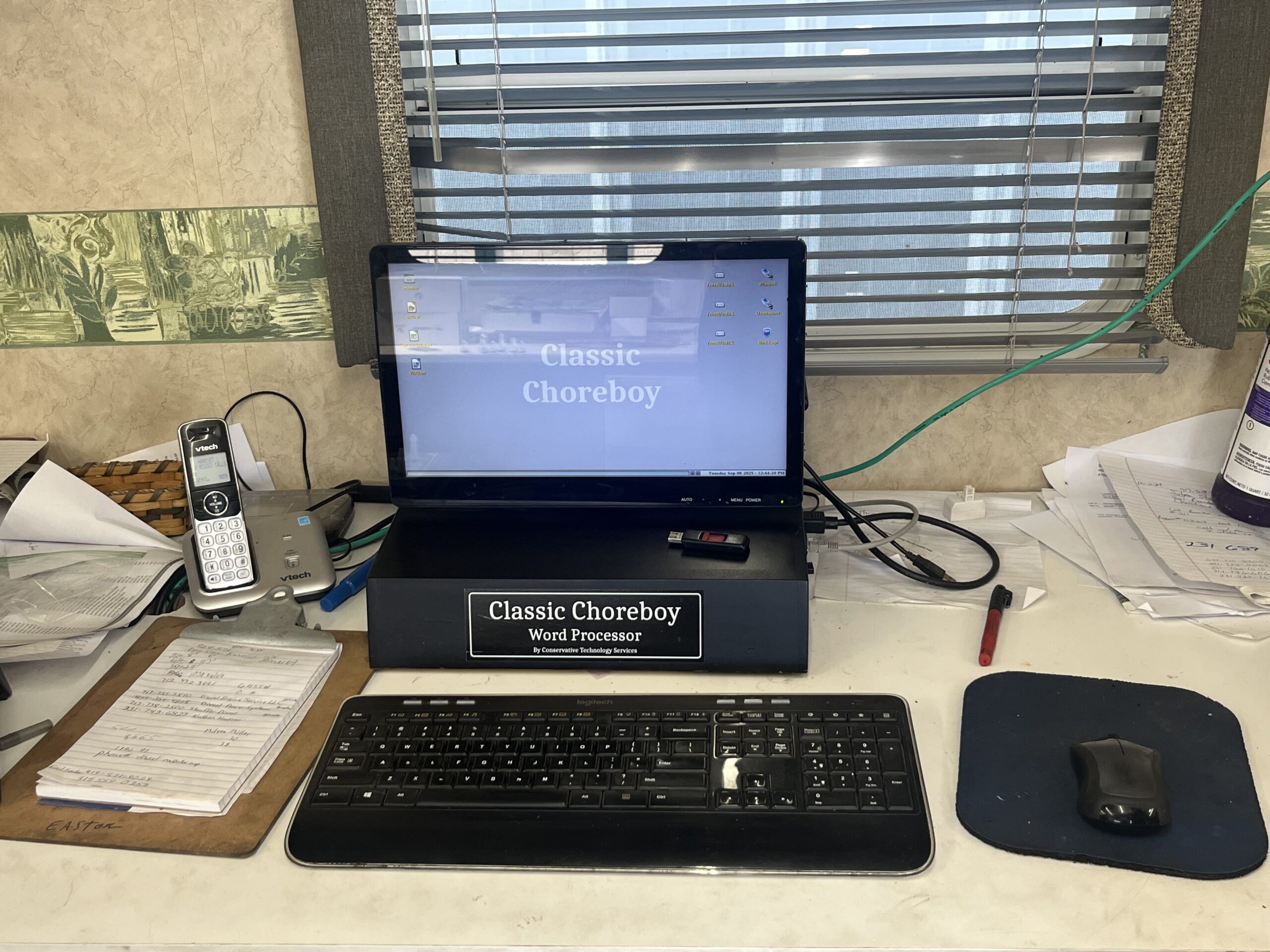
    Since 2004 the machines, originally priced at $800 each, have been adopted by dozens of Plain religious communities to run local systems, with names like Classic, Chore Boy, and Steward, to accommodate and monitor members’ text notes and business records, without video, corporate media networks, or Apple and Google apps.

    A senior member of his Old Order Mennonite congregation and coauthor of a book on Plain responses to family abuse, Hoover agreed to talk to The Inquirer about Mennonite and Amish ideas and tools. The conversation has been edited for brevity and clarity.

    What are the tensions around computers in Plain communities?

    Our real goal is to live a separate life and not to be so influenced by popular society around us. If morality is decaying in the world, it becomes even more important for us to become a separate people. Well, that’s hard to do.

    Everything is tied together. Especially with the internet, and, smartphones. It gets harder and harder for us to be in business and to make a living without some way of being connected.

    One of Allen Hoover’s Chore Boy word-processor machines at his workshop in Ephrata, Lancaster County, September 2025.

    How are your machines different from normal computers?

    For our Plain people, we wanted it to be separate from the world. So it should have no connectivity. Not to the internet, email, or even fax. Just a stand-alone unit. And then of course no amusements of the world, no games, music, nothing like that. Just a business tool.

    Couldn’t you do that on a computer?

    Well, if it’s in my home, my children will find ways of doing things with it that I have no idea of. And also, if you look at 50 different personal computers in peoples’ homes, you will find 50 different systems. We wanted one like the old word processors, where every unit was exactly alike. No additional programs, no apps that you can put on to listen to music or whatever.

    The programs included are a word and a spreadsheet program. And a drawing program, and a computer-aided design program. We developed our own comprehensive business accounting system. With inventory control, invoicing, all that.

    We looked at the on-the-shelf programs. They are almost all internet-connected. There are a few that stand alone. But they were so clunky, made for a specific purpose, that they just didn’t fit the bill.

    How did you adapt the machines for Plain needs?

    We had a few meetings with interested businesspeople, to see what the need was. Probably made a mistake, we never asked the church for permission.

    And it took off. In the beginning, it was the only thing out there for the Plain people. Then other people started. This is about the only one that is still going — because of our stance of not making changes. We do upgrade it. It has much more power now. But we wanted to stay away from Windows or Mac.

    We ended up using Linux as the operating system. We used Open Office, we now use LibreOffice, another free program, more powerful, more useful. The computer-aided design program is called FreeCAD. There is also something similar to MapQuest, that helps you with planning and mapping trips.

    How many machines have you sold?

    I’m guessing 400 a year. So if we have been doing this for 20 years, there are a few thousand out there.

    How did the community react?

    It was mixed. In the beginning, it was a huge whoop of joy: Here is something we can use. Once a year there is an expo in Lancaster County, focused on the Plain people and Plain businesses. I got a booth and it was the star of the expo. People were lined up because it was the new thing.

    Some Plain communities reacted by banning them because it was coming too close to the computer world. And I understand that perfectly. No hard feelings about that.

    What happened more often was that communities started with it, but then became dissatisfied that we didn’t allow them to put more programs on. So they made their own and eventually drifted into the internet world.

    It has not made me a popular person. For the ones that feel we should not have gotten into computers at all, I am the bad boy. For the ones that feel we should have allowed more connections, I am the bad boy.

    We really don’t want our people working in General Motors, big factories, all day long. We fear that will influence us too much. And so, we want our own little businesses like mine, Allen Repair Service, we rebuild, repair, and resell woodworking machinery.

    And it’s getting harder [without internet]. This was a tool to allow us to stay in those businesses.

    What about smartphones?

    In Lancaster County, the Amish found loopholes, ways to have their cellphones, smartphones.

    The leadership are working through that right now, I’m pretty sure there is going to be a big split.

  • Philly small businesses face a big tax headache as an exemption ends

    Philly small businesses face a big tax headache as an exemption ends

    Small-business advisers and advocates are bracing for a wave of questions as the city’s Business Income & Receipts Tax (BIRT), Philadelphia’s municipal tax that hits both sales and profits, expands to cover tens of thousands of small businesses and self-employed workers as they pay their 2025 taxes.

    City revenue officials expect to collect more than $35 million in new BIRT payments this year from the expanded pool of taxpayers, even with slightly lower tax rates.

    Businesses are concerned not only about the cost of the tax but also trying to follow the city’s complex business tax rules and incentives, even as the city prepares to spend millions helping first-time business taxpayers.

    “This is applicable to every sole proprietorship, limited-liability company, incorporation, or partnership engaged in a business, profession, or activity for profit in the City of Philadelphia,” said Scott S. Small, trust counsel in the Philadelphia-area office of Fiduciary Trust International, a New York-based advisory firm for families and business owners.

    “Think of folks that have houses they rent. Daycare in their homes. For-hire drivers at Uber or Lyft. Estates and trusts that own property,” Small said. “A return now has to be filed, regardless of whether you made a profit.”

    Even with extensive city guidance, “it becomes a logistical nightmare” for small taxpayers, who may have to hire professionals to figure out what they owe and exemptions that can reduce the total, said Will Gonzalez, who runs CEIBA, a Latino business and economic education group.

    Business taxes and the general difficulty of doing business in Philadelphia were “the number one issues” reported in a survey of 200 city businesses by the Independence Business Alliance, a chamber of commerce for LGBTQ+ business owners, that was presented to members of Mayor Cherelle L. Parker’s tax reform commission last year, said Zach Wilcha, the alliance’s chief executive.

    “Small businesses pay on revenues, sales, profits [there is a separate net profits tax along with the BIRT income tax], and wages,“ Wilcha said. ”People love being in Philadelphia; they want to stay here. But they feel the tax structure is forcing them to leave.”

    Eliminating the BIRT’s income tax and curbing the revenue tax has been a longtime goal of business advocacy groups like the Chamber of Commerce for Greater Philadelphia. It was a goal of business members on the tax reform commission. City leaders in the end decided on gradual rate reductions instead, a move tax commission chair Richard Vague called “disheartening.”

    The BIRT tax rate on sales is dropping by half a penny per $1,000 this tax season to $1.41 per $1,000 of sales. And the income tax is decreasing to $57.10 per $1,000 of profits from $58.10. The city plans to slowly cut the revenue tax to zero and the BIRT income tax by half by 2039.

    But this year, far more taxpayers will be paying the tax, which is due by April.

    Philadelphia formerly exempted businesses that gross less than $100,000 in sales per year from paying BIRT. That exemption failed to survive a court challenge. Under the “uniformity clause” of the Pennsylvania state constitution, taxes can’t exempt whole classes of taxpayers based on income.

    “It’s the same reason we can’t have a [state or local] tax just on billionaires, or millionaires,” Small said.

    A smaller-business exemption on the city’s use and occupancy tax exemption is also gone, leaving more small-business owners liable for that 1.21% a year tax, paid in monthly installments.

    A bill proposed by Councilmember Mike Driscoll that would exempt solo entrepreneurs from paying the business income and revenue taxes has not advanced in Council.

    The city collected around $680 million in BIRT business taxes last year, about 10.5% of city revenues.

    Among Pennsylvania communities, only a minority, including Radnor Township and other Main Line communities, charge similar business taxes.

    Kathleen McColgan, Parker’s revenue commissioner, says Philadelphia expects to collect “an additional $35 million to $40 million in fiscal year 2026″ from the broadened BIRT. The city has earmarked that money for “commerce and business development.”

    City officials have said they will spend $7.5 million this year for programs to help new taxpayers figure out how to manage the city’s complicated tax programs and exemptions.

    In recent years, the city has collected BIRT from around 40,000 larger businesses, McColgan said. She estimates that 50,000 businesses that have paid other city taxes will start owing BIRT for the first time. Roughly 25,000 other registered businesses that hadn’t incurred any taxes in recent years before might also owe.

    City officials could provide no estimate of how many businesses that never registered to pay taxes may be required to pay BIRT for the first time.

    To spread the word, McColgan said the city sent around 80,000 notices to registered business taxpayers in and outside the city, plus 119,000 postcards to businesses “who may have a responsibility to file” from lists the city purchased from a private vendor.

    Besides the promised multilingual tax education and assistance for first-time filers, officials noted that the city has an array of tax discounts that can reduce the small-business burden.

    First-time filers can get an extension if they can’t get the form in by April 15, but they will still owe the tax accruing from that date with any late fees.

    And, after the first year, taxpayers are expected to pay the next year’s BIRT in advance, in quarterly installments.

    Even with the city’s initial guidance, many first-time taxpayers will need professional help to navigate all those rules and realize available discounts, Small said. “It’s a nightmare” for a layperson to attempt to follow all the instructions and file correctly.

    “People want to pay their taxes,” CEIBA’s Gonzalez said. “It’s the right thing to do. They also need to pay their taxes, if they want to buy a house or send a child to college.

    “But anyone who is going to pay the BIRT for the first time is going to need a city business license. And for that, they have to pay any outstanding tickets and bills. And that can be a lot to resolve all at once.”

    His group and others have held online and remote workshops to advise drivers, independent home-health aides, and other first-time BIRT payers.

    Gonzalez predicted “a rude awakening for Philadelphians” as the tax fits in. “Our economy is built on a lot of this gig work, and we’d hate to see people punished for making more money for their families.

    “And this puts people in Philadelphia at a disadvantage. In a year we are celebrating the 250th year of the American Revolution that started with unfair tax concerns, we need to find a better way.”

    Small, of Fiduciary Trust, said the Philadelphians he advises tend to complain without leaving the city. “Folks kind of suck it up, and say, ‘It’s not as bad as it could be.’”

    Still, many people have noticed how the city and state also offer incentives to bring in new businesses that aren’t given to regular taxpayers, he said. “The small guy gets the higher burden, while larger ones who have more ability to pay, pay less.”

  • This $8M federal college grant will train Hanwha shipyard workers

    This $8M federal college grant will train Hanwha shipyard workers

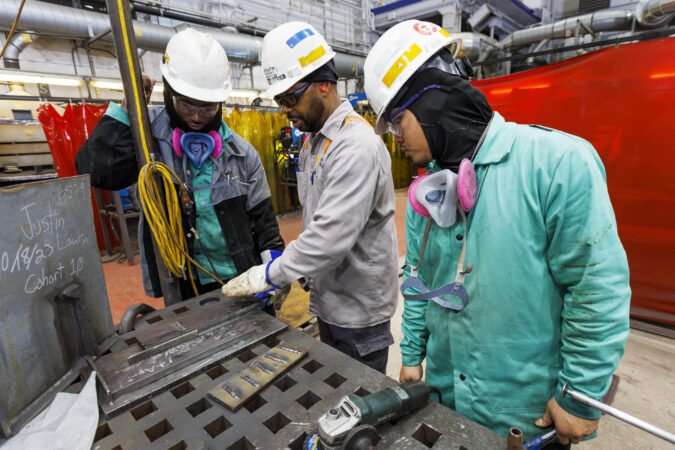
    A consortium set up in 1996 to train future shipyard workers at the former Philadelphia Navy Yard says a new U.S. Department of Labor grant will prepare workers for Korean-owned Hanwha Philly Shipyard. The group hopes to quadruple apprenticeship graduates from around 120 workers a year to around 500.

    “In line with President [Donald] Trumpʼs executive orders, these projects will help train our next generation of shipbuilders,” U.S. Labor Secretary Lori Chavez-DeRemer said in a statement.

    Led by Delaware County Community College, the effort includes other area colleges, partnered with Hanwha and the nonprofit Collegiate Consortium for Workforce & Economic Development.

    The Delco-led effort will set up “a new model of education and training for U.S. shipbuilding that will include sending U.S. instructors and workers overseas to learn advanced shipbuilding techniques” to be used at yards including Hanwha’s in South Philadelphia, the college said in a statement.

    The money will help pay for training simulation models, online courses, and other programs for “an internationally recognized curriculum for shipbuilding skilled trades” to help trade unions, schools, and shipyards prepare new apprentices and more-experienced journeymen union workers, veterans, welders, steelworkers, electricians, steamfitters, and carpenters.

    The partners “will accelerate the transfer of proven global shipbuilding practices to the U.S.,” Hanwha Philadelphia Shipyard chief executive David Kim said in a statement.

    The consortium is chaired by Marta Yera Cronin, who is also the Delco community college president.

    The shipyard, bought by South Korea’s family-owned Hanwha industrial group for $100 million in late 2024, employs around 1,700 but wants to double that. It plans to bring in new automated equipment to build ships and drones for the Navy, other government agencies, and private shippers.

    Hanwha sends workers from its giant shipyards on Geojedo island, South Korea, to help complete work on civilian ships in Philadelphia.

    The company has pledged to invest $5 billion in the yard, backed by U.S. government grants and loans. It says it wants to boost output from the current one ship every eight months to 10 to 20 a year.

    Trump has said he’d like to see Hanwha technology used by U.S. workers to build nuclear submarines and battleships in Philadelphia.

    That would require extensive new dry docks, cranes, power plants and other large capital investments, and a lot more ground and dock space than the 118-acre Hanwha-owned yard or the neighboring former Navy site where family-owned Rhoads Industries repairs and fabricates parts for General Dynamics, a major Navy submarine builder.

    A separate $5.8 million Labor Department grant is going to the Massachusetts Maritime Academy, one of several civilian officer training schools slated to receive Korean-designed training vessels that the Philadelphia yard has been building in recent years. That money will develop additional shipbuilder training with foreign partners.

    Under current contracts with the Philadelphia metalworkers’ union group that represents yard workers — itself a joint effort of the boilermakers, operating engineers, carpenters, and other unions — newly qualified workers can earn around $30 an hour. Experienced workers can qualify for as much as $100,000 a year, including overtime.

    According to the consortium, community colleges have added trades education following a drop in U.S. public school shop classes and a shortage of U.S. workers interested in industrial work, including shipbuilding, which involves high-heat tools, dangerous materials, and outdoor work in all weather.

    The grant will speed expansion of the consortium, which has received grants from Citizens Bank and support from port-related agencies in past years.

    The college says it has trained more than 600 apprentices in all fields over the past 20 years. It stepped up its focus on shipbuilding beginning in 2017.

  • Pa. loggers want a bailout for Trump tariff damage. Without it, they say layoffs could be next

    Pa. loggers want a bailout for Trump tariff damage. Without it, they say layoffs could be next

    In Pennsylvania — Penn’s Woods — centuries after settlers began cutting native forests, decades after once-thriving furniture makers like Pennsylvania House and Home Line shut or moved away — lumber remains a basic industry. Upstate sawmills send logging crews to buy and cut walnut, cherry, and other hardwoods to export to global flooring and furniture enterprises.

    But dozens of the state’s remaining mills, loggers, and industry groups, long accustomed to blights and other natural disasters, say they now face a plague made in Washington, D.C. — and would welcome a government bailout.

    Some 48 of the state’s surviving mills, lumber companies, and industry groups joined 400 other U.S. forest-based businesses last month to ask President Donald Trump for relief payments to ease the impact of his U.S. import taxes and foreign retaliatory tariffs, which they say have slowed export demand for their products, while boosting the cost of buying and operating their machinery.

    These and other “rural, almost entirely family-owned businesses” and the workers and contractors who depend on them want to be included alongside farmers, whom Trump has promised a $12 billion tariff bailout, according to a statement by the Heartwood Heartland coalition formed to make their case. The U.S. Census counts more than 10,000 logging and sawmill firms, not counting lumber truckers and other related businesses.

    Earlier tariffs and foreign competition had already hurt U.S. hardwood exporters, who were excluded from a farm tariff compensation program in the previous Trump administration, according to the coalition.

    U.S. hardwood lumber sales dropped 20%, to around $2.7 billion, in 2022-2024, according to the coalition. Log sales fell 11% to around $1.8 billion, and employment in U.S. woods shrunk 10%, to around 360,000, as more sawmills closed, over the same period.

    The U.S. remains a leading exporter of hardwoods, but its share of the China market shriveled, from $1.5 billion or a third of the market in 2017, to around $700 million or one-fifth of the market in 2024, since the “trade war” during Trump’s first term drove importers to rival nations.

    Chinese manufacturers are buying more wood from Russia, Southeast Asia, and other regions. This threatens a collapse in the U.S. forest industry echoing the earlier “collapse of the U.S. furniture sector,” the coalition said in a December letter to the president and cabinet members.

    Further sales losses will result in the U.S. “losing the skilled workforce” and relying on more imports, predicts Dana Lee Cole, the federation’s executive director. That’s the opposite of the president’s stated goal in boosting protective tariffs.

    Among the signers were several businesses in Southeastern Pennsylvania, including Stoltzfus Forest Products LLC in Lancaster County. Philip Smith, chief operating officer of business and its affiliate, Stoltzfus Hardwoods, agreed to answer questions about his enterprise and the impact of tariffs. Edited for brevity and clarity.

    How old is your company and who works there?

    The parent company built a sawmill in 1990. We moved the location when we had a large expansion in 2016. We employ about 65 people at the two companies. We have three of our own logging crews, two mechanized and one that’s hand cutters. We use a subcontractor logger and trucker as well. The owners and a majority of the workers are Amish.

    What do you harvest and where?

    We take Appalachian hardwoods from up to about 175 miles of our location — white oak, poplar, walnut, hickory, a little soft maple, and cherry. We go down to the Eastern Shore of the Chesapeake, out toward Chambersburg, up into the Lehigh Valley and Schuylkill County.

    And the Philadelphia area, we just did a golf course. It got bought [by a developer], and we ended up harvesting the trees.

    We bring the trees to the mill [and make boards and trim-sized pieces]. We sell to molding companies, flooring companies, and to companies that make furniture and cabinets.

    What would be affecting us with the tariffs, we have material that will go to China and to Germany and [other] EU countries.

    Why don’t foreign importers pay the tariffs?

    To get an order, we have to agree, if the tariff went above a level, we pay part of the cost.

    In China, they made temporary agreements for when our lumber got ready. If it was on the ocean before the tariff dates, we weren’t affected.

    So we had a scare last spring [when Trump proposed punishing increases to wood tariffs]. And we had a scare again in the fall.

    So the full tariffs haven’t actually been implemented?

    The biggest thing we notice with tariffs is the uncertainty. The economy was already crappy. Now the tariffs bring another factor into the way people interpret [costs].

    For some reason, the U.S. sells logs to Vietnam, and then Vietnam is [milling] American walnut, selling it as American walnut, and undercutting finished American walnut [from the U.S.]. Vietnam is paying their people almost nothing. Add the tariffs, we are less competitive.

    Has that uncertainty cost you orders?

    It has affected how people perceive costs. It has affected cash flow. Some items are moving slower.

    There’s another thing: Equipment in the forest industry, a lot of it comes out of Canada. Log trucks. Specialty trailers.

    With the uncertainty, truckers that focus on logging tell us they have canceled stuff on order.

    And we use Leadermac wood-moulder machines that come out of Taiwan. There’s a tariff there, too. We were told there’s a 24% increase in price.

    Have you canceled equipment orders as a result?

    We have put the brakes on making some decisions.

    Despite the squeeze you are in today, can tariffs help move wood industry to the U.S. over time?

    With the tariffs, it’s not so much we are against the idea of leveling the playing field. There’s definitely countries abusing America. We are pro trying to fix this stuff.

    But there is pain in doing it. We are paying the tariff on equipment, but I don’t see any tax break. They are just adding another tax on us. You need to give us a break that we can recoup that money.

  • These old Exton offices are becoming ‘hotel-apartments’

    These old Exton offices are becoming ‘hotel-apartments’

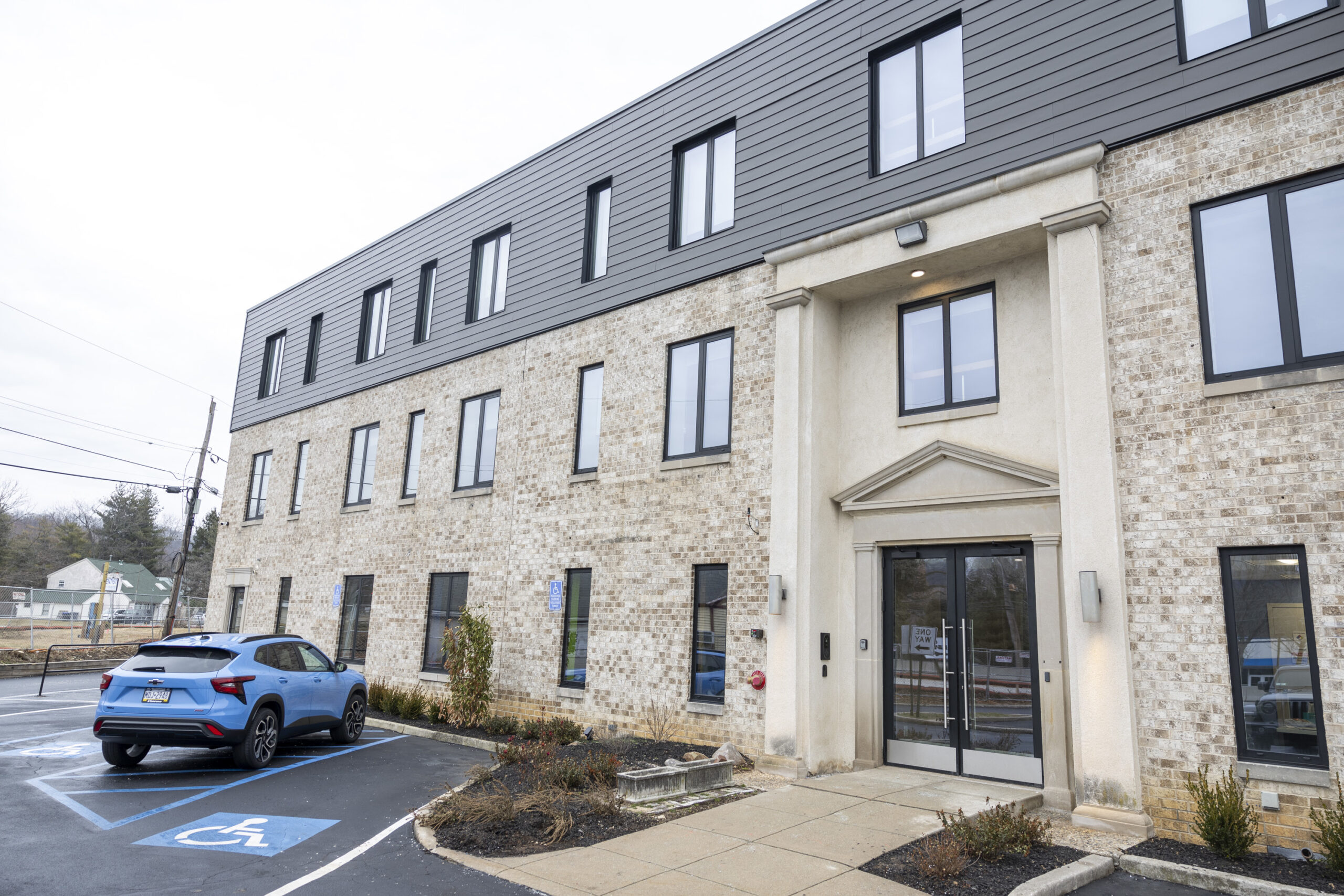
    While the battle rages over how much redevelopers should cram into the former Exton Mall site, investors on the ridge just to the north have turned one of Great Valley’s vacant office buildings into a suburban rarity: 24 studio and 8 single-bedroom apartments.

    They’re equipped with kitchens, bathrooms, and washer/dryers, and they’re being marketed as monthslong hotel accommodations for consultants and visitors to nearby employers.

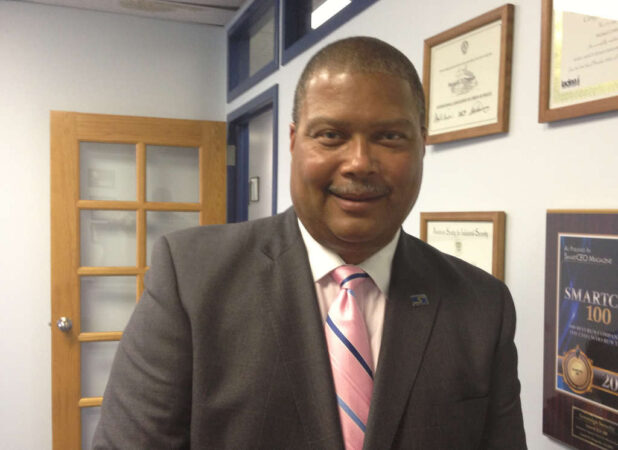
    The owners, a group led by Main Line real estate lawyer David McFadden, broker John McGee, and investment partner Chiu Bai, hope the building, which they’re calling the Flats on 100, will be a model for reusing orphan buildings that stud the Great Valley and other suburban office, industry, and retail zones.

    David McFadden of Chester Springs (left) and John McGee of Wayne are co-partners and owners of the Flats on 100 in Exton.

    The trio picked up the 53-year-old, 30,000-square-foot building and grounds at 319 N. Pottstown Pike (State Route 100) in 2023 for $1.5 million from family-owned Kelsch Disability Services.

    “Fifty bucks a [square] foot” seemed like a bargain, even though the partners didn’t have specific plans for it, McFadden said.

    “Office buildings are being given away these days. What do we do with them when there’s no demand for office space?” he said. “At the right discount, developers can afford to turn them into something sustainable that people want.”

    As offices, the building was broker-rated Class C, the least desirable. The partners paid cash, figuring they could borrow millions for capital improvements if they could show lenders a credible plan to turn it into something more profitable.

    “We got lucky with the zoning,” McFadden said. West Whiteland’s “town center” designation allows a wide range of uses.

    The partners chose what McFadden calls “hotel-apartments.” He compared it to projects built by Level Hotels & Furnished Suites, with locations in Chicago and the West Coast, and by family-owned, locally based Korman Communities’ AVE Living, with its furnished apartments at Philadelphia’s Navy Yard and other local sites.

    McFadden says the model offers “a place that feels like home, with the amenities of larger buildings but a boutique feel.” The units are fully furnished, including appliances, dishes, and linens, as well as cleaning and other services as requested.

    Lender Trupert Ortlieb from TruMark Financial, one of the area credit unions bulking up with business loans, arranged $5.7 million in financing for capital improvements.

    The outside of the Flats on 100 apartments, a redevelopment of a commercial building.

    Contractors demolished and replaced interior walls; added sprinklers, triple-glazed windows, and insulation; and replaced heating and air-conditioning. The reclad of the interior with aluminum finished like pine was picked up by Chiu in China for $30,000 (half that for the materials, $4,000 for shipping, and $11,000 to cover tariffs).

    Because the project qualifies as a hotel, it could add a liquor license without the higher cost of a tavern license. A first-floor retail space has been leased to a dentist.

    The partners expect interest from nearby employers such as Vanguard Group, QVC, West Pharmaceutical Services, and Accenture.

    The Fairfield shopping center, with a Giant supermarket, fast-casual restaurants, and retail stores, is within walking distance. The Exton SEPTA Regional Rail station is two miles down Pottstown Pike.

    Seeking light in what had been gloomy space, the developers brought in architect Martin Kimmel from Blue Bell. He persuaded them to replace half “gun-slit” windows with 5-foot-wide glass sheets, which turned out to be more work than expected, trimming 12-inch blocks topped by 4-inch bricks.

    Other amenities include a barbecue pit, an outdoor dog walk, a pet-washing room, basement fitness center, conference room, bar, pool table, and walk-on services like massage and physical therapy.

    This space in the studio apartment can be used as a sitting area or a bedroom.
    The Ori bed lowers from the ceiling for sleeping.

    Kimmel and the partners looked at New York apartment plans to see how many one-person units they could fit into the three stories. Beds could be stowed for work-at-home hours, but “we didn’t want those old fold-out Murphy beds,” McFadden said.

    They bought canopy beds from Hasier Larrea’s Ori flexible-furniture-systems firm. The beds lower from the ceiling onto couch bases, plus facing rows of shelves can open as a walk-in closet. The bed controls, like the digital room locks, are remote-accessible and have manual overrides in case of power failure.

    The narrow building admits more light for that suburban feel.

    “Not every office building converts well to apartments,” McGee said. “This was perfect — 65 feet deep, you have a central corridor with apartments. If it were 200 feet deep, you’d have very narrow apartments with one window at the end.”

  • Avelo stops deportation flights in Arizona; protesters in Delaware applaud

    Avelo stops deportation flights in Arizona; protesters in Delaware applaud

    Avelo, the only commercial airline serving Wilmington’s airport, has ended its contract flights to carry foreign nationals detained by U.S. immigration agents. The change takes place amid a larger consolidation of Avelo’s routes.

    The Delaware Stop Avelo Coalition of groups critical of President Donald Trump’s deportation policies hailed the airline’s move. They had been leading pickets at the Wilmington airport in New Castle, Del., since last spring, when Avelo joined several charter airlines transporting deportees for the Department of Homeland Security.

    For Avelo, the latest move was part of a cost-cutting reorganization “streamlining its network” to four of its regional bases: Wilmington; New Haven, Conn.; Charlotte/Concord, N.C.; and Lakeland, Fla. Among the regional bases it is closing is Mesa, Ariz., which handled deportation flights.

    “Avelo will close the base” in Arizona, where it had managed what the airline called “removal flights” for the government, “and will conclude participation in the DHS charter program” by Jan. 27, Avelo spokesperson Courtney Goff said in a statement. The airline said earlier that it had not moved deportees through Delaware.

    Avelo also said it has gotten rid of six Boeing jets. Airline industry information sites are reporting DHS has picked up at least some of those former Avelo airliners, as if moving deportation capacity in-house.

    Avelo plans a new base at the McKinney National Airport, near Dallas, later this year.

    Avelo CEO Andrew Levy last year said the DHS contract was part of the airline’s plans for growing and maintaining operations. Levy started the airline in 2020 and has rapidly increased its route network, but also has acted quickly to cut and shift unprofitable service.

    The coalition, a group including local Democratic Party activists in chapters of the Indivisible organization, Working Families Party affiliates, the Delaware Democratic Socialists of America, and Unitarian-Universalists, said in a statement that it welcomed Avelo’s decision to end deportation flights, “especially those without due process.”

    “We don’t know, to be honest, but we have indications from behind the scenes that we had some effect. Sometimes these things build and build,” said Gayle Gibson, an engineer who serves as coalition spokesperson.

    The coalition also coordinated some of the sign-waving picketing with actions at other airports Avelo serves around the country.

    Gibson noted that Wilmington City Council passed a resolution calling on Avelo to stop flying deportees rushed into custody without due process. State legislators drafted similar bills, which had not yet advanced to a vote, and “hundreds” of protesters had turned out to airport picket lines, local-government meetings, and University of Delaware rallies to pressure Avelo. Leaders also met with Gov. Matt Meyer and other top state officials.

    Safety concerns raised by Avelo employees also had an impact, Gibson said. “This shows Delaware stands behind businesses that operate according to laws and value people and due process.”

    The organizers in their statement took credit for making Avelo’s deportation flights “politically and reputationally radioactive,” leading to the company’s decision to stop.

    Avelo cited poor financial returns. The program did not pay Avelo enough “to overcome its operational complexity and costs,” according to Goff’s statement.

    State and local officials in Connecticut, New York, and other states had called on Avelo to stop the deportation-related flights.

    Meyer, who welcomed Avelo to the airport when he was New Castle County executive in the early 2020s, had said he personally boycotted Avelo after the protests began.

    Activists said they couldn’t measure the effect of any customer boycott.

    “We did not see an impact regarding customers choosing to fly,” said Goff, the airline spokesperson. Customer flights rose to 2.6 million last year, up 11% from 2024, as planes were fuller. She credited low fares and on-time reliability.

    The protests put Meyer and other Democratic officials in a quandary. They had encouraged Avelo to begin service from the airport, which formerly managed only charter, corporate, and general-aviation flights, as a way of boosting Delaware’s corporate employment sector as the state economy turns from heavy and chemical manufacturing toward biotech and other developing industries.

    Meyer did not act on protesters’ demands that the state cancel tax incentives and other Avelo financial benefits to pressure the airline to end the flights.

    The airport is operated by the Delaware River and Bay Authority, which also controls the Delaware Memorial Bridge and Cape May-Lewes ferry. The authority’s board represents the Democratic-led states of Delaware and New Jersey.

    Like the governor, the authority declined activist requests to pressure Avelo, saying the airline had the right to conduct its business the way it sees fit.

    “We’re aware of the community concerns regarding Avelo’s past operations at other airports,“ James Salmon, the authority’s spokesperson, said in a statement after Avelo announced an end of the flights. “We’ve consistently maintained a neutral position” and focused on keeping the airport accessible to customers for Avelo’s flights to Florida and other destinations. The airline’s flights from other airports were “outside the scope” of the agency’s authority.

    “This decision proves that public pressure really works,” the coalition said in its statement. It said it would keep pushing proposed laws to prevent airlines receiving state benefits from “quietly” resuming flights or other deportation contractors from winning government support.

  • PHA and Navy Yard security guards sue contractor over unpaid hours and overtime

    PHA and Navy Yard security guards sue contractor over unpaid hours and overtime

    Armed and unarmed guards who weren’t paid for some of their hours patrolling Philadelphia public housing developments and other buildings have filed class-action complaints against their former employer, Sovereign Security LLC, owner Richard D. Cottom, and manager Maurice Dupree.

    The guards are seeking back pay for unpaid work, sick and vacation days, overtime violations, damages under state law, and the return of uniform deposits.

    The guards, led by plaintiff Shirell Williams, say Sovereign violated the state Minimum Wage Act and Wage Payment Collection Law and breached employment contracts over four years, starting in late 2021. Williams worked for Sovereign at PHA and at the city-owned Philadelphia Gas Works, the Navy Yard business center, the Philadelphia Department of Human Services, and the former Delaware County Memorial Hospital.

    Through their attorney, Center City labor lawyer Josh Dubinsky, the guards seek unpaid wages, damages, interest, and attorneys’ fees stemming from “systemic wage abuse” while working at Sovereign. They seek certification as a class including more than 100 current and former Sovereign staff.

    Cottom, a former Drexel University security executive who founded Sovereign in 2004, and other Sovereign officials didn’t return calls seeking comment.

    The lawsuit also named a Sovereign manager, Maurice Dupree, as codefendant. Guards have described Dupree as their off-site supervisor, who managed assignments, hired and fired, and scheduled their work, and who they turned to for help when paychecks were late or bounced.

    Pennsylvania’s wage and hour law requires companies to set regular paydays and meet them. Sovereign’s contract with PHA required it to comply with city rules and applicable laws.

    PHA renewed Sovereign’s contract last spring even after The Inquirer reported on late and bounced Sovereign paychecks.

    The housing authority canceled Sovereign’s contract on July 9, giving owner Cottom two days to stop work and file final reports.

    The official cancellation letter stated only that PHA and its property management unit had determined “that it is in the best interest” of the agencies to terminate Sovereign.

    Correspondence collected under an Inquirer Right to Know request also shows PHA had warned Cottom that “it has come to the attention” of PHA that Sovereign “may be delinquent in paying its employees in a timely manner,” that late payment was “a breach of the contract,” and that it is “imperative” to ensure guards are paid and show up.

    That letter was dated Jan. 27, 12 days after The Inquirer first reported on the late payments.

    Sovereign had held the largest of at least three outside security guard contracts at PHA, which also has its own police department and a staff security force. PHA has paid Sovereign more than $7 million since 2021.

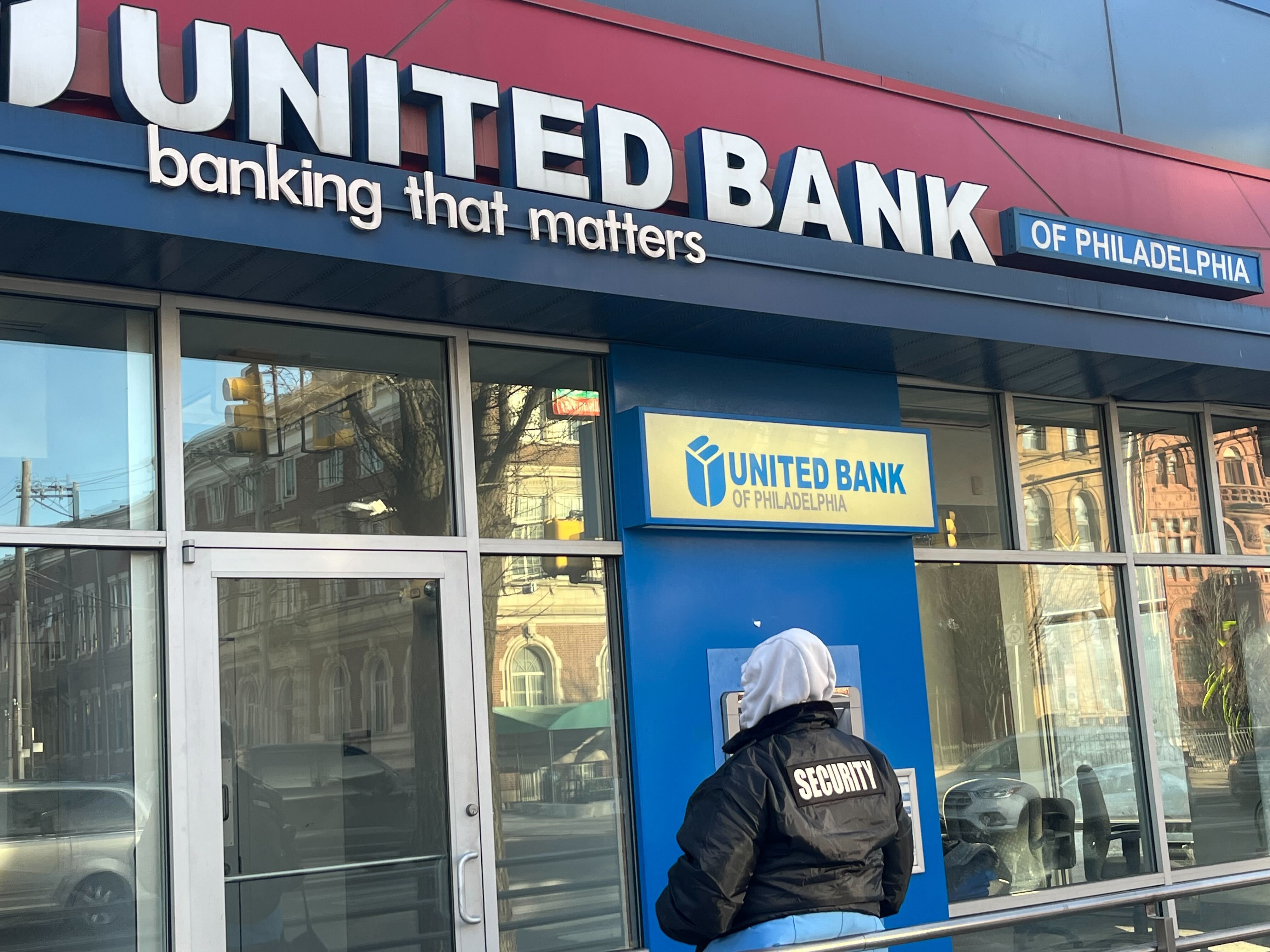
    Tahazha Woodard, a guard at a jointly operated PHA and School District site in North Philadelphia, was the first in a stream of Sovereign Security LLC employees who tried to cash delayed Sovereign paychecks on Jan. 10. United was one of the few Philadelphia institutions willing to cash Sovereign checks at that time, after incidents when the company left its accounts underfunded and paychecks bounced, according to guards.

    PGW ended its agreement with Sovereign in 2023. As of last summer, Sovereign no longer worked at the Navy Yard either.

    The guards in the suit say a trial would show whether Sovereign had a “pattern or practice” of shorting their pay, failing to pay overtime, and not refunding uniform deposits. Other issues are whether Sovereign violated state wage laws and failed to keep required time and pay records, and the damages they are owed.

    Williams, the lead plaintiff, was paid $14.40 an hour when she started in 2022.

    Besides back pay, the suit also seeks to collect $500 or 25% of wages due for each violation, plus attorneys’ fees, under provisions of state law.

  • Bucks County credit union members vote down a proposed merger

    Bucks County credit union members vote down a proposed merger

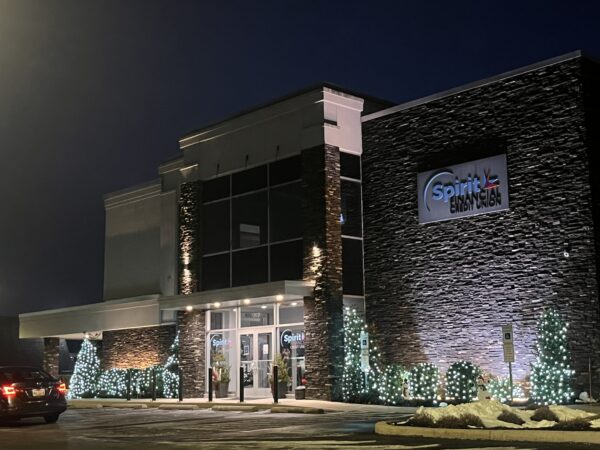
    Members of the 71-year-old Spirit Financial Credit Union in Levittown, Bucks County, voted decisively against their leaders’ plan to merge the $70 million-asset, member-owned lender with $2 billion-asset Credit Union 1 of suburban Chicago.

    “We respect the decision our members made through this vote,” David Obarowski, the 3,800-member credit union’s chief executive, said in a statement. He thanked members for voting and commenting on the plan. “There are no plans for another vote on this specific matter. Spirit Financial will continue operating independently.”

    Todd Gunderson, Credit Union 1’s CEO, in a statement offered “utmost respect” for “the democratic member voter outcome.”

    He said most members voted in advance by mail, adding that a smaller group showed up Monday, engaging with him and Obarowski. He called members “constructive, thoughtful and respectful” and rightly focused on adding younger members since Spirit Financial’s member count has barely risen since the 1990s.

    Obarowski declined to provide vote totals. Member Richard Kilian, a building-materials company owner who opposed the merger, said more than 500 of the credit union’s 3,800 members voted, with more than 400 voting no, according to a count he said was made public at the meeting.

    It was a rare setback for Credit Union 1, one of a growing number of credit unions with multistate branch networks and more assets than most community banks.

    Gunderson said last week that Credit Union 1 had won 12 of 13 merger votes since he took the top job in 2020.

    Pages listing benefits from the proposed merger, such as more loan and deposit products and lower travel ATM fees, no longer appear on either credit unions’ website.

    Kilian attributed the vote to members’ preference for local control, though he agreed its aging membership needs new energy.

    Spirit Financial was started by workers at the former U.S. Steel Fairless Works but is now open to people who live or work in Bucks or are members of Bucks-based churches and other institutions.

    Kilian said he hoped Spirit Financial would recruit younger customers and leaders, boost its presence by using more social media and other community engagement, and add staff licensed to write more loans.

  • Member-owned Spirit Financial grew with Levittown. Should it sell to a national credit union?

    Member-owned Spirit Financial grew with Levittown. Should it sell to a national credit union?

    In 1954, as Levittown was rising on former Bucks County farmland, workers at the massive nearby U.S. Steel Fairless Works formed a credit union, a community lender owned not by profit-seeking investors but by its own depositors under their elected board.

    Renamed Spirit Financial Credit Union after the steelworks shut in 2001, its one and only office on New Falls Road remains a Levittown institution, now open to all Bucks County residents, workers, and worshipers.

    But Spirit Financial might not be a locally owned fixture much longer.

    President David Obarowski has invited its 3,800 members to vote Monday on whether to merge with Credit Union 1, a $2 billion institution with national aspirations based in suburban Chicago. Credit Union 1 has absorbed small credit unions as it builds its multistate network.

    Credit Union 1 has won 12 of the 13 merger elections it has initiated since Todd Gunderson took over as chief executive in 2020, Gunderson said in an interview.

    Regulator reports show that Spirit Financial is by some measures a stronger institution, with more capital reserves relative to its loans, than its larger suitor.

    Gunderson said Credit Union 1, as a bigger institution, can afford to put more of its money to work as loans and for expansion and has grown faster than Spirit as a result.

    Spirit has about $70 million in loans and other assets and $60 million in deposits, which credit unions call shares and their interest, dividends. That’s a little more than the deposits averaged for the 12 branches of Bucks County-based William Penn Bank before that community lender’s purchase by Harrisburg-based Mid Penn Bancorp earlier this year.

    Gunderson said Credit Union 1 offers more kinds of deposit accounts, including high-yield checking, some of which pay more than Spirit Financial currently offers, and more kinds of mortgages, some with low introductory rates. For auto loans, the two credit unions charge the same 4.25%.

    Gunderson, who lived in Glen Mills and worked at Wells Fargo’s nearby auto-finance offices in the 2000s, also said Credit Union 1’s deals with other credit unions will make it easier for Spirit Financial customers to save on ATM fees when they are away from home.

    He said a bigger bank can afford better technology. “Our real competition is Google, Amazon, TikTok, they make transactions easy,” he said. The online lender SoFi “signed up more customers than all the credit unions in the U.S. last year. And its rates are good,” forcing credit unions to cut costs to compete.

    Some members are opposed to the deal. “It doesn’t make any sense to many people in the community,” said Richard Kilian, a hardware distributor.

    Kilian said he has had as much as $2 million on deposit with Spirit Financial, making him among its biggest customers. He began banking with credit unions as service slipped at the former William Penn Bank, he said.

    “My son, they couldn’t give him a mortgage answer in three weeks,” he said. “Inspire Federal Credit Union gave them an answer in six hours.”

    Spirit Financial has tried to attract new members in recent years with special interest rates, Killian said, but it’s been difficult, with an aging board and a staff that hasn’t been much in evidence at business-group meetings where lenders seek customers. Killian offered to join the board but was blocked, he said, because of a 35-year-old auto-theft conviction.

    He also raised questions about the millions guaranteed to Spirit Financial management if the deal goes through.

    That executive package was a subject of a critical article by Chip Filson, a former credit union regulator who regularly criticizes credit union merger plans in articles on his website.

    “The total financial benefit to CEO Obarowski is a minimum of $4.45 million plus additional bonus incentives” for closing the merger and for attracting other credit unions to Credit Union 1, Filson wrote.

    Obarowski didn’t respond to calls seeking comment.

    In an interview, Filson called the offer and smaller amounts for other Spirit Financial leaders a “golden parachute” that gives management powerful incentive to support what Filson calls credit union “megamergers.” He said such mergers leave communities without locally controlled financial institutions, “subverting” the reasons credit unions were founded.

    Gunderson said the pay package, which would be paid over time, guarantees Obarowski’s future compensation plan as already ratified by Spirit Financial’s board.

    Filson also said Credit Union 1’s proposal doesn’t give enough detail on its actual plans for Spirit One products or its own track record, including results from previous mergers.

    “Us old-timers feel these deals are a perversion of the entire cooperative model,” Filson said. “They tell us they’re bigger, and you won’t be able to compete without a big brother. But the advantage credit unions have always had is their local knowledge because they’re raising local funds to be reinvested in their community.”

    Kilian agreed Spirit Financial could benefit from new energy, which he said ought to come from a new generation of Levittown leaders, not outside owners.