Author: David Murphy

  • Mets take aim at Phillies with Freddy Peralta and Bo Bichette, but let’s not get ahead of ourselves

    Mets take aim at Phillies with Freddy Peralta and Bo Bichette, but let’s not get ahead of ourselves

    Well, it finally happened.

    The Mets made a move that makes sense.

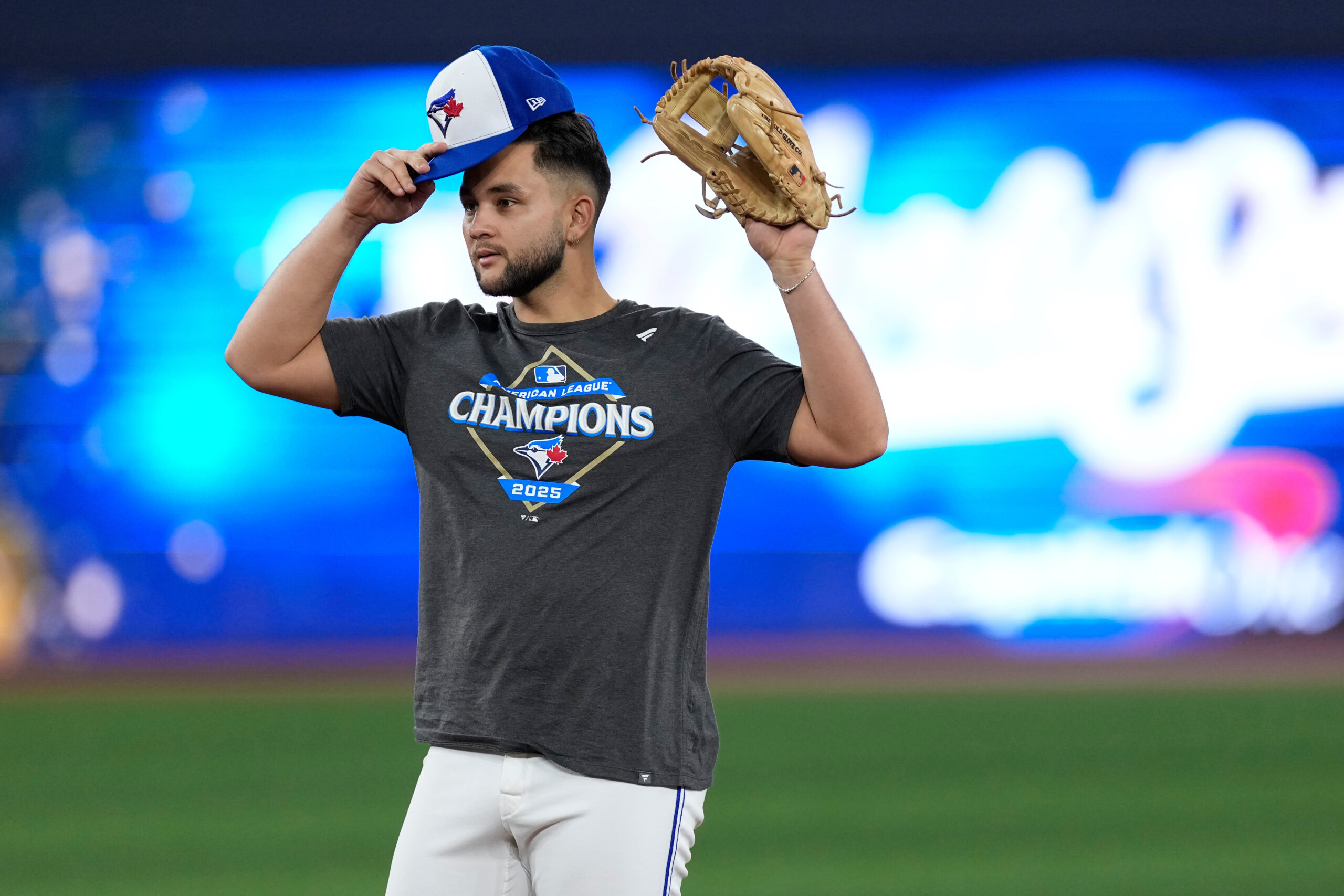
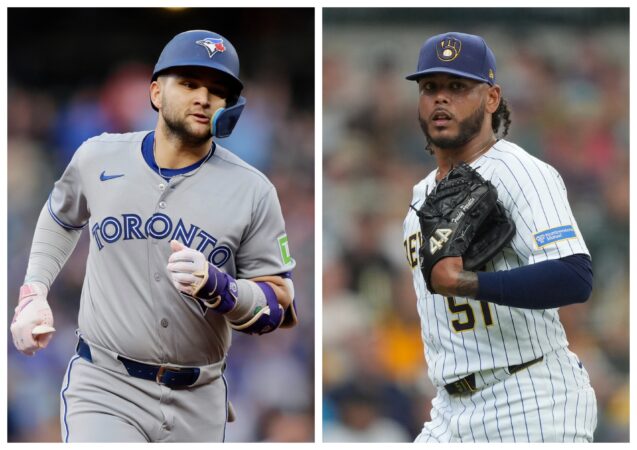
    Freddy Peralta is the kind of acquisition who can change expectations in a hurry. The Phillies know it as well as anybody. They’ve scored three runs in four starts against Peralta since 2022. Bryce Harper, Kyle Schwarber, and Trea Turner are a combined 2-for-26 with 10 strikeouts against the veteran right-hander in that four-year stretch. They’ll go from facing him once or twice a year to potentially three or four times now that the Mets have shipped a couple of top-100 prospects to the Brewers in exchange for the 29-year-old Peralta, who had a 17-6 record last season, with a 2.70 ERA and 204 strikeouts in 176⅔ innings.

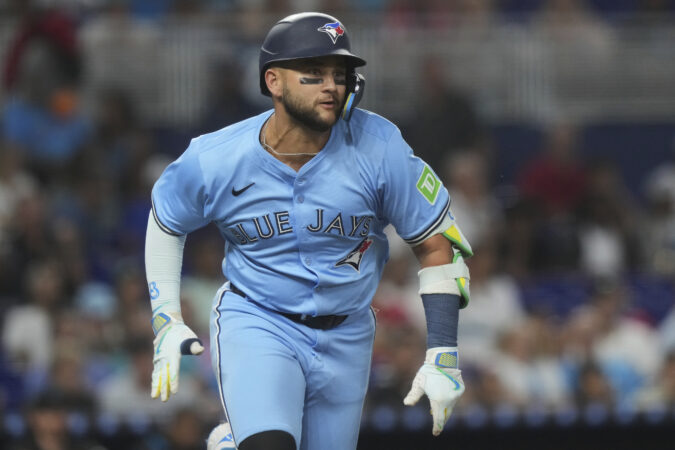
    Wednesday’s trade is the second straight salvo the Mets have fired in the Phillies’ direction. The first was a gut-punch in the form of a three-year, $126 million contract signed by Bo Bichette. The Phillies thought they were about to land the former Blue Jays star on a seven-year, $200 million deal. Instead, the Mets unveiled their unique and devastating spin on the notion of addition by subtraction. Needless to say, it has been a rough week for the Phillies’ NL East odds.

    But let’s not go overboard here. While Major League Baseball doesn’t hand out trophies for sensibility, it also doesn’t hang banners for offseason champs. Offseasons are pretty much the only thing the Mets have won in the 40 years since the ’86 Amazin’s did their thing. They are going to need a lot of things to break right for that to change this year.

    It should be almost impossible for a team to enter spring training with a projected $360-plus million payroll and Jorge Polanco batting cleanup. Yet that’s exactly where the Mets find themselves with three weeks to go before pitchers and catchers report. The Mets can argue all they want that Polanco is a much better value on a two-year, $40 million deal than Pete Alonso would have been on the five-year, $155 million deal that he signed with the Orioles. But Alonso has hit 72 home runs over the last two years, while Polanco has hit 72 over the last four.
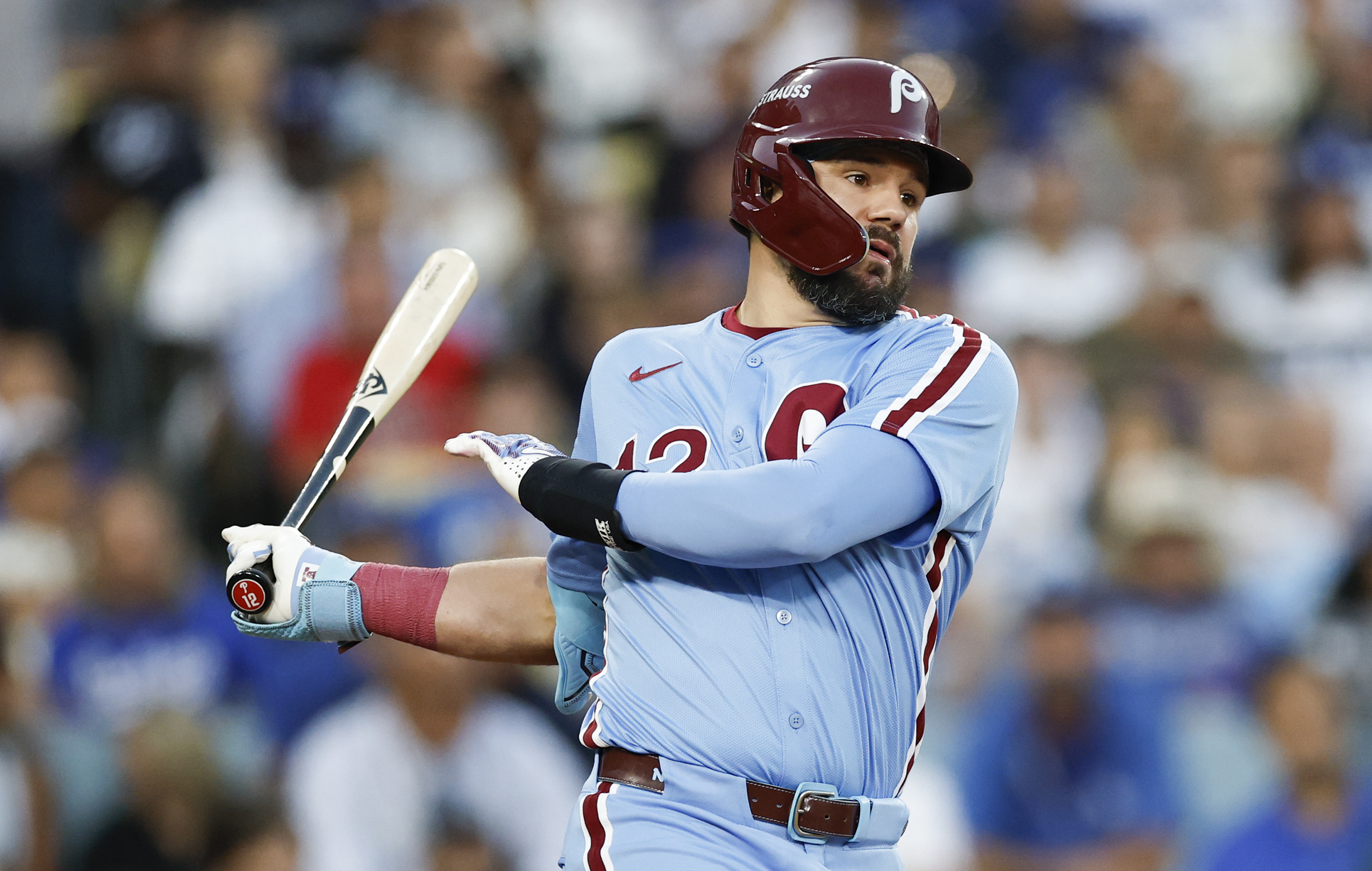
    Kyle Schwarber is one of several Phillies who have not fared well against Mets pitcher Freddy Peralta.

    And what about the five-hole? Right now, you’d probably pencil in Marcus Semien there. Which would be great, if “right now” was 2023. But Semien has looked nothing like the guy who finished third in MVP voting for the Rangers during their World Series campaign. In 2024 and 2025, the 35-year-old infielder slashed .234/.307/.379 for a .686 OPS that was almost exactly league average. Semien, whom the Mets acquired from Texas in a trade, is making $26 million this year.

    Luis Robert Jr. could work his way up in the lineup if he hits like he did over his last 35 games last season (.819 OPS, six home runs, 140 plate appearances). Or, he could be a $20 million eight-hole hitter if he hits like he did over the last two seasons overall (.660 OPS, 28 home runs, 856 plate appearances).

    There’s no question the Mets have succeeded in building themselves a different lineup. Francisco Lindor and Juan Soto are the only name-brand holdovers from a year ago. Brett Baty figures to start at designated hitter after the former top prospect rescued his career with a .311./.372/.500 batting line and seven home runs in his last 42 games. Mark Vientos can only hope to factor into the equation after a season in which he failed miserably to follow up on his 2024 breakout. Again, there are things that can break right. But a team’s win total usually has a negative correlation with the number of “ifs” it brings to spring training. And that likely would have been the case with the Mets, until Wednesday.

    In Peralta and second-year sensation Nolan McLean, the Mets will have the kind of 1-2 punch atop their rotation that can carry a questionable lineup a long way. In two starts last year, McLean held the Phillies to one run and 14 base runners in 13⅓ innings with 11 strikeouts. Combine his numbers with Peralta’s against Schwarber-Harper-Turner and you get 3-for-40 with 14 strikeouts. If Sean Manaea can get back to his 2024 form (3.47 ERA in 181⅔ innings) and Kodai Senga can stay healthy, the Mets could be a big problem for opposing lineups. And that’s assuming they don’t make another late splash (Framber Valdez, for instance).

    But, then, there’s that pesky little word again. The Mets may yet salvage their offseason and move the needle in a more decisive manner. For now, Phillies fans shouldn’t be too hard on Dave Dombrowski’s roster. It’s still better than the Mets, for about 80% of the price.
  • The argument for Brian Daboll — and Zac Robinson (and even Matt Nagy) — as Eagles’ next play-caller

    The argument for Brian Daboll — and Zac Robinson (and even Matt Nagy) — as Eagles’ next play-caller

    An observation about the Eagles’ offensive coaching staff: 2025 was the first year Jalen Hurts wasn’t surrounded by former quarterbacks.

    It’s something the Eagles should keep in mind, especially if Brian Daboll and Mike McDaniel both land head coaching jobs … or if they both opt for one of the other 73 coordinator positions currently open across the league. (ESPN reported Tuesday night that McDaniel is expected to be hired as the Los Angeles Chargers’ offensive coordinator.) Shane Steichen and Kellen Moore were both Division I starters in college. They both had assistants who were NFL backups. Under both, Hurts finished with a passer rating above 100 and went to a Super Bowl.

    Correlation doesn’t equal causation. Nor should it equal a strike against Daboll or McDaniel as the Eagles look to hire an offensive coordinator who can revitalize their stagnant scheme. Neither man came up as a quarterback. Daboll played safety at Rochester. McDaniel was a wide receiver (at Yale), just like Kyle Shanahan and Sean McVay and Josh McDaniels and Joe Brady (and Nick Sirianni and Kevin Patullo). Andy Reid was an offensive lineman. Bright offensive minds come in all shapes and sizes.

    But I’m not necessarily talking about scheme here. I’m talking about the other important parts of coaching: teaching, explaining, understanding, conveying. McVay and Shanahan are outliers, given their upbringing, which was so rich it barely needs introduction. (McVay, the grandson of 49ers executive John McVay, was once hired by Mike Shanahan, Kyle’s father.) Otherwise, it’s only natural that former quarterbacks would have an edge in understanding how a current quarterback sees the field. Ben Johnson, Liam Coen, Kevin O’Connell, Sean Payton … all former quarterbacks.

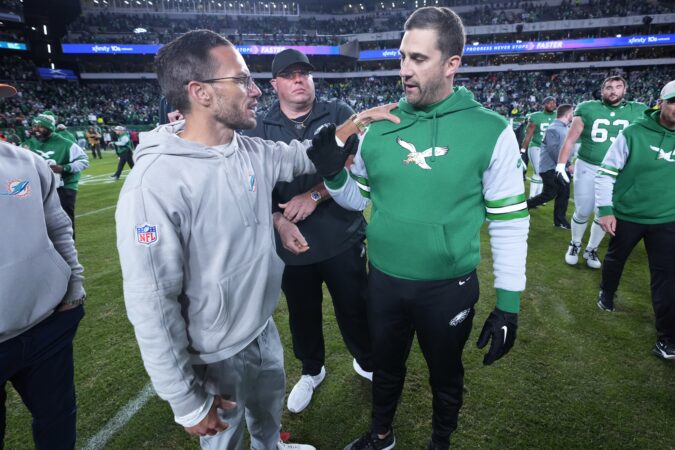
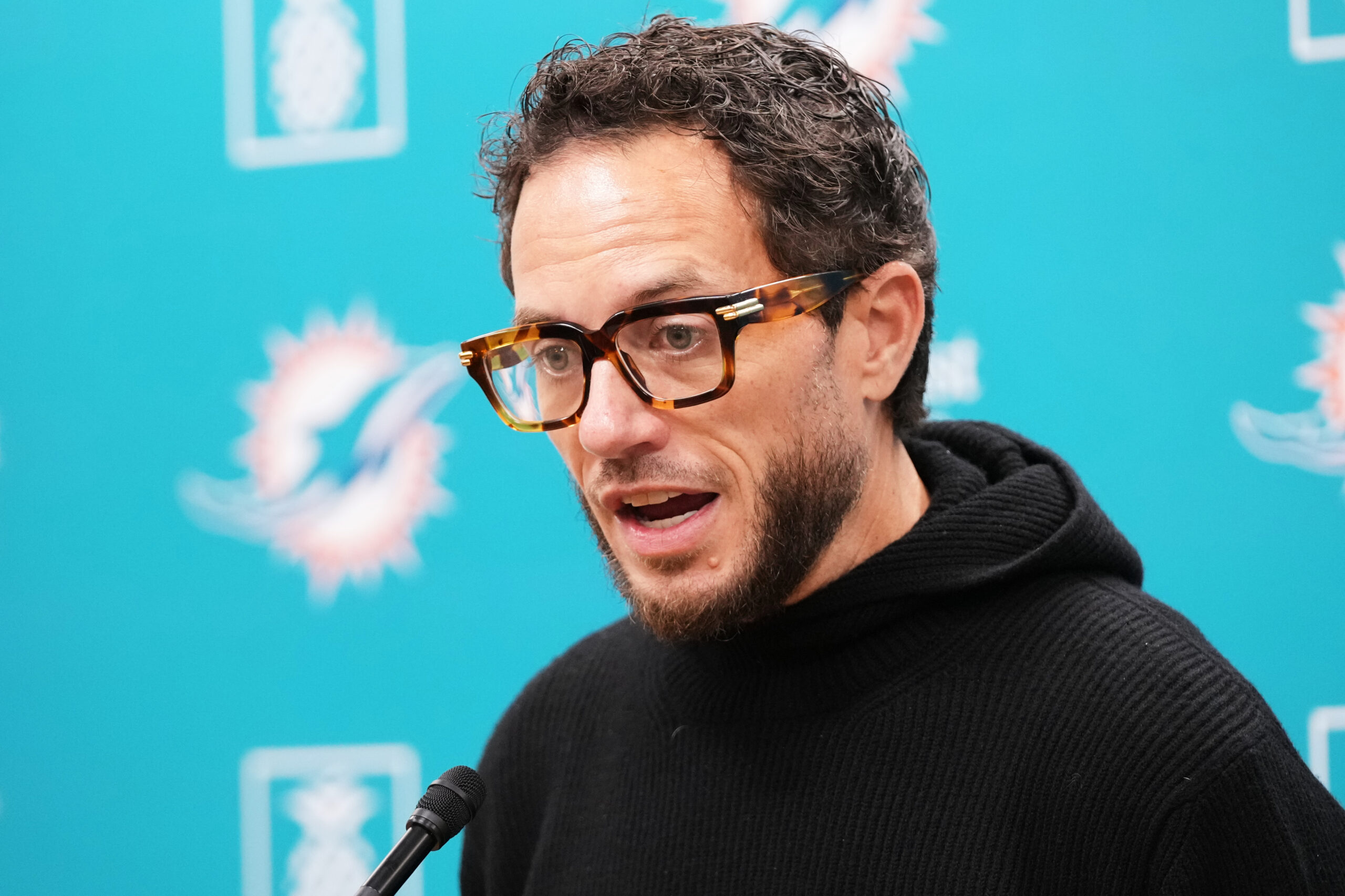
    Former Dolphins coach Mike McDaniel is a candidate for the Eagles’ job at offensive coordinator, although they have not spoken to him yet.

    Again, nothing against the wide receivers (or safeties). McDaniel is clearly the guy every team should have at the top of its list for lead play-calling duties. He went 31-24 with Tua Tagovailoa as his starting quarterback. Nobody schemes the running game better. The Eagles have yet to corral him for an interview, and maybe they won’t. But only because he has better opportunities.

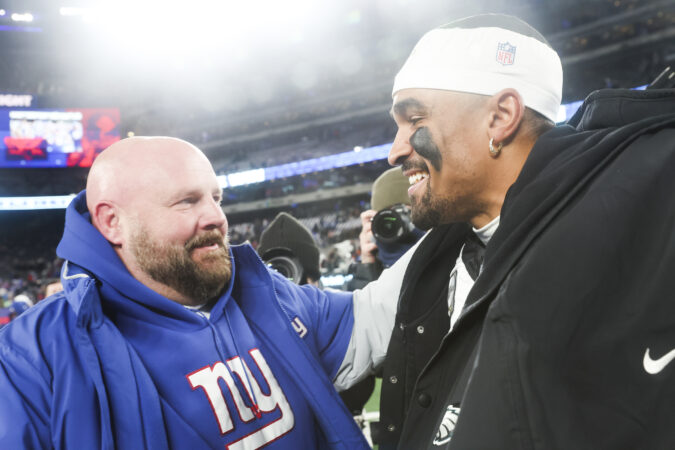
    As for Daboll, he would be an easy choice to snicker at. Hard Knocks did him no favors. But the former New York Giants head coach would make a lot of sense. He is still well-regarded in Buffalo, where he oversaw Josh Allen’s transformation from a raw, erratic bust-in-waiting to one of the most singularly impactful quarterbacks in the game. He also could be around for a while if he misses out on a head coaching gig in the current cycle.

    Both Daboll and McDaniel bring with them the kind of experience that the Eagles lacked in 2023 and 2025 with first-time play-callers Patullo and Brian Johnson (the latter a former quarterback). The biggest weakness of this year’s coaching staff wasn’t just a lack of experience on Patullo’s part: It was a lack of experience behind him, particularly at the game’s most important position.

    Eagles quarterbacks coach Scot Loeffler never took a snap in his four years at Michigan during the mid-’90s. Passing game coordinator Parks Frazier attempted 127 passes at Murray State. Quality control coach Montgomery VanGorder attempted 275 at Youngstown State. Combined, that’s a grand total of two seasons of lower-level collegiate starting experience and zero snaps at the FBS level.

    Compare that to Hurts’ support system in the halcyon days of 2022.

    Steichen played four years at UNLV (465 pass attempts). Johnson played four years at Utah (1,017 pass attempts). Alex Tanney spent nine years as an NFL backup after starring at Monmouth.

    Two years later, the Eagles turned their offense over to Moore, a former Heisman Trophy finalist who starred at Boise State. Quarterbacks coach Doug Nussmeier spent five years as an NFL backup after winning the Walter Payton Award, as the most outstanding offensive player in what was then known as Division 1-AA, at Idaho.

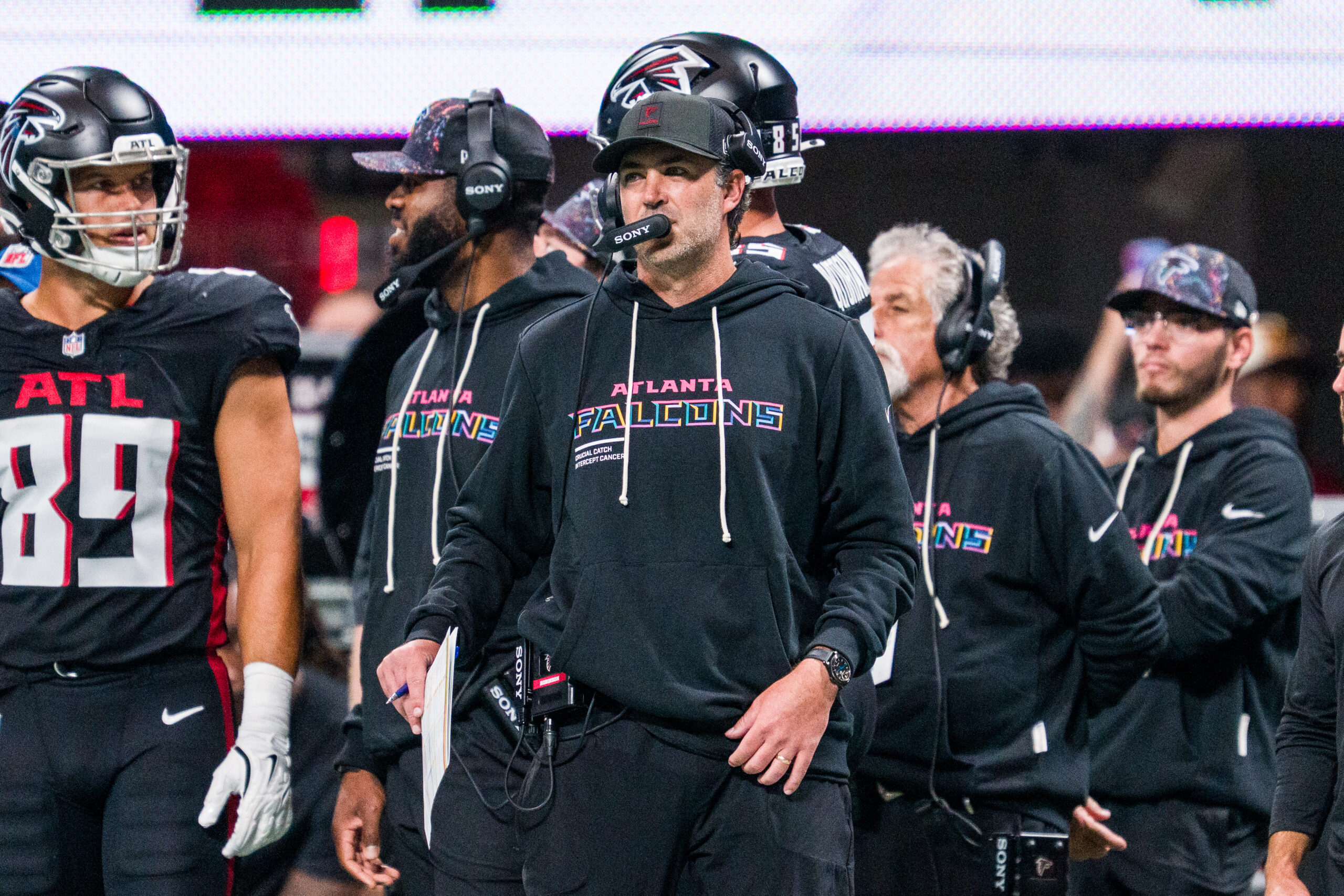
    Former Falcons offensive coordinator Zac Robinson is expected to have several offers.

    The Eagles were behind the eight ball when Moore left to become the New Orleans Saints’ head coach and took Nussmeier with him as his offensive coordinator. Thanks to their Super Bowl run, Sirianni and Howie Roseman had a thin market in which to find their replacements. The same thing happened on the defensive side of the ball post-2022 when Jonathan Gannon left for Arizona. Underlying the cliché and mythical Super Bowl curse are some very real variables.

    This time around, the world is the Eagles’ oyster. They’ve already interviewed Mike Kafka and Zac Robinson, both former NFL draft picks at quarterback. Neither has the sort of profile that fans are coveting, but Robinson in particular has an intriguing background. The Atlanta Falcons played some surprisingly competent football this season, scoring 24-plus points in nine games, two more than the Eagles. They finished ahead of the Eagles in yards per play and net yards per pass attempt in each of the last two seasons that Robinson spent as offensive coordinator after his stint on the staff of kingmaker McVay.

    Robinson will presumably have multiple offers. There are plenty of intriguing situations out there: the Chargers under Jim Harbaugh and with Justin Herbert unless McDaniel has already taken that job, the Baltimore Ravens with Lamar Jackson, the Tampa Bay Bucs with Baker Mayfield and a deep offensive depth chart. Never before has the NFL seen this level of upheaval in a single offseason. Half of the league has an opening at offensive coordinator.

    Which makes Matt Nagy a guy the Eagles should talk to.

    He certainly wouldn’t win the headline battle. But he’s a former quarterback (Delaware) with plenty of experience who got a bit of a bum rap during his four-year stint as head coach of the Chicago Bears. Nagy went 25-13 in the 38 games that Mitch Trubisky started for him. That looks even more impressive in hindsight than it did at the time.

    Whomever the Eagles hire, their top priority should be bolstering the experience of the staff beneath him. Coaching can overcome personnel issues only to a certain extent. But Hurts isn’t going anywhere, and we’ve seen way more out of him than we saw in 2025. The right guy for the job isn’t just a great schemer. He is a communicator and an edifier, and he’ll know how to build a support system that is heavy on both traits.

  • Eagles need more than a new coordinator to revamp their offense

    Eagles need more than a new coordinator to revamp their offense

    The long arc of history is a lot shorter in the modern NFL. Howie Roseman offered a nod to it last week. The tone of his voice was quite grave.

    “There’s natural transition in what we do,” the Eagles’ general manager said. “I’m not making an excuse or anything, but there’s a national transition in that in terms of what you’re paying your guys, which side of the ball you’re paying guys who are coming up.”

    Look back at the historically great teams and you will see a familiar pattern.

    The early-’90s Cowboys won three Super Bowls in four years and have not been back to a conference championship since.

    The turn-of-the-century Rams went to two Super Bowls in three years and then had one winning season in the next 15.

    The Patriots won three Super Bowls in four years in the early 2000s and then did not win another over the next decade. Then they won three in five years.

    And let’s not forget about the Andy Reid Era Eagles: four straight conference championship appearances with one Super Bowl Bowl appearance followed by one conference championship appearance in the next eight seasons.

    More often than not, you look back and realize that the best version of a team was the one that took everybody by surprise. The Chiefs’ two biggest point differentials in the Andy Reid Era came in Patrick Mahomes’ first two seasons as a starter. The Packers outscored opponents by a combined 452 points in Aaron Rodgers’ first four seasons as a starter and then outscored them by 428 in his next eight.

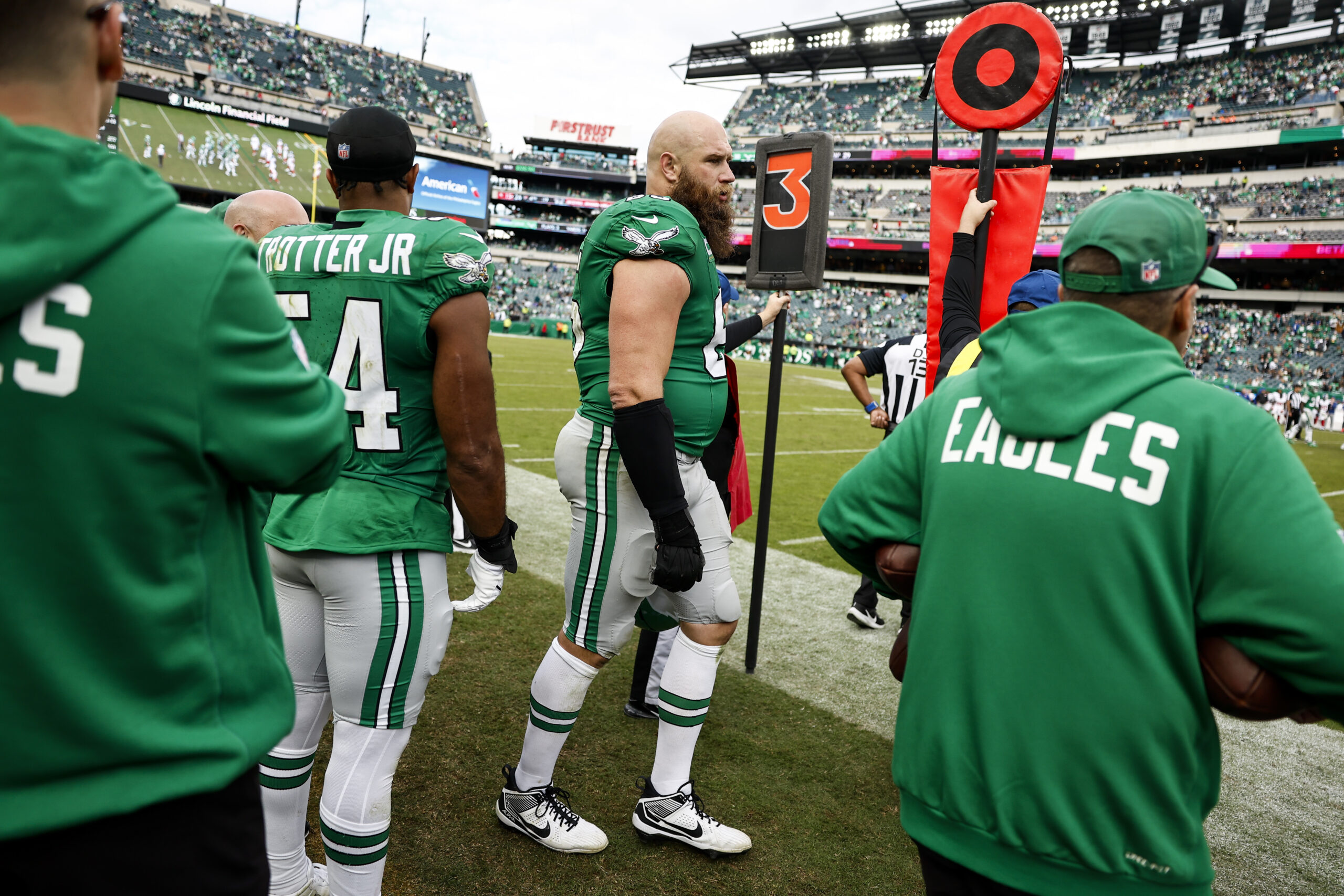
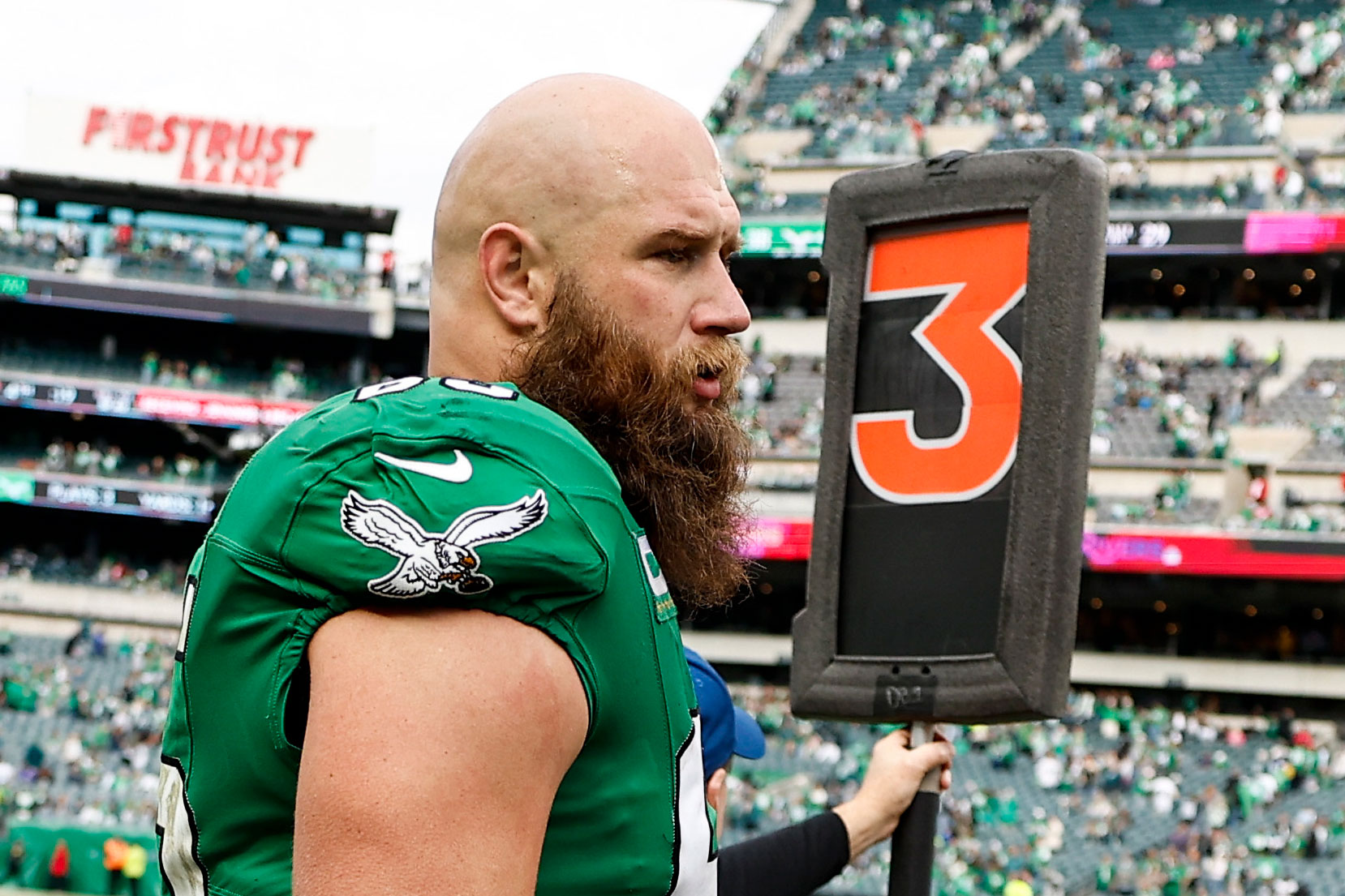
    Tackle Lane Johnson broke down this season and the Eagles offense suffered.

    The phenomenon extends beyond the NFL. You don’t need to look far. The Phillies in 2008 and 2022. The Sixers in 2018-19. The Flyers in 1996-97 and 2009-10.

    By the time you realize the good times are here again, they are already ending.

    You might reject that thought as depressing, even nihilistic. But it is the reality of the Eagles’ situation. Their regression on the offensive side of the football was more due to the natural order of things than it was to the unique and aggressive incompetence of the head coach and his handpicked play-caller. They were a team with disproportionate reliance on the overwhelming talent of its offensive line. That talent advantage wasn’t as great this season.

    Mekhi Becton left for more money. Lane Johnson missed the end of the season. Landon Dickerson and Cam Jurgens weren’t as healthy as last season. Even if the line was 85% of what it was, that would still jibe with the Eagles overall being 85% of what they were, especially if it was compounded by A.J. Brown and Saquon Barkley not being as uniquely dominant as they were last season.

    Attrition is a natural part of the NFL, both at the individual level and the roster level. Those two things go hand-in-hand, obviously. One can argue that the job of a head coach and play-caller is to adapt to the realities on the ground. That’s more than fair. It is also a difficult thing to do midseason. The Eagles are right to be doing it now in their search for a play-caller to replace Kevin Patullo. But nobody should be surprised if they fail to find one.

    Over the next few weeks, we’ll learn a lot about the rest of the NFL’s diagnosis of the Eagles. Former Dolphins head coach Mike McDaniel is a unique enough genius to be interviewing teams rather than teams interviewing him. A recent report said that he would rather accept a great offensive coordinator position than another head coaching job doomed to fail. A year ago, you would have counted the Eagles as such a job. Maybe they still are. But are they really a better job than the Lions?

    McDaniel reportedly has spoken with Detroit, which previously made Ben Johnson a star. Jahmyr Gibbs is a running back with the same skill set that McDaniel had in Miami with De’Von Achane. Amon-Ra St. Brown, Jameson Williams and Sam LaPorta can make their case over Brown, DeVonta Smith, and whoever plays tight end for the Eagles next season. The Lions’ offensive line has consistently ranked near the top of the league, albeit behind the Eagles.

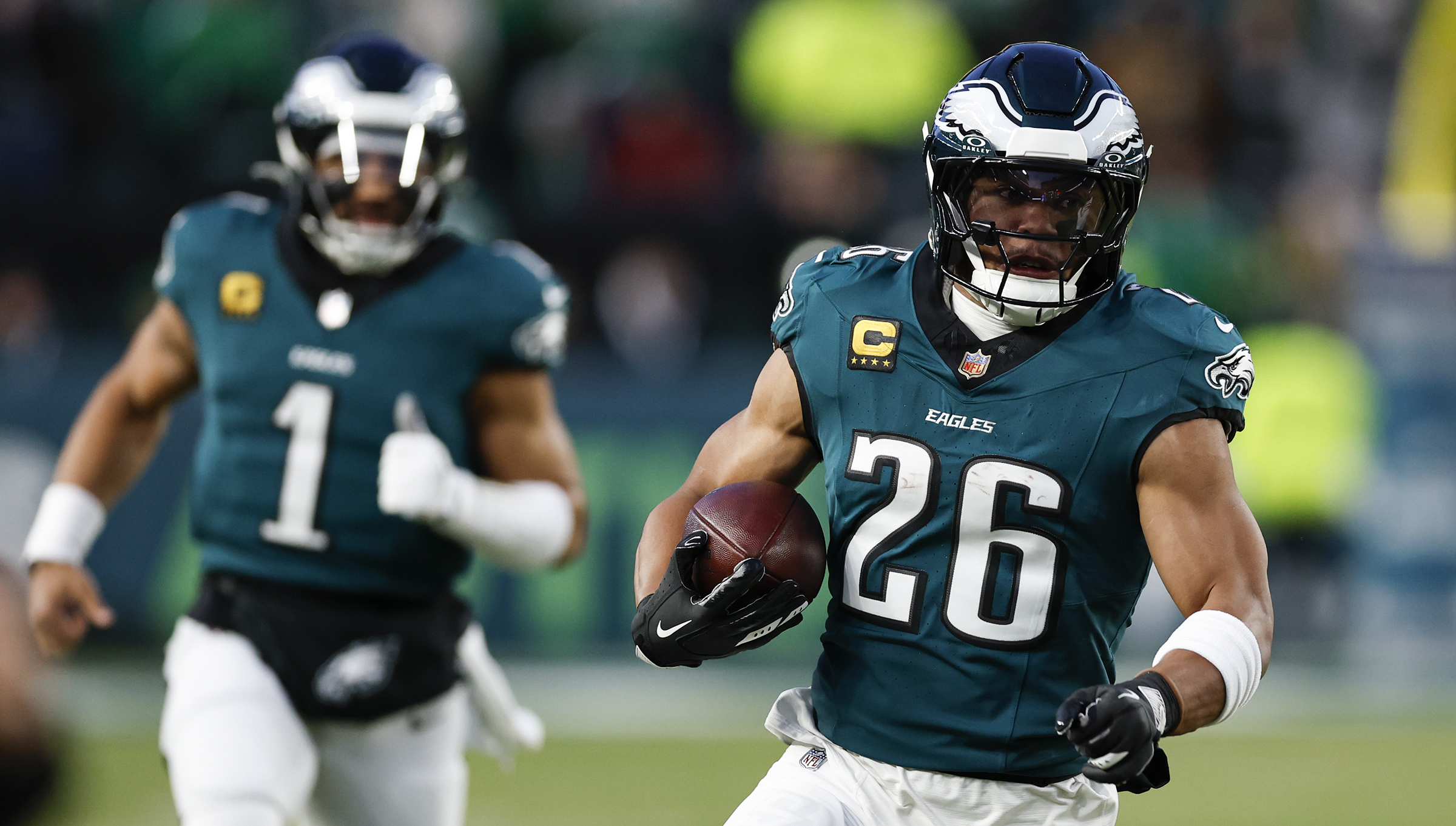
    Eagles running back Saquon Barkley had a subpar season.

    Brian Daboll and Zac Robinson are two other recognizable free agents. At the same time, the Chargers and Ravens are two other recognizable jobs. The Eagles aren’t just looking for the right guy … the right guy is looking for the right team.

    All of that is to say that the real challenge of this Eagles offseason is figuring out the talent situation. Roseman has done a marvelous job of it on the defensive side of the ball, reinventing that unit in barely two offseasons. This season, the Eagles had seven players from their last three draft classes log at least 700 defensive snaps. No other team had more than five.

    Building the offensive line is always the Eagles’ top priority. But they could sure use some reinforcements at the skill positions. Another wide receiver, a tight end, a change-of-pace running back with pass-catching skills, all would have helped immensely this season. That’s true even before we start to contemplate whether to trade Brown.

    “I think we’ve drafted 15 guys since Nick [Sirianni] has been here in the first and second day, and 14 of them have been long-term starters. We’ve got to keep hitting like that. I know that’s hard, but we’ve got to keep doing it,” Roseman said. “That means we have to have a good process. We’ve got to understand the people that we’re bringing into the building. We’ve got to understand the roles and the vision that we have for them when they’re playing. If we do that, good things will happen. We’ll be able to keep the players that we need to keep under long-term contracts and have an influx of young players that are really good that can play at a high level.”

    It’s no coincidence that the NFL’s championship windows are the same as the four-to-five-year windows of rookie contracts. The Eagles have already begun to extend theirs with their draft success on defense. It’s still the place where they are most likely to fix the offense.

  • No reason for the Phillies to hang their heads about Bo Bichette as the Mets go wild

    No reason for the Phillies to hang their heads about Bo Bichette as the Mets go wild

    Well, that was fun. You can be mad that the Phillies didn’t sign Bo Bichette or you can be grateful for all the takes you heard along the way. However things turn out for the 2026 Phillies, you’ll always have those two weeks in winter when you could dream of a better tomorrow. No amount of money and opt-outs can take that away from you. Don’t you forget that.

    Truth is, Bichette was always likely to turn out to be an illusion. The narrative won’t be spun that way. The reports emerging in the immediate aftermath of the Mets’ agreement with the former Blue Jays star on a three-year, $126 million contract suggest the Phillies thought they were on the verge of signing Bichette to a seven-year, $200 million deal. But that’s more a misreading of the state of play than it is reality.

    If the Mets were willing to offer Bichette these kinds of terms, and Bichette was intent on taking the best deal for his personal finances, the Phillies weren’t going to sign him. Both of those outcomes were more likely to be the case than Bichette accepting a long-term deal that the Phillies felt made fiscal sense.

    That’s true — and always was true — for two reasons. The Mets are operating with a different definition of fiscal sense. They are also operating with a different level of urgency, given the departures of Pete Alonso, Jeff McNeil, and Edwin Diaz and their failed pursuit of Kyle Tucker. The Phillies could fail to sign Bichette and still have more or less the same roster that won 96 games last season. For the Mets, Bichette might have been their only hope at coming out of this offseason with a roster that looks to have improved over last year’s disappointment. Necessity plus wherewithal equals motivation. It’s tough to win a bidding war from a weaker position.

    That’s not to say the Phillies were played for fools. If three years and $126 million with two opt-outs is what it took to prevent Bichette from signing with the Phillies, then the Phillies had a very real chance. Because three years and $126 million and two opt-outs is a borderline irresponsible deal. So much so that the Phillies couldn’t even think about structuring a long-term deal that would have beaten it.

    Even if Bichette doesn’t opt out, he will reenter free agency at the age of 30 needing to sign a four-year, $75 million deal to come out ahead of where he would have been had he accepted the Phillies’ reported seven-year, $200 million offer. If he opts out after next year, he’ll need six years and $159 million, heading into his 29-year-old season. Kyle Schwarber just landed five and $150 million heading into his 33-year-old season.

    Bo Bichette is expected to move from shortstop to third base with the Mets.

    The one silver lining for the Phillies is the price their division rivals will pay for very little upside. A lot of Bichette’s value is his youth — but the Mets aren’t getting any of that value given that he can become a free agent after next season. They are only getting the downside risk that Bichette’s value craters, in which case he won’t have been worth anywhere close to $42 million for one season and they’ll also owe him an additional two years and $84 million.

    There is a reason the Phillies don’t like to include opt-outs in deals. They pretty much eliminate the ability to recoup value on your investment. Imagine if Zack Wheeler had opt-outs in his original five-year, $118 million deal with the Phillies. Basically, the Mets either win a World Series this season because of Bichette or they are right back where they started.

    The Phillies can hardly stand on principle when it comes to fiscal moderation. But they are clearly in a different realm from the Mets or the Dodgers. I guess you can feel good about the fact that they will need to win games the old-fashioned way, relative to the competition. Let’s go, J.T. Realmuto!

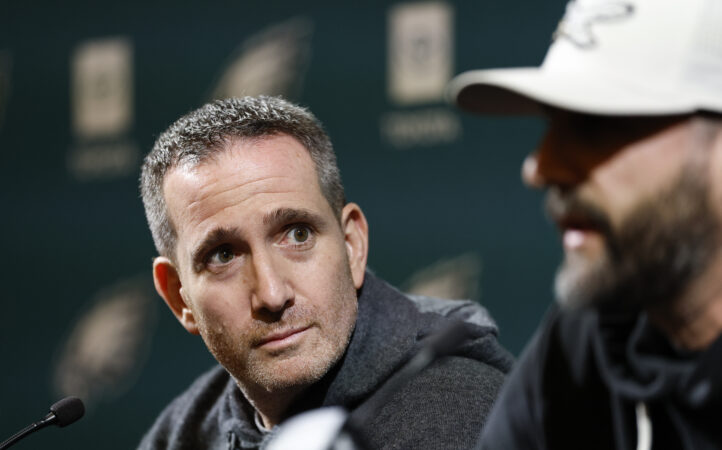
  • Nick Sirianni’s forceful vote of confidence from Howie Roseman, and some A.J. Brown trade talk highlight Eagles news conference

    Nick Sirianni’s forceful vote of confidence from Howie Roseman, and some A.J. Brown trade talk highlight Eagles news conference

    There isn’t a whole lot of literal truth you can glean in most press conference settings. That’s especially true in the NFL, where the shield on the logo carries more than a little metaphorical weight. They are messaging platforms, not intelligence briefings. It can be frustrating. It can also be instructive, in certain moments.

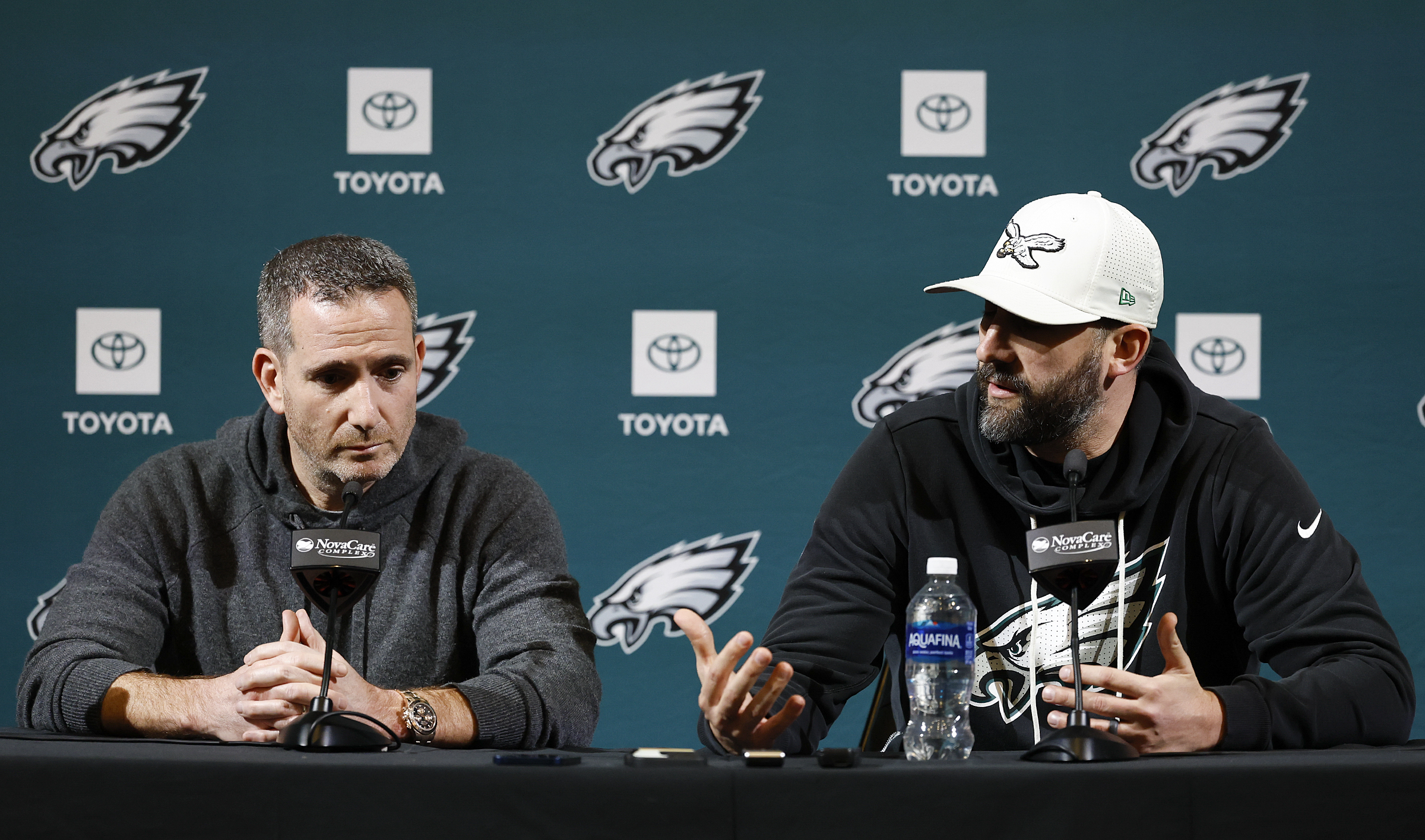
    Take Howie Roseman, for instance. On Thursday afternoon, the Eagles general manager was sitting next to Nick Sirianni listening to the head coach wind down an answer to a question about the team’s search for a new offensive coordinator. As soon as Sirianni finished speaking, several reporters began talking over each other to ask the next question. But Roseman had something he wanted to add, and jumped in.

    “I’ve got a lot of things I could say about coach and the job that he’s done here,” the general manager said. “I’m incredibly proud of him. He’s shown that when we bring people in he’s open to doing whatever’s best for this football team. That’s all he cares about is winning. When he’s brought in people he’s given them the flexibility to put their own spin on things. Obviously I sit here and I feel incredibly grateful that I’m working with someone who as a head coach is elite at being a head coach, elite at building a connection with our team, elite about talking about fundamentals, game management, situational awareness, bringing the team together, holding people accountable, and when you’re looking for a head coach those are really the job descriptions.”

    The strongest votes of confidence are usually the unsolicited ones. It would be hard to interpret Roseman’s statement as anything else. Two years ago, the Eagles did Sirianni a disservice with the way they handled the fallout from their late-season collapse and one-and-done showing in the 2023 playoffs. From their decision to wait nine days to announce that Sirianni would return amid rampant speculation that his job was in jeopardy, to their external hunt for an offensive coordinator, the Eagles left the impression that the coach was being Office Spaced out of power. Not only was it an indignity, it led to an offseason full of distractions that easily could have metastasized during the Eagles’ 2-2 start to the 2024 season.

    This time, Roseman made it a point to eliminate any doubt. As he should have. The Eagles are about to embark on an offensive coordinator search that could see them bring in any of a number of big name former head coaches who have their own schemes and, potentially, their own assistant coaches. During Thursday’s press conference, there were several questions about the level of autonomy the new offensive coordinator will have, including the one that prompted Roseman’s unsolicited amicus brief. If the Eagles felt like a clarification of the record was in order, now was the time to provide it.

    It speaks volumes that Roseman took advantage of the opportunity, and that he did it forcefully. A coach needs all the political capital he can get, especially a coach who suffers from perception problems. Sirianni has brought some of those on himself with his occasional emotional regulation issues on the sidelines. But it was always a silly and unrealistic narrative to suggest he was the NFL coaching equivalent of a guy who stayed at a Holiday Inn Express last night. It was also willfully ignorant in a league where John Harbaugh and Mike Tomlin had been two of the most successful coaches of the modern era.

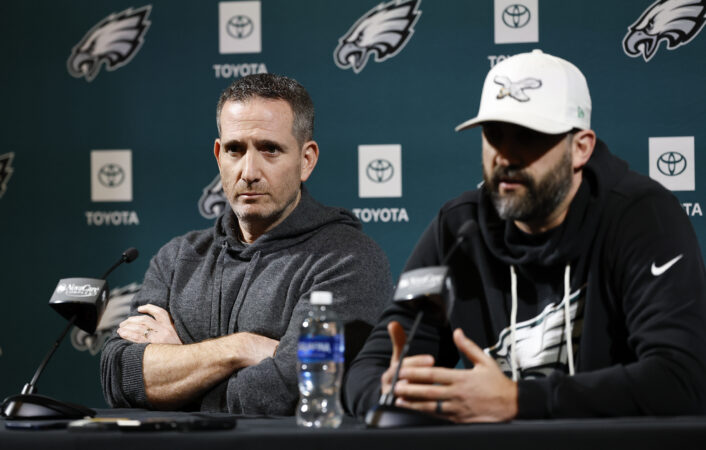
    Howie Roseman and Nick Sirianni are charged with finding answers after the team fell short of its Super Bowl goal.

    As for the exact nature of the Eagles coaching search, and their offseason personnel strategy, you’ll have to rely on your own deductive reasoning. There was little in the way of concrete answers from either Roseman or Sirianni regarding their vision for the Eagles offense.

    Roseman said the Eagles won’t necessarily be targeting an OC who they think could remain with the team for an extended period of time.

    “It’s a great compliment when guys get head coaching jobs from here because it means that we’re having success,” he said.

    Sirianni was noncommittal when asked about his role — and his current assistants’ roles — in the future offense. Which is common sense. If the Eagles hire Mike McDaniel, in whom they reportedly have some interest, they will clearly hire him to be Mike McDaniel the same way they hired Vic Fangio to be Vic Fangio. That said, in most cases, game-planning and play-calling is a far more collaborative process than a lot of people seem to think. The Eagles have always valued that collaborative spirit, especially in the wake of the Chip Kelly era.

    “I know that I want to be the head football coach and I think that’s what the team needs,” Sirianni said. “Everything that I’m doing isn’t because it’s what I want to do, it’s because it’s what’s best for the football team and I think it’s best for the football team when I’m the head football coach.“

    Speaking of reading between the lines, I’ll leave it to you, dear reader, to evaluate Roseman’s comments when asked about the possibility of trading star wideout A.J. Brown.

    “It’s hard to find great players in the NFL and A.J.’s a great player,” Roseman said. “That’s what we’re going out and looking for, when we go out in free agency and the draft, is trying to find great players who love football and he’s that guy. So that would be my answer.”

    I would qualify that wording as “careful” rather than explicit and definitive. But I do think it points to a general truth about the situation. It wouldn’t make a whole lot of sense for the Eagles to trade Brown unless they can somehow do it in a way where they replace him with an equal or better talent. The cost savings and draft pick return almost certainly won’t be enough to legitimize the move on that front. But if they can reap some sort of asset in a deal and also use the $7 million or so they’d clear with a post-June 1 move to add some other pass-catcher, it could make sense. But those are my words, not Roseman’s.

  • After embarrassing Kevin Patullo pile-on, Eagles must make Mike McDaniel their main OC target

    After embarrassing Kevin Patullo pile-on, Eagles must make Mike McDaniel their main OC target

    The worst kind of mob is the one that is displacing its aggression. Then again, maybe every mob is that kind of mob. The more unhinged the vitriol, the more concentrated its direction, the more likely it is driven by fears and frustrations that are much more difficult to reconcile than the ones that have bubbled to the surface. The easier the target, the more likely it is the wrong one. Because the fixes are rarely easy.

    Kevin Patullo isn’t the first person to experience the downside of this city’s manic emotional instability when it comes to professional sports. He might be the first one to have his house egged, and he almost certainly is the first one to have his image offered as a target by a golf simulator company. But the general phenomenon is something that we see any time a Philly sports team underperforms expectations to the extent that the Eagles offense did this season. Frustration is a lot easier to process if you can convince yourself that it would not exist but for the gross incompetence of one person. It is even easier when that person has a job that is relatively easy to replace.

    My point here isn’t to shame anybody. Actually, my point is to lobby the Eagles to spend whatever it takes to hire Mike McDaniel as their offensive coordinator. It’s a move that would give them a radical upgrade in play-calling and game-planning expertise and that would give them a fighting chance at reinventing a scheme that has stagnated under Patullo and Nick Sirianni and may be obsolete due to some serious personnel regression. But I also feel a little bit guilty expressing an opinion that legitimizes or adds to the unrestrained and oftentimes unthinking pile-on of poor Patullo that we’ve witnessed here over the last month-plus. It should be possible to criticize and/or question a person’s professional performance without disregarding the person part of it, especially when that person is someone who lives among us in the community and whose kids attend our schools.

    I’m not suggesting that everybody, or even most people, have crossed the line into gratuitous abuse/humiliation. It sure feels that way in the aggregate, though. I don’t have a personal relationship with Patullo. If I did, I would certainly apologize to him on the city’s behalf. I actually think most people would do the same if they randomly found themselves talking to him one-on-one, maybe in an airport bar, or at their kid’s CYO game. I suppose that’s another funny characteristic of mobs.

    I wasn’t going to bring up any of this. Mostly because I don’t want a mob to come after me. I know I’ll be accused of saying something I’m not actually saying, a common mob tactic that serves to stake out a defensible rhetorical position and reframe an argument into one that can actually be won. So, although it won’t matter, I will say it again. I agree with a lot of the criticisms of the Eagles’ offense, and that Sirianni’s decision to make a change at offensive coordinator is both warranted and necessary.

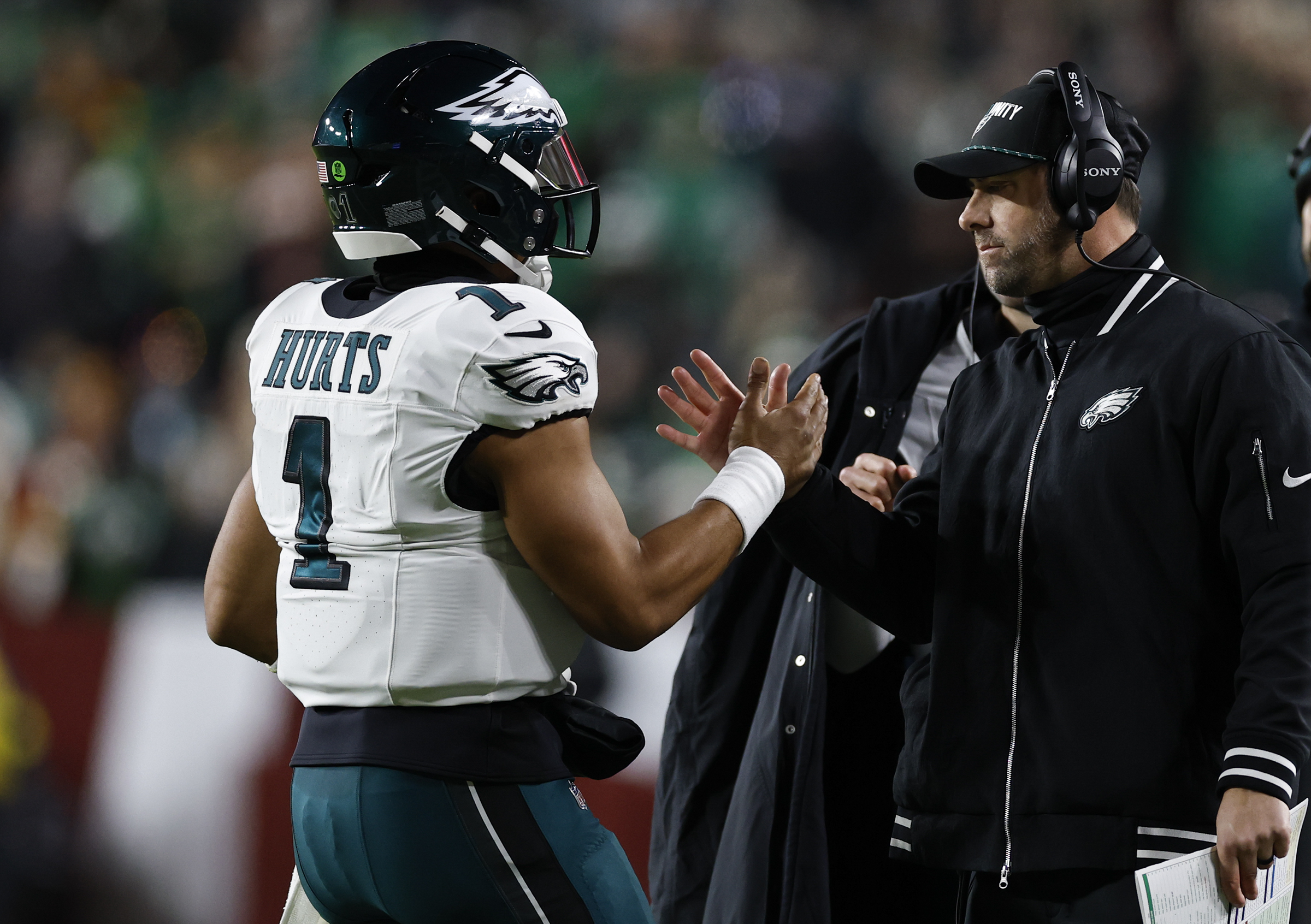
    Kevin Patullo (center) talks with quarterback Jalen Hurts on Sunday in what was his final game calling plays for the Eagles.

    That said, Eagles fans and media will be setting themselves up for a self-perpetuating cycle of offseasons like this one if they will not acknowledge the very obvious structural problems that exist well below the play-calling level on this Eagles offense. Even when this unit was at its best, it was trying to score points the same way it did under Patullo this season. The formula is the same as it was under Sirianni or Shane Steichen or Brian Johnson or Kellen Moore. The scheme and the personnel structure are built to stay ahead of the sticks with dominant run-blocking and to fill in the blanks with big plays from their elite talent at wide receiver and running back.

    Listen to what DeVonta Smith said on Sunday when somebody asked him if the Eagles’ scheme needed to change after their season-ending loss to the 49ers.

    “This the scheme that we’ve been in the whole time [since I’ve been here],” the receiver said. “Whatever anybody thinks, nothing changed. It’s the same scheme.”

    Other players and coaches have said it countless times. Nobody seems to want to accept it. Yes, the Eagles have had four offensive coordinators in four seasons. And, yes, the offense was markedly worse this season than it was in the past. But it was the same scheme. It was the same philosophy.

    The biggest difference between the Eagles offense this season and last season? On Sunday against the 49ers, Eagles running backs had eight carries that gained zero or negative yards. They had 20 such carries all last postseason, over four games. Eight on 30 carries against the dilapidated 49ers defense vs. 20 on 108 carries against the Rams, Packers, Chiefs, and Commanders last year.

    Lane Johnson, one of the NFL’s ultimate warriors, is battling a foot injury that kept him from playing Sunday. Landon Dickerson basically shrugged when somebody asked him if he could get his body back to where it was last season. Cam Jurgens was pushed around all afternoon against the 49ers.

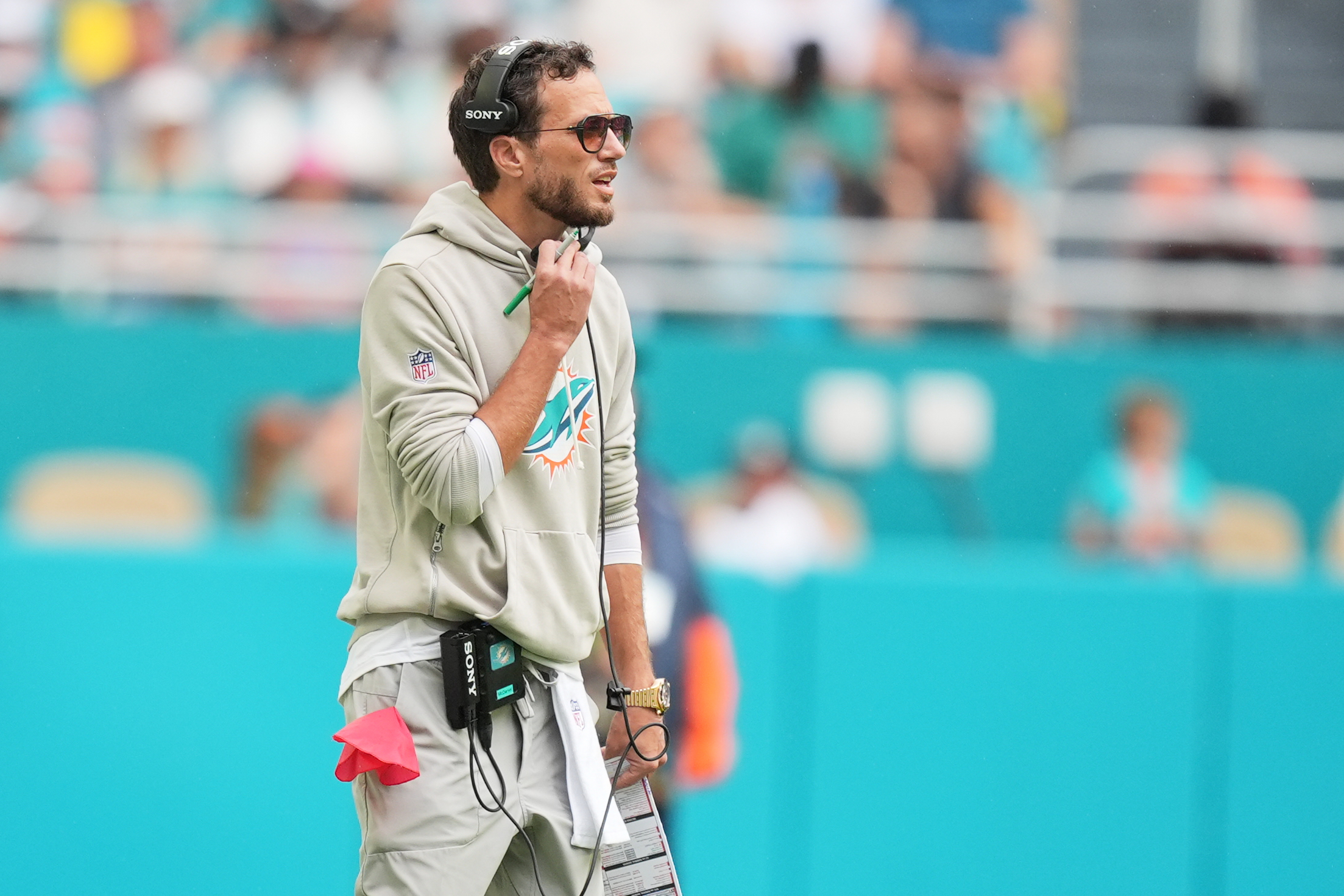
    Mike McDaniel spent four seasons as Miami’s head coach and is a highly coveted candidate for several head coaching and offensive coordinator openings.

    The Eagles’ only option is to bring in a fresh set of eyes and a proven track record of inventive run-scheming. They need to reinvent this offense, and McDaniel is the perfect mind to do it. Since he arrived in Miami in 2022, the Dolphins rank sixth in rushing average at 4.5 yards per attempt. He did this while also calling an offense that saw quarterback Tua Tagovailoa throw for 4,624 yards and go 11-6 in 2023.

    There are all kinds of reasons to think it won’t happen. McDaniel is an eccentric personality who has spent the last four seasons with total control. Vic Fangio lasted less than one season as his defensive coordinator. McDaniel already reportedly has an interview scheduled with the Lions, who can offer him a good offensive line, excellent pass-catchers, and a running back that has the Devon Achane mold in Jahmyr Gibbs. That’s if McDaniel doesn’t land one of the remarkable nine head-coaching jobs that are currently open.

    All the more reason for the Eagles to be aggressive. Howie Roseman and Jeffrey Lurie pride themselves on being ahead of the curve. They’d rather be a year early than a year late. Right now, it is getting late early. McDaniel or not, they need a new voice, an inventive mind, and a fresh set of eyes. Anybody else will end up right where Patullo is. And that’s not fair to anybody.

  • The Eagles need to ask themselves some hard questions. Jalen Hurts should face a few of them.

    The Eagles need to ask themselves some hard questions. Jalen Hurts should face a few of them.

    Multiple things can be true at the same time. They usually are when a team’s season ends the way the Eagles’ did on Sunday.

    It takes a special kind of bad to lose this limply. It is a collective bad, an existential bad, a bad that raises all kinds of hard questions that a team must confront head-on and wrestle with in the darkness. That is true even of a team that is less than a year removed from winning a Super Bowl. In fact, it is especially true for such a team.

    The bad that the Eagles were in a 23-19 loss to the 49ers is a disconcerting bad. It is a bad that shakes you to your core, a bad so bad that you spend an entire season desperate to disbelieve it.

    More than anything, it is a bad that is nearly impossible to achieve if your quarterback is doing the things he needs to do.

    Jalen Hurts did not do those things for the Eagles on Sunday. His counterpart did them for the 49ers. That is why the Eagles are headed home. It is why the 49ers are headed to Seattle. The difference in this particular playoff game was the same as it is in most of them. One team had a quarterback who rose above his circumstances. The other did not.

    “It starts with me and ends with me,” Hurts said afterward.

    Whether or not he truly believed those words, he was correct.

    A team that cannot, or will not, put pressure on a defense in the intermediate-to-deep part of the field is a team whose luck will eventually run out. Whether Hurts can’t or won’t doesn’t matter at this point. He didn’t, and that’s that. He completed just three passes that traveled more than 10 yards in the air, on 11 attempts. Those three completions gained a total of 38 yards. He was 17-for-20 on his short throws.

    Compare that to Brock Purdy, who was dealing with an offense that lost its last blue-chip pass-catching weapon when tight end George Kittle tore his Achilles tendon with six minutes left in the second quarter. The game should have been over then, one of several moments when that was the case. That it wasn’t is largely a testament to Purdy, whose poise and patience and intentionality were on display against an Eagles defense several calibers above that of the practice-squad Niners.

    San Francisco’s game-winning 66-yard touchdown drive late in the fourth quarter featured a 16-yard completion to Demarcus Robinson and a 5-yard scramble, both for first downs, to help set up his 4-yard touchdown pass to Christian McCaffrey with just under three minutes remaining. A couple of possessions earlier, he found fullback Kyle Juszczyk of all people for a 27-yard gain that set up a trick play touchdown on an end-around pass from wide receiver Jauan Jennings to McCaffrey.

    There was a 14-yard pass to backup tight end Jake Tonges on third-and-14 late in the second quarter, a 45-yarder to Jennings earlier in the period, and a 61-yarder to Robinson that set up a touchdown on the 49ers’ opening drive.

    Purdy’s numbers on throws longer than 10 yards: 8-of-13, for 178 yards. His two interceptions were the cost of doing business.

    “You’ve got to be able to be explosive,” Eagles coach Nick Sirianni said. “It’s really hard to dink and dunk down the field. It’s really hard to get behind sticks with negative plays. You’ve got to be able to create explosives. Again, at the end of the day, there were a lot of elements [where] you end up with a loss, and we haven’t had this feeling of ending our season since 2023 with the loss. That’s why it hurts because it’s been a while. But yeah, at the end of the day, we need to find ways to be more explosive. Again, that starts with me.”

    Sirianni is right. Everything starts with him. But it ends wherever the quarterback takes it. The ball is in his hands. The clock is in his head. He is the one who decides how long to continue looking down the field. Whatever the game plan, whoever the play-caller, a quarterback almost always has the ability to force the issue. That’s especially true for a quarterback with Hurts’ ability to buy time and gain yards with his legs. He gained 14 yards on five carries against the 49ers. Purdy gained 24 on nine.

    “Well, I think finding a rhythm and whatever you define aggression as, maintaining the fluidity and the flow throughout four quarters of the game, so I think there’s opportunity for us to improve in that,” Hurts said. “Just finding a rhythm. Ultimately it is just all something that you either learn from it or you don’t.”

    One thing people lose sight of while focusing on the play-calling is that the quarterback sets the rhythm. He is the orchestra conductor. The great offenses are almost always a reflection of their quarterback. It wasn’t Tom Moore’s offense or Todd Haley’s offense or Charlie Weis’ offense: it was Peyton Manning’s and Ben Roethlisberger’s and Tom Brady’s. It’s no coincidence that the energy of this Eagles offense as a collective often resembles Hurts’ individual demeanor.

    Nobody should have to apologize for pointing out these things. High standards are not unfair. The only way to fix an offense as bad and boring and listless as the Eagles’ is to be unflinchingly honest about its component parts. The quarterback is inseparable from the play-caller. The right guy for the second job is a guy who can make it work with the guy in the first one. The next Eagles play-caller will be getting a quarterback who does not have elite size, or arm strength, or pocket presence, and who no longer makes up much of that difference with his ability to create on the run.

    Hurts didn’t get much help from his pass-catchers on Sunday. He didn’t get as much help from his play-caller as Purdy got from his. The Eagles will need to fix both of those things this offseason. Hurts isn’t, and shouldn’t be, going anywhere.

    That said, Hurts is who he is. Who he was on Sunday is the guy he has been all season, and most of the last 2½ seasons, if we’re being honest. It worked when the Eagles had an overwhelming talent advantage at all of the other positions. If that is no longer the case, they need to figure out a new formula.

  • With Mike McDaniel and Kliff Kingsbury looming, Kevin Patullo needs to have himself a big postseason

    With Mike McDaniel and Kliff Kingsbury looming, Kevin Patullo needs to have himself a big postseason

    With all due respect to Ralph Waldo Emerson, a door can be a wall sometimes, too.

    Take poor Kevin Patullo, for instance.

    The goal of every NFL assistant on either side of the football is to eventually land a coordinator gig. It can be a tough slog. In addition to the long hours and relative anonymity, a position coach must contend with the weight of the knowledge that his fate is only partially within his control. There are a lot of positions on a football team, and only so many ways to distinguish oneself from his peers. At times, a promotion to play-calling duties can feel more like a function of internal politics and personal relationships than good old-fashioned gridiron merit.

    Last February, after climbing the coaching ranks for two decades, Patullo finally got his chance to hold the laminated play sheet and talk into the magic microphone. Two of the last three men to hold the position with the Eagles had landed head coaching gigs within a year. His door had finally opened. All Patullo had to do now was repeat as Super Bowl champion and make sure a historically great running game didn’t take a step backward despite a short offseason and a tougher schedule and another year of age tacked on to a veteran core that had remained uniquely healthy in 2024.

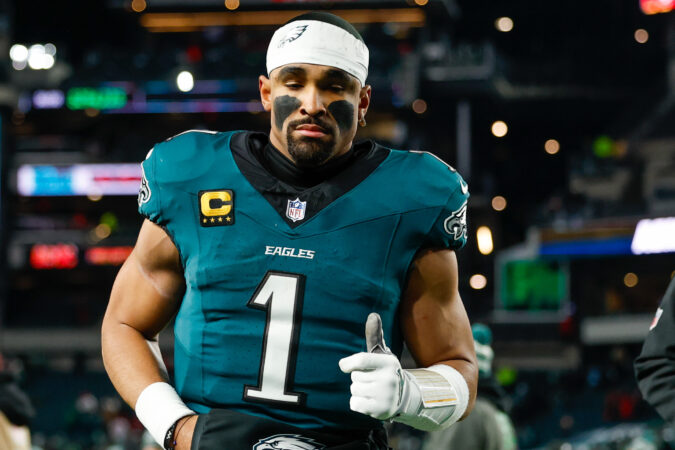
    Jalen Hurts and the Eagles offense have sputtered under coordinator Kevin Patullo.

    I’ll pause here to acknowledge the counterargument from Eagles fans.

    Boooooooooooooooo!

    Point taken. I’m not trying to paint Patullo as Gavroche in a headset. But I do wonder sometimes if he feels a little bit like Wile E. Coyote trying to run through a tunnel.

    The Eagles offense took a lot of well-deserved heat during the regular season. Patullo has overseen a unit that fell from seventh in the league in scoring under Kellen Moore in 2024 with 463 points to 19th with 379 points. The Eagles likewise saw a significant drop in total yards, from eighth in the NFL to 24th, and yards per play, from 11th to 22nd. But the numbers also say that the bulk of the decline in overall production is attributable to something other than the passing concepts that have become the rage bait of choice of every amateur internet film sleuth with an NFL+ subscription. The Eagles offensive line was unsustainably dominant last season. This year, that dominance has not been sustained.

    You can see it with your eyes. The numbers will back them up. Last season, Eagles rushers averaged 3.2 yards before contact, as good of a common statistical measure as there is for judging run-blocking. This year, they have averaged 2.6 yards. The difference between those two numbers is basically the difference between their overall yards-per-carry average last season and this year. They averaged 1.7 yards after contact in 2024, and 1.6 yards after contact in 2025.

    Once can certainly argue that the selection and sequencing of plays can have an impact on an offensive line’s ability to block. One can also argue that the best coordinators are counterpunchers. What worked for a team last year, against last year’s opponents, may require adaptation in order to fit the present reality. But one can’t argue that the best coordinators can turn Fred Johnson into Lane Johnson, or Tyler Steen into Mekhi Becton. Nor can they fix whatever physical ailments have limited players like Landon Dickerson and Cam Jurgens.

    The absence of star tackle Lane Johnson with a foot injury has not helped the Eagles offense.

    Patullo certainly has a role in overcoming these things. I’m just not convinced that this year’s offense would look any different if Moore had remained at coordinator.

    The pertinent question for Patullo and the Eagles now is what the offense will look like moving forward. This is a weird time of year. Sunday’s wild-card game against the 49ers could be the start of a month of football that leaves us memory-holing our four months of angst. Or, it could be the start of the offseason, and a litany of questions that sound way closer to January 2024 than January 2025.

    The 49ers are something of a fresh start for Patullo. A new opportunity. The offensive line is rested. Lane Johnson is expected to be back. The Eagles have essentially had two weeks to prepare for the playoffs after their conscious mailing-in of Week 18. The opponent is ripe for a statement. The 49ers defense is a legacy unit that right now looks a lot closer to Hewlett Packard than Apple.

    The Niners are a lot worse than even those of us who know how bad they’ve been probably realize. They finished the regular season with one of the NFL’s 10 worst defenses in yards per play (5.6, 22nd), net yards per pass attempt (6.5, 23rd) and turnover percentage (8.4, 23rd). The overall numbers looked good in Week 18 against the Seahawks, but Seattle punted once and twice had the ball inside the 10-yard-line and walked away with no points. All told the Seahawks left at least nine points and more accurately closer to 13 on the field. This, in a game when they only really had seven possessions.

    Over the last four weeks, the 49ers have allowed 138 yards on 17 carries to Tony Pollard and Tyjae Spears, 92 on 17 to D’Andre Swift and Kyle Monangai, and 171 on 33 to Kenneth Walker and Zach Charbonnet. Bryce Huff is starting for them. Enough said.

    Patullo needs this one.

    Potential replacements are no doubt keeping a keen eye. Mike McDaniel, the former 49ers offensive coordinator recently fired by the Dolphins, is one of the best run-game schemers in the league. Since he arrived in Miami in 2022, the Dolphins rank sixth in the NFL rushing average at 4.5 yards per attempt. Kliff Kingsbury, who recently parted ways with the Commanders, led an offense that ranked third in the NFL in yards per carry in his two seasons at the helm. That includes 5.4 yards per attempt this year, despite missing Jayden Daniels for much of it.

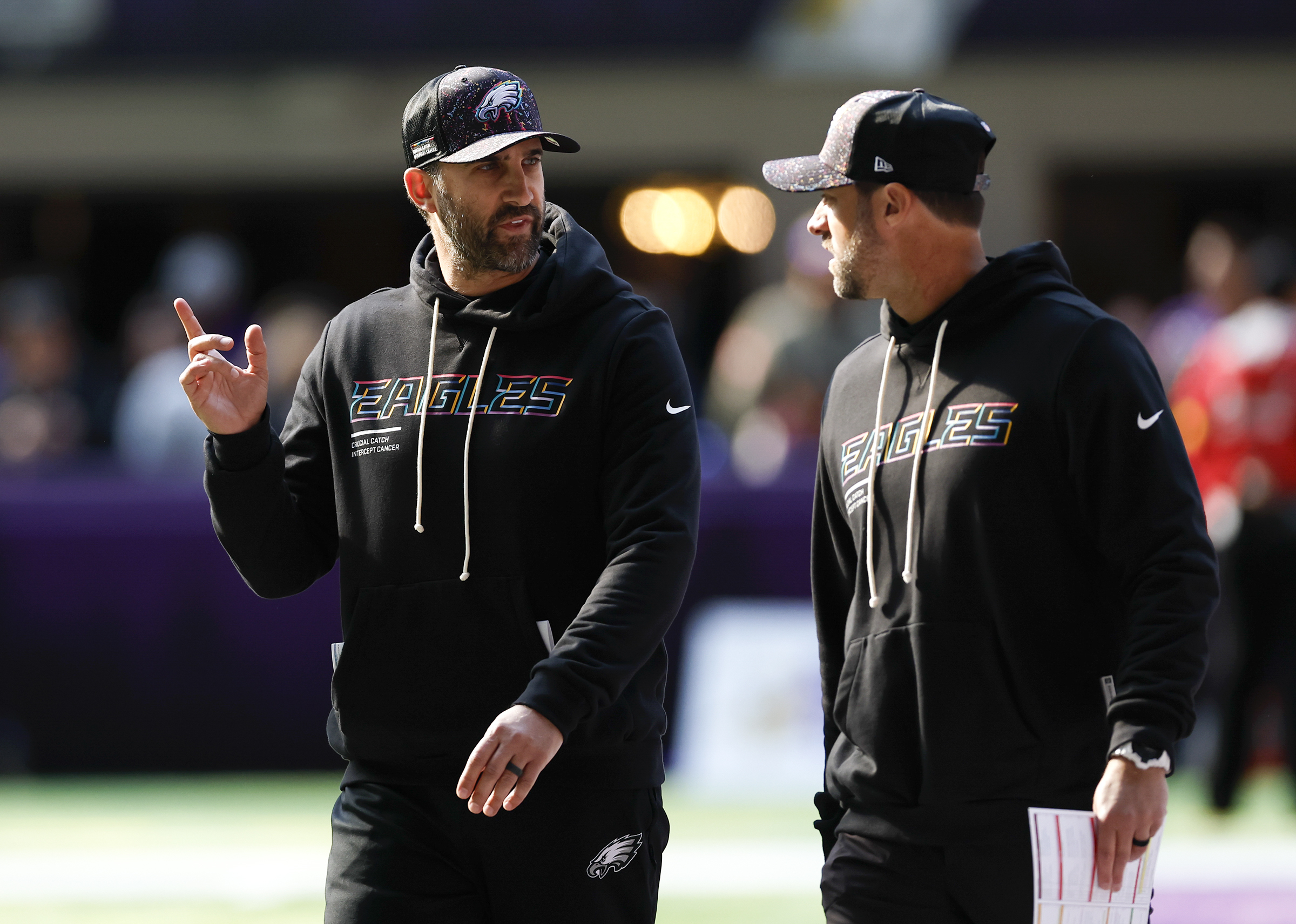
    Coach Nick Sirianni with offensive coordinator Kevin Patullo before the Eagles played the Minnesota Vikings on Oct. 19.

    The Eagles moved decisively at the coordinator position in 2023. With four losses in their last seven regular-season games and a wild-card loss, 2025 would look different only in the level of drama that accompanied a late-season swoon.

    The Eagles are better than the 49ers. They need to be a team that scores plenty of points against this sort of opponent, in this sort of situation. This is a time of year when the scoreboard matters much more than individual coaching careers. Sunday will matter for both.

  • How Bo Bichette could wind up with the Phillies

    How Bo Bichette could wind up with the Phillies

    There is a long list of reasons that you shouldn’t waste your daydreams on visions of Bo Bichette wearing red pinstripes and hitting behind Bryce Harper. The Phillies’ reported interest in the Blue Jays star only barely distinguishes them from the 29 other major league teams that likewise are interested in signing very good baseball players at the right price. Interest is not a differentiator. You can’t buy a Bentley with affection.

    Circumstance, context, and logic suggest that Bichette will end up signing elsewhere. And that’s great if you’re into those things. The rest of us will be over here indulging ourselves. On the 12th day of Christmas, the New York Post’s Jon Heyman gave to us a vaguely worded, thinly sourced report connecting the Phillies to a big-ticket free agent. What are we supposed to do? Underreact?

    The least we can do is try to proceed with some level of dignity and decorum. This often is easiest to do under the guise of asking questions. There are no dumb questions, only dumb questioners, right? So let’s fire away.

    The Phillies already have a shortstop in Trea Turner. Presumably, Bo Bichette would move to second base in any scenario that brought him to Philadelphia.

    Only a few weeks ago, Dave Dombrowski sounded like a man who didn’t expect any more major additions to his roster. What would have caused that to change? Is Bitcoin about to spike again?

    This is the however-many-million-dollar question. Five weeks out from pitchers and catchers reporting, the roster looks pretty close to set. Ken Rosenthal of The Athletic reported Monday that the Phillies still were in the market for another right-handed-hitting outfielder, which is encouraging, because they really could use a viable Plan B in case Justin Crawford turns out to be late-stage Juan Pierre or Ben Revere. They don’t need anything major. Veteran Randal Grichuk, whom the report mentioned specifically, would make a lot of sense. Otherwise, there isn’t an obvious opening that would compel the Phillies to make an offer with the sort of necessity premium that often distinguishes a winning bid from the rest.

    One thing that may have changed is Dombrowski’s evaluation of the market. Not much has happened since the last time he spoke. Not only do most of the major free agents remain unsigned, we aren’t even seeing smoke. Bichette, Cubs outfielder Kyle Tucker, Red Sox third baseman Alex Bregman, Yankees outfielder Cody Bellinger, Mariners third baseman Eugenio Suárez, not to mention Ranger Suárez and the rest of the starting pitchers … the complete lack of movement at the top of the market is abnormal.

    We’ve seen slow-moving markets before. But there is some reason to believe that this one is reaching a point of collapse. The money may not be out there this year. Virtually all of the big-market teams already are at or above the luxury tax threshold with the money on their books. Last year, the Phillies were at a disadvantage because teams like the Mets, Red Sox, and Cubs were in payroll expansion mode. Other teams simply had more money to spend than they did. That may not be the case this year.

    The Cubs still are a potential market maker, with roughly $80 million in space before the first luxury tax threshold. It shouldn’t surprise anybody if they make a flurry of moves that alters the current narrative about the NL landscape. Same goes for the Mets, who presumably have whatever money they would have paid to Pete Alonso and Edwin Díaz before both signed elsewhere. The Orioles are always lingering. The Blue Jays are pushing $300 million but seem to be operating with the taste of blood in their mouths. So there still is plenty of reason to doubt that the Phillies can win via aggression.

    But there are a lot of players out there. And there don’t seem to be the usual dark-horse lurkers among the midmarket clubs. It’s worth noting the situation in Minnesota, where the Twins are shedding payroll as if they need to make rent. The middle class might be content to sit this one out, especially with next year’s labor talks looming.

    Bo Bichette was an MVP-level hitter after he broke out of an extended slump last season.

    So Bichette might be more affordable than the Phillies thought?

    Yes and no. It’s awfully hard to project a contract for a player who is an anomaly in terms of his age (only 28 this season), career production (24 home runs per 162 games and 121 OPS+) and pedigree (Dante Bichette’s kid), but who also is less than a year removed from a brutal 18-month stretch in which he posted a .651 OPS in 651 plate appearances. Trea Turner’s career numbers were nearly identical (minus the steals) when the Phillies signed him to an 11-year, $300 million contract heading into his 30-year-old season. FanGraphs had Bichette projected at seven years and $189 million entering the offseason. ESPN recently updated its projection to five years and $150 million. If that second number is close to reality, the Phillies may well readjust their expectations.

    What’s this about Bichette posting a .651 OPS in 651 plate appearances? Isn’t that a concern?

    It is. But it also might be an opportunity, if other teams are worried. Once he snapped out of his funk early last season, Bichette was an MVP-level hitter. In his last 102 games, he hit .325/.372/.528 with 17 home runs. From the right side of the plate. While playing middle infield. He has always had the kind of skill set scouts drool over. Bichette’s contact rate ranked in the top 20% of qualified hitters last season. At 83.2%, it would have ranked third among Phillies regulars, behind Alec Bohm (87%) and Bryson Stott (86.1%). His chase rate also ranked at the high end of the spectrum — in a bad way. Only 18 qualified hitters chased more often: Bichette’s 37.9% ranked just behind Bryce Harper (38.1%).

    That said, Bichette did make some steady progress last season. It’s fair to wonder if he emerged from his slump as a different hitter. Only 10 hitters in baseball had a lower strikeout rate after the All-Star Break — his 11.1% was a dramatic improvement over an already-solid roughly 15%. He coupled that with a huge boost in his walk rate, from an anemic 5.5% to a slightly-better-than-average 8.8%. If the Phillies think they can get a $250 million player for $175 million, that might change things.

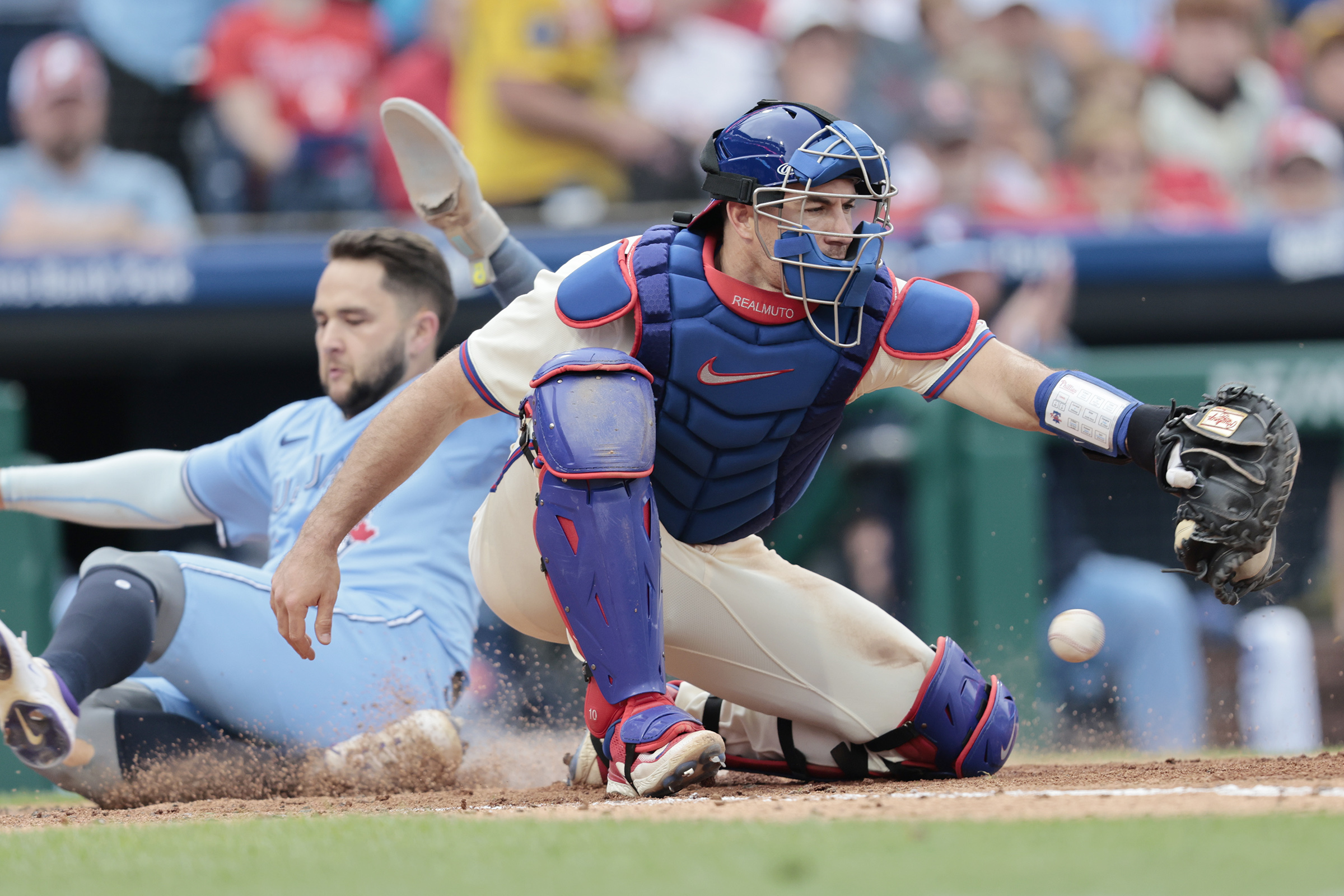
    Bo Bichette scoring a run for the Blue Jays in June as Phillies catcher J.T. Realmuto tries to catch the throw.

    Why wouldn’t the Blue Jays just match any offer?

    I guess Christmas is over, isn’t it? Assuming Bichette likes Toronto, which seems to be the case, and the Blue Jays are willing to spend, which seems to be the case, the Phillies presumably would need to land Bichette the old-fashioned way: by guaranteeing him more than anybody else is willing to guarantee him. They have close to $60 million coming off the books next season and theoretically would be able to accommodate another big deal, biting the bullet on the luxury tax this season while freeing up $15 million to $20 million by trading Bohm and Edmundo Sosa and finding someone to pay a little bit of Nick Castellanos’ salary.

    But, then, we’d be back where we started. Realizing that Bichette probably won’t be here.

  • Eagles’ first playoff loss was to karma. Next up: the 49ers.

    Eagles’ first playoff loss was to karma. Next up: the 49ers.

    You can rationalize it all you want. No, really, you can. There are lots of reasons to believe the Eagles won’t live to regret the decisions they made in Week 18.

    To shrug their shoulders at the No. 2 seed.

    To go against everything that Nick Sirianni and his coaches have preached throughout their tenure with the Eagles: that the most important Sunday is the current one.

    To do what no other team chose to do this weekend and rest their starters when a potential home playoff game was on the line.

    Sure, there are reasons. If the Eagles can’t beat an injury-depleted 49ers team at home like the Seahawks did on Saturday and then beat an inexperienced Bears team on the road like the Lions did on Sunday, then they don’t deserve to be in the Super Bowl. Even with the No. 2 seed, they would have lost somewhere along the line … probably not to the Packers or Bears at Lincoln Financial Field, but certainly to the Seahawks in Seattle or the Rams at home.

    Right?

    The more you talk it out, the sillier it sounds, which is why all the rationalizations in the world can’t change the cold, hard truth. If the Eagles would have beaten the Commanders on Sunday, their odds of repeating as Super Bowl champions would have been better than they are now. Now, after an ugly 24-17 loss to Washington that should quell all that talk of Tanner McKee being traded for premium draft capital, the Eagles will enter the postseason as the third-seeded team in the NFC. They will play the depleted but pedigreed 49ers instead of the depleted and not pedigreed Packers. Then, they will likely either travel to Chicago or host the dangerous Rams, instead of hosting the Bears.

    Could everything break in their favor? Sure. If the Packers upset the Bears next weekend, and if the Panthers upset the Rams next weekend, the Eagles would essentially be where they would have been as the No. 2 seed. In that case, the top-seeded Seahawks would host the seventh-seeded Packers and the Eagles would host the Panthers for the right to advance to the NFC championship. But, then, if the Packers upset the Bears and the Rams beat the Panthers, the Eagles would be hosting the Rams in a rematch of their Week 3 game, which saw the Rams jump out to a 26-7 lead and eventually lose on a blocked field goal.

    Essentially, the result of the Eagles’ loss to the Commanders on Sunday was to bring into play the possibility of a second-round matchup with the Rams, in addition to the possibility of traveling to frigid Soldier Field rather than hosting the Bears.

    If chalk prevails elsewhere — the Rams opened as 10.5-point favorites against the Panthers, the Bears as 1.5-point favorites against the Packers — the Eagles have a manageable road to the NFC championship. There’s a decent chance they’ll be the betting favorite in any situation other than a road game in Seattle or a home game against the Rams. And they might also be favored against the Rams. The difference now is that, barring upsets, there is no easy road. They are a better team than the Bears on a neutral field, their Black Friday loss notwithstanding. But their offensive struggles have been exacerbated in suboptimal conditions — at Buffalo, at Green Bay, home against the Lions. The conditions at Soldier Field in January are rarely optimal. The Eagles will be better than they were, assuming they have a healthy Jalen Carter and a healthier Lane Johnson. But playing on the road creates far more uncertainty.

    The expected return of tackle Lane Johnson gives the Eagles plenty of optimism for a repeat.

    As for the 49ers, well, they figure to be a tougher test than the Packers. Kyle Shanahan is one of the brightest offensive minds in recent NFL history. He, Brock Purdy and the rest of the 49ers will derive plenty of motivation from the memory of their quarterbackless playoff loss to the Eagles three years ago. That being said, this 49ers team is far different from the one that destroyed the Eagles — and catapulted Dom DiSandro to celebrity status — at Lincoln Financial Field late in 2023 en route to its own Super Bowl. The defense is in shambles, absent longtime stalwarts Fred Warner at linebacker and Nick Bosa on the edge. The Niners have little pass-catching talent outside of tight end George Kittle and running back Christian McCaffrey. As long as the Eagles can stop the run, they should be fine.

    At the end of the day, the Eagles are still a team that everybody must take seriously. Even as the No. 2 seed, they would have likely needed to beat Seattle on the road or the Rams at home in order to advance to the Super Bowl. They still have the third-best odds at winning the NFC, according to the online sportsbooks.

    You just have to wonder. If Sirianni knew that the Lions would beat the Bears on Sunday, and that his Eagles only needed to beat the Commanders to secure the No. 2 seed, would he have done anything differently?