These aren’t the Niners of old. They aren’t even the Niners of two years ago.
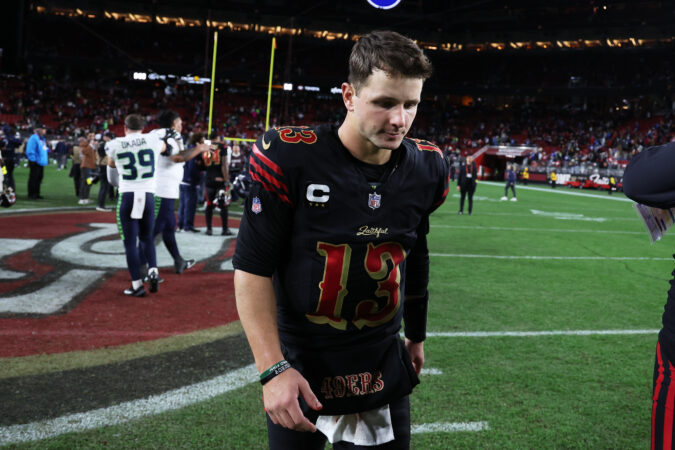
That’s good news for the Eagles, who moved one step closer to facing San Francisco in the opening round of the playoffs after the 49ers fell to the Seahawks, 13-3, on Saturday night. Seattle’s victory in the first batch of Week 18 games brought the NFC playoff picture into clearer focus. The Seahawks have clinched the No. 1 overall seed, thus earning themselves an opening round bye and a home game in the divisional round against the lowest-seeded team to survive. That team will not be the Eagles, who cannot face Seattle until the NFC championship game.
This was the outcome Birds fans should have been rooting for on Saturday night. Had the 49ers won, the Eagles would be standing on the precipice of an opening-round matchup against the Seahawks or the Rams, the two most impressive teams in the NFC during the regular season. The only other scenario would have required them to beat the Commanders and the Bears to lose to the Lions, thereby giving the Eagles the No. 2 seed and an opening round matchup against the seventh-seeded Packers. (That scenario remains on the table entering play on Sunday.)
The Eagles could still face the Rams, who outplayed them in the regular season before the Eagles pulled out a 33-26 win on Jordan Davis’ blocked field-goal return for a touchdown at the buzzer. In order to avoid them, they need the Rams to beat the Cardinals today, thereby clinching the No. 5 seed and knocking San Francisco down to No. 6. A Rams loss to the Cardinals would mean an Eagles-Rams rematch at Lincoln Financial Field next weekend. Keep in mind, the Cardinals have lost eight straight games and 13 of 14 since a 2-0 start.
To recap the three scenarios in play:
Scenario 1: If the Eagles win and Bears lose, the Eagles get the No. 2 seed and an opening-round game against the Packers.
If the Eagles lose OR the Bears win, then the Eagles get the No. 3 seed and …
Scenario 2: If the Rams beat the Cardinals, the Eagles face the 49ers.
Scenario 3: If the Cardinals beat the Rams, the Eagles face the Rams.
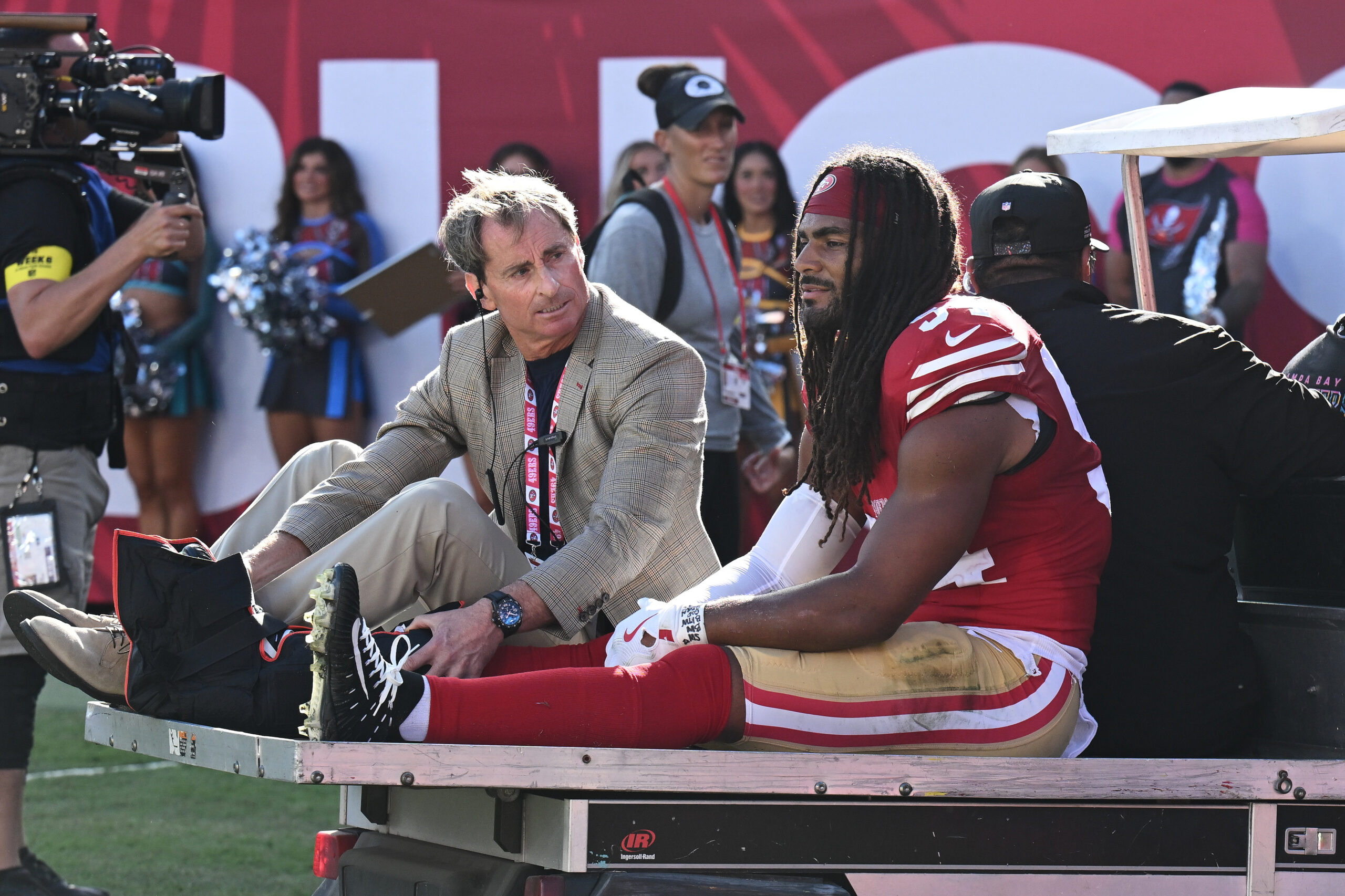
The 49ers are the clear preference over the Rams. San Francisco has been ravaged by injuries on the defensive side of the ball, with all-world linebacker Fred Warner and defensive end Nick Bosa both lost for the season. The Niners suffered two more injuries Saturday night, in fact, with linebackers Dee Winters and Tatum Bethune both leaving and not returning.
Middle linebacker Fred Warner is among the key 49ers who are injured with the playoffs set to begin.
The 49ers are still dangerous. They showed that with their 42-38 shootout win over the Bears in Week 17. But they also showed Saturday night that they can struggle against a top-tier defense. San Francisco gained just 173 yards and posted nine first downs against the Seahawks. A big variable is All-Pro tackle Trent Williams, who missed Saturday’s game with a hamstring injury after being questionable to play.
The 49ers were no match for the Seahawks’ power running game, allowing 180 yards on the ground. It was the sixth time this season they allowed an opponent to gain at least 360 yards of total offense.
The Eagles certainly wouldn’t be looking past a playoff game against the 49ers. But it was and is the best of the likeliest options.
You never see the biggest stories coming. That’s kind of by definition, isn’t it?
The year 2025 was relatively quiet one as far as seismic activity goes. The Sixers’ arena switcheroo probably was the biggest pure news story next to the Eagles’ Super Bowl win. Compare that to 2024, in which Saquon Barkley and Paul George signed, Jason Kelce retired, Matvei Michikov arrived, and the Sixers went belly-up. That, in addition to Carter Hart being arrested, Cutter Gauthier forcing a trade, and Haason Reddick being traded.
It’s impossible to say whether the earth will shake in 2026. But if it does, here is how it could happen:
1. Lane Johnson announces his retirement after 13 NFL seasons and leaves the Eagles scrambling.
At this point, nothing suggests that Johnson will seriously consider retiring after the season. The contract extension he signed last year tacked on $40 million in guarantees in 2025 and 2026. That’s a pretty good reason for Eagles fans to take comfort, especially if Johnson returns to the field for the postseason, as is expected. He’d be walking away from some serious money if he retired this offseason.
At the same time, we’d be foolish not to at least acknowledge the possibility, given the dramatic implications it would have on the Eagles’ roster. Johnson has been the single biggest reason the Eagles have seamlessly bridged their competitive teams through a rotating cast of quarterbacks and head coaches. There will be no replacing him, at least not immediately.
Johnson has been open about the punishment that the NFL has inflicted upon his body over the years. That’s worth noting after a regular season in which he missed seven games because of injury for the first time since 2020 and just the second time in his career.
At 35 years and 239 days, Johnson is the second-oldest offensive lineman to play at least 300 snaps this season. Only Kelvin Beachum has him beat at 36 years, 207 days. Since 2015, only seven offensive linemen have a season of 12-plus starts at age 36 or older.
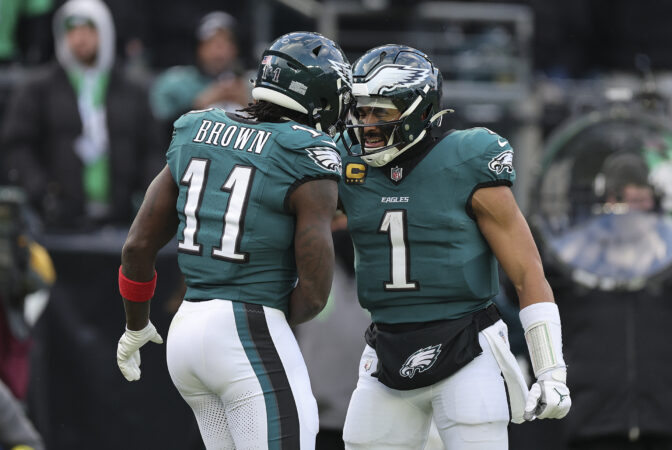
Eagles wide receiver A.J. Brown shown after making a catch against the Bills on Sunday in Buffalo.
2. A.J. Brown gets traded for a conditional 2027 second round pick that can become a first; Eagles immediately invest in a replacement.
Forget about Brown’s public grumbling for a moment. Consider instead this fact: In the 10 games in which Brown has seen eight or more targets, the Eagles are 5-5. In the five games in which he has seen fewer than eight targets, the Eagles are 5-0. Kind of strange, isn’t it?
Correlation doesn’t equal causation, but Brown’s on-field performance clearly has dipped this season. In his first three years with the Eagles, he looked like a receiver who belonged in the conversation for best in the sport. That hasn’t been the case this season. The explosiveness, the burst, the strength at the point of attack and in the air appear to be diminished. The numbers reflect it. His 8.3 yards-per-target is down nearly 20% from 2022 to 2024 (10.3), as is his yards per reception (12.9, down from 15.4) and his catch percentage (52.1, down from 56.3).
Brown is at an age at which decline can come fast at the wide receiver position. Cooper Kupp hasn’t broken 850 yards in a season since turning 29. Same goes for Brandin Cooks and Odell Beckham Jr.
DeAndre Hopkins averaged 1,380 yards per season from 25-28 years old and 644 yards at 29-30 years old. Adam Thielen averaged 6.4 catches and 82.8 yards per game at 27-28 and 4.2 catches and 53.7 yards at 29-30.
Alshon Jeffery, Allen Robinson, Michael Thomas, Tyreek Hill … the list goes on. For Antonio Brown, Julio Jones, Amari Cooper, Stefon Diggs, and Antonio Brown, the drop-off came at 30 or 31.
There are exceptions: Davante Adams, Keenan Allen, Mike Evans. But they are very much exceptions.
To justify trading Brown, the Eagles almost certainly would have to have a replacement lined up. Jahan Dotson clearly isn’t a suitable second option. In the four regular-season games Brown has missed over the last two seasons, Dotson has a total of five catches for 25 yards. In those four games, the Eagles’ total wide receiver production outside of DeVonta Smith was 20 catches for 94 yards.
The Eagles would save about $7 million against the cap if they traded Brown after June 1. They might be able to accommodate a free-agent offer to somebody like Alec Pierce, the Colts deep threat whose all-around game took an intriguing step forward this season. But there are a lot of teams that will be in the free-agent market this season, with the Patriots and dream quarterback Drake Maye at the top of the list.
Even if Brown isn’t the player at 29 years old that he was at 27, he would still be difficult to replace. Combined with the limited financial upside of moving him, we’ll have to see this story to believe it.
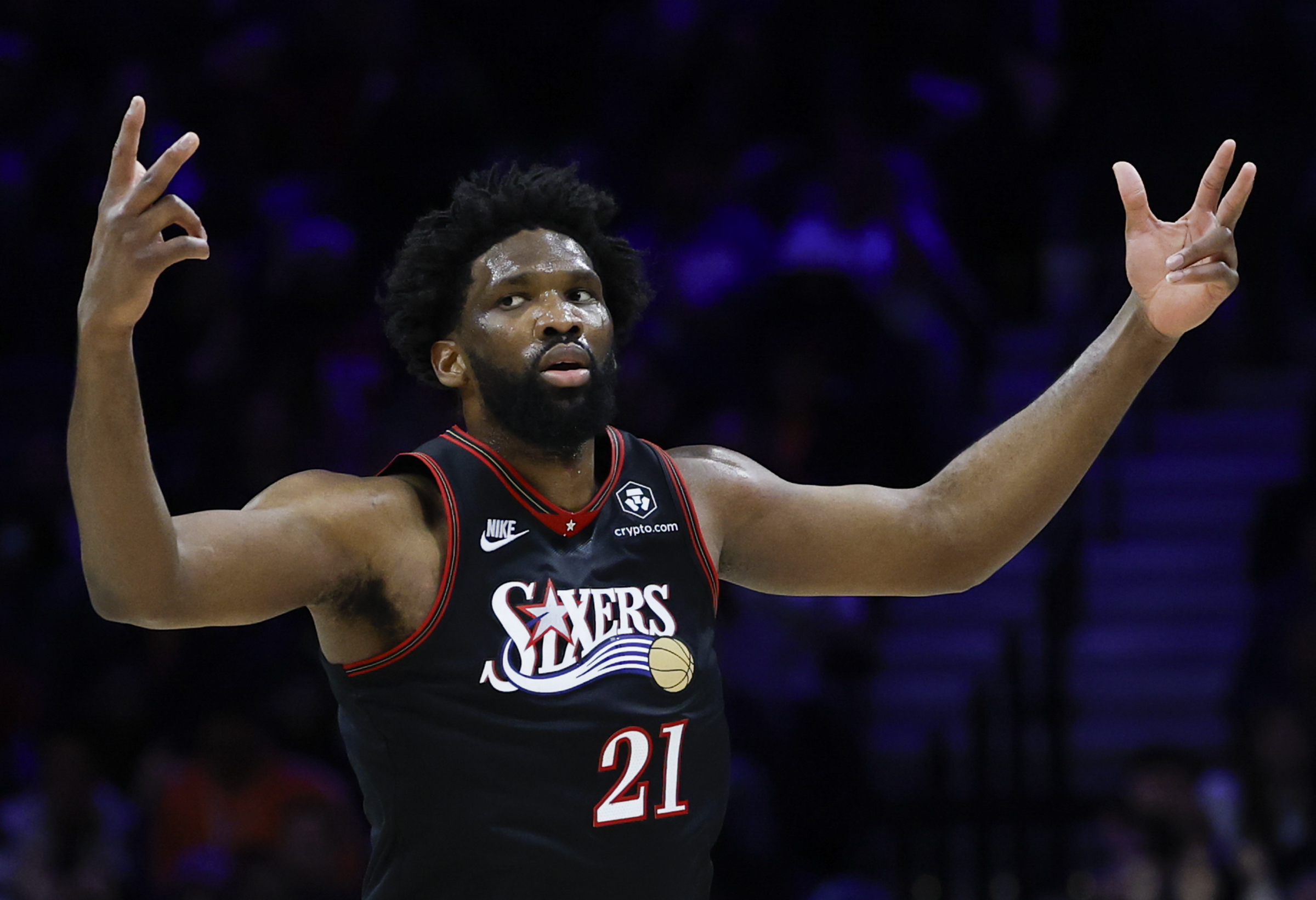
Sixers center Joel Embiid has scored 27 or more points in his last three games.
3. Joel Embiid helps to lead the Sixers to a first-round playoff upset and sparks trade interest among teams desperate to catch the Thunder and Spurs.
Embiid entered the new year having scored 27-plus points in three straight games. That counts as an accomplishment these days. He looked like an empty husk of his former self in his first nine games of the 2025-26 season, averaging just 18.2 points on a woeful .441 effective field goal percentage.
Question is, what if Embiid’s recent uptick in minutes and production is a signal that he has more left in the tank than we’ve given him credit for? He still needs to show a lot more defensively. And he has yet to play more than 71 minutes in a seven-day span. But he just logged 38 minutes in an overtime win over the Grizzlies, four days after playing a season-high 32 minutes in a loss to the Bulls.
With three years and $188 million left on his contract after this season, Embiid would probably have to be playing at his prime MVP level to have positive trade value. A more realistic question is whether he can play well enough to change the Sixers’ short-term narrative.
4. Eagles hire Shane Steichen or Mike McDaniel as offensive coordinator.
The Colts would be foolish to fire Steichen, who has somehow managed to put together a 25-25 record with the following starting quarterbacks: Gardner Minshew (7-6), Daniel Jones (8-5), Anthony Richardson (8-7), Joe Flacco (2-4), and Philip Rivers (0-3). But here is what owner Carlie Irsay-Gordon told the Athletic recently:
“Most people don’t like change,” said Irsay-Gordon, who has been patrolling the sidelines with a clipboard all season. “I think there’s something wrong with me, but I feel like it is the one thing that is a guarantee. I think it can be exciting.”
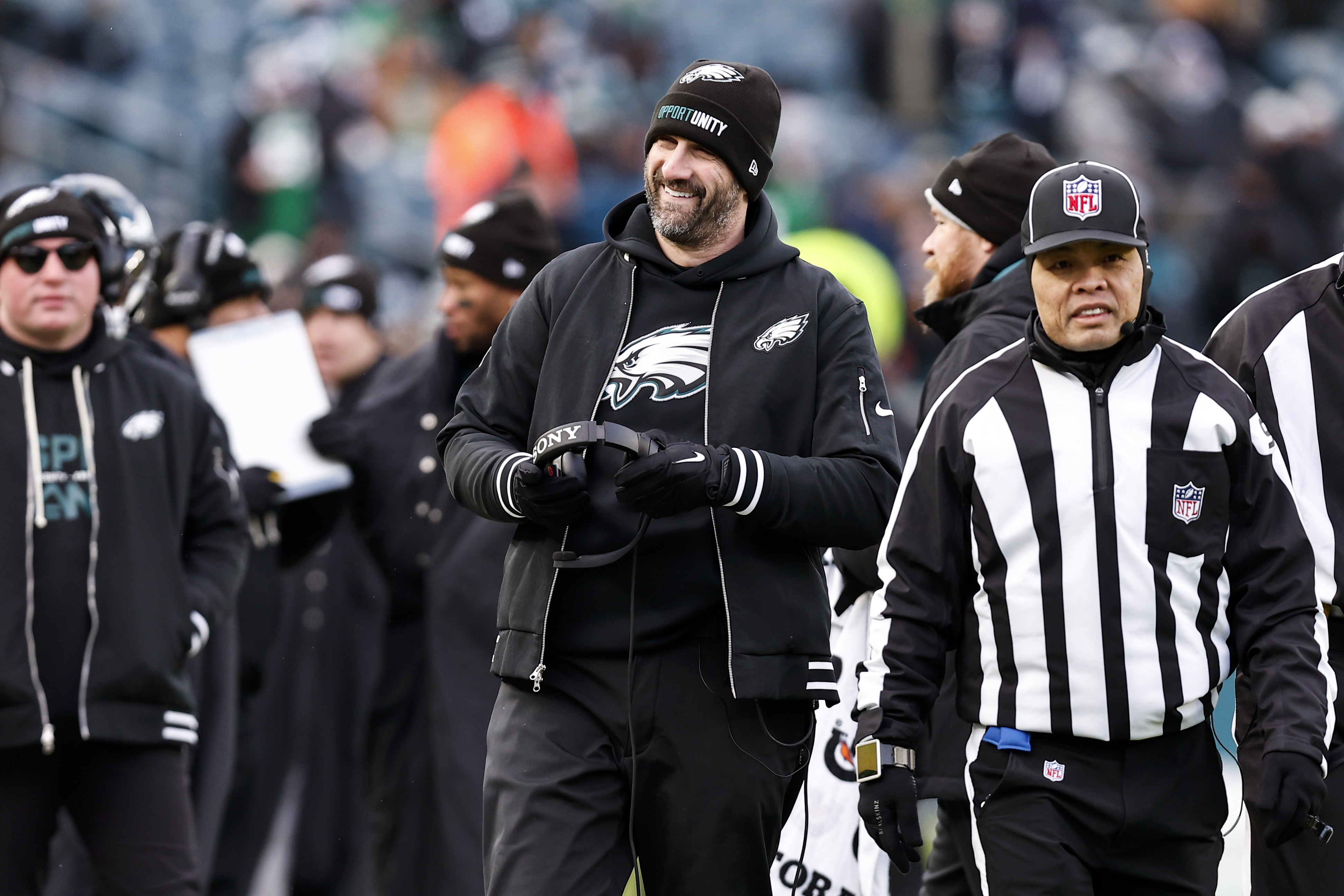
Even if the Colts part ways with Steichen, a team like the Giants could easily snatch him up. I can’t imagine Nick Sirianni would demote himself from head coach in order to restore Steichen as the play-caller. It definitely would be a heck of a story.
McDaniel might be a more realistic option, although he may be in the process of saving his job by leading the Dolphins to five wins in seven games.
5. Bryce Harper takes another step backward, as do the Phillies.
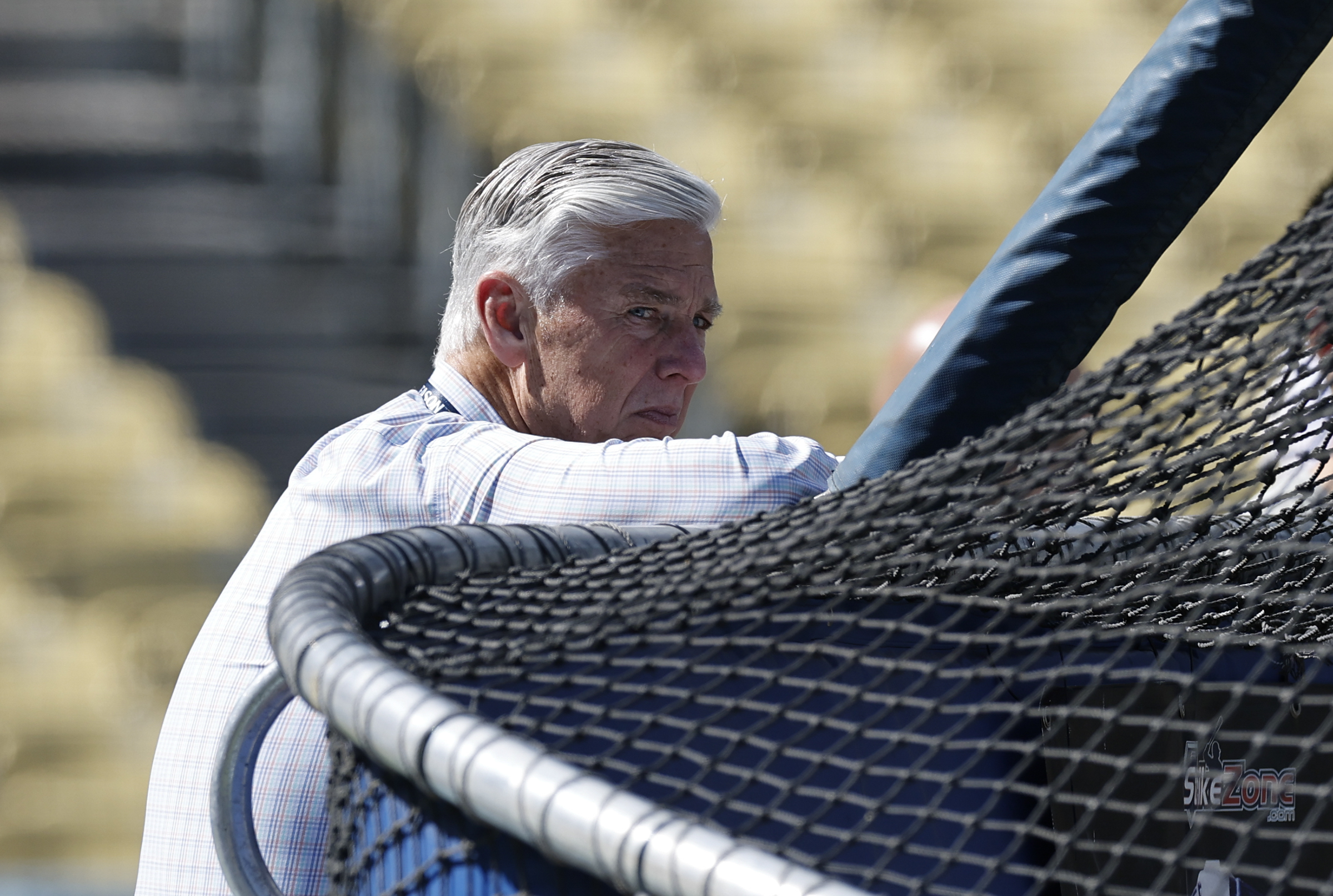
There has been enough passive-aggressive weirdness percolating between Harper and management that we have to at least flag him as the main character in a potential major story. Dave Dombrowski rankled Harper when he mused about Harper’s eliteness, but it is a legitimate question. At 32 years old, Harper is coming off his worst season in a decade. Another step backward would raise some serious concerns. And create some serious headlines.
Quinyon Mitchell isn’t one of those cornerbacks who speaks as if he is paid by the word. That’s a good thing. Brevity is often a sign of a man with more important things on his mind. It also suffices, more often than not.
For anybody who walked away from the Eagles’ 13-12 victory over the Bills on Sunday with an even greater sense of trepidation regarding the postseason, it might be helpful to consider the three short declarative sentences that Mitchell offered up as his interpretation of the proceedings.
“We’re battle-tested,” the Eagles’ second-year cornerback said as he stood in the postgame swirl of a cramped visitor’s locker room at Highmark Stadium. “Just look at our schedule. Look at our opponents.”
The sentiment is equal parts encouraging and maddening. Which is fitting, because the Eagles themselves are both of those things. It is their yin and their yang, their two mystical tadpoles, one of them midnight green, the other kelly green, chasing each other in a circle. The thrill of victory and the exasperation of trying to feel good about it.
On the one hand, the scoreboard is the ultimate judge. On the other hand, why does the scoreboard have to say 13-12? And why does it have to feel so fitting?
To anybody who possesses both a functioning brain and a reasonable amount of prior exposure to playoff football, the Eagles look like a team whose luck is destined to run out well before Super Bowl Sunday. The quarterback has not been good enough. Not even close. The play-calling has not been good enough to make up for the quarterback’s deficiencies. The defense has been good enough to make up for both of those things. But only barely.
On Sunday, the result was the second time this season that the Eagles failed to complete a pass in the second half. Yet it was also the second time this season where they failed to complete a pass in the second half and still won the game.
Yin and yang.
Sunday was also the third time this season when the Eagles won a game in which they scored fewer than 17 points. They are just the fifth team to accomplish that feat over the last 15 seasons. Of the four teams that did it previously, three went on to lose in the wild card round. Yet the one exception was the 2012 Ravens, who went on to win the Super Bowl.
Yin and yang.
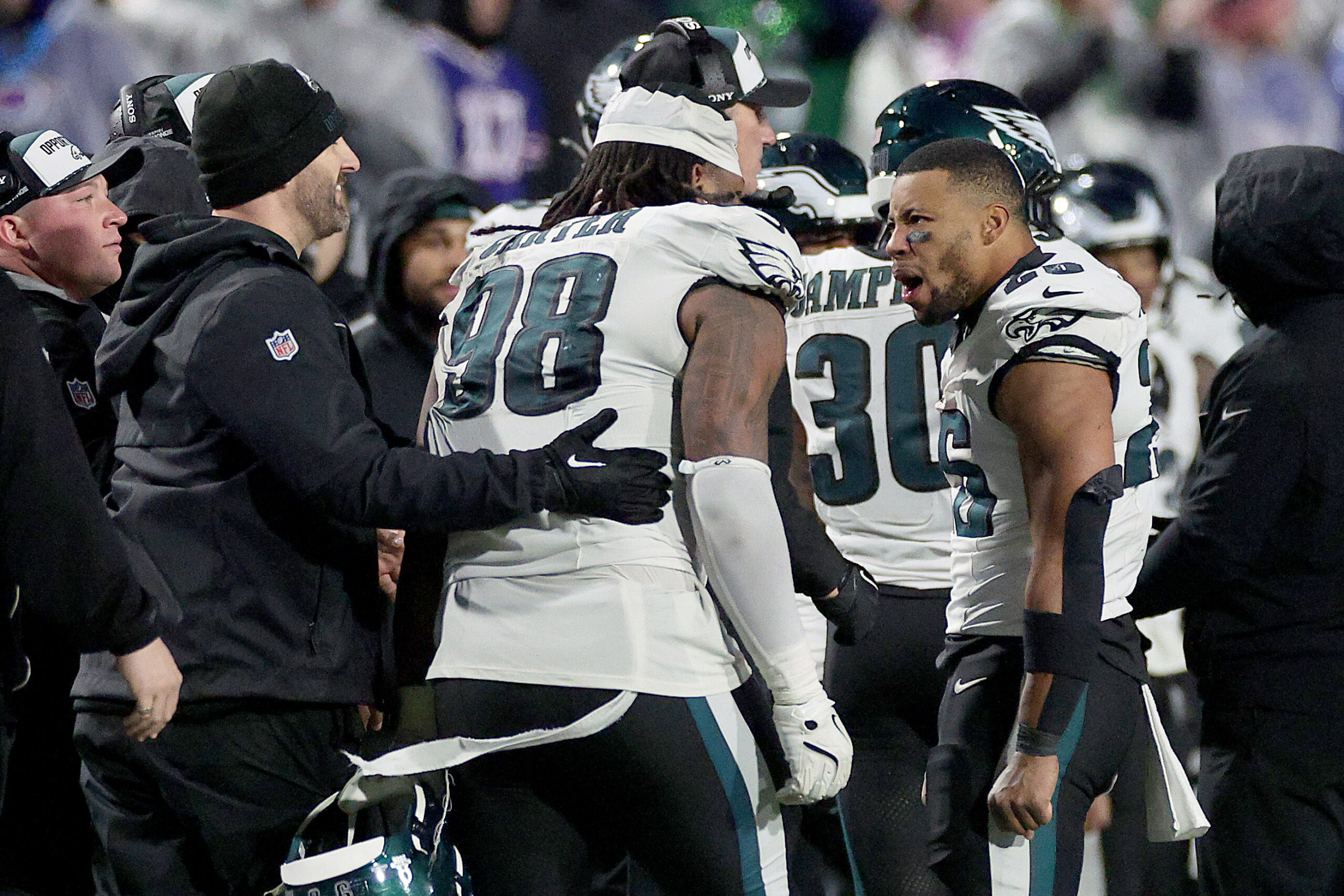
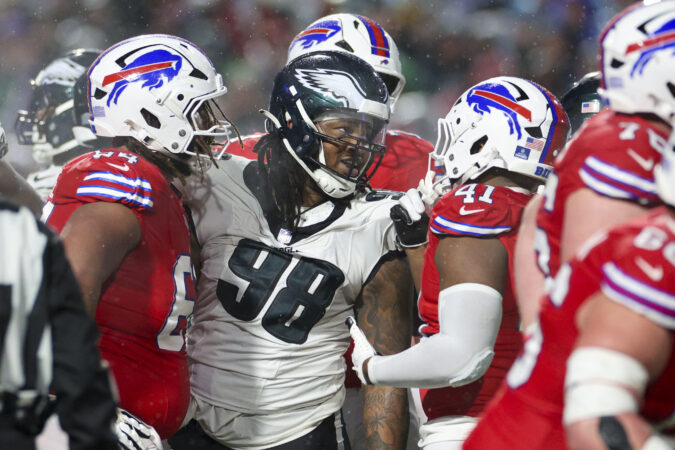
Defensive tackle Jalen Carter (98) and running back Saquon Barkley celebrate after the Eagles stopped the Buffalo Bills on a two-point conversion attempt late in the fourth quarter Sunday.
“I’ve never really been on a playoff team, but I can tell the difference just in the sense of these crunch time moments, being able to bend but don’t break,” said defensive end Jaelan Phillips, who had one of the Eagles’ five sacks against the Bills. “Obviously they had a little bit of a surge toward the end, but we were able to do what we needed to do offensively, defensively, and special teams wise to come out with the win. Gritty games like that are things you need to have to prepare yourself for the long haul.”
The Eagles may not be the most dynamic team heading into the postseason, but they will be the most prepared.
They have faced 10 of the top 13 quarterbacks in the NFL in terms of passing yards with a 3-1 record against the top three. They are 4-1 against the top seven QBR leaders. They have won games against five of the six quarterbacks who, along with Jalen Hurts, lead the NFL in wins over the last four seasons.
Sunday was the 10th time in 16 games that the Eagles faced a team that ranked in the top 10 in the NFL in either offensive or defensive yards per play (as of Sunday).
They have faced four of the NFL’s five highest-scoring offenses. They’ve faced five of the six quarterbacks who entered Sunday with the most passing yards, and three of the four who entered with the highest passer ratings. They have faced five of the seven defenses that entered Sunday with the highest rating, according to Pro Football Reference’s rating system.
These have been the Eagles’ hallmarks throughout Hurts’ tenure at quarterback and Nick Sirianni’s at head coach. Sunday’s win over the Bills only added to a road record that is the best in the NFL since Sirianni’s arrival.
“I think that’s a product of really good players and good coaches, and so it’s everything that goes into that, but good mental toughness,” Sirianni said Monday. “I think that really signifies your mental toughness, too.
“We experienced some highs and some lows [on Sunday], and we were able to continue to be relentless in our approach handling ups and downs. They ended up making a critical mistake in the game and we didn’t, which ended up being the difference in that game. So again, coming down to fundamentals. Just great resilience by the guys in there, and we prepare for that as coaches and players.”
Resilience is great. But even better is playing well enough to avoid the situations that test your resilience. That tension of opposites will determine the Eagles’ ultimate fate in the playoffs.
I really don’t know where to begin. Maybe with my Ron Burgundy voice.
I don’t believe you.
That means you, Nick Sirianni. And you, fellow media members. The big question from Sirianni’s news conference Monday isn’t a question at all. In fact, the Eagles coach is making an obvious error — albeit minor and forgivable — by playing along. There is simply no possible way he could be entertaining the idea of resting his starters in their regular-season finale against the Commanders in Week 18. Not with all the Eagles would stand to gain as the No. 2 seed, which would be theirs with a win over Washington and a Bears loss to the Lions.
“This is a marathon of a season,” Sirianni said Monday, one day after the Eagles eked out a 13-12 win over the Bills and then watched the Bears lose to the 49ers and thus fail to secure the No. 2 seed in the NFC playoffs. “Yes, your seeding is not locked down yet, but you are thinking, ‘Hey, can I put ourselves in the best position seeding-wise,’ while also you’re thinking to yourself how important byes are and creating them if you don’t earn the right for the first-round bye. Those are all things you’ve got to think through and go through.
“I think a lot of guys would say last year that that was a big deal, being able to have a built-in bye last year to set us up for what we ultimately did last year.”
C’mon, Nick! I’m giving you the benefit of the doubt here. You’re only doing that thing where you play the dummy on TV. We both know how good at this job you are. Few coaches in the NFL have as good of an understanding of what it takes to win in this league. Nobody has a better feel for his team, for his players, for his competitive reality. You know who the Eagles are and what they need and what situations will set them up for success.
Nick Sirianni was unsurprisingly noncommittal when asked Monday if he intended to roll out his starters for the final regular-season game or rest them.
Surely, you would agree with this long list of things that your team doesn’t need:
The Eagles don’t need a wild-card matchup against the Rams. Nor the 49ers. Nor the Seahawks. But especially not the Rams.
They don’t need a divisional round road game against a team they’ve already lost to in a stadium where the high temperature on Monday was 24 degrees with wind speeds well into the double digits.
They certainly don’t need any whiff of a quarterback controversy, which means they certainly don’t need to spend next week prepping for a playoff game while answering questions about Tanner McKee. And that means they don’t need their home crowd to watch McKee shred the hapless Commanders on Sunday, one week after Jalen Hurts failed to complete a pass in the second half of their narrow win over the Bills.
The Eagles would eliminate all of these possibilities by securing the No. 2 seed in the NFC playoffs. So, why wouldn’t they try their darndest to do so? Why would Sirianni even think about keeping Hurts on the sidelines and sending McKee and the second-teamers out there on Sunday?
I’m assuming the argument is as follows. The Eagles do not control their own destiny with regard to the second seed. If the Bears beat the Lions next week, Chicago gets the No. 2 seed, regardless of how the Eagles fare against the Commanders. The Lions don’t have anything to play for and the Bears just came up 3 yards short of beating a 49ers team that has a 50% chance to enter the playoffs as the NFC’s top overall seed. Chances are, the Bears beat the Lions (they are 2.5-point favorites). Thus, chances are, the Eagles are locked into the third seed and will be hosting one of the three NFC West powers instead of the sputtering Packers. In which case, the Eagles would gain far more by giving their starters an extra week to rest and prepare for the playoffs than they would by winning a meaningless game.
OK, I’ll admit. It’s a compelling argument, especially when you consider how much the Eagles seemed to gain by resting their starters in Week 18 last season.
An even more compelling argument is the one that Sirianni wouldn’t dare say out loud. I suspect it might be the real reason he is giving serious thought to resting his starters. The reason is Sirianni himself. And his coaches. If the Eagles punt on Week 18, it will allow the coaching staff and front office to spend an extra week preparing for the playoffs. It will give Hurts and the rest of the starters the ability to participate in that scouting and game-planning process. That’s a big, big deal.
Eagles quarterback Jalen Hurts did not complete any of his seven passes in the second half against the Bills.
It doesn’t really matter that the Eagles don’t know who they will be playing. The extra week would allow them to prepare for everybody, and those preparations can pay dividends throughout the playoffs if and when they run into those teams. In short, rest for the players is more of a bonus. The real benefit of looking past the Commanders is the preparation.
On the other hand … The benefits of the No. 2 seed are much more real this year than they are in a lot of years. The Packers are, by far, the easier matchup in the wild-card round. You’d much rather host them and then host a divisional round game and then potentially host an NFC championship game than any of the alternatives.
As for the McKee thing … Sirianni will shrug it off. I can’t imagine it will be a consideration. But you are fooling yourself if you don’t look at it as a potential downside. If Hurts’ backup goes out there and looks like a world-beater on the eve of the playoffs, it will only ratchet up the pressure on the Eagles’ starter. To be clear, the people calling for McKee would be wildly off base. It’s a silly notion to think anybody but Hurts gives the Eagles the best chance to win a football game. But perceptions are what they are. And they can definitely bleed into a locker room.
Long story short, Sirianni’s decision is much tougher than it looks at first glance. The extra week of internal preparation is incredibly valuable. The Eagles can still beat the Commanders with the backups playing, while allowing the starters to focus their practice weeks on the postseason.
I just keep coming back to one thought. Imagine if everything breaks in a certain direction. The Bears lose. The Rams end up as the sixth seed. But the Eagles’ backups lose to the Commanders and their road to the Super Bowl ends up being home vs. the Rams, then on the road at the Bears, then on the road at the Seahawks or 49ers.
All season, Sirianni preaches that the NFL is all about handling the opponent in front of you and then letting the other stuff sort itself out. Now, more than ever, he should listen to himself.
ORCHARD PARK, N.Y. — O’Cyrus Torrence is a large human being. At 347 pounds, he is the heaviest member of the Bills offensive line and the roster as a whole. He is the kind of man who eats turkey wings instead of chicken wings, and even then he does so only after he has first rolled them in flour and fried them in oil and doused them in melted butter. In fact, Torrence recently did all of these things in a handy how-to video he recently posted to Instagram. His smothered turkey wings look like quite the treat, at least for anybody who expects to have easy access to indoor plumbing for the rest of the night.
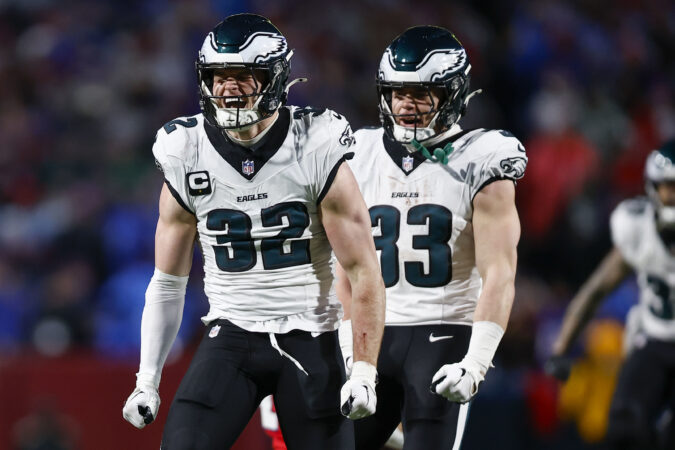
Bear with me, Eagles fans. There is a relevant point in all of this. See, Torrence isn’t just the heaviest man on the Bills offensive line, or the heaviest on its roster. He also happens to be 33 pounds heavier than the man who, late in the second quarter of the Eagles’ 13-12 victory over the Bills on Sunday, pushed him 5 yards into his own backfield and then tossed him aside the way a baggage handler might a memory foam pillow. The resulting sack of Josh Allen was a big play for the Eagles in the sense that it forced the Bills into a third-and-18. Much bigger was what it signified. Jalen Carter is back, and the Eagles once again have a defense that can win a Super Bowl on its own.
“You guys see what he does for us,” said defensive end Jaelan Phillips, who added a sack for an Eagles defense that racked up five total. “He had a blocked extra point that basically won us the game, if you think about it. I thought that in his absence, we did a great job, but having him back is key. It’s huge.”
As Phillips noted, Carter and the Eagles defense had their fingerprints all over this one, right down to the blocked extra point with 5 minutes, 11 seconds remaining that left the Bills needing a two-point conversion to win after another Allen touchdown run with five seconds left. Until that frantic ending, which featured two touchdown drives totaling 137 yards, Vic Fangio’s unit looked plenty capable of winning three straight playoff games on its own. The Eagles battered Allen in the pocket and held James Cook, the NFL’s leading rusher, to 74 mostly harmless yards on 20 carries. For 55 minutes, a second shutout in three games looked like a distinct possibility, this time against a team that entered the weekend with the third-best odds to win the Super Bowl.
We can’t ignore the fact that the Eagles again came way too close to losing a game. In this case, they came within 2 yards, after Allen’s frantic last-minute touchdown drive ended with a missed two-point conversion. The greatest testament to the strength of the Eagles defense is just how bad their offense looked. All of the usual criticisms applied. The quarterback was adequate, at best, if you squinted. The running game wasn’t good enough to make up for it. The result was an offense that looked about as dynamic as a truck stuck in mud. The Eagles mustered just 190 total yards, 16 of them in the second half. Rarely do you watch them and think, Wow, this is an enjoyable thing to watch. That will be a difficult way to go through the postseason.
What warrants reconsideration is the conclusion that many folks have drawn. As lackluster as the offense has looked, as underwhelming as Jalen Hurts has played, the Eagles have a good enough defense to make them one of the small handful of teams that will have an even-or-better chance against any other team in the playoff field. Say what you will about the Rams or the Seahawks or the 49ers. The Eagles have as good a chance as any of them. Maybe even better.
“You’ve got to give yourself points when you win football games,” Eagles coach Nick Sirianni said. “There’s always things to clean up when you come out of a football game. But when you come out of a football game that you win on the road in a hostile environment against a really good football team that’s had the sustained success that we have, if you come out of this and think about all the negative things, that makes for a miserable existence. We’ll get there.”
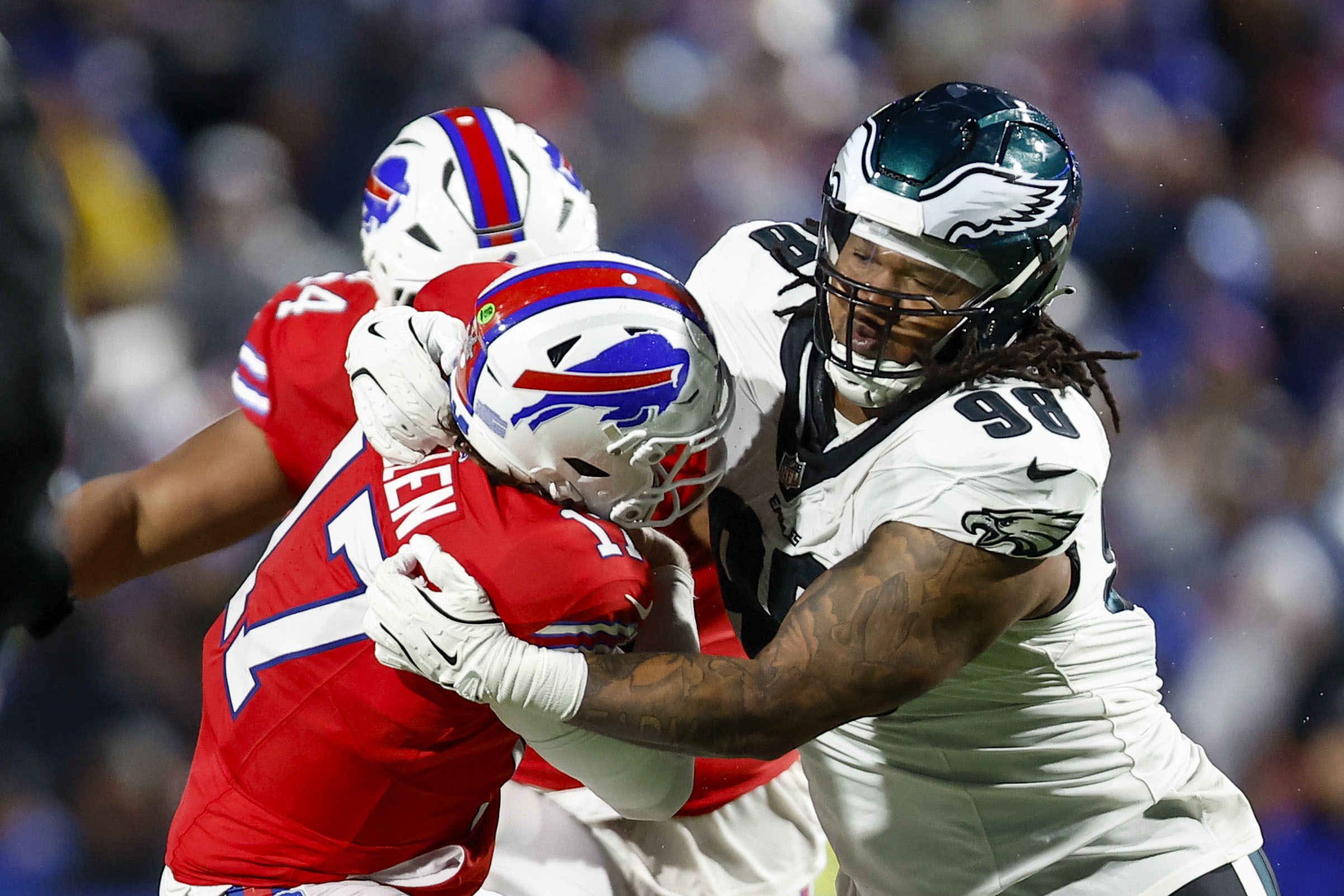
Eagles defensive tackle Jalen Carter sacks Buffalo Bills quarterback Josh Allen during the second quarter.
With this defense, the Eagles may only need an offense that is on the lower end of functional. That’s what we saw against the Bills. Same as we saw against the Lions, and the Packers, and the Chargers. Against a Super Bowl-caliber quarterback, in a playoff-caliber environment, the Eagles defense was the best unit on the field for all but the last five minutes of the fourth quarter. The Bills gained just 12 first downs on their first nine possessions and did not score a point before Allen capped their last two drives of the game with short touchdown runs.
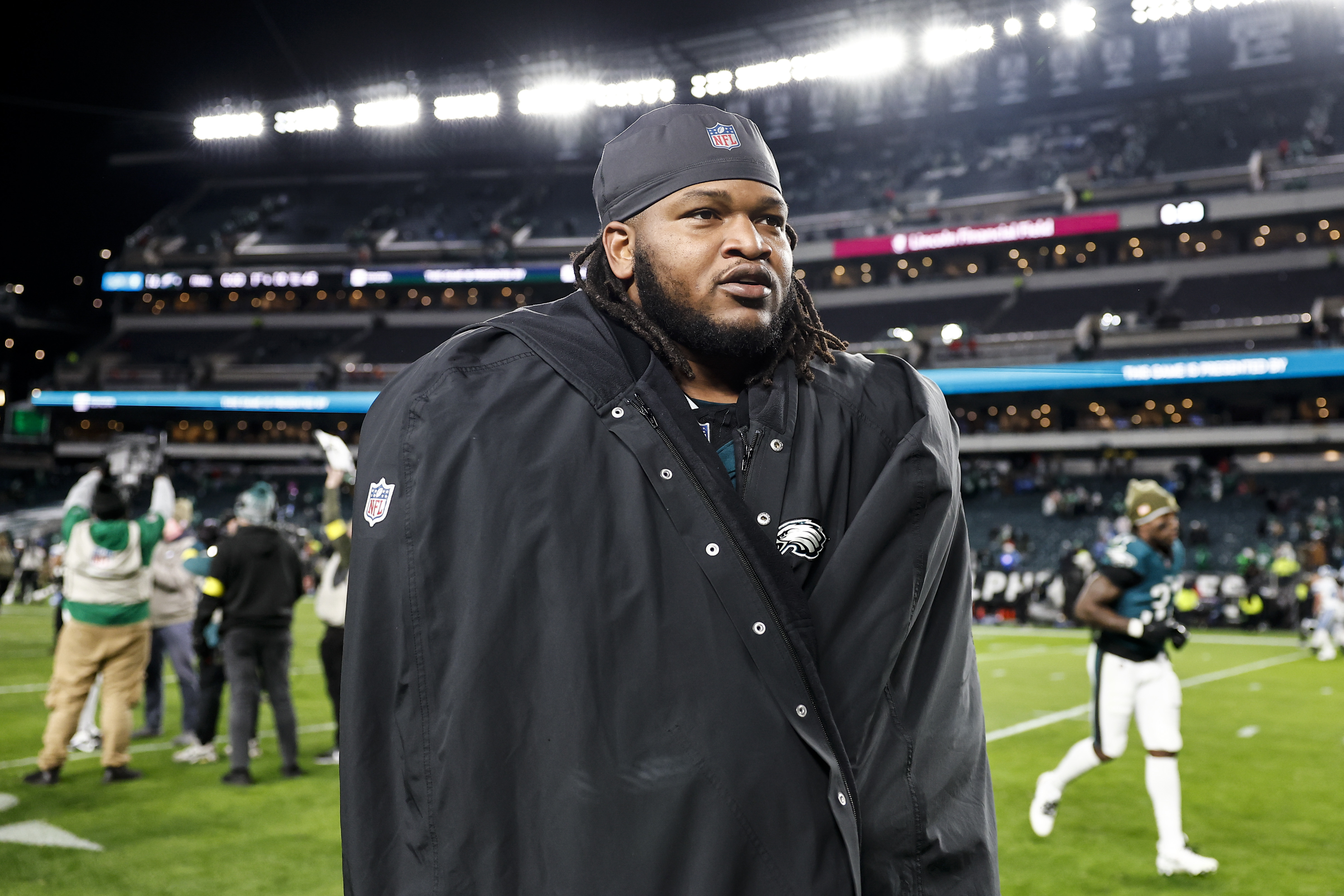
The story of the game was Carter, who returned after a four-game absence because of procedures on both shoulders. The third-year defensive tackle said earlier this week that he’d previously been in so much pain that he could not do a pushup. Against the Bills he looked as strong as anybody … not only with his manhandling of Torrence on his sack of Allen, but also on the blocked extra point that proved to be the difference in the game.
It’s funny how he always looks like the biggest player on the field, even when he isn’t. On a unit that is brimming with talent around him, Carter’s presence makes the Eagles the caliber of unit that can win a Super Bowl on its own.
There were some signs that the Phillies and Matt Strahm weren’t long for this world. Small ones. The kind you see in a lot of relationships between headstrong people. Certainly nothing that suggested things were fractured beyond repair. Still, there was enough smoke to at least dampen the surprise when the Phillies decided to trade their versatile setup man to the Kansas City Royals last week.
Whatever the rationale for trading Strahm, his departure reopens a major question that appeared to be solved when the Phillies signed veteran high-leverage righty Brad Keller:
Will that Thomson have enough depth at the back of his bullpen to avoid another season of Russian roulette in the sixth and seventh innings?
We tend to focus on the eighth and ninth innings when assessing the strength of a team’s bullpen. But when you look at the game’s truly elite units, you’ll usually find that they are just as dominant in the bridge to their setup/closer combo. Think about the 2008-era Phillies. Ryan Madson and Brad Lidge were one of the best setup/closer combos in the game. But think about all of the big outs you saw from guys like Chad Durbin and J.C. Romero in situations that were just as pivotal as the ones Madson and Lidge would face.
A more recent example is last year’s San Diego Padres. The most dominant bullpen in the majors by a wide margin in 2025, San Diego relievers ranked ninth in the majors in total batters faced in the seventh inning while also allowing the fourth-fewest runs. The correlation between those two numbers makes sense: the better a manager’s options in the seventh inning, the more likely he is to go to that option rather than attempt to stretch his starting pitcher. Same goes for the sixth.
Those were the innings that killed the Phillies in their NLDS loss to the Los Angeles Dodgers. Eight of the 13 runs that the Phillies allowed over four games came in the seventh inning. Another two came in the sixth inning.
Not all of those runs were charged to the bullpen. But that’s not the whole story. Think about the seventh inning of Game 2, when Thomson stuck with Jesús Luzardo rather than going to his bullpen. Luzardo allowed two runners to reach base, both of whom ended up scoring off Orion Kerkering, who then allowed two runs of his own.
Phillies manager Rob Thomson has been forced to lean on his starters because of a thin bullpen.
A similar situation unfolded in the seventh inning of Game 4. Cristopher Sánchez took a 1-0 lead into the bottom half of the frame but allowed two of three batters to reach before Thomson pulled him. In fact, that game was Exhibit A for why a team needs at least three, and ideally four, arms who can thrive in situations where the outcome is in the balance. Not only did Thomson use closer Jhoan Duran in the seventh, and for five outs, he went to Luzardo for five outs in extras. The only other actual reliever who pitched in the first 10 innings: Matt Strahm.
In that context, it sure looks puzzling that the Phillies decided to trade Strahm for a middle reliever with a light big league track record (Jonathan Bowlan). How does a guy go from being a manager’s second-most-trustworthy option in a do-or-die postseason game to superfluous in barely two months?
Here was the explanation from Dave Dombrowski, who pointed out the presence of fellow lefties José Alvarado and fly-ball on the roster.
“We didn’t necessarily think we needed all three,” the Phillies’ president said. “[Strahm is] a year away from free agency. We were able to get a guy that we liked who has six years of [club control], and we think can help us right away. So you have to give to get. And we still feel good with our left-handers in the bullpen.”
Which is all well and good. Except, the Phillies never looked at Strahm like a typical lefty. He was even more effective against righties, in fact, with a .585 OPS against in 2025.
While the Phillies may like Bowlan, who has an impressive frame and an intriguing pitch mix as well as six more years of club control (albeit at the age of 29), Strahm’s presence in trade rumors over the last several weeks suggests the Phillies weren’t necessarily targeting the Royals’ righty. The driving force in this trade was that the Phillies were ready to move on from Strahm.
For some justifiable reasons.
Most conspicuous were Strahm’s comments after Kerkering’s fielding error in the Phillies’ NLDS elimination loss to the Dodgers, when he suggested that the team didn’t do enough pitcher’s fielding practice. A few days later, Dombrowski disputed Strahm’s characterization, going so far as to point out that Strahm did not participate in the PFP drills the team did have before the NLDS.
Not exactly bridge-burning stuff, there. But Strahm also showed some signs of decline in his age-33 season. When he was a well-deserved All-Star in 2024, he struck out a third of the batters he faced while walking 4.6% of them. Last year, both of those metrics worsened. He still struck out a solid 27.3% of batters, but his walk rate rose by almost 50%.
In fact, Strahm’s underlying results declined across the board, a clear indication that his stuff had diminished. Always a fly-ball pitcher, Strahm’s ground-ball rate plummeted by nearly a third in 2025, dropping from 31.9% to 23.8%. That decline correlated with a noticeable drop in life on his fastball, with his average velocity falling from 93.4 in 2024 to 92.3 in 2025, per Statcast.
Only four relievers in the majors have logged more than his 212⅔ innings since the Phillies signed him in 2023, three of them are younger than Strahm.
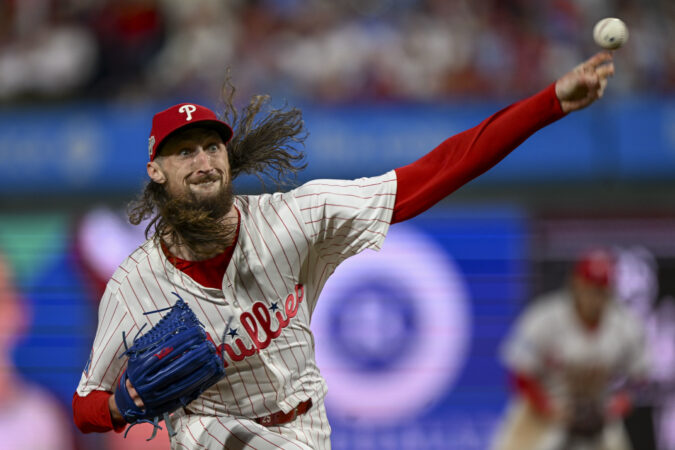
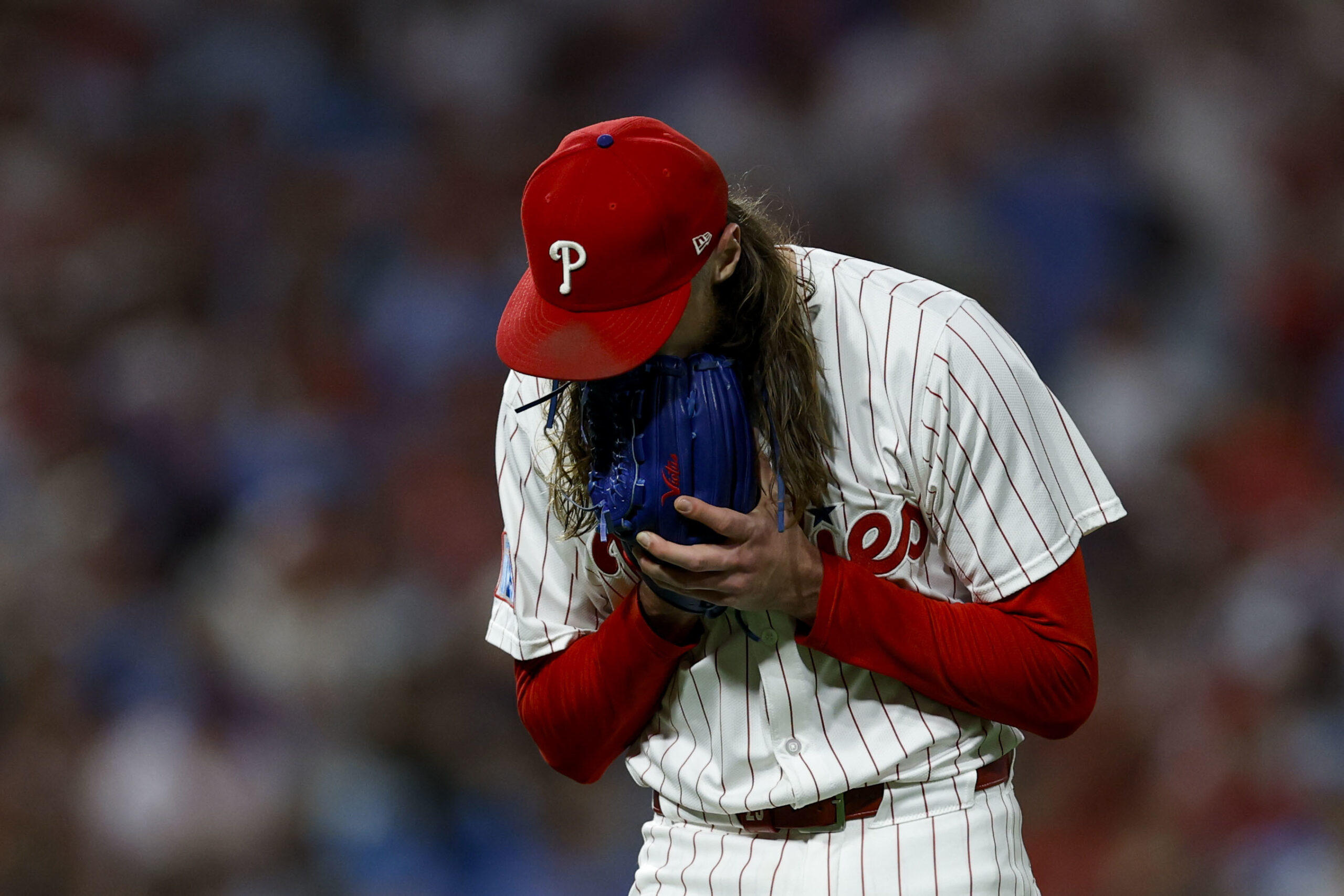
Phillies pitcher Matt Strahm yells into his glove after the Los Angeles Dodgers score three runs in the seventh inning in Game 1 of the NLDS.
There’s a realistic chance that this move looks like a nothingburger at worst by the end of next season.
Make no mistake, though. It’s a move that weakens the Phillies bullpen in the short term. Mostly, it puts a lot more pressure on Duran, Keller, and Alvarado to remain healthy and effective. If all three pitch to their potential, the Phillies will be plenty OK in tight games. But Alvarado is in his decline phase and is coming off a season where he missed 80 games and the postseason because of a PED suspension. Keller could be a one-year wonder. Behind them is Kerkering, who has yet to blossom into the high-leverage ace the Phillies envisioned and who will have to overcome the psychological trauma of his debilitating mistake in Game 4 of the NLDS.
No team would be comfortable with those kind of question marks in the ninth inning. But the seventh can be just as important, particularly when your roster is built around its starting rotation. Last year, Phillies relievers allowed the fifth-most runs in the majors in seventh innings, despite facing the fewest batters (513, or 101 fewer than the Padres). It has been a long-running theme under Dombrowski. Since 2021, the Phillies’ bullpen has the ninth-highest seventh-inning ERA in the majors (4.46), per FanGraphs.
Trading Strahm was a defensible move. But it could easily become one that Dombrowski regrets.
‘Twas the weekend before Christmas and all through the house I couldn’t find anything about which to grouse.
The Cowboys have Cowboyed, the Commies are done, the Eagles will again be the NFC East’s No. 1.
And not only that but they’ll be better than the Bucs, which means they won’t play the Rams, which really would have sucked.
Why you’d count out the Eagles is really beyond me, and that goes double for the grinches shouting Nick Sirianni.
I like the Eagles’ chances, and you can call me a fool, though I’ll call you a Scrooge if you say, “Bah, humbug … Patullo.”
Three reasons to cheer up about the Eagles as they look to clinch the division against the Commanders on Saturday.
Nick Sirianni’s Eagles get the Commanders twice over their final three games to try to boost their playoff standing.
1. The Eagles can easily end up with the No. 2 seed and host the NFC Championship game.
I’m not going to try to put into words all of the various scenarios that could play out over the final three weeks of the regular season. But there are two important points.
The Rams and Seahawks could be headed for a rubber match in their season series, which they’ve split in two of the more entertaining games of the season. One of those teams will likely enter the postseason as the fifth seed, and the other the one seed, which would put them in position to face each other in the divisional round, given that the second-best team in the NFC West (Rams or Seahawks) looks a lot better than the best team in the NFC South (Bucs or Panthers), whom they’d face in the wild-card round.
The Bears (10-4) close out the season against three potential playoff teams, with home games against the Packers and Lions sandwiched around a road game in San Francisco. They’ve already lost to the Packers and Lions. In a scenario where the Bears lose two or three of those games, the Eagles could finish ahead of them by winning out, or even by winning two of three.
In other words, the Eagles could easily end up hosting the Bears in the wild-card round and then playing someone other than the Seahawks or Rams in the divisional round. They would then host the NFC Championship if the lower-seeded team (Rams at the moment) knocked off the higher-seeded team (Seahawks).
The moral of the story is that the NFC is wide open. Sure, the road is likely to be tougher than it was a year ago, when the Commanders somehow advanced to the NFC Championship. The 49ers have won four straight games since Brock Purdy’s return at quarterback, with an average margin of victory of 16.25 points. Their only losses on the season have come against the 10-4 Jaguars, the 11-4 Rams, the 9-5 Texans, and a Bucs team that was 5-1 at the time. The Lions aren’t dead yet. If they beat the Steelers at home this week, they could easily be playing the Bears in Week 18 with a playoff berth on the line. Rams, Lions, 49ers would be a heck of a collection of wild-card teams.
But none of these teams are great, are they? The Eagles would be no worse than a coin flip in any potential playoff matchup, home or road. Even as the three seed, the Eagles would have a realistic chance at hosting an NFC Championship game.
Eagles defensive tackle Jalen Carter will miss his third straight game on Saturday following shoulder surgery.
2. Lane Johnson and Jalen Carter could be back on the offensive and defensive lines for the second or third-seeded Eagles.
Anytime Johnson misses a snap we hear about how important he is. The Eagles have lost six of their last nine meaningful games that they’ve played without their All-Pro right tackle, including three this season. But I don’t often hear Johnson’s absence when it comes time to dole out blame for the offense’s underperformance this season. That’s partially because they’ve struggled with him in the lineup. But they were also 8-2 with a bunch of big wins.
Carter’s impact is nearly as big on the defensive line. Over the last three seasons, the Eagles have lost five of the seven meaningful games that Carter has missed. One of the two wins was the season opener against the Cowboys, which easily could have been a loss. Carter clearly wasn’t himself in the Eagles’ loss to the Bears. A healthy return for the postseason alongside Johnson could be massive.
3. The Eagles could be better than we’re giving them credit for.
Rarely is it as easy as it was for the Eagles last season.
That’s something that has been underemphasized by your faithful servants in the chattering classes as we’ve performed our living autopsies on the 2025 season. While the Eagles have offered plenty to critique, a big part of their problem is perception. They set a standard that would have been tough for any team to match, let alone a team that is where they are in their talent cycle. Only five other times in the last 10 seasons had a team score at least 463 points while allowing 303 or fewer. Only once in the Super Bowl Era has a team done it in back-to-back seasons (the 1993-94 49ers). Heck, only five teams have done it multiple times in that 59-year span.
A big part of it is economics. Jalen Hurts’ cap hit jumped from $13.6 million in 2024 to $21.9 million in 2025. DeVonta Smith’s went from $7.5 million to $10.7 million. Jordan Mailata’s went from $11.7 million to $15.2 million. Combined, that’s an increase of about $15 million going to three players. That means the Eagles have $15 million fewer dollars worth of players elsewhere on the roster compared to 2024. In 2024, they spent roughly $15.4 million on the combined cap hits of Darius Slay, C.J. Gardner-Johnson, and Mekhi Becton. Economics is known as the dismal science for good reason.
But money isn’t the only element of the story. The NFL carefully structures itself to avoid prolonged runs by teams that were as dominant as the Eagles were last season. Parity is the goal of the draft, and of the scheduling process, and, yes, of the salary cap.
Over the last 10 seasons, the most games any team has won in a 65-game stretch is 53, which the Chiefs did between 2019-23. As of today, the Eagles have won 48 of their last 65, dating back to the start of the 2022 season. They are one of only five teams to accomplish that over the last decade.
Point is, the Eagles’ roller-coaster ride of the last four years is unique only because of the highs. No, they aren’t the steamroller they were last season. But you don’t need to be a steamroller to win a Super Bowl. Right now, the Eagles have as much reason as any team in the NFC to consider themselves the team to beat.
It was encouraging, then, when news leaked on Wednesday that the Phillies were closing in on a two-year, $22 million contract for former Cubs setup man Brad Keller. Set aside the question of who Keller is and whether or not Rob Thomson can count on a repeat of the veteran righty’s breakout 2025 campaign. The mere fact that the Phillies saw a pressing enough need to spend this sort of money on another reliever is commendable.
And, let’s be clear. This is real money that the Phillies are spending. The relief market has exploded this offseason. That’s true at the top of the market, where former Mets closer Edwin Díaz accepted a whopping $21 million AAV on a three-year contract, all the way down to erratic former Phillies lefty Gregory Soto, who somehow landed $7.75 million from the Pirates on a one-year deal. Keller is the 11th reliever to sign a deal worth at least $9.5 million per year and the seventh to sign for at least $11 million.
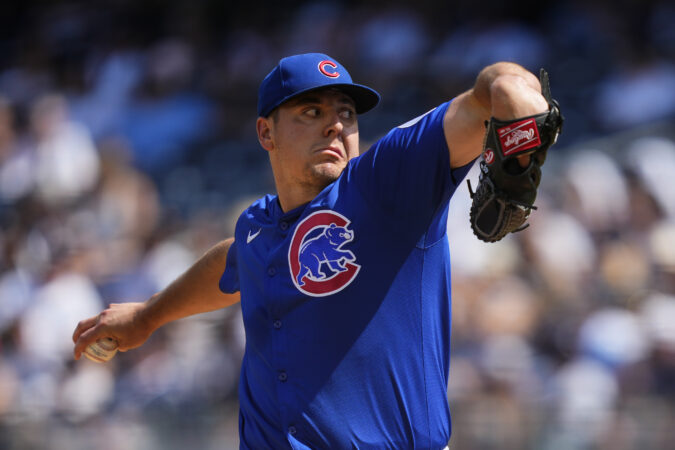
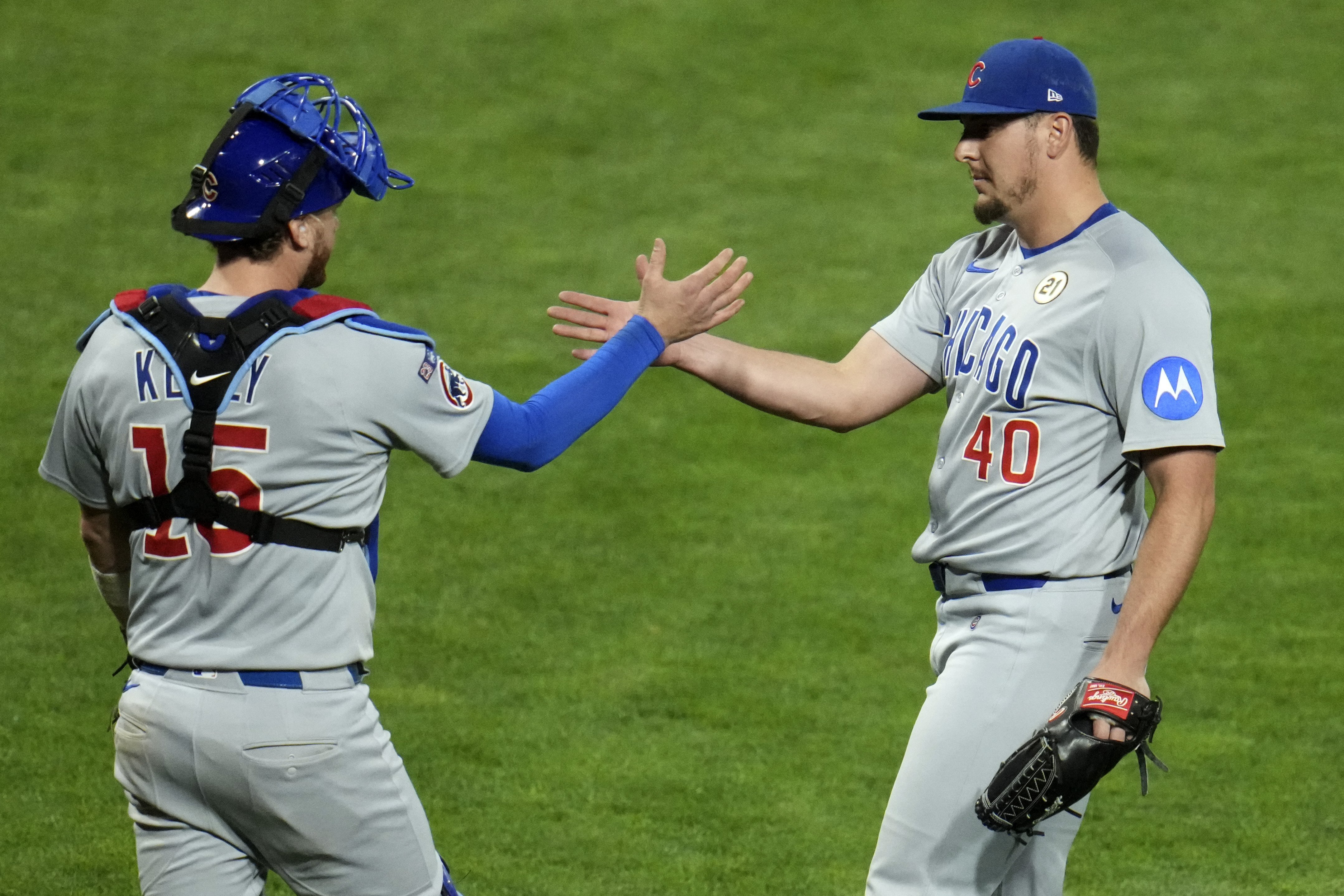
Brad Keller, right, revived his career with the Cubs in 2025 as one of manager Craig Counsell’s most trusted relievers.
He is also the youngest of that group, which is a key fact to consider. Heading into his 30-year-old season, Keller doesn’t have the wear-and-tear that relievers tend to accumulate by the time they hit free agency. He spent the first six years of his career moving into and then out of the Royals rotation. In 2024, he bounced back and forth between the minors and the Red Sox big-league roster, later landing with the White Sox.
Last offseason, the Cubs nabbed Keller on a minor league deal and gave him a job in their bullpen. His velocity jumped from the low-90s to a Statcast average of 97 in 2025, and he quickly worked his way to the back of the Cubs’ bullpen. He thrived in high-leverage situations, holding opponents to just four extra-base hits and a .582 OPS with 28 strikeouts and 10 walks in 101 plate appearances. His numbers after the All-Star break were as good as you’ll see: 35 strikeouts, eight walks, a 0.33 ERA in 99 plate appearances.
The addition of Keller gives the Phillies an assortment of high-leverage arms unlike any they’ve had in a long time. At 6-foot-5, 250 pounds, he is built like a closer. The Phillies will enter spring training with the thought that he will pair with Jhoan Duran as an elite setup/closer combo in the eighth and ninth innings. Between Keller, Duran and Matt Strahm, they have three of the 34 big-league relievers who finished last season with an ERA+ of 160 or better (minimum 40 innings). Lefty José Alvarado, back on a team option after a suspension-marred 2025, remains a quality high-leverage option. That gives Thomson four legitimate options for the late innings of close games, with lefty specialist Tanner Banks and young righty Orion Kerkering also bringing plenty of experience and potential upside.
The Phillies easily could have convinced themselves that they could make due without making a significant investment in another arm. They tried to ham-and-egg their way through last offseason, signing Jordan Romano and Joe Ross for about the same amount they’ll pay Keller. Though the Phillies won 96 games, they arrived in the postseason without the back-end horsepower to complement their best-in-class rotation. It cost them against the Dodgers. As much as the offense struggled, a dominant bullpen would have given them a clear edge in the series.
Who knows if it will work out? The relief market is little different from a roulette wheel. You ante up and then cross your fingers. But if the bullpen again emerges as a concern next season, it at least won’t be for a lack of trying.
The scariest day of the offseason is always the one when Dave Dombrowski looks at his Phillies roster, smiles, and says, “Yep, that’ll do.”
On Tuesday, Christmas came earlier than usual for next year’s trade-deadline sellers.
“We feel very good,” said Dombrowski. “I guess we’d look for arms in the bullpen. But we’ve also got five solid guys out there that are of veteran status. Sometimes, you have to give some young guys an opportunity. We have some guys that we like. So that’s really where it stands. And maybe depth at different positions. We’re dealing with that. But I think as far as our everyday positional players — other than catcher — we’re pretty well set.”
[JUMP CUT TO MAY 2026, THE CITIZENS BANK PARK SCOREBOARD]
VISITOR — 000 000 03X | 3 5 0
HOME — 100 000 0XX | 1 2 0
[THE CAMERA ZOOMS OUT SLOWLY, REVEALING A PLAYER IN A GRAY JERSEY CIRCLING THE BASES AS A PHILLIES RELIEVER STANDS ON THE MOUND WITH HIS SHOULDERS SLUMPED, STARING BLANKLY INTO THE MIDDLE DISTANCE]
NARRATOR: (gravely) As it turned out, they weren’t pretty well set.
It goes like this every year, doesn’t it? Opening day arrives and a month or two later the Phillies realize they could really use one more right-handed bat and another reliever or two. Maybe this will be the year that breaks the cycle.
Or, hey, maybe we’ve been looking at the offseason wrong this whole time. Maybe the whole point of the thing is to remind us what it feels like to believe. That Adolis García will be the player he was at 30 years old instead of the player he was at 31 and 32. That Justin Crawford will go from being a player who didn’t deserve a big league roster spot over Max Kepler to one who will be an impactful piece of the Phillies lineup and play a good center field to boot. That the bullpen will transform into a dominant unit instead of one that has allowed 25 runs and 21 of 26 inherited runners to score in the Phillies’ last eight postseason games.
It’s a magical time of year, isn’t it? Maybe we are the grinches.
There’s some truth to it. As Dombrowski has said before, there is no such thing as a perfect roster. The team you bring into opening day is much more the sum of all previous offseasons than it is the product of the most recent one. The Phillies have spent a lot of money in the five years since they hired Dombrowski as president of baseball operations. Most of those expenditures are still on the books and occupying roster spots in the lineup, rotation, and bullpen. It’s easy to watch the Dodgers drop $69 million on Edwin Díaz and wonder why the Phillies can’t do the same. But there are 20-plus teams saying the same about the Phillies as they watch Kyle Schwarber re-up for five years and $150 million.
Dave Dombrowski says the Phillies’ roster is “pretty well set.”
Using the Dodgers as a benchmark can skew reality. The Phillies have improved their regular-season win total in each of Dombrowski’s first five seasons at the helm. Not only did they win 96 games last season, but they scored 31 more runs and allowed 37 fewer than they did in 2022, when they went to the World Series. Those results don’t necessarily align with the narrative that says the Phillies are a team in the midst of a steady decline.
As long as we assume that the Phillies eventually come to terms with J.T. Realmuto and fill their gaping void at catcher, they will enter 2026 with a sensible roster that is well within the range of outcomes we should have expected heading into the offseason. García is a decent bet to be an improvement over Nick Castellanos, pairing good defense, decent speed, and better power with his free-swinging approach. In left field, the Phillies will presumably begin the season with Brandon Marsh and perhaps Otto Kemp and keep an open mind from there. A little bit of flux can be a good thing, perhaps preserving an opening to get a look at a prospect like the lefty-hitting Gabriel Rincones at some point down the road.
The biggest potential weakness in the Phillies’ approach is the extent to which they will be counting on Crawford, whom Dombrowski indicated would report to spring training as the leading candidate to man center field. Nobody is expecting Crawford, who will be 22 in January, to hit .334 with a .411 on-base percentage, as he did last season in 506 plate appearances at triple-A Lehigh Valley. He won’t even need to come close to those marks to warrant an everyday role. But he will need to warrant that role, or else the Phillies’ outfield situation will look a lot closer to what it did during the first half of last season vs. the competent unit it became as Kepler emerged and Harrison Bader joined up.
The big risk the Phillies are taking is in moving on from Bader. The center fielder was such an obvious fit after his trade-deadline acquisition from the Twins that you can’t help but think that they will enter next July looking for another similar player. The obvious question: Why not just do it now?
The first answer is money. Bader is reportedly looking for a three-year deal at $10 million to $15 million annually. That’s a steep price to pay a 31-year-old player with an injury history who is coming off his first season of 500-plus plate appearances.
The second answer is Crawford.
“If you’re going to give Crawford an opportunity, you’ve got to give it to him,” Dombrowski said. “And that’s where we are. We’re going to give him an opportunity to go out there and have a chance to play a lot.”
Where they are is the place they usually are, and one that is the fate of most teams when pitchers and catchers report.
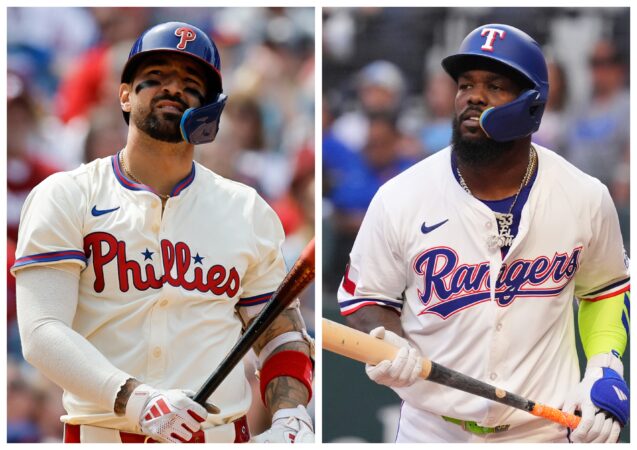
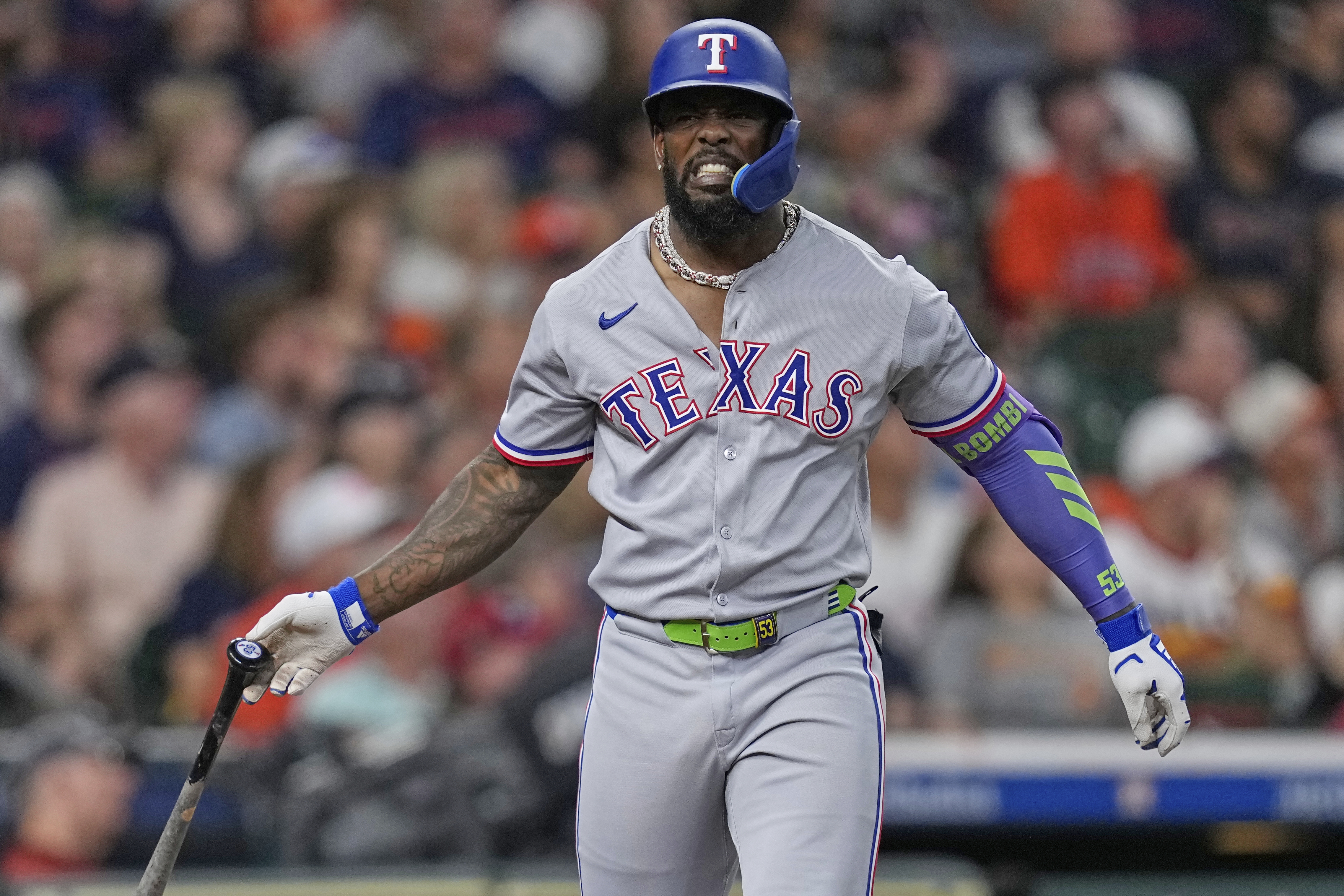
Adolis García is the new Nick Castellanos. That’s the simplest way to look at the Phillies agreeing to a one-year, $10 million contract with the former Rangers star on Monday. It’s true on a lot of different levels, including some that will make you scratch your head about why Dave Dombrowski decided to go in this direction. Not only is García likely to replace Castellanos in right field — his batting profile looks an awful lot like Castellanos’. Uncomfortably so.
Let’s make sure we keep things in context here. General managers can’t be picky at this particular price point. Any regular who is willing to sign a one-year deal for less than $20 million is self-evidently going to have some massive flaws. Basically, you are talking about two types of players:
Veterans who have done it before and could potentially bounce back to doing it again.
Veterans who have never done it before but have shown flashes of being able to do it.
Dombrowski has always seemed to favor the first group of players. Whit Merrifield, Max Kepler, Austin Hays, Jordan Romano, etc. — all were brought into the fold with the hope that they could get back to a form they’d shown in previous seasons. García fits that mold.
The best-case scenario for the Phillies is that García reemerges as the player he was in 2023, when he was an All-Star and then hit eight postseason home runs with a 1.108 OPS in 15 games as the Rangers won the World Series. His regular-season batting line that year was .245/.328/.508 with 39 home runs and 107 RBIs. That’s quite nice.
García’s first three seasons in Texas looked a lot like what the Phillies were hoping for out of Castellanos when they signed him to a five-year, $100 million deal. From 2021 through ’23, García averaged 32 home runs with a .226 isolated power percentage. Aaron Judge was the only right-handed-hitting outfielder who hit more home runs than García in those three seasons. His Statcast numbers ranked in the top 10 of righty outfielders in all of the power metrics: Hard-hit percentage (47.6%, 10th), barrel percentage (13.4%, 10th), exit velocity (91.7, ninth), etc.
Castellanos has never flashed that kind of power in his four seasons with the Phillies. His hard-hit rate since 2022 is just 39.8, down from the 46.9% he posted in his walk year with the Reds. His 82 home runs are well shy of a total that let you accept his plate discipline struggles.
Adolis Garcia hit 141 home runs over the last five seasons with the Rangers.
García has many of the same struggles. They are largely to blame for his back-to-back disappointing seasons, which led the Rangers to non-tender him rather than pay him a projected $12 million. After hitting 39 home runs in 2023, he hit just 44 combined in 2024-25. His batting line over those two seasons was .225/.278/.397. That’s still good enough for an OPS+ that was within range of league average. But without the power production, his lack of competitiveness at the plate can be a frustrating thing to watch, manage, and play alongside.
At the same time, García’s plate discipline metrics aren’t as extreme as Castellanos’. His chase rate of 34.4% in 2024-25 was well above average, but also well shy of Castellanos’ 39.1%. Same goes for his overall swing percentage: 52.1%, compared with 58.4% for Castellanos. García is much more likely to swing-and-miss in the zone. You can live with that when he is hitting 30-plus homers. Not when he is hitting 19, as he did in 2025.
García hasn’t even been all that good against lefties. His .715 career OPS with the platoon advantage is a lot lower than you’d expect to see out of a power hitter of his profile. Last year, he hit just .199 with 44 strikeouts in 136 at-bats against lefties.
There aren’t a lot of bad gambles at the $10 million price point. I’m just not sure how realistic the upside is. García is coming off two disappointing seasons and was just non-tendered by a team that knows him quite well. If the Rangers didn’t think he was worth $10 million-$12 million, and the Phillies do, who is more likely to be correct?
Instead of García, the Phillies could have taken a chance on someone like Miguel Andujar, who finished last season on a tear for the Reds (1.035 OPS, seven home runs in 125 plate appearances over the last quarter of the season). A onetime top-100 prospect who had a big year with the Yankees in 2018 at the age of 23, Andujar has had less than 1,200 plate appearances over the last seven seasons. Heading into his 31-year-old season, he is young enough to think that he might still have his biggest season in front of him. At worst, he gives you a platoon bat (.807 career OPS vs. lefties) with some positional versatility (third base and outfield). Although, you can argue that positional versatility doesn’t mean much if a guy can’t play any of the positions well.
Dombrowski would likely argue that there is a certain floor of value for a guy who has a track record of playing every day for competitive teams. He wouldn’t be wrong, either. García has five straight seasons of 500-plus plate appearances with an elite tool (power) and production that has been close to league average even in two straight disappointing seasons. The Phillies were clearly looking for someone who could play every day for them, presumably in right field, where Castellanos is almost certainly on his way out.
Whatever the Phillies ended up doing with this particular roster spot, it wasn’t going to be the kind of move you could judge on its own. The important question is the overall picture in the Phillies’ outfield. If they can find a way to bring back Harrison Bader, the unit will be a better one than it was a year ago. Even the player García was in 2024-25 is better than the player Castellanos has been lately.