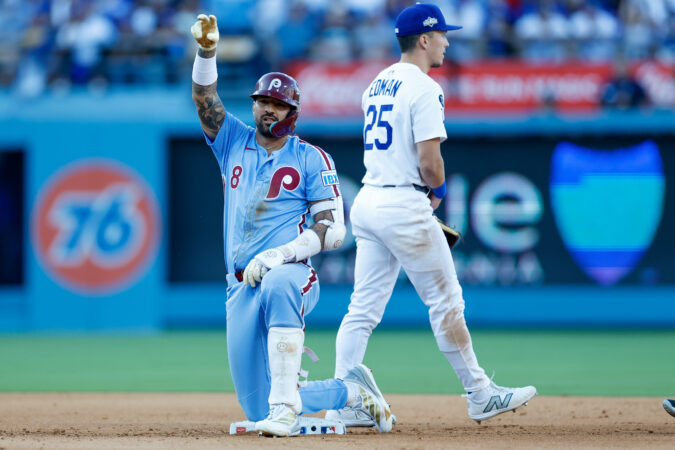
Author: David Murphy

  • Three Nick Castellanos trades that show how little the Phillies should expect in return

    Three Nick Castellanos trades that show how little the Phillies should expect in return

    The most important variable in any negotiation is what the other side thinks you are willing to pay. Right now, the other 29 teams in Major League Baseball have every reason to think the Phillies aren’t willing to pay Nick Castellanos anything. That’s a tough starting point for Dave Dombrowski as he tries to find someone interested in trading for the veteran right fielder.

    Fact is, Castellanos is due to make $20 million this season, which is at least $18 million more than he could reasonably expect to make if he were a free agent. Even if the Phillies eat most of that money, why would a team trade anything of value for Castellanos rather than signing this year’s version of Mark Canha for a couple of million bucks?

    The only realistic option for the Phillies is to find a team that is looking to shed a similarly overpriced contract. Even then, Dombrowski may have to further incentivize an interested party. That quickly leads to a point where the Phillies are better off simply releasing Castellanos. Or walking a lot of things back before he reports for spring training.

    Here are three examples of deals that maybe, kinda, sorta, if you squint could potentially make a fraction of a smidgen of sense for both parties.

    Get excited!
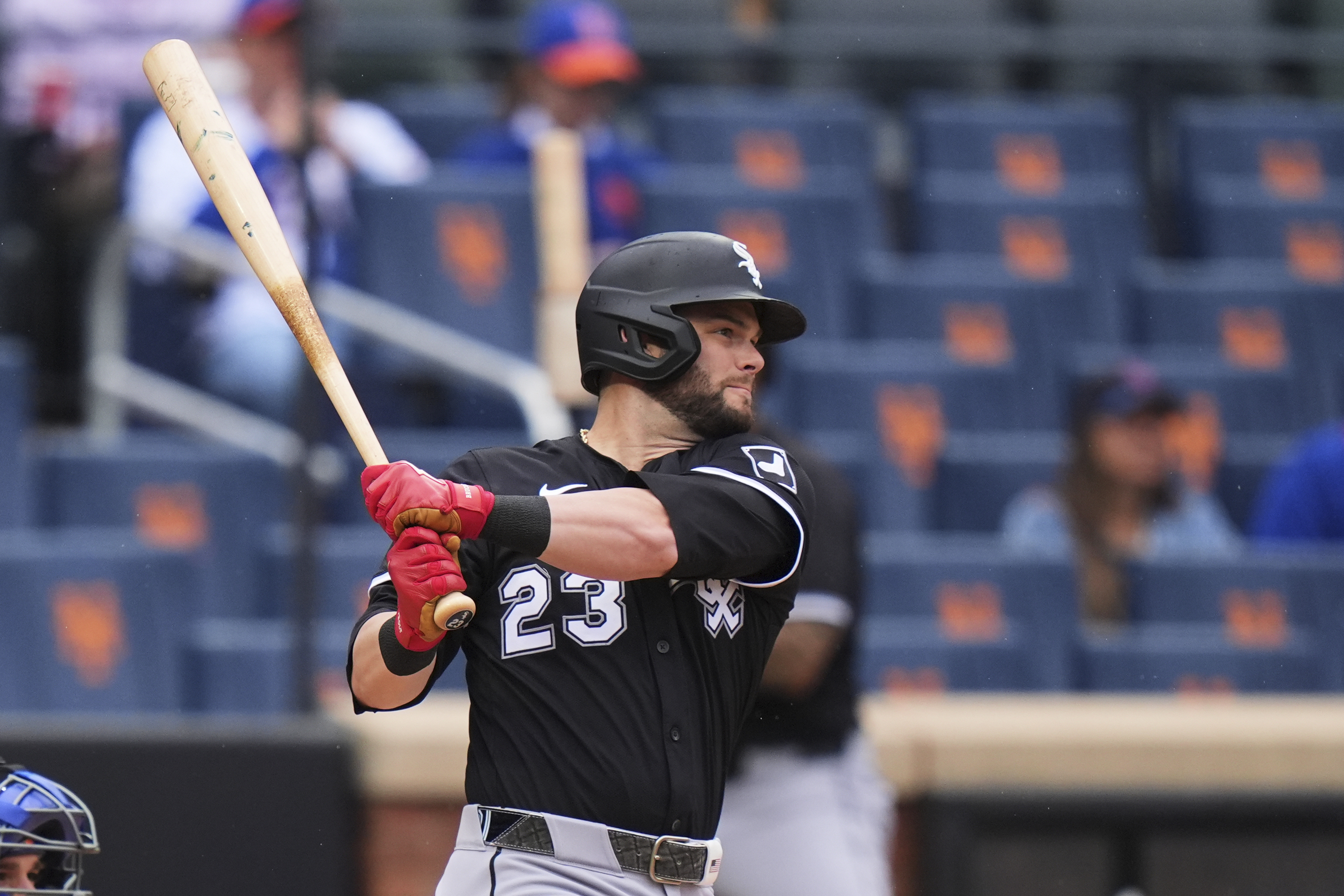
    Andrew Benintendi is slashing just .245/.309/.391 in his first three years with the White Sox.

    1. Andrew Benintendi plus cash to the Phillies, Castellanos to the White Sox

    This is the baseball equivalent of one of those NBA trades in which a couple of overpriced veterans and 16 second-round draft picks change hands but nobody ends up with more than they started with. You only live once, baby.

    Benintendi has been a sunk cost the moment he signed a five-year, $75 million contract in Chicago in 2023. Was it only three years ago that the White Sox were trying? Apparently, it was.

    Benintendi hit free agency as the rare hitter still in his prime, having broken into the big leagues at 21 years old on the watch of none other than Dombrowski. He hasn’t come close to the .782 OPS he posted in his first seven seasons in the majors, hitting just .245/.309/.391 in his first three years with the White Sox. He showed a little life in the second half of last season and finished with a .738 OPS that was slightly above league average. But he didn’t show nearly enough life to warrant salaries of $17.1 million this season and $15.1 million in 2027.

    Swapping Castellanos for Benintendi would make some sense from an accounting perspective. The Phillies would be taking on an additional $12.2 million in “dead” money over two years. More importantly from a competitive standpoint, they’d be tacking on $15 million in average annual value to next year’s payroll rather than paying Castellanos $20 million up front and then being free and clear.

    But what if the White Sox included $10 million in cash to pay Benintendi’s 2027 salary? That would essentially enable the Phillies to split up Castellanos’ money over two years, saving them $10 million this year while adding $10 million next year. And, hey, maybe Benintendi gives them a little something in the outfield rotation as a Max Kepler replacement. At 31 years old, the chances of that aren’t zero.

    What’s in it for the White Sox? Well, they’d save $5 million in cash in 2027 at the expense of an extra $3 million this year. I’m not sure whether this trade makes sense for both sides or makes sense for neither side. But that’s where we’re at.
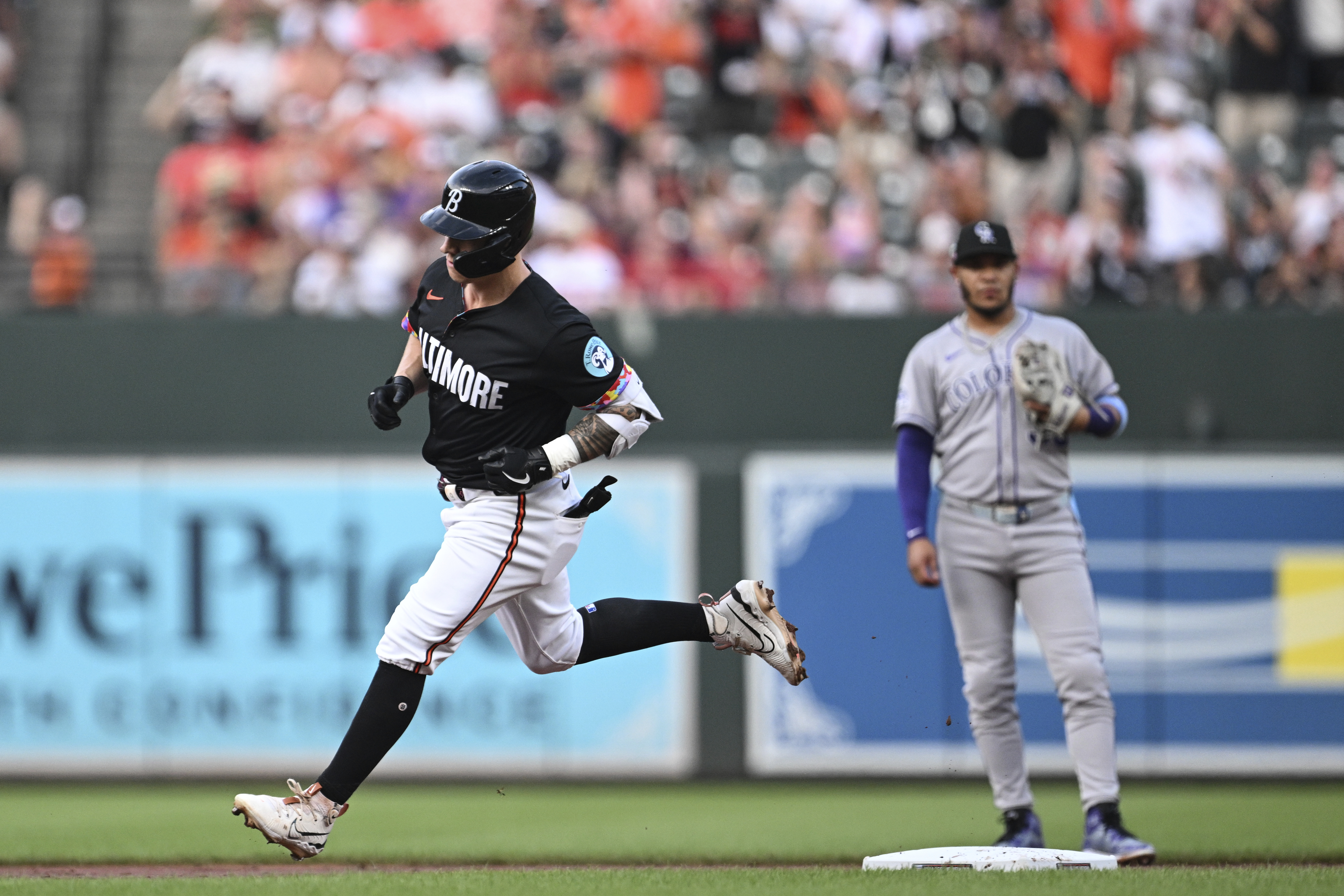
    The Orioles’ Tyler O’Neill had just 209 plate appearances and nine home runs in 2025.

    2. Tyler O’Neill to the Phillies, Castellanos to the Orioles

    Truthfully, I’m not sure how much sense this makes for either side. O’Neill signed a three-year, $49.5 million contract last offseason after a big year with the Red Sox (.847 OPS, 31 home runs). He was a major disappointment, posting a .684 OPS and nine home runs in 209 plate appearances in a season marred by injuries.

    The argument from the Phillies’ perspective goes like this. They’d essentially be signing O’Neill to a two-year, $13 million deal, given the $20 million they are saving on Castellanos. That’s pretty close to fair market value for O’Neill, who has mostly been a league-average hitter outside of his two spike years (2021 with the Cardinals and 2024 in Boston).

    The Phillies get a right-handed hitter who still might have another big season in him. Even if he doesn’t, maybe he is an adequate enough rotational corner outfielder for two years (O’Neill is heading into his 31-year-old season). They also save $3.5 million on this year’s official payroll.

    Is all of that worth $16.5 million less in spending power next offseason? Probably not.

    Likewise, what are the Orioles really gaining? Saving $13 million over two years isn’t nothing. But it’s probably not worth sacrificing the chance that O’Neill bounces back.
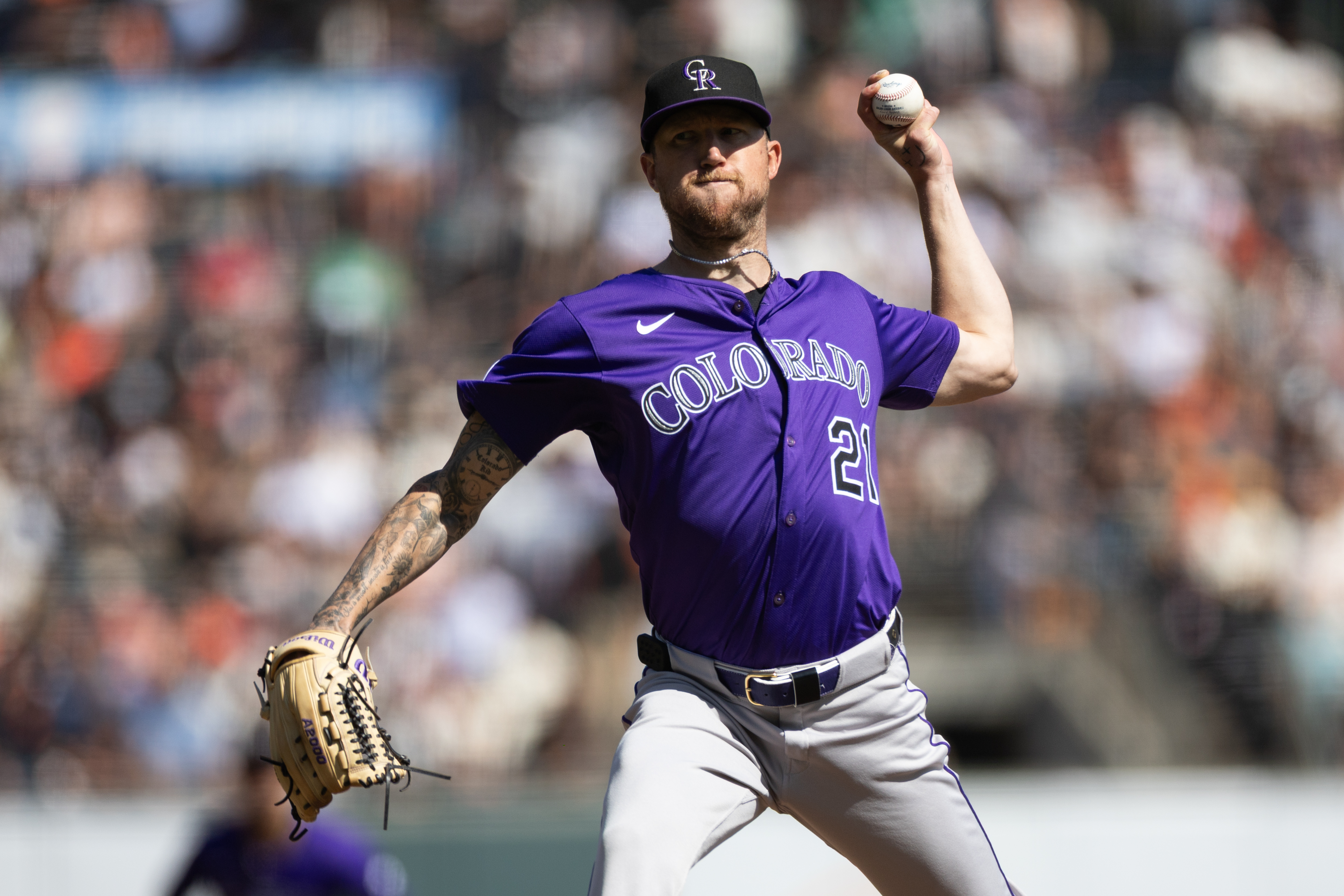
    Kyle Freeland, 32, has spent his entire career with the Rockies and has been better away from Coors Field.

    3. Kyle Freeland to the Phillies, Castellanos plus cash to the Rockies.

    Freeland, who has spent his entire career with the Rockies, has one year and $16 million left on his deal. That’s a lot to pay a guy who has a 5.07 ERA over the last three seasons. Castellanos has hit well at Coors Field with a .914 career OPS in 88 plate appearances. The Phillies get another piece of rotation depth in the form of a guy who has had some decent years on the road in his career. The Rockies get a guy who at least has chance of regaining some value between now and next year’s trade deadline.
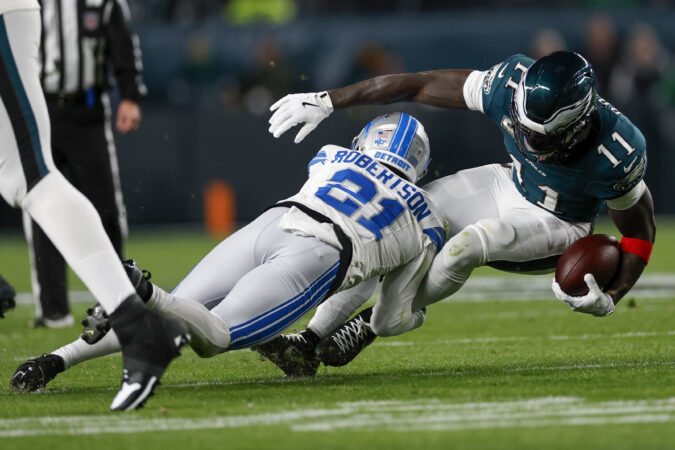
  • A.J. Brown was right. The Eagles offense is still a bleep show. They need to fix it soon.

    A.J. Brown was right. The Eagles offense is still a bleep show. They need to fix it soon.

    A.J. Brown was wrong about one thing.

    The Eagles offense isn’t a bleep show.

    It isn’t any kind of show at all.

    At this point, it’s just plain ol’ bleep.

    If that sounds harsh, well, harsh is a pretty good word to describe the experience of watching the Eagles offense right now. The play-calling lacks imagination. The run-blocking lacks the dominance that was once its hallmark. The quarterback has always lacked aggression. Now, he lacks accuracy, too.

    That’s not an ideal formula. There are all kinds of ways you can shrug off the staggering ineptitude the Eagles displayed while muddling their way to a 16-9 win over the Detroit Lions on Sunday night. It’s an easy thing to do when your defense consistently forces opponents to play bleepier than you. The Eagles are 8-2, with the best Super Bowl odds in the NFC, and victories over four of the five teams whose odds are just behind theirs. That stuff matters. But you can’t shrug off the one question that every team with Super Bowl aspirations must constantly ask itself.

    Are we a championship team in our current form?

    That the Eagles can even think about answering yes is a testament to how good they are everywhere outside of offensive execution.

    Brown said it best on Sunday night.

    “This team is resilient,” said the Eagles’ wide receiver, who broke free of his recent on-field anonymity with 11 targets and seven catches, albeit for only 49 yards. “Show up, work hard, find a way, no matter what it looks like.”

    Brown is right. And he has been right all along. The Eagles are a very good team. Winning football games is important. But so is progress. Right now, the Eagles are a long way off from being the best team they can be.

    Nothing that we saw from them on Sunday night suggests their fundamental problem has been solved. It isn’t just that the Eagles aren’t scoring enough points. It’s that they don’t appear to be getting any better.

    They have scored 17 or fewer in four of their last six games, including a combined 26 in their last two. Are they capable of winning a Super Bowl in their current form? Absolutely. But you can’t ignore how different their current form is from the one that saw them win the Super Bowl last season.

    For the second straight game, and for the fifth time this season, the Eagles failed to crack 300 yards of total offense. That only happened three times all last season. Heck, it only happened five times in 2023.

    There are plenty of mitigating circumstances. Last week’s game in Green Bay was played in real feel temperatures that dropped into the teens. Sunday’s win over the Lions featured a steady wind with wild gusts above 30 miles per hour. In both games, the Eagles lost All-Pro right tackle Lane Johnson to an injury (most recently, his foot, which sidelined him for all of the second half Sunday night).

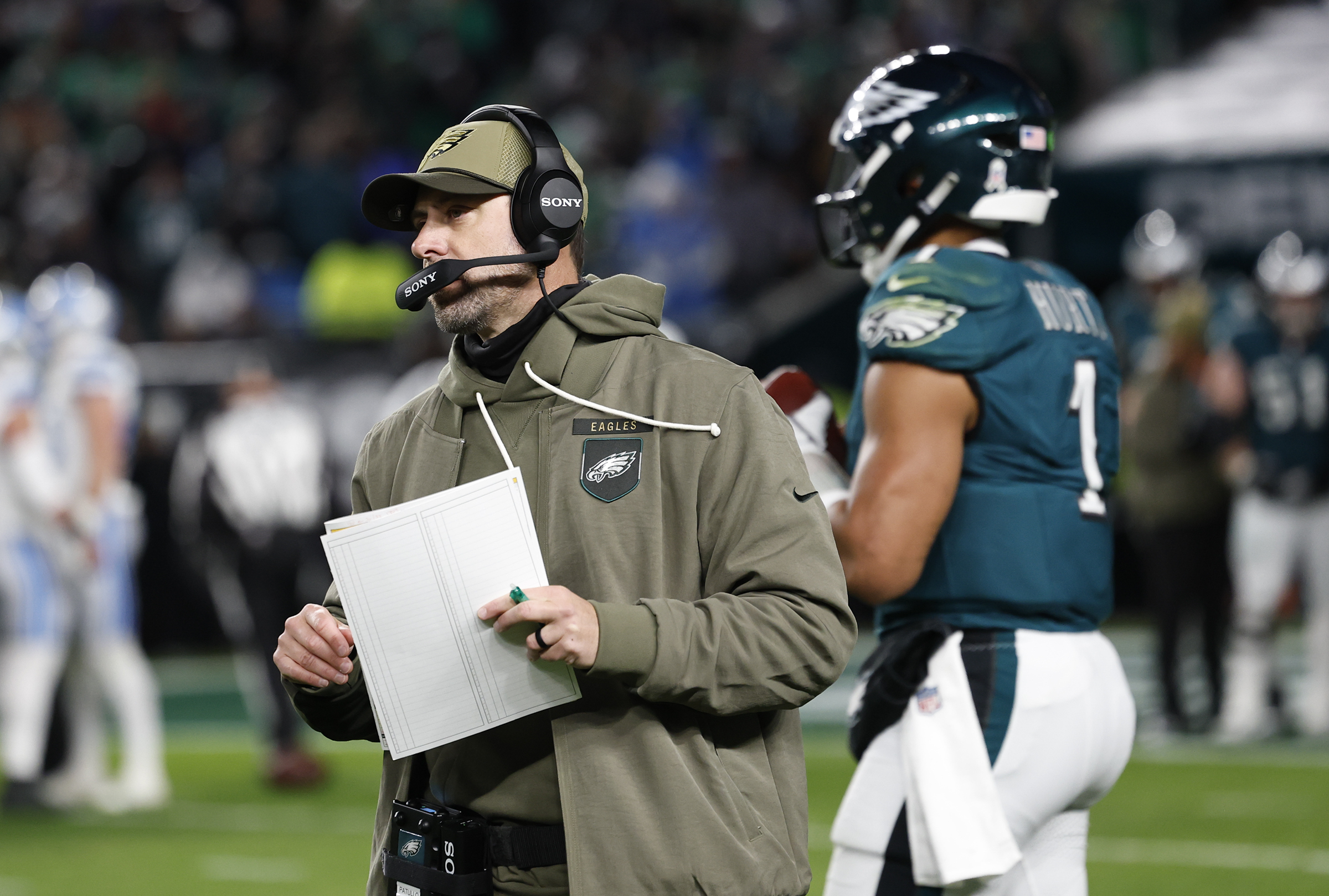
    Coordinator Kevin Patullo is among those seeking answers to the team’s offensive issues.

    The schedule has been brutal. The Lions defense entered Sunday ranked seventh in the NFL in yards per play allowed. The Eagles had already faced three of the six teams who ranked above Detroit (Denver Broncos, Green Bay Packers, Los Angeles Rams).

    “We want to be better than what we were tonight, but every game’s played a little bit differently,” coach Nick Sirianni said. “Every game is played to win, but do we have to clean up things on offense? Of course we do. As good as the defense played, we’re going to have to clean up things on defense. As good as the special teams played, we’re going to have to clean up things on special teams. But on offense, there’s some shooting ourselves in the foot that’s happening and some of those things are things that, we always talk about [things that] take no talent, and we have such good talent that we have to be able to master the things that take no talent so our talent can shine.”

    Give them credit for trying something new. They tried to force the ball to Brown, which is something that he and plenty of Eagles fans have been lobbying for in recent weeks. His 11 targets were more than he had in the last two games combined, including last week’s three-target, two-catch nothingburger in Green Bay.

    The concerning thing is that nothing else changed. Brown’s seven catches went for just 49 yards. The Eagles scored just one touchdown. Even on a night when Jared Goff was out of sync and the Lions went 0-for-5 on fourth down, Detroit’s offense looked like the more highly evolved unit. The pinnacle came in the second quarter, when Goff hit Amon-Ra St. Brown for 34 yards and then Jameson Williams for a 40-yard touchdown. The 74 yards the Lions gained on two plays were more than the Eagles had gained all game to that point.

    There were plenty of stretches last season when the Eagles looked like that sort of offense. Brown was always at the center of it, it seemed.

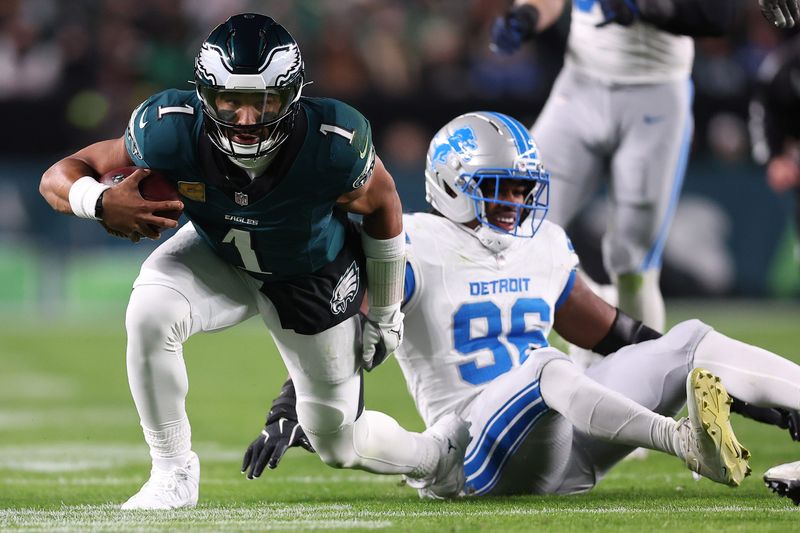
    Jalen Hurts and the Eagles offense must find a rhythm if they wish to make a run at another Super Bowl.

    The Eagles need to find a way to make Sunday night a building block. Good things happen when you target even a diminished Brown. The final example came with 1:47 left, with the Eagles one play away from turning the ball back over to the Lions for a chance at a wholly unearned game-tying touchdown drive. On third-and-8 from the Eagles 37, Jalen Hurts forced a pass to a tightly covered Brown, and Lions cornerback Rock Ya-Sin panicked. Instead of watching Hurts’ pass sail wide of its mark and short of the sticks, he reached out toward Brown and drew a flag. It was a questionable call, but the end result gave the Eagles a first down, and kept the Lions offense on the sidelines for the rest of the game.

    “We’re always trying to get A.J. involved,” Sirianni said. “Always, always, always, always. The game play is played differently each and every week of what happens. I don’t think I’ve been shy about saying this. The game plan’s always going to start in the passing game with him and [WR] DeVonta [Smith] and [TE] Dallas [Goedert], and so we’re always trying to do that and get him the football. That’s the way the game played out a little bit today.”

    At some point, it will need to play out better. Let’s hope that point comes soon.

  • Sad-sack Giants lost this one before it started. Next time, don’t poke the bear (or Saquon)

    Sad-sack Giants lost this one before it started. Next time, don’t poke the bear (or Saquon)

    Two weeks ago, Brian Daboll stood in front of his locker room and labeled a blowout win over the Eagles as “The Standard.”

    Since then, the Giants head coach has become reacquainted with The Usual.

    The Eagles accomplished their biggest objective on Sunday afternoon. It was to leave no doubt. Jaxson Dart would not be high-fiving any referees. Kayvon Thibodeaux would not be telling anybody to “[bleep] the Eagles.” And the Giants social media team most definitely would not be sharing any victorious videos of Daboll making grandiose proclamations to his players.

    “For sure, we definitely saw how they celebrated when they beat us last time,” running back Saquon Barkley said after his 65-yard touchdown run on the second play from scrimmage catapulted the Eagles to a 38-20 win on Sunday.

    It is never wise to poke the bear, but it is especially unwise to poke the bear when you know you will be seeing the bear again in 17 days. If you are going to do it, you’d better pack some extra whistles. Or, failing that, some A.1.

    What the Giants seem to have forgotten is that they are not a good football team. In fact, they are the kind of football team that makes a sport of their not being good. Ten days after they stunned the Eagles with a 34-17 rout on Thursday Night Football, they raced out to a 19-point lead over the Broncos and then allowed 25 points in the last six minutes to lose, 33-32. It takes a special team to lose a game in that fashion. But, then, the Giants are a special team. They lose games the way Bob Ross painted pictures. With breathtaking creativity and speed.

    On Sunday, the movable object met the unstoppable force. The Eagles came out in their kelly green uniforms and they did it in vintage fashion. On their second play of the game, the offensive line opened up a weakside lane so wide that Barkley and Tank Bigsby both could have run through it. Never has a 65-yard touchdown looked so inevitable. Nor did the 189 yards that followed from Barkley and Bigsby. After the game, more than one Eagles offensive lineman noted how good the Giants’ front four was. You got the sense that they were noting it with glee.

    “We came in, we made the adjustments based off of what they gave us the last game, and we called plays to win,” guard Landon Dickerson said.

    The rest of the NFC can blame the Giants if this was the game in which the Eagles truly got their groove back. They entered Week 8 having gone five straight weeks without breaking 90 yards rushing. Not once had they reached 400 total yards of offense. On Sunday, they finished with 276 and 427. Barkley and Bigsby both cracked 100 yards and averaged 10-plus yards per carry. This, on an afternoon when Jalen Hurts threw four touchdown passes.

    “For us, it wasn’t about a weight being lifted off our shoulders,” said left tackle Jordan Mailata. “We just wanted to be the more physical team. It didn’t matter what it looked like.”

    It shouldn’t surprise anybody at this point.

    The Eagles have won a lot of games over the last four years by rag-dolling opponents, often saving their best for teams that have previously offended their sensibilities. We saw it in last year’s NFC championship game, when they road-graded the Commanders for 229 yards on the ground one month after Washington handed them one of their three regular-season losses. We saw it in last year’s Super Bowl, when they avenged their last-second loss two years earlier, to an extent that was almost uncomfortable.

    Give the Giants credit. They are a more competitive team than they have been throughout most of Daboll’s tenure at the helm. For all of Dart’s weird Gen-Z energy, he clearly has the touch and poise that can win behind a competent offensive line. Rival NFL general managers should take notice if Act I ends up going the way of Baker Mayfield in Cleveland. He has a keen sort of talent that cannot be measured or quantified, although it probably cannot make up for wholesale dysfunction around him. You saw it even on Sunday, when he kept the Giants within striking distance despite relentless pressure and a no-name receiving corps and a gruesome injury to running back Cam Skattebo.

    But the Eagles are operating on a different level. It is easy to lose sight of that fact given that they are operating on a lesser level than last season. The last couple of weeks have left little doubt, though. At 6-2 headed into the bye, they remain the most complete team in the NFC.

    More than anything, Sunday’s win was a reminder that rumors of Barkley’s demise have been greatly exaggerated. Even after his 65-yard touchdown run, the veteran running back gained 85 yards on his last 13 carries before leaving the game with what was labeled a groin injury but mostly was precaution.

    “I wasn’t worried about it,” Barkley said. “I came off, but I’ve dealt with this before. Nothing crazy. It’s a long season. I try my best to listen to the trainers, listen to the coaches.”

    Did he fight to go back in?

    “I went out swinging,” he said. “Let’s say that.”

    With these Eagles, you wouldn’t expect anything else.

  • The arrests in the NBA gambling scandal are proof that the new world is better than the old

    The arrests in the NBA gambling scandal are proof that the new world is better than the old

    One thing nobody will dispute is that Thursday was a victory for the scolds. All at once, they logged on, and logged in, and limbered up their Twitter fingers and sent them dancing across the keyboard like Herbie Hancock on the ivories.

    A good old-fashioned gambling scandal was erupting, and they weren’t going to let it pass without imparting some grave moral lessons.

    Look here, they said. The most important indictment announced by the U.S. Attorney’s Eastern District of New York office on Thursday wasn’t the one that laid out the charges against NBA guard Terry Rozier for his alleged role in a prop-bet-fixing scheme, or the one that detailed NBA head coach Chauncey Billups’ alleged involvement in rigging illegal poker games.

    No, the important indictment was the metaphorical one handed down against the NBA itself. For embracing legalized sports gambling. For partnering with online sportsbooks like DraftKings. For prioritizing profit over the integrity of the game.

    This wasn’t just criminals allegedly doing as criminals allegedly do. It was the inevitable end result of the NBA’s embrace of an industry that should not exist.

    Again, according to the scolds.

    But the scolds are wrong. In fact, their interpretation of Thursday’s events, and of last year’s Jontay Porter guilty plea in a separate investigation, is the exact opposite of the real lesson to draw. A world where people can gamble openly with reputable companies that operate within the jurisdiction of federal law enforcement and in cooperation with sports leagues is a world where any bad actors are likely to be caught. That is not the world as it used to be.

    We all remember the old world, right? Pete Rose, Paul Hornung and Alex Karras, the Black Sox, Boston College and CCNY. These were some of the biggest individual or institutional names of their eras, all of them involving serious wagers on the outcomes of games over an extended period of time, most of them in concert with the criminal underworld.

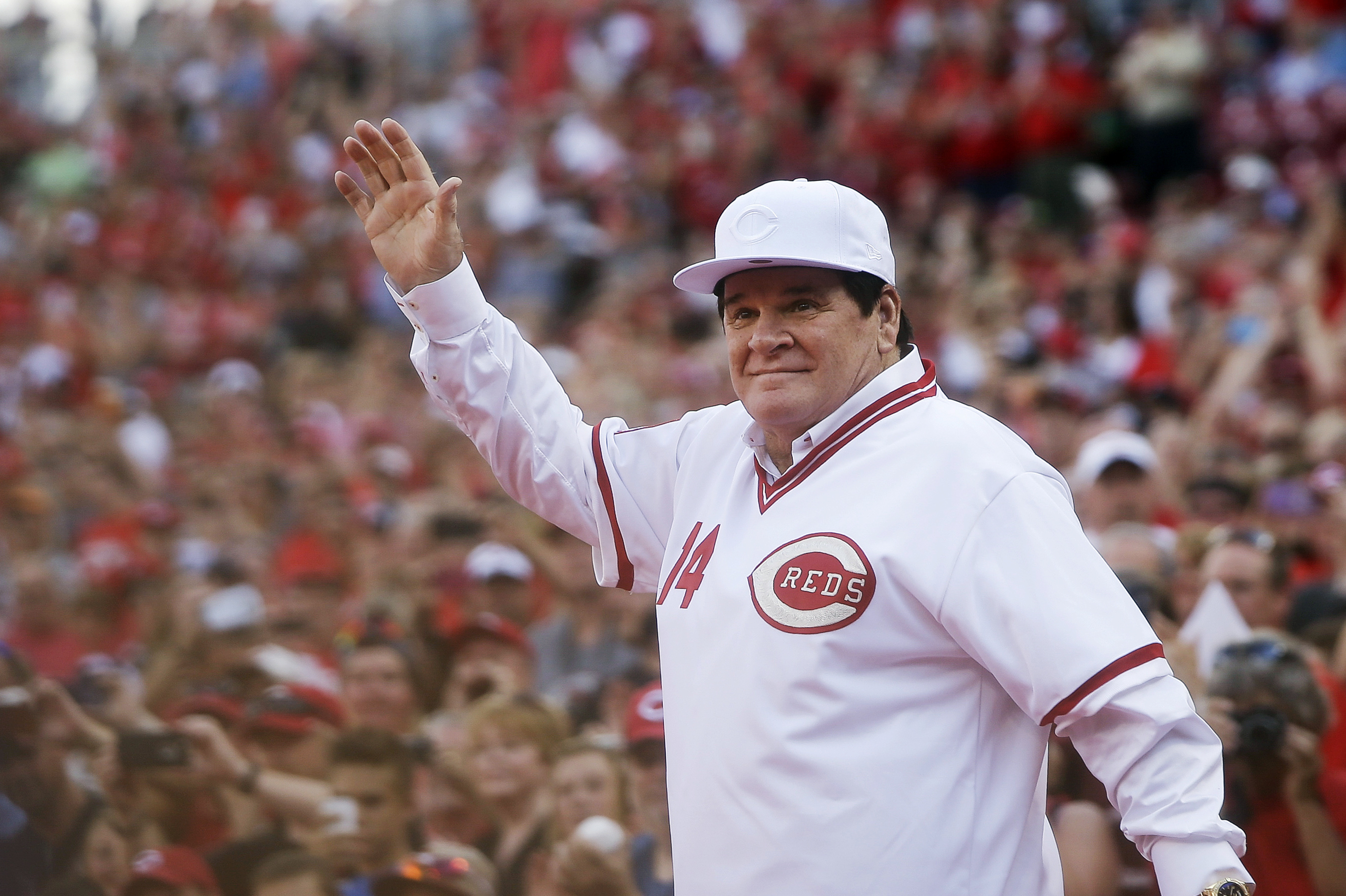
    Pete Rose, who was banned from baseball for 35 years for betting on the sport, was reinstated last May.

    The responsibility of protecting the integrity of games fell primarily on sports executives. Karras and Hornung, two of the NFL’s biggest stars in the 1960s, were suspended for a season as a result of commissioner Pete Rozelle’s investigation into players’ ties with bettors.

    Nobody knows the old world as well as the NBA. Two decades ago, the league found itself mired in the biggest scandal of them all when it learned that referee Tim Donaghy had spent four years wagering on games that he officiated. Donaghy, a Delco native who attended Cardinal O’Hara, later claimed that 80% of his bets ended up cashing.

    His gambling was eventually uncovered by an FBI investigation that resulted in prison time, but only after he’d inflicted four years’ worth of reputational damage on the league.

    Compare the Donaghy scandal to what the feds laid out in their indictments on Thursday. Rozier is alleged to have provided nonpublic information to gamblers who bet on at least seven games between March 2023 and March 2024.

    The indictment involving Rozier also includes mention of a “Co-Conspirator 8″ who provided gamblers with information about Portland Trailblazers personnel decisions, although Billups was not explicitly named. (Billups’ charges stem from a separate case involving the rigging of illegal poker games.)

    The Rozier case stems from an earlier investigation into Porter, a then-Toronto Raptors player who later admitted in court that he manipulated his performance in two games. (Porter was banned from the NBA in the spring of 2024 and is currently awaiting sentencing in his case).

    I don’t mean to minimize the seriousness of the cases involving Rozier, Billups, and Porter. Rozier and Billups deserve to join Porter with lifetime bans, and Billups should be removed from the Hall of Fame.

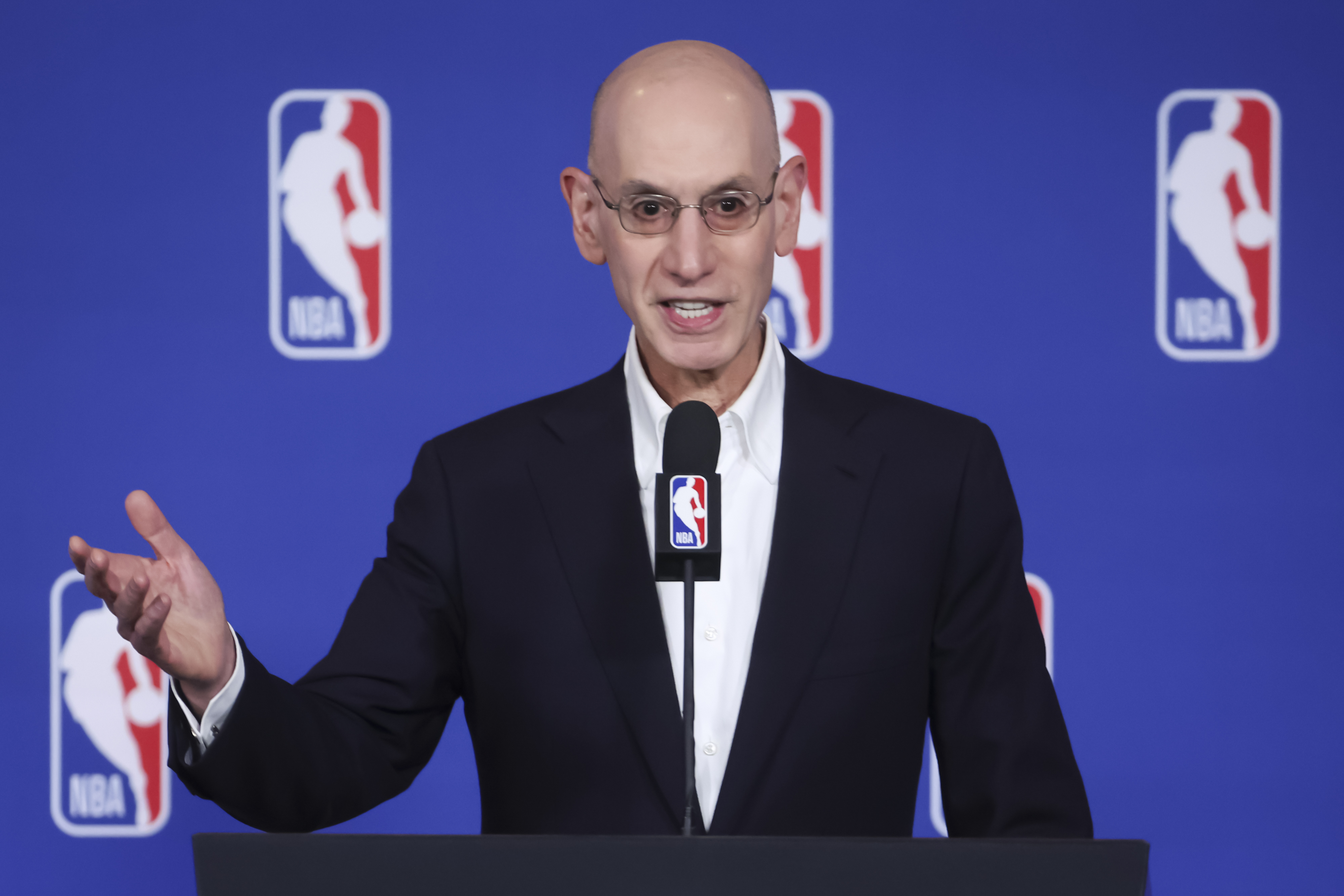
    NBA commissioner Adam Silver and the league need to do some serious self-scouting to figure out if there is anything they can do beyond wielding heavy-handed punishment as a deterrent.

    The scolds are correct in at least one regard. The NBA and its fellow sports leagues should seriously reconsider the extent to which they have encouraged the integration of betting with their telecasts and live events. The rise in popularity of betting on individual player props and so-called same-game parlay promotions has created a huge new front of incentives and avenues for malfeasance, packaged and promoted in a way that can feel more like fantasy sports than gambling.

    It is more than fair to suggest that commissioners should create more distance between themselves and the sportsbooks, particularly when it comes to marketing.

    The NBA’s increasingly close relationship with sportsbooks has brought in significant revenue but also led to additional problems.

    Let’s not lose sight of the real issue. The leagues had no choice but to accept the reality of legal sports gambling. In the years before its adoption in the United States, overseas sportsbooks were exploding in popularity. Daily Fantasy cash games were already legal. Sports gambling was going to achieve critical mass at some point in the United States.

    The decision that the leagues had to make was whether they wanted to help create a world where it could be regulated and policed most effectively.

    We saw that world play out in Porter’s case. The gambling syndicate that attempted to profit from his prop bets was flagged due to the irregular nature of the wagers. The ability to detect abnormal betting patterns is the single biggest weapon in the fight against sports-fixing, and it should be the single biggest deterrent to anybody who attempts to engage in it.

    The legalization of sports gambling is shifting all of the money that used to be wagered in the underworld onto audited books overseen by billion-dollar companies with sophisticated detection methods in place. It would be silly for a league like the NBA not to encourage that sort of framework in favor of one where forensic accounting is nearly impossible.

    The cases of Rozier, Billups, and Porter are an indication that the world still isn’t perfect. But it is silly to suggest that stuff like this was less prevalent in the old world. We were just less likely to find out about it.

  • What should you expect out of the Sixers this season? Nothing and everything all at once.

    What should you expect out of the Sixers this season? Nothing and everything all at once.

    The Sixers have figured out the key to a stress-free life.

    You can’t let anybody down if they don’t have any expectations.

    It would be a fitting twist if this was the year the Sixers finally lived up to the hype of the last decade. They spent eight years as a Snapchat-filter contender, entering each season with the unsubstantiated energy of a team that desperately wants to speak its self-image into existence but at the same time understands that the teams that win NBA titles usually aren’t the ones trying to channel Ben Affleck in Boiler Room. The problem with the whole “act as if” mindset is that you need to stop acting at some point or else you just become an act.

    The tricky thing about the Sixers is that it is tough to pinpoint when, exactly, they became that act, given the preponderance of options. I would argue that it was when James Harden held a birthday party at which women held signs that said, “Daryl Morey is a liar.” But you could just as easily argue that it happened a year earlier, when the Sixers traded a guy who was too scared to throw down an open dunk in a decisive playoff game for a guy who showed up to a playoff press conference wearing a designer coat that looked like it was constructed from the pelt of a Teletubby.

    Morey has taken the brunt of the blame for the last couple of seasons, mostly because it was his name on the marquee. If you don’t like the circus, you either blame Barnum or you blame Bailey. In selling Harden and then Paul George, Morey’s message was the classic “Don’t believe your eyes.” The scariest part of Dave Dombrowski’s press conference last week was when he channeled Morey and suggested that older players don’t get old the same way they used to. Whatever truth there is to it — and I could lay out a very strong case that there isn’t much — the marvels of modern sport science still haven’t managed to solve a conundrum that each of us encounters at some physiological age. Once you get old, there is no getting un-old. The only question is whether you can slow down the decay.

    Funny thing about Morey, though. While his more vocal critics have written him off as little more than a salesman, they are giving his sales proficiency way too much credit. He has been much better at his actual job, which, let’s not forget, began five years ago with inheriting a roster that was assembled on the premise that Al Horford and Josh Richardson could be the missing pieces that would enable Joel Embiid, Ben Simmons, and Tobias Harris to win a title. Back then, people felt a lot like they did by the end of last season. The Sixers’ best chance had already passed them by.

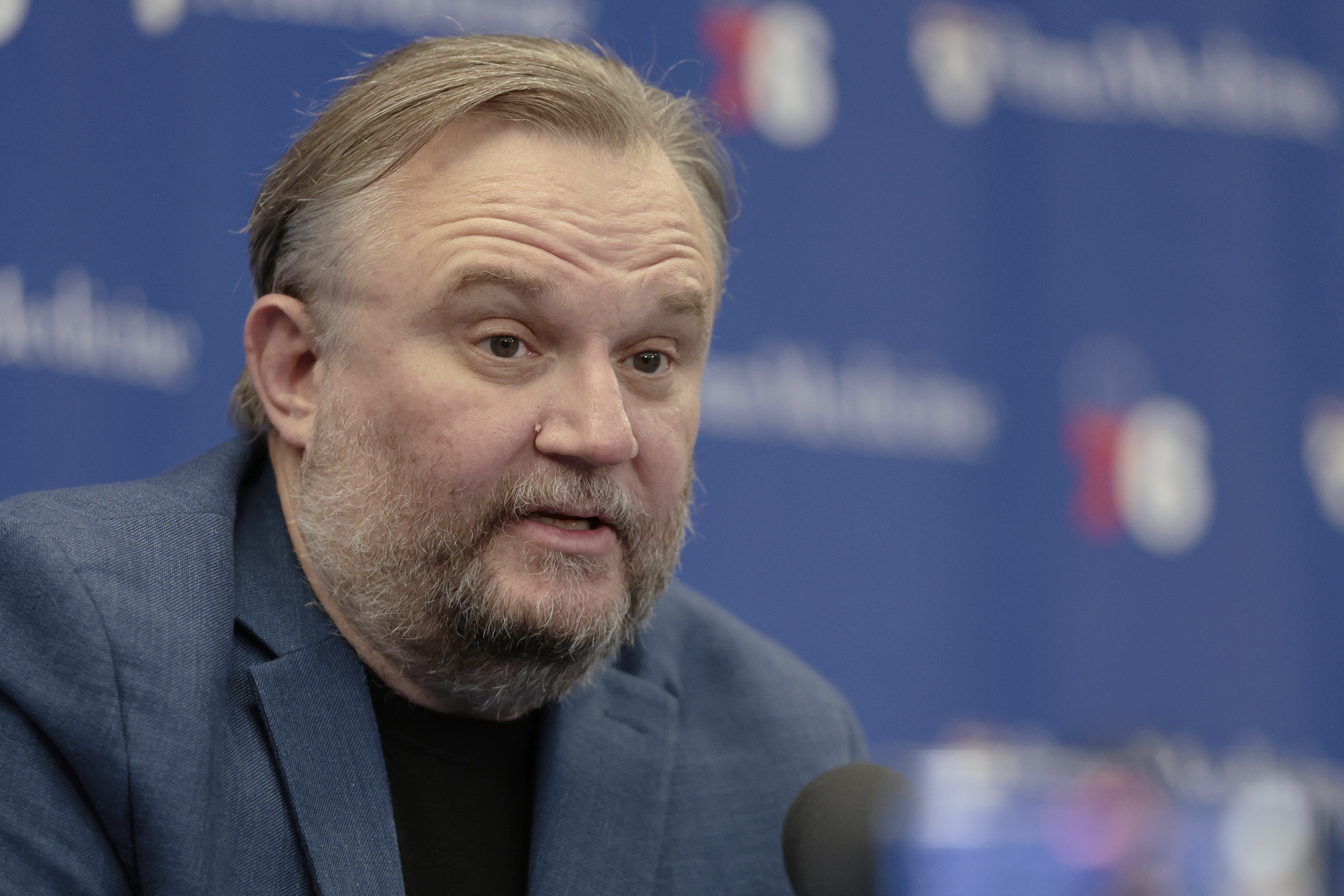
    Sixers president Daryl Morey is entering his sixth season with the franchise.

    What the interim has wrought is in the eye of the beholder. It has been easiest to focus on Morey’s yearly quest to push the Sixers over the top, his annual reshuffling of the deck, from Simmons to Harden to George, each one falling short of even reaching the conference finals. The Sixers have not come close to achieving the ultimate goal, but they have made a sport of it, taking the Celtics to Game 7 in 2023 and the Knicks to Game 6 in 2024 before landing George as part of a free-agent bonanza last summer. Yet even as they have tried and failed — and flailed — they somehow manage to enter 2025-26 with a roster that actually looks like the one the Sixers thought they had in those first post-Process years, long before Morey arrived. Morey drafted Tyrese Maxey and then Jared McCain and just five months ago VJ Edgecombe, who may have the most potential of them all.

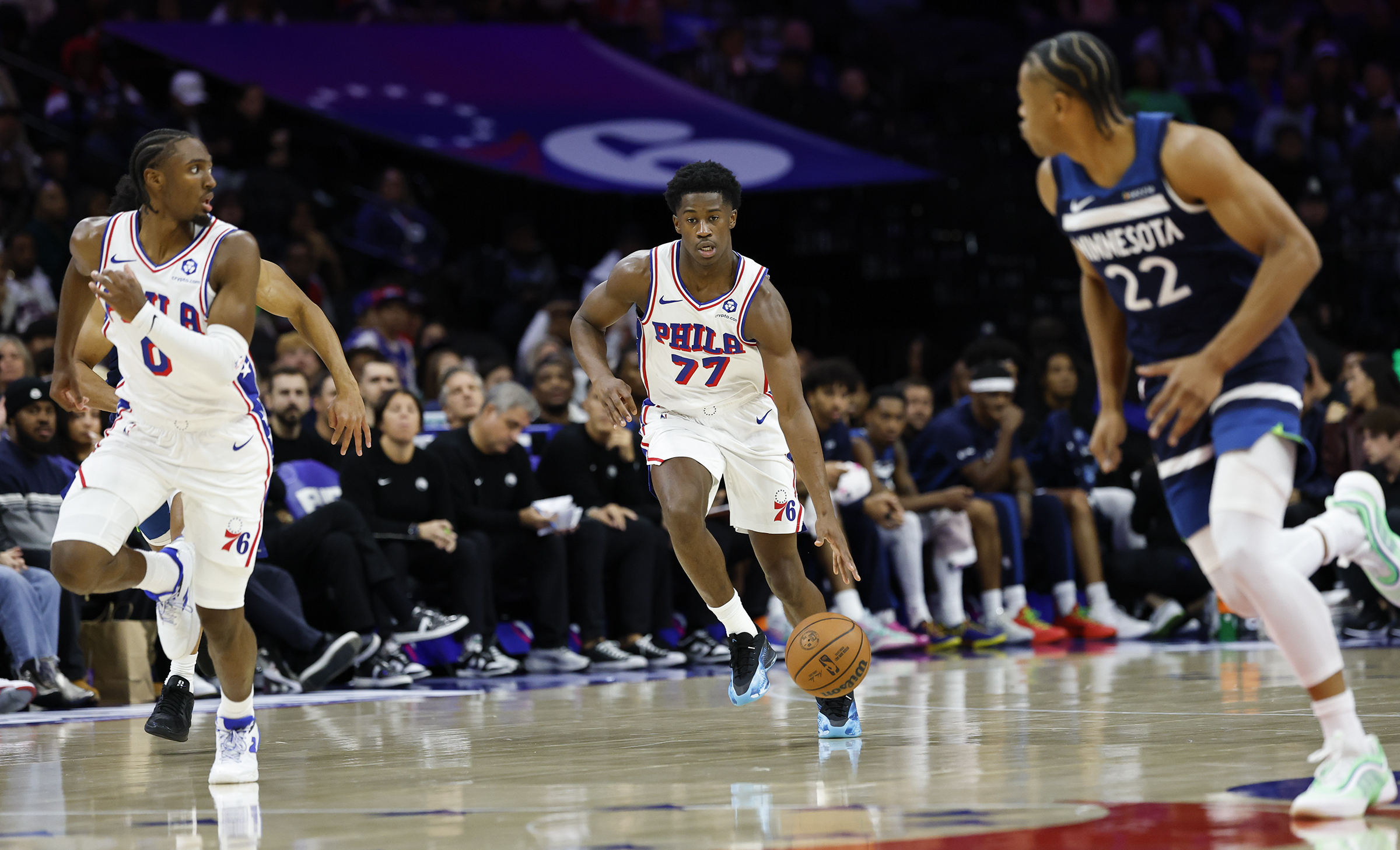
    You watched the Sixers this preseason and you saw the makings of the team they never actually had. The first quarter of their 126-110 win over the Timberwolves on Friday was eye-opening. Early in the quarter, Edgecombe crashed the weak-side glass and corralled a Kelly Oubre miss for an easy putback. Edgecombe and Maxey spent the period running the court like it was crumbling behind them, pushing the pace after makes as well as misses, displaying an uncanny connection for teammates whose partnership can be measured in months.

    After going hard to the basket and finishing his textbook footwork with a contested layup off a fastbreak pass from Maxey, Edgecombe stole the ball from Johnny Juzang at the other end of the court, sparking another break that resulted in a free-throw trip for Quentin Grimes. But the most instructive play might have been one that failed: a cross-court, alley-oop pass from Maxey near the hash to Edgecombe on the weak-side block. They did not convert, but they came close enough to project that they will finish plenty of them.

    Even without McCain, who quickly worked his way to the top of the rotation last season and who will be there again soon, the Sixers looked a lot like the kind of team people always wished they would be instead of steadily growing older, slower, and more difficult to watch.

    For the first time in a long time, the Sixers have the makings of a team that is, at the very least, a fun team to root for. It remains to be seen how well it will translate into wins. It will translate into more than people think if Embiid can consistently be the guy he was in his preseason debut. Healthy. Light on his feet. Knocking down elbow jumpers and charging to the rim. Whatever they get from George will be a bonus.

    And, who knows, maybe that will be enough in a wide-open Eastern Conference where two top contenders are taking gap years. Injuries to the Celtics’ Jayson Tatum and the Pacers’ Tyrese Haliburton have created a power vacuum. You can’t completely discount the Sixers’ chances of filling it.

    Sixers guard VJ Edgecombe brings the ball upcourt alongside Tyrese Maxey during Friday’s preseason game against the Timberwolves.

    For now, the reason to watch this team is for an early look at what the future will look like. Edgecombe has a chance to become the Sixers’ most electric star since Allen Iverson. Maxey is Maxey, and McCain is almost as fun to watch. It is a fascinating dynamic, one that complicates the more cynical narratives about the Sixers’ trajectory over the last five years.

    The safe play is to not expect much out of the Sixers. But you can expect them to be fun.