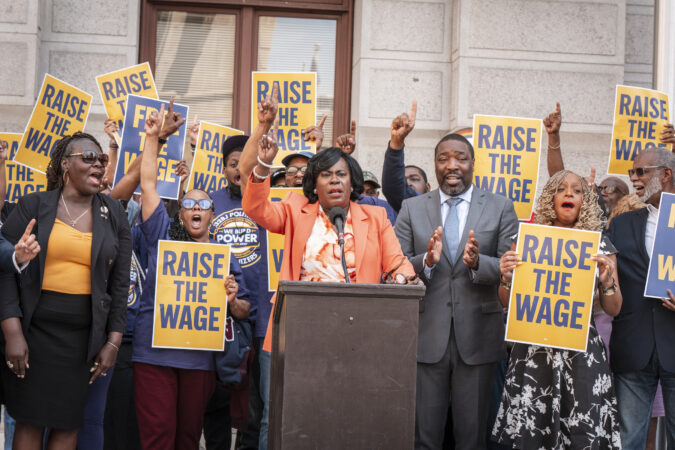
New Jersey’s minimum wage will increase on Thursday.
The new rate of $15.92 an hour is a $0.43 increase from the previous standard, which was set in 2025.
“Eight years ago, Governor Murphy pledged a stronger, fairer economy, and we’re delivering on this commitment by raising New Jersey’s minimum wage again,” Robert Asaro-Angelo, commissioner of the state’s Department of Labor and Workforce Development, said in October. “This increase will provide vital support to all Garden State workers by making the dream of a livable wage reality.”
window.addEventListener(“message”,function(a){if(void 0!==a.data[“datawrapper-height”]){var e=document.querySelectorAll(“iframe”);for(var t in a.data[“datawrapper-height”])for(var r,i=0;r=e[i];i++)if(r.contentWindow===a.source){var d=a.data[“datawrapper-height”][t]+”px”;r.style.height=d}}});
In 2019, New Jersey lawmakers passed legislation to increase the standard to $15 by 2024, joining California, Massachusetts, New York, and the District of Columbia which were also progressively introducing the new standard. At the time, the minimum wage in New Jersey was $8.85 per hour.
A single adult without a child needs to make $26.20 per hour in New Jersey to afford their basic needs as of February 2025, according to a living wage calculator developed at the Massachusetts Institute of Technology.
Agricultural workers in New Jersey have a separate wage standard and will see an increase from $13.40 to $14.20 in January.
For tipped workers, the minimum hourly wage will increase from $5.62 to $6.05. But when combined with their tips, these workers should have a total hourly wage of at least $15.92.
Employees at seasonal and small businesses will see wages rise from $14.53 to $15.23. The state has a different scale for these employers to lessen the impact of the raises.
What’s the minimum wage in Pennsylvania?
Pennsylvania’s minimum wage has gone unchanged since 2009, despite efforts to increase it. The federal minimum wage was last increased in 2009 to $7.25.
In Pennsylvania, a single adult without a child needs to make $22.91 per hour to afford their basic needs, according to the MIT calculator.
As of July, other states following the federal minimum wage were: Idaho, Utah, Kansas, Oklahoma, Texas, North Dakota, Iowa, Wisconsin, Indiana, Kentucky, North Carolina, and New Hampshire.
Advocates have also sought legislation to allow Philadelphia to set its own minimum wage separate from the state’s. That’s currently prohibited by law.
The Trump administration made sweeping changes in 2025, leading to layoffs, resignations, and early retirements.
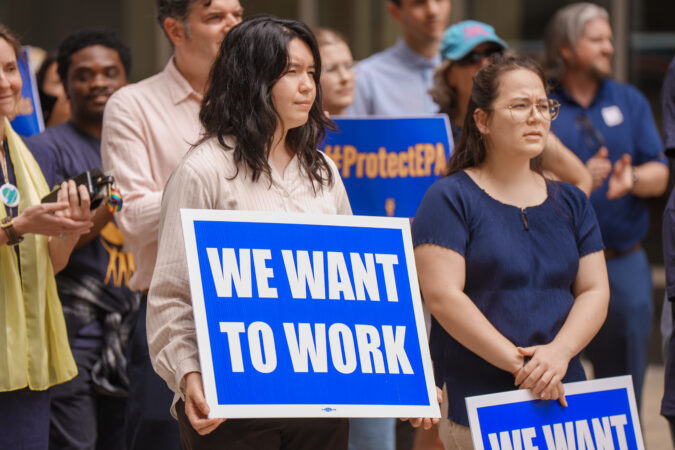
Employees and supporters at a Philadelphia rally for EPA workers being put on leave after signing a letter critical of the Trump administration on July 9, 2025.Jessica Griffin / Staff Photographer
For many federal workers, 2025 has been a year of massive change in the workplace. And for thousands of them, it was the year they quit working for the U.S. government.
That’s the result of the Trump Administration’s efforts to shrink and reshape the federal workforce through a deferred resignation program called “Fork in the Road.” First offered in January, it allowed employees to resign and stay on government payrolls through Sept. 30.
If they didn’t resign, they were told, there was no assurance their job would still be around.
After the “Fork in the Road” offer, President Donald Trump’s administration continued to shake up the federal workforce, with moves including layoffs, dismantling federal worker unions, and overhauling workplace policies.
Here’s a look back on how these changes have impacted Philadelphia-area federal employees this year.
President Donald Trump signs executive orders in the Oval Office at the White House on Jan. 20 after his inauguration. Credit: Jabin Botsford/The Washington PostJabin Botsford
Elon Musk during a trip with President Donald Trump to the NCAA Division I Men’s Wrestling Championship at the Wells Fargo Center in Philadelphia.Elizabeth Robertson / Staff Photographer
DOGE was tasked with reducing government spending and streamlining bureaucracy by July 4, 2026, encouraging mass layoffs and upheaval within the federal government.
Jan. 28
Trump administration offers a new resignation program
Federal workers received an email directly from the U.S. Office of Personnel Management (OPM), the government’s human resources agency, offering the opportunity to resign while continuing getting paid for several months. The agency encouraged federal workers to go from “lower productivity jobs in the public sector to higher productivity jobs in the private sector.”
Protestors hold signs at the Save Our Services day of action event at Independence Mall in Philadelphia on Feb. 19. They gathered to protest Elon Musk's push to gut federal services and impose mass layoffs.Elizabeth Robertson / Staff Photographer
Local workers and supporters gathered in subfreezing temperatures near Independence National Historical Park to protest the layoffs and other workforce shakeups.
On Feb. 26, a memo from OPM and the Office of Management and Budget gave agencies a March 13 deadline for submitting additional layoff and reorganization plans.
Musk said in a post on X that not responding to the email would be seen as a resignation, but some members of the Trump’s administration later said responding was voluntary.
March 5
Pa. government looks to hire federal workers
Gov. Josh Shapiro signed an executive order to streamline the hiring process for former federal employees. Nearly two weeks later, hundreds had applied.
Gov. Josh Shapiro delivers his budget address in February 2025.Tom Gralish / Staff Photographer
story continues after advertisement
March 7
Trump administration starts stripping union rights
The Department of Homeland Security canceled union rights for Transportation Security Administration employees. TSA union leaders and workers at the Philadelphia International Airport said the change caused morale to plummet.
TSA worker Devone Calloway at the Philadelphia International Airport soon after DHS revoked TSA employees' collective bargaining rights.Jose F. Moreno / Staff Photographer
A few weeks later, Trump issued an executive order to end union rights for federal workers across agencies, and union dues stopped being deducted from worker paychecks.
April 2
State officials express concerns over federal layoffs in Pa.
“What we’re seeing right now, in the last 72 days, is an unprecedented assault on organized labor, on working people, on working families and on Pennsylvanians of all different political stripes, from every single corner of our commonwealth,” said state Rep. Malcolm Kenyatta (D., Philadelphia) at a hearing. “It is an attack on their ability to have access to the necessary government services that they depend on every single day.”
Andrew Kreider, an environmental protection specialist at the EPA's Region 3 office, holds a sign reading “Thank You EPA” at a solidarity march around City Hall on March 25.Tyger Williams / Staff Photographer
In a late Friday email, the IRS asked employees to share their resumes so leaders could “determine [their] qualifications.” That included over 3,600 employees from the agency’s office at 30th and Market Streets.
IRS Union Rep. Alex Jay Berman, in front of the Philadelphia IRS building at 30th and Market Streets in April 2025.Jessica Griffin / Staff Photographer
April and May
Philly’s understaffed National Park Service faces “workforce optimization”
NPS workers were asked in late April to upload their resumes amid plans for “workforce optimization.” But administrative staff had already left the regional office in Philadelphia, leaving others to take on their work. At Independence National Historical Park, staffing was an issue even before the start of the second Trump administration, workers said.
At Independence National Park, a ranger casts shadow as they walk along S. 6th Street at Market Street in June.Alejandro A. Alvarez / Staff Photographer
“To work well, to perform, you have to be happy, you have to enjoy what you’re doing,” said Ed Welch, president of AFGE Local 2058, which represents employees at the NPS in Philadelphia. “There’s a horrible oppressiveness in government now, and it‘s unnecessary.”
story continues after advertisement
May 5
Philly-based VA workers return to offices full-time
Following orders from the VA, employees started coming in to work in-person full time but found challenges including insufficient parking and concerns about the confidentiality of work in a shared space.
Theresa Heard attends a rally of VA employees at the VA Medical Center in West Philadelphia in June 2025.Jessica Griffin / Staff Photographer
During a February protest in Philadelphia, retired federal worker Roseanne Sarkissian of Philadelphia holds a sign showing Elon Musk and the phrase “This man is not our boss.”Elizabeth Robertson / Staff Photographer
DOGE, Musk said, is “like a way of life.” The agency remains part of Trump’s government.
Late May
Laid-off employees return to work
Workers who’d been laid off across agencies were reinstated and placed on administrative leave following court rulings. As of late May, the “vast majority” of several hundred Philly-area IRS workers, who lost their jobs in the probationary worker layoff were back at work, union leader Alex Jay Berman estimated.
Yolanda Cowan, Mayra Gonzalez, and Michael Rosado were among the Philadelphia IRS workers who lost their jobs when probationary employees were laid off in February. Here, in February, they posed for a selfie outside the IRS offices.Tom Gralish / Staff Photographer
June 1
Over 100 federal workers find work for the Pa. government
By the first week of June, the state had hired 119 former federal employees across 22 agencies, according to Daniel Egan, a spokesperson for the Pennsylvania Office of Administration.
July 7
VA cancels mass layoffs after many employees leave voluntarily
The VA said it would forgo plans to cut the workforce by 15% after about 17,000 people left through the deferred resignation program, retirement and other attrition. The agency was on pace to have 30,000 fewer employees by the end of the 2025 fiscal year.
A rally of VA employees at the VA Medical Center in West Philadelphia on June 5, 2025.Jessica Griffin / Staff Photographer
August
Federal agencies cancel union contracts
Employees at the VA, the EPA, the U.S. Citizenship and Immigration Services, the Department of Agriculture (USDA), and the Federal Emergency Management Agency (FEMA) are stripped of their union contracts.
Brad Starnes, president of American Federation of Government Employees Local 3631, which represents EPA employees in Pennsylvania, Delaware and several other mid-Atlantic states.Jessica Griffin / Staff Photographer
story continues after advertisement
September
Thousands have left federal government employment
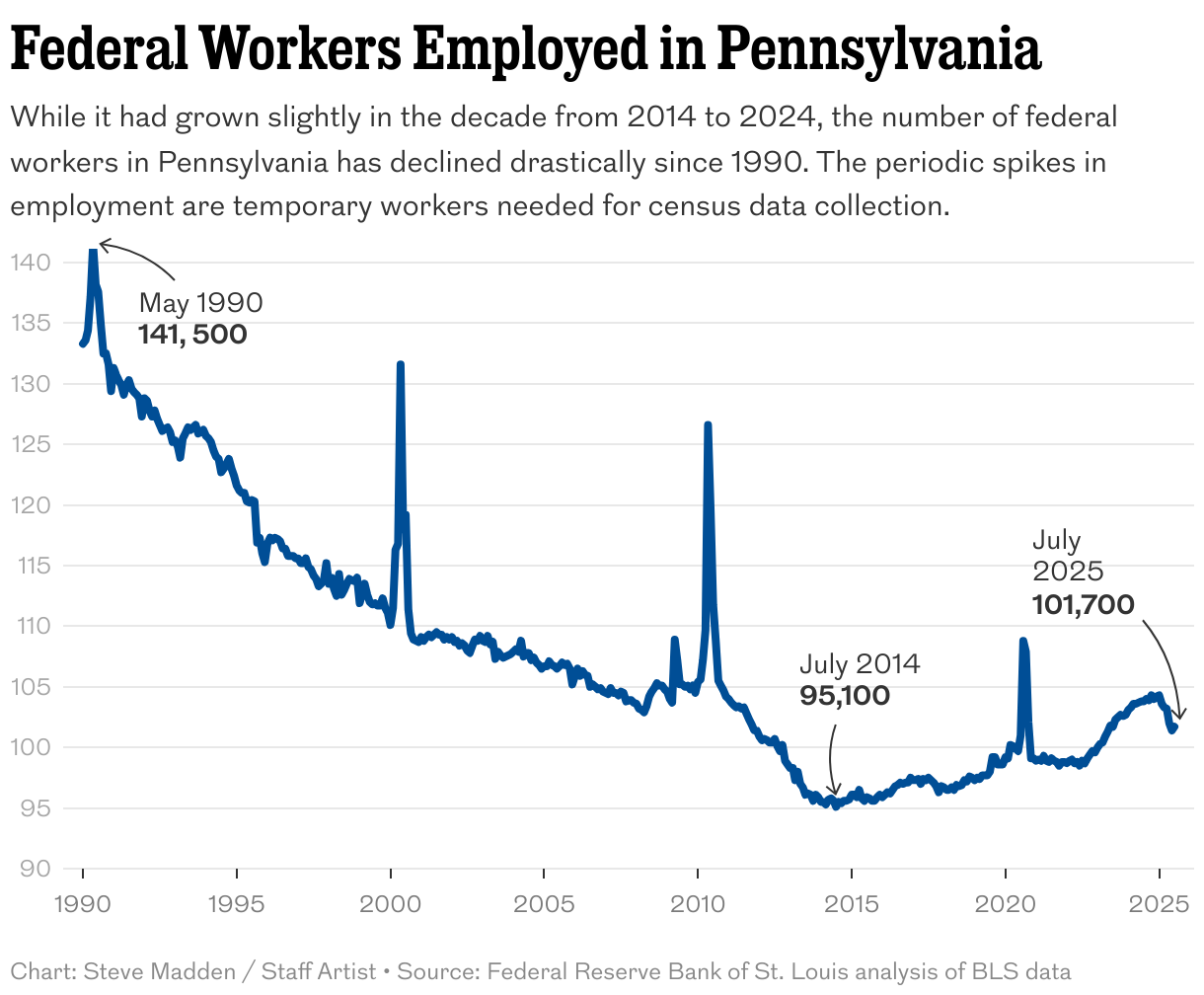
A few weeks before deferred resignations were expected to drop off payroll, new data showed the scope of the workforce shrinkage through mid-2025. In Pennsylvania, there were 2,600 fewer federal workers by the end of July than at the start of 2025.
Meanwhile, media reports said the government planned to call back some employees who took the deferred resignation program at the IRS and the U.S. Department of Labor.
Sept. 24
White House threatens mass firings if shutdown occurs
Federal agencies were asked to prepare plans to fire workers if legislation is not passed to keep the government open past Oct. 1. Philadelphia-area union leaders said they would push back on this effort, even as the Trump administration has moved to curtail their collective bargaining rights.
Oct. 1
A federal government shutdown begins
Lawmakers were unable to reach a deal to keep the government open, causing a shutdown. Agencies shared plans for how many employees were expected to continue working without pay and how many would be sent home on furlough. Air traffic controllers and TSA agents at Philadelphia International Airport, continued to work and so did employees at Philadelphia’s Social Security Administration building at Third and Spring Garden.
The Liberty Bell Center is closed Oct. 1, 2025 in Independence National Historical Park due to the federal government shutdown.Tom Gralish / Staff Photographer
Mid to late October
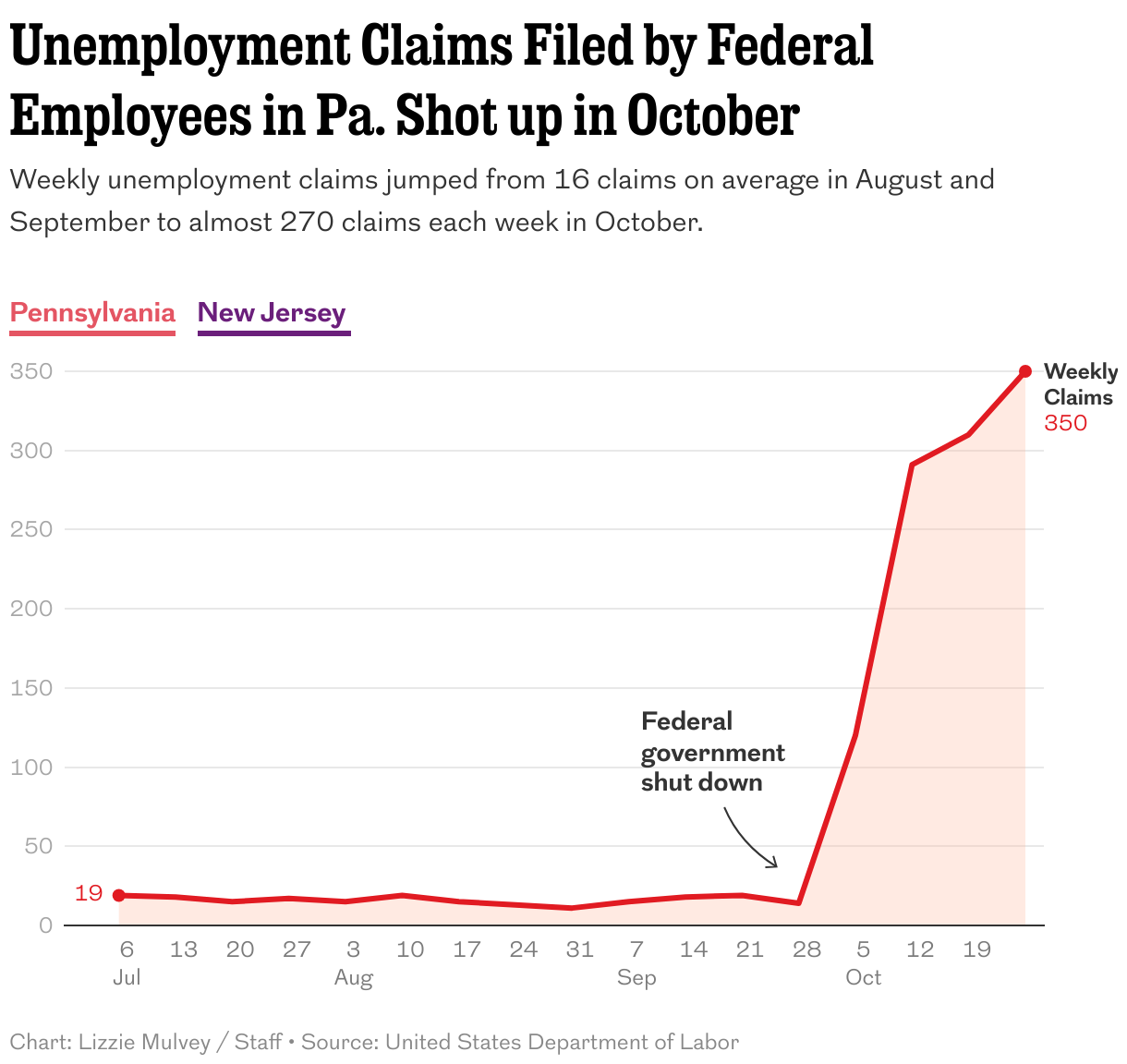
Unemployment claims increase in Pa. and N.J.
Uncertain when their next paycheck would arrive, federal workers applied to SNAP, put their mortgage payments on hold, negotiated with utility companies, and cut back on costs. At PHL, a food pantry was set up for airport government employees impacted by the shutdown. It served some 250 employees in its first two days.
Many federal workers in Pennsylvania and New Jersey filed for unemployment benefits.
Nov. 12
The end of the longest shutdown in history
Lawmakers reached a deal to reopen the government and keep it funded through Jan. 30, and President Donald Trump signed the legislation. The shutdown lasted 43 days, making it the longest in the country’s history.
The deal included protections from mass layoffs through Sept. 2026, and reversal of firings made during the shutdown — the administration sent 4,000 layoff notices during that time. Still, some worried about another potential government shutdown after Jan. 30.
December
Data on impact of resignations is still to come
Workers who took the government’s deferred resignation offer were expected to drop off federal payroll after Sept. 30, and be reflected in employment data from the Bureau of Labor Statistics.
Amid the shutdown, federal data releases were canceled or delayed. Insight on how many people have left the federal government since September is now expected in January.
story continues after advertisement
Staff Contributors
Reporting: Ariana Perez-Castells and Fallon Roth
Editing: Lizzy McLellan Ravitch and Erica Palan
Digital editing: Lizzy McLellan Ravitch
(()=>{var K=(e,t)=>()=>(t||e((t={exports:{}}).exports,t),t.exports);var A=K(r=>{var Q={0:”Jan.”,1:”Feb.”,2:”March”,3:”April”,4:”May”,5:”June”,6:”July”,7:”Aug.”,8:”Sept.”,9:”Oct.”,10:”Nov.”,11:”Dec.”};function L(e){return e===void 0&&(e=new Date),Q[e.getMonth()]}var X={0:”Jan”,1:”Feb”,2:”Mar”,3:”Apr”,4:”May”,5:”Jun”,6:”Jul”,7:”Aug”,8:”Sep”,9:”Oct”,10:”Nov”,11:”Dec”};function b(e){return e===void 0&&(e=new Date),X[e.getMonth()]}function s(e){return e==null}function T(e){return typeof e==”number”&&isFinite(e)}function f(e){return T(e)&&Math.floor(e)===e}var ee=[“one”,”two”,”three”,”four”,”five”,”six”,”seven”,”eight”,”nine”],te=[“million”,”billion”,”trillion”,”quadrillion”,”quintillion”,”sextillion”,”septillion”,”octillion”,”nonillion”,”decillion”],S=[“th”,”st”,”nd”,”rd”,”th”,”th”,”th”,”th”,”th”,”th”],ne=[11,12,13];function M(e){if(s(e))return””;var t=+e;return f(t)?ne.indexOf(t%100)>-1?S[0]:S[t%10]:””}var oe=[“first”,”second”,”third”,”fourth”,”fifth”,”sixth”,”seventh”,”eighth”,”ninth”],ie=new RegExp(/s+([^s]*)s*$/);r.apdate=function(e){return e===void 0&&(e=new Date),L(e)+” “+e.getDate()+”, “+e.getFullYear()},r.apdatetab=function(e){return e===void 0&&(e=new Date),b(e)+” “+e.getDate()+”, “+e.getFullYear()},r.apmonth=L,r.apmonthtab=b,r.apnumber=function(e){if(s(e))return””;var t=+e;return f(t)?t=10?e.toString():ee[t-1]:e.toString()},r.aptime=function(e){e===void 0&&(e=new Date);var t,n,o=e.getHours(),i=e.getMinutes(),u=i===0;if(u){if(o===0)return”midnight”;if(o===12)return”noon”}return o0?o:12):(t=”p.m.”,n=o===12?o:o-12),u?n+” “+t:n+”:”+(i<10?"0"+i:i)+" "+t},r.capfirst=function(e){if(s(e))return"";var t=String(e);return""+t.charAt(0).toUpperCase()+t.slice(1)},r.intcomma=function(e){if(s(e))return"";var t,n=+e;return T(n)?((t=n.toString().split("."))[0]=t[0].replace(/B(?=(d{3})+(?!d))/g,","),t.join(".")):e.toString()},r.intword=function(e){if(s(e))return"";var t=+e;if(!f(t))return e.toString();var n=Math.abs(t);if(n<1e6)return e.toString();var o=Math.ceil(Math.log(n+1)/Math.LN10)-1,i=o-o%3,u=t/Math.pow(10,i);return(u=Math.round(10*u)/10)+" "+te[Math.floor(i/3)-2]},r.ordinal=function(e,t){if(t===void 0&&(t=!1),s(e))return"";var n=+e;return f(n)?t&&n/Android|webOS|iPhone|iPad|iPod|BlackBerry|IEMobile|Opera Mini/i.test(navigator.userAgent);var g=(e,t=null,n=null)=>{n||(n=document.querySelector(“head”));let o=document.createElement(“script”);o.type=”text/javascript”,o.src=e,t&&(o.onload=t),n.appendChild(o)},q=()=>(window.PMNdataLayer?.[0]!==void 0&&window.PMNdataLayer[0])?.analytics?.user?.state===”Subscribed”,k=()=>{let t=(window.PMNdataLayer?.[0]!==void 0&&window.PMNdataLayer[0])?.analytics?.user?.state;return window.location.host.includes(“zzz-systest”)||window.location.host.includes(“pmn.arcpublishing.com”)||window.location.host.includes(“stage.fusion.inquirer.com”)||typeof t>”u”},j=()=>{let t=(window.PMNdataLayer?.[0]!==void 0&&window.PMNdataLayer[0])?.analytics?.user?.hasAdsFreeReading;return!!(t&&t==1)},v=()=>window.location.host.includes(“localhost”);var re=()=>{j()&&document.querySelectorAll(“.js-adbox”).forEach(t=>{t.classList.add(“is-hidden”)})},H={init:()=>{re()}};var a,y=!1,se=()=>{a=document.querySelector(“.js-appendix”)},C=()=>{let e=document.querySelector(“.js-appendix-static-content”),t=e.querySelector(“.js-appendix-static-items”).getBoundingClientRect().height;e.classList.remove(“is-collapsed”),e.style.maxHeight=t+”px”},B=()=>{a.classList.contains(“js-appendix-sticky”)&&(a.getBoundingClientRect().top{y=document.querySelector(“.js-appendix-static-content”).getBoundingClientRect().bottom{y&&document.querySelector(“body”).classList.toggle(“is-open-appendix”)},ae=()=>{window.addEventListener(“scroll”,()=>{B(),D()}),window.addEventListener(“resize”,()=>{B(),D()}),document.querySelector(“.js-appendix”).addEventListener(“click”,()=>{P()}),document.querySelectorAll(“.js-appendix-expand-static”).forEach(e=>{e.addEventListener(“click”,()=>{C(),window.addEventListener(“resize”,()=>{C()})})}),document.querySelectorAll(“.js-appendix-link”).forEach(e=>{e.addEventListener(“click”,()=>{P()})})},N={init:()=>{se(),ae()}};var m,ce=(e,t)=>{m=m||window.PMNdataLayer,m?m.push({event:”misc_event”,eventAction:e,eventLabel:t}):window.location.hostname.includes(“localhost”)?console.log(“Analytics event:”,e,t,”(not actually being sent due to localhost)”):console.log(“Failed to push analytics event”,e,t)},I={event:(e,t)=>{ce(e,t)}};var le=()=>{document.querySelectorAll(“.js-card-show-more”).forEach(e=>{e.addEventListener(“click”,()=>{de(e)})})},de=e=>{let t=e.closest(“.js-card”),n=t.querySelector(“.js-card-body”),i=n.querySelector(“.js-card-body-content”).getBoundingClientRect().height;t.classList.remove(“is-collapsed”),n.style.maxHeight=i+”px”,setTimeout(()=>{n.style.maxHeight=”none”},1e3),I.event(“expand_card”,`${t.dataset.id}`)},F={init:()=>{le()}};var c,$,ue=()=>{c=document.getElementById(“js-inno-toast”)},pe=e=>{if(!c)return;c.innerHTML=e,c.classList.add(“is-active”);let t=()=>{c.addEventListener(“transitionend”,fe,{once:!0}),c.classList.remove(“is-active”)};clearTimeout($),$=setTimeout(t,5e3)},fe=()=>{c.innerHTML=””},l={init:()=>{ue()},showToast:pe};var h,z=!1,me=async()=>new Promise(e=>{setTimeout(()=>{console.log(“simulating createShareLink for localhost”),e(“https://inquirer.com/interactives”),he()},100)}),he=()=>{let e=document.querySelector(“.js-gift-toast-receiver”);!e||!(e instanceof HTMLElement)||setTimeout(()=>{let t=e?.querySelector(“span”);t&&(t.innerHTML=”Gift link copied to clipboard“)},20)},ge=()=>{let e=window.services?.createShareLink;e&&(h=e),v()&&(h=me),h&&ye()},ve=async e=>{let t=”text/plain”,n=async()=>{try{return await h(window.location.pathname)}catch{e.dataset.state=”error”,l.showToast(“Hmm, we couldn’t generate a gift link…”)}},o=new ClipboardItem({[t]:n()});await navigator.clipboard.write([o]).catch(i=>{console.log(i),l.showToast(“Couldn’t copy to clipboard, try again?”),e.dataset.state=”error”}),l.showToast(“Gift link copied to clipboard!”),e.dataset.state=”complete”},ye=()=>{document.querySelectorAll(“.js-gift”).forEach(t=>{(q()||v()||k())&&t.classList.add(“is-available”)}),document.querySelectorAll(“.js-gift-button”).forEach(t=>{t instanceof HTMLButtonElement&&t.addEventListener(“click”,()=>{t.classList.contains(“disabled”)||(t.dataset.state=”loading”,z=!0,ve(t),setTimeout(()=>{t.dataset.state=”ready”},2e3))})});let e=document.querySelector(“.js-gift-toast-receiver”);!e||!(e instanceof HTMLElement)||we(e)},we=e=>{new MutationObserver(n=>{for(let o of n){let i=[…o.addedNodes].at(0);if(!(i instanceof HTMLElement))return;z&&l.showToast(i.outerHTML)}}).observe(e,{subtree:!0,childList:!0})},O={init:()=>{ge()}};var xe=()=>{window.addEventListener(“message”,e=>{if(e.data[“datawrapper-height”]){let t=e.data[“datawrapper-height”];for(let n in t)document.querySelector(`#datawrapper-chart-${n}`).setAttribute(“height”,t[n])}})},Le=()=>{document.querySelectorAll(“.js-datawrapper-graphic”).forEach(e=>{g(`https://datawrapper.dwcdn.net/${e.dataset.id}/embed.js`,null,e)})},be=()=>{window.addEventListener(“message”,e=>{let t=e.data;document.querySelectorAll(`iframe[src*=”${t.id}”]`).forEach(o=>{o.style.height=`${t.height}px`})},!1)},Se=()=>{document.querySelectorAll(“.js-pym-graphic”).forEach(e=>{if(typeof window{new window.pym.Parent(e.id,e.dataset.iframe)};typeof window.pym>”u”?g(“https://pym.nprapps.org/pym.v1.min.js”,t):t()}})},R={init:()=>{xe(),Le(),Se(),be()}};var p,Me=()=>{document.querySelectorAll(“.js-hover”).forEach(e=>{e.addEventListener(“click”,()=>{J(e)}),e.addEventListener(“mouseenter”,()=>{J(e)}),e.addEventListener(“mouseout”,()=>{V(e)})}),window.addEventListener(“scroll”,()=>{p!==null&&Te()})},Te=()=>{(p>window.scrollY+100||p{V(e)})},J=e=>{e.classList.add(“is-visible”),p=window.scrollY},V=e=>{e.classList.remove(“is-visible”),p=null},G={init:()=>{Me()}};var d,w,x=!0,Ae=()=>{d=document.querySelectorAll(“.js-video-autoplay”)},Ee=()=>{window.addEventListener(“resize”,()=>{W()}),window.addEventListener(“scroll”,()=>{W()}),d.forEach(e=>{e.addEventListener(“volumechange”,t=>{e.muted!==x&&!E()&&(x=e.muted,qe())})})},W=()=>{let e;d.forEach((t,n)=>{let o=t.getBoundingClientRect(),i=o.height/2;o.y-i&&(e=t)}),e!==w&&(w=e,d.forEach(t=>{t.pause()}),e?e.play():w=null)},qe=()=>{d.forEach(e=>{e.muted=x})},Y={init:()=>{Ae(),d&&Ee()}};var _={init:()=>{H.init?.(),N.init?.(),F.init?.(),O.init?.(),R.init?.(),G.init?.(),Y.init?.(),l.init?.()}};var ke=()=>{},U={init:()=>{ke()}};var je=document.querySelector(“.js-inno”),Z=()=>{_.init(),U.init()};je?Z():new MutationObserver((t,n)=>{if(document.querySelector(“.js-inno”)){n.disconnect(),Z();return}}).observe(document,{attributes:!0,childList:!0,subtree:!0});})();
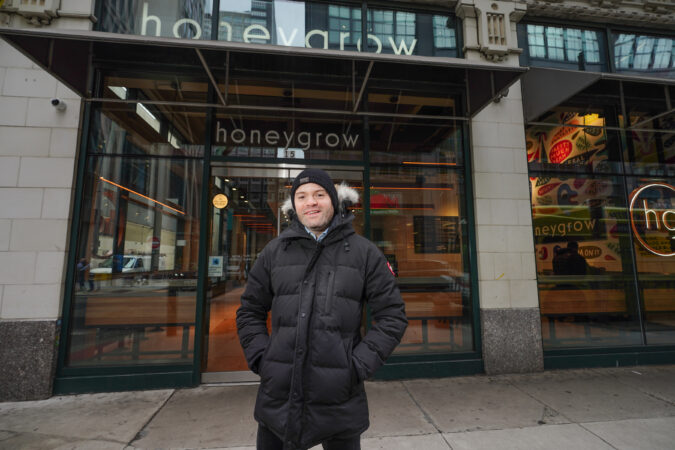
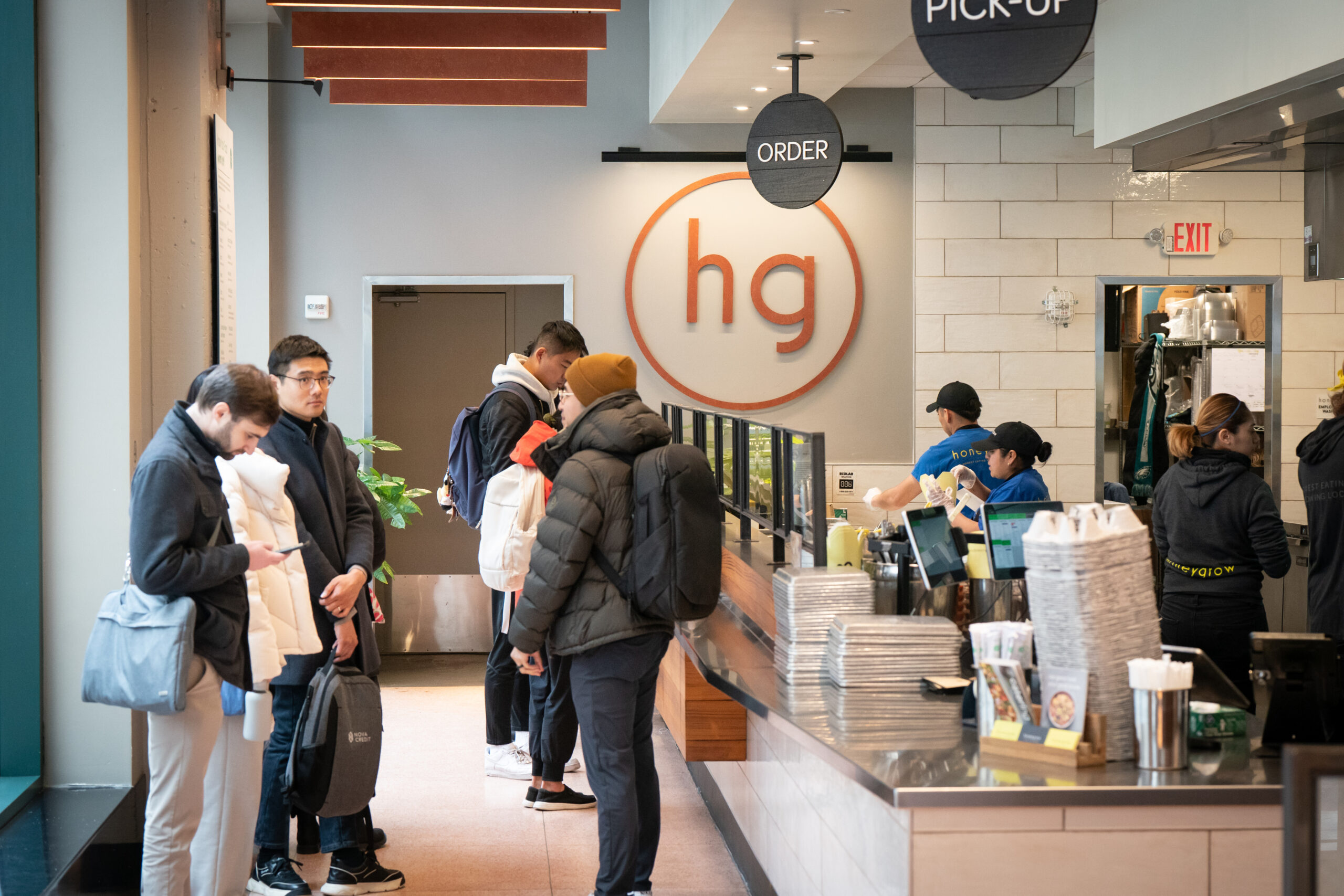
The fast-casual eatery, based in Center City, plans to open up to 18 new locations next year, following 17 new outposts in 2025, founder and CEO Justin Rosenberg told The Inquirer on Monday.
“It was definitely a good year,” said Rosenberg, adding that the company is “just continuing to build the pipeline for 2026 and beyond.”
Honeygrow sells made-to-order stir-fries as well as salads and desserts. Since launchingin 2012, the company has grown to 71 locations across several states, including Ohio, Massachusetts, Virginia, Maryland, Delaware, and New York.
Philadelphia-area stores include Center City, Kensington, University City, North Philadelphia, Bala Cynwyd, and Cherry Hill.
The company’s expansion plans include adding locations in Ohio and New Jersey, as well as in Boston. The eatery is also currently in negotiations to bring Honeygrow to the Detroit metropolitan area, a new market, said Rosenberg.
Honeygrow also aims to open a location in Middletown, Del.
“Saleswise, it’s kind of neck and neck between certain Philly stores and our two Boston stores,” Rosenberg said.
Further expansion in Philadelphia is also possible.
“We are always looking at Philly,” Rosenberg said. “We’ve been poking around South Philly for a while. We just haven’t found the right opportunity.”
Honeygrow, at 11th Street in Center City, in 2024.
The company typically seeks 2,500-square-foot locations for new stores, but Rosenberg says it’s a competitive market for that kind of real estate.
“One of the things that has made us successful — and I give credit to my team for this — is that we’ve been very disciplined on growth, just saying, look, if we can’t get the deal we need in terms of underwriting, let someone else take it,” he said.
The company employs roughly 2,000 people, and each new store adds some 30 new hires, Rosenberg said.
Some of the considerations when looking at new markets include what other fast-casual concepts are in the area, and how they’re doing, Rosenberg said.
“If a Starbucks is underperforming in that market, that’s certainly going to spook us. Or a Chick-fil-A, if it’s below average unit volume, it’s probably not the right market for us,” he said.
On the flip side, if a Chipotle, Chick-fil-A, Starbucks, Raising Cane’s, or another brand is doing well in an area, Rosenberg said, “We feel that those would be very similar customers to ours. We’re willing to put a restaurant in there and see what happens.”
The plans for new locations come as the company shuttered some stores in Chicago, Washington, and New York in 2018 after rapid expansion plans. Some stores were “dragging down profitability,” Rosenberg has said, and he hasattributed closures to growth that happened too quickly as well as poor real estate.
Since then, the company has roughly tripled in size, said Rosenberg, adding “you just keep learning with every opening that you have.”
“My mission remains the same,” he said. “I want to build something that’s from Philadelphia — make this a national, if not international, brand that we can be proud of.”
Chicken Parm Stir-fry at Honeygrow at the 11th Street location in Philadelphia in 2024.
Crowds of last-minute shoppers, customers looking for seasonal ingredients, sappy hands from tying Christmas trees to cars, and of course, hours and hours of cheery holiday music playing on a loop.
Such is the life of a grocery worker during the holidays.
“Everyone wants to get, like, the biggest tree on, like, the smallest car,” said Edward Dupree, who has worked at the Center City Whole Foods for over nine years.
Working at a grocery store during the holiday season can be hectic and intense, requiring a lot of patience, he said.
“It’s, I think, definitely under-appreciated,” said Dupree.
Grocery employees from across the region say this time of year brings a surge of stressed shoppers making larger purchases, even in the age of DoorDash, grocery delivery, and curbside pickup.
Customers rush into the store for their last-minute shopping, said Erika Keith, who works at the Fox Street ShopRite in Nicetown. And they’re often hurried as they fill their carts, said Charletta Brown, of the Acme in Trooper, juggling year-end demands at work and pressures at home as they prepare for the holidays.
“Those three days moving into Thanksgiving are just insane,” said Dupree. He said the store starts getting busier in September as students return to the area, and it stays hectic through the end of the year.
Customers aren’t just getting their regular groceries and Christmas trees. They’re looking for specialty seasonal items including cranberries, decorative gourds, chestnuts, eggnog, and black-eyed peas for the New Year.
“Even in spite of the current economy — we do hear a lot that things are a little rougher than they have been in past years — people still want that tradition,” said Brown.
Specific holiday wishes
As the holidays approach, the Philadelphia Whole Foods bakery makes hundreds of pies and a slew of custom orders, said baker Jasmine Jones. During the holidays, they said, “the cakes get bigger.”
Many are seeking out pie crusts and fillings, as well as phyllo dough to make hors d’oeuvres, said Brown, of Acme. These freezer items are hidden “way in the back” for most of the year, but they get the star treatment, “front and center” for the holidays.
Keith, of ShopRite, said the holidays bring in more business for the store’s Western Union service, as people send money to loved ones as gifts.
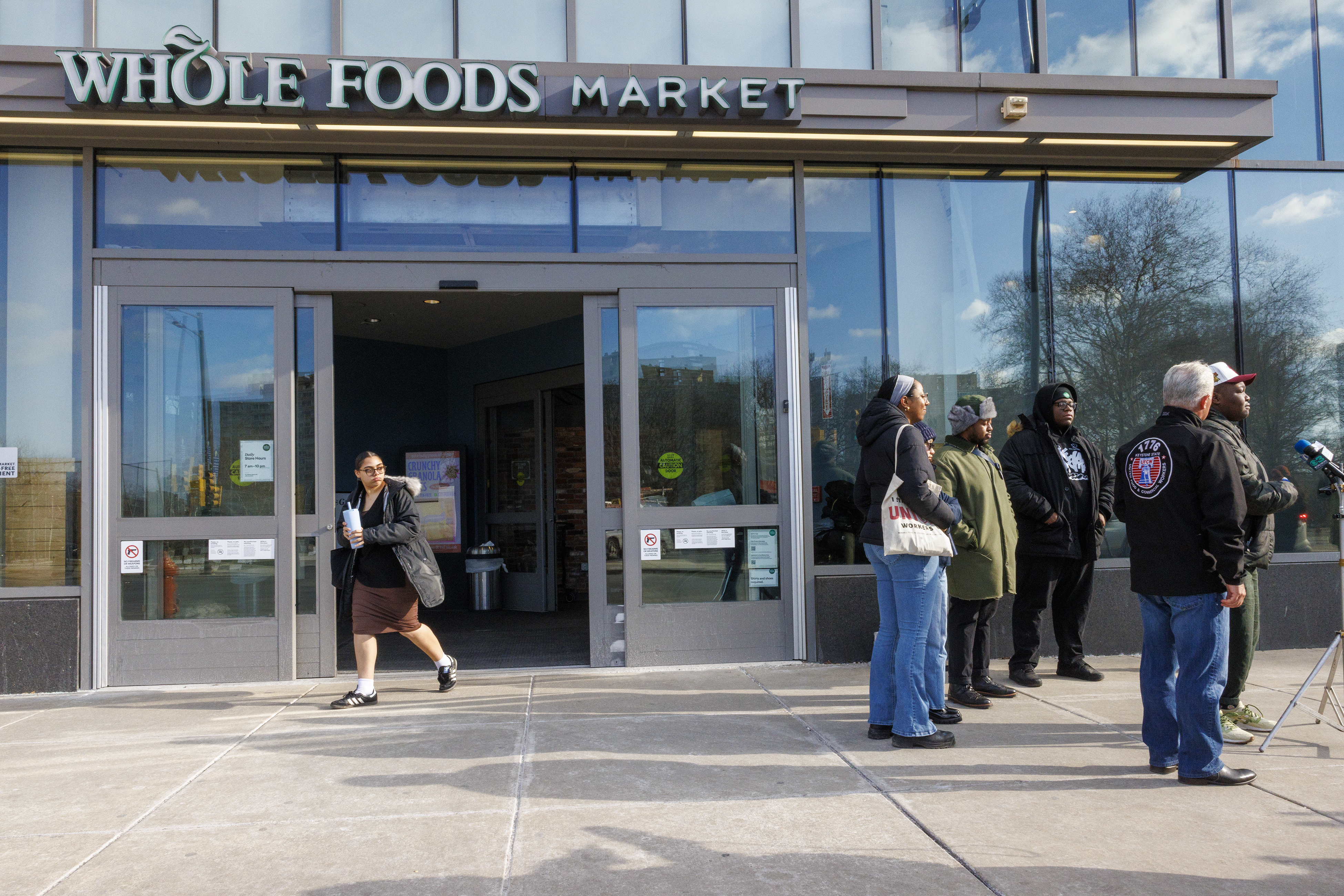
Union workers gather outside the Center City Whole Foods Market in January.
At the Trooper Acme, Brown said, shoppers start looking for Ivins Famous Spiced Wafers starting around Halloween, and as the holiday season progresses, they’re looking for specific nostalgic sweets to fill their candy dishes — minty After Eight chocolates or the multicolored, straw-shaped Plantation hard candies, for example.
“Some people say, ‘We don’t eat them, but we just want them to sit out in the candy dish, because I had that as a kid, and my mother and father always had it out,’” she said.
Holiday gripes
For Jones, Whole Foods is a second job on weekends. They said they’re “stretched kind of thin” during the holidays as they juggle another full-time job. Jones sometimes volunteers to work extra hours for the money during the holidays, but they don’t like losing the time with loved ones.
And, Jones added, the holiday music is not a perk.
“It kind of makes me angry,” said Jones, adding that they’re “still an overworked worker.”
“It kind of just reminds me that I could be home if you paid me more.”
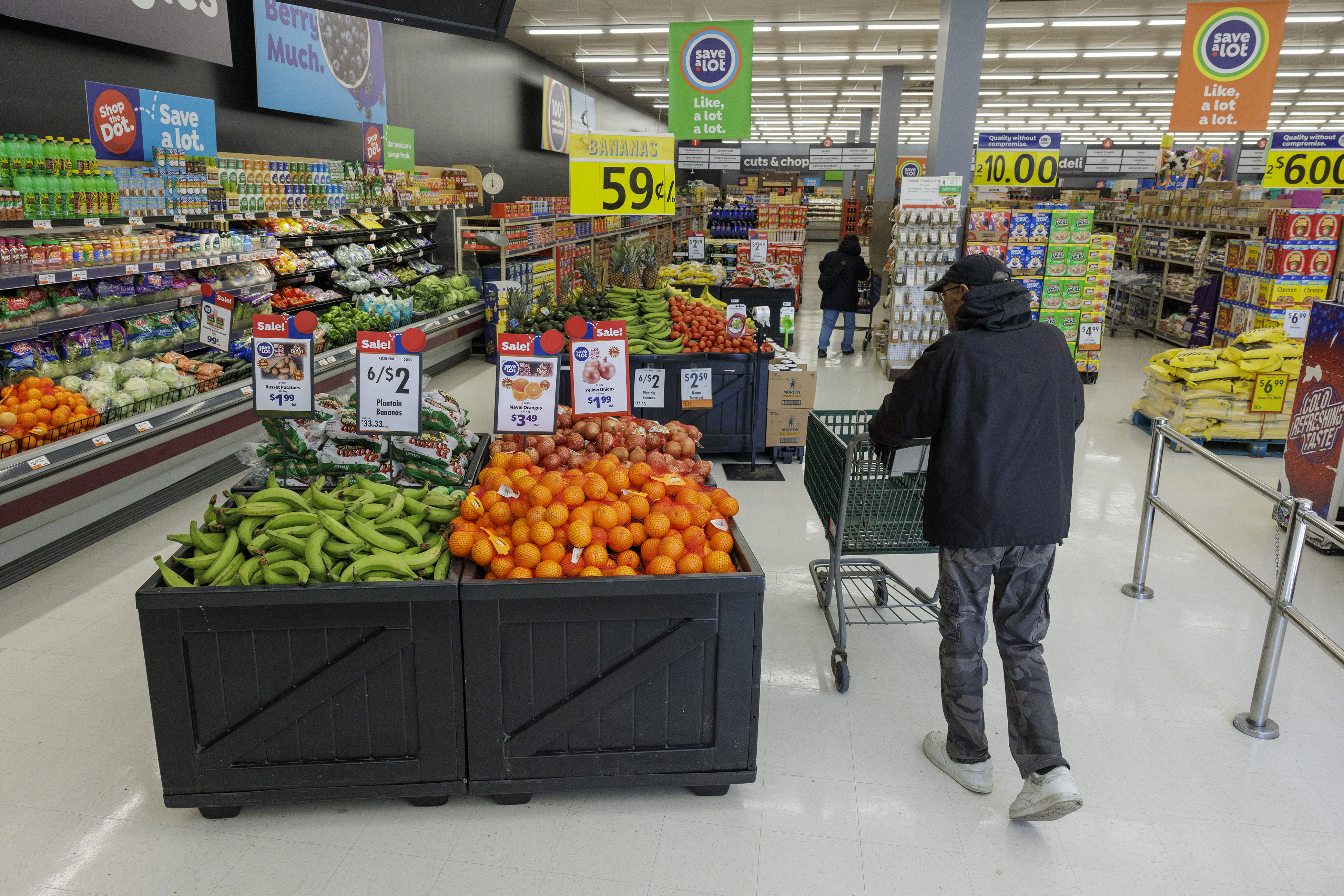
Shoppers peruse the Save-a-Lot grocery store in Atlantic City in this Jan. 2024 file photo.
Dupree, also of Whole Foods, isn’t a fan of the constant seasonal music either.
“If I want to go listen [to the song] ‘This Christmas,’ I’ll listen to it on my own — don’t play it 82 times a day,” he said. “It’s a bit intrusive.”
The customers
Some customers, for their part, avoid the busiest times at the grocery store.
In Wayne, Lisa Goldschmidt has become dependent on Instacart grocery deliveries most of the year. But when it’s time to shop for her holiday dinners, she makes a couple in-person trips to her local Acme. For her sanity, she keeps to a personal code, she said: “Avoid the weekends and the after-work times when it typically gets crazy.”
Goldschmidt, a 58-year-old attorney who works from home, said she’s fortunate that she can run out midday on weekdays to buy her holiday essentials, which include an expansive antipasto assortment that her family eats on Christmas Eve and the prime rib they make on Christmas Day.
April Beatty, 51, of Broomall, also tries to avoid peak shopping times at her go-to stores — Wegmans, Trader Joe’s, and Gentile’s produce market. She aims to pick up all her groceries at least a couple days before Christmas, and she also buys more this time of year with her two children home from college.
But her job, too, keeps her busy during this season — she works in supply-chain logistics — so shopping the way she prefers, at “off times, just because it’s more efficient,” isn’t always an option.
This year, her Wegmans trip for Thanksgiving happened during a shopping rush: “aisles packed, parking lot packed,” she said. During the holidays, she added, “at least people are polite.”
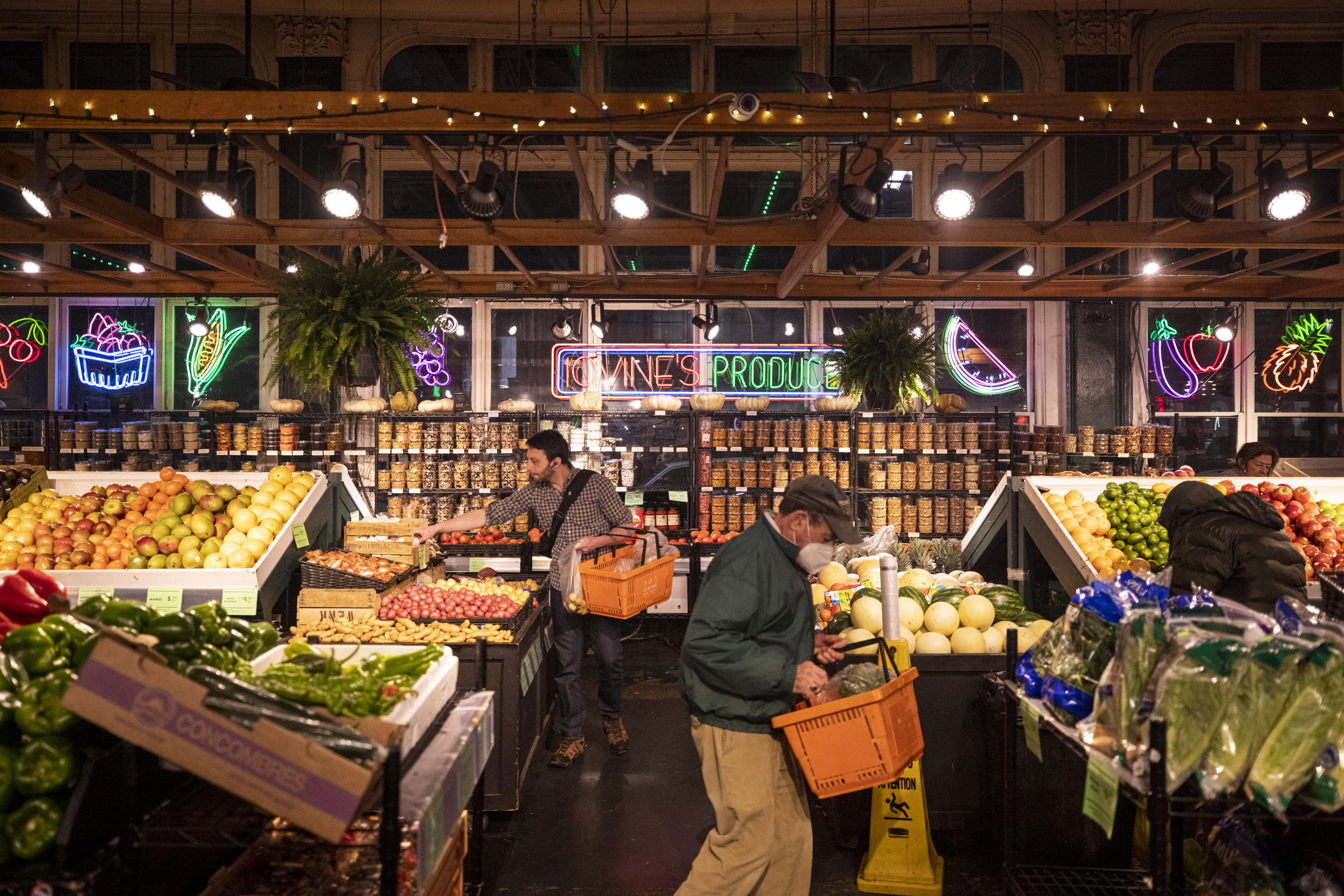
Customers browse Iovine Brothers Produce at Reading Terminal Market in this 2022 file photo.
Customers at Whole Foods are more outgoing during the holidays, said Dupree, part of a kind of jolly Christmas mentality around this time of year.
The days leading up to Thanksgiving are usually the busiest — more so than Christmas — but he didn’t notice quite as much Thanksgiving hustle this year.
“I wonder if this is because, you know, people’s pockets are hurting,” Dupree pondered aloud.
At ShopRite, Keith said, some of the busiest shopping days she recalls are the day before Thanksgiving and Christmas Eve.
“We have our last-minute shoppers — and, you know, I get it. I get the busy life,” she said.
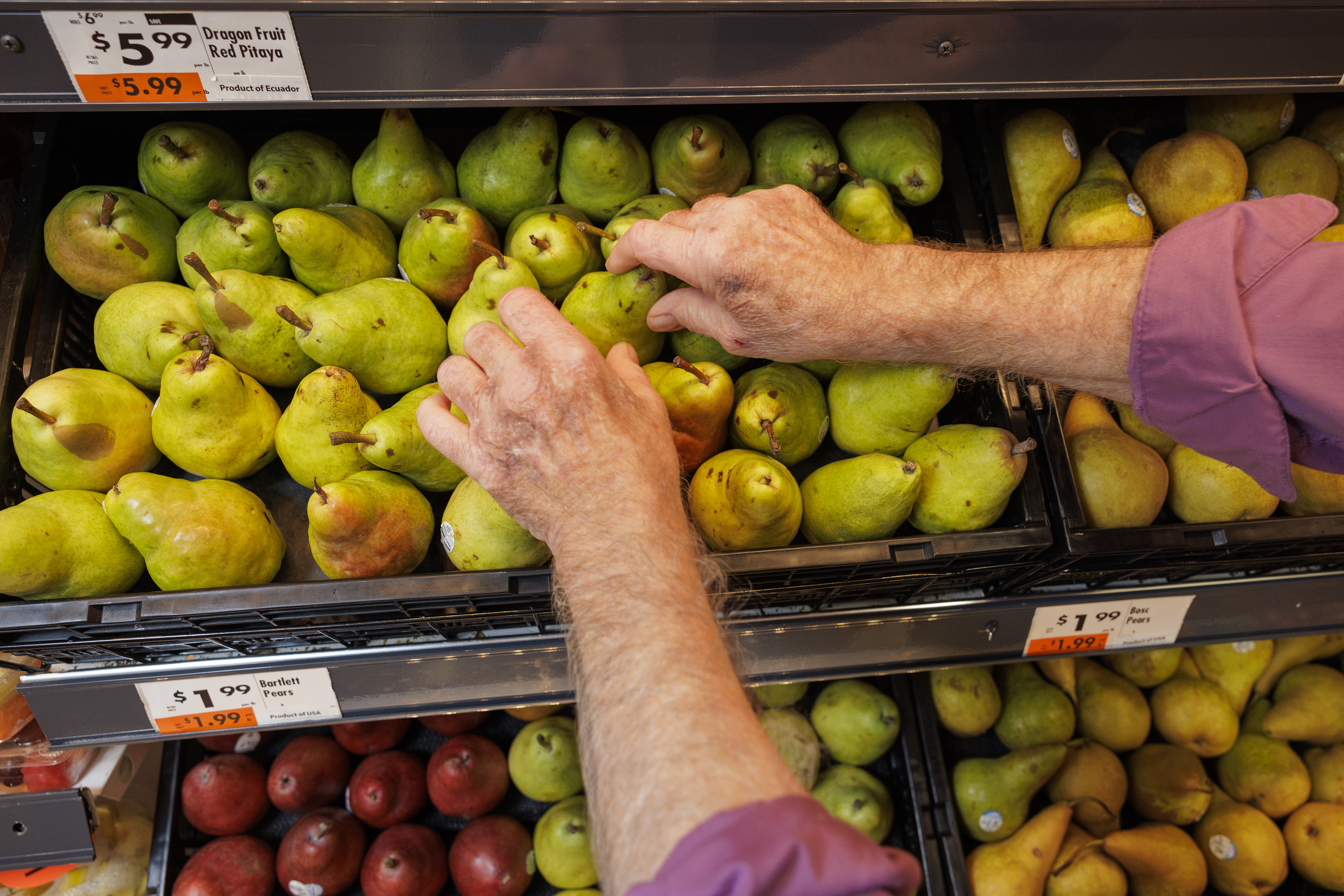
A Save-a-Lot supermarket employee arranges pears at the chain’s Camden store in this January 2024 file photo.
At Acme, Brown sees pressure and stress on some customers.
“Being sympathetic to that, listening to them, is probably half the battle of dealing with any stresses or strain that I might be under — and also what they might be under,” she said.
Brown said she tries to get a head start on her own holiday decorating and planning each year because there isn’t a lot of downtime once the store gets busy.
“I have to manage that time effectively in order to be able to really decompress and enjoy the holidays myself,” she said.
This year, for the first time in a while, she won’t be working on Christmas Eve because it‘s on a Wednesday, her usual day off.
But Brown said she actually loves working Christmas Eve, “because it just seems to me like everybody’s just so happy.”
An American Airlines flight attendant who works out of the Philadelphia International Airport is suing the airline, alleging that flight attendants aren’t properly paid for all of their time on the job.
Flight attendants are required to arrive early at the airport and help board and deplane passengers, but these and some other parts of the travel process are not usually counted in payroll and don’t count toward overtime, according to the lawsuit.
Flight attendant Christopher John filed a complaint in the Philadelphia County Court of Common Pleas in October and later moved to federal court in Philadelphia. John is suing on behalf of himself and other flight attendants for American Airlines based out of PHL as far back as October 2022, the complaint said.
The airline “generally does not credit or pay” flight attendantsfor the hour or two prior to a flight’s departure time, time spent boarding passengers before a flight and deplaning them upon arrival, or time spent traveling on a shuttle to and from hotels on stopover flights.
All of these activities “fall squarely within their day-to-day job duties,” the complaint reads.
American Airlines has argued that the Pennsylvania Minimum Wage Act — which establishes a minimum wage and overtime rate in the state — does not apply to this case because the flight attendants have a union contract that outlines pay practices.
American Airlines said in a motion to dismiss the case that the state law “expressly exempts ‘employe[es] of an air carrier’ from its overtime requirements if their ‘hours of work, wages, and overtime compensation’ are governed by a collective bargaining agreement.”
American Airlines flight attendants are represented by the Association of Professional Flight Attendants. A recent union contract for those employees started in September 2024 and ends in September 2029. As of last year, the union represented some 28,000 American Airlines flight attendants.
The attorney for the flight attendant, Peter Winebrake, declined to comment on the case. Lawyers for American Airlines at O’Melveny & Myers did not immediately provide a comment.
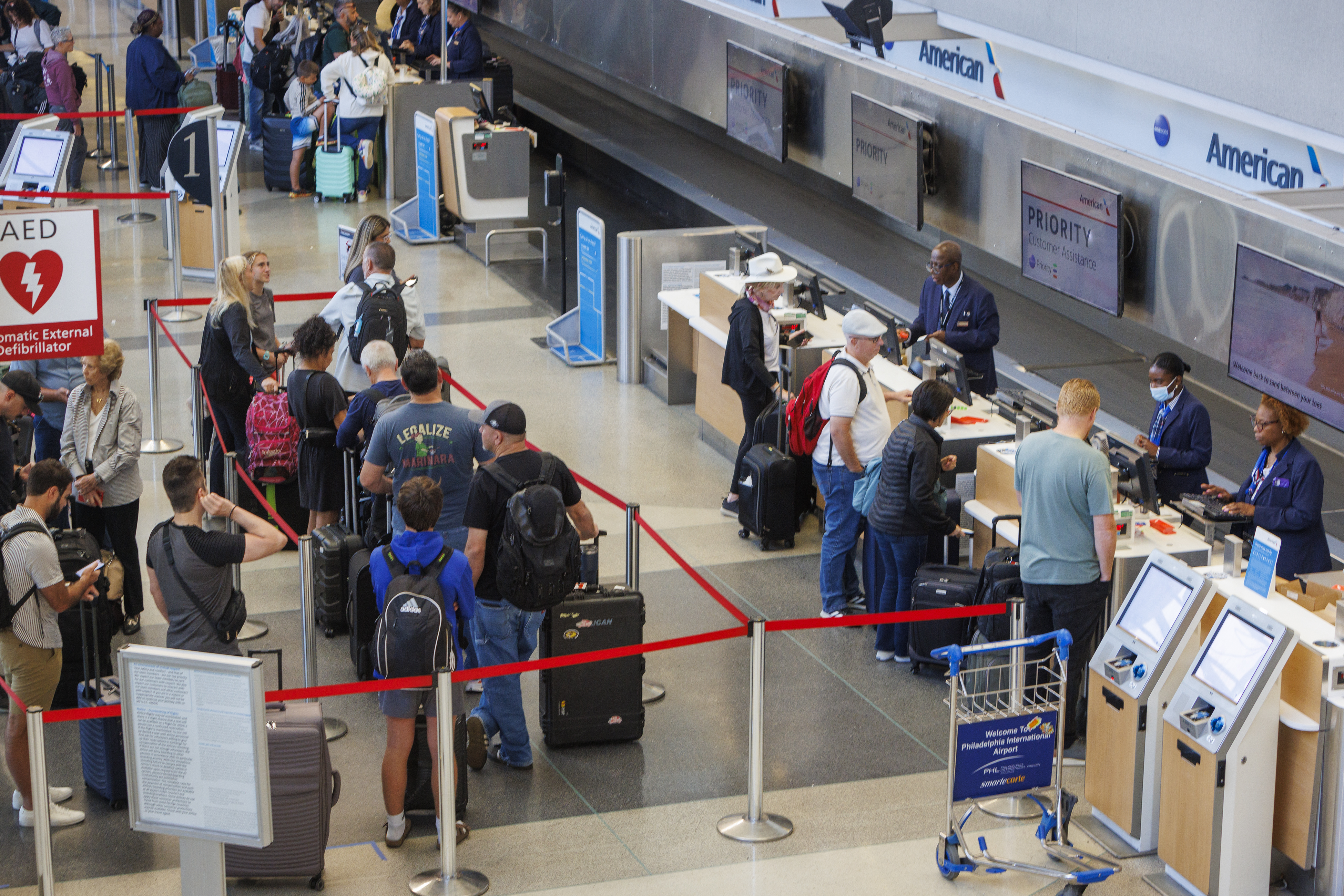
American Airlines travelers wait for assistance on a morning in August 2024 when many flights were canceled due to severe weather in Florida.
Last year, American Airlines flight attendants secured a contract including pay for time spent boarding passengers, and Delta started partially compensating employees for this time in 2022.
American Airlines, headquartered in Fort Worth, Texas, is the largest carrier at PHL, carrying nearly 20 million passengers through the airport in 2024.
The airline is the ninth largest employer in Philadelphia County, according to the state’s Department of Labor and Industry. The median pay of flight attendants in the U.S. was $67,130 last year, according to the Bureau of Labor Statistics.
American Airlines employs over 10,000 people in the Philadelphia area, including 2,567 flight attendants, according to the company’s website.
Staff reporter Abraham Gutman contributed to this article.
The average commute in Philadelphia takes longer than in most large U.S. cities — and it’s gotten slightly worse recently.
In 2024, commuters spent on average 33.2 minutes getting to work in the city, according to a new report from Yardi Kube, a digital management platform for coworking spaces. That’s more than the national average and a 2.1-minute increase from the previous year.
The increase in Philadelphia also reflects a larger national trend, according to the report. The average American’s commute time inched up in 2024 by nearly half a minute, to 27.2 minutes. Still, that’s less time than the average worker spent in transit to their job in 2019.
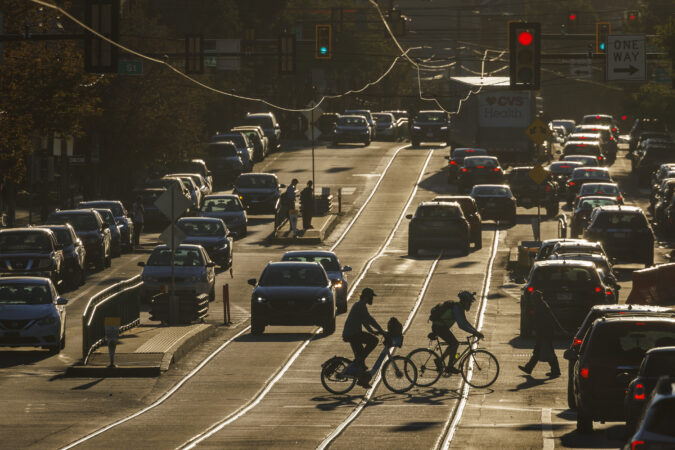
Meanwhile, Philadelphia faced some of the worst traffic congestion in the country last year, and public transit has confronted several challenges this year that caused disruption for commuters.
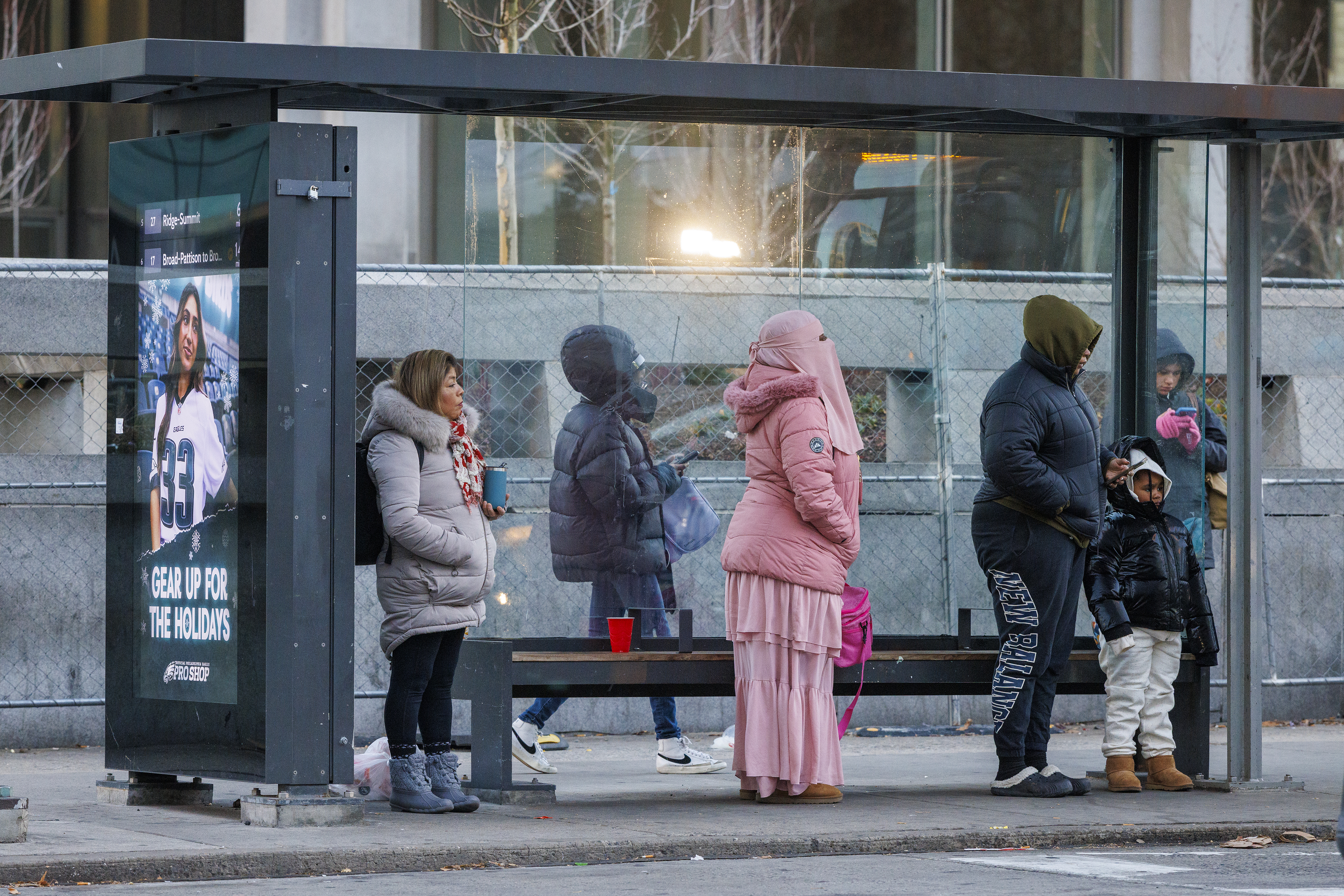
Commuters at a bus stop at 15th Street and JFK Boulevard on a cold December morning in Philadelphia.
The increase in Philadelphia and beyond comes as employers have increasingly called workers back to in-person work, reversing trends toward hybrid or remote arrangements during the pandemic. The report notes that as the number of Americans working from home has decreased, the average time spent commuting has inched up.
“Across the United States, how people get to work — and how often they do — continues to evolve,” the report reads.
“The rise of remote and hybrid work dramatically reshaped commuting habits, leading to sharp declines in travel times during the pandemic years,” it said. ”Yet as more employees return to the office, commute durations are climbing again, in some cases more quickly than before.”
The report is based on data from the U.S. Census Bureau’s American Community Survey. It took into consideration the 50 largest cities based on the size of their population and evaluated the time spent commuting for a one-way trip, regardless of mode of transportation.
window.addEventListener(“message”,function(a){if(void 0!==a.data[“datawrapper-height”]){var e=document.querySelectorAll(“iframe”);for(var t in a.data[“datawrapper-height”])for(var r,i=0;r=e[i];i++)if(r.contentWindow===a.source){var d=a.data[“datawrapper-height”][t]+”px”;r.style.height=d}}});
While Philadelphia’s average commute lengthened from 2023 to 2024, it’s still shorter than the average of 34.3 minutes in 2019.
But the region’s public transit system has seen a series of significant challenges this year, rankling commutes for many.
And SEPTA‘s Regional Rail system has encountered significant disruption and delays this fall, as the transit authority was ordered to inspect all of its 50-year-old Silverliner IV train cars following five train fires this year.
This week, SEPTA averted a worker strike, after coming to an agreement with Transport Workers Union Local 234 over improvements to the employee contract. The union represents some 5,000 SEPTA employees including operators of buses, subways, and trolleys.
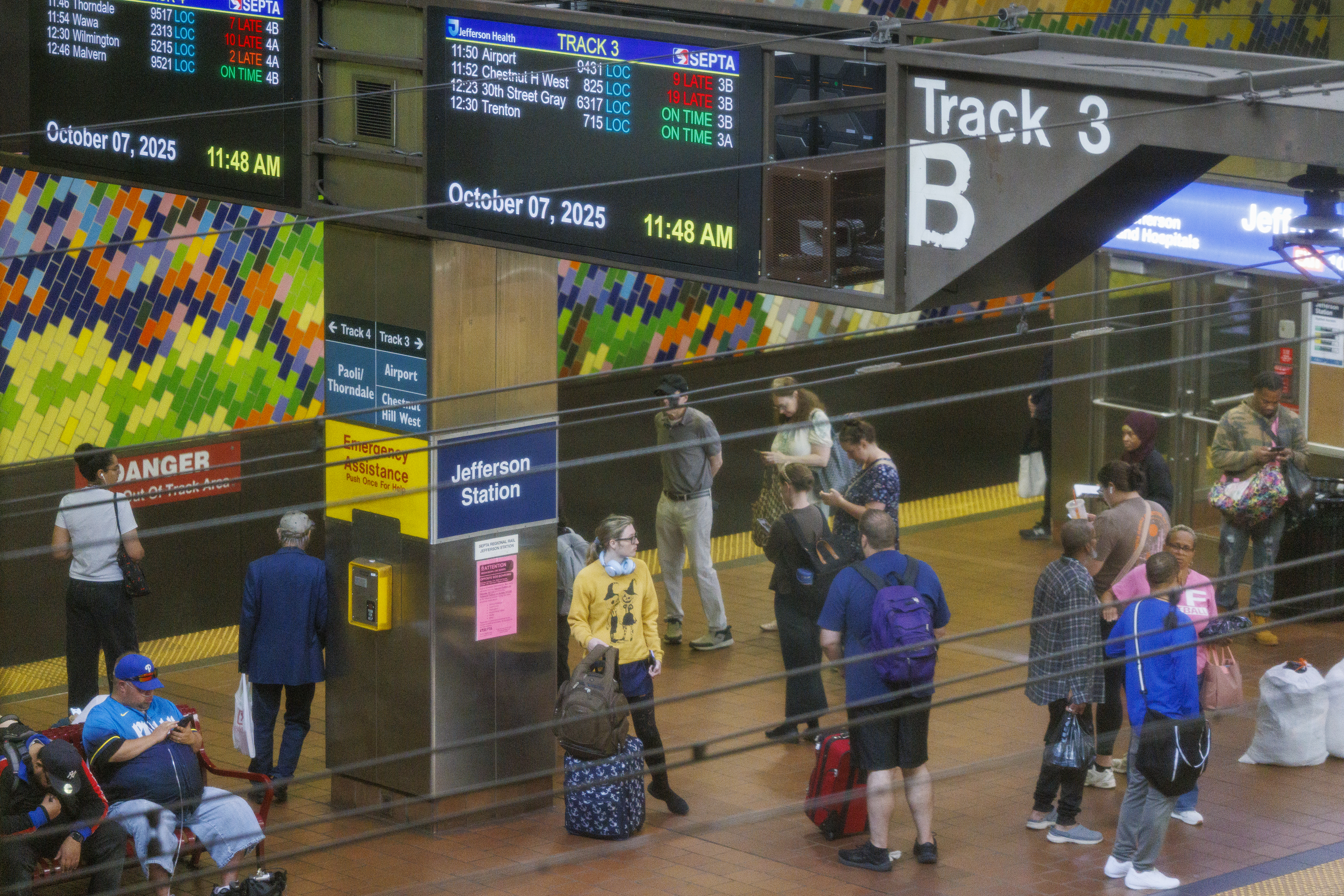
Commuters waiting for SEPTA Regional Rail at Jefferson Station on Oct. 7.
Other cities with long commutes last year include New York, Chicago, San Francisco, Los Angeles, and Boston. New Yorkers spent an average of 40.6 minutes getting to work in 2024, nabbing the worst commute time in the country. Chicago ranked second, with an average of 33.5 minutes in transit last year.
All of those cities saw an uptick in their commuting time in the past year.
Among the 50 most populous cities in the country, the places with the shortest commutes are Tulsa, Okla.; Omaha, Neb.; Memphis; Tucson, Ariz.; and Kansas City, Mo. Those cities had average commute times between 19.7 and 21.8 minutes last year.
The U.S. is turning 250 next year, and among its birthday gifts will be newly designed quarters, dimes, and half-dollar coins.
On Wednesday evening, the U.S. Mint unveiled the new coins at the National Constitution Center in Philadelphia, to commemorate the 250th anniversary of the Declaration of Independence.
“The designs on these historic coins depict the story of America’s journey toward a ‘more perfect union,’ and celebrate America’s defining ideals of liberty,” said Kristie McNally, the Mint’s acting director. “We hope to offer each American the opportunity to hold our nation’s storied 250 years of history in the palms of their hands as we connect America through coins.”
Several coins feature Philadelphia-area landmarks.
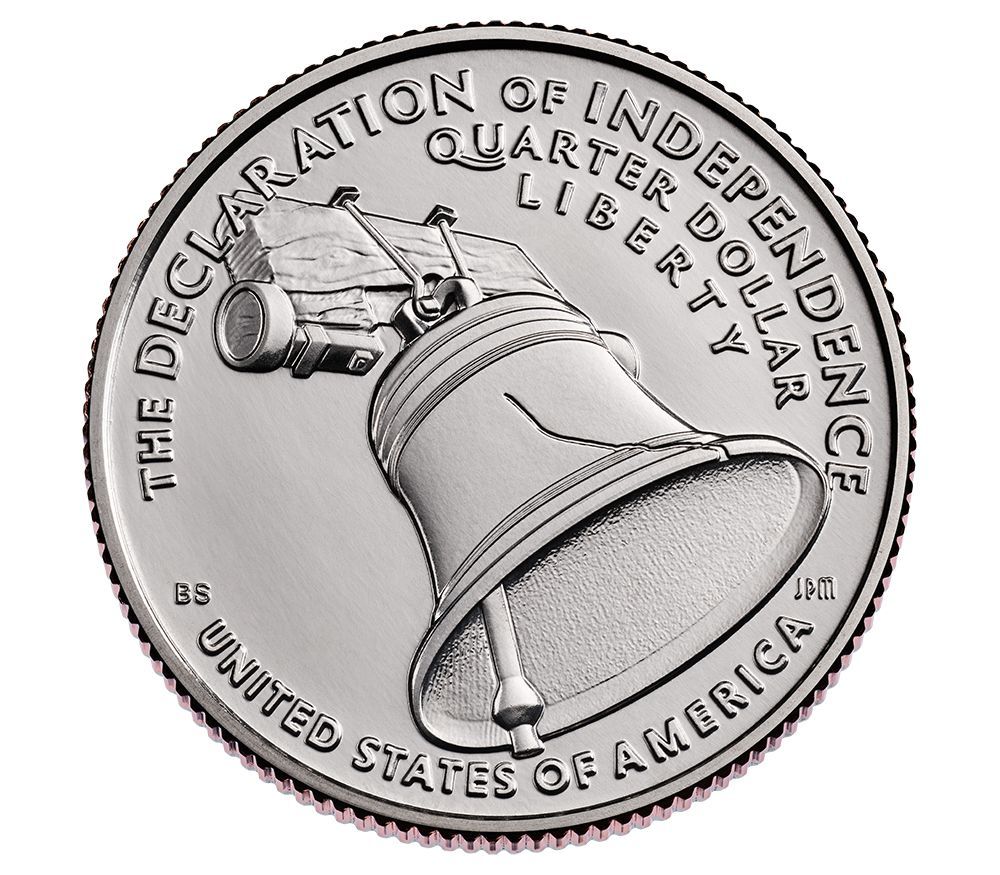
Three separate quarter designs include images of Independence Hall, where the Declaration of Independence was signed; the Liberty Bell, housed and managed by the National Park Service in Philadelphia; and a Continental Army soldier at Valley Forge commemorating the Revolutionary War.
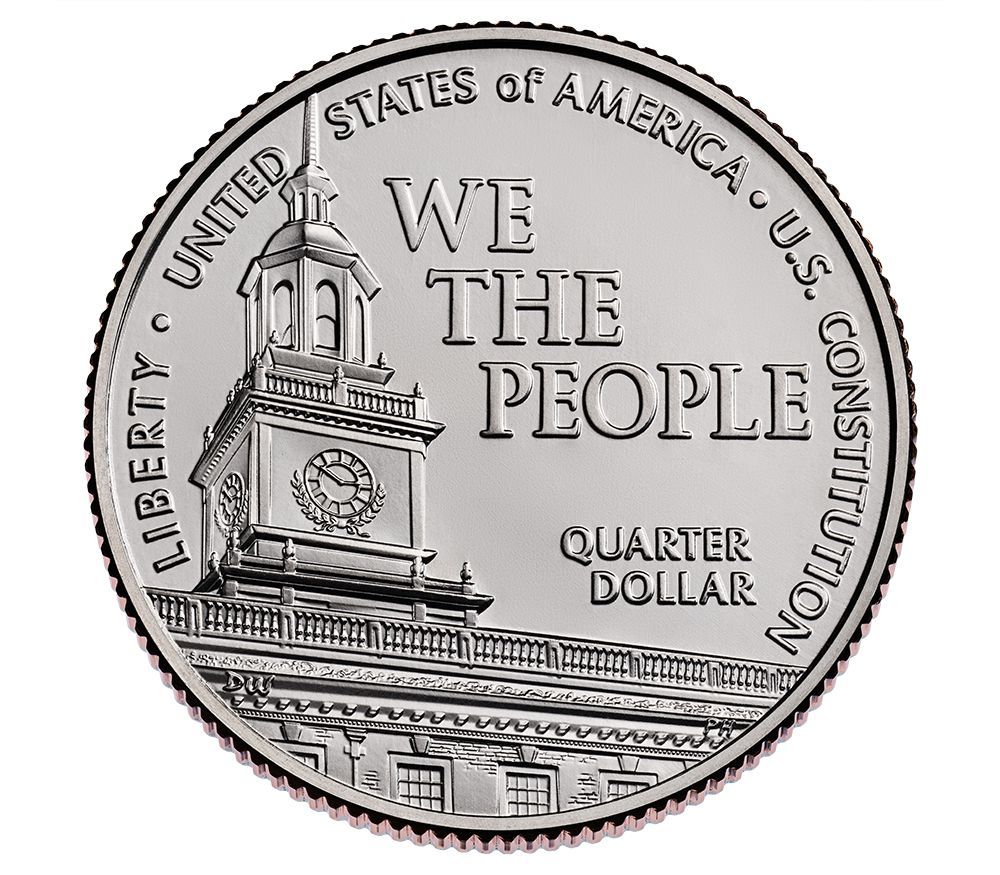
This new design for the quarter commemorates the U.S. Constitution and depicts Independence Hall in Philadelphia, where the Declaration of Independence and U.S. Constitution where signed. The other side of this quarter has a depiction of President James Madison.
The new dime represents the founding era of the country. Its design includes Liberty depicted as a woman wearing a cap patterned with stars and stripes. The other side of the dime will feature an American eagle, which was on early dimes that circulated in 1796, and it hasn’t appeared on the coin since 1837, according to the U.S Mint.
In addition to the Philadelphia-area landmarks, the quarters also don images of pilgrims and the Mayflower. The five new quarters reference the Mayflower Compact, the Revolutionary War, The Declaration of Independence, the U.S. Constitution, and the Gettysburg address, and also feature images of Presidents James Madison, Thomas Jefferson, George Washington, and Abraham Lincoln.
This new design for the quarter commemorates the Declaration of Independence, and depicts the Liberty Bell, housed in Philadelphia. The other side of this quarter features President Thomas Jefferson.
The half-dollar coin is intended to look to the future of the country with an image of the Statue of Liberty on one side, and on the other, a torch being passed from her hand to another hand.
The coins will be produced at the U.S. Mint facilities in Philadelphia and Denver and begin circulating in 2026. The new designs are authorized under legislation signed by President Donald Trump just before he left office in 2021. It noted that these coins can be issued for a one-year period starting in January 2026.
Historical interpreters Benjamin Franklin (from left) Gen. George Washington, and President Abraham Lincoln are in the audience as the U.S. Mint unveils new coins for the Semiquincentennial at the National Constitution Center in Philadelphia Wednesday.
Philadelphia is expected to see an influx of visitors in 2026 for the Semiquincentennial.
This year, the U.S. Mint, which had 389 employees in Pennsylvania in 2024 according to federal database FedScope, stopped producing pennies in Philadelphia. The one-cent coins are more expensive to make than they are worth due to inflation and the high cost of metals.
A newly designed quarter for the 250th anniversary of the country commemorates the time of the Revolutionary War. It depicts a Continental Army soldier at Valley Forge, Pa. The other side of this quarter features President George Washington.
Mental health professionals at Rogers Behavioral Health in West Philadelphia have formed a union, citing increased workloads and business changes that diminished patient care.
The nonprofit mental healthcare provider last year transitioned from individual patient sessions to a group care model, said Tiffany Murphy, a licensed professional counselor and therapist at the facility. Some workers there were also moved from salaried to hourly positions then forced to reduce hours, their union has said.
Some patients and workers have left amid the changes, says Murphy, estimating that 22 of her colleagues have quit in the past year.
“A lot of us sort of put our jobs on the line by [unionizing], because we believe in the organization, but more so, we believe in our patients. We wanted to provide the best patient care that we possibly could for them,” said Murphy.
The 19 West Philadelphia Rogers employees, including therapists and behavioral specialists, filed their petition last month to unionize with the National Union of Healthcare Workers. Rogers voluntarily recognized the union, according to NUHW, marking the union’s first unit in Pennsylvania.
NUHW represents some 19,000 healthcare workers, primarily in California.
Sal Rosselli, NUHW president emeritus, said the union is pleased that Rogers accepted the petition. “All too often, employers do the opposite and put together very anti-union campaigns, spending all kinds of patient care dollars to prevent their workers from organizing,” he said.
A spokesperson for Rogers declined to comment on employees’ organizing efforts and remarks on workplace changes.
Rogers provides addiction treatment and mental healthcare with facilities in 10 states. In Philadelphia, the nonprofit offers outpatient treatment and partial hospitalization, treating patients with depression, anxiety, and obsessive-compulsive disorder.
In recent years, Rogers workers in California also unionized with NUHW. Their recently forged union contract includes caseload limits and a cap on how many newly admitted patients can be assigned to each therapist or nurse.
Thousands of healthcare workers in the Philadelphia area have moved to unionize in recent years.
The organizing push means that about 81% of the city’s resident physicians are unionized.
What do workers want?
When Murphy first started working at the Rogers facility in Philadelphia 4½ years ago, she said there was “a really good work-life balance.”
At the time, clinicians had four patients per day, provided individualized care, and led group sessions. As the organization moved toward group counseling, she said, caseloads have grown, with up to 12 patients in each group.
The organization hired behavioral specialists to support therapists, said Murphy, but “it was difficult to provide the patients with the care that they really needed and deserved with the new structure.”
Some patients and staff left because of the new model, said Murphy.
This year, some salaried workers were switched to hourly, and Rogers started sending workers home due to low patient demand, leaving the rest with larger workloads, according to the union. That meant some used paid time off to avoid going without pay, said Murphy.
When Philadelphia Rogers employees heard their colleagues in California were unionizing, “That became a bit enticing to us,” said Murphy, noting the workplace had become challenging and sometimes “unbearable.”
Now, she says, the union members want more manageable caseloads — or pay increases to account for the larger caseloads — and a return to the old pay model for those who were switched to hourly work.
“We are unionizing to have a voice at work that will allow us to promote a healthier work-life balance as well as high-quality sustainable patient care,” therapist Sara Deichman said in a union news release.
“The industry is forcing fewer providers to care for more and more patients because the focus is on the bottom line,” said Rosselli.
Staffing concerns plague the healthcare industry generally, said Rebecca Givan, an associate professor at Rutgers University’s School of Management and Labor Relations.
“If the facility wants to hold down costs, it tries to keep staffing levels as low as possible,” said Givan. “In the case of mental health providers, it can be about shortening appointment times or increasing caseloads so that each provider has a very large number of cases or clients.”
She says there’s not “a huge amount of union representation” in stand-alone behavioral health facilities, but some public hospitals are unionized.
Private practice mental health workers can’t unionize because they’re self employed, Givan noted, but “one could argue that they might benefit from collectively negotiating, for example, with the insurance companies that determine their reimbursement rates.”
NUHW is leading efforts to organize independent providers. The goal, Rosselli says, is to “establish an employer for them so that they can have leverage against insurance companies to increase pay and increase access to patient care issues.”
The union has already done this in the home care industry in California, Rosselli noted.
Staff reporter Aubrey Whelan contributed to this article.
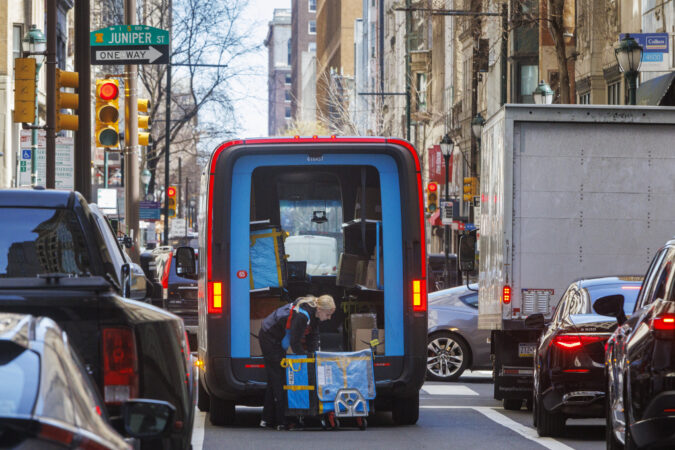
Amazon delivery is getting faster in Philadelphia.
The online retailer is testing out a new delivery model that aims to get items to customers in 30 minutes or less. The service, which is being called Amazon Now, was announced on Dec. 1 and will be available only in areas of Philadelphia and Seattle.
“Building on our decades of delivery innovation, we’re now testing an ultrafast delivery offering of the items customers want and need most urgently in parts of Seattle and Philadelphia,” the company said in a news release.
The service seems comparable to those offered by DoorDash and Gopuff, which allow consumers to purchase food and retail items to be delivered to their homes same-day.
Customers in areas where the new program is offered will see an option in their Amazon app or webpage navigation bar for “30-Minute Delivery.”
Thousands of items are eligible for the service, according to the company, including produce, milk, eggs, diapers, and over-the-counter medicine.
Prime members will pay at least $3.99 for quick delivery, while the fee for nonmembers starts at $13.99. Customers will also incur an additional fee of $1.99 if their order is worth less than $15.
“Amazon is utilizing specialized smaller facilities designed for efficient order fulfillment, strategically placed close to where Seattle- and Philadelphia-area customers live and work,” notes the news release.
“This approach prioritizes the safety of employees picking and packing orders, reduces the distance delivery partners need to travel, and enables faster delivery times,” the company said.
When Amazon launched same-day delivery in 2009, Philadelphia was among the first cities elected to roll out the service. At the time, the company already offered two-day delivery on orders, which was available to Prime members for no extra cost after their $79 annual subscription. The same-day delivery service, when it was announced, cost an additional $6 per item.
Prime members today pay $14.99 a month or $139 for a year and get access to free delivery. Amazon saw an increase in Prime membership during the pandemic and has said this year that it offers over 300 million items eligible for delivery with the program compared to 1 million in 2005 when the model first got its start.
The company also continues to expand its network. In April, Amazon announced that it was investing more than $4 billion to broaden delivery in more rural parts of the country.
A $78.6 million ferry, slated to join the fleet of vessels connecting Cape May and Lewes is one step closer to getting built. It will be the first hybrid ferry on the three-ship line that operates between the two beach destinations in New Jersey and Delaware.
The Delaware River and Bay Authority (DRBA) announced Tuesday that it had awarded the contract to build the ferry to Rhode Island-based Senesco Marine. The DRBA owns and manages the ferry line, which operates year-round.
Once built, the diesel-hybrid ship is expected to accommodate up to 75 vehicles and 400 passengers.
“For sustainable ferry operations in the future, it’s imperative we make this necessary capital investment today,” said DBRA executive director Joel Coppadge. “The ferry’s a critical piece of regional infrastructure, and we’re proud of the ferry’s heritage and link between two historic destinations. The new hybrid ferry is the start of the next chapter in the proud history of the Cape May-Lewes Ferry.”
A rendering of the $78.6 million ferry that is slated to join the fleet of vessels connecting Cape May and Lewes.
The Rhode Island firm tasked with building the ferry has been operating since 1999 and works both on new construction and vessel repairs. Construction is set to begin next year and is expected to be completed by the summer of 2029. The project is funded in part by a $20 million grant from the U.S. Department of Transportation.
The new ferry will replace a diesel craft that’s over 40 years old. Currently three ferries operate between Cape May and Lewes.
The new ship will have fewer emissions and be more cost-efficient, according to the DRBA.
Annually, the ferry line transports some 750,000 passengers and over 250,000 vehicles, according to James Salmon, a spokesperson for the DRBA. That number has declined over the years — roughly 1.1 million passengers used the ferry line in 2007.
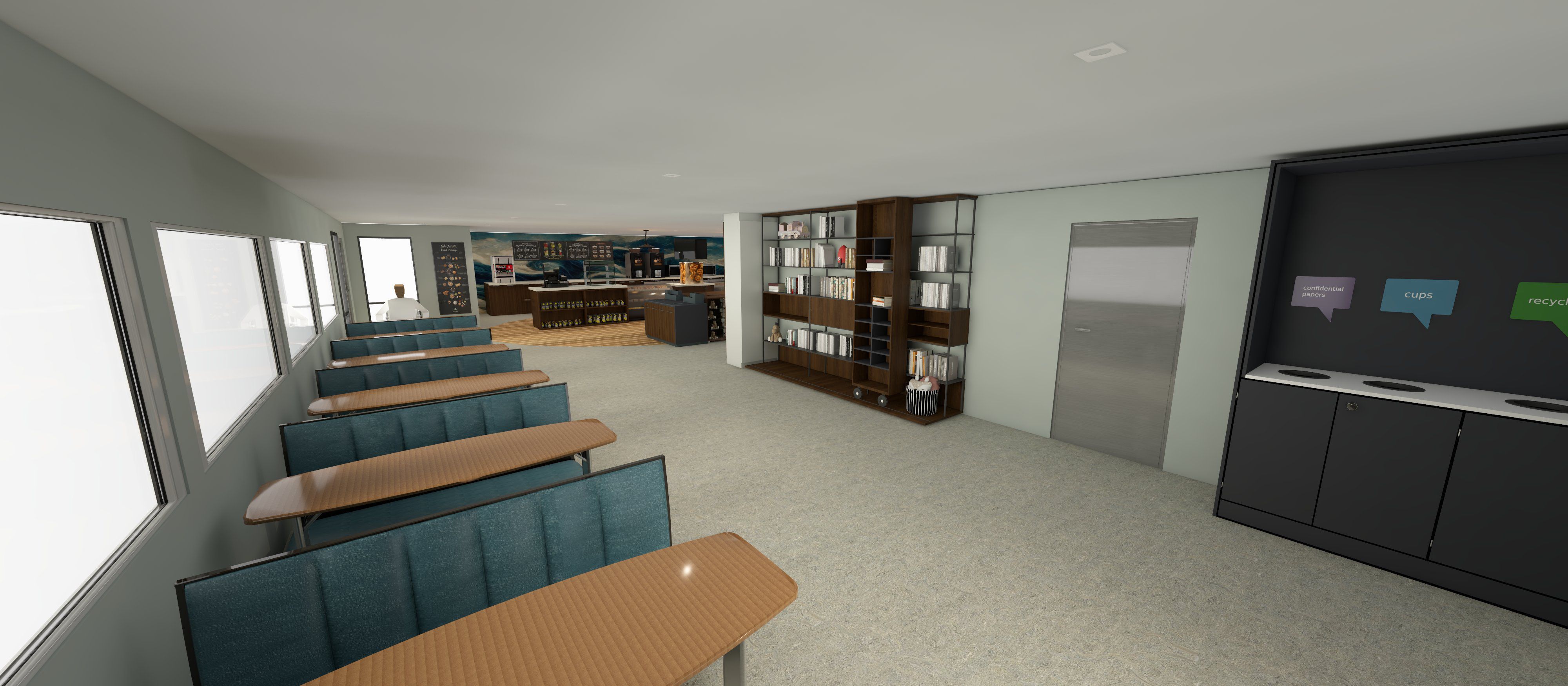
A rendering of the interior of the new ferry, which is expected to begin construction in 2026 and be complete by 2029.
“The Cape May-Lewes Ferry is a vital transportation link and an economic catalyst for the southern regions of Delaware and New Jersey,” said Heath Gehrke, director of ferry operations, noting that some passengers use the service to commute to work.
Adults pay between $14 and $18 roundtrip depending on the season to make the roughly 85-minute trip. For a vehicle, it costs between $39 and $82 roundtrip depending on the time of year and day of the week. Bicycles can be brought onboard for free with the purchase of a passenger ticket, and there is separate pricing for motorcycles and scooters.
A rendering of the $78.6 million hybrid ferry slated to join the fleet of vessels connecting Cape May and Lewes.