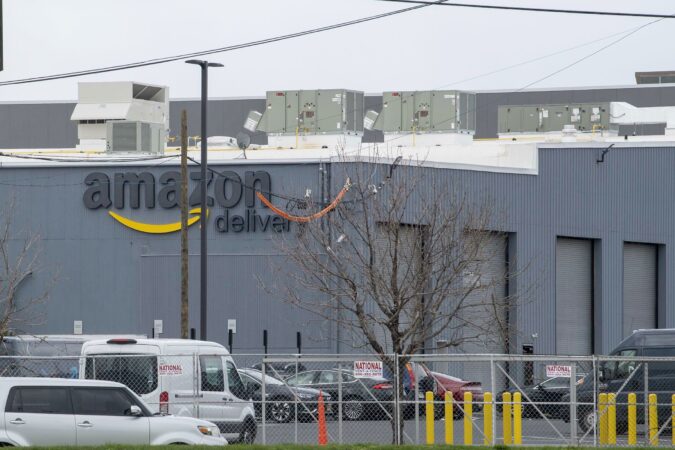
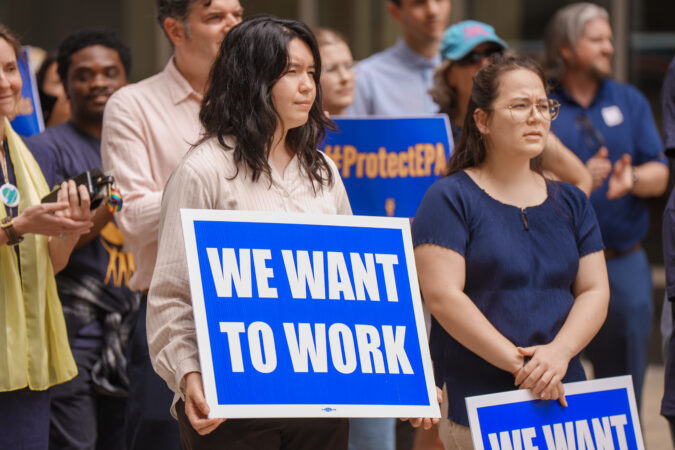
Amazon has reached a $3 million class-action settlement in Pennsylvania over allegedly unpaid wages during the pandemic.
Employees had said they spent time off the clock before their shifts in COVID-19 screenings and were not paid for that time as state law requires, according to court documents.
Amazon’s legal team has said that “time spent off the clock was minimal,” especially once company sites adopted temperature screenings via thermal cameras.
A representative for Amazon did not immediately respond to a request for comment Monday.
The class action lawsuit was originally filed in 2023 in the U.S. District Court for the Eastern District of Pennsylvania by Bobby Muniz, an Amazon employee at the company’s Easton fulfillment center.
Muniz argued that the required health screening typically took 10 to 15 minutes before each shift, including the wait in line.
“Both sides vigorously dispute the amount of time workers spent off the clock as a result of the COVID-19 screenings,” a recent court document indicates.
The case went to mediation in October, and a proposed settlement was granted preliminary court approval earlier this month. A final approval hearing is set for November.
Amazon employees who worked for the company in Pennsylvania before July 19, 2023, and underwent COVID-19 screening are eligible to be part of the class settlement.
Eligible workers don’t need to take any further steps. Those who want to opt out must do so by Oct. 15.
More than 800 former federal workers have been hired by the Pennsylvania government in the last year, as thousands of Pennsylvania-based federal government employees quit or lost their jobs.
Pennsylvania’s Office of Administration announced the count this week. It’s been one year since Gov. Josh Shapiro signed an executive order streamlining the hiring of former federal workers to state-government positions.
“Federal employees bring world-class training and a deep commitment to public service,” Neil Weaver, secretary of the Office of Administration, said in a statement this week. “By tapping into their expertise, we’ve strengthened our workforce and improved the delivery of programs and services that Pennsylvanians depend on every day.”
window.addEventListener(“message”,function(a){if(void 0!==a.data[“datawrapper-height”]){var e=document.querySelectorAll(“iframe”);for(var t in a.data[“datawrapper-height”])for(var r,i=0;r=e[i];i++)if(r.contentWindow===a.source){var d=a.data[“datawrapper-height”][t]+”px”;r.style.height=d}}});
The 800 former federal employees who now work for Pennsylvania are in law enforcement, public safety, human services, health care, and other areas.
The Office of Administration said it had “moved at the speed of business to implement the executive order and capitalize on the opportunity to hire displaced federal workers to fill existing, funded vacancies in state agencies.”
Pennsylvania partnered with Civic Match, a job-seeking platform focused on state and local government positions, and which hosts virtual job fairs. The platform is managed by national nonprofit Work for America. Since it launched in 2024, the platform has shown almost 900 Pennsylvania job listings.
As of Thursday afternoon, Pennsylvania’s own online job board showed 657 vacancies. They include an aquatic biologist, police cadet, accountant, and an air monitoring equipment specialist.
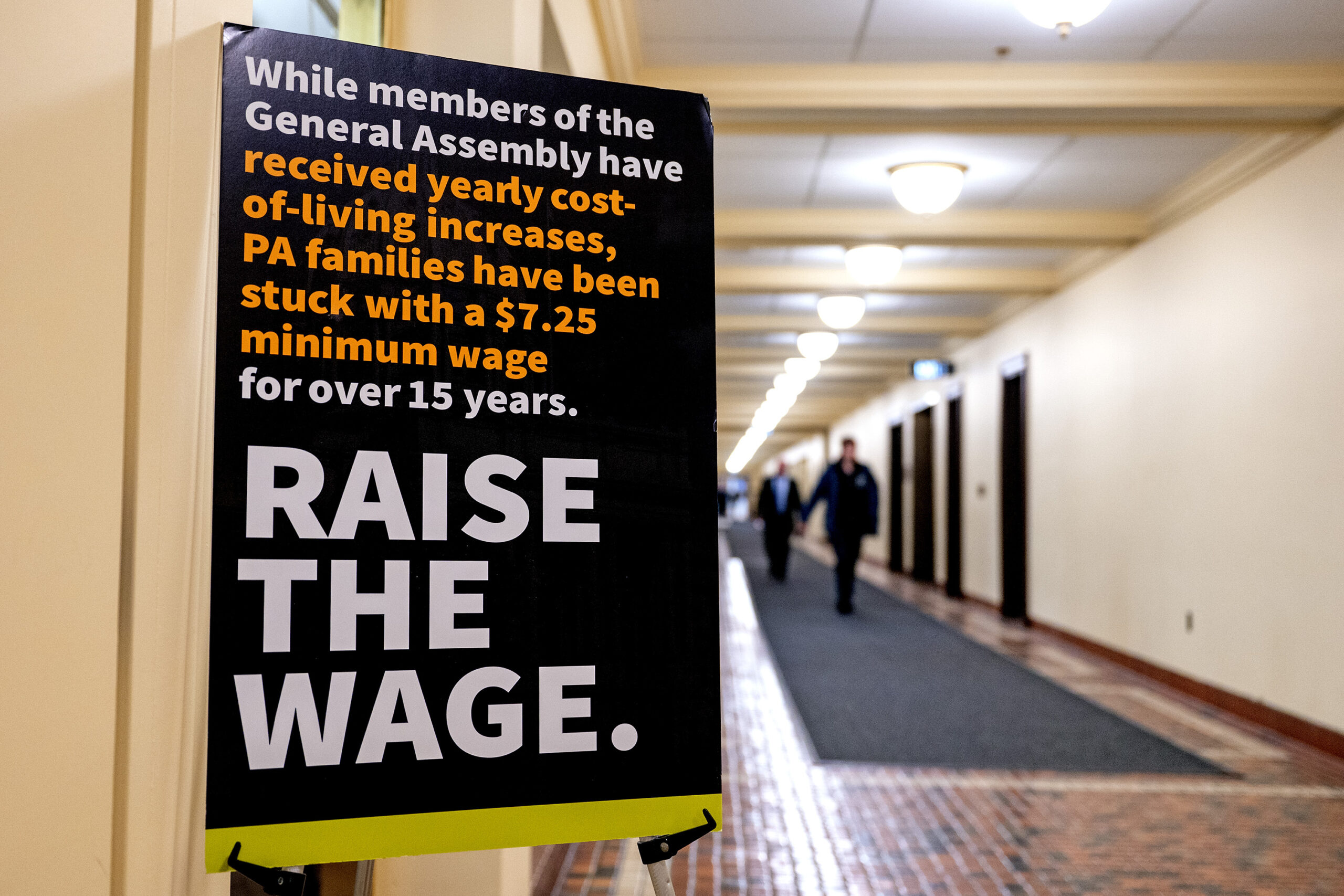
Pennsylvania’s minimum wage hasn’t budged from the $7.25 federal minimum that was set in 2009. But the number of Pennsylvanians actually making that much per hour is small and shrinking.
That’s about a 9% decline from 2024. This group makes up less than 1% of all Pennsylvania workers. The state’s population of minimum-wage workers has dropped by roughly 42% in the last five years.
Still, hundreds of thousands who make more than minimum wage would see their wages rise if the Pennsylvania’s wage floor was set to $15 an hour.
Last year, 189,900 people in Pennsylvania (6.4% of hourly workers) earned at least $7.26 and up to $12 per hour.
Another 320,900 (10.8% of hourly workers) earned between $12.01 and $15 per hour.
Each of these groups making low wages in Pennsylvania — up to $7.25, up to $12, and up to $15 per hour — was smaller in 2025 than the year before.
That’s due in part to increasing wages across the state, the report said, as well as a lower number of hourly wage earners and a shrinking workforce overall. Pennsylvania’s median wage rose to $20.95 per hour last year — roughly a $1 increase from 2024.
The report is based ondata from a U.S. Census Bureau survey. Last year’s data is missing October figures due to the government shutdown, the report noted.
Some are exempt from federal and state minimum wage such as farmworkers, some seasonal workers, and newspaper delivery people. Workers who make much of their money in tips have a lower minimum wage. Workers from these categories were not excluded from data in the report.
Pennsylvania’s minimum wage is not enough money to cover a person’s basic needs, according to a living wage calculator developed at the Massachusetts Institute of Technology. It estimates that the living wage for a single adult without a child in Pennsylvania is $23.32 per hour.
Mayor Cherelle L. Parker speaks during a rally in support of raising the minimum wage and also freeing the city to set its own minimum wage separate from the state, at City Hall, in Philadelphia, April 29, 2025.
Who actually made minimum wage last year?
In 2025, workers who made at or below the minimum wage in Pennsylvania were predominantly women. While they make up roughly 51% of the state’s workingpopulation, they represent a disproportionate 81% of workers who earned $7.25 or less last year.
Nearly 79% of these workers are white, and roughly half have a high school diploma or less education.
window.addEventListener(“message”,function(a){if(void 0!==a.data[“datawrapper-height”]){var e=document.querySelectorAll(“iframe”);for(var t in a.data[“datawrapper-height”])for(var r,i=0;r=e[i];i++)if(r.contentWindow===a.source){var d=a.data[“datawrapper-height”][t]+”px”;r.style.height=d}}});
Nearly three-quarters of them work in food preparation and serving jobs. Though it should be noted that tips and overtime for restaurant workers are not accounted for in the report’s data, and tipped restaurant workers’ minimum wage is $2.83 by law.
Unmarried people and young workers aged 16 to 24 also make up a disproportionately large segment of Pennsylvanians making minimum wage or less, the report says.
Working full time at the minimum wage, a worker would make $15,080 annually. But 80% of Pennsylvania workers who made minimum wage or less last year worked part-time.
Other sectors that employ these low-wage workers in Pennsylvania include hotels and lodging, retail, art and entertainment, hospitals, educational services, construction, and manufacturing.
window.addEventListener(“message”,function(a){if(void 0!==a.data[“datawrapper-height”]){var e=document.querySelectorAll(“iframe”);for(var t in a.data[“datawrapper-height”])for(var r,i=0;r=e[i];i++)if(r.contentWindow===a.source){var d=a.data[“datawrapper-height”][t]+”px”;r.style.height=d}}});
Pennsylvania’s neighboring states have higher minimum wages
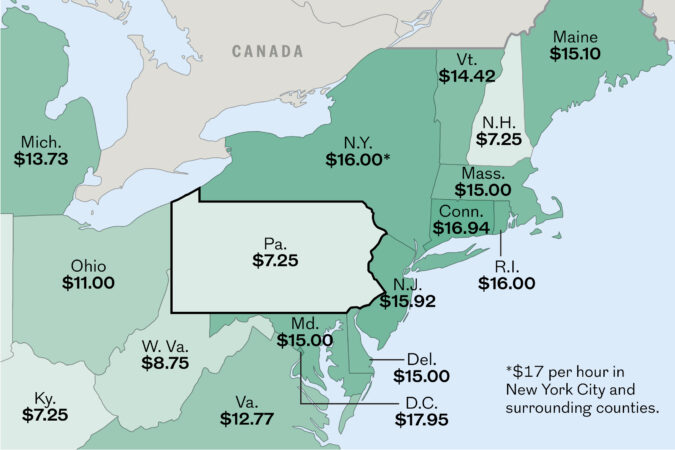
Despite efforts to raise Pennsylvania’s minimum wage, it lags behind that of neighboring states.
New Jersey’s minimum wage, which increased in January to $15.92per hour, is over double that of Pennsylvania’s, and 22 states are soon increasing their minimum wage or have done so already this year. In Delaware, the minimum hourly wage has risen from $9.25 in 2021 to $15 in 2025, thanks to legislation mandating the gradual increase.
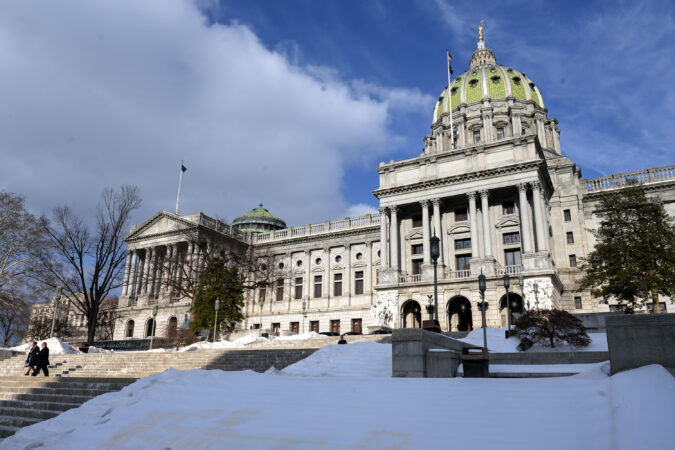
A sign in support of an increase in the state’s minimum wage in the state Capitol Feb. 3, 2026.
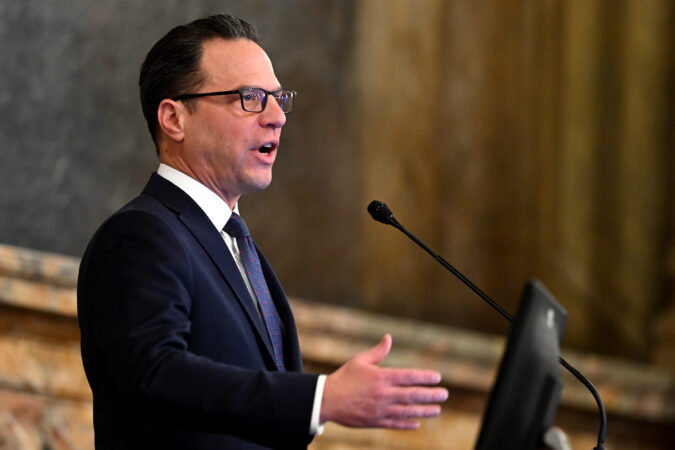
Gov. Josh Shapiro has backed raising the minimum wage at every annual state budget address since he was elected. In February he called on the General Assembly to advance minimum wage legislation, adding that raising it to $15 an hour would save the state millions on entitlement programs like Medicaid.
“If you aren’t going to do this because it’s the right thing to do, or because it would let more families put food on the table for their kids, then do it because it’s going to save us $300 million, shrink our entitlement budget by growing our workforce and putting more money back in workers’ pockets,” he said.
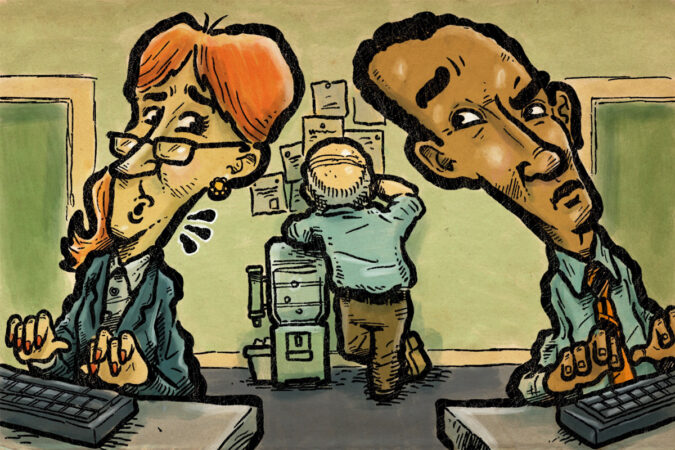
It can be seen as frivolous or hurtful, and not typically encouraged.
Still, “there seems to be something about it that makes people a little bit giddy, or excited to be gossiping,” says Rebecca Greenbaum, a professor at Rutgers University School of Management and Labor Relations.
In a recent study, Greenbaum and co-authors focused on the role of gossiping in the workplace. They found that talking about the boss behind their back can present a benefit: bonding among colleagues, and more cooperation. Their findings were recently published in the Journal of Business Ethics.
The study surveyed hundreds of participants who were asked to report if they had gossiped about the boss that day and how they acted afterward. Colleagues of some of the participants were also surveyed.
The study results show that on days when employees talked about the boss, they were likely to experience negative feelings such as guilt or shame, and avoid the boss. After gossiping, employees also reported feeling more of a sense of belonging with their colleagues.
“It doesn’t necessarily mean we’re saying ‘go out and gossip’ because we want you to feel closer to one another,” said Greenbaum. “It’s just that it provides one explanation for why people probably do engage in gossip, because they are getting this benefit from feeling closer to one another.”
This conversation has been edited for length and clarity.
What role has gossip typically played in the workplace? Is it positive? Negative?
In most of the research [until now] … oftentimes it was just looked at more negatively, or it was [discussed] much more in terms of being the victim of gossip. So if I found out someone was speaking poorly about me, how would I feel? I would probably feel angry. I’d feel hurt, I’d feel sad.
But where [we] really took this in a different direction was focusing much more on the person engaging in the gossip. From that standpoint, not as much research had been done in terms of how people react to their own behavior. So for example, do people really see it as bad? That was one thing we were curious about.
What do you hope people will take away from the study?
Keep in mind the boss is someone who can give you rewards, they can punish you — so it’s a little bit more high-stakes to talk badly about a boss compared to maybe just you talking bad[ly] about a coworker or neighbor or something like that.
We have these emotional reactions sometimes because they serve to protect us. So if you feel … shame and guilt, [for example], it’s telling you that you need to course correct.
We not only need to protect ourselves individually, but we have this relational need that has to do with our survival too. When people gossip, and then they respond to that gossip by feeling emotionally closer, and like they belong with their group a bit more, that can also facilitate a person’s sense of survival.
If you have this common enemy, like a boss who’s a jerk to you and he’s mean, sometimes it can feel even better for your sense of belonging to gossip about him.
Why does it matter if colleagues feel connected to one another?
Oftentimes people have to engage in teamwork. You need to cooperate, collaborate, come up with creative ideas together, advance some type of project. Even if you aren’t necessarily working together, there’s another big aspect of what we do in organizations, which is not engaging in counterproductive behaviors towards one another. [A colleague might say], “I have a kid at home who’s sick, I was supposed to give this presentation. Can you give it?” If we feel closer with one another, we might be more willing to cooperate with some of those requests that come our way.
What if you and colleagues like the boss? How do you build that sense of bonding?
If we have leaders who are good to us, we’re more willing to help them out. There’s basically a role modeling effect where people within the workforce end up treating each other with more dignity and respect too. So if you have a good boss, that’s actually the best scenario, because you don’t have to gossip and experience some of those negative types of emotions.
Are there any other benefits of having a bad boss?
I’m asked about this a lot, because I’ve been studying dysfunctional leadership for so long. I know there’s some research out there that shows that, for example, if you do have an abusive boss — that boss who might yell at you, ridicule you, tell you you’re stupid, whatever it may be — sometimes it can get people behaving better, performing better, but it’s short-lived.
Pennsylvania pays out hundreds of millions in overtime pay to its employees annually. For some agencies, overtime work is in the nature of the jobs, which involve responding to emergencies. But understaffing sometimes plays a role as well.
Last year, Pennsylvania paid $397 million in overtime to roughly 56,000 employees, according to state data. The state plans to spend a similar amount this year.
“Overtime is a necessary part of operating state government,” Daniel Egan, a spokesperson for the Pennsylvania Office of Administration, said via email in February. “Many Commonwealth agencies provide 24-7 services Pennsylvanians rely on, including plowing roads, responding to emergencies, staffing correctional facilities, and caring for patients in state hospitals and nursing homes.”
In Pennsylvania, overtime spending has increased by nearly 50% since 2019. Some of the agencies that paid the most overtime were the Department of Corrections, Department of Transportation, Department of Human Services, and the State Police.
Dolling out millions in overtime is not uncommon in state governments and it’s been increasing among some. New York spent 1.3 billion on overtime in 2024, a roughly 10% increase from the previous year. Maryland spent $404 million that year, up almost 38% from four years prior. In Delaware, overtime spending reached $84 million in 2025, about a 20% increase from 2023.
While staffing shortages contribute to overtime needs, agencies say a variety of factors contribute to this spending.
Top spenders on overtime in Pa.
Overtime accounted for 3.9% of Pennsylvania’s personnel costs in 2025, says Egan, which last year ran up to over $10 billion.
These costs include salaries, wages, employee benefits, and other personnel costs like overtime.
window.addEventListener(“message”,function(a){if(void 0!==a.data[“datawrapper-height”]){var e=document.querySelectorAll(“iframe”);for(var t in a.data[“datawrapper-height”])for(var r,i=0;r=e[i];i++)if(r.contentWindow===a.source){var d=a.data[“datawrapper-height”][t]+”px”;r.style.height=d}}});
Pennsylvania’s personnel costs have grown from $8.2 billion to $10 billion between 2019 and 2025, while overtime spending increased from $269 million to nearly $400 million last year.
But the state’s other expenses have grown even more. Personnel was 9.4% of the budget in 2019, and dropped to 7.8% last year.
window.addEventListener(“message”,function(a){if(void 0!==a.data[“datawrapper-height”]){var e=document.querySelectorAll(“iframe”);for(var t in a.data[“datawrapper-height”])for(var r,i=0;r=e[i];i++)if(r.contentWindow===a.source){var d=a.data[“datawrapper-height”][t]+”px”;r.style.height=d}}});
Egan noted that state employee pay rates have increased by roughly 28% since 2019 “to keep up with the cost of living and ensure the commonwealth remains a competitive employer for high-quality employees,” and overtime is based on employees’ base rate of pay. He also noted that many state agencies must operate “around the clock.”
Staffing shortages
Corrections doled out roughly $163 million in overtime to 13,600 employees in 2025.
“Overtime in corrections will always be a reality due to the 24/7 operation of essential security posts,” but the department has been working to curb its staffing shortages, said spokesperson Maria Bivens.
In Pennsylvania, Corrections has looked to address the shortage in recent years by dropping the age requirement for trainees and allowing out-of-state applicants.
“As corrections officer vacancies decrease, our facilities become safer, more cost-effective, and better equipped to meet the needs of the incarcerated population,” department secretary Laurel Harry said last year.
Curbing the staffing shortage helps reduce the agency’s reliance on overtime, which in turn reduces employee burnout and saves taxpayers money, the department has noted.
The officer vacancy rate fell from 11.3% in September 2022 to 6.4% in September 2025. Bivens said vacancy should continue to drop to roughly 3% in March once two facilities close and their staff are deployed to other positions.
A Pennsylvania State Police vehicle parked in Center City Philadelphia.
At the Pennsylvania State Police, “overtime is not determined solely by vacancy rates,” said spokesperson Logan Brouse. It can include responding to critical incidents and court appearances, Brouse noted.
“As part of our public safety operations, overtime is sometimes necessary to uphold our mission by ensuring we can respond efficiently and effectively to emergencies, maintain adequate staffing levels, and meet operational demands,” said Brouse.
The department paid roughly $55 million in overtime to about 5,700 employees last year.
The governor’s budget proposal includes funds to add 380 troopers, and removes a cap on how many the state can hire, said Brouse.
“The department continually reviews staffing levels, scheduling practices, and operational needs to manage overtime responsibly,” said Brouse. “We always strive to be good stewards of taxpayer money while ensuring that public safety services are delivered effectively and without interruption.”
Agencies on call 24-7
Some agencies say overtime is inevitable given the all-hours nature of their work.
Last year, PennDot paid $70 million in overtime to roughly 12,100 employees. Their work includes emergency response during weather events, as well as roadway or bridge repairs, noted spokesperson Erin Waters-Trasatt.
“Pennsylvanians expect our employees to respond to emergencies 24-7 and during major events — like the January 2026 snowstorm,” said Waters-Trasatt. “Overtime is required to keep our roadways clear and safe for travel.”
PennDot trucks load up on salt at their facility on Hunting Park Avenue on Friday morning Jan. 19, 2024.
The Department of Human Services paid about $65 million in overtime to 8,513 employees last year.
The department runs psychiatric hospitals and other residential care facilities that operate 24-7 and “must continue to function even when employees have reached the standard number of work hours per day or week,” said spokesperson Natalie Scott.
The department has also been trying to fill vacancies, Scott noted, adding that Gov. Josh Shapiro’s administration has cut down the time it takes to hire state employees.
“Progress made to increase staff will allow employees more time and resources to effectively do their work and reduce the amount of overtime spent,” said Scott.
Following several years of major worker organizing efforts and high-profile strikes, 2025 brought a change in momentum for the labor movement. President Donald Trump’s administration sought to end federal workers’ union contracts and, through a firing, left the National Labor Relations Board without a quorum and unable to make decisions.
But the percentage of workers who are union members nationwide has stayed pretty steady in the last year, new data shows. And in Pennsylvania and New Jersey, union membership rates fell.
In 2025, 10% of the country’s total workforce was part of a union, compared to 9.9% in 2024, according to new data from the U.S. Bureau of Labor Statistics. It’s the first time since 2020 that the rate has inched up — albeit slightly — instead of down.
However, BLS noted, this year’s estimates are not fully comparable to past years because they are based on a BLS survey that is missing October figures due to the government being shut down in October and part of November.
In the past year, there have been “a lot of kind of anti-labor efforts coming out of the White House,” said Todd Vachon, assistant professor of labor studies and employment relations at Rutgers University.
Despite those efforts Vachon said, “labor has pretty much maintained the same at the national level. … The Trump attacks haven’t really had any effect yet, at least in the first year.”
window.addEventListener(“message”,function(a){if(void 0!==a.data[“datawrapper-height”]){var e=document.querySelectorAll(“iframe”);for(var t in a.data[“datawrapper-height”])for(var r,i=0;r=e[i];i++)if(r.contentWindow===a.source){var d=a.data[“datawrapper-height”][t]+”px”;r.style.height=d}}});
Union membership rates dropped to an all-time low nationwide in 2023 and remained pretty similar in 2024. During those years, roughly one in 10 U.S. workers was part of a union.
When BLS first started recording this data in 1983, about two in 10 U.S. workers were unionized. There were 17.7 million unionized workers in 1983 and 14.7 million last year.
Danny Bauder, president of the Philadelphia Council AFL-CIO, speaks at an event supporting federal workers in October.
Unionizing in N.J. and Pa.
In New Jersey, 14.7% of workers were unionized last year, and in Pennsylvania, it was 10.9%.
In both states, that was a decline of around one percentage point from 2024, but BLS noted that state-level data “should be interpreted with caution,” due to the shutdown-related incomplete data.
window.addEventListener(“message”,function(a){if(void 0!==a.data[“datawrapper-height”]){var e=document.querySelectorAll(“iframe”);for(var t in a.data[“datawrapper-height”])for(var r,i=0;r=e[i];i++)if(r.contentWindow===a.source){var d=a.data[“datawrapper-height”][t]+”px”;r.style.height=d}}});
Some local labor action highlights from this past year include:
Whole Foods unionization: Workers at the Spring Garden location voted to form a union in January, becoming the first unionized Whole Foods staff. Whole Foods challenged the election, and the NLRB was without a quorum to decide the case last year.
Graduate student workers at the University of Pennsylvania reached a tentative agreement on a first contract this month after threatening to strike, nearly two years after unionizing.
Employees of several hotels went on strike in Octoberand November as their union, Unite Here Local 274, sought new contracts for roughly 1,000 members at eight Philadelphia hotels.
National Starbucks strike: Philadelphia Starbucks workers joined a nationwide strike in November amid contract negotiations. Some have returned to their jobs, but over 1,000 continued to strike as of early February.
New teacher contract: The Philadelphia Federation of Teachers got a new contract for 14,000 teachers, nurses, counselors, secretaries, and paraprofessionals, averting a strike.
Some 271,000 federal jobs were cut between January and November. Meanwhile, the union membership rate in the public sector increased by 0.7% nationally in the last year according to the new BLS data.
Vachon notes that the vast majority of public sector workers are at the municipal level, not federal.
“The hiring of police, and teachers, and sanitation workers across the thousands of cities around the U.S. more than compensated for [cuts at the federal level], because we see an increase in the public sector,” he said.
Trump also fired a member of the National Labor Relations Board (NLRB) early last year, which left it without a quorum to issue rulings. In some cases that can slow down the formation of a new union — at the Amazon-owned Whole Foods in Philadelphia, for example.
The number of union elections overseen by the NLRB declined last year and the overall number of workers involved in those elections dropped too, according to the nonpartisan Center for American Progress.
“A huge percentage of new union organizing is required every year just to maintain the same level of unionization, because of the churning and the growth of the overall labor force,” said Vachon. “If the labor force is not growing, then you can actually see increases in union density.”
And unions are being cautious of reaching out to the NLRB under the Trump administration, he notes.
“There’s a fear [that] if something gets sent up to the NLRB that the ruling is going to set a precedent that makes it even more difficult to organize,” said Vachon. “It’s kind of had a dampening effect in that way.”
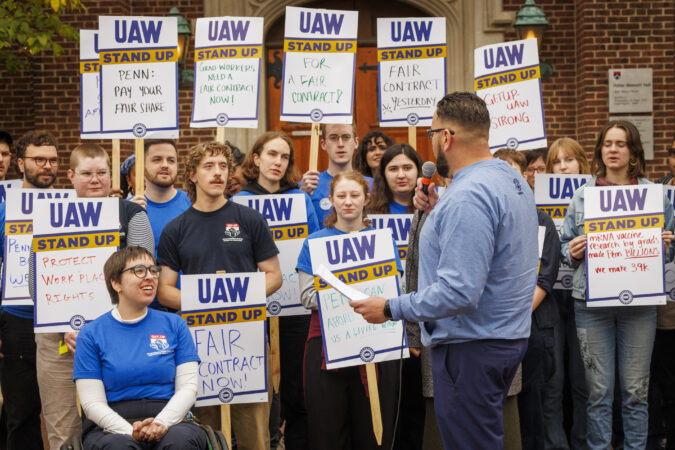
Penn’s graduate student workers have reached a tentative agreement on a first union contract, averting a strike.
The two-year tentative agreement includes increases to wages among other benefits.
“I am so proud of what we were able to accomplish with this contract,” Clara Abbott, a Ph.D. candidate in literary studies and member of the bargaining committee said in a statement. “We won a historic contract that enshrines gains for grad workers.”
Research and teaching assistants at the university voted to unionize in 2024. The union, which represents about 3,400 graduate student workers, is known as Graduate Employees Together-University of Pennsylvania (GET-UP) and is part of the United Auto Workers (UAW). The union has been negotiating with the university since October 2024 for a first contract.
In November, the union’s bargaining members voted to authorize a strike, if called for by the union. In January, they set a strike deadline, announcing that they would walk off the job on Feb. 17 if they had not reached a deal.
A deal was announced in the early morning hours Tuesday.
While tentative agreements had been reached on a number of issues, some remained without consensus ahead of the final bargaining session on Monday before the strike deadline. Those sticking points included wages, healthcare, and discounts on SEPTA passes.
“We are pleased to announce that a tentative agreement has been reached between Penn and GETUP-UAW,” a university spokesperson said in a statement. “Penn has a long-standing commitment to its graduate students and value their contributions to Penn’s important missions. We are grateful to all the members of the Penn community who helped us achieve this tentative agreement.”
A date to vote on the ratification of the tentative agreement has not yet been announced.
The deal comes as earlier this month Pennsylvania state senators and representatives and Philadelphia City Council members addressed letters to the university’s president and provost, urging them to come to an agreement with the student workers and avoid a strike.
“A strike at the University of Pennsylvania would seriously disrupt life for the tens of thousands of Philadelphians who are students, employees, and patients at Penn,” the letter signed by City Council members reads. “As such, we strongly urge the Penn administration to avert a strike by coming to a fair agreement that meets the needs of graduate student employees prior to February 17th.”
Monday’s bargaining session brought tentative agreements on sticking points that included wages and healthcare coverage.
If ratified, the tentative deal would provide graduate student workers with an annual minimum wage of $49,000, which the union has said is a 22% increase over the previous standard. For those paid on an hourly basis, the minimum hourly rate would be $25. Those rates would go into effect in April and a 3% increase would be provided in July 2027.
The deal would also create a fund with $200,000 annually from which graduate student workers could seek reimbursements to cover up to 50% of their dependent’s health insurance premiums.
Ahead of the Monday bargaining session, other tentative agreements had come together around leave. The university agreed to give six weeks of paid medical leave, as well as eight weeks of paid parental leave.
The university and the union had also recently reached a tentative agreement that would create an annual $50,000 fund to help international graduate student workers with expenses associated with reinstating or extending visas.
What would have happened in the event of a strike?
Graduate student workers in the bargaining group teach and conduct research at the university.
Classes, research, and other academic activities would have continued during a strike, according to the university spokesperson. Penn published guidance on how to continue this work in the event of a work stoppage or other disruption.
Striking graduate student workers would not have been paid throughout a work stoppage, but would have continued to be covered by their health insurance for the time being, according to a university statement.
If others employed at the university who are not in the bargaining group chose to join the work stoppage, they would not have been paid and could have faced consequences “up to and including separation from that position, depending on the circumstances of the refusal to work,” according to a university statement.
Ahead of the tentative agreement on Monday, hundreds signed a pledge indicating that they are employed at Penn and would not do the work of those on strike or assign it to others in the event of a work stoppage.
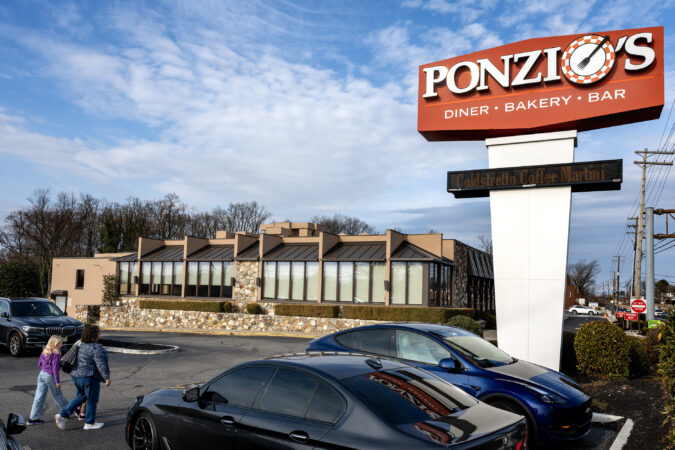
In recent years, a string of the state’s iconic diners have shuttered their doors. New state legislation aims to keep the lights on at those still in business.
The bill, which was introduced in the New Jersey Senate in January, would provide some diners and other historic restaurants with tax benefits.
“Diners, and specifically historic diners, are a cornerstone of our great state, having served residents and visitors for many decades. They are part of our culture and our history, and we have a duty to help them thrive,” State Sen. Paul Moriarty of Gloucester County, a sponsor of the bill, said in a statement Thursday.
The legislation, which would establish a registry of historic diners and restaurants, would give the businesses a tax credit of up to $25,000. Only diners and family-owned restaurants operating for at least 25 yearswill qualify.
The bill has been referred to the Senate Budget and Appropriations Committee.
“It has been heartbreaking to see so many of these well-known establishments close or dramatically cut their hours,” Moriarity said.
Where have diners closed in New Jersey?
The origin of the modern diner can be traced back to a horse-drawn lunch wagon in 19th-century Rhode Island and the model has evolved since then. New Jersey has been coined the “diner capital” of the U.S. but has seen closures in recent years due to increased operating expenses, the challenge of finding employees, and the impact of the pandemic.
The Cherry Hill Diner closed in 2023 after 55 years in business and following the co-owner’s unsuccessful search for a buyer. South Jersey’s Gateway Diner in Gloucester County closed that same year amid construction of the Westville Route 47 Bridge and the state’s acquisition of the site. The Red Lion Diner in Burlington County also sold, making way for a Wawa.
In January 2024, the Star View Diner in Camden County closed. Last year, the Collingswood Diner shut its doors in August, to be replaced by a marijuana dispensary.
The trend extended in Philadelphia where the Midtown III closed in 2020. Last year, the Mayfair Diner in Northeast Philadelphia was listed for sale.
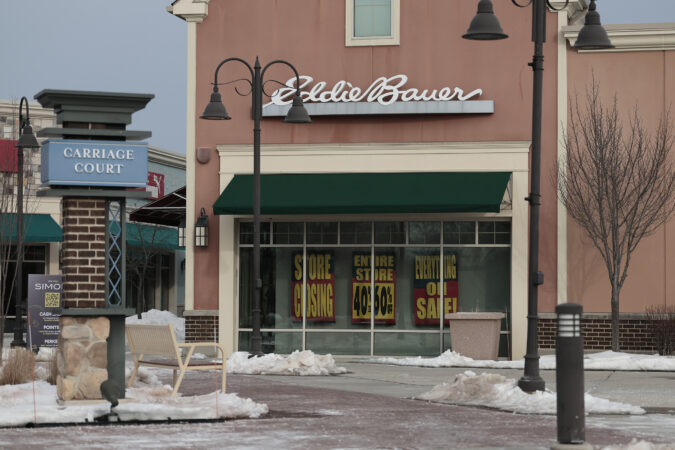
Over 60 years ago, the first American to climb Mount Everest sported an Eddie Bauer coat. Now the company behind the outdoor apparelfinds itself conducting liquidation sales.
The operator of Eddie Bauer filed for Chapter 11 bankruptcy in the U.S. Bankruptcy Court for the District of New Jersey on Monday and is winding down stores as it seeks a buyer.
Eddie Bauer is laying off some 58 employees in New Jersey at locations in Burlington, Gloucester, Middlesex, and Monmouth Counties, according to a layoff notice filed with the state.
“In an effort to rightsize the company’s store footprint and close underperforming stores, the company will be closing a number of retail locations in N.J.,” reads the notice.
In Pennsylvania, a spokesperson for the state’s Department of Labor and Industry said they had not received a layoff notice for Eddie Bauer stores as of Tuesday morning.
Before filing for bankruptcy, the company chose not to renew leases for 49 stores that had leases ending Jan. 31. Those locations have since closed, bankruptcy documents indicate.
The company is liquidating the remaining 175 stores as it seeks out a buyer.
In the Philadelphia area, Eddie Bauer stores are located at the Gloucester Premium Outlets in Camden County, at the Philadelphia Premium Outlets in Montgomery County, as well as in Concordville in Delaware County.
As of Tuesday, the Fashion District location in Center City appeared to be closed, according to the Eddie Bauer website.
What led to the bankruptcy?
Eddie Bauer stores have been operated by Catalyst Brands, which was formed in January 2025 in a merger that brought together brands including Aéropostale, Brooks Brothers, and JCPenney.
The CEO of Catalyst Brands, Marc Rosen, said in a news release Monday that the Eddie Bauer operator had been in a “challenged situation,” even before the new parent company was formed last year. The company was dealing with declining sales and supply chain challenges amid other issues, he said.
“Over the past year, these challenges have been exacerbated by various headwinds, including increased costs of doing business due to inflation, ongoing tariff uncertainty, and other factors,” Rosen said. “While the leadership team at Catalyst was able to make significant strides in the brand, including rapid improvements in product development and marketing, those changes could not be implemented fast enough to fully address the challenges created over several years.”
Some federal workers aren’t leaving public service altogether. They’re landing jobs in local government.
A job-seeking platform managed by national nonprofit Work for America is helping some workers find those new roles. The service is relatively new but predates President Donald Trump’s efforts to shrink the federal workforce in 2025.
Some 350 workers with federal job experience in Pennsylvania and 169 in New Jersey have used the platform, called Civic Match, since it was founded in November 2024.
Nearly 900 state and local government roles in Pennsylvania have been posted on the platform since its start and 42 in New Jersey.
And, according to new data, 187 former federal workers across the U.S. have used the site and landed jobs in state or local government.
While that’s a small fraction of the total federal workers who have left their jobs in the last year amid the Trump administration’s shake-up of the workforce, the new data shed light on where workers are landing after leaving government positions.
In October, just after Trump’s deferred resignation program took effect, Pennsylvania and New Jersey lost roughly 6,000 federal jobs.
There really isn’t a centralized place where someone looking for a state or other local government job can go, said Caitlin Lewis, executive director at Work for America. The platform is open only to job seekers who have federal work experience or who lost their jobs because of federal funding cuts, but Lewis hopes to open it up to others in the future.
Who are these federal workers?
Austin Holland was working in the U.S. Department of Housing and Urban Development last year, when federal workers were instructed to begin working in the office full-time. He had been working remotely from Lancaster much of the time and commuting to Washington, a few days per pay period. Relocating to D.C. wasn’t feasible for him.
“I really enjoyed my federal job, and I had imagined that it was kind of something I was going to do for my entire career,” he said. “I was struggling with losing that and trying to figure out ‘Where is my career going from here?’”
Holland estimates that he joined the Civic Match platform in early 2025. Through a virtual job fair, he made a connection that ultimately led to a job at the Pennsylvania Housing Finance Agency. He took a pay cut but was able to stay in Lancaster — and in public service.
Before leaving his job at the Environmental Protection Agency, Andrew Kreider uploaded his resume to Civic Match and attended some of the platform’s webinars.
“It was refreshing and validating to have such high-quality hiring officials participating,” Kreider said. “I think it helped remind those of us who maybe were a little bit disillusioned — or were feeling traumatized by what we had just been through — that there were places where we could continue to serve where we wouldn’t be subject to what we were going through at the federal level.”
Kreider, who lives in Chester County, also used LinkedIn to look for jobs and searched government websites. He ultimately landed a communications director job with Chester County, which he found on the county’s job listing board.
He’s been in the new job for roughly two months and says some days are “completely overwhelming.”
Andrew Kreider in Philadelphia in April 2025.
“County governments do a lot of work with not as many resources as federal agencies tend to have,” he said. “I’m working as a communication director for an organization three times the size of the one I came from, but I’m making significantly less money and sort of being responsible for communications related to far more things.”
He’s taken a pay cut but said he loves the new job.
“It’s been, for me, an affirmation of how many good people there are who just want to help,” Kreider said. “I’m surrounded by people who come into work every day to serve their neighbors and their communities.”
On a recent Thursday afternoon in February, Civic Match had seven jobs posted in Philadelphia. Available positions with the city included a chief epidemiologist, a director of tax policy, and a director of adult education.
The majority of the 187 platform users who have found jobs — 63% — are workers with at least eight years of public sector experience, according to new data from Work for America. Roughly 40% found jobs in human resources or other operations-related roles.
One-third of those hired have relocated for their new jobs out of state, with 22% reporting a move of over 100 miles from their previous position.
Their federal experience came from a range of departments, including the Departments of Health and Human Services, Housing and Urban Development, and Transportation, as well as USAID, the General Services Administration, and the Environmental Protection Agency.
The aim of Work for America is to curb staffing shortages in local governments and help speed up their hiring process, Lewis said.
“Unlike the private sector, government does not really think about its employer brand and marketing itself as a potential employer,” she said. “Individual local governments don’t have the same amount of resourcing to actually think about expressing an employee value proposition and really marketing to folks who could be great fits for roles that they have open.”