Author: Denali Sagner

  • Tired Hands Brewing turned its original Ardmore outpost into a private event space as it navigates the future

    Tired Hands Brewing turned its original Ardmore outpost into a private event space as it navigates the future

    Tired Hands Brewing’s Ardmore Brewing Company brewpub has been turned into a private event space, for now, as its owner navigates the future of the beer company.

    Tired Hands’ Kennett Square taproom and bottle shop is permanently closed, owner Jean Broillet confirmed to The Inquirer on Thursday. Tired Hands’ Beer Park in Newtown Square also will not reopen this summer as the property’s owners are looking to redevelop it, Broillet said.

    Tired Hands’ Ardmore Fermentaria and Fishtown restaurant St. Oner’s remain open for business. The brewing company’s MT. Airy Biergarten is a seasonal operation that will reopen in the spring.

    Broillet said the decision to shift to private events at the Ardmore Brewing Company location was born out of a number of factors: having two Tired Hands locations in Ardmore was confusing for customers; ongoing construction in Ardmore created a “prohibitive environment” for doing business; and the changing landscape of brewing has prompted Tired Hands to begin reimagining parts of its business model.

    The changing face of Ardmore, and of Tired Hands

    When Broillet opened the first Tired Hands location, the BrewCafé, in 2012, he said there was little by way of interesting, high-quality food and drink in Ardmore. At the time, he said, Tired Hands’ craft beer and artisan meats and cheeses stood in stark contrast to the Wawas and Irish pubs the area was accustomed to. Now, that era is a distant memory as Ardmore blossoms as a culinary destination on the Main Line.

    Ardmore “went from zero to 60 really quickly in terms” of dining and entertainment options, said Broillet. He added that Tired Hands was a catalyst for that progress.

    In 2015, Broillet and his business partner and wife Julie Foster opened the Fermentaria at 35 Cricket Terrace, just blocks from Tired Hands’ first location at 16 Ardmore Ave.

    The Fermentaria was a major expansion for Tired Hands. It offered food options that extended beyond the BrewCafé‘s sandwich-and-salad-based menu, like steak frites and baby back ribs. It also quadrupled Tired Hands’ production capacity. At the BrewCafé, Tired Hands’ brewers were able to produce 1,000 barrels of beer annually. At the time of its opening, Broillet anticipated the Fermentaria would increase production to 4,000 barrels per year.

    Tired Hands opened St. Oner’s, a Fishtown restaurant and brewpub, in 2020.

    In the years that followed, Tired Hands opened the seasonal Biergarten in Mount Airy, the Kennett Square taproom, and the Beer Park in Newtown Square.

    In 2021, Broillet stepped down from daily operations after allegations of sexism and racism at Tired Hands proliferated on social media, including claims that women were held to different standards than their male counterparts and employees were berated or publicly humiliated for mistakes. Broillet returned to his post at the helm of Tired Hands a year later.

    Broillet said that “lots of valuable lessons, worldly lessons, were learned during that process” and that Tired Hands is doing everything it can to “prevent that from ever happening again.”
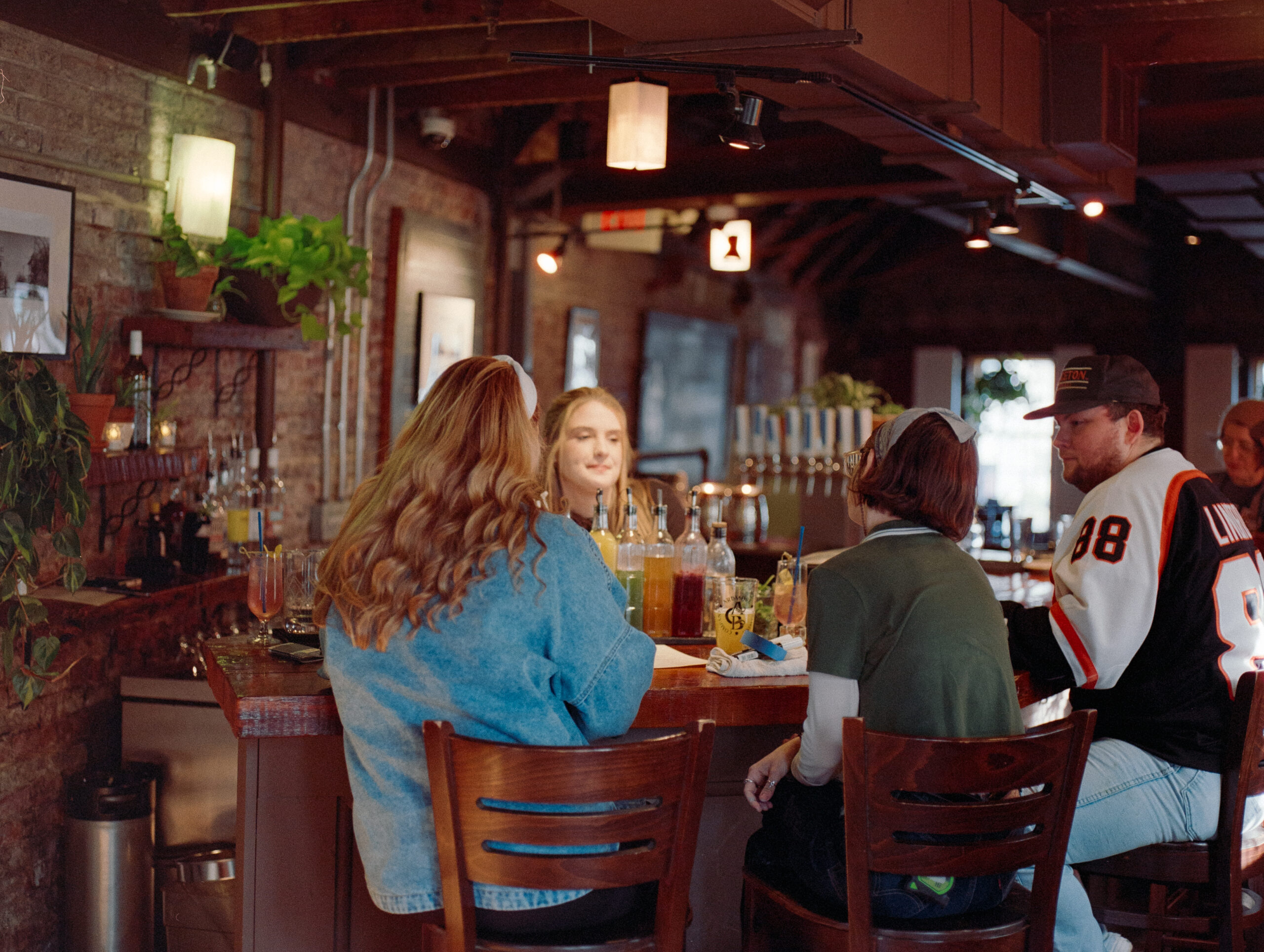
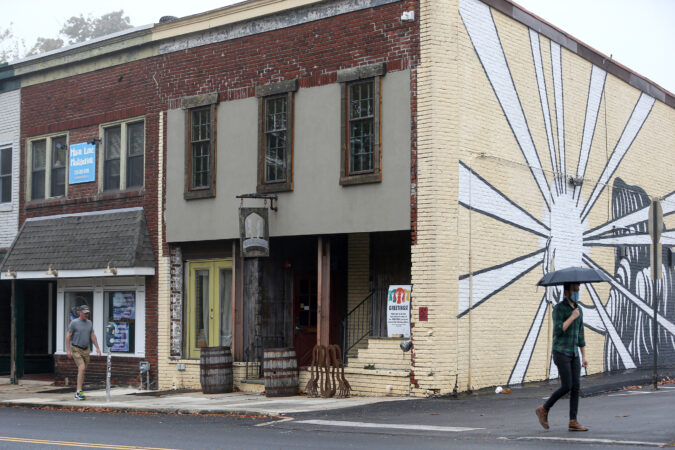
    Ardmore Brewing Co., located at 16 Ardmore Ave. in Ardmore, Pa. Owner Tired Hands Brewing Company has transitioned the brewery into a private events space for the time being.

    Changes in Ardmore, closure in Kennett Square

    While opening a second Ardmore outpost helped grow Tired Hands’ footprint on the Main Line, having “two of the same company” also made things “pretty confusing for people,” Broillet said.

    In efforts to iron out the confusion, Tired Hands rebranded its BrewCafé last spring, renaming it the Ardmore Brewing Company, upgrading its interior, and adding more food and cocktail options while cutting down its beer list.

    “The confusion was still there,” Broillet said.

    Broillet also brought on a culinary team that had extensive experience with private events. They began to host a handful of events at the brewery — retirement parties, birthdays, etc. — which were a success.

    At the same time, major construction had created a “prohibitive environment for us to do business here on Ardmore Avenue,” Broillet said. Construction on the mixed-use Piazza project and Ardmore Avenue Community Center are ongoing, both of which are proximate to Ardmore Avenue and the businesses that operate there.

    The brewery shifted to exclusively hosting private events in the last few months, a decision Broillet said he “couldn’t be happier” with.

    The brewery owner said the Ardmore Avenue location will be open to the public again in the future, but did not specify in what form.

    The taproom and bottle shop in Kennett Square will not reopen.

    Broillet said he opened a Tired Hands outpost in Kennett Square, in part, to have a presence near his family members who lived there. Though it was a “fun” chapter, Broillet said it no longer made sense to operate in Kennett Square, where Tired Hands already has a strong network of distributors that can get their beers into people’s hands without making them trek to the bottle shop.

    What comes next?

    Broillet offered assurances that Ardmore Brewing Company will open up to the public again, but said the specifics aren’t clear yet. Tired Hands also plans on expanding its Mount Airy footprint with a permanent restaurant space.

    For brewers across the country, the specter of people drinking less alcohol looms large. Sales of craft beer fell 4% in 2024, and there were more brewery closings than openings in late 2024 and early 2025, the first time in 20 years such a phenomenon had occurred. Brewerytown’s Crime & Punishment Brewing shuttered last April, with its owners citing a shifting culture around alcohol among the reasons for its closure. Iron Hill Brewery & Restaurant, a Philly-area craft brewing pioneer, abruptly shuttered all of its locations in September.

    Broillet said that while the changing dynamics of the industry remain on his mind, Tired Hands was not “acutely a victim of that downturn.” Sales had been down slightly over the past few years, but Broillet attributes that more to having two locations in Ardmore than to the state of the industry. He’s bullish about Tired Hands’ ability to distinguish itself and sees excitement in the changes.

    “Those sentiments have a way of just propelling you forward,” Broillet said.

    This suburban content is produced with support from the Leslie Miller and Richard Worley Foundation and The Lenfest Institute for Journalism. Editorial content is created independently of the project donors. Gifts to support The Inquirer’s high-impact journalism can be made at inquirer.com/donate. A list of Lenfest Institute donors can be found at lenfestinstitute.org/supporters.

  • Narberth artist Emily Stewart is making ‘ephemeral’ public art out of snow

    Narberth artist Emily Stewart is making ‘ephemeral’ public art out of snow

    After the biggest snowstorm in a decade dumped more than nine inches of snow on the Philadelphia region, Narberth artist Emily Stewart woke up to a blank canvas.

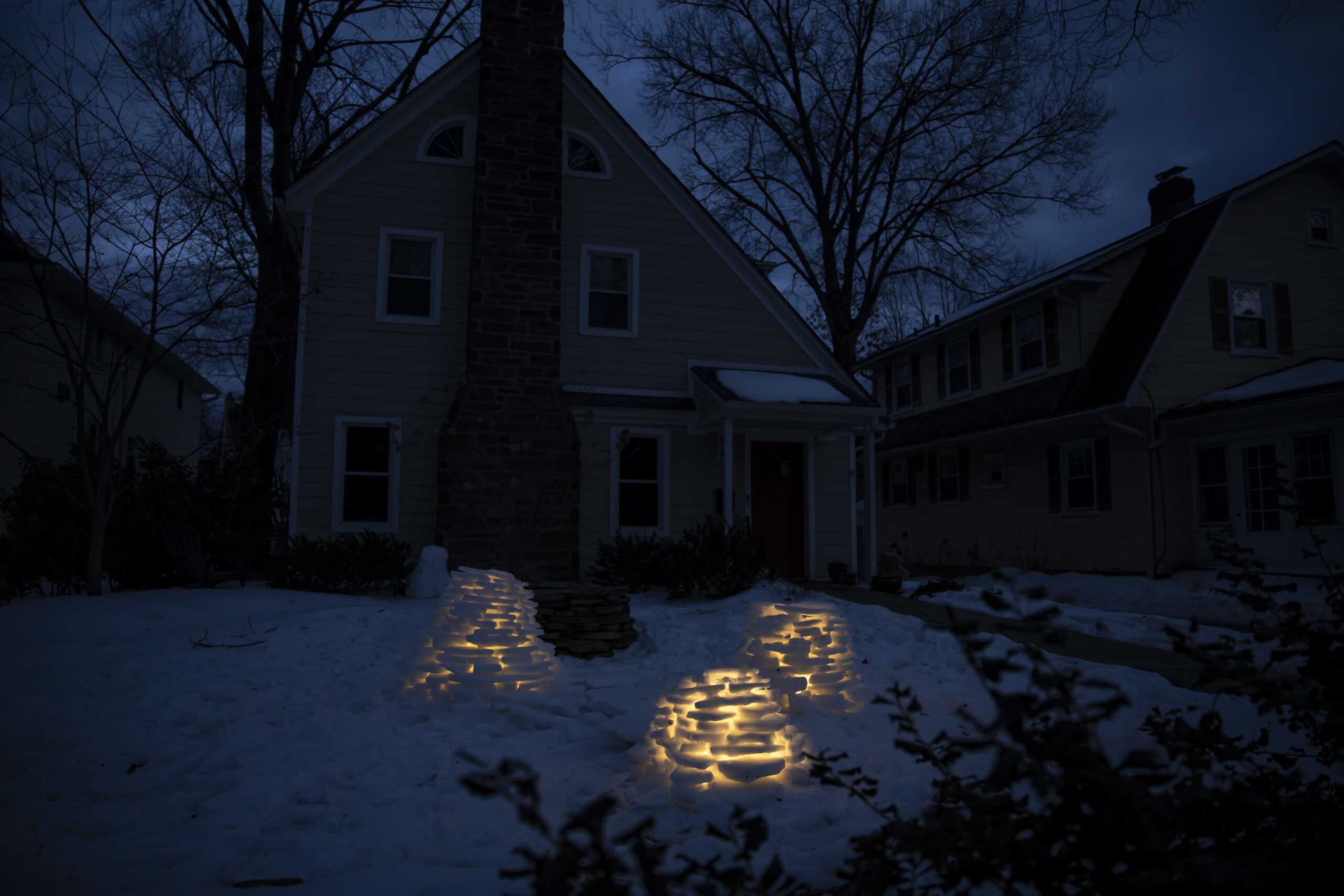
    With her front yard dusted in snow, Stewart zipped up her coat, laced up her boots, and braved the cold to build three Swedish lanterns out of snow and ice. Set against the darkness of winter, the lanterns have offered a glimmer of warmth during the coldest days of a historically frigid period in and around Philly.

    Ice sculptures made by artist Emily Stewart outside her Narberth home on Wednesday, Feb. 11. Stewart said she was inspired to make the structures after reading about Swedish lanterns. “I love working with snow in my yard or other public places because it is inherently social,” Stewart said. “As I work, people walk by, cars pull over, I get to have conversations with neighbors and meet new friends.”

    Stewart is a Main Line-based artist and community organizer who works with ink, graphite, wood, and, yes, snow. She is a lover of art and community building, passions that arose from her time in art school and serving in the Peace Corps. She is also the coordinator of Narberth Public Art, a community group that brings public art displays to downtown Narberth.

    An Ohioan by birth, Stewart isn’t bothered by the snow. In fact, she prefers a long, snowy winter to the Philly area’s increasingly hot summers.

    “I love, love winter,” Stewart said, adding that she has the “opposite of seasonal depression disorder.”

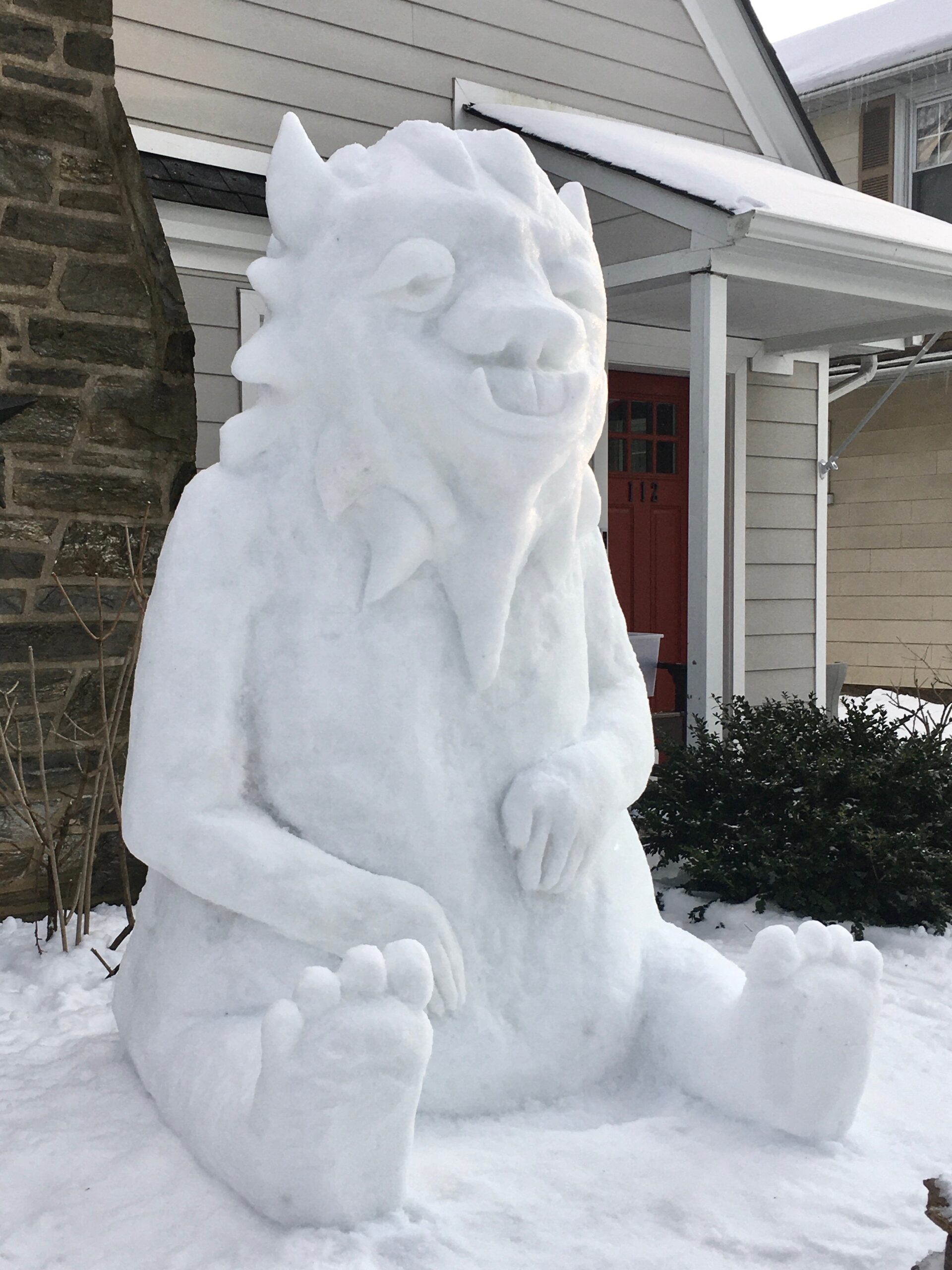
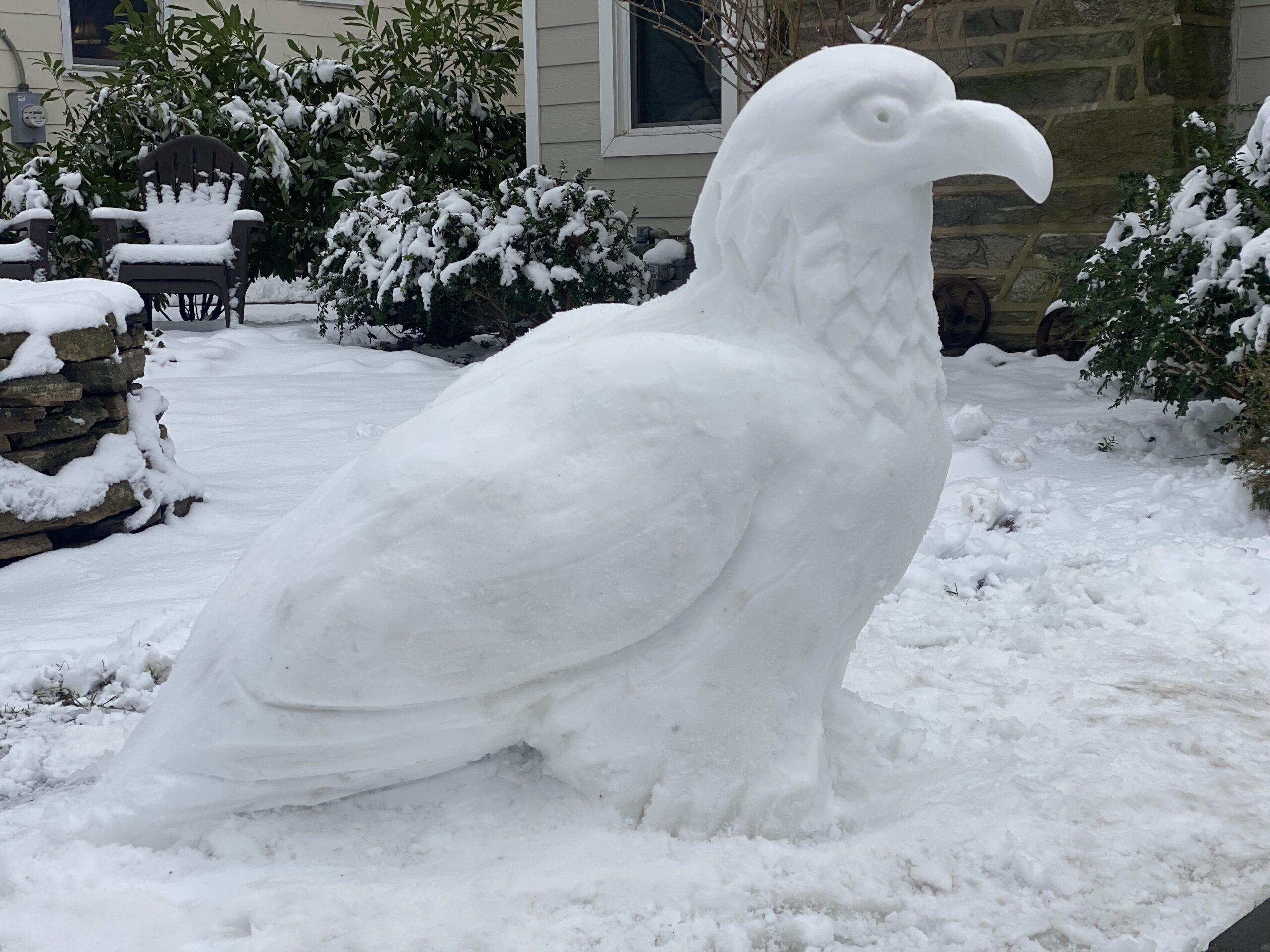
    Stewart grew up making snow sculptures in her hometown of Cleveland. In 2021, as pandemic measures kept Stewart and her family cooped up in their home, she picked up her kitchen spatula and began sculpting snow once again. She built life-size bears, an owl, a giant horse, and an eagle (go Birds). Neighbors began stopping by to ask about the sculptures, and people from outside Narberth even started paying visits to Stewart’s yard after hearing about her art through the grapevine.

    A creature built out of snow by artist Emily Stewart at her home in Narberth in February 2021.

    Though her snow sculptures began as a low-stakes artistic outlet, Stewart says they have become something deeper — a point of connection among neighbors in increasingly polarized and technologically dominated times. Public art provides a “cool little communal social interaction” that “detracts from all the negativity in the world,” she said.

    There’s much that Stewart loves about working with snow. It’s free, abundant, and surprising.

    When asked about the fleeting nature of her snow works, Stewart said it’s part of the beauty. Snow is temporary, as is everything.

    “It’s ephemeral,” she said. “Like, enjoy it, and it’s not yours to keep.”

    An eagle built out of snow by artist Emily Stewart in her Narberth backyard in February 2025.

    This suburban content is produced with support from the Leslie Miller and Richard Worley Foundation and The Lenfest Institute for Journalism. Editorial content is created independently of the project donors. Gifts to support The Inquirer’s high-impact journalism can be made at inquirer.com/donate. A list of Lenfest Institute donors can be found at lenfestinstitute.org/supporters.
  • Missing Di Bruno’s on the Main Line? Carlino’s has your back — and has for decades

    Missing Di Bruno’s on the Main Line? Carlino’s has your back — and has for decades

    As the Main Line contends with the recent abrupt closure of Di Bruno Bros. markets in Ardmore and Wayne, a homegrown Italian-specialties purveyor — just as storied as its South Philly-rooted counterparts — remains open for business.

    On the day before Valentine’s Day, shoppers at Carlino’s Market on County Line Road tucked heart-shaped macarons and chocolate-dipped cannoli into baskets already full with marinara sauce, freshly packed chicken cutlets, and imported cheese. Regulars stopped by for their pre-weekend deli orders, and shoppers took refuge from the cold amid aisles of dried pasta and prepared foods.

    Carlino’s is an Ardmore institution, founded in 1983 as a small, family-owned pasta shop serving Lower Merion’s Italian community. In the decades since, the market has grown into a suburban powerhouse, supplying Ardmore, West Chester, and the surrounding towns with prepared foods, baked goods, and high-end groceries seven days a week.

    The Carlino’s brand has started to transcend its Ardmore roots: In recent years, the family-run operation has expanded its wholesale business to hundreds of grocery stores, from New York to Delaware and as far as Texas. Even as the company grows, its second- and third-generation leaders remain grounded in its origins as a mom-and-pop shop.

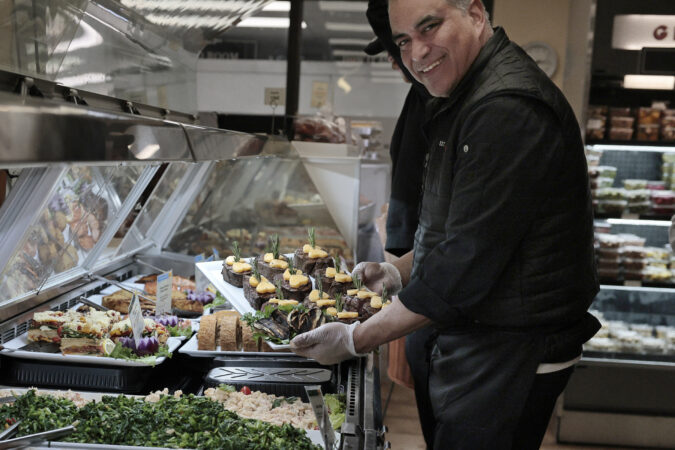
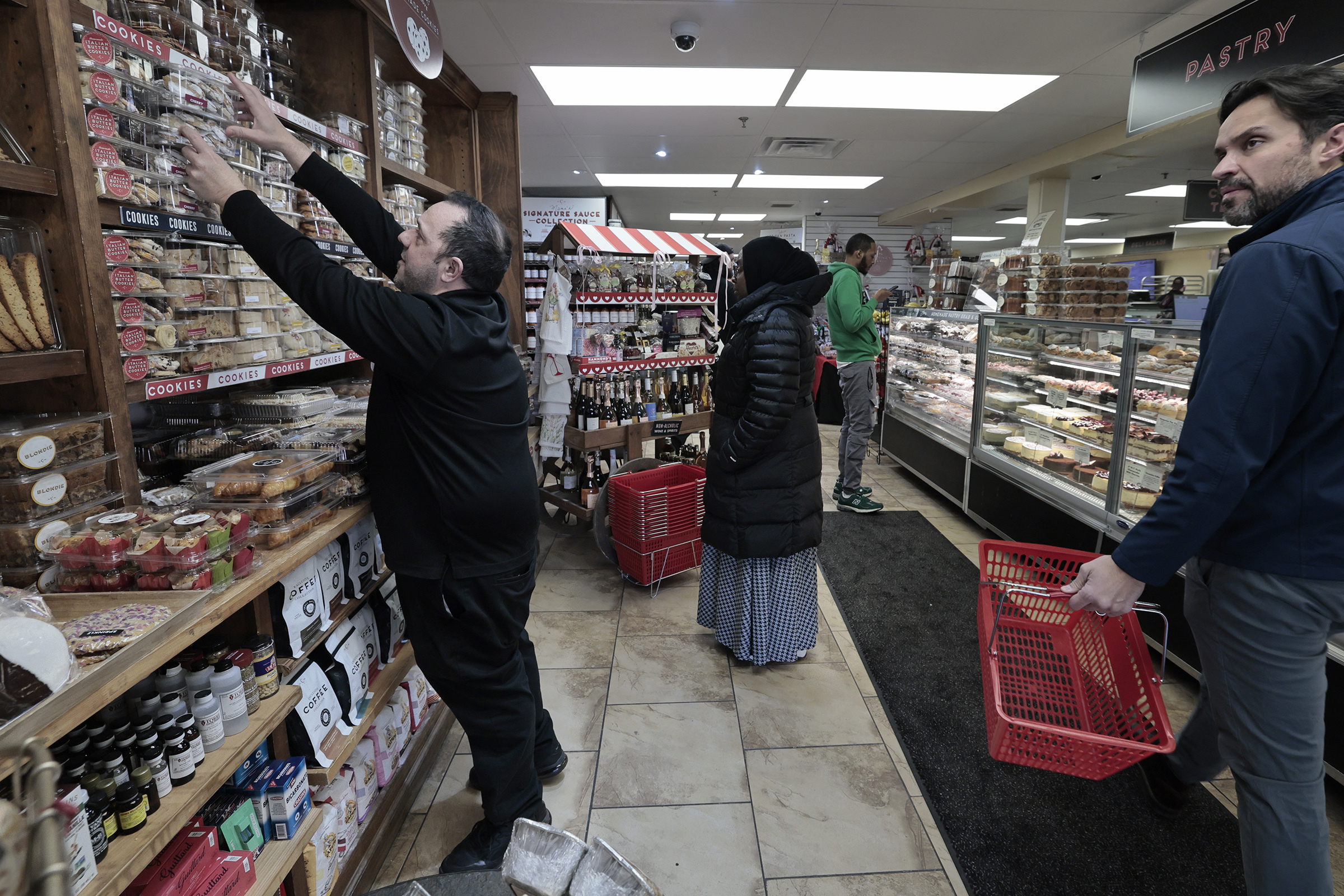
    Carlino’s Market general manger Bruno DiNardo (left) restocks cookies, pastries and treats, all homemade, at Carlino’s Market in Ardmore on Friday, Feb. 13, 2026.

    From Abruzzo to Ardmore

    Carlino’s was founded by Nicola and Angela Carlino, who left Abruzzo in 1968 to move to the United States with their two sons, Pasquale (“Pat”) and Carmen. In Abruzzo, the Carlinos tended to olive groves and grape vineyards and raised livestock on Nicola’s family farm. They left in search of better opportunities for their sons, landing in Ardmore, where Nicola initially worked as a bus driver and groundskeeper at Mitchell Prep, a private school, while Angela sold cookies, fresh pastas, and sauces out of their home.

    When Mitchell Prep closed in the early 1980s, Nicola and Angela decided to take a chance on a family business. They opened Carlino’s Homemade Pasta in a former barbershop on East County Line Road in South Ardmore — at the time, an Italian American enclave. Residents in search of a taste of home regularly patronized Carlino’s, and the family started wholesaling some products to local restaurants and casinos.

    According to Pat Carlino, 63, now the company’s CEO, it’s easy to take the Philly area’s formidable Italian-food scene for granted. But when his parents opened Carlino’s in the 1980s, Pat said, you could barely find marinara sauce in the grocery store. No one knew what tiramisu was, or how to tell the difference between high-quality Parmigiano Reggiano and grocery-store sprinkle cheese. Mention of ciabatta would prompt blank stares.

    Carlino’s was “an education to the public,” he said.

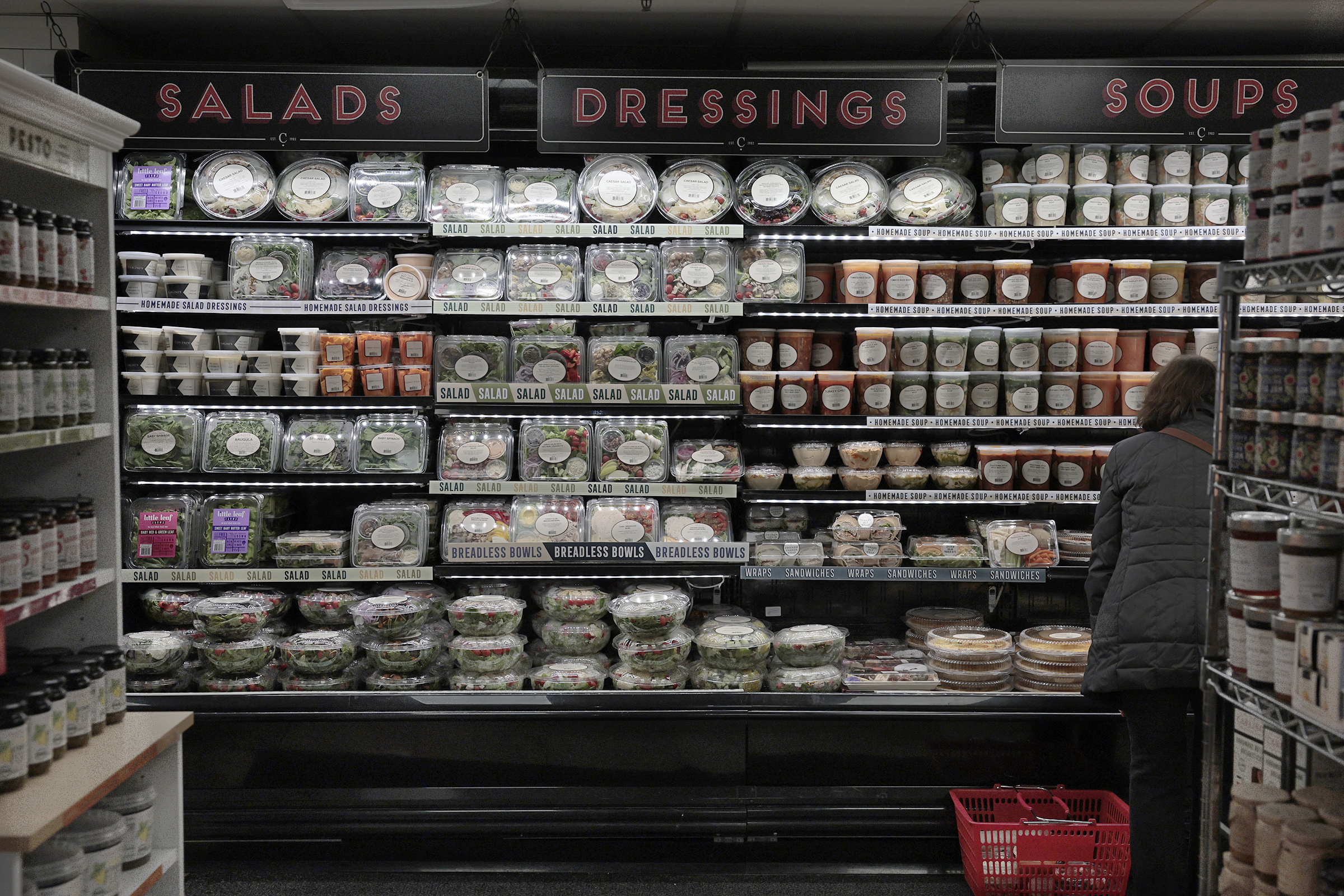
    Customers look over some of the homemade soups, salads and ready to go meals available at Carlino’s Market in Ardmore on Friday, Feb. 13, 2026.

    As time went on, the store expanded, subsuming other houses on its block, and shifted to a retail focus. The family renamed it Carlino’s Market and expanded offerings to include baked goods, pizza, sandwiches and wraps, imported meats and cheeses, and groceries like sauces, olive oils, and coffee. By the mid-1990s, Carlino’s selection and specialties — handmade ravioli, freshly stuffed sausage, garden-grown bruschetta on house-baked bread, tiramisu cake, and more — attracted savvy customers from as far as New York City and Washington, D.C.

    A growing business

    The Carlinos opened a second market, on Market Street in West Chester, in 2007. Angela, aka “Mama Carlino,” died two days after the second store opened. (Many of Mama Carlino’s recipes, the backbone of market’s origin story, have been recorded in two cookbooks, including a 2023 volume compiled and written by granddaughter Nadia Carlino.) Nicola Carlino died in 2020.

    In 2022, Carlino’s began wholesaling its sauces, dry pastas, and pestos — which you can now find at other small, local retailers like Riverwards Produce and Kimberton Whole Foods, as well as large grocery chains like Wegmans and Giant. Carlino’s products are available in parts of Pennsylvania, Delaware, New Jersey, Maryland, Virginia, Washington, D.C., Florida, Texas, New York, and Massachusetts, and will soon be on shelves in California and the Chicago area.

    Pat declined to share specifics about the company’s business model, though he said future growth will be in wholesaling and the grocery market, not retail. (Many former patrons of Di Bruno’s now-shuttered suburban outposts said the company grew its retail presence too hastily, diminishing its quality).

    While Carlino’s business is growing, Pat said his core customers are still people he knows “people that I grew up with.”

    Carlino’s also remains a family operation. Pat and his wife, Laura, are the company’s top executives, and their children — now the third generation of Main Line Carlinos — help manage marketing, wholesaling, importing, and manufacturing.

    Talking about Carlino’s products, a word Pat comes back to regularly is “clean.”

    Before influencers and foodies popularized the idea of “clean eating,” Carlino’s was doing it, Pat said. Nicola cooked with fresh tomatoes, cucumbers, and herbs he grew in his Ardmore garden. Pat said Carlino’s continues to rely on fresh produce, organic flour, and high-quality olive oil and French butter.

    “Things that are trending now, we were doing 40 years ago,” Pat said.

    “You can pick up anything and it’s clean,” he added, just like how your grandma would make it (or at least how a Carlino grandma would).

    This suburban content is produced with support from the Leslie Miller and Richard Worley Foundation and The Lenfest Institute for Journalism. Editorial content is created independently of the project donors. Gifts to support The Inquirer’s high-impact journalism can be made at inquirer.com/donate. A list of Lenfest Institute donors can be found at lenfestinstitute.org/supporters.
  • Here are 8 restaurants offering happy hour deals in (and around) Cherry Hill

    Here are 8 restaurants offering happy hour deals in (and around) Cherry Hill

    From strip mall diners to high-end steakhouses, South Jersey’s restaurants are abundant and ascending in the Philly region’s culinary scene. If you’re looking to dine out for a bargain or enjoy a pre-dinner snack, these eight restaurants in and around Cherry Hill are offering happy hour deals, from $3 tacos to $7 martinis.

    Steak 38

    Looking for charming service, a nostalgic vibe, or perhaps a Caesar salad made tableside? Cherry Hill’s Steak 38 is known for all of the above, and the restaurant even made the Inqurier’s list of the most thrilling places to get a steak in and around Philly. Happy hour is Tuesday through Sunday from 4 to 6 p.m. Though the Caesar salad with a show is not on the happy hour menu, try $9 appetizers like prime rib egg rolls or bleu cheese chips. Sangria is $10 per glass, and all draft beer is $2 off. See the menu here.

    515 Route 38 E., Cherry Hill, N.J., 08002, www.steak38restaurant.com

    Monterey Grill

    Monterey Grill is an upscale American restaurant serving steaks, seafood, and classic steakhouse sides. Grab a glass of house wine for $8, select draft beers for $6, or a cocktail for $10. Happy hour bites are priced at $12, including salmon sliders and angry cashew shrimp. Happy hour is available Monday through Saturday from 4 to 6 p.m. and Sunday from 3 to 5 p.m. in the bar area. See the menu here.

    558 Fellowship Rd., Mt. Laurel, N.J., 08054, www.montereygrill.com

    Farm and Fisherman Tavern

    Farm and Fisherman brought farm-to-table dining to Cherry Hill in 2013 and has been serving up fresh, seasonally-inspired dishes ever since. The restaurant’s unique, herby cocktails even prompted The Inquirer to ponder if Philly’s most interesting drinks program was happening in a South Jersey strip mall. Happy hour diners can snack on P.E.I. Mussels for $8, “line cook fries” (fries with cheese sauce, pickled serrano peppers, and chili butter) for $5, and veggies with a homemade ranch for $5. Draft beers and glasses of wine are $2 off, and martinis (vodka or gin) are $7. Happy hour is Monday through Wednesday from 3 to 6 p.m. See the menu here.

    1442 Marlton Pike E., Cherry Hill, N.J., 08034, www.fandftavern.com

    Kaminski’s Sports Bar and Restaurant

    Locals have called Kaminski’s the closest thing Cherry Hill has to a neighborhood bar. The South Jersey watering hole has been a destination for brews, sports, and bar food for more than 50 years. Happy hour takes place at the bar, Monday through Friday, from 3 to 7 p.m. Try a flatbread or burger sliders for $9 or pepperoni rolls or fried pickles for $7, among other options. Drinks are discounted, too. See the menu here.

    1424 Brace Rd., Cherry Hill, N.J., 08034, kaminskisbarandgrill.com.

    Randall’s Restaurant

    Randall’s Restaurant at the Legacy Club prides itself on serving upscale classics with modern twists. Get $2 off draft beer, $7 featured wines, and $12 featured cocktails during happy hour, which takes place Wednesday and Thursday from 3 to 6 p.m. Featured bites include chicken wings for $12, braised short rib arancini for $6, and clams casino for $9. See the menu here.

    300 E. Evesham Rd., Cherry Hill, N.J., 08003

    Tortilla Press

    Merchantville’s Tortilla Press describes itself as “a favorite spot for locals to enjoy classic Mexican dishes.” During happy hour, try $2.99 tacos, $6.50 pork sliders, or $7.50 chicken flautas, among other choices. House margaritas are $6, sangria is $6.50, domestic draft beers are $4, Mexican bottled beers are $5, and draft Modelos are $5. Happy hour takes place every day from 3 to 6 p.m. and is all day on Tuesdays.

    7716 Maple Ave., Merchantville

    Il Villaggio

    Il Villaggio is an old-school eatery that serves up traditional Italian lunch and dinner dishes, seven days a week. During happy hour, diners can enjoy $6 off bar food, $2 off draft beers, $3 off cocktails, and $3 off wines. Bar menu specials include the crab cake sandwich with parmigiana truffle fries and the beet salad with arugula, pistachios, and goat cheese. Happy hour takes place at the bar area only, Sunday through Thursday from 3 to 6 p.m.

    211 Haddonfield-Berlin Rd., Cherry Hill, N.J.,

    Treno Pizza Bar

    Haddon Township’s Treno Pizza Bar is home to hand-tossed, artisan pizzas, scratch-made pastas, and seasonal cocktails. Happy hour offers a sampling of Treno’s Italian flavors, from $7 Aperol spritzes and $13 blood orange martinis to $6 garlic knots. Happy hour is Monday through Friday from 4 to 6 p.m. See the menu here.

    233 Haddon Ave., Haddon Township, N.J., 08034, trenopizzabar.com

    This suburban content is produced with support from the Leslie Miller and Richard Worley Foundation and The Lenfest Institute for Journalism. Editorial content is created independently of the project donors. Gifts to support The Inquirer’s high-impact journalism can be made at inquirer.com/donate. A list of Lenfest Institute donors can be found at lenfestinstitute.org/supporters.
  • Looking for gluten-free baked goods on the Main Line? Flakely is open for business in Bryn Mawr.

    Looking for gluten-free baked goods on the Main Line? Flakely is open for business in Bryn Mawr.

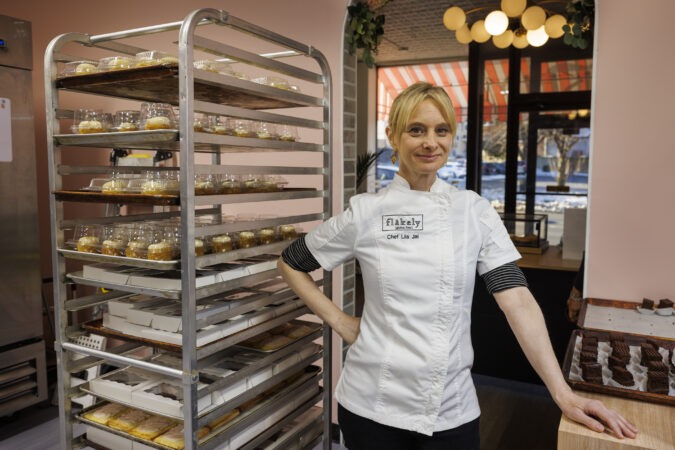
    Gluten-free bakery Flakely has opened its doors in Bryn Mawr, bringing its signature pastries to the Main Line after five years of doing business out of a commercial kitchen in Manayunk. The cross-river move marks a major expansion for Flakely, which, for years, has sold most of its pastries in a frozen take-and-bake form because of space constraints.

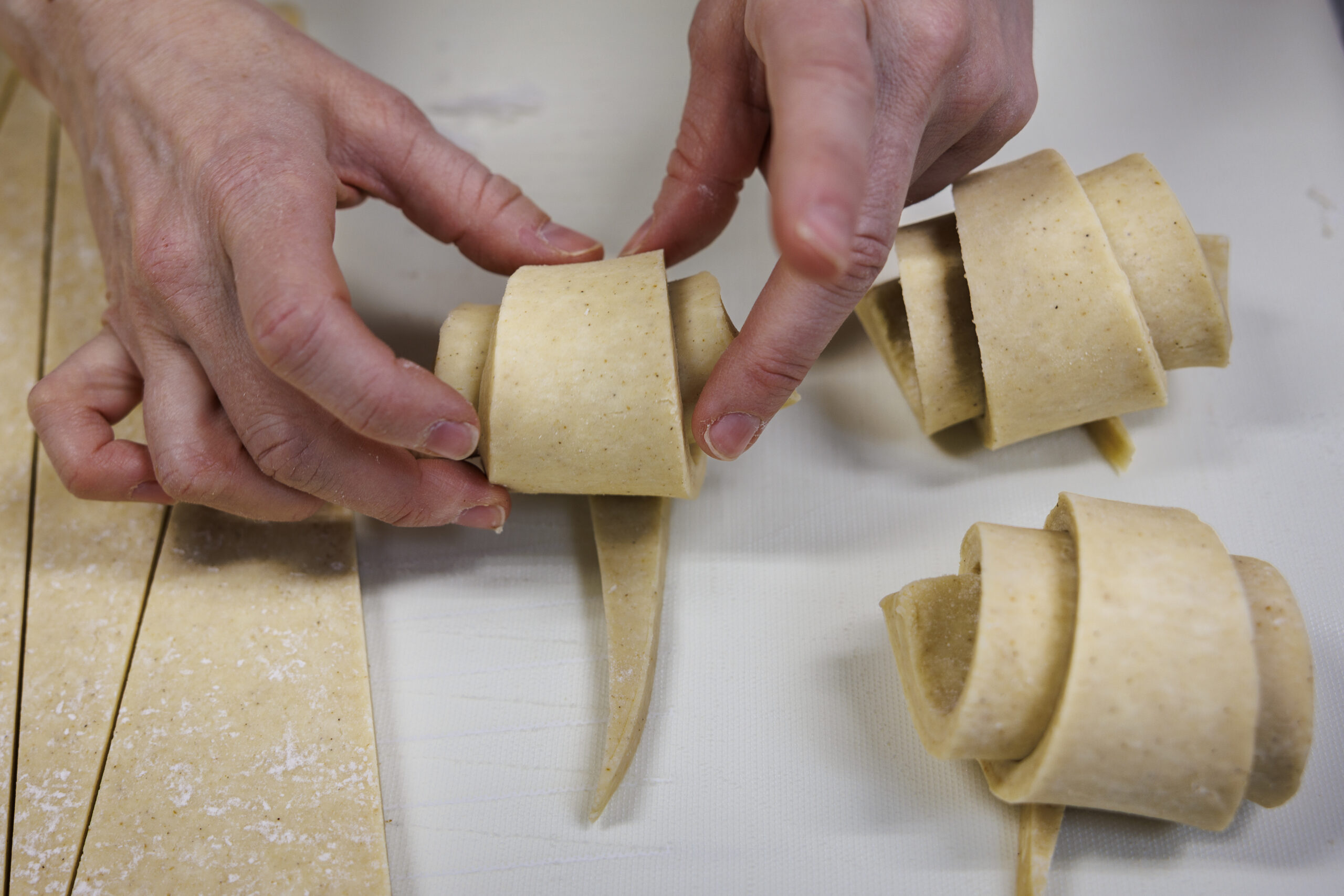
    Now, Flakely is giving Main Line customers a rare opportunity to buy fresh gluten-free baked goods, namely its acclaimed croissants, which are a notoriously difficult item to make without gluten.

    Lila Colello owner of Flakely a gluten free bakery. She is rolling a plain croissant at her new location on Lancaster Avenue, Bryn Mawr, PA, Friday, Feb. 13, 2026.

    Flakely’s new Bryn Mawr headquarters is located at 1007 W. Lancaster Ave. in the former Grand Middle East hookah lounge (though one would never guess the storefront’s previous identity given all of the pastel pink decor that now adorns the walls).

    On the morning of Flakely’s soft opening last week, bakery staff bustled around the open concept kitchen. A glass display case of treats, including sweet and savory croissants and elegantly decorated cupcakes, shimmered in the early morning light.

    The move to the Main Line is “a homecoming” of sorts for owner Lila Colello, who grew up in Ardmore and attended the Shipley School. Colello worked her way up in Philadelphia’s dessert world, staging at the Ritz Carlton and serving as a pastry chef at Wolfgang Puck Catering. When she was diagnosed with celiac disease, an inflammatory autoimmune disorder triggered by eating gluten, in 2010, she feared her days in the pastry world were numbered.

    But instead, Colello mastered the art of the gluten-free pastry. She started Flakely in 2017 as a wholesale operation and moved into the commercial kitchen in Manayunk in 2021.

    Flakely was voted one of the best gluten-free bakeries in the country in 2024 by USA Today, and Inquirer restaurant critic Craig Laban said Colello had “found the secret” to making laminated pastry, like croissants.

    The Manayunk kitchen helped put Flakely on the map, but it also constrained Colello. Because there was so little foot traffic, Flakley couldn’t make fresh goods for fear of having to throw out large quantities at the end of the day.

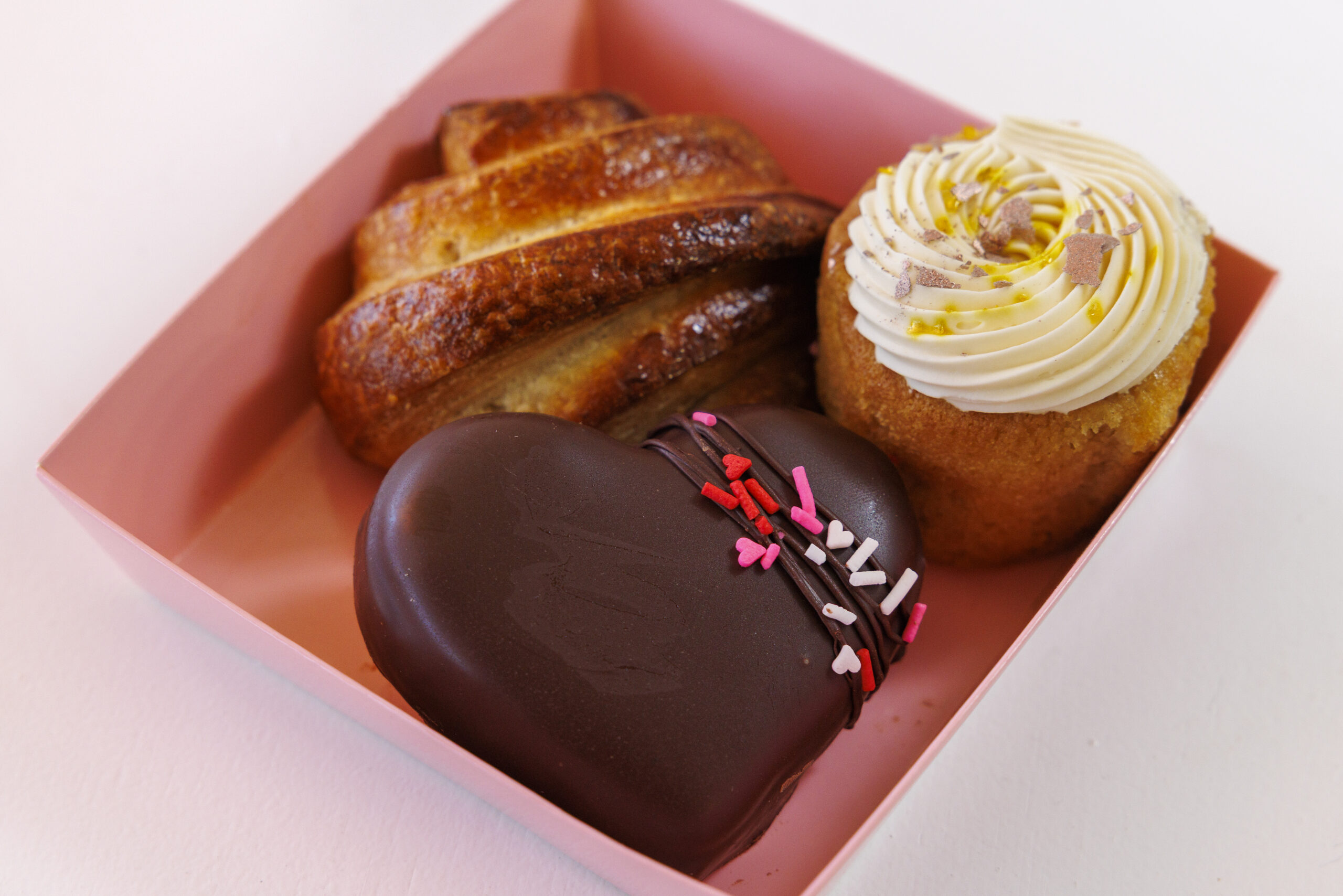
    A box of gluten free pastries from Flakely, Lancaster Avenue, Bryn Mawr, PA, Friday, Feb. 13, 2026. Clockwise, Heart Shaped Twix, Plain Croissant and Vanilla Cupcake with Raspberry Curd and Whipped Honey Lemon Mascarpone Buttercream.

    Colello’s new storefront has given her the space to hire a larger staff, expand her fresh pastry offerings, and give patrons a true bakery experience.

    “I don’t know another place, maybe outside of New York, that has gluten-free croissants that you can even have fresh,” Colello said.

    “It’s a totally different experience,” she added.

    Demand for gluten-free goods is high in Lower Merion, Colello said. Many Main Line patrons used to make the trek to Manayunk to buy Colello’s take-and-bake goods and are happy to have a gluten-free option closer to home.

    Flakely joins a small contingent of gluten-free bakeries in the Philly suburbs, including The Happy Mixer, which has locations in Wayne, Chalfont, and Newtown, and Laine’s Gluten Free Bakery in Berwyn.

    Colello said Flakely is still figuring out its hours, but she plans to be open from 10 a.m. to 3 p.m., Tuesday through Friday, and from 10 a.m. to 2 p.m. on Saturday. For more information, you can visit Flakely’s Facebook or Instagram, where Colello will post weekly hours and menus.

    This suburban content is produced with support from the Leslie Miller and Richard Worley Foundation and The Lenfest Institute for Journalism. Editorial content is created independently of the project donors. Gifts to support The Inquirer’s high-impact journalism can be made at inquirer.com/donate. A list of Lenfest Institute donors can be found at lenfestinstitute.org/supporters.
  • Lower Merion and Narberth want to make Montgomery Avenue safer. Here’s how you can weigh in.

    Lower Merion and Narberth want to make Montgomery Avenue safer. Here’s how you can weigh in.

    Lower Merion and Narberth are seeking residents’ input as they embark on an effort to make Montgomery Avenue safer for drivers, cyclists, and pedestrians.

    At a meeting Feb. 3, officials from the township and the borough laid out long-standing safety issues on Montgomery Avenue and took feedback from attendees, many of whom said they no longer feel safe walking and driving along one of the Main Line’s busiest arteries.

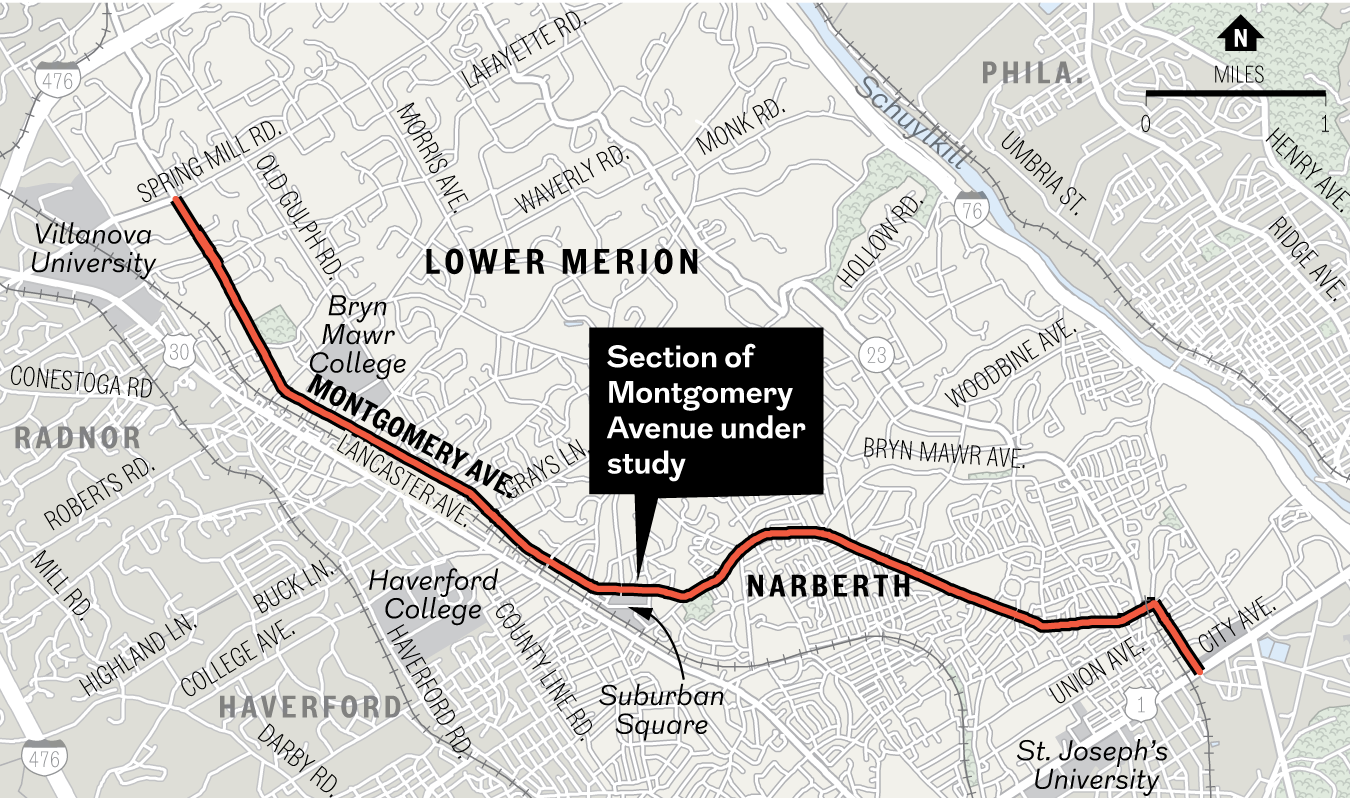
    The U.S. Department of Transportation has awarded Lower Merion and Narberth $340,540 to study a seven-mile stretch of Montgomery Avenue, from Spring Mill Road to City Avenue, through the federal Safe Streets and Roads for All program. The program awards funds to municipalities working to limit roadway deaths and serious injuries. The study will inform safety improvements at 35 intersections on that stretch of Montgomery Avenue.

    Map showing the section of Montgomery
    Avenue in Lower Merion and Narberth undergoing a comprehensive traffic safety study.

    Officials cited a long list of safety issues on Montgomery Avenue, from out-of-date pedestrian push buttons, sidewalk curb ramps, and crosswalk lighting to regular speeding and weaving by drivers. Without proper turn lanes and signals, drivers making left turns on Montgomery Avenue often slow traffic and can endanger pedestrians and other motorists, township representatives added.

    The traffic-calming effort comes at the heels of Lower Merion’s Comprehensive Safety Action Plan, which was published in 2025. The plan calls for eliminating all roadway fatalities and serious injuries in Lower Merion, with a goal of achieving a 50% reduction by 2030. Last summer, township commissioners approved a plan to install automated red-light enforcement cameras at four intersections, beginning with the intersection of Lancaster Avenue and Remington Road.

    Unlike previous traffic studies that focused on individual intersections, this project will take a more comprehensive approach, officials said.

    Between 2020 and 2024, there were 532 reportable crashes on Montgomery Avenue between Spring Mill Road and City Avenue. A reportable crash is defined as a crash resulting in an injury or vehicle damage serious enough to require towing. Around 2.5% of such crashes involved a serious injury. Just over half involved a minor injury, and the rest, around 46%, involved property damage only. In the same time frame, there were 920 minor crashes, or incidents with no injury and no need for towing.

    In total, 3,767 crashes were reported in Lower Merion at-large between 2019 and 2023. In that time frame, Lower Merion Township accounted for 8% of crashes with a fatality or serious injury within Montgomery County.

    Pennsylvania is the only state in the country where local police officers are prohibited from using radar for speed enforcement, said Andy Block, Lower Merion’s police superintendent, making it difficult for his department to enforce speed limits.

    At the meeting, residents told stories of their own crashes and near-misses on Montgomery Avenue.

    Kim Beam, a social worker at Bryn Mawr Hospital, used to walk to work along Montgomery Avenue every day before she was nearly hit by a car a few weeks ago.

    “I had an event which would have made me one of your fatalities,” Beam said, describing her walk to work as poorly lit, contributing to dangerous, and almost deadly, conditions for pedestrians like herself.

    Residents of Lower Merion and Narberth were encouraged to complete a survey that will inform officials as they develop a preliminary set of safety recommendations. A public meeting will be held once the recommendations are developed to gather additional feedback.

    Residents can fill out the survey online via www.lowermerion.org/Home/Components/News/News/5605/50 or print it out and drop it off at Narberth or Lower Merion’s municipal buildings. Completed forms can also be mailed to Brandon Ford, Assistant Township Manager, Lower Merion Township, 75 E. Lancaster Ave., Ardmore, Pa. 19003.

    This suburban content is produced with support from the Leslie Miller and Richard Worley Foundation and The Lenfest Institute for Journalism. Editorial content is created independently of the project donors. Gifts to support The Inquirer’s high-impact journalism can be made at inquirer.com/donate. A list of Lenfest Institute donors can be found at lenfestinstitute.org/supporters.
  • The Narberth Council bars borough police from assisting ICE in immigration enforcement

    The Narberth Council bars borough police from assisting ICE in immigration enforcement

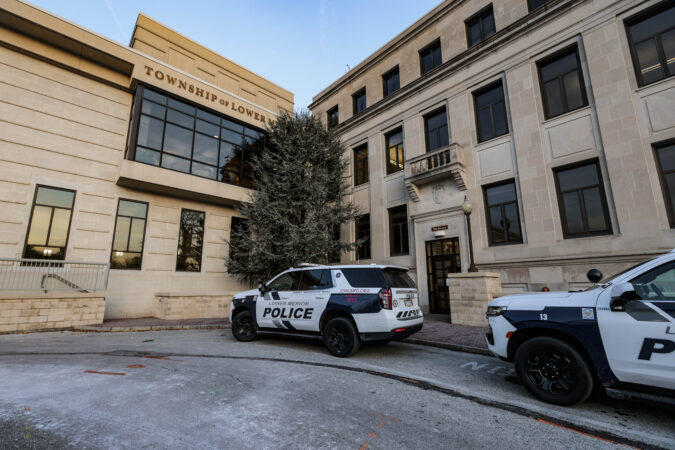
    Narberth’s borough council has voted unanimously to bar the municipality’s police officers from cooperating with U.S. Immigration and Customs Enforcement under the agency’s 287(g) program.

    The resolution approved Thursday made clear that “our police department operates to protect our residents and protect the public safety here and does not have a role in immigration enforcement,” said Council President Fred Bush.

    ICE’s 287(g) program deputizes local law enforcement officers to carry out immigration actions, including identifying, arresting, and deporting immigrants. ICE has signed around 1,400 such agreements with law enforcement agencies in 40 states, including dozens in Pennsylvania.

    In Philadelphia’s collar counties, only the Lansdowne Borough Constable’s Office in Delaware County and the Pennsylvania State Constable Office Honey Brook Precinct 1 in Chester County are 287(g) participants. Bucks County Sheriff Danny Ceisler, a newly elected Democrat, terminated his office’s controversial partnership last month, citing negative impacts on public safety and law enforcement trust.

    Neither Lower Merion nor Narberth participates in the program.

    Narberth’s resolution establishes that the borough will not enter into any agreement with the federal government, including 287(g), that would commit borough time, funds, efforts, or resources toward ICE noncriminal enforcement activities.

    Officials clarified that Narberth’s police department would cooperate with ICE officials if they had a judicial warrant to arrest someone. An internal memo first reported by The Associated Press last month has authorized ICE to forcibly enter people’s homes without a judicial warrant.

    Narberth officials acknowledged that the resolution could be seen as “virtue signaling,” given that the borough already does not participate in an ICE partnership. Yet council members said they believe it’s important to publicly signal the municipality’s values regarding immigration enforcement.

    The resolution “lets the public clearly know where we stand on the issues, helps reinforce trust, and provides that clarity of what we will do and what we won’t do,” said Dana Edwards, Narberth’s mayor. “From my standpoint, it’s a practical resolution.”

    “When our community members trust their law enforcement, they feel comfortable reaching out to them for assistance,” said Councilmember Jean Burock. “We can’t afford to erode that trust.”

    Bush cautioned residents against interfering with ICE operations, describing the agency as “poorly trained” and “dangerous,” citing “the actions and the images that came out of Minneapolis” in recent weeks.

    Neighboring Haverford Township similarly barred its law enforcement officers from assisting ICE last month.

    Narberth’s resolution came on the heels of a Jan. 30 incident in which two people were taken into custody by ICE during a traffic stop in Penn Wynne.

    Following the arrests, Lower Merion affirmed in a public statement that the township does not participate in 287(g) and encouraged residents to call 911 if they observe law enforcement activity with no Lower Merion police officers present.

    This suburban content is produced with support from the Leslie Miller and Richard Worley Foundation and The Lenfest Institute for Journalism. Editorial content is created independently of the project donors. Gifts to support The Inquirer’s high-impact journalism can be made at inquirer.com/donate. A list of Lenfest Institute donors can be found at lenfestinstitute.org/supporters.
  • Swarthmore Public Library closes the chapter on overdue book fees

    Swarthmore Public Library closes the chapter on overdue book fees

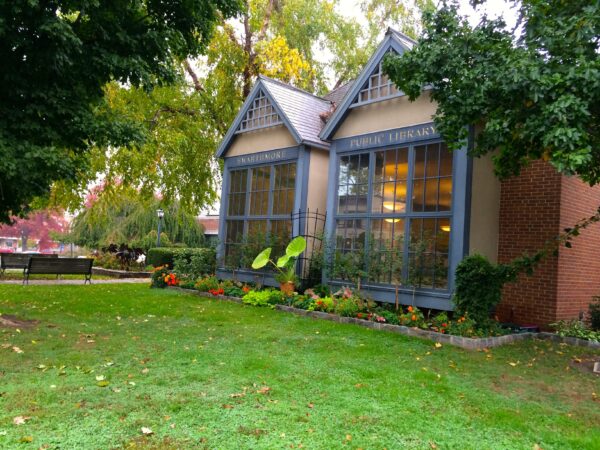
    The Swarthmore Public Library has officially done away with overdue fees, joining a growing contingent of libraries that say the fines do more to drive patrons away than to get them to return their books on time.

    Swarthmore’s library serves residents of Swarthmore and neighboring Rutledge and is a member of the Delaware County Public Library System. A nonprofit, the library is powered by private donations and government funding. It served around 3,100 cardholders in 2024.

    Overdue fines can actually deter library use, all while bringing in marginal financial benefits, said Alec Staley, the library’s director.

    Case studies have shown that library fees ultimately can discourage people from returning books. After the Chicago Public Library dropped fees in 2019, it saw a 240% increase in return of materials within three weeks. During a six-week fine-forgiveness program at the San Francisco Public Library in 2017, nearly 700,000 items were returned (the items returned were valued at $236,000).

    Once late fees start accruing, many people, especially low-income library patrons, will stay away to avoid paying them, forfeiting their library access entirely. Oftentimes, late fees burden the people who need library resources the most.

    Collecting fees has also become taxing for library staff, Staley said. Turning away families because of overdue fees has weighed heavily on Swarthmore’s librarians.

    “We were just punishing [people] for no reason at all,” he said.

    The new policy means any outstanding late fees will be wiped from cardholders’ balances.

    Elizabeth Brown, president of the library’s board of trustees, said fine revenue is “not a meaningful source of our budget.”

    Swarthmore Borough is set to contribute $277,000 to the library this year, up 17% from the year prior.

    Late fees make up only around 1%, or $5,000, of the Swarthmore Public Library’s annual revenue. Library officials believe they can close the gap with fundraising.

    Does this mean people will be able to take the books and run? Not really.

    “We’ll still have a lost-item charge,” Brown said. “This is by no means a free-for-all.”

    Unreturned items will be marked “lost” after three weeks and a fee will be charged. However, fees will be dropped if the “lost” book is returned.

    The Swarthmore Public Library joins a growing group of Philly-area fine-free libraries.

    The Free Library of Philadelphia went fine-free in 2020, a move the library system said would increase equity and bring back 88,000 cardholders who were unable to access library services due to fines.

    In Delaware County, the Upper Darby Township and Sellers Memorial Free Public Library, Newtown Public Library, Media-Upper Providence Free Library, and Ridley Park Public Library are fine-free.

    Ultimately, Staley said, imposing fines runs counter to the heart of what a public library is supposed to be.

    “We champion that we’re one of the last free spaces in the United States,” he said. “But then we have this secret where we’re still charging fines.”

    This suburban content is produced with support from the Leslie Miller and Richard Worley Foundation and The Lenfest Institute for Journalism. Editorial content is created independently of the project donors. Gifts to support The Inquirer’s high-impact journalism can be made at inquirer.com/donate. A list of Lenfest Institute donors can be found at lenfestinstitute.org/supporters.
  • After a historic win, Joi Washington settles into life as Media’s mayor

    After a historic win, Joi Washington settles into life as Media’s mayor

    Joi Washington’s first challenge as mayor came in the form of a winter weather emergency.

    On Jan. 5, Washington was sworn in as Media’s first new mayor in three decades. On Jan. 25, 9.3 inches of snow fell on Philadelphia, setting off a snow emergency declaration. Washington monitored the storm and worked to put parking restrictions and plowing operations into effect.

    It was “fascinating” — a headfirst dive into running a municipal government, she said.

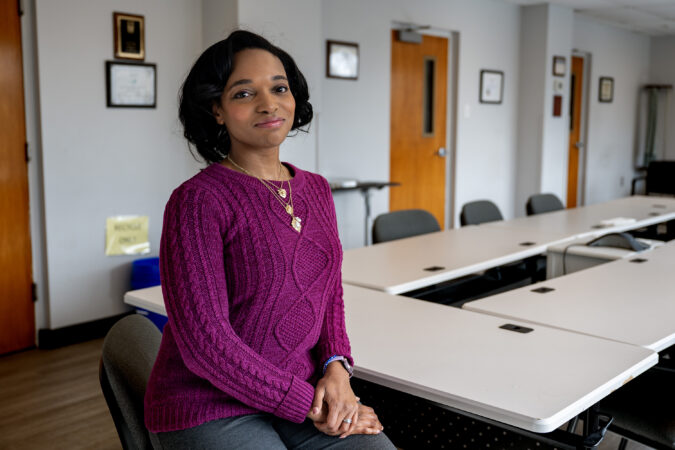
    A graphic designer by trade and former borough council member, Washington moved to Media from Philadelphia in 2013 and fell in love with its walkability and tight-knit community of 6,000. As she learns on the job, friends and colleagues say her intelligence and ability to work across the aisle make her the right person for the role. For Washington, learning how to be a good mayor is all about “being a good neighbor.”

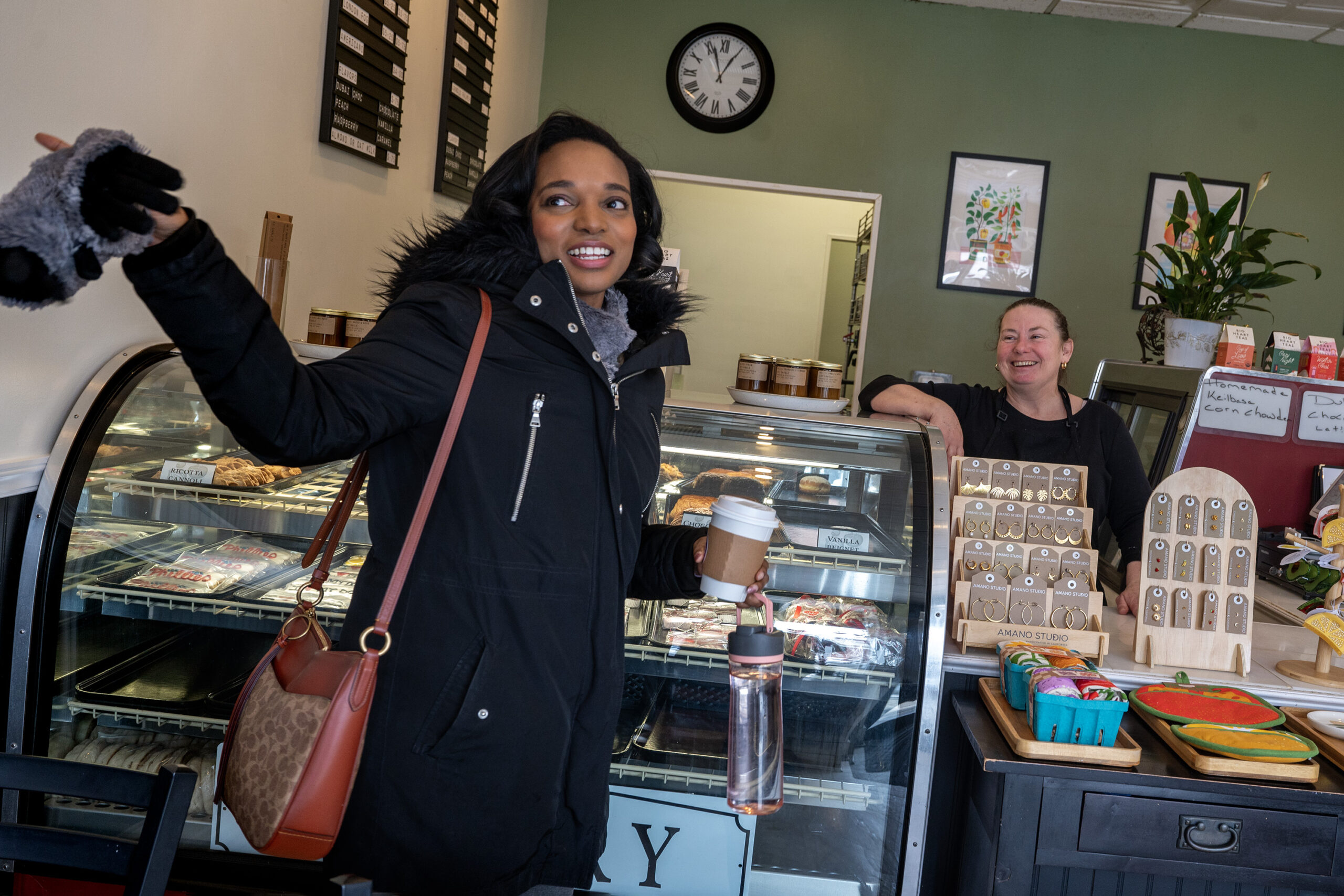
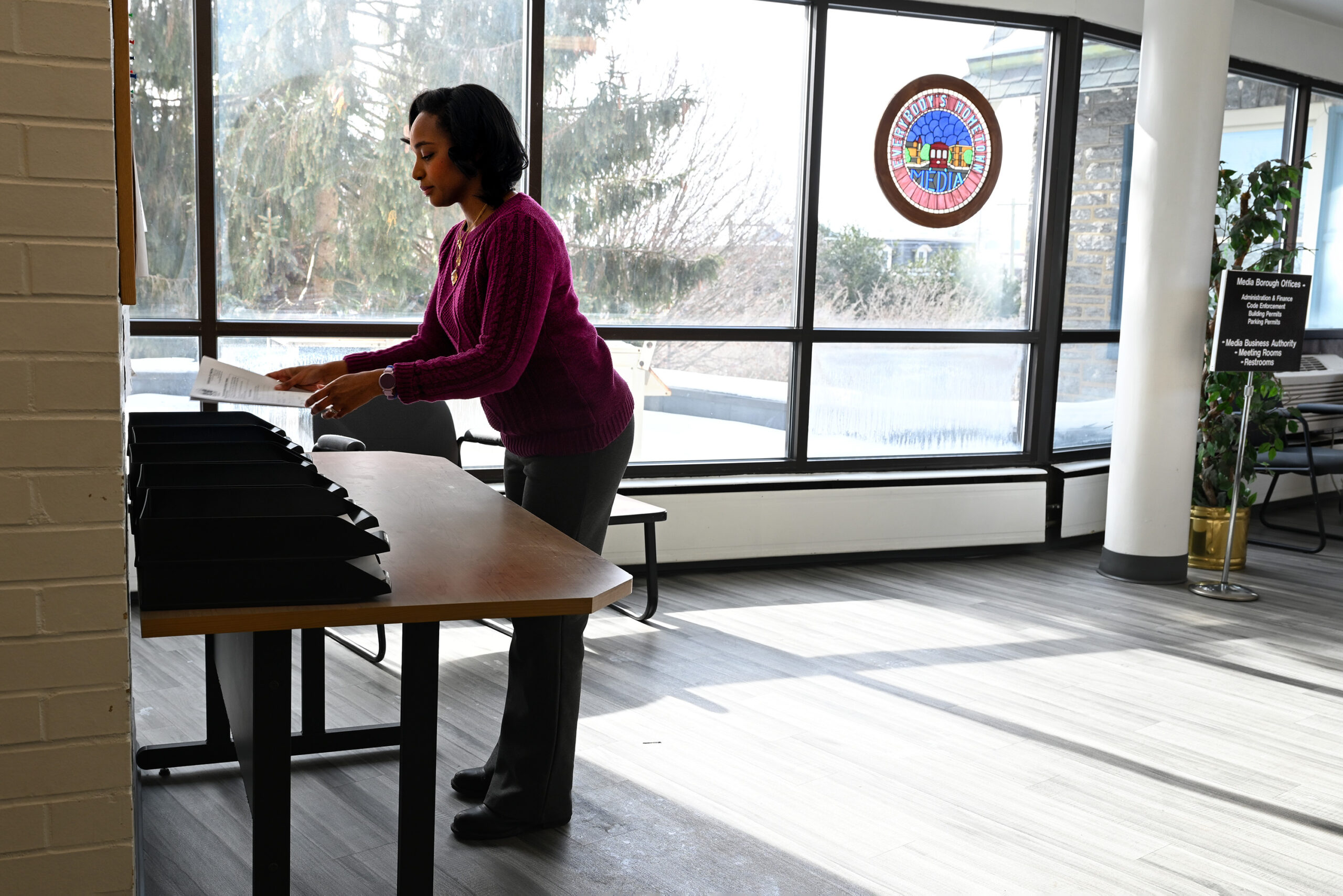
    Media Mayor Joi Washington talks with Garden Café owner Willow Culbertson in downtown Media on Sunday, Feb. 1.

    Who is Joi Washington?

    Washington, 39, was born and raised in Germantown. She graduated from Moore College of Art and Design in 2008 with a bachelor of fine arts in illustration. She has worked for numerous Philly-area companies doing graphic design, digital asset management, and storyboarding.

    Around a decade ago, Washington took a graphic design job in Media. The long commute from Roxborough, where she lived at the time, quickly became tiresome, so she packed up and moved. She met her husband at work, and the two have lived in Media since.

    Washington, a Democrat, was elected to Media’s borough council in 2021, serving until she became mayor last month.

    Katey McVerry, Media’s tax collector, was impressed with Washington as a borough council member. She described Washington as civically and politically engaged, “well known by her neighbors,” and able to work across the aisle.

    When Bob McMahon, Media’s mayor of 33 years, decided to retire last year, Washington stepped up.

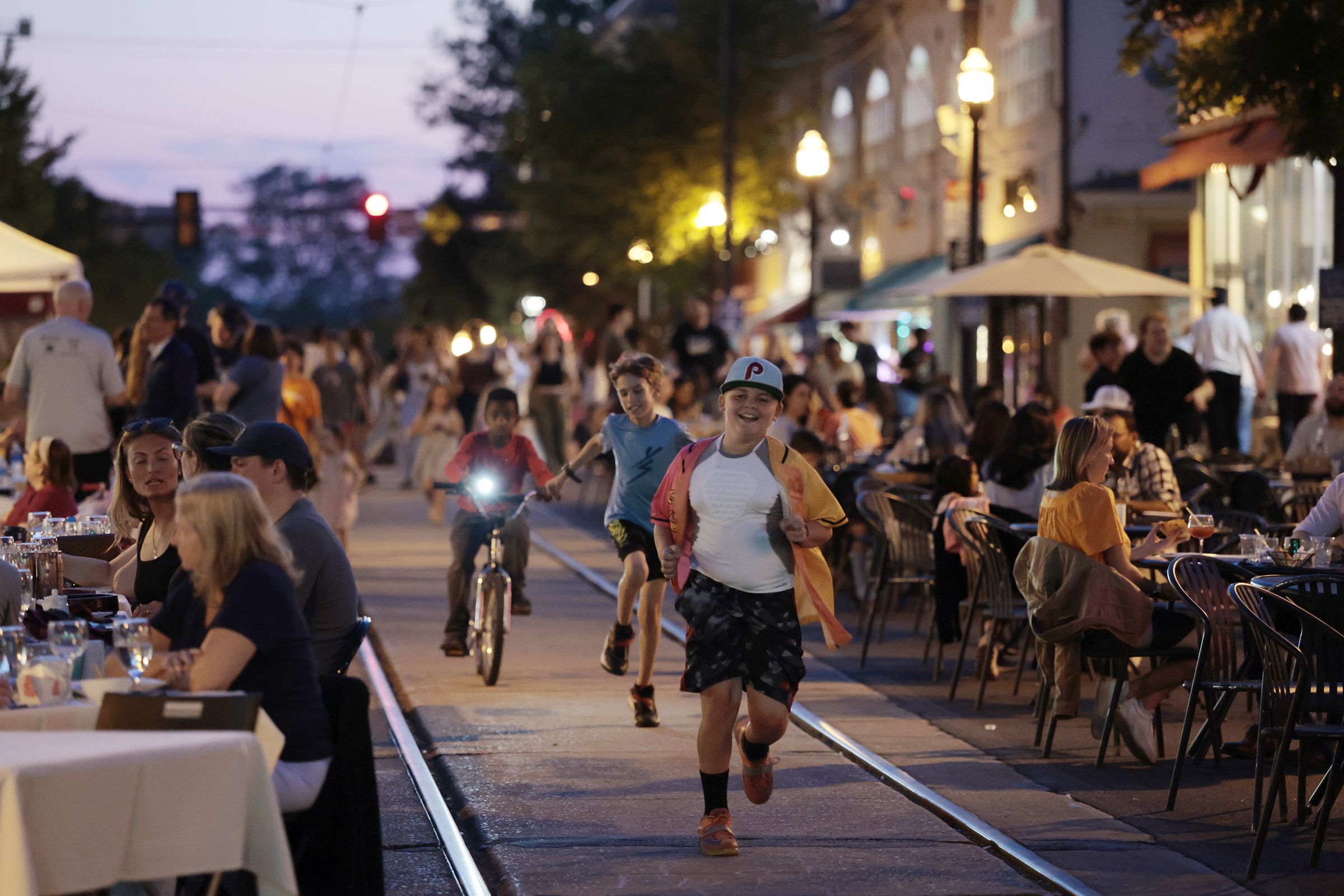
    Children played as folks dined on State Street during Media’s Dine Under the Stars event on Wednesday, June 4, 2025.

    A ‘resounding’ win

    Washington campaigned for mayor on expanding public transit options, supporting local businesses, and working with law enforcement to make streets safer for drivers, cyclists, and pedestrians. She was elected with 77% of the vote, beating out Republican Kevin Kellogg.

    Democrats swept local races in Media and Delaware County in November, winning seats on the Rose Tree Media school board, borough council, and Delaware County Council.

    Mary Tonita Austin helped campaign for Washington last year. Austin and Washington met at a Juneteenth celebration when Washington was still on borough council. Last year, when Austin ran for the Rose Tree Media school board, they found themselves in similar spots — Black women running for office in a county that remains largely white (Washington is the first woman and first person of color to be elected mayor of Media).

    Austin gladly handed out Washington’s campaign fliers along with her own.

    “She’s both intelligent and creative, which I think is so important for us to have,” Austin said of Washington.

    Malcolm Yates, a convener of the Delaware County Black Caucus, said Washington’s win was “resounding.”

    Media is 82% white, according to the most recent census estimates — a percentage nearly 1.5 times higher than the Philly metro area at-large. Before Democrats won three seats on the Delaware County Council in 2019, the body had been controlled by Republicans since the Civil War.

    “It shows that the county has been moving and progressing forward to be more of a melting pot,” Yates said of Washington’s win. “You don’t necessarily have to always look or identify a certain way to be a leader.”

    Media Mayor Joi Washington at Media Borough Hall Sunday, Feb. 1, 2026.

    Becoming the mayor

    Washington describes the first few weeks of being mayor as a “whirlwind.” There are webinars to watch, police reports to study, hands to shake, and nuggets of advice to glean from McMahon, now retired, whom Washington has stayed in touch with.

    There’s a lot to look forward to, as well. Media recently secured grants to purchase a new ambulance, enhance walkability within the borough, and improve Barrall Community Park. Washington hopes to bring in visitors to shop and dine at Media’s small businesses, continuing the borough’s ascent as a Delco destination. Washington rattled off a list of forthcoming events with excitement: Dining Under the Stars, the completion of Plum Street Park, and the Media Spring Arts Show.

    As for her personal life, Washington said she is trying to find balance as mayor, which is a part-time gig in Media. Washington is still working as a freelance illustrator and graphic designer. She is also a natural introvert learning to manage an increasingly busy social calendar.

    “I’m also glad that I have two cats to keep me sane. My husband’s very supportive. I think it’s really good to have a life outside of politics,” she said.

    This suburban content is produced with support from the Leslie Miller and Richard Worley Foundation and The Lenfest Institute for Journalism. Editorial content is created independently of the project donors. Gifts to support The Inquirer’s high-impact journalism can be made at inquirer.com/donate. A list of Lenfest Institute donors can be found at lenfestinstitute.org/supporters.
  • As Di Bruno Bros. prepares to shutter three stores, shoppers say it lost its ‘special touch’

    As Di Bruno Bros. prepares to shutter three stores, shoppers say it lost its ‘special touch’

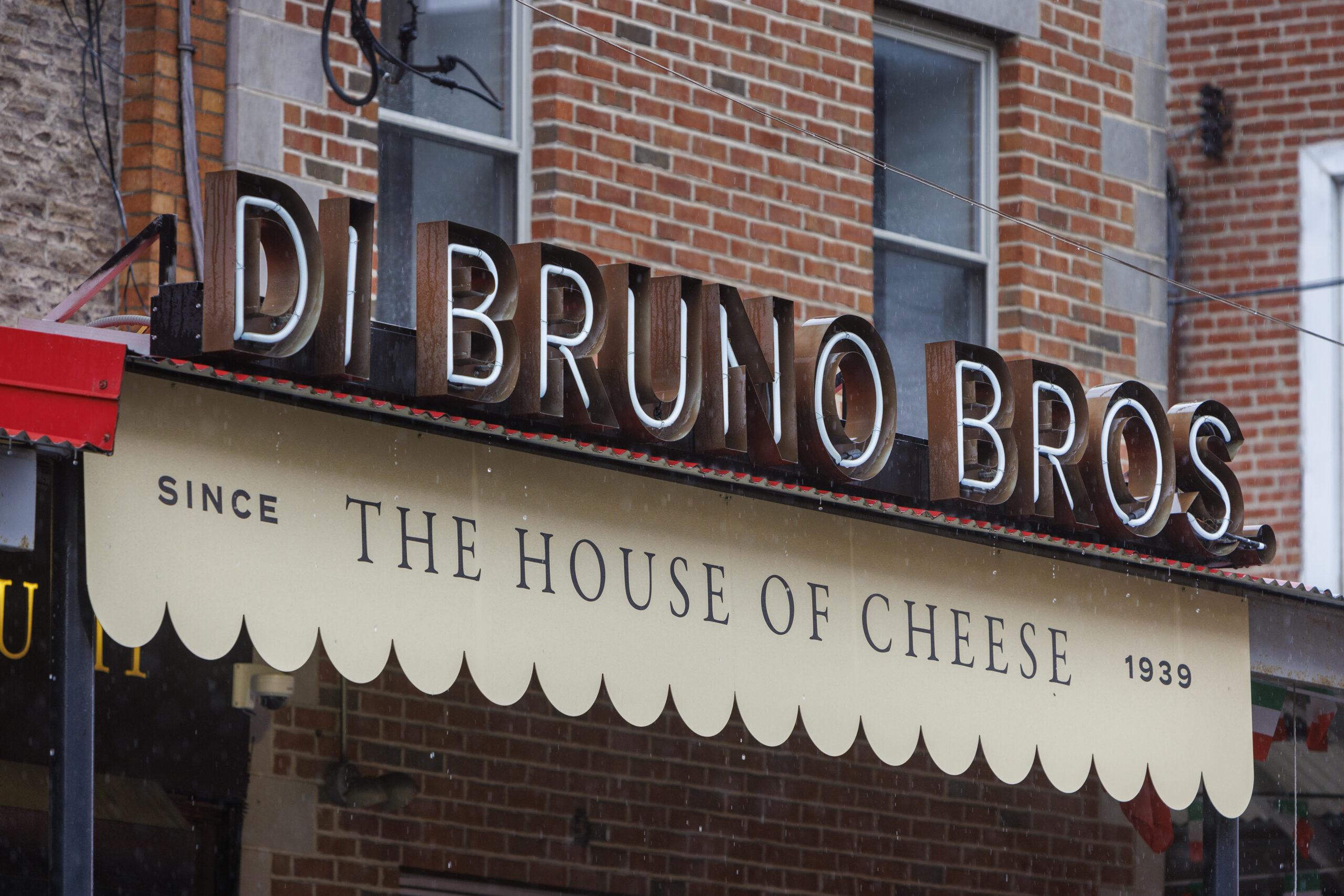
    As word spread Friday that upscale grocery Di Bruno Bros. would shutter three of its five grocery stores in the coming weeks, many customers mourned the imminent loss but added they were unsurprised, citing a noticeable change in quality over the last few years.

    Xavier Hayden, a lawyer who lives in Narberth, said he stopped shopping at Di Bruno’s a few years ago when he noticed changes in the rolls, the bread, and other items that gave Di Bruno’s its strong reputation. “The quality went down, the taste went down,” Hayden said. “Why am I going to pay upmarket prices for a midmarket product?”

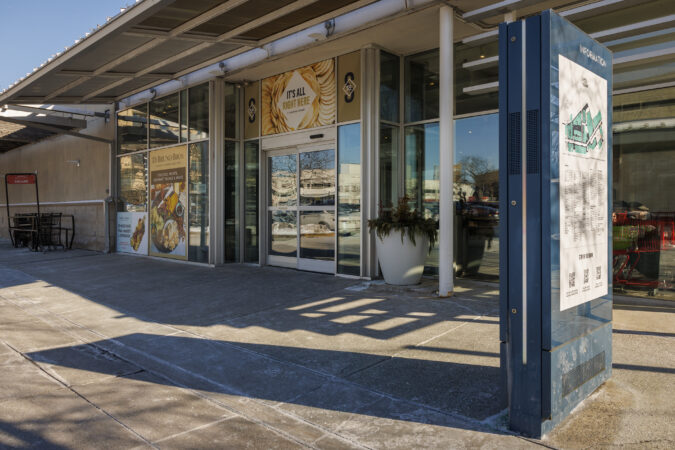
    Hayden remembers childhood trips to the Italian Market to visit the original Di Bruno Bros., which will remain open, along with its bottle shop and the store at 18th and Chestnut Streets in Rittenhouse. Its Ardmore store will close Feb. 4, while the location in Wayne as well as the shop at the Franklin Residences at Ninth and Chestnut Streets will close Feb. 11.

    Di Bruno’s, established in South Philadelphia in 1939, had become a major player on the Main Line grocery scene since opening at the Ardmore Farmers Market in 2011 and in Wayne’s Strafford Shopping Center in 2021 to complement its two stores in Center City.

    Now, the company is pulling back to focus on the Italian Market and Rittenhouse locations and its online business.

    The original Di Bruno Bros. location at 930 S. Ninth St. is one of two stores that will remain.

    The closings will affect 59 employees, said Sandy Brown, executive vice president of Di Bruno’s parent company, Brown’s Super Stores. She said the workers have been offered new jobs with the other Brown’s stores in the area, including 10 ShopRites and two Fresh Grocer locations.

    On social media, some Di Bruno’s patrons attributed a change in the store’s offerings to Brown’s, which bought an ownership stake in the company in early 2024 from the Mignucci family, which had led Di Bruno’s expansion. (It’s a complex arrangement; while Brown’s owns the stores, the Di Bruno’s brand and its packaged-product portfolio were later acquired by Wakefern Food Corp., a New Jersey-based supermarket cooperative that includes the Brown’s stores.)

    In an email exchange Friday, Sandy Brown pushed back on the Brown’s company’s role in the closures, saying Di Bruno’s was “very distressed” when her group invested. “We were the only interested party due to the numerous challenges they had,” she said. While many commenters online are blaming her company for the closings, Brown said, “I don’t think they realize the status of the brand at the time of transition.”

    Brown said the company had worked to bring back business that was lost prior to the purchase, “but that did not occur.” She added that her company had a plan to sustain Di Bruno’s but declined to share it at this time.

    Main Line customers said they were sad to see Di Bruno’s retrenchment from the suburbs, though several said the stores had slipped in recent years.

    “It used to be spectacular, delicious … extra special,” said Dana Reisbord, a professor who lives in Ardmore. Reisbord said she used to stop into Di Bruno for a chicken parmesan sandwich and other goodies. Now, she’ll venture into the city if she’s really craving Italian fare. Di Bruno’s fare is too expensive to justify, she said, having “lost that special touch.”

    Diane Fanelli, a retiree who lives in Overbrook, visits the Ardmore Farmers Market Di Bruno’s at Suburban Square a few times a month. She said she would be sad to see the store go. Although she did notice a drop-off in quality, she said it wasn’t significant enough to send her shopping elsewhere.

    “Their food is expensive. It’s very good, but it’s expensive, and everybody’s watching their budget,” said Mike Manley, a cartoonist from Upper Darby who used to patronize the Ardmore store when he was in town for doctors’ appointments.

    It wasn’t necessarily the high-end products that kept Manley coming back. It was the customer service. He liked chatting with the cheesemongers and enjoying samples. Di Bruno’s reminded Manley of his old days in West Philadelphia, when he would regularly patronize Koch’s Deli, known for friendly faces behind the counter.

    “That gains you loyal customers, but I don’t know if corporate appreciates that,” he said. (The stores had lost some longtime employees since the Brown’s Super Store purchase.)

    Earlier this week, Di Bruno notified two landlords that they would be shutting down, said Douglas Green, a principal at MSC, who handles real estate for Kimco Realty Corp. (owner of Suburban Square) and Korman Communities (owner of the Franklin). A representative of Equity Retail Brokers, which leases at Wayne’s Strafford Shopping Center, declined to comment.

    “Operations have not been what they were when the Mignucci family owned the business, and this outcome shouldn’t be a great surprise to most people,” Green said. “It’s a sad day for a very proud Philadelphia brand.”

    He suggested that Di Bruno had expanded into too much space at Suburban Square “and affected [Kimco’s] ability to diversely merchandise the farmers market. It felt like they spread themselves too thin, and the quality suffered.”

    Speaking specifically of the Franklin and Suburban Square locations, Green said both locations are in areas with “pent-up demand and limited supply, and there should be tremendous interest.” He said Kimco, with MSC, wants to “re-merchandise” the farmers market and Di Bruno’s spaces.

    “This gives us a bit of a blank canvas,” Green said. “There are cuisine types not currently represented that we’re excited about bringing to the project. Hopefully, the end of this chapter opens the door to new concepts.”