Author: Susan Snyder

  • The state system that runs West Chester and 9 other Pa. colleges votes to raise tuition 4.3%

    The state system that runs West Chester and 9 other Pa. colleges votes to raise tuition 4.3%

    Students in the Pennsylvania State System of Higher Education will face a 4.3% tuition hike — the largest percentage increase in a decade — if the system does not get a boost in state funding.

    PASSHE’s board of governors voted unanimously Thursday on the plan, which would enact the tuition increase if the system does not receive a 5%, or $31 million, increase in its state appropriation, which currently stands at $625 million. Gov. Shapiro has proposed flat funding for the system, and budget negotiations are continuing.

    Tuition would rise to $8,338 annually, up $344 from $7,994.

    “We’re all disappointed to … have to make this motion,” board chair Cynthia Shapira said. “We hope we do get the increase.”

    The 10 universities in the system are Cheyney, West Chester, Commonwealth, East Stroudsburg, Indiana, Kutztown, Lock Haven, Millersville, Penn West, and Shippensburg. Collectively, they enrolled 83,005 students last academic year, when the system experienced its first enrollment increase in 15 years. About 90% of students are Pennsylvania residents.

    The vote to increase tuition came one day after Temple University approved a budget that increased tuition an average of 3.4% for next year.

    Rutgers University also on Thursday voted to increase tuition 3% for in-state and out-of-state students, which the school touted as its lowest increase in four years. Tuition for a typical in-state, full-time arts and sciences undergraduate will increase on average $448 for the year, rising from $14,933 to $15,381, the school said. Meals and housing on average will rise 4%, from $15,332 to $15,945.

    Earlier this year, the University of Pennsylvania increased its total costs by 3.8% for 2026-27. Pennsylvania State University, which approves tuition increases a year in advance, hiked tuition 2% for in-state students at University Park for 2026-27 and froze it for those attending Commonwealth campuses.

    The resolution approved by the PASSHE board calls for the increase to be rolled back “if sufficient funding in state appropriation is received.”

    System chancellor Christopher Fiorentino said the tuition increase would cover the $31 million gap if the system does not get the increase. The board of governors took the same action last year and did not roll back a 3.6% tuition hike because the state held its funding flat.

    “We’re still really the most affordable four-year option that’s out there,” Fiorentino said in an interview before the meeting, comparing PASSHE schools to state-related universities like Temple and Penn State where tuition is more than twice that amount.

    Until 2025, the system had kept tuition at the same rate for seven years; if it had enacted inflationary increases, tuition would be $1,800 higher now, Fiorentino said. Preceding the freeze, tuition hikes were 2.5% in 2016-17, 3.5% in 2017-18, and 3% in 2018-19.

    Fiorentino said he continues to make the system’s case to legislators for more funding.

    “Our graduates earn 65% more over their careers than people without college degrees, which is about a million dollars in lifetime earnings,” he said. “Ninety percent of our students are from Pennsylvania, and 80% of them take their first job in Pennsylvania after they graduate. Investing in the PASSHE system … is truly an investment in the workforce of the Commonwealth of Pennsylvania.”

    System to launch new ‘last dollar’ scholarships

    The system also announced that beginning in fall 2027, it would provide “last dollar” scholarships to all Pennsylvania students who receive federal Pell and state Pennsylvania Higher Education Assistance Agency grants. For many students from the lowest-income families, the grants cover full tuition, but some families in the middle range who receive smaller amounts of aid are still on the hook for part of the cost, the chancellor said.

    “They’re the ones that tend to get caught in a bind, and they’re the ones that we’ve been worried about,” he said. “We’re going to cover the balance of their tuition” and make sure they are not affected by future tuition increases.

    Fiorentino said he hopes that donors will want to contribute to the effort so the level of aid can be expanded.

    The new scholarship program, called the PASSHE Pledge, will not cover room and board or fees.

    He did not have an estimate of how many students would qualify, but said system officials have been worried about losing them. And that would add to the enrollment decline at a time when the system, like other colleges, already is challenged by a shrinking pool of available high school students.

    “We’re hoping this is going to increase our enrollment numbers,” Fiorentino said.

    It is too early to predict fall enrollment, he said, but some of the system’s 10 universities are doing better with deposits than last year, some the same, and some a little worse.

    “We’re cautiously optimistic that we’re going to be stable,” he said.

    The system is partnering with community colleges to streamline the transfer process and concentrating on bringing students with some college credits and no degree back into the system, he said.

    “We will continue to work hard to maintain and grow our enrollments,” he said.
  • Temple University will lay off employees and raise tuition for the second consecutive year

    Temple University will lay off employees and raise tuition for the second consecutive year

    Temple University approved a $1.3 billion operating budget Wednesday that includes an average 3.4% tuition hike for both in-state and out-of-state students and plans for about 40 layoffs.

    Both the average tuition increase — which is for undergraduate and graduate students — and the number of layoffs are smaller than those implemented last year. The university raised tuition an average of 3.6% in 2025 and laid off 50 employees.

    The layoffs, which will occur this week, constitute less than 1% of the university’s workforce. Temple officials did not elaborate on who was affected or which positions but said jobs across the university from senior levels to the operational ranks were considered. An effort was made to limit the impact on “student-facing” roles, said chief strategy officer and former interim provost David Boardman.

    “The decision-making overwhelmingly was made at the local level, at the schools, colleges, and administrative units,” said Boardman, who is also dean of Temple’s College of Media and Communication.

    Fry said last month that layoffs were “inevitable” as the university works to close a projected $85 million budget deficit for 2026-27. Temple, along with many peer institutions, faces enrollment declines and financial pressures as the available pool of high school students drops, public attitudes toward higher education change, and the number of international students declines following changes in federal policy.

    The budget, approved without public discussion by the executive committee of Temple’s board of trustees, includes a projected deficit of $25.5 million.

    “We have met our savings target, which is obviously imperative,” Fry said in an interview after the board meeting.

    Fry had asked schools, colleges, and administrative units to cut a total of $60 million, a significant portion of which was accomplished through the elimination of 236 positions, he said. That is on top of 190 positions that were eliminated last year.

    More than 80% of the positions cut this year came through voluntary retirements, including a faculty program that netted more than 70 takers, as well as resignations and the elimination of vacant positions. Layoffs accounted for the rest.

    “Implementing these targeted budget reductions and undertaking other organizational realignments is a critical first step toward returning the university to a balanced budget over the next three years,” Fry said in a message to the campus community.

    The university is working under a new budget model that will “allow us to better align our resources with our strategic plan,” Fry said.

    While the majority of the $60 million reduction was due to the position eliminations, schools, colleges, and administrative units are implementing other efficiencies. Some of the colleges, for example, have reduced doctoral student admissions, Boardman said.

    The university’s 27% decline in domestic enrollment since 2017 and increased financial aid costs have been the most significant factors causing the school’s budget pressures, Fry said. The loss of students has amounted to an average of more than $200 million in lost revenue annually, according to an internal Temple report obtained by The Inquirer in April.

    That report said the school anticipated falling below an 80% retention rate this fall.

    Temple’s U.S. enrollment stood at 29,503 last fall; projections for this fall are not yet available.

    But Fry said in his campus message that the school has received a record number of deposits for first-year enrollment compared with last year and that deposits from transfer students are up over last year.

    The school also plans to roll out a new “first-year experience” program to help improve the school’s freshman-to-sophomore retention rate, which fell from a high of 90% about a decade ago to 82% last fall.

    Employees from student affairs, enrollment management, and academic affairs have worked on the redesign with support from the National Institute for Student Success diagnostic, Fry said.

    “The teams have taken a comprehensive look at how students transition to Temple and identified where we can better support their success,” he said. “This work has helped us identify barriers and create a more coordinated approach to orientation, advising, communication, and student support.”

    The efforts already are having an impact. Because of changes to orientation, 3,268 first-year students were registered for the fall as of July 5, compared with 560 students the same time last year, Fry said.

    With the tuition increase, the new base rate for full-time students from Pennsylvania will rise to $20,376 annually and to $36,600 for out-of-state students. (Excluding Temple’s Japan campuses, 62% of students are Pennsylvania residents.) While the average increase is 3.4%, percentage increases fluctuate across Temple’s schools and majors, from a low of 2.9% to a high of 3.9%.

    Tuition increases are typical; the University of Pennsylvania increased its total costs by 3.8% for 2026-27. Pennsylvania State University, which approves tuition increases a year in advance, hiked tuition 2% for in-state students at University Park for 2026-27 and froze it for those attending Commonwealth campuses.

    At Temple, fees will rise $42, or 3.9%, to $1,098 annually. And room and board will increase 4%. Students in a typical double-occupancy room at Johnson and Hardwick residence hall with 12 meals per week will pay $15,094 for the year.

    Temple said it also would increase its financial aid budget by nearly 7% over last year, to $196.1 million, to help students with need afford the university.

    “We know that financial barriers can impact our students and prevent them from persisting,” David Marino, interim chief operating officer, said in a statement. “This year’s historic investment in financial aid is an investment in the success of our students.”

  • It’s hot, hot, hot in Philadelphia, with a third-straight 100-degree day possible Saturday

    It’s hot, hot, hot in Philadelphia, with a third-straight 100-degree day possible Saturday

    No question, it’s hot, hot, hot. But the city fell short of setting a record-high temperature on Friday for that date.

    Another record, however, appears likely: A new warmest low temperature for July 3. The record is 77 degrees, hit three times, most recently in 2002. The low on Friday as of nearly 8 p.m. was 82 degrees, which would be a record-setter.

    But there was still the potential for storms to knock that record down before the day is out.

    “We are still in the running for our new record warmest low temperature,” said Patrick O’Hara, meteorologist at the National Weather Service office at Mount Holly.

    The record high temperature for a July 3 stands at 104 degrees, set in 1966. As of about 4 p.m., the temperature had reached 102, the National Weather Service said.

    The Atlantic City Airport, however, hit 105 degrees, setting a new record there, O’Hara said.

    The temperature on Saturday is expected to reach a high of 100, O’Hara said. The record for that date is 103.

    Just because Philadelphia didn’t break a high-temperature record doesn’t mean the heat hasn’t had a big impact. The Wawa’s Salute to Independence Semiquincentennial Parade, scheduled for Friday, was canceled due to heat concerns.

    Storms also posed a risk. A severe thunderstorm watch was issued for the entire region on Friday, and on Saturday, the risk looked even greater.

    “Any storm could be strong to severe,” said Ray Martin, meteorologist at the National Weather Service office in Mount Holly.

    The risk on Friday was more to the north and west of the city, said Matt Benz, senior meteorologist with AccuWeather.

    On Saturday, Benz said there was about a 65% chance of thunderstorms in the evening when Philadelphia’s July Fourth concert is scheduled to be underway on the Benjamin Franklin Parkway.

    “At this point, it’s difficult to promise dry weather for fireworks,” he said.

    Philadelphia, where fireworks aren’t scheduled to start until close to 12 a.m., might have the best shot of not being impacted by weather, he said.

    “As we get close to midnight, we might start to dry out,” he said.

    Concern about lightning strikes could be more widespread than storms, Benz said.

    Meanwhile, AccuWeather said Philadelphia was forecast to only drop to 83 degrees overnight Friday into Saturday, which would tie the city’s all-time record for a high minimum temperature.

    The good news is both SEPTA and Peco reported no major weather-related problems Friday afternoon.

    Regional Rail trains were traveling 10 miles slower to alleviate stress on the overhead wire and tracks, which can be impacted by the heat, said Andrew Busch, spokesperson for SEPTA. The slower speed has led to some delays.

    Peco recommends that customers keep their thermostats between 75 and 78 during the day and shades drawn, said spokesperson Izamarie Camacho. All unnecessary lights and devices also should be turned off, Camacho said.

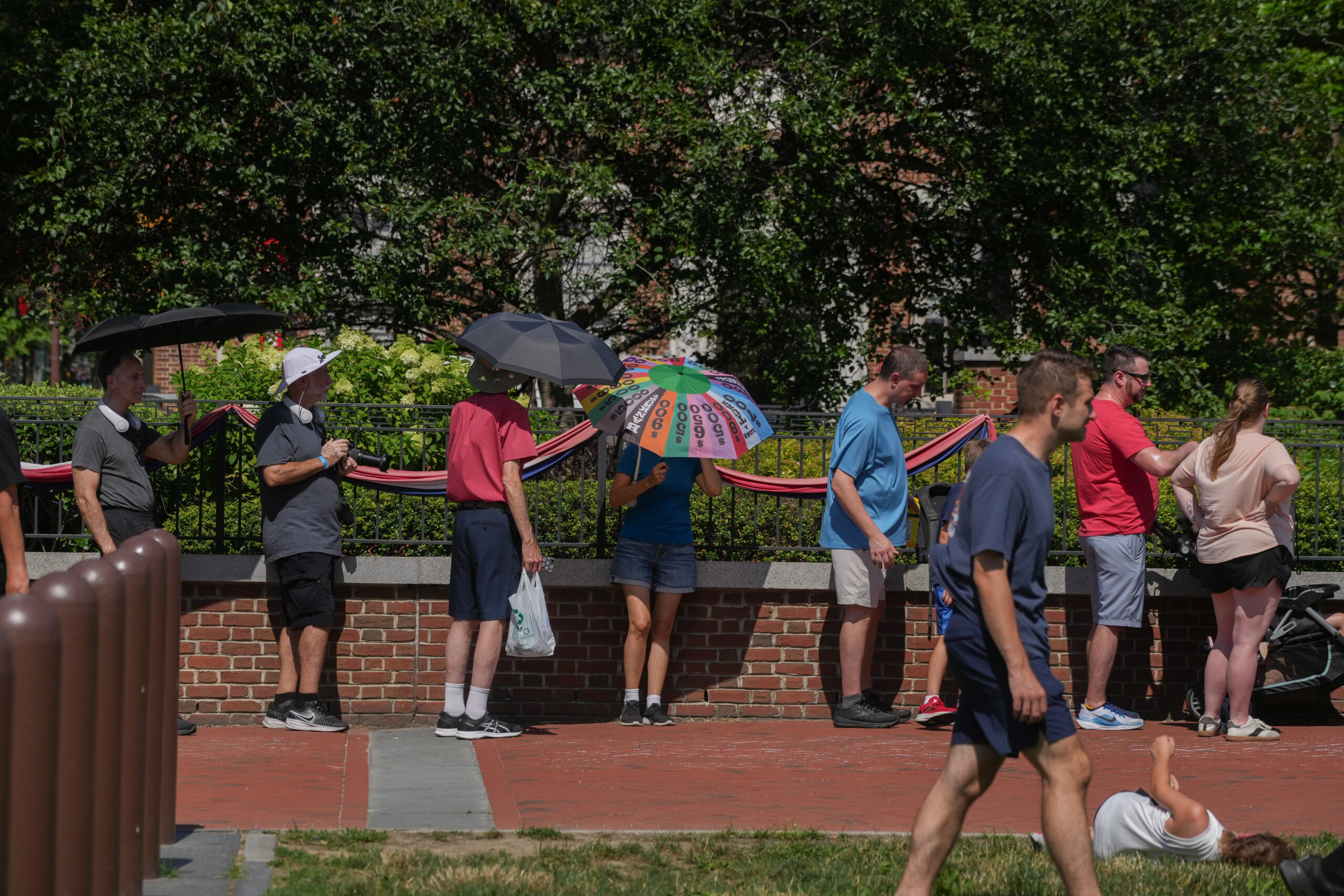
    Visitors in Philadelphia shade themselves from the sun, July 3, 2026.

    Local hospitals contacted didn’t report an uptick in heat-related illnesses or injuries. Temple University Hospital’s main campus had five heat-related cases on Friday as of 4:30 p.m., according to a spokesperson. No other information about the cases or whether it was an increase from prior days was available.

    The Philadelphia Fire Department has seen “a marked increase in calls” over the last few days, said Rachel Cunningham, communications director. There were more than 1,000 calls on Wednesday and Thursday, but the department didn’t have a breakdown on how many were heat-related.

    The number of calls on Friday was not available.

    The number of people seen at the department’s medic tents at Lemon Hill, where the FIFA World Cup Fan Festival is occurring, and Lincoln Financial Field, where the games are held, has remained relatively low. Just four people came in on Thursday, with two becoming patients and no one requiring transport to a hospital, Cunningham said. On Wednesday, five people came in, one becoming a patient and no one requiring transport. And on Tuesday, 14 people came in, with five becoming patients and two requiring transport to a hospital.

    The coolest spot in the region looks to be the Jersey Shore, Benz said. The Atlantic City boardwalk was 82 degrees at about 3 p.m. Friday.

    “You almost have to be touching the water to feel that kind of temperature,” he said.

    A sea dip is one sure way to get cool — ocean water temperatures are in the low 60s, he said.

    But for those celebrating the holiday in Philadelphia, Benz said “stay hydrated, take it easy, enjoy the Fourth, and keep an eye on the sky.”

  • The Roots and Philadelphia Boys Choir will perform at FIFA World Cup July 4th celebration

    The Roots and Philadelphia Boys Choir will perform at FIFA World Cup July 4th celebration

    Those attending the FIFA World Cup game at Philadelphia Stadium on July Fourth will be treated to more than just soccer.

    The Roots and the Philadelphia Boys Choir are among those who will perform at the event, marking both Independence Day and the 250th anniversary of the nation, according to a spokesperson for FIFA.

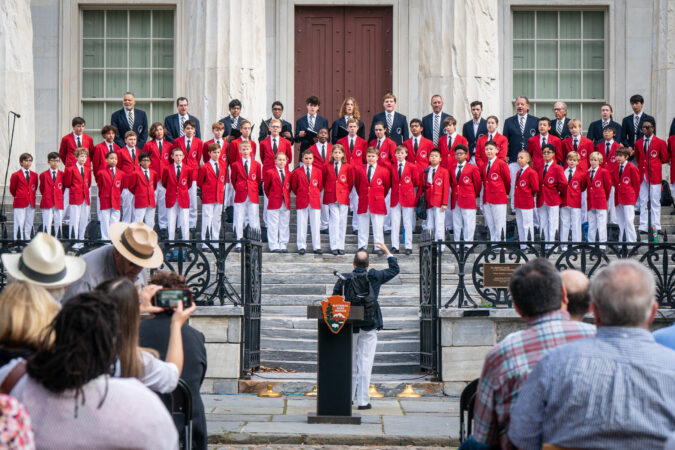
    Before the match, Tony Award-winner Idina Menzel will sing the national anthem, while the Philadelphia Boys Choir & Chorale will offer “America the Beautiful.” The Roots, a Grammy Award-winning hip-hop band founded in Philadelphia, also will perform.

    Miss Pennsylvania Stephanie Skinner will be on hand to join the celebration, and the VFA-11 and VFA-81 squadrons from Naval Air Station Oceana in Virginia Beach, Va., will do a flyover.

    At halftime, Grammy Award-winner DJ Jazzy Jeff will entertain the crowd.

    The Roots and DJ Jazzy Jeff are also slated to play the One Philly: Unity Concert for America on the Benjamin Franklin Parkway on Saturday night, which will be broadcast on NBC10.

  • Immaculata University’s president will retire next year

    Immaculata University’s president will retire next year

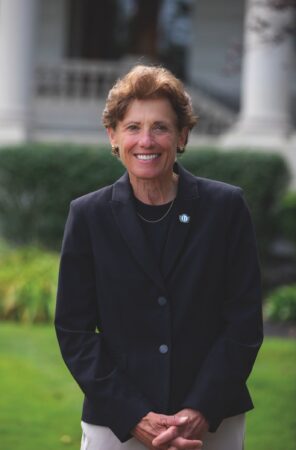
    Longtime Immaculata University president Barbara Lettiere said she will retire next summer, following a decade at the helm of the Catholic school.

    Lettiere, an Immaculata alumna, donor, and former board chair, was named the first lay president of the Chester County university in 2017.

    “The time has come in my life and the life of Immaculata for the next chapter,” Lettiere, 76, said in a statement. “I did not make this decision easily, and it comes with some very mixed emotions.”

    The university, which is affiliated with the congregation Sisters, Servants of the Immaculate Heart of Mary, enrolled nearly 2,800 students last academic year, and plans to do a national search for her replacement.

    “The board accepts her decision with deep gratitude for her outstanding leadership and dedicated service over the past ten years,” Peggy Behm, board chair, and Sister Mary Ellen Tennity, IHM’s general superior, said in a statement. “Her deep dedication to Immaculata, its students, faculty and staff, and her love for the mission of the IHM Congregation have left a lasting and meaningful impact on the University community.”

    Lettiere, a 1972 graduate, had previously served as vice president for finance and administration at Trinity Washington University.

  • The University of Valley Forge is warned it could lose accreditation

    The University of Valley Forge is warned it could lose accreditation

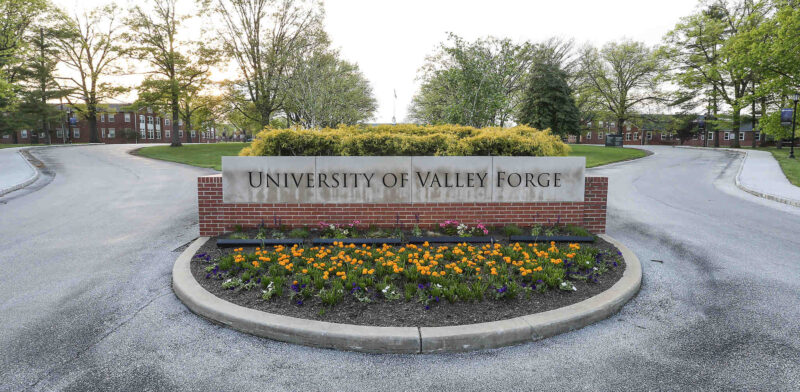
    The University of Valley Forge, a small Christian school that prepares students for leadership in the church and the world, has been given a serious warning that it is in danger of losing its accreditation.

    The Phoenixville-based college has until Sept. 1 to “show cause” to justify why it should not lose accreditation, according to the Middle States Commission on Higher Education, which posted the action on its website this week. Colleges need accreditation to keep their students eligible for federal aid.

    The “show cause” action is the most serious that the commission issues. Others include warning and probation.

    The commission cited “insufficient evidence that the institution is in compliance” with standards involving planning, resources, and institutional improvement, and governance, leadership, and administration.

    The university must document in its show-cause report “financial resources, funding base, and plans for financial development to support its educational purposes and programs and to ensure financial stability,” the commission said. The school also must provide information on long-range financial planning that includes “realistic enrollment projections and the assumptions on which they are based,” the commission said.

    The university did not immediately return a call for comment Wednesday, and when asked for the current enrollment, an employee said she was not permitted to disclose any information and hung up. The school enrolls 589 students, according to the National Center for Education Statistics.

    Under the action, the school is required to immediately notify its community of Middle States’ action.

    The university started in 1939 as the Eastern Bible Institute, which was aimed at training pastors, evangelists, missionaries and Christian educators, and lay workers, according to the school’s website. It became a college in 1975 and the University of Valley Forge in 2014. The university is part of an international network of Assemblies of God colleges and universities and offers more than 60 degree programs, according to its website.

  • Layoffs are ‘inevitable’ at Temple as school looks to cut $60 million, president says

    Layoffs are ‘inevitable’ at Temple as school looks to cut $60 million, president says

    Temple University has asked its schools, colleges, and administrative units to cut a total of $60 million to help offset a projected deficit for 2026-27.

    President John Fry shared the plan in a message to the campus community Friday and said a reduction in employees is “inevitable.”

    The message did not reveal how many layoffs the university is considering as it attempts to close the $85 million projected gap. The board of trustees’ executive committee is scheduled to meet next week to consider the proposed budget. The university’s current budget is $1.3 billion, excluding the health system.

    “Unfortunately, some reduction in force is inevitable, given that nearly 70% of Temple’s operating budget is spent on compensation and benefits,” Fry said in the message. “It is my promise that any employee’s separation from the university will be handled equitably and compassionately.”

    He noted that a faculty retirement incentive program this year drew 77 takers — 3% of full-time faculty — and will lessen the need for layoffs. Those faculty are scheduled to leave by the end of this month and their departures ultimately will save $15 million annually. The elimination of vacant faculty and staff positions also has helped, he said.

    Fry did not detail the cuts that are planned but said that colleges, schools, and administrative units each received a budget reduction target.

    Units were asked to make a 5% cut last year, but this year there is a range of percentages among schools, colleges, and administrative units, a university spokesperson said. The spokesperson declined to say how many layoffs will occur.

    Some potential cuts that have stirred discussion include a reduction in adjunct professors and a pause in doctoral student admissions by some programs.

    Jeffrey Doshna, president of the Temple Association of University Professionals, said Fry’s message seemed to address some of the issues the union has been raising, but said more information is needed, including how many people will lose their jobs and from what areas.

    “Hopefully, they will continue to respond to what we are calling for,” he said, including greater transparency, participation in decision-making, and no job cuts.

    Temple has been trying to cope with lost revenue from a precipitous slide in enrollment and uncertainty around federal funding. Fry has been warning since early April that the university “must act decisively and with a sense of urgency” to address the projected deficit. An internal Temple report obtained by The Inquirer in April said layoffs were coming.

    Last July, Temple laid off 50 employees, less than 1% of its workforce.

    Fry reported to the board of trustees last week that this year’s fall enrollment looks promising, with deposits by first-year undergraduate and transfer students up over last year at the same time.

    He said in his campus message that making the $60 million in cuts is “an important first step toward returning the university to a balanced budget over the next three years.”

    Fry acknowledged that the budget reductions “can create uncertainty and anxiety.” But he said the administration has attempted to be transparent and has held meetings with faculty senate, deans, and schools, colleges, and administrative units.

    “Navigating through this stark financial reality is not easy,” Fry said. “I recognize the difficulty of this present moment. We will emerge from this process stronger and on a more sustainable path moving forward.”

  • A gift to Temple will create the first endowed editor position at its student newspaper

    A gift to Temple will create the first endowed editor position at its student newspaper

    Jack Pinkowski relished his time as a photojournalist for Temple University’s student newspaper when he was enrolled there in the 1960s.

    And he always admired the work of his father, the late Edward Pinkowksi, an historian and author who founded a small newspaper in the Montgomery County borough of Bridgeport.

    This month, Pinkowski, a 1968 Temple grad, and his wife, Monica, gave Temple a $1.25 million gift, a portion of which will for the first time endow the editor-in-chief position for the Temple News, as well as increase other staff salaries and pay for some story-related travel and new equipment.

    Pinkowski said the need for journalists has never been more important, and he lamented the struggles print journalism has faced.

    “We hope to show it a lifeline, give it some support to encourage people to go into that as a field of endeavor,” said Pinkowski, 78, of Plantation, Fla. “This named editorship is a tribute to my father for starting a newspaper and having a lifetime as a critical mind that searched for facts and put them together and brought stories to the enjoyment of people.”

    Of the gift, $250,000 will be used to create an endowment for the student newspaper, and the remaining $1 million will fund scholarships of up to $10,000 per academic year for students to study at Temple’s Rome campus. Applicants must have knowledge of, coursework in, or a commitment to promoting Polish or Italian studies, history, or culture.

    The Pinkowskis made their money by investing in and managing real estate as well as through other careers.

    The couple both worked in businesses with global ties — Jack as an importer of furniture and Monica as an importer of gourmet foods to restaurants — and saw the merit in global study. They also both attended a study abroad program for adults at Temple Rome in 2024.

    Given the federal government’s policies affecting foreign students, Pinkowski said, he thought it was important to support the Rome campus so that students have an alternative way to attend an American university.

    Temple president John Fry said he especially likes that the gift is so personal and that it is widening access to students to participate in both studying on the Rome campus and working for the student newspaper.

    “These are two really important experiences that many students have to forgo, and I think the Pinkowskis are making both of those possible,” Fry said. “Its meaning and impact are significant.”

    The gift comes as the college prepares to close a record fundraising year, led by a record $55 million gift from alumnus Christopher Barnett in October and a large gift in April from alumna Jane Creamer Sullivan and her late husband, Thomas J. Sullivan, to start its new honors college.

    A boost for the Temple News

    John DiCarlo, managing director of student media and adviser to the Temple News, said its portion of the Pinkowski gift will be incredibly important in supporting the newspaper with a staff of 37, which last academic year ran on a $115,596 budget that largely covers salaries and print costs.

    Most of the costs were covered by the university, with the newspaper responsible for raising $23,500 through ad revenue and other means. If the publication exceeds that goal — which it did last year, raising over $29,000 — it can funnel the additional money back into operations, DiCarlo said.

    The new endowment, DiCarlo said, will bring in an additional $10,000 to $12,000 annually, depending on its earnings.

    Incoming senior Sienna Conaghan, 20, who will be the inaugural Edward Pinkowski Editor-in-Chief, said she is grateful for the funding, which will cover her approximate $5,400 salary. And she is glad that salaries for other staffers can get boosted, too.

    “We’re asking them to do full-time jobs on a college student’s budget and a college student’s schedule,” DiCarlo said. “It takes a lot out of them because they really care.”

    Conaghan, a journalism major from West Yellowstone, Mont., estimates that she spends about 30 hours a week on Temple News work. She freelanced freshman year, was assistant sports editor sophomore year, and worked as sports co-editor last year.

    The experience is more important than the paycheck, said Conaghan, who plans to pursue a career in sports journalism, but the money helps.

    “It has really been everything,” Conaghan said of her Temple News work. “I think I’ve learned so much from working at the Temple News, from how to be a journalist and also just how to be an adult and a person.”

    The Pinkowskis initially gave a gift to the Temple News in 2023 to help it reach a fundraising goal. The college wanted to be able to pay student journalists a little more because some were having to take on second jobs to generate more income, DiCarlo said. At that time, he said, he had no idea the couple would return with such a large gift three years later; it is the largest gift the Temple News has ever received.

    “Monica and I are avid readers and avid followers of print journalism,” said Jack Pinkowski, a graduate of Philadelphia’s Central High School.

    Pinkowski said his father decided to start the now-defunct Bridgeport South Side Press in 1950 because the community did not have a local paper. He also wrote history books about the local area, using skills he developed as a journalist, Pinkowski said.

    The Pinkowskis have had other career experience in addition to real estate and import businesses.

    He was a general contractor and wedding photographer early on and later spent 18 years as an associate professor of public administration at Nova Southeastern University’s school of business and entrepreneurship in Florida.

    And she was a flight attendant at one time and as a child grew up working in a family traveling carnival business in Missouri — which helped pay for her education at the University of Missouri-Kansas City.

    Jack Pinkowski said the common thread in their endeavors has been “inquisitiveness and intellectual curiosity and the ability to take something where there’s nothing and make something of it.”

    Both Temple officials and the Pinkowskis hope their gift will motivate others.

    “I do believe that other people pay attention to that, and it makes them say, well, maybe they can do something as well,” Jack Pinkowski said.

  • Haverford College president declines to consider removing Howard Lutnick’s name from the library

    Haverford College president declines to consider removing Howard Lutnick’s name from the library

    Haverford College will not consider removing U.S. Commerce Secretary and mega donor Howard Lutnick’s name from its library despite student calls to do so, the school announced Wednesday.

    President Wendy Raymond’s announcement came 30 days after the student body voted by an overwhelming majority to ask that she establish a review committee to consider removing his name. But Raymond said she will not accept the student body’s resolution.

    “I do not believe this matter meets the threshold necessary to move forward with a committee,” Raymond wrote in an email to the students’ council copresidents.

    Haverford College President Wendy Raymond announced she would not consider removing Howard Lutnick’s name from the school’s library.

    Concern has been mounting about Lutnick, the former chair of Haverford’s board of managers, since Department of Justice documents released earlier this year showed he had contact with sex offender Jeffrey Epstein as recently as 2018, long after Epstein pleaded guilty to obtaining a minor for prostitution and soliciting a prostitute.

    Raymond did not elaborate on her reasons and declined to comment through a spokesperson, but the decision was immediately panned by students.

    The council copresidents expressed their “deep disappointment” in an email to students.

    “The committee would have been a valuable step in our college’s ongoing reckoning with sexual assault,” wrote Ben Fligelman and Sarah Weill-Jones. “We hope that in the coming weeks and months, President Raymond will reevaluate her decision and understand the profound importance of convening a review committee.”

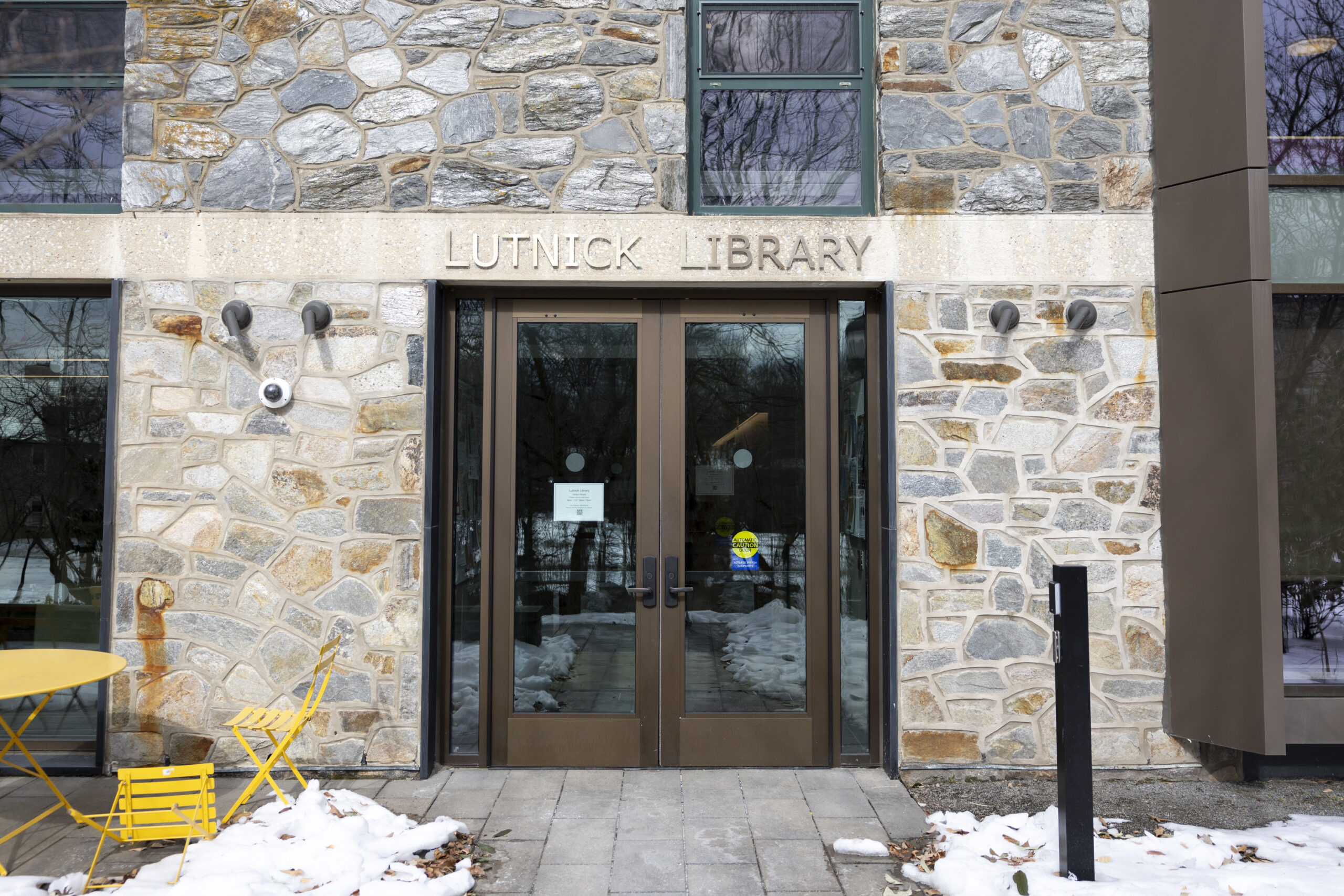
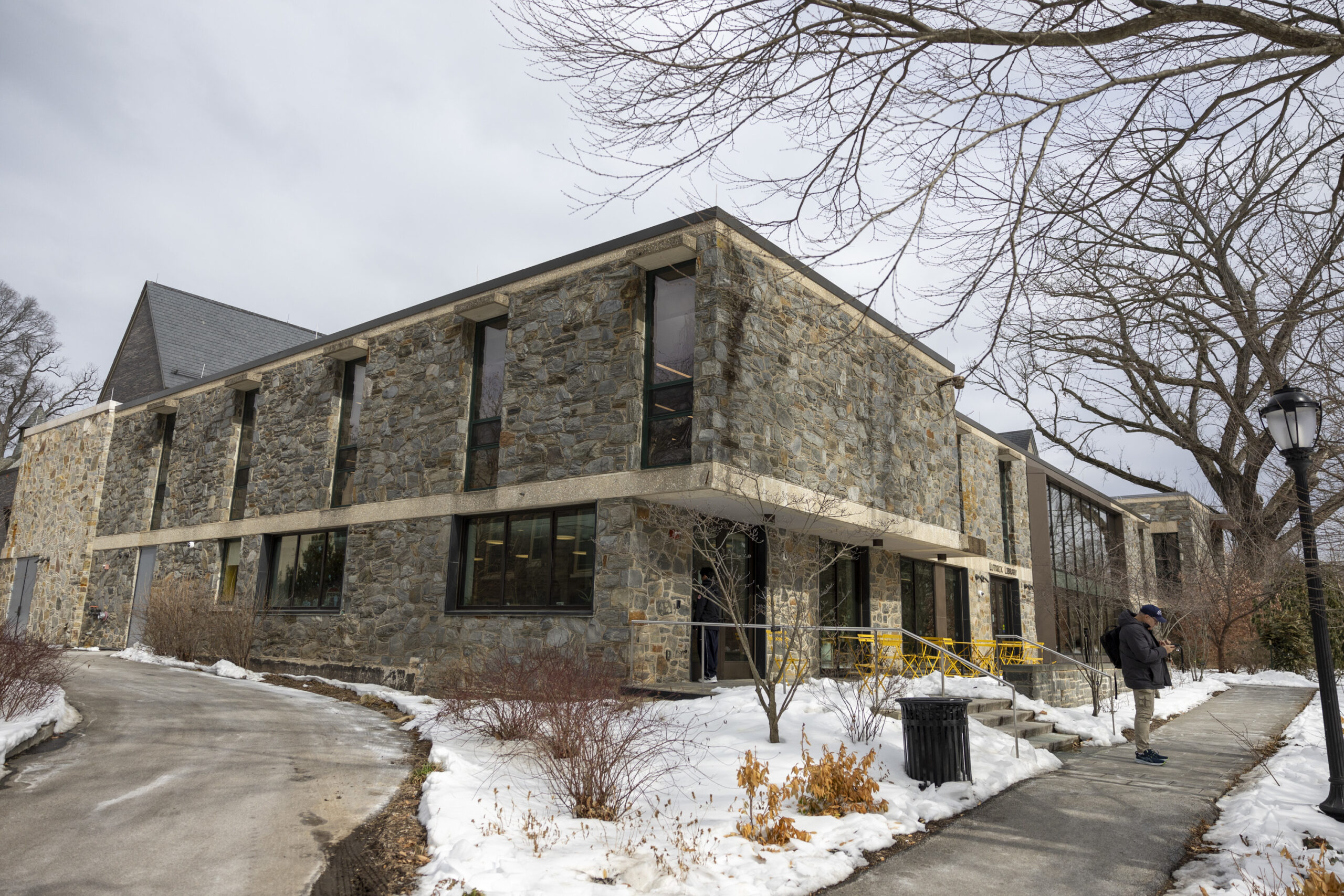
    The outside of the Lutnick Library at Haverford College.

    The Haverford Survivor Collective, which started in 2023 and is led by Haverford students and survivors of sexual assault, called the decision “disappointing, unsurprising and categorically insulting” in a statement. It is even more painful that the decision was released on Denim Day, an international day of support for survivors, the collective wrote.

    “What should have been a meaningful day of solidarity and collective support has instead become a stinging reminder of how far Haverford still has to go,” the group wrote.

    Senior English major Paeton Smith-Hiebert, co-founder of the collective, said Raymond in a meeting with some students Tuesday shared her reasoning for why the Lutnick situation did not meet the threshold.

    Raymond said, according to Smith-Hiebert, there needed to be “pretty unambiguous evidence of harm being directly committed” and that “association wasn’t enough.”

    Arshia Seth, another student who is a member of the collective board, said when pressed by those present, Raymond said the threshold would be if Lutnick had “direct ties to trafficking.”

    The president also told students she wished she had had more time to make the decision, but plenary rules require that she respond within 30 days, Smith-Hiebert said. Whether that means she will continue to weigh the matter is unclear.

    “Looking forward, … I — and future presidents — will retain the ongoing responsibility to consider the relevant facts at any given moment in time, and to act in consideration of the best interests of Haverford’s educational mission,” Raymond, who announced in November she would retire as president in June 2027, said in her statement. “…The board of managers too will remain engaged.”

    Raymond’s announcement Wednesday also said she and the college “stand in solidarity with survivors of sexual violence.”

    Raymond previously said she had heard from “a growing number” of Haverford alumni “who have written to express their dismay” about Lutnick’s ties to Epstein, which included a visit by Lutnick and his wife to Epstein’s private island. She said in February that she would consider forming a review committee.

    Lutnick’s name was put on the library after a then-record $25 million donation he and his wife made in 2014. Lutnick, a 1983 Haverford graduate, has given the school $65 million and is one of its biggest donors.

    If Raymond had established a committee, it would have kick-started a multistep process that the school follows when considering changing building names. Raymond would have considered the committee recommendation before then making her own recommendation to the external affairs committee of the board of managers, as well as to its chair and vice chair. The external affairs committee then would have made its recommendation to the full board of managers, who ultimately decide whether a building should be renamed.

    Under Haverford’s gift policy, the school can rename a building if “the continued use of the name may be deemed detrimental to the college, or if circumstances change regarding the reason for the naming.”

    The students’ vote came during their plenary session on March 29. At least 66% of the student body living on campus had to be present at the session for discussion and votes to occur, and to pass, the resolution needed to win a simple majority. That 66% represents almost 900 students.

    “Students feel harmed and hurt by the presence of his name and association on campus,” Milja Dann, a sophomore psychology major from Woodbury, N.J., said in March, after attending the session.

    The Haverford Survivor Collective had been urging the college to form a committee even before the plenary.

    “Given the gravity of this situation, survivors are among those most directly affected,” Smith-Hiebert had written to Raymond earlier this year. “Many are feeling significant harm and institutional betrayal … While I understand there are many stakeholders to consult, it is difficult to reconcile the stated commitment to engagement with the apparent absence of those most impacted.”

    The student resolution asked the college to include student representation on the review committee, along with staff from several offices, including institutional diversity, equity, and access. It also called on college leadership “to stand in solidarity with victims of assault.”

    And it asked the board of managers to consult directly with students before making final decisions to rename the library and or whom it would be named for.

    The resolution also called into question Lutnick’s leadership at Cantor Fitzgerald, the New York City financial firm where he formerly served as chairman. The Securities and Exchange Commission charged the firm in 2024 with violating laws related to regulatory disclosure, and Cantor agreed to pay a civil penalty. Cantor Gaming in 2016 agreed to pay $16.5 million in penalties to the federal government “to resolve a criminal investigation into the company’s past involvement in illegal gambling and money laundering schemes,” according to a release from the U.S. Attorney’s Office.

    During congressional testimony, Lutnick said he visited Epstein’s island with his family in 2012. Lutnick previously said he had not been in a room with Epstein, whom he found “disgusting,” since 2005.

    A Commerce Department spokesperson told The Associated Press in January that Lutnick had had “limited interactions” with Epstein, with his wife in attendance, and had not been accused of “wrongdoing.” Lutnick told lawmakers during his testimony: “I did not have any relationship with him. I barely had anything to do with him.”

    The outside of the Lutnick Library at Haverford College.

    In addition to the library, which also bears the name of Lutnick’s wife, Allison, Haverford’s indoor tennis and track center is named for his brother Gary Lutnick, a Cantor Fitzgerald employee who was killed on 9/11, and the fine arts building carries the name of his mother, Jane Lutnick, a painter. Lutnick also funded the college’s Cantor Fitzgerald Art Gallery.

    Students, however, said they were focusing on the library in the resolution because of its prominence.

    Before Raymond’s decision was announced, Adam Marcello, a Haverford student, in an opinion piece for the Haverford Clerk, the student newspaper, said students needed to keep the pressure on.

    “If students want the renaming to succeed, they will need to sustain visible, organized pressure,” Marcello wrote. “Epstein posters scattered across the library or letters tacked to the doors are not enough. We need to make inaction more costly than action.”

  • Mother of 20-year-old killed in Lincoln University homecoming shooting sues school

    Mother of 20-year-old killed in Lincoln University homecoming shooting sues school

    The mother of Ju’Juan Jeffers, the 20-year-old man killed during a shooting at Lincoln University homecoming last October, has filed a lawsuit against the school, the university police chief, and others.

    Attorneys for Marchelle Hargroves, Jeffers’ mother, allege that Lincoln prioritized the “college experience” over safety and, in doing so, fostered a campus culture that permitted violent and sometimes fatal acts,” according to the suit filed Friday in Common Pleas Court in Philadelphia.

    “Lincoln University allowed unrestricted public access to its homecoming events and negligently failed to implement or enforce adequate security measures, including … controlled entry points, attendee screening, handheld wands, metal detectors and/or bag checks,” the suit said.

    Jeffers, of Claymont, Del., was one of seven people shot at the Oct. 25 event; he was the only one who died.

    Jeffers was not a student at Lincoln, but had been invited to attend, according to the suit.

    A university spokesperson said the school does not comment on active litigation. Its police chief, Marc Partee, declined comment.

    Also named as a defendant in the lawsuit is Zecqueous Morgan-Thompson, who was charged with possessing a concealed firearm without a license at the event, but has not been charged in Jeffers’ shooting. Prosecutors have said Morgan-Thompson is not a student at Lincoln, nor an alumnus, and that it had been unclear why he was on campus. Law enforcement officials said after the shooting that they had confirmed a match between a fired .380 cartridge at the scene and the Glock 28 semiautomatic pistol that Morgan-Thompson had.

    Morgan-Thompson, the lawsuit said, fired a round during the event, “thereby helping to incite the crowd, which negligently and recklessly contributed to the shooting death of Mr. Jeffers.”

    Morgan-Thompson’s attorney in his criminal case did not immediately respond to a request for comment Friday. A trial is scheduled this month for Morgan-Thompson; no other charges have been filed in connection with the homecoming shooting or Jeffers’ death.

    Other defendants listed in the lawsuit complaint include unnamed Lincoln security officers, as well as unnamed outside companies that Lincoln hired to provide additional security.

    Michael T. van der Veen, an attorney for Hargroves, described Jeffers as an honor student, chess player, and “dedicated athlete” who wanted to serve in the military and start his own clothing company.

    “He loved basketball and played throughout his school years,” van der Veen said at a news conference Friday announcing the suit. “He had a beautiful life ahead of him.”

    At a board of trustees meeting last month, the university announced new safety plans for large events, including holding no outdoor events after dusk, screening guests, and allowing only one registered guest per student for the upcoming Spring Fling event in April.

    Lincoln, a historically Black university with 1,650 students in rural Chester County, has been under pressure from its neighbors and Lower Oxford Township to make changes since the shooting.

    Several officials in Lower Oxford had reported ongoing problems with parking, trash on neighbors’ lawns, disturbances, and, in some cases, crime when the university hosts events. After thousands gathered for homecoming, emergency personnel had to use all-terrain vehicles to transport patients on stretchers because ambulances could not access the campus, given how many cars were parked around the venue, they said.

    The township’s board of supervisors is expected to vote at their meeting at 7 p.m. Monday on a special events ordinance that would require a permit process for large events.

    According to the lawsuit, thousands packed Lincoln’s International Cultural Center parking lot after the homecoming football game, and there was alcohol consumption.

    It took hours for Jeffers to receive medical care after he was shot, the complaint says, because the roads were clogged around the university.

    “Multiple invitees were forced to render emergency medical aid because emergency medical personnel could not promptly access and reach him,” the suit said. “Lincoln University knew or should have known that the Homecoming football game and celebrations would attract a substantial number of attendees to its campus and were on notice of the need for protocols for adequate safety of and about the University.”

    Partee, the Lincoln police chief, “failed to take reasonable steps to correct or remedy these dangerous conditions,” the suit said.

    Concerns about behavior during large events had been raised with Lincoln officials by township officials and others over several years, but no adequate action was taken, the suit said.