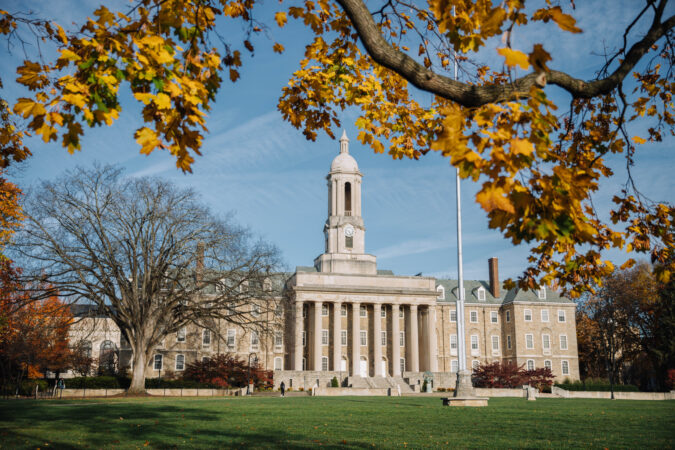
The full cost to attend the University of Pennsylvania next school year will exceed $94,000 under a resolution approved by the school’s budget and finance committee Thursday.
The 3.8% increase in overall costs for the 2026-27 academic year is slightly more than last year, when costs rose 3.7%, but slightly less than the year before that, which was a 3.9% increase. Overall, the tab will rise from $91,112 to $94,582 for 2026-27.
The costs include tuition of $65,670, fees of $8,308, room charge of $13,644, and $6,960 for meals.
“People ask me when are we going to break through the $100,000 barrier,” Trevor Lewis, vice president of budget and management analysis, told board members. “Probably in FY28 or 29.”
Lewis said Penn also will increase its undergraduate financial-aid budget 3.8%, to $347 million. Penn guarantees full tuition scholarships for students from families with incomes of $200,000 or less with typical assets and covers full attendance costs for students from families earning $75,000 or less. Of the university’s approximate 10,000 students, 46% receive need-based aid.
Tuition for graduate and professional students will be set by the individual schools, the university said.
“Why would you not want to study the thing that lets you study,” said Schechtman-Taylor, a senior from New York City. “The brain, that’s our entire world.”
Neuroscience has become the most popular major on the highly selective liberal arts campus on Philadelphia’s Main Line, counting nearby Bryn Mawr College students who also take classes at Haverford. And it’s only been around since 2021 when the two colleges — which have had a minor in the discipline since 2013 — decided to administer the joint major.
At Haverford, there were 24 majors the year it started; now there are 60. Bryn Mawr saw similar growth and currently has 49. Enrollment in Haverford’s neuroscience classes including both Bryn Mawr and Haverford students grew from 154 in 2014 to nearly 800 last fall.
“We knew that neuroscience was going to be popular, but we did not anticipate this growth,” said Helen White, Haverford’s provost, who noted the school recently hired another neuroscience professor to accommodate more students.
The major’s popularity is also growing at schools around the Philadelphia region — and across the country. Students and professors say neuroscience is popular because it’s interdisciplinary, involving psychology, biology, and chemistry, and can lead to a variety of careers. It can also be personal, because it involves studying diseases like Alzheimer’s and Parkinson’s, which have no cures, and the treatment of strokes and traumatic brain injuries.
“I would say about 90% of my students are coming into my lab because they have someone in their family with one of these diseases,” said Rob Fairman, a Haverford biology professor whose research focuses on neuroscience.
Haverford senior Alina Schechtman-Taylor, 21, of New York City, works as a teacher assistant in professor Laura Been’s lab.
A growing major
In 2008, 110 colleges nationally offered neuroscience majors; now, it’s about 330, said Raddy Ramos, associate professor in the Department of Biomedical Sciences at the New York Institute of Technology. Ramos, who coauthored studies on the topic, said there were more than 2,000 neuroscience graduates in 2008; in 2019, that number had grown to more than 7,200.
window.addEventListener(“message”,function(a){if(void 0!==a.data[“datawrapper-height”]){var e=document.querySelectorAll(“iframe”);for(var t in a.data[“datawrapper-height”])for(var r,i=0;r=e[i];i++)if(r.contentWindow===a.source){var d=a.data[“datawrapper-height”][t]+”px”;r.style.height=d}}});
Pennsylvania is a hot spot, with 36 colleges having programs in 2022-23, Ramos said — more than than any other state.
Drexel University, which has had a minor since 2015, launched its undergraduate major in neuroscience in 2024.
“We have seen a 45% increase in applications over the last two years,” a university spokesperson said.
Pennsylvania State University in November announced it was launching two new undergraduate majors in neuroscience, one offered by the biology department and the other by the biobehavioral health department.
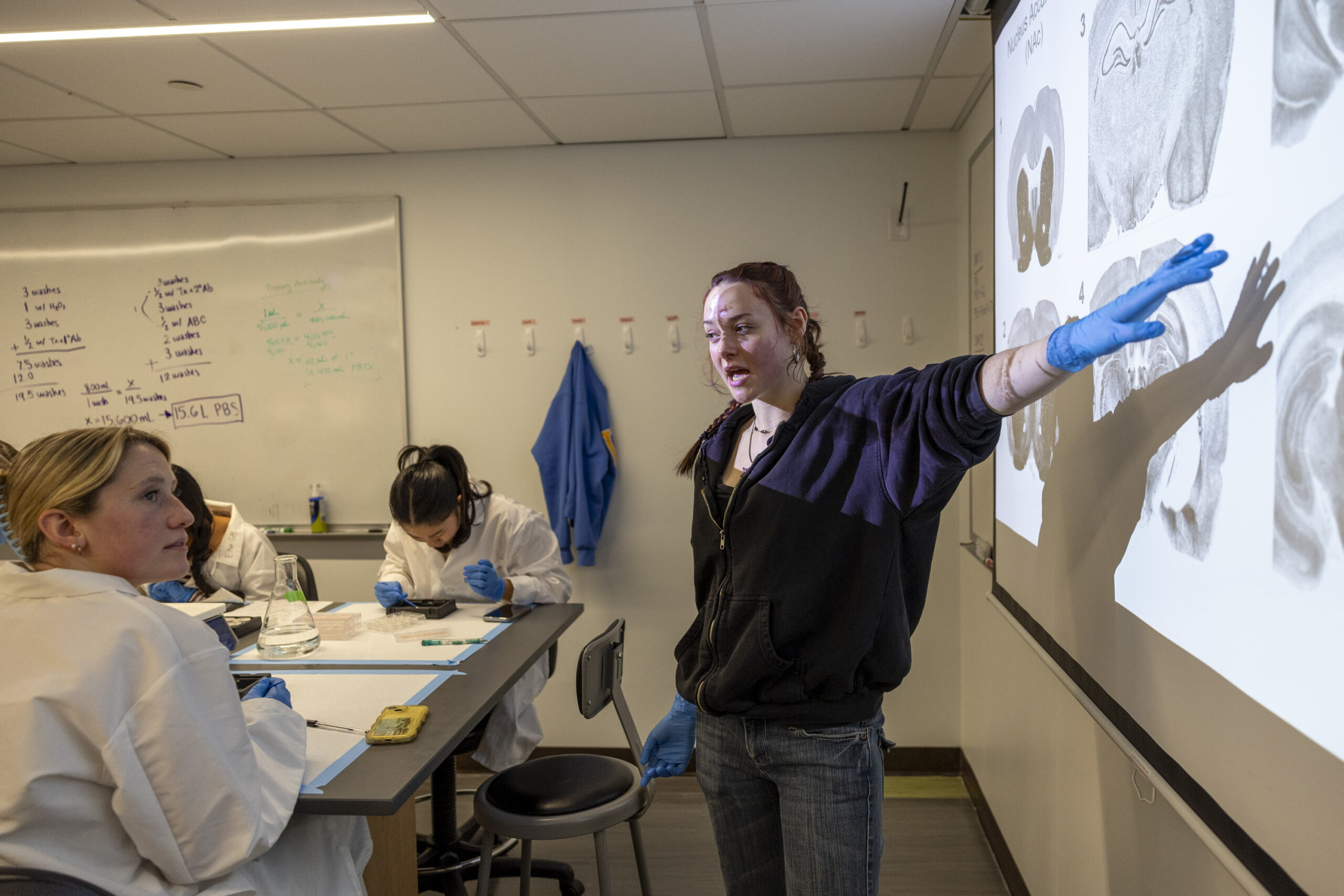
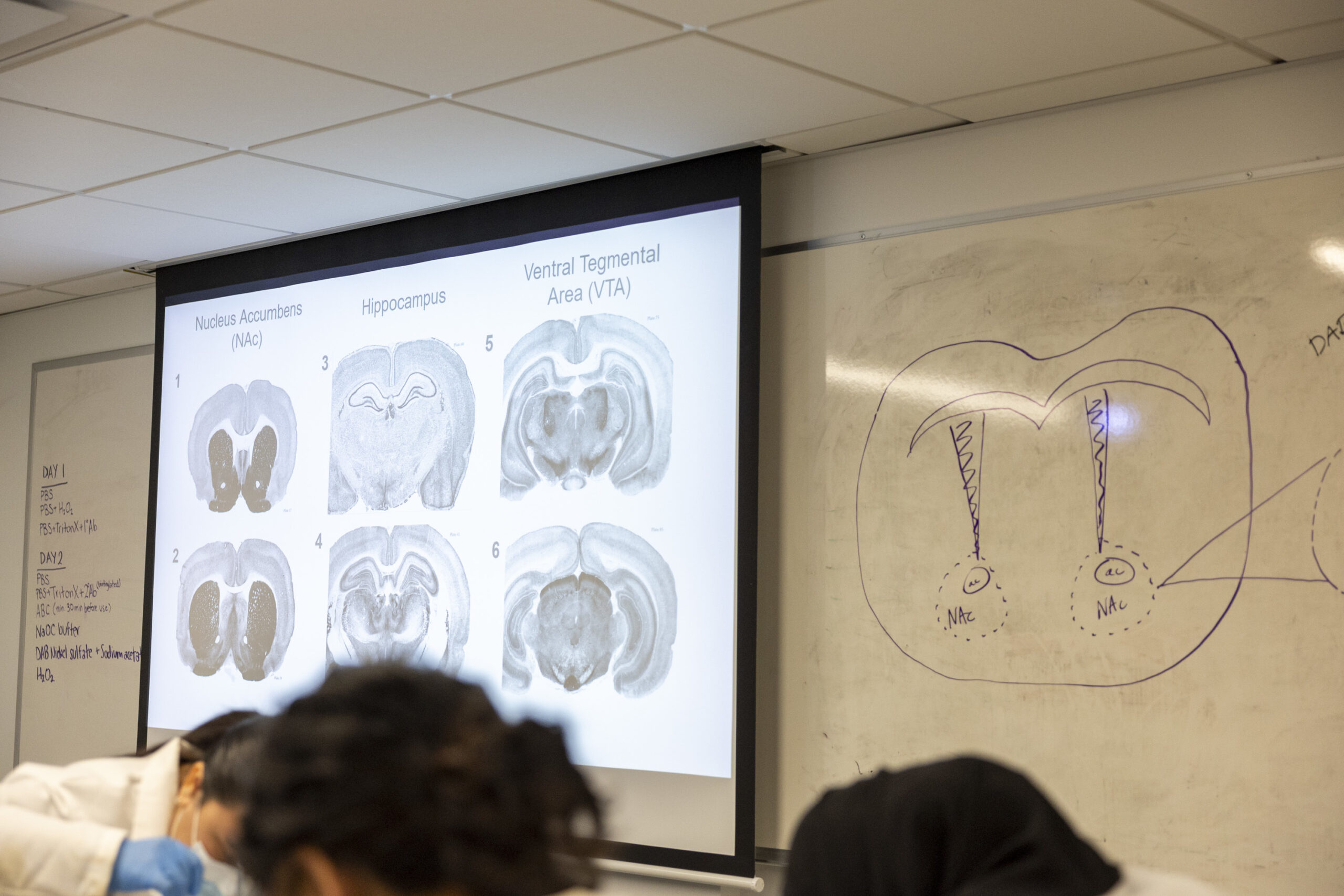
Students look for sections of rat brains that match the sections projected on the screen in a Haverford College lab.
Neuroscience has become especially popular among pre-med majors, school officials say. Otherpotential career paths include biotechnology, pharmacology, psychology, and neuroengineering, while somestudents go on to law school, business, or public policy.
“There’s a lot more awareness that mental health conditions are due to changes in the brain, and people want to understand that,” said Lisa Briand, associate professor and program director for Temple University’s neuroscience program.
At Temple, neuroscience has become the fourth largest of 30 majors in liberal arts, Briand said. The psychology department a few years ago changed its name to psychology and neuroscience, she said.
At the University of Pennsylvania a decade ago, 100 to 120 neuroscience majors graduated annually, said Lori Flanagan-Cato, associate professor of psychology and codirector of the undergraduate neuroscience program.
“Twice in the past 3 years we have had over 150,” she said.
Swarthmore College, a highly selective small liberal arts college, graduated 10 to 12 neuroscience majors a year about a decade ago, said Frank Durgin, professor of psychology who oversees the program.
“This year, we anticipate graduating 24 majors,” he said. “Next year, it’s 30.”
The college has added two professors in the last two years to accommodate growth, he said.
Why students study neuroscience
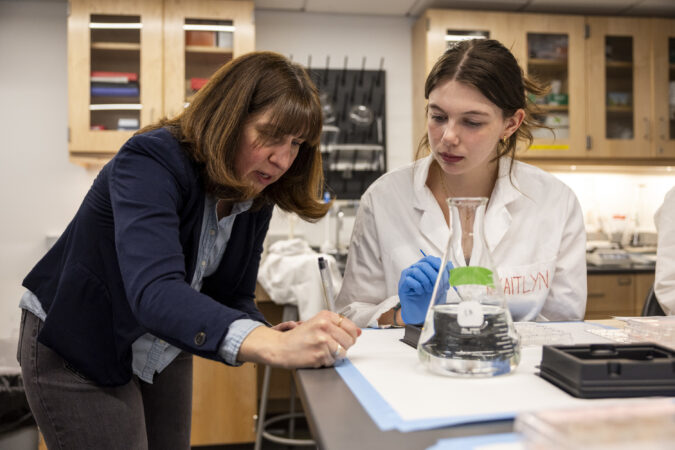
In a lab at Haverford one afternoon last month, 16 students in white lab coats poked with paintbrush tips at thin slices of rat brain in preservative fluid, preparing to stain them to look for which neurons were activated. Some of the rats received the drug Ritalin, commonly used for attention deficit disorder, while others did not. Students were trying to discern differences in their brains when they performed certain tasks, said Laura Been, associate professor of psychology and director of the bi-college neuroscience program.
A neuroscience student works with sections of rats’ brains in a lab at Haverford College.
“We can … try to learn something more about how this sort of drug treatment impacts the brain,” said Been, whose area of interest is behavioral neuroendocrinology, which looks at the relationship between hormones, the brain, and behavior.
Students in Been’s class had varied reasons for studying neuroscience.
Emily Black, visiting assistant professor of neuroscience at Haverford College, helps Savannah Shaw, 22, of Downingtown, during neuroscience lab work. “I really like the variety of the classes we can take in the major,” said Shaw, a senior who plans to go to medical school, possibly to become a neurologist. “You can go more the psychology route or go more biology.”
Sophia Lipari, 21, a junior from Jacksonville, Fla., whose father is a reproductive endocrinologist, is interested in hormones and the field of fertility.
Riley Fass, 20, a junior from Claremont, Calif., wants to be a special-education teacher. She already sees the connection between neuroscience and her job as a teacher’s assistant at a school where children have traumatic brain injuries and cerebral palsy.
“The topics we discuss — an injury here will result in this — I can actually see it in my students,” she said.
Iris Goxhaj (left), 21, of Northeast Philadelphia, and Riley Fass, 20, of Claremont, Calif., work with sections of rats’ brains in a lab at Haverford College.
Deeya Abrol’s interest was stoked when she worked with a child on the autism spectrum as a swim instructor. Abrol, 22, a senior from Los Gatos, Calif., plans to go to medical school.
Schechtman-Taylor meanwhile wants to pursue biomedical engineering and specifically developing medicines for the treatment of neurodegenerative disorders.
“I want to work on the treatment side,” she said.
Fairman, the Haverford biology professor, said a recent graduate’s mother had died of Huntington’s disease, meaning she has a 50% chance of getting it, he said. She worked in his lab and wanted to be involved in hisresearchon protein clumping in the brain and its effect on diseases such as Parkinson’s and Alzheimer’s.
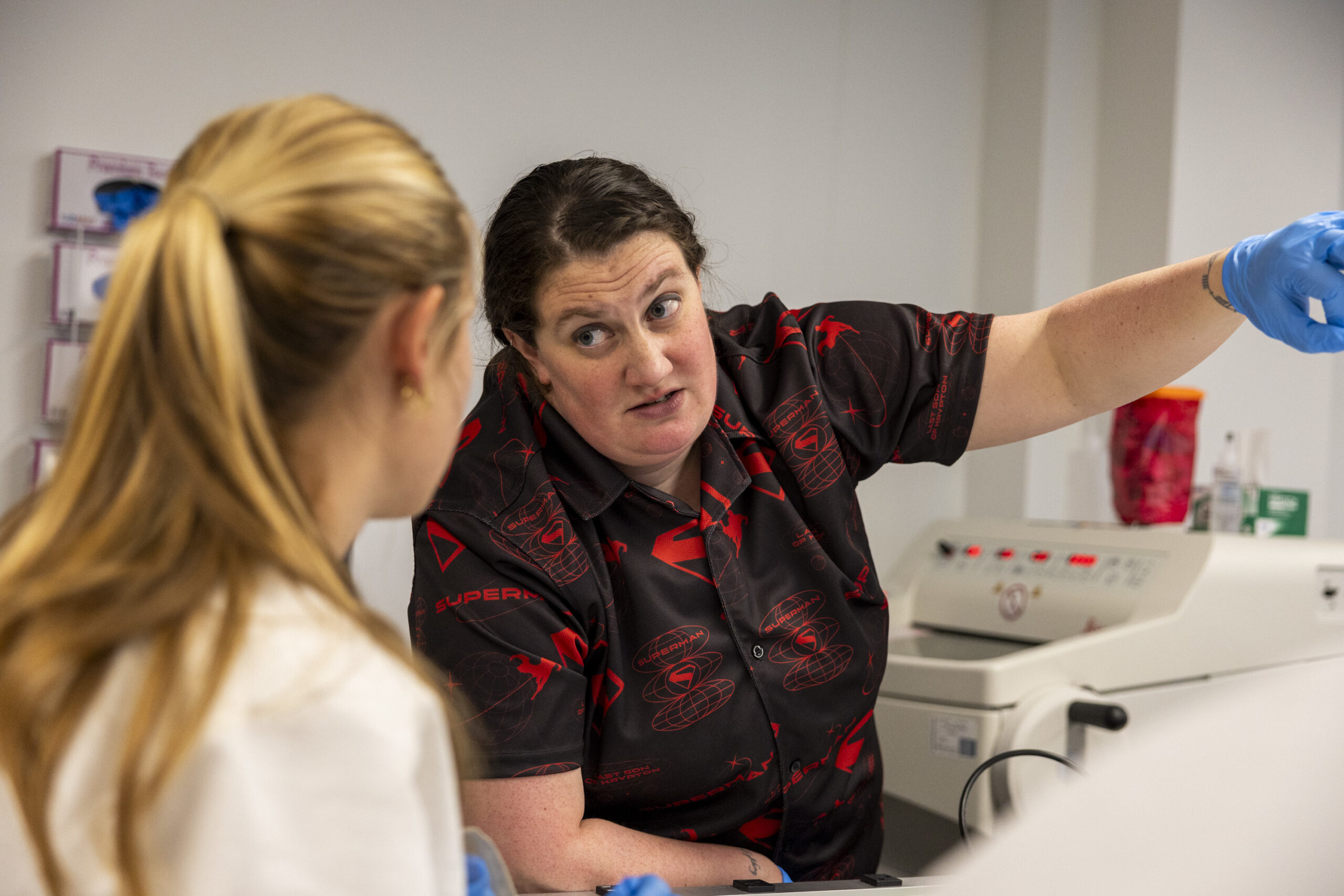
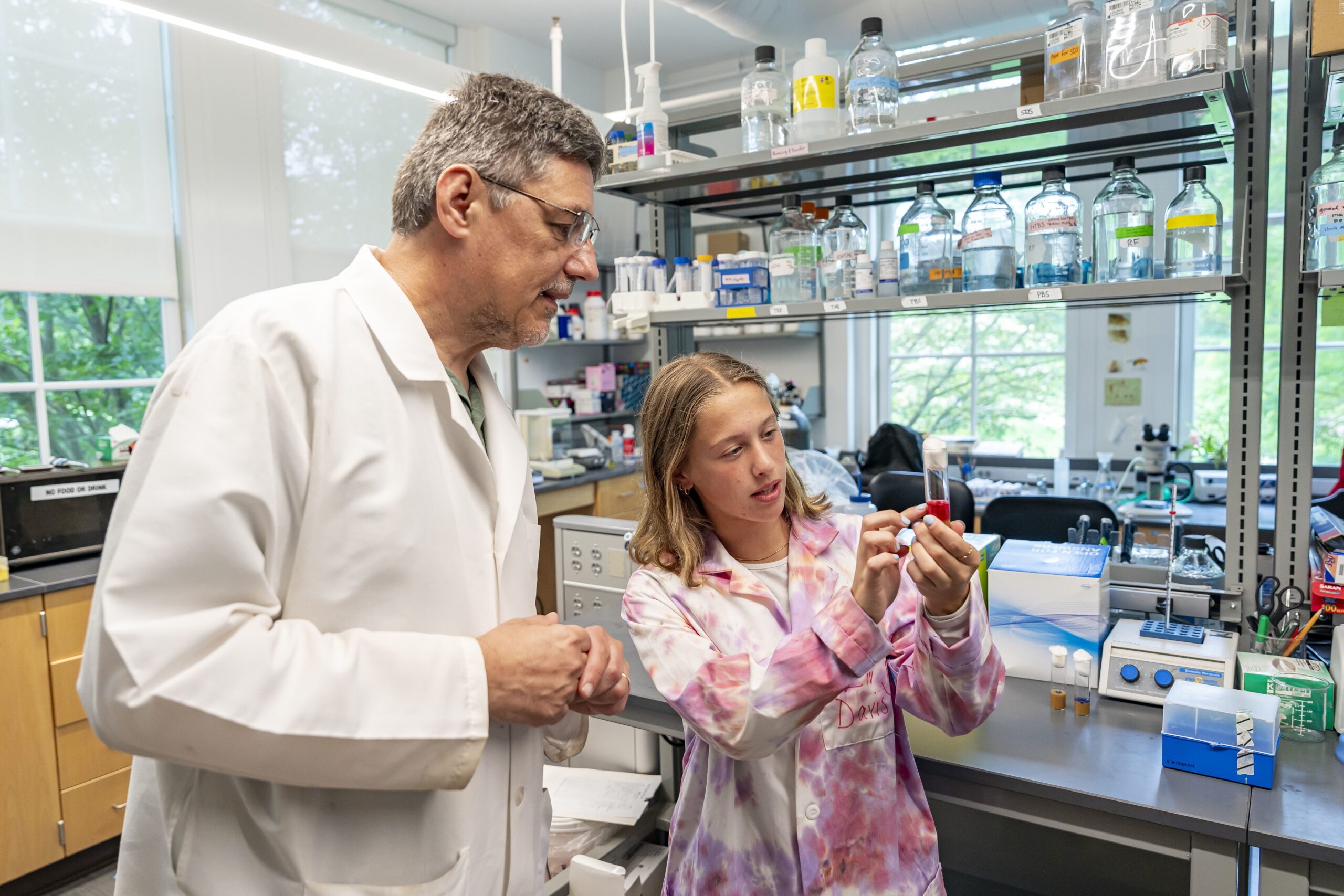
Rob Fairman, a professor of biology at Haverford College, and student Liv Davis are testing the effects of natural products on animal models with neurodegenerative diseases.
Junior Liv Davis, 21, wanted to help find a cure for Parkinson’s, which struck her grandmother in 2020.
“She’s had two falls in the last year and a half because it’s progressed pretty quickly,” said Davis, of Lanoka Harbor, N.J. “It’s hard to see someone you love so much live with it, but it makes it all the more rewarding to work toward fixing it.”
Davis, who has worked in Fairman’s lab since her freshman year, tried to get into an introduction to neuroscience class early on. But there wasn’t room. She ended up majoring in biology, which she thinks probably would have happened anyway.
About half the students working in Fairman’s lab are neuroscience majors, he said.
Davis is currently studying the effect of a chemical on sleeping fruit flies that have been genetically modified to carry the protein associated with Parkinson’s.
Last summer, she received an inaugural research fellowship funded by Shamir Khan, a Haverford alumnus and psychologist who was diagnosed with early-onset Parkinson’s.
Her grandmother was glad she could continue the research, said Davis, who plans to become a doctor.
“She always jokes with me,” Davis said. “‘Give me a spoonful of that chemical, whatever it is. If you need a test subject, you let me know.’”
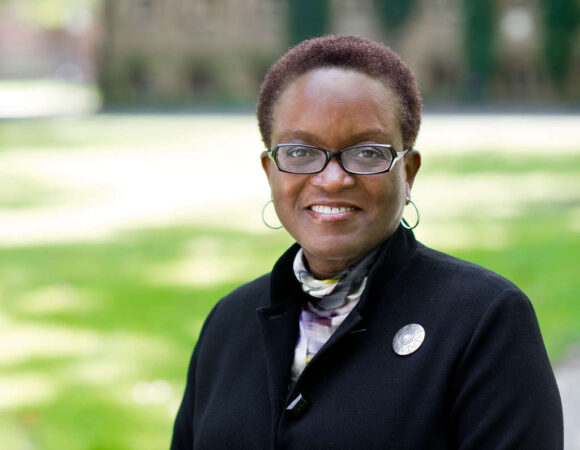
Swarthmore College President Valerie Smith will step down in June 2027 after concluding her 12th academic year in the job.
Smith, the highly selective liberal arts college’s first African American president, said in a message to campus that she decided to announce her decision now to give the school time for “a thoughtful, seamless transition.”
“Serving as Swarthmore’s 15th president has been one of the great privileges of my life,” she said.
Smith, 70, didn’t say specifically why she is choosing to leave the presidency, but it will be at the end of her current contract, which had been extended in 2024. An attempt to reach her for comment Tuesday was not successful.
“These are tumultuous times,” Smith wrote. “Like many institutions, we are navigating new pressures, including unprecedented threats to our very mission. We will continue to face these challenges together, thoughtfully and deliberately. In doing so, we reaffirm Swarthmore’s enduring value.”
The college said it would launch a search for Smith’s successor and already had chosen a search firm.
“This is a pivotal moment for the college and for higher education more broadly, and the board recognizes how consequential this search will be in shaping Swarthmore’s future,” said Harold “Koof” Kalkstein, a 1978 graduate and chair of the school’s board of managers.
A scholar of African American literature and culture, Smith came to Swarthmore in July 2015 from Princeton, where she had been dean of the college and a professor of literature and English.
Smith steered Swarthmore through COVID-19, various student protests — including a pro-Palestinian encampment that was erected on campus in 2024 — and more recently, funding threats from the federal government. Swarthmore had feared that the federal government would increase the excise tax on its endowment earnings, but the school actually ended up not having to pay at all under new rules announced last year.
In 2021, the college decided to stick with a plan to partner with an organization that places retired military personnel on campus as visiting faculty members despite pushback.
“I ultimately drew from the College’s mission and my fundamental belief that critical to the liberal arts is our ability to engage in the exchange of diverse and often opposing views, not to shut them out,” Smith wrote at the time.
When she arrived at Swarthmore, she said her plan for dealing with a student body known for its activism was to listen carefully, craft a careful and well-researched response, and communicate.
“It’s critically important to maintain open dialogue with students,” she said at the start of her presidency in 2015.
“She has modeled integrity, intellectual curiosity, compassion, and empathy, all in service of our shared mission,“ Kalkstein said. ”Swarthmore is forever stronger thanks to Val’s leadership.”
An Arizona State University vice provost and dean, who has degrees in mathematics and geography and has studied urban planning, will become Temple University’s next senior vice president and provost.
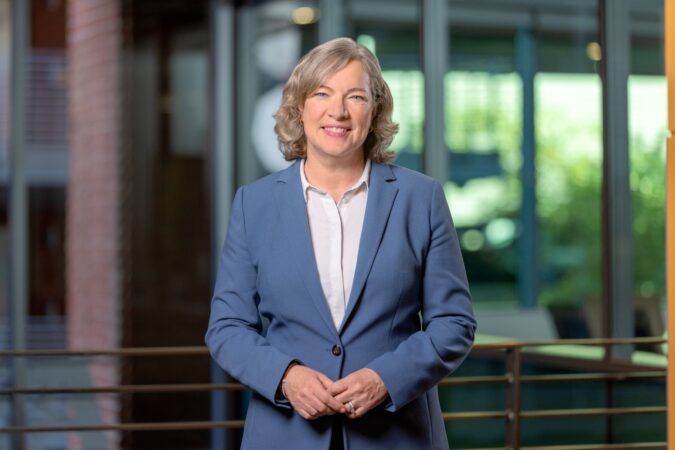
Elizabeth “Libby” A. Wentz, 62, an Ohio native with a doctorate from Pennsylvania State University, will step into her new role at Temple July 1, subject to approval by the board of trustees, the school announced Monday.
“My background in urban planning has kind of shaped who I am and shaped my thinking, and I just think that there’s so many great opportunities for recruiting students, for creating internships for students, for creating research experiences for students in an urban environment that the university’s rural counterparts don’t have in the same way,” Wentz said in an interview.
Wentz has overseen Arizona State’s Graduate College since 2020 and previously was dean of social sciences, which included geography and urban planning. She will replace David Boardman, who has been Temple’s interim provost since July when Gregory Mandel left the job. Boardman was not a candidate for the job and will continue his role as dean of the college of media and communication.
As Temple’s provost — essentially the university’s number two leader — she will oversee 17 schools and colleges, multiple campuses, and the school’s undergraduate, graduate, and professional programs.
She is the first provost in at least more than a decade to come from outside the university and was selected through a national search, chaired by a faculty member and a dean.
“Libby sort of stuck out for me after the hour I spent with her as being literally right on the same page relative to her ability to articulate the mission and the purpose of Temple and why that was so important,” Temple president John Fry said in an interview.
He was struck by her commitment to student success, he said. “She obviously had time to interact with students and, I think took like really special care and interest in our students,” he said.
And, Arizona State has grown tremendously in part because of its commitment to online programs, he said, which are a priority in Temple’s strategic plan. Temple has lost about a quarter of its enrollment over the last decade.
“We don’t have the kind of online enrollment that you would expect a place like Temple to have,” Fry said. “One of the things Libby and I did speak about was her familiarity with the ASU online infrastructure. She’s taught in it. She obviously has led parts of it.”
Temple remains amid searches for several other key positions, including chief operating officer and law and engineering school deans.
Wentz said she was attracted to Temple because she wanted to remain at an urban university and has long admired the work of Fry, who has had a longstanding relationship with Arizona State president Michael M. Crow. Temple a year ago became part of the University Innovation Alliance, a small nonprofit sponsored through Arizona State that is aimed at finding innovations to improve learning and increase college attendance, retention, and graduation rates ― especially for low-income students ― then scaling those innovations.
“They built a really strong rapport and have a very similar philosophy around higher education which also very much aligns with kind of my own interest and my own philosophy,” Wentz said.
Both Temple and Arizona State, which has its main campus in Tempe, are major research institutions; Arizona is much bigger with over 194,000 students, compared to Temple with more than 33,000, including its international campuses.
“Honestly the biggest difference [between the two] is the weather right now,” Wentz joked, noting that it was 81 and sunny in Tempe on Sunday as Philadelphia prepared for blizzard conditions.
Arizona State does not have a faculty union, so learning to work with Temple’s faculty union will be new.
“That’s going to be an exciting area for me to learn about,” she said.
Urban planning background
Fry has a reputation as an urban planner and in his prior leadership jobs at the University of Pennsylvania, Drexel, and Franklin and Marshall focused on development and improving the campuses and their neighborhoods. He has aspirations for Temple, too, including building an “innovation corridor” stretching from Temple’s recently acquired Terra Hall at Broad and Walnut Streets in Center City to the health campus, a little more than a mile north of main campus on Broad Street.
Wentz said she and Fry had not talked about urban planning, but that she looks forward to working on the university’s new strategic plan, which includes more green spaces, a new 1,000-bed residence hall, a STEM complex, and an emphasis on more attractive and defined entrances to its North Philadelphia main campus. The three pillars of the plan are student success, research in action, and place-based impact.
“Those are going to be some really exciting conversations that I look forward to having with John, as well as with the Temple planners to think about how do we make it a safe space for students and a great learning environment.” she said.
During a 2022 talk at Arizona State, Wentz discussed how urban planning figured into her work.
“Most of the work that I do applies to the urban environment and urban analytics, so trying to understand how it is that cities work and trying to make the physical urban environment a better place for people to live,” Wentz said during that talk.
Building trust and collaboration
In her new role at Temple, she said, early on she will focus on getting to know the community and the university’s financial model and make clear her commitment to shared governance and data-informed decision making.
Wentz, who grew up near Cleveland and got her bachelor’s in mathematics and master’s in geography at Ohio State University, spent the last 30 years at Arizona State. She became a professor there in 1997.
She helped the university launch its medical school and has grown graduate enrollment and graduate student funding.
Wentz said she prides herself on building a culture of trust and collaboration and has worked with the local community. She said she’s looking forward to doing the same at Temple.
She plans to come to Philadelphia in a couple weeks and look for a place to live, she said.
“I’m going to come after the snowstorm, I think, instead of before,” she said Sunday.
Pennsylvania State University’s THON dance marathon raised a record $18.8 million to fight pediatric cancer, organizers announced Sunday at the conclusion of the annual event.
The 46-hour dance marathon, which has been going on for more than 50 years at the state’s flagship university, began 6 p.m. Friday inside Penn State’s Bryce Jordan Center on the main University Park campus and finished 4 p.m. Sunday. More than 700 dancers competed.
The money raised goes toward Four Diamonds charity, which supports research for a cure and families whose children get treatment at Penn State Health Children’s Hospital.
“While we are incredibly proud of this record-breaking total, the true success of THON is found in the thousands of Penn State students who came together with a singular purpose,” Benjamin Roitman, THON executive director, said in a statement “This milestone is a direct reflection of the tireless effort and collective spirit of our community who, embodied the ‘Love Leads Forward’ theme, proved that there is no limit to what we can achieve when we stand together for the common cause of conquering childhood cancer.”
More than 16,500 student volunteers participated in THON, which along with Four Diamonds has helped more than 4,800 children through the years, the organization said.
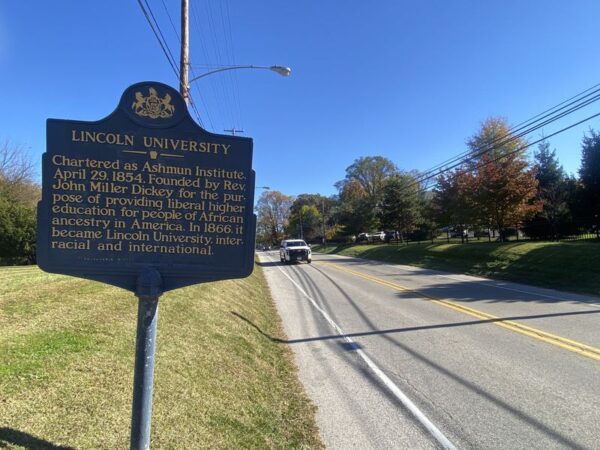
Lincoln University at its board meeting Saturday announced new safety plans for large events after the on-campus shooting at homecoming last October that left one dead and six others shot.
No outdoor events will be permitted after dusk, and events will be held within “a controlled environment” so that guests can be screened, Lincoln University Police Chief Marc Partee told the board. The university will employ a zone plan for security with help from Chester County emergency management, the Pennsylvania State Police, and Lower Oxford Township, and at the upcoming Spring Fling event, only one registered guest will be permitted per student, Partee said.
University officials did not say at the meeting when Spring Fling would be held this year — Partee did not return a call for comment Sunday — but it’s typically in April.
“We’ve … cultivated those relationships that were sorely needed in this area so that we can do what we need to do and protect our students and keep the community itself happy about what we’re doing,” Partee said.
Lincoln, a historically Black university with 1,650 students in rural Chester County, has been under pressure from its neighbors and Lower Oxford Township to make changes since the Oct. 25 homecoming shooting. Several officials in Lower Oxford had reported ongoing problems with parking, trash on neighbors’ lawns, disturbances, and, in some cases, crime when the university hosts events. After thousands gathered for homecoming, emergency personnel had to use all-terrain vehicles to transport patients on stretchers because ambulances could not access the campus, given how many cars were parked around the venue, they said.
The township’s board of supervisors has been discussing a plan to enact a special events ordinance. A vote could come as soon as the supervisors’ March meeting.
Andrew Cope, who lived near Lincoln for nearly two decades and still owns property there, said Lincoln’s plan is “progress compared to past years,” but that concerns remain. He said there should be screening at the university gates, not just at the entry to an event, and that there was no indication as to how parking and trash will be managed.
A strong events ordinance is still needed with a permit process, he said.
“I am encouraged that we have seen a plan come out of the university,” he said. “I need to give them credit for doing something. I’m pleasantly optimistic … but I would still like to see some of the T’s crossed and I’s dotted.”
Partee said the new plans followed a meeting earlier this month between about 30 people from Lincoln, local and state law enforcement, emergency management, and the township. The Chester County district attorney and county detectives also participated, he said. And the collaboration will be ongoing, he said, as Lincoln plans for other events, such as homecoming
“We’re getting a lot more resources, a lot more collaboration,” Partee told the board.
But he said Lincoln ultimately has control over the plan.
“We’re not stepping back and saying, ‘We had this immense tragedy. Come in and take over,’” he said. “This is still our legacy.”
The plans also include input from the Student Government Association, he said.
Events after dark would be moved indoors, he said, noting issues that have arisen after dark at outdoor university events.
“What you’ll see is, and something that I saw, the crowd changed as the sun went down,” Partee told the board. “Our family started leaving. Other people started coming in.”
He noted potential sites for outdoor events, such as the auxiliary field with a fence.
“We’re able to control access to the fence, which means we can screen people coming in,” he said. “We have wands, all of these things that we can put in place to protect the event. We’re working on not having just a free-for-all because free-for-all gives people the impression that they can come here and do whatever they want to do.”
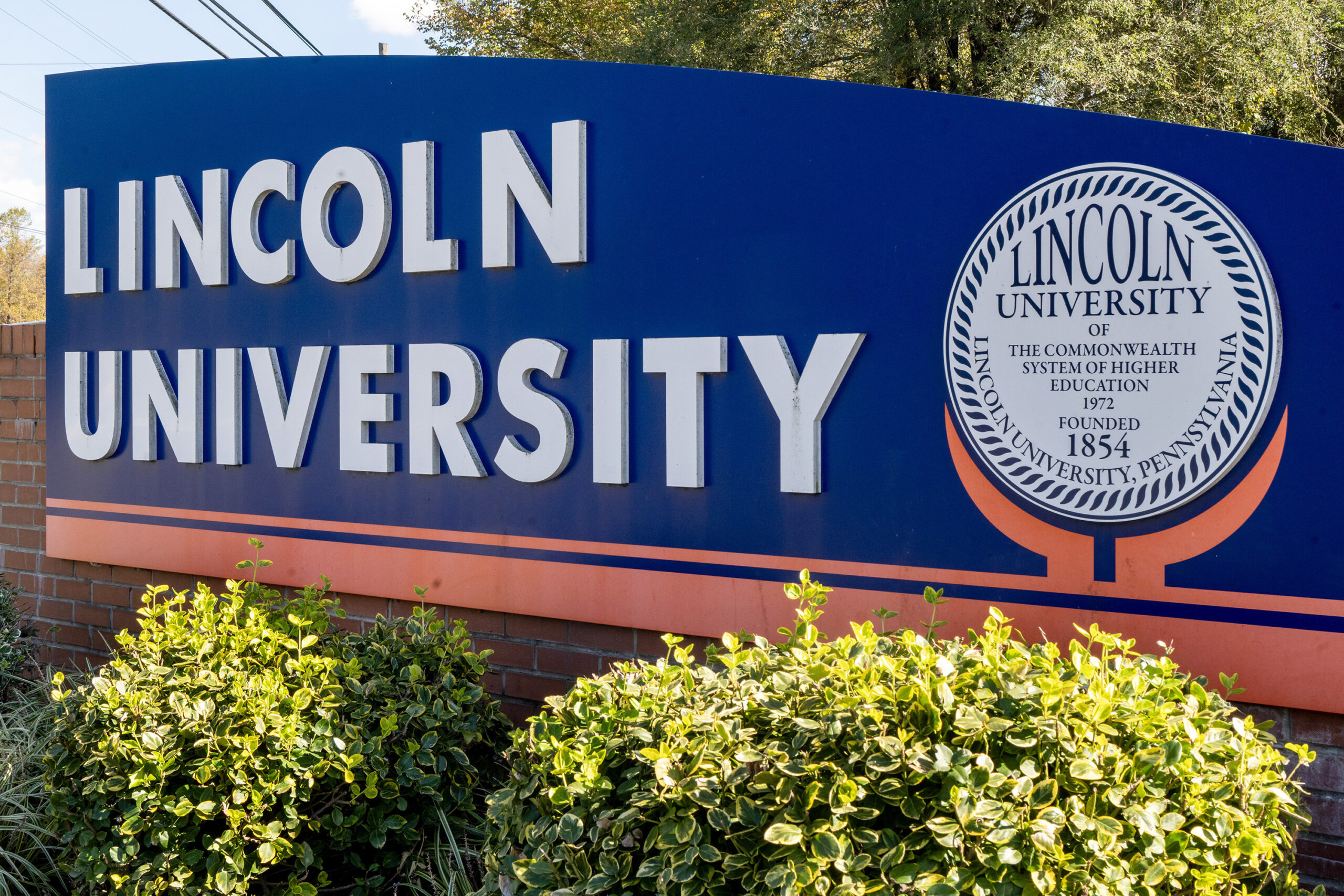
A sign for Lincoln University on its campus in Chester County.
He said events will be more structured, noting that students are talking about “zip lines and food trucks” for Spring Fling.
As for the zone security, Partee said his university police and security would man the “center ring” or “hot zone” for Spring Fling. The outer ring will be covered by Pennsylvania State Police, which have allocated 10 troopers that will be deployed in two-man teams, he said.
Other patrols will be stationed at areas outside the university gates to monitor illegal parking and other issues, he said. And Chester County, he said, has offered its mobile command post where cameras placed strategically around campus can be monitored and all radio communication can be patched together on one channel, he said.
“We’re going to have somebody dedicated to just watch cameras from Chester County Emergency Management,” Partee said.
For larger events, such as homecoming, more safety personnel will be deployed, he said.
“We’re able to scale it up and down,” he said of the plan. “Spring Fling will be our test case.”
Haverford College president Wendy Raymond is considering convening a committee that would review whether mega donor and U.S. Commerce Secretary Howard Lutnick’s name should remain on the campus library.
Raymond’s statement to the campus community this week follows concerns expressed by Haverford students and alumni about Lutnick’s ties to sex offender Jeffrey Epstein. She noted “a growing number of Fords have written to express their dismay.”
“While forming a naming review committee does not predetermine any outcome, it is a serious step and not something I would take lightly,” Raymond wrote to the campus. “I will take the time necessary to continue to reflect and to engage with thought partners before determining whether to activate a review committee.”
Under Haverford’s gift policy, the school can rename a building if “the continued use of the name may be deemed detrimental to the college, or if circumstances change regarding the reason for the naming.” If Raymond convenes a committee, she would then consider its recommendations and make her recommendation to the external affairs committee of the board of managers, as well as to its chair and vice chair. The external affairs committee then would make its recommendation to the full board of managers.
Lutnick, a 1983 graduate and former chair of the college’s board of managers, is one of the school’s biggest donors, having given $65 million. Documents released by the U.S. Justice Department this month show that Lutnick had contact with the late financier as recently as 2018, long after Epstein pleaded guilty to obtaining a minor for prostitution and soliciting a prostitute.
And during congressional testimony last week, he said he visited Epstein’s private island with his family in 2012. Lutnick previously said he had not been in a room with Epstein, whom he found “disgusting,” since 2005.
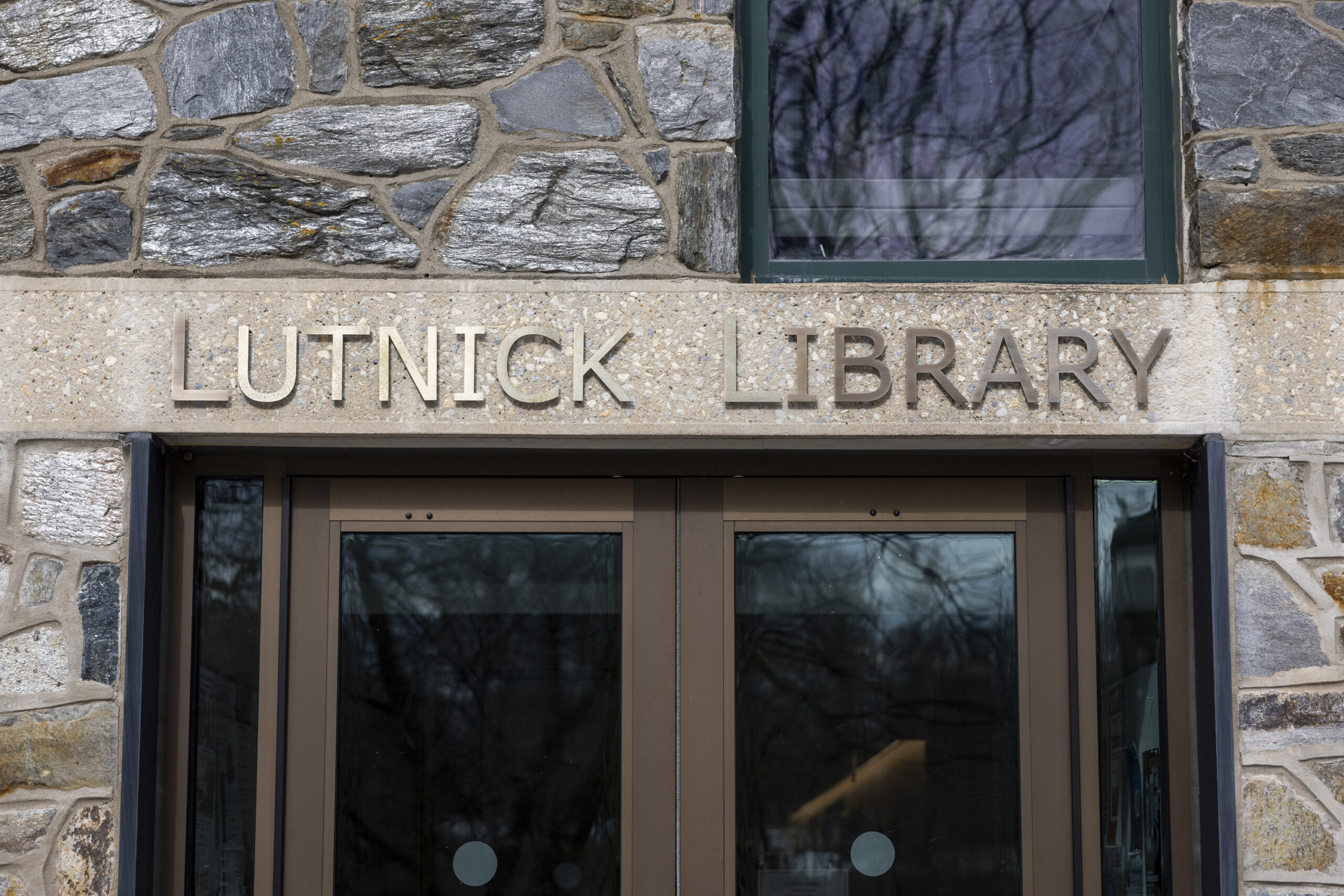
The outside of the Lutnick Library at Haverford College.
Raymond’s announcement comes one day after students held a town hall to discuss their concerns and feelings about Lutnick‘s ties to Epstein.
Students who organized the town hall said Raymond’s communications about Lutnick have fallen short. They said they had hoped at least to see a review committee started.
“Many students, including myself, are deeply disappointed and, in many cases, hurt by the neutral and softened language in these communications,” senior English major Paeton Smith-Hiebert wrote to Raymond.
Smith-Hiebert is co-founder of the Haverford Survivor Collective, which started in 2023 and is led by Haverford students and survivors of sexual assault. She said while Raymond notes she is having conversations about the topic, the collective hasn’t been consulted.
“Given the gravity of this situation, survivors are among those most directly affected,” she wrote. “Many are feeling significant harm and institutional betrayal … While I understand there are many stakeholders to consult, it is difficult to reconcile the stated commitment to engagement with the apparent absence of those most impacted.”
Raymond’s message, she said, also should have included a reference to resources or support for survivors who are struggling, she said.
Between 50 and 100 students attended the nearly two-hour town hall, several attendees said, with no students speaking in favor of keeping Lutnick’s name on the building. Students introduced an open letter with demands that has since been signed by 235 students, staff, and alumni as of 8:30 a.m. Friday, said Smith-Hiebert. The letter calls on the college to immediately convene a review committee, rename the library, acknowledge the distress and harm members of the community are experiencing, and “adopt a clear and unambiguous morals clause” in the gift policy.
Students also discussed the possibility of protest actions to urge the college to act as soon as possible.
The issue of Lutnick’s name on the library is likely to come up at a plenary session,where students discuss and vote on important campus issues. That session is scheduled forMarch 29.
If the students were to pass a resolution calling for the removal of Lutnick’s name from the library, it would go to Raymond for signing.
Milja Dann, 19, a sophomore psychology major from Woodbury, N.J., said she went through all of the Epstein files that mention Lutnick and Epstein and saw references to at least seven planned in-person encounters. Students compiled a 10-page document on the Lutnick-related material in the files.
“I feel it is extremely difficult for survivors of sexual violence to see that name and know it is so closely associated with a man who has perpetuated violence and harm to so many people,” Dann said.
A Commerce Department spokesperson told the Associated Press last month that Lutnick had had “limited interactions” with Epstein, with his wife in attendance, and had not been accused of “wrongdoing.” Lutnick told lawmakers last week: “I did not have any relationship with him. I barely had anything to do with him.”
Some students at the town hall talked about the difficulty of going in the library, which is the heart of the academic campus.
“For me, walking into that space has been uncomfortable for a while,” Smith-Hiebert said, referring to when Lutnick was named President Donald Trump’s commerce secretary. “That discomfort has only intensified given this news.”
Lutnick, formerly chairman of Cantor Fitzgerald L.P., a New York City financial firm that lost hundreds of employees in the 9/11 World Trade Center attacks, served on Haverford’s board for 21 years.
In addition to the library, which also bears his wife Allison’s name, the indoor tennis and track center is named for his brother Gary Lutnick, a Cantor Fitzgerald employee who was killed on 9/11, and the fine arts building carries the name of his mother, Jane Lutnick, a painter. He also funded the college’s Cantor Fitzgerald Art Gallery.
Students discussed whether removing Lutnick’s name from the library would be enough or if other references should come down, too, said Cade Fanning, the associate editor of the Clerk, Haverford’s student newspaper, who attended the meeting.
“That had the most split opinions,” said Fanning, 21, a senior history major from Annapolis.
But people were concerned thatseeing the Lutnick name on anything, even if it was a relative, would be difficult for survivors, Fanning said. And the relatives’ names still signify Lutnick’s “imprint” on the college, he said.
Students also discussed that while they want his name off the library, the college should install a plaque explaining the history, rather than erasing it, Smith-Hiebert said.
During a talkby an Israeli journalist at Haverford College earlier this month, a group of about a dozen masked people sat and stood in the audience.
At one point, one of them began shouting through a bullhorn, “Death to IOF,” or Israeli Occupying Forces, a name critics use to refer to Israel Defense Forces,and “Shame,” according to a video of the incident and people who attended the event. The protesters’ faces were covered by masks or keffiyehs, a symbol of Palestinian identity.
“When Gaza has burned, you will all burn, too,” the protester shouted at the audience of about 180 people, many of them members of the local Jewish community, according to another video viewed by The Inquirer.
An audience member grabbed at the bullhorn and appeared to make contact with the protester as the protester yelled in his face, according to a video. The college’s campus safety personnel ejected both the bullhorn user and the audience member and has since banned both from campus, college officials said, noting that neither is an employee, student, or alumnus of Haverford.
The event sparked renewed charges of antisemitism on the highly selective liberal arts campus, which already is under scrutiny by a Republican-led congressional committee for its handling of antisemitism complaints and is the subject of an open investigation by the U.S. Department of Education.
It will also lead to changes in Haverford’s policies. In a message to the campus after the event, president Wendy Raymond — who faced intense questioning from the congressional committee about the school’s response to antisemitism last year — said “shouting down a speaker whom one does not agree with is never acceptable and stands outside of our shared community values.”
College officials acknowledged that Haverford needs to upgrade its event policies andsaid changes would be rolled out no later than after spring break.
Some people who attended the event to hear journalist Haviv Rettig Gur said they were afraid because they did not know who the masked attendees were or what they had in their belongings, and in light of recent mass violence at Jewish events around the world.
“I was scared to walk back to my car by myself, which is the only time I ever felt that way in Lower Merion, where I live,” said Susan Taichman, a resident of Bala Cynwyd, who was in the audience.
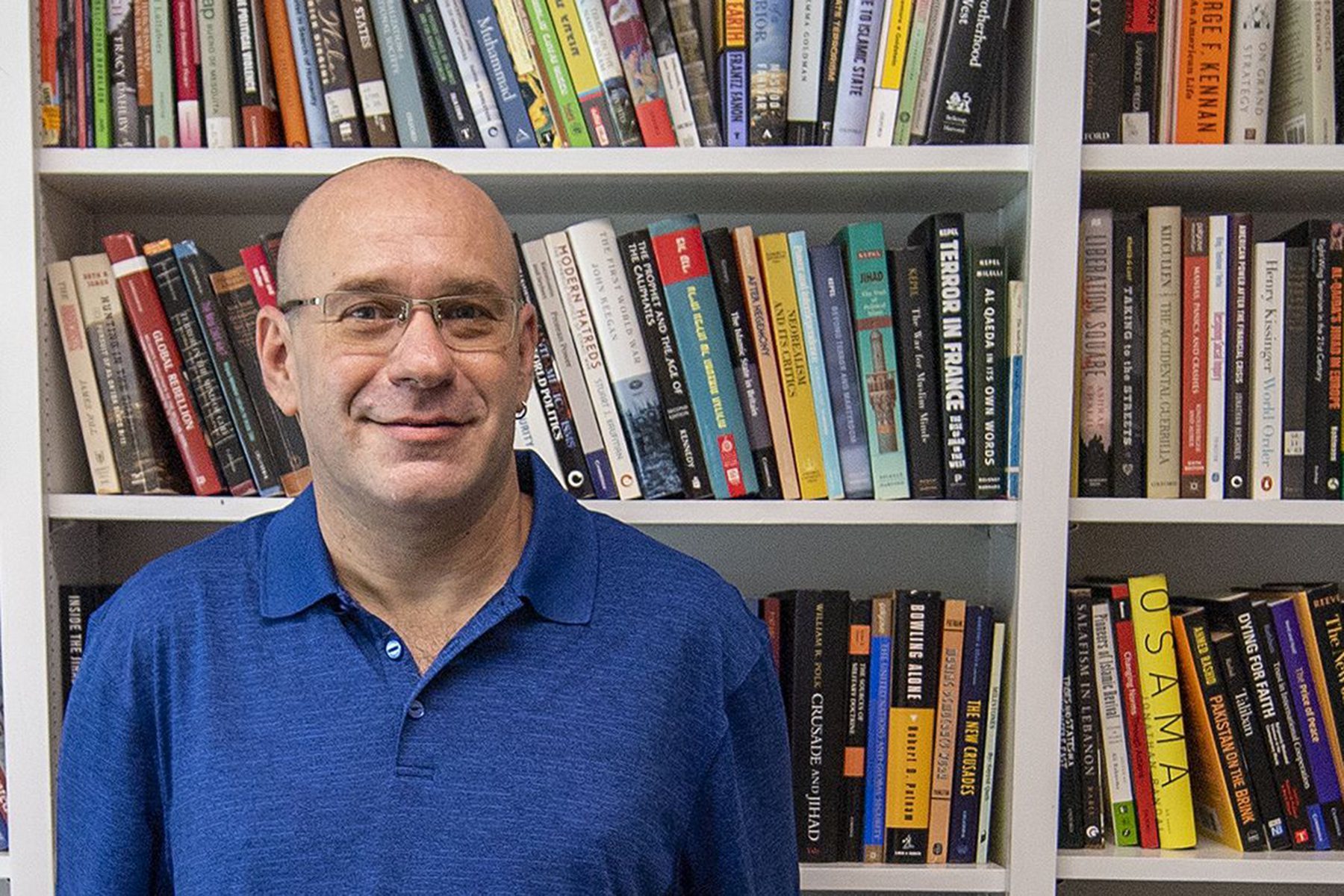
Barak Mendelsohn,professor of political science at Haverford College
Several students in attendance that night said most of the protesters sat or stood silently during the event — which is permitted under campus policy.
“I went into that event not with hatred for Jewish people, as some … have claimed was the intention of the protesters at the event,” said one Haverford student protester who asked that her name be withheld for safety reasons. “I went in with love, empathy, and deep concern for the Palestinians experiencing abhorrent amounts of violence in their homeland, as well as an understanding of the historical contexts that led to this violence, including the historic persecution of Jewish people that led to the development of Zionist thought.
“This context, in my opinion, is not an excuse for the genocide. It’s something really tragic that is going on, and I feel really strongly that it has to be stopped.”
Cade Fanning, the associate editor of the Clerk, Haverford’s student newspaper, cited three interruptions by protesters. One early on argued with Gur for an extended period, followed by the bullhorn incident less than an hour into the event, and then some banging on doors and yelling outside the room, said Fanning, 21, a senior history major from Annapolis, who attended the event.
Haverford professor Barak Mendelsohn, who helped organize the nearly three-hour event and has complained about the college’s handling of antisemitism in the past, said attendees were terrified as disruptions continued.
“I can’t tell you how ashamed I am as one of the organizers,” said Mendelsohn, an Israeli-born professor of political science and a terrorism scholar.
Leaders of Haverford’s students’ council, meanwhile, voiced concerns that an audience member had initiated physical contact with the protester, “which deeply frightened and disturbed members of Students’ Council,” they wrote. “We believe it is paramount to prioritize the safety of members of our college community. Actions like this have no place in our community.”
Some community members also interrupted and “heckled” protesters, Fanning said, adding that Gur belittled the activists as “children” who did not know enough about the world. The college, Fanning said, should have addressed that in its statement to the community.
“It would have been beneficial had they at least acknowledged that he wasn’t the most conducive to respectful, honest, open debate either,” Fanning said of Gur. “He didn’t treat the students with the most respect.”
But Anna Braun, 21, a senior English major from New York City who attended the event, said she was impressed with how Gur handled the protesters.
“He decided to engage with them one on one to really ask them questions and try to deconstruct why they were protesting,” she said. “The only way we can have any hope for peace is for people to listen to each other and to find some middle ground. And if you’re ignoring each other or if you are interrupting each other, then there is no potential for seeing eye to eye.”
An effort to ensure safe events
“It has become clear that there are gaps in how events are reviewed, supported, and managed on campus,” Raymond said in her message to campus. “We are actively revising our event management and space use policies to improve clarity and processes.”
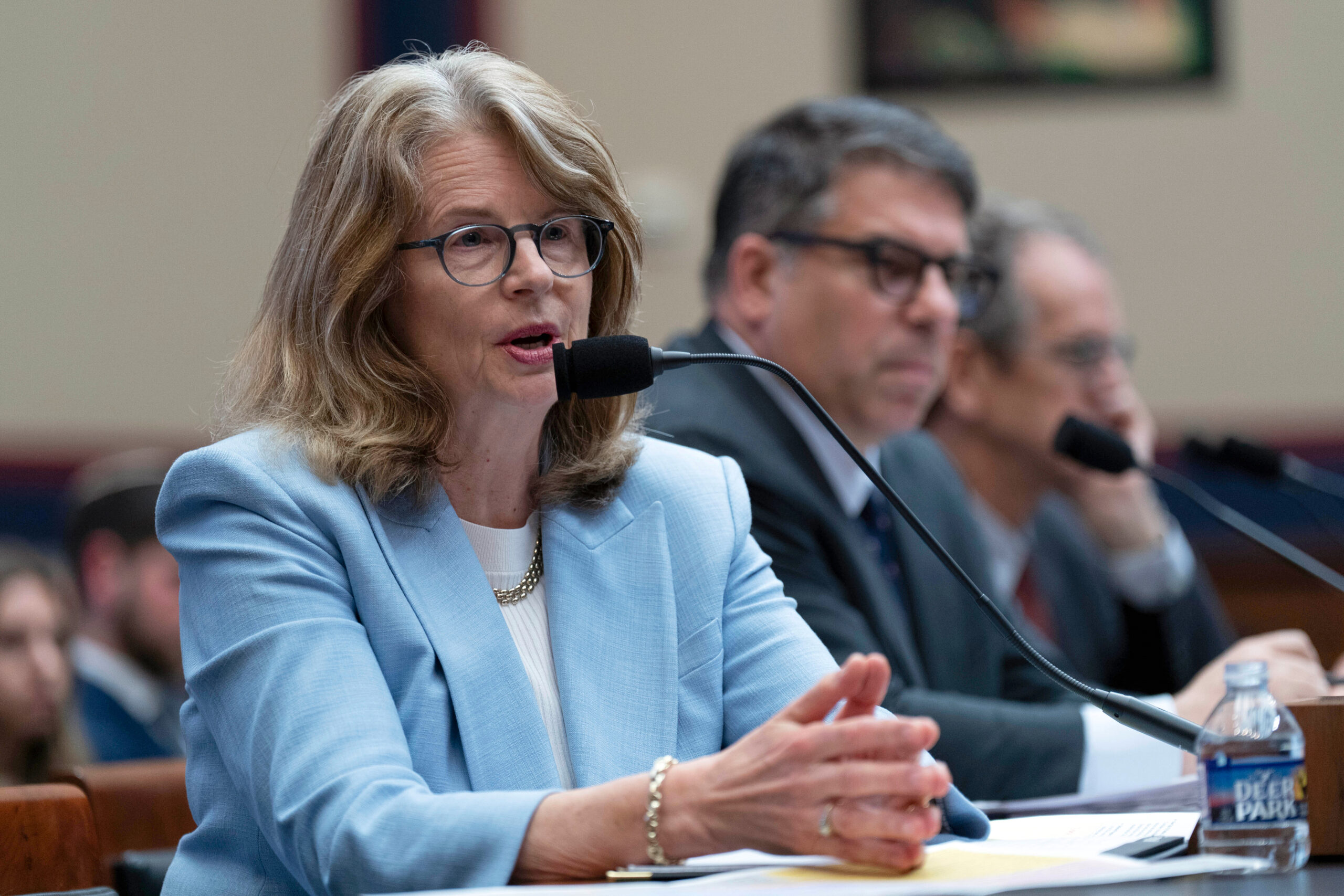
Wendy Raymond, president of Haverford College, testifies before the House Committee on Education and Workforce hearing on antisemitism on American campuses on May 7, 2025.
The new policy, she said, “will clarify expectations for different types of events, strengthen coordination among College offices, and establish additional planning and support for events that require heightened attention.”
Factors such as “significant attendance or operational complexity, heightened public visibility, safety, security, or crowd-management considerations, media presence or external participation, and increased likelihood of disruption or protest activity” may trigger the need for additional review to determine whether more resources are needed, said Melissa Shaffmaster, Haverford’s vice president for marketing and communication.
“Our intention … is not in any way to restrict free speech or restrict access for different speakers or topics to be discussed on campus,” she said. “We want to make sure that the proper resources are allocated so events can happen safely, people can have really thoughtful discourse, and these events can go off the way they are intended.”
The indoor use of bullhorns violated the school’s “expressive freedom” policy put in place last spring, she said.
The college is participating in the Hillel Campus Climate Initiative, touted as an effort to help college leaders counter antisemitism. A survey “to better understand the current climate for Jewish students” will be part of the effort.
Haverford also is preparing for a major change in leadership. Raymond said in November she would step down as president in June 2027; John McKnight, the dean of the college, also announced he would be leaving at the end of this semester for a new role at Dartmouth College; and the college’s vice president for institutional equity and access also will exit that post in May.
‘The howling cry of an uneducated child’
Gur’s talk was titled “Roots, Return, and Reality: Jews, Israel, and the Myth of Settler Colonialism.” In an opinion piece for the Free Press after the talk, Gur said he had gone to Haverford to talk “about the Jewish history that forged Israeli identity.”
While he saw the audience “tense up” when protesters entered, he wrote, he saw it as “a chance to explore managing an encounter with the abusive ideologues.”
He said he invited protesters to stay, but told them they had to remove their masks, which they did not do. Most protesters remained for the entire talk, he said, some even crying and engaging in dialogue with him.
“The more I treated them like neglected children hungry for knowledge, the more likely they were to respond in healthy and productive ways,” he wrote.
The event was organized by Kevin Foley, a 1983 Haverford graduate. Foley said he was impressed with Gur, a political correspondent and senior analyst for the Times of Israel, after seeing a video of him teaching.
“I thought I could do something good for Haverford by having him teach there,” said Foley, who lives in Connecticut and New York City and spent his career running electronic trading businesses at Bloomberg and Cantor Fitzgerald.
Foley’s best friend was killed in the 9/11 attacks and he said he experienced Hamas’ October 2023 attack on Israel as an “echo trauma.” To see concerns at Haverford about its handling of antisemitism “was disappointing,” he said, and what happened at Gur’s talk reinforced those concerns.
“What I can’t believe is that Haverford has so abandoned its liberal values of academic freedom, freedom of inquiry, that it’s considered acceptable for protesters to come in and disrupt and shut down an educational class,” Foley said.
Foley called on the college to ban masks and have metal detectors available when needed, and to apologize to Gur’s audience.
Shaffmaster said the college’s policy allows people to wear masks, but they must remove them if they are asked by campus safety officers or administrators for identification purposes.
Ongoing tensions on campus
Several students in attendance, who asked not to be named because of tensions on campus over the issue, said they thought campus safety and the college handled the event as best they could without silencing either side.
“No matter what they had done, people would be mad at them,” one said.
Fanning, the student editor, understood why older community members may have been fearful, but said protesters also have fears of being harassed or doxed for their pro-Palestinian advocacy if their identity is known.
“They are not fearless themselves,” Fanning said. “Nobody is.”
But Mendelsohn, the professor, was disturbed that Haverford seemed to equate the actions of the audience member who grabbed the bullhorn with those of the protester.
“The person acted in self-defense and managed to get the bullhorn from her hands,” he said. “If someone turned to you with a microphone and screamed, you would not sit there and do nothing.”
Mendelsohn has been at the forefront of allegations that Haverford has not done enough to address antisemitism, and the college has investigated him for speaking out on social media and in emails, according to a lawsuit filed against the college last year by a Jewish group. Much of the complaint was dismissed, but the judge allowed a portion involving breach of contract that would result in nominal damages to proceed, and that is in mediation, court records show.
The actions at Gur’s speech were just one of several ongoing problems with antisemitism on the campus, Mendelsohn said. His mezuzah — an object signifying the Jewish faith — was stolen from his office door a couple of months ago, he said. And he referred to a bias complaint over comments made around funding for the Haverford Chabad board. That remains under review, the college said.
Braun, the English major, said that she was heartened to see improvement in Haverford’s handling of the Gur event and that the campus has been more welcoming to Jewish students. Most people she has spoken with, she said, did not think the use of the bullhorn was appropriate.
“That’s not something I would have heard two years ago on this campus,” she said. “I sincerely believe there is more of a desire to create an inclusive environment.”
Former University of Pennsylvania president Liz Magill has been named the new executive vice president and dean of Georgetown University’s law school in Washington, D.C.
The move comes a little more than two years after Magill resigned from Penn following a bipartisan backlash over her testimony to a congressional committeeabout the campus’ handling of antisemitism.
“I am honored to join Georgetown Law, one of this country’s great law schools, and the university, an exceptional and distinctive research institution,” Magill said in an announcement posted Friday on the Jesuit institution’s website.
Magill did not immediately return a request for comment.
Magill, a lawyer and academic, previously served as dean of Stanford’s law school from 2012 to 2019 and had been executive vice president and provost of the University of Virginia before joining Penn. She resigned from Penn in December 2023 — just 18 months after she started the job — but has remained a faculty member at Penn Carey Law.
She starts at Georgetown Aug. 1.
“Liz Magill brings the experience and leadership that we need to lead Georgetown Law,” Thomas A. Reynolds, chair of Georgetown’s board of directors, said in the school’s announcement. “Her ability to connect with others, her humility and her unwavering belief in higher education will make her an exceptional next dean.”
Three of Magill’s siblings have degrees from Georgetown Law School, the announcement noted.
Magill became Penn’s president July 1, 2022, following the record-setting 18-year tenure of Amy Gutmann. Tensions began to mount about a year into her tenure, and her departure from Penn followed a tumultuous semester, marked by near-weekly student protests and complaints from deep-pocketed donors over the school’s response to antisemitism following Hamas’ attack on Israel in October 2023. There was also unrest over the school’s allowing the Palestine Writes Literature Festival to be held on campus in September of that year.
Then, during her congressional testimony, U.S. Rep. Elise Stefanik (R., N.Y.) asked her about whether calling for the genocide of Jewish people would violate Penn’s code of conduct. “It is a context-dependent decision,” Magill had answered.
Less than a week later, she stepped down. Scott L. Bok, then chair of the board of trustees, also resigned. And former Harvard president Claudine Gay, who also testified that day, resigned, too, less than a month later.
“I provided this 30-second sound bite that went viral and just swamped everything else about what I’d said and my record at Penn,” Magill said last May when she and Bok talked about their experiences at the New York Public Library following the publication of Bok’s book that discussed the controversy. “And I really regret that. It hurt Penn. It hurt Penn’s reputation, and my job was to protect the institution that I led.”
Amid President Donald Trump’s crackdown on immigration and deployment of federal officers to cities across the country, students at Philadelphia-area colleges are protesting against the appearance of U.S. Customs and Border Protection at campus career fairs.
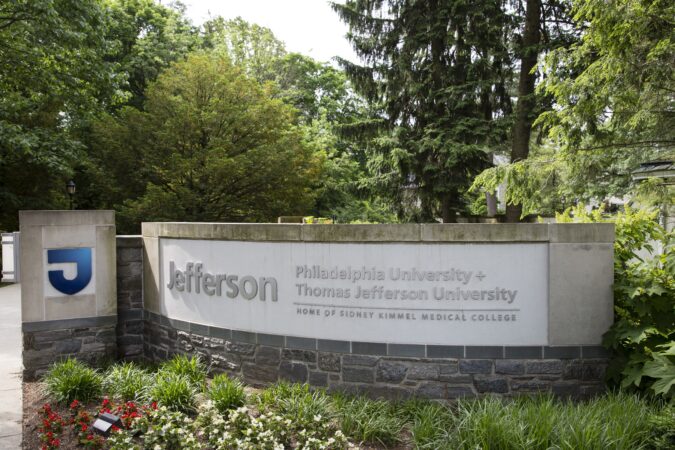
At least four local universities — Thomas Jefferson, Villanova, Temple, and Rowan — have faced opposition to allowing recruitment in recent months.
A petition circulated at Jefferson last week sought to keep CBP from appearing at a campus career event. CBP and ICE — both agencies that enforce immigration laws under the Department of Homeland Security — have been at the center of a national debate after two Minneapolis residents were killed by federal immigration enforcement agents in shootings now under investigation.
“Due to the harm CBP has caused to communities across the nation, it is abhorrent for TJU to accept CBP at their institution,” said anoccupational therapy student who signed the petition and asked that her name be withheld, fearing retribution. “I don’t think any institution should be encouraging students to get involved in these kinds of agencies, given the current climate.”
But the petition has since come down, the student said, and CBP is not on the list of employers due to appear at the event, called the 2026 Career Day and Design Expo, on Thursday at the East Falls campus. Jefferson has not acknowledged that CBP was on the list initially or responded to questions on whether it was removed.
CBP, which has offices in Philadelphia, has appeared at campus career events in the area in the past.
An email seeking comment from CBP’s media office was not returned.
At Rowan University in New Jersey earlier this month, the participation of CBP’s Trade Regulatory Audit Philadelphia Field Office in a career fair drew some student protest. Members of a student activist group distributed fliers speaking out against CBP during the fair, according to Rowan’s student newspaper, the Whit, and campus police and administration officials came to the scene.
The agency also reserved a table and came to afall event at Rowan to share information about accounting-related auditing internships, said Rowan spokesperson Joe Cardona,and has done so at the public university for the last decade.
Rowan’s Rohrer College of Business Center for Professional Development hosts more than 200 employers each year, including local, state, and federal agencies as well as private-sector groups, he said.
“The presence of any employer on campus does not constitute institutional endorsement of that organization’s policies or actions,” Cardona said. “Rather, it reflects our commitment to supporting student career exploration while upholding principles of open access and free expression.”
At Villanova, CBP pulled out of a career fair it had planned to attend earlier this month, according to the Villanovan, the student newspaper. The withdrawal followed criticism on social media about the organization’s planned appearance.
The organizer of an Instagram account that opposed the agency’s participation said they wished that Villanova had made the decision to disallow the group rather than the group withdrawing, according to the student newspaper.
“I think a lot of students will feel a lot safer and more comfortable attending this Career Fair,” the organizer said. “But it doesn’t take away the anger that this was ever something that was gonna happen.”
Villanova said in a statement that CBP‘sOffice of Trade had participated in prior career events and that employers with prior participation were contacted “through standard outreach” about this year’s event.
Temple’s law school last semester had planned to host a “Coffee and Careers” networking event with a DHS and Immigration and Customs Enforcement lawyer but later canceled it, according to the Temple News, the student newspaper. The event was replaced with a talk on public interest law by Philadelphia City Councilmember Rue Landau.
DHS “chose to engage directly with students interested in DHS opportunities rather than participate in a scheduled career event,” Temple spokesperson Steve Orbanek said.
He also noted that “career fairs are university-sponsored events, and actions that disrupt these events may violate university policy and established on-campus demonstration guidelines.”