Author: Susan Snyder

  • Rutgers professor seeks to spread kindness and compassion digitally

    Rutgers professor seeks to spread kindness and compassion digitally

    Yoona Kang’s Korean name means: “How can I help?”

    “Helping others is something I thought about a lot,” said Kang, a Rutgers-Camden assistant psychology professor and the creator of a new mobile app called Daily Compassion that she believes may lead to a path to help a lot of people, if only in a small way.

    She and her graduate researchers are studying how to spread kindness digitally and in everyday life through the use of the app. She defines compassion as “having genuine concerns for the well-being of others and having desire to alleviate their suffering.”
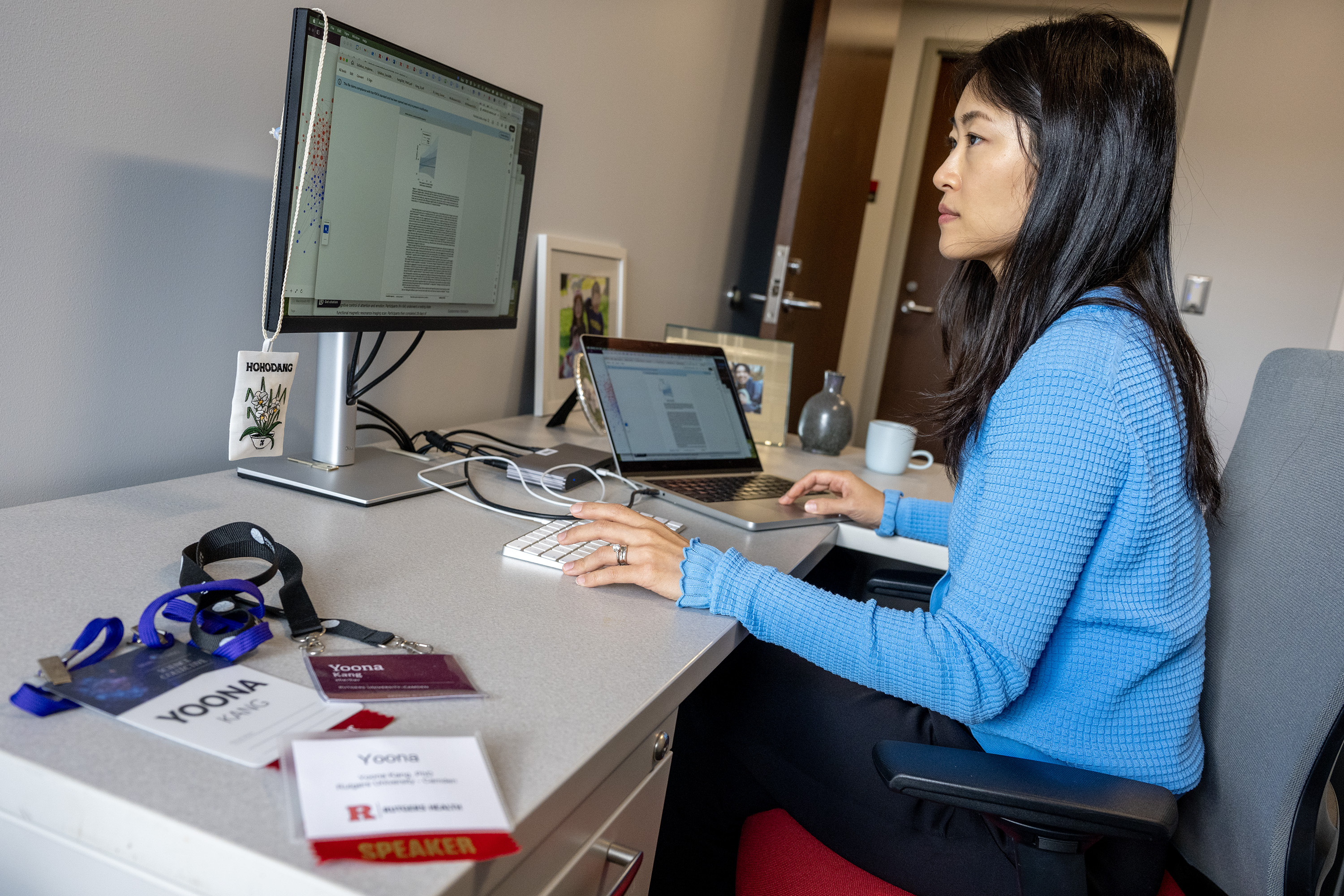
    Rutgers-Camden assistant psychology professor Yoona Kang works in her office.

    The app measures, tests, and encourages the spread of kindness — quite the opposite of the nasty doxing and mean-spirited online messaging that occurs today.

    People send messages anonymously on the app and can see, via a world map, messages being sent from one location to another.

    “Our data does show that kindness indeed spreads,” said Kang, 41. “Whether/if you receive more messages yesterday or more positive wishes yesterday, then you are likely to send more the day after.”

    That’s even though there is no pressure to reciprocate, she said, because of the anonymity of the messages.

    The research is being conducted through the school’s Compassion and Well-Being Lab, which was started by Kang, who is also a professor of prevention science.

    Her group recruited and paid 400 people across the United States to test the app in March and studied their usage. The app allows people to send messages that Kang created, including: “May you appreciate beauty.” “May you feel brave enough to begin again.” “May you experience kindness.”

    Users reported they enjoyed participating. “This app made me feel GOOD,” one wrote. “Favorite part was being able to send them, hoping someone would benefit from it,” another wrote. “Wishing people well has been a very important part of healing,” wrote a third.

    Even after using the app as little as four times on average, users reported higher feelings of well-being, she said. At 20 times or more, they reported decreased depression, she said.

    Study participants also were asked to share their political party. People living in blue and red states were sending well wishes to each other, though they didn’t know it, she said.

    Participants can send messages through the app, but they do not choose who they message because everyone is anonymous, Kang said. In some cases, the app randomly determines the user who will receive the message. In the meditation part of the app, users can send well wishes to a particular participant, as identified by an avatar, but they don’t actually know who that person is.

    “The goal was to show that people from different backgrounds, regardless of where they are located, were willing to express compassion and kindness to one another,” she said.

    Kang said her interest in kindness and compassion stems from her own experience. Her family came to America when she was 19, she said, and her parents opened a restaurant in California.

    “Suddenly, I was here working as a waitress, working 50 hours a week while going to community college full time,” she said. “From midnight to 4 a.m. or 5 a.m., I would study.”

    She had to learn basic things about living in America.

    “It really shook my foundation about my worldview, and it really motivated me to help people like me who were going through similar challenges,” she said.

    After community college, Kang got her bachelor’s degree in psychology at UCLA and her doctorate in cognitive psychology at Yale. Her dissertation was on whether compassion meditation decreased negative bias against people who experience homelessness.

    Kang then spent a decade at the University of Pennsylvania, first as a postdoctoral researcher and then as a research director. She explored the neuroscience of compassion, something that not everyone was ready to accept.

    “They thought it was a really soft concept,” she said. “I wanted to show this is science. This is quantifiable.”

    She said the team’s data show how meditation, even as little as three minutes twice daily, has an overall positive impact on well-being and decreases depression and anxiety.

    There really had not been studies that tried to quantify the spread of kindness. There is older work on the spread of loneliness and happiness, she said.

    Now that the initial study is complete, the app is available via iPhone, but Kang said she has not advertised it because she is working on making it better, based on feedback from the user study. Still, about 20 people in countries including the United States and England have found it and are using it, she said.

    While users can only send phrases she created, she wants to allow them to author their own at some point.

    “We are working on that now,” she said.

    She hopes the app eventually will encourage more people to consciously spread kindness. She would like for it to become a “quick micro-practice” daily, like teeth brushing.

    “I do see a lot of potential where this can change a lot of people’s lives,” she said, “not in a dramatic way, but in little and consistent ways. My goal is really to make small changes in the largest possible population.”
  • These professors say they’re part of a growing movement banning laptops from the classroom

    These professors say they’re part of a growing movement banning laptops from the classroom

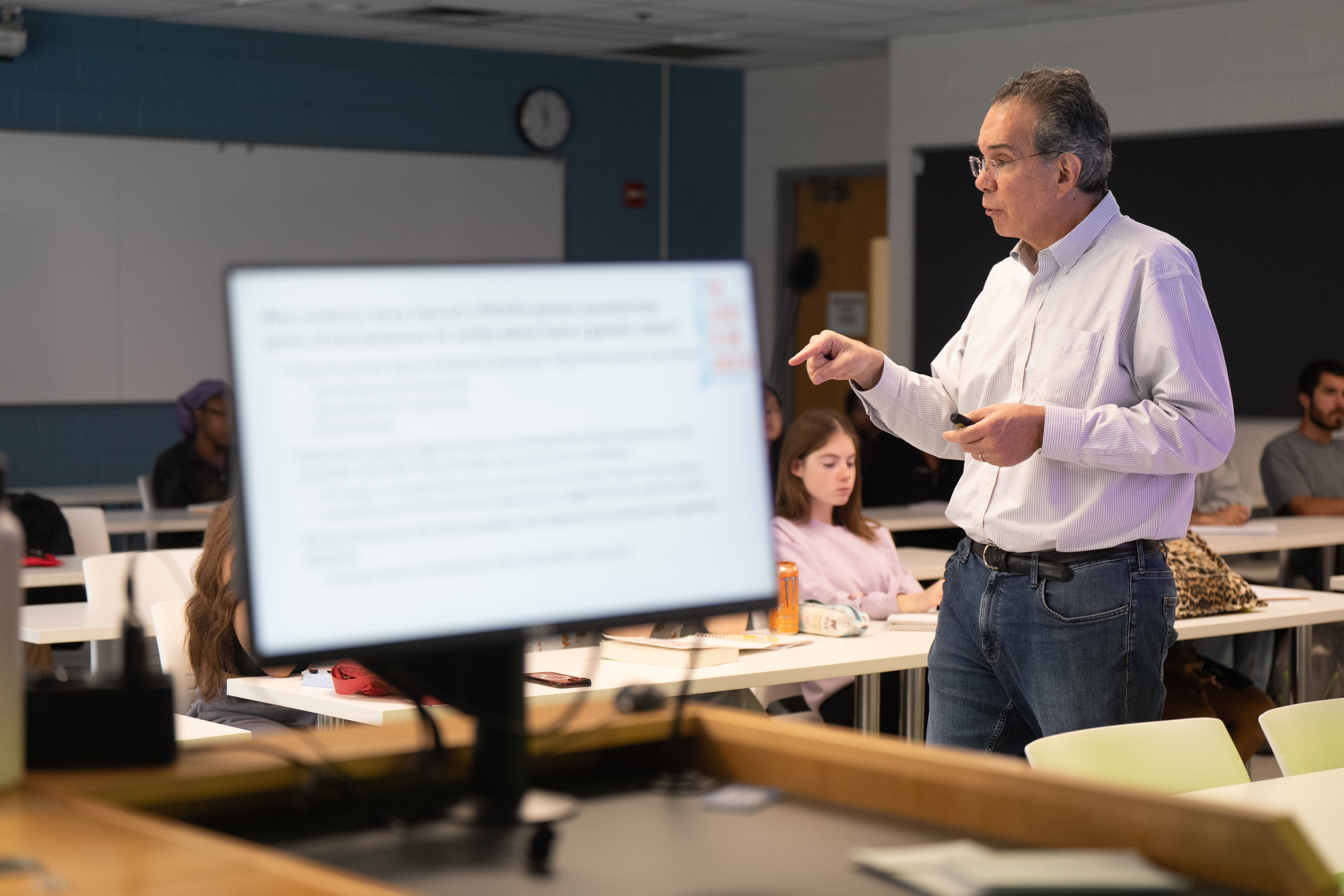
    Biology professor Jody Hey was lecturing on human evolution one recent day at Temple University.

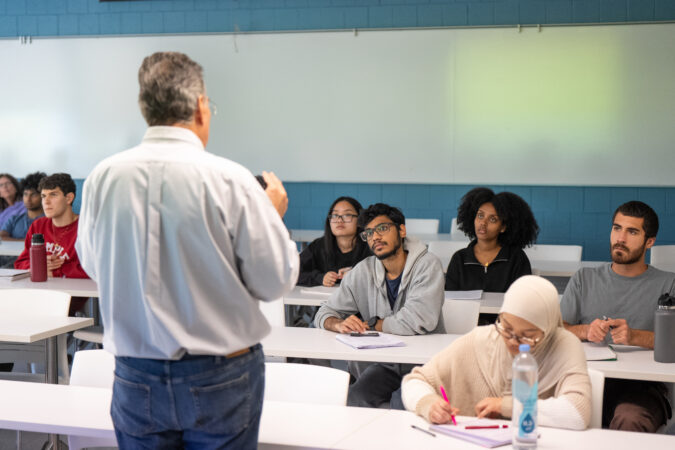
    His students vigorously took notes by hand in paper notebooks.

    There wasn’t a laptop in sight. Nor an iPhone. No student’s face was hidden by a screen.

    Hey said he stopped allowing them about a year and a half ago after seeing research that students are too often distracted when laptops are open in front of them and actually learn better when they have to distill lectures into handwritten notes.

    “The clearest sign that it’s making a difference is that students are paying attention more,” said Hey, who has taught at Temple for more than 12 years. “And they want to participate much more than before.”

    Hey is among a seemingly growing number of professors who have chosen to keep laptop and phone use out of class, with exceptions for students with disabilities who require accommodations. Several said they made the decision after seeing what some students were doing on their laptops during class.

    Temple University biology professor Jody Hey stopped allowing laptops to be used in class about a year and a half ago. He said he’s noticed improvement in student performance.

    Jessa Lingel, an associate professor of communication at the University of Pennsylvania and director of the Gender, Sexuality, and Women’s Studies Program there, stationed teaching assistants in the back of her room to observe.

    Students “were out there booking flights and Airbnbs,” Lingel said. “Fun fall cocktail recipes. They were online gambling in class. I thought, ‘This is not acceptable.’”

    She originally disallowed laptops in 2017, but decided to go easy in 2021 as students returned after the pandemic, she said. She reinforced the ban after her teaching assistants’ observations.

    “It’s a movement,” Lingel said. “More and more people are headed in this direction.”

    In Hey’s class, students have warmed up to the laptop ban.

    “At first I didn’t like it,” said Jess Nguyen, 20, a junior genomic medicine major from Broomall, “because I kind of organize all my notes on my laptop. But I feel I’ve been learning better by writing my notes.”

    When she took notes on her iPad, she sometimes got distracted and played computer games, she said. In Hey’s class, that’s not an option.

    Students said it takes more time to write notes and sometimes their hands get tired.

    “After a couple classes, you kind of get used to it,” said Sara Tedla, 22, a senior natural sciences major from Philadelphia.

    She’s on the fence about which way she prefers to take notes.

    “It’s good that for an hour and 20 minutes you can just sit down and, without any technological distractions, focus because that’s a part of your brain you can work on,” said Quinn Johnson, 20, a senior ecology major from Philadelphia. “The more you do it, the easier it becomes to focus on something for a long period of time.”

    ‘Students learn better’

    Professors say laptops are pretty ubiquitous in the classroom when they are permitted.

    Hey conducted research on laptop use and presented it at a Temple department faculty meeting earlier this year.

    “As early as 2003, a study was done contrasting the retention of lecture material by two groups of students, one who had laptops and unrestrained internet access and a second who worked without laptops,” he said. “In that study, students with laptops scored 20% lower on average in the subsequent exam.”

    Four of every five students who used laptops in a general psychology class said they checked email during lectures, another study showed, while 68% used instant messaging, 43% surfed the net, 25% played games, and 35% said they did “other” activities.

    He also cited studies showing students who took notes by hand performed better on tests. Others cited that research, too.

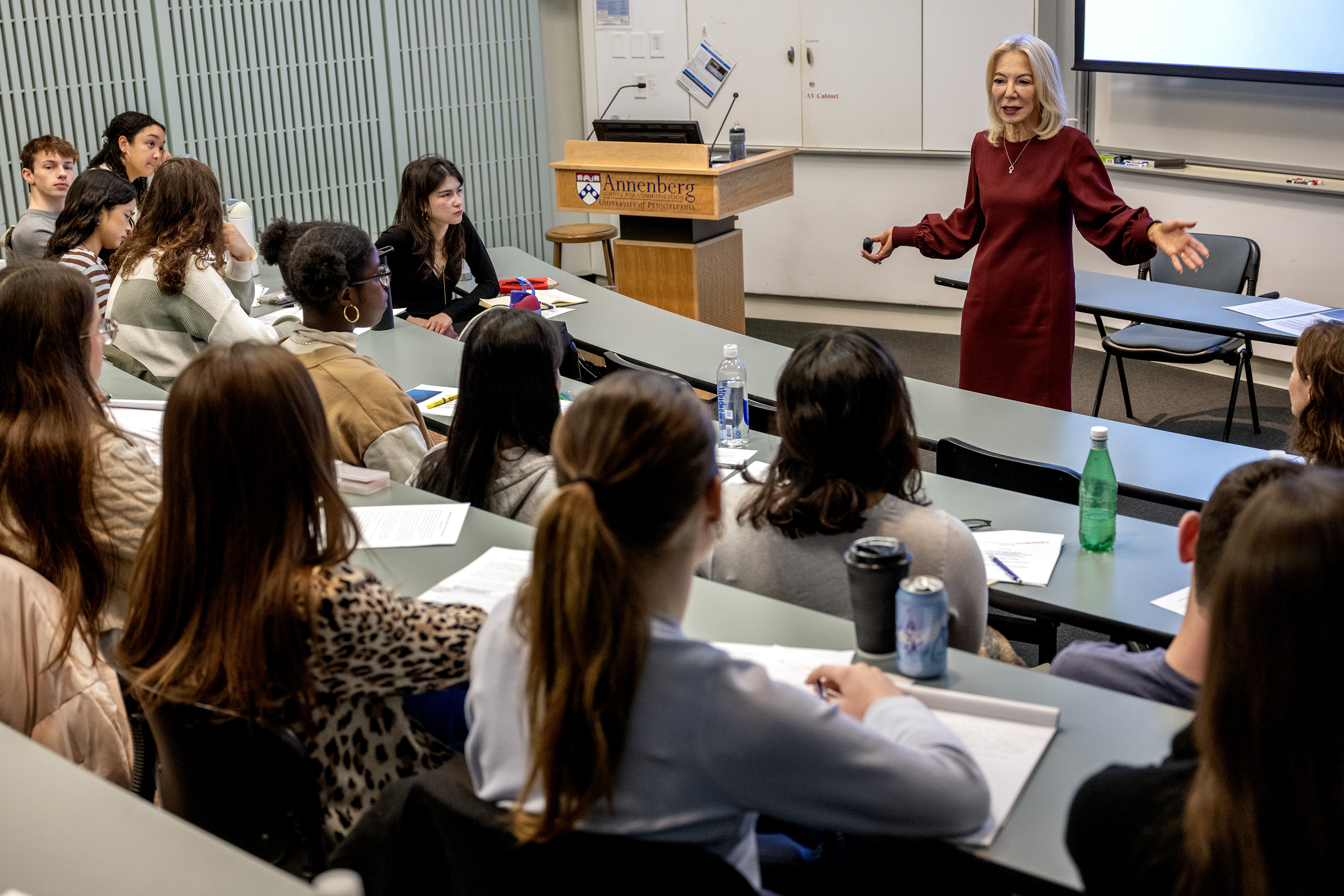
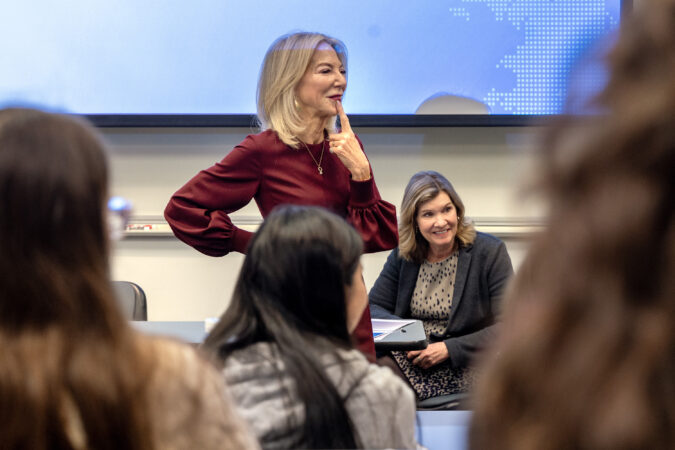
    Penn President emerita Amy Gutmann co-teaches a class at Penn’s Annenberg School for Communication with the dean Sarah Banet-Weiser. They don’t allow laptops or phones to be used in the classroom.

    “I read the literature on it and it really showed that students learn better when they’re taking notes rather than trying to type as fast as they can verbatim what you say,” said Amy Gutmann, Penn president emerita, who is co-teaching a class at the Annenberg School for Communication this fall.

    Gutmann and co-teacher Sarah Banet-Weiser, dean of Annenberg, do not provide students with copies of their lecture slides, either.

    “We give them time to write down what’s on the slides,” Banet-Weiser said.

    Benefits of technology

    Some professors say laptop use in class can be beneficial.

    Sudhir Kumar, a Temple biology professor, said he asks his class of 150 students to respond to questions on their laptops every 10 minutes. Their answers count toward their grades.

    “It’s constantly keeping them on their toes,” he said.

    He would not want to see everyone give up on laptop use in class.

    “We cannot fight technology,” he said. “Teachers have to embrace technology, whether it is artificial intelligence or computers. That is a standard mode of operation for most people today.”

    (Left to Right) Jess Nguyen, 20, a junior from Broomall, Allan Thomas, 22, a senior from Philly, and Sara Tedla, 22, a senior from Philly, in a class taught by Temple University biology professor Jody Hey last month.

    In Cathy Brant’s social studies methods class of 20 to 25 students at Rowan University, laptops are key. Brant, an associate professor of education, said there are lots of hands-on group projects, and she frequently asks students to check New Jersey standards online as they prepare their lessons. She also teaches them how to use AI appropriately in the classroom.

    One of her students, she said, recently handed in a paper with very detailed notes from Brant’s lecture that she probably got only because she was able to type quickly on her computer.

    “You’re responsible for paying attention in class,” she said. “Maybe it’s a little harsh, but I’m just like, ‘If you want to be on Facebook the entire time during class, that’s on you.’”

    Jordan Shapiro, an associate professor at Temple, more than a decade ago used to make a point of having his students post on Twitter, now X, during class and counted it toward classroom participation.

    Now, he tells students to put their laptops away during class.

    “I tell them I have no problem with tech or laptops,” he said. “I just think that none of us get enough time in our lives to just focus on ideas or to listen in a sustained way to the people around us.”

    He also became concerned about students doing homework during class, he said, and using artificial intelligence to supply them with questions and comments to ask in class. They were “outsourcing class participation to the robots,” he said.

    Mark Boudreau, a biology professor at Penn State Brandywine, disallowed laptops for the first time this semester.

    “I thought I would get real pushback … or people might even drop the class,” he said. “But … a lot of students have had other faculty who have this policy.”

    Exam scores in his three courses are better this year, he said.

    Hey noted student grades have gone up, too. But he can tell some students struggle with note-taking; some just listen and don’t take notes.

    “That’s better than sitting there and going on Facebook,” he said.

  • Temple marching band is preparing to go to New York for Macy’s Thanksgiving Day Parade

    Temple marching band is preparing to go to New York for Macy’s Thanksgiving Day Parade

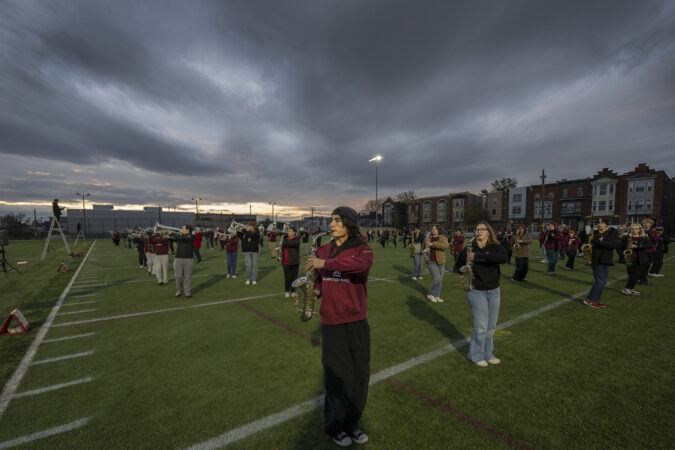
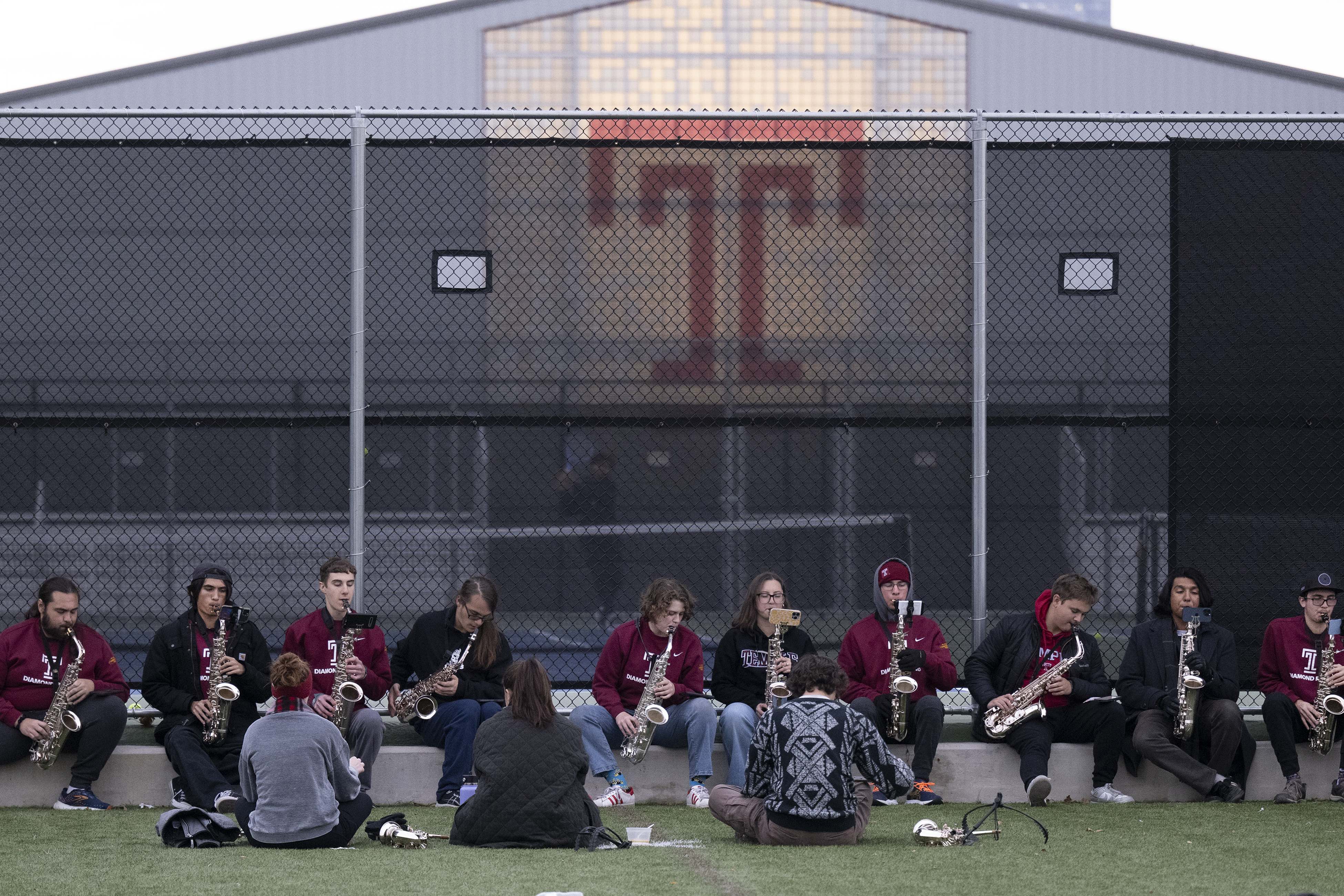
    As the pink of twilight peeked through the November clouds, Temple University’s Diamond Marching Band, instruments and flags in tote, practiced on the campus’ Geasey Field.

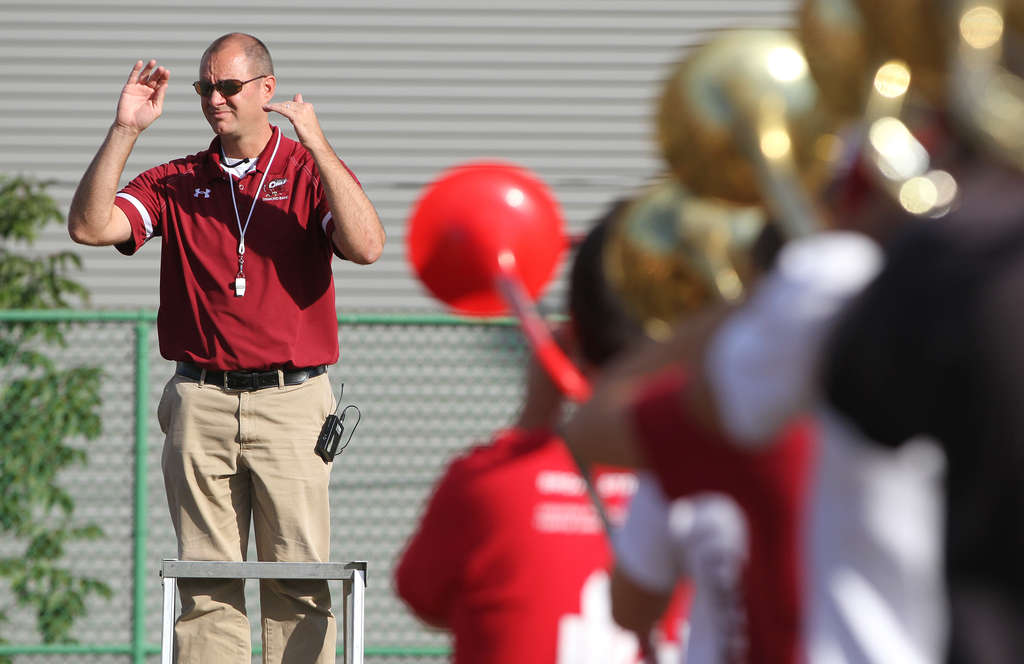
    They ran through selections by Taylor Swift and from the movie KPop Demon Hunters while athletic bands director Matthew Brunner studied their sound and formation from a scissor lift 25 feet in the air.

    “Notes should be long,” Brunner called out over a microphone after one selection. “Don’t try to play them too short.”

    There were few spectators that afternoon. But that’s about to change in a big way.

    The 200-member band is one of only 11 that have been selected to participate in the Macy’s Thanksgiving Day Parade in New York City. It’s a first for Temple, which will be the only band from Pennsylvania or New Jersey in this year’s parade. More than 30 million people likely will be watching from home and 3.5 million in person, if prior numbers are any indication.

    Members of the Temple University Marching Band prepare to practice. The band will perform in the Macy’s Thanksgiving Day Parade this year.

    That’s a lot of exposure for the Cherry and White, which could be a boost for recruitment and fundraising.

    “I can scarcely think of a better way to bring visibility to Temple,” said John Fry, Temple’s president.

    And that visibility could lead to more people visiting Temple’s website and seeing what the university has to offer, he said.

    “It’s going to be incredible for the university,” said Brunner, who initially announced Temple’s band had been selected for the parade in August 2024. “There’s no television event, other than the Super Bowl, that is bigger.”

    The excitement is palpable among students, some of whose families plan to attend the parade.

    “It’s a once-in-a-lifetime opportunity,” said Erin Flanagan, 21, who grew up watching the parade with her family and notes she wanted to march in it since she was 6. “I mean, the Macy’s parade is iconic.”

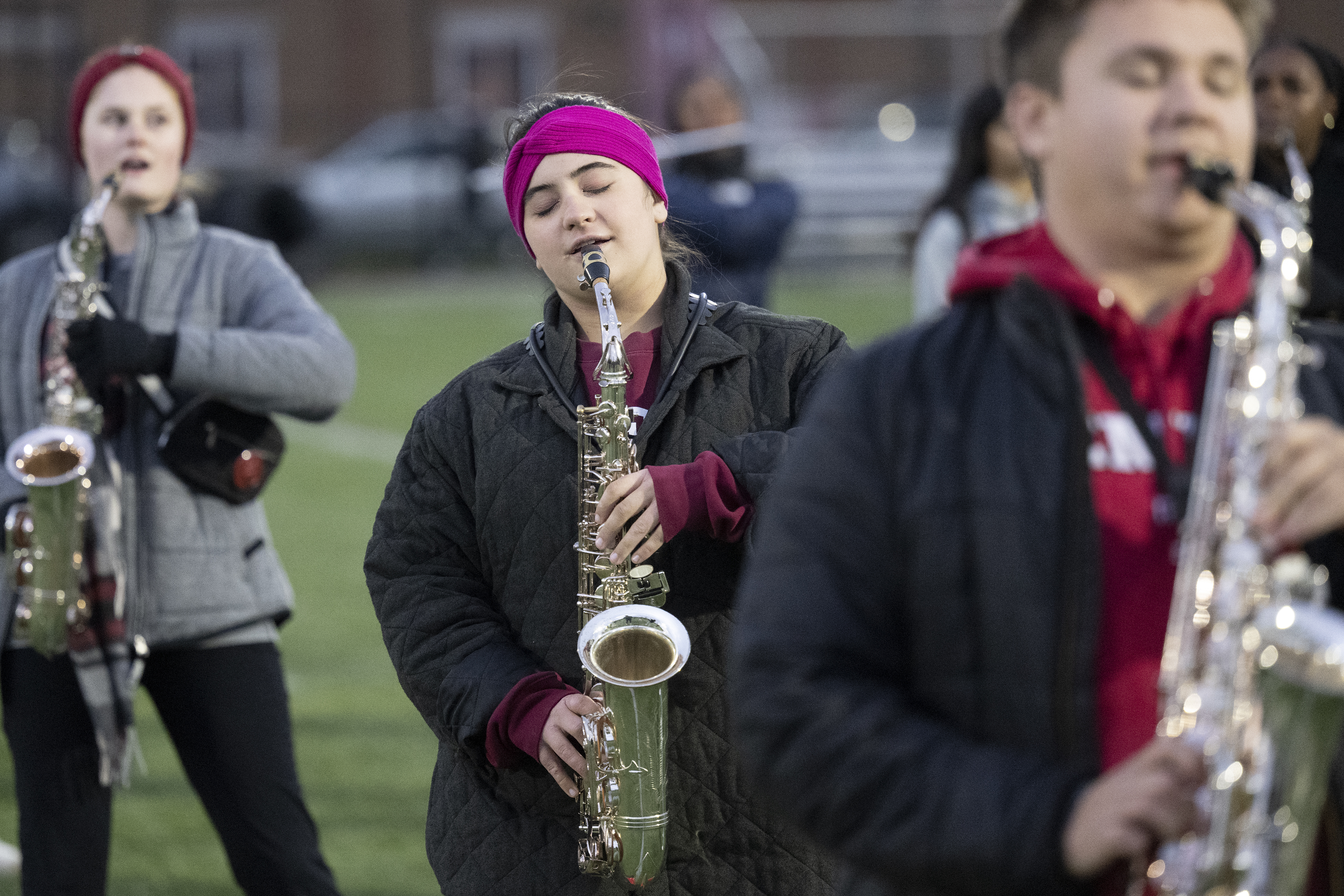
    Temple University alto saxophone player Erin Flanagan rehearses with the marching band.

    The music education major from Manasquan, N.J., who is a senior, said it likely will be her last performance with the band, and she could not have scripted it better.

    “I get to go to this awesome performance and just show everybody what Temple stands for,” said Flanagan, an alto saxophone section leader.

    It’s the 99th anniversary of the 2.5-mile parade, which kicks off about 8:30 a.m. on Thanksgiving Day on NBC and Peacock, hosted by Savannah Guthrie, Hoda Kotb, and Al Roker.

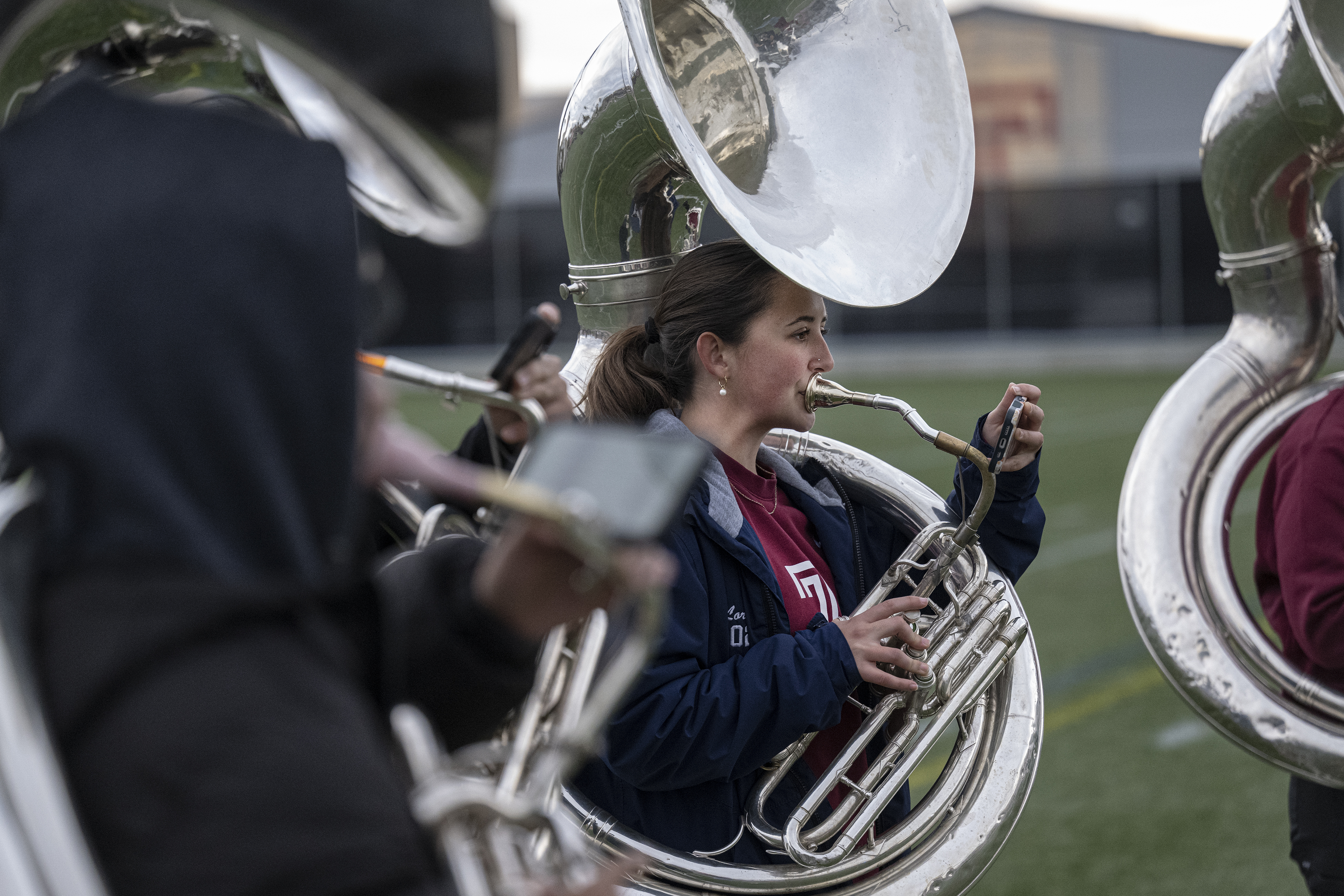
    Temple University tuba player Lorali Minde plays the tuba in the marching band.

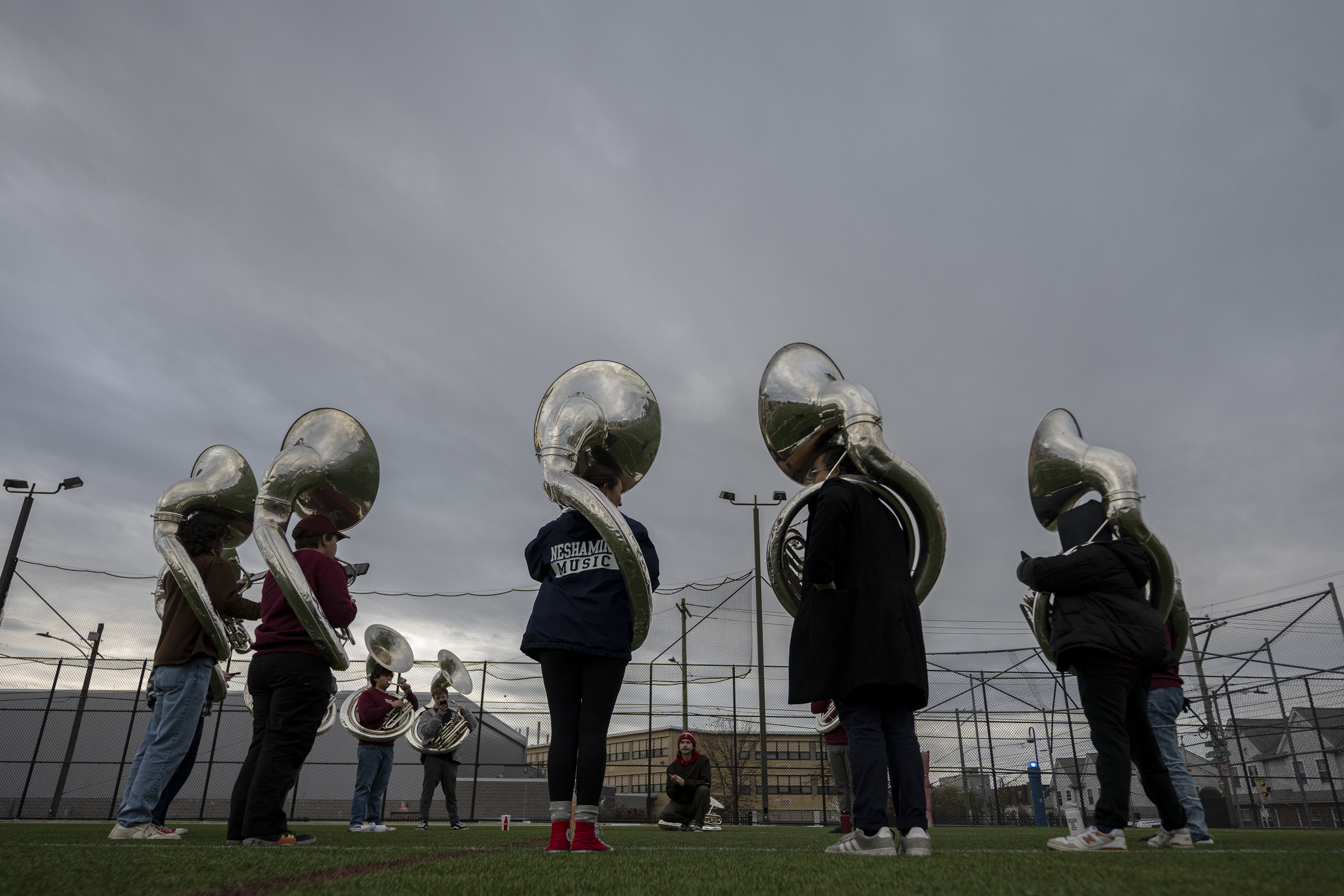
    Lorali Minde, 18, a freshman from Levittown, will be marching while playing the tuba, a 36-pound instrument.

    “You kind of get used to it,” she said. “It’s like carrying a really heavy purse.”

    Brunner, who has led the marching band for 18 years, said he had applied to be in the parade several times before. It’s a competitive process, with more than 100 applicants vying for a spot. He had to submit video of a performance — he sent the 10-minute show the band did off the Barbie movie soundtrack — pictures of the band in uniform, reasons that Temple deserved a shot, and the band’s resume and biography.

    Matthew Brunner, athletic bands director, leads a practice in 2018.

    When his wife saw the Barbie show, Brunner said, she texted him: “That’s the show you need to send to Macy’s.”

    It proved a winner.

    “They loved the fact that the music we play is current,” he said.

    The honor comes at a special time for the band, which is celebrating its 100th anniversary. Brunner played that fact up in the application, too.

    Under Brunner, the band has grown and has been hitting high marks. Over the years, the school has been recognized as one of the top collegiate marching bands in the nation by USA Today and Rolling Stone, appeared on Good Morning America, The Tonight Show Starring Jimmy Fallon, and an episode of Madam Secretary, and was featured in two Hollywood movies, The Wolf of Wall Street, starring Leonardo DiCaprio, and the remake of Annie. Some of its performances have received millions of views on YouTube, including a 2018 performance of “Idol” by the K-pop group BTS, which currently has more than five million views on Ricky Swalm’s YouTube channel.

    The band includes a color guard, a baton twirler, brass and woodwind instruments, a drum line, and a dance team. The group typically practices three times a week for two hours at a time.

    Temple University Marching Band tuba players practice.

    “The band is infectious,” Brunner said. “When you see them perform, you can’t help but smile.”

    Students have been eying the parade opportunity for a while.

    When Flanagan was a sophomore, she asked Brunner point-blank: “When are we doing the Macy’s parade?”

    Recently, she and her roommates, also band members, have been counting down the days on a whiteboard.

    Brunner declined to say exactly what the band will perform on Thanksgiving, but promised a mix of holiday, audience participation, and Temple songs.

    “We’re hoping for no wind,” he said.

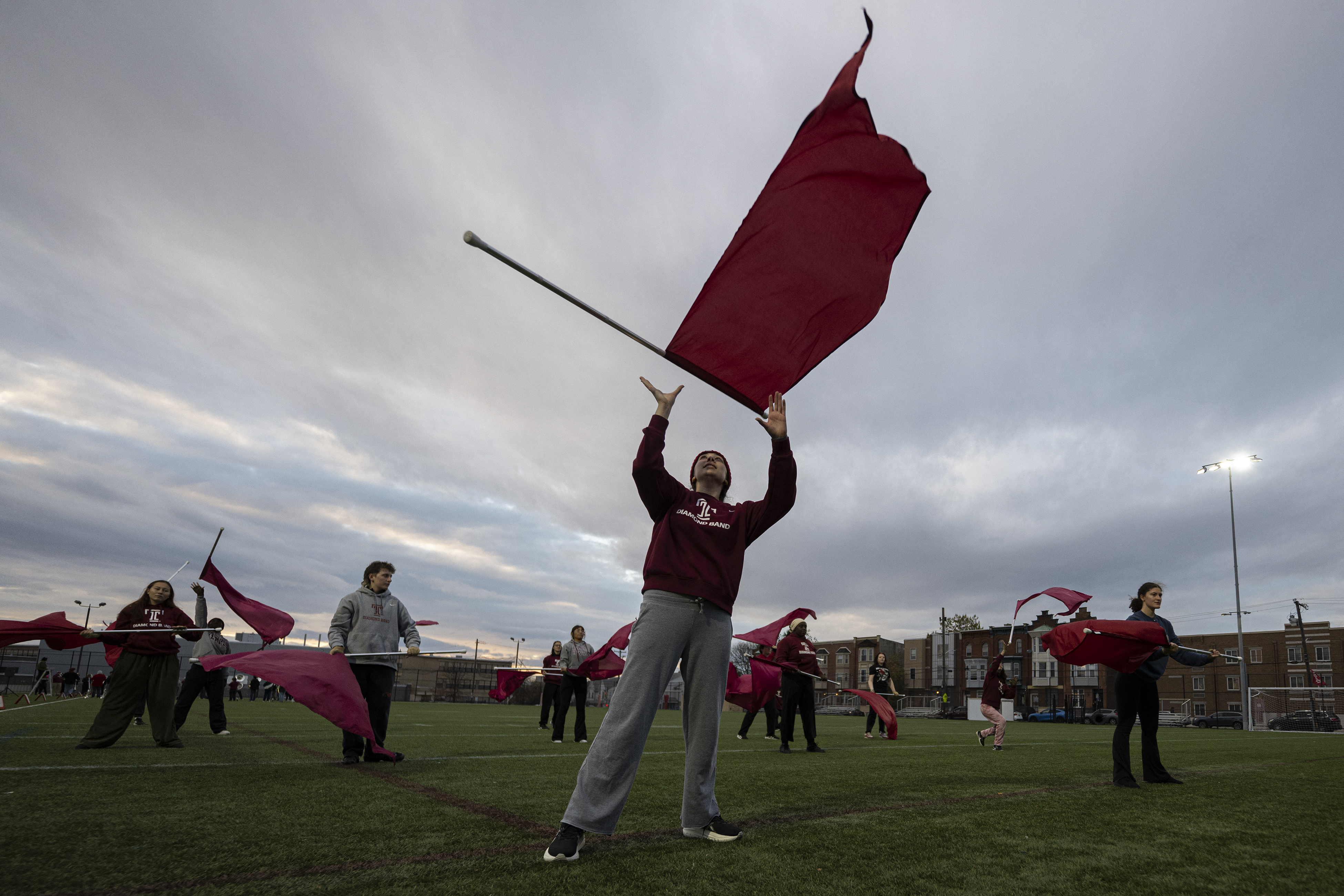
    Temple University Marching Band Color Guard Captain Abigail Rosen practices with her flag.

    Abigail Rosen, color guard captain, and her cocaptain are planning an “epic toss” of their flags over other band members, and wind could hinder it, he explained.

    “It’s an exchange toss,” said Rosen, 20, a junior advertising major from Abington. “So I toss my flag to Dana [Samuelson] and she tosses her flag to me, and we catch each other’s flags.”

    Bands selected received $10,000 from the retailer, which Temple officials said helped them get started on fundraising to pay for the trip.

    The band will be heading to New York on Tuesday for an alumni event, then a performance on the Today show Wednesday. Band members will be up in the wee hours of the morning Thursday for a rehearsal, and after the parade, they will be treated by the school to a Thanksgiving dinner cruise along the Hudson River.

    Andrew Malick, 20, a music education major from Carlisle, Pa., who plays the tuba, can’t wait.

    “It will be cool to say you’ve done it for the rest of your life,” he said.

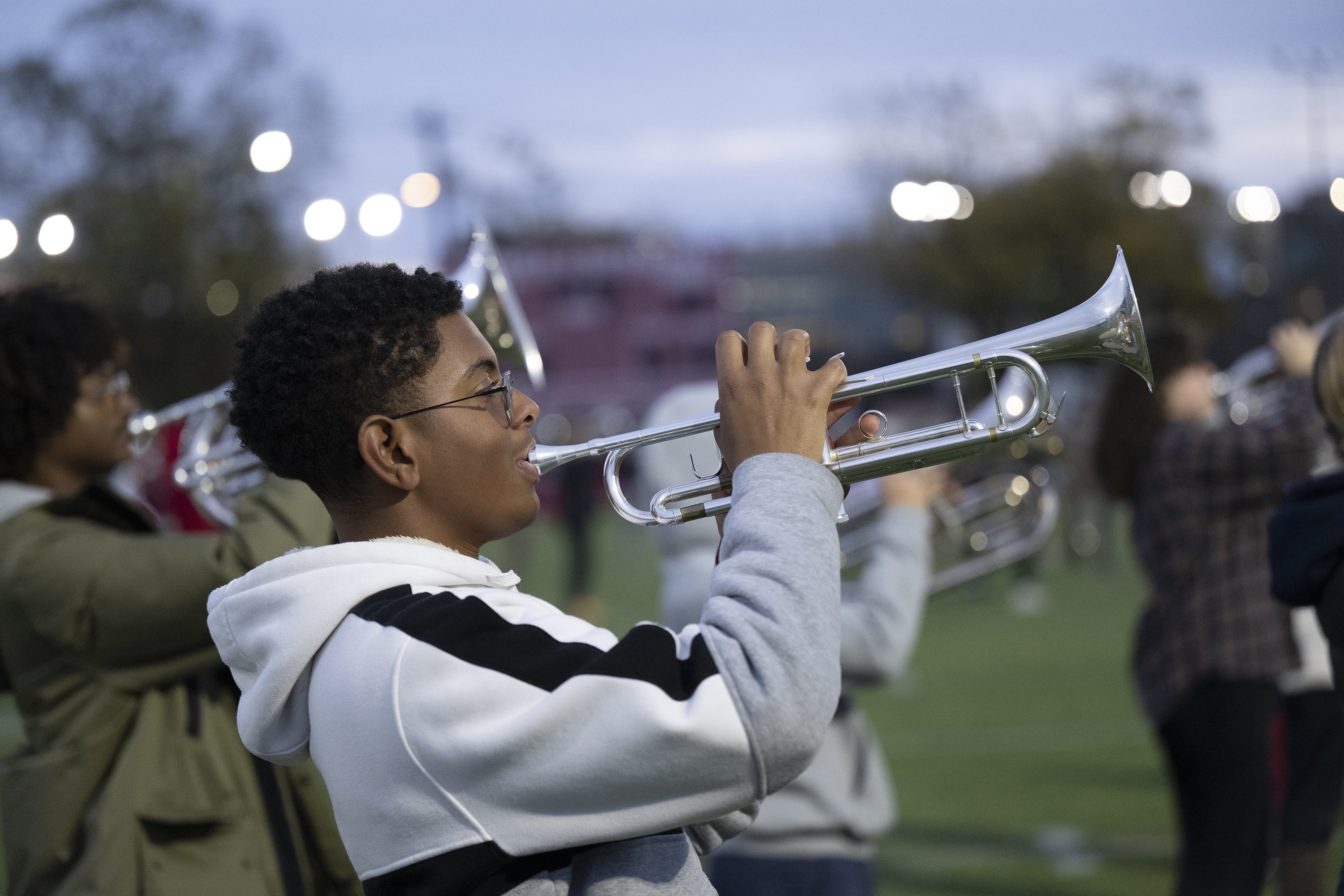
    Jeremiah Murrell, a freshman trumpet player from Savannah, GA, rehearses with the Temple University Marching Band Thursday, Nov. 13, 2025.
  • Haverford College president to step down in 2027

    Haverford College president to step down in 2027

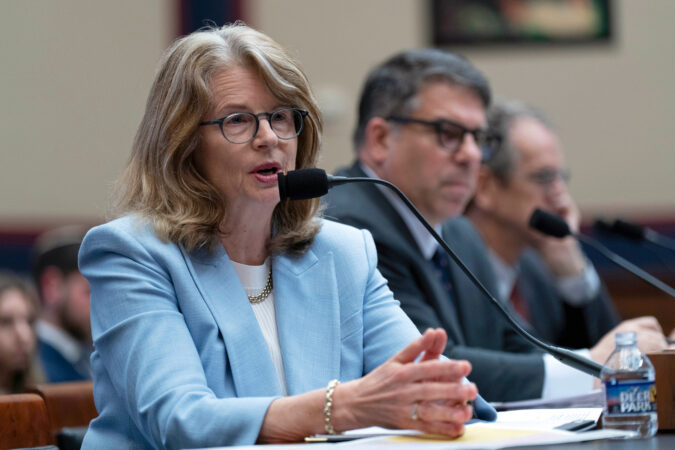
    Haverford College president Wendy Raymond announced she will retire in June 2027, and the college plans to launch a search for her replacement early in the new year.

    The announcement comes after a particularly difficult year for the college and Raymond, who faced intense grilling in May by a Republican-led congressional committee probing antisemitism complaints on college campuses. The school also is under investigation by the U.S. Department of Education over its handling of antisemitism complaints.

    “This was not an easy decision, but after more than three decades in higher education, I am ready to step away from academia,” Raymond said in her message to campus.

    Her news comes just two days after she announced John McKnight, the dean of the college, would be leaving in June for a new role at Dartmouth College.

    Raymond said she wanted to give the college’s board of managers time to search for a replacement.

    Raymond, 65, a molecular biologist, became president of the 1,470-student liberal arts college on the Main Line in July 2019. She came to Haverford from Davidson College in North Carolina, where she had been vice president for academic affairs and dean of faculty.

    She has been in the job longer than her three most recent predecessors, Kim Benston, who served four years; Daniel Weiss, who was there two; and Stephen G. Emerson, who had four years.

    In her announcement, she noted accomplishments including the completion of a strategic plan, efforts to advance diversity, equity, and access, the launch of the Institute for Ethical Leadership and Inquiry named for board chair Michael B. Kim, and the new recital hall.

    She also acknowledged challenges, including the pandemic, the strike for racial justice in 2020 in which students refused to attend class and demanded that Haverford do more to support its Black and brown students, and “more recent times of social unrest and public scrutiny.”

    Raymond earlier this year in a message to the campus acknowledged that she “came up short” in dealing with conflict over antisemitism complaints and said both she and Haverford can do better.

    “To Jewish members of our community who felt as if the College was not there for you, I am sorry that my actions and my leadership let you down,” she said in that message.

    Haverford was the only local college earlier this year to receive an F on a report card by the Anti-Defamation League for its response to antisemitism — a rating given to less than 10% of schools nationwide. The ADL’s methodology for categorizing antisemitism has been questioned, and critics have argued that criticism of the state of Israel and its government have been wrongly conflated with antisemitism.

    But the F rating caught the attention of the congressional Committee on Education and Workforce, which called on Raymond and two other college presidents to testify in May. Raymond took the worst of the grilling, largely because she was reluctant to answer questions about discipline for alleged antisemitism, especially in specific cases. Raymond testified that the college does not release data on student suspensions and expulsions.

    In June, the committee demanded answers about faculty and student discipline. And in August, the education department, which has launched a flurry of investigations of colleges regarding antisemitism, said it would probe Haverford.

    The investigation follows “credible reports that Haverford has failed to respond as required by law to multiple incidents of discrimination and harassment against Jewish and Israeli students on its campus,” the department said at the time.

    In her testimony to the congressional committee, Raymond noted the college had made a plethora of changes to address concerns about antisemitism, including changes in the antibias policy and rules around protesting, steps to revise the honor code, and increases in campus safety at events.

    Kim, the board chair, thanked Raymond for her service amid a difficult time in a message to campus Thursday.

    “She has guided the College with great care during periods of both remarkable growth and significant challenge,” he said. “During her tenure, Haverford has welcomed two of its largest incoming classes, increased support for student resources, access, and engagement, and continued to graduate students who use their liberal arts education to effect positive change in the world.”

    Raymond said in her Thursday message that through the challenges, “ … the College has remained strong and resolute in its mission to foster a campus culture of belonging and respect, where academic freedom and freedom of expression remain fundamental to Haverford’s nearly 200 years of academic excellence and open inquiry, and where our values guide us through new territory.”

  • Temple’s head of enrollment abruptly resigns

    Temple’s head of enrollment abruptly resigns

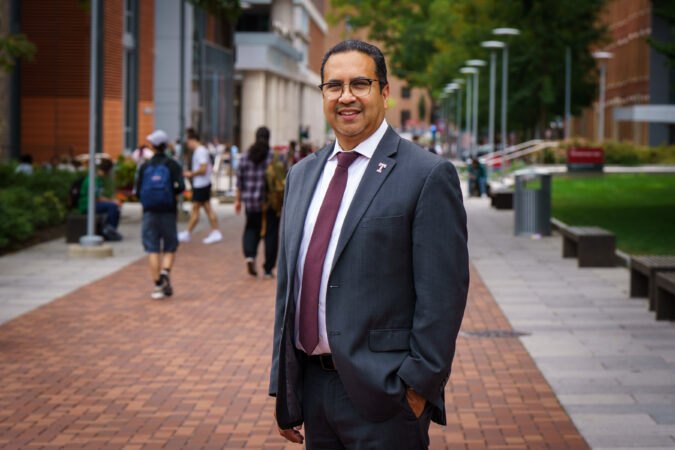
    Temple University’s vice president for enrollment and student success resigned abruptly this week after only 2½ years in the post.

    Jose Aviles’ resignation is effective Dec. 2, the university said in a message to the campus Wednesday.

    “It is very difficult to leave, but I have a life-changing opportunity that awaits me,” Aviles said, adding that he would share details when able. “Serving the Temple University community has been an extreme honor, as I am deeply grateful to have had the chance to fulfill the mission of Russell Conwell and expand access and opportunity to this world-class institution.”

    Temple did not respond to questions on why Aviles is leaving midyear, with the university in the midst of another application cycle.

    “Jose has reimagined enrollment management at the university over the last couple of years, helping move us to a modern, technology- and data-driven approach that has delivered results,” Temple president John Fry and interim provost David Boardman said to the campus community.

    They noted the university achieved growth in first-year enrollment the last two years, with this year’s group reaching a record high of 5,379.

    The university also under his tenure started the Temple Promise program, which makes tuition and fees free for first-time, full-time college students from low-income families who live in Philadelphia, and the Temple Future Scholars program, a mentoring and college-readiness program.

    Aviles, who came to Temple from Louisiana State University, where he had served as vice president for enrollment management and student success since 2017, was recently promoted from a vice provost to a vice president.

    He said in his statement that he “received great support from this university and its leaders” and would “continue to cheer on Temple from the sidelines.”

    While Temple’s first-year class was strong, the school fell short of its initial overall enrollment projection by about 700 students, which translates to about $10 million in lost revenue.

    The university had been estimating it would enroll a total of 30,100 to 30,300 students, which would have been its first enrollment increase since 2017.

    Instead, enrollment came in at 29,503, down about 500 from last year and further declining from its high of more than 40,000 eight years ago. (That does not include enrollment on its Japan and Rome campuses, which increased. Including those campuses, Temple’s overall enrollment was over 33,000, a slight increase from last year.)

    There have also been concerns about sophomore retention and a higher percentage of third- and fourth-year students not returning.

    And in September, the Temple News, the student newspaper, reported that more than 25 admissions counselors, directors, and staff left the department or were laid off over the two years that Aviles led enrollment. Students experienced delays in receiving their admissions decisions, problems with credit transfers, and difficulty with advising and financial aid packages, the Temple News reported.

    “I’m proud of the work that we’ve done,” Aviles told the Temple News at the time. “We definitely walked into a challenging time for admissions but when you look at what’s really happened in the last two years, I think I’m most proud of the foundation that we’ve set.”

  • EEOC sues Penn for failing to release information related to antisemitism investigation

    EEOC sues Penn for failing to release information related to antisemitism investigation

    The U.S. Equal Employment Opportunity Commission is suing the University of Pennsylvania for failing to release information related to an investigation it began in 2023 over the school’s treatment of Jewish faculty and other employees regarding antisemitism complaints.

    Penn, according to the complaint filed in federal court Tuesday, has not complied with a subpoena for information, including the identification of employees who could have been exposed to alleged harassment and the names of all employees who complained about the behavior.

    In its quest to find people potentially affected, the EEOC demanded a list of employees in Penn’s Jewish Studies Program, a list of all clubs, groups, organizations and recreation groups related to the Jewish religion — including points of contact and a roster of members — and names of employees who lodged antisemitism complaints.

    Penn usually does not comment on litigation, but in this case, the school ardently objected to the EEOC’s characterization of its cooperation and the personal nature of the material it was still seeking.

    The school said in a statement it has cooperated extensively with the EEOC, including providing more than 100 documents and over 900 pages.

    But the private university said it will not disclose personal information, specifically “lists of Jewish employees, Jewish student employees and those associated with Jewish organizations, or their personal contact information” to the government.

    “Violating their privacy and trust is antithetical to ensuring Penn’s Jewish community feels protected and safe,” the university said Tuesday.

    Penn also provided information on employees who complained and agreed that it could be shared, the school said, but the school would not provide information on those who objected.

    “Penn also offered to help the EEOC reach employees who are willing to speak with the agency by informing all employees of the investigation and how they could reach out to the agency,” the university said. “The EEOC rejected that offer.”

    The original complaint was launched by EEOC Commissioner Andrea Lucas, now chair of the body, on Dec. 8, 2023, two months after Hamas’ attack on Israel that led to unrest on college campuses, including Penn, and charges of antisemitism. It was also just three days after former Penn President Liz Magill had testified before a Republican-led congressional committee on the school’s handling of antisemitism complaints; the testimony drew a bipartisan backlash and led to Magill’s resignation days later.

    Lucas, who was appointed chair this year by President Donald Trump, also brought similar antisemitism charges against Columbia University that earlier this year resulted in the school paying $21 million for “a class settlement fund.”

    EEOC complaints typically come from those who allege they were aggrieved. Lucas, according to the complaint, made the charge in Penn’s case because of the “probable reluctance of Jewish faculty and staff to complain of harassing environment due to fear of hostility and potential violence directed against them.“

    The EEOC’s investigation ensued after Lucas’ complaint to the EEOC’s Philadelphia office that alleged Penn was subjecting Jewish faculty, staff, and other employees including students “to an unlawful hostile work environment based on national origin, religion, and/or race.”

    The allegation, the complaint said, is based on news reports, public statements made by the university and its leadership, letters from university donors, board members, alumni and others. It also cited complaints filed against Penn in federal court and with the U.S. Department of Education over antisemitism allegations and testimony before a congressional committee.

    The EEOC complaint pointed to public comments by Magill, addressing antisemitism while she led Penn.

    “I am appalled by incidents on our own campus, and I’ve heard too many heartbreaking stories from those who are fearful for their safety right here at Penn,” Magill said in 2023. “This is completely unacceptable.”

    Magill also in a message had addressed “a small number of Penn staff members” who “received vile, disturbing antisemitic emails that threatened violence against members of our Jewish community,” in November 2023.

    The complaint cited incidents of antisemitic obscenities being shouted on the campus, destruction of property in Penn’s Hillel, a swastika painted in an academic building, graffiti outside a fraternity and a pro-Palestinian encampment on the campus in 2024 that eventually was dismantled by police.

    “Throughout its investigation, the EEOC has endeavored to locate employees exposed to this harassment and to identify other harassing events not noted by respondent in its communications, but respondent has refused to furnish this information, thereby hampering the EEOC’s investigation,” the complaint said.

    Penn said it had received three antisemitism complaints, according to the federal complaint, but the EEOC questioned that number given the university’s workforce of more than 20,000. It demanded that the school provide names of all people who attended listening sessions as part of the school’s task force on antisemitism and all faculty and staff members who took the task force’s survey.

    Penn objected to the subpoena and the commission partially modified it in September, ordering the school to comply within 21 days, the complaint said.

    In its statement to The Inquirer, Penn defended its response to antisemitism.

    “Penn has worked diligently to combat antisemitism and protect Jewish life on campus,” the school said.

  • Thomas Jefferson University gets its first alma mater song 200 years later. Meet the composer.

    Thomas Jefferson University gets its first alma mater song 200 years later. Meet the composer.

    For its 201-year history, Thomas Jefferson University has been without an official alma mater song.

    Until now.

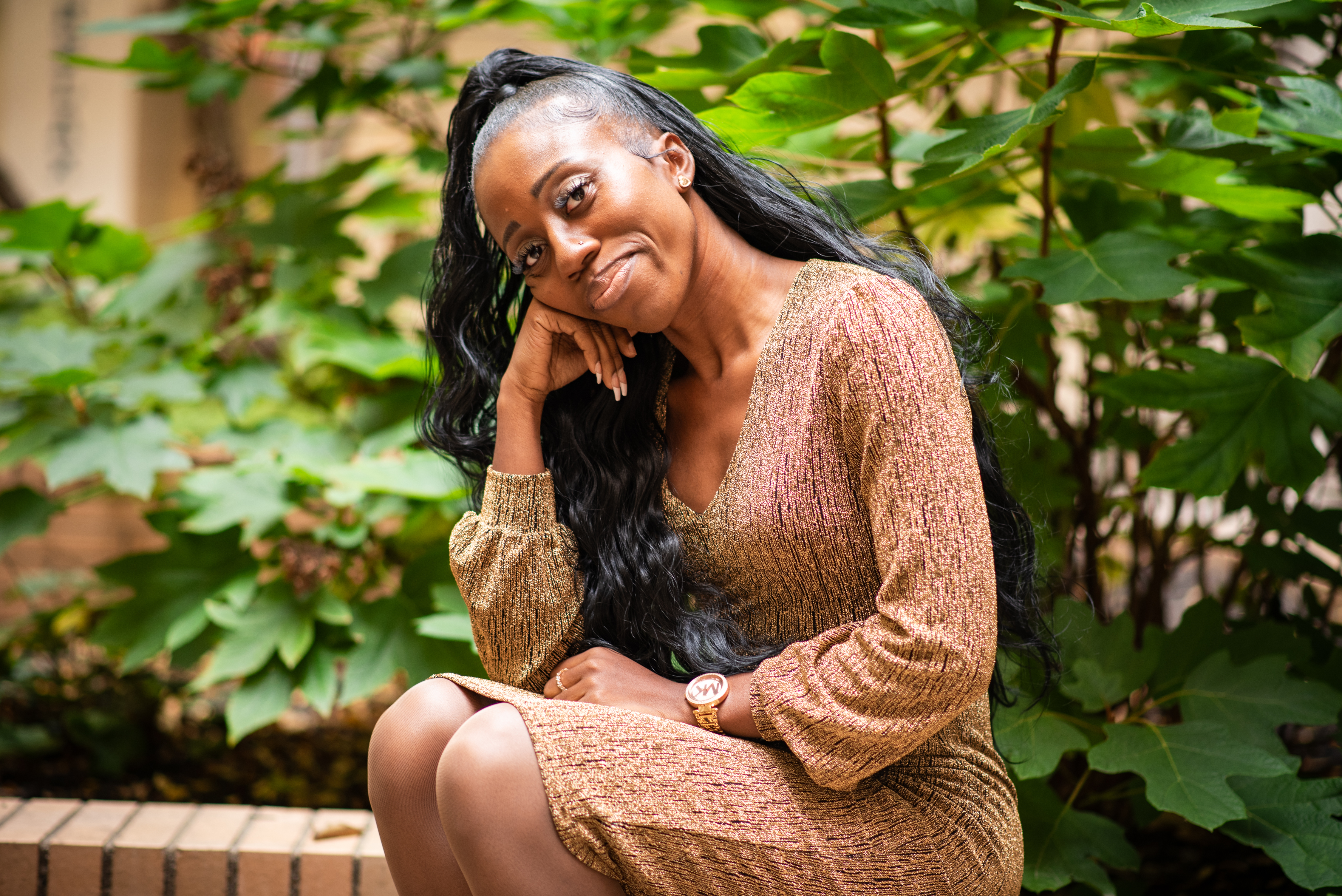
    Elizabeth Avril Barden, a customer-experience specialist at Jefferson Health Plans and recent summa cum laude graduate of the school, has written one.

    “Jefferson How We Adore Thee” will be released to the university community at its annual gala Tuesday. The university held a contest during its bicentennial last year, and Barden’s piece was selected from dozens of entries, the school said.

    Elizabeth Avril Barden, a customer-experience specialist at Jefferson Health Plans and recent summa cum laude graduate of Thomas Jefferson University, has written the school’s first alma mater song in its 201-year history. “Jefferson How We Adore Thee” will be released to the university community at a gala on Tuesday.

    “Elizabeth really captured the essence of the Jefferson community,” said Jefferson President Susan C. Aldridge “Learning, collaborating and innovating are all part of our collective DNA and I couldn’t be happier that we finally have an alma mater which captures who we are as a university as we venture into our third century.”

    Jefferson has had a handful of songs that students have written over the years and a processional theme that launched in 1974, but never an official alma mater song, said F. Michael Angelo, Jefferson archivist.

    One reason could be that at its founding in 1824, Jefferson was a medical college and over the years evolved into a university. But it was always medically focused until the school merged with the former Philadelphia University, best known for its design, engineering, and health science programs, in 2017.

    “Philadelphia University, as far as we can tell through their archives, never had an alma mater song, either,” Angelo said.

    Barden, 32, who received her bachelor’s degree in Health Services Management from Jefferson this year, said a colleague encouraged her to enter the contest. She has written about 30 songs, she said, so it wasn’t an off-the-grid venture.

    It took her just 25 minutes to write the lyrics and music for the one minute, 55-second piece, she said.

    “If you’re creative, you just flow,” she said. “You flow like water because it’s already in you, and you don’t have to overthink what’s already in you.”

    And with the help of producer Keegan Myers, who played the music while Barden sang, the chorus goes:

    It’s the Jefferson strong and true, where innovation leads us through. Together we achieve our best, as we prepare for what’s next.

    “In every step I was taking at the university, it was preparing me for the next level of life,” she said.

    Barden has been singing in front of people since age 2 and wrote her first song at 7, she said. Her parents, both Christian pastors originally from Haiti, encouraged her musical talent as she grew up in Brooklyn surrounded by gospel music, she said.

    “Me and my six siblings, we were essentially the choir,” she said.

    In high school, she won a song-writing contest and got to meet Grammy-winning R&B singer Jazmine Sullivan, who, she said, encouraged her to keep writing. She had written her high school’s alma mater song, too. And when she was a student at Delaware County Community College, she sang the national anthem at two ceremonies.

    “Any school I go to, I want to leave a piece of me there,” she said. “Music to me is connection. That’s how I connect to people.”

    For winning the Jefferson contest, she received a $200 gift card to the school bookstore, lunch with Aldridge, and a Jefferson mug.

    “But the greatest gift was my name being attached to this alma mater song,” she said.

    Barden said her aim in writing the song was to give Jefferson a gift.

    “Jefferson gave me a lot,” she said, including a scholarship. “There were moments where I needed to talk to professors because life was happening. They were always kind and patient with me.”

    Barden attended community college in New York after high school, but left when she got pregnant. When she moved to Philadelphia in 2016, she enrolled at Job Corps and then moved on to the Delaware County college. She continued on to Jefferson, while raising her four children, now ages 2 to 13.

    In 2023, she began working there, too. Her job entails focusing on the patient experience and helping patients navigate the system.

    “For the most part, I’m kind of like a clean-up person,” Barden said.

    She’s currently enrolled in a dual program at Bryn Mawr College and Jefferson to obtain her master’s degrees in social service and public health. She plans to become a licensed clinical social worker and to incorporate music therapy into her work.

    As part of her studies, she’s doing research on how music therapy can help those suffering from post-traumatic stress.

    “I do believe that the incorporation of music,” she said, “has the ability to communicate with anyone … and help them learn how to cope.”

  • Amy Gutmann, once Penn president, is teaching again. Here’s what it’s like to be her student.

    Amy Gutmann, once Penn president, is teaching again. Here’s what it’s like to be her student.

    The undergraduate class at the University of Pennsylvania vigorously discussed the use of affirmative action in college admissions, half the room charged with arguing one side and half the other.

    Their task, informed by the 2023 U.S. Supreme Court decision that ended the use of race-conscious college admissions, was to brief and advise a popular governor of a swing state who had not yet taken a position on the issue.

    “Guess who is the governor?” said their professor, Amy Gutmann. “I am the governor.”

    And for 90 minutes, the entirety of the class period, Gutmann guided a lively discussion in which students talked as much as she did.

    While never a governor, Gutmann has quite the leadership portfolio. She was president of Penn for a record 18 years, leaving in 2022 to become U.S. ambassador to Germany under former President Joe Biden, a post she held until 2024. She is also a Harvard-educated political scientist who cowrote the book The Spirit of Compromise and in 2018 was called one of the world’s 50 greatest leaders by Fortune magazine.

    Now, for the first time in about 25 years — since she was a politics professor at Princeton — Gutmann is back in the classroom teaching a full course this semester in the Annenberg School for Communication. Sarah Banet-Weiser, dean of Annenberg, who initially came up with the idea for the course, is her co-teacher.

    For students, the professorial star power was hard to pass up. There was a waiting list for the class.

    “It’s kind of a power duo,” said Evan Humphrey, 21, a senior communications major from Seattle. “Got to take that class.”

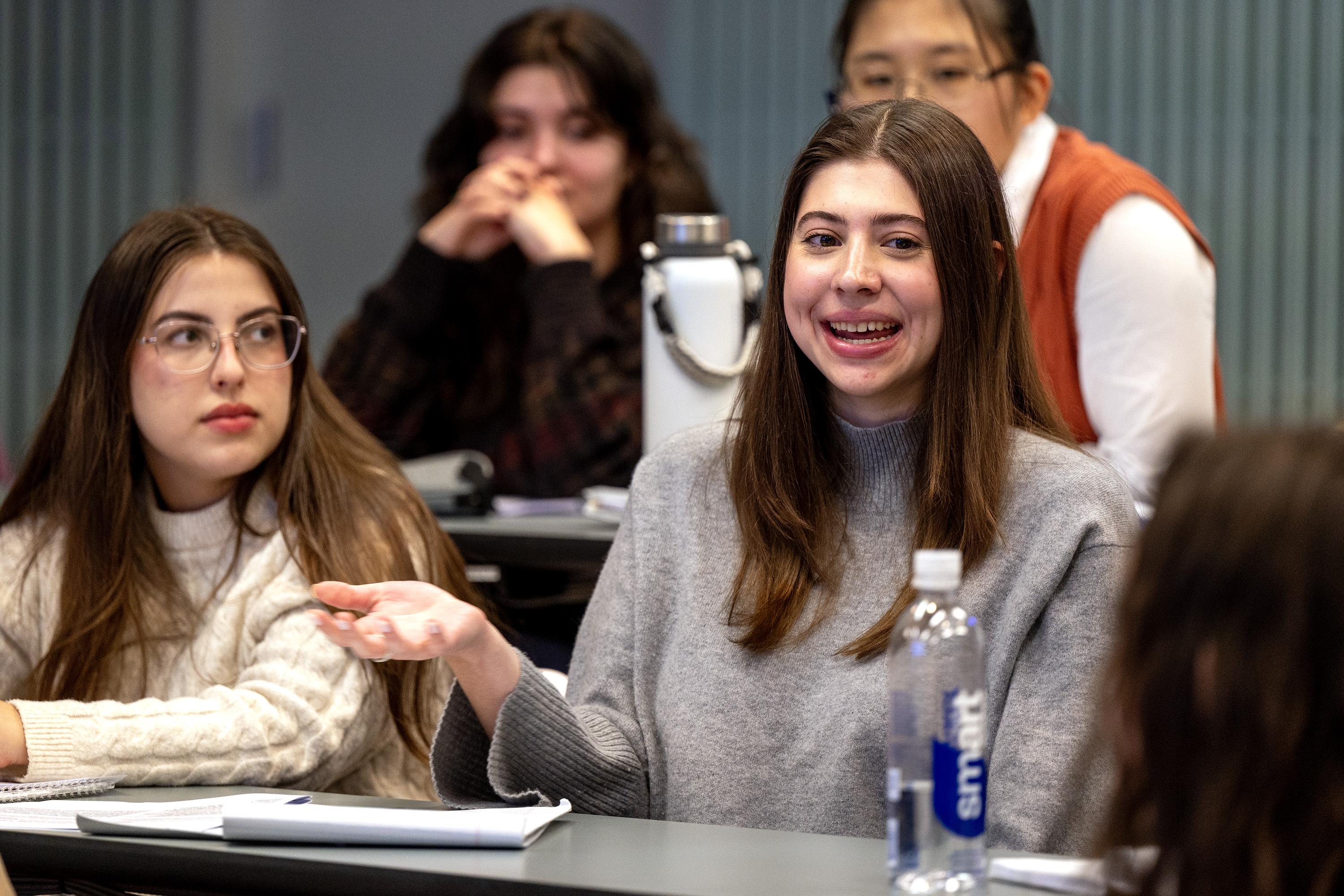
    Senior Evan Humphrey said she was drawn to enroll in the class because of the two professors and their distinguished careers.

    Focusing on teaching — the heart of a university — has been especially meaningful to Gutmann, and to Banet-Weiser, too, at a time when higher education has had its federal funding threatened and its approaches attacked.

    “It literally gives me life every week,” Banet-Weiser said.

    Gutmann, 75, who said she aspired to be a teacher since she was 5, said it has made her feel productive “in a way that goes to the heart of what a university is about.”

    “We should never lose sight of that heart of the university and how valuable it is,” she said.

    The goal of the class, called “The Art and Ethics of Communication in Times of Crisis,” is “to learn how and why to communicate with greater insight and understanding across differences,” while creating space “for free and open dialogue about controversial issues.”

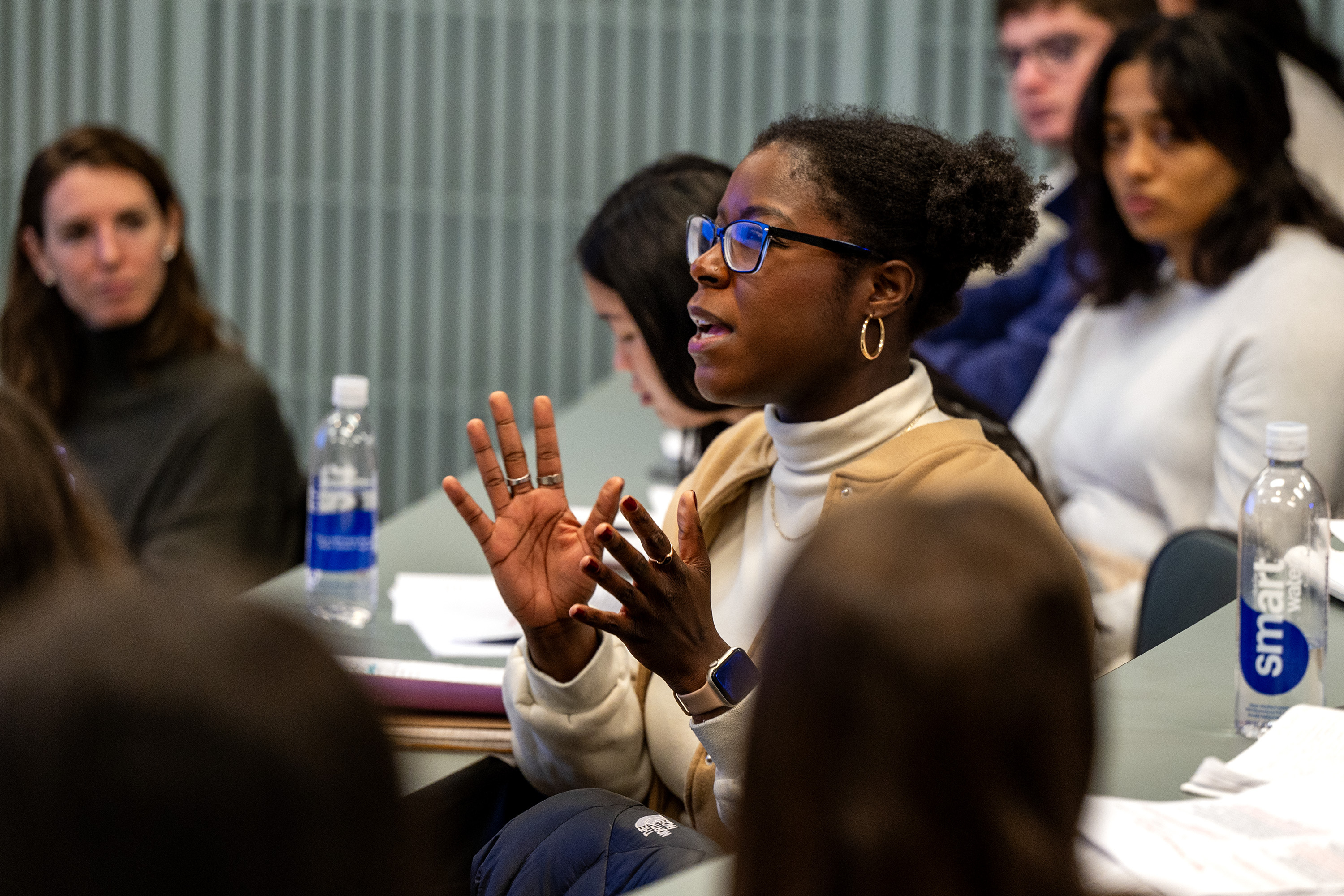
    Seniors Luiza Louback (left) and Sarah Usandivaras (right) participate in the class discussion.

    It could be a primer for the politically divided nation.

    “My pitch is that you can’t really know what you believe if you don’t know what people who disagree with you believe and what their reasons are,” Gutmann said in an interview. “I always say I don’t care what your position is. I care that you can give reasons for it and understand the strongest arguments on the other side.

    “That’s the method to search for truth, and it’s the way we serve a democracy.”

    Bringing experience to the classroom

    During class, Gutmann frequently drew on her experiences as a first-generation college student, a young professor at Princeton, a college president, and an ambassador.

    When she got her first teaching job, a male colleague congratulated her, but later she learned he told someone she got the job because she was a woman.

    “Did I take that as a compliment? Mm-mm,” Gutmann told the class.

    Humphrey said she especially likes hearing about Gutmann’s vast experiences.

    “She’s like, ‘Well, when I was the president here, this is something I dealt with,’” Humphrey said. “It’s really interesting knowing the experience she has and her background and the perspective she brings.”

    Amy Gutmann (center), president emerita of the University of Pennsylvania and former U.S. ambassador to Germany, is presented with the Weitzman National Museum of American Jewish History’s Only in America® Award during a gala at the museum this month. The award recognizes “Jewish Americans who have made enormous contributions to our world … often despite facing antisemitism and prejudice.” Among those posing with her are Ramanan Raghavendran (far right), chair of Penn’s board of trustees, veteran journalist Andrea Mitchell (next to Raghavendran), Penn President J. Larry Jameson, (to the immediate left of Gutmann), and David Cohen, former Penn board chair, (next to Jameson.)

    Gutmann’s life outside class continues to be full, too. After class Wednesday, Gutmann, whose father fled Nazi Germany, flew to Berlin to receive the Prize for Understanding and Tolerance from the Jewish Museum Berlin.

    Having returned to Philadelphia to live after leaving Germany, Gutmann said it wasn’t hard to find her stride again in the classroom. She had given one-off lectures as Penn’s president.

    “I have a lot of muscle memory on teaching,” she said.

    Her style has changed from her early days at Princeton, where she worked from 1976 to 2004. She said reading a student’s notebook left behind and open after one of her ethics and public policy lectures was a major turning point.

    “‘That’s not what I said,’” Gutmann thought. “And I realized it’s not what you teach them, it’s what they learn. At that point, I realized I needed feedback.

    “So I changed from doing the 45-minute [lecture] thing to doing five or 10 minutes, max, and then asking them questions. Then I got them to argue with one another, and once I found that, I found what I really discovered worked for learning.”

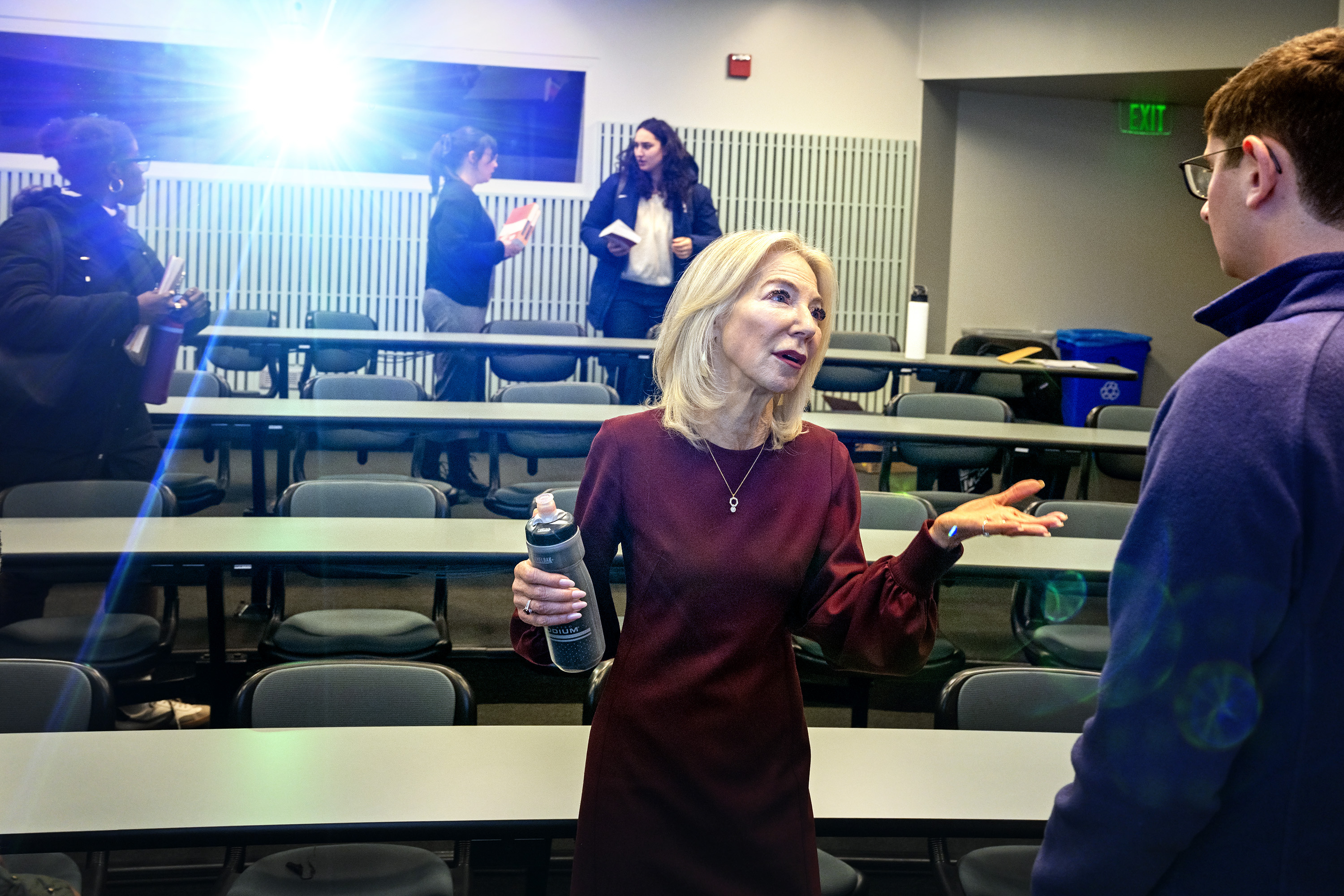
    Amy Gutmann talks with sophomore Brian Barth (right) at the end of class she co-teaches at Penn’s Annenberg School for Communication.

    Gutmann said she spends Fridays and weekends preparing for the class, which meets twice a week.

    “It’s a ton of work,” she said. “I’m really delighted to be doing it.”

    The class comes against the backdrop of fraught times for colleges. Penn earlier this year scrubbed its website of diversity initiatives after President Donald Trump’s administration threatened funding to schools employing diversity, equity, and inclusion efforts. In the summer, the school struck an agreement with the administration over the past participation of former transgender swimmer Lia Thomas, and Penn was one of nine schools originally asked to sign a compact that would have given the school preferential consideration for federal funding in exchange for complying with certain mandates affecting admissions, hiring, and other university operations. Penn declined.

    ‘One-of-a-kind’ discussions

    Gutmann and Banet-Weiser do not allow laptops, phones, or any electronic devices in class so that students completely focus on the conversation. To prepare for the affirmative action discussion, students were assigned related readings and review of the court cases.

    The two professors interacted with each other and prompted discussion among students with deep questions: Is treating people equal the same as treating them equally? Is it right to use affirmative action for only one racial group? What about other forms of affirmative action or preference, including for athletes, low-income students, and legacies whose parents attended the university?

    The approach resonated with students.

    “I wanted to take a class where I would really be encouraged to step out of my comfort zone and be able to learn not only how to understand my own beliefs and values but understand the beliefs and values of others,” said Sarah Usandivaras, 21, a senior communications and political science major who was born in New York and grew up in Paraguay.

    She found it in Gutmann and Banet-Weiser’s classroom.

    “It’s a one-of-a-kind,” she said.

    Ariana Zetlin, a doctoral student in Penn’s Graduate School of Education, is auditing the class to observe its approach.

    “The discussion and the debates are so much deeper and stronger than what I’m seeing in classrooms that don’t necessarily have these structures,” said Zetlin, 30, who is from New York.

    During class, those on both sides found common ground.

    Senior Angele Diamacoune said she was learning from the day’s lesson.

    “So I’m hearing agreement that diversity is a good thing but disagreement on how you get it,” Gutmann said.

    She asked students how many believed that having low-income and racially diverse students in class contributed to their learning. Every hand went up.

    “That to me is really striking,” Gutmann said. “There aren’t that many things that we can get unanimity on.”

    She asked students how they would advise colleges to teach the issue.

    “It would be good to teach with activities like this,” said Angele Diamacoune, 21, a senior communications major from Allentown.

    “Are you learning?” Gutmann asked her.

    “I am,” Diamacoune answered.

    “I am, too,” Gutmann said.

  • One dead, six others shot at Lincoln University

    One dead, six others shot at Lincoln University

    A 25-year-old man from Wilmington was killed and six others — including a student and an alum — were injured in a shooting Saturday night at Lincoln University, which was celebrating homecoming weekend, according to the Chester County District Attorney’s Office.

    The man killed was Jujuan Jeffers, 25, of Wilmington, District Attorney Christopher de Barrena-Sarobe said.

    The other six shooting victims, all age 20 to 25, are expected to survive, de Barrena-Sarobe said at a news conference on campus early Sunday evening.

    Zecqueous Morgan-Thompson, 21, of Wilmington, was charged with carrying a concealed firearm without a license, de Barrena-Sarobe said. Authorities are investigating whether the gun found on Morgan-Thompson was used in the shooting, he said, but also said authorities suspect there were multiple shooters.

    Morgan-Thompson was being held at Chester County prison after his bail was set at $25,000 bail Sunday evening, according to court records. It was not immediately clear if he had a lawyer.

    “We don’t have a lot of answers about exactly what happened. What I will tell you is that today we’re operating as if this is not an incident where someone came in with the design to inflict mass damage on a college campus,” de Barrena-Sarobe told reporters during a news conference earlier on Sunday.

    He urged anyone with video from the scene or other information that could help the investigation to contact the FBI, and he repeated that request at the evening news conference. Lincoln which enrolls about 1,650 students, is the first degree-granting historically Black university in the nation.

    The shooting occurred at the university’s International Cultural Center building about 9:30 p.m. Saturday, leading to a chaotic scene.

    “It was a very packed scene,” said Dana Moore, a spokesperson for the district attorney’s office. “The festivities had gone on. … It was all fun, football game, tailgate, a lot people had set up tents. And then chaos ensued.”

    Authorities discuss shooting at Lincoln University that left one dead, six injured.

    Moore declined to say where the injured were being treated or release their identities.

    “We are protecting all identities and locations at this time,” she said.

    The district attorney did not release other information about the injured at the evening press conference but said one victim was a student and one was an alumnus. The rest, he said, do not have direct affiliation with the university.

    “Everyone on campus is a victim in this,” he said, emphasizing the importance of healing.

    Josh Maxwell, chair of the Chester County Commissioners and an adjunct professor at Lincoln, said he knew the student who was shot and had spoken with her Sunday.

    “She said she’s had better days but she’ll be fine,” he said, noting that he planned to visit her on Monday. “She’s a phenomenal student, just an extraordinarily focused, really good kid who is hitting all the marks to have a really good life. And I expect that’s not going to be interrupted.”

    Maxwell said students choose Lincoln to get a good education.

    “There’s no downtown to walk to or bars, just the quiet borough of Oxford and beautiful farmland,” he wrote in a Facebook post. “The fact that violence could reach them here, and personally one of my students, tears at my heart.”

    The university announced in a statement Sunday afternoon that it would suspend classes Monday “for a day of healing and reflection,” though the school would remain open and staff and counseling would be available to help students and faculty.

    The university has invited the campus community to gather at noon in the Historic District, between Vail and Amos Halls, for “a moment of reflection, connection, and collective healing.”

    “Gun violence happens far too often in our country, and we are heartbroken that Lincoln University and its students are among the latest victims of such senseless violence,” the school said in the statement.

    On campus Sunday, police tape draped a parking lot strewn with trash — showing a scene of homecoming revelry abruptly abandoned.

    Investigators are on the scene outside Lincoln University’s International Cultural Center (ICC) Sunday, Oct. 26, 2025, where one person was killed and six other people were shot the night before during homecoming weekend celebrations.

    Vanessa Ayllon, who lives across the street, said she saw the chaos on her Ring doorbell camera.

    “All I see is people running and just getting into cars, just trying to leave,” Ayllon said. “It was very hectic.”

    She said cars were traveling in the same direction in both lanes on the street, nearly causing a crash as people fled.

    Terina Clark, 61, of West Philadelphia, graduated from Lincoln in 1987 and said she came to homecoming weekend to reconnect with old friends. They left shortly before the shooting, Clark said, frustrated by a crowded scene where she said alcohol flowed freely and people rolled joints and smoked marijuana not far from security officers.

    “The crowds grew like you were going to a stadium game,” Clark said, adding she wanted to see school officials held responsible for allowing things to get out of control.

    “Parents trust these kids within these walls,” Clark said. “The walls have to control what comes in.”

    Delaware State University students Darius Lawson and Jake Ferguson, who attended the Saturday night homecoming, returned to Lincoln’s campus Sunday to try to retrieve a friend’s purse that was left behind in the woods as people fled the gunfire. The two were turned away by campus police who told them the purse was now part of a crime scene.

    “Everyone just started running and falling,” said Lawson, 21. He said he saw people lying on the ground after the gunfire, as ambulances arrived.

    Lawson called it a sad end to what had been a great party. He added that Saturday wasn’t the first time he attended a homecoming party marred by violence: Last year he attended celebrations at North Carolina Central University, where two shootings occurred.

    The scene at Lincoln University’s International Cultural Center (ICC) building Sunday morning Oct. 26, 2025, where one person was killed and six other people were shot the night before during homecoming weekend celebrations.

    University officials, including Henry Lancaster II, a 1976 graduate and member of the board of trustees, were mum on details about the shooting when reached Sunday.

    Marc Partee, Lincoln University police chief, declined to answer any questions about the shooting or estimate how many people were on campus at the time. The incident happened about a half hour before festivities were due to end at 10 p.m., said Partee, who has worked at the school since 2019.

    Gov. Josh Shapiro, who received an honorary degree from Lincoln in 2023, said the state had “offered its full support” to the university and local police.

    “Join Lori and me in praying for the Lincoln University community,” he said on X late Saturday.

    Lincoln, one of four so-called state-related colleges in Pennsylvania, is in rural Chester County, about 45 miles southwest of Philadelphia.

    The university’s alumni association said in a Facebook post Sunday morning that it was sending “thoughts and prayers to Lincoln University, our students, and the victims of last night’s tragic and senseless act of violence during Homecoming.”

    “Homecoming should be a time of joy and unity,” the Alumni Association of Lincoln University posted. “Today, we stand together in grief, in strength, and in unwavering support of our beloved alma mater.”

    Philadelphia Mayor Cherelle L. Parker is a Lincoln alumna, and was on campus last week, posting to social media Saturday, “It was an honor to help kick off @LincolnUofPA‘s Homecoming earlier this week — celebrating 171 years of Black excellence and The Lincolnian’s 100th anniversary.”

    Parker did not immediately reply to a request for comment Sunday.

    She’s among several notable Lincoln alumni, a list which includes Thurgood Marshall, the first Black U.S. Supreme Court justice; Harlem Renaissance poet Langston Hughes; Robert N.C. Nix, Sr., the first Black lawmaker from Pennsylvania to serve in Congress; Sheila Oliver, former New Jersey lieutenant governor and the first Black woman to serve as speaker of the New Jersey general assembly; and Harry W. Bass, the first Black Pennsylvania state legislator.

    The school has achieved some milestones in recent years. The university in 2020 received a $20 million donation from philanthropist MacKenzie Scott, which became the largest single gift in the school’s history.

    President Brenda A. Allen at that time called the gift “transformational” for the then-2,100-student school and said it would fund new investments in teaching, research, and faculty development, as well as support need-based scholarships.

    In 2021, Allen was named one of the 10 most dominant historically Black college leaders by a national nonprofit organization that advocates for the schools, and in May, Maryland Gov. Wes Moore delivered the commencement address at Lincoln.

    But the university also has weathered controversy, including an internal battle over Allen’s leadership in 2020. The board attempted to oust her, but later decided to negotiate a new contract with her.

    The school also has been the scene of prior shooting incidents.

    In 2023, two people were shot inside a residential building on campus; the victims were not students but had been visiting the school. And in 2015, the campus tightened security after shots were fired in a dorm, though no one was hurt in the incident.

    Staff writer Kristen A. Graham contributed to this article, which also contains information from the Associated Press.

  • Penn releases letter rejecting Trump compact

    Penn releases letter rejecting Trump compact

    The University of Pennsylvania on Friday afternoon released the letter that President J. Larry Jameson sent to the U.S. Department of Education last week, explaining why the school rejected the compact proposed by President Donald Trump’s administration.

    Several other schools, including the Massachusetts Institute of Technology, Dartmouth College, and Brown University, already have released their letters rejecting the compact.

    “Our university policies and practices are already aligned with many of the core principles of the Compact…” Jameson wrote. But “we find that significant portions of the Compact and its overarching framing would undermine Penn’s ability to advance our mission and the nation’s interests.”

    The “Compact for Academic Excellence in Higher Education” was the latest attempt by the Trump administration to force changes in the way universities operate as the president tries to reshape higher education to match his vision. It offered colleges that sign preferential consideration for federal funding. It’s still not clear what penalty, if any, Penn — which receives about $1 billion annually in federal funding — will face for not signing.

    “Institutions of higher education are free to develop models and values other than [those in the compact], if the institution elects to forego federal benefits,” the compact states.

    Penn last week declined to release its letter, but Jameson in a message to the campus community Friday afternoon said “in the spirit of transparency” he would share it. He said he’d received many requests for its release.

    The university has not had further discussions with the government since rejecting the compact, Jameson said, noting “we believe there remains opportunity to advance the long-standing relationship between American higher education and the federal government which has greatly benefited our community, nation and world.”

    But he also was clear that Penn’s greatest partnership is with the public.

    “America’s great universities already have a compact with the American people,” he said. “It is built on the open exchange of ideas, merit-based selection and achievement, and freedom of inquiry to yield knowledge. It affirms that knowledge should serve the public good, that education should remain a ladder of opportunity, and that discovery should make life better, richer, and freer.”

    Jameson highlighted seven areas where he said Penn and the compact appear to be in alignment and five areas that pose concerns.

    Areas of agreement include hiring and promotion standards and “merit based admissions” that comply with the law, including the 2023 U.S. Supreme Court decision that banned the use of race-based admission, Jameson said. The university also has reinstituted a standardized test score requirement for admission; Penn like many others had paused the requirement during the pandemic. And, its undergraduate student body is 13% international, Jameson said. That’s under the 15% mark that the compact would require.

    Penn also is in compliance with federal foreign gift regulations and has “viewpoint-neutral rules” governing protests and expression, he said.

    The university last year adopted an “institutional neutrality” policy, which states that the school will no longer make statements about world events unless they have a direct effect on Penn’s operations; the compact calls for schools to adhere to institutional neutrality.

    While the university hasn’t agreed to freezing tuition for five years as the compact asks, the school has taken steps to make education more affordable, Jameson said, noting that its aid is all grants and no loans and is need based. Nearly half its students receive aid, he said.

    And, Jameson said, Penn officials “share concerns about grade inflation and believe there may be an opportunity to engage the higher education community to seek a broader solution.”

    But Penn objects to federal funding being meted out based on signing a compact, Jameson said.

    “Research and our nation are better served by competition that rewards promise and performance,” he said. “Penn seeks no special consideration beyond fair and merit-based funding.”

    The compact fails to promise or even mention academic freedom, which is “the bedrock of our national system of higher education,” Jameson said. It seeks to protect conservative thought alone, he said.

    “One-sided conditions conflict with the viewpoint diversity and freedom of expression that are central to how universities contribute to democracy and to society,” Jameson wrote.

    He also objected to the compact mandating free tuition to students in the “hard sciences.”

    “We celebrate the sciences,” Jameson wrote. “However, we focus our financial aid efforts on those who cannot afford to pay, ensuring that a Penn education is accessible to those who are offered admission.”

    Jameson also called out the compact’s financial penalties for failing to comply “based on subjective standards and undefined processes.” That could endanger teaching and research, he said.

    “Universities must be accountable for their actions,” he wrote. “We believe that existing laws and policies suffice to achieve compliance and accountability.”

    Many groups on campus had spoken out against the compact and were watching closely, given that the university had struck an agreement with the Education Department in July over the participation of a transgender athlete on the women’s swim team.

    Penn’s announcement that it would reject the compact brought praise from local and state officials, including Democratic Gov. Josh Shapiro.