Author: Jonathan Tannenwald

  • Ronald Moore was once a March Madness sensation. Now he’s a Penn assistant coach.

    Ronald Moore was once a March Madness sensation. Now he’s a Penn assistant coach.

    When Ronald Moore became an NCAA Tournament hero in 2009, TikTok and Instagram had not yet been invented. The iPhone was in only its second iteration, the 3G, and the first one had been launched just two years before.

    You could certainly become a national sensation, but it would have been with a highlight reel play instead of a viral one.

    Yet for all that has changed in technology since then — to say nothing of all that has changed in college basketball — some things never go out of style. A mid-major toppling a Big Ten beast in March is certainly one of them.

    It was news enough that Siena had taken Ohio State to overtime, and all the better since the game was in Dayton, just over an hour from Columbus. With 9.1 seconds left in the extra session, the Saints trailed the Buckeyes, 65-62.

    Moore, a Plymouth Meeting native who was then a junior guard from Plymouth-Whitemarsh High, took the inbounds pass and raced up the floor. When he neared the three-point arc, he faked left on Ohio State’s P.J. Hill and dribbled right. Hill bit, Moore let fly, and the shot was inch-perfect.

    As CBS announcers Verne Lundqist and Bill Raftery joined the crowd in delirium, Ohio State’s Jon Diebler shot a potential game-winner off the rim. A second overtime beckoned.

    “The little guy that could!” Raftery exclaimed over replays of 6-foot-tall Moore’s three, including a wide-eyed Siena coach Fran McCaffery and an even more wide-eyed bench.

    With 19 seconds left in the second OT, future 76er Evan Turner’s gutsy layup put Ohio State ahead, 72-71. Moore again took the inbounds pass, this time dribbling left, then toward the middle.

    He passed to Edwin Ubiles, who gave a pump fake, a dribble, and a pass back out of a triple team to the man of the hour. The clock read 5.4 when Moore let fly.

    “Three-pointer … Yes!” Lundquist roared, with Raftery landing an “Oh!” right on top of his partner.

    Then came the moment that really sticks in many fans’ minds: Raftery’s “Onions! Double order!” exclamation. The sport’s king of rhetorical flourishes had never taken his most famous line to that level, and it’s still rare.

    Bill Raftery (left) calling a game on CBS with former Villanova coach Jay Wright in 2022.

    Had Turner made the running jumper he missed on Ohio State’s last possession, perhaps all of this would have been forgotten. But the ball rolled around the rim and out, and the nation had a new star.

    ‘A great moment in time’

    Countless fans of Cinderella have memories of Moore’s heroics. So does Siena’s all-time assists leader, now 37 and settled back in his hometown as an assistant coach at Penn.

    “They’re always vivid,” he said in an interview this week. “I’m blessed to have had that moment in my basketball career. And every March, it’s always a flashback, whether someone brings it to my attention or I catch a glimpse of it in some of the highlight reels they play of March Madness.”

    And he still gets “the same feeling every time I see it — just because of what it meant to not only the university, but to myself, to my teammates. So it’s always a great moment in time when I flash back and look at those shots.”

    McCaffery, now at the helm of Penn, hasn’t forgotten either, just as he hasn’t forgotten many of his great moments as a player and a coach. But he offered a reminder of something those fans might have forgotten: Siena was a ninth seed that year, and this was its second straight tournament with a win.
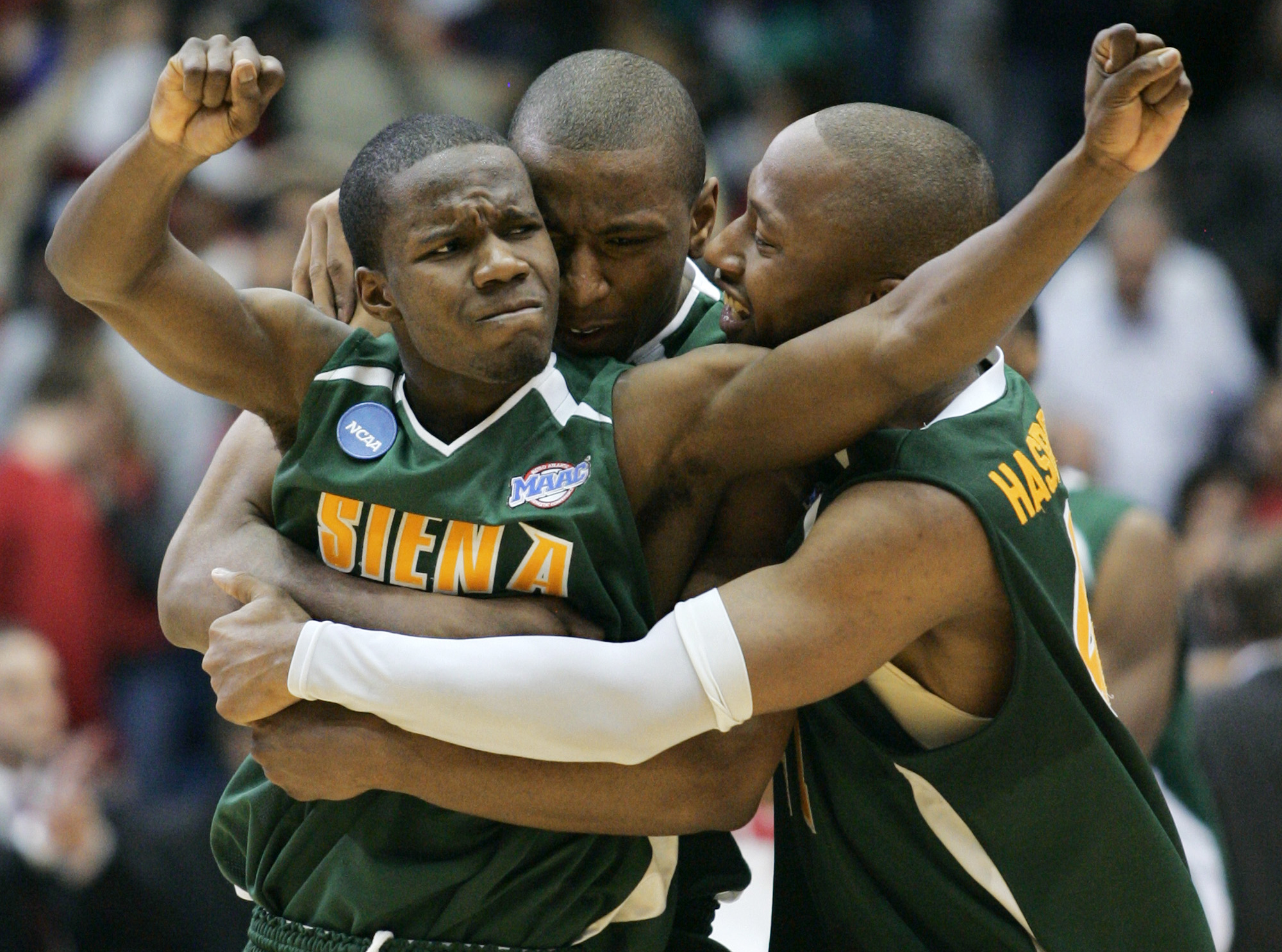
    Ronald Moore (left) celebrates with teammates after his famous game-winning three-pointer.

    “In the moment you’re just thinking about adjustments, personnel — what are we in defensively? What are they in? Are we in the bonus?” McCaffery recalled. “With that team, it was easy to trust your guys. It was a veteran group, they were really smart, and they were incredibly mentally tough. So you can play Ohio State in Ohio [and] nobody’s rattled at all.”

    McCaffery also recalled what followed: “That was as good a locker room celebration as I can remember.”

    After graduating in 2010, Moore went on to play professional basketball in Europe for 11 years, for teams in Slovakia, Poland, Hungary, Ukraine, Italy, and France. He retired from the court in 2021, then returned to his hometown to run a youth basketball outfit.

    “I felt that it was something that was my calling, just to kind of help the next generation and give all the knowledge that I possibly can to help those kids try to help achieve their goals and their dreams in the game of basketball,” he said. “It’s brought me so much that I wanted to be able to help someone do the same.”

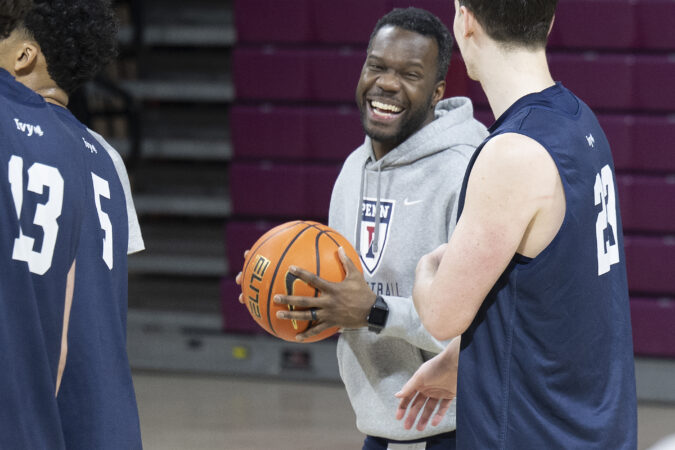
    Then, last spring, his old college coach returned to his hometown, and his alma mater. When McCaffery hired Moore to the staff at Penn, some people of a certain age reacted: “That Ronald Moore?”
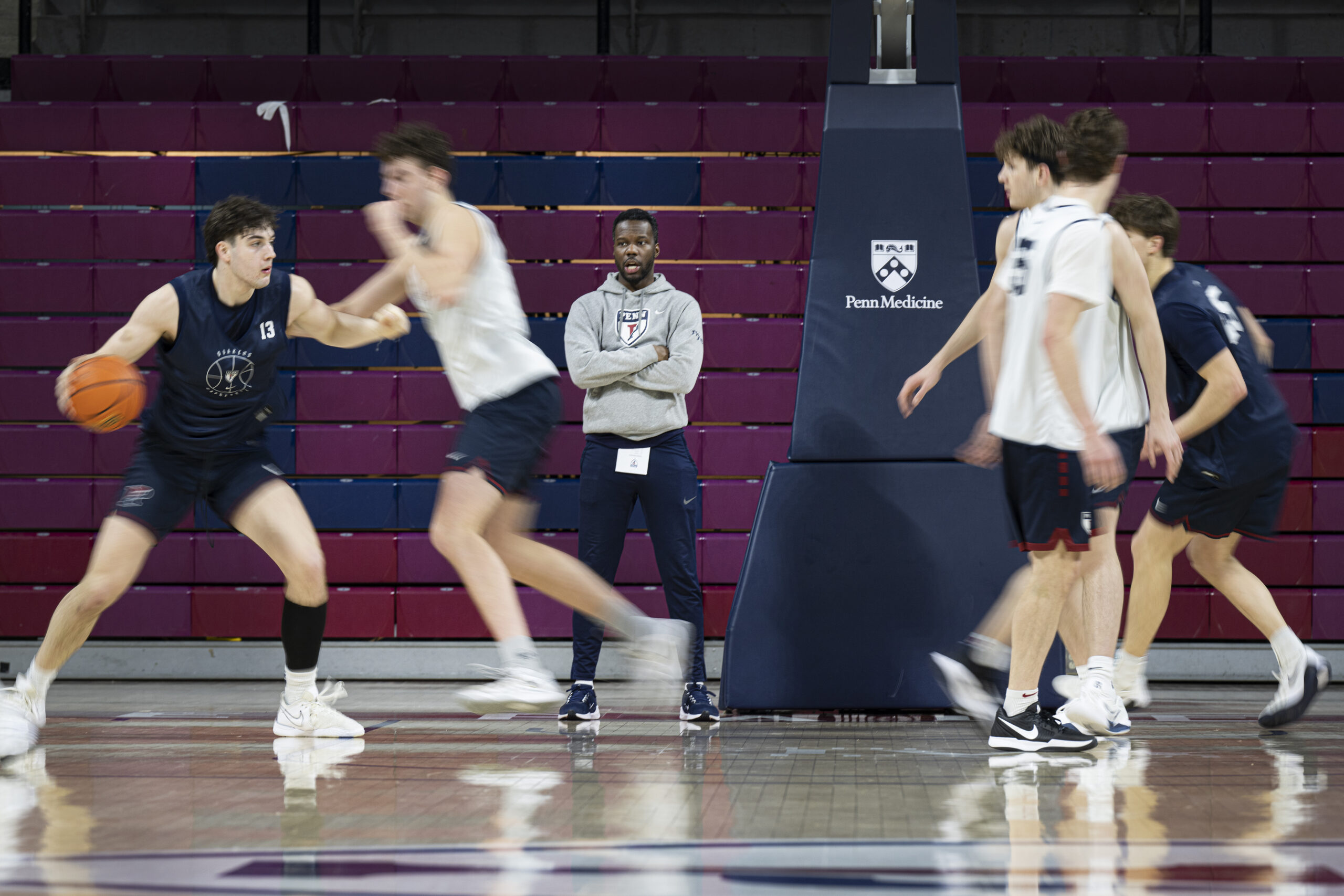
    Ronald Moore watching Penn’s players practice at the Palestra this week.

    Yes, that Ronald Moore. He and his old coach had stayed in close touch over the years. They traded text messages, and when time allowed, Moore would visit McCaffery at Iowa, where the coach moved in 2010. Their families got to know each other, too.

    “It’s just the type of person Fran is, man,” Moore said. “I think a lot of people get a misconception of when he’s out here yelling and trying to motivate guys on the floor, but off the court, he’s always been an open book, and someone who would be approachable to talk about anything.”

    Hiring him made ‘perfect sense’

    McCaffery had long felt Moore would make a good coach someday, and had told him so.

    “I always thought about having him on my staff no matter where I was, but it makes perfect sense in Philadelphia, where we’re both from,” McCaffery said.

    Now Moore’s experiences make him even better-suited for the job.

    “He’s played at an incredibly high level internationally,” McCaffery said. “He’s played for some really good coaches — played for some coaches who probably weren’t very good, and that’s part of the growth in this profession. … But his knowledge is just next-level of the game. So the coaching side of it is easy.”
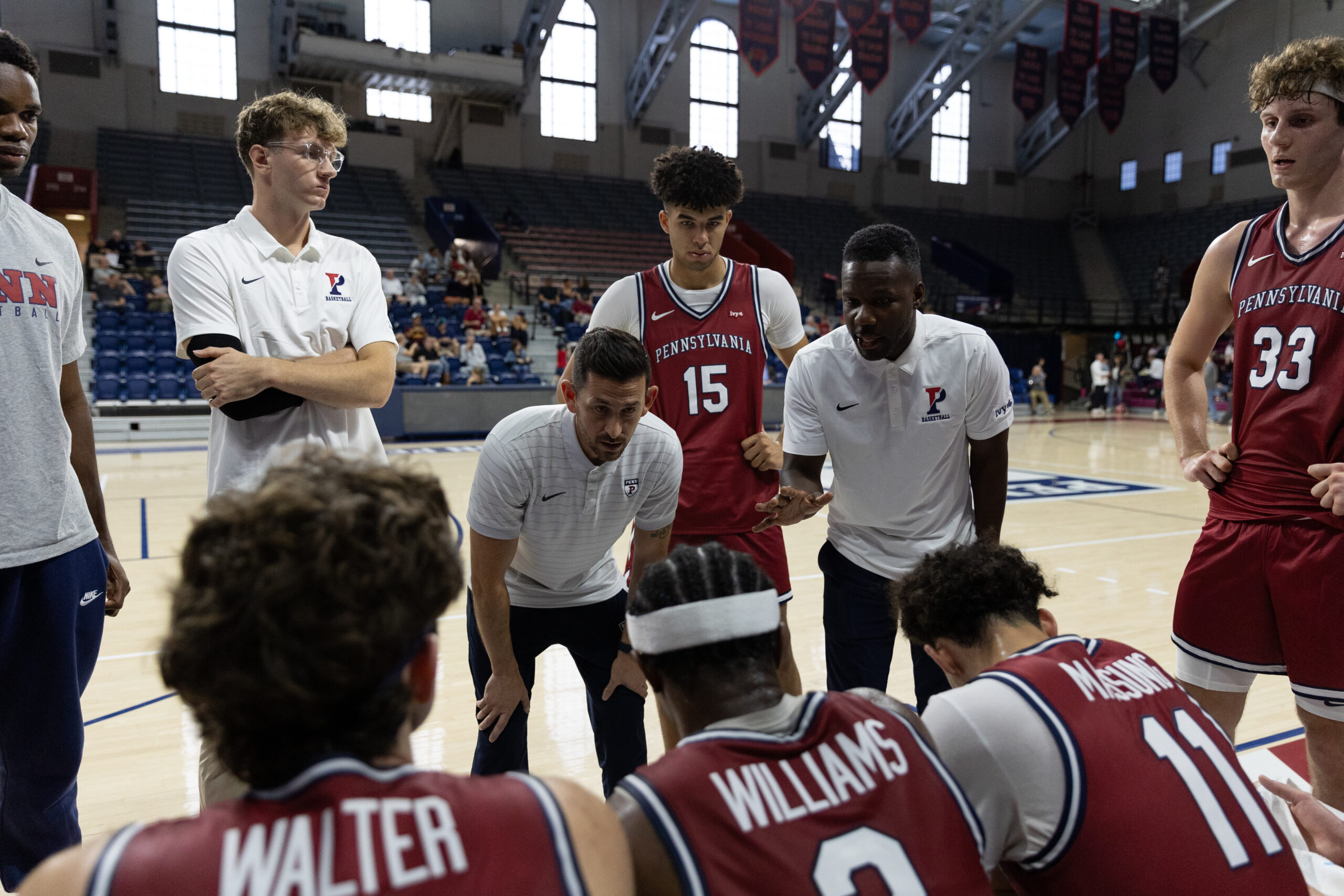
    Ronald Moore (second from right) and fellow Penn assistant coach Ben Luber talking with players during a preseason scrimmage last fall.

    When the offer came to join Penn’s staff, Moore felt that “it just was a full-circle moment.” And he was ready.

    “Many people have asked me, ‘Hey, have you ever thought about getting into college coaching?’” he said. “I had plenty of friends that coached at the college level, so I knew what it entails, but I didn’t really want to move around. So him coming back to Penn and getting that phone call, it kind of just seemed like a no-brainer.”

    On top of that, he now has a key to the Palestra, his city’s basketball shrine. He appreciates that too with one of its annual rituals played on Saturday’s. The 61-60 win over rival Princeton, ended an 8-year, 14-game skid an offered a measure of Penn’s progress this season.

    “You soak it all in when you’re in this place and it’s quiet and nobody’s around — you kind of can stand back and look at it from a different lens,” Moore said. “Having been able to play here as a college player, play here as a high school player, knowing what it means to the city of Philadelphia, and just its history in general, it’s a special place to be able to work at and come in every day.”
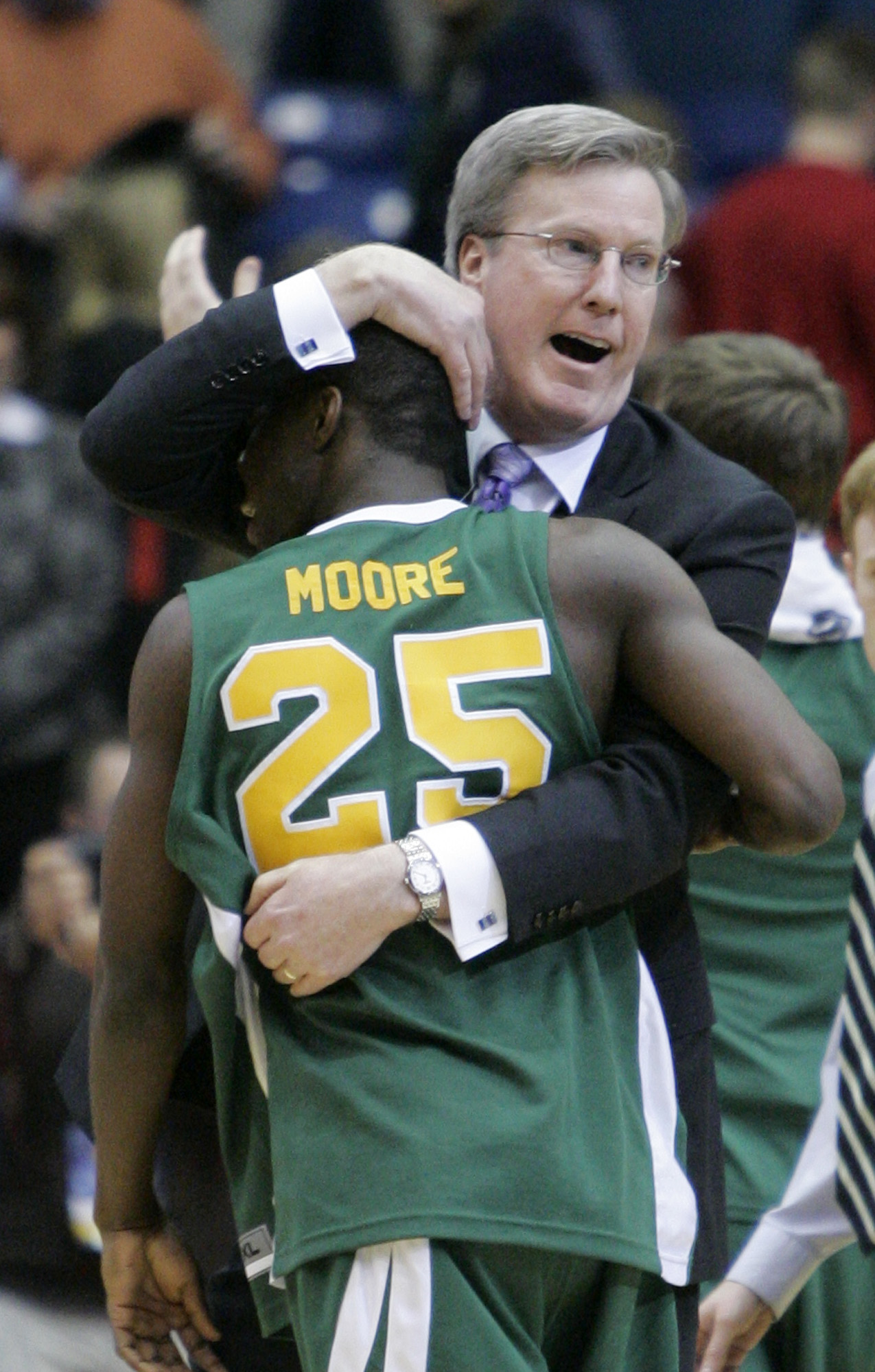
    Fran McCaffery embraces Ronald Moore after Siena’s upset of Ohio State.
  • NBC’s Olympic TV schedule: U.S. women’s hockey team plays a day before opening ceremony

    NBC’s Olympic TV schedule: U.S. women’s hockey team plays a day before opening ceremony

    For as big a deal as the opening ceremony is at the Winter Olympics, it has been a while since that was actually when the Games started.

    That’s the case again this year, as the ice hockey and curling competitions get going before the cauldron is lit in Milan on Friday night.

    Curling’s mixed doubles competition started Wednesday with a few early matchups, and on Thursday, the U.S. women’s hockey team will go into the spotlight.

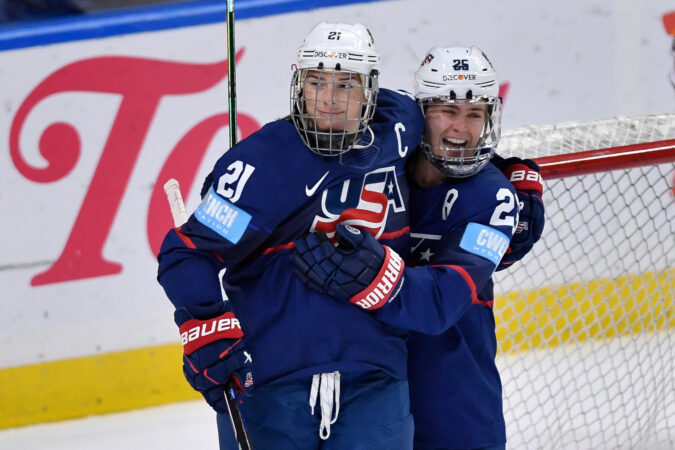
    The Americans hope to win the gold medal back after perennial rival Canada won in 2022. Either the U.S. or Canada has won every gold since women’s ice hockey became an Olympic sport in 1998 — two for the U.S. (1998 and 2018), and five for Canada.

    On top of that, every gold medal game but one has been a U.S.-Canada clash. Sweden upset the Americans in 2006 in Torino, the last time the Olympics took place in Italy.

    Right now, the widespread expectation is that the Americans and Canadians will meet again for gold this year.

    At 10:40 a.m. Thursday, USA Network will televise the U.S. game against Czechia.

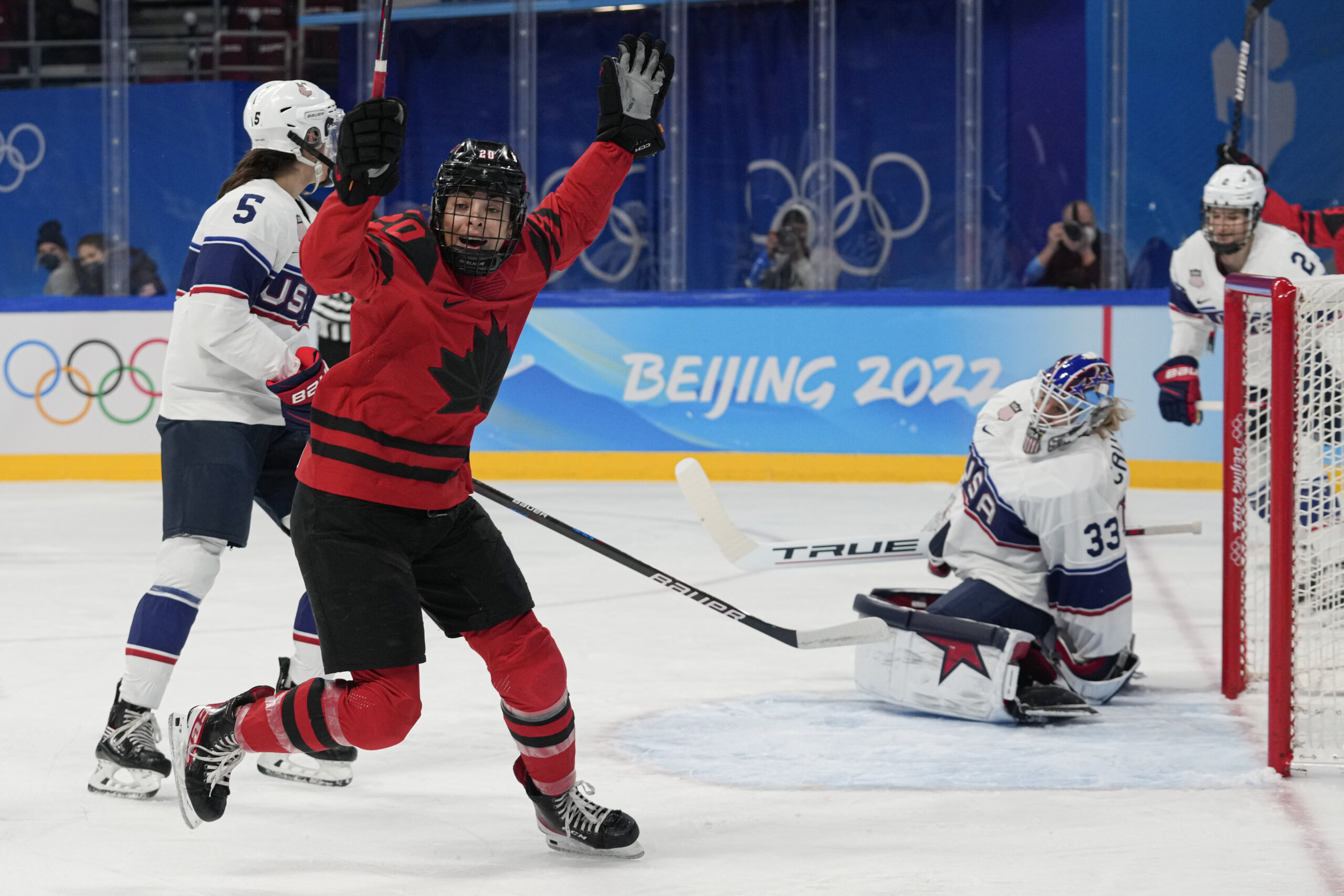
    Sarah Nurse helped Canada top the United States in the 2022 Olympics women’s ice hockey gold medal game.

    How to watch the Olympics on TV and livestreaming online

    There is TV coverage on NBC’s main broadcast network; on cable channels USA, CNBC, and NBCSN; and free-to-air Telemundo and cable channel Universo in Spanish. USA’s coverage is 24/7 every day, with live events when they’re on and replays the rest of the time.

    NBCSN is carrying the Gold Zone whiparound show that was so popular during the Summer Olympics in 2024, with hosts including Scott Hanson of NFL RedZone. It used to be just on Peacock, NBC’s online streaming service, but now is on TV, too.

    Every event is available to stream live on NBCOlympics.com and the NBC Sports app. You’ll have to log in with your pay-TV provider, whether cable, satellite, or streaming platforms including YouTube TV, FuboTV, and Sling TV. On Peacock, the events are on the platform’s premium subscription tier, which starts at $10.99 per month or $109.99 per year.

    NBC’s TV coverage will have live events from noon to 5 p.m. Philadelphia time on weekdays and starting in the mornings on the weekends. There’s a six-hour time difference from Italy to here. The traditional prime time coverage will have highlights of the day and storytelling features.

    The NBC Sports and Peacock apps are available for mobile devices, tablets, and connected-TV devices including Android TV, Apple TV, Google Chromecast, Amazon Fire TV, Roku, Samsung TV, and more. There’s an FAQ page on NBC’s website here with more details.

    If you have a Comcast Xfinity X1 cable box, just say “Olympics” into the remote’s voice control function, and everything will come up, whether it’s on TV or online. Other cable and satellite TV providers may offer similar functions.

    Here is the full event schedule for the entire Olympics, and here are live scores and results.

    Thursday’s Olympic TV schedule

    As a general rule, our schedules include all live broadcasts on TV, but not tape-delayed broadcasts on cable channels. We’ll let you know what’s on NBC’s broadcasts, whether they’re live or not.

    NBC

    8 p.m.: Ice, Snow & Glory: The Winter Olympics, NBC’s preview show for the Games

    USA Network

    8 a.m.: Intro to Milan Cortina show

    8:35 a.m.: Mixed doubles curling — United States vs. Switzerland

    10:40 a.m.: Women’s ice hockey — United States vs. Czechia

    1:05 p.m.: Mixed doubles curling — Italy vs. Canada

    3:45 p.m.: Women’s ice hockey — Finland vs. Canada

  • U.S. Soccer needs your kid’s youth club to help its national teams. Will it happen?

    U.S. Soccer needs your kid’s youth club to help its national teams. Will it happen?

    U.S. Soccer Federation sporting director Matt Crocker didn’t invent his slogan of choice, but that’s no reason not to use it.

    “If we do what we’ve always done, we will get what we’ve always got,” he said in a seminar at the United Soccer Coaches Convention last month. He said it at another event in December, too, and has no doubt said it many other times in his tenure so far.

    The message might even be getting through, helped by Mauricio Pochettino and Emma Hayes’ big-ticket successes lately with the senior national teams. But the people Crocker really needs to reach don’t work for his employer. In fact, they’ve historically worked against it.

    America’s youth soccer industrial complex — a phrase whose accuracy is confirmed at every convention — doesn’t like being told what to do by the sport’s governing body, or by anyone else. Many coaches and administrators have long cared more about winning games, making money, and keeping their jobs than about big-picture player development.

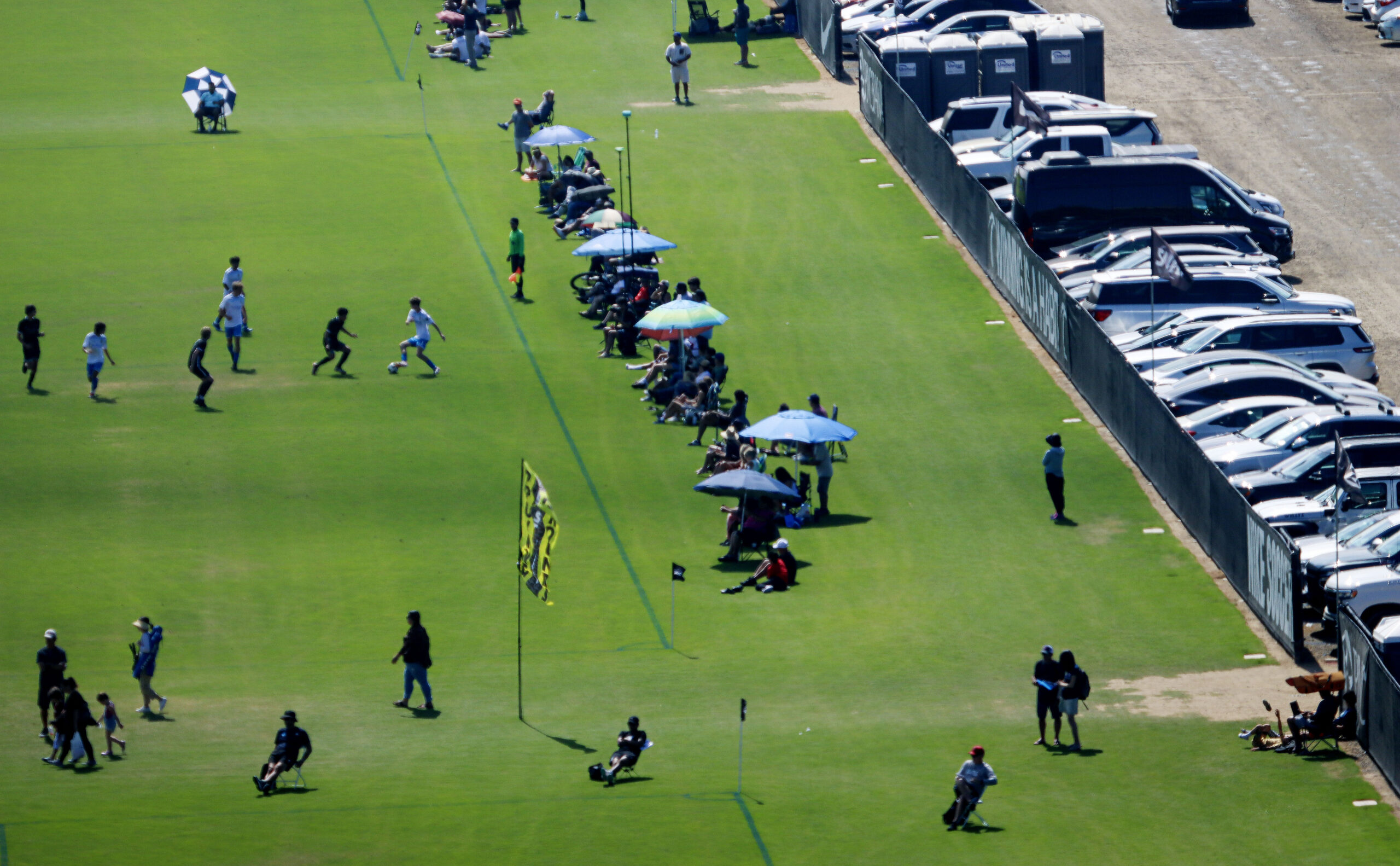
    Youth soccer tournaments rake in big bucks for organizers and are part of an overall machine that prioritizes winning over development in the American soccer landscape.

    For as much as Crocker is judged on the senior national teams’ successes, he is also measured on that big picture. And while he’s happy to let the men, the women, and the youth game do some things differently, he knows how he wants to steer the freighter carrying them all.

    His map is the “U.S. Way” program scheduled to roll out this year. It includes some medicine for the youth game to consume, and Crocker is trying to serve it with quite a bit of sugar.

    “We understand this is not U.S. Soccer standing here going, ‘You must do this, you must do that,’” he said. “It’s us better understanding your environments. It’s us better collaborating and working with you and giving you the resources — for free — to be able to tap into some of the things that might help you as a coach, that might help you as a club.”

    Free sugar certainly tastes good, right?

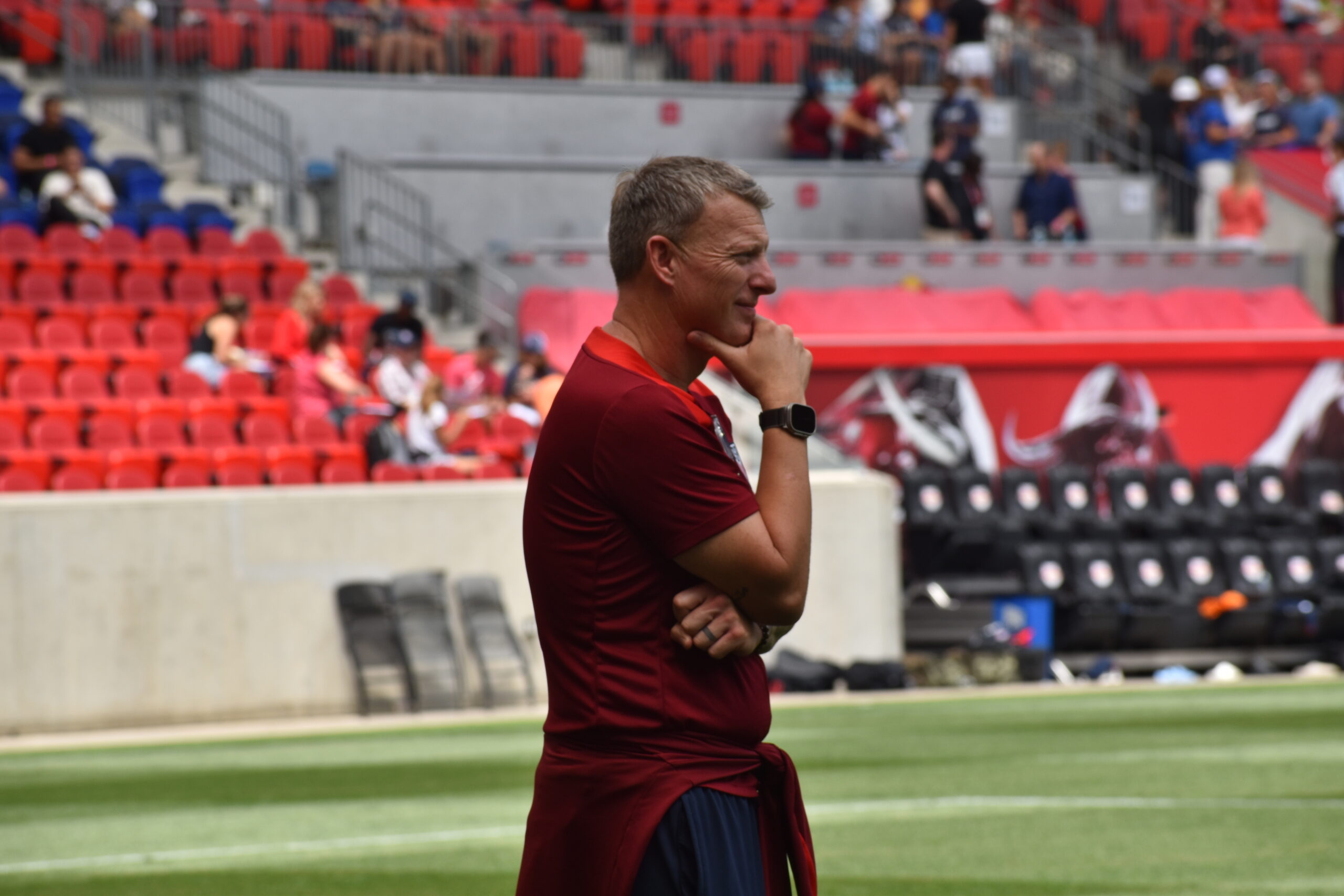
    Matt Crocker on the sidelines at a U.S. women’s team practice in 2024.

    Crocker’s case is helped by some medicine that U.S. Soccer has taken over the years. Before MLS teams built out their youth academy pipelines (which the NWSL hasn’t even started yet), the governing body ran a residency program for elite teenage boys in Bradenton, Fla., from 1999 to 2017.

    From 2007 to 2020, there was also the U.S. Soccer Development Academy league for elite youth clubs. It had strict and often controversial rules for participation.

    Both entities are not missed these days, and that proves an important point. Player development is supposed to be the job of clubs, not national federations.

    ‘The cherry on top’

    Even though Crocker has pushed the governing body to fund full-scale youth national teams at every needed age (under-14, 15, 16, 17, 18, 19, 20, and 23, boys and girls), they’re all still meant to be finishing schools. Clubs develop players, then the national teams pick from them.

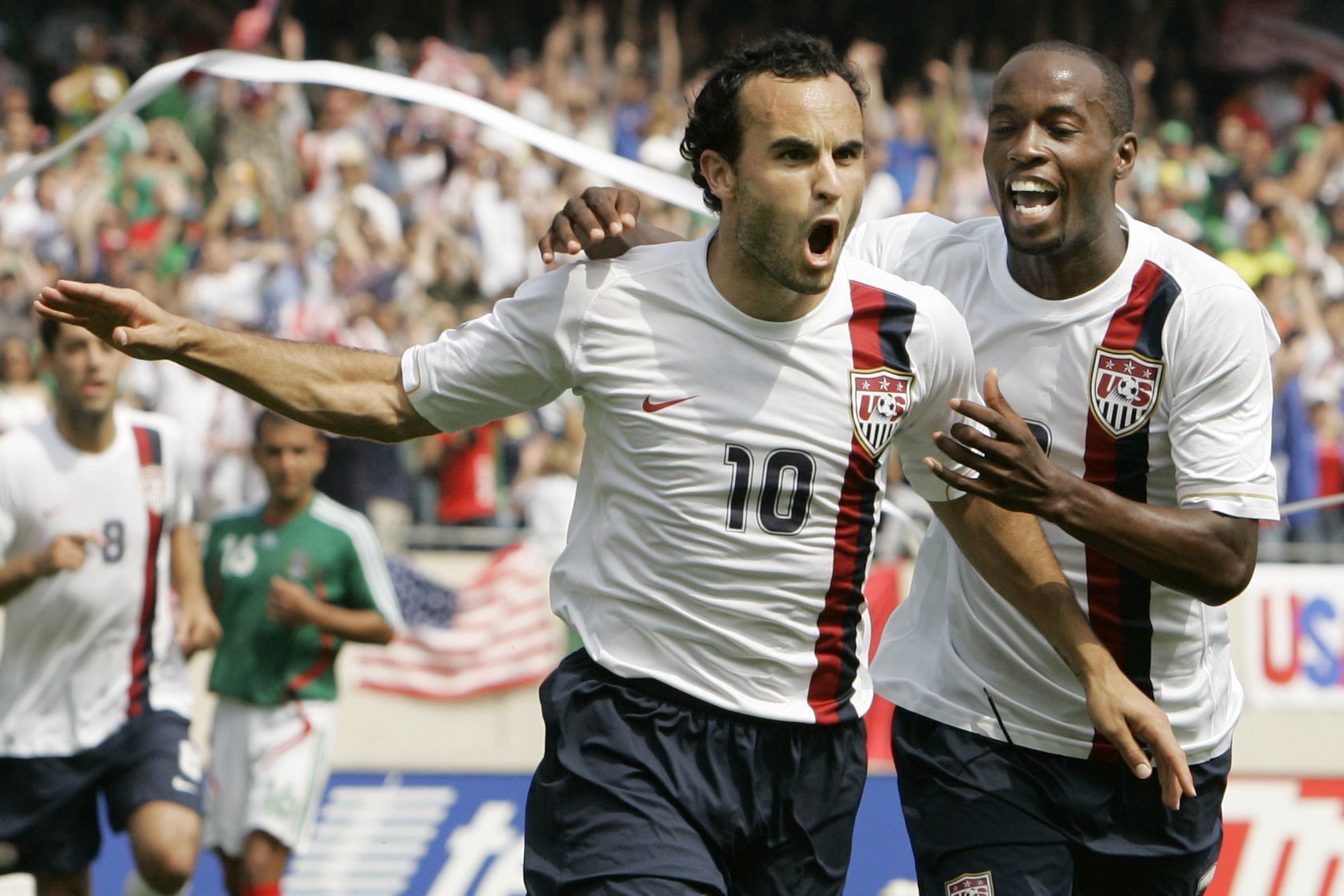
    U.S. legends Landon Donovan (left) and DaMarcus Beasley (right) played in U.S. Soccer’s former academy in Bradenton, Fla.

    “Without you guys in this room, we all fail,” Crocker said to a room that housed coaches, administrators, and more across American youth soccer. “We can put all our resources into the national teams, but unless we’re improving the quality of the child or young player coming into the system, it doesn’t matter. We just get the opportunity to sprinkle the cherry on the top, and we get 60 days [a year] if we’re lucky.”

    Club teams, he continued, “get all that time with the players. You have the opportunity to really kick on player development.”

    Some of his remarks went into the weeds, but it’s necessary to understand how player development in soccer works around the world, and how different it is from basketball, football, and baseball.

    “When we talk about our international players or the international players that exist in this country, even at that level, 85% of player development happens in club [soccer] — and it starts when they’re 4 ,” Crocker said. “It’s not like as if, as soon as they go to the so-called pro club, whether that be MLS or NWSL, then all of a sudden, when they become a professional player, that’s when they develop. Development happens from the first touch point, the very first touch point at the grassroots.”

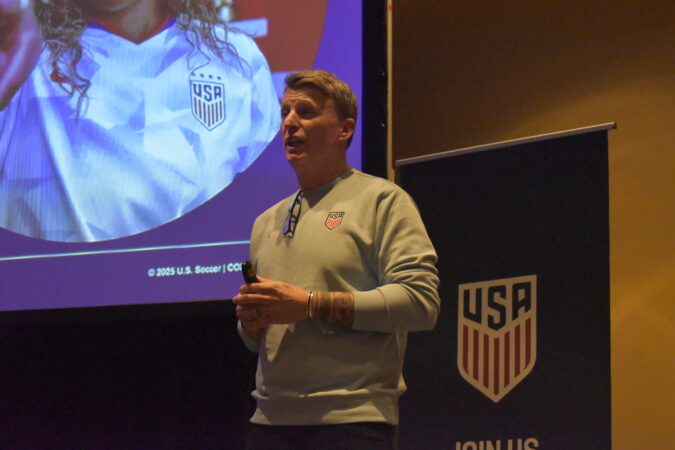
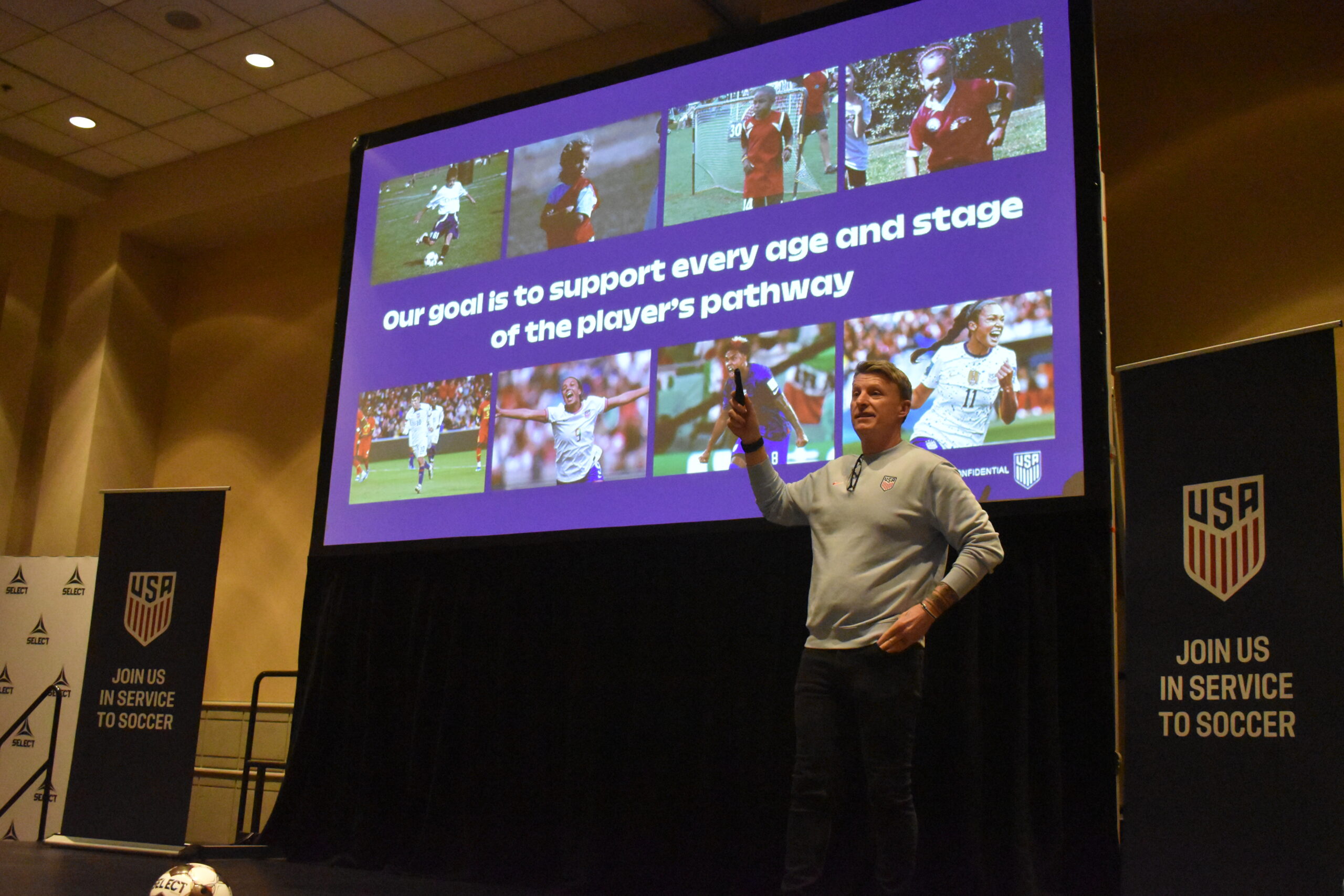
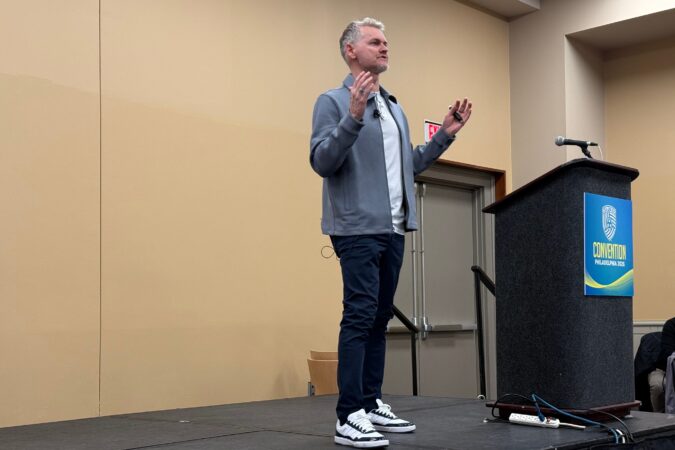
    Matt Crocker on stage at this year’s Coaches’ Convention at the Pennsylvania Convention Center.

    The crowd in attendance for Crocker’s remarks wasn’t very big, and he noticed from the stage.

    “Either the presentation went really well last year, and everybody got all the content that they needed, so [they] didn’t decide to come back, or the presentation wasn’t good enough,” he said of his well-attended speech at last year’s convention.

    When Crocker talked about how “there’s a lot of infighting, a lot of players going from one club to another, a lot of teams not playing each other and going further afield” — all of which are true — there was no applause, laughter, or groaning.

    “That team can’t play that team, and they go all the way past them and jump on a plane and spend hundreds of dollars to go and play [another] team, because that league fell out with that league,” he said at another point. “Just crazy. This is about children. This is about the best opportunities for children.”

    About 10 minutes in, Crocker got ready to slip in the medicine. But first, he offered a little more sugar.

    Meanwhile, the crowd for Matt Crocker isn’t great.

    But those who are here have just heard him give a lot of praise to the culture of the Union’s academy, which he visited yesterday:

    [image or embed]

    — Jonathan Tannenwald (@jtannenwald.bsky.social) January 15, 2026 at 9:50 AM

    “I think I opened last year with the same thing, which is player development happens in your clubs and your environment,” he said. “And our job in U.S. Soccer is to recognize that, celebrate it, and support you in doing the best jobs you can in really really challenging difficult situations.”

    Then he went for it.

    “Basically, our job is to define as the federation, as hopefully the leaders in soccer, to be able to give you guys clear guidance over: we believe youth development needs to look like this in the future,” he said. “And these are the things that we believe you could do to support a better quality of child, of player, achieving a better experience within the game in the future. So, us as a governing body finally putting the stake in the ground and going, ‘This is what we believe in.’”

    He offered a little more sugar just to make sure it went down.

    “Our job is not to tell you,” he said. “Our job is to show you these things can work and hopefully positively influence you to want to come and be part of the things that we’re talking about.”

    A few minutes later, he went back to the medicine — this time, with something he knew is close to sacrilege in some parts of youth soccer.

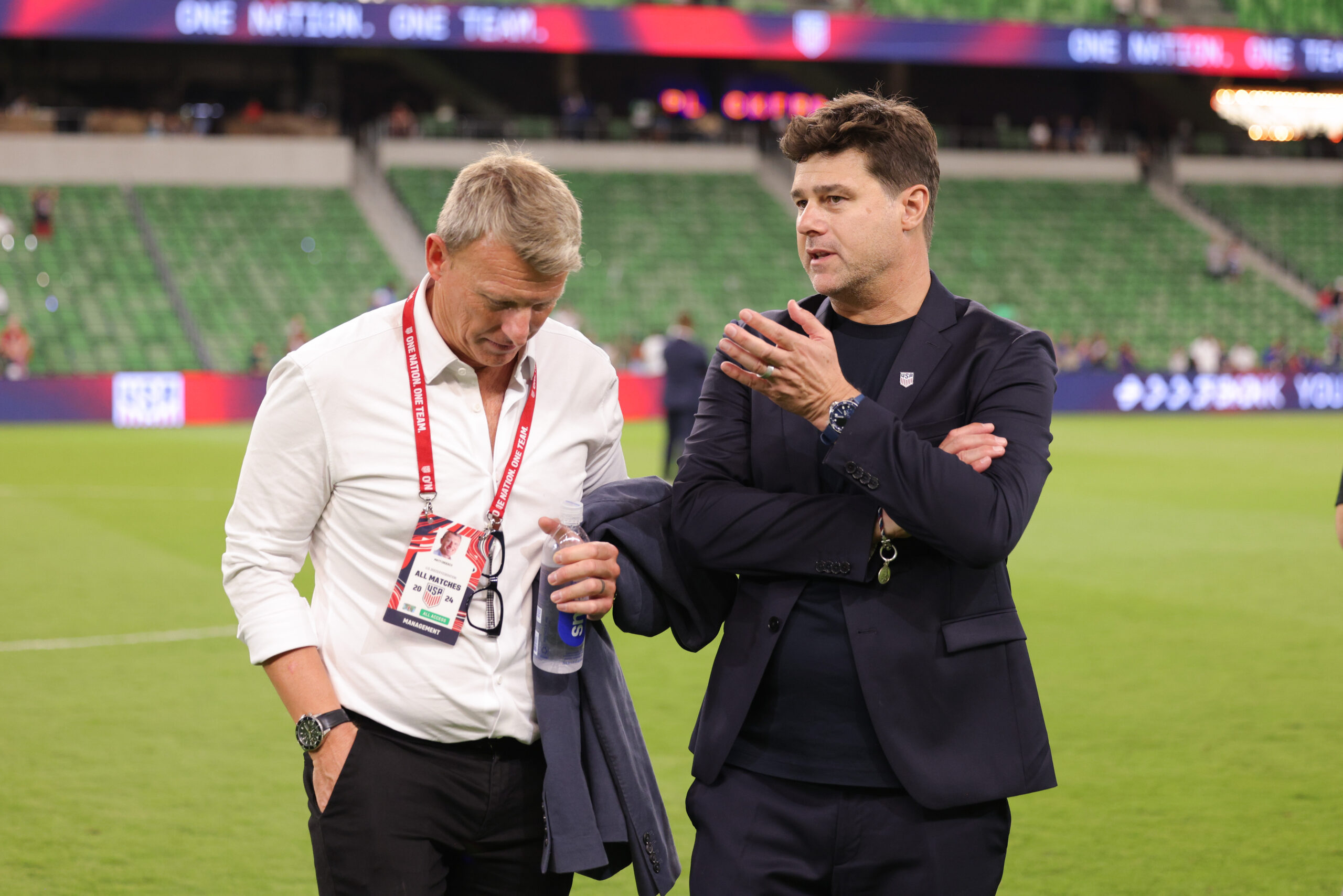
    Matt Crocker (left) in a conversation with U.S. men’s national team manager Mauricio Pochettino.

    “Our job as U.S. Soccer is to educate clubs, coaches, parents on when you are looking for your team next year, don’t automatically bring up the league table of winners and go, ‘I want my son to go there or daughter to go there because they must be the best club,’” he said. “That might not be the right environment for them. We need to start to make sure that we promote and value clubs that do great player development.”

    And he happened to have an example lined up.

    The day before Crocker spoke, he visited the Union’s facilities in Chester. It wasn’t his first time there, but it was his best chance yet to actually see the whole place, from the youth academy on up. He raved about it, just as Pochettino did when he came to town and counted the Union alumni on his squad.

    “You see the culture that exists in that building,” Crocker said. “You see the kids smiling, and they’re in education — this is not even when they’re on the field to play. The education and the soccer go hand in glove, and it’s really just a great environment to see.”

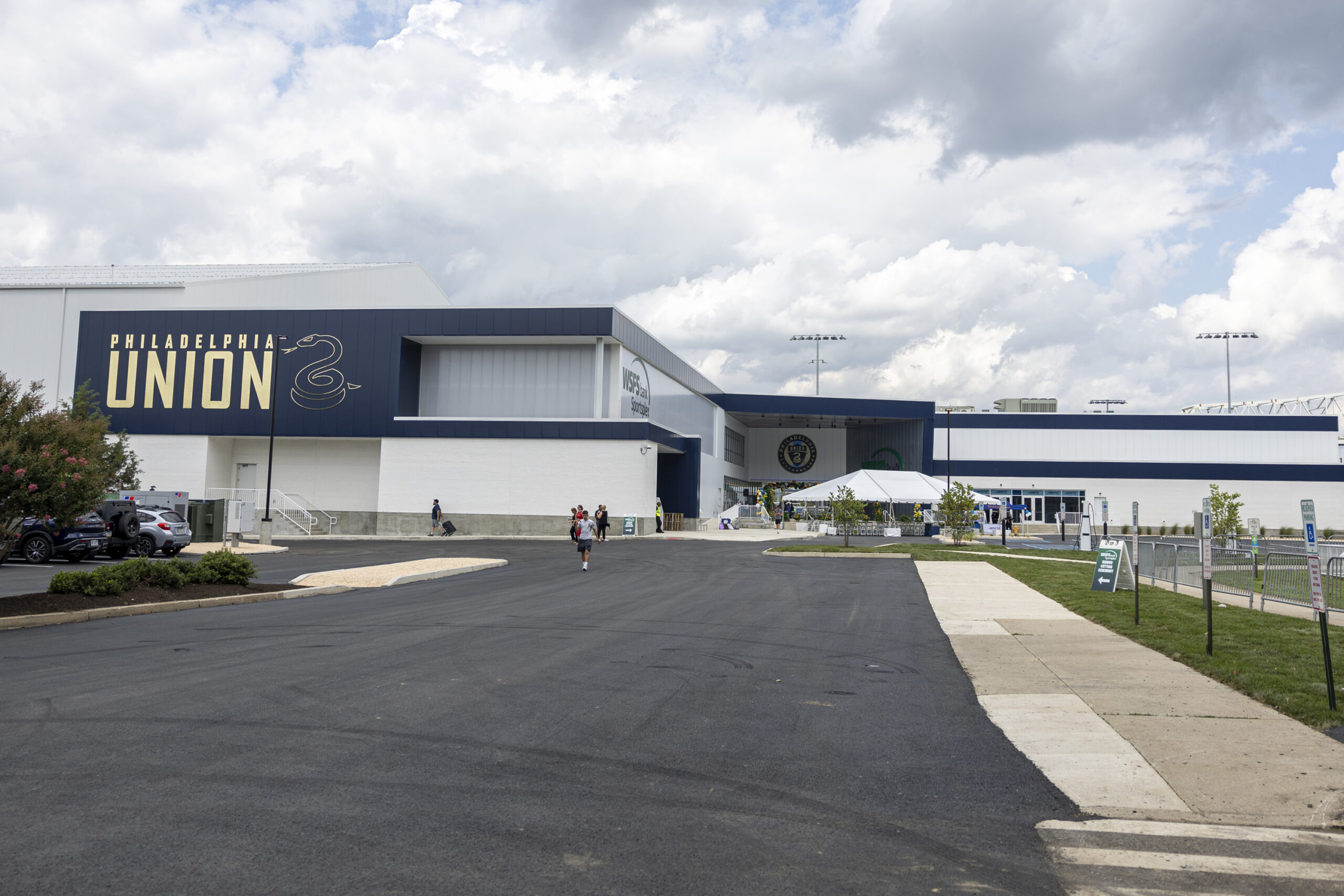
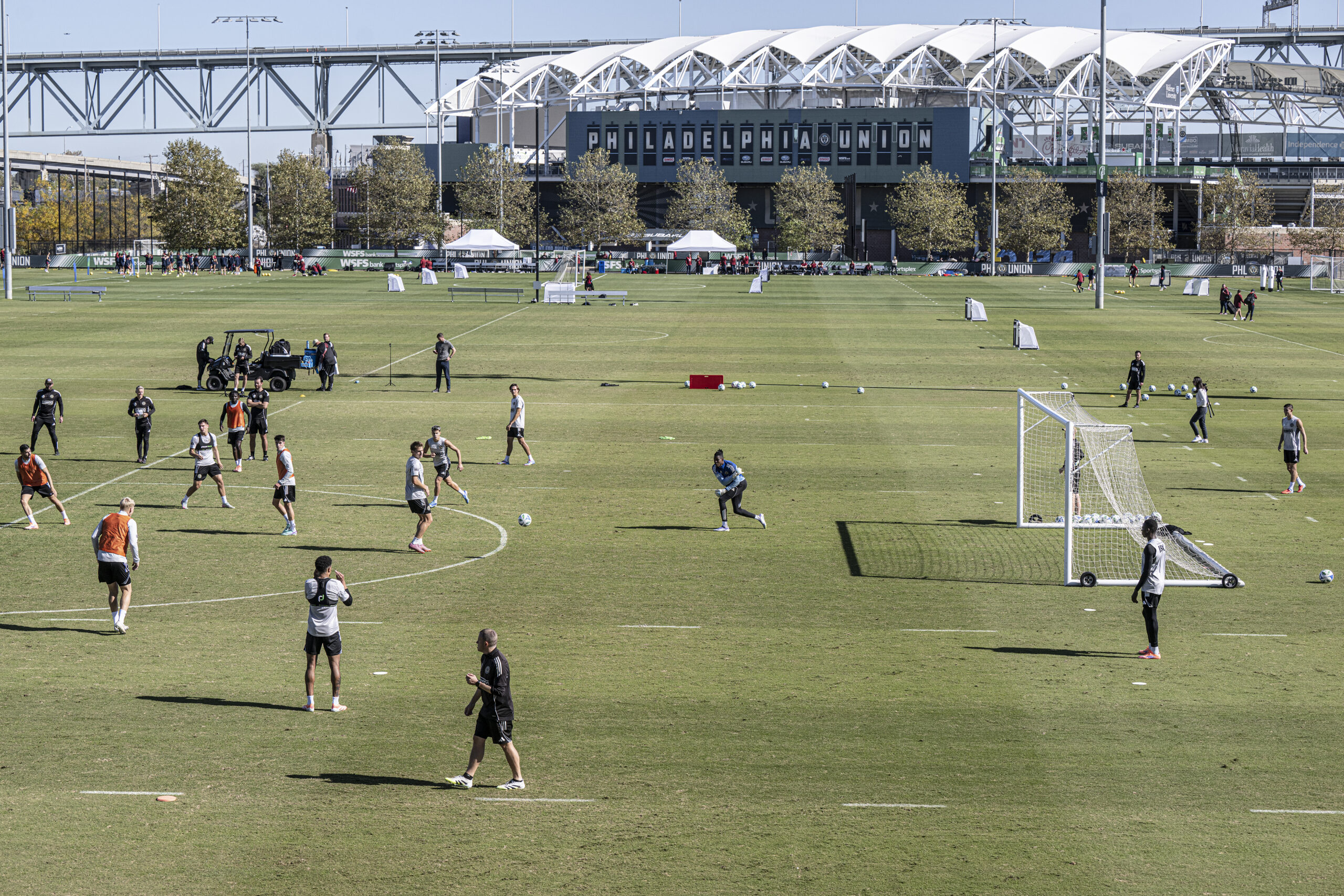
    WSFS Bank Sportsplex in Chester is the site of the Union’s entire operation from its youth academy to senior team.

    Crocker tied all of this together with slides showing how many players in the world’s top 250 and 1,000, based on club success, come from various countries. He hired sports consulting firm Twenty First Group to crunch the numbers for him, and the result was clear.

    In women’s soccer, it’s seven or more in the top 250. From 2016-25, the U.S. averaged 80 players at that level, by far the most; and only England had a higher major-tournament winning percentage. In the top 1,000 players, the U.S. had 180, almost 20% of the total.

    Those teams, the data said, usually win at least 50% of their games in major tournaments, a benchmark “associated with consistently reaching the quarterfinals or later.”

    But reduce to the top 50 players, and the U.S.’ portion has gone down lately.

    “There’s this chasing pack now who are doing more youth development than they’ve ever done before,” Crocker said. “So the challenge in the women’s game is how do we maintain our top 180, but how do we get more players in that top 50?”

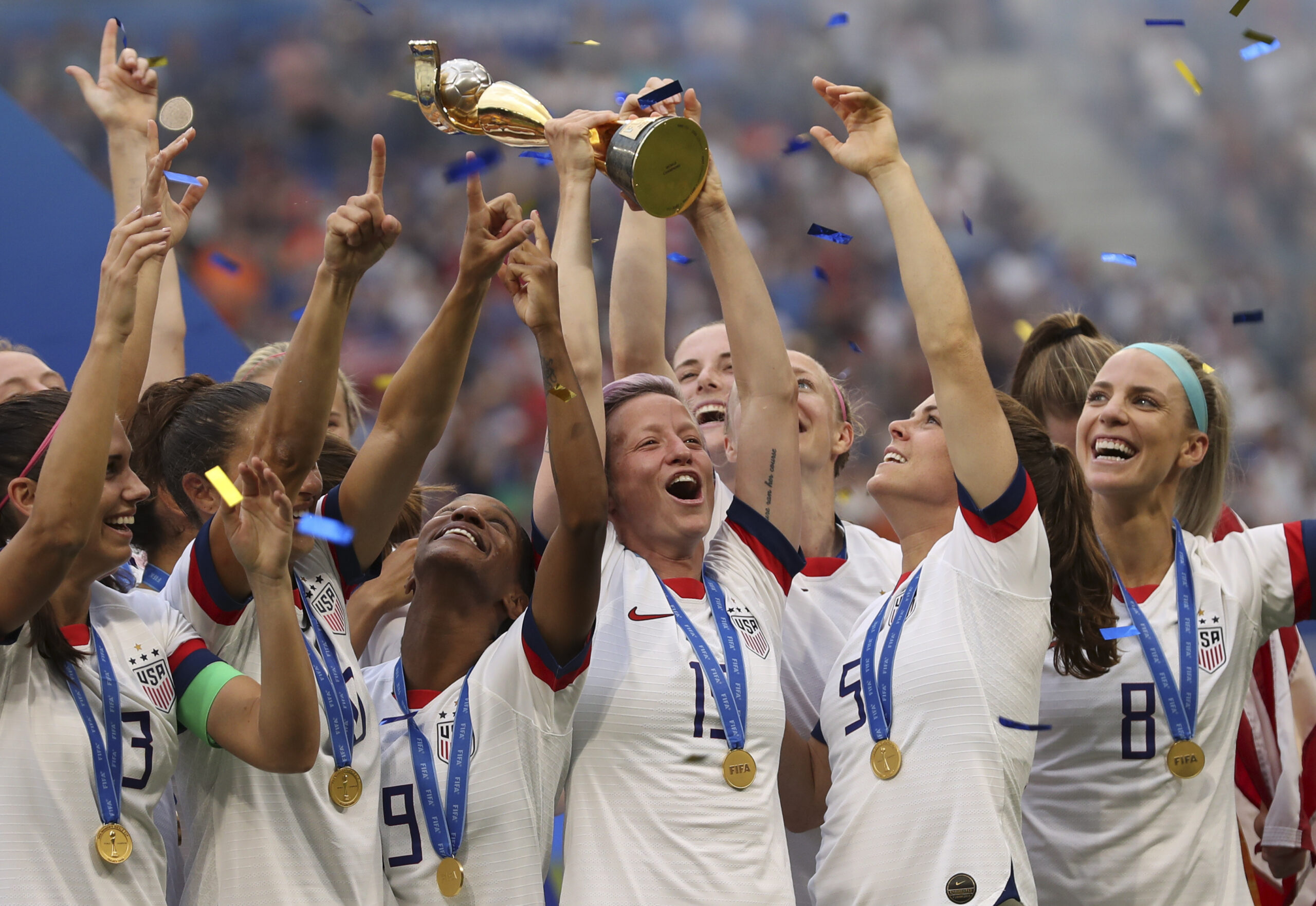
    The U.S. women’s soccer team has long had a much bigger player pipeline than the rest of the world, but that’s starting to change.

    In men’s soccer, the success benchmark hits when a nation has four players in the top 250, or 15 in the top 1000. In the same 2016-25 time period, the U.S.’ average was zero in the top 250 and 5.8 in the top 1,000.

    “Any team can win at any moment,” Crocker said. “But what we’re talking about is consistent, sustained success over many, many years … Clearly this picture doesn’t put us in that situation.”

    His goal is to get to 15 in the top 1,000, the men’s benchmark for a 50% win rate. And he returned to the top 250 to push home the final message.

    It’s no surprise that the top five teams over the 10 years surveyed are Spain, France, Brazil, England, and Germany. But England was far off the pace at the start of the period: 15 players in the top 250 compared to Spain’s 49. Since then, they’ve steadily risen from 18 in 2018 to a table-topping 30. Spain is now second with 26.

    The Twenty First Group researchers don’t think it’s a coincidence that England has reached two European Championship finals and a World Cup semifinal in that time.

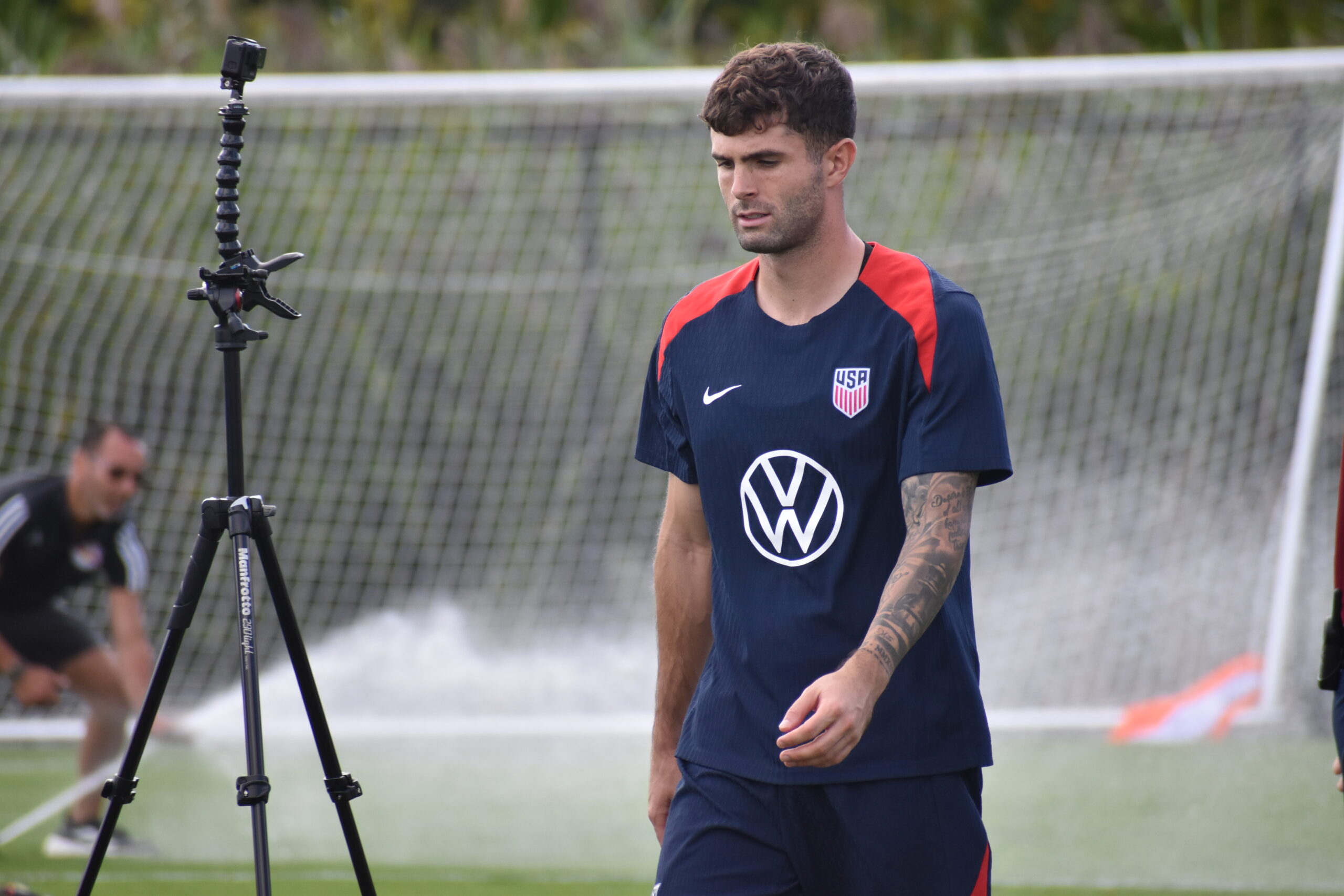
    Christian Pulisic is one of the few American men’s soccer players who is considered truly world-class.

    And was it a coincidence that Crocker was the technical director of England’s Football Association from 2013-20, launching the “England DNA” program for the nation’s youth national teams along the way?

    As he told The Inquirer in December, scaling that program up to a country the size of the United States — in both population and geography — is a gigantic task. But he knows where he wants to get to, and his U.S. Soccer colleagues used the rest of the convention to start to lay out the specifics.

    “Currently, we have a landscape where it’s totally, I think, not ungoverned, but there’s not consistent standards across the whole country or best practices,” Crocker said. “We want to come to you, we want to be clear and concise about: if you want to be a club and you want to operate in this landscape, this is what best practice looks like. And we want to work with you to get to those best practice outcomes, and we are not going to to accept lower standards.”

    The sugar tasted good. So will the right people take the rest of the medicine?

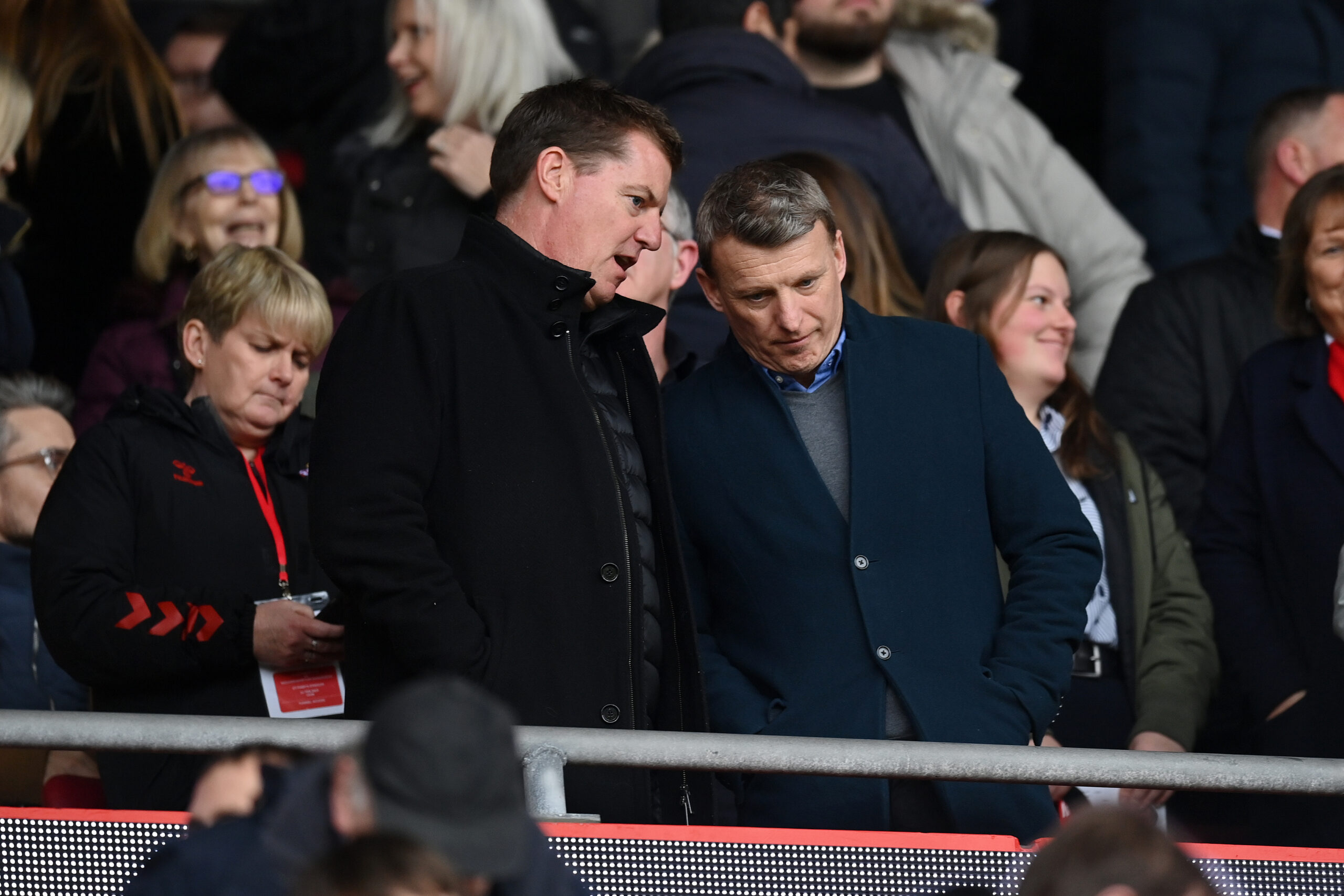
    Matt Crocker (right) worked at England’s Football Association, and at the club level with Southampton.

    “This is not going to be an inspector coming in with a clipboard telling you all the things you’re doing wrong,” Crocker said. “This is U.S. Soccer going [for] health checks coming into your environments: where are you, what do you need, this is what good looks like, this is where you are. How do we work together to solve these things?”

    By the end of the seminar, the crowd hadn’t revolted yet. It remained small, but greeted the end of Crocker’s prepared remarks with applause.

    “You’ll walk away from here today, and you’ll either say that was great, or that was whatever,” he said.

    Visiting a doctor can be that way sometimes.

  • Unrivaled’s Philadelphia spectacle delivers not just a big crowd, but a profitable one

    Unrivaled’s Philadelphia spectacle delivers not just a big crowd, but a profitable one

    We hear often that it’s good to run things in life like a business. It’s said especially loudly about women’s sports, in Philadelphia and elsewhere.

    So let’s do that.

    The 21,490 fans who packed Xfinity Mobile Arena for Friday’s Unrivaled basketball showcase clearly had business on their minds. It was the largest announced attendance in arena history, helped by Unrivaled’s three-on-three court being smaller than regulation, and it was full of wallets.

    They were opened often, to buy T-shirts, hats, hoodies, hot dogs, and all the fancier food and drinks on offer these days.

    The crowd roared for hometown heroes Natasha Cloud and Kahleah Copper, but not just for them. Paige Bueckers, Kelsey Plum, Chelsea Gray, and Marina Mabrey also drew big cheers.

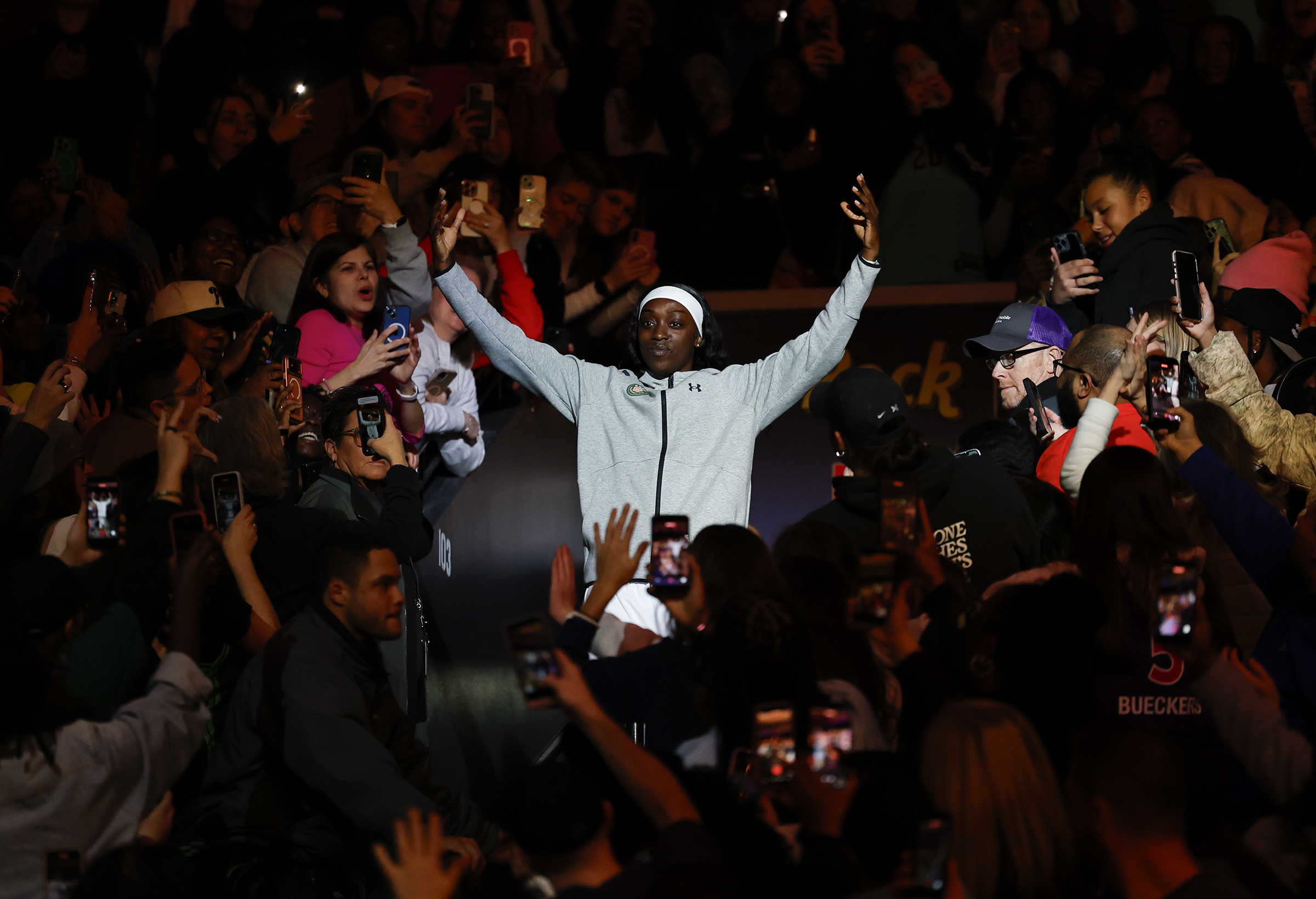
    Kahleah Copper during player introductions before the Rose game against the Lunar Owls in Game 2 of the Philly is Unrivaled doubleheader on Friday.

    “I think it was awesome to see them come out and support us like that,” Mabrey said after scoring an Unrivaled game record 47 points in the Lunar Owls’ 85-75 win over Rose. “I don’t know what I expected, but I didn’t realize it was going to be so much hype around it and so much support.”

    There was celebrity wattage from Wanda Sykes, Leslie Jones, Freeway, and Jason and Kylie Kelce. Dawn Staley was in the front row, of course. The 76ers’ Tyrese Maxey, Kyle Lowry, Andre Drummond, Trendon Watford, and Dominick Barlow had courtside seats too.

    They all helped answer a question that’s been simmering in town for a while.

    At any business school, they’ll teach you that the most fundamental rule of economics is supply and demand. But how can you prove there’s demand when there’s no supply in the first place?

    One way, for sure, is to not try in the first place. That was the case with women’s basketball in Philadelphia for 28 years, the time between the end of the Philadelphia Rage in 1998 and now. It’s mostly been the case with women’s soccer since the Independence folded in 2011, though at least the U.S. national team visits every few years.

    Yet Philadelphia has now set two women’s sports attendance records in recent years. In 2019, Lincoln Financial Field hosted 49,504 fans for a U.S. women’s soccer game, and that’s still the largest crowd for a standalone home friendly. On Friday, the arena across 11th Street hosted the largest crowd to watch a regular-season professional women’s basketball game.

    Another path to travel invokes another rule of economics. In a free market, shouldn’t someone be able try something? If they fail, so be it, and if they succeed, they profit.

    The people who brought Unrivaled here, and those who will bring a WNBA team here in 2030, chose the second road.

    ‘It wasn’t a charity event’

    On the day in October when Unrivaled announced it would come here, Comcast Spectacor chief financial officer Blair Listino watched her phone light up with notifications of ticket sales.

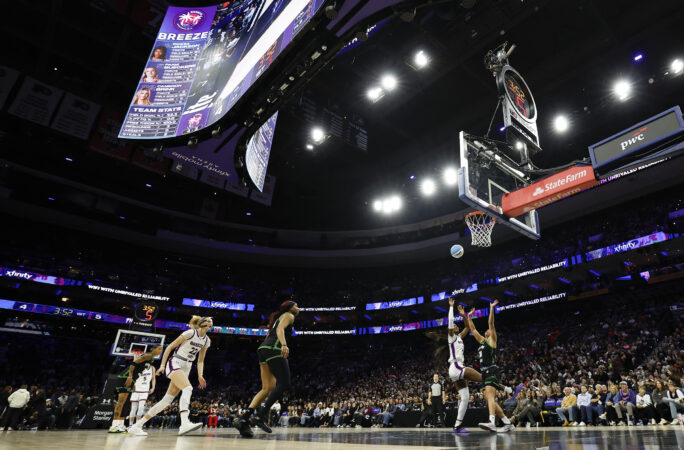
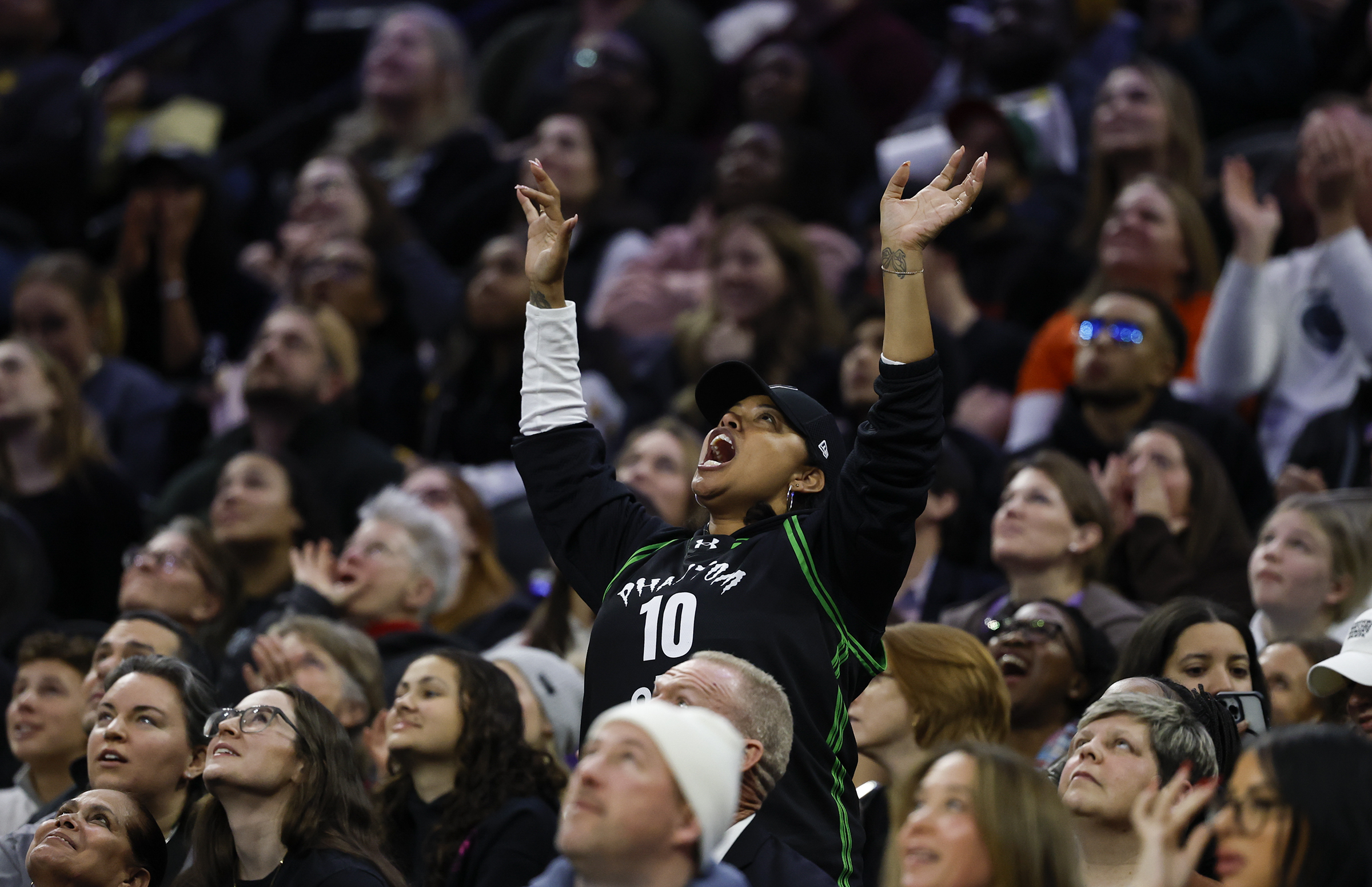
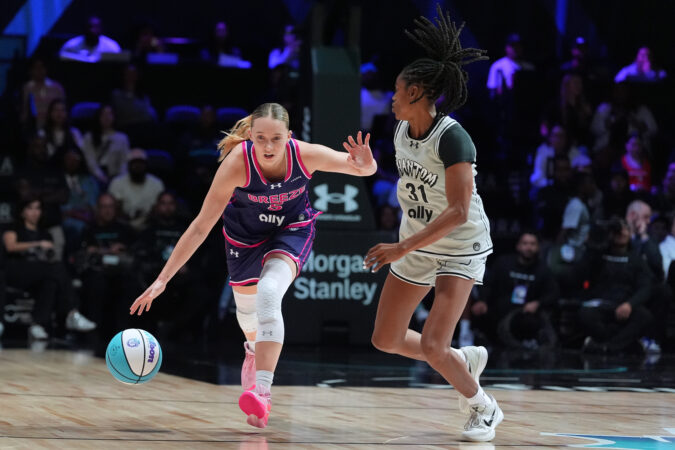
    A Phantom fan cheers the team during its game against Breeze.

    “While we were sitting there waiting for the [announcement] event to happen,” she told The Inquirer, “7,000 tickets were sold within the first few hours of the event being on sale. So right then and there, I knew, ‘OK, there is demand.’”

    Listino also is an alternate governor of the Flyers. She was the team’s CFO from 2019 to 2023 and has worked for Comcast in a range of finance-related capacities since 2011. So she has plenty of experience with measuring what Philadelphia sports fans want — and with making hard business deals.

    “We worked with Unrivaled management, and we treated it like any other event,” she said. “It wasn’t a charity event; we didn’t give them a sweetheart deal. It was a true rental agreement where we said, ‘We believe in you, we think that you’ll be able to sell out this building, and we’ll all be profitable from it.’”

    That made it, she said, “good business sense for both us and Unrivaled.”

    Philadelphia welcomes Paige Bueckers to the floor:

    [image or embed]

    — Jonathan Tannenwald (@jtannenwald.bsky.social) January 30, 2026 at 7:26 PM

    It was not just based on Jen Leary, the founder of Watch Party PHL, holding events and selling out of “Philly Is A Women’s Sports Town” T-shirts for over a year. Or Chivonn Anderson opening Marsha’s, a women’s sports bar on South Street. Or any number of people on social media, or in this reporter’s inbox, or so on.

    No, this was Philadelphia’s biggest company believing that women’s sports can be profitable in its city. And now there’s proof.

    Along with that, an Unrivaled spokesperson told The Inquirer on Saturday that the night delivered $2 million in revenue to the league, including over $1 million in ticket sales and $400,000 in merchandise sales at the arena.

    “I think when choosing a market that doesn’t necessarily have a team, but there’s demand, you take a leap of faith into your decision,” said Cloud, whose Phantom beat Breeze, 71-68. “And Unrivaled chose the right city, the right sports town, and the right fan base.”

    The crowd returned the favor many times over Friday, bringing the Broomall native to tears in a postgame interview on court.

    ‘Something to look forward to’

    “You just give us the opportunity to actually do it,” North Philadelphia’s Copper said. She recalled playing a WNBA preseason game in Toronto with the Chicago Sky in 2023 in front of a sellout crowd at the city’s NBA arena. That moment lit a spark that led to the Toronto Tempo, an expansion team that will tip off this year.

    “How they were able to kind of lead up and have that build up, I think it’s kind of the same,” she said. “And I think the city has been wanting it. So this is a good introduction, and we’ll give them something to look forward to.”

    It’s not just the local products who’ve felt that. Players from elsewhere who are used to big crowds at their games were excited to be part of a first here.

    “Kudos to Alex [Bazzell], our president, and the whole league having ‘Tash’ and ‘Kah’ be spokespersons for this amazing city,” said Breeze’s Cameron Brink, who played collegiately for Stanford and is now with the WNBA’s Los Angeles Sparks. “Kah has done so much for women’s basketball in this city and the resources that are now available. I’m just proud that we saw that this is a city that wants to cheer on women’s basketball — so hopefully there’s more of it in the future.”

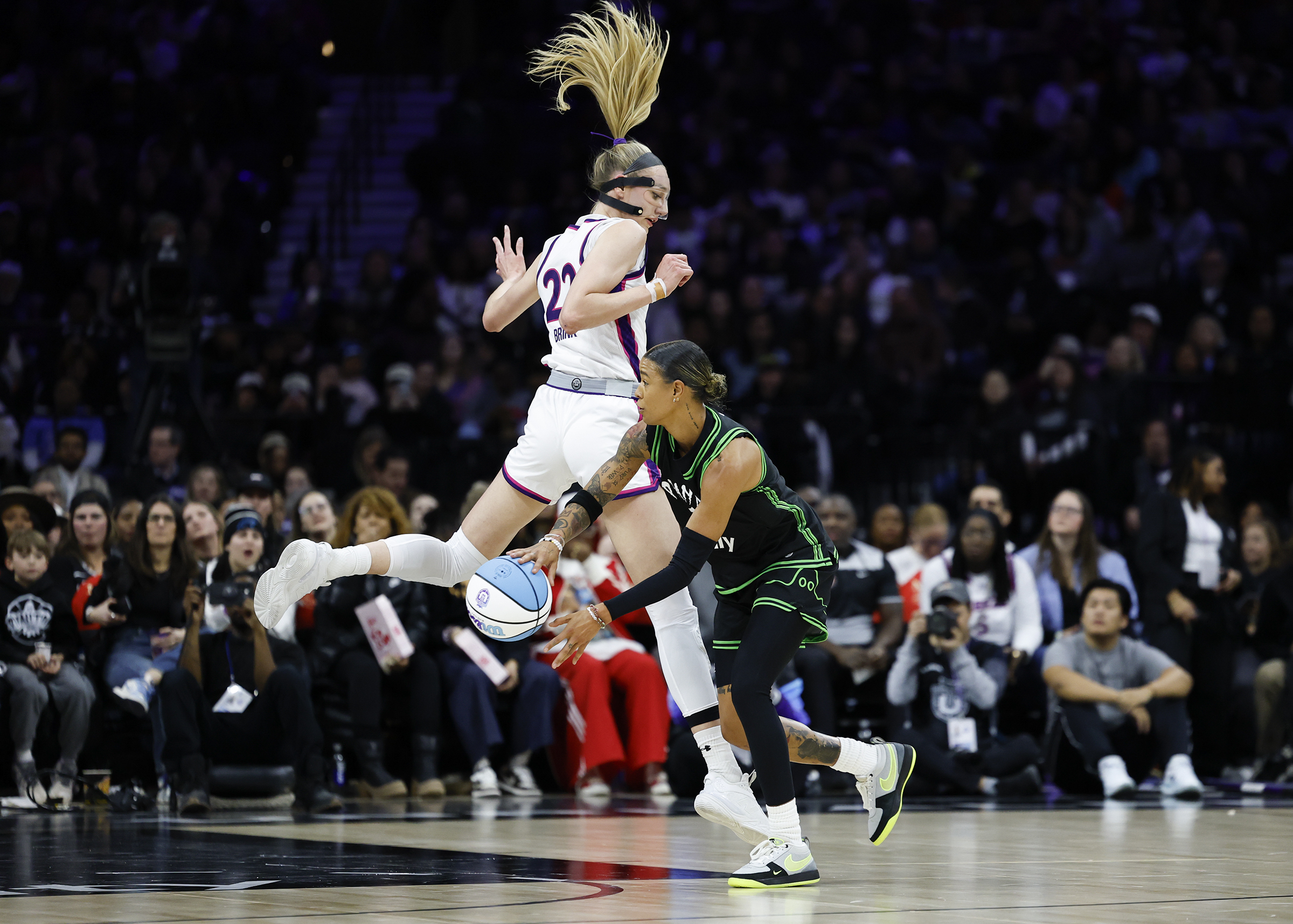
    Cameron Brink leaps past Natasha Cloud (right) during the first quarter of the Breeze-Phantom game.

    Brink grew up in Princeton, N.J., and her parents played college basketball at Virginia Tech. She moved to the Portland, Ore., suburbs at age 8, but heard plenty of stories from her mother, Michelle, about the East Coast.

    “I was talking with her the other day — she’s like, ‘I honestly can’t believe women’s basketball has gotten to this point,’” Brink said. “I mean, we’ve always believed, but it’s really special that we get to soak in this moment. So I just think back to the women before me, and I’m just thankful for how they paved the way.”

    Kate Martin of Unrivaled’s Breeze has played for Iowa and the WNBA’s Golden State Valkyries, both of which draw huge crowds to every game. She knew Philadelphia doesn’t have that track record, so she was excited to be part of a first.

    “I think it’s really important for young girls to be able to see people that they want to be like,” Martin said. “I think it’s important for them to be able to see if they want to be a women’s basketball player, to see that in their city, and be able to have access to going to a game.”

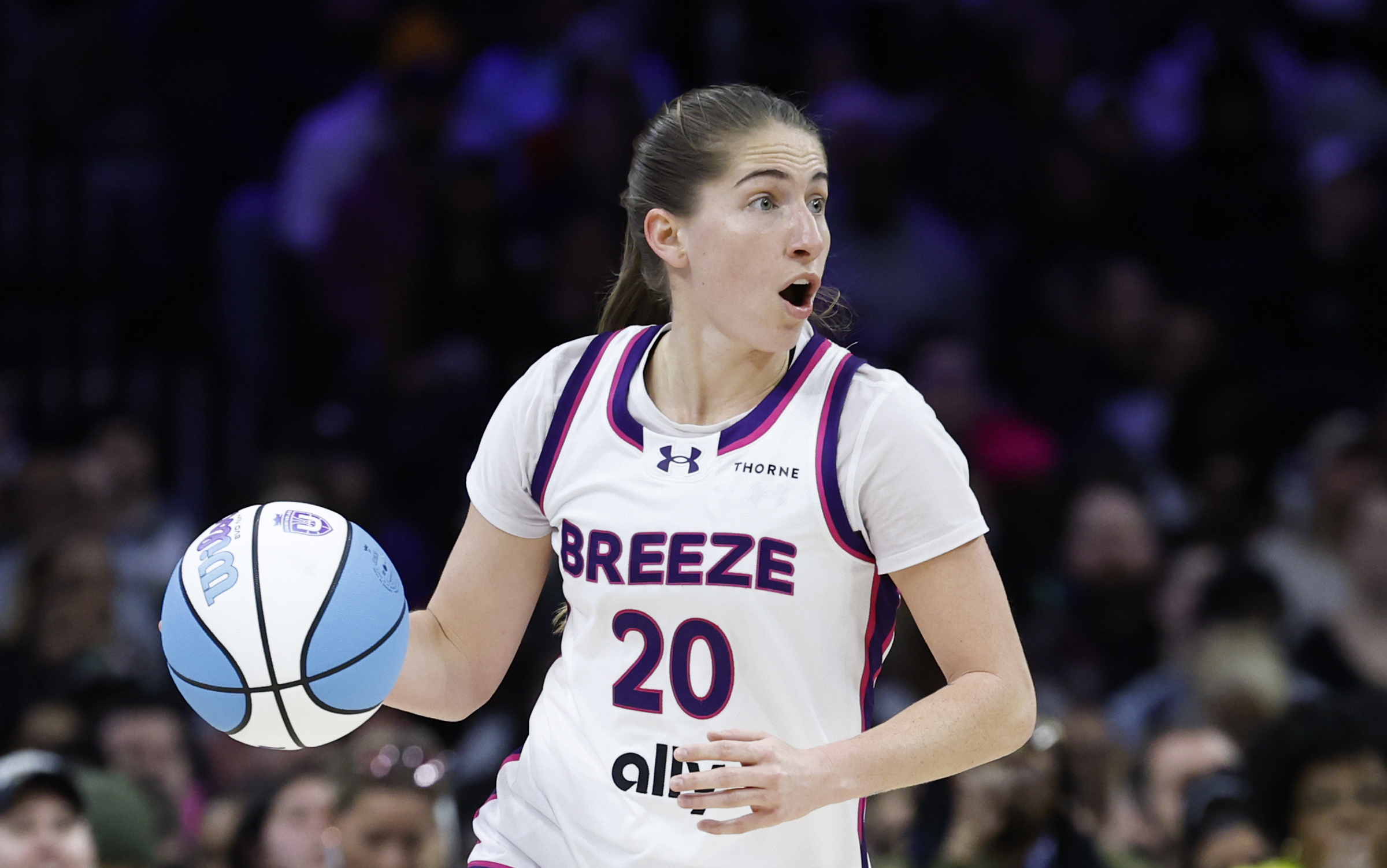
    Kate Martin in action Friday.

    Friday’s spectacle undoubtedly will push Unrivaled to take more of its games on the road next season, and they may well come back here. There might not be another full house with the novelty factor gone, and one night in 2026 doesn’t mean the future WNBA team will sell out all of its games years later.

    Nor does it mean that what’s true today was true in past years, when Cloud and Copper weren’t yet big names.

    But it does mean there’s demand for a product right now, and that it can make money right now. Philadelphia finally got an opportunity, and took it.

  • Mauricio Pochettino isn’t thinking yet about all the details of his USMNT World Cup roster

    Mauricio Pochettino isn’t thinking yet about all the details of his USMNT World Cup roster

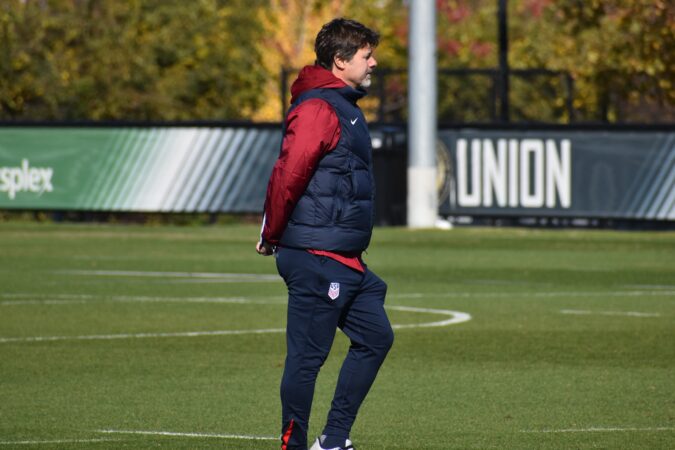
    In a few months, U.S. men’s soccer team manager Mauricio Pochettino will have to make some of the toughest choices he has ever made in his decorated coaching career.

    It will be hard enough to pick the 26-player squad for a World Cup on home soil. But it be will just as vital to decide how many players he’ll take at each position: centerback, outside back, the many kinds of midfielders, and forwards.

    His life will be made a little easier by the number of goalkeepers being set by rule at three. But all those other choices will cause plenty of headaches, and debates among U.S. fans.

    “It’s difficult to now tell you if we are going to bring a number of centerbacks or fullbacks or strikers or midfielders,” he said in a news conference Thursday in Miami. “The way that we build the roster, it’s always about having the possibility to be very flexible, to have the possibility also to change during the game.”

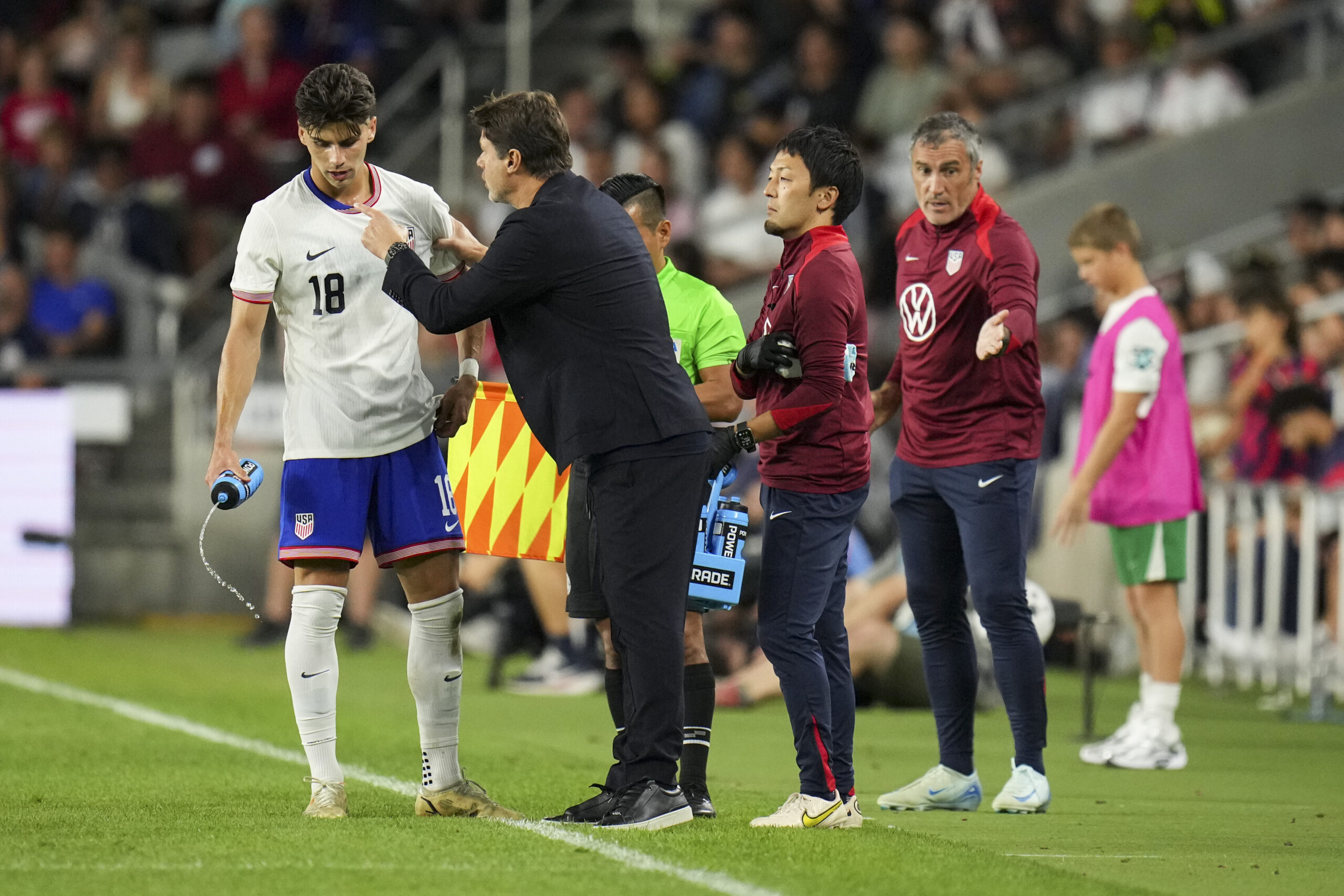
    Mauricio Pochettino giving advice to outside back Max Arfsten (left) during a game last September.

    Pochettino alluded to the big tactical change he installed in the fall, switching from the program’s longtime 4-3-3 setup to a 3-4-2-1. The switch sparked the team’s five-game unbeaten run to end 2025, but it also posed new questions.

    The biggest arguably is at centerback. That position can have a big effect on the overall balance because it changes the outside backs’ playing style and takes a midfielder off the field.

    Pochettino didn’t address centerback directly, for the reason he noted above. But he did acknowledge that “if we want to play with fullbacks that go forward, we bring more forwards and less wingers.”

    The injury list will also matter a lot, of course.

    “Until we really know the possibilities of the players that we are going to have available, it’s impossible to say if we are going to bring more or less” at any given position, Pochettino said. “It’s a domino effect that if something changes, [it] sometimes affects another.”

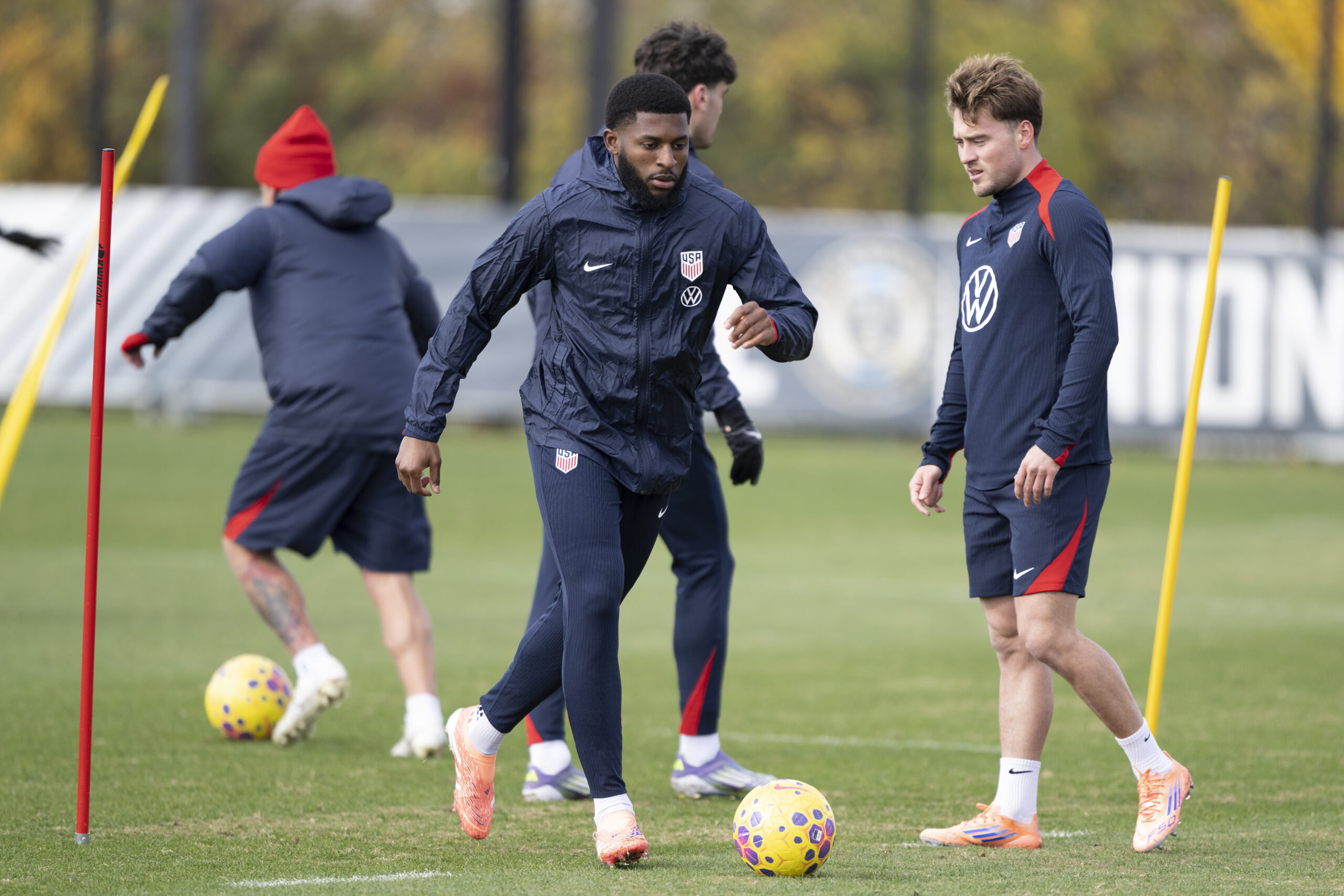
    Union alum Mark McKenzie (center) is a leading candidate to be one of the centerbacks on the U.S. World Cup team.

    He summed it up like this: “I think the combination is always going to be to first have the players available, and then [address] how we are going to approach, in the tactical way, the games.”

    Winter transfers could have an impact

    It would be natural for fans to expect the March squad, which will play star-studded Belgium and Portugal in Atlanta, to be a preview of the World Cup roster — not that it has to be all 26, but at least be on the way there.

    Pochettino indicated he would like to think that way, too, but players’ health comes first.

    “It’s true that now we are close to the World Cup, and it’s true that it’s going to be difficult to bring some new players because I think we don’t have time,” he said.

    “But, already, we had time to assess all the players, more than 70 players that we saw during one year and a half — I think we have a very good idea. Now it’s about to wish that our players will be fit and will be in very good form for us to select the right players to try to compete in our best way.”

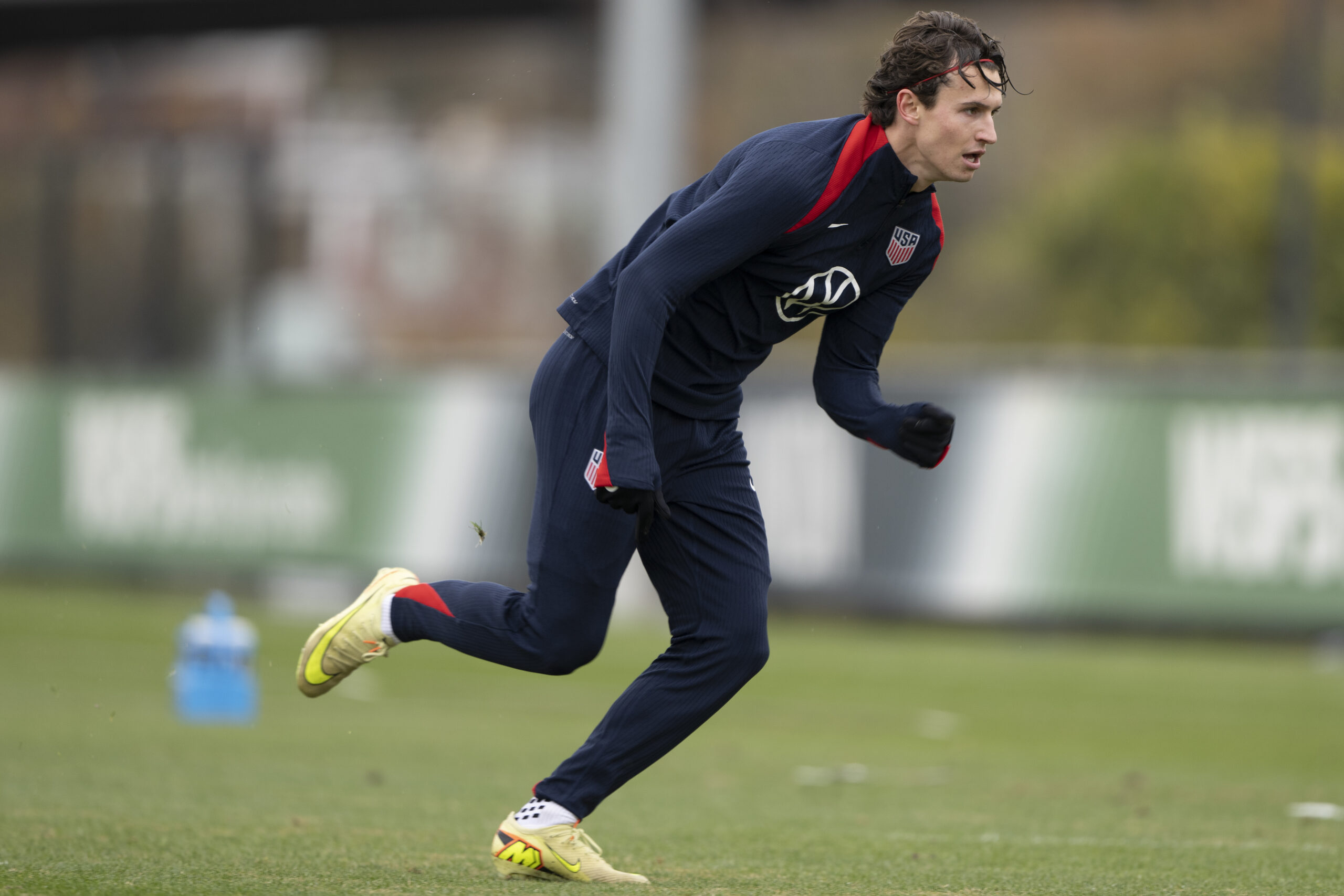
    Medford’s Brenden Aaronson has raised his World Cup stock recently with strong performances for Leeds United in the English Premier League.

    Right back Alex Freeman could have a lot at stake in March. The 21-year-old son of former Eagles wide receiver Antonio Freeman made a $4 million move to Spain’s Villarreal on Thursday. Villarreal currently is fourth in La Liga and was just eliminated from the Champions League.

    It’s a big bet for Freeman to make on himself so close to the tournament. Pochettino said the player asked for advice on the move, and the manager gladly gave some.

    “I said, ‘You need to be very natural and take what you believe is the best option for you, for your family, and, of course, for your people that advise you,’” Pochettino said.

    “For sure, always for me, it’s important that the player feels happy, feels comfortable, [but does] not to want to be in a comfort zone. This type of thing that happens is because they want to improve, they want to grow, and I think it’s an amazing challenge that we need to support and help,” Pochettino said.

    Ricardo Pepi might be the next major American to change clubs. English Premier League club Fulham wants to buy the 23-year-old striker from the Netherlands’ PSV Eindhoven and has upped the ante to $38 million to try to seal a deal this winter.

    Ricardo Pepi could soon join English Premier League club Fulham for a big transfer fee.

    That’s an even bigger gamble. Any striker needs to be playing and scoring regularly to secure a place on the U.S. depth chart, but Pepi was one of the closest cuts to miss the 2022 World Cup.

    Still, Pochettino backed the move.

    “When you change, it’s because you are convinced that you’re going to be in a better place than the place that you are, no?” he said. “And I think that is why always I am very optimistic, I’m very positive on all the moves.”

    Criticizing one of his own

    Pochettino was asked about Tim Weah’s recent remarks to French newspaper Le Dauphiné Liberé that ticket prices for this summer’s World Cup are “too expensive.”

    Tim Weah on the ball during a U.S. game last October.

    “Football should still be enjoyed by everyone,” said Weah, who plays for Marseille. “This World Cup will be good, but it will be more of a show. … I am just a bit disappointed by the ticket prices. Lots of real fans will miss matches.”

    Pochettino’s response got fans’ attention, too.

    “First of all, I think players need to talk on the pitch playing football,” he said. “It’s not his duty to evaluate the price of the ticket. And then also, my job, my duty, is to prepare the U.S. men’s national team in the best way to perform. We are no politician, we are sports people, that only we can talk about our job.”

    The prices were set by FIFA, world soccer’s governing body, and not by U.S. Soccer, which proposed considerably lower prices in its bid book.

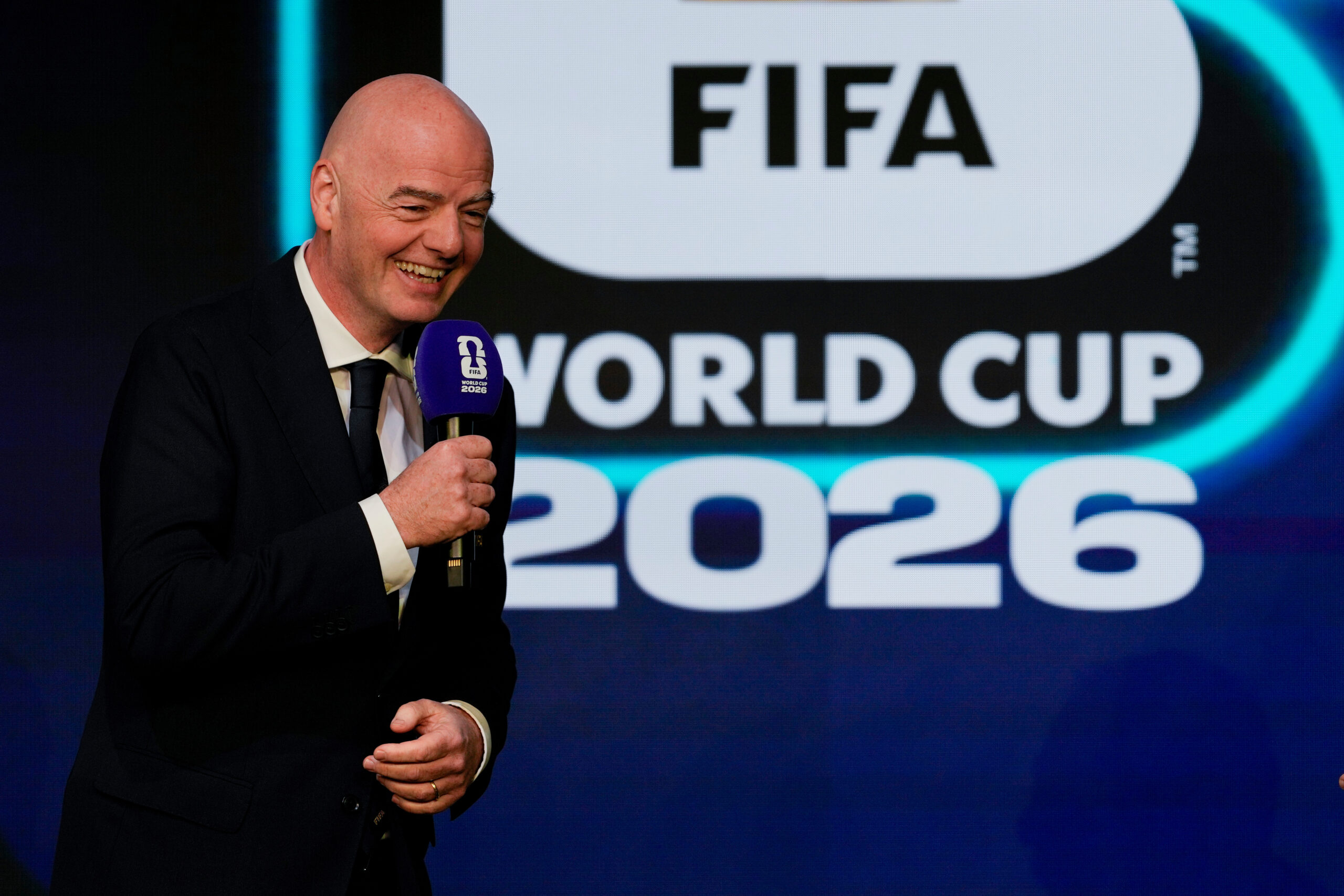
    FIFA president Gianni Infantino has drawn criticism from fans worldwide over the World Cup’s high ticket prices.

    “I think if FIFA does something or takes some decision, they know why, and it’s their responsibility to explain why, but it’s not to us to provide our opinion, our responsibility is to perform,” Pochettino said, coincidentally sitting in FIFA’s Miami offices.

    “The person that is in charge of the federation, maybe he can give his opinion, but I am the head coach of the [U.S.] federation. And I think we have the organization that is over us, FIFA, that is doing an amazing job around the world, uniting people, because I think FIFA unites people.”

    He added that “the media need to ask directly [to] FIFA, and for sure you are going to receive a very good answer.”

  • Basketball star Paige Bueckers is not afraid to use the platform her fame has given her

    Basketball star Paige Bueckers is not afraid to use the platform her fame has given her

    Paige Bueckers has lived in a big spotlight since her senior year of high school. It, understandably, hasn’t always been easy, but she is pretty comfortable with it these days.

    She also is comfortable using her fame as a platform, and she has done so again.

    The 24-year-old grew up in Hopkins, Minn., about 10 miles southwest of downtown Minneapolis. Immigration and Customs Enforcement’s recent swarming of the Twin Cities, from raiding homes and business to the killings by ICE officers of Renee Nicole Good and Alex Pretti, hit especially close to home for her.

    On Friday night, Bueckers will be in another big spotlight, in a city that has paid much attention to ICE’s actions. The Unrivaled basketball showcase will have a sellout crowd at Xfinity Mobile Arena and another national TV audience watching from home.

    “Innocent lives are being taken; innocent families are being broken apart,” Bueckers said Thursday amid the four touring teams’ practices at the Alan Horwitz Sixth Man Center. “People are afraid to send their children to school, people are afraid to go to work and provide for their family, people are afraid to go to the grocery store. What’s going on is not OK, and at some point — we feel like, and we hope and we pray, that there’s a change in direction in where this is heading.”

    All of Unrivaled’s games this season except Friday’s are played in Medley, Fla., just outside Miami, with the season running from early January to early March. That has kept Bueckers away from participating in protests at home, which she said she would do if she could.

    “I’m very proud to be from Minnesota, and to see the community come together and show strength and unity and try to do everything possible to stay together through this really tough time,” she said. “That’s kind of what Minnesota is all about. So it’s tough, just being from there and not being able to go there and help and [have] feet on land, but you try to do everything from afar to support.”

    In the meantime, Bueckers has put her money where her mouth is.

    Paige Bueckers getting some shots up:

    [image or embed]

    — Jonathan Tannenwald (@jtannenwald.bsky.social) January 29, 2026 at 11:37 AM

    At the start of the week, she won Unrivaled’s $50,000 prize for having the best free-throw shooting percentage through the three-on-three league’s first five games of this season. Soon after that, she put the same sum on the table as a donation match to the Hopkins Strong Relief Fund.

    The fund describes itself as “an ongoing drive to help feed Hopkins children and meet other urgent needs during this time of heightened stress and uncertainty in our community.”

    ‘We have this platform to say things’

    Bueckers, who also plays for the WNBA’s Dallas Wings, spoke resolutely about the importance of leveraging her fame.

    “I feel like I’ve been very blessed and fortunate,” she said, “and God has given me this platform to speak out on things that are important to me and use my platform for good. And whether that be donations or just speaking out or standing up for what I think is right, I think that’s very important.”

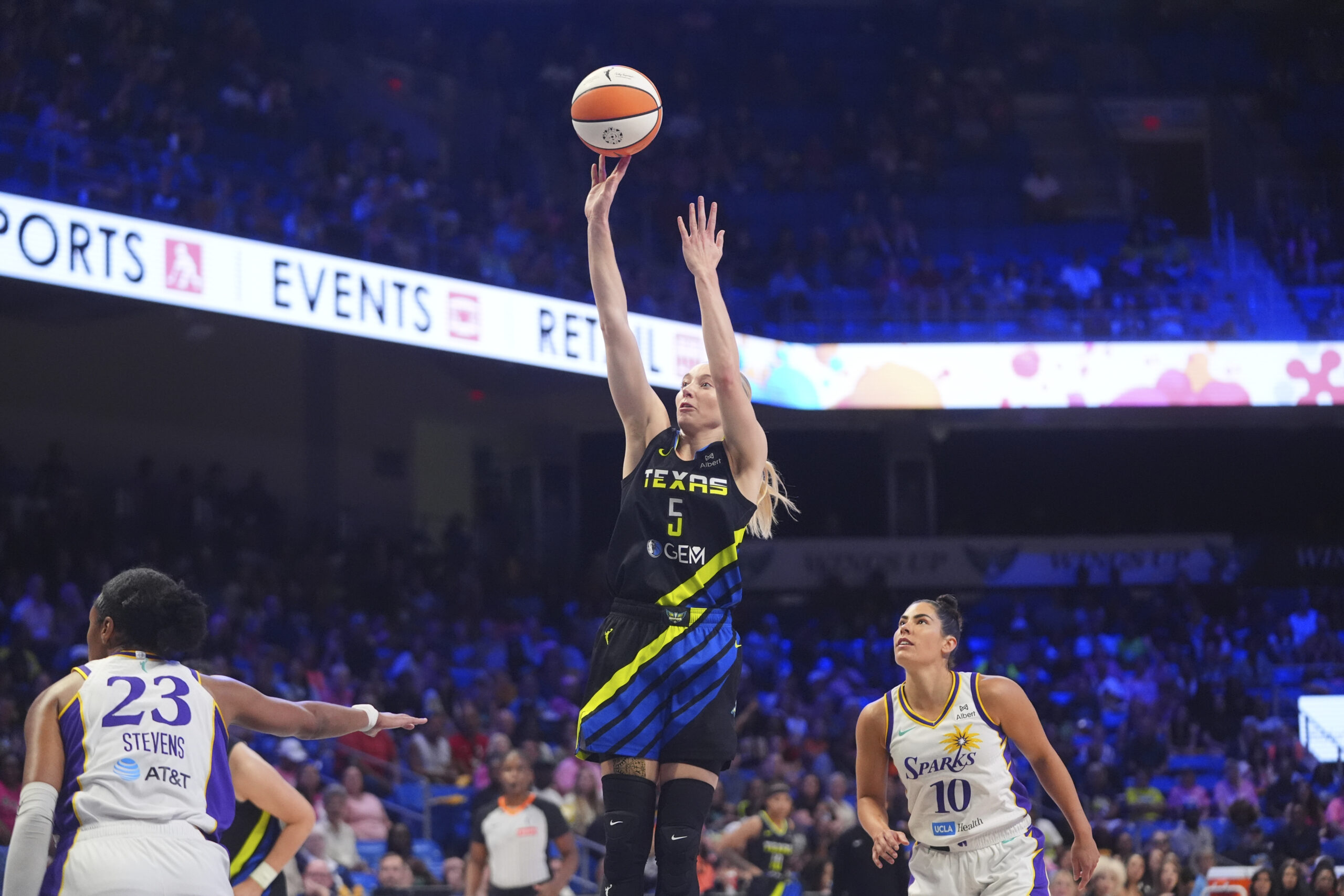
    Paige Bueckers (5) in action with the Dallas Wings last year.

    She also was ready for a response she has seen often across society.

    “As athletes, it can be so easy for people to say, ‘Just play your sport. Don’t worry about politics; don’t worry about all of life’s issues,’” Bueckers said. “But I think as somebody who’s in the entertainment business, and we get this platform, and we have this platform to say things, I think it’s important for us to use our voice and stand up for what we believe in.”

    Fellow superstar Breanna Stewart of Mist BC and the New York Liberty made a major statement Sunday when she held up a handwritten “ABOLISH ICE” sign during that day’s player introductions.

    “All day yesterday, I was just disgusted from everything that you see on Instagram and in the news,” Stewart said afterward. “Everyone here [at Unrivaled] is feeling that way, one way or another. … We’re so fueled by hate right now instead of love, so I wanted to have a simple message of ‘ABOLISH ICE,’ which means having policies to uplift families and communities instead of fueling fear and violence.”

    Another Minnesota native playing in Unrivaled, the Lunar Owls’ Rachel Banham, added her voice on Thursday.

    “There’s a lot of things that need to, on a deeper level, be fixed, right?” said Banham, who also plays for the Chicago Sky. “I think the biggest thing that we can control — I mean, obviously, use your voice, continue to pray, continue to be there for people who need it. Lend a helping hand, if you can, because a lot of us have that privilege to be able to do that.”

    She also acknowledged the scale of the current task.

    “It’s going to be something that’s going to be [from] higher up, right?” Banham said of finding a solution. “It’s come from the top, government-wise.”

    Bueckers did not say whether she’ll do something specific at Friday’s games. But she praised the WNBA’s tradition of player activism for “having always inspired me in that way.” She also spoke of her own history having “grown up, and I’ve seen, and I’ve been a part of, peaceful marches and protests and the community coming together just because of tragic events.”

    She added that the Unrivaled player group has “talked about” doing something collectively, and “we want to do something to stand up for [it].”

  • Bradley Carnell opens up about what drives him and his tactics as Union manager

    Bradley Carnell opens up about what drives him and his tactics as Union manager

    Bradley Carnell can be pretty reserved in public. It’s not that he doesn’t like being on camera, but you aren’t always going to get too much from him in a news conference.

    At the United Soccer Coaches convention a few weeks ago, the Union’s manager got a different opportunity. It was his first time at the longstanding event, and he spent an hour on stage talking about his coaching methods.

    Carnell’s journey has taken him a lot of places. The Johannesburg, South Africa, native turned pro at age 16 in his home country, then at 21 moved to the first of four clubs he played for in Germany. He played 40 times for the Bafana Bafana, including at the World Cup in 2002.

    After hanging up his cleats in 2011, Carnell started his coaching career at the University of Johannesburg. From there, he had two assistant jobs with South African pro clubs, then moved to the U.S. in 2017 to join the New York Red Bulls’ staff. He’s been in this country ever since, and the Union are his third coaching stop in MLS.

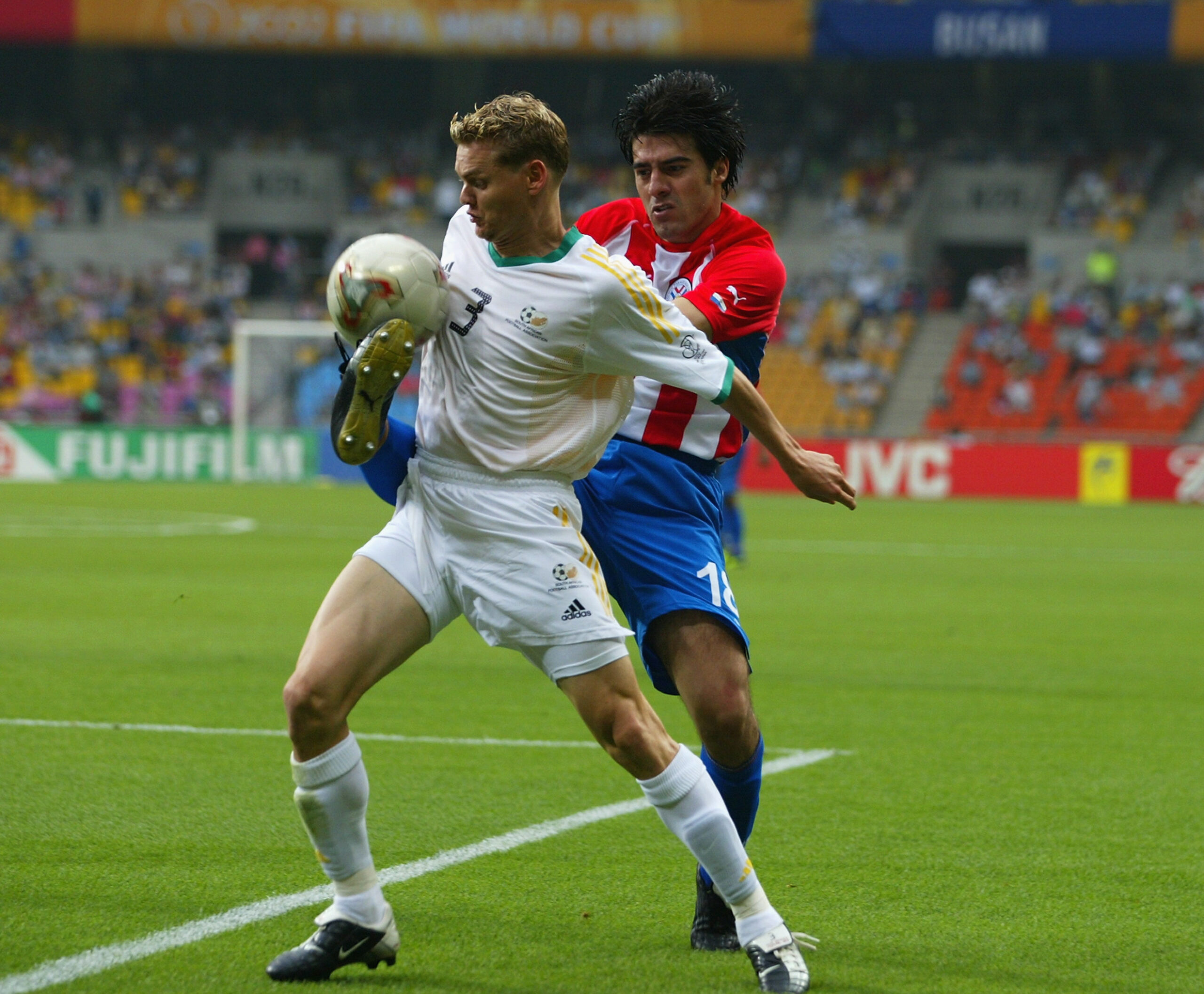
    Bradley Carnell (left) playing for South Africa against Paraguay in the 2002 World Cup.

    What has stayed constant over the years? One thing is how he sees the sport.

    Überzeugungstäter,” he said, a word learned while living in Germany. “A perpetrator. I’m a criminal of the game model that I’m presenting today.”

    This produced some amused looks, and not just because of the multiple languages involved. Carnell was not surprised.

    “I believe in it so much, and this is who I am,” he said. “Not because I’ve learned the game that way. It’s just because I live my life in a certain way.”
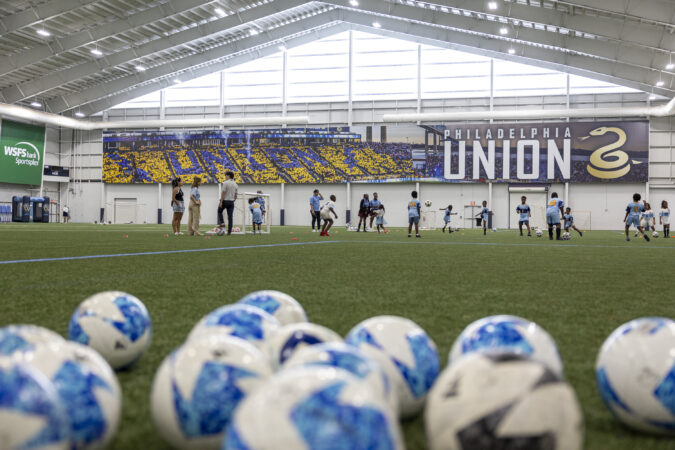
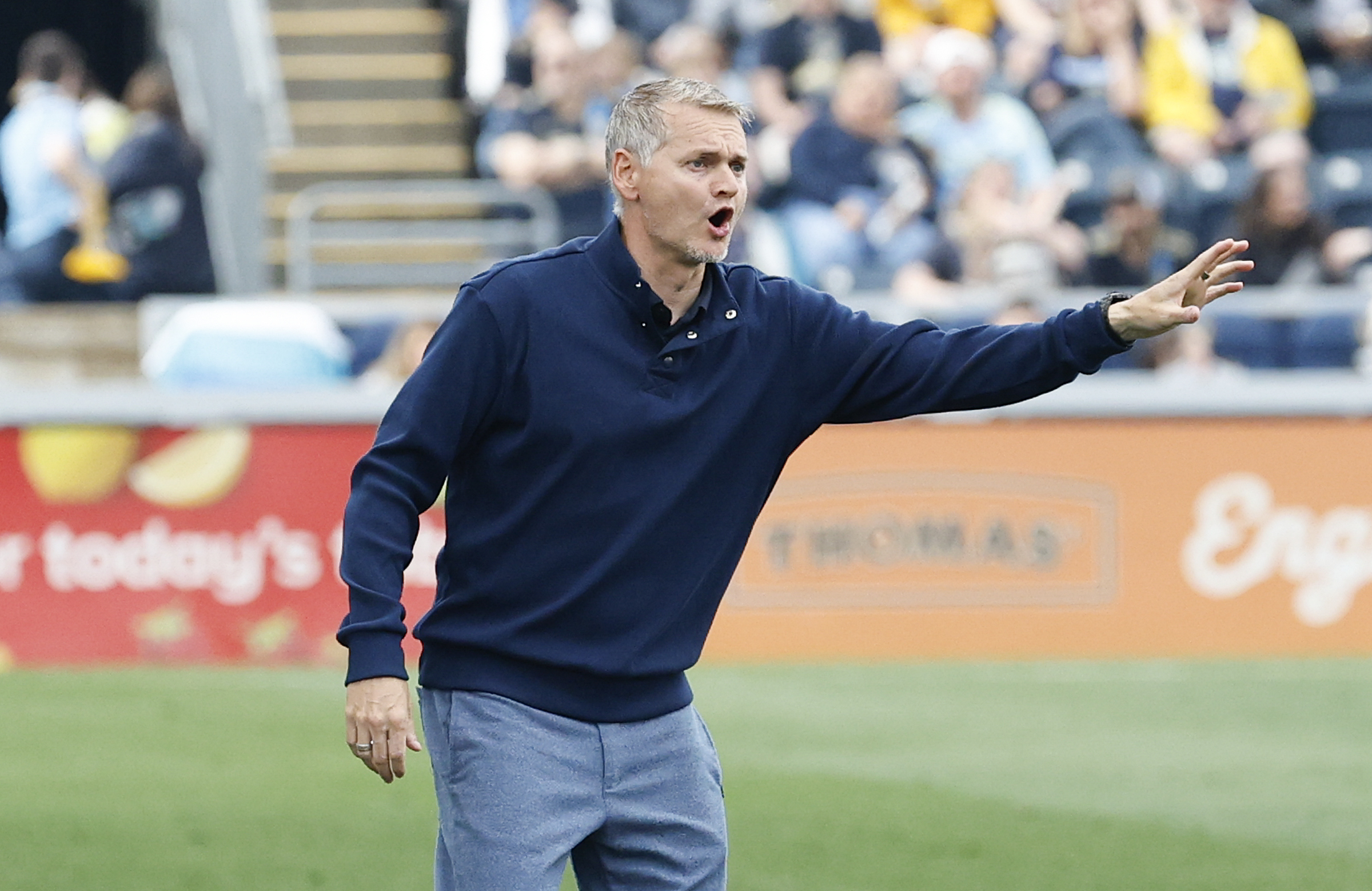
    Bradley Carnell giving instructions to his players during a game last year.

    You can get that sense at an average Union practice, where Carnell, 49, often is right in the middle of the fray.

    “When setting up a game model, one, it’s based on previous experiences of your playing days: caching influences, but also DNA, how I live my life every single day,” he said. “Fast, energetic, proactive, on the front foot — these are all terms that are coming to life now because it’s just who I am. If I’m playing Monopoly with my family, I’m trying to win the game in the quickest way possible.”

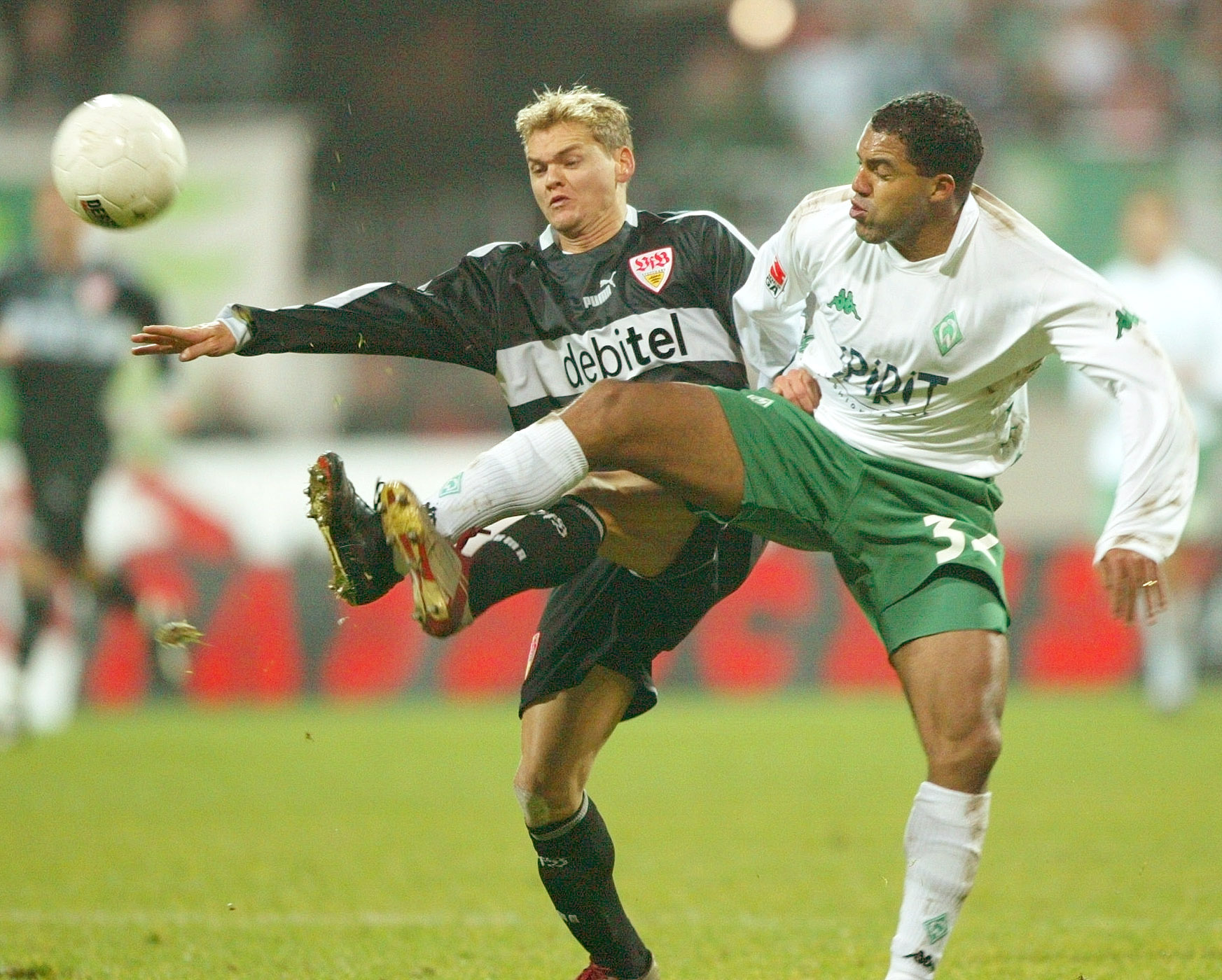
    The manager who had the most influence on Carnell was Ralf Rangnick, who coached the young left back at German club VfB Stuttgart from 1999 to 2001. Ragnick is known as one of the founding fathers of “gegenpressing,” the high-octane tactics that spread all over Germany and eventually worldwide.

    Those ideas have stayed in Carnell’s mind for a quarter of a century.

    Bradley Carnell (left) during his playing days with German club VfB Stuttgart in 2002.

    Inside the playbook

    Carnell put up a slide that laid out four principles: “Hunting” to gain possession high up the field; “swarming” to regain the ball after losing it; “striking” to try to get to the opponent’s goal within 10 seconds; and “waves” of attacking moves.

    He talked a lot over the course of his session about the defensive side of things, especially “rest defense”: how the centerbacks position themselves when their teammates have the ball up the field.

    He also took an interesting question from the audience about man-to-man vs. zone defending.

    “I don’t mind going one-for-one at the back,” Carnell said. “It’s not man-marking. So if they cross over the center back axis, I’m not going to say to you, ‘Go with him and track him all over the field.’”

    If this brought the term “matchup zone” to anyone’s mind, it hasn’t been used much in soccer. But if it ever was going to be, the city that produced John Chaney would be an appropriate place to start.

    The Union won the Supporters’ Shield and reached the second round of the playoffs in Bradley Carnell’s first year at the helm.

    But the most interesting stuff, as it is for Union fans, was what he said about attacking.

    Quality on the ball is valued over time on the ball, a point Union fans have certainly learned by now. And Carnell laid out his “baseline” for how he wants his team to score: 60% in transition, 30% on set pieces, and 10% in possession.

    “We can go quick — I say [with] quality on the ball, you can always get quicker,” Carnell said. “But if you try to go too quick, then there’s going to be turnovers. So, progressive quality over speed. We can always learn to get quicker in this transitional phase of the game.”

    Last year, the Union scored around 50% of their goals in transition, 30% from set pieces, and 20% in possession. That wasn’t quite what Carnell had aimed for. How did he react?

    “We don’t see it as a failure,” he said. “We just see it as an adaptation. To every team you inherit, or every team you go to in terms of me joining here a year ago at the Philadelphia Union, we see certain trends, character traits in players, in how we can get this effectiveness.”

    Some highlights of the year

    The Union ranked well in some stats he likes. They were second leaguewide in shots taken within 10 seconds of gaining possession, at 2.84 per 90 minutes. They were also second in percentage of first passes of a possession that went forward in transition, at 45.5%. And they had the fewest passes per shot sequence, at 2.3 per 90 minutes.

    “Reactions quicker than the opponent can get themselves organized against,” Carnell said.

    He put up some tactical graphics on his slides to illustrate the plays he wants. He also showed some videos of notable plays that the Union made last year, and they really made the point.

    Carnell said “one of my favorite moments of last year” was a goal the Union scored on May 30 at Montreal: a counterattacking dash that covered almost the entire field in 12 seconds in just the second minute of the game.

    Another goal Carnell liked came on April 19 at home against Atlanta. The visitors had the ball, but only briefly: Kai Wagner and Jovan Lukić teamed up to jam Brooks Lennon just short of the midfield line.

    Danley Jean Jacques was nearby, and started dashing upfield. Three passes in eight seconds later, he had his first goal in a Union jersey.

    “In our game model we’re saying, ‘Go put out the fire,’” Carnell said. “’Go win the ball as high as you can. Be brave. Be brave and hunt in numbers.”

  • The Union need the reps that their busy preseason schedule is giving them

    The Union need the reps that their busy preseason schedule is giving them

    On paper, the Union playing five preseason games in three weeks might seem like a lot. But it’s also a reflection of how short the preseason is after an offseason that also didn’t last long.

    The club’s stretch in Spain is made even more important because of the team’s new signings. Ezekiel Alladoh has to build chemistry with Bruno Damiani up top, and the same goes for Japhet Sery Larsen and Olwethu Makhanya at centerback.

    That has to happen in a hurry, too, with the Union opening their campaign in the Concacaf Champions Cup before the regular season starts.

    “We’re grateful that we have three games on this leg now, just to get some games and minutes and relationship — building with all the different players, with the new guys coming in, and working on a couple of new concepts,” manager Bradley Carnell said in a news conference Thursday from the team’s camp abroad. “Just trying to get the base loads, build up the fitness, get slowly, progressively, more intense and deliberate with our actions in the game model, and then start dialing it in.”

    The Union will play their last scrimmage in Europe on Thursday, against Montenegro’s FK Budućnost at 8 a.m. Philadelphia time. (There’s no word on a broadcast yet.) As with the previous contest against Denmark’s FC Nordsjælland, it will be played with three 45-minute periods.

    “Obviously, we bought ‘Japh’ [Sery Larsen] in here with a distinct reason, to hit the ground running,” Carnell said. “And I think he’s showing just that, and he can adapt and settle into our way and style of play. There’s a lot of onboarding within the game model, so there’s still a ton of that going on with all the different players and group meetings, and the coaches doing some individual clips and meetings from training and game footage.”

    Carnell revealed that Larsen and Makhanya will start Thursday, with Nathan Harriel at left back and Frankie Westfield at right back. Harriel going to the left side was the biggest news there, as the Union ponder Kai Wagner’s successor.

    The Union are shopping for a signing, but aren’t close to getting one over the line. So they might need to have other plans in place for their first games next month. Ben Bender had his audition in the first two preseason contests, and now a player with more defensive experience will get a turn.

    Nathan Harriel in action during the Union’s preseason game against FC Nordsjælland last Friday.

    “We’ve given Nate a bunch of looks at right back, center back; tomorrow, we’ll try and put him in at left back,” Carnell said. “And we’re going through a whole bunch of scenarios in order to for us to hit the ground running on the 18th and the 21st [of February]. … We still have a couple more games here, of I don’t want to say trial and error, but just testing combinations, testing different relationships.”

    And he did not shy away from saying, “there’s a void at left back.”

    At least the starting four are known commodities. Alladoh, for as much as the Union spent on the 20-year-old, doesn’t have a long track record yet. But with a big gap on the depth chart after him and Damiani, Alladoh will face some pressure to deliver quickly.

    “He needs to get up to speed with the game model, I think that’s first and foremost,” Carnell said. “We have to do him a favor by investing time and energy into him, and making sure that we know what asset we have on our hands. He’s still very young, though — I don’t want to put too much pressure on him right now.”

    Ezekiel Alladoh is still getting used to life with the Union.

    But the manager sees the promise in the striker, and hopes it will be fulfilled.

    “Speed in behind, I mean, he’s a real weapon,” Carnell said. “He and his body, he holds up play, so just think of Bruno and him, how they can work off each other with Milan [Iloski] or whoever else plays in the 10s [attacking midfielders].”

    He also made a point of saying he doesn’t just see Alladoh as a target man.

    “I wouldn’t say it’s too dissimilar from Mikael Uhre, how we utilized him as well,” Carnell said. “Very clean with his feet, can finish, he’s got a left foot which is incredibly valuable when it comes to going up against opponents. And it’s been pretty fun.”

    No pressure indeed.

  • What’s the secret sauce at the Union’s youth academy? Here’s a taste of it.

    What’s the secret sauce at the Union’s youth academy? Here’s a taste of it.

    It’s well-known by now that the Union have a big reputation for player development, perhaps the best of any American soccer club at the moment.

    So it shouldn’t be too surprising that a lot of people in that world would like to know how they’ve done it.

    At the United Soccer Coaches convention earlier this month in Philadelphia, a presentation by Jon Scheer, the Union’s head of academy and professional development, drew a healthy crowd that hoped to learn the club’s secret sauce.

    Scheer didn’t give up all the recipes, but he was happy to take the attendees into the kitchen.

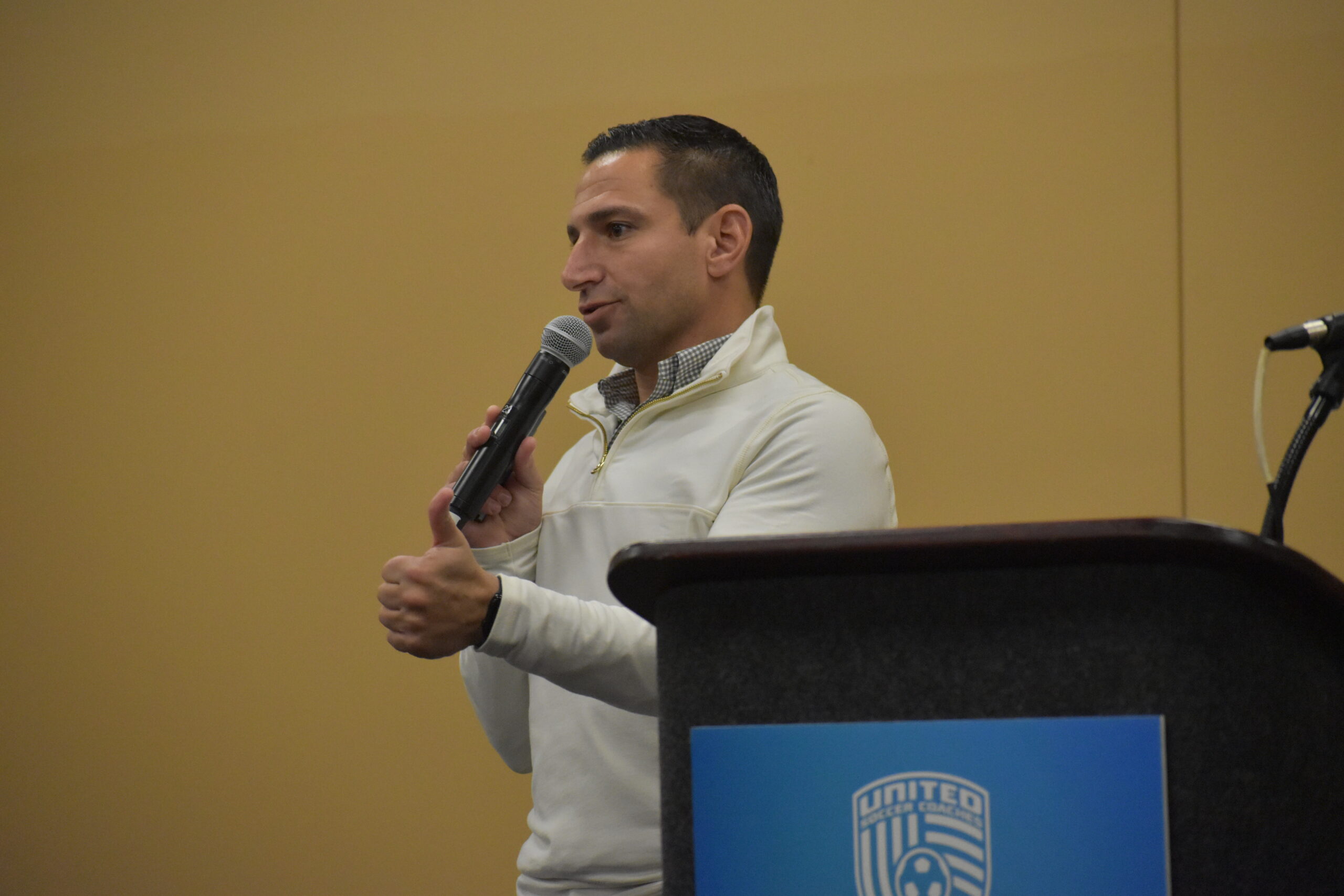
    Union director of academy and professional development Jon Scheer speaking at the United Soccer Coaches Convention in Philadelphia earlier this month.

    He claimed that the Union “invests more in our academy than any MLS club in the country.” That hasn’t been independently confirmed for a few years, but there’s no question that the Union spend a lot.
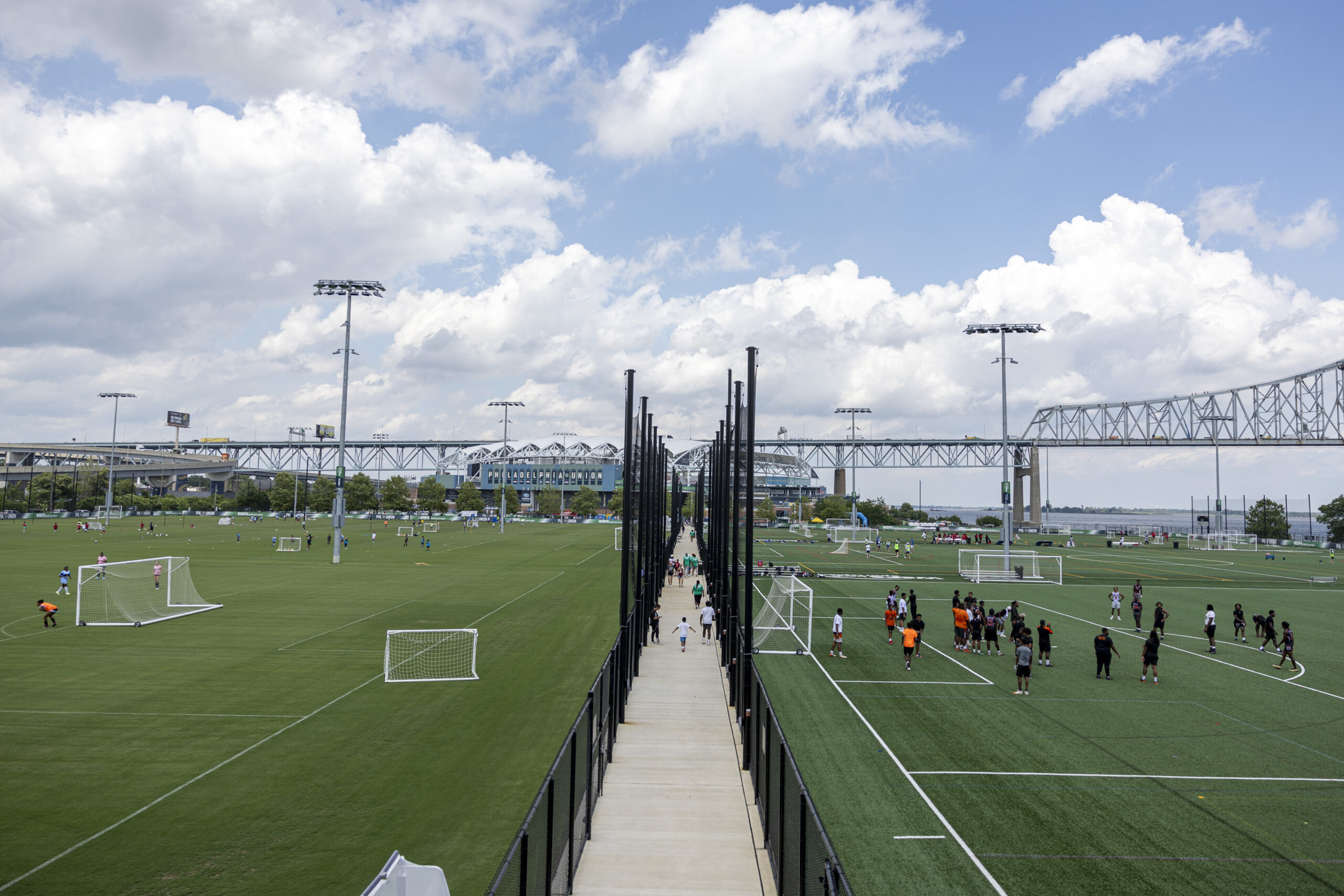
    Along with youth teams in many age groups, there’s a full-time high school, YSC Academy, across the parking lot from the training facilities in Chester. Those facilities were expanded significantly last year, to much acclaim.

    “The value of the young players being able to see the stadium every day, but also being able to look through the fence at the grass on Field One where the first team trains — they can feel it every single day,” Scheer said.

    The Union’s training fields in Chester. The grass one on the left is where the first team trains.

    There’s high tech all over the campus, from the “Striker Lab” that tracks a player’s kicking technique to a medical scanner called SonicBone that measures a person’s biological age.

    “If they’re two years advanced [compared] to their peers and having success only because of their physique, that gives us information,” Scheer said. “Potential for our academy is more important than performance level.”
    The recruiting sales pitch

    Scheer echoed a longtime Union talking point when he spoke of “looking for marginal gains that will allow us to have sustainable success in MLS.”
    “We think that if we invest in data, we’re not going to have to try to outcompete and outspend the LAFCs, the Torontos, the Atlanta Uniteds of the world,” he said.

    Those words did not prompt the kinds of boos from this crowd that they would have from the River End stands. But Scheer, who has become the public face of the front office with sporting director Ernst Tanner on administrative leave, isn’t ignorant of that, either. He’s a West Windsor, N.J., native who played and coached at the University of Delaware, and scouted for U.S. Soccer before joining the Union’s staff eight years ago.

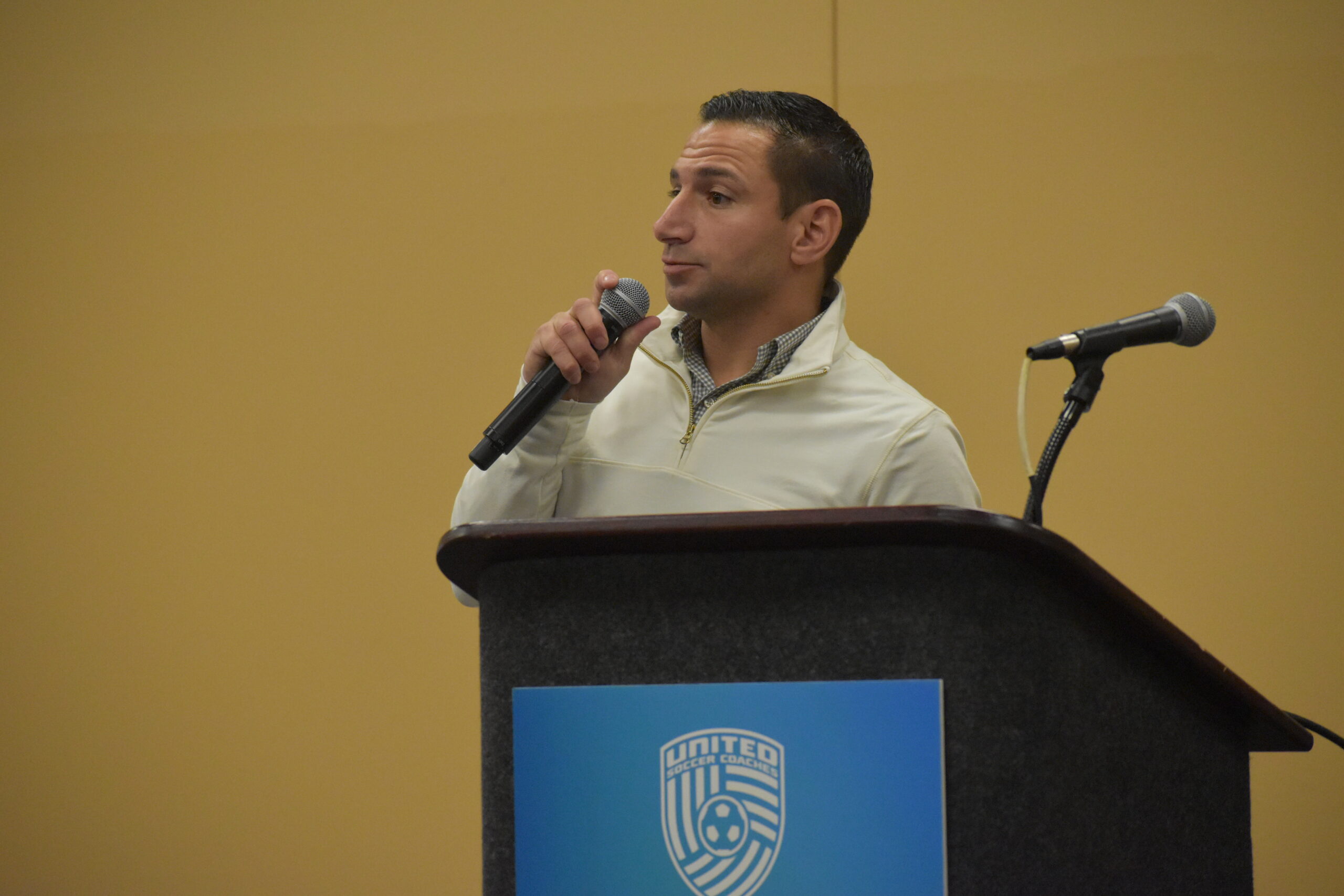
    Jon Scheer spoke for more than an hour about the inner workings of the Union’s academy.

    Trophies count most for measuring the club, of course, but below that is another way to measure success. The Union now aren’t just viewed as the top American club for developing U.S. national team talent; they can put numbers behind it.

    Last year, a total of 57 Union players and prospects were called up to U.S. youth national teams. That is easily the best of any MLS club, with the Los Angeles Galaxy second at 52 and the Chicago Fire third at 40. It’s also a long way past the league’s former standard-bearers, FC Dallas (32) and the New York Red Bulls (24).

    The peak moment came in the early summer, when eight current or former Union players made the senior U.S. squad for the Gold Cup.

    “We want to use that as a recruitment tool for the next wave of kids to say if you come here, we’ll be able to push you on to a higher level — whether that be for the national team or beyond,” Scheer said.

    “Ultimately, if we have a bunch of kids in youth national teams and nobody in the senior national team, then that’s good, but our goal is to get them into the senior squad,” he said.

    Medford native Brenden Aaronson (11) is the best example of a Union product who has made it big on the world stage. Aaronson plays for Leeds United in the English Premier League and the U.S. national team.

    ‘Everybody has a plan’

    It’s also, of course, a goal to have them play for the Union. And yes, it’s another goal to sell players on to European clubs, ideally for big sums.

    “If our goal was just for our academy teams to win [youth tournament] championships, that would shape how we would build our rosters week after week,” Scheer said. “But [we’re] knowing that we need to, for our strategy, develop players, place them in the first team, showcase them to the world, transition them on to bigger clubs, and then use those resources to reinvest.

    “Not just in the academy, also into player scouting and recruitment for the first team.”

    Scheer went deep on how the high school works. He talked about the philosophy of the place, the teachers, and how they educate kids on a combination of soccer and serious academics. Some of the graduates who haven’t turned pro have gone on to major colleges, including Ivy League ones.

    He showed a slide with the students’ typical daily schedule, with blocks of training and blocks of classes. He also detailed the residency aspect, for which the Union bought a house in South Jersey not far from the Commodore Barry Bridge. Twelve players and two adults who oversee them now live there.

    “About 80% of our academy is from the Greater Philadelphia region,” Scheer said. “We never see it becoming 50-50.”

    Union forward prospect Sal Olivas is an example of a player who came to the team’s youth academy from afar — in his case El Paso, Texas.

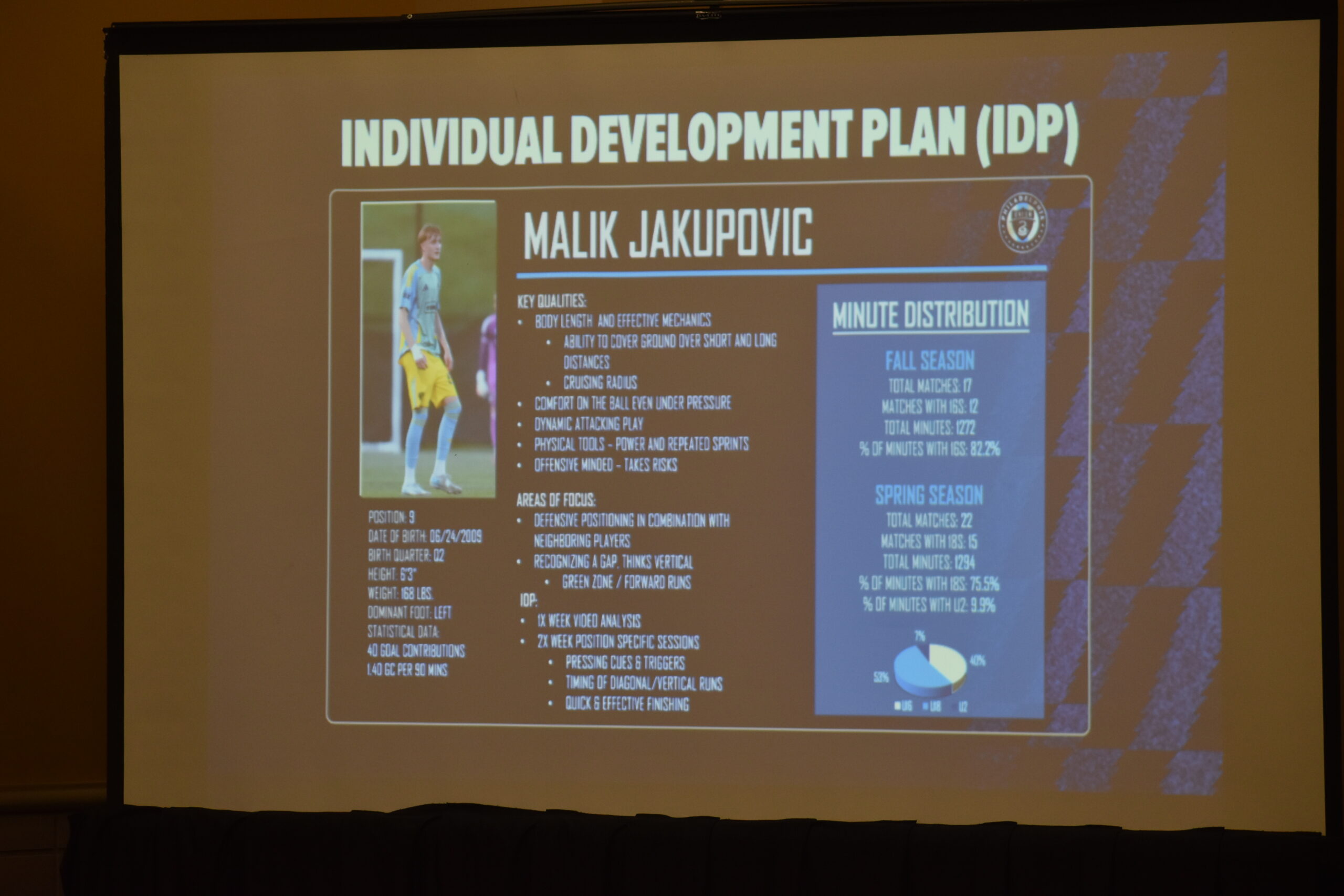
    Later in the presentation, he posted a detailed slide showing an example of an Individual Development Plan. The player on the slide happened to be 16-year-old striker Malik Jakupovic, the team’s second-most-hyped prospect right now after Cavan Sullivan.

    “Yes, our top talents have a little bit more of an advanced plan, and a little bit more focus — of course, because that’s our goal, to push players into the first team,” Scheer said. “But everybody has a plan, and this is something we’re trying to improve.”

    The value of a ‘special weapon’

    He talked about Sullivan, too, after an audience member asked.

    “At the end of the day, Cavan has to do well here in order to play, in order to maximize his opportunity to try to play in the Premier League for Manchester City, and that’s what we all want,” Scheer said, a rare instance of the Union directly mentioning the future move.

    “There’s things that we do, that we talk about, that they’ve taken; and there’s things that they do that selfishly we can take and maybe apply to our environment.”

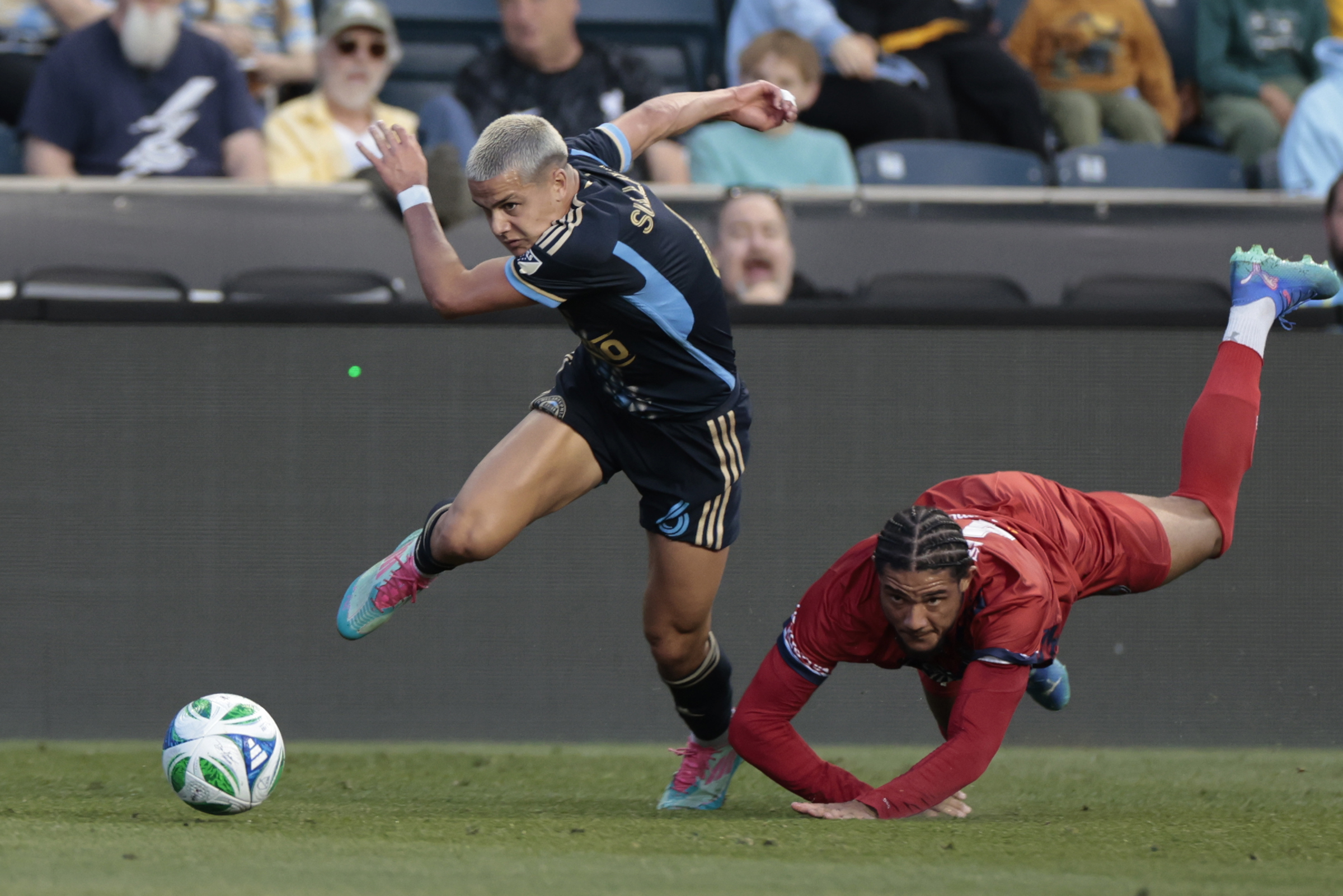
    Cavan Sullivan (left) in action for the Union last year.

    And for as much as the Union “want to develop him individually really, really well,” Scheer also made a clear point about the present.

    “Cavan’s got to focus on every day,” he said, “and be a good teammate, and be competitive, and play in a great way, to be playing in MLS.”

    Some of the coaches in the room surely wanted insight on the Union’s tactics and playing style. Scheer gave it to them, with slide headlines like Active vs. Reactive, Forward First, and Synchronized Sprinting.

    Another slide listed six key qualities for a prospect, aligned in a circle: Comfort On The Ball, Psychosocial Characteristics, Game Understanding & Decision Making, Ball Recovery, and Physical Qualities.

    Then, over in the corner, there was another: Special Weapon. Scheer stopped there for a moment.

    Jon Scheer’s slide detailing much-touted Union striker prospect Malik Jakupovic.

    “We value a special skill set [with] talent that might be innate — something that differentiates a player from their peers,” he said. “We think that might give them a better chance to get them through the door of MLS.”

    And if that one skill comes with deficiencies elsewhere?

    “We’d rather invest time in that player, because that one characteristic is so unique, to then see how they develop in the other areas,” Scheer said. “And we approach our scouting overseas for our first team in the same way as well.”

    ‘There’s no magic pill’

    Those words might have turned on a light in some Union fans’ heads, because they seemed to match the fates of Jack McGlynn and David Vazquez. Both are wonderfully skilled players, but their tenures in Chester were cut short for not ultimately fitting what the first team’s manager wanted.

    The Union sold Jack McGlynn to Houston afer deciding he wasn’t going to be a long-term fit in their playing style.

    “It doesn’t mean that special weapon is just going to guarantee playing time,” Scheer said. “But a lot of times we’ll interact with the first team manager, they’ll see the player, they’ll provide opinion on the player for years to come, and then they’ll work with the player.”

    He added that the coaching staff and front office are doing their best “to try and maximize and make sure we’re aligned on the player pool. If things aren’t working, “it’s about just evaluating each individual and trying to make the best decision.”

    At every level of the Union, there’s a balance to strike between the system and the individual. It’s Scheer’s job to find it every day.

    “You don’t want the individual to feel like they’re always dispensable, and it’s only the game model that’s valuable,” he said. “You also want players that have personality and that can make mistakes. If we’re going to play forward first, you have to be brave in order to be able to do that.”

    Malik Jakupovic has been training with the Union’s first team during this preseason.

    The same goes for coaches.

    “If we’re screaming at our kids every session and game, or we’re always being deliberate and explicit in terms of the information we give them, that is going to stifle creativity and decision-making, that will affect development,” Scheer said.

    “So how we go about teaching, how we go about running our sessions, how we can carry ourselves on the sideline, how we educate ourselves in the ages and stages of development, that’s really, really important.”

    He concluded his point on a philosophical note, one that might make sense well beyond soccer.

    “There’s no magic pill,” he said. “There’s no magic answer.”

  • The Union will host a youth tournament in February with teams including Manchester United and Borussia Dortmund

    The Union will host a youth tournament in February with teams including Manchester United and Borussia Dortmund

    It’s hard to think about going outside right now with the subfreezing temperatures in town, but here’s another reason to hope things will be better in a few weeks.

    The Union announced Tuesday that they will host a youth soccer tournament with teams from around the world, including some big-time European clubs, from Feb. 9-14 at their WSFS Bank Sportsplex in Chester. Fittingly for the time of year, it will be called “The Snow Bowl.”

    There will be under-15, under-16, and under-18 age groups, with Union teams competing in all three. The under-15 group has the biggest visiting headliners: England’s Manchester United and Newcastle United, Germany’s Borussia Dortmund, and Mexico’s Monterrey.

    The under-16 division is headlined by Germany’s Borussia Mönchengladbach, the Netherlands’ PSV Eindhoven, and Portugal’s Benfica.

    PSV’s sporting director is former Union and U.S. Soccer sporting director Earnie Stewart. Its youth academy chief, Aloys Wijnker, worked for U.S. Soccer around the same time Stewart was in Chester.

    The Union have hosted many visiting teams at their facilities in recent months, including England’s Chelsea and the U.S. men’s and women’s national teams.

    Benfica is in the under-18 group too, as is Denmark’s Lyngby is in both of those age groups. That’s notable, since the Union have an ownership stake in Lyngby.

    Another team in the under-18 group will bring a familiar face back to Chester. Former Union midfielder Roland Alberg now runs a youth soccer program in South Africa and has entered one of his squads.

    “This event is about high-performance preparation and showcasing our Academy’s elite youth development environment,” Union director of academy and professional development Jon Scheer said in a statement. “It provides our Union Academy players with the opportunity to test themselves against the very best ahead of the upcoming Generation adidas Cup and MLS Next playoffs, while also highlighting the world-class facilities we have built here at the Sportsplex.”

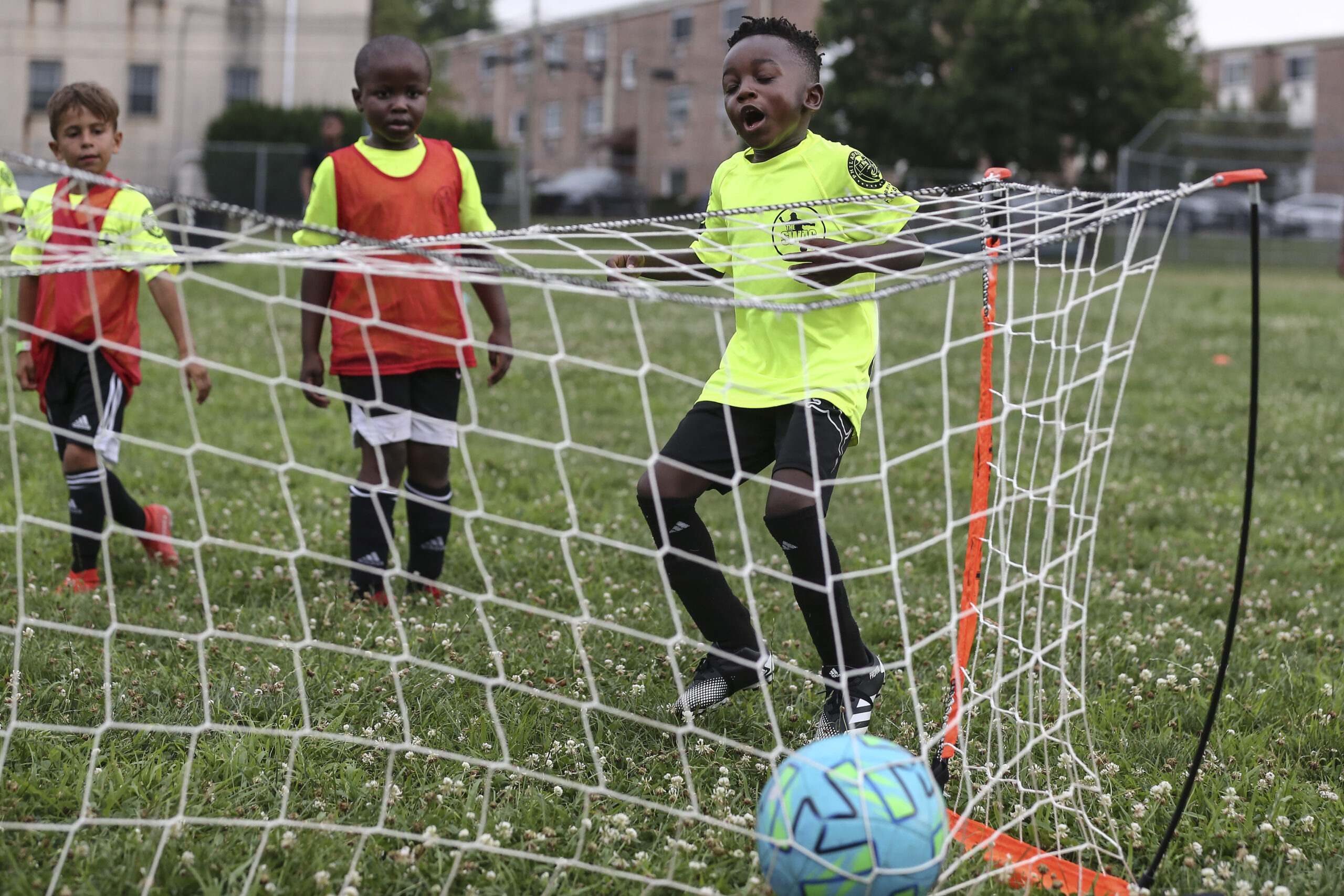
    The tournament will give the Union a chance not just to show off their facilities and youth teams, but the full scale of their development setup. One of the title sponsors is The SWAG, a no-cost, year-round soccer training program for players ages 4-11 from communities of color, which the Union helps promote.

    The SWAG is a free program for underprivileged kids from 4-11 to play soccer and get to know the world’s game.

    “With all eyes on soccer this summer, especially here in Philadelphia, the Snow Bowl is designed to inspire the next generation of youth soccer players and introduce them to the highest level of international youth competition,” said Richie Graham, Union part-owner and academy financier, whose brother, Steve, helped launch The SWAG in 2022.

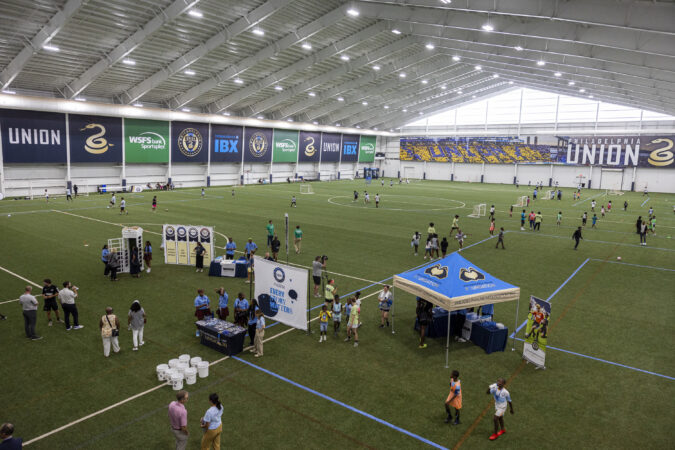
    All of the games will be played on the indoor turf field at the Union’s complex (one concession to the time of year), and they’ll all be livestreamed on the team’s website. The schedule, streaming links, and more details are available at philadelphiaunion.com/snowbowl.

    Here’s the full list of teams participating:

    U-15 division: Union, Manchester United (England), Borussia Dortmund (Germany), Newcastle United (England), C.F. Monterrey (Mexico), Chicago Fire (USA).

    U-16 division: Union, S.L. Benfica (Portugal), Borussia Mönchengladbach (Germany), PSV Eindhoven (Netherlands), Lyngby Boldklub (Denmark), Chicago Fire.

    U-18 division: Union, S.L. Benfica (Portugal), Lyngby Boldklub (Denmark), Alberg Next Gen (South Africa).