Author: Aubrey Whelan

  • Philly vaccination experts hail a court ruling that halts changes to childhood vaccine recommendations

    Philadelphia vaccine experts on Tuesday called a federal court decision reversing changes to the U.S. childhood vaccination schedule under Health and Human Services Secretary Robert F. Kennedy Jr. a win for public health.

    But discord between the Centers for Disease Control and Prevention under his leadership and medical professional groups has sowed distrust and confusion for families, experts say.

    Federal health agencies were stopped from implementing a January overhaul of the childhood vaccination schedule that decreased the number of recommended childhood immunizations from 17 to 11.

    The ruling by U.S. District Judge Brian Murphy in Massachusetts also unwound other vaccine recommendations made last year by a panel of independent experts, the Advisory Committee on Immunization Practices, that advises the CDC.

    Last spring, Kennedy fired the entire committee and replaced it with handpicked members that included several vaccine skeptics. Kennedy himself is a longtime anti-vaccination activist.

    The reconstituted committee’s members have recommended delaying hepatitis B shots for most newborns, which have been universally recommended at birth since 1991. (In January, Kennedy went further, saying that the vaccine was no longer recommended for all children — just those at high risk of contracting the virus.)

    The revamped committee also voted against universally recommending COVID-19 vaccinations, instead saying patients could get the shots after “shared clinical decision-making” with a doctor.

    The decisions were decried by public health experts who say ACIP’s stances will increase preventable diseases and deaths in children.

    Several major medical organizations, including the American Medical Association and the American Academy of Pediatrics, filed suit last July to block changes to COVID vaccine recommendations. The organizations updated their lawsuit as Kennedy oversaw further changes to vaccination recommendations.

    In his ruling, Murphy said that HHS violated federal law around government procedures by bypassing ACIP in the January overhaul of the vaccination schedule. The new recommendations said that only children at higher risk of health complications should get vaccines that protect against certain serious illnesses, like rotavirus and hepatitis B.

    He also noted that the reconstituted ACIP includes members with no expertise or professional qualifications on vaccination.

    HHS spokesperson Andrew Nixon indicated in an e-mailed statement that the administration may challenge the ruling. “HHS looks forward to this judge’s decision being overturned just like his other attempts to keep the Trump administration from governing,” he said.

    The back-and-forth headlines and lengthy legal battles can be confusing to parents, said Charlotte Moser, codirector of the Vaccine Education Center at Children’s Hospital of Philadelphia.

    “But families can take comfort in the fact that the science is and has been stable when it comes to the safety of vaccines and their effectiveness,” she said.

    Also a former ACIP member whom Kennedy fired last summer, she noted that vaccines work: “And they’ve been protecting children for decades.”

    ‘A war on vaccines’

    For years, states have used ACIP’s recommendations to require which vaccines should be covered by insurers and mandated for schoolchildren.

    Amid shake-ups on the committee, several states, including Pennsylvania, have changed their own policies around vaccine distribution to ensure that people can continue to access vaccines no longer recommended by the CDC.

    Gov. Josh Shapiro, a Democrat who signed onto a separate lawsuit over the vaccine schedule changes, hailed the court ruling.

    “Hey @SecKennedy, you heard the courts,” he said Monday in an X post. “And if we haven’t made it clear enough: here in Pennsylvania, we trust doctors to help us make healthcare decisions — not conspiracy theorists like you.”

    The ongoing debate about the CDC’s recommended childhood vaccination schedule has so far not affected access to vaccines, as insurers have continued to cover all vaccines under the old schedule.

    But Kennedy’s appointment elevated anti-vaccine activism to the highest levels of federal policymaking, said Paul Offit, a physician and a leading national vaccine advocate who heads CHOP’s Vaccine Education Center.

    “He altered the current vaccine schedule to make it so that certain vaccines appear to be unnecessary or optional,” Offit said. “It was an assault. A war on vaccines.”

    Public distrust of vaccines has been growing since the COVID-19 pandemic, Offit noted, and the United States is already seeing a resurgence of vaccine-preventable diseases, including tetanus, measles, flu, and whooping cough.

    Offit, a co-inventor of a rotavirus vaccine who has sparred publicly with Kennedy for years, said many Americans no longer experience the suffering associated with vaccine-preventable diseases. “People don’t appreciate how sick or dead these viruses can make you,” he said.

    Vaccines and public trust

    In a survey last year, researchers at the Annenberg Public Policy Center at the University of Pennsylvania found that people would be more likely to trust their medical provider or a professional organization than the CDC if the two sides disagreed on vaccine advice.

    “You have a personal relationship with that individual and you’ve played a role in selecting them, as opposed to the anonymous entity the CDC,” said Kathleen Hall Jamieson, Annenberg’s director.

    People who continue to follow the CDC may become increasingly skeptical of vaccines because of the agency’s efforts to remove some vaccines from the recommended schedule or alter when they should be given, she said.

    Jamieson said she expected confusion to continue as the Trump administration appeals the court’s decision.

    Moser, the fired ACIP member and CHOP vaccine expert, urged parents to consult trusted healthcare providers about vaccination. Recent changes to vaccine recommendations were not based on any new data that raised fresh concerns about vaccine safety, she said.

    “Many young parents today have themselves received these vaccines,” she said. “We want to make sure we’re able to protect this generation of children from these horrible diseases that we had the benefit of being protected against.”

  • Pennsylvania reports 12 measles cases in residents, including several in the Philly suburbs

    Pennsylvania reports 12 measles cases in residents, including several in the Philly suburbs

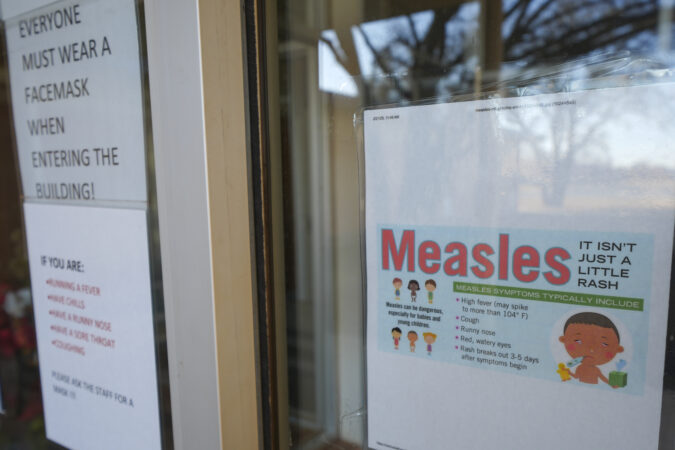
    Pennsylvania had 12 confirmed cases of measles among state residents and two more involving visitors to the state as of Tuesday, the state health department said.

    Eight cases are associated with an outbreak in Lancaster County, where the Pennsylvania Department of Health declared an outbreak involving five cases a month ago.

    The latest case was reported last Wednesday in that county. LNP reported that the three most recent cases there were diagnosed in people who were already quarantining after a measles exposure.

    Pennsylvania officials also have confirmed two cases in Chester County — one in a county resident and another in a person visiting the county.

    One of the Chester cases was connected to the Lancaster outbreak, and the other was linked to an outbreak at Ave Maria University, a small Catholic college in Florida, said Jeanne Franklin, the county’s public health director.

    Likewise, four cases in Montgomery County — one in a person visiting the county and three in county residents — were connected to the Ave Maria outbreak.

    A person infected with measles connected to that outbreak traveled to Montgomery County; later, two members of their household and a person who had visited an urgent care clinic at the same time as the original patient were diagnosed with measles.

    The person infected at the urgent care developed symptoms about 20 days after exposure. Measles has a long incubation period of up to 21 days.

    That person had visited a Wawa in Limerick and a car dealership in Royersford multiple times while contagious, and late last month county officials issued warnings about possible exposures to residents who may have been in those locations.

    None of the Pennsylvania patients diagnosed with measles had been vaccinated.

    Measles cases have risen in the last several years in the United States. In South Carolina, a major outbreak has caused at least 935 cases since last fall. At least 83 people have been sickened in Collier County, Fla., where Ave Maria University is located. Florida has seen 114 total cases so far this year, the Naples Daily News reported.

    Closer to home, in late February, Delaware health officials reported a potential measles exposure at the Nemours Children’s Hospital emergency room.

    Pennsylvania health officials, citing state privacy laws, declined to specify how the outbreak in Lancaster County began.

    “The department investigates each reported case of measles to understand the potential source of their infection. Some of the cases in Pennsylvania have been connected to cases in other states,” the department said in an email.

    The state conducts contact tracing to identify people who were exposed to the highly contagious disease; the virus can linger in the air for up to two hours. Health officials determine whether those exposed are immune to the virus, either through vaccination or a prior infection.

    People without immunity can get vaccinated for measles within 72 hours or receive immunoglobulin within six days to avoid contracting the disease.

    In a health alert issued last month, state officials urged physicians to “maintain a high index of suspicion” for measles if patients show up with a rash and fever. If doctors suspect a measles case, they should not wait for lab confirmation and instead immediately notify the health department.

    The department stressed that the measles, mumps, and rubella vaccine is the best way to protect against measles; two doses of the vaccine are 97% effective at preventing the disease.

    About 94% of Pennsylvania residents have received the MMR vaccine. That is “likely to help limit the number of measles cases in Pennsylvania, compared to other states with lower vaccination rates,” the health department’s statement said.

  • Nearly a year after Crozer-Chester Medical Center closed, Chester residents still struggle to access healthcare

    Nearly a year after Crozer-Chester Medical Center closed, Chester residents still struggle to access healthcare

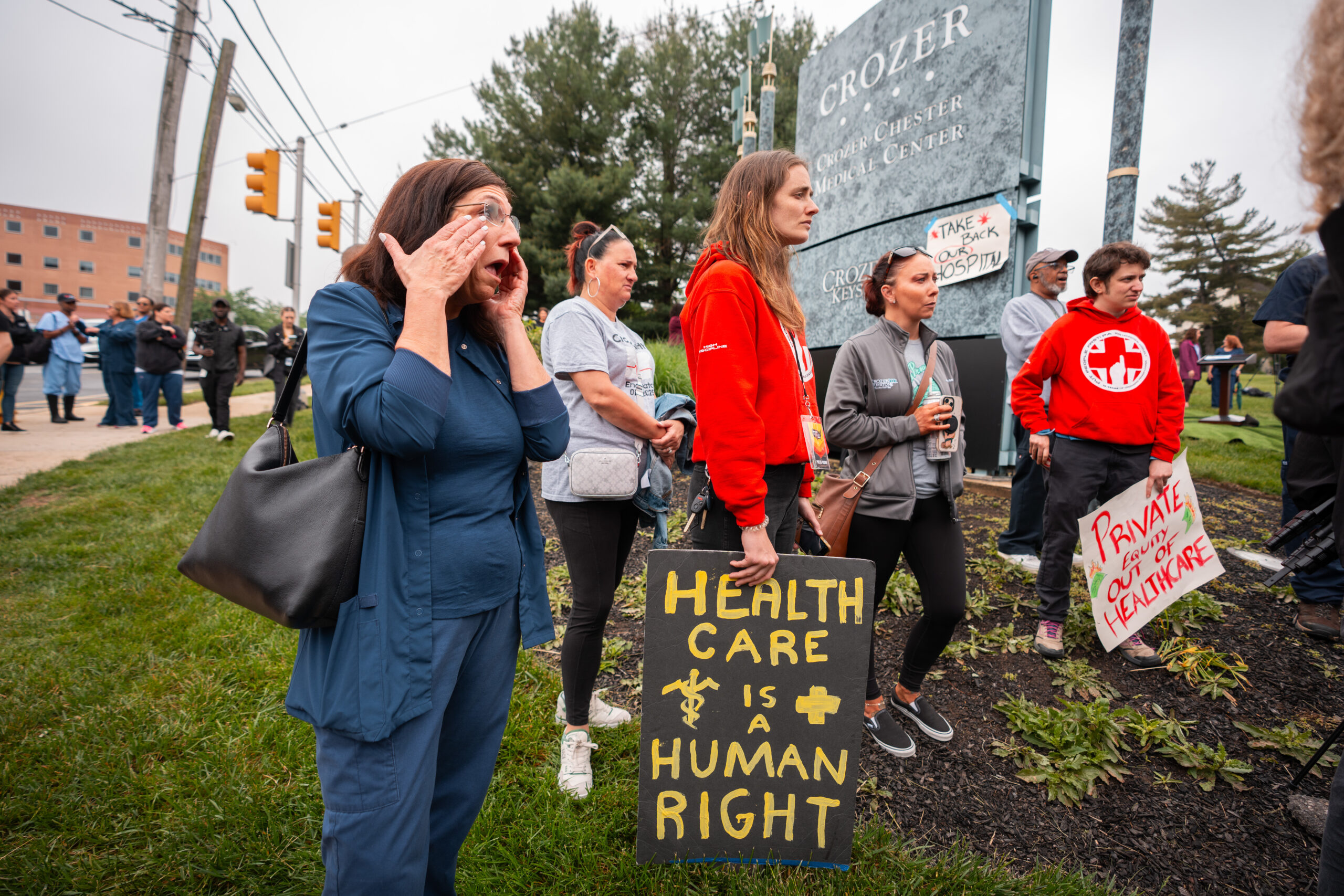
    Dawn Pierce felt heartbroken last spring when she learned that Crozer-Chester Medical Center was closing.

    The hospital had long been a lifeline in a city with limited healthcare services. Many Chester residents, like Pierce, were unsure where to turn for care when the hospital’s for-profit owner, California-based Prospect Medical Holdings, declared bankruptcy and shut down Crozer and Taylor Hospital in Ridley Park last spring.

    “I don’t think of myself as one that will sit around and watch things happen, but I felt hopeless,” Pierce said.

    Nearly a year later, Pierce and other residents say the community was left with major healthcare gaps: There are no primary care doctors or pediatricians in town. Locals who received routine care at the hospital had to switch to doctors outside the city, dealing with long drives or rides on public transportation. Some are going without care.

    And many worry about whether they can make it to another hospital in time during a medical emergency.

    Janice Cimabue, left, and Jamie Blair, center, with Put People First PA, after a news conference outside of the recently closed Crozer Medical Center in Delco, in Philadelphia, May 15, 2025.

    These concerns have emerged through grassroots canvassing by One Pennsylvania, which shared its findings at a news conference this month. In recent months in Chester, organizers have knocked on 4,300 doors to gauge residents’ thoughts on Crozer’s closure and encourage them to advocate for better healthcare options in the city.

    The membership group focuses on issues including housing rights and environmental justice. Originally founded as part of a 2011 Pittsburgh campaign by the labor union SEIU, it became an independent organization in 2015 and expanded into the Philadelphia area in 2016.

    Pierce, who heads its Chester chapter, counts herself relatively lucky: While she saw specialists at Crozer, her primary care physician was at a different health system. But her brother and his significant other spent most of last year looking for a new doctor after Crozer closed.

    “I do think they finally found someone, but at this point those visits are not near Chester. They’re 20 to 30-plus minutes away,” Pierce said.

    Residents told One Pennsylvania organizers they felt relief that Chester officials did find a solution for EMS services lost in the closure. The city contracted with VSMC, an ambulance company, for higher-level care on the go, including blood transfusions.

    “The restoration of EMS services and ambulance for our city — this matters,” Pierce said at the event held outside a downtown church on a recent Saturday. “However, EMS is a bridge. It’s not the final destination.”

    (function() {
    var l2 = function() {
    new pym.Parent(‘he_chester’,
    ‘https://media.inquirer.com/storage/inquirer/projects/innovation/arcgis_iframe/he_chester.html’);
    };
    if (typeof(pym) === ‘undefined’) {
    var h = document.getElementsByTagName(‘head’)[0],
    s = document.createElement(‘script’);
    s.type = ‘text/javascript’;
    s.src = ‘https://pym.nprapps.org/pym.v1.min.js’;
    s.onload = l2;
    h.appendChild(s);
    } else {
    l2();
    }
    })();

    Chester Mayor Stefan Roots told residents at the news conference that he met recently with representatives from the Crozer property’s new owner, for-profit Chariot Equities, which says it wants to restore medical services to the campus.

    Roots said he couldn’t provide many details about a plan for the 64-acre campus that straddles Chester and Upland Township in Delaware County, which Chariot purchased last month for $10 million. Chariot said at the time it planned to operate a “right-sized” hospital and emergency department at the facility.

    The new ownership comes after government-supported efforts failed to convince other local health systems last year to form a new nonprofit to run Crozer-Chester and other Crozer Health facilities.

    Chester Mayor Stefan Roots told city residents that he met recently with representatives from the Crozer property’s new owner, for-profit Chariot Equities, which says it wants to restore medical services to the campus.

    Roots said the new owner has impressive plans, but it could take years to bring back medical services, if successful. “It’s going to take some time, it’s going to take some money, and all we can do right here is to readjust,” he said.

    Delaware County Council voted Wednesday to end a disaster declaration over lost EMS services in the wake of Crozer’s closure, since communities left without services, like Chester, had been able to contract with other EMS providers, WHYY reported.

    Chester resident Andrea Robinson say she’s still feeling the impact of the lost medical services.

    Robinson had to find new doctors after the closure, and a family member is now traveling farther to receive care for a mental health condition once treated at Crozer. And while other area hospitals are taking patients from Chester, the influx of new patients has at times led to long wait times elsewhere.

    “We are truly in need of medical services now,” she said.

  • Measles case confirmed in a person who visited a Montgomery County car dealership and a Wawa

    Measles case confirmed in a person who visited a Montgomery County car dealership and a Wawa

    Montgomery County health officials on Saturday warned residents of a possible measles exposure at two locations in the county, after confirming another case of the highly contagious disease.

    A person infected with measles visited a car dealership and a convenience store in Royersford and Limerick earlier this week, officials said.

    The case is connected to another in the county that was confirmed earlier this month, said Richard Lorraine, the medical director of the Montgomery County Health Department.

    The original measles case was linked to a larger outbreak centered on a college in Florida, Lorraine said. A person infected with measles connected to that outbreak then traveled to Montgomery County and visited an urgent care center in Collegeville on Jan. 29, he said.

    Later, two people in their household, who live in Montgomery County, contracted measles; they were already quarantining by the time they developed symptoms, Lorraine said.

    The latest case, announced on Saturday, was in an adult who had visited the Collegeville urgent care clinic at the same time as the original patient, Lorraine said. That person developed symptoms about 20 days after exposure to the virus, Lorraine said. The virus can incubate for up to 21 days before symptoms appear.

    All of the Pennsylvania residents who have contracted measles so far this year, including the Montgomery County cases, were not vaccinated against the disease.

    What to do if you were exposed to measles

    People who were at the following Montgomery County locations during the following time periods may have been exposed to the virus, which can linger in the air for up to two hours, officials said.

    • Nissan 422 of Limerick at 55 Autopark Blvd. in Royersford:
    • Wawa at 579 N. Lewis Rd. in Limerick:

    People are generally considered protected from measles if they were born in 1957 or earlier or have had two doses of the measles, mumps, and rubella (MMR) vaccine, or the recommended number of doses based on their age, health officials said.

    People are also considered protected if they have undergone lab testing that confirms they have already had the disease or have immunity to it.

    People who are not fully vaccinated or do not have immunity to measles and were exposed to the virus should call their doctor or the county public health office. The office can be reached at 610-278-5117 or after hours at 610-635-4300.

    Lorraine said that county health officials are working to track anyone who worked at or visited the Wawa and the car dealership earlier this week.

    Once health officials identify people who passed through those locations, he said, they check to ensure they are vaccinated for measles. People with two doses of the MMR vaccine are of little concern, since the vaccine is about 98% effective at preventing disease, Lorraine said.

    The county can also test residents without documentation of vaccination for measles immunity. People without immunity can get an MMR vaccine within about 72 hours of exposure to the virus that can prevent them from contracting measles, Lorraine said.

    “For those folks who don’t have an immune status, and don’t get the MMR, they do need to quarantine for up to 21 days afterward, because that’s how long the incubation period is,” he said.

    People without immunity who were potentially exposed to the virus should observe themselves for symptoms during that period. Symptoms include fever, an unexplained rash, a cough, congestion or a runny nose, and red, watery eyes.

    Health officials said people who develop measles symptoms should stay home and call a doctor immediately. They should also call ahead to any healthcare providers they plan to visit to protect staff and other patients from the disease.

    Measles in the Philadelphia area

    As of Saturday, Pennsylvania health officials said they have confirmed 11 cases of measles in state residents, a Pennsylvania Department of Health spokesperson wrote in an e-mail.

    Seven Lancaster County residents had been infected, as well as three in Montgomery County and one in Chester County. Two more cases were identified in out-of-state residents who visited the area: one in Montgomery County and one in Chester County.

    Chester County health officials did not immediately return a request for comment Saturday.

    On Friday, Delaware health officials said they had identified a case in a patient who visited a Wilmington emergency room.

    Lorraine said it is imperative for area residents to get vaccinated against measles, which can cause severe complications including pneumonia and brain infections. About 1 to 3 of every 1,000 children who contract measles will die, according to the Centers for Disease Control and Prevention.

    Infants and children under 5 years old, adults over 20, pregnant women, and people with weakened immune systems, including patients with leukemia or HIV, are at particular risk for complications from the disease, according to the CDC.

    “Like every other illness, measles can be mild, it can be severe. But that’s the reason why we want to immunize: We want to mitigate the possibility of severe illness. We really don’t want to even take a small chance on that,” Lorraine said.

  • Philadelphia reports two deaths related to intense cold

    Philadelphia reports two deaths related to intense cold

    Philadelphia health officials have reported two deaths related to the city’s extraordinary stretch of freezing temperatures in recent weeks.

    City officials did not provide additional information on the deaths, which took place between Jan. 20, when the city first declared an “enhanced Code Blue,” and Feb. 6.

    An enhanced Code Blue is declared when the wind chill makes it feel like it’s 20 degrees outside or lower for more than three days. In response, officials open up more resources to protect Philadelphians from the cold, including additional shelter beds and warming centers at libraries and rec centers.

    As of Friday, the centers have logged 26,270 stays, said James Garrow, a spokesperson for the city health department.

    Temperatures were in the single digits on Sunday night, and the day’s average temperature of 14 degrees was 20 degrees colder than normal.

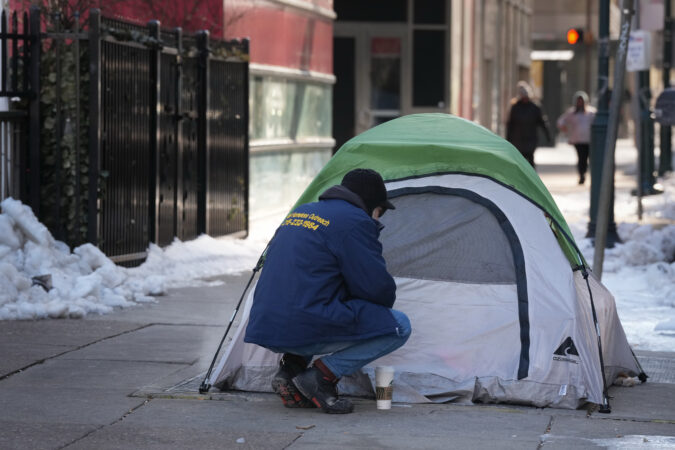
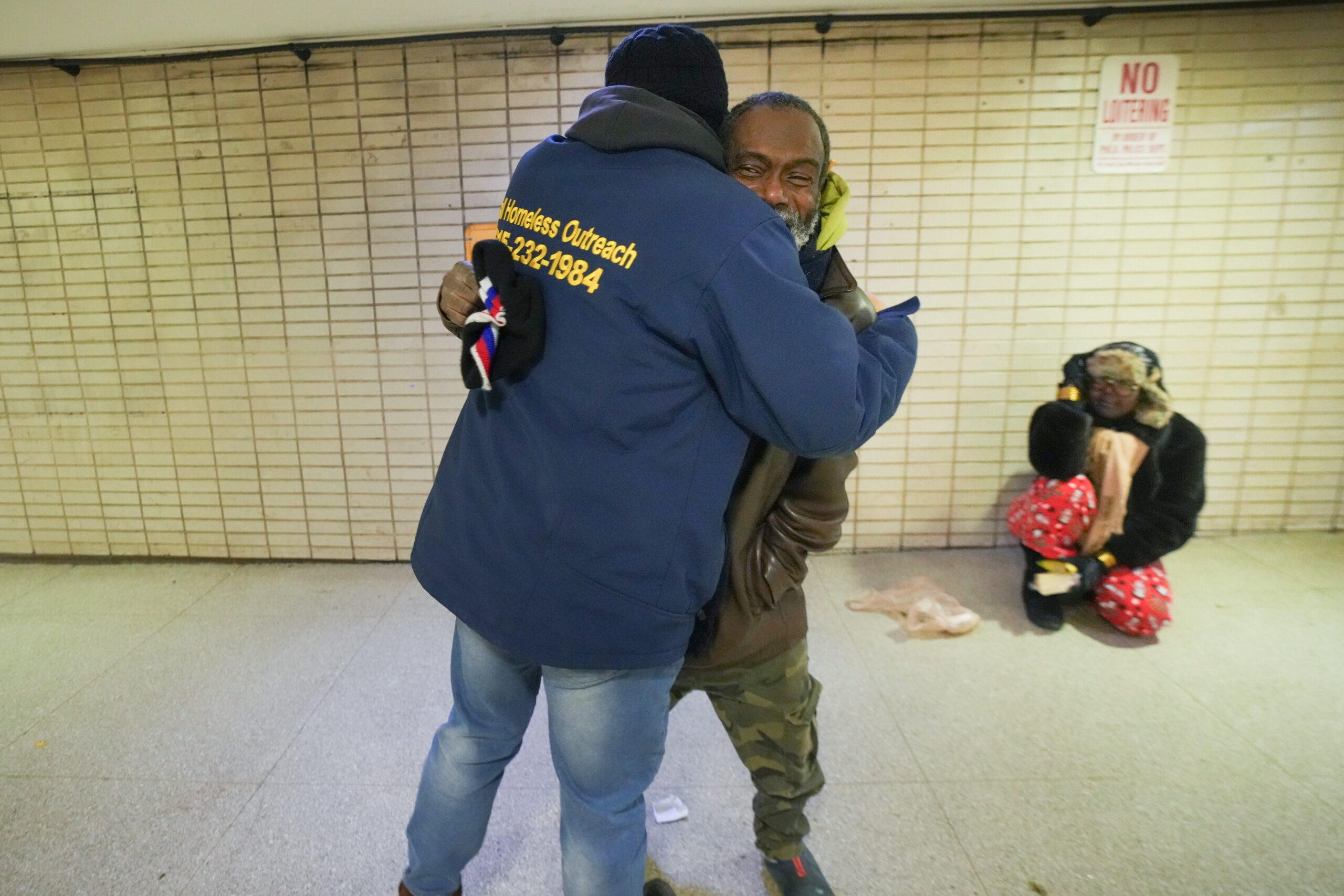
    Residents who see someone who appears to be unsheltered outside during Code Blue can call the city’s homeless outreach hotline at 215-232-1984. The city maintains a list of warming centers on its website.

  • A family is suing Philadelphia over the death of a man in jail custody

    A family is suing Philadelphia over the death of a man in jail custody

    The family of a man who died in a Philadelphia jail last year contends in a lawsuit filed this week that jail staff did not offer him treatment for opioid withdrawal before his death.

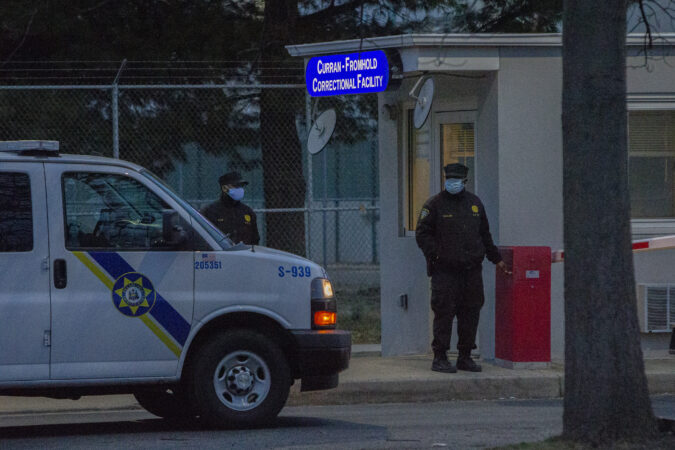
    Andrew Drury died in an intake cell at the Curran-Fromhold Correctional Facility in Holmesburg on March 9, 2025. The lawsuit says he was in the cell for 36 hours, despite suffering from opioid withdrawal symptoms.

    During that time, the suit says, Drury received no medical care, and jail staff did not alert medical personnel that he was going through withdrawal. Drury had a known opioid addiction and had suffered withdrawal symptoms at the jail in the past, according to the lawsuit. His cause of death was listed as “pending,” the lawsuit said.

    Prison officials declined to comment Wednesday. A lawyer for Drury’s family did not return a request for comment. The lawsuit seeks general monetary damages from the city, the jail system, and the state attorney.

    Several other families in recent years have sued Philadelphia jails, saying their relatives did not receive adequate medical care for drug-related issues.

    In 2024, the family of Carmelo Gabriel Ocasio, 22, accused jail staff of ignoring his cellmate’s pleas for help when Ocasio fell unconscious, overdosed, and died after obtaining fentanyl and benzodiazepines at the jail in 2022.

    The family settled with the city for $65,000; further details of the settlement were not made public.

    In 2025, the family of Amanda Cahill sued the city, saying she overdosed on fentanyl illicitly obtained while in the jail after she was arrested in a Kensington sweep in 2024. The suit said she cried and begged for help, and fellow inmates tried to get the attention of correctional officers before she was found unresponsive in her cell.

    A judge dismissed portions of the lawsuit in late December, but attorneys for Cahill’s family later refiled a complaint. Responding to the suit, lawyers for the city acknowledged staffing issues at the jails, but said the city could not have foreseen and did not cause Cahill’s death.

    Between 2018 and July 2024, at least 25 people died in Philadelphia jails of accidents related to drug intoxication, a 2024 Inquirer analysis found. The city noted that summer that the overdose death rate in Philadelphia jails was the same as the citywide rate, despite higher rates of addiction among incarcerated people.

    Philadelphia’s jail system has been hailed as a national leader in offering medications for opioid addiction and provides buprenorphine, an opioid medication that curbs cravings, to inmates soon after arriving.

    But staffing issues created backlogs that kept inmates from receiving longer-term care on time, and advocates said illicit drugs were readily available in the facilities, The Inquirer reported in 2024.

    Staff writer Abraham Gutman contributed to this article.

  • In frigid temperatures, service providers work to get Philadelphians out of the cold

    In frigid temperatures, service providers work to get Philadelphians out of the cold

    As Philadelphia endured another day of historically frigid temperatures, outreach workers on Friday fielded hundreds of calls for shelter as warming centers filled with people seeking respite from the cold.

    In the mazelike concourse at Suburban Station, a Project HOME outreach worker hugged clients and encouraged them to head inside.

    At the Hub of Hope, the nonprofit’s drop-in center in the concourse for people experiencing homelessness, dozens lined up for hot meals. Later that night, as they had for the last several days, staff would set up cots for up to 80 people with nowhere else to go.

    Typically, the Hub closes in the early evening. But amid the ongoing freeze, it’s open 24-7 as city officials and homeless services providers work to keep vulnerable Philadelphians safe.

    Last month, the city declared a “Code Blue,” a designation that opens additional shelter beds and other resources. Ever since, the nonprofit’s hotline has fielded more than 6,000 calls, an average of more than 500 a day.

    Normally, it receives about 140 a day.

    “Many calls are concerned citizens who see someone who is homeless and want a team to go and check on them. Some are people who are literally homeless right now and need a place to go. Some are facing eviction and scared, reaching out for their options,” said Candice Player, the nonprofit’s vice president of advocacy, public policy, and street outreach.

    “The extreme cold challenges us and pushes us even harder.”

    City officials navigate a lengthy cold snap

    When the wind chill makes it feel like it’s 20 degrees outside or lower for more than three days, the city can declare what is called an enhanced Code Blue. The distinction opens up further resources, including daytime and nighttime warming centers.

    Cheryl Hill, executive director of the Philadelphia Office of Homeless Services, describes these periods as an all-hands-on-deck situation. Hill said that “every city entity can be outreach” during this time, and that work can also be aided by members of the public, who have been quick to call for help.

    “We are all basically helping our neighbor, in essence — we see them out on the street, we want to help,” Hill said. “As a result, outreach is getting a lot more calls to go and check on those individuals.”

    Philadelphia declared an initial Code Blue on Jan. 18 and an enhanced Code Blue on Jan. 20.

    The city has about 3,500 shelter beds, which can become open as people get placed in longer-term housing.

    If the beds reach capacity, the city has additional overnight spaces at warming centers, primarily in recreation centers. People who spend the day at warming centers that close overnight can receive transportation to a nighttime center.

    People who need a ride to a warming center can ask for transportation at their local police district, city officials said.

    On average, the overnight warming centers have provided shelter to about 300 to 400 people across the city per night. Last Monday night, after 9.3 inches of snow had blanketed Philly, warming centers sheltered just shy of 450 people.

    Last year, peak usage of warming centers hovered around 150 people, Hill said.

    Still, helping the city’s most vulnerable off the streets can be difficult even in the best of circumstances.

    On Friday afternoon, a sign posted at the South Philadelphia Library informed people visiting to get out of the cold that they could eat and sleep in a section designated as a warming center. Librarians and community support groups collect and provide snacks, along with hand-warmers and other essentials, for those who need them.

    Even so, only a handful of people sat in the area. A woman yelped in pain as she rubbed a blackened toe. Children played with blocks in another corner of the library as others checked out books.

    The homeless services office tries to have medical staff at warming sites, but more serious cases get sent to the hospital.

    In extreme cold, as a last resort, people with serious mental illnesses who refuse to come inside and are underdressed could be involuntarily committed.

    Homeless services providers said they are working around the clock to care for clients exhausted by the struggle of simply staying warm.

    “The experience of being homeless in this brutal cold is awful, and the folks who come in are just worn down,” Player said.

    At shelters run by the Bethesda Project, staff are trying to keep residents’ spirits up and encouraging them to stay inside as much as possible, said director of shelter Kharisma Goldston. “One of our guests was doing haircuts last night,” she said. “We try to do a lot so guys don’t feel like they’re trapped inside.”

    Staffers set up additional beds to accommodate more clients, she said.

    “We do our best to set up however many beds we can,” she said. “When it’s this cold, it takes a very short amount of time for hypothermia to set in.”

    Rachel Beilgard, Project HOME’s senior program manager for outreach, said that outreach teams have encountered several people suffering from frostbite who were involuntarily committed. Some, she said, risked limb amputations if they had stayed outside any longer.

    But many people who typically refuse offers for shelter from outreach teams are now accepting help, Beilgard said. “We’ve had a lot of folks this winter who say, ‘Once it starts snowing, come find me,’” she said.

    Tim Neumann works with people experiencing housing instability, in Philadelphia.

    New data show rise in homelessness

    Amid the cold snap, the city released new data from its annual point-in-time count that suggest homelessness rose between 2024 and 2025, even as the New York Times reported homelessness had dropped in several other major cities.

    The count, taken every year at the behest of federal housing officials, happens over one night in January; city workers and volunteers fan out across the city to physically count people sleeping on the street and those in shelters. Federal officials use the count to gauge funding allocations, and city officials look to it to understand the needs on the streets.

    The Jan. 22, 2025, count was also taken during a Code Blue, although temperatures were not as frigid as they were last week. It found that homelessness rose by about 9% between 2024 and 2025, after a 38% jump the year before. In Kensington, the number of homeless, unsheltered people dropped by about 17%.

    The number of people experiencing chronic homelessness rose by 49%. This is a designation tightly defined by the federal government as a homeless person with a disability who lives in a shelter or in a place that is not meant for habitation, and who has been homeless for a full year, or homeless at least four times in the last three years for a total of 12 months.

    The category also includes people who fit these criteria but have entered jail, rehab, or another care facility in the last three months. Most of Philadelphia’s chronically homeless residents were living in emergency shelters.

    City officials and providers said a number of factors likely contributed to the increase.

    People with substance use disorder and mental health issues are vulnerable to becoming chronically homeless, especially in Philadelphia, where a toxic drug supply causes wounds and intense withdrawal that keep many from seeking shelter. But a lack of affordable housing, low wages, job loss, or a major health issue can also put residents at high risk for homelessness, stressed Crystal Yates-Gale, the city’s deputy managing director for health and human services.

    Hill also said that in recent years, Philadelphia has lost bids to receive competitive housing funds from the federal government.

    “We’ve been working really intentionally to make sure that our programs will get funded” in the future, Hill said.

    Yates-Gale also pointed to Mayor Cherelle L. Parker’s December executive order directing city officials to add 1,000 beds to the shelter system by the end of January. As of last week, the city had added 600 winter shelter beds that are crucial during the enhanced Code Blue and will eventually become available year-round, she said.

    Anecdotally, neighborhoods have reported decreases in homelessness since last year, Hill said, although officials will have to wait until February to conduct the count this year.

    The count had originally been set for Wednesday, but the city canceled it due to the cold — and because too many outreach staffers were at work getting people inside.

    Editor’s note: This article has been updated to reflect that library staff and supporters provide people using daytime warming centers with snacks.

  • Philadelphia health officials warn of an uptick in chickenpox cases

    Philadelphia health officials warn of an uptick in chickenpox cases

    Philadelphia health officials are warning medical providers to be on the alert for chickenpox, after outbreaks at two city schools in recent months indicate a “small but notable” increase in cases of the highly contagious disease.

    Fewer than 10 cases were reported at each school, and the outbreaks were not connected, nor part of a broader community outbreak. In a health advisory to doctors earlier this month, the city said it had fielded reports of varicella in unvaccinated children, who can suffer more serious effects than vaccinated kids.

    It’s unclear what drove the recent uptick in cases in Philadelphia, said Gayle Mendoza, a spokesperson for the city Department of Public Health. She did not have information on how many cases were reported in vaccinated versus unvaccinated children.

    Chickenpox causes fever, fatigue, and a rash that can develop into hundreds of itchy blisters. People over 18 are at risk for more serious complications than children.

    About 94% of schoolchildren in Philadelphia have immunity against chickenpox, also known as varicella, with the vast majority protected through vaccination. Of those with immunity today, only about 1% acquired protection through an infection.

    Varicella outbreaks used to be much more common before widespread vaccination.

    Cases have dropped by 97% in the United States since health authorities recommended routine childhood vaccination in 1995, according to the Centers for Disease Control and Prevention.

    Case counts for several communicable diseases, including whooping cough and walking pneumonia, declined during the COVID-19 pandemic while schools closed, but have since risen closer to pre-pandemic levels. That could be happening with varicella, Mendoza said.

    In Philadelphia, varicella vaccination rates briefly ticked downward after the 2020-21 school year, but by the 2024-25 school year had returned close to pre-pandemic rates, according to state data.

    Earlier this month, Health and Human Services Secretary Robert F. Kennedy announced sweeping changes to the CDC’s list of routinely recommended childhood vaccinations, removing several from the list and sparking outrage from health experts who said that cases of serious, preventable diseases like hepatitis B would rise.

    Chickenpox vaccination is still on the list of vaccines recommended for all children, although health experts have raised warnings about nationally declining vaccination rates in recent years.

    Before 1995, nearly 4 million people a year were infected with chickenpox, up to 13,500 were hospitalized, and between 100 and 150 died, city health officials said.

    “It’s a very small chance you get the illness if you’re vaccinated, but it’s always going to be milder,” Mendoza said.

    Unvaccinated patients can develop 250 to 500 lesions from chickenpox; vaccinated patients, if they contract the disease, will see less than 50 and have less likelihood of spreading the disease.

    With the recent school outbreaks, Philadelphia health officials are encouraging health providers to test patients for chickenpox and report suspected, probable, and confirmed cases to local authorities.

    People who have been exposed to the virus can get immunized within five days or receive antiviral medications to prevent them from contracting the disease.

    Mendoza said the health department is coordinating a response with schools where varicella outbreaks were identified.

  • New Jersey officials confirm 2026’s first case of bird flu in a commercial flock

    New Jersey officials confirm 2026’s first case of bird flu in a commercial flock

    Federal and state agriculture officials announced Thursday that they have identified a case of highly pathogenic avian flu on a commercial bird farm in Burlington County.

    The New Jersey Department of Agriculture said in a news release that the case was the first confirmed in the state in 2026.

    The farm’s owner contacted agriculture officials after birds on the farm began dying, and highly pathogenic avian influenza was later found in samples submitted to state officials.

    The farm has been quarantined and no new birds will arrive there until a “thorough cleaning and disinfection” to eliminate the virus, officials said in a news release.

    Health and agricultural officials have been monitoring outbreaks of HPAI in commercial flocks across the country since 2022, including in the Philadelphia area. Though the virus has also spread in dairy cattle elsewhere in the country, it has not been detected in cattle in Pennsylvania or New Jersey.

    HPAI has infected humans, although none in either state, and New Jersey officials said there is little risk to the public.

    Human infections typically occur after close or lengthy unprotected contact with infected birds or cattle, or the places they have touched, officials said.

    People who have had unprotected contact with infected birds should monitor themselves for symptoms for 10 days, including fever, cough, a sore throat, eye irritation or redness, aches, and diarrhea. If symptoms emerge, they should call a doctor.

    Poultry farmers should notify state officials if they notice their birds exhibiting symptoms of avian flu, including coughing, sneezing, lethargy, eating or drinking less, or dying suddenly, officials said.

    State officials said they are also monitoring cases of avian flu in wild birds after “an outbreak of wild bird deaths in various parts of the state.”

    The rise in cases in wild birds, which started in November, affects a number of species of wild birds, “including but not limited to waterfowl, raptors, and scavenger birds,” officials said.

    The New Jersey Department of Environmental Protection asked residents to avoid directly touching sick or dead wildlife. If they find a dead wild bird on their property and want to dispose of it, residents should wear personal protective equipment and thoroughly wash their hands and disinfect non-disposable gear afterward.

    Dead birds should be double-bagged in trash bags with a zip tie and placed in an outdoor trash can that pets or other wildlife cannot access.

  • RFK Jr. holds a Harrisburg rally to promote health agenda

    RFK Jr. holds a Harrisburg rally to promote health agenda

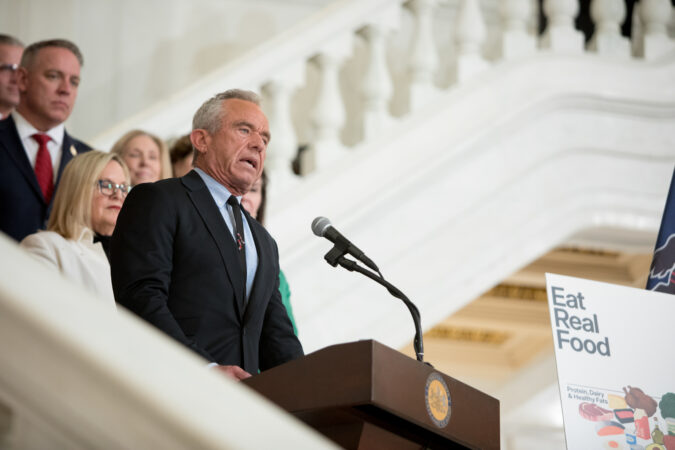
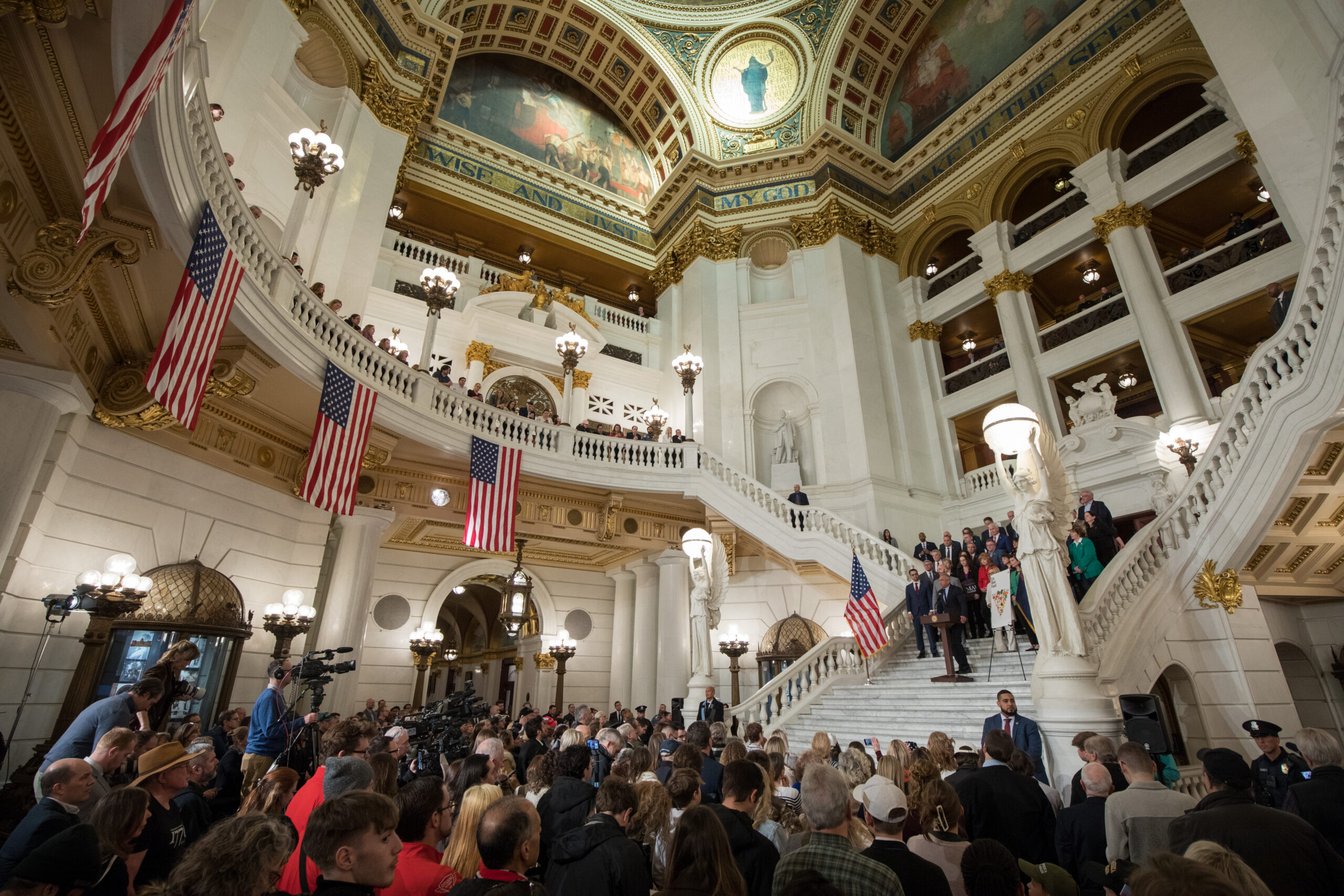
    Health and Human Services Secretary Robert F. Kennedy Jr. touted his new nutritional guidelines and pushed back against criticism of his vaccine policy Wednesday at a rally in Harrisburg.

    Speaking from the rotunda of the state Capitol, Kennedy declared that Americans are sicker than their European counterparts and blamed “bad policy choices” by his predecessors for turning a “once-exemplary healthcare system into a sick care system.”

    Doctors, hospitals, insurers, and pharmaceutical companies, he said, are incentivized to keep Americans ill instead of preventing diseases.

    It was an echo of remarks Kennedy has made over the last year advancing his “Make America Healthy Again” agenda. A longtime anti-vaccine activist before his appointment as top health leader under President Donald Trump, Kennedy has overhauled major aspects of U.S. health policy, including the long-standing childhood vaccine schedule, drawing intense criticism from public health officials who say the move will increase preventable illnesses and death.

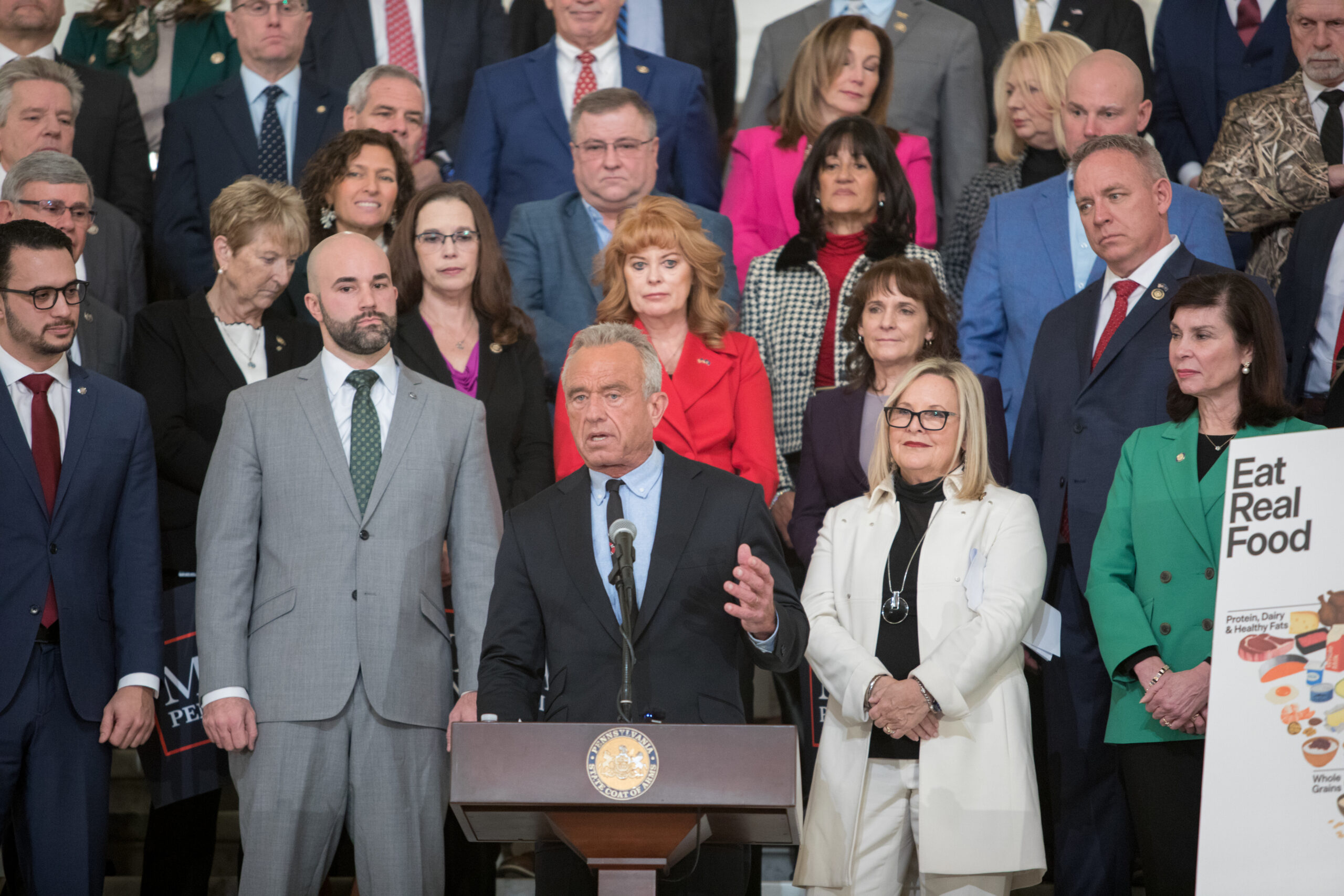
    In Harrisburg, Kennedy was joined by a crowd of nearly 200, as well as two dozen Republican lawmakers. Some spoke in praise of his efforts to overhaul dietary recommendations and decried what they described as waste and fraud in the state’s Medicaid and food assistance systems.

    State Treasurer Stacy Garrity, a Republican who hopes to challenge Gov. Josh Shapiro in this year’s gubernatorial election, stood near Kennedy at the rally but did not deliver remarks.

    Kennedy touted his new dietary guidelines, announced earlier this month, that flipped the traditional food pyramid on its head to promote consumption of whole foods, proteins, and some fats.

    He is encouraging Americans to prioritize eating proteins and vegetables and reduce eating “highly processed foods” with “refined carbohydrates.” This marks the first time U.S. dietary guidelines have explicitly called out what are also known as ultra-processed foods, a move supported by the American Medical Association and some other medical societies.

    “Big food processing companies” influenced American dietary guidelines “for too long,” Kennedy told the crowd.

    “They told us, for the last 40 years, to eat as much as we could of refined carbohydrates, of ultra-processed foods, to stuff ourselves with sugar and salt,” he said. “We are now cutting through the red tape, and we’re telling Americans it’s time to start eating real food.”

    But his dietary plan’s emphasis on foods high in saturated fats and its vague guidance on alcohol consumption have received pushback.

    HHS’s newest food guidelines recommend limiting saturated fats, but also encourage Americans to eat food with high levels of such fats, including red meat and beef tallow, a New York Times reporter noted at a news conference after his speech.

    The revised recommendations are “not perfect,” Kennedy replied.

    “They give guidelines. They’re going to be very useful to people, and they are going to be much, much better for public health than what we were working with,” he said.

    Health and Human Services Secretary Robert F. Kennedy, Jr. was flanked by state lawmakers at a rally in the Pennsylvania State Capitol Wednesday.

    Upending vaccine policy

    Nechel Shoff of Middletown, Dauphin County, came to the Capitol to advocate on behalf of her son, Squale, 24, who has autism. She said she believes her son’s autism was due to vaccinations he had as a 9-month-old baby that led to encephalitis and a high fever for six weeks. (There is no evidence that vaccinations cause autism.)

    She supports Kennedy’s efforts to change federal vaccine recommendations and said his efforts have not resulted in changes at the state level.

    “We need him desperately,” Shoff said of Kennedy.

    Kennedy’s comments about vaccines were the highlight for many in the crowd, who vigorously nodded their heads in agreement and cheered.

    But critics were also in attendance, after staging a protest prior to Kennedy’s appearance outside the Capitol in support of vaccine access.

    One interrupted Kennedy’s speech by yelling “Restore Medicaid!” before being escorted away.

    Federal officials announced in December that they will decrease the number of recommended childhood immunizations from 17 to 11. Some vaccines that protect against serious illnesses like rotavirus and hepatitis B are now recommended only for children at higher risk of health complications.

    Several states, including Pennsylvania, have changed their own policies around vaccine distribution to ensure continued access to vaccines no longer recommended by the Centers for Disease Control and Prevention.

    In a statement posted on X before the rally, Shapiro said that Kennedy has “made our country less healthy and less informed.”

    “He’s spent his entire time as Secretary causing chaos and spreading misinformation. Every step of the way, we’ve stood up to his efforts to endanger public health — protecting vaccine access and families’ freedom to make their own health care decisions,” the Democratic governor wrote.

    Kennedy told reporters at a news conference that he is not limiting access to vaccines and that people who want certain vaccines can still get them. “Some states may take a different pathway, and I think we envisioned that different people would be doing different things, but it ends the coercion,” he said.

    Decades of evidence show vaccination itself presents little risk of harm to patients, and forgoing them carries high risks of spreading preventable diseases.

    Naomi Whittaker, an obstetrics and gynecology doctor, attended Wednesday’s rally with her children, all sporting “Make America Healthy Again” hats.

    She’s a UPMC-affiliated ob-gyn who specializes in “restorative reproductive medicine” to help women with fertility issues.

    Her practice often includes diet changes, lifestyle changes, hormone support, and endometriosis surgery. She sees Kennedy’s work to change the food pyramid and question big pharmaceutical companies as critical dialogues the public should have.

    “I really want to balance the public health and individual health,” Whittaker said. “There’s some middle ground of vaccines.”

    Secretary of Health and Human Services Robert F. Kennedy Jr. speaks at a Harrisburg rally Wednesday.

    State Rep. Tarik Khan (D., Philadelphia), who attended the event, said it was what went unsaid by Kennedy that stood out to him the most: that the Trump administration is making it harder for some people to access food assistance and healthcare, creating barriers to the healthy lifestyles that Kennedy touts.

    “We’ve known for years that we need to eliminate processed foods,” said Khan, a nurse practitioner. “We know that you need to eat more fruits and vegetables. We know that proteins are critical. We know that refined carbohydrates, you should try to avoid as much as possible.”

    “This is not groundbreaking information,” Khan added.