Category: Business

Business news and market updates

  • Trump pushes for lower rates and ban on investor home purchases in bid to make homes more affordable

    Trump pushes for lower rates and ban on investor home purchases in bid to make homes more affordable

    President Donald Trump‘s plans for bringing homeownership within reach of more Americans involve pushing for lower interest rates on home loans and credit cards, and banning large institutional investors from buying single-family homes.

    In his address Wednesday at the World Economic Forum in Davos, Switzerland, Trump outlined four policies his administration is pursuing in a bid to make homeownership more affordable. Each had been previously mentioned by him or his administration in recent weeks, part of a broader push to address affordability generally, a hot-button issue with voters heading into the midterms.

    The U.S. housing market has been in a sales slump dating back to 2022, when mortgage rates began to climb from pandemic-era lows. The combination of higher mortgage rates, years of skyrocketing home prices and a chronic shortage of homes nationally following more than a decade of below-average home construction have left many aspiring homeowners priced out of the market. Sales of previously occupied U.S. homes remained stuck last year at 30-year lows.

    In his remarks, Trump stressed the need to lower interest rates on home loans and credit cards in order to give aspiring homebuyers more financial flexibility to save up for a down payment on a home and more purchasing power when it comes time to buy.

    “We can drop interest rates to a level, and that’s one thing we do want to do,” said Trump. “That’s natural. That’s good for everybody. You know, the dropping of the interest rate, we should be paying a much lower interest than we are.”

    Trump noted that he has directed the federal government to buy $200 billion in mortgage bonds, a move he said would help reduce mortgage rates. Trump said earlier this month that Fannie Mae and Freddie Mac have $200 billion in cash that would be used to buy mortgage bonds. However, some economists have said such a move would likely have only a minimal impact on mortgage rates.

    Trump, who spent much of last year demanding that the Federal Reserve lower interest rates, also reiterated that he will be announcing a new Fed chair soon to replace Jerome Powell, whose term as chair is due to end in May.

    “I think they’ll do a very good job,” he said.

    Still, Fed rate cuts don’t always translate into lower mortgage rates. That’s what happened in the fall of 2024 after the central bank cut its main rate for the first time in more than four years. Instead of falling, mortgage rates marched higher, eventually cresting above 7% in January this year. At that time, the 10-year Treasury yield was climbing toward 5%.

    More recently, the average rate on a 30-year mortgage was at 6.06% last week, its lowest level in more than three years, according to mortgage buyer Freddie Mac.

    While lower mortgage rates help boost homebuyers’ purchasing power, the biggest hurdle many aspiring homeowners face is being able to save up for a down payment.

    To that end, Trump said he is asking Congress for legislation that would mandate credit card issuers cap interest rates at 10% for one year — after the industry ignored his demand earlier this month that they implement the cap by Jan. 20. The average rate on credit cards is around 21%, according to the Federal Reserve Bank of New York.

    Trump also reiterated that he wants to block large institutional investors from buying single-family homes, so that Americans don’t have to compete with such well-funded rivals when they shop for a home.

    “Homes are built for people, not for corporations, and America will not become a nation of renters,” he said.

    While touting his plans to open up the housing market to more Americans, Trump stressed that he didn’t want to take any actions that would tip the housing market too far in favor of buyers at the expense of millions of homeowners who have benefited from strong home equity gains.

    “Every time you make it more and more and more affordable for somebody to buy a house cheaply, you’re actually hurting the value of those houses, obviously, because the one thing works in tandem with the other,” he said, adding: “Now, if I want to really crush the housing market, I could do that so fast that people could buy houses, but you would destroy a lot of people that already have houses.”

    Trump didn’t specify which policies would cause that to happen.

    Trump issued an executive order late Tuesday directing his administration to review the laws that govern how big institutional investors make large purchases of single-family homes and determine whether such investors are engaging in anti-competitive practices.

    The order, which exempts companies that build homes for rent, also includes provisions to give ordinary home shoppers the opportunity to buy foreclosed homes before investors do and bars government housing agencies from guaranteeing, insuring, or otherwise facilitating large institutional investors from buying single-family homes.

    Still, it’s unclear how the administration will define a large investor. And while some metro areas, like Atlanta and Phoenix, have a larger share of corporate-owned single-family homes for rent, the vast majority of rental houses are owned by small individual investors, which wouldn’t be barred from buying more homes.

    “It probably won’t make a noticeable impact on the housing market,” said Daryl Fairweather, chief economist at Redfin.

    Trump was expected to give more details about his housing policy in the speech, but devoted most of it to other subjects. Kevin Hassett, director of Trump’s National Economic Council, told Bloomberg that Trump was just “foreshadowing” an upcoming policy announcement. The White House is reportedly considering a new way for Americans with a 401(k) retirement savings plan to fund the down payment on a home, among other policies.
  • The new owner of Crozer-Chester Medical Center wants to restore hospital and emergency services

    The new owner of Crozer-Chester Medical Center wants to restore hospital and emergency services

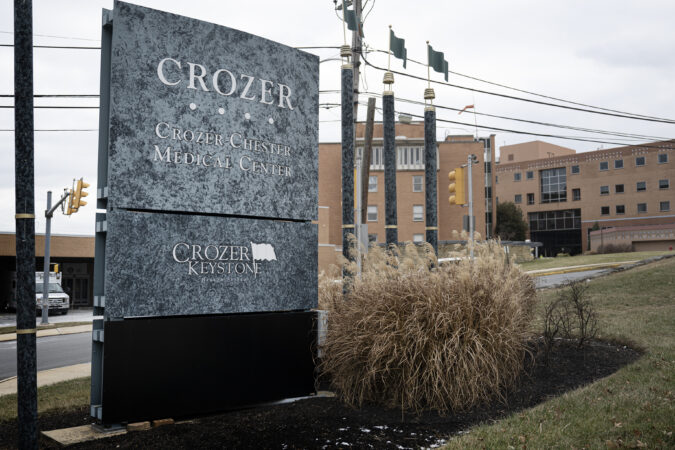
    The new owner of the defunct Crozer-Chester Medical Center wants to restore hospital and emergency services to the 64-acre campus that straddles Chester and Upland Township in Delaware County.

    Newly formed Chariot Equities completed the $10 million purchase Wednesday. The for-profit entity said it expected within six months to have an agreement with a health system that would operate a “right-sized” hospital and emergency department at the facility that had been the county’s largest provider of those services before closing last year.

    The idea is then to open the first phase within two years, Chariot said in a statement.

    Chariot did not say how much it would spend on refurbishing Crozer-Chester, which had suffered from years of neglect under its two previous owners.

    Chariot’s partner at Crozer-Chester is Allaire Health Services, a Jackson, N.J.-based for-profit operator of nursing homes.

    The partners said they are in talks with regional and national nonprofit health systems regarding an operating partnership, but provided no details. The amount of money needed for the project would likely depend on what prospective tenants would want to do at the property.

    “Our belief in Delaware County’s future, and the community’s need for sustainable healthcare access, made this an effort worth committing to well before the finish line,” said Yoel Polack, Chariot’s founder and principal.

    Little is known about the new owners. Polack worked in healthcare real estate in the New York City area before setting his sights on redeveloping Crozer-Chester.

    Federal records list Allaire’s CEO Benjamin Kurland as an owner of 20 nursing homes, including three in the Philadelphia area. Chariot’s statement said Allaire owns a total of 29 facilities in five states.

    Philadelphia-area facilities associated with Kurland are the Center For Rehab & Nursing Washington Township, which was acquired from Jefferson Health; Riverview Estates Rehab & Senior Living Center in Riverton; and West Park Rehabilitation & Nursing Center in West Philadelphia.

    Local interest?

    Main Line Health has been involved in discussions about reopening emergency services at three former Crozer hospitals — Crozer-Chester Medical Center, Springfield Hospital, and Taylor Hospital — at the request of state lawmakers and the property owners, Ed Jimenez, CEO of Main Line Health, said Wednesday at a Riddle Hospital event.

    Jimenez said he would “entertain the concept” of restoring emergency services at one of the hospitals as part of a partnership with other health systems, but only if it can be done on a break-even basis.

    All three of the former hospital buildings visited by Main Line officials are in poor condition and were stripped of medical equipment after the closures. Main Line’s experts estimated it would cost between $15 million and $20 million just to make the emergency department at Taylor functional, Jimenez said.

    ChristianaCare, Delaware’s largest health system, considered acquiring Crozer in 2022. Instead, it took a different path to expansion in Southeastern Pennsylvania. It is planning to open two micro-hospitals in Delaware County. The nonprofit system also took over five former Crozer outpatient locations. Its credit rating was recently downgraded by one notch because of lower profitability.

    The importance of Crozer-Chester

    Crozer-Chester closed in early May during the bankruptcy of owner Prospect Medical Holdings Inc., a for-profit company based in California, and after the failure of government-supported efforts to form a new nonprofit owner for Crozer-Chester and other Crozer Health facilities.

    Crozer-Chester was particularly important as a safety-net provider for a low-income area of Delaware County that has few other nearby options. The Crozer system, which had four hospitals, was the county’s largest health system and largest employer for many years.

    Two local Democratic officials, State Rep. Leanne Krueger and Delaware County Council member Monica Taylor, said they were encouraged by the approach being taken by Chariot and Allaire.

    At Taylor Hospital, the other Crozer hospital that closed last year, new owners are also looking for healthcare tenants. Local investors bought the Ridley Park facility for $1 million. It is less than four miles from Crozer-Chester.

    The same group agreed last week to pay $1 million for Springfield Hospital, another facility that had previously shut down under Prospect ownership.

  • Why sinkholes keep opening up in Philly

    In early January, a giant sinkhole formed at an intersection in the West Oak Lane neighborhood of North Philadelphia after a water main break. Just two weeks earlier, the city reopened a section of the Schuylkill River Trail in Center City that had been shut down for two months due to a sinkhole. Last summer, some residents of Point Breeze in South Philly also waited two months for a sinkhole on their block to be repaired.

    Laura Toran is a hydrogeologist and professor emeritus of environmental geology at Temple University. The Conversation U.S. asked her what causes sinkholes, whether Philly is particularly prone to them, and why repairs can take so long.

    What are sinkholes and how do they happen?

    A sinkhole is a hole that opens up in the ground due to some change in the subsurface.

    There are two categories of change that create sinkholes. One type is associated with carbonate rock. This is a type of rock that can develop caves because the rock dissolves when underground water is even slightly acidic. When the bridge over one of these caves collapses, a sinkhole occurs.

    The second type is associated with water supply or sewage pipes buried underground. The sediment next to the pipes can erode or wash away when there is a leak in the pipes. That leaves a gap, and if the collapse at the surface becomes big enough, it becomes a sinkhole.

    What do we know about the sinkholes in West Oak Lane and on the Schuylkill River Trail?

    West Oak Lane experienced two recent water main breaks. Debris from the flowing water made it hard to get to the leak.

    Fixing a big leak is a complex job. You have to stop the leak, clear out the debris, get the parts for repair, do the pipe repair, then repair the road. This example also shows that repair teams need to look around to see whether other sections of pipe might be aging and repair them while they have a hole opened up, so you don’t want to rush the job.

    The sinkhole on the Schuylkill River Trail late last year, which took two months to fix, was also the result of a pipe leak. The water department had to get involved in the repair, alongside the parks and recreation department. I should point out that the city has a limited budget for pipe repair. As one of the oldest cities in the country, Philadelphia has a lot of work to keep up with.

    That said, I would rather try to fix a pipe leak than a carbonate rock sinkhole. With the cavities in carbonate rock, you don’t really know how big they are, and a typical solution is to fill them with concrete. Sometimes you have a much bigger cavity than your supply of concrete.

    Is Philly prone to sinkholes?

    The Philadelphia region has both types of sinkholes. Within the city, there isn’t carbonate rock present, but just outside the city, such as the King of Prussia area, we see carbonate rock that is subject to sinkholes.

    The sinkholes that occur in Philly are where pipes leak and the surrounding soil gets washed away. Because we have the right geology for sinkholes in our region and we have an extensive water network that is aging, sinkholes are somewhat common.

    Some regions have even more sinkholes than we see here, however. Florida is entirely underlain by carbonate rock, and sinkholes are quite common.

    Can nearby residents know when a sinkhole is forming?

    We have a map of carbonate rock in the state, but not all carbonate rock develops sinkholes. Where and when in the carbonate rock a sinkhole is likely to develop is unpredictable.

    Sinkholes in Philadelphia tend to also be unpredictable because the driving factor is happening underground and out of sight. We don’t know when a pipe leak is going to occur. Sometimes there is a sagging at the surface before a bigger hole opens up. Sometimes we see the leak before the sinkhole occurs. But not all leaks or sagging ground will lead to a sinkhole, and there won’t necessarily be any warning.

    That said, it is important to report leaks and sagging ground so that they can be investigated before getting worse. Report leaks to the Philadelphia Water Department by calling their emergency hotline at 215-685-6300.

    If we could replace all the aging infrastructure in the city, we would have fewer sinkholes. However, that would be costly and disruptive, so it really isn’t practical. In the meantime, the city just has to fix new sinkholes as they occur.

    Laura Toran is a hydrogeologist and professor emeritus of environmental geology at Temple University.

    This article is republished from The Conversation. Read the original article here.

    The Conversation

  • Lehigh Valley Health Network will go out of network for UnitedHealthcare’s Medicare Advantage plans Monday

    Jefferson Health’s Lehigh Valley Health Network will go out of network Monday for members of UnitedHealthcare’s Medicare Advantage plans.

    That means about more than 20,000 people who get care at LVHN facilities could experience disruptions in their care. Two years of negotiations failed to result in a new contract, Jefferson said in a statement Wednesday.

    Jefferson also said that United reduced payments to LVHN by nearly 40% since 2021, reducing the nonprofit health system’s revenue by more than $100 million over four years.

    “When an insurer stops paying agreed‑upon rates and refuses to negotiate, patient access is put at risk. Jefferson and LVHN will not stand by while an insurer prioritizes its own margins over fair contracts and sustainable care,” said Jeffrey Price, a Jefferson senior vice president involved in managed care and payer relations.

    LVHN patients who have UnitedHealthcare plans through their employers will remain in-network at the nonprofit system through most of April 25, Jefferson said.

    United said that negotiations continue on those contracts, but noted that LVHN wanted a 20% price increase in the first year.

    The dispute does not affect Philadelphia-area Jefferson patients with insurance from UnitedHealthcare, the nation’s largest health insurer.

    Jefferson first warned in October that its LVHN facilities would start going out of network this month.

    At the time, United suggested that Jefferson’s announcement during the Medicare Advantage annual enrollment period was a negotiating tactic designed to put pressure on United.

    United said Wednesday that its “top priority is providing people continued access to the care they need through our broad network of providers who collaborate with us to provide quality, affordable care.”

    The company noted that it recently signed a multiyear contract with LVHN’s biggest competitor, St. Luke’s University Health Network. That contract covers employer-sponsored plans as well as Medicare and Medicaid plans.

    By going out of network with United Medicare Advantage plans, LVHN joins other well-known systems to have done so in the last year. They include Johns Hopkins Medicine and Mayo Clinic.

    Last March, Jefferson went out of network with Cigna Health for a few weeks during a similar impasse in negotiations. Jefferson and Cigna quickly reached a deal after the termination.

  • 2026 Volkswagen Atlas: Nice drive, but then things got hot

    2026 Volkswagen Atlas: Nice drive, but then things got hot

    2026 Nissan Murano Platinum AWD vs. 2026 Volkswagen Atlas SEL Premium R-Line: Midsize SUV comparison

    This week: Volkswagen Atlas

    Price: $56,800 as tested

    What others are saying: “Highs: Roomy interior with seating for seven, compliant ride, capable mid-size SUV tow rig. Lows: Leans too heavily on touch controls, interior quality falls short of rivals, lacks overall pizzazz,” says Car and Driver.

    What Volkswagen is saying: “With three rows of seats, there’s room for all kinds of adventure.”

    Reality: Kinda nice, but one overarching problem.

    What’s new: The Atlas last received a major refresh in 2024, with a turbo and a new interior, and this version is all new to Mr. Driver’s Seat.

    Competition: In addition to the Murano, there are the Chevrolet Blazer, Honda Passport, Jeep Grand Cherokee, Mazda CX-70, Subaru Outback, and Toyota Crown Signia.

    Up to speed: The 2-liter turbocharged four-cylinder engine — whose description sounds suspiciously identical to the Murano’s — creates 269 horsepower, 29 more than the Nissan SUV. Still, despite those extra steeds, it moves the vehicle to 60 mph in about the same time as the Murano, 7.3 seconds, according to Car and Driver. No winner in this department.

    Shifty: The shifter is an ugly stepbrother of the Audi toggle, with a flip forward for Reverse, a pull for Drive, and a button for Park. Having the emergency brake button just behind the shifter and the start button just in front of it makes exiting a breeze — press P, pull the brake, and press the button to turn off, all in a neat row, definitely an improvement over the Murano’s console confusion.

    On the road: We had a chance to travel hundreds of miles in the Atlas, thanks to a belated holiday visit to Best Friend 1.0’s mom up north.

    The Atlas made the trip through Pennsylvania’s Schuylkill valley a pleasant one. It handles highways smoothly and secondary roads with great ease.

    On old winding country roads it’s good for a three-row SUV, and you can feel it going where you point it. Six choices among drive modes should satisfy everyone, but sport mode did the job for Mr. Driver’s Seat. Strong advantage Atlas.

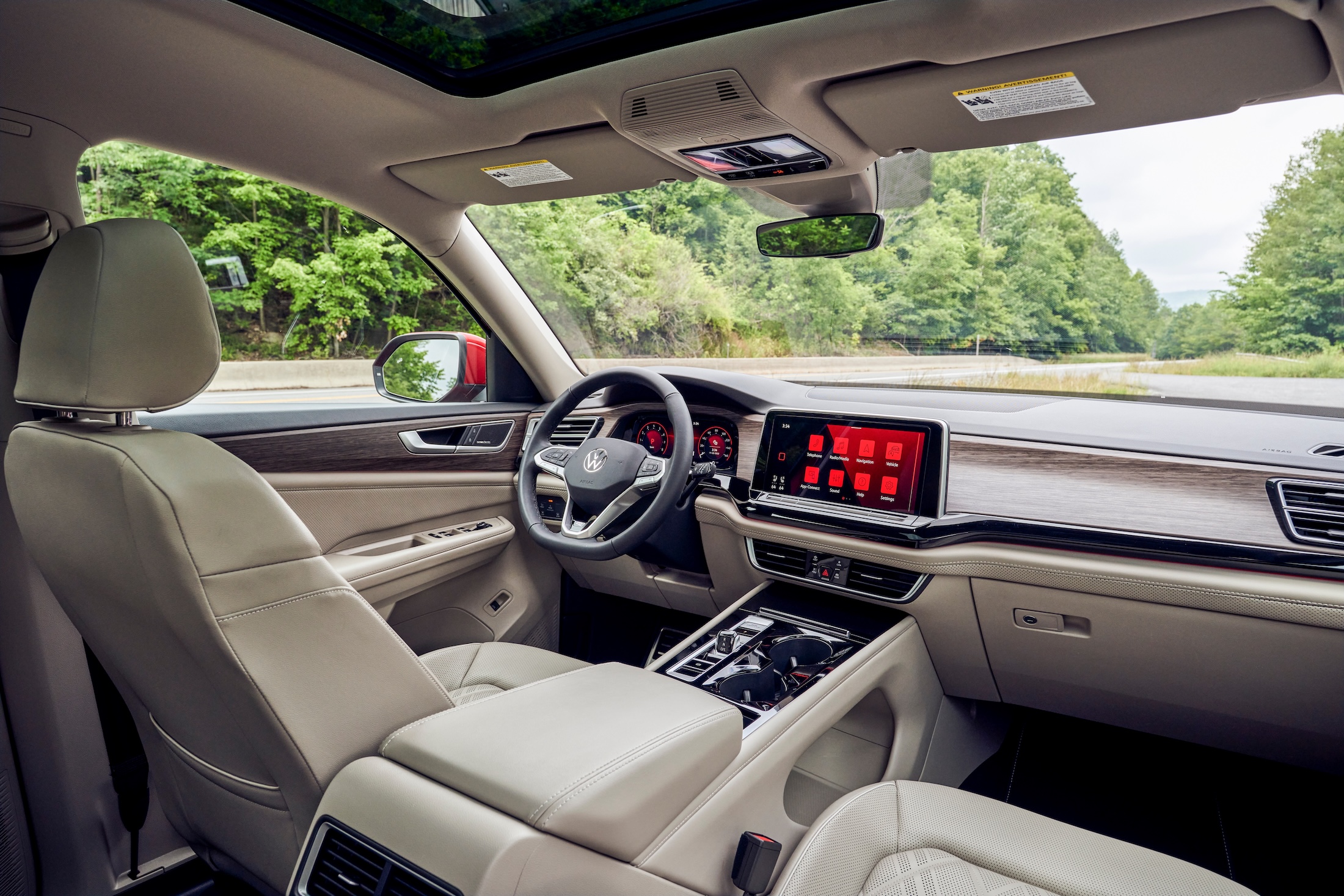
    The interior of the 2026 Volkswagen Atlas starts out comfortably in the front, but then descends as one moves farther back. But that’s not the most frustrating part about the inside.

    Driver’s Seat: The seat is comfortable, with a real sporty feel, not as wide as the Murano’s but grippy and supportive, and the material doesn’t feel cheap at all.

    Volkswagen hangs on to its traditional steering wheel buttons, which makes setting the gauge menu info easy.

    Friends and stuff: The middle-row captain’s chairs ($695, the only option) in the model tested provided excellent legroom, headroom, and foot room. The seats themselves were not as comfortable as the front and felt a little on the small side. When reclining, both the back and bottom move, and I couldn’t get them set up comfortably. Definitely the Murano wins on comfort and style.

    The rear row is nice for a three-row SUV, with plenty of space all around, even for knees, but the seat was smallish and lacked the quality feel so endearing just two rows away.

    Cargo space is a cavernous 96.6 cubic feet with everything folded; 20.6 in the back; and 55.5 with the rear row folded.

    In and out: Getting in and out for the rear row was less tricky than in most three-row SUVs, allowing passengers to easily maneuver between the seats to the back. The door also opened wide but not so wide that cars next door are in grave danger.

    The vehicle height also is good for bad knees and hips.

    Play some tunes: The 12-inch infotainment screen handles all the functions, except for a slider control along the frame that “handles” volume, the same way AI “handles” searches, with some hits but many misses.

    Sound from the Harman Kardon premium system is good, about an A-, but nothing earth shaking. Still, better than the Murano.

    Keeping warm and cool: The Atlas HVAC controls featured ebony sliders with red for warmer and blue for colder worked into the infotainment’s frame. Unfortunately there is no illumination there, so when you hop in at night for an initial journey, you have no idea what to do. And it doesn’t really get better with time.

    Fortunately, a couple of temperature numbers on the infotainment display open the full HVAC option screen, as does a button in front of the console. But the icons are so fussy and small I actually considered several times whether it was worth the bother to try switching off the seat heater or change some other setting. This is distressing.

    Fuel economy: The Atlas averaged 19 mpg in the long-term average, so it wasn’t just me stomping around.

    Where it’s built: Chattanooga, Tenn. The Atlas is made up of 61% parts from the U.S. and Canada, and 28% from Mexico.

    How it’s built: Consumer Reports predicts the Atlas reliability to be a 3 out of 5, tying the Murano.

    In the end: The Atlas was definitely a nice drive, zooming competently around Pennsylvania and sounding kinda cool doing it. But that HVAC system really killed the experience.

    The Outback was going to be my slam-dunk choice, but its controls have gone too far into the touchscreen as well; watch here for a review of the redesigned 2026 model.

  • Daniel Segal, longtime Philadelphia attorney and community activist, has died at 79

    Daniel Segal, longtime Philadelphia attorney and community activist, has died at 79

    Daniel Segal, 79, of Philadelphia, cofounder and shareholder of the Hangley Aronchick Segal Pudlin & Schiller law firm, adjunct law professor at the University of Pennsylvania, former cochair of the Philadelphia Soviet Jewry Council, onetime board president at the Juvenile Law Center, mentor, and “mischievous mensch,” died Thursday, Jan. 8, of stomach cancer at his home.

    Born and reared in Washington, Mr. Segal moved to Philadelphia in 1976 to teach at what is now Penn Carey Law School. He went into private law practice in 1979, became cochair of a litigation department in 1993, and joined with colleagues in 1994 to establish Hangley Aronchick Segal & Pudlin.

    For more than 40 years, until his recent retirement, Mr. Segal handled all kinds of cases for all kinds of clients, including The Inquirer. He was an expert in juvenile law, defamation, the First Amendment, professional ethics, education, civil rights, and other legal issues.

    He was president of the board at the Juvenile Law Center and worked pro bono for years, beginning in 2009, to help represent more than 2,400 juvenile victims and win millions of dollars in settlements in what is known as the Luzerne County “kids-for-cash” case. In that case, two judges were convicted of taking kickbacks for illegally sending juveniles to two private for-profit detention facilities.

    “This is one of the worst judicial scandals in history,” Mr. Segal told The Inquirer in 2009. “The people you’re stepping on are the true, true little guys.”

    Mr. Segal was honored in 2010 by the Philadelphia Bar Foundation.

    Among his other notable cases are a 1985 workplace racial discrimination dispute, a 1990 libel case against The Inquirer, and a 2000 trial about the city taxing outdoor advertisers. “Dan Segal was a living testament to professional excellence,” said Mark Aronchick, his law partner and longtime friend.

    Law partner and friend John Summers said: “He was a great teacher and mentor.” Marsha Levick, cofounder of the Juvenile Law Center, said: “He was a brilliant, steady partner who made us smarter and kept us laughing.”

    Mr. Segal clerked for Chief Judge David Bazelon in the U.S. Court of Appeals for the District of Columbia Circuit in 1974 and for Supreme Court Associate Justice Thurgood Marshall in 1975. He was active with the Philadelphia Bar Association, Philadelphia Common Pleas Court, and the Penn Law School American Inn of Court.

    He wrote articles for legal journals and letters to the editor of The Inquirer and Daily News. He spoke at panels and conferences, earned honors from legal organizations and trade publications, and was named the Thomas A. O’Boyle adjunct professor of law at Penn in 1992.

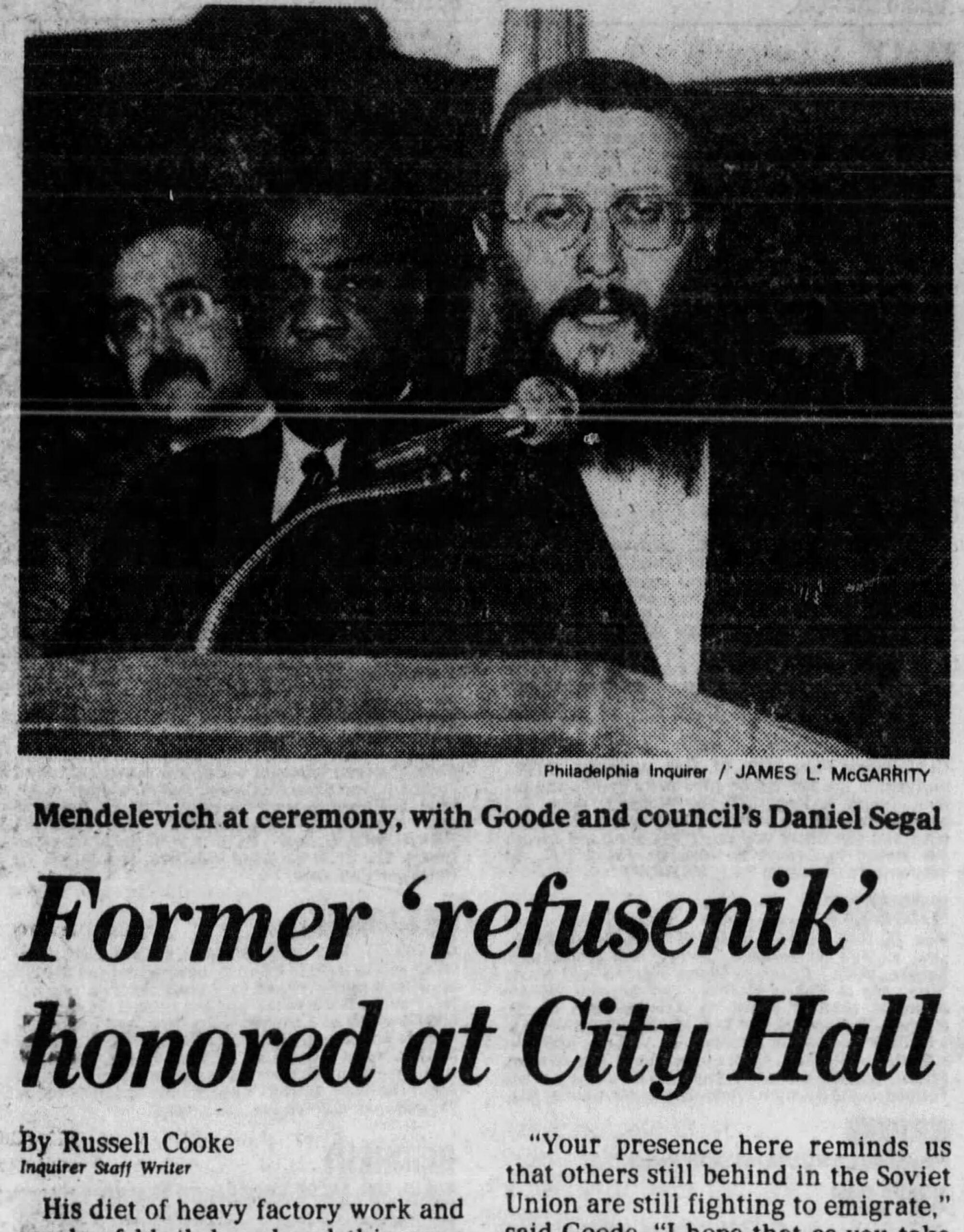
    This story and photo features Mr. Segal (left) and appeared in The Inquirer in 1984.

    The son of a rabbi, Mr. Segal was cochair of the Soviet Jewry Council in the 1980s, and he organized rallies and marches for social justice and human rights. He traveled to Israel often and to the old Soviet Union several times to secretly support Jews not permitted by government officials to immigrate to Israel.

    “We are persuaded that the Soviet Jews are pawns in the Soviet-American relationship,” he told The Inquirer in 1985.

    He served as president of the board of directors at what is now Jack M. Barrack Hebrew Academy and held leadership roles with the Jewish Community Relations Council, the New Israel Fund, Mazon: A Jewish Response to Hunger, and other organizations.

    Colleagues at the New Israel Fund praised his “characteristic kindness” and “gentle and sparkling humor” in an online tribute. They said: “He was everyone’s favorite board member.”

    Mr. Segal and his wife, Sheila, married in 1968.

    Mr. Segal enjoyed pranks and funny jokes, even at work, and neighbors called him Silly Dan. His son Josh said: “His warmth, humor, and humility meant that he could connect with just about anyone.” A friend said he was a “mischievous mensch.”

    He earned his law degree in 1973 and was executive editor of the Law Review at Harvard University Law School. He earned a bachelor’s degree in politics and economics at Yale University in 1968 and a master’s degree in international relations from the London School of Economics in 1969.

    He taught elementary school for a year in Washington and spent another year in Europe before moving to Philadelphia. “He taught us just how important it is to stand up for what is right,” his son Eli said, “and to do so not only with conviction but with humility and kindness, and without a thought of getting personal credit.”

    Daniel Segal was born July 4, 1946. He started dating Sheila Feinstein in ninth grade, and they married after college in 1968. They had sons Josh and Eli, and lived in Center City and Lower Merion before moving to Fairmount in 2018.

    Mr. Segal’s sons said: “Our dad showed us that relationships are the heart of a life well-lived by nurturing lifelong friendships.”

    Mr. Segal loved chocolate and ice cream. He recovered from a traumatic brain injury 20 years ago, and he and his wife traveled to Iceland, Peru, Vietnam, Europe, Japan, and elsewhere.

    He doted on his family and friends, and he and his wife rented vacation places every summer to bring his sons and their families together. “Neither of us were surprised that our dad always made our kids feel so loved,” his son Eli said. “Because that was just how he made us feel.”

    In addition to his wife and sons, Mr. Segal is survived by six grandchildren, a sister, a brother, and other relatives.

    Services were held Sunday, Jan. 11.

    Donations in his name may be made to the New Israel Fund, 1320 19th St. N.W., Suite 1400, Washington, D.C. 20036; and Mazon: A Jewish Response to Hunger, Box 6095, Albert Lea, Minn. 56007.

    Mr. Segal’s sons said: “He was always there for us and made clear that he always would be for as long as he could.”
  • What’s a billion-dollar loan really worth? For private credit funds, it depends on who’s counting

    What’s a billion-dollar loan really worth? For private credit funds, it depends on who’s counting

    As pension funds and other investors have cut back new private equity investments after years of poor returns, Wall Street private equity managers such as Apollo Global, Blackstone, and KKR have moved more heavily into corporate lending.

    They compete with banks to make loans but aren’t bound by the rules that govern banks. The managers bundle the loans into private credit funds and offer them to investors as an alternative.

    “Everyone has shifted to private credit,” which should make investors extra careful, warns Richard Vague, chairman of Pennsylvania’s $80 billion school pension system, PSERS.

    Scholars at Yale Law School cite estimates that private credit funds are approaching $2 trillion in assets, up from $300 billion in 2010, and they’re on track to double in the next two years.

    As private credit funds have grown, analysts warn that limited information about the loans makes it hard to know what the credit funds are worth or how they would respond to a slowing economy.

    For example, Philadelphia-based FS KKR Capital Corp., one of the largest and oldest private credit funds, and two of its rivals have won unwelcome attention for posting very different prices for their investments in the same Silicon Valley private-equity takeover loan.

    Such ambiguity doesn’t exist in publicly traded securities such as stocks, where investor assumptions are reflected in the market price at any given time. The conflicting private-credit valuations suggest analysts aren’t certain about how likely the private credit funds are to get their money back or to lose money if loans default.

    “Risk is on the move. We’re talking trillions‚” Mark Pinto, head of private credit at Moody’s Investors Service, told clients in a recent report.

    Different from banks

    While banks have rules for measuring and publicly reporting loan losses and late payments — and private credit managers say they, too, apply strict internal standards — Moody’s analysts in that report called private credit loan reporting “opaque.” They cited private credit risk as a rapidly growing area of concern to financial systems.

    The rapid growth is new, but private credit has long history.

    FS KKR was set up as a publicly traded business development company and opened to investors in 2009 by Future Standard (formerly Franklin Square), a Philadelphia-based investment firm headed by Michael Forman and cofounded by college-housing baron and Sixers co-owner David J. Adelman.

    That fund is marketed by FS, but its investments are managed by staff at FS’s partner, private-equity giant KKR. It invests about $20 billion of FS’s total $86 billion in client assets, FS reported last year.

    While FS KKR paid shareholder dividends of 70 cents a share — or most of its profits in recent quarters — shares have lately traded around $15, down from the low $20s last year, a sign that investors are concerned about prospects in a slowing economy.

    In a widely reported example that points out the difficulty of measuring the value of the loans in these funds, FS KKR’s share of a loan to finance the 2021 purchase of Medallia, a Silicon Valley-based customer-service software company, was listed on KKR’s books last fall at 91 cents on the dollar, a discount of 9% to its original value, as confirmed in an SEC filing. A discount implies FS KKR has some doubt the borrower will pay its loans on time.

    But a rival Apollo Global fund listed the same loan at a 23% discount, as if Apollo saw a significantly higher risk that Medallia wasn’t going to pay.

    SEC records show a third private credit fund run by real estate giant and private-credit pioneer Blackstone listed the Medallia loan at an 18% discount.

    How can the same loan have three different values?

    Detailed public reporting on Medallia’s finances had almost stopped since yet another private-equity and private-credit investor, Chicago-based Thoma Bravo, paid $6.1 billion in 2021 for the company. Thoma Bravo took Medallia private and borrowed from FS KKR, Apollo, Blackstone and others to help fund the deal, Leyla Kunimoto, a former KPMG auditor noted in a post on her credit review platform, Accredited Investor Insight.

    That leaves investors trying to glean intelligence from limited information or trusting fund managers with their differing views and valuations.

    So what’s the loan really worth?

    KKR partner Daniel Pietrzak, who is both president and chief investment officer for FS KKR Capital Corp. and head of Global Credit at KKR, said pricing differences “can arise naturally” for loans that aren’t publicly traded.

    Factors include “variations in valuation providers, timing, policy nuances and available information,” he added in a statement. So, for example, one of the investors might know something others don’t.

    Pietrzak said KKR pays “independent third-party valuation providers as part of a robust and consistent process, which helps ensure valuations fairly represent asset value across our portfolio.”

    These specialized loan-value estimators include firms such as Lincoln International LLC in Chicago, Valuation Resource Corp. (VRC) in New York, and an affiliate of the Duff & Phelps advisory group.

    The Medallia loan totaled $1.8 billion at 6.5% interest. Many of the other loans in the funds are smaller and are used to finance midsized businesses, potentially spreading the risk if a few borrowers go broke, or compounding it in case of a widespread financial recession.

    FS KKR, like some other private-credit funds, “should incorporate higher discount rates for stressed credits,” including lower valuations for loans by companies with other outstanding loans that aren’t getting paid on schedule, said Rob Dubitsky, a former Credit Suisse managing director and Moody’s analyst who now heads The People’s Economist, a financial-analytics start-up.

    “These valuation and disclosure issues are not unique” to the FS KKR fund but are reflected in private credit funds’ recent weak share performance and low credit ratings from Moody’s and other agencies, Dubitsky wrote in a recent article.

    FS KKR was rated Baa3 by Moody’s last year and BBB- by Fitch. Those are the lowest investment-grade ratings above junk bonds. Lower ratings are for entities analysts expect are more likely to default, which would discourage many investors.

    While Moody’s analysts and other observers expect private credit funds to continue their recent rapid growth, investors watch their opportunities closely, and may shift course.

    For example, private equity has generally “underperformed” compared to public investments for most of the past five years, PSERS chief investment officer Ben Cotton told trustees at the board’s annual reorganization meeting Jan. 9. So he said he’s thinking it may be time to consider new private equity investments: “We are getting to where we may have opportunities and want to be ready.”

  • This Plain businessman started a computer service for the Amish. Does it do too much, or not enough?

    This Plain businessman started a computer service for the Amish. Does it do too much, or not enough?

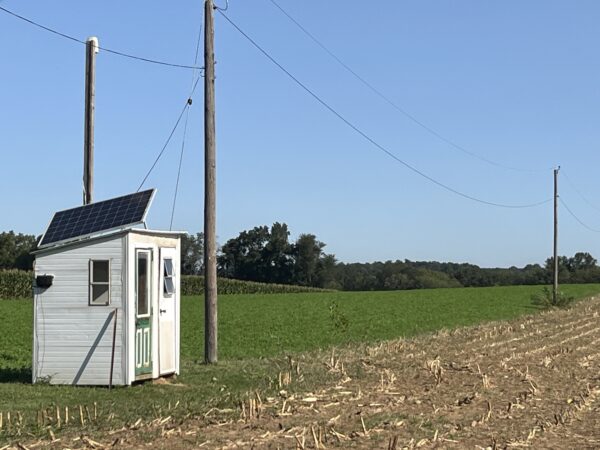
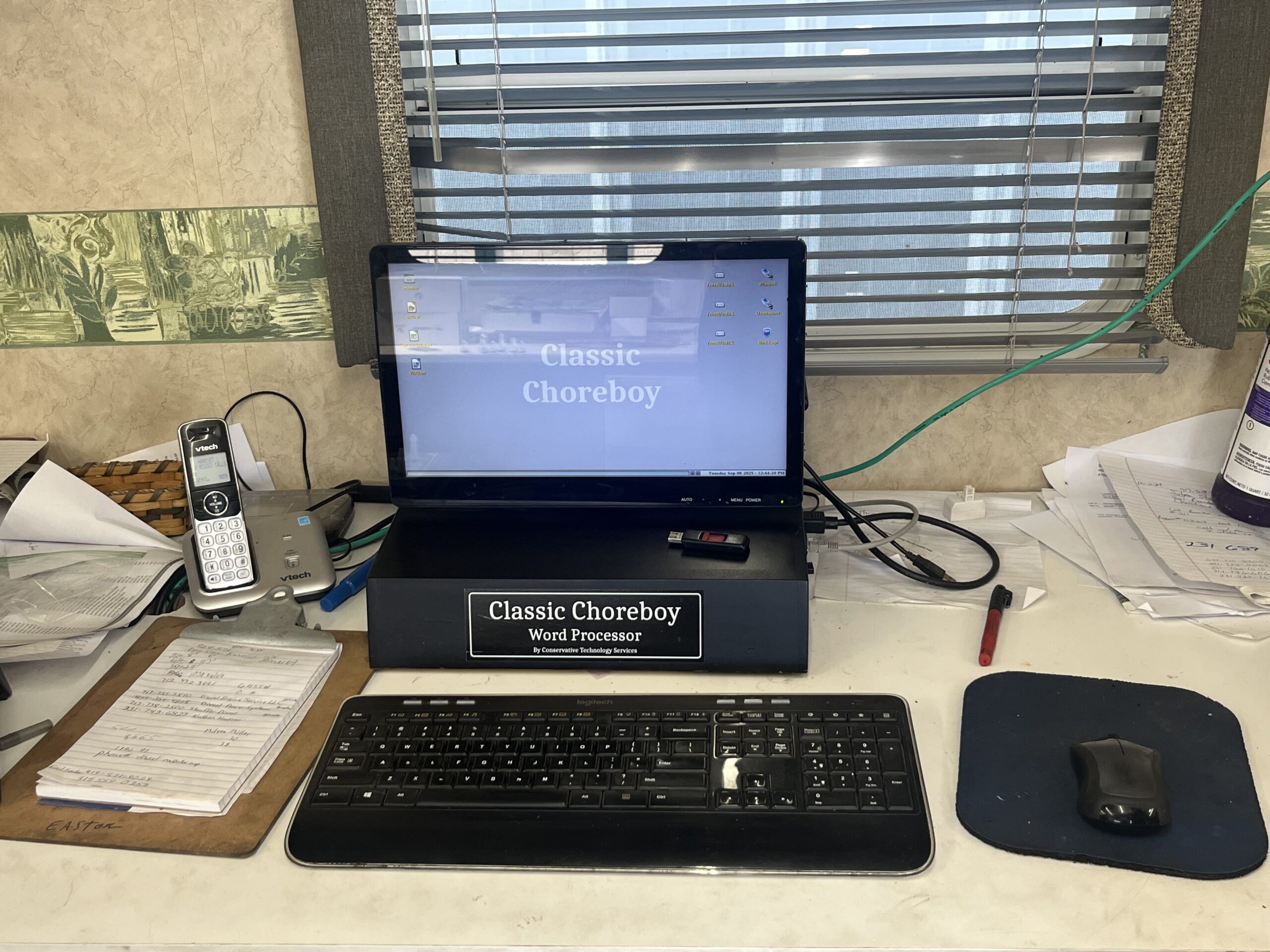
    From his machine shop among corn and bean fields on Kurtz Road near Ephrata, Lancaster County, Allen Hoover sells 1970s-style word-processing computers, upgraded to internet speeds, at the rate of more than one a day.

    For some, Hoover’s machine fits fast-changing business with timeless faith; others fear the computers have fed into a wave of covert internet use that threatens a formal split among his Amish customers.

    Since 2004 the machines, originally priced at $800 each, have been adopted by dozens of Plain religious communities to run local systems, with names like Classic, Chore Boy, and Steward, to accommodate and monitor members’ text notes and business records, without video, corporate media networks, or Apple and Google apps.

    A senior member of his Old Order Mennonite congregation and coauthor of a book on Plain responses to family abuse, Hoover agreed to talk to The Inquirer about Mennonite and Amish ideas and tools. The conversation has been edited for brevity and clarity.

    What are the tensions around computers in Plain communities?

    Our real goal is to live a separate life and not to be so influenced by popular society around us. If morality is decaying in the world, it becomes even more important for us to become a separate people. Well, that’s hard to do.

    Everything is tied together. Especially with the internet, and, smartphones. It gets harder and harder for us to be in business and to make a living without some way of being connected.

    One of Allen Hoover’s Chore Boy word-processor machines at his workshop in Ephrata, Lancaster County, September 2025.

    How are your machines different from normal computers?

    For our Plain people, we wanted it to be separate from the world. So it should have no connectivity. Not to the internet, email, or even fax. Just a stand-alone unit. And then of course no amusements of the world, no games, music, nothing like that. Just a business tool.

    Couldn’t you do that on a computer?

    Well, if it’s in my home, my children will find ways of doing things with it that I have no idea of. And also, if you look at 50 different personal computers in peoples’ homes, you will find 50 different systems. We wanted one like the old word processors, where every unit was exactly alike. No additional programs, no apps that you can put on to listen to music or whatever.

    The programs included are a word and a spreadsheet program. And a drawing program, and a computer-aided design program. We developed our own comprehensive business accounting system. With inventory control, invoicing, all that.

    We looked at the on-the-shelf programs. They are almost all internet-connected. There are a few that stand alone. But they were so clunky, made for a specific purpose, that they just didn’t fit the bill.

    How did you adapt the machines for Plain needs?

    We had a few meetings with interested businesspeople, to see what the need was. Probably made a mistake, we never asked the church for permission.

    And it took off. In the beginning, it was the only thing out there for the Plain people. Then other people started. This is about the only one that is still going — because of our stance of not making changes. We do upgrade it. It has much more power now. But we wanted to stay away from Windows or Mac.

    We ended up using Linux as the operating system. We used Open Office, we now use LibreOffice, another free program, more powerful, more useful. The computer-aided design program is called FreeCAD. There is also something similar to MapQuest, that helps you with planning and mapping trips.

    How many machines have you sold?

    I’m guessing 400 a year. So if we have been doing this for 20 years, there are a few thousand out there.

    How did the community react?

    It was mixed. In the beginning, it was a huge whoop of joy: Here is something we can use. Once a year there is an expo in Lancaster County, focused on the Plain people and Plain businesses. I got a booth and it was the star of the expo. People were lined up because it was the new thing.

    Some Plain communities reacted by banning them because it was coming too close to the computer world. And I understand that perfectly. No hard feelings about that.

    What happened more often was that communities started with it, but then became dissatisfied that we didn’t allow them to put more programs on. So they made their own and eventually drifted into the internet world.

    It has not made me a popular person. For the ones that feel we should not have gotten into computers at all, I am the bad boy. For the ones that feel we should have allowed more connections, I am the bad boy.

    We really don’t want our people working in General Motors, big factories, all day long. We fear that will influence us too much. And so, we want our own little businesses like mine, Allen Repair Service, we rebuild, repair, and resell woodworking machinery.

    And it’s getting harder [without internet]. This was a tool to allow us to stay in those businesses.

    What about smartphones?

    In Lancaster County, the Amish found loopholes, ways to have their cellphones, smartphones.

    The leadership are working through that right now, I’m pretty sure there is going to be a big split.

  • How Gen Z is making millennials look cool again

    How Gen Z is making millennials look cool again

    Step inside a Hollister store today and get a millennial retrospective: low-rise baggy and flare jeans, baby doll tops, fur-trimmed cable-knit V-necks, and sweatpants with numbers and words like “Senior” printed on the backside.

    Walk outside, and you may notice teens sporting Longchamp totes and Ugg slippers. Or digital cameras, which are seeing a resurgence after years of being sidelined by smartphones.

    These are the markers of “Millennial Core” — or the “Y2K aesthetic,” depending on whom you ask — a Gen Z reimagining of the trends its elders (now roughly 29 to 45 years old) made mainstream in the late 1990s and early aughts. Though it’s not unusual for teens and young adults to resurrect styles of the past — fashion trends tend to have 20-year cycles — the current moment speaks to a yearning for what they perceive as simpler times, when people their age weren’t tied to their phones, endlessly scrolling, and battling brain rot, industry experts say.

    “It is such a foreign concept to Gen Z and younger because it’s a world they will never be able to experience,” said Jenna Drenten, a marketing professor at Loyola University Chicago. “Some of these consumer choices … are a tangible way of trying to capture some of what that culture was.”

    Teens are taking cues from influencers and peers on social media. And brands are capitalizing on this, reacting quickly to emerging styles and sending products to TikTok stars to show off to their followers.

    But it’s more than just staying on-trend — curating a modern Y2K style is both a creative outlet and a form of escapism for Gen Z, who run from approximately age 13 to 28, said Michael Tadesse, a marketing professor at George Washington University. During times of social, economic, climate, and political instability, they search for “an emotional anchor.”

    “So when they go to Coach, Longchamp, and others, [the brands] are familiar, comforting and also safe to experiment” because older generations have shopped there, said Tadesse, who studies how technology and psychology shape marketing and retail. “Our brains are wired to find comfort in things that we’ve seen repeatedly.”

    It’s no coincidence that Gen Z is drawn to these brands, said Mark Silverstein, the chief business officer and co-founder of Cafeteria, an app that pays teens and young adults to offer their insights on brands, retailers, and trends. The most successful brands are known for quality and value, do frequent-enough discounting, and have physical stores. They also marry nostalgia with modern style, he said.

    “If you don’t have all these elements, you’re not capturing this group,” Silverstein said.

    The payoff is clear when you do: Birkenstock’s revenue rose 16% in fiscal 2025. Tapestry, which owns Coach, said net sales surged 13% last quarter, year over year. Notably, of the 2.2 million new customers it acquired globally during that time, 35% were Gen Z.

    Hollister, which is owned by Abercrombie & Fitch, outperformed the namesake store in its last quarter, A&F chief executive Fran Horowitz said in a November earnings call. Same-store sales at Hollister grew 15% year over year.

    Industry experts expect that this nostalgic style will only grow in 2026.

    “It’s going from trend to acceptance,” Silverstein said.

    Vicarious nostalgia

    Though the idea of feeling nostalgia for an era you didn’t actually experience might be counterintuitive, Chris Beer said it’s a “constant rule” for marketers.

    “Younger people are almost paradoxically more nostalgic,” said Beer, a senior data journalist at global insights company GWI. “It’s to do with life disruptions, and of course when you’re young you go through so many milestones and rites of passage.”

    Drenten, who as a teenager in the late 1990s and early 2000s remembers her mom saying she had the same halter top at her age, calls it “vicarious nostalgia” when a cultural zeitgeist gets reformed for a new generation. But the difference now is that tweens, teens, and young adults have more exposure to former trends and cultural touchstones than their predecessors, who had to draw inspiration from old photos, magazines, album covers, and TV shows.

    “Gen Z — and even Gen Alpha — has a much bigger access portal to this generational hand-me-down, which is the internet,” said Drenten, who studies digital consumer culture. “Now you have social media, you have search, Google, and Pinterest.”

    They can still find 2006 outfit inspiration boards on Pinterest with baggy, low-rise jeans, slim sunglasses, miniskirts, and Ralph Lauren polos.

    There are other triggers outside social media that are filtering into the marketplace, Drenten said, with current economic uncertainty amid a slowing job market and inflation, and geopolitical instability in the Middle East and Russia being reminiscent of the early 2000s: “There’s a bigger bubble or radius of where there’s millennial comparisons being made.”

    Ironically, Silverstein said, many of the teenagers and young adults his company surveys talk about a desire to “retreat to nostalgia” to get away from these conditions, as well as feeling chained to technology and AI that “are just flooding the internet with junk.”

    They’re not just expressing Y2K aesthetic in their clothes and handbags — they’re also buying analog media such as vinyl, CDs, and cassettes, as well as digital and disposable cameras, coloring books, charm bracelets, and collectible cards and figurines.

    Though CDs and DVDs are still niche, revenue declines are leveling. Sales fell 3% in the third quarter of 2025, according to the trade organization Digital Entertainment Group; a year earlier, they tumbled nearly 26%.

    But sales of point-and-shoot cameras climbed 48%, year over year, in the 52 weeks ended Jan. 3, according to market research firm Circana. The number of units sold spiked 89%.

    “Waiting for a photo to develop, or download, or print, increases emotional reward,” Tadesse said. “It’s delayed gratification. … They’re trying to figure out a way to appreciate what they have because everyone’s told them that they want everything now, and life doesn’t work that way.”

    Curators, not consumers

    The brands with the most “iconic Y2K vibes” keep finding new ways to refresh the millennial look, Silverstein said. Ugg launched a line of Mini boots and its Tasman slipper. Birkenstock released more colorways and variations on its popular clogs and sandals. Hollister is constantly refreshing its in-store inventory. Other brands bubbling back up are Juicy Couture, Ed Hardy, and True Religion, Silverstein said.

    The teens and young adults Cafeteria surveys say these brands “‘get it’ as far as modern styling with the aesthetic,” Silverstein said.

    Then there are brands such as Coach and Longchamp, Millennial Core staples that come with a level of “recognizable status,” he said. These shoppers may have spotted these brands in their mom’s closet.

    The Coach Brooklyn purse — a popular tote that ranges in size — goes for $295 to $495. A Longchamp Le Pliage original tote bag costs $180.

    “It’s expensive enough to signal quality and status, but there is this aspirational-purchase language they use around them: ‘I’m waiting to buy this,’ ‘I’m saving up for it,’ ‘I’m having it in my cart for the right time,’” Silverstein said. “They have identified the product they want. … It is the goal.”

    The internet has played a crucial role in how Gen Z has adapted their style. They have endless inspiration and everything they could want on their devices, Tadesse said. Unlike millennials, who were mostly limited to discovering what was cool by reading the same magazines, watching the same TV shows, and visiting the same stores in the mall, Gen Z is less constrained, and it’s reflected in their fashion choices, Tadesse said.

    “They’re curators,” he said. “They’re able to mix and match, and do things their own way. And so that gives them the irony, the play and the ability to control traditional sense [of style], but they bring their own flavor of what’s cool.”

    “Something that could be cringe is also cool,” he said.

  • Trump’s voice in a new Fannie Mae ad is generated by artificial intelligence, with his permission

    Trump’s voice in a new Fannie Mae ad is generated by artificial intelligence, with his permission

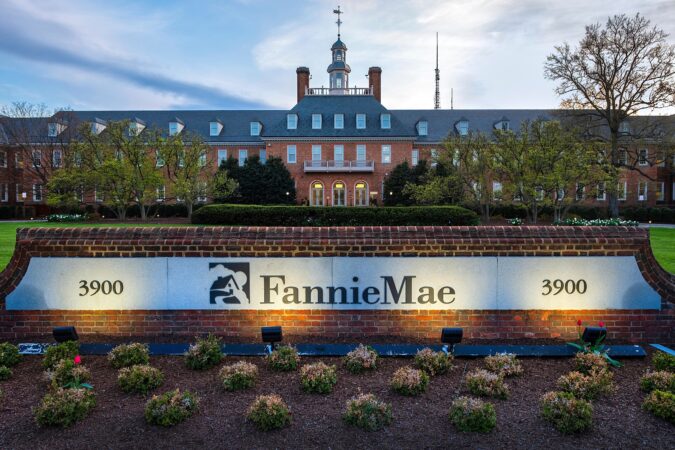
    NEW YORK — What sounds like President Donald Trump narrating a new Fannie Mae ad actually is an AI-cloned voice reading text, according to a disclaimer in the video.

    The voice in the ad, created with permission from the Trump administration, promises an “all new Fannie Mae” and calls the institution the “protector of the American Dream.” The ad comes as the administration is making a big push to show voters it is responding to their concerns about affordability, including in the housing market.

    Trump plans to talk about housing at his appearance at the World Economic Forum in Davos, Switzerland, where world leaders and corporate executives meet this week.

    This isn’t the first time a member of the Trump family has used AI to replicate their voice, first lady Melania Trump recently employed AI technology firm Eleven Labs to help voice the audio version of her memoir. It’s not known who cloned President Trump’s voice for the Fannie Mae ad.

    Last month, Trump pledged in a prime-time address that he would roll out “some of the most aggressive housing reform plans in American history.”

    “For generations, homeownership meant security, independence, and stability,” Trump’s digitized voice says in the one-minute ad aired Sunday. “But today, that dream feels out of reach for too many Americans not because they stopped working hard but because the system stopped working for them.”

    Fannie Mae and its counterpart Freddie Mac, which have been under government control since the Great Recession, buy mortgages that meet their risk criteria from banks, which helps provide liquidity for the housing market. The two firms guarantee roughly half of the $13 trillion U.S. home loan market and are a bedrock of the U.S. economy.

    The ad says Fannie Mae will work with the banking industry to approve more would-be homebuyers for mortgages.

    Trump, Bill Pulte, who leads the Federal Housing Finance Agency, and others have said they want to sell shares of Fannie Mae and Freddie Mac on a major stock exchange but no concrete plans have been set.

    Trump and Pulte have also floated extending the 30-year mortgage to 50 years in order to lower monthly payments. Trump appeared to back off the proposal after critics said a longer-term loan would reduce people’s ability to create housing equity and increase their own wealth.

    Trump also said on social media earlier this month that he was directing the federal government to buy $200 billion in mortgage bonds, a move he said would help reduce mortgage rates at a time when Americans are anxious about home prices. Trump said Fannie Mae and Freddie Mac have $200 billion in cash that will be used to make the purchase.

    Earlier this month, Trump also said he wants to block large institutional investors from buying houses, saying that a ban would make it easier for younger families to buy their first homes.

    Trump’s permission for the use of AI is interesting given that he has complained about aides in the Biden administration using autopen to apply the former president’s signature to laws, pardons, or executive orders. An autopen is a mechanical device that is used to replicate a person’s authentic signature.

    However, a report issued by House Republicans does not include any concrete evidence that autopen was used to sign Biden’s name without his knowledge.