Category: Business

Business news and market updates

  • Graduate student workers at Penn reach a tentative agreement, avoiding a strike

    Graduate student workers at Penn reach a tentative agreement, avoiding a strike

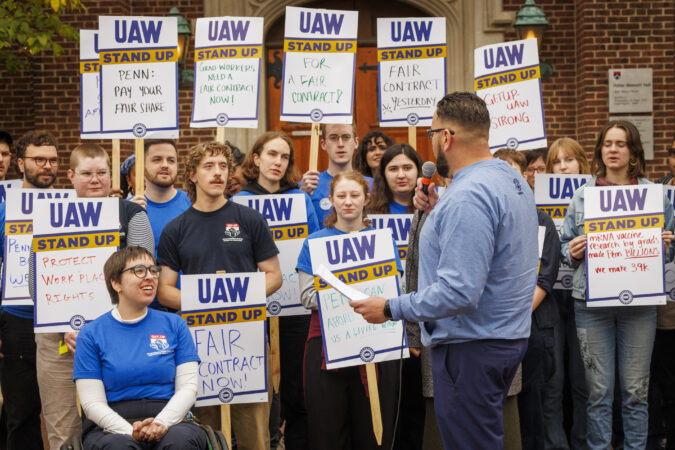
    Penn’s graduate student workers have reached a tentative agreement on a first union contract, averting a strike.

    The two-year tentative agreement includes increases to wages among other benefits.

    “I am so proud of what we were able to accomplish with this contract,” Clara Abbott, a Ph.D. candidate in literary studies and member of the bargaining committee said in a statement. “We won a historic contract that enshrines gains for grad workers.”

    Research and teaching assistants at the university voted to unionize in 2024. The union, which represents about 3,400 graduate student workers, is known as Graduate Employees Together-University of Pennsylvania (GET-UP) and is part of the United Auto Workers (UAW). The union has been negotiating with the university since October 2024 for a first contract.

    In November, the union’s bargaining members voted to authorize a strike, if called for by the union. In January, they set a strike deadline, announcing that they would walk off the job on Feb. 17 if they had not reached a deal.

    A deal was announced in the early morning hours Tuesday.

    While tentative agreements had been reached on a number of issues, some remained without consensus ahead of the final bargaining session on Monday before the strike deadline. Those sticking points included wages, healthcare, and discounts on SEPTA passes.

    “We are pleased to announce that a tentative agreement has been reached between Penn and GETUP-UAW,” a university spokesperson said in a statement. “Penn has a long-standing commitment to its graduate students and value their contributions to Penn’s important missions. We are grateful to all the members of the Penn community who helped us achieve this tentative agreement.”

    A date to vote on the ratification of the tentative agreement has not yet been announced.

    The deal comes as earlier this month Pennsylvania state senators and representatives and Philadelphia City Council members addressed letters to the university’s president and provost, urging them to come to an agreement with the student workers and avoid a strike.

    “A strike at the University of Pennsylvania would seriously disrupt life for the tens of thousands of Philadelphians who are students, employees, and patients at Penn,” the letter signed by City Council members reads. “As such, we strongly urge the Penn administration to avert a strike by coming to a fair agreement that meets the needs of graduate student employees prior to February 17th.”

    What’s in the tentative deal?

    Monday’s bargaining session brought tentative agreements on sticking points that included wages and healthcare coverage.

    If ratified, the tentative deal would provide graduate student workers with an annual minimum wage of $49,000, which the union has said is a 22% increase over the previous standard. For those paid on an hourly basis, the minimum hourly rate would be $25. Those rates would go into effect in April and a 3% increase would be provided in July 2027.

    The deal would also create a fund with $200,000 annually from which graduate student workers could seek reimbursements to cover up to 50% of their dependent’s health insurance premiums.

    Ahead of the Monday bargaining session, other tentative agreements had come together around leave. The university agreed to give six weeks of paid medical leave, as well as eight weeks of paid parental leave.

    The university and the union had also recently reached a tentative agreement that would create an annual $50,000 fund to help international graduate student workers with expenses associated with reinstating or extending visas.

    What would have happened in the event of a strike?

    Graduate student workers in the bargaining group teach and conduct research at the university.

    Classes, research, and other academic activities would have continued during a strike, according to the university spokesperson. Penn published guidance on how to continue this work in the event of a work stoppage or other disruption.

    Striking graduate student workers would not have been paid throughout a work stoppage, but would have continued to be covered by their health insurance for the time being, according to a university statement.

    If others employed at the university who are not in the bargaining group chose to join the work stoppage, they would not have been paid and could have faced consequences “up to and including separation from that position, depending on the circumstances of the refusal to work,” according to a university statement.

    Ahead of the tentative agreement on Monday, hundreds signed a pledge indicating that they are employed at Penn and would not do the work of those on strike or assign it to others in the event of a work stoppage.

    In recent years, a wave of labor actions has taken place across Penn and other local campuses. Temple University graduate workers went on strike for 42 days in 2023 during contract negotiations. Rutgers University educators, researchers, and clinicians walked off the job for a week that same year.

    At Penn, the largest employer in Philadelphia, a wave of student-worker organizing in recent years has included resident assistants, graduate students, postdocs, and research associates, as well as training physicians in the University of Pennsylvania Health System.

    Pins on a table during a GET-UP rally at the University of Pennsylvania in Philadelphia, Pa., on Wednesday, Oct. 4, 2023.
  • Philly business owners could save thousands with this little-known resource

    Philly business owners could save thousands with this little-known resource

    If you own a business in Philadelphia and you’re looking for financing, one little known resource is the Philadelphia Industrial Development Corp. or PIDC. Don’t be put off by the word industrial. The public-private organization was formed as a nonprofit by the City of Philadelphia and the Greater Philadelphia Chamber of Commerce to provide financing to all sorts of businesses to create jobs and revitalize neighborhoods.

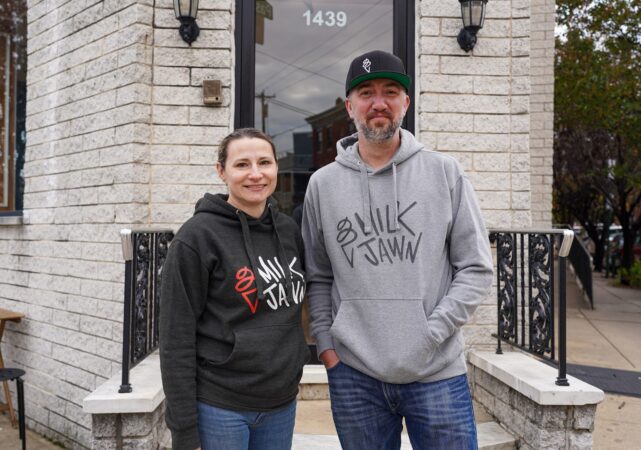
    For example, Milk Jawn, an ice cream shop in East Passyunk used PIDC financing to help with its expansion.

    “PIDC was our first type of institutional financing,” said Amy Wilson, Milk Jawn’s founder. “Our early growth was friends and family and some crowdfunding. PIDC then helped fund our build out and kitchen construction.”

    The organization says it’s focused on helping companies expand, and many different types of businesses would qualify for financing.

    “PIDC is Philadelphia’s partner for business growth,” said Kevin Lessard, a senior vice president at the organization. “We help businesses, nonprofits, and developers overcome barriers to expansion by providing financing and real estate solutions that make starting, staying, and scaling in the city possible.”

    To qualify for a loan through PIDC, your business must be located within the city, have operated for at least two years, and earn at least $100,000 in annual revenues. Special considerations may be made based on what the funds will be used for (i.e. building in a low-income area) or whether you’re a “disadvantaged” business owner. Personal guarantees and collateral are also normally required.

    Loans can be used for equipment and property as well as working capital needs and “soft” costs like legal, accounting, permits, and appraisals. One of the more popular uses of the loans is for commercial real estate financing, where financing can be used to acquire and renovate property or to fund new construction.

    Philly success stories

    For Alexander Sherack, a co-owner of Korea Taqueria, an eatery with several locations in Philadelphia, PIDC financing fit the kind of deal he was looking for.

    “We needed a property that was zoned commercial and mixed-use plus working capital so it wasn’t a typical path for a traditional bank loan,” he said. “We went with PIDC because it helped us replace rent with ownership — and our property turned out to be a hidden gem.”

    Businesses can apply online and will then go through an underwriting and due diligence process which usually includes submitting financial reports, bank statements, and tax returns, along with a business plan and forecast. Corporate documents such as bylaws and articles of incorporation are also required. Once the loan is received, there’s ongoing reporting and other compliance requirements, which include regular submission of financial information and updating any major changes in the business.

    Kia Jones owns Past Your Bedtime childcare in West Philadelphia and used PIDC financing for both working capital and renovations.

    “The staff there made it very easy,” she said. “Any questions that I had, they were right on it.”

    Pros of PIDC loans

    PIDC funding can be a great bridge to a traditional bank loan. Some applicants who may find themselves turned down for a bank loan may still be able to receive funding from the PIDC.

    PIDC takes more of a holistic, mission-driven approach. If a traditional bank turns you down, PIDC may still structure a deal — particularly if your project creates jobs or revitalizes neighborhoods. Getting PIDC involved may also encourage traditional banks to offer additional funding both now and in the future.

    PIDC loans generally have much lower interest rates than a traditional bank loan. Milk Jawn’s Wilson, for example, accessed a special 0% interest program in early 2022 through PIDC, a major cost savings in a time of rising interest rates. (This was part of a one-time pandemic relief program.)

    Finally, the PIDC provides education, support, and networking programs to help their community of borrowers manage and grow their businesses. And the connections can pay off.

    “We were able to meet partners of the PIDC,” Jones said. “One partner program called Boost Your Business got us a $50,000 forgivable loan. The organization is also very familiar with city grants and other local funding options.”

    Real talk

    As helpful as the organization can be, business owners shouldn’t expect to get immediate funding.

    Sherack recommends starting early and “building a transaction timeline” into any agreement where property is being purchased.

    “Don’t assume quick money,” he said. “Submit your documents fast and press for clarity on timing so you don’t lose the deal.”

    Wilson agrees and said she had to get a loan from a family member while she waited for the application process to complete.

    “We’re a mission-driven lender using public and public-private capital, so every deal requires careful underwriting and a clear path to economic impact,” Lessard said. “Unlike conventional lenders, we tailor each financing package to the business.”

  • Four smart moves to cut your 2025 tax bill under new rules

    Four smart moves to cut your 2025 tax bill under new rules

    The One Big Beautiful Bill Act made some long-awaited permanent changes to the tax code. It also introduced short-term tax breaks that come with strict limits and phaseouts, and many of them are only available through 2028 or 2029. Here are four ways to get the most out of the OBBBA’s temporary provisions as you file your 2025 taxes and plan ahead.

    Don’t dismiss itemizing your deductions

    The OBBBA temporarily boosts the state and local tax deduction cap, or SALT, from $10,000 to $40,000 (for married couples filing jointly and single filers). This higher cap applies from 2025 through 2029.

    Run the numbers: For 2025, the standard deduction is $31,500 for married couples and $15,750 for singles. If your total itemized deductions — including mortgage interest, charitable giving, and state and local taxes (up to the new $40,000 cap) — add up to more than your standard deduction, you should itemize.

    Watch your income: The new $40,000 SALT cap isn’t for everyone. It begins to phase out if your modified adjusted gross income is over $500,000 (for all filers). If your MAGI reaches $600,000, your SALT deduction reverts to the original $10,000 limit.

    Maximize the new targeted deductions — if you qualify

    The OBBBA introduced several temporary above-the-line deductions (available whether you itemize or not) to help middle-income workers. But they have very strict income and benefit limits.

    The qualified overtime pay deduction: Capped at $25,000 for married couples filing jointly and $12,500 for singles. Only the extra “half-time” portion of your time-and-a-half pay qualifies for the deduction. For a married couple, this benefit begins to disappear if your MAGI hits $300,000 and is entirely gone once your MAGI reaches $550,000.

    The qualified tips income deduction: Allows you to write off qualified tip income up to $25,000 per tax return, whether you file as married or single. The deduction is only available for tips that are formally reported on a Form W-2 or Form 1099. It phases out sharply for higher earners, starting at a MAGI of $300,000 for married couples and $150,000 for singles, and is fully eliminated at $550,000 and $400,000, respectively.

    The auto loan interest deduction: This temporary deduction allows you to write off up to $10,000 of interest paid on a loan for a new, personal-use vehicle with final assembly in the United States. (Leases are excluded.) It starts to phase out at $200,000 for married couples and $100,000 for singles and is completely gone by $250,000 and $150,000.

    Seniors, time your 2026 Roth conversions carefully

    If you are 65 or older, the OBBBA offers a new, temporary deduction for seniors of up to $12,000 for married couples ($6,000 per eligible spouse) and $6,000 for single filers. This is a welcome tax break, but it’s fragile.

    Beware the MAGI trap: This deduction begins to disappear for married couples with a MAGI over $150,000 and for singles over $75,000.

    Model Roth conversions for 2026: If you are a senior who is close to the $150,000 MAGI limit, a Roth conversion done in 2026 could push your income over the threshold, causing you to lose this entire $12,000 deduction. Work with your adviser to model any planned 2026 conversions.

    Optimize income to qualify for the best breaks

    Many of the OBBBA’s most valuable, temporary provisions are income-sensitive, particularly those new targeted deductions and the elevated SALT cap. Keep these rules in mind for 2025 filing and 2026 tax planning.

    If you are nearing any of the income phaseouts (like the $300,000 for tips/overtime, or the $500,000 for the elevated SALT cap), consider deferring income until 2026. This might include:

    • Postponing the sale of highly appreciated stock to avoid a large capital gain.
    • Delaying the exercise of nonqualified stock options.
    • Maximizing your 401(k) and health savings account contributions to reduce your current-year MAGI.
    • Holding off on large Roth conversions.

    A proactive approach to these expiring OBBBA provisions is essential for year-end. Don’t let the technical limitations and phaseouts catch you by surprise. With a little planning now, you can lock in significant tax savings.

    This article was provided to the Associated Press by Morningstar. For more personal finance content, go to https://www.morningstar.com/personal-finance.

    Sheryl Rowling, CPA, is an editorial director, financial adviser for Morningstar.

  • Meet the Philly native and St. Joe’s Prep grad running Philly’s largest outdoor shopping center operator

    Meet the Philly native and St. Joe’s Prep grad running Philly’s largest outdoor shopping center operator

    Brian Finnegan, Brixmor Property Group’s new CEO, is a true Philadelphian.

    He was born in Southwest Philly, spent his formative years in Roxborough, and graduated from St. Joe’s Prep. He met his wife, Katie, at a Halloween party in his mother’s Packer Park backyard in 2009, while just down the road the Phillies played the Yankees in the World Series and Pearl Jam closed the Spectrum.

    Finnegan, now 45, can’t give up his Eagles season tickets, despite living outside New York and traveling the world as a real estate executive, When he can’t make games, he can usually count on his 73-year-old mother, Geraldine, to take the seats.

    Finnegan said he got his work ethic from his mom, who’s worked for the legal services company MCS Group for nearly 50 years, and his late father, Thomas, a 30-year employee and manager of city parks. He also points to his early jobs, which included a summer gig as “head grill guy” at Circle Pizza in Avalon.

    These experiences paid off: Last month, Finnegan was named Brixmor’s CEO, a role he’d previously held on an interim basis.

    Brian Finnegan, who was named CEO of Brixmor Property Group last month, said he’s especially proud of the company’s commitment to its more than 20 shopping centers in and around Philadelphia, where he grew up.

    Finnegan lives in Rye, N.Y., with Katie and their three young daughters, Magnolia, Daisy, and Poppy.

    In a recent interview, Finnegan talked about Brixmor’s dedication to its more than 20 Philly-area shopping centers, including Roosevelt Mall, Pilgrim Gardens, and the Village at Newtown.

    The company has invested about $180 million in its Philly portfolio over the past nine years, Finnegan said, and calls itself the largest operator of open-air shopping centers in the region.

    The following interview has been edited and condensed for clarity.

    How would you say Brixmor is doing overall?

    The company is in the best position it’s ever been. We’re signing rents at the highest level that we ever have. We have occupancy levels that are close to the highest we’ve had.

    Consumers today are demanding much more of the suburbs in terms of the types of services that they’re looking for, the types of restaurant options that they’re looking for. And that’s allowed us to really improve the merchandising mix at our shopping centers with better food and beverage options and better service options in terms of health and wellness.

    Why do you think Brixmor shopping centers are thriving while many brick-and-mortar stores falter?

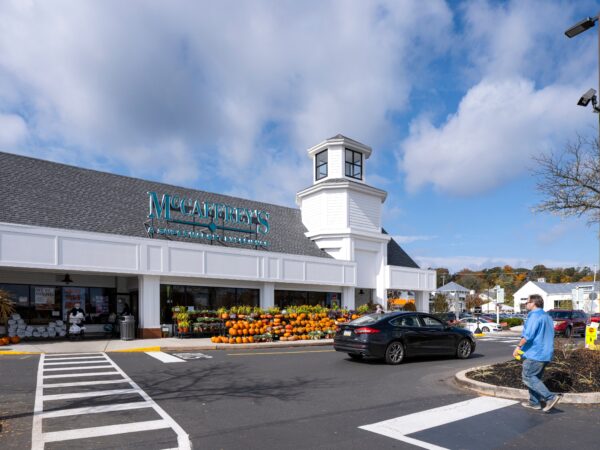
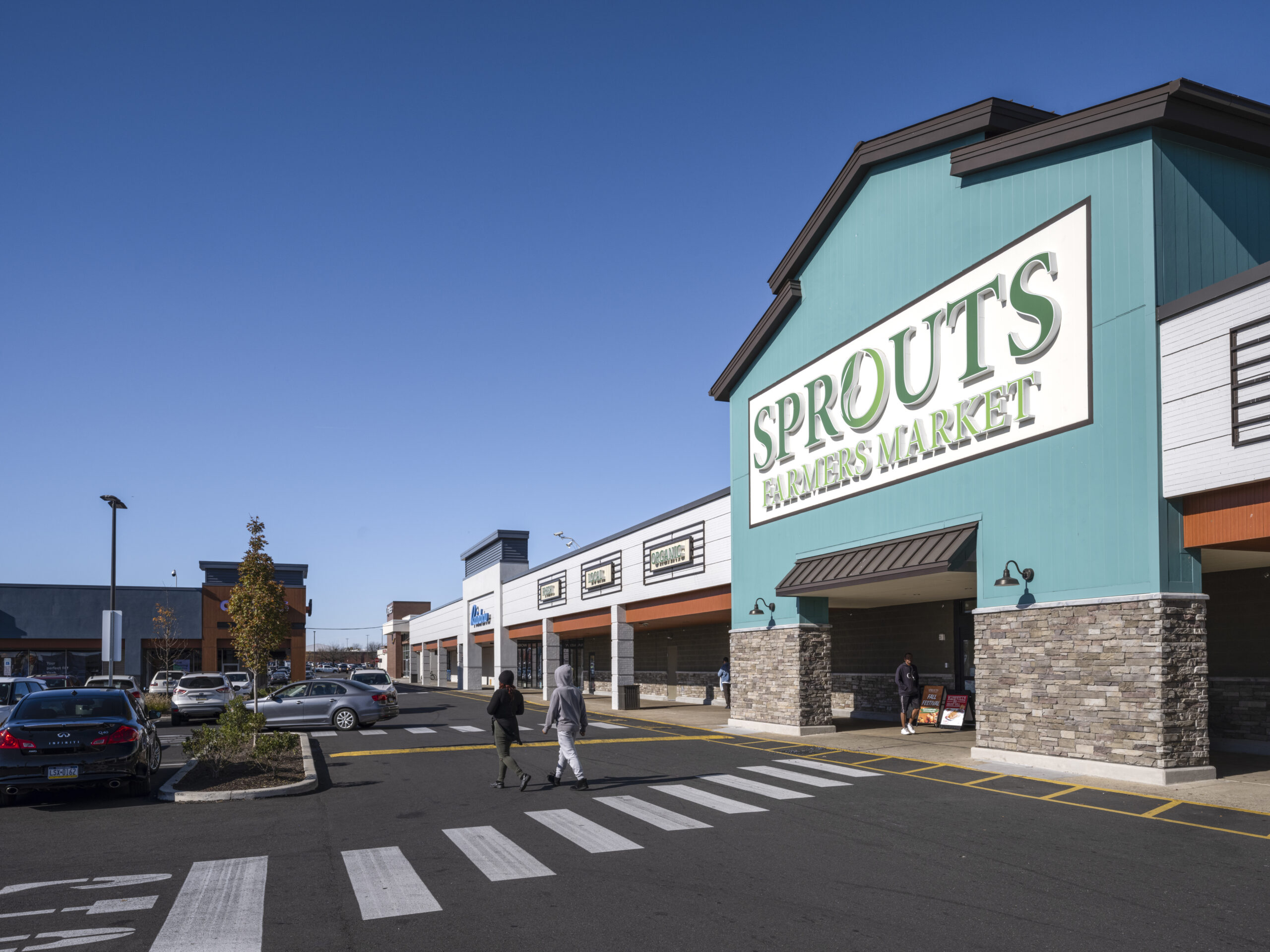
    Grocers, especially [tenants like Sprouts, Whole Foods, and McCaffrey’s], have really invested in their stores, and they’re drawing a lot of traffic.

    Sprouts is among the retailers located at Roosevelt Mall in Northeast Philadelphia, one of Brixmor Property Group’s complexes in the region.

    As it relates to fitness and wellness, and higher quality food and beverage options, I think consumers today care more about what they’re putting in their bodies and how they look than they ever have.

    Across the income spectrum, consumers are looking for value. And as department stores have closed, off-price operators [such as Burlington and Five Below] have taken a significant amount of share.

    You have to create an environment at specific shopping centers where if one tenant draws traffic, another tenant can complement them.

    It really matters who your neighbor is, so if you’re able to put a strong merchandising mix together, which we’ve been able to do at our centers in Philadelphia, you’re really going to see traffic.

    The Ross Dress for Less at Roosevelt Mall is one of several off-price retailers that have found success in Brixmor Property Group centers, according to CEO Brian Finnegan.
    What would you like to accomplish as CEO?

    We’d love to find some new opportunities to grow our footprint in Philadelphia.

    The deals that we’ve done in Philadelphia, many of them are [with retailers new to Brixmor’s national portfolio], like with Lululemon, like with Free People, like with Warby Parker, like with Pottery Barn and Williams-Sonoma.

    We think about how our centers connect with the communities that we’re in. We’re part of those communities. We’re actually landlords to Philadelphia institutions like Chickie’s & Pete’s and P.J. Whelihan’s.

    The more that we can tie our assets with retailers that are relevant to those communities, the better.

    What makes you optimistic about shopping centers amid all the e-commerce competition?

    What [the pandemic] showed was that people like connectivity. They don’t like to just have things delivered to their door. They want to go out and experience things. They want to touch and feel things.

    Our traffic since the pandemic across the entire portfolio is up 7%.

    Barnes & Noble is shown at Barn Plaza shopping center in Doylestown, which is one of more than 20 complexes in the region owned by Brixmor Property Group.

    If you talk to a lot of these major retailers, what they’ll say is the store is the center of everything that they do. They’re utilizing that store to be able to connect with the consumer in store, at delivery, as part of pickup.

    I’m pretty bullish. There are a lot of retailers that continue to thrive despite the fact that consumers have options to be able to get something online if they wanted to.

  • South Koreans are shunning dangerous shipbuilding jobs envied by Trump

    South Koreans are shunning dangerous shipbuilding jobs envied by Trump

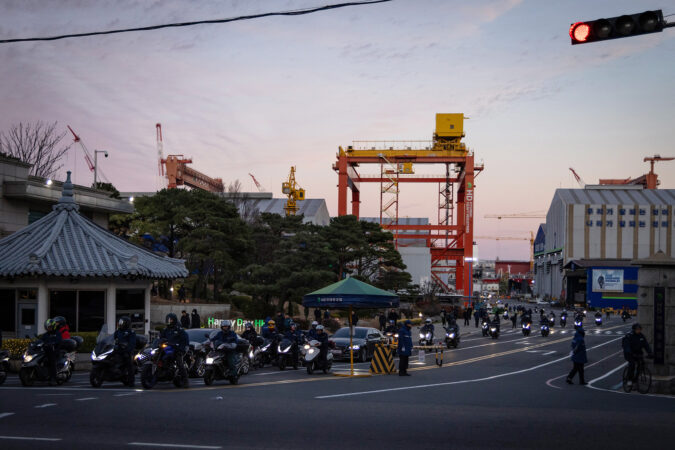
    South Korea has promised to help “Make American Shipbuilding Great Again,” pitching its world-leading shipyards to President Donald Trump as a model to revive U.S. manufacturing and create desirable blue-collar jobs. But in reality, the sector is reliant on low-paid migrants and plagued by a high accident rate. Shipbuilding is among the country’s most dangerous industries, killing dozens of people each year, prompting more South Korean workers to shun those jobs — a growing problem for Lee Jae Myung, the nation’s leader.

    “If we bring in foreign workers on around 2.2 million won ($1,500) a month to fill shipyard jobs, we have to ask what happens to domestic employment, and whether that truly helps the long-term development of the industry,” Lee said at a cabinet meeting Tuesday.

    At first glance, the country’s shipyards are formidable: fast, cheap, and relentlessly efficient. Seoul made the industry an integral part of a $350 billion trade agreement with the U.S., and has also sought to leverage it into contracts for military vessels and permission to build nuclear-powered submarines. Yet a closer look reveals a more complicated picture. South Korea’s occupational fatality rate is almost 4 deaths per 100,000 workers, vs. an OECD average of roughly 3, according to International Labour Organization data compiled by Bloomberg. Risks are especially acute in shipbuilding, where the fatality rate in 2024 was more than four times the national average, government data showed.

    South Korean President Lee Jae Myung (center) and Pennsylvania Gov. Josh Shapiro (left) visited the Hanwha Philly Shipyard in August 2025 in Philadelphia. The event marked the christening of the NSMV State of Maine and highlighted growing industrial and strategic cooperation between South Korea and the United States.

    The safety record helps explain why many skilled Korean workers have deserted the yards. To keep up production as big orders roll in, shipbuilders have turned to foreign workers, often using layers of subcontracting to keep costs low.

    As of April 2025, more than 23,000 migrant workers hold the main work visas used in South Korea’s shipyards, industry data shows. The government has repeatedly eased strict quotas, now allowing foreigners to make up as much as 30% of the workforce in certain skilled shipbuilding roles — one of the highest rates of any sector. The data point to a central contradiction: The productivity Washington admires is sustained by jobs many Koreans no longer take, filled instead by workers with far fewer options to refuse them. This sits uneasily with Seoul’s $150 billion pledge to support a revival of U.S. shipbuilding and U.S. manufacturing jobs.

    Modern servitude

    “What worries me most is that we’re exporting a shipbuilding model whose reality is barely sustainable at home,” said Kim Hyunjoo, head of the Ulsan Migrant Center. “If this industry is being kept afloat by highly constrained foreign labor, it’s hard to see how that model can simply be transplanted to the U.S., where regulations and scrutiny are far stricter.”

    Aslam Hassan, a migrant worker from Sri Lanka, was injured while working at a shipyard in Ulsan, South Korea. “When you look closely at migrant worker visas, it feels like they were designed to create a kind of modern servitude.”

    Three years ago, while working at a shipyard in Ulsan, a sudden blast from a high-pressure spray machine knocked Sri Lankan worker Aslam Hassan to the ground, shattering his protective gear and shooting toxic paint into both eyes.

    “As I fell, I thought, ‘So this is how I die, without even seeing my baby,’” said Hassan, who was working as a subcontractor at the time. His vision never fully recovered.

    His experience reflects the dangerous conditions that underpin South Korea’s shipbuilding efficiency. Government data show nonaffiliated workers, including subcontracted and dispatched labor, make up about 63% of shipbuilding employment, far above the economy-wide average of roughly 16%.

    “When you look closely at migrant worker visas, it feels like they were designed to create a kind of modern servitude,” said Hassan, who now works for an auto parts company after his injury. “During the contract period, we can’t move even in unfair conditions.”

    Safety rules are enforced more strictly during regular shifts for directly employed workers, one migrant worker told Bloomberg News, asking not to be identified as he’s not authorized to speak publicly. More hazardous tasks are often pushed to subcontractors, who are called in early, late, or overnight, when oversight is looser.

    Demand is growing as the industry enjoys a new boom that puts further strains on its workforce. Fresh orders last year reached nearly $36 billion for HD Korea Shipbuilding & Offshore Engineering Co., Hanwha Ocean Co., and Samsung Heavy Industries Co., accounting for about 20% of global new ship orders by volume, according to SK Securities.

    Shipbuilding ties have also bolstered Seoul’s security goals. President Lee has received Trump’s conditional approval to pursue nuclear-powered submarines, a long-standing ambition. But the growing strategic role has raised the stakes.

    Tensions have also become more acute in recent weeks, with Trump warning that the U.S. could again raise tariffs on South Korean goods, citing frustration over what he sees as slow or uneven follow-through on trade commitments. The threat has pushed senior officials back to Washington to explain delays and reassert Seoul’s promises.

    Further straining ties is South Korea’s probe into a massive data breach at Coupang Inc., the Seattle-headquartered e-commerce firm known as the “Amazon of South Korea.” Vice President JD Vance has framed Seoul’s actions as an assault on the U.S. tech sector.

    With the trade deal still very much up in the air, shipbuilding — as one of the highest-profile deliverables — is under the microscope. And any failure to deliver what has been promised could derail the entire agreement.

    Ignoring rights

    The sector’s heavy reliance on migrant workers on restrictive contracts is also likely to pose problems in any wholesale export of the model stateside, experts say. South Korea is painfully aware of Trump’s anti-immigrant drive after Hyundai and LG workers were detained in a massive Immigration and Customs Enforcement sweep at a battery plant in Georgia last year, just weeks after Lee first met Trump.

    Sri Lankan welder Manoj Wijesekara paid a broker to secure a skilled-worker visa and a job at HD Hyundai Heavy Industries Co. When the pay turned out to be far lower than expected, Wijesekara resigned — only to discover that his visa effectively tied him to HD Hyundai, leaving him unemployed and at risk of deportation.

    In the shipyards, many South Korean companies rely on a visa regime that binds overseas workers to a single employer, limiting their ability to change jobs, experts say. Sri Lankan welder Manoj Wijesekara paid a broker about 20 million won to secure a skilled-worker visa and a job at HD Hyundai Heavy Industries Co., hoping the move would allow him to support his two children.

    When the pay turned out to be far lower than expected, Wijesekara resigned — only to discover that his visa effectively tied him to HD Hyundai, leaving him unemployed and at risk of deportation. He says the company misled him. The company says he resigned of his own accord. The dispute is pending before South Korea’s National Labor Relations Commission.

    “I am terrified to speak out for fear of being deported,” said Wijesekara, who missed his mother’s funeral in November but said he was determined to hold his former employer to account. “People tell me it’s foolish to fight a company this big.”

    But this broken labor model doesn’t just hurt migrant workers, said Kim Doona of Korean Lawyers for Public Interest and Human Rights, if it continues “it will hurt Korean shipbuilders.”

    “Ignoring labor rights in an industry built on high-skilled work ultimately weakens global competitiveness,” she said. “Once companies fall short of international human rights standards and domestic labor laws, that risk can weigh on exports.”

  • What to know about student loan repayment plans and collections

    What to know about student loan repayment plans and collections

    NEW YORK — It’s been a confusing time for people with student loans. Collections restarted, then were put on hold. At the same time, borrowers had to stay on top of changes to key forgiveness plans.

    Last year, the long-contested SAVE plan introduced by the Biden administration ended with a settlement agreement. President Donald Trump’s “Big Beautiful Bill” introduced new borrowing limits for graduates and raised challenges to the Public Service Loan Forgiveness program. While several changes for student loan borrowers will take effect this summer, other key questions remain unresolved.

    More than 5 million Americans were in default on their federal student loans as of September, according to the Education Department. Millions are behind on loan payments and at risk of default this year.

    Borrowers “genuinely struggle to afford their loans and then to hear that the administration is making it more expensive and taking away some of the tools and resources that help folks afford their loans is really, it’s panic-inducing,” said Winston Berkman-Breen, legal director at Protect Borrowers.

    Last month, the Education Department announced that it would delay involuntary collections for student loan borrowers in default until the department finalizes its new loan repayment plans. The date for this is still unclear.

    If you’re a student loan borrower, here are some key things to know.

    If you were enrolled in the SAVE plan

    The SAVE plan was a repayment plan with some of the most lenient terms ever. Soon after its launch it was challenged in court, leaving millions of student loan borrowers in limbo. Last December, the Education Department announced a settlement agreement to end the SAVE plan. What is next for borrowers who were enrolled in this repayment plan is yet to be determined.

    “Seven and a half million borrowers who are currently enrolled in SAVE need to be moved to another plan,” Berkman-Breen said.

    As part of the agreement, the Education Department says it will not enroll new borrowers, will deny pending applications, and will move all current SAVE borrowers into other repayment plans.

    The Education Department is expected to develop a plan for borrowers to transition from the SAVE plan, yet borrowers should be proactive about enrolling in other repayment plans, said Kate Wood, a lending expert at NerdWallet.

    If you are looking to enroll in an income-driven repayment plan

    Borrowers can apply for the following income-driven plans: the Income-Based Repayment Plan, the Pay as You Earn plan, and the Income-Contingent Repayment plan.

    “They all have similar criteria, and they function similarly. Your payment is set as a percentage of your income, not how much you owe, so it’s usually a lower payment,” Berkman-Breen said.

    The payment amount under income-driven plans is a percentage of your discretionary income, and the percentage varies depending on the plan. Since many people are looking to switch plans, some applications to income-driven repayment plans might take longer to process, said Jill Desjean, director of policy analysis at the National Association of Student Financial Aid Administrators.

    You can find out which repayment plan might work best for you by logging on to the Education Department’s loan simulator at studentaid.gov/loan-simulator/.

    If you’re working toward your Public Service Loan Forgiveness

    There are no changes to the Public Service Loan Forgiveness Program yet. Last year, the Trump administration announced plans to change the eligibility requirements for participating nonprofits.

    The policy seeks to disqualify nonprofit workers if their work is deemed to have “substantial illegal purpose.” The Trump administration said it’s necessary to block taxpayer money from lawbreakers, while critics say it turns the program into a tool of political retribution.

    The proposal says illegal activity includes the trafficking or “chemical castration” of children, illegal immigration, and supporting foreign terrorist organizations. This move could cut off some teachers, doctors, and other public workers from federal loan cancellation.

    “This is something that obviously is very stressful, very nerve-wracking for a lot of people, but given that we don’t know exactly how this is going to be enforced, how these terms are going to be defined, it’s not really something that you can try to plan ahead for now,” Wood said.

    While this policy is currently being challenged by 20 Democrat-led states, it’s expected to take effect in July. In the meantime, Wood recommends that borrowers enrolled in the PSLF program continue making payments.

    If your student loans are in default

    Involuntary collections on federal student loans will remain on hold. The Trump administration announced earlier this month that it is delaying plans to withhold pay from student loan borrowers who default on their payments.

    Federal student loan borrowers can have their wages garnished and their federal tax refunds withheld if they default on their loans. Borrowers are considered in default when they are at least 270 days behind on payments.

    If your student loans are in default, you can contact your loan holder to apply for a loan rehabilitation program.

    “They essentially come up with a payment plan where you’re making a reduced payment,” Woods. “After five successful payments on that rehabilitation plan, wage garnishment will cease.”

    If you’re planning to attend graduate school

    Trump’s “Big Beautiful Bill” has changed the amount graduate students can borrow from federal student loans. Graduate students could previously borrow loans up to the cost of their degree; the new rules cap the amount depending on whether the degree is considered a graduate or a professional program.

    Wood said that if you’re starting a new program and taking out a loan after July 1, you will be subject to the new loan limits.

    Under the new plan, students in professional programs would be able to borrow up to $50,000 per year and up to $200,000 in total. Other graduate students, such as those pursuing nursing and physical therapy, would be limited to $20,500 a year and up to $100,000 total.

    The Education Department is defining the following fields as professional programs: pharmacy, dentistry, veterinary medicine, chiropractic, law, medicine, optometry, osteopathic medicine, podiatry and theology.

    If you want to consolidate your loan

    The online application for loan consolidation is available at studentaid.gov/loan-consolidation. If you have multiple federal student loans, you can combine them into a single loan with a fixed interest rate and a single monthly payment.

    The consolidation process typically takes around 60 days to complete. You can only consolidate your loans once.

  • Jersey’s historic diners keep closing. This legislation aims to keep more alive.

    Jersey’s historic diners keep closing. This legislation aims to keep more alive.

    There may be new hope for diners in New Jersey.

    In recent years, a string of the state’s iconic diners have shuttered their doors. New state legislation aims to keep the lights on at those still in business.

    The bill, which was introduced in the New Jersey Senate in January, would provide some diners and other historic restaurants with tax benefits.

    “Diners, and specifically historic diners, are a cornerstone of our great state, having served residents and visitors for many decades. They are part of our culture and our history, and we have a duty to help them thrive,” State Sen. Paul Moriarty of Gloucester County, a sponsor of the bill, said in a statement Thursday.

    The legislation, which would establish a registry of historic diners and restaurants, would give the businesses a tax credit of up to $25,000. Only diners and family-owned restaurants operating for at least 25 years will qualify.

    The bill has been referred to the Senate Budget and Appropriations Committee.

    “It has been heartbreaking to see so many of these well-known establishments close or dramatically cut their hours,” Moriarity said.

    Where have diners closed in New Jersey?

    The origin of the modern diner can be traced back to a horse-drawn lunch wagon in 19th-century Rhode Island and the model has evolved since then. New Jersey has been coined the “diner capital” of the U.S. but has seen closures in recent years due to increased operating expenses, the challenge of finding employees, and the impact of the pandemic.

    The Cherry Hill Diner closed in 2023 after 55 years in business and following the co-owner’s unsuccessful search for a buyer. South Jersey’s Gateway Diner in Gloucester County closed that same year amid construction of the Westville Route 47 Bridge and the state’s acquisition of the site. The Red Lion Diner in Burlington County also sold, making way for a Wawa.

    In January 2024, the Star View Diner in Camden County closed. Last year, the Collingswood Diner shut its doors in August, to be replaced by a marijuana dispensary.

    The trend extended in Philadelphia where the Midtown III closed in 2020. Last year, the Mayfair Diner in Northeast Philadelphia was listed for sale.

  • Wendy’s closes U.S. restaurants and focuses on value to turn around falling sales

    Wendy’s closes U.S. restaurants and focuses on value to turn around falling sales

    Wendy’s is closing several hundred U.S. restaurants and increasing its focus on value after a weaker-than-expected fourth quarter.

    The Dublin, Ohio-based company said Friday that its global same-store sales, or sales at locations open at least a year, fell 10% in the October-December period. That was worse than the 8.5% drop expected by analysts polled by FactSet.

    U.S. same-store sales fell even further in the fourth quarter. Wendy’s said late last year that it planned to close underperforming U.S. restaurants, but it gave more details about those closures Friday.

    Wendy’s said it already closed 28 restaurants in the fourth quarter and ended 2025 with 5,969 U.S. locations. It expects to close between 5% and 6% of its U.S. restaurants — or 298 to 358 locations — in the first half of this year.

    Those actions come on top of the closure of 240 U.S. Wendy’s locations in 2024. At the time, the 57-year-old chain said many of its locations are simply out of date.

    Like McDonald’s, Taco Bell, and other rivals, Wendy’s also plans to emphasize value as it tries to win back inflation-weary customers.

    “One learning from 2025 around value, we swung the pendulum too far towards limited-time price promotions instead of everyday value,” said Ken Cook, Wendy’s interim CEO and chief financial officer, in a conference call with investors.

    In January, Wendy’s introduced a permanent “Biggie Deals” value menu with three price tiers: $4 Biggie Bites, $6 Biggie Bags, and an $8 Biggie Bundle. Cook said Wendy’s also has new products coming this year, including a new chicken sandwich.

    Wendy’s said its revenue fell 5.5% in the fourth quarter to $543 million. That was higher than the $537 million analysts had forecast.

    Wendy’s expressed confidence that its U.S. turnaround plans and international growth will help arrest its sales slide this year. The company said it expects global systemwide sales — which includes sales at both company-owned and franchised restaurants — will be flat this year. Systemwide sales fell 3.5% last year.

    Wendy’s shares closed up nearly 3% on Friday.

  • Some of the most coveted jobs in America aren’t safe anymore

    Some of the most coveted jobs in America aren’t safe anymore

    After years of working as a recruiter, Justin Kirkwood landed in tech, eventually becoming a technical project manager for a vendor inside Meta’s Seattle campus. He had clawed his way into the industry with an associate’s degree, getting to work with some of the brightest people in tech in a role he thought was secure.

    But his perception shifted when the social media giant laid off 11,000 employees in one day in 2022, his first year working there. When he got his pink slip last month, he says grief set in, then denial and anger. He half-jokingly entertained the idea that he might become a cobbler or hot dog vendor.

    The tech industry, once viewed as prestigious and safe, has become tumultuous, with some economists even warning of a looming recession in jobs. While tech companies continue to invest billions of dollars into AI, they’re slashing jobs while touting AI-forward strategies and leaner organizations. People who pursued careers in the tech industry expected big salaries, job security, and an abundance of opportunity that would take them to retirement. But now, as tech companies continue to shed jobs, workers are shifting their expectations even with an AI boom.

    “My perception of [tech] as the most viable path to job stability has definitely waned,” Kirkwood, 47, said. “Is a constant soul-crushing ambient anxiety a stage of grief?”

    The layoffs continued to trickle in. In January Amazon announced that it cut 16,000 roles — in addition to 14,000 cuts it announced in October — as it aims to reduce bureaucracy and get rid of some layers of management. (Amazon founder Jeff Bezos owns the Washington Post.) Pinterest also announced layoffs, stating it would cut 15% of staff in pursuit of its “AI-forward strategy.” Meta cut more than 1,000 workers earlier this year while Microsoft announced that it was slashing 15,000 jobs last year.

    Meta CEO Mark Zuckerberg said on an earnings call recently that AI would “dramatically change the way that we work” this year, as Meta invests in AI tools to help workers be more productive, noting that it would be need to “flatten” teams. Amazon CEO Andy Jassy had warned employees in June that cuts were coming, attributing the reductions to efficiencies created by the company’s use of AI.

    The layoffs come as the U.S. economy shows signs of growth. The Federal Reserve opted to hold interest rates steady in January noting that “economic activity has been expanding at a solid pace” and the unemployment rate shows “signs of stabilization.” The unemployment rate is near historic lows at 4.3% but the labor market has largely been frozen, leaving those who are employed “clinging to their jobs,” said Diane Swonk, chief economist at KPMG.

    Unlike the dot-com boom of the 90s, the AI boom is not creating a major influx of new jobs because AI brings the promise of efficiency, she said. Meanwhile, tech companies are feeling financial pressure as they continue their costly build-out of data centers to support their AI ambitions.

    “Over time, AI could be a productivity miracle … but in the near term we have to deal with the transition cost,” she said.

    Amazon says AI is not the reason behind the reductions but rather to drive speed and ownership for invention and collaboration. Microsoft has said that even as it cuts, it’s continuing to hire and invest in strategic areas, though it did not provide specifics. Meta declined to comment.

    Daniel Keum, an associate professor at Columbia Business School who researches labor market policy said the massive cuts in the tech industry are likely driven by a mix of restructuring around AI as well as the winding down of projects that companies pursued while rapidly expanding during the height of the pandemic.

    “Everybody is realizing the need to be quicker and more agile,” he said. “You can do things a lot faster now.”

    No more job security

    Tech workers who’ve been in the industry for decades say the current period feels like a moment of transformation — one that’s reduced job security.

    Six years ago, the thought of Amazon making massive cuts was unthinkable, said Fintan Palmer, a former Amazon senior software engineer who got his layoff notice in October. But in the past few years, tech companies have become less of a “safe harbor,” often hurting junior employees the most as they don’t have the network or skills to easily move on, he said.

    “It’s both a really exciting and really scary time to be in tech,” said Palmer, who added that he’s felt like he’s spent the past six weeks working harder than in the past six months to solidify a new job through networking. “I’m excited to see where it goes, but I’m nervous there will be damage done to people’s lives and the industry.”

    The tough job market is forcing workers across industries to spend long periods unemployed. People spent an average of 24.4 weeks unemployed in December, up from 19.5 in December 2022, according to data from the Bureau of Labor Statistics. As a result, workers, even in tech, are having to tweak their job search strategies.

    Brian Morales was laid off last fall from an information technology managerial post at the Kroger supermarket chain. The 55-year-old lamented what felt like his inability to break through AI screening of job applications — until he started to tactically use AI to outgun the filters.

    Morales went through AI certification programs to brush up his resume and is using ChatGPT to tailor outreach messages to potential employers. He says he’s getting more traction now but is feeling the pressure to land a job to support his wife and three children.

    “It’s a lot of work compared to when I was last looking for a new role,” he said. “It’s very, very different.”

    Steven Stark, a 32-year-old data scientist in Ann Arbor, Mich., who recently lost his job for the second time in a year, said that he’s had to hone his LinkedIn strategies to try to catch the eye of potential employers. He’s spent years relentlessly posting on the professional networking site to build a following, which he says translates into more people now seeing his job-hunting posts.

    While another job search feels a little exciting, it’s also odd. “Most days blend together and feel the same now,” Stark said.

    For younger people entering the industry, the challenges in landing a job appear even more pronounced.

    A frustrating job search has made 24-year-old Frank Uribe-Medina wonder why he gravitated to technology work in the first place. Uribe-Medina’s employer told people after Christmas that it’s relocating jobs from the Los Angeles area to Virginia. Since then, he’s applied to nearly 150 openings without landing an interview.

    Uribe-Medina taught himself software development and put himself through a degree program following advice that if he learned to code, he’d always have a job.

    “Well, I’m looking for a job,” he said. “It feels like a big lie.”

    For those still employed, the mood isn’t much different, with many worrying about when the ax will hit them as layoffs continue.

    “It’s tense,” said a program manager at Microsoft, who spoke on the condition of anonymity for fear of professional retribution. “I’m doing everything I can to avoid the pink slip with very little confidence that I can. I feel like so much of this is out of my hands.”

    Internally, leaders are overhyping the capabilities and efficiencies of AI as they cut head counts and leave remaining staff to pick up the slack, he said. Meanwhile, they’re raising the bar on expectations. People are less likely to take bold stances, “terrified” of taking big risks and cautious about voicing concerns, especially as they relate to the use of AI, he said.

    “The concern is if you say anything negative about AI, it’s death for your career,” he said.

    Microsoft declined to comment on the AI initiatives.

    Meta workers are also turning to Blind, an app that gives users with a company email access to a private and anonymous message board, to speculate about the company’s future workforce. In one message entitled “Mark wants to flatten teams,” a worker wrote “it’s been very clear in the earnings call that there may be massacres soon,” according to copies of the messages viewed by the Washington Post. Another commented that “managers will all be asked to become [individual contributors]. Anyone who can’t perform as an IC will be let go.”

    Meta declined to comment on the posts.

    The Microsoft worker said he gets inundated by inquiries from jobseekers, often young people trying to make their way in or industry veterans who lost their jobs. But he’s no longer convinced the tech industry is a safe place to build a career.

    Kirkwood says while the job hunt has been “brutal,” he’s landed a few interviews after applying to more than 100 jobs. But he expects to have contingency plans the next time around.

    “I won’t take employment for granted anymore,” he said. “You have to keep multiple irons in the fire at this point because you never know when the carpet will get pulled out from under you.”

  • How a Chinese competitor surged past the EV pioneer

    How a Chinese competitor surged past the EV pioneer

    Tesla, the 23-year-old company that brought green cars into the mainstream, has been pushed off its perch as the world’s top electric vehicle seller.

    Chinese EV manufacturer BYD sold hundreds of thousands more cars last year, and it’s not just in China.

    In most of the countries where the Chinese titan went head-to-head with Tesla — including Germany, Mexico, Thailand, and Australia — Tesla lost market share at an unprecedented rate.

    The end of federal support for EVs has bitten into Tesla’s sales in the United States, while backlash against chief executive Elon Musk’s political posturing has damaged his company’s reputation both at home and abroad. Globally, BYD is dominating with newer models, better batteries, and lower sticker prices.

    “Tesla didn’t just lose its sales crown, it squandered its position as a leader,” said Paul Blokland, cofounder of automotive data company Segment Y Automotive Intelligence.

    “As the U.S. industry retreats behind a wall of tariffs and abandoned EV plans, Asia has taken the torch,” Blokland said.

    In one of the most extreme examples of Tesla getting trumped, BYD vehicles swarmed roads in Europe last year. The Chinese company’s sales in the top 10 European markets quadrupled in 2025 compared with the previous year, according to calculations from Segment Y. Tesla sales slumped 30% over the same period.

    As Tesla loses global market share, Musk has been trying to diversify Tesla away from its EV roots and rebrand it as more of an AI, robotics, and robotaxi company.

    On Tesla’s earnings call last month, Musk announced that he would end production of the Model S and Model X and use the factory space to produce Optimus humanoid robots. He said he hopes to produce 1 million robots a year at the production plant in Fremont, Calif.

    “It’s time to basically bring the Model S and X programs to an end with an honorable discharge because we’re really moving into a future that is based on autonomy,” Musk said on the call.

    The BYD Changzhou car carrier is docked at Terminal Zarate in the Buenos Aires province of Argentina, Tuesday, Jan. 20, 2026, where hybrid and electric vehicles shipped from China are parked next to the ship.

    BYD was founded in 1995 in Shenzhen, China, starting out as a maker of low-cost rechargeable batteries for consumer electronics, eventually supplying Motorola, Nokia, and others.

    BYD has now emerged as a global electric-vehicle heavyweight by controlling much of its supply chain and rapidly rolling out new models. An early investment from Berkshire Hathaway helped legitimize the company abroad.

    As BYD expanded sales across China, Europe, and other overseas markets, it has been reshaping competition in the auto industry everywhere it lands.

    Because of steep tariffs and federal restrictions, you can’t buy a BYD passenger vehicle in the U.S. But experts and customers say BYD offers a higher-quality car for a much lower price in other countries. The BYD Dolphin, an all-electric hatchback, starts at less than $14,000 in China.

    More than 75,000 BYDs were sold in Mexico last year, according to Segment Y’s tally. Canada recently reached a trade agreement with China that would allow more Chinese EVs into the country.

    Experts said BYD has several advantages over Tesla, including a more diverse product offering, lower-cost access to rare earth metals used in batteries, and immunity from U.S. safety and labor laws.

    “High-visibility elements of BYD cars seem to be superior to not just Teslas but a lot of the cars that are being produced by non-Chinese companies,” said Karl Brauer, an analyst at iSeeCars.com. “Musk has got to find another concept to build his legacy on.”

    Tesla offers a few main vehicles with some variation, including a compact car, a midsize SUV and the Cybertruck. BYD sells more than eight models that include sedans, several SUVs, minivans, and trucks.

    In countries where there is a choice between Tesla and BYD, customers say BYD cars look better, cost less, and come with more options.

    Amy de Groot, a resident of Melbourne, Australia, bought her BYD Sealion 6 about a year ago for around 55,000 Australian dollars — about $35,000 in U.S. currency. She said BYD vehicles are all over the roads in her community.

    “Everyone that gets into the car is dead shocked at how nice it is,” De Groot said. “It’s a beautiful car to look at and to be inside.”

    When she was shopping for an electric vehicle, De Groot didn’t give much thought to buying a Tesla. That brand peaked in popularity in Australia about five years ago, she estimated, but Musk’s reputation has significantly deteriorated since then, she said.

    “At the time that I was looking, the Tesla stocks bombed really hard, and resale is always top of mind for me,” De Groot said. “It was a real fad to have a Tesla, and I just don’t think that they’re competitive in any way.”

    According to Segment Y Automotive Intelligence, BYD sold more than 52,000 electric vehicles in Australia in 2025, a 156% increase from the year prior. Tesla sales in the country fell 24%.

    Even in California, where electric vehicles are extremely popular and BYD is nowhere to be found, Tesla is losing market share.

    The number of new Teslas registered in California fell more than 11% from 2024 to 2025. Tesla’s market share among EVs in the state fell 5 percentage points over the same period, according to recent data from the California Auto Outlook.

    American automaker Chevrolet and Japanese manufacturer Honda both gained market share at the same time.

    “The scrapping of incentives no doubt impacted Tesla, but at least it does not have to worry about BYD in its own backyard yet,” Blokland said.

    One of BYD’s competitive edges, analysts say, is its batteries. It started as a battery company and has developed batteries that are more affordable and powerful than the competition.

    Another factor is that battery materials are cheaper to source in China, said Brauer of iSeeCars.com.

    “When the most expensive part of an electric car is the battery, and you have a massive advantage on the cost of producing a battery, you have a massive advantage in the EV world,” he said.

    BYD may also be getting some help from government backing as well as lower labor costs, experts say.

    “Our rules and environmental regulations and our laws about how you treat workers are not globally instituted,” said Brian Moody, an automotive expert and analyst. “It seems to give BYD a financial advantage in that they can charge next to nothing for a car that maybe costs more than that to build.”