Category: Business

Business news and market updates

  • Business owners should consider these strategies to reduce their future taxes

    Business owners should consider these strategies to reduce their future taxes

    Thanks to the tax and spending bill enacted in July, many small-business owners I know are moving forward with long-term strategies that will cut their corporate tax bills in the future.

    The new tax law included more tax incentives for companies and made other substantial provisions permanent. Here are a few strategies to consider for your business.

    Invest in longer-term assets

    The new tax law made permanent big deductions for capital equipment, and introduced a significant deduction for manufacturers building new facilities.

    “Bonus depreciation” deductions — which were being scaled back over the past few years — are now permanent, and allow businesses to write off the costs of qualifying property when they’re put into use, according to Mitch Gerstein, a senior tax adviser at Isdaner & Co. LLC in Bala Cynwyd.

    “Eligible items that may qualify include computer systems and software, office furniture, certain vehicles, and qualified improvement property,” he said. “This immediate expensing can significantly improve cash flow and lower taxable income, an especially valuable benefit for businesses investing in growth.”

    Scott Jillard has been encouraging his clients to make new capital investments where it seems appropriate. His firm, Jillard & Associates in Media, helps businesses take advantage of available federal tax credit programs.

    “This is significant for all commercial and investment property owners,” Jillard said. “It allows them to accelerate their depreciation schedules, which offsets income taxes from their rentals and encourages them to either improve their properties or add to their portfolio.”

    For manufacturers, there is now a 100% deduction for qualified production property, which allows eligible companies to immediately deduct the entire cost of new facilities used in qualified production activities like manufacturing. To qualify, the property must be new, located in the U.S., and meet specific construction timelines, with office or administrative areas excluded.

    “It’s important to take advantage of these tax deductions to help drive your top-line growth, while still minimizing your tax liability,” said Rich Petillo, a partner at Centri Business Consulting in Philadelphia.

    Cost segregation

    Given the more favorable tax rules, many tax experts like Jillard are also recommending that their clients look more deeply into cost segregation.

    Cost segregation is a tax strategy employed by purchasers of new commercial properties to increase their tax benefits, said Jillard. It involves reclassifying building components to accelerate depreciation deductions. This reclassification allows certain elements, such as HVAC systems and lighting, to be depreciated over shorter periods, reducing taxable income.

    “Doing this can result in lower tax liabilities, improved cash flow, and enhanced return on investment,” he said. “Additionally, cost segregation can speed up the payback period for the property and potentially increase its resale or refinancing value.”

    Revisit your corporate structure

    2026 will be a good time to take another look at the tax structure of your business.

    Because the “pass-through” deduction for S corporations, partnerships, and similar entities was made permanent, more businesses can take write off as much as 20% of their profits before that income “passes through” to their individual returns, said Linda Scheer, a tax director at J. Cohen CPAs & Advisors in Philadelphia. This deduction would have sunset at the end of this year had it not been extended permanently, she added.

    “We plan to review our small-business clients’ 2025 pass-through status,” Scheer said.

    Petillo says that while pass-throughs are very popular with small-business owners, much of this income will be taxed at higher individual rates (the top tax rate is as high as 37%) while the corporate rate is still fixed at 21%.

    “Maybe an S corporation or partnership is perfect for you and minimizes your ultimate tax liability,” he said. “But perhaps converting to a C corporation is more attractive to potential future investors.”

    Spend on research

    Thanks to the new tax bill, businesses can now fully deduct the cost of their research and development expenses in the year incurred, a benefit that had phased out in 2022. Small businesses (those with average annual gross receipts of $31 million or less) can retroactively apply full expensing to tax years 2022, 2023, and 2024 by filing amended tax returns. The deadline to do so is July 4, 2026.

    This deduction is not to be confused with the research and development tax credit, which is a credit against either income or payroll taxes owed. Business owners may be able to amend this credit to also take advantage of expenses going back to 2022.

    “These benefits are enormously advantageous to business owners of innovative and creative companies that engage in experimentation and are taking financial risk in improving their processes and procedures,” said Jillard.

    Consider starting a Qualified Small Business

    Those looking to start new companies should consider it as a Qualified Small Business under Section 1202 of the tax code, Gerstein said.

    Such an entity must be a U.S. C corporation with newly issued stock that is actively engaged in qualified trade or business like manufacturing, technology and software development, life sciences, engineering, industrial, distribution, or a research and development-heavy business. The new tax law made it even easier to form and invest in these types of companies, and the long-term benefits are substantial because the longer investors hold on to the stock, the more tax benefits can be realized.

    “Changes to these rules offer new opportunities for investors and founders,” he said. “Noncorporate investors can now exclude 50% of gains on small business stock after three years, 75% after four, and 100% after five or more.”

    And, he added, “Being a Qualified Small Business is a powerful tool for attracting investment, planning future exits, and encouraging long-term growth.”

  • Ford scraps fully-electric F-150 Lightning as mounting losses and falling demand hit EV plans

    Ford scraps fully-electric F-150 Lightning as mounting losses and falling demand hit EV plans

    DETROIT — Ford Motor Co. is pivoting away from its once-ambitious electric vehicle plans amid financial losses and waning consumer demand for the vehicles in lieu of investment in more efficient gasoline-engines and hybrid EVs, the company said Monday.

    The Detroit automaker, which has poured billions of dollars into electrification along with most of its industry peers, said it will no longer make the F-150 Lightning electric pickup truck, instead opting for an extended range version of the vehicle.

    Ford will also introduce some manufacturing changes; its Tennessee Electric Vehicle Center — part of the BlueOval City campus and once the future of Ford’s EVs and batteries — is being renamed the Tennessee Truck Plant and will produce new affordable gas-powered trucks instead. Ford’s Ohio Assembly Plant will produce a new gas and hybrid van.

    The company has lost $13 billion on EVs since 2023 and said it expects to take a $19.5 billion hit largely in the fourth quarter due to the EV business.

    “This is a customer-driven shift to create a stronger, more resilient and more profitable Ford,” CEO Jim Farley said in a statement. “The operating reality has changed, and we are redeploying capital into higher-return growth opportunities: Ford Pro, our market-leading trucks and vans, hybrids and high-margin opportunities like our new battery energy storage business.”

    Ford said it now expects half of its global volume will be hybrids, extended-range EVs — which also incorporate a gasoline-powered engine — and full EVs by 2030, up from 17% this year.

    “Ford’s elimination of the electric F-150 Lightning is not much of a surprise after the truck failed to come close to filling the plant’s capacity. Ford’s choice to convert an existing gas-powered truck to accept the electric drivetrain helped reduce their upfront costs which, in hindsight, was the right move,” Sam Fiorani, vice president at AutoForecast Solutions in Chester Springs, told the Associated Press.

    “For months, the future of Blue Oval City has been in question and this announcement locks in the direction of this large plant,” Fiorani added. ”Adding an affordable vehicle to the Ford lineup fills a glaring gap in the market.”

    Several other automakers have made changes to their electrified product plans in recent years as consumer demand for EVs in the U.S. hasn’t quite met expectations.

    EVs accounted for about 8% of new vehicles sales in the U.S. last year, but factors such as cost and charging infrastructure remain concerns for mainstream buyers.

    The average transaction price for a new EV last month was $58,638, compared with $49,814 for a new vehicle overall, according to auto buying resource Kelley Blue Book.

    Meanwhile, while public charging availability has improved, the industry has relied on home charging as a selling point for prospective buyers, and not everyone has access to charging at home.

    Since taking office for a second time, President Donald Trump has drastically shifted U.S. policy away from EVs, calling EV-friendly policy set under former President Joe Biden a “mandate.”

    Though Biden-era policies — including generous tax incentives for consumers, and tailpipe and fuel economy rules for automakers — encouraged EV adoption, no policies required the industry to sell or Americans to buy EVs. Biden targeted half of new vehicle sales in the U.S. to be electric by 2030.

    The Trump administration has since slashed that target, eliminated EV tax credits, and proposed weakening the emissions and gas mileage rules.

    “The one-two punch of the public’s slow EV adoption and the Trump administration’s softer stance on fuel economy and emissions has encouraged every automaker to rethink their current direction,” Fiorani added. “Electric vehicles are still the future, but the transition to EVs was always going to take longer than automakers have been promising the public.”

  • Janney Montgomery Scott sheds investment bank under owner KKR and focuses on brokers

    Janney Montgomery Scott sheds investment bank under owner KKR and focuses on brokers

    Philadelphia-based Janney Montgomery Scott LLC has confirmed plans to exit the investment banking business and will focus exclusively on beefing up its wealth advisory business under its private-equity owner KKR, which bought Janney last year.

    The firm has made what CEO Tony Miller called “a strategic decision” to sell the last of its banking units.

    Investment bankers raise money for companies and governments by selling stock shares, bonds, and other financial instruments to investors, for a cut of the proceeds, a sometimes lucrative but hard-to-predict business. Research analysts help attract those clients by writing about their financial prospects.

    Wealth advisors, typically registered with the SEC or licensed through the industry group FINRA, are paid to guide clients’ investments, and may sell exchange-traded funds (ETFs), and other approved products. Business has soared with the U.S. stock markets in recent years. Miller, the Janney CEO, called investing in that business a better road to “long-term success.”

    Janney plans to sell its last bond and investment banking units, including staff in Philadelphia, at its TM Capital in Atlanta, and in other offices, to Ohio-based Huntington Bancshares and its financial institutions banking, research, and sales units to New York-based Brean Capital. Janney officials hope to close the deals in early 2026. The prices haven’t been disclosed.

    Janney, which recently added advisors in Texas among other states, will remain based in Philadelphia. The company employs around 900 in the region.

    Regional commercial banks and other small to midsize financial institutions were among the last industry groups Janney investment bankers and analysts covered. Just last month, Janney bankers announced that they had advised Georgia-based First Southern Bank on its unusual $51 million sale to member-owned Community First Credit Union of Jacksonville, Fla.

    Former Janney employees said Janney’s owners had the option of taking the time and money to build up the investment banking unit, such as regional brokerages Piper Sandler, Raymond James, and Baird & Co. have done in recent years, instead of cutting back and relying entirely on trading and investment volume that rises and falls with market prices.

    Until the late 1900s, Philadelphia was a financial center, and generations of investment professionals — at firms started by Stephen Girard, Jay Cooke, J.P. Morgan’s mentor A.J. Drexel, the predecessors of what’s now Morgan Stanley Wealth Management, the Butcher clan, as well as Janney and smaller firms — raised money for enterprises ranging from the Pennsylvania Railroad to Donald Trump’s ill-fated Atlantic City casinos. Janney notoriously fired critical analyst Marvin Roffman in 1990 at Trump’s insistence.

    Successful investment bankers were paid a percentage of the deals they closed, built Main Line and Shore estates, and established branches in other cities.

    But even locally based companies now bank with giant Wall Street firms. Janney’s wealth advisory office network, juiced by the relentless rise in the U.S. stock markets, has lately accounted for more than 90% of Janney’s revenue, with investment banking only a thin sliver, according to a statement the company gave The Inquirer.

    “The big investment banks are feasting on deals,” said Robert Costello, a veteran Philadelphia-area money manager. “But the small deals have been drying up, and if they are getting rid of the municipal-bond desk, there’s nothing left.”

    “It’s ‘another one bites the dust,’” said Ryan Connors, a Bucks County-based former Janney analyst who covers utility stocks for Northcoast Research.

    “Philadelphia is thriving as a city, but our business has left it,” Connors said.

    Yet investment research has survived the decline in regional investment banking, he added.

    When Connors left Boenning & Scattergood, a Philadelphia investment bank where he had been director of research before it sold and shut down in 2022, “they told us [stock] research was dying.”

    But Connors said research-based firms like his employer are doing well because hedge funds and other large investors have proven willing to pay for financial research.

  • Philly lawyer accused of falsifying medical records calls Uber’s suit a ‘tactic’ to scare attorneys

    Philly lawyer accused of falsifying medical records calls Uber’s suit a ‘tactic’ to scare attorneys

    The Philly-area personal injury lawyer accused by Uber of working in concert with a group of medical professionals to falsify medical records told a federal judge that the lawsuit was part of a “business tactic” by the rideshare giant to scare attorneys away from representing crash victims.

    Marc Simon, of Simon & Simon, asked the judge on Friday to toss out Uber’s complaint.

    “If you are a lawyer who dares to sue Uber or its drivers (or a doctor who agrees to treat the victims of the Uber drivers’ negligence), Uber will destroy your career — call you a fraud, accuse you of criminal racketeering, seek ‘eight figures’ in damages, and demand the surrender of your law license,” Simon’s filing said.

    Uber filed similar lawsuits against personal injury law firms in New York, California, and Florida in which the rideshare company alleges that attorneys conspired with medical professionals to fraudulently inflate medical costs in an effort to get higher settlements or verdicts.

    “Their strategy is simple: use their unlimited resources to intimidate injured victims and bully their lawyers into silence,” Simon said. ”It won’t work.”

    Uber sued Simon & Simon in September, accusing the firm and its founder of violating the Racketeer Influenced and Corrupt Organizations Act, saying the law was enacted “to address precisely this type of fraudulent pattern.”

    The scheme, as alleged in Uber’s lawsuit, involved the firm providing instructions on the treatments clients should get at a New Jersey pain physician’s clinic and having clients often receive more than 20 chiropractic visits.

    It culminated in expert reports written by a private-practice orthopedic surgeon who performed nearly 1,300 exams for Simon & Simon clients in the past three years, and the firm paid him about $1.5 million, according to the complaint.

    The providers documented a need for extensive treatments that often contrasted with police reports where officers on the scene noted no injuries, the suit says.

    The goal of the reports was to inflate cost-of-care projections, which Simon & Simon used in settlement negotiations to turn “low value claims into million-dollar-plus” requests, according to the complaint.

    Simon was an obvious target for Uber in Philadelphia, the attorney’s filing says. He was viewed as an “easy hit” because of two recent instances in which federal judges sanctioned him.

    The sanctions were related to firm procedures and jurisdictional issues, and neither order “even slightly resembles” the “outrageous fraud and criminal conspiracy” alleged by Uber, Simon said in his motion to dismiss.

    One of the judges who sanctioned Simon noted in a blistering memo that the firm’s expert reports had “little relationship to real world medical care” and that when the same expert in every case projects “monumental future costs” it “becomes difficult to read the reports in question as credibly addressing actual patient needs.”

    The attorney says Uber failed to show that it was injured by any alleged misrepresentation. As evidence of the conspiracy, Uber says Simon dropped the rideshare giant as a defendant from dozens of lawsuits in which the pain physician was the key expert once they asked question.

    “For this reason, Uber did not plead (and could not have pled) that it paid any verdicts or settlement in such cases,” the Simon’s filing says.

    The medical professionals also filed motions to dismiss the case.

    A spokesperson for Uber said in a statement that the motions to toss out the lawsuit offer “no real response to the detailed and credible allegations of fraudulent conduct.”

    “We are confident in the merits of our case and look forward to seeing the defendants in court,” the statement said.

  • How Pennsylvanians really feel about AI data centers, according to a new survey

    How Pennsylvanians really feel about AI data centers, according to a new survey

    Data center opponents outnumber supporters in Southeast Pennsylvania, according to a recent survey from Real Clear Politics and Emerson College.

    Overall, however, the poll found that Pennsylvanians have mixed opinions on artificial intelligence and the data centers that power AI tools.

    Several such centers have recently been proposed in the Philadelphia area, and some of them have been met with neighborhood pushback.

    Amazon is building a 2-million-square-foot data center in Falls Township, Bucks County. A 1.3-million-square-foot data center is proposed at the former Pennhurst State School and Hospital in East Vincent Township, Chester County. And near Conshohocken, plans for a 2-million-square-foot data center had to be withdrawn over legal issues, but can be resubmitted at any time.

    More than 150 data centers already exist in Pennsylvania and New Jersey, according to Data Center Map, which tracks the facilities nationwide, but not all of them fuel AI.

    According to the new survey, 38% of all Pennsylvanians support data centers being built in the Commonwealth, while 35% oppose, and 27% are neutral or have no opinion. But when asked about data centers being built in their area, residents’ opposition grows: 34% support, 42% oppose, and 24% are neutral or have no opinion about centers being built in or near their communities.

    And opposition to close-to-home data center construction is among the strongest in the southeast part of Pennsylvania, second only to opposition in the northeast, a hot spot for data center construction. In Southeast Pennsylvania, 45% of respondents strongly or somewhat oppose data centers, while 54% strongly or somewhat oppose them in the northeast.

    Among Pennsylvanians’ worries about data centers, 70% are concerned about the amount of water data centers use, and 71% are concerned about the amount of electricity data centers use.

    Edmund J. Campbell, attorney for developer Brian O’Neill, spoke to the Plymouth Township zoning board in November before abruptly withdrawing the application for a Conshohocken-area data center over legal issues. Residents, some of whom had rallied against the proposal, packed the room.

    Seventy percent of Pennsylvanians strongly or somewhat support requiring data centers to provide their own energy generation, rather than get electricity from the grid.

    When it comes to AI more broadly, just over half of Pennsylvanians told pollsters they believe AI will decrease the number of available jobs in their industry, while 16% said they think it will increase the number of jobs (29% said they thought it would have no impact).

    Nearly twice as many residents think AI will have a net negative impact on the economy compared to how many think it will have a positive impact (48% said negative, 25% said positive). When respondents were asked about the environment, the results were similar (46% vs. 21%).

    The survey of 2,000 Pennsylvania adults was conducted online and via text between Nov. 19 and 23.

  • Data centers to casinos, retired investor Ira Lubert says he’ll give until he’s dead — and after

    Data centers to casinos, retired investor Ira Lubert says he’ll give until he’s dead — and after

    When he turned 74 last year, Ira Lubert retired from the day job that had consumed him since the 1990s — raising more than $20 billion for the investment funds he set up with partners.

    A top IBM salesman and former IT exec before he set up his constellation of investment funds, Lubert is rich enough to focus on investing what he’s kept and giving the profits away.

    Lubert is a salesman, planner, and recruiter, not an investment genius, he said.

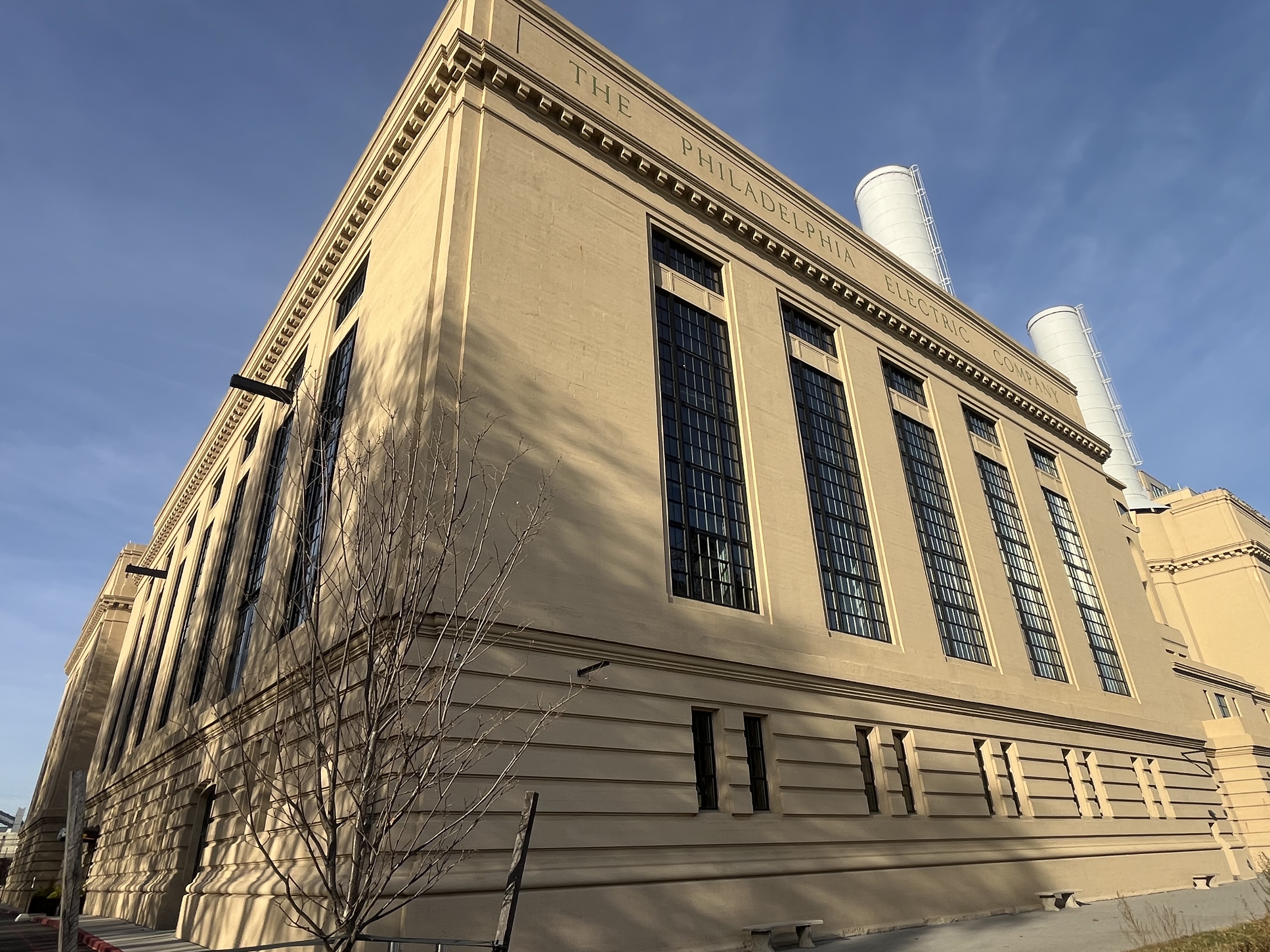
    “The key is to always hire people smarter than you,” he said at his family investing office at the Battery, the former electric generating station on the Delaware River that his real estate group, Lubert-Adler Partners, renovated into hotel suites, offices, recreation sites, and apartments. It opened in 2023.

    The Battery, formerly an electric generating station, was converted to apartments, offices, meeting spaces, and a hotel by Lubert-Adler Partners in 2022-2023.

    Those funds own or have financed hundreds of enterprises and properties around the U.S., including locally familiar Acme Markets, Five Below, and Philadelphia’s Aramark and Bellevue buildings. They have generated billions in net client profits, and a fortune in fees for Lubert and his partners, including hundreds of millions from his key early clients, Pennsylvania‘s state pension funds.

    Lubert built a business renting trailers to Penn State varsity wrestlers and grad student couples, before graduating in 1973 with a hotel management degree.

    After IBM, he spent the 1980s running big IT businesses, then the ’90s as top aide to Warren “Pete” Musser, Philadelphia’s best-known venture capitalist. He quit, Lubert said at the time, because he didn’t understand how to make money from the early internet (as it turned out, neither did Musser, or a lot of pro investors).

    Instead of just trusting his gut, Lubert then partnered with real estate veteran Dean Adler, investment banker Seth Lehr, venture accountant Howard Ross, turnaround ace Greg Segal, and other experts to run his funds, while he focused on convincing state treasurers and other big investors to bet on their projects. Like others, he was solicited by and gave to state officials’ campaigns: only in 2010 did the SEC curb firms paid to manage state and local funds from making political contributions.

    The funds include Lubert-Adler; LLR (military contractors and other private equity); LEM Capital (apartments); LBC Credit Partners (distressed debt); and bank, biotech, and other specialty enterprises, most of them owned by Pennsylvania’s pension funds since they started.

    Lubert also invested separately from his funds, on what he considered riskier projects, like the Valley Forge Casino Resort. And he lost money, for himself and private partners, during the data center frenzy of the early 2010s, long before the current AI boom.

    He was a Penn State trustee and chaired the board as his alma mater coped with the Paterno-era scandals, stepping down for the last time when he got a license to build the Happy Valley Casino near State College.

    In retirement, Lubert oversees his family office, Belgravia Management LP, named for the Locust Street building he and his partners renovated as their first operating base. He also oversees his charitable foundations, with assets over $100 million, that give away profits to Penn State, University of Pennsylvania and Jefferson hospitals, Project HOME, Jewish causes, and other nonprofits. He relies on a veteran staff of seven, plus advisers such as Philadelphia trust lawyer Lester Lipschutz.

    Lubert recently spoke with The Inquirer about his goals in retirement in light of his career. The conversation has been edited for brevity and clarity.

    Who drew you toward business?

    My grandfather, Isidore Brody, was an immigrant from Romania. Age 18, he came through Ellis Island and went to his aunt in Newton, N.J. My father grew up there; he had an appliance-repair business. But with my grandfather, it was a lot of businesses. He had a butcher shop, a liquor store, a Sunoco station. He had apartments, the largest had nine units.

    A couple days a week, I’d walk a mile to his house from school. He showed me a lot about business and real estate.

    Pro investors like to call their shots. Why let your partners pick investments?

    At age 47, my expertise was in raising capital. I wasn’t an engineer. I had tremendous respect for people [with specialized knowledge]. I wanted them to do their thing and then at a cocktail party they would be able to say ‘I founded Versa’ or ‘I founded LLR.’ Not ‘I work for Ira.’

    I get recognized because my name came out in the different funds. And they got bigger.

    Why did you buy high-return assets you didn’t put in clients’ funds?

    Not all investments were appropriate for them. But when I did buy something personally, we had to bring it to the fund compliance people to make sure there wasn’t a conflict of interest.

    You had a reputation for getting intense in meetings. Did you dial that back as you got bigger?

    I don’t believe I have an aggressive style. I am focused and disciplined. I don’t deviate from a plan. I look for partners who are honest, ethical, committed, and capable.

    Your son Jonathan is also an investor, now based in Florida. Will family members succeed you?

    I have it set up so when I pass, my net worth will go to donor-advised funds and charitable foundations.

    Philadelphia had big multi-company investors — the Fox brothers, the Perelmans, Ralph Roberts of Comcast. Did you learn from them?

    They were brilliant business people and entrepreneurs. I’m really different from those guys. They each had a major operating business that they started, then they sold it and used the money to start their funds. I just started funds from the beginning [in the late 1990s] and partnered with top talent.

    It was a great run. Now I really want to do this, while I have something left.

  • The stocks to watch when the Supreme Court rules on Trump’s tariffs

    An upcoming U.S. Supreme Court ruling on the legality of the sweeping tariffs that President Donald Trump rolled out in April — briefly sending markets worldwide into a tailspin — could be the next test for stocks that have been flying high.

    The S&P 500 Index has since rallied 39% from the lows hit that month. It closed at a record high Thursday, in part because tariffs have settled lower than Trump’s highest threats, while support has come from an artificial-intelligence investment boom and a U.S. economy that has kept expanding fast enough to throw off record corporate profits.

    If the nation’s top court says Trump exceeded his authority with the blanket tariffs on countries around the globe, there will still be significant uncertainty. The White House could use other laws to reimpose some new levies, for example. Bond traders could push up yields over worries about the deficit, and that concern could spread into the equity market.

    A ruling this year is increasingly unlikely. The court held its last scheduled public session of the year on Wednesday and isn’t scheduled to sit again until Jan. 9. The court’s standard practice is to issue decisions in argued cases from the bench, generally a day or more after making a public announcement that opinions are likely.

    But when a decision does come, market participants say the initial reaction, at least, would likely be positive for stocks should the court strike down the tariffs. A ruling upholding the tariffs would likely have the opposite effect.

    There are a few reasons why. Striking down the tariffs would eliminate a tax that many businesses haven’t completely passed along to customers, resulting in a drag on the bottom line. Refunds on what they’ve already paid could provide a windfall. And consumer spending may get a boost, too, given that Democrats in Congress estimate tariffs have cost the average American family some $1,200 over the past 10 months.

    Overall, a ruling against the tariffs would boost the earnings of companies in the S&P 500 Index, before interest and taxes, by 2.4% in 2026 compared to current-year levels, Wells Fargo & Co. chief equity strategist Ohsung Kwon estimated in October.

    “That’s good for the market generally, because they look at tariffs as a tax,” said James St. Aubin, chief investment officer at Ocean Park Asset Management. “This will be a catalyst for a little bit of a rally.”

    Some companies, and their stocks, stand to benefit more than others. The tariffs have been particularly painful for those that are heavily dependent on imported goods, such as apparel companies and toymakers. Financial firms, for their part, stand to benefit from a more confident or flush consumer.

    “On the flip side,” said Haris Khurshid, chief investment officer at Karobaar Capital, “materials, commodities, and domestic producers that benefited from protectionism might lag a bit.”

    Here’s a look at some of the sectors and companies with the most at stake when the decision does come.

    Consumer

    Clothing and toy companies — both heavily dependent on imports from China and other Asian countries targeted with some of the highest tariffs — are seen as clear winners, according to Bloomberg Intelligence. Nike Inc. and Mattel Inc. are potential standouts.

    Others include Deckers Outdoor Corp., Under Armour Inc., Crocs Inc., and American Eagle Outfitters Inc., all of which have struggled with tariff-related uncertainty. Home furnishing stocks have been volatile too, including Wayfair Inc., Williams-Sonoma Inc., and RH.

    Texas Capital’s Eric Wold singled out some potential winners among the leisure-related companies he follows: boat-maker Brunswick Corp., toymaker Funko Inc., and Topgolf Callaway Brands Corp.

    Industrials

    Industrial manufacturing giants Caterpillar Inc. and Deere & Co. are among the firms set to benefit the most from tariff refunds, according to Wells Fargo’s Kwon. Stanley Black & Decker Inc., Fortive Corp., and Lennox International Inc. also make the list.

    Shares of automakers General Motors Co. and Ford Motor Co. advanced during the Supreme Court hearing last month, when the justices’ skepticism about the administration’s arguments increased market speculation that the tariffs would be struck down. While the case doesn’t affect the industry-specific tariff on automakers, they stand to gain from a stronger consumer.

    Investment firm Hedgeye also sees positive implications for transport stocks, expecting a boost if the tariffs are struck down and importers move to snap up inventory before any new ones are imposed. That could benefit United Parcel Service Inc., FedEx Corp., and trucking companies.

    Financials

    Major banks such as JPMorgan Chase & Co. and Goldman Sachs Group Inc. faced volatility earlier this year, alongside private equity giants like Blackstone Inc., amid concerns that Trump’s trade war will slow economic activity. Financial-technology companies such as Affirm Holdings Inc. and Block Inc. are prone to big swings, as are stocks linked to cryptocurrencies.

    Lower tariffs may ease pressure on U.S. consumers and support the broader economy. If inflation expectations move lower, it’ll also support the case for more rate cuts by the Federal Reserve, Clear Street analyst Owen Lau said.

    Lower interest rates encourage “loan growth, refinancing, stronger equities markets, and even higher consumer spending,” Lau said, “which will fundamentally benefit financial stocks in general.”

  • American Airlines faces lawsuit over flight attendant wages in Philadelphia

    American Airlines faces lawsuit over flight attendant wages in Philadelphia

    An American Airlines flight attendant who works out of the Philadelphia International Airport is suing the airline, alleging that flight attendants aren’t properly paid for all of their time on the job.

    Flight attendants are required to arrive early at the airport and help board and deplane passengers, but these and some other parts of the travel process are not usually counted in payroll and don’t count toward overtime, according to the lawsuit.

    Flight attendant Christopher John filed a complaint in the Philadelphia County Court of Common Pleas in October and later moved to federal court in Philadelphia. John is suing on behalf of himself and other flight attendants for American Airlines based out of PHL as far back as October 2022, the complaint said.

    The airline “generally does not credit or pay” flight attendants for the hour or two prior to a flight’s departure time, time spent boarding passengers before a flight and deplaning them upon arrival, or time spent traveling on a shuttle to and from hotels on stopover flights.

    All of these activities “fall squarely within their day-to-day job duties,” the complaint reads.

    American Airlines has argued that the Pennsylvania Minimum Wage Act — which establishes a minimum wage and overtime rate in the state — does not apply to this case because the flight attendants have a union contract that outlines pay practices.

    American Airlines said in a motion to dismiss the case that the state law “expressly exempts ‘employe[es] of an air carrier’ from its overtime requirements if their ‘hours of work, wages, and overtime compensation’ are governed by a collective bargaining agreement.”

    American Airlines flight attendants are represented by the Association of Professional Flight Attendants. A recent union contract for those employees started in September 2024 and ends in September 2029. As of last year, the union represented some 28,000 American Airlines flight attendants.

    The attorney for the flight attendant, Peter Winebrake, declined to comment on the case. Lawyers for American Airlines at O’Melveny & Myers did not immediately provide a comment.

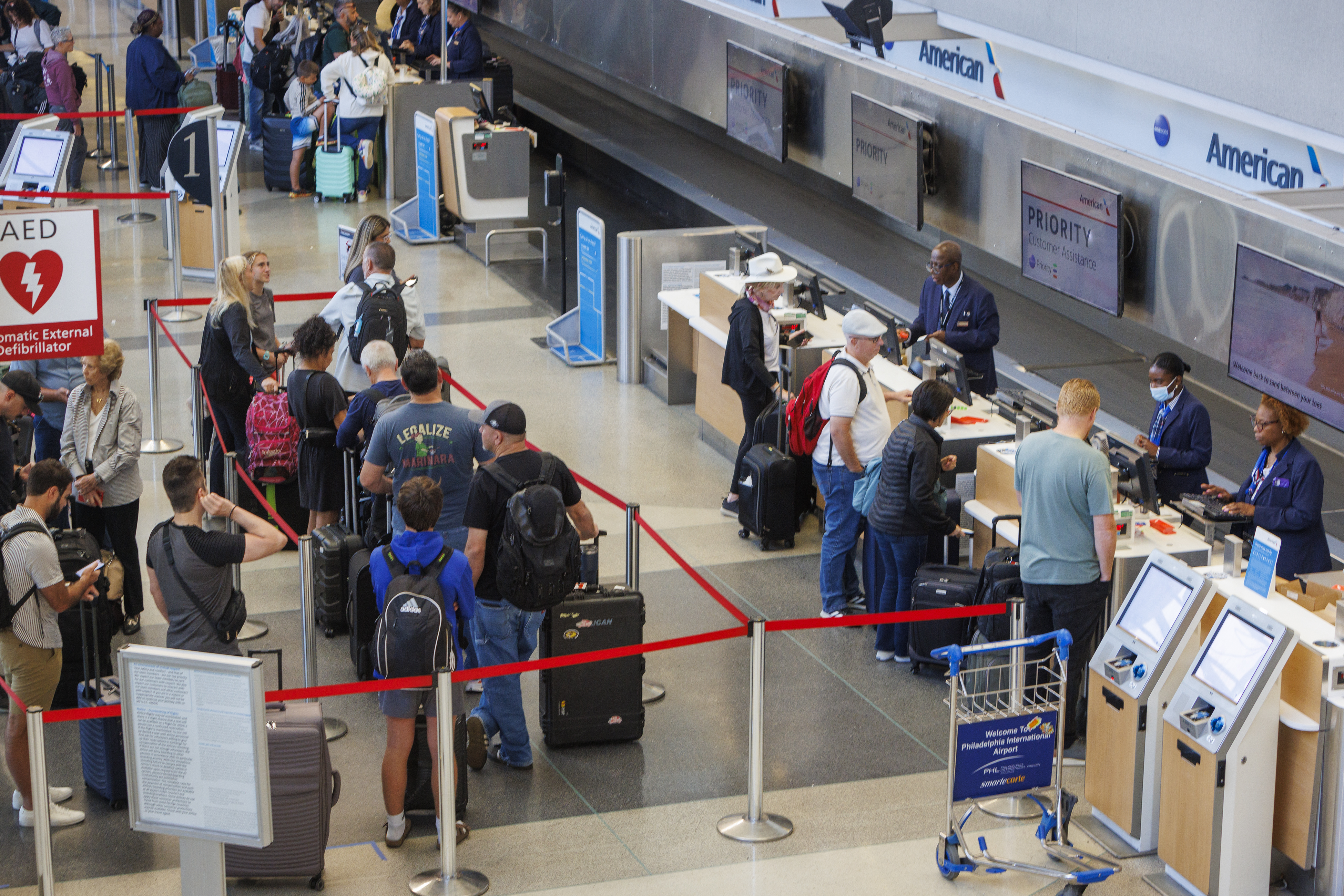
    American Airlines travelers wait for assistance on a morning in August 2024 when many flights were canceled due to severe weather in Florida.

    How are flight attendants compensated?

    Typically, flight attendants — regardless of their airline — have not been paid for time before the plane closes its doors, such as when boarding travelers. (Airlines have argued that the time spent on the ground is compensated because of the pay structure that promises a minimum of one hour paid flight time for every two hours of duty.)

    But that’s beginning to change at some airlines.

    Last year, American Airlines flight attendants secured a contract including pay for time spent boarding passengers, and Delta started partially compensating employees for this time in 2022.

    In August, Air Canada flight attendants went on strike for three days amid contract negotiations in which they sought to secure pay for time spent working on the ground before a plane takes off or after it lands. Flight attendants rejected a tentative agreement in September, with a union leader saying the airline did not bargain in good faith on wages.

    In the U.S., flight attendants must get permission from the federal government in order to strike.

    American Airlines, headquartered in Fort Worth, Texas, is the largest carrier at PHL, carrying nearly 20 million passengers through the airport in 2024.

    The airline is the ninth largest employer in Philadelphia County, according to the state’s Department of Labor and Industry. The median pay of flight attendants in the U.S. was $67,130 last year, according to the Bureau of Labor Statistics.

    American Airlines employs over 10,000 people in the Philadelphia area, including 2,567 flight attendants, according to the company’s website.

    Staff reporter Abraham Gutman contributed to this article.

  • Higher costs push holiday shoppers toward socks, coffee, and diapers

    Higher costs push holiday shoppers toward socks, coffee, and diapers

    Shirley Spillane’s holiday shopping list is decidedly no-frills this year: cutting boards, coffee, and socks.

    The Los Angeles-based school counselor used to spend big for Christmas. But this year, with stubbornly high prices, rent, and utilities, as well as a 6-month-old baby, she’s paring back. Spillane is buying a car duster for her husband and jam for her aunt — all within her $200 budget, made up almost entirely of gifts she can pick up grocery shopping at Sam’s Club.

    “This season looks different than usual,” the 26-year-old said. “With the economy the way it is and a new baby, we’re keeping it small.”

    Across the country, Americans are putting a practical spin on holiday shopping. Another year of stubborn inflation and new tariffs that have lifted the prices of appliances, shoes, and toys has led many families to think twice about what they’re buying, and why. Early holiday spending data shows people are scooping up more necessities like appliances, clothing, and furniture than they did last year.

    On Cyber Monday alone, online sales of refrigerators and freezers rose 1,700% from average levels in October, according to data from Adobe Analytics. Other run-of-the-mill products in high demand included vacuum cleaners (up 1,300%), small kitchen appliances (up 1,250%), cookware (up 950%), power tools (up 900%), and jackets (up 850%).

    “These are items that are, in many instances, absolutely essential,” said Vivek Pandya, director of Adobe Digital Insights. “Consumers are cognizant of the broad environment and they’re being very strategic about purchases, whether it’s for themselves or gift-giving.”

    While inflation has risen modestly this year, five years of price increases have led to deepening dissatisfaction with how much things cost. That sentiment helped cement political wins last month for Democrats in Virginia, New York, and New Jersey and spurred President Trump to kick off an “affordability tour” touting what his administration has done for the economy. “Our prices are coming down tremendously from the highest prices in the history of our country,” he said at a Pennsylvania casino last week.

    But in interviews with nearly a dozen shoppers around the country, the Washington Post found that almost all of them said they had become more strategic about their holiday shopping this year. They were looking for discounts and comparing prices. Many were buying fewer gifts, and for fewer people.

    Some parents, like Meghan Orr in Austin, said they’d begun wrapping everyday items like diapers and baby shampoo to fill the space under their Christmas trees. “At this point we’re just being silly, but it’s fun to unwrap things.”

    When it came to their own wish lists, several said they wanted to do away with gifting conventions and ask family for help paying the bills — though very few thought the approach would work.

    Alecia Bencze, director of career services for a law school in Akron, Ohio, has had a good year financially. Still, she’s spending about half of the $1,000 she usually does on Christmas gifts, and is sticking to items she knows will come in handy: golf balls for her father, a barbecue set for her brother, and shoes for her sister-in-law. Her own wish list includes a skillet and measuring cups.

    “I’m not feeling the pinch as much as other people are, but this is the least I’ve ever spent on Christmas,” Bencze, 35, said. “I just went through and got one thing from each person’s list.”

    Early holiday shopping data shows a discernible shift in spending patterns, with lower- and middle-income Americans pulling back, and the wealthy trading down from luxury stores to lower-priced retailers. Although Black Friday sales were unexpectedly strong, those gains were largely concentrated at discounters, dollar stores, off-price department stores, and online marketplaces such as Amazon and eBay, according to Consumer Edge, which tracks transactions from more than 100 million credit and debit cards. The firm’s data showed that purchases between Black Friday and Cyber Monday tumbled 10% at high-end department stores, while luxury clothing brands saw a 5% decline from the same period last year, as even the most well-off looked for deals.

    At Twiggy, a small business that sells tote bags and other gifts in Oahu, Hawaii, more customers are veering toward everyday items like kitchen towels, reusable snack bags, and sticky notes this holiday season, owner Jessica Leong-Thomas said.

    “It started during the government shutdown, when people became hesitant to buy frivolously,” she said. “Since then I’ve seen a real shift. People come in and say, ‘I want to buy something that will be useful.’” (Leong-Thomas understands the impulse: “Personally, what I want for Christmas is for someone to buy me toilet paper and dish soap,” she said.)

    When they do shop, data shows Americans are increasingly turning to off-price retailers such as TJ Maxx, and warehouse discounters such as Costco and Sam’s Club, for discounts on basic items, according to Mary Brett Whitfield, senior vice president for shopper insights at the data analytics firm Kantar. Overall, she said, Americans appear to be spending more than they did last year, but on fewer items.

    “You look at what’s happening with prices, tariffs, and other inflationary pressures, and it definitely seems like people have a more practical mindset,” she said. “I see it with my own adult children: One of them asked for socks.”

    In all, holiday sales are expected to grow about 4% this year, slightly less than last year’s 4.3% increase and a notable slowdown from 13% growth in 2021, according to the National Retail Federation.

    When JoEllen Barnes’s refrigerator broke down in mid-November, she and her family made do until they could scoop up a discounted replacement on Black Friday. With food and utility costs up this year, the mother of two says it’s been tougher to cover everyday costs. Instead of splurging on a Nintendo Switch for her sons like she did last year, she’s been scouring neighborhood Facebook groups for lightly used toys.

    “I usually ask my husband for jewelry but that doesn’t feel appropriate now, given the extra cost of things,” said Barnes, a 43-year-old educator in Charlotte. Instead of their usual wish lists, they’re sticking to the utilitarian this year. She got him a discounted iPad on Black Friday; he’s already bought her gift too, though she doesn’t know what it is.

    “Part of me is like, ‘Please don’t let it be an appliance or pots,’” Barnes said. “Although, well, it would be nice to get new pots.”

  • Trump administration launches bold air-taxi push

    Trump administration launches bold air-taxi push

    The Trump administration is seeking to boost U.S. companies as they compete for dominance in the burgeoning air-taxi sector — with an eye toward showcasing the technology at the 2028 Olympics in Los Angeles.

    Through executive orders — as well as a new effort to gather data that could help fast-track adoption of these aircraft — the administration has embraced it as part of its transportation agenda.

    In September, Transportation Secretary Sean P. Duffy announced the launch of a pilot program aimed at exploring ways to integrate these technologies — including air taxis, more formally known as electric vertical takeoff-and-landing aircraft — as well as hybrid-electric and battery-powered planes into the nation’s aviation system.

    For decades, the dream of flying above traffic-clogged roadways has been just that — a dream. But companies such as Archer Aviation, Joby Aviation, and BETA Technologies are pitching their battery-powered aircraft, which take off and land vertically, as a way to revolutionize the way people travel. Meanwhile, Wisk, a Boeing subsidiary, and Reliable Robotics are working on versions that can operate without a pilot — an innovation that could improve the economics of air service and cargo delivery to smaller and more isolated communities.

    BETA Technologies raised more than $1 billion when it went public on the New York Stock Exchange last month, and investors have poured millions into the sector. However, questions remain about whether it will live up to the hype. A plan for air taxis to transport spectators during the 2024 Paris Olympics fizzled, while other high-profile ventures have faltered. Lilium, a German eVTOL company, received an infusion of cash after filing for bankruptcy last year, but was still unable to continue operations, filing for bankruptcy again earlier this year.

    Experts say one key to financial success is making the leap from a novelty for the rich to a transportation option for the masses. Skeptics say the technology is still too unproven to merit government support.

    “We’re talking about spending taxpayer money on something that’s not here yet,” said Rep. Scott Perry (R., Pa.) at a House hearing last week. “The private sector is free to chase this enterprise. As I see it, it can’t beat the physics of a 1960 helicopter.”

    Pilot program hopes

    The public may soon see how these new types of aircraft could change how people and goods move.

    Dec. 19 is the deadline for submissions to the administration’s Electric Vertical Takeoff and Landing Integration Pilot Program (eIPP). Modeled after a similar initiative for drone operations launched during President Donald Trump’s first term, it seeks to explore how quieter, cleaner, battery-powered aircraft that take off and land like helicopters can transform aviation. At least five applicants will be chosen.

    “This program represents the launch of a new era of American aviation,” said Greg Bowles, chief policy officer at Joby Aviation, which has been working for more than a decade to bring its aircraft to market. He predicted it will “introduce Joby aircraft into the skies over major U.S. cities” starting next year.

    Sapan Shah, senior director of portfolio management for Advanced Mobility at Honeywell Aerospace, said he expects significant interest from state and local governments across the country that are eager to explore how these new types of planes can benefit their residents. The data collected from the program will offer participants an early look at how these aircraft operate in real-world conditions, and what changes will be needed to incorporate them into existing transportation systems, he said.

    Major players in the industry, including BETA Technologies and Joby Aviation, have already said they plan to apply for the pilot program. In September, Archer Aviation said it hoped to participate in the program alongside United Airlines, an early investor in the company. The selections are expected to be made in March, with operations anticipated within 90 days. The pilot programs are expected to run for three years; Joby and Archer also aim to have a fleet of air taxis flying Olympic spectators around Los Angeles in 2028.

    The state of Michigan also plans to apply, said Bryan Budds, aeronautics director for the Michigan Department of Transportation. As part of a partnership with BETA Technologies, it has installed a network of chargers for electric aircraft at four airports. While much of the focus around air taxis is on how they can move people in dense urban areas, Budds said one potential use in Michigan is moving pharmaceuticals and medical goods to the state’s rural areas.

    There’s also been movement in Congress, which included several provisions aimed at bolstering air taxis in last year’s Federal Aviation Administration reauthorization bill. The industry received another major boost that year when the FAA released standards for air-taxi pilot training and certification.

    To supporters, a main case for investing in these technologies is to ensure the U.S. continues its dominance more broadly of the global aviation industry. China, for example, has already certified an air taxi capable of carrying passengers.

    At the House hearing last week, lawmakers emphasized the importance of ensuring that lead.

    “Either we choose to embrace and unleash American innovation, or we carry on with the status quo and watch as other nations surpass us in new and emerging technology,” said Rep. Troy E. Nehls (R., Texas).

    Even in the early stages, experts say, such programs can yield valuable information.

    With a demonstration program, “we’re getting technology out into the actual markets,” said Laurie Garrow, a civil engineering professor at Georgia Institute of Technology who has followed developments in advanced air mobility.

    These real-world projects will help communities and the FAA understand how these aircraft operate in the existing air traffic system and where the pain points might be, and the data gathered will help policymakers as they attempt to scale up to larger operations, she added.

    Savanthi Syth, an aviation analyst with Raymond James, said giving manufacturers and communities an early opportunity to “try out” the technology in controlled environments means that by the time the aircraft are fully certified, they won’t be starting at square one — they’ll already have information allowing them to move into the next phase of operations.

    Said Syth: “This is a better way than ‘Oh, you have a certified aircraft but now you have to get community buy-in.’”