The days when Black people couldn’t vote, ride on the front of public buses, be served at lunch counters, attend many schools, or sleep in hotels weren’t all that long ago. Thanks to the advocacy of the late Rev. Dr. Martin Luther King Jr. and the passage of the Civil Rights Act of 1964, discrimination based on race is now illegal.
But President Donald Trump would try to have us believe that the implementation of civil rights policies has hurt white people, when, in actuality, they make life better for everyone because they protect women, religious groups, immigrants, the LGBTQ+ community, and people of different ethnicities and races from discrimination.
In Trump World, though, up is down and down is up.
News reports today often read more like satire from the Onion than real life. But journalists still have a responsibility to report on what comes out of the Oval Office, no matter how ludicrous.
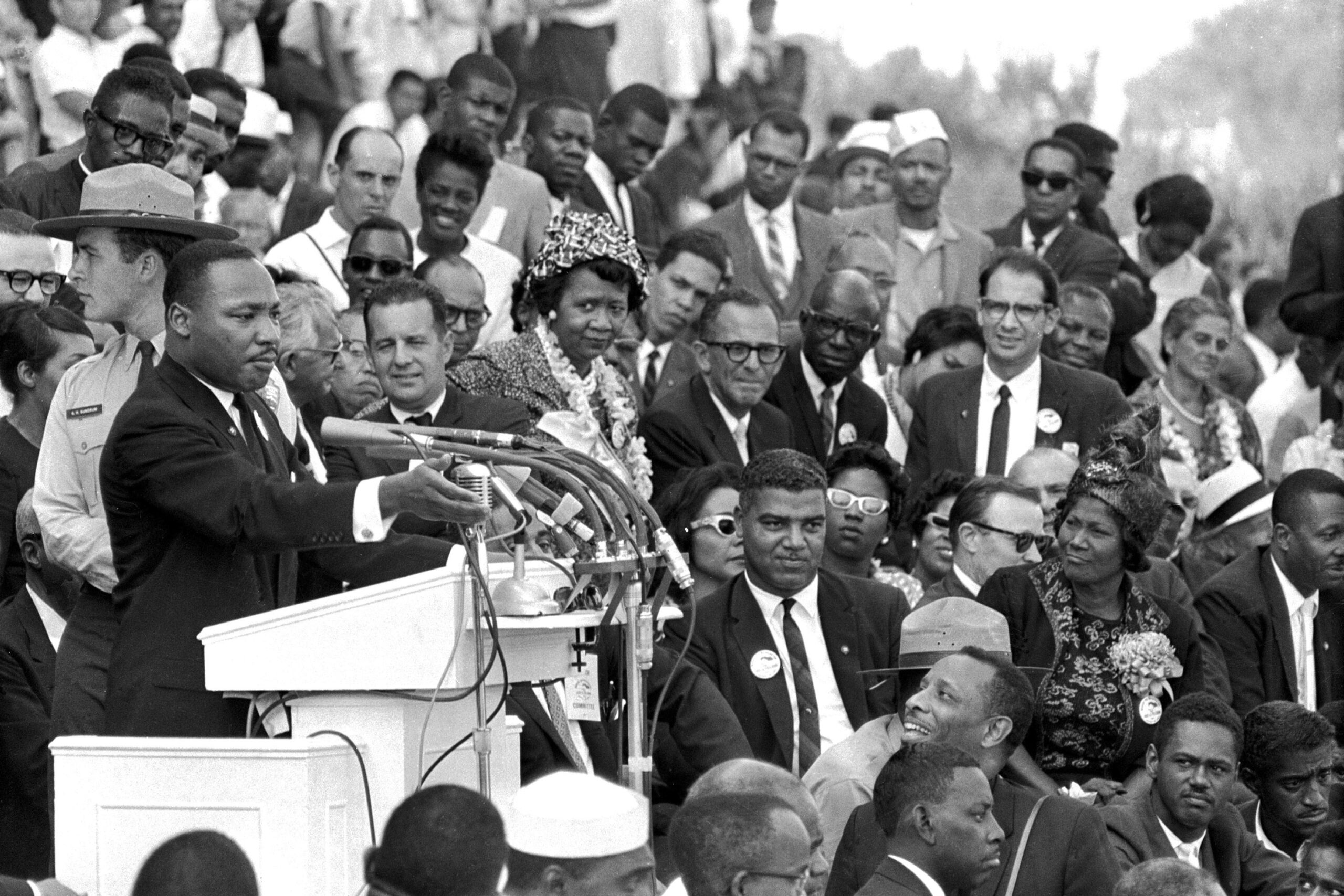
The Rev. Dr. Martin Luther King Jr. speaks to thousands during his “I Have a Dream” speech at the Lincoln Memorial during the March on Washington for Jobs and Freedom, Aug. 28, 1963, in Washington.
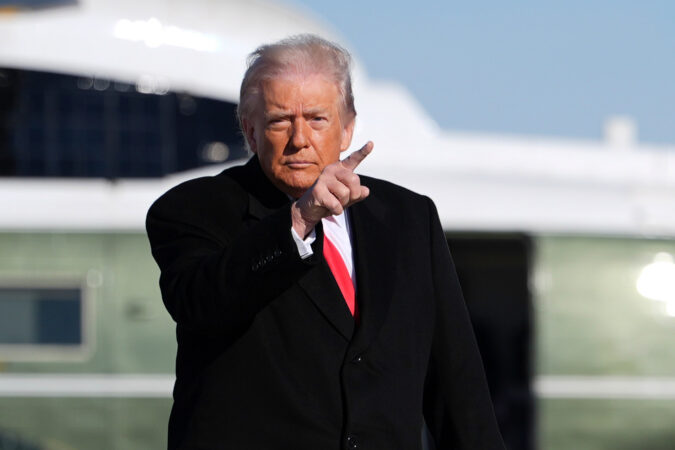
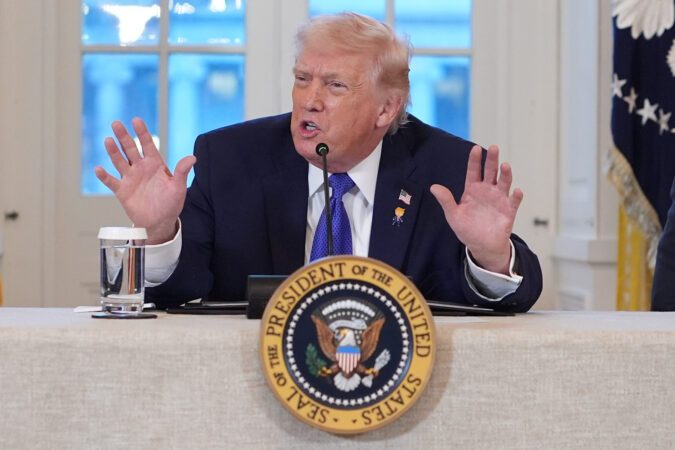
So when I read that Trump had met with a small group of New York Times journalists at the White House and told them that civil rights led to white people being “very badly treated,” my jaw dropped. I read and reread what his actual words were, which included his saying, “White people were very badly treated, where they did extremely well, and they were not invited to go into a university to college.”
Trump reportedly added, “So I would say in that way, I think it was unfair in certain cases.”
That’s like saying the rise of feminism and women’s rights hurt men. But wait, there’s more. Trump also is reported as having said: “I think it was also, at the same time, it accomplished some very wonderful things, but it also hurt a lot of people — people that deserve to go to a college or deserve to get a job were unable to get a job. So it was, it was a reverse discrimination.”
He apparently was referring to affirmative action, which is rich considering white women are the largest beneficiaries of it. Same thing with diversity, equity, and inclusion initiatives, which were created to give historically marginalized workers, such as women, people with disabilities, African Americans, and veterans, better opportunities in the workplace.
This attempt by Trump at grievance politics to rev up his base rings hollow to sensible people who recognize that white men have always held the vast majority of upper-level positions in both the private and public sectors.
MAGA is big on accusing former President Barack Obama of supposedly dividing the country, while it is Trump who continually stokes racial division.
He kicked off his presidential campaign in 2015 by maligning Mexicans, saying: “They’re bringing drugs. They’re bringing crime. They’re rapists.” He has referred to Haiti, African nations, and El Salvador as “shithole countries,” accused Haitians in Springfield, Ohio, of eating their neighbors’ dogs and cats, and insulted Somali Americans by calling them “garbage.”
One of the first things Trump did after being sworn into office in 2025 was to sign executive orders aimed at eliminating DEI. His remarks about civil rights supposedly hurting white people are merely his latest salvo, along with his administration’s calls for white men to file complaints with the Equal Employment Opportunity Commission.
“There is zero evidence — none — that the civil rights movement harmed white men in any way,“ said NAACP president Derrick Johnson in a statement to the Grio. “[Trump] is hoping we swallow his lie again, so that he can continue to privatize education, cut social services, and repeal civil rights laws and enforcement mechanisms. It’s all about making more money — even if we all suffer as a result.”
It’s sad — but not surprising — that in 2026 the president would reach for a play out of the tattered segregationist handbook to try and make white people the victims of civil rights.
Had he lived, King would have been thoroughly disgusted — but would have countered the president’s gutter-level deception with an elevated truth: “If the inexpressible cruelties of slavery could not stop us, the opposition that we now face surely will fail.”
It wasn’t the most clever joke ever told on U.S. prime-time television — not even close — when comedian Nikki Glaser took a swing at CBS News while hosting Hollywood’s Golden Globe Awards, which were seen live by an estimated 8.7 million viewers and clipped on social media by millions more. But the blow still landed hard, especially since the awards aired on CBS.
“The award for most editing goes to CBS News,” Glaser quipped, in a seeming reference to the recent flap over a critical report on the Donald Trump regime’s use of a Salvadoran torture prison that was spiked by 60 Minutes. “Yes. CBS News: America’s newest place to ‘see B.S.’ news.”
Last Wednesday, the network rushed out a report — sourced only to two unnamed “U.S. officials” — that the ICE agent who fired the shot, Jonathan Ross, “suffered internal bleeding to the torso” in his Jan. 7 deadly encounter with the driver who was pulling away from the scene, Renee Nicole Good.
What that report from what was once the most trusted TV newsroom in America seemed to imply — even though it did not explicitly state — was that Good’s Honda Pilot must have struck Ross in the encounter that touched off days of protests in Minneapolis and around the nation. If that did happen, it would radically alter the debate about the shooting and the violent nature of ICE’s deportation raids — creating an argument that the use of deadly force was justified.
This superb video analysis by the New York Times shows that the ICE agent who killed Renee Good in Minneapolis was not hit by her car. He had stepped away after approaching her car and killed her needlessly. https://t.co/63lI5FUVI0
I want to be careful here, because the CBS story was so vague that it’s as hard to disprove as it is to prove. Medical experts immediately noted the report could have been misleading — at best — since “internal bleeding” could mean a bruise, which might have been caused in the chaotic situation by something besides Good’s vehicle. But two reports just hours after the CBS bulletin suggested something far worse — a whiff of the utter baloney that Glaser had just joked about.
First, the New York Times released an in-depth frame-by-frame analysis of the multiple videos of the shooting captured both by citizen observers and by Ross himself as he fired his gun. The Times concluded from the analysis that “the currently available visual evidence still shows no indication agent Jonathan Ross got run over,” and published a photo showing significant daylight between the SUV and the agent as he fired.
Second, a Minneapolis Police Department report on the shooting was released, stating that Ross — who was shown on video walking around in the aftermath without any overt sign of an injury — was not taken to a hospital, as Trump had told the nation in a Truth Social post on the day of the killing. The police said Ross was driven to a government building.
Or, a different way of looking at the CBS “internal bleeding” report is in the context of Sherlock Holmes’ famous crime-solving line about the dog that did not bark. An entire pack of hounds stayed silent on this one. The facts most editors would demand before airing such an explosive claim about the biggest story in America — a medical report, or a quote from Ross’ doctor, or even a family member or an ICE colleague — weren’t published. Just the unsupported words of two officials from an authoritarian U.S. regime with a growing record for lying.
Indeed, it didn’t take long for the dismay from actual professional journalists — the ones who still work at CBS after its late 2025 takeover by a media conglomerate owned by pro-Trump billionaires — to pour out in leaks.
Most of the journalists’ consternation centered on the actions of Bari Weiss, the conservative public intellectual who has been installed as the editor-in-chief of CBS News, despite possessing almost no previous breaking news experience.
Here's Ross walking away and checking his phone after shooting Good. Doesn't look like someone suffering internal injuries after being struck by a vehicle . . . because he isn't and wasn't. pic.twitter.com/ZApbsuoyLv
“There was big internal dissension about the ‘internal bleeding’ report here last night,” a CBS News staffer who was granted anonymity told the Guardian. “It was viewed as a thinly veiled, anonymous leak by [the Trump administration] to someone who’d carry it online.”
A second insider told the news organization that it “felt to many here like we were carrying water for [the administration’s] justifying of the shooting to keep our access to our sources.” The Guardian’s sources said Weiss had personally pushed to get the piece published quickly online.
So far, all the factual, on-the-ground journalism from Minneapolis suggests that CBS News, which has stood atop the pyramid of mainstream American media for decades, has just committed one of the worst acts of bad journalism in U.S. history.
The worst? That’s a high bar, considering other historic missteps like Judith Miller’s later debunked New York Times reporting on alleged Iraqi chemical weapons that bolstered the dishonest case for war, and which was also rooted in boosting government fictions.
But with approval for ICE, Trump’s immigration policies, and the president himself reeling after Good’s killing, and a flood of viral videos showing violent actions by government agents in Minnesota, any aid for a White House campaign to rewrite history is appalling. It could be used by the Trump regime to bolster a case for invoking the Insurrection Act and sending troops to Minnesota, which would cause the simmering crisis of American democracy to boil over.
A CBS News spokesperson told the Independent that the network “went through its rigorous editorial process and decided it was reportable based on the reporting, the reporters, and the sourcing.” It should be noted that ABC News ran a nearly identical story shortly after the CBS report. The parent companies of both CBS and ABC reached multimillion-dollar settlements of questionable lawsuits by Trump at the start of his presidency rather than fight them in court.
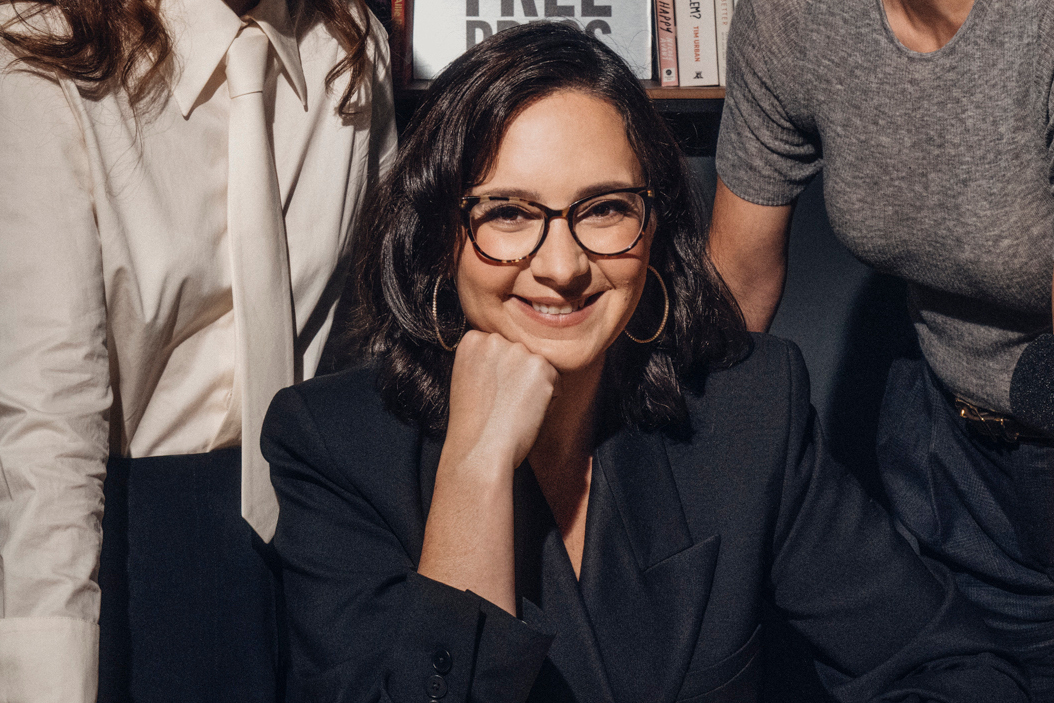
In this undated photo released by Paramount, one of the Free Press’s cofounders, Bari Weiss, poses for a portrait. Weiss is the editor-in-chief of CBS News.
The CBS report did not happen in a vacuum. There was a reason, after all, that Hollywood’s elites guffawed when Glaser told her “see B.S.” joke. And it went even deeper than the recent brouhaha over Weiss’ last-minute postponement of the 60 Minutes report on the mistreatment of U.S. deportees in the Salvadoran prison, supposedly because she believed it needed more reporting and more input from the Trump regime.
Critics noted the slow-motion impeding of that story that was so damaging to the White House was the polar opposite of the rushed Minneapolis “internal bleeding” story that was desired by the regime. It’s also come out that a second in-the-works 60 Minutes piece that could make Trump’s government look bad — about its preference for white South African refugees — has also been delayed by intense edits.
This is exactly what many feared last year when the Trump regime green-lighted the sale of CBS’s then-parent Paramount to Skydance Media, owned by David Ellison, son of Trump-supporting Silicon Valley billionaire Larry Ellison, and when the new owner brought in Weiss, a former New York Times opinion journalist whose right-leaning site Free Press — also bought by Ellison — is popular with the superwealthy.
It became almost a cliché to point out how the new team has threatened the storied legacy of CBS News and the iconic moments its star journalists had questioned authority, including Edward R. Murrow’s 1954 takedown of red-baiting Sen. Joseph McCarthy, or Walter Cronkite’s 1968 call for a Vietnam withdrawal that infuriated Lyndon B. Johnson’s White House.
Variety's @DPD_ says that Tony Dokoupil is making "CBS Evening News" all about himself even in the wake of the Minneapolis shooting:
"The anchor who promised, as he prepared to launch his and his boss Bari Weiss’ reinvention of the newscast, to outdo Walter Cronkite had, in… pic.twitter.com/nk00sx3Yje
But already the new reality of CBS News as a kind of state media for the Trump era has been worse than anyone could have feared, now creating “fake news” in the term’s original clear-eyed meaning and not its bastardization by Trump’s MAGA movement.
Weiss’ handpicked anchor, Tony Dokoupil, set the tone when he declared the new CBS News wanted to listen to everyday Americans and not put so much stock in experts — presumably like the doctors who could have told them the “internal bleeding” story didn’t make sense. In the immediate aftermath of Good’s killing, Dokoupil delivered a mush-mouthed “both sides” monologue that surely set Cronkite and Murrow spinning in their graves.
That was almost as embarrassing as Dokoupil’s 13-minute interview with Trump in which the president said the quiet part about the new slant at CBS News out loud, telling the anchor that if Kamala Harris had won in 2024 instead of Trump, “You wouldn’t have this job, certainly whatever the hell they’re paying you.”
That was not edited out of the interview when it aired on CBS Evening News — perhaps because, it later came out, White House press secretary Karoline Leavitt told Dokoupil and his crew that the president demanded all 13 minutes must be broadcast without changes or “we’ll sue your asses off.”
CBS clearly complied. Of course it did. In a matter of weeks, the storied CBS eye logo has become a knowing wink to an autocratic U.S. government. The changes at CBS, and their implications for American democracy, have somewhat been lost in the recent tsunami of unthinkable headlines like the unrest in Minnesota, the bombing and regime change in Venezuela, and Trump’s once-unthinkable threats against Greenland.
But we can’t ignore this. The four million or so Americans who watch Dokoupil and the CBS Evening News every weeknight might be a huge drop from Cronkite’s era when three TV networks dominated the landscape, but many of those folks — older, less politically obsessed, often swing voters — are vital to the future of democracy.
The success of Trump’s strongman project — just like the prior century of dictatorships that have paved the way for this — depends on creating alternative realities for the true believers and a cloud of uncertainty for the rest of us. The goal is to convince the masses of people that truth is fungible — except for what is dictated by the leader.
The only “internal bleeding” we can confirm with any certainty is the battered and visibly bruised reputation of a newsroom that was once a bulwark of press freedom, as well as America’s run-over democracy. OK, that’s kind of an obvious observation, but maybe Glaser can use it if CBS lets her host the Golden Globes again next year.
My late father was a high school teacher and basketball coach who learned a lot about the world around him during his 81 years. I’ll never forget how, when he’d hear me grousing about what could have been, he would always give me a look and sternly warn, “Don’t look back.”
I’ve come to appreciate how wise his words were, but let’s face it, sometimes we don’t need wisdom — we need relief.
Barely a few weeks into Year Two of Donald Trump’s second term, I can’t help but shake my head when I think about how much better off America (and the world) would be if Kamala Harris had won the presidency.
She wasn’t a perfect candidate. Far from it. But once in the White House, I have no doubt she would have led the country with dignity and integrity, values currently in short supply inside the Oval Office.
Under President Harris, the U.S. would not have invaded Venezuela and kidnapped its president, threatened to annex Greenland “the hard way,” or alienated our Canadian neighbors into boycotting American products and selling their Florida vacation homes. Rather than flirting with blowing up NATO, we would be working with our European allies to pressure Russia into ending its war with Ukraine.
Instead of bringing back American imperialism — something nobody voted for — Harris would be focused on improving the lives of everyday Americans.
She would be implementing policies such as allowing Medicare to better cover the cost of home care, and working with Congress to extend insurance subsidies to help keep healthcare affordable for millions of people. Meanwhile, the inflation that bedeviled her predecessor would continue to ease, untroubled by haphazard tariffs that are no less than a tax on every U.S. family.
Elon Musk’s Department of Government Efficiency would be a ketamine-fueled figment of the tech billionaire’s imagination instead of the cause of almost 750,000 deaths — most of them children — due to the dismantling of the U.S. Agency for International Development. At home, the roughly 300,000 federal workers who left or lost their jobs because of DOGE would be serving the public, instead of leaving gaps in crucial agencies such as Social Security, the U.S. Department of Veterans Affairs, and the Federal Aviation Administration.
You know who wouldn’t have a job under a Harris administration? The thousands of U.S. Immigration and Customs Enforcement agents who will be hired, to the tune of $30 billion, over the next few years. ICE would be targeting criminals in the country illegally, not inflicting a reign of terror on the American people. Renee Nicole Good, a 37-year-old mother of three and U.S. citizen, would still be alive instead of gunned down by an ICE agent in Minneapolis.
FBI agents across the country would be focused on solving and preventing crimes, instead of thousands being reassigned to immigration enforcement. National Guard members would be with their families, not picking up trash in Washington, D.C., or standing around Portland, Ore., waiting for something to happen.
Kamala Harris during an interview while shopping at Penzeys Spices on Market Street in September.
Harris, a former California attorney general, would have kept the long-standing tradition of an independent U.S. Department of Justice, instead of turning it into the president’s law firm and using it to go after political enemies. She would have assembled a cabinet stocked with competent and experienced members, one likely as diverse as America. People like Kash Patel and Pete Hegseth would be far away from power, hawking “vaccine reversal” pills and defending war criminals on Fox News, respectively.
Where would Trump himself be under a Harris presidency? In the same mess of trouble he had gotten himself into.
Special counsel Jack Smith would be zealously pursuing the case against Trump for illegally retaining classified documents and plotting to overturn the 2020 election. Charges that Smith has said he could prove beyond a reasonable doubt.
The once and forever former president would not be $3 billion richer thanks to shady crypto deals and other business ventures he has undertaken since returning to Washington. Neither would he be absentmindedly staring out where the East Wing of the White House once stood and imagining his sprawling ballroom, plastering his name on the Kennedy Center, nor costing taxpayers millions to outfit the $400 million luxury jetliner Qatar gave him.
If anything, he might have found himself with new indictments if he had tried to steal the 2024 election, and the MAGA crowd staged another Jan. 6, 2021-style revolt in protest of a Harris victory. No doubt Harris’ attorney general would have learned a lesson from the previous administration and would not drag his feet, as former Attorney General Merrick Garland didin holding Trump accountable.
Eventually, though, I’m convinced things would have settled down, and American politics would have gone back to being boring again —like they used to be. Fox News commentators would shift back to their old ways of complaining about Harris’ laugh and occasional lapses into word salad.
As things calmed down, so, too, would the excitement surrounding her historic win as the realities of governance asserted themselves.
Signing a bill to restore abortion rights nationwide would have been high on Harris’ agenda, reviving the issue that long fueled a part of the electorate. The culture war over GOP-manufactured concerns about men taking over women’s sports would rage on, never mind that trans people make up only about 1% of the population. So would the debate over the merits of diversity, equity, and inclusion efforts.
On immigration, Harris would be caught between her party’s activist base and trying to limit people from seeking asylum at the southern border. It’s one thing for Harris to have issued her famous edict telling immigrants, “Don’t come,” and a whole other thing to take substantive steps to stem the flow of people desperate to enter the U.S.
With Trump out of office, America would continue to be a bulwark for democracy, but the threats of authoritarianism, antisemitism, and racism would not go away. Neither would the voter malaise and congressional dysfunction that have given rise to people like Trump and his supporters. But Harris would fight the good fight for everyday Americans.
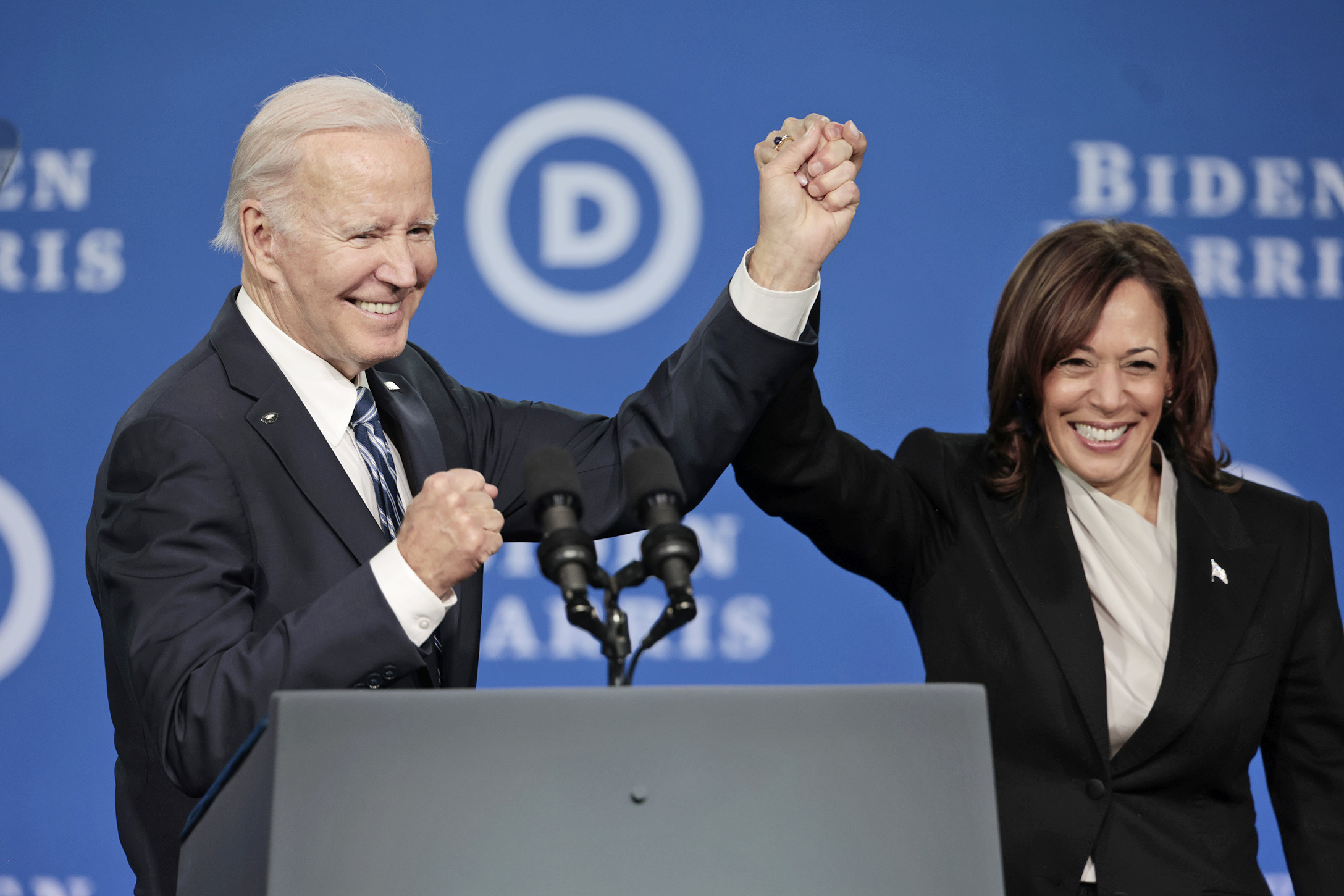
President Joe Biden and Vice President Kamala Harris wave to the audience after addressing the DNC Winter Meeting at the Sheraton Downtown in Philadelphia in 2023.
For a few days last month, I’d allowed myself to feel a tad bit optimistic, sensing that America had turned a corner. Maybe it was the eggnog, but the upcoming midterm elections had me feeling a little hopeful. So did the public opinion and court decisions pushing back against Trump’s excess and overreach. And Congress showing a spine and demanding accountability in releasing the Jeffrey Epstein files. If ever there were a year Rep. Jasmine Crockett could win a U.S. Senate race in Texas, 2026 felt like it could be it.
But then, Trump dropped bombs on an Islamic group in Nigeria on Christmas Day and followed that up by sending troops into Venezuela. Now, he’s staking claims to that country’s oil reserves while looking around to see which nation he can storm next. Will it be Mexico? Colombia? Iran? Greenland? I don’t think even he knows.
Trump isn’t bound by conventional mores or the Constitution. He’s not restrained by Congress or the U.S. Supreme Court. As he told the New York Times recently, the only thing that can stop him is his own mind. His “own morality,” which is downright scary considering his track record.
And yet, even as I am knocked down by the reality we’re facing. I can’t help but stand up. My dad was right to warn about not looking back, but in imagining the leadership of someone who is more than worthy of the office of the presidency, I like to think I’m looking forward.
Here’s the glaring sign of how drunk President Donald Trump has become on his own power: his ongoing threat to seize Greenland for security reasons, “whether they like it or not.” Anything else is “unacceptable,” Trump ranted last week.
Never mind that this icebound island is an autonomous territory of Denmark, one of our longest-standing and closest NATO allies. POTUS is trying to bludgeon Copenhagen, along with seven other European allies who back the Danes, by imposing new 10 per cent tariffs on them all unless they bow to his outrageous demands.
Never mind that seizing Greenland via economic coercion or force would destroy the NATO alliance, handing Russia and China a major victory at zero cost. Never mind that polls show that only one in four Americans want Trump to take control of Greenland, and only 6% of Greenlanders want to become part of the United States.
Yet, Trump is not only treating Denmark like an enemy but openly rebuffing the rights of Greenland’s government and people, who, according to Danish law have the final say about their future.
To learn more about what Greenlanders want and why Trump’s approach draws outrage, I turned to Galya Morrell, a Greenlander of Komi ethnic origins, who was raised in the Soviet Arctic. She has led an amazing life in journalism, the arts, and Arctic adventures, alongside her late husband, the renowned Greenlandic explorer Ole Jørgen Hammeken.
Our conversation has been edited for length and clarity.
Galya Morrell stands by her husband’s box sled, which was used to transport killed game, atop the frozen sea ice of Uummannaq Fjord in Northern Greenland.
What was the first reaction of most Greenlanders to Trump’s proposal to take control of Greenland?
When we heard about Trump’s proposal during his first term, everyone took it as a joke. Back then, we still lived in a world where logic mattered. How can you buy a country? What about people living there? Many people saw The Apprentice, that’s how they knew Trump, so they thought that maybe he was going to make a new season about Greenland after he retires from his presidency, and some young aspiring actors were asking if they can join the show.
Do they take Trump seriously now, especially after Venezuela?
Now it’s different. I don’t think that Venezuela played a big role in their perception, because already, people knew that Trump became obsessed with Greenland. At first, people thought that maybe it was even good for Greenland, because finally — finally — Denmark started taking Greenland seriously. Before, many Danes saw Greenlanders as a bunch of drunks and useless folks, which they aren’t, and a burden for Denmark. After Trump said he wanted it, many Danes changed their mind.
Trump also accidentally woke up Greenlandic nationalism because the Greenlandic independence movement was sleepy and divided. Now there was a foreign bully. Nothing unites people faster than someone who treats them like furniture in the new condo purchase. Suddenly even Denmark looked like a shield [against Trump] instead of a cage.
A 1951 pact with Denmark offers the U.S. almost unlimited military access on land, air, and sea. As for mining hard-to-access critical minerals, Greenland’s government would eagerly welcome U.S. investment. So what is your take on what Trump really wants?
About 20,000 U.S. soldiers and technicians were based in Greenland [after World War II] and then suddenly they were all gone. Today only Pituffik Space Base [the former Thule Air Base] is still around with some 150 personnel. So why did the US not bring them back when it was clear that Russia rebuilt and upgraded all the former Soviet bases in the Arctic and became a threat in the region?
The United States already had Greenland, quietly, through contracts, bases, and the gravitational pull of English. But none of that had Trump’s name on it. And if your name is not on something, do you even own it?
It appears that [Trump’s need for ownership] is not logical but psychological. I think that his understanding of success or power is only when “there is a deal,” and when someone loses face — very important! And when he gets credit — even more important. Soft power, which America had in Greenland until recently, looks like nothing to him. Because none of what existed had Trump’s name on it.
Donald Trump Jr. (center) smiles after arriving in Nuuk, Greenland, in 2025.
Are there Trump influencers (or suspected intelligence agents) roaming around, trying to find or buy supporters?
As a family, we have not seen or met the “agents,” but we certainly saw some people in Nuuk, following Donald Trump Jr.’s visit a year ago, giving money and red MAGA hats to the youngsters, schoolkids, and making them say things on camera. Parents were outraged when they saw their own kids on TV, but it was too late.
What really happened when Trump Jr. visited? Why was he so eager to talk about Greenland?
My late husband, an Inuit elder and explorer, was asked to meet Trump Jr. back in 2015. He wanted to hunt musk ox in Greenland, but not where average tourists hunt. So my husband said that there are a lot of musk oxen around Hammeken Point [a mountain named after him], and he could take him there and be his guide.
They were planning the expedition for a while, until one day Junior said that he can’t go because his dad decided to run for the presidency. Later, my husband thought that maybe it was all his fault for telling Junior exciting stories about Greenland and about what was hidden there under “all this ice,” and maybe that somehow affected Trump’s father’s interest.
Some Trumpers think Greenlanders can be bought. Are some interested?
We hear rumors that he is thinking of paying $100,000 to each Greenlander. Well, it’s not a lot of money, a boat costs around that, and who will sell the country for the price of a boat? But seriously speaking, today, everyone whom I know says firmly no. There is no price tag, no matter how much. The country is not for sale.
But we live in a strange world, so I don’t know what will happen for sure. [Opposition leader] Pele Broberg is saying out loud what many politicians think quietly: that Greenland is already being pulled into the American orbit, and that it might as well try to get paid for it.
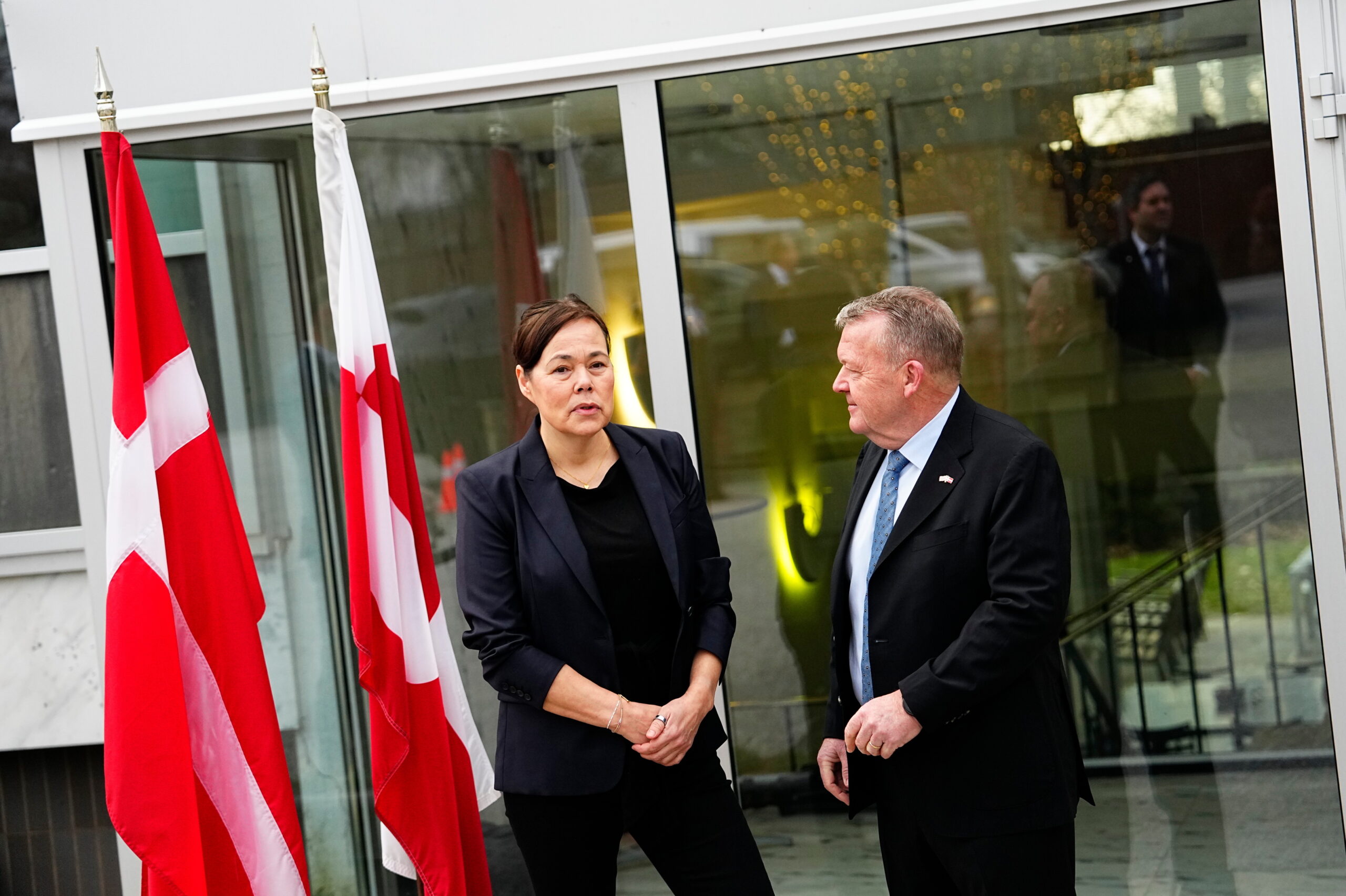
Denmark’s Foreign Minister Lars Løkke Rasmussen (right) and Greenland’s Minister for Foreign Affairs Vivian Motzfeldt (left) prepare at the Danish Embassy for a meeting with Vice President JD Vance and Secretary of State Marco Rubio in Washington on Wednesday.
Do some Greenlanders feel that way?
Yes. Especially younger people, miners, business owners, and those who feel Denmark never gave Greenland a real economy, only a welfare system. For them, a deal with America sounds like a shortcut to dignity, jobs, and finally being taken seriously.
But there is no such thing as “a deal” between a superpower and a small Arctic society. There is only dependence, dressed up as partnership.
The United States already has what it needs in Greenland: military access, strategic geography, and preferential access to resources [such as rare earths]. What it doesn’t have is legal ownership or political control. A so-called “deal” would simply move Greenland’s dependency from Copenhagen to Washington. The question is whether Greenland would still be free after it is made.
Can you imagine a U.S. military takeover attempt? What would be the consequences? Denmark and many other NATO allies are already moving small numbers of troops to Greenland as a tripwire.
My husband and I had hoped to live the rest of our years in a small village, Siorapaluk. It is such a beautiful and peaceful place. Ironically, it is 92 miles from Pituffik Space Base. We honestly thought it was the most peaceful place on Earth.
At this moment, we all — I can only talk about our family and friends — hope for a peaceful solution. Any negotiations are better than the war in the Arctic. Real war in the Arctic will be the end to everything.
If the U.S. really wanted to secure its interests in Greenland what could Trump do legitimately?
Trump still can return to U.S. bases, build new ones, invest in the population, in their education and knowledge. I see how scientists, glaciologists, marine biologists — 15 different specialties — from Japan’s Hokkaido University work together side by side with the local Inuit hunters, elders, and children in Qaanaaq, very close to Pituffik Space Base. It is an ideal collaboration; they love each other and benefit from each other. But they have a very smart leader, Shin Sugiyama. I think that President Trump could learn from him.
People take part in a march ending in front of the U.S. consulate, under the slogan, Greenland belongs to the Greenlandic people, in Nuuk, Greenland, in March.
Trump claims that if the U.S. doesn’t take Greenland, China or Russia will. What is he talking about?
Russia is expanding its military presence in the greater Arctic region. This is their priority. I was once arrested by Chechen commandoes [on a floating Russian ice base, not part of Greenland but above the disputed underwater location of the North Pole]. So, yes, activity in Arctic waters is very real, and it is increasing. China has a major interest in Greenland. [But Greenlanders and Arctic experts see no signs of the Chinese and Russian ships Trump says are lurking around Greenland.]
Greenlanders have said no to Russia and China because we don’t want them. A year ago, the Chinese bought some mining rights, but said they would bring their own workers, like what they have done in Yakutia [a northern region of Russia]. Chinese men married Russian women in Yakutia. There is a growing Chinese presence in Siberia. Soon, a majority will be Chinese, but no one sees it. [Fearing a similar outcome, the Greenland government ultimately rejected the Chinese investment.]
[Russia’s invasion of Ukraine has also increased Greenlanders’ hostility to Moscow. They are painfully aware of “how poorly Russians treat their Arctic minorities” and how “Putin took the poorest people from Arctic villages” to fight and die in Ukraine].
Should NATO troops be stationed in Greenland alongside more U.S. troops?
Today the Arctic is becoming a place where three things overlap: military early warning systems, resource competition, and new shipping routes [due to melting ice]. That combination creates the possibility of accidents and miscalculations long before it creates a planned Russian or Chinese invasion.
The biggest risk is not that someone like Russia or China suddenly wakes up and “takes Greenland.” The risk is escalation. I think that Greenland’s best protection is not a sudden flood of troops. It is a predictable security architecture that everyone understands.
Greenland needs protection. But we are old enough to remember how conflicts were avoided during the Cold War: There were rules and restraint. There was clarity. Not theater.
What do you hope for (or dread) after the failure of last week’s meeting at the White House between Vice President JD Vance and Secretary of State Marco Rubio and the foreign ministers of Denmark and Greenland?
What I hope for is very simple: that adults will run the room. Secretary of State Marco Rubio is not a performer. So I really hope meetings will not be about headlines or symbolic victories. They should be a security conversation and not a dominance ritual.
As I said before, the U.S. already has what it needs in Greenland in terms of security. My husband said not long before he departed: “Greenland does not need to be rescued. It needs to be respected.”
In nearly five decades of directing puzzle competitions, New York Times crossword editor and NPR puzzle master Will Shortz has encountered a cheater only once, at a Sudoku championship in Philadelphia.
Luckily, Shortz doesn’t hold it against us. That came across loud and clear when he recently announced he’s moving the American Crossword Puzzle Tournament from Connecticut down to Philly next year.
“Philadelphia has a cultured audience,” Shortz said when we spoke this week. “It’s just a great city to have a major literary event at.”
The first time I heard of the ACPT was while watchingWordplay, a 2006 documentary about crossword puzzles featuring Shortz; the latter half of the movie is set at his annual tournament. I loved the movie when it came out and on a rewatch 20 years later, it’s still as quirky and delightful as ever.
In the film, the late puzzle constructor Merl Reagle, who crafted crosswords for the Times, The Inquirer, and other papers across the country, calls the ACPT an “orgy of puzzling,” which is a fantastic phrase that I’m guessing he never got into a puzzle and one that’s probably responsible for the film’s perplexing PG rating.
The play-by-play
Shortz — who designed his own major in enigmatology (the study of puzzles) at Indiana University — founded the ACPT at the Marriott in Stamford, Conn., in 1978 when he was just 25.
“There had not been a crossword tournament in the country since the 1930s, so we were starting fresh,” he said.
The first tournament attracted 149 contestants. This year, there are 926 competitors, with a long wait list, and after 48 years at the Stamford Marriott (aside from a few years the tournament was held in Brooklyn), the ACPT has just outgrown the space. The tournament will be held there for the last time in April.
Shortz and his team looked for new venues around the Northeast and settled on the Liberty Ballroom at the Sheraton Philadelphia Downtown, where they can accommodate up to 1,250 contestants.
The tournament will be held there from April 30 to May 2 next year.
“I’m hoping with 1,250 seats we won’t have to turn anyone away next year,” Shortz told me. “My goal is for everyone to come who wants to.”
The ACPT is held over three days and consists of eight rounds of puzzles. All contestants compete in the first seven rounds, which, much to this Luddite’s delight, are still done with pencil and paper.
“I want everyone to compete equally,” Shortz said. “Some people are very fast with their fingers so I wouldn’t want the tournament to depend on your computer literacy.”
Contestants are scored based on accuracy and completion time. There are multiple divisions, with an eighth round of playoffs held for the top three divisions.
From left: Frequent top finishers Tyler Hinman, David Plotkin, and Dan Feyer compete live on stage during a championship round of the American Crossword Puzzle Tournament. Play-by-play announcers even call the games, so competitors must wear noise-canceling headphones.
The A and B division playoffs are held on stage, with top three contestants working on giant crossword puzzle white boards before a live audience (and you thought completing a Saturday Times puzzle by yourself was intimidating!). Play-by-play announcers even call the games, so competitors must wear noise-canceling headphones.
The division A winner gets a $7,500 prize and crossword glory for a year. The last two tournaments were won by Paolo Pasco, a 24-year-old crossword puzzle constructor and seven-time Jeopardy! winner who’s competing in the quiz show’s Tournament of Champions this month.
Aside from the competitive games, there are also informal word games, a puzzle market, and a contestant talent show.
Paolo Pasco, (left), winner of the 2025 American Crossword Puzzle Tournament, with tournament director Will Shortz, (center), and puzzle constructor Ryan McCarty.
‘No judgments’
Shortz has never missed a tournament, except for when it was canceled in 2020 due to COVID. Even after suffering a stroke in 2024, he showed up to the tournament, just two months later.
“I was in a subacute rehab center and everyone was advising me not to leave the center, but there was no way I was going to miss the tournament,” he told me. “When I came in a wheelchair, everyone stood up and applauded and that brought tears to my eyes.”
Donald Christensen, who has attended the ACPT since the 1980s and serves as the event photographer, said the contestants are “a microcosm of society.”
“When you attend one of the tournaments, you are among a group of about 1,000 people who make no judgments about you or your abilities, and who are often very willing to share their secrets to successful solving with anyone who is interested,“ he said via email.
Contestants work on solving puzzles at the Stamford Marriott during the American Crossword Puzzle Tournament.
I enjoy crossword puzzles, but I’m absolutely terrible at them, so much so that I question my college majors (nonfiction writing and communications), my career, and whether I actually speak the English language. But there’s even room for someone like me at the tournament — a noncompetitor option, where you can play but your solutions aren’t scored. Spectator-only tickets are available for the Sunday playoffs, too.
Contestants aren’t allowed outside help, but they’re not required to hand over their cellphones either. Shortz said referees would see any cheating and looking something up on a phone would just slow down a good contestant.
“It’s not a group that would cheat anyway,” Shortz said.
The Sudoku swindler
And that brings me back to the stupefying Sudoku scandal of 2009. For three years beginning in 2007, The Inquirer sponsored the National Sudoku Championship at the Pennsylvania Convention Center, with Shortz serving as host (The Inquirer and Shortz also partnered to host the World Sudoku Championship here in 2010).
Will Shortz explains the rules of the 2010 World Sudoku Championship, which was held in Philadelphia and sponsored by The Inquirer.
During the 2009 competition, a before-unknown player, Eugene Varshavsky of Lawrenceville, N.J., qualified for the finals in lightning time. But when he got on stage with his hoodie up for the championship round, he froze.
“It was a challenging puzzle but not crazy hard and he was utterly unable to finish it,” Shortz said. “It was kind of embarrassing for someone who’d solved the previous puzzle quickly.”
Still, Varshavsky was awarded third place, which came with a $3,000 prize. But puzzlers raised suspicions and the money was frozen while officials conducted an investigation.
Varshavsky was asked to come to The Inquirer to complete additional puzzles to prove his ability.
“We gave him the round-three puzzle he whipped through in the competition, which he was now unable to do,” Shortz recalled.
He was subsequently stripped of his title and the prize money. Shortz said officials believed he was getting help through an earpiece during the competition, though that was never proven. Coincidentally, a man by the same name was suspected of cheating in 2006 at the World Open chess championship in Philadelphia.
United by words
Philadelphia’s puzzle history isn’t all sordid though. We were home to the oldest known Times crossword puzzle contributor, the late Bernice Gordon, who constructed puzzles for decades and was the first centenarian to have a puzzle published in the Times.
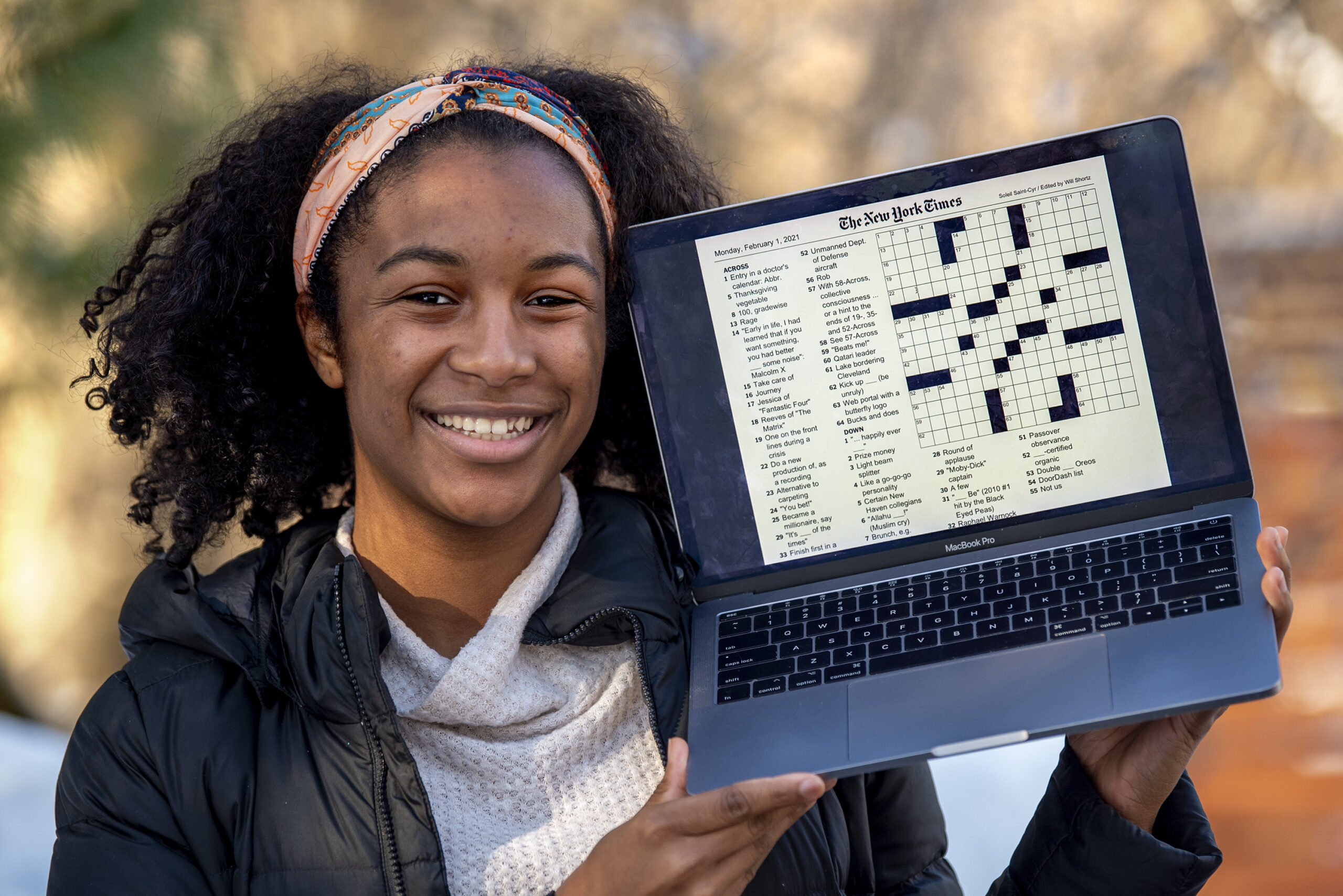
And in 2021, Soleil Saint-Cyr, 17, of Moorestown, became the youngest woman to have a puzzle published in the Times.
Cruciverbalist Soleil Saint-Cyr poses at her Moorestown home in 2021.
With all of the talk around AI today, I asked Shortz if humans are still better at crafting crossword puzzles than computers.
“Of course, computers can create crosswords now, but it takes a human mind to create a brilliant crossword,” he said. “Only humans can still come up for a clever idea for a new theme and only a human can write a good, original crossword clue.”
Perhaps there is no better place for the American Crossword Puzzle Tournament than right here in Philadelphia, where words birthed our country into existence. We’re still writing the story of our nation and trying to figure out if this puzzle can be solved, but as in Shortz’s tournament, people are still united by words and creating small moments of order amid the chaos.
“We’re faced with so many challenges every day in life and we just muddle through and do the best we can and we don’t know if we have the best solution,” Shortz said. “But when you solve a crossword puzzle … it gives you a tremendous feeling of accomplishment. You put the world in order.”
For more information on the ACPT and how to add your name to the 2027 contact list, visit crosswordtournament.com.
This week’s column talks about heroes with feet of clay, SEPTA’s starts and stops, and America’s 250th birthday celebrations.
No one’s hero
Philadelphia Sheriff Rochelle Bilal is having her 15 minutes of fame this week, with her comments at a news conference alongside District Attorney Larry Krasner spreading across social media. After the killing of Renee Good by U.S. Immigration and Customs Enforcement agent Jonathan Ross in Minneapolis, Krasner stated that he would hold federal officers accountable for any violation of the law. Bilal warned that the feds “don’t want that smoke” and called ICE “fake wannabe law enforcement.” She even scored an interview with CNN’s Erin Burnett.
That’s all well and good, but there’s one big problem with Bilal’s position: The sheriff ultimately has no ability to protect Philadelphians from ICE.
Despite her title and natty uniform, it is Police Commissioner Kevin J. Bethel who serves as the city’s top law enforcement official, not Bilal. This is a good thing because the sheriff’s track record is disastrous.
Despite running for the office in 2019 as a reformer, Bilal began her tenure by firing Brett Mandel, her chief financial officer, just five weeks into his tenure. Mandel had flagged her use of what he described as a slush fund. A longtime good government advocate, Mandel objected to using city funds to pay for things like parking tickets and six-figure media consulting contracts.
While Bilal was basking in the media spotlight of talking tough against ICE, Bethel was not amused. Given Mayor Cherelle L. Parker’s clear strategy to avoid poking the orange bear, Bilal’s comments forced the commissioner to make clear in a statement that it is the Philadelphia Police Department that runs law enforcement in the city, not the sheriff.
If people are looking for a genuine local hero in the national crisis over immigration enforcement, why not opt for Keisha Hudson instead? Hudson, who leads the local Defenders Association, has put together a new unit specializing in immigration cases. An immigrant from Jamaica herself, Hudson has both the right job and the right life experience to help residents who have been mistreated by ICE.
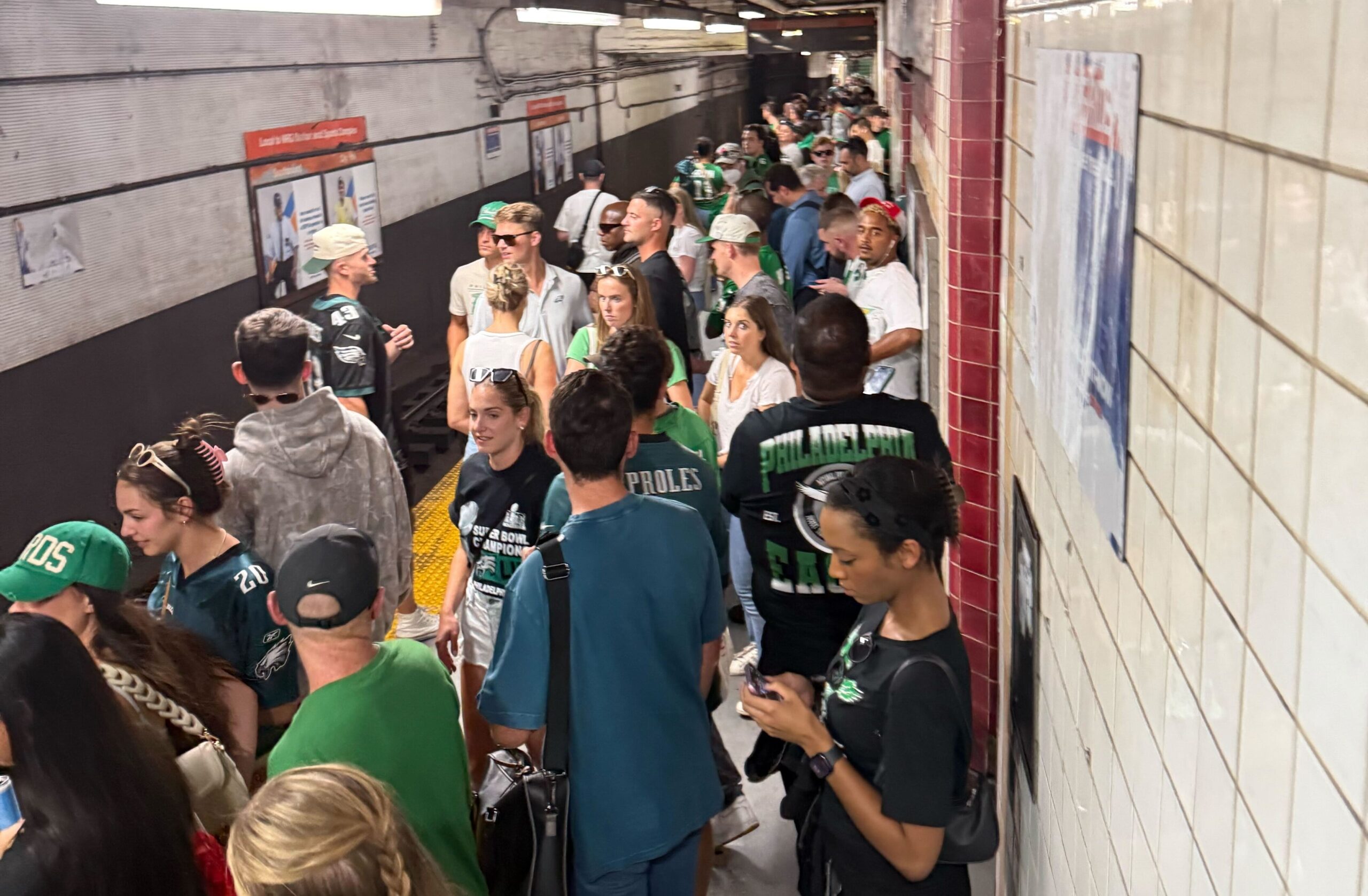
Eagles fans wait for a Broad Street Line train at City Hall station.
The wheels on the bus
During the yearslong debate over transit funding in Pennsylvania, one consistent drumbeat is that SEPTA needed to become more efficient if it wanted to get more support.
Of course, SEPTA already does more with less when compared with other major agencies, with cost-per-ride lower than in Boston and Washington, D.C. Additionally, trying to save money can sometimes cost agencies in the long run, or at the very least cost scarce political capital.
In fact, most of the current crises SEPTA faces are the result of trying to save money or insufficient political will. For example, better capitalized agencies would have replaced the Regional Rail fleet a decade or so ago. Meanwhile, the weekslong closure of the trolley tunnel happened because the agency tried using a new part — in the hope that it would be replaced less frequently and cost less.
Perhaps the Broad Street Line felt left out of the chaos because operations there have become a new pain point for riders. The 1980s Kawasaki trains are well-built. They are also nearly 45 years old. When I first started at The Inquirer five years ago, then-SEPTA General Manager Leslie Richards told me she hoped to avoid replacing the trains until the 2040s. Recent issues on that line make me question that timeline.
For weeks, the trains have struggled with mechanical issues. Riders have reported jam-packed trains that have been forced to skip stops, line adjustments, and other delays. According to a spokesperson, door faults and general vehicle malfunctions have contributed to the problems.
It all came to a head at the end of Sunday’s Eagles game.
After a door issue disabled a train near Snyder Station, already dejected fans were forced to wait until 9 p.m. to catch a ride home. SEPTA is spending $5 million to upgrade the traction motors, which should help. What’s really needed, however, are new trains.
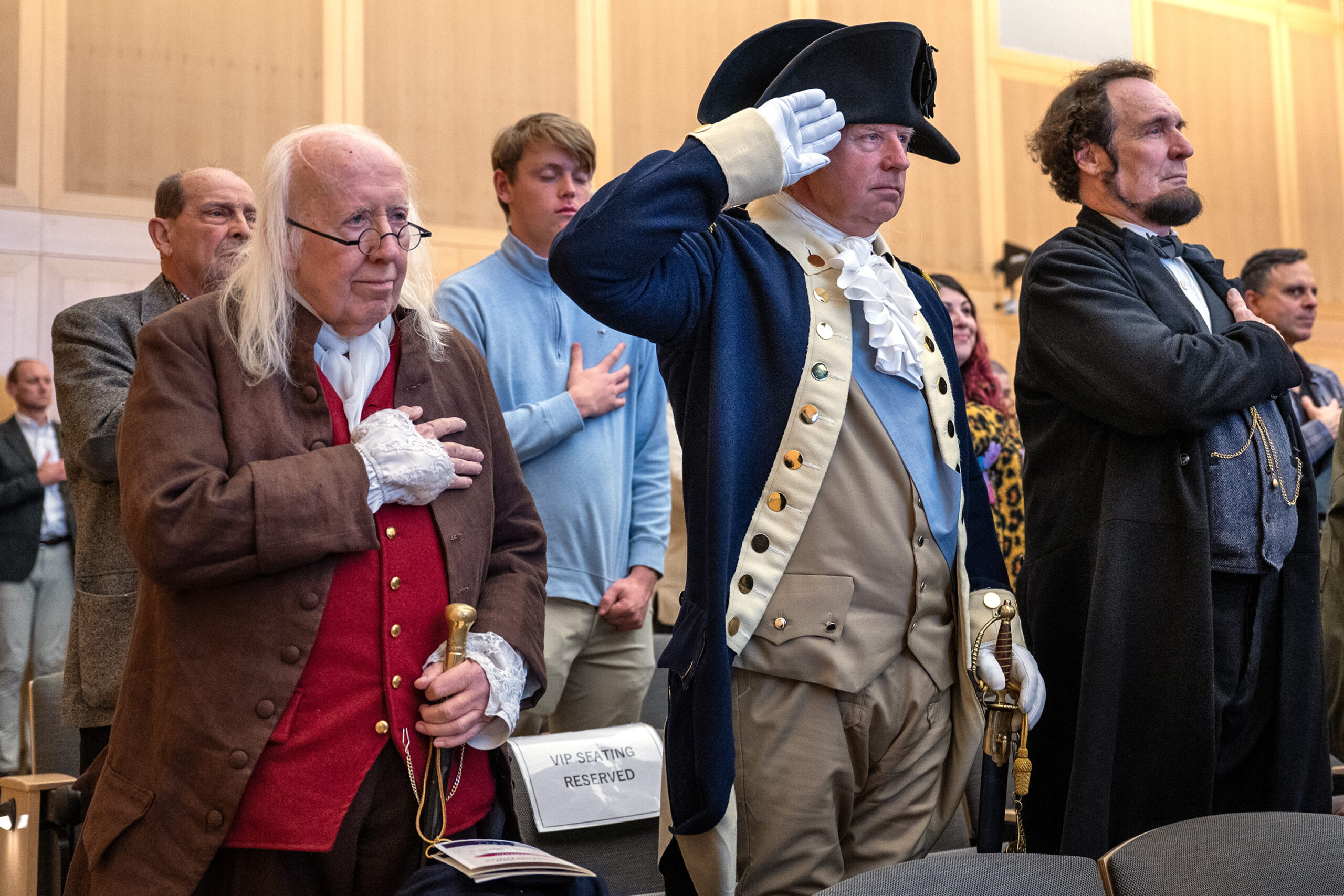
Historical interpreters (from left) Benjamin Franklin, Gen. George Washington, and President Abraham Lincoln stand with other audience members for the Presentation of the Colors, as the U.S. Mint unveils new coins for the Semiquincentennial at the National Constitution Center in Philadelphia in December.
Let’s get this party started
The United States is celebrating a big one this year. America’s big 250th birthday party is here … can you tell?
I can’t. While big events like the World Cup are planned for later this year, there is currently little to indicate that 2026 is any different from 2025. The patriotic bunting that sprouted all over Philadelphia during the Civil War and the Centennial has yet to appear.
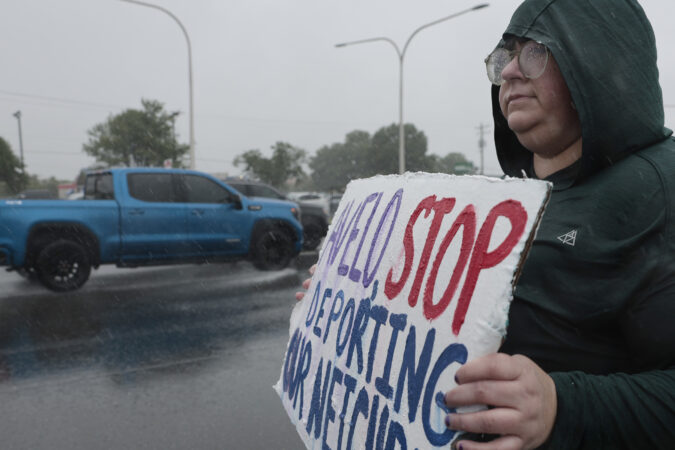
When the Rev. Jack Perkins Davidson and other parishioners in his socially active Spring Glen Church in Connecticut learned last year that budget carrier Avelo Airlines — with a major hub at nearby Tweed New Haven Airport — was also operating U.S. government deportation flights, the pastor kept thinking about one thing.
What would the Rev. Dr. Martin Luther King Jr. do?
Davidson said King’s 1955 Montgomery bus boycott against segregation — the iconic protest that launched the civil rights movement of the mid-20th century — was an inspiration as he and a coalition of activists pressured Avelo to stop aiding U.S. Immigration and Customs Enforcement and its mass deportation campaign.
“I often think about how the Montgomery bus boycott was a very local action, but it became national news,“ Davidson told me by phone recently. ”Sometimes when I feel so overwhelmed by the state of the world, I take hope in that example — that acting in the local level is a way to create national impact.”
Davidson and his congregation’s allies, like Connecticut Students for a Dream and the New Haven Immigrant Coalition, spent nine months pressuring Avelo to drop ICE — staging noisy protests, but also doing what the minister called “the unglamorous work” of gathering petition signatures and attending airport board meetings. Last summer, New Haven’s mayor signed their petition as the city banned official travel on Avelo.
Spotify confirms that they are no longer running ICE recruitment ads.
Last October, the company faced backlash for running ICE recruitment ads after receiving $74,000 from the Department of Homeland Security to promote the Trump's plan to hire 10,000 new deportation officers by… pic.twitter.com/4M7l4HGg0K
The Connecticut crusaders were joined by activists at other Avelo hubs, including Wilmington. It’s impossible to know exactly how much boycotting air travelers hurts the bottom line of the private, Texas-based corporation, but earlier this month, Avelo made a U-turn. A spokesperson said the airline would halt working with ICE, which “ultimately did not deliver enough consistent and predictable revenue to overcome its operational complexity and costs.”
Avelo’s exit from the ugly business of flying often handcuffed and shackled migrants out of the United States was a huge win for the growing movement against the Trump regime’s mass deportation raids — but it was not an isolated incident.
In recent days, the leading music streamer Spotify announced it was no longer running recruitment ads for new ICE agents. The spots urged would-be applicants to “fulfill your mission to protect America,” but sparked outrage among listeners opposed to the agency’s masked goons and its violent raids that have roiled cities from New Orleans to Minneapolis.
As with Avelo, Spotify’s ties to ICE — the U.S. Department of Homeland Security paid the Swedish-based streamer $74,000, according to Rolling Stone — sparked a nationwide campaign for a boycott that was led by Indivisible, a leading organizer of the massive “No Kings” protests.
Thousands canceled their paid subscriptions, and some artists pulled their music from Spotify to protest both the ICE ads and the company’s ties to a defense contractor.
These economic wins come amid a deadly and chaotic start to 2026 that has battered America’s already damaged national psyche. The stunning Jan. 7 Minneapolis murder of Renee Nicole Good, a 37-year-old poet and mother of three, by an ICE agent has only upped the anxiety and the stakes.
A new Quinnipiac Poll released this week showed that 57% of Americans now disapprove of the way ICE and other federal agencies are enforcing immigration laws, with 53% saying Good’s killing was not justified. A separate Economist/YouGov survey found respondents favoring the abolition of ICE by a 46%-43% majority — a first for that political hot-button question.
So, as you can imagine, in a healthy functioning democracy like the United States, the opposition party Democrats are forming a united front in working to abolish ICE, including the withholding of money in the latest budget battle on Capitol Hill, right?
Right?
Um, not exactly. To be sure, Good’s murder and the appalling scenes in Minnesota have triggered a more radical response from some Democrats, including more than 50 members, so far, who’ve signed on for the impeachment of DHS Secretary Kristi Noem. But many in Congress are insisting ICE can somehow be reformed — including an utterly bizarre proposal to put scannable QR codes on immigration agents so the public can identify them. It’s an echo of the tepid reform ideas that failed to stop police brutality after George Floyd’s 2020 murder.
BREAKING: Heavy police and state trooper presence in Minneapolis as noise protest continues outside the Canopy by Hilton where ICE agents are reported staying.
Protests press into the night, demanding Walz and Frey arrest ICE officer Jonathan Ross. pic.twitter.com/lONV4RaUeD
“Clearly, significant reform needs to take place as it relates to the manner in which ICE is conducting itself,” House Minority Leader Hakeem Jeffries of New York told MS Now on Tuesday night — minutes before agents in Minneapolis reportedly shot a flash-bang grenade into a moving car and injured six children, including a baby.
You don’t significantly reform the brand of fascism that we can all see on the icy streets of the Twin Cities. You fight it like the existential crisis for American democracy that it is. Millions of everyday Americans are both feeling that urgency and dismayed that the institutions theythought would oppose autocracy — Congress, the media, the U.S. Supreme Court — aren’t standing with them.
No wonder people are fighting with the only real ammunition they have under late-stage capitalism: their dollars.
Nearly one year into the second coming of Trump, many of the major victories by citizens resisting his regime have come through the fingertips of everyday folks clicking on a “cancel” button.
The best-known example came last summer when Disney-owned ABC briefly suspended late-night host Jimmy Kimmel in a flap over some (fairly tame) comments he made after the assassination of right-wing activist Charlie Kirk. The network raced to put Kimmel back on the air after the cancellation rates for two lucrative Disney-owned streaming services, Disney+ and Hulu, doubled. And Disney recently extended the contract of Trump’s least-favorite comic by another year.
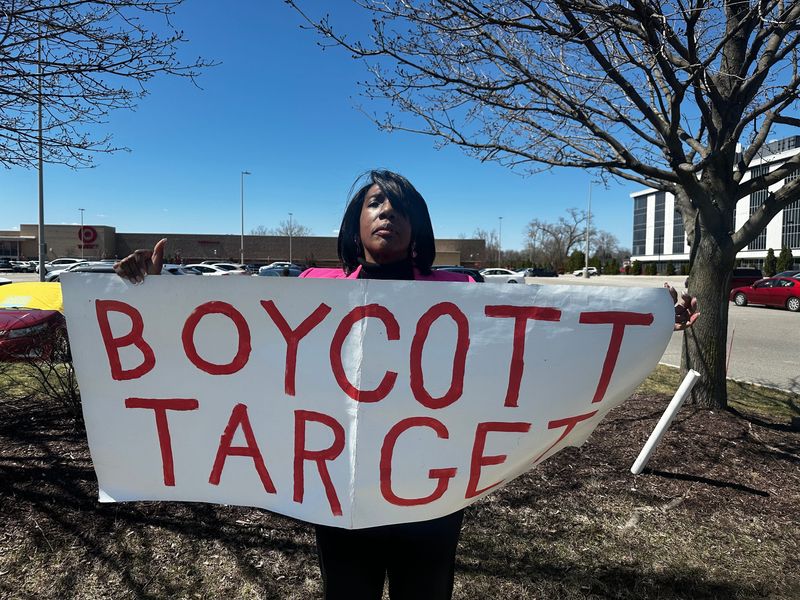
Other economic pressure campaigns have badly damaged U.S. brands without getting results … yet. The best example is the giant retailer Target, whose decision to end its diversity initiatives after Trump’s inauguration sparked calls for a boycott by prominent Black activists and some labor unions. Since then, foot traffic at Target stores has dropped (while increasing at more “woke” rival Costco), and the stock price of the Minnesota-based company has plunged by 33%.
This hasn’t yet inspired Target’s management to fully restore its diversity initiatives, and it more recently has angered some activists by insisting it has no power to stop ICE agents from using its parking lots and even entering its stores to make arrests. None of this should deter the public from keeping the pressure on Target.
Allison Folmar of West Bloomfield joined the protesters who advocated for a boycott against Target in April.
The weeks of Minnesota mayhem have focused attention on a new corporate bête noire: Hilton Worldwide Holdings. Two of the hotel chain’s properties in Greater Minneapolis have been the scene of noisy, all-night protests after reports that out-of-town ICE agents are staying there. And Hilton further infuriated activists and sparked calls for a boycott by delisting a third Minneapolis hotel after an employee said ICE was not welcome.
I will not stay at any Hilton hotel as long as the company thinks it’s OK to host masked thugs who are snatching laborers off the street and shooting or tear-gassing anyone who objects to that, and I hope you would consider doing the same.
As New Haven’s Davidson rightly said, using economic pressure to end injustice takes time and hard work that isn’t always glamorous or made for the cable-TV cameras. Some 71 years ago in Montgomery, Ala., the King-led bus boycott took 381 days and a lot of sacrifice from unsung heroes like Claudette Colvin, who died this week at age 86, and working-class Black people who walked or carpooled to their jobs until claiming victory.
The bottom line has not changed since MLK’s time. The color that matters most to corporate America is the color of money. The pursuit of profit is why cowardly law firms or TV networks like CBS are aiding American dictatorship instead of fighting it. But it’s also what makes them reverse course when they realize that hate is actually bad for business in a consumer society.
Boycotts aren’t the only solution, but in a world where feckless institutions have given up, they have become an essential tool. Spend your dollars with any company that still believes in a decent, diverse America, and put the collaborators out of business. Consider it an early birthday present for Dr. King.
Many years ago, when I was a college student, a philosophy professor told me that life was a great cosmic lottery. None of us chooses the parents we have. Instead, they choose to have us.
I’ve been thinking about his comment because my mother died last week, after a long and fruitful life. Of course, it’s always sad to lose a loved one. But since she passed, I’ve felt more serendipity than sorrow.
In the great cosmic lottery, I got lucky.
I got lucky because Mom taught me that men and women are — or should be — equal, in all the ways that matter. She never sat me down and said that, but she didn’t have to. It permeated everything she did.
Mom devoted her career to international family planning and maternal health. She fought for women to have access to contraceptive information and services, no matter where they lived. She thought they should be able to make their own choices about reproduction and everything else.
So “Women’s Lib” wasn’t just a saying where I grew up, in the 1960s and 1970s. It was a fundamental truth. I never questioned whether women should enjoy the same rights as men.
Margot Lurie Zimmerman taught her son to raise his voice when he had something to say.
That’s been an enormous boon to me, as a spouse and a parent and a teacher. My wife and I have two daughters, and, because I teach about education, most of my students have been female. I would be much worse at what I do if I believed they were lesser, in any sense. And they would be worse for it, too.
I also got lucky because Mom taught me to raise my voice when I had something to say. As an educator, I am constantly trying to get students to do the same. Sadly, some of them don’t believe they have anything to say that would be worth hearing. And others are simply afraid to say what they think.
I never was. That’s because of Mom, too. If you want to write for newspapers, you need a thick skin. And she gave me one.
The third way I got lucky was by watching Mom work. And I mean work. Hard. To succeed at anything, she taught me, you need effort. It’s not about your inherent abilities. It’s about what you do with them.
Psychologists call that a “growth mindset.” I didn’t know the term when I was younger, but again, I didn’t need to. It was drilled into me, over and over again. If you want something, work for it. And if you don’t get it right away, keep at it. Keep going.
That’s been a hugely useful lesson in my life. Of course, you can take it too far. Mom insisted that you could achieve anything if you tried hard enough.
And that’s not true. We are all finite beings, in what we can imagine and create and accomplish. It’s good to keep trying, but you also have to accept your own limitations. (I keep trying to do that.)
Last, I got lucky by being exposed to the inestimable value of friendship in everything we do. My parents spent their lives traveling the world, and they collected friends at every stop. Those are the people who will nurture and replenish you until your own journey comes to an end.
When Mom died, I was overwhelmed by the expressions of love from her friends. And it came on the heels of the death of my dear friend Mark, who lived in Oregon. I went to be with Mark’s family when he died, and I was on my way home when Mom passed on.
The novelist Wallace Stegner described friendship as something you needed to create and recreate, over and over again. It is “a relationship that has no formal shape, there are no rules or obligations or bonds as in marriage or the family,” Stegner wrote. “It is held together neither by law nor property nor blood, there is no glue in it but mutual liking. It is therefore rare.”
Jonathan Zimmerman writes that his mother taught him about the inestimable value of friendship.
But where I grew up, it was as common as sunshine. As a kid, I don’t think I appreciated what my Mom did to sustain her friendships. Now I do. And I am lucky — again, for her example.
Mom was not perfect by any means. She could be prickly, judgmental, and blunt. She didn’t know how to read a room, and she also didn’t feel like she needed to. Whatever she thought, she said. And sometimes — actually, lots of times — you didn’t want to hear it.
But in the great cosmic lottery, I got a pretty darned good ticket. Thanks, Mom, for the mark you left on me. I was lucky to be your son.
Jonathan Zimmerman teaches education and history at the University of Pennsylvania. He is the author of “Whose America?: Culture Wars in the Public Schools” (University of Chicago Press).
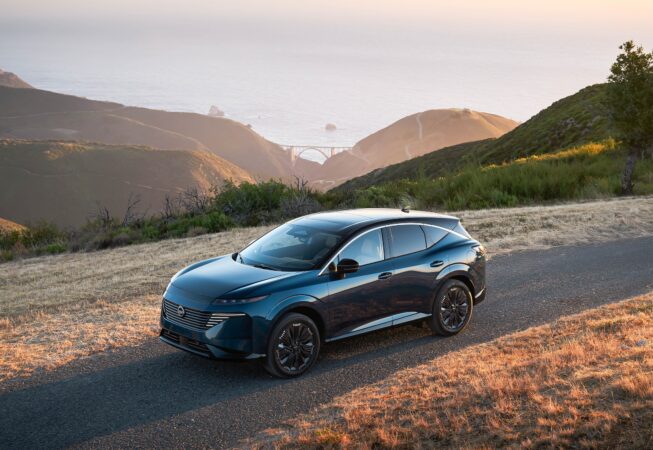
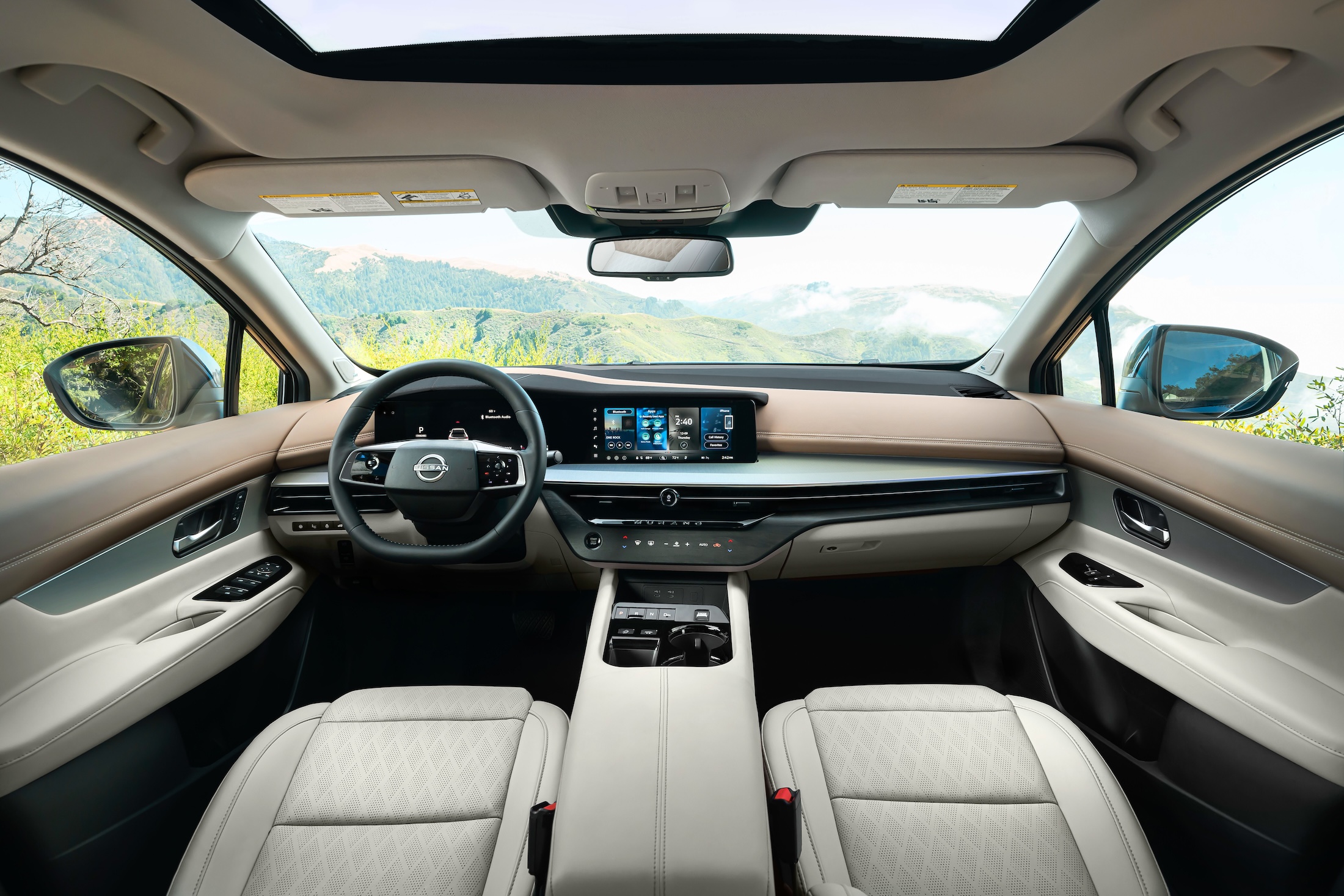
2026 Nissan Murano Platinum AWD vs. Volkswagen Atlas SEL Premium R-Line: Midsize SUV comparison.
This week: Nissan Murano
Price: $53,950 as tested
What others are saying: “Highs: Comfortable front seats; short stopping distances. Lows: Rough-shifting transmission, uneven power delivery, stiff ride, unintuitive controls,” says Consumer Reports.
What Nissan is saying: “Energetic elegance.”
Reality: I promise I checked Consumer Reports after I wrote the column.
What’s new: I was excited to have a Murano in my lineup because after all these years of columnizing, I would finally get to review one.
(Googles “Scott Sturgis” “Inquirer” “Murano.”) Well, huh. I drove 2015 and 2018 models.
Memorable, evidently.
This is not the same Murano, naturally. A redesign for 2025 gives the awkward old two-row, midsize SUV an awkward new look, along with a new engine and transmission.
Shifty: Hooray! A Nissan without a CVT! The Murano came with a 9-speed automatic, so I should be this delighted. But read on.
Up to speed: Gone is the V-6 that powered the old model. The 2.0-liter turbocharged engine creates 241 horses, which is not a ton for this size of vehicle. It gets the vehicle to 60 mph in 7.2 seconds, according to Car and Driver.
But the acceleration story has many more chapters. When I first pulled out of my neighborhood, the Murano seemed to alternate between lag and lurch. “OK, it’s cold,” I thought, offering the benefit of the doubt even while it was probably 85 degrees outside. “I’ll give it some time.”
But the unsteadiness continued. Sometimes SUVs and minivans can have an awkward accelerator-foot interface, so I looked into that. But, no, it felt comfortable.
“Aha! Here’s a drive mode selector,” I cried. “I’ll try that.” When I shifted to sport mode, it got sporty all right — in the way that your eighth-grade gym teacher forced you to run laps around the gym at 8 a.m. until you felt like throwing up. It was even rougher than before, although the roughness came at you faster.
“All right, I never do this,” I sighed and shifted into eco. Surprisingly, the power didn’t completely die out. The Murano felt smooth. Sure, it took a lot of foot stomping to get the Murano on highways and such, but the SUV delivered power much better.
On the road: Mode, schmode, driving the Murano was never more than OK. Country roads are blah; highways are a faster blah. There are just so many more enjoyable competitors to get around in.
The lane-keeping system drove me nuts for a few days, and the menus to adjust it are inscrutable. Press one of two little dotted lines on the steering wheel to change them. The screen says “OK Menu,” and there’s a tiny OK button next to a microphone/button, and that seemed to function at somewhat regular intervals. I’d need practice to do it again.
The interior of the 2026 Nissan Murano is elegant, as are many of Nissan’s offerings. Unfortunately its user-friendliness is lacking.
Driver’s Seat: The seat itself is on the plush side, roomy and wide. Nissan has long offered classy interiors even down to the Sentra (sorry, Versa, not you). Silver buttons and trim with nice colored material add to the upscale feel.
But here’s a better place to complain about the transmission controls. Why did some designer think a row of buttons at the front of the console would be a great idea? My phone and other items forever covered them. Also, they’re just not intuitive, so when you’re in a tight spot and have to maneuver forward and back to get out, it requires far more concentration than it should.
Friends and stuff: The rear seat is roomy, comfortable, nicely appointed, and well positioned. Heads, legs, and feet have no shortage of space, even in the middle seat.
Cargo space is 32.9 cubic feet in the back, and 63.5 with the rear seat folded.
In and out: The Murano rides at a height perfect for entry and exit without leg stretches.
Play some tunes: A single large volume knob is available outside the touchscreen. The 12.3-inch screen sounds like a good size, but it’s very short and wide, and a row of icons along the side and HVAC display along the bottom eat into the space.
Sound from the Bose Premium system is OK, about a B+ or so, and leaves me wondering what the not-premium system sounds like.
Keeping warm and cool: Going one better (or worse) than the popular ebony touch pads, which Mr. Driver’s Seat doesn’t love, the Murano offers a cheap-looking black plastic controller pad with temperature, fan speed, and source, and it requires a forceful push to engage your choices.
While you’re fighting with that, a teeny tiny display at the bottom of the touchscreen shows the changes. Let’s all say it in unison: “Eyes on the road!”
Fuel economy: I couldn’t get the trip display to do more than show me how each individual trip went, and the car said the best fuel economy was 22.8 mpg. So, the rest were worse. Let’s call it 20.
Where it’s built: Smyrna, Tenn. Half the parts come from the U.S. and Canada, including the transmission. The engine hails from Japan.
How it’s built: The Murano gets a predicted reliability of 3 out of 5 from Consumer Reports.
In the end: Nissan has a comfortable, roomy, attractive (on the inside) SUV here. If they can tweak the engine and suspension and start over with infotainment and HVAC controls, this could be a winner.
Donald Trump gathered U.S. energy executives on Friday to tell them of the nice crude, heavy oil he had procured for them by invading Venezuela — killing dozens of people and kidnapping President Nicolás Maduro and his spouse in the process — only for the men to respond that they couldn’t invest in that country because they’d spent all their money getting Trump elected.
It was a twist right out of an O. Henry story. Call it, The Gift of the Megalomaniac.
Well, not quite. While Big Oil did indeed spend at least around $500 million last year on the presidential campaign and other lobbying efforts, it fell short of the reported $1 billion Trump asked oil executives for during his run for the White House. And even that amount would hardly make a dent in industry profits, which in 2022 reached nearly $200 billion.
I’ll get to Trump’s deranged, illegal attack on Venezuela and its larger implications for Latin America — which plays less like literature and more like a bad ‘80s sitcom episode (“The Dumbroe Doctrine,” Season 2, Episode 1) — in a bit. First, let’s talk oil.
The reason why energy executives didn’t jump at Trump’s offer for them to spend $100 billion in Venezuela to boost oil production is that while there may be massive, untapped potential there, it’s going to take a long time to realize, said Harold York, a fellow at the Center for Energy Studies at Rice University’s Baker Institute.
To start, York told me, companies need a technical assessment of the state of the Venezuelan oil industry’s infrastructure, which is believed to be in serious disrepair. Then, the U.S. must help establish a credible and trustworthy legal and fiscal framework for international companies to participate in Venezuela. After that, executives will begin to figure out what a development plan looks like.
A local walks past a mural featuring oil pumps and wells in Caracas, Venezuela, on Jan. 6.
While some have pointed to the current low price of oil as a roadblock, York doesn’t believe that’s an impediment, since the decision to embark on a yearslong project would consider what the price will be in the future, not what it is now.
“I think there will be appetite precisely because they may not need the production today,” York said. “If you’re looking to keep your portfolio diversified, then Venezuela is something you would look at as one of your long-run assets.”
What will most likely temper that appetite is that the requirements that need to be met for Big Oil to return in earnest to Venezuela also depend on the kind of stability no one can guarantee. You don’t even need to get to the unknown unknowns, as one former failed nation builder once coined. In Venezuela’s case, it is the known unknowns that will get you first.
Trump is offering companies security guarantees, but can a president who routinely reneges on agreements promise a subsequent administration won’t do the same? Future leaders in Venezuela may decide to take back their oil with minimal compensation to U.S. companies, as the government did in 1976, and America could just shrug its shoulders. Or even a pro-U.S. Venezuelan government may decide it wants to renegotiate at some point.
All of that to say, if Trump removed Maduro from power to gain control of Venezuela’s oil, the administration did not seem to give the plan much thought.
What Trump was successful at, other than violating international law and the Constitution — no matter how coyly the administration insists that what it did was a law enforcement action and not an act of war — is in bringing the Monroe Doctrine back to bloody life.
A man wears a T-shirt with a image of President Donald Trump during a government-organized rally against foreign interference, in Caracas, Venezuela, in October.
As presented by President James Monroe in 1823, it was a warning to European powers to stay out of the Western Hemisphere, and an assertion of the United States’ sphere of influence. By the start of the 20th century, the doctrine was used as an excuse to exert power in Latin America to protect U.S. interests as Washington saw fit, including using the military.
Trump allowing Venezuela’s authoritarian regime to continue in every way except having Maduro at the top is in keeping with Cold War U.S. interventionism in Latin America, when U.S.-friendly forces were backed at the expense of civil rights and liberties.
Even before he ordered the kidnapping of Venezuela’s leader to kick off 2026, the president had already spent his first year back in the White House punishing his perceived enemies (imposing sanctions and tariffs on Colombia and Brazil, bombing alleged drug boats) and rewarding his friends (bailing out Argentina, paying for prisoners in El Salvador).
In retrospect, the escalation to full military invasion should not be that surprising, even as the long-term consequences remain uncertain, both for America as a continent and for the system of laws and alliances that has kept the world from war for 80 years.
After Venezuela, Trump threatened Cuba, Colombia, and Mexico. Hearing from friends from Latin America, the feelings that have emerged there in the last week over U.S. actions seem to be fear and loathing.
There is much more to say about this in a future column, but ultimately, neither sentiment is in America’s best interest.