What others are saying: “Highs: Compliant ride, upscale furnishings, impressive list of standard tech and safety features. Lows: A bit pokey for the segment, F Sport deserves to be sportier,” says Car and Driver.
What Lexus is saying: “The stylish Lexus luxury crossover.”
Reality: Not just stylish, but quick, fun, and supple. But don’t change songs or set the cruise.
What’s new: The midsize SUV from Lexus now features all-wheel-drive standard. It was last redesigned in 2022.
Up to speed: The F Sport adds a lot of oomph to the NX package. The 2.4-liter four-cylinder engine is turbocharged and creates 275 horsepower.
It roars to 60 mph in 6.6 seconds, according to Car and Driver. That’s actually a little slower than competitors, but it still feels quick. When left to its own devices, the NX 350 F Sport just seems to aim for 70 to 75 mph.
Shifty: The 8-speed automatic does its thing well, so you don’t have to. You can, though; the Prius shifter pattern (up-left for Reverse, down-left for Drive) adds a straight-down pull for Manual mode, and then the paddles take over. Toggle to your heart’s content.
On the road: All-wheel drive and the adaptive suspension combine to make the curves even more fun; the test model rolled through turns and even around corners like a much smaller vehicle. Sport and Sport+ modes are ideal; it can feel a little sluggish in the other modes.
The interior of the 2026 Lexus NX 350 F Sport definitely grabs your attention, and won’t let go.
Driver’s Seat: The NuLuxe seats are delightful, agree Mr. Driver’s Seat and the lovely Mrs. Passenger Seat. They hug, they cuddle, they make you happy like a good Lexus should. (The seats, not the happy couple. Or at least we don’t cuddle you.)
A favorites button on the infotainment screen should help get where you want to go.
If only all the controls were this simple. Read on.
Friends and stuff: People in the corners will be moderately happy, with comfortable seats and plenty of room to stretch out. The center seat is perched and the floor has a hump, so you need the person with the most balance sitting there. But only bring along forgiving friends because they’re going to get mad if they feel the front seats at some point.
Cargo space is 22.7 cubic feet in the back and 46.9 with the seat folded.
In and out: It’s not too big a leg lift to get into the NX.
Play some tunes: Oh, for crying out loud, there has to be someone at Lexus who gets as annoyed at the steering wheel buttons as I do. Every time I want to skip a song or replay a song, I’m left to wonder, “Will it take two stabs? One stab? Several stabs?” It always a mystery, while the hover function waits to recognize my thumbs hovering as intended. Do you really want this? Do other drivers on the road want you to have this?
And that’s not to mention when I want to move several songs forward or back. We’d been having such a good time up till now, but it’s ruined. Just when that dastardly touch pad is gone, too. (Yes, I know it’s been seven years, but it left a mark.)
Sound from the Mark Levinson Premium Audio ($1,020) system is good, probably an A-. Not super clear but pretty close. A volume knob is too small and fussy to be helpful. The touchscreen is large at 14 inches (part of a $2,865 F Sport package) and easy to operate. But those darn steering wheel buttons.
Steady speed: On the other side of the steering wheel, the cruise-control buttons add to the sadness. More confusion, and in this instance it would be impossible to pull over to set it.
Keeping warm and cool: Weird tire-shaped Lexus dials control the temperature, and then the ebony touch pad allows you to heat and cool the seats and adjust the fan or source. But there are all sorts of automatic control adjustments that get way too intricate for someone driving it around for a week, or, more important, trying to adjust things while driving.
Fuel economy: The test vehicle averaged 21.2 miles per gallon and didn’t budge at all while testing.
Where it’s built: Cambridge, Ontario.
How it’s built:Consumer Reports predicts the NX reliability to be a 4 out of 5.
In the end: The NX is a nice vehicle, if you can live with the controls. I don’t think I could.
Among competitors, if I wanted to throw caution to the wind, I’d go for the Stelvio — it’s just so much fun to drive. The GV70 is also nice, especially in full EV form.
When Kyle Rittenhouse shot three people, two of them fatally, at a Black Lives Matter protest in 2020 — in self-defense, he said — Republicans made him into a hero. But when Alex Pretti showed up at an anti-ICE demonstration with a loaded handgun, Trump administration officials condemned him as a “would-be assassin” and a “domestic terrorist.”
On the right, the same people who celebrate the Second Amendment — and its supposedly sacred guarantee of “gun rights” — are condemning Pretti for exercising that right. And on the left, which has long called for limits on gun ownership, we are suddenly invoking Pretti’s constitutional entitlement to arm himself.
We can’t bring ourselves to state the obvious: His gun made him less safe, not more so.
That’s been our mantra for more than a half century, and we have the data to prove it. Americans purchase guns because they believe firearms will protect them from crime and injury. But they are wrong about that, as a wide swath of research shows.
If someone breaks into your house, a 2015 study reported, you’re more likely to be injured after threatening your attacker with a gun than if you call the police or run away. Gun ownership also makes domestic violence more common. In 2019, scholars found that states with higher levels of household gun ownership also record more domestic gun homicides.
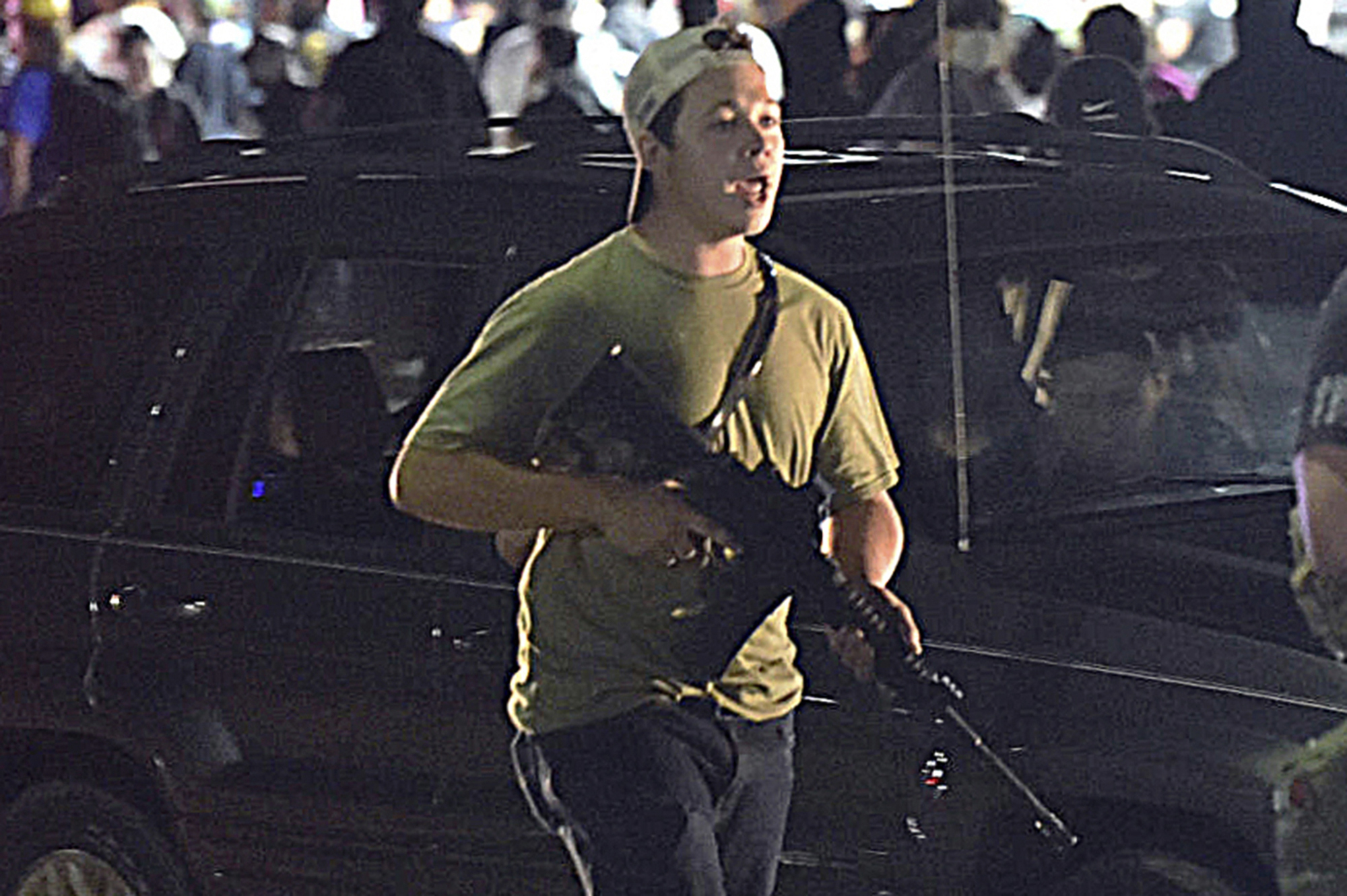
Kyle Rittenhouse brought an assault-style rifle to a protest in Kenosha, Wis., in August 2020, where he shot three people, two of them fatally. He was acquitted of murder charges in November 2021.
Finally, states that make it easier to obtain a permit to carry a concealed weapon experience more homicides than states that make it harder to obtain one.
You’d think my fellow liberals would be trumpeting all of these facts following the death of Pretti. But you’d be wrong. We have simply pointed out that Pretti had a permit for his gun and that he had a right to carry it under the Constitution.
“The Trump administration does not believe in the 2nd Amendment,” California Gov. Gavin Newsom posted on X, gleefully mocking GOP attacks on Pretti. “Good to know.”
Come again? I thought Democrats believe the Second Amendment does not — or should not — allow individual citizens to carry firearms anywhere they want.
For most of our history, it didn’t. Ten states passed laws in the 1800s barring possession of concealed weapons. One of them was Texas, where the governor declared in 1893 that “the mission of the concealed weapon is murder.”
In 1939, the U.S. Supreme Court upheld a federal limit on gun ownership. According to Solicitor General Robert Jackson, who would join the court two years later, the Second Amendment did not protect the right of individuals to possess guns for “private purposes.” Instead, it was “restricted to the keeping and bearing of arms by the people collectively for their common defense and security,” Jackson added.
Only in the 1970s would the National Rifle Association — which had formerly supported broad restrictions on guns — start to argue that the Second Amendment protected individual gun ownership. Now that’s the law of land, thanks to several recent rulings by Republican-appointed federal judges.
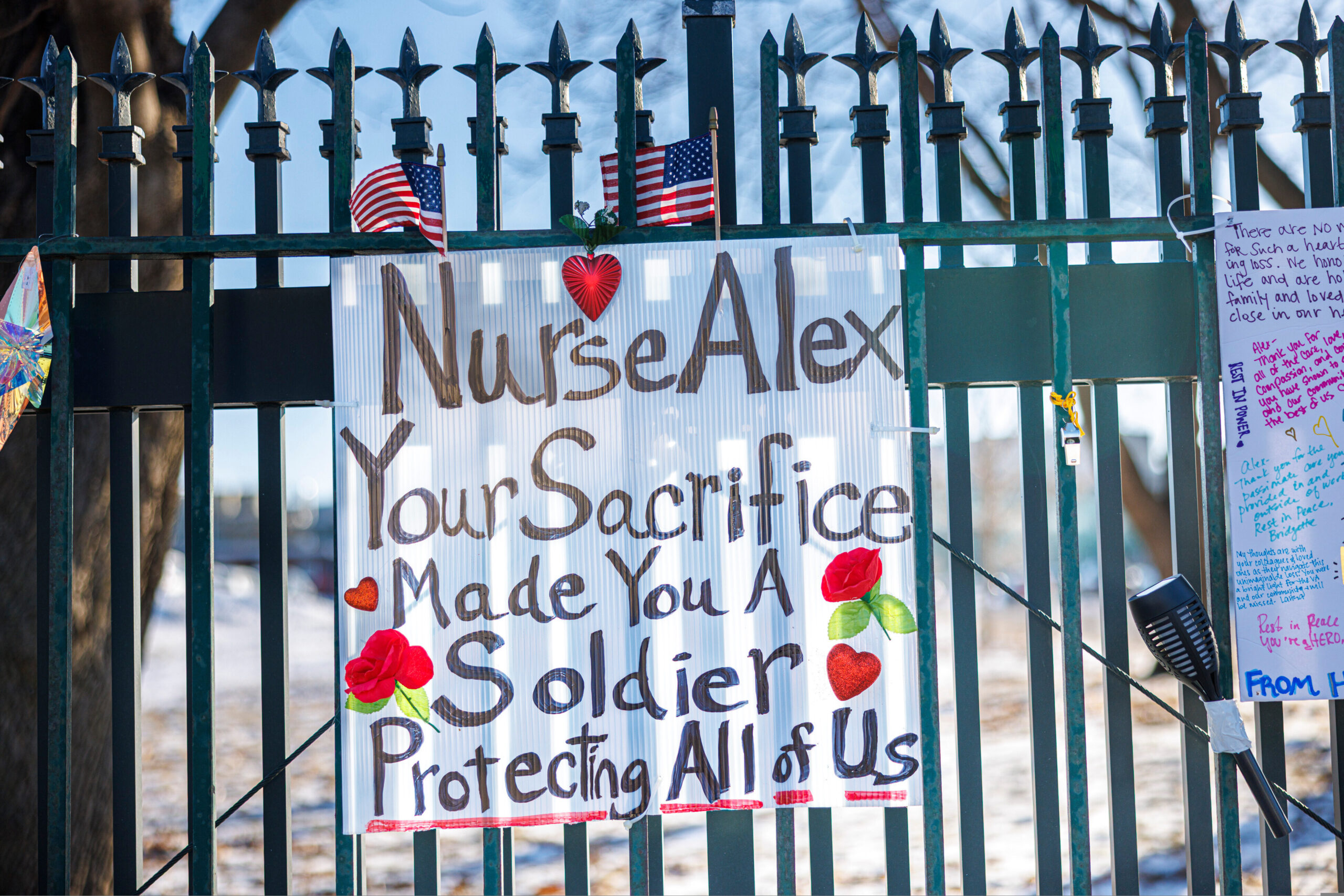
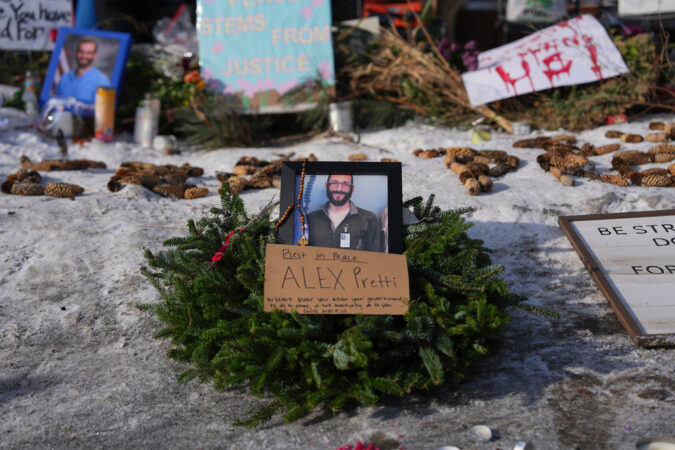
A handwritten sign honoring Alex Pretti hangs on a fence outside the Minneapolis Veterans Administration hospital on Tuesday.
Democrats have loudly questioned these decisions, looking forward to the day when they might be overturned. But that won’t happen if we don’t consistently denounce the idea that anyone should be able to carry a gun.
And that includes Pretti. There was no good reason — none — for federal agents to kill Pretti last week in Minneapolis. He didn’t deserve to die because he had a gun. But — especially in the current political climate — it’s hard to come to any other conclusion except that carrying a gun certainly made it more likely that he would.
But here’s what we do know: Guns are a scourge on America. We think they safeguard us from violence, but they too often escalate it. We shouldn’t let the horror and injustice of Pretti’s death blind us to that.
With his nonstop litany of lies and insults, President Donald Trump appears to believe no one will remember what he said yesterday or last week (perhaps he can’t recall, either).
Yet, just as Americans won’t forget how Kristi Noem smeared Minneapolis nurse Alex Petti as a “domestic terrorist,” European allies won’t forget the most outrageous slur Trump hurled at them at the World Economic Forum in Davos, Switzerland.
It was a falsehood so painful that it drew criticism from European political parties of the left and right, and even provoked a private caution from Britain’s King Charles III.
It was an insult so outrageous that it has probably alienated the British and other European publics more than any previous Trump attack.
Donald Trump, a man who avoided Vietnam service by claiming he had bone spurs, spat on the sacrifice of European soldiers who died fighting alongside American troops in Afghanistan.
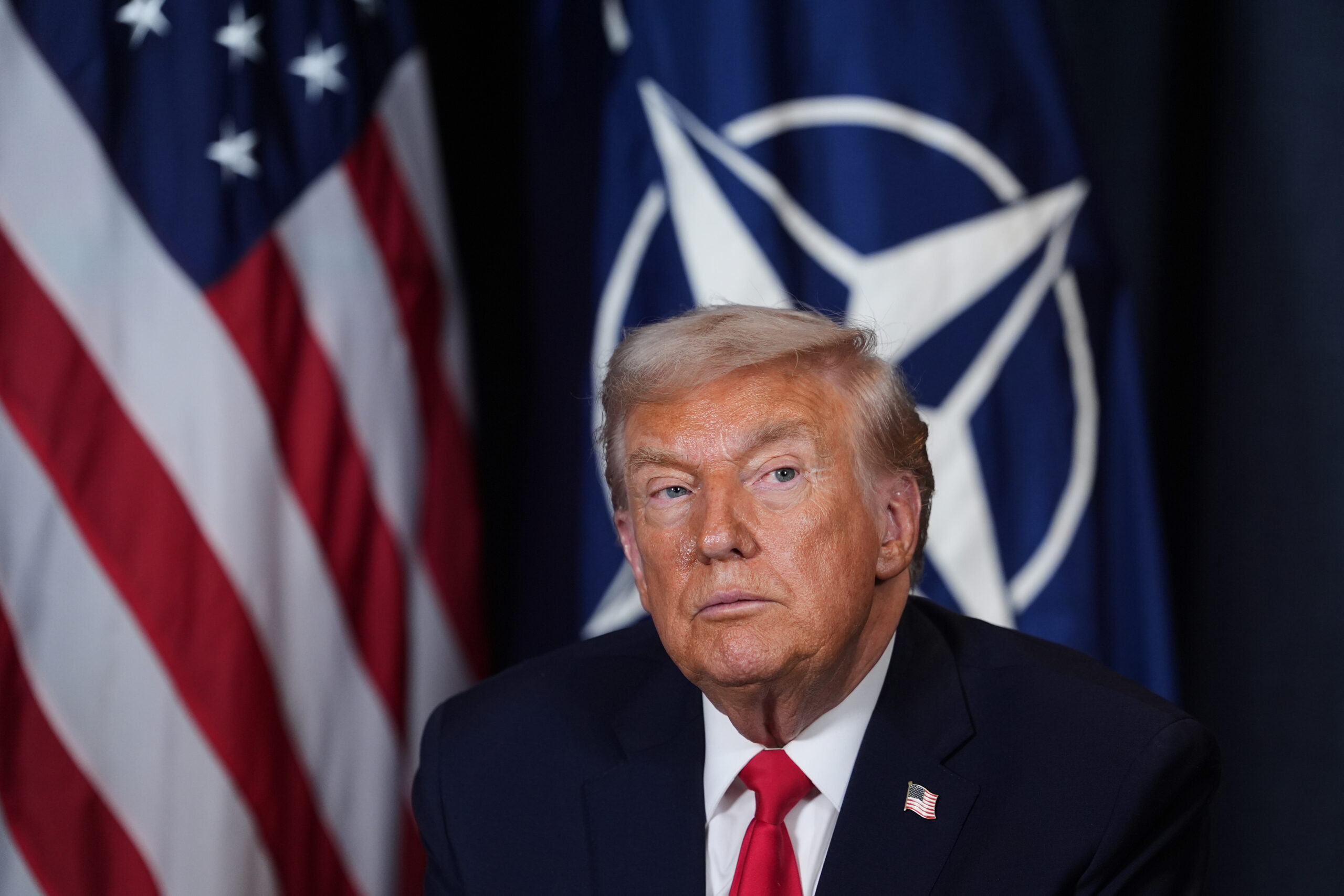
President Donald Trump meets with NATO Secretary General Mark Rutte (center left) during a meeting on the sidelines of the annual meeting of the World Economic Forum in Davos, Switzerland, on Jan. 21.
In his Davos speech, Trump mocked NATO and questioned whether the alliance would “be there for us” if the United States needed help — even though European members of NATO rushed to support the U.S. in the wake of 9/11.
Adding insult to injury, the president falsely claimed on Fox News that the NATO allies “stayed … off the front lines” in Afghanistan.
Tell that to the families of the 1,160 allied troops who died in the hottest Afghan combat zones, alongside 2,461 fallen Americans. That’s not counting the many thousands of wounded.
Although the U.S. military took the highest losses, many smaller NATO members came close to or even exceeded the proportion of dead to their population.
Imagine how Trump’s words affected the mother of Danish machine-gunner Sophia Bruun, killed in action in 2010 at the age of 22, who fought alongside British army troops in the battlefront province of Helmand.
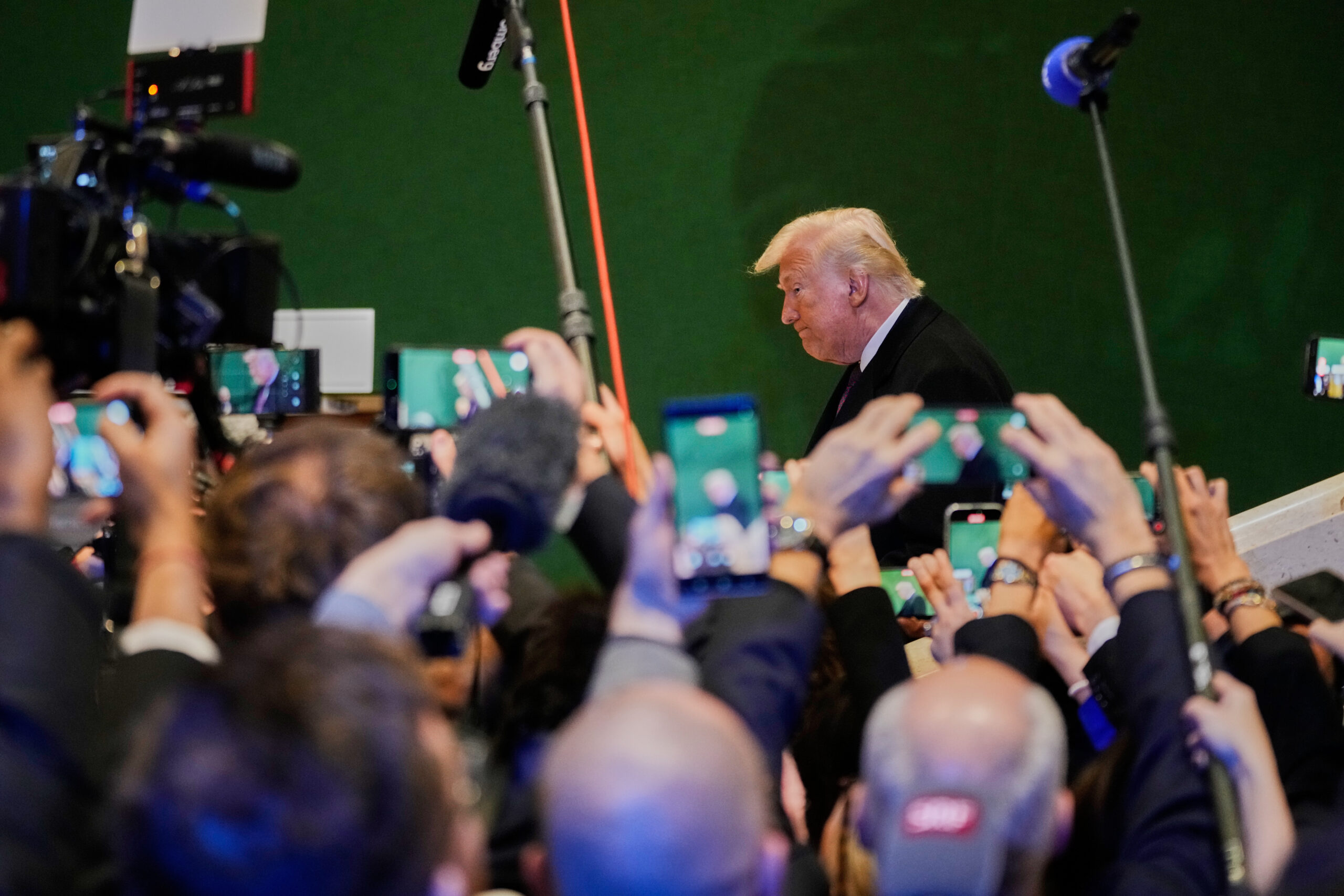
President Donald Trump attends the annual meeting of the World Economic Forum in Davos, Switzerland, Thursday.
Denmark, with 44 dead, some from Greenland, and a population of only five million, suffered the highest per capita casualties in the allied coalition. (Yet, even as he denigrated Danish dead, Trump was demanding that Copenhagen, long one of America’s closest allies, turn over Greenland to the United States.)
Former U.S. Ambassador to NATO Nicholas Burns nailed it when he tweeted: “Shameful comments, I visited NATO troops in Afghanistan. Denmark and Canada fought on the front lines with us and suffered major casualties. We need our allies but are driving them away.”
After Trump’s denigration of fallen allies, social media was inundated with photos of the fallen and their grieving families, along with pictures of Brits, Canadians, Norwegians, Danish, and other allies bearing the caskets of their war dead back to their home countries.
Former Danish platoon leader Martin Tamm Andersen said that President Trump’s efforts to annex Greenland are “a betrayal of the loyalty of our nation to the U.S. and to our common alliance, NATO.”
Danish platoon commander Martin Tamm Andersen, who fought with U.S. Marines in Helmand and was nearly killed when his tank was destroyed, told the Associated Press: “When America needed us after 9/11, we were there. As a veteran and as a Dane, you feel sad and very surprised that the U.S. wants to take over part of the Kingdom of Denmark.”
“It’s a betrayal of the loyalty of our nation to the U.S. and to our common alliance, NATO,” he said.
The Brits, who lost 457 troops and sent 150,000 personnel to Afghanistan over the course of the U.S.-led war, were even more viscerally upset by Trump’s scorn for the sacrifices of their service members.
British media was full of angry comments by families of the dead and wounded, like those of Diane Dernie, whose son sustained horrific injuries in Afghanistan in 2006, and who spoke to the Guardian. She urged British Prime Minister Keir Starmer to “call Trump out” and said his comments were “beyond belief.”
Starmer did call Trump out, stating bluntly, “I consider President Trump’s remarks to be insulting and frankly appalling, and I’m not surprised they caused such hurt to the loved ones of those who were killed or injured.” The British leader called for a Trump apology. None has been offered.
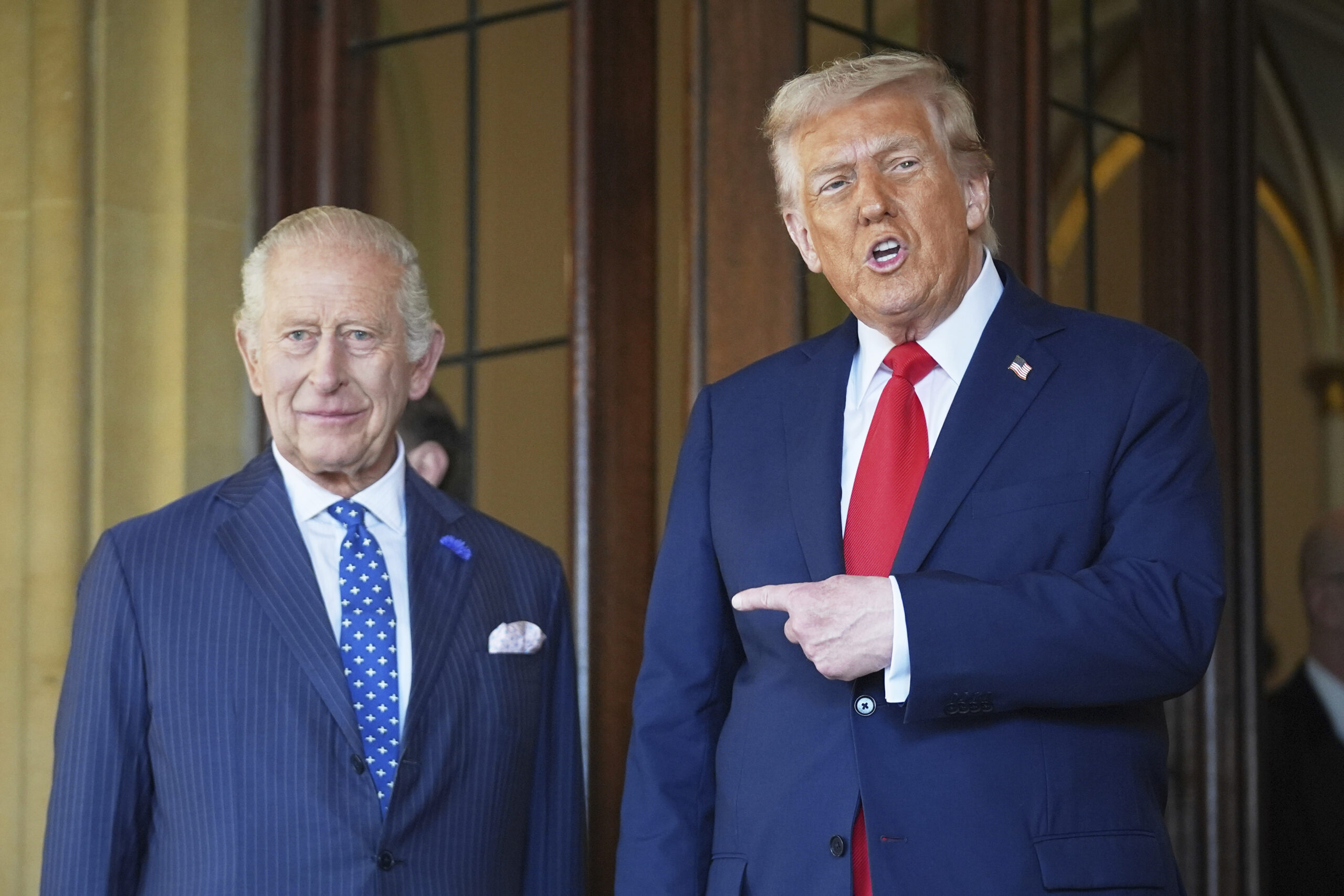
Britain’s King Charles III privately conveyed his concerns about President Trump’s comments at the Davos summit.
Prince Harry, who served two frontline tours in Afghanistan, also weighed in, stating that the “sacrifices” of British soldiers “deserve to be spoken about truthfully and with respect.”
Nor has POTUS apologized to the American fighters who battled alongside Brits, Canadians, Danes, and other allied forces in Afghanistan and Iraq, and feel insulted, as well.
I asked best-selling author Elliot Ackerman, a former Marine and CIA special activities officer who served five tours in Iraq and Afghanistan and was awarded the Silver Star and the Bronze Star for Valor, how Trump’s words affected him.
“It’s beneath the dignity of his office to question the contributions of military allies who came to our aid and spilt their blood, particularly for a commander in chief who has never served,” Ackerman responded. “If I were the mother of a British Marine who died in Helmand …” He hesitated, then continued: “It’s reprehensible. It’s gross.”
Of course, it’s even more grotesque given that, during his first term, Trump sneered at Americans who died in war as “losers and suckers,” and asked that wounded veterans be kept out of military parades. As Ackerman noted, “If given the opportunity, he will disdain the U.S. military when it serves his purpose.” The former Marine recalled how Trump insulted Sen. John McCain for having been captured in Vietnam, and now disparages former combat aviator and astronaut Sen. Mark Kelly.
Indeed, Trump’s shameful insults to allied troops are a reflection of how he has misused U.S. armed forces, sending National Guard members into cities to chase peaceful immigrants, and letting U.S. Immigration and Customs Enforcement serve as a rogue militia for the White House’s political ends. He is slightly backing off from the ICE scandal in Minneapolis only because the militia’s sins are costing him polling points.
With his sneers at foreign troops who sacrificed for America, Trump has done more than alienate America’s closest allies. His words send a message to all Americans: POTUS admires soldiers, both U.S. and foreign, not for what they can do for our country, but only for what they can do for him.
I’ve long been aware that there are other Philadelphias in the world. There’s one in Mississippi, one in South Africa, and one right here in Pennsylvania — New Philadelphia, a rural Schuylkill County borough with a bustling population of 1,008.
Philadelphia is a cool name and it comes with an inherent nickname that’s equally as cool. Who wouldn’t want that for their town? I get it and I’m not even salty about it because when you say Philly, folks know what city you’re referring to, just like when you say “Go Birds,” everybody knows you aren’t talking about the Seahawks.
I always assumed there were places that shared our suburban counties’ names as well, but never in a million Wawa Hoagiefests did I expect there to be another Delco, especially not one that also has its own merch. That’s our weird thing.
But after following up on a tip from my editor — who saw a reference to “Delco, N.Y.” — I found a website for DELCO, “a lifestyle brand celebrating rural culture through fashion, design & authentic content in Upstate NY.”
The company sells shirts and hoodies that read “DELCO NEW YORK,” flags in “John Deer Green” that read the same, and a trucker hat with Calvin (the comic strip character) urinating on the word DELCO.
It’s not clear how this lifestyle brand can produce “authentic content” while soaking in a hot tub full of boiling lies, for there is only one true Delco and it’s here, in Southeastern Pa.
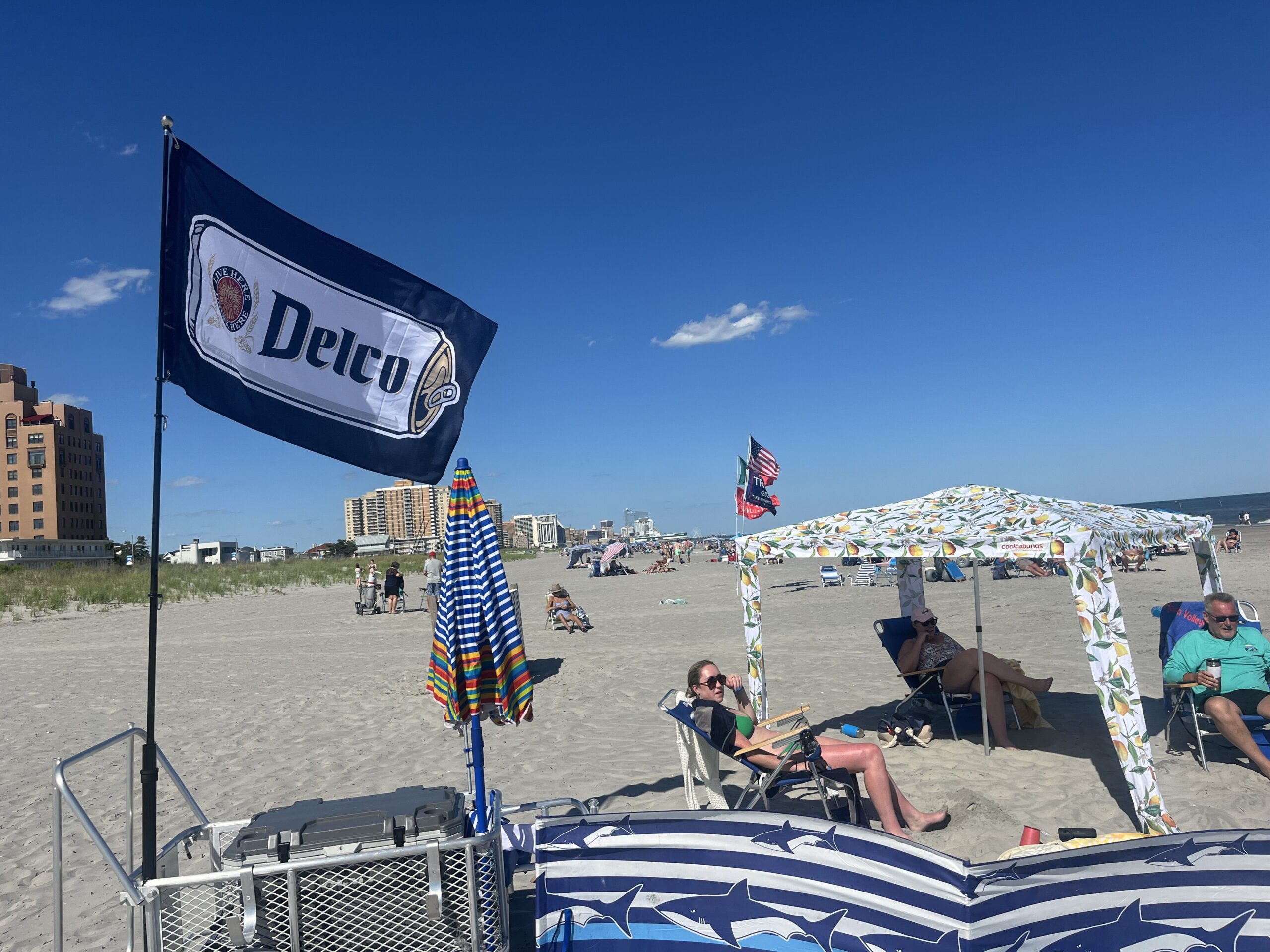
Delco residents haven’t spent years putting the word Delco on everything, receiving national attention for some of the most bizarre crimes imaginable, and staking their giant Delco flags at the Jersey Shore like it was the moon to have some ersatz “Delco” capitalize off their questionably good name.
The Hurley family of Springfield, Pa., flies their Delco flag on the beach in Ventnor in 2024.
“We’ve defined what it means to be Delco,” Rob MacPherson, executive vice president and chief marketing officer for Visit Delco, told me.
Fran McElwee, marketing strategist for the county tourism agency, agreed.
“We are who we are and we know it,” she said. “We’re the OG.”
Requests for interviews with a representative of DELCO, the New York lifestyle brand, and with the president of the board of supervisors for Delaware County, N.Y., were not returned. Isn’t that interesting.
Rural vs. suburban
There are at least six Delaware Counties in the United States, one each in Indiana, Iowa, New York, Ohio, Oklahoma, and Pennsylvania. But ours was the first, having been established in 1789.
While many of those counties also use some form of Delco (DelCo, Del-Co, etc.) for municipal government website URLs or public utilities names, Delaware County, N.Y., appears to be the only one trying to co-opt Delco as a culture.
Our Delco and the one in New York were both named after the Delaware River, which forms the border between the Empire State’s Delaware County in its southern tier and Pennsylvania’s Wayne County, in the far northeast.
Both counties also have municipalities named Middletown, we don’t like New York City folks coming in and mucking stuff up, and we have an affinity for mullets, as evidenced by the models on the DELCO lifestyle brand’s website. But that’s where the similarities end.
Delaware County, N.Y., is rural (which, if you’re from real Delco, would be pronounced so it rhymes with “gurrrl” for emphasis). It’s 1,467 square miles with 29 municipalities and 44,191 residents, so it’s safe to assume there are more deer there than people.
According to the county website, top activities include fishing, snowmobiling, and hiking. Historically, the region was known for its sawmills, dairy farms, and the Western Catskills.
Delco, Pa., on the other hand, is more suburban than a Chevy or a cul-de-sac. It shoves 49 municipalities and 584,882 people into 184 square miles. This county is like a damn clown car. We don’t even know how we all fit in here, we’re just along for the ride.
Eagles fans wave team flags from the top of their van while tailgating near Lincoln Financial Field.
But our greatest asset, what makes us the real Delco, is our culture.
People here are so passionate they’ve made a Delco movie, Delco beer, and Delco-set TV shows. Residents get Delco tattoos, there’s a state-recognized Delco Day, and I once interviewed a guy who climbed Mount Kilimanjaro with the sole purpose of waving a Delco flag at the top.
Roddie Cooper’s driving force to climb Mount Kilimanjaro was to get this photograph of the Delco flag at the top.
So whenever “Delco,” N.Y. wants to wave one of its flags in truce, we’ll gladly come take it.
‘A way of life’
“Delco is different, it’s a personality, it’s a way of life, there’s an authenticity about Delco you don’t find in other counties,” McElwee told me.
Zac Beaver, programming and libraries manager for the Delaware County Historical Society, said Delco’s hyperlocal culture sets it apart. It has its own accent, history, and even its own love language.
“A hoagie tray is a meaningful unit of generosity,” Beaver said.
Dave Avicolli (left) and Steve Yancey, co-owners of Ro-Lynn Deli in Brookhaven hold a “meaningful unit of generosity,” a Delco hoagie tray.
There are even unspoken rules for Delco neighborhood bars.
“They don’t have a website, only a Facebook page at most,” MacPherson said. “And no more than two IPAs on tap.”
He theorized that part of the county’s strong identity comes from the fact that there are so many municipalities and many folks attended Catholic schools or school districts like Interboro, which cover several townships.
“So your commonality was your county and not your hometown,” MacPherson said. “I think that’s led to the notion of Delco.”
Delco residents “don’t have very lofty ideas about what it means to be from Delco, like [they would] if they were from New York City or California,” Beaver told me, and they may come across to some as brusque, but that’s just because they’re engaged and “as likely to say something negative as positive to you, whereas in the rest of the country they just won’t talk to you,” Beaver said.
Such hyperlocal culture isn’t true of everywhere, Beaver posited.
Actor Brian Anthony Wilson during the red carpet premiere of “Delco: The Movie” at the Media Theatre last year. Yes, “premier” is spelled wrong on the marquee. Yes, that is very Delco.
“If you live in suburban Iowa you might as well live in suburban Nebraska,” he said. “I think it has to do with the flattening of the American experience. I think everyone else has changed more than we have.”
Philly’s other burbs also have their own culture but don’t exhibit the level of outward pride I see in Delco. I asked Beaver if he had any theories.
“Because they’re rich,” he said. “They’ve been desirable places for a long time. Delco was looked down on for a long time … and that makes people proud of it.”
MacPherson agreed.
“The pride comes from having a little bit of a chip on the shoulder,” he said.
‘By sheer force’
It’s unclear when Delco was first used as a nickname for Delaware County, Pa., but embarrassingly, the first Delco reference I can find in The Inquirer’s archives was for a guest from Delco, N.Y. who checked into a Philadelphia hotel in 1860. (I don’t know why newspapers used to print hotel registries, aside from the act we’ve always been nosy little buggers.)
In 1861, The Inquirer referenced a Del.co that appears to be the one in Pennsylvania, and I found subsequent Del.co references in our archives throughout the late 1800s. It’s only shortly after the turn of the 20th century that Delco seems to have come into regular use when referring to things and people from the suburban county.
“There is the Delco Baseball League founded in 1908 and they still exist,” Beaver said.
Delco is also a brand name. There’s ACDelco automotive parts (a remnant of Delco Electronics), Delco flatware, and Delco Foods, an Italian food distributor in Indiana. So there’s a minute possibility “Delco,” N.Y., could have been inspired to take its name from one of them.
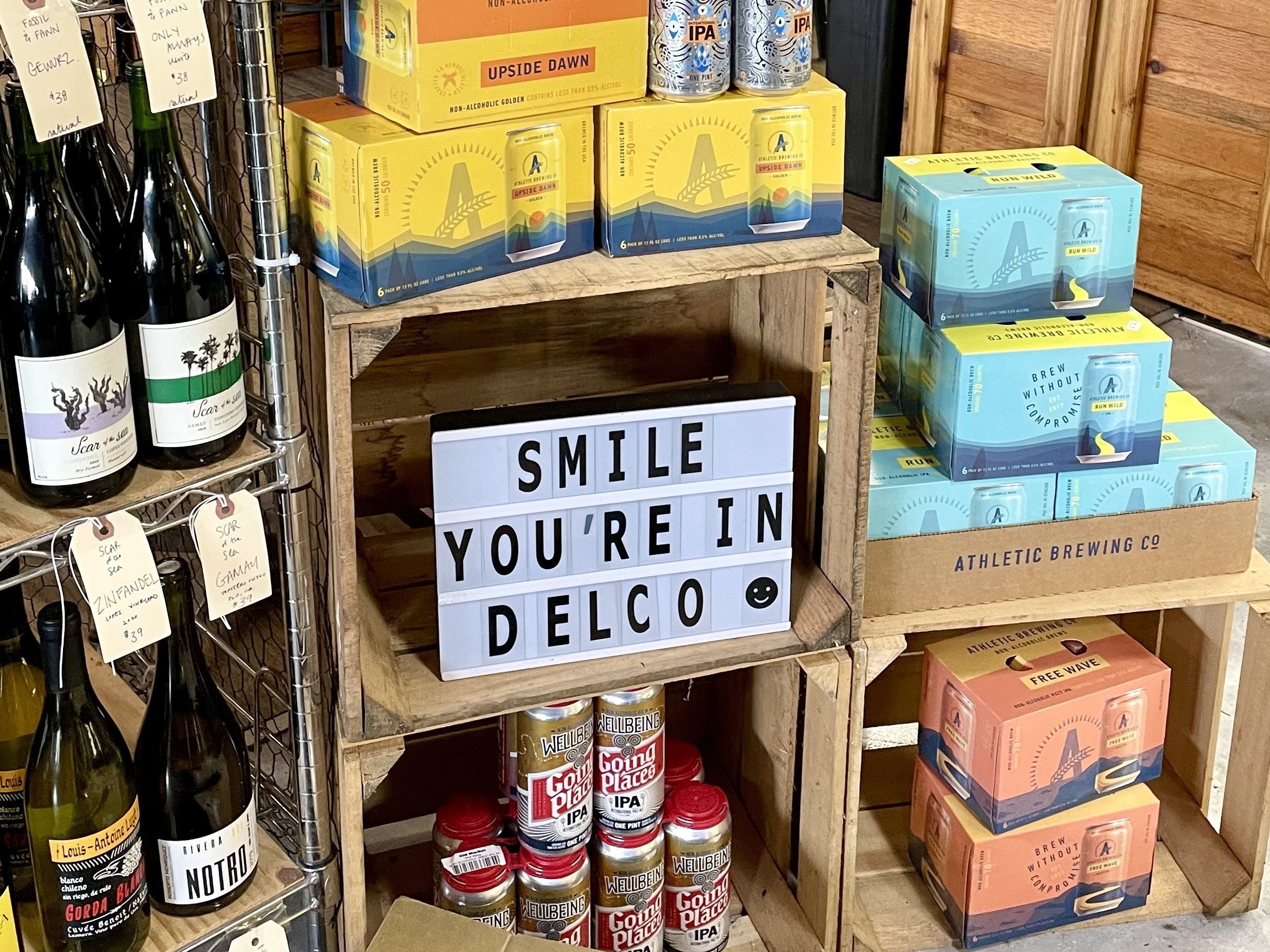
A “Smile You’re in Delco” sign greets the thirsty shoppers at 320 Market Cafe in Swarthmore.
I even found an 1879 reference to a man named Delco in a crime blurb in The Inquirer:
“ … In Cincinnati yesterday two men Jim Dermont, the cook, and Isadore Delco, a server in a Sixth Street restaurant, quarreled over the dignity of their respective positions, and Delco was badly stabbed.”
I didn’t find a follow-up story but I have no doubt Delco survived the fight, because it always does — at least in Southeastern Pennsylvania.
So to this phony flimflam “Delco” — bring it on. We’ve been around longer and we have more people, more pride, and more culture. Plus, as Philly sports fans and Delco residents, we have a chip on our shoulder bigger than a family bag of Herr’s.
“Just by sheer force, we’re winning,” McElwee said.
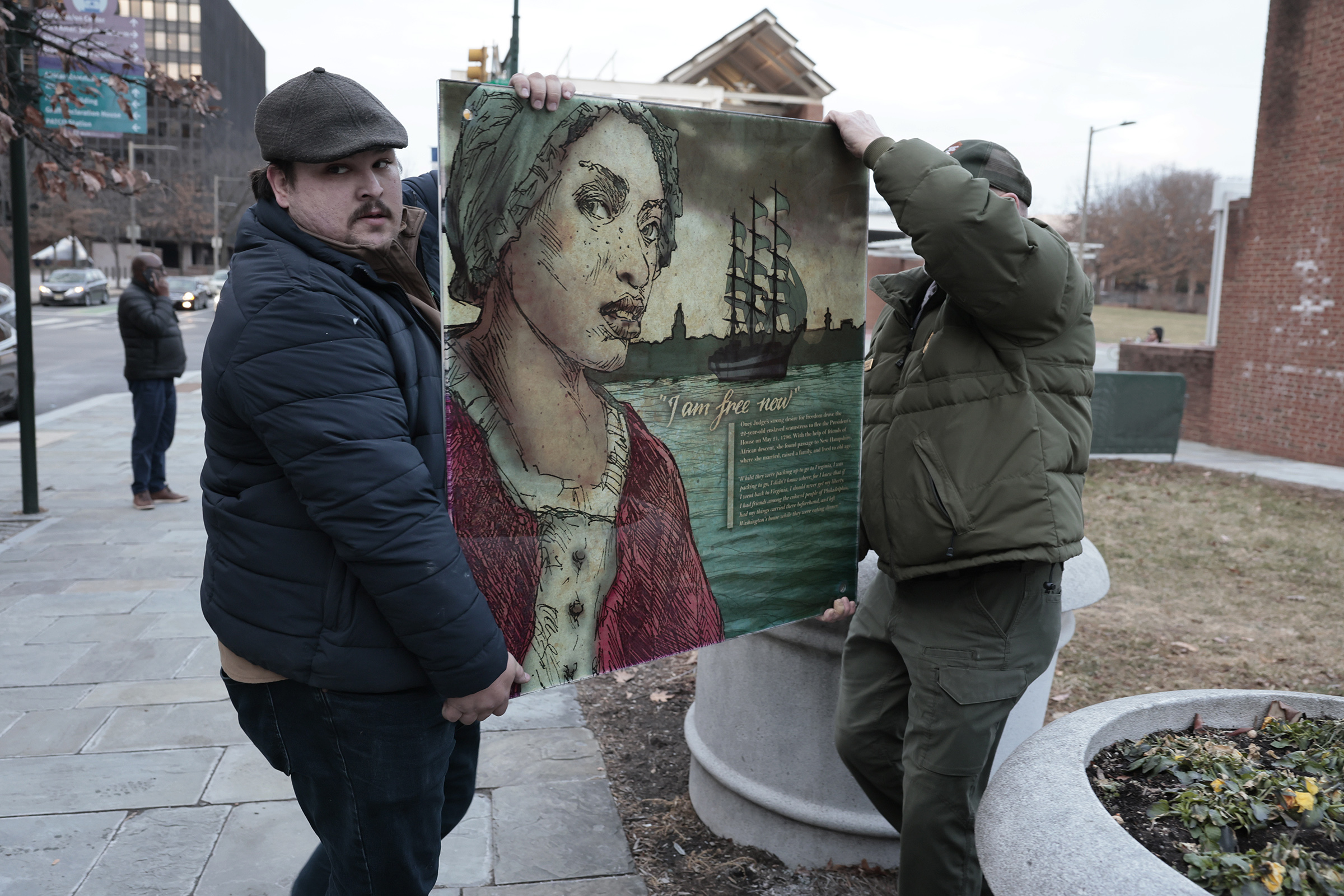
For centuries, white people in America depicted slavery as a benign institution developed to uplift and civilize “savage” Africans. They preached that myth in churches, taught it in schools, and memorialized it in statues.
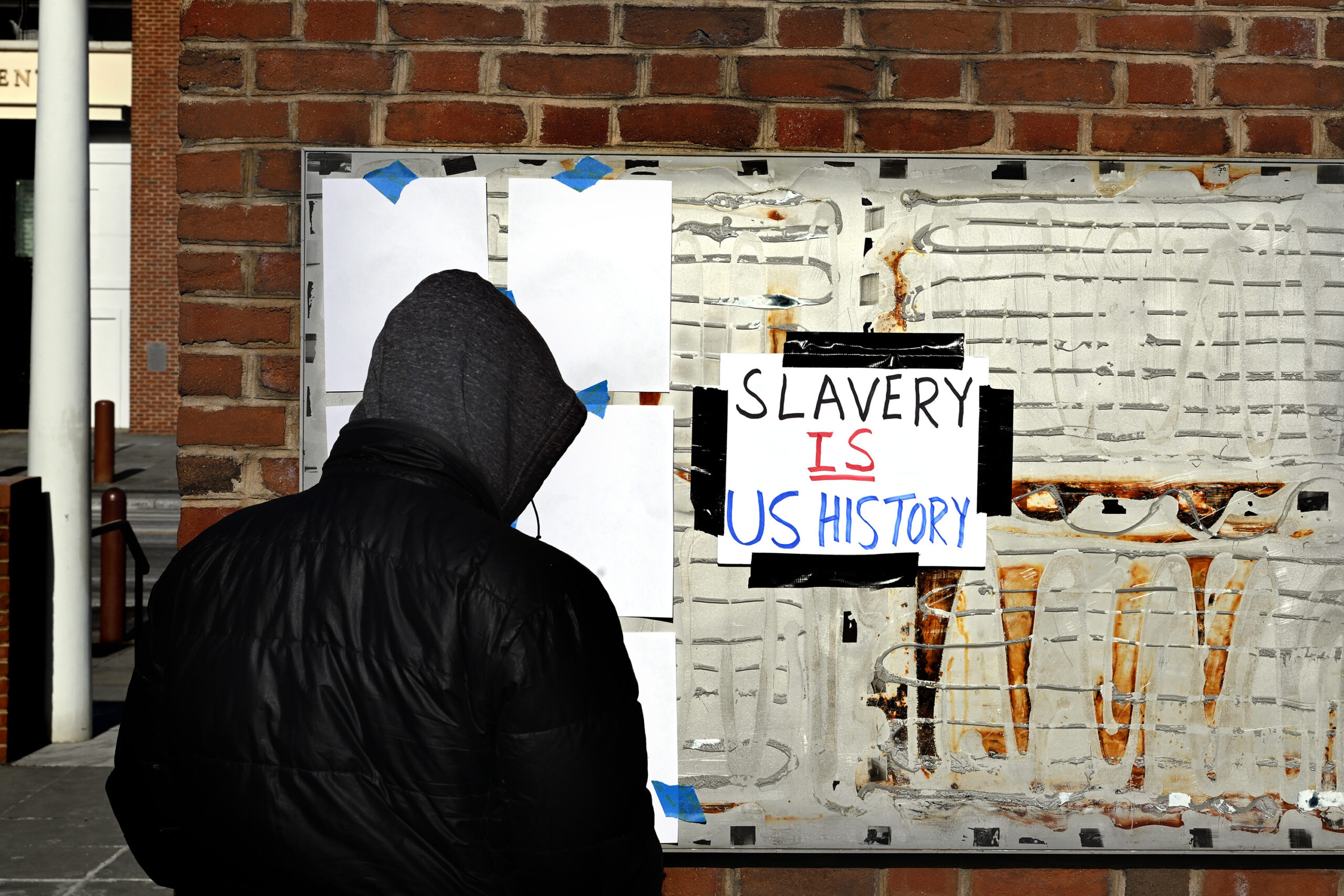
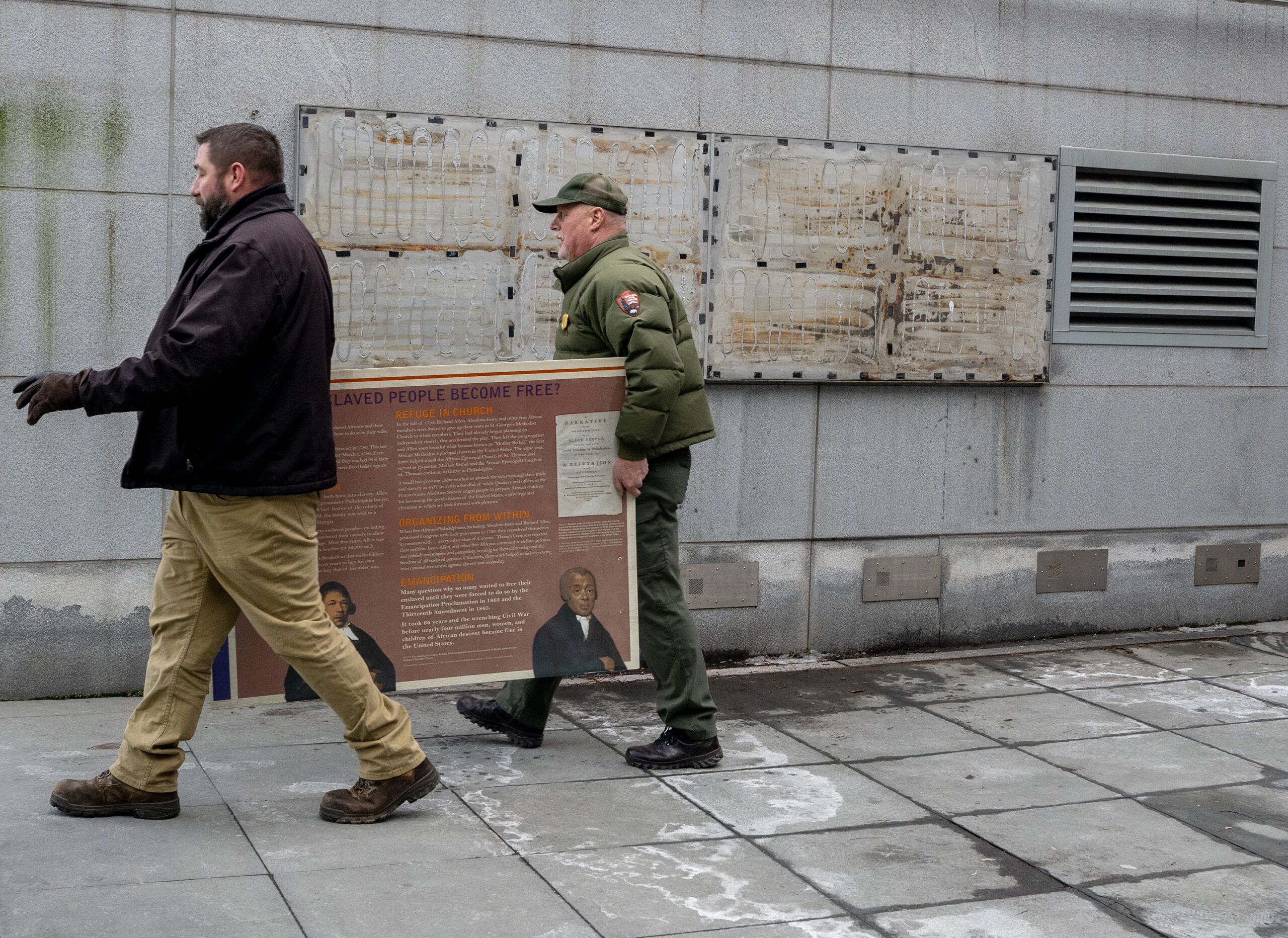
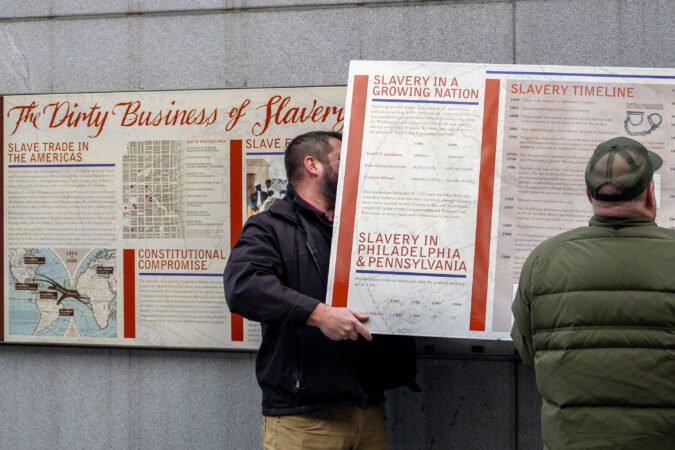
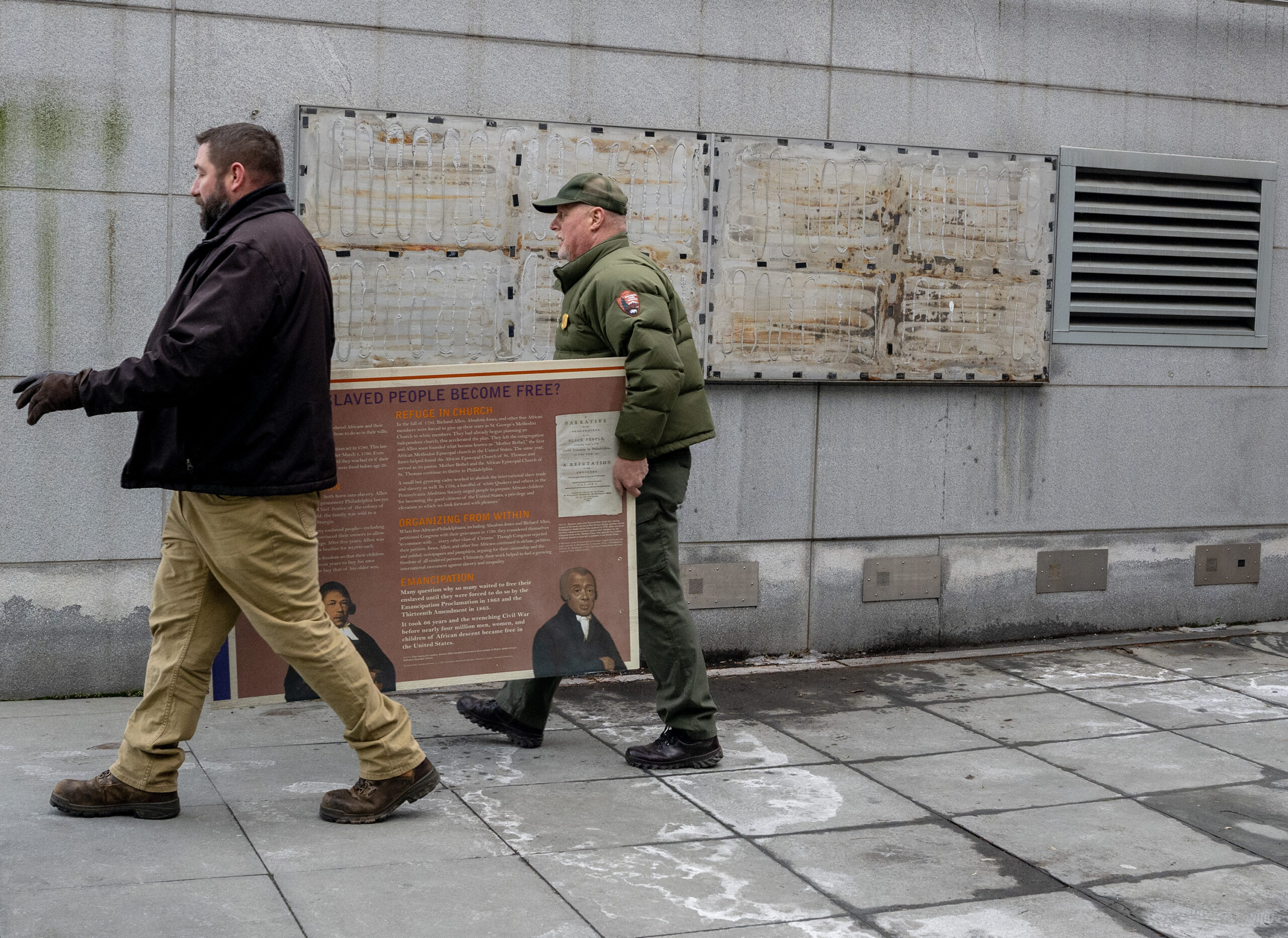
That’s not what the Trump administration was trying to do last week, in dismantling a display about nine Black people whom George Washington enslaved. The exhibit was removed from the President’s House in Independence National Historical Park in accordance with a White House directive to take down or cover up materials that “inappropriately disparage Americans.”
I suppose you could call that a small piece of progress, given that prior generations of Americans actively praised slavery. Federal officials know it was evil, which is why they are scrubbing displays about it from the President’s House and other historical sites around the country.
But I’ve got another word for their behavior: cowardice. They are afraid to admit the contradiction at the heart of our history: a nation that dedicated itself to human liberty also enslaved African Americans. And they do not trust the rest of us to grapple with it, either. It’s so much easier to just look away.
People leave notes Saturday on the spaces at the President’s House site where more than a dozen educational displays about slavery were removed.
That was harder to do in the late 19th and early 20th centuries, when slavery was within living memory for millions of people. Especially in the South, white educators made extended efforts to excuse it. The problem wasn’t slavery, they said.
The problem was “the War of Northern Aggression” — a.k.a. the Civil War — which granted freedom to African Americans, whom, according to this twisted retelling of history, neither wanted nor deserved it.
The key figure in this campaign was Mildred Lewis Rutherford, the “historian-general” of the United Daughters of the Confederacy, or UDC. Born into a wealthy slaveholding family in 1851, Rutherford led the effort to purge Southern schoolbooks of so-called Yankee perspectives.
In 1919, “Miss Millie” — as she was affectionately known across the white South — published A Measuring Rod to Test Textbooks, which provided a checklist that UDC women could use to assess what their schools were teaching. “Reject a book … that speaks of the slaveholder of the South as cruel and unjust to his slaves,” Rutherford urged.
Invoking the era’s rhetoric of progressive education — which stressed student activities rather than memorization from books — the UDC also sponsored essay contests for students who conducted research about slavery. Many of the essays drew on interviews from former slaveholders, who provided a predictably romantic view of the institution.
Slavery was “the happiest time of the negroes’ existence,” declared a winning essay in 1915 by a Virginia high school student. “The slave was a member of the family, often a privileged member. He was the playmate, brother, exemplar, friend and companion of the white man from cradle to grave.”
Despite Rutherford’s fears of encroaching Yankee doctrine, meanwhile, Northern schoolbooks often included similar falsehoods about slavery. In 1944, amid the World War II struggle against Nazism, Black activists in New York City complained that one history text used in their schools said those in bondage were “happy”; another congratulated the Ku Klux Klan for keeping “foolish Negroes” out of government after the Civil War. “Such passages … could well have come from the mouths of the fascist enemies of our nation,” the activists noted.
Bolts are removed from interpretive panels about slavery before they are removed from the walls of the President’s House site in Independence National Historical Park Thursday.
African American attacks on flawed textbooks came to a head during the civil rights movement of the 1960s, when the Urban League and the National Association for the Advancement of Colored People appointed committees to examine the books. Thanks to these efforts, most textbooks corrected their distortions of slavery. They also added new material about African Americans who fought against it, like Denmark Vesey and Frederick Douglass.
Today, outside the darkest corners of the internet, nobody celebrates the enslavement of African Americans. “It is disgusting and absurd to suggest that anyone inside this building would support slavery,” White House press secretary Sarah Huckabee Sanders said during President Donald Trump’s first term in office, when Chief of Staff John Kelly suggested Confederate Gen. Robert E. Lee was an “honorable man.”
In his second term, Trump has moved to restore the names of Confederates to military bases. Yet, I haven’t heard him — or anyone in his administration — say a good word about slavery. Again, that’s a very good thing.
Workers remove the displays at the President’s House site in Independence National Historical Park Thursday.
But it also underscores their fundamental lack of courage. They’re not defending slavery, as earlier generations did. Instead, as happened at the President’s House, they’re simply eliminating it from sight because it doesn’t suit their happy picture of our history. To paraphrase the Jack Nicholson character in A Few Good Men, they can’t handle the truth.
And if visitors ask why the exhibit about Washington and slavery disappeared, National Park Service employees have been instructed to say that they don’t know. Talk about cowardice! First, we deny history, and then we deny knowing why we did so.
It’s enough to make a citizen embarrassed for his country. Trump and his aides say they took down the exhibit because it disparaged America. But they are the ones disparaging America, because they don’t believe in our ability to make sense of it: its glory and its tragedy, its achievements and its abuses. Shame on them.
Jonathan Zimmerman teaches history and education at the University of Pennsylvania. He is the author of “Whose America?: Culture Wars in the Public Schools.”
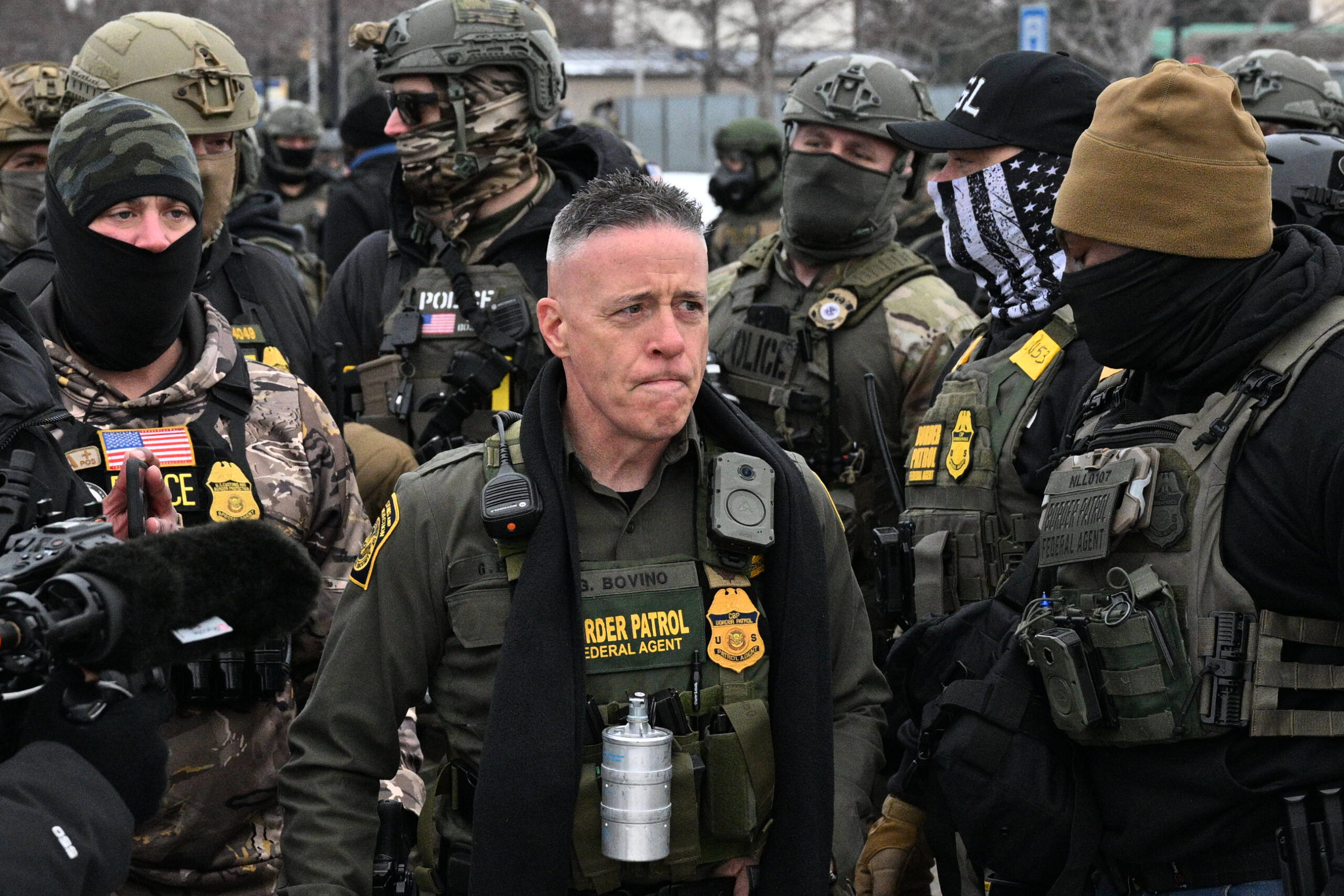
Is this actually an honest-to-goodness turning point in the war for the soul of America? Monday night, the deny-everything-admit-nothing Trump regime surprised observers by revealing that violence-provoking Border Patrol commander Greg Bovino has been sent home from Minneapolis and may even be retiring. That’s a giant win for the power of everyday people resisting, but turning around the battleship of tyranny will still take much more work.
Corporate America may pay a steep price for its cowardly ICE neutrality
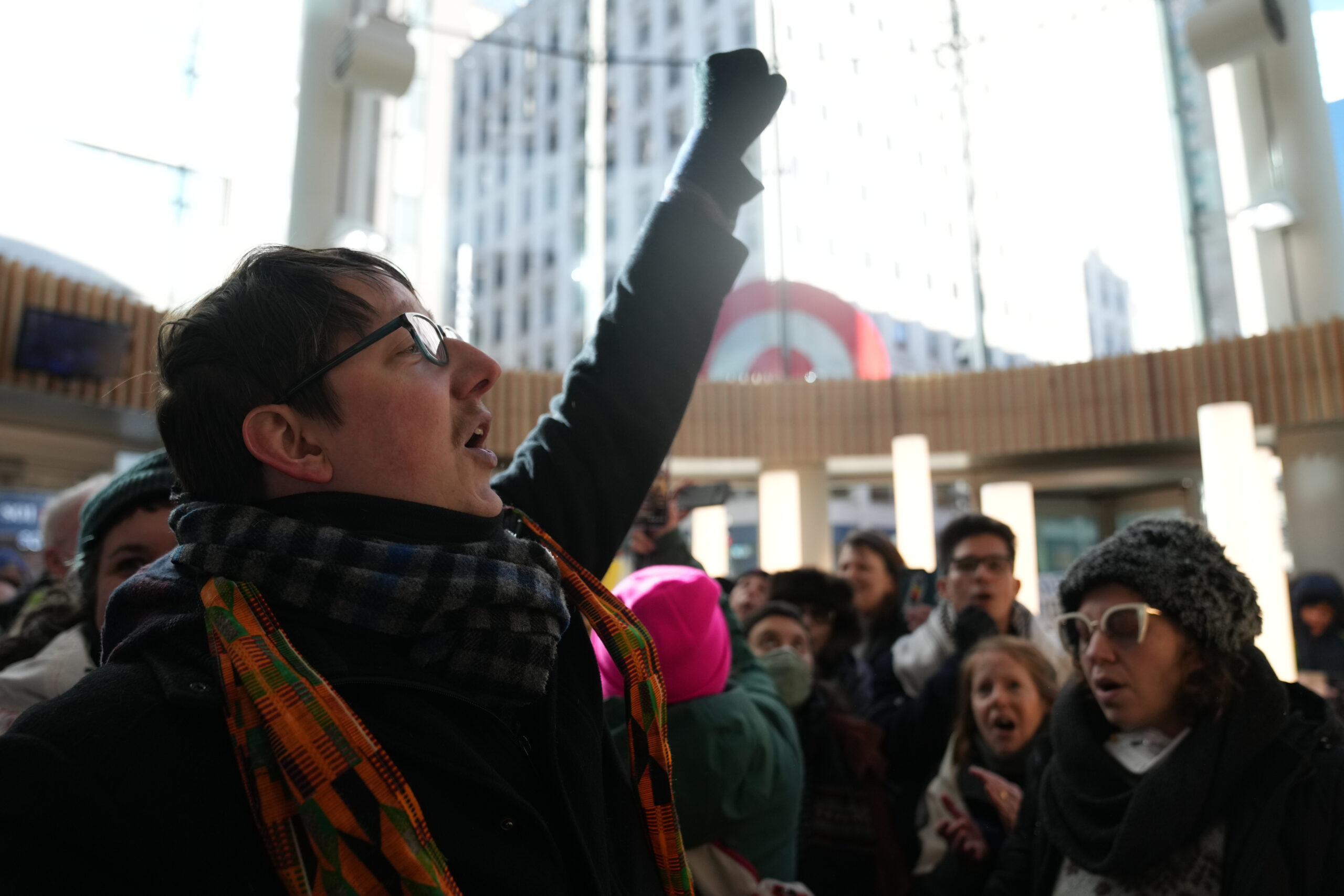
Protesters gather Friday at Target’s corporate headquarters in Minneapolis.
One of the many remarkable and lasting ideas the Rev. Dr. Martin Luther King Jr. placed into the national conversation was the concept of something he called “negative peace.”
Although the phrase began appearing in the writings of the civil rights leader in the late 1950s, King made the idea famous in his 1963 “Letter From Birmingham Jail,” where he was locked up for fighting segregation in Alabama’s largest city. He was annoyed by a letter from eight local white clergymen, titled a “Call for Unity,” that begged King to end a civil disobedience crusade for racial integration and seek progress through negotiations and the courts.
When an aide smuggled the newspaper into King’s cell, he began furiously scribbling his response in the margins of the ad before writing more on any scrap of paper he could find. His key passage argues that the white moderate was a greater threat to Black freedom than the KKK, because he was someone “more devoted to ‘order’ than to justice; who prefers a negative peace which is the absence of tension to a positive peace which is the presence of justice,” and who wants African Americans to wait for a “more convenient season.”
Flash-forward 63 years, and the grand pooh-bahs of U.S. capitalism have learned nothing from this. On Sunday, 60 major corporations based in Minnesota — feeling caught in the crossfire of the federal immigration raids tearing apart Greater Minneapolis and the growing resistance movement — issued a cowardly and pathetic call for a negative peace to reduce the tensions.
The open letter that was released through the Minnesota Chamber of Commerce was signed by the CEOs or equivalents of almost every major Gopher State brand that you could think of — including Target, 3M, General Mills, Hormel, UnitedHealth (yes, that UnitedHealth), and all five major sports franchises. Some of these firms are beginning to see real economic fallout from the U.S. Immigration and Customs Enforcement raids and protest activities, which have kept some frightened Black and brown workers at home and triggered a large general strike last Friday.
The letter reads little differently from the Birmingham ministers’ “Call for Unity.”
“With yesterday’s tragic news” — a vague, bloodless reference to the 10 shots fired by federal officers into a 37-year-old intensive care nurse named Alex Pretti — “we are calling for an immediate deescalation of tensions and for state, local and federal officials to work together to find real solutions,” the letter states. It notes that Minnesota business leaders have been in touch with Gov. Tim Walz, the Donald Trump White House, and others in pleading for what it hopes would be a solution to the state’s crisis.
Pretti is never mentioned in the letter. Neither is Renee Nicole Good, the 37-year-old mother of three who was gunned down behind the wheel of her family SUV by an ICE agent as she attempted to drive away from a confrontation. In fact, ICE is never mentioned, nor are the federal agency’s most outrageous tactics, such as the seizure of a 5-year-old boy as “bait” to detain him and his father, or dragging a barely dressed Hmong refugee who is a U.S. citizen out of his home in frigid weather.
The entire letter is remarkable not for what it says — since it says very little beyond praying this whole mess somehow goes away so they can go back to making money without thinking about such dreadful things — than for what it doesn’t say.
There is no condemnation of the murders of two U.S. citizens who did nothing beyond legally monitoring the federal officers and their activities while on public streets. There is no condemnation of the ICE tactics in seizing hardworking migrants with no criminal records who are the backbone of the Minnesota community. There is nothing about what MLK would have called “positive peace” — a desire for real justice.
That’s probably because positive peace requires bold choices and displays of real courage — qualities that modern corporate America seems to have misplaced in a giant warehouse somewhere.
Exhibit A would have to be Target, the large national retailer that, with its hundreds of stores and its name slapped on the NBA’s Timberwolves’ arena, is now to many Americans the corporate face of Minnesota. Under pressure from demonstrators, including more than 100 clergy who protested outside Target’s Minneapolis headquarters on Friday, the retailer still said nothing — before the tepid group letter — about the ongoing ICE raids, or why agents have been allowed to stage operations in its parking lots and even inside stores.
There’s a bleak history here. In 2020, Minnesota became the epicenter of the fight for racial justice when the Minneapolis police murder of George Floyd was captured on video. That time, the state’s CEOs not only expressed moral outrage but pledged to spend heavily on diversity initiatives. Five years later, the local news site Racket reported many of these firms had backtracked, and that barely a third of the pledged $550 million had been spent.
This time, the business leaders just want the “tension” to disappear. That’s not so easy. Just ask Target. Its early 2025 move to end its diversity initiatives as Trump took office sparked calls from Black leaders for a boycott that has cut into store traffic and lowered Target’s stock price. It seems that moral surrender actually does have a price.
Also on Sunday, the team chaplain for the Timberwolves — ironically, one of the teams that signed onto the corporate letter — issued a personal statement with loud echoes of the “Letter from Birmingham Jail,” calling out any churches that had prayed that morning for peace and unity but not for justice.
“Peace is what the powerful ask for when they don’t want to be interrupted,” Matt Moberg wrote in a short piece that went viral on social media, adding, “Unity that refuses to name violence is just loyalty to the ones holding the weapons.”
This wouldn’t be the first time corporate America misread the room. Sunday’s statement suggested a continued deer-in-the-headlights reaction from the shock of Trump’s return to office — even as the CEOs ignore not just the power of the Target boycotts but the recent success of economic justice campaigns against firms from Disney to Avelo Airlines, not to mention the solidarity that drove the Minneapolis general strike.
Already, there is growing talk of a national general strike or expanded boycotts by millions of citizens who are also consumers, and who are both furious over the Good and Pretti murders and now flabbergasted by the corporate cone of silence. America’s business leaders don’t understand that cowardice has a steep cost attached.
Yo, do this!
There’s no better writer about the long fight for social justice in America than historian Heather Ann Thompson. Her searing 2016 book about the 1971 Attica prison uprising — Blood in the Water — won a well-deserved Pulitzer Prize, and locals were thrilled when it was reported that the next book from Thompson, who taught for a while at Temple, would be on the 1985 MOVE bombing. Instead, she has taken a detour. Her Fear and Fury: The Reagan Eighties, the Bernie Goetz Shootings, and the Rebirth of White Rage is out today. I just downloaded the audiobook, and cannot wait to listen.
It’s Academy Award season, and so — hopelessly snowed in on Sunday — I took a family break from football (!) to rent a movie … from 2009. Given my obsession with 1960s rock and roll radio, it’s weird that I’d never seen Pirate Radio, a fictional homage to the U.K.’s government-defying offshore radio stations of the British Invasion era that stars the late Philip Seymour Hoffman. The plot can be muddled at times, but it’s maybe the best movie soundtrack ever!
Ask me anything
Question: Why do Dem Leaders want to save ICE, when nobody really else does? What’s the motivation? — @keynesaddiction.bsky.social via Bluesky
Answer: I wonder this, too. Both ICE and the current crew at U.S. Customs and Border Protection have been simmering for far too long in a toxic, unredeemable culture that cannot be reformed. What’s more, the shocking abuses on display in Minnesota and two killings have now convinced a plurality of U.S. voters that ICE should be abolished. Still, I can understand the Democrats’ bind, since at the moment the party has no other political leverage beyond the ability to block most Senate legislation with the filibuster. It might be best to push hard for as much as can be done in 2026, while running in the midterms on a platform of abolishing ICE when they gain power on Capitol Hill.
What you’re saying about …
LOL — remember that whole Greenland thing? It feels like that was five years ago, but some of you had some good responses on dealing with Trump’s bluster about an American takeover, even if things have temporarily cooled down. Tom Desmond said the Europeans “need to quit pretending that they can ‘manage’ him through flattery and soft words. Instead, they need to apply threats — i.e., whatever tariffs he imposes on Europe over Greenland they will return against the U.S. three-fold.” Jo Parker said Congress needs to reassert its powers over tariffs and declaring war, but “With the spineless [Dave] McCormick and [John] Fetterman representing us, I’m not sanguine that such actions will take place, however.”
📮 This week’s question: Things are coming to a head in Congress over funding for ICE and the U.S. Department of Homeland Security. Should Democrats make a deal for ICE reforms, such as unmasking and requiring arrest warrants, or must they push for bigger concessions, or even abolishing ICE? Please email me your answer and put the exact phrase “ICE funding” in the subject line.
Backstory on the day (a) Fetterman spoke out
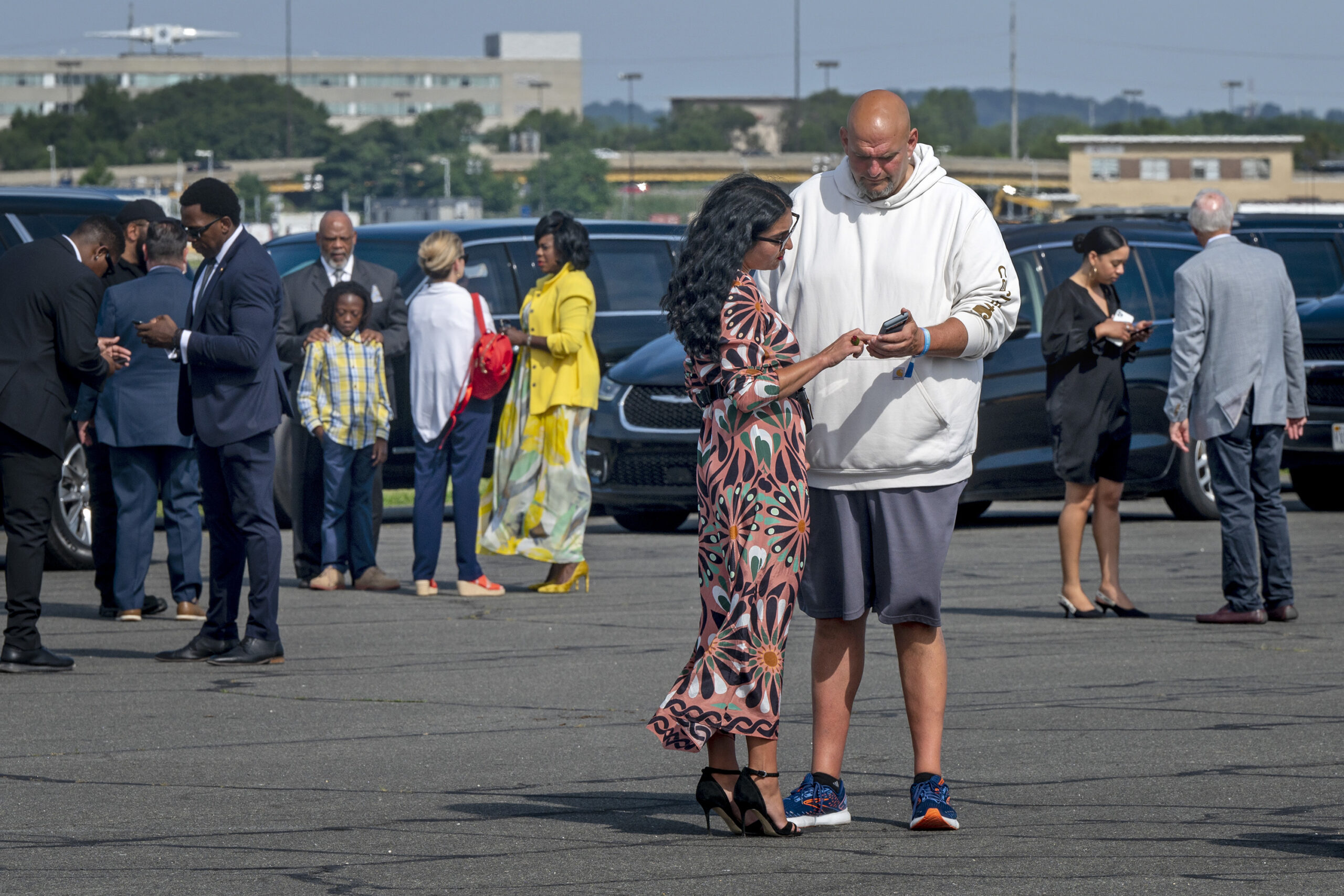
U.S. Sen. John Fetterman and his wife, Gisele Barreto Fetterman, await the arrival of President Joe Biden at Philadelphia International Airport in July 2024.
I must confess that keeping up with the downward spiral of Pennsylvania’s Democratic Sen. John Fetterman since he took office in 2023 can get tiresome. At first, Fetterman’s rightward tack seemed largely a function of his zealous support for Israel, which caused him to wave off allegations of war crimes by Benjamin Netanyahu’s right-wing government. Soon, others pointed to his health woes — hospitalizations for a stroke and depression, among other things — as he endorsed more and more Trump-flavored ideas.
Amid mounting outrage over Trump’s aggressive immigration raids, Fetterman made some comments that had his growing legion of critics wonder if the senator’s real heart issue was whether he had one. “ICE performs an important job for our country,” the Democrat posted on X last July, adding that any calls to abolish the agency were “inappropriate and outrageous.” Even after the Jan. 7 ICE killing of Renee Nicole Good in Minneapolis, Fetterman’s middle-of-the-road stance was this: “Secure the border. Deport all the criminals. Stop targeting the hardworking migrants in our nation.” In the immediate aftermath of Saturday’s killing of Alex Pretti by federal agents, even Pennsylvania’s GOP Sen. Dave McCormick had called for a congressional investigation before Fetterman said anything.
On Sunday night, though, Fetterman issued a heartfelt and moving statement. Well, a Fetterman did.
“For more than a decade, I lived undocumented in the US,” the senator’s wife, Gisele Barreto Fetterman, a native of Brazil, posted on X. “Every day carried the same uncertainty and fear lived in my body — a tight chest, shallow breaths, racing heart. What I thought was my private, chronic dread has now become a shared national wound. This now-daily violence is not ‘law and order.’ It is terror inflicted on people who contribute, love, and build their lives here. It’s devastatingly cruel and unAmerican.” Her post ended with an emoji of a broken heart.
Sen. Fetterman finally issued a statement nearly a day later. He called for “an immediate end” to the ICE operations in Minnesota, adding, “It has become an ungovernable and dangerous urban theatre for civilians and law enforcement that is incompatible with the American spirit.” But Fetterman still disappointed critics of Trump’s immigration policy, insisting that while he wants ICE reforms, he still supports the embattled agency, and won’t join other Democrats in shutting down the federal government if those reforms aren’t happening.
Pennsylvanians thought they were getting a progressive voice and a moral leader when they elected Fetterman in 2022. It feels now like we elected the wrong Fetterman.
What I wrote on this date in 2010
It was only 16 years ago, but at the dawn of the 2010s, there was still a robust conversation about how to save the traditional journalism outlets— especially newspapers — that had flourished in the 20th century. On Jan. 27, 2010, I criticized an idea coming from Apple that a new kind of $1,000 iPad, nicknamed “the Jesus tablet,” would fix everything. I wrote: “To survive, we need to change our whole worldview — finding ways to encourage more dialogue with readers and more community involvement so that local readers feel they have a stake in this thing. And we also need to do a better job at the thing we claim to be already good at — real journalism that makes a difference.”
On the national beat, there’s no bigger story than the fallout from the inhumanity of the Trump regime’s mass deportation policies. In my Sunday column, I looked at the other way people are dying in ICE’s reign of terror: inside the growing network of squalid and overcrowded jails and detention camps. The death rate in these facilities so far in 2026 is already 10 times higher than it was in the last year of the Biden administration. Over the weekend, I quickly shifted gears and turned a planned column about faith leaders in Minneapolis and an America yearning for morality into a lament over the shocking ICE murder of a 37-year-old observer, Alex Pretti. The contrast between good and evil in America has never been more stark.
The many tentacles of the mass deportation story stretch well beyond Minneapolis and other hot spots like Maine, including stepped-up ICE enforcement activity here in Philadelphia since Trump returned to office. The Inquirer’s veteran immigration reporter, Jeff Gammage, has drilled deeply into the human stories on the front lines here. Written with colleague Michelle Myers, this week’s installment was both poignant and infuriating. A local family of four is returning to Bolivia after the dad — the prime caregiver for his 5-year-old son, being treated at Children’s Hospital of Philadelphia for brain cancer — has stopped fighting his deportation after five months in ICE detention. As his family prepares to leave, the child’s future in a South American country with substandard medical care is highly uncertain. Old-school beat reporting like this is what local community journalism is all about. You support this vital work when you subscribe to The Inquirer.
By submitting your written, visual, and/or audio contributions, you agree to The Inquirer’s Terms of Use, including the grant of rights in Section 10.
There I was, by myself late at night, manning the inspection point at a pedestrian border crossing in Nogales, Ariz., when a shifty-looking man approached. He had short-cropped hair and a good 30 pounds on me. I asked him for ID, and he failed to comply.
“I forgot my ID,” he said aggressively, coming in close. “Why you wanna do me like this? Just let me cross.”
I thought back to my training — mainly the Police Quest series of computer games — and put some distance between us as I attempted to talk him down. A few seconds later, he had stabbed me in the ribs, and I had shot him dead.
“You see what happened there?” I was asked by the U.S. Customs and Border Protection official who ran me through the scenario as part of the CBP media academy.
“I tried to engage and de-escalate the situation,” I said. In lieu of a head shake, he smiled.
“You have to exert control,” he told me.
In the 11 years since I went through my crash course on what CBP does — from officers manning the ports of entry to agents out on the border line — the mock use-of-force examples remain top of mind. It was a deadly five days, after all, as I also shot and killed a man who was throwing rocks at me in the desert. Control exerted, I guess.
It was no accident that these scenarios involved unavoidable use of lethal force. It was undoubtedly a way to show the bleeding-heart media types who participated in the academy what law enforcement could encounter in the field, day to day.
They needn’t have bothered with me. Yes, I was a bleeding-heart type, but I already knew law enforcement was dangerous. I also knew Border Patrol agents, liked them, and believed most of them were genuinely trying to do good out there.
I also knew that excessive use of force was bad, and that a desire for control can curdle.
U.S. Border Patrol Cmdr. Gregory Bovino arrives as protesters gather outside the Bishop Henry Whipple Federal Building, Jan. 8 in Minneapolis, Minn.
That’s what I see in videos of Border Patrol and of U.S. Immigration and Customs Enforcement agents who are smashing car windows or clashing with protesters. In recordings of interactions that quickly turn violent, I see the operational need for control (in theory, to ensure the safety of both civilians and law enforcement) devolve into the personal need for dominance.
It was that need to be the big man in charge that likely made ICE agents stop their vehicle and confront Renee Good almost three weeks ago — when she was neither an obstacle nor a threat inside her SUV — on a residential Minneapolis street. It was the anger and frustration at being questioned, at being disobeyed, that placed both agents and civilians in danger and ultimately cost Good her life. Shot in the head because … how dare she.
Before Alex Pretti was shot and killed Saturday by federal forces, he was defending two women who were being violently shoved after challenging Border Patrol agents. The minute that agent started pushing those women with little provocation beyond whatever words were exchanged, Border Patrol relinquished control of the situation.
The scrum that followed — as multiple agents pounded Pretti on the ground — was chaos. Chaos that eventually turned deadly, as agents saw that Pretti was carrying a gun.
Much as they did after Good’s death, administration officials tried to control the narrative of what happened, blaming the victim. Good was a “terrorist” who, according to Homeland Security head Kristi Noem, tried to run over federal agents. Pretti was a “would-be assassin,” according to Stephen Miller, Trump’s homeland security adviser, who was out to “massacre law enforcement,” according to Border Patrol operations chief Greg Bovino.
Multiple videos from the scene disprove the government’s story.
This sad quest for dominance, regardless of the consequences, comes from the top, of course. The latest example: Barely three days before Pretti was killed, Donald Trump apparently gave up on his bid to control Greenland. This came after days of speculation over whether the U.S. would invade a NATO ally over the president’s deranged demands.
In that case, Western allies came together and held firm in the face of Trump’s bullying. In Minneapolis, and whatever city is next on the White House’s hit list, Americans need to remind the administration of what it couldn’t and can’t control.
It could not control Good’s First Amendment right to speak out and stand up for what she thought was wrong, nor Pretti’s Second Amendment right to carry a firearm.
And it can’t control our Fourth Amendment right to protection from unreasonable use of force by law enforcement.
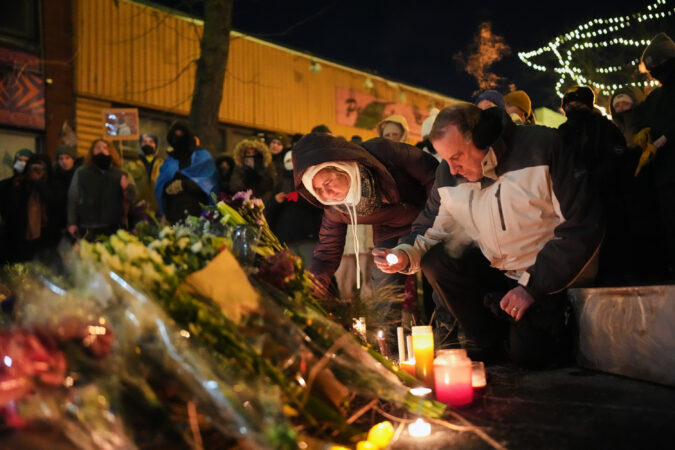
In the waning days of the worst January any of us can remember, I desperately wanted to tell a good story about America, and then on Friday, I watched one unfold in frozen Minnesota with an abiding love and white-hot intensity that seemed to melt the subzero air.
The sight of as many as 50,000 people packing the downtown streets on a minus-9-degree day to demand federal immigration raiders leave Minneapolis was a high watermark for a pro-democracy movement that refuses to obey the autocracy of Donald Trump.
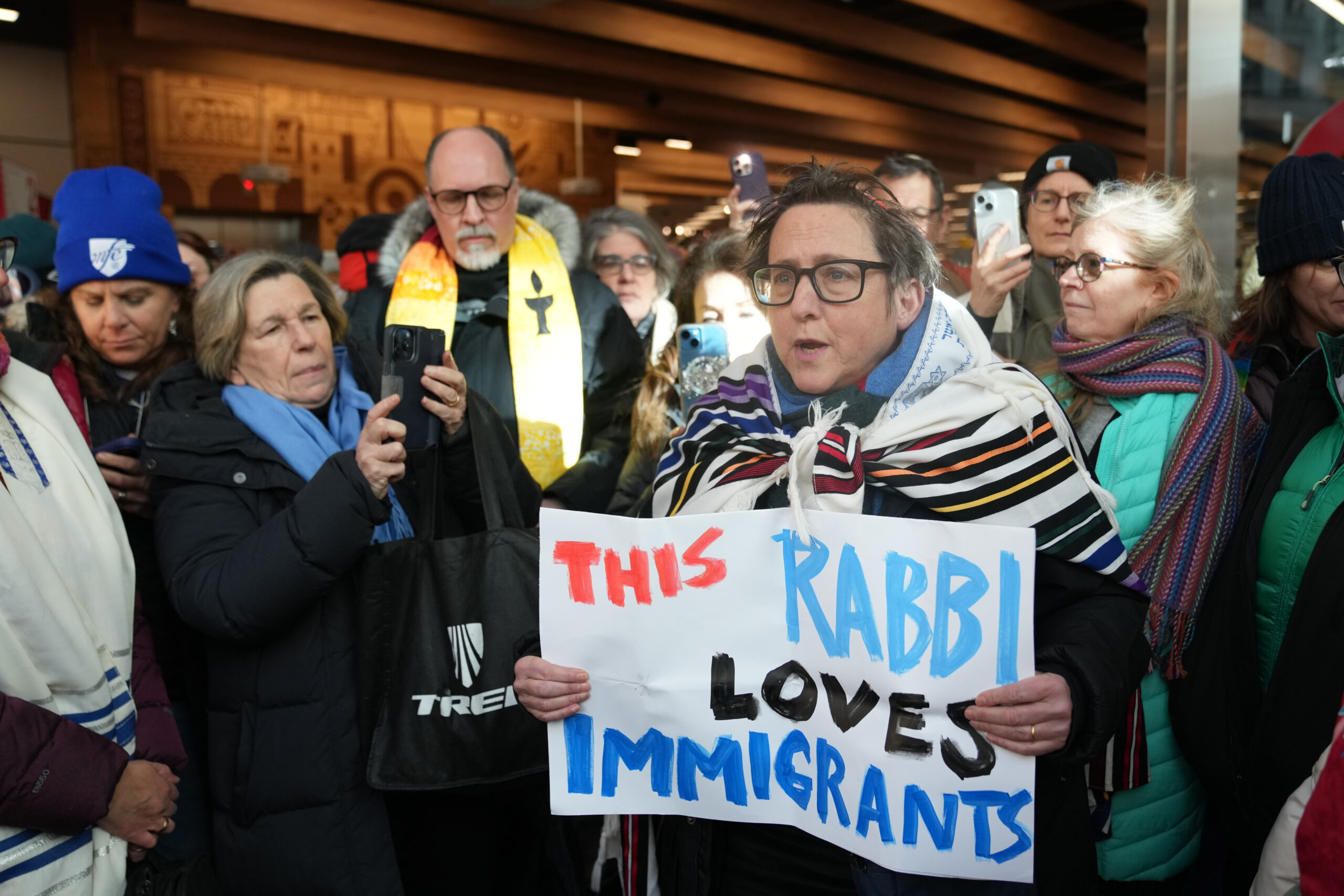
I was especially moved by the images of a polyglot of clergy from all across the nation — priests, rabbis, imams — leading the protests as they blocked traffic at the Minneapolis airport before marching on the headquarters of the giant retailer Target, pleading for an end to any cooperation with U.S. Immigration and Customs Enforcement. The group included as many as a half dozen rabbis, Unitarian ministers, and other faith leaders from the Philadelphia area.
Saturday morning, I reached out to one of them: Rabbi Nancy Fuchs Kreimer, a professor emeritus at Reconstructionist Rabbinical College in Wyncote. We talked about how, in a moment when pollsters and pundits fret about the steep decline in religiosity in American life, members of the clergy are providing a moral leadership so many crave.
Kreimer told me about the instant bond in Minneapolis between the many rabbis there — the ICE raids “had a magnetic quality to them because of the echoes of the Gestapo,” she said — and other faith leaders like Black clergy, who were reminded of 19th-century slave patrols, and white Protestant ministers ashamed over a rising tide of white Christian nationalism in the Republican Party.
Rabbi Sharon Kleinbaum and protesters gather at Target headquarters in Minneapolis on Friday.
“People see coming out of the government — from out of the president, specifically — such cruelty, such contempt, such dehumanizing language, and just crudeness and awful meanness,” the rabbi said. “But yes, actually, people are looking for a different kind of culture of kindness. And yes, they can find it perhaps in a spiritual setting.”
While we were on the phone, one of the lowest and most immoral acts in America’s 250-year history was taking place on the same snow-covered Minneapolis streets that had just been overflowing Friday with a vast sea of righteousness.
At 9:05 a.m. Central Time, a 37-year-old community volunteer and nurse named Alex Pretti stepped between a half dozen masked federal agents and a female volunteer they were attacking with pepper spray, documenting the moment on his phone. In a split second, the goon squad had thrown Pretti to the ground, punching and kicking him in a brutal scene that looked like a documentary about the rise of Nazi Germany, or maybe an outtake from Martin Scorsese’s Goodfellas.
Then, shockingly, a shot rang out. Then a volley of as many as 10 more. Pretti had been summarily executed in public by agents of the U.S. government, in a scene that was captured on multiple phone cameras from every angle and will haunt the American soul for generations to come.
Federal agents claimed Alex Pretti, 37, forced their hand on a Minneapolis street Saturday morning, alleging he “violently resisted” disarmament until the officers fired “defensive shots.”
In the first 24 days of 2026, there have been three homicides in the city of Minneapolis. Two of them have been committed by agents from ICE or the U.S. Border Patrol. And the similarities between Saturday’s murder and the Jan. 7 fatal shooting of Renee Nicole Good go beyond the sad fact that both victims were 37-year-old millennials who’d moved to Minneapolis in hopes the progressive enclave could offer them a better life, only to see their dreams cut short by a repressive regime.
Both Good and Pretti came under a vicious second attack before their families had even been notified — falsely slandered as “terrorists” by their own government that lacks even the tiniest shred of human decency. As with Good’s murder, the Trump regime asked Americans to believe a ridiculously fabricated version of what went down on Nicollet Avenue instead of their own eyes and ears.
This time, the U.S. Department of Homeland Security raced out the lies that Pretti — who was legally carrying a licensed, holstered handgun — had brandished his weapon at the Border Patrol officers, when videos show the nurse only holding his phone, and alsowhen the gun was safely pulled away by an agent before the shooting began. DHS spun a fantasy that Pretti was there to kill officers when he was just protecting his neighbors.
“The sickening lies told about our son by the administration are reprehensible and disgusting,” the victim’s heartbroken parents, Michael and Susan Pretti, said in a statement late Saturday, adding: “Please get the truth out about our son. He was a good man.”
When Good was slain less than three weeks ago, I wrote that her death might mark a turning point in the war for objective truth that requires combating the Orwellian Big Lies at the core of the Trump regime’s tyrannical rule. Both in Friday’s massive protests and Saturday’s aftermath to Pretti’s murder, you see how America is already changing — for good.
A protester holds a sign reading “Love thy neighbor -Jesus” during a rally against federal immigration enforcement on Friday in Minneapolis.
Even online message boards about the most nonpolitical topics — like cats — were cluttered Saturday with posts expressing outrage or denouncing ICE and the Trump regime. A pundit for the ultimate dude-bro, anti-“woke” site, Barstool Sports, wrote that “Pretti was murdered by ICE with zero justification for deadly force,” while NBA All-Star Tyrese Haliburton tweeted in agreement: “Alex Pretti was murdered.”
Most importantly, Senate Minority Leader Chuck Schumer (D., N.Y.), with the ability to stop most legislation with a filibuster by 41 of the chamber’s 47 Democrats, announced Saturday that he will work to block a new appropriations bill for DHS that’s due by the end of the month as long as ICE occupies Minneapolis and keeps abusing people. The time is right. A fight over funding ICE could be the decisive battle of the Trump years, and it’s clear many Americans are ready for this fight.
The tired conventional wisdom of politics that has cowed the likes of Schumer for so long also died in that hail of gunfire on Saturday. This thing is way beyond politics now. The brute force and absurd lies of a would-be American dictatorship have finally made people realize this is no longer left vs. right, but good vs. evil.
“My father warned us, ‘When evil men plot, good men must plan. When evil men burn and bomb, good men must build and bind,’” Bernice King, the daughter of the Rev. Dr. Martin Luther King Jr., wrote of Pretti’s murder. “What we are witnessing now (masked raids, people taken without due process, vigilante, Gestapo, and slave patrol-like tactics, normalized under the color of law) is a moral crisis.”
That moral fight has come full circle. In 1965, the televised images of Alabama state troopers clubbing peaceful voting rights marchers in Selma led hundreds of clergy from across America to fly south to join King in a march on the state capital of Montgomery. One of those ministers, the Rev. James Reeb of Boston, was murdered by racist thugs. That historic effort inspired today’s faith leaders who descended on Minneapolis.
This undated photo provided by Michael Pretti shows Alex Pretti, the man who was shot by federal officers in Minneapolis on Saturday.
“People are searching for values,” Kreimer said after returning from her sessions with Minnesota activists, who trained her on how to organize people when ICE inevitably descends on Philadelphia. She added that they are “saying, ‘I am repelled by this. What is it about this? It’s not OK. What is it in the way that I live my life that I need to do about this?’”
There’s no disputing that church attendance is nowhere near what it was in 1965, or that organized religion has the same kind of public trust issues as other institutions. But the unthinkable scenes of thuggery on once placid American streets, and the blatant lies from our leaders, clearly have people asking questions about the arc of a moral universe that has been suppressed for far too long.
It’s been too easy to become jaded about the word evil and its meaning when that term has been abused by cynical politicians to justify their pointless wars.
But it’s become impossible to watch the courage of whistleblowing everyday citizens putting their lives on the line to fight for the neighbors they don’t even know, or to see the utter depravity of top government officials slandering innocent murder victims while their bodies are still warm, and not conclude: Yes, there is good and evil in this world.
The church pews might be empty, but millions of Americans are still desperate to affirm that they love thy neighbor. In the shock and sorrow over the Minneapolis murders, this is something we can all cling to.
I don’t know what lies ahead on this bumpy road, or how many more Alex Prettis or Renee Goods will have to die before the positive moral force that finally awoke in Minneapolis can fully reclaim America. It’s tough to think about right now. But what’s clear is this: The time for choosing is today. Which side are you on?
None of this makes America great again. It doesn’t bring down the cost of groceries. It doesn’t help Americans whose healthcare premiums have skyrocketed. It doesn’t make our streets safer. It doesn’t do anything but rile up Confederate flag-waving racists in Trump’s base. They had an awful lot to say about preserving history when monuments honoring traitorous soldiers who fought for the Confederacy and the right to own Black folks were torn down. But not so much when it comes to the destruction that happened at Sixth and Market Streets Thursday afternoon.
National Park Service workers remove the displays at the President’s House site in Independence National Historical Park in Philadelphia on Thursday.
I hope the spirits of the enslaved Africans whose stories had been immortalized in that display adjacent to the Liberty Bell will forever haunt Trump. It is my sincere wish that he and the henchmen who took down signs and dismantled the panels documenting the sad history of the nine enslaved Black people owned by our nation’s first president will never forget what they’ve done.
From this day forward, may they toss and turn each night as they remember the destruction they have wrought, as well as the names of the enslaved whose memorial they defiled: Austin, Paris, Hercules, Christopher Sheels, Richmond, Giles, Oney Judge, Moll, and Joe.
Trump and his enablers can try to hide the facts, but chattel slavery is an undeniable part of America’s founding. This nation wouldn’t be what it is now without the free labor of Africans dragged to these shores against their will and forced to toil for free in brutally inhumane conditions. It’s our story and one that should be acknowledged — not played down because Trump says so.
What will he do next? Take a sledgehammer to the Martin Luther King Jr. statue in Washington, D.C.? Empty out the Smithsonian’s National Museum of African American History and Culture? Burn the books about slavery and Black codes that have been for sale in museum gift shops and national parks?
The exhibit at the President’s House was the first I’d ever seen that, instead of glorifying the nation’s first president, humanized the poor people Washington held in the worst kind of bondage. The offices of The Inquirerare right across the street, and I’ve walked through the free outdoor exhibit many times. I used to enjoy seeing the expressions of tourists as they learned about the side of Washington that’s left out of most history books.
Workers remove display panels about slavery at the President’s House site in Independence National Historical Park on Thursday, leaving only empty spaces where history has been redacted by President Donald Trump.
Now all that’s left are the empty spaces where the various signs used to be. These sudden omissions at Independence Park make it feel like the historical account now being told at the site is a lie — not unlike the foundational lie of white supremacy that was used to justify the sin of slavery in the first place.
The removals are just another step in Trump’s brutal agenda to take things in America back to how they used to be when white men had everything and Black people had nothing.
Since his return to power, it has been one thing after another: his attempts to destroy all vestiges of diversity, equity, and inclusion, including his decision to no longer allow free admission to national parks on the federal holidays celebrating the late Rev. Dr. King and Juneteenth. Instead, parkgoers can enjoy free admission on Trump’s birthday, as if that’s really a thing.
The president would destroy Black History Month, too, if he could, and I don’t put it past him to try. He’s been clear about his racial animus, restoring the names of Army bases to those of Confederate military figures and using U.S. Immigration and Customs Enforcement agents to inflict a reign of terror on Black and brown people.
I’m proud Philadelphia has filed suit to take back what was removed from the President’s House. This is the beginning of the City of Brotherly Love, showing the Trump administration that, in the words of Sheriff Rochelle Bilal, “You don’t want this smoke.”
Donald Trump’s sudden retreat from his military and economic threats to seize Greenland from NATO ally Denmark shows it is still possible to block the president from further foreign policy folly.
Trump did a complete U-turn at the World Economic Forum in Davos, Switzerland, shortly after berating European allies and NATO in a lengthy, lie-filled speech, insisting he must “own” Greenland. Just two hours later, after a meeting with NATO Secretary General Mark Rutte, the president suddenly announced he had a “framework” for a deal that would satisfy all U.S. needs.
Make no mistake. No matter how the White House spins Trump’s sudden about-face, he staged a total climb-down from a mess of his own making. Based on early reports, he got almost nothing he couldn’t have agreed on with Denmark months ago, based on a 1951 treaty that permits the U.S. to open multiple bases in Greenland.
All Trump’s bluster achieved was to totally alienate America’s European allies and deeply wound the NATO military alliance, whose help he needs to block Russian and Chinese aggression in the Arctic and elsewhere.
So what caused Trump’s sudden reversal? No one can penetrate the president’s aging brain, but the likely reasons have to do with economics and his base, the only factors that seem to move him.
The financial markets tanked early this week from fear that Trump would invade Greenland. No doubt tech moguls at Davos were warning him. New polls also showed 90% of Americans opposed an invasion.
Yet, as late as Wednesday afternoon, he was insisting, in his Davos speech, on the need for “title and ownership” of Greenland, and was threatening to impose new tariffs on Denmark and other European allies if they didn’t surrender. “You need the ownership to defend [Greenland],” Trump contended. “Who the hell wants to defend a license agreement or a lease?”
President Donald Trump during a meeting with NATO Secretary General Mark Rutte on the sidelines of the annual meeting of the World Economic Forum in Davos, Switzerland, on Wednesday.
Parse those words, and you see they intimate an end to NATO and its Article 5 defense mechanism. After all, if the U.S. doesn’t own Poland or the Baltics or Finland, why should Trump defend them if Russia ever attacks?
Still, even in his aggressive speech, Trump was hinting he was seeking an off-ramp, stating he wouldn’t use force.
No doubt he recognized that, despite his open disdain for Europe, its key leaders had abandoned their conciliatory stance and were determined to strike back economically. Last week, the European Union discussed imposing $108 billion worth of retaliatory tariffs on the U.S., as well as restricting American companies from the bloc’s market. The EU-U.S. trade deal agreed to last July was also put on hold.
European leaders had been reluctant to wage such a trade war, but recognized they had no choice, as Trump threatened the future of the NATO alliance. Instead of focusing on the immediate security threat to the West — namely, Vladimir Putin’s war on Ukraine — Trump was helping the Kremlin by splitting with his European allies.
Instead of working with Canada and other allies whose territory abuts the Arctic, the White House leader was telling them to get stuffed. No wonder the language heard from once close European allies at Davos was unlike anything heard since NATO was founded.
“Until now, we tried to appease the new president in the White House, hoping to get his support for the Ukraine war,” admitted Belgian Prime Minister Bart De Wever. “We were dependent on the United States. But now so many red lines are being crossed … Being a happy vassal is one thing, being a miserable slave is something else.”
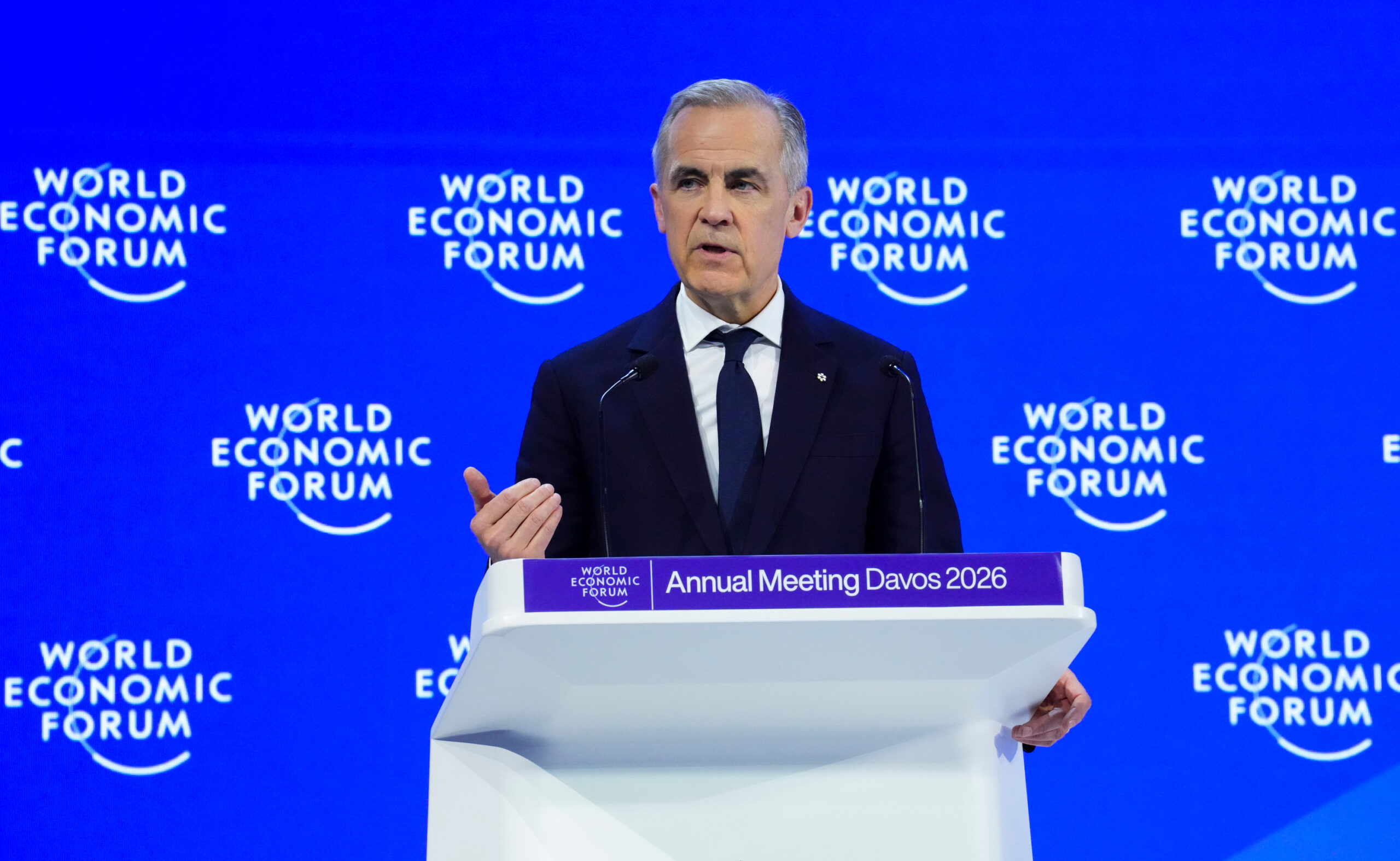
Even more blunt was Canadian Prime Minister Mark Carney (whom Trump later threatened for his critique).
Canada Prime Minister Mark Carney delivers a speech at the World Economic Forum in Davos, Switzerland on Tuesday.
“The United States under President Donald Trump is no longer a reliable or predictable ally,” Carney said frankly. “We are in the middle of a rupture in the world order … where the large, main power … is submitted to no limits, no constraints.”
Intermediate powers like Canada, however, “are not powerless,” Carney added. Acting together, Canada and European leaders helped force Trump to face that reality this week.
But the fight over Greenland, and the future of NATO, is far from over, and Trump’s retreat may only be temporary. Denmark and Greenland may or may not agree that the U.S. can have sovereign rights to the territory housing new military bases (a provision under discussion).
Denmark will not sell or surrender Greenland, however. In fact, there will be no deal at all unless Copenhagen and Greenland approve the terms.
Moreover, as was clear at Davos from Trump’s speech and actions, he still believes he is the most brilliant leader the world has ever witnessed, which leaves him wide open to Russian and Chinese manipulation.
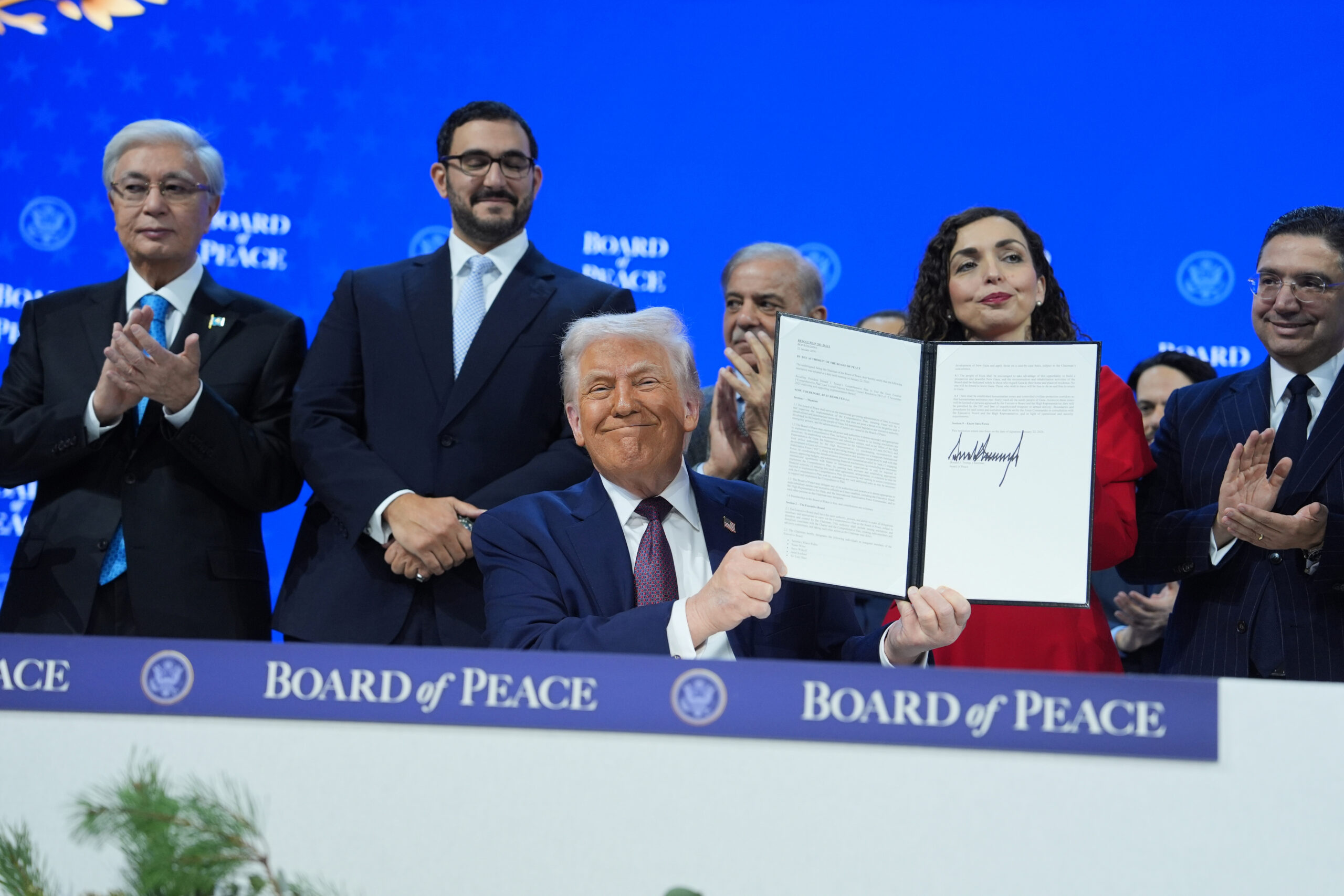
Nothing so clearly illustrated the president’s megalomania as his inauguration of a so-called Board of Peace. Originally envisioned as a group of world leaders overseeing Gaza’s reconstruction, the board’s newly released charter doesn’t even mention Gaza, but presents its mission as an alternative United Nations, tasked with making peace around the world.
In reality, it is a mammoth Trump vanity project: He heads the board, and its every action is subject to a presidential veto, according to its charter.
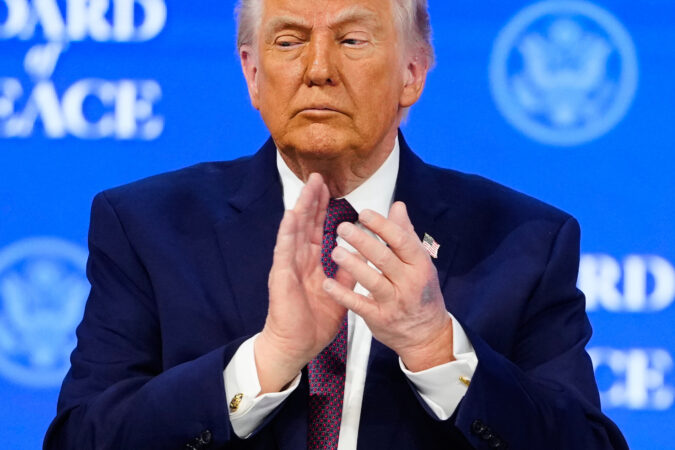
President Donald Trump holds up a signed Board of Peace charter during the annual meeting of the World Economic Forum in Davos, Switzerland, on Thursday.
The 20-plus initial participants were mostly Mideast sheikhs, emirs, and kings who can pay the $1 billion fee for permanent membership, along with several other autocrats and military-backed rulers. (The only Europeans signed up so far are pro-Russia Hungary and Bulgaria.)
War criminal Putin, busy bombing Ukraine’s civilian infrastructure to smithereens, may accept his invitation to the peace board if the United States releases $1 billion in frozen Russian assets to pay the fee. This, according to the Kremlin.
Meantime, Trump’s son-in-law, Jared Kushner, gave a slide presentation in Davos describing how Gaza could become a futuristic city with apartment towers and resorts in two to three years, a reprise of Trump’s earlier pitch for a Gaza Riviera. This, while the Gaza ceasefire is falling apart, and Israel has banned scores of humanitarian agencies from delivering food or medical treatment to desperate civilians.
Trump’s link to reality is so tenuous that the president could still resume his war on NATO. Instead of benefiting from his successful push for Europeans to spend more on defense, he may prefer to fight Europeans while conciliating with Russia.
European allies have finally demonstrated that a unified stand can check some of Trump’s foreign policy delusions. Gutless GOP senators and business leaders who moan privately about Trump’s madness but shut up in public should take note.