2026 BMW iX xDrive45 vs. 2026 Cadillac Vistiq: A lot for a lot?
This week: BMW iX
Price: $96,275 as tested. M Sport Package added $4,500 for a lot of M’s(on the steering wheel, among exterior and interior elements); Executive Package, $3,250 for soft-close doors and more; Driving assistant professional, $2,550. And there’s more, mentioned below.
What others are saying: “Highs: Tranquil cruising, competitive driving range, deluxe cabin. Lows: Busy exterior styling is polarizing, low rear seating position,” says Car and Driver.
Consumer Reports gushed: “We were thoroughly impressed with BMW’s all-electric iX, which is speedy, ultraquiet, and delivers a cushy ride. Even with its complicated controls, the iX earned one of the highest road test scores ever.”
What BMW is saying: “The new age of iX.”
Reality: And this $100,000 model is the low-budget iX.
What’s new: The iX electric SUV is new and improved for model year 2026, BMW says, with a redesigned exterior, cutting-edge technology, and versatility.
Competition: In addition to the Vistiq, there are the Genesis Electrified GV70, Lexus RZ, Mercedes-Benz EQE, Tesla Model X, and Volvo EX90.
Up to speed: Car and Driver reports the iX xDrive45 gets to 60 mph in 4.6 seconds. An M70 version takes just 3.6. It’s still quite fast, but there are other reasons to upgrade. Read on.
Shiftless: A small toggle gets you into Reverse or Drive; there’s a button for Park.
On the road: The iX handles nicely like a good all-wheel-drive EV should. It’s not stellar but it’s smooth and fun. It was actually a little rough on highways.
Vehicle modes are accessed via a touch pad on the console, which gives you a touchscreen full of choices to take your mind and eyes off the road. When you press Sport then there’s an activation dialogue to capture your attention. Who cares about the car that stopped in front of you, the cyclist, the deer, the kid chasing the ball, when there’s all this touchscreen to look at.
The interior of the 2026 BMW iX is striking in red leather. It’s comfortable and spacious but with some quirks.
Driver’s Seat: Here’s another of the iX’s mysteries. The seat is nicely appointed and most comfortable (and on the roomy side), but I was stuck with a lumbar bump that I couldn’t get rid of. The controls are on the door a la old Hyundais but there’s there nothing for lumbar. The touchscreen wasn’t offering any clues either.
The seats do offer massage, and that function helped take my mind off the lumbar issues — and convinced me there has to be a control for it … somewhere.
All this for the bargain price of $3,500, for the leather seats.
Steady speed: The steering wheel controls allow for changing from adaptive cruise to a more intrusive driving assist mode.
All I wanted to do was simply figure out how to set the distance to the next car. It flashed on the screen when I set the system up and then disappeared forever. Because it was set to the farthest distance, cruise control became useless on Philly-region roads, because everyone here will just cut right in front of you. Mr. Driver’s Seat included.
Friends and stuff: The rear seat is comfortable and luxurious, although the backrest is a little recline-y for me. There’s ample room for three people across and for everyone’s legs.
Cargo space is 35.5 cubic feet behind the rear seat and 77.9 with the seat folded.
In and out: The iX is at a nice height so anyone who doesn’t like climbing or bending will be pleased.
Play some tunes: The Harman Kardon stereo system produces among the best sound I’ve heard in a long time. Notes and chords that are buried by normal speakers are allowed to sparkle as intended; this is an A+.
The system is all in the touchscreen or through BMW’s dial and buttons on the console. A volume roller knob on the console just monkeys things up; it’s fairly smooth to the touch and hard to roll. The latter controls remain a favorite and bring this system a step above many other modern BMW offerings (I’m glaring at you, 228).
Keeping warm and cool: Temperature settings are available on the main touchscreen. A small fan icon on the touchscreen opens the larger menu, and I confess for the first couple days I found that HVAC system annoying — it would blow too hard on auto, even on the lowest setting — and then occasionally boil us. In manual mode I had to run the fan at four out of five to get any coolness.
Range: The iX xDrive45 has a range of 312 miles, according to BMW. That jumps to 340 miles in the mid-range xDrive60, and drops back to 302 in the high-performance M70.
Where it’s built: Dingolfing, Germany
How it’s built: Consumer Reports gives the iX a 3 out of 5 for reliability.
Shockingly, Delaware County has only one strip club, Lou Turk’s in Tinicum Township. Not shockingly, it bills itself as “historic” and a “Delco icon.”
Over on Yelp, reviewers call it a “hallowed hall,” “better than expected,” and “the Cheers of the female entertainment industry in the Philly area.”
Now, folks can call Lou Turk’s something else: the Carousel Delco, though the odds that they will actually call it that are exactly zero. It’s as likely as Philadelphians calling the Gallery the Fashion District or anyone saying Columbus Boulevard instead of Delaware Avenue.
A Delco institution for more than 50 years, Lou Turk’s announced it was rebranding via a statement on its social media pages last weekend, prompting comments like “April fools?” “Fake news?” and “This may go down as the biggest travesty to ever occur in Delco … and my god that’s saying something.”
Along with the new name, the club released what appears to be new signage, with the word “CAROUSEL” spelled out using silhouettes of nude women. The establishment also announced recent renovations, new amenities, menu enhancements, and new management. Yeah, new management that did not return my requests for an interview about why this was done.
I have no idea what would inspire someone to name a strip club “The Carousel Delco,” aside from the fact that both have poles. The club’s statement seems to explain why the new name was chosen, but it actually doesn’t. Classic Delco.
“We are still a Delco bar — always have been, always will be,” it reads. “That legacy is exactly why this name was chosen.”
Wait, did Delco bars all used to have carousels inside? If so, I definitely missed this county’s Belle Époque.
When I saw the news, my biggest fear was that one of Delco’s most storied traditions could be in jeopardy — the annual Mother’s Day and Easter flower sales outside of the strip club. It’s been the subject of countless memes and something I’ve used in stories as shorthand to explain Delco culture.
Luckily, whoever wrote the club’s statement anticipated that concern and immediately assuaged all fears:
“We look forward to many more awesome memes along the way … and we will still be selling flowers this Mother’s Day holiday.”
Whew! I mean you wouldn’t want to tell your mom you bought her flowers at the Acme, would you?
Trials and tribulations
The establishment was purchased in the mid-1960s by the late Louis Saddic, who was better known as Lou Turk, a name he picked up as a kid in South Philly, according to a 1983 Inquirer article.
Located in the Essington section of Tinicum, just off of Route 291, the club is situated in between an Irish pub and a Wawa, because of course it is. It’s so close to the Philadelphia International Airport you can see the underbellies of planes flying low overhead, which historically made Lou Turk’s a popular layover spot for travelers. Being near the shipyard didn’t hurt either.
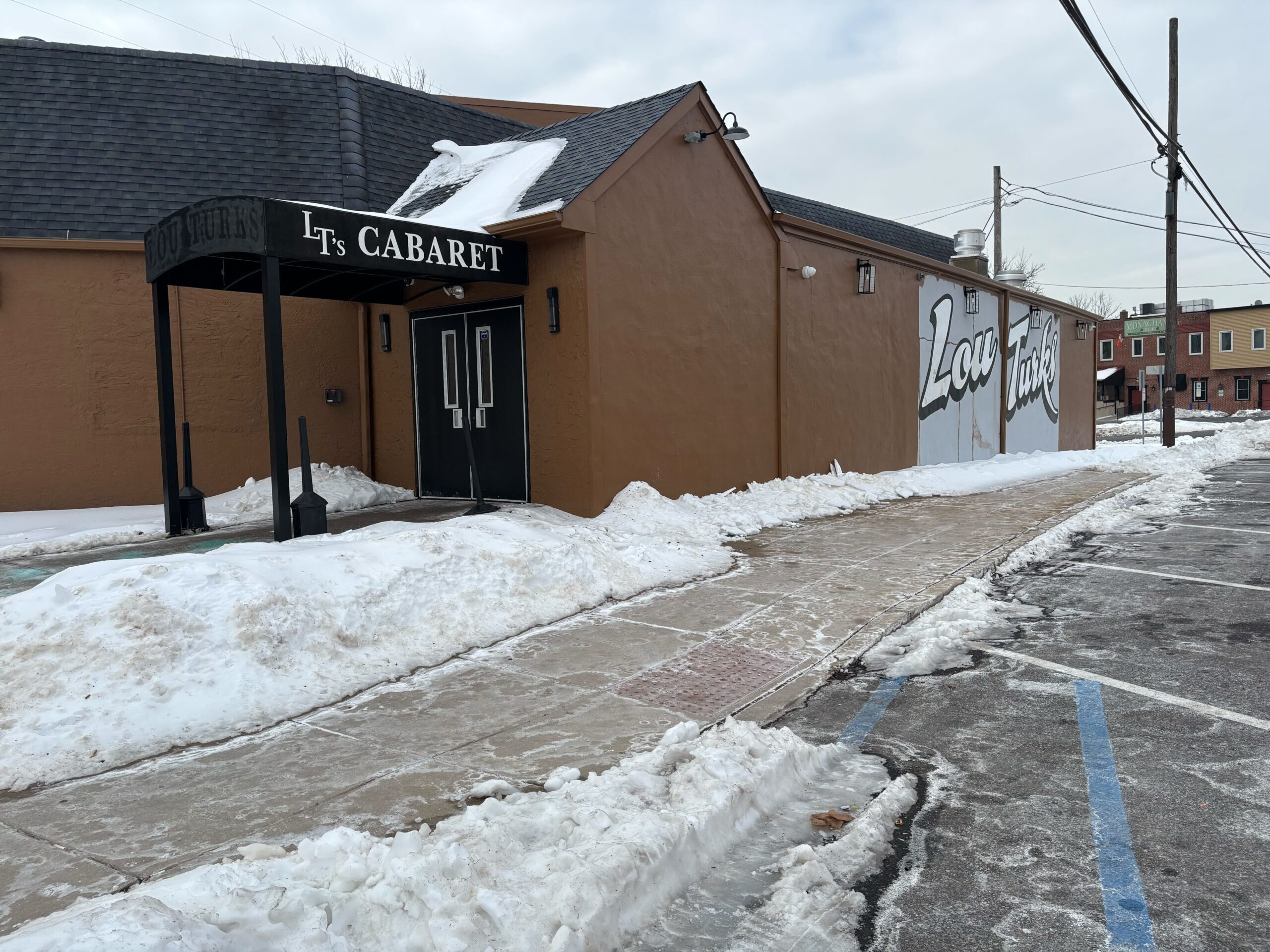
The building itself is a windowless parallelogram painted in a muddy brown, with LOU TURKS plastered in large white letters on a gray patch on the side and “LT’s Cabaret” written on the awning.
Lou Turk’s is at the intersection of Powahatan and Jansen Avenues in the Essington section of Tinicum Township.
It’s unclear if the business was always a strip club, but it definitely was by 1973, when it started to receive citations by the PLCB for “lewd, immoral or improper entertainment,” according to our archives.
In 1983, the club was raided twice, the second time by 55 police officers who confiscated a whopping total of $19 from dancers they claimed had sexual contact with patrons. Turk, who was subsequently hit with prostitution and racketeering charges, vehemently denied the claims, as did five dancers and five other employees arrested in the raid.
William J. Davies, then-deputy district attorney for Delaware County, said at the time of Lou Turk’s: “It won’t reopen” and “We are not going to tolerate this sort of thing out in Delaware County.” Boy, was he off base.
The following year at trial one dancer testified she would “haul off and slug” any patron who tried to get handsy, which tracks for Delco. Investigators who testified used marshmallows and hand puppets to describe what they allegedly witnessed in the club, a Daily News report said.
Turk was represented at trial by the late high-profile attorney A. Charles Peruto Sr., who at one point, while questioning a PLCB agent’s testimony about interactions between a dancer and a patron, “assumed the dancer’s squatting position in front of the jury box and questioned the agent about the physical possibility of the act he had described,” according to an Inquirer article.
It’s unclear if the jurors threw Peruto tips, but what is becoming clear is how the club got its storied reputation in the annals of Delco history.
Turk’s case ended in a mistrial because prosecutors didn’t supply his attorney with the necessary discovery material before the case went to court. You can’t hide anything when prosecuting a strip club.
In 1990, a judge ordered the club to close for a year, after it had racked up a dozen citations between 1975 and 1990, “the longest history of state liquor code violations in the Philadelphia area for lewd entertainment,” The Inquirer wrote at the time.
During the shutdown, the bar operated a sandwich shop with a walk-up window for a few months, but it didn’t cut the mustard.
Lou Turk’s reopened on July 1, 1991, and The Inquirer was surprisingly there on opening day to see a dancer named Gail with palm tree pasties perform to the dulcet tones of ’80s glam metal band Ratt.
The establishment hasn’t made headlines since, according to our archives, aside from a report by unnamed sources that Ryan Howard visited the club in 2008, and several passing references to it in stories about Delco culture by yours truly.
‘Holy mackerel!’
I’m not sure when I first became aware of Lou Turk’s. As a nearly two-decade transplant, it’s the stuff of legends that’s always been here and I’ve always heard talked about, like Wawa or the Lower Swedish Cabin.
Whenever someone asks for a suggestion for the best place to eat or visit on the Delco subreddit or on a local Facebook page, someone inevitably suggests Lou Turk’s, tongue-in-cheek, like they do Woody’s in Philly.
“I think I even got a Lou Turks answer to me asking about vets in the area for my cat lol I died,” one Redditor posted.
“Did the cat survive?” another asked.
“Yeah he got a lap dance and started feeling better.”
Several reviewers on Yelp attest that the club’s food is pretty good. Even Jim Pappas, who’s gained local notoriety for trying and cataloging more than 1,100 cheesesteaks in the tristate area on his Philadelphia Cheesesteak Adventure website and YouTube channel, gave the food a thumbs-up.
“Holy mackerel! Who knew Lou Turk’s would have great food?” he says in his review.
One Yelp reviewer in 2011 even used a cheesesteak analogy to describe the place.
“As far as quality of performers go, think of this place as a cheesesteak shop in comparison to LeBec Fin; you can get a very satisfying quality meal, but it’s not exactly something you’d be bragging about to everyone you meet,” they wrote.
Uncle Lou’s
Changing the name of anything is hard, especially around here, where change is as welcome as the Dallas Cowboys.
But it may be particularly difficult for Lou Turk’s, which is so ingrained in local culture some folks call it Uncle Lou’s.
That’s the great thing about Delco. It doesn’t have famous tourist sites like Longwood Gardens or King of Prussia Mall, but what it has it owns to the bone, including its lone strip club.
Dan McQuade had such a way with words that it’s almost impossible to find the right ones to contemplate a Philadelphia without Dan writing about all the bat-guano crazy things we do here. Dan, who wrote for a variety of sites including glory-days Deadspin and Defector, died from cancer last week. He’d just turned 43 — way too young. We started blogging at the same time in the mid-2000s, and I was blessed to know him from that long-lost scene. He leaves behind his wife, a 2-year-old son, and a remarkable body of work — like essential coverage of the Wildwood T-shirt scene, or his analysis of Sylvester Stallone’s absurd 30-mile run in Rocky II — that people will still be reading and talking about for many years to come.
The twisted, deadly culture of U.S. immigration cops can’t be fixed with training
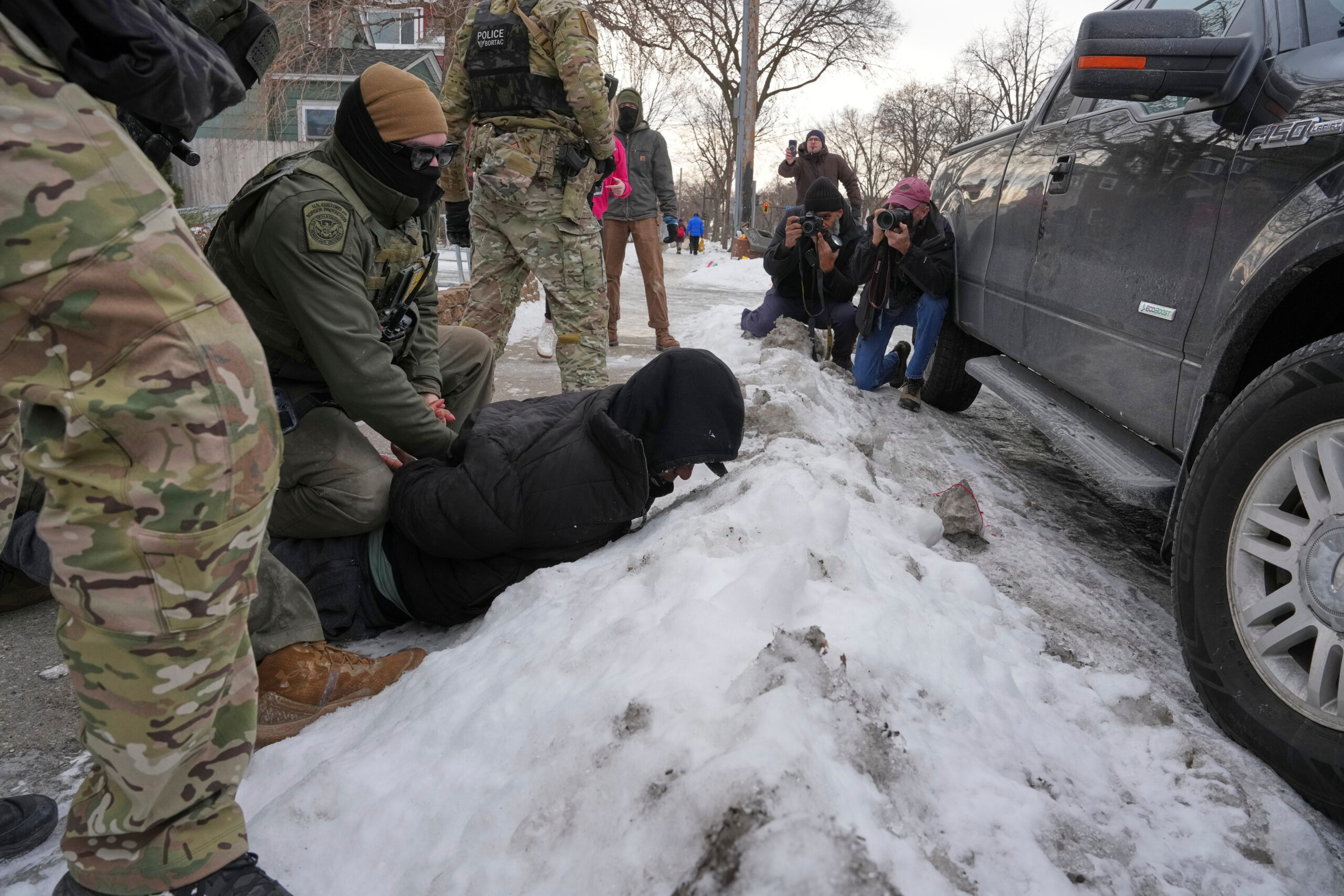
Border Patrol agents detain a man in Minneapolis on Jan. 11.
The fear was palpable even before the ink had dried on what Donald Trump called his “Big Beautiful Bill” — the 2025 legislation that funneled a whopping $170 billion toward immigration enforcement, including doubling the number of agents in the field from 10,000 to 20,000.
Many warned the surge of inexperienced rookies — indeed, their training was slashed from 90 days to just 47 (or 48) days to race the new agents out into the streets — could lead to acts of police brutality, or worse, as an alphabet soup of Homeland Security agencies donned masks and went after immigrants in agitated urban neighborhoods.
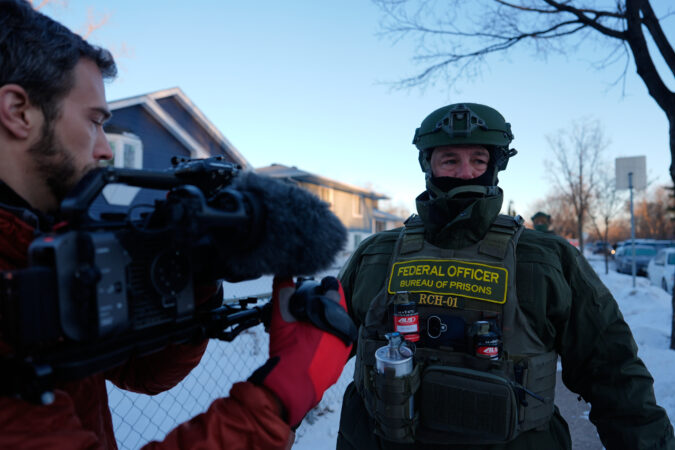
Those whispers became a scream as Americans watched the horrific videos of a masked federal agent walking in front of the family SUV driven by a Minneapolis mom, Renee Good, and then firing three shots that killed her. Seventeen days later, one of the officers in a scrum beating up observer Alex Pretti — apparently not seeing that Pretti had already been stripped of his legal handgun — fired the first blast of what became a volley of 10 shots that killed the 37-year-old Minneapolis intensive care nurse.
On Sunday, the ProPublica newsroom revealed what the U.S. government had successfully kept secret for more than a week: the names of the two agents — both from South Texas — who fired the fusillade of shots that killed Pretti on a busy Minneapolis street.
They were not rookies.
Border Patrol officer Jesus “Jesse” Ochoa, 43 — who, according to his ex-wife, is also a gun enthusiast with 25 pistols, rifles, and shotguns — had his heart set on joining the federal force after earning his criminal justice degree from the University of Texas-Pan American and finally got his wish eight years ago, ProPublica wrote.
The site reported that the other shooter, Raymundo Gutierrez, joined U.S. Customs and Border Protection in 2014 and works for its Office of Field Operations, where he is assigned to a kind of agency SWAT team, involved in high-risk operations.
The men who gunned down Pretti were well-trained and experienced, as was Jonathan Ross, the ICE and former Border Patrol officer who shot and killed Good during their Jan. 7 encounter. Their involvement in the killings that shocked America suggests that moderates calling for reforms at ICE, but not for a radical reworking of immigration enforcement, are failing to understand the much deeper problems.
Garrett M. Graff, a journalist and best-selling author who’s been tracking Border Patrol and its brother agencies since their expansion in the 2000s, told me on Monday that he was not at all surprised the three officers firing the deadly shots were highly experienced.
“I do think it’s enormously relevant that the shooters all have CBP backgrounds,” Graff said. “It’s an agency that routinely uses deadly force outside of the norms of law enforcement in the U.S., and it’s not a surprise to me that in both cases we see agents quick to resort to deadly force.”
Graff added that Ross’ fatal shooting of Good mirrored problems that have existed in the agency for years. He said it “jibes with a 2013 internal report that criticized CBP agents and officers for putting themselves in danger by stepping into the path of vehicles, and firing their guns out of ‘frustration’ rather than fear.”
I reached out to Graff, who was a Pulitzer Prize finalist for his history of the Watergate scandal, because just two days before the ProPublica report, he offered some extraordinary history and background about CPB in testimony before an Illinois state commission that’s looking into misconduct during the 2025 immigration raids there.
Graff’s statement went viral on social media because it detailed a toxic culture at CPB that’s highlighted by shocking levels of criminality among its agents, from on-the-job brutality to off-duty thuggery, as well as domestic violence.
Finding that at least 4,913 Border Patrol agents and CBP officers were arrested over a 20-year period, Graff testified, “Indeed, for much of the 2010s and likely before and since, it appears the crime rate of CBP agents and officers was higher per capitathan the crime rate of undocumented immigrants in the United States.”
Ironic, huh? But why has this happened?
A lot of the problem, Graff testified, lies in the rapid surge of Border Patrol from around 9,200 agents at the time of the 2001 terror attacks to roughly 21,000 by the Obama administration. Those new hires, he said, were hastily recruited with limited background checks, rushed into the field with minimal training, and lacked the arrest powers of more rigorous federal agencies like the FBI.
On the job, this new cadre bonded over a culture that simmered in misogyny and racism, and then boiled over in backing an authoritarian like Trump. “Agents developed a strong tradition of frontier-style justice; its agency motto, ‘Honor first,’ is as much a statement of machismo as it is about integrity,” Graff testified.
This culture has proved lethal long before the frigid streets of Minneapolis. Graff said that CBP agents have been involved in at least 72 deadly shootings or use-of-force incidents since 2010, making it “perhaps the nation’s deadliest law enforcement agency.”
He’s not the only one to suggest that Border Patrol’s problem is its warped culture, not a lack of training or body cams. Jenn Budd, a former Border Patrol agent who became a whistleblower, has described CBP as plagued by abusive officers and a pervasive rape culture. In her memoir, she calls Border Patrol “a criminal organization disguised as a federal law enforcement agency.”
America’s response to the 9/11 attacks — the birth of the U.S. Department of Homeland Security and the dramatic expansion of Border Patrol, as well as the creation of ICE in 2003 — launched a monster that has now blown back against America’s own citizens, in Minnesota and elsewhere.
This fundamental notion — that ICE, CPB, and Border Patrol are rotten way past the point of tinkering around the margins — is what needs to be driving the debate on Capitol Hill. The incremental reforms some top Democrats are pushing, such as body cams or requiring arrest warrants, are fine as stopgap measures, but they would not have saved the lives of Pretti or Good.
The only fix that makes sense is abolishing ICE and all the other post-2001 excesses and returning to just the essential functions that are actually needed: airport security, arresting the relatively small number of violent criminals who enter America, humanely securing the border, and processing people seeking refuge from their violent homelands.
Abolishing ICE and radically reforming the rest of a broken system won’t bring back Good or Pretti, either, but it would be the most fitting and appropriate memorial to America’s slain martyrs of 2026.
Yo, do this!
As things in America have seemed to consistently get worse since the dawn of the 21st century, there was a frequent question: Why are there no great protest songs? You can stop asking now. Bruce Springsteen has channeled the golden era of Nobel laureate Bob Dylan, who sang in outrage over injustices like the assassination of Medgar Evers, with his own instant and electric protest record, “The Streets of Minneapolis.” Recorded and released in the course of a weekend, the Boss honors ICE murder victims Renee Good and Alex Pretti and heaps scorn on their killers. Already the most downloaded song in America, it shouldn’t have taken this for Springsteen to get his first-everNo. 1 single.
Just as everyone predicted at the start of the season, it’s Drake Maye’s New England Patriots against Sam Darnold’s Seattle Seahawks for all the marbles when Super Bowl LX kicks off Sunday night from Santa Clara, Calif. (Yes, that was sarcasm.) Although this is one of the least appealing matchups, on paper, in the history of the Big Game, 2025-26 has — excepting our Eagles — proved the most exciting NFL season in modern memory, so hopefully these two Cinderella QBs will do their part. The real fireworks may come when Trump-unfriendly artists Green Day (!!) and Bad Bunny take the stage. Actual football commences at 6:30 p.m. on NBC.
Ask me anything
Question: Was the Minnesota general strike successful? And what are the prospects of a true national strike? — @exlibrophilly.bsky.social via Bluesky
Answer: The answer to your first question would have to be a yes. It was telling that 60 Minnesota corporations felt compelled to issue a statement (albeit one I viewed as milquetoast) and that the Trump regime started making some partial concessions after thousands of Minnesotans skipped work to take to the streets. On the second part, I noticed there was chatter about a national general strike last Friday, and very little came of it. That’s because a successful nationwide shutdown — something that has never happened before — would require weeks, not days, of planning and committed, full-throated support from the top labor unions and other key organizations like the Democratic Party. Given that the real power in America seems to be economic, I would urge these power brokers to join with regular folks and make it happen.
What you’re saying about …
Newsletter readers feel strongly that — while there’s nothing wrong with proposed reforms such as unmasking, visible badges, marked vehicles, and the proper use of arrest warrants — U.S. Immigration and Customs Enforcement should be abolished, and immigration enforcement should be totally overhauled. Wrote Daniel Hoffman: “Any of the reforms, controls and procedures that the Democrats are likely to impose on ICE are useless as long as Donald Trump is president and he has stooges to carry out his campaigns of vengeance and nationalist bigotry.” Thomas Ceresini agreed: “Dems *should* demand that ICE be abolished immediately, and that CBP be reorganized from top to bottom, purging all the fascists from its ranks.”
📮 This week’s question: Pennsylvania Gov. Josh Shapiro has been all over the news lately with the release of his new book and a controversial passage about the 2024 Kamala Harris campaign. But his stock for president in 2028 seems to be falling. Would you like to see him run for president, or vice president, or neither? Please email me your answer and put the exact phrase “Shapiro 2028” in the subject line.
Backstory on the strange case of Tulsi Gabbard
Director of National Intelligence Tulsi Gabbard enters the Fulton County Election HUB Wednesday as FBI agents seize Fulton County 2020 Election ballots, in Union City, Ga.
Tulsi Gabbard was in the news a lot in the first couple of shocking months after Donald Trump’s 2024 election victory, and for good reason. The 47th president’s stunning pick of the former leftist as his director of national intelligence (DNI) barely made it out of the Senate on a 52-48 vote, with Democrats like Sen. Elizabeth Warren calling Gabbard a likely, if perhaps unwitting, Russian asset because of her history of statements that aligned with the Vladimir Putin regime.
But then something even stranger happened: Gabbard largely disappeared from sight. Most notably, the nation’s intelligence chief was not heard from during the U.S. attack on Venezuela that captured and deposed its strongman leader Nicolás Maduro, and reportedly was excluded from its planning — likely because in her Democratic past, she had vehemently opposed American intervention there. But it was even more jarring when and how Gabbard resurfaced last week: overseeing an FBI raid at the Fulton County, Ga., election hub that the president has long insisted — in a Big Lie with zero evidence — was the epicenter of some type of fraud that prevented his reelection in 2020.
Gabbard’s appearance in Georgia raised many questions, especially since the spy agencies she oversees as DNI are supposed to watch for foreign intelligence threats — not get involved in domestic policy. On Monday, Gabbard sent a letter to key Democratic lawmakers who’d demanded answers, explaining that she monitored the raid because Trump had asked her to be there, and insisting that election security is one of her duties because of the possibility of foreign interference.
The Georgia raid, and Gabbard’s involvement, has sent off all kinds of alarm bells that the Trump regime is planning to gin up a voter fraud case — even though thorough recounts proved that Joe Biden narrowly won Georgia in 2020 — as an excuse for an unprecedented federal intervention in November’s midterm election. We also learned this week that while she was in Atlanta, Gabbard even facilitated a phone call between Trump and several FBI agents involved in the raid, a stunning breach of protocol. On Monday, Trump went on a podcast with his former deputy FBI director, Dan Bongino, and declared that “Republicans ought to nationalize the voting” in 15 unspecified key states. Such a move would mean the end of American democracy as we’ve known it.
Meanwhile, Gabbard is back on the radar in a big way. Also on Monday, the Wall Street Journal reported that the DNI is the subject of an explosive whistleblower complaint that, according to the whistleblower’s attorney, the White House has listed as highly classified and is refusing to share with Congress. Leaders on Capitol Hill need to fight to get this secret information by any means necessary. In the increasingly fraught fight to save the American Experiment, we need to know who Gabbard is really working for.
What I wrote on this date in 2022
Remember affirmative action? Four years ago, the U.S. Supreme Court was still considering the legal challenge to the use of race as a factor in college admissions, which it did strike down later that year, in a foreshadowing of the Trump regime’s much wider war against diversity. On Feb. 3, 2022, I wrote that while the threat to affirmative action was indeed alarming, the existing rules were already failing African American college applicants. I wrote: “In a nation where the Black-white wealth ratio is 20-1, recruiting Black kids was a low priority. These self-inflicted wounds had little to do with the legal status of affirmative action.”
The fallout from the deadly ICE raids in Minneapolis remains the dominant story in America, as reflected in my recent columns. First, I wrote about the looming deep cuts in news reporting at the Washington Post and CBS News, and decried how these self-inflicted wounds — both at the hands of their billionaire Trump-favoring owners — would mean fewer eyes out in the field just as Minnesota was showing the power of bearing witness. Over the weekend, I warned of the regime’s plan for new immigration raids against the beleaguered Haitian refugees of Springfield, Ohio — a scheme that seems on hold for now after a judge ruled late Monday night to continue the protected legal status of these immigrants.
While we still haven’t seen all of the government’s Jeffrey Epstein files — despite the law calling for their full release last December — the massive tranche of documents that did go public last Friday is a gift that keeps on giving for those who track the follies of America’s rich and famous. Not surprisingly, America’s founding and still sixth-largest city has numerous ties to the late financier and convicted sex trafficker. So far, The Inquirer has reported that the U.S. Department of Justice files reveal a surprising relationship between Epstein and Philadelphia-born comic Bill Cosby, who at the time was battling his own flurry of sexual abuse allegations. Epstein even offered to buy Cosby’s home at one point. In a separate story, The Inquirer traced the relationship between the financier and 76ers owner and hedge-fund billionaire Josh Harris, who “had an ongoing business relationship that included numerous phone calls and at least one visit to Epstein’s home in Manhattan.” What’s more, Epstein inquired about buying a plane from a Harris business associate, University of Pennsylvania megadonor Marc Rowan. The Epstein scandal shows that all politics — especially the most tawdry — is local. There’s more to come, but you’ll be locked out without a subscription. Why not sign up today?
By submitting your written, visual, and/or audio contributions, you agree to The Inquirer’s Terms of Use, including the grant of rights in Section 10.
I don’t believe the Trump administration removed the slavery memorial at the President’s House at Sixth and Market Streets to protect the reputations of the dead. I believe they did it to crush the spirits of the living.
Perhaps, for those too demoralized by Donald Trump’s chaotic presidency, the instinct to resist has faded. But Trump doesn’t know Philadelphians. We are a stubborn sort, reared in well-worn streets that are older than America itself. You cannot take crowbars to our history and pry it from the walls. Nor can you silence us when we rise up to tell the story of what you’ve done.
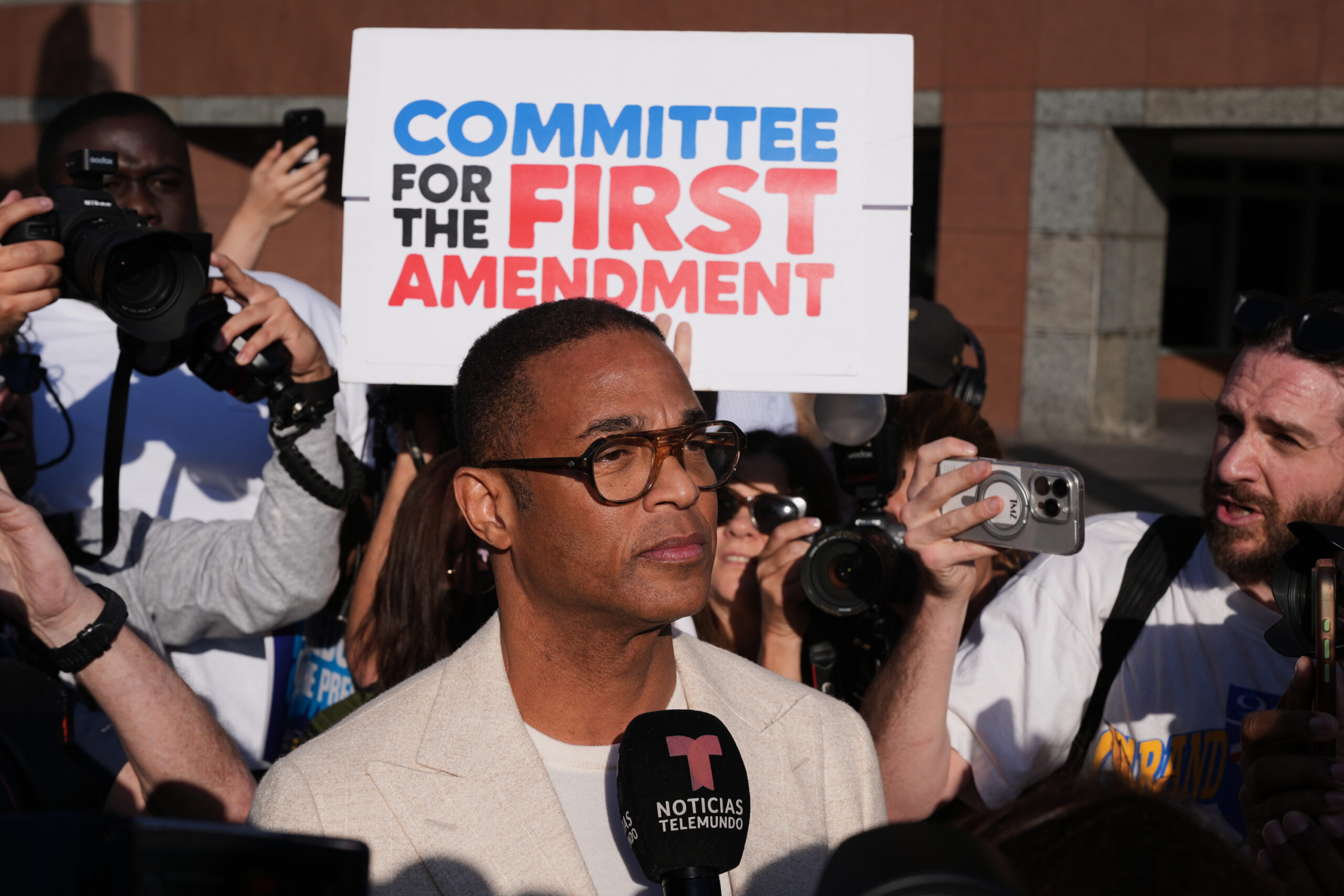
That’s why Friday’s arrest of Don Lemon, a journalist who toiled in Philadelphia before moving to the national stage, will only sharpen the focus on the Trump administration’s push to deport Black and brown immigrants. It’s why the arrest of Georgia Fort, a vice president of the National Association of Black Journalists, which has its roots in Philadelphia, will only shed light on this administration’s troubling strain of anti-Blackness.
Pretending that Lemon and Fort committed a crime by covering a protest in a mostly white Minnesota church is ludicrous. Yet, that’s what the Trump administration would have us believe. They want us to think that reporting on protesters who were seeking to confront a pastor said to have ties to U.S. Immigration and Customs Enforcement is a criminal act. That interviewing people is enough to be charged with conspiracy against the rights of religious freedom and an attempt to injure while exercising religious freedom.
The journalist Don Lemon addresses reporters outside the Edward R. Roybal Federal Building in Los Angeles on Friday.
Don’t bother to try to make sense of it. You can’t, because the Trump administration is not seeking fairness. Nor is it seeking truth. Instead, it is attempting to reshape reality in the image of Donald Trump.
I doubt that it’ll succeed, because there’s a strange thing about truth. No matter what you do to it, truth does not cease to exist. It simply waits to be uncovered.
Prying Black history from the walls at Sixth and Market Streets will never erase truth. Instead, the truth will be amplified. Not only by Michael Coard and the Avenging the Ancestors Coalition, the activists fighting to preserve our history. This truth will be told by all of us.
George Washington enslaved nine Africans in Philadelphia. He returned them to Virginia nearly every six months, thus avoiding the requirement to free them under Pennsylvania law. One of the enslaved, Oney Judge, managed to escape from Washington and his wife, and America’s first president spent years trying to return her to slavery.
That is the truth of what happened here in Philadelphia, and on Friday, when I went to the site of the exhibit and saw the rusted, glue-stained frames that once held depictions of that history, I was angry. But the tale of the President’s House is not the only truth the Trump administration is trying to obscure.
Shootings by federal immigration agents in Minnesota cost Renee Good and Alex Pretti their lives. We know their names and mourn their deaths, not just because they were American citizens, but also because they were white. However, they aren’t the only ones to fall victim to the violence linked to the president’s anti-immigrant push.
In total, at least four people have been killed and eight others wounded by gunfire during immigration enforcement operations since Trump returned to office a year ago. Most of the other victims appear to be people of color. But when state-sanctioned violence hides behind the darkness of masks, the only thing that can expose it is light.
Journalism is that light, and quite often, when journalists begin to look for one truth, another is exposed. That’s what happened when Don Lemon and Georgia Fort walked into that mostly white church to report on a protest in St. Paul, Minn.
Lemon and Fort discovered that in America, where history is pried from walls and Black journalists are arrested, truth does not play out in color. Too often, it’s in Black and White.
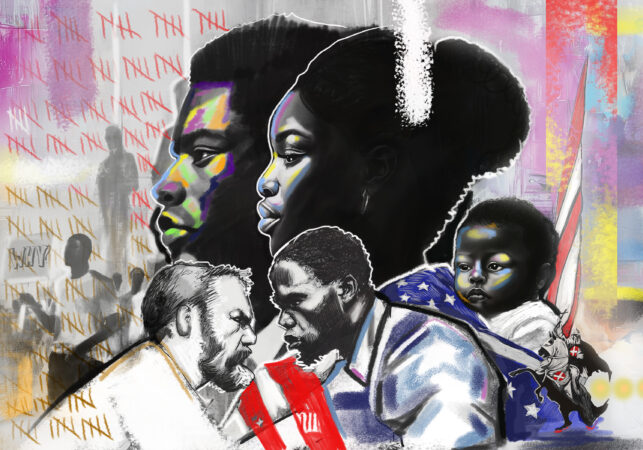
The racism in education worked through politics. After all, schools were run by the government and funded by tax dollars, and while the students were segregated by race, the lessons were unified in their promotion of white supremacy.
As Woodson would later write in his book, The Mis-Education Of The Negro: “It is strange, then, that the friends of truth and the promoters of freedom have not risen up against the present propaganda in the schools and crushed it. This crusade is much more important than the anti-lynching movement, because there would be no lynching if it did not start in the schoolroom. Why not exploit, enslave, or exterminate a class that everybody is taught to regard as inferior?”
Woodson had a point. The politics of American education meant the stories of America’s wars were told from a Eurocentric perspective. America’s economic rise ignored the role of racism. The country’s cultural norms formed a tapestry of whiteness, and at the root of it all was an underlying theme that Black people were something less than human.
That was the prevailing attitude, but Black Americans kept proving their own nation wrong.
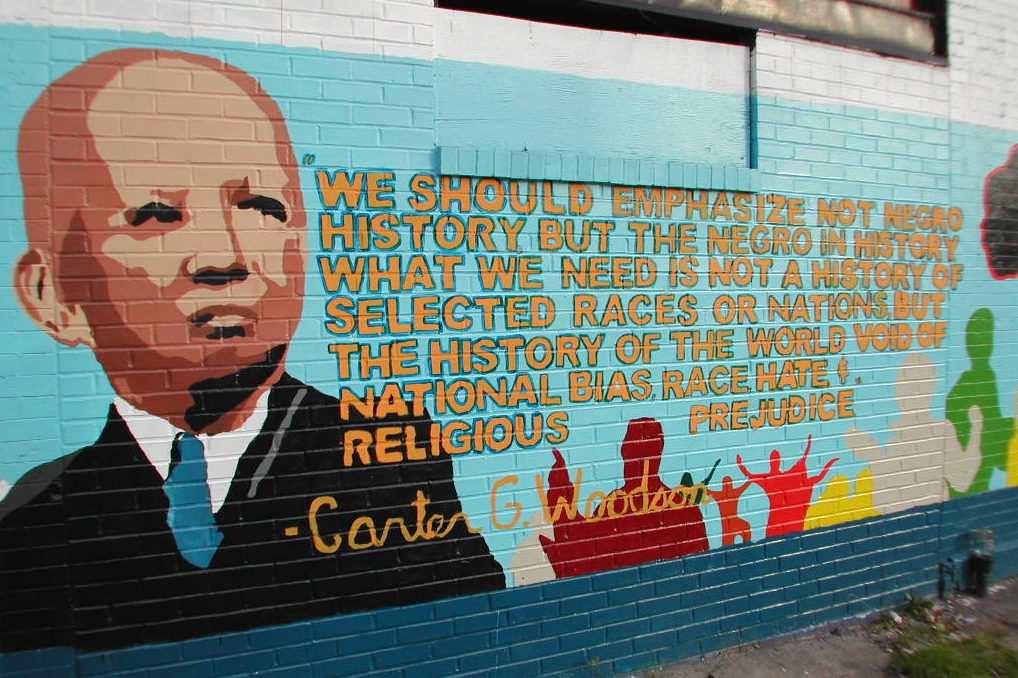
A mural in Washington, D.C., pays tribute to historian Carter G. Woodson, who in 1926 created what became Black History Month.
Sharing such history is inconvenient because it unravels the narrative that white America acquired everything through hard work and sacrifice, while Black America lost everything through laziness and incompetence.
Maintaining such historical lies requires political will and a story people want to believe. In 1915, America got both.
D.W. Griffith released a film called The Birth of a Nation. Its racist narrative portrayed Black men as savages, while depicting the Ku Klux Klan as heroes.
President Woodrow Wilson, who screened the film in the White House, said The Birth of a Nation was “like writing history with lightning.”
In truth, the film was not history. It was racist propaganda, and it helped to fuel the resurgence of the Ku Klux Klan. By 1921, African Americans were facing a full-on assault. In Tulsa, Okla., they endured what the U.S. Department of Justice later called a “coordinated, military-style attack” on a prosperous Black community. It was an assault that destroyed property worth millions of dollars, and it happened with the cooperation of the police and National Guard.
In 1923, the political leadership changed. Republican President Calvin Coolidge, in his first congressional address, said that under the Constitution, Black people’s rights “are just as sacred as those of any other citizen,” while calling on Congress “to exercise all its powers of prevention and punishment against the hideous crime of lynching.”
However, the president was only willing to go so far. He said racial issues should be worked out locally, and ultimately chose not to endorse an anti-lynching bill because he feared that in doing so, he would jeopardize tax legislation he was trying to push through the Senate. Black people weren’t his priority.
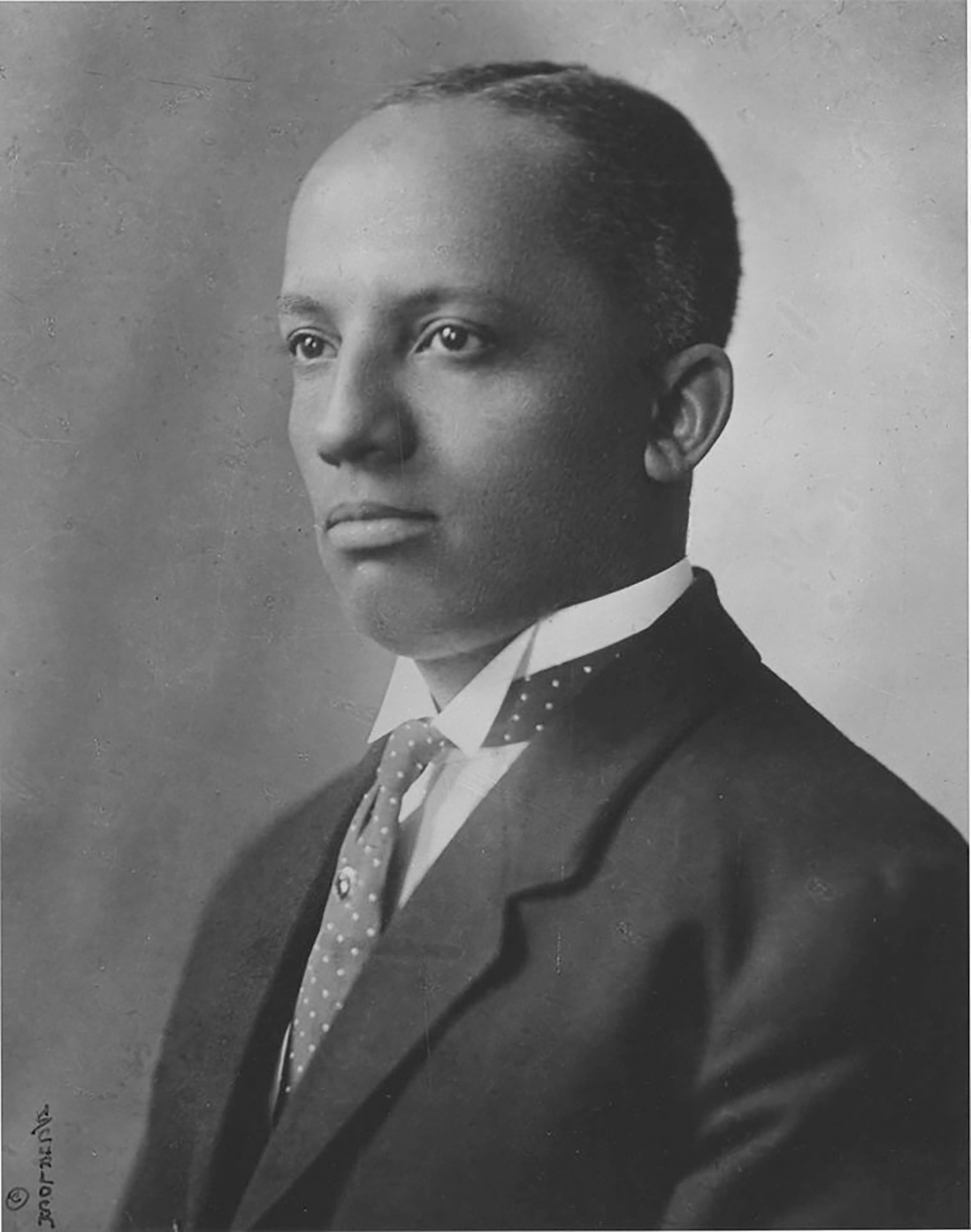
Carter G. Woodson created Negro History Week in 1926 largely because he believed the nation’s educational system sought to enslave Black minds, Solomon Jones writes.
It was against that political backdrop that Woodson founded Negro History Week — a celebration that wasn’t officially sanctioned by the federal government until 1976, when President Gerald Ford recognized Black History Month. A decade later, Congress passed it into law.
Between then and now, as political winds have shifted, we are once again facing backlash against Black progress.
In this moment, when the weight of Black history both strengthens and comforts us, I am reminded that Woodson, in his seminal work, The Mis-Education of the Negro, warned Black people against staking our hopes solely on politics.
“History does not show that any race, especially a minority group, has ever solved an important problem by relying altogether on one thing, certainly not by parking its political strength on one side of the fence because of empty promises,” he wrote.
In other words, if the past has taught Black people anything, it has shown us how to look beyond the rhetoric of politics and seek out each other for strength.
The headline was catnip to a Washington press corps that has spent much of the last decade desperately trying to normalize the mad, mad, mad, mad world of Donald Trump. With his poll numbers reeling after two Minneapolis killings by federal agents, the 47th president was “toning down” his mass deportation drive — perhaps pulling back.
There were symbolic gestures, for sure. The Nazi-style trench-coated unmasked face of Trump’s secret police force in Minnesota, Border Patrol commander Greg Bovino, was dismissed and slinked home to California in a convoy of shame. His replacement, the alleged Cava bagman Tom Homan, talked of a drawdown of federal forces in the Gopher State, even as no one except Bovino and his inner circle of goons left town. There was an abrupt end to immigration raids in Maine, where the White House finally realized the wildly unpopular arrests might be dooming the GOP’s most vulnerable incumbent, Sen. Susan Collins.
But you see, there’s just one thing. Just as Ike and Tina Turner used to say that theynever, ever did nothing nice and easy, the Trump regime never, ever does nothing nice and “toned down.” What America saw last week was what Richard Nixon’s Watergate coconspirators called a “modified limited hangout” — minor concessions to reality aimed at keeping the larger, diabolical enterprise afloat.
Toned down? Tell that to a few thousand marchers in a union-led “ICE Out” demonstration on Saturday in Portland, Ore. They were merely exercising their First Amendment protest rights — chanting “ICE out!” as they calmly marched past the federal building — when agents abruptly fired volleys of tear gas, pepper balls, and flashbang grenades into the crowd, which included young children brought by their parents to what had been a peaceful rally.
“Just experienced the most intense tear gassing of my life …,” journalist Alex Baumhardt of the Oregon Capital Chronicle posted. “There was no fast exit as they indiscriminately threw loads of gas and flash bangs. Children were in the crowd screaming.”
It sure didn’t look like any kind of “toning down” on a snow-draped road outside rural St. Peter, Minn., where a woman who was legally filming federal agents was blocked off by a car as three masked men brandishing high-powered firearms emerged, screaming, “Get out of the car!” before violently removing her, slamming her to the icy ground, and arresting her.
That the police chief of St. Peter — a friend of the woman’s husband, it turned out — made a phone call to U.S. Immigration and Customs Enforcement (ICE) that got her promptly returned to town and released was the essence of last week’s modified limited hangout. The main message to would-be citizen ICE observers was unmistakable: There is no major pullback in Minnesota.
The idea that the irrepressible forward momentum of a historically inhumane mass deportation campaign — powered by more than $170 billion allocated last year to hire more masked goons and convert abandoned warehouses into modern concentration camps — could be so easily reversed was laughable. Even the alleged toner-down-in-chief, Trump, told reporters when he was asked about a Minnesota pullback: “No, no, not at all.”
Advocates for the large Haitian diaspora are fighting Trump’s revocation in court, so there is a chance the move can be forestalled. However, top officials, including Ohio Gov. Mike DeWine, have said the U.S. Department of Homeland Security has plans in place to immediately swarm the industrial epicenter of Haitian migration — Springfield, Ohio — with a massive force of federal agents to begin deportation raids.
You probably remember Springfield from its prominence in the 2024 presidential campaign. Over the last decade, a surge of Haitian migrants into a once nearly comatose factory town — some 12,000 to 15,000 people, or now a quarter of the small city’s population — revitalized Springfield, yet triggered a moral panic among some white neighbors who shared utterly unfounded rumors of animal abuse.
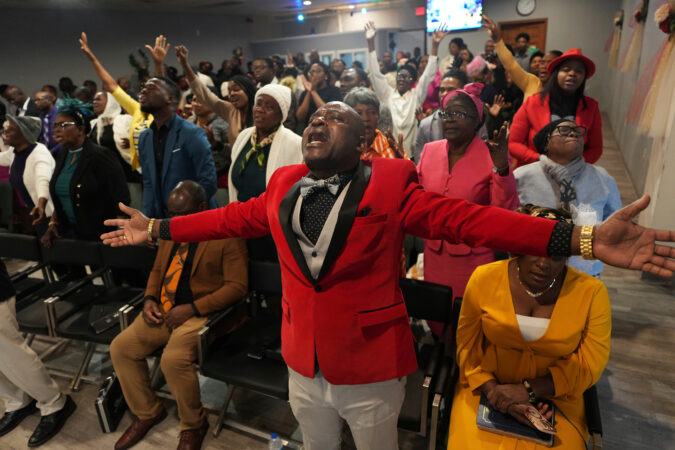
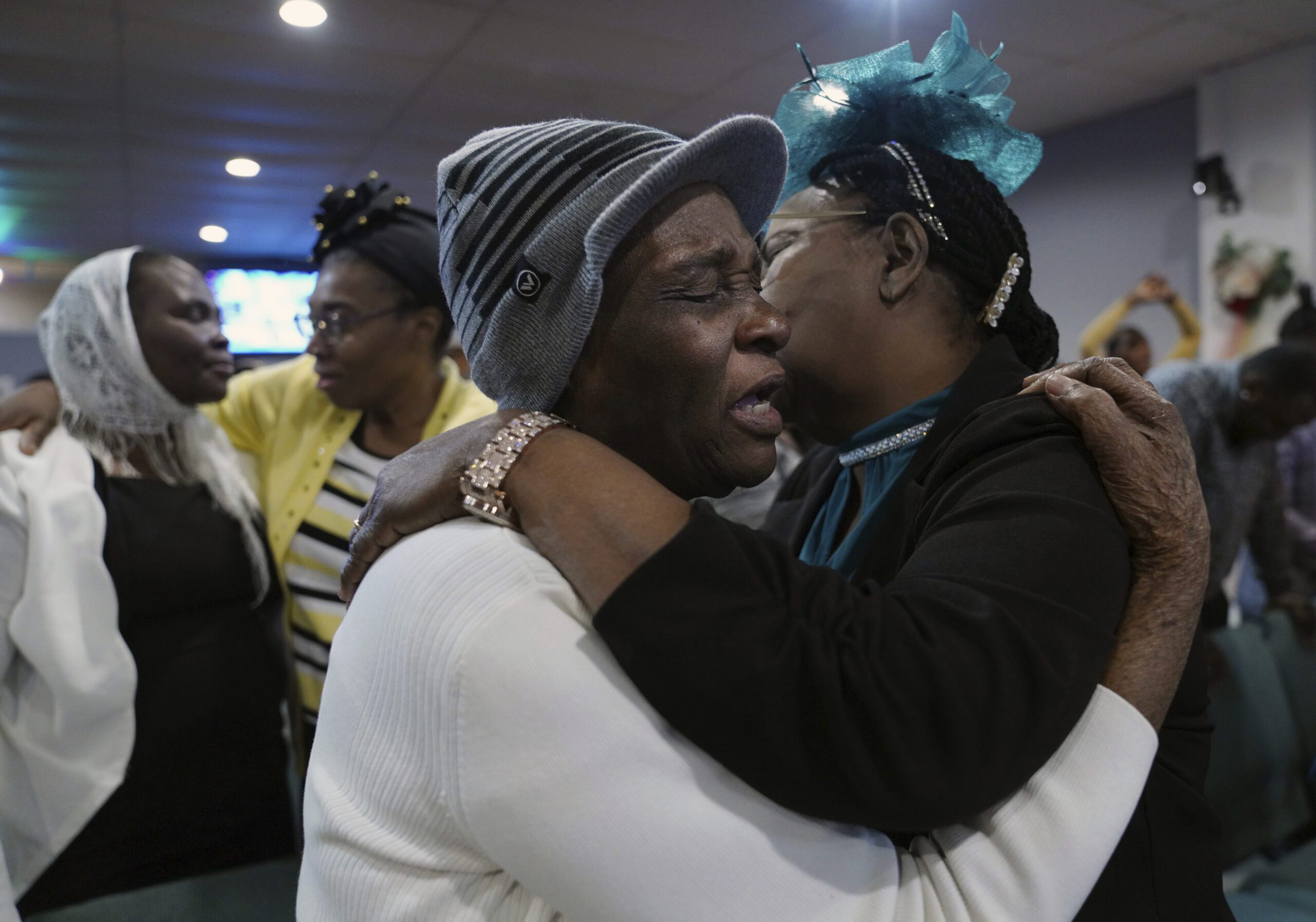
Marie Guillou (front left) hugs and worships with a fellow congregant at the First Haitian Evangelical Church in Springfield, Ohio, on Jan. 26.
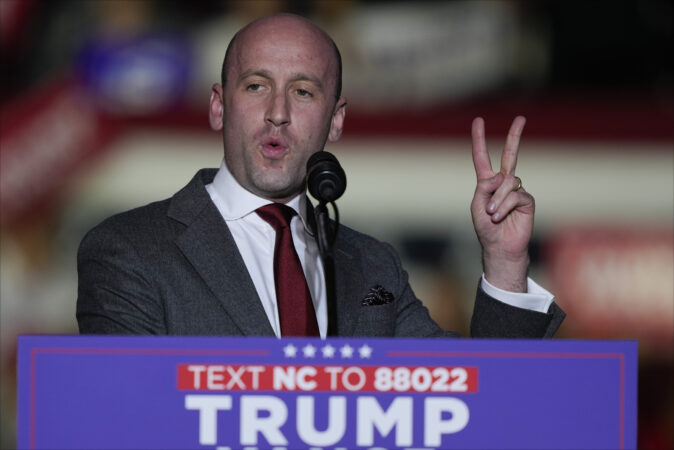
In that fall’s nationally televised debate, opponent Kamala Harris and some in the Philadelphia audience giggled when Trump blurted out, “In Springfield, they’re eating the dogs.” This week, the president and his totally not toned-down minions, like top aide Stephen Miller and DHS Secretary Kristi Noem, want to have the last laugh.
“The fear has been there” ever since Trump’s debate lies about Springfield, Viles Dorsainvil, executive director of Springfield’s Haitian Community Help and Support Center, told a local TV station. Now, with TPS likely to expire, he predicts the local community “not being able to leave their house, not being able to go to work.” Many are terrified they won’t survive gang violence if deported back to Haiti.
The giant question hanging over the looming Springfield raids — and, yes, it is largely a rhetorical one at this point — is simply: Why? In every city that’s been flooded with masked secret police, from Los Angeles to Minnesota, over-the-top DHS rhetoric about removing “the worst of the worst” murderers and rapists from America has been undercut by arrests of law-abiding day laborers or restaurant workers. That’s not to mention all of the detainments and the killing of two people.
In Springfield, Haitian refugees responded to a 2014 plea from business leaders to save a shrinking Rust Belt city, and the majority came here legally during the Joe Biden years — doing everything the right way, and getting a fleeting vision of the American dream. If anything, the crime rate in this hardworking and often deeply religious community is lower than in other areas that are predominantly made up of native-born Americans.
It’s hard to imagine any reason — economic, legal, or moral — for the mass removal of Haitians to their unsafe and unstable native country other than the color of their skin. And it’s hard to call this proposed operation anything else besides an ethnic cleansing on U.S. soil.
This is no surprise. It’s been the distinguishing feature of Trump’s mass deportation scheme since the early months of the regime, nowhere more so than most recently in Minnesota.
A woman and a child hold hands as they walk down a street in the predominantly Somali neighborhood of Cedar-Riverside in Minneapolis in May 2022.
The DHS “Operation Metro Surge” has heavily targeted two ethnic groups. Are Somali Americans — refugees from a war-ravaged nation that, in a much different time, was the subject of what was supposed to be a humanitarian U.S. intervention in the 1990s — the focus of the raids because of a fraud scheme local authorities seemed to have a handle on? Or is it because Trump called the Somali people “garbage”?
And even if you buy the seemingly ridiculous argument that the immigration raids are connected to a mid-level fraud scam, what is the explanation for Bovino’s goon squads cruising the Asian American neighborhoods of Minneapolis asking, “Where the Hmong at?” The Hmong people of Laos aided the misguided U.S. war in Southeast Asia and fled communist reprisals to come to America with encouragement from both the federal government and faith leaders. Why target them now, decades later, after Hmong Americans have planted deep roots here?
Not only is Trump’s mass deportation not nabbing many violent criminals, but his unholy war is undoing the very foundation of the story America tells itself to live: that our willingness to accept the huddled masses fleeing political violence or persecution made us an exceptional nation. It was always an uneven narrative, but the regime’s masked men are now erasing it in service of unapologetic white supremacy.
In Florida, which has also been a migration magnet for Haitians, Jewish residents of the Sinai Residences senior complex in Boca Raton — including many who survived the Nazi Holocaust — are so alarmed that some have volunteered to hide Haitian staff members in their units. The center’s CEO said the crisis “reminds me of Anne Frank.”
This does not have to happen. Springfield isn’t nearly the size of Minneapolis, and all of us — not just Ohioans — need to begin thinking about what we can do to help avert a humanitarian disaster in the U.S. heartland. More importantly, Congress — which has slowly shown signs of life in response to the January killings of Alex Pretti and Renee Good — needs to fight by any means necessary to make sure ethnic cleansing is prevented in Springfield, and ended everywhere else.
Then they came for the Haitians. What happens next is up to us.
Regardless of how you feel about immigration, President Donald Trump has made a mess of his promise to deport the estimated 13 million people who are in the U.S. illegally. A vow that more than half the country supported last year, and which undoubtedly (along with the high cost of eggs) helped him take back the White House.
But let’s step back for a moment and imagine a world where Trump’s agenda was not being implemented by a white supremacist like homeland security adviser Stephen Miller or run by incompetents like Homeland Security chief Kristi Noem.
In that world, members of the administration would still have their work cut out for them, and protests would surely erupt. But ICE methodically engaging in workplace raids, for example, would prove a much more palatable (and effective) strategy than having masked federal agents arrest people using weapons and tactics that scream invasion, not law enforcement.
Still, at the end of a year or two of those more restrained efforts, we would likely be where we are now — with most Americans realizing mass deportations and limiting legal immigration don’t make much sense.
It wouldn’t even be about the human cost of blanket immigration enforcement; it would be about the expense.
No, not just the $170 billion devoted to detention and deportation in Trump’s Big Beautiful Bill Act. Under the president’s immigration policies, American families will end up paying an additional $2,150 a year for goods and services by 2028.
That’s a 14.5% increase on food, 6.1% on housing, and almost 4% on leisure and hospitality services, according to a study by FWD.us discussed at a panel Tuesday, hosted by the nonpartisan policy group and the Economy League of Greater Philadelphia.
Researchers say that one of the most striking long-term impacts will be the tens of thousands of first-generation American children who are forced to become breadwinners as foreign-born members of their families are deported. There’s also the matter of billions of dollars in lifelong earning contributions to the U.S. economy lost, as well as the unquantifiable innovation and economic growth that will go missing as immigrants take their entrepreneurial spirit elsewhere. Remember that nearly half of Fortune 500 companies were founded or cofounded by immigrants or their children.
Like the United States as a whole, the Keystone State and the Philadelphia area reap the benefits of immigration.
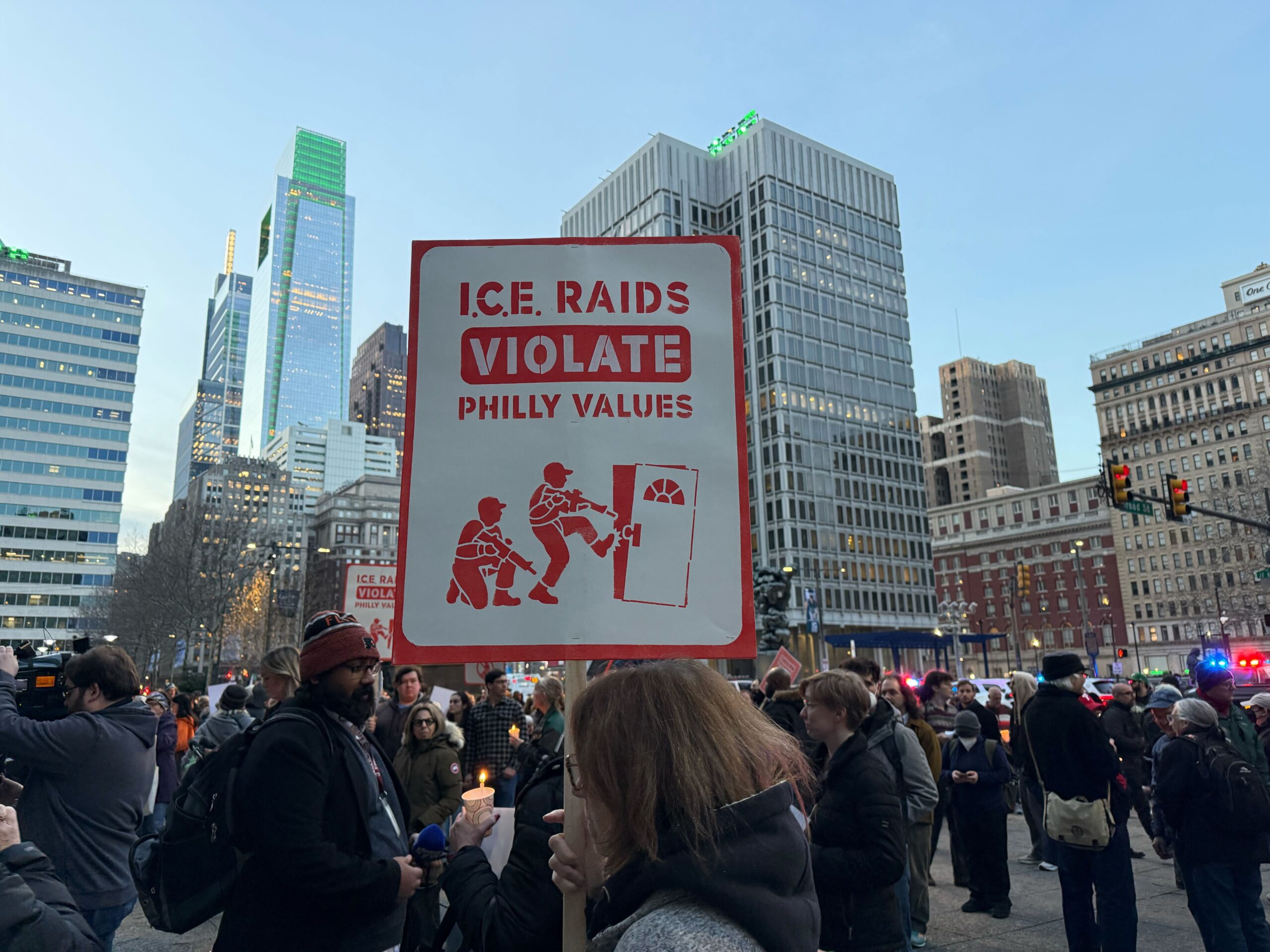
Demonstrators gathered in Center City to protest the death of Renee Good, a 37-year-old mother of three who was shot and killed by a U.S. Immigration and Customs Enforcement agent in Minneapolis in January.
More than a million immigrants live in Pennsylvania — about 80% of them in the Philadelphia area. They possess almost $40 billion in annual spending power and pay about $13 billion in taxes. In Greater Philadelphia, immigrants make up an estimated 21% of the construction industry, 48% of agricultural work, 18% of manufacturing, 16% of business services, and 15% of leisure and hospitality.
About 367,000 immigrants in Philadelphia are U.S. citizens, 202,000 are legal permanent residents, and 64,000 are foreign nationals here on a work visa or as international students. Immigrants protected from deportation through policies implemented by past administrations that are now in jeopardy — including Temporary Protected Status, Deferred Action for Childhood Arrivals, and those waiting on asylum decisions — number about 84,000.
If you think it’s unfair to include legal immigrants in a discussion about the president’s immigration crackdown, then you haven’t been paying attention to the Trump administration’s broader plans.
Immigration visa processing has been indefinitely shut down for 75 countries, including Brazil, Colombia, Egypt, Pakistan, and Thailand. The administration has frozen refugee resettlement, placed exorbitant fees on new H-1B visas for skilled workers, made international students feel unwelcome, and instituted new restrictions on family-based immigration.
A recent study by the nonpartisan National Foundation for American Policy found that Trump’s proposals will reduce legal immigration by as much as 50% through 2028. New numbers released by the Census Bureau on Tuesday already show a sharp slowdown in the U.S. population, as immigration of all kinds is curtailed.
As the nation’s birthrate continues to decline, reducing immigration will stunt economic growth and further endanger Social Security as fewer young workers contribute to that crucial program, which helps keep many older Americans from slipping into poverty.
I’ll refrain from using whataboutism regarding an administration that has shown open contempt for the rule of law and say that the appeal of Trump’s promise to deport those who entered the country illegally is understandable. In black-and-white terms, these people broke the law, and they should be held accountable.
But reality is somewhere in the middle. The truth is that we depend on and greatly benefit from immigration — of all kinds — and we should work to make legally coming to the U.S. easier, not harder.
As Trump’s reaction to the backlash prompted by the ICE killings in Minneapolis shows, the president responds to political pressure and can change tack. He should realize that much like immigration and the high cost of groceries helped him win the 2024 election, it may be the same issues that cost his party the 2026 midterms and beyond.
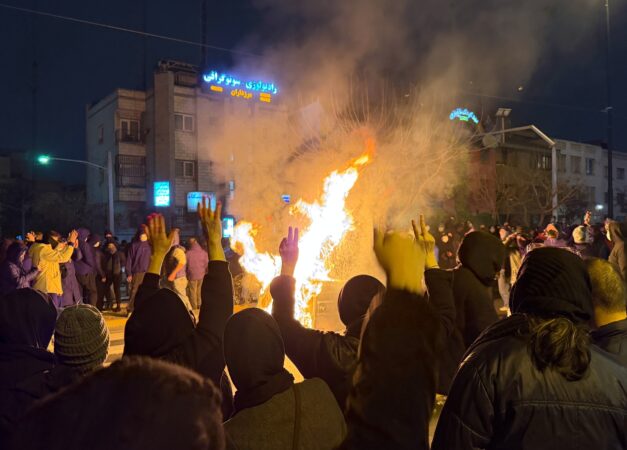
When President Donald Trump called on Iranian demonstrators to “KEEP PROTESTING — TAKE OVER THE INSTITUTIONS” in early January and pledged “HELP IS ON THE WAY,” I feared a shameful episode of American betrayal was about to be repeated.
“We are locked and loaded and ready to go,” he had promised these brave Iranians, fed up with decades of corruption and repression by the ayatollahs.
Human rights activists report that these words encouraged many ordinary Iranians to come to the streets.
My mind flashed back to January 1991, when President George H.W. Bush urged Iraqis to rise up against Saddam Hussein, as U.S. troops were liberating Kuwait, then allowed the Iraqi Kurds and Shiites who responded to be slaughtered by the thousands. On assignment in Iraq, I saw the bloody consequences, which undermined U.S. forces during the 2003 Iraq War.
Sure enough, history is repeating itself, this time in Iran. TACO Trump ignored the impact his braggadocio has on real people and reneged on his promises to the Iranians. Many thousands of demonstrators who believed him were shot dead in the streets by regime forces, and many more thousands jailed, beaten, and tortured.
Human rights groups estimate the number of dead at a minimum of 5,000, but we won’t know if the number is much higher until the regime stops blocking the internet. Iranian officials insist, contrary to Trump’s claims, that they won’t halt executions.
If Trump had moved quickly to do the possible — aid the protesters with satellite connections, isolate Iran at the United Nations, organize tighter sanctions against their oil sales and shadow fleet, cripple their military and government with cyberattacks — he might have made a difference. He still could.
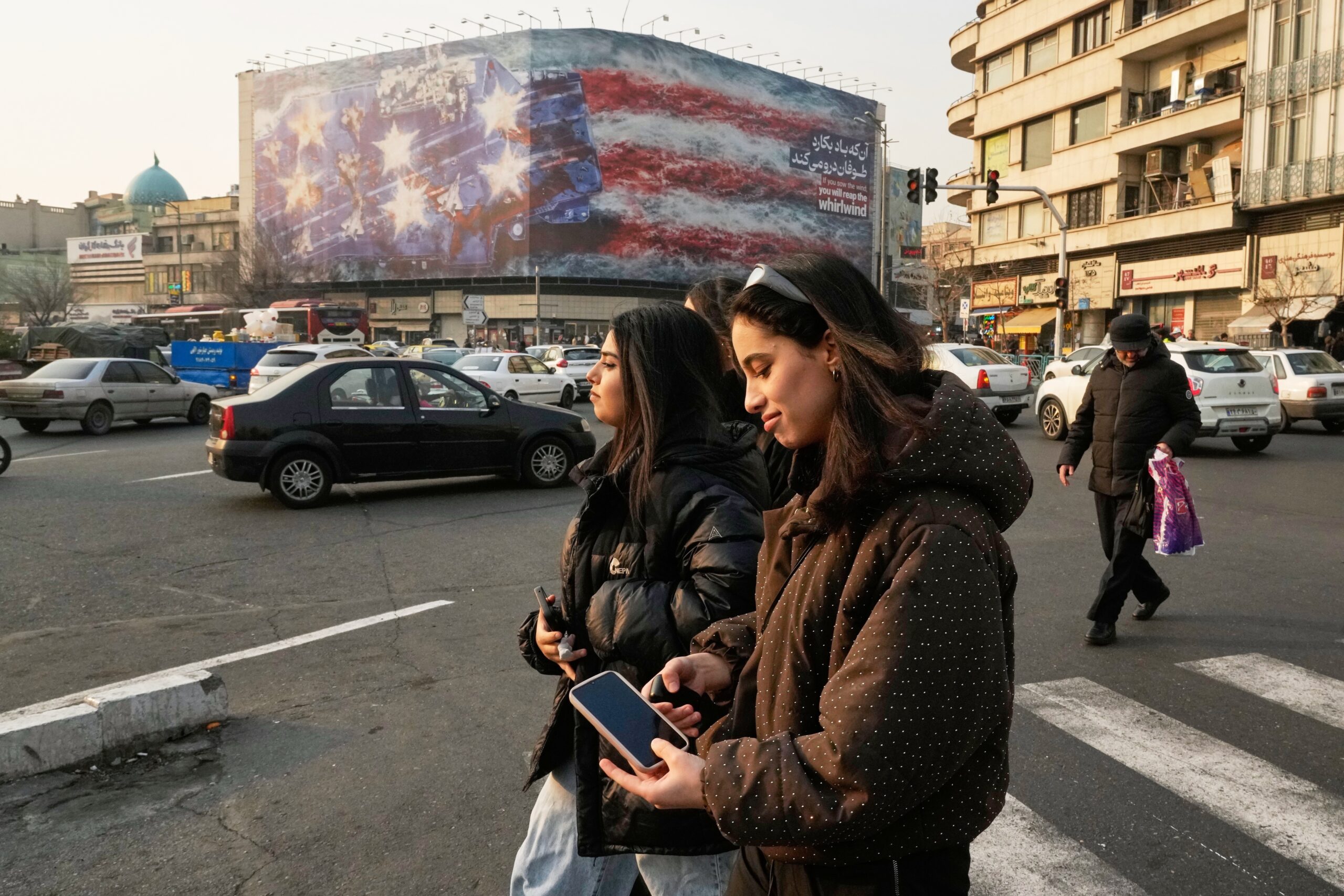
Two girls, not wearing the legally required headscarves, walk past a billboard depicting a damaged U.S. aircraft carrier with disabled fighter jets on its deck and a sign reading in Farsi and English, “If you sow the wind, you’ll reap the whirlwind,” at Enqelab-e-Eslami (Islamic Revolution) Square in Tehran, Iran, Sunday.
Instead, convinced of his own brilliance, surrounded by incompetent advisers, and possessed of a mistaken belief that he has the power to reorder the world, he has tweeted cheap rhetoric that only provoked more regime brutality on young people in the streets.
The consequence of betraying Iran’s citizen uprising will have ripple effects that Trump is unable to foresee.
“We’re in a very difficult situation,” I was told by Suzanne Maloney, a leading Iran expert who directs the foreign policy program at the Brookings Institution. “President Trump raised hopes without a strategy or the tools to carry it out. The tools [a massive U.S. armada dispatched to the region] have arrived too late to make a difference for the demonstrators on the street.”
Now that the uprising has been crushed, Trump no longer mentions the murdered protesters. Compassion is not his thing.
Instead, the president is seeking a deal with the ayatollahs to completely abandon their nuclear program, cut back their missile program, and stop meddling in the region.
In other words, as in Venezuela, the regime could remain if it bowed to the United States. The demands themselves lay out highly desirable objectives, but the regime recognizes that meeting them would leave them totally at the mercy of the U.S. and Israel. So it will probably delay or reject them.
Then what? Trump has likely boxed himself into conducting military strikes. Yet, bombs alone aren’t likely to unseat a government in which the military still has plenty of weapons and sees its fate as tied to the Islamic Republic. More likely, U.S. strikes would provoke a wider regional war, with attacks on U.S. bases in Arab countries and on Israel.
“Trump sees Venezuela as a model,” Maloney said, and indeed POTUS has said so. But in Venezuela, the CIA had inside sources who betrayed Nicolás Maduro and made his extraction possible. Moreover, the United States had previous contacts with Maduro’s vice president, swapping one dictator for another so long as she was willing to let Trump control Venezuelan oil profits. One limited strike, no messy follow-up with ground troops.
Iran, on the other hand, would be brutal, long, and messy, probably requiring U.S. ground troops, something Trump rightly won’t consider.
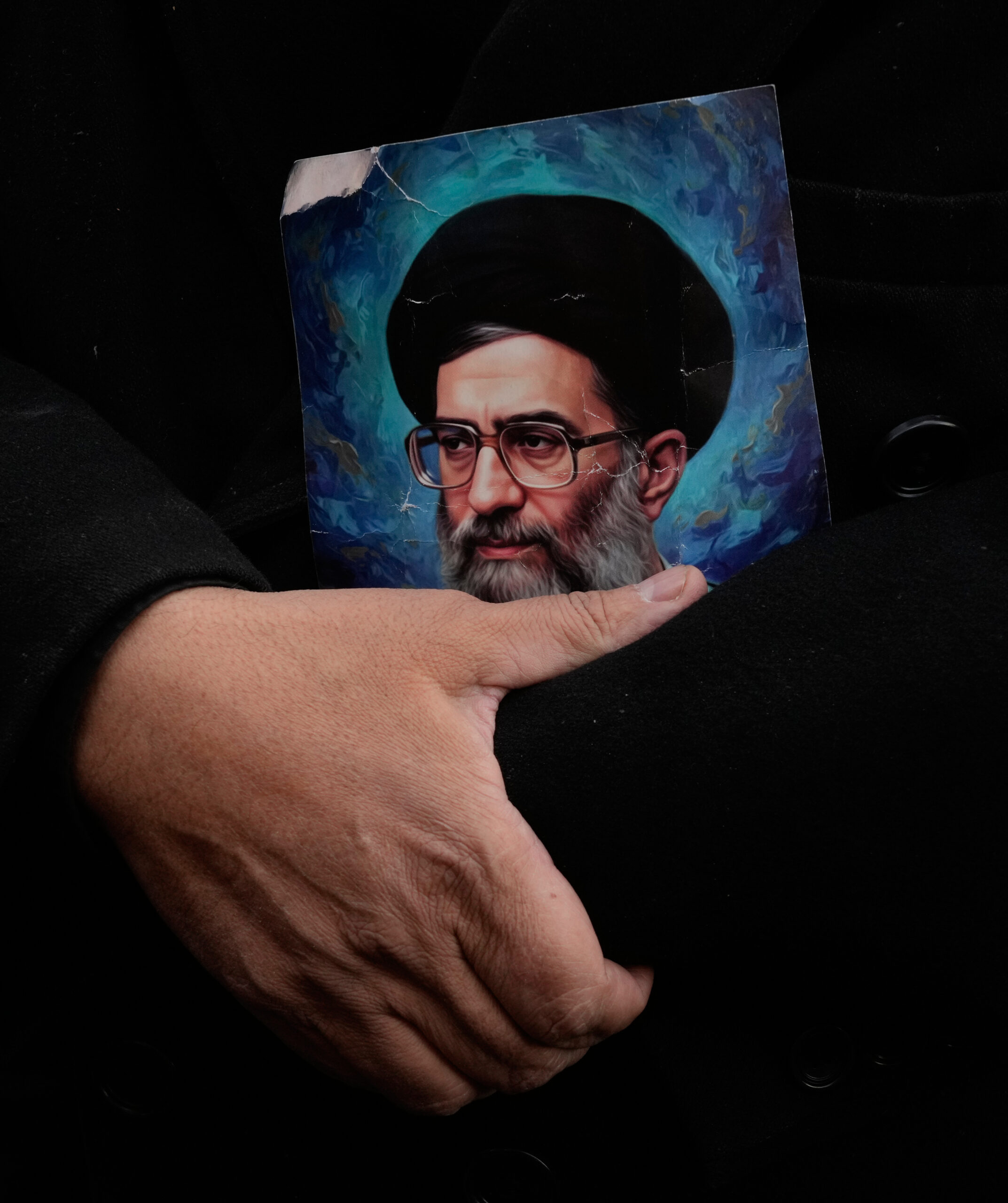
A man holds a poster of the Iranian Supreme Leader Ayatollah Ali Khamenei during a funeral ceremony for a group of security forces, who were killed during anti-government protests, in Tehran, Iran, on Jan. 14.
In Iran, said Maloney, “with the Revolutionary Guards and the clerical elite, there is not a pathway to a pro-Western leader who will bow to the U.S. They are going to go down fighting.”
As for Reza Pahlavi, the son of the last shah of Iran, who has some popularity in Iran, he has lived in exile in the United States since the 1979 Iranian Revolution and has no organization inside his homeland. U.S. experience with overhyped Iraqi exiles in 2003 taught diplomatic officials a bitter lesson, about which Trump is probably totally unaware.
Even if Iran’s supreme leader, Ali Khamenei, were miraculously slain, no one can guarantee what would come after. This is why the Saudis are urging Washington not to pursue regime change, and closing their airspace to any U.S. warplanes headed for Tehran.
Meantime, the trials and future executions of protesters will go forward.
So let me return to the bitter consequences of betraying allies who believed in the promises of the U.S.
The Shiites of southern Iraq never forgot Bush 41’s betrayal, during which he allowed a defeated Saddam to retain military helicopters that were used to slaughter at least 10,000 of their people who had answered the president’s call.
In 2003, just after the U.S. invasion, I returned to Najaf, the heart of Iraq’s south, where George W. Bush expected the Shiite population to welcome American troops. Instead, clerics and merchants recalled bitterly how their fathers and uncles had been slain in 1991. “You owe us,” one Najaf leader told me. “So kill Saddam and get out of Iraq, or we will turn on you, too.”
Instead, we remained in Iraq for years, and Shiite militias ultimately took revenge on our soldiers for the earlier betrayal.
Perhaps the population of Iran will be more forgiving if Trump devises a strategy that will help them, not cause more slaughter. But he doesn’t have much time.
This week’s Shackamaxon covers slow snow removal, political incentives, and whether politicians should be able to hedge their electoral bets.
Snow-go zones
When the news came through that Philadelphia schools would finally be open on Thursday, the Pearson household cheered. Between some brutal stomach bugs, the Christmas holiday break, in-service days, and the snow, it had felt like my older two children had barely spent any time in class since Thanksgiving. While I’m a strong advocate for snow days, I’m less enthusiastic about snow weeks. For many, the failure to open schools for three days crystallized their frustrations with the way the city handled the weekend onslaught of snow, sleet, and ice.
TV news and social media are filled with angry residents. Many small streets remain wholly unplowed. Getting on the bus often requires climbing over ice piles. Many feel Mayor Cherelle L. Parker and her team did not adequately prepare for a weather event that everyone knew was coming. One reader even asked me if Carlton Williams, the city’s director of Clean and Green Initiatives and the point person for plowing, was Parker’s version of overmatched Eagles offensive coordinator Kevin Patullo.
According to contemporary Inquirer reporting, more than 90% of city streets were plowed and passable after a large ice storm in 2016. It is hard to make a direct comparison, but I would be surprised if we were anywhere close. I asked Joe Grace, the mayor’s head of communications, if the city had anyone available to explain any unique challenges this year, but he did not respond.
Of course, Philadelphia is hardly the only city to struggle with this storm. Washington residents are furious with their city’s snow response, schools across the state of Maryland are still closed, and cities in New Jersey are also struggling to remove the snow and ice. The freezing cold temperatures mean the snow piles are sticking around, rather than melting, and the accumulation is both heavy and frozen solid, making shoveling a difficult process.
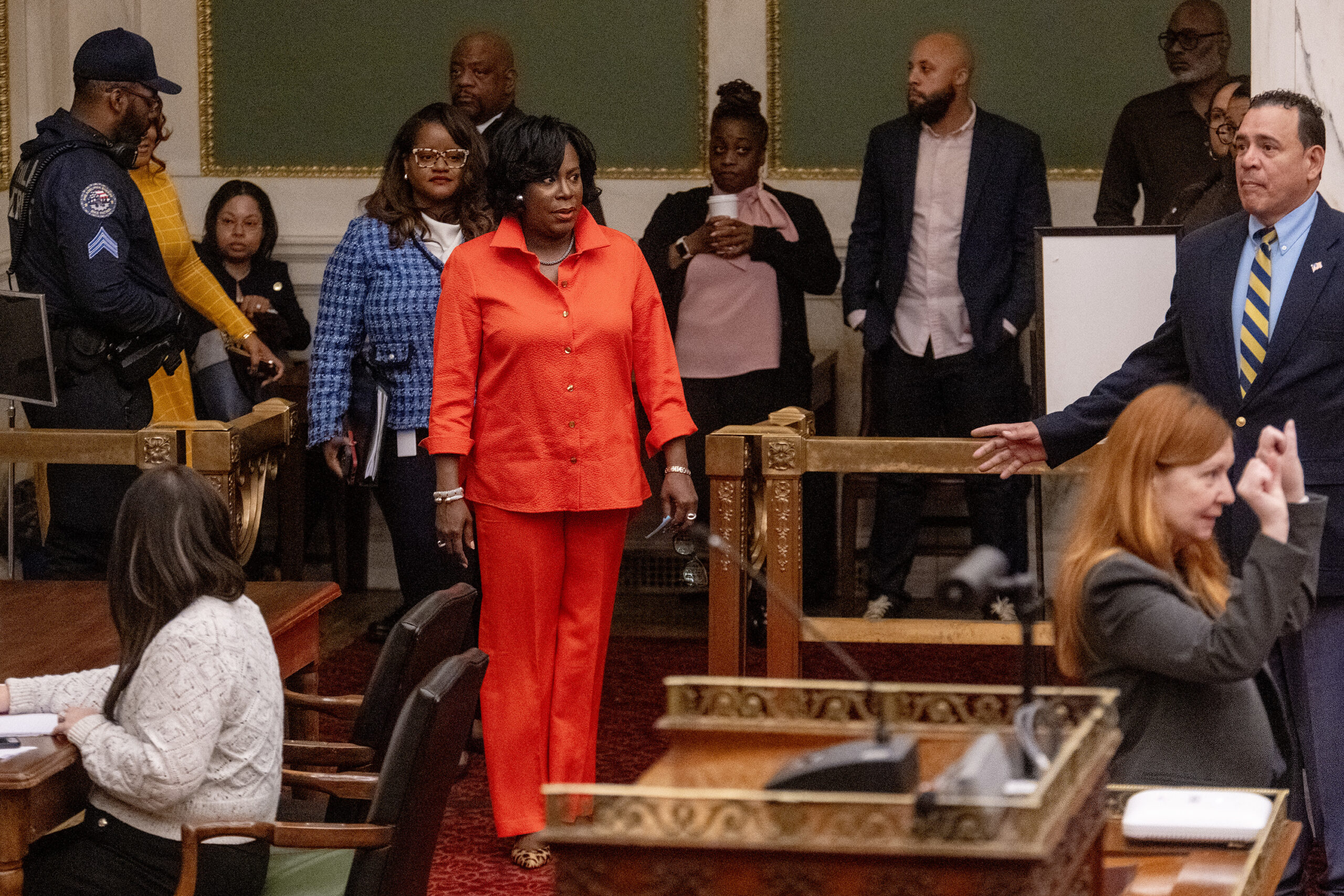
Mayor Cherelle L. Parker arrives in Council chambers in March.
A matter of incentives
The snowfall, and the attendant consternation, is a good way to explain one of my key beliefs about city government: When the mayor disagrees with City Council, the mayor is often right. This isn’t a statement about any particular mayor or councilmember, but rather the different incentives for each office.
When things go bad in a way that affects everyone, it’s the mayor who gets the blame. While many residents may vent to their district councilmember about the cleanup effort, most understand legislators aren’t in charge of plowing. In the private sector, employers will often talk about “key performance indicators.” For cities, that means things like crime reduction, trash collection, snow removal, and effective schools — which are all under mayoral control.
With a two-term limit and competitive elections for each vacancy, mayors also have more direct accountability. People know who the mayor is, even if they don’t typically vote in local elections. If you are reading this column, you probably know who your district councilmember is, but around half of your neighbors likely don’t.
Meanwhile, the things Council gets blamed for, and thus focuses on, tend to be more picayune. Sometimes, the body makes sweeping policy changes based on the testimony of just a few outspoken residents, who themselves often represent a hard-line and unrepresentative “not in my backyard” attitude. This approach leads to a concentration of benefits and the diffusion of costs.
One former staffer told me councilmembers tend to see themselves as their constituents’ lawyer, rather than agents of systemic change. With challenges rare and vacancies even rarer, members have little incentive to take on new perspectives or alter their approach. Instead, they tend to dance with the ones who brung ‘em. This is particularly acute for members who represent districts, who are a majority of Council.
The one move that tends to refocus a councilmember’s attention is becoming mayor.
Parker herself is a great example of this phenomenon. As a district councilmember, she was tough on new development. As mayor, Parker has become a cheerleader for it. That’s because while individual projects may lead to a surge in complaints, they also help the city pay its bills, employ skilled workers, and house residents. The city’s chief executive, no matter who they are, is always likely to side with policy choices that have widespread public benefit because it is in their interest.
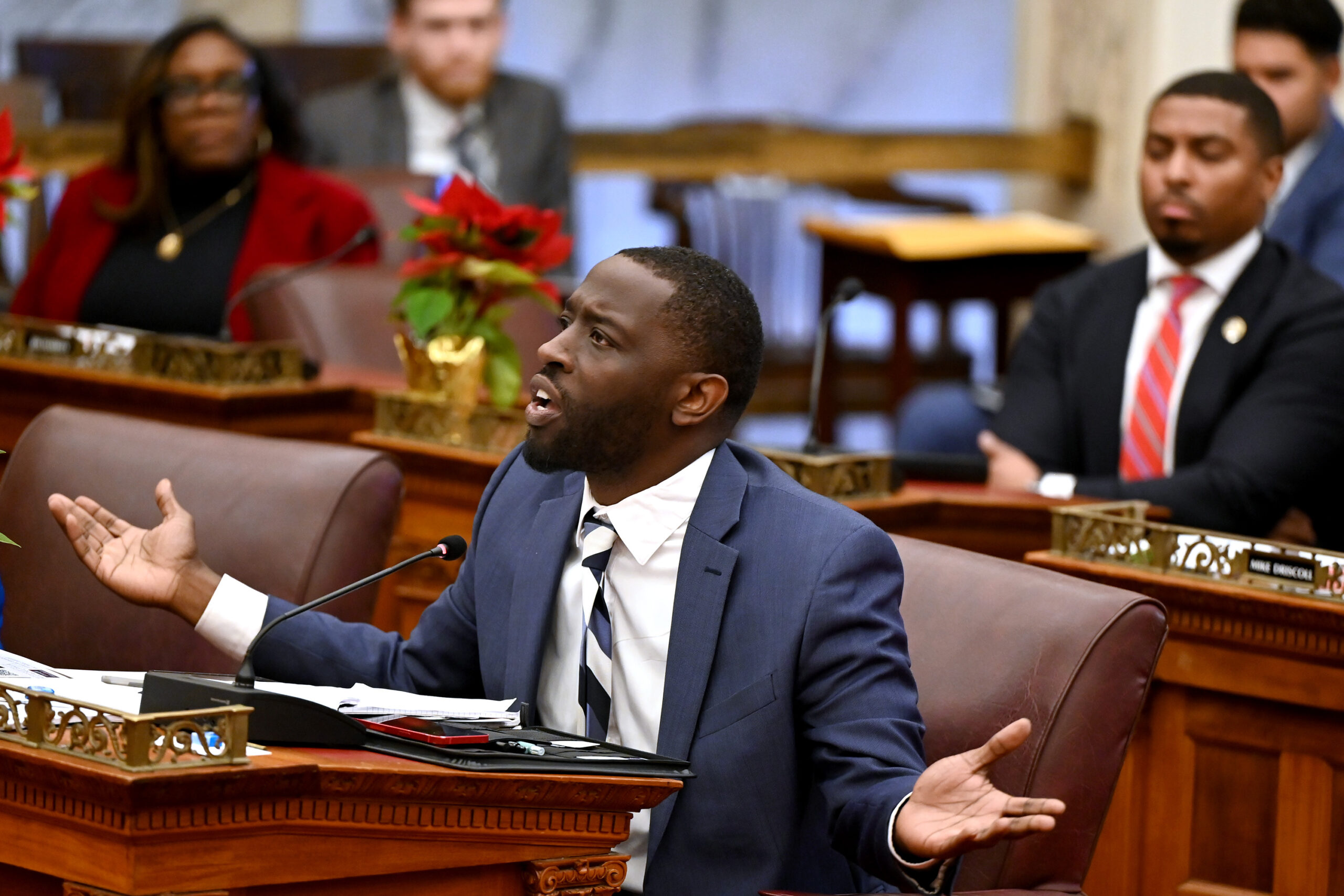
Councilmember Isaiah Thomas in chambers as City Council meets in December.
Resign to run reforms
Perhaps lost in the ice removal and “Remove ICE” controversies is an effort from At-Large City Councilmember Isaiah Thomas to reform Philadelphia’s “resign to run” provision. This rule prevents city employees from running for political office without first quitting their day job, including elected officials. Thomas told me he’d like to see the proposed charter change put to the voters this year, perhaps as early as the May primary.
In the past, efforts to change or eliminate the provision have failed, in part because of an understandable resentment of politicians getting to run for higher office on the public dime. Still, just like debates between mayors and councilmembers, it is worth looking at what kind of behavior this rule incentivizes.
While the current crop of councilmembers is quite new, that hasn’t always been the case. Growing up, the joke was that people only left Council for three reasons: they retired, they went to jail, or they ran for mayor. The last member of Council to earn a political promotion outside of City Hall was Lucien Blackwell, who won a special election to replace Bill Gray in Congress all the way back in 1991.
Both of Philadelphia’s current U.S. representatives benefited from holding elected office in Harrisburg, where this provision doesn’t exist. Could Brendan Boyle, famously the son of a janitor, have run for Congress if he had to resign his seat in the state House to run? Probably not.
The embattled new boss of CBS News, the until-now opinion journalist Bari Weiss, on Tuesday led a town hall-style meeting for editors and reportersat the storied TV network and appeared to understand both the crisis of American media and the values needed to fix it.
“Our strategy until now has been: Cling to the audience that remains on broadcast television,” Weiss told her newsroom. “I’m here to tell you that if we stick to that strategy, we’re toast.” She called for more investigative reporting and pledged to merge the values of a high-tech start-up with “journalistic principles that will never change — seeking the truth, serving the public, and ferociously guarding our independence …”
Meanwhile, the overpowering stench of burning toast filled the room.
That’s because Weiss and her billionaire pro-Trump overlords, the Ellison family, seem to be doing all the wrong things, undercutting those pretty words. Her first concrete move announced in tandem with the town hall was the hiring of 18 thumb-sucking opinion journalists — a ragtag, right-leaning group that includes a medical huckster and an ex-Trump official — even as the newsroom braced for buyouts and feared layoffs that would slash honest shoe-leather reporting.
The move toward more commentators telling you what to think about an America spiraling into chaos and fewer boots-on-the-ground journalists digging up what’s needed to fix that crisis — objective truth — could not happen at a worse time, and unfortunately, this is not unique to CBS News.
As the Washington Post braces for a round of layoffs, staffers bemoan the lack of vision from owner Jeff Bezos and CEO Will Lewis. https://t.co/92VsAGFbaK
The Washington Post — which has lost hundreds of thousands of digital subscribers since a self-coup by its billionaire owner, Amazon founder Jeff Bezos, shifted its opinion section to the political right — is also bracing for deep staff cuts that would cripple its international reporting, as well as its sports staff.
The extent of the widely rumored staff reductions isn’t yet known, but a preview came last week when the paper briefly told the newsroom it was axing its long-standing plan to send 12 journalists to next month’s Winter Olympics in Italy, before slightly backtracking and saying four reporters would still go.
Still, that move, and the louder rumors about pending layoffs, has led to deep concern over the future of its metro Washington and international desks. “We urge you to consider how the proposed layoffs will certainly lead us first to irrelevance — not the shared success that remains attainable,” stated a letter from 60 journalists on the foreign desk sent this week to Bezos.
“It’s all very confusing, and no one knows anything,” an anonymous Post staffer told the Guardian. “The anxiety is so sad.”
America has been losing news reporters for years. Nationally, newsroom staff have plummeted a whopping 26% since 2008, and the pace of job cuts has only accelerated in recent years as vast news deserts with no sources of local journalism expand across rural America. It’s been a perfect storm prompted heavily by internet-driven changes in reader or viewer habits, as well as declining public trust in traditional media.
But the looming cuts at the Post and CBS are especially painful both in a symbolic sense and also as self-inflicted own goals that will only heighten public mistrust instead of attacking the problem.
In 1972, with then-President Richard Nixon driving toward a landslide reelection, the Post, under its legendary editor Ben Bradlee, and CBS, with its popular, avuncular anchor Walter Cronkite, were the only two major outlets that took seriously the links between the Watergate break-in and the Nixon White House. Both newsrooms threw major resources into keeping alivethe story that eventually caused Nixon to resign, including a 22-minute special report that Cronkite anchored on the CBS Evening News.
In this undated photo released by Paramount, one of the Free Press’s cofounders, Bari Weiss, poses for a portrait. Weiss is the editor-in-chief of CBS News.
That kind of accountability journalism created a bond with the audience that should have left CBS and the Post better positioned to weather the economic storms that have battered journalism in the 21st century. The current crises were self-inflicted, albeit for slightly different reasons.
In Washington, the Post zigzagged from acknowledging what its readers wanted during Donald Trump’s first term — both in its “Democracy Dies in Darkness” slogan to some solid journalism that backed that up — to billionaire Bezos’ embrace of authoritarianism ahead of Trump’s second coming. The Bezos-ordered spiking of a Kamala Harris endorsement and a rightward editorial shift accelerated a steep decline in subscriptions, including about 300,000 lost readers after the nonendorsement.
One could argue that staff cuts in such an environment are inevitable, but one might also question the priorities of the Post’s owner, the world’s second-richest person. Amazon — where Bezos remains executive chairman — has just spent $75 million on a White House-fluffing Melania documentary expected to bring back just $1 million at the box office.
The priorities at Weiss-run CBS News seem similarly warped. The money the newsroom is spending on those 18 or so opinion journalists — a motley crew that includes Mark Hyman, who health experts have accused of “quackery,” calling him a “germ theory denialist,” and retired Gen. H.R. McMaster, a key policy adviser in Trump’s first term — could have been spent on new investigative reporters.
But then Weiss’ overlords in the Ellison family, whose recent role in the TikTok takeover and current fight to acquire Warner Bros. Discovery both depend on the blessing of the Trump White House, probably don’t want the stories Leonnig is uncovering.
Tense afternoon in Kenner, outside of New Orleans, as protesters followed Greg Bovino and Border Patrol around a neighborhood around 3pm today. pic.twitter.com/4IcH4OfL2K
This is not a diatribe against all opinion journalism. I am an opinion journalist, and I started moving in that direction in the 2000s when I thought someone needed to be screaming from the rooftops about the lying and the war crimes of the George W. Bush regime. I think commentary and debate are especially needed in the local communities where such jobs have vanished the most, but I also think powerful opinion journalism exists mainly to augment on-the-ground reporting, not replace it.
The greatest irony of the pullbacks at CBS and the Post is that the national crisis over immigration raids in Minnesota and the conduct of U.S. Immigration and Customs Enforcement and U.S. Customs and Border Protection officers who’ve killed two citizens has shown that what American democracy needs most is seekers of the truth — much more than people telling you what to think.
The over-the-top lies from the highest levels of the U.S. government about how and why Renee Good and Alex Pretti were gunned down on the streets of Minneapolis have fallen apart because multiple videos have allowed citizens to see the truth of what actually happened.
Most of those videos were shot by citizen observers, but with 3,000 federal agents fanning out across Minnesota and hundreds more conducting immigration raids from Maine to Los Angeles, a web of local and independent journalists has also proved critical in documenting the raids and their many human rights abuses.
Dozens of journalists have been tear-gassed multiple times or struck with rubber bullets or pepper balls, and yet continue to cover protests and ICE activities, often in the most miserable conditions, and keep going out there to create a public record.
CBS News and the Washington Post could have been at the vanguard of this movement, which would have been a fitting tribute to the legacies of Cronkite and Edward R. Murrow, Bradlee and Bob Woodward and Carl Bernstein, and their many intrepid colleagues. Instead, the supposed keepers of those flames have made a horrible, doomed bet on autocracy.
What I’ve watched in recent weeks coming out of Minneapolis and elsewhere on the front lines of the war for America’s soul has given me more hope for the future of journalism than any time since the ball dropped to launch this cursed millennium. That CBS and the Post chose this exact moment to willingly blind themselves is beyond pathetic.