A still image from the documentary “Expanding Sanctuary” by Philadelphia filmmaker Kristal Sotomayor. The 2024 BlackStar award-winning short film will have a virtual screening on Wednesday, Feb. 11, and a local screening on April 29 and 30, as part of the Table Sessions at Bartram’s Garden.
For anyone viewing Philadelphia filmmaker Kristal Sotomayor’s short film, Expanding Sanctuary, for the first time at a free virtual screening and Q&A on Wednesday at 8 p.m., the issues depicted as impacting the lives of Philadelphia’s unauthorized immigrants will seem both meaningfully the same, and poignantly different, than they are today.
Philadelphia immigrants haven’t changed really — they still fall in love, get married, tend to their children, work hard, and look out for neighbors in need. They still give their time to building strong and loving communities.
Legislation, like the Laken Riley Act, has passed with bipartisan support, essentiallytreating immigrants accused of a criminal offense as if they had already been found guilty of it — codifying the violation of their constitutionally protected rights. Plus, thanks to Trump’s “Big Beautiful Bill,” ICE now has an extraordinary amount of funding to do with what it will.
A still image from the documentary, Expanding Sanctuary, by Philadelphia filmmaker Kristal Sotomayor. The 2024 BlackStar award-winning short film will have a virtual screening on Wed. Feb. 11, and a local screening on April 29 and 30, as part of the Table Sessions at Bartram’s Garden.
So, I asked Sotomayor: Why release the film now, into a U.S. that speaks more frequently in virulent terms about immigrants, when the national justice picture is grimmer, and our municipal leaders have chosen to stay more silent than before?
“Yeah, many things have changed,” Sotomayor told me via email. “Politically in Philadelphia, you are right that there is now a mayor who is less willing to push back against the federal government to protect immigrant rights. The mayor has not been willing to uphold sanctuary status or sanctuary policies. We are also dealing with far more mass surveillance than there was in 2018 … ICE now has access to everything from tax records to hospital records to things we probably are not even fully aware of yet.”
“I also do not think immigrant rights are as much of a national issue as they were in 2018,” Sotomayor added, “when the photo of the young boy in a detention center (essentially a cage) sparked widespread national outrage. I am not really seeing that same level of response right now [even though] there are protests around the country against the ramping up of ICE enforcement.”
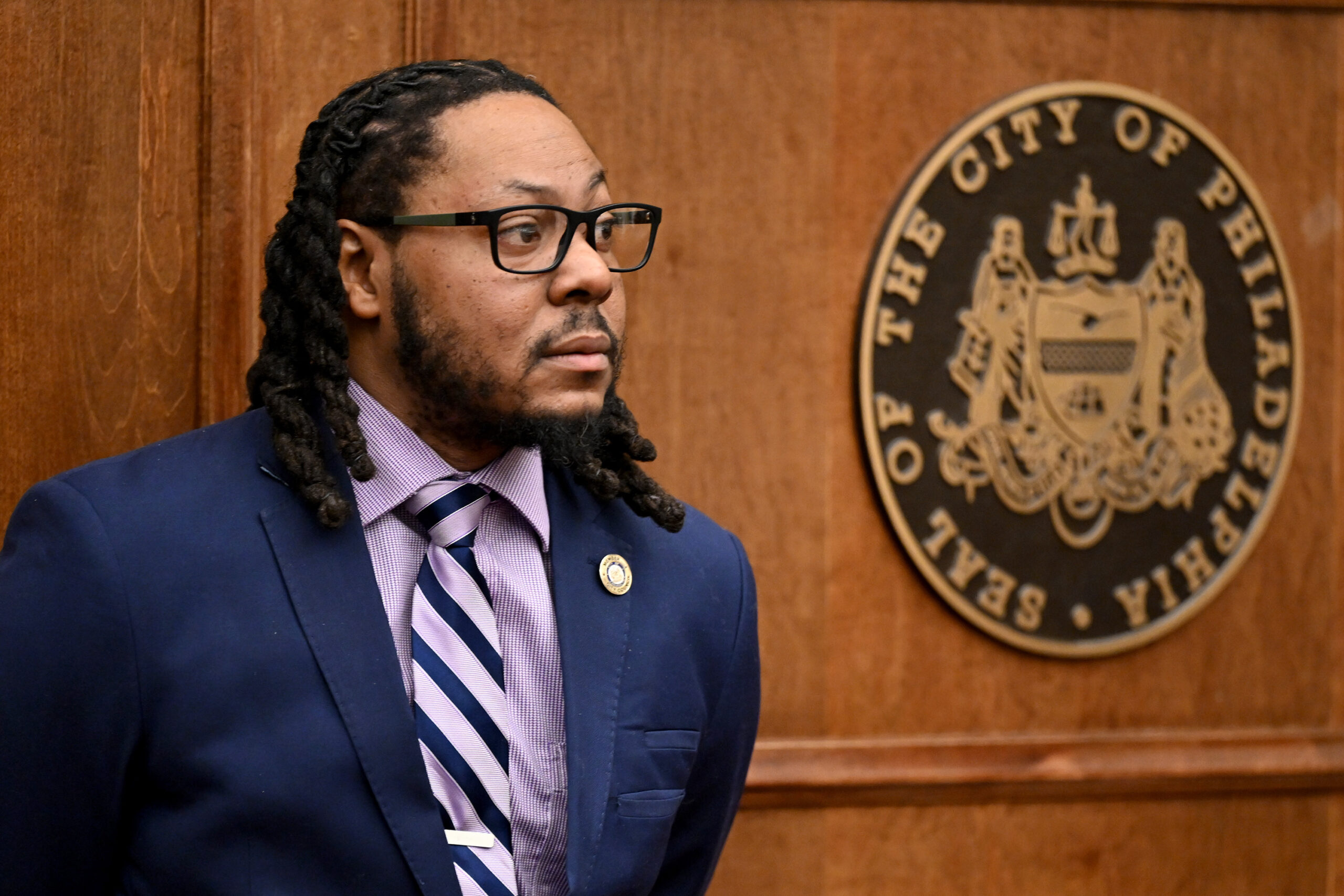
Kristal Sotomayor, the award-winning, nonbinary, Philadelphia-area Peruvian American director and producer of “Expanding Sanctuary” will lead a Q&A after the film’s virtual screening on Feb. 11.
But, Sotomayor added: “For me, it is vital that this film is circulating now. Expanding Sanctuary is a hopeful story. In many ways, the film feels like it could have been shot last week. It shows how communities organized, changed policy, and protected their families during the first Trump presidency, and [it] reminds us that collective action is still possible now.”
“At a time when so many people are feeling overwhelmed and hopeless, this film offers a success story,” they added. “It demonstrates that change is possible, that policy can be shifted, and that families can be protected, not just in the past, but moving forward into the future.”
The Wednesday virtual screening of the documentary, which was honored at the 2024 BlackStar Film Festival, will be followed by a Q&A. Featured speakers are scheduled to include Sotomayor, Linda Hernandez, the Philadelphia-based community leader and holistic wellness practitioner who is the protagonist of Expanding Sanctuary, and Katie Fleming, an immigration lawyer and the director of public education and engagement at the Acacia Center for Justice.
I’ll be honest, I came away from my most recent viewing of Sotomayor’s film feeling a bit nostalgic. Not only was it filled with the faces of beloved community members — some of whom have recently stepped away from decades of work helping people see immigrants as human beings, not abstractions — but also because of the intimate specificity of what Expanding Sanctuary celebrates.
There on the soundtrack are the musicians who once told me that making space for convivencia is making space for life, for community, and, yes, for resistance. There on screen is the Philadelphia I adore — where James Beard winners feed desperate families living in sanctuary, where people show up to protest in their wedding dresses, where sidewalks become sign-making studios, and where mothers raise their families on both tortillas and hope.
The huge anti-ICE protests these days are amazing, but they should never obscure the fact that while we must always fight against injustice and the weakening of democratic norms, we cannot forget who we are fighting for — real people, real neighborhoods and communities, real cities whose civic leaders may have forgotten their voices, but whose residents never will.
For their part, Sotomayor is hopeful. “I think we are ramping up toward something that could be just as strong and just as powerful as what is portrayed in Expanding Sanctuary,” they told me.
“It may take some time for immigrant rights to become a national talking point again, as it was in 2018, but I do believe that moment will come with larger protests, deeper outrage, and, ultimately, real change.”
To attend the virtual screening and Q&A on Feb. 11, click here. For more information about the Table Sessions at Bartram’s Garden on April 29 and 30, click here.
Maybe it’s because I’ve watched every blessed one of them, starting as a curious, nearly 8-year-old boy in 1967, but the Super Bowl has always felt like the ultimate barometer of where the American Experiment is at. Super Bowl LX (that’s 60, for those of you smart enough not to take four years of Latin in high school) was no exception. The actual game was something of a snoozefest, but the tsunami of commercials revealed us as a nation obsessed with artificial intelligence, sports betting, weight loss, and anything that can lift us from middle-class peonage without having to do any actual work. As Bad Bunny said, God bless America.
Bad Bunny’s real message: From P.R. to Minnesota, we are neighbors
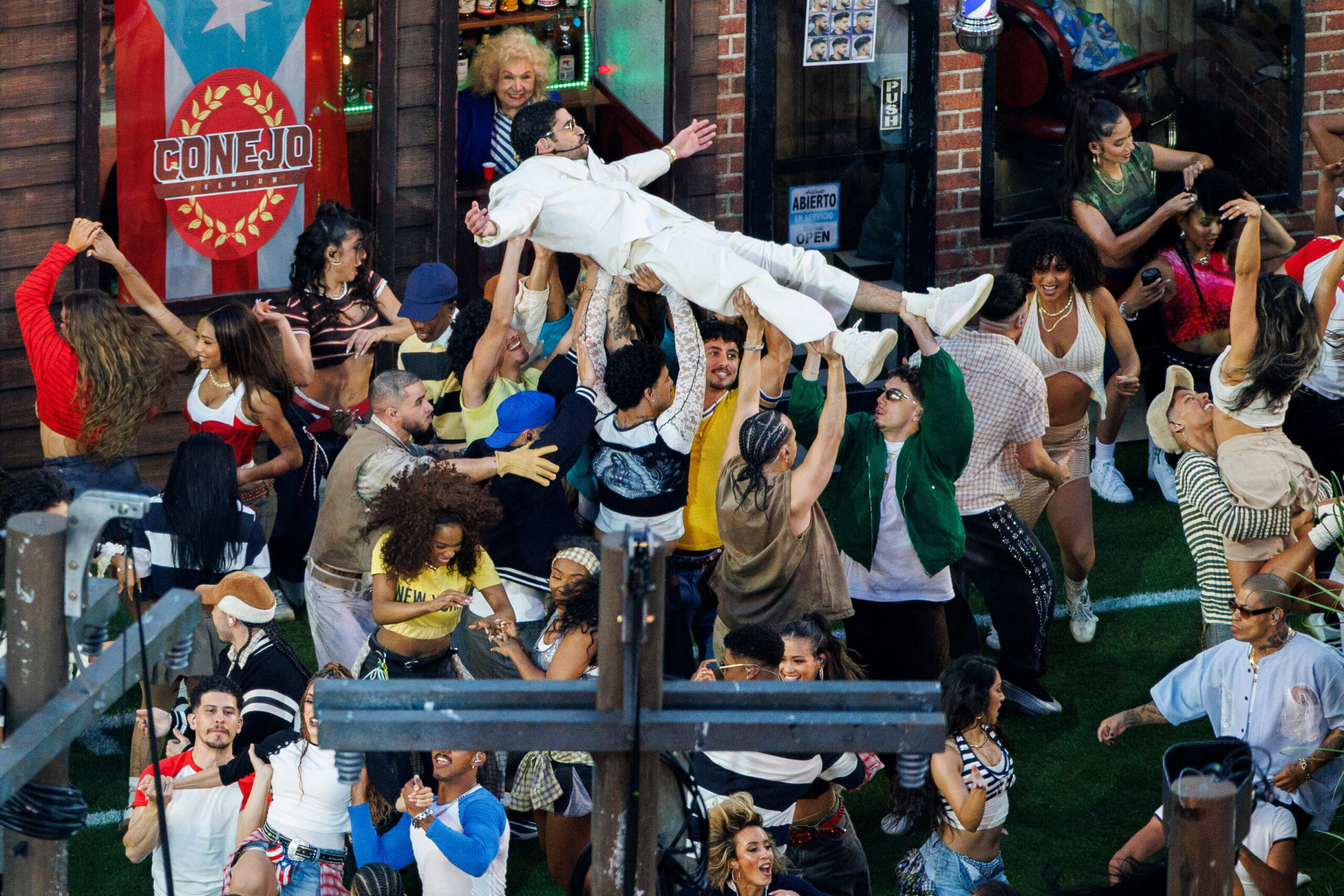
Bad Bunny (center top) performs Sunday during the halftime show of the NFL Super Bowl XL football game between the Seattle Seahawks and the New England Patriots in Santa Clara, Calif.
Right-wing media prattled on for months about how Bad Bunny, the Puerto Rican reggaeton superstar who is the world’s most streamed artist, would politicize and thus ruin the NFL’s halftime extravaganza at Super Bowl LX in Santa Clara, Calif.
The babble became a scream seven days before the Big Game kicked off, when Bad Bunny won the record of the year Grammy Award and began his acceptance speech with the exhortation “ICE out!” adding, “We’re not savages, we’re not animals, we’re not aliens — we are humans, and we are Americans.”
But on the world’s biggest stage Sunday night — seen by 135 million in the United States, a Super Bowl record — Bad Bunny sang not one word about Donald Trump, not that MAGA fans even bothered to hold up a translation app. The white-suited Benito Antonio Martínez Ocasio danced his way through the history of Puerto Rico and the Americas writ large, from the plantations of yore to the exploding power lines of the hurricane-wracked 21st century. He whirled past an actual wedding, stopped for a shaved ice, and for 13 spellbinding minutes turned a cast of 400 into what his transfixed TV audience craved at home.
BadBunny built his own community — a place not torn asunder by politics, but bonded by love and music.
Without uttering one word — in Spanish or English — about the dire situation in a nation drifting from flawed democracy into wrenching authoritarianism, the planet’s reigning king of pop delivered the most powerful message of America’s six decades of Super Bowl fever. Shrouded in sugar cane and shaded by a plantain tree, Bad Bunny sang nothing about the frigid chaos 2,000 miles east in Minnesota, and yet the show was somehow very much about Minneapolis.
Bad Bunny finally gave voice to what thousands of everyday folks in the Twin Cities have been trying to say with their incessant whistles.
We are all neighbors. The undocumented Venezuelan next door who toils in the back of a restaurant and sends his kids to your kids’ school is a neighbor. But Haiti is also a neighbor, as is Cuba. We are all in this together.
The word I kept thinking about as I watched Bad Bunny’s joyous performance is a term that didn’t really exist on New Year’s Day 2026, yet has instantly provided a name to the current zeitgeist.
The great writer Adam Serwer — already up for the wordsmithing Hall of Fame after he nailed the MAGA movement in 2018 in five words: “The cruelty is the point” — leaned hard into the concept of “neighborism” after he traveled to Minneapolis last month. His goal was to understand an almost revolutionary resistance to Trump’s mass deportation raids that had residents — many of whom had not been especially political — in the streets, blowing those warning whistles, confronting armed federal agents, and tracking their movements across the city.
Serwer visited churches where volunteers packed thousands of boxes of food for immigrant families afraid to leave their homes during the U.S. Immigration and Customs Enforcement raids, and talked to stay-at-home moms, retirees, and blue-collar workers who give rides or money to those at risk, or who engaged in the riskier business of tracking the deportation raiders.
“If the Minnesota resistance has an overarching ideology,” Serwer wrote, “you could call it ‘neighborism’ — a commitment to protecting the people around you, no matter who they are or where they came from.” He contrasted the reality on the ground in Minneapolis to the twisted depictions by Trump and his vice president, JD Vance, who’ve insisted refugees are a threat to community and cohesion.
Of course, it’s not just Minneapolis, and it’s not just the many, liberal-leaning cities — from Los Angeles to Chicago to New Orleans and more — that were the incubators of the notion that concerned citizens — immigrant and nonimmigrant alike — could prevent their neighbors from getting kidnapped. Even small towns like rural Sackets Harbor, N.Y., the hometown of Trump’s border czar Tom Homan, rose up in protest to successfully block the dairy farm deportation of a mom and her three kids. It’s been like this everywhere regular folks — even the ones who narrowly elected Trump to a second term in 2024 — realize mass deportation doesn’t mean only “the worst of the worst,” but often the nice mom or dad in the house, or church pew, next to theirs.
Only now that it’s arrived is it possible to see “neighborism” as the thing Americans were looking for all along, even if we didn’t know it. It is, in every way, the opposite vibe from the things that have always fueled fascism — atomization and alienation that’s easy for a demagogue to mold into rank suspicion of The Other.
I’m pretty sure Bad Bunny wasn’t using the word neighborism when the NFL awarded him the coveted halftime gig last fall. But the concept was deeply embedded in his show. He mapped his native Puerto Rico as a place where oppression has long loomed — from the cruelty of the sugar plantations to the capitalist exploitation of the failed power grid — but where community is stronger.
Then Benito broadened the whole concept. Reclaiming the word America for its original meaning as all of the Western Hemisphere, Bad Bunny name-checked “Chile, Argentina, Uruguay, Paraguay, Bolivia, Peru, Ecuador, Brazil,” and Canada, as well as the United States. These, too, are our neighbors. “God bless America,” he shouted — his only message of the night delivered in English.
So, no, Bad Bunny never mentioned Minneapolis, but a tender moment when he seemingly handed the Grammy he’d won just aweek ago to a small Latino boy had to remind viewers of the communal fight to save children like the 5-year-old, blue bunny hat-wearing (yes, ironic) Liam Conejo Ramos, who was just arrested, detained, and released by ICE. (A false rumor that the Super Bowl boy was Ramos went viral.)
But arguably, this super performance had peaked a few moments earlier, when the singer exited the wedding scene stage with a backward trust dive, caught and held aloft by his makeshift community in the crowd below. Bad Bunny had no fear that his neighbors would not be there for him. Viva Puerto Rico. Viva Minneapolis. Viva our neighbors.
Yo, do this!
Some 63 years after he was gunned down by a white racist in his own driveway, the Mississippi civil rights icon Medgar Evers has been having a moment. A fearless World War II vet whose bold stands for civil rights as local leader of the NAACP in America’s most segregated state triggered his 1963 assassination, Evers’ fight has become the subject of a best-selling book, a controversy over how his story is told at the Jackson, Miss., home where he was killed, and now a two-hour documentary streaming on PBS.com. I’m looking forward to watching the widely praised Everlasting: Life & Legacy of Medgar Evers.
After the Super Bowl, February is the worst month for sports — three out of every four years. In 2026, we have the Winter Olympics to bridge the frigid gap while we wait for baseball’s spring training (and its own World Baseball Classic) to warm us up. Personally, I try and sometimes fail to get too jacked up around sleds careening down an icy track, but hockey is a different story. At 2:10 p.m. on Tuesday (that’s today if you read this early enough), the puck drops on USA Network for the highly anticipated match between the world’s two top women’s teams: the United States and its heated rival Canada. Look for these two border frenemies to meet again for the gold medal.
Ask me anything
Question: How is it that some towns have been able to prevent ICE from buying warehouses and turning them into concentration camps, while others say they are helpless against the federal government? What does it mean that several are planned for within a couple of hours of Philly? — @idaroo.bsky.social via Bluesky
Answer: Great question. It seems ICE and its $45 billion wad of cash are racing in near-secrecy to make this national gulag archipelago of 23 or so concentration camps a done deal. The places where they’ve been stopped, like one planned for Virginia, happened because locals were able to pressure the developer before a sale to ICE was concluded. That’s no longer an option at the two already purchased Pennsylvania sites in Schuylkill and Berks Counties. The last hope is pressure from high-ranking Republicans, which may (we’ll see) have stopped a Mississippi site. Pennsylvanians might want to focus, then, on GOP Sen. Dave McCormick. Good luck with that.
What you’re saying about …
It’s conventional wisdom that the best argument for a Gov. Josh Shapiro 2028 presidential campaign is his popularity in his home state of Pennsylvania, the battleground with the most electoral votes. So it’s fascinating that none of the dozen or so of you who responded to this Philadelphia-based newsletter wants Shapiro to seek the White House, although folks seem divided into two camps. Some of you just don’t like Josh or his mostly centrist politics. “I think he’s all ambition, all consumed with reaching that top pedestal, not as a public servant, but because he thinks he deserves it,” wrote Linda Mitala, who once campaigned for Shapiro, but soured on his views over Gaza protesters, New York Mayor Zohran Mamdani, and other issues. Yet, others think he’s an excellent governor who should remain in the job through 2030. “Stay governor of Pa. when good governance and ability to stand up to federal (authoritarian) overreach is dire,” wrote Kim Root, who’d prefer Kentucky Gov. Andy Beshear for the White House.
📮 This week’s question: A shocking, likely (though still not declared) Democratic primary win for Analilia Mejia, the Bernie Sanders-aligned left-wing candidate, in suburban North Jersey’s 11th Congressional District raises new questions for the Dems about the 2026 midterms. Should the party run more progressive candidates like Mejia, who promise a more aggressive response to Trump, or will they lose by veering too far left? Please email me your answer and put the exact phrase “Dems 2026” in the subject line.
Backstory on how the F-bomb became the word of the year
Billie Joe Armstrong of Green Day performs Sunday before the start of Super Bowl XL in Santa Clara, Calif.
I’m old enough to remember when the world’s most famous comedy riff was the late George Carlin’s “Seven Words You Can Never Say on Television” — its point driven home by Carlin’s 1972 arrest on obscenity charges that went all the way to the U.S. Supreme Court. A half century later, you still can’t say dirty words on broadcast TV — cable and streaming is a different story — but that fortress is under assault. In 2026, America is under seemingly constant attack from the F-bomb.
It is freakin’ everywhere. When the top elected Democrat in Washington, House Minority Leader Hakeem Jeffries, cut a short video to respond to the president’s shocking post of a racist video that depicted Barack and Michelle Obama as apes, he said, “[F-word] Donald Trump!” If uttered in, say, 1972, Jeffries’ attack would have been a top story for days, but this barely broke through. Maybe because that word is in the lexicon of so many of his fellow Democrats, like Mayor Jacob Frey, who famously told ICE agents to “get the [F-word] out of Minneapolis,” or Minnesota Sen. Tina Smith, who begged federal agents to “leave us the (bleep) alone.” (Smith is retiring at year’s end and seems to no longer give a you-know-what.)
The poor guys with their finger on the silence button at the TV networks, where you still can’t say Carlin’s seven words, can barely keep up. The F-bomb was dropped at this year’s Grammys, where award-winner Billie Eilish declared “(Bleep) ICE!” as she brandished her prize. The F-bomb was dropped, of course, at the Super Bowl, when the only true moment of silence during 10-plus hours of nonstop bombast came during Green Day’s pregame performance of “American Idiot,” when NBC shielded America’s tender ears from hearing Billie Joe Armstrong sing about “the subliminal mind(bleep) America.”
We’re only about six weeks into the new year, but it’s hard not to think that Merriam-Webster or the other dictionary pooh-bahs won’t declare the F-bomb as word of the year for 2026, even if I’m still not allowed to use it in The Inquirer, family newspaper that we are. So what the … heck is going on here? One study found the F-word was 28 times more likely to appear in literature nowthan in the 1950s, so in one sense it’s not surprising this would eventually break through on Capitol Hill or on the world’s biggest stages.
But the bigger problem is that America’s descent into authoritarianism and daily political outrage has devolved to such a point where, every day, permissible words no longer seem close to adequate for capturing our shock and awe at how bad things are. Only the F-bomb, it turns out, contains enough dynamite to blow out our rage over masked goons kidnapping people on America’s streets, or a racist, megalomaniac president who still has 35 months left in his term. Yet, even this (sort of) banned expletive is losing its power to express how we really feel. I have no idea what the $%&# comes next.
What I wrote on this date in 2019
What a long, strange trip for Amazon founder Jeff Bezos, one of the four richest people on the planet. Today, Bezos is in the headlines for his horrific stewardship of the Washington Post, which has bowed down on its editorial pages to the Trump regime, lost hundreds of thousands of subscribers, and laid off 300 journalists. It’s hard to recall that seven years ago, Bezos and Trump were at war, and there was evidence Team MAGA had enlisted its allies from Saudi Arabia to the National Enquirer to take down the billionaire. I wrote that “a nation founded in the ideals of democracy has increasingly fallen prey to a new dystopian regime that melds the new 21st century dark arts of illegal hacking and media manipulation with the oldest tricks in the book: blackmail and extortion.”
My first and hopefully not last journalistic road trip of 2026 took me to Pennsylvania coal country, where ICE has spent $119.5 million to buy an abandoned Big Lots warehouse on the outskirts of tiny Tremont in Schuylkill County. I spoke with both locals and a historical expert on concentration camps about their fears and the deeper meaning of a gulag archipelago for detained immigrants that is suddenly looming on U.S. soil. It can happen here. Over the weekend, I looked at the stark contrast between Europe’s reaction to the Jeffrey Epstein scandal — where ties to the late multimillionaire sex trafficker are ending careers and even threatening to topple the British government — and the United States, where truth has not led to consequences so far. The Epstein fallout shows how the utter lack of elite accountability is driving the crisis of American democracy.
One last Super Bowl reference: Now that football is over, are you ready for some FOOTBALL? Now just four months out, it’s hard to know what to make of the 2026 World Cup returning to America and coming to Philadelphia for the very first time, and whether the increasing vibe that Donald Trump’s United States is a global pariah will mar the world’s greatest sporting event (sorry, NFL). Whatever happens, The Inquirer is ready, and this past week we published our guide to soccer’s biggest-ever moment in Philly. Anchored by our world-class soccer writer Jonathan Tannenwald and Kerith Gabriel, who worked for the Philadelphia Union between his stints at the paper, the package provides not only an overview of the World Cup in Philly, but previews the dozen teams who will (or might) take the pitch at Lincoln Financial Field, with in-depth looks at the powerhouses (France) as well as the massive underdogs (Curaçao). June is just around the corner, so don’t let the paywall become your goalkeeper. Subscribe to The Inquirer before the first ball drops.
By submitting your written, visual, and/or audio contributions, you agree to The Inquirer’s Terms of Use, including the grant of rights in Section 10.
Many Americans were shocked by the killings of Renee Good and Alex Pretti at the hands of federal immigration agents. Many more were repulsed by the federal government’s lack of transparency, victim blaming, and obfuscation of the facts regarding the shootings.
But as border residents can tell you, what’s playing out in places like Chicago and Minneapolis is, in many ways, nothing new.
Although the administration has taken that lack of accountability to a nauseating low — interfering in federal and local investigations — impunity around immigration enforcement did not begin when Donald Trump took office.
Since 2010, more than 300 people have been killed in incidents involving on-duty Border Patrol agents, according to a tally kept by the Southern Border Communities Coalition. Out of that number, 74 have been killed by agents using force.
Those figures are likely an undercount, as the agency has a history of failing to report deaths its agents are involved in. It also consistently fails to seriously discipline agents who face abuse complaints. A 2017 report by the American Immigration Council found a host of problems with the complaint system and investigation process, resulting in little accountability.
Focusing on the use-of-force killings, I am not saying that all 74 were unjustified. As Gil Kerlikowske, who led U.S. Customs and Border Protection from 2014 to 2017, told me, agents often work by themselves in rural border stretches and can run into dangerous smugglers.
But as Kerlikowske also told me, when he arrived at CBP, the agency had an outdated use-of-force policy that wasn’t available publicly, had no internal affairs division, and the only tools available to agents were firearms.
“They’ve always had a culture that’s distinct, you know, going back to their early days,” he said. “They did have that kind of Wild West kind of culture.”
That’s putting it mildly. While Kerlikowske instituted a series of important reforms around use of force, which he said his successors continued and improved upon, deep lasting change is slow and difficult.
As a 2021 report detailed, the agency “has been steeped in institutional racism and has committed violent acts with near impunity” since its creation in 1924. Lest you think that attitude got left behind last century, in 2019, a Facebook group that included around 9,500 current and former agents was found to be littered with racism and misogyny.
While I’ve known Border Patrol agents who zealously enforce the law while never losing sight of their humanity, who would hand over their lunch to a hungry migrant they just detained, current and former CBP agents were involved in the killings in Minnesota.
This file photo taken in 2017 shows the boundary in Nogales, Mexico, with the United States and a poster of Juan Antonio Elena Rodriguez, a teen who was shot and killed across the line by a Border Patrol agent in 2012.
The men who shot Pretti were identified by ProPublica as Border Patrol agent Jesus Ochoa and CBP officer Raymundo Gutierrez. Jonathan Ross, the U.S. Immigration and Customs Enforcement agent who killed Good, began his law enforcement career in 2007 as part of the Border Patrol.
I hate to be cynical, but if past is prologue, President Trump and administration officials needn’t have bothered putting their thumb on the scale after the shootings. The few times agents are held to account, the result is rarely justice.
In the last 35 years, only three Border Patrol agents have been charged and tried for killing someone in the line of duty. In all three cases, juries failed to convict.
Michael Elmer was charged with second-degree murder after the 1992 shooting of Dario Miranda Valenzuela in Nogales, Ariz. Elmer fired 12 shots, hitting Valenzuela twice in the back. He then moved the body and didn’t immediately report the incident, according to the Arizona Daily Star. He was acquitted.
Nicholas Corbett was charged with murder for killing Francisco Javier Domingo Rivera near Douglas, Ariz., in 2007. The agent’s account did not match up with eyewitness testimony or the physical evidence. The Cochise County Attorney’s Office eventually declined to prosecute after two trials ended in hung juries.
Lonnie Swartz was tried twice, once for second-degree murder and later for involuntary manslaughter, in the 2012 shooting death of 16-year-old Jose Antonio Elena Rodriguez. I was an opinion writer at the Daily Star in Tucson, Ariz., when this case went to trial in 2018. The facts were undeniable: Swartz shot across the Nogales border fence into Mexico a total of 16 times. He stopped and reloaded. He hit the unarmed Elena Rodriguez eight times in the back and twice in the head from an elevation of around 14 feet.
Taken in total, the message that federal immigration agents keep receiving — from the government and from juries — is that they can continue to operate with impunity.
Those who have long advocated for reform in these agencies say perhaps things will begin to change as a result of the deaths of Good and Pretti because they were white Americans. But this isn’t about race or immigration status, it’s about unchecked power.
Kerlikowske, at least, is optimistic about what happens once Trump is out of the White House.
“The Border Patrol isn’t trained to work in cities. That’s not why they hired on. They didn’t hire on to go work in Chicago or Minneapolis,” he said. “I think the vast majority of these folks will be happy to be back doing what they were doing.”
Let’s hope that when they do, they do so with a renewed commitment by the government to transparency and accountability. Otherwise, it may be back to business as usual.
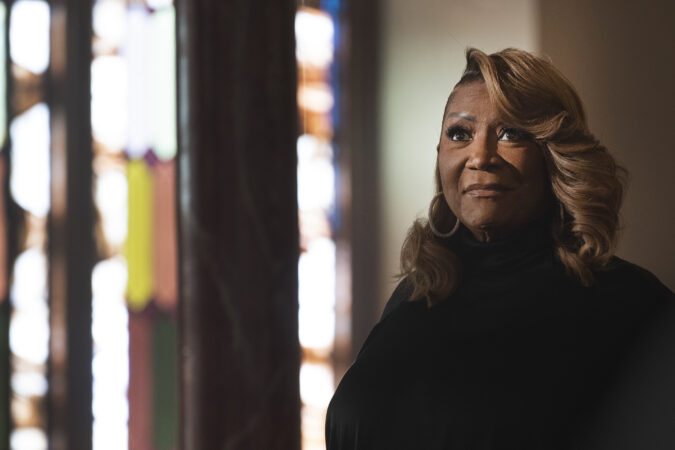
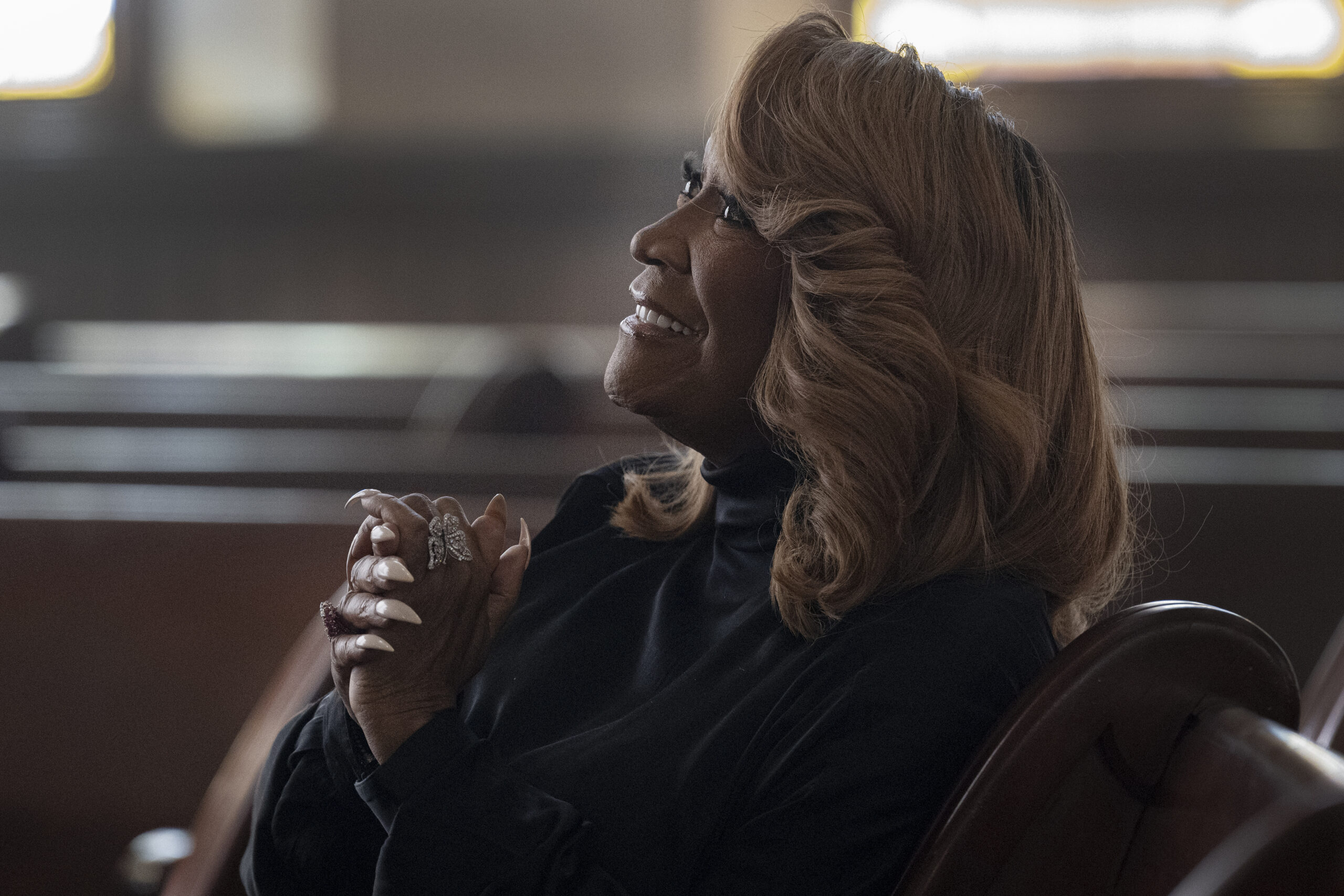
On a bitterly cold afternoon last month, Patti LaBelle walks gingerly down Mother Bethel A.M.E. Church’s center aisle, her left hand grazing the top of each pew, steadying her balance.
Half a dozen content creators, directors, and Visit Philadelphia staff coax the Grammy award-winning songstress toward the 18th century church’s magnificent altar, their voices overflowing with encouragement, reverence, and love.
LaBelle’s stockinged footstepsare deliberate, her unblinking eyes affixed on the organ pipes in front of her.
She’s as contemplative as she is careful.
“Come on, Miss Patti,” cooed Kyra Knox, the Emmy award-winning filmmaker who is directing Visit Philadelphia’s Black History Month promotional video, “We Are the Fabric. We are the Thread,” starring the Philadelphia legend. “You are doing great.”
“We Are the Fabric” is part of the nonprofit tourism agency’s “Indivisible” campaign, a yearlong initiative highlighting Philly’s diverse tourist destinations during America’s 250th birthday and Black History Month, which, coincidentally, is celebrating its 100th birthday this year. (Carter G. Woodson introduced Negro History Week in 1926. It was extended to Black History Month in 1976.)
The videos are streaming on several online platforms including Hulu and HBO Max in seven markets, including Philadelphia, New York, Atlanta, and Washington, D.C. During the month of February, Visit Phillywill conduct a series of neighborhood walks through the city’s historic districts with a special focus on Black history courtesy of the historical arts organizations 1838 Black Metropolis and the Black Journey.
“You cannot tell the story of American culture, innovation, music, art, and food without Black Americans because they are woven into every thread of the national narrative,” said Angela Val, president and CEO of Visit Philly.
The filmmakers squeezed in a lot of places on the cold Thursday afternoon. Mother Bethel — the home of America’s first Black Christian church founded by formally enslaved Richard Allen — is the first stop on the hours-long shoot. After recording takes of LaBelle’s coffin-shaped ivory nails in prayer and the centuries-old church’s sunlit stained glass windows, LaBelle and the crew drive 14 blocks west to South Philadelphia’s Union Baptist Church.
Film rolls and cameras flash as LaBelle, wrapped in an ankle-length vintage chocolate brown fur, is reflective in front of Union Baptist’s 111-year-old stately exterior. Inside, barrier-breaking early 20th century contralto Marian Anderson once sang in the choir. Like Anderson, LaBelle got her start singing gospel at Southwest Philly’s Beulah Baptist Church.
Singer Patti LaBelle at Mother Bethel A.M.E. Church in Philadelphia during a shoot for Visit Philadelphia’s “Indivisible” initiative, part of an effort to celebrate the city’s communities of color during the city’s 250th anniversary. LaBelle is starring in the campaign’s Black History Month promotion.
After a few windy takes, the crew made its way to the southwest corner of City Hall in front of the statue of martyred 19th century civil rights leader Octavius Catto. The day ended at the Arden Theatre, a nod to Philadelphia’s vibrant Black performing arts community.
LaBelle stars in and narrates the video. She’s accompanied by 9-year-old Riley Mills and visits historical sites and modern locations, like Uncle Bobbie’s Coffee & Books in Germantown, reminding us that Black history is to be passed through the generations.
“When the Constitution couldn’t hold us, we held each other,” LaBelle says, her voice clear, sharp, and determined.
“We made the music you move to,” she continues as images of Teddy Pendergrass, Kenny Gamble, and Leon Huff fill the screen. And then, in an “if you blink, you will miss it moment,” there LaBelle is, in an old photograph flanked by her Labelle group members Sarah Dash and Nona Hendryx, followed by her powerful words: “When they wouldn’t give us a stage, we built one.”
Living Black history
Patti LaBelle is 81. She knows she’s Black history. She’s proud of it and doesn’t take it lightly.
“Black people stand for everything,” LaBelle told The Inquirer in between takes at Mother Bethel, her voice barely a whisper, worn out from her performances in the “Queens: 4 Legends Tour” starring LaBelle, Chaka Khan, Gladys Knight. and Stephanie Mills. They all came of age before the Civil Rights Act of 1964 was passed.
“And we continue to. We continue to fight while things are being taken away from us.”
As Visit Philly filmed “We Are the Thread,” the National Park Service was in the midst of dismantling an exhibit honoring nine enslaved people who worked at George Washington’s house when Philadelphia was America’s capital city.
“If we don’t fight to keep what is ours,” LaBelle said, her scratchy voice taking on urgency. “It will be lost.”
Visit Philly’s choice of LaBelle as its Black history spokesperson this year is thoughtful and necessary.
Her generation of civil rights warriors bridges the gap between Black Americans who lived through Jim Crow and those of us who only heard horror stories of how difficult it was for our ancestors to go to school, work, and vote.
As this administration claims that the Civil Rights Act resulted in “white people being very badly treated,” it’s important that stories like LaBelle’s aren’t just repeated but remembered and celebrated — especially as they get up there in age.
We need to give them their flowers now.
Without Patti LaBelle, Philadelphia — and its music — would be a different place.
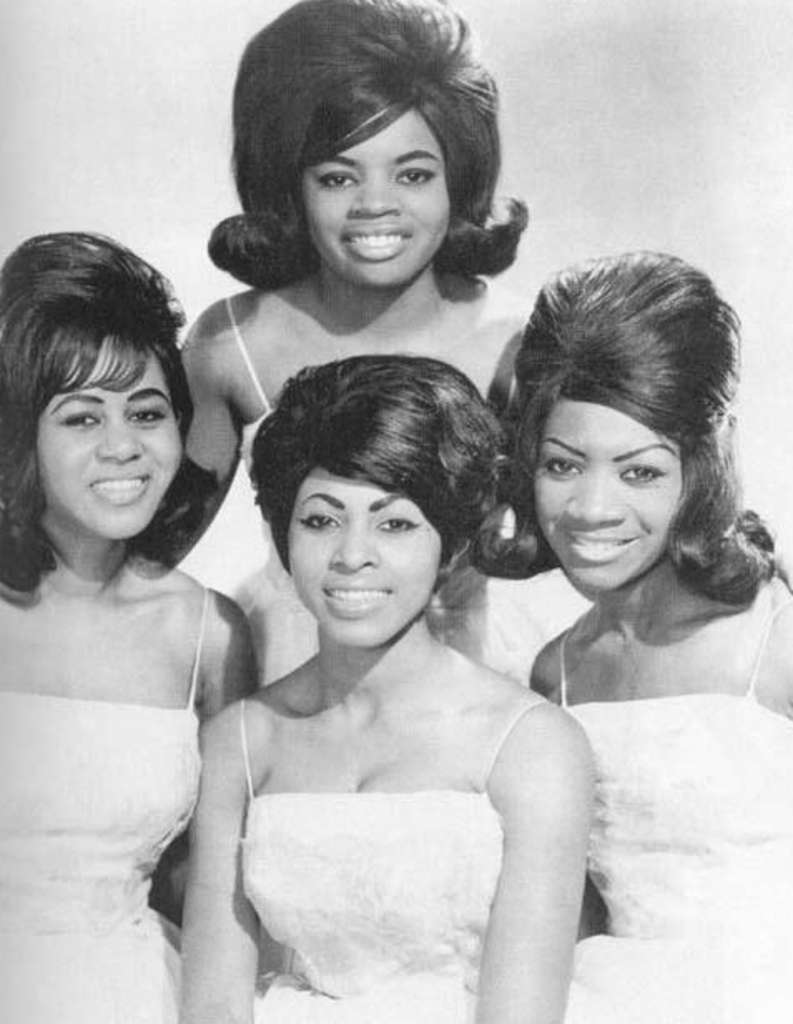
Patti LaBelle (right) and the Blue Belles, the group with which she had her first hit, in 1962: “I Sold My Heart to the Junkman.”
A Philadelphia girl
LaBelle was born Patricia Louise Holte in Southwest Philadelphia in 1944. Her dad, Henry, came to Philadelphia from Georgia in the early part of the 20th century during the Great Migration. He worked on the railroad, was a singer, and an occasional gambler. Her mom, Bertha, was a homemaker. LaBelle was the youngest of five.
She went to Bartram High and sang at Beulah Baptist before becoming the lead singer of Patti LaBelle and the Blue Belles.
The group’s 1962 hit, “I Sold My Heart to the Junkman,” sold millions of copies, cementing LaBelle’s stardom, getting her a spot on the Chitlin’ Circuit for performances at Uptown Theater. She appeared on American Bandstand and Jerry Blavat’s radio show.
By 1975, the group was simply known as Labelle and was a visual smorgasbord of Afrofuturistic sequins and space suits. It released the iconic “Lady Marmalade” that catapulted Labelle to the cover of Rolling Stone, becoming the first Black music group to be featured.
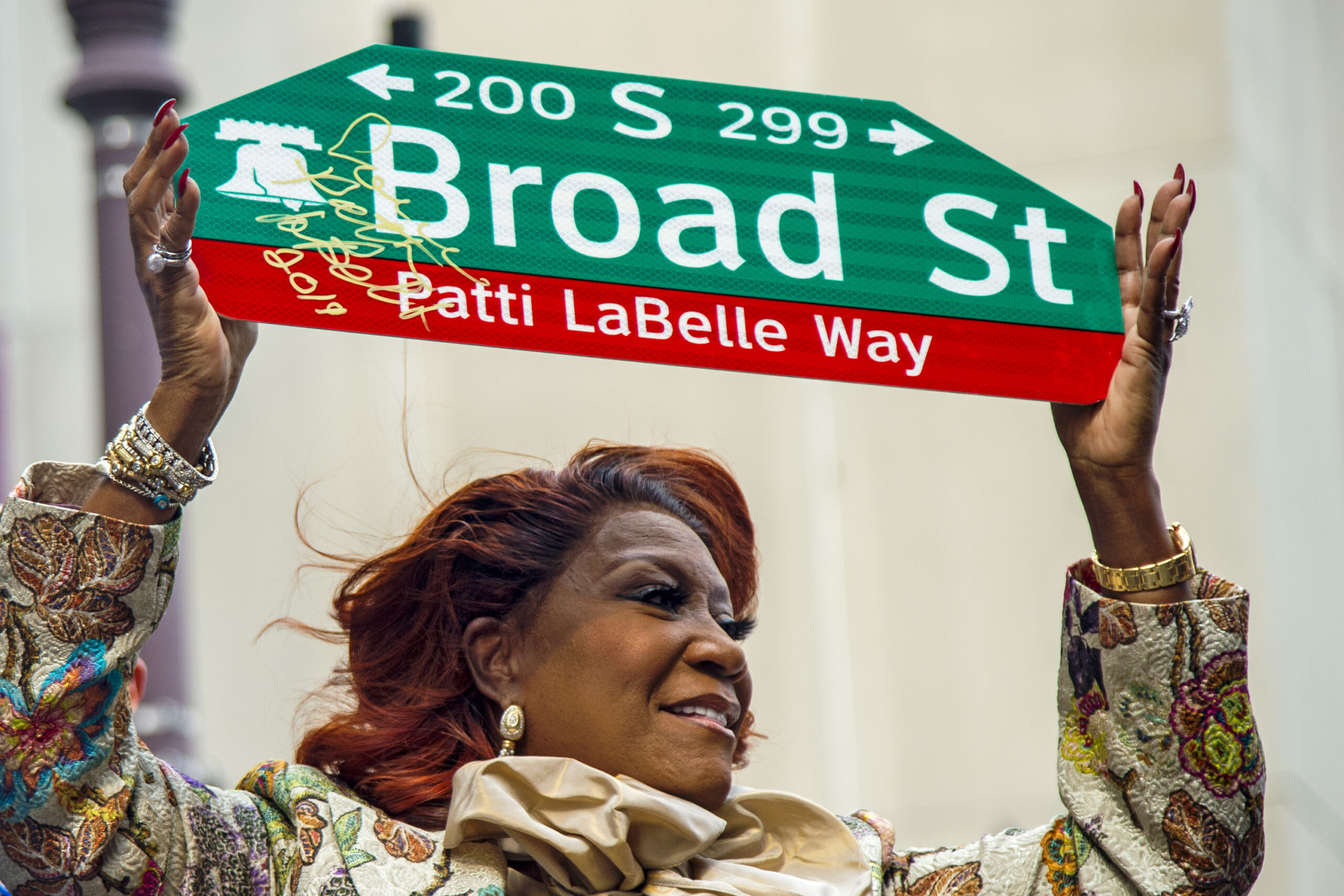
Patti LaBelle holds up a sign during a celebration on July 2, 2019, as the block of Broad Street between Spruce and Locust Streets is renamed Patti LaBelle Way.
“I’ve had a lot of wonderful moments in my career,” LaBelle said. “It’s nice to remember, to be proud. We made a lot of history.”
(Christina Aguilera, Lil’ Kim, Mya, and Pink covered “Lady Marmalade” in 2001 for the Moulin Rouge soundtrack. And in 2003 Labelle’s “Lady Marmalade” was inducted into the Grammy Hall of Fame.)
In 2016, LaBelle received the Marian Anderson Award. Three years later, the city named a block of Broad Street between Spruce and Locust Patti LaBelle Way.
LaBelle, who lives in Villanova now, never left the Philadelphia area.
Patti LaBelle and Frankie Beverly are two of the celebrities featured on reimagined Shaheed Rucker’s ‘(re)Covering the Iconic” in in Jefferson Einstein’s community corridor. Monday, Sept. 8, 2025.
“I’m a Philadelphia girl,” she said with pride. “It’s laid back, comfortable. … How I like it.”
Over the decades, she has had a few entrepreneurial endeavors including two short-lived Philadelphia boutiques and a clothing collection on HSN. However, she’s best known for her indisputably yummy line of desserts — sweet potato pies and cobblers. Late last year, she introduced pancake mix and syrup that, she says for the record, is nothing like Aunt Jemima.
“For one,” she said, mustering up a bit of her trademark LaBelle sass, “I’m a real person.”
Real to her core.
“She’s given a lot to Philadelphia,” Val said. “She’s given so much to the country … to the Black community.”
The slow drip of the U.S. government’s still grossly incomplete release of its files on late financier and sex trafficker Jeffrey Epstein has nonetheless become a who’s who of Planet Earth’s rich and famous — from billionaires like Bill Gates and Elon Musk to cultural icons like filmmaker Woody Allen and, of course, two presidents.
The average American paying any attention to this global bonfire of the vanities probably barely noticed this name: longtime British politico Peter Mandelson, who most recently served as the U.K.’s ambassador to the United States.
Across the pond, it was another story. The Fleet Street tabloid press went wild over revelations that Mandelson — a key insider in the ruling Labour Party, long known to have been one of Epstein’s globe-trotting pals — maintained his close ties even after the American’s 2008 child prostitution conviction, writing Epstein in 2009 to hail his release from jail as “liberation day.”
But unlike the fallout in the United States, Mandelson’s Epstein problem didn’t end with some embarrassing headlines. Back in September, when an initial batch of Epstein’s emails went public, Prime Minister Keir Starmer — Mandelson’s longtime ally — immediately fired his friend from his ambassador’s post in Washington, D.C., and the scandal has only intensified.
Last week, Scotland Yard investigators raided Mandelson’s two U.K. homes in a reported criminal investigation into whether the government official leaked secret and sensitive financial information to Epstein around the time of the Great Recession in2008. (Headline in the tabloid Sun: “Police rummage through Mandy’s drawers.”)
Meanwhile, Americans watching Britain’s rush to hold a powerful man to account for his unconscionable relationship with modern history’s most notorious sex creep are probably all asking the same thing.
Wait, you can do that?
Paris prosecutors raid the French offices of Elon Musk’s X as part of an investigation into spreading child pornography and deepfakes. https://t.co/YdCYxI8FLA
Here in the land where Epstein sex trafficked scores of underage girls — including the U.S. Virgin Islands hideaway now known as “Rape Island” — the sound of any type of justice or accountability for the financier’s powerful confederates has been an ear-splitting silence.
Since Epstein’s mysterious August 2019 death in a Manhattan federal jail cell, only his longtime companion and procurer of young women, Ghislaine Maxwell, has been criminally charged and convicted, and she has been moved by her longtime friend Donald Trump’s Justice Department to a low-security prison where she reportedly gets special perks.
Most of the corporate CEOs, company or university board members, NFL team owners, scientists, etc., etc., etc., who maintained close Epstein ties even after his 2008 state conviction on lurid crimes with minors have faced no sanctions, or just minor ones. Last week’s news that Brad Karp — chair of the powerful law firm Paul Weiss, already under fire for a controversial deal with Trump to head off a lawsuit with pro bono legal aid — is stepping down over revelations of his Epstein contacts stood out because it was such a rare nod toward accountability among U.S. elites.
This is why the reaction in Europe to Epstein’s close ties with some of its top leaders ought to be a wake-up call for the United States and our own rotten system of justice.
The Epstein accountability party isn’t just breaking out in Great Britain, although our cross-Atlantic ally has led the way ever since the artist formerly known as Prince Andrew was booted from the royal family as allegations mounted that he took part in some of the illegal sexual activities on Epstein’s island.
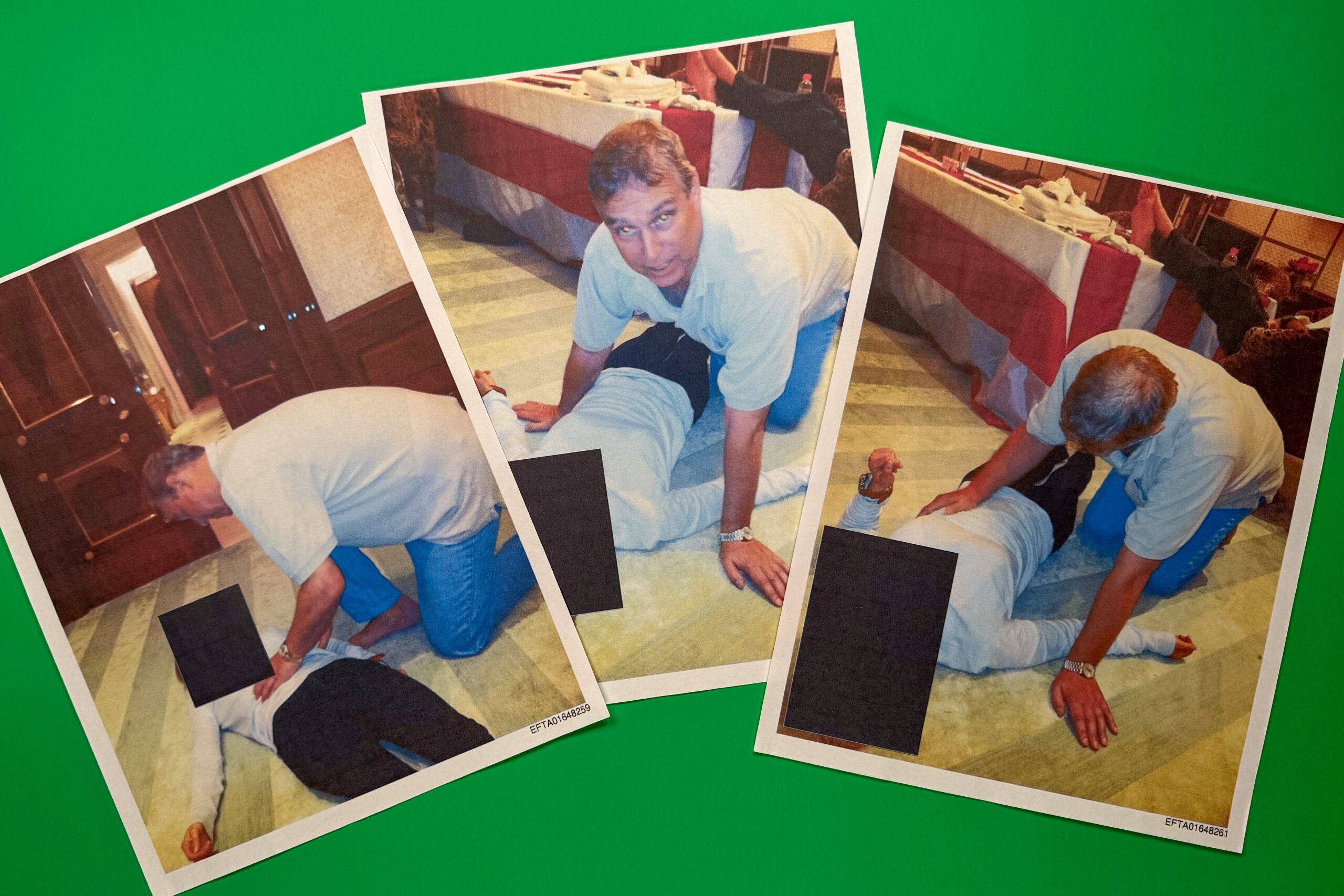
Images from an undated and redacted document released by the U.S. Department of Justice, show Andrew Mountbatten-Windsor, formerly known as Prince Andrew, leaning over an unidentified person.
Despite the aggressive moves against Mandelson and the ex-royal now called Andrew Mountbatten-Windsor, some observers think Starmer’s already tottering Labour government could collapse amid questions over what it did know about Mandelson’s Epstein connection, and when it did know it. A pointed headline in the Guardian newspaper bluntly summed up an increasingly prevalent U.K. viewpoint: “Deceit, betrayal and a scandal that demands historic change.”
But the fallout has spread well beyond the British Isles. When it came out that Joanna Rubinstein, a Swedish U.N. official, visited Epstein’s island in 2012, and that Miroslav Lajčák, national security adviser to Slovakia’s prime minister, discussed “gorgeous” girls in emails with the financier, both of them quit their jobs.
Imagine that.
Norway, much like the U.K., has been rocked to its core by revelations that so many of the nation’s elite leaders had Epstein ties. That even includes the nation’s crown princess, Mette-Marit, who had a running, jovial email conversation with Epstein that included such mundane matters as teeth whitening. More seriously, Norway’s economic crimes unit — yes, some countries actually have such a thing — has opened a corruption investigation into former Prime Minister Thorbjørn Jagland’s relationship with the disgraced U.S. moneyman.
There’s more. Latvia, Lithuania, and Poland have also announced their own investigations. In particular, Poland is digging into mounting evidence over associations between Epstein and Russian intelligence — an existential matter for a nation that’s been overrun and dominated by its eastern neighbor in the past.
In the United States, officials seem more likely to investigate chemtrails or what happened to Amelia Earhart than conduct a serious probe of whether Trump’s former friend was with the Russians, too.
Norwegian Crown Prince Haakon, Princess Ingrid Alexandra, and Crown Princess Mette-Marit applaud during the Nobel Peace Prize award ceremony in Oslo, Norway, in December.
Rob Ford, a professor at the U.K.’s University of Manchester, told the Associated Press that Europe has “a more functional media, we have a more functional accountability structure, that there is still a degree of shame in politics, in terms of people will say: ‘This is just not acceptable, this is just not done.’”
And that goes beyond Epstein. Also last week, French authorities raided the Paris office of U.S. citizen and world’s richest person Elon Musk’s social media giant X (formerly Twitter) as part of a sweeping probe into the site’s allegedly unlawful data extraction, as well as the recent scandal involving its artificial intelligence platform Grok spreading child sexual abuse material. The U.K. is also investigating Grok.
Musk’s X is, of course, headquartered in San Francisco, but no one expects the FBI to burst into his office — not after the electric vehicle magnate donated a staggering $288 million in 2024 to push Trump back into the White House. (Although California’s Democratic attorney general has begun an investigation.)
The time-lapsed release of the Epstein files hasn’t yet produced a smoking gun concerning his close friendship with Trump, but the fact that lurid tips to federal authorities about the two-time president don’t seem to have been really investigated speaks volumes about the utter lack of elite accountability on this side of the Atlantic.
The true meaning of the Epstein files may be less what it says about any specific sex crime — horrific as those may be — and more what they show about how the most powerful men in this country understood that they can get away with anything.
Indeed, it now feels like the 1970s Watergate scandal that looked at the time like the height of accountability — Richard Nixon was forced to resign the presidency, while 48 of his allies were convicted of crimes — was actually the end. Nixon’s subsequent pardon by Gerald Ford — which emboldened the disgraced ex-POTUS to declare that “when the president does it, that means it is not illegal” — was like a bat signal for elites that their brief moment of responsibility for their actions was over.
There were virtually no criminal charges for the economic crime of the 21st century: the Wall Street-driven collapse of the global economic system in 2008. And the lack of justice is bipartisan. Prosecution of white-collar criminals in the United States hit an all-time low under Joe Biden, even before Trump began his obscene spree of pardoning the wealthiest crooks.
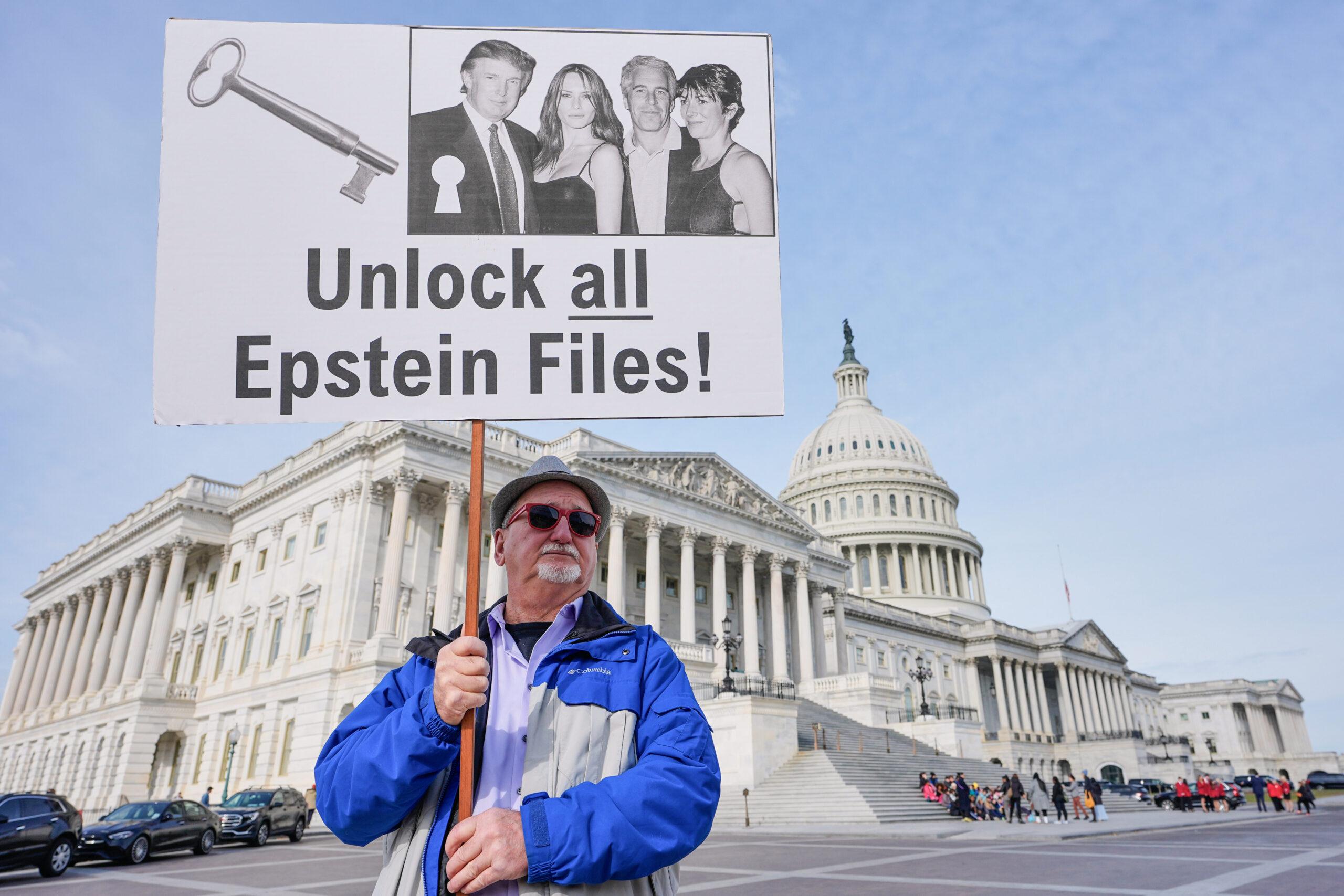
Gary Rush, of College Park, Md., holds a sign before a news conference on the Epstein files in front of the Capitol in November.
It was grotesque when the U.S. Supreme Court ruled in 2024 that presidents can’t be prosecuted for crimes that are “official acts,” yet that seemed pretty obvious after George W. Bush and Dick Cheney got away with their illegal torture regime. Who do you think we are, Europe?
If the Epstein scandal “demands historic change,” as the Brits put it, then that change has to be a newfound drive to somehow renew the spirit of ‘74 — as in 1974. The assault on the foundation of American democracy that is the Trump regime — with its billion-dollar White House corruption, brutal and murderous immigration raids, perversions of criminal justice, and much more — won’t be cured just by Republicans losing a couple of elections, assuming free and fair balloting can even take place.
The small-d democratic government that finally ends this nightmare must do the hard work Biden and his miserably failed attorney general, Merrick Garland, did not do the last time. Immigration agents who maim and kill, government officials enriching themselves, and all other crooks — especially those now being exposed in the Epstein files — must be prosecuted, convicted, and sent to prison.
Maybe that’s not the American way. But there’s a whole wide world out there that is doing things a lot better.
Trump engaging in this behavior during Black History Month is no accident. His childish attempt to taint the legacy of America’s most accomplished Black couple is about more than insulting the Obamas. It is meant to demean all of us.
After all, if a Black president is nothing more than a monkey, a Black doctor, lawyer, or executive is even less than that. Therefore, in the minds of those who embrace that kind of racist reasoning, Black history should not be celebrated. It should be mocked, undermined, and erased.
The White House, through a statement from press secretary Karoline Leavitt, initially sought to downplay the president’s social media post. “This is from an internet meme video depicting President Trump as the King of the Jungle and Democrats as characters from The Lion King,” Leavitt said. “Please stop the fake outrage and report on something today that actually matters to the American public.”
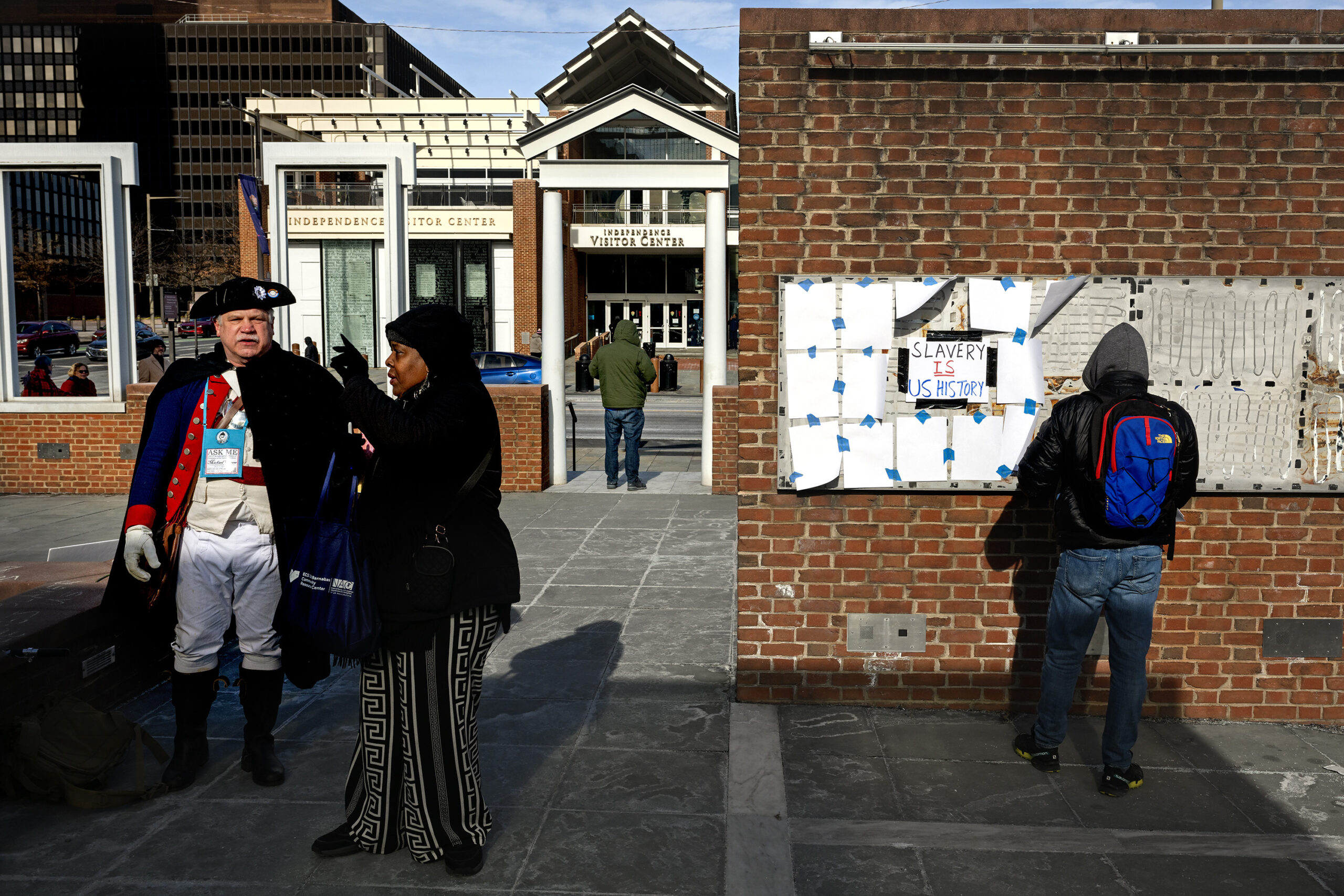
Historical interpreter Michael Carver speaks with visitors at the President’s House site on Independence Mall on Jan. 25 — two days after displays about slavery were removed.
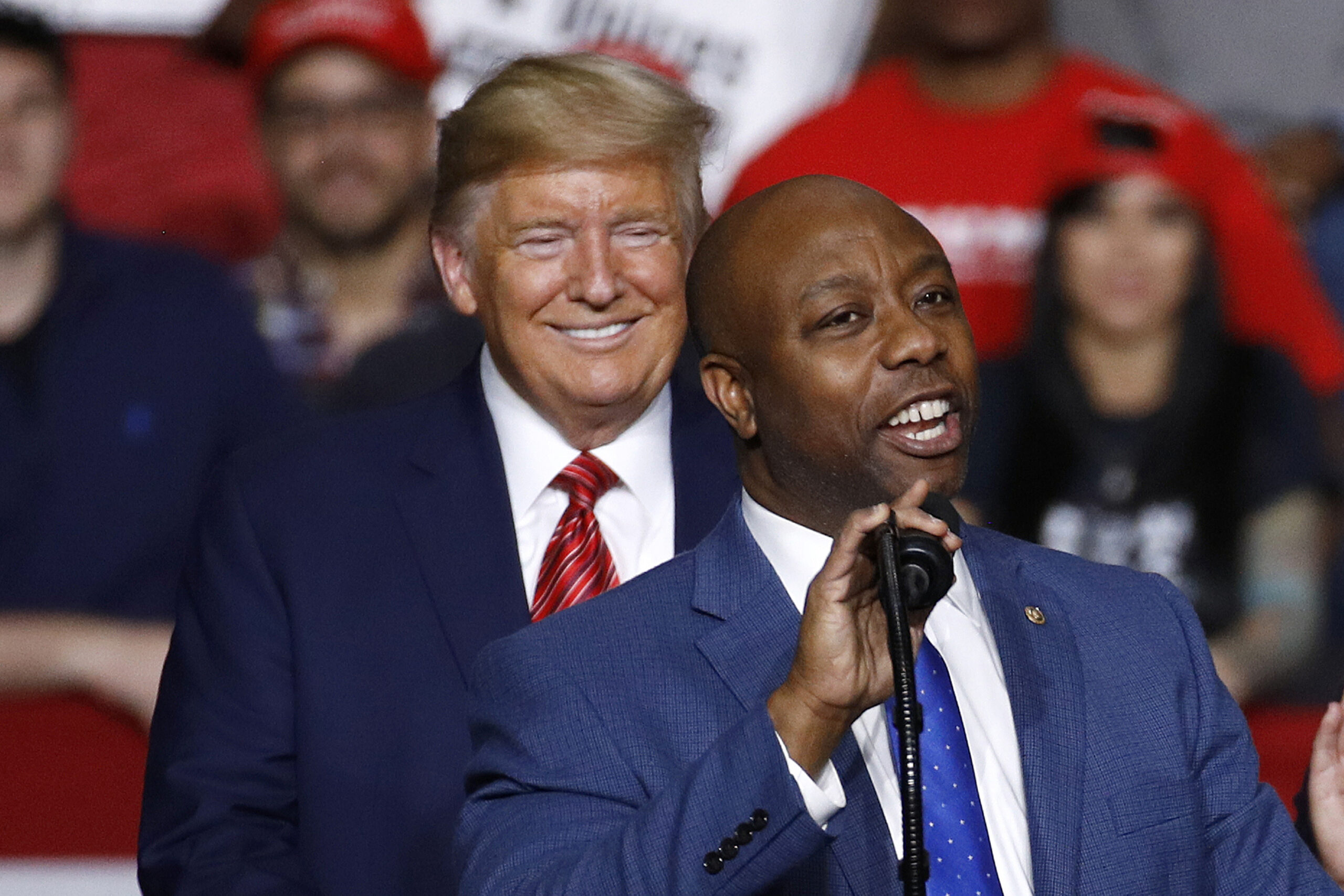
But here’s the thing. The president’s racist post does matter to the American public, as evidenced by the immediate backlash from major figures on both sides of the aisle. Even Black Republican U.S. Sen. Tim Scott, who normally declines to criticize the president’s racial broadsides, responded.
“Praying it was fake because it’s the most racist thing I’ve seen out of this White House. The President should remove it,” Scott wrote on social media.
Scott, who chairs the Senate Republicans’ midterm campaign arm, is right to pray, because with each outrageous act by the president, Republican odds in the upcoming elections get a little longer.
But Trump’s overtly racist post was never about the elections. It was about reshaping the society in which we live.
Though Trump deleted the post after Americans reacted with outrage, the message was sent. Black people are the enemy, and they are to be treated as such.
Sen. Tim Scott (R., S.C.), here speaking at a Trump campaign rally in February 2020, called the president’s post “the most racist thing I’ve seen out of this White House.”
As if to underline that point, a white listener called my radio show on Friday morning and called me the N-word on the air. I was neither surprised nor angry. Rather, I experienced a moment of great clarity. America should, too.
Trump is inviting the white conservatives who comprise much of his political base to follow his lead and embrace racism. He is reaching back for vile racist tropes to get them to do so.
In some ways, I’m grateful Trump waited until Black History Month to do this. History, after all, is a strong and determined teacher. We must strive to be the kind of students who embrace history’s lessons.
In 1906, for example, the determination to portray Black people as monkeys took an unimaginably cruel turn. A young African named Ota Benga, who had been taken from what was then the Belgian Congo, was placed in a cage at the Bronx Zoo with actual monkeys. Historians speculate he may have been 12 or 13 — caged with monkeys so crowds of white people could gawk at him, laugh at him, demean and humiliate him.
Benga was freed when outraged Black ministers and others complained about his treatment. Ten years later, Benga killed himself, and the Wildlife Conservation Society, which oversees the Bronx Zoo, spent nearly a century trying to cover up what was done to him. It was only after the murder of George Floyd that the organization fully acknowledged and apologized for the incident.
History teaches us that when racism is left unchecked and unchallenged, people die.
This Black History Month, as Trump seeks to take us backward, he must know that we will not go quietly.
The late Maya Angelou had a saying that goes, “When people show you who they are, believe them the first time.”
She’s gone now, but that was some really good advice.
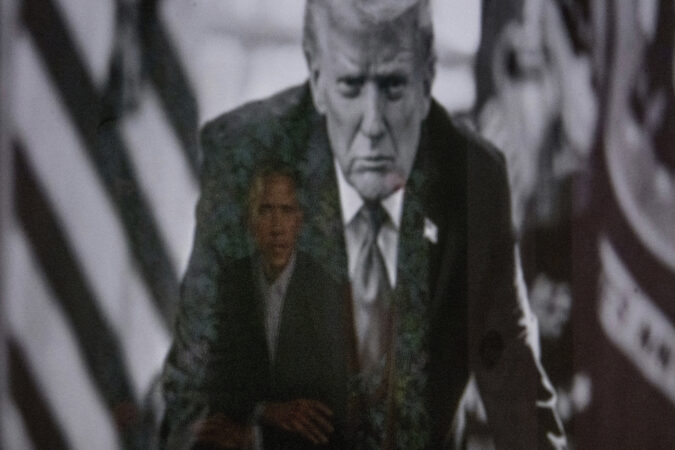
I am reminded of the late author’s wisdom after watching and rewatching a blatantly racist video that President Donald Trump posted on Thursday on Truth Social. It includes AI-generated imagery depicting former President Barack Obama and his wife as dancing primates.
I am so disgusted.
Anything to make the Obamas look bad. I wish I could share a photo of it with this column, but it’s too offensive. I’d tell you to go see his Truth Social account and look it up yourself, but I learned while writing this column that he has taken it down.
Trump’s boorishness is no surprise. He has been showing us who he is and what MAGA is about since even before he came down that escalator at Trump Tower in 2015 and called Mexicans rapists and drug dealers.
So it’s entirely fitting that night he would reshare a video repeating false claims about the 2020 presidential election, which he lost, that includes vile imagery about the 44th president.
For many of 44’s supporters, the Obamas represented America at its best. And no matter where one stands politically, it would be hard to argue that Obama himself ever succumbed to the kind of impulsivity, rudeness, and disrespect we regularly see these days out of 1600 Pennsylvania Ave.
But Trump is a petty, vindictive man whose obsession with the Obamas goes way back. It began in 2011, when Trump deliberately started a campaign of lies about Obama, claiming he wasn’t born in America and therefore ineligible to occupy the Oval Office.
Some pundits argue that Trump’s Obama envy helped fuel his own run for the presidency. And now that he is in the White House for a second term, you’d think he’d be over it. But judging from the way he keeps disparaging Obama, he’s not.
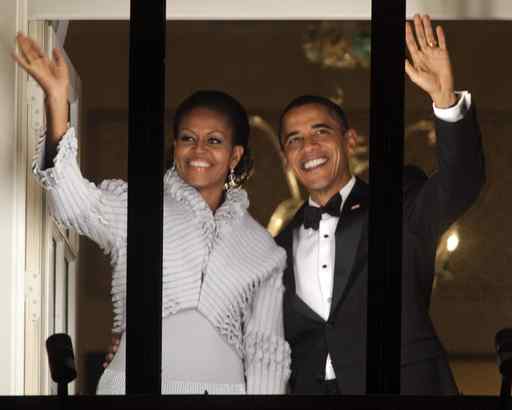
President Barack and Michelle Obama wave to the crowd from a balcony at the Grand Hotel in Oslo, Norway, after he accepted the Nobel Peace Prize at the city hall in 2009.
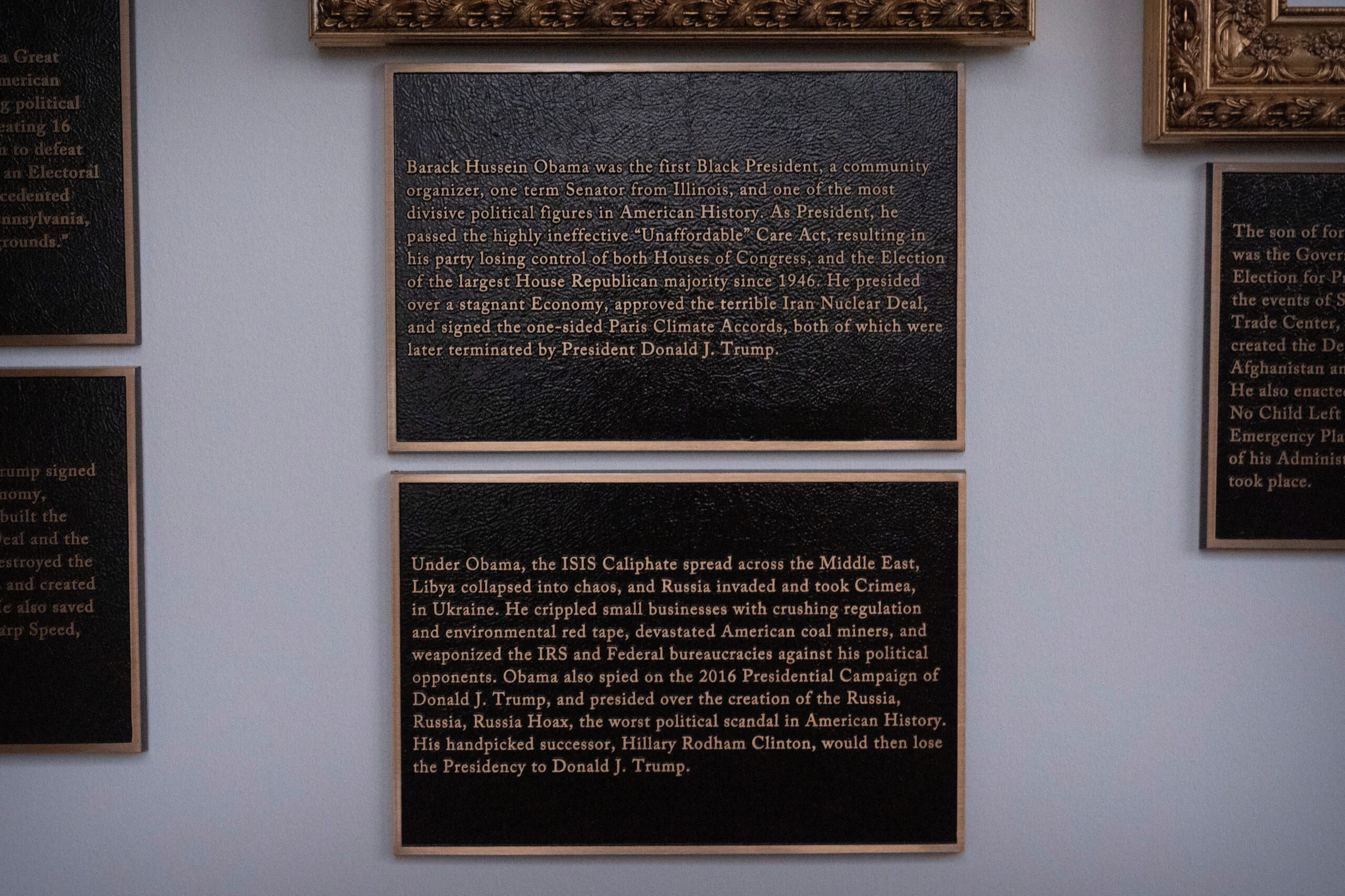
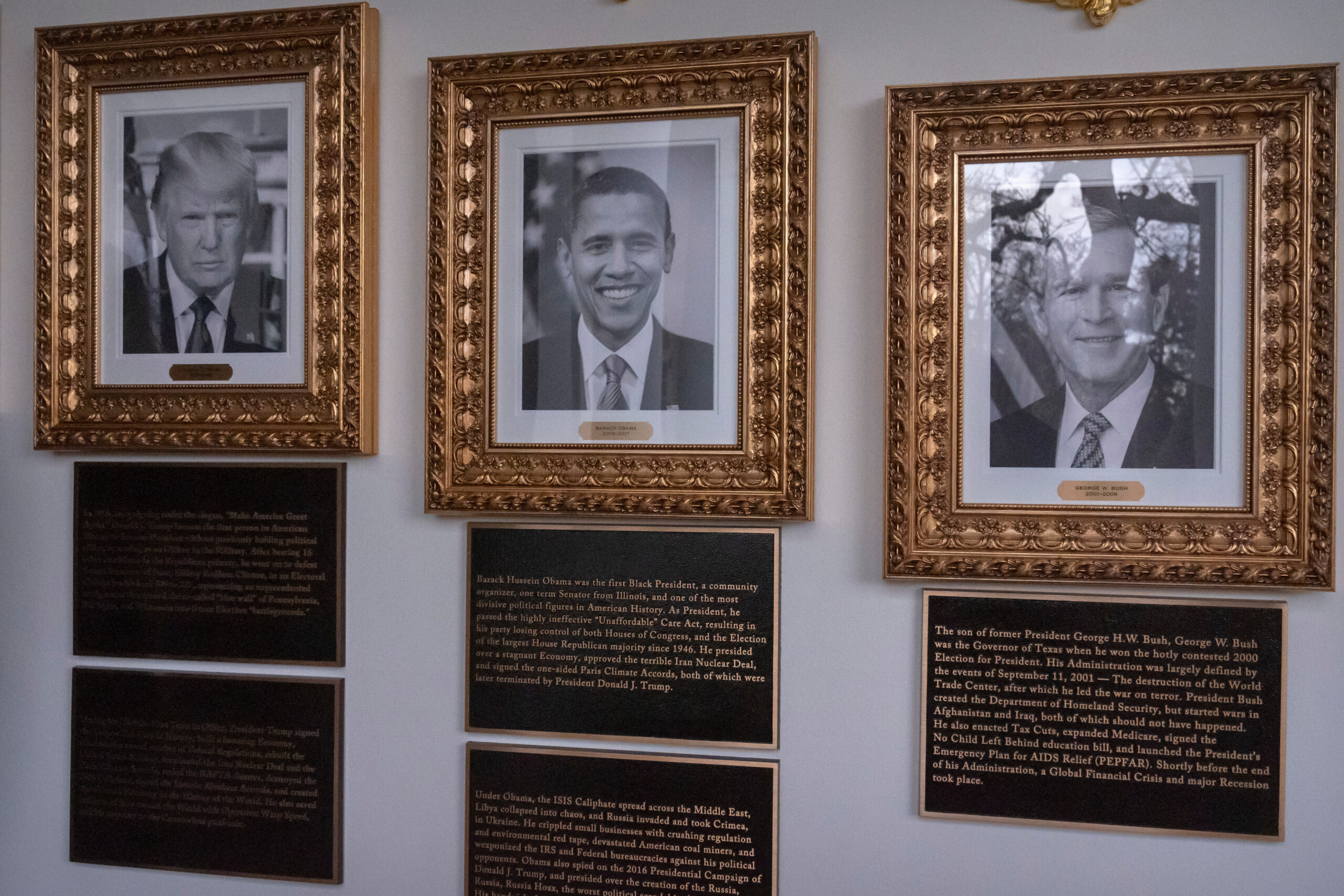
Trump also ordered the installation of plaques under the photos of his presidential predecessors, and used the one under Obama’s to bash his legacy, calling him “one of the most divisive political figures in American history” and making other false claims.
Plaques of explanatory text are seen beneath a framed portrait of former President Barack Obama on the Presidential Walk of Fame on the Colonnade of the White House, Wednesday, Dec. 17, 2025, in Washington. Portraits of President Donald Trump and former Presidents Barack Obama and George W. Bush with plaques of text below are seen on the Presidential Walk of Fame on the Colonnade of the White House, Wednesday, Dec. 17, 2025, in Washington.
White House press secretary Karoline Leavitt tried to walk Trump’s post back, writing, “This is from an internet meme video depicting President Trump as the King of the Jungle and Democrats as characters from the Lion King.”
She added via text, “Please stop the fake outrage and report on something today that actually matters to the American public.”
There’s nothing fake about our outrage. We see Trump. We know what he’s doing by pulling out that old racist trope. Even Black Trump supporters like Sen. Tim Scott (R., S.C.) see this for what it is. “Praying it was fake because it’s the most racist thing I’ve seen out of this White House. The President should remove it,” Scott wrote on social media.
This week’s column covers housing debates in Harrisburg, admissions policies at the school district, and more bad zoning overlays.
Go big or go home
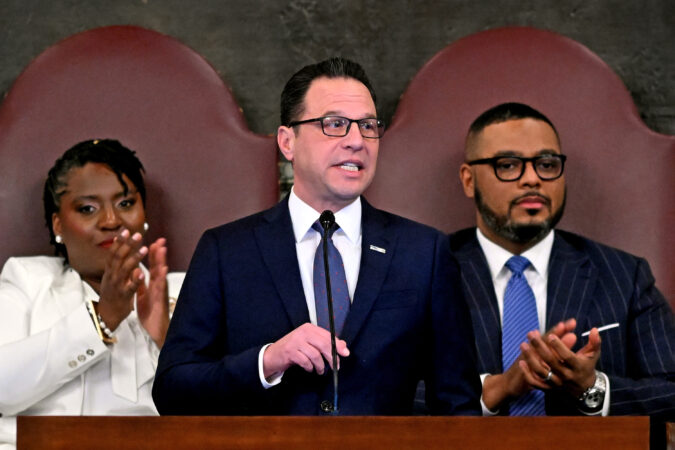
Philadelphia Mayor Cherelle L. Parker is no longer the only person with an ambitious housing plan. Gov. Josh Shapiro joined her this week, pledging in his budget address to create a billion-dollar state fund to encourage housing production in local communities. The guv is echoing a bipartisan consensus that there simply aren’t enough homes to meet the demand. There’s just one problem: Many housing experts say Shapiro’s ideas won’t move the needle on production.
That’s because his plan is based entirely on carrots, avoiding the creation of the kind of statewide building standards that have been most effective elsewhere.
While factors like interest rates and the cost of construction impact housing starts, local zoning rules are also a key constraint on homebuilding. Many municipalities maintain strict rules that make it impossible to build anything other than McMansions. In the few towns that do allow for new construction, the mismatch between supply and demand means developers can charge outlandish prices. The new Coulter Place in Ardmore starts at around $3,000 a month for a one-bedroom unit.
In states like California, the debate over housing has been going on for over a decade. State leaders there also sought to use an incremental approach and avoid attracting the ire of interest groups that are committed to the current system of regulating housing. The result has been the legislature routinely needing to revise the plan. Instead of starting with a half-measure, Pennsylvania should get things right the first time.
State Rep. Tarik Khan has proposed what he calls the “Golden Girls Law,” named after the famed ‘80s sitcom. Many municipalities restrict unrelated women from living together, which would have made scofflaws out of Blanche, Rose, Dorothy, and her mother if the show were set in Pennsylvania. Khan’s bill would end those bans.
State Rep. Greg Scott wants to eliminate parking minimums, and State Rep. John Inglis III has introduced bills that would require municipalities to allow for more duplexes and triplexes. Shapiro should put his weight behind these efforts, as well.
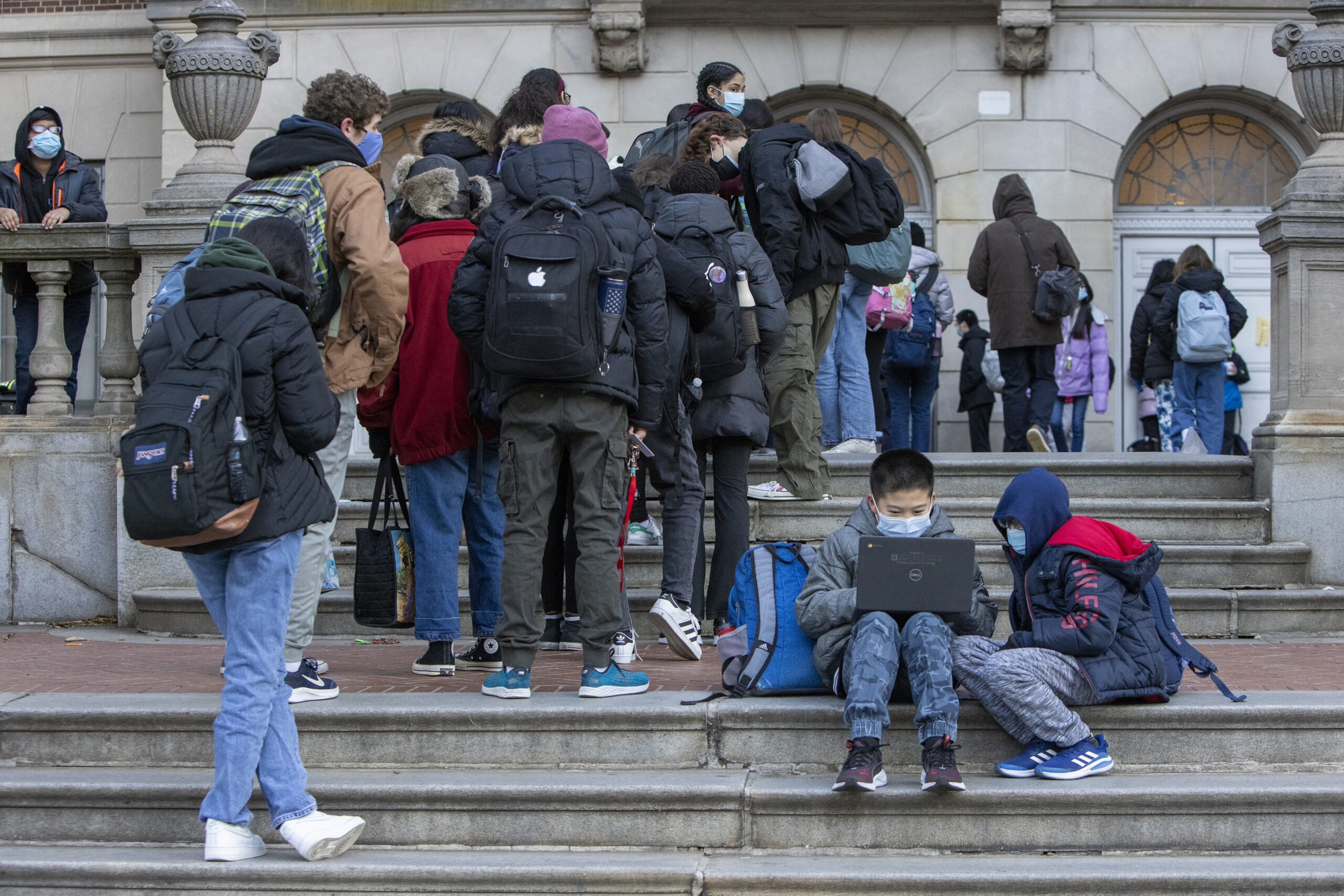
Students outside Masterman High School in 2022.
Polarizing magnets
During the pandemic, the Philadelphia School District was faced with a conundrum: how to decide who got spots at the city’s well-regarded magnet schools, given the state’s cancellation of the Pennsylvania System of School Assessment, or PSSA, standardized tests.
The schools — and standardized tests — have often been criticized for having cultural and socioeconomic biases. The demographics at Masterman and Central (where I attended) do not match those of the district overall, while standardized test scores tend to reflect the socioeconomic status of the students taking them. To many, this is enough evidence to scrap the magnet system, the tests, or both.
The district’s solution was to take over admissions, which had traditionally been handled by the schools themselves, and subject applicants to a lottery process. To address equity concerns, some zip codes were given priority access to the schools. Students at predominantly Black George Washington Carver Middle School, who had been promised a spot at the partner high school if they maintained good grades, saw those pledges revoked. The district also created a computer-graded writing test, although that was quickly phased out. Some parents saw the revamp as a blatant attempt to discriminate against Asian students. A bipartisan federal appeals court ruled this week that these families have a case.
With the state once again administering PSSAs, and with the new lottery system not having a substantial impact on demographics at the schools, it is worth questioning whether the new process represents any improvement at all.
Councilmember Jeffery Young Jr. in chambers as City Council meets in December.
Day of Jay
This column’s favorite City Council member, the 5th District’s Jeffery “Jay” Young Jr., decided not to advance his controversial bill to ban housing construction on or near the former Hahnemann University Hospital campus after serious pushback from local community groups and the Planning Commission. Unfortunately, the attention given to the Hahnemann bill may have helped two of his other bad ideas evade scrutiny.
Young got two bills through the Rules Committee. One bill is aimed at preventing blight by restricting demolitions of vacant property. Ironically, most development experts say the bill will likely increase blight by incentivizing owners to create hazards to justify demolition or providing more space for squatters to operate.
Young also introduced a bill creating an 11 p.m. curfew for some businesses within his district, which he said is aimed at stopping nuisance businesses that are selling drug paraphernalia and, per Young, sometimes the drugs themselves.
By that logic, selling drugs at 10:59 p.m. will still be allowed.
When Philadelphia temperatures dipped to near zero last week, the frigid weather was so unbearable that most of us retreated indoors. Of course, our homes were warm and well-lit, although the threat of losing power was unnerving.
For my friend Maisie, whose family lives in the Philly area but who is doing research in Kyiv, Ukraine, on blast injuries and coordinating international programs to help amputees, there is no escape from subzero weather.
When I spoke to her on the weekend, she was huddled in two down parkas, under a mountain of blankets, and hugging her dog, Olly, for warmth, having had no heat for three weeks.
Thanks to Vladimir Putin, Kyiv and other major Ukrainian cities have been under massive missile and drone attacks deliberately aimed at civilian heating and power infrastructure. All in an effort to freeze Ukrainians into submission.
Such attacks on civilians are a war crime.
Donald Trump is helping Putin weaponize winter. The president echoes Russian propaganda, claiming Putin agreed to a weeklong pause in bombing energy infrastructure — even as Putin was raining down record numbers of missiles on apartment buildings, a maternity hospital, and power grids. Kyiv is only expected to receive four to six hours of power daily for the rest of February.
To make his pro-Russian stance clear, Trump had a framed photo of himself and the Kremlin leader, taken at the failed Alaska summit last August, put up in the White House Palm Room, above one of him and a grandchild. Only Trump could consider it appropriate to hang a photo of a modern-day Adolf Hitler in the White House visitors’ area.
Moscow, of course, loves it. To quote the X post of Putin’s special envoy, Kirill Dmitriev (who has brainwashed his White House counterpart, Steve Witkoff, into adopting Moscow’s positions): “A picture is worth a thousand words.” Indeed.
Other pictures to consider are those of mothers and children clinging to each other in underground subway stations — reminiscent of the London Blitz — because they fear repeated Russian drone attacks on apartment blocks, or because they simply have no heat.
“Even if you can get food, you don’t need a refrigerator,” Maisie, whose last name I’m not using from safety concerns, told me via WhatsApp. “Any food you have freezes.” Her electricity is sporadic, she told me, barely giving time to charge power banks, a small heater, her laptop, and her phone.
“It got so bad these past weeks that I remember a moment when I realized I hadn’t felt my toes in so long, I took off layers of socks to realize they had blistered so much from the cold that they were bleeding.
“A lot of grocery stores were closed, and it was a mad rush when they were open. Sheets of ice are coating every street, which makes it particularly difficult for the elderly.
“Despite all this, Ukrainians are still holding on, adapting, supporting one another and enduring conditions that should never be normal in the civilized world,” she said.
What infuriated Ukrainians this week was Trump’s repeated claims that his deal-making skills had persuaded Putin to stop bombing energy infrastructure for a week, until the trilateral talks in Abu Dhabi, United Arab Emirates. Putin “kept his word,” Trump told White House reporters on Tuesday.
No, Putin did not keep his word.
Drones and missiles on power distribution sites halted for barely two and a half days, during which Russia kept hitting residential buildings — along with workers repairing damaged energy infrastructure. Then, with the missiles saved up from the two-day “energy ceasefire,” Russia launched a massive strike against energy targets even as Trump was touting that he had talked Putin down.
Any president with minimal smarts would have grasped by now that the Russians are trolling him.
Trump has been pushing since the Alaska summit for a direct meeting between Putin and Ukrainian President Volodymyr Zelensky, and the Kremlin recently offered one — if it took place in Moscow. The slimy Russian foreign minister, Sergey Lavrov, said his country would guarantee Zelensky’s safety.
Needless to say, Zelensky — whom the Russians have tried to assassinate many times — declined the honor. One doesn’t have to be a fortune teller to imagine poisoned soup (a tactic used by Russia against a previous Ukrainian president) or a sudden fall from a window. Yet, no doubt, Trump will soon be criticizing Zelensky for refusing this golden opportunity.
Similarly, the U.S.-Ukraine peace talks pushed by Trump — along with this week’s trilateral meeting of U.S., Ukrainian, and Russian officials — are a farce. That’s because Trump refuses to press Putin to make any concessions, and the Russian leader has yet to veer from his position that Ukraine slash its army, change its president, give up unconquered territory, and refuse any strong Western guarantees.
In fact, chief White House negotiator Witkoff, an ill-informed real estate mogul who seems to be Trump’s main emissary to everywhere — from Israel to Iran to Russia — insists Kyiv cave to Putin’s key position: give up a belt of Donetsk that Ukraine still holds, which is the main fortified barrier that prevents Russian troops from moving into central Ukraine.
Witkoff, who, like Trump, thinks only of land deals, might as well be calling on Ukraine to commit suicide. He has actually proposed that this armed Ukrainian territory could become a “free trade zone.” As with the “energy ceasefire,” Putin would respect that zone for about five minutes before sending his troops in.
Yet, through sheer grit, Ukrainians are enduring and preventing serious Russian gains on the front, as the Kremlin’s war economy sags and Russia suffers staggering numbers of military casualties. I believe if Ukraine can get through this winter, with European help, Russia will be unable to continue the war at this level.
So now would be the perfect time for Trump to push back strongly against Putin’s “energy war” on civilians. Having basically halted military aid to Ukraine, the president could still help Kyiv by selling Europe desperately needed air defense weapons that it would then pass on to Ukraine. The president could also finally stop blocking a vote on bipartisan congressional legislation to impose more sanctions on Russian oil sales.
By turning up the heat on Putin, Trump could help turn the heat back on for Ukraine. But don’t hold your breath.
The only slight opening I can imagine is if the president finally grasps how weak and foolish his bow to Putin makes him look on the world stage, and how dangerous his links to Putin are to his own legacy.
Rather than be awarded the Nobel Peace Prize, Trump looks more likely to be tarred by his subservience to the greatest war criminal of the 21st century, who played him like a military drum.
A massive 1.3 million-square-foot Schuylkill County warehouse that just 13 months ago bustled with 505 workers moving cheap overstock goods like shower curtains or pet cleaners for now-bankrupt retailer Big Lots sits utterly abandoned, its dozens of truck bays fenced off and surrounded by a silent shroud of snow.
It’s hard to imagine, but in the very near future, this white behemoth could be warehousing thousands of desperate human beings behind its bland, baby blue-trimmed concrete walls. On Monday, U.S. Immigration and Customs Enforcement filed a county deed that confirmed its $119.5 million purchase of the Big Lots facility — one more island in an American gulag archipelago of detention camps for the undocumented immigrants ICE is aggressively arresting from coast to coast.
“It hurts my heart,” the Rev. Brian Beissel, pastor at Christ’s United Lutheran Church in nearby Ashland, told me, choking up a bit, as we sat in a car outside the warehouse entrance.
When I asked him to expand on the source of that pain,Beissel’s response epitomized what other local residents have been saying about the stunning ICE news — a blend of small-town fears about stressed infrastructure with spiritual unease over the images of violent immigration raids in Minneapolis and elsewhere. He invoked Schuylkill County’s deep resentment of the 20th-century coal barons who took the money and the minerals and then ran. “They’re promising jobs, but how long are they going to be here?”
But then Beissel — a Schuylkill County native who sees himself as a not very political preacher, in a county that Donald Trump won in 2024 with nearly 71% of the vote— pivoted to his moral dismay over a citizenship-seeking restaurant owner and father of a 2-year-old he knows from nearby Danville who was arrested by ICE and agreed to return to Mexico. “The Bible is pretty darn clear,” he said, “that we welcome the stranger.”
Brian Beissel, pastor at Christ’s United Lutheran Church in Ashland, Pa., stands in front of the former Big Lots warehouse in Tremont, Pa., that has been purchased by U.S. Immigration and Customs Enforcement (ICE), on Wednesday.
The Trump regime told America this day was coming. Its acting ICE director, Todd Lyons, said in an April interview that he wanted to run the agency like a business, with a deportation process “like [Amazon] Prime, but with human beings.”
Ironically, the soon-to-be ICE detention center in Schuylkill County, about 100 miles northwest of Philadelphia, is less than a mile from a massive new Amazon fulfillment center that opened in 2023. Soon, trucks carrying consumer bric-a-brac to Tremont will be jostling on Interstate 81 with buses carrying day laborers or restaurant servers in handcuffs to those reborn rows of truck portals.
ICE, flush with a whopping $45 billion in cash from Trump’s so-called Big Beautiful Bill to construct its human supply chain, is currently racing to buy sites for 23 detention centers with as many as 76,500 beds from coast to coast — often keeping communities like Tremont in the dark to thwart the inevitable opposition.
In fact, the Schuylkill County deal is the second ICE facility in east-central Pennsylvania announced just this week. A different warehouse location, which ICE envisions as a kind of feeder camp for 1,500 detainees, was also purchased for $87 million in Hamburg, Berks County — only 25 miles from Tremont.
Even if you could somehow put the morality of what many see as concentration camps on U.S. soil to the side, the government’s scenario for tiny Tremont — a coal-country hollow of two-story brick homes and faded American flags with just 2,000 residents — boggles the mind.
The Big Lots site could soon see a community of nearly 10,000 people — the 7,500 detainees and an estimated more than 2,000 workers to oversee them — that would instantly become the second-largest city in Schuylkill County (after Pottsville, the county seat). It’s just 300 yards from the largest daycare center in a township where the water and sewer system is already at capacity, with no local police force or nearby hospital to deal with the inevitable emergencies. The U.S. government won’t be paying the roughly $1 million a year in annual property taxes that propped up local schools and county and municipal services.
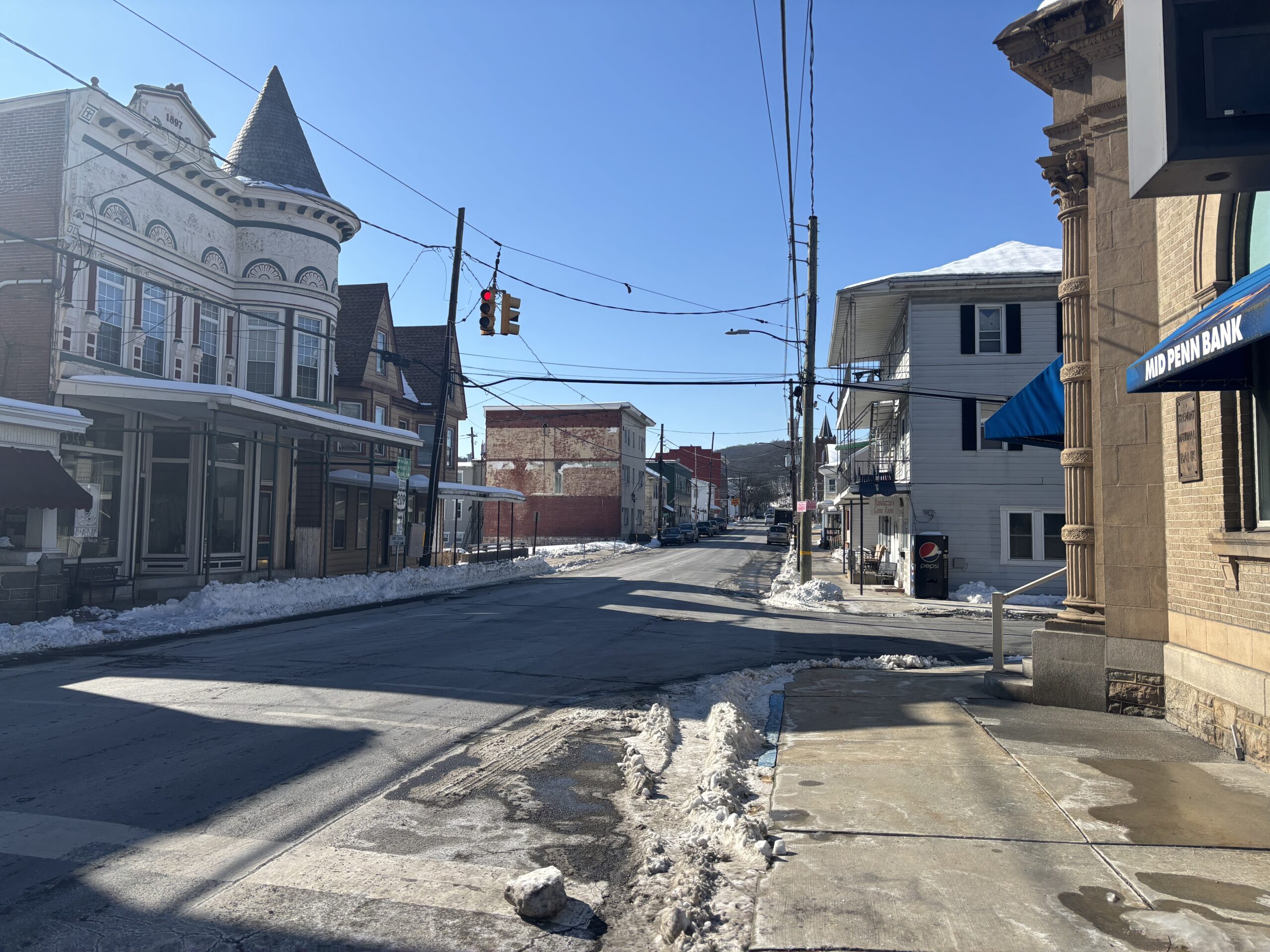
The empty streets of downtown Tremont, Pa., on Tuesday. The 2,000 people of the coal-country borough and its surrounding township would be dwarfed by 7,500 potential detainees at a planned ICE facility on the edge of town.
It’s these kinds of not-in-my-backyard worries that are driving a lot of the initial concern in Schuylkill County, especially from politicians who are cautious in talking about the fraught immigration issue in blood-red Trump country. “I am not going to get into a debate over the overarching immigration policies of the United States of America,” the GOP chair of the county commission, Larry Padora Jr., told a meeting on Wednesday, where he confirmed the ICE purchase of the warehouse.
But a growing number of neighbors do want to talk about those immigration policies, and the stench of inhumanity.
“I’m scared,” Tana Smith, a 24-year-old server at Behm’s Family Restaurant, the local wood-paneled breakfast hangout, told me about the pending ICE project. She, too, blended fears about the daycare site and possible escapees from a detention center with empathy for those same would-be detainees. “People’s families are just being, you know, ripped apart,” she said. “It’s really sad.”
Smith said she’d already gently lobbied her dad — a Republican who said, “I guess it’s just taking care of the illegal people” — against the ICE plan. “I was like, I don’t feel like that’s true at all,” she said. “I feel like they’re going after everyone.”
Andrea Pitzer, author of the definitive history of global concentration camps, One Long Night, said Tremont residents like Smith are right to be alarmed. She told me her research found that authoritarian regimes frequently rely on existing sites like abandoned warehouses or factories as they launch a growing network of gulags.
“The U.S. is clearly echoing previous history with these warehouse acquisitions,” she said. “Dachau — not a death camp, to be sure, but one of the earliest Nazi concentration camps — took over a converted factory when it began its heinous existence in 1933.”
A massive new ICE detention center is coming to Tremont Township in Schuylkill County. At full capacity, it would have a population roughly equivalent to 30 times the Township’s current population: https://t.co/Zp385ZKcjJ
Pitzer asked, “What things will they do on this new, huge scale behind barbed wire?” She noted that the warehouses are a massive expansion of a system that’s already at a record for detainees, with more than 73,000, and is already plagued by squalid conditions, a measles outbreak at the family detention site in Texas, and a death rate as much as 10 times as high as during the Biden administration.
No wonder ICE has moved to buy up new sites — including the two Pennsylvania warehouses — with a practically Soviet level of state secrecy. There are no public hearings. Top lawmakers from both parties have been left in the dark. “This was quiet,” the Democratic county commissioner, Gary Hess, told the meeting. “It was silent. And then, bango! There it was.”
“These will not be warehouses — they will be very well-structured detention facilities meeting our regular detention standards,“ the U.S. Department of Homeland Security insisted in a statement Wednesday. It added that the federal acquisitions “should not come as news,” as ICE expands its nationwide dragnet.
Yet, arguably the region’s most powerful politician, Republican U.S. Rep. Dan Meuser, who voted for the $45 billion fund, has sounded, fittingly, like TV’s fictional German prison camp guard, Sgt. Schultz: He knows nothing, nothing! His spokesperson said Meuser, with both planned facilities in his 9th Congressional District, “has requested a call with … [ICE], and our office has reached out for additional information to better understand the details of the situation. We have not yet received a response.”
Instead, it fell on Meuser’s likely Democratic opponent in November — Rachel Wallace, a former chief of staff for the U.S. Office of Management and Budget who has returned to her native Pottsville — to organize a town hall last week when the project was still rumored.
Lisa Von Ahn (left) and Josephine Kwiatkowski, members of the Schuylkill County chapter of Indivisible, attend a county commissioners meeting in Pottsville on Tuesday to speak out against a proposed ICE detention center in Tremont, Pa.
Most of the 100 or so peoplewho packed a fire hall voiced opposition, but for a variety of reasons. The local GOP state representative, Joanne Stehr, attended and agreed with the not-in-my-backyard concerns, but then drew loud boos when she reportedly said: “I’m saying ICE has a job to do, and it’s going to get done. We are taking out the trash.”
The growing uproar in Schuylkill County echoes brewing battles in many of the 21 other locations, even in areas that voted heavily for Trump in 2024. In Ashland, Va., a Canadian-based warehouse owner canceled its planned deal with ICE after economic pressure and opposition from county commissioners. Elected officials in Roxbury, N.J., and other proposed sites are also fighting to keep ICE out, but it’s unclear how much traction such an effort will get in red rural Pennsylvania.
“We want economic development, and we want good businesses that are part of the community,” Wallace, the congressional candidate, told me as she decried the process and her opponent Meuser’s silence. “And this is the opposite of that.”
And a growing number of Schuylkill County residents say their biggest alarm is less over the NIMBY concerns and more about the idea of their backyard hosting an American concentration camp.
“We have seen firsthand the brutality that government agents are using to detain American citizens, legal immigrants, and law-abiding immigrants without legal status, and the violence in our streets caused by masked, heavily armed agents,” Josephine Kwiatkowski, an Army veteran and retiree from Pottsville, told the commissioners. She said these scenes and “the civil rights violations, the lack of humanitarian conditions [in current ICE facilities], and the discounting of the Constitution are the same issues that I was willing to sacrifice my life to oppose.”
Pitzer, the concentration camp historian, said the time to act is now, before these proposed gulags are up and running.
“Those who made excuses for or ignored these kinds of camps in Russia in the 1920s or Germany in the 1930s couldn’t know how much more vast and lethal those systems would become a decade later,” she said. “But we, who have those examples and other horrors from around the world in our rearview mirror, have no excuse.”
This should be a five-alarm fire, not just for the politicians who’ve been trusted with keeping an American republic, but for citizens who are beginning to grasp a monstrous reality that was set into motion when Trump’s xenophobic demagoguery won a narrow plurality on Nov. 5, 2024. The image of our neighbors shipped in a supply chain like patio furniture and disappeared into the bowels of a Big Lots warehouse should have all of us asking a fundamental question.