Category: Columnists

  • America launches its 250th birthday year by becoming a rogue state

    America launches its 250th birthday year by becoming a rogue state

    Technically, the United States won’t turn 250 until July 4. But Donald Trump dictated this weekend that before the dawn’s early light of only the third day of America’s Semiquincentennial was soon enough for the bombs to begin bursting in air.

    At 1 a.m. Saturday, guided by a luminous full moon, a U.S. air armada of more than 150 planes roared over the Venezuelan capital of Caracas and far-flung military bases across the South American nation, waking up a metropolis of three million people with massive explosions.

    An 80-year-old woman, Rosa González, was killed when a U.S. bomb slammed into her three-story apartment complex in a coastal neighborhood near the Caracas airport, according to the New York Times. The dead-of-night strike wounded several of her neighbors, tore a massive hole in the side of the apartment building, and even riddled with shrapnel a family’s portrait of Simón Bolívar, the leader who liberated Venezuela from colonialism — for a time, anyway — in 1820.

    González was one of about 80 people, both security forces and civilians, killed Saturday in the first U.S. land strike in what by Trump’s own admission is “a war” — America’s latest and maybe its strangest yet. With more than 100 civilian sailors blown up in a running series of U.S. drone attacks on boats off South America, which the Trump regime claims, without offering proof, are smuggling drugs, American imperialism is growing more deadly by the day.

    It’s hard here not to echo a notorious quote from Philadelphia sports history: For who? For what?
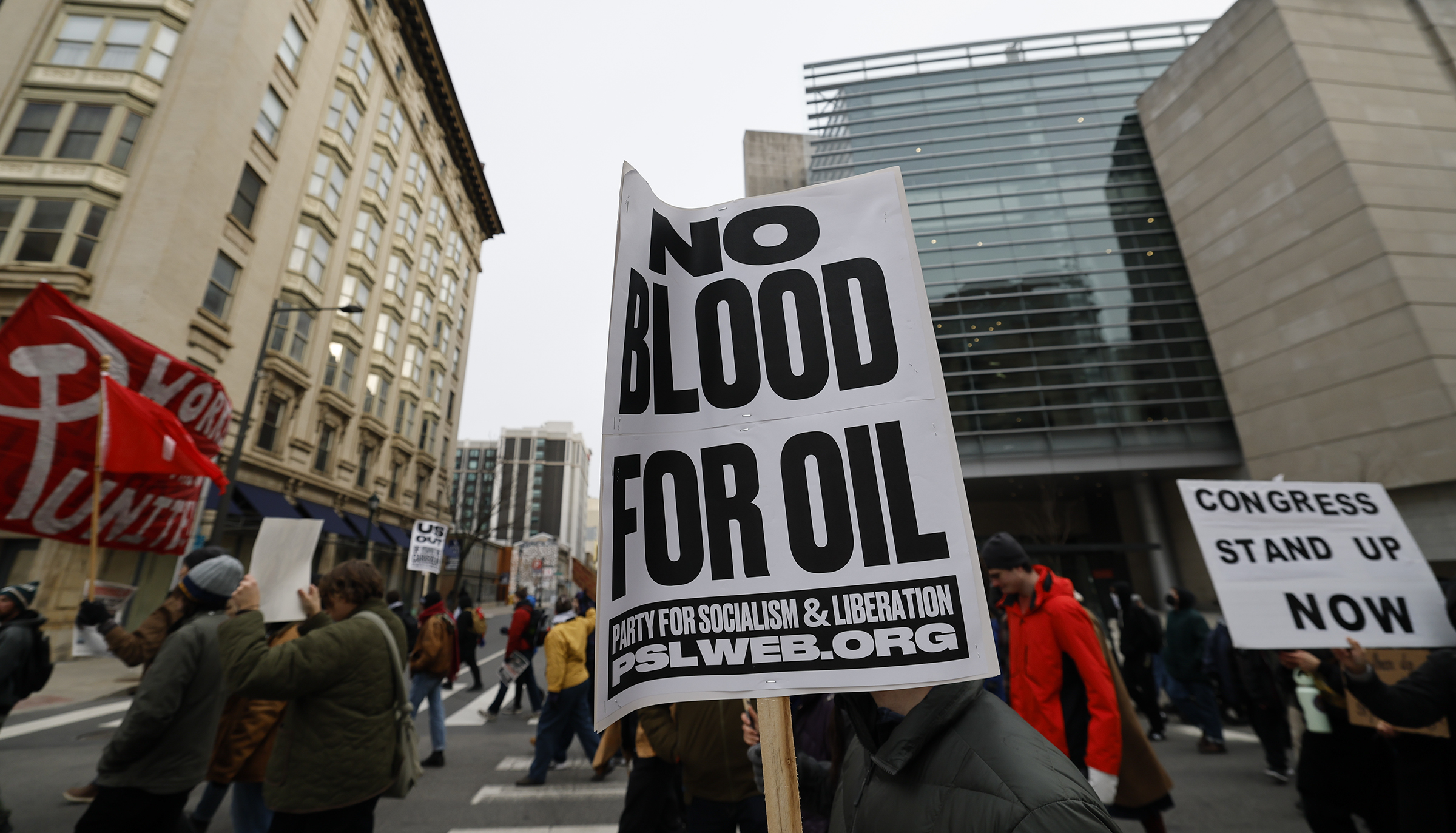
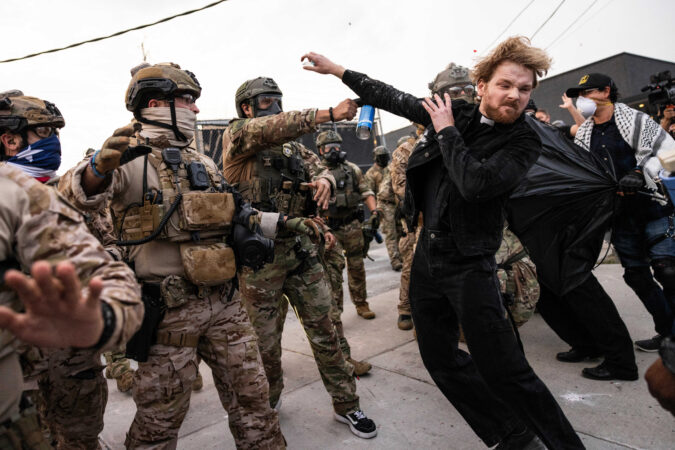
    Demonstrators march along North Broad Street reacting to U.S. strikes on Venezuela on Saturday.

    Trump’s splendid little war in Venezuela comes drenched in so many lies, buried under layers of justifications that change almost hourly, and so far outside the boundaries of both U.S. and international law that it makes George W. Bush’s dishonest and disastrous misadventure in Iraq feel like Gettysburg by comparison.

    That Venezuela’s former ruthless strongman leader, Nicolás Maduro, and his wife are currently sitting in Brooklyn’s federal lockup, captured by Delta Force soldiers amid the bombing and facing a U.S. indictment that asserts they were also drug lords, is pretty much the only certainty in a military crusade with a future rife with unknown unknowns.

    In a stunning news conference at Trump’s Mar-a-Lago mansion in Florida — where just 59 hours earlier, guests dined from a caviar bar as the president auctioned off a painting for $2.75 million — Trump told the world that the United States now “runs” Venezuela, despite no American personnel being posted inside the country, twice the size of California. And he made it clear that the blood of González and the others was spilled for oil, as POTUS 47 talked at length about U.S. hegemony over 17% of the world’s known oil reserves, but made no mention of restoring democracy in Venezuela.

    None of this stopped a parade of retired generals from flooding cable TV news networks — even the alleged liberal one, MS Now — to talk about the tactical success in seizing Maduro and pummeling Venezuela’s defenses with no U.S. deaths, even as the bigger strategy remains a black hole. That level of commentary, backdropped by images of cheering Maduro-hating refugees in Miami and elsewhere, belied the fact that invading Venezuela was wildly unpopular with the American people.

    Just last month, a Quinnipiac University poll found that 63% of U.S. voters opposed “U.S. military action inside Venezuela,” while just 25% supported such a move. Polling questions explicitly about removing Maduro have seen similar results. This matters a lot, but then other U.S. wars that history remembers as pretty terrible polled well at first. The much bigger problem with invading Venezuela is that it’s illegal. Incredibly illegal.

    To be sure, the imperial U.S. presidency has been simmering since 1945, but Trump has utterly abandoned one of the most cherished principles of America’s founders — that the power to declare war rests with Congress. Not only did the Trump regime not seek approval on Capitol Hill — where its beyond-flimsy casus belli could have been debated in front of the American people — but the president didn’t even deem it necessary to inform key congressional leaders.

    The attack was also a blatant international law violation of the charter of the United Nations — the organization that the U.S. spearheaded in 1945 to prevent future wars and unwind colonialism — which aimed to end unprovoked aggression. Geoffrey Robertson, who once led a U.N. war-crimes tribunal in Sierra Leone, told the Guardian that the Trump regime “has committed the crime of aggression, which the court at Nuremberg described as the supreme crime — it’s the worst crime of all.”

    To repeat: For who? For what? Is Trump eager for a bombastic military op to distract voters’ attention from the ongoing cover-up of the Jeffrey Epstein files, the explosive testimony of prosecutor Jack Smith about the president’s complicity in an attempted coup on Jan. 6, 2021, and skyrocketing prices for healthcare and at the grocery store? Is this the big payback to Big Oil CEOs who responded to Trump’s demand for $1 billion in campaign cash? Is he satisfying the vain psychoses of Silicon Valley billionaires who want a warm tropical paradise for high-tech “networked cities” outside any laws? Is this all just a narcissistic power trip?

    Yes.
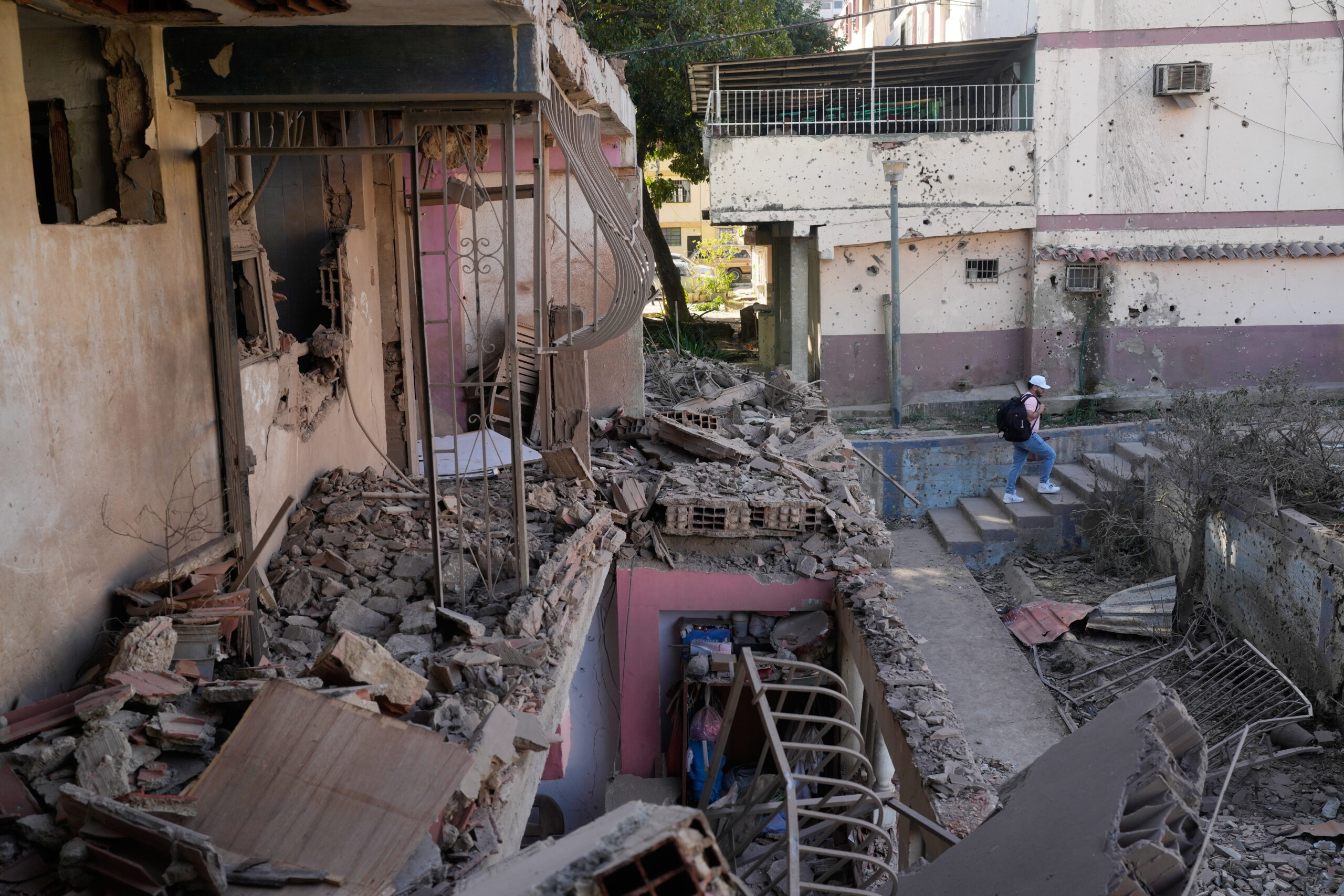
    A neighbor walks through an apartment building that residents say was damaged during U.S. military operations to capture Venezuelan President Nicolás Maduro, in Catia La Mar, Venezuela, Sunday, Jan. 4, 2026.

    Yes, this lethal disaster is a perfect storm of all of those things. But we can’t allow the blather of talking-head ex-generals or the cowardly passivity of the supposed opposition Democrats to blind us to the harsh reality of what just happened here. I didn’t think it could get worse than the utterly unwarranted 2003 Iraq War that inspired me to become an opinion journalist, but this is arguably worse, more akin to Vladimir Putin’s Russia invading Ukraine. On the 250th anniversary of America’s founding as a grand experiment in democracy, we are now a rogue state, a global pariah.

    We Are The Bad Guys,” the brilliant independent journalist Hamilton Nolan headlined his essay on Saturday, writing with painful accuracy that “the United States government under Donald Trump is the most dangerous force on earth, and a serious potential threat to every other nation, and the leading cause of geopolitical instability.”

    I noted above that this Venezuelan operation is largely shrouded in uncertainty and ambiguity, yet we need to acknowledge two bitter truths that can no longer be denied in the rocket’s red glare over Caracas.

    First, Donald Trump is a dictator now. To be sure, this has seemed an aspiration from the moment he stepped onto the Trump Tower escalator over a decade ago, with very mixed results, but now it’s a reality. The strike on Venezuela was a dictate, nothing more. There was zero effort to rally the American people behind him, zero effort to seek congressional input, and zero concern over the illegality of this operation, let alone its rank immorality. And if there is no meaningful opposition to his murders in Latin America, he will only consolidate his tyrannical power.
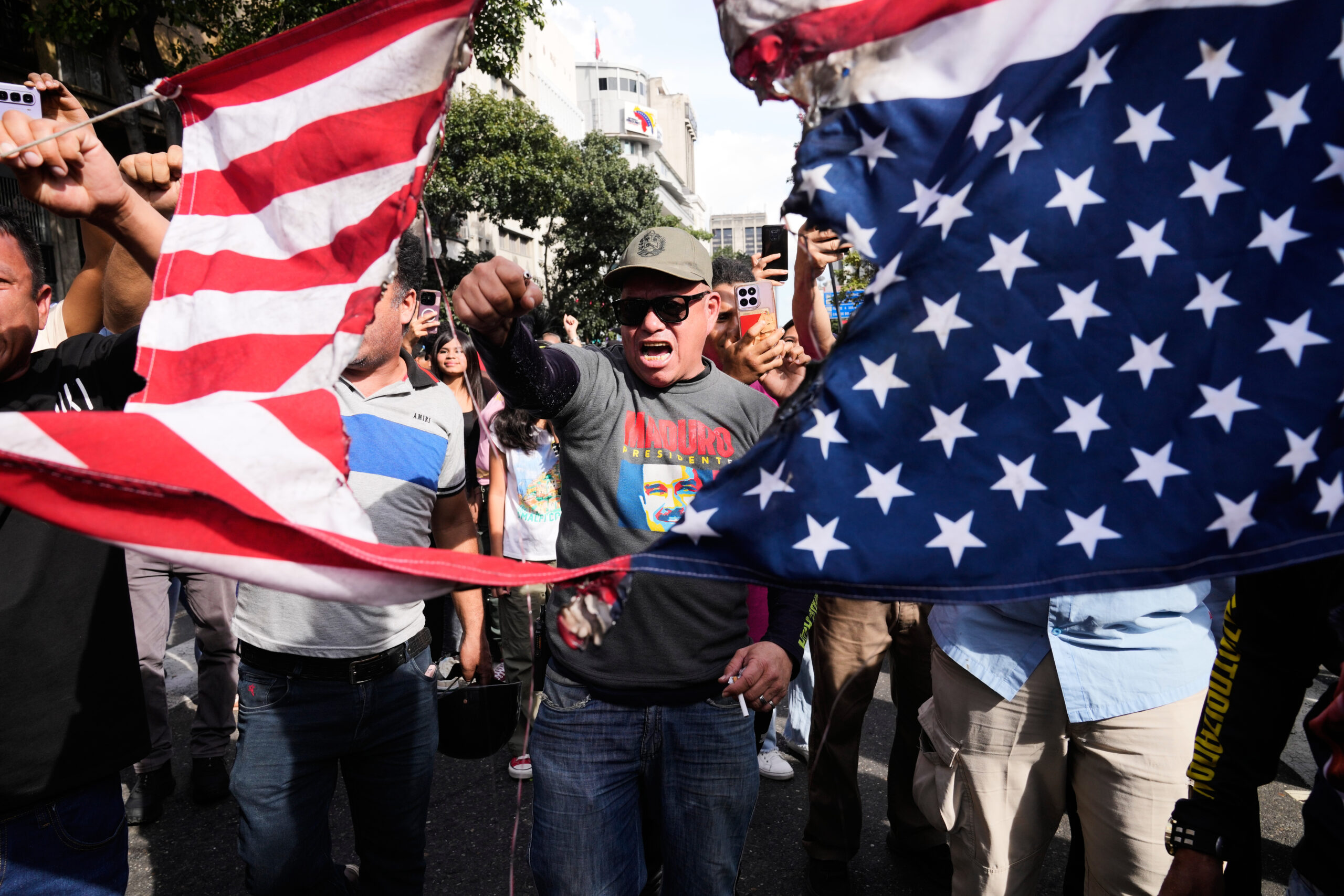
    Government supporters rip an American flag in half during a protest in Caracas, Venezuela, on Saturday, after U.S. President Donald Trump announced that U.S. forces had captured President Nicolás Maduro and first lady Cilia Flores.

    Second, the world is a much more dangerous place right now than we want to admit. As a boomer born in the aftermath of World War II, I’ve always worried that I’d live to see World War III — and I still do. But now I’m equally worried that there won’t be a global conflagration, but just a silent abandonment of the dream of a planet governed by the rule of law, with peace as its No. 1 priority.

    The real significance of what just happened in Latin America is that the world — and the disappearing liberty of its denizens — is getting carved up by amoral strongmen into “spheres of influence,” just as in Trump’s beloved Gilded Age of the 19th century. After Saturday, what is to stop China from seizing control of Taiwan, or Russia from looking beyond Ukraine to wider territorial ambition in Europe, or the Trump regime from seizing Greenland and the Panama Canal?

    Absolutely nothing. Except us.

    A dictatorial United States isn’t preordained, nor is a world where smaller nations are swallowed up by a real axis of evil. After all, 2025 ended on a surprisingly hopeful note of resistance, led by everyday folks from Minneapolis to New Orleans with their whistles and their gumption to get in the face of masked, armed goon squads.

    Let’s turn those flares of hope into a raging fire of opposition. If you’re mad today, show it in the streets, then call your member of Congress and let them know that a sternly worded letter won’t cut it. Trump’s illegal war demands nothing less than his impeachment, if not now, then after November, after the righteous flood.

    Let’s send a 250th birthday card to the diminished but still-beating heart of the true America and sign it with two words: No kings.
  • 2026 is a huge year for Philly. Here are your ideas for how we should tackle it.

    2026 is a huge year for Philly. Here are your ideas for how we should tackle it.

    Last year, I asked for your suggestions for what Philadelphia should create, destroy, or fix in advance of everything — and everyone — coming to our in our city in 2026.

    More than 600 ideas were submitted to The Inquirer for ways to improve the city as we prepare for the nation’s 250th anniversary, the FIFA World Cup, the MLB All-Star Game, and the NCAA Division I college basketball tournament next year.

    In other words, Philadelphians had thoughts. Of course, there were recurring themes that arose (more on those later), and there were folks who submitted suggestions well beyond the scope of the assignment. While I appreciate people’s visions, I don’t think we’re going to solve school funding, stop gun violence, end courtesy towing, or turn Regional Rail into a German-style S-Bahn by next year.

    But there were a lot of great ideas, and so, I now present this edited list, because if I included every suggestion, we’d be here until 2027.

    Simple things that are easy, free, or cheap to do

    • Cullen Kisner: “Drive around the city, literally section it off like trash trucks do, and remove any unnecessary traffic cones/street work signs/construction barricades/etc. It just [clogs] up the city and makes it look like a perpetual construction zone (which it is, but the tourists don’t need to know that).”
    • Brendan Yuhas suggests charging $17.76 for SEPTA passes and Indego bicycle rental passes during the week of Independence Day. He’d also like to see restaurants offer meals for $17.76.
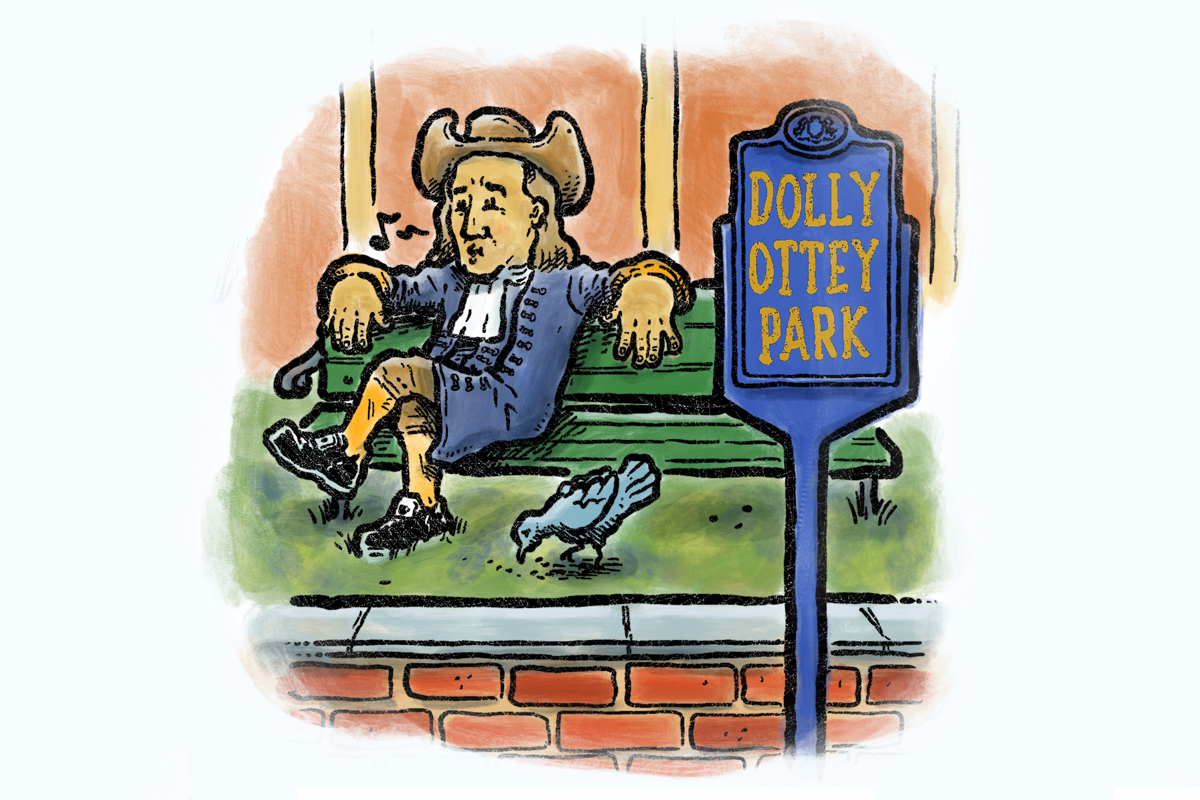
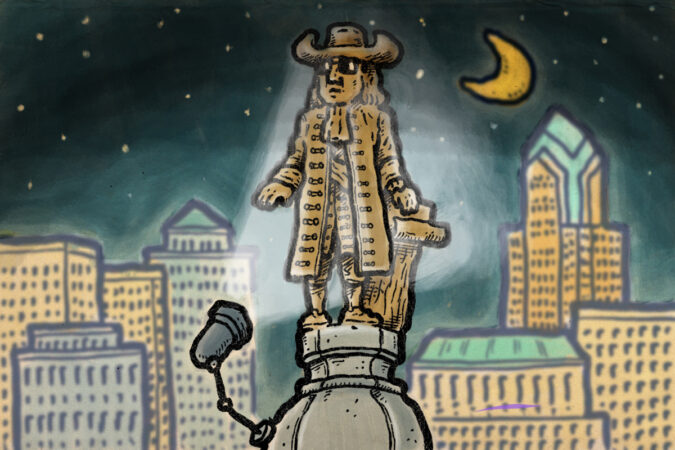
    • Brian Smart suggests illuminating the William Penn statue atop City Hall at night.
    • Beth LaPiene: “We need longer pedestrian crossing times on Center City streets. How does anyone cross Broad Street in 15 seconds, especially if it’s crowded?” (Another reader raised this issue with Vine Street as well.)

    Things that take some amount of time and/or money to address

    • Jason Berkhimer and Rogelio Ayllon separately requested that Philadelphia adopt a new city flag, an idea previously explored by The Inquirer. Berkhimer wrote that a new flag is “incredibly important to sew unity in this partisan time” (his pun, not mine), while Ayllon said it could be marketed on merchandise, making it “a win for vendors … and a win for the city in tax dollars.”
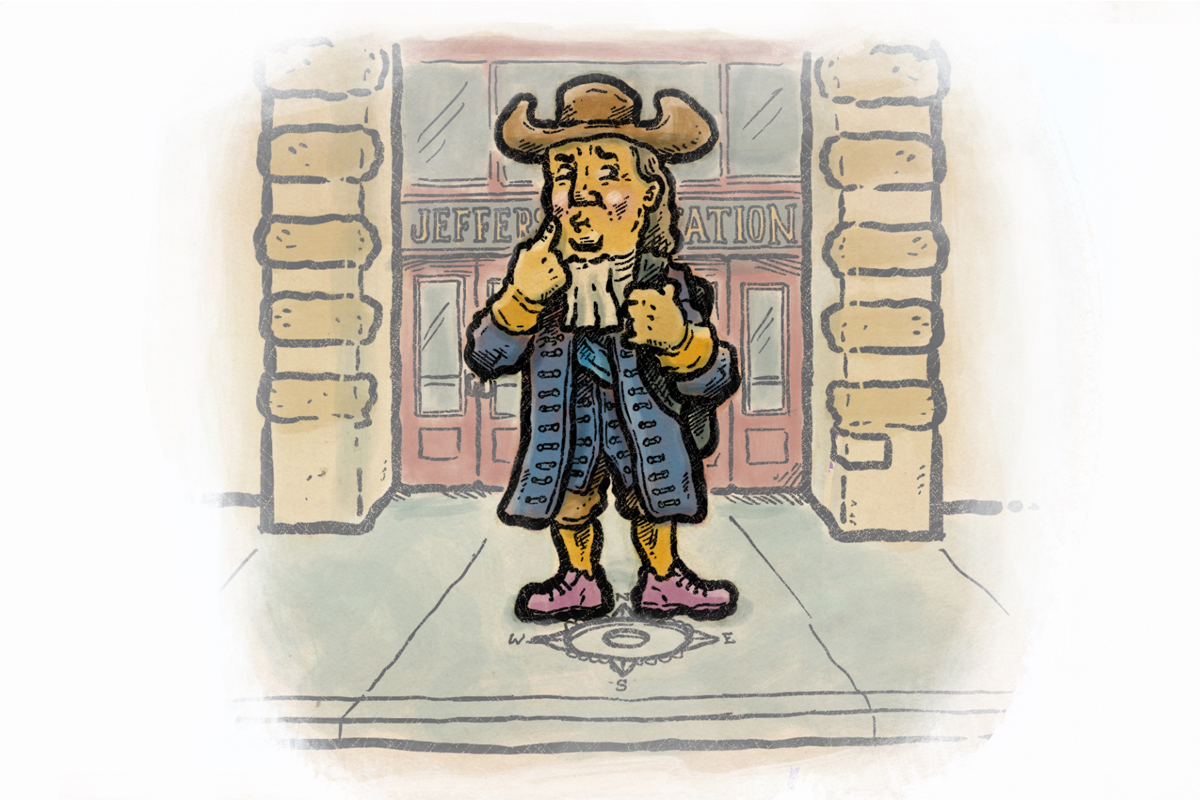
    • Anonymous: “Install compass roses outside of all El, trolley, subway, PATCO, and Regional Rail access points so people can quickly get an idea of which direction they need to go when reaching the surface street.”
    • The Association of Philadelphia Tour Guides and numerous readers who submitted their ideas independently would like to see the following reopened for 2026: City Tavern, the Declaration House, the LOVE Park Saucer, and the Second Bank portrait gallery.
    • Of course, Philly is all about the Benjamin Franklin too. Tom Rosenberg suggested rehabbing the exterior of Franklin’s post office on Market Street. “It’s dilapidated and looks awful,” he wrote. Rich Armandi bemoaned the fact that a plaque at the Second and Market Street subway stop in Old City that marked the site of Franklin’s first print shop has been missing since 2024. He wants it replaced, and he’d like a mural there that envisions what Franklin’s print shop might have looked like.
    • The Association of Philadelphia Tour Guides (who submitted a lot of great ideas in a well-curated slideshow) would like to see the Franklin Court Printing Office, a replica of an 18th century printing office, open seven days a week, instead of just weekends.

    Big things that take time, money, and cooperation

    • Several people asked for the city and the National Park Service to work together to make Independence Mall “more than a desolate lawn.” One suggested that an “easy change would be to move some existing statues or art installations from more obscure/lower visibility places (like Fairmount Park and Kelly Drive).” Other readers proposed adding trees, benches, and water features.
    • Jack Bellis would like to see the concourse below Broad Street (from Market to Locust) turned into a rainy-day attraction with Philly vendors and a centerpiece mini-golf course “created either in part or wholly by school students, in which each of the holes highlights a Philadelphia tourist attraction.”
    • Pete Silberman: “My idea is to repurpose the Southwark Piers, also known as Piers 38 and 40, to be playing fields and sports facilities.”
    • Mark Methlie’s idea is to “follow Boston’s lead” and create our own version of the Freedom Trail, a trail embedded in roads and sidewalks that leads to notable spots (which I also proposed after visiting Boston in 2024). Methlie, however, suggests multiple trails leading out of the Convention Center, including ones for history, art, science, cultural institutions, and food.
    • Bob Dix: “I would love to see the water taxis languishing under 95 to be taken out of mothballs and used for tours or transport … and they could be used for transit to the FIFA events in FDR.”
    • Association of Philadelphia Tour Guides: “Create an introduction park to Elfreth’s Alley at Second Street in the empty lot. Design it to include native shrubs, shade, colonial lamps, benches, and information displays.” (Note: In late November, it was announced that this one is planned to happen!)

    Fun activities and events

    • Tori Beard: “I’m a big fan of a Colonial Day Fest idea. Think Ren Fest, but for colonial-style activities and dress. Bonnets, butter churning, powdered wigs. Could even be held in the Independence Hall area.” (Note: The Museum of the American Revolution hosts an annual living history interpretation weekend called Revolutionary Philadelphia, but it would be great to see it expanded for 2026.)
    • The Association of Philadelphia Tour Guides suggests creating a tour and a music festival highlighting The Sound of Philadelphia artists like Teddy Pendergrass, Harold Melvin & the Blue Notes, and Tammi Terrell. I’d like to take it a step further and suggest a music festival in which current Philly musicians pay homage to Philadelphia musicians who came before them, regardless of genre. I’d love to see The Roots play the O’Jays, Jill Scott perform Bessie Smith, and Dr. Dog pay homage to Jim Croce.
    • Anonymous: “Pepper pot stew cook-off.”
    • Eli Fish: “Turn Headhouse Square into European-style plaza. No cars, tables in the street and under the headhouse cover, live music and outdoor dining. We know this can work because they started to do it during COVID and it was amazing.” (Note: This idea was also raised on Instagram by users who begged the city to “Make Headhouse interesting again.”)
    • Hugh Connelly suggests creating an iconic, solar-powered mural that looks like Philadelphia in 1776 during the daytime, but at night when a system of solar-powered lights illuminate it, the “new night image is one of futuristic Philly, a beacon for liberty for the next 250 years.”
    • Kevin Fennell: “There should be a steal the Declaration of Independence escape room.” Why yes there should be, along with a “National Treasure treasure hunt,” as suggested by one Instagram user.

    Off-the-wall ideas

    • Zach Marcum‘s idea is an official SEPTA cheesesteak joint: “We bring in a real Philly chef who will (for free) design us the perfect cheesesteak for maximum profit and quality balance. We line up sourcing with local suppliers in Philly — and the surrounding areas — I’m talking grain for the bread-type vertical integration — and then set up SEPTA cheesesteak carts throughout not just Philly but the state of Pennsylvania, and hire good local kids paying good wages to cook and distribute these cheesesteaks. As for all the people who are already in the cart business, we bring them in as middle managers or buy them out, or they can sell halal or whatever (sorry … I’m not a genius). With the profits we fund massive infrastructure improvements, spreading wealth and glory to all.”
    • Tom Dougherty proposes something like an “Epcot Village,” to show off the diversity of Philly’s food-and-beverage scene. A potential location could be FDR Park, where Dougherty suggests it could run in conjunction with the Southeast Asian Food Market.
    • Thomas Lake‘s idea is a Schuylkill ferry that would commute people from King of Prussia to the Philadelphia Art Museum and back, with stops in Norristown, Conshohocken, and Manayunk. “Might have to remove some dams?” he wrote. Yeah, a few, plus I’m told the river is far too shallow in spots and some bridges are too low for a ferry to navigate. Even though this one is implausible, it’s fun to dream about.
    • Catherine Robb Stahl: “You know how Tinker Bell flies down from the Disney castle at night on a zip line? Well, how about having Betsy Ross do the same thing from City Hall??? Fun, huh?!?! What a sight to see!”
    • Other off-the-wall ideas submitted without further context included: a community zip line and pool, a Gritty cave, a Gritty statue, secede from Pennsylvania, “Find a better word than Semiquincentennial,” hold a “Band things happen in Philadelphia LGBT concert band performance,” “No city tax for those who live within 1 mile of a pothole,” and “Make it abundantly clear in marketing to other U.S. cities that Philly rules.”

    Recurring themes

    Properly funding SEPTA is integral to Philly and any plans for 2026, as I said in my original column. While there’s since been a measure enacted to ensure it will operate for the next two years, SEPTA’s fate remains murky after that. At least a quarter, maybe more, of the responses I received mentioned SEPTA in some way.

    But people told me they want to see SEPTA more than just funded. They want it cleaned — deep cleaned — from the stairwells to the seats, like the entire system was exposed to nuclear waste (New Jersey commuters would also like their PATCO stations decontaminated too).

    “Tourists Take Transit. Let’s not show the world our dirty underwear,” Tally Brennan said via email.

    Scores of Philly-area residents wrote in asking for more public bathrooms, trash cans, water fountains, trees, shade, benches, pocket parks, trash cans, signage to city sites, protected bike lanes, trash cans, street cleaning, trash cans, programs to assist the unhoused, trash cans, murals, and underground parking lots. And for the love of all that is good and holy can we get at least one permanent pedestrian-only street in this city?

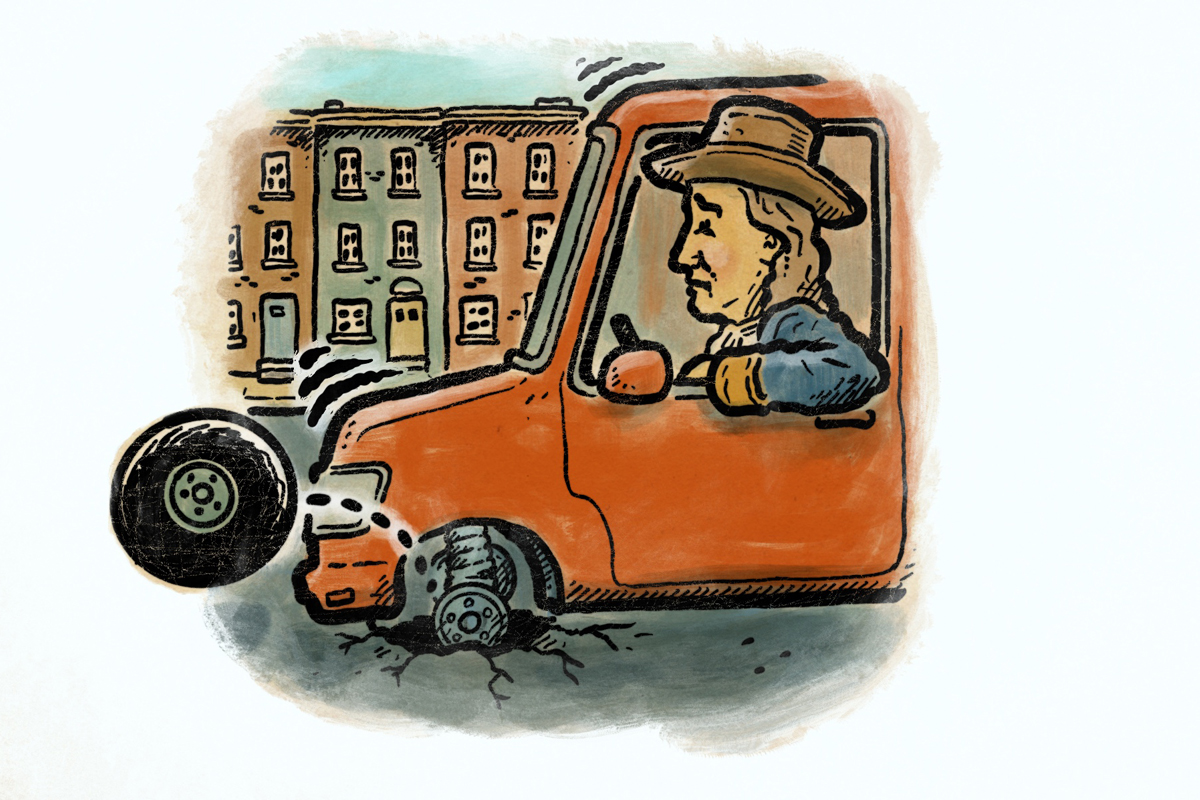
    Readers would also like to see the following repaired: the escalators at Jefferson Station, potholes, the lines on the road “so they’re visible and you don’t have to just guess,” “Fix the roads, all of them!” “ITS LIKE A BOMBED WAR ZONE,” and sinkholes.

    Many people said the entire Market East corridor needs a whole lot of love. Folks lament that it used to be a destination and now it’s filled with shuttered storefronts.

    While we learned in November that Comcast and the Sixers plan to demolish some buildings they own on the 1000 block of Market Street in time for next year’s events, it’s still unclear what they plan to put there.

    In the remaining vacant storefronts, readers suggested putting pop-up shops, art galleries, experiences, or doing a pop-up Philly History Museum.

    Finally, a very sweet reader asked me: “Please can we have the building on Broad Street that has the graffiti ‘Boner 4Ever’ painted over??? It’s truly an embarrassment.”

    Sorry, hun, but that’s a hard no. It’s 4Ever.

  • The New Year’s resolutions that Philly’s boldfaced names should be making | Shackamaxon

    The New Year’s resolutions that Philly’s boldfaced names should be making | Shackamaxon

    This week’s Shackamaxon column proposes some New Year’s resolutions for our state and local officials, and other boldfaced names.

    Gov. Josh Shapiro

    Resolution: To put the horse before the cart. It’s hardly a secret that the Ambitious Abingtonian is eyeing a 2028 run for president. The governor participated in a deep profile written by the Atlantic’s Tim Alberta, one of the country’s preeminent presidential campaign reporters. New York Times opinion writer Binyamin Appelbaum labeled him “the future of the Democratic Party.” And, of course, Shapiro himself has a new book on the way. Given all the hubbub, you might forget that Shapiro actually has yet to win his bid for reelection this year. Until he accomplishes that goal, all the presidential talk is a waste of time.

    Mayor Cherelle L. Parker

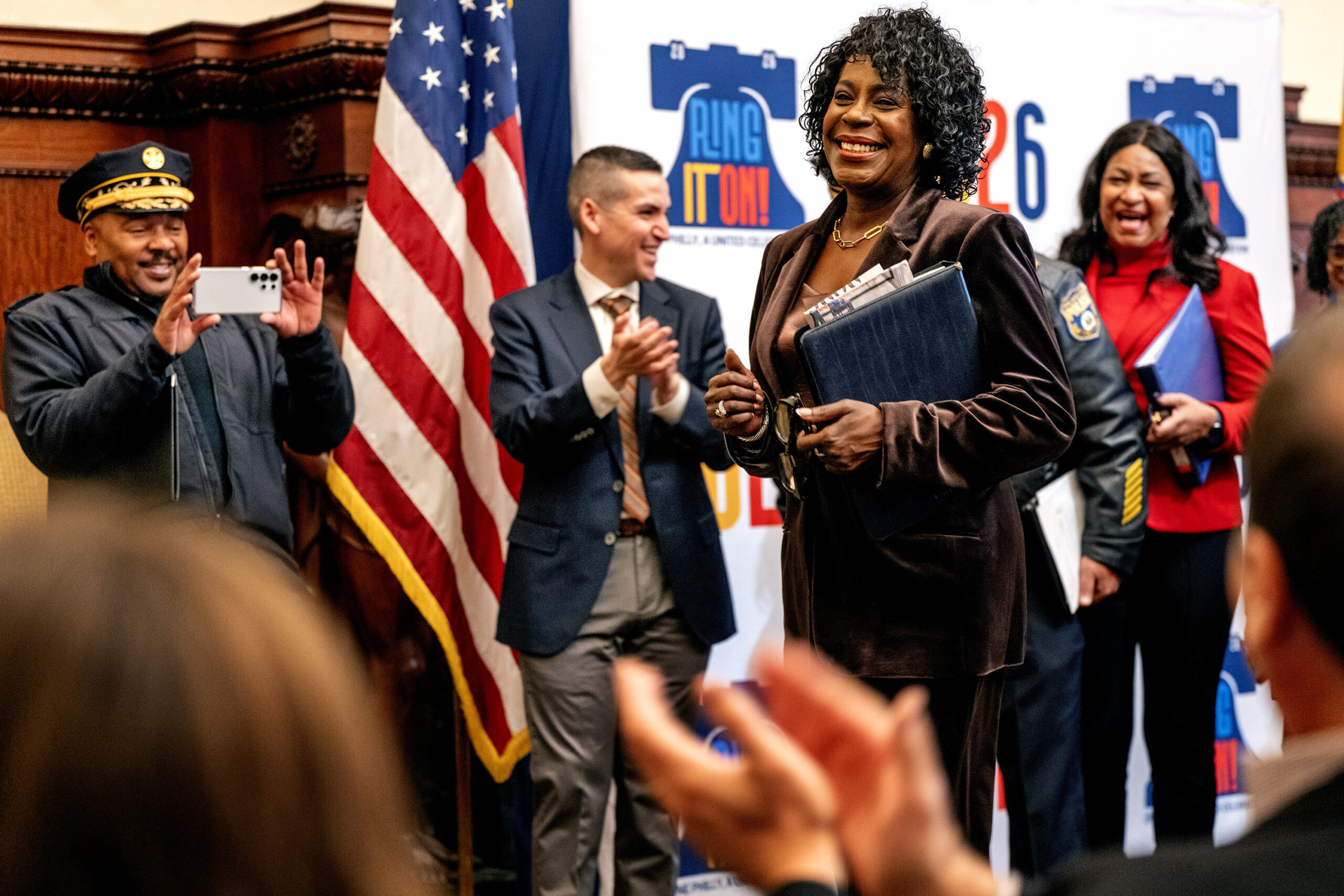
    Fire Commissioner Jeffrey Thompson (left) records Mayor Cherelle L. Parker as she dances a (modified) mayoral Mummer’s Strut to the music of the Quaker City String Bang following a news conference at City Hall last month.

    Resolution: To lower the drawbridge. The mayor began 2025 with the Sixers, Comcast, and the NBA pulling the rug out from under her by abandoning their plans for a Center City arena. Then she spelled Eagles “E-L-G-S-E-S” during a news conference, saw the city’s blue-collar municipal union go on strike for the first time in decades, and ended the year with City Council seeking to alter her Housing Opportunities Made Easy plan.

    Despite this, Parker can point to important successes. Crime rates continue to decline: The city has posted the lowest number of homicides since the 1960s. Philadelphia is no longer the nation’s poorest big city. Despite a pandemic-induced decline in commercial property values and commuter wage taxes, the city’s fund balance stands at a record $1.19 billion. But there is one thing the mayor could do that would strengthen both herself and the city, which is moving beyond the siege mentality that has defined much of her tenure so far.

    City Council

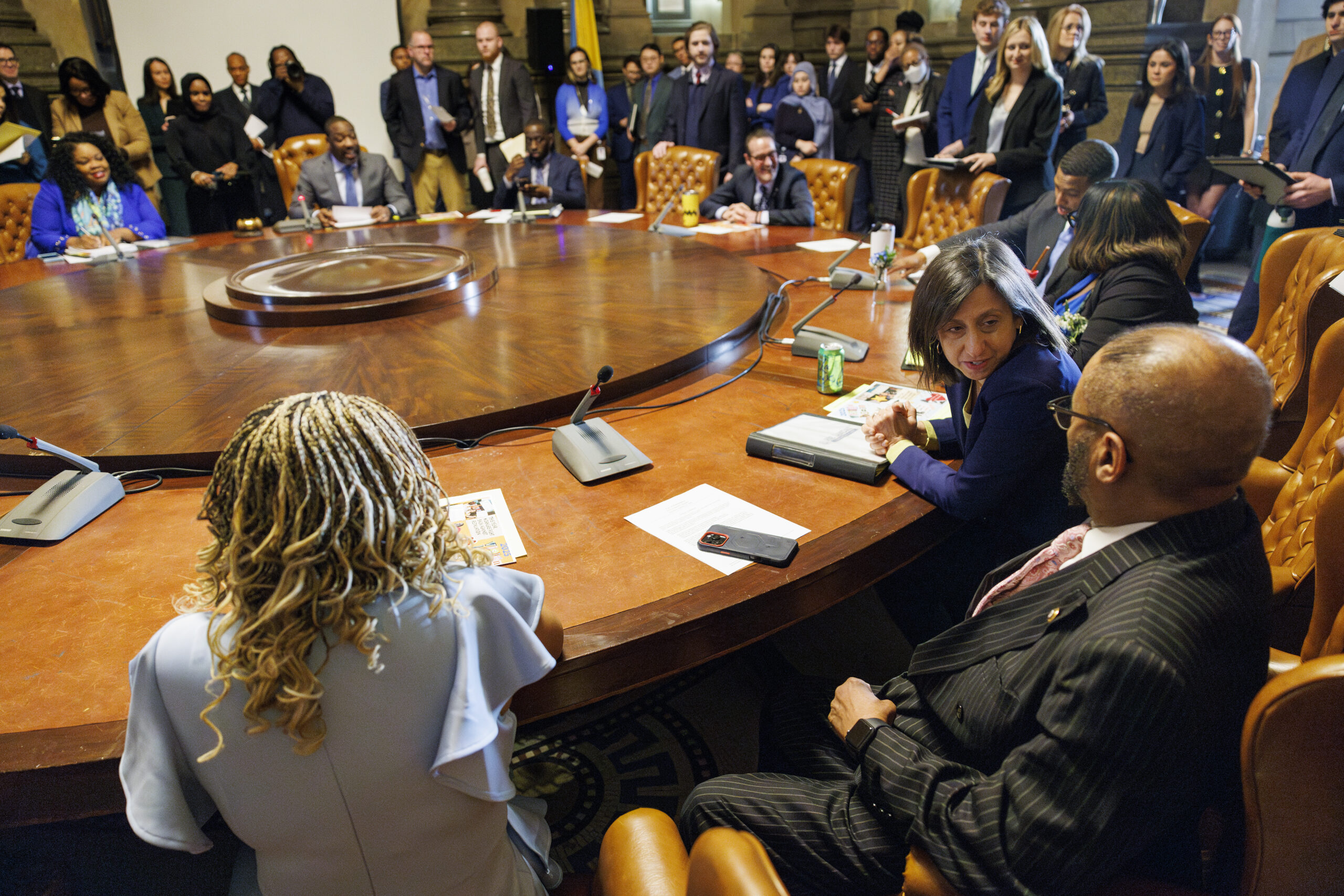
    Members of City Council in their Caucus Room at City Hall in January.

    Resolution: To eliminate micromanagement. District Council members often defend their tradition of “councilmanic prerogative” by citing the phone calls they’ll inevitably get from irate constituents when things change. That may be true, but they should think about things a little differently. After all, the more a municipal lawmaker leans into using prerogative, the less popular they seem to be.

    Take Jeffrey “Jay” Young, for example. Young won his election by default. His opponents were disqualified over issues with their petitions, and the legal challenge against his own candidacy was dropped. He’s also the only councilmember with a declared opponent, with local lawyer Jalon Alexander openly tossing his hat into the ring. Then there’s Cindy Bass. Her record of allowing vacant-but-treasured local landmarks to sit and rot is so unpopular that — in a chamber where many incumbents go unchallenged — she won her last reelection campaign by just under 500 votes.

    Angry phone calls are a part of life in elected office. Prioritizing the squeaky wheels over the public good, however, is a choice.

    SEPTA

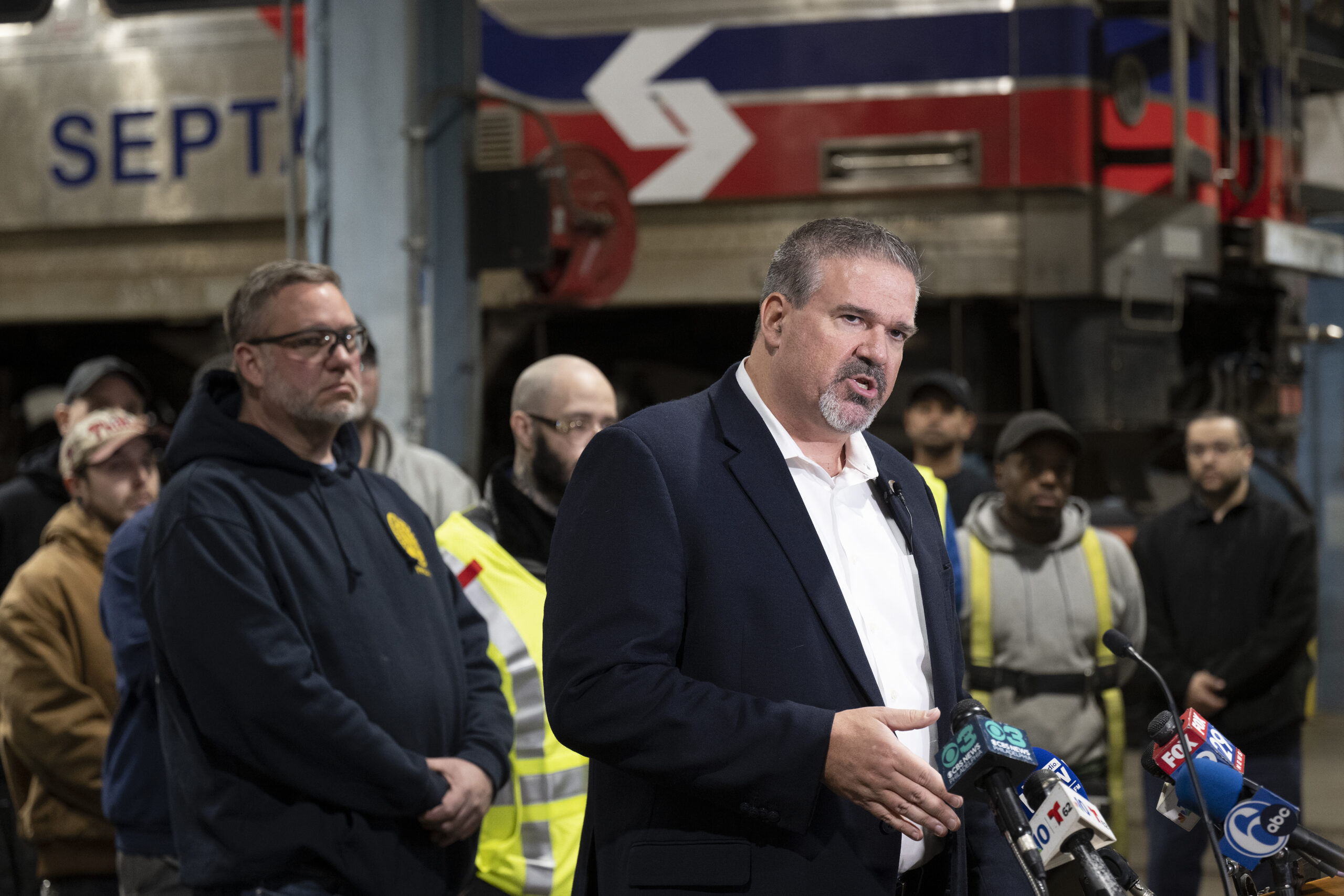
    SEPTA General Manager Scott Sauer addresses reporters during a news conference at the SEPTA Overbrook Maintenance Facility in November.

    Resolution: To stand and deliver. It has been a tough year for our local transit agency and its new general manager, Scott Sauer. Harrisburg punted yet again on a sustainable funding solution. Train cars in the decades-old Regional Rail fleet started catching fire, and an effort to save money on maintenance led to a months-long closure of the Center City trolley tunnel. Still, despite these challenges, 2026 represents an important opportunity for our city’s transit agency to change perceptions.

    Beyond getting the tunnel back up and running, SEPTA’s riders need more reliable service on both buses and trains. They also need better conditions in stations and on vehicles. While overall crime is down, issues like smoking remain frustratingly common. With Philadelphia anticipating hundreds of thousands of additional tourists in 2026, the agency should pull every available lever to improve the quality of life for both visitors and longtime riders (a group I am part of).

    Kim Ward and Joe Pittman

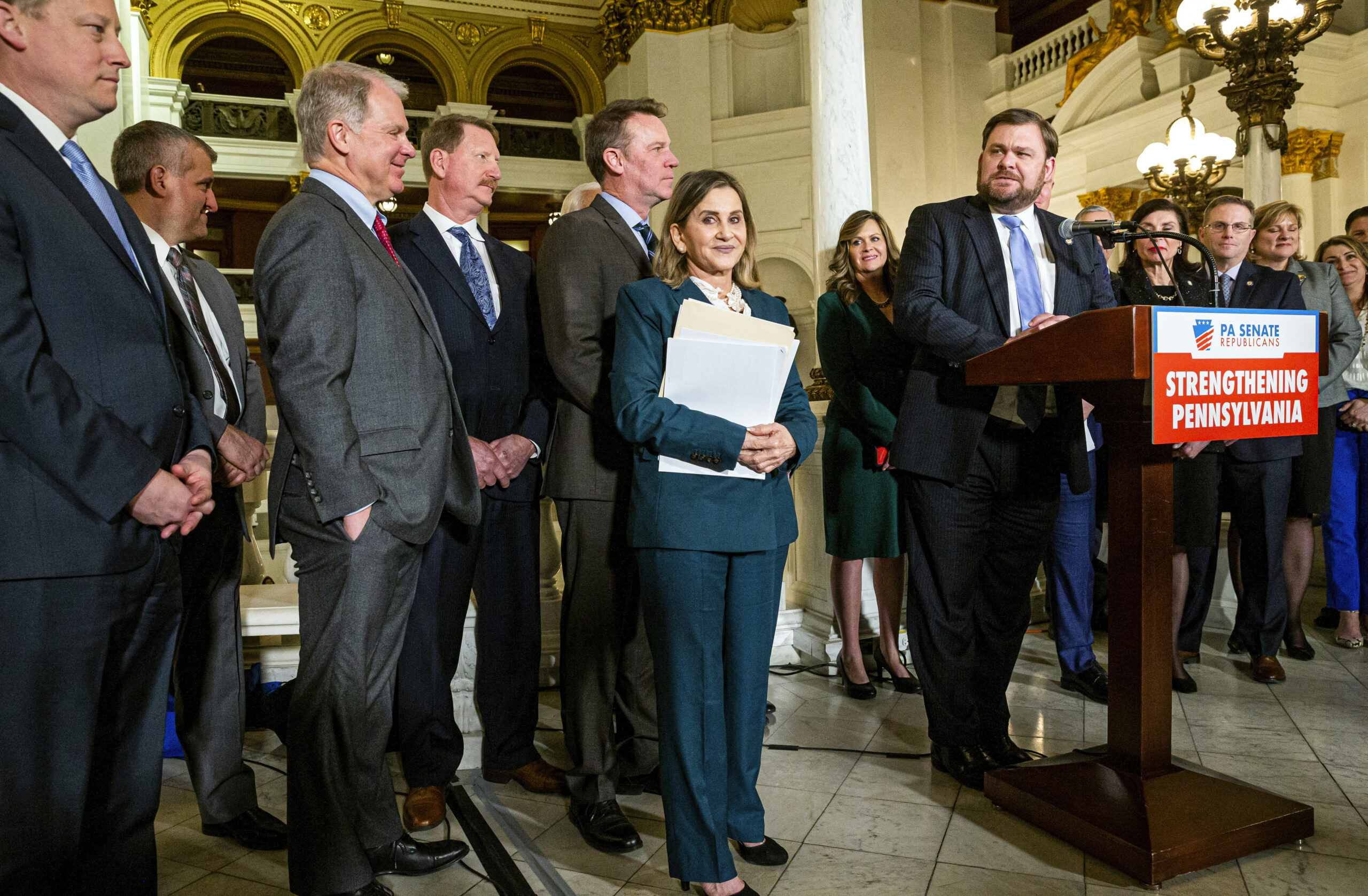
    With Senate President Pro Tempore Kim Ward (R., Westmoreland) standing at left, Senate Majority Leader Joe Pittman (R., Indiana) speaks during a March 2023 news conference at the state Capitol building in Harrisburg.

    Resolution: To learn to love all of Pennsylvania. State Senate Majority Leader Joe Pittman’s rambling August speech represented one of the lower points in intra-commonwealth relations. Meanwhile, his colleague in leadership, Senate President Pro Tempore Kim Ward, spent the year essentially trying to destroy Philadelphia’s transit system. Ward frequently lobbed rhetorical bombs despite never once meeting with Sauer. It’s hard to imagine a Philadelphia-based politician ever treating rural needs with such open contempt. Their petulant approach stands out because their party’s mid-level leaders took a much more reasonable tack.

    By contrast, State Sen. Judy Ward, who chairs the Transportation Committee, represents a Central Pennsylvania district that is, if anything, more rural than Pittman’s. Yet, she’s gone as far as visiting Philadelphia and touring SEPTA facilities herself in her quest to better understand the issues facing the agency. Pittman and Ward should emulate that model and at least do their homework before making big decisions about the southeastern corner of the state.

    The rest of us

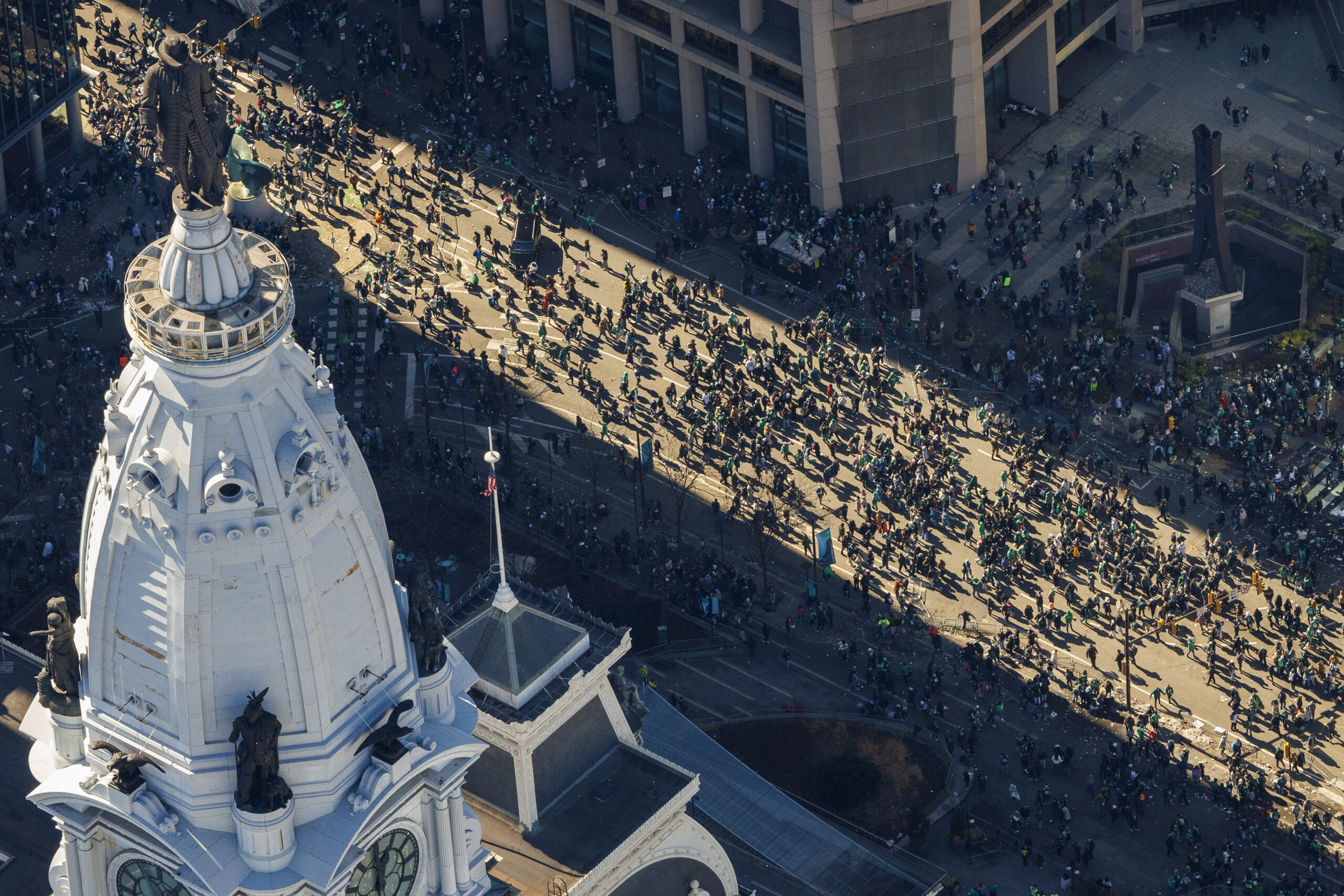
    An aerial view of 15th Street — with the William Penn statue atop City Hall — during the Eagles Super Bowl LIX victory parade in February.

    Resolution: To put our best foot forward. A crucial factor in making 2026 a success for Philadelphia is Philadelphians ourselves. The city is filled with conscientious, law-abiding, tax-paying residents. But a dedicated cadre of miscreants often creates a different impression. Let’s make 2026 a year where all of us shovel our sidewalks, park our cars legally, dispose of our litter, pick up our dog poop, stop for red lights and stop signs, yield to pedestrians, use real license plates, get proper permits for construction, wait to smoke until after leaving the station, and pay our public transit fares.

  • Trump says he’s made America great again. With midterms on the horizon, we get to decide if we agree with him.

    Trump says he’s made America great again. With midterms on the horizon, we get to decide if we agree with him.

    As I reach for the hope of 2026, I am convinced that this new year is about more than the 250th anniversary of the Declaration of Independence and more than the politics of the upcoming midterm elections. This new year is a mirror that allows us to look back on who we were in 2025.

    Domestically, last year was marked by Donald Trump’s attack on diversity, equity, and inclusion (DEI), his targeting of Black and Latino immigrants, his attempts to use lawsuits, threats, and bullying to silence journalists, and his sneering dismissal of the millions of people who took to the streets in protest.

    Internationally, 2025 was defined by the Trump administration’s military attacks in and around oil-rich countries like Venezuela and Nigeria, an apparent push to annex mineral-rich Greenland, and Trump-backed peace deals in Gaza and Ukraine that never quite seemed to bring peace.

    Taken together, Trump’s domestic and international policies hark back to a time when the United States sought to openly oppress racial and political minorities at home, while engaging in patterns of imperialism abroad.

    Perhaps, in Trump’s mind, that’s what it means to Make America Great Again. In 2026, the country will have to decide if we agree with him, and the choice will not be easy, because the sides are completely dug in.

    For millions of Americans, there’s an inherent appeal to Trump’s brand of no-holds-barred politics.

    His supporters believe political correctness has robbed them of the right to say what they feel, to take what they want, and to run through anyone who stands in their way.

    When Trump insults those who don’t look or think like him, his supporters believe he’s speaking for them.

    After all, the idea of blaming others for their problems is not only palatable, it’s delicious — because when someone else is always at fault, one never has to look at oneself.

    For millions of other Americans, like me, the echoes of white supremacy that amplify the MAGA movement are repulsive.

    We are concerned when President Trump calls Somali immigrants “garbage,” because perhaps Somalis aren’t the only Black people he views that way.

    We are horrified by the sight of Vice President JD Vance standing before white conservatives — and rapper Nicki Minaj — and uttering the words, “You don’t have to apologize for being white anymore.”

    Pro-Trump demonstrators in Washington during the Jan. 6, 2021, insurrection. The echoes of white supremacy that amplify the MAGA movement are repulsive, Solomon Jones writes.

    We are bracing ourselves for the moment when Trump’s followers move from insults to action, because after Trump pardoned those convicted for their roles in the political violence of Jan. 6, 2021, they could very well come back for more.

    That’s why in 2026, we must move swiftly to save democracy, because Trump has moved swiftly to tear it down. Don’t believe it? Let’s review.

    In 2025, armed with a U.S. Supreme Court ruling that said Trump was immune from prosecution for official acts, the president signed scores of executive orders, knowing they’d be challenged in federal court. He also knew he could quickly move key cases to the Supreme Court’s emergency docket, where the 6-3 conservative majority gave him a puncher’s chance to win.

    By implementing that strategy, the Trump White House won 21 victories in the Supreme Court. The wins allowed the Trump administration to take wide-ranging actions, including: deporting undocumented immigrants to third-party countries, ending federal funding for DEI, firing thousands of federal workers without congressional approval, accessing Americans’ Social Security data, and revoking the power of federal judges to implement nationwide injunctions.

    In one of the administration’s few losses, the Supreme Court recently ruled against Trump’s deployment of the National Guard in Chicago.

    Perhaps the ruling will stop the president’s strategy of sending troops into cities run by Democrats, or maybe he’ll find a workaround. If I were a betting man, I’d take the odds on the latter.

    That’s why in 2026, if we truly want to commemorate the 250th anniversary of the birth of American democracy, we cannot stand by and watch as our country is twisted into knots.

    When this year’s midterm elections take place, we must raise our voices and vote.

  • 2026 Land Rover Defender 130: The price of invincibility

    2026 Land Rover Defender 130: The price of invincibility

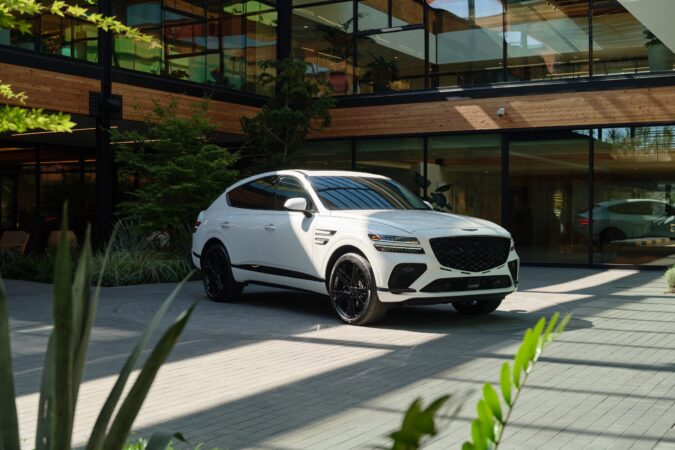
    2026 Genesis GV80 Coupe 3.5T E-supercharger vs. 2026 Land Rover Defender 130 V-8 vs. 2026 Mercedes-Benz GLE 450 4Matic SUV: Off-roading in high style.

    This week: Land Rover Defender 130

    Price: $118,900 as tested.

    Conventional wisdom: Car and Driver liked the “unmistakable Land Rover styling, unquestionable off-road capability with on-road civility,” and that the “interior deftly blends utility and comfort.” They were less thrilled about the “disappointing fuel economy,” and that “this sure isn’t priced like the original.”

    Marketer’s pitch: “Freedom for all. Eight seats for shared exploration.”

    Reality: Feels pretty cool, but is it worth the $30,000 upcharge from the Genesis?

    What’s new: The Defender gets a revised look, a bigger 13.1-inch touchscreen, and optional off-road cruise control.

    Competition: In addition to the GV80 Sport and the GLE 450, there are the BMW X5, Lexus RX, Lincoln Nautilus, and Toyota Land Cruiser.

    Up to speed: The 5.0 V-8 engine creates a whopping 493 horsepower, but as it tries to move the buffalo that is the Defender, it has its work cut out for it. I found getting the accelerator to move the vehicle briskly could be a challenge, but over time this became easier.

    A plethora of engine options and horsepower ratings make nailing down the 0-60 time cumbersome. Motor Trend estimates it gets to 60 mph in 5 seconds, a number I thought was optimistic. Land Rover claims 5.4 seconds.

    The Defender really was a little lackluster in passing, a more useful measure of performance than pole position moves at the stoplights. It was about a draw with the GV80 Coupe for acceleration until here.

    Shifty: The joystick takes a push ahead for Reverse and a pull for Drive with a button for Park. Shift from the lever or the paddles if you want to move your own gears.

    On the road: The Defender does a fantastic job smoothing out rough Pennsylvania roads.

    The handling is not bad for its size; the Defender has a fairly narrow profile for a behemoth SUV, and I found snaking through country roads pretty enjoyable, especially considering its 11.5-inch ground clearance. Still, neither Land Rover nor Genesis stands out yet.

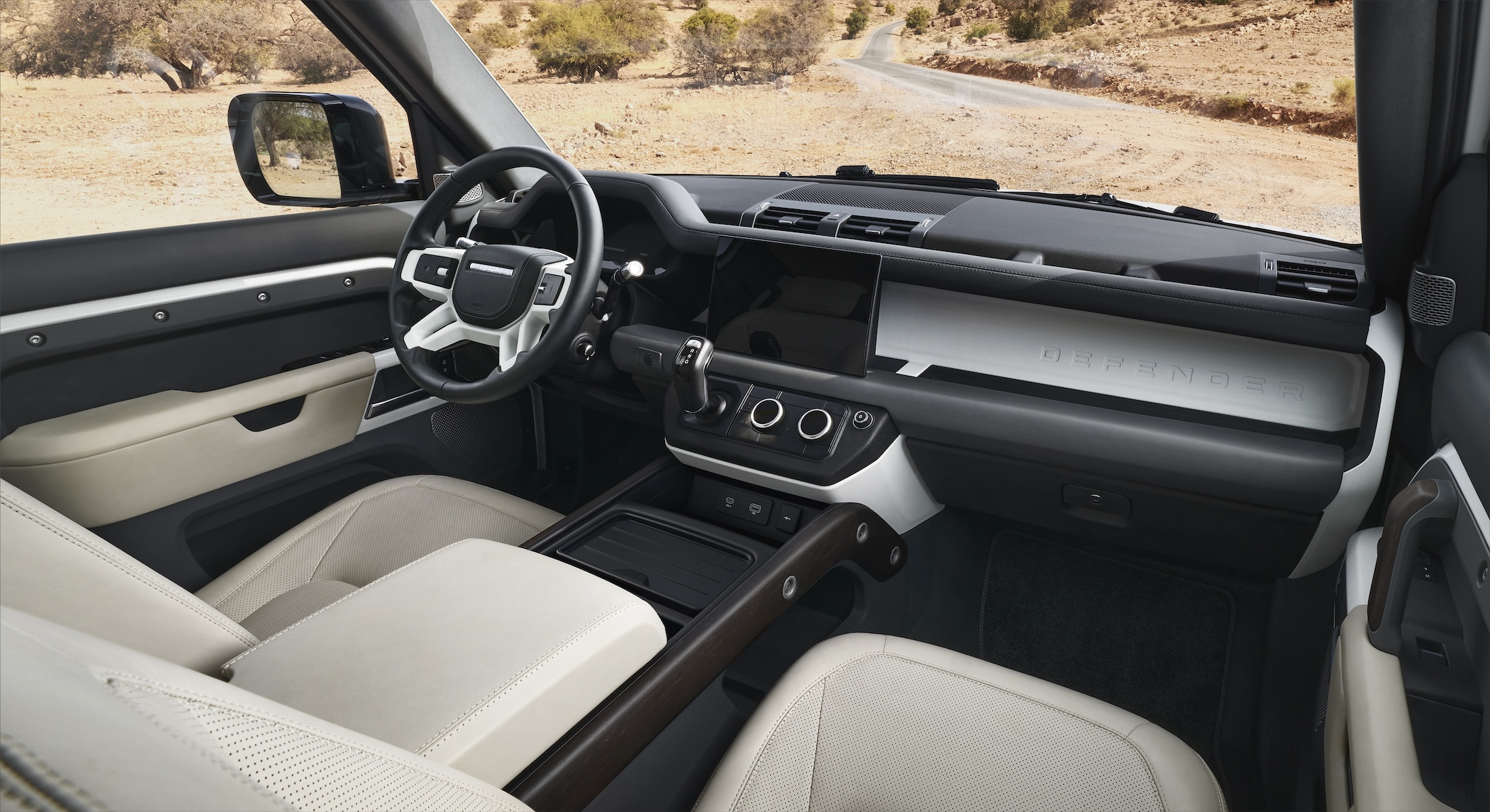
    The interior of the 2026 Land Rover Defender 130 allows driver and many passengers to ride up high and comfortably.

    Driver’s Seat: The seats provide plenty of comfort and enjoyment; it is quite nice riding above all the other cars on the road. Adjustments were plentiful and everything seemed easy to operate.

    The Lovely Mrs. Passenger Seat remarked on the comfort and captain feeling of her seat frequently. Big advantage Defender.

    Of course it’s a bit of a stretch into the Defender but it never seemed too awful. But unlike a lot of other parts, my knees still work fairly well.

    Passing can be a challenge because the mirrors are narrow, the spare tire makes rearward visibility a challenge, and the door post behind the driver’s door is huuuuge.

    Friends and stuff: It’s big, so of course there’s lots of space in the seats, and to get around, right? Well …

    The seats all sit up high, all three rows, so everyone should be happy with the view from their location.

    The middle-row captain’s chairs are nicely supportive, although they’re a little narrow. They do run back and forth to accommodate the third row, and there’s plenty of room to get around inside.

    The rear-row seats are much smaller and sit low to the floor. And, surprise, the mechanism for the seat belts for the middle row impedes legroom in the corners.

    Headroom is a little tight in the middle row and very tight in the back.

    Cargo space is 15.3 cubic feet in back, 43.7 with the third row folded, and 89.9 with the second row also folded. Of course, all are far larger than the GV80 Coupe.

    The barn door in back could be awkward. I couldn’t get the second-row captains chairs to lie flat. Still, three rows and some comfort, advantage Defender.

    The Defender 130 tows up to 8,200 pounds, so here’s where the extra $30K is well spent. That’s like $10/pound over the GV80, basically the price of ground beef.

    Play some tunes: Sound from the Meridian surround sound system is pretty good, about an A- or so. I expected better.

    Operation was not too difficult. The USB-C was very plug and play and CarPlay popped right up. Getting to sound adjustment in the screen was not hard. Still, advantage GV80 Coupe for playback.

    Keeping warm and cool: A pair of dials focus on temperature at first glance. Changing the fan speed requires hitting the toggle button in between to change the one dial to fan speed, which is about as confusing as it reads. Buttons all around set the blower. Still, it’s easier than the Genesis HVAC.

    The vents are set at the top corner of the dashboard. They do clear out the stodgy air up front, as expected, but they also blow nicely across the occupants and keep everyone feeling nice without being too forceful.

    Fuel economy: 15 mpg on premium fuel. Urp. I don’t care if you just forked out six large for this SUV; that still has to sting a little.

    Where it’s built: Nitra, Slovakia. The United Kingdom provides 31% of parts, Germany 19%, and the U.S. and Canada just 1%.

    How it’s built: Consumer Reports predicts the Land Rover Defender reliability to be a 2 out of 5.

    Next week: It’s all up to you, Mercedes.

  • Reaction to Trump’s unpopular policies offers hope for fixing our broken immigration system

    Reaction to Trump’s unpopular policies offers hope for fixing our broken immigration system

    EL PASO, Texas — I had barely been in the city for a few hours before I was asked the same question by two different people: Had I heard about the four panadería workers who were arrested by immigration agents?

    It was a bit of a rhetorical question that led to similar expressions of sympathy for those detained, and it also underscored two distinct truths: 1) Without employees, the bakery owner would have to close, so this hurts people who just want to work. 2) Everyone knew what they were doing, and the law is the law.

    Like most in the political middle, I agreed.

    My conversations with people on both sides of the border reinforced something that should go without saying, yet here it is: There is a sensible middle ground between the Biden administration’s ill-advised border strategies and the Trump administration’s virulent anti-immigrant policies and dehumanizing rhetoric.

    Over the years, polling has shown that commonsense immigration reform has broad support. Bipartisan bills have failed in the recent past, but perhaps something good can come out of the Trump administration’s cruel overreach on immigration enforcement.

    The border is far away from most Americans. It’s easy to scapegoat and demonize. As one activist here told me, even Democrats have been fine with throwing money at the continued militarization of this part of the world in the name of “border security.” That militarization is now knocking at people’s doors in places like Chicago and New Orleans, and folks across the country don’t like what they see.

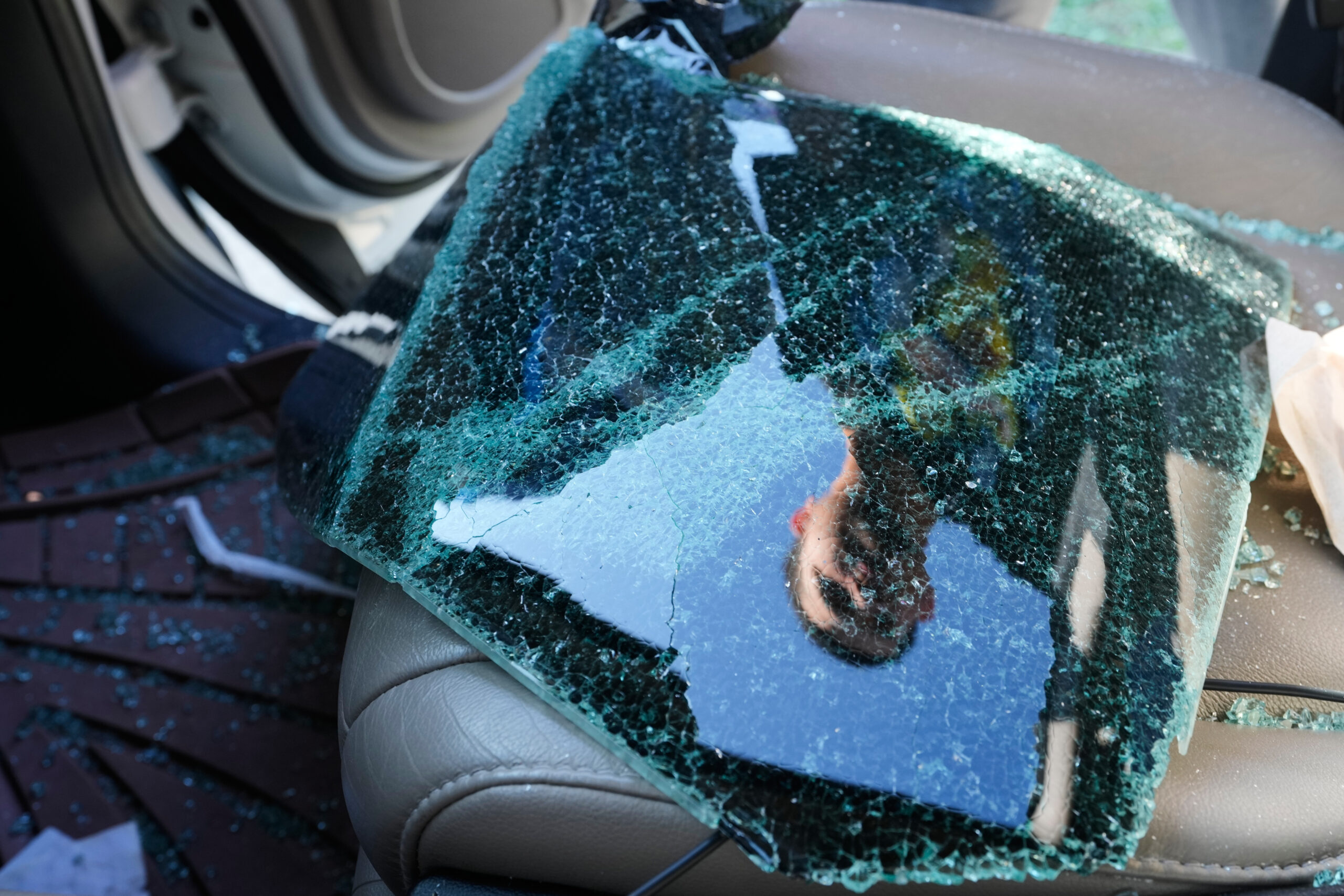
    Jonathan Escalante stands over the broken window of his mother’s car, which was shattered by federal immigration agents who took her away, during a federal immigration crackdown in Kenner, La., on Dec. 9.

    Most Americans want immigration control; they are not anti-immigrant. Let alone supporters of what’s becoming a “papers, please” society under Donald Trump, where simply having the wrong skin tone or speaking another language can put a target on your back.

    As the outrages pile on and voters turn against the president’s tactics, it opens an opportunity. If Democrats capture the White House in 2028, they must make fixing our broken immigration system a priority — with public sentiment on their side.

    In that vein, the United States needs a functioning immigration system that keeps people from coming illegally, allows immigrants to fill jobs U.S.-born workers won’t do, honors America’s commitment to protecting those seeking asylum, and creates that line immigrants are supposed to queue up in to come here “the right way.”

    Broadly speaking, deterring people from crossing illegally should not depend on immigrants being afraid to die in the Arizona desert or be maimed by razor wire trying to ford the Rio Grande into Texas. Humane deterrence would involve not only expedited deportation if caught, but also holding employers accountable for hiring people who are not authorized to work.

    While some immigrants are fleeing their country over safety concerns, economic migrants are looking for a better life. I hate to break it to you, but people come to the U.S. not because they admire Jeffersonian democracy, but because there are jobs here.

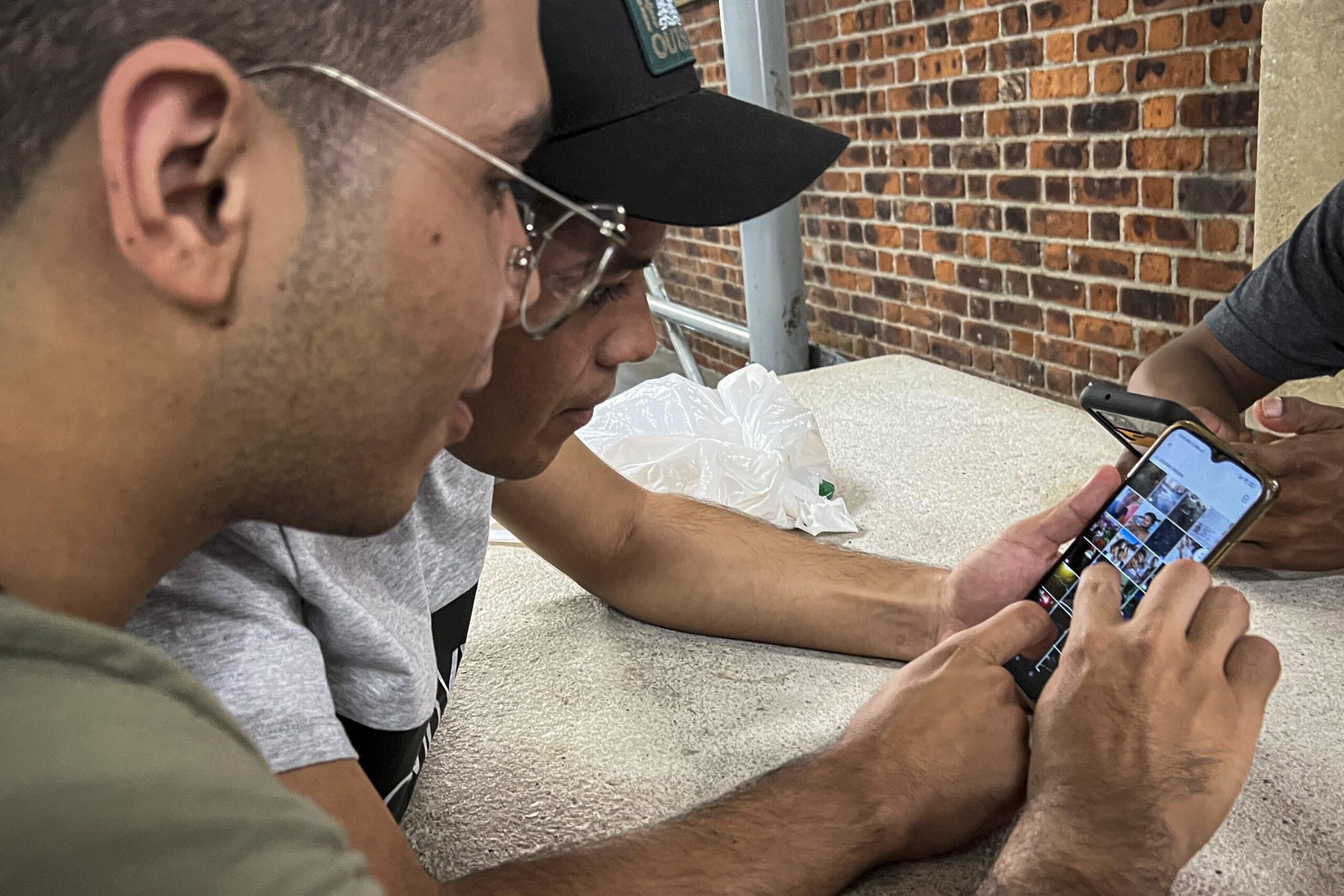
    Brothers Leonardo Oviedo, 22, (right) and Angel Mota, 19, (left) swipe through photos of family they left behind in Venezuela. Both arrived in New York in 2020 with other asylum-seekers seeking refuge and spoke of plans to land jobs.

    Many of those jobs are the kind that citizens will not do. Not because they’re lazy or afraid of hard work, but because they have other opportunities. For immigrants, it’s all relative. Monthly pay in Venezuela is roughly $130. In the U.S., you can make twice that in a week earning minimum wage.

    Whether it’s picking fruits and vegetables, putting up houses, processing meat, taking care of the elderly, or other demanding and arduous tasks that are not going away, the U.S. needs immigrants for these jobs — ideally through a dynamic work visa system that responds to demand. We also need — and should welcome — specialized professionals, such as medical doctors or tech workers.

    A potential pathway to permanent migration, if desired, could start with a work visa. I say “if desired” because many immigrants would love to come here to work temporarily and then return home. A side effect of stricter border controls after 9/11 was that immigrants no longer went back and forth as readily, and instead remained full time in the U.S.

    For asylum-seekers, more immigration judges — under the judicial branch, instead of the U.S. Department of Justice — could speed up adjudication, granting protection to those who qualify and rejecting those who don’t.

    A working immigration system also means hitting the reset button and adjusting the legal status of the 13 million or so immigrants who are currently in the country without authorization.

    Undocumented immigrants who have been here for a determined amount of time and meet agreed-upon criteria (pay taxes and/or fines) should be able to earn permanent legal residency, known as a green card, and be able to eventually attain citizenship if they qualify. Worried Republicans need only look at the increased support Trump gained among naturalized Americans in the 2024 election if they think that being an immigrant means you automatically vote for Democrats.

    Of course, there is still a long way to go before any of these proposals has a shot at being considered. And while there is still time for the president to change his approach, the $45 billion authorized for new immigration detention centers and almost $30 billion going toward U.S. Immigration and Customs Enforcement likely means there’s no turning back.

    Things will get a lot worse before they get better. But as the new year approaches, there is at least some hope.

  • The 10 weirdest stories from the Philly area in 2025

    The 10 weirdest stories from the Philly area in 2025

    Way back in 2022, when Philadelphians gathered on an abandoned pier to watch a man eat a rotisserie chicken, folks on social media began to wonder: “Is Philadelphia a real place?”

    This year, that question became a declarative sentence.

    “Philadelphia is not a real place.”

    Sure, that perception has a lot to do with an unbelievable event that actually happened in the suburbs (Delco never fails to carry its weight), but Philly also saw its fair share of the bizarre this year, too.

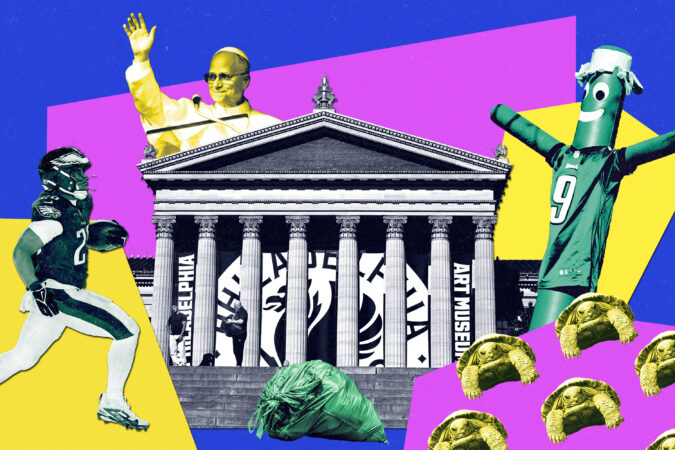
    As we prepare for what may be one of the most important (and hopefully weirdest!) years in modern Philadelphia history, let’s take some time to look back on the peculiar stories from across the region that punctuated 2025.

    Five uh-oh

    Kevon Darden was sworn in as a part-time police officer for Collingdale Borough on Jan. 12 and hit the ground running, landing his first arrest just four days later.

    The only problem? It was his own.

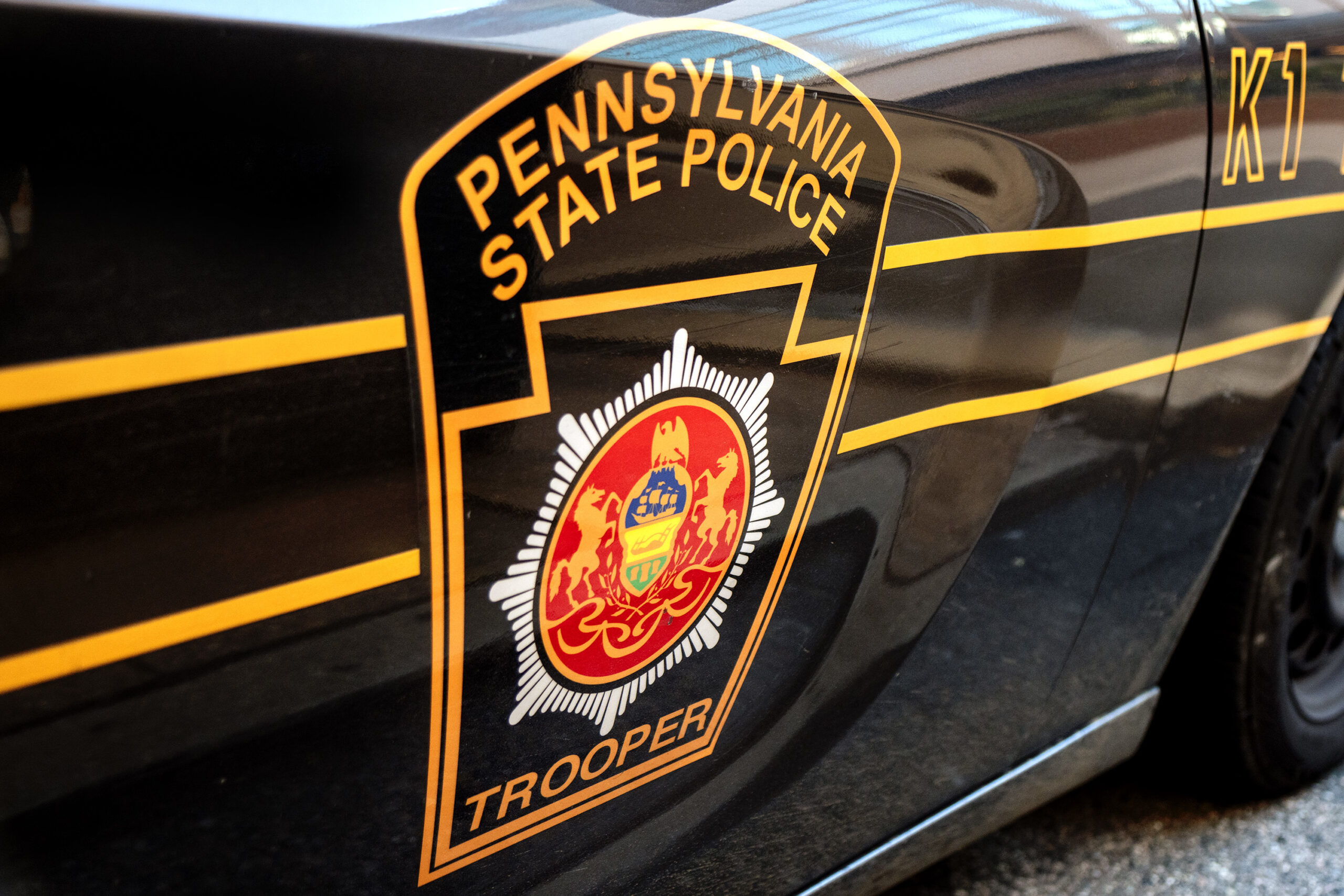
    Pennsylvania State Police charged Darden with terroristic threats and related offenses for an alleged road rage incident in 2023 in which he’s accused of pointing a gun at a driver on the Blue Route in Ridley Township. At the time of the alleged incident Darden was employed as an officer at Cheyney University.

    A Pennsylvania State Police vehicle. The agency provided two clean background checks for a Collingdale police officer this year, only to arrest him four days after he started the job.

    Here’s the thing — it was state police who provided not one but two clean background checks on Darden to Collingdale officials before he was hired. An agency spokesperson told The Inquirer troopers had to wait on forensic evidence tests and approval from the District Attorney’s Office before filing charges.

    Darden subsequently resigned and is scheduled for trial next year in Delaware County Court.

    For the Birds

    The Eagles’ second Super Bowl win provided a wellspring of wacky — and sometimes dicey — moments on and off the field early this year.

    Mayor Cherelle L. Parker started the championship run off strong by going viral for misspelling the most popular chant in the city as “E-L-G-S-E-S” during a news conference. Her mistake made the rounds on late night talk shows and was plastered onto T-shirts, beer coozies, and even a license plate. If you think the National Spelling Bee is brutal, you’ve never met Eagles fans.

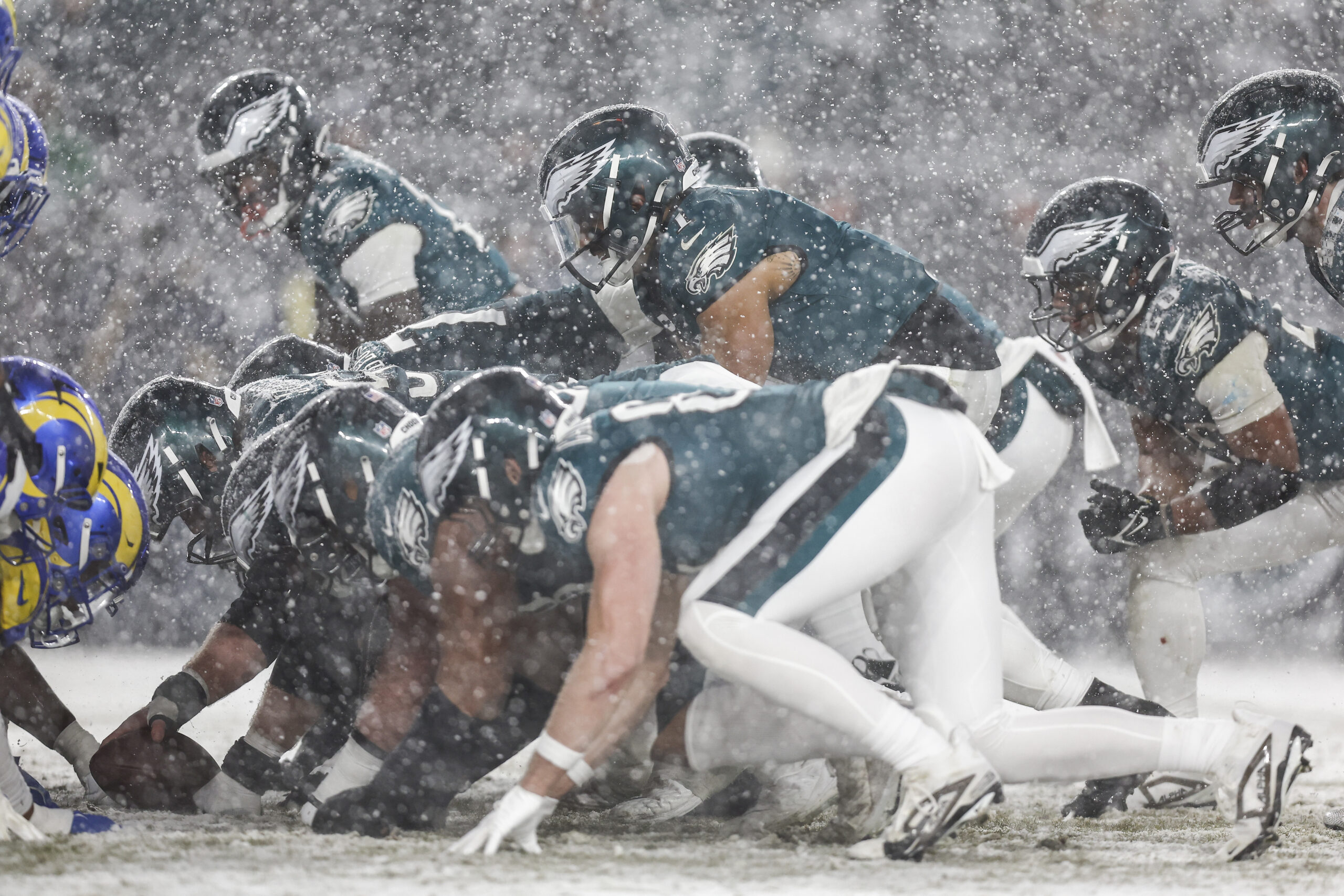
    Philadelphia Eagles quarterback Jalen Hurts at the line of scrimmage during the fourth quarter of the NFC divisional playoff at Lincoln Financial Field on Jan. 19. The Philadelphia Eagles defeated the Los Angeles Rams 28 to 22.

    Then there was the snowy NFC divisional playoff game against the Los Angeles Rams at Lincoln Financial Field; continued drama around the Tush Push (which resulted in Dude Wipes becoming an official sponsor of the team); and Cooper DeJean’s pick-six, a gift to himself and us on his 22nd birthday that helped the Birds trounce the Kansas City Chiefs 40-22 in Super Bowl LIX.

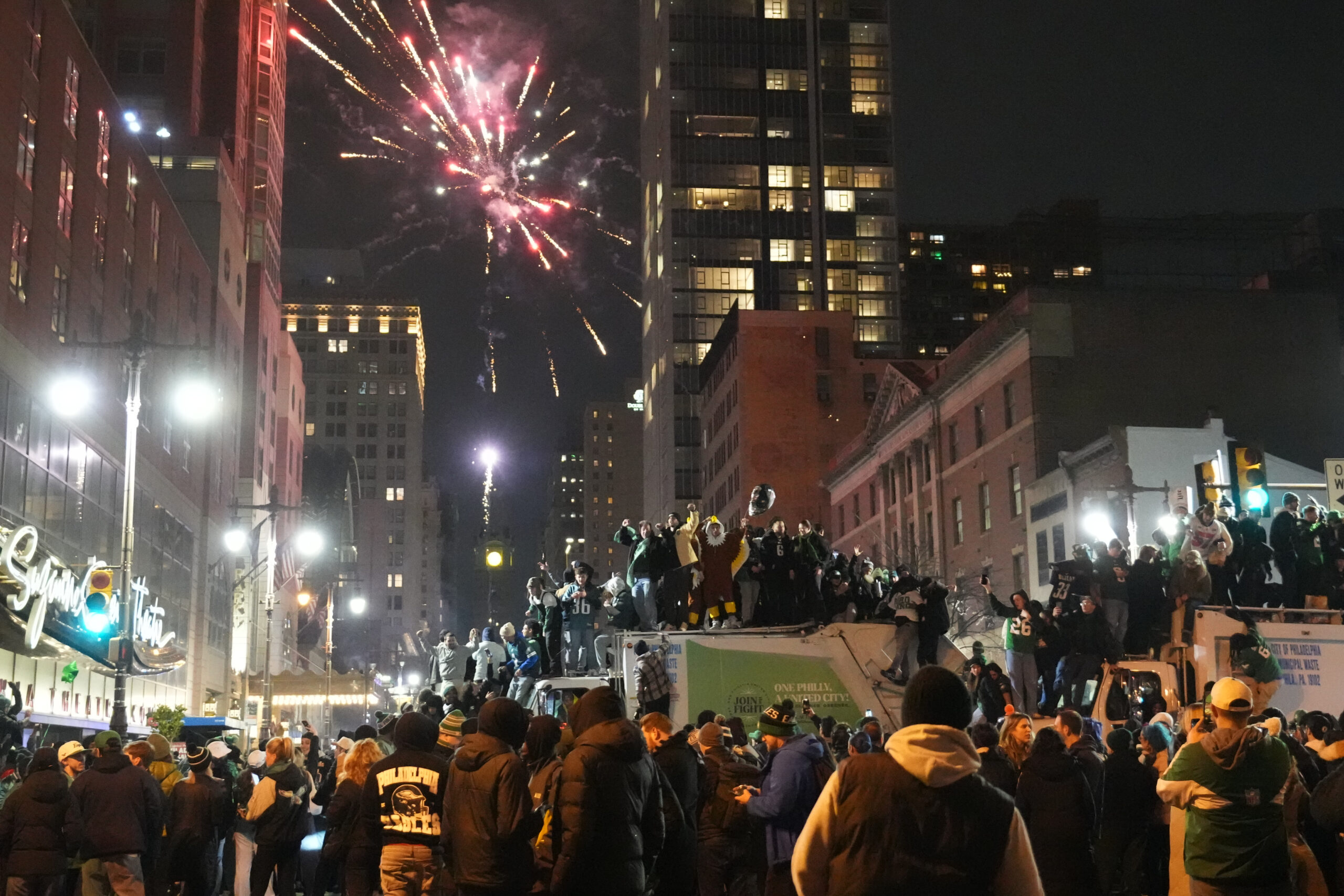
    As soon as the Eagles won with Jalen Hurts as MVP, Philadelphians let loose, flooding the streets like a drunken green tsunami. Fans scaled poles and tore them down; danced on bus shelters, medic units, and trash trucks; partied with Big Foot, Ben Franklin, and Philly Elmo; and set a bonfire in the middle of Market Street.

    Eagles fans party on trash trucks in the streets of Center City after the Birds win in Super Bowl LIX against the Chiefs on Feb. 9.

    Finally, there was the parade, a Valentine’s Day love letter to the Eagles from Philadelphia. Among the more memorable moments was when Birds general manager Howie Roseman was hit in the head with a can of beer thrown from the crowd. He took his battle scar in pride, proclaiming from the steps of the Philadelphia Art Museum: “I bleed for this city.”

    As we say around here, love Hurts.

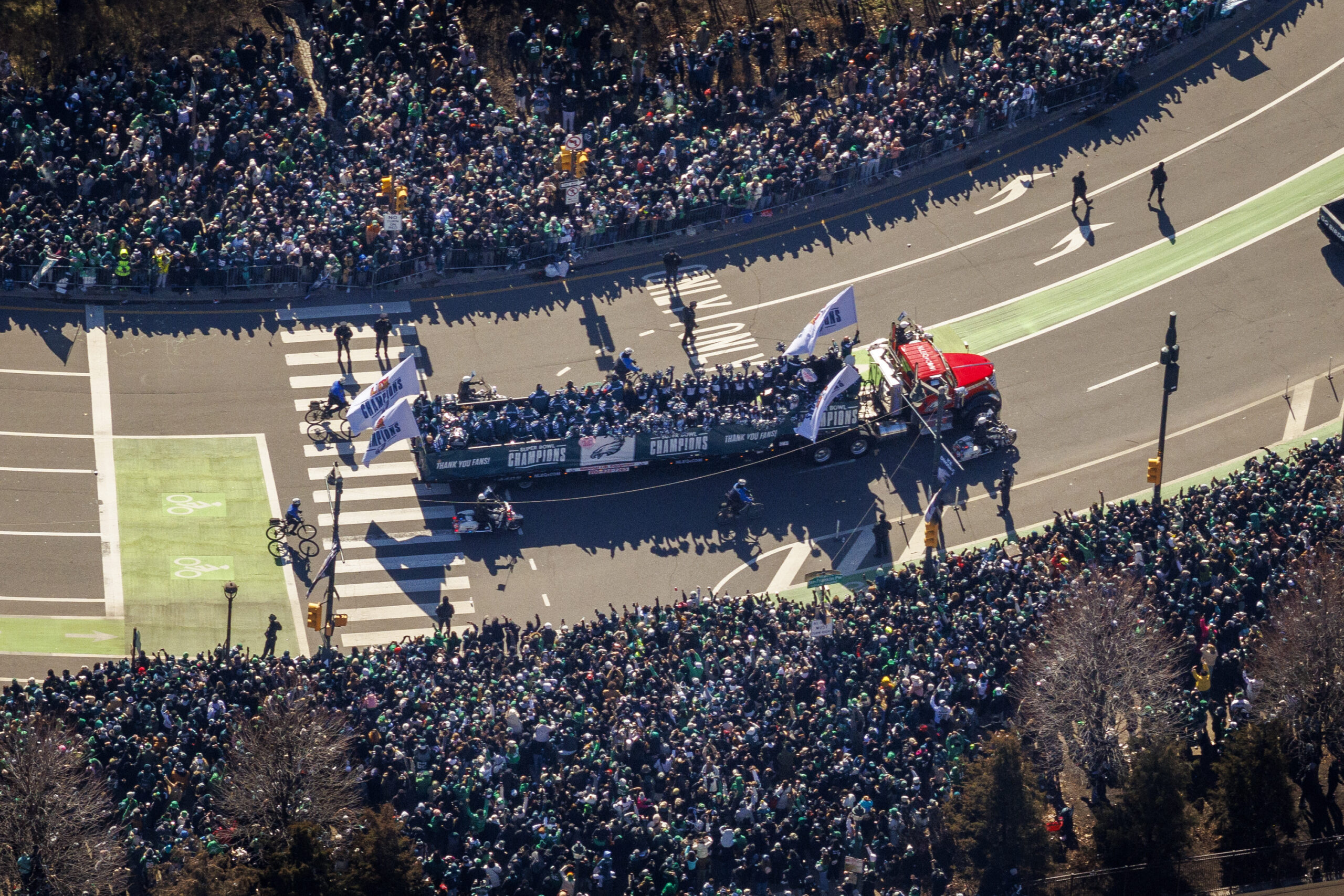
    Throngs of Birds fans lined the Benjamin Franklin Parkway for the Eagles Super Bowl Parade on Feb. 14.

    A $40 million goodbye

    As far as inanimate objects go, few have experienced more drama in recent Philly history than the SS United States, the 73-year-old, 990-foot luxury liner that was docked for nearly three decades on the Delaware River waterfront.

    Supporters spent more than $40 million on rent, insurance, and other measures to keep the ship in Philly with the hopes of returning it to service or at least turning it into a venue. But a rent dispute with the owners of the pier finally led a judge to order the SS United States Conservancy, which owned the vessel, to seek an alternate solution.

    Workers on the Walt Whitman Bridge watch from above as the SS United States is pulled by tug boats on the Delaware River.

    And so in February, with the help of five tugboats, the ship was hauled out of Philly to prepare it to become the world’s largest artificial reef off the coast of Okaloosa County, Fla.

    If the United States has to end somewhere, Florida feels like an apt place.

    The ‘Delco Pooper’

    While the Eagles’ Tush Push was deemed legal by NFL owners this year, a Delaware County motorist found that another kind of tush push most definitely is not after she was arrested for rage pooping on the hood of a car during a roadway dispute in April.

    Captured on video by a teen who witnessed the rear-ending, the incident quickly went viral and put a stain on Delco that won’t be wiped away anytime soon.

    Christina Solometo, who was dubbed the “Delco Pooper” on social media, told Prospect Park Police she got into a dispute with another driver, whom she believed began following her. Solometo claimed when she got out of her car the other driver insulted her and so she decided to dump her frustrations on their hood.

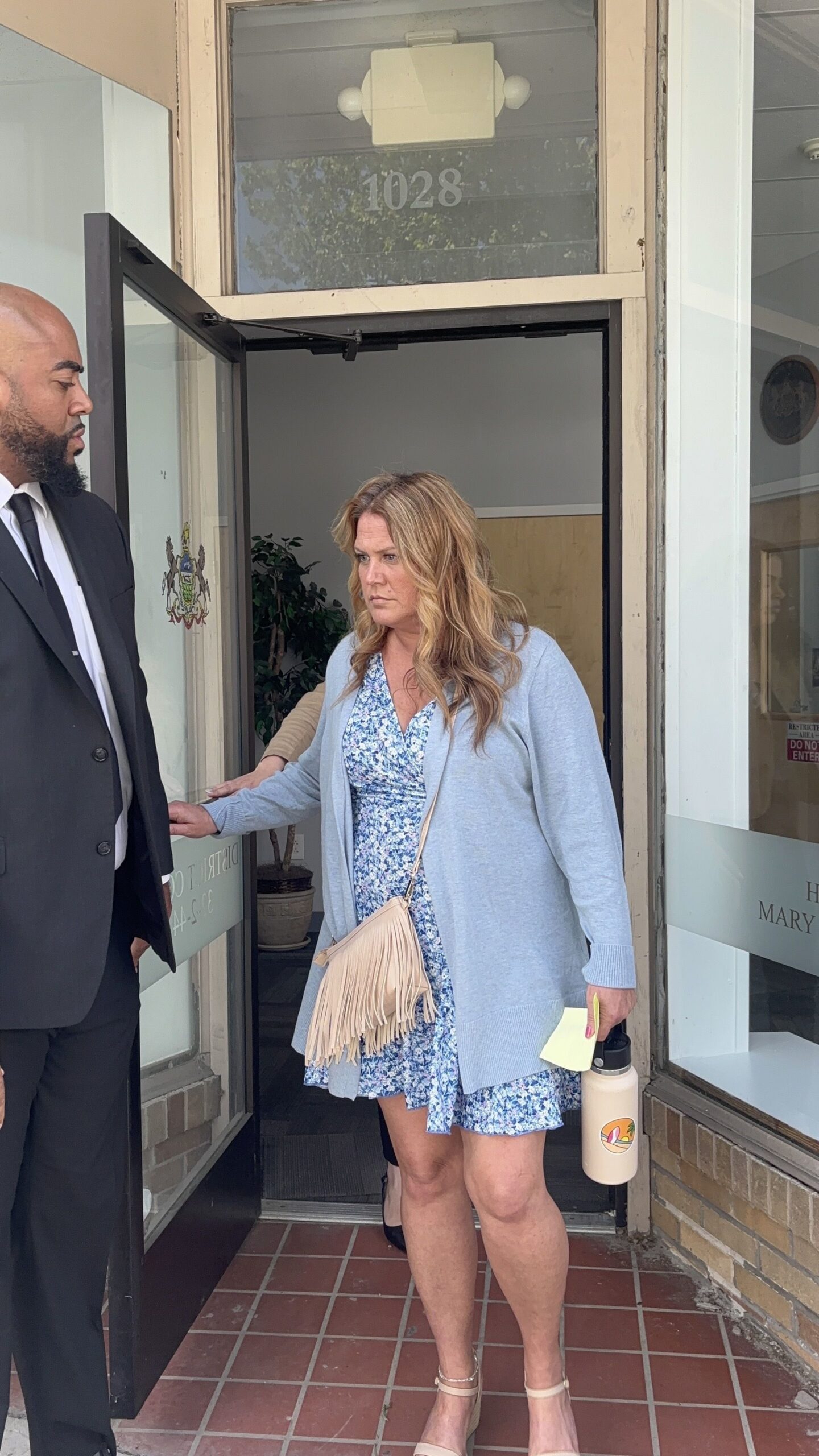
    A private security guard holds the door open for alleged “Delco Pooper” Christina Solometo following her preliminary hearing Monday at Prospect Park District Court.

    “Solometo said, ‘I wanted to punch her in the face, but I pooped on her car instead and went home,’” according to the affidavit.

    I’ve written a lot of stories about Delco in my time, but this may be the most absurd.

    Solometo, 44, of Ridley Park, entered into a rehabilitation program for first-time offenders on Dec. 16.

    Hopefully, she won’t be clogging up the court system anymore.

    The Delco pope

    Delco is large, it contains multitudes, and never was that more clear than when two weeks after the Delco Pooper case broke, a Delco pope was elected.

    OK, so Pope Leo XIV is technically a native of Chicago, but he attended undergrad at Villanova University — which, yes, technically straddles Delco and Montgomery County — but Delco’s had a tough year so I’m gonna give it this one.

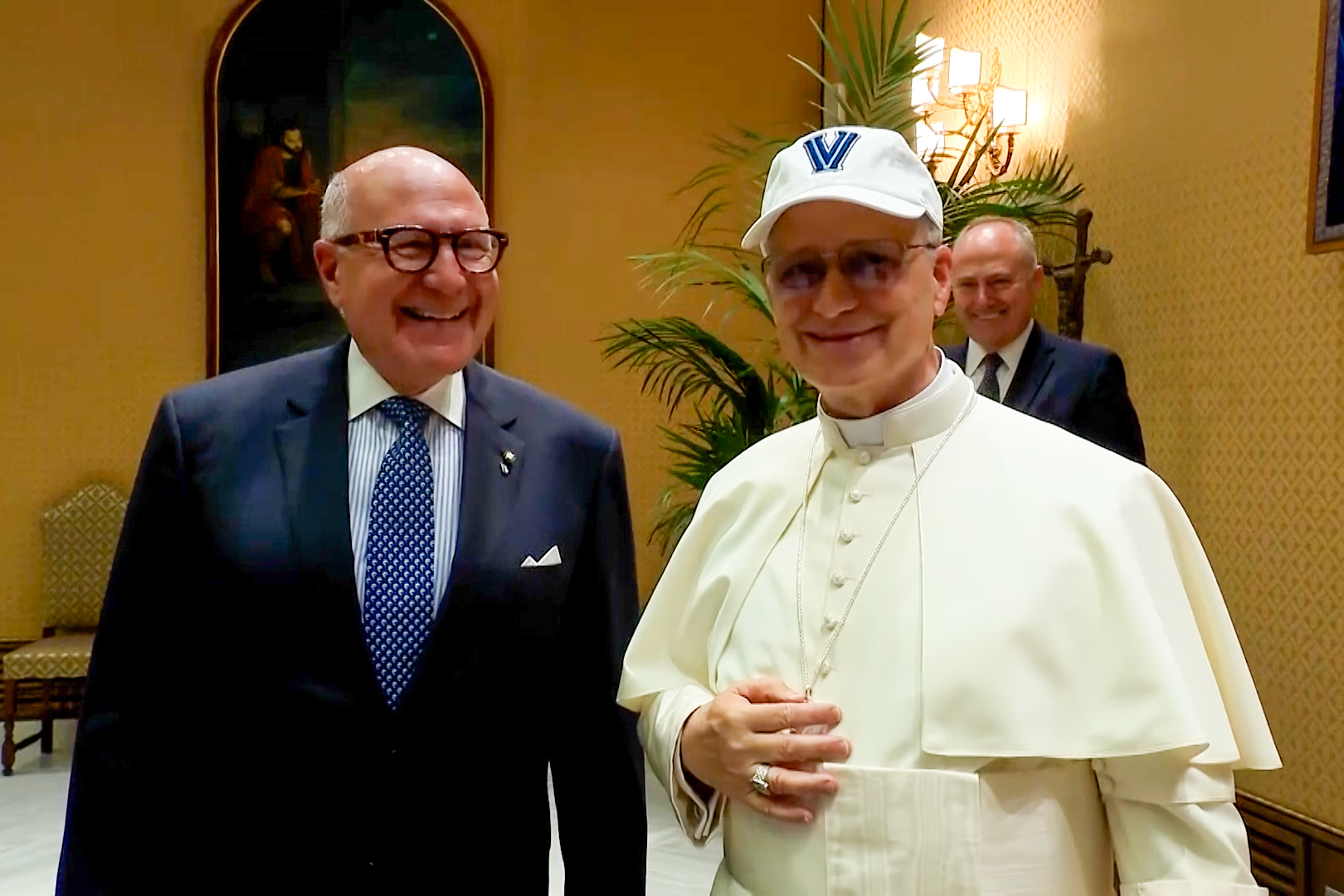
    This video screen grab shows Pope Leo XIV wearing a Villanova University hat gifted to him during a meeting with an Italian heritage group.

    Born Robert Prevost, Pope Leo is the first U.S. pope in history and also a citizen of Peru. He earned his bachelor’s degree in mathematics from Villanova in 1977 and an honorary doctor of humanities from the university in 2014.

    The odds that anyone with Delco ties would become pope are astronomical and folks celebrated appropriately by betting on his papacy, boasting about personal connections, and wondering what his Wawa order was.

    Whiskey business

    Center City Sips, the Wednesday Center City happy hour program, long ago earned a reputation as a rite of passage for 20-somethings who are still figuring out how to limit their intake and want to do so in business casual attire.

    Things seemed to calm down after the pandemic, but then Philadelphians took Sips to another level and a whole new place this year — the streets.

    @its.morganalexis #philly #sips ♬ Almost forgot that this was the whole point – Take my Hand Instrumental – AntonioVivald

    Videos showed hundreds of people partying in the streets of Midtown Village on Wednesday nights this summer. Granted, the parties look far more calm than when sports fans take over Philly after a big win, but the nearby bar owners who participate in the Sips program said their places sat empty as people brought their own alcohol to drink.

    Jason Evenchik, who owns Time, Vintage, Garage, and other bars, told The Inquirer that “No one is inside, and it’s mayhem outside.”

    “Instead, he claimed, people are selling alcohol out of their cars and bringing coolers to make their own cocktails. At one point on June 11, Evenchik said, a Tesla blocked a crosswalk while a man made piña coladas with a pair of blenders hooked up to the car,” my colleague Beatrice Forman wrote.

    In no way am I condoning this behavior, but those two sentences above may be my among favorite this year. Who thinks to bring a blender — with a car hookup — to make piña coladas at an unauthorized Center City street party on a Wednesday night?

    Philly.

    Getting trashed

    Philadelphians experienced a major city workers strike this summer when Mayor Cherelle L. Parker and AFSCME District Council 33 couldn’t agree on a new contract for the union’s nearly 9,000 members.

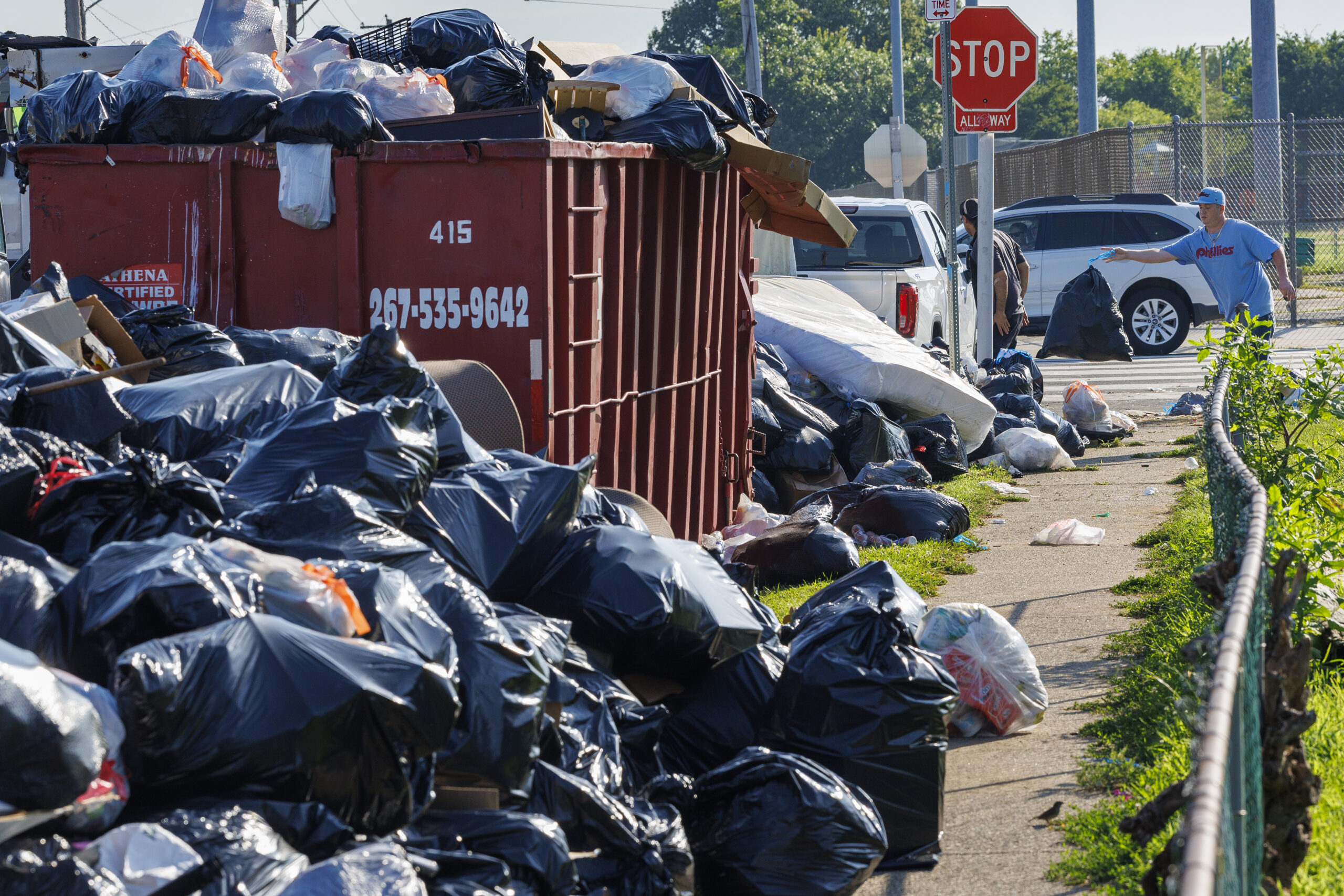
    Residents with trash arrive at garbage dump site at Caldera Road and Red Lion Road in northeast Philadelphia during the AFSCME District Council 33 workers strike in July.

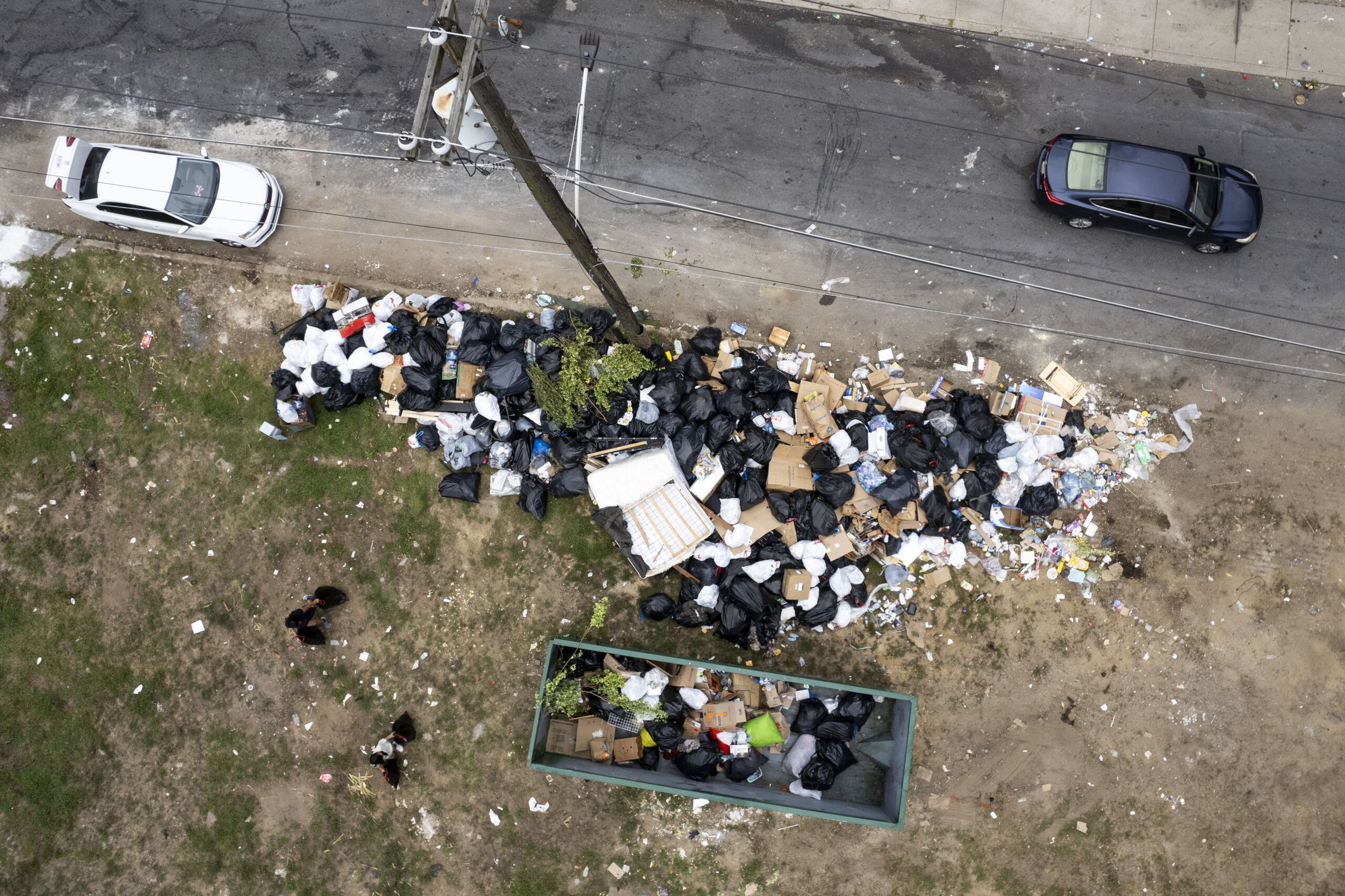
    As a result, things got weird. Dead bodies piled up at the Medical Examiner’s Office; a striking union member was arrested for allegedly slashing the tires of a PGW vehicle; and for eight days in the July heat, garbage heaped up all across Philadelphia. The city set up temporary trash drop-off sites, which often overflowed into what were nicknamed “Parker piles,” but that also set off a firestorm about whether using the sites constituted crossing a picket line.

    Wawa Welcome America July Fourth concert headliners LL Cool J and Jazmine Sullivan even pulled out of the show in support of striking workers, resulting in a fantastic “Labor Loves Cool J” meme.

    This is my favorite strike meme so far

    [image or embed]

    — Stephanie Farr (@farfarraway.bsky.social) July 7, 2025 at 9:40 AM

    It was all like something out of It’s Always Sunny in Philadelphia. In fact, the gang predicted a trash strike in the 2012 episode “The Gang Recycles Their Trash.”

    The real strike lasted eight days before a contract was reached. In true Philly form, AFSCME District Council 33 president Greg Boulware told The Inquirer “nobody’s happy.”

    A large pile of trash collects at a city drop-off site during the AFSCME workers strike this summer.

    97-year-old gives birth to 16 kids

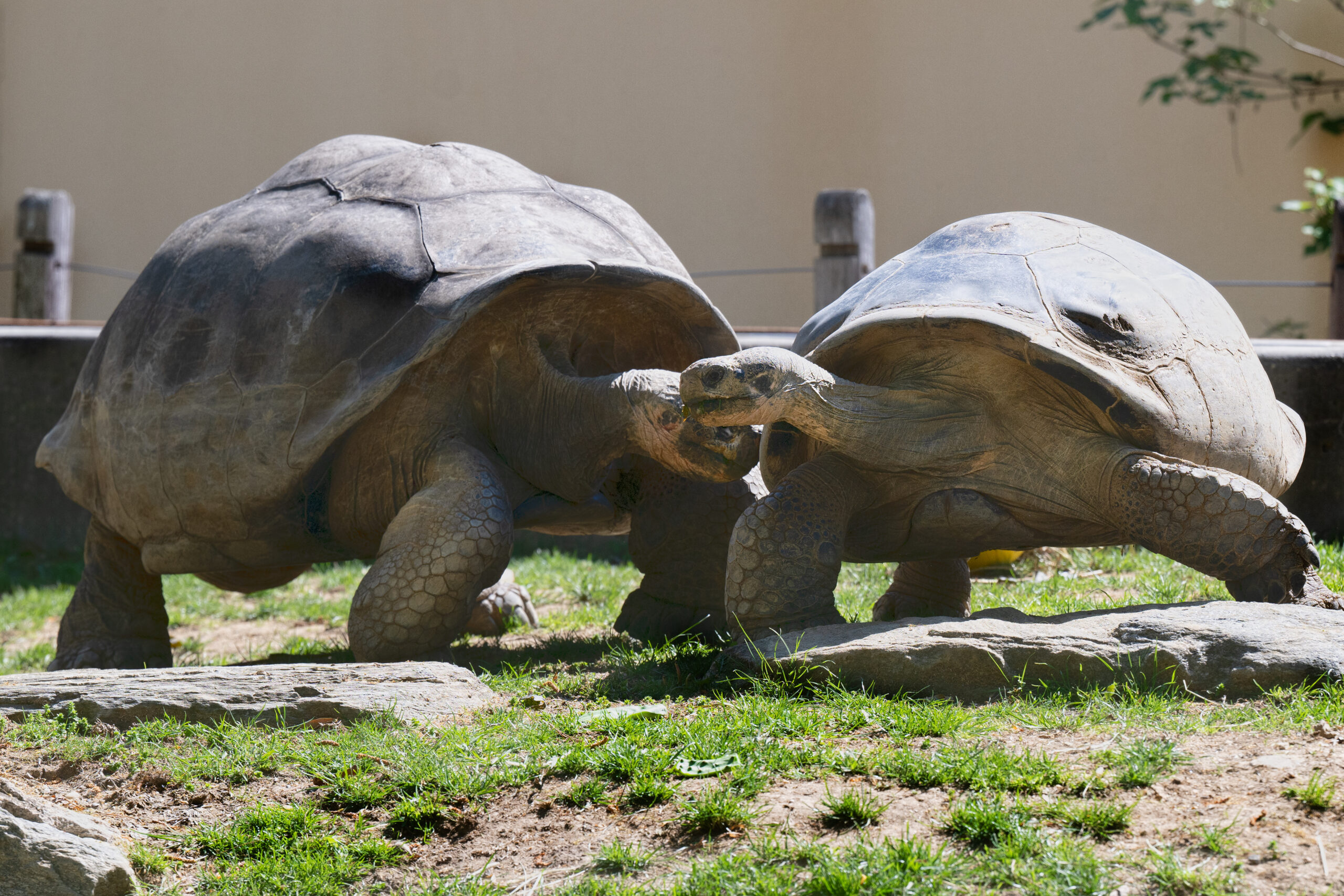
    A local nonagenarian couple became national shellebrities this year for welcoming seven babies in April and nine more in August, proving that age ain’t nothing but a number, as long as you’re a tortoise.

    Western Santa Cruz Galapagos tortoise Mommy, and male Abrazzo, left, are shown on Wednesday, April 23, 2025, at the Philadelphia Zoo in Philadelphia, Pa. The hatchlings’ parents, female Mommy and male Abrazzo, are the Zoo’s two oldest animals, each estimated to be around 100 years old.

    Mommy and Abrazzo, Western Santa Cruz Galapagos tortoises who reside at the Philadelphia Zoo, made history with their two clutches, becoming the first pair of the critically endangered species in the zoo’s 150-year history to hatch eggs and the first to do so in any accredited zoo since 2019.

    Mommy is also the oldest known first-time Galapagos tortoise mom in the world, so it’s safe to say she doesn’t have any time or patience for shenanigans. She’s got 16 heroes in a half shell to raise.

    Western Santa Cruz Galapagos tortoise egg hatchling.

    Phillies Karen

    Taking candy from a baby is one thing — babies don’t need candy anyway — but taking a baseball from a kid at a Phillies game is a deed so foul and off base it’s almost unimaginable.

    And yet, that’s exactly what happened at a Phillies-Marlins game in September, when a home run from Harrison Bader landed in the stands and a dad ran from his seat to grab it and give it to his son. A woman who was sitting near where the ball landed marched over to the dad, berated him, and demanded the ball be given her. Taken aback, the father reached into his son’s baseball glove and turned the ball over.

    The entire scene was caught on camera and the woman, with her Kate Gosselin-esque hairdo, was immediately dubbed “Phillies Karen” by flabbergasted fans.

    While the act technically happened at the Marlins stadium in Miami, Fla., it captured the minds and memes of Philadelphians so much that it deserves inclusion on this list. Phillies Karen has made her way onto T-shirts and coffee mugs, inspired skits at a Savannah Bananas game and the MLB Awards, and she even became a popular Halloween costume.

    To this day, “Phillies Karen” remains unidentified, so it’s a safe bet she lives in Florida, where she’ll have better luck with alligators than with people here.

    Institutional intrigue

    Drama at area institutions this year had Philadelphians sipping tea like we were moms on Christmas morning, and sometimes, left us shaking our fists in the air like we were dads putting up tangled lights.

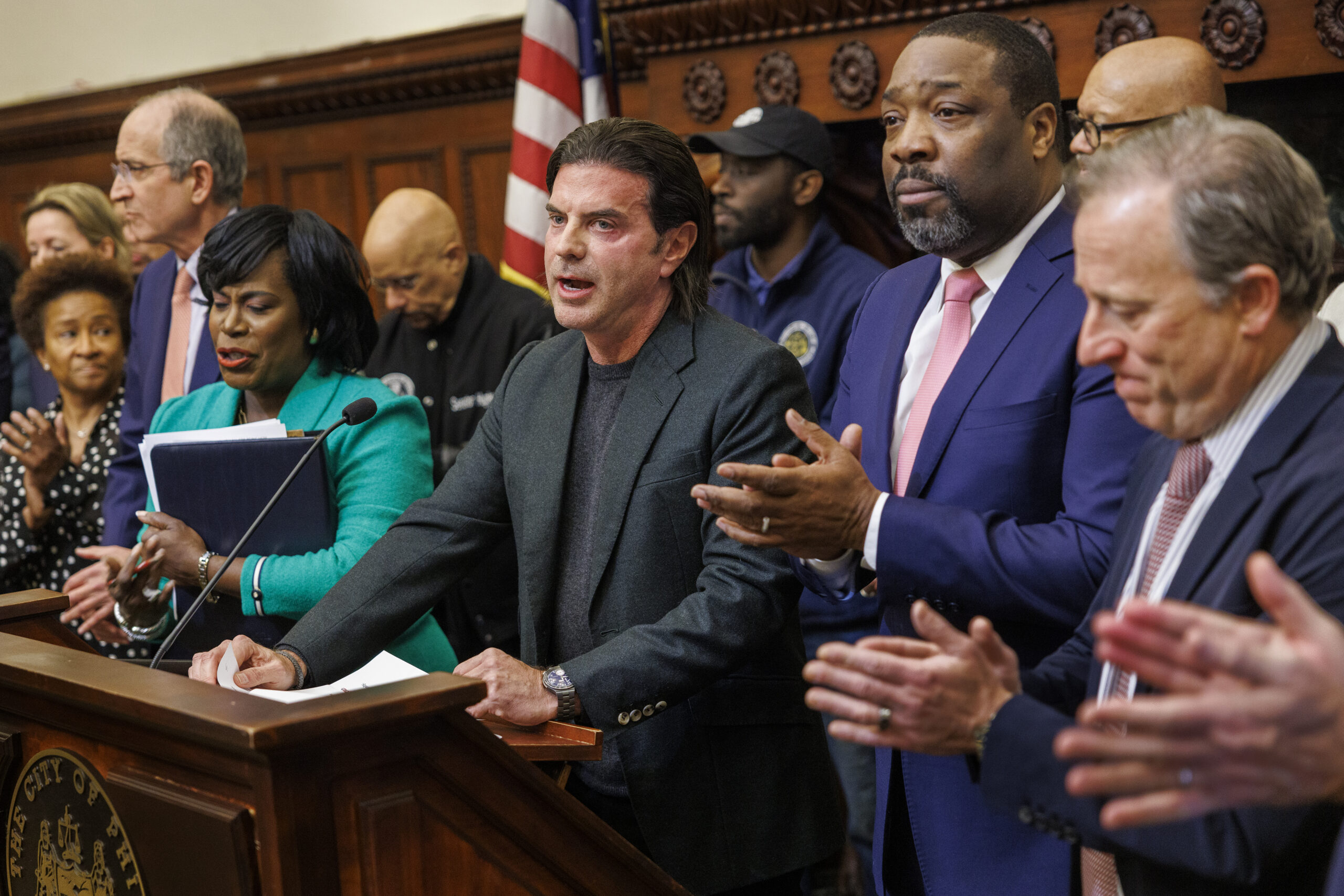
    David Adelman with the Philadelphia 76ers makes a statement at a press conference in the Mayor’s Reception Room in January regarding the Sixers changing directions on the controversial Center City arena. At left is mayor Parker, at right City Council President Kenyatta Johnson and Josh Harris, Sixers owner.

    It started early in January, when the billionaire owners of the Sixers surprised the entire city by announcing the team would stay at the South Philly sports complex instead of building their own arena on Market East. The decision came after two years of seemingly using the city, its politicians, and its people as pawns in their game.

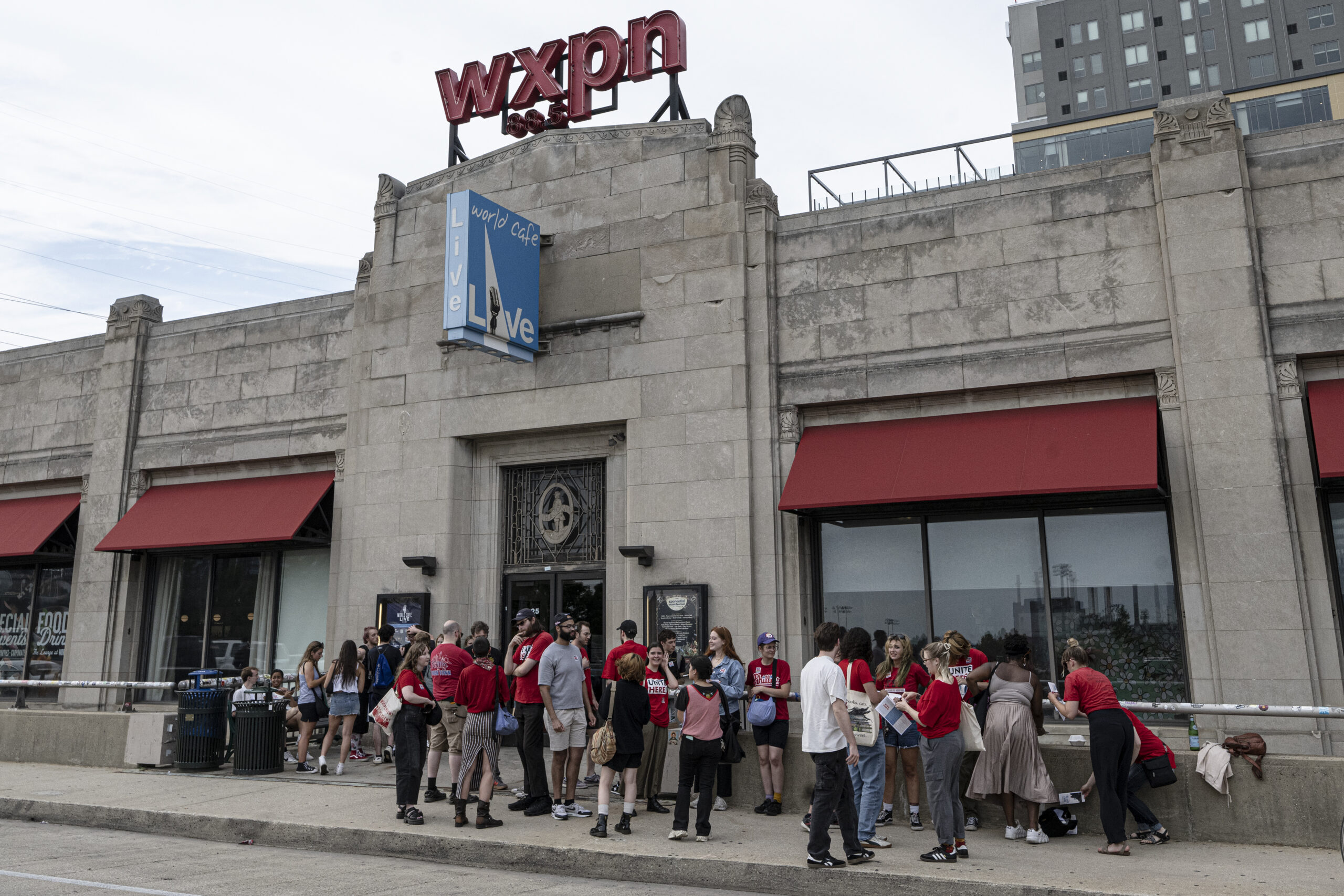
    Workers gathered outside World Cafe Live before a Town Hall meeting with management in July.

    In June, workers staged a walkout at World Cafe Live due to what they claimed was “an unacceptable level of hostility and mismanagement” from its new owners, including its then-CEO, Joseph Callahan. Callahan — who said the owners inherited $6 million in debt and that he wanted to use virtual reality to bolster its revenue — responded by firing some of the workers and threatening legal action. Today, the future of World Cafe Live remains unclear. Callahan stepped down as CEO in September (but remains chairman of the board), the venue’s liquor license expired, and its landlord, the University of Pennsylvania, wants to evict its tenant, with a trial scheduled for January.

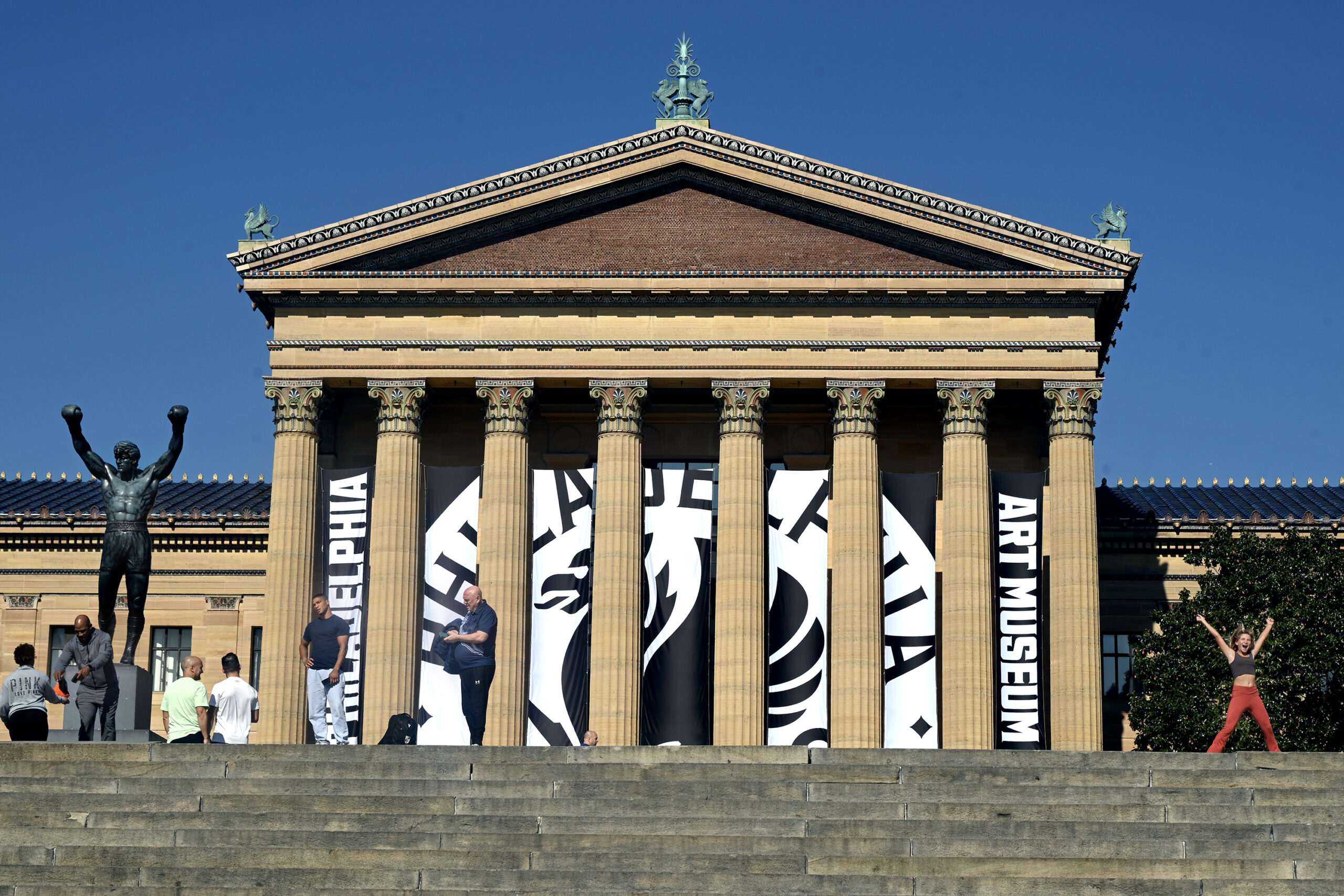
    Signage at the east entrance to the Philadelphia Art Museum reflects the rebrand of the institution, which was formerly known as the Philadelphia Museum of Art.

    Finally, late this year at the Philadelphia Art Museum, things got more surreal than a Salvador Dalí painting, starting with an institutional rebrand that surprised some board members, didn’t land well with the public, and resulted in a lot of PhART jokes. In November, museum CEO Sasha Suda was fired following an investigation by an outside law firm that focused, in part, on increases to her salary, a source told The Inquirer. Suda’s lawyer called it a “a sham investigation” and Suda quickly sued her former employer, claiming that “her efforts to modernize the museum clashed with a small, corrupt, and unethical faction of the board intent on preserving the status quo.”

    Nobody knows where all of this will go, but it’s likely to have more drama than a Caravaggio.

  • 2026 Genesis GV80 Coupe: Fast and fun but not that comfortable

    2026 Genesis GV80 Coupe: Fast and fun but not that comfortable

    2026 Genesis GV80 Coupe 3.5T E-supercharger vs. 2026 Land Rover Defender 130 V-8 vs. 2026 Mercedes Benz GLE 450 4Matic SUV: Off-roading in high style.

    This week: Genesis GV80 Coupe

    Price: $87,780 as tested.

    Conventional wisdom: Motor Trend likes the “gorgeous interior,” that it “retains rear headroom” and is “more luxurious than ever.” Reviewers panned that it’s “not actually sporty,” has a “confused personality” and “reduced cargo space.”

    Marketer’s pitch: “The pinnacle of comfort.”

    Reality: It has some high points, but comfort isn’t what I would market.

    What’s new: The GV80 Coupe — essentially an SUV with some of the cargo capacity lopped off — joined the GV80 lineup for the 2025 model year. Some color changes and new trim levels have been added for 2026.

    Competition: In addition to the Defender and the GLE 450, there are the BMW X5, Lexus RX, Lincoln Nautilus, and Toyota Land Cruiser.

    Up to speed: Woohoo, that e-supercharger really works, dialing up the horsepower from the 3.5-liter turbo up to 409. Turn the dial to Sport+ and this baby gets off the ground; 0-60 takes 5.2 seconds, according to Car and Driver. It seemed faster.

    Shifty: The eight-speed automatic transmission operates through the dial on the console — twist counterclockwise for Reverse or clockwise for Drive. It’s a nice setup that’s easy for back-and-forth motions when parking.

    There’s no corresponding move for shift mode, though. Just use the paddles on the steering wheel and keep fighting the vehicle for control. I usually blinked first and just let it do the shifting for me.

    On the road: The handling in the GV80 Coupe is almost as impressive as the acceleration. The sporty shaped SUV does nice on the slalom and has a lot of good road feel. The steering is nice as well.

    The only drawback for me came on cornering. The GV80 had a lot of drift, and I had to slow down for the sharper movements.

    Off the road: The GV80 gets a new terrain mode for 2026, with settings for snow, mud, and sand.

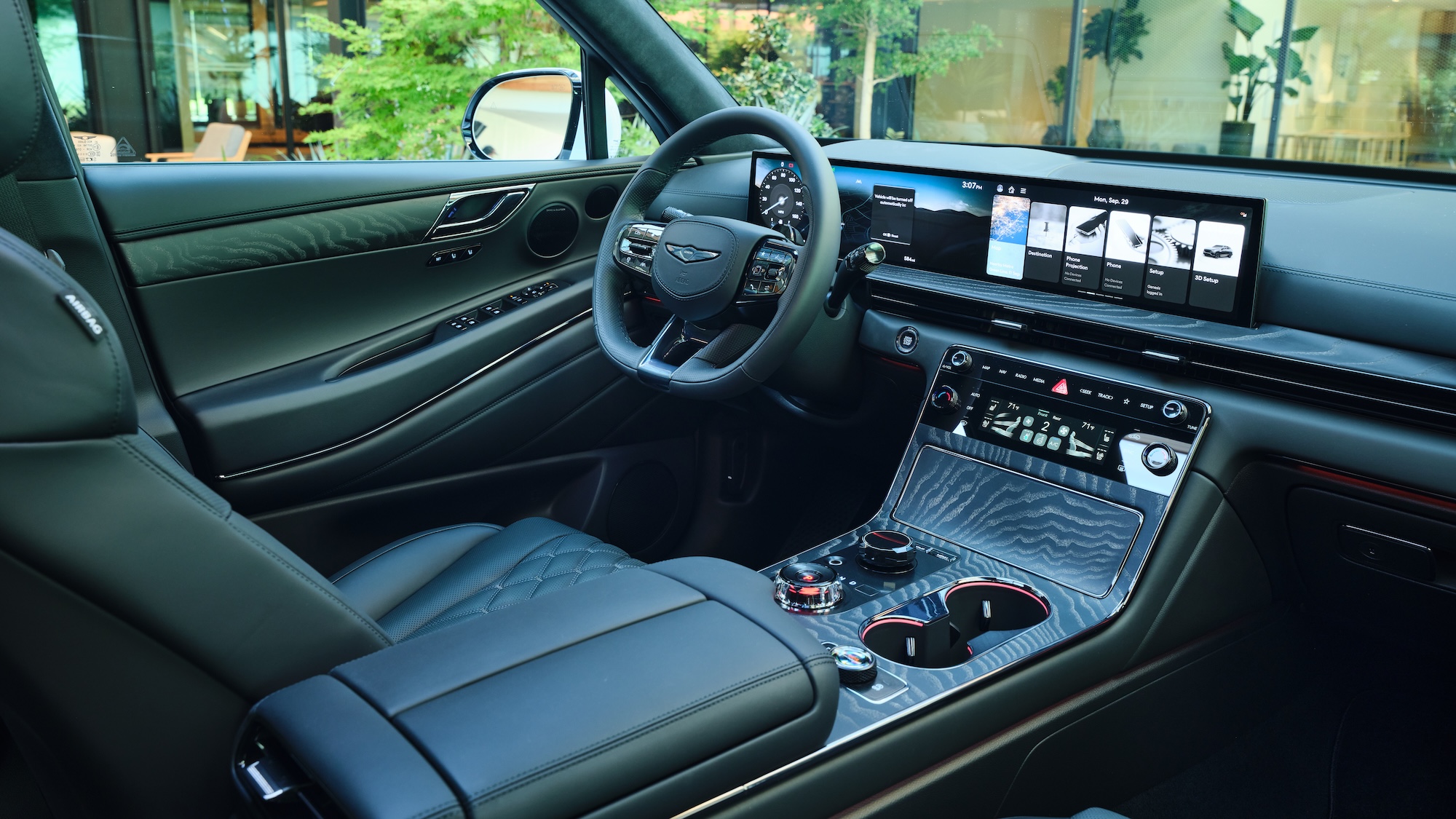
    The interior of the 2026 Genesis GV80 Coupe looks inviting, but it turns out comfort is lacking. Also, adjusting the temperature settings is harder than it should be.

    Driver’s Seat: The seat seemed quite hard, and the lumbar support seemed more like a kidney punch than a feature. I’m not sure I could live with this seat day to day. It really seemed as uncomfortable as the old Hyundai basic seats and not quite worthy of this fancy a vehicle, even covered in Nappa leather.

    The fancy digital dashboard also leaves a bit to be desired. So many of the features are hidden by the steering wheel that it could be hard to know what was going on. The gauges are fine, though, and everything sure is attractive.

    Friends and stuff: The rear seats offer nice amenities — power fold and lift, and power recline that provides quite a bit of choice.

    Unfortunately, the low ceiling means headroom is less than plentiful — I still have a little space above my head but not much — and foot room is kind of snug.

    Cargo space is 61.1 cubic feet with the rear seat folded and 29.3 when it’s upright, both numbers down about 15% from the regular GV80.

    The GV80 Coupe can tow up to 6,000 pounds.

    In and out: There’s a bit of a climb into the GV80, naturally, but you must have been expecting that.

    Play some tunes: Sound from the system is delightful, an A+.

    Operation uses either a dial or the touchscreen. A home screen shows all the possible places you can go and swiping to the right shows even more. It’s easy to use and to follow, even through the layers of nested elements.

    Keeping warm and cool: Would that the HVAC were so easy to operate. It features simple dials for temperature but then the source, fan speed, and seat heater and ventilator icons are so tiny in their handsome little ebony touch pad, and it offers zero feedback. So there’s a lot of potential vehicle drift just to keep the air at the right temperature. I’ve been panning Hyundai for this left and right and will continue to do so.

    There also seems to be a lot of thrust in the airflow, so it might not be everyone’s cup of tea. The Lovely Mrs. Passenger Seat was having none of it, lest her perfect hair get blown about.

    Fuel economy: I averaged about 16 mpg, which is pretty pitiful.

    Where it’s built: Ulsan, South Korea. The vehicle is made up of 85% Korean parts and 3% from the U.S. and Canada.

    How it’s built: Consumer Reports predicts the GV80 reliability to be a 2 out of 5.

    Next week: Land Rover Defender 130.

  • Nativity scenes have long mirrored current events. All of the ICE references this year are no different.

    Nativity scenes have long mirrored current events. All of the ICE references this year are no different.

    For 29% of the world, the world’s 2.3 billion Christians, the days leading up to Dec. 25 are filled with traditions to help us prepare for one of the two most important religious celebrations of the year.

    On Christmas Day, the mangers in Nativity scenes in front of churches across the nation, empty until now, will feature depictions of the infant Jesus.

    Christians can then, as the carol goes, know the thrill of hope, and the weary world can rejoice.

    For a day, an hour, a moment, Christians in the U.S. will seem to be one body in Christ — but perhaps not even the Nativity can bridge the gulf that has grown between Christians over President Donald Trump’s immigration policies.

    In fact, this holiday season, some of that deep division has flared up publicly, centered on Nativity scenes at churches — across denominations and geographies — that depict the Holy Family behind barbed wire, or flanked by federal agents from U.S. Immigration and Customs Enforcement and U.S. Customs and Border Protection.

    An “ICE WAS HERE” sign is posted in the empty spot for the baby Jesus at a Nativity scene displayed at St. Susanna Church in Dedham, Mass., earlier this month.

    In Massachusetts, at the Roman Catholic St. Susanna Church, the Holy Family is missing — replaced by a sign saying “ICE WAS HERE.” At Oak Lawn Methodist in Dallas, the Holy Family is behind a barbed wire fence, with a sign that says “Holy is the refugee.” At Missiongathering Church in Charlotte, N.C., ICE agents wearing bulletproof vests surround the Holy Family.

    At Oak Lawn United Methodist Church’s nativity, Mary and Joseph are silhouettes, surrounded by a chain link fence topped with razor wire. Their halos are old bicycle wheels. A shopping cart and two metal bins, frequently used by the unhoused as firepits, flank the scene.

    [image or embed]

    — NPR (@npr.org) December 16, 2025 at 2:08 PM

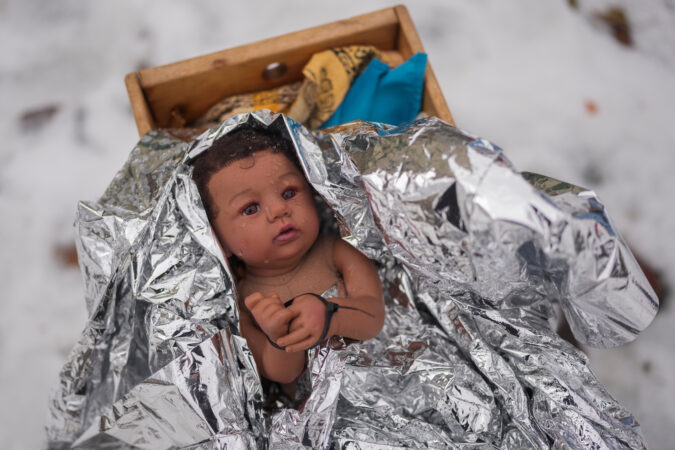
    And at Lake Street Church of Evanston, in Evanston, Ill., not only are ICE and CBP figures included, but Mary wears a gas mask, and the infant Jesus has his hands zip-tied together — the way a witness describes federal agents from ICE and CBP zip-tying children together after raiding an apartment building in Chicago in October — and is swaddled in a Mylar blanket like those used in detention centers.

    The pastors involved say the Nativities remind everyone that “God is with us” now. The scene “reflects the context that Jesus would be coming into if he were born today,” St. Susanna’s Father Stephen Josoma told the National Catholic Reporter.

    The Rev. Michael Woolf, pastor of Lake Street, was even more direct when he posted on Instagram after someone had removed the zip ties from the Jesus figure in his church’s Nativity:

    “We restored the zip ties on baby Jesus. The #Christmas story is literally about an authoritarian ruler using violence, causing fear, and eventually driving the holy family to become refugees in Egypt. The parallels couldn’t be more clear between Scripture and our nativity. We’re not going anywhere.”

    There is a long tradition of having Nativity scenes reflect contemporary concerns and realities. For example, during World War I, according to Emma Cieslik, a museum professional and religious scholar writing for the website Hyperallergic, the Holy Family huddled in the trenches. More recently, the Christmas Lutheran Church in Bethlehem created a Nativity scene with the infant Jesus cradled by rubble from the bombing of Gaza, and the Vatican itself hosted Nativity scenes depicting the war in Ukraine.

    Still, there has been plenty of pushback. The bishop of the Archdiocese of Boston has been critical of St. Susanna’s Nativity, for example, and online comments at X dispute any characterization of the Holy Family as migrants or refugees. (Ahem, Matthew 2:13-14 anybody?)

    But the strongest reactions have taken place at the churches in places that were impacted by Trump-directed immigration surges.

    At Missiongathering in Charlotte, a person was caught on video knocking over the ICE figures in the Nativity and tearing up the “Know Your Rights” signs around it. At Lake Street Church on Chicago’s North Side, vandals knocked down the ICE and CBP figures, then battered and decapitated the Mary figure.

    The violence is symbolic, but the fury is undeniable. This administration has so thoroughly demonized migrants and refugees, labeling all as criminals, that any hint of resemblance between today’s migrants and refugees and the Holy Family reads as anathema to some Christians. But anyone who thinks the parallels are politically driven needs to get their history straight. Way back in 1952, Pope Pius XII was writing in his Exsul Familia Nazarethana that “the migrant Holy Family of Nazareth, fleeing into Egypt, is the archetype of every refugee family.”

    And here’s the thing: These Nativities that have enraged people aren’t exclusively reflecting the reality of migrants and refugees who are endangered by the Trump administration policies — they are reflecting the danger to all of us.

    Folks may feel safe in their own status, but anyone can be treated the same way the administration is treating migrants and refugees. It is happening already, in fact, with federal agents refusing to accept valid U.S. birth certificates and passports as proof of citizenship.

    “No document will protect you,” Malka Older, who heads up the international community of writers and human rights activists Global Voices, and has years of experience working at humanitarian aid, disaster risk reduction, and emergency preparedness organizations, wrote recently on Bluesky.

    “All they have to do is take it from you and ‘lose’ it; take it from you and say you never gave it to them; claim it’s fake; make a new rule that you need another document. Citizenship is a made-up status that governments decide the rules for.”

    Older said “it has never been about immigration. It’s racism, and it’s intimidation, and profit for some. Allowing it to happen to any group means it’s a possibility for everyone, and that’s how fascism maintains power.”

    Which brings me back to Christmas Day, and what every pastor who has placed one of those ICE Nativity scenes knows.

    It is a broken world now, and it was a broken world when Christ was born into it.

    Amid the soaring Glorias, the sparkle of lights, and the colorful paper wrapped around gifts we give each other in echo of the gifts brought to the Christ child by the Magi, we should remember that three days after Christmas Day, Christians will be marking the slaughter of the Holy Innocents. The one the Holy Family fled from, the one that made them refugees.

    They were warned, as we are warned, that authoritarian rulers will stop at nothing to get their way.

  • Dear Santa, Trump has been very naughty. Don’t give him anything. Not even coal.

    Dear Santa, Trump has been very naughty. Don’t give him anything. Not even coal.

    Dear Santa Claus,

    I hope you and Mrs. Claus are well. This is the first time in a long while that I have taken the time to write out my Christmas wish list. It’s a long one, but it’s also for the millions of Americans struggling this year to fill their Christmas stockings.
    Donald Trump, a spray-tanned, 21st-century version of Ebenezer Scrooge, claims the affordability crisis is a “Democratic hoax,” and that parents should deal with it by buying fewer toys. With a heart that’s at least two sizes too small, he just can’t relate to those who scrape to get by. The only struggle he can relate to has to do with pronouncing the word acetaminophen.

    Like the main character in Charles Dickens’ A Christmas Carol, Trump enjoys demeaning people — as he did last week when he unveiled a series of plaques near the Oval Office, deliberately distorting the legacies of former Presidents Joe Biden and Barack Obama. Trump isn’t in the same league with either of them. Not even close. Same thing with President John F. Kennedy, but that didn’t stop him from having his name slapped onto the John F. Kennedy Center for the Performing Arts last week.

    Please, Santa, make sure your sleigh doesn’t drop off any presents at the White House on Christmas Eve. Same thing with Mar-a-Lago. Remember Trump’s posting an AI-generated meme dropping what looks like feces on “No Kings” protesters back in October? Just tell Dasher, Dancer, Rudolph, and the rest to fly right on by both of these locations.

    President Donald Trump speaks during an address to the nation from the Diplomatic Reception Room at the White House in Washington in December.

    Unemployment rose to 4.6% last month, the highest increase since 2021. For African Americans, it’s way higher, at 8.3%. Kudos to Rep. Ayanna Pressley (D., Mass.), among others, for demanding answers about what’s going on. Please don’t forget to drop off something really nice for them.

    Also, as I’m sure you’re aware, America is on the verge of a healthcare crisis. Once federal subsidies to the Affordable Care Act expire Dec. 31, millions will see their health insurance costs skyrocket. This isn’t the kind of thing you and the elves typically work on up at the North Pole, but members of Congress have failed to come up with a solution.

    If something drastic doesn’t happen soon, millions may wind up dropping their policies, which could prove catastrophic. We can’t count on that old Scrooge, I mean the president, who campaigned claiming he had a “concept of a plan” to fix healthcare. He hasn’t done it yet, and I doubt he ever will. Instead of boxed gifts, anything you can do to help us resolve this important issue would be deeply appreciated.

    Trump really deserves that No. 1 spot on your naughty list this year. It’s one thing to try to secure America’s borders, but it’s a whole other thing to allow masked U.S. Immigration and Customs Enforcement agents to carry out a reign of terror on undocumented immigrants and U.S. citizens alike.

    There have been many other lowlights from the first 11 months of his second term: imposing tariffs on foreign countries that have raised costs for American consumers, dismantling the U.S. Agency for International Development, and stopping diversity, equity, and inclusion in the federal government and anywhere else he can.

    On top of everything else, Trump doesn’t even bother to hide his bigotry anymore. Under his leadership, officials have admitted white Afrikaners — descendants of the European colonizers whose segregationist practices led to the formalization of apartheid in South Africa — granting them refugee status while doing everything in his power to deport Black and brown migrants. I haven’t recovered from his calling Somalis “garbage” and saying that they should leave the country.

    They and anyone else Trump doesn’t like have to go because he’s worried about “chain migration,” but first lady Melania Trump, who brought her parents to the States using the same process, can stay? Make it make sense.

    Volunteers take phone calls from children asking where Santa is and when he will deliver presents to their house, during the annual NORAD Tracks Santa Operation, at the North American Aerospace Defense Command, or NORAD, at Peterson Air Force Base, in Colorado Springs, Colo., last Christmas Eve.

    I could go on and on, but I’m trying to embrace the holiday spirit. Please give my regards to Mrs. Claus and to all of the elves who work so hard to make the Yuletide season jolly.

    When you make your way down my chimney, you will find your cookies and milk in their usual place. I don’t need anything personally, but please do what you can to make life easier for Americans scraping to get by in the so-called golden age of Trump. As a certain humbug himself might say, thank you for your attention to this matter!

    Love, Jenice