Category: Columnists

  • As a Black man, I was initially angry about plans to scrap DEI goals for city contracts. But then I remembered: They don’t work for us anyway.

    As a Black man, I was initially angry about plans to scrap DEI goals for city contracts. But then I remembered: They don’t work for us anyway.

    I felt a rush of anger when I learned the Parker administration planned to scrap the so-called minority participation goals for city contracting. Then I remembered what I’d learned while covering race and city contracting over the last decade: participation goals don’t work well enough for Black people.

    This is not to say people of color aren’t getting city business. The Office of Economic Opportunity (OEO) said what it calls “minority, women, and disabled business enterprises” received more than $370 million in city contracts in fiscal year 2023.

    The city’s goals call for 35% of city contracts to be awarded to businesses owned by women, people of color, and people with disabilities. During the 2023 fiscal year, 31.4% of city contracts went to companies owned by people from those demographic groups.

    However, Black-owned businesses only accounted for about 13.5% of all city contracts.

    Given that Black Philadelphians make up the city’s largest ethnic group — we’re more than 38% of the population — that’s a problem.

    So why don’t participation goals work better for Black people? I believe the answer is simple. Bias and race-based exclusion are built into a system where money is plentiful but accountability is not.

    In construction, a business where city contracts abound, developers and contractors tend to be big political donors.
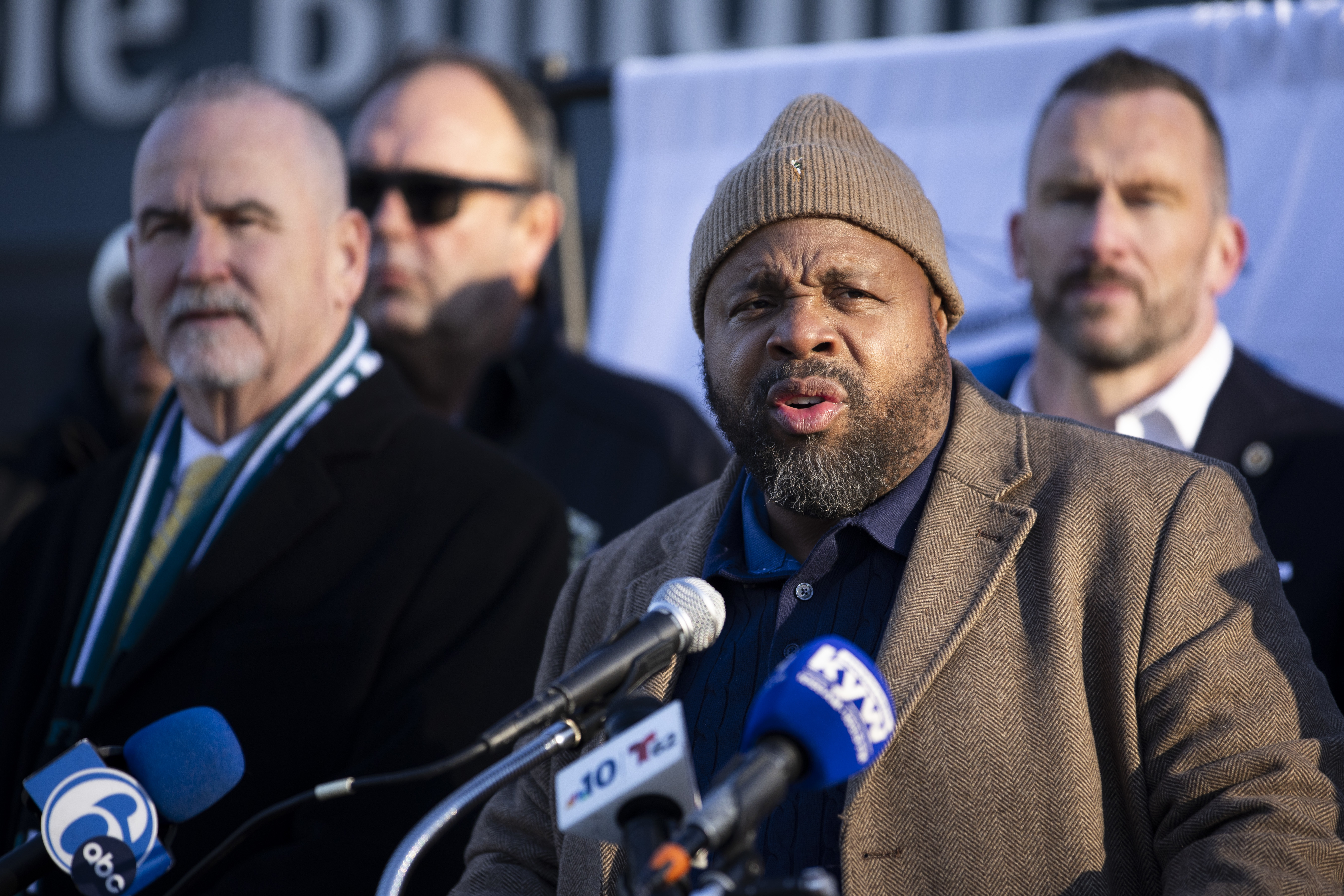
    Ryan Boyer, the head of the city’s building trades unions, speaks at a January news conference. Although Boyer now leads the group, the unions spent generations excluding Black people, Solomon Jones writes.

    The companies are almost always white-led, since only 9.2% of Philadelphia businesses with employees were Black-owned as of 2022.

    In addition, the building trades unions, though they are now run by a Black man, Ryan Boyer, spent generations excluding Black people.

    That leaves the city asking white-owned businesses with largely white workforces to meet minority participation goals set by the Office of Economic Opportunity.

    According to a former manager in the OEO, who would speak to me only on the condition of anonymity, companies that don’t meet the goals rarely face consequences.

    That’s been the case for years. In fact, I wrote a 2016 Inquirer column that noted that in the 2015 fiscal year, nearly 70% of city-funded construction projects with budgets over $250,000 did not reach the city’s participation goals for people of color, and 44% had no participation by people of color at all.

    Very few were held accountable for it then, and very few are held accountable now.

    But even if the goals didn’t deliver what they should have, it’s galling to lose them at a time when the president is pushing an anti-Black agenda, complete with policies that led to job losses for over 300,000 Black women during his first year in office. Sadly, that’s just the tip of the iceberg.

    Donald Trump has sought to erase Black history in our city by pushing for the removal of a slave memorial. He sent federal agents to snatch Black American citizens and Venezuelan immigrants from their beds in Chicago. He has targeted Black political representation with a Texas redistricting scheme that judges have blocked — for now.

    But this is about more than the president’s recent actions. This is about Trump’s long game. From Road-Con Inc. v. City of Philadelphia, which challenged the city’s minority set-asides, to the U.S. Supreme Court’s decision to kill affirmative action, the multipronged attack is not just meant to set precedents. This attack is meant to set us back.

    That’s why, when we see our civil rights gains under attack, we want our leaders to stand and fight.

    I asked Mayor Cherelle L. Parker if changing the minority participation goals to small and local business goals represented the kind of fight our community wants from her.

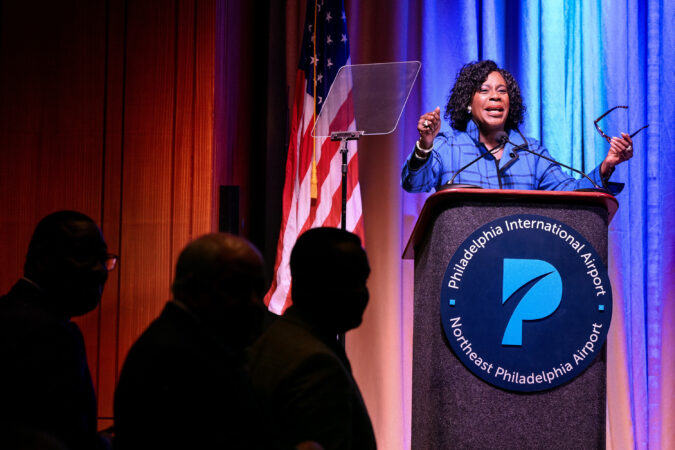
    “I am 53 years old,” she said, “and I have been working in government and public service since I was 17 years old. I don’t know anyone in this city who knows me who has ever questioned whether or not I’m willing to fight for what I believe in. I’m a product of this city. You heard me reference the intersection of race and gender. But I thank God that I’m made and built from the kind of material that says a speech is not enough. You have to deliver tangible results.”

    The mayor went on to say the community should hold her accountable. I agree, and we will.

    But I am also one of those people who have known the mayor for years. She is indeed a fighter, and she’s fighting this her way. We only need one thing from her: a win.
  • The night America’s doomed ruling class gorged on lamb, blood, and oil

    The night America’s doomed ruling class gorged on lamb, blood, and oil

    Apparently, time really does heal all wounds — even those caused by the bone saw of a murderous prince and his personal goon squad after they hacked an intrepid Washington Post opinion journalist into pieces for speaking the truth about a corrupt and contented regime.

    It’s hard to believe now, but there was actually a very brief time — in 2018, to be exact — when corporate America and even some political leaders pretended to have enough morals to resist this stone-cold killer with bags of money: Saudi Arabia’s de facto ruler, Crown Prince Mohammed bin Salman, or MBS.

    It wasn’t just Oval Office-bound candidate Joe Biden who’d promised (falsely) to make MBS “a global pariah” after the CIA stated the obvious: that the crown prince was behind the barbaric murder of journalist Jamal Khashoggi. Six years ago, some of the nation’s top business leaders — like the CEOs of J.P. Morgan Chase, Ford, and Uber, and Donald Trump’s billionaire pal, Stephen Schwarzman — abruptly ditched a high-profile Saudi investment forum, and a few businesses totally cut ties with the oil dictatorship.

    In 2025, any pretense of “corporate social responsibility,” let alone shame, in America’s C-suites is as outdated as dial-up internet. Schwarzman — who canceled his 2019 flight to Riyadh but not his Blackstone Group’s lucrative ties to the Saudi wealth fund — toasted MBS at a White House dinner Tuesday night, as did Ford CEO William Clay Ford Jr.

    But then it would probably take less time to list which high-profile captains of American industry didn’t show up to fete MBS on his first official visit to Washington since that brief unpleasantness of — in the infamous words of Monty Python — bickering and arguing over who killed whom.

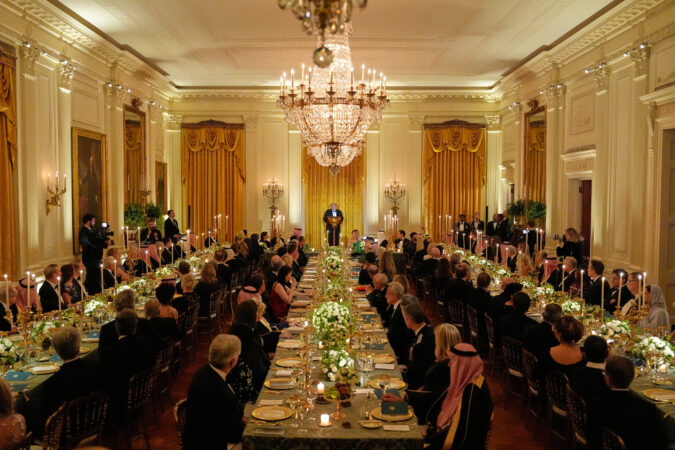
    The world’s sometimes richest human and Trump’s best frenemy Elon Musk, CEO of $5 trillion corporation Nvidia, Jensen Huang, GM head honcho Mary Barra, computer mogul Michael Dell, Big Oil titan Mike Wirth of Chevron, and many others all donned tuxedos or glitzy gowns to hoist a glass for the butcher of Istanbul and his host, the Unabomber of Caribbean fishing boats.

    They gorged themselves on pistachio-crusted rack of lamb (a defenseless sacrificial sheep presumably also carved up with a bone saw), flecked with green nuts in some kind of communal transubstantiation with the blood-stained petrodollars they were really there to devour.

    The ravenous CEOs included Tim Cook of Apple, apparently suffering from a bout of amnesia after his 2019 post-Khashoggi promise to look into Apple’s hosting of a Saudi app that allows men to track the movements of their wives and daughters (it’s still there), and apparently also unburdened, as the nation’s most prominent LGBTQ business leader, by the Saudis’ occasional executions of gay men.

    The candlelight of the gilded East Room also revealed budding media mogul David Ellison, whose toasting of Khashoggi’s killer told us a lot more than any Beltway punditry about the moral fiber of the journalism that the Paramount Global boss plans for his new plaything, CBS News.

    It felt more than fitting that the biggest buzz in a room larded with the billionaire men (and they were mostly men) — all so aggrieved by the short-lived #MeToo push — was for soccer superstar Cristiano Ronaldo, who during the 2017 peak of that movement fought off charges he sexually assaulted a woman in a Las Vegas hotel room. Ronaldo — who abandoned the hallowed pitches of European football to make billions on an obscure Saudi squad — was in many ways the essence of a room doing ethical backflips for the almighty petrodollar.

    For one appalling night, the East Room became a capitalism megachurch where the donation plate was filled with the paper-thin pledge card of MBS’s vague promise to invest $1 trillion (we’ll see about that) on United States soil. But the Scriptures didn’t mention the record number of executions carried out by the Saudi regime, including the June death of journalist Turki al-Jasser, who tweeted criticism of his nation’s rulers and was reported to have been beheaded by a sword, MBS’s preferred method of (literally!) capital punishment.

    The MBS banquet was such a depraved and decadent ritual that it wouldn’t have been surprising if the Fortune 500 executives had broken out in satanic chants as if they were characters in a wretched Dan Brown sequel to The Da Vinci Code.

    This was an orgiastic celebration of death — not just the literal state murders of Khashoggi, al-Jasser, and other journalists and dissidents hacked to death so the Saudis can keep their fossil fuels flowing, but also the death of press freedom, the death of the make-believe era of “woke corporations,” the death of democracy, and — worst of all — the death of a planet.

    It didn’t seem an accident of timing that the American president and our elite ruling class was sharing their couverture mousse pear dessert with the world’s other top oil producer at the very moment the efforts of the global community — albeit without serious support from the United States, Saudi Arabia, or Trump’s other blood brother, Russia — to fight climate change were imploding at the failed COP30 summit in Brazil.

    Even the amoral MBS and his Saudi regime — which is actually investing heavily in solar and other forms of clean energy — is taking the already-here crisis of global warming more seriously than Trump’s America, where his MAGA government is racing to cancel large-scale wind and solar projects and drill for oil off our endangered shores. This is what corporate America blessed when it broke bread at Trump’s White House.

    In a New York Times essay, foreign policy expert Noah Shachtman wrote that “instead of trying to separate from the Persian Gulf petrostates, Mr. Trump is reshaping America to look more like them: top-down, iron-fisted, resource-rich and more than willing to flash those resources as weapons.” The leaders of Apple, Nvidia, GM, and Citibank have embraced this. This is what modern fascism looks like.

    And yet, in bowing down to the petrostate mentality and all the grotesque corruption that comes with that, corporate America is also celebrating yet another kind of death: their own. The Saudi mindset, now fully embraced by the Trump regime and its billionaire obeyers, is a race to cash in — because oil, like life itself, is finite.

    Tuesday’s pagan feast was ultimately a celebration of denial — denial that their guest of honor was a murderer, denial that the never-ending pasta bowl of petrodollars won’t last, denial that they’ve given up on saving the world from drought and floods and probably mass death. And denial that their 21st-century gilded age is about to crash down on them faster than the rubble of the East Wing outside their window.

    Deep down in the queasy, lamb-fed pit of their stomachs, America’s CEOs know it. So does Trump. The most corrupt president in U.S. history and his family have fully embraced the grafty zeitgeist of the Saudi gold rush, from his son-in-law’s $2 billion investment windfall to a planned Trump Organization real estate development.

    The art of the crooked deal was partly behind the president’s Oval Office crude dismissal of a reporter’s Khashoggi question. “Things happen,” he said, implying it was a shame what happened to the Post columnist who must have fallen off the back of a truck — an answer that reeked of organized crime boss bravado that was actually masking real fear.

    Because Lordy, there are transcripts. Virginia U.S. Rep. Eugene Vindman, who was a White House aide at the time of Khashoggi’s 2018 murder, joined with the journalist’s widow to urge the release of the text from what the now-congressman called a “shocking and disturbing” phone call between the first-term Trump and MBS in the immediate aftermath.

    Indeed, it seemed all too appropriate that the Oval Office questions for Trump and MBS blurred between those about the Khashoggi butchery and about the Jeffrey Epstein sex trafficking scandal, because in so many ways, they are the exact same story. It is the story of America’s rich and powerful and their narcissistic avatar at 1600 Pennsylvania Ave. pursuing their innermost desires — whether that’s oil-tainted riches or 14-year-old girls — before the wrecking ball comes for them.

    This wasn’t a state dinner, but it was a state funeral for a billionaire class whose gusher is rapidly running dry.

  • ‘2000 Meters to Andriivka’ captures the horror and the hope of Ukraine’s battle against Russia

    ‘2000 Meters to Andriivka’ captures the horror and the hope of Ukraine’s battle against Russia

    How do Ukrainians fight on when the front line is so painful, the Russian bombing of civilians so brutal, and pro-Putin President Donald Trump so eager to stab Kyiv in the back?

    I put that question to Associated Press journalist and filmmaker Mstyslav Chernov, whose 20 Days in Mariupol won the Academy Award for best documentary in 2024. His new masterpiece, 2000 Meters to Andriivka, will premiere on PBS’s Frontline and also begin streaming on Tuesday, Nov. 25.

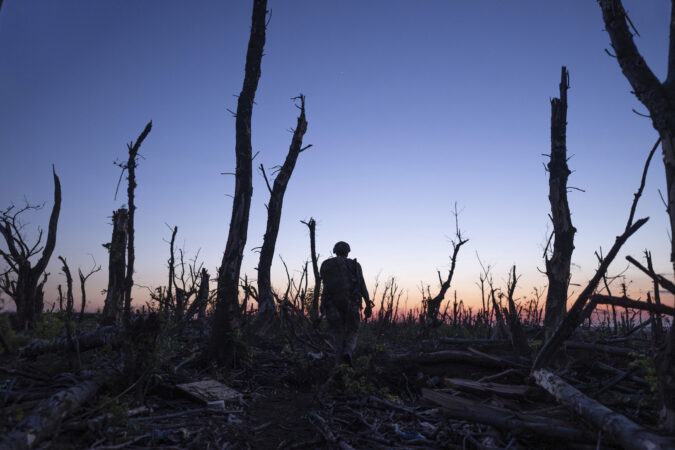
    The film follows a unit of military volunteers in Ukraine’s fabled 3rd Assault Brigade who come from all walks of life, from young to middle-aged. They are trying to advance a little more than a mile along a narrow, mostly destroyed tree line between heavily mined fields,in order to liberate a small village in eastern Ukraine and help cut a Russian supply line to the then-besieged city of Bakhmut.

    This is a raw film, shot from the soldiers’ point of view, not only by Chernov and his AP colleague, videographer Alex Babenko, but by the video cameras many fighters wear on their helmets.

    “I wanted to be as realistic as possible,” Chernov told me. “Showing courage and sacrifice, but also how horrifying and disgusting war is at the core. We try to keep this paradox in the film.”

    What Chernov also achieves, through his voice-over and brief interviews during downtime, is a portrait of why these men won’t stop fighting, no matter the odds, until the Russian aggressor is forced to recognize the sovereignty of the Ukrainian state.

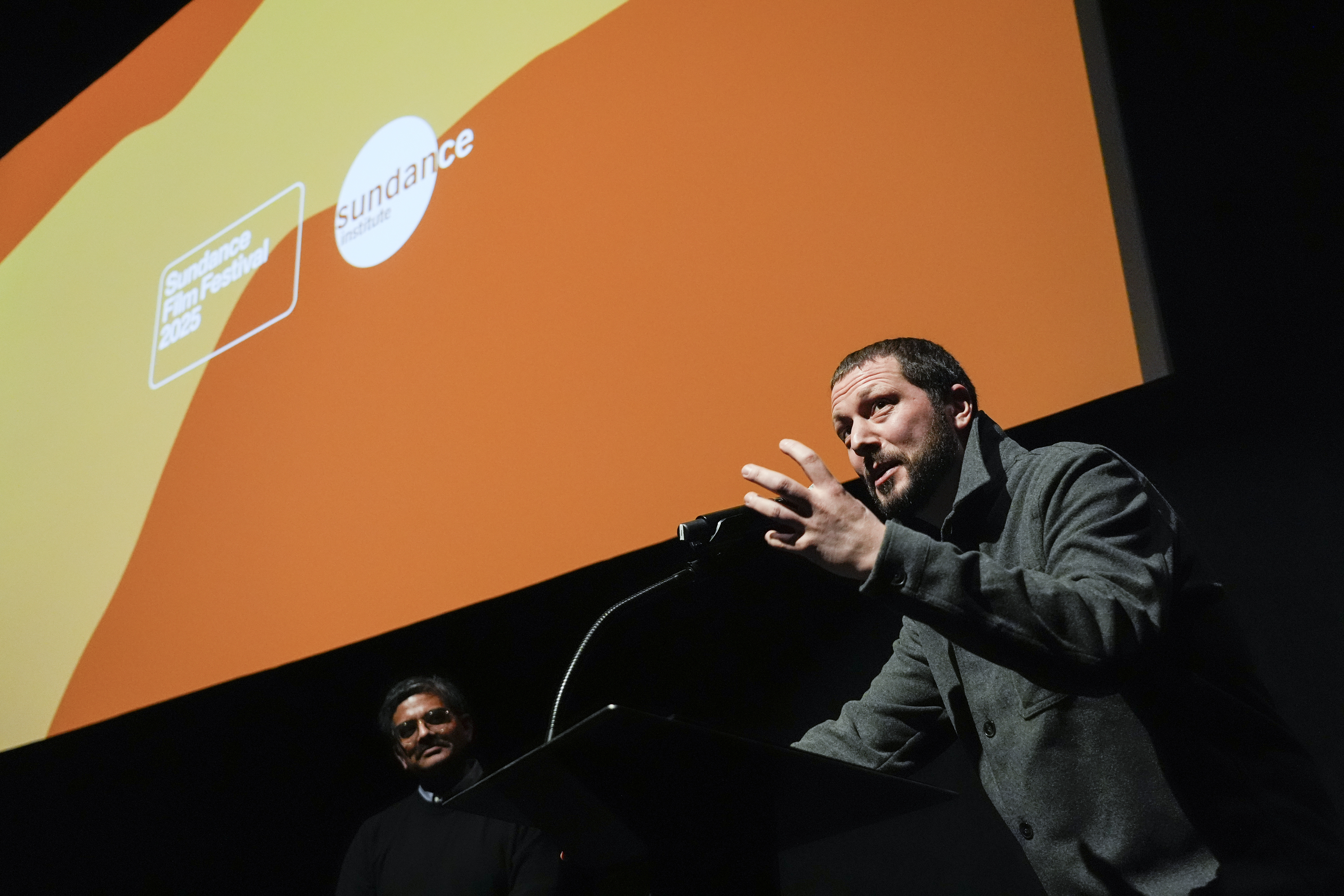
    Mstyslav Chernov speaks at the premiere of “2000 Meters to Andriivka” during the Sundance Film Festival at the Ray Theatre in Park City, Utah, in January.

    When he started this film in 2023, Chernov said, he wanted to make a documentary “about fighting back.” That was a hopeful year, in which Ukrainians were mounting a large counteroffensive against Russia.

    “I searched for hope as much as any Ukrainian,” he recounted. “Raising the flag as a symbol of victory.” He also sought to honor the sacrifice of 3rd Assault Brigade fighters who were liberating the area surrounding his hometown of Kharkiv.

    By the time the film was completed, though, the counteroffensive had failed. Bakhmut had fallen, and Ukrainian forces were weary and undermanned.

    Today, technology has shifted the battlefront into a war of attrition dominated by drones, which can inflict terrible casualties on anything that moves. The Russians are making small advances, and Ukrainian leader Volodymyr Zelensky is fending off a corruption scandal.

    Yet, says Chernov, what you see in 2023 is similar to now.

    The reason Ukrainians keep fighting remains the same, even though many Americans don’t grasp it. “It is a fight for survival, not for a piece of land, but a fight for your life,” he told me. “Stop and you are dead, or fight and you have a chance to survive as a country and with your family.”

    These are the basic truths President Trump and real estate mogul-turned-peace negotiator Steve Witkoff are far too blinkered to grasp.

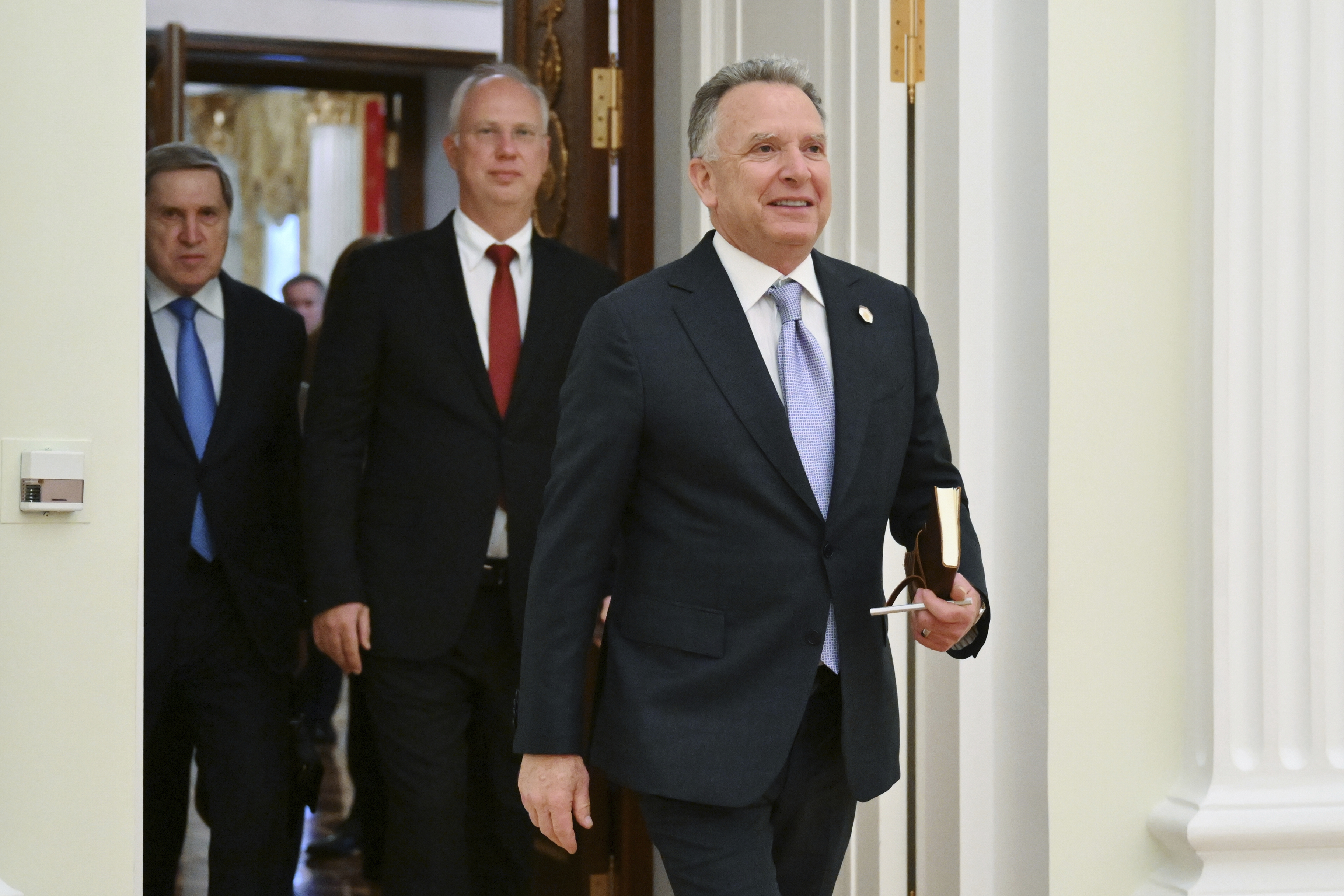
    President Donald Trump’s special envoy Steve Witkoff (foreground), Russian President Vladimir Putin’s investment envoy Kirill Dmitriev (second left), and Russian Presidential Aide Yuri Ushakov (left) arrive to attend the talks with Putin at the Kremlin in Moscow in April.

    Russia’s war is not about real estate deals or land swaps. Vladimir Putin has insisted publicly for years that Ukraine has no right to exist as a state, and that it must be returned to the Russian empire as a subordinate province.

    Any peace plan that hands territory to Russia and fails to provide ironclad military guarantees to Ukraine will only encourage Putin to restart the war. Yet, Witkoff secretly devised a 28-point draft plan with Putin pal Kirill Dmitriev, without consulting Kyiv or our European allies — a plan that leaves Ukraine virtually defenseless.

    This capitulation plan would hand Russia parts of Ukraine that aren’t occupied, while shrinking and largely disarming Kyiv’s forces — and banning the purchase of new Western weapons. It would also ban Ukraine’s future membership in NATO or any peacekeeping troops from NATO members.

    Of course, Putin has endorsed Trump’s plan, which could have and may indeed have been, written in the Kremlin. This shameful document virtually invites the Russian dictator to rebuild his depleted forces and try to end Ukrainian sovereignty for good.

    We already know what has happened in Ukrainian territory that Russia has occupied: the Ukrainian language is banned in schools and from official use, and Ukrainian books are burned. The Ukrainian Orthodox Church is banned, and its priests arrested.

    Ukrainian children in areas under Russian rule are taught that Kyiv is the enemy. They are sent to military camps in Crimea or Russia, and then drafted to fight against fellow Ukrainians. Many younger children have been kidnapped and adopted by Russian families.

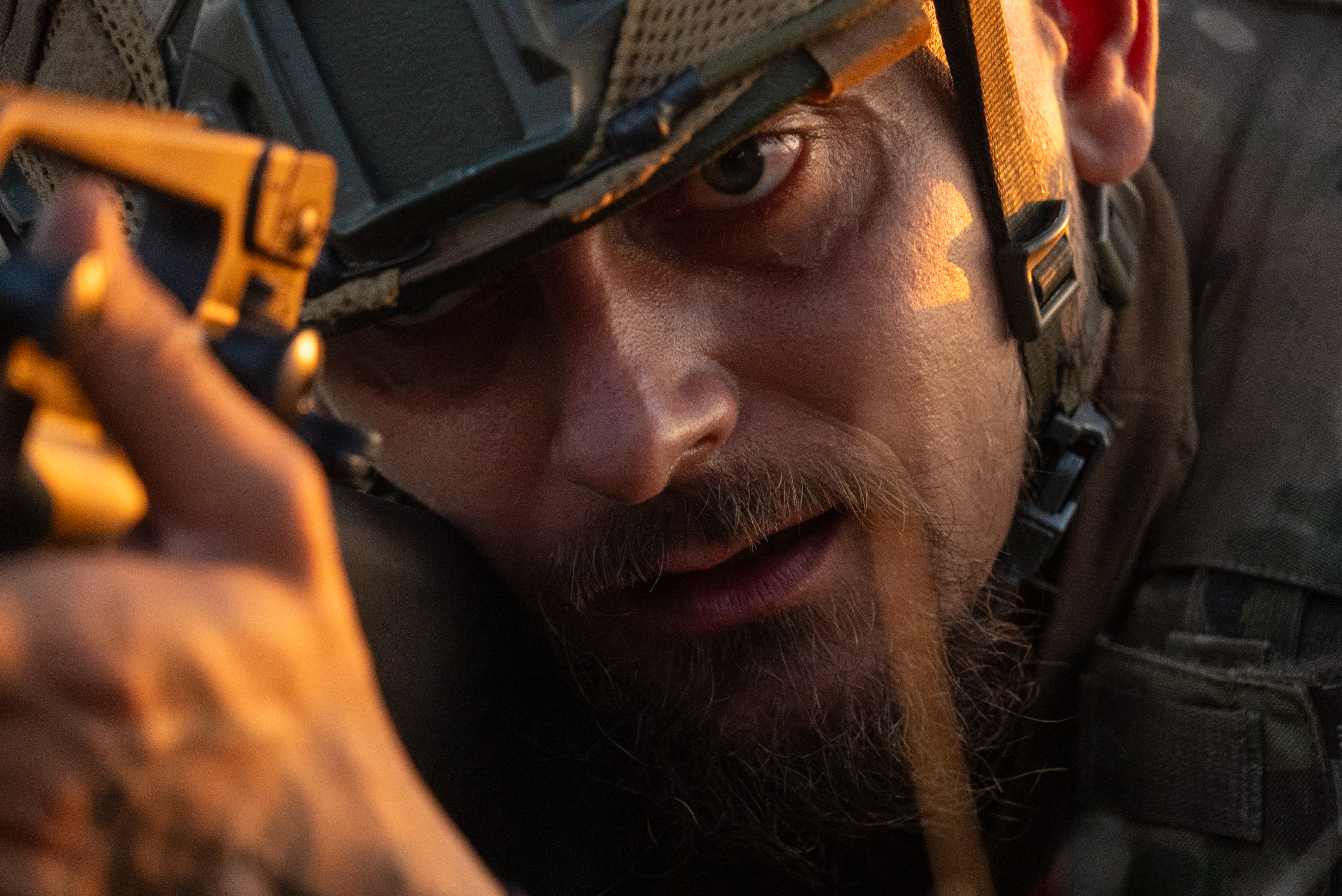
    Kobzar, a Ukrainian serviceman, practices shooting in preparation for the next military operation of the 3rd Assault Brigade. Five months later, he would be killed.

    “If Ukrainians lose,” said Chernov, “not only will Ukraine cease to exist, but it means millions of Ukrainian children will be taken, their Ukrainian identities stolen, and they will be trained to fight for Russia against Europeans. It creates the opportunities for Russia to get more people to fight.”

    “Many people in the U.S. don’t grasp how destructive the Russian narrative is,” the filmmaker added, “how they say the U.S. is the archenemy. Reality can be seen in the Russian media. They laugh at the United States and love the idea of civil war in your country.

    “Russian existence [under Putin] is based on an anti-American narrative. What you see is that they are already at war with the United States and Europe.”

    Indeed, if Ukraine ultimately falls to Russian control — with Trump’s help — the Russian border will move westward, and many NATO countries will be in danger.

    Trump doesn’t care.

    Wooed by visions of U.S.-Russian business deals that have been dangled by Dmitriev, Trump and Witkoff are focused on dollar signs. Like a mafia don, Trump is blackmailing Zelensky to sign this surrender by Thanksgiving, or lose all U.S. support for the war.

    Yet, unlike Trump, Ukrainian soldiers on the front don’t have the luxury of denying the harsh realities they face if Russia isn’t pushed back by force.

    Every soldier I’ve met knows full well that if Russia wins, they and their families have no future. The Kremlin calls brave Ukrainian fighters “Nazis,” and regularly tortures and murders POWs. Under Kremlin rule, any veteran or army member would almost certainly be targeted for prison or death.

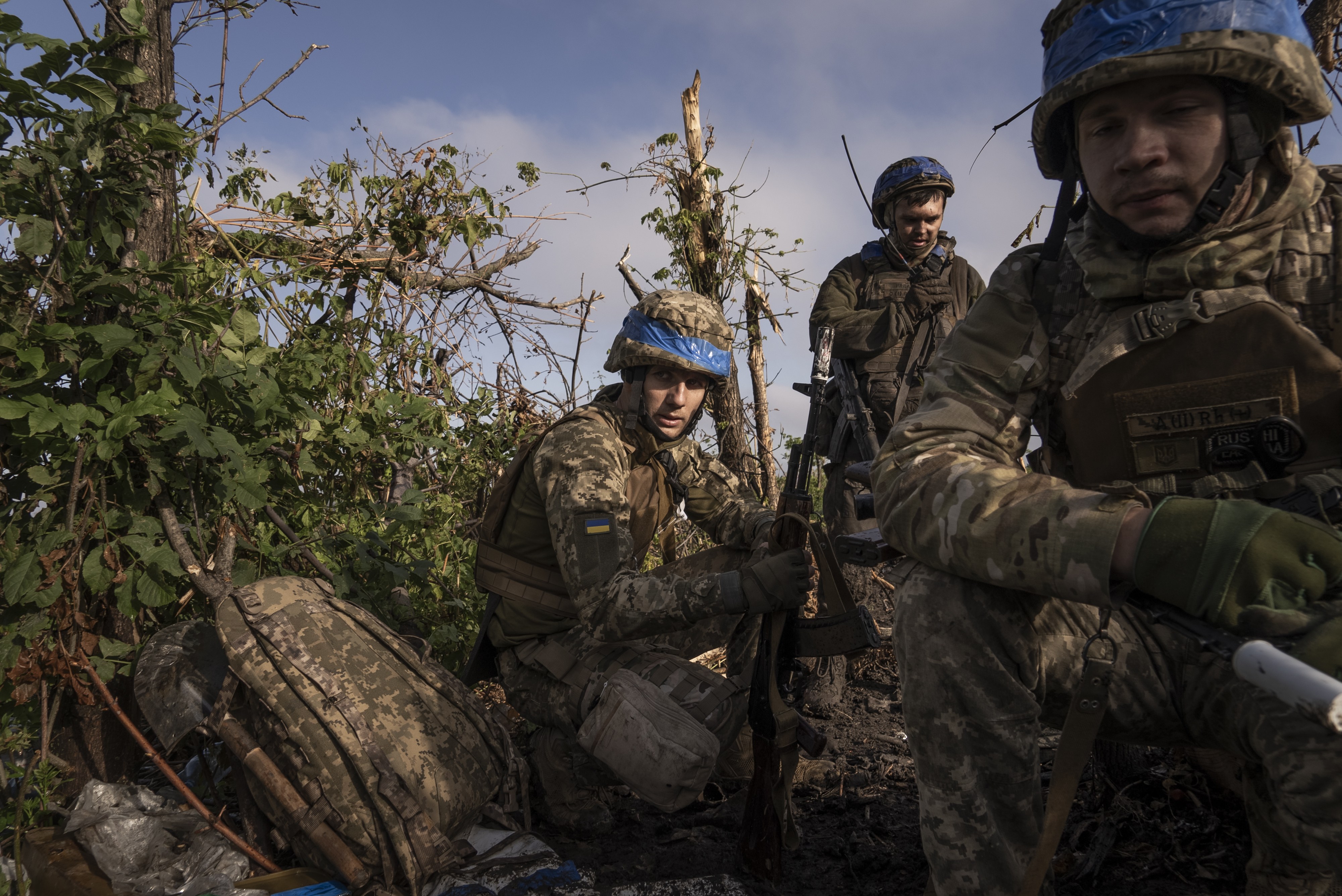
    Ukrainian servicemen from the 3rd Assault Brigade at frontline positions near Andriivka, Donetsk region, Ukraine, in 2023.

    So, as Chernov explained, the question of future international aid for Ukraine’s defense “is rarely discussed on the battlefield, because there were so many words of support but so little action. They know they have to fight for survival.”

    After the first meeting of Zelensky and Trump, when the president scolded the Ukrainian leader before the cameras, all illusions were gone, said the filmmaker. “We know the truth of our situation. The only person you can rely on is right next to you or with your unit.”

    The changing nature of the war means the future depends on which country — Ukraine or Russia — can beat the other in the race for technological advantage. “Until Russia feels it can lose they will not want peace, Chernov stated. ”We are bracing for a very long winter.”

    And yet, despite his depiction of the brutality of an unending war in a film that left me in tears, Chernov retains a core of optimism. Drawing strength from the men whose steadfastness he captures with his camera.

    “Seeing those guys, fellow students, policemen, workers being there, making that choice to fight back against all odds. When I watch them …” He paused. “Whenever I lose hope, I go to the front, and I get my hope back.”

  • As Pa. and other states go all-in on sports betting, expect wagers — and cheating scandals — to keep coming

    As Pa. and other states go all-in on sports betting, expect wagers — and cheating scandals — to keep coming

    News item: The NBA asked several teams to hand over cellphones, documents and other property as part of its investigation into illegal sports gambling.

    The Athletic, Nov. 15

    The latest investigation into sports gambling is not the first and won’t be the last. Nor is it a shock since the heedless race into legalized sports gambling is ruining the games — and some lives — all in the name of money.

    Betting on sports has become so pervasive that the integrity of the games can no longer be trusted.

    Just last month, 34 people — including an NBA Hall of Famer, a current star, and a former player — were indicted as part of an elaborate betting scheme that included one player who pleaded guilty in July to faking injuries to leave games early so gamblers could win prop bets on his performances.

    The same gambling ring was also tied to suspicious wagers on college basketball, including games played by Temple University. A gambling watchdog flagged suspicious betting activity in a game last year between Temple and the University of Alabama at Birmingham, where UAB went from a two-point favorite to an eight-point favorite in a matter of hours. UAB ended up winning 100-72.

    Portland Trail Blazers head coach Chauncey Billups, who was indicted in a federal sports betting investigation, leaves a federal courthouse in Portland, Ore., after an appearance last month.

    Separately, three college basketball players from Fresno State were banned last month for betting on their own games and “manipulating” their performances to alter outcomes, according to the NCAA.

    Gambling is not just undermining basketball games.

    The NFL suspended 10 players in 2023 for violating its league gambling policy. The same year, the NHL suspended Ottawa Senators forward Shane Pinto for 41 games, making him the first modern-day hockey player banned for sports gambling.

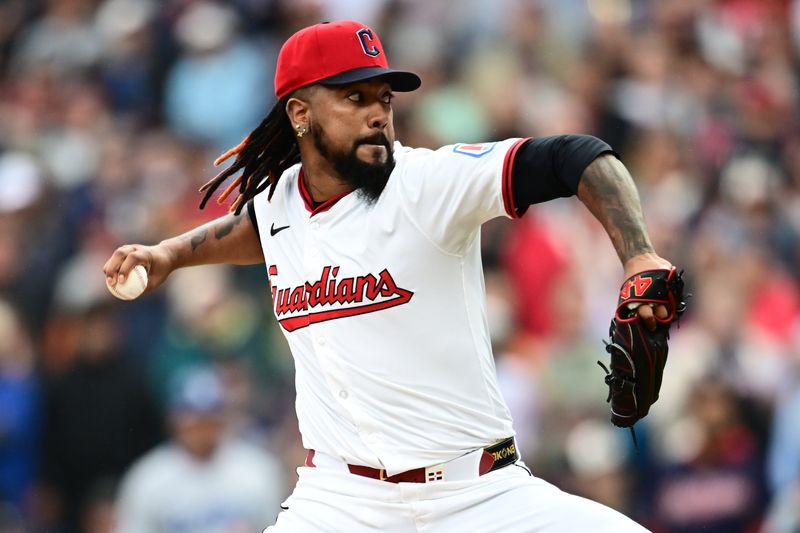
    Two Cleveland Guardians pitchers, Emmanuel Clase and Luis Ortiz, were indicted last week for rigging pitches in certain situations to benefit tipped-off bettors.

    For the uninitiated, bettors can wager on just about anything during games, including whether the batter will make an out or hit a home run, or whether the next shot in a basketball game will be for two points or three. These micro-bets create opportunities for players to do what is called “spot fixing.” The in-game betting also explains why sports announcers give updated odds during games.

    The Guardians pitchers are not the first to raise concerns about betting on baseball. Last year, San Diego Padres infielder Tucupita Marcano was banned for life, and four others received one-year suspensions for gambling, including Phillies minor league infielder José Rodríguez.

    Cleveland Guardians closer Emmanuel Clase was indicted earlier this month on charges that he tipped off bettors to some of his pitches.

    Baseball has battled past betting scandals, from the 1919 World Series to Pete Rose betting on games he managed. Last week, a Senate committee sent a letter to Major League Baseball commissioner Rob Manfred raising concern over a “new integrity crisis” in American sports.

    Fans are losing trust. Six in 10 now worry about games being fixed.

    Even for those who don’t bet, the barrage of TV commercials and promotion of sports gambling inside the arenas is ruining the fan experience.

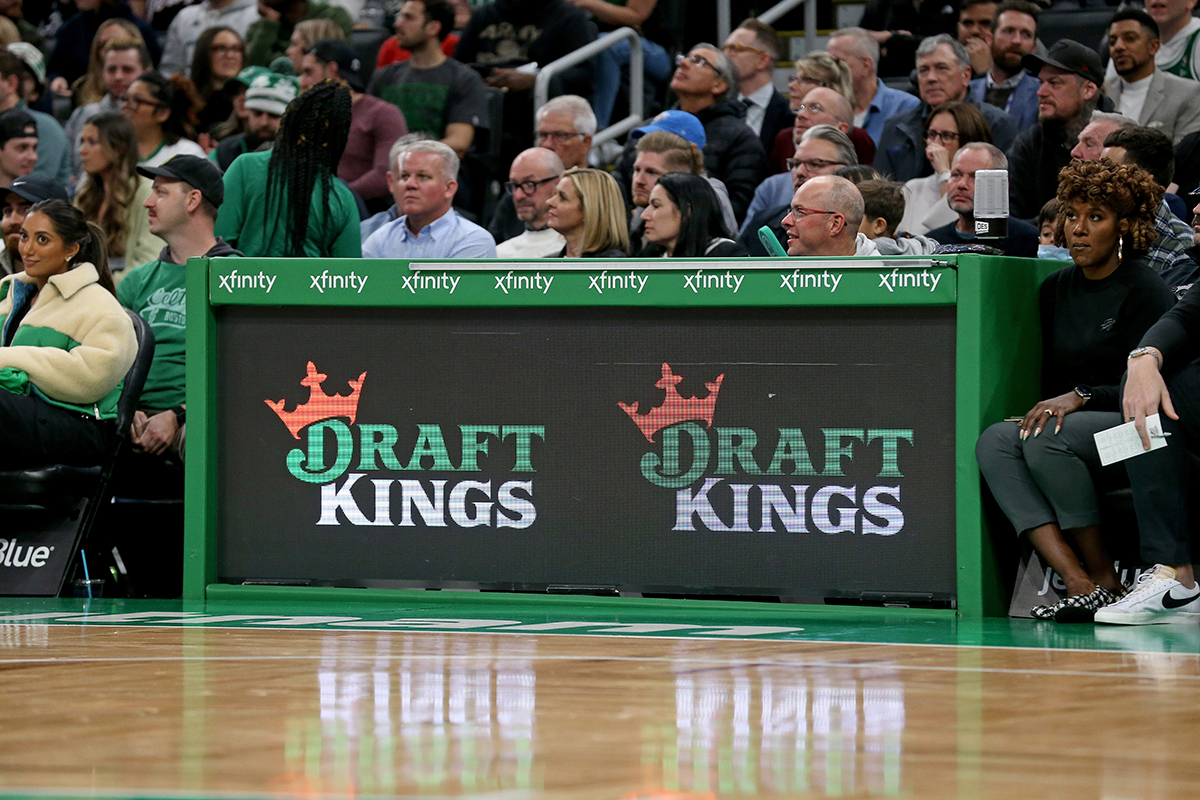
    Many celebrities and former athletes, including former Sixers greats Allen Iverson and Charles Barkley, appear in commercials that make gambling seem cool. All the incessant advertising helps normalize something that is addictive. One study found that during broadcasts of the Stanley Cup finals, hockey fans were exposed to gambling logos and ads an average of 3.5 times per minute.

    The upshot: Many young men and boys are getting addicted to sports gambling, upending their lives and their families.

    At a Phillies game last year, my son and I listened to three young guys behind us talk nonstop about in-game bets while they tried to complete a challenge of drinking nine beers in nine innings.

    An ad for the sports betting site Draft Kings appears courtside at an NBA game at the TD Garden in Boston in November 2022. One study found that hockey fans were exposed to gambling logos and ads an average of 3.5 times per minute during broadcasts of the Stanley Cup finals.

    For some, the addiction comes quickly. Rob Minnick started betting on Philadelphia sports teams at age 18. Within days, he was placing bets on the West Coast games using a pair of online sports betting sites, FanDuel and DraftKings.

    Then Minnick got hooked on playing slots on his phone. Eventually, the South Jersey native told me he was gambling for up to eight hours a day, running up credit card debt and borrowing money from friends and family to maintain his habit.

    Minnick went in and out of debt over six years. After a gambling binge that ended at a casino, he decided to seek treatment. He now helps others recover from gambling addiction.

    “It was all fueled by seeing the commercials for FanDuel and other sports betting apps,” Minnick said.

    Minnick is not alone. There has been a surge in people seeking help for gambling addiction, especially in states like New Jersey and Pennsylvania, where sports betting is legal.

    Gambling results in other social ills. Gambling addiction has long been associated with increased risk of depression and suicide. Some early research has found an increase in debt and bankruptcy in states with legalized sports betting.

    An undated photo of “Shoeless” Joe Jackson, of the Chicago White Sox, who admitted accepting $5,000 to throw the 1919 World Series in one of baseball’s past betting scandals.

    Blame the explosion in sports gambling — and the subsequent problems — on elected officials and the gambling lobby.

    Illegal sports gambling has long operated in the shadows. Yes, it was unregulated and untaxed, but it was not ubiquitous.

    Then, former New Jersey Gov. Chris Christie challenged the federal ban on sports betting in most states in an effort to help the still-struggling casinos in Atlantic City. In 2018, the U.S. Supreme Court struck down the ban, opening the floodgates to betting on sports.

    States rushed to open sportsbooks, including Pennsylvania and Delaware. Online gambling apps made it easy for anyone with a mobile phone to gamble anytime and anywhere.

    Last year, Americans bet nearly $150 billion on sports, according to the American Gaming Association.

    Today, more than one in five Americans bet on sports. More alarmingly, nearly half of men between the ages of 18 and 49 have an active online sports betting account.

    More gambling has translated into more debt. One quarter of sports gamblers said they have been unable to pay a bill — including their rent — because of debts from wagers. And 15% said they have taken out a loan to fund their sports gambling habit.

    Most elected officials ignore the social costs of problem gambling because of the easy tax revenues that roll in.

    Harrisburg lawmakers may be the worst gambling addicts.

    Since 2004, Pennsylvania has legalized slots, table games, sports gambling, and online betting, while adding pricier lottery games with little concern for the economic harm and increased addiction. The influential gambling lobby successfully blocked efforts in Harrisburg this year to increase the tax on sports betting.

    The sports leagues once opposed legalized gambling. But now, the leagues are partners with the major online betting sites.

    Not long ago, NFL commissioner Roger Goodell opposed legalized gambling before going all in. In 2017, he said, “The integrity of our game is No. 1.”

    Don’t bet on it.

  • While some pay for police, others are getting a free ride | Shackamaxon

    While some pay for police, others are getting a free ride | Shackamaxon

    This week’s Shackamaxon asks: Who should pay for public safety, and why didn’t Philadelphia’s big employers do more to save SEPTA?

    Bills for thee, unlimited OT for me

    My intrepid newsroom colleagues Ryan W. Briggs and Max Marin have shed light on another frustrating phenomenon in local government: the city’s haphazard and uneven policy on security for events.

    While some independent community and cultural groups have been hit with bills as high as $40,000 for their festivals, others haven’t been asked to contribute a dime. This includes events hosted by local politicians, who get their costs added to the city’s $150 million police overtime bill.

    Instead of forcing communities to end or curtail long-standing and successful events over security costs, the city should focus on finding ways to lower the cost. This should start by taking away the decision-making process from individual police captains and making these calls at the Managing Director’s Office.

    The city should also invest in security options that don’t require personnel, like the portable vehicle barricades used by the Center City District for its Open Streets events. This would eliminate or reduce the need for police presence. Lowering the overall amount the city pays for events will make it easier to take on the cost for all of them and eliminate the need for the current, inequitable status quo.

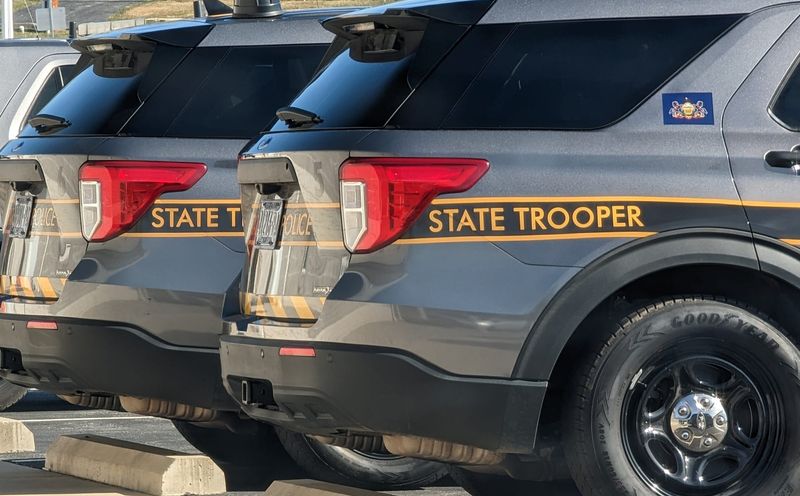
    Some of Pennsylvania’s towns and villages do not spend on their own police force, instead relying on the Pennsylvania State Police.

    More blue for less green

    City Council members and some favored community groups aren’t the only ones benefiting from an uneven cost structure for public safety.

    While Philadelphia spends almost $900 million per year on policing, at a cost of over $550 per resident, some of Pennsylvania’s towns and villages are getting an absolute bargain — they don’t pay for police at all.

    It’s a growing phenomenon in which rural and exurban communities, most of them Republican-led, are essentially defunding the police — it isn’t just hamlets in Forest County that are benefiting from the dollar savings either. Sizable towns like Lower Macungie, the second-largest population center in Lehigh County, rely solely on the Pennsylvania State Police to keep order.

    State Rep. Justin Fleming has proposed a solution. His bill would create a fee structure for towns that forgo local police coverage, with the aim of growing and strengthening the state police. Fleming, who represents a small town outside Harrisburg that pays for its own police force, presents his plan as a fair way to cover the cost of public safety across the commonwealth. It is long overdue.

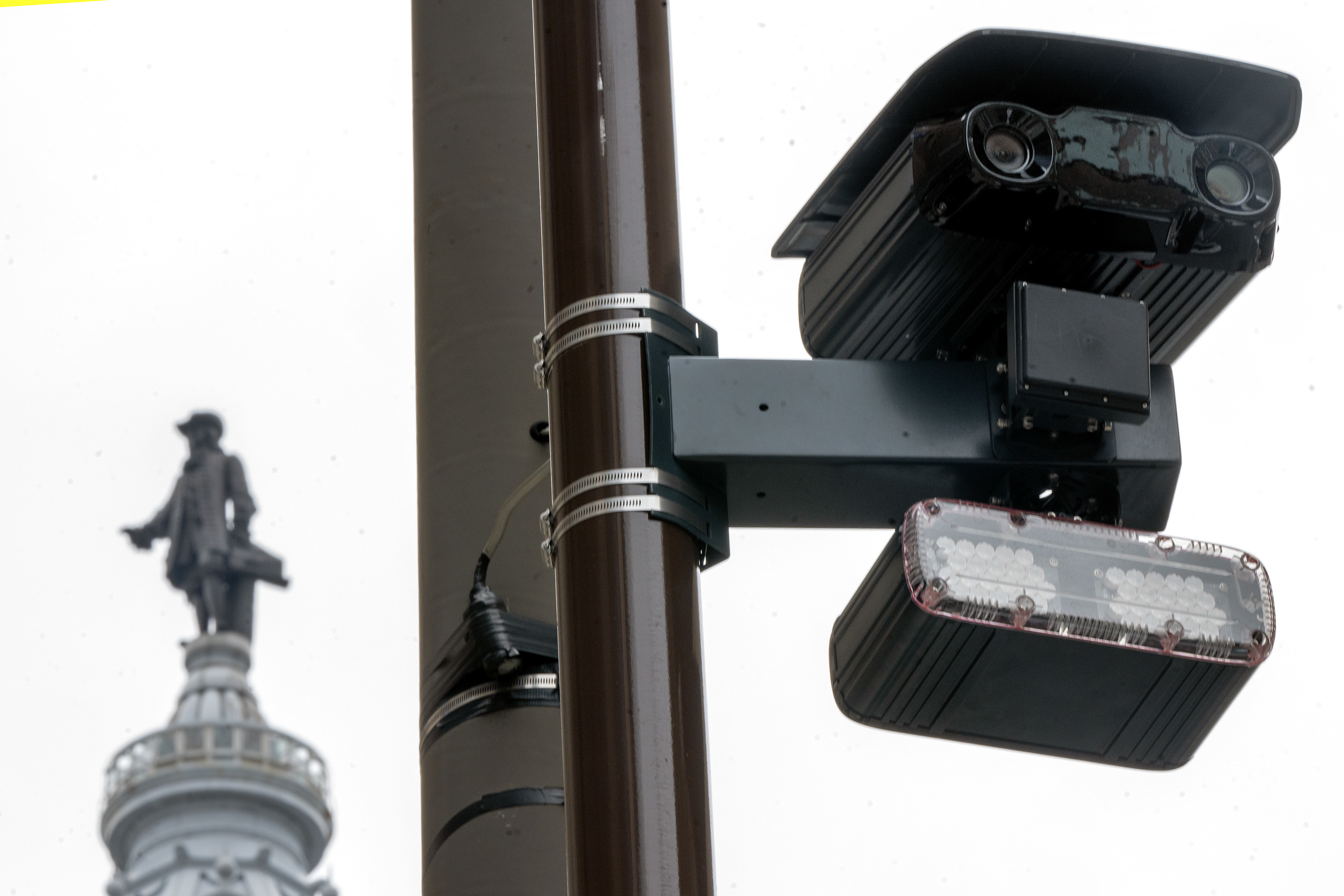
    An automated speed enforcement camera is mounted on North Broad Street at Arch Street in September.

    The truth about the PPA

    No one likes getting a ticket, but many Philadelphia motorists harbor a special resentment for the Philadelphia Parking Authority. The recent implementation of (PPA-administered) speed cameras on Broad Street has led to an outbreak of often-conspiratorial claims about the agency.

    Some critics have gone so far as to claim the PPA is a “private company,” or that “all the money goes to Harrisburg.” Even City Council President Kenyatta Johnson claimed ignorance when asked about some aspects of the PPA on a local podcast, saying he needed to look into it.

    In reality, the PPA is a state agency, governed by a board that’s appointed by the governor and legislative leaders. In a typical year, it directs more than $50 million to local needs, and Executive Director Rich Lazer has moved away from the opaque and patronage-heavy policies the agency was once known for.

    The speed cameras, far from being a way to raise revenue, are aimed at changing behavior. When implemented on Roosevelt Boulevard, speeding decreased — as did fines. You can’t make money from speedsters if they stop speeding.

    Of course, there’s an easy way to avoid ever getting a ticket: park legally and don’t speed. If anything, the city would be better off if its other enforcement agencies were as effective as the dreaded PPA.

    SEPTA commuters at 11th and Market Streets.

    Transit failure

    It is no secret that Gov. Josh Shapiro and Harrisburg Democrats folded on mass transit funding this year. Despite claiming a sustainable solution was their “top priority,” they agreed to subject riders to two more years of uncertainty, with no guarantee of a future solution.

    But there’s another set of regional power brokers who failed to adequately address the public transportation system’s needs: our biggest employers.

    Thomas Jefferson University, Comcast, Children’s Hospital of Pennsylvania, the University of Pennsylvania, and the Chamber of Commerce will gladly say they support transit funding. Just don’t ask them to spend a dime on it.

    While the lobbies for casinos, sports gambling, so-called skill games, and marijuana all have plenty of cash to splash, transit has next to nothing. That lack of money made it hard to win over Senate Republicans, who mostly represent districts without many mass transit riders, leaving them immune to grassroots pressure to fund the system. This meant that a last-minute effort to fund transportation off taxing sports betting failed, with gambling companies and their social media influencer allies scaring legislators off.

    According to local transit advocate Jon Geeting, Philadelphia’s major institutions have contributed next to nothing to the yearslong effort to forge a sustainable solution in Harrisburg. Geeting told me, “It’s really disappointing and sad that for three years in a row, it fell to out-of-state philanthropy to support the entirety of state transit funding advocacy.”

    Despite the collective billions at their disposal, efforts by local industry and institutions to support mass transit funding have mostly consisted of sending in op-eds and occasionally speaking at rallies. If we are to save public transit in Philadelphia, Comcast and Penn should not be content to have the same reach as determined high school students.

  • Trump’s bullying of female reporters won’t stop journalists from asking tough questions

    Trump’s bullying of female reporters won’t stop journalists from asking tough questions

    It has long been established that some of Donald Trump’s most frequently used rhetorical weapons have been misogynistic insults. It is just as well known that the president seldom hides his contempt for journalists.

    So it’s hardly surprising anymore when Trump degrades female reporters. But the president reached a new level of low even for him when he had the nerve to refer to Bloomberg News White House correspondent Catherine Lucey as “piggy” during a briefing with reporters last week aboard Air Force One.

    Trump was angered when Lucey attempted to press him about the government’s case file on convicted sex offender Jeffrey Epstein. Trump literally leaned in Lucey’s direction, jabbed a pointed finger at her, and said, “Quiet! Quiet, piggy!”

    Even after everything we’ve seen from Trump over the past decade, it was a startling and disgusting thing to witness coming from a sitting president of the United States.

    Here’s the thing: Lucey’s a dogged reporter. I know. I used to work with Lucey when she was at the Daily News from 2000 to 2012. Lucey isn’t about to let the president’s schoolyard taunts stop her from asking tough questions.

    Catherine Lucey, now a White House correspondent with Bloomberg, spent a dozen years as a reporter at the Daily News before departing in 2012.

    Same thing with ABC News reporter Mary Bruce. On Tuesday, Trump accused her of being a “terrible person and a terrible reporter.” That’s not going to stop her, either. Journalists are a determined lot. The good ones in the White House pool recognize that their job is to hold him accountable and will stop at nothing short of exposing the truth.

    It’s in our collective DNA.

    Bruce did the right thing when she challenged Trump earlier this week by asking if it was appropriate for his family to be doing business in Saudi Arabia.

    She was also working in the spirit of journalism’s best traditions when she went on to also address Saudi Crown Prince Mohammed bin Salman, asking: “Your Royal Highness, the U.S. intelligence concluded that you orchestrated the brutal murder of a journalist. [The] 9/11 families are furious that you are here in the Oval Office. Why should Americans trust you? And the same to you, Mr. President.”

    After asking Bruce whom she worked for, Trump accused ABC of being “fake news.” He defended his family’s business operations in Saudi Arabia, and said the reporter should not have “embarrassed our guest by asking a question like that.”

    “A lot of people didn’t like that gentleman that you’re talking about,” Trump added, referring to the late Washington Post columnist Jamal Khashoggi. “Whether you like him or didn’t like him, things happen.”

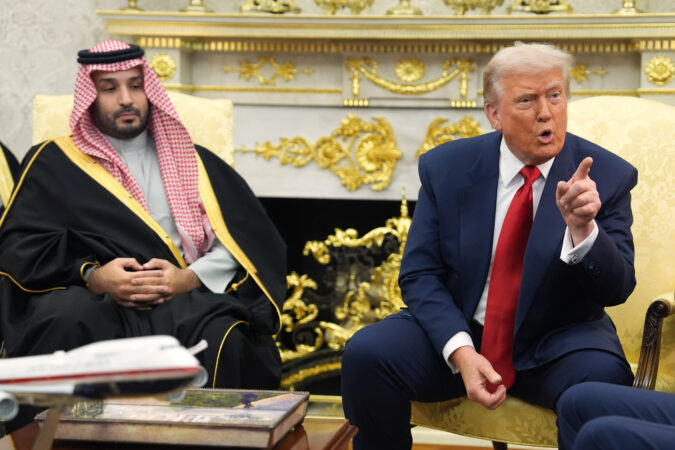
    ABC News reporter Mary Bruce asks a question as President Donald Trump meets Saudi Arabia’s Crown Prince Mohammed bin Salman in the Oval Office Tuesday.

    A chill washed over me when I heard him say that. According to U.S. intelligence, Khashoggi reportedly was killed and dismembered on Oct. 2, 2018, in the Saudi Consulate in Istanbul.

    The National Press Club issued a statement afterward, saying the organization is “deeply troubled by President Trump’s comments today regarding the killing of journalist Jamal Khashoggi. Mr. Khashoggi’s murder inside a diplomatic facility was a grave violation of human rights and a direct attack on press freedom.”

    Just this past September, the president ordered NBC’s Yamiche Alcindor to be quiet and listen, and told her she was second-rate, which she is not. Alcindor had asked about his intentions for the Windy City after he posted a meme saying, in part, “Chicago about to find out why it’s called the Department of War.”

    Trump’s animosity toward journalists goes way back. Following a 2015 Republican primary debate, he said of Megyn Kelly, “There was blood coming out of her eyes, blood coming out of her wherever.”

    Even with the numerous lawsuits he’s filed against news outlets, Trump should have figured out by now that he’ll never stop the press. The president can insult and bar certain news organizations from the White House. But good journalists know how to work around that.

    Even if a network does replace one reporter, another journalist will step in and do the exact same thing. If a newspaper fires a print journalist, these days they’ll move their work to the Substack publishing platform or social media, the way former Washington Post columnist Karen Attiah did shortly after she was let go.

    Observers often wonder why journalists don’t fight back more against Trump’s verbal attacks. “Most reporters want to cover the news, not be the news,” as ABC News correspondent Jonathan Karl told Paul Fahri of the Columbia Journalism Review earlier this year. In other words, they try and stay focused on the job at hand.

    And these days, getting bullied by the man-child in the Oval Office seems to come with the territory.

  • The artist behind the ‘Boob Garden’ and ‘Rave Coffin’ strikes again with ‘Crab Couch’ in South Philly

    The artist behind the ‘Boob Garden’ and ‘Rave Coffin’ strikes again with ‘Crab Couch’ in South Philly

    For the last two years, Rose Luardo has been exceedingly generous with her art, installing it for all to see in a vacant triangular lot in South Philly that was once home to Capt. Jesse G’s Crab Shack.

    In 2023, she gifted the people of Philadelphia with the Boob Garden, a furniture set covered in handmade breast plushies, and the following year she gave us the Rave Coffin, a casket covered in tie-dyed felt that passersby could lie down inside of.

    Rose Luardo strikes a pose at her “Boob Garden” art installation in 2023.

    Luardo struck again Sunday night at the cement triangle at the intersection of Washington Avenue, Passyunk Avenue, and Eighth Street, but this time around, her guerrilla art installation was totally shellfish.

    Crab Couch — which is exactly what it sounds like unless you’re thinking of the other kind of crabs, which it is not — is the latest work Luardo set up at what she calls Capt. Jesse G’s Crab Shack Gallery. That’s because the shuttered business’ sign inexplicably remains lording over the lot on a freestanding pole, even though the building was long-ago demolished.

    Once just a regular white sofa that was looking for a new home on Facebook Marketplace, Luardo — a provocateur of the peculiar — rescued the couch and Frankenstein-ed that piece of furniture into a comfy crustacean.

    With some papier-mâché, red house paint, and the help of her niece, Ingrid Rose Koppisch, and their friend, Simply Val, Luardo gave the couch six legs, a pair of judgey eyes, and two hulking claws, with one clamping down on a giant cigarette.

    She first put the crabby patio furniture in a gallery show she had in September.

    “I just had a feeling that this was not going to sell, but it would be a fun thing to make and eventually put out in my own personal art gallery at Capt. Jesse G’s,” Luardo said.

    On Sunday night, she and her husband put Crab Couch on one of his skateboards and wheeled it up the street to the vacant lot.

    Luardo noticed, as did I, that since the time of her installation last year, a taco truck has stationed itself at the edge of the lot and someone has bashed a small hole into the cement and created a modest fire pit, which Luardo placed the Crab Couch in front of. When I stopped by on Tuesday, the pit held an empty can of Modelo and an empty pack of Marlboro Lights.

    Artist Rose Lurado placed her latest work, “Crab Couch,” in front of a fire pit someone smashed into the cement at the vacant South Philly triangle she calls “Capt. Jesse G’s Crab Shack Gallery.”

    “I was so psyched that was there!” Luardo said of the pit. “This is the dream coming true, which is that the space is becoming activated, people are hopefully hanging out, eating a taco, drinking a Modelo, and sitting on the couch.”

    In the days since it was installed, the wind has done some damage to Crab Couch’s claws, which Luardo said neighbors came out to valiantly fix with drills. But its giant cigarette is nowhere to be found. It has become the ultimate Philly loosie.

    Otherwise, all is good with Crab Couch.

    “Crab Couch” is an old bae but a good one.

    I asked Luardo why she continues to put her art in such a hardscrabble lot, where it’s subject not only to weather but to something even more unpredictable — the whims of Philadelphians.

    “It was built for this kind of experience and nobody has claimed it,” she said. “It’s just this … s— lot and I know there’s people walking by and it’s so much fun to see something crazy and delightfully weird. It puts a hitch in your giddy-up.”

    According to city records, the lot is owned by 1100 Passyunk Partners LLC, which purchased the property for $2.85 million in 2020. A number for the group was not able to be located.

    South Philly artist Rose Luardo sits in her “Rave Coffin” at the triangular cement lot between Washington Avenue, Passyunk Avenue, and Eighth Street in 2024.

    To whomever owns this eyesore — which has been a vacant lot since at least 2016 — I beseech you to gift it to Luardo, who’s shown more interest in it and has done more to improve it than you ever have.

    The world is coming to Philadelphia next year and instead of having an empty, crumbling lot on one of the city’s busiest corridors, why not let Luardo show the world just how weird Philly can be?

    I hear she’s been eyeing an inflatable nightclub on Temu.

    “Crab Couch” looks out over the vacant triangle lot where it’s currently clawing out its existence next to busy Washington Avenue.
  • As Ukraine falters, Trump tries to hand the country to Putin with a shamefully pro-Russia peace plan

    As Ukraine falters, Trump tries to hand the country to Putin with a shamefully pro-Russia peace plan

    While America has been obsessing over Jeffrey Epstein, Vladimir Putin has been making dangerous headway in Ukraine — and expanding his war into Europe.

    Under such circumstances, genuine peace negotiations are impossible because Putin thinks he is winning. America’s top foreign policy priority should be to reverse the Russian leader’s mindset by increasing military sales to Ukraine — which the Europeans will pay for.

    Instead, the Trump team and Russian officials together have drawn up a new 28-point “peace” plan, without first consulting Ukraine or European allies. This pro-Russian plan calls for major Ukrainian concessions and would leave the country naked to further Russian aggression.

    The White House has already denied Ukraine the weapons that could still stop the Russians, thereby effectively helping Putin slaughter Ukrainian civilians nightly with missiles and drones that target apartment buildings and heating systems.

    In pursuit of his mythical Nobel Peace Prize, Trump appears poised, yet again, to sell out Ukraine. If so, he will also be selling out our European allies — and the United States.

    Most Americans don’t realize Russia is already at war with Europe. This new mode of hybrid warfare is carried out on land, air, and sea, but without ground troops — yet. Moscow is frequently using drones to shut down airports in Germany, Denmark, Norway, Belgium, and Poland. Russian hackers are attacking European networks.

    Russian ships are cutting Europe’s underwater cables, its warplanes are invading European airspace and buzzing military planes, and its saboteurs are carrying out assassinations and arson attacks, including failed plans to bring down European airliners.

    Because this war is unconventional, and hitting individual countries in Europe, the European Union and its members haven’t yet figured out how to respond.

    Putin seeks not only to frighten Europeans but to unnerve Americans, as well. U.S. intelligence agencies concluded last year that failed Russian arson attempts on planes were a “test run” for using similar devices on transatlantic cargo shipments, according to the Washington Post. And Putin frequently hints at nuclear war against the West.

    Has Trump denounced such behavior, or warned Putin to stop his attacks on U.S. allies? Nyet. Only occasional grumbling has been heard from the White House.

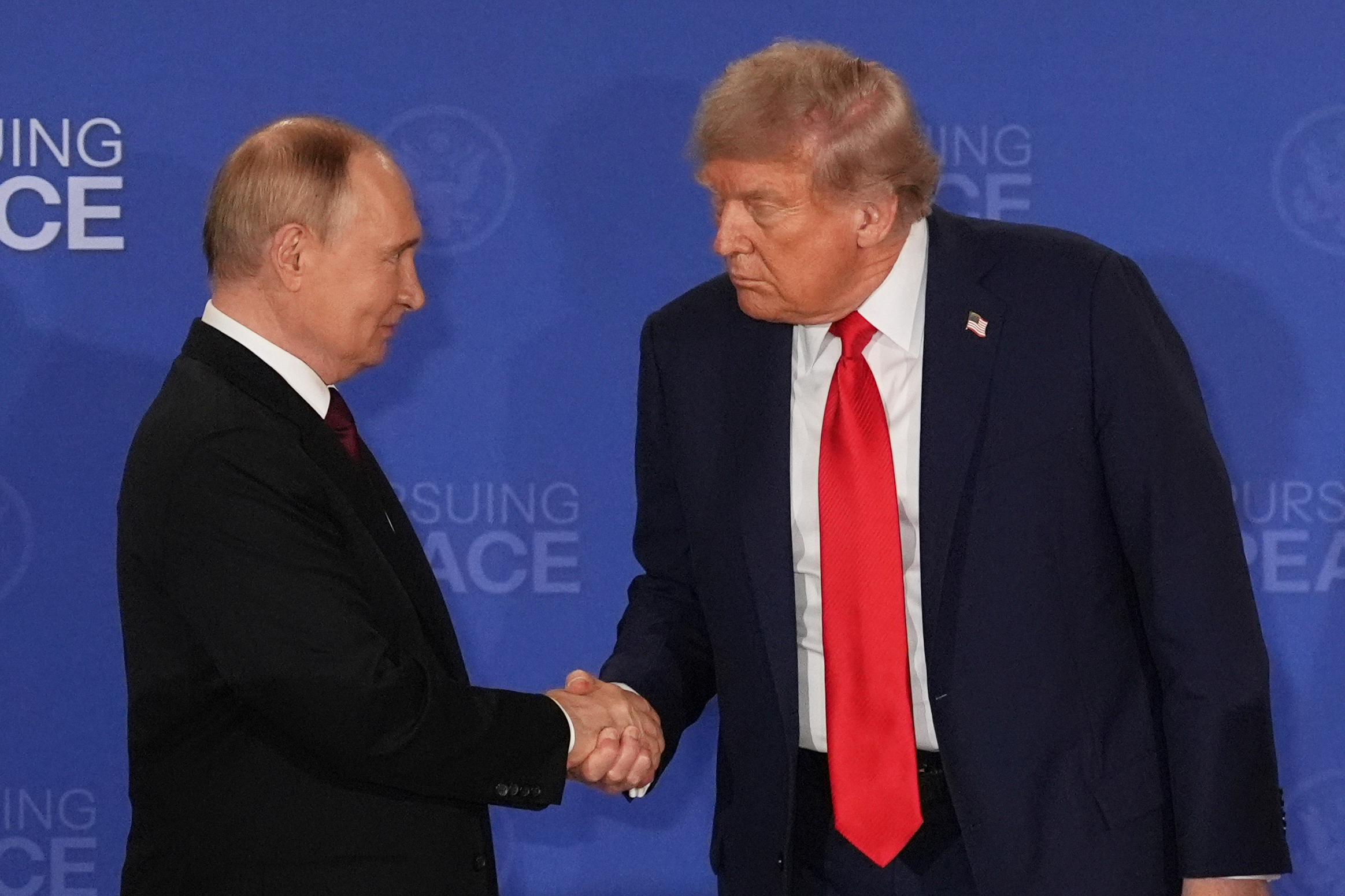
    President Donald Trump shakes the hand of Russia’s President Vladimir Putin during a joint press conference at Joint Base Elmendorf-Richardson, Alaska, in August.

    The president probably never even took briefings on Russian sabotage. Anything negative about Putin is rebuffed as the “Russia, Russia, Russia hoax.”

    Instead, Trump has been busy misusing U.S. forces to threaten war on Venezuela (which poses no military threat to America, and contrary to Trump’s claims, ships no fentanyl to U.S. shores). Perhaps this wag-the-dog war is meant to scare a weak Nicolás Maduro.

    But Trump has made clear he doesn’t dare (or want to) stand up to Putin.

    His new secondary sanctions on Russian oil sales haven’t been seriously pursued against India or China, which buy huge and increasing shares of Russian oil and gas.

    Moreover, as Moscow takes advantage of Ukraine’s dire shortage of man power, air defenses, and long-range missiles, Trump refuses to help. Even though Europe has pledged to pay for key weapons systems for Kyiv, Trump won’t sell them.

    Although Ukraine makes an array of drones, they can’t shoot down ballistic missiles or cope with Russia’s current mass production of drones, helped by thousands of North Korean workers and endless shipments of parts from China.

    Promised U.S.-made Patriot air defense systems, which could take out the ballistic missiles, have never arrived in Ukraine. Only this week, after a nine-month delay, did Washington permit Kyiv to once again fire long-range U.S.-made ATACMS missiles. Defense Secretary Pete Hegseth had banned their use early this year.

    And most cowardly, after hinting for months that he would send desperately needed long-range Tomahawk missiles to Ukraine, Trump finally came out with a big “No Tomahawks.”

    There’s more. Although Ukraine is a world champion producer of all varieties of drones, and the United States lags far behind in unmanned warfare, Trump has yet to conclude a much-discussed drone deal with Volodymyr Zelensky, whereby Ukraine would swap drones, technology, and testing for U.S. weapons.

    Such White House blindness — and weakness — convinces Putin he can get away with destroying Ukraine.

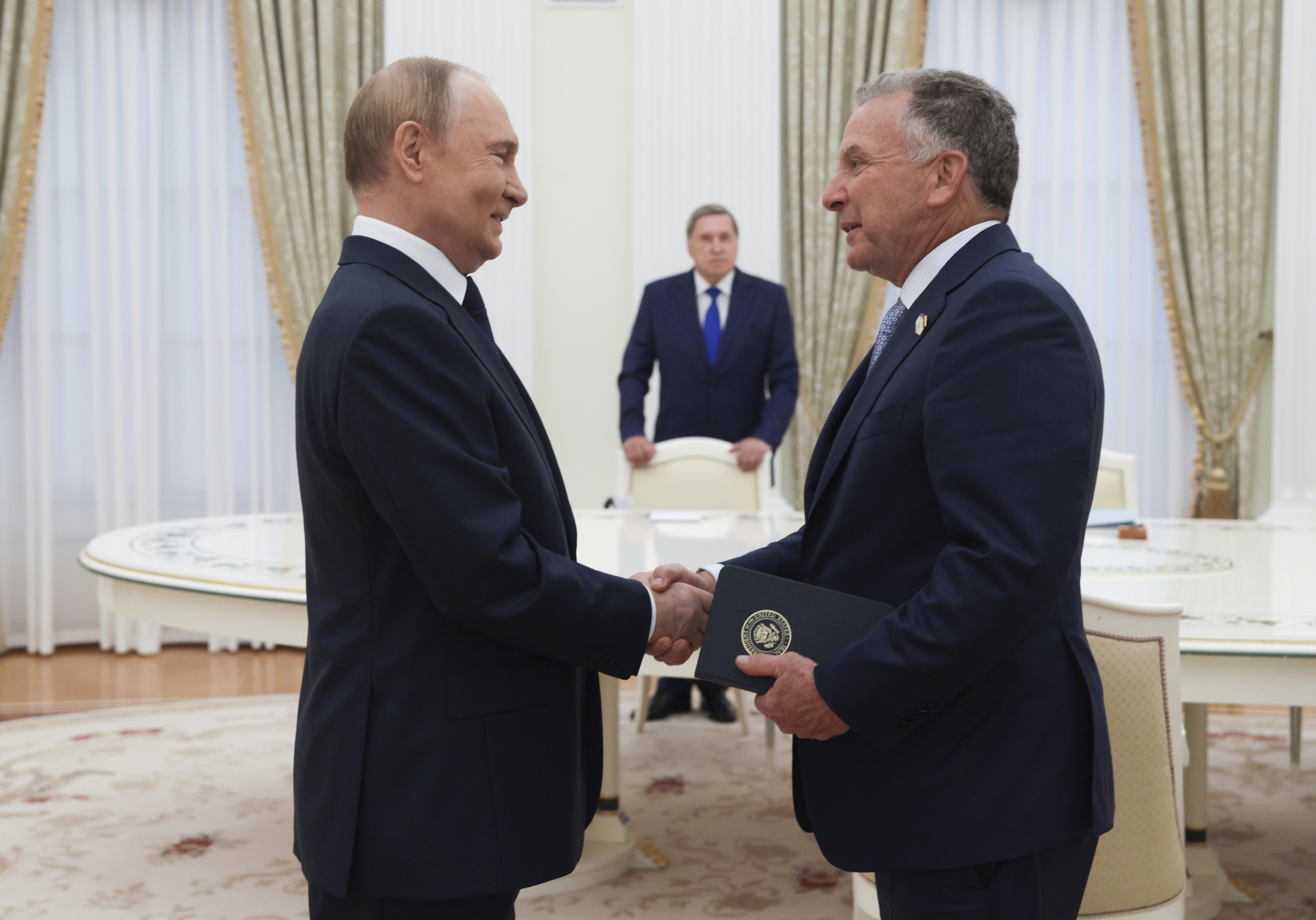
    Russian President Vladimir Putin and President Donald Trump’s special envoy Steve Witkoff (right) shake hands during their meeting in Moscow in August.

    And so the Russian leader is doing with a disastrous plan pushed by Trump’s supremely naive negotiator, real estate mogul Steve Witkoff, who has has no grasp of Putin’s history or goals and seems to swallow his lies whole.

    Witkoff’s draft plan would reportedly require Ukraine to give up the 14 per cent of the Donbas region it still controls, and cut the size of its armed forces by half. It would require Ukraine to abandon key categories of weapons, endorse a permanent rollback of vital U.S. assistance including long-range weapons, and ban foreign troops from basing on Ukrainian soil.

    And the deal provides no U.S. guarantees except lip service to protect against Putin’s certain violations in the future.

    Trump might as well say publicly that he endorses Putin’s dream of swallowing Ukraine. He is effectively telling Ukraine and Zelensky: Drop Dead.

    Putin isn’t fighting for a piece of land. He wants to absorb Ukraine back into the Russian empire.

    Viktor Medvedchuk, a Ukrainian traitor and close Putin ally, whom the Russian president wanted to install in Zelensky’s place after the invasion, recently spelled out Kremlin goals to the official TASS newswire. He said that Ukraine will not “survive as a state” in the future, and Moscow considers the reunification of Ukraine with Russia a strategic goal.

    Trump clearly doesn’t care.

    The administration is pushing to strip language from an annual U.N. General Assembly Human Rights Committee resolution that recognizes Ukraine’s territorial integrity and rights as a sovereign nation. The U.S. delegation will vote against anything that condemns Putin.

    Trump has made clear he believes Putin bears no blame for invading Ukraine (it’s all Zelensky’s fault or even Joe Biden’s). He has crossed over totally to the Russian dictator’s camp.

    Unless he wakes up from his Putin-induced trance, he is incapable of making peace.

    Although things look bleak for Ukraine, I believe its fighters will manage to hold back the Russians this winter, but at a brutal cost to civilians’ and soldiers’ lives. Trump will bear much blame for the suffering to come.

    But after the Epstein-induced awakening of GOP members of Congress, I hope some Republican senators will find the courage to denounce Trump’s attempt to hand over Ukraine to Russia.

    They should recognize that the retort of Rep. Marjorie Taylor Greene (R., Ga.) after Trump called her a traitor also applies to his position on Ukraine.

    “Let me tell you what a traitor is. A traitor is an American [who] serves foreign countries and themselves,” Greene said. With his heedless pursuit of Putin and a peace prize, Trump is serving the Kremlin, in service to his ego, as he attempts to sacrifice Ukraine.

  • 2026 Audi S3: Looks fun, sounds fun, drives fun, but keep it casual

    2026 Audi S3: Looks fun, sounds fun, drives fun, but keep it casual

    2026 Audi S3 Prestige vs. 2026 BMW 228 xDrive Gran Coupe: Battle of the little racers.

    This week: Audi S3

    Price: The 2025 starts at $48,700, according to the window sticker of the test model; the 2026 starts at $52,000.

    Conventional wisdom: Car and Driver likes the “entertaining handling, responsive powertrain, sophisticated and luxurious interior.” They were less fond of the “limited trunk space,” that there was “some road noise at higher speeds,” and that it was “not quite as raucous as the RS3.”

    Marketer’s pitch: “Upgrade the everyday.”

    Reality: It depends where all you go every day.

    What’s new: We’ve been exploring efficiency over the last two weeks with the Accord Hybrid and Prius Plug-In. The Prius had some kick, but the Audi and BMW really pack a punch.

    The little Audi sedan (which the EPA surprisingly classifies as “midsize”) is the souped-up version of the A3. That’s not to be mistaken for the super souped-up version, the RS3. Just think of the abbreviations as “Speedy” and “Really Speedy.”

    The sedan got a power boost and handling improvements for 2025. The 2026 carries on fairly unchanged.

    Competition: In addition to the BMW 2 Series, there are the Acura Integra, Cadillac CT4, and Mercedes-Benz CLA.

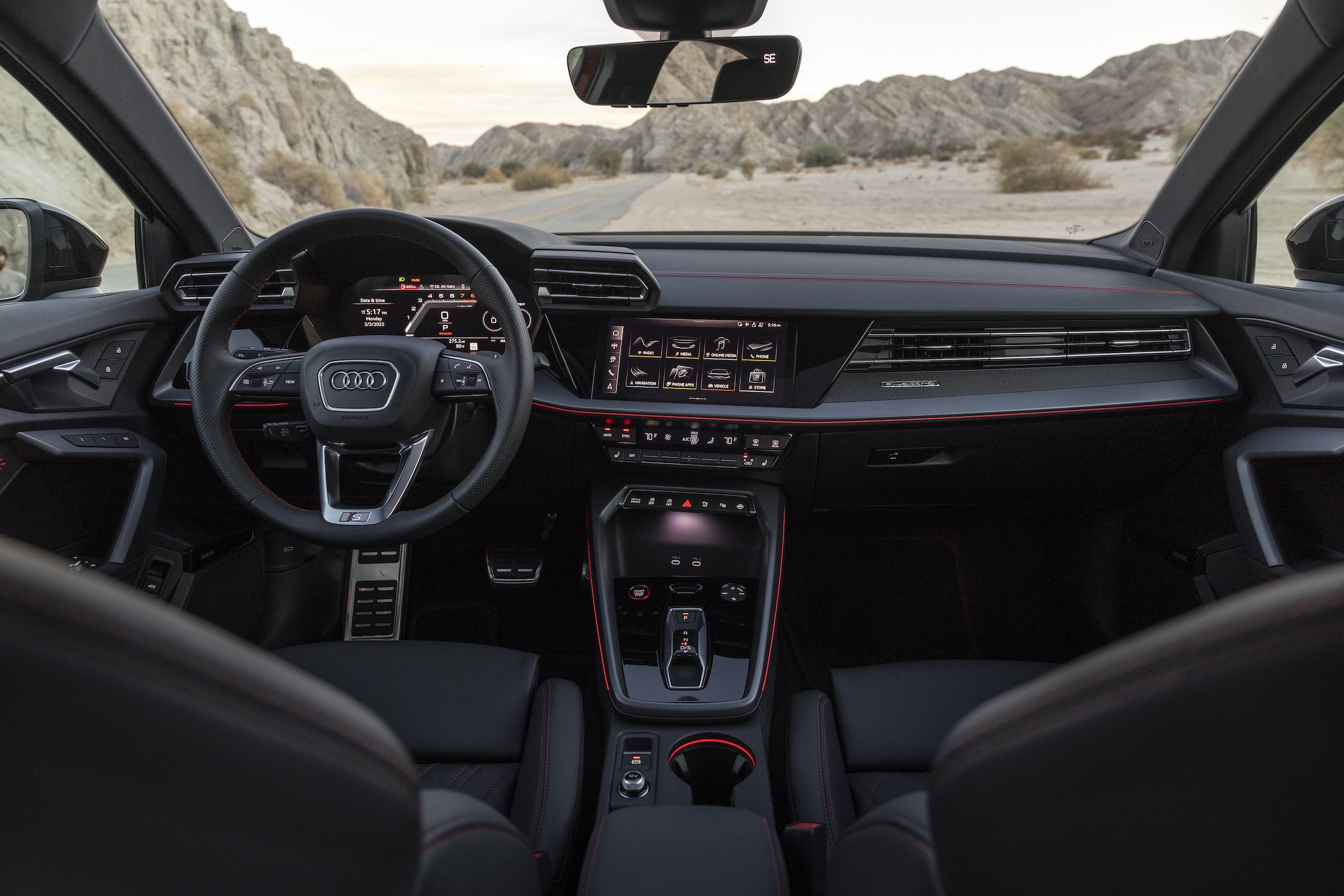
    The interior of the Audi S3 is comfortable when you’re riding up front, but not so much in the back row. The trunk helps teach how to travel light.

    Driver’s Seat: At first sit, the S3 started off strong. I hopped inside and felt instantly smitten with the no-nonsense black Dynamica faux leather interior, the firm but mostly comfortable seat, the narrow fonts in the typeface.

    Then I fired it up and heard the throaty exhaust recording that generally comes with Audi. But could this love last?

    Up to speed: The S3 certainly can get a move on. It’s powered by a 2.0-liter turbocharged four-cylinder engine that creates 328 horsepower, a lot for a small sedan, which kicks it to 60 mph in 4.4 seconds, according to Audi.

    Shifty: Audi has progressed even beyond its groundbreaking shift toggle switch and now has a shiny small shift mouse, for lack of a better term. Hold two fingers over it and push forward for Reverse and back for Drive. Kinda cool.

    You can shift the 7-speed automatic through the paddles, but with a vehicle as quick as the S3 you need to be in second gear before you finish rounding the corner at an intersection, so good luck finding the toggle. Here’s where a gearshift would come in handy.

    On the road: The S3 dazzles. It corners impressively and takes on country roads with a sense of wild abandon. What’s to prevent everyone from racing around the world like maniacs in this sedan?

    But what the Quattro all-wheel-drive system giveth, the suspension taketh away. The S3 starts to lose its charm on the highways; road seams and pocked road surfaces really jolt the little sedan abruptly. Be sure to check your dental plan before purchasing.

    Friends and stuff: You won’t squeeze much of either inside, friends nor stuff, not with this leg room, that hump, or the trunk. Feet and legs are pretty smushed.

    Farther back, the trunk seemed to identify as bigger but it’s rated at a snug 8.3 cubic feet, closer to a Miata (4.59) than a Civic (14.8). The rear seat does fold down, making things a little better.

    Play some tunes: Sound from the Sonos premium sound system is awesome — an A+. There’s a heavy echo in the surround sound, but I decided to live with it, as it only interfered with a few songs.

    Operation is all through the touchscreen. In a depressing application of function following form, the forward-reverse-volume controls live on a little round button on the console that matches the engine Start button. Beautiful to look at; disturbing to operate.

    I always love the Google Earth feature in Audi maps; it makes driving around quite scenic. Although so is looking at the actual road.

    Keeping warm and cool: The heater features a row of toggles that you push to lower and pull to raise. Somehow, though I’ve seen various toggles in different vehicles and they worked well, these black toggles felt hard to operate and distracting from the road.

    The blowers are also right in the driver’s face, which I was less enthusiastic about; there was no real way to send the air away from me.

    Fuel economy: I averaged about 24 mpg in a lively week of testing; every red light was an acceleration test. About 100 of those miles were there before me.

    Where it’s built: Ingolstadt, Germany. Just over half the parts hail from Germany as well (51%), and a mere 1% come from the U.S. or Canada.

    How it’s built: The less-fun A3 rates a 3 out of 5 from Consumer Reports for reliability, so that likely applies to the S3 as well.

    In the end: If your every day involves lots of highway, maybe this isn’t the choice.

    Next week: Let’s see how the BMW 228 compares.

  • Is Boscov’s selling the most offensively Pennsylvania outfit ever?

    Is Boscov’s selling the most offensively Pennsylvania outfit ever?

    I was lured to the Boscov’s at Granite Run the other weekend by a mailer I’d received advertising a one-day shoe sale — buy any pair, get the second for $1.99.

    I went early to beat the crowds only to find the bounds of polite society had dissipated at the shoe department and it’d become The Hunger Games, but with footwear and senior citizen tributes (who are far more ruthless than their younger counterparts).

    Flustered, I set off to browse the rest of the store. The first thing you might find yourself wondering as you wander around a Boscov’s is: “How does this place even exist?” It’s a full-scale department store that sells everything from perfume to sofas. I even discovered an entire candy counter on the second floor that during a previous visit I’d never noticed before. As it turns out, this Reading-based chain is in the fudge-making business too.

    Legions of other department stores have fallen in the last few decades — Kaufmann’s, Bradlees, Hills, Hess’s — yet Boscov’s abides. The Granite Run Boscov’s is particularly a beast unburdened by the sands of time. It was previously an anchor store for the Granite Run Mall, which was torn down around it in 2016 to make way for the Promenade at Granite Run. Only Boscov’s remains of the once-storied mall. It is a rock that shall not be moved, a pillar to in-person purchasing.

    The outfit

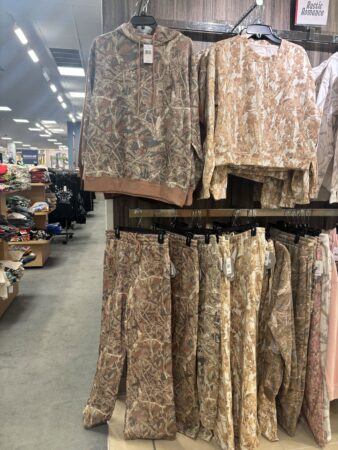
    As I was browsing the brightly-lit aisles that fateful Saturday this month, wondering if the lights might give me a sunburn, my eyes fell upon something I can never unsee: matching camouflage sweat suits.

    Here were outfits that managed to do what no state legislature or psychological expert ever has: They married rural and urban Pennsylvania.

    Boscov’s bills these matching sweat suits as “Rustic Romance.”

    As someone who spent her formative years growing up in Lycoming County — where we had the first day of hunting season off from school — I can attest that camouflage is not just for stalking prey and sitting in tree stands. It’s an entire sartorial color category all its own in rural Pennsylvania.

    Camo is mixed and matched with everything and considered appropriate for all events, from weddings to funerals (think of it like Birds gear during a playoff run). I’ll never forget looking at photos from my wedding and realizing a guest from Central Pennsylvania wore a camo baseball hat to our reception.

    Now, a matching tracksuit is something you rarely see in rural Pennsylvania, but it’s practically a closet-staple around Philly. You’ll see at least one person wearing one at every Wawa, Acme, or outdoor event you visit in the region.

    Typically paired with sunglasses, these outfits are not only comfortable but incredibly stress-free. No need to worry about what to pair your sweatshirt with because there’s only one answer, the matching sweatpants you bought with it.

    Standing stunned before these camouflage sweatsuits, which came in both his and hers, I wondered if Boscov’s had thrown back a few beverages before deciding to sell these things.

    As a Pennsylvanian, I was highly offended. We the people of this fine commonwealth are more than camo and sweat suits! We are camo OR sweat suits.

    But maybe, just maybe, by blending these two wildly different fashions together as the holidays approach, Boscov’s will also blend us. No more Philly, Pittsburgh, and the T in between. No more red counties and blue counties. This could be the one outfit to unite us all, while also helping us blend into woodland scenes.

    When I posted a picture of the camo sweatsuits on Threads, several users pointed out that Eagles quarterback Jalen Hurts recently wore a matching camouflage suit when the Birds traveled to Green Bay. I was surprised, as Hurts is typically a very stylish dude who wears Kangol hats and carries a man bag, but people suggested his outfit could have been a fashion statement indicating he was on the hunt.

    Who better though to serve as the ambassador of the camouflage sweat suit and unite our state than Hurts? He’s cool under pressure, so he could take the heat of promoting an undeniably terrible outfit for the greater good, and he grew up in Texas, so it’s safe to assume he’s familiar with camo (and we already know he’s not afraid to wear it).

    It wasn’t until I got home and looked at my photo of the sweat suits that I noticed there was a sign at the top of the store display billing these outfits as “Rustic Romance.”

    Listen, I know that Pennsylvanians’ reputation for romance does not precede us, but that’s just insulting. There’s nothing romantic about letting your partner know you want them to look more like fall foliage.

    I guarantee if you get your lady a matching camo sweat suit for Christmas, she’s not going to fawn all over you — she will hunt you down.