Category: Columnists

  • College journalism exposes the rot of ‘grown-ups’ | Will Bunch Newsletter

    I’m always reluctant to talk about upcoming columns, because in this twisted era everything changes at the drop of a MAGA hat, and I hate to jinx things. But as of now, I’m booked for a trip to Charlotte (or Raleigh?…I’ve already jinxed it, maybe) this coming weekend, where I hope to report from the front lines of the Border Patrol’s latest big-city invasion that has terrorized the immigrant community in North Carolina. So I’m going to spend a couple days reading up on what to do in a tear-gas attack, and I’ll see you again this weekend.

    If someone forwarded you this email, sign up for free here.

    Fearless college kids are saving journalism. Grown-ups? Not so much
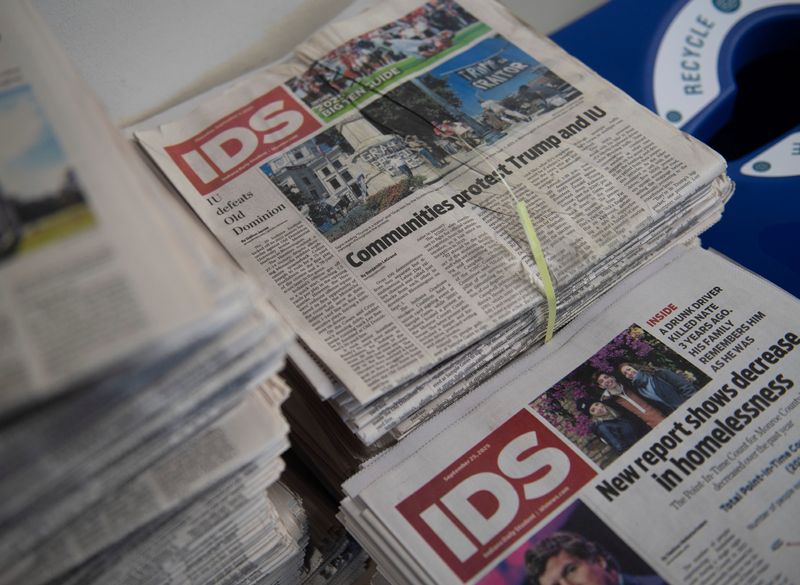
    Editions of the Indiana Daily Student in the student media area in Franklin Hall on Indiana University’s campus on Oct. 14.

    In American journalism’s year of the bended knee, nobody would have been surprised if the student editors of the Harvard Crimson followed the sorry example of major outlets like CBS News or the Washington Post in groveling before the rich and powerful — in this case, their ex-university president and still plugged-in professor Larry Summers.

    Earlier this month, Summers took to social media (the Elon Musk-owned X, of course) with a rant against the student-run paper at the Ivy League school he once helmed, linked to an article by conservative commentator (and former Crimson editor) Ira Stoll accusing the Crimson of biased coverage in favor of Palestine. Summers said ominously, “I do hope alumni trustees will investigate and take any necessary steps lest a problematic situation deteriorate any further.”

    But instead of backing down, Harvard’s student journalists stepped up. When the emails of the late financier and sex fiend Jeffrey Epstein, released last week by a House committee, proved to be riddled with his communications with Summers — long after Epstein had pleaded guilty to teen sex trafficking in Florida — the Crimson produced the most in-depth takedown of any media outlet, anywhere.

    “As Summers Sought Clandestine Relationship With Woman He Called a Mentee, Epstein Was His ‘Wing Man’” was the blistering headline on the article by undergraduates Dhruv T. Patel and Cam N. Srivastava. It described, in excruciating detail, the married Summers’ missives to Epstein about his efforts to woo a much younger Chinese economist on campus whom he was mentoring (and whom the former U.S. treasury secretary and his felonious friend code-named, with a racism they thought would remain forever private, as “peril.”)

    Take that to the alumni trustees, Mr. Summers!

    With a devastating kicker that shows Summers still emailing Epstein up until 1:27 p.m. of the day before his pal was busted on new federal sex charges in 2019, the Crimson article went viral over the weekend. By Monday morning, Massachusetts U.S. Sen. Elizabeth Warren was calling for Summers’ ouster from his faculty post. By Monday night, a “deeply ashamed” Summers announced that he’s pulling back from his public commitments, although he plans to continue teaching.

    The students’ reporting was another win for truth, justice, and the American way — but not an isolated incident. In recent years, as mainstream journalism looks increasingly weak and flabby in the face of U.S. authoritarianism, and with college campuses on the front lines of a culture war, scribes in their teens and early 20s — burning with youthful idealism and the freedom of not much to lose — have raced into the void.

    Some 3,000 miles from Harvard Square, the student journalists at the Stanford Daily stood their ground after one of its reporters was charged with three felonies, at the behest of a top university administrator, for attempting to cover a pro-Palestinian protest on the California campus. Under increasing public pressure, the charges were dropped in March — another triumph for the paper whose 2022 investigative reporting into research irregularities took down the university president.

    In the heartland, the editors of the Indiana Daily Student at that state’s flagship public university last month stood up to school administrators banning their print editions, blasting the move in a front-page editorial that said “telling us what we can and cannot print is unlawful censorship.” The students, who worked with their peers at nearby Purdue University to publish a special issue that circumvented the ban, rallied support from prominent alums and got the school to reverse course.

    “I think that many of these college journalists are laser-focused on their beats, are developing great sources among administrators, faculty and students, and are unfazed by the possibility that their stories might piss off a valued source or two,” Columbia Journalism School professor Bill Grueskin, who covered the Stanford fracas for Columbia Journalism Review, told me Monday. “In other words, they’re doing the things that the best reporters do. They’re just not able to buy a beer (legally, at least) when their story shakes up the world.”

    I know what some of you are thinking here. Investigating corruption or misconduct among university leaders, or fighting for a free press…aren’t these college students just doing what any journalist worth their salt would do? Well, yes and no.

    Consider those Epstein emails that continue to dominate the news. It turns out that two prominent journalists corresponded frequently with the convicted sex creep: the “palace intrigue” access journalist Michael Wolff, and a soon-to-be-fired New York Times business reporter, Landon Thomas Jr. The missives suggest they had zero interest in reporting on Epstein’s proclivity for underage girls but very much wanted the access to the rich and famous that jeevacation@gmail.com offered.

    And it gets worse. Thomas actually solicited a $30,000 donation from Epstein to a favored charity — a severe ethical breach that cost him his job in America’s most prestigious newsroom. Wolff, meanwhile, was offering Epstein advice on how to leverage — in essence, blackmail — the sitting U.S. president, Donald Trump. At the same time, he was pushing a business venture that would link him not only with Epstein but another man later convicted of sex crimes, filmmaker Harvey Weinstein. It seems like both conflicted journalists wanted to play in the big leagues with the much richer people they were supposed to watchdog.

    This is something that too many elite journalists share with the increasingly conflicted corporations that employ them: a desire to comfort the comfortable in return for access, or prestige, or money — and to avoid getting sued, which might jeopardize those first three things.

    How else to explain major TV networks like CBS or ABC, owned by corporations with myriad issues before the federal government, settling frivolous lawsuits by Trump for millions of dollars, or the similarly conflicted Jeff Bezos telling his Washington Post to spike its endorsement of Kamala Harris, or the mealy-mouthed “both sides” reporting on rising authoritarianism that plagues so many elite newsrooms of the traditional media?

    The late, great Kris Kristofferson told us that freedom’s just another word for nothing left to lose, and maybe that simple explanation has a lot to do with the bravery of college journalists — that they are freer to question authority than folks with a mortgage and worries about paying for their own kids to attend a top school.

    Still, it’s important to understand that most of the rot in modern mainstream journalism — too much consolidation in the hands of too few conglomerates with too much at risk to be seen as anti-regime — is institutional. We should strive to make something great out of the fact that the next generation of American journalists has arrived with smarts, savvy, and a moral compass yet to be worn down by late-stage capitalism.

    Our challenge, as a society, is to tear down the decrepit structures of the corrupted old media and build a new one that rewards independent journalists who actually afflict the comfortable, and offers them incentives to keep doing that instead of cutting venture-capitalism deals with the folks they allegedly cover. Most of today’s college journalism majors would never trade emails with the likes of Jeffrey Epstein — except to take him down.

    Yo, do this!

    • The stroke of timing behind Ken Burns’ latest documentary epic, The American Revolution, which is currently running this week on PBS stations like WHYY here in Philadelphia and also streaming, was supposed to be the 250th anniversary of the conflict that created the United States. But the project has taken on much greater relevance in a fraught present, when folks are heatedly arguing just what the Founders’ American Experiment is really all about. Critics have praised Burns and his skilled team for blending the ideals and leadership of the George Washingtons and Thomas Paines with the realities faced by everyday folk, including indigenous and enslaved people.
    • Personally, I’ve been embroiled in my nostalgia for a more recent revolution — the cultural and musical explosions that occurred in 1966. I’ve been listening to the audiobook about that tumultuous year1966: The Year the Decade Exploded — by the British author Jon Savage, whose later book on the year 1971 was the basis for an outstanding but largely ignored documentary series on Apple TV, But 1971’s classic rock wouldn’t have happened without the cultural pioneers and a youthful clamor for liberation that came five years earlier. The book is an engrossing reminder that change is possible.

    Ask me anything

    Question: Now that People Magazine has revealed the disgusting “piggy” story, why isn’t this atop every news outlets coverage? We spent 3 full weeks on Biden’s age, a week on his pardon of his son with such moral outrage from every outlet. This doesn’t even get covered? — BigTVFan (@bigtvfan.bsky.social) via Bluesky

    Answer: The episode that BigTVFan is referring to occurred with a gaggle of journalists about Air Force One, but just started getting viral attention Monday night. It is, indeed, shocking to watch. When a Bloomberg woman journalist pressed Donald Trump on the Epstein files, the president erupted. “Quiet! Quiet, Piggy!” Yes, this should be a front-page story in the traditional media, and not only because of the stunning sexism (when the subject is Epstein, no less!) and the regal arrogance, but also this: the man who’s followed around by the nuclear suitcase seems to be losing his grip on reality. Monday afternoon, Trump spoke to a gathering of franchisees of the fast-food addiction that may be just one reason why nobody believes he only weighs 16 ounces more than Jalen Hurts, McDonald’s, and was at times beyond incoherent. Yet Trump’s rapidly deteriorating mental state remains mostly off-limits for the elite media. It’s a massive error of omission that the world will look back on and regret.

    What you’re saying about…

    It’s funny how one week can feel like a decade in 2025. Last week’s question about the eight senators (seven Democrats and an independent) who cut a deal to end the long government shutdown drew a huge response from folks fired up about an issue that now almost feels like ancient history after the Epstein email release. Readers were passionate but divided. Certainly many felt the eight senators had caved in the worst possible way. An outraged Freddi Carlip wrote that “most people wanted to do what was best for Americans who are hurting and that is to stand up to bullies.” But a number of you thought the opposition had few real options but to deal from a weak hand. “This was always going to end with the government opening under the black flag of the Big Ugly Bill,” wrote Kent Dietz. “Oft repeated but true: elections have consequences.”

    📮 This week’s question: It’s all Epstein all the time, so let’s talk about it. Do you think Trump has sincerely flip-flopped and the relevant files will soon be released? Or is the White House still playing a long game aiming to keep Epstein’s secrets buried with him? Please email me your answer and put the exact phrase “Epstein files” in the subject line.

    History lesson on ‘Charlotte’s Web’…and fascism

    U.S. Border Patrol Commander at large Gregory Bovino, right, looks on as a detainee sits by a car Monday, in Charlotte, N.C.

    Nobody reads any more, at least not to the end. That’s been driven home this autumn by several efforts from tech bros and other leaders of our dystopia falling flat on their face with their attempts at literary allusions. A viral post on Bluesky recently mocked the Icarus Flying Academy, whose founders may be blissfully unaware that their Greek mythological namesake flew too close to the sun and crashed. On Monday, gazillionaire Jeff Bezos also invoked ancient Greece by announcing his AI startup Project Prometheus, invoking an inventor who was ultimately bound to a rock by Zeus for his overreaching. Then there’s the bad people behind the U.S. Border Patrol and its inhumane mass deportation drive, who took their horror show to North Carolina this past weekend with their “Operation Charlotte’s Web.”

    The “brains” behind the BP’s masked goon squad, Gregory Bovino, named the operation — which netted 81 detainees in its first Saturday during a chaotic surge through suburban lawns and Home Depot parking lots — after the 1952 classic children’s novel by E.B. White about a farm, a pig, and the compassionate spider, Charlotte, who saves the pig’s life. Why? Because Bovino’s secret police force are ensnaring scores of immigrants in their web. In Charlotte, N.C. Get it? Bovino even took to social media’s X with a wildly out-of-context quote from the novel: “Wherever the wind takes us. High, low. East, west. North, south. We take to the breeze, we go as we please.”

    In a viral essay, the writer Chris Geidner of the excellent site LawDork demolished Bovino’s literary aspirations for his police-state operation. His piece went well beyond the obvious point that a children’s novel that centers on a spider’s quest to protect someone different from her — a pig — from his human predators is the 180-degree polar opposite from the web of inhumanity that Team Bovino is spinning in Charlotte, terrorizing the Latino community there. Geidner notes that much of E.B. White’s wider work was in opposition to the very fascism that’s behind the mass deportation drive of Bovino and his ultimate boss, Donald Trump.

    Geidner quotes White from a 1940 essay, as Adolf Hitler’s stormtroopers were advancing across Europe: “I am in love with freedom and that it is an affair of long standing and that it is a fine state to be in, and that I am deeply suspicious of people who are beginning to adjust to fascism and dictators merely because they are succeeding in war. From such adaptable natures a smell rises. I pinch my nose.”

    White, and his fictional Charlotte, would have done more than pinch their nose from the stench of this operation in a proud city that shares its name with a heroic spider. For sure, Bovino’s crimes against literature pale in comparison to his ongoing crimes against humanity. But he may discover that the rapidly spinning American thread of community and common decency that is resisting mass deportation is the true sequel to Charlotte’s Web.

    What I wrote on this date in 2018

    It was Mississippi’s most famous writer, William Faulkner, who wrote, “The past is never dead. It’s not even past.” Seven years ago on this date, I wrote about how a justice-denied 1955 murder of a Black man trying to deliver absentee ballots to the county courthouse in Brookhaven, Miss., haunted the modern Senate campaign of that town’s GOP U.S. Sen. Cindy Hyde-Smith. I wrote: “Four years after [Lamar Smith] was killed, a baby girl was born in Brookhaven named Cindy Hyde. Over the next 59 years, she immersed herself in the politics of a community that bitterly refuses to concede the just cause that Lamar Smith died for.” Read the rest from Nov. 18, 2018: “Why the blood of a 1955 Mississippi murder drenches today’s U.S. Senate race.”

    Recommended Inquirer reading

    • Only one column this week, and as you might expect it drilled deeply into the true meaning of the Jeffrey Epstein emails that have dominated the headlines. I went beyond the suggestive comments about Donald Trump to look at the deeper moral decay of the rich and famous who continued to seek out Epstein and his connections years after his Florida guilty plea to child prostitution charges. The missives from billionaires and political insiders also reveal their growing — and justified — worries that the public may be reaching for pitchforks.
    • The John Fetterman saga never ends, nor does Pennsylvania readers’ bottomless fascination with his decade-plus odyssey from outspokenly progressive mayor of struggling Braddock, Pa., to the U.S. Senate, where he is increasingly at odds with his fellow Democrats about practically everything. The Inquirer’s coverage of revelations in Fetterman’s new autobiography, including his long-running feud with Gov. Josh Shapiro, was one of the most widely read stories last week. So was what happened next, as renewed heart problems caused Fetterman to fall flat on his face and again be hospitalized. There’s three more years until the end of Fetterman’s term and an all-but-certain primary challenge from his political left. No one is going to cover this better than The Inquirer, so why not subscribe today?

    By submitting your written, visual, and/or audio contributions, you agree to The Inquirer‘s Terms of Use, including the grant of rights in Section 10.

  • Epstein’s emails are the end of America as they ruined it

    Epstein’s emails are the end of America as they ruined it

    The ex-skipper of Harvard, and the professor(s). A billionaire (from Silicon Valley), but not many wives — and featuring guest appearances by the MAGA publisher of Breitbart News, a former Israeli prime minister, a past president … and a future one.

    This metaphorical Epstein Island — people sending, or featured in, the emails of the late disgraced financier and sex fiend Jeffrey Epstein, released last week by a House committee — is kind of like TV’s Gilligan’s Island … if everyone had a truckload more money than Thurston Howell III, and was also a lot dumber.

    Last week’s stunning document dump by the House Oversight Committee of Epstein’s emails, mostly from the 2010s, among 20,000 pages from his estate, can and should be viewed through several prisms. The main media focus has understandably been on his leering close friend in the 1990s and 2000s, now-President Donald Trump, who is mentioned many times over. There’s arguably no “smoking gun” directly linking Trump to any specific act of sexual misconduct in Epstein’s lurid world, but more than enough innuendo that POTUS 45 and 47 “knew about the girls,” and possibly much more, to fuel a Watergate-level frenzy.

    I don’t know if the emails, so far, are enough to take down Trump, but the president should be even more worried — and he probably is — about the much deeper rot that’s already been laid bare about the entire decrepit class of men (because they’re almost all men) who rule the world with atrocious grammar amid a nonstop booty call.

    I’m not a financial expert, but if I had disposable cash, I’d avoid the hyperinflated artificial intelligence bubble and invest in a company that manufactures pitchforks.

    The QAnon folks were almost there! These emails prove there really is a global cabal of the world’s most powerful and wealthy elites, linked to the most repulsive child sex trafficking operation we know about. No, it doesn’t involve pizzeria basements or blood-drinking rituals — at least as far as we know so far. But these missives do reveal the evil banality of the world’s most rich and famous, whose vast pursuit of money or teenaged blondes or whatever knew no bounds, or, at long last, any sense of decency.

    The Nation’s Jeet Heer nailed it when he wrote after the email dump that the Epstein scandal “has always been a scandal about the ruling class as a whole, not one individual or political party,” adding that “Epstein trafficked not just in the bodies of the children he abused but also in social connections that could bring elites together.”

    And ignorance is no defense. By the 2000s, the murky but wildly rich financier’s predilection for underage girls was hardly a secret. In 2008, in a sweetheart deal, he pleaded guilty in Florida to a charge of procuring a 17-year-old girl for prostitution, but prosecutors had evidence linking him to about three dozen other girls, including some as young as 13. And yet, most of the emails from powerful people released by the committee came after those revelations, up through his 2019 second indictment and his death in a federal jail in Manhattan under mysterious circumstances.

    Some of the most telling exchanges are not the more than 1,000 emails from Epstein, his convicted partner-in-crime Ghislaine Maxwell, or their pals that mention Trump (who, wisely for him, never learned to use email), but involve Epstein’s misogyny-soaked friendship with Larry Summers, the former U.S. Treasury secretary and Harvard president.

    Summers had lost that plum Ivy League post in 2006, in good measure because of a speech in which he’d questioned the intellect of top female scientists. During the 2010s, when the Obama administration or cable TV wasn’t still treating him as an economic seer, the married Summers turned to this convicted sex trafficker for advice on how to hit on a younger, attractive protégée, or just to commiserate.

    “I’m trying to figure why [the] American elite think if u murder your baby by beating and abandonment it must be irrelevant to your admission to Harvard,” Summers wrote Epstein in 2017, referring to this episode at the school. “But hit on a few women 10 years ago and can’t work at a network or think tank. DO NOT REPEAT THIS INSIGHT.”

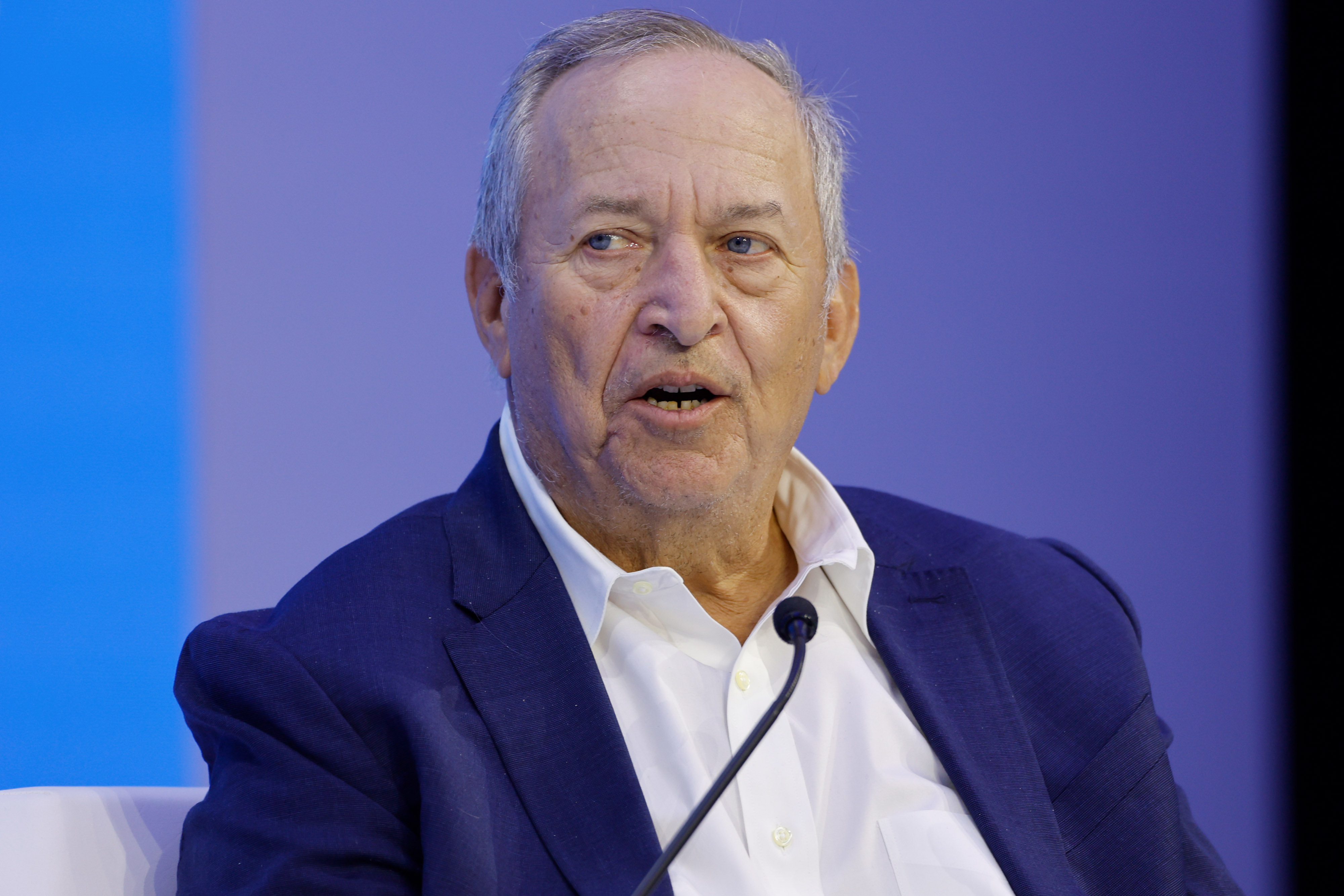
    Larry Summers, president emeritus and professor at Harvard University, during a panel session at the World Economic Forum in Davos, Switzerland, in January 2023.

    You may remember that 2017, the first year of Trump’s first presidency, is when the #MeToo movement against male sexual harassment and misconduct exploded. That email from Summers is one of the very few that even alludes to the social upheavals of the tumultuous 2010s that also included Occupy Wall Street, the tea party, Black Lives Matter, and other movements targeting privilege and inequity. Most of this prattle is instead just rich dudes talking about how to get themselves richer … or just how to get off.

    Still, as Heer captures in his analysis for the Nation, the thought-to-be-secret communications of the elites increasingly involved enhanced security for the 1 Percent and ways to silence protests as that decade devolved, including scheming with the former Israeli prime minister, Ehud Barak, about launching a cybersecurity start-up. The world’s shrewdest investors knew the pitchfork bubble was coming before you did.

    In the six years since Epstein was found dead, however, it has been the political backlash his email correspondents, like the Silicon Valley billionaire Peter Thiel, have heavily funded that has advanced while warding off the revolution. This was the ultimate goal of this sordid chat group: to desperately cling to their dying hierarchies around patriarchy and white supremacy, and to portray the #MeToo movement as going too far, when it’s obvious it didn’t go nearly far enough. It was during those fraught years that they stumbled into the perfect avatar in the unlikely Trump presidency.

    Now, it’s a headline that Trump “knew about the girls,” but, of course, he knew about the girls. They all knew about the girls, and every Thiel and Summers and the con artist formerly known as Prince Andrew knew they’d bought more security with a U.S. president who shared their “wonderful secret.”

    It starts to make sense that Team Trump even deployed the White House Situation Room to fight a congressional vote for a wider release of the Epstein files, as if these secrets were a nuclear bomb headed for Chicago. To be sure, this all-out war against disclosure — along with Trump’s bizarre order for the U.S. Department of Justice to investigate only Democrats mentioned in the letters — might be to hide that Trump did more with Epstein’s bevy of young girls than just “know about” them.

    But on some level, Trump’s White House must also realize that the Epstein file is the Jenga piece that brings the whole thing crashing down — the end of America, or, more to the point, the version of America getting financially drained, sexually abused, and basically ruined by all the people getting emails from jeevacation@gmail.com.

    The timing couldn’t be better, or worse, for this midnight of the elites. The overblown stock market fueled by an AI hallucination is set to burst any moment, and new hiring is already grinding to a halt — just as the price of everything from steak to coffee goes through the roof, and health insurance is doubling or tripling for millions of Americans. When this perfect storm strikes, an electoral bloodbath in the 2026 midterms is the best outcome Trump can hope for, on a list of dire possibilities.

    It’s no coincidence Trump is accelerating the pace of dictatorship, not because he’s at the peak of power, but because he knows he’s running out of time. Thus, the wag-the-dog war drums off Venezuela are pounding louder, and the muck of naked corruption — from Swiss gold bars to real estate deals with the murderous Saudi prince — is getting filthier. All of it haunted by the ghost of Jeffrey Epstein.

    There’s one other thing about the Epstein files I feel compelled to mention. I’m also in them — well, sort of. On Feb. 12, 2019, for reasons we’ll never know, Epstein emailed his ethically conflicted journalist pal Michael Wolff a column I’d just written, with the words “please note.”

    The piece was tied to the recent arrest of another close friend, the New England Patriots owner Robert Kraft, for soliciting sex in strip mall massage parlors near Palm Beach, and the moral decay of Kraft and his Florida neighbors, Trump and Epstein. It came at a moment when Epstein and Wolff were talking about ways to use his inside knowledge about Trump as leverage when the walls of federal prosecution were closing in. Nine months later, Epstein was dead — weird coincidence.

    In that column, I wrote, “Kraft’s embarrassing charges come at one of those rarest of moments — when everyday people are suddenly realizing who doesn’t have power in America, who does, and that something can be done about this.” If Epstein did, in fact, read the piece, he knew what was coming. Now Trump knows it, too — and America will never be the same. FEEL FREE TO REPEAT THIS INSIGHT.

  • From 2025: Jesse Jackson set the stage for modern-day American politics

    From 2025: Jesse Jackson set the stage for modern-day American politics

    Editor’s Note: This column originally appeared in The Inquirer in November. On Tuesday, the Rev. Jesse Jackson Sr. died at his home in Chicago.

    One of the first articles I wrote for my college paper was about PUSH, the organization founded by the Rev. Jesse Jackson Sr. — People United to Save Humanity.

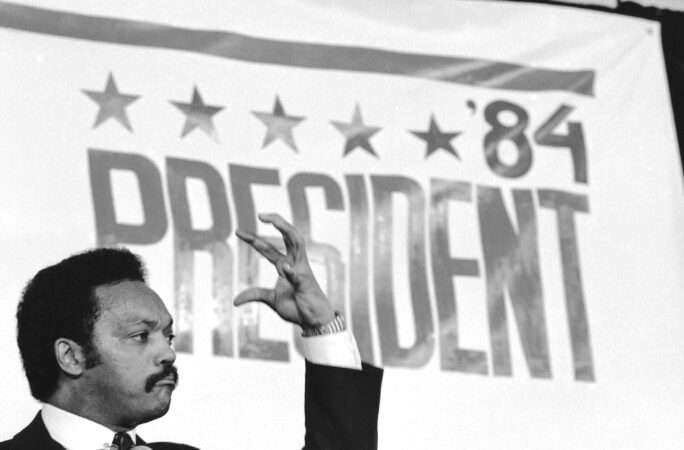
    When the civil rights leader arrived in Washington, D.C., for a presidential campaign rally on the National Mall, I was there. It was electrifying. I remember listening as he called for Americans to unite across racial, gender, and class lines, and become part of his Rainbow Coalition. Looking back, it was a message that would resonate even today. But America wasn’t ready.

    Four years later, he was back on the presidential campaign trail, urging his followers to “keep hope alive.” That time around, he tripled his share of white voters in the Democratic primaries, finishing second to then-Massachusetts Gov. Michael Dukakis. He also pushed the Democratic Party to institute reforms. But once again, America wasn’t ready.

    Although Jackson didn’t clinch the Democratic nomination that time, either, his efforts to become America’s first Black president set the stage for Barack Obama’s historic election.

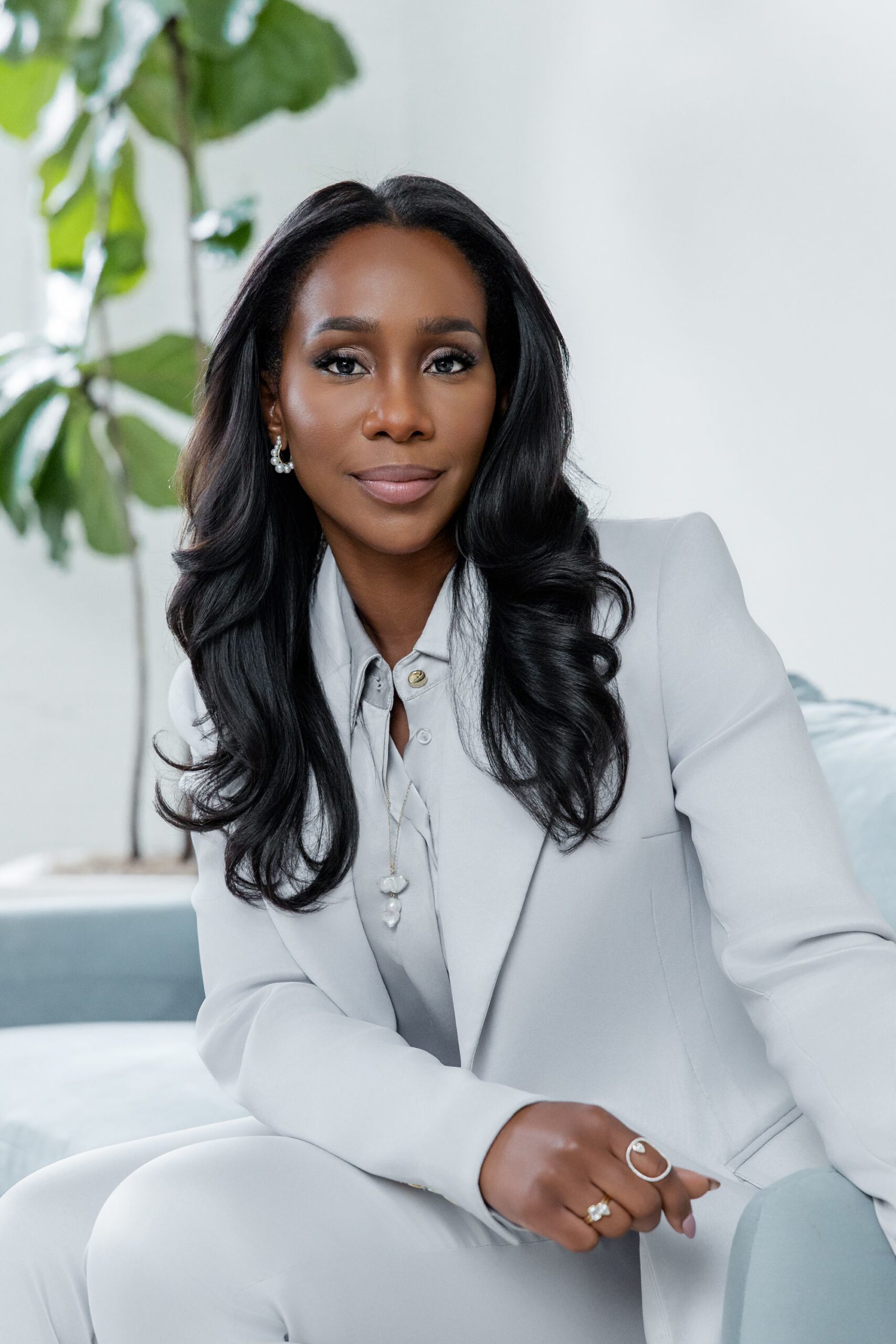
    CNN anchor Abby Phillip explores the legacy of civil rights leader Jesse Jackson and its impact on American politics in her new book “Jesse Jackson and the Fight for Black Political Power.”

    In 1988, the same year Jackson launched his second presidential bid, CNN anchor Abby Phillip had just been born. I doubt her parents ever dreamed that one day their baby girl would go on to write a seminal tome about Jackson, who at the time was one of the best-known political figures.

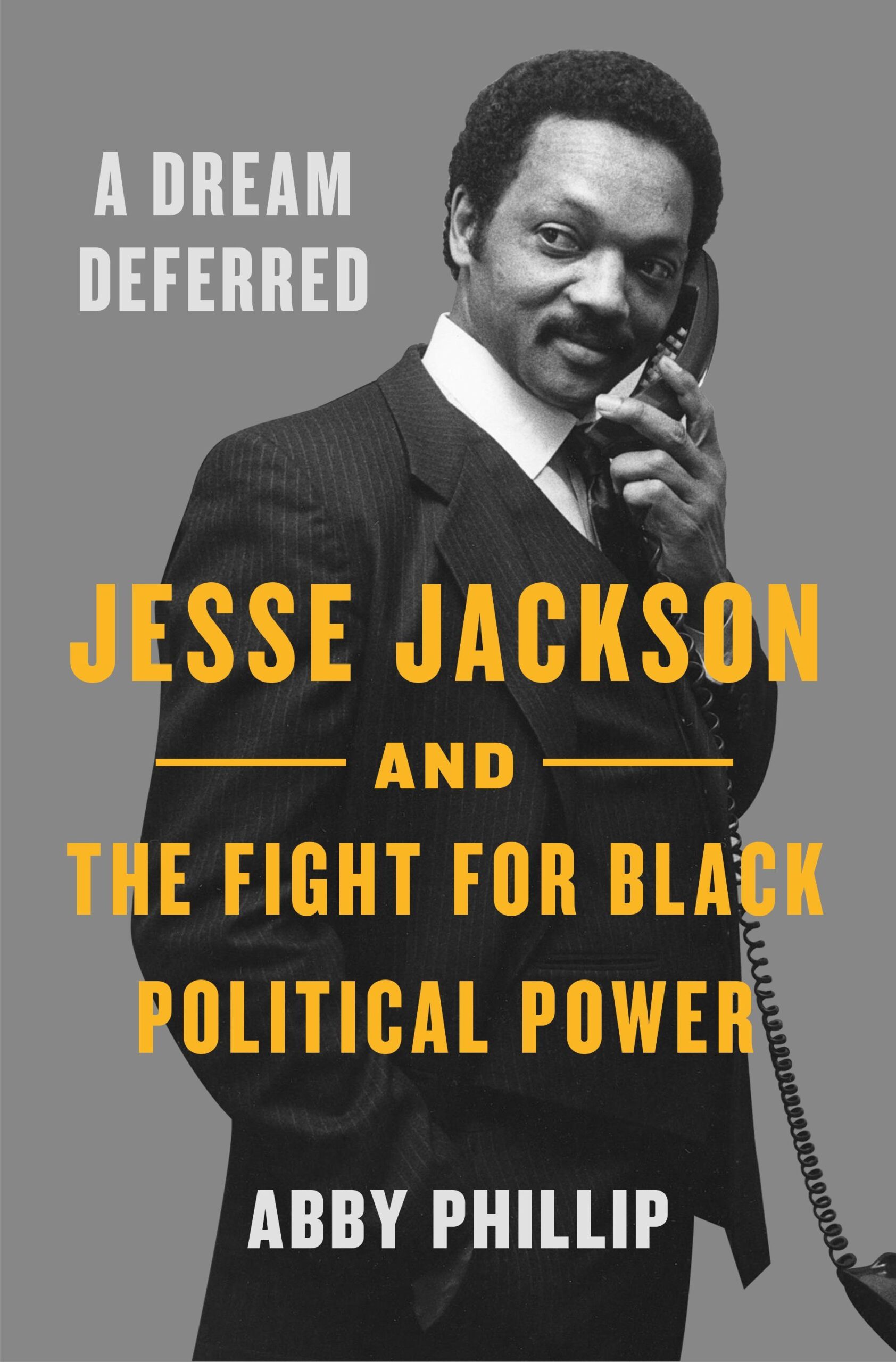
    Published last month, A Dream Deferred: Jesse Jackson and the Fight for Black Political Power takes readers through Jackson’s impoverished childhood as the son of a single mother in the Jim Crow South, to his days in the civil rights movement with the late Rev. Dr. Martin Luther King Jr., and through his historic campaigns for the presidency.

    I read it last month while vacationing. When I reached the end, I turned the last page with a feeling of gratitude, not only for Jackson and his contributions to the cause of civil rights, but also for Phillip for making the time to write it. A graduate of Harvard University, she’s a media superstar, juggling the demands of motherhood with weeknights at the anchor desk and fact-checking the uber-annoying conservative commentator Scott Jennings, a frequent cohost on her show. If Phillip, 36, had chosen to pass on this considerable undertaking, it would have been understandable.

    Instead, she stuck with it through the COVID-19 pandemic, the launch of her first show, Inside Politics Sunday, the 2021 birth of her daughter, a move to New York City, and the creation of her current show, CNN NewsNight with Abby Phillip. The reporting and writing took almost four years to complete, and was somewhat of a race against time.

    “One of the impetuses for writing this book was just a recognition that in order to really get to the truth of a lot of these stories, you really have to get it from the people who were there,” Phillip told me when we spoke last week. “It was important for me to try to reach those people while they are still with us, including Rev. Jackson, and a lot of his aides and staffers and so on and try to get those stories.”

    A new book written by CNN anchor Abby Phillip explores the legacy of civil rights leader Jesse Jackson and its impact on American politics.

    Doctors diagnosed Jackson, now 84, with Parkinson’s disease in 2017. Two years ago, he stepped down as the leader of the Rainbow-PUSH Coalition, which he had led for roughly half a century.

    Since his speech is impaired by the disease, Phillip found it easier to understand him in person and traveled to his home in Chicago for interviews. The CNN anchor also went with him to his hometown in Greenville, S.C.

    “I really got to know his world, and I’m grateful that they trusted me to do my job,” Phillip said.

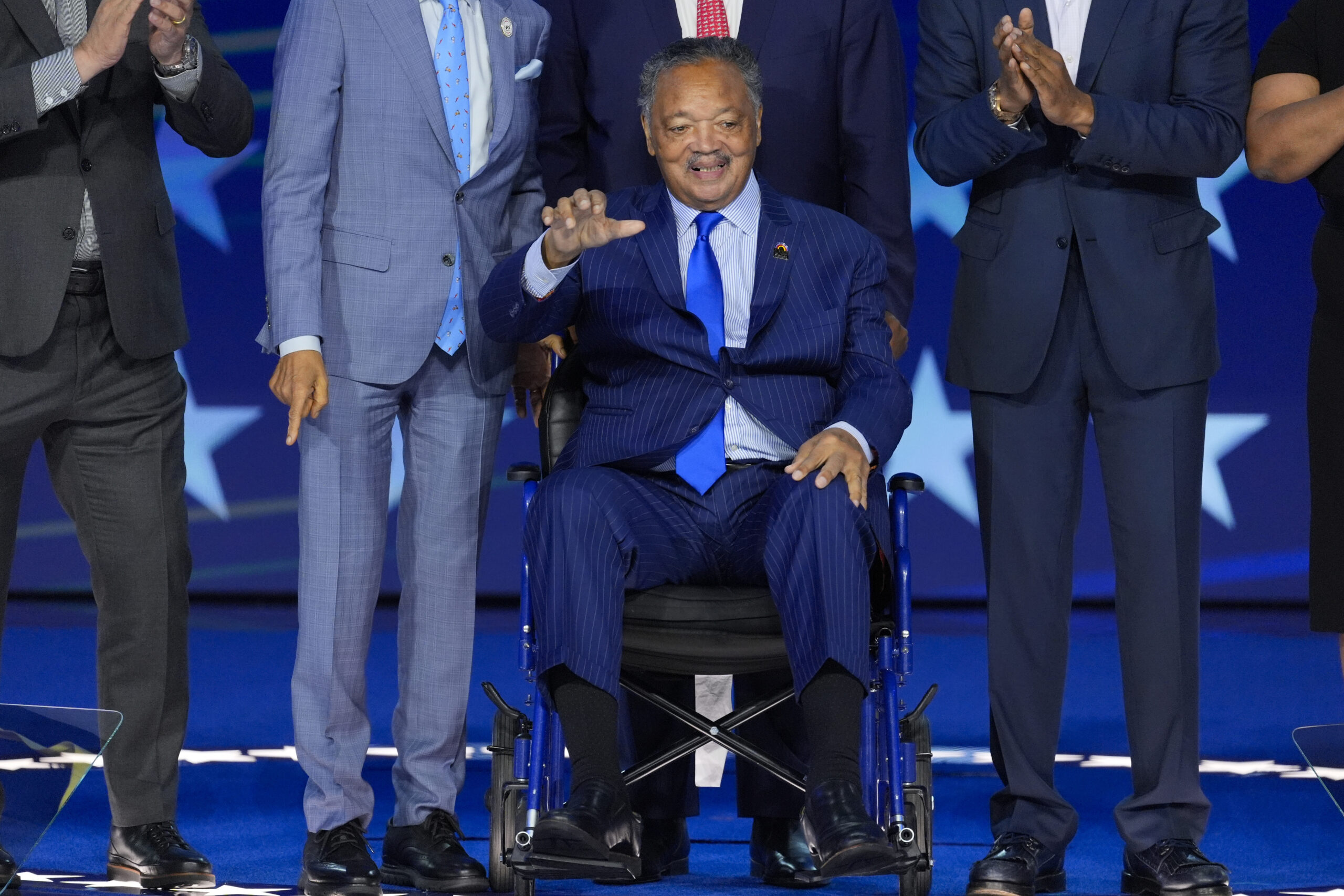
    The Rev. Jesse Jackson waves during the 2024 Democratic National Convention in Chicago.

    Much of the book focuses on Jackson’s presidential campaigns. “This is a major point of pride for him,” Phillip said. “His political campaigns, I think he really sees them as an essential part of his legacy. I do think that there was a sense that they were always underplayed or misunderstood.”

    So many of his accomplishments slip deeper into the recesses of our minds with each passing year. He organized voter registration drives that helped elect Chicago’s first Black mayor, Harold Washington, in 1983, and negotiated with Syria for the successful release of Navy Lt. Robert Goodman. He pushed for changes in how delegates were allotted in the Democratic Party.

    President Donald Trump wants to whitewash American history, as evidenced by his call to sanitize the history of Black people in America. In light of this, it’s more important than ever to preserve these stories. Phillip’s goal in writing the Jackson book, she told me, “was to make sure that this chapter didn’t get lost to history.”

    Thanks to her dedication, persistence, and brilliance, it won’t.

  • The final night at Pica’s in Upper Darby: Scenes from an Italian restaurant

    The final night at Pica’s in Upper Darby: Scenes from an Italian restaurant

    On our first date 10 years ago, my husband and I went to Pica’s Restaurant in Upper Darby and then to a John Oliver stand-up show at the nearby Tower Theater.

    The latter was his choice, but the restaurant was my pick. I was well aware of how large Pica’s legend loomed in Delaware County, and Upper Darby native Tina Fey had recently extolled her love for its unique sauce-on-the-top square pizza on The Tonight Show Starring Jimmy Fallon, so I wanted to try it.

    I arrived at the restaurant a bit frazzled, given that I’d spent the hours before reporting on ferrets eating a baby’s face off. “Intense” is the word my husband uses to describe me that night. I’m pretty sure my nail marks are still embedded in the table where we sat.

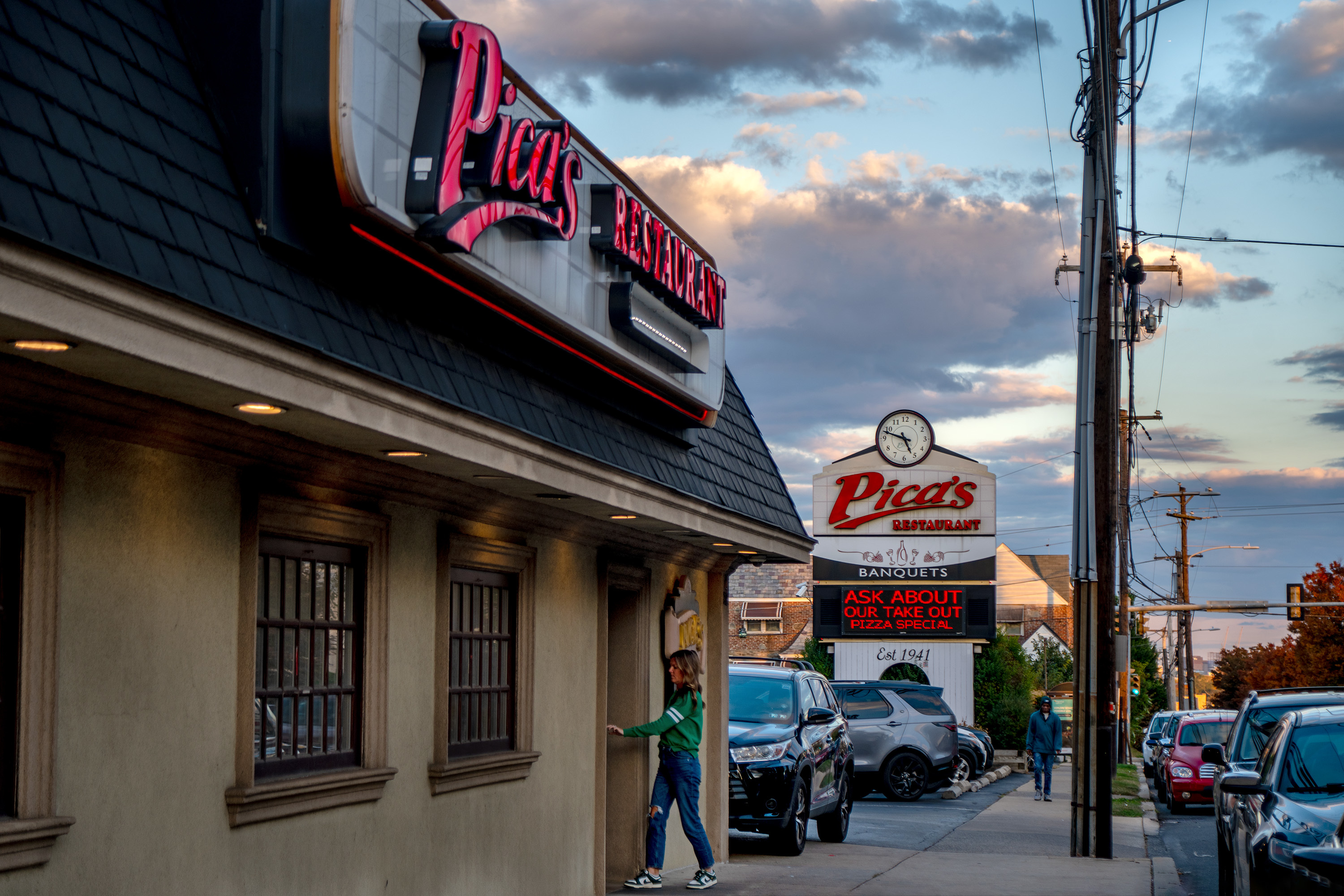
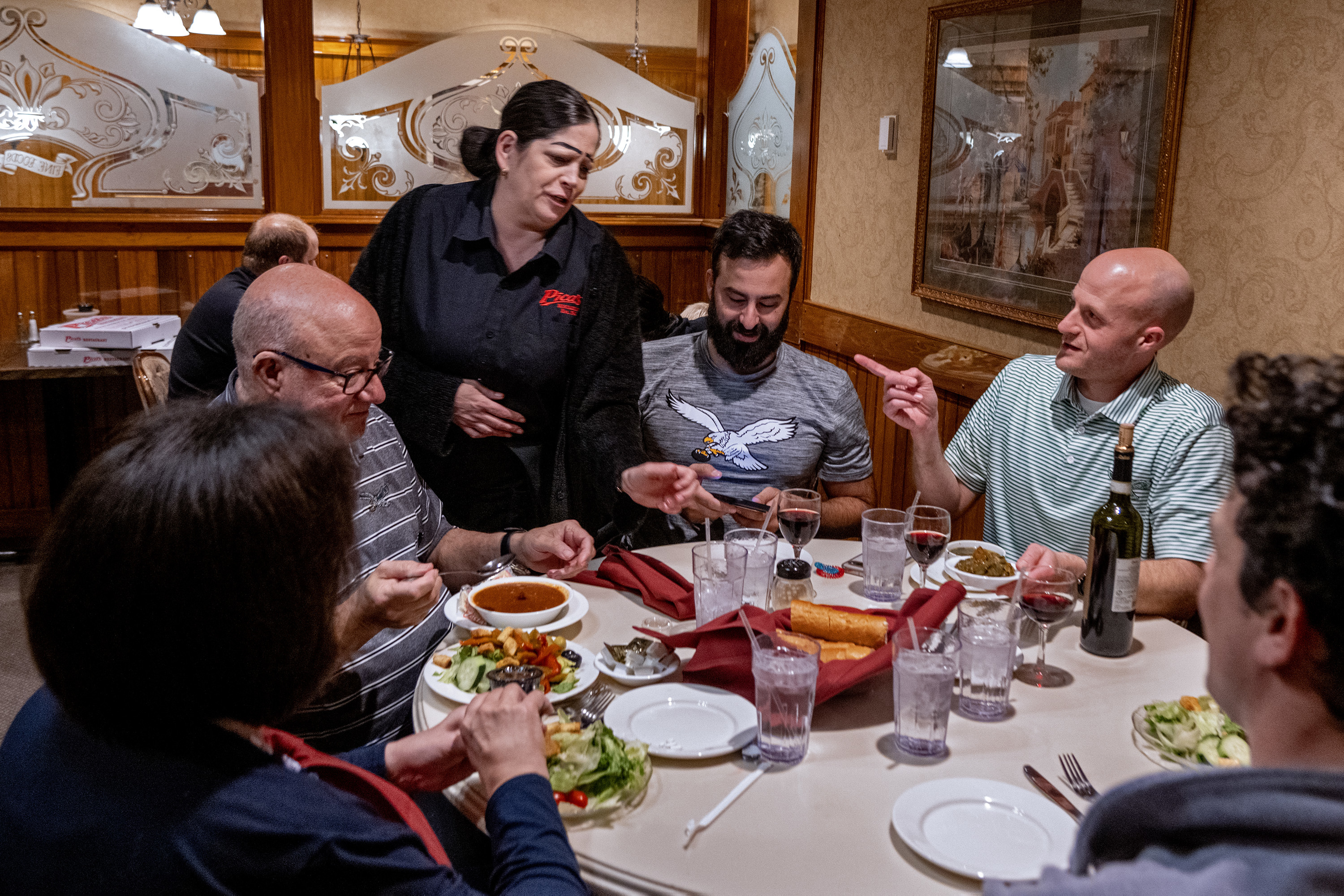
    The final night of dinner at Pica’s Restaurant in Upper Darby.

    I don’t remember what we talked about that night or what we ate, but I remember feeling comforted by that man and by that place. Pica’s wasn’t fancy or pretentious — the outmoded decor looked like it hadn’t been updated since the ’90s — but it was packed. Not with people who came to be seen, but with people who came to be with each other.

    You know how there are comfort foods? I could tell this was a comfort restaurant.

    My husband and I haven’t been back to Pica’s a lot in the years since, maybe because it felt like a place we’d always be able to go back to. So when I heard Pica’s was closing its Upper Darby location on Sunday after 69 years, I knew we had to get in on the last night. We invited friends — a couple who are Delco lifers, like my husband — along for the ride.

    How Delco rolls

    On a TV in the lobby, a still frame of Tina Fey eating Pica’s pizza on the Tonight Show played on rotation, along with photos of Pica’s food and awards it’s received over the years, like Philadelphia Magazine’s 2017 Best of Philly award for “Best Red Gravy Italian.” The carpeting and wood paneling were unchanged since my first visit a decade ago.

    Upper Darby native Tina Fey and “Tonight Show” host Jimmy Fallon share a Pica’s pizza on air in 2014.

    There was a good crowd, but the restaurant wasn’t packed. Within 15 minutes of arriving, our friend ran into two of his friends who’d also stopped in for a last supper, because that’s how Delco rolls. Near us was what appeared to be three generations of women who shared two pizzas between them, and at another table, a dad and daughter who said little to each other, but were very happy to see their huge pasta dishes.

    We ordered pizza and mozzarella sticks as appetizers and pasta for dinner, which felt gluttonous because it was, but we’ll be happily eating the leftovers this week. From the wonderfully sweet sauce to the perfectly melted cheese and pepperonis the size of manhole covers, everything was on point.

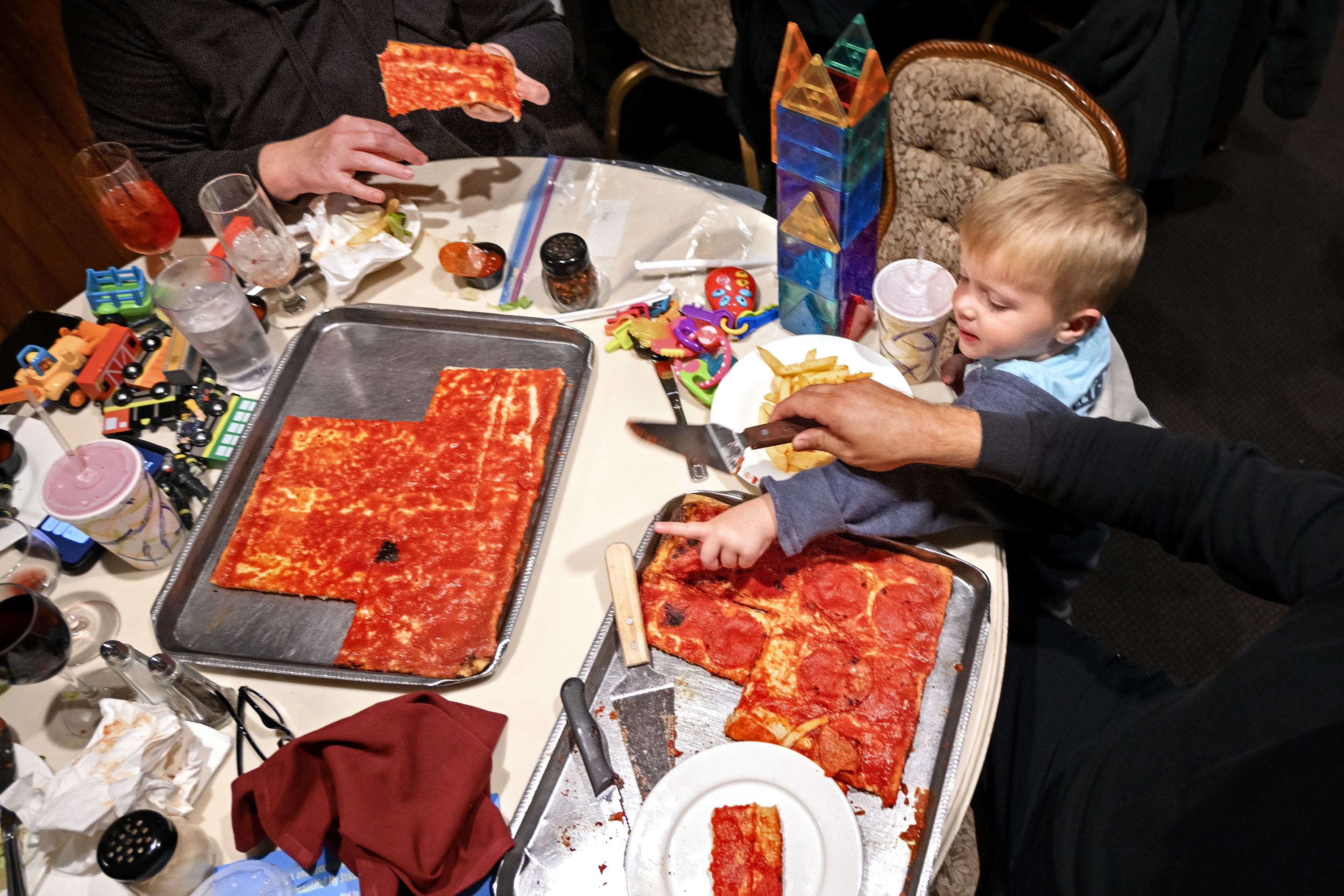
    Two year-old AJ Jr. sits between his parents AJ Grenier, Sr. (right) and Carolyn Grenier (left) as he grabs a slice of pizza on the final night of dinner at Pica’s Restaurant in Upper Darby Sunday.

    The bar even had Montepulciano wine and I got the last full glass. Our amazing server, Shannon Murphy, who’s worked at Pica’s for 27 years, also brought me a sidecar glass containing the last few sips of the bottle so that it didn’t go to waste. The way I’d felt like I’d won the lottery in that moment is hard to explain.

    Murphy, who had her wedding reception at Pica’s, said the closing of the Upper Darby restaurant was “bittersweet” and “nostalgic.”

    “The family is just amazing to work for,” she said.

    Three generations

    Founded by Frank Pica Sr., Pica’s first opened in 1941 as a brick-oven pizza shop in West Philly before the proprietor and his son, Frank Pica Jr., moved it to West Chester Pike in Upper Darby in 1956, where it became a full-service restaurant.

    The company is now owned by the third generation of Picas, Angela Pica-Oandasan and Frank Pica III. Their sisters, Lori Pica-Rosario and Karen Pica, also played important roles in the family business over the years.

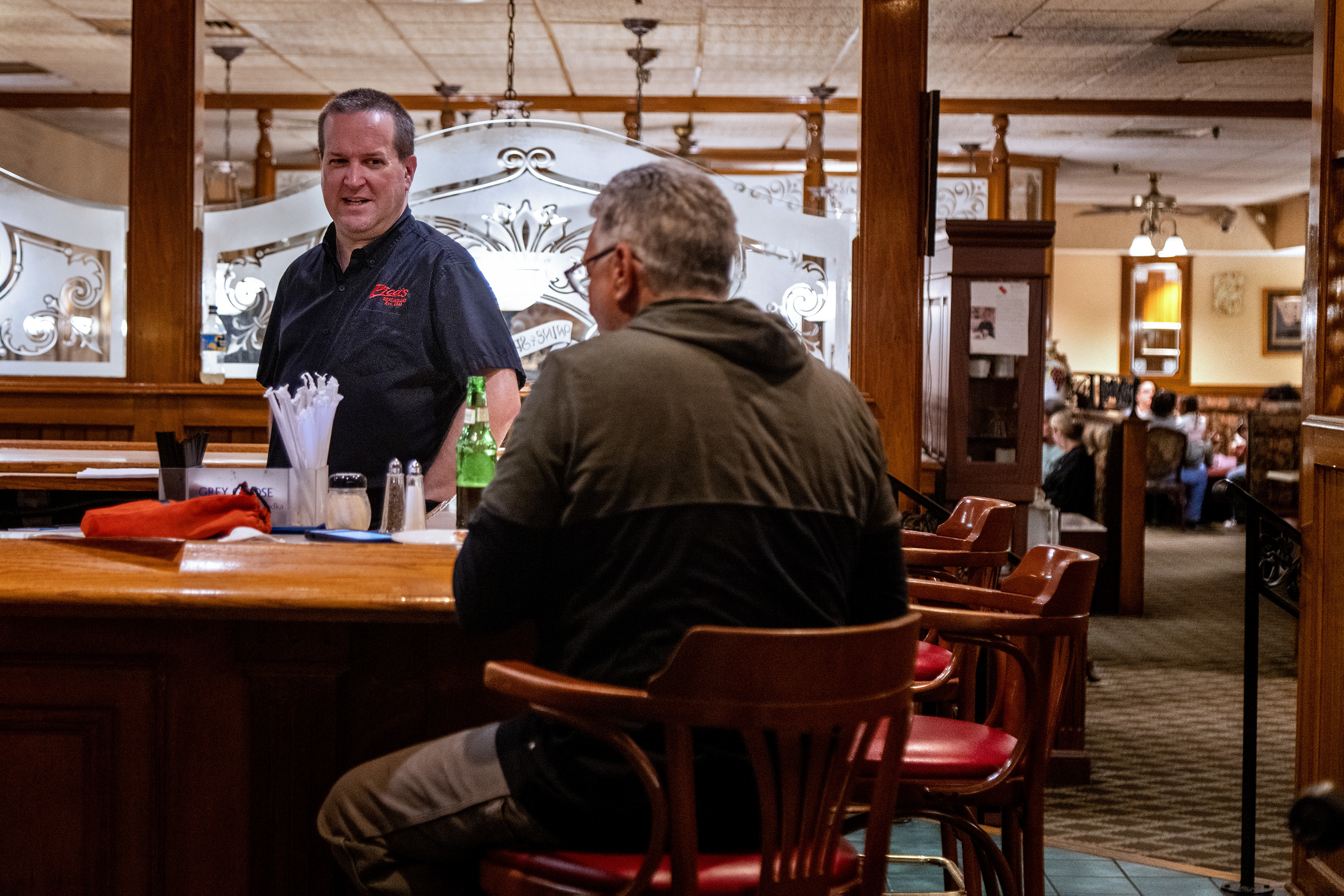
    Brian Henley (left), part-time Pica’s bartender for 10 years, talks with Anthony Voci, Jr. eating dinner at the bar on the final night at Pica’s Restaurant in Upper Darby.

    The siblings grew up in the restaurant, and the staff was always happy to see them because that meant extra hands to help, Pica-Oandasan said.

    “We would all sit in a circle sometimes making pizza boxes together on a Friday afternoon,” she said. “We all joke around about our memories.”

    In 2017, Pica’s opened a second location in West Chester, which remains in operation. The family plans to open a takeout spot in Delco, most likely in Broomall, but they’re still in negotiations (they hope to make an official announcement in the coming weeks). Until then, takeout at the Upper Darby Pica’s remains open.

    ‘Tough decisions’

    When Pica’s posted on Facebook in March that it would close its Upper Darby location this year, its page was flooded with comments calling the restaurant a “landmark,” a “core memory,” and a “historical spot.”

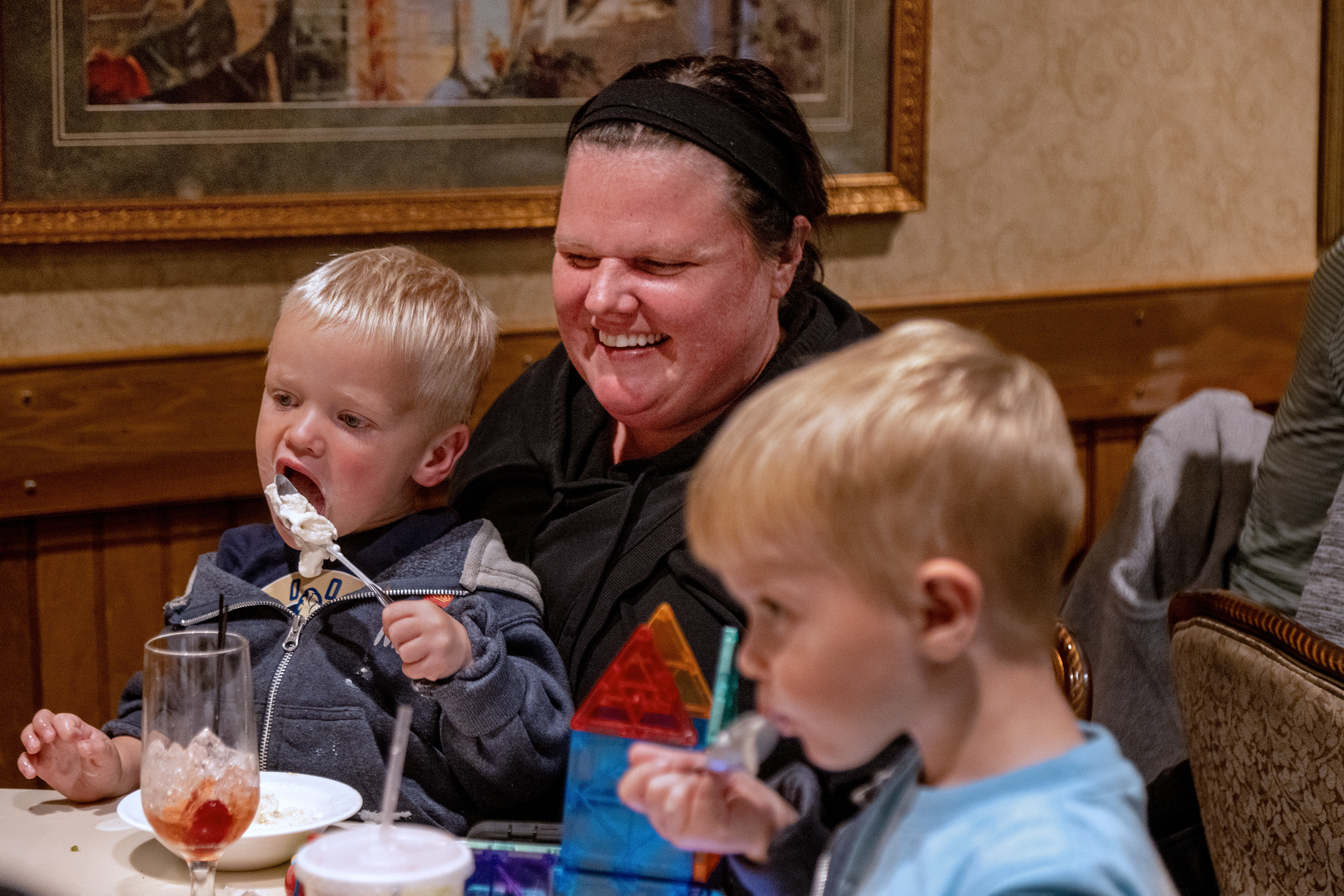
    Carolyn Grenier sits with her twin two year-old sons James (left) and AJ Jr. (right) eating their ice cream dessert after pizza on the final night of dinner at Pica’s Restaurant in Upper Darby Sunday.

    Generations of Delco residents have had their birth, death, and wedding celebrations at the Upper Darby restaurant. One of the options on Pica’s phone directory was: “If you are calling regarding a luncheon after a funeral, please press six.”

    Making the decision to close the restaurant wasn’t an easy one, the owners said. But the building is older and needs a lot of work. The Upper Darby location is just massive — it seats 250 in the dining room, 200 more in the banquet room downstairs. On top of that, staffing has been hard after the pandemic, and the owners often have to fill in.

    “It’s hard leaving here because we just spent so much of our time and our lives here … and we know how much this building and this business meant to our father, our grandfather. But sometimes in business you have to make tough decisions and you have to transition and adapt to the times,” Pica III said. “We do really understand how much this business has meant to this community for so long — all the schools, all the graduations, we worked them all.”

    Dominic D’Angelo (right) banters with nine-year server Stephanie Cornman (standing) as he has dinner with family members on the final night of dinner at Pica’s Restaurant in Upper Darby Sunday.

    Pica-Oandasan said the family received cards from customers dining at the restaurant for the last time, some of whom they’ve been serving for three generations.

    “It’s very heartwarming to see the impact, that it means so much to them,” she said. “It makes it harder. It’s bittersweet, all the memories that will be lost in that building.”

    It’s not only the customers they’ll miss, it’s the employees. One staffer worked there for more than 50 years and two others, for more than 40.

    “It was always a big family environment” Pica III said. “Everyone really put their heart into here.”

    One last hug

    At the end of our meal, Murphy didn’t judge me for using a $20 off coupon I got in a mailer, like the classy Delco resident I am. And when I asked, she said I was more than welcome to take a copy of the paper menu for my scrapbook.

    Murphy told us a lot of people had asked to keep the menu, and one customer even requested all of the restaurant staff autograph it for them.

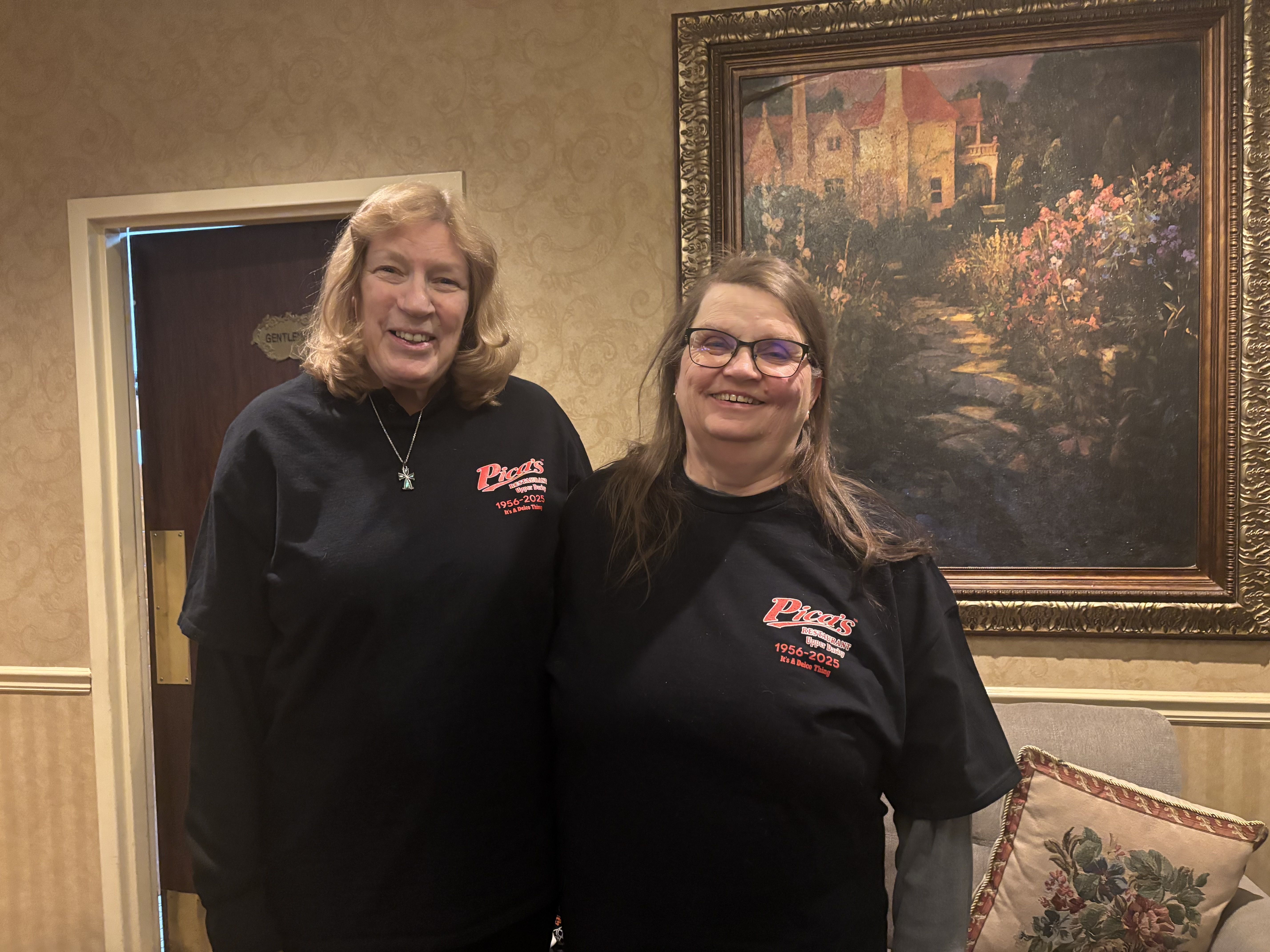
    As we got ready to leave, I met two women in the lobby wearing Pica’s T-shirts and getting their photos taken with staffers. Bernadette Wasch, 72, of Havertown, and her friend, Kathleen Baker, 73, of Upper Darby, are uber Pica’s fans and said it always felt like home.

    Kathleen Baker, 73, of Upper Darby, at left, and Bernadette Wasch, 72, of Havertown, at right, are uber Pica’s fans. They came to the Upper Darby restaurant in their Pica’s shirts for dinner on Sunday, the final night for in-house dining.

    Wasch first came to Pica’s in grade school. In the last week before its closure, she visited three times to wring all the nostalgia she could out of the place. I watched as she hugged staffers one last time with what seemed like every ounce of her being.

    “The food is just incredible and so is the waitstaff. People say it’s like family and it really is,” she said. “We’re very sorry to see it go.”

    Baker agreed. “This is goodbye but it’s not good,” she said.

  • We’re executing people with impunity. Why are so many of us OK with this?

    We’re executing people with impunity. Why are so many of us OK with this?

    The only thing more shocking than Donald Trump having dozens of people killed on his word — no trial, no jury, just execution — is that more than 70% of voters seem to be fine with this. Even when broken down by political identification, 89% of GOP supporters, 67% of independents, and 56% of Democrats are all right with the U.S. military blowing up civilians.

    Well, maybe.

    The polling that produced those stomach-turning results comes from a Harvard CAPS/Harris Poll released earlier this month, with a headline takeaway that most voters support Trump’s strikes on boats smuggling drugs.

    As the administration escalates its attack on alleged smugglers in international waters, this wide approval is bad news for anyone who cares about (in alphabetical order) human rights, international law, and the Ten Commandments.

    However, I am counting on something I usually rail against — how uninformed most people are — to optimistically dismiss these poll numbers as a bad question about an abhorrent policy.

    You see, the question in the poll was, “Do you support or oppose the U.S. destroying boats bringing drugs into the United States from South America?” Asked in that manner, I wouldn’t be surprised if a lot of people were torn between answering “Absolutely!” or “Totally!” After all, who wouldn’t want to stop dangerous drugs from coming into the country?

    Of course, the way that question should have been asked is, Do you support or oppose the U.S. destroying boats nowhere near the United States and killing their crew under the mere suspicion they are traveling with drugs?

    I hope the answer to that question would have been “Hell no!” or, as U.S. Sen. Rand Paul more elegantly put it when speaking on Fox Business recently, “You cannot have a policy where you just allege that someone is guilty of something, and then kill them.”

    Unlike the voters who were presented with an anodyne version of the president’s actions, the Republican senator from Kentucky knows the deadly reality. At least 42 people have been killed across 10 reported strikes on boats as of Friday; eight bombings occurred in the Caribbean, and two in the Pacific.

    The administration’s legal rationale seems to be that the drug cartels (allegedly) running these boats are designated foreign terrorist organizations, and represent a clear and present danger to the American people, and must be dealt with accordingly. Or, as the president so chillingly put it at a news conference Thursday: “I think we’re just going to kill people that are bringing drugs into our country. OK? We’re gonna kill them. They’re gonna be, like, dead.”

    Like, yikes.

    A combination image shows screen captures from a video posted on the White House X account in September depicting what President Donald Trump said was a strike on a Venezuelan drug cartel vessel.

    Where do you start? A motorboat that (maybe) is carrying drugs 1,000 miles from a U.S. coastline is hardly an imminent threat, and most of the strikes have involved Venezuelan vessels, a country that plays a very small role in drugs that reach the U.S.

    Even if these are drug runners, trafficking is not a capital crime. And let’s say that it was, you must prove a crime has been committed before you pass sentence, yet all we have to go by are the administration’s claims. Forgive me for doubting, but this is the same bunch who sent hundreds of immigrants to a Salvadoran torture prison, saying they were the “worst of the worst,” only for it to come out that their only sin was having the wrong kind of tattoos.

    For Trump’s supporters, didn’t the president run on keeping us out of foreign entanglements, on America no longer being the world’s policeman? Because this sounds a lot like a police officer who’s way out of his jurisdiction deciding to shoot someone for loitering.

    If there were any doubts about the real motives of Trump’s strikes, consider the fate of two survivors of the U.S. attack on Oct. 16. If you think these two men were detained, questioned, and booked for processing as dangerous members of a foreign terrorist organization who merit death on sight, then you will be sadly disappointed to hear they were released.

    Responsible members of Congress have tried to rein in the administration’s blatant lawlessness.

    An Oct. 18 resolution to block the U.S. military from engaging in hostilities with “any non-state organization engaged in the promotion, trafficking, and distribution of illegal drugs and other related activities” without congressional authorization was voted down in the Senate.

    While most Republican senators went on the record with allowing the president to freely continue killing, U.S. Sens. Paul and Lisa Murkowski of Alaska voted their conscience. On the Democratic side, Pennsylvania’s own John Fetterman, we must assume, also voted his when joining the GOP majority.

    Folks like Fetterman have no excuse. They know what the administration is doing and condone it. My hope is that as more people learn the details of what’s happening, as voters pay attention to what is being done in our name, they will respond accordingly.

    The only principled reaction to what Trump is doing should be revulsion.

  • He helped defeat a plan to sell the sewer utility in his South Jersey town last year. Now, he’s running for mayor.

    He helped defeat a plan to sell the sewer utility in his South Jersey town last year. Now, he’s running for mayor.

    Keith Gibbons entered politics by accident.

    A few years ago, he was driving with his then-11-year-old daughter when she asked where roads came from.

    “The government,” Gibbons responded.

    “What’s the government?” his daughter asked.

    That led to a longer explanation and eventual father-daughter trip to a Gloucester Township meeting so she could see the government in, ah, action. Having covered many local government meetings and school boards long ago, I can attest that Gibbons went beyond any parental or civic duty.

    Gibbons continued to attend the meetings when a proposal to dissolve the Municipal Utilities Authority (MUA) caught his attention. He feared the township was planning to sell the water and sewer system.

    But during sworn oral testimony in a May 2023 teleconference, an attorney representing the township said there was no expectation the utilities would be sold within the next five years. Mayor David Mayer agreed.

    Yet, a year later, the township council voted to sell the sewer system to the highest bidder.

    “They lied to us,” Gibbons said.

    The township received two bids from large for-profit water companies: Aqua offered $52 million, and New Jersey American Water bid a whopping $143 million, plus a promise to make an additional $90 million in capital improvements to a system that only needed an estimated $25 million in repairs.

    Something didn’t smell right. Even for a sewer system.

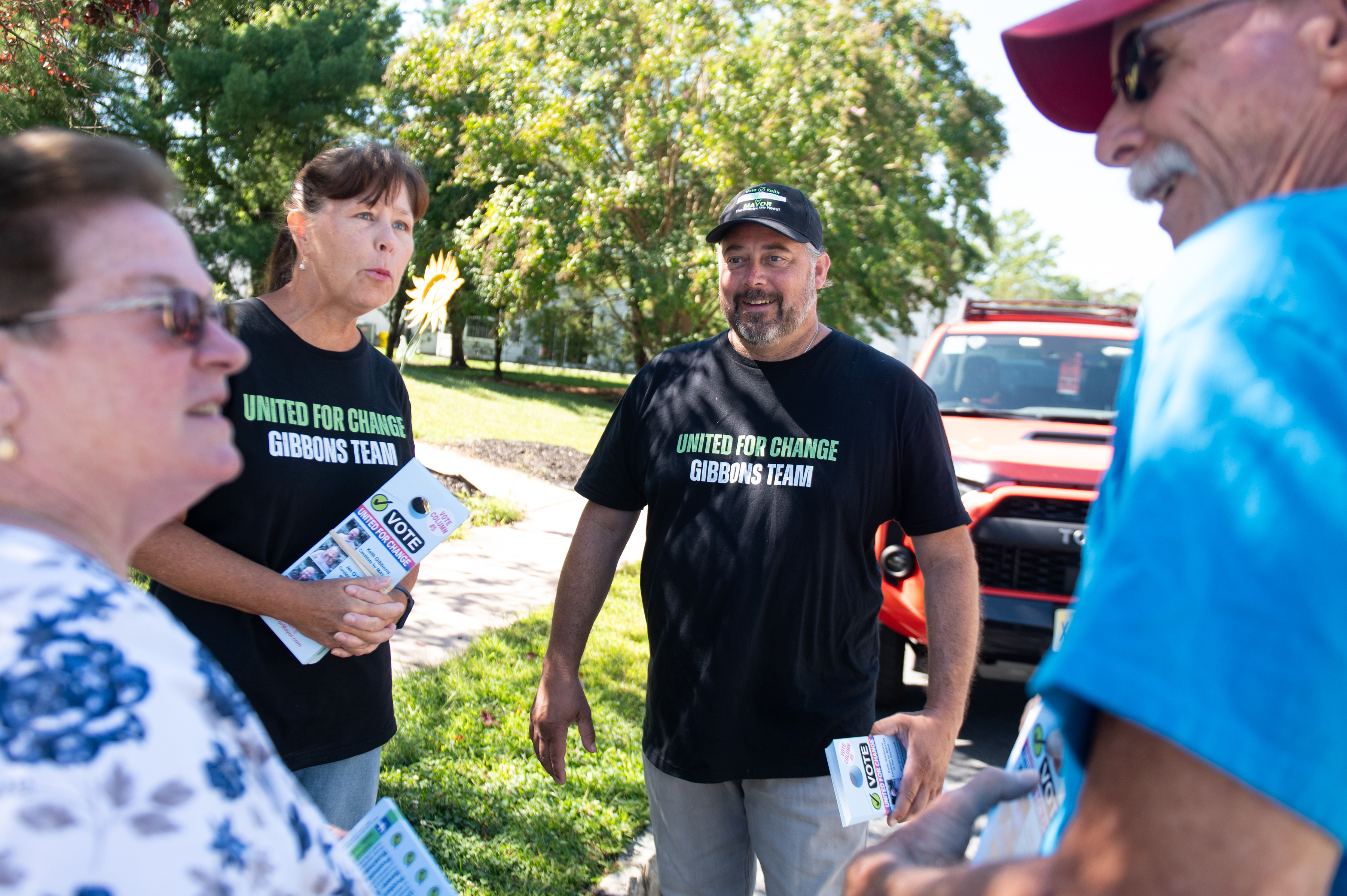
    Keith Gibbons (middle) joined Ira Eckstein and Denise Coyne at a rally opposing a plan to sell a South Jersey sewer and water utility in October 2024.

    Coincidentally, Mayor Mayer worked for American Water. In addition to his job as director of government affairs at the water company, his mayoral salary is $52,000.

    To guard against any conflict of interest, Mayer recused himself from any discussion regarding the sewer sale.

    Even still, American Water’s lucrative offer raised eyebrows. But generous bids are part of the for-profit playbook. Aqua offered Bucks County $1.1 billion for its sewer system, but the commissioners backed away after fierce public opposition.

    For-profit water companies have been throwing big money at small towns in New Jersey, Pennsylvania, and beyond in an effort to scale up. The utility systems may not seem sexy, but they are mini monopolies that generate steady cash flow.

    In Pennsylvania, a 2016 change in the law essentially opened the door for local utilities to be sold at higher prices. Local politicians are often happy to get the utility systems off the books and use the windfall to fund other projects or avoid tax increases.

    But often left out of the negotiations are the ratepayers.

    After the sales go through, the for-profit companies often jack up the rates. In some towns, after a brief rate freeze, the water bills have increased by 100%.

    Rates have also increased at government-owned utility companies, but not by nearly as much. For example, Philadelphia recently increased water rates by 9%.

    As utility bills grow, residents have nowhere to turn. Aging infrastructure, climate change, and increased demand, including to cool computer data centers, are expected to further drive up water prices in the years to come.

    From left: Denise Coyne, Nancy Kelly Gentile, Gloucester Township independent mayoral candidate Keith Gibbons, and Ira Eckstein canvass supporters in Clementon, N.J., in September.

    For-profit companies say they offer professional management and resources to make long-deferred upgrades, as well as the ability to purchase materials in bulk and spread the risk across systems as they grow.

    Mayer said in an interview that the sewer sale would have enabled Gloucester to reduce property taxes, eliminate its debt, and make other improvements.

    But critics argue that handing control to for-profit companies seeking quick returns on investments is shortsighted and results in higher costs to consumers. After all, water and sewer utilities are supposed to be a long-term public good, not a profit center.

    To its credit, Gloucester Township scheduled a referendum last November to let residents vote on whether to sell the sewer system or not. A public vote should be a requirement, but most towns avoid referendums because the last thing they want is for taxpayers to have a say in the utility system they own.

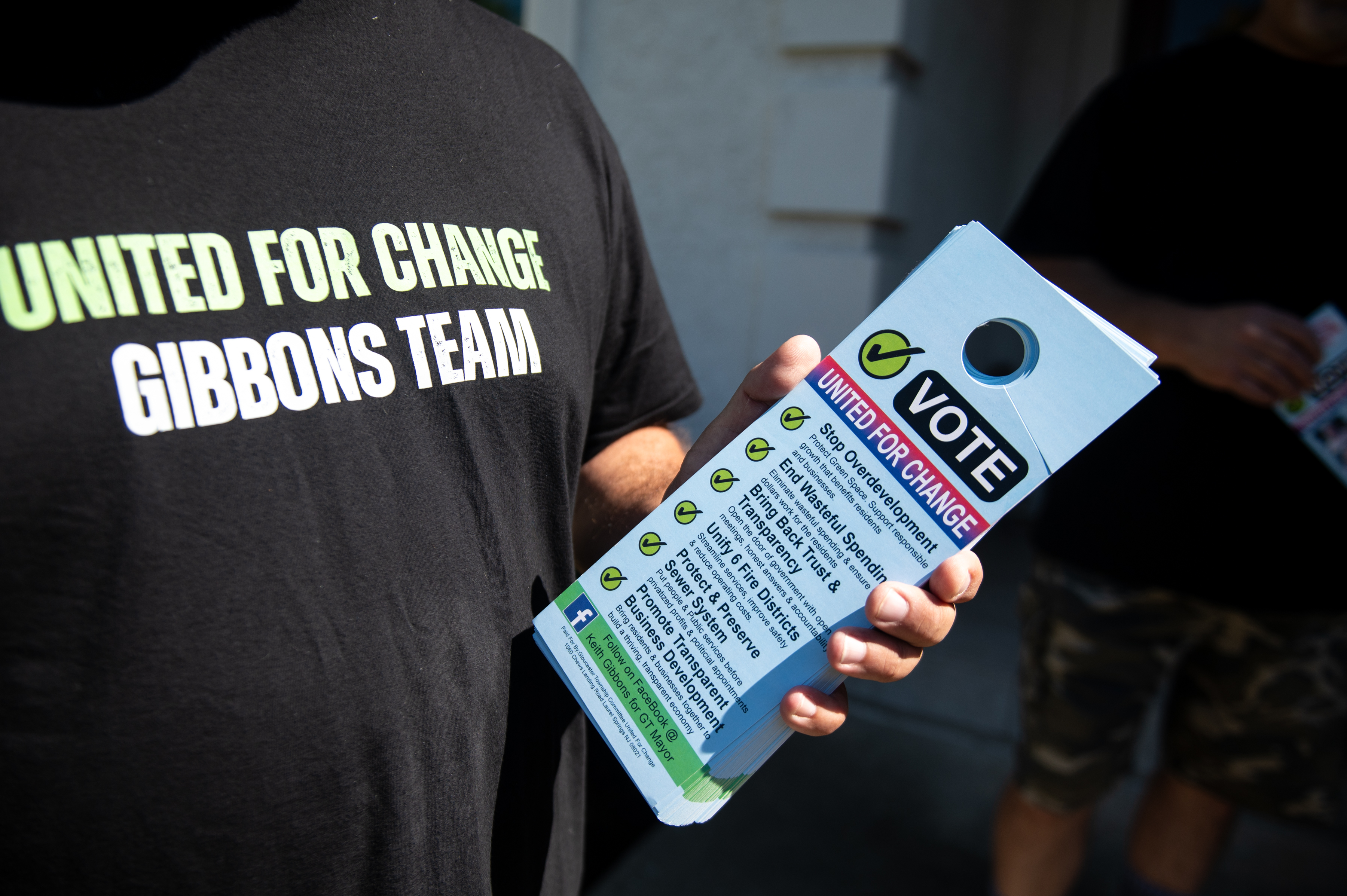
    The referendum gave Gibbons time to mount a grassroots campaign against the sale. He knocked on doors, handed out yard signs, and used a podcast to raise awareness.

    But Gibbons seemed overmatched. His group spent roughly $3,000 opposing the sale, while New Jersey American Water spent about $1 million.

    Yet, David beat Goliath in a landslide. More than 80% voted against the sale.

    Gibbons, 48, a Cinnaminson High grad, who ran a Christmas tree farm and worked for Live Nation but is now self-employed and serves on the school board, became somewhat of a local hero in a town of 66,000 residents.

    Gloucester Township independent mayoral candidate Keith Gibbons holds promotional materials encouraging constituents to vote for him.

    Residents soon urged him to run for mayor.

    Gibbons, a former Republican, is running as an independent against Mayer, who has spent his life in South Jersey politics, working for former U.S. Rep. Rob Andrews in the 1990s before becoming chief of staff in the Camden County Clerk’s Office.

    He also served as a New Jersey assemblyman before getting elected mayor in 2010. Mayer’s wife is a Camden County freeholder.

    Mayer is part of the Democratic machine that has controlled South Jersey for decades, but has recently shown signs of losing its grip on power. In Gloucester Township, there are still twice as many registered Democrats as Republicans.

    The election has turned nasty. There are allegations that the Democrats tried to recruit a “phantom candidate” to run as a Republican to siphon votes away from Gibbons.

    Mayer said Gibbons has been on the school board for three years, and “I don’t know what he’s touting as his accomplishments.”

    Other attempts to muddy Gibbons indicate that the Democratic establishment may be nervous.

    Is it because Gibbons has a sophisticated field operation?

    “I don’t even have a campaign manager,” he said.

    Does Gibbons have deep-pocketed donors?

    “I’ve spent about $5,000 on the election,” he said.

    What’s his campaign message?

    “I’m not a political person,” Gibbons said. “I just want to fix local problems.”

    Can an outsider with no political experience win?

    Gibbons believes voters are fed up with South Jersey’s entrenched political machine, in which jobs and contracts often go to cronies. He argues no one is looking out for taxpayers who are often too busy to get involved, or believe they can’t do anything to change the system.

    But his efforts to block the sewer sale show that one person — and a motivated electorate — can make a difference.

    Mayer counters that he is proud to be a Democrat, and that the party’s strength has benefited South Jersey. He pointed to a list of accomplishments as mayor, from creating community policing to adding open space, attracting new businesses, and opening an office for veterans, adding that no party boss tells him what to do.

    For his part, Gibbons said he supports term limits and smart development. He plans to focus on fiscal responsibility and government transparency. If elected, he promised the water and sewer system would not get sold to a for-profit company whose main mission is to maximize shareholder value.

    “I don’t claim to know everything, but I do know enough,” Gibbons said.

    Now there’s a campaign slogan for an accidental candidate.

  • ‘Baghdad Pete’ tries to prevent fact-based press from covering dire changes to U.S. security doctrine

    ‘Baghdad Pete’ tries to prevent fact-based press from covering dire changes to U.S. security doctrine

    Perhaps we should start calling the Pentagon’s secretary of war “Baghdad Pete.”

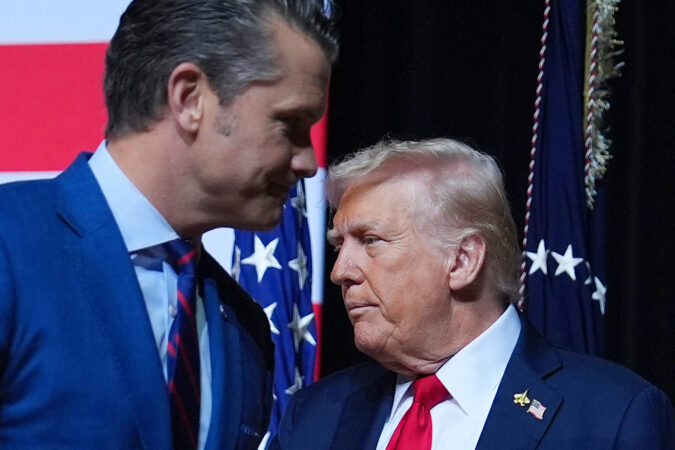
    Defense Secretary Pete Hegseth is trying to block the Pentagon press corps from using any information not explicitly authorized by his staff, even if it is unclassified. Shades of “Baghdad Bob,” the infamous Saddam Hussein mouthpiece who delivered the regime line daily to the international press when I was covering the 1991 Gulf War.

    The Hegseth policy even requires an official to accompany accredited journalists visiting Pentagon areas where they were formerly allowed to walk freely. Reminds me of our assigned “minders” in Baghdad, whose job was to bar us from learning anything the regime didn’t want us to know.

    Hats off to nearly all the Pentagon press corps — including conservative outlets such as Fox News, Newsmax, the Washington Times, and the Daily Caller — who refused to forfeit their First Amendment rights by signing on to the new rules. They thereby lost their accreditation and their access to enter the building. Even more outrageous, they have been replaced with far-right outlets and slander-mongers known for promoting election denial, fake news, Russian propaganda, and deluded conspiracy theories.

    Baghdad Pete is striving not only to stop accurate news coverage of the use or abuse of U.S. military operations. In his effort to tightly control Pentagon news, he has also decreed that Pentagon officials can’t interact with members of Congress without prior approval.

    Much (though not all) of the news he is trying to hide is already self-evident, and so damaging to U.S. security that he won’t be able to plug future leaks.

    Politico and the Washington Post have already published important details on President Donald Trump’s upcoming National Security Strategy, which will assign America’s top priority to “protecting” the U.S. homeland and the Western Hemisphere. This means making war on “the enemy within” in U.S. cities, as well as on immigration and drug cartels. As if those threats overshadow our fraught competition with China, and the very real threat from Russia.

    The theatrical U.S. military attacks on alleged drug smugglers in small boats off Venezuela and in the Pacific off Colombia – which could easily be stopped by the U.S. Coast Guard – are clearly illegal.

    But even more obvious, while this showy policy of killing a few unknown civilians at sea may be great for the White House video feed, it does nothing to combat America’s drug problem or drub the cartels.

    U.S. citizens are dying in enormous numbers from fentanyl, which is neither produced in nor smuggled in from Venezuela or Colombia (most comes in via Mexico, made from Chinese precursors).

    Indeed, Colombia has been one of Washington’s closest partners for decades in combating narcotics trafficking, and the U.S. strikes have infuriated Colombian President Gustavo Petro. Yet, Trump has now cut off all aid to Colombia and labeled Petro an “illegal drug leader.”

    As for Venezuela, the Pentagon has assembled a force of 10,000 in the Caribbean off its coast for a supposed anti-terrorism mission, which many Latin American experts believe is really aimed at fomenting regime change in Caracas. Despite Trump’s dismal failure in his first term to oust Venezuelan leader Nicolás Maduro, he is apparently trying again.

    This upside-down set of priorities has reportedly upset top U.S. military officials.

    It is hardly surprising, then, that Hegseth just announced that Adm. Alvin Holsey, a 37-year veteran, will quit his job as head of U.S. Southern Command — where he oversees all operations in Central and South America. (Could the fact that the highly qualified Holsey is African American have accelerated Baghdad Pete’s effort to get rid of him two years early?)

    Thus, there is plenty of news for the now-banned Pentagon press to ferret out for the U.S. public, not just about why the armada was dispatched, but why Trump and Hegseth want to prioritize Latin America and drugs.

    We know Trump has a thing about the Monroe Doctrine, the 1823 message to Congress by President James Monroe that warned off any other would-be colonizers from interfering in Latin America. Some wags now call it the “Donroe Doctrine.”

    Trump has interpreted the doctrine to mean the United States’ sphere of influence should extend over Northern, Central and South America, while often seeming to concede Europe to Russia’s sphere of influence, and Asia to China’s.

    In other words, a Big Man theory of politics expanding Monroe’s intended meaning, which presumes Trump, Vladimir Putin, and Xi Jinping can split up the world.

    However, 2025 is not 1823, and a Donroe Doctrine doesn’t fit the world we live in. Some Latin American countries, such as Brazil, have become major forces in their own right. China, with its large-scale investments in Latin America, and helped by Trump’s tariff policies, is already an ever more powerful presence on the continent.

    I see Trump’s Caribbean action as a distraction from his failures in handling China and Russia, as Putin and Xi run rings around him. It is far easier for Trump to carry out performative war off the South American coast — bang-bang on unknown boatmen about which he and Hegseth can chest thump — than to confront the real threats that endanger our country. (And he can still pretend he will tariff Xi into subservience when they meet in Seoul, South Korea, this week.)

    Let me give just one example of how the boat bombs serve as a distraction. This week, they have obscured the president’s latest failure with his all-carrots approach to Putin, who stiffed him yet again on a ceasefire in Ukraine.

    True, Trump has finally, after months of threats, imposed new sanctions on two big Russian oil producers. But if you read the text of the new sanctions, you will see he let Putin off the hook once more.

    The new sanctions — which will not even take effect for four weeks — are levied against any U.S. firms or individuals who deal with Rosneft or Lukoil. But as the indefatigable Phillips P. O’Brien pointed out in his Substack, the U.S. does almost no business with either firm. And secondary sanctions against foreign individuals or companies who keep dealing with the named firms will not be automatically applied.

    Indeed, the real issue is whether the president will try to squeeze China and India to halt their enormous purchases of Russian oil. Despite Trump’s claims, full Indian adherence isn’t likely, and forget about China.

    And POTUS has already admitted he hopes the new sanctions will be short-lived.

    If Trump had really wanted to pressure Putin, he would have sold Kyiv long-range Tomahawk missiles. But that would have been a hard choice, and might have disturbed some of his disciples.

    Better to focus on Caribbean boom-boom and change U.S. security doctrine to fight a war against “enemies at home” and supposed threats from drug lords. And to prohibit the Pentagon press from interviewing disaffected military or civilians who would explain how this doctrine endangers the United States.

  • Parker’s Land Bank shakeup may lead to more affordable housing | Shackamaxon

    Parker’s Land Bank shakeup may lead to more affordable housing | Shackamaxon

    Continued budget delays in Harrisburg are, unfortunately, again part of this week’s Shackamaxon. But first, all you ever wanted to know about the Land Bank (but were afraid to ask), including the mayor’s recent board shake-up.

    Running on empty

    Ever since Philadelphia lost more than a quarter million residents between 1970 and 1980, blight and vacancy have been a problem. Abandoned, deteriorating homes, schools, and factories provide a convenient staging ground for criminal activity, cost the city millions in annual maintenance, and don’t contribute property taxes to city coffers.

    For years, the city struggled to find a way to repurpose this land. While some residents admirably turned lots into community assets like gardens, most of the space sat unused. Some properties languished because potential buyers considered them unprofitable, with expected rents or sale prices that were too low to justify the cost of construction. But other lots were in high demand, drawing interest from developers, nonprofits, and community groups.

    Like a deer caught in the headlights, City Council members often opted against selling to anyone.

    To shake that inertia, City Council created the Land Bank in 2013. Yet, despite a push from then-Councilmember Maria Quiñones Sánchez, Council did not cede control of land sales. This meant the analysis paralysis continued. So did side arrangements, like when then-Council President Darrell L. Clarke steered city land to a developer through a no-bid process.

    Some parcels that were allocated to the Land Bank became the subject of fierce debate. Municipal policy wonks urged Council to sell the most valuable plots as a way to underwrite the city’s subsidized housing efforts. Meanwhile, advocates for affordable housing called for the creation of homes for people at the lowest income levels.

    City Council seemingly found common ground in 2022, nearly a decade after the Land Bank was first authorized, with a compromise called “Turn the Key.”

    Under the terms of that program, land would go to what’s often called “workforce housing,” available to residents of modest means who earn up to 100% of our area’s median income ($119,400 for a family of four).

    This would still come at a cost, mostly the millions of dollars in potential revenue from auctioning off the land, but it did ensure plots would return to productive use, rather than attracting trash and crime.

    It also offered a quicker timeline for reuse than federal affordable housing programs like the Low Income Housing Tax Credit, which can take four to seven years to get to construction.

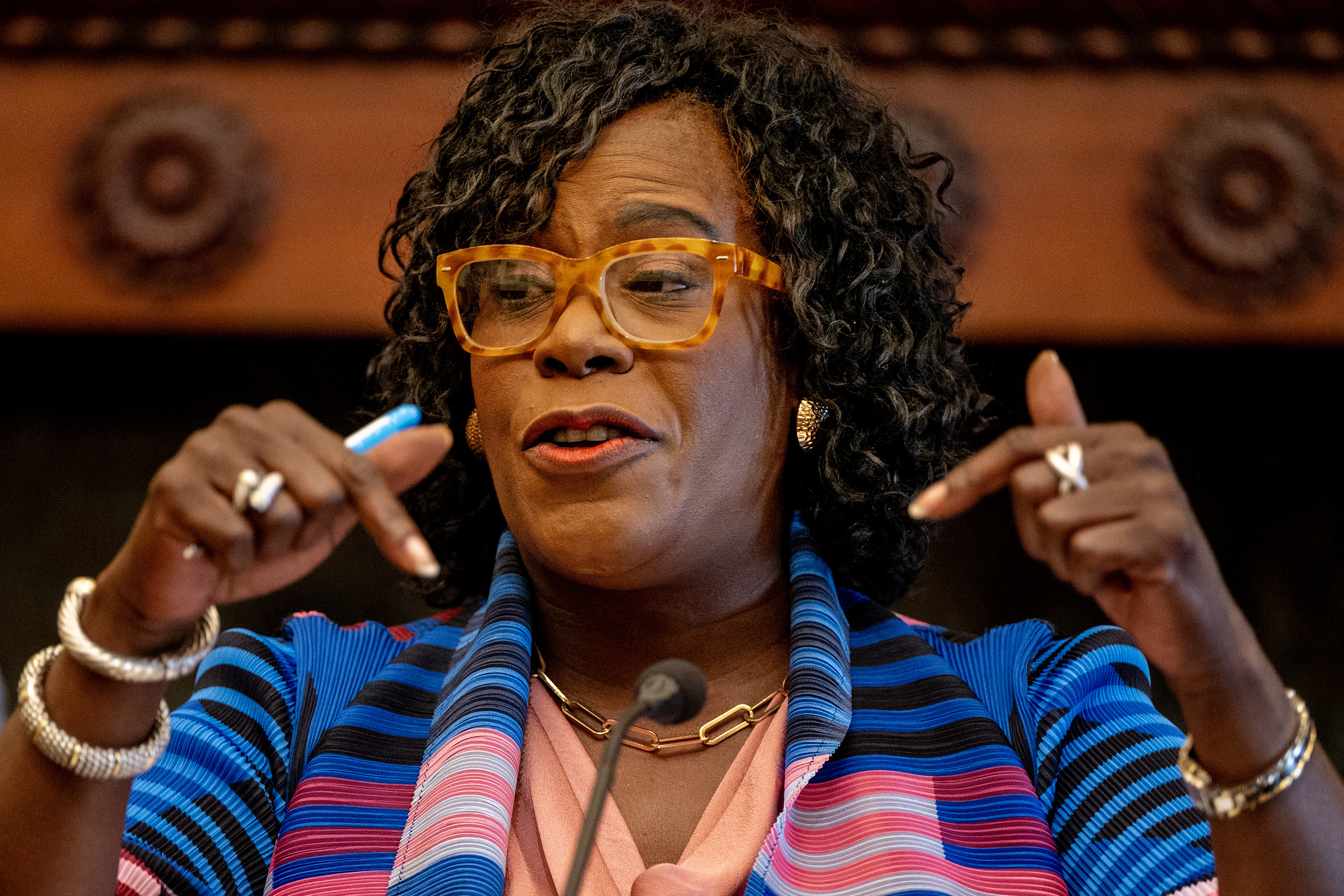
    Mayor Cherelle L. Parker holds a news conference at City Hall in August. Parker replaced her two appointees on the Philadelphia Land Bank board recently.

    Poor results

    Despite the new program, the same old problems remain. Namely, that most Council members have been reluctant to disburse land.

    The program, which was intended to yield 1,000 homes, has only managed to produce 202, per the Philly360 dashboard. Even though Turn the Key is a Council-designed program, only about half of the city’s 10 districts have participated. In the 5th District, which accounts for most of the homes, all 120 sales were approved in the last Council term.

    In addition to Council, the Land Bank board has also served as an obstacle to selling land, because of a faction of board members who would prefer an approach that prioritizes deeply affordable housing (for people at or below 30% of our area’s median income) and are concerned the program could cause gentrification.

    Mayor Cherelle L. Parker, who has doubled down on Turn the Key as a key component of her own housing plan, seems to have decided that it is time for a change, replacing two of her own appointees, both of whom tended to balance their own support for workforce housing with a preference for avoiding conflict.

    The two new board members, Chief Housing and Urban Development Officer Angela Brooks and community development expert Alex Balloon, are likely to have a “full steam ahead” approach to the program. Parker has also pressed Council to supply a list of “preapproved” parcels, where development can proceed without an ordinance. For those of us who want to see city-owned vacant land returned to productive use, these appointments are a win.

    Philadelphia needs quality housing options at all income levels, and the extreme appreciation in home prices over the last five years has made it harder for the working-class families who are the focus of Turn the Key to afford a home. While few households in the city have a white picket fence, achieving the Philadelphia dream of a move-in-ready rowhouse should not be out of reach for the sanitation workers, teachers, and others eligible for the program.

    The idea that workforce housing will foment gentrification is also hard to accept. The income levels for Turn the Key are designed for first-time home buyers with below median incomes. According to a Riverwards Group analysis of their Clifford Street project in North Philadelphia, all their buyers identified as African American, and most came from either the same zip code or a neighboring one. How can working-class people buying homes close to where they already live drive gentrification?

    Furthermore, the Land Bank’s remit is to implement city policy, not to make it. If advocates want to prioritize nonprofit developers, community gardens, or deeply affordable housing, the right venue is City Council, not the Land Bank board.

    With the mayor now putting her stamp on both the Philadelphia Historical Commission and the Land Bank, the Zoning Board of Adjustment, which has seen monthslong delays since the pandemic, should be next.

    Pennsylvania Senate Majority Leader Joe Pittman (R., Indiana) speaks during a 2024 news conference in Harrisburg.

    Budget doublespeak

    Pennsylvania continues to suffer the consequences of the nearly four-month delay in the state’s budget. Counties, school districts, and nonprofit organizations across the commonwealth are struggling to pay their bills. Beleaguered residents might have seen a recent state Senate vote approving a nearly $48 billion spending plan as a step in the right direction. Unfortunately, it represents the opposite of progress.

    That’s because the Senate still refuses to consider any proposals that might stand a chance of passing the House or garnering Gov. Josh Shapiro’s signature. While Democrats have shrunk their initial $52.5 billion proposal to just over $50 billion, Republicans have yet to make a serious offer. In fact, the budget they approved is nearly identical to last year’s.

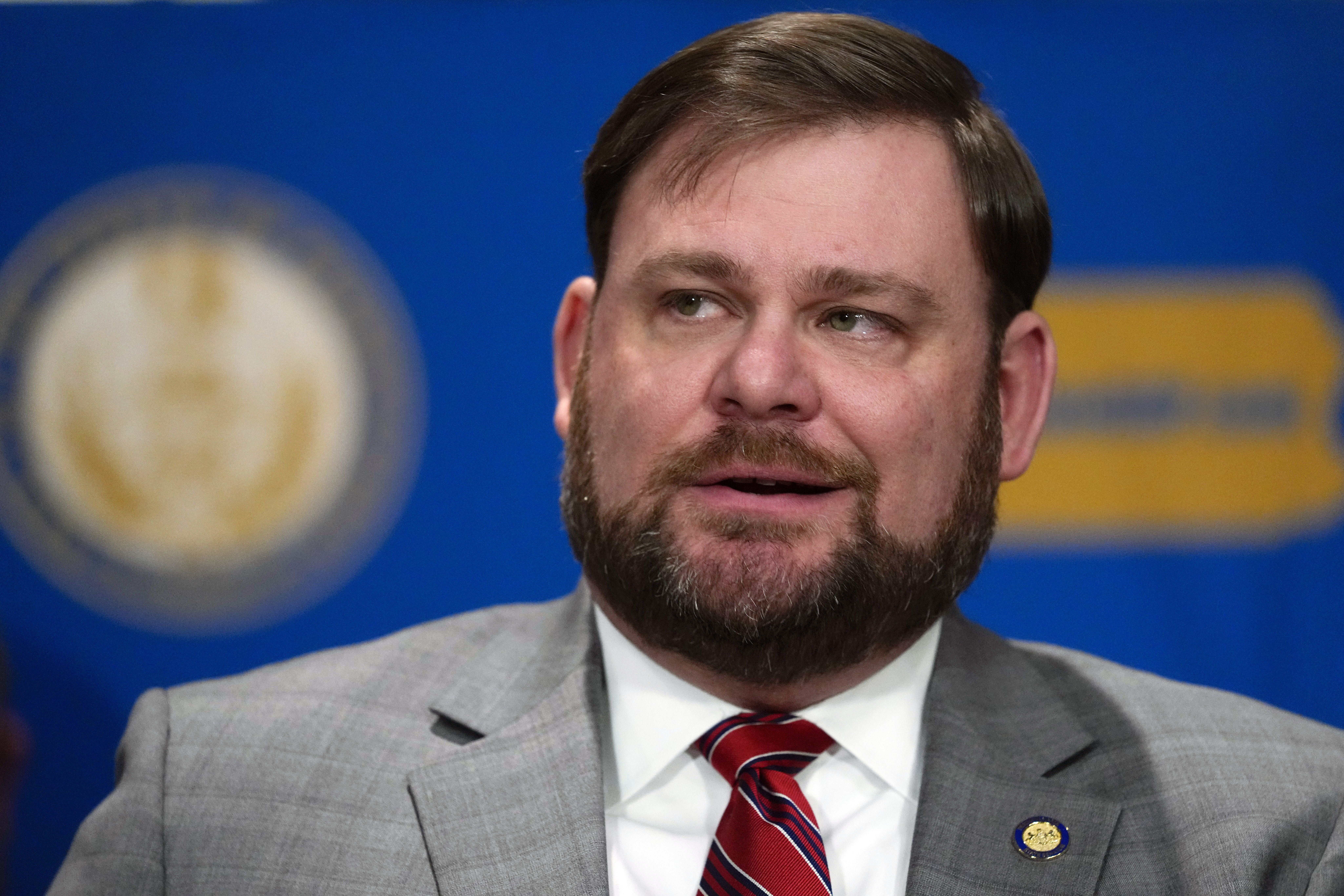
    Their insistence on sticking to this number is curious, especially given that Senate Majority Leader Joe Pittman, who was selected as their negotiator, publicly stated a willingness weeks ago to pass a budget in the $49 billion range. I asked Kate Flessner, Pittman’s spokesperson, for an answer to this disparity more than a month ago.

    Just like the many Pennsylvanians, counties, school districts, and nonprofit organizations who rely on state support, I have yet to receive anything from Pittman.

  • From autism to beards, the Trump regime wages war on ‘the different’

    From autism to beards, the Trump regime wages war on ‘the different’

    Donald Trump had the nation’s somber attention last month as he delivered the Arizona football stadium eulogy for assassinated right-wing provocateur Charlie Kirk, and — as the 47th president is wont to do — took an unexpected detour to promise a scientific breakthrough for a condition his regime has called a national tragedy.

    “I think you’re going to find it to be amazing,” Trump said of a pending White House announcement. “I think we found an answer to autism.” With typical bravado, he suggested that a total end to a neurodevelopment order was at hand, that “we’re not going to let it happen anymore.”

    What was actually announced in the coming days — a debunked claim that autism is linked to pregnant women taking the pain reliever Tylenol, as well as a suggestion of a connection to circumcisionwas attacked by many experts as a gross misreading of the existing scientific data, and nothing like the breakthrough that Trump had promised in Glendale.

    But what was even more telling was the reaction from families or adults who’ve been living for years with a diagnosis of neurodivergence, who aren’t realistically asking for a “cure” — especially not one cloaked in alleged quackery — but simply a more compassionate approach from a government they feel is stigmatizing a community that wants support.

    They don’t see life on the autism spectrum — a mix of communication and emotional struggles with passionate interests and insight, varying greatly from person to person — as a disease, but as a difference, to be better understood and nurtured.

    In this photo provided by Ana Fiero, Kelly Sue Milano holds her 6-year-old son, who is on the autism spectrum, at an outdoor party in Irvine, Calif., on Monday.

    “My daughter’s an amazing person that contributes to society and contributes to our family, and she’s not a crisis,” Jenny Shank of St. Louis told the local NPR affiliate. She said that what the autism community really needs from the government “is awareness, acceptance and opportunities in our communities, and funding for schools for help to meet their maximum potential.”

    Studies have shown higher rates of autism — more than 3% of 8-year-olds, according to recent research by the Centers for Disease Control and Prevention — than was once believed. But experts theorize this may be more from greater awareness than the conspiracy theories around Tylenol or vaccines that are an obsession with Trump’s contrarian U.S. Department of Health and Human Services secretary, Robert F. Kennedy Jr.

    RFK Jr. has said that “autism destroys families,” while Trump has called it “a horrible, horrible crisis,” but statements like those have deeply dismayed many of the households for which the Trump regime seems to want a gold star for trying to help. Ashley Kline, whose 5-year-old son has been diagnosed with autism, told the Washington Post, “I don’t want it to get to a point where inclusion is just thrown out the window, and people start insisting that the best thing for autistic children and adults is to be hidden behind walls once again.”

    The Trump regime’s misguided obsession with faulty research in seeking a magic bullet “cure” for autism has been portrayed as one more example of science under siege in America, and it is that. But it’s also a window into something deeper, and arguably even more disturbing.

    Whether it’s an autism community it pretends to be helping or the transgender community it openly seeks to destroy, our authoritarian government is waging war to flatten any differences, to make America great again with a forced monochrome lens.

    Protesters for and against gender-affirming care for transgender minors demonstrate outside the U.S. Supreme Court Building in December.

    You see it almost every day with Trump and his MAGA administration. Often it’s big and obvious, like the president’s Day One executive order that targeted America’s nearly three million transgender people by declaring the government would only recognize two unchangeable sexes, male and female, and end any policies that aided the transgender community.

    But Trump’s war on the different also permeates the smaller stuff, like his “Secretary of War” Pete Hegseth’s much-ballyhooed and much-ridiculed “warrior ethos” lecture to 800 appalled-looking generals and admirals. Hegseth included in his vision a mandate that would ban soldiers with facial hair, declaring “no beardos,” and adding, “The age of rampant and ridiculous shaving profiles is done.”

    Hegseth also declared an end to “fat” generals and overweight troops (apparently the Texas National Guard didn’t get the memo), and, OK, maybe that’s required for certain types of combat soldiers. But the broader message from the Pentagon is clear: that the new regime wants a sea of troops who look alike. Beardless, slimmed down, and, evidently — given the ouster of so many women and Black top commanders — as white and male as possible in 2025 America.

    I think we vastly underrate how central this contempt for anyone who looks or acts differently from an idealized pre-1960 vision of America is to the entire fascist enterprise that we have too kindly branded “Trumpism.”

    The idea of a new type of personal freedom — a quest for individual fulfillment, aided by post-World War II prosperity, shattering the artificial constraints of conformity — was birthed in a New Left philosophy spelled out in texts like 1962’s “Port Huron Statement.”

    This outlook, rooted in the upheavals of the 1960s and ‘70s, is celebrated by many as the birth of everything from the LGBTQ+ rights movement, to efforts to replace stigma with empathy and treatment for conditions such as mental illness, to “letting your freak flag fly” by growing long hair or a beard. And this is also the thing that a reactionary far-right — deeply insecure and desperate for a cocoon of white privileged patriarchy — has ceaselessly sought to destroy for 60 years.

    While Trump himself has relished one aspect of 1960s freedom — the sexual revolution, as he once called the threat of STDs “my personal Vietnam” — in his political reinvention, he has recoiled at many others, wanting even a return to the Willowbrook-style warehousing of the mentally ill. As president, he is the perfect point man for the right’s revanchist project — clearly believing in the worst kinds of debunked eugenics theory.

    A classic example occurred the other day in the Oval Office with a rant that belonged to 1925’s The Great Gatsby and its racist millionaire Tom Buchanan, and not 100 years later. Trump bemoaned his bad relationship with Boston’s Asian American mayor, Michelle Wu, despite her “reasonable IQ,” in contrast with his war with Chicago’s “low IQ” leader, Brandon Johnson. The Windy City mayor happens to be Black, just like almost every other figure — like Reps. Maxine Waters or Jasmine Crockett — branded “low IQ” in the most thinly disguised racism possible.

    Trump’s 21st-century eugenics — from ending diversity programs in colleges or the workplace to the obsession with finding the pill or shot or whatever that has made some kids “not normal” — is the unifying force of his dictatorship. It’s why what was sold to 2024’s voters as an effort to remove undocumented criminals from America turned out to be members of a masked secret police force chasing hardworking family men across the Home Depot parking lot because they have brown skin or speak Spanish.

    You know. Different.

    True, Trump’s rage toward immigrants or programs aimed to recruit more Black and brown kids into colleges was no secret, but what’s been more surprising has been the broader sense of hostility toward any government program that offers aid and empathy to those born with real challenges. Few predicted that Trump would seek to decimate the special education office in the U.S. Department of Education, or work more broadly to undermine the rights of the disabled.

    You may have noticed that some of these slashed federal programs would help children diagnosed with autism. But putting these children on a path toward happier and more fulfilling lives isn’t the goal of the Trump-RFK Jr. focus on autism, but rather making sure the next generation conforms to their constricted definition of normal.

    We need to understand Trump’s war on the different because we need to defeat it. Boomers of my generation were born into the world of stigmatization and conformity that Trump wants to bring back, erasing the liberation movements that have been the victory of our lifetime. Sure, I want the next president to care about affordable healthcare and lowering egg prices, but America also needs leaders who will celebrate and defend our fundamental human right simply to be different.

  • Philadelphia has lost a great journalist and a kind spirit

    Philadelphia has lost a great journalist and a kind spirit

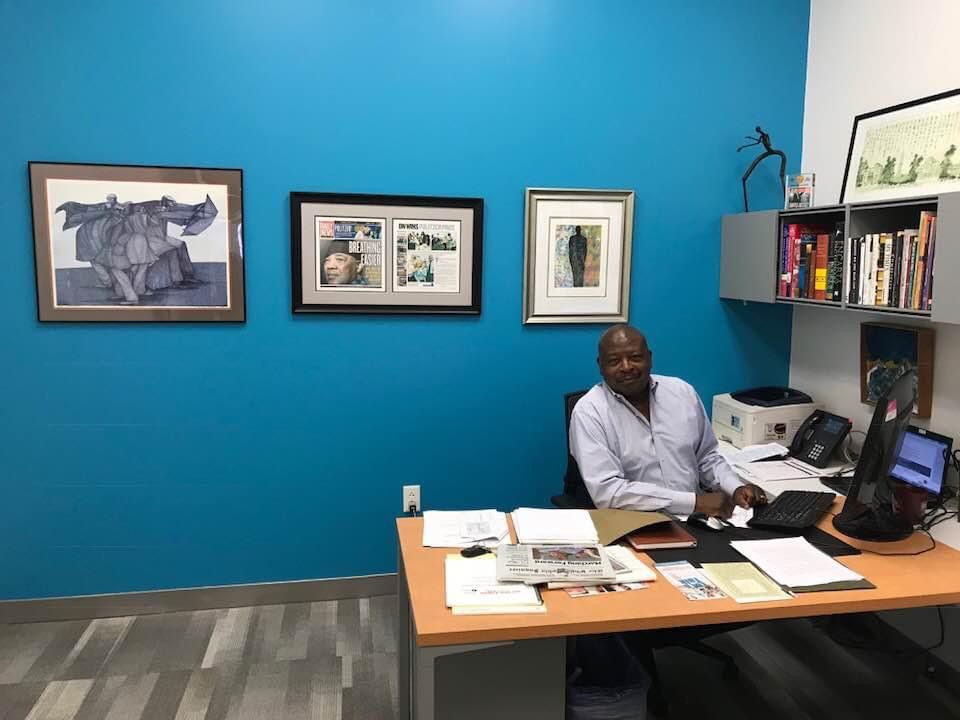
    We buried my father on a bitterly cold day in Washington, D.C., in 2010. As I followed his casket out of the church, I spotted journalist Michael Days in the crowd of mourners. I didn’t get to speak with him, but I was deeply touched, not to mention honored, that my editor at the Daily News was there.

    He didn’t have to do that. But Days, who died suddenly on Saturday at the age of 72, was a deeply empathetic man who genuinely cared about people. As former Daily News columnist Howard Gensler wrote on Facebook recently: “He celebrated the wins and keenly felt the losses in his newsroom. He knew when to step in and when to step back and he could go Philly on you when he had to — and then later ask you how your parents were doing.”

    I met the pioneering journalist when he was business editor for the Daily News, and I was applying for a job. During my interview, I got so excited at the prospect of earning twice my salary in D.C. at the time that I didn’t bother to negotiate. But Days kindly arranged for me to have two weeks’ vacation during my first year of employment instead of my having to work an entire year, as stipulated by the terms of the union contract.

    That was my first experience with the kind of leader Days was. He was more than just a boss. He was an editor, mentor, and friend who looked out for his staffers, which engendered our intense loyalty. We used to joke that when Days said, “Jump,” our response was, “How high?”

    This is how I’ll always remember Michael Days: sitting in his office with a smile on his face, always ready to talk or just listen.

    As amazing as he was as a newsroom leader, Days was an even better person outside of work. A fellow Catholic, he was a man of great faith who not only attended Mass regularly but whose life exemplified his deeply held Christian beliefs. He and his wife, Angela Dodson — then an editor at the New York Times — adopted not one child, but four brothers all at the same time.

    Once, I had the good fortune of being invited to a holiday party at his home in Trenton — a location picked because it was between his wife’s job in NYC and his own in Philly. Shortly after I arrived, I recall glancing outdoors and spotting four shiny, new bicycles in the backyard. I was in awe. His beautiful home was decorated with a huge tree. I watched as Days’ wife handed each boy a matching Christmas plate. Lunch was a warm, cozy affair with lots of Southern favorites.

    Days’ career took off, as he went on to hold a number of leadership positions in the newsroom. The first time he was in line to make history — as the first African American managing editor of the Daily News — I felt for certain he would get the job. Days had grown up in North Philly and graduated from Roman Catholic High School. Not only did he know the city, he understood the paper’s operations inside and out, and was adept at dealing with its motley crew of reporters and photographers.

    I was outraged when he was passed over for an outsider. But when I stuck my head in his office to check on him, I was startled when he met my gaze with a smile. Days was unflappable like that. Calm. Steady. No matter what happened, he always kept his cool. That’s not easy in a newsroom full of strong personalities, but Days did it.

    Looking back, he had the right idea. Management eventually woke up and named him managing editor, and later executive editor, of the Daily News. Under his leadership, the Daily News excelled journalistically, winning a Pulitzer Prize in 2010 for a series exposing corruption in the Philadelphia Police Department.

    The following year, Days was named managing editor of The Inquirer and left the Daily News for a brief time. When then-publisher Bob Hall announced his return, and Days strode back into the newsroom, we all stood and cheered. Some even cried. Time passed, the papers consolidated, and Days went on to hold other management roles at The Inquirer. Even as he became less involved in the day-to-day newsroom operations, we still streamed in and out of his office, seeking advice about stories we were working on or grabbing a piece of chocolate from his candy dish.

    After he retired in 2020, we continued to seek him out. He would take our calls as if he were still on the clock.

    The author (left) at a WDAS Women of Excellence Luncheon where she was being honored. The late Inquirer Vice President Michael Days is to her immediate right, and former Deputy News Editor Yvette Ousley is next to him.

    Two years ago, a group of Black journalists decided to form a new local affiliate branch of the National Association of Black Journalists after the Philadelphia Association of Black Journalists broke off from the nationwide group. Days, then 70, graciously agreed to serve as NABJ-Philadelphia’s inaugural president, and helped the new group find its footing.

    In September, the group hosted a reception at the Free Library of Philadelphia honoring NBC contributor Trymaine Lee, author of the new book, A Thousand Ways to Die: The True Cost of Violence on Black Life in America. When it was his turn to speak, Days praised Lee, who had been a Daily News intern, and told him, “You are a talent, and nobody is surprised that you have done so well.”

    Afterward, former Daily News reporter Mister Mann Frisby posted on social media: “The way he spoke about Trymaine at his book signing, I have also heard him speak of me the same way. Always encouraging. That makes me know that he was CONSISTENT for decades in regards to how he supported and mentored journalists.”

    When I woke up early Sunday and discovered numerous “call me” texts, I knew something really bad had happened. Days’ death sent a seismic jolt through journalism circles nationwide.

    “He was kind and gentle,” recalled Inquirer columnist Elizabeth Wellington. “I lost my own father earlier this year. And this feels as if I’ve lost a second.”

    I feel the same way. Before Days, I’d never met any man I considered anywhere close to being in the same league as my dad, who was a giant among men.

    Inquirer reporter Melanie Burney, who will finish out Days’ term as president of NABJ-Philadelphia, told me she has found herself in the days after his death asking, “What would Michael do?”

    That’s a question I’ve asked myself a few times recently, as well. Days had been just a quick phone call away. Going forward, we will have to rely on the many lessons he has already taught us.