The White House is the People’s House. Period. It is public property that was paid for by us, built by us, and is maintained by us. And no matter who its current occupants are, we still own that building.
Yet, we weren’t asked if we wanted anew 90,000-square-foot, mega-ballroom decorated with gold and who-knows-what-else to be added onto our house. But it’s a ballroom we’re getting from President Donald Trump, whether we like it or not. (Count me in the latter group.)
I agree with those who say the design is tacky. I also agree with those who say we don’t really need it — especially when there is so much our fellow Americans actually need these days.
The project, which will, of course, be called the Trump Ballroom, is projected to cost $300 million. The president says it will be paid for “100% by me and some friends of mine.”
But even if construction costs are covered, taxpayers will get stuck with paying for maintenance and upkeep.
A handout rendering of the interior of a “$200 million ballroom” in the East Wing of the White House that was announced by the Trump administration in July. The cost of building it has gone up since then — it is currently estimated at $300 million.
Between high grocery bills, rising healthcare costs, over-the-top housing prices, and everything else that’s going on right now, building an addition onto the White House should be the lowest Trump priority.
Yet, the project was very much on the president’s mind Sunday night because he boasted about it on Truth Social, claiming “it will be, at its completion, the most beautiful and spectacular Ballroom anywhere in the World!”
But for a lot of us, the old East Wing, which was demolished to make way for the Trump Ballroom, was beautiful and spectacular on its own. That includesformer first lady Michelle Obama, whose office was once located in the East Wing.
Just last week, she described on the Jamie Kern Lima podcast what a jarring experience the demolition was for her. “It’s not about me, it’s about us and our traditions and what they stand for,” the former first lady explained. “I think in my body I felt confusion because I’m like, ‘Well, who are we? What do we value and who decides that?’”
I grew up in Washington, D.C., just seven miles away from the White House. But it could have been a thousand miles away. I felt completely disconnected from the historic landmark and what took place there.
That is, untilObama moved in with her family. She was the first person whom I ever heard refer to 1600 Pennsylvania Ave. as “the People’s House.” Putting it that way made me feel welcome. It gave me a sense of ownership. I loved how she reminded Americans of that shared ownership throughout her family’s eight years in the White House.
Former first lady Michelle Obama speaks about her new book “The Look” during an event at Sixth and I Streets in Washington, D.C., on Nov. 12.
Trump supporters are quick to point out that the Obamas themselves made additions to the White House grounds.When he was in office, President Barack Obama painted lines on an existing tennis court and added basketball hoops. But those areminuscule changes compared with Trump’s addition, whichwould be almost double the size of the White House itself.
I listened to Obama’s comments about the White House on the Kern podcast a few days before the Thanksgiving holiday, one of the most American traditions we celebrate.
And as I mulled over her words, I thought about how, no matter what we think of them, U.S. presidents come and go from their official residence, but the building remains a stalwart symbol of the nation’s highest office.
A Christmas tree decorates the White House on Monday during a preview of its Christmas decorations, which are themed “Home Is Where the Heart Is.”
The theme of this year’s White House Christmas decor is “Home Is Where the Heart Is.” But we have to remember that home is ours; Trump is merely a temporary guest at the executive mansion. It still belongs to us, the American people. Period.
2026 Chevrolet Equinox EV LT front-wheel drive: A no-bells, no-whistles EV test.
Price: $36,495 as tested. No options on test vehicle; price is up by $1,500 from the 2025 model tested.
The all-wheel-drive model starts $5,000 higher and sacrifices about 10 miles of range.
Conventional wisdom:Car and Driver likes that it has “more range than rivals, competitively priced” and is “available with Super Cruise and other tech.” They didn’t love the “underpowered front-drive model, less cargo space than the gas model, no Apple CarPlay or Android Auto.”
Marketer’s pitch: “America’s most affordable 315+ mile range EV.”
Reality: Definitely affordable. Will it be worth the trade-offs?
Plug them in: Mr. Driver’s Seat has compiled a few EVs for comparison. So over the next two weeks you’ll see how this compares to more expensive electron-driven options from Hyundai and Volkswagen.
What’s new: The Equinox EV carries on pretty much unchanged since its 2024 debut, although all-wheel-drive models boast a range boost for 2026.
Up to speed: Car and Driver got one thing right — the 0-60 time is not the stuff of EV legend. The Equinox EV in its barest front-wheel-drive form will not plaster you to the seat when it’s time to leave the red light, but it does move with ease. It’s worth noting that pickup for passing will still leave most drivers impressed, and this can be an important test.
Car and Driver puts the 0-60 time at 7.7 seconds, a not-unexpected number from a small SUV with 220 horsepower. All-wheel drive ups the ante to 300 horses, and it moves to 60 mph in 5.8 seconds.
Shiftless: The Mercedes-ish wiper stalk on the steering column requires a pull and up for Reverse and a pull and down for Drive. The pull is a nice touch, so you don’t feel like you’ll make any stupid mistakes while riding around, the kind I’ve made now and again with these shifters.
On the road: The Equinox EV handles with great ease, being pulled to the road by the heavy batteries in the floor. Highways are smooth, and country roads are nicely followed, with a touch of fun added as well.
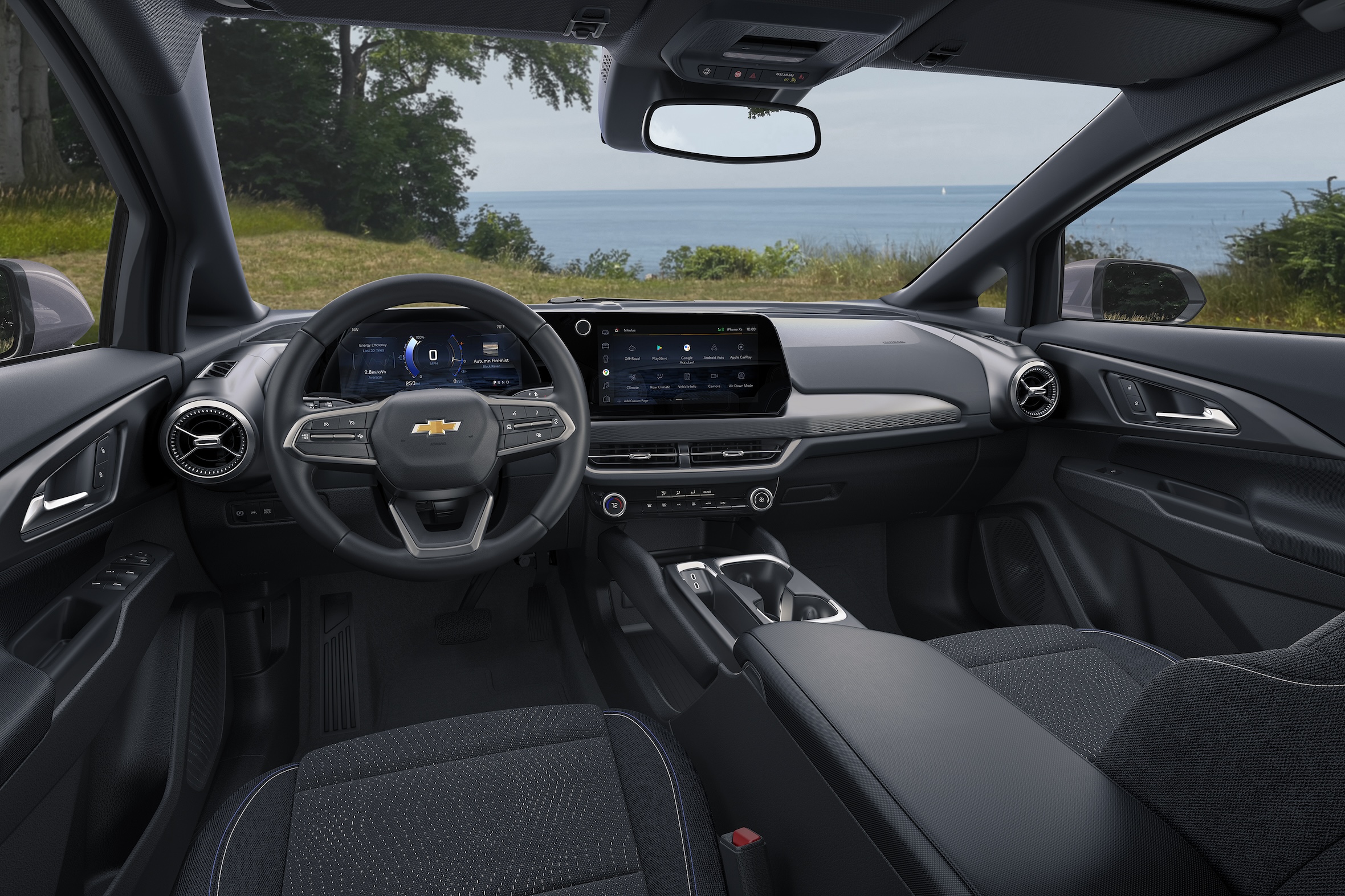
The interior of the 2026 Chevrolet Equinox EV LT1 is quite literally the cheap seats. The front are comfortable, but the rear seat is lacking. Upgrades are available.
Driver’s Seat: The cloth seats in the basic model tested provided plenty of comfort and support, although they felt a little warm as the humidity stayed up even as the temperatures fell to high 70s at the end of August.
(If you want heated and ventilated seats, you have to add $7,000 for the LT2 model, and then you have the privilege of paying extra for those options.)
The starter is in the seat sensor, which is not my favorite way to get going, but this one seemed to work more consistently than some I’ve experienced. GM also has added a touchscreen on-off icon for the times when the Equinox can’t tell you’re done driving.
Friends and stuff: Rear seat room is nice in the corners, but the center seat passenger will feel the hump and the console. The seat is designed presumably to make your passengers whine during the test drive, so you buy an upgrade. It’s firm and has weird indentations in the lumbar area.
You can always counter back from the Driver’s Seat that legroom, foot room, and headroom are all awesome so everyone back there should be thankful they’re not riding around in the back of 1980s front-wheel-drive Buicks, because there was a sad seat.
Cargo space is 57.2 cubic feet with the seat folded and 26.4 behind the rear seat.
Play some tunes: The infotainment center features a gigantic 17.7-inch display that’s clear and pretty easy to follow.
The volume dial is a wide shallow thing that GM keeps putting into cars. It reduces me to tears at least once a week after accidentally rubbing the touchscreen and changing something important.
Like maybe the music. Sound from the system is very good, about an A, so any interference becomes a personal affront. (Don’t interrupt the tunes, as the lovely Mrs. Passenger Seat and all the point-ohs know.)
CarPlay is gone, but my notes didn’t mention missing it, so maybe that’s not the end of the world after all.
Keeping warm and cool: Actual knobs control temperature and fan speed, and buttons let you do some of the simple functions. It’s nice that the big touchscreen didn’t eliminate the old-style controllers, even as temperature and fan control options reside in the bottom corners of the touchscreen.
You can really get some air out of the blowers, which is nice. The corners have the round vents that make me happy with their ease of direction and on-off control.
Range: A 319-mile range is great to have, but charging can be slow. InsideEVs tested one at three different chargers in February, and it averaged around 40 minutes to get from 10% to 80%, far slower than most competitors.
Chevrolet advertises just 285 miles of range for the AWD models from 2025 but 309 for the 2026 AWD models.
Where it’s built: Ramos Arizpe, Mexico. Mexico supplies 46% of parts; South Korea, 20%; the U.S. and Canada, 12%.
How it’s built: Consumer Reports predicts the reliability of the Equinox EV to be a 2 out of 5.
In the end: If you don’t mind missing some creature comforts, the Equinox EV can get you charging for a nice price.
That headline captures why the president is so eager to end Vladimir Putin’s war by sacrificing the Ukrainian victim to the Russian aggressor.And it helps explain why Donald Trump’s negotiators are returning home from Moscow empty-handed again.
Without this explanation, it’s hard to grasp how Trump endorsed a 28-point “peace” plan for Ukraine based on direct input from a Kremlin negotiator, without any Ukrainian or European consultation. (Although a “revised” plan still favors Moscow, Putin continues to demand even more than the initial version.)
Yes, Trump’s unending quest for a Nobel Peace Prize and his infatuation with the Russian despot figure into his kowtow to Putin. But I believe the Journal’s call to “follow the money” is right on the ruble.
Trump’s capitulation to the Kremlin shames our country even more than the U.S. killing of civilians clinging to a burned-out Venezuelan boat.
The Journal’s exposé details how Moscow’s representative sold Trump and his team on the idea they could get inside access to immense riches in Russia if the war were stopped quickly on Putin’s terms. Never mind that meant betraying NATO allies as well as Ukraine.
Indeed, the Kremlin has long dangled visions of lucrative deals before the White House in an effort to woo the president. Putin has used wealthy Russian businessmen to develop contacts with the Trump administration, dating back to 2016.
Kirill Dmitriev, the key Russian negotiator in Ukraine talks and head of Russia’s sovereign wealth fund, is the main salesman for a grandiose future that enhances certain Americans’ wealth.
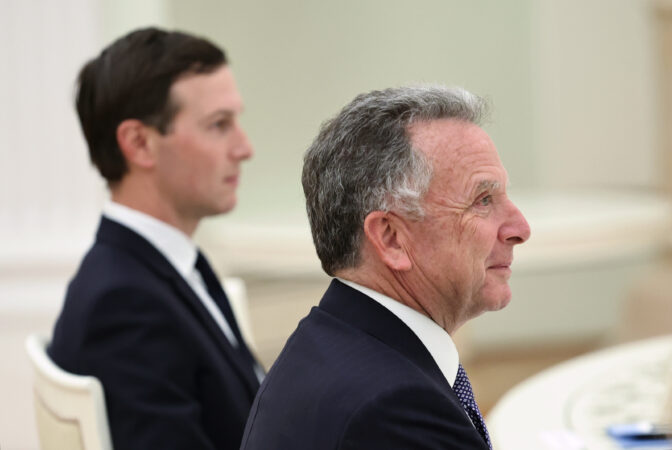
The Harvard-educated Dmitriev, a Goldman Sachs alumnus, has cleverly played on the greed and naivete of Steve Witkoff and first son-in-law Jared Kushner, real estate moguls turned Trump peace negotiators. He convinced the pair — at a secret meeting at Witkoff’s Miami waterfront mansion in October — to view Russia not as a military threat, but as a cornucopia of investment possibilities to which friendly U.S. investors would have early access.
That vision depends, of course, on the end of the war, the lifting of sanctions against Russia, and the U.S. welcoming Moscow back into the global economy.
It was Dmitriev who provided much of the input into the infamous 28-point Trump plan that read like Russian talking points. The proposal made no demands on the Russian aggressor, but required Ukraine give up key defensive positions and land it still controls while shrinking and disarming its military.
Equally outrageous, however, were the points that called for using much of Russia’s $200 billion-plus of frozen assets in European banks to invest in a U.S.-Russian investment “vehicle” to implement “joint projects” (and much of the rest to facilitate U.S. investment in Ukraine, from which the Americans would take 50% of the profits).
This is the money the European Union still hopes to use as collateral for loans to arm Ukraine against further Russian advances, or to rebuild in peacetime. Yet, the Trumpers and Russians proposed to seize it — with no input from European allies — to feather U.S. and Russian business nests.
In this photo provided by the Ukrainian president’s office, President Volodymyr Zelensky (left) shakes hands with U.S. Army Secretary Dan Driscoll in Kyiv, Ukraine, in November.
As for Witkoff, he is so deep in Russia’s pocket that he was recently heard on a leaked tape tutoring a Russian negotiator on how to win over Trump.
Meantime, the president, indifferent to the public revelation of U.S.-Russian complicity, continues to send Witkoff on repeated trips to Moscow to negotiate with Putin. Witkoff has never once visited Ukraine.
The Journal lays out how Dmitriev dangled before Witkoff and Kushner visions of joint U.S.-Russian exploitation of Arctic mineral wealth, and a potential joint mission to Mars with SpaceX, along with multimillion-dollar rare earth deals.
The Russian money man played brilliantly on Trump’s misguided belief that business deals matter more than sovereignty and can paper over messy and dangerous political disputes — or invasions. Especially if U.S. investors get an inside piece of the action.
Never mind that this crass theory has already been proven false in Gaza, where Trump still can’t grasp that grandiose visions of prosperity won’t come true when underlying political grievances remain unsettled. Although the Israeli hostages were returned, the rest of Trump’s peace plan is near collapse.
As for the Ukraine plan, the idea that U.S. investments in Russia (or in Ukrainian rare earths) would prevent further military action is an ahistorical delusion. U.S. investments in both countries did not prevent Moscow from invading Ukraine in 2014 or 2022.
Putin’s goal is to subordinate Kyiv to Russian domination. If he can’t do it militarily, he will be happy to advance this goal via a peace plan he will surely violate, as he has done with every accord he has previously made with Ukraine. Trump’s dreams of billions in profits will also go down the drain as Putin pursues his dream of conquest.
POTUS and his real estate pals may think they are New York tough, but Moscow is not the Big Apple.
Russia is one of the most corrupt countries in the world (154th out of 180 countries, according to Transparency International). Bribery, seizure of huge sums, or nationalization are employed at will by Putin and his oligarch cronies.
Just consider the experience of William Browder, an American-born British citizen who built up the Heritage Fund into the largest foreign investment portfolio in Russia in the 1990s until he protested government corruption. The Kremlin expelled Browder in 2005 and attempted to assassinate him abroad.
When Browder’s lawyer, Sergei Magnitsky, challenged a Russian attempt to steal $230 million in taxes that the fund had already paid, his offices were raided. Magnitsky was arrested, tortured, and killed in prison in 2009.
I spoke with Browder by phone from London, and he had nothing but scorn for the ignorance of the Trump team. “Steve Witkoff and all his pals are not going to make a penny from the Russians,” he told me. “The Russians have a long history of enticing Americans and foreigners. They will defraud, arrest, cheat, and even murder you to prevent you from making a penny.
“They are masters of expropriation. Every foreign investor has been burned.”
The tragedy is that Trump, Witkoff and Kushner are willing to burn Ukraine in their quest for more wealth.
This week’s Shackamaxon welcomes back City Council’s quarrelsome contrarian and makes the most out of SEPTA’s “new” funding.
Council vs. community
Councilmanic prerogative, a tradition that gives individual district Council members sole discretion over land-use decisions within their constituencies, is not popular with the public. A 2022 poll found that only 22% of Philadelphians wanted to keep the practice, while more than two-thirds wanted it abolished. Among Council members themselves, however, prerogative is king.
During a recent City Council meeting, 7th District Councilmember Quetcy Lozada wondered when the phrase “councilmanic prerogative became a dirty word.” Council President Kenyatta Johnson said that “it isn’t like they say in the newspaper.” Most of their colleagues and predecessors make similar defenses of the tradition, which they claim is just a way to make sure the community doesn’t get steamrolled by powerful interest groups.
The process, however, often stymies community aspirations or pits the interests of some neighbors against those of others.
Fourth District Councilmember Curtis Jones Jr. reduced the number of development projects allowed along a stretch of Ridge Avenue in Roxborough, citing community opposition to new construction and parking woes.
The move, known as downzoning, took a sledgehammer to the net worth of longtime business owners along the corridor, with the value of their life’s work deflated overnight. They testified against the move at City Council, to no avail.
In the 8th District, Councilmember Cindy Bass has discouraged the redevelopment of sizable properties like the former YWCA, Germantown Town Hall, and the Ada H.H. Lewis Middle School, despite community support for doing something with those buildings.
In extreme cases, councilmanic prerogative has also been an invitation to more questionable practices. Just ask former 7th District Councilmember Rick Mariano, who was convicted in 2005 of taking prerogative-enabled bribes. “It’s just a very sketchy and nontransparent thing,” Mariano told WHYY in an interview a decade ago. “If I could do everything over again, I wouldn’t be a councilman. But if I was, I would not want anything like that. It can just come back and bite you in the ass.”
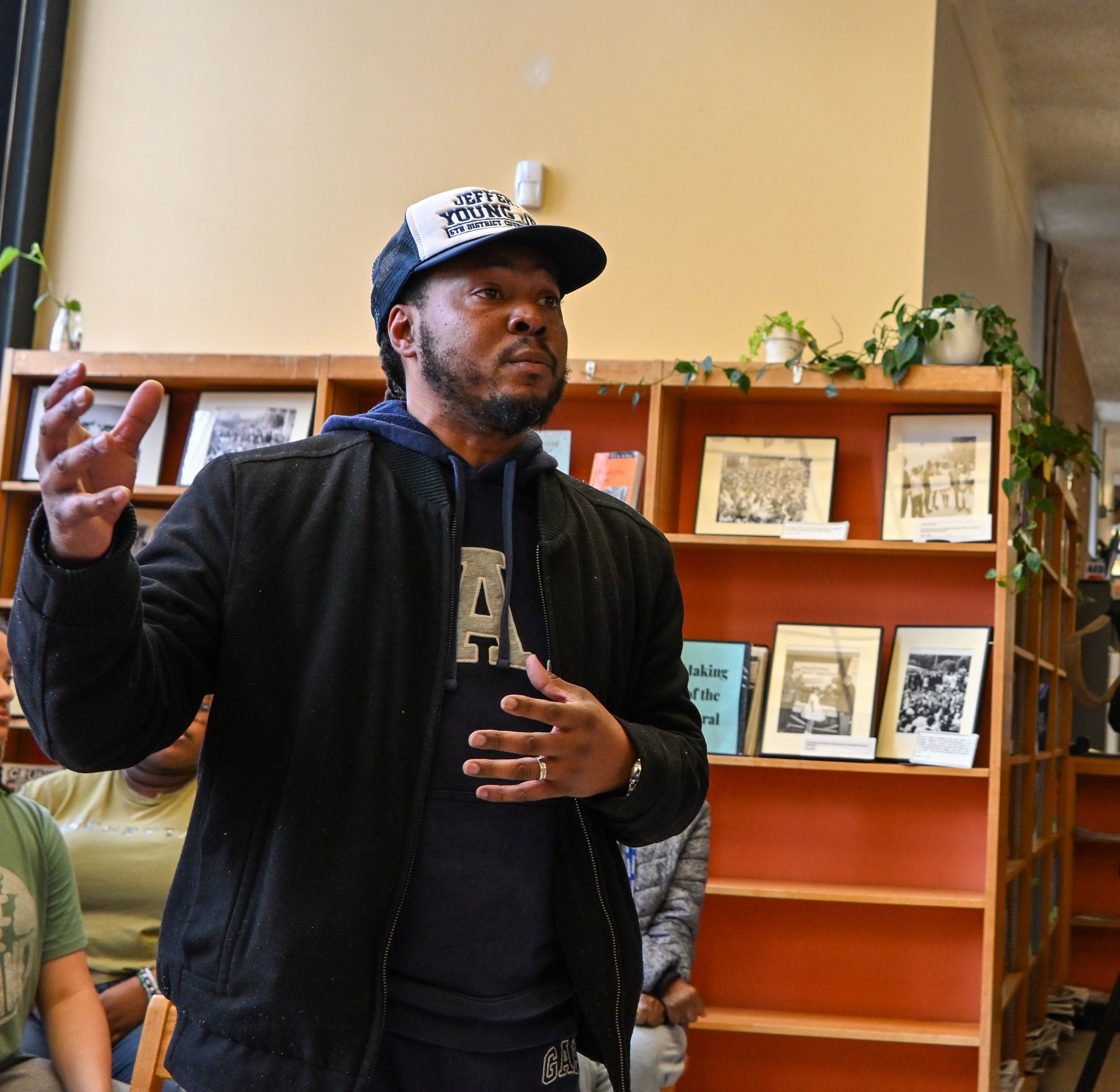
Councilmember Jeffery “Jay” Young speaks to community members at the Cecil B. Moore Library on Saturday.
No fighting in the library
A good example of how prerogative can get in the way of a neighborhood’s wishes is the recent debate over the future of the Cecil B. Moore Library.
Cierra Freeman, Claire Newsome, and the rest of the Save Cecil B. Moore Library coalition have been organizing and campaigning for years to renovate the current library building, which is on the 2300 block of Cecil B. Moore Avenue in North Philadelphia. They helped secure millions of dollars for the effort from the city’s Rebuild initiative. Then they were blindsided by Councilmember Jeffery “Jay” Young,who is finishing his second year representing the 5th District.
My newsroom colleagues have branded Young as City Council’s “quarrelsome contrarian.” While he’s bristled at the description, he also regularly confirms its accuracy. More than any other member of Council, Young has employed a haphazard approach to using the powers of his office, often stepping in at the very last moment to scuttle long-standing plans. Small businesses, street safety campaigners, and affordable housing advocates have all been burned by his tendency toward unilateral and inexplicable decision-making.
The library renovations are the centerpiece of what’s shaping up as his legacy of obstinacy.
First, Young opposed renovating the library because he wanted to redevelop the site as a mixed-use building, with affordable housing above and library services below. Community members expressed deep skepticism about the idea, and Young never produced a rendering or other documentation to prove that his plan was feasible.
On Saturday, Young told a packed community meeting about his plan to move the library, with a nearby city-owned lot on 19th Street identified as a potential location. Young, wearing a baseball cap emblazoned with his own name, presented the move as a way to ensure the community gets everything it deserves, including space for teenagers.
This vacant lot at 19th Street and Cecil B. Moore Avenue, currently used as a pocket park, would be the new home of the library if Councilmember Jeffery “Jay” Young gets his way.
Of course, the current renovation plans already include a revamped teen space. They are also the product of years of engagement between the city and the community. Young’s proposal, once again, lacks even the basics you’d expect from any developer coming to the community with a new construction project.
When I first arrived at the meeting, Young already had his hackles raised. He was berating a constituent and disrupting the proceedings. Another neighbor, Nadine Blackwell, who has lived in the area for 73 years, told Young, “I’m not gonna hit you,” citing his “defensive body communications.” The only resident to express any interest in his ideas was Bonita Cummings, a former staff member in his office.
Renovating a library should not be a contentious issue. It has become one only because City Council’s traditions allow members like Young to make it one.
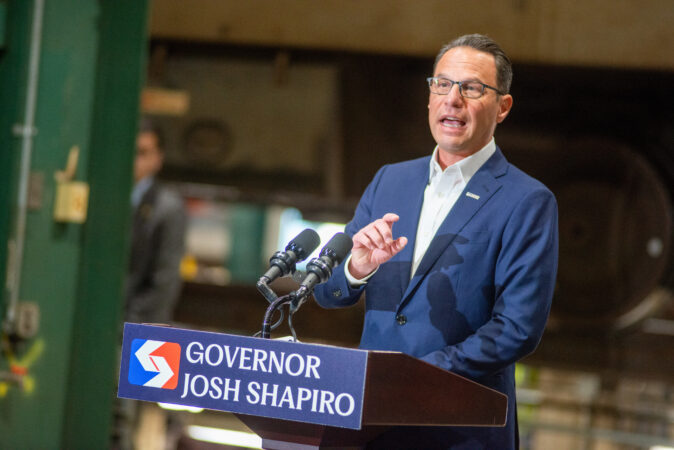
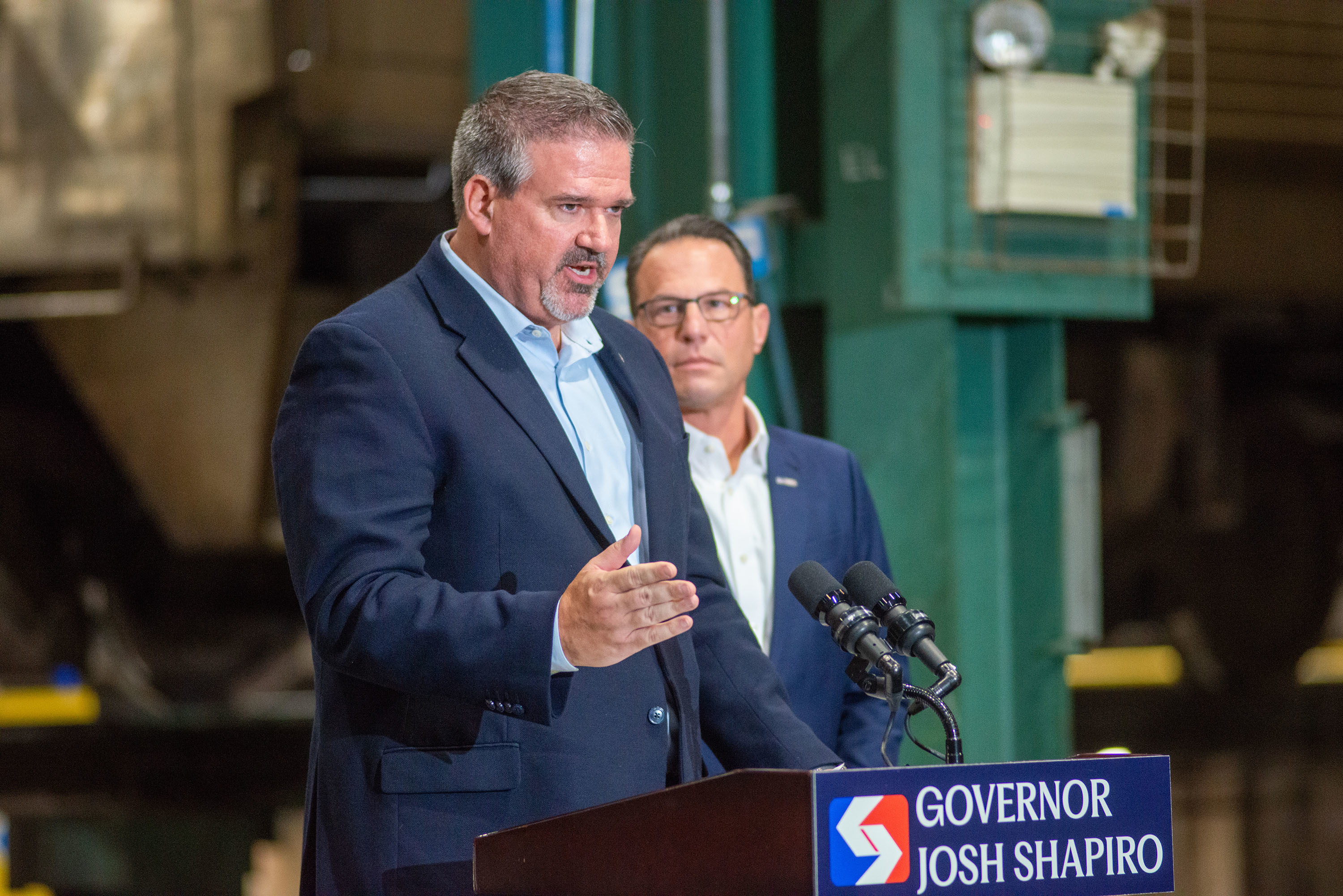
Gov. Josh Shapiro looks on as SEPTA General Manager Scott Sauer speaks at the agency’s Frazer Shop and Rail Yard in Malvern on Monday.
Don’t call it a bailout
There are few things Gov. Josh Shapiro loves more than talking about how he likes to take decisive action. From quickly repairing the I-95 collapse to last year’s maneuvers in Harrisburg that secured an infusion of money for SEPTA, it all helps buttress his “get stuff done” reputation. But Monday’s announced transfer of $220 million to SEPTA, while necessary, does not represent a real solution for our commonwealth’s transit woes. In fact, it makes transit’s future more precarious, absent new sustainable funding from intransigent Republicans in Harrisburg.
That’s because Shapiro took the money from the state’s public transit trust fund, which is tasked with supporting systems across Pennsylvania. While Republicans have presented the fund as money that’s “just sitting there,” those dollars have already been earmarked for specific projects, like SEPTA’s proposed modernization of its trolley system. The money Shapiro used was being set aside for emergencies. Using it to abate a wholly political crisis is not ideal.
The proposed investments, however, represent a judicious use of public resources. Nearly every part of the system will be revamped, providing riders with faster and more efficient trips. It’s an opportunity for Scott Sauer, who’s been working as general manager for 11 months, to prove to the General Assembly that the transit agency can be effective and efficient if given the chance.
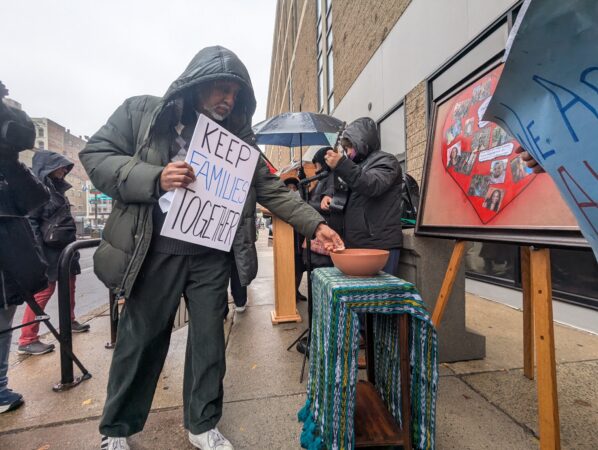
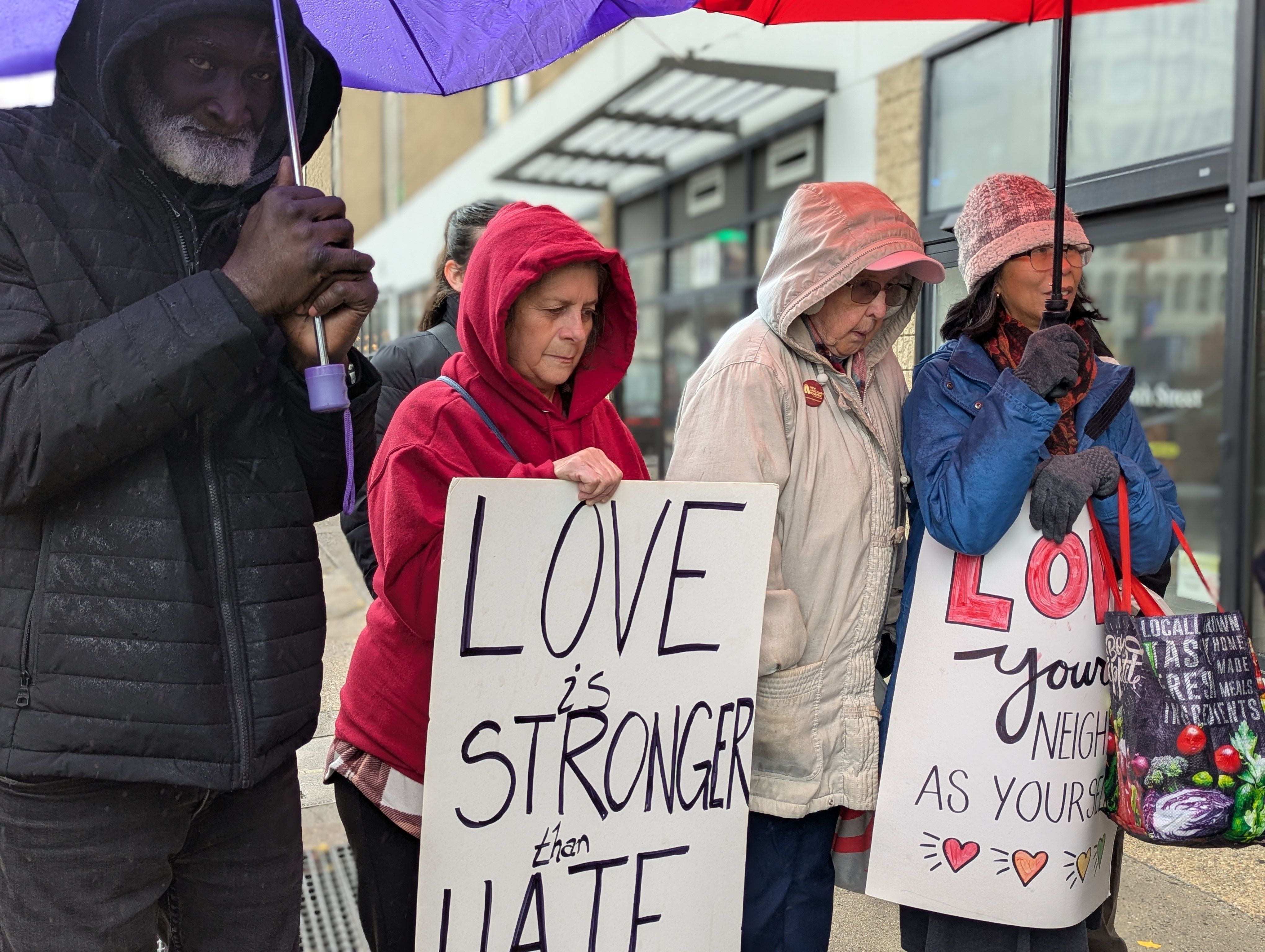
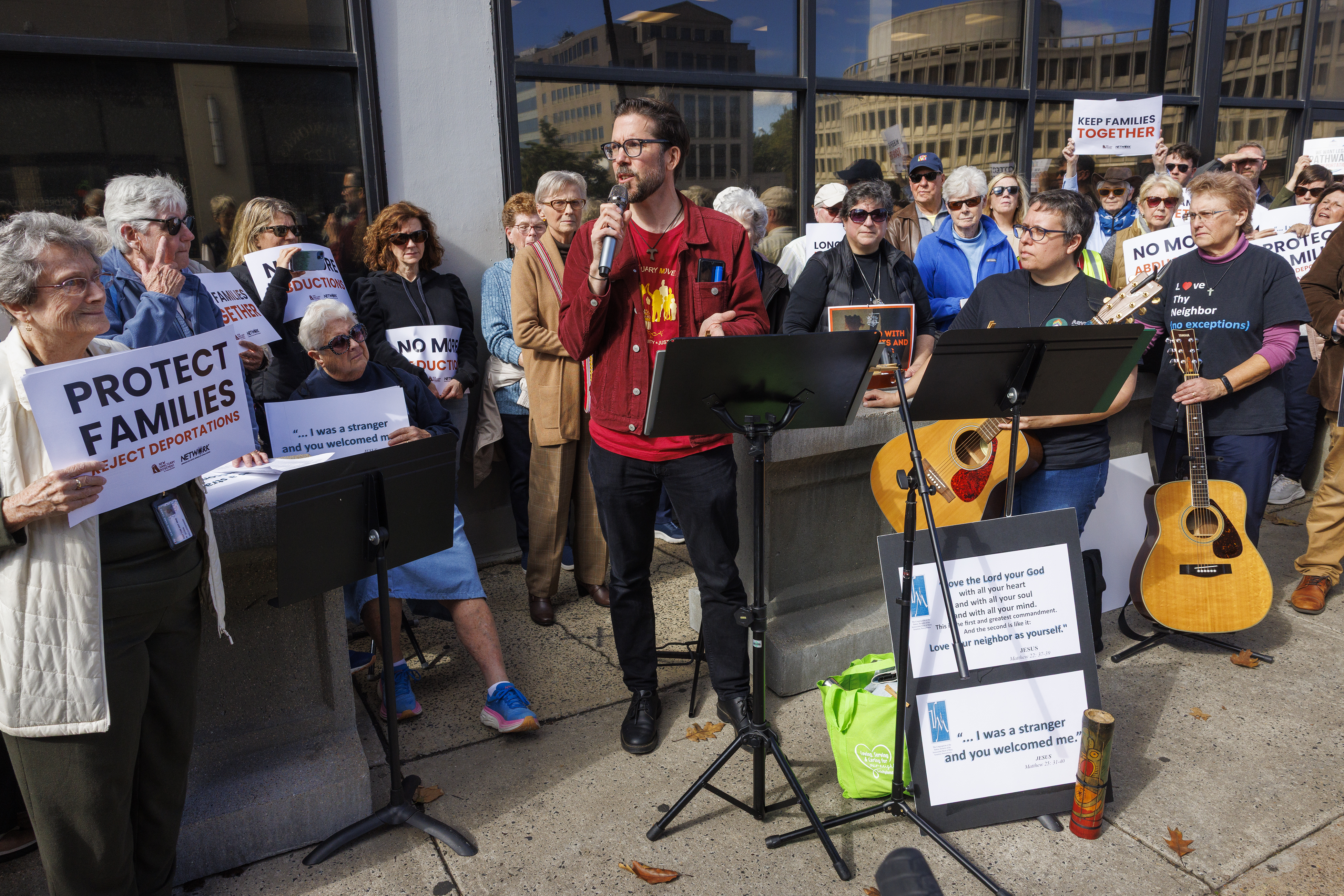
On a rainy Wednesday a week before Thanksgiving, members of the congregations of the Roman Catholic parishes of Holy Innocents and St. Joan of Arc gathered in front of the U.S. Immigration and Customs Enforcement office in Center City.
Another religious group appeared at ICE’s door near Eighth and Cherry Streets on the day before Thanksgiving. This time, it was an interfaith mix of folks led by Christianity for Living Ministries.
And there will be more. On Wednesdays to come, members of Mennonite Action, a couple of United Methodist churches, a Quaker meeting, two synagogues, a Presbyterian church, the Sisters of St. Joseph of Philadelphia and more Catholic parishes have all pledged to take part in a recurring demonstration that Neilson calls ICE Profest 40 — an ecumenical and interfaith action to oppose the government’s pitiless anti-immigrant crackdown slated to take place over 40 weeks. The word profest was coined by Neilson to mean “an amalgamation of faith expressed through proclamation, prayer, and protest.”
Members of the congregations of Holy Innocents and St. Joan of Arc parishes gathered Nov. 19 for an interfaith prayer vigil outside the ICE office in Center City. It was the kickoff of 40 weeks of vigils planned by faith communities across Philadelphia.
But organizers are hopeful that whatever their movement might lack in numbers, it more than makes up for in the power of their spiritual conviction — a conviction that is grounded in the Bible and other sacred texts.
“We proclaim God’s word of justice, mercy, and humility (Micah 6:8),” Neilson told me via email. “We pray for ICE agents and authorities (St. Matthew 5:44-45; St. Luke 3:24; 6:27-28; I Timothy 2:1-4), many of whom are conflicted and have crises of conscience. [We pray] for their courage, transformation, and turning, and for the protection and provision of the detainees and deportees, who are traumatized, from family separation and living in constant fear (Isaiah 1:17; Psalm 10:17-18; 82:3; St. Luke 4:18-19).”
“And,” he added, “we protest ICE activity, i.e., the orders ICE agents are given and the ways in which they are carried out, that dehumanizes and victimizes those created in the image and likeness of God [who] are our neighbors, and [which] disobeys and violates God’s command to welcome and love the stranger and alien (Leviticus 19:33-34; Deuteronomy 10:18-19; St. Matthew 25:31-46).”
The Rev. Christopher Neilson said that demonstrators at the protests pray for detainees and deportees who have been traumatized by family separation and are living in fear. They also pray for the safety of ICE agents and that the organization’s leaders might change their policies.
The number of weeks — 40 — during which this will happen has biblical significance, Neilson said, as a period of transition from trial to transformation. (Think of the 40 days and 40 nights Jesus traveled in the wilderness before the crucifixion.)
For me, the timing of when ICE Profest 40 is gearing up is especially resonant.
We’re moving from Thanksgiving — a secular holiday which, in good years, I get to celebrate with a family that includes foreign-born and U.S.-born folks — into Advent.
The beginning of the liturgical year is when Christians like me move from anticipation to action as we wait to celebrate the birth of Christ into a humble, migrant human family. I love the hush that precedes a world on the brink of transformation. I suspect that is why the quiet power of ICE Profest 40 actions moves me so deeply.
“The tone of these vigils is different,” Peter Pedemonti, the codirector of New Sanctuary Movement of Philadelphia, told me via email.
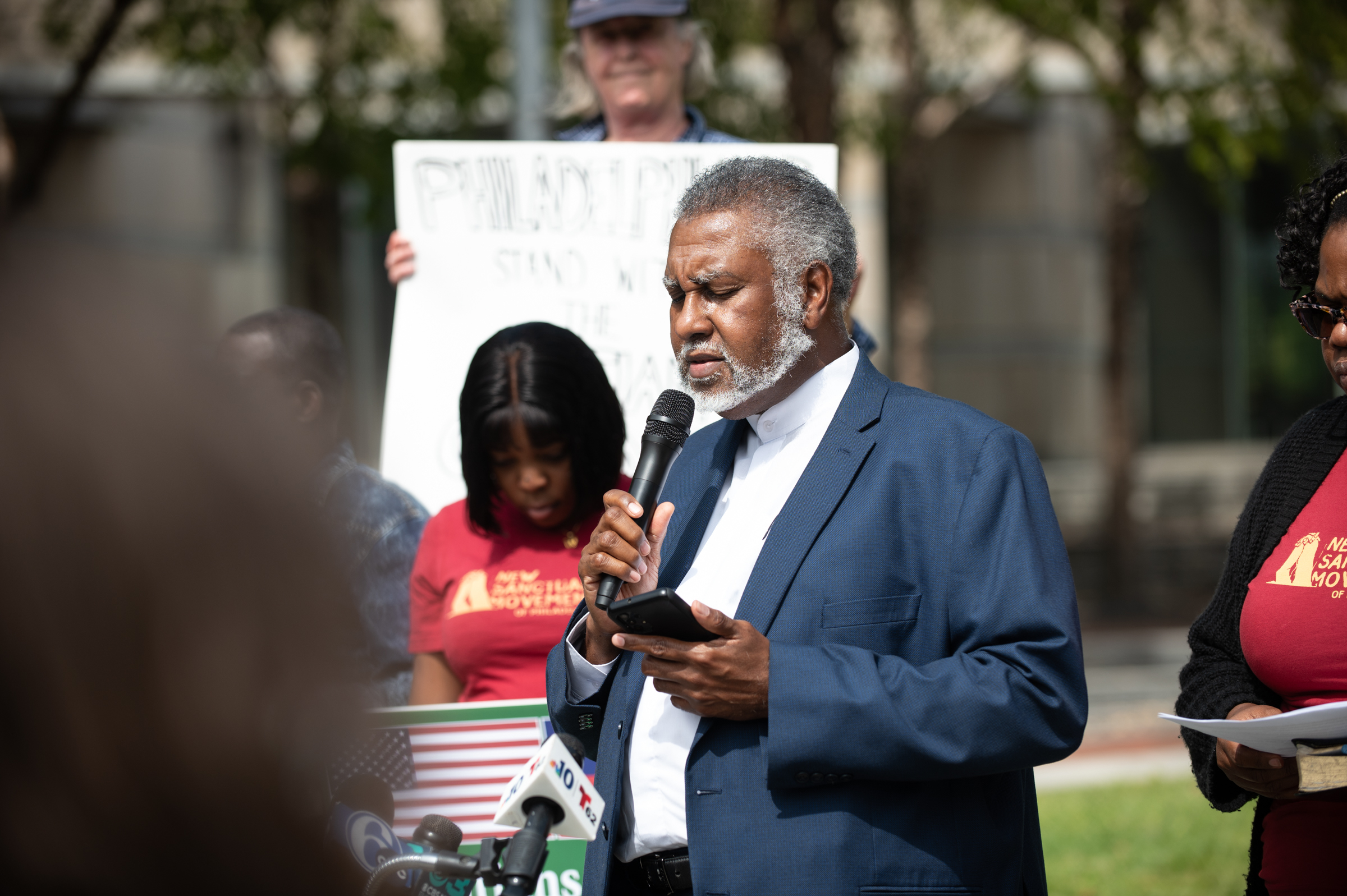
Peter Pedemonti, codirector of the New Sanctuary Movement, addressing Catholics gathered outside the ICE office at Eighth and Cherry Streets, in October.
“They are not as loud as a protest, but they have the potential for big impact,” he said. “We are seeing people sign up who are new to public witness, and so they serve as an entry into collective action. This is important as we fight not only the attacks on immigrant communities, but also Trump’s rapid steps toward authoritarianism. We need everyone right now, and it is really important we have paths for new people to get involved.”
“I have been doing faith-rooted organizing for nearly 20 years. These spiritual tools we have work. We can’t always see the immediate impact, but I have seen them help win campaigns. And so I believe that when we bring them to ICE, we are engaging in something powerful,” Pedemonti added. “The religious community has an important role right now. We are the moral voice, and when we see Trump trample our faith teachings and our democracy, it is critical [that] faith communities speak out.”
While my own faith tradition has long had priests, religious men and women accompanying immigrants and advocating for their rights, the United States Conference of Catholic Bishops has been pretty circumspect about commenting on the Trump administration’s policies.
But for Catholics who supported Trump — 55% overall (62% of white Catholics, 41% of Hispanic Catholics), according to the Pew Research Center — the Catholic bishops’ statement could serve as a come-to-Jesus (heh!) moment.
It is certainly a clear call for transformation during this most transformative of seasons.
I won’t speak for other people of faith, but for me, those are questions that go beyond political affiliation or temporal power, and touch on the “act justly, love mercy, and walk humbly” core requirements Neilson referenced.
On the first Sunday of Advent, one of the readings will be Isaiah’s proclamation that the people “shall beat their swords into plowshares, and their spears into pruning hooks; one nation shall not raise the sword against another, nor shall they train for war again,” and that throws me right back into the fact that both the Catholic bishops in their statement, and the Rev. Neilson in his description of the ICE Profest 40 vigils, reference ICE agents.
ICE agents aren’t wielding swords, of course, but they do carry firearms and other implements with which they smash the windows and doors of terrified immigrants. And with the proposal that military members could be “trained” by deployment to U.S. cities to support ICE and U.S. Customs and Border Protection agents, it’s not that much of a stretch to make Isaiah fit the moment.
I’m going to confess something now. I’ve prayed often for immigrants, never for ICE agents. In fact, I bristled a bit when I heard the bishops equating the vilification immigrants have experienced with the vilification of ICE agents — no one has accused ICE agents of eating pets, or separated them from their families, or turned them from legally residing to unauthorized in a moment.
But, as we saw with this week’s shooting of two National Guard members in Washington, D.C., those who have been asked to carry out the administration’s ill-conceived and oppressive policies may also be endangered by them.
The shooting reminded me of what Pedemonti told me: “If we want ICE to see the humanity of those they are persecuting, then we need to model that and see the humanity of ICE agents.”
“The religious community has an important role right now. We are the moral voice, and when we see Trump trample our faith teachings and our democracy, it is critical [that] faith communities speak out,” Peter Pedemonti said.
“We believe all people can change,” he added, “and so in the tradition of St. Óscar Romero, who called on soldiers in El Salvador’s authoritarian regime to put down their arms, we call for ICE agents to follow their conscience and refuse to follow orders, to leave people with their families, to leave the people in peace.”
I guess it’s time to broaden my prayers. Don’t get me wrong, my rosary (the one which, along with its crucifix and Our Lady of Guadalupe medallion, has monarch butterfly beads representing migrants) will still be in regular rotation with prayers for immigrant justice. But maybe the Romero quote with which I open my prayers using a niner that has his medallion will be different: I want to make a special appeal to soldiers, National Guard members, and policemen: Each of you is one of us.
The first candle we light at Advent represents hope, after all, and no matter how far away or unlikely the desired outcome appears, hope always leads to transformation.
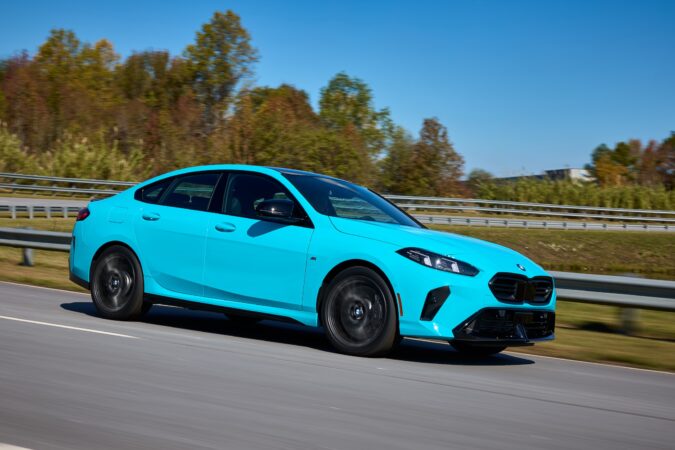
2026 Audi S3 Prestige vs. 2026 BMW 228i xDrive Gran Coupe: Battle of the little racers.
This week: BMW 228i
Price: Starts at $41,600 for both the 2025 and 2026 model years. Advantage, BMW.
Conventional wisdom:Car and Driver liked the “Refined balance of ride and handling, eager powertrains, purposeful near minimalist interior design and materials,” but not the “compromised cargo and rear passenger space,” and that the “front and rear fasciae appear a bit forced on otherwise sleek bodywork.“
Marketer’s pitch: “Strikingly sporty.”
Reality: “Striking.” I was afraid of striking things as I tried to make simple adjustments.
Catching up: Last week Mr. Driver’s Seat enjoyed the Audi S3 — until he landed on the highway, or tried to squeeze in some luggage.
What’s new: The 2 Series received more horsepower and a new look for 2025, and carries on pretty much unchanged for 2026.
Competition: In addition to the S3, there are the Acura Integra, Cadillac CT4, and Mercedes-Benz CLA.
Up to speed: The 2 Series’ speed would be the first question mark. The 2.0-liter TwinPower turbo provides 241 horsepower, almost 100 fewer than last week’s Audi S3; would it keep up?
Yet the version tested gets to 60 mph in 5.1 seconds, according to Car and Driver, just 0.7 seconds slower than the S3. A more souped-up model with a 3-liter six-cylinder engine gets there in just 3.6 seconds.
Shifty: The seven-speed dual-clutch transmission is super smooth, worlds above any attempt from Kia or some other inexpensive offerings.
The slider PRND operator looks cool but doesn’t offer much feel or add any usable space. Shift via the steering wheel paddles.
On the road: Handling is quite nice, perhaps in part because of the M Sport Package, which adds adaptive suspension along with other decals and stuff, plus the aforementioned dual-clutch.
In the first of several “improvements” designed to make the interior feel more high tech, Sport mode requires finding the button on the console touch pad (no solid way to feel your way to it) and then pressing the large icon on the screen. So there’s two instances you’re looking away from the road while trying to operate the vehicle.
But at least compared to last week’s Audi S3, the BMW doesn’t rattle your brain on the highways at all.
The cockpit of the 2025 BMW 2 Series looks as inviting as ever but operation does not live up to expectations.
Driver’s Seat: The sport seats that come with the M Sport package are supportive and comfortable, and I never adjusted it beyond forward and backward. No annoying lumbar or grippy seat corners.
The materials all feel upscale, an improvement over the X2 SUV I tested this year. Everything about that small SUV felt cheap and plasticky.
The materials seem especially scuff prone, though. I brushed out the carpet and seats when I was done with my loan and it seemed the bristles and the plastic handle left marks on the seat and in the plastic door frame bottom. Be sure this fabric fits your lifestyle.
Friends and stuff: Sturgis Kid 4.0 laughed at how tight the rear seat was. He sat stretched into the middle just to make it workable.
He’s not wrong. My own head was squashed up against the ceiling in the corner, although foot room and legroom were pretty good. Entry and exit are challenging because the door is narrow and the seat actually sits up kind of high (not something I expected to write in this review). The middle seat is compromised by the hump and the console and the corner people trying to find a place for their heads.
Cargo space is 13.8 cubic feet, far higher than the S3.
Play some tunes: Sound from the Harman Kardon system might be better than I heard, but I could never find the audio tuning adjustment when I had CarPlay activated. It would only show up in the touchscreen when I left CarPlay off, so it was difficult to make the most of my favorite songs. B-, because why make it so hard?
BMWs once had a superb dial and button system for operating the infotainment, and some models still have it. It takes a bit of practice but you can really run it by feel after a while. Now it’s all about the touchscreen, with a roller dial on the console for volume.
Keeping warm and cool: The temperature controls appear as small +/- adjustments at the corners of the touchscreen. There’s no way to feel for them, and your eyes are off the road while you adjust.
But wait! There’s more! To make further HVAC adjustments, click on the tiny fan icon between them to open up all the controls. These are fairly clear, but I’ve already looked at the screen and away from the road twice now, just to cool off (or warm up).
Fuel economy: I neglected to note the fuel economy. (Hangs head in shame, then blames BMW for the confusion.) The window sticker says 30 mpg combined, but that seems optimistic.
Where it’s built: Leipzig, Germany. Germany is the source of 24% of the car’s parts. None of it comes from the United States or Canada.
How it’s built:Consumer Reports gives the 2 Series Gran Coupe a predicted reliability rating of 3 out of 5.
In the end: The 228i was definitely fun to drive, but too many drawbacks made me long for the real delight of the S3. Just pack ibuprofen for the highways.
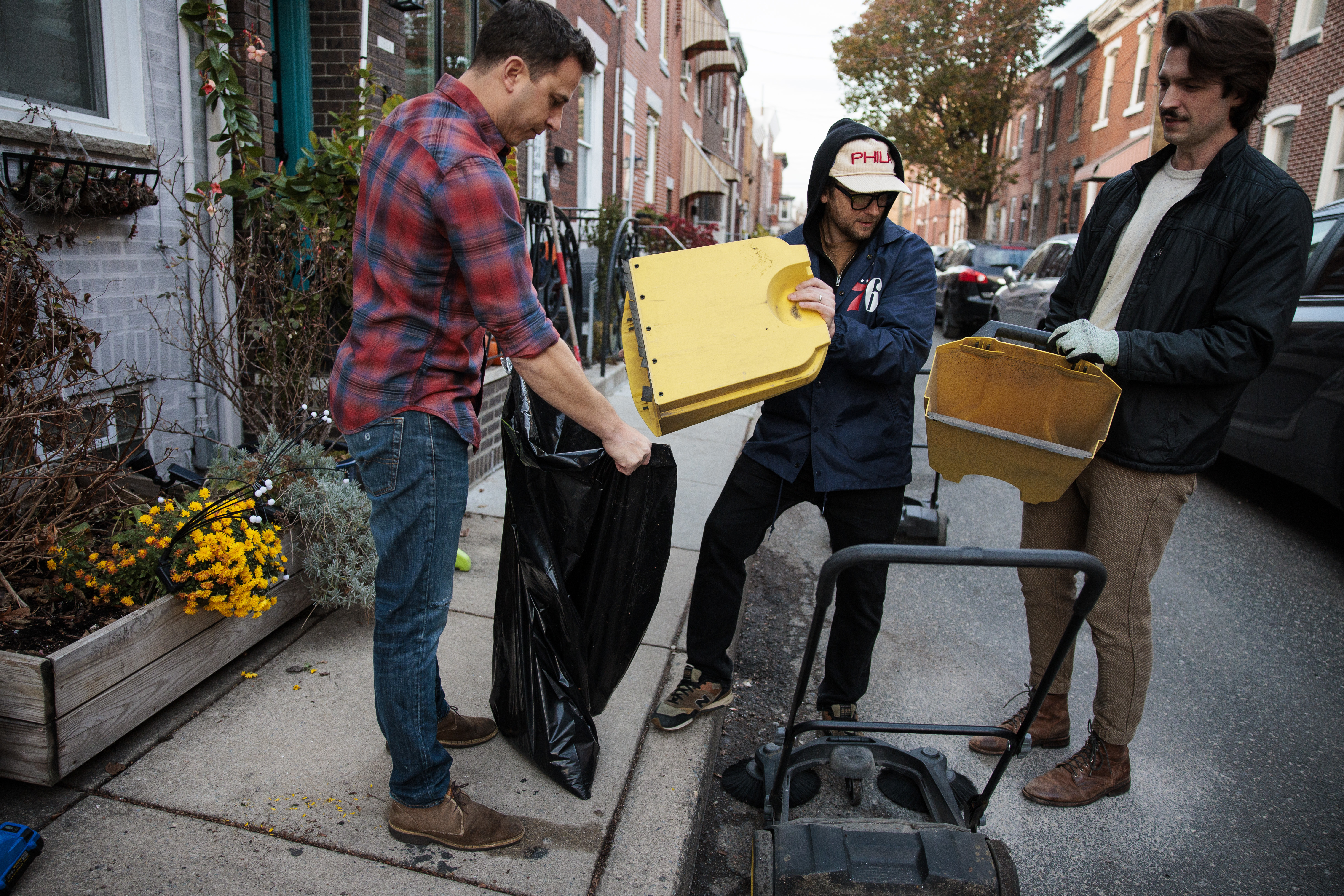
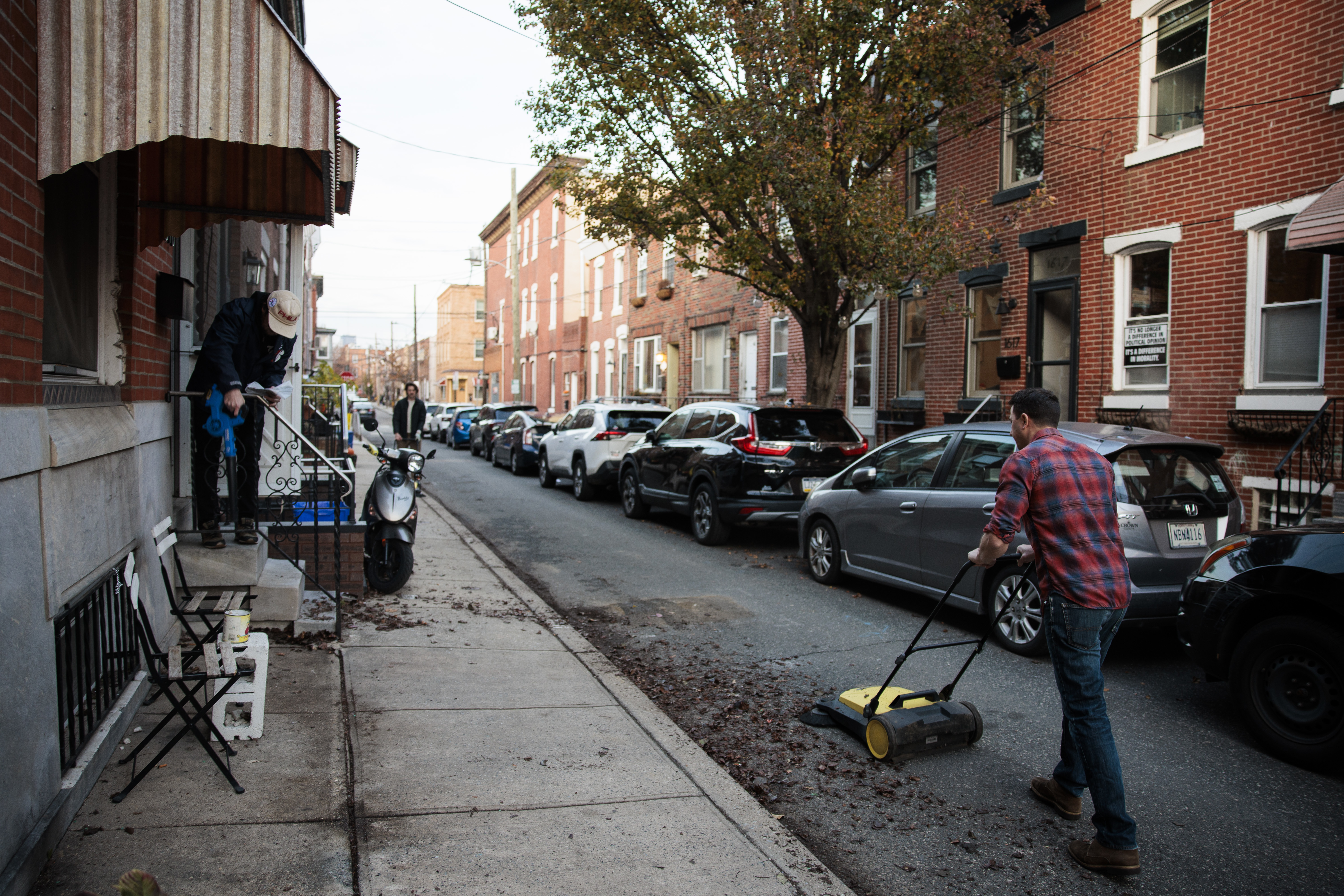
Just about every time Frederick Stahl, Matt Barber, and Anthony Masucci sweep their block of Iseminger Street in South Philly, someone stops them with a question or asks to take their picture.
That’s how I found out about these street-sweeping South Philly dads, when someone posted a photo of Stahl doing his thing on Facebook and a friend tagged me in the comments.
“This is the most fundamental level of environmentalism,” the photo was captioned.
At first, I had to squint my eyes. I couldn’t tell what Stahl was pushing. It looked like a street sweeper, but it was yellow and fun-sized. I’d never seen anything like it before, and I dropped my email in the comments, hoping to learn more.
And so, when Stahl and I finally connected this month — more than a year after that photo was posted — I went down to his block to check it out.
“I’d be remiss not to include two of my neighbors — Matt Barber and Anthony Masucci,” Stahl wrote to me prior to our meeting. “I actually moved to Iseminger in 2020, and it was their street sweepers that inspired me to get one myself.”
Matt Barber and Frederick Stahl (right) demonstrate how to use the Kärcher push sweepers on Iseminger Street.
On their classic South Philly block, which boasts a Tofani door or two and a street so narrow you’re inclined to suck your gut in while you’re driving down it, there are 18 kids under the age of 14 and eight under the age of 3, including Stahl’s 1-year-old son.
“Those are the ones that really touch the concrete,” he said of the little tykes.
The guys used to sweep the street with janitor brooms, “just so our kids could come out and play without glass around,” Masucci said.
“Neighbors would be like, ‘Oh, it’s nice, but it’s really dusty,’ and I’d be like, ‘God! There’s gotta be a better way,’” he said.
During the COVID lockdowns in 2020, when Masucci had some extra time on his hands, he went searching online and stumbled upon the website for Kärcher, a German company that sells cleaning equipment. The company’s S 4 Twin model, which claims to sweep large areas up to five times quicker than a push broom, seemed like it might do the trick.
“I found this thing and all of the marketing is for driveways, like old men kind of brushing their long driveways in the suburbs,” Masucci said. “I was like, ‘I think this would work fantastic. It’s like a little Zamboni. Let me see what we can do.’”
The Kärcher S 4 Twin push sweeper on Iseminger Street in South Philly.
Masucci purchased one — which typically retails for $189.99 but is currently on sale for $125.36 — and donated it to the block. Barber offered to keep it on his back patio.
“Anthony came through and made the dream happen and we put it together,” Barber said.
“It was like Christmas,” Masucci said. “Oh my God, the first time going up and down, we’re like, ‘It’s filled! It’s filled and it works so cleanly and easily!’”
The guys all grew up watching their dads mow the lawn every weekend, and even though they don’t have lawns to mow in South Philly, using the sweepers felt a little like that, they told me. Stahl even bought his own Kärcher when his little one was on the way.
“We love the community and you feel great coming out here and doing it so much more efficiently than brushing around,” Masucci said. “The kids run out. They wanna help you push it. Everyone runs out and wants to help you bag it up. So it becomes a community thing.”
Neighbors Frederick Stahl (left) and Matt Barber with their Kärcher push sweepers on Iseminger Street in South Philly.
Barber even gets the kids to pull weeds from the sidewalk and throw them into the street so he can sweep them up, promising them water ice from around the corner if they help out.
“I go, ‘Listen, weeds for water ice,’” he said.
Kärcher’s S 4 Twin unit is lightweight, foldable, has an adjustable handle, and uses no electricity or gas, so it makes no noise.
“It runs on human will,” Masucci said.
Its 5.25-gallon waste bin holds an impressive amount of debris and doesn’t blow up much dust. After the guys dumped it out following four passes along their street, the trash bag they emptied it into weighed about 15-20 pounds.
Neighbors Anthony Masucci (from left), Matt Barber, and Frederick Stahl empty the waste containers of their Kärcher units after sweeping their block.
“This bag will be so heavy at the end. I always feel like it’s a real proud moment,” Barber said.
Mostly they’re sweeping up dirt, debris, broken glass, nails, and cigarette butts. It takes about 20 minutes and four or five passes to clean the block.
The day after trash and recycling collection is particularly bad — there’s some stuff that misses the truck or glass that gets broken on its way in — so they make sure to do it then.
Some items will get stuck in the Kärcher, like flattened water bottles and dog poop bags, so they still have to pick up that stuff by hand (with gloves on!) before they do a pass.
The few times they’ve been unable to repair the device, they said Kärcher customer service has been amazing and sent them replacement parts and even a whole new unit for free.
The Kärcher S 4 Twin push sweeper.
When the dads first started using the Kärcher, one of their neighbors on the block, a South Philly lifer who threw his cigarette butts in the street, raised an eyebrow.
“He was like, ‘Yo man, what, what are you doing? Why are you out here always cleaning the street?” Barber recalled. “I said, ‘I don’t know, man. I just consider it my backyard.”
Not long after, that neighbor stopped throwing his cigarettes in the street, they said.
“It’s little stuff like that. Maybe it’s always what they did and now hopefully we’re raising awareness,” Masucci said. “If you’re in the city and living here you can impact a lot. You do rely on public works, and if the street light goes out we can’t go fix that, but this is something you can do.”
Being stewards of their street has also bought them a lot of equity with their neighbors, they said. The block holds three major parties a year, including one where they chuck pumpkins off the roofs of their rowhouses, and they get little pushback from anyone.
“We can be up late, blast the music and throw those crazy parties. Everybody knows we’re gonna mess stuff up, but we’re gonna clean it up, because in the end, nobody cares more than us,” Masucci said.
Anthony Masucci demonstrates how to use the Kärcher push sweeper on Iseminger Street.
The men would love to see more people in Philly get Kärchers, perhaps through a citywide program, and so would I. Philly has a notorious litter problem — I don’t have to tell you that — but when people become invested in their neighborhood and cleaning their block becomes a fun, easy, community activity instead of just a chore, it’s much more likely to happen.
“They have all these initiatives to clean up Philly and I’m like, if every block captain was given one of these and they just let people take responsibility for their block, you’d probably see a bit of a difference in terms of the litter and cleanliness of South Philly,” Barber said.
Trump is ready to press Ukraine to bow to a plan that guarantees further Russian destruction. Let’s hope the backlash to the proposal stiffens the backbone of GOP supporters of Ukraine against the pro-Russian White House crowd.
The drama hasn’t ended yet.
The 28-point plan was cooked up by Trump’s feckless negotiator, Steve Witkoff, and first son-in-law Jared Kushner. Two real estate moguls with zero knowledge of Ukraine wrote a draft plan based heavily on input from Kremlin insider Kirill Dmitriev.
Dmitriev is Putin’s representative for economic cooperation and has wooed Witkoff and Kushner with fantasies of joint U.S.-Russian investment. The three men met for secret talks in October in Miami, at Witkoff’s home.
The resulting document reads like Kremlin talking points; some Russia experts point out that the English syntax sounds as if it were google translated directly from the Russian text.
“Even Neville Chamberlain would blush at this,” said Rep. Don Bacon (R-NE), referencing the British prime minister who infamously appeased Adolph Hitler. “It’s embarrassing to our country.”
Painfully true.
The deal demands suicidal concessions from Ukraine, the victim of Russian aggression, but none from the Russia invader. The points echoed a Putin wish list, and green-light Moscow’s complete subordination of Ukraine, by shrinking Kyiv’s army, limiting its alliances and weapons, and leaving it wide-open to future Russian attacks.
Trump was — and still is — ready to sell out Kyiv in pursuit of an imaginary Nobel Peace Prize along with lucrative business deals with Moscow and predatory deals for Ukrainian minerals (both are touted in the plan).
In clear evidence of Russian untrustworthiness, Dmitriev leaked the proposal last week to journalist Barak Ravid of Axios in order to box in the Americans before consultations with Ukraine. Yet Trump quickly endorsed this capitulation document.
Dmitriev’s betrayal alone should disqualify him from further negotiations, but there’s no sign Witkoff will abandon his new Russian pal. As for Witkoff and Kushner, Trump is rewarding their blunders by sending them to meet Putin next week.
Russian President Vladimir Putin’s envoy Kirill Dmitriev (left) and President Donald Trump’s special envoy Steve Witkoff attend talks in St. Petersburg, Russia, in April.
How do we know for sure that Dmitriev was the leaker? Because Witkoff posted on X, “He [Axios’ Ravid] must have got this from K …,” meaning Kirillov. Apparently, Witkoff thought he was sending a private message, another sign he isn’t up to the job.
Equally egregious, Secretary of State Marco Rubio, who does know something about Russia, was kept out of the loop by Witkoff. After the leak, he got a firestorm of complaints from upset European counterparts and GOP supporters of Ukraine. That led him to call Sen. Mike Rounds (R., N.D.), who was at an international security conference in Halifax, Nova Scotia, along with a bipartisan Senate delegation.
Rounds recounted to journalists that Rubio described Witkoff’s plan as a Russian “wish list” and not an actual U.S. proposal. Under White House pressure, Rubio soon reversed himself and posted online that the senators were mistaken. A State Department spokesperson falsely accused the senators of lying
I spoke to Sen. Chris Coons (D., Del.), who was with the delegation during the call (although not on the phone). “I heard what [my colleagues] said immediately after the call,” he told me. “They couldn’t have been clearer about what Marco said, and what the complications were. I hope after today we’ll see a proposal which enables Ukraine to remain free and sovereign and defend itself in the future.”
With this White House, don’t hold your breath.
The pushback from GOP backers of Ukraine, as well as from the EU and Kyiv, was so intense, however, that Rubio rushed to “update” the document in weekend negotiations with Ukrainian officials in Geneva.
Very sensitive issues remain unresolved, yet Trump is still pressuring Kyiv to sign on this month. There is an acute danger that he and Vice President JD Vance may try again to bushwhack Ukraine’s Volodymyr Zelensky, who will probably visit the White House this month.
European allies, who were not consulted on the deal, have been desperately trying to bolster Zelensky and get Trump’s ear.
In this image taken from video provided by Russian Presidential Press Service on Nov. 20, Russian President Vladimir Putin speaks as he visits one of the command posts of the West group of Russian Army in an undisclosed location.
But given the president’s eagerness for a “deal” — any deal, no matter how fatal to Ukraine — Trump is more likely to squeeze Kyiv than press Putin for concessions. Russian Foreign Minister Sergey Lavrov made clear this week that Putin is only interested in the original pro-Russian points, and not any revision that protects Ukraine from future attack.
It’s important for Americans to understand why the Putin-Trump 28-point deal wouldn’t stop Russian aggression and would only encourage Moscow to continue the war.
As former Ukrainian Defense Minister Andriy Zagorodnyuk pointed out: “Ukraine has never attempted to seize Russian territory. Russia, on the other hand, has repeatedly invaded Ukraine and continues to strike Ukrainian cities daily.”
The bottom line for achieving peace is that any plan must strengthen Ukraine’s defenses and provide concrete U.S. guarantees that Russia won’t destroy the Ukrainian state in the future. The 28-point plan does just the opposite (and the revisions aren’t strong enough.)
The Kirillov proposal shrinks the size of the Ukrainian army by a third while putting no limits on Russia’s army, which is roughly twice the size of Ukraine’s. It prevents Ukraine from ever joining NATO and forbids NATO peacekeepers on its soil.
Imagine if Franklin Delano Roosevelt had endorsed a peace plan between Winston Churchill and Hitler in 1940 that left Hitler free to expand his army while demanding Churchill halve his forces, ground his Spitfires, and promise never to ask the Yanks for help.
Which brings us to the ugliest part of Trump’s fake peace efforts. There is a lot of loose verbiage about “guarantees” against a future Russian invasion in the 28 points, and in a side letter offering Kyiv a “security assurance modeled on the principles of [NATO’s] Article 5.” Note the weasel words.
Let me assure you, I have read and reread the texts, and they offer Ukraine no firm U.S. or allied commitment to intervene if Russia attacks again.
The real hint of the worthlessness of this Kremlin-born document comes with point 16, which proclaims: “Russia will enshrine in law its policy of non-aggression toward Europe and Ukraine.”
Does Trump not know Putin has violated every accord he or his predecessors signed with Kyiv. That includes the 1994 Budapest Memorandum by which Ukraine surrendered its nuclear weapons in exchange for guarantees of sovereignty from the U.S., the U.K., and Russia? We know how much those paper assurances have been worth.
POTUS refuses to face reality: Putin respects only strength; there will be no peace until the costs of war are more than the Russian economy and military can bear.
Peace negotiations are worthless unless backed by tougher U.S. sanctions and sales of U.S. air defense systems and missiles to Ukraine.
By his continual concessions to Moscow, Trump has convinced the Russian leader that he is a weak pushover. That guarantees that Russia will continue the war.
There’s an old saying — well, there ought to be one — that the surest way to jinx something is to write, “I don’t want to jinx it…” My Border Patrol tornado-chasing trip to Charlotte was doomed the moment I posted about it here — frantically canceled when I learned 17 hours before takeoff that the BP had abruptly ditched North Carolina. There is a Plan B but no way will I jinx it a second time.
It’s better to stop Trump’s illegal orders than hope troops will disobey them
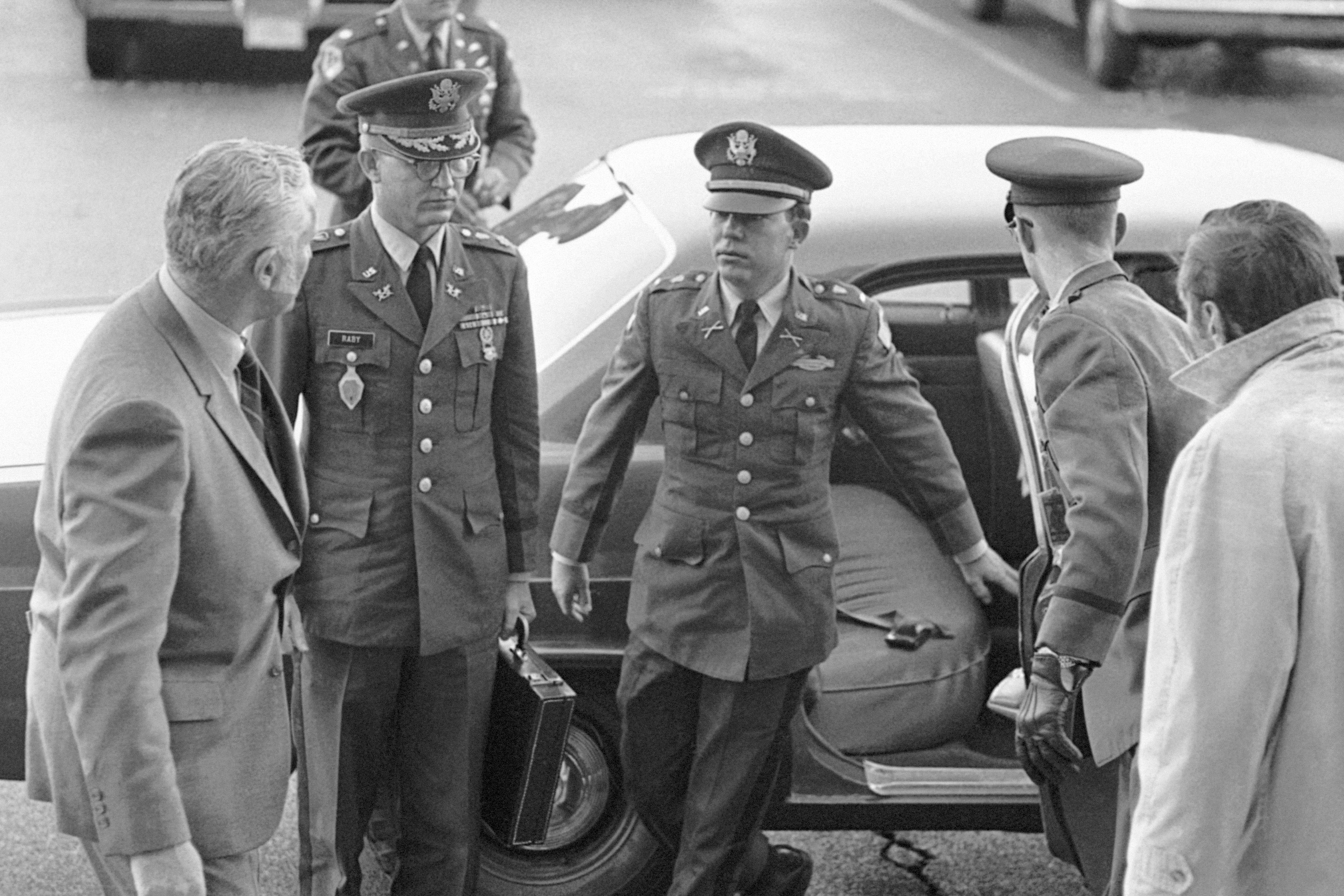
Lt. William L. Calley Jr., center, and his military counsel, Maj. Kenneth A. Raby, left, arrive at the Pentagon for testimony before an Army board of investigation hearing into the My Lai Massacre in December 1969. Calley led the U.S. soldiers who killed hundreds of Vietnamese civilians in the most notorious war crime in modern American military history.
A U.S. Army helicopter pilot named Hugh Thompson Jr. may be the greatest American hero you’ve probably never heard of. On March 16, 1968, Thompson — a warrant officer serving in Vietnam — and his crew were dispatched to support a “search and destroy” mission supposedly targeting the Viet Cong in a tiny hamlet called My Lai.
Instead, the Georgia-born soldier came up upon arguably the most notorious war crime in U.S. history — with thatch hutches ablaze and countless villagers, including women and children, laying dead or dying in an irrigation ditch.
Thompson landed and found the commander on the ground, Lt. William Calley. “What is this?” he asked. “Who are these people?”
“Just following orders,” Calley replied. After some more back and forth, the flustered Thompson replied: “But, these are human beings, unarmed civilians, sir.”
What Thompson and his helicopter crew did next was truly remarkable. Holding Calley and their other U.S. comrades at bay, they shielded a group of Vietnamese women, children and old men as they fled. Eventually, he loaded 11 villagers into the helicopter, and then Thompson and his men thought they detected movement in the ditch. Two fellow solders found a boy, just 5 or 6, hiding under the corpses, “covered in blood and obviously in a state of shock.” After safely evacuating the boy to a military hospital, Thompson reached a lieutenant colonel who ordered Calley to stop the killings.
Near the end of his life, Thompson — who died in 2006 — and two comrades were recognized for their courage and the many lives they saved at My Lai, awarded the Army’s highest award for bravery not in conflict with an enemy (the Soldier’s Medal), as well as the the Peace Abbey Courage of Conscience Award. He even returned to My Lai for an emotional reunion in 1998.
But it wasn’t like that in real time. During the war, a prominent congressman demanded that Thompson be court-martialed. “I’d received death threats over the phone,” he told CBS’ 60 Minutes in 2004. “Dead animals on your porch, mutilated animals on your porch some mornings when you get up.”
A generation after Thompson’s death, the kind of bold action he took that day in 1968 — disobeying what he correctly understood as an illegal order — is yet again on America’s front burner. This time, the debate is fueled by a video from six veterans who now serve as Democrats in Congress ― reminding today’s soldiers about their sworn duty to disobey unlawful commands.
That every expert in military law agrees with this principle hasn’t stopped President Donald Trump or his defense secretary, Pete Hegseth, from going ballistic — calling the Democrats “traitors” or even reposting calls for their death by hanging.
On Monday, Hegseth kicked things up a notch by endorsing a plan for one of the six — Arizona Sen. Mark Kelly, a former astronaut and decorated Navy fighter pilot — to return to active duty, so that he can be court-martialed for taking part in the video. A statement from the Pentagon, which Trump and Hegseth call “the Department of War,” insisted that “orders are presumed to be lawful. A servicemember’s personal philosophy does not justify or excuse the disobedience of an otherwise lawful order.”
Even as the growing controversy dominates the headlines, there is one aspect to the illegal-orders debate that practically no one is talking about. Actions like Thompson’s refusal at My Lai don’t only stand out for the soldier’s gumption. It is also the stuff of peace prizes and 60 Minutes profiles because it is so incredibly rare.
Do your own research. It’s very difficult to find examples in America’s 249-year history of troops disobeying orders because they are believed to be illegal. To be sure, there are famous incidents of soldiers who disobeyed an order and heroically saved lives — but almost all of them were because the command was reckless or just plain stupid, which isn’t the same as illegal or unconstitutional.
It’s not like there haven’t been opportunities. There have been American war crimes from Wounded Knee to Abu Ghraib, what Barack Obama famously called “dumb wars” like the 2003 assault on Iraq, and moments of intense moral agony, like dropping atomic bombs on Hiroshima and Nagasaki. These did produce a few whistleblowers or conscientious objectors, of course, but cases of actually refusing an order are few.
It’s not hard to understand why. Most military orders — even ones later reviled by history — come with some veneer of legality, whether it’s an opinion from a military lawyer or a congressional authorization vote, as happened with Vietnam, Iraq, and other conflicts.
The video recorded by Kelly and the others (including Pennsylvania Reps. Chrissy Houlahan and Chris Deluzio) focuses only on the widely accepted principle that military men and women must follow the law and the Constitution above all else, and doesn’t mention Trump or any specific disputed orders. In interviews, though, Democrats like Kelly and Houlahan have criticized Trump’s ongoing attacks on boats off South America that the regime claims are smuggling drugs.
While almost every expert on military laws describes these attacks — which have killed at least 83 people— as extrajudicial killings lacking legal justification, the Office of Legal Counsel in Trump’s Justice Department has nonetheless written a secret classified memo to justify them. Any officer or lower-level troop ordered to blow up these boats and kill all the people on board hasn’t seen the memo. And they won’t get a medal for saying “no” — at least not in 2025. They will be court-martialed and vilified by MAGA.
New York Times opinion writer David French, a Harvard Law grad who served as an Army lawyer in Iraq, notes the congressional video didn’t advise troops on what exactly is an illegal order, and adds: “Individual service members don’t have sufficient knowledge or information to make those kinds of judgments. When time is of the essence and lives are on the line, your first impulse must be to do as you’re told.”
Not always, as Thompson showed at My Lai, but military matters are rarely that black and white. The Trump regime’s sending of National Guard units and even active-duty military into cities such as Los Angeles may be an unnecessary and inflammatory violation of democratic norms, but experienced judges continue to debate its legality. Expecting the rank-and-file troops to decide is asking a lot.
It is very much in the spirit of Joseph Heller’s World War II novel and its legendary Catch-22: A soldier must disobey an illegal order, yet orders, in the heat of the moment, are almost never illegal.
That doesn’t mean Trump and Hegseth threatening Kelly and the other Democrats with jail and possibly the noose isn’t utterly outrageous. After all, they did nothing more than remind soldiers of their obligation to the law in the same language their drill sergeants use in boot camp.
I do also think — understanding the limitations of a MAGA-fed Congress — that good people of both parties on Capitol Hill should be doing a lot more to invoke the War Powers Act, hold hearings, debate impeachment, and do whatever else they can to prevent Trump’s reckless acts in the Caribbean and elsewhere. In other words, stop illegal orders before they’re given.
That said, as the Trump regime deteriorates, there may come a day when right and wrong feels as obvious as it did that 1968 day in the rice paddies of Vietnam. If, heaven forbid, this government ever ordered troops to put down a protest by firing on citizens, we will need a platoon full of Hugh Thompsons and no William Calleys, “just following orders.”
Yo, do this!
The writer Anand Giridharadas is the best of today’s public intellectuals, with a laser focus on the 1 Percent and the devastating role of income inequality in works such as Winners Take All, which rips apart the facade of modern philanthropy. So who better to pour through the late financier-and-sex-fiend Jeffrey Epstein’s emails and find the true meaning? His recent, masterful New York Times essay — “How the Elite Behave When No One Is Watching: Inside the Epstein Emails” — parses the small-talk and atrocious grammar of America’s rich and powerful to decipher how they rule. It is a must read.
Saturday was the 62nd anniversary of the day that changed America, for bad: the assassination of President John F. Kennedy as his motorcade rolled through downtown Dallas. It was also the day I was savaged by several dozen people on Bluesky for expressing an opinion shared by 65% of Americans: that we haven’t been told the whole truth about what really happened on Nov. 22, 1963. Kudos to ABC News for a new special that aired Monday looking at both sides of the endless controversy — Truth and Lies: Who Killed JFK? — that included skeptics like veteran journalist Jefferson Morley of the excellent site JFK Facts. The one hour-special is now streaming on Hulu.
Ask me anything
Question: Why is the Trump administration uncritically regurgitating the Russian “peace plan”? — @kaboosemoose.bsky.social via Bluesky
Answer: That’s a great question as our president has consistently told us that the “Russia! Russia! Russia!” scandal around Vladimir Putin’s U.S. election interference and his seeming sway over the 45th and 47th president is all a massive hoax. How to explain, then, that the supposedly-Trump-drafted 28-point peace plan to end the fighting in Ukraine was translated from its original Russian, with its details hashed out in Florida by corrupt and contented Trump son-in-law Jared Kushner and Kirill Dmitriev, a U.S.-sanctioned Russian envoy? It’s probably true that liberals were naive during Trump’s first term to believe the strange ties between MAGA and the Kremlin would bring down his presidency, but it’s also true that where there’s smoke, there’s fire. We all want peace in Ukraine, but Trump and his U.S. government simply are not honest brokers.
What you’re saying about…
Last week’s question about the Jeffrey Epstein files, and whether they’ll ever see the light of day despite enactment of the law calling for their release, was kind of open-ended, and thus it drew an array of responses. But most agreed with my view that it’s highly unlikely we’ll see the files, or see very much. “They won’t release them because they are now investigating the Democrats in the files, thus they won’t be able to release them due to the investigation,” Rosann McGinley wrote. “Also they’d be heavily redacted, ‘nothing to see here.’” Added Judy Voois: “I would not be surprised if he declared war on Venezuela just to steer the media and public interest away from continued scrutiny of the Epstein saga.”
📮 This week’s question: The heated reaction I received online about the JFK assassination now has me wondering what newsletter readers think. Do you believe Lee Harvey Oswald was the lone killer of John F. Kennedy, or do you think there was a conspiracy? Please email me your answer and put the exact phrase “JFK assassination” in the subject line.
Backstory on Pennsylvania’s budget deal with the devil
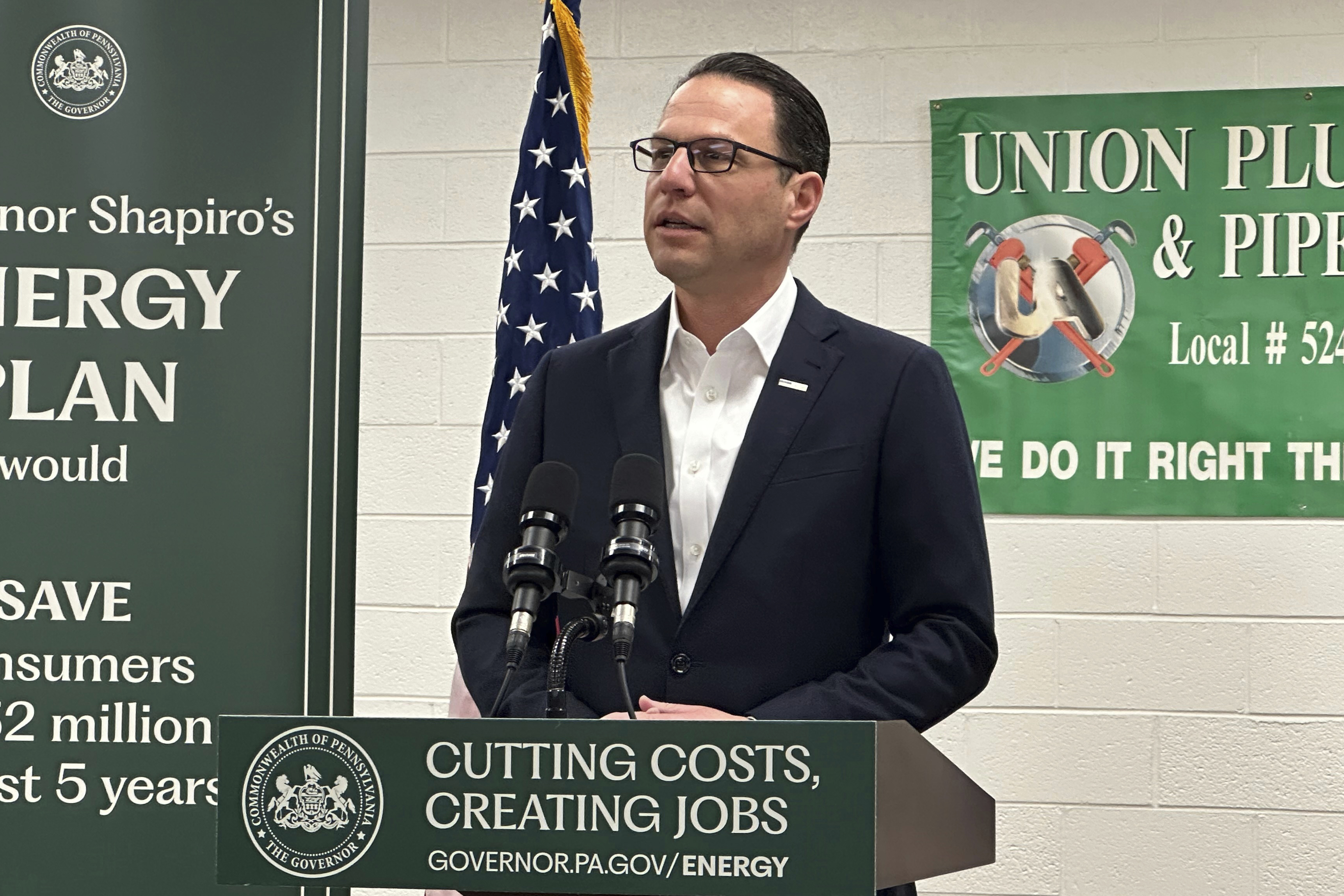
Pennsylvania Gov. Josh Shapiro speaks at a news conference at the United Association Local 524 union building in Scranton, Pa. in March 2024.
Saturday was the 62nd anniversary of the JFK assassination, but on Nov. 22, 2025 it was the entire planet that was under fire. One researcher declared that globally it was the hottest Nov. 22 ever recorded. It didn’t feel that way at my windswept dog park in Delco, but it did from the American Southeast — experiencing a record heat wave — to Tehran, where an epic drought has seen water fountains run dry. And yet the world’s leaders were on a full-fledged retreat from climate action, from the White House, where U.S. CEOs toasted the oil dictatorship of Saudi Arabia at a posh dinner, to Brazil, where a global summit on climate change failed to take on the hegemony of fossil fuels, to Harrisburg.
In a state that’s kowtowed to Big Oil and Gas interests since the days of John D. Rockefeller, Pennsylvania Republicans used the shame of the nation’s longest state-budget impasse to finally ram home their most cherished agenda item: gutting efforts in the Keystone State to work with our neighbors to control the greenhouse-gas pollution behind climate change. The GOP-run state Senate backed Democratic Gov. Josh Shapiro into a corner. Pennsylvania had to withdraw from Regional Greenhouse Gas Initiative (RGGI), a regional pollution-control system, or the money wouldn’t resume flowing to schools and other vital services.
To be clear, the drivers of this giant step backward were state lawmakers who’ve been swimming in Big Oil’s tainted campaign cash for a couple of decades now. But the capitulation, even at political gunpoint, was not Shapiro’s finest hour — especially as the Democrat with apparent ambition for higher office continues to push for polluting and energy-devouring data centers that he claims will boost the economy. As the American Prospect noted in a new piece, Pennsylvania’s environmental retreat came at the same time Virginia was electing a Democratic governor in Abigail Spanberger who’d promised to restore her state to the RGGI. If Shapiro does run for president in 2028, he may struggle to explain this deal to climate-minded voters.
The real problem, though, is that the best way to tackle climate change is by going on offense, with aggressive programs to promote alternative energy such as wind (there seems to be a lot of that around here) and solar that aren’t not only cleaner but a better deal for beleaguered consumers. While Pennsylvania — second only to Texas in natural-gas production — went all in on fracking, a 2024 survey found the commonwealth was 49th on expanding wind power and energy efficiency. With RGGI in the rearview mirror, the Shapiro administration needs to work a lot harder on green energy. That would be good for our governor’s White House dreams, but it would be a lot better for the planet.
What I wrote on this date in 2020
In the late fall of 2020, when I wasn’t trying to warn people that Donald Trump was planning a coup, I turned my attention to the incoming president, Joe Biden — and it’s both fascinating and sad to read how naive we were in the giddy aftermath of Trump’s defeat. In writing about Biden’s early Cabinet picks, the subhead read: “America is seeing the start of something it’s not used to: A White House that’s experienced, qualified … and boring. Could Biden’s ploy work?” NO! The answer turned out to be “no.” But still read the rest: “Biden’s Cabinet is ‘delightfully boring.’ Can reality-TV-addled America deal with it?”
Recommended Inquirer reading
Only one column last week as I spent time both preparing for and then canceling the Charlotte trip that never happened. In that piece, I vented my rage at the lavish White House shindig for a monster: Saudi Crown Prince Mohammed bin Salman, who was behind the brutal bone-saw murder of Washington Post journalist Jamal Khashoggi. The man that Joe Biden all too briefly promised to make “a global pariah” was feted by the CEOs of Apple, Nvidia, GM and just about any big business entity you can think of, in a stunning embrace of corruption that should end the myth of “woke corporations.”
There are two things, more than anything else, that keep local news in America alive: Hometown sports teams, and restaurants. Here in Philly, it was a lousy week for the former but a remarkable moment for the latter, as restaurants in the City of Brotherly Love competed for the very first time for recognition from the world’s ultimate dining survey, the Michelin Guide. In a glitzy ceremony at the Kimmel Center, Michelin bestowed its coveted star on three Philadelphia restaurants and honored more than 30 others — and Inquirer readers were obsessed. Four of the newsroom’s top seven most-read articles online last week were about the Michelin madness — including the bittersweetness of one eatery cited just before its closing, the cheesesteak shop that was honored but not invited, and other various snubs and surprises. The Inquirer has amped up its food coverage this year, and if you live and eat in this region I don’t know how you’d survive without it. If you don’t subscribe, please sign up today.
By submitting your written, visual, and/or audio contributions, you agree to The Inquirer‘s Terms of Use, including the grant of rights in Section 10.
The Democrats had a great election night earlier this month when the democratic socialist Zohran Mamdani scored a smashing triumph in New York’s mayoral race, and mainstream Democrats won gubernatorial contests in New Jersey and Virginia. Savoring the victories, left-wing standard-bearer Alexandria Ocasio-Cortez said her party had united against a common foe: fascism.
“It’s not about progressive, it’s not moderate, it’s not liberal,” Ocasio-Cortez declared. “This is about, do you understand the assignment of fighting fascism right now? And the assignment is you come together across difference no matter what.”
She’s right about the need for my fellow Democrats to join hands to challenge President Donald Trump and his MAGA loyalists. But she’s wrong to call them fascists. That doesn’t hamper Trump; it empowers him.
And you know who gets that? Zohran Mamdani.
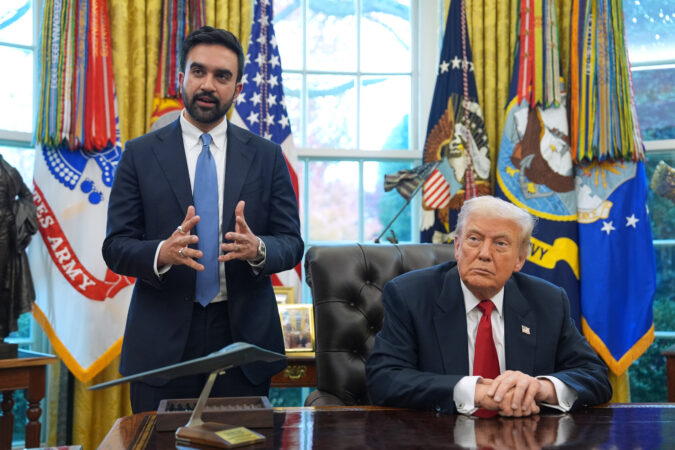
Witness his meeting with Trump at the White House on Friday, when a reporter asked Mamdani if the president was a fascist. Before the mayor-elect could answer, Trump threw him a lifeline.
“That’s OK, you can just say yes,” Trump said. “It’s easier than explaining.” Laughing, he gave Mamdani a light pat on the arm. “I don’t mind,” Trump added.
Mamdani played along, smiling widely. “OK, all right,” he replied.
But it was better than all right. It was brilliant.
Calling Trump a fascist does nothing — literally, nothing — to advance the Democrats’ cause. And Mamdani was wise to steer away from it.
To win elections, the Democrats need to claw back voters who tipped for Trump and the GOP in 2024. Do you think they’re going to be persuaded by someone telling them they supported a fascist?
If so, you just haven’t been listening. Last October, a mask-wearing protester accosted Tom Eddy — chairman of the Republican Party in Erie County, Pa. — and called him a fascist. “Do you even know what it means?” Eddy asked. “Don’t need to know,” the masked man replied. “I know who you are.”
A month later, Trump won Pennsylvania by the largest margin of victory for a Republican presidential candidate since 1988. Of course, Democratic accusations of fascism weren’t the only reason for that. But they certainly didn’t help.
Neither does calling Trump a white supremacist or racist, which is another turn-off for voters. In a 2023 Public Agenda survey, 77% of Americans said it was a “serious problem” that “people are too quick to accuse others of racism.”
And it’s not just white voters who think that. In the poll, 77% of Latino Americans and 76% of Asian Americans agreed with the statement. The percentage of African American voters who agreed was a bit lower — 68% — but still represented a significant majority.
Let me be clear: Donald Trump has said some horribly racist things: Haitians eat pets, Mexicans are rapists, Africa is full of shithole countries, and so on. But calling him a racist won’t sway anyone into the Democrats’ column; it’s more likely to bring people to his side because they’re sick and tired of hearing about how racist America is.
“Enough with the ‘He’s a Hitler,’” the comedian Jon Stewart said of Democratic candidates who attack Donald Trump. “Tell people what you would do with the power that Trump is wielding, and then convince us to give that power to you, as soon as possible.”
Ditto for labeling Trump a fascist. I’ve read my Timothy Snyder and Jason Stanley, and I do see elements of fascism in Trump’s MAGA movement: the relentless denunciation of internal enemies, the Big Lie about elections (see: 2020), and the celebration of a strongman who will save us. But I still think it’s an enormous mistake to imagine all of his supporters — or, even, his entire party — as fascist.
That’s what the American Association of University Professors — our nation’s most venerable academic organization — did earlier this fall.
Rebutting the idea that academia is biased against conservatives, the AAUP posted that “fascism generally doesn’t do great under peer review.”
Translated: The reason there aren’t more conservative professors is that they’re actually fascists. So is anyone who disagrees with the dominant liberal consensus on campus.
As comedian Jon Stewart warned back in January, none of this is going to enlist more voters for the Democrats. “Enough with the ‘He’s a Hitler,’” Stewart urged. “Tell people what you would do with the power that Trump is wielding, and then convince us to give that power to you, as soon as possible.”
That’s exactly right. And that’s also what Mamdani has been doing, with his persistent focus on housing and affordability.
Pressed by an interviewer on Sunday, Mamdani said he stood by his earlier comments that Trump was a “despot” as well as a fascist. But he quickly changed the subject, because he knows that’s a game Democrats can’t win.
“I’m not coming to the Oval Office to make a point or make a stand,” Mamdani declared. “I’m coming in there to deliver for New Yorkers.”
The way for Democrats to defeat Trump and the GOP is to show we can deliver for all Americans, in the ways that matter most to them.
So enough with the name-calling, OK? It makes us look churlish and small. Focus instead on the big things we can do. And we will be all right.