Like many, I’m big fan of Nicolas Cage’s work. How big? On my bachelorette party to New Orleans a few years ago I requested we tour St. Louis Cemetery No. 1 so I could get a pic of me and my girls with Cage’s nine-foot pyramid tomb.
Not only can the man seriously act, he can also seriously overact. As a writer who loves puns ( especially bad ones), I appreciate someone who has fun with their art form to the point it causes eye rolls.
And so, when I learned about Uncaged in Jenkintown: A Nic Cage cocktail crawl that happened on Sunday, I wanted to check it out. In some ways, it turned out to be like a lot of Cage movies — not a blockbuster, but still quirky and fun.
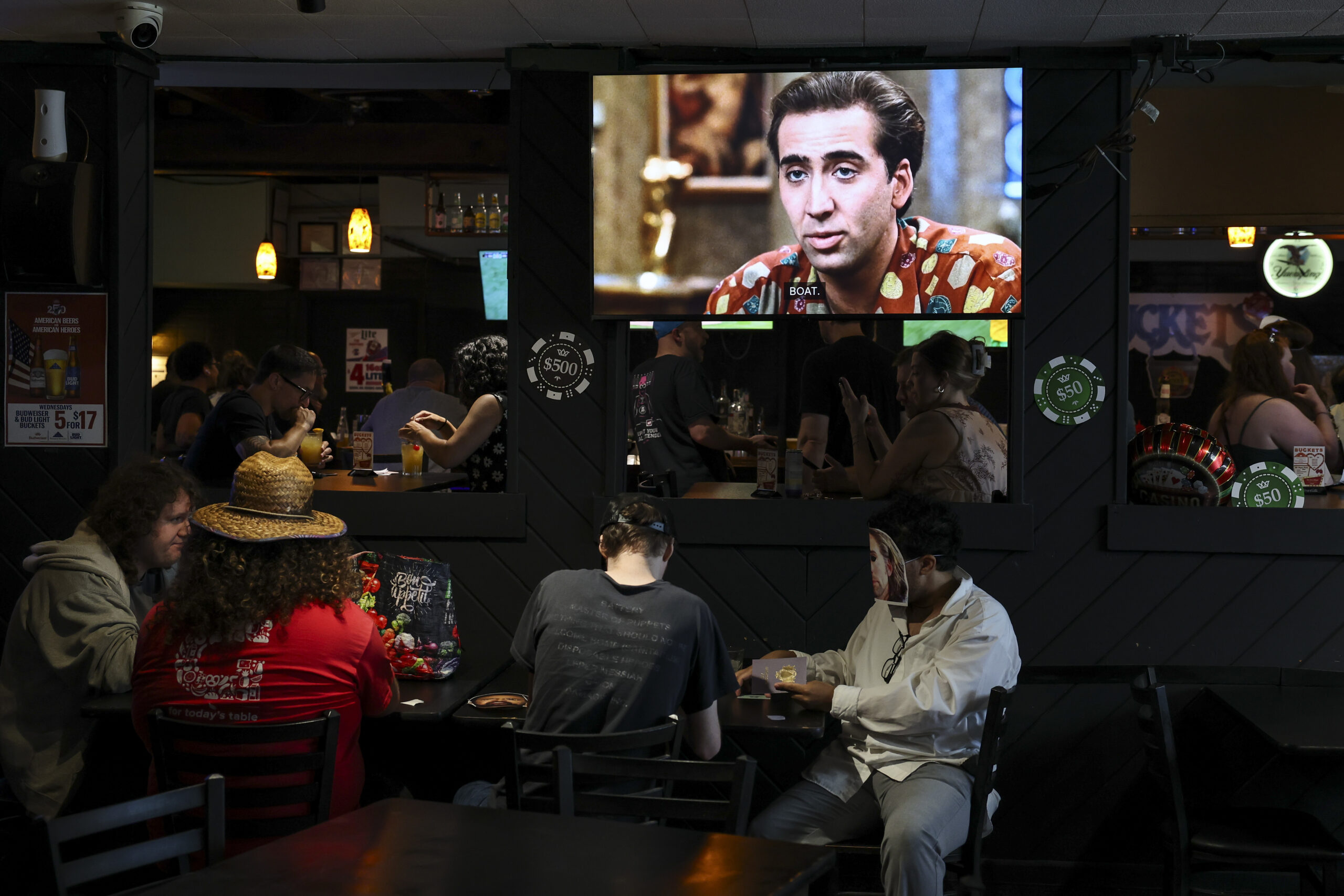
“Honeymoon in Vegas” plays at Buckets Bar during the Nic Cage cocktail crawl on Sunday in Jenkintown.
The crawl was spread across four Jenkintown bars — the Keep Easy, the Drake Tavern, Buckets Bar, and King’s Corner. Each one featured Cage-themed cocktails and hosted a “Cage match,” where participants went head-to-head in challenges based on Cage films.
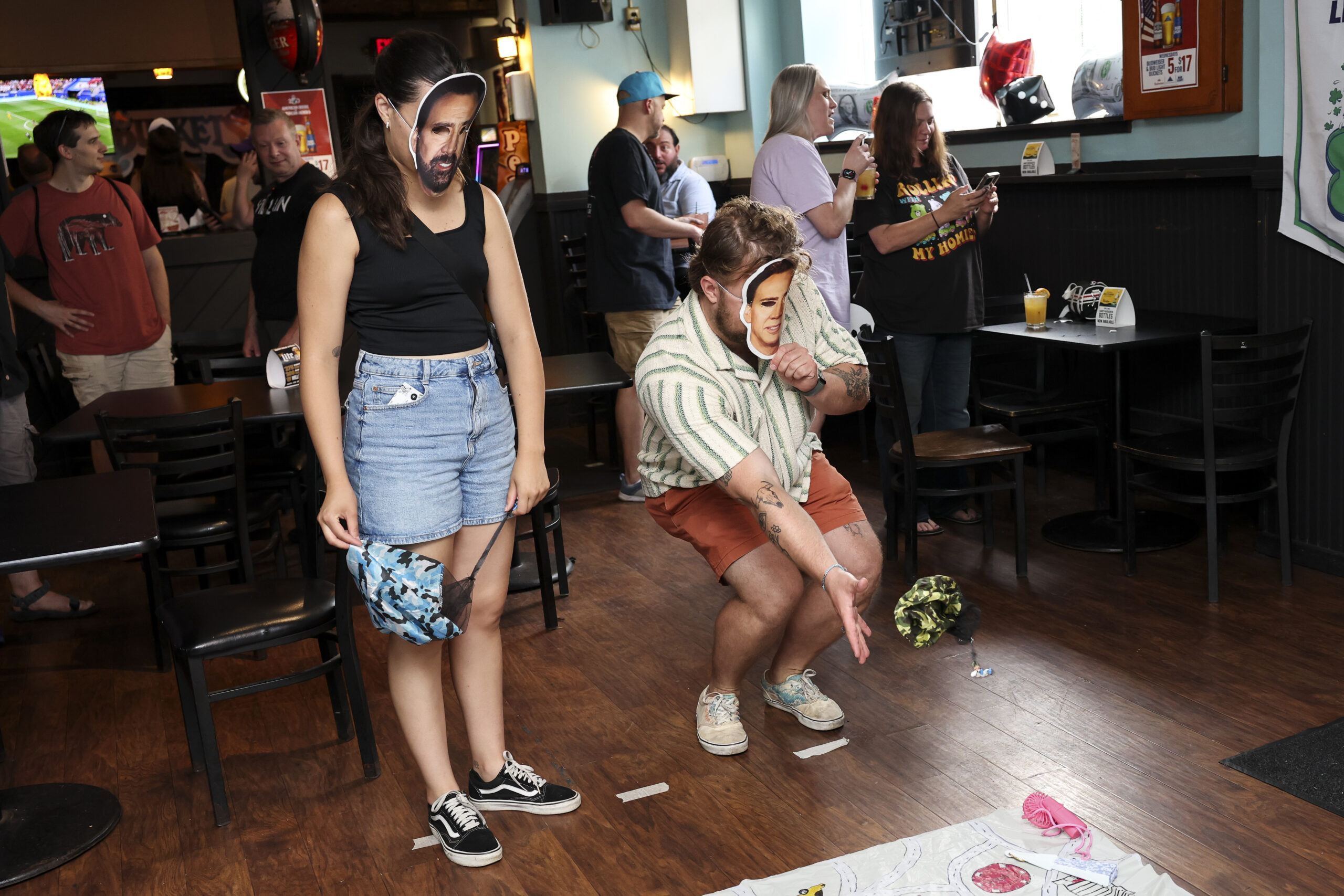
Organizer Mel Hager, an owner of the Keep Easy, said she sold out of the 50 Uncaged kits she’d prepared for $15 a pop. While the crawl was free to attend, those who bought a kit — including yours truly — received a passport book, which got you a free Cage match at each establishment (otherwise they were $2 to play); a piece of Cage cash, which was good for one shot at any of the bars (it’s a tiny dollar bill with Nic Cage’s face on it, I’m never spending that); and one of a variety of Cage masks (I felt like I won the lottery when I got the Con-Air Cage).
While I didn’t drink, I hopped around to the bars, tried my hand at the Cage matches, and talked with fellow Cage fans about what brought them out to the event. Here are five of the wackiest things I saw at the Nic Cage bar crawl.
1. H.I. fashion
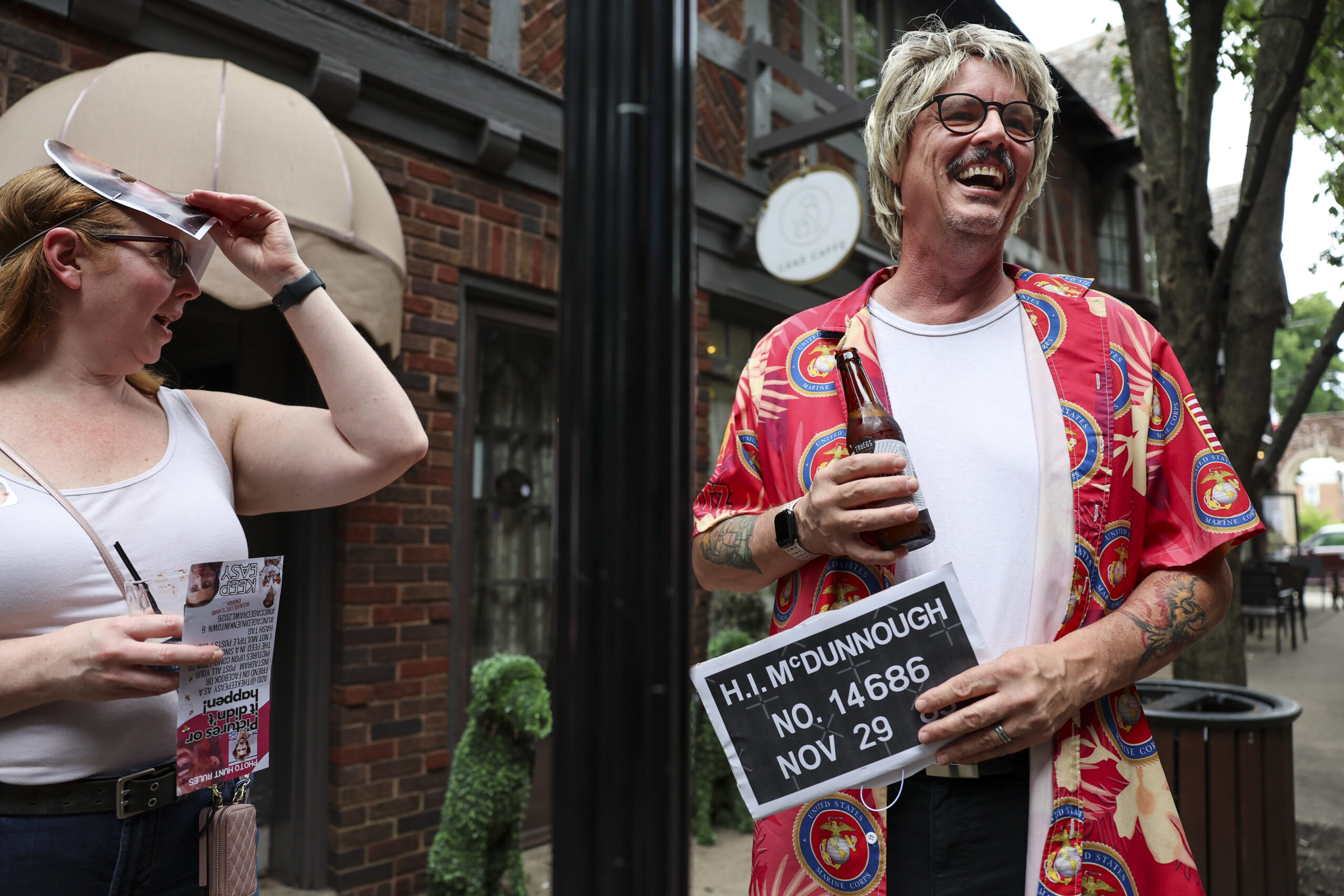
Vicky and Mike Hutz, of Huntington Valley, at the Keep Easy during the Nic Cage cocktail crawl on Sunday in Jenkintown. Mike Hutz is dressed as Cage’s character from “Raising Arizona,” H.I. McDunnough.
When H.I. McDunnough kidnaps one of the Arizona quintuplet babies in the 1987 Cohen Brothers classic, Raising Arizona, he proclaims to his wife: “I think I got the best one.”
Of the few Cage character costumes I saw Sunday — which included Ronny from Moonstruck, Cameron Poe from Con Air, and someone portraying Cage’s first role as an unnamed burger shop worker in Fast Times at Ridgemont High — Mike Hutz’s H.I. McDunnough costume was undoubtedly the best one. Hutz, of Huntingdon Valley, had the open Hawaiian shirt, a wig, and McDunnough’s mugshot board.
“What else are you going to do on a Sunday afternoon when you have a Nicolas Cage crawl option?” he said. “There’s nothing he can’t do and he does it with maximum cheesiness, which is just perfect for people who love cheesy.”
2. The faces
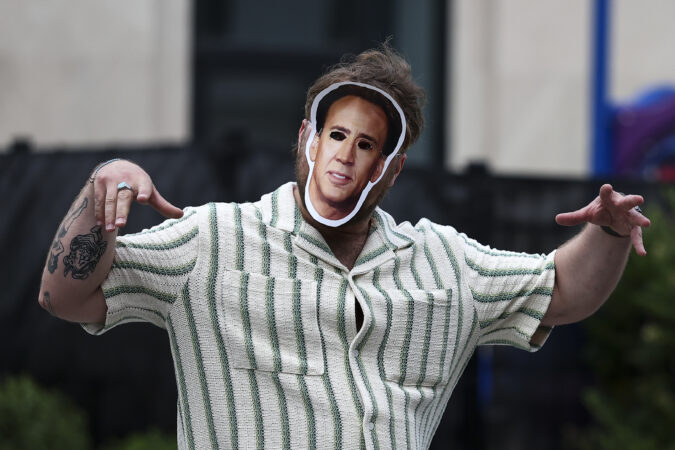
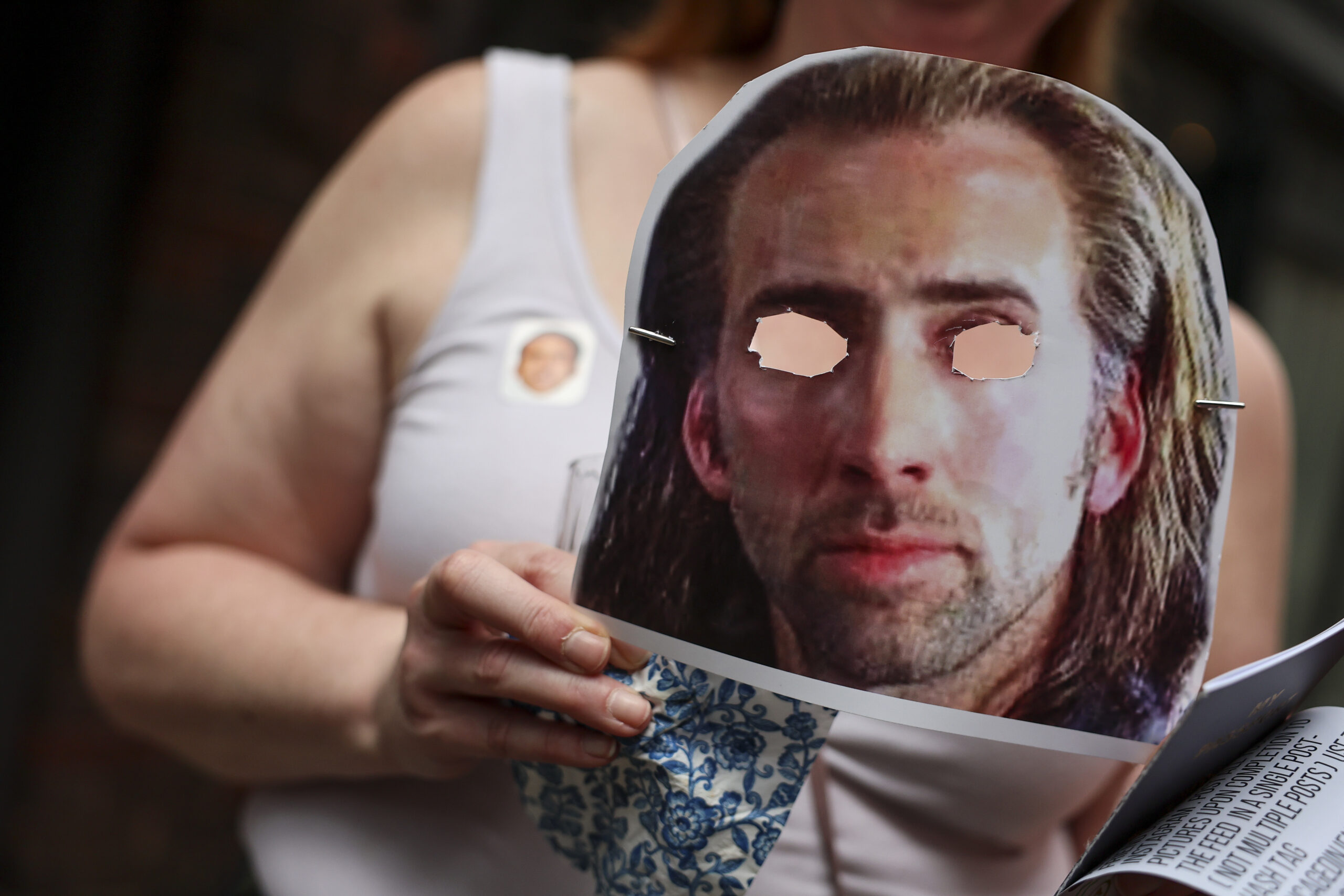
Seeing people at bars and walking the streets of Jenkintown wearing Cage face masks was both highly amusing and mildly unsettling, mainly because the eye holes were cut out wonkily, giving them a ragged, creepy edge.
Masks included Face/Off Cage, Con Air Cage, red carpet Cage, and Dracula Cage (from the movie Renfield).
Vicky Hutz, of Huntington Valley, holds a “Con-Air” Nic Cage mask at the Keep Easy during the Nic Cage cocktail crawl on Sunday.
Julia Sousa and Josh Douglas traveled to the crawl from Roxborough because they love Cage and Jenkintown. Douglas walked from bar to bar with his Cage face mask on, which seemed to startle some passing motorists.
“I’m pretty sure they thought I was Michael Myers,” he said.
3. The Cage matches
The games based on Cage films, while homespun, were clever and fun. At Buckets, the game was inspired by the scene in Honeymoon in Vegas where Cage skydives with a bunch of Elvis impersonators. Contestants had to throw toy parachute soldiers that were painted to look like Elvis onto particular spots of a mock-up of the Vegas strip for points.
Julia Sousa and Josh Douglas, both of Roxborough, compete in the “Flying Elvis Cage Match,” at Buckets Bar during the Nic Cage cocktail crawl on Sunday in Jenkintown.
At King’s Corner, where the challenge was based on the movie National Treasure, participants had to solve little metal mind-bender puzzles.
For the Spider-Noir Cage match at the Drake, you had to keep a balloon bouncing in the air while putting on a cape, mask, and fedora.
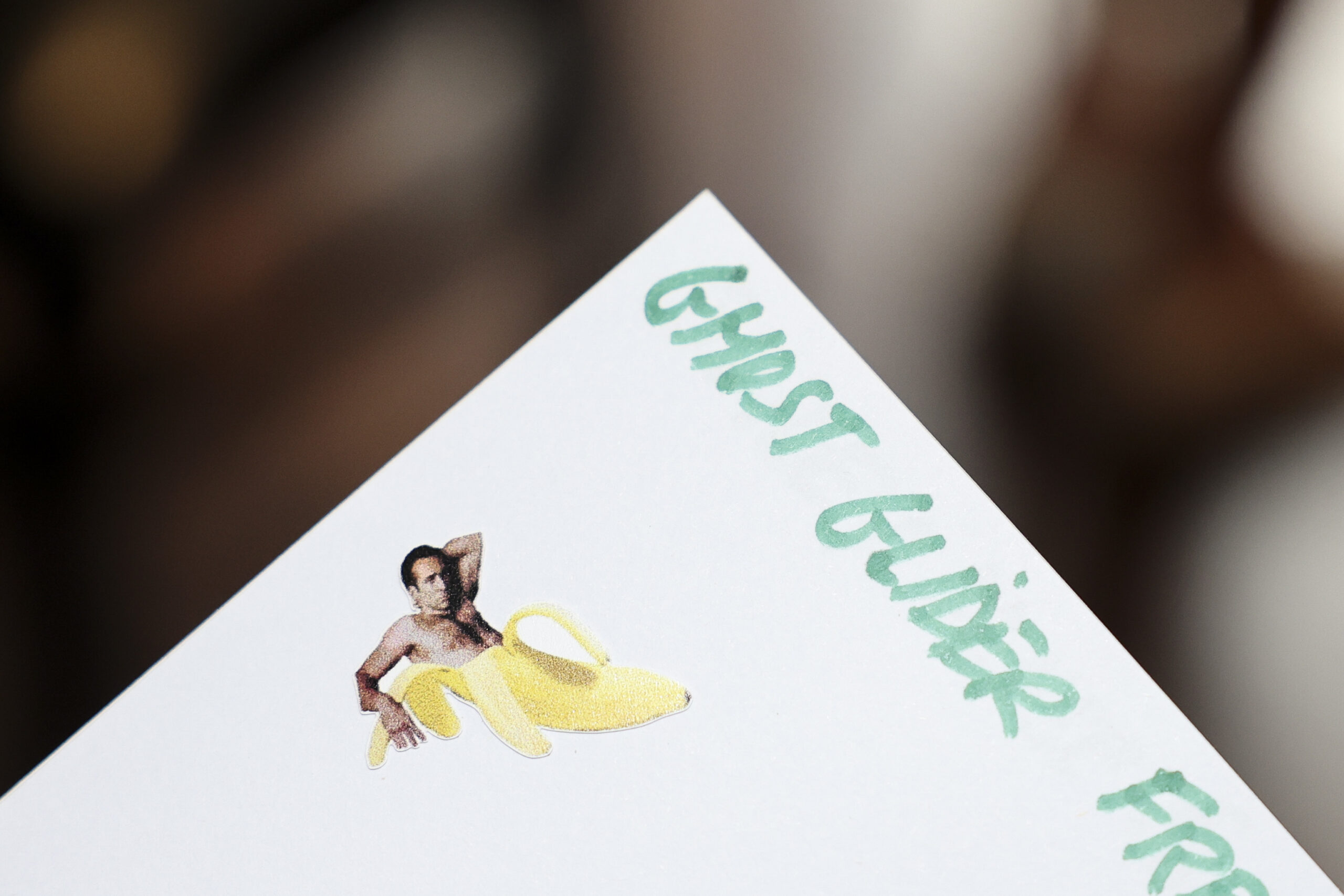
I failed spectacularly at all three of those challenges — and I was completely sober! The only one I did succeed at was called Ghost Glider. Based on the film Ghost Rider, the challenge was to to roll a penny down an inclined surface made to look like a road and into the tongs of a fork at the other end.
The “Ghost Glider” Cage match at the Keep Easy during the Nic Cage cocktail crawl on Sunday in Jenkintown.
4. Stickers and sage
For winning the Ghost Glider challenge, I received a bundle of sage and a sticker for my passport book of a shirtless, reclining Cage coming out of a banana.
Let’s address the sage first: Nobody could tell me why this was my prize for winning the challenge, which somehow makes it even better. I have two theories — it could be because sage rhymes with Cage, or maybe it’s because you light sage and in Ghost Rider, Cage lights on fire.
Whatever the reason, I’m gonna smudge some stuff up this weekend.
An a-peeling sticker columnist Stephanie Farr received for winning a Cage match challenge at the Keep Easy during the Nic Cage bar crawl in Jenkintown Sunday.
Now onto this banana sticker — I don’t know why it exists, but I am so happy it does. Each bar gave a different sticker if you won a challenge, but this banana-Cage split one was, by far, the most a-peeling.
Later at the Drake, I met Erica Adams of Bensalem and “her only friend of whimsy,” Amanda Knop, who’d driven from Baltimore to attend the Cage crawl with her. Adams had her own stickers of Cage’s head she was handing out like friendship bracelets at a Taylor Swift concert.
“I just love his movies and doing silly, fun things,” Adams said. “Nicolas Cage himself is very unserious. He’s lived a million different lives in a short span already.”
5. Picolas Cage
Justin Walsh poses for a photo with “Picolas Cage” as Jessica Lopez takes the photo at the Keep Easy during the Nic Cage cocktail crawl on Sunday in Jenkintown.
A giant cut-out of Cage as a pickle, aka Picolas Cage, was stationed outside of the Keep Easy during the crawl. As someone who likes Cage and cucumbers — but hates pickles — it was a jarring experience. But I saw others relishing the photo op so I didn’t make a big dill out of it.
In 1983, I finished college and joined the Peace Corps. I was sent to Nepal, where I taught English in a remote village. To get there, you took an overnight bus out of Kathmandu and then walked for three days into the Himalayan foothills.
My Peace Corps journey changed my life. It opened my eyes to cultural differences, and it taught me how to communicate across them. That’s been an invaluable tool for me, as an educator and a human being.
But when I got to graduate school, I discovered that many of my fellow left-leaning students — and some of their professors — had a decidedly less rosy view of the Peace Corps. It was a neocolonial project, they said, designed to enhance America’s global power and to keep poorer countries in perpetual dependency.
I’ve been thinking about their comments over the past few days, as news spread that U.S. Rep. Scott Perry (R., Pa.) had proposed to eliminate funding for the Peace Corps under amendments he submitted to a House appropriations bill. The York congressman was also an ardent supporter of Elon Musk’s dismantling of the U.S. Agency for International Development, which Perry called a “piggy bank for far-left causes.”
Yet, the Peace Corps — like USAID — has also been the target of left-wing attacks, which bear a strong echo to Republican ones. Neither side believes Americans can be a force for good in the world.
That’s why the Peace Corps matters. It’s based on the simple proposition that bringing different people together can help them thrive. And it’s a standing rebuke to cynics on the right and the left.
Going back to Richard Nixon, GOP politicians have tried to diminish — or destroy — the Peace Corps. Their last effort to zero it out took place in 2019, when U.S. Rep. Mark Walker (R., N.C.) proposed to “put America first” by defunding the Peace Corps and devoting the saved dollars to disaster relief at home.
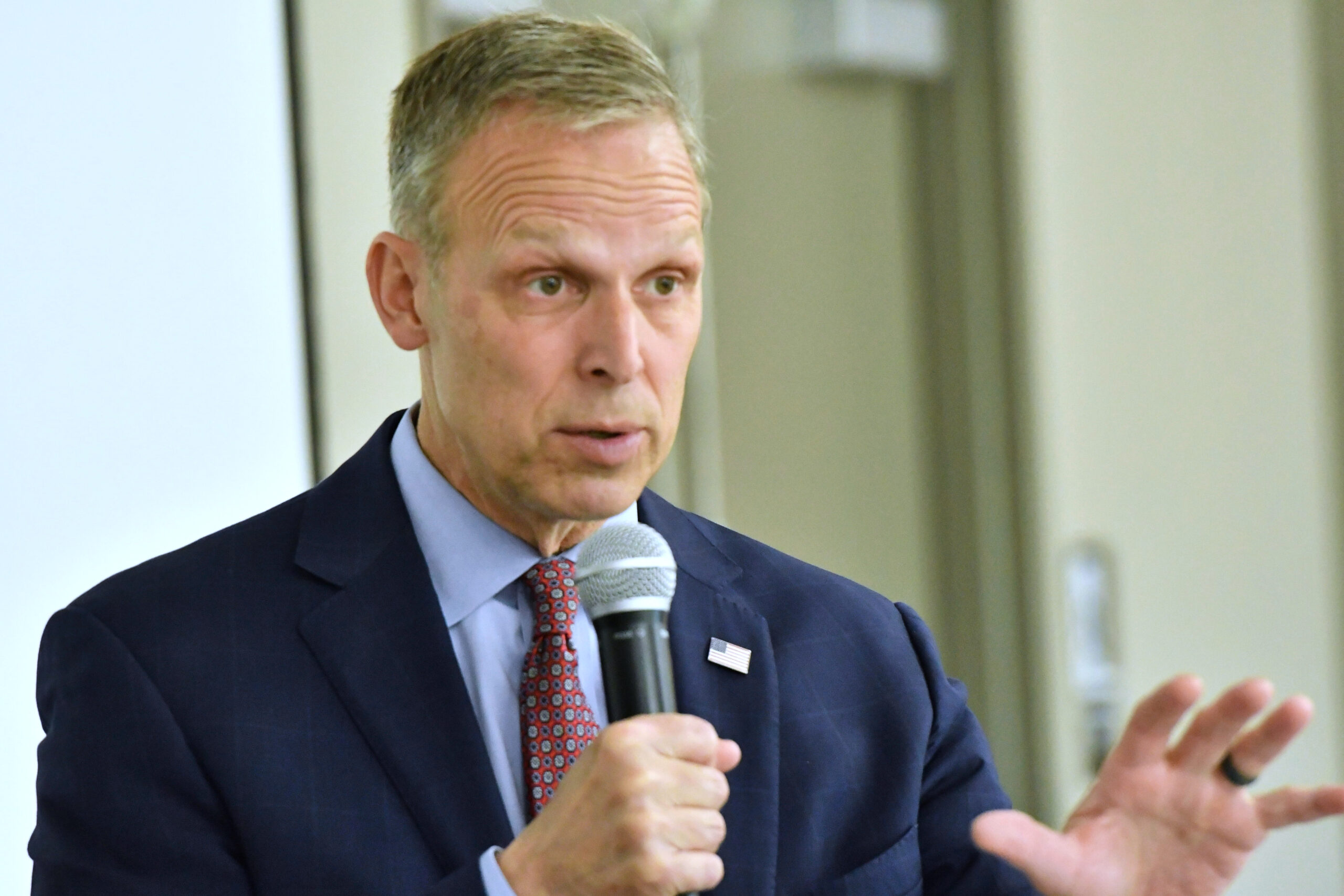
U.S. Rep. Scott Perry (R., Pa.) at a campaign event in front of employees at an insurance marketing firm in Harrisburg in 2024. He has proposed eliminating funding for the Peace Corps.
America’s own democracy is under strain, of course, thanks to the likes of Perry. As his text messages showed, he tried to assist Donald Trump’s effort to overturn the results of the 2020 election. He’s also facing a tough reelection battle this fall against Democratic challenger Janelle Stelson, whom he narrowly defeated in 2024.
Perry is betting that his campaign to defund the Peace Corps and other foreign aid will help him at the polls, and I hope he’s wrong. But I also think it’s wrong to dismiss the Peace Corps as an imperial power grab, as my grad student colleagues did.
That critique has been revived in the digital age by “No White Saviors,” a social media campaign begun in 2018. When the Peace Corps evacuated all of its volunteers during the 2020 COVID-19 pandemic, No White Saviors said they should stay home.
“No more pretending inexperienced young people are actually useful in countries and cultures they are alien to,” No White Saviors declared. “No more spending money on flights or evacuations, no need to teach language or culture.”
That demand was taken up within the Peace Corps itself. Calling themselves “Decolonizing Peace Corps,” disillusioned volunteers called for the abolition of the agency. The Peace Corps was a scam, they said, spending scarce resources that could be better used at home.
Scott Perry and Mark Walker couldn’t have put it better themselves. Whatever their other differences, America First Republicans and No White Saviors think the Peace Corps is a waste of taxpayer dollars.
Please. The 250,000 people who have served in the agency have generated enormous goodwill overseas and huge benefits at home. More than 80% of them continue to volunteer in their communities. A quarter of them have started businesses.
They’re also more diverse than No White Saviors assumes. In 1990, four years after I returned from Nepal, only 7% of volunteers were nonwhite; in 2020, 34% were.
I didn’t go to Nepal to save anyone. I went to live, and to learn, and to grow. And 25 years later, I returned to my village with my 17-year-old daughter. A bus road had been cut into the hills, so the three-day walk was narrowed to about six hours.
The school where I taught held an impromptu “welcome home” ceremony for us. I stood up to give a speech in my broken Nepali, but broke down in tears, overwhelmed by my good fortune to have known these good people. If we jettison the Peace Corps, fewer Americans will experience that kind of connection. I just don’t see how that can be good for America or for the world.
Jonathan Zimmerman teaches history and education at the University of Pennsylvania. He is the author of “Schooling Citizens: How Education Can Save Democracy,” which will be published next spring by the American Philosophical Society Press.
WASHINGTON — I arrived in Washington, D.C., on Wednesday and headed straight to the Reflecting Pool on the National Mall to see for myself what it looked like.
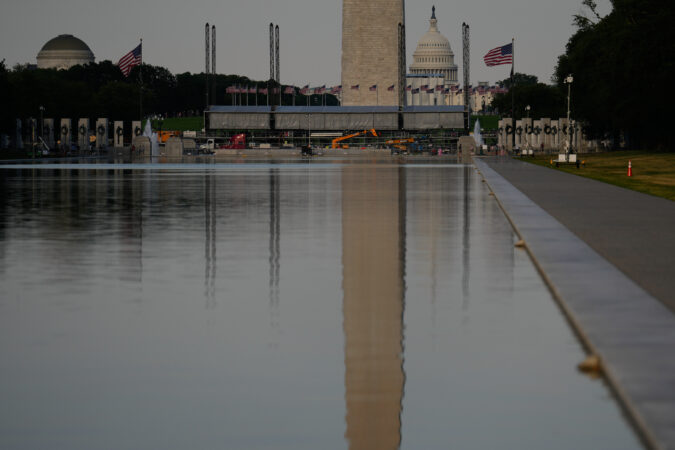
At first glance, it appeared as if sand had been tossed into the newly renovated water basin located between the Lincoln Memorial and the Washington Monument. But my eyes were mistaken. “The sand” was actually the underlying surface showing through as the coating at the bottom started peeling off.
Peeling is seen in the blue coating on the bottom of the Lincoln Memorial Reflecting Pool, Wednesday, June 24.
As I bent down to get a closer look, I made a point to keep my hands close to my body. I knew better than to touch so much as a drop of that water,since people have allegedly been arrested for vandalism after touching the floating detritus.
President Donald Trump blames “radical lunatics” for defacing his latest renovation project. “This isn’t random mischief — it’s targeted sabotage by anti-American crackpots who despise a strong, proud, and beautiful country. They cannot build; they can only destroy. They cannot celebrate our heritage; they can only deface it,” readsa statement released by the White House.
I walked around the pool’s entire perimeter. I didn’t notice any stench, not even a whiff. But the reports are true, and Trump’s $14 million no-bid boondoggle to renovate the Reflecting Pool in advance of the nation’s 250th anniversary has faced one stumbling block after another.
Depending on the angle of the sun and where you’re standing, the combination of the newly added dark paint that’s already chipping away and the algae blooms gives the illusion that the pool is a beautiful aquamarine color. I didn’t expect that.
But it’s not what the president ordered.
Nor is it what the American people want or need right now. We want the war with Iran to be over, but Trump is more concerned with putting a Mar-a-Lago-esque stamp on the nation’s capital. He has barely acknowledged that Americans are most concerned about how to pay for gas, food, and healthcare insurance premiums.
The Lincoln Memorial Reflecting Pool was fine the way it was. Trump should have followed President Joe Biden’s lead and just left it alone. Same thing with the White House East Wing that Trump ordered torn down for a $600 million ballroom project. Same thing with the Kennedy Center for the Performing Arts before Trump made himself chair and slapped his name on the living memorial built to honor the late President John F. Kennedy.
Trump’s gonna trump, though.
Back in April, he announced plans to install an industrial-grade surface on the Reflecting Pool. He originally wanted it to be turquoise, but took the contractor’s advice and went with a darker color that he calls “American Flag Blue.” In typical Trump fashion, he claimed it would only take a week to rehab and cost about $1.5 million, only for the project to take months to complete and the cost to balloon to $14 million.
Workers refilled the pool on June 9. The water quickly turned green, which the U.S. Department of the Interior blamed on “residual algae from the supply lines.” It has since been treated with hydrogen peroxide and ozone nanobubbles. And the blue material coating the bottom has started coming off.
The century-old Reflecting Pool has had issues for years. But it’s still a beautiful thing to behold.
Civil rights activists famously flanked it while listening to the Rev. Dr. Martin Luther King Jr. deliver his famous “I Have a Dream” speech in 1963. Same thing when Marian Anderson performed on the steps of the Lincoln Memorial in 1939, after the Daughters of the American Revolution refused to let the African American contralto sing intheir concert hall because of her race.
Under Trump, the Reflecting Pool has become a Rorschach testof where we are right now as a nation. Some only see its beauty, while for others, the bumbling rehab symbolizes yet another Trump failure.
“I came to see for myself. I wanted to see what all the hoopla was about,” said Cedric Jackson, an Atlanta resident whom I spotted taking photos. “It’s not as green as I thought it was going to be. So they’ve obviously been doing some kind of work.”
But then he added, “I think this is probably something that could have been avoided.”
I couldn’t agree more. Like so much damage and harm the Trump administration has inflicted during this second term, it didn’t have to be this way.
Immigration is complicated. That makes polling on the topic difficult, as the same Americans who will tell you they support mass deportation one day will turn around and say they back a path to citizenship the next. So, which is it? Well, it depends.
As crowded scenes of immigrants clustering at the southern border were endlessly repeated on TV, many Americans felt the Biden administration was not taking national security seriously and had flung open the golden door to anyone with a pulse and a sob story.
Then, as U.S. Immigration and Customs Enforcement agents descended on Minneapolis, masked, heavily armed, and dangerously encouraged to ignore people’s constitutional rights — ultimately killing two U.S. citizens because they dared to question authority — even many Donald Trump supporters rose up to say this is not what they voted for.
Unsurprisingly, most Americans fall somewhere in the middle — where balancing immigration control with humanitarian values looks at what makes the most sense for the country and for the people who are looking for a better life here.
But that’s illegal immigration. On legal immigration, most Americans are all in, with only one in five opposing it. Why, then, is the Trump administration hell-bent on making life miserable for legal immigrants?
Earlier this month, a court ruled against an administration decision that froze processing of immigration benefits like work permits and green-card applications for nationals of 39 countries targeted by a travel ban. These are people already in the United States legally who found themselves in limbo for months — many losing their jobs and risking deportation — after U.S. Citizenship and Immigration Services determined in January it would keep the $1 billion in fees these immigrants paid and give them nothing in return.
Meanwhile, renewals under the Deferred Action for Childhood Arrivals (DACA) program for immigrants brought here as children have been hit with delays, and approvals of legal permanent residency applications, known as green cards, have fallen by around 16% — all part of the administration’s strategy of bureaucratic sabotage in the guise of “enhanced security.”
The administration has also banned permanent legal residents from qualifying for government-backed small-business loans, while some immigrants, including DACA recipients, can no longer hold commercial driver’s licenses, regardless of possessing a legal work permit.
Two U.S. Supreme Court decisions released last week will only continue to embolden the administration’s anti-legal immigrant push.
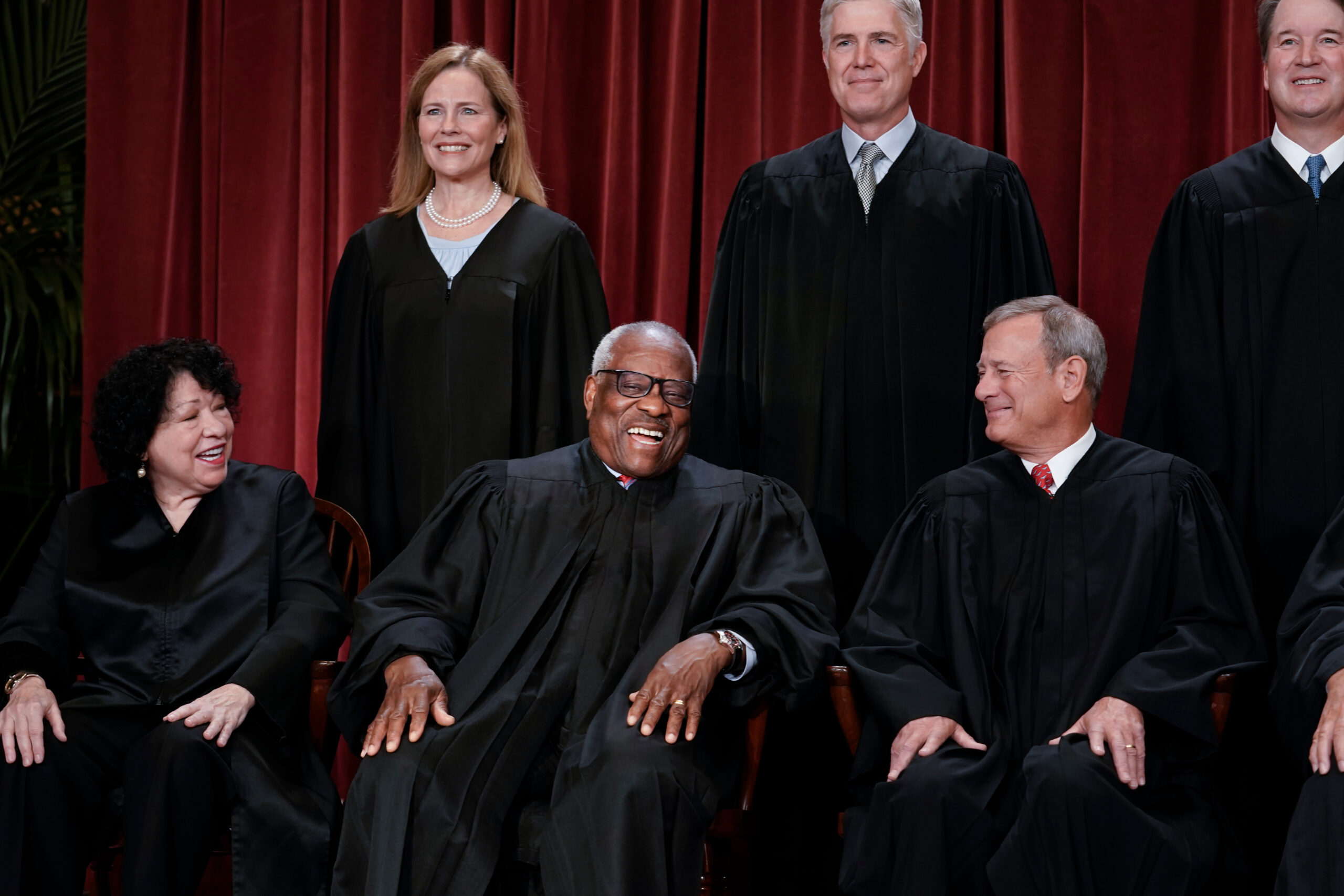
Members of the Supreme Court sit for a group portrait in 2022. Bottom row, from left, Associate Justice Sonia Sotomayor, Associate Justice Clarence Thomas, and Chief Justice of the United States John Roberts. Top row, from left, Associate Justice Amy Coney Barrett, Associate Justice Neil Gorsuch, and Associate Justice Brett Kavanaugh.
On Tuesday, the court’s conservative justices affirmed that border officers do not need “clear and convincing evidence” that a green-card holder seeking to reenter the U.S. has committed a crime to deny them entry. While I hope that one day the Clarence Thomas “border vibe check” joins the “Kavanaugh stop” in the annals of legal ignominy surrounding immigration enforcement, the court’s 6-3 decision makes a mockery of the idea that someone is innocent until proven guilty.
Perhaps even more immediately concerning is the high court’s ruling Thursday allowing the president to end Temporary Protected Status, or TPS, for roughly 350,000 Haitians and 6,000 Syrians.
The TPS program, a bipartisan congressional creation under President George H.W. Bush, gives immigrants work permits and protection from deportation if they come from countries determined to be too dangerous to go back to. While the word temporary is right there in the name, some program participants have been in the country for decades and have built lives here. For others, the nations they fled are still unsafe to return to, including Haiti, which is in the grip of gang violence and widespread hunger.
That the conservative justices also found that Trump’s comments against Haitians were not “overtly racial” is absurd. Trump infamously referred to Haiti and African nations as “shithole countries” in the same 2018 meeting in which he wondered aloud why America couldn’t have more immigrants from places like Norway. For context, this is the same administration that considers white South Africans the only persecuted minority worthy of asylum in the U.S.
For the moment, the court’s decision applies only to Haitian and Syrian immigrants with TPS, but it has opened the door for the president to do what he has wanted to do since his first term, which is to end the program wholesale. That would impact the 1.3 million TPS holders from around 17 nations and their families, many of whom are U.S. citizens.
While the human impact on communities of this mass de-legalization effort is immeasurable, the economic damage of Trump’s anti-immigrant policies is not.
The 500,000 or so DACA recipients, for example, contribute nearly $17 billion to the U.S. economy annually, also paying into federal social safety net programs they are not legally able to access themselves, according to the immigration rights group FWD.us. TPS recipients contribute about $29 billion a year to the economy and pay $7.8 billion in combined federal, payroll, state, and local taxes.
An immigration policy calculator produced by the Manhattan Institute finds that the kind of policies favored by the administration would add $618 billion to the national debt over 10 years, and leave every American poorer.
Reasonable people can disagree on immigration, but at the very least, Trump’s exclusionary ideas are an economic dead end.
A few months back, the Donald Trump-fried chair of the Federal Communications Commission, Brendan Carr, urged broadcasters to air patriotic programming for America’s 250th birthday — including regular on-air recitations of the Pledge of Allegiance.
I couldn’t find any reports about TV or radio stations that have actually done this. Maybe they’ve figured out that the bit at the end — that stuff about “liberty and justice for all” — has been rendered into utter baloney by Carr’s strongman boss.
For anyone who still believes the myth that the United States’ criminal justice system is the envy of the world, I say: Let them come to Fort Worth. In northern Texas, a crime committed by one man with the “wrong” politics gave the Trump regime the ammunition it craved for a free-speech crackdown that makes a mockery of America’s birthday bash.
Ironically, it was on July 4, 2025, that a crew from the small but tight-knit left-wing community in the Dallas-Fort Worth (DFW) metroplex ventured 30 minutes south to the Prairieland Detention Center run by U.S. Immigration and Customs Enforcement to protest the squalid conditions and overcrowding there.
The protesters dressed in black; some brought fireworks or medical supplies. The evidence shows they committed some minor crimes — vandalizing a vehicle, for example. But when local police were called, one man — Benjamin Song, an ex-Marine known to local activists as “Champagne” — committed a serious offense, firing a gunshot that wounded a town police officer in the neck. The officer later acknowledged he was pointing his gun at a fleeing protester when Song fired his weapon.
The Prairieland incident came right as the Trump regime was striving to brand “antifa” — a loose ideology that fascism should be resisted by any means necessary — as some kind of highly organized terrorist cell. FBI agents fanned out across DFW, ultimately building a riot-and-terrorism case against nearly two dozen leftists, including the group — now known as the Prairieland 9 — that stood trial this winter at the Fort Worth federal courthouse.
Among the evidence prosecutors presented to bolster their contention that the protesters were part of some kind of terror cell included their black garb, their Signal chats in which they discussed plans for a “noise protest” at Prairieland, or their decision to bring medical supplies with them to the demonstration, which occurred at a time when anti-ICE protests were meeting violent responses. One of the alleged coconspirators wasn’t even at the protest; he’d moved a box of anti-fascist magazines before agents visited his home after his wife called from jail.
Tamera Hutcherson, a local activist who attended much of the trial as a paralegal for defendant Savanna Batten, told me by phone Saturday that the case against Batten “was based on the fact that she showed up to the protest wearing black, she had medical supplies on her, which included a tourniquet, and that she was there for a noise demonstration to set off fireworks.”
Batten, Song, and the other seven were convicted in March, and their sentencing was decided by the trial judge — Mark Pittman, a Trump appointee — and his colleague, Reed O’Connor, a federal jurist so well known for his right-wing rulings that the Trump regime and allies like trillionaire Elon Musk look for excuses to bring cases before him.
In this case, O’Connor was happy to say the quiet part out loud: that a repressive government is seizing on this case to send a message to anyone who wants to aggressively protest mass deportation or other abuses. He called the protest “an assault on democracy,” adding, “The need to deter this type of conduct is high.”
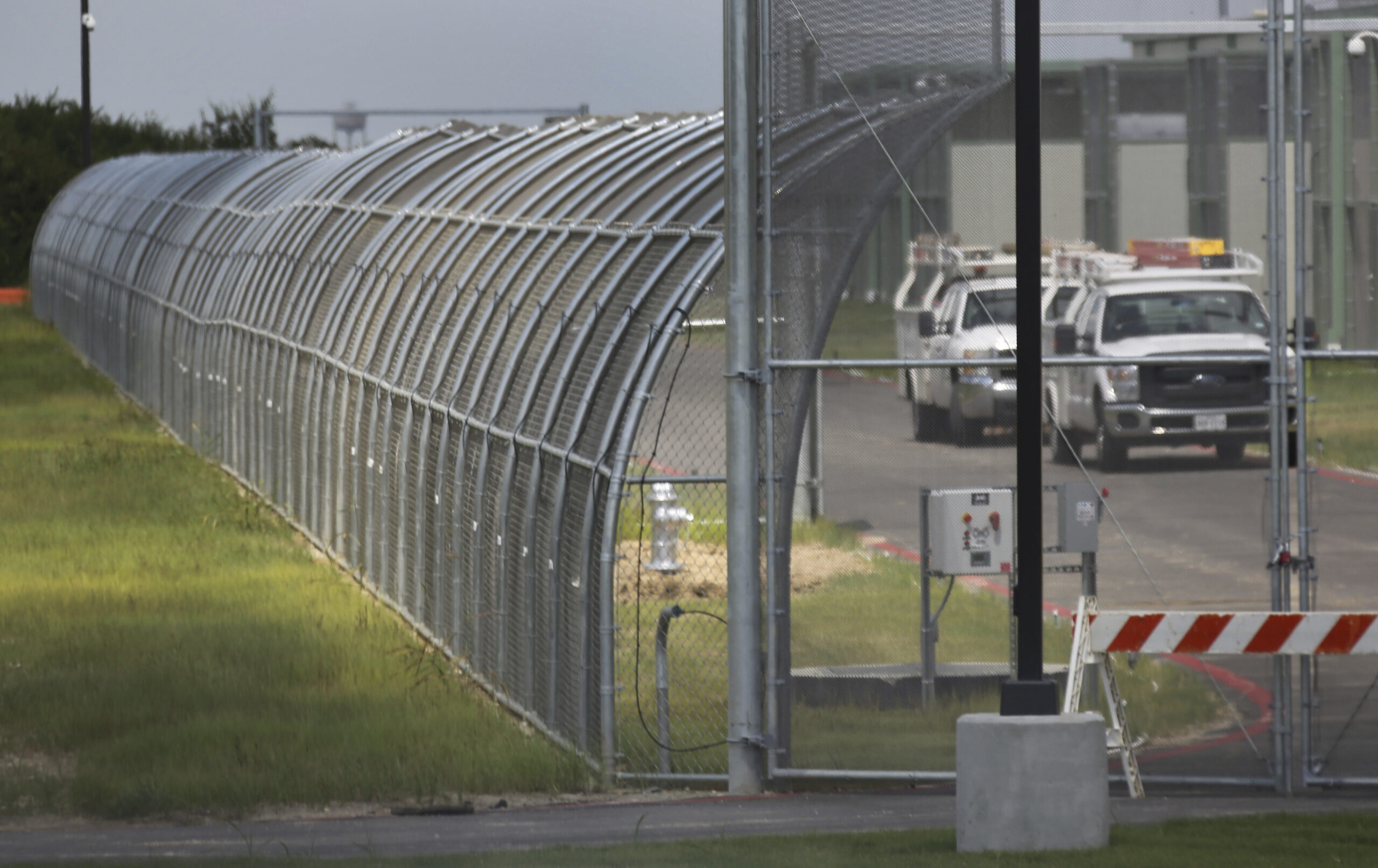
Trucks drive at the Prairieland Detention Center in Alvarado, Texas, in September.
Still, courtroom observers were stunned when the sentences came down. It wasn’t a total shock when Song, convicted of attempted murder, was given 100 years, but Batten, the black-clad medic, got 50 years — a virtual life sentence for dissent — as did several others. Daniel Sanchez Estrada, the magazine mover, got 30 years.
Hutcherson, who was in the courtroom for last week’s sentencing, called O’Connor’s comments “chilling … to have the judge say this out loud, it really sunk in.”
What’s sunk in is that the federal government is pouncing on the Prairieland 9 convictions to unleash a crackdown on left-wing protest that will make America’s past sins like the Palmer raids, McCarthyism, and the trial of the Chicago 7 look like child’s play.
In recent days, we’ve seen federal charges against the Minneapolis 15 protesters who monitored the Minnesota ICE raids in Signal chats, and an indictment against two Atlanta protesters against the “Cop City” police training center — even after a local judge had essentially laughed state charges against them out of his court. When a state prosecutor offered evidence of criminality that the Cop City demonstrators wore black clothes and masks, Judge Robert Flournoy said, “Oh, that sounds like ICE.”
There’s a lot going on here. The Trump regime — which last fall designated “antifa” (again, not an actual group) as a terrorist organization, abusing its vast post-9/11 powers as many of us feared it would — is aggressively clamping down on the First Amendment-protected right of dissent ahead of the November midterms, when its dictatorial-minded leader will stop at nothing to keep his party in power.
But these 50-year prison sentences, which carry the sauerkraut stench of German cooking, circa 1933, are also an exclamation point on the death of even pretending there is anything resembling impartial criminal justice in America. We are now a land where left-wing dissenters will spend decades behind bars reading about the latest millionaire fraudster or Republican apparatchik to get out of jail free.
Look, we’ve always been more than delusional about praising U.S. justice as the supposed envy of the free world despite the reality that rich kids or celebrities like the late O.J. Simpson who hire the best lawyers can walk free after people die, and white-collar crime is treated as a sport, while Black, brown, and poorer defendants form the backbone of one of the planet’s highest incarceration rates.
But the Prairieland most-of-your-life sentences didn’t happen in a vacuum. They are the counterweight to Trump’s Day One pardons for theroughly 1,500 right-wing rioters on Jan. 6, 2021, who stormed and vandalized the U.S. Capitol in an insurrection blamed for five immediate deaths, with more than 140 police officers injured.
At the same time the Prairieland 9 were getting frontier justice, the New York Times reported that Trump’s Justice Department quashed a criminal probe into the circumstances behind the president’s clemency for a multimillionaire named David Gentile. The private equity executive had been sentenced to seven years in prison and ordered to pay $15.5 million in restitution for a $1.6 billion scheme that defrauded small investors. Many lost their life savings — arguably a greater harm than anything that happened at the Texas ICE detention center.
But Trump granted clemency to Gentile after just two weeks in prison. Prosecutors were looking into the relationship between Gentile and a retired priest from Queens who has become a top supporter and personal friend of Trump and who lobbied the president for Gentile’s release. But higher-ups reportedly told New York mid-level prosecutors to end their probe into questions like whether the priest was paid.
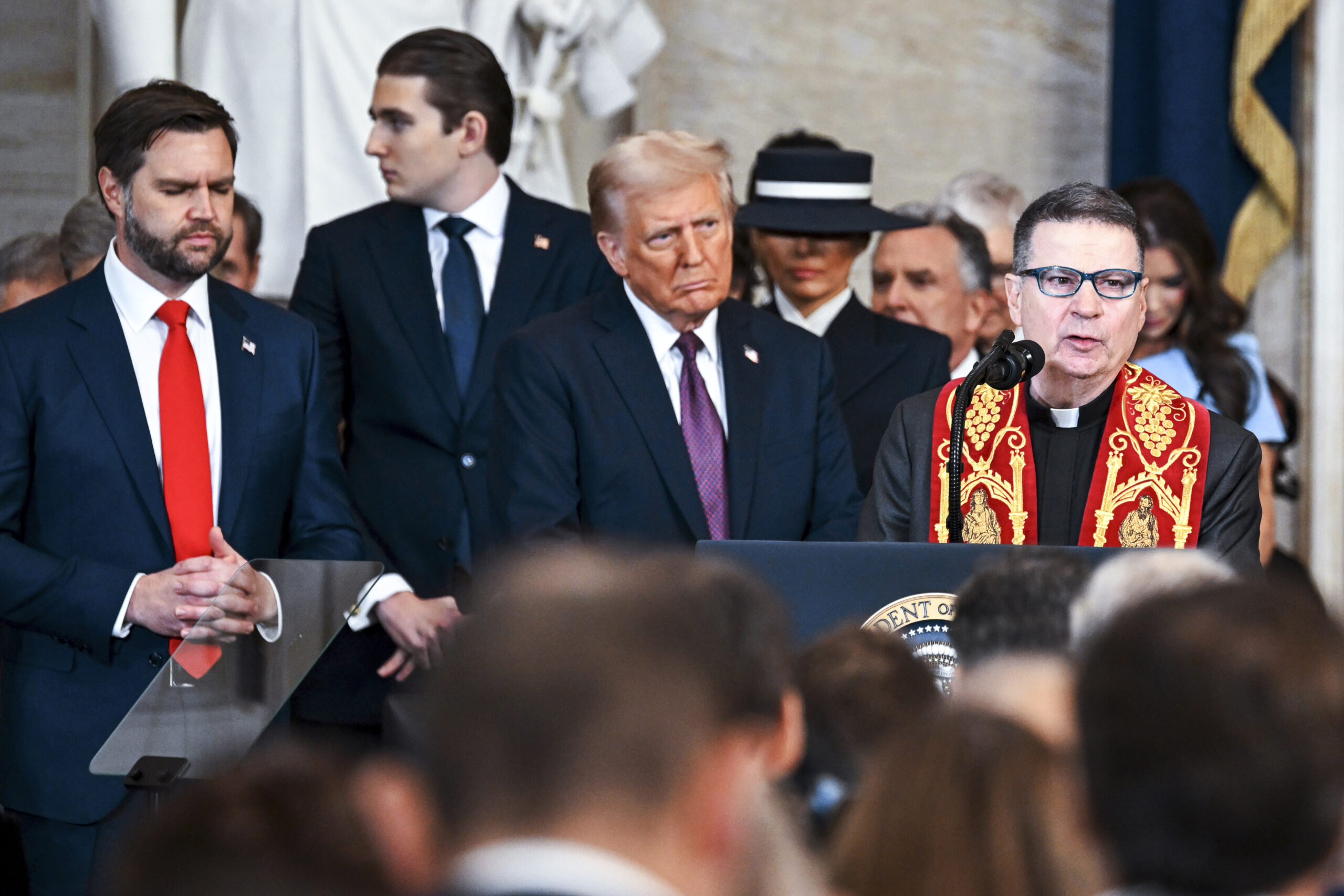
The Rev. Frank Mann speaks next to Donald Trump during Trump’s second inauguration at the U.S. Capitol on Jan. 20, 2025.
In a matter of months, Trump has exploited the existing cracks in the federal justice system to make it a blunt instrument of personalist dictatorship — a “purge” for his criminal friends or bad guys willing to make a donation, while depriving those who dissent of their liberty.
I’m just barely scratching the surface, as Trump’s injustice department also conducts high-profile investigations into law-abiding political opponents, including top Democrats or people likeformer FBI chief James Comey. Or consider this: No action has been taken against Jonathan Ross, the ICE agent who’s been publicly identified as the killer of unarmed Minneapolis motorist Renee Good. When a Syracuse, N.Y., woman ID’d Ross and asked why he had not been indicted in an Instagram post, federal agents entered a voting place where she was working as a poll worker and ordered her to take the inarguably true post down.
The nation’s founders, who declared American independence 250 years ago this week, strongly believed that justice was the backbone of their experiment in democracy. The Bill of Rights they’d enact in 1791 is largely about the right to a fair trial, avoiding unlawful searches and seizures, and the essential liberty of protesting an unjust government. More than two centuries later, the White House seems more governed by George Orwell’s 1984, as they criminalize left-wing “thoughtcrime.”
“I think it’s very symbolic … that this protest happened on theFourth of July,” the Texas activist Hutcherson told me. “This year is the 250th year of America being America. And when we think about the inception of this nation, it was because of protest; it was because of dissent. And so it feels very contradictory that because someone has leftist or anti-fascist views that now they can be deemed criminal or a terrorist to the U.S. government. You know, we’re not seeing the same energy given toward people that have right-wing views.”
The firecrackers of dissent that went off on Independence Day 2025 over an ICE gulag in Texas were much more of a tribute to what America was supposed to be than whatever Trump detonates over his morally empty National Mall on this July Fourth. In a United States with liberty for billionaires and justice for none, what are we even celebrating?
As we approach the 250th anniversary of America’s founding, I can’t help recalling my 1999 visit to the Central Asian republic of Turkmenistan, whose dictator had a fetish for white marble architecture decorated with gold.
As I drove around the dusty capital of Ashgabat, it was impossible to escape Saparmurad Niyazov’s face.
It was emblazoned on banners hanging from government buildings and appeared on every denomination of paper currency. Statues of the dictator (I learned there were more than 2,200 of them in a country of 4.2 million people) loomed all around the city. The oil fields of this desert backwater funded Niyazov’s whims. Much of the country’s budget went into his private slush fund — all while he slashed resources for healthcare and renamed the months of January and April after himself and his mother.
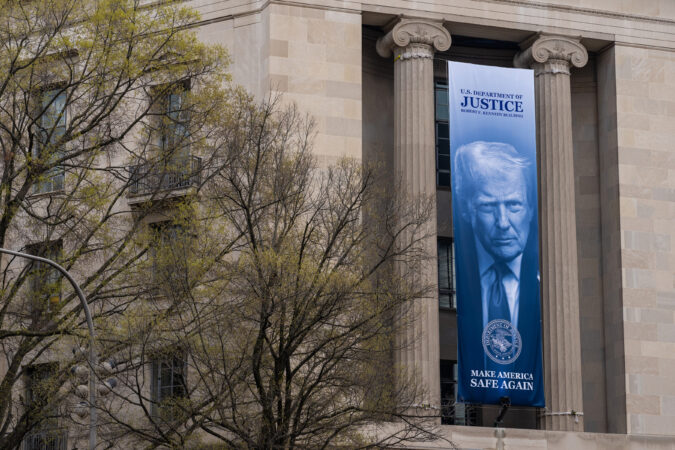
What sticks out most vividly among my memories, as President Donald Trump turns our nation’s Semiquincentennial into a celebration of himself — festooning government buildings with huge banners of his face and holding a political rally on the mall Wednesday to kick off July Fourth events — is Niyazov’s arch.
The three-legged arch, sitting in the center of Ashgabat, supported an observation tower that, at 226 feet, soared higher than the nearby presidential palace. The structure was topped by a 36-foot gold plated statue of the Asian potentate that rotated constantly to face the sun. Perhaps if the planned 250-foot high “Arch de Trump” ever gets built, and blocks the view of Arlington National Cemetery, the face on the gold winged figure atop the memorial will look familiar.
It seems all dictators and wannabes have the same instincts: to build grandiose monuments of marble and gold, the bigger the better, in order to impress their subjects with their magnificence. Back in Ashgabat all that seemed bizarrely amusing. Whoever thought it could happen here?
Instead of honoring the country’s founding values and documents in this year’s celebrations, Trump is performing like a wannabe Niyazov of Turkmenistan.
The main point of the Declaration of Independence was that governments “derive their just powers from the consent of the governed,” i.e., the people. The 13 colonies were quitting the British Empire because they refused to submit to a monarch who tried to rule by decree, rather than respect the elected representatives from the colonies.
Trump, who disdains any restraints on his powers and wants to rig election rules so they guarantee GOP victories, is turning the meaning of the Fourth of July on its head. I find it personally painful how this distortion has changed attitudes toward the United States all around the world.
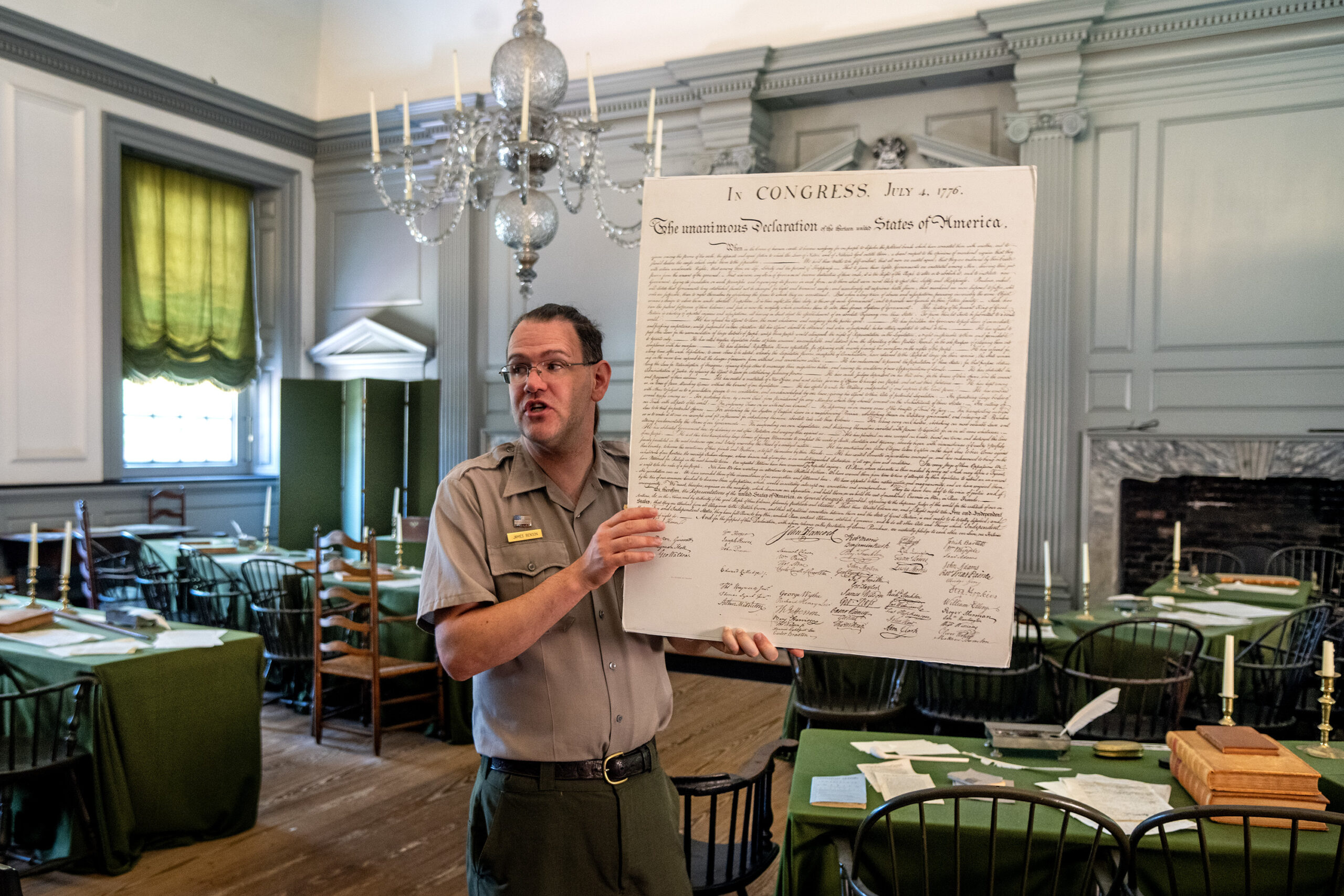
National Park Service ranger James Benson uses an enlarged copy of the Declaration of Independence while talking to visitors in the Assembly Room — where both the declaration and U.S. Constitution were signed — on the first floor of Independence Hall in Independence National Historical Park in August 2025.
For decades I’ve reported on the struggles of other countries to achieve the kind of free elections that most Americans have taken for granted for decades. I had the privilege of bearing witness to struggles for some form of democracy in the Soviet Union and China, in new post-Soviet nations, during the 1980s upheavals in the Philippines and South Korea, during the Arab Spring revolts, in post-Saddam Hussein Iraq, and during the post-Taliban interval in Afghanistan.
Those who struggled for the right to choose their leaders often paid a terrible price. More often than not, their struggles failed or have been reversed after brief periods of freedom.
Throughout those struggles, the U.S. election system was a lodestar – even though reformers abroad may have opposed specific U.S. foreign policies or the U.S. exercise of overweening power. That admiration was especially evident in the ’80s and ’90s inside communist countries that were trying to break away from their past.
Russians listened to Voice of America (now nearly shuttered by Trump) and would eagerly query me about U.S. politics on my yearly visits to Moscow during those decades.
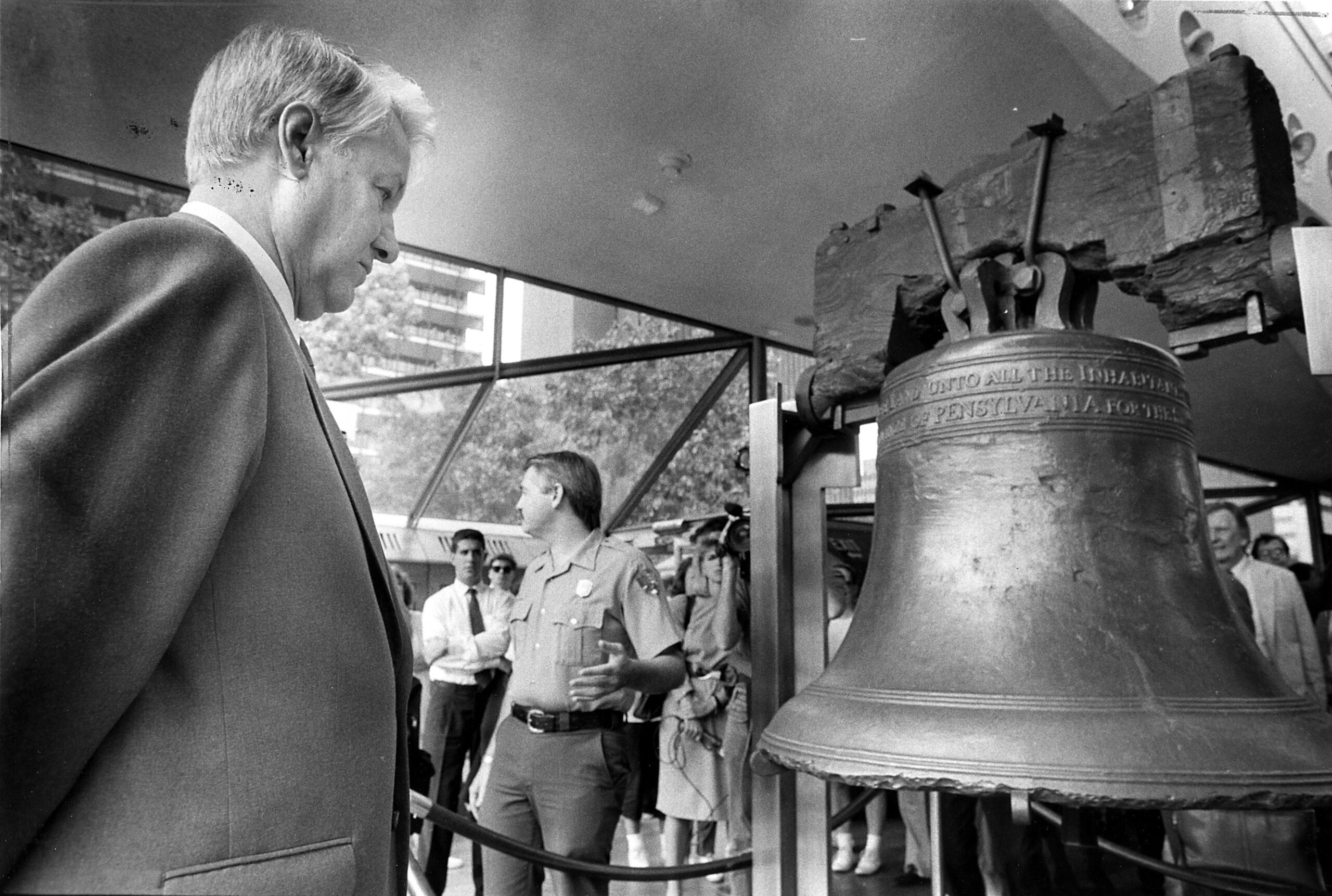
In 1989, I shadowed then-President of the Soviet Republic of Russia Boris Yeltsin for a day when he visited the room where the Declaration of Independence was adopted inside Independence Hall. He asked the National Park ranger how the American colonies apportioned power between states and central government after independence. I realized only later that he was preparing to take Russia out of the Soviet Union and wanted tips on how the Founding Fathers managed their exit from the British Empire.
Boris Yeltsin views the Liberty Bell during a visit to Philadelphia in Sept. 13, 1989. Seeking to view U.S. democracy up close, he traveled the country, including a visit to the White House.
In May 1989, Chinese students erected a 33-foot-tall Goddess of Democracy statue in Tiananmen Square inspired by the Statue of Liberty. I was in Poland at the time, observing that country’s first free parliamentary elections on June 5 that were won by Lech Walesa’s Solidarity movement. But on June 4, I watched with horror on television, along with Polish colleagues, as the Chinese army sent tanks into Tiananmen Square.
Yet, despite hundreds to thousands of deaths (the exact figure is stillunknown), Chinese democrats didn’t give up. In the 1990s, I reported on their efforts to press the central government to permit village, and then town, elections. I interviewed law students at top universities who traveled to small villages to instruct peasants on their rights according to Chinese laws that were ignored by officials.
This progress has been totally reversed by China’s hard-line dictator Xi Jinping, who also crushed democratic institutions in once autonomous Hong Kong. But as recently as 2023, it was inspiring to hear Hong Kong high schoolers, who were protesting the ongoing crackdown by Beijing, recite from memory their rights under law as they had learned in civics classes. Since then, such classes have been banned, and students must memorize rote lessons on “patriotic education” or “Xi Jinping thought.”
It saddens me now to hear self-exiled Russian liberals or Hong Kong democrats or visiting Chinese who once worked for some form of democracy at home, express shock at Trump’s attacks on America’s democratic institutions and efforts to rig elections. Repeatedly, I get the same questions expressed with genuine bewilderment: Why isn’t it possible to stop him from doing this? How is it possible that this can happen in the United States?
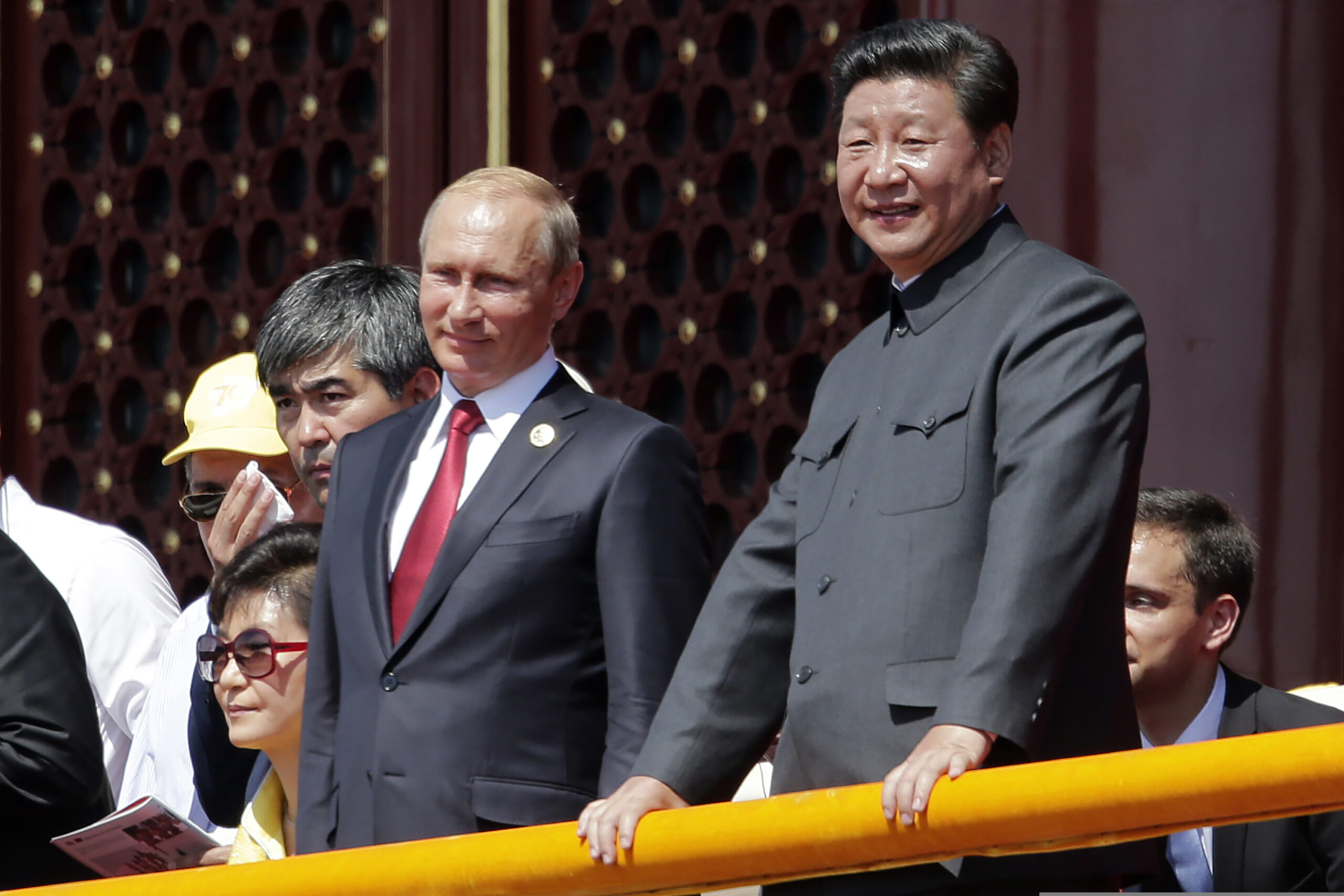
In this Sept. 3, 2015, file photo, Chinese President Xi Jinping (right) and Russian President Vladimir Putin observe a parade commemorating the 70th anniversary of Japan’s World War II defeat, from Tiananmen Gate in Beijing.
Ukrainians, who have fought bravely for more than four years to save their independence from Vladimir Putin’s imperialism, ask me how a U.S. president can back a dictator who hates the West, and wants to restore the Soviet empire. As Independence Day approaches, POTUS continues to ignore the parallel between Ukraine’s courageous struggle for freedom and ours long ago against the imperial British.
Europeans have given up on Trump, and I understand why, having watched Vice President JD Vance at the 2025 Munich Security Conference praise far right, neo-Nazi parties and demean Europe’s democracies. Trump, Elon Musk, and other MAGA acolytes continue to support extremist Europeans whose values would make the Founding Fathers gag.
So it isn’t surprising that a new Pew Research Center poll reveals a steep decline in the popularity of the United States worldwide, especially over the past year. Only a median of 37% of adults polled across 36 countries hold a favorable opinion of our nation. Only 23% express confidence in Trump’s leadership of world affairs, ranking him behind Putin and Xi.
But what is even more striking is that only 39% believe the U.S. government respects the personal freedoms of its own citizens. This is how the world now views a country that was once seen as a beacon of democracy.
During July Fourth celebrations across the country, in places far away from Trump’s pollution of the capital, I hope Americans will reflect on what the Founding Fathers bequeathed to us 250 years ago. For inspiration, reread the Declaration of Independence and brainstorm with friends, colleagues, and family on how to prevent the president from desecrating its principles at the polls come November.
Some newsletters have a theme, and this week’s focus is a rare one: good news. Let’s start with the subject of a recent column: Izzy Aly, the 40-year-old Egyptian national from Orlando who’d been in U.S. Immigration and Customs Enforcement custody for nearly six months, amid allegations of neglect around his worsening health. Today, I can happily report that Aly is a free man: released from detention and back home in central Florida. But he still needs assistance for his legal bills and replacing what was taken during his time away; you can help out here.
Soccer, Obama, Knicks give a glimpse of the America we can be at 250
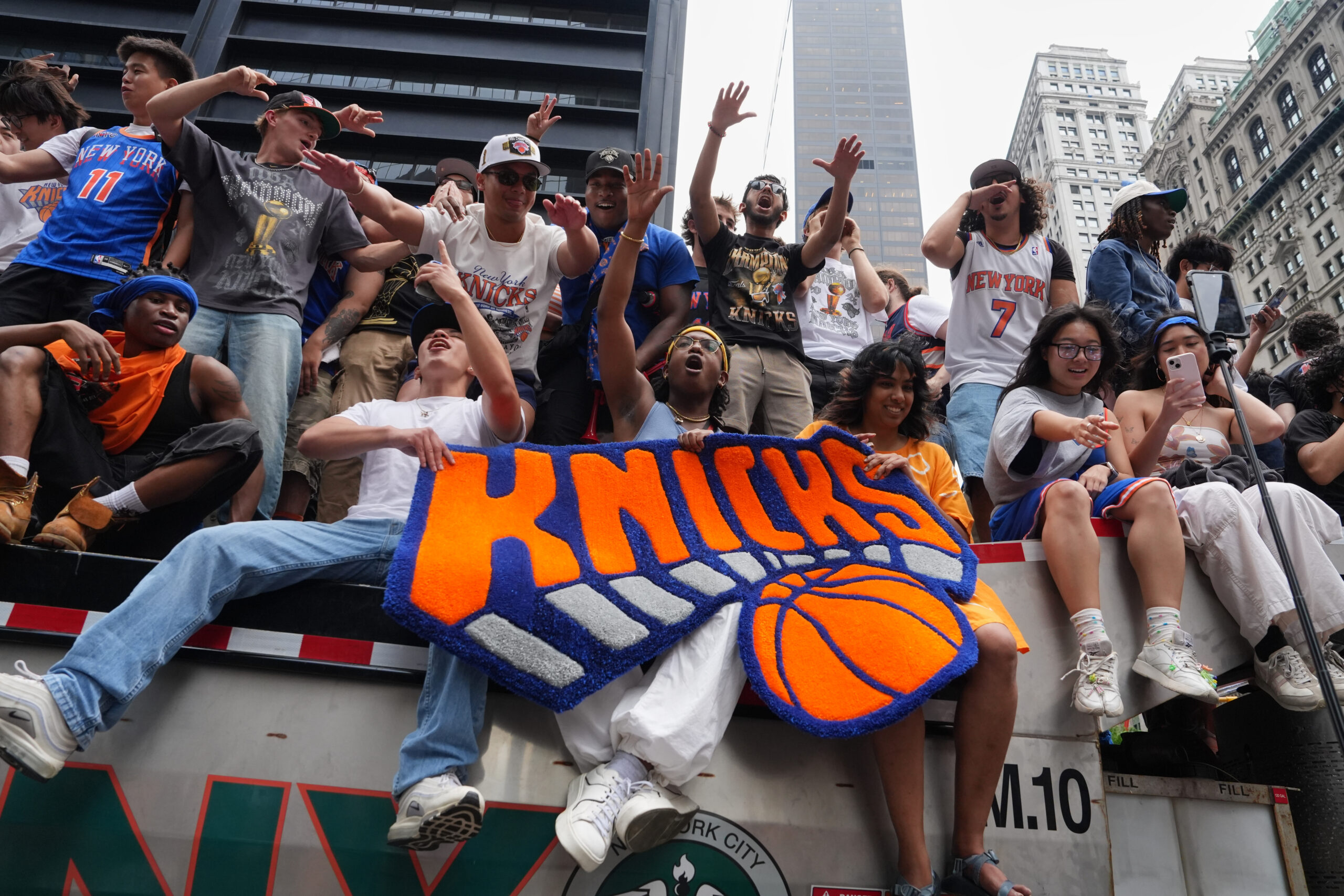
Fans celebrate during the New York Knicks’ NBA championship parade Thursday, in New York.
I’m old enough to remember when Lawrence, Kansas was the nightmarish vision of a dystopian U.S. future. The year was 1983, and the corn-fed university town seemed to producers the most fitting all-American location to decimate in a fictional Cold War nuclear apocalypse, ABC’s The Day After.
In 2026, Lawrence is not only still standing, but it’s putting the heart in the American heartland — making love, not nuclear war. And its obscure object of desire is, of all things, a soccer team from 5,000 miles away: the national squad from Arabic-speaking, predominantly Muslim Algeria.
When the Algerians chose Lawrence — about 40 minutes west of Kansas City, where two of its three World Cup matches are taking place — as its training base for the planet’s greatest sporting event, locals came out to greet the foreigners like rockstars.
“I was just so happy that they chose our hometown,” an older man, tearing up slightly, told an Algerian reporter in a video that went viral, as he waited in a rainstorm for the team to arrive. He said he knew three things about Algeria — that it touches the Mediterranean in the north, the Sahara Desert in the south, and that it fought for independence from France. “We don’t know too much, but we want to welcome them here.”
That they did in Lawrence. There are signs on all of the lampposts — “1,2,3, Viva l’Algérie!” — and an official welcome party featured the University of Kansas marching band nailing its cover of the Algerian national anthem while 800 Kansans saluted a rendering of the Algerian flag by local landscape artist Stan Herd. Herd told ABC News that what’s happening in his hometown is “not about football. It’s about cultures coming together. It’s about shared humanity.”
What’s happening in his prairie town is special yet not unique during the second-ever World Cup on U.S. soil. Greensboro, N.C. is festooned with the flags of the Norwegian team that’s training there (although the team chef did have to fly in the players’ halibut) while Chattanooga, Tenn. has gone gaga over sightings of the Spanish soccer superstars training in their city.
There’s a saying in soccer that if one team has all the momentum but then the other team nets a surprise goal on a counterattack, they’ve scored “against the run of play.” It’s hard to imagine anything more against the run of play than these outpourings of international love in states that have voted in the last three elections for the xenophobia of Donald Trump and his mass-deportation regime.
The affection for Algeria is especially remarkable in Kansas, where in 2012 Republican lawmakers enacted a largely symbolic ban against Sharia law in state courtrooms, and in 2017 a man claimed he’d murdered “two Iranians” — the victims were actually of Indian descent — after Kansas candidates ran scare campaigns warning that Muslim terrorism might come to Middle America.
Yet these World Cup welcomes in red America also seem to have captured what feels like a shift in karma that arrived just ahead of the summer solstice. Sure, the news on TV was still giving off bad vibrations — from the reality of a lost war in Iran to the cosmic metaphor of green slime in the Lincoln Memorial Reflecting Pool. But everyday people seem determined not to let our government drown us in their muck.
With the United States less than two weeks from its 250th birthday, regular folks seem eager, even desperate, to celebrate what is good not just about our nation but the bigger world that’s showed up in North America with a soccer ball and a smile.
There was a brief moment of epiphany last Thursday when I started to wonder if — in spite of everything, and there is a lot of everything — America was on the cusp of a Summer of Love, and a much more successful one than the original 1967 iteration.
I’d hopped in the car for the only place I ever go — the dog park — and the dedication ceremonies for Chicago’s Obama Presidential Center were on the radio. I heard the former first lady, Michelle Obama, uttering words that are never formed on the lips of the 47th president: “equality, empathy, honesty, inclusion, fairness.”
She said of her fellow Americans that “deep down in our hearts and souls we all know right from wrong. We know selflessness from greed, righteousness from injustice.” This was just four days, 900 miles, and about 2,000 light years from Trump’s beclowning of the White House grounds for the Caligula-style spectacle of a blood-soaked Ultimate Fighting slate of cage matches that ended with a horrific slur against — wait for it — Michelle Obama.
The Obama Presidential Center was one window into the Bizarro World where America’s leaders are still deeply invested in democracy. Another was unexpectedly taking place in New York City, where the first NBA championship in 53 years for basketball’s Knicks spread joy from Fifth Avenue to Howard Beach, with bond traders high-fiving cabbies as old-fashioned ticker tape rained down on the hoops heroes.
“Neighbors invited neighbors over,” first-year New York Mayor Zohran Mamdani said in his City Hall speech. “Strangers high fived one another in the street. Subway conductors sang their announcements and bus drivers danced behind the wheel. So often, when this city comes together, it is because we are forced to by a moment of tragedy or adversity. What a gift it is to be brought together by pure, unfiltered joy.”
Indeed, it was a remarkable day, with the Chicago and New York celebrations wrapped around a full day of World Cup matches as Americans cheered the best players from Europe, Asia, South America and Africa — some from nations that have been travel-banned and others that have been bombed by a Trump regime that just doesn’t get it.
Yet despite all of those things, it feels like America is having a People’s 250th birthday — one that doesn’t need Trump’s poisoned stamp of approval, or million-dollar donations from crooked corporations, or cage-fighting thugs, or rejects from the I Love the ‘90s Tour singing, or not singing, on the National Mall.
Millions of Americans are looking for a workaround — ways to voice hope over hate, seek joy instead of despair, and wave the U.S. flag while saluting the banners of Algeria or so many places where people may not look or talk quite like us, but share the same dreams. You could squint last week and see the America we are supposed to be at age 250.
Yo, do this!
The one story that truly epitomizes where we are at in the middle of the 2020s is the rise of Elon Musk as the world’s first trillionaire, even as he spews racist bile on his social-media platform X. The veteran writer Charlie Warzel, currently with the Atlantic, looks at the shaky vessel behind Musk’s surge in wealth: SpaceX, the rocket-and-satellite company that recently went public at a valuation that for a time topped $2 trillion — despite currently losing billions of dollars a year. He writes: “SpaceX is a rocket company, a complex financial instrument, a meme, a monument to a broken financial system.” Here’s a gift link for all of Warzel’s must-read essay.
One grossly underreported story that cuts especially hard here in Pennsylvania is the lingering health crisis in rural communities from the fracking boom of the 21st century. A journalist named Justin Nobel has been on the beat of exposing the health hazards of radioactive fracking waste for a decade now, and his latest report for the DeSmog blog from my long-ago western Pennsylvania stomping ground of Washington County is devastating. He finds waste with shockingly high levels of radiation right next to a popular hiking trail, and a possible link to the bone cancer that killed a local teen and devastated his family.
Ask me anything
Question: Is it possible to file against Todd Blanche now for disbarment and if so why is no one taking action or talking about it? — gordeaux (@gchdrake.bsky.social) via Bluesky
Answer: This is a great question, as I’d been thinking about this as the topic for a future column. Blanche, the current acting attorney general who before that was the Justice Department’s No. 2 and before that Donald Trump’s personal attorney, has been accused of a smorgasbord of potential legal misconduct, from his mishandling of the Epstein Files to his role in sending immigration detainees to a Salvadoran hellhole prison. State bar associations are absolutely empowered to investigate misconduct by Justice Department lawyers not only in D.C. but around the nation. But they have been frustratingly slow in doing so. How worried is Team Trump? A recently proposed Justice Department rule would allow the attorney general — right now, this is Blanche — to block state bar-association misconduct probes. Stopping this rule would be one small step in the looming battle for truth and reconciliation in America.
What you’re saying about…
I got a healthy response to last week’s question about whether readers have stayed on X (formerly Twitter) since an openly racist, anti-democratic and extremely wealthy Elon Musk bought it in 2022. Not surprisingly, many of you left after his purchase, or the 2024 election in which he heavily funded Donald Trump. “I absolutely think governments, organizations, media companies and really just about everyone should at a minimum do as I have done and stop posting there completely,” Linda Mitala wrote. But Patrick Roan is conflicted. “I have stayed with it because there are some really good people who have not completely left, including a few who are only on X, but are good and knowledgeable writers with enlightened points of view,” he offered.
📮 This week’s question: The looming Fourth of July is one of those round-number birthdays, America’s 250th. Are you planning to do anything special or different for this Independence Day? Or will you do less because Donald Trump is president? Please email me your answer and put the exact phrase “July 4 plans” in the subject line.
Backstory on the quiet outrage of soldiers occupying D.C.
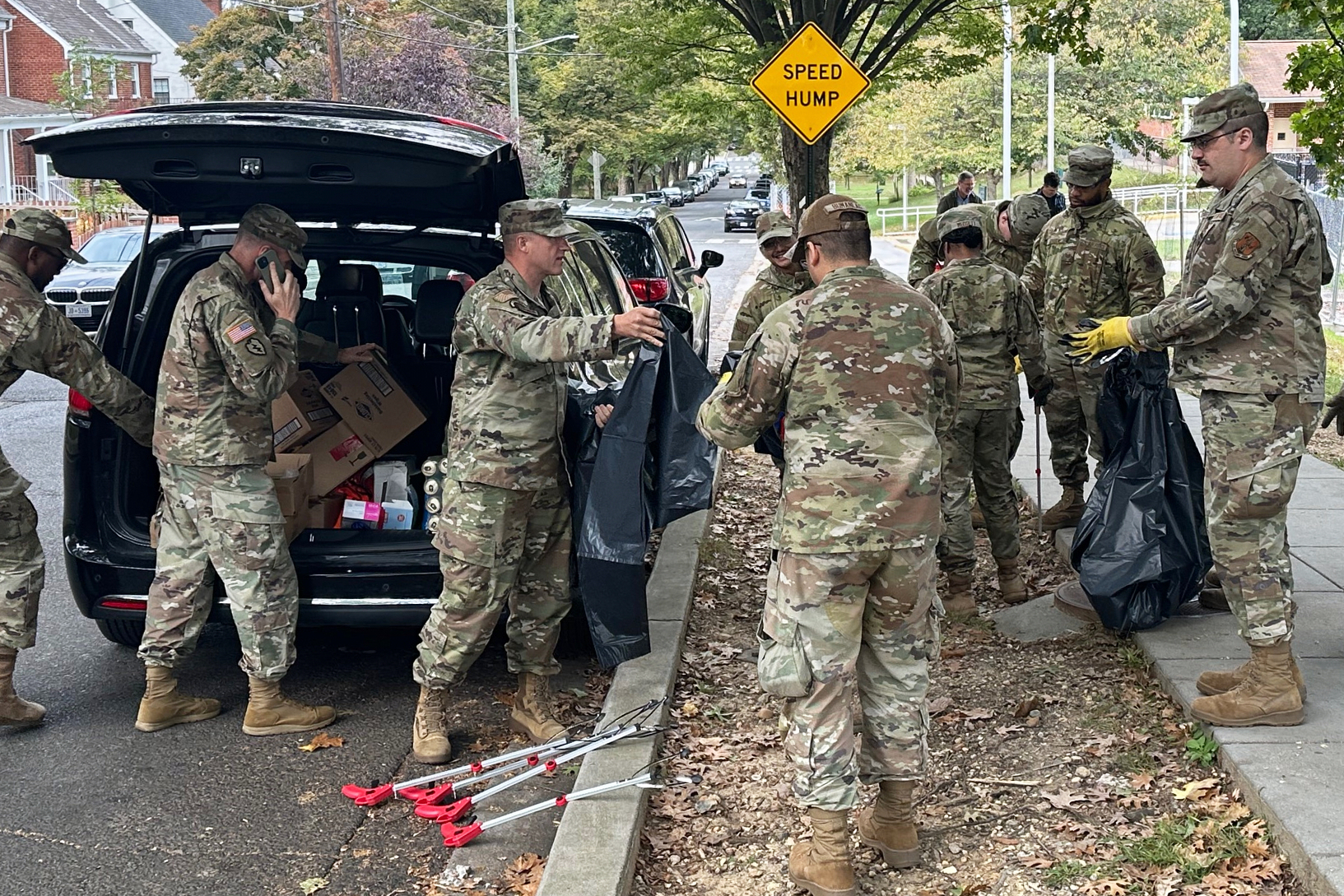
D.C. National Guard members take part in an October clean up of the park around Fort Stevens Recreation Center in the Brightwood section of Washington.
On Father’s Day morning this past Sunday, a longtime Washington, D.C.-based writer named Ian Livingston went out to get a breakfast sandwich. When he returned, he found a small platoon of National Guard soldiers, dressed in camouflage, patrolling an alley near his home. On a video that soon went viral, the troops smile slightly or ignore Livingston and his phone camera, which doesn’t make the scene any less disturbing. “Just a normal morning in our police state,” he wrote.
The normalcy is the problem. It’s been more than 10 months now since Donald Trump first took the extraordinary step of ordering the large National Guard deployment in the nation’s capital, with soldiers from the D.C. armory — authorized by Defense Secretary Pete Hegseth to carry weapons — soon augmented by detachments from red states, rising to an occupation force in the thousands. The move, which the president linked to a surge in “violent gangs, bloodthirsty criminals, and homeless people,” made a lot of headlines, then disappeared from the news. But soldiers haven’t disappeared from the streets. In fact, Trump recently authorized an increase to some 5,000 troops ahead of the July 4 festivities.
But what for? Researchers have found that the presence of the National Guard has had no apparent impact on violent crime rates — which were already at or near 30-year lows — although there has been a drop in “opportunistic crimes” like vehicle break-ins. But the legal parameters of their actual mission bar the troops from making actual arrests, although they can detain someone until district police show up. Typically, their squadrons have been spotted around D.C. picking up trash, although some are now deployed against the algae tourists of the Lincoln Memorial Reflecting Pool.
And at what price? The annual cost to taxpayers of the constant Guard deployment has been estimated at as much as $600 million — money that could otherwise be spent on things like actual solutions to the city’s chronic crisis of homelessness. The unbusy troops are, unfortunately, a magnet for America’s growing number of unhinged people, including the one who killed a West Virginia Guard member and seriously wounded another in a shooting last year. For most, the extended deployments mean unwelcome days away from family, actual work, and their hometowns.
But the real cost is a psychic one: the mental impact of living in an occupied city. Trump’s forever deployment of armed soldiers in our nation’s capital achieves some of the highest goals of his brand of strongman authoritarianism: a) a constant show of force aimed at demoralizing a population that’s increasingly unhappy with life under the 47th president and b) a threat that protesters should stay away from the White House and the Capitol when things really start to go south. We need to keep reminding ourselves what Ian Livingston conveyed tous this weekend: This is not normal. In the immortal 1971 words of singer Freda Payne, bring the boys (and the girls) home.
What I wrote on this date in 2020
This date six years ago was also nearly one month after the Minneapolis police murder of George Floyd, and America — and especially Philadelphia — was still dealing with the consequences. On June 23, 2020, I wrote about an Amnesty International report about police brutality in response to those protests, including the cops’ tear-gas assault on protesters blocking the Vine Street Expressway in Center City. ” We should be shocked that police forces in the United States are acting like the so-called ‘state security forces’ in an authoritarian banana republic,“ I wrote. ”Tear gas is banned in warfare under the United Nations, yet police commanders don’t think twice about lobbing it into crowds of Americans from Seattle to the gates of the White House.” Read the rest: “Amnesty International won a Nobel Prize for fighting torture. Next up: Philly police.”
Recommended Inquirer reading
Only one column last week as I enjoyed a Juneteenth/Father’s Day extended weekend. In that piece, I looked at the real reasons behind the federal conspiracy indictment against a group of an anti-ICE activists that some are already calling “the Minneapolis 15.” The charges — mostly centering on constitutionally protected free speech such as discussing their protests on the Signal app — are outrageous. But they also signal that the Trump regime is desperate to quash political dissent ahead of the November election.
The World Cup is a remarkable moment for sports, but also an incredible time for journalism, because the stories in the stands are often as compelling as what’s taking place on the pitch. At The Inquirer, the five-week tournament has been a great way to reveal how Philadelphia relates to the wider world. Last week’s match between Brazil and Haiti might have been a rout on the field, but sports columnist Mike Sielski took in the scene with Haitian fans who were just delighted their violence-wracked nation was having a moment on the world stage. Alex Coffey spent the weekend with four French fans who played hooky from their jobs back home to spend an unforgettable week in America’s founding city. Longtime soccer writer Kerith Gabriel hailed the city’s joy over the World Cup as “the escape we didn’t know we needed.” It’s easy to join this party in print for the last three unforgettable weeks of the World Cup: subscribe to The Inquirer today.
By submitting your written, visual, and/or audio contributions, you agree to The Inquirer’s Terms of Use, including the grant of rights in Section 10.
As we approach America’s 250th anniversary, the political party that brags of its patriotism is actively undercutting national security.
Although many GOP House members and senators are versed in foreign affairs and grasp the irresponsibility of their actions, they are too cowardly to confront the biggest security threat America has faced in decades: President Donald J. Trump.
As his Iran debacle laid bare, Trump’s ego-driven foreign policy is making America more vulnerable to our enemies — both at home and overseas. Yet, the aging POTUS seems ever more determined to ignore real security dangers. His main focus is on seeking quick military hits he thinks will win him personal acclaim.
His failed Iran war perfectly displays his misuse of the U.S. military for unnecessary battles that decrease capacity for any future conflicts with Russia and China. And Republican legislators — who claim a monopoly on love of country — don’t have the guts to call him out.
Why? Because they value their chairs more than keeping Americans safe.
The Iran war, and the memorandum of understanding that has temporarily halted it, are a perfect example of Trump’s failure to protect the nation.
In February 2026, Iran presented no threat to the United States. Tehran’s enriched uranium was deeply buried under rubble after the U.S. and Israel waged a 12-day war on Iran in June 2025.
But, driven by ego, POTUS let Israel’s Benjamin Netanyahu persuade him that a quick bombing run could achieve regime change in Tehran and remake the entire Middle East.
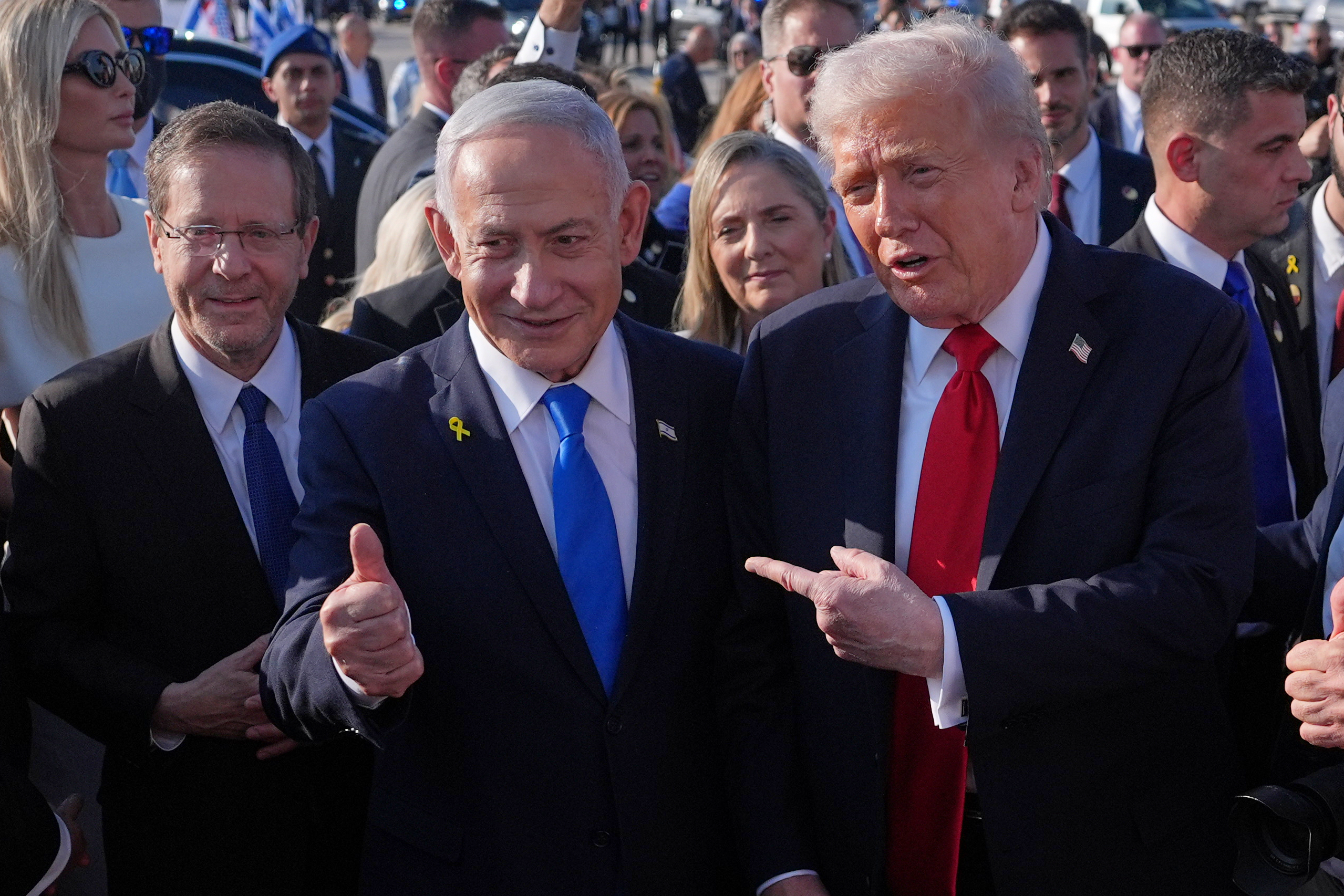
President Donald Trump poses for a photo in October with Israel’s Prime Minister Benjamin Netanyahu before he boards Air Force One at Ben Gurion International Airport, near Tel Aviv, as Israel’s President Isaac Herzog watches at left.
Don’t blame Bibi, because only a president who knows nothing about Iran and obsessively seeks a Nobel Peace Prize could have believed such nonsense. POTUS ignored warnings from U.S. military brass that Iran would respond by blocking the Strait of Hormuz, because he insists he knows best.
After four months of war, what has Trump’s ego wrought?
In desperation to get Iran to reopen the strait and push gas prices down before the midterms, Trump has promised Tehran huge and immediate economic benefits.Meantime, nuclear talks are pushed back to 60 days of negotiations, which will probably be extended indefinitely.
The one-and-a-half page memo contained only one paragraph on nuclear talks, but POTUS has already revealed a host of U.S. concessions in interviews. They guarantee that if a nuclear deal is ever reached, which is far from certain, it will be similar or worse than President Barack Obama’s JCPOA nuclear accord, from which he withdrew in 2018.
Rather than ending Iran’s nuclear program altogether, as Trump promised, any deal will permit Tehran to enrich uranium to low levels, as did the JCPOA. It will also allow Iran to downgrade its highly enriched uranium inside their country, rather than send 97% out of the country as required by Obama’s deal.
In fact, Trump now debunks the importance of rushing to extract Iran’s enriched uranium from the rubble, because Tehran can’t access it. “Nobody’s touching it,” he said. “We have Space Force cameras [monitoring the sites]. It’s actually not valuable. …”
So tell me again, Mr. President, why you started this war?
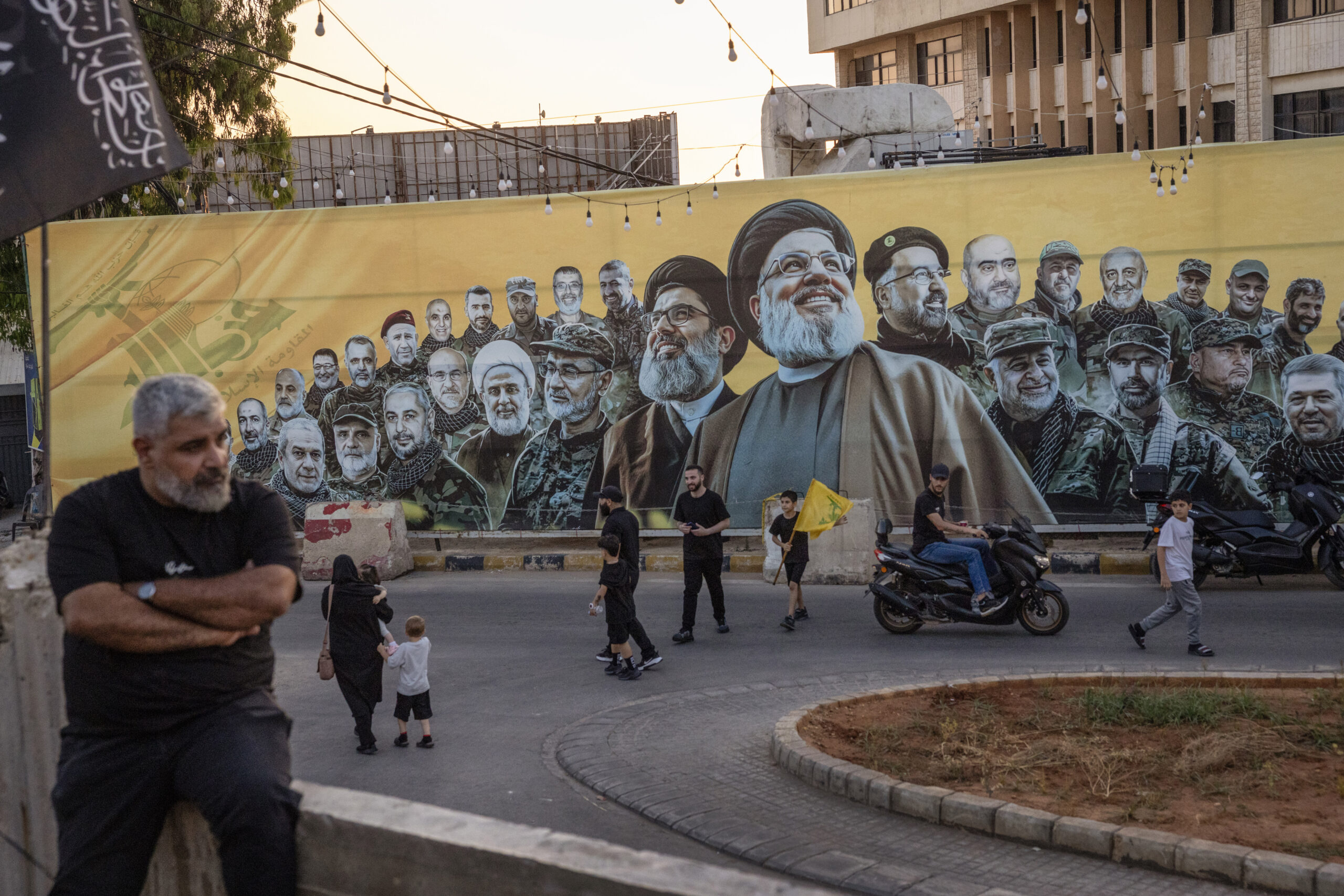
Supporters pass by a billboard showing leaders of Hezbollah, outside the grave of the late Hezbollah leader Hassan Nasrallah, as they mark the first day of Ashoura in Beirut, Lebanon, on Wednesday. The preliminary agreement between Iran and the United States leaves unresolved the two issues at the heart of the conflict: Israel’s occupation and Hezbollah’s arsenal.
The list of Trump concessions to Iran goes on, each one explained more bizarrely by the president. Trump casually declared he would allow Iran to keep its ballistic missiles, which were fired at Israel and U.S. bases — a total reversal of his pledge before the war started. “I’m saying that if other countries have them, it’s a little bit unfair for them not to have some,” Trump told reporters in Paris the other day. Say what?
What is particularly dangerous — and requires Congress to confront the president — is that this unnecessary war has degraded the U.S. military, and revealed its weaknesses to our adversaries.
The war has also exposed the erratic style of the U.S. commander in chief, who treats the U.S. military like his personal plaything. Both he and his showman “secretary of war,” Pete Hegseth, have proved they lack the judgment and temperament to command this force.
By keeping such a huge percentage of our air force and naval assets in the Mideast for months, Trump has worn out the readiness of our military. This war also used up a staggering amount of U.S. long- and medium-range missiles that are badly needed to stabilize the Indo-Pacific against Chinese aggression, and by NATO allies to ward off Russian aggression.
Yet, instead of selling such missiles to Taiwan, or letting Europeans buy them to protect Ukraine from massive Russian bombing, Trump used them up against Iran.
Moreover, the Iran war revealed the continued Pentagon failure to prepare for the new drone and artificial intelligence-driven 21st century form of warfare. The U.S. military used billions worth of $2 million missiles to intercept $20,000 Iranian drones because the Pentagon has been unable to speed up drone production and refuses proffered help from Ukraine.
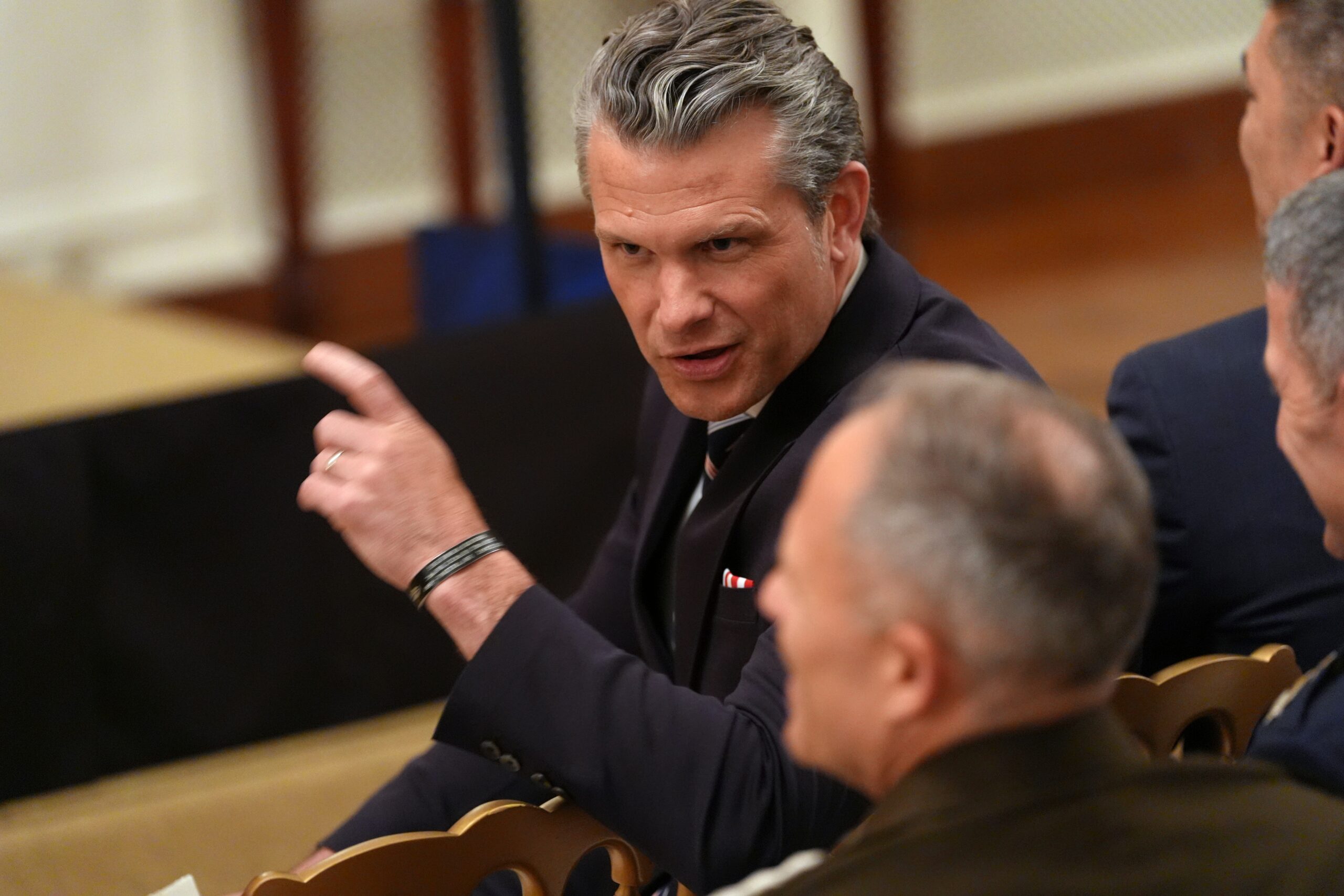
Defense Secretary Pete Hegseth attends a Medal of Honor ceremony in the East Room of the White House, Thursday.
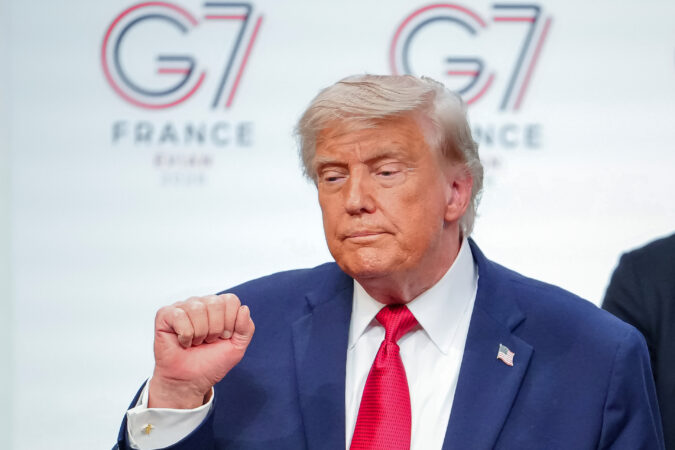
In fact, at the G7 summit in France on Tuesday, Trump made a point of how unimportant the Ukraine conflict was to America. “Look, we have nothing to do with it,” he said of that war. “It has no impact on us, other than we sell weapons” to Ukraine, he added. “We’re thousands of miles away.”
That kind of dumb remark, in a world where satellites and electronic warfare make distance irrelevant, is proof positive of Trump’s total misunderstanding of geopolitics. The U.S. abandonment of Kyiv and coddling of Russia enhances China’s belief that America’s power is declining and the global balance of power is shifting.
Indeed, the most vivid illustration of the president’s blindness to the fallout from his Iran fiasco, came when he thanked Vladimir Putin and Xi Jinping for their help with ending the Iran war. What head spinning brain-blank could prompt gratitude for Putin giving intelligence information to Tehran to target U.S. bases? Or to Xi for providing all the parts for Iranian drones that killed Americans in Kuwait?
Which side is Trump on?
POTUS’s conviction that his personal relationships with Putin and Xi will prevent them from doing America harm is endangers America’s safety. He won’t critique them for aiding Iran, because he believes both men are his comrades. His easily manipulated ego plays into both dictators’ hands.
This war has provided proof that America’s adversaries need only wait and watch as the U.S. president undermines the U.S. military’s fighting capacity by wasting it on delusionary wars.
Instead, Trump and Defense Secretary Hegseth make a point of slamming our allies, whose help we need to deter to Russian and Chinese imperialism.
Even as POTUS was signing the surrender document with Iran, Hegseth announced the U.S. will pull back troops from Europe and weapons support for NATO. Thus, Trump openly advances Putin’s dreams of splitting the transatlantic alliance, at a time when Russia is openly hostile to the West.
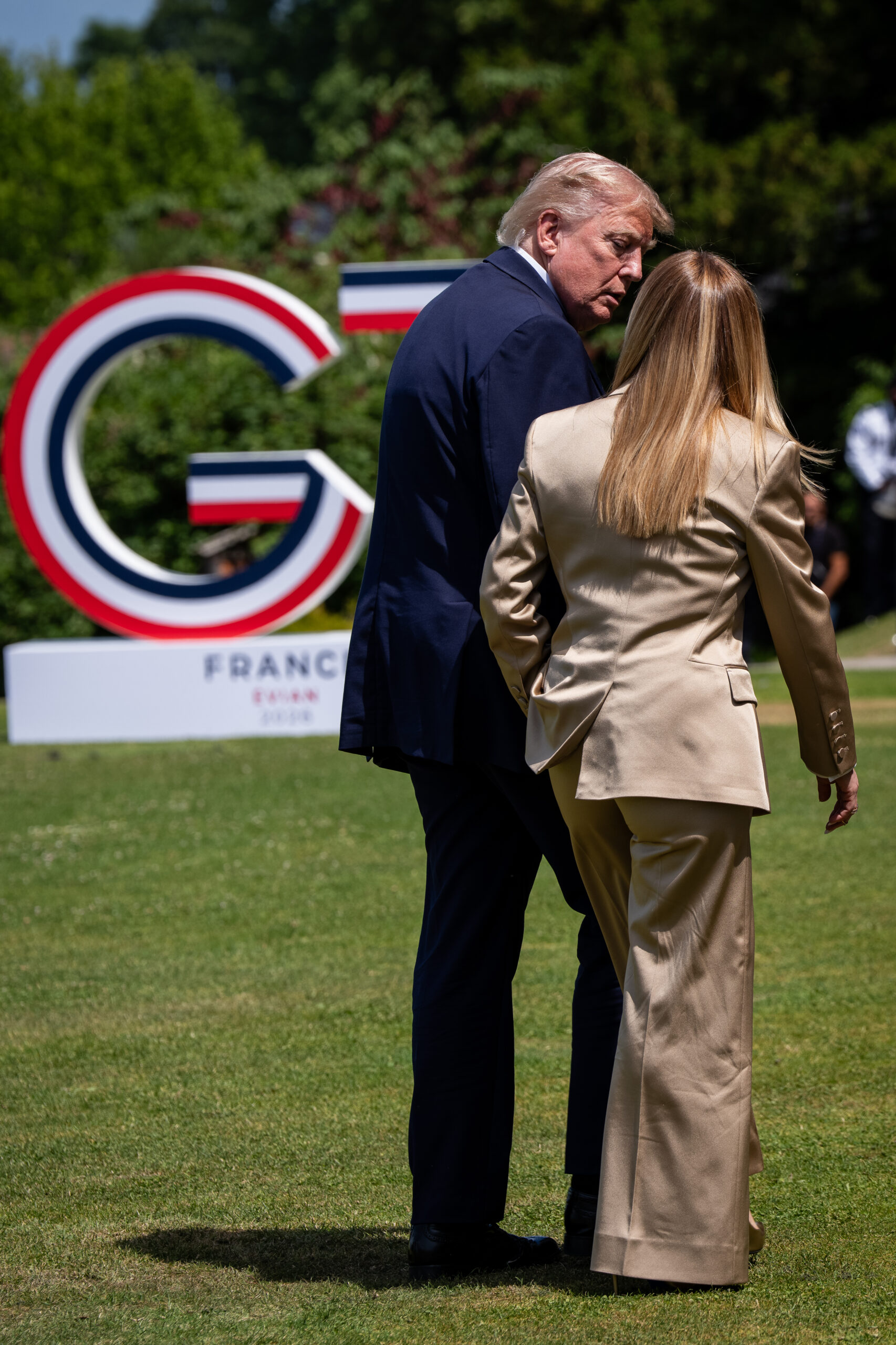
President Donald Trump with Prime Minister Giorgia Meloni of Italy after a Group of 7 photo in Evian-les-Bains, France, Tuesday.
POTUS even infuriated his closest European ally, Italian Prime Minister Giorgia Meloni, who accused him of “fabricating” claims that she “begged him” for a joint photo.
“I can only say it is disappointing that he does not show the same determination with the enemies of the West and of the United States, whose leaders he instead treats with far greater indulgence [than his allies],” Meloni stated angrily.
There is a name for a leader who coddles the enemy while alienating friendly democracies that share our values. Such treachery, whether carried out wittingly or blindly, betrays our nation.
Trump’s indifference to U.S. security isn’t just evident in his misadventures abroad.
At a time when foreign terror threats to the nation are high, the president just refused to reauthorize critical U.S. foreign spy powers, unless they were tied to a voter suppression bill.
The same week, he used political trickery to officially appoint a fervently loyal ally, Bill Pulte, as temporary director of national intelligence, over bipartisan Senate objections. Pulte has zero intel experience, but is tasked by POTUS to pursue his political enemies and undermine the midterms.
Never mind the serious risk of terror attacks during FIFA matches or sesquicentennial celebrations — or during fall balloting. GOP senators bowed to their boss man rather than make a big fuss.
So as July Fourth approaches and Trump busies himself with architectural destruction in the nation’s capital, his GOP enablers in Congress are helping a doddering egomaniac undermine the. security of the citizens he supposedly serves. These Republicans know what POTUS is doing, yet they refuse to stand up and make their voices heard.
On America’s 250th, GOP pols are aiding Trump in betraying constitution and country. How they can look in the mirror and call themselves patriots mystifies me.
This Juneteenth edition of Shackamaxon looks at the housing debate in Harrisburg, the recent state Supreme Court decision on skill games, and some Revolutionary Era stories you might not have heard before.
Erla Dögg Ingjaldsdóttir exits a Santa Monica, Calif., accessory dwelling unit in 2022.
Preemption the key
It is increasingly clear that legislators in Harrisburg want to do something about housing affordability in Pennsylvania. What’s less clear is whether they’re willing to take the most necessary step: preempting local governments.
The recent push to legalize accessory dwelling units, or ADUs, is a classic example of this tension. For the wide coalition of supporters, ADUs — think a backyard apartment — represent an obvious fix to the housing crisis. They allow families to live close to one another without the awkwardness of sharing a kitchen, while empty nesters can monetize their homes without moving and typically rent at affordable rates. There’s also significant demand for them.
Mario Mascioli, from Acorn Built Homes, says his company gets between 200 and 300 inquiries a month. A recently passed bill in the state House would allow property owners to build one unit per lot and restricts the ability of local authorities to regulate them out of existence.
It is now up to the state Senate to pass the bill. The Senate’s housing committee has met just twice so far this year. Some Republicans have been reluctant to embrace housing reform, citing a desire to avoid infringing on local control of zoning.
While the input of local communities will always be part of development politics, housing affordability is a regional issue. Acting as a commonwealth ensures that all of our cities, townships, and boroughs do their share when it comes to new housing — and that no municipality can sabotage ADU construction.
Additionally, some conservative organizations like Americans for Prosperity have backed the bill. For these groups, property rights and economic opportunity make embracing preemption worthwhile.
In fact, the coalition to reform housing rules is refreshingly broad. From right-leaning groups like Americans for Prosperity to self-described socialists like State Sen. Nikil Saval, there is a growing understanding that change is essential. This need is underlined by the rapidly increasing costs to purchase a home. In Villanova, even the most affordable options now cost $1 million.
Unregulated gaming devices known as “skill games” in a barber shop in Hazelton in August.
Same old slots
For the entirety of Josh Shapiro’s first term as governor, one question has dominated the revenue side of state budget proceedings. Will Pennsylvania regulate and tax so-called games of skill, and at what rate, and under what authority?
Proponents of the games argued they are distinct from slot machines and should pay a lower rate. They also want the devices to avoid being placed under the state Gambling Control Board. Critics say otherwise. Some want the machines to be gone altogether, citing their negative impact on communities. Others want them restricted and taxed like slot machines, which can only operate at licensed casinos and hand over most of their revenue to the commonwealth. Efforts by local governments, like Philadelphia’s, to ban the machines have been stymied by the courts.
At least until this week.
After years of debate, the state Supreme Court ruled that the devices are actually slots after all, reversing an earlier Commonwealth Court ruling that had maintained there is a difference. This new ruling aligns with my own experience testing the machines. You put in cash, press a button, and hope the symbols align.
Given this fact, which is now the legal opinion of Pennsylvania, it doesn’t make much sense to tax the machines at a different rate than existing slots. Neither does allowing them to proliferate in every gas station, corner store, and bar that wants them. Like slots, skill games should be limited to operating in designated areas, and access must be controlled by age. They should also be controlled by the same regulators as other gaming devices. While the commonwealth absolutely could use the revenue boost legalizing the machines will bring, the priority should be on mitigating their impact.
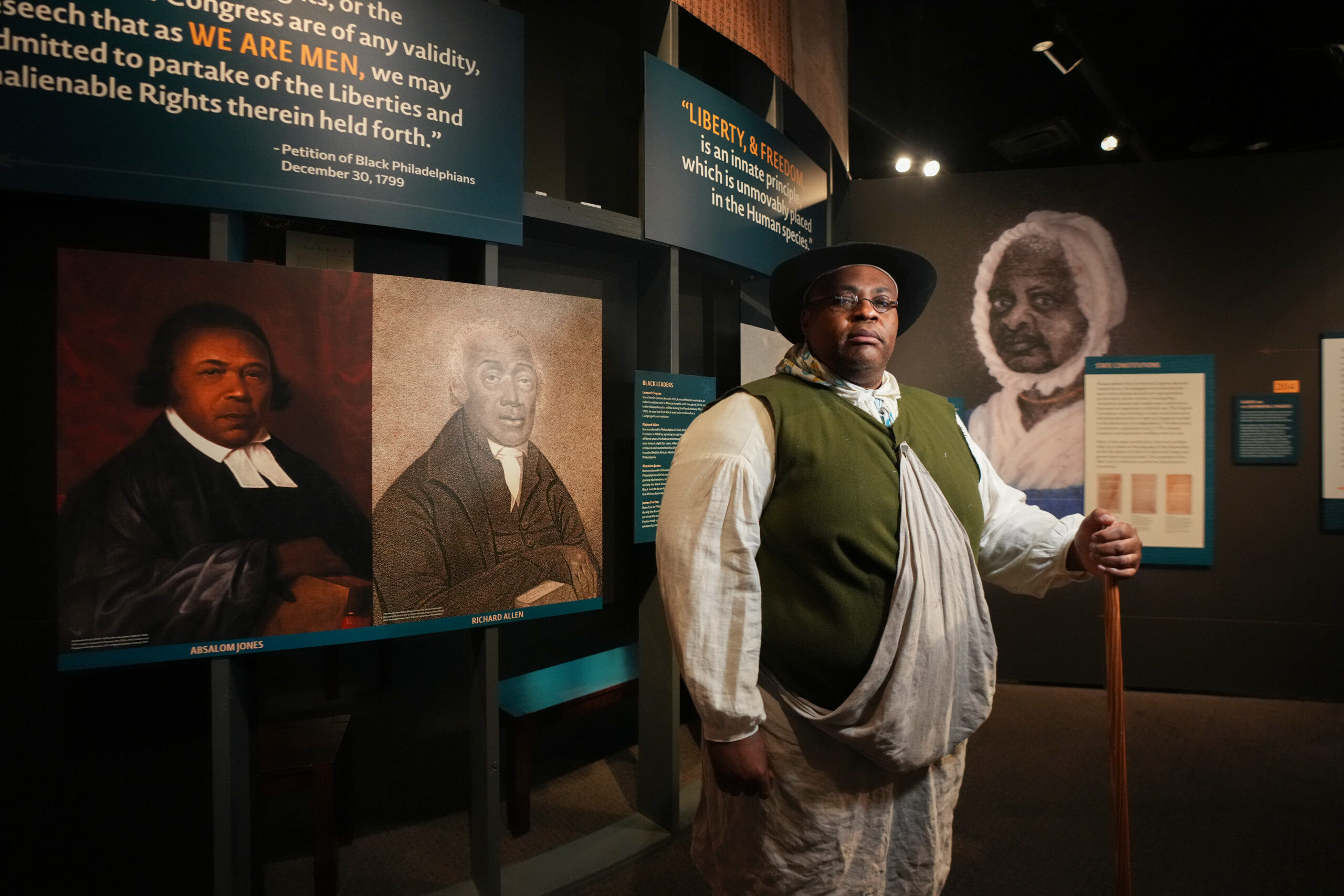
The historian Michael Idriss dressed as Cyrus Bustill, an 18th-century baker who supplied George Washington’s troops at Valley Forge.
Remembering revolutionaries
Philadelphia has been known as the home of Ben Franklin and Betsy Ross for centuries and boasts several professional reenactors who bring these Revolutionary Era leaders to life. While both Franklin and Ross have earned their public profiles, they are far from the only local figures worth memorializing.
Michael Idriss, a former classmate of mine at Temple University who now manages the Museum of the American Revolution’s African American Interpretive Program, has brought another name to light: Cyrus Bustill, an enslaved baker who freed himself, supplied George Washington’s troops at Valley Forge, and helped found the Free African Society of Philadelphia.
Idriss also helped set up the museum’s Black Founders exhibit, which focused on James Forten, a Black patriot and business owner who funded abolitionist causes.
Idriss refers to himself as an interpreter rather than a re-enactor and has brought to light a pivotal but until now under-appreciated Founding Father. Bustill’s work has even qualified his descendants, like Joyce Mosley, for membership in the Daughters of the American Revolution, an elite service organization.
An elder statesman to figures like Forten, Absalom Jones, and Richard Allen, Bustill represents the lesser-known stories of the Free Philadelphians of African descent before, during, and after the revolution. By 1838, there were 20,000 free Black Philadelphians.
In many ways, their story should sound familiar. After the revolution, many felt that America should live up to its lofty ideals. Pennsylvania passed a law ensuring gradual emancipation, and many people of all races became abolitionists. Then came the backlash. A populist and crass president had come to power and Black stories were buried. It sounds sadly familiar, doesn’t it?
It was a career-defining moment for young MarlonBrando in The Wild One when a dancing girl asked his 1950s bongo-pounding biker-gang character, “What are you rebelling against?”
“Whaddya got?”
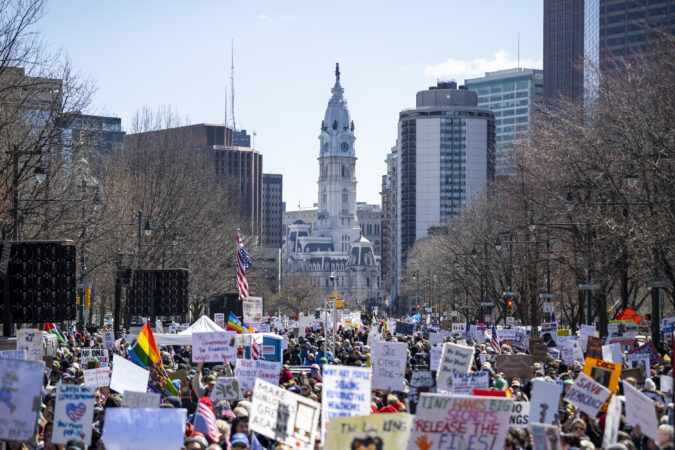
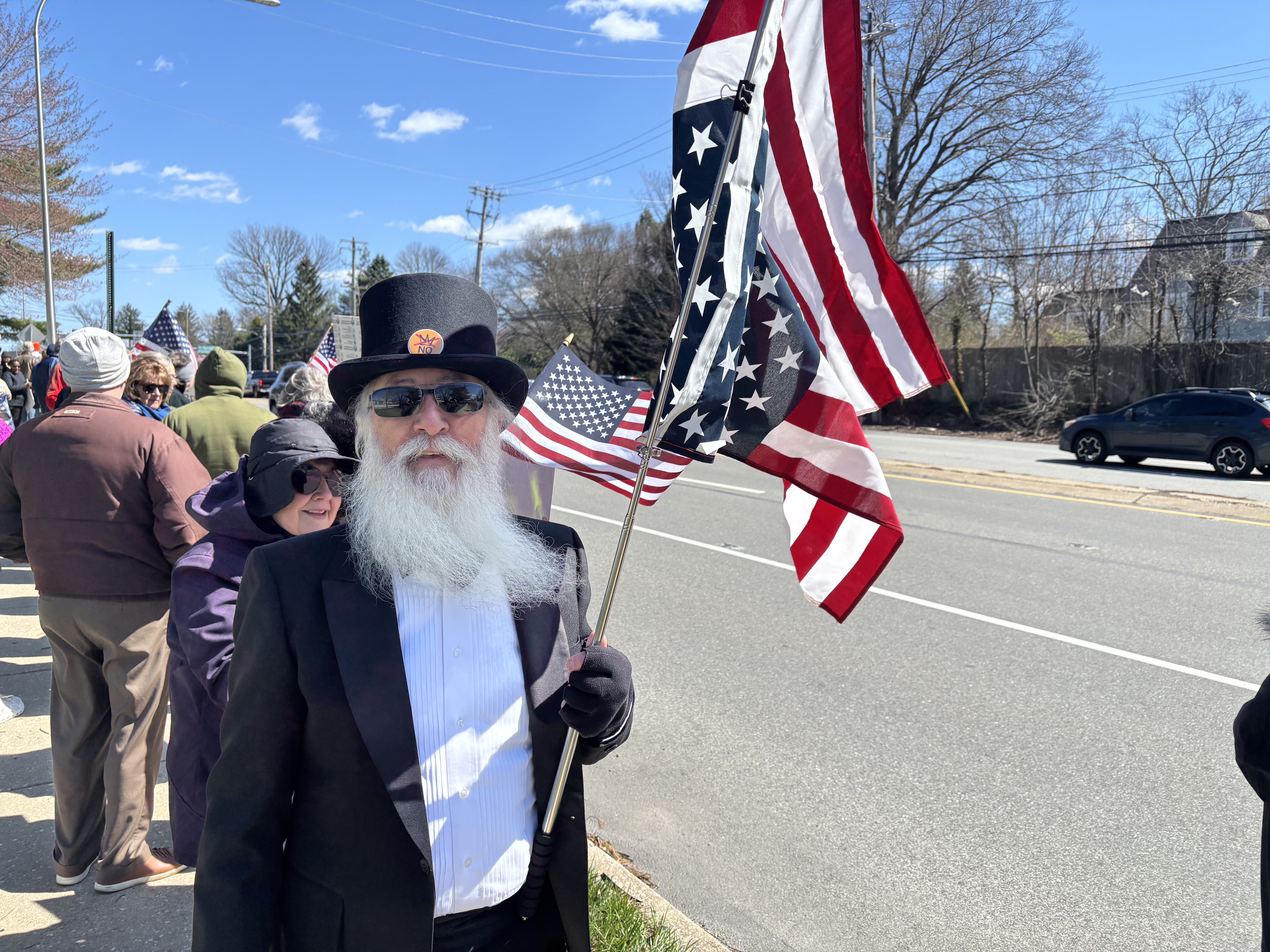
Brando’s Johnny Strabler would have felt right at home Saturday afternoon with about 300 rebellious souls who lined the busy shopping stretch of Baltimore Pike in front of the Springfield Mall — just one of the more than 3,300 protests from coast-to-coast and around the world that marked the third “No Kings” day since last June.
Whaddya got? What isn’t there in the second coming of Donald Trump for today’s rebels with way too many causes, as an American president flexing dictatorial powers bounces from his illegal, undeclared war on Iran one minute to trashing the Kennedy Center the next?
There were loud echoes from the 1960s in the peace signs and “No War” placards carried by marchers who’d been a tad too young for Vietnam, yet one also waved the “Gen Z revolution” flag of the straw-hatted pirate from the popular anime, One Piece. Not to mention the matching-costumed 8-foot “Dinosaurs for Democracy” with their campaign sign, “Giant Meteor 2026.”
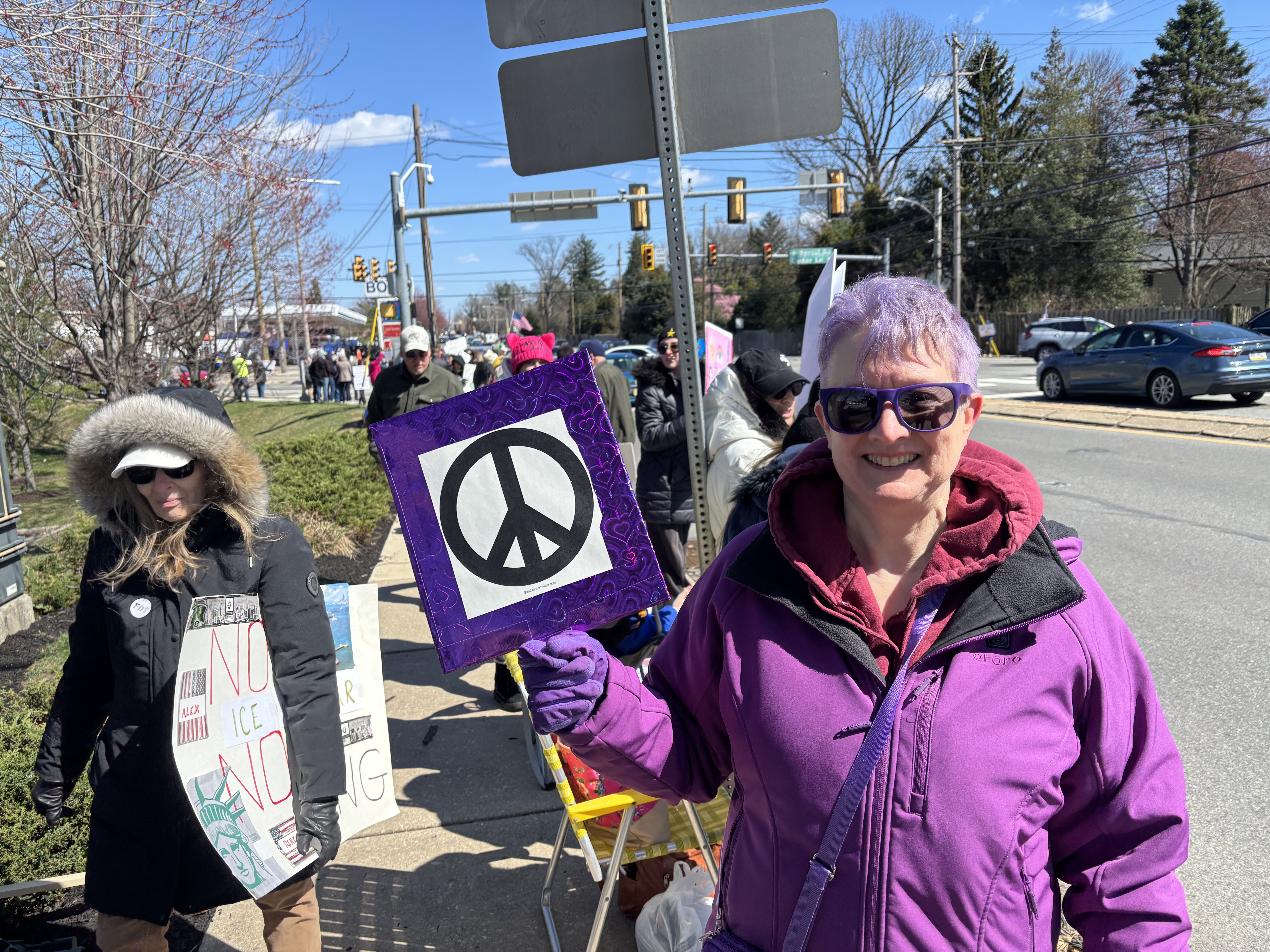
Nancy Harris, a 72-year-old crisis counselor from Prospect Park, joined the “No Kings” protest along Baltimore Pike in Springfield on Saturday.
“You feel less isolated when you see everybody here, and then they feel less isolated,” Nancy Harris, a 62-year-old retired mental-health crisis counselor from Prospect Park, told me over the steady car honks from supportive motorists. “And I think it just motivates people in general…just putting good vibes out into the universe.” Her purple-framed peace sign read “All you need is love” on the flip side.
Harris was one of what organizers estimated was an incredible 8 million Americans who took to the streets to register their utter disgust with the authoritarian bent and the increasing violence of the Donald Trump regime. It was arguably the biggest one-day protest in just under 250 years of American history (unless you count the first Earth Day in 1970, which was more of a teach-in.)
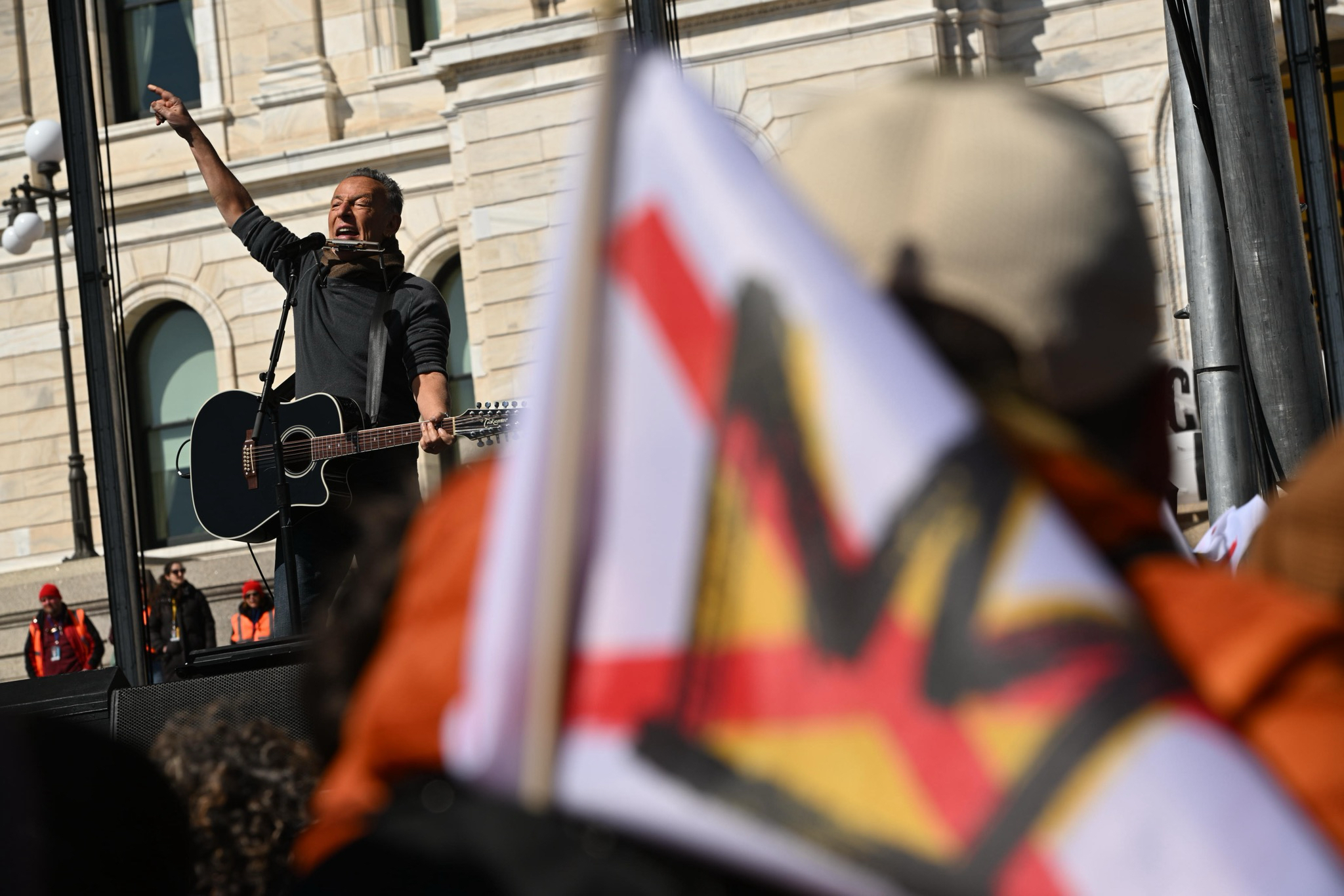
The size of the third “No Kings” event was remarkable, yet that was matched by the passion of the marchers, and by a movement with a growing sense of style. That was epitomized by Bruce Springsteen singing his protest anthem “The Streets of Minneapolis” before a massive Twin Cities crowd that also included Sen. Bernie Sanders and folk singer Joan Baez, who were both on the National Mall to hear the Rev. Dr. Martin Luther King’s “I Have a Dream Speech” in 1963. The reverb of history was deafening.
Yet again, much of the mainstream media seemed not to hear it.For part of the weekend,America’s largest newsroom, the New York Times, buried news of the protests on its homepage below six articles about the Iran War, and paired with a cynical news analysis questioning whether the “No Kings” movement has the right focus to be successful.
Never mind that the sense of unity and shared community that I saw Saturday in my home Delaware County or the prior two “No Kings” protests is what has offered hope to the everyday citizens who resisted ICE raids in Minnesota and elsewhere, or to the voters in 30 consecutive jurisdictions who flipped seats away from Trump’s GOP.
True, the “No Kings” movement shouldn’t be above criticism. The protest’s mission can seem vague when compared to the pointed 1960s marches to end the war in Vietnam or racial segregation in the South, although allowing demonstrators to paint on its blank canvass is what creates such a large turnout against autocracy.
Bruce Springsteen performs during the “No Kings” protest Saturday in St. Paul, Minn.
As Trump’s crimes against humanity worsen from Minneapolis to Minab, it’s fair to question whether “No Kings” needs to consider moreassertiveforms of nonviolent civil disobedience, even as that would risk conflict with America’s militarized police.
But leaders with the most prominent Trump-resistance group organizing “No Kings” answered that complaint Saturday when Indivisible’s Ezra Levin took to the stage in Minneapolis and announced that a nationwide general strike is planned for May 1, modeled after a successful local action that shut down much of that region in January.
Calling the plan “a tactical escalation,” Levin said that the May Day strike would be “saying, ‘No business as usual.’ No work, no school, no shopping. We’re going to show up and say we’re putting workers over billionaires and kings.”
And yet what the small but growing chorus of naysayers — especially jaded pundits at some of the bigger media outlets — doesn’t understand is that the impact of “No Kings” isn’t so much political, in the realpolitik sense, as it is psychological.
It’s a hope-building exercise that reminds the citizens who want America to remain a democracy that we are the majority. That matters because dictatorship only succeeds with a demoralized public.
“I feel better when I leave [”No Kings”], because I’ve been down the last two weeks,” Kristina Shickley, a 72-year-old speech pathologist from Ridley Park, told me. She was standing on the sidewalk in front of Springfield Mall with a gaggle of white female boomers, the group that has anchored the Trump resistance since his first term.
Her fellow protesters chimed in with similar reasons for coming out with their hopes that even some Republicans in Congress might pull back from Trump-flavored extremism because of the growing wave of unrest, and their belief in a political science theory that a regime can fall if just 3.5% of the public takes to the streets (that would be about 11 million, so…almost there).
“All these people coming out,” Shickley said. “It gives you hope.”
Especially in Springfield, an old-school, mostly working-class suburb that’s about as all-American as its fictional counterpart on TV’s The Simpsons. For decades, Springfield was Ground Zero for a Republican political machine that ran Delaware County and helped carry Pennsylvania for the likes of Ronald Reagan and George H.W. Bush.
Times have changed. In recent months, as many as 100 or more local residents have stood on the corner of Baltimore Pike and Route 320 every Saturday, waving signs like “No Kings, No Wanna-Be Dictators, No ICE Raids” and “When Injustice Becomes Law, Resistance Becomes Duty.”
It’s hard to imagine a more appropriate spot than in front of a Target store, whose rejection of diversity policies has sparked nationwide boycotts, and a mall that witnessed one of America’s first mass shootings — the 1985 rampage by Sylvia Seegrist that left three dead and now feels like a harbinger of darker times ahead.
Most of the demonstrators were old enough to remember that day, but not all. I met the guy with the anime pirate flag — Andrew Snyder, a 37-year-old software engineer from Swarthmore and a self-described democratic socialist who served during peacetime with the U.S. Navy in the Persian Gulf. He agreed that not as many Millennials are out marching now, but predicted that “it’s going to ramp up with AI [artificial intelligence], as AI starts taking jobs.”
John Coia, a 75-year-old retired airline worker from Aston, Pa., waves an upside-down American flag at a “No Kings” protest on Baltimore Pike in Springfield on Saturday.
For now, however, the heart and soul of “No Kings” may be people like 75-year-old John Coia, a Springfield native now living in Aston who once sued his former employer USAir over his right to wear long hear and an earring. Now sporting an Abraham Lincoln-esque grey beard he amplified with a top hat, Coia waved an upside-down American flag.
“I’ve been going up against the establishment my whole life,” said Coia, speaking for a generation that grew up exercising its all-American right of free speech and, now in old age, is determined to keep using it while they still can. I asked him what was the last straw with Trump that convinced him to join “No Kings.”
“There is no last straw,” he said over the car honks. “It just keeps going. There’s a new straw every day.”