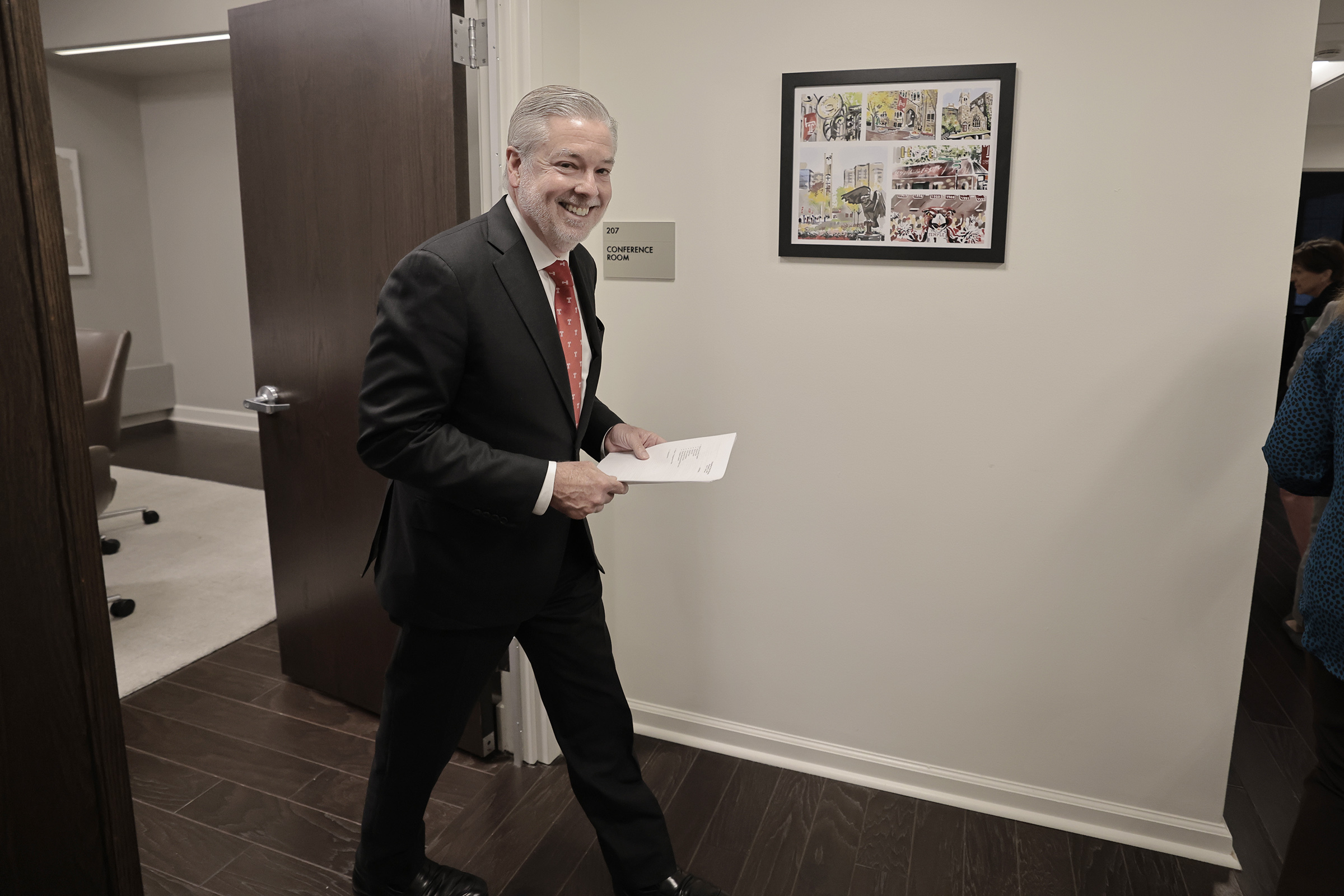
The University of Pennsylvania will instituteanother round of budgetcutsin response to Trump administration actions that threaten future funding and revenues, and because of rising legal and insurance expenses.
That is even though officials said finances look better than they anticipated a year ago, though they did not provide specific numbers.
Penn’s schools and centers have been directed to cut 4% from certain expenses in the next fiscal year and keep in place financial cutbacks instituted last year, including a staff hiring freeze and freezes on midyear adjustments in staff salaries. Schools and centers also were asked last year to cut 5% of certain expenses, and the new 4% reduction would be on top of this.
The university did not detailwhich expenses would be cut, but it is likely that discretionary funds for things like travel and entertainment would be targeted.
Penn leaders cited changes in student loan programs and visa policies, an increase in the endowment tax, and potential losses in research funding as reasons for continued financial restraint. Legal, insurance, and employee-benefit expenses also are rising faster than revenues, said Mark F. Dingfield, executive vice president, and John L. Jackson Jr., provost.
“Taken together, these conditions reinforce our responsibility to continue careful financial management to stabilize our finances for the long term,” the leaders wrote. “It is important to note that this planning effort is just that — an effort to plan deliberately and collaboratively against a changing financial landscape.”
Penn, which is the city’s largest private employer, with about 53,000 employees across the university and its health system, is expected to set tuition and fees and discuss its budget at board of trustee meetings in March.
Penn’s legal expenses have increased as the universityresponds to the Trump administration’s demands and investigations, including an ongoing Equal Employment Opportunity Commission lawsuit seeking in effect personal contact information for Jewish faculty and staff. And the school faced additional costs related to a data breach in November.
School officials noted that Penn has not enacted some of the deeper cuts instituted by its peer schools. Columbia University in May laid off 180 people following the loss of government research grants. Stanford said in August it would lay off more than 360 staff as part of budget cuts. Duke also instituted voluntary buyouts and layoffs last year. And Brown University, amid a $30 million deficit last year, planned for dozens of layoffs.
But Penn said it had to take steps to prepare for the ongoing impact of federal policies.
The tax on Penn’s endowment earnings will rise to 4% in 2027, up from the 1.4% the school has been paying since 2022. In 2024, Penn — which has a $24.8 billion endowment — paid $10.4 million in endowment tax. The increase is not as steep as the 14% to 21% that federal lawmakers had included in earlier budget versions, but it will still financially impact the school. The tax is applied to net investment income.
Penn also stands to lose about $250 million if President Donald Trump’s cap on indirect cost reimbursement from the National Institutes of Health, currently the subject of litigation, is allowed to proceed.
It is unclear what long-term impact those policies may have on international enrollment. International student enrollment at U.S. colleges declined 1% from fall 2024 to fall 2025, according to the Institute of International Education. The number of international graduate students declined 12%.
Penn also is bracing for the effects of the federal government’s decision, among other policy changes, to place new caps on loans that graduate students can take out.
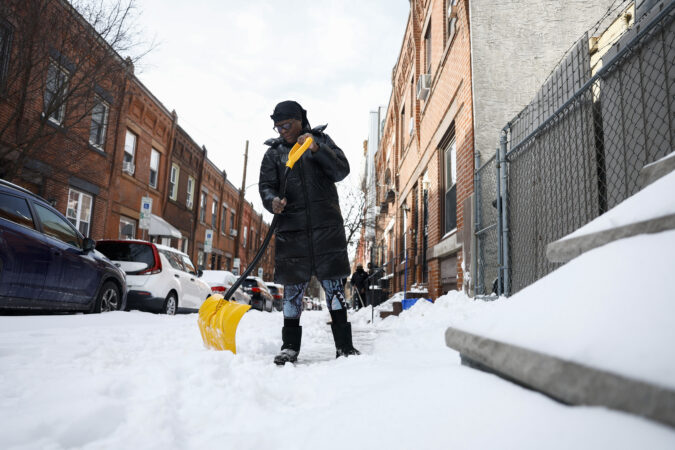
Conditions were rough when staff and students arrived at Penrose Elementary in Southwest Philadelphia — some paths they needed to access to get inside the school were untouched by shovels or plows.
Some buses could not open their doors to let students out at their usual spot because snow banks were so high, according to multiple people who work at the school and teachers union officials. A ramp that students with disabilities use to get into the school was blocked.
And the heat was on the fritz for part of the day as outside temperatures were barely in the double digits.
“It’s about 45 degrees inside this classroom,” one Penrose staffer said Thursday morning. The staffer was not authorized to speak to the media and asked not to be identified. “We’re all in jackets and hats.”
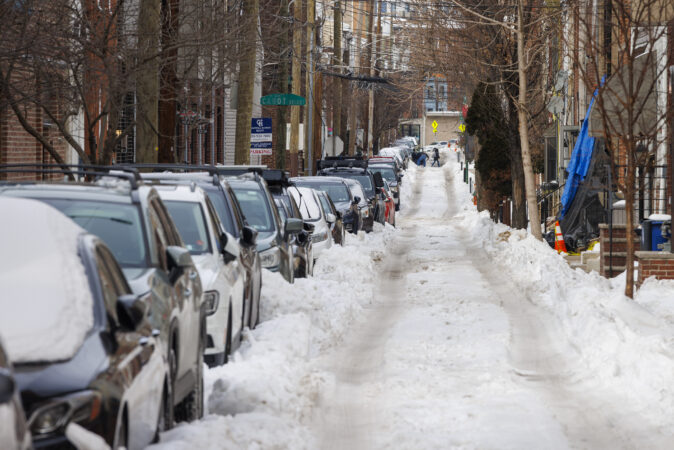
After Monday’s snow day and virtual learning Tuesday and Wednesday, Philadelphia schools reopened Thursday, but for many students, it was anything but an inviting return. The combination of accumulated snow, days of subfreezing temperatures, and a clutch of old buildings — many of which have maintenance issues — made in-person learning challenging across the district.
The rocky return came just hours before a planned rally to protest the district’s proposed $2.8 billion school facilities master plan, which is necessary, officials say, because of poor building conditions and other disparities.
Around some schools, crosswalks were covered by giant piles of snow, forcing children to walk in streets. Elsewhere, there was no place for staff to park.
At Vare-Washington Elementary, in South Philadelphia, pipes burst, rendering six classrooms, the cafeteria, the gym, and the entire basement unusable, according to the Philadelphia Federation of Teachers. There was a strong chemical odor throughout the building.
At Mitchell, another Southwest Philadelphia elementary, “it’s a mess,” said a staffer who asked not to be identified for fear of retribution.
A pipe broke at the school, and Mitchell had no running water for most of the day, with just one brief window where students could use the bathroom. And Mitchell’s student lunches were never delivered, so kids were fed cereal for lunch.
“A lot of our kids rely on those lunches to sustain them throughout the day,” the staffer said.
In addition, Mitchell’s back doors and fire tower exits were blocked by snow, so if there had been a fire or emergency, the only available exits would have been the front doors.
Taylor, also in North Philadelphia, also had burst pipes, with four rooms unusable and most of the school cold. School officials asked for permission to hold classes virtually Friday, but had received no response as of Thursday afternoon.
The Philadelphia Federation of Teachers has called on the district to return to remote learning on Friday in light of “treacherous commutes and dangerous building conditions,” Arthur Steinberg, PFT president, said in a statement issued Thursday afternoon.
Steinberg said in an interview that his office was inundated with reports of heating issues or a lack of snow removal or other problems at schools including School of the Future in Parkside; Farrell, Swenson, Mayfair, and Fox Chase in the Northeast; and others.
“The District must also show respect to students, families, and our members by rectifying the broken heaters, burst pipes, icy sidewalks, and piles of snow in parking lots as soon as possible, so that students and staff can safely resume in-person instruction on Monday,” he said in the statement.
Monique Braxton, a district spokesperson, said “the safety and well-being of our students, staff, and families remains our top priority.”
Staff worked long hours inspecting boilers and buildings, restarting heating systems, clearing snow and ice, and more, Braxton said.
“Across the district, teams are responding in real time to heating concerns, snow and ice conditions, and other weather-related issues as they arise. When conditions do not meet District standards, we work closely with school leaders to take appropriate action and communicate directly with our families,” she said in a statement. “We will continue to closely monitor building conditions throughout this bitter cold period and make adjustments as needed, while temperatures remain below freezing.”
Both Thursday and Friday had long been scheduled as half days for students, with parent-teacher conferences planned. Those would be held virtually.
John Bynum, a former building engineer who is now an official with 32BJ SEIU Local 1201, the union representing 2,000 Philadelphia school building engineers, maintenance workers, and bus drivers, said the going was rough for many schools in terms of building condition.
“Most of these buildings are operating with the original boilers,” Bynum said. “We know with antiquated equipment, there’s going to be problems.”
In some cases, snowblowers that school staff were using to attempt to clear parking lots and sidewalks failed, Bynum said.
And like other school staff, his members often coped with trouble getting to work themselves, he said.
“There were challenges regarding SEPTA not running at a full schedule and the anxiety of getting to work without a robust transportation system,” Bynum said. “Street conditions weren’t the greatest. However, they made the best of it, and they showed up.”
Conditions like Thursday’s, Bynum said, highlight why the district needs more resources to address its buildings — and students’ learning conditions.
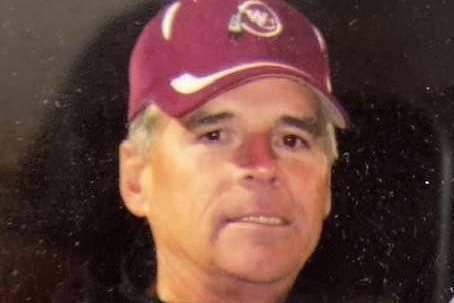
Joe Walsh, 75, of West Chester, member of four athletic Halls of Fame, longtime high school and college football coach, retired health and physical education teacher at West Chester Henderson High School, mentor, and neighbor extraordinaire, died Tuesday, Jan. 27, of cancer at his home.
Mr. Walsh grew up in the Farmbrook section of Levittown, Bucks County, and played football at the old Woodrow Wilson High School and what is now West Chester University. He got a job as a health and physical education teacher and assistant football coach at Henderson in 1972 and spent the next five decades coaching thousands of high school and college athletes, teaching thousands of high school students, and mentoring hundreds of friends and colleagues.
He coached football, wrestling, lacrosse, and tennis at Henderson, and his football teams at Henderson and Sun Valley High School combined to win four league championships. He coached in 13 all-star football games and was named the Chester County area football coach of the year four times, the Ches-Mont League coach of the year three times, and the Del-Val League coach of the year once.
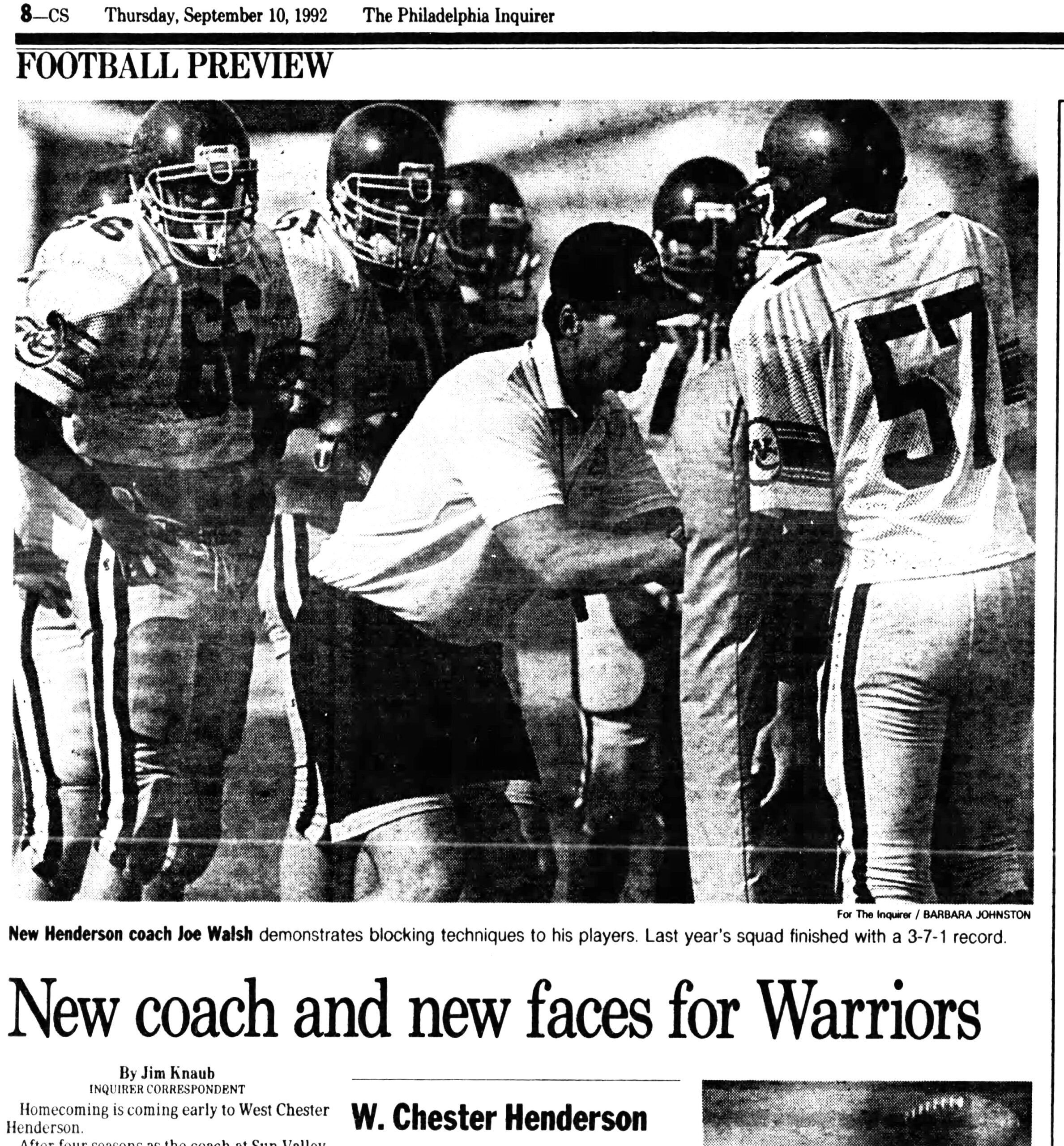
In 1992, an Inquirer reporter asked him to describe himself. “I am an easygoing, volatile kind of coach,” he said with a big chuckle, the reporter wrote. “Actually,” he said, “I think I’m a player’s coach. I think my rapport with my players is my strong point.”
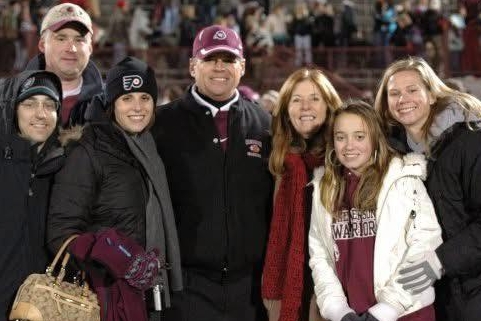
Mr. Walsh (center) had many occasions to celebrate with family and friends on the football field.
Former colleagues, players, and friends said in online tributes that Mr. Walsh was “an inspiration,” “a great coach,” and “a positive example for many, many young people.” On Threads, his brother, Russ, called him a “Hall of Fame human being.”
“He was always there,” said John Lunardi, assistant principal at Henderson, who played quarterback for Mr. Walsh and served later as his assistant coach, “a steady, reliable role model, somebody who could be counted on no matter what.”
In 20 years as head football coach at Henderson, from 1992 to 2011, Mr. Walsh’s teams won 131 games, lost 104, and captured three Ches-Mont League championships. From 1988 to 1991, he went 17-25 as head coach at Sun Valley and won the 1990 Del-Val League championship.
His 2007 team at Henderson went 12-2, won the Ches-Mont title, and made it to the district championship game. “Our motto,” he told The Inquirer in2004, “is no excuses, just results.”
Mr. Walsh and his Henderson football team were featured in The Inquirer’s 1992 preview section.
In 2025, he was inducted into the Chester County Sports Hall of Fame, and colleagues there noted his “remarkable achievements and contributions to local athletics” in a Facebook tribute. He earned a standing ovation after speaking at the ceremony, and Henderson officials recognized his legacy with a moment of silence at a recent basketball game. They said in a tribute: “Joe Walsh was a Hall of Fame person in every possible way.”
Mr. Walsh taught health and physical education at Henderson from 1972 to 2008. He organized offseason clinics to encourage all students to join sports teams and told The Inquirer in 1992: “I’ve always tried my best to get as many people out and make it enjoyable for them so they stay out.”
He served as board president for the Killinger Football Foundation and cofounded W & W Option Football Camps LLC in 2001. “It wasn’t about the wins and losses for him,” said his wife, Pam. “It was all about the kids, and he was that way in all aspects of his life.”
Mr. Walsh and his wife, Pam, had many adventures together and spent countless afternoons at football games.
Joseph Richard Walsh was born Feb. 5, 1950, in Philadelphia. He lettered in football, wrestling, and track in high school, and graduated from Wilson in 1968.
He earned a bachelor’s degree in health and physical education at West Chester in 1972 and played center on its two-time championship football team.
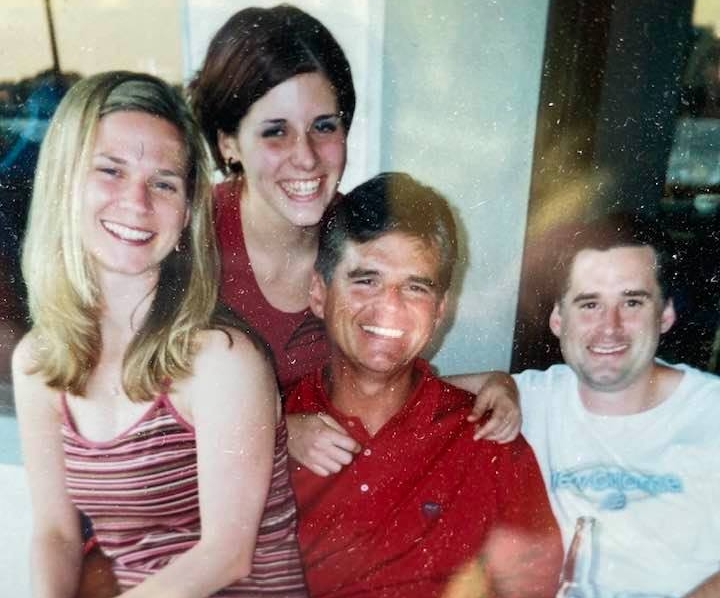
He married Sharon Clark, and they had a son, Joe, and a daughter, Kelly. After a divorce, he married Pam Connor in 1978, and they had a daughter, Jen, and lived in Downingtown and then West Whiteland Township since 1985.
Mr. Walsh enjoyed all kinds of fishing and golf. In 2023, he and his wife visited half a dozen college football stadiums on a wild cross-country road trip to Yellowstone National Park.
Mr. Walsh enjoyed time with his children.
They entertained often at home, and his gourmet soups were usually the hit of the party. He doted on his children and grandchildren, and never lost his sense of humor, they said.
He was the best neighbor ever, friends said. He cleared miles of sidewalks and driveways with his snowblower every winter, hosted late-into-the-night firepit parties every summer, and could fix practically anything.
“He was gentle but strong,” his wife said. “He was kind and considerate, and he never badmouthed anybody. He truly was a great man.”
In addition to his wife, children, brother, and former wife, Mr. Walsh is survived by seven grandchildren, one great-granddaughter, sisters Eileen and Ruth, and other relatives.
Mr. Walsh rarely let the big ones get away.
Visitation with the family is to be from 5 to 8 p.m. Thursday, Feb. 5, and from 9 to 10:30 a.m. Friday, Feb. 6, at DellaVecchia, Reilly, Smith & Boyd Funeral Home, 410 N. Church St., West Chester, Pa. 19380. A celebration of his life is to follow Friday at 10:30.
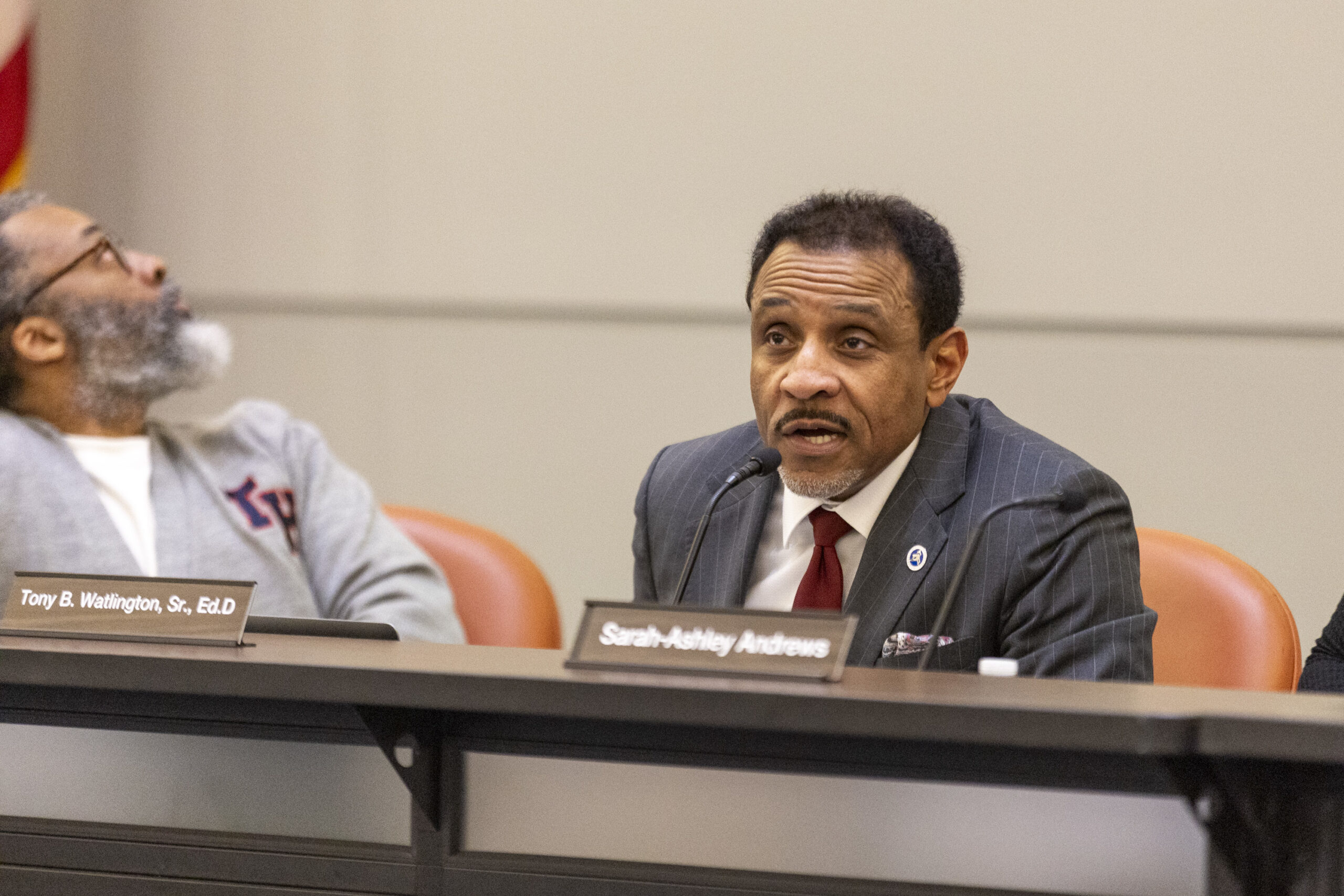
Superintendent Tony B. Watlington Sr. will not formally present the plan to the board until Feb. 26, but the topic took center stage at Thursday’s meeting as parents, educators, and other community members shared their concerns.
Here are a few takeaways:
Many people spoke out in support of Lankenau High, an environmental sciences magnet school slated to close under the plan. One parent said the closure would be a “death sentence.”
Many also spoke in support of Conwell Middle School, including its principal, who said closing it would “erase a legacy that still matters.”
Roxborough High school psychologist says the facilities proposal ‘appears to be a workaround’
Paul Brown, a school psychologist at Roxborough High School and member of Stand Up For Philly Schools, shares his thoughts about the facilities proposal.
On paper, he said, Roxborough will benefit from the plan because it will take in Lankenau High, a high-performing magnet.
“Lankenau would have to phase out their environmental science program” if it merges into Roxborough, Brown said.
“This proposal appears to be a workaround to push our students out of public education, rather than give them what they need,” Brown said.
Retired district teachers share concerns about the facilities plan, with one calling it ‘a moral failure’
Lisa Haver, a retired district teacher and founder of the Alliance for Philadelphia Public schools, calls the plan “a moral failure.”
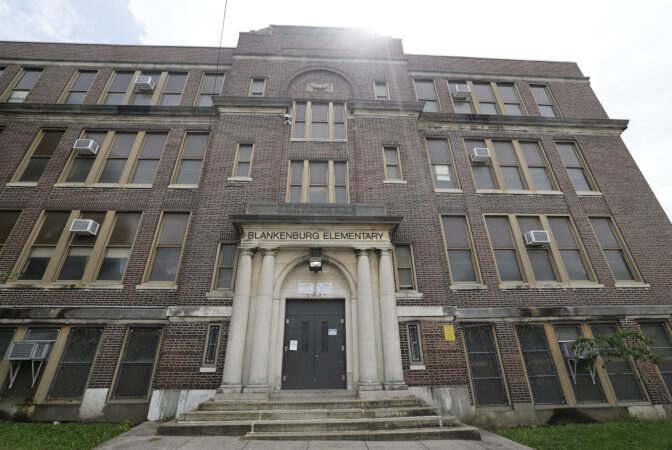
Blankenburg Elementary, in West Philadelphia, would be closed under the plan; it sits across the street from a large charter school in a new building. This plan does not represent the public’s will, Haver said.
“None of these schools has to be closed. It’s not a budget issue,” Haver said. She taught at Harding Middle School, which is also on the closure list. “It hurts my heart.”
Barbara Dowdall, also a retired Philadelphia teacher, said: “Let us not mimic the crowbar removal of buildings, or history.”
Retired teacher says the community input process for the facilities plan was performative
Retired teacher Diane Payne says she can’t believe what the district says because she sees what it does. Community input on the facilities plan was performative, she said, and the blueprint feels top-down.
“We the people do not have buy-in with your top-down plan,” Payne said. “We do not want our public schools sold out from under us.”
Payne calls the plan “extremely flawed and disruptive.”
District parent asks board to consider what brought them to this moment
Colin Hennessy Elliott, a district parent, is speaking about the facilities plan broadly. The board must consider what brought the district to this moment, he said.
Closing Lankenau ‘would be like a death sentence,’ parent and district teacher says
Dana Williams, a Lankenau High parent and district teacher, said her son, who has autism, is thriving.
“Closing Lankenau High school would be like a death sentence to so many students’ social, emotional, and academic” lives, Williams said.
“This is the highest form of inequity,” Williams said of Lankenau’s closure. “I do not need my child going to a neighborhood high school. That was never an option.”
Williams’ son had choices of other magnet schools, she said, but he chose Lankenau. She said the closure would be a “bait and switch.”
Former student board member and Conwell graduate says Conwell is ‘one of the best pathways for student success’
Mwanasha VanWright, a 1997 Conwell graduate and former student board member, calls Conwell “one of the best pathways for student success our city has to offer.”
Conwell was key to her success, VanWright said. “I hope you reconsider closing Conwell,” VanWright said. If you do close the building, make Conwell the official middle school of Bodine, she urged the board.
VanWright is raising three fourth-generation Philadelphians. She wants them to have “strong options like Conwell,” she said.
Retired teacher questions the district’s plan to give some buildings to the city
Retired Philadelphia teacher Deborah Grill said the current facilities plan is “even worse” than the 2012 closures.
“At least those schools were given time to react and fight for their schools” before the School Reform Commission made its closure decisions, she said.
Grill asks: Why isn’t the district considering closing charter schools with empty seats?
Grill also questions the district’s plan to give some buildings to the city rather than using or selling them. “It really has nothing to do with the welfare of your students,” Grill said.
Vare-Washington Elementary principal expresses gratitude for board’s consideration of playground project
Alison Barnes, principal of Vare-Washington Elementary, said the community is thrilled the board will consider approving a playground project for Vare-Washington Thursday night. It’s nine years in the making, Barnes said.
Conwell parent asks the board to reconsider closing any middle schools
Tasha Smith, a parent of two Conwell students, opposes the closure of the school.
“I am asking for this board to require the district to reconsider closing Conwell, and to reconsider closing all middle schools. There has to be other ways to succeed,” Smith said.
Smith said that the district asking, “Do you want unnecessary transition?” in the facilities planning survey was a misleading question. It should have asked, “Do you want us to close middle schools?” because that what it’s doing. Kids need middle schools, she said.
Parent of two Conwell alums says the school is ‘a cornerstone of our community’
Priscilla Rodriguez, whose two sons attended Conwell, said the school is “a cornerstone of our community.”
It’s more than a school, she said. It offers meals and after-school support. “When a school closes, families don’t just adjust. They struggle,” Rodriguez said.
Conwell families “are already dealing with a lot,” said Rodriguez said. “You won’t make it any better by closing Conwell.”
Kensington ‘deserves investment, not abandonment,’ says former Conwell climate manager
James Washington, a former Conwell climate manager and husband of a Conwell graduate, noted the school’s 100th anniversary. “Closing Conwell is a profound loss to a community that has already endured too many disappointments,” Washington said.
Instead of celebrating the anniversary, “we are preparing to erase the legacy.”
“The Kensington community deserves investment, not abandonment,” Washington said, urging the board to “look beyond spreadsheets” and save Conwell.
Head of Philadelphia Charters for Excellence asks the board to consider charters an equal partner
Cassandra St. Vil, head of Philadelphia Charters for Excellence, raised issues, including what she said was the coercion of some schools into signing their charters.
She said charters deserve more funding to address facilities needs, and urged the school district to consider charters an equal partner.
Organizer tells the board this is only a ‘25% plan’
Katy Egan, a community member with Stand Up for Philly Schools, the coalition that organized the rally before the meeting, said this is a “25% plan” with a serious lack of information. Which schools are being modernized? When? How? How will displaced students get to new schools? What about special education students? How do you plan to keep students and staff members safe?
“It’s not a plan. We deserve more than 25%, and our students deserve everything,” Egan said.
Parent asks: If the district doesn’t get the full $2.8 billion, which schools won’t get modernized?
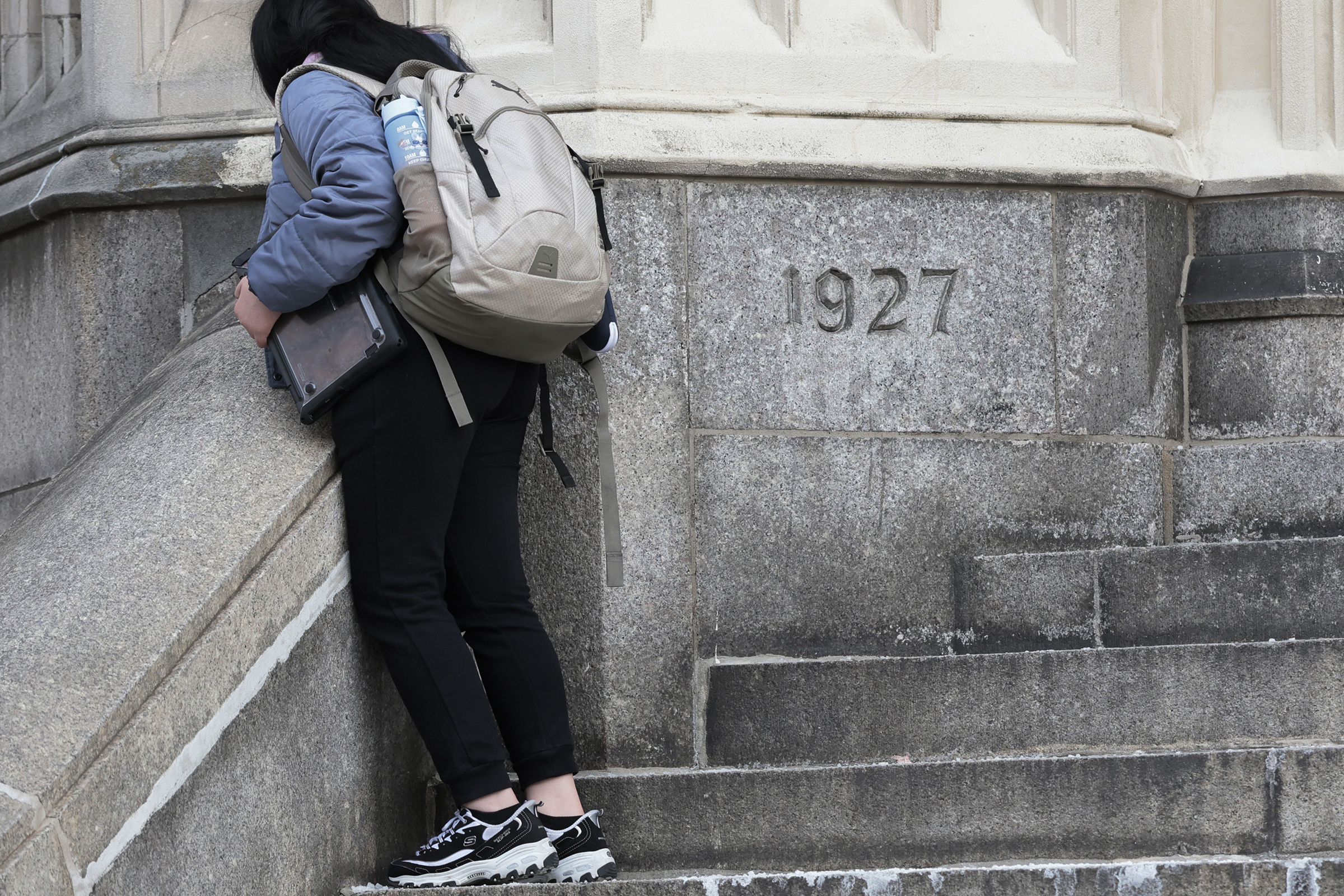
Afternoon dismissal at Penn Treaty Middle School on Jan. 22. The school building was built in 1927.
Lizzie Rothwell, a parent of two district students and spouse of a teacher at Penn Treaty — a school slated to be closed — is speaking against the facilities plan.
If the district doesn’t get the full $2.8 billion, 40 schools wouldn’t be modernized, Rothwell said. What are the 40 schools? (The district has not released those lists.)
“The city of Philadelphia and the state of Pennsylvania owe the district $8 billion in deferred maintenance,” Rothwell said.
‘Closing schools ruins families and neighborhoods,’ says Ludlow Elementary teacher
Ludlow Elementary.
Carin Bennicoff, a teacher at Ludlow Elementary, is speaking out against the school’s closure. She’s worked at Ludlow for 30 years.
“Closing schools ruins families and neighborhoods,” Bennicoff said. “A facilities dashboard can’t measure what a school means to a community.”
Generations of students attend Ludlow, Bennicoff. “Instead of closures, we need you to invest in creating safe and healthy schools” by giving us smaller classes and more resources.
“Our children deserve real, stable neighborhood schools,” Bennicoff said.
Conwell principal urges the board to save her school from closure
Conwell Middle School.
Erica Green, principal of Conwell, a school tagged for closure, is speaking now.
“Closing it would erase a legacy that still matters,” Green said. “Conwell is a cornerstone in the Kensington community.”
Philadelphia’s police commissioner was sworn in at Conwell, Green points out. “We are what the city needs,” she said. “Our building is celebrating 100 years. Bright and shiny does not mean better. Philadelphia is a city that celebrates history.”
“Do not let the almighty dollar” drive Conwell’s closure, an impassioned Green said. “Preserve the building, preserve the culture, preserve the legacy. History matters. Conwell matters.”
Proposed closures would disproportionately harm Black and low-income students, researcher says
Ryan Pfleger, a researcher, said the district’s proposed closures are disproportionately hurting Black and low-income communities.
“The burden of closure would fall roughly evenly across racial groups. This is not what the data shows.”
Black students are 1.6 times more likely to be in closing schools, he said. Fifteen of 20 schools tapped for closure are majority-Black. “This is disparate racial impact,” Pfleger said.
Perhaps it was unintentional, but Black and poor kids are more likely to be affected under this plan, he said.
“Build schools up. Don’t shut them down,” Pfleger said.
Mastery parents speak out in support of their schools
Gloria Carroll, a Mastery parent, said Mastery Clymer Elementary is an excellent school. “I love Clymer,” she said.
Ashtin Richard, a Mastery Gratz parent, loves the school and said it has helped his son have a smooth transition from a school in the Midwest.
// Timestamp 01/29/26 5:55pm
‘Take our time, be logical, be strategic,’ high school football coach urges the board
“Sending a kid from school to school can be very damaging,” said Jordan Holbert, the football coach at Vaux Big Picture High School and a North Philadelphia resident. “It’s not what’s best for the student long-term. As we’re making these difficult decisions about what to do next, I urge and beg and plead and frankly demand that we think about the kids and the long-term closure. We did this before … and we still haven’t recovered from that. Making the same type of decision is misguided and risky.”
Holbert urges the board to “take our time, be logical, be strategic,” and think about long-term effects.
District has ‘100% support’ from Philly delegation to get the funds it needs, State Rep. Tarik Khan says
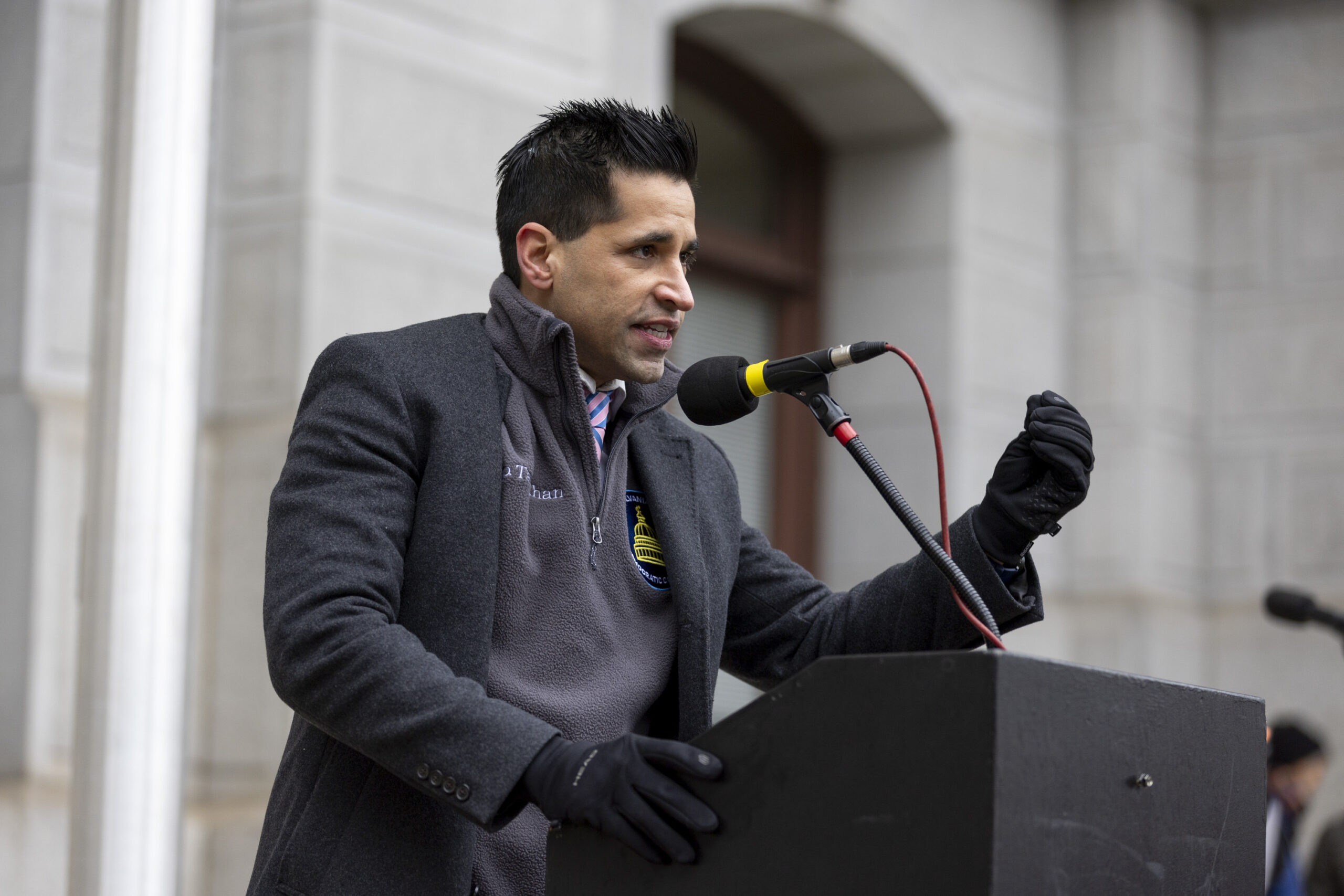
State Rep. Tarik Khan speaks during the Peoples March in Philadelphia on Jan. 18, 2025.
State Rep. Tarik Khan is now addressing the school board. The district has “100% support” from the Philadelphia delegation to get the funds it needs, Khan said.
“I understand that there are difficult decisions to be made,” Khan said, and Lankenau is not the only school in his district to be planned for closure. But, he said, “there’s something special about Lankenau.”
Lankenau has 100% graduation rate. It is set in the woods. “They have unrivaled partnerships,” Khan said. “Please keep Lankenau open.”
Streater reiterates: Watlington will present the facilities master plan to the board on Feb. 26, but they will not vote that night
Board president Streater said it would not be appropriate for him to opine on Watlington’s facilities plan until it’s firmly in the board’s hand. He urges people to attend community meetings.
“Feb. 26 is just you presenting the proposal, it’s not the day of a vote, just putting that out there for the record,” Streater said.
The new student board representatives say one of the three of them will try to be at every forthcoming facilities planning meeting.
The superintendent said it’s a “once in a lifetime, significant opportunity for Philadelphia” to modernize schools, increase access to arts, music, pre-K, algebra in eighth grade, add a year-round K-8 and high school, add a new comprehensive high school in the Northeast, and a year-round indoor pool at one Philadelphia school.
School selection deadline has been extended to Friday at 5 p.m.
Watlington reiterates that the school selection deadline was extended to Friday at 5 p.m. Initial waitlist offers will be made on Feb. 1 at 5 p.m., and the deadline to accept a waitlist offer is Feb. 4 at 5 p.m.
More than 4,000 additional students completed applications for the school selection process, Watlington said.
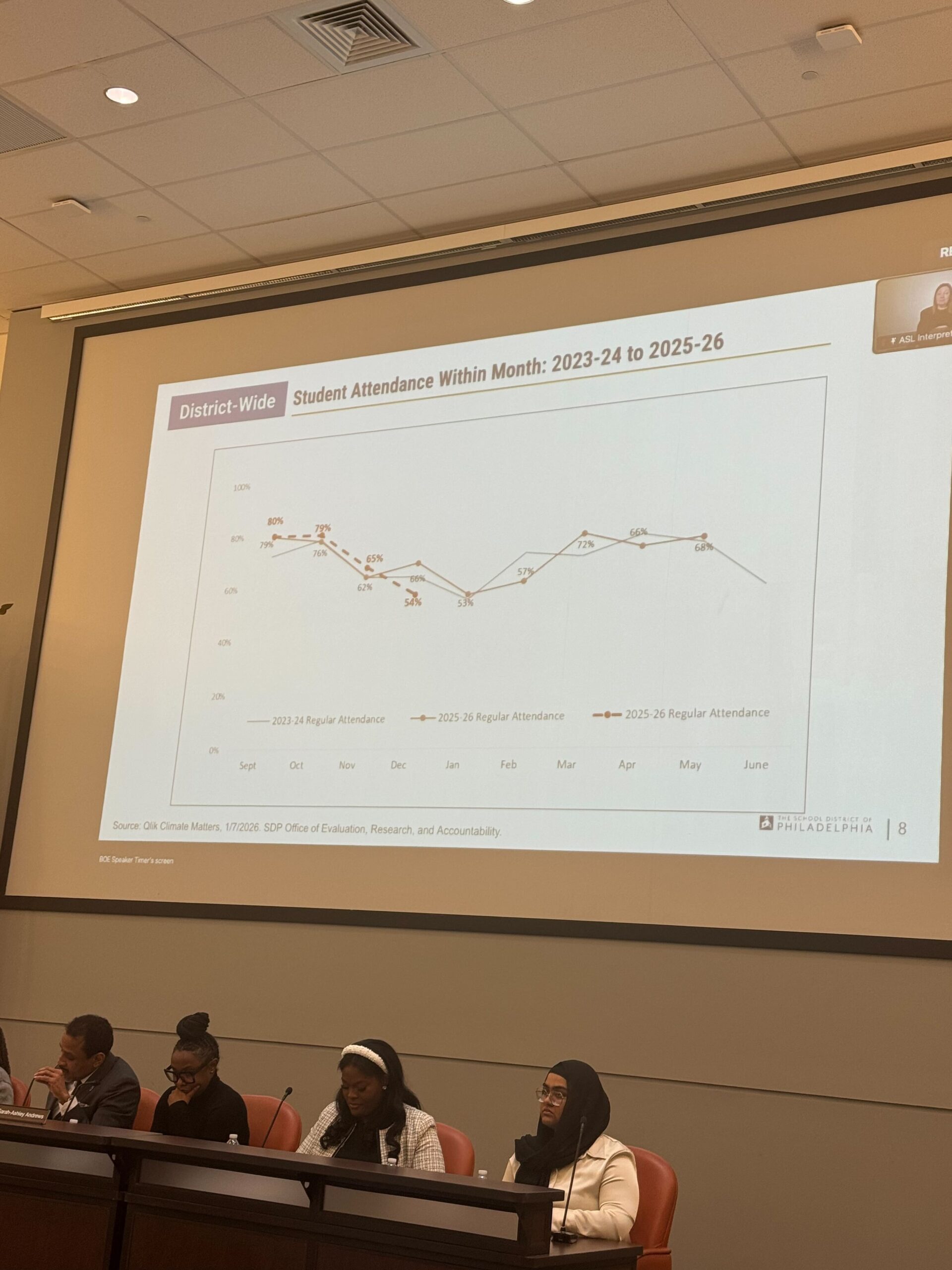
Student attendance drops year-over-year for December, ‘the largest drop I believe I’ve seen during my tenure here,’ Watlington says
Student attendance dropped year over year for the month of December, Superintendent Tony B. Watlington shared with the school board.
Student attendance dropped year-over-year for the month of December, Watlington said.
It was 66% in 2024, and 54% in 2025, “the largest drop I believe I’ve seen during my tenure here,” Watlington said. He believes the change was due to a half day for professional development, a two-hour delay for snow, and lightly attended days prior to the winter break.
Philly builds one snow day into the calendar, and any other inclement weather days will be virtual, Watlington says
Watlington is making his monthly presentation now. He welcomes the new student board members, then pivots to the district’s inclement weather process. While in-person learning is preferred, the “absolute number one, without question” priority is safety, the superintendent said.
Philadelphia builds one snow day into its calendar; any subsequent inclement weather days will shift to virtual instruction, Watlington said.
The student said she and others are scared to lock up their phones. Hers was stolen once, and her family cannot afford to replace another phone, she said.
“Let’s not strip away the only safety tool” that some children have.
Superintendent Watlington directed one of his assistant superintendents to speak to the Frankford student.
‘To me, closing Lankenau doesn’t make sense,’ high school senior tells the board
LeeShaun Lucas, a senior at Lankenau High School, is upset the school might close. “To me, closing Lankenau doesn’t make sense,” Lucas said.
Lankenau’s campus is unique in the city — set against a wildlife preserve and a farm, a stream, and a forest.
Lucas has studied how to make the Schuylkill healthier by studying mussels, he said. He’s had the opportunity to study in a GIS class, the city’s only such high school opportunity. That shaped Lucas, he said.
“I truly believe that voting to close Lankenau Environmental would be a mistake,” Lucas said. “Please vote to save Lank so that others may benefit from the type of learning that is only possible at Lankenau Environmental.”
Cecelia Henderson, a junior at Lankenau, is also speaking against the proposed closure of her school.
“My overall experience at the school has been overwhelmingly positive,” Henderson said. “Lankenau teachers build very strong personal relationships with students. These are the things I don’t hear from my friends who attend other inner-city Philadelphia high schools.”
Lankenau gave her “structure, support and the privilege of a beautiful campus” that helped her deal with personal issues, Henderson said.
Henderson takes dual enrollment biology and GIS classes. “I strongly believe that this cannot be replicated elsewhere,” Henderson said. “Why close a school that gives real-world education and credentials to students? Why not give that school aid and support it so we can grow bigger and better?”
Conwell students urge the board not to close Conwell Middle School
Julia Spencer, an eighth grader at Conwell Middle School, is speaking now.
“When I got to Conwell, I found my fit,” Julia said. She’s involved in track and field, ballet, student government, and more.
The district has proposed closing Conwell, and that makes Julia worry about kids who won’t get the chance to attend the magnet middle school.
“They should be able to carry the Conwell name like I will, and so many other generations,” Julia said. “Keep Conwell open.”
Jebaz Spencer, another Conwell student, said: “Conwell has programs and opportunities that other schools don’t have. … My peers and I deserve Conwell.”
Conwell students have to score high on state tests. Kids deserve “to have the legendary Conwell name on our school records,” Jebaz said. “I’ve become a better person at Conwell, and an example for other students.”
“Conwell matters,” Jebaz said. “We matter.”
Under the proposed facilities plan, Conwell would close, and the building would be repurposed as a district swing space. Students would attend AMY at James Martin as a 5-8 program with a preference for Bodine High School.
The school board will hear from student speakers now, including multiple students scheduled to testify about proposed school closings.
Up first is Shereeta Jones, a student at Mastery Simon Gratz. Shereeta loves her school, and the staff who “just want to see me succeed at school and in life.”
Up now is the installation of the student representatives of the school board.
Board members Sarah-Ashley Andrews and Cheryl Harper work closest with the student reps. This year’s reps are: Brianni Carter, from Philadelphia High School for Girls; Ramisha Karim, from Northeast High; and Semira Reyes, from the Philadelphia High School for Creative and Performing Arts.
Six board members are in attendance at tonight’s meeting
The board has a quorum at tonight’s meeting, but not all members are in attendance.
President Reginald Streater and vice president Sarah-Ashley Andrews are attending in person. Crystal Cubbage, ChauWing Lam, Joyce Wilkerson, and Cheryl Harper are present virtually.
Whitney Jones, Wanda Novales, and Joan Stern are absent.
District plans to host upcoming community meetings centered on the proposed facilities plan
School board president Reginald Streater acknowledges Superintendent Tony B. Watlington Sr.’s long-awaited facilities plan, which was made public last week. It won’t be presented to the board until next month.
Streater urges attendance at upcoming community meetings, starting next week. The meetings will center on closing schools.
“Once he [Watlington] has formally presented his recommendations to the board, we will announce additional information on how we will proceed,” Streater said.
In other words, there will be no immediate vote after the Feb. 26 Watlington presentation, and more community engagement opportunities to come.
Board honors general counsel for the district, and its senior and teacher of the month
The board is honoring Shahirah Brown, assistant general counsel for the district, who has won multiple recognitions by community and legal organizations for her work.
First school board action meeting of 2026, here we go!
Most board members are not present in person tonight — just board president Reginald Streater and vice president Sarah-Ashley Andrews are at Philadelphia School District headquarters today.
Rally begins to break up as organizers head inside for school board meeting
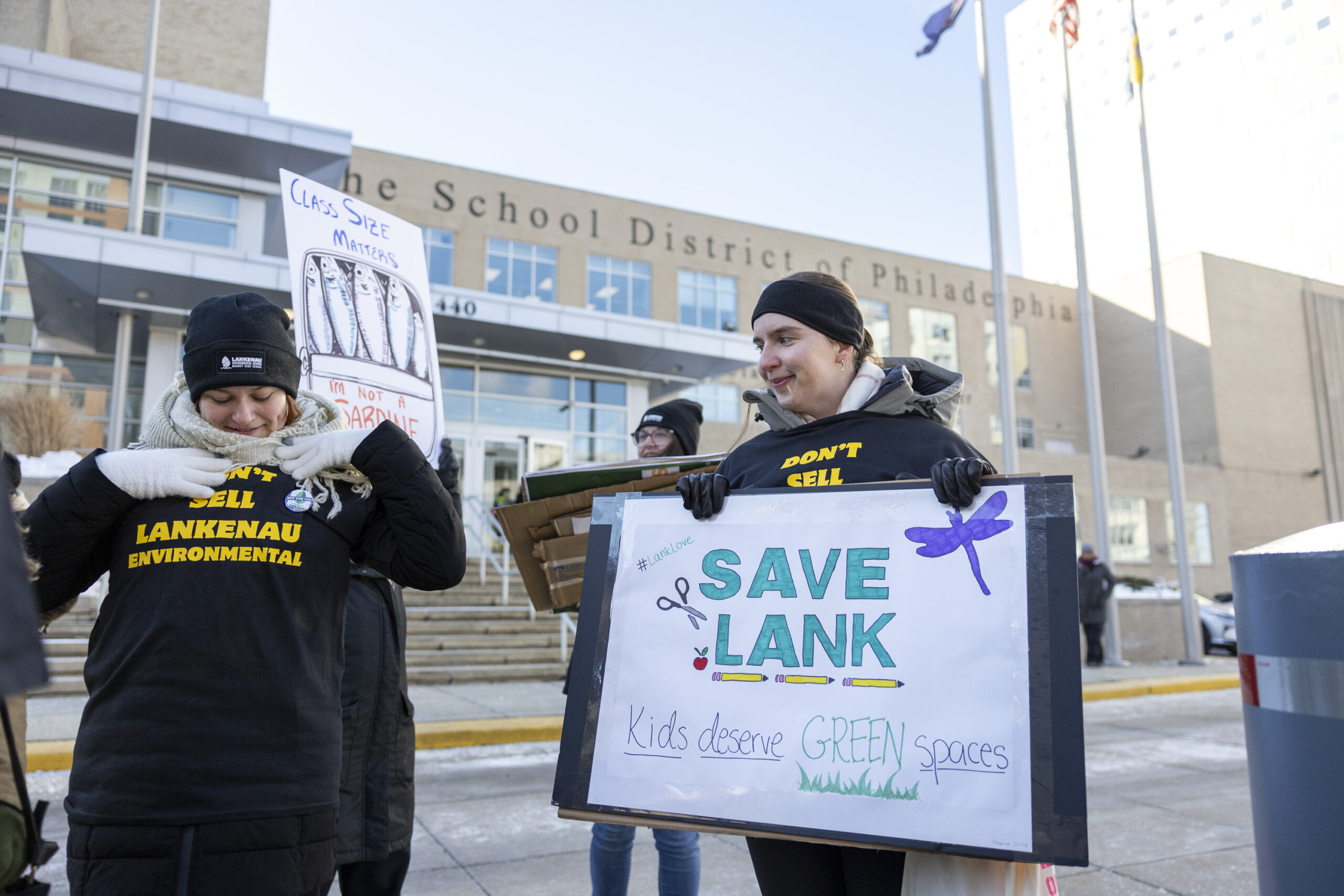
Grace Keiser, 27, a math teacher at Lankenau High School, holds a “Save Lank” sign during the rally on Thursday.
At the close of the rally, Krys Fannis, a 10th grader at Lankenau, spoke on the megaphone.
“I feel scared,” he said about the district’s plan, which would close the school. Fannis would have to transfer to a new school for his senior year. He said that Lankenau is more than just a building filled with classrooms. It is a community, and its focus on environmental education is essential for students like him, he said.
To those in the school district who argue his school must go?
‘It’s just an injustice,’ says president of Lankenau Home & School Association
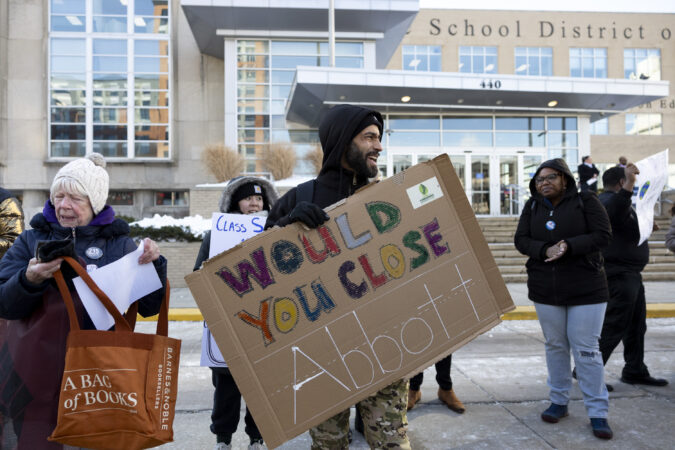
Demonstrators rallied against school closures outside the School District of Philadelphia headquarters on Thursday.
Some of the demonstrators warned that removing children from their neighborhood schools would be traumatizing to already vulnerable kids.
“These schools are another home for these families,” said Margarita Davis-Boyer, president of the Lankenau High School Home & School Association. She said schools are a place where kids can get a meal, see a friendly face, and feel safe, especially when home may not offer the same reprieve.
“It’s just an injustice,” she said.
Annie Moss, from the Olde Kensington Neighborhood Association, said the school district’s plan threatens the future of Philadelphia.
“You cannot build a strong city… by traumatizing them,” she said.
North Philly community member protests proposed closure of Ludlow Elementary
Annie Moss, who runs after-school programs at Ludlow Elementary, rallied outside the School District of Philadelphia before their school board meeting on Thursday.
Annie Moss, a member of the Olde Kensington Neighborhood Association, braved the bitter temperatures to protest the planned closure of Ludlow Elementary in North Philadelphia. Ludlow, and the neighborhood, have finally gotten some investments.
“And now they’re talking about closing,” Moss said.
Moss said students would lose if Ludlow is closed.
“Why take them out of something that is good, and been built for them, and destroy it?” said Moss.
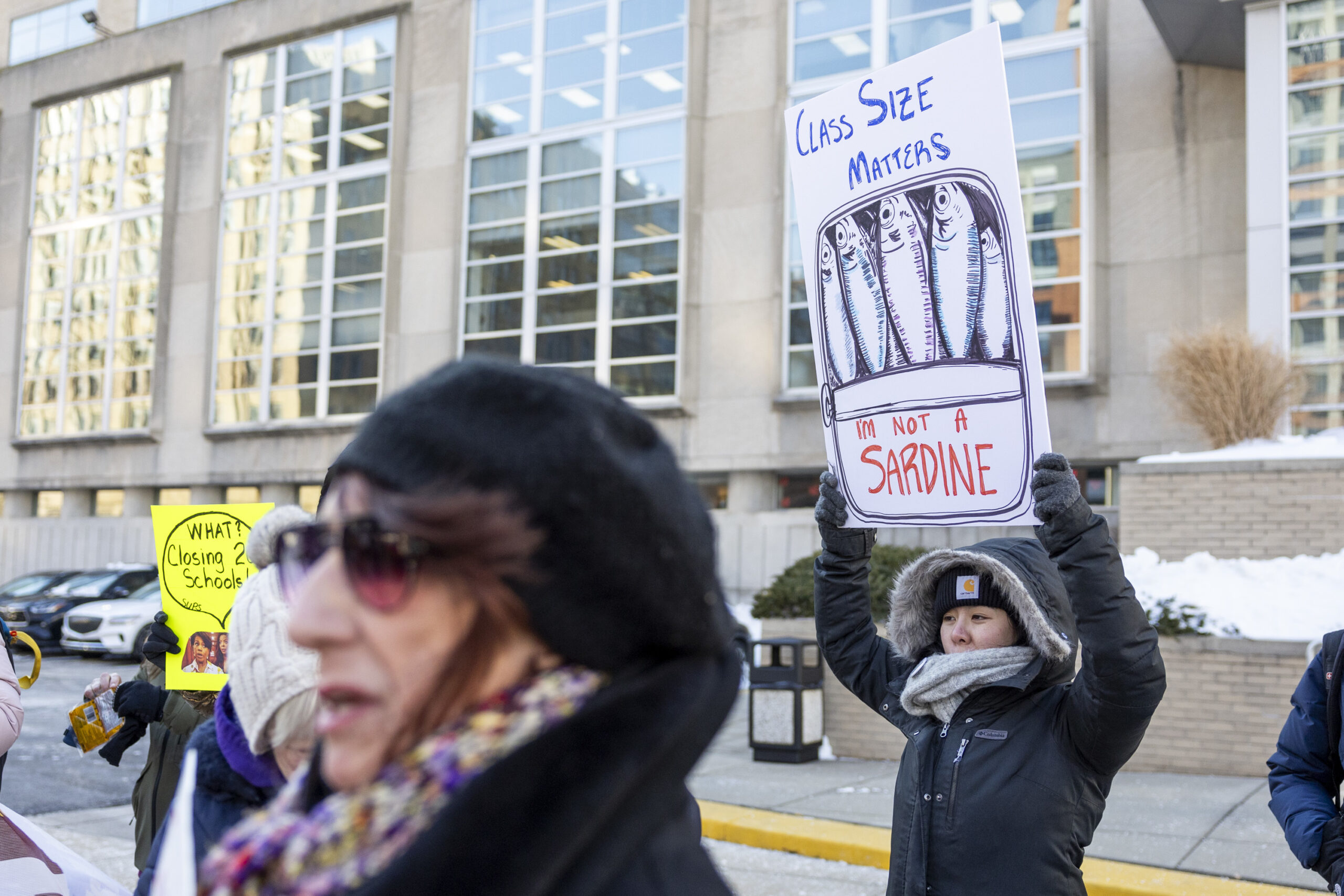
Hannah Loo, who works for advocacy organization 12 Plus, rallied outside the Philadelphia school district headquarters against school closures on Thursday.
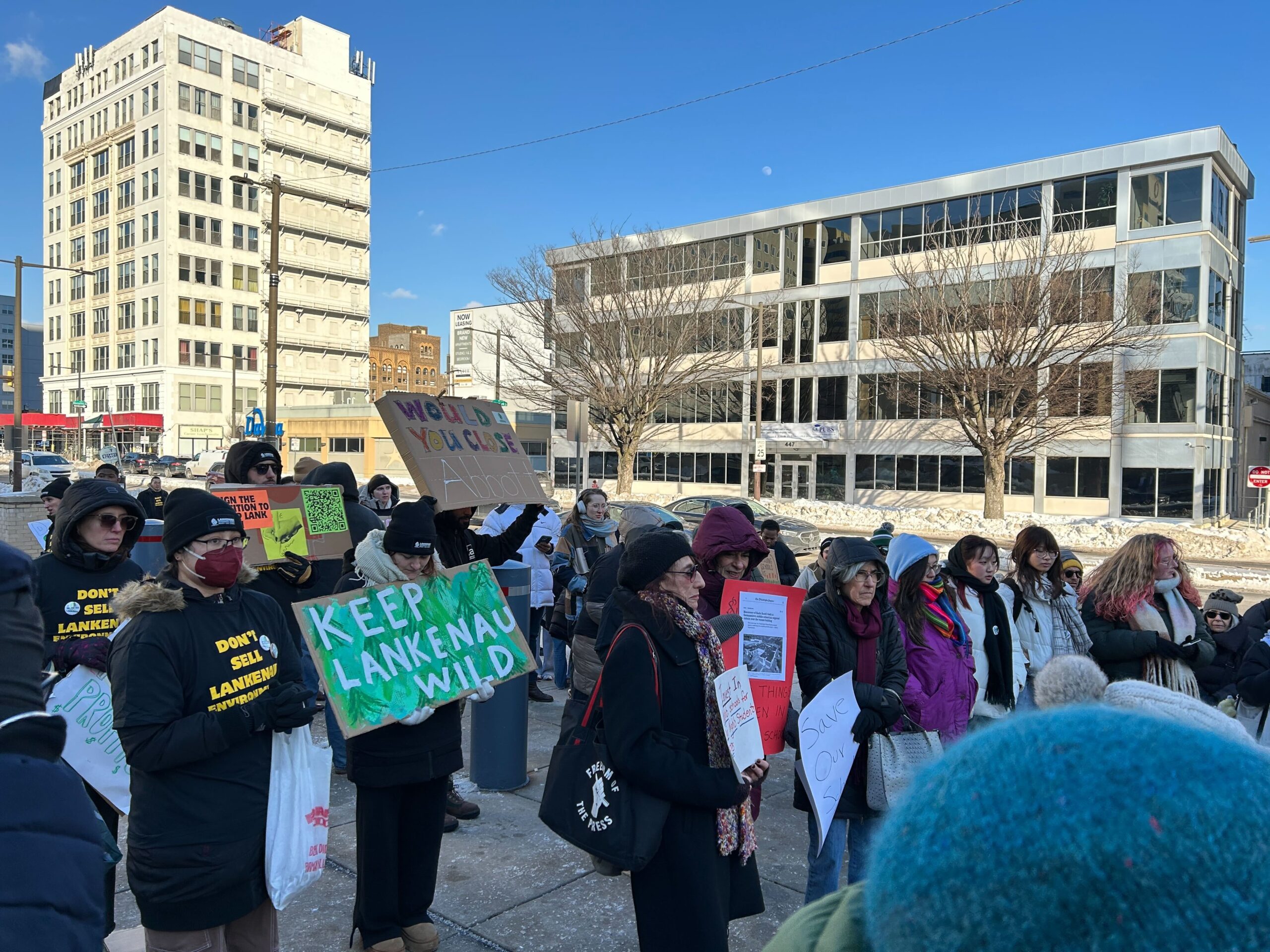
Around 60 people are gathered in front of the school district headquarters, surprising organizers with their turnout given the frigid weather.
Hannah Loo, 30, braved the wintry day holding a sign that warns of crammed classrooms if the proposed schools close.
“Class Size Matters: I’m not a Sardine,” the sign read.
Loo, who works for advocacy organization 12 Plus, said that she was fighting against school closures because schools are essential parts of the neighborhoods and communities where they’re located. She believes the district’s plan will ultimately hurt graduation rates and attendance, and said she hopes the district listens to organizers doing grassroots work to advocate for schools.
Organizers set to rally against school closures outside school district headquarters
// Timestamp 01/29/26 2:45pm
Stand Up for Philly Schools, a coalition of neighborhood, parent, and educator groups, plans to rally outside the School District of Philadelphia headquarters starting at 3 p.m. Thursday, one hour before the school board’s first meeting of 2026.
The facilities plan is not on the agenda of Thursday’s meeting, but it will be the public’s first opportunity to share question and concerns with the board.
An Inquirer analysis of the decisions and the data behind them shows the proposed closures would disproportionately affect Black students. And despite efforts to minimize the impact, schools in the most vulnerable sections of Philadelphia would also be disrupted.
The closures would mostly address buildings with hundreds of unused seats, though some largely empty buildings were spared. And eight of the closures would affect schools given the district’s worst building condition rating — though 30 more buildings in that category would stay open and receive upgrades of some kind.
Monique Braxton, district spokesperson, said the facilities plan was “designed to provide access to high-quality academic and extracurricular programs across every neighborhood regardless of zip code.”
Most affected students — 90% — would be reassigned to schools with similar or better academic outcomes, and all would be reassigned to schools with either similar or better academics or comparable or better building conditions. Receiving schools will get additional supports, Braxton said.
Overall, the proposal would shake up at least 75 schools, with 20 closing entirely, four leaving their current buildings to colocate within other schools’ buildings, and three moving to new buildings. It would create new schools and, in one case, result in a new building. Nearly50 other district schools would take in displaced students from the closing schools, with some adding grades and others modernizing to fit new programming needs.
Collectively, about 32,000 district students learn in the 75 affectedschools — more than a quarter of the district’s total enrollment — not counting children in pre-K programs.
And those are just the changes Watlington introduced this month. Other shifts, some of them major, district officials said, are expected to be announced by the time he presentsthe planto the school board next month. A final vote is planned for later this winter.
Superintendent Tony B. Watlington (center) speaks about his proposal this month for the Philadelphia school facilities master plan.
The racial impact
The 20 schools that could close have twice as many empty seats as the district’s other schools. But The Inquirer’s analysis found that the closures will hit Black students disproportionately.
Among the closing schools, about 68% of the student population is Black, compared with 40% for the rest of the district’s schools — not including disciplinary or other specialized schools.
window.addEventListener(“message”,function(a){if(void 0!==a.data[“datawrapper-height”]){var e=document.querySelectorAll(“iframe”);for(var t in a.data[“datawrapper-height”])for(var r,i=0;r=e[i];i++)if(r.contentWindow===a.source){var d=a.data[“datawrapper-height”][t]+”px”;r.style.height=d}}});
Of the district’s schools where at least 90% of the students are Black, more than half are scheduled to close or take in more students from the closures.
Overall, amajority of students in the 75 schools that could close, take in students, or change in some way are Black, at about 54% of enrollment.
Some majority-Black schools, however, are earmarked for upgrades. Bartram High would get a modern athletics facility after nearby Tilden Middle School in Southwest Philadelphia is closed and upgraded for that purpose.
Nysheera Roberts is the parent of multiple children who attend Waring Elementary, in Spring Garden, which landed on the closure list. Waring now educates under 200 students; its pupils would be sent to Bache-Martin.
Roberts is stunned that her school — which educates mostly Black students like her kids — could close.
She worries about the logistics of getting her kids to school safely further away, then getting to her job in home care in Frankford on time. She worries what will happen to her children, including the niece and nephew she now raises who have lived through significant trauma and have behavioral and learning needs, if they have to adjust to a new and larger school.
“It’s not fair,” Roberts said. “They’re hurting Black kids more.”
Paying attention to vulnerable neighborhoods
In deciding which schools to close or expand, the district considered the vulnerability of the surrounding neighborhood.
Two dozen neighborhood elementary schools were labeled “very high risk,” meaning they have likely dealt with a previous school closure, or the community is otherwise vulnerable to high poverty, housing concerns, or other factors.
(function() {
var l2 = function() {
new pym.Parent(‘school_closing1’,
‘https://media.inquirer.com/storage/inquirer/projects/innovation/arcgis_iframe/school_closing1.html’);
};
if (typeof(pym) === ‘undefined’) {
var h = document.getElementsByTagName(‘head’)[0],
s = document.createElement(‘script’);
s.type = ‘text/javascript’;
s.src = ‘https://pym.nprapps.org/pym.v1.min.js’;
s.onload = l2;
h.appendChild(s);
} else {
l2();
}
})();
Welsh, in North Philadelphia, was the only school building in a neighborhood labeled “very high risk” to land on the closing list.
Bethune in North Philadelphia and Martha Washington in West Philadelphia will colocate with other schools.
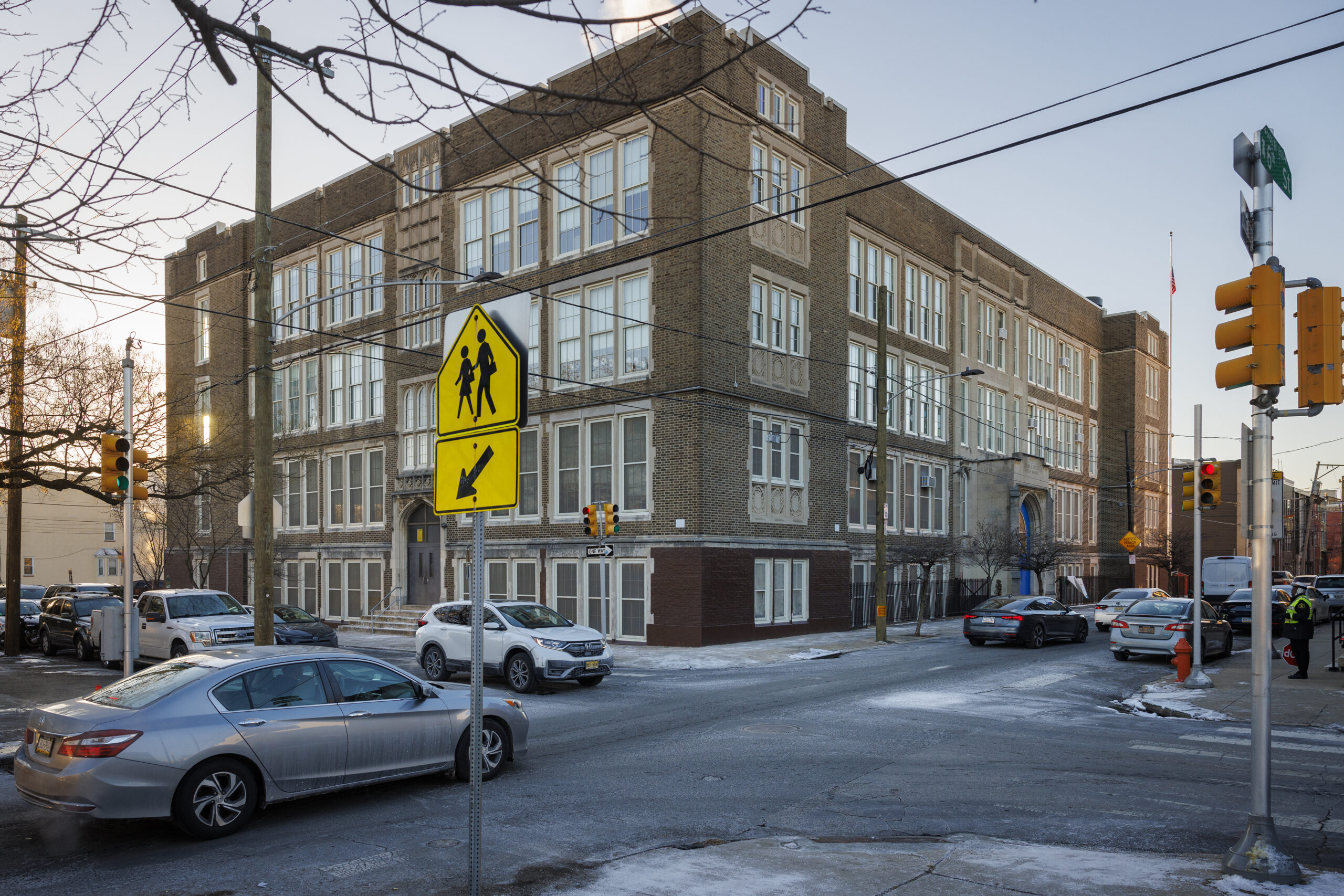
But three schools with building conditions considered unsatisfactory, poor programming options, and “very high risk” neighborhood ratings were left off the closure list. Those schools are Philadelphia Military Academy in North Philadelphia, Sheppard in West Kensington — which has successfully fought off closure in the past — and Francis Scott Key in South Philadelphia, the district’s oldest building, constructed in 1889. Sheppard and Francis Scott Key are both majority-Hispanic schools.
Sheppard Elementary School in West Kensington has faced the threat of closure in the past but was spared in the latest proposal.
The district plan calls for closing five schools in neighborhoods it deemed to have a “high risk” of vulnerability, the level below “very high”: Blankenburg, Harding, Stetson, Tilden, and Wagner.
Watlington has made it clear that the district is phasing out middle schools when possible, in favor of the K-8 model — and of that list, four are middle schools. Only Blankenburg, in West Philadelphia, is an elementary. Also, of those schools in vulnerable neighborhoods, four of the five are rated as having “unsatisfactory” buildings, the district found.
Perhaps no section of the city faces as much disruption from the recommendations as the lower part of North Philadelphia.
Fourteen schools with a combined enrollment of 5,400 students could be affected, including the closures of Ludlow, Morris, Penn Treaty, and Waring.
“If you are closing schools during a literacy crisis, then you should be held directly accountable to the people you serve,” Young said last week.
Right sizing mostly empty buildings
Underused space was a factor in the district’s decision-making, an Inquirer analysis found.
Data released by the district last year identified about 60 schools that were more than half empty. The recommendations attempt to realign some of these schools by taking significant action on 31 of the 60 half-empty schools.
Of the 20 schools the district wants to close, 14 are currently at less than half capacity.
window.addEventListener(“message”,function(a){if(void 0!==a.data[“datawrapper-height”]){var e=document.querySelectorAll(“iframe”);for(var t in a.data[“datawrapper-height”])for(var r,i=0;r=e[i];i++)if(r.contentWindow===a.source){var d=a.data[“datawrapper-height”][t]+”px”;r.style.height=d}}});
AMY Northwest, Conwell, Robert Morris, Motivation, Tilden, and Welsh are all recommended for closure, with each educating fewer than a quarter of the students they have room for.
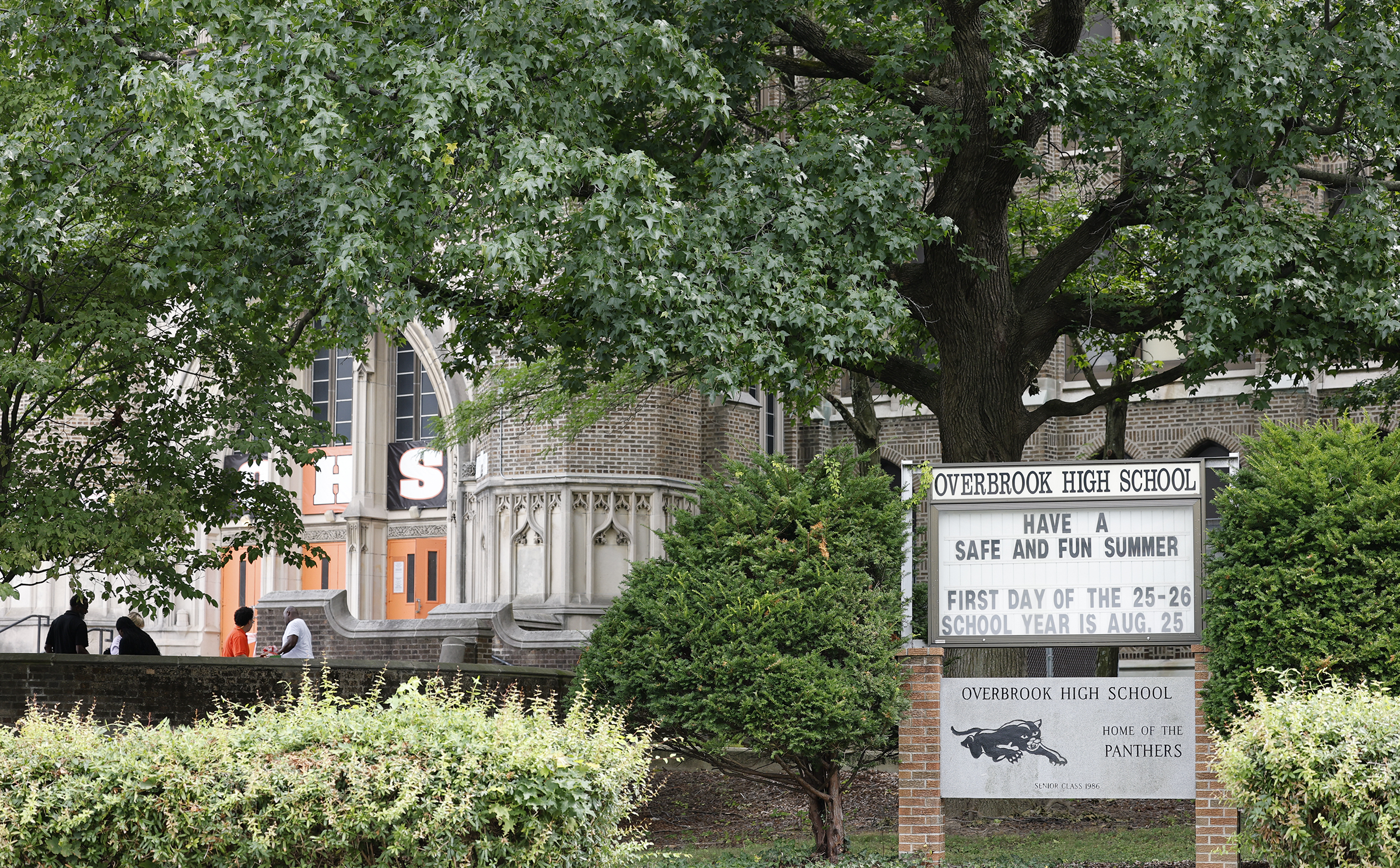
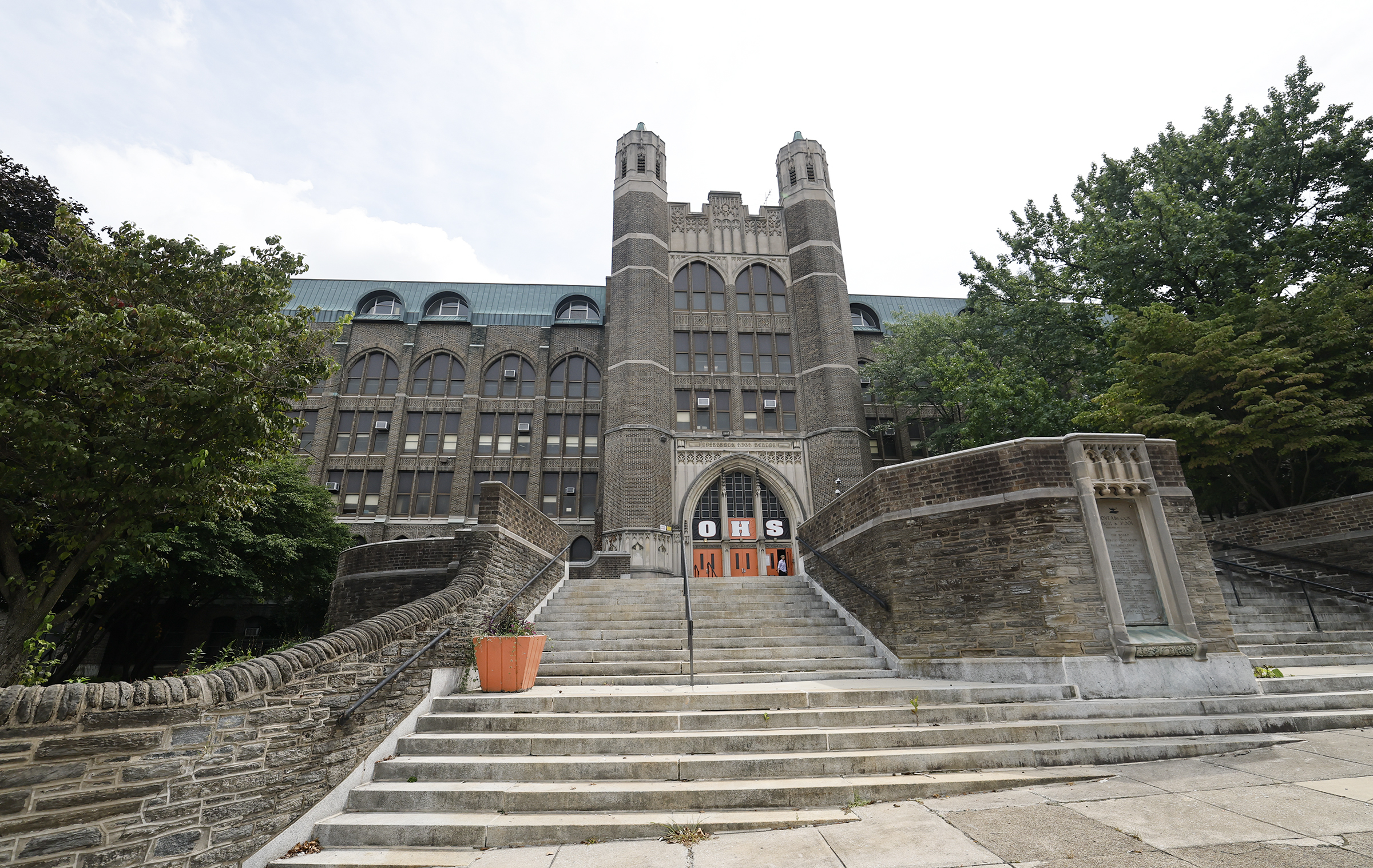
Overbrook High in West Philadelphia — a 100-year-old school with roughly one in four seats filled — would remain open but begin sharing space with the Workshop School, a small, project-based high school located nearby.
Overbrook has received millions in funding from the state for remediation and a new roof. It also has a strong alumni association.
Overbrook High School in West Philadelphia has thousands of empty seats but was not tapped for closure. Instead, The Workshop School, a small, project-based high school now located in another West Philadelphia building, will colocate with Overbrook.
Having a more robust enrollment, however, did not save some schools from landing on the closure list. Harding, Parkway Northwest, Pennypacker, Robeson, and Stetson operate at 50% to 74% of capacity but would still close.
Besides shutting down underused schools, the plan would alter an additional 17 half-empty schools by moving them into colocations, adding grades, or otherwise expanding their use by taking in students from the closing schools.
To make it work, the district’s recommendations often involve a series of logistical steps. A pair of North Philadelphia neighborhood schools built in the 1960s are one example.
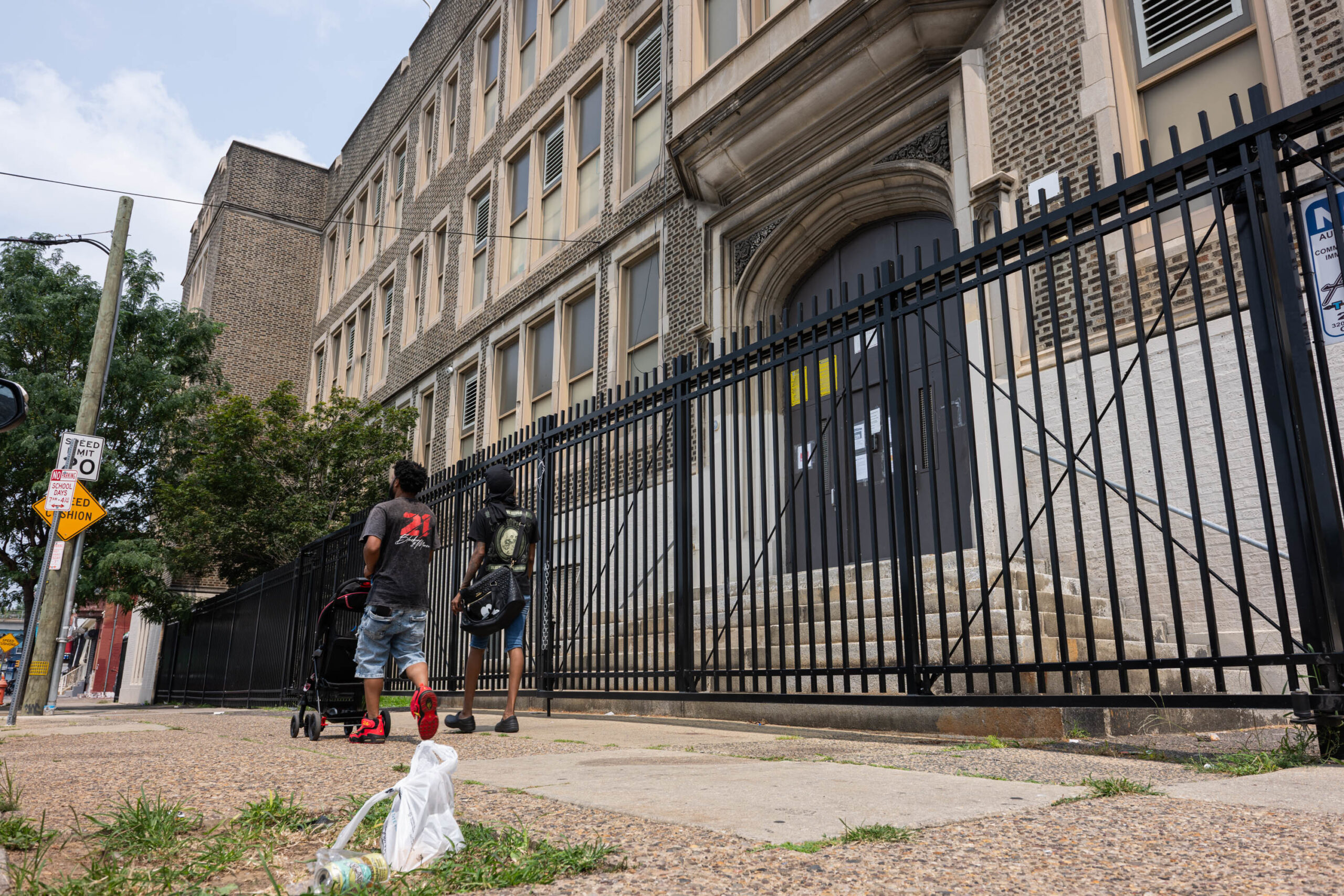
Hartranft, a K-8 school in North Philadelphia with a building rated in “good” condition but only 37% occupied, would take in students from Welsh, a school marked for closure. Welsh teaches the same grades but in a building rated “poor” about a half a mile away. The district would then convert the Welsh building into a new year-round high school.
John Welsh Elementary school is on the list of 20 schools proposed to close by the 2027-28 school year.
Getting students out of (some) fatigued buildings
By one city estimate, district schools need about $8 billion in repair costs for 300-plus buildings that are about 75 years old on average. Watlington’s plan calculates the district could do it for $2.8 billion.
Even with some investments over the last decade, many schools still have asbestos, lead, or mold issues. And many schools that don’t have bad building quality ratings still need improvements.
Eight schools recommended for closure are in buildings rated “unsatisfactory” by the district, its lowest score.
An additional 30 schools also rated “unsatisfactory” would remain open under the plan, including some expected to see an increase of students.
window.addEventListener(“message”,function(a){if(void 0!==a.data[“datawrapper-height”]){var e=document.querySelectorAll(“iframe”);for(var t in a.data[“datawrapper-height”])for(var r,i=0;r=e[i];i++)if(r.contentWindow===a.source){var d=a.data[“datawrapper-height”][t]+”px”;r.style.height=d}}});
Watlington wants the district to pay for $1 billion of the plan’s price tag with its own capital funds over the next decade. That would leave $1.8 billion unfunded, and he wants the state and philanthropic funders to cover the rest.
If the full $2.8 billion plan is funded, Watlington said, the district could improve every building labeled “poor” or “unsatisfactory.”
To achieve this, some buildings could get the same kind of treatment Frankford High received — a $30 million major renovation project to remedy significant asbestos damage. Students had to relocate into an annex and another building for two years while the work was done.
The district plan calls for some of the buildings in the worst shape to receive more students. Bache-Martin, Catharine, Howe, John Marshall, and Middle Years Alternative are in buildings that need significant upgrades, according to the district’s analysis, but all would take on more pupils.
In the case of Howe, the district wants to add grades to keep students who would have attended Wagner, a middle school that is proposed to close.
The district has said Bache-Martin would receive upgrades if the plan is adopted. For other schools, neither the timeline nor the fixes they would receive are clear.
The recommendations so far only mention a handful of schools set to modernize.
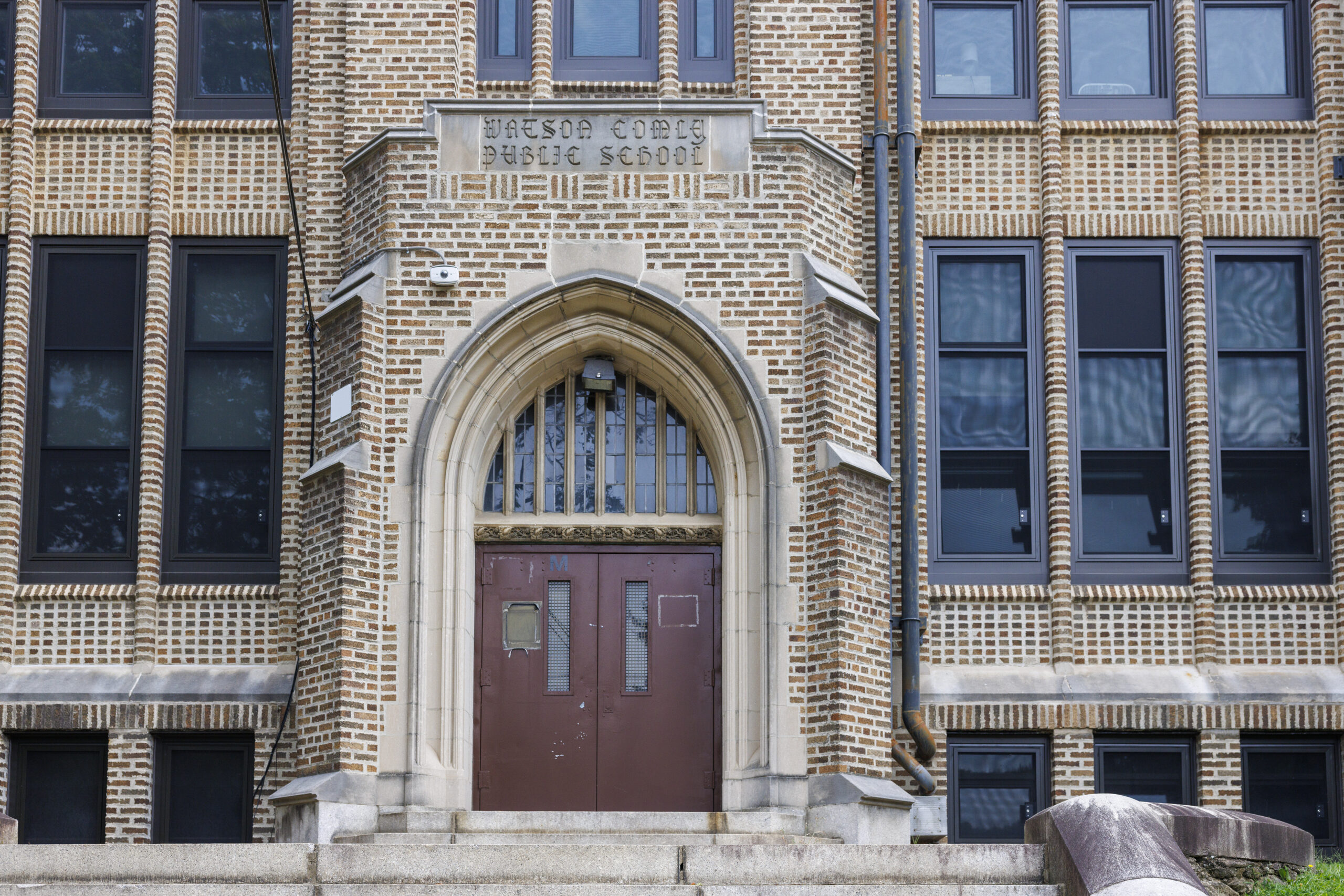
Among them is Comly, a K-5 in the Somerton neighborhood.
Comly now has 660 students enrolled, putting it at 107% of its capacity. But the district recommends modernizing the school and accepting middle grades students from the Comly and Loesche catchments. Students who now attend Loesche, another K-5, go to Baldi Middle School, which is also overcrowded.
Watson T. Comly Elementary School in Somerton. It’s slated to be modernized and accept more grade levels under the district’s proposed plan.
What appears to set schools like Bache-Martin apart from some of the closures is higher occupancy. Together, about two dozen schools that are more than half occupied would remain open, even though the buildings are “unsatisfactory.”
Schools on this list — like Barton Elementary, which runs at about 80% of its capacity — are harder to shutter or colocate if no nearby school has low attendance. That makes building upgrades a more logical solution.
But those two dozen schools are not the only ones in need of significant building upgrades.
An additional 45 schools currently operate in buildings rated slightly better at “poor,” the category just above “unsatisfactory.” The district recommends closing seven of them and colocating two.
And beyond that large number of fatigued schools, many others in poorly rated buildings will remain unchanged for now, with about 10 even taking in more students.
Watlington has said that in total, 159 schools would modernize over a decade if the plan is approved and fully funded, but absent extra state and private money, that number could drop.
After the major snow storm that shut down many New Jersey public schools for at least two days, the big question for students and teachers is how districts will make up missedtime.
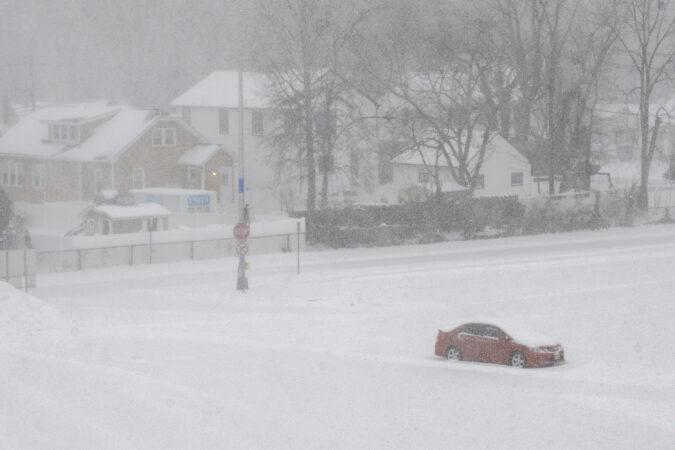
Winslow schools in Camden County remained closed for a third consecutive day, citing ongoing hazardous road and sidewalk conditions. The sprawling 58-square-mile municipality is one of the largest in New Jersey. Parents have complained in social media posts about icy streets and bus stop routes.
Meanwhile, Eastside High School in Camden was also closed due to icy conditions near the school, while the rest of the district reopened. Camden has many students who walk to school. The district said the day would be made up.
Late Wednesday, Davida Coe-Brockington, Camden’s acting state district superintendent announced that all city schools would be closed Friday.because of road conditions. She said the district plans to reopen Friday with a two-hour delay.
School officials consider factors such as road conditions, snow and ice accumulation, and readiness of the campus, sidewalks, and parking lots, said Haddon Heights Superintendent Carla Bittner. Her district used its only built-in emergency closing day.
“The safety of our students and staff is our absolute priority,” Bittner said.
With 50 days left of winter and the possibility of another storm looming this weekend, additional snow days may be on the horizon, further disrupting school calendars, parental work days, and vacation plans. And districts must still meet the state requirement of 180 school days.
How do districts make up snow days?
Some districts have days built into the calendar for the school year for inclement weather, or tack on additional days as needed at the end of the school year. The state leaves it to local districts decide how many days to set aside.
In Cherry Hill, where schools were closed for two days this week, the district will use days already designated as holidays. That means students will go to school Feb. 16, President’s Day and March 30, which was supposed to be the first day of spring break.
If needed, Cherry Hill would use March 31 to make up another snow day, according to Nina Baratti, a district spokesperson. Even with inclement weather days, the last day of school (June 18) has not changed, she said.
Haddon Heights will convert a March 13 in-service day for teachers into a full instruction day for students, according to its calendar. Additional days would be pulled from spring break in April if needed.
Woodbury Superintendent Andrew Bell said his district would use two days set aside for professional development for teachers to make up snow days this week.
How many school days are required?
The New Jersey Department of Education requires schools to be open for a minimum of 180 days in order to qualify for state funding.
The school year must align with the state’s fiscal year and end on June 30 or earlier. Most union contracts with local districts require schools to close by June 30. Districts typically try to avoid keeping schools open late intoJune, when unairconditioned buildings can become unbearable.
According to Timothy Purnell, executive director of the New Jersey School Boards Association, the number of snow days also can be determined during negotiations between the district and union leaders.
What about virtual learning?
Like most states, New Jersey allowed virtual and hybrid instruction when the pandemic shut down schools. However, state law now strictly limits remote learning.
While Philadelphia and New York City shifted to remote classes because of snow closings, New Jersey only allows virtual instruction under limited circumstances, according to the state Department of Education.
School districts may seek approval for virtual learning for school closures lasting more than three consecutive days because of a declared state of emergency, declared public health emergency, or a directive by a health agency or officer ordering a public health-related closure.
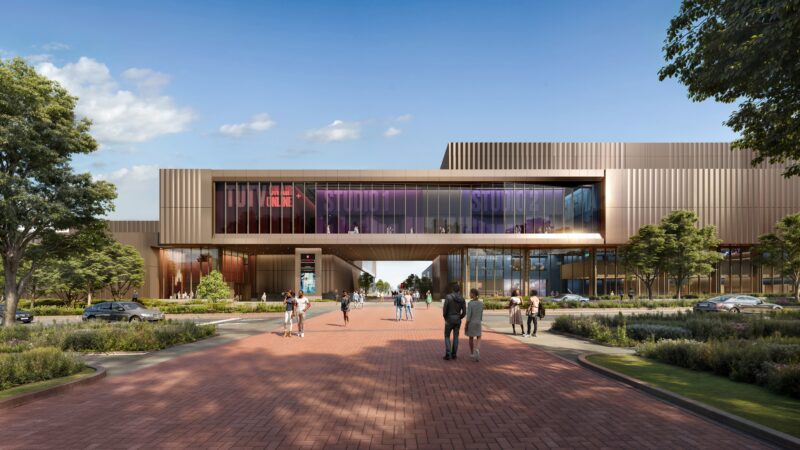
Temple University on Wednesday released its plans for the school’s future, including a new 1,000-bed residence hall, STEM complex, quad with green space, and more attractive and defined entrances to its North Philadelphia main campus.
That’s just part of the 10-year strategic plan, which will take the more than 33,000-student university through its 150th anniversary in 2034 and includes supports for students and learning, a campus development plan, and a new vision for Broad Street both near and beyond its campus.
It emphasizes the student academic experience, with plans to elevate its honors program to an honors college, implement systems to identify and help students who are at risk of failing early on, increase online offerings to accommodate non-traditional students, and require career development and experiential learning for all students.
And the 20-year campus development plan, which is part of the strategic plan, also reiterates President John Fry’s desire to create an “innovation corridor” stretching from the recently acquired Terra Hall at Broad and Walnut Streets in Center City to Temple’s health campus, a little more than a mile north of main campus on Broad Street.
Temple is in the quiet phase of a $1.5 billion capital campaign — itslargest to date — to raise money for faculty support and student financial aid, but also for initiatives outlined in the plan.
“What we’re trying to do is build on the momentum we think we have right now as already one of the most consequential urban research universities that wants to go to the next level,” said Temple President John Fry.
“What we’re trying to do is build on the momentum we think we have right now as already one of the most consequential urban research universities that wants to go to the next level,” Fry said in an interview before trustees approved the plan Wednesday. “This is a very ambitious plan that I think honestly will be a very big lift for us. But I think it’s achievable.”
Interim Provost David Boardman, who led the strategic planning effort, emphasized that the top priority is student success and new buildings and development are meant to support that.
“That, more than anything, is the heart of what we do,” Boardman said. “This is about providing meaningful research … It’s about us becoming the most important academic institution and partner in this community and really partnering for the future of Philadelphia and the region and the Commonwealth.”
David Boardman, Temple University’s interim provost
The planning effort, which included input from more than 2,000 Temple faculty, staff, students, and community members, started as an update of the 2022 plan that Fry initiated after becoming president in November 2024. But Temple officials realized a newplan was needed, Fry said.
Fry envisions more green space for recreation and events and for making North Broad Street more aesthetically pleasing.
“It is a really harsh streetscape,” Fry said. “It’s really not inviting. Traffic is moving very quickly. …That street needs to be calmed down, and the best way … is to create medians, plants — both sides of Broad Street — making it a much more civilized area than it is now.”
The effort, he said, is modeled after the recently announced $150 million streetscape plan to make the Avenue of the Arts in Center Citygreener. Temple also is involved with that through its ownership of Terra Hall, which will become Temple’s Center City campus, he said.
“But we can’t do that without other public and private partnerships,” he said. “It’s beyond the institution’s capacity to fund that.”
To start, Temple will fund “significant greening” around the entrance to the under-construction Caroline Kimmel Pavilion for Arts and Communication, he said. More green work is planned at Burk Mansion at Broad and Oxford, which Temple owns, as development occurs there, he said.
With a large green lawn and courtyards, a quad is planned for the campus center, surrounded by Paley Hall, Tyler School of Art, the Charles Library, and the biology life sciences building.
Temple in December purchased the former McDonald’s site at 1201-1219 N. Broad St., by Girard Avenue, which is adjacent to the Temple Sports Complex. Fry envisions using that property to create a major campus gateway.
“Right now, you don’t really know when you come onto the Temple campus,” he said. “We would like Broad and Girard to announce you’re starting to enter Temple’s campus district.”
More on-campus student housing
Temple wants more on-campus residential space to improve the student experience and safety, Fry said.
“We think we’re at a minimum several thousand beds short of where we need to be,” he said. “A stronger residential experience really does make for a much more fulfilling undergraduate experience. The more kids living on campus, the more dense campus is, I think the better we’re going to do on safety.”
The plan calls for beginning to build a 1,000-bed residence hall along Broad Street on the former Peabody Hall site, south of Johnson and Hardwick Halls, in 2027. That would increase the current 5,000-bed capacity on the main campus by 20%. When that opens, Temple would upgrade Johnson and Hardwick, which have another 1,000 beds, he said.
The Annenberg Hall/Tomlinson Theater building, which will relocate to the new arts and communication building in 2027, could also be converted into more residential space if needed, Fry said.
An emphasis on STEM
Temple intends to upgrade facilities for science, technology, engineering and math.
“We just don’t have the research space, the wet lab space in particular, to accommodate the work that our faculty are doing,” Fry said.
Several buildings, including the biological life sciences facility, will be renovated, and the school plans a new STEM building, perhaps behind the engineering building, or the conversion of an existing facility, Fry said. The decision on whether to build new will come within six months, he said.
Temple needs to close some current science facilities to gain more space, he said.
The Beury building, next to the Bell Tower and across from the new Barnett College of Public Health, will begin to be demolished this summer, he said.
“Think of that as sort of the first down payment on this quad,” he said.
That would be the first step toward developing an innovation district, Fry said. While not on the scale of University City’s, it would be “a very good attempt to begin to build that capacity in North Philadelphia,” he said.
Terra Hall will nurture an arts hub, and both would contribute to creating an innovation corridor, he said.
The plan also calls for anew ambulatory care center to better serve North Philadelphia. Fry said those plans are in very early stages.
“A lot of outpatient care is occurring within the hospital right now,” Fry said. “It’s not great for patients… It also puts a real strain on our capacity to serve people who need inpatient services.”
A new academic home for star students
Temple aspires to make its honors program into an honors college, like Pennsylvania State University’s popular Schreyer Honors College, though with different parameters.
Boardman said that effortwould require major fundraising. Currently, the programexists within the college of liberal arts and enrolls more than 2,200 students.
Elevating it to a college would require more programming, study-abroad and research stipends, experiential learning opportunities, and an option for those enrolled to live together in a residential community.
Temple’s college would consider more than grade-point averages and SATs for admission, Boardman said. Various talents and leadership potential would be considered, with interdisciplinary studies and public service infused, he said.
Staff writer Peter Dobrin contributed to this article.
On the second day her kindergartener was off from his Philadelphia public school because of snow, Karen Robinson shut herself away in her Fairmount home, hoping to take a 15-minute meeting for an important work project.
Her husband had put up a baby gate to signal to 5-year-old Sam that mom was briefly off limits.
Naturally, “my son crawled under the baby gate to come find me,” said Robinson, whose son attends Bache-Martin Elementary. “If I’m working, he wants to be right next to me.”
Superintendent Tony B. Watlington Sr. gave beleaguered parents a reprieve Wednesday afternoon, saying schools would re-open for in-person learning Thursday. But the week was tough for many to navigate.
For parents who rely on hourly work, or jobs that have no remote flexibility, the inclement weather-forced school changes have meant either foregoing pay or figuring out childcare arrangements that are often costly, complicated, or both.
North Philadelphia mom Asjha Simmons’ son attends a charter school that’s been closed — no virtual learning — since Monday.
Simmons runs her own business, so is able to be flexible with her schedule and stay home with her son. But she’s getting antsy.
“I feel forced to be in the house and it’s killing me,” Simmons said. “I would rather be in the gym than in the house. And I don’t even go to the gym.”
Simmons’ son, who’s 12, relishes the down time since “he has every screen known to man on,” she said. She keeps the snacks coming, and it’s all good. (He was less than thrilled when Simmons made him shovel snow, she said.)
Leigh Goldenberg said she was having uncomfortable flashbacks to the pandemic, when her daughter completed virtual kindergarten.
“For me, it’s an emotional regression to that terrible time,” said Goldenberg. “And I feel for the people that didn’t build up that muscle before.”
Virtual school with a fifth grader is much easier than virtual school with a kindergartener, said Goldenberg, whose daughter attends Kirkbride Elementary in South Philadelphia. Her daughter spent 30 minutes on Tuesday completing schoolwork, and managed to keep herself busy socializing with friends online and outside, a short walk away in their neighborhood.
Goldenberg is trying to keep things in perspective — this is not forever, this is not the pandemic.
But, she’s still frustrated.
“All the suburban schools around us went back already, but here in the city, we’re stuck with a giant pile of snow at the end of our street, and it feels pretty unfair,” she said.
Coral Edwards was prepared for Monday’s snow day, but when the district announced a virtual day Tuesday, she began to panic.
“I was like, oh my gosh, there’s a real possibility the entire rest of the week will be virtual,” said Edwards, who lives in Graduate Hospital and has a seven-year-old son who attends Nebinger Elementary and a four-year-old daughter in a private prekindergarten program.
Her daughter’s pre-K is reopened Wednesday with a two-hour delay. And that means dropoff time came when Edwards would haveneeded to be helping her first grader with virtual learning. So instead, she paid to send both children to Kids on 12th, a Center City school open the full day, so she can get her work done as a marketing consultant and leadership coach.
The scramble has also summoned up emotions and frustrations she last experienced during the pandemic, when her son was 1 and his daycare shut down. While she acknowledged that she is “incredibly privileged,” she said the fact thatparents like herself are in such a bind speaks to a larger systemicproblem with childcare, Edwards said.
“There’s literally no one to help us,” she said. “There’s just no systemic support whatsoever.”
Streets are being plowed, SEPTA is running, and trash is getting picked up, “but there’s nothing in press conferences about how we’re supporting parents and students,” Edwards said. “The schools are like, ‘we have this virtual learning environment’ — are we just supposed to pull another parent out of our butts?” she said.
Edwards’ husband works in-person as a research physician running a lab, and the burden of childcare logistics falls to her.
“There’s a lot of rhetoric about supporting parents, and raising women up, … but when push comes to shove, something about our kids’ childcare is changed or tightened, it falls on those people,” she said.
Hannah Sassaman, a West Philadelphia parent of a district fourth grader and ninth grader, is making it through.
“We had another fourth grader live here for 24 hours randomly. I think they went to school? My ninth grader seems to be going to school. We’re just lucky we don’t have little kids,” said Sassaman.
“The questions that I have knowing that the storm was coming for over a week,” Sassaman said, “is what could the administration have done to help resource our sanitation workers and the rest of our incredible city servants to really focus on what it would take to get our kids back in schools, our teachers and the other staff back in their buildings safety to support not just the economy, but also all of the important supports and services kids access at schools every day?”
After three days out of school buildings, Philadelphia public students and staff will be back to in-person learning Thursday.
Officials announced the call Wednesday afternoon.
Archdiocesan high schools and city parochial schools will also be back to traditional classes Thursday, officials said.
In the aftermath of a significant winter storm and sub-freezing temperatures, Superintendent Tony B. Watlington Sr. gave students and staff a full snow day Monday, with no learning or teaching obligations.
He pivoted the district’s 125,000 students to virtual instruction Tuesday and Wednesday as conditions remained tricky to navigate.
Temperatures are expected to dip even lower Thursday, and many side streets and sidewalks aren’t clear, but officials have said they prioritize in-person learning when conditions are safe for students and staff.
“School District and City of Philadelphia officials have been working around the clock to clear snow and ice from roads and walkways to support a safe return to in-person learning,” Watlington wrote in a message to families and staff Thursday.
Any students arriving late because of weather-related challenges will not have their lateness counted against them, the superintendent said. The same goes for staff not able to make it into work on time because of weather-related commuting challenges.
Yellow bus service will operate as usual, though delays might occur, Watlington said.
After school activities are on, the central office will be open, and the school-selection deadline has been extended from Wednesday to Friday so families can confer with school counselors they may have had difficulty reaching because of the snow closures.
Philadelphia’s school board meeting, also scheduled for Thursday, will also happen in person. Board members and members of the public have the chance to participate virtually, as well.
While preparing her four sons to take a dream family vacation in the Caribbean last month, Carolyn Piro carefully reviewed every detail to get them ready.
She also contacted the Royal Caribbean cruise line about accommodations for her children, because heroldest, Sean Curran, has autism, and two other sons also have developmental disabilities.
The trip ended abruptly when Curran, 31, was kicked off the Celebrity Cruise ship in Cozumel on Christmas Eve after an incident that his family says was mishandled by cruise officials who lacked understanding of his disability.
“Worst Christmas ever. Horrible,” Curran said. “I’m never going on a cruise again.”
Piro, a trauma therapist, is now on a mission to increase awareness and acceptance for people with autism. About 1 in 31 children in the United States are diagnosed with autism, according to the Centers for Disease Control and Prevention, and that number is 1 in 29 in New Jersey, according to the group Autism New Jersey.
“They have a place in our society. They have a place in our community,” Piro said.
Royal Caribbean, which advertises an “autism friendly” environment, said it had reviewed the incident and “concluded we could have been more sensitive to their needs during the debarkation process.” The company, which owns Celebrity Cruises, will provide additional training for employees, a spokesperson said.
‘Just trying to be nice’
Curran livesas independently as possible at home, Piro said. He participates in job training at Ability Solutions in Westville, has a girlfriend, sings with the Pine Barons Chorus, volunteers at an animal hospital, and enjoys dancing.
The Cherry Hill family was having a great time on a seven-day Caribbean cruise in December to celebrate Piro’s 60th birthday. It was Curran’s fourth cruise, and he knew the ropes and was allowed to roam unaccompanied.
Four days into the cruise,Curran was in a pool lounge when, he said,a teenage girl asked him to purchase her a Long Island iced tea. He said he bought the drink, unaware that it contained alcohol. His mother and brothers were not with him at the time.
According to Curran, the girl touched his chest and stomach, used profanity, and followed him to a hot tub, where he lifted her like Shrek did when he rescued Princess Fiona from a dragon in one of his favorite movies.(Piro said Curran enjoys swimming and playing in the water.)
The girl’s parents arrived and her mother began screaming, Curran said. Ship personnel escorted Curran to a security office, where he was asked to give a statement, he said.
“I have autism and I was just trying to be nice,” he wrote in the statement, given to ship personnel and provided to The Inquirer. The statement was only a few sentences of explanation Curran wrote about what happened.
Piro arrived during the questioning and saidCurran offered an apology to the girl’s parents. Curran said he asked for patience and repeated what his mother taught him to say about having autismwhen he encountered difficulty explaining.
Curran was given 90 minutes to pack and leave the ship, his mother said. She accompanied him, along with another son. Other passengers gawked and pointed as security escorted them off the ship, she recalled, saying, “Look at them: They’re getting kicked off the ship.”
“It was just so shameful,” Piro said.
Piro said shebelieves ship officials had other options, such as restricting Curran to his room, rescinding his room cardthat allowed him to buy drinks, or allowing him to disembark at their next port of call, she said.
“With all of the information about autism, there was no compassion. They treated him as a fully functioning adult,” the mother said.
Piro said the family was given only a security incident report and told that the FBI and Homeland Security would be notified. She was not allowed to speak with the girl’s family, whose full name she does not know. She said no charges were filed.
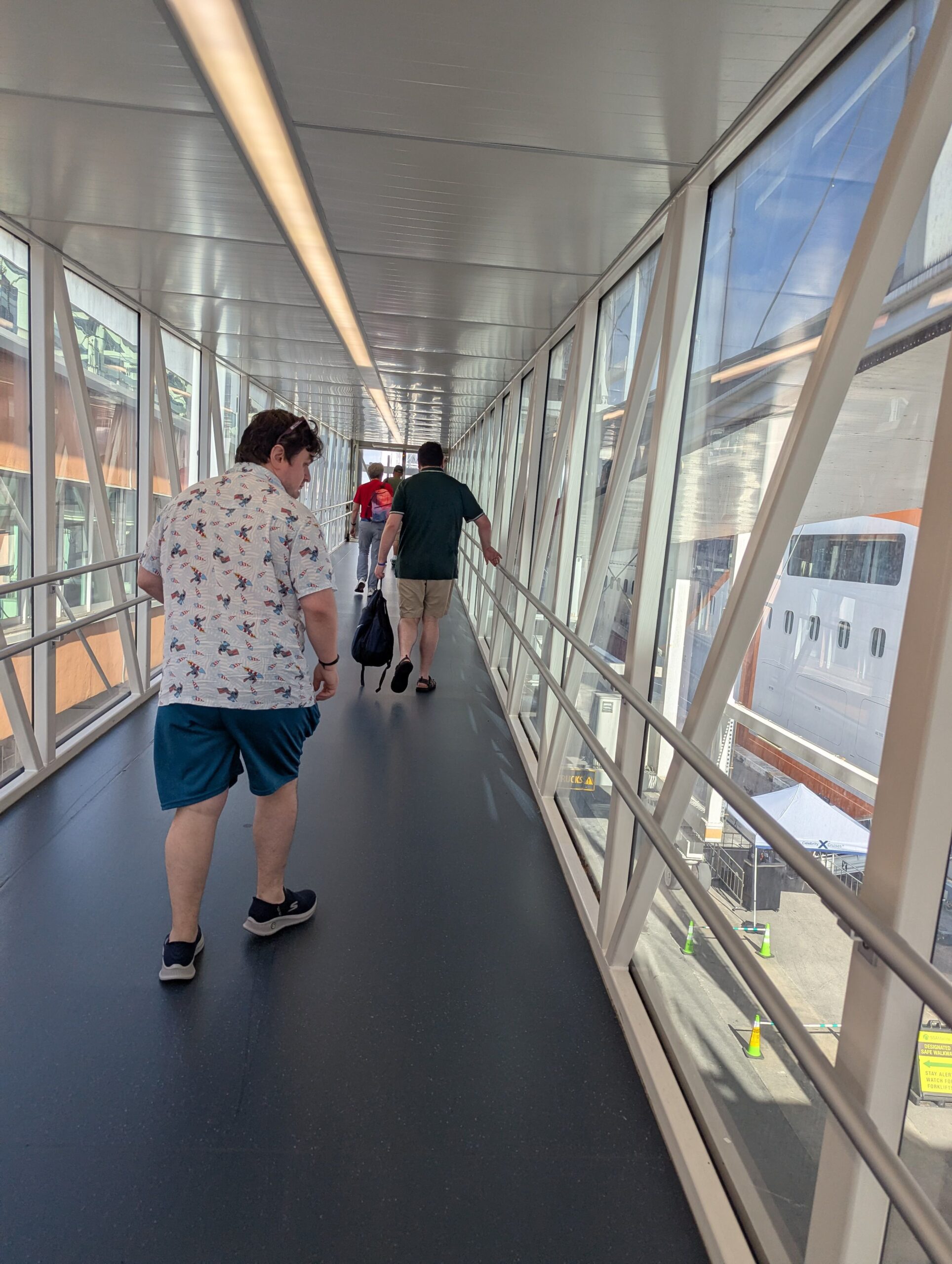
Sean Curran, 31, of Cherry Hill, boarding a Celebrity cruise ship in December for a family vacation. He has autism and was evicted from the ship after a misunderstanding.
Piro,Curran, and another of her sons who left the cruisewere reunited with two other family members several days later when the ship docked in Florida.
Piro said she accepted an apology from Royal Caribbean after returning home, complaining about the incident, and sharing her story publicly. She also said she had askedto be reimbursed for the $20,000 she spent on the cruise and expenses. Royal Caribbean declined to comment on the request.
A spokesperson said Royal Caribbean’sadditional training for its staff will “ensure this experience doesn’t happen again.” She declined to comment further.
Stacie Sherman, a spokesperson for Autism New Jersey, declined to comment about the specific incident but agreed there is a need for more awareness. She has had similar experiences as the mother of two on the autism spectrum.
“Education and awareness is key,” Sherman said.
Sherman said acceptance is slowly growing. Her daughter used to get nasty looks and comments for making loud noises or having a tantrum in public places, she recalled.
“I get way more smiles and nods, even praise and offers of help. It gives me hope,” Sherman said.
Sean Curran, 31, of Cherry Hill, plays with a dolphin during a cruise excursion in Cozumel, Mexico in December.
Seeking change to the system
When the family arrived home, Piro said, she reprimanded Curran and limited his activitiesfor a month. Piro said sheacknowledges that he did something wrong but said his intent was not malicious.
She said she contacted the cruise line a month before their vacation about her children’s special needs. In addition to Curran, two younger sons have mosaic Down syndrome and fragile X syndrome.
Piro said she requested special seating, for example, to isolate the family in the dining area from noise andlarge groups. During an excursion, she rented a cabana away from other guests, she said.
“We don’t go anywhere where people don’t stare, giggle, or make a comment,” Piro said.
Piro said she plans to monitor whether Royal Caribbean implements the additional trainingthat it has promised. She wants changes “in the system so that this doesn’t happen again.”
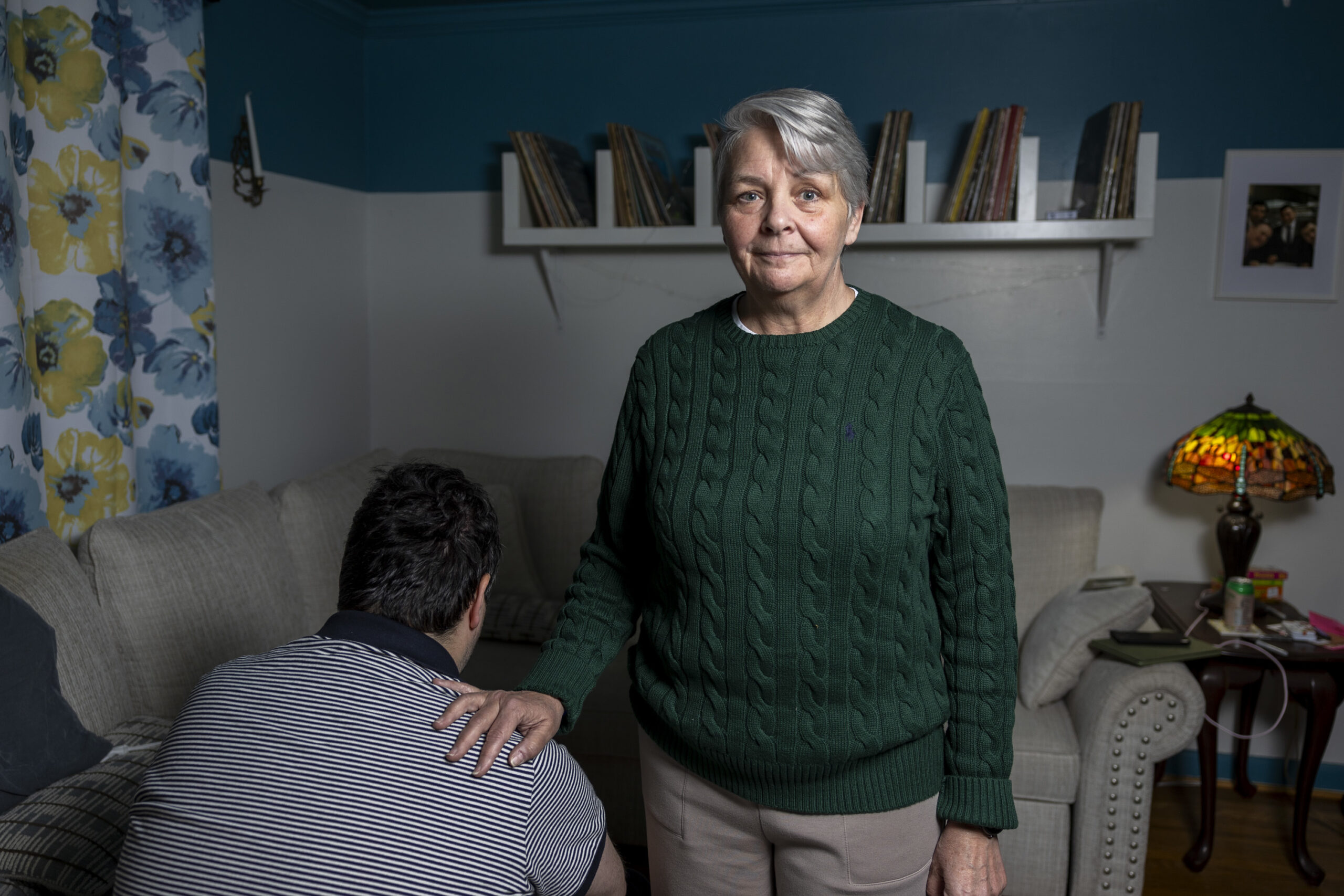
Carolyn Piro, of Cherry Hill, poses for a portrait with her son Sean, who has autism, in their home this month.
Curran said telling his story was “making me feel better.” He wants to better advocate for himself and others with autism.
“I want people to treat other people with dignity and respect, compassion, and kindness,” he said.