Category: Health

  • Twenty years into fracking, Pennsylvania has yet to reckon with its radioactive waste

    Twenty years into fracking, Pennsylvania has yet to reckon with its radioactive waste

    This article originally appeared on Inside Climate News, a nonprofit, nonpartisan news organization that covers climate, energy and the environment. Sign up for their newsletter here.

    When John Quigley became the secretary of the Pennsylvania Department of Environmental Protection (DEP) in 2015, he knew that he would be busy trying to keep up with the consequences of the state’s rapid increase in natural gas production. But when reports landed on his desk that trucks carrying oil and gas waste were tripping radioactivity alarms at landfills, he was especially concerned.

    “There was obviously a problem that the state was not dealing with,” Quigley said. “Which was the threat to not only public health, but to the folks driving the trucks and people handling the waste in the oil and gas industry. They were unnecessarily put at risk.”

    Ten years after the alarms first unsettled Quigley, fracking in Pennsylvania has continued to grow, generating huge volumes of oil and gas waste and wastewater in the process. Seventy-two percent of the solid waste ends up in landfills within state borders, and a truck carrying it sets off a radioactivity alarm every day on average, an Inside Climate News analysis found.

    Radioactive elements such as radium, uranium, and thorium in rocks deep underground come to the surface as a byproduct of oil and gas drilling. Experts have long worried about the potential health and environmental impacts of this waste. Radium exposure is linked to an increased risk for cancer, anemia, and cataracts.

    New research from the University of Pittsburgh suggests that the wastewater created by fracking the Marcellus formation, the ancient gas deposit beneath Pennsylvania, is far more radioactive than previously understood. And there is also evidence that some of it is getting into the environment: Researchers have found radioactive sediment downstream from some landfills’ and wastewater treatment plants’ outfalls.

    But the state has barely shifted its approach to regulating the waste. “Nothing material has been done,” said Quigley, who left in 2016. “Nothing has really changed.”

    In 2023, radioactivity alarms were triggered more than 550 times at Pennsylvania landfills because of oil and gas waste, according to an analysis of landfills’ annual operations reports conducted by Inside Climate News. The vast majority of this waste was disposed of on-site; landfills rejected the waste only 11 times. Radium-226 was the most common isotope cited as the reason for the alarm.

    DEP issued a new guidance document for solid waste facilities and well operators that handle radioactive materials in 2022, with some of the changes specifically aimed at the fracking industry. Landfills have been required to submit a Radiation Protection Action Plan to the state since 2001, covering protocols for worker safety, monitoring and detection, and records and reporting, and DEP may require sites to test regularly for the long-lasting radium-226 and radium-228 if they have received large volumes of radioactive oil and gas waste.

    But DEP has fallen behind on many other aspects of regulating this waste.

    In 2021, then-Gov. Tom Wolf said the state would require regular radium testing of landfills’ leachate, a liquid byproduct created when rainwater passes through waste, accumulating contamination. Wolf’s announcement came more than five years after DEP had recommended adding radium to leachate testing requirements. But leachate testing results from 2021 through 2024 acquired by Inside Climate News via a right-to-know request do not contain results for radium.

    In an email, DEP spokesperson Neil Shader said the agency does not currently require landfills to test for it. He did not explain why the policy has not yet been implemented.

    “DEP is still finalizing a policy around radiological material in leachate,” he said.

    Understanding the scope of the problem is difficult because Pennsylvania’s tracking of oil and gas waste and leachate remains disorganized and piecemeal, an Inside Climate News investigation found. Landfills are supposed to turn away waste that is too radioactive based on the total volume of waste they have already accepted that quarter. If the volume estimates are inaccurate or misreported, it could mean that some sites are exceeding the allowable amounts.

    Meanwhile, DEP’s last comprehensive study of radioactivity in oil and gas waste is more than nine years old, even though the agency said at the time that follow-up investigations were needed. DEP confirmed to Inside Climate News that it is studying the radioactivity of landfill leachate but offered no timeline for publication.

    The Marcellus Shale Coalition, an industry trade group, maintains that the solid waste and wastewater generated by fracking in Pennsylvania are well managed and pose no health risks to the public or workers. Landfill employees face less danger from oil and gas waste than someone getting a routine CT scan, the group argues, and landfill permits contain restrictions on how much oil and gas waste they can accept in any given year.

    In a statement to Inside Climate News, the coalition’s Patrick Henderson said there is “no greater priority” for the industry “than worker and community safety, which is delivered through recurrent trainings, development and sharing of best practices, and strict adherence to modern regulatory standards.”

    “Operators follow stringent protocols for handling, managing, and transporting waste — including radioactive screening, characterization, and reporting,” he said.

    The industry also frequently notes that DEP’s 2016 investigation into radioactivity in oil and gas waste concluded that there is “little or limited potential for radiation exposure to workers and the public” from natural gas development.

    Quigley called this study, the initial version of which was published just before he took office as DEP secretary, “the big mistake,” because in his view it falsely suggested that there was “nothing to worry about.”

    He thought that another study was warranted to investigate the true scope of the issue, but he said he was not able to push forward a new one before he left office.

    The study was limited in some ways by its size and distribution: Between 2013 and 2014, DEP sampled 38 well sites, only one in the northeast, which researchers now say is a radioactivity hot spot. Sixteen of the sampled sites were in the southwest.

    David Allard was the lead health physicist overseeing the study’s design and execution. He retired from DEP in 2022 after 23 years as the director of the Bureau of Radiation Protection, where he oversaw the management of radioactivity in the oil and gas industry. In 2001, he fought for the radiation protection plans and radioactivity monitoring at landfills that are required today.

    These rules and Pennsylvania’s rules for landfills in general are stricter than most other states’, he said. Ohio, for instance, stopped requiring landfills to report on the oil and gas waste they accept.

    Scientists learned about the radioactivity of oil and gas fields more than a century ago, not long after the discovery of radium in 1898. Waste predating the fracking era had been triggering radiation alarms in Pennsylvania landfills for years.

    But the waste created by fracking is different from conventional drilling wastes. In the 2010s, as fracking increased oil and gas waste volumes, Allard wanted to investigate how radioactive it was and what possible dangers it might pose to the public and the environment.

    The 2016 study concluded that the radioactivity levels found in the waste at the time posed little danger to truck drivers and workers. But it warned of potential radiological risks to the environment from spills, waste treatment facilities, and long-term disposal in landfills, a point that is often overlooked in summaries of the study’s contents. All of these things remain a problem today, Allard said.

    “I fought very hard to get this thing going,” he said of the study. “I will stand behind all of the science.” But he said that one of the reviewers, a political appointee, had argued for language in the synopsis that he felt obscured the nuances of the study’s conclusions: “little or limited potential for radiation exposure.”

    “It’s a true statement. But I think it did downplay the need for additional work,” he said. Variations of this phrase appear at the beginning of each bullet point in the summary. Each one is followed by caveats.

    DEP used computer modeling from Argonne National Laboratory to determine whether a closed landfill that had accepted this waste and other toxic material would still be dangerous to a farmer living on the site far into the future. Even 1,000 years from now, DEP found, a farmer digging a drinking well on top of such a site would not want to drink the water.

    “It’s not going to be pretty,” Allard said. “It’s not going to be very palatable.”

    Pennsylvania’s guidance for how much radioactive oil and gas waste a landfill can accept each year, updated a few years into the fracking boom in the 2010s, is supposed to prevent the hypothetical future farmer from being exposed to harmful levels of radiation. But this guidance is not codified into law, Allard said. It also relies on regular radioactivity monitoring and accurate tracking of waste quantities at landfills.

    Recent research from Pennsylvania State University and the University of Pittsburgh showing that radium is getting into the environment also concerned him. These radioactive discharges into waterways are unregulated, he said.

    “I think the EPA really needs to stand up,” he added. In 2020, Allard was part of a committee formed by the National Council on Radiation Protection and Measurements that highlighted the need for national, standardized regulations for oil and gas waste because the rules are so inconsistent among states.

    Road-spreading, the practice of using salty oil and gas wastewater as a dust suppressant, is another area where he says the study could have done more to figure out how much radioactivity was ending up in the environment as a result. Although the state has largely banned the practice, there is evidence that companies continue it.

    Landfills’ leachate also deserves more study, he said, and he sees testing it for radium and releasing the results to the public as an important step.

    “We tried to make it as comprehensive as possible,” Allard said of the study. “But I think it is timely to go back and visit some of these things.”

    Environmentalists have long clamored for an updated government study of radioactivity in oil and gas waste using more recent data. Pennsylvania’s fracking industry is much larger and more geographically dispersed now than it was when the information for the first study was collected.

    Forthcoming University of Pittsburgh research suggesting that oil and gas wastewater produced by fracking in Pennsylvania is more radioactive than previously thought involved samples from 561 well pads between 2012 and 2023. The wastewater contained much more radium than was found by studies early in the fracking boom.

    The median radium values were four times the level of those published by the U.S. Geological Survey in 2011 and twice that of DEP’s findings in 2016, said Daniel Bain, an associate professor of geology and environmental science at the University of Pittsburgh who was involved in the research.

    The maximum value that Bain found was above 41,000 picocuries per liter — a measure of radioactivity in a substance. For comparison, the EPA’s limit on total radium in drinking water is 5 picocuries per liter.

    Radium is a naturally occurring material, and surface and groundwater can contain between 0.01 and 25 picocuries per liter. Natural levels above 50 picocuries per liter are rare.

    “I think it necessitates a reevaluation of the kind of personal protection that specific jobs require. If you’re in contact with this waste every day, you need to be monitored,” Bain said. “They probably also have to rethink how they’re going to manage their waste streams.”

    Bain’s research also found that radioactivity was far higher in the Marcellus formation’s wastewater than in wastewater from drilling in other parts of the country, including Texas and North Dakota.

    He said that the finding echoes earlier industry realizations that the Marcellus is different from other natural gas formations. “One of the first hard lessons of the Marcellus was that it’s not like some of the Texas shales. They came up here and tried to use the methods they used in Texas, and they had issues,” he said. “They’re basically learning as they’re doing. It’s a big experiment, and sometimes you wish you could redo the experiment.”

    Marcellus wastewater has higher than expected levels of barium, strontium, and lithium, a discovery that spurred industry interest in 2024 because of lithium’s status as a critical mineral.

    Wells in the northeastern part of Pennsylvania contained much higher concentrations of radium than others, suggesting that earlier conclusions based on drilling in the state’s southwestern region might be misleading.

    Bain’s research did not focus on the radioactivity of solid oil and gas waste, the lion’s share of what Pennsylvania landfills take from the industry. But he did look at what kind of waste would be created if companies were to start treating Marcellus water with the goal of removing valuable components like lithium.

    His analysis found that this process could create a solid, highly radioactive byproduct that would exceed U.S. Department of Transportation transport limits for radium in sludge. Although questions remain about the financial viability of extracting lithium from fracking wastewater, at least one company in Pennsylvania has already tried to do so.

    In 2021, environmentalists were heartened when Wolf announced that landfills would be required to test their leachate for radium and report the results to the state quarterly. The new requirement would “improve public confidence that public drinking water and our precious natural resources are being appropriately protected,” Wolf said at the time.

    Josh Shapiro, now governor and then attorney general, commended Wolf’s announcement, which came after Shapiro’s office had “urged Gov. Wolf to direct DEP to prevent harmful radioactive materials from entering Pennsylvania waterways.”

    “The improved monitoring and promised analysis by DEP is a step in the right direction,” Shapiro said at the time. Other states with active fracking, including North Dakota, West Virginia, and Colorado, require this kind of leachate testing.

    John Stolz, a professor at Duquesne University who has studied oil and gas waste and fracking contamination for years, said he was “very disappointed” that DEP was still not requiring this testing or releasing it to the public.

    “We were told they were going to start monitoring for these additional parameters, and it just hasn’t happened,” he said.

    Stolz would like DEP to go beyond radium and require testing at landfills for other oil- and gas-related substances that could help scientists better trace fracking’s impact, such as lithium, strontium, and bromide. “They’re still only monitoring parameters that you would monitor if you were looking at a discharge from, say, a wastewater treatment facility,” he said.

    Bain, who has collaborated with Stolz on research, said he has tried without success to get DEP to rethink the issue of its testing requirements missing many key indicators for fracking.

    “If you don’t look, you don’t see,” he said. “This is really something that DEP should be doing.”

    The radium levels Stolz has discovered in testing landfill leachate are relatively low, but not when considering the millions of gallons of leachate produced every year. “That’s a lot of radium,” Stolz said. “It doesn’t seem like a lot [at first], but then you realize the volumes involved, right? It’s a huge amount of water going on for years and decades.”

    Radium’s tendency to be “sticky” and to accumulate — in stream sediment, for example — could create problems over the long term for the environment and for public health, Stolz said.

    Those most at risk from this radioactivity are the workers at landfills, wells, and treatment facilities that handle and transport large quantities of oil and gas waste. “The levels can be high,” said Sheldon Landsberger, a professor in nuclear and radiation engineering at the University of Texas at Austin who has studied the radioactivity of oil and gas waste. “I would not say that they are dangerous levels, to the tune of Chernobyl or Fukushima or anything like that. However, if you are a worker and you do work in the field, you need to be monitored.”

    Landsberger reviewed records from Pennsylvania landfills that showed radioactivity measurements for truckloads of oil and gas waste coming in and for workers exposed to those shipments. “They are definitely above background,” he said, though none of the measurements are above the legal limits for radiation exposure.

    Landsberger said it was hard to deduce much from the records about long-term impacts because there are too many unknowns about how the measurements were taken and what happened to the waste after it was disposed of in the landfill. This is why he advocates for workers wearing radiation dosimeters, which measure the radiation dose that a person receives.

    Jack Kruell lives a quarter-mile south of the Westmoreland Sanitary Landfill in Belle Vernon, a site in the southwestern part of the state that has taken hundreds of thousands of tons of oil and gas waste over the years. Stolz’s testing of the landfill’s leachate in 2019 showed that it was consistent with contamination from oil and gas operations and that it had elevated levels of radium-226, radium-228, and bromide, all likely linked to the landfill’s acceptance of that waste. (Westmoreland did not respond to requests for comment.)

    In 2012, when the fracking boom was well underway, Kruell noticed strange smells in the air. “The odors were so horrific, and it was constant. I did some work for one of the oil and gas exploration companies, and I was familiar with smells, and this was not a normal landfill smell,” he said.

    Over the next few years, he experienced medical symptoms he hadn’t before: fatigue, bone pain, respiratory reactions, mental fog. As the odors worsened, he avoided going outside. Later, when he got involved with advocating for changes at the landfill, Kruell learned about something that alarmed him even more: the radioactivity in the landfill’s liquid waste.

    “When you look at the half-life of radium-226, it’s 1,600 years,” Kruell said. “This is never going to go away.”
  • Temple University Hospital is being investigated by CMS over its care of a homeless patient who died

    Temple University Hospital is being investigated by CMS over its care of a homeless patient who died

    A patient with no home to return to was pushed in a wheelchair to the curb outside Temple University Hospital. Staffers left him sitting on a bench, even though he was considered at a high risk of falling.

    An hour later, a security officer found the man had fallen and was lying on the ground.

    He was shaking when the guard brought him back into the hospital, but didn’t respond to a nurse’s questions. So hospital staff again sent him away — this time leaving him alone in a wheelchair outside the emergency department.

    He was found there five hours later, slumped over, unresponsive, and without a pulse. He died the following week.

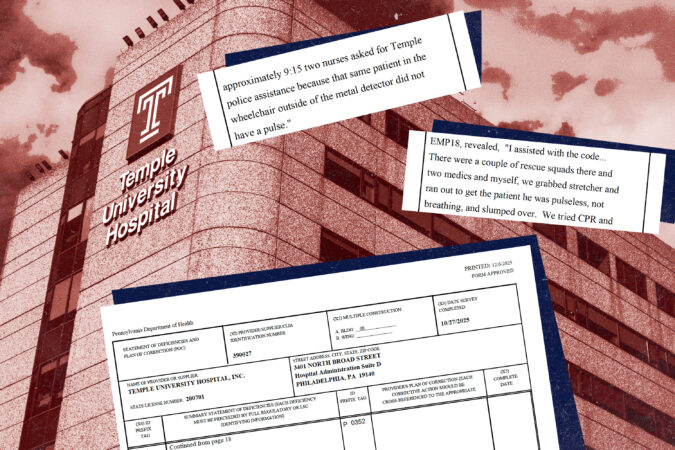
    Temple’s treatment of the patient during the Oct. 3 incident prompted state and federal investigations. In a report released earlier this month, the Pennsylvania Department of Health cited Temple for violating state rules that require hospitals to provide emergency care.

    Experts say the hospital’s actions amounted to “patient dumping,” a practice prohibited under a federal law that requires hospital emergency departments to medically screen and stabilize all patients.

    The Centers for Medicare and Medicaid Services (CMS), which oversees hospital safety nationally, confirmed it is also investigating, but has not released details.

    Hospitals that violate the Emergency Medical Treatment and Labor Act, known as EMTALA, risk hefty fines or losing their Medicare license, though such penalties are rare.

    Temple acknowledged that its own protocols were not followed. Health system officials told state investigators the patient should not have been removed from the hospital without being evaluated and cleared by medical staff.

    “The safety of our patients, visitors and staff is Temple’s highest priority,” the hospital said in a statement to The Inquirer. “We believe that everyone deserves high quality care.”

    The hospital declined to say whether any of the staff members involved were disciplined or fired.

    But such incidents are rarely the fault of one individual, legal experts and homelessness advocates said. Rather, they are a sign of systemic problems, such as understaffing that can leave staff overwhelmed, and bias among medical providers that can put vulnerable patients at risk of being dismissed.

    “If you work in an environment where safety is prized and honored and enforced from the top down, everyone feels that’s their mission,” said Eric Weitz, a medical negligence lawyer in Philadelphia. “If that’s not a priority being set by leadership, then it’s no surprise the culture doesn’t reinforce it.”

    Hospital administrators said the triage nurse who turned away the patient should have sought help, if the patient wasn’t responding to questions. The nurse said she was overwhelmed and working without sufficient support in one of the region’s busiest trauma hospitals.

    “I was busy and alone,” she told state inspectors.

    The incident violated Temple’s emergency department protocol, staff told Pennsylvania Department of Health inspectors.

    Pa. Department of Health investigates Temple

    To piece together what went wrong, Pennsylvania Department of Health inspectors watched security camera footage, interviewed staff members, and reviewed internal hospital reports. Their timeline shows a series of mistakes.

    At about 3:15 p.m., an employee brought the patient in a wheelchair to a bench near the curb outside the hospital, and left him there on the mild October day with highs near 70 degrees.

    He was being discharged to “the community” because he was experiencing homelessness, according to the inspection report. (The state report does not say whether staff attempted to place him at a skilled nursing facility, rehabilitation center or homeless shelter.)

    The man sat alone on the bench for an hour before standing unsteadily, taking a few steps, and ultimately falling to the ground.

    He managed to get back up, leaning against a tree for support, only to fall again. He was on the ground for 10 minutes before a security guard found him.

    The guard brought the man back into the emergency department in a wheelchair about two hours after he had been released.

    Back inside the hospital, the man followed orders to raise his arms for a security check at the door. Then he waited in line to be seen by the triage nurse responsible for checking in patients at the emergency department.

    When he reached the front of the line, he did not respond to the nurse’s questions. “He was not answering any questions, just shaking,” according to a Temple incident report reviewed by inspectors. Staff said the patient was “not cooperating” and should be sent to the back of the line.

    After two minutes with the nurse, a security guard moved his wheelchair to a corner of the emergency department near the entrance.

    The man was once again wheeled outside the hospital a few minutes later and left alone.

    He was found by medical staff around 9:30 p.m., slumped over in his wheelchair.

    Staff began CPR, rushing him back inside for trauma care.

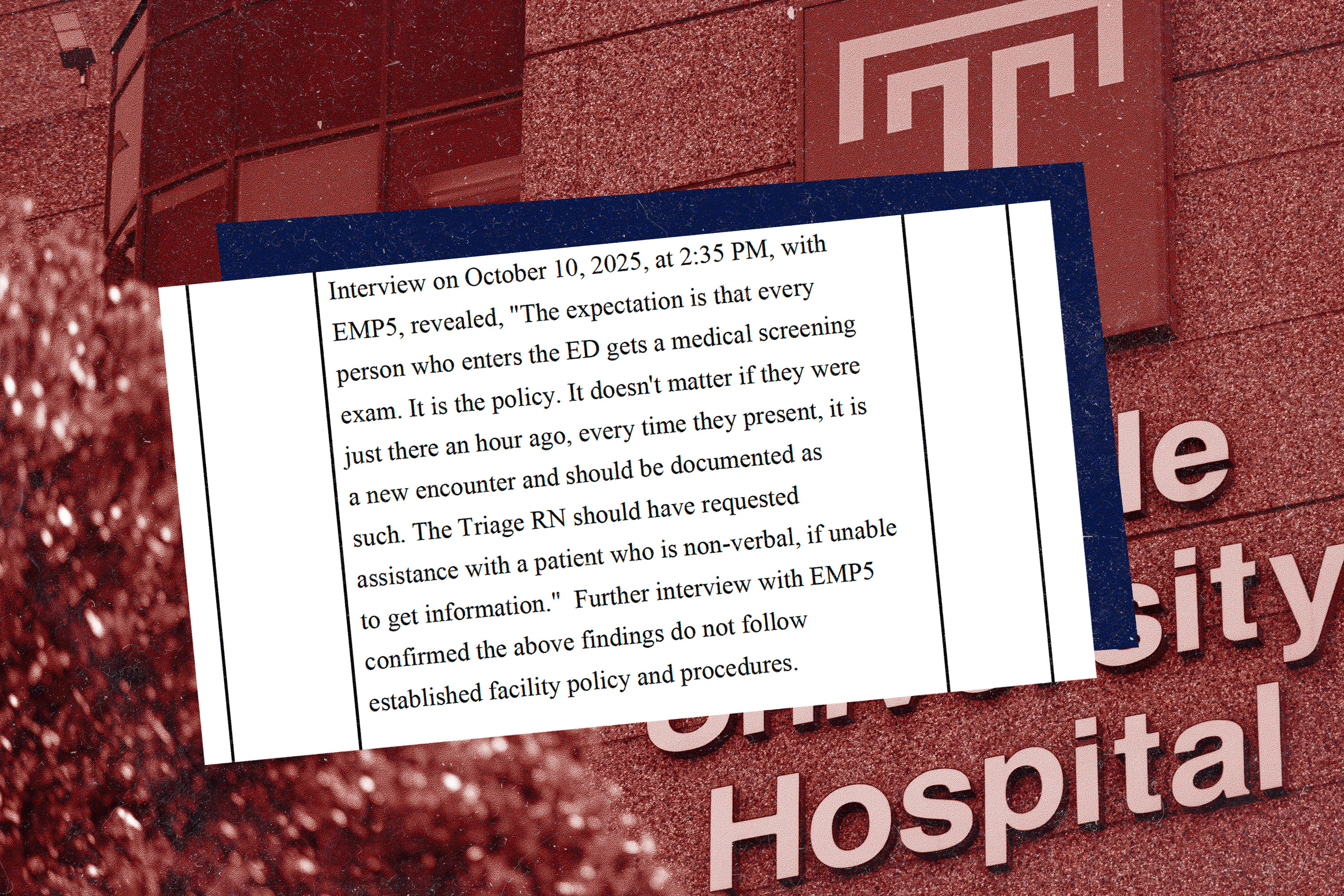
    Pennsylvania Department of Health’s inspection report details how a patient in Temple’s emergency department was rolled away in a wheelchair without being evaluated.

    The inspection report does not identify the patient’s name, age, or provide details on the medical condition for which he had been hospitalized. It also does not say what happened after he was found unresponsive. He died five days later, on Oct. 8.

    Temple responds

    Medical screening of every patient who comes to the emergency department is “explicitly required” under Temple’s EMTALA policies, according to the hospital’s response to the state findings.

    “It doesn’t matter if they were just there an hour ago, every time they present, it is a new encounter and should be documented as such,” a Temple staffer said in an interview with inspectors.

    The hospital told the state it would retrain staff on EMTALA rules, making clear that security officers cannot remove patients from the emergency department unless they have been evaluated and cleared for release by a medical professional.

    A week after the incident, hospital staff were instructed to keep a log of patients who are removed from the emergency department and the name of the provider who approved their release. (Temple police may still remove patients from the emergency department if they are threatening the safety of other patients or staff.)

    The hospital also said that it would order mobility evaluations for patients who are being discharged “to the community” if they had a high risk of falling, with a doctor’s sign-off required.

    Temple treats some of Philadelphia’s most vulnerable patients in an emergency room that sees more than 150,000 visits a year, including high numbers of gunshot victims and people experiencing opioid withdrawal. It operates a Level I trauma center in a North Philadelphia community where 87% of patients are covered by publicly funded Medicare or Medicaid.

    The emergency department is so busy that about 8% of patients choose to leave before being seen, according to CMS data, compared to about 2% of patients at hospitals nationally and across Pennsylvania.

    The triage nurse on duty Oct. 3 is not identified in the inspection report.

    The Temple chapter of Pennsylvania Association of Staff Nurses and Allied Professionals, which represents 1,600 nurses and 1,000 other medical professionals on Temple campuses, declined to comment.

    Legal experts raise questions

    Two healthcare lawyers who reviewed the state’s inspection report said the entire episode is troubling.

    “It sounds like they violated every part of EMTALA,” said Sara Rosenbaum, professor emerita of health law policy at George Washington University.

    The law does not require specific treatment, but mandates that hospitals evaluate everyone who walks in the door seeking care, and prohibits them from sending them away or transferring them until they are medically stable.

    “They failed to screen him, threw an unstable person back on the street, and didn’t arrange a medically appropriate transfer,” she said.

    What’s more, the hospital could be sued for malpractice over how it initially discharged the patient.

    The incident appears to be “a classic EMTALA violation,” said Weitz, the Philadelphia lawyer who serves on Pennsylvania’s Patient Safety Authority, an independent state agency that monitors hospital errors.

    The health department’s description of what happened is “almost eerily the exact fact pattern the law was passed to prevent,” he said.

    Healthcare challenges for patients experiencing homelessness

    People who are experiencing homelessness often receive subpar treatment when they seek medical care, research shows.

    One study that analyzed thousands of California patient records found that those who were described in their medical records as “homeless” were more likely than patients who have a permanent legal address to be discharged from the emergency department, rather than being admitted for care.

    In the Philadelphia region, caring for this population is increasingly challenging. The number of available shelter beds has declined in recent years, while the number of people who are considered unhoused has risen, according to Philadelphia’s Office of Homeless Services.

    Stephanie Sena, CEO of Breaking Bread Community Shelter in Delaware County, said the colder months also see more people experiencing homelessness coming to hospitals to get off the street.

    “If they say they’re sick, they might get a bed and be able to survive the night,” Sena said.

    The pattern can make doctors and nurses less likely to believe patients when they report real medical needs. Especially when staff are overwhelmed in busy hospitals, patients experiencing homelessness may be at greater risk of getting denied or discharged when they need help, she said.

    Sena said she was disappointed to hear about the Temple incident.

    “It is tragic,” she said, “but also not at all surprising, unfortunately.”

  • Is nutrition the key to ADHD? | Expert Opinion

    Is nutrition the key to ADHD? | Expert Opinion

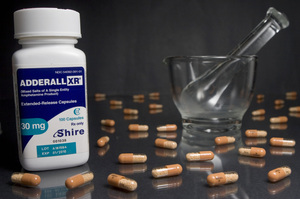
    Years ago, I took my kindergartener with attention-deficit/hyperactivity disorder (ADHD) to a pediatric specialist for advice. She suggested we try the Feingold diet, an elimination diet that requires avoiding artificial dyes, sweeteners, and salicylates, naturally occurring substances found in many fruits and vegetables. With an already picky eater, I worried about how much I would need to eliminate and found the list included foods such as apples, berries, cucumbers, and tomatoes.

    I wondered, was diet the best way to manage ADHD?

    As a pediatrician, I often get this question from parents as they look for alternatives to stimulant medications for ADHD. The Feingold diet our pediatrician mentioned has been around since 1973. If it were a miracle cure, the parents of 7 million children with ADHD would have popularized it. However, the research on this diet is mixed, with the benefits being modest and not universal for all children with ADHD.

    Whenever confronting medical myths or treatments with limited, but potential benefits, I ask myself: is there harm in trying it?

    Elimination diets can cause some harm, especially if a child already has a limited palate, and further cuts may not meet their nutritional needs. In addition, as any parent of a child with food allergies knows, a restrictive diet requires strict adherence, meaning holidays, birthday parties, and traveling become extra challenging.

    Top federal health officials have presented a plan to phase out petroleum-based synthetic dyes from the food supply by 2028. Artificial dyes, especially Red No. 40, have been highlighted as triggers of hyperactivity, yet research indicates that only 8% of children with ADHD are sensitive to artificial dyes. Given that so few children are in this group, rather than focusing on elimination, a better approach may be emphasizing a healthy diet overall.

    Lately, rather than elimination diets, social media has popularized adding foods like saffron to the diet to manage hyperactivity symptoms. The research on saffron seems promising, with a similar effect on hyperactivity to methylphenidate, a popular stimulant medication for managing ADHD. However, the studies that exist are small and short- term, and the dosing needed is much more than would typically be used in cooking. Saffron is not regulated like medications are, so purity can’t be certain. This makes it hard to recommend saffron as a standard treatment at this time.

    Social media, which we scrutinize for accuracy on the Pediatric Health Chat website, seems to prefer addressing ADHD through diet rather than medication. This sends the message that medications are bad or to be avoided. Yet we know stimulants have been used for ADHD for over 85 years and are well tolerated by most children with a success rate of 70-90%. This success is measured through improvements in academic performance and lower risk of injuries. I have seen the use of stimulant medications provide life-changing benefits for some of my patients and their families.

    So, for my family, the Feingold diet’s cons outweighed the potential benefits, but to others it may not. We try to avoid artificial dyes and sweeteners, but also emphasize exercise, sleep hygiene, and screen time limits.

    ADHD management is more than nutrition or medication management, but includes important interventions like behavior training for parents, school-based supports, organizational skills training, and helping children learn to regulate their emotions. There’s no one-size-fits-all approach. A child’s treatment may evolve over time, as they develop and their ADHD symptoms change. Children with ADHD are much more varied than social media portrays, and families deserve the facts and freedom to make decisions that fit their child.

    Katie Lockwood MD, MEd is a primary care pediatrician at Children’s Hospital of Philadelphia. She and CHOP neonatologist Joanna Parga-Belinkie, MD, are co-founders of Pediatric Health Chat, (chop.edu/pediatric-health-chat), an online initiative providing resources for families looking for good information on the latest myths and misconceptions about children’s health.

  • Drug distribution giant Cencora is boosting its reach in medical specialties

    Cencora Inc., a drug-distribution giant based in Conshohocken, is expanding its presence in oncology and retina care, two medical specialties that rely heavily on pharmaceuticals.

    The company announced on Dec. 15 that it had agreed to buy out its private-equity partner in a national cancer practice management company, OneOncology, for $5 billion in cash and debt.

    Cencora already owned 35% of OneOncology, which has a small presence in the Philadelphia area.

    In January, Cencora spent $5 billion, including contingency payments, for Retina Consultants of America, a network of specialized practices with locations in 23 states, including two in Pennsylvania outside the Philadelphia area.

    The deals are part of Cencora’s effort to extend its reach into medical specialties that rely heavily on pharmaceuticals to treat patients. By positioning itself closer to patients, Cencora can capture more of the profit margin that goes along with selling drugs.

    “We like those two spaces because they’re pharmaceutical centric,” Cencora’s CEO Robert Mauch said at the 2025 J.P. Morgan Healthcare Conference. He said the company doesn’t see other specialties with the same makeup as oncology and retina.

    “That’s where we will continue to focus,” he said. “Now as we look forward, there could be other specialties. There could be other innovations in the pharma industry that create something in another area.”

    Cencora had $321 billion in revenue in its fiscal year that ended Sept. 30. It had $1.5 billion in net income. That’s a great deal of money, but amounted to less than half a percent of its revenue.

    McKesson and Cardinal Health, Cencora’s two biggest U.S. competitors in the drug-distribution business, face similarly narrow margins from drug distribution. Both also own companies that manage cancer practices. Among the benefits of owning the management companies is securing the customer base.

    Cencora’s follow-up to 2023 deal

    Cencora, then known as AmerisourceBergen, paid $718.4 million for a 35% stake in OneOncology in June 2023. That deal, in partnership with TPG, valued OneOncology at $2.1 billion. The seller was General Atlantic, a private equity firm that had invested $200 million in the Nashville management services company in 2018, according to the Wall Street Journal.

    The deal announced last week valued OneOncology at $7.4 billion, including debt. The big increase in value came thanks to a doubling in the company’s size. OneOncology now has 31 practices with 1,800 providers who treat 1 million patients across 565 sites, according to the company.

    Rittenhouse Hematology Oncology, which has offices in Bala Cynwyd, Brinton Lake, King of Prussia, and Philadelphia, became part of OneOncology last year.

  • Have that nasty stomach bug? It hit one South Jersey school hard. Here’s how to avoid it.

    Have that nasty stomach bug? It hit one South Jersey school hard. Here’s how to avoid it.

    A South Jersey school was hit with an outbreak of gastrointestinal illness last week, as cases of norovirus, a common stomach bug, recently surged nationwide.

    Camden County officials could not definitively say the illness was norovirus, since no lab testing has been done. However, they noted it was a candidate.

    “The symptoms, infectious period, and incubation periods seem to be consistent with norovirus,” said Caryelle Vilaubi, director of the Camden County Department of Health and Human Services.

    The school in Haddonfield, which officials declined to identify further, first reported a spike in gastrointestinal symptoms among students on Dec. 10, followed by an increase the next day.

    Cases have since fallen dramatically, Vilaubi said, as outbreak control measures — including use of disinfectants, sending sick students home, and promoting proper hand hygiene — have been put into place.

    They’re hoping to end the outbreak in the school community as early as next week, if they can go without new cases for four days, she said.

    A variety of sources can cause gastrointestinal illness, including viruses, bacteria, and parasites. Norovirus is one of the common culprits this time of year.

    “We typically see a spike from November through April, not just in Camden County, but throughout the state, and often throughout much of the country,” Vilaubi said.

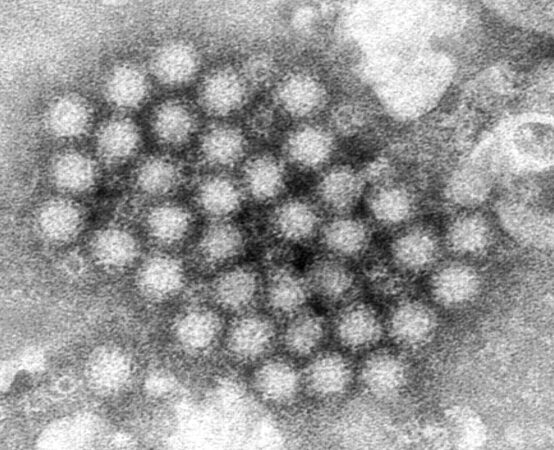
    The highly contagious virus can spread through close contact with an infected person or with contaminated food, water, and surfaces. Symptoms usually include nausea, vomiting, diarrhea, and stomach pain, and start 12 to 48 hours after exposure.

    Most people will feel better after one to three days.

    Here’s what to know about the virus:

    How can you protect yourself against norovirus?

    Norovirus is a “hardy and resistant virus,” Vilaubi noted, making it especially hard to clean off. Hand sanitizers are not effective against it.

    People should instead wash their hands frequently with soap and water, and use bleach-based disinfectants (or any Environmental Protection Agency-registered disinfecting product against norovirus) on hard surfaces, according to the Centers for Disease Control and Prevention.

    How long does norovirus stay on surfaces?

    Norovirus can survive on surfaces for weeks.

    It is also relatively resistant to heat, able to survive temperatures up to 145°F.

    People should make sure to regularly disinfect high-touch surfaces such as doorknobs, keyboards, and light switches.

    How long does norovirus last in adults?

    Though people will usually feel better after one to three days, they are still highly contagious for a few days after.

    “If your child begins to show symptoms, please keep them home until at least 48 hours after symptoms resolve to prevent further spreading the illness,” Virginia Betteridge, liaison to the Camden County Department of Health and Human Services, said in a Dec. 12 news release.

    Those infected with norovirus should avoid contact with others as much as possible during this period.

    How to treat norovirus at home?

    There is no cure or specific treatment for norovirus. The advice generally is to let the virus run its course.

    To ward off dehydration, people should make sure to drink lots of fluids to replace what’s lost from vomiting and diarrhea. Taking small sips of water and sucking on ice chips may be easier on an upset stomach.

    People can also consider drinking clear broths, noncaffeinated sports drinks, and oral rehydration solutions, which are available over the counter.

    Drinks that contain a lot of sugar, including soft drinks and certain fruit juices, can make diarrhea worse and should be avoided.

    How does norovirus spread from person to person?

    Norovirus is considered highly contagious, as only a small amount of virus is needed to infect someone.

    People contract it by accidentally touching tiny particles of stool or vomit — where the virus is primarily shed — from an infected person and getting them in their mouths.

    These particles easily contaminate hands, surfaces, food, or water.

  • Philadelphia’s Senior Law Center has taken over two of CARIE’s advocacy programs

    Philadelphia’s nonprofit Senior Law Center has taken over two of the programs that the Center for Advocacy for the Rights and Interests of the Elderly (CARIE) operated before it abruptly shut down around Thanksgiving.

    The Senior Law Center said this week in an email to supporters that it will continue CARIE’s work to support elderly crime victims under a two-year contract with the Pennsylvania Commission on Crime and Delinquency.

    That contract is for $462,094 per year and has been reassigned to the Senior Law Center. The Senior Law Center has hired four of the five CARIE employees who were involved in that work. The fifth person had already accepted another job, a Senior Law Center spokesperson said.

    Kathy Cubit, CARIE’s former advocacy director, has moved to the Senior Law Center, where she will continue her work on health equity and long-term care. Cubit chairs a group that monitors Pennsylvania’s implementation and development of Medicaid programs.

    CARIE listed 26 employees on its website the week before it closed. Few details were available on why CARIE closed after nearly 50 years. Much of its work involved long-term care ombudsman services for the elderly in most of Philadelphia and in Montgomery County. It lost both of those contracts.

  • Drug companies line up to make deals with Trump after initial hesitation

    Drug companies line up to make deals with Trump after initial hesitation

    When President Donald Trump declared in May that he wanted drug companies to voluntarily cut their prices, few pharmaceutical executives wanted to go first. Now, no one wants to be last — and risk the wrath of the president.

    Nine drug companies announced price cuts with Trump at the White House on Friday, touting discounts on medication to treat diabetes, heart disease, HIV, hepatitis B, and other conditions. The deals will offer discounts on drugs sold to the government and to Americans through a new website, TrumpRx.gov, in exchange for tariff relief and other incentives, including faster FDA reviews for future approvals.

    The program, known as the Most Favored Nation initiative, is an effort to link U.S. drug prices to lower costs abroad.

    “Every president for a generation has promised to reduce drug prices, but … I am the only one of them to ever even think in terms of ‘favored nations,’” Trump boasted Friday, flanked by drug-company executives and health officials.

    Friday’s announcements follow similar deals with five other companies, beginning in September when Pfizer CEO Albert Bourla joined Trump to unveil price cuts. Since then, other drug-company executives have joined Trump to announce discounts on fertility and GLP-1 drugs and other offerings. In return, the administration has lifted the threat of tariffs and offered the companies other benefits, such as priority vouchers to expedite FDA reviews, which can lead to hundreds of millions of dollars in additional revenue for a company if a new drug is quickly approved.

    Amgen, Boehringer Ingelheim, Bristol Myers Squibb, Genentech, Gilead Sciences, GSK, Merck, Novartis and Sanofi all announced new price cuts Friday. Three of the 17 pharmaceutical companies initially targeted by the Trump administration — AbbVie, Johnson & Johnson and Regeneron — have yet to appear with the president to tout price cuts, but officials said that those companies are set to make their own announcements soon.

    Trump has heralded his initiative — which he attempted to pursue in his first term — as one of his most significant achievements this year, arguing that even small savings matter amid the difficulty of curbing drug prices. The deep-pocketed pharmaceutical industry has repeatedly blocked most major efforts at reform for decades, and U.S. drug spending continues to rise, outpacing other wealthy countries.

    “This is the biggest thing ever to happen on drug pricing and on healthcare,” Trump claimed. He also criticized other countries for relying on high drug prices in the United States to subsidize the cost of pharmaceutical research and development, saying that global prices needed to be more equitable.

    “We were subsidizing the entire world. We’re not doing that anymore,” the president said.

    Democrats and outside experts have credited the deals as potentially helping some patients but said the initiative’s overall savings to the U.S. health system will be negligible and dismissed Trump’s hyperbole.

    “It’s a bit laughable to call this ‘the biggest thing ever’ in health policy. I’m not even sure this cracks the top 10 health policy changes,” said Craig Garthwaite, director of healthcare at Northwestern University’s Kellogg School of Management. “Giving Most Favored Nation prices to Medicaid, particularly for older drugs, likely won’t save that much.”

    The president has sought to make regular announcements about his drug-price deals, aiming to show progress and counter voter frustration over rising healthcare costs entering a midterm year that favors Democrats. Trump is timing Friday’s event to be one of his final White House events of the year, before he heads to North Carolina for a rally on affordability and then to his Mar-a-Lago resort.

    Pharmaceutical companies also touted their willingness to cut U.S. prices. A Bristol Myers Squibb executive said the company would provide its blood-thinning drug Eliquis, its most-prescribed medicine, to Medicaid free. Merck said it would offer discounts on its drugs Januvia, Janumet, and Janumet XR, which are used to treat Type 2 diabetes.

    “I reflect on your goal, driving affordability and access to Americans, but equally getting prices up outside the United States,” Merck CEO Robert Davis told Trump. “We’re 100 percent supportive of your actions.”

    Democrats have questioned whether Trump’s dealmaking with the companies is creating a quid pro quo, with pharmaceutical executives striking agreements to give the president a political win in exchange for potential profit.

    “Congress and the American people remain in the dark about the contours of your agreement with the Trump Administration,” Sen. Ron Wyden (D., Ore.) and Reps. Richard E. Neal (D., Mass.), Frank Pallone Jr. (D., N.J.) and Robert C. “Bobby” Scott (D., Va.) wrote in letters sent this week to pharmaceutical executives participating in the initiative. The lawmakers are the top Democrats on four congressional committees that oversee aspects of the U.S. health system.

    Several former FDA officials — including two physicians who recently oversaw the agency’s drug-regulation center — have warned that the voucher program may be illegal and risk undermining public health by streamlining reviews. While the agency’s drug reviews can traditionally take about a year, as scientists pore over safety and effectiveness data, Trump officials have said that the voucher program can guarantee a review within one or two months. The administration has defended the program, saying that safety and effectiveness remain priorities despite the accelerated timetable.

    Trump officials have used other levers, too. The administration has relied on the Centers for Medicare and Medicaid Services’s innovation center, which allows officials to pilot payment changes without seeking congressional approval, to pressure drug companies that do not voluntarily lower prices. Several drug-payment pilots have already been announced, and more are expected on Friday, the people said.

    Wall Street analysts say the companies have incentives to strike quick deals with the administration, rather than tempt Trump’s ire. Medicaid represents a relatively small portion of their business, and many companies are agreeing to price cuts similar to discount programs they have begun.

    Pfizer’s announcement with Trump also sent a signal to the rest of the industry, several pharmaceutical executives and industry analysts have told reporters.

    “When you saw the lack of impact to earnings of the initial companies’ deals, for most coming after, it’s a no-brainer,” said Chris Meekins, a managing director at Raymond James.

    Trump officials have said that the initial negotiations were tough, and securing concessions has become easier over time.

    “I think the first five companies that came through the pipeline were some of the hardest ones to get through,” CMS Administrator Mehmet Oz said in an interview on Dec. 7, pointing to the size of companies like Pfizer, AstraZeneca, and Eli Lilly, which were among the first companies to agree to deals.

    Trump officials have leaned on the healthcare companies’ civic responsibilities, in addition to applying pressure through tariffs and the CMS innovation center.

    Chris Klomp, the head of the Medicare program and a lead negotiator on the drug-price cuts, said he stressed “duty and patriotism” in a conversation with one prominent CEO.

    “And when we got done, he said, ‘I didn’t get into this business for [quarterly earnings],” Klomp said in remarks at last month’s MAHA Action summit. “I have children. I want to make them proud. I understand this is important to you and the president. We will show up.’”

  • How brokers gamed the ACA marketplace, roiling subsidy debate in Congress

    How brokers gamed the ACA marketplace, roiling subsidy debate in Congress

    The Florida insurance brokers offered an enticing deal to unemployed and homeless people: Enroll in a Healthcare.gov health plan they weren’t eligible for in exchange for gift cards, food, alcohol, or cash. They coached them to lie about their income to qualify for heavily subsidized coverage, according to court documents. Sometimes they enrolled people without their knowledge.

    A federal jury convicted Cory Lloyd and Steven Strong last month of collecting millions of dollars in commissions between 2018 and 2022 through a widespread plot to defraud the federal insurance marketplace. People earning at least the federal poverty level can get income-based subsidies to help them afford monthly premiums for plans sold through the Affordable Care Act. Under Lloyd and Strong’s scheme, the federal government paid at least $180 million in ineligible subsidies.

    Many more agents and brokers — likely thousands, according to two career staffers at the Centers for Medicare and Medicaid Services, who spoke on the condition of anonymity because they weren’t authorized to speak to press — are gaming the marketplace where 24 million Americans get health insurance.

    Corruption among Healthcare.gov agents and brokers had emerged as a sticking point in Washington as Congress failed to reach a deal to halt the year-end expiration of enhanced subsidies for insurance premiums, which will drive up the cost of plans for millions of Americans. Republicans invoked the fraud to argue against extending the subsidies while Democrats said the solution is better enforcement rather than withholding assistance from Americans who need it.

    Last year, the Biden administration temporarily suspended 850 insurance agents and brokers suspected of fraudulent or abusive conduct. CMS hasn’t terminated any agents or brokers this year — although spokesman Christopher Krepich said the agency has “initiated terminations” even as it sets up stricter enrollment rules for customers amid Administrator Mehmet Oz’s promises to root out fraud.

    Around 100,000 agents and brokers are authorized by Healthcare.gov. They facilitate more than three-quarters of enrollments. For each person enrolled, insurers pay them a small monthly commission, typically between $5 and $20. Florida, where Lloyd and Strong operated, offers the largest commissions in the country, averaging $28 per enrollee, according to the nonpartisan health policy organization KFF.

    A new government report underscored how easy it is to game the marketplace.

    When the Government Accountability Office, which evaluates federal programs and spending, submitted 20 fraudulent applications to Healthcare.gov for coverage this year, 19 were initially approved even though the agency didn’t submit documents requested to prove income, citizenship, and Social Security numbers. The marketplace terminated one enrollee for insufficient documentation. The government is still paying more than $10,000 a month in subsidies for 18 remaining enrollments.

    Investigators also discovered misuse of Society Security numbers — in one case, a single number was used for 125 policies in 2023 — and identified serious shortcomings in how CMS assesses marketplace fraud.

    Stopping marketplace fraud is “not a priority” for CMS, said Seto Bagdoyan, a director at GAO who worked on the report.

    Krepich said the agency has undertaken “a thorough investigation into improper agent and broker activity” and is committed to “ensuring consumers are never enrolled in coverage without their knowledge or consent.”

    Democrats complain the Trump administration is doing little to fix the problem despite its bluster about waste, fraud, and abuse in federal health programs.

    Rep. Lloyd Doggett (Texas), the top Democrat on a subcommittee overseeing CMS, wrote a letter to Oz last week requesting closer scrutiny of the reinstated agents and brokers. “The remedy is not to deny a mother access to care for her sick child,” Doggett said in a statement. “What we need is effective law enforcement.”

    Like brokers for Lloyd and Strong, who did not return requests for comment, many have enrolled people without their knowledge, switched their plan without their consent or created fake enrollments to maximize commissions.

    The GAO concluded that the enhanced subsidies worsened fraud in recent years as bad actors seized upon the beefier assistance to lure new customers. As enrollments on Healthcare.gov skyrocketed under the extra subsidies, fraudulent sign-ups grew too. The Congressional Budget Office estimated those misstating their incomes to get more subsidies nearly doubled from 1.3 million to 2.3 million between 2023 and 2025.

    “We believe that the expansion of the subsidies — which put more money in the pool — invigorated the financial incentive to sign up as many people as possible,” Bagdoyan said.

    The GAO’s findings were among the hurdles to Republicans in Congress agreeing to extend extra subsidies for a marketplace they’ve accused of failing to sufficiently police from bad actors.

    “These findings validate long-standing Republican warnings: Obamacare’s subsidy system lacks even the most basic guardrails and has created an environment where criminals, identity thieves, and unscrupulous brokers can exploit taxpayers with ease,” House Speaker Mike Johnson (R., La.) said in a statement last week.

    Democrats say the proper response isn’t to let the extra subsidies expire but to go after the brokers.

    “I’ve always said any fraud is too much,” said Sen. Ron Wyden (Oregon), the top Democrat on the Senate Finance Committee, which has oversight of healthcare issues.

    Wyden introduced a bill to create new civil penalties for brokers who commit fraud. He said Republicans haven’t signed onto his bill or offered similar measures.

    After receiving hundreds of thousands of complaints about fraud, the Biden administration started requiring customers to hold a three-way call with their broker and the marketplace call center in July 2024. But the new policy left plenty of loopholes, agents told GAO. The rule didn’t apply to new enrollees. And the marketplace took only “limited steps to verify the identity of the consumer on the three-way call,” the report says.

    Oz has been vowing to root out the abuse, slamming the prior administration for rules he said were too lenient and touting stricter enrollment rules CMS released in June. Those rules don’t include any direct, new restrictions on agents and brokers but could indirectly make fraud harder by ending year-round enrollment for people earning less than 150% of the federal poverty level, roughly $23,000 for an individual.

    “The past administration prioritized achieving big program enrollment numbers over protecting program integrity,” Oz said in a video posted recently to X.

    CMS is also preparing to implement stricter verification requirements laid out in Trump’s sweeping tax-and-spending law he signed this summer. That legislation bans the marketplaces from awarding subsidies before verifying a customer’s personal information, including their income and legal status, before awarding any subsidies, which could make it harder for bad actors to sign people up.

  • California biotech BioMarin will pay $4.8 billion for Amicus Therapeutics, a rare-disease company with a presence in Philadelphia

    California biotech BioMarin Pharmaceutical Inc. will pay $4.8 billion in cash for Amicus Therapeutics, a Princeton rare-disease company with a presence in Philadelphia, the two publicly traded companies announced Friday.

    The acquisition of Amicus, expected to be completed in the second quarter of next year, will give BioMarin treatments for rare genetic diseases that generated $599 million in revenue over the last 12 months, according to BioMarin, which is based in the San Francisco Bay Area.

    Amicus has a treatment for Fabry disease, which is caused by a genetic mutation that allows fatty waste to build up in the body, damaging tissues and organs, according the BioMarin. The second treatment is for late-onset Pompe disease, which is an inherited genetic condition that causes muscle weakness that worsens over time.

    BioMarin CEO Alexander Hardy said on a webcast about the deal that both of those treatments have the potential to reach $1 billion in global sales. BioMarin had $2.85 billion in revenue last year, compared to $528 million at Amicus.

    The Philadelphia tie

    In 2019, Amicus established its Global Research and Gene Therapy Center of Excellence at 3675 Market St. in University City, saying at the time that the facility would employ 200 people eventually. The company’s website now lists the location as its Research Center of Excellence.

    Amicus now has 12 people in its Philadelphia office, a spokesperson said Friday.

    The company laid off 35 people working in research and development in 2022 after terminating plans for a gene therapy spinoff, according to Fierce Biotech.

    The University of Pennsylvania’s Gene Therapy Center under researcher Jim Wilson drew Amicus to Philadelphia from central New Jersey, where the company was then based in Cranbury. Penn has since spun out Wilson’s center into two for-profit companies, Gemma Biotherapeutics and Franklin Biolabs.

    John Crowley, chief executive of Amicus at the time, liked to call Philadelphia the “Cradle of Cures,” a name that hasn’t stuck. Crowley is now president and CEO of the Biotechnology Innovation Organization (BIO), a biotech trade organization in Washington.

  • One year of inspections at Fox Chase Cancer Center: November 2024 – October 2025

    One year of inspections at Fox Chase Cancer Center: November 2024 – October 2025

    Fox Chase Cancer Center was not cited by the Pennsylvania Department of Health for any safety violations between November 2024 and October of this year.

    Here’s a look at the publicly available details:

    • Feb. 21, 2025: Inspectors came to investigate a complaint but found the hospital was in compliance. Complaint details are not made public when inspectors determine it was unfounded.
    • March 17: Inspectors came to investigate a complaint but found the hospital was in compliance.
    • April 15: The Joint Commission, a nonprofit hospital accreditation agency, renewed the hospital’s accreditation, effective January 2025, for 36 months.