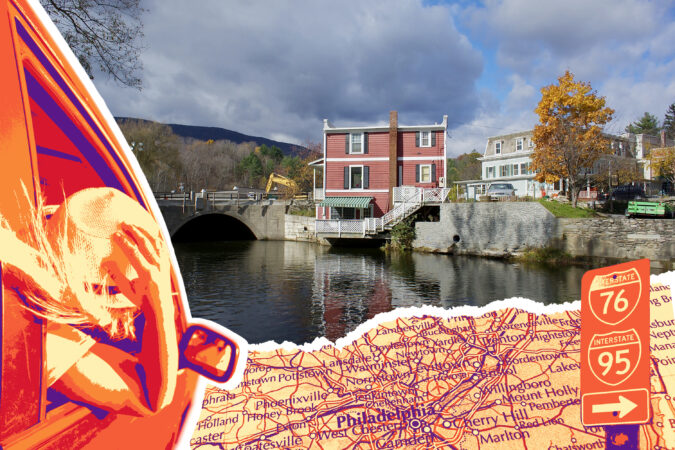
A tiny state, more than a third of which represents conserved land, Vermont has done things its own way since the colonial era. Its Green Mountain Boys militia once fended off land claims from New York and New Hampshire, and for a brief moment, Vermont even functioned as its own republic. That don’t-tread-on-me energy still lingers today, blended with a deep respect for the arts, outdoors, history, and small business. In southern Vermont, less than five hours from Philly, the village of Manchester is a microcosm of that personality. Slung between the Green Mountains, the glowing town looks like something straight out of a Hallmark movie — especially in winter, when snow this time of year is nearly guaranteed.
Stone fireplaces, leather chairs, plaid wallpaper, draft-blocking drapes, a grand front porch … Kimpton Taconic hits the winter-in-New-England vibes hard. The 86-room boutique hotel sits right on Main Street, close to everything in town, and has a solid on-site tavern, the Copper Grouse (think cider-brined chicken and maple crème brulée). The hotel also offers seamless equipment rentals through a Ski Butlers partnership. Bookings also include two free adult tickets to Hildene.
📍 3835 Main St., Manchester, Vt. 05254
Visit: Hildene
Just south of town, surrounded by woods and snow, Hildene was built at the turn of the 20th century by Mary and Robert Lincoln, the only son of Abraham and Mary Todd Lincoln. Run as a museum nonprofit since 1978, the Georgian Revival estate, gardens, and 12 miles of trails are open to visitors, making it a must-stop whether you’re into history, architecture, design, or horticulture. Train buffs will love Sunbeam, the restored Pullman carriage from Robert Lincoln’s tenure as president of the Pullman Co. from 1897 to 1911.
Take a short detour off Main Street into the forest and you’ll find Southern Vermont Arts Center. This estate includes classrooms, museum galleries, performance space, a yoga studio, and a café. Originally built in 1917 as a summer estate for an Ohio socialite and philanthropist, the property was acquired by the arts center in 1950. Grab a coffee at the café and walk — or snowshoe, or cross-country ski — through their epic sculpture park.
📍 860 Southern Vermont Arts Center Dr., Manchester, Vt. 05254
Shop: Northshire Bookstore
Northshire Bookstore is almost a caricature of Vermont: a rambling country house riddled with cozy alcoves. Opened in 1976 and now run by three sisters who grew up shopping there, the store leans hard into its indie roots — staff bios list genre specialties and years of service. They’ve got the bestsellers, sure, but it’s their rare-books collection that’s really special. A signed Jimmy Carter autobiography, for example, or an alternatively illustrated British edition of Harry Potter and the Chamber of Secrets.
Located only 10 minutes from town, Bromley Mountain’s 47 trails represent a solid mix of expertise levels. If you’re skiing experience begins and ends with the Poconos, maybe start with a few runs on the family-friendly Chase-It trail before leveling up to the Lord’s Prayer, the Plunge, and Havoc.
📍 124 Bromley Lodge Rd., Peru, Vt. 05152
Relax: Spa at the Equinox
After a day on the slopes, soothe those boot-bound feet and sore hammies at the Spa at the Equinox. Deep-tissue massage, Ayurveda treatments, cupping therapy, maple sugar scrubs — get one, get them all. You won’t want to leave the spa. It’s got cozy relaxation lounges, a huge indoor pool stretching out beneath an open-beam ceiling, and an outdoor hot tub perpetually cloaked in steam.
Points for the name alone. The Reluctant Panther, whose moniker nods to Vermont’s resistance to outside rule in the late 1700s, has been operating as a bed-and-breakfast since the 1960s — but its restaurant is open to the public. The food is exactly what you want to eat in the winter here: a Vermont cheese board, thick pork chops with German potato salad and smoked maple gastrique, venison osso buco, all served in a fireplace-warmed dining room. The wine list has earned Wine Spectator recognition four years straight. Meow.
Scott Harmon and Mark Williams met each other in a maximum-security prison in the heart of Pennsylvania coal country in 2012.
They had both grown up in the Philly area; both were in their early 20s, at the very beginning of life sentences without the possibility of parole for homicide convictions. Both had sons.
They were also both desperate to leave State Correctional Institution (SCI) Greene, the isolated prison where they met and which they described as harrowing. They aimed to appeal their convictions and get free.
They clicked as lifelong friends.
In 2018, Williams was transferred to the more desirable SCI Phoenix, in Montgomery County, and soon Harmon was transferred there as well. Both saw the reunion as an unexpected gift, and they became cellmates, or “cellies.”
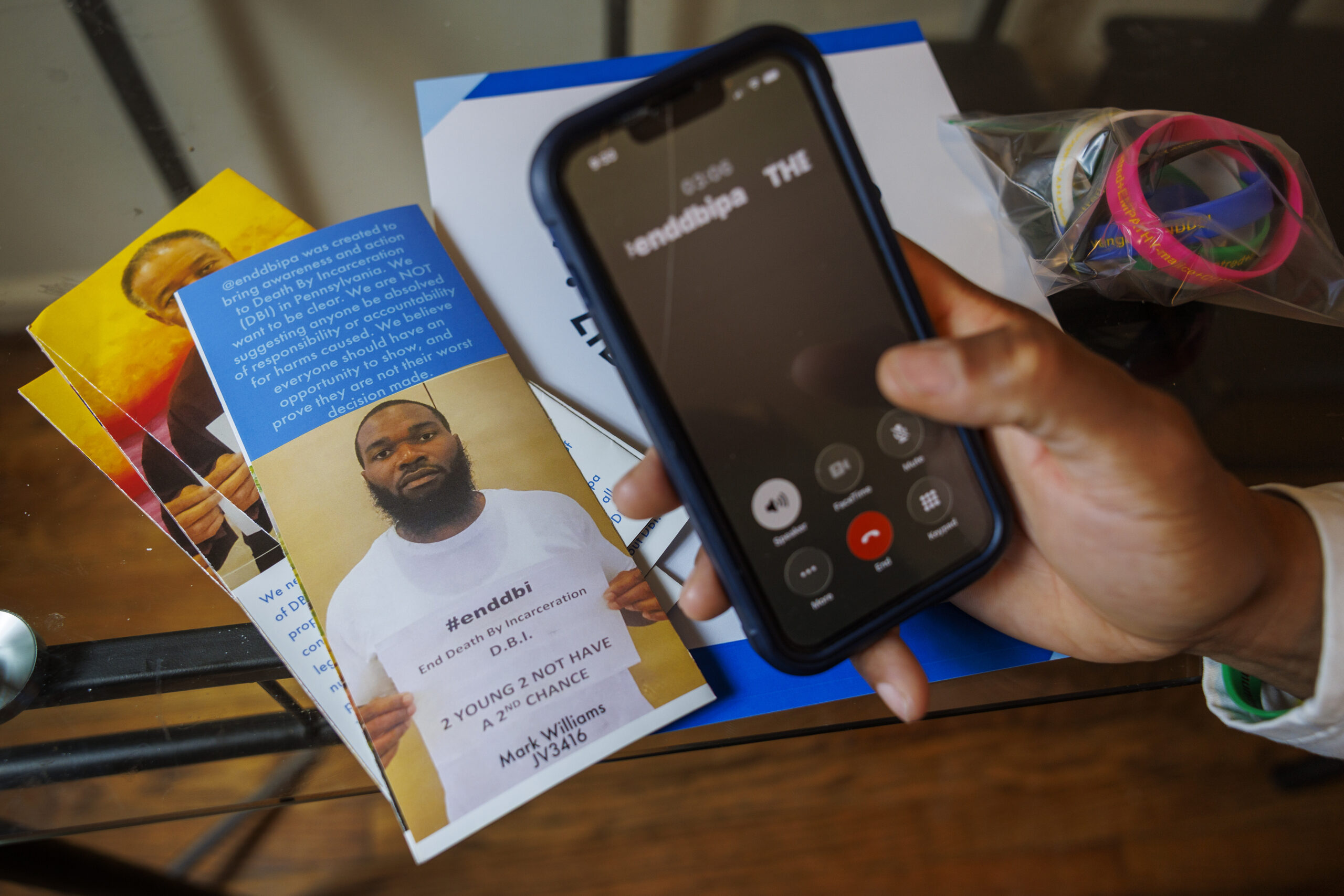
While organizing with the activist group the Coalition to Abolish Death by Incarceration and working with the same attorney to appeal their separate cases, they maintained a similar mindset: Despite what the courts said, their sentences would not last the length of their lives.
“When you’re sentenced to life, there’s really very little reason to hope that you’re ever going to get out again,” said Catherine Trama, an attorney with Wiseman, Schwartz, Cioschi & Trama who represented both men. They showed “a positivity that would be impossible for most people.”
Harmon was 22 when he was arrested for killing a 24-year-old man, Timothy Haines, in North Philadelphia. In 2011, he was convicted and given a mandatory life sentence without the possibility of parole. He maintained his innocence for the next decade-plus.
In 2024, his murder convictionwas overturned. The District Attorney’s Office stopped short of endorsing his innocence but offered him a plea deal, in which he pleaded guilty to third-degree murder and firearms violations to get out of prison in April 2025. (“When that opportunity is offered to you: you can go home today, or you can take a chance fighting the system again, you don’t fight the system again,” Harmon, 39, said).
Harmon and Williams, who call each other chosen brothers, had been working toward the same goal, but now one had achieved freedom and the other had not.
“It was really difficult for a while. I didn’t want him to feel as though I was upset that he was leaving, or wasn’t happy for him,” Williams, 36, said.
Mark Williams, 36, is currently incarcerated at SCI Phoenix, and challenging his conviction through the Post Conviction Relief Act. He and Scott Harmon call each other chosen brothers.
Williams is still incarcerated at SCI Phoenix, and is currently challenging his conviction through the Post Conviction Relief Act, claiming the state violated his right to due process. He was 21 when he was convicted of killing a 21-year-old man, Isaiah McLendon, in Darby Borough and also given a mandatory life sentence without the possibility of parole.
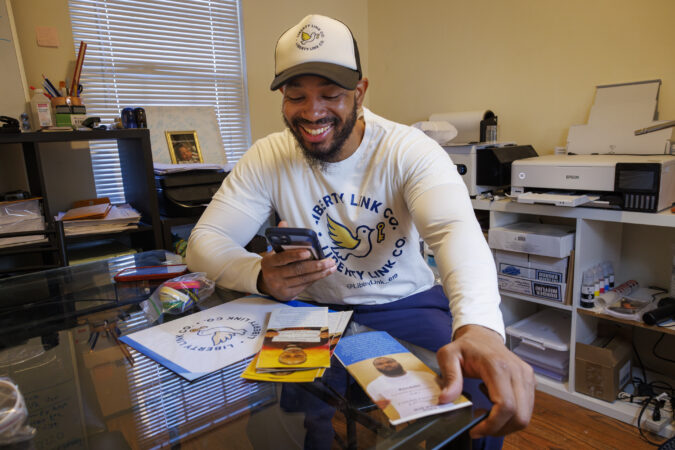
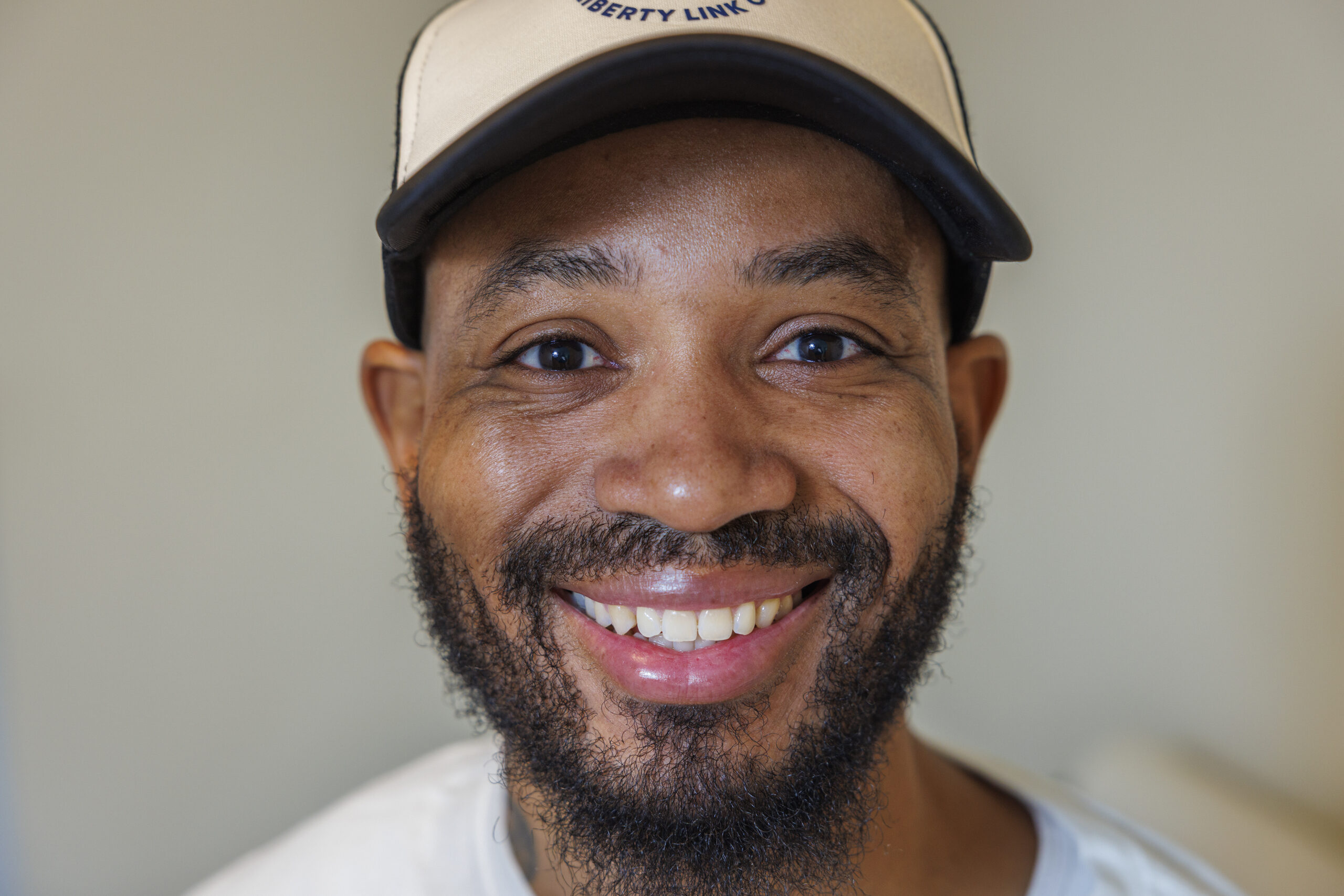
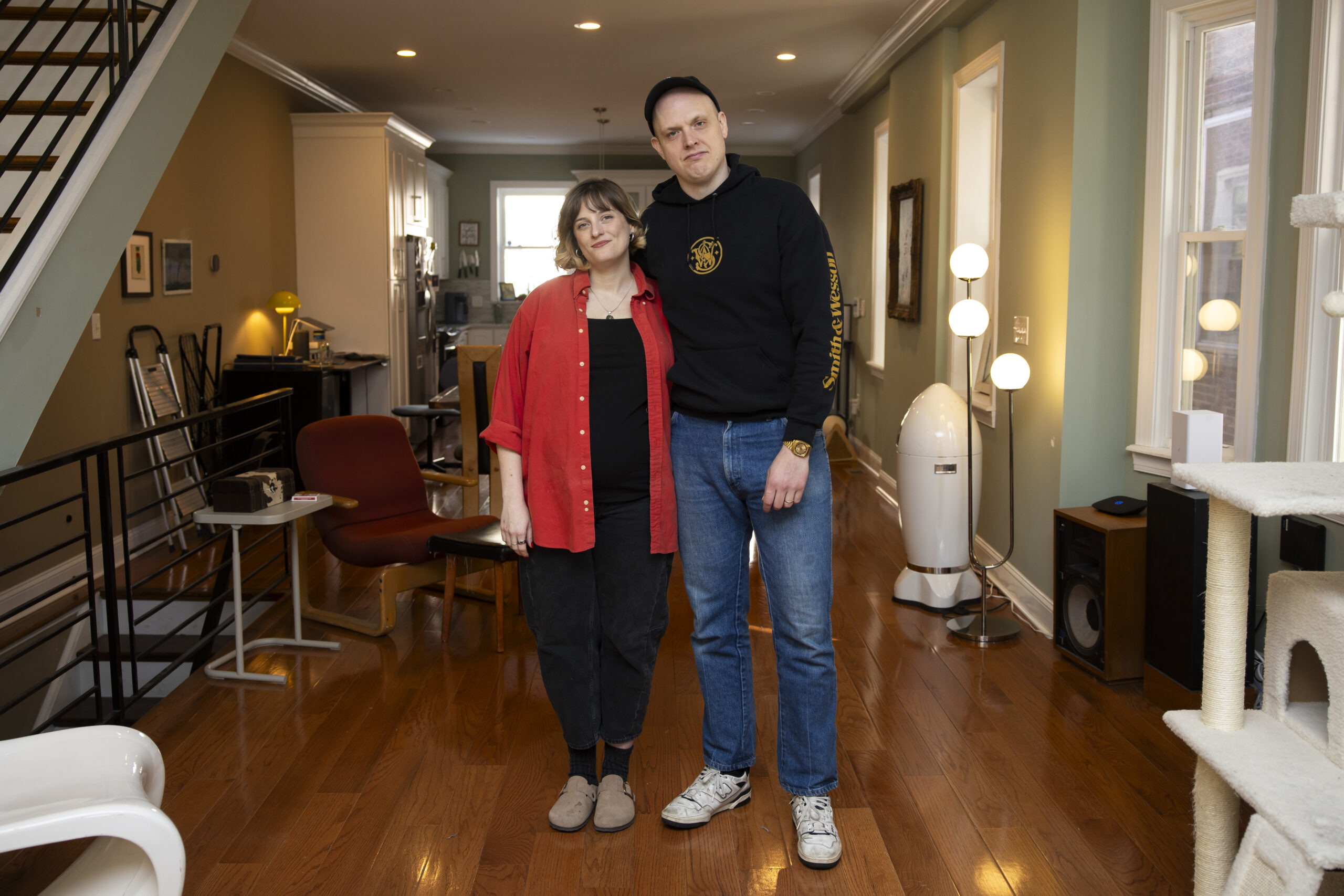
Harmon is now a utility worker at a country club and lives in the Philadelphia suburbs. He has a girlfriend who he met as a teenager and reconnected with while in prison.
It is against state Department of Corrections policy for Harmon and Williams to meet in person because Harmon was formerly incarcerated, a spokesperson for the PA DOC said. Instead, they speak almost every day by phone.
The following, as told to Zoe Greenberg in separate interviews, has been edited for length and clarity and combined.
On meeting at a maximum-security prison in southwestern Pa.
Mark: Everybody calls Scott “Slim.” I met Slim when he came upstate in 2012. We were young. Just seeing the shock of our new reality setting in with him, I had just experienced that a year ago. I could share how I made it through and hopefully it could help.
Scott: He seemed like a cool dude. We didn’t dive into each other’s cases, we just both knew that we were sentenced to die at such a young age. We call it death by incarceration, or a “DBI” sentence.
We had the same intention, which was getting out of prison.
On boiling water in buckets and grueling workouts together
Scott: We ate together all the time. The commissary is extremely limited — for the bags of instant rice that they sell, you need really hot water, which we figured out ways to make.
We would buy an extra bucket, put water and baking soda or denture tabs in it with an extension cord, and it heats up. You put your food inside a trash bag, you put a trash bag over the bucket, and you set your food on it, and it cooks.
Scott Harmon, who is now a utility worker at a country club, pictured at home.
We also started working out together. In prison, we work out so hard because it’s stress relief. We punish our bodies physically: 100 burpees may be a warm-up.
On the outside, I tried to do 10 sets of 10 pull-ups. Mark laughed at me when I told him I couldn’t.
On being transferred to the same prison, 35 miles from Philly
Mark: SCI Greene was in a very, very racist part of the state. That environment kind of makes tighter bonds in people.
I transferred to SCI Phoenix [35 miles from Philly] maybe six months before Slim did. When I got transferred, it was an emotional time. It was hard. I didn’t really understand how close we were, until it was severed in that way.
Scott: You can’t choose what prison you go to. It’s like rolling a dice.
For those that were sentenced to “death by incarceration,” you have to stay seven years write-up free to get transferred. Now, mind you, you can get a write-up for having the thing that I just told you that we used to cook with. [The state DOC confirmed this.]
Mark: When he got here, that was a huge relief. To have someone back where it’s like, I know this is one of my brothers. It’s something I wasn’t expecting.
At the time, I think I was collecting trash on the walk. He was coming around the walk. And I saw him. We just were yelling and hugging.
On becoming cellies at SCI Phoenix
Mark: As soon as he got to Phoenix, we start pulling strings to get in the cell together.We had to talk to the unit managers, talk about why we wanted to be cellmates, how it would make sense for our incarceration. Our argument was all about compatibility: I’m compatible with this person, and I won’t keep asking you to move me from cell to cell to cell.
Scott: We had bunk beds — two grown men. It’s not normal for two fully grown men to be in such a small space: maybe eight steps to the door, and four steps sideways.
We talked about being free, and what that freedom will look like, and reaching back for each other. He would say, “If I get out, you don’t have to worry, I’m not gonna be like other guys,” and I’m saying the same thing.
On trying to stay connected to the outside together
Scott: I was trying to build a relationship with my son. Mark told me, “Just keep at it, just keep writing, just keep calling.”
It is extremely frustrating when you want to be there, and you’re not being allowed. Had Mark not been there to advise me about the best way to go about it, I may not have the relationship I have with my son today.
Mark: Going through COVID was one of the hardest times. We were locked down all the time — we were getting out less than an hour a day.
The person that you were living with, you had to really be able to tolerate. We were in there, tight, every day, annoying each other, annoyed with what was going on.
You don’t know what your relationship will be with somebody until you’re actually trapped in a small space with them for a year.
On freedom — for one of them
Scott: I get on the phone and my attorney is like, “We heard back from the judge, and they overturned your conviction.”
I lost my breath, got nauseated, I started crying. Mark is two phones down. He started hugging me. It was a moment, man. I couldn’t even talk to him, snot was running down my nose. He was just happy for me, man. So happy for me.
Mark: It was a shock to me, just like it was a shock to him.Immediately I just felt joy, and excitement.
Then as time passed, it was more complicated. It wasn’t anger or jealousy. It was more of maybe sadness, and trying to reconcile the feelings of gain and loss at the same time. The situation was bringing up all types of feelings.
Scott: It’s never a conversation about him not getting out. The conversation is always like, “You’ll be out here soon.”
On saying goodbye
Mark: I think I probably did have a fear that we wouldn’t be as close as we are. Over the years, we experienced a lot of people that we built bonds with who went home. We might still be close with them, but we don’t talk as frequently. It’s not what it was.
Scott: We both worked in hospice, so the nurse allowed us to come down to the hospital and say goodbye to each other a day or two before I left.
I left him all my property. I left my TV to him. I left the books and stuff that he wanted, any clothes or sneakers that I had that he might want. I didn’t take anything out with me.
On keeping in touch now
Scott: I talk to him every day. I know intimately what type of support he needs. Our conversations have changed in that it’s not about our freedom, it’s about his freedom.
The experience is like how guys are in theArmy: because I was dead to the world. I was maybe in contact with 10 people out of the billions and billions of people on the Earth. He talks to maybe 20 people outside of prison. That’s nothing.
Scott Harmon takes a call from Mark Williams at his home in the Philadelphia suburbs.
Mark: We talk about the new realities that he’s facing, and some of the ones that I have to look forward to.
It might have been harder for me to leave him behind. Survivor’s remorse — that can be tough to deal with.
Yes, I want my freedom, but it’s not much more than I wanted him to have his freedom.
This story is part of a new series about life partners across the Philadelphia area.
If you want to share your story about who you’re navigating life with romantically or otherwise, write to lifepartners@inquirer.com. We won’t publish anything without speaking to you first.
The house: A 1,590-square-foot rowhouse in West Philly with three bedrooms and two bathrooms, built in 1925.
The price: listed for $425,000; purchased for $410,000
The agent: Benjamin Camp, Elfant Wissahickon
Rhiannon and Malcolm Critcher bought their West Philly home after a very short search. They saw only two other homes.
The ask: After a few years in Tucson, Ariz., Malcolm and Rhiannon Critcher knew they wanted to return to the East Coast. They tested a few cities first. Washington felt “a little too nerdy,” Malcolm Critcher said. New York swung too far in the other direction: “a little too main character.” Philadelphia felt just right. “It was a Goldilocks situation,” Critcher said. “We both came here and instantly fell in love.”
They moved in 2023 and rented in Center City for a year to get their bearings and explore neighborhoods. They fell in love with South and West Philly, but the latter’s parks and tree-lined streets ultimately won them over. They wanted to start a family soon, and West Philly‘s “green, verdant life,” Critcher said, “just felt like a really cool place to be a kid.”
Their must-have list was short but specific: a kitchen meant for hosting, an open-concept floor plan, and a basement big enough for Critcher, who is 6-foot-4, to stand in.
The search: One morning in November 2024, after getting breakfast in West Philly, they decided to walk to nearby open houses. They saw three houses. The third was a recently renovated semi-detached twin with light pouring in from multiple sides.
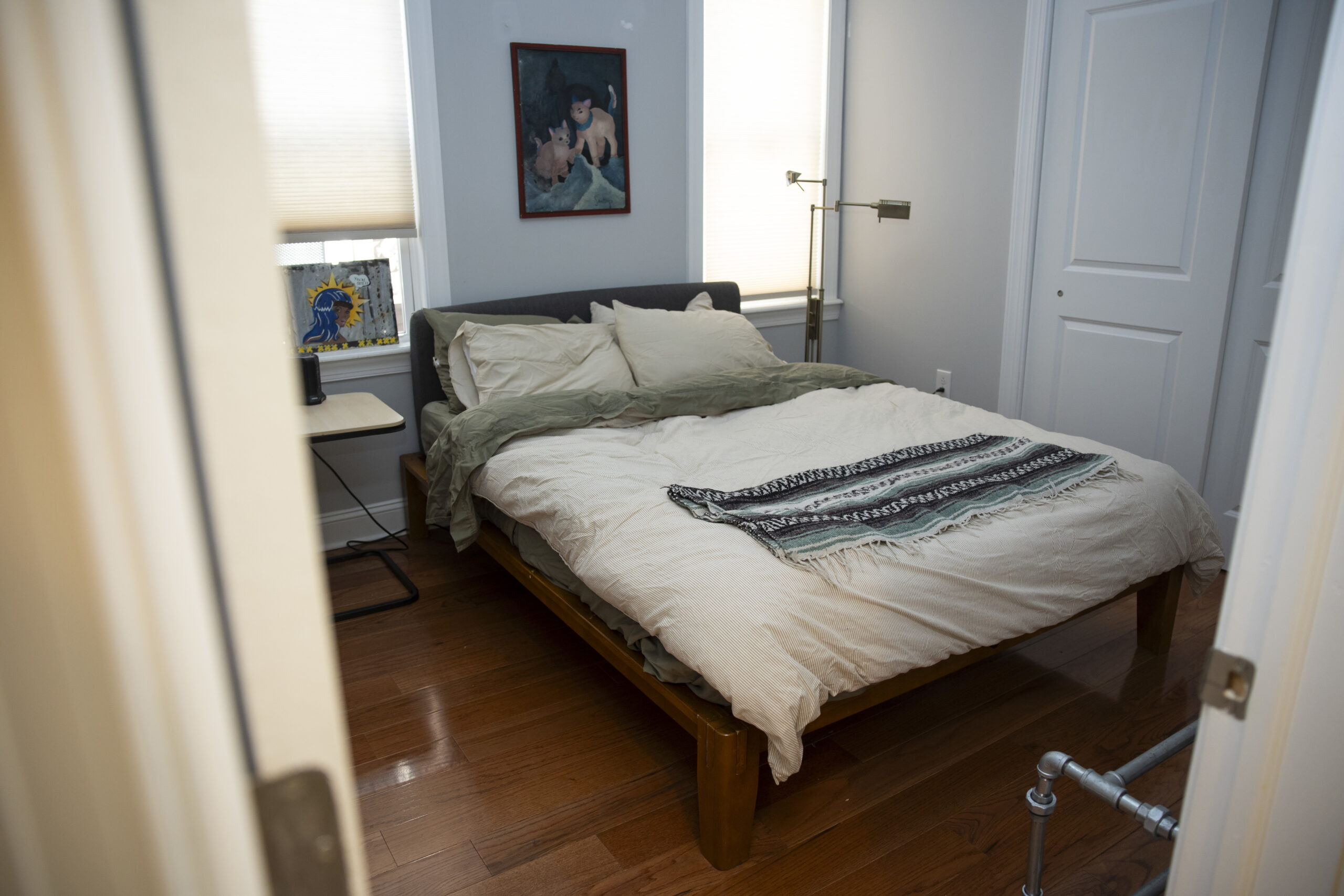
One of three bedrooms in Malcolm and Rhiannon Critcher’s home.
They both wanted to buy it right away, but worried they were being impulsive, so they decided to test the walk to the train. The couple doesn’t have a car and relies heavily on public transportation. It took less than five minutes. On the ride home, they realized they weren’t interested in delaying for the sake of process. “If you find the perfect thing early on, it’s still the perfect thing,” Critcher said.
Having previouslybought and sold three houses, Critcher had the confidence to move quickly. “I know what I’m looking for and what I want,” he said. They called their agent and made an offer that afternoon.
The appeal: The layout was the first draw. The open first floor flowed naturally from the living room to the kitchen, making it feel larger than its footprint. Then there was the renovation. Unlike the gray-floored, hastily flipped houses they had seen elsewhere, this one felt considered, as if the sellers had remodeled it for themselves, not for resale. They liked the finishes, the flow, and little design choices like the kitchen backsplash. “My wife walked into the kitchen and was just like, ‘Wow, this is my favorite kitchen I’ve ever been in,’” Critcher said.
The couple wanted a kitchen that would be great for hosting.
For him, the basement stole the show. It was finished, spacious, and didn’t require him to duck.
The deal: The house was listed at $425,000 — the very top of the couple’s budget. It had been on the market for justone day when they saw it. They decided to offer $25,000 below the asking price, but they promised to take it as-is, as long as the inspection didn’t reveal anything concerning. The sellers agreed to the terms but requested $410,000, which the couple agreed to.
Light pours in from multiple sides of the Cratchers’ semi-detached twin.
The inspection came back spotless. The appliances had all been replaced in 2018. The sewer line had recently been redone. There were no structural issues. “Literally the most perfect housing inspection possible,” Critcher said.
The money: All told, Critcher and his wife brought a little over $100,000 to closing. Most came from the sale of their previous home in Tucson. They bought that house in early 2020 for $179,000 and sold it in 2024 for $300,000. The proceeds went straight into a high-yield savings account and remained untouched until the couple was ready to buy again.
The couple’s dog, Pablo, likes to hang out in the second bedroom.
The down payment on their new house came in just under 20% — about $82,000 — and closing costs were $26,000.
For Critcher, the exact breakdown mattered less than the total. He approached the purchase with a fixed pot of money and trusted their lender and agent to structure the details responsibly.
The couple loved the open floor plan on the first floor.
The move: The couple closed in mid-December 2024 while they were out of town. A notary in Arizona helped them file the necessary paperwork. The move itself happened in mid-January. Compared to moving across the country a year earlier, moving from Center City to West Philly wasn’t too bad. They hired movers to load a U-Haul from their sixth-floor apartment, then unloaded it themselves at the new house. Packing took about a week. The move took two days. Unpacking stretched on for a month.
Any reservations? Critcher wouldn’t recommend their approach to first-time homebuyers. “It was very impulsive,” he said. “But we both just fell deeply in love with it.”
Life after close: They’ve kept things simple since moving in. They haven’t undertaken any major renovations or upgrades. “We’re just kind of floating,” Critcher said.
DEAR ABBY: I have grown children, grandchildren and a great-grandchild. I don’t know if they think I am senile, but they seem to think I must cater to their every whim. Most of them are self-centered, thinking only of themselves. They borrow money from me, and sometimes I let them know it is a loan. Other times I give it to them and tell them that it is a gift. Loans are to be paid back. When it’s given to you, it’s yours.
One daughter, “Marie,” borrowed a large sum of money and agreed to repay it in installments. She paid me back a portion of the money I had loaned her. When the next installment was due, she claimed her first payment was three times more than it had been. When I called her on it, she insisted she had given the higher amount.
I love all my family, but I don’t intend for anyone to play me. Marie has given me no further payments, and the borrowing has stopped. When Marie tried to get in my face and talk down to me, my wife of 30 years let her know she wasn’t to talk to me that way.
Since then, Marie has stopped speaking to us and has accused my wife of blocking her email, calls and texts. (That did not happen; I blocked them.) I just cannot see how a grown child could treat her parents the way we have been treated. I am deeply hurt, and I cannot seem to get past it. Your thoughts?
— OLD MAN IN THE MOUNTAINS
DEAR OLD MAN: Your hurt is understandable. Not only is your self-entitled daughter a deadbeat, but she’s also disrespectful. You treated her with kindness, and not only did she not repay the money you loaned her, but she attacked you verbally. I hope your other offspring have more character. That said, I don’t think blocking Marie’s ability to contact you was a wise decision. She may wish to apologize in the future, and you have been preventing that possibility.
** ** **
DEAR ABBY: My wife of 10 years has asked for a separation. She is set on divorce. She feels that, during the last four years since we had kids (2 and 4 years old), I have “chipped away at her self-esteem and self-worth.”
During the past two months since our initial conversation, I have started seeing a therapist, gone on antidepressants and joined an empathy group session for men. I now see the hurt and pain I caused due to my untreated depression and negative self-image, and I have committed to change and save our marriage.
I stood by her and supported her through a major depression episode a year ago, and now she wants out. I am still in love with her, but she says that while she’ll always love me, she is no longer IN love with me. I’m working on giving her space to heal. What else can I do?
— DISAPPOINTED HUSBAND IN MAINE
DEAR HUSBAND: Ask your wife if she would agree to couples counseling with a licensed marriage and family therapist. Remind her that there are children involved, and even if the counseling isn’t successful in healing your marriage, it could benefit all of you in the divorce process and beyond. Whether it will result in you and your wife reuniting is anyone’s guess, but it may improve your relationship later.
Philly will have the largest Semiquincentennial parade in the country this summer to celebrate the 250th anniversary of the signing of the Declaration of Independence, along with six nights of fireworks to keep things lit well into the evening.
Sure, Philadelphians find a reason to set off fireworks every night (what are you celebrating at 9:37 p.m. on a Thursday in February?!?), but the big difference is these will be professional.
There is new information about first-time and returning events for the 2026 Wawa Welcome America Festival, Philly’s annual 16-day Independence celebration, but details about other events — like who’s going to headline the July 4 concert on the Benjamin Franklin Parkway — still remain under wraps.
New this year will be the Salute to Independence Semiquincentennial Parade on July 3, which will feature people, performers, and personalities representing the country’s 50 states, its territories, and the District of Columbia.
Miss Philadelphia 2023 Jacqueline Means waves to the crowd near Independence Hall during the Wawa Welcome America Salute to Independence Day Parade in 2023.
Among them will be all Miss America state titleholders, several fife and drum corps, historical reenactors, dancers, 50 marching bands, unicycle riders, stilt walkers, a jump rope team from Maryland, a steel drum band from Michigan, a circus troupe from Illinois, the Milwaukee Dancing Grannies, and the Philly Drag Mafia.
The Louisiana LunaChicks, a group whose members will dress like Mrs. Roper from Three’s Company, will also be performing in “patriotic caftans,” according to a news release. The LunaChicks may want to stay clear of the Segway Riders Club of The Villages, Florida, which is exactly what you think it is and will also be rolling in the parade.
Not to be outdone, three Star Wars cosplay groups — Garrison Carida, Kyber Base, and the Mav Oya’la Clan — are teaming up to represent the lighter side of Pennsylvania (and the dark side of the force).
A storm trooper with the Garrison Carida dances during the Philadelphia Independence Day Parade in 2014.
The parade will also feature international bands from Ghana to Ireland; more than a dozen floats, including those celebrating Indigenous people and women’s right to vote; and a 20-by-40-foot Declaration of Independence.
Wawa Welcome America’s six nights of fireworks begin June 20 (and on June 21) at a new event that has not yet been announced, according to a news release.
Fireworks will also take place on June 25 at the Celebration of Black Music Month at the Dell Music Center, June 26 at the Kidchella Music Festival at Smith Memorial Playground, June 27 at a concert on the waterfront, and July 4, “following the star-studded concert” on the Parkway, absolutely no details of which were included in the release.
Fireworks over the Philadelphia Museum of Art and the statue of George Washington at Eakins Oval during the Wawa Welcome America Festival on July 4, 2023, following a free concert featuring Demi Lovato and Ludacris on the Benjamin Franklin Parkway.
Returning events include:
June 19: Juneteenth Block Party at the African American Museum
June 24: Five Points Night Market at Cottman and Rising Sun Avenues in Northeast Philly
June 27: Concillio’s Annual Hispanic Fiesta at LOVE Park
June 28: Gospel on Independence at Independence National Historical Park
July 1: Wawa Hoagie Day on Independence Mall
July 2: Red, White, & Blue To-Do parade, block party, and folk festival at sites across the Historic District
July 2: Salute to Service: The U.S. Army Field Band & Soldiers’ Chorus at Independence National Historical Park.
July 3: Pops on Independence at Independence Park
July 4: Celebration of Freedom Ceremony outside of Independence Hall
DEAR ABBY: I have been happily married for 30 years. Unfortunately, my wife’s family (two older sisters and her mother, who is 97) have rejected not only me, but now my wife. While our relationship with my mother-in-law is cordial, our relationship with her sisters is poor.
Recently, her sisters put their mother into an elder care facility without informing us, much less inviting us to tour the facility. By the time we found out, the paperwork had already been signed. The facility is two hours away from where she had been living (closer to the oldest sister), meaning my MIL will be forced to give up her social life and her doctors of 30-plus years. (She lived in a big city, so finding a facility near her apartment would have been easy.)
Starting anew is hard at any age. My mother-in-law says she’s depressed about this. It is unclear whether she was competent to make this decision, but litigation seems futile and out of our budget. Ranting at my wife’s sisters would be a waste of time, but sitting here in silent anger is untenable as well. I guess we are looking for validation that it is reasonable to be angry, even if we don’t act on that anger, unless you have better advice for this situation.
— UPSET IN PENNSYLVANIA
DEAR UPSET: I will assume that your sister-in-law has power of attorney for your mother-in-law, who has reached the point that she needs an increasing amount of care. By age 97, it stands to reason that most of her friends have passed on. It makes sense that she would be moved into assisted living close enough that your sisters-in-law could see her often.
While it would have been nice had your wife been kept in the loop about the move, her relationship with her sisters isn’t cordial. You both are entitled to your feelings about what has happened, but please don’t let it rule your lives.
** ** **
DEAR ABBY: Recently, our good friends of 35 years, “Cherise” and “Robert,” announced the upcoming wedding of their daughter. Our children grew up together. Invitations have not been sent out, but they have let us know the date and location of the destination wedding. My husband and I will go, but my children won’t be able to make it because of their jobs, kids, etc.
Cherise called me today, very upset, to tell me how hurt she is. Abby, our children went their separate ways 20 years ago. They never see each other! My son had planned a destination wedding five years ago (which didn’t happen because of COVID), and Cherise’s entire family declined, which I completely understood. I’m confused about why her reaction was so strong. I’m not telling my children about this because they will feel bad. Should I let this go?
— THROWN IN OREGON
DEAR THROWN: Yes, let it go. Your children are adults and have their own priorities. You can’t control them, nor should you try. I’m sorry Cherise is upset, but your children are not responsible for it. The “kids” are not as close as she assumed they were, and she is going to have to learn to accept that.
DEAR ABBY: My longtime boyfriend has been divorced for more than 20 years. Every year, his ex comes to stay at his house for a week or two and brings along another female friend. He caters to them, driving them around and entertaining them at restaurants, etc.
I am never included, even though I have expressed an interest in doing so. Am I wrong in thinking this is disrespectful to me and for feeling resentful over having never been introduced to his annual houseguests? I include him when I have houseguests.
— LEFT OUT IN FLORIDA
DEAR LEFT OUT: Your longtime boyfriend is acting like you are his guilty secret rather than his lady friend. (Is his ex aware that he has a girlfriend?) I can’t blame you for feeling disrespected and excluded. Because this is an annual event, it may be time to consider taking a vacation of your own during the time your boyfriend will be AWOL.
** ** **
DEAR ABBY: I am 76 and live in a great neighborhood. However, there are almost as many canines as there are houses. As a result, many of them are walked by my house at least twice a day. I like to go for walks in my neighborhood, but I’m afraid of dogs.
If I meet someone walking their dog, they usually want me to pet their dog. If I tell them I’m afraid of dogs, they often say I shouldn’t worry because their dog is friendly and would rather lick me than harm me. However, I don’t want to be licked either.
I’ve tried timing my walks to avoid these encounters, and I don’t want to drive elsewhere and waste gas to go for a walk. Suggestions, please.
— SOLITARY STROLLER IN THE EAST
DEAR STROLLER: I do have a suggestion for you. Smile at the dog walkers and KEEP WALKING. That way, you will project friendliness but won’t be forced into an extended encounter that is unpleasant for you. It’s no sin to not want a licking.
** ** **
DEAR ABBY: How do I ratchet down gift-giving? I am 80 years old. I have just about everything I want and far more than I need. Yet, I have a daughter-in-law and a sister-in-law who lavish me with a half dozen or more gifts each holiday and birthday — books I will not read, clothes I will not wear, items I already have. All of them are new and not inexpensive.
I do not wish to cause a schism. Any suggestions on how to approach these ladies to suggest that, while it is nice to be remembered, one is enough?
— STUFFED WITH STUFF IN MASSACHUSETTS
DEAR STUFFED: Talk to your daughter-in-law and sister-in-law individually. Tell them how grateful (and touched) you are that they are so generous with you, but explain that it is causing a problem. You no longer have space for more things and, if they feel they must give you birthday and holiday gifts, you would appreciate it if they would donate the money to a charity of your choosing. It’s honest, and I’m sure the funds would be welcomed.
Ann Harnwell Ashmead, 96, of Haverford, renowned classical archaeology researcher, writer, museum curator, volunteer, and world traveler, died Saturday, Jan. 17, of chronic congestive heart failure at her home.
Dr. Ashmead was an archaeological specialist in Greek vase painting, the depiction of cats on classical and Near Eastern artifacts, and the history of other ancient ceramics. She traveled to Greece, Italy, Turkey, France, and elsewhere around the world to examine, analyze, and research all kinds of ceramics collections.
She consulted with hundreds of other archaeologists and curators, and wrote extensively about the ongoing international research project to document ancient ceramics and the extensive collections at Haverford and Bryn Mawr Colleges, the Penn Museum, the Rhode Island School of Design, the Louvre Museum in Paris, and other places. She did archaeological field work in Greece during her college years at Bryn Mawr and served as a classical archaeology graduate teaching assistant.
She was onetime curator of Bryn Mawr’s 6,000-piece Ella Riegel Memorial Museum and a research associate at the Penn Museum. She partnered for years with Bryn Mawr professor Kyle Meredith Phillips Jr. to research and write articles and books about ancient vases, cups, jars, pots, Etruscan images of cats, and other classical antiquities.
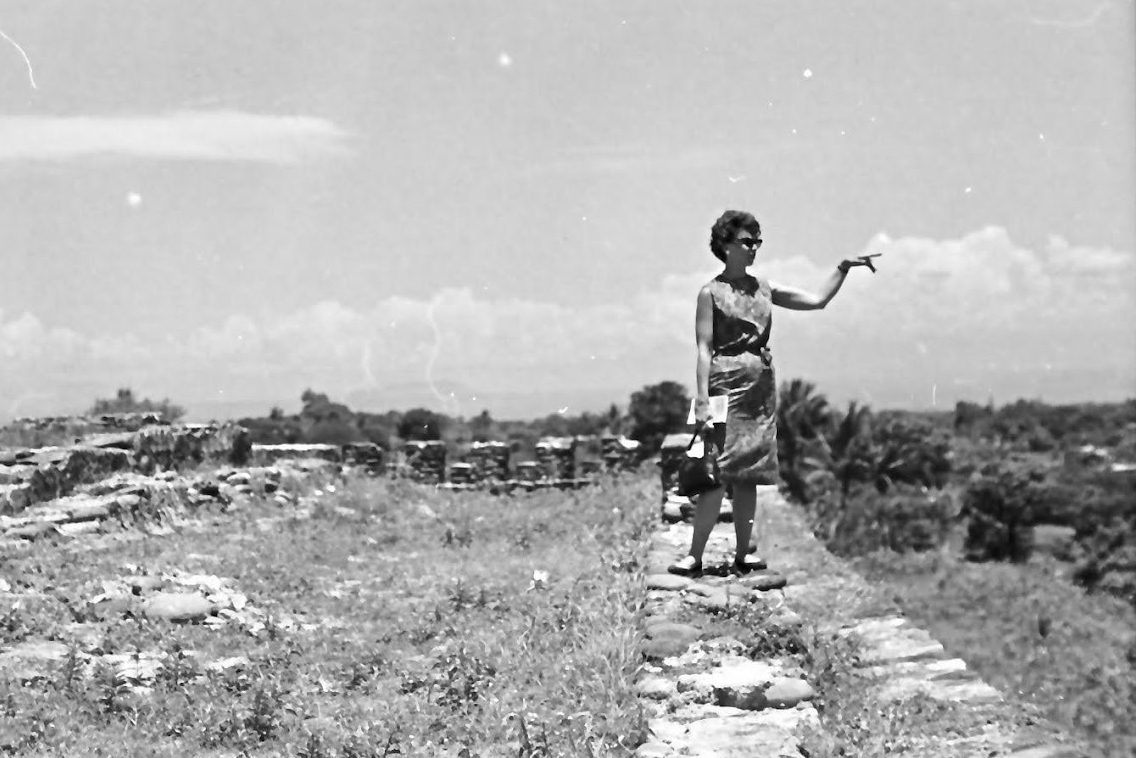
Dr. Ashmead visited many archaeological sites in Greece and elsewhere.
Some of her colleagues lovingly called her “the cat lady.”
Dr. Ashmead often reassembled broken ancient objects for curators and created visual and oral presentations to augment her printed catalogs, articles, and books. “She was indefatigable,“ her family said in a tribute.
She shared her research at conferences, meetings, and exhibitions around the globe, and most recently collaborated with Ingrid M. Edlund-Berry, professor emerita at the University of Texas at Austin, on a project that scrutinized cats as shield devices on Greek vases.
“Ann was very modest, humble, and self-deprecating about her publications and academic achievements,” her family said. Her son Graham said: “She was a role model who inspired me with her curiosity on all subjects and issues, and a love of world travel, reading, and lifelong learning.”
Dr. Ashmead spoke English, Japanese, Greek, Chinese, French, Danish, and Italian.
Dr. Ashmead was active with the Archaeological Institute of America, and herresearch was published by the American Journal of Archaeology,the journal of the American School of Classical Studies at Athens, and other groups.
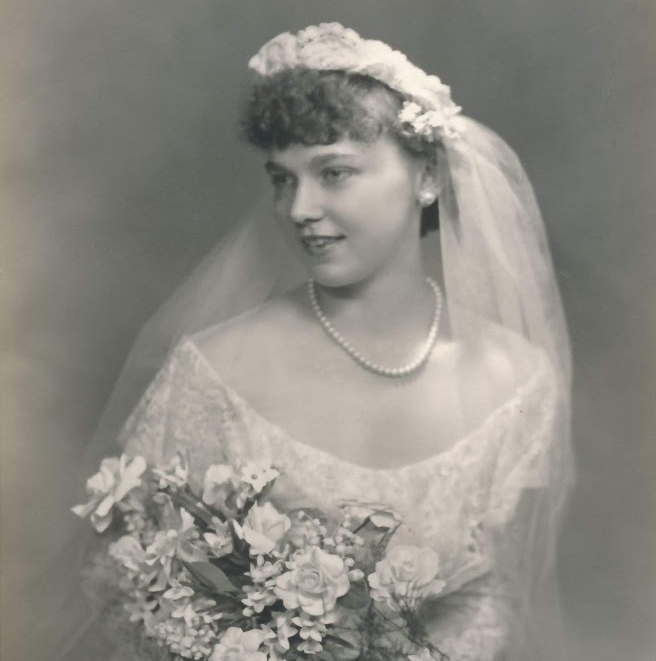
She married Haverford College English professor John Ashmead Jr. in 1949, and they spent the next two decades traveling the world while he completed Fulbright Scholar teaching assignments. They lived in Japan, Taiwan, and India, and later in Paris, Athens, and Florida.
She spoke English, Japanese, Greek, Chinese, French, Danish, and Italian. “Her learning never stopped,” her family said.
Ann Wheeler Harnwell was born Oct. 7, 1929, in Princeton, N.J. Her family moved to Wynnewood in 1938 after her father, Gaylord P. Harnwell, became chair of the physics department at the University of Pennsylvania. He became president of Penn in 1953.
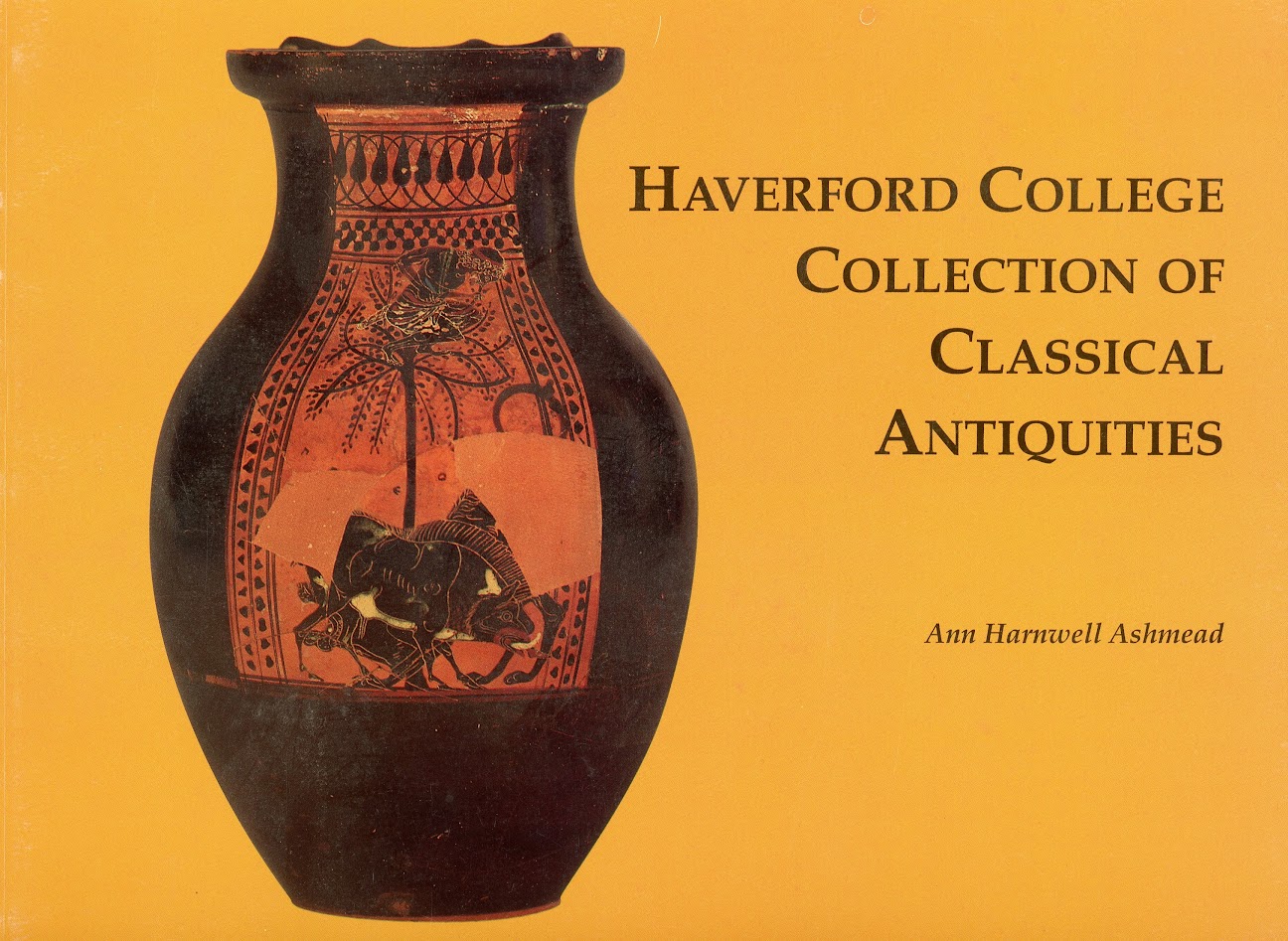
Dr. Ashmead had many articles, catalogs, and books published over her long career.
She graduated from Lower Merion High School in 1947 after spending the previous three years with her family in California. She earned bachelor’s and master’s degrees and a doctorate in classical archaeology at Bryn Mawr, and her 1959 doctoral thesis was titled: “A Study of the Style of the Cup Painter Onesimos.”
On page 2, she wrote: “Such attributions of vases to an artist are a delicate business, the outcome of a long and intricate process of observation and analysis, often of tentative nature.”
She and her husband had sons John III, Graham, and Gaylord, and daughters Louisa and Theodora. They divorced in 1976 but remained close friends until he died in 1992.
Having grown up during the stock market crisis in the 1930s, Dr. Ashmead followed the market closely as an adult, and was thrifty and frugal, her family said.
Dr. Ashmead married English professor John Ashmead Jr. in 1949.
She was an avid letter writer and reader, and her personal library featured more than 5,000 books. She volunteered for years at Bryn Mawr’s old Owl Bookstore and especially enjoyed reading to her children and grandchildren.
She was on the board of the Haverford College Arboretum and a member of the Hardy Plant Society, the Henry Foundation for Botanical Research, and the Philadelphia Skating Club. She enjoyed dancing, organizing Easter egg hunts, and hosting birthday parties and family events.
A fashionista in the 1960s and ’70s, she was adept at needle crafting, quilting, and sewing. She bred cats, painted, collected antiques, and researched her genealogy.
She always made time for family no matter where in the world they were, and they said: “She was concerned if she was ever separated from a child and distraught if they were distraught.”
Dr. Ashmead (front left) always made time for her family.
She lived in Denmark for a few years and finally settled for good in Haverford in 1983. “She was interesting, smart, capable, strong, articulate, and fun to be around,” her daughter Theodora said. “She was solution-oriented. She sparkled.”
In addition to her children, Dr. Ashmead is survived by six grandchildren, a sister, and other relatives. A brother died earlier.
She requested that no services be held and donated her body to the Humanity Gifts Registry through Penn’s Perelman School of Medicine.
Donations in her name may be made to the Haverford College Arboretum, 370 Lancaster Ave., Haverford, Pa. 19041.
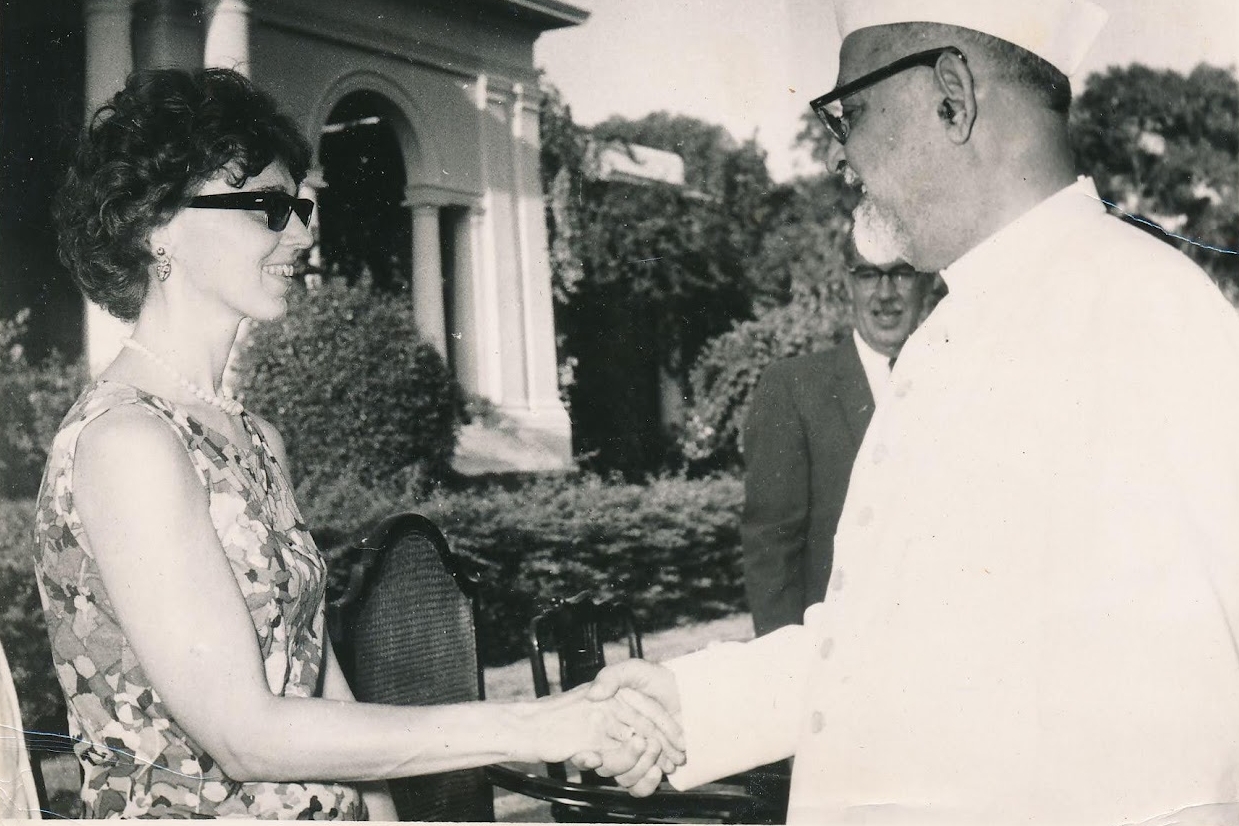
Dr. Ashmead (left) met many dignitaries during her worldwide travels.
Have you been looking longingly at your fishing gear during the Philadelphia winter? Are Deadliest Catch reruns not hitting the same?
With the surface of the Schuylkill River still frozen solid and frigid temperatures returning this weekend, a reader asked through Curious Philly, The Inquirer’s outlet for answering questions, whether they were allowed to ice fish on it.
Ice fishing, after all, is a practice that began with subarctic Indigenous peoples thousands of years ago, well before the advent of the modern fishing rod in the late 1700s. Fishing along the Schuylkill is accepted and celebrated in warmer temperatures, so what about its frozen cousin?
Unfortunately for those Philadelphians dreaming about an Arctic lifestyle, the answer is no.
“Ice fishing is illegal in Philly,” Philadelphia Police Department spokesperson Sgt. Eric Gripp saidby email. The practice is not explicitly outlawed, but walking out onto the ice in order to carve a hole and cast a line underneath violates city rules.
A pedestrian walks past a large pile of snow and ice along the Benjamin Franklin Parkway on Monday.
“You can’t walk, swim, or be in/on the waterway — unless in a vessel — regardless as to whether or not it’s frozen,” Gripp said.
Philadelphia police began spreading the message to not venture out onto the frozen Schuylkill this week, after local CBS News video captured several adults and children walking across it Sunday. The Police Department’s directive on code violation notices lists ice skating, skiing, and sledding in some areas of Fairmount Park as potential offenses.
Ice fishing could put you in violation of a few city ordinances, too. While you would likely be subject only to a summary offense and a $25 fine for each violation, police say you would be breaking rules about using areas managed by Parks and Recreation outside of their approved use, and risk violating the ban on “swimming” or wading out onto any Philadelphia creek, lake, river, or stream.
Even though the Schuylkill’s frozen surface may be several inches thick in certain locations, ice’s integrity can’t be judged based upon only how it looks, how fresh it is, or the temperature outdoors, according to the Pennsylvania Fish and Boat Commission. Ice’s strength is alsoinformed by several other factors, including the depth of the water underneath the ice, and nearby fish activity.
“Anyone that walks onto the Schuylkill River, … they’re taking their life into their own hands. It’s not a smart thing to do,” said commission spokesperson Mike Parker. Parker said the commission highly advises against walking on top of or fishing on the frozen surface of any moving body of water, like a river.
“There’s no such thing as safe ice,” in those cases, he said.
A fisherman sits in the sun outside a pop up shelter while ice fishing on frozen Lake Wentworth in Wolfeboro, N.H.
But ice fishing can be relatively safe on still bodies of water, like lakes and ponds. As general guidelines, the fish and boat commission advises that anglers fish only on those bodies of water when ice is at least five inches thick, and never to go out onto ice alone.
Shockingly, Delaware County has only one strip club, Lou Turk’s in Tinicum Township. Not shockingly, it bills itself as “historic” and a “Delco icon.”
Over on Yelp, reviewers call it a “hallowed hall,” “better than expected,” and “the Cheers of the female entertainment industry in the Philly area.”
Now, folks can call Lou Turk’s something else: the Carousel Delco, though the odds that they will actually call it that are exactly zero. It’s as likely as Philadelphians calling the Gallery the Fashion District or anyone saying Columbus Boulevard instead of Delaware Avenue.
A Delco institution for more than 50 years, Lou Turk’s announced it was rebranding via a statement on its social media pages last weekend, prompting comments like “April fools?” “Fake news?” and “This may go down as the biggest travesty to ever occur in Delco … and my god that’s saying something.”
Along with the new name, the club released what appears to be new signage, with the word “CAROUSEL” spelled out using silhouettes of nude women. The establishment also announced recent renovations, new amenities, menu enhancements, and new management. Yeah, new management that did not return my requests for an interview about why this was done.
I have no idea what would inspire someone to name a strip club “The Carousel Delco,” aside from the fact that both have poles. The club’s statement seems to explain why the new name was chosen, but it actually doesn’t. Classic Delco.
“We are still a Delco bar — always have been, always will be,” it reads. “That legacy is exactly why this name was chosen.”
Wait, did Delco bars all used to have carousels inside? If so, I definitely missed this county’s Belle Époque.
When I saw the news, my biggest fear was that one of Delco’s most storied traditions could be in jeopardy — the annual Mother’s Day and Easter flower sales outside of the strip club. It’s been the subject of countless memes and something I’ve used in stories as shorthand to explain Delco culture.
Luckily, whoever wrote the club’s statement anticipated that concern and immediately assuaged all fears:
“We look forward to many more awesome memes along the way … and we will still be selling flowers this Mother’s Day holiday.”
Whew! I mean you wouldn’t want to tell your mom you bought her flowers at the Acme, would you?
Trials and tribulations
The establishment was purchased in the mid-1960s by the late Louis Saddic, who was better known as Lou Turk, a name he picked up as a kid in South Philly, according to a 1983 Inquirer article.
Located in the Essington section of Tinicum, just off of Route 291, the club is situated in between an Irish pub and a Wawa, because of course it is. It’s so close to the Philadelphia International Airport you can see the underbellies of planes flying low overhead, which historically made Lou Turk’s a popular layover spot for travelers. Being near the shipyard didn’t hurt either.
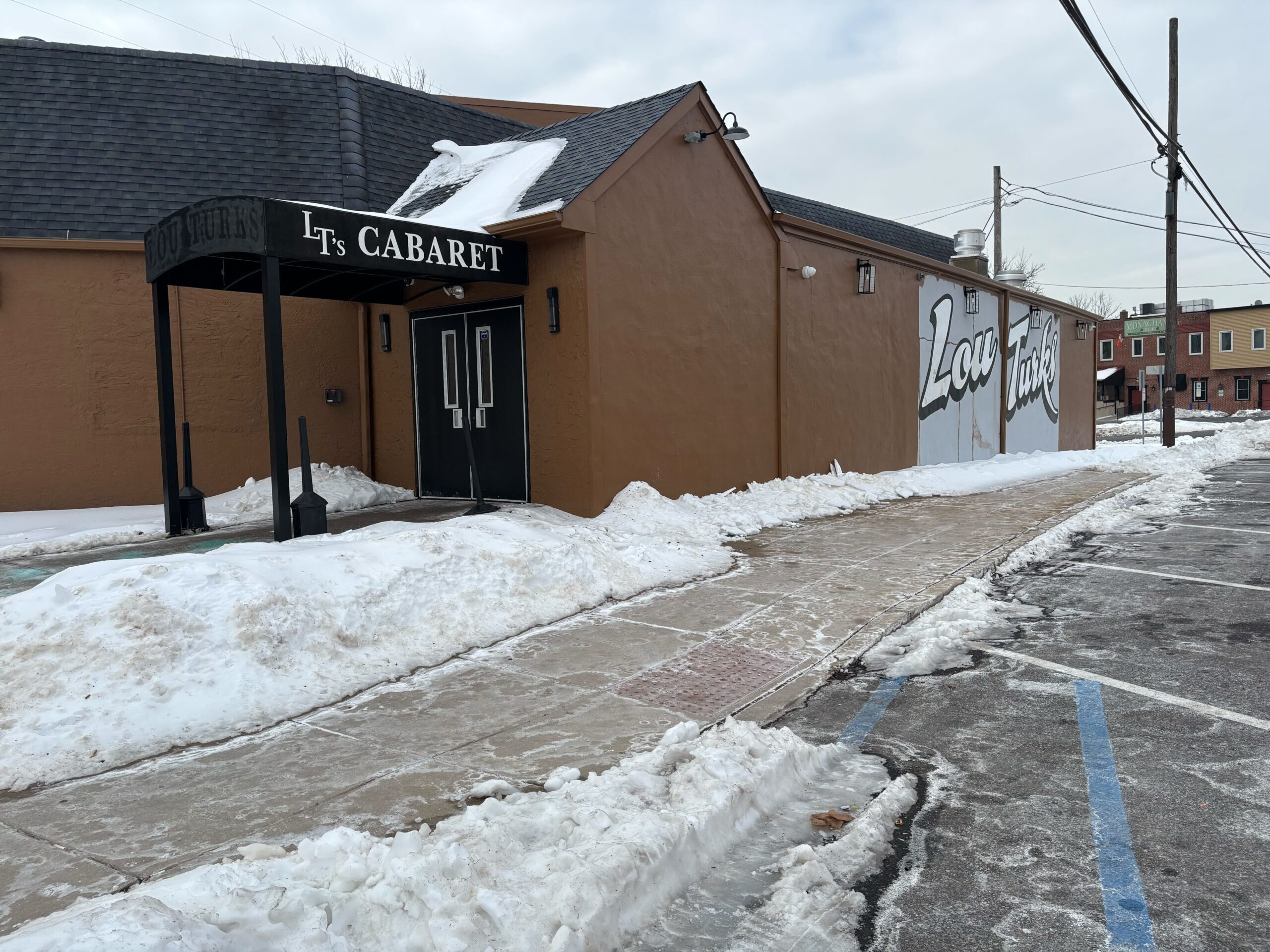
The building itself is a windowless parallelogram painted in a muddy brown, with LOU TURKS plastered in large white letters on a gray patch on the side and “LT’s Cabaret” written on the awning.
Lou Turk’s is at the intersection of Powahatan and Jansen Avenues in the Essington section of Tinicum Township.
It’s unclear if the business was always a strip club, but it definitely was by 1973, when it started to receive citations by the PLCB for “lewd, immoral or improper entertainment,” according to our archives.
In 1983, the club was raided twice, the second time by 55 police officers who confiscated a whopping total of $19 from dancers they claimed had sexual contact with patrons. Turk, who was subsequently hit with prostitution and racketeering charges, vehemently denied the claims, as did five dancers and five other employees arrested in the raid.
William J. Davies, then-deputy district attorney for Delaware County, said at the time of Lou Turk’s: “It won’t reopen” and “We are not going to tolerate this sort of thing out in Delaware County.” Boy, was he off base.
The following year at trial one dancer testified she would “haul off and slug” any patron who tried to get handsy, which tracks for Delco. Investigators who testified used marshmallows and hand puppets to describe what they allegedly witnessed in the club, a Daily News report said.
Turk was represented at trial by the late high-profile attorney A. Charles Peruto Sr., who at one point, while questioning a PLCB agent’s testimony about interactions between a dancer and a patron, “assumed the dancer’s squatting position in front of the jury box and questioned the agent about the physical possibility of the act he had described,” according to an Inquirer article.
It’s unclear if the jurors threw Peruto tips, but what is becoming clear is how the club got its storied reputation in the annals of Delco history.
Turk’s case ended in a mistrial because prosecutors didn’t supply his attorney with the necessary discovery material before the case went to court. You can’t hide anything when prosecuting a strip club.
In 1990, a judge ordered the club to close for a year, after it had racked up a dozen citations between 1975 and 1990, “the longest history of state liquor code violations in the Philadelphia area for lewd entertainment,” The Inquirer wrote at the time.
During the shutdown, the bar operated a sandwich shop with a walk-up window for a few months, but it didn’t cut the mustard.
Lou Turk’s reopened on July 1, 1991, and The Inquirer was surprisingly there on opening day to see a dancer named Gail with palm tree pasties perform to the dulcet tones of ’80s glam metal band Ratt.
The establishment hasn’t made headlines since, according to our archives, aside from a report by unnamed sources that Ryan Howard visited the club in 2008, and several passing references to it in stories about Delco culture by yours truly.
‘Holy mackerel!’
I’m not sure when I first became aware of Lou Turk’s. As a nearly two-decade transplant, it’s the stuff of legends that’s always been here and I’ve always heard talked about, like Wawa or the Lower Swedish Cabin.
Whenever someone asks for a suggestion for the best place to eat or visit on the Delco subreddit or on a local Facebook page, someone inevitably suggests Lou Turk’s, tongue-in-cheek, like they do Woody’s in Philly.
“I think I even got a Lou Turks answer to me asking about vets in the area for my cat lol I died,” one Redditor posted.
“Did the cat survive?” another asked.
“Yeah he got a lap dance and started feeling better.”
Several reviewers on Yelp attest that the club’s food is pretty good. Even Jim Pappas, who’s gained local notoriety for trying and cataloging more than 1,100 cheesesteaks in the tristate area on his Philadelphia Cheesesteak Adventure website and YouTube channel, gave the food a thumbs-up.
“Holy mackerel! Who knew Lou Turk’s would have great food?” he says in his review.
One Yelp reviewer in 2011 even used a cheesesteak analogy to describe the place.
“As far as quality of performers go, think of this place as a cheesesteak shop in comparison to LeBec Fin; you can get a very satisfying quality meal, but it’s not exactly something you’d be bragging about to everyone you meet,” they wrote.
Uncle Lou’s
Changing the name of anything is hard, especially around here, where change is as welcome as the Dallas Cowboys.
But it may be particularly difficult for Lou Turk’s, which is so ingrained in local culture some folks call it Uncle Lou’s.
That’s the great thing about Delco. It doesn’t have famous tourist sites like Longwood Gardens or King of Prussia Mall, but what it has it owns to the bone, including its lone strip club.