Category: Life

  • A couple bought a house on a quiet street. Then they found a swastika in the basement.

    A couple bought a house on a quiet street. Then they found a swastika in the basement.

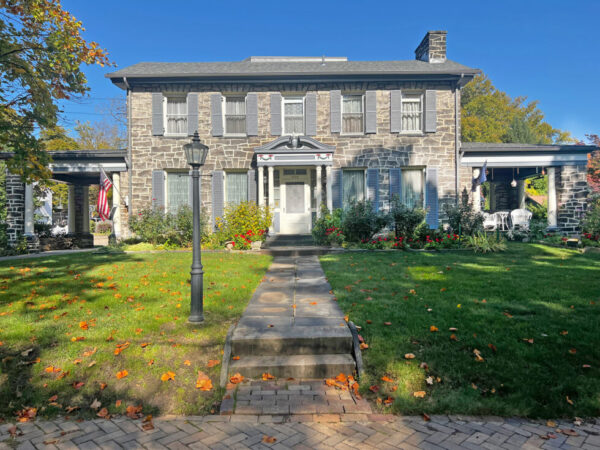
    The property listing in Beaver, Pa., extolled the countless charms of the Colonial Revival. There was the “grand foyer with a handmade railing,” the built-in cabinets and “beautiful” hardwood floors, and the covered porch offering “stunning” views of the nearby Ohio River.

    “This home adorns many wonderful features,” the listing read, “and outstanding details throughout.”

    One detail, however, was notably absent from the listing: the sizable swastika arranged in permanent tile on the basement floor.

    That omission has become the source of an unusual legal battle, a disturbing discovery that has weaved its way through the state court system and raised questions — legal and otherwise — about what represents a “material defect” in a property.

    “I certainly have not seen [this] particular fact-pattern come up before,” said Hank Lerner, chief legal officer for the Pennsylvania Association of Realtors. “It’s a pretty specific one.”

    When Daniel and Lynn Rae Wentworth closed on the five-bedroom home in 2023, for around $550,000, it was easy to see the draw. Anchored on a spacious lot, just a block from the river, the home was idyllic by just about any measure.

    But shortly after moving in, the Wentworths were clearing out the basement when they discovered the grim iconography in tile — a swastika, along with, what appeared to the couple, to be an image of a Nazi eagle. (According to the Wentworths, the tiled images had been covered by rugs during the inspection of the home.)
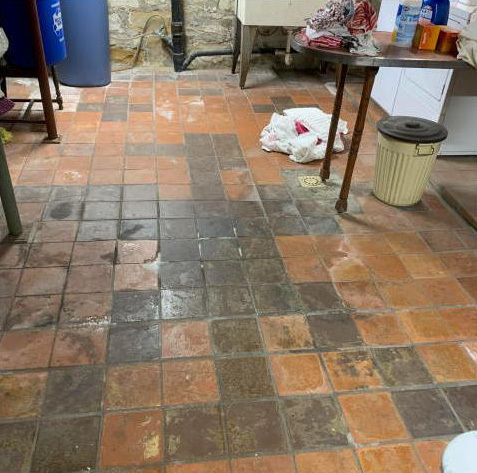
    After Daniel and Lynn Rae Wentworth purchased a home in Beaver, Pa., they discovered in the basement floor what they believed to be a tiled image of a Nazi eagle (pictured above) and a swastika.

    “Mortified,” as they would later say, the Wentworths filed a complaint in Beaver County civil court, alleging the previous owner had violated the Pennsylvania Real Estate Seller Disclosure Law, and seeking monetary damages.

    The Wentworths argued they would never have bought the home had they known about the tiled floor. Nor, they said, could they be expected to live in the home — or sell it — given its condition. In their complaint, the couple estimated it would cost roughly $30,000 to replace the floor.

    “This … is just not something you’d ever expect to have to deal with,” said Daniel Stoner, an attorney for the Wentworths.

    “They could have actual economic harm from the potential reputational damage if people thought they put it in themselves or were aware of it.”

    The seller — an 85-year-old German immigrant who’d owned the home for nearly a half-century — did not share this view.

    In response to the Wentworths’ suit, Albert A. Torrence, an attorney for the seller, argued in a court filing that “purely psychological stigmas do not constitute material defects of property … and a seller has no duty to disclose them.”

    What’s more, he argued, the Wentworths had failed to identify any untruthful or inaccurate statements he’d made regarding the property.

    In an interview, Torrence denied that the home’s previous owner was a Nazi supporter. Forty years ago, he said, the previous owner had been reading a book about the swastika symbol being co-opted by Germany’s Nazi Party; angry, he decided to include the symbol in a basement renovation project, placed a rug over it not long after, and forgot about it.

    “And, of course, it fits into the narrative, ‘A Nazi lived in this house,’” said Torrence. “It’s just not the narrative that people want it to be.”

    Regardless, the case raised an interesting question: When it comes to property sales, what, exactly, does rise to the level of a material defect worthy of disclosure?

    Pennsylvania law requires sellers to disclose a laundry list of potential problems with a home — termites, structural or heating problems, sewage issues. “[Any] problem with a residential real property or any portion of it that would have a significant adverse impact on the value of the property or that involves an unreasonable risk to people on the property.”

    Absent from that list? Hate symbols that had been permanently embedded.

    In court filings, the previous owner cited an earlier case that had advanced all the way to the Pennsylvania Supreme Court.

    In 2007, after a California resident purchased a Delaware County home, she learned from a neighbor that the property had been the site of a grisly — and highly publicized — murder-suicide. The new owner, Janet S. Milliken, sued.

    In that case, the state’s Supreme Court ruled that the home’s unfortunate history did not represent a material defect, adding that it would be impossible to quantify the psychological impact of various events that might have occurred on a given property.

    “Does a bloodless death by poisoning or overdose create a less significant ‘defect’ than a bloody one from a stabbing or shooting?” the court wrote. “How would one treat other violent crimes such as rape, assault, home invasion, or child abuse? What if the killings were elsewhere, but the sadistic serial killer lived there? What if satanic rituals were performed in the house?”

    Leaning heavily upon the Supreme Court’s decision in the Milliken case, the Beaver County trial court dismissed the Wentworths’ complaint.

    Unsatisfied with the ruling, the Wentworths appealed.

    In a decision filed late last year, three Superior Court judges affirmed the initial ruling that the tiled imagery was not required to be disclosed in accordance with the state’s disclosure law.

    “A basement that floods, a roof that leaks, beams that were damaged by termites … these are the conditions our legislature requires sellers to disclose if they are known,” the judges wrote in an 18-page ruling filed Nov. 12.

    “We are not dismissive of the Wentworths’ outrage, nor their concern that the existence of the images could taint them as Nazi supporters,” the decision went on. “With this lawsuit, however, they have made a public record to counter any supposition in that regard.”

    Though the couple could’ve appealed to the Pennsylvania Supreme Court, Stoner, their attorney, said this week that they had decided against doing so, citing the low likelihood that the case would’ve been heard by the court.

    “I’ve only had one case in my entire career that they’ve actually taken up,” Stoner said. “So the chances of them even getting it heard weren’t the greatest.”

    As for the home, Lynn Rae Wentworth told the Pittsburgh Jewish Chronicle recently that she and her husband planned to remove the tiling once they were sure the legal wrangling had concluded.

    She said they were also considering approaching local legislators in hopes of changing the law, making hate symbols material defects that necessitated disclosure.

    As she told the publication, “I don’t want anyone to have to go through this again.”

  • A ‘significant’ portion of the Schuylkill is frozen. Don’t do anything stupid.

    A ‘significant’ portion of the Schuylkill is frozen. Don’t do anything stupid.

    It should go without saying, perhaps, but city officials this week are saying it anyway:

    Just because temperatures have dipped into the teens (or lower) in recent days, doesn’t mean it’s safe to walk, skate, or drive across the area’s frozen lakes, rivers, and waterways.

    “We’re getting reports of people walking and ice skating on Philadelphia’s rivers,” the Philadelphia Police Department said in a post to X on Sunday. “This is illegal for a reason. River ice is not as thick as it looks — moving water underneath weakens it and conditions can change fast. Please stay safe and stay off the ice!”

    Though the Philadelphia Police said Monday there had been no rescues at this point, the department has fielded more than a dozen calls already, according to Capt. Anthony LaSalle of the city’s police Marine Unit.

    LaSalle said a “significant” portion of the Schuylkill was currently frozen over, something that hasn’t happened in a decade.

    “In some areas, it could be thicker than other areas, and you’ve got to realize that water is flowing underneath it,” LaSalle said. “You can have six inches in some areas and one inch in another area. And if there’s debris, that makes the ice even weaker.”

    It’s a sentiment echoed by City Hall, which this week also urged residents to stay off all frozen waterways for the safety of both themselves and first responders.

    “Police and medical staff have been advising residents and visitors to stay off all frozen rivers, lakes and waterways,” a city spokesperson said in an email. “Ice conditions are unpredictable, and walking, skating, or driving on frozen surfaces is extremely dangerous.

    “Falling through ice can become fatal within minutes and places both the public and first responders at serious risk. For everyone’s safety, the City is asking everyone to stay on solid ground and avoid all frozen waterways.”

  • Dear Abby | Couple still maintain two homes after years together

    DEAR ABBY: I am a widow who has been dating a widower for the past eight years. He’s a wonderful man and the love of my life. We both have children, so we have been extremely careful not to cause them any distress with our relationship, and we have kept our home lives pretty separate.

    At first, I thought that when the kids graduated from high school, we would maybe change our living situation, but now with all of our kids in college, the kids are going back and forth. One has moved home with me, so a change still doesn’t seem appropriate.

    However, even when the kids are all out of college and living on their own, I’m still not sure I want to move into his house. It’s an amazing home in a wonderful town with lots of room for me, but it was built with his deceased wife, and all of her things and decorations permeate the place.

    I just don’t feel I could ever make it my home, as it was their family home from the time they were married and where they raised their daughter. Moving into my house is not an option because it is small, and I don’t think he would want to do that.

    I thought we could possibly sell both places and buy something together, but, again, his house is such an amazing place that I doubt we could find anything comparable. What should I do?

    — MAKING A CHANGE, OR NOT

    DEAR MAKING: I think it is time you and your longtime partner have a serious, honest conversation about what your options are after all the children are finally independent. Express that as beautiful as his home is, you have qualms because it was the home in which he and his late wife raised a family. Tell him you fear any changes would be resented, and the house you live in is just too small. Then listen to what he has to say.

    ** ** **

    DEAR ABBY: I recently became aware that someone I know through various community groups is married to a man who is on the local sex offender list (involving a child under 13). This information was confirmed by another community group member as we needed to see how it would affect his volunteer status and our location near a school.

    I don’t know how to respond to this information. The man is pleasant and friendly. If I had not known this information, I would have suggested he and his wife get together with my husband and other friends. There are no children in my household, so no one would be endangered by his presence.

    Should this information about his sex offender status change how I see or respect him? Neither he nor his wife know that I know, and I don’t plan to tell them or anyone else. What are my responsibilities if I see him around children?

    — ON ALERT IN MICHIGAN

    DEAR ON ALERT: Whether or not to see or respect this person is a decision only you can make. No one can do that for you. However, if you see a sex offender in the presence of minor children, you are morally and ethically bound to report it.

  • Dear Abby | Mother feels left out of family gatherings

    DEAR ABBY: My daughter-in-law, “Louise,” died of cancer five years ago. She was 45; my son, “Pete,” was 48. They’d been married for 15 years and had no children.

    Three years ago, Pete met “Shelly” through a mutual friend, and they were immediately attracted to each other. Within a year, they were living together and seem very happy. Shelly has two grown children and three grandchildren. Her mother is also in the picture. I have met her a few times, and she was very pleasant.

    What bothers me is that Pete’s “new family” doesn’t include me. They’re aware that I’m on social media and can see all the photos they post — doing things with the kids and their great-grandma — which is lovely. I’d just like to be included once in a while.

    This past weekend, I saw another post of all of them, with photos captioned: “Enjoying a leisurely brunch with the whole family.” I was stunned when I realized they were in a cafe that is literally across the street from my apartment, but I wasn’t asked to join them. I won’t bring it up because I’m afraid I’ll be seen as a whiny, insecure old lady. But still, it felt like a deliberate snub.

    I have kept a low profile and tried not to be “that” relative who always finds things to meddle in or gripe about. Is there a way to express my feelings without a “poor pitiful me” attitude?

    — SNUBBED IN ILLINOIS

    DEAR SNUBBED: It is possible that the dominant person in your son’s household is his lady friend, and she arranges their activities. Talk to your son. Ask if you might have said or done something that has put Shelly off, which is why you have been sidelined. And then, instead of waiting to be asked, start doing some of the inviting yourself. (Be sure to include Shelly’s mother when you do.)

    ** ** **

    DEAR ABBY: I’m stuck with an alcoholic husband. I do love him, but it’s complicated. I don’t have any family. My mom is 96, and I would never burden her with my problems. His family is in denial or whatever you call it. I have only my disability check, which isn’t much. I can’t find part-time work because of my age (I am 63). When my husband drinks, he becomes impossible to be around, packs up his stuff and leaves, and then demands that I apologize for his mistakes. I’m trapped. What can I do?

    — PRISONER IN TEXAS

    DEAR PRISONER: Go online and search for the location of the nearest Al-Anon meeting (al-anon.org/info). Al-Anon is an offshoot of AA. There are many meetings, so it shouldn’t be too hard to find one near you. These meetings are free; they do not charge. Once there, start listening and share what you are going through. If you do, you may learn methods for coping with your alcoholic husband. You may think you are alone right now, but you will soon realize you are far from it.

  • Dear Abby | Wife discovers abusive husband is planning to go

    DEAR ABBY: My husband and I have been married for 15 years. He is former military, suffers from PTSD, and has been verbally abusive and controlling since our wedding. I have always worked to support us, sometimes with two jobs. We have a 14-year-old son.

    My husband has a sister who bought a house. I picked up items for her new home and looked at his phone to double-check the address. Among the recent messages my husband had sent to her was one in which he told her he was in hell living with me and he didn’t give a damn about me. He also asked his sister if he could move in with her! (She was fine with that.) He said he would figure a way out, and that there was always a way out.

    I am beyond devastated. I have always been supportive of him; now this. Part of me says I should be relieved. Why does it hurt so much?

    — SHOCKED IN TEXAS

    DEAR SHOCKED: This “hurts so much” because you were caught flat-footed, without a clue that your husband is planning on leaving you. Be GLAD you know, because you haven’t a moment to waste. Schedule an appointment with an attorney who can help you protect yourself from the financial assault that’s coming. If there are assets in the marriage, find out exactly what they are and take your cues from your lawyer. I am rooting for you.

    ** ** **

    DEAR ABBY: As a single parent with two children, ages 9 and 10, I am in a challenging situation. I have been diagnosed with pulmonary arterial hypertension, a serious heart-lung illness that progressively worsens. Although I am classified as physically disabled, advancements in new medications have significantly improved my condition compared to when my children were younger.

    My mother helps me with cleaning my apartment each week, and I truly appreciate and often need her support. She holds a key to my home for emergencies. However, during her visits when we are out, she has removed items from my apartment without my consent. When I have mentioned this to her, she has manipulated my feelings and denied any wrongdoing, despite being caught in the act several times. Am I wrong for being angry about this?

    — VIOLATED IN OREGON

    DEAR VIOLATED: You are right for feeling your trust has been violated. It has been. Your mother’s gaslighting you about it is shameful. If there is an alternative to your mother helping with the housekeeping, please consider availing yourself of it. Contact your state department of social services (as well as your doctor) to find out if there are programs to help you with maintaining your household. If that is not possible, you will have to lock up any items of value you don’t want to go missing because of your light-fingered, entitled mother.

  • Dear Abby | Old flame is caught up in a scam she thinks is real

    DEAR ABBY: Six years ago, at my 40th high school reunion, a few former classmates asked me about my old high school sweetheart. (We broke up after high school.) I decided to find her and located her on Facebook. To my surprise, she never married. I told her I am married. We became friends again, but from 3,000 miles away.

    For a few years, it was a nice friendship. We shared old stories, and I helped her out with financial stuff and gave her some emotional support. Recently, she told me she has a long-distance relationship with an “oil rig offshore worker.” I asked her to tell me more about him, and it all points to a scam artist. I recognized all the signs and tried to warn her.

    She insists he’s real, it’s true love and they are getting married. (They have never met in person.) Then I got an email from her with some nasty words about my comments. I told her I care for her safety and that the man she’s corresponding with is NOT real — it’s a romance scam.

    I no longer hear from her. I still care about her even though it’s not a high school romance anymore. What should I do?

    — SWEETHEART IN CALIFORNIA

    DEAR SWEETHEART: Unfortunately, romance scams like the one you have described are common. The scammer claims to be on an oil rig or in a war zone (but rotating home soon) or is otherwise unreachable in person. He may also have a motherless child he is not parenting on a daily basis because his wife is “dead” and the kid is in “boarding school,” so the target would not be responsible for child-rearing. (How convenient!)

    Predictably, an “emergency” arises, and the scammer asks the target to fork over hundreds, or perhaps thousands, of dollars “for a short time only.” After the money is sent, poof! The scammer is gone, and the romance is over.

    My advice to you is not to be surprised to hear from her once the con has come to its conclusion.

    ** ** **

    DEAR ABBY: My husband and I are in our 60s. When we are at home, just the two of us, he likes to wear just his underwear around the house, whether it’s watching TV or eating dinner. I have accepted it all these years and never made an issue of it.

    When our granddaughter visited us at the age of 1, he wore shorts at my request but no shirt. She’s now coming to stay with us at age 2 1/2. Don’t you think he should wear a shirt and shorts when she visits? He values your opinion.

    — MR. INFORMAL’S WIFE

    DEAR WIFE: Since your husband values my opinion, please tell him I said that unless it’s 95 degrees when your granddaughter visits, the appropriate thing to do would be to wear shorts AND A SHIRT during your grandchild’s visit.

  • How to have a Perfect Philly Day, according to Provenance chef Nicholas Bazik

    How to have a Perfect Philly Day, according to Provenance chef Nicholas Bazik

    What’s changed for chef Nicholas Bazik in the weeks since his Society Hill restaurant, Provenance, earned a coveted star from the Michelin Guide?

    Everything.

    And nothing.

    “There’s this strange duality to it,” says Bazik. “It’s like a complete life-changing event. … But at the same time, the day-to-day is exactly the same. It’s just a little more amplified and there’s more things to do.”

    Bazik’s Provenance was one of three local restaurants to be awarded a Michelin star in November, and already, the accolade has brought lots of things: National acclaim, a rush on reservations, and a plaque (yet to be delivered) that will be displayed inside the restaurant, which opened in 2024.

    Then there’s the pressure that comes with earning the culinary world’s highest honor.

    “The restaurant industry in and of itself is unique, because at every step, every milestone that you get, it just means that there’s more work to do — and more pressure,” Bazik says. “Having a Michelin star means that everyone coming through the door is seeing you as that thing, so there’s no time to let [up].”

    The one exception might be Sundays, when the restaurant is closed and Bazik can finally take a breath. It’s a day that, for him, revolves almost entirely around family — though food, not surprisingly, also plays a supporting role.

    This interview has been lightly edited for clarity.

    7:30 a.m.

    I normally wake up around 7:30, which is around the time my 4-year-old son wakes up.

    In my previous job, prior to me going on paternity leave, the owner gave me a gift certificate to a coffee company, saying, “You should get yourself an espresso machine because you’re going to need it.” That was one of the best, most thoughtful gifts I’ve received from an employer. It’s a Jura espresso/coffee machine, and I use that everyday.

    Then we’re going to Sulimay’s. It’s as close to a perfect diner as it gets. The food is great, the service is great, the space is unique to Philadelphia. Any breakfast spot, I always get the same thing which is two eggs over easy, bacon, hash browns, and rye toast.

    10 a.m.

    I’ll spend some time at the farmers market at Headhouse Square, which is largely how I like to shape my menus and figure out exactly what’s seasonal, what’s on offer, what’s relevant, what’s good. My family’s with me, and I’ll do shopping there for the restaurant and I’ll also do some shopping for home.

    My son and my wife will go to Three Bears Park, which is around the corner from us, and I’ll go meet up with them there, and we’ll play and then go back home for a light lunch with some of the things that we got at the market.

    1 p.m.

    After lunch, we’ll go to Adventure Aquarium in Camden. My son is just obsessed with everything aquatic. He has an encyclopedic knowledge of sharks and fish and whales. We love going there — it doesn’t matter if we’re looking at the same fish every single time, he loves it. So we’ll go there for an hour, and make our next move, which is somewhere outdoors.

    2-4 p.m.

    Ideally, we’d make two stops. We’d go to Lemon Hill, which is where my wife and I got married, and then go to Wissahickon Park — so essentially try to spend the whole afternoon in a green space.

    To be able to travel from Center City and 15 minutes later be in a green, open space with trees and wildlife, it’s incredible.

    5 p.m.

    Because our son is 4 now, he has the full capability of selecting what he wants to eat for dinner, so we leave it up to him. And we essentially go to one of two places: Kim’s Restaurant in North Philly, which is the oldest charcoal grilled Korean barbecue spot. The other one is Mr. Joe’s restaurant, which is my son’s name for Picnic in Fishtown.

    For our purposes, Picnic is the perfect restaurant. It has chicken, french fries (my son’s favorite food group), oysters, and green salad. We get the same thing every single time, and we go enough that we should have a designated table.

    6 p.m.

    It’s time to go home and start the bedtime routine. We do shampoo time, and it’s the only time that my son watches any sort of TV. We’ll watch 20 or 30 minutes of something — normally a deep-sea documentary or a solar system documentary.

    Then from 9-10 p.m., my wife and I get to talk about what’s happening that week — what’s happening with him at school, what events are coming up that week, giving her a proper heads up on what’s happening at work, because everything happens so fast that it’s sometimes hard to keep up.

    And ideally, it’s in bed by 10 p.m., and then it’s start the week the next day.

  • Can I take a loose sled from the bottom of the hill?

    Can I take a loose sled from the bottom of the hill?

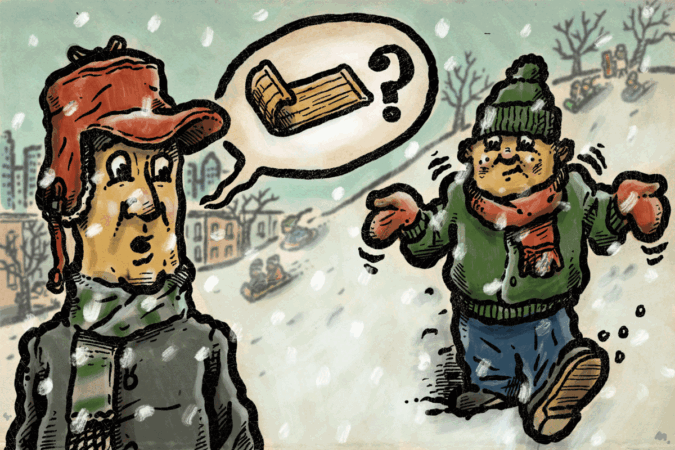
    I invited two other Inquirer fathers to discuss this submitted question, which is haunting the slight slopes of our region as the snow sticks around.

    Have a question of your own? Or an opinion? Email me.

    Evan Weiss, Deputy Features Editor

    OK, the question is…

    Every time we go sledding, my kids somehow inevitably lose a sled. And every time, there seem to be extra, unclaimed sleds lying around. Is taking one of those stealing (from a child!), or just part of the karmic redistribution of sleds?

    Mike Newall, Life & Culture Reporter

    Nark is a woodsman. He probably whittles sleds while eating tins of premade forest food.

    Jason Nark, Life & Culture Reporter

    Ha. When I think of sledding, as a child, it was rough business. No parents around. There were fights. Blood. Nothing worse than an older kid asking to “borrow” your sled.

    I sled at the same place for years, so I never would have thought of taking a sled.

    Mike Newall

    Same. I’m pretty sure the old wooden sled in my house growing up first appeared in It’s a Wonderful Life. Ancient. Wooden. Rusted. We did the garbage can lid thing too. We sled in an enclosed grassy area adjacent to a belt parkway off-ramp. No parents. Chaos.

    Jason Nark

    Later I moved to a golf-course community (I didn’t want to) that was also one of South Jersey’s biggest sledding destinations. There were lots of sleds left behind after a few days but most were broken.

    I don’t think I would have ever considered taking one, unless it was very nice… then I’d probably post it in a Facebook group to try to find the owner.

    Mike Newall

    I’m a city parent myself now. Every big storm, I inevitably wake up in a panic and think, “Oh no, we don’t have a sled. Where and how shall my boy sled?” So I run to five stores, buy the only sled available, rush him to some grassy lot with an incline, and push him down. Boom. My boy sleds. If the sled makes it home, it’s a bonus.

    Those sleds were left for a reason. Either the kid was crying and hated it. Or the parents left it. Either way, look at it like one of those free library stands, except for sleds.

    Evan Weiss

    But I can’t imagine taking one home. What if, as you’re walking away, a little kid yells, “Hey, that’s my sled!”

    Mike Newall

    I just mean, if there are a few clearly discarded sleds, then use away. Like if there’s an old ball at the playground. Use it!

    We live in a tiny rowhouse. Who wants a $14 plastic sled eating up valuable basement space? I’m not naturally wasteful. But no problem group-sharing sleds. Just use it and leave it.

    Evan Weiss

    So leave it? Don’t take it?

    Jason Nark

    I think so, yeah.

    Mike Newall

    Yeah, that would be plain-old sled-stealing.

    Evan Weiss

    Borrow for the hill, not for the home.

    Mike Newall

    (Unless, it’s a really nice sled that you just have to have. Kidding. Maybe.)

  • Philly fumbles the cleanup, Delco draws the line, and savesies return | Weekly Report Card

    Philly fumbles the cleanup, Delco draws the line, and savesies return | Weekly Report Card

    Dan McQuade, and the Philly he helped us see: A+

    This isn’t a typical report card item, and it shouldn’t be.

    This week made it impossible not to understand who Dan McQuade was — and how deeply he mattered to Philadelphia — just by reading what people shared about the journalist and Philadelphia superfan after he died of cancer this week at age 43.

    Colleagues, friends, editors, and readers kept circling the same truths: how funny he was, how kind he was, how precise his understanding of the city felt. Not in a forced or caricatured way, but in the way that comes from paying close attention, loving a place, and never taking it (or yourself) too seriously.

    Dan had a gift for finding meaning in the everyday. He treated Philly’s quirks, tics, and absurdities not as punchlines to exploit, but as things worth documenting, celebrating, and occasionally poking fun at with affection. He gave people permission to laugh at the city without laughing at it. That’s harder than it sounds.

    His impact was everywhere this week: in stories about Rocky runs and boardwalk T-shirts, in memories of long happy hours that turned into lifelong friendships, in anecdotes about him being the go-to fact-checker for all things Philly, in the way people described him as both brilliant and generous. A writer who made others better. A friend who showed up. A presence that made rooms, and timelines, lighter.

    The tributes weren’t performative or flowery. They were specific. Personal. Grounded. Which feels fitting. McQuade’s work was never about being loud or self-important. It was about noticing things, connecting dots, and reminding people that there’s joy, and humor, in paying attention to where you live.

    Philadelphia lost a journalist. But it also lost one of its clearest interpreters. Someone who understood that “Philadelphianness” isn’t a brand or a gimmick, but a way of moving through the world with skepticism, warmth, and a well-timed joke.

    An A+ doesn’t feel like enough. But it feels right to say this much: Philly is better for having had Dan McQuade in it. And it won’t quite be the same without him.

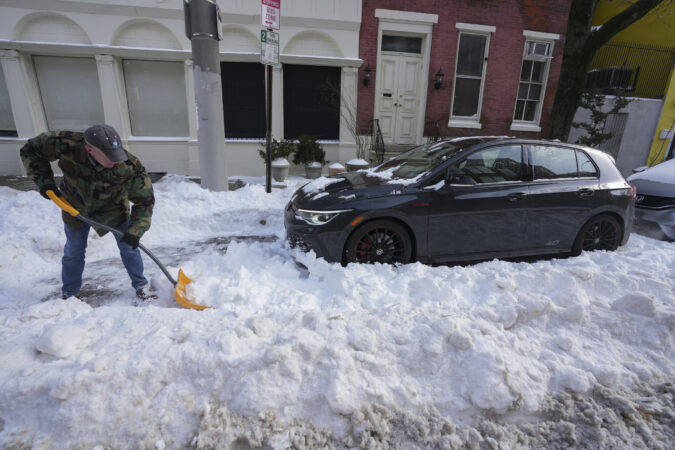
    A man shovels snow from underneath his car after it became hung up while trying to park in the middle of South Broad Street in the early morning hours of Jan. 28, 2026. Dump trucks filled with snow from the city’s snow removal operations were zooming by as he worked to get his car free.

    The snowstorm delivered. The plowing did not: F-

    Let’s be clear: The snow itself did what snow is supposed to do. Nine-plus inches, pretty at first, historic enough to brag about, disruptive enough to cancel plans and spark group-chat meteorology. Fine. That’s winter.

    What came after? That’s where everything fell apart.

    Days later, huge swaths of Philly side streets are still packed with snow and ice — the kind that traps cars, turns corners into slip-and-slide death traps, and makes even walking the dog feel like a trust exercise. Primary roads are mostly cleared. Secondary streets, maybe. Tertiary streets? You’re on your own.

    The city promised differently. Mayor Cherelle L. Parker stood in front of cameras before the storm and said every street would get attention “as long as it takes.” That message mattered because Philadelphians have heard this story before, and expectations were deliberately raised.

    Then reality hit.

    Plow data show roughly a quarter of city streets got no treatment at all after the storm ended. Not plowed. Not salted. Nothing. And the longer it sat, the worse it got — snow compacting into ice, intersections blocked by frozen berms, cars effectively entombed.

    This isn’t just an inconvenience. People with limited mobility are stuck. Workers can’t get out. Streets department explanations about sleet, freezing rain, and illegally parked cars may be true, but they don’t change the fact that many blocks are still uncleared a week later.

    This is the part where Philly frustration kicks in hardest: The storm wasn’t unprecedented, but the response feels familiar in the worst way. The expectation has long been “don’t count on a plow,” and this week did little to change that.

    New York tries to claim ‘Delco.’ Pennsylvania says absolutely not: A

    Every so often, something happens that instantly unites Delco. Snowstorms. Eagles runs. Wawa shortages. And now: a county in upstate New York attempting to brand itself as “Delco.”

    Absolutely not.

    Stephanie Farr laid out the case perfectly: Delco isn’t just shorthand for Delaware County. It’s a culture. A personality. A way of life built on hoagie trays, Catholic school rivalries, beach flags, and a shared, deeply ingrained chip on the shoulder.

    New York’s Delaware County is rural. Ours is suburban chaos packed into 184 square miles, powered by Wawa coffee, tailgating energy, and a pride so aggressive it gets tattooed on bodies and planted in Jersey Shore sand like a territorial marker.

    The funniest part isn’t that there’s another Delaware County (there are several). It’s that this one thought it could simply adopt the nickname, slap it on merch, and call it authenticity. That’s not how Delco works. Delco is earned.

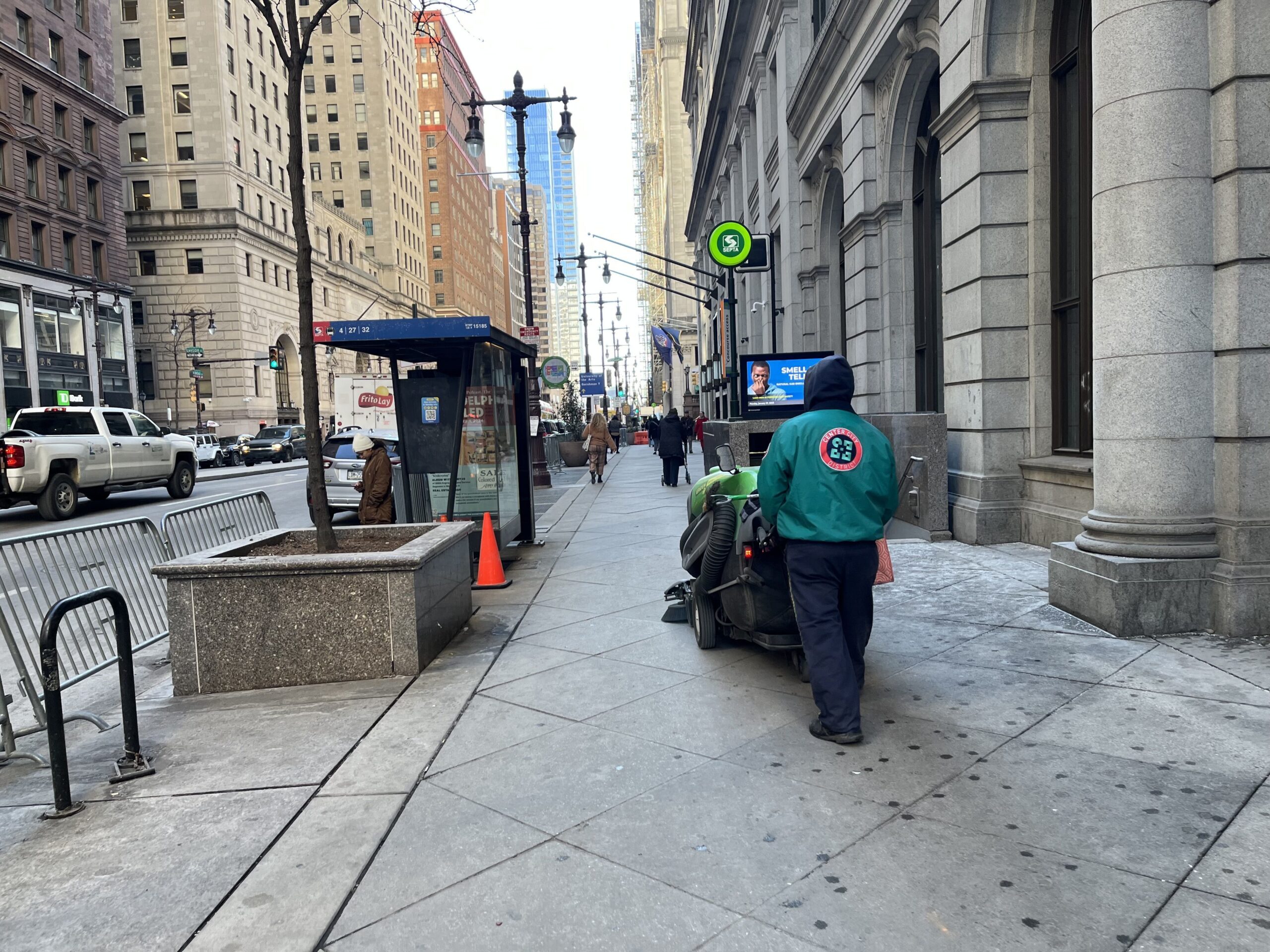
    A Center City District worker cleaning the sidewalk on Broad Street the morning after the Philadelphia Eagles won the NFC Championship.

    Center City West sidewalks are getting grimy (and it’s not your imagination): C

    For nearly a decade, a lot of Center City West quietly benefited from something most people never realized existed: a privately funded sidewalk cleaning program that swooped in after city trash pickup and handled the leftover mess.

    As the Fitler Focus reported, that program ended when the Center City Residents’ Association let its contract expire at the end of 2025. Not out of neglect, but necessity. The cost had ballooned to about 41% of CCRA’s projected 2026 budget, which is an unsustainable chunk for what was essentially backstopping city services.

    The result has been immediate and visible. Trash bags torn open overnight. Litter lingering days after pickup. Sidewalks that used to reset themselves now just… don’t. CCRA deserves credit for being upfront about the trade-off and pivoting toward enforcement, even if it won’t bring immediate results.

    The frustrating part is that the rules haven’t changed. Trash placement regulations exist. Containers are required. Enforcement is technically possible. But in reality, it’s complaint-driven, slow, and uneven. Meaning the difference between a clean block and a gross one often comes down to who has the time and energy to call 311 and wait on hold.

    Eagles linebacker Jaelan Phillips (left) and defensive end Brandon Graham during warm-ups before the Eagles play the Los Angeles Chargers on Dec. 8, 2025 at SoFi Stadium in Inglewood, Calif.

    Eagles fans agree on almost everything — except the part that actually hurts: B

    In this year’s Inquirer Stay or Go poll, Eagles fans were unusually aligned on who still feels like the future: young defensive studs, the offensive line pillars, the rookies who look like actual hits. Cooper DeJean and Quinyon Mitchell clearing 96% stay feels less like optimism and more like self-preservation. The message is clear: The defense isn’t the problem. Or at least, it’s not our problem.

    Where things get interesting is offense. Not because fans are confused, but because they’re suddenly colder. Jalen Hurts is still trusted, but not untouchable. A.J. Brown’s dip is real and telling: not rage, not rejection, just disappointment, Philly’s least favorite emotion. Fans didn’t turn on him. They just stopped defending him reflexively, which in this city is its own warning sign.

    And then there’s Brandon Graham, the emotional Rorschach test of the poll. A franchise legend. A locker room heartbeat. A guy people want to want back. The split vote says everything: respect battling reality. Philly loves its icons, but it hates lying to itself more.

    No one landed in the mushy middle. Fans know who they’re done with. They know who they’re attached to. There’s little patience left for “maybe.”

    This wasn’t a meltdown poll. It was a sorting exercise. And the conclusion fans keep circling is uncomfortable but consistent: The Eagles don’t need vibes. They need clarity — and probably a few hard goodbyes.

    The Inquirer mapped Philly’s dive bars (and proved how much the city loves them): A

    When The Inquirer put out a call for Philly’s favorite dive bars, the response was immediate and overwhelming. Nearly 400 submissions poured in, which tracks for a city where dive bars aren’t just places to drink. They’re personal landmarks.

    What the map really shows isn’t just where to grab a cheap beer. It’s how attached people are to the bars that feel like theirs. The ones tied to first jobs, postgame rituals, bad breakups, good Tuesdays, and nights that went exactly nowhere and somehow mattered anyway. These are rooms where nobody’s performing, the prices are low on purpose, and the atmosphere is set by regulars, not a concept.

    It also surfaced one of Philly’s most reliable debates: Is being called a dive bar a compliment or an insult? Some owners bristle at the label. Others embrace it. Many bars live in the gray area: cheap, unpretentious, deeply loved, and absolutely uninterested in how they’re categorized. Very Philly.

    Are there bars missing? Of course. There always will be. Philly has too many neighborhood institutions, and too many people willing to argue for them, for any list to feel definitive. But that’s not a failure of the map, it’s a feature of the city.

    This isn’t a checklist. It’s a snapshot of how much Philadelphians still value places that don’t try to be anything other than what they are.

    Snow savesies are back, and Philly is absolutely feral about it: C+

    Every major snowstorm in Philly brings back the same question we never resolve: If you shovel out a spot, is it yours, or is public parking still public? This week’s viral Reddit thread, sparked by a wooden chair left in a shoveled space with a handwritten threat (“Move these chairs & I will destroy your car. Try me.”), confirms we are once again incapable of calm thought.

    Some commenters were immediately in the respect the chair camp. One wrote, “After digging my s— out from snow past my knees I just want to one time come back to a spot,” while another argued, “Normally vehemently anti-savesies, but I feel like spending an hour digging out earns you a [savesie] or two.” This group is running on sore backs, wet boots, and pure principle.

    Then there’s the other side: the chaos agents. “I’d move the chair and watch someone else park there,” one commenter said, which feels less like civic engagement and more like performance art. Another proudly added, “I take peoples cones all the time when I’m walking around. F— em.” (This explains so much.)

    Somewhere in the middle were people admitting the quiet truth: Everyone dug out a spot. “The person who’s parked there dug out their car this morning, too,” one commenter noted, puncturing the idea that only one hero labored for the block.

    So where does that leave us? With a very Philly stalemate. The chair is obnoxious. The threat is unhinged. The labor is real. The fear of retaliation is realer.

  • He was ‘particular but not picky’ about a two-bedroom in Norris Square| How I Bought This House

    He was ‘particular but not picky’ about a two-bedroom in Norris Square| How I Bought This House

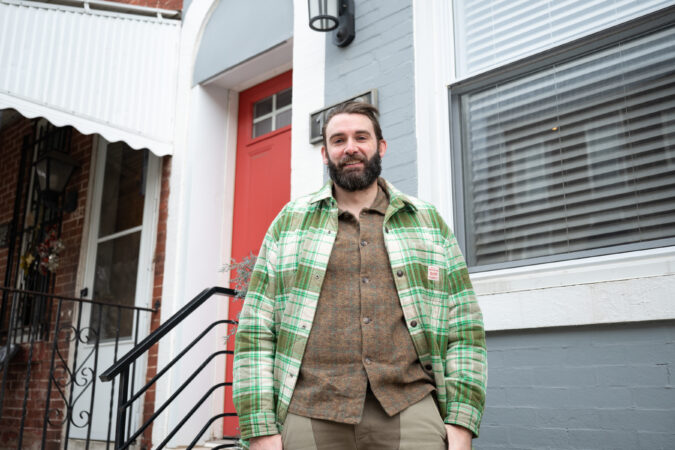
    The buyers: Evan Todtz, 35, urban designer

    The house: A 960-square-foot townhouse in Norris Square with two bedrooms and one bath, built in 1920.

    The price: Listed for $255,000; purchased for $255,000

    The agent: Kate McCann, Elfant Wissahickon

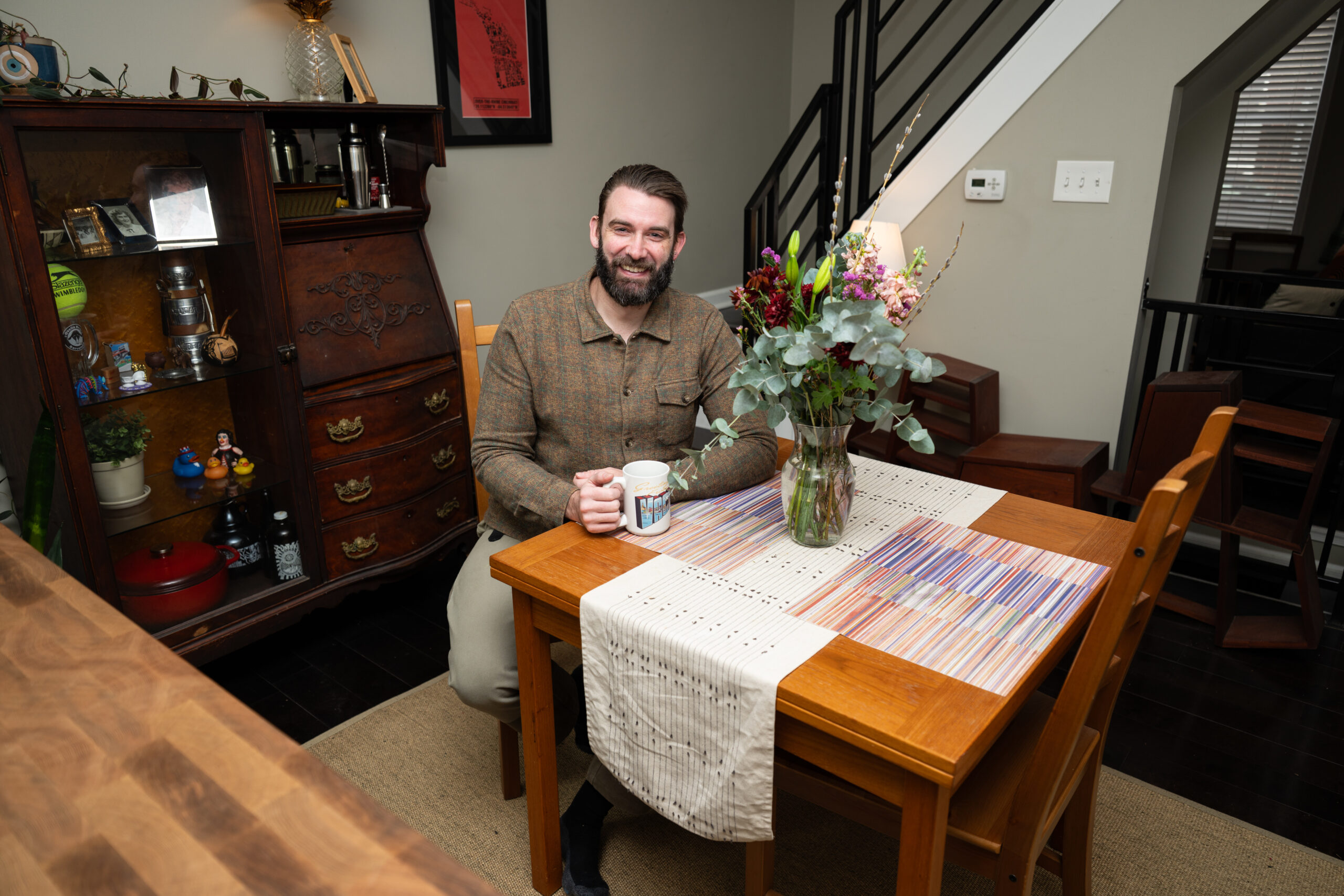
    Todtz saw potential in the house’s flexible floor plan.

    The ask: Evan Todtz was tired of commuting from Baltimore to Washington, D.C. He didn’t want to live in the latter, and he couldn’t find work in the former, so he considered the next-closest big city: Philadelphia.

    “I’ve always really loved Philly and wanted to spend more time in it,” Todtz said. When his company approved a transfer to its Philadelphia office, Todtz moved north and rented an apartment in Norris Square. A year later, he was ready to make it official. “I felt like I was getting into a groove in Philly,” he said, “and I wanted to invest in a place and make this my home.”

    Transit access was Todtz’s top priority. He frequently travels along the east corridor for work, so being close to the Market-Frankford line, which could take him directly to 30th Street Station in the “wee hours of the morning,” was a nonnegotiable. He wanted two bedrooms, enough space to host visitors, and an outdoor space. Everything else was flexible. “I’m particular, but I’m not picky,” he said.

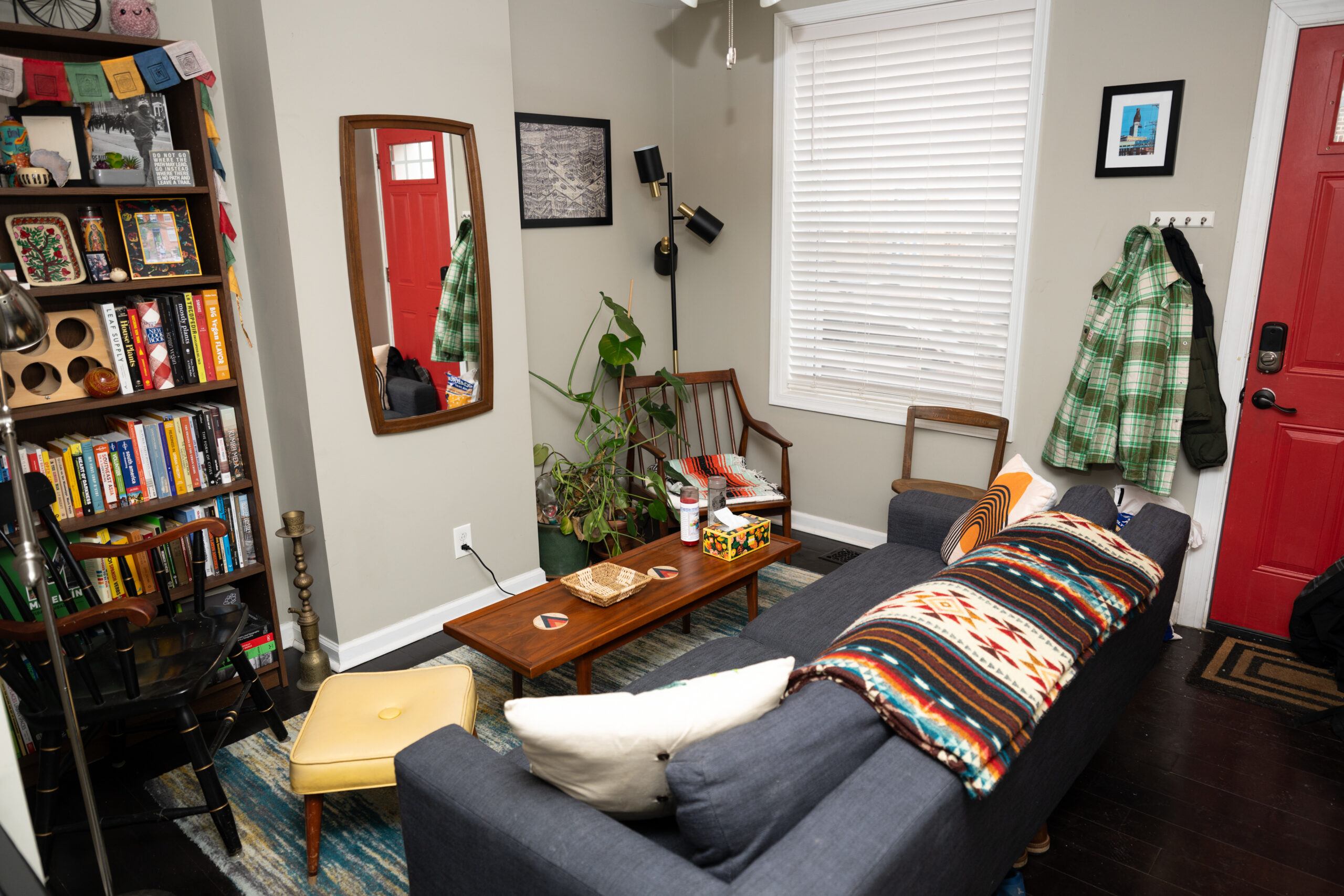
    Todtz liked the living room’s tan walls and dark floors. They made the room feel cozy.

    The search: Todtz began looking seriously at the end of 2023, after attending a first-time homebuyers workshop hosted by Philly Home Girls. Over a month, he saw several homes on weekends and evenings. He saw the house he would eventually buy early in his search, but it felt out of reach. Originally listed at $280,000, it hovered just above what he felt comfortable paying. He put it on a mental “maybe” list and kept looking. One month later, the price dropped to $255,000. “That’s when it felt within striking distance,” Todtz said. “It was closer to comps in the market.”

    The appeal: Todtz immediately noticed the quality of the renovation. The house looked polished but not flashy, neat but not boring. “There weren’t super high-end finishes I wasn’t going to appreciate,” Todtz said, “and there wasn’t the gray-washed millennial nothingness design that so many new houses have.”

    Instead, the house felt solid and lived-in, with dark wood floors and warm-colored walls. “It was very cozy and pretty,” Todtz said. He also liked the flexible floor plan and could see “potential in the footprint,” he said. Mostly, he liked that there wasn’t anything glaringly wrong with it. “It just felt very manageable,” he said. “It didn’t feel like I was taking on a massive project that I didn’t know how to start.”

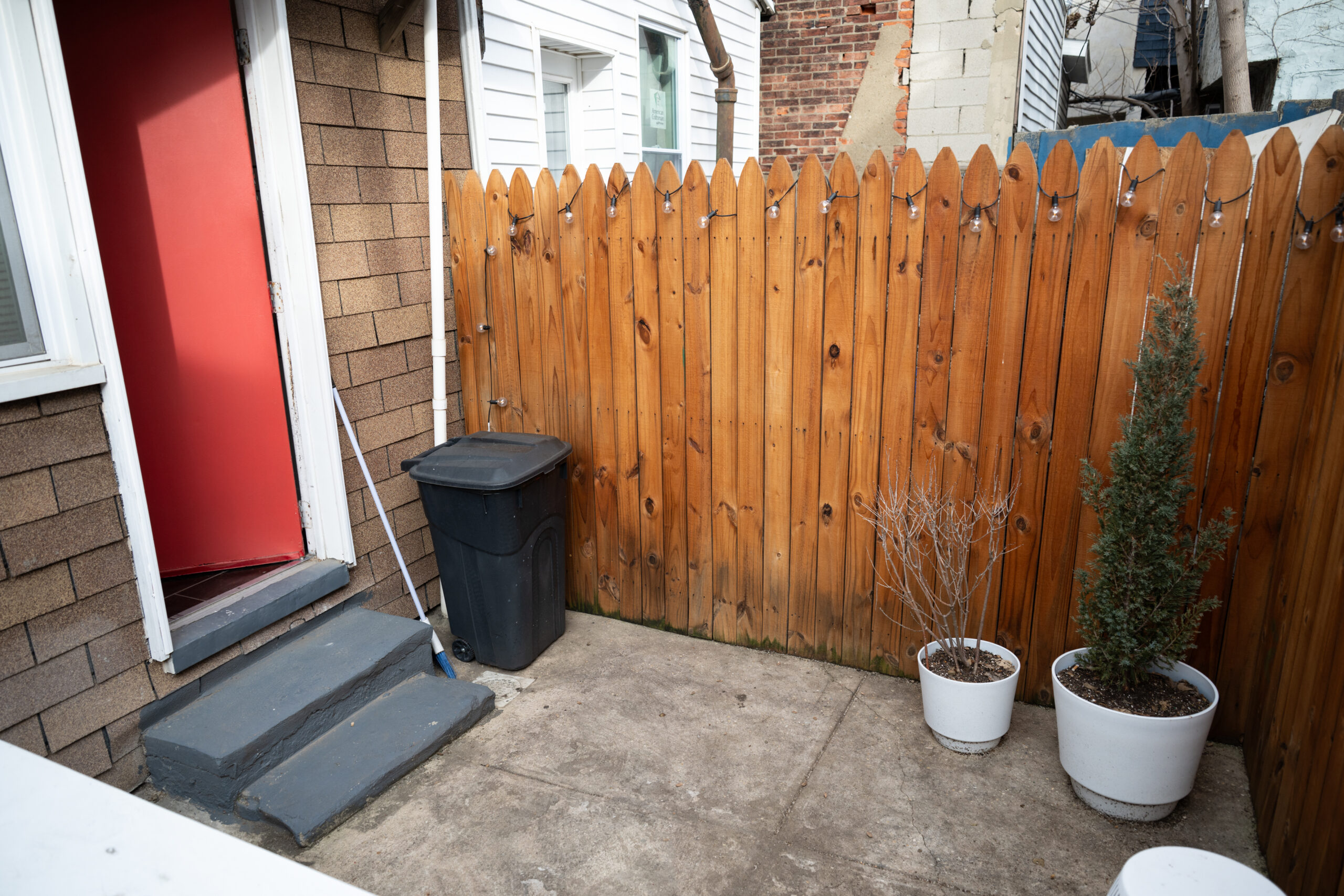
    Todtz said he would be happy with any kind of outdoor space.

    The deal: By the time the price dropped to $255,000, the house had been sitting on the market for months. Todtz and his agent sensed the seller was “eager to get it off his books,” so they offered the asking price and requested a 3% seller’s assist. The seller agreed. “That was a huge win,” Todtz said. It effectively lowered the price to $247,000.

    The inspection turned up only minor issues. The silver coating on the roof was wearing, and the seller, a small-time developer from Queens, N.Y., offered to address it without hesitation. “He was very chill,” Todtz said. “It was great to work with him.”

    The money: All in, Todtz spent about $21,000 on closing costs and upfront expenses. Todtz’s mortgage is through the Keystone Home Loan Program, which required only a 3.5% down payment, provided he paid mortgage insurance. The money came primarily from his long-term savings.

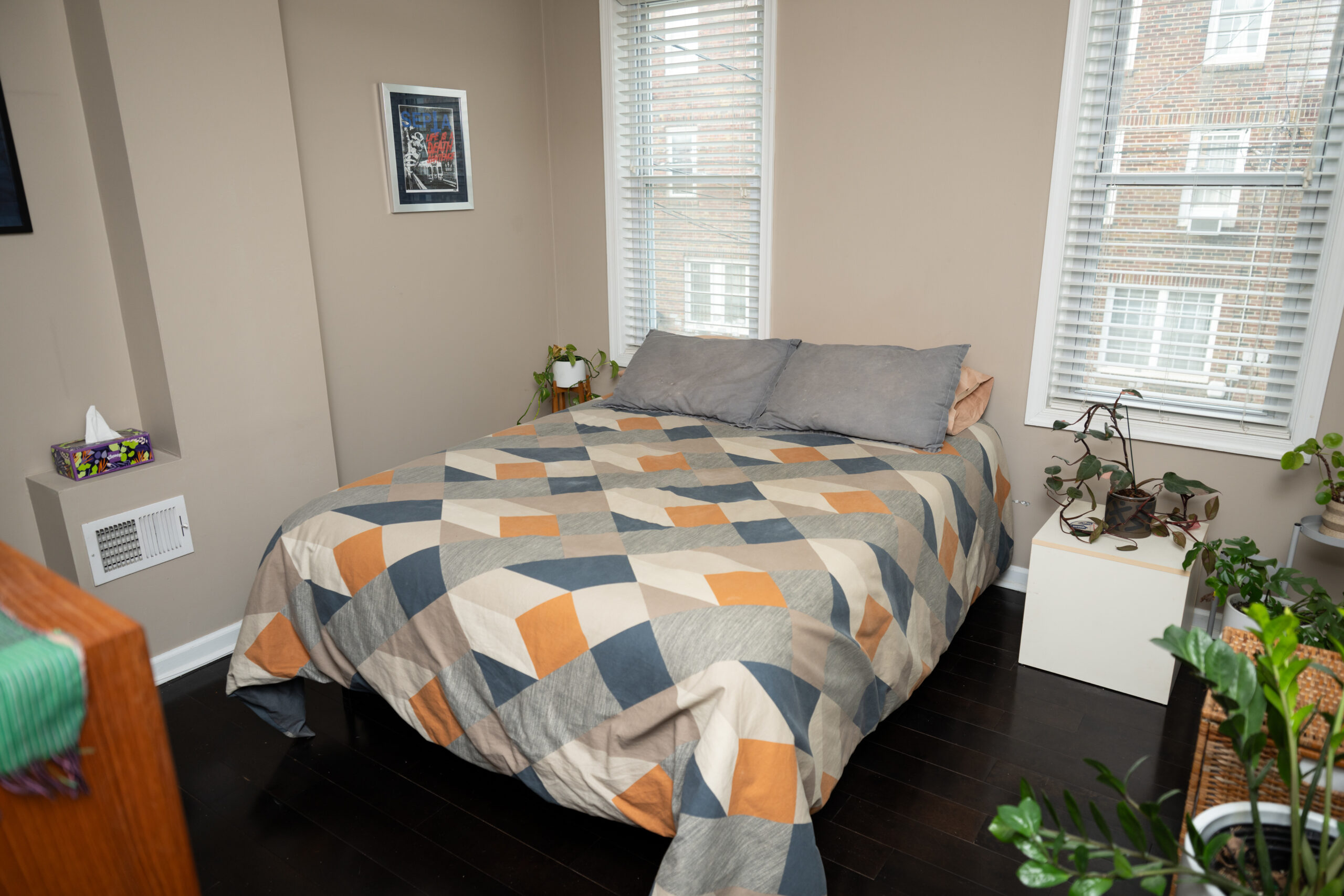
    One of two bedrooms in Evan Todtz’s house.

    “Every paycheck since graduating from undergrad, I’ve been putting money away,” Todtz said. “However modestly, whether it was 50 bucks or 100 bucks.” Eventually, he transferred some of those savings into a mutual fund that he let grow for a decade. He put the rest in a high-yield savings account. He also received a few thousand dollars from his grandmother’s estate.

    The move: Todtz closed on April Fools’ Day, which he feared was a bad omen. His agent reassured him it wasn’t. He spent the next month moving small items in his car, then hired movers to handle the bulk of the work over a weekend in May. He didn’t ask his friends to help him move. “I want to keep my friends,” Todtz said. ”I don’t want to make them stop talking to me.”

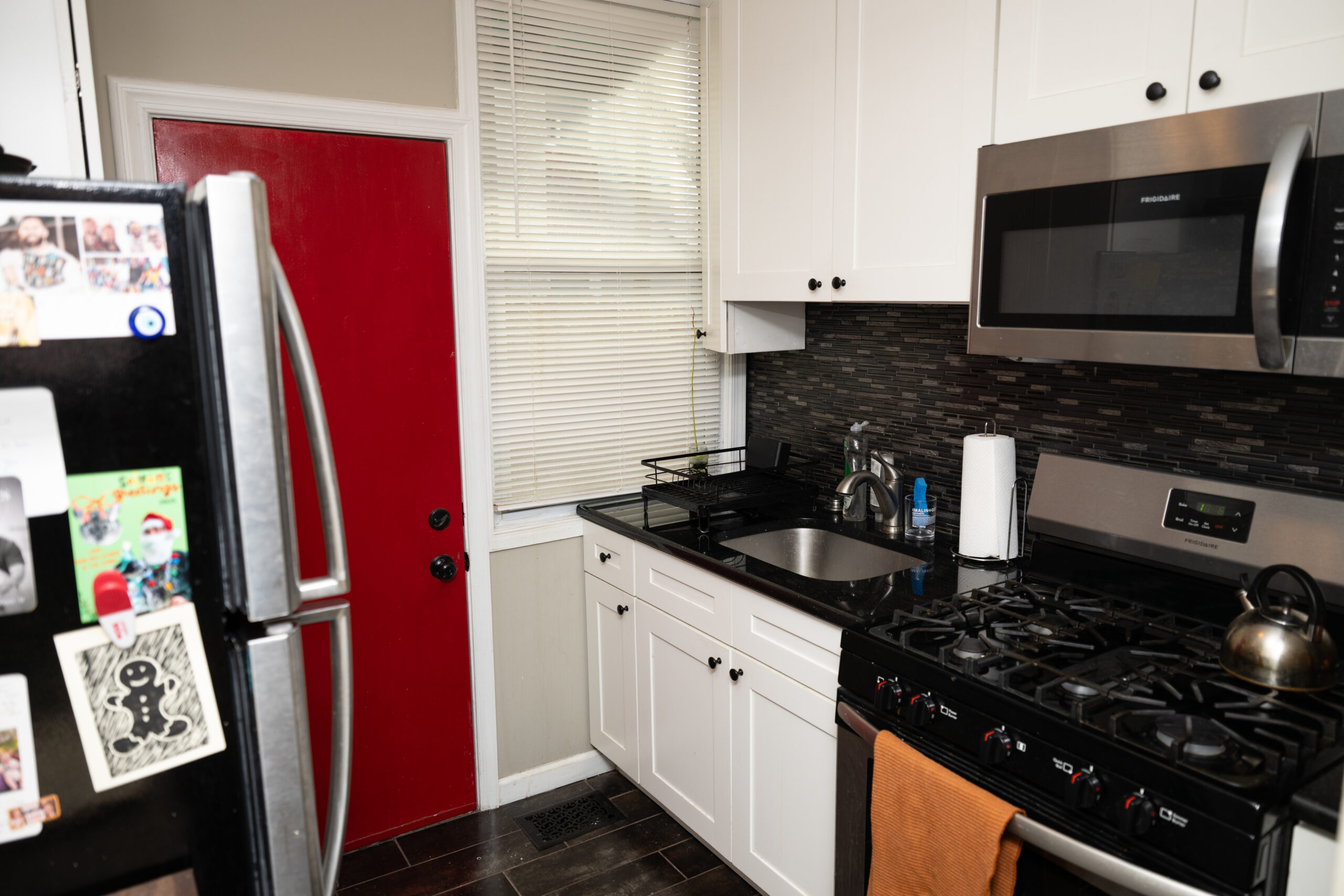
    Todtz loves his kitchen even though it’s “a little small,” he says.

    The move was mostly smooth, except for one casualty: a box spring that couldn’t fit up the new house’s narrow staircase.

    Any reservations? Todtz doesn’t regret buying, though he acknowledges that homeownership comes with new anxieties. Given the current state of the economy, “renting and being able to flee is kind of attractive,” he said.

    Still, he’s glad he made the leap. “I’m happy to own,” he said, “and I feel comfortable learning as I go.”

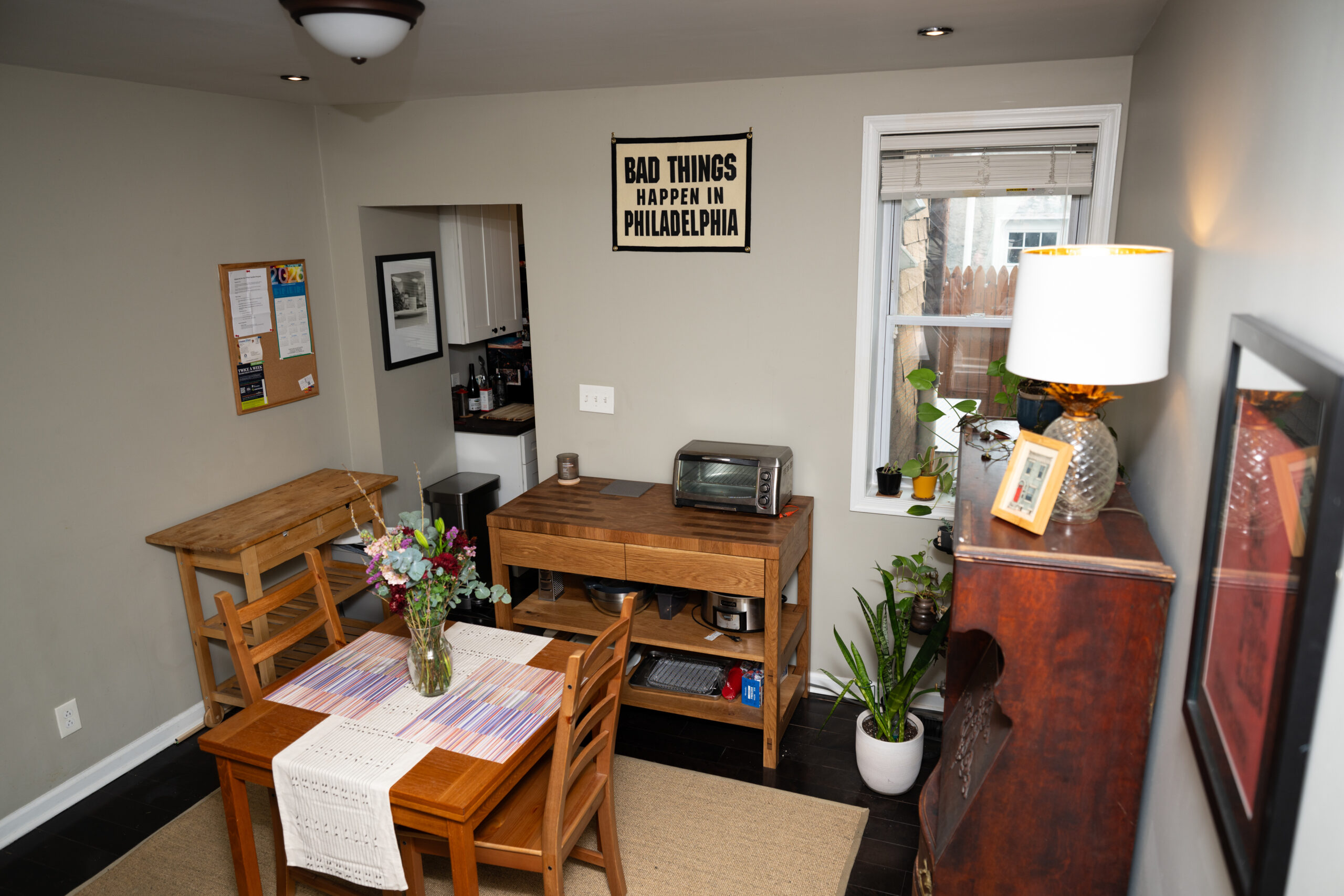
    The custom wood butcher block Todtz built with the help of the Philadelphia Table Co.

    Life after close: Most of the changes Todtz has made have been cosmetic. “I didn’t want to bite off more than I could chew,” he said. He tackled the patio first, pressure-washing the concrete, re-staining the fencing, and adding cafe lights. After that, he partnered with Philadelphia Table Co. to build a custom wood butcher block that has doubled the counter space in his kitchen.

    He has a couple of larger projects he plans to tackle next year, such as a full HVAC upgrade, but for now, he’s focused on rebuilding his savings. “I’m happy with the investment,” he said, “but I’m very much in a house-poor moment right now.”

    Did you recently buy a home? We want to hear about it. Email acovington@inquirer.com.